

This text is part of the b2o: an online journal special issue “EXOCRITICISM”, edited by Arne De Boever and Frédéric Neyrat.
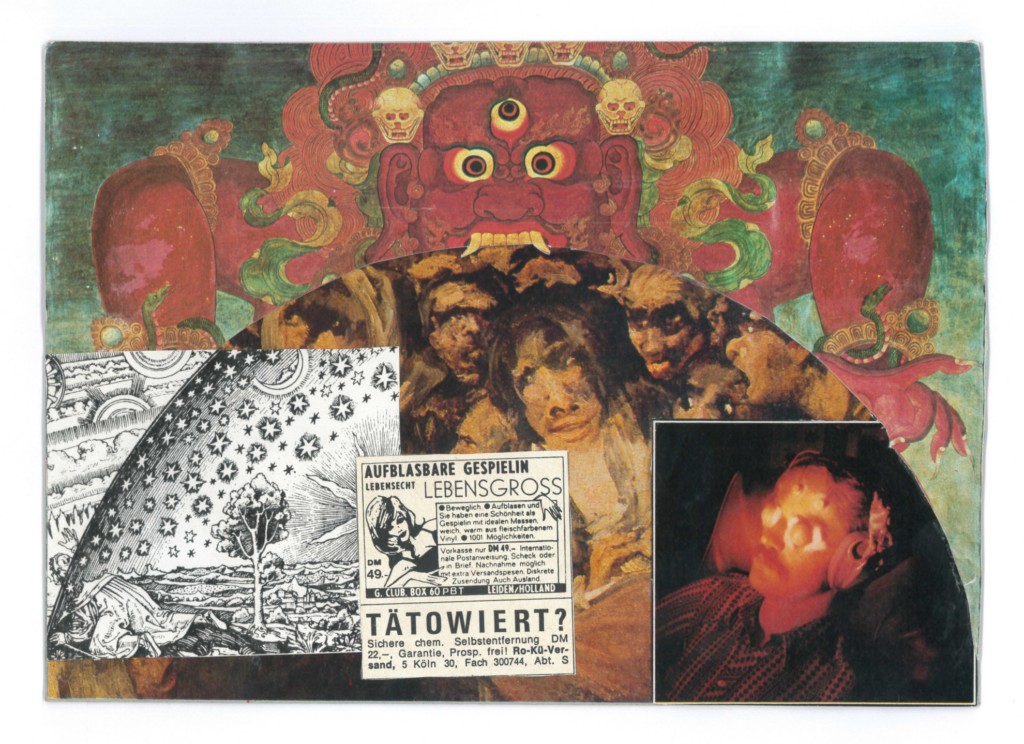

Image: Lebensgroße Selbstentfernung; Lifesized Selfremoval – Ferdinand Altenburg, 2024
The Conspiracy of the Electricians
Elmar Schenkel
Translated from the German by Arne De Boever
There was a Mexican philosopher called Kant. One day, he grew tired of the metaphysics that he had until then practiced to excess, and after a few futile attempts to learn a new language—let’s say, Afrikaans—he turned to the study of electricity. He started laying cables over his yard, hung up antennas that were several meters long in gardens and fields. He wanted to see what that would be like. He shed light on a variety of things, small pyramids, dung heaps, dusty coaches. He put up fences that no one should climb, a little ghost ride in which he lit up grimaces. But somehow he was never fully satisfied until he hit upon the idea to set electric traps, in which he caught other philosophers, to then force them to abandon their fixed ideas. He only let the captured philosophers go on the condition that they too would dedicate themselves to electricity. And so it happened that the philosophers once again became extinct, and that the world was only populated by electricians. And that could have been the end of the story, as any contemporary would confirm–but it stubbornly continued on. One day, one of these electricians realized he was bored. He didn’t know why, but when he gave it some thought, this fellow Kant came to mind. He noticed that he’d started hating him. He obtained documents about his life and works, interviewed people, and discovered to his great amazement the things that Kant, in his pre-electrical days, had done. Almost no one knew about this, it wasn’t talked about. Secretly, he studied metaphysics and, enlightened by it, started a conspiracy. He built metaphysical ghost rides, fences, and finally traps in which he successfully began catching electricians—and thus this profession too quickly came to an end. One day, by the way, this fellow Kant got caught in his net, and that’s the sole reason why we contemporaries are indebted to him for his major work, The Crisis of Electric Consciousness.
From: Schenkel, Elmar. Mauerrisse. Stuttgart: Klett-Cotta, 1985. 72-73.