


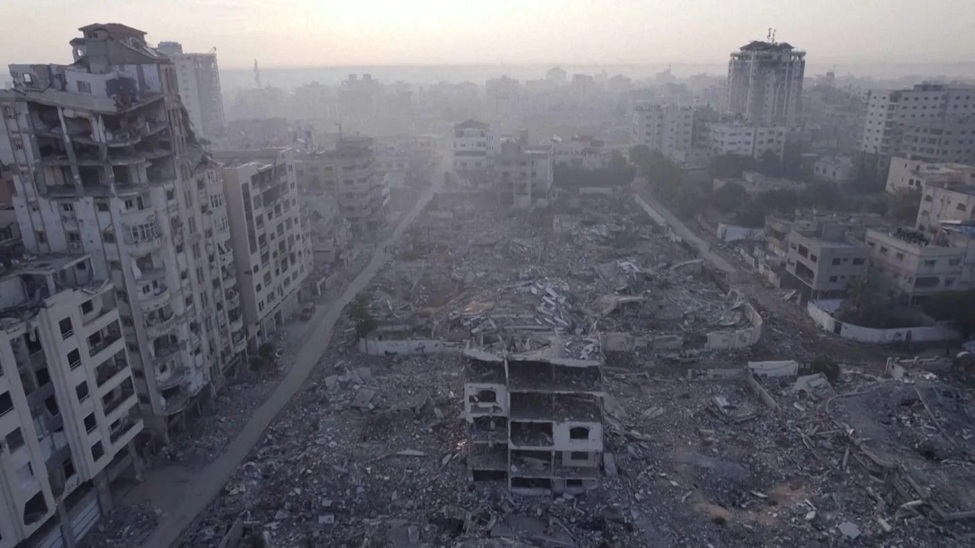
Freddie Clayton and Max Butterworth. “Satellite images reveal extent of destruction in the Gaza Strip” (2025).
Warfare Modulation: Atmospheric Violence from Sebald to Sama’ Abdulhadi
Michael Uhall
Peter Sloterdijk’s Terror from the Air (2002) explores the history of the interpolation of the “environment into the battle between adversaries” – not so much in terms of mere considerations of geography and weather (for example), but as a form of applied material terror in which “the essential environmental conditions for human survival” become targets and weapons simultaneously (13, 15). The decisive shift is a conceptual and practical transformation of the medium of survival itself (air, atmosphere, climate, ecological or natural conditions) into the explicit object of attack as opposed to the development of ever more destructive weapons.
This is a shift in the logic of violence. He writes, “By working on the enemy’s environment, these new processes, which consist in suppressing the basic prerequisites for life, yield the contours of a specifically modern, post-Hegelian concept of terror” (15). His framing examples include poison gas warfare (starting at Ypres in 1915), gas chamber executions and industrialized genocide, nuclear weapons, bioterrorism, and even gestures toward exotic weaponry. As Sloterdijk notes in an aside, this includes “the prospect of developing a quasi-neurotelepathic weapon capable of destabilizing the human population with long-distance attacks on their cerebral functions” (68). One can’t help but think immediately of very recent developments in the highly contentious media archaeology of the Havana Syndrome phenomenon, which is a fascinating case study in the epistemic instability produced when an alleged weapon acts through an ambient medium rather than upon an identifiable target.in its own right.
From these points onward, warfare increasingly extends beyond enemy bodies or infrastructures to target the very conditions that make bodies viable at all.
Sloterdijk continues:
for technical and tactical reasons, practically all these thermo-terrorist and radiation-terrorist attacks on the enemy’s lifeworlds have required air force operations – a phenomenon whose indisputable paradigms (subsequent to the shocking attacks on Guernica on April 27, 1937 and on Coventry during the night of November 15, 1940 by German warplanes) are the destruction of Dresden on February 13 and 14, 1945 by British bomber fleets and the August 6 and 9 obliteration of Hiroshima and Nagasaki by the dropping of two nuclear bombs from American fighter planes. Romantic notions of battle scenes between two equal military aircraft units, of jousts between “aerial knights,” might engross the imagination, but the historical importance of such scenes is only marginal. In truth, the de facto norm for “air battles” is the practice of one-sided, irreciprocable air strikes: either by means of precision attacks carried out on defined targets by individual aircraft or by carpet bombings from large air fleets, in analogy to the approximate logic of gas artillery: in an operative sense, near enough is as good as exact (52, emphasis added).

It is precisely this new regime of “atmospheric” violence that furnishes the conceptual and affective horizon of W. G. Sebald’s Zurich lectures “Air War and Literature.”
Where Sloterdijk theorizes the emergence of a thoroughly environmentalized warfare, Sebald confronts its experiential residue: “the way in which memory (individual, collective and cultural) deals with experiences exceeding what is tolerable” (79). What interests Sebald regarding the historical silence that follows the Allied destruction of German cities during World War II centers less on the military history of bombing campaigns themselves than on the strange cultural void and the “extraordinary faculty for self-anesthesia” following these events (11).
This is particularly notable given the fact that the air war in Germany was so nakedly executed: “The criticism later leveled at the ruthless pursuit of such a program of destruction concentrated chiefly on the fact that it was sustained even when selective attacks could be made from the air, with far greater precision, on targets like factories making ball-bearings, oil and fuel installations, railway junctions, and the main transport arteries […]” (17) And nevertheless: “The war in the air was pure and undisguised,” and few attempts were made to cloak or gussy up the efforts to damage, demoralize, or even exterminate populations of enemy civilians (19).
As Arthur Harris, commander of RAF Bomber Command, wrote in 1943, “the aim is the destruction of German cities, the killing of German workers, and the disruption of civilized life throughout Germany.” Elsewhere: “I do not personally regard the whole of the remaining cities of Germany as worth the bones of one British Grenadier.” German rhetoric was scarcely less explicit, as the Luftwaffe’s bombing of British cities during the Blitz and the later deployment of the V-1 and V-2 Vergeltungswaffen [revenge weapons] were openly framed as instruments for breaking civilian morale.
Why, then, the near absence, in postwar German literature, of sustained attempts to absorb or even represent the spectacular destruction of German cities? Why did a society subjected to such devastation leave behind so little durable testimony? As Sebald writes: “I was not surprised when a teacher in Detmold told me, a little while ago, that as a boy in the immediate postwar years he quite often saw photographs of the corpses lying in the streets after the firestorm brought out from under the counter of a Hamburg secondhand bookshop, to be fingered and examined in a way usually reserved for pornography” (98). Sebald’s essay thereby fashions an inquiry into the limits of cultural memory and self-representation, into how societies metabolize, repress, or fail to narrate experiences that overwhelm or undercut the ordinary capacities of language and imagination.
One way to place Sebald’s concerns under creative pressure is to situate them within the broader conceptual and aesthetic frameworks his essay helps provoke.
For example, Derek Gregory’s “‘Doors into nowhere’: dead cities and the natural history of destruction” (2011) expands the historical and geographical dimensions here by examining the physical transformation of bombed cities into landscapes of devastation. Gregory underscores the extent to which aerial bombardment did not simply destroy discrete military targets but reconfigured entire urban environments. In the firestorms produced by Allied bombing campaigns – Hamburg in 1943 being perhaps the most notorious case – heat, wind, oxygen flow, and urban density interacted to produce atmospheric conditions capable of incinerating whole districts. As Sebald writes:
[…] only a quarter of an hour after the first bombs had dropped the whole airspace was a sea of flames as far as the eye could see. Another five minutes later, at one-twenty A.M, a firestorm of an intensity that no one would ever before have thought possible arose. The fire, now rising two thousand meters into the sky, snatched oxygen to itself so violently that the air currents reached hurricane force, resonating like mighty organs with all their stops pulled out at once. The fire burned like this for three hours. At its height, the storm lifted gables and roofs from buildings, flung rafters and entire advertising billboards through the air, tore trees from the ground, and drove human beings before it like living torches. Behind collapsing façades, the flames shot up as high as houses, rolled like a tidal wave through the streets at a speed of over a hundred and fifty kilometers an hour, spun across open squares in strange rhythms like rolling cylinders of fire. The water in some of the canals was ablaze. The glass in the tram car windows melted; stocks of sugar boiled in the bakery cellars. Those who had fled from their air-raid shelters sank, with grotesque contortions, in the thick bubbles thrown up by the melting asphalt. No one knows for certain how many lost their lives that night, or how many went mad before they died. When day broke, the summer dawn could not penetrate the leaden gloom above the city. The smoke had risen to a height of eight thousand meters, where it spread like a vast, anvil-shaped cumulonimbus cloud. A wavering heat, which the bomber pilots said they had felt through the sides of their planes, continued to rise from the smoking, glowing mounds of stone (27).
Under such circumstances, the city itself becomes a destructive medium. What emerges from Gregory’s account is the material correlate to Sebald’s “natural history of destruction”: the bombed city as a kind of weaponized terrain in which the distinction between military violence and environmental catastrophe collapses. The landscape of ruins is not merely a collection of destroyed buildings but a transformed urban ecology in which air, bodies, built space, and fire interact in savagely lethal feedback loops.
Where Gregory brings out the physical and operational dimensions of this violence, Nil Santiañez, in “Aerial bombing and catastrophic modernism” (2018), addresses a different problem: the question of aesthetic and literary form. Santiañez argues explicitly that aerial bombardment places extraordinary pressure on the representational capacities of narrative itself. Large-scale urban destruction – marked by spatial disorientation, temporal compression, and sensory overload – fractures the conventions of realist description. Literature responding to such events frequently gravitates toward fragmented structures, montage, and discontinuous narration.
From this perspective, the scarcity of convincing literary testimony that so troubled Sebald may reflect a deeper formal problem, extending beyond repression or moral evasion, namely, the difficulty of rendering experiences whose intensity or scale disrupts narrative frameworks altogether. Sebald’s hybrid mode of writing can thus be read as an attempt to find a form adequate to a historical shock that conventional narrative cannot contain. If narrative generally falters under such pressure, the problem shifts from how to represent catastrophe to how it persists in other forms.
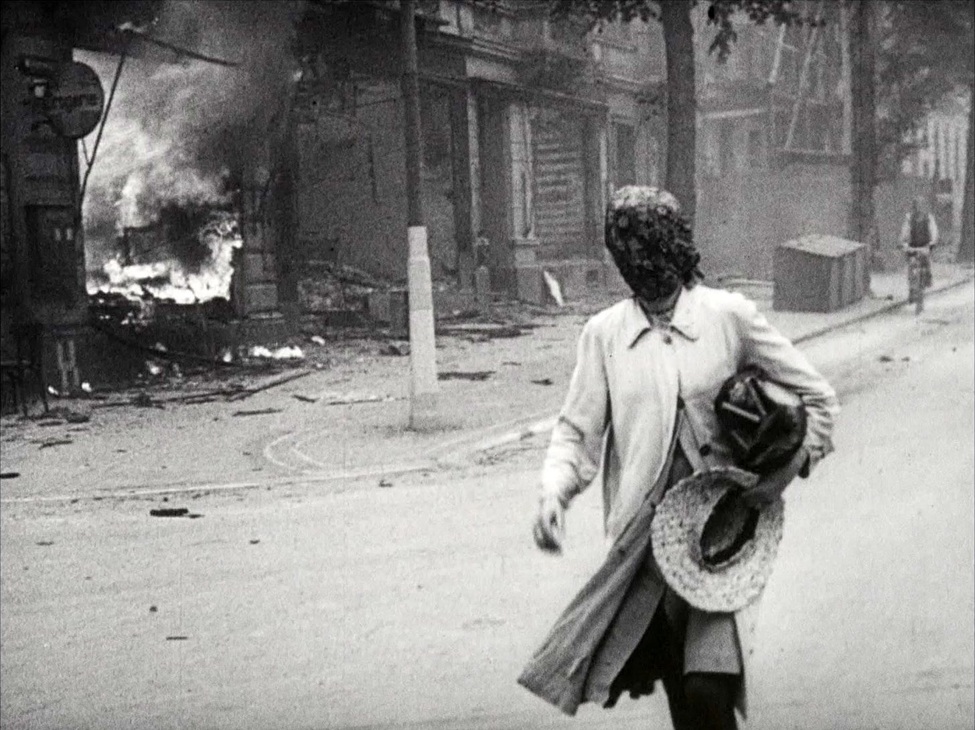

Still from Sergey Loznitsa’s experimental documentary adaptation of Sebald’s text, The Natural History of Destruction (2022).
So, what happens when such experiences and their consequences for lived experience are neither repressed nor consigned to silence, but instead displaced into other media, into sound, rhythm, and collective sensation? Through what aesthetic forms might such conditions be registered or even provisionally suspended outside the domain of narrative representation? Sebald’s principal concern is with silence, with the failure of testimony. But silence is not the only possible medium through which catastrophe is reworked and transmitted.
In contemporary contexts of ongoing aerial violence with heavy civilian casualties (for example, in Palestine, in Iran, in Lebanon), problems of representation often undergo mutations (what doesn’t kill me makes me stranger). Under conditions in which, for example, an estimated eighty percent of Gaza’s built environment has been destroyed – amid what numerous observers, legal scholars, and international bodies identify as an unfolding genocide – the transformation of lived space into a hostile medium is continuously lived rather than retrospectively narrated. In strategic discourse, such environments are often rendered as operational problems to be managed, constrained by terrain, adversary tactics, and the limits of humanitarian law. By contrast, aesthetic forms and sensory practices register these conditions as contradictory fields of lived intensity.
As British-Israeli architect Eyal Weizman writes, Palestine, especially, makes manifest “the infrastructure of a unique type of political space, one desperately struggling to separate the inseparable, by attempting to multiply a single territorial reality and create two insular national geographies that occupy the same space.” A forever civil war, a continuous condition in which antagonism is built into the space itself. Rather than something that can be consigned to memory only after the fact, it persists as an ongoing condition or tribulation to be navigated.
If such conditions exceed or disable narrative, where and how do they reappear?
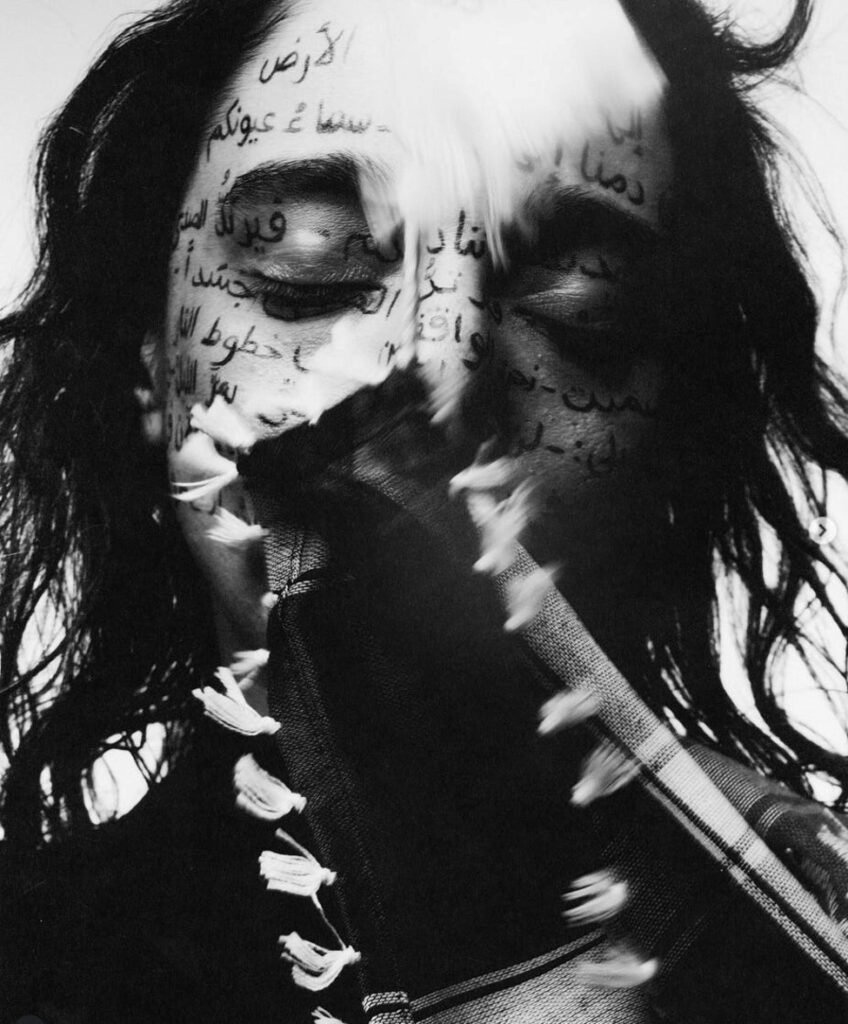

Sama’ Abdulhadi, Instagram (@samaabdulhadi).
Sama’ Abdulhadi, a Palestinian DJ with an international audience, offers a different kind of aesthetic response than Sebald, one that uses the modulation of sonic density and intensity in lieu of narrative or prosodic form.
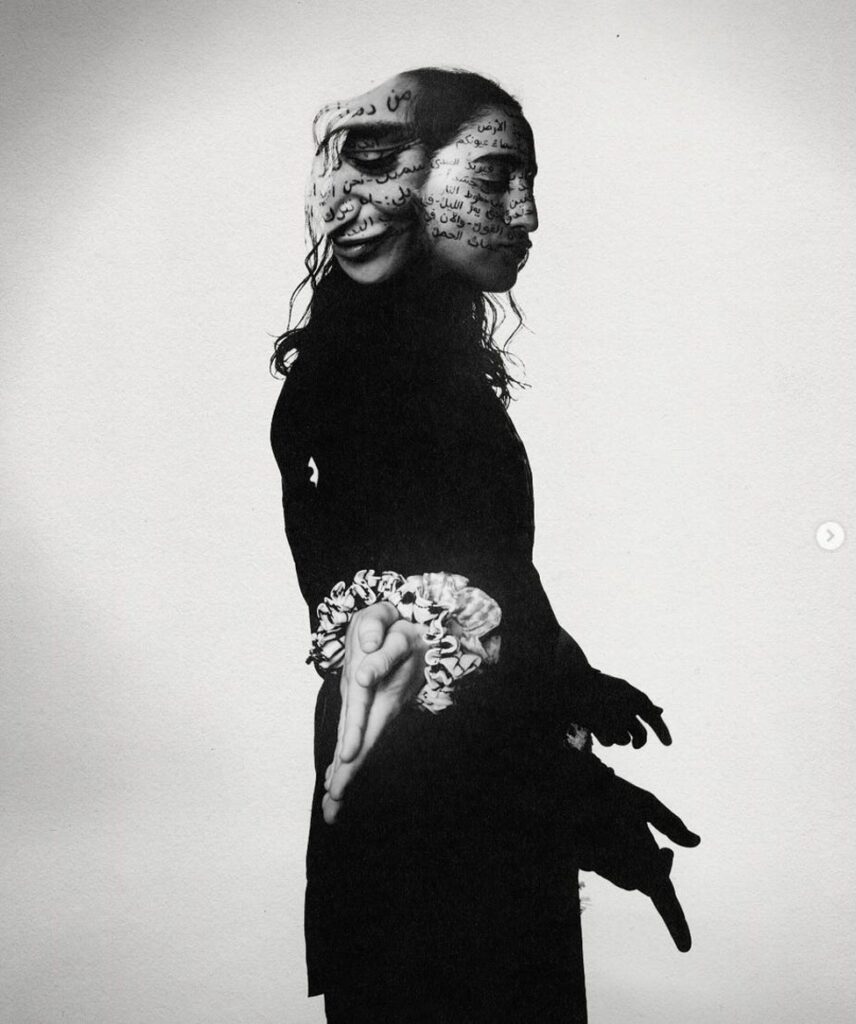

Sama’ Abdulhadi, Instagram (@samaabdulhadi).
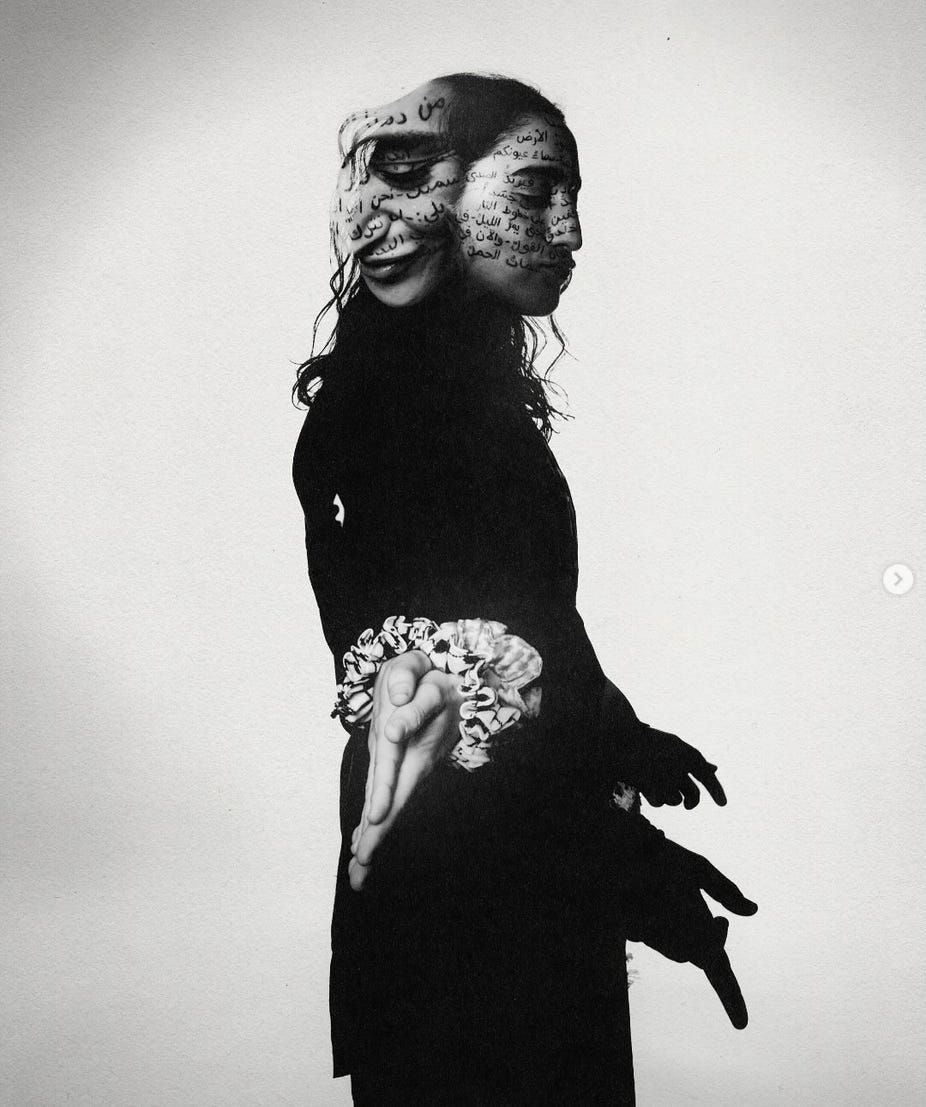
Her sets do not narrate or even represent catastrophe. Instead, any given set reorganizes sensory and affective traces, maintaining their intensity without resolving them. Her sets function at the level of affective modulation, reorganizing relations between body, sound, and environment. In a currently unpublished interview, she remarks: “It’s always been like this in the Arab world. We don’t know what tomorrow holds so you feel this really intense energy from the crowd. I love how parties and festivals can disconnect you from reality. They can create this utopian bubble and just put you in a different world.”
What matters here is less the desire for escape than a question of the form that such an escape takes, namely, intensification instead of withdrawal and the production of an alternative sensorium in lieu of grim silence. The “utopian bubble” she invokes is a reconfiguration of the senses, a temporary suspension in which the affective atmosphere of uncertainty, disruption, and violence is redistributed and transformed. This is a way of enduring the presence of catastrophe without resolving it, or reducing it to a tidy narrative.
In this sense, Abdulhadi’s sets also serve as a valuable corrective to the by-now familiar recourse to Walter Benjamin in accounts of historical violence and its afterlives. In his “Theses on the Philosophy of History” (1940), Benjamin famously argues that the task of the historian is to seize hold of a collective “memory as it flashes up at a moment of danger,” to wrest the past from the conformism of official history and to redeem the defeated, namely, those consigned to what he calls the tradition of the oppressed.
History, on this view, is not a continuum but a field of struggle in which fragments of suppressed experience must be recovered, rearticulated, and held open to a “messianic” interruption that would rescue them from oblivion. Sebald’s own work clearly draws on this framework, and his attention to marginal testimonies, damaged archives, and the psychic residues of catastrophe reflect the broadly Benjaminian conviction that what has been occluded must (or even can) be brought back into view, however fragmentarily – if it is not to be lost altogether.
But Abdulhadi’s practice points in a different direction. Her sets do not seek to recover or narrate what has been suppressed, nor do they assume that the rearticulation of past (or concurrent) suffering carries with it any particular redemptive force. What they produce instead is a dense, immersive field of sound – an associative environment of rhythm, volume, and repetition – in which affects circulate without being stabilized into narratives (much less arguments).
This not a messianic practice of retrieval, but a non-narrative mode of registration in which the events or traumas in question are redistributed and processed into collective, embodied experience instead of being merely redeemed. This suggests the intriguingly counterintuitive possibility that redemption, in fact, is cheaper than survival. Donald Winnicott recounts a remark made by one of his patients: “The only time I felt hope was when you told me that you could see no hope, and you continued the analysis.” In other words, the possibility of carrying on remains in passing through hopelessness together instead of overcoming it. Perhaps something similar obtains here.
In one performance (at EXIT 2024, a festival in Novi Sad, Serbia), Abdulhadi’s set is abruptly interrupted by the unmistakable sound of an air raid siren – sustained for nearly thirty seconds, long enough to register as something significantly more than a quickfire sample, to register fully as the acoustic signature of imminent catastrophe. Indeed, the history of the air raid siren is itself already a history of sonic modulation. During the First World War, British warnings relied on police whistles, bugles, and eventually maroons – explosive fireworks producing the strange recursion of explosions heralding explosions – before sirens began to appear. By 1938, the British warning system had standardized the now-familiar rising-and-falling tone, opposed to the continuous note of the all-clear. What enters Abdulhadi’s set, then, is an acoustic form already informed and structured by a century of death and destruction from above. Without disruption, the siren is folded back into Abdulhadi’s set, mutating rapidly into the drop itself. The signal of danger is modulated rather than narrated or explained; it is transformed into a living rhythm by being redistributed across the crowd.
The effect is difficult to describe within the terms that structure Sebald’s inquiry.
Where Sebald confronts a deficit of representation, Abdulhadi stages something like its inversion: an excess of sensory inscription in which the atmosphere of threat receives no direct articulation (as in a documentary film) but rather gets incorporated into a collective experience oscillating between immersion and awareness. Even the visual field participates in this transformation, as spotlights sweep across the crowd like search beams, recalling, however obliquely, the aerial scanning of targets from above. Here, the environment, however temporarily, is no longer the medium of destruction. It becomes, if only provisionally, the medium through which such destruction is refracted and held at bay, and in which catastrophe, perhaps, is survived.
As Sebald writes, “No one knew where the homeless stayed, although lights among the ruins after dark showed where they had moved in” (36).
References
Michael Uhall (https://www.michaeluhall.com/