


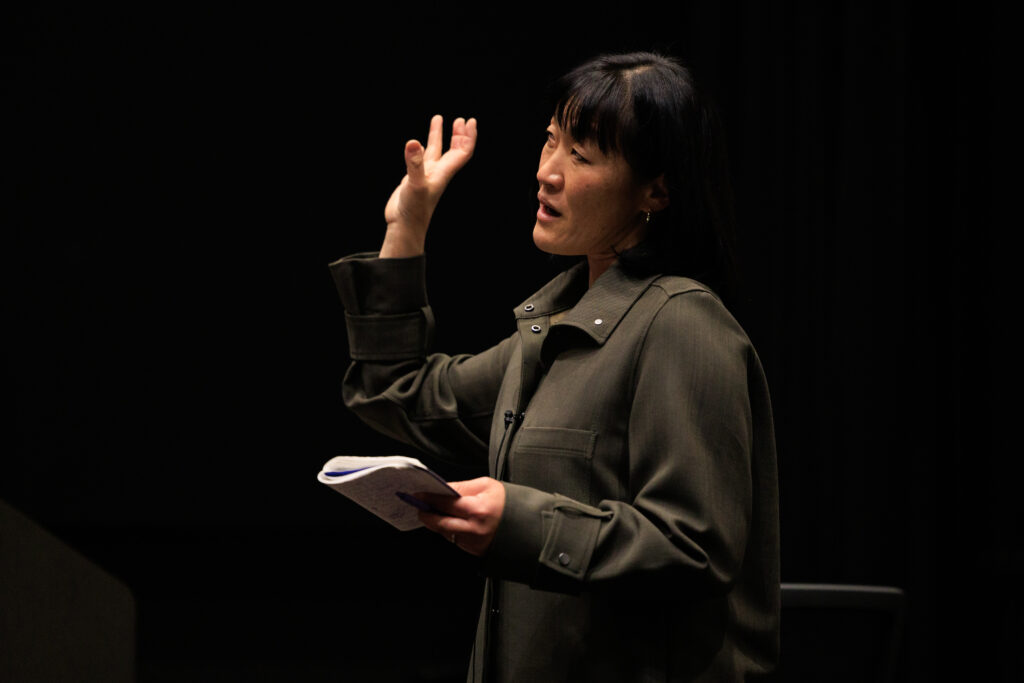
This post is part of a dossier that features materials that were generated at, or in the aftermath of, the “Experiments in Listening” conference that boundary 2 co-organized with the California Institute of the Arts and the University of Southern California in January 2025.
Pussy Listening: Building an Activist Listening Practice
Nina Sun Eidsheim
All images for this essay were taken by Nina Eidsheim, except Image 5, which was taken by Arne De Boever.
The practice of listening is, in large part, a practice of recognition. The recognition of familiar voices, against those of strangers. The recognition of an emotional state—happy, angry, concerned, tired—as a cue for how to interpret words and build a response. The recognition of the sonic patterns that make up a language. All this knowledge is taken into account as we regulate ourselves vocally and otherwise sonically. And so we listen to that as well.
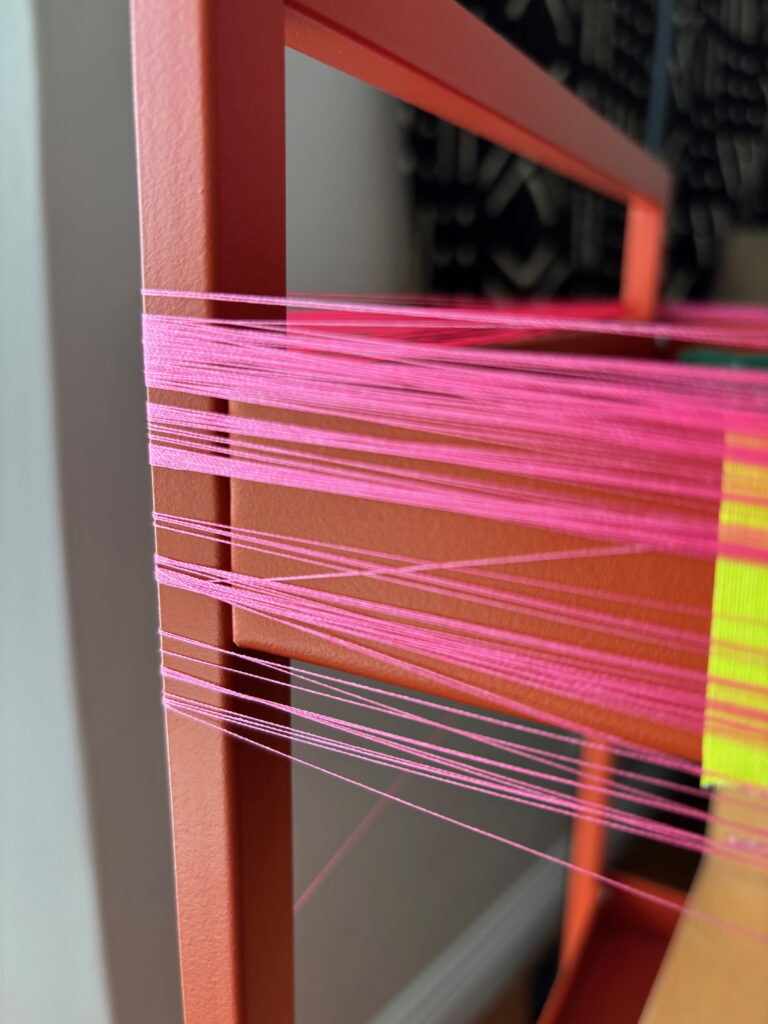

Image 1: Preparing to cut thread into shorter pieces.
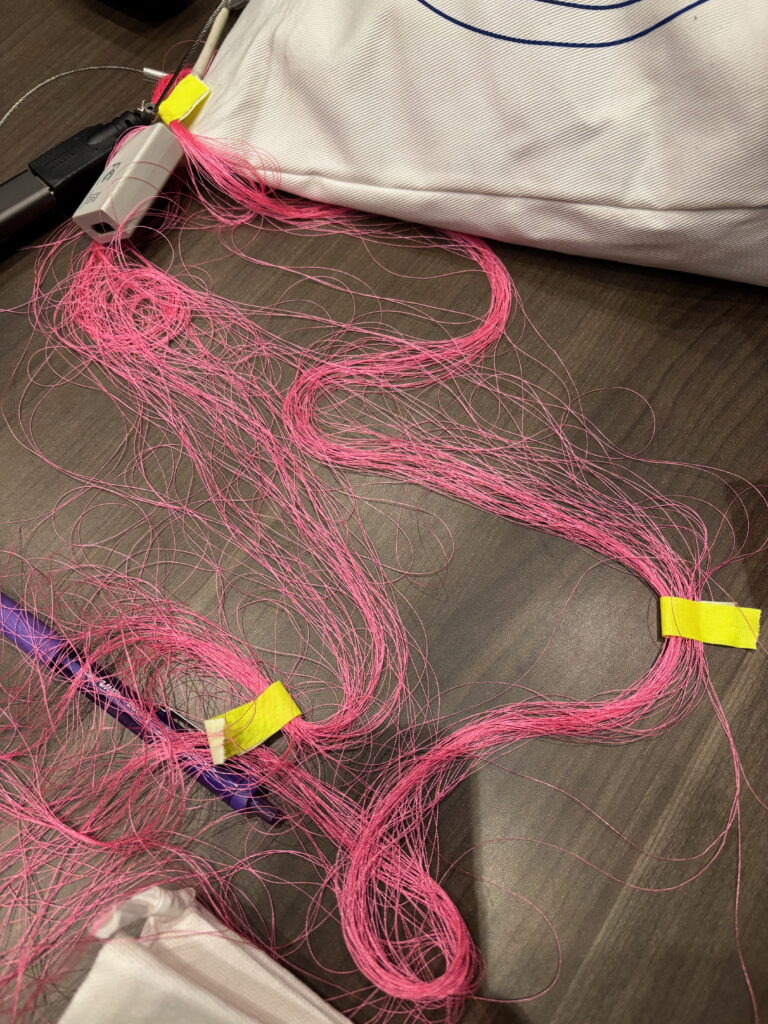
Image 2: Organized chaos.
It must be built into our basic instinct to know whether we are adequately listened to. A crying baby is reassured when its call is heeded. In a game of hide-and-seek, a toddler calling to a friend that it’s time to come and find them has been fulfilled. A teenager who huffs that they need to be left alone is relieved to be respected.
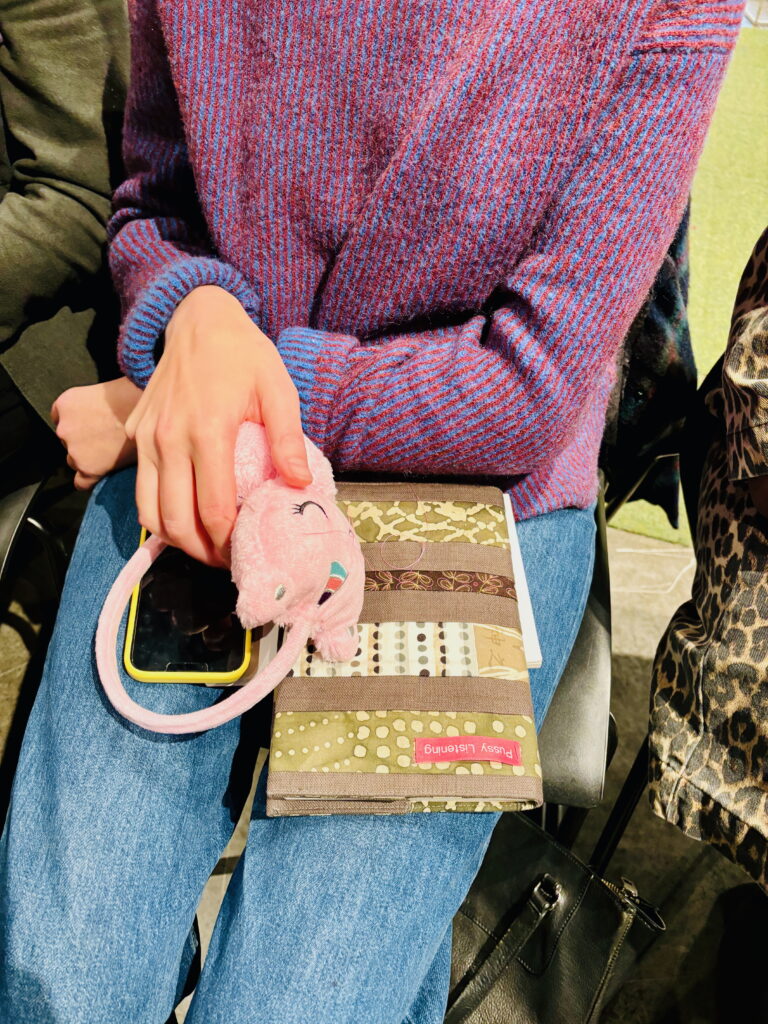
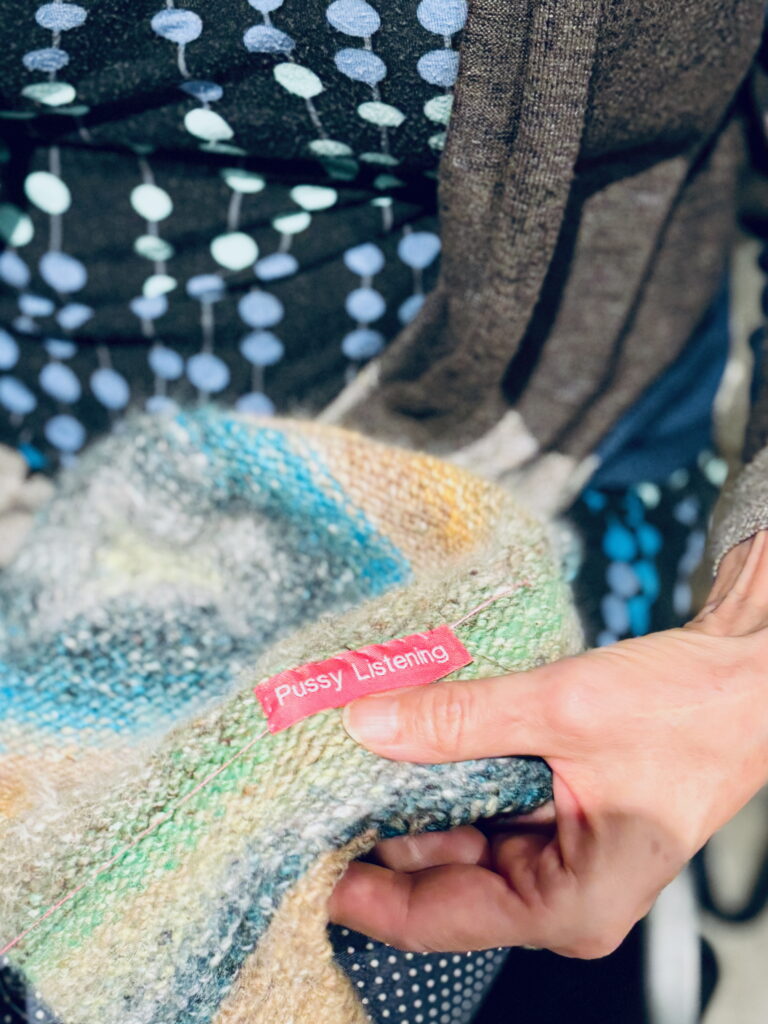
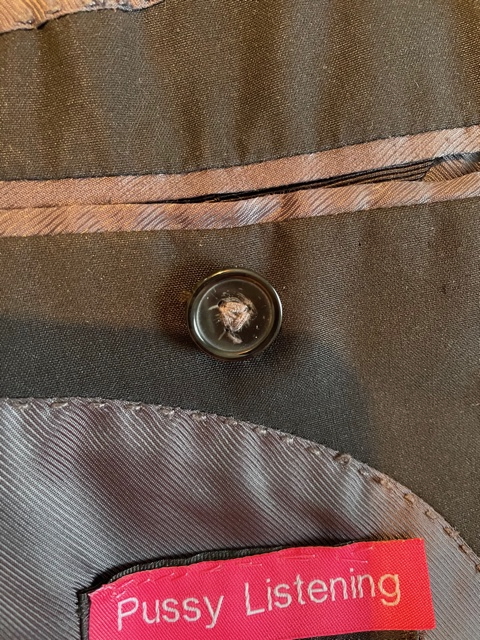

Images 3-5: Surfaces that can support Pussy Listening
To get to this room—to read this journal—a large portion of our lives has been (inadvertently) dedicated to listening “correctly,” and to avoid listening “incorrectly.” This kind of relationship to listening comes from a place of submission, a strategy of safekeeping oneself, and often forwards the agendas of those in power.
Evolutionists would say it is part of humanity’s success that we build banks of sounds. We listen for those sounds, or—more importantly—remain alert for sounds unfamiliar. And we ourselves make decisions about the sounds we put into the world, based on a desire, need, necessity to be included.
However, at the same time, sound-making and listening are used covertly. They are used to hide, divert, lie, gloss over, and make nice when there is no nice.
Somehow, whether or not we are even aware of it, we also listen in that register. I don’t know how we are trained to recognize this. It must be an even deeper survival instinct…
And this kind of listening has the capacity to save our lives. It is tuning in to an undertone that warns us to leave a party or a dinner. It is the skill that tells us that nothing is all right even though we are looking at our mother’s smiling, reassuring face.
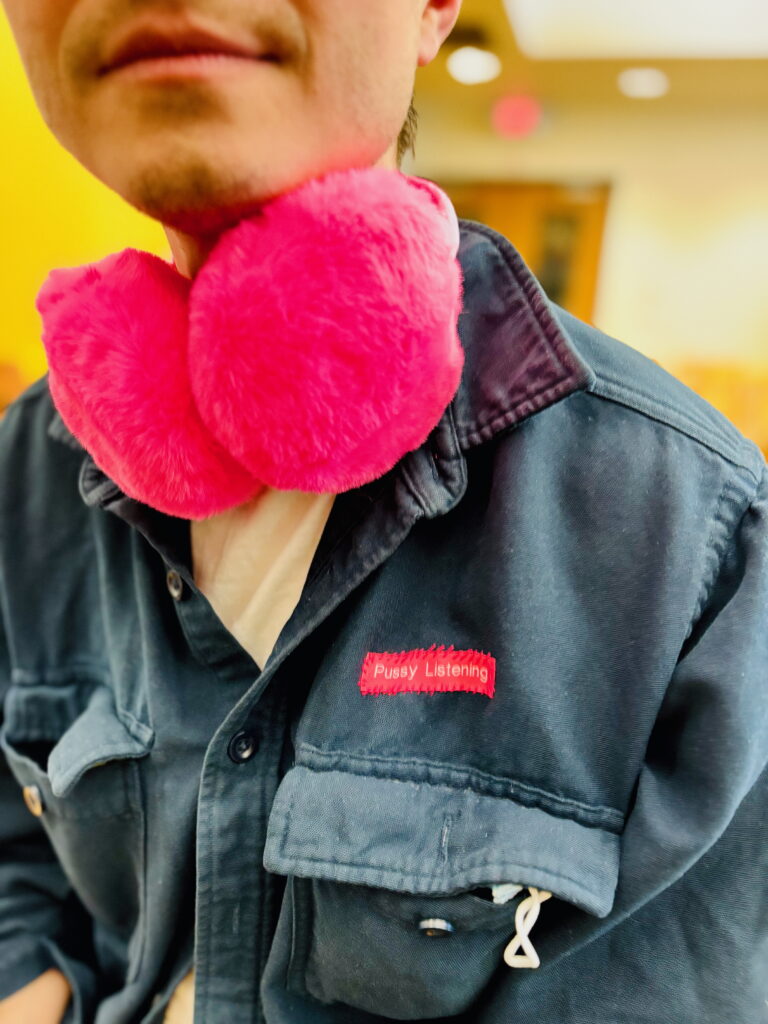
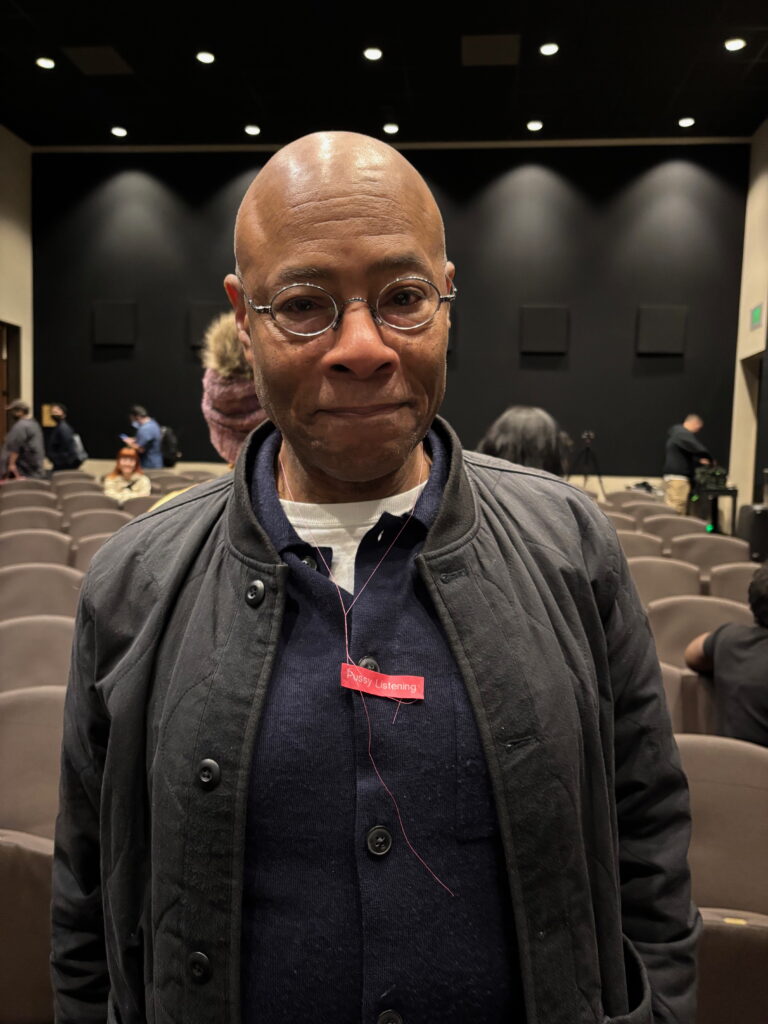
Images 6-7: Walking out into the world.
Pussy listening is what I call this kind of non-official listening, and I assume all genders have this capacity.
Pussy listening is not a vaginal listening.[1]
Pussy listening is agential listening that cannot be grabbed.
I have found that pussy listening can be activated or accessed by deliberately disrupting everyday patterns. Since many of us don’t need to make the things we need for daily survival, returning to hands and their coordination with sight and listening can serve as such disruption, or, reactivation, if you will. I thread the needle. I feel the resistance of the fabric or material through which the fingers guide the needle. I consider my presence in the world, determining where to exhibit the badge. I may have tapped into pussy listening more deliberately.
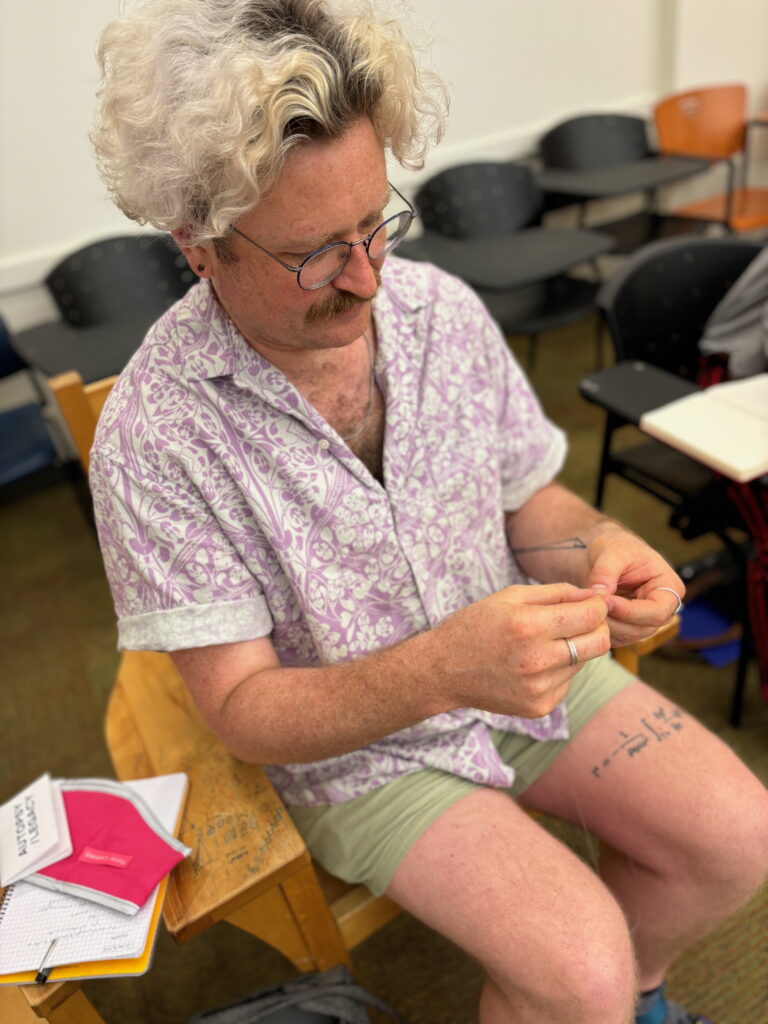
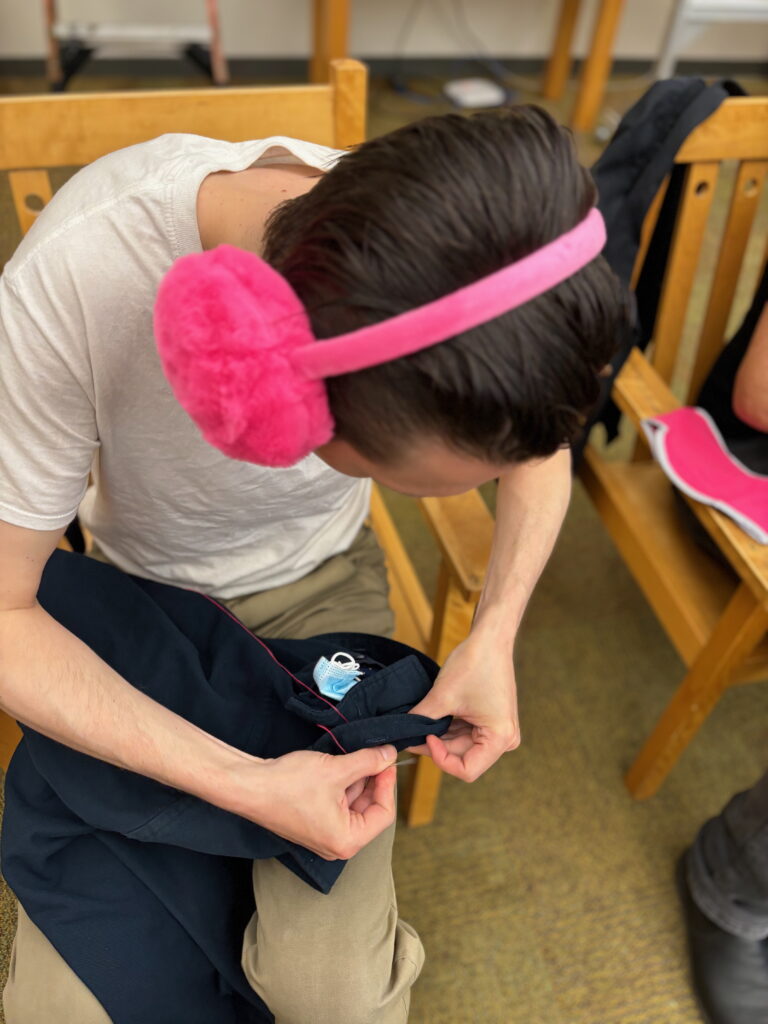
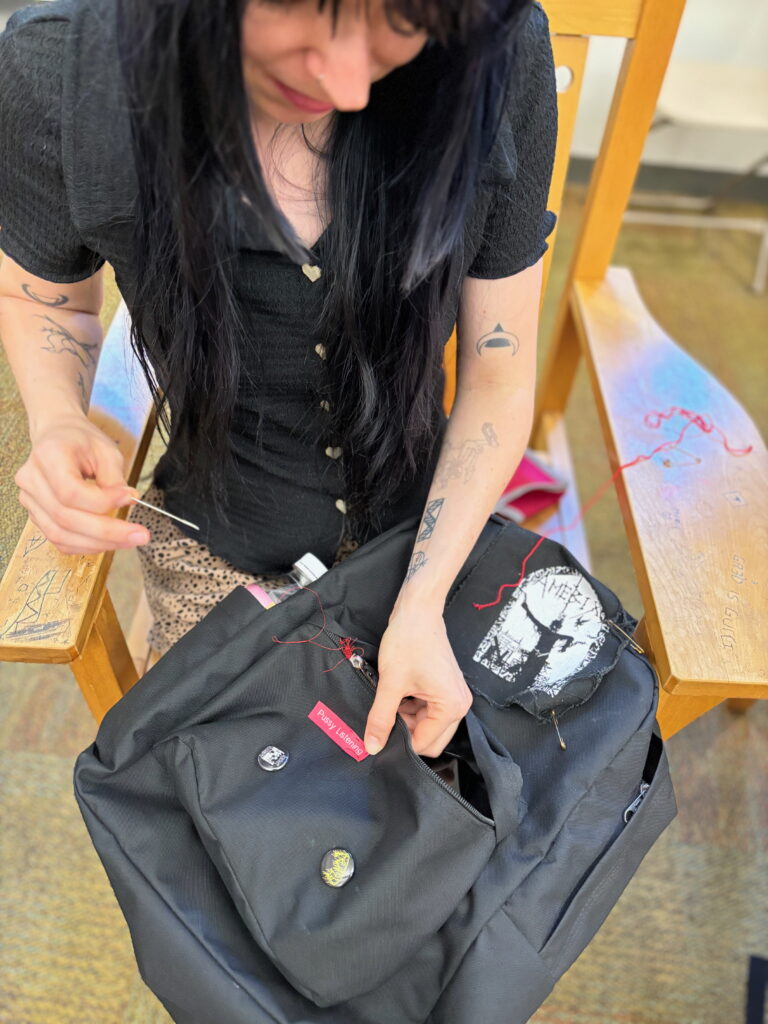
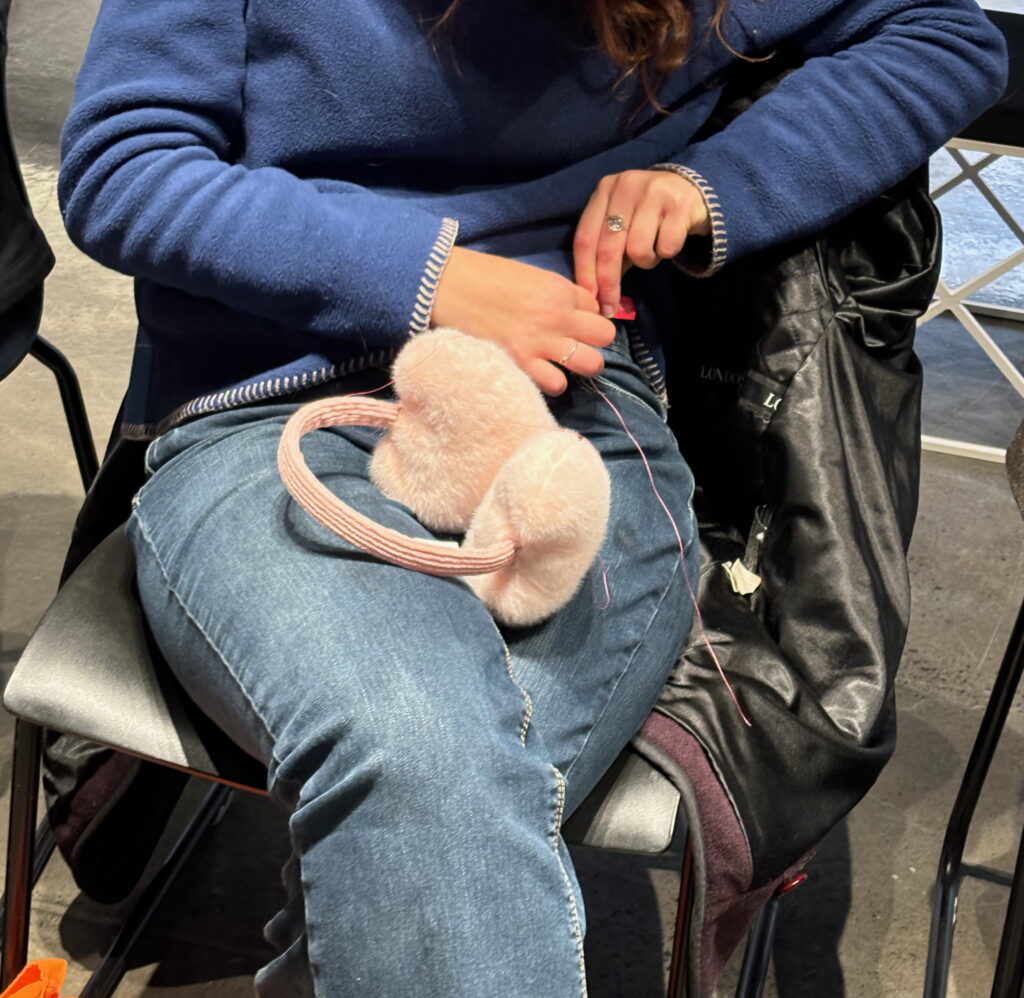

Images 8-11: The choreography of the needle and fingers requires tactile focus.
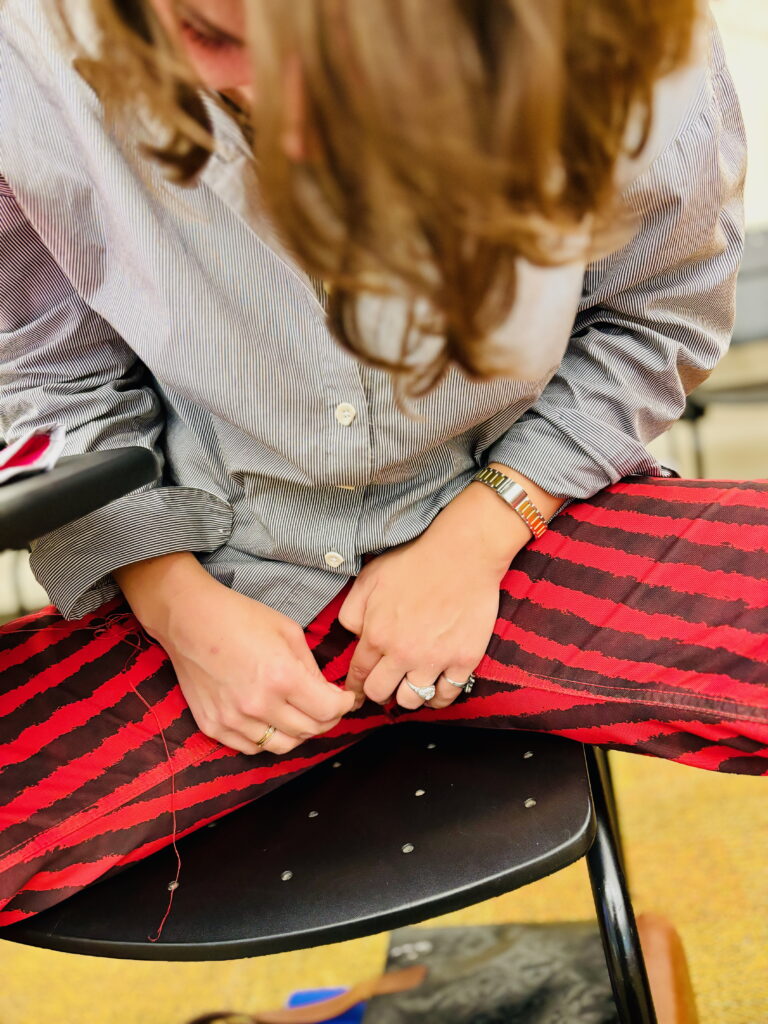
Image 12: “I wonder if I will always have to wear the same underwear with these pants.”
Complete this form to request the Pussy Listening Kit.
Nina Eidsheim is a vocalist, sound studies scholar and theorist. She brings extensive knowledge, experience and innovative approaches to practice-based research that focuses on sound and listening. The author of Sensing Sound: Singing and Listening as Vibrational Practice and The Race of Sound: Listening, Timbre, and Vocality in African American Music, she has co-authored book with and about the composer and trumpet player Wadada Leo Smith and co-edited a volume on music and metaphor and the worlds they make, both of which are forthcoming. She has also just started working on a book about the question of whether it is possible to build sensorial memory of a childhood that didn’t come to be—for which the research involves eating her way through K-town and asking kind strangers to teach her how to cook Korean food. Nina was born in South-Korea, adopted to and grew up on the west coast of Norway, and lives in Los Angeles.
[1] See, for example, Miya Masaoka’s piece, “Vaginated Chairs”, presented at MoMA PS1 on April 1, 2018, https://miyamasaoka.com/work/2017/vaginated-chairs-2/, accessed April 29 2026.