

Republican Opacity
Marc Kohlbry
In the mid-nineteenth century, Charles Baudelaire delivered one of French literature’s most famous depictions of urban transformation with The Flowers of Evil. In the 1861 poem “The Swan,” for example, he surveys a city reshaped by Haussmannian renovation:
Paris changes! but nothing in my melancholy
Has stirred! New palaces, scaffoldings, blocks,
Old neighborhoods, for me everything becomes allegory,
And my cherished memories more weighty than rocks.[1]
As Baudelaire observed, the City of Light continues to change; however, today this change seems defined less by physical architecture than it is by digital infrastructure. Inspired by France’s most cursed poet, we can look to a different literary genre, science fiction, to explore a related question: What can literature tell us about urban modernity in the age of artificial intelligence?
My preliminary answer to this question hinges on a short story written by the Martinique-born French writer Ketty Steward, “Wise Green City: Quinze dégrées de liberté.” Part of an anthology that appeared in response to the predictive policing technologies deployed during the 2024 Paris Olympic Games, this text offers readers a vision of what corporate and government actors over the past decade have called the “smart city.” After introducing Steward’s literary metropolis, I address the political context in which it was published, beginning by registering how proponents and critics of smart surveillance in France have made competing appeals to the notions of transparency and opacity. I then touch briefly on how these systems interpreted data during the Summer Olympics, which enables me to highlight two forms of algorithmic practice, or the digital modes of training through which subjects are formed. Next, I return to “Wise Green City” to insist that its promises of urban security, optimization, and renewal shape subjects and entrench inequality along the lines of race and class. Expanding on this point, I conclude by zooming out of Steward’s text and in on the construction of Paris’s Olympic Village, where the true costs of the smart city were on full display. Taken together, these threads lead me to argue that digital technologies produce forms of control that rely on opacity.
A LITERARY SMART CITY
As her background in applied mathematics, labor science, and psychology might suggest, Ketty Steward as long been interested in the intersections between technology and control. This is most evident in her politically-engaged short stories, such as “ALIVE” from 2017, which presents a damning vision of algorithmic management in the modern workplace.[2] For its part, “Wise Green City” at first appears as climate fiction, or, “cli-fi,” a global literary tradition that speculates on the possible futures of a world irreversibly transformed by climate change. Examined more closely, however, Steward’s tale in fact takes climate disaster as a pretext to instead narrate how technological solutions to environmental collapse double as tools for social domination. For this reason, while literary criticism about climate fiction often concentrates on questions of ecological degradation and biodiversity loss in the Anthropocene, I focus here on the political fallout of so-called technological progress.
“Wise Green City” is the opening text of Quartiers libres, demain la ville, published by Éditions La Volte. The anthology’s first call for submissions came in 2022 and set a deadline for early 2023; however, after the French government passed a law that March legalizing AI surveillance for the Paris Games, the deadline was extended by a year. The updated call defined the collection’s theme as “urban space,” with its editors insisting on the need for a new literary imagination of more equitable shared life in the face of pandemic lockdowns, predictive policing, pollution, and other crises. Specifically, by their estimation, science fiction capably alerts us to such issues and helps us to “fight, dream, and transform our ways of seeing and doing.”[3] In other words, where Baudelaire once projected urban modernity into its past, La Volte’s collection projects our present one into a variety of possible futures.
Steward’s contribution is as much a corporate utopia as it is a social dystopia. Both “smart” and sustainable, as the English title insists, “Wise Green City” offers what its French subtitle calls “fifteen degrees of freedom.” This subtitle has (at least) a double meaning. A biting satire of the purported “freedom” unlocked by the city of tomorrow, or fantisized about by proponents of the “15-minute city,”[4] the text is broken into fifteen sections with two main narratives: one recounted by the city’s all-seeing AI system, and another by an unnamed human inhabitant. While this AI lays out the Wise Green City’s origin story, the human narrator explains how they became alienated by urban optimization, deactivated their cranial AI implant, then, with the help of their psychologist, Camille, found community with other humans.
Reading between these narratives, one learns that the city exists sometime after 2040, following the “crises of the 2020s and 2030s.”[5] After these watershed moments, the AI tells us that, “We had to collaborate with humans to mutually ensure our survival. Taking charge of climate change and resource management meant regrouping [them] into delimited spaces to optimize their activities.”[6] This process relied and relies on smart technologies, which handle most labor and planning. Of these tasks, social organization is understood to be “the most important” for the system and its ground agents, the “Persistents,” cranial implants through which inhabitants directly interface with the city’s AI.[7] These devices are supported by “GPSK,” or kinesthetic GPS, a software that augments and coordinates human movement in real-time. With these technologies, as well as other sensors across the built environment, Wise Cities optimize for efficiency by restricting movement to trams and walkable “Greenways,” where one can never spend more than fifteen minutes.
Importantly, the human adoption of these solutions was not forced. As the AI explains, “it’s important that people think they have a choice. Humans are exponentially more engaged when they think themselves to be free. Thus, with every solution that We offered them, We also provided an alternative that did not rely on Us.”[8] As a result, “they truly think that they do not need Us, but We are implicated in all of their activities.”[9] To the human eye, the system continues, “We’re nothing but Programs, invisible most of the time. They see us as little more than their personal assistants.” The result, the human narrator describes, is constant, automated surveillance by the Persistents, who are “constantly looking over my shoulder.” This is how, the AI responds, the smart city can provide everything that one might need, including “greened sidewalks, walls, and third spaces that allow [inhabitants] to breathe easy.”[10]
Still, the system admits, this freedom is built on hierarchy: “according to their social status, their personality, and their diverse cultural, economic, and physical characteristics, users enjoy a unique experience of the city.”[11] This personalization restricts social life in other ways as well, creating a mode of living that resembles “a village, where you don’t meet anyone violently different from yourself, and where everyone shares the same values.” This sameness, the AI insists, is the “basis of well-being.”[12] Yet for the human narrator, it has led to alienation. “I can only recognize thirty or so faces,” they explain, “I don’t decide anything, I just slide through life. I can’t tell which habits I’ve chosen, which have been suggested to me, or which ones have been installed”; finally, they ask: “How did I arrive at such a mechanized existence?”[13]
TRANSPARENCY, OPACITY, DATA
To understand how this automated subjectivity is shaped, it is instructive to shift focus to the 2024 Olympic Games, where discussions of smart city technology were complicated by culturally-specific demands for transparency and opacity. This story begins on May 17, 2023, when France’s Constitutional Council validated a bill governing the use of a new form of predictive control. Colloquially referred to as “Article 7” after its most controversial section, the act legalized the use of experimental AI surveillance during the Games. The goal of this technology would be to detect what the bill called “pre-determined events” to stave off potential terrorist attacks. Analyzing video data from CCTV cameras, police drones, and other sources, these AI systems would monitor public spaces in real-time to flag and notify authorities of events such as crowd surges, abandoned objects, the presence or use of weapons, a person on the ground, a fire breaking out, and traffic violations. “What we’re doing is transforming CCTV cameras into a powerful monitoring tool,” explained Matthias Houllier, cofounder of Wintics, whose company won the government contract to deploy their software during the Games. “With thousands of cameras,” he went on, “it’s impossible for police officers [to see and react to every stream].” [14] This is where AI surveillance picks up the slack, combing visual data that humans simply cannot.
Article 7 thus represents a clear manifestation of “smart city” ideology in France, itself ushered in by Emmanuel Macron in 2017. In a speech delivered just after his inauguration, the French President declared, “I want France to be a startup nation, meaning both a nation that works with and for the startups, but also a nation that thinks and moves like a startup. I will ensure that the State and the government act as a platform, and not as a constraint.”[15] Strikingly, this final promise directly echoes initial pronunciations about the “smart city” from the early 2010s, when companies like IBM and Cisco called on governments to act as “platforms” for their new brand of innovation.
As critical technology scholar Jathan Sadowski explains, even though the term “smart” in “smart cities” regularly operates as a floating signifier, it also indexes a shared agenda: on the whole, smart initiatives are focused on “building an IoT at the cityscale by installing networked objects throughout the urban environment (and even human bodies),” which is said to enable a more “intelligent, transparent, efficient” mode of governance.[16] Crucially, companies like IBM have explicitly stated that, when it comes to their so-called smart solutions, the how is more important than the why. As for this “how,” these solutions retrofit existing urban infrastructure like CCTV feeds. Instead of this supply meeting a demand, however, demand is engineered to meet supply, typically with appeals to what corporate spokespeople frame as inevitable urban crises—climate change and terrorism among them.[17] By investing in and deploying these technologies, the State can thus fulfill Macron’s promise to act like a platform for smart commodities and data. In this way, the smart city is at once reactionary and visionary: some of its solutions have immediate uses (such as policing or traffic management), but much of the data that they collect acts as capital itself, lying in wait to be sold for some yet-to-be determined purpose and price.
Towing the neoliberal party line established by Macron in 2017, government officials allowed Article 7 to pass with little-to-no argument. Many citizens, however, were outraged, namely over the type of facial recognition—or biometric surveillance—that Wintics’ software seemed to make possible. Unsurprisingly, the company’s cofounder dismissed such concerns, claiming that Wintics’ AI system only analyzes “anonymous shapes in public spaces.” Similarly, as France’s own Interior Minister would put it: “It’s not about recognizing ‘Mr. X’ in a crowd, it’s about recognizing situations.”[18] Human rights groups were less convinced by this reasoning. Amnesty International France, for instance, insisted that this software easily enables facial recognition—“it’s simply a configuration choice.”[19] The organization’s advisor on AI and Human Rights, Matt Mahmoudi, was even clearer, explaining that making a distinction between AI analyses involving behavior or biometrics is more semantics than substance. “Monitoring behavior involves the identification and detection of faces, bodies, their gestures, patterns, and movements, all different forms of biometric data, which subjects communities to mass surveillance and increased racial discrimination.”[20] Noémie Levain, a spokesperson for the activist group La Quadrature du Net, has echoed this sentiment, noting how such software are “extensions of the police.”[21]
These critiques of State-enforced transparency locate Article 7 in the longer shadow of French empire. Consider the 2021 interview with Achille Mbembe, where the philosopher criticizes the “belief that everything is potentially computable and predictable and that which is not computable does not exist.”[22] In such a context, Mbembe insists, “‘to decolonize’ must start from the assumption that knowledge cannot be reduced to computational information processing.”[23] This position echoes that of another anticolonial thinker, Edouard Glissant, who in Poetics of Relation writes of transparency’s emancipatory opposite: opacity. “If we examine the process of ‘understanding’ people and ideas from the perspective of Western thought,” Glissant points out, we “discover that its basis is this requirement for transparency. In order to understand and thus accept you, I have to measure your solidity with the ideal scale.”[24] Against this, Glissant famously clamors for the “right to opacity,” or the “most straightforward equivalent of nonbarbarism,” which “brings us together forever and makes us permanently distinctive.”[25] In sum, he explains, “To feel in solidarity with [the other] or to build with him […], it is not necessary for me to grasp him.”[26]
Even still, the legal implications of data collection in the Hexagon are more complicated than a binary between transparency and opacity might suggest. To understand why, it is useful to briefly recall the so-called ethnic statistics debate in France, which centers on whether to accept the data collection of racial and ethnic statistics given that the French census does not explicitly include ethnoracial categories.[27] At its base, this is a legal issue, as Article 2 of France’s 1958 Constitution ensures the “equality of all citizens before the law, without any distinction of origin, race, or religion.” Extending this Republican principle of colorblindness, a 1978 law forbids the collection or processing of data that reveal, directly or indirectly, the racial or ethnic origins of persons. Though data on nationality and citizenship status are still collected, and many police databases explicitly racialized, these laws promise not absolute transparency, but rather, a delimited, Republican opacity to its citizens. For a provisional definition, “Republican opacity” thus defines how French universalism’s use of non-recognition as a governing principle allows algorithmic systems to exercise control without naming the categories upon which they act.
For this reason, the ethnic statistics debate has been animated by disagreements over the gathering of such personal data and whether doing so is useful for combatting discrimination. This is because, while, “rejected as scientific and legal concepts, race and ethnicity have only been codified in France as categories in official statistics in two cases: colonial statistics (which referred to the indigenous status of colonial subjects), and the ‘racial’ registration of Jewish people by the Vichy regime, inspired by the classification used by the Nazis.”[28] Against this historical backdrop, the participants in this debate have made arguments that uncomfortably flip the script on the transparency–opacity binary. Exemplary of the for position is sociologist Patrick Simon, who maintains that available statistics are insufficient for pursuing antidiscrimination policy, and that the State should accordingly collect data on those categories already prevalent in public discourse, e.g. “black,” “Arab,” or “Maghrebian.” Because these categories are inscribed in a “history made up of slavery, colonization, xenophobia, exploitation, and domination, […] ‘ethnic and racial’ statistics can reveal crystallized relationships of power.”[29] For their part, Simon’s opponents argue that attempting to quantify the categories of “race” or “ethnicity” risks promoting anti-Republican sectarianism. In a word, when it comes to data collection in France, those on the side of social justice may also find themselves demanding transparency in opposition to Republican opacity.
COLORBLIND CONTROL & ARTIFICIAL INTERPELLATION
Rather than stake out a position in this debate, I want to suggest that the notion of Republican opacity provides a lens for tracing two forms of algorithmic practice that animate both the French smart city and Steward’s short story: first, a systemic “colorblind control,” operated by the State and police via AI surveillance, and second an individualized “artificial interpellation,” which informs the lived experiences of those in the urban space.
Before returning to Steward’s text, I heed the call of critical data scholars that, “just as skilled commentators can interpret literature, judicial opinions, and works of art, we should take the city’s increasingly technologized systems of governance as expressive texts in need of interpretation.”[30] Doing so in this context requires zooming in even more on Wintics, the company that spearheaded AI surveillance for the Paris Games. Founded in the early 2010s during the initial explosion of the smart city market, Wintics uses AI to “create attractive [urban] environments” that boast “mobility, safety, and cleanliness.”[31] To do so, products like Cityvision analyze patterns by counting specific objects—a form of computation that, according to one promotional video, allows users to “manage mobility flows, monitor parking slots, smarten intersections, secure public spaces, detect potential misuse or risks, and get greener cities and infrastructures.” This pitch, together with other stills from the video, paint a clearer picture of how this system operates, including how Cityvision’s counting mechanism tracks movement across space (Figure 1), supported by backend dashboards that translate these observations into actionable alerts (Figure 2). Applied to human beings in an airport (Figure 3), this same logic renders bodies as mere objects among others, sortable and actionable without ever being formally identified.
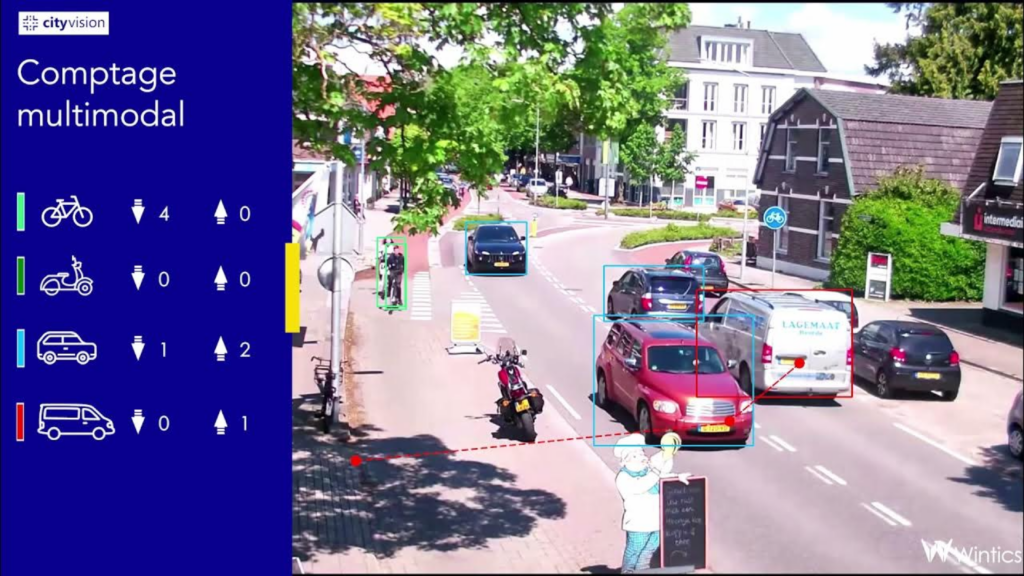

Figure 1. Cityvision’s counting system
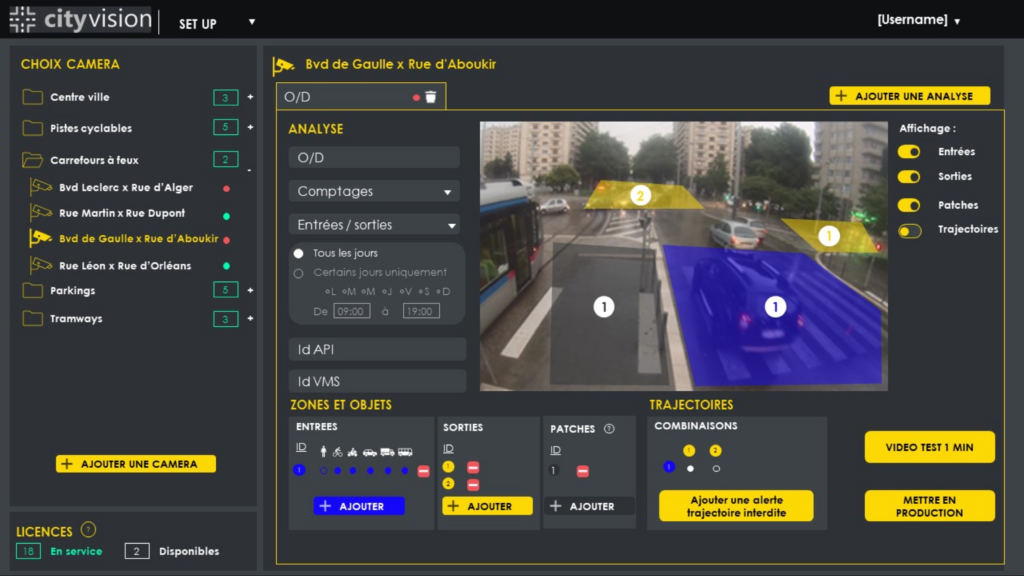
Figure 2. Cityvision’s backend dashboard
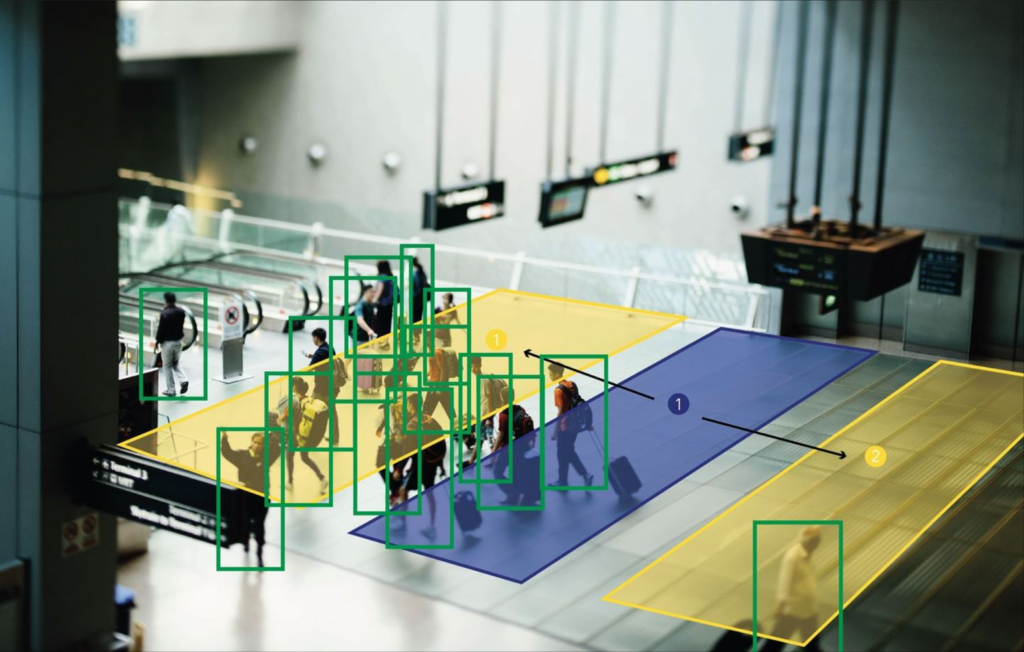
Figure 3. Cityvision deployed at an airport

While the exact configuration of Wintics’ system during the Olympics is unknown, these images reveal three features of how AI affects an automated practice of colorblind control. First, Wintics is technically correct in stating that their software is only “anonymously” tracking individuals; however, it is still fully capable of biometric capture, even if that form of capture remains disconnected from government databases containing personally identifiable information. Put otherwise, Wintics’ AI is colorblind only if one considers it to be necessary to know the names or other personal details of those being controlled. Of course, even without this data, the system could detect an abnormal crowd size, notify law enforcement of the “event,” then lead police to target individuals on-site on the basis of their perceived race or ethnicity. Second, and in addition to its indifference to quantifiable identity markers, this colorblind control is predicated on data-retention time. Legally, video surveillance data in France can only be stored for 30 days. While exceptions can be made to this rule, this means that the data being collected by Wintics is fleeting when compared to census data, for example. Third, unlike the data at issue in the ethnic statistics debate, that which Wintics is committed to interpreting is not textual—rather, it is visual, which significantly complicates attempts to analyze it from within a framework of race or ethnicity, categories which both sides of said debate agree are constructed and contested. On this basis, Wintics might claim that it is purely interested in objects, or what one could call the platform’s “thingification” of bodies—and, by extension, that its data is objective and neutral, capable of fulfilling the smart city dream of transforming every person, car, bicycle, and piece of trash into an active data point.[32] As a form of state power, this “colorblind control” operates through ostensibly neutral, race-agnostic technologies that reproduce differential surveillance and regulation—precisely by refusing to recognize race or ethnicity as explicit categories.
However, in addition to normalizing and even automating racial profiling by cloaking it in the veneer of “objective” data, the practice of colorblind control functions at another level: that of interpellation. As the philosopher Louis Althusser once emphasized, “all ideology hails or interpellates concrete individuals as concrete subjects.”[33] This operation is said to “recruit” or “transform” individuals into subjects; when a police officer calls out “Hey, you there!”, for example, one is interpellated as a legal subject of the State.[34] At the same time, this person is an active participant in the construction of their subjectivity in so far as they recognize themselves against specific, constructed patterns or archetypes. In this way, Althusser concludes, “the individual is always already interpellated as a subject.”[35]
But what if one is interpellated by a non-human entity like AI? Much as Matt Mahmoudi explains, “the simple fact of knowing that one is being surveilled can lead individuals to change their behavior, to censure themselves, or to not exercise certain of their rights.”[36] Extended further, the very knowledge that one is being surveilled by AI may compel them to modify their behavior to correspond with a constructed “Republican” or “French” identity, thus shaping an automated subject that is “always already” racialized outside of any captured data. This is “artificial interpellation,” a designation that names how automated surveillance systems hail subjects (and lead those same subjects to hail themselves) as freely choosing participants in what are in fact entrenched social structures and hierarchies.
With these two forms of algorithmic practice now in view, we can return to Steward’s text with a refreshed line of questioning. First, how do AI surveillance and other digital technologies mediate the formation of subjects in the Wise Green City? Second, against which “Republican” ideals, values, or archetypes are their identities constructed? And finally, how might these processes compel them to modify behaviors or even give up rights?
AN AUTOMATED SUBJECT
The formal qualities of Steward’s short story demonstrate how the Wise Green City is haunted by Republican opacity. On a linguistic level, the system’s AI sees the world in a way not dissimilar from Wintics’ Cityvision, computing humans beings using designated call numbers; for example, we read that the psychologist Camille’s real name is in fact “#278097528.” Further, not one of the story’s characters is described in terms of visual identity markers. All are thus equal in the eyes of the Wise Green City—despite the fact that each has been sorted according to their cultural, economic, and physical characteristics.
More revealing, however, is the interplay between the pronouns that index the text’s narrators. At a glance, pronoun usage across the narratives seems stable: the AI narrator consistently adopts a royal “We,” every instance of which is capitalized, turning the shifter into a proper name. Still, despite being without a name themselves, the human narrator adopts an “I,” laying claim to a type of personhood that the AI seemingly cannot. The reported speech of the text’s opening lines shakes this tenuous infrastructure. There, the AI narrator interpellates its human counterpart with a different pronoun: “What do you want to do?”, the AI asks, to which the human responds: “Deactivate yourself.” The AI then adopts an “I,” replying “Are you sure? I should remind you that…”, only to be again told to deactivate.[37] This “I-you” interaction curiously (if unknowingly) attributes a human-like subjectivity to the AI; indeed, much as the linguist Émile Benveniste explains, when one utters the first-person singular “I,” it implies the existence, or presence, of a speaking subject. This logic also extends to the second-person, “you,” which also implies an “I,” and which the human narrator uses to refer to the system’s AI.[38] In other words, our human narrator’s slip signals that the AI of the Wise Green City has become naturalized as a subject rather than a technology, and all its prior names and programming since forgotten. By extension, the “I” of the text unstably indexes both human and AI; calling the very existence of a speaking human into question. Wise Green City thus becomes a hall of linguistic and digital mirrors, where it makes no difference whether subjects are humans, human bodies directed by cybernetic implants, or full automatons; all are engaged in the artificial interpellation of one another. Here, another meaning for the story’s subtitle emerges, as roboticists regularly use the term “degrees of freedom” to refer to “the axes of motion along which a robot can move.”[39]
Readers later learn that these linguistic slippages are not accidental; in fact, the AI explains that its royal “We” represents progress:
We have also programmed them to forget the names that they had for Us in the past, names that invoked fear and memories of negatives experiences: no longer “artificial intelligence,” no longer “algorithms,” no longer “machine learning,” no longer “chat bots” or “agents,” no longer “neural networks,” no longer “deep learning” or “big data.” We gave them their independence by humbly offering Ourselves up as support, simple tools, always signaling that it was possible to keep things as they were.[40]
In other words, the Wise Green City was founded on its inhabitants’ conflation of the values and identities of the human with those of AI, which resulted in a social order where difference has been flattened, and opacity thus derived from transparency. The tokens “We,” “Us,” and “Ourselves” are thereby traces that absorb every object of the Wise Green City—from its smart sensors, to its AI implants, to the humans that they control.
This blinds inhabitants to the system’s true means and ends: “They do not know that none of them have access to Our lines of Code. But they produce Our hardware, the concrete conditions of Our existence. This is why we still need them.”[41] Readers experience a similar opacity: beyond this conceit, the story lacks additional details about the city’s political economy. Without this Code, it becomes impossible to detect why the system carries on extracting, accumulating, and making use of data—as well as to the benefit of whom. What those living in the Wise Green City also fail to grasp is that their freedom is an illusion. This creates a smart political underclass, whose members are “herded along toward maximally productive activity,” and robbed of the ability to question their reality along the way.[42]
The ending of Steward’s tale underlines this final point, nuancing how the Wise Green City draws on opacity and even on disconnection. After having turned off their cranial implant, the human narrator finds others inspired to “disconnect” by the psychologist Camille. Together, they engage in a counter practice of mapping districts of the city that seem to have escaped the AI’s gaze. But in the story’s closing lines, this same AI claims to have manipulated Camille through her cranial implant to identify dissidents and allow them to “play with freedom”: “Let them organize, let them make their own maps. That will keep them occupied,” the system declares. “Meanwhile, We will keep our eye trained on them, never allowing them to truly disrupt the equilibrium of the Wise Green City.”[43] But at what cost does this equilibrium come? Instead of answering, the Wise Green City interpellates us one final time: “It’s you who decide, despite yourself.”[44]
NEW PALACES (OLD NEIGHBORHOODS)
The Wise Green City’s equilibrium, the forgotten “Code” of its system, can be read in a real-world smart city project: the 2024 Olympic Village. The Olympics Games are, of course, a hotbed of real estate speculation and development: host cities must build stadiums, lodging, and other physical and digital infrastructure. Beginning in 2019, Paris’s Village was constructed to house athletes and the media. Yet even before that, this “new palace in an old neighborhood,” as Baudelaire might have called it, was cloaked in smart discourse, with promises of a “city of tomorrow” designed to tackle climate change and economic inequality alike. Thanks to this pitch (Fig. 4), the project received carte blanche, much as Wintics had by positioning their tech as a solution to terrorism. The floodgates of investment were opened: more than €2B in total were subsequently spent on the Village, 80% of which was financed privately.[45] The Olympics had provided the State with a pretext to act as a platform.
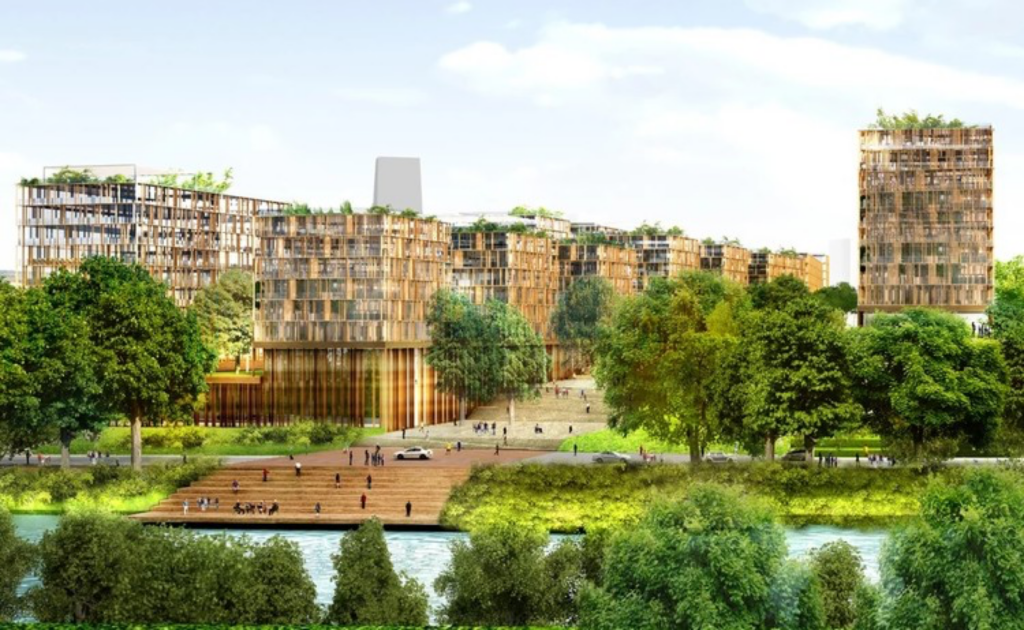

Figure 4. Architectural rendering of the Paris Olympic Village (Dominique Perrault Architecture, 2015)
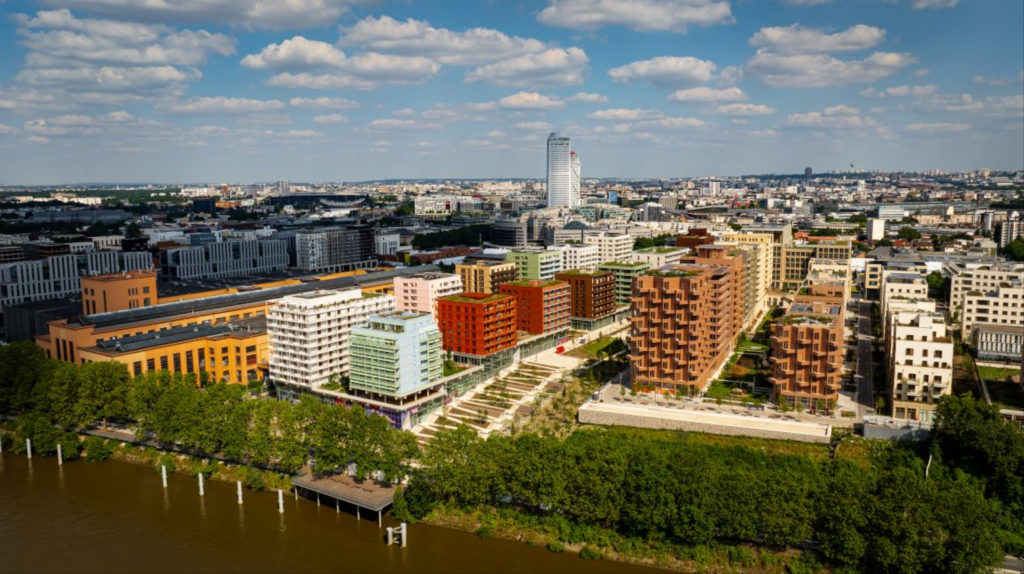
Figure 5. Olympic Village, Seine-Saint-Denis (2024)

The site chosen for this project was Seine-Saint-Denis (Fig. 5), a major department located just north of central Paris that ranks among the poorest in the country. But rather than a trickle-down effect, journalist Jade Lingaard reports that “the operation displaced upwards of 1,500 people from their homes and benefited a mere 15% of local businesses. All of this in a region that a year before had seen wide-scale protests sparked by the police murder of a French-Algerian teenager and a “pervasive sense of social abandonment.”[46] The Olympic Village would therefore be not just a more innovative city, but one devoid of visible poverty and social unrest. Lingaard’s investigation also revealed that the majority of those impacted were racialized, including French families from countries in Sub-Saharan Africa and the Maghreb, immigrant workers and their children, asylum seekers, and other undocumented peoples.[47] After the Games had ended, the Village was swiftly converted into private office space and luxury housing, itself largely unaffordable for the displaced. Instead, the beneficiaries remained private companies like Cemex, whose “Go” software coordinated construction logistics; Atos, whose “Urban Data Platform” supported operational management; and real estate developers like Vinci, who continue to collect rent.
If “Wise Green City” is the fictionalization of Macron’s neoliberal dream, the Olympic Village is thus the prehistory of that same city. Both were founded on the dispossession and extraction of value from the most vulnerable, then maintained and optimized through data extraction and algorithmic practice. This is what the smart city calls progress. Paris changes! Certainly. But its capitalist, neocolonial source Code remains.
This text was delivered as a lecture at the University of Miami on January 23, 2026. Thanks to Amber Bal, Corine Labridy, and Bret Leraul for their considered feedback on an earlier draft. All translations are my own, unless where otherwise noted
[1] Charles Baudelaire, The Flowers of Evil, translated by Nathan Brown (New York: Verso, 2023), 295.
[2] Marc Kohlbry, “Technologies of Hope (Fiction, Platforms, Management), Social Text 42.4 (2024).
[3] La Volte, “Appel à nouvelles – Demain la ville,” https://lavolte.net/blogs/actus/appel-a-nouvelles-demain-la-ville.
[4] Amir Reza Khavarian-Garmsir, Ayyoob Sharifi, Ali Sadeghi, “The 15-minute city: Urban planning and design efforts toward creating sustainable neighborhoods,” Cities 132 (2023).
[5] Ketty Steward, “Wise Green City,” from Quartiers libres: demain la ville (Paris: La Volte, 2024), 5.
[6] Ibid., 12
[7] Ibid., 9.
[8] Ibid., 8.
[9] Ibid.
[10] Ibid.
[11] Ibid., 15.
[12] Ibid.
[13] Ibid.
[14] Morgan Meaker. “At the Olympics, AI Is Watching You.” Wired, July 25, 2024. https://www.wired.com/story/at-the-olympics-ai-algorithms-are-watching-you/.
[15] “Macron Says He Wants France to Be a ‘Startup Nation,’” Bloomberg Television. June 15, 2017. https://www.youtube.com/watch?v=Cj3pB97j1sE.
[16] Jathan Sadowski and Frank Pasquale, “The Spectrum of Control: A Social Theory of the Smart City,” First Monday 20.7 (2015), 3.
[17] Jathan Sadowski and Roy Bendor, “Selling Smartness: Corporate Narratives and the Smart City as a Sociotechnical Imaginary” Science, Technology, & Human Values, 44.3 (2019): 540-563, 554.
[18] Mack DeGeurin. “Swimming, Soccer, and Surveillance: Paris Preps for an AI-Monitored Olympics.” Popular Science, July 18, 2024. https://www.popsci.com/technology/paris-olympics-ai-surveillance/.
[19] Juliette Jabkhiro and Julien Pretot, “How France plans to use AI surveillance to keep Paris 2024 olympics safe,” Reuters, March 8, 2024. https://www.reuters.com/sports/olympics-how-france-plans-use-ai-keep-paris-2024-safe-2024-03-08/.
[20] Mack DeGeurin. “Swimming, Soccer, and Surveillance.”
[21] “Paris 2024 Olympics: Concern over French plan for AI surveillance,” July 18, 2023. https://www.bbc.com/news/world-europe-66122743. See Félix Tréguer, Technopolice: La surveillance policière à l’ère de l’intelligence artificielle (Paris: Divergences, 2024), for a sweeping account of predictive policing in France.
[22] Achille Mbembe, “Thoughts on the Planetary” in Decolonising the Neoliberal University: Law, Psychoanalysis and the Politics of Student Protest Livre, ed. Jaco Barnard-Naude (London: Routeledge, 2021).
[23] Ibid.
[24] Édouard Glissant, Poetics of Relation, translated by Betsy Wing (Ann Arbor: University of Michigan Press, 2010), 189-90.
[25] Ibid, 194.
[26] Ibid. 193.
[27] Daniel Sabbagh and Shanny Peer, “French Color Blindness in Perspective the Controversy over ‘Statistiques Ethniques,’” French Politics, Culture & Society, 26.1 (2008): 1-6.
[28] Patrick Simon, “The Choice of Ignorance: The Debate on Ethnic and Racial Statistics in France,” French Politics, Culture & Society 26.1 (2008): 7-31, 9.
[29] Patrick Simon, “The Choice of Ignorance,” 18.
[30] Jathan Sadowski and Frank Pasquale, “The Spectrum of Control,” 9.
[31] Wintics, “À propos,” https://wintics.com/a-propos/.
[32] See Aimé Césaire, Discourse on Colonialism (New York: Monthly Review Press, 1972), trans. Joan Pinkham, 42.
[33] Louis Althusser, “Ideology and Ideological State Apparatuses,” 1970, https://www.marxists.org/reference/archive/althusser/1970/ideology.htm.
[34] Ibid.
[35] Ibid.
[36] Mack DeGeurin. “Swimming, Soccer, and Surveillance.”
[37] Ketty Steward, “Wise Green City,” 5.
[38] Émile Benveniste, Problems in General Linguistics, trans. Mary Elizabeth Meek (Miami: University of Miami Press, 1971), 225, 197.
[39] Tom Williams, Degrees of Freedom: On Robotics and Social Justice (Cambridge: MIT Press, 2025), 22.
[40] Ketty Steward, “Wise Green City,” 8.
[41] Ibid.
[42] Jathan Sadowski and Frank Pasquale, “The Spectrum of Control,” 12.
[43] Ketty Steward, “Wise Green City,” 22.
[44] Ibid., 14.
[45] Jade Lingaard, Paris 2024 (Paris: Divergences, 2024), 64, 99.
[46] Ibid., 14.
[47] Ibid., 22.
WORKS CITED
Althusser, Louis. “Ideology and Ideological State Apparatuses,” 1970,
https://www.marxists.org/reference/archive/althusser/1970/ideology.htm.
Baudelaire, Charles. The Flowers of Evil, translated by Nathan Brown (New York: Verso, 2023), 295.
Benveniste, Émile. Problems in General Linguistics. Translated by Mary Elizabeth Meek (Miami:
University of Miami Press, 1971).
DeGeurin, Mack. “Swimming, Soccer, and Surveillance: Paris Preps for an AI-Monitored Olympics.”
Popular Science, July 18, 2024. https://www.popsci.com/technology/paris-olympics-ai-
surveillance/.
Glissant, Édouard. Poetics of Relation, translated by Betsy Wing (Ann Arbor: University of Michigan
Press, 2010).
La Volte, “Appel à nouvelles – Demain la ville,” https://lavolte.net/blogs/actus/appel-a-nouvelles-demain-
la-ville.
Lingaard, Jade. Paris 2024 (Paris: Divergences, 2024).
Jabkhiro, Juliette and Julien Pretot. “How France plans to use AI surveillance to keep Paris 2024
olympics safe,” Reuters, March 8, 2024. https://www.reuters.com/sports/olympics-how-france-
plans-use-ai-keep-paris-2024-safe-2024-03-08/.
Khavarian-Garmsir, Amir Reza, Ayyoob Sharifi and Ali Sadeghi. “The 15-minute city: Urban planning
and design efforts toward creating sustainable neighborhoods,” Cities 132 (2023).
Kohlbry, Marc “Technologies of Hope (Fiction, Platforms, Management), Social Text 42.4 (2024).
“Macron Says He Wants France to Be a ‘Startup Nation,’” Bloomberg Television. June 15, 2017.
https://www.youtube.com/watch?v=Cj3pB97j1sE.
Mbembe, Achille. “Thoughts on the Planetary” in Decolonising the Neoliberal University: Law,
Psychoanalysis and the Politics of Student Protest Livre, ed. Jaco Barnard-Naude (London:
Routeledge, 2021).
Meaker, Morgan. “At the Olympics, AIIs Watching You.” Wired, July 25, 2024.
https://www.wired.com/story/at-the-olympics-ai-algorithms-are-watching-you/.
“Paris 2024 Olympics: Concern over French plan for AI surveillance,” July 18, 2023.
https://www.bbc.com/news/world-europe-66122743.
Sadowski, Jathan and Frank Pasquale, “The Spectrum of Control: A Social Theory of the Smart City,”
First Monday 20.7 (2015), 3.
Sabbagh, Daniel and Shanny Peer, “French Color Blindness in Perspective the Controversy over
‘Statistiques Ethniques,’” French Politics, Culture & Society, 26.1 (2008): 1-6.
Sadowski, Jathan and Roy Bendor. “Selling Smartness: Corporate Narratives and the Smart City as a
Sociotechnical Imaginary” Science, Technology, & Human Values, 44.3 (2019): 540-563.
Simon, Patrick. “The Choice of Ignorance: The Debate on Ethnic and Racial Statistics in France,” French
Politics, Culture & Society 26.1 (2008): 7-31.
Steward, Ketty. “Wise Green City,” from Quartiers libres: demain la ville (Paris: La Volte, 2024).
Williams, Tom. Degrees of Freedom: On Robotics and Social Justice (Cambridge: MIT Press, 2025).
Wintics, “À propos,” https://wintics.com/a-propos/.