b2o

  • Nothing More Than Feelings

    tshirts freeman

    by Elizabeth Freeman, University of California Davis

    ~

    Sometime during the days when all the Facebook photos of José with his friends flooded in, José looking at once noble and goofy, fiercely handsome and anime-cute, I had a vision of a T-shirt with a black-and-white, high-contrast picture of José’s face. It would echo the Cuban photographer Alberto Korda’s famous photo of Che Guevara as made over by Andy Warhol–you know the one. The T-shirt would of course disidentify with Che, capturing and redeploying a certain Latino butchness, a certain solidarity with the freaky people, faggot-style. It would come in turquoise, fuschia, tangerine, sweat yellow, and ACT UP white. José’s many friends, so many that we have not all met, would glimpse one another disappearing down subway staircases or turning corners at conferences or lurking at dingy bars. And we’d know we always had more comrades to meet.

    What did José teach me about X? Look, we were girls together, kids from fancy liberal arts colleges who arrived at graduate school to do what we did not yet know to call queer theory in about 1990. I can’t say I’ve ever pivoted my own work directly around a particular term or scholarly move of José’s, though rereading him always reminds me that I owe him even more citations even than I thought I did. For example, he understood camp as a memorial practice long before I got there: “like a melancholic subject holding on to a lost object, a disidentifying subject works to hold onto this object and invest it with new life” (Disidentifications, 12). I’m working on sacramentality now, on the sacramental as a way of imagining a history of sexuality that doesn’t march relentlessly toward the secular, and it turns out Cruising Utopia already knows a lot of what I’m trying to say when I wrote this sentence: “queer culture parts ways with New Historicism by treating [a] fragment as a doorway not just into ‘the past,’ but into a series of complex temporal relations: acknowledgements of contemporary paradoxes and struggles, invocations of a future to come, surrogate relations to the dead, nonlinear models of descent (and dissent).” I think I’ll read José from here on the way so many of us now read Eve Sedgwick, seeing the things I am struggling to come to already there in work dating back to the early 1990s. I can live with that temporal twist, though: he lives in a future I haven’t reached yet.

    But the Che/José T-shirt vision recalls me to a moment that José cites in Disidentifications. This vision and this moment don’t fit the academic-legacy, high theory model I’ve been struggling to figure out how to inhabit for this in memoriam (I struggle in part because if he’s dead, we are no longer thinking the same cultural moment together, not in any literal way, and that’s too painful). Anyway, José cites Augie Roble’s 1993 documentary Cholo Joto, where Valentín describes seeing a mural of Che accompanied by a quote: “A true rebel is guided by deep feelings of love” (quoted in Disidentifications, 14). José reads Valentín’s response to this quote—“I’m not going to fight out of anger but because I love myself and I love myself and I love my community”—as a disidentifying rearticulation of masculinist Chicano nationalism in queer terms, a way of reanimating of the lost homoerotic valences of early nationalist thought (15). And that is not wrong. But in 1993, this quote had another future too.

    “A true rebel is guided by deep feelings of love.” Yeah, that’s right, as Valentín puts it – that could go on the T-shirt, too. Because what José taught me was less a theory or an argument than a method of being in the world as a researcher, a writer, a teacher, and a denizen of multiple worlds (in his case, underworlds). Here is a thing everyone knows about José: he loved a scene he wasn’t the center of. He liked to set them spinning, step back, and make exquisite fun of them. His scenes were the opposite of the traditional dramatological kind: you never knew when they’d start (except never on time) or finish (though always after hours). They often changed locations. The personnel shifted regularly. They had no goals and they had multiple, multi-tentacled conflicts. José loved drama; pretty much everything lesbians did, for example, was already performance art to him. Yet—and it took insecure me a couple of years to figure this out—all of his social mongering and fomenting, all his screwball choreography, was a practice of love. In other words, it really was all about you, not about him. He made it for you. A friend of mine left his memorial in New York last weekend saying, “What I learned from José was to have more parties.”

    That is not not theory. José built the worlds he thought about. In his work, and in any number of concrete spaces from the classroom to the lecture hall to the gallery to the club, he created glorious mash-ups of artists and academics, oddballs and wannabes, the fabulous and the pasty-faced. Though you might wonder sometimes if you were cool enough to keep up, nobody was ever the butt of anything for more than a minute, though he did quip about his life as a matchmaker, mentor, network-tangler, and slut, that everything happened in “This Bridge Called My Crack.”1 His rebellion—sneaky boy!—was not to leave anyone out, not to limit his conversations with those as well-educated as he, not to read people’s work contemptuously or decide who was smart enough and who wasn’t (at least, not in public—what he said off the record sometimes traveled, but it was always too funny to hurt much). His party could always be bigger.

    So a lot of us who knew José Muñoz, thought with him, cruised with him, laughed with him, made fun of ourselves with him, I think a lot of us have taken up his practice of rebelling against the academy’s, the art world’s, the “community’s,” the Queer Mafia’s most banal forms of cruelty, though he left and we will still leave room, please, for a good joke cracked about anyone. Professionally—to narrow the world a bit, just for a moment—this has meant: figure out what someone is saying even if it sounds like crazytalk. Introduce people to one another. Don’t be afraid of people who are smarter than you. Consider everyone’s success a piece of yours, too. Cite down, gossip up, psychoanalyze lushly and lovingly, invite everyone in. Rebel against the idea that we’re narrowing the gates because these gates—the ones you can see, like tenure-track jobs or book awards or art stardom or the velvet ropes at the coolest club—they are not the ones that count. The ones that count are in front of José’s heaven, and they are wide open. So get out that T-shirt. Put it on, it’s the only thing we have to wear.

    _____

    Visit the full José Esteban Muñoz gallery here.

    _____

    Notes
    1. Muñoz’s essay “Feeling Brown: Ethnicity and Affect in Ricardo Bracho’s The Sweetest Hangover (and Other STDs)” (in Theatre Journal 52 [2000]: 67-79) includes a subsection entitled “This Bridge Called My Crack.”
    Back to essay

  • Turning In to The Sense of Brown

    feeling brown post

    by Ann Cvetkovich, University of Texas at Austin

    ~

    In the wake of José’s death, many people have invoked passages from Cruising Utopia in order to express the significance of his work and what he meant to them. His call to “hear something else” and “feel something else” in the “then and there of queer futurity” has been a form of solace, as though we might be able to feel him while “cruising utopia.” Although I too feel that call, my thoughts have turned more to the book he hadn’t yet published, which was once called Feeling Brown but which morphed over time to become The Sense of Brown. I’ve been waiting for the book at least as far back as the essay called “Feeling Brown,” about Ricardo Bracho’s The Sweetest Hangover, which was published in 2000. It is an article to which I returned again and again to ponder José’s ambitious aim of “describing how race and ethnicity are to be understood as “affective difference.” By affective difference I mean the ways in which different historically coherent groups “feel” differently and navigate the material world on a different emotional register” (70). I found these sentences so thrilling for what they meant about the promise of the affective turn.

    But it took a while before I was able look back to those old publications. When José first died, I just wanted to think about him as a friend not a colleague. It was too heartbreaking to acknowledge how much I will miss the live encounters with his thinking and how much I have come to depend on learning about his ideas in conversations about work in progress—from queer faculty working groups years ago at NYU, to Public Feelings events, to a salon about the good life in my living room last year. When I was finally able to turn to his writing, one of the first things I reached for was the work that I taught most recently—“Feeling Brown, Feeling Down,” his essay about Nao Bustamante’s Neapolitan and Melanie Klein’s depressive position. I had assigned it for my spring 2013 graduate seminar on “Queer Affect, Queer Archives,” and the students wanted to return to it at the end of the semester because we hadn’t had enough time to cover it the first time around. My files thus contain two sets of notes, which makes it easier to see which points seemed most important. What follows are some of the things that stood out then and that I find myself wanting to remember and pass on now.

    First and foremost is this more recent essay’s articulation of the turn away from identity and towards affect in order to describe brown as a “feeling,” including the brilliant rephrasing of Gayatri Spivak to yield the compelling question, “How does the subaltern feel?” I quote at some length in order to provide the context:

    My endeavor, more descriptively, is intended to enable a project that imagines a position or narrative of being and becoming that can resist the pull of identitarian models of relationality. Affect is not meant to be a simple placeholder for identity in my work. Indeed, it is supposed to be something altogether different; it is, instead, supposed to be descriptive of the receptors we use to hear each other and the frequencies on which certain subalterns speak and are heard or, more importantly, felt. This leaves us to amend Gayatri Chakravorty Spivak’s famous quotation, “Can the subaltern speak?” (1988, 1999) to ask How does the subaltern feel? How might subalterns feel each other? (677)

    I love the modification of Spivak’s question because the original has been crucial to my own intellectual formation, and the revised version echoes a question that has driven my research, “How does capitalism feel?” José’s questions not only signal the affective turn but affirm the use of the vernacular word “feel” as a theoretical term. Even as he is gearing up to explain how Kleinian object-relations theory and the depressive position have something to offer, he signals the value of ordinary feelings and lived experience as a foundation for thinking, as in: “Describing the depressive position in relation to what I am calling “brown feeling” chronicles a certain ethics of the self that is utilized and deployed by people of color and other minoritarian subjects who don’t feel quite right [my emphasis] within the protocols of normative affect and comportment” (676). For those who often “don’t feel quite right,” this is profoundly enabling work.

    Also apparent in the longer passage quoted above is the conceptual challenge of the turn from identity to affect, evident in the rhetorical gestures that underscore this move–the insistence that affect is not a mere “placeholder” and the stated desire that it “be something altogether different.” As a reader, I lean in closely for the next sentence where José mentions the “receptors” and “frequencies” that allow us (or “certain subalterns”) to hear and feel each other. I love this sense of “tuning in” to something that can’t fully be felt, and I want to hear more about the notion of “racialized attentiveness” (680), which constitutes not only a method but a way of living or a structure of feeling. A close reading of this vocabulary of attention helps explain why José might have moved from “feeling” to “sense” as a keyword or critical concept, as he developed a language for tracking the subtle mechanisms by which queers of color or “minoritarian subjects” find and connect with one another.

    José’s distinctive mix of high and low archives, including his range of theoretical sources, constitutes a queer method or, as he puts it, “the stitching I am doing between critical race theories, queer critique, and psychological object-relations theory” in order to produce a “weak” and/or reparative theory. Here as elsewhere, his work is also distinguished by his commitment to a canon of white Marxist and European theory and his ability, often through disidentification, to put what might seem like unlikely sources to service in thinking about queers of color. Through “stitching” together somewhat unlikely companions, and a willingness to let the seams show, he avoids the “cryptouniversalism” (688) of those who are too faithful or narrow in their theoretical allegiances. One of the reasons I am so upset to lose him is because we need “brown feelings” if affect theory, including its queer versions, is not to become too white. His insistence that the affective turn be about race needs to be carried forward.

    José also staged encounters between different bodies of theory by working closely with queer of color artists, who produce theory in a different register. In “Feeling Brown, Feeling Down,” he turns to Nao Bustamante, one of the fellow travelers with whom he had a long connection and through whose work and friendship his projects were conceived. In his analysis of Nao’s tears and her literal use of stitching in Neapolitan’s crocheted video installation, he offers an account of “the depressive position” as a historically specific form of racialized affect. He invites us to hear the “sound of brown feelings” in the work’s soundtrack and to appreciate the outlandishness of the “sad crow of depression” perched on top of the TV monitor that features Nao’s crying face. And he gently but firmly admonishes those who would mistake this particularity for something either stereotypically Mexican or universally human. It is poignant to read this account now in retrospect and to hope for the reparative potential of tears.

    As I turned reluctantly to the necessity of now meeting with José through writing rather than in person, one of the things my archive yielded was the original book proposal for Feeling Brown. I have one version that we discussed in the NYU Queer Faculty Working Group, likely sometime in 1999-2000, and another version that I read for Duke UP in 2000 so that he could get an advance contract. I was surprised to remember how long ago the proposal had been written; José had just barely published Disidentifications, and he already had a robust second book project. I think it was useful for him to publish Cruising Utopia first; because The Sense of Brown was so ambitious, it benefited from continuing to evolve over time. In the interim, affect theory exploded and morphed in no small part as a result of José’s own work, including the Women and Performance special issue he edited, which stakes out the relations between affect theory and psychoanalysis, the essay on Ana Mendieta in which he more directly addresses sense over feeling, or the talk he had been giving over the last year on Wu Tsang’s documentary film Wildness, in which he was developing his notion of a “brown commons.”

    But even in this early version of the project, the key point that race is experienced as a feeling is already present. In both versions, I circled the sentences (quoted in my initial paragraph) that also appear in the Ricardo Bracho essay. My notes show excited questions that would prove generative for me and so many others — about national affect, about the relation between Marxism and psychoanalysis, and about the use of Williams and DuBois as sources for affect theory. Queer affect theory was still emerging at that point, and although we would come to fuller set of tools, José, who had a head start as Eve Sedgwick’s student, was inventing something very rich in order to make good on his vision of “a radical reconceptualization of ethnicity as affective specificity.” I will continue to tune in to his work to “feel something else” — including “the sense of brown.”1

    _____

    Visit the full José Esteban Muñoz gallery here.

    _____

    Notes
    1. The phrases “hear something else” and “feel something else” are underscored in Kay Turner’s song “Cruising Utopia,” the lyrics for which are taken from José’s book and originally performed at “Otherwise: Queer Scholarship into Song,” Dixon Place, April 4, 2013 and subsequently at memorials for him in New York.
    Back to essay

    Works Cited
    José Esteban Muñoz, “Feeling Brown: Ethnicity and Affect in Ricardo Bracho’s The Sweetest Hangover (and other STDs).” Theatre Journal 52:1 (2000): 67-79.
    —–, “Feeling Brown, Feeling Down: Latina Affect, the Performativity of Race, and the Depressive Position.” Signs 31:3 (2006): 675-688.

  • When We Grow Up: Lady Di’s Yesterday and José’s Tomorrow

    lady di post

    by Daphne A. Brooks, Princeton University

    ~

    I would like to share a minor tale from yesterday as a way to continue thinking about the world of the what-might-be with which José Muñoz gifted us and which our ensemble of voices are keeping alive today.

    Last March, I showed up at NYU for a panel I had organized on the “musician as urban planner”—inspired by and featuring Fred Moten. It was a session that also included Alexandra Vazquez, Gayle Wald and Greg Tate, and in the audience sat our friend José. The paper that I read that day was hardly even that at the time. I called it “Midnight Fever Dreams for Diana Ross,” or something like that. But what moved me so, what ultimately spurred me on to finish the piece, was that José had said such kind things to me about it. It wasn’t until he moved on last December that I found out that we were a year apart in age—which seemed impossible to me because I had looked up to him for so long as a colleague and friend who had generously created opportunities for me and welcomed me into his vast, roving, electric network of thinkers and artists and rebels and outsiders. Age is important in the case of this short tale I’m telling about yesterday because I can better understand today why my meditation on the Lady Di of our childhood would have perhaps hailed my beloved fellow Gen-Xer José in a particular way.

    If my thoughts about her were shaped so wholly and deeply by José Muñoz, the pioneering, field-altering theorist, world-making mentor, institutional-builder and undercommons cartographer, if my thoughts about her could not have taken flight without his insistence on pointing us towards a then-and-there, they were also, unbeknownst to me at the time, holding the kernel of yet another revolutionary manifesto that José was radically improvising already, one that I would hear about the last time I saw him at the American Studies Association: that of “brown theory,” an embrace of the here and now and the beauty and power of what we already are.

    So humbly and very briefly, then, I share these words and sounds for José as I read them last year.

    When I grow up/will I be pretty/Will you be big and strong?/Will I wear dresses that show off my knees?/Will you wear your trousers long?/Well I don’t care if I’m pretty at all/And I don’t care if you never get tall/I like what I look like, and you’re nice small/We don’t have to change at all…

    Free to be you and me, sang our own groovy Miss Ross, part of the Marlo Thomas ensemble of voices who re-ordered our universe while we sat on shag carpets and swapped Evil Knievel action figures and Ezra Jack Keats urban collages. My own Gen X earliest memory of Miss Ross consists of her re-ordering my playground with those light-as-feather vocals—to me always gender-ambiguous because they, of course, resembled that other voice coming out of my sister’s stereo speakers all day long, the voice of a then-teen Jackson 5 lead singer who, confusingly and yet perfectly and fittingly (because how else could it ever be?) sang “When I Grow Up” with “quiet fire” soul earth mother Roberta Flack on the Free to Be Television special that my friends and I watched, re-played in our heads and re-enacted on the playground for most of that first grade school year.

    The hyper-femme “womanly” and yet “childlike” delicacy of her voice was its own kind of powerful statement of extremes, a queer gateway and an invitation to go with her “Somewhere” else (pace José), just as she and Mary and Cindy sang to us so triumphantly on national TV in the face of unspeakable and yet oh-so-familiar horror and trauma on April 5th, 1968.

    She was always, then, in my childhood, the voice insisting that we were as “normative” as we already were. So that even though, yes, Berry Gordy, my 10-year-old People-Magazine-reading self saw the crass ways in which you re-structured The Wiz, turning Dorothy into a mid-20s school teacher and ousting virtuosic teen ingénue Stephanie Mills so that your “Endless Love” could “ease on down the road,” I was willing “to go to there” with her because she already sounded out fanciful, limitless possibility, safety in playing. She was a songbird often lambasted for her aesthetic “plasticity”, accused of failing the dreaded “A” word, but that putative “IN-authenticity,” that Courtney “fake-it-so-real I’m beyond fake” ethereal register was a reminder that if we did change at all, it could and should be a glorious “act”—one that we could work “fiercely” at Studio 54 or as oddly-as-we-wanna-be as a black New Wave nerd sporting pink hightops in Shallow Alto, California.

    She was the soundtrack for our childhood civic universe, “a land” as the oh-so-crunchy New Seekers sing in the Free to Be theme—where “the children are free… where the rivers run free,” in a land of the “green country… a land bright and clear/the time’s a comin’ near… take my hand and we’ll live…”

    http://www.youtube.com/watch?v=_26FOHoaC78

    Today, let’s all hold hands and move towards the place that José saw coming….

    _____

    Visit the full José Esteban Muñoz gallery here.

    _____

    A previous version of these remarks was delivered at the MLA 2014 session entitled “Drama Divisions: Envisioning Tomorrow for Jose Munoz.” Portions of this material appear in Daphne A. Brooks, “Let’s Talk About Diana Ross,” ed. Carl Wilson, Let’s Talk About Love: Why Other People Have Such Bad Taste (NY: Bloomsbury, 2014).

  • sonnet

    sonnet post

    by Barbara Browning, New York University

    ~


    when push came to shove, you were all talk,
    all action. that’s because you knew to hear
    how portentous a speech act was: the “wow”
    and “gee” of it all, the fun of the yack over coke
    – let’s blow this hamburger stand – better late
    than never – you were always late, but somehow
    way, like way, ahead of the curve. put jelly
    on your shoulder, baby. let us do what
    you fear most. it was you who let us feel
    this world was not enough, that something was
    missing. then you blew the hamburger stand.
    hm. thanks a lot. no really. thanks a lot.
    no, really. i don’t know how to thank you. i think
    i may be trying to do it for the rest of my life.

    ~

    Author’s note:

    After José passed, I wrote a couple of things for memorial or tribute events or publications, reflections that mixed the personal, the professional and the political, each time noting that he really didn’t differentiate between these things, which was the point … Anyway, as I approached this task one more time, with the prompt to consider a particular keyword or concept of significance to him, I began to write about the role that poetry played in his work – especially his later work. But then I just wanted to write a poem for him, and so I did.

    _____

    Visit the full José Esteban Muñoz gallery here.

    _____

  • Great American Author Series: A Political Companion to Walt Whitman

    Great American Author Series: A Political Companion to Walt Whitman

    Walt_Whitman_at_36

    Beyond Belief: The Political Whitman

    by Kerry Larson
    ~

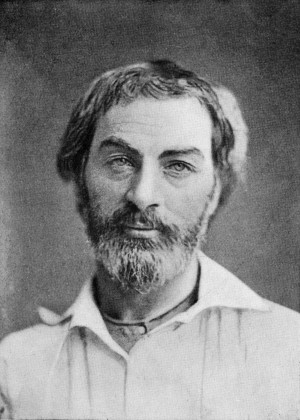
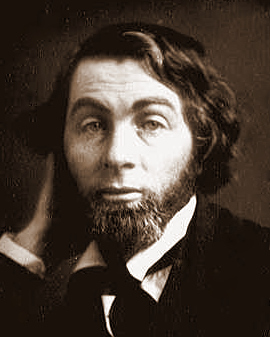
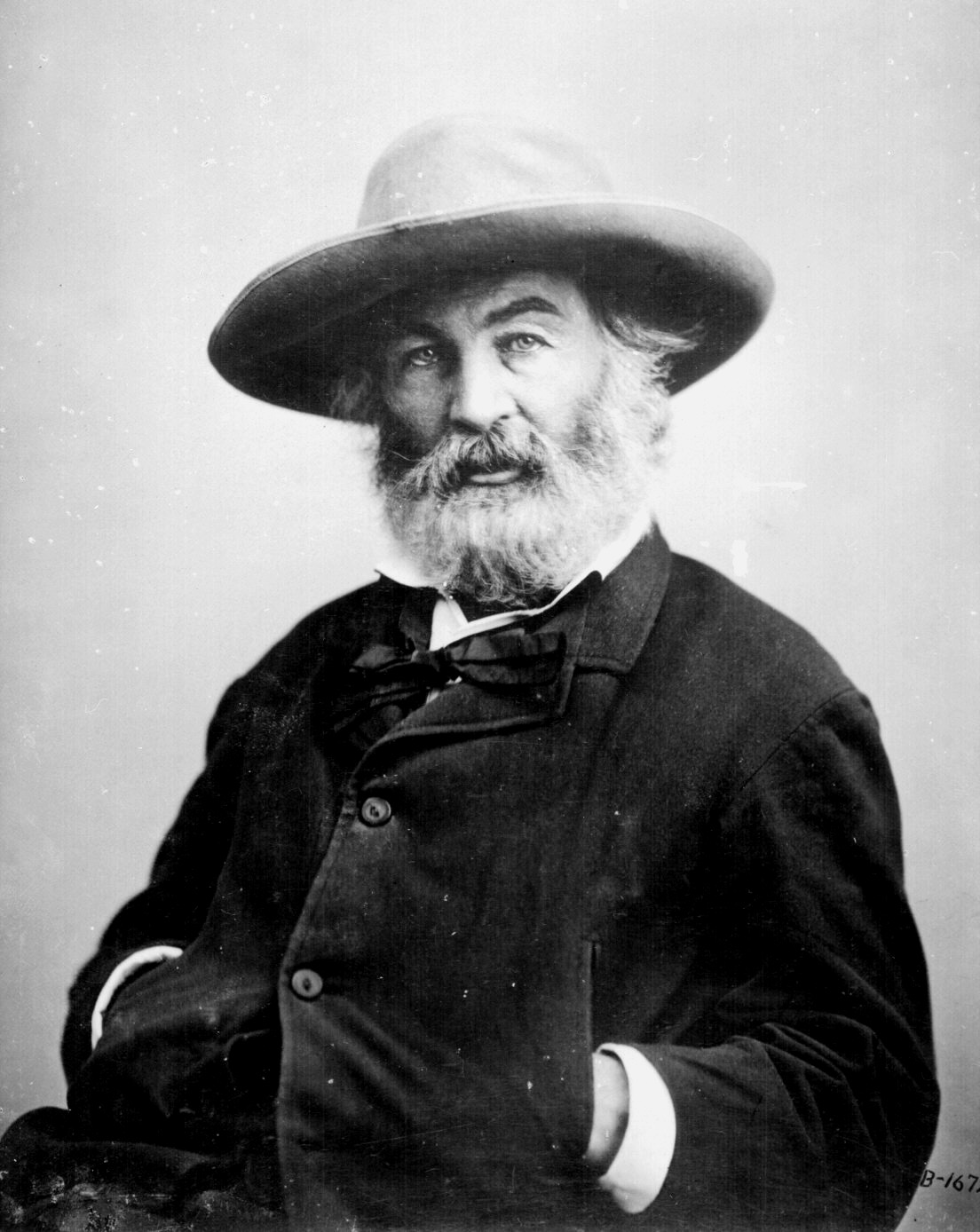
    For this volume editor John Seery has commissioned ten essays by political theorists from across the country to assess the politics of that self-professed champion of democracy, Walt Whitman. To establish parameters for the discussion, he has also reprinted essays on the poet by George Kateb, Nancy Rosenblum, and Martha Nussbaum originally published in the 1990s. Seery points out that, as a general rule, political scientists and political philosophers have had little occasion to comment on Whitman. This collection gives them the opportunity to do so.

    The tone for much of what follows is set by Kateb’s essay, which leads off the volume. For Kateb, Whitman is “a great philosopher of democracy” (19) because his writing is everywhere intent on drawing out the full moral and existential significance of a rights-based individualism, cornerstone of liberal democracy. A key assumption of his account is that such an individualism is a “strange idea” whose true implications are in constant danger of being simplified, overlooked, or irreparably distorted. A poem like “Song of Myself” is exemplary for Kateb in getting us to see how democratic individuality is “valuable mostly as a preparation for receptivity or responsiveness” (20). Here, in his best-known poem, the bard sings and celebrates a self that is not a historical person but “a composite democratic personality” which, in “its tolerance, its hospitableness, and its appetite for movement, novelty, mixture, and impurity” affirms the best qualities of a “democratically receptive culture” (37). Personal eccentricity and empathic connectedness go hand in hand. The self, Whitman’s poetry continually shows, is composed of many selves, a discovery that not only accounts for the perennial “strangeness” of identity but is decisive, in Kateb’s account, for creating an enriched appreciation for the strangeness and diversity of other selves.

    Walt_Whitman,_age_28,_1848-crop

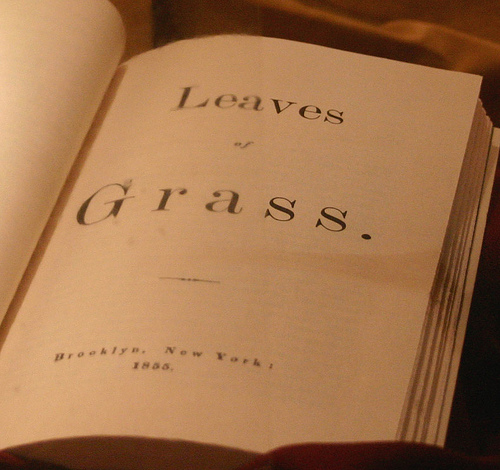
    Others, taking stock of what Cristina Beltran calls Whitman’s “amazing mobility of identity,” go along with the substance of Kateb’s analysis while worrying at its possible limitations. For Beltran, “Whitman’s all-encompassing ethic sometimes faltered as the poet associated slaves, blacks, and blackness with that which was repellent and/or corrupt” (68), while Terrell Carver finds that Whitman’s “universalizable concept of democracy” betrays a masculine bias that reduces “female difference [to] domesticity, child care, and sexual availability to men” (236). Similar reservations emerge for Michael J. Shapiro, whose “Whitman and the Ethnopoetics of New York” argues that Whitman’s “side-by-side and monocular and optimistic (often dissensus-denying) point of view” does not always do justice to “the micropolitics of the city” (210). But calling attention to the limits of inclusiveness in Leaves of Grass doesn’t make inclusiveness any less privileged as a critical ideal, and in this sense interpretations of the kind advanced by Kateb (or Martha Nussbaum, who shares many of the same views) are prepared not only to take such demurrals in stride but welcome them. So long as recognition controls one’s sense of what counts as political, expanding the scope of recognition may be viewed as advancing the cause of the political. Thus for example when it comes to considering a topic like equality, it’s “equality of respect” (237) that trumps all other considerations in the majority of these essays. Democracy here is primarily a matter of “feeling right,” to recall Stowe’s exhortation at the end of Uncle Tom’s Cabin. By and large, it is less a matter of beliefs one might accept or reject than a collection of dispositions and perceptions that one can either experience or fail to experience.

    Behind this outlook lurks the old suspicion, voiced most memorably by European thinkers like Hegel and Tocqueville, that liberal democracy doesn’t stand for anything in particular, that it is destitute of higher principles—unless doing as one pleases can be called a higher principle. Kateb and others are excited by Whitman’s verse, notwithstanding its occasional blind spots, because it puts flesh on that threadbare skeleton, rights-based individualism. To read through A Political Companion to Walt Whitman is indeed to discover that the conventional terms of social critique have been turned on their head: rather than the interpreter exposing the mystifications and bad faith of hegemonic practices that perpetuate injustice, we have commentators endeavoring to identify the terms of a mythology robust enough to animate core principles that by themselves are “too thinly cognitive . . . [and] too narrowly calculating” (156) to win full allegiance. Strange as it may seem to describe a collection of analytic essays along these lines, this attempt at extrapolating an ideology worth getting excited about does have the advantage of following the poet’s lead, most especially in his long prose tract written after the Civil War, Democratic Vistas, which begins with the author affirming that, while the United States is incontestably a democracy now that it has passed its severest test, the country nevertheless urgently requires bards to instruct a materialistic and myopic people in the true lessons of democracy. It is in this context that Whitman calls upon his successors to produce the “great poems of death” that might model a vision of democratic governance not motivated by fear or simple self-interest. In an inspired move, the editor dedicates the concluding section of the book to the topic of death and citizenship and includes essays by Peter Augustine Lawler, Jack Turner, and Morton Schoolman that, taking Democratic Vistas as a key text, insightfully probe into the relation between these two vital elements in Whitman’s poetry and prose.

    89411380_a58e01572c

    The larger question raised by A Political Companion to Walt Whitman is whether its efforts at ideological retrieval and rehabilitation succeed. Kateb’s account of Whitman’s poetics of empathy is undeniably stirring, but there is a sense in which it is no less abstract or dogmatic than the core beliefs it is meant to enshrine and ennoble. This becomes apparent when Kateb pauses to denounce Whitman’s nationalism on the grounds that its sense of group identity is invidiously restrictive (he says the same about Whitman’s calls for “manly friendship”). But if the objects of the poet’s “receptivity and responsiveness” are in theory boundless, then it would appear that not just nationalism (or homosexuality) is unacceptably restrictive as markers of identity, but virtually any object of the poet’s empathy. The point is not that empathy is stretched thin and thus made superficial by the sheer multiplicity of experiences the world has to offer, as D. H. Lawrence once complained. Rather, the imperative to identify with any and everything necessarily means, as a matter of principle, identifying with nothing in particular. Empathy itself becomes an abstract gesture. Putting receptivity and responsiveness first is a self-defeating policy if it’s really receptivity and responsiveness that we most care about. From this standpoint, I agree with Nancy Rosenblum, who points out in her response to Kateb’s essay that Leaves of Grass invites us to regard democracy as above all an aesthetic spectacle of sublimity and for this reason is more “public than civic” (56). By this Rosenblum means that Whitman’s brand of egalitarianism does not “translate nicely into defense of rights or representative value” since his “attraction to democracy . . . is not to other men and women personally and individually” (56) but rather to a dazzling parade of types such are as put on display in the famous catalogues, where beauty attaches to the abstract idea of a collectivity that for Rosenblum remains expressly independent of any political outcome. (In another essay, Jane Bennett likewise de-couples the poet’s stance from any determinate political result in the course of offering an interesting meditation on the importance of impersonal judgment in Leaves of Grass.)

    ~
    Rather than the interpreter exposing the mystifications and bad faith of hegemonic practices that perpetuate injustice, we have commentators endeavoring to identify the terms of a mythology robust enough to animate core principles that by themselves are “too thinly cognitive . . . [and] too narrowly calculating” (156) to win full allegiance.
    ~

    I conclude with a comment on method. Kateb’s opinion that Whitman’s nationalism is of “secondary importance” (21) and so can be safely excised from our accounts of his work is not necessarily shared by other contributors; Jack Turner, for example, defends this theme on the grounds that it upholds “public identity” in overcoming “privatism” (165). But whether for or against, this pick-and-choose approach blurs the line between trying to understand what Whitman meant and trying to coax various pieces of a poetic puzzle into a picture that will seem compelling to today’s reader. It blurs, in other words, the difference between interpretation and extrapolation. To bracket Whitman’s interest in nationalism because it doesn’t conform to his larger project (or to put it back in because it does) may put us in touch with “the Whitman that matters” (24) for (some) contemporary readers of the poet, but the practice of playing up or playing down various aspects of his writing has nothing to do with interpreting that writing. The blithe disregard of this distinction is all the more striking given the persistent valorizing of openness and the need to accept perspectives at odds with our own beliefs. Martha Nussbaum, to take a further example, is a great believer in “working for a society that treats every [man and woman] as an end, and [not] as a mere tool for others” (100) and applauds Whitman for embracing just this principle. But this doesn’t prevent her from recoiling from his “mystical views of oneness” in certain (unidentified) poems late in his career since in such instances the poet “does not seem to grasp how much at odds these ideas are with his project of teaching America and Americans to accept death” (123). The idea is that poems are instruments—“mere tools,” as it were—for advancing a project and are to be evaluated as such. Actually listening to what the poet is attempting to convey in a particular text drops out as a secondary consideration. The elevation of tolerance and pluralism at the thematic level paradoxically circumscribes the extension of genuine critical interest at the interpretive level.

    Walt_Whitman_by_Mathew_Brady

    Perhaps it will be said that literary critics such as yours truly are bound to have their own ways of dealing with texts while the political theorists are bound to have theirs. But in fact I don’t think this confusion between interpretation and extrapolation—between understanding and relevance—has much to do with disciplinary differences. Perhaps the most surprising lesson of A Political Companion to Walt Whitman is how little is lost in the translation across this divide. The identitarianism alone shared by so many (though not all) of the contributors—the premise, that is, that a vitally important connection exists between the experiences that one goes through and the beliefs one ends up acquiring (as when Kateb or Nussbaum tell us that discovering the strangeness within ourselves will enable us to appreciate the strangeness in others)—is for most (though not all) members of literature departments a truism too obvious to need defending. Further, this privileging of a politics of identity has, in reaching across the humanities, created the conditions for what increasingly seems to be the default model for a great deal of scholarship in this area, where the kind of close reading made standard by the New Criticism decades ago is joined to an attempt to lay claim to political relevance of one kind or another. Not always as helpful as it could be in exploring the sources and shape of Whitman’s actual political beliefs (only Lawler mentions the importance of Thomas Paine, for example; the index mentions Barnburners and Loco-Focos not at all), A Political Companion to Walt Whitman nonetheless provides an interesting occasion to reflect on current attempts to articulate the relationship between politics and art in the writings of a figure frequently preoccupied by the same question.

    __________

    Kerry Larson
    University of Michigan