This essay is part of “The Argentina Chapter” of the b2o Review‘s dossier “The University in Turmoil: Global Perspectives”.
The University and Public Education in Argentina under “Libertarianism”
Juan José Martínez Olguin
The Rise of Javier Milei and the Libertarian Revolution
The Libertarian Revolution—the name which Javier Milei proposed to designate the set of radical transformations he intended to carry out in Argentine society if he was elected as its first and highest political authority—does not lend itself, at least at its most general level, to any confusion.[i] A revolution, today as in the past, is an invitation to make in a very intensive way profound changes of those societies where revolutionaries are called to enact it. Milei, in fact, was elected President of Argentina in the presidential elections held on November 19, 2023. His opponent was the Peronist Sergio Massa, defeated by more than ten percentage points, the largest difference between two candidates in the history of our contemporary democracy. The scene that those elections built clearly illustrated the differences between both candidates: on the one hand, there is Massa, a professional politician with a long trajectory in the different political parties that identify themselves as part of the Peronism movement. On the other, there is Milei, who is known in certain specialized circles as an outsider, someone who came from outside politics but also someone who wants to “defeat it”—that is to say, defeat politics, or at the least traditional way of doing politics, which includes the State. Paradoxically, Milei proposes doing so by weaponizing politics and the State towards their defeat–in his own words, the goal is to “destroy it (the State) from within”. His political trajectory is, frankly, astonishing: in just two years he founded his own party, La Libertad Avanza (Freedom Advances) and became a national deputy (in the 2021 legislative elections). As his appearances on various political television programs grew, so did his image and popularity.
It is undoubtedly difficult to fully grasp the libertarian ideological and expressive universe upon which Milei’s Revolution relies or is founded, for one simple reason: beyond its presence in Western Europe and especially in the United States, libertarianism in Argentina emerges as a new political expression. Largely born in the context of pandemic isolation and lockdown policies, it fundamentally arose from the fragments of a political system in crisis due to the deep erosion of legitimacy of its two main parties: Peronism and Juntos por el Cambio (a center-right political party). However, aspects of that universe can be foregrounded due to the political activities of Milei–through his discourses and actions in the public sphere. In this sense, libertarian ideas in the Argentinian political frame come from various doctrines and intellectual traditions. First and foremost, there is the most explicit level of the libertarian symbolic universe: its economic doctrine, based on a marginal school in contemporary economic theory, the Austrian School of Economics led by von Mises and Friedrich Hayek. Milei himself frequently references them in his public appearances. Essentially, libertarianism advocates for shrinking the State to its minimum expression and expanding individual freedom over the State in all spheres of social life. This exaltation of liberty inevitably clashes with some of the most basic values of democratic life. Its strong defense of freedom—especially economic freedom—such as the legal buying and selling of organs and babies (a proposal that was floated and harshly criticized during Milei’s presidential campaign), is an example of this tension. A second defining component of the economic universe of Argentine libertarianism is Murray Rothbard’s anarcho-capitalism. Regardless of the ultimate success in implementing the transformations these doctrines propose (Milei’s government is only halfway through its term), the libertarian vocation marks, at least in this ideological-economic dimension, the most radical transformation of the economic foundations of Argentine capitalism in the last 100 years.
The Libertarian Revolution, however, does not define itself only as an economic revolution based on the Austria School of Economics. It also and simultaneously assumes the form of a “cultural revolution”. The libertarian universe reserves a name for this facet of the revolution: the “culture war” (or “la batalla cultural,” a term popularized in Argentina by Agustín Laje, one of the ideologues of libertarianism and local radical right parties).[ii] This term and its specific meaning is shared, in fact, by the alt-right and radical right movements worldwide.[iii] Based on Gramsci’s old category of hegemony, Milei’s cultural battle seeks to transform the hegemonic meaning of some of the essential community values of at least the last 40 years—since the institution of contemporary democracy in Argentina and the rise of Ricardo Alfonsín as the first president of the country’s contemporary democratic Era (1983–1989). The culture war, in this sense, is an ideological struggle that entails profound changes in democratic life as we have known it in Argentina in recent decades. This culture war has, in fact, an enemy: “the caste,” which, according to the libertarian narrative has held Argentina’s political and cultural hegemony for the past 40 years. The caste is not, strictly speaking, a sociological and determinable group in the demographic makeup of the country. The term “caste” is the product of an expressive operation that twists perception, a “coherent deformation”[iv] of what is perceived, granting a particular form of being to a part of the “flesh of the social”.[v]
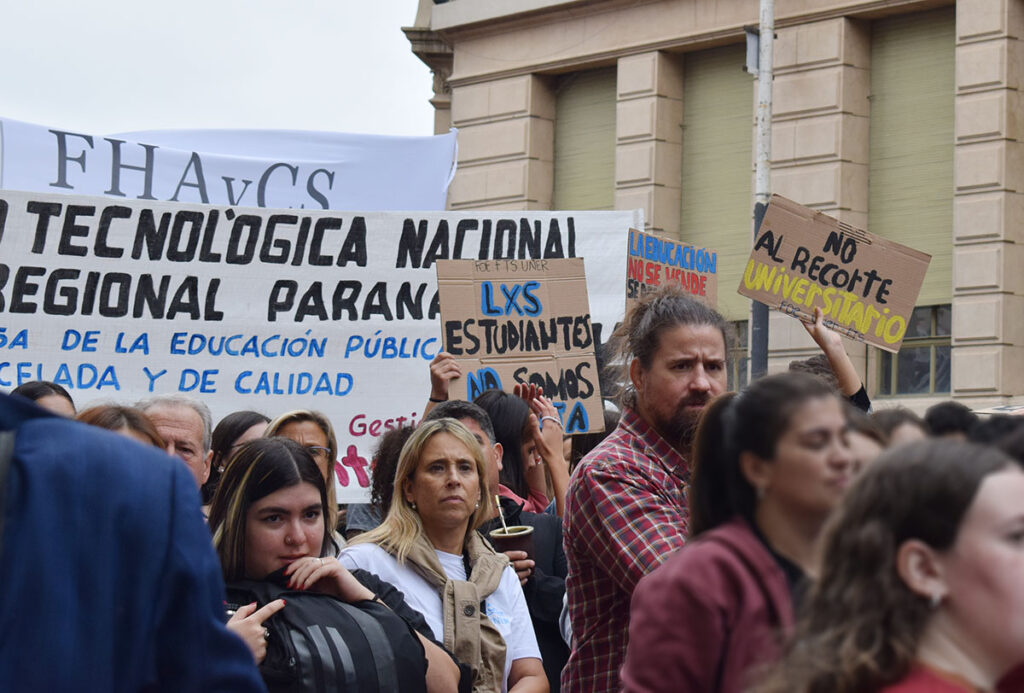
Turned into a specific form of being of the element from which we are made—the flesh of the social—, the caste comprises different segments or social layers: the members of the cultural life of Argentina (writers, movie and television actors and actresses, film directors, etc.), welfare beneficiaries and public employees, the different political parties and politicians that alternately governed Argentina since the return of democracy in 1983, and finally, scientists and members and workers of the academic world. In each case, we can find a link to the “evils” that, according to libertarianism, plunged the country into decay: members of the cultural life and their “progressive doctrine,” welfare beneficiaries and public employees who are tied to an endemic evil: a corrupt and inefficient State, the “traditional” politicians and the failures of democracy, scientists and the public university system fostering social and political indoctrination in classrooms, on the one hand, and “partisan” or “ideologized” scientific research (especially in the Social Sciences), on the other. It is, indeed, in this context—in the context of the culture war and its various stakes, and not only in the context of its economic doctrine—that we can understand better libertarianism’s disdain for public universities and scientific research system, as well as the systematic and deliberate siege policies Milei’s government has been implementing against the whole public system of education.[vi]
One aspect is particularly relevant: the specific twist of meaning that libertarianism gives to its notion of caste—the twist between rights and privileges. In most of his public interventions, but especially in the speech following his presidential victory, President Milei referred to his government’s vocation in terms that clearly express this twist: “We are not here to take away your rights; we are here to end privileges”.[vii] This phrase illustrates very well the constitutive twist of the ideological amalgam that defines libertarianism: what in the context of the last decades of transformations of contemporary democracies was delineated as new rights (social rights, gender rights, economic rights, etc.), have turned into privileges of what libertarians define as “the caste” in the context of the new demands and changes of democracies. This conversion, in effect, explains the figure of the State as the principal agent responsible of the promotion of those privileges, and simultaneously it delineated the ideology that must be defeated: el progresismo (the woke ideology; that is to say, those who identify themselves as “liberals” in the United States) that, according to libertarianism, expands the influence of “cultural Marxism”. Privileges, then, separate those who advocate for freedom, effort, and individual merit from those who are part of the State and live off the benefits and subsidies that the public sector provides them. This twist not only clashes with several rights enshrined in the National Constitution but, in one of its decisive aspects, confronts the very heart of the Argentine national project—from its founding to the present day, including especially the last 40 years of uninterrupted democracy: education as a right, that is, the guiding idea behind the constitution of the National State—the idea of public education. More profoundly still, it opposes the conception held by a figure who, through both his theoretical reflection and his political practice, played a central role in shaping the historically situated form of public education in Argentina: Domingo Faustino Sarmiento.
The Figure of Sarmiento and Public Education in Argentina
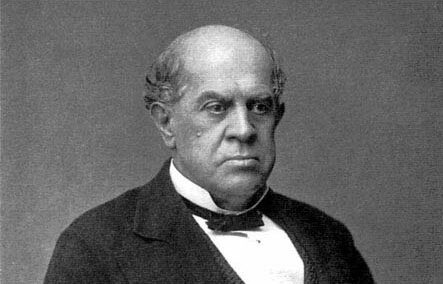
Sarmiento was not only President of Argentina during the years of the foundation of the National State (from 1868 to 1874) but also a profound thinker—not just a thinker of education but also of the social and political conditions of existence of his own Argentina, whose thought and actions made him a central figure throughout Latin America. Sarmiento’s thought radiates and permeates Argentine culture, but also Latin American culture, in an irreversible way.[viii] In the historical configuration of education as a public institution in particular, his thought was and remains decisive. Strongly influenced by the French Revolution and its ideas just a few decades after it took place, Sarmiento wrote a book that laid the foundations for the idea of public, common, or popular education on Argentine territory: Sobre la educación popular (On Popular Education).[ix] Sarmiento (who by then was in exile in Chile) begins the text that was commissioned as a “Technical Report for the Minister of Public Instruction of Chile, Manuel Montt,” by exploring the historical origin and essential condition of public education: its conception as a human right. He writes:
Public instruction is a purely modern institution, born from the dissensions of Christianism and made a right by the democratic spirit of current association. Until two centuries ago, there was education for the ruling classes, for the priesthood, for the aristocracy; but the people, the plebeians, did not, properly speaking, form an active part of nations. It would have seemed as absurd at that time to claim that all men should be equally educated as it would have been two thousand years earlier to deny the right of making slaves… It is not my intention here to tell the history of the series of events and conquests that have brought Christian peoples to the point they have reached today… For now, let us be content with the fact that each progress in institutions has tended to this primary objective, and that the freedom acquired… has contributed in masse to the use of rights that today no longer belong to such or such class of society, but simply to the condition of human being.[x]
This conception of public education as a human right had its institutional imprint on Argentine society in the nineteenth and twentieth centuries. And in this institutional imprint Sarmiento was, in fact, decisive. In this sense, the promulgation of Law 1420 in 1884, which established free and secular public education, was the first major step in this direction. The construction of public schools, particularly during Sarmiento’s presidency, and the literacy process of Argentinian citizens advanced in just a few decades by giant steps (by the early twentieth century, Argentina had the highest literacy rate in Latin America). Despite the antagonisms and political conflicts that configure the twentieth century in Argentina, and even the early twenty-first century, the materiality of the trace of Sarmiento’s thought regarding education and the public system remained intact. And despite, also, the institutional discontinuities and coups d’état that took place during the last century (and therefore, the selective policies the military governments adopted to undermine, above all, the public university through partial closures of certain careers or faculties).[xi] The arrival of democracy in 1983 expressed, in the words of the newly elected president Raúl Alfonsín–“With democracy, not only do we vote, but we also eat, heal, and educate”[xii]–the most intense moment of the omnipresent legacy of Sarmiento’s trace, by linking the form of public education with the very form of democracy (something Sarmiento indeed did throughout his own thinking). In other words: in the promise of a social democracy with greater rights, much of Sarmiento’s reflection and his political, cultural, and institutional roots, crystallized.
The University and Public Education Under the Siege of the Libertarian Revolution
Public universities in Argentina have a strong and decisive source of inspiration in Sarmiento’s legacy of education as a human right: “higher education,” it is stated in the current Higher Education Law, “is a public good and a human right”.[xiii] The set of laws and measures that Milei’s government has been implementing, particularly against the public university system, is framed, therefore, within this dual ideological pillar that inspires the Libertarian Revolution: its economic doctrine, on the one hand, and its political-cultural doctrine, the culture war, on the other. While the first defends the market’s presence as a regulator of the various spheres of social life, and consequently emphasizes its decisive role in offering education as a “public” service (and not as a right), the second entails a much deeper critique to our actual public system of education. In his recent book on this subject, Argentine anthropologist Pablo Semán points out a central aspect in this regard: those who identify themselves as militants of the libertarian movement do not show a detachment or direct rejection of the common wealth or the public sector, but rather of the “state of the State,” that is to say, they do not reject the “abstract idea” of the State, but its real and material conditions of operation and existence in daily life.[xiv] Rejection of the “state of the State” is also, therefore, a rejection of those who “live” due to the benefits of that State, whether in the form of benefits from social welfare programs or as public employees. A double gap, therefore, separates these individuals from private employees or entrepreneurs: first, the former maintain a salary without the risk involved in entrepreneurship, creativity, and sacrifice, while the latter dignify their income through the effort and merit that the risks of the labor market require. Second, this gap was widened by the pandemic and the restrictive measures and lockdowns that limited public freedoms, and especially, in the case of younger generations, the freedom to work. It is in this precise context that university professors and the academic world in general became targeted as part of the caste.
There is, indeed, a second element which is critical for the libertarian political and cultural imagination regarding the academic world, an element inherent, on the other hand, in its condition as a caste: the excessive presence of political trends, especially Marxism, which, according to libertarianism, operate as a form of indoctrination of youth, limiting their freedom (this criticism, in effect, also applies for the scientific system, particularly the scientific productions of the National Council of Scientific and Technical Research [CONICET], for their “ideological biases”). The criticism, which I would argue extends to the scientific system in general, is proclaimed as part of the “culture war.” It is not, however, just a cultural critique. It is a rejection of the political views that libertarianism repudiates, and a form of rejection of “politics” in general. Public universities and the scientific system, for example, are, according to libertarianism, unnecessarily tainted with political practices and political ideologies. Unproductive papers, useless research, and superfluous activities are the consequence of the presence of the caste in the scientific and academic system of Argentine society. This rejection of the “university and scientific caste” as a source of political and ideological visions which are dangerous to society can also be easily seen in the criticism of Trumpism, which is very close to Milei’s movement, of woke ideology in the United States.[xv]
One final aspect, however, is decisive for understanding the rupture that the Libertarian Revolution and its political principles produce, or aim to produce, in historical and political terms. This aspect pertains in particular to public universities and the university system as a whole, but more generally also to the educational system that founded and was founded in parallel with the Argentine State and which has in Sarmiento its most illustrious thinker. Paradoxically, public university and the Argentine university system reached what, for Sarmiento, was central in the process of democratizing public education, and is evident from the title of the aforementioned work, On Popular Education: the institution of a “popular action” capable of “improving public education”, that is to say, the institution of public education as a “collective work”.[xvi] Sarmiento’s greatest challenge was achieving the realization of that popular action and that collective work in primary education, a necessary pillar, of course, for the existence of higher education. What is important to emphasize at this point is, however, the status of those decisive terms—popular action and collective work—, because they reveal the relationship which Sarmiento establish between education and civil society or citizenship, or more specifically, between democracy and public education. In other words: they are decisive to understand his conception of popular education.
Popular education, in fact, is not, for Sarmiento, an abstract concept or a model to follow in institutional, social, or pedagogical terms. On the contrary, it is a historically situated educational experience: that of 19th-century United States, and very particularly, that of the northern states of Massachusetts and Connecticut. There, Sarmiento notes, the funds and most elementary needs of district schools, unlike the public education systems of Holland, England, and Prussia, are obtained through what in the northern country are called annual meetings, which are public assemblies of parents, school staff, and “individuals with zeal and instruction,” who decide together and through debate the amounts of those funds and their different destinations. To put it in another way: Sarmiento found that, in these districts, education is the product of the collective action of those who are involved in the educational system. This aspect is decisive because it reveals the bond between democracy and education or, more precisely, their intrinsic, and to use Maurice Merleau-Ponty’s term, chiasmatic, relationship.[xvii]
The idea of popular education thus implies the retreat of education upon itself, its institution and self-institution, the institution and self-institution of its form and content. In this sense, and returning to Sarmiento’s own words, if public education is a purely modern institution, born from the divisions of Christianity and turned into a right by the democratic spirit of the contemporary forms of society, this spirit, I add, is the one that simultaneously configures it and gives it its transitory form. The concept of popular education involves a self-reflective movement of education as a public good: it is not only a right enshrined for the individual and society as a whole but also an act that society and the individual give to themselves, and give in a double sense: they grant it (thus, it is a right) and they give it its form and content (it is the product of collective work). Democracy, as a form, thus coincides with education as a pedagogical and political act. In the Argentine university system, this conception of education and its self-instituting form as a constitutive principle adopted a specific historical and legal figure: that of self-government and that of autarky, enshrined today by the National Constitution and mobilized as a social and political process by the University Reform of 1918.
Final Words
The siege advances, and it advances with firm steps. By this, I mean: the siege that Milei’s libertarian government is imposing through its various policies on public education and, especially, on the public university system, that is, on universities. Public education, first of all, and universities, second (but no less important), are an active and decisive part of collective life, of its cultural and symbolic forms. No one embodies this active and decisive part of Argentine society like the figure of Sarmiento because, it is Sarmiento himself who founds and roots the public education system in a movement that unfolds “in three directions”: as I have shown, his pedagogical and political thought (first direction) unfolds simultaneously with the formation of the Argentine state (second direction), which is in turn characterized by the formation and consolidation of this public education system (third direction). Both public education, and especially the universities, are an active and decisive part of the collective life of Argentine society because this movement leaves a decisive trace in the political culture: the conception of public and university education as a human right, intrinsically tied since its genesis to the genesis of the modern Argentine state. This bond between state, education, and rights, which today was turned into a new bond between democracy, education, and rights, runs like blood through the veins of the flesh of Argentine society.
That is the way in which public universities, the most complete institutional expression of Sarmiento’s project of public education and, by extension, of the national project for the formation of the educational system and the state, have been fundamental as a political actor in Argentine modern history. From the 1918 University Reform movement, which began the process of democratization and universalization of the higher education system itself, to La noche de los bastones largos (The Night of the Long Batons), a tragic and fateful episode of that history when students, teachers, and authorities from the Faculty of Exact Sciences of the University of Buenos Aires were brutally repressed on July 29, 1966, by the military government of Juan Carlos Onganía (1966–1970), leaving a large number of victims, university life has been intertwined with political and public life, and, vice versa, political and public life in Argentina has been intertwined with university life.
Indeed, with the beginning of the contemporary democratic cycle (1983), led by the inauguration of former President Raúl Alfonsín, this delicate and singular fold between university life and political and public life reached its highest degree of (un)folding in the promise of the foundation of contemporary democracy. The process that Alfonsín himself opened with his government resides in the idea of education as a human right, but as a human right that is part of the very contemporary condition of democracy, that is: education is a constitutive and genetic part of the contemporary expression of the flesh of the social of Argentinian democratic society. In other words: since 1983, the words of the former president in his inaugural speech at the Legislative Assembly–“With democracy, not only do we vote, but we also eat, we heal, and we educate”–have run through the intimate fibers of the flesh that shapes our collective life.
The Libertarian Revolution evoked and led by Milei therefore seeks to rest, and in fact rests, on a very fine and delicate thread. A fine and delicate thread, because its anti-elitist vocation, in which the university and its different actors (teachers, students, and authorities) are a parasitic part of the “caste,” stands in tension not only with the public nature of higher education, but also with primary education, and more profoundly, with the role that both higher education and primary education play as horizons that organize the possible and the impossible, the sayable and the unsayable of Argentine contemporary democracy. Therefore, the Libertarian Revolution is not just about the siege of one of the symbols of the Argentine state, a symbol, in fact, of distinction throughout Latin America: it is about the siege of democracy itself or, better yet, of one of the folds that form its contemporary expression. In the context of the “culture war” and political struggle against the university world, the Libertarian Revolution finds much more than a policy of “austerity” to shrink the state: it finds the key to carry out the radical transformations that change the very physiognomy of democratic system. And in the current political context of the Western democratic world, where the emergence of extreme right-wing or radical political expressions has gained unprecedented speed, and whose corollary is, to a large extent, the implementation of a global process that, in terms of French philosopher Jacques Rancière, takes the form of an “intellectual counter-revolution”[xviii] led by these very same radical right political expressions, the attack of Argentina’s libertarianism on the university, singular as it no doubt is, is likely to embody one of many global examples of the displacement of the university from the public and political life of our democracies.
Juan José Martínez Olguín is a researcher in political theory at EIDAES–UNSAM (the Interdisciplinary School of Social Sciences of the National University of San Martín) and at CONICET (the National Scientific and Technical Research Council, Argentina). He is also a professor at the University of Buenos Aires. A specialist in political phenomenology (Merleau-Ponty, Lefort, Rancière), contemporary French philosophy, and theories of democracy. His latest book is Los pliegues de la democracia. Derechos humanos, populismos y polarización política (Buenos Aires–Madrid, Miño y Dávila, 2025).
[i] Milei and his political party, La Libertad Avanza, are part of what it is known in academic circles, and mostly known in public conversation of contemporary democracies, as radical right movements or extreme rights. In another text, I have focused specifically on the study of these radical movements and their expressive universe: the Jacobin style of political antagonism. Cf. Martinez Olguín, Juan José: Los pliegues de la democracia. Derechos Humanos, populismos y polarización política, Buenos Aires, Miño y Davila, 2025.
[ii] The book La batalla cultural: reflexiones críticas para una nueva derecha (Buenos Aires, Harper Enfoque, 2022) is where Agustín Laje mostly develop his ideas.
[iii] “Culture war” is, in effect, the English expression for what radical right movements in Latin America call batalla cultural.
[iv] Merleau-Ponty, Maurice: La prosa del mundo, Madrid, Trotta, p. 70, 2015. The translation is mine. Cf. Merleau-Ponty, Maurice: Œuvres, Paris, Gallimard, 2010.
[v] I take the expression: “flesh of the social” from Lefort (El arte de escribir y lo político, Barcelona, Herder, 2007, p. 159).
[vi] This set of politics that Milei’s libertarian government is implementing against the public system of education and mostly against Higher Education and universities in general is composed of different layers: first of all, a critical reduction of the funds destined for the scientific system, universities and public education, the reduction of salaries for professors and academic authorities, and a presidential veto of a law sanctioned by the Congress which intended to twist the situation and recover some of the institutional mechanisms to finance the system.
[vii] Presidential speech, October 22, 2023. Source: Clarin.com
[viii] I highly recommend, for a larger and more accurate perspective about the influence of Sarmiento in Argentine and Latin America culture, the book of the Argentinian sociologist Horacio González: Restos pampeanos. Ciencia, ensayo y política en la cultura argentina del siglo XX (Buenos Aires, Colihue, 1999).
[ix] Cf. Sarmiento, Domingo, F.: Educación Popular, Buenos Aires, Banco de la Provincia de Córdoba, 1989.
[x] Ibid., p. 55. The translation is mine.
[xi] During the XX Century, political life in Argentina was characterized by six coups d’état which interrupt the democratic cycles. The last of them, the dictatorship led by the Army (1976-1986), which ends with the Peronist government of Isabel de Perón (1973-1976), finish with the election of Raul Alfonsín as the new democratic President.
[xii] Raul Alfonsín’s speech at the Legislative Assembly, during the day of his assumption. 10 Decembre, 1983. Source: Digital Repository of the Chamber of National Deputies. The translation is mine.
[xiii] Law 24.521. Source: Digital Repository of the Chamber of National Deputies.
[xiv] Cf. Semán, Pablo y Welschinger Nicolás: “Juventudes mejoristas y el mileismo de masas. Por qué el libertarianismo las convoca y ellas responden”, in Está entre nosotros. ¿De dónde sale y hasta dónde puede llegar la extrema derecha que no vimos venir? (Pablo Semán coord.), Buenos Aires, Siglo XXI, 2023.
[xv] Cf. Connolly, William: Aspirational Fascism. The Struggle for Multifaceted Democracy under Trumpism, Minnesota, University of Minnesota Press, 2017.
[xvi] Sarmiento, Domingo F.: Educación Popular, op. Cit., p. 88.
[xvii] Cf. Merleau-Ponty, Maurice: Œuvres, Paris, Gallimard, 2010.
[xviii] Rancière, Jacques : Les trente inglorieuses. Scènes politiques, Paris, La Fabrique, 2022, p. 12. The translation is mine.