b2o

  • George Shulman — Interregnum not Impasse

    George Shulman — Interregnum not Impasse

    by George Shulman

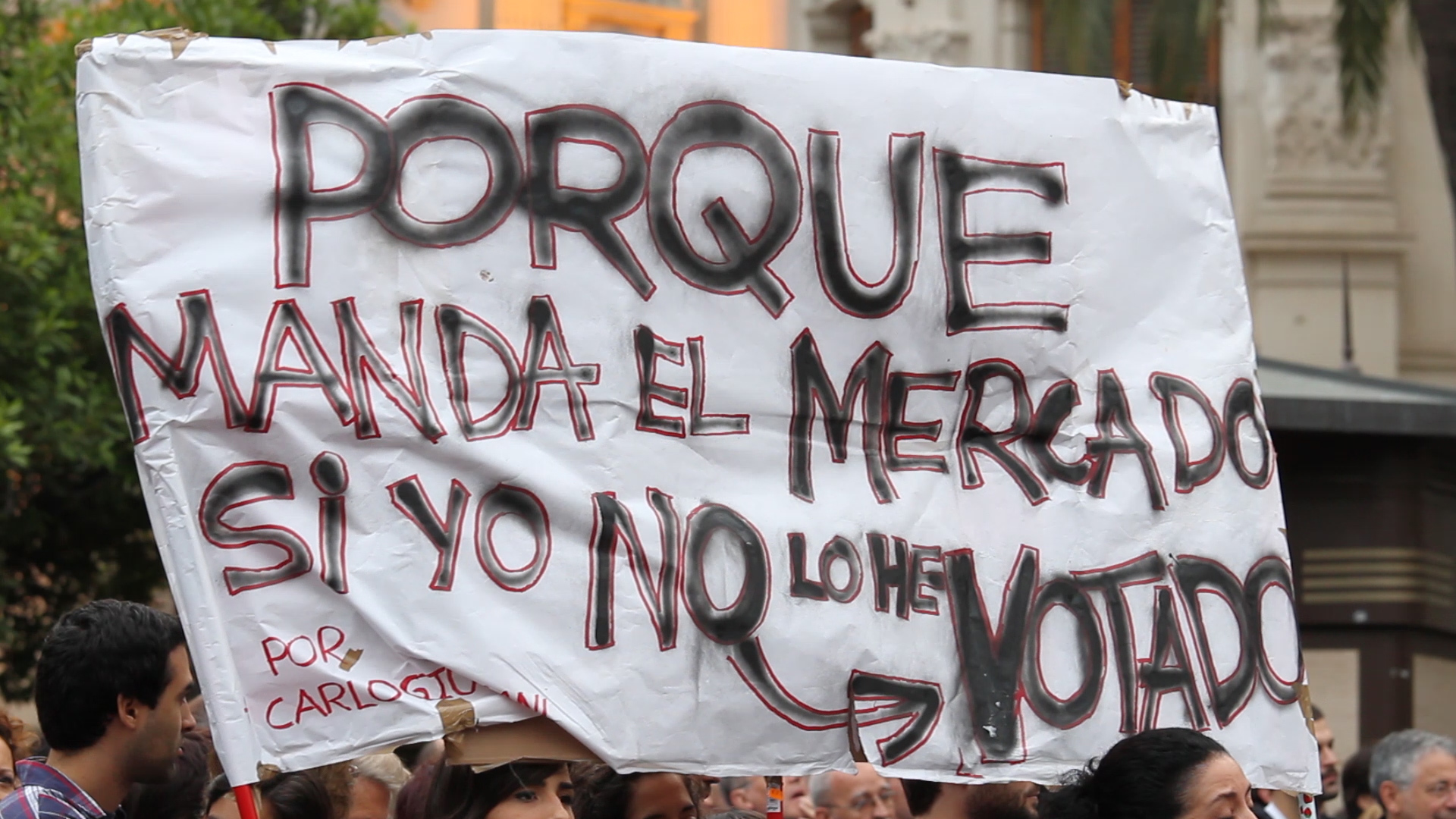
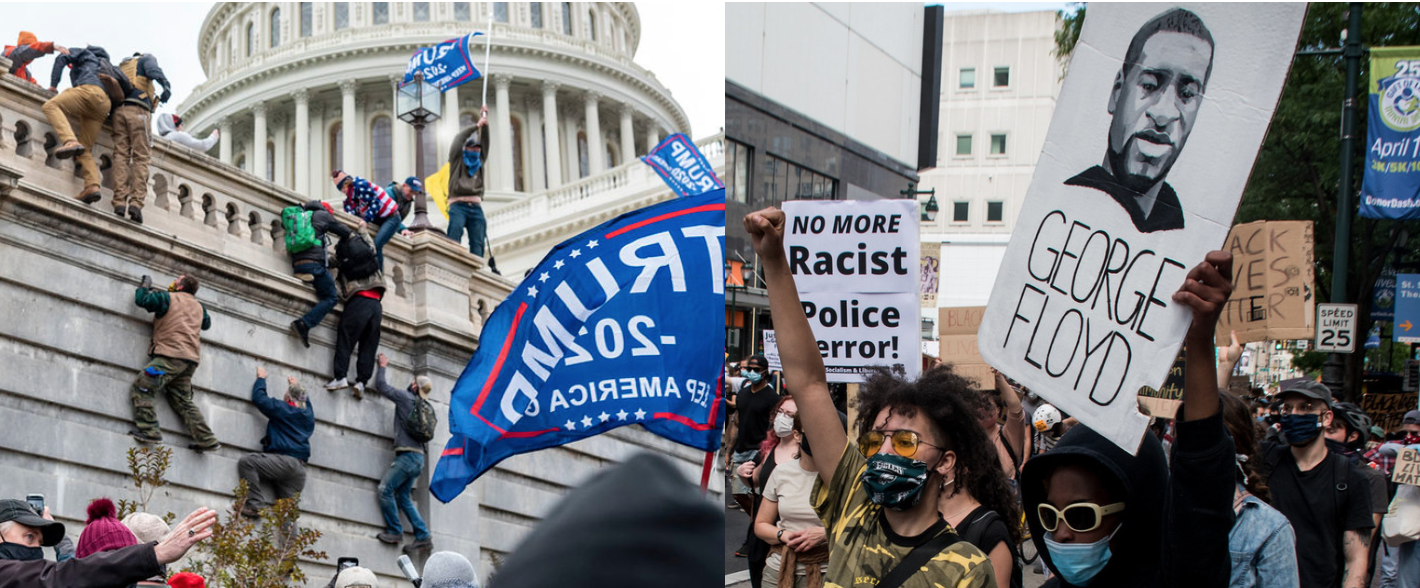
    Since the 2016 election, and during Donald Trump’s Presidency as well as its violent aftermath on January 6, commentators on the left have engaged in two related debates. One has concerned the danger posed by Trump’s rhetoric and policies, by his base, and by the extra-parliamentary right. This debate involves contrasting assessments of the future of the Republican Party, and of the durability of the hegemonic center that has ruled American politics from Reagan to Obama. Running parallel is a second debate on the left, and intensified since the summer, about the meaning of the Movement for Black Lives (M4BL) and the massive inter-racial protests it organized last summer, but also about the potential of the Democratic Party as a vehicle of social change. These debates involve judgments of the character of American political culture and claims about the fluidity or rigidity of its manifest polarization. At stake are contrasting visions of our political moment. One vision, influential if not dominant, implicit if not always explicit, circulates through Democratic Socialists of America and Jacobin, and has been articulated by notable commentators like Samuel Moyn and Corey Robin in The New York Times and The New Yorker. Since 2016 it has depicted our political moment as both reflecting and continuing an ongoing impasse in politics and ideology. I support a contrasting vision, which also circulates through activist and academic circles on the left, and which depicts our moment as a fraught interregnum bearing both a real danger of an authoritarian or fascist turn, and, incipient possibilities of radical change. While the trope of impasse presumes the reconstitution of the hegemonic center ruling American politics since the 1980s, the trope of interregnum imagines both breakdown and transformation.

    I would begin by noting the elements of the orientation I am trying to capture with the trope of impasse. First, it has criticized ‘alarmism,’ and consistently minimized the sense that Trump’s presidency, his base, and the Republican Party posed dangers beyond historic patterns of harm. Second, it has minimized the extent and grip of racism, misogyny, and polarization in the political culture of whites and in general it discounts the power of political language and the potency of irrationality, in order to defend the premise that ‘common material interests’ (and demographic change) can and will underwrite a multi-racial, progressive, majority coalition. On the basis of that organizing fantasy, third, it attributes the character of the Democratic Party only to cowardice and corruption, bred by neoliberalism and elite complacency, and it has discounted how the party, as currently constituted, could undertake change more radical than tinkering. Fourth, it has imagined each party absorbing its radicalizing elements, thereby sustaining the hegemony of established elites. It expects that an ideological political center will be reconstituted, and that American politics will remain trapped in the deep structural impasse that it claims Trump merely manifested and never ruptured. The overall effect of such arguments, over the last five years, is to emphasize the undeniable inertial power of historical patterns and institutions, but diminish their contingency, fragility, and mutation. Such arguments minimize our sense of both danger and possibility, and magnify our sense of historical stasis. Though we hear an assumption that demographic change promises a brighter future, if only the Democratic Party supported truly progressive candidates, the repeated conclusion over five years is that the Trump moment and Biden’s election only continue the “interminable present”—the structural intractability and discursive paralysis—depicted by the academic left since the early 1990s.

    We cannot definitively validate, or decisively disprove, these claims and anticipations, both because “evidence” also warrants contrasting interpretations, and because assessments of the strength or weakness of a president, a movement, or a party concern objects whose character and power depend on actions that can and do remake political reality, whether by unexpectedly shattering a consensus, contesting entrenched power dynamics, or mobilizing unforeseen support. By foregrounding that sense of contingency, I would raise questions about each element or step of the “impasse talk” I am trying to identify, and propose instead how the trope of ‘interregnum’ better grasps the danger and the possibility in our recent history.

    My avowedly arguable premise is that politics cannot return to the neoliberalism and racial retrenchment of the last fifty years, and that post-Reagan conditions of political impasse cannot continue, either. Instead, I would propose that American politics has entered what Antonio Gramsci called an interregnum, in which the old gods are dying, the new ones have not yet been born, and we suffer ‘morbid symptoms.’ Though his Marxist teleology assured him which was which, we cannot be so confident about what is dying and what is emergent. For the last year manifested indigenous forms both of fascism, and of radical possibility, as enacted by M4BL and the multi-racial protests it organized and led. Each was incipient or inchoate, and each was amplified by COVID-19, one by the gross racial disparity and state abandonment, the other by manic denial of its mortal impact and political implications. Each rejected neoliberalism, each overtly named the centrality of race, each bespoke the extent to which liberal democracy has been hollowed out, each scorned the party system as failed representation, each refused the idiom of civic nationalism and its narrative of incremental progress, each depicted conditions of crisis and decisive choice. But the crystallization—or cooptation—of each emergent possibility is contingent, not only on organizing by white nationalists and abolitionists on streets, in localities, and by elections, but also on fateful choices by the Democratic Party about its policy and rhetoric.

    To anticipate, I propose that changes in both cultural landscape and party politics preclude reconstitution of the impasse that has arguably characterized American politics at least Reagan, and instead have opened an interregnum in which mobilized and antagonistic political constituencies—70% of whites, in one party, increasingly committed to minority and racial rule, facing a party increasingly committed to multi-racial democracy—see decisive choices shaping antithetical futures. If the question posed by the developments on the right is how to distinguish the danger of fascism from minority rule committed to white supremacy, the question posed by developments on the left is whether the radicalization on the streets since last summer, and danger from the right, engender a significant modification of liberal nationalism on the order of a third reconstruction. I would thus intensify both danger and possibility by amplifying the contingencies—and the rhetoric—that can interrupt, inflect, or transform inertial patterns.

    On the one hand, Trump was not repudiated in the 2020 election; he achieved a historic mobilization of working class, rural, and non-college educated voters to forge a coalition with explicit evangelical and capitalist elements, a long-sought Republican Party project, but he did so by disavowing creedal or civic nationalism, which had been the hegemonic rhetorical center that has long contained partisan difference. An explicitly anti-democratic and racially exclusionary Republican Party, no longer even evoking universalistic language, consistently won down ballot, protecting control of most states and redistricting, while retaining domination of the Supreme Court and the advantages bestowed by the constitution in the Senate and Electoral College. Roughly 70% of white voters, 40% of the electorate, deny legitimacy to the 2020 election, support the capitol invasion, and endorse not only voter suppression but overturning elections that Democrats win. Given the institutional grammar controlling elections, it is likely that a radicalized Republican Party will retake the Senate and perhaps the House in two years, and then win the Presidency in four years–unless the Biden administration produces tangible benefits clearly linked to electoral campaigns in states and nationally. Though a huge majority in public opinion polls support ‘bipartisanship,’ a default politics of ‘return to normal’ only allows the parliamentary obstruction that assures Republican electoral success. In turn, that success would cement an anti-democratic project of avowedly minority rule to protect authentic Americans from displacement, i.e. the native form of fascism that Du Bois and de Tocqueville–both seeing the imbrication of class rule, racial caste, and nationalism–called ‘democratic despotism.’ The newest iteration will amplify those inherited patterns, but in unprecedented ways it will abandon the universalist (creedal or civic) language that has both justified historic forms of domination, while also authorizing and yet containing protest against it.

    On the other hand, experience of COVID-19 and last summer’s massive protests fostered notable shifts in how whites view both endemic racism and state action, opening unexpected and perhaps unprecedented possibilities for progressive politics. What some call a third reconstruction or new New Deal is now spoken of in ways that no one could have imagined even 6 let alone 12 years ago, and yet, importantly, it is also a political necessity. For the democratic coalition that elected Biden must address the suffering and rancor, as well as the political infrastructure and constitutional bias, that sustains its adversary, or it will become an ever-losing minority party despite its majority support. But given the polarization in American political culture around race and gender, membership and immigration, the meaning of “America,” citizenship, and freedom, how can and should an openly social democratic and race-conscious approach be legitimated and narrated? That is the question of rhetoric, as Aristotle defined it: what are the available means of persuasion? Working through recent debates on the left will clarify possible answers.

    The impasse argument

    The first point of debate has been how to understand Trump’s electoral appeal and presidency, which has involved contention about naming -was Trump continuing conventional Republican goals (tax cuts and judges), or was ‘the F word’—fascism—appropriate to signal a mutation or intensification of inherited cultural and political patterns? These questions required judging the ways in which Trump simply repeated, or also modified, the white supremacy–and patriarchy–foundational in American history. One position feared the effects of ‘exceptionalizing’ Trump, which made him seem an anomaly in our history, rather than credit the racial and misogynist roots of his rhetoric and style, and rather than anchor his appearance in the failures of liberalism. The other position feared that ‘normalizing’ Trump would protect the ways that he represented a significant mutation of those historic patterns.

    Against those who used the F word to signal those departures, two different kinds of claims were made, each normalizing Trump. One claim called Trump an inherently ‘weak’ president, as evidenced by his policy failures, whereas a contrary view traced how he was repeatedly thwarted by massive political mobilization. Likewise, by defining power only by what we “do” and not also by what we “say,” Trump’s actions were cast as conventional and ineffective, whereas a contrary view traced how overt racial rhetoric, performative misogyny, and the practice of the Big Lie were transforming inherited political culture and party politics. Anxiety about ‘fascism’ was thus dismissed on the grounds that Trump did not govern like European fascists and autocrats, rather than see him in relation to recurring but also mutating forms of what Alberto Toscano called “racial fascism,” entwining cultural mobilization, popular terrorism, and state violence.

    The prevailing orientation, therefore, cast the “real” danger not as Trump or the right he was authorizing and mobilizing, but as the “alarmism,” even “hysteria” of those who used the F word. Why? Because the effect of “inflating” danger was to push the left to protect the regime of liberal democracy, as if it were the only and necessary alternative to fascism, whereas (and I agree) the failures and deep racial structure of liberalism in fact made Trump both possible and appealing. To reverse this argument’s logic, though, what is its effect?  It dismisses those who see danger and precludes taking (the idea of) danger seriously. What is thereby being protected? If there really were danger from a growing and militantly anti-democratic right increasingly occupying an established political party, and if the U.S. had entered a version of a ‘Weimar moment,’ what would that mean? The left would have to re-imagine the cultural landscape (and working class) it has fantasized, and, it would have to decide if defending even the minimal terms of liberal democracy is a necessary to protect the possibility for radical possibilities. It would have to rethink the working class subject it is invested in sanitizing, rethink its assumption that hegemonic impasse will continue, and thus rethink its relationship to the loathed liberal object on which its future may depend.

    The second point of debate involved the danger in the mobilization by the right, in increasingly networked and armed militias, in the alternate reality created by social media and FOX news, and in state and national sites of the Republican Party. The dangers have been consistently minimized by influential voices on the left, on the grounds that the extra-parliamentary right is not formally organized, and thus will be contained by the Republican Party. The capitol invasion and certification vote might have tested these claims, but influential judgment remains that the occupation ‘failed,’ as if that proved both the weakness of the right and the durability of the established order. Though the worst possible outcome did not materialize, that doesn’t mean the threat is not real and ongoing. The left faulted Biden for his fantasy of returning to normal that includes bipartisanship, but it has not traversed its own fantasy of the center holding until a progressive movement captures the Democratic Party and gains overt political power. Dramatizing a contrasting view, Richard Seymour responded to the capital invasion by inverting Marx: an “inchoate” and “incipient” fascism” has indeed appeared, as farce first; it can then reappear as tragedy. A first step has already occurred as the mobilized right has taken over and radicalized the Republican Party.

    It is not consigned to irrelevance by demographics, as too many on the left assume; rather, Trump created a template for its resurrection. Indeed, his defeat further radicalized the party, even as it retained its grip on state and local governments. Given the electoral college, the rural bias in the Senate, voter suppression, and the composition of the Supreme Court, there is every reason to expect the party to remain committed to minority rule, and to electoral viability on terms that include overturning elections that Democrats win. No establishment element in the party is available for bipartisan consensus; every incentive encourages the party to obstruct Biden’s initiatives, diminish economic recovery, and prove that government is ineffective, thereby to feed the despair and rage that enable Republican majorities in Congress in two years, and a successor to Trump in four. Autocratic rule has been averted for the moment, but merely postponed, not forestalled. Alarm seems at the least prudent, and I would argue that prudence requires defending electoral (and so, liberal) democracy, not as an idealized alternative or revered object to defend against an alien form of despotism, but as a grossly flawed framework whose declared rights and recent advances nevertheless can authorize and enable emergent radical projects of democratization to develop further.

    This broaches the third broad area of debate, concerning the character of public opinion and political culture. In simple terms, the election revealed that 72 million people, mostly white, across class lines, voted to reelect Trump–3 million more than in 2016, enough to have beaten Hillary in the popular vote and not only the electoral college. After the election, 80% of those voters remain convinced the election was stolen, a claim based on ‘disinformation’ that was taken as plausible because it confirmed prior racialized judgments about who is a legitimate citizen. Some of those voters were transactional, making a judgment on the basis of taxes and judges, but nevertheless, they knew they were voting for a candidate who refused to accept the peaceful transfer of power if he lost, as if Democrats could win only by fraud, i.e. by people of color voting. At issue is not only ‘denial of reality’ by enclosure within an alternate one, but mass investment in protecting white supremacy and patriarchy. The prevailing view of DSA and Jacobin would salvage this situation, to protect the vision of a class politics oriented by “material interest” rather than divided by the “identity politics” of race, gender, and nationalism. But for whites, class in the U.S. is lived through codes of race and gender, and by deep investments in both propertied individualism and nationalism. Indeed, a huge majority of whites has been wed to the death drive by the discourse of racial capitalism, aligning whiteness, work, and worth to masculinized self-reliance. Blocked grief at real losses has produced both the suicidal and manic features of melancholy. Rather than undergo mourning, many white men and women embraced death in the name of liberty, but they also are enraged, feel legitimized in their sense of victimization, and they are armed. The material realities of disease, precarity, and racial disparity must now include the invented reality of a stolen election, as well as the denial of reality embraced by the millions who voted for Trump. But the historic rationalism of the left, presuming the effectiveness of what Freud called the reality principle, prevents apprehension of the desires and fantasies–and so of the images and symbols–that constitute what class means in particular places and times.

    I would call our historical moment an interregnum, therefore, partly because the historic marriage of citizenship and whiteness is being regenerated, not only as militias enact historic forms of popular sovereignty and local civic power, but also as the Republican Party increasingly recruits men and women of color into a newly emergent, multiracial and not only ethnic, form of whiteness. This anti-democratic form of ‘American democracy’ defensively asserts the individualism, popular sovereignty, and nationalism once taken for granted in the civic language that wed whiteness and citizenship, but now it is severed from even the pretense of universalist ideals and appeals. This zombie politics of the undead, this resurrection of American greatness may be dismissed as farce, but it will thrive and not truly die unless its premise—in gendered and racialized forms of individualism and resentment–is addressed, and unless its constitutional scaffolding is dismantled. This challenge has also prompted debates on the left about the Democratic Party.

    The prevailing view, articulated by DSA and Jacobin, imagines a culture that is center-left in a readily accessible way, which implies that the only obstacle to a winning majority coalition is Democratic Party timidity, linked to the corrupt neo-liberalism of its established elites. If we recall that refusal to accept electoral norms has occurred before–when southern states seceded and then rejected open elections during reconstruction–it seems more plausible to say we have shifted from ‘polarization’ to a condition more like civil war, albeit so far a cold one, over antithetical visions of democracy and the future. Even if parliamentary stalemate persists, it reflects not so much structurally dictated foreclosure, as a condition of civil war whose outcome we cannot predict, because it is contingent on our action now.

    In these cultural circumstances, the Democratic Party mobilized 8 million more voters and created the basis for a multi-racial coalition with some 30% of whites, more affluent and educated than not, and people of color across class lines. DSA and Jacobin still claim that Bernie Sanders could have won the election, despite the fact that even in the primaries he could not cross the 30% threshold, because he could not gain significant support from Black and Latinix constituencies (except in Nevada). The base of the Democratic Party, Black women, rescued Biden in the primaries because they credited the depth of racism and anxiety among whites across class lines, because they valued his appeal to competence, and, I would argue, because his profound (Catholic) understanding of grief linked mourning to public service in ways that really resonated with the Black church tradition. But in turn progressives and millennials still mobilized (in ways they did not for Hillary Clinton) because so many accepted Bernie Sanders’ dire judgment that we had indeed entered a Weimar moment in which the choice was really between Trump and democracy.

    One incredible irony of our moment is thus that Biden’s reputation for moderation, his personal proximity to suffering, and his performance of a ‘common man’ version of a whiteness wed to decency not supremacy, were crucial to recruiting enough (suburban) whites to create a winning coalition with affluent progressives and people of color. Moreover, his first 100 days suggests that this persona may allow him to advance more progressive policies, perhaps a democratic version of Nixon going to China. Given our political culture, constitutional bias, and gerrymandering, the Democratic Party still needs both its moderate and its progressive wings if it is to fly, to use Cristina Beltran’s great metaphor, though this creates enormous parliamentary difficulty for progressive projects. And to complete the double bind, unless it produces benefits tangible to masses of people in the next two and four years, it is likely to be defeated electorally, but the actions that produce such benefits are likely to contradict the promises that are crucial to moderate voters.

    Interregnum and Rhetorical Possibility

    Rather than depict a durable center containing threats on the right as well as radical energies on the left, and rather than presume the readiness of working class Americans (across racial lines) to adopt a pointedly progressive political agenda, I see a darker and more dangerous situation in which a likely outcome is the victory of an openly anti-democratic Republican Party, anchored in an increasingly organized militia movement and a conspiratorial popular culture among the vast majority of whites, and recruiting enough people of color to appear nationalist rather than racist. Rather than moralize the character of the Democratic Party, I would emphasize that political culture among whites supports only some specific elements of the progressive or radical vision offered by the left, though to an uncertain degree some whites (across class lines) may be open to shifting affiliation. But tangible benefits are not self-evident in meaning and do not suffice to generate allegiance; rather, inferences from those benefits—that government can be effective for the many not the few, and that democracy is not a fraud—depends on the available means of persuasion. What are they? Which idioms might resonate, and with whom?

    The symbiosis of Trump’s presidency and his base was made possible by the conjunction of defensive nationalism, racial retrenchment, and neoliberal precarity, the dominant strands in American politics since Reagan, which set the limitations of Obama’s self-defeating and disappointing presidency. But in ways the left has not credited, this conjunction reflects the failure of prior populist and progressive projects to address how citizenship is racialized standing and capitalism is always-already racial. The repeated failure of American social reformers to sever citizenship from whiteness, to show the price that whites and not only blacks pay for white supremacy, and thereby to join a class politics to an abolition project, is the ongoing condition enabling this iteration of American-style fascism. Conversely, a politically effective and durable response to Trump and his white base must address both precarity and structural racism, as twinned not separate. Progressives must show that separating whiteness and citizenship brings tangible benefits to those disposed by zero-sum racial logic to see only loss. But we also must explain what those tangible benefits mean–narrate their meaning–in ways that reattach profoundly alienated people—not only working class whites but millennials across class and race lines—to democratic ideals and practices they understandably deem fraudulent and/or exclusionary. Those ‘values’ are not manifestly valuable in a time of rampant cynicism, but must be turned from empty nouns into active verbs by political poesis and praxis that vivifies and enlarges their historic (and limited) meaning. Politics has entered an interregnum, though, not only because of danger on the right, but also because the conjunction of COVID and M4BL organizing has created just that possibility, by linking precarity and race in democratizing ways.

    How might different ways of politically and rhetorically linking precarity and race address the danger of an emboldened and increasingly organized right? Aziz Rana, Robin Kelley, and many M4BL advocates have argued that the crisis in liberal nationalism and its creedal narrative, witnessed on the right and the left, is an opportunity to conceive a democratic politics no longer defined and contained by the nation-state. M4BL, drawing on traditions of black radicalism, is thus seen as a model of how social movements should sever projects of social justice even from a progressive version of civic nationalism and its redemptive narrative, to assemble instead coalitions that shape politics locally and influence policy nationally. On this view, radical social change requires not an over-arching national narrative, but a movement of movements, coalitions forged by transactional and strategic relations around intersecting issues, contiguous interests, and regional projects. The great benefit of this approach is to contest the settler colonialism presumed and erased by progressive versions of civic nationalism, and to instead foreground the patiently prefigurative politics that slowly but surely builds another world, a durable and vibrant res publica, within and against this one. Such ‘horizontalism’ may also offer a resilient practice of survival under conditions of a cold civil war, when political persuasion seems impossible, and mutual aid and mobilization seem paramount.

    These arguments are credible and appealing, but I fear they cede state power to a mobilized right intent on crushing sanctuary cities, anti-racism insurgency, climate change activism, queer politics, and critical race curricula, let alone social democratic attempts to increase social equality and address racial disparity. They cede state power because they relinquish a large-scale (say national) effort to seek a majoritarian hegemony on behalf of a democratic horizon of aspiration, to legitimate equality, popular power in participatory practices, and through elections and truly representative institutions. I would argue that social transformation requires more than a coalition of constituent movements, which are always at risk of acting as narrowing interest groups; it requires hegemony, to denote the symbolic legitimation and organization of political power that at once advances and protects the constituencies it brings into relation as a majoritarian formation. Such hegemony requires symbolic or figurative language, an organizing vision and historical narrative, to explain circumstances, invoke a ‘we,’ and stipulate ‘what is to be done.’ For democratic ideas and participatory practices are not self-evidently desirable or legitimate; by praxis and imaginative poesis we turn empty nouns into embodied verbs, visible realities, rhetorically compelling objects, and durable affective attachments.

    On the assumption that radical social change requires a persuasive idiom with broad appeal, my avowedly arguable proposition is for progressives to articulate a “third reconstruction” that, in Baldwinian terms, publicly reckons with the historical legacy, institutional features, and cultural meaning of white supremacy, while in Gramscian terms, symbolizes democratic renewal through a ‘national-popular’ idiom aspiring to hegemony. Because the toxic character of civic life and prevailing devaluation of public goods is inseparable from endemic racism, a third reconstruction is not only a program of ‘reparations’ directed to the ‘wealth gap’ suffered by Black communities, but is also the means and the signifier of a broadly democratic reconstitution of social life. That reconstitution requires the use of state power and public programs to break the grip of oligarchy and caste, but its democratic integrity depends on ongoing ‘movement’ in every locality and across of range of issues, to bear witness to historic injustice and present injuries, to sustain non-state infrastructures of mutual aid, to pressure elites, and to create stages on which people can see themselves assembled, enjoying civic life and public things. But as the freedman bureaus during the first reconstruction indicate, the survival, let alone vitality of any ‘democracy-from-below’ requires a state that challenges local tyrannies and supports insurgencies, which in turn requires a ‘national-popular’ idiom that shows the relevance of democratic ideas to people rightly cynical about them, and that recruits (some or enough of) those who inhabit the “non-intersecting” reality that is the legacy, not only of Trump, but of the failed liberalism that made him possible.

    Rather than recuperate the tired teleological narrative of progress, the trope of a “third” reconstruction emphasizes two prior but “splendid” failures, as Du Bois put it, to suggest a revolutionary experiment to make anew, the contingency of any victory or accomplishment, and the necessity for ongoing popular struggle with entrenched forms of power. We cannot know if such language could achieve hegemony until and if it is genuinely attempted. In this interregnum, when we do not know what is in fact dying–is it white supremacy or democratic possibility?–drawing on ‘national-popular’ or vernacular idioms seems necessary to reckon finally with the past, project a potentially common horizon, and thereby protect the very idea of a democratic, multi-racial politics. Failure does not mean a return to neo-liberal impasse, but an opening for an aspirational fascism to shift from incipience and farce to resurgence and tragedy.


    George Shulman teaches political theory and American Studies at the Gallatin School of New York University. In 2010, his second book, American Prophecy: Race and Redemption in American Politics, won the David Easton Award for best book in political theory. He is currently working on a book entitled Life Postmortem: Beyond Impasse.
  • Arne De Boever  — The End of Art (Once Again)

    Arne De Boever — The End of Art (Once Again)

    by Arne De Boever

    ~

    Where they burn books, they will also ultimately burn people.
    —Heinrich Heine

    You Morons

    In early March 2021, a group of “tech and art enthusiasts” who make up the company Injective Protocol[1] burnt Banksy’s work Morons (White) (2006), which they had previously acquired from Tagliatella Galleries for $95,000.[2] At first sight, the burning could be read as performance art in the spirit of Banksy’s Morons (White), which shows an art auction where a canvas featuring the text “I CAN’T BELIEVE YOU MORONS ACTUALLY BUY THIS SHIT” is up for sale (and going for $750,450). As such, the performance would take further Banksy’s own criticism of the art market, a market whose dialectic has easily reappropriated Banksy’s criticism as part of its norm and turned it into economic value. The burning of the Banksy would then seek to more radically negate the value of the work of art that Banksy’s Morons (White) challenges but cannot quite escape as long as it remains a valuable work of art.

    However, such negation was not the goal of the burning. As the tech and art enthusiast who set the Banksy aflame explained, the burning was in fact accomplished as part of a financial investment, and to inspire other artists. In other words, the burning in fact confirmed the art market’s norm rather than challenging it, and it encouraged other artists to make work that does the same. You see, before Banksy’s Morons (White) was burnt, Injective Protocol had recorded the work as what is called a non-fungible token or NFT in the blockchain. This means that for the work’s digital image, a unique, original code was created; that code—which is what you buy if you buy and NFT–is the new, original, NFT artwork, henceforth owned by Injective Protocol even if digital copies of Banksy’s Morons (White) of course still circulate as mere symbols of that code.[3] Such ownership, and the financial investment as which it was intended, required the burning of the material Banksy because Injective Protocol sought to relocate the primary value of the work into the NFT artwork—something that could only be accomplished if the original Banksy was destroyed. The goal of the burning was thus to relocate the value of the original in the derivative, which had a bigger financial potential than the original Banksy.

    The Banksy burning was perhaps an unsurprising development for those who have an interest in art and cryptocurrencies and have been following the rise of cryptoart. Cryptoart is digital art that is recorded in the blockchain as an NFT. That makes cryptoart “like” bitcoin, which is similarly recorded in the blockchain: each bitcoin is tied to a unique, original code that is recorded in a digital ledger where all the transactions of bitcoin are tracked. As an NFT, a digital artwork is similarly tied to a unique, original code that marks its provenance. The main difference between bitcoin and an NFT is that the former, as currency, is fungible, whereas the latter, as art, as not.[4] Now, NFTs were initially created “next to” already existing non-digital art, as a way to establish provenance for digital images and artworks. But as such images and artworks began to accrue value, and began to comparatively accrue more value than already existing non-digital art, the balance in the art market shifted, and NFTs came to be considered more valuable investments than already existing works of non-digital art.

    The burning of Banksy’s Morons (White) was the obvious next step in that development: let us replace the already existing work of non-digital art by an NFT, destroy the already existing work of non-digital art, and relocate the value of the work into the NFT as part of a financial investment. It realizes the dialectic of an art market that will not hesitate to destroy an already existing non-digital work of art (and replace it with an NFT) if it will drive up financial value. The auction houses who have sold NFTs are complicit to this process.

    Crypto Value = Exhibition Value + Cult Value

    The digital may at some point have held the promise of a moving away from exceptionalism–the belief that the artist and the work of art are exceptional, which is tied to theories of the artist as genius and the unresolved role of the fake and the forgery in art history–as the structuring logic of our understanding of the artist and the work of art. The staged burning of the Banksy does not so much realize that promise as relocate the continued dominance of exceptionalism—and its ties to capitalism, even if the work of art is of course an exceptional commodity that does not truly fit the capitalist framework—in the digital realm. The promise of what artist and philosopher Hito Steyerl theorized as “the poor image”[5] is countered in the NFT as a decidedly “rich image”, or rather, as the rich NFT artwork (because we need to distinguish between the NFT artwork/ the code and the digital image, a mere symbol that is tied to the code). Art, which in the part of its history that started with conceptual art in the early 1970s had started realizing itself—parallel to the rise of finance and neoliberalism–as a financial instrument, with material artworks functioning as means to hedge against market crashes (as James Franco’s character in Isaac Julien’s Playtime [2014] discusses[6]), has finally left the burden of its materiality behind to become a straight-up financial instrument, a derivative that has some similarities to a cryptocurrency like bitcoin. Art has finally realized itself as what it is: non-fungible value, one of finance’s fictions.[7]

    Although the video of the Banksy burning might shock, and make one imagine (because of its solicitation to other tech enthusiasts and artists) an imminent future in which all artworks will be burnt so as to relocate their primary value in an NFT tied to the artwork’s digital image, such a future actually does not introduce all that much difference with respect to today. Indeed, we are merely talking about a relocation of value, about a relocation of the art market. The market’s structure, value’s structure, remain the same. In fact, the NFT craze demonstrates how the artwork’s structuring logic, what I have called aesthetic exceptionalism,[8] realizes itself in the realm of the digital where, for a brief moment, one may have thought it could have died. Indeed, media art and digital art more specifically seemed to hold the promise of an art that would be more widely circulated, where the categories of authorship, value, and ownership were less intimately connected, and could perhaps even—see Steyerl; but the argument goes back to Walter Benjamin’s still influential essay on the copy[9]—enable a communist politics. Such a communist politics would celebrate the copy against the potentially fascist values of authenticity, creativity, originality, and eternal value that Benjamin brings up at the beginning of his essay. But no: with NFT, those potentially fascist values are in fact realizing themselves once again in the digital realm, and in a development that Benjamin could not have foreseen “the aura” becomes associated with the NFT artwork—not even the digital image of an artwork but a code as which the image lies recorded in the blockchain. Because the NFT artwork is a non-fungible token, one could argue that it is even more of an original than the digital currencies with which it is associated. After all, bitcoin is still a medium of exchange, whereas an NFT is not. In the same way that art is not money, NFT is not bitcoin, even if the NFT needs to be understood (as I suggested previously) as one of finance’s fictions.

    What’s remarkable here is not so much that a Banksy is burnt, or that other artworks may in the future be burnt. What’s remarkable is the power of aesthetic exceptionalism: an exceptionalism so strong that it can even sacrifice the material artwork to assert itself.

    Of course, some might point out—taking Banksy’s Morons (White) as a point of departure–that Banksy himself invited this destruction. Indeed, at a Sotheby’s auction not so long ago, Banksy had himself already realized the partial destruction of one of his works in an attempt to criticize the art market[10]—a criticism that is evident also in the work of art that Injective Protocol burnt. But the art market takes such avant-garde acts of vandalism in stride, and Banksy’s stunt came to function as evidence for what has been called “the Banksy effect”[11]: your attempt to criticize the art market becomes the next big thing on the art market, and your act of art vandalism in fact pushes the dollar value of the work of art. If that happens, the writer Ben Lerner argues in an essay about art vandalism titled “Damage Control”,[12] your vandalism isn’t really vandalism: art vandalism that pushes up dollar value isn’t vandalism. Banksy’s stunt was an attempt to make art outside of the art market, but the attempt failed. The sale of the work went through, and a few months later, one can find the partially destroyed artwork on the walls of a museum, reportedly worth three times more since the date when it was sold. For Lerner, examples like this open up the question of a work of art outside of capitalism, a work of art from which “the market’s soul has fled”,[13] as he puts it. But as the Banksy example shows, that soul is perhaps less quick to get out than we might think. Over and over again, we see it reassert itself through those very attempts that seek to push it out. One might refer to that as a dialectic—the dialectic of avant-garde attempts to be done with exceptionalist art. Ultimately they realize only one thing: the further institutionalization of exceptionalist art.

    That dialectic has today reached a most peculiar point: the end of art that some, a long time ago, already announced. But none of those arguments reached quite as far as the video of the Authentic Banksy Art Burning Ceremony that was released in March: in it, we are quite literally witnessing the end of the work of art as we know it. It shows us the “slow burn”, as the officiating member of Injective Protocol puts it, through which Banksy’s material work of art—and by extension the material work of art at large—disappears (and has been disappearing). At the same time, this destruction is presented as an act of creation—not so much of a digital image of the Banksy work but of the NFT artwork or the code that authenticates that digital image, authors it, brands it with the code of its owners. So with the destruction of Banksy’s work of art, another work of art is created—the NFT artwork, a work that you cannot feature on your wall (even if its symbolic appendage, the digital image of the Banksy, can be featured on your phone, tablet, or computer and even if some owners of the NFT artwork might decide to materially realize the NFT artwork as a work that can be shown on their walls). But what is the NFT artwork? It strikes one as the artwork narrowed down to its exceptionalist, economic core, the authorship and originality that determine its place on the art market. It is the artwork limited to its economic value, the scarcity and non-fungibility that remain at the core of what we think of as art. This is not so much purposiveness without purpose, as Immanuel Kant famously had it, but non-fungible value as a rewriting of that phrase. Might that have been the occluded truth of Kant’s phrase all along?

    In Kant After Duchamp,[14] which remains one of the most remarkable books of 20th-century art criticism, Thierry de Duve shifted the aesthetic question from “is it beautiful?” (Kant’s question) to “is it art?” (Duchamp’s question, which triggers de Duve’s rereading of Kant’s Critique of Judgment). It seems that today, one might have to shift the question once again, to situate Kant after Mike Winkelmann, the graphic designer/ NFT artist known as Beeple whose NFT collage “Everydays: The First 5000 Days” was sold at a Christie’s auction for $69,346,250. The question with this work is not so much whether it is beautiful, or even whether it is art; what matters here is solely its non-fungible value (how valuable is it, or how valuable might it become?), which would trigger yet another rereading of Kant’s third critique. Shortly after the historic sale of Beeple’s work was concluded, it was widely reported that the cryptocurrency trader who bought the work may have profited financially from the sale, in that the trader had previously been buying many of the individual NFTs that made up Beeple’s collage—individual NFTs that, after the historic sale of the collage, went up significantly in value, thus balancing out the expense of buying the collage and even yielding the trader a profit. What’s interesting here is not the art—Beeple’s work is not good art[15]—but solely the non-fungible value.

    It seems clear that what has thus opened up is another regime of art. In his essay on the copy, Benjamin wrote of the shift from cult value, associated with the fascism of the original, to exhibition value, associated with the communism of the copy. Today, we are witnessing the anachronistic, zombie-like return of cult value within exhibition value, a regime that can be understood as the crypto value of the work of art. That seems evident in the physical token that buyers of Beeple’s NFTs get sent: in its gross materialism—it comes with a cloth to clean the token but that can also be used “to clean yourself up after blasting a hot load in yer pants from how dope this is!!!!!!111”; a certificate of authenticity stating “THIS MOTHERFUCKING REAL ASS SHIT (this is real life mf)”; and a hair sample, “I promise it’s not pubes”–, it functions as a faux cultic object that is meant to mask the emptiness of the NFT. Assuaging the anxieties, perhaps, of the investors placing their moneys into nothing, it also provides interesting insights into the materialisms (masculinist/ sexist, and racist—might we call them alt-right materialisms?) that reassert themselves in the realm of the digital, as part of an attempt to realize exceptionalism in a commons that could have freed itself from it.[16] As the text printed on the physical token has it: “strap on an adult diaper because yer about to be in friggn’ boner world usa motherfucker”.

    NFT-Elitism

    It’s worth asking about the politics of this. I have been clear about the politics of aesthetic exceptionalism: it is associated with the politics of sovereignty, which is a rule of the one, a mon-archy, that potentially tends abusive, tyrannical, totalitarian. That is the case for example with exceptionalism in Carl Schmitt, even if it does not have to be the case (see for example discussions of democratic exceptionalism).[17] With the NFT artwork, the politics of aesthetic exceptionalism is realizing itself in the digital realm, which until now seemed to present a potential threat to it. It has nothing to do with anti-elitism, or populism; it is not about leaving behind art-world snobbery, as some have suggested. It is in fact the very logic of snobbery and elitism that is realizing itself in the NFT artwork, in the code that marks originality, authenticity, authorship and ownership. Cleverly, snobbery and elitism work their way back in via a path that seems to lead elsewhere. It is the Banksy effect, in politics. The burning of the Banksy is an iconoclastic gesture that preserves the political theology of art that it seems to attack.[18] This is very clear in even the most basic discourse on NFTs, which will praise both the NFT’s “democratic” potential—look at how it goes against the elitism of the art world!—while asserting that the entire point of the NFT is that it enables the authentification that once again excludes fakes and forgeries from the art world. Many, if not all of the problems with art world elitism continue here.

    With the description of NFT artworks as derivatives, and their understanding as thoroughly part of the contemporary financial economy, the temptation is of course to understand them as “neoliberal”—and certainly the Banksy burning by a group of “tech and art enthusiasts” (a neo-liberal combo if there ever was one) seems to support such a reading. But the peculiar talk about authenticity and originality in the video of the Banksy burning, the surprising mention of “primary value” and its association to the original work of art (which now becomes the NFT artwork, as the video explains), in fact strikes one as strangely antiquated. Indeed, almost everything in the video strikes one as from a different, bygone time: the work, on its easel; the masked speaker, a robber known to me from the tales of my father’s childhood; the flame, slowly working its way around the canvas, which appears to be set up in front of a snowy landscape that one may have seen in a Brueghel. Everything is there to remind us that, through the neoliberal smokescreen, we are in fact seeing an older power at work—that of the “sovereign”, authentic original, the exceptional reality of “primary value” realizing itself through this burning ritual that marks not so much its destruction but its phoenix-like reappearance in the digital realm. In that sense, the burning has something chilling to it, as if it is an ancient ritual marking the migration of sovereign power from the material work of art to the NFT artwork. A transference of the sovereign spirit, if you will, and the economic soul of the work of art. For anyone who has closely observed neoliberalism, this continued presence of sovereignty in the neoliberal era will not come as a surprise—historians, political theorists, anthropologists, philosophers, and literary critics have shown that it would be a mistake to oppose neoliberalism and sovereignty historically, and in the analysis of our contemporary moment. The aesthetic regime of crypto value would rather be a contemporary manifestation of neoliberal sovereignty or of authoritarian neoliberalism (the presence of Trump in Beeple’s work is worth noting).

    Art historians and artists, however, may be taken aback by how starkly the political truth of art is laid bare here. Reduced to non-fungible value, brought back to its exceptionalist economic core, the political core of the artwork as sovereign stands out in its tension with art’s frequent association with democratic values like openness, equality, and pluralism. As the NFT indicates, democratic values have little to do with it: what matters, at the expense of the material work of art, is the originality and authenticity that enable the artwork to operate as non-fungible value. Part of finance’s fictions, the artwork thus also reveals itself as politically troubling because it is profoundly rooted in a logic of the one that, while we are skeptical of it in politics, we continue to celebrate aesthetically. How to block this dialectic, and be done with it? How to think art outside of economic value, and the politics of exceptionalism? How to end not so much art but exceptionalism as art’s structuring logic? How to free art from fascism? The NFT craze, while it doesn’t answer those questions, has the dubious benefit of identifying all of those problems.

    _____

    Arne De Boever teaches in the School of Critical Studies at the California Institute of the Arts and is the author of Finance Fictions: Realism and Psychosis in a Time of Economic Crisis (Fordham University Press, 2017), Against Aesthetic Exceptionalism (University of Minnesota Press, 2019), and other works. His most recent book is François Jullien’s Unexceptional Thought (Rowman & Littlefield, 2020).

    Back to the essay

    _____

    Acknowledgments

    Thanks to Alex Robbins, Jared Varava, Makena Janssen, Kulov, and David Golumbia.

    _____

    Notes

    [1] See: https://injectiveprotocol.com/.

    [2] See: https://news.artnet.com/art-world/financial-traders-burned-banksy-nft-1948855. A video of the burning can be accessed here: https://www.youtube.com/watch?v=C4wm-p_VFh0.

    [3] See: https://hyperallergic.com/624053/nft-art-goes-viral-and-heads-to-auction-but-what-is-it/.

    [4] A simple explanation of cryptoart’s relation to cryptocurrency can be found here: https://www.youtube.com/watch?v=QlgE_mmbRDk.

    [5] Steyerl, Hito. “In Defense of the Poor Image”. e-flux 10 (2009). Available at: https://www.e-flux.com/journal/10/61362/in-defense-of-the-poor-image/.

    [6] See: https://www.isaacjulien.com/projects/playtime/.

    [7] I am echoing here the title of my book Finance Fictions, where I began to theorize some of what is realized by the NFT artwork: Boever, Arne De. Finance Fictions: Realism and Psychosis in a Time of Economic Crisis. New York: Fordham University Press, 2017.

    [8] See: Boever, Arne De. Against Aesthetic Exceptionalism. Minneapolis: University of Minnesota Press, 2019.

    [9] See: Benjamin, Walter. “The Work of Art in the Era of Mechanical Reproduction” In: Benjamin, Walter. Illuminations: Essays and Reflections. Ed. Hannah Arendt. Trans. Harry Zohn. New York: Schocken Books, 1969. 217-251.

    [10] See: https://www.youtube.com/watch?v=vxkwRNIZgdY&feature=emb_title.

    [11] Brenner, Lexa. “The Banksy Effect: Revolutionizing Humanitarian Protest Art”. Harvard International Review XL: 2 (2019): 35-37.

    [12] Lerner, Ben. “Damage Control: The Modern Art World’s Tyranny of Price”. Harper’s Magazine 12/2013: 42-49.

    [13] Lerner, “Damage Control”, 49.

    [14] Duve, Thierry de. Kant After Duchamp. Cambridge: MIT, 1998.

    [15] While such judgments are of course always subjective, this article considers a number of good reasons for judging the work as bad art: https://news.artnet.com/opinion/beeple-everydays-review-1951656#.YFKo4eIE7p4.twitter.

    [16] The emphasis on materialism here is not meant to obscure the materialism of the digital NFT, namely its ecological footprint which is, like that of bitcoin, devastating.

    [17] See Boever, Against Aesthetic Exceptionalism.

    [18] On this, see my: “Iconic Intelligence (Or: In Praise of the Sublamental)”. boundary 2 (forthcoming).

  • Étienne Balibar — Politics and Science: One Vocation or Two?

    Étienne Balibar — Politics and Science: One Vocation or Two?

    by Étienne Balibar

    ~

    One might find it alarming (as I do) that the Ministers of Education and Higher Education, encouraged from the top, have dug out of the ideological gutter an epithet with sinister resonances to justify a purge of French Academia.

    One might be worried (as I am) by the speed at which publicly-funded independent research is being dismantled, both through financial austerity and the widespread use of targeted and monitored funding.

    One might feel disheartened (as I do), to see self-proclaimed spokespersons for the “excellence of French research” seeking to prevent our students from taking part in major international currents of innovation and critical thinking, deemed incompatible with our republican values, and thereby isolating us in a chauvinistic provincialism.

    One can, even while defending, as I do, the legitimacy of the study of race, gender, class, postcolonial studies and all of their intersections, be aware of, and denounce simplistic and historically unfounded arguments and sectarian censorship that exist on the margins of academia.

    And one can be disappointed (as I am) to see historians and social scientists who, after contributing landmark studies to the critique of inequality and forms of social or national exclusion, have joined, with bitterness, the camp of intellectual conservatism and corporatism.

    But these feelings don’t address the epistemological question at the heart of the matter. In the domain of the said human and social sciences, what is the relationship between the necessity of taking a stand and that of knowledge for knowledge’s sake (the only form of knowledge that indeed merits the name)? We are brought back to the question posed by Max Weber in his 1919 lectures: what is the “vocation” of science? How is it different from the “vocation” of politics?[1] It seems that the solution that he proposed at the time—that of “axiological neutrality,” the separation of ethics into two dimensions, “conviction” and “responsibility”—turned out to be impracticable.

    I see four reasons for this, and they form something like a unity of opposites, through which we must trace our path without sacrificing our exigence.

    First, universities and research centers can no longer afford to speak only to themselves. More than in the past, they must open their doors and their ears to the rest of society, or even better, to the polity. No one is contesting that it is essential to produce and transmit verified and verifiable knowledge and to practice rational argument. All of this takes place in the classroom. But the object of study, that which we try to make intelligible, can only be found outside of the classroom and it is unavoidably conflictual, because we do not live, nor will we live anytime soon, in a peaceful society. In order for us to grasp and understand this conflict, it cannot simply be studied and investigated from afar. It must enter into our spaces of learning and knowledge through the presence of its real actors, unless researchers venture out to find them (for example in a “jungle” or in a “neighborhood”).[2] As Foucault might have put it, we must bring the teachers, students, and researchers out and let the protesters, with or without gilets, and the activists or active citizens in. They must be given a chance to speak in the same places that have, until now, been reserved for magisterial discourse. However difficult it may be, we owe it to ourselves to experiment with ways of doing this.

    With conflict comes ideology. This is obvious. The problem lies in the fact that ideology does not just come from outside, it is always already there in more or less dominant forms. To state that the foundation of economic knowledge is the rational anticipation of market actors; that sociological knowledge is the constant interplay of methodological individualism and organic solidarity; that psychology and pedagogy share the adaptation of subjects as their common object of study; or that the trajectory of historical modernity tends to the secularization of religion, is not simply to state, it is to take an ideological standpoint, indissociable from relationships of power. Obviously, there are alternative positions to those outlined here, more or less visible depending on the period. An institution dedicated to learning that is alive, one that is capable of making space for the unknown, must pursue as its main goal the systematic questioning, including in national boards of evaluation, of every “incontestable” paradigm, to make sure that it becomes a subject of discussion. Let us not forget the disastrous episode that saw the elimination of the “Economics and Society” section within the CNU (National Council of Universities), and the price we’re paying for it now in the midst of the crisis.[3]

    But the conflict between what Canguilhem called “scientific ideologies” and what Althusser named the “philosophies of scientists” may not be the heart of the problem. One could again be led to think that the conflict only resides in the object, in the intrusion of the personal interests and commitments of the practitioners of knowledge, but not in the concept, which is the real heart of knowledge. Yet, nothing is less accurate. Knowledge does not come to a concept by avoiding conflict. On the contrary, it does so by intensifying conflict around big ontological alternatives, forcing us to choose between irreconcilable understandings of the nature of things or beings. The history of truth is not to be found in synthesis, even if it is provisional, but in the polemical ascent towards the points of heresy of a theory. This is evident in many fields, from the humanities to economics and environmental science, and perhaps even beyond ­– in biology, for instance, with the theory of evolution.

    Lastly, and more deeply, we cannot forget that knowledge does not exist without subject(s). This is not a shortcoming of scientific inquiry but its very condition of possibility, at least in any science that has an anthropological dimension, and perhaps in others too. In order to know we must venture as subjects into the field in which we are already “situated”, with all the baggage of “characters” (as Kant would call them), that make us “what we are” (through processes of historical and social construction, of course). There is no “transcendental subject” of scientific knowledge. Or better still, we must venture towards that point of identity “trouble” where every subject resides, with more or less difficulty, with/in their “difference”, whether it be masculinity, femininity, or another “gender” ; blackness, whiteness or another “color”; intellectual ability or inability, or “religious” belief or disbelief, in order to make that very point the analytical lens through which we read the social forces that imprison, exclude, and direct us. For even if no one can freely choose their place in society, by virtue of the power relationships that construct and traverse it, no place is assigned once and for all. The goal, then, is to turn our lived and recognized anthropological difference in all its uncertainty into the instrument with which we dissect our collective body politic, and to make the analysis of the mechanisms that produce and reproduce it, the means of countering its normative effects. This is perhaps not the royal road of scientific inquiry, but it is certainly a necessary step. I think here of what Sandra Harding called “strong objectivity” that includes knowledge of one’s own position as subject, and of how badly positivisms tend to miss the point.

    The road ahead of us is very difficult. I have been a professor in an era which we could in retrospect describe as “golden”. Conflicts could be violent at times, but the cold-war era bans and institutional prohibitions were behind us. The “value of science” was rarely contested. May 68 and its desire to shake the foundation of academicism and take down barriers left widespread disappointment in its wake, but also a fervor and furor that have nourished a large number of “programs” in which the young scholars of today, half of whom are living from one short-term contract to the next, were trained. We realize now that our ruling class is no longer a bourgeoisie in the historical sense of the word. It does not have a project of intellectual hegemony nor an artistic point of honor. It needs (or so it thinks) only cost-benefit analyses, “cognitive” educational programs, and committees of experts. That is why, with the help of the pandemic and the internet revolution, the same ruling class is preparing the demise of the social sciences, humanities and even the theoretical sciences. To accelerate the process, why not have the victim become the culprit (“Islamo-leftism”, “activism”, “ideology”…)? It will make things easier.

    As citizens and intellectuals we must oppose with all our strength this destruction of the tools of knowledge and culture. But our success is conditional on our awakening to the revolutions that the academy needs, and on discussing them among ourselves without being too reticent or holding back our opinions.

    Translated from the French by Tommaso Manfredini. b2o would like to thank Étienne Balibar and Libération for permission to publish this translation. We would also like to thank Madeleine Dobie for her help in arranging the translation.

    _____

    Étienne Balibar is Professor Emeritus of Moral and Political Philosophy at Université de Paris X–Nanterre; Distinguished Professor of Humanities at the University of California, Irvine; and Visiting Professor of French at Columbia University. His many books include Citizen Subject (Fordham, 2016); Equaliberty (Duke, 2014); We, the People of Europe? (Princeton, 2003); The Philosophy of Marx (Verso, new ed. 2017); and two important coauthored books, Race, Nation, Class (with Immanuel Wallerstein, Verso, 1988) and Reading Capital (with Louis Althusser and others, Verso, new ed. 2016).

    Back to the essay

    _____

    Notes

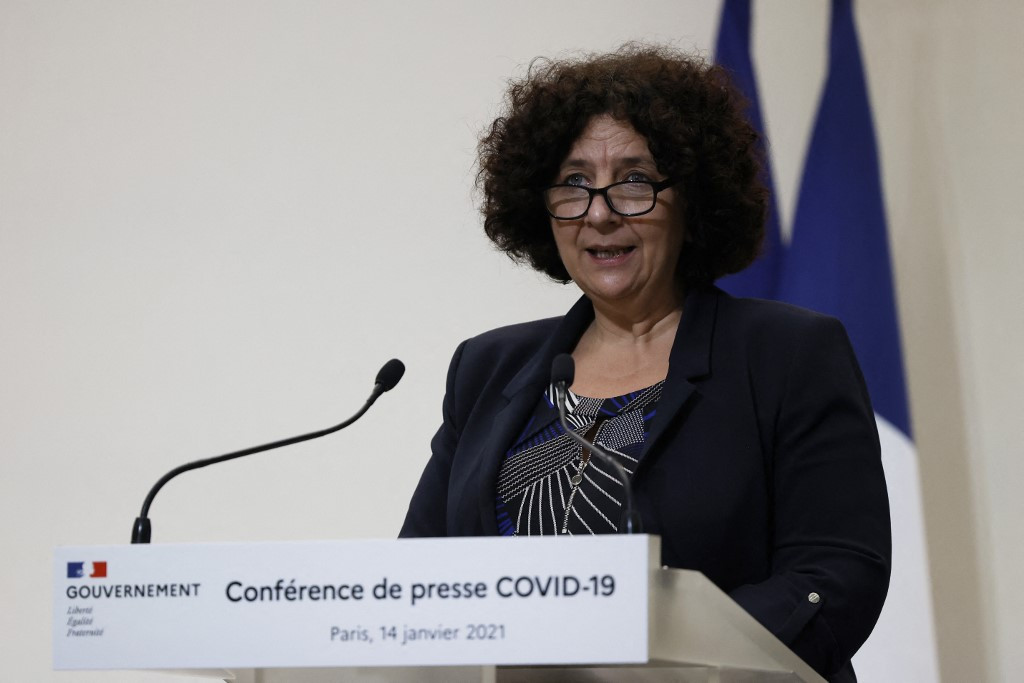
    A version of this article appeared on March 9 2021 in the French newspaper Libération under the title: “Le conflit fait partie des lieux de savoir.” It is a contribution to the debate that followed the announcement made by Frédérique Vidal, French Minister of Higher Education, on February 16 2021 to the National Assembly, to signal the launch of an official investigation of the presence of research programs inspired by “Islamo-leftism” in French universities. Even though the statement was immediately rejected by the CNRS (National Center of Scientific Research, France’s – and Europe’s – largest research body) and, among others, by a group of 200 researchers affiliated with American institutions who, in an editorial published in the newspaper Le Monde on March 4 2021, pointed out the chilling echo of “Judeo-bolshevism” in the Minister’s words, neither the French Government nor the President have officially condemned the use of the phrase. One may thus suspect that they approved it.

    [1] Max Weber, “Wissenschaft als Beruf” (1917) and “Politik als Beruf” (1919).

    [2] The original French words, “jungle” and “quartier” respectively, have social and political meanings in addition to their seemingly plain ethnographic sense. “Jungle” refers to the camps that regularly spring up – and are periodically dismantled by the French police – in various places around Calais, and in which find shelter and sometimes humanitarian assistance persons who are trying to cross the Channel without papers. Similarly, “quartier” also defines are the poorest neighborhoods in the banlieues of Paris and other great cities where the majority of the young generations, often of African and North-African origin, and heavily unemployed, are concentrated [Translator’s note].

    [3] In 2015, the CNU (National Board of Evaluation of Qualifications for Positions in Higher Education) was considering the creation of a special section called ‘Economy and Society’, which would create a space in Universities for economists working outside the ‘mainstream’ neo-classical school. It was abruptly cancelled, through the direct intervention of the Government, after intense lobbying from the establishment, especially from Jean Tirole, ‘Nobel’ Prize in Economics in 2014.

  • Johannes von Moltke — Comment on the Draft Report of the Commission on Unalienable Human Rights

    Johannes von Moltke — Comment on the Draft Report of the Commission on Unalienable Human Rights

    by Johannes von Moltke

    ~

    Author’s Note: In the summer of 2019, Secretary of State Michael Pompeo announced the formation of a “Commission on Unalienable Rights.” Headed by Harvard Law Professor and former U.S. Ambassador to the Vatican, Mary Ann Glendon, the group was composed largely of academics and charged with “providing the U.S. government with advice on human rights grounded in our nation’s founding principles and the principles of the 1948 Declaration of Human Rights.” I am on record along with many others as having been skeptical of the Commission since its founding. I consequently followed its proceedings and results with attention and interest, and I certainly learned a great deal during that period and from the Commission’s Draft Report. Unfortunately, little of what I learned softened my skepticism – or that of others: when the report was released earlier this summer, 230 human rights organizations, religious groups, activists, and former U.S. government officials objected to the Commission’s findings in a forceful joint letter. Meanwhile, citizens were invited to comment on the Draft Report during an exceedingly short comment period of approximately two weeks. I did so, submitting for the record my account, largely reproduced here, of why some of the commission’s findings roundly confirmed the reasons for my initial skepticism. Whereas the Commission by its own admission chose to disregard such public comments in submitting its barely revised Final Report, I find there is reason for continued and increasing concern as we watch the Commission’s recommendations translate into U.S. policy, both domestically and in the international arena.


    Upon learning last year of the appointment of two colleagues in my academic field to Mike Pompeo’s newly minted “Commission on Unalienable Rights,” a group of fellow faculty members gathered to voice our concerns in an open letter that was subsequently signed by over 200 scholars in various fields of literary and cultural studies. In the letter, we expressed our worry over the work of a group commissioned by an administration whose record on human rights was already abysmal at the time and has only worsened in the intervening year. We also questioned the viability of a nation-centered approach to human rights based on the strictly limited review of founding documents of the United States and the 1948 Universal Declaration of Human Rights. The notion of human rights, we argued, “cannot be grounded in a national tradition, much less in the political agenda of a hyper-partisan administration. Pretending otherwise risks further undermining the already fragile international consensus of the post-war era.” Our letter implored our colleagues to use their voices to call out the Trump administration’s poor record on human rights at home and abroad, to speak up for the inviolability of human dignity, and to protect that dignity no matter the specific identity markers of any particular human being.

    On this last point, the Draft Report delivers, in the sense that it repeatedly centers the notion of human dignity in its approach to unalienable rights, correctly pointing to the importance of this concept for the UDHR and harping, less persuasively, on the latter’s parallels with the founding documents of the United States. As the Report points out, the UDHR refrains from specifying the source of that dignity. But the Commission had no qualms doing so, offering natural law and God as the only two possible fonts of unalienable rights. It does so in the context of an argument that privileges religious freedom, along with the right to property, above all other human rights.

    God and Nature or the Right to have Rights

    This narrow construal of two rights as more fundamental than, and (theo)logically preceding, any others was to be expected – and was expected by many observers. It is as flawed now that it appears within the reasoned argument of the Report as it was when critics expressed concern and worry about the way this commission was primed to generate precisely such a result. More on this below; for now let us just note what a slanted notion of the freedom of religion underpins a government document that appeals to a single religious tradition and anchors the notion of human dignity in the “beautiful Biblical teachings” that equate the human to the image of the Christian God. By contrast, it was entirely in keeping with the narrow political and ideological purview of the Commission that the public presentation of the report should have been blessed by Cardinal Dolan. In his opening prayer, Dolan clarified for all where those unalienable rights come from. Addressing himself to God, he invited the assembled audience to praise “the creator who has bestowed upon and ingrained into the very nature of his creatures certain inalienable rights, acknowledged by the founders, enshrined in our country’s normative documents, defended with the blood of grateful patriots. You – you, dear Lord – have bestowed these inalienable rights.”

    But it wouldn’t even have required this objectionable mix of religious and nationalistic registers to make the point. Clearly, this Report advocates a theologically anchored world view, to which the derivation of unalienable rights from natural law is hardly a serious alternative. Both God and Nature are metaphysical categories as sources of rights, allowing the Report to insist that every human being always has such rights, because they are universal, ahistorical, acultural. As such, they are posited to be uncontestable (here “unalienable”) – but of course, contestation merely moves one slot over. Now what is contested is either God or Nature; and although the Report does not even entertain the possibility of such contestation, there has been, to put it mildly, little agreement on the nature of either God or Nature.

    In the context of the Report, these two metaphysical categories are not only closely aligned but also treated as allowing no further alternatives. Unalienable rights, according to the Report, derive either from Nature or from God, or else the very notion of such rights is meaningless. This is a willful misrepresentation of human rights discourse as it has developed over the centuries, including at the time of the American founding. For alternative accounts exist – but to engage them and thereby offer readers a fair and full accounting of the human rights tradition would have required entertaining a kind of anti-foundationalist thinking that is integral to the history of human rights theory but is entirely elided by the Report. This thinking finds a key expression in Hannah Arendt’s oft-invoked notion (though her name is never mentioned in the Report) of the “right to have rights” – a right that depends for its existence not on God or nature but on recognition by others. “We are not born equal,” she asserts for example; “we become equal as members of a group on the strength of our decision to guarantee ourselves mutually equal rights.” Rather than the appeal to first principles, what is at stake here is the assertion of a community that can be counted on to uphold certain rights and prevent them from being abrogated. “We hold these truths to be self-evident” is precisely such a speech act, which is why it needs to precede the positing of rights as unalienable in the Declaration of Independence.

    In this line of thinking, unalienability can never shed its contingency – a point Arendt experienced personally and formulated forcefully in her chapter on the “End of the Rights of Man” in The Origins of Totalitarianism (1951). A few years later, Earl Warren, Chief Justice of the U.S. Supreme Court employed identical terminology. Though there is no evidence that he was aware of Arendt’s prior formulation, he, too, defined citizenship as a basic right “for it is nothing less than the right to have rights. Remove this priceless possession and there remains a stateless person, disgraced and degraded in the eyes of his countrymen. His very existence is at the sufferance of the state within whose borders he happens to be. … [H]e will presumably enjoy, at most, only the limited rights and privileges of aliens, and like the alien he might even be … deprived of the right to assert any rights.”

    Both Arendt and Warren came to similar conclusions, asserting the importance of basic human rights such as citizenship while recognizing that these are always fundamentally, literally alienable. The very assertion of the “right to have rights,” in other words, opens onto a conceptual abyss that the Commission refused to confront. To consider it seriously would have involved recognizing rights claims for what they have been, from the Declaration of Independence onward: “declarations that involve the invention and disclosure of a new political and normative world” (Ayten Gündogdu).

    Sticking to Founding Principles or Picking from the Partisan Menu

    The Commissioners might counter that Arendt and other critiques of human rights discourse were beyond their remit, for they had been tasked explicitly to confine themselves to a limited set of sources. Originally charged with “provid[ing] fresh thinking about human rights discourse where such discourse has departed from our nation’s founding principles of natural law and natural rights,” the Commission was at first asked to decant old wine (founding principles) into new bottles (fresh thinking). But then even such specious renewal was further curtailed as the official Charter told Commissioners to stick to “our nation’s founding principles and the 1948 Universal Declaration of Human Rights” while taking care “not to discover new principles.” In other words, here was an advisory commission staffed with intellectuals told to put on blinders to intellectual history. It remains difficult for me to understand how any self-respecting scholar could accept such conditions. That the group was nonetheless formed and complied, then, speaks to its partisanship – not only on matters of politics, but also on matters of theory. As is evident in the omission of entire swaths of human rights discourse from consideration, the blinkered derivation of human rights from natural law and theology seems to have been all but agreed in advance. For to entertain any alternatives would have thrown open the notion of “unalienability” to time and politics, from which the Commissioners appear to have been keen to protect it in the name of God and nature.

    The omission is not, I stress, for lack of knowledge; there were plenty of Commissioners, our two colleagues among them, who would have been familiar with anti-foundationalist political theory and philosophy. At one point, in the discussion of democracy and human rights, the authors do articulate the insight that “it is through democratic deliberation, persuasion, and decision-making that new claims of right come to be recognized and socially legitimated.” Even Mary Ann Glendon herself, the Commission’s chair, noted during the proceedings that “there can never be a closed catalogue of human rights because times and circumstances change.”

    One is left to wonder, then, about the political motivations for leaving such insights behind, if not actively sequestering them, in formulating the Report’s conclusions. For their inclusion would have messed up the tidy, essentializing findings of the Report, which ultimately – and shockingly – manages to assert that the protection of human dignity boils down to two foundational rights: religious freedom, and the right to own property. Adopting the founders’ perspective, the Commissioners state: “Foremost among the unalienable rights that government is established to secure, …are property rights and religious liberty. A political society that destroys the possibility of either loses its legitimacy.”

    How to square the sheer arbitrariness of this assertion, its essentializing reduction of a rich 18th century discourse to two principal rights plucked from a present partisan menu, with the undeniable erudition that suffuses this report? Why these two, as opposed to the rights to life, liberty, and the pursuit of happiness, just to pick the most proximate? The claim seems downright ludicrous, further weakened by the flagrant contradictions that it draws in its wake: how on earth can one hold that the founders meant “property” to “encompass life, liberty, and the pursuit of happiness” when this flies in the face of even the most well-meaning historical semantics, and when other documents such as the Fifth Amendment, which the Report also quotes, clearly distinguish property from life and liberty?

    The most disturbing contradiction, however, concerns the assertion of a hierarchy of human rights per se. The Report spends considerable time refuting such a hierarchy, pointing to the “integrated character” of rights in the Universal Declaration. The authors cite the Vienna Declaration’s important phrasing that “all human rights are universal, indivisible, and interdependent and interrelated.” According to the Commissioners, it “defies the intent and structure of the UDHR to pick and choose among its rights according to preferences and ideological presuppositions while ignoring other fundamental rights.” But such insights are reduced to lip service in view of the fact that the Draft Report does exactly that, endorsing “a sort of human rights cafeteria plan,” as Elisa Massimino and Alexandra Schmitt put it in a recent assessment. The Report picks and chooses property rights and religious freedom according to the preferences and ideological presuppositions that went into the appointment of the Commission itself, as numerous commentators pointed out already a year ago.

    America First or the Decline of Empire

    At the time, they also questioned the U.S.-centric scope of Pompeo’s brief, a concern we raised in our open letter as well. The Draft Report reflects an awareness of this issue, going to great lengths to outline a position on national sovereignty, democratic governance, and the international rights regime. While there is undeniable nuance in these reflections, they ultimately amount to a rationalization of the America First doctrine that runs from Lindbergh to Trump. Commissioned by the Secretary of State, the Report leaves it to U.S. foreign policy – and not to the instruments of any international human rights regime – to determine “which rights most accord with national principles and interests at any given time.” Like other passages that emphasize the role of national sovereignty in promulgating rights, this opens the door not only to establishing a hierarchy of rights, but also to their arbitrary invocation and application based on national (self-)interest. By contrast, a robust international human rights regime would be robust precisely by virtue of its ability to curtail such arbitrariness as well as limit national sovereignty.

    Although the Report appears briefly to recognize this intentional aspect of international human rights in the Introduction (where it notes that, in the wake of Nazism and the Nuremburg trials, “a nation’s treatment of its own citizens would no longer be regarded as immune from outside scrutiny and repercussions”), it soon loses this perspective from view. Instead, the Report repeatedly harps on the importance of national sovereignty and displays little to no interest in the instruments and treaties – including those ratified or signed by the U.S. – that place it in an international framework. Attempts to finesse this issue in terms of foreign policy prerogatives and enforcement concerns notwithstanding, the testimony by invited experts who “showed outright disdain for the international human rights system” and downplayed the importance of [international] treaties” still resonates in the draft.

    In light of this overall tone of the document, the claim that “after [the UDHR], no state may reasonably claim that the treatment of its own citizens in matters of human rights is solely a question of its own domestic affairs” rings hollow. For on the contrary, the report insists over and over again on the right of the United States to do just that – a normative claim that is buttressed by ample empirical evidence: the current administration tramples refugees’ rights with seeming impunity (here, too, the report provides normative cover, by broadly redefining refugees as migrants and impugning their motivations for flight). America, which Pompeo demands we think of as fundamentally “good” and “special,” is to stand as the beacon of freedom while it incarcerates children apart from their parents, eviscerates the right to asylum,  undermines the human rights of trans people serving in the military, and doesn’t even manage to ensure the basic right to vote. But of course none of those rights have to be construed as basic – that’s a priority reserved, we recall, for property and religious freedom.

    Empirical failures, the Commissioners might retort, do not undermine or invalidate normative claims. The Report stresses at several strategic points that the United States has fallen short of its own standards: it spends time discussing the stain of slavery on the Constitution, reconstructing women’s fight to see their rights recognized as human and unalienable, and acknowledging the ways in which the U.S. still falls short of enacting those rights for all. It even makes up-to-date reference to the continued murders of black people by the police, here reduced to “social convulsions” after the “brutal killing of an African-American man” – George Floyd – who remains unnamed. The Report implicitly acknowledges that the human rights it reconstructs from founding documents and the UDHR are aspirational more than anything else. “We are keenly aware,” the authors aver, “that America can only be an effective advocate for human rights abroad if she demonstrates her commitment to those same rights at home.” But the Report manages to imbue even that acknowledgment with a distinctly jingoistic ring: “One of the most important ways in which the United States promotes human rights abroad,” the authors write in their Prefatory Note, “is by serving as an example of a rights-respecting society where citizens live together under law amid the nation’s great religious, ethnic, and cultural heterogeneity. Like all nations, the United States is not without its failings. Nevertheless, the American example of freedom, equality, and democratic self-government has long inspired, and continues to inspire, champions of human rights around the world.”

    This strikes me as the language of a declining empire. In its decline, it seeks out and clings to new antipodes. And thus it is no accident that this Report zeroes in on China; given the events that have transpired in the weeks since its release – the shuttering of the Chinese consulate in Houston (and the Chinese retaliation in Chengdu), the renewed focus on China’s intellectual property rights infringement, and a “quad of bellicose speeches” from top administration officials, Pompeo among them – one could be forgiven for thinking that one of Pompeo’s key goals in commissioning the Report was to generate a founding document for a new Cold War. To point out this issue is not to engage in false moral equivalencies, as the new hawks like to claim and as the Report implies. Referring to China, Iran, and Russia, the authors warn that “There can be no moral equivalence between rights-respecting countries that fall short in progress toward their ideals, and countries that regularly and massively trample on their citizens’ human rights.” But this is beside the point. To question the administration’s China policy does not require us to overlook Chinese human rights infringements, let alone to equate them to American failings in this regard. On the other hand, it is impossible to reconcile the State Department’s tough stance on China with the President’s encouragement for Xi Jinping’s Uighur policies.

    Just as China and the refusal of “moral equivalences” serves as a useful foil abroad for keeping up morale and keeping our eyes off America’s shortcomings, so does an influential piece of journalism offer an unlikely domestic antipode for the Commission’s and Pompeo’s self-congratulating rhetoric. In his remarks at the Report’s unveiling, the Secretary singled out for public shaming the “1619 Project,” spearheaded by Pulitzer Prize winner Nikole Hannah-Jones for The New York Times. Describing the project as driven by “Marxist ideology,” Pompeo claims that the New York Times “wants you to believe that our country was founded for human bondage. They want you to believe that America’s institutions continue to reflect the country’s acceptance of slavery at our founding.” Anyone who has even cared to glance at this pathbreaking project will recognize the absurdity of this claim: while the “1619 Project” does powerfully re-center the American narrative on slavery, its story-telling is driven, in the published piece and the influential podcast alike, precisely by the aspirational quality of America’s founding principles – only that these are now measured far more consistently against the lasting realities of its historical founding on slavery. But instead of the pristine American flag that Hannah-Jones’s father routinely flies even in the face of his enduring oppression, Pompeo sees only the red flag of Marxism – and manages to tie America’s newspaper of record to China, just for good measure: “The Chinese Communist Party must be gleeful when they see the New York Times spout this ideology.”

    “Faithful, Quiet Citizens” or the Rollback of Rights

    Though this is no longer the language of the Report, it is an expression of the political stance that led to the formation of the Commission, which was designed to buttress it in turn. While the Report is undoubtedly more muted, measured, and nuanced than the brash commissioning Secretary, it is nonetheless strident in its political posturing, its blinkered notions of natural rights, its celebration of armed, self-reliant citizens (“the right to self-defense, in the American tradition, provides opportunities for citizens to develop habits of self-reliance”), and its strenuous derivation from the nation’s founding documents of limited government as the ostensible precondition of a democratic, rights-respecting polity. Translated back into Pompeo-speak, this amounts to a deeply regressive and partisan world-view, pitched with barely veiled disdain against the protestors who were marching for the recognition of their rights even as the Secretary delivered his remarks: “Free and flourishing societies cannot be nurtured only by the hand of government. They must be nurtured through patriotic educators, present fathers and mothers, humble pastors, next-door neighbors, steady volunteers, honest businesspeople, and so many other faithful, quiet citizens.” Faithful, quiet citizens, indeed. Rest in Peace and Power, George Floyd, Breonna Taylor, John Lewis.

    For all its historical detail and theoretical erudition, the Commission on Unalienable Rights has licensed bare-faced propaganda, directed alternately abroad and at the administration’s domestic constituents, whose free speech it happily impugns. Our colleagues on the commission either allowed themselves to be instrumentalized for this propaganda project, or actively signed up to support it – at this point, the difference hardly matters anymore. Anyone who thought this report would outrun its intended effects, or that it would seriously nuance the debate, was mistaken and will be disappointed. By contrast, the Draft Report amply confirms the concerns of those, including myself, who worried about the Commission’s “general skepticism toward international human rights, that there are too many rights, that rights protections should be rolled back, that there is a hierarchy among rights, and that religious freedom is one of the most important rights, if not the most important.” The resulting document is a pseudo-intellectual fig leaf for a Secretary of State who blithely talks about the US role in leading a new international order even as the administration he represents is actively withdrawing from that order where the environment, public health, and arms agreements are concerned (not to mention that they never even signed on to the international court). Meanwhile, the Report advances the government’s religious agenda and helps legitimize a belligerent disengagement from China through its erudite and patriotic historical narrative. The Commission’s Report could be described as a consummate form of ideological window dressing if it didn’t also pull back the curtain for all to see this administration going about its work.

    _____

    Johannes von Moltke is Professor of German and Film, Media & Television at the University of Michigan, where his research and teaching focus on film and German cultural history of the 20th and 21st centuries. He is the author of The Curious Humanist: Siegfried Kracauer in America (2015) and No Place Like Home: Locations of Heimat in German Cinema (2005).

    Back to the essay

  • Lionel Ruffel  — A Dangerous Book (On The Invisible Committee, The Coming Insurrection)

    Lionel Ruffel — A Dangerous Book (On The Invisible Committee, The Coming Insurrection)

    by Lionel Ruffel

    Translated from the French by Claire Finch and Jackson B. Smith

    We are watching a man on a screen. He displays all the characteristics of a vigorous, conservative, republican, married, paternal, naturally born-to-lead American. He’s white, his name is Glenn Beck, he has a baby face and a crew cut, and he’s wearing the mandatory uniform — a red tie with white stars, a striped shirt, and a dark suit. He leans his elbows on the table, using them to emphasize all of his gestures. It’s like we’re at his house and he’s talking to us in private. He’s speaking to us so casually that it even feels a little like water cooler gossip, but don’t let that fool you: what he’s about to tell us is serious. We’re watching Fox News; it’s July 1st, 2009. He starts with the typical idiotic conspiracy theories. But then, less than a minute into the show, something happens, and suddenly we’re confronted with the unexpected, the incredible, the weird: he holds up a small book, yes, you heard me correctly, a book. And he not only holds it up, he flips through it, turning a few pages without reading them, and we can tell right away that he hasn’t read the book and that this doesn’t matter. He hasn’t read it yet, because he just got it, but he’s been waiting for it for a long time. “It is a brand new book,” he tells us, and he looks at us, knowingly, “it is a dangerous book,” and he looks at us threateningly, “it is called The Coming Insurrection,” and here he takes his time, exaggerating each syllable. He holds up the book again, making sure to repeat the title two times, and the second is even more terrifying than the first. “It is written by the Invisible Committee.” Now he looks utterly aghast, because, as he’s speaking, at this very moment, “it calls for a violent revolution.” He gives a little automatic smile, a knowing smile, when he tells his viewers that this Invisible Committee is an anonymous group—and he emphasizes anonymous—and they come from France, of course, although he doesn’t actually say “of course,” we can hear it anyway.

    *

    What makes a book dangerous? So dangerous that a celebrity commentator of a major conservative American television network would devote so much energy to it. So dangerous that the French state imprisoned nine people and flung open what became known as the so-called “Tarnac” case, getting wrapped up in another one of those judiciary true-crime fiascos that it does so well. The combination of the two, the celebrity commentator and the French state, thus gave the book a double recognition the likes of which no French book has received in a very long time. We can’t help but think about similar cases that came before, even though they already seem like they happened so long ago: Guyotat, Genet; or the cases that happened even longer ago: Baudelaire, Flaubert. I recall those cases of literary trials, because the so-called “Tarnac” case, and here comes my hypothesis, is fundamentally a literary trial, even though we’re using it as a false pretext to debate terrorism in our courts. Each of these literary trials thus reveals an anxiety that corresponds to its period, an anxiety about the production of literature and the production of truth. When we talk about the 19th century, we often mistakenly bring up morality, but it was actually all about putting realism on trial. When we talk about the 1960s, we discuss morality and politics, but the true source of anxiety was the hordes of young educated people and readers, let’s call it “democratization.” With the Tarnac case, we talk about terrorism, but it’s a trial that pulls us back to the question that Kant famously asked in 1790: “What is a book?” And it’s true, after all: What is a book? What is a book that Glenn Beck waves at us on a television set? What is a book when we’re reading its unauthorized translations in the middle of a coffee shop? What is a book that leads to the arrest of nine people? These questions are not at all insignificant, because their answer depends on how we think about the collective body, about politics, and about democracy.

    I might be moving too fast, and if you aren’t already familiar with the case, I can quickly go over its main cadences. The starting point was nothing out of the ordinary: a book, called The Coming Insurrection, and some criminal intrigue: someone sabotaged several train lines. The two are linked by a series of readers: the police, the legal system, and the political world, which I’ll call “bovaryan” because…ok, let’s put it in the most simplistic terms, they have a tendency to confuse what is real with what is fiction. The book in question, The Coming Insurrection, the one that worried Glenn Beck so much before he even read it, thus became the sole evidence in a trial by media, and an important one, as its principal actors were the then-Minister of the Interior and the still-acting head of the SNCF (the French National Railway Corporation), and it was broadcast during primetime on the most-viewed private national French television channel. And the book continued to act as evidence in a protean, constantly shifting legal trial that lasted for ten years, until the French Supreme Court finally dismissed the false charges of terrorism. But even now, we can’t help but feel that it will never truly end.

    So if there was no real legal basis for the case, what was it actually about? In my opinion, it was about the following: that the book has no official author, except for an invisible collective. And it is this fact that calls into question the entire modern structure of literature. What is a book? What is a book without an author? Without visibility? Without rights of ownership? How can we use such a book? Can a book be evidence? Because the modern structure of “the literary” is none other than the modern structure of ownership, or put differently, capitalism’s raison d’être. These are the actual questions that the Tarnac case poses. And they are the fundamental literary questions of the new millennium.

    *

    If we’re talking about the actual nature of the book, there is another imaginary collective—a collective that is a sort of cousin of the Invisible Committee, that definitely shares some of its authors, it is a collective that is truly literary—I’m talking about the Tiqqun collective, which was making itself heard, and emphatically, well before The Coming Insurrection and the start of the Tarnac case. In November of 1999, they sent a letter to Eric Hazan, the director of the publishing house La Fabrique, which would later publish the Invisible Committee in France. Here’s what they wrote. “Dear Eric, You will find enclosed the new version, largely augmented and divided into sections, of Men-machines, Directions for Use. Despite its appearance, it does not behave like a book, but like a publishing virus.” It’s 1999, the internet’s prehistoric period, before social networks, before blogs, before there was even Myspace. In this prehistoric universe, the 20th century’s nineties, viruses play the starring roles, inhabiting our dreams and our nightmares, they embody a threat, of course, but also a source of liberation; they’re a bit, if you want to think of it this way, like an equivalent to today’s Dark Net. But our imaginary pertaining to the virus is also part of the history of the book, and of literature. For since the sixteenth century, since the Bible materially came to be a printed book, since the development of what historian Benedict Anderson termed Print Capitalism, we have been thinking about the book as an organism, as a healthy or “good” body. And we did this because we were scared of this organism’s other side, which we had since begun to see and to dread. A side that might line up with what Tiqqun calls viruses. Of course, in the 16th century the term virus was not yet in use, but the threat is already there. It’s the threat of what’s underground and disquieting. The fanatic Glenn Beck might even say that it’s devilish. We can already use the word virus in this context because in these early modern times, with the advent of a new technology, the organism could circulate, it could spread, and we didn’t know how to stop it because it was almost beyond all control. We needed a concept to organize all of this. Let’s name it then: It has to do with the book, but not just any book, because there are as many concepts of books as there are concepts of the world. It has to do with the modern version of the book, which is an institution as much as it is an ideology.

    It’s in this sense that we can understand the following sentence: “The book is a dead form, in so far as it was holding its reader in the same fraudulent completeness, in the same esoteric arrogance as the classic Subject in front of his peers, no less than the classic figure of ‘Man’.” The book, the subject, and Man, connected in the same network. The Tiqqun writers could say that they are referring implicitly to a text which solidified the modern imaginary of the book, in two pages that are as enlightening as, a priori, they are problematic. A heroic text, as it were. Released more than two hundred years earlier, in 1790. Kant is the author, it is called “What is a book?” and it is part of his work The Science of Right. It is a fascinating text.

    It’s not that Kant revolutionizes everything by himself; he draws from a century of shared reflection. But he condenses and crystallizes. He produces a doctrine of rights intended to put an end to the anarchic situation. Of course he does not want things to go back to the way they were before print capitalism, but he is not at all happy with the way that things are going. It’s all looking too much like the fire that Glenn Beck loves to broadcast at us. Kant’s strategy is impressive in that he disguises his doctrine of rights, wrapping it in an entirely new symbolic architecture, one on which rights will eventually depend. We could say that he produces a fiction dressed up in the attributes of the obvious. For the obvious has already been there for three centuries in Europe at the time when Kant is writing: it is the obviousness of a major technological and capitalist mutation, brought about in large part by the invention of the mechanical press. But, as the historian Roger Chartier has shown, debates that attempt to seize this obviousness are contradictory, dense and disordered. While the mutation has undoubtedly already taken place, Kant is simply intervening with his text to end a debate by proposing a unitary symbolic architecture. He thus asks two questions, which become the two parts of a single legislative text, because they are two sides of the same coin, which is print capitalism. Was ist Geld? Was ist ein Buch? What is money? What is a book? At the end of the eighteenth century, no two questions are more decisive, and they maintain their importance as we move into the beginning of the 21st century. Let’s listen to our hero, here’s what he has to say: “A book is a writing which contains a discourse addressed by someone to the public, through visible signs of speech. It is a matter of indifference to the present considerations whether it is written by a pen or imprinted by types, and on few or many pages.”

    You and I, as regrettably materialist as we are, could have responded to the same question with something simpler, something like “a book is an object,” an object that I can hold up in a television studio, for example, in order to say “This is a dangerous book.” At least we could start here, before moving on to something more complex. But that’s exactly what Kant wants to avoid, his entire project is to extract the book from its materiality, and to make it into an abstraction: “It is a matter of indifference to the present considerations whether it is written by pen or imprinted by types, and on few or many pages.” A matter of indifference, therefore, to materiality, which the text only mentions in the phrase “through visible signs of speech,” and we can all agree that that is extremely abstract; as well as an indifference to length, an indifference to action, and a dissimulation of the rupture that the introduction of printing produced; a dissimulation, therefore, of capitalism’s arrival into print. Or rather our hero feigns indifference for he has a hidden agenda: he hopes to cover the book up with another notion, that of speech (“Rede”). An idea that is so central that Kant describes the very person who employs speech, the speaker, as barely anything more than a “someone” (“jemand”). Not yet an author, that will come later, but Kant is logical, first he needs to render abstract the very idea of the author, in order to convert it into what Michel Foucault will later call a function. What is striking here is that he quickly imposes another idea, one that is essential to the creation of the concept of the author: the public.

    Here the text does something truly new, as up until this point “the public” referred to only two things: a political entity or the people in attendance at a performance. This new public organized around the book is a strange thing; it is connected to this person, the “someone,” and we still have no idea who this could be. Kant is getting to that. “He who speaks to the public in his own name is the author. He who addresses the writing to the public in the name of the author is the publisher.” Kant certainly knows how to save some of the best things for last. He said “someone” because he had a surprise in mind. “Someone” is not one but two people, both of whom assume speech: the author, but also the publisher who speaks for the author, who is in fact this text’s great conceptual innovation. Or to put it more precisely, Kant invented a symbolic triangle to stand in for the book, a triangle composed of three conceptual figures that were entirely new at the time: the author, the publisher (“Verleger”), and the public. And their relationship was also entirely new, because none of the three could exist without the others, and it is here that we see Kant’s main conceptual invention.

    It is significant, because it is an innovation that assumes a unity that stands in opposition to the proliferation of texts, of authorities, and of viruses. The author, the publisher, the public, and the book. We know that until the eighteenth century, literary works in particular were seen as miscellaneous collections that grouped several authors’ contributions together into a single object. One that we could plunder, copy, dismantle, take over. It was rare to associate one author with a text and a book. And if occasionally this did happen, either accidentally or intentionally, then it was vertiginous, like in Don Quixote where the prescience as to what a modern book would be comes from a combination of its obsessive fear, its distancing, its critique. A book was made of multiplicity; a book was a multiplicity that sometimes turned viral. But with Kant, with the move into modernity, with the move away from a caste-based society, in which the political subject is just one specimen of the larger multiplicity, and into a class-based society, in which the political subject is capable of fabricating its own destiny, it was necessary to suppress this proliferation and to impose a unity. So that multiplicity could become profitable, in the economic sense of the term. For the stakes are as much economic as they are philosophical, as it was necessary to transform the book into capitalism’s perfect object. “When a publisher does this with the permission or authority of the author, the act is in accordance with right, and he is the rightful publisher; but if this is done without such permission or authority, that is contrary to right, and the publisher is a counterfeiter or unlawful publisher. The whole of a set of copies of the original document is called an edition.” It’s easier if we read the sentence backwards. Our target is the “set of copies,” now attributable to a sole beneficiary, or more like two beneficiaries, a producer, also known as an author, and the economic agent who enhances the production’s value. We often say that Kant aimed to establish a system of literary ownership, and it’s true, as long as we do not confuse literary ownership with author’s rights. We have a tendency to be blinded by author’s rights, which conceal the rights of yet another agent, the economic agent, the editor. Who nonetheless is never just an economic actor. All of this is, in fact, derived from a certain authority, and an authorization. The economic agent is not just the intermediary in the new symbolic construction around the book, but he is also an agent of authority, because he guarantees authorization. We owe him for the magical transaction that transforms writers into authors and manuscripts into books. He authorizes, he is the author of other authors, the author of authority. Keeping in mind that authority in the context of literature is the expression of a single individuality that brings together a multiplicity. The economic agent is thus much more than we thought: he is a symbolic agent. He is the guardian of capitalism’s magical power, or of the fetishism of merchandise, if you will. And because the book is going to become capitalism’s most fetishized object, the publisher is going to become the book’s head magician.

    Do you think I’m exaggerating? Here is Kant again: “A writing is […] a discourse addressed in a particular form to the public”; “and the author may be said to speak publicly by means of his publisher. The publisher, again, speaks by the aid of the printer as his workman (operarius)” and here we need to distinguish between “means” and “aid,” where “aid” refers to the mechanical operation of what has become an entirely immaterial process, “yet not in his own name, for otherwise he would be the author, but in the name of the author; and he is only entitled to do so in virtue of a mandate given him to that effect by the author. Now the unauthorized printer and publisher speaks by an assumed authority in his publication; in the name indeed of the author, but without a mandate to that effect (gerit se mandatarium absque mandato). Consequently, such an unauthorized publication is a wrong committed upon the authorized and only lawful publisher,” and here it is, we understand it now, this “a wrong committed upon” is precisely where the danger is located because dangerous books are above all those that have committed this terrible wrong, “as it amounts to a pilfering of the profits which the latter was entitled and able to draw from the use of his proper right (furtum usus).” A wrong committed against profits, against the very nature of capitalism.

    The book is simultaneously material and immaterial; its two-sided nature is the same as that of capitalism, which invests objects with magical qualities by fetishizing them. But thanks to the idea of authority, the book occupies a position at the very top of the hierarchy of merchandise. The book constitutes a separate universe, one that is entirely distinct from action, one without an exterior, its own island of intensity. Following this text’s publication, a debate began among German philosophers who detected a flaw in Kant’s reasoning. How can you determine the owner of a speech? Could ownership be based on the ideas that a speech develops? No, the philosophers will say, ideas belong to everyone; an authorized speech is characterized only by its format. Its “format,” which means style, or the expression of an individual genius. Here we come full circle: the magical unity of this object that is already no longer an object is based on the most immaterial act of appropriation possible, that of style, of individual expression.

    *

    Now we have a better understanding of Tiqqun and the Tarnac case. We understand why it’s really a literary trial about the very nature of books, which unfolds in the middle of a period that endlessly declares its own crisis. Because a large part of the trial revolved around a question that seems, nonetheless, unfounded: Are you the authors of this book? We also have a better understanding of the irony expressed by a letter to the editor that begins like this, “Despite its appearance it does not behave like a book, but like a publishing virus.” We’re not really talking about moderates and we know it: “The book is a dead form, in so far as it was holding its reader in the same fraudulent completeness, in the same esoteric arrogance as the classic Subject in front of his peers, no less than the classic figure of ‘Man’.” The structure built on unity and completeness trembles, this structure which associates subject, man, and the individual; as Tiqqun’s authors tell us, this structure which is not classic but modern will not hold if its ultimate symbol, the book, loses its identity as a dense block, enclosed, locked, and utopic… if the book opens, instead, to propagation. What follows in the letter is no less suggestive: “The end of institution always perceives itself like the end of an illusion,” rightly characterizing the book as an imaginary institution that is nothing less than the establishing force of the imaginary. “And indeed, it is also the content of truth that causes this outdated thing to be determined a delusion, which then appears as such. So that beyond their character of ending, the great books have never ceased to be those which succeeded in creating a community; in other words, the Book has always had its existence outside of the self, an idea which was only completely accepted fairly recently.”

    And here we arrive at the center of what Glenn Beck was so worried about, these weird communities of readers who meet in order to translate The Coming Insurrection or to read it out loud in a coffee shop. These communities that might have, why not?, read the passage in The Coming Insurrection that potentially inspired the sabotage of the train lines, a passage that talks about flows of communication.[1] There are no more clear borders, and this is terrible for Glenn Beck and those like him. By the way, he talks about borders in his sermon, you know the ones, the borders that nice New York liberals want to abolish. The modern book (its enclosed nature as Tiqqun’s writers put it; this stable, institutional and closed site, as Jacques Derrida writes), was designed to be a border between an inside and an outside, between the body and the mind. Within a reality that was a parallelepiped and symbolically triangular, the book formed a world that belonged to it alone, a world that was perfectly symmetrical, where communication, which had become abstract, was a process that took place between an author and a public, with the publisher as its intermediary. According to Tiqqun’s writers, in fact, reality, this cannot hold any longer. It is not the book itself that can no longer hold, but a certain configuration of the book, one that must be reprogrammed. “You are well placed to ascertain that the end of the Book does not signify its brutal disappearance from the social circulation, but on the contrary, its absolute proliferation […] In this phase there are indeed still books, but they are only there to shelter the corrosive effects of PUBLISHING VIRUSES. The publishing virus exposes the principle of incompleteness, the fundamental insufficiency that is in the foundation of the published work. With the most explicit mentions, with the most crudely convenient indications – address, contact, etc.—it increases itself in the sense of realizing the community that it lacks, the virtual community made up of its real-life readers. It suddenly puts the reader in such a position that his withdrawal may no longer be tenable, a position where the withdrawal of the reader can no longer be neutral.” The authors of Tiqqun bring out the big word, community, to tell us something: the book was neutralized during modernity in order to found a community of citizen-consumers of representative democracy. Tiqqun wants to detach the book from this neutralization, to rediscover the savagery characteristic of the end of the eighteenth century.

    *

    And they succeed in doing this, even before they launch their ships full of explosives, their lead bricks aimed at literature’s soft parts, I mean their three books, The Coming Insurrection, To Our Friends, and Now. In the end maybe Glenn Beck does have the kind of understanding that strikes in dazzling and temporary intuitions. But as he hadn’t read the book yet when he did his broadcast, he couldn’t possibly have known that one of the book’s most scandalous possibilities is the association of the ideal identifier of a literary style, which is to say the idealized expression of a coherent unit, with an imaginary and collective authorship. As if from now on community were possible. This is what makes The Coming Insurrection a dangerous book.

    But it wasn’t so visible, when this savagery, this malfunctioning of the modern book, its absolute proliferation became more and more obvious near the beginning of the twenty-first century, as though it was a question of an increasingly natural environment in which we were evolving. Something in the spread of texts and data changed. Like at the end of our hero’s eighteenth century, remember when anarchy reigned, they published anything and everything, translated hastily, borrowed and copied: books become dangerous, they are real viruses that contaminate the sick bodies of traditional monarchies. Books emerge from the body of books, reach public spaces, digital environments, panic-stricken minds.

    I don’t know what you’ll think about this but I recently read a statistic which I found far-fetched but also extremely significant. There may be more people who have published something in the twenty years surrounding the new millennium than there have been people published in the entire history of humanity. The fantasmatic bubble of the modern book, that which we owe to Kant, has burst. But, needless to say, the book has survived as it has for the past three thousand years. And it will continue to. In this new millennium, it is less autotelic, it is being reconfigured outside of itself, it is spreading, it is coming back to what it is, a temporary capturing of data, of memories, of imaginaries, of fictions, open to all possible uses. A capturing, a treatment, a production of flows, in a world that is no longer what it was, and that hardly disguises itself in different clothes, state, nation, democracy, but not what brings us together, from European post-democracies to illiberal democracies, from authoritarian regimes to populist democracies, this is what the Invisible Committee stated in To Our Friends, their second book, that used a slogan from the movement against CPE, a proposed liberalization of labor laws targeting young people in 2006: “It’s through flows that this world is maintained. Block everything!” It’s so beautiful that it is hard to believe, especially when we remember the passage from The Coming Insurrection that set off the so-called “Tarnac” case.

    Reread the footnote from before: “The technical infrastructure of the metropolis is vulnerable”… The police state wasn’t mistaken when it isolated this passage of the book to get its operations off the ground. The Invisible Committee took hold of the message and shifted the heart of its political analysis from the question of insurrection to the question of flows. “Power is Logistic, Block Everything!” is the title of one chapter in To Our Friends, but this idea comes back all the time, for example here: “There is no world government; what there is instead is a worldwide network of local apparatuses of government, that is, a global, reticular, counterinsurgency machinery.” From one book to another, our political gaze is shifted from the question of democracy to the question of what literary theorist Yves Citton calls mediocracy. Mediocracy or taking over the power of flows, their orientation, their management. Democracies are perhaps nothing more than stories told by mediocracies and fictions are perhaps nothing more than the production of flows. Mediocracy and mythocracy are predicated on each other. And let’s say it, this thing isn’t even new, which doesn’t make it any less interesting. Whenever the Invisible Committee brings up contemporary metropoles, one could just as easily go back 5000 years to when the first cities came into existence, and with them the first writings, and the first totalizing fictions (religions, economies, politics, arts) because the urban world is by nature mediocracy, management of flows, of data, externalization of a memory, quantification, and fictionalization of exchanges in order to produce ties and to maintain order. The whole paradox of literature is that it uses these same tools, that it is exactly pharmakon, poison and antidote. Literary history doesn’t stop telling it to us, telling this story of literary fiction that can save us from fictions of power, but that functions with the same data. One finds it in One Thousand and One Nights, in The Decameron, in Don Quixote. Each one of these works brings to mind a particular moment of mediocracy in which literary fictions are presented as counterfictions. But how do things stand when the mass of flows, of data, is no longer the means by which regimes function but the very heart of governance? How do things stand when media and fiction are developed to such a point that there no longer seem to be any exteriorities?

    What happened next proved it. We have found nothing better for this than books, or rather than literature, whether it appears in the guise of books, of publishing viruses or mutant ancient matter. We have found nothing better than counterfictions because, across from them, fiction reigns, whether it feeds itself with the flows of high-speed trains, notes from intelligence agencies or news broadcasts. The so-called “Tarnac” case states code names like hardboiled fiction titles, far-left, anarcho-autonomists, terrorists, interior enemies, these code names soon become government techniques. They invade news broadcasts, mainstream press and bewitch it. But across from them, the look-outs are watching closely. This time, they are called Tiqqun or the Invisible Committee, and their fiction is no less effective. They begin by interrupting flows, then they state their counterfiction, they say that the insurrection is coming, that they are countless and that they do not take the form of a body, but of a virus. Poison versus virus, that’s the equation that is the basis for literary fiction and that justifies it. Power is panic-stricken and reacts violently because nothing terrifies it more than publishing viruses that are opposed to the poison that it instills. Nothing makes it panic more than this multiplicity. In ten years, the look-outs have let go of nothing, in one thousand and one nights of instruction they will have made the fiction of these contemporary Shâriyâr visible and will have made fools of them.

    That’s where we were. At the beginning of the twenty-first century, the flows were out of control and it was up to us to invest the dangerousness of books and of literary fictions, at times to stop them and to capture them, at times to spread them. To have stated that, and stated it in a book, is what sent nine young people to prison, without any valid motive.

    _____

    Lionel Ruffel is the author of Brouhaha: Worlds of the Contemporary (Trans. Raymond MacKenzie. Minneapolis: University of Minnesota Press, 2018).

    Notes

    [1] “The technical infrastructure of the metropolis is vulnerable. Its flows amount to more than the transportation of people and commodities. Information and energy circulates via wire networks, fibers and channels, and these can be attacked. Nowadays sabotaging the social machine with any real effect involves reappropriating and reinventing the ways of interrupting its networks. How can a TGV line or an electrical network be rendered useless? How does one find the weak points in computer networks, or scramble radio waves and fill screens with white noise?”

  • Paul A. Bové – Misaligning Misprisions

    Paul A. Bové – Misaligning Misprisions

    by Paul A. Bové

    In 1997, Harold Bloom looked back on The Anxiety of Influence, much as I will do here.  In his then new “Preface,” Bloom gave us the ultimate authority for his own work, his own way of doing criticism.  If I count correctly, Shakespeare’s name appears on as few as two pages of The Anxiety of Influence, most importantly page 11 of the Introduction where Bloom defines Shakespeare as the limit case to his work and so off limits.  In 1997, however, Shakespeare appears on nearly every page of the new Preface, there ostensibly because Bloom has matured, learned, grown to meditate on the limit that is Shakespeare as originality.  More important, in this Preface, Bloom gives us Shakespeare as both his original and his own mask.  In 1973, Shakespeare excluded himself from anxiety because he was greater than his predecessor, whom Bloom called Marlowe, whereas by contrast, Milton confronted a great poetic predecessor, Spenser, who like all strong poets, left Milton or any successor merely traces and ruins of inspiration.  Surprisingly, Bloom had recourse to an historical explanation, making Shakespeare a Vichian primitive man who existed prior to the flood of anxiety that surfeits modernizing imaginations.  (Edward Said aspired to discredit The Anxiety of Influence by naming Goethe as another giant who suffered no secondariness, no anxiety.)  We could read the 1997 Preface then as completing the 1973 project.  What had once been unthought as the condition of reading and theorizing, after long study emerged through the optics of a Shakespeare successor and Bloom predecessor, Emerson.  What had been lost was found.  What came before returned.  Belatedness found the impossible original.  Proficient productivity had found its source and, to echo the Unnamable, could keep on going on.

    I want to exposit two passages from Bloom’s writings.  Each is very simple.  In the first, I draw attention to critical will that is all too human and craves satisfaction.  In the second, I suggest that this will’s satisfaction costs too much for poetry and the human.  The lesson I propose is that production, understood in the gesture as mapping or proliferating in the demonstration of echo—that production has no inherent value.  Compulsion requires measure and outcome requires judgment.

    The Preface to the 1997 edition of Anxiety of Influence is generically legitimating autobiography.  Cast as retrospective explanation, the preface recasts basic principles of reading now familiar to all.  Here is the first brief passage that deserves attention:  “Palpably and profoundly an erotic poem, Sonnet 87 (not by design) also can be read as an allegory of any writer’s (or person’s) relation to tradition, particularly as embodied in a figure taken as one’s own forerunner” (xiii).  As a diktat of critical appropriation, nothing is sharper, more economical, or formulaic.  Any text, no matter its design, “also can be read as an allegory.”  The passive voice intrigues me.  The Preface might have said, “I can read this allegorically.”  I can enact the figure of allegoresis.  The passive’s depersonalization hides not only the nominative, but replaces agency with capacity.  All texts, no matter their design, have no defense against allegoresis, against allegorists who show no restraint and call their violence strength.  This extremely radical claim stands only if we ignore the ‘can’ in its active form.  The critic displaces the desire to act into the weakness of a text, its inability to protect its design from the devouring reduction of its reader, who claims strength in the extension of allegoresis.  Sonnet 87, allegorically, tells the story of unhappy freedom, which really cannot describe or designate the critical joy found in such doubly legitimating discoveries of self-justification.  The result is self-justificatory because if even Shakespeare’s design cannot resist the willful allegoresis of the ‘can be read,’ then nothing exists outside the range of such mismanaged, or if you prefer, misprized literacy.  The text cannot stand, despite the normal allegorist claim that allegoresis is the sole and necessary mode of reading in ruined history.

    Opening Chapter 1 of Wallace Stevens:  The Poems of Our Climate,[i] allegoresis in its pure form reveals its own baroque intentions.  The reduction that calls for the self-employing process of decreation and recreation, a perpetual act carried out under the sign of anxiety and response.  “I begin,” the critic writes, “by proposing an antithetical formula as the motto for post-Emersonian American poetry” (1).  This 1976 designation is not as modest as it seems given that in the 1997 Preface, Emerson provides the allegorical key to reading Shakespeare.  He also appears as the imaginative ground legitimating allegoresis via idealism and transcendentalism.  The 1997 text declares, “Shakespeare largely invented us” (xiii), a claim I deny by referring to Poetry Against Torture, reserving that honor for Dante.[ii]  (This is not a sign of my siding with Eliot.)  Nonetheless, the preface elaborates this invention as a form of influence and as an influx, a word that, predictably, brings us to Emerson.  “The invention of the human, as we know it, is a mode of influence far surpassing anything literary.  I cannot improve upon Emerson’s account of this influx” (xiii-xiv).  Emerson becomes a close cousin to the author of John’s Gospel, and the place we must go for the word on the Word.  Influx and influence are more or less the same word, but we can say that influx reminds us of plurality as tributaries have influx whereas influence aspires to be an inflow, a single stream.  Influx let us read these lines, then, as saying that Emerson is only one tributary of the great stream of humanity called Shakespeare.  This is good to know because it reminds us that choosing to make Emerson the main tributary to Shakespeare leaves out others and suggests the Preface should have offered some justification of this tribute to Emerson.  Of course, the tribute is an act of mirroring for if the critic cannot improve upon the Emerson it does a small and fine task of linking the ‘can’ of reading Sonnet 87 as an allegory and the ‘cannot’ that identifies the critic with the supreme articulation of the voice that can.  All of this, you see, is the play of critical production.

    It returns us to the opening of Wallace Stevens.  “I begin by proposing an antithetical formula as the motto of post-Emersonian poetry:  Everything that can be broken should be broken” (1).  This statement aspires to be a temporal precursor that in fact follows from the violence that holds all texts can be allegorized, no matter their design.  We should not err, however, into taking this as a statement about literature, poetry, imagination, or the human.  Rather it is a programmatic extension of allegoresis to subsume the literary text to esoteric modes of meaning production, to the baroque elaboration of basic tropes that belong to a view of the world, of human history, that has dire consequences for the human, which is not itself quite the result of any influence or influx.  Modern criticism had an intensive preoccupation with the Baroque, most famously in Walter Benjamin.  In his work, we find an easy way to characterize Baroque style, the finish of the rough pearl:  “peculiarly baroque features . . . . include an exaggerated and violent bombast in their language (including a figurative tendency towards linguistic contraction), an absence of psychological depth in its characters, a preponderance of and dependency upon theatrical props and machinery, and a crude emphasis on violence, suffering and death.”[iii]  There have been few critics capable of Baroque style, despite the commonality of allegoresis.  (Speaking of Emerson, the book on Stevens says, “This multiplication of terms is more than a little maddening” [4]).  Simple allegory—national allegory, post-colonial allegory—these are simple figures of easy reproduction:  hence, the success of the then New Historicism.  Baroque allegory requires verbal and inventive skill, extraordinary spatial sense, and fabulous memory that survives by mapping itself upon the spatial structure it creates for itself.

    Calling itself visionary, it has a commonplace undergirding familiar from classical and religious traditions:  abnegation and abjection.  Its rhetorical form is the return, hence the first principle of post-Emersonian poetry, that is, of the influx to which the critic assigns the name, human.  The radical gesture has the boldness of a desperate weak stroke:  a formula as a motto for poetry.  Rivers need a channel and estuaries need gateways, but a formula that is a muttered word for all that is poetry and human?  In addition, when we remember that formula is a diminutive, we see the desperate weakness of an action trying to be bold from the already defined position of the abject.  Muttered words in a small form standing in for poetry and humanity—this sounds like the moderns and their concern for the loss of and attempt to find again myth and ritual.

    The 1997 Preface makes the claim, as we have seen, that Shakespeare’s influence results in the existence of the human.  From that starting point, esoteric visionary criticism embraces anagoges, the rhetorical mode that would make the universe as such available for literature and the recall of its readers.  The Aeneid is the best first instance of this double effect:  all the world as culture available to literature and literature as institution allied to certainty.  The esoteric mode of anagoges is also certain within a narrative that kills the human as the goal of its creation.  Its stories of decreation and recreation negate the human whose existence, coming into being, is a fall.  Shakespeare’s great original power, the power of anxiety free creativity, is not, despite appearances, an assurance of human life and value but rather the starting point only of a story of endless ruination redeemable only in the inhuman.  We know this story from Walter Benjamin.

    Wallace Stevens: The Poems of Our Climate, having begun with the ritual act of murderous reduction to a small form—remember how allegoresis ignores poetry’s design, which not accidentally in Sonnet 87 is erotic—would seduce its readers by assigning the qualities of strong imagination to the completion of this formula’s reduction of human capacity.  How does the little form become murmured sound when proposed for a poet of Stevens’ erotic sensibility?  Here is the explanation:  “in the dialectic of all Stevens’ poetry, this reads:  One must have a mind of winter, or reduce to the First Idea; one must discover that to live with the First Idea alone is not to be human; one must reimagine the First Idea” (1).   Logically, since Stevens is the paradigm of post-Emersonian poetry, the book starts by mapping the so-called ‘scene’ that summons and allows Stevens to be poet.  In short, “Emerson” stands for “poverty” represented as “imaginative need, the result of Emerson’s version of a reduction to a First Idea” (9).[iv]

    In 1977, the essay, “Wallace Stevens:  Reduction to the First Idea,” held that C. S Peirce or Simone Weil might have influenced the emergence of the trope, first idea, in Stevens.  That essay chose, because it could, to recast that trope of emergence as reduction.  Critical kenosis enacted the little formula’s motto:  decreate.  On its first page, Wallace Stevens: The Poems of Our Climate repeats a single line, admitting that the aesthetic formula is the critical first principle of visionary pronouncement.  This Gnostic apothegm anagogically links thesis and antithesis in the agonistics of the motto:  “Everything that can be broken should be broken.”  (There is a deep link here to Walter Benjamin of course.)  These pages circumscribe the poetry of Wallace Stevens as part of an agon between Wordsworth and American or Emersonian self-reliance, an aspiration for Freedom, itself another name for poverty.  This is a struggle to the death; it requires and justifies breaking all that came before so ruin might serve the ambitions of a latecomer who, supposedly, cannot stand the anxiety induced by belatedness.  (Here, one wants to think of Adorno writing on the late Beethoven.[v])  In its Gnostic aspirations it concludes that “any death is also without consequence, in the context of natural sublimity; for us, below the heavens, there is stasis, but the movement of a larger intentionality always goes on, above the heavens” (1976: 49).

    I prefer a different critical mode, one that chooses not to sacrifice the human because supposedly it cannot survive when it revisits the first look that is the condition of its culture, love, and creativity.  In 1960, another critic discussed Stevens’ ‘poverty’ with measured intelligence, and drew on Emerson as well as Bergson to explain the trope.  In 1989, however, the same critic dismissed each of those influences, especially Emerson, as unnecessary to Stevens.  Stevens’ poetry is creatively worldly, freely recollective, and creatively traditional—a poiesis that passes on without the anxious need to decreate in florid prose.  Stevens’ poverty has no tinge of messianism or its melancholy.  It is purely secular.  The critic writes in 1989, that Stevens’s “fundamental richness lay in his sense of poverty and of poetry as its quite normal mitigation, merely his vision of what everybody needs to live in the world” (xviii).[vi]  If such affection needs a name we might call it ‘gift’ and if it needs a motto, it would be this, and in the poet’s own words:  “’The words of the world are the life of the world’”[vii] (xviii).  Stevens had no anxiety, presenting poetry as always ready for the dump as time demanded its replacement.  Yet, in Stevens’ tradition, thirteen years after The Poems of Our Climate, Kermode showed that worldly, humanistic, and historical critical reading, comment, and enthusiasm could sustain understanding, communication, and love across spaces and generations.  “’The words of the world are the life of the world’” is the motto for criticism that sustains the human and its creativity by passing on the enthusiasm of words for the needs of our world.  Mottos assigned to poets are merely slogans.  The critical motto must always turn back to words in and for the world, which is where poets and their works reside doing the work they design.

    [i] Bloom, Wallace Stevens:  The Poems of Our Climate, especially pp. 2-26.

    [ii] Bové, pp. 47-49, which discusses Auerbach and Dante together to propose the creation of the literary human in The Inferno.

    [iii] Osborne, Peter and Matthew Charles. 2012. “Walter Benjamin.” In The Stanford Encyclopedia of Philosophy, edited by Edward N. Zalta.

    http://plato.stanford.edu/archives/win2012/entries/Benjamin/

    [iv] “Poverty” is a fundamental term in Stevens’s poetry, appearing at least 24 times in his Collected Poems.  “In a Bad Time,” from The Auroras of Autumn (1950), offers a good example of Bloom’s Emersonian tinge in Stevens’s language:  “He has his poverty and nothing more. / His poverty becomes his heart’s strong core” (367).  Of course, one must take lines such as these as meta-verse keys to allegorize the works and career.

    [v] Adorno, Theodor. 1998. “Text 3:  Beethoven’s Late Style,” in “The Late Style (I),” in Beethoven:  The Philosophy of Music, Fragments and Texts, edited by Rolf Tiedemann and translated by Edmund Jephcott. Redwood City, CA: Stanford University Press.

    [vi] Kermode, Frank. 1989. Wallace Stevens [1st ed., 1960; 2nd. ed., 1989].  My citation comes from the Preface to the second edition.  Kermode studied Stevens’s interest in ‘poverty’ over nearly thirty years and after Bloom’s monumental book on Stevens, proposed a very different understanding of poverty and so of Stevens’s poetry.  It should be noted that Kermode had praised Bloom’s book on Stevens in a long review:  “Notes Toward a Supreme Poetry,” New York Times, June 12, 1977, http://www.nytimes.com/books/98/11/01/specials/bloom-stevens.html.

    [vii] Kermode quotes Stevens’ late poem, “An Ordinary Evening in New Haven,” which is also one of Bloom’s touchstones for thinking about Stevens and all poetry.

    XII

    The poem is the cry of its occasion,

    Part of the res itself and not about it.

    The poet speaks the poem as it is,

    Not as it was: part of the reverberation

    Of a windy night as it is, when the marble statues

    Are like newspapers blown by the wind. He speaks

    By sight and insight as they are. There is no

    Tomorrow for him. The wind will have passed by,

    The statues will have gone back to be things about.

    The mobile and immobile flickering

    In the area between is and was are leaves,

    Leaves burnished in autumnal burnished trees

    And leaves in whirlings in the gutters, whirlings

    Around and away, resembling the presence of thought

    Resembling the presences of thoughts, as if,

    In the end, in the whole psychology, the self,

    the town, the weather, in a casual litter,

    Together, said words of the world are the life of the world.

  • Pierre Joris – A Nomad Poetics Revisited: Poetry and Translation in a Global Age

    Pierre Joris – A Nomad Poetics Revisited: Poetry and Translation in a Global Age

    by Pierre Joris

    [presented as keynote address at the International Poetry Seminar

    Moving Back and Forth between Poetry as/and Translation:  Nomadic Travels and Travails with Alice Notley and Pierre Joris

    on 7-8 November 2013, Université Libre de Bruxelles, convened by Franca Bellarsi & Peter Cockelbergh.]


    1. “Who among us has not had his promised land, his day of ecstasy and his end in exile?” — signed: Amiel (with one “m” — the one with 2 “m”s will come in later). Thus begins or rather pre-begins Joseph Conrad’s novel Almayer’s Folly: A Story of an Eastern River (1895). The epigraph comes from Henri-Frédéric Amiel’s collection of poems & prose meditations Grains de Mil (Grains of Millet) (Paris 1854). This exergue stands at the head of, or, more accurately, stands before his first novel, thus before the vast oeuvre to come. Introïbo ad altarem Conradi.

    The world-weary and wandering sailor from Poland I often confuse with my own grandfather, Joseph Joris, also a sailor, though in the early parts of his life & of the 20C when Conrad had already abandoned ship to take up the pen. Joseph Joris’ writings — mainly a large correspondence with major scientists & politicians of his era, or so my father told me, and some notations of which only one 3 by 4 scrap of astrological calculations remains — went up in flames during the Rundstedt offensive when his house in Ettelbruck, Luxembourg — living quarters plus confiserie fine plus the ineptly, for its time, named Cinéma de la Paix — was shelled & burned out by advancing US troops liberating us from the Germans. Joseph didn’t live to see this: he had died 2 years earlier from an infected throat — but that is another story.

    So why do I begin here? Because this epigraph I came across a few days ago as I sat down to redact this “keynote” (more on that word in a minute) came into my mind — maybe because as I was thinking about what to say today I was looking out of my window, idly, and through the red & falling autumn leaves saw the flowing waters of the Narrows, where Hudson river and East river (tho not Conrad’s “Eastern River” — & yet?) mingle with the encroaching ocean in a daily tug-of-war, ebb & flood, riverrun riverrun — if I wanted to link elsewhere in modernism, but I don’t want to right now.

    So, Conrad’s epigraph was suddenly there & I saw it not as something that stands before one book, but as something that stands before, above, in front of a whole oeuvre, a life’s work. A door all of a sudden — a gate, as in Kafka’s story. (Though Kafka, remember, couldn’t go to sea as my two Josephs did, but maybe he didn’t need to do so, for as he puts it in his Journals, he had the experience of being “seasick on firm land.”) This door or gate is not one to be waited in front of, as it is open & indeed meant for who is in front of it, & thus meant to be walked, strode through, though the crossing of this door’s threshold is something fierce & fearsome because as Amiel points out, the promised land is in the past. (“n’a pas eu…:” in the original, even if Ian Watt in his excellent comment on the novel translates — or uses someone’s version who translates this as — “who among us does not have a promised land…” present tense. Even Conrad in the 1895 first edition misquoted the lines from memory as “Le quel de nous n’a sa terre de promission, son jour d’extase et sa fin dans l’exil,” though he corrected it for the 1914 edition).

    Thus: promised land in the past, while ecstasy may be back there too or in the present — let’s keep that ambiguity going & locate ecstasy also in the present day’s labor leading (after the promised land has long vanished) into the exilic future — through the gate, the door, the pre-text, that is the text — yes, I’ll own up to it — through writing, the act thereof. Writing is this exile, h.j.r, hejr, hejira, Hagar, she, me, wandering in desert or city, that nomadicity. I am certainly staying with that concept, or better, that process.

    And so I’m home again, in the present-future (thus not the future perfect or futur antérieur of the French), no, in the present-future that is the tense of writing, an ecstatic-exilic tense. I am formulating it this way now & wouldn’t mind leaving it at that, but this is a keynote, so let me go there now.

    1. A note on “keynote,” and then a look at 10 years after. A keynote, says my wikipedia, “is a talk that establishes the main underlying theme… (&) lays the framework for the following programme of events or convention agenda; frequently the role of keynote speaker will include the role of convention moderator. (No way, Josè!) It will also flag up a larger idea – a literary story, an individual musical piece or event.” Okay, I’ve already told a “literary story,” & the events I’d like to flag are the poetry readings, which is where the work comes most alive for me. As to “an individual musical piece,” well, my love for etymologies immediately drove me to locate the origin of “keynote” in the practice of a cappella, often barbershop singers, & the playing of a single note before singing, that determines the key in which the song will be performed. I know that Ornette Coleman wrote & once told me face to face that “there is no wrong note,” but as I do not like the concept of one note setting the agenda, I will not play any such note; happily Alice Notley will also give a keynote, which will thus already make it at least two notes, maybe already a chord, & then I’ll leave the singing of many notes arranged in what they call music up to Nicole Peyrafitte later on in the program.

    But I can’t resist to play a bit more with this notion of “key” — what does a key do, as it can do at least two things, something & its opposite, open or close? Of course at the beginning of an occasion the image will be of opening the proceedings, the door, maybe the gate mentioned earlier. And yet, a key does both open and close — maybe it does both at the same time! Who knows? My time is measured today, so let me just open-close this specific Pandora’s box via a poem by, you guessed it, Paul Celan:

    WITH A VARIABLE KEY

    With a variable key
    you unlock the house, in it
    drifts the snow of the unsaid.
    Depending on the blood that gushes
    from your eye or mouth or ear,
    your key varies.

    Varies your key so varies your word
    that’s allowed to drift with the flakes.
    Depending on the wind that pushes you away,
    the snow cakes around the word.

    So the word is there, variable, but needs to be spoken & I’ll take a further suggestion on how to go about this from Celan who writes:

    Speak —
    But do not separate the no from the yes.
    Give your saying also meaning:
    give it its shadow.

    Give it enough shadow,
    give it as much
    as you know to be parceled out between
    midnight and midday and midnight.

    Look around:
    see how alive it gets all around —
    At death! Alive!
    Speaks true, who speaks shadows.

    1. And so it is now “ten years after.” After what? One of the rock groups I liked in the 60s supposedly took that name from an event that had taken place ten years earlier, namely Elvis Presley’s breakthrough year of ’56. Lines from one of their songs still play in my mind from time to time: “Tax the rich, feed the poor / Till there are no rich no more.” And then the defeatist refrain: “I’d love to change the world / But I don’t know what to do / I’ll leave it up to you.” Has anything changed?

    Ten years ago I published a volume of essays under the title A Nomad Poetics, core to which was the piece of writing called “Notes Toward a Nomad Poetics,” which — though the central concern had been with me even longer, much longer — I had started giving expression to even before 1993 & which had been published in an earlier form as a chapbook called Towards a Nomad Poetics by Allen Fisher’s Spanner Books. Note the tentative titles: “towards a…” & for the final version even just “Notes towards a Nomadic Poetics.” I said “piece of writing” purposefully just now, because one of the small misunderstandings regarding A Nomad Poetics I have encountered from time to time is that this piece of writing has been called a “manifesto” — with all the stern-brow seriousness & raised fist ardor the term suggests. I would like, 10 years after, to nuance this take a bit.

    The manifesto, I’ve written elsewhere, is indeed one, if not the only new literary genre of the 20C, & I do draw on it to some extent — but I am very conscious of the fact that what I am trying to do is to write propositions for the 21C & to find a form that is both open & collaborative, that is culturally & politically critical, but not ideologically over-determined, as manifestos tend to be. It is neither an anonymous revolutionary pamphlet (as many of the Situationist manifestos were at a certain time), nor a synthetic piece with a number of signatures attached to it (from Marx & Engels, via the Surrealists, say, to the Manifeste des 120, for example, no matter how much I may like these). The proposition is different: it is a piece of writing I take full responsibility for, but to which I invite people to contribute — few have bothered to do so, though the 1993 text has at least the exemplary contribution of Brian Massumi, the excellent Deleuzian scholar & thinker.

    But — & I can only briefly mention it in this context — the idea of collaboration has opened up since then in a different manner & place,  namely as what Nicole Peyrafitte & I call “Domopoetics” & which finds its expression in performances that involve the two of us, in a combination of poetry, reflection (with it’s propositional moves, such as extensions of my rhizomatic moves & Nicole’s more “seepage” based processes), music & visuals, a project that also touches on something I will come to a bit later, ecology, be it as in Domopoetics, centered on the “household,” or in a wider in- & out-side sweep.

    Now, in that core essay I do make “manifestish” moves, like the über-title, THE MILLENNIUM WILL BE NOMADIC OR IT WILL NOT BE, a tournement of a well-known citation leading back to Foucault & Deleuze; then there are the various definitions of concepts & the oracular pronouncements… but if you take these together with the willed heteroclite manner of the piece that ends with the (possibly incongruous) inclusion and commentary on a translation of a pre-Islamic ode, you may also note the tongue-in-cheek, not to say cheekiness of the collage (more dada than surrealist manifesto, playfulness is meant to trump, no not trump, that’s wargame talk, — is meant to poke fun at and possibly deflate dour revolutionary literary ardor). What I wanted was in fact to create a new genre, post-manifesto, something I did then call the “manifessay.” I don’t know if I succeeded beyond giving expression to my own poetics, i.e., if it, the form, has become available or is of any possible use beyond me. I’ll return to the notion of a new genre or of post-genre writing toward the end of this talk.

    1. I now want to address two or three points that I opened up but probably not enough in the 2003 manifessay, & that, it seems to me, need either clarification or extension. The first one of these arises from a quote by Muriel Rukeyser who writes: “The relations of poetry are, for our period, very close to the relations of science. It is not a matter of using the results of science, but of seeing that there is a meeting place between all the kinds of imagination. Poetry can provide that meeting place.” So, this notion that science & poetry can, have to connect, that, in fact, “open-field” poetry may be the ground where those two discourses can enrich each other. Unhappily that was the only occasion “science” came up in the 2003 version to which I had given the version number 4.0. In a 4.1 version I would insert more reflections concerning this matter, as it seems to me to be getting more & more urgent (see the next section). To begin with I would quote Robert Kelly’s take of:

                                                 a scientist of the whole
    the Poet
              be aware from inside comes
                     the poet, scientist of totality,
                            specifically,
              to whom all data whatsoever are of use,
    world-scholar

    Which means that all data not only can but should enter the arena of the poem. Each poet can of course only bring her own knowledges & experiences into that field —  though the understanding that such a wide open field of possibilities does exist, right there in front of us, on the page or screen, with no restrictions imposed by pre-existing notions of form or content,  an understanding that has to function as a major incentive & goad.

    Scientific data as such, & in suspension with other information, would be central here as unhappily we have returned to an area where science is not only rightfully questioned for its excesses (in medicine, food-“science,” or its 19C underlying ideology of “progress,” etc.) but is also challenged in totally asinine but extremely dangerous ways by what may be the most disastrous unfolding event, namely the violent return of the religious (from the various US evangelical Christian fascisms to the Islamic totalitarianism of its Fundamentalist movements & beyond) & its denials of any scientific data, be that Darwinian evolution, the genetic egalitarianism of races, or what have you. This “return of the repressed” can however not be addressed by the same pious & self-righteous means used by positivist 19C determinism & traditional “atheistic” formulas.

    An investigative poetics (& that is one mode of a nomadic poetics) addressing this problem could well start with thinking through the rather odd but useful book by Peter Sloterdijk, You Must Change Your Life (note that the title is a quote from a poem!). For example, one may have to rethink certain poetic practices after reflecting on the following from early on in the book, where Sloterdijk has been talking about Rilke’s poem “Archaic torso of Apollo:”

    That this energized Apollo embodies a manifestation of Dionysus is indicated by the statement that the stone glistens ‘like wild beasts’ fur’: Rilke had read his Nietzsche. Here we encounter the second micro-religious or proto-musical module: the notorious ‘this stands for that,’ ‘the one appears in the other’ or ‘the deep layer is present in the surface‘ — figures without which no religious discourse would ever have come about. They tell us that religiosity is a form of hermeneutical flexibility and can be trained.

    Unhappily there have been rather few poets who have worked along those lines, i.e. bringing scientific discourse into the field of poetry to test & extend its possibilities. Of my generation, except for the use of scientific, mainly mathematical concepts in formal decisions, such as the great oeuvre of Jackson MacLow, or the OULIPO poets or, say, Inger Christensen or Ron Silliman using the Fibonacci series as formal compositional procedures,  I can only think of two poets deeply involved in that way & bringing actual scientific data into the work: Allen Fisher & Christopher Dewdney. The latter has put his relation to science very clearly. “My poetry,” he says, “is warped out of science. I think I’m a frustrated scientist in poetry and a frustrated poet in science. A lot of poets have an anti-science bias, a vision of themselves as romantics in a tower, but I don’t. I’m a naturalist, I believe that science and nature are one, that science is a perceptual tool which allows us to define nature more specifically. Science has to incorporate and mythologize as it happens. All poetry deals with information, finally.”

    Concerning Allen Fisher, I did say enough, I believe, in version 4.00, but let me re-quote a bit from his Introduction of Brixton Fractals::

    Imagination and action. My knowledge of the world exists validly only in the moment when I am transforming it. In this moment, in action, the imagination functions, unblocks passivity, refuses an overview. Discontinuities, wave breaks, cell divisions, collapsed structures, boundaries between tissue kinds: where inner workings are unknown, the only reliable participations are imaginative. The complex of state and control variables. The number of configurations depends on the latter: properties typical of cusp catastrophes: sudden jumps; hysteresis; divergence; inaccessibility. Boiling water’s phase change where the potential is the same as condensing steam. Random motion of particles in phase space allows a process to find a minimum potential. What is this all about? It’s a matter of rage and fear, where the moving grass or built suburbia frontier is a wave prison; where depth perception reverses; caged flight. With ambiguous vases it’s as if part of the brain is unable to reach a firm conclusion and passes alternatives along for a decision on other grounds. The goblet-and-face contour moves as it forms in your seeing.

    The result of which is a poetry of use, though the uses be not your usual aesthetic jouissance and/or socio-political alibis:

    Brixton Fractals provides a technique of memory and perception analysis. It can be used to sharpen out-of-focus photographs; to make maps of the radio sky; to generate images from human energy; to calculate spectra; to reconstruct densities; to provide probability factors from local depression climates. It becomes applicable to reading; to estimate a vector of survival from seriously incomplete or hidden data, and select the different structures needed. It can provide a participatory invention different from that which most persists.

    Among a younger generation, I fear I have not come across much work incorporating the discourse of science. This may be my own lack, the fact that I can no longer keep up with the incredible avalanche of poetry coming down on us. But I do want to mention at least one of the younger poets, namely James Belflower, who after a brilliant first book, Commuter, has just published a second book The Posture of Contour, rich in exactly those materials & thinking involving science & scientific discourse. This is excellent explorative work that is truly experimental without being gimmicky or surface “avant-gardist.” Belflower, by the way, is also presently at work on a translation of a book by our next presenter, Jan Baetens’s rewriting of a Jean-Luc Godard’s script, for which he has also corralled  Peter Cockelbergh help. But let me move on.


    1. The one word or concept I now see as most grievously underdeveloped is that of ecology. I do think of it as present in version 4.00, however, in that it is inherent if unspoken in the vision of a nomadic figure: the nomad’s life is based on a clear and sharp perception and discrimination of environmental factures. (I had first written “fractures” — which might be the right word). For the desert inhabitant it is of course a matter of survival. In the same way nomadic art is an eminently environment-conscious art: portable, spare, it clings to or arises from the everyday objects of perusal: embroidered & engraved saddles or bridles, painted portable utensils or inscribed, i.e. tattooed parts of the body; the core elements of the dwelling: rugs and carpets — all these are pure expressions of art, & the most formal and richest artifact is also the lightest as behoves a continuous traveler: the poem, no matter it’s size or weight, carried in mind or, as they say, by heart. A nomadic poetry was thus, for me, an obviously highly environment-conscious art.

    My own sense of the ecological question goes back to the late sixties  and, in poetry, the discovery of Gary Snyder’s work as poet and essayist.  It was clear back then already that environmental problems needed to be thought & written about, & indeed they were, even if as yet mainly or only  in the underground press, & entered into one’s daily practice in terms of food (first organic food movements, macrobiotic diets & restaurants, etc.) clothing, and as a political direction to be incorporated into any progressive ideology.

    But it is now clear, “ideology” or rather ideology-critique, though necessary, also became a hindrance later on. During those years (70s into 90s) of the “postmodern”, that stance entailed the deconstruction of what Jean-François Lyotard & others called the “grand narratives,” from Christianity to Communism, i.e. all single-centered soteriological utopian systems. The fervent yet cool-headed desire was: never again such eschatological, transcendental movements in the pursuance of whose aims all means are justified and thus all crimes permissible, from the grand medieval inquisitions to the Stalinist & Nazi exterminations. Politics, we now thought, have to become local, momentary, situationist, etc. What Félix Guattari & others called Micropolitics. Under this premise, one angle, one line of flight, one momentary territorialization of our space would be or could concern itself with the environmental problem.

    I’m putting all this very schematically as I don’t have the time to develop it in detail, but it now seems clear to me that the time has come to make ecology (oeco-logos, the logic of the house, of our house earth, of our earth-house-hold, to use Snyder’s term), to make ecology the engine of a new grand narrative. Such a grand narrative would differ from the old ones (& thus hopefully avoid the disasters provoked by human hubris that thought of this world as, or tried to force it into a scheme of the anthropocentric). It would not be anthropocentric, human-centered (as the Christian or Communist one were) but anchored, or come from, outside the human sphere, the earth, & thus restate, refocus,  the human in relation to the world it lives in. A world in a new age, an age that has come to be called the “anthropocene” to point to the overwhelming influence human actions now have on the earth. A non-transcendental, immanentist situation that does not have future perfection (paradise in heaven or on earth) as its aim but survival of life in all its rich & diverse forms (with the human only one such, and important only as the major danger to survival) in the contingent environment of this planet. Which also entails, despite the fact that the name of us, “anthropos” now glows radioactively in the age’s name, to start from the realization that homo sapiens (that misnomer!) is not outside, beyond creation; there is not a “nature” outside or surrounding us nature is us & the rest, the world with us included. “Nature” is everywhere, as Spinoza said of god.


    One way into this would be through a book I’d like to draw your attention to, namely Michel Deguy’s Écologiques, the quatrième de couverture of which states: “Geocide is in process; not “a” geocide, but “the geocide:” there will not be two. Ecology, a ‘logie’ [thought, word, saying] of the oikos [house, dwelling, terre des hommes] is not optional. If it is not radical, it is nothing.” This book, a series of small essays, notations, reflections, he himself calls it “a sort of witnessing,” is also formally fascinating in that the urgency & radicalness demanded eschew the scriptural “manifesto” form of the old grand narratives, but belongs exactly to the extrême contemporain in its assemblage form (& contains reflections on that form). Here are a few hints (in my translation):

    Another romantic leitmotiv, and thus to be transposed for us, come down to us from Hölderlin through Heidegerrian conduit — can it help — for a long time translated as “What remains is what the poets create.” [“Was bleibet aber stiften die Dichter”] and that our era (this mutation of “the crisis,” if you want) forces us to read thus: “the remains, art plays them again.” Even better to understand it thus: the remains we are left with, the relics, is it possible that the artists, those who work in language, philosophers and writers together with all those who work in other “arts,” including those that technique has added, will relaunch them. …Is a last chance called ecology?

    The poet Edward Dorn pointed out some few years back that one of our problems is that “we do not even yet / know what a crisis is.” Interestingly, Deguy in this books develops a notion of “crisis” that may answer Dorn’s slight, when he writes “this exercise in thinking (this ‘experience in thought’) has to rise to ‘its last consequences,’ in its hyperbolic paradoxical amplification,” where it will risk this: “…what is called the crisis offers the chance of a parabolic ‘rebroussement,’ a parabolic turning back. [Note that “rebroussement” is a term also used in geology where it means the ‘Torsion localisée des couches, due au frottement le long d’un contact anormal et montrant le sens du mouvement /torsion localized in the strata, caused by friction along an anormal contact and showing the direction of the movement/’ (Fouc.-Raoult Géol. 1980). Further in math it refers to the point where a curve changes direction; you also speak of an ‘Arête de rebroussement.’”

    How to translate this last phrase? “Arête” immediately rhymes for me with the Greek “arete” — & I’ll come to that soon enough. But interesting to note how problematic the translation from natural language to another, French to English here, a concept in mathematics, a so-called “universal” language can be. As a footnote on page 435 of Augustus de Morgan’s The Differential and Integral Calculus puts it:

    One sound writer on this subject (and perhaps more) has attempted to translate the words arête de rebroussement into English by edge of regression, which seems to me a closer imitation of the words than of the meaning. Many words might be suggested, such as the ligature of the normals, or their osculatrix, or their omnitangential curve. Also with reference to the developable surface, the arête, &c. might be called the generatrix, or the curve of greatest density, &c.

    Deguy concludes by defining it as “la ligne formée par les points d’intersection des génératrices rectilignes consécutives de la surface / the line formed by the intersection points of successive rectilinear generatrices of the surface.”

    So Deguy’s rebroussement is not a simple turning back on itself, not a return to the past, but another, a further, torque. He goes on: “A politician is someone who cannot understand, admit, that the crisis, from Hesiod to Husserl, from Sophocles to Valéry, names historicity itself. It is crisis forever. The ‘solution’ of the crisis is a new critical phase, of sharing — of the relation in general, of societies among themselves, of one society in relation to itself, of one subject to himself.”

    Deguy sees three movements in the overcoming, the coming out of the crisis: “an uprising, a revolution, reforms.” Which he then calls “by one of its great names, utopia.” And to suggest that “précisément l’utopie aujourd’hui, c’est l’écologie. / Utopia today is precisely ecology. There is no other one.” Fascinating too, how Deguy begins usefully to think through other rebarbative aspects of our relation to world. He thus suggests that “ecology does not concern the environment, literally what environs, what surrounds, (the “Umwelt” of the ethnologues) but the “world” (the “Welt” of the thinkers). It is the difference between those two that needs to be rethought from the bottom up, he suggests, because of the profound oblivion into which the world and its things (les choses), or “the oecumene” have fallen. Thus globalisation (in French la “mondialisation”) would be in truth an end of or to “le monde,” the world, a loss of world, because “the world worlds in things and its ‘worlding’ has to be entrusted not to technoscience, but to the philosophers and the artists — to all the humans in the arts (les hommes de l’art), and, specifically to the poetics of the works.”

    These formulations not only show the importance of Deguy’s writings in Ecologiques and thus the need for its translation — but also the difficulty this translation entails given the nomadicity between his philosophical logos & the poetics, which you can glimpse in the needed and relished neologisms above. And now, beginning to run out of time, let me turn to certain questions in regard to translation that have been haunting me since the publication of version 4.00 of the manifessay.

    1. And thus to the second Ammiel — but this one with two m’s — I mean Ammiel Alcalay and some parallel thinking we have been doing on the subject of translation. In the Nomad Poetics manifesto, the work of translation is only liminally mentioned when in fact it has been central to my endeavors from the beginning — though obviously it gets more thought & analysis in other essays in the Nomad Poetics volume. What I would like to add in a putative 4.1 version (why putative? — this is that version, probably) is an exploration of the limits of translation.

    Why limits? A strange term to use for someone who has always equated translation & writing itself, who has claimed (& stays with this claim) that all writing is translation & that therefore the traditional differences between the two have to be abolished as they are false “class” barriers. Over the last 10 years, I have been involved in two major but very different translation projects: first, the translation of the historico-critical edition of Paul Celan’s The Meridian, a volume that gathers all the various drafts, versions, notes, scraps, letters, even a radio-play, with all the (carefully reproduced) strike-outs, inserts, marginal marks & so on, that we have between the moment Celan was informed that he had been given the Georg Büchner prize and the date on which he had to give his acceptance speech.  The original editors, Bernard Böschenstein and Heino Schmull did an incredible job gathering these materials & devising a book structure to contain them. If I have one doubt about the book, it is this one: the book opens with the 18-page essay in its final, definite form, then proceeds backwards through the various drafts to the earliest scrap of paper. This makes for a very attractive book, though I now wonder if it wouldn’t have been more instructive to build the volume in the genetic sense, i.e. from the first idea to the final essay, so that a reader would be able to witness the creation of context & text in its / as a historical process. Be that as it may, the essential thing this translation taught me was the importance for a deeper textual understanding of involvement with and thus knowledge of its contexts, its process.

    During the years I put together Poems for Millennium vol 4: The UCP book of North African Literature, or Diwan Ifrikiya as I prefer to call it, the question of how to present over 2000 years of a literature to a major part unknown to Western readers (I first wrote “raiders” — which is also an accurate way of describing what the West did & still does to the Maghreb), that question came up, of course. Happily the “grand collage” format elaborated by Jerome Rothenberg & myself in the early volumes of the Poems for the Millennium series — chronological galleries, thematic “books,” individual commentaries, intros to all the sections, etc. — allowed for a presentation of actual contextual matters, from maps to alphabets, from images to amulets, that serve as a matrix for the poems. For example, the second diwan, El Adab or the invention of prose, endeavors to gather texts from historical literary treatises, history & geography manuals, philosophical meditations, erotic manuals etc.

    Despite what I think of as a rather successful if incomplete handling of these matters of context, I do agree with Ammiel Alcalay when he writes, after bringing up such different events as 9/11 & the ensuing sudden interest in Arab matters & translating from that language, followed by the Iraq war & the ‘official’ writing that has ensued from that catastrophe:

    How are those of us involved in transference and translation to respond to such circumstances? What is our role in the politics of imagination and transmission? Have we reached a point where NOT translating, providing access to, handing down works from the Arab world might be more legitimate? When we decide to participate, how do we insulate and protect such works and ourselves, not merely from assimilation, but from collaboration… Writers and translators often wind up playing someone else’s game, and become complicit, perpetuating the same rules with new players.

    Which leads Alcalay to conclude that no act of transmission is innocent and therefore demands utmost vigilance, a kind of vigilance, he goes on, “that recognizes, as the American poet Jack Spicer once put it, that ‘there are bosses in poetry as well as in the industrial empire.” As writers, translators, commentators in the area of what Michel Deguy called “le culturel,” — to be differentiated from “la culture,” but inescapable as the sphere in which we as ‘travailleurs du symbolique’ labor today — we have to be aware that, for example, translating a major novel by a third world author wrenches that work out of its natural habitat, plops it into an environment where it can only be read according to the latter’s rules (say, Kateb Yacine’s Nedjma, in relation to William Faulkner’s narrative universe, etc.) Or, more viciously as in the case of my translation of Abdelwahab Meddeb’s essay THE MALDAY OF ISLAM which was nearly hijacked by DC rightwing think tank people when Daniel Pipes asked the NY publisher for first serialization rights and the right to “subedit” the extracts — I managed to fight this off after investigating who those people were.

    So, there is also a need, a duty to provide contextual materials, to try to change the very framework of the translation activity, so that the act of translating can be “an act, a way of erecting a picket line against the bosses,  to reclaim some part of our suppressed and isolated humanity and participate in it in new ways.” Alcalay concludes that “ to protect against assimilation and collaboration requires more than fitting newly introduced and revived texts into existing frameworks. Defining what information is for us, where it comes from, and where to find it becomes an essential survival kit.”

    Thus part of such a watchful & critical process of translation is also what I like to call an ‘investigative nomad poetics,’ because ideological cons can go so far as to actually corrupt the very language. Take the example of the so-called “Confucius Institutes” which are under the supervision of the Chinese Language Council International (known as Hanban). These Institutes teach Chinese language and culture after setting up shop in Universities in the West. I’m drawing on an excellent investigative article by Marshall Sahlins that appeared in this week’s Nation. Hanban is an instrument of the PRC’s party apparatus operating as an international pedagogical organization. This means that its agreements with the foreign, including many American, institutions of higher learning, include non-disclosure clauses, making the terms of the agreement secret. US universities sign on to this— which is most likely totally illegal under US law — eager as they are to get an all-paid for “Confucius Institute” & the ensuing prestige. Besides such basic no-nos as being prohibited to mention the Tiannamen Square massacre, or Tibet, the Dalai Lama, or human rights, etc. the actual core problem, if you look closer, are the language teaching methods, in fact the very language taught. This looks innocent enough according to the bylaws, which state: “The Confucius Institutes conduct Chinese language instructions in Mandarin using Standard Chinese characters.” But, as Sahlin details, this is the “simplified script officially promulgated by the PRC as a more easily learned alternative…” This means that what is available in this script & thus what the CI students are taught to read are only those texts or revised texts the PRC allows you to read & has prepared & altered, and thus for example no Chinese texts from other parts of the world, Taiwan, or even Hong-Kong can be deciphered by people trained in the CI’s! Totalitarian censorship effected via creating & imposing a new language allowing for the rewriting of all cultural documents… 

    1. Finally, I’d like to speak to my current practice: what I want to do from now on is continue to some extent with nomadizing my writing as much as nomadizing in my writing, while moving toward some new trajectories, other complex meandering orbitals. You see, when I sit down & let the process of writing happen, it tends to come out as a recognizable “poem,” & I am by now somewhat bored by this. Ah, I say to myself, here’s another poem — couldn’t it be some another critter, somealien, unknown form? I guess the familiarity of recognizing the poem under hand has some comforting sides (it is comforting to recognize your own face in the mirror when you get up in the morning), & I enjoy detecting a new move, or rhythm or color or line or sound in the poem-matrix, and yet, and yet. (Thinking here of a poet I admire tremendously, John Ashbery, whose production into old age — John is 86 — has gone unabated, but whose yearly new volume seems to me to have the same poem rearranged again & again, a tremendous life-long flow, flood, or maybe better ribbon of writing Ashbery snips off bits to make into books & cuts those into smaller bits to make poems — it’s tremendous & astounding & a true feat, but I have to confess that my pleasure in the work by now has become mainly aesthetic recognition rather than discovery of anything new, thought, rhythm, music, form — or maybe better, it is absolutely wonderful comfort food I can cuddle up with in my armchair when the umpteenth rerun of my fav TV series, Law & Order, is too boring. And comfort is something we absolutely need in our lives, for sure. But.)

    A more serious reason to escape “the poem” (between quotation marks) is something I have to plead guilty to, that Frankenstein monster called “creative writing” which for part of my life provided the income that permitted me to read & write. But in the US we now create something like 3 to 6000 professional diploma’ed “poets” a year who are turning out hundreds of thousand “poems” day in day out — there are now at rough glance something close to half a million published poets in the US. Now, I prefer that to be the case rather than those kids having wandered off & joined the military or the evangelical troops. At the risk of sounding elitist, I want to suggest however that most of this work does not have what my third grandfather of the day, grand-pa Ezra called the “arete,”  which he translated as “virtue”, though for the Greeks the word actually probably meant something closer to “being the best you can be”, or “reaching your highest human potential”, & which I like to mistranslate further as “arête,” as in a French fish, though not as a French stop sign, or, better even, as the arresting quality of something with spine.

    So, what do I want? In my notebooks I found this entry, as I was preparing to envisage the writing to be done now, after I stopped teaching, & with several major projects out of the way:

    “…write something that is unrecognizable as a poem, write ‘books’ [never a, one, book, always the plural] but so that they are not beholden to that late 19C form of the book so elegantly proclaimed by Mallarmé & taken up under various guises by the 20C avant-garde. This here now is the 21C. Everything — pace Mallarmé — is not meant to end up in a book, even if as we screw up the planet more & more everything that will be left of us may end up in a book if one as heat resistant as the new climate requires can be devised, once we have become extinct on this gone planet veering from blue to red. No. The books or the writing I envisage are open books that have their prolongations, their links, within the ever more tenuous world that surrounds us, but not a writing that mimetically reflects the outside (which would only increase the heat by mirror-effect & in the cave of this non-platonic book we cannot have fires heating up) but one that proposes a range of coolants —”

    To put it another way, work seems to leak — out of the book and into the world, and from the world into the book. Nicole Peyrafitte’s notion of “seepage” (see her recent writings in her book bi-valve ) enters here to play with & off & extend the rhizomes & lines of flight of my nomadics. What is at stake here is circulation: of reading that turns into writing and vice-versa, but also of people, of words, of love, of blood — printer’s bleed but also terrorists’ victims’ blood, terrorists everywhere, from the US Congress & my gun-crazed co-citoyens, to the mad mujahiddin of Daech & AQIM. These books of multiple narratives & troubled typographies, which “may be incompletely / confused” (as the young poet James Belflower puts it), asks you to be a (not so innocent) active performer as much as a reader. Take the risk —

    How to come to this writing beyond genre is of course the question I have been groping with for some time now. I can only start from what I know, i.e. from the grand-collage century I come from, some specific realizations of that century, those for example I have spent years gathering with Jerome Rothenberg & Habib Tengour in our Millennium anthologies, others too. Here is a 20C quote to go forth with into our already quite entamé (nicked, gouged out, gored, gashed, i.e. wounded) 21C. It is a quote you will know as it is well-known, often used, that I would like to put again at the head of any such new writings, thus as an epigraph here, to bring to a close the keynote that started with a 19C epigraph that led into our 20C. It comes from Robert Duncan’s HD Book, from the chapter “Rites of Participation,” a chapter that begins “The drama of our time is the coming of all men (and women) into one fate, ‘the dream of everyone, everywhere.’”  First published in Caterpillar # 1 in fall of 1967 (a month after I first set foot on the American continent) it was written a few years earlier, I believe, so dates from the mid-sixties. Half a century later it holds a more ominous, less optimistic note, given the ecologistic aspects of the new grand narrative of that “single fate.” But here is the quote I was thinking of exactly, which happens a page or so later in Duncan’s ‘book,’ after he has been talking about Plato’s Symposium:

    The Symposium of Plato was restricted to a community of Athenians, gathered in the common creation of an arete [ah, that word again!], an aristocracy of spirit, inspired by the homoEros, taking its stand against lower or foreign orders, not only of men but of nature itself. The intense yearning, the desire for something else, of which we too have only a dark and doubtful presentiment, remains, but our arete, our ideal of vital being [ah! there’s another good definition!], rises not in our identification in a hierarchy of higher forms but in our identification with the universe. To compose such a symposium of the whole, such a totality, all the old excluded orders must be included. The female, the proletariat, the foreign; the animal and vegetative; the unconscious and the unknown; the criminal and failure — all that had been outcast and vagabond must return to be admitted in the creation of what we consider we are.

    I would only like to add to Duncan’s list the orders of geology and water & air, and to amend ever so slightly the last sentence to read: “all that had been outcast and vagabond must be joined by us out there to help in the nomadic creation of what we consider we are.”


    SOURCES

    Conrad, Joseph. Almayer’s Folly: A Story of an Eastern River (T. Fisher Unwin, London 1895).

    Amiel, Henri-Frédéric. Grains de Mil (Joël Cherbuliez, libraire-éditeur, Paris 1854).

    Watt, Ian. Conrad in the Nineteenth Century. Vol. 1, footnote #6 p.66 (University of California Press, 1979.

    Celan, Paul. “With a Variable Key” & “Speak, You Too,” in Paul Celan, Selections, edited by Pierre Joris, p. 51 & 54. (University of California Press, 2005.)

    _________. The Meridian. Final VersionDrafts—Materials. Translated by Pierre Joris. (Stanford University Press, 2011)

    Joris, Pierre. A Nomad Poetics (Wesleyan University Press, 2003.)

    _________, editor (with Habib Tengour). The University of California Book of North African Literature (vol. 4 in the Poems for the Millennium series, UCP, November 2012)

    Rukeyser, Muriel. The Life of Poetry. p. XI (Ashfield, Mass.  Paris Press 1996.)

    Kelly, Robert. In Time, p. 25 (Frontier Press, 1971)

    Sloterdijk, Peter. You Must Change Your Life (Polity, 2014)

    Fisher, Allen. Brixton Fractals. (Aloes Books, London 1985)

    Belflower, James. The Posture of Contour. (Springgun Press, 2013)

    Deguy, Michel. Écologiques, p.23. (Hermann, Editeur, 2012)

    Dorn, Edward, Recollections of Gran Apachería, n.p. (Turtle island                      Foundation, 1974)

    De Morgan, Augustus. The Differential and Integral Calculus. (Baldwin and           Cradock, London, 1842)

    Alcalay, Ammiel. “Politics & Translation,” in: towards a foreign likeness bent : translation, durationpress.com e-books series. http://www.durationpress.com, n.d.

    Sahlins, Marshall. China U. Confucius Institutes censor political discussion and restrain the free exchange of ideas. The Nation, October 30, 2013  https://www.thenation.com/article/china-u/

    Snyder, Gary. Earth House Hold. (New Directions, 1969)

    Lyotard, Jean-François. The Postmodern Condition: A Report on Knowledge. (University Of Minnesota Press, 1984.)

    Guattari, Félix & Deleuze, Gilles.  Guattari. A Thousand Plateaus: Capitalism and Schizophrenia. (University of Minnesota Press, 1987)

    Meddeb, Abdelwahab. The Malady of Islam. Translated by Pierre Joris. ( Basic Books,2003.)

    Peyrafitte, Nicole. Bi-Valve: Vulvic Space / Vulvic Knowledge. (Stockport Flats, 2013).

    Duncan, Robert. The H.D. Book. (University of California Press, 2011.)

  • David Thomas – On No-Platforming

    David Thomas – On No-Platforming

    by David Thomas

    No-platforming has recently emerged as a vital tactical response to the growing mainstream presence of the self-styled alt-right. Described by proponents as a form of cordon sanitaire, and vilified by opponents as the work of coddled ideologues, no-platforming entails the struggle to prevent political opponents from accessing institutional means of amplifying their views. The tactic has drawn criticism from across the political spectrum. Former US President Barack Obama was himself so disturbed by the phenomenon that during the closing days of his tenure he was moved to remark:

    I’ve heard some college campuses where they don’t want to have a guest speaker who is too conservative or they don’t want to read a book if it has language that is offensive to African-Americans or somehow sends a demeaning signal towards women. …I gotta tell you I don’t agree with that either. I don’t agree that you, when you become students at colleges, have to be coddled and protected from different points of view…Sometimes I realized maybe I’ve been too narrow-minded, maybe I didn’t take this into account, maybe I should see this person’s perspective. …That’s what college, in part, is all about…You shouldn’t silence them by saying, “You can’t come because I’m too sensitive to hear what you have to say” … That’s not the way we learn either. (qtd. Kingkade 2017 [2015])

    Obama’s words here nicely crystalize one traditional understanding of the social utility of free speech. In classical liberal thought, free speech is positioned as the cornerstone of a utilitarian account of political and technological progress, one that views the combat of intellectually dexterous elites as the crucible of social progress. The free expression of informed elite opinion is imagined as an indispensable catalyst to modernity’s ever-accelerating development of new knowledge. The clash of unfettered intellects is said to serve as the engine of history.

    For John Stuart Mill, one of the first to formulate this particular approach to the virtues of free expression, the collision of contrary views was necessary to establish any truth. Mill explicitly derived his concept of the truth-producing “free market of ideas” from Adam Smith’s understanding of how markets work. In both cases, moderns were counselled to entrust themselves to the discretion of a judicious social order, one that was said to emerge spontaneously as rational individuals exerted their vying bids for self-expression and self-actualization. These laissez faire arguments insisted that an optimal ordering of ends and means would ultimately be produced out of the mass of autonomous individual initiatives, one that would have been impossible to orchestrate from the vantage point of any one individual or group. In both cases – free speech and free markets – it was said that if we committed to the lawful exercise of individual freedoms we could be sure that the invisible hand will take care of the rest, sorting the wheat from the chaff, sifting and organizing initiatives according to the outcomes that best befit the social whole, securing our steady collective progress toward the best of all possible worlds. No surprise, then, that so much worried commentary on the rise of the alt-right has cautioned us to abide by the established rules, insisting that exposure to the free speech collider chamber will wear the “rough edges” off the worst ideas, allowing their latent kernels of rational truth to be developed and revealed, whilst permitting what is noxious and unsupportable to be displayed and refuted.

    A key point, then, about no-platforming is that its practice cuts against the grain of this vision of history and against the theory of knowledge on which it is founded. For in contrast to proponents of Mill’s proceduralist epistemology, student practioners of no-platforming have appropriated to themselves the power to directly intervene in the knowledge factories where they live and work, “affirmatively sabotaging” (Spivak 2014) the alt-right’s strategic attempts to build out its political legitimacy. And it is this use of direct action, and the site-specific rejection of Mill’s model of rational debate that it has entailed, that has brought student activists to the attention of university administrators, state leaders, and law enforcement.

    We should not mistake the fact that these students have been made the object of ire precisely because of their performative unruliness, because of their lack of willingness to defer to the state’s authority to decide what constitutes acceptable speech. One thing often left unnoticed in celebrations of the freedoms afforded by liberal democracies is the role that the state plays in conditioning the specific kinds of autonomy that individuals are permitted to exercise. In other words, our autonomy to express opposition as we see fit is already much more intensively circumscribed than recent “free speech” advocates care to admit.

    Representations of no-platforming in the media bring us to the heart of the matter here. Time and again, in critical commentary on the practice, the figure of the wild mob resurfaces, often counter-posed to the disciplined, individuated dignity of the accomplished orator:

    [Person X] believes that he has an obligation to listen to the views of the students, to reflect upon them, and to either respond that he is persuaded or to articulate why he has a different view. Put another way, he believes that one respects students by engaging them in earnest dialogue. But many of the students believe that his responsibility is to hear their demands for an apology and to issue it. They see anything short of a confession of wrongdoing as unacceptable. In their view, one respects students by validating their subjective feelings. Notice that the student position allows no room for civil disagreement. Given this set of assumptions, perhaps it is no surprise that the students behave like bullies even as they see themselves as victims. (Friedersdorf 2015)

    These remarks are exemplary of a certain elective affinity for a particular model citizen – a purportedly non-bullying parliamentarian agent or eloquent spokesperson who is able to establish an argument’s legitimacy with calm rationality. These lofty incarnations of “rational discourse” are routinely positioned as the preferred road to legitimate political influence. Although some concessions are made to the idea of “peaceful protest,” in the present climate even minimal appeals to the politics of collective resistance find themselves under administrative review (RT 2017). Meanwhile, champions of free speech quietly endorse specific kinds of expression. Some tones of voice, some placard messages, some placements of words and bodies are celebrated; others are reviled. In practice, the promotion of ostensibly “free” speech often just serves to idealize and define the parameters of acceptable public conduct.

    No-platforming pushes back against these regulatory mechanisms. In keeping with longstanding tactics of subaltern struggle, its practice demonstrates that politics can be waged through a diversity of means, showing that alongside the individual and discursive propagation of one’s political views, communities can also act as collective agents, using their bodies and their capacity for self-organization to thwart the rise of political entities that threaten their wellbeing and survival. Those conversant with the history of workers’ movements will of course recognize the salience of such tactics. For they lie at the heart of emancipatory class politics, in the core realization that in standing together in defiance of state violence and centralized authority, disenfranchised communities can find ways to intervene in the unfolding of their fates, as they draw together in the unsanctioned shaping and shielding of their worlds.

    It is telling that so much media reportage seems unable to identify with this history, greeting the renewed rise of collective student resistance with a combination of bafflement and recoil. The undercurrent of pearl-clutching disquiet that runs through such commentary might also be said to perform a subtle kind of rhetorical work, perhaps even priming readers to anticipate and accept the moment when police violence will be deployed to restore “order,” to break up the “mob,” and force individuals back onto the tracks that the state has ordained.

    Yet this is not to say there is nothing new about this new wave of free speech struggles. Instead, they supply further evidence that longstanding strategies of collective resistance are being displaced out of the factory systems – where we still tend to look from them – and into what Joshua Clover refers to, following Marx, as the sphere of circulation, into the marketplaces and the public squares where commodities and opinions circulate in search of valorization and validation. Disenfranchised communities are adjusting to the debilitating political legacies of deindustrialization. As waves of automation have rendered workers unable to express their resistance through the slowdown or sabotage of the means of production, the obstinacy of the strike has been stripped down to its core. And as collective resistance to the centralized administration of social conduct now plays out beyond the factory’s walls, it increasingly takes on the character of public confrontation with the state. Iterations of this phenomenon play out in flashpoints as remote and diverse as Berkeley, Ferguson, and Standing Rock. And as new confrontations fall harder on the heels of the old, they make a spectacle of the deteriorating condition of the social contract.

    If it seems odd to compare the actions of students at elite US universities and workers in the industrial factory systems of old, consider the extent to which students have themselves become increasingly subject to proletarianization and precarity – to indebtedness, to credit wages, and to job prospects that are at best uncertain. This transformation of the university system – from bastion of civil society and inculcator of elite modes of conduct, to frenetic producer of indebted precarious workers – helps to account for the apparent inversion of campus radicalism’s orientation to the institution of free speech.

    Longtime observers will recall that the same West Coast campuses that have been key flashpoints in this wave of free speech controversies were once among the most ardent champions of the institution. Strange, then, that in today’s context the heirs to Mario Savio’s calls to anti-racist civil disobedience seem more prone to obstruct than to promote free speech events. Asked about Savio’s likely response to this trend, social scientist and biographer Robert Cohen finds that “Savio would almost certainly have disagreed with the faculty and students who urged the administration to ban Milo Yiannopoulos from speaking on campus, and been heartened by the chancellor’s refusal to ban a speaker” (Cohen 2017). The alt-right has delighted in trolling student radicals over this apparent break with tradition:

    Milo Inc.’s first event will be a return to the town that erupted in riots when he was invited to speak earlier this year. In fact, Yiannopoulos said that he is planning a “week-long celebration of free speech” near U.C. Berkeley, where a speech by his fellow campus agitator, Ann Coulter, was recently canceled after threats of violence. It will culminate in his bestowing something called the Mario Savio Award for Free Speech. (The son of Savio, one of the leaders of Berkeley’s Free Speech movement during the mid-1960s, called the award “some kind of sick joke”.) (Nguyen 2017)

    Yet had Milo named his free speech prize after Savio’s would-be mentor John Searle, then the logic of current events might have appeared a little more legible. For as Lisa Hofmann-Kuroda and Beezer de Martelly have recently reminded us, in the period between 1965 and 1967 when the Free Speech Movement (FSM) was emerging as the home of more militant forms of student resistance, the US government commission Searle to research the movement. The resulting publication would eventually come to serve “as a manual for university administrators on how to most efficiently dismantle radical student protests” (Hofmann-Kuroda and de Martelly 2017). One of the keys to Searle’s method was the effort to “encouraged students to focus on their own … abstract rights to free speech,” a move that was to “shift campus momentum away from Black labor struggles and toward forming a coalition between conservatives and liberals on the shared topic of free speech rights” (Hofmann-Kuroda and de Martelly 2017). Summing up the legacies of this history from today’s vantage, Hofmann-Kuroda and de Martelly remark:

    In hindsight, it becomes clear that the “alt-right”‘s current use of the free speech framework as a cover for the spread of genocidal politics is actually a logical extension of the FSM — not, as some leftists would have it, a co-optation of its originally “radical” intentions. In addition to the increasingly violent “free speech rallies” organized in what “alt-right” members have dubbed “The Battle for Berkeley,” the use of free speech as a legitimating platform for white supremacist politics has begun to spread throughout the country. (Hofmann-Kuroda and de Martelly 2017)

    It is in relation to this institutional history that we might best interpret the alt-right’s use of free speech and the responses of the student left. For as Hofmann-Kuroda and de Martelly suggest, the alt-right’s key avatars such as Milo and Richard Spenser have now succeeded in building out the reach of Searle’s tactics. Their ambitions have extended beyond defusing social antagonisms and shoring up the prevailing status quo; indeed, in an eerie echo of Savio’s hopes for free speech, the alt-right now sees the institution as a site where dramatic social transformations can be triggered.

    But why then is the alt-right apt to see opportunities in this foundational liberal democratic institution, while the student left is proving more prone to sabotage its smooth functioning? It certainly appears that Searle’s efforts to decouple free speech discourse and anti-racist struggle have been successful. Yet to grasp the overall stakes of these struggles it can be helpful to pull back from the abstract debates that Searle proved so adept in promoting, to make a broader assessment of prevailing socio-economic and climatic conditions.

    For in mapping how the terrain has changed since the time of Salvo and Searle we might take account of the extent to which the universal summons to upward mobility, and the global promise of endless material and technological enfranchisement that defined the social experience of postwar modernization, have lately begun to ring rather hollow. Indeed as we close in on the third decade of the new millennium, there seems to be no end to the world system’s economic woes in sight, and no beginning to its substantive reckoning with problem of anthropogenic climate change.

    In response, people are changing the way they orient themselves toward the centrist state. In another instance of his welcome and ongoing leftward drift, Bruno Latour argues that global politics are now defined by the blowback of a catastrophically failed modernization project:

    The thing we share with these migrating peoples is that we are all deprived of land. We, the old Europeans, are deprived because there is no planet for globalization and we must now change the entire way we live; they, the future Europeans, are deprived because they have had to leave their old, devastated lands and will need to learn to change the entire way they live.

    This is the new universe. The only alternative is to pretend that nothing has changed, to withdraw behind a wall, and to continue to promote, with eyes wide open, the dream of the “American way of life,” all the while knowing that billions of human beings will never benefit from it. (Latour 2017)

    Apprehending the full ramifications of the failure of modernization will require us to undertake what the Club of Rome once referred to as a “Copernican revolution of the mind” (Club of Rome 1972: 196). And in many respects the alt-right has been quicker to begin this revolution than the technocratic guardians of the globalist order. In fact, it seems evident that the ethnonationalists look onto the same prospects as Latour, while proscribing precisely the opposite remedies. Meantime, guardians of the “center” remain all too content to repeat platitudinous echoes of Mills’ proceduralism, assuring us all that – evidence to the contrary – the market has the situation in invisible hand.

    This larger historical frame is key to understanding campus radicalism’s turn to no-platforming, which seems to register – on the level of praxis – that the far right has capitalized far more rapidly on emergent conditions that the center or the left. In understanding why this has occurred, it is worth considering the relationship between the goals of the FSM and the socioeconomic conditions that prevailed in the late 1960s and early 1970s when the movement was at its peak.

    For Savio and his anti-racist allies at the FSM, free speech afforded radicals both a platform from to which protest US imperialism with relative impunity, and an institutional lodestar by which to steer a course that veered away from the purges and paranoia of the Stalinist culture of command. It seemed that the institution itself served as a harbinger of a radicalized and “socialized” state, one that was capable of executing modernization initiatives that would benefit everyone.

    The postwar program of universal uplift then seemed apt to roll out over the entire planet, transforming the earth’s surface into a patchwork of independent modern nation states all locked into the same experience of ongoing social and technological enfranchisement. In such a context Savio and other contemporary advocates of free-speech saw the institution as a foreshadowing of the modern civil society into which all would eventually be welcomed as enfranchised bearers of rights. Student activism’s commitment to free speech thus typified the kind of statist radicalism that prevailed in the age of decolonization, a historical period when the postcolonial state seemed poised to socialize wealth, and when the prospect of postcolonial self-determination was apt to be all but synonymous with national modernization programs.

    Yet in contrast to this expansive and incorporative modernizing ethos, the alt-right savior state is instead being modeled around avowedly expulsive and exclusionary initiatives. This is the state reimagined as a gated community writ large, one braced – with its walls, border camps, and guards – to resist the incursion of “alien” others, all fleeing the catastrophic effects of a failed postwar modernization project. While siphoning off natural wealth to the benefit of the enwalled few, this project has unleashed the ravages of climate change and the impassive violence of the border on the exposed many. The alt-right response to this situation is surprisingly consonant with the Pentagon’s current assessment, wherein the US military is marketed as a SWAT team serving at the dispensation of an urban super elite:

    https://vimeo.com/187475823

    Given the lines along which military and official state policy now trends, it is probably a mistake to characterize far-right policy proposals as a wholescale departure from prevailing norms. Indeed, it seems quite evident that – as Latour remarks – the “enlightened elite” have known for some time that the advent of climate change has given the lie to the longstanding promises of the postwar reconstruction:

    The enlightened elites soon started to pile up evidence suggesting that this state of affairs wasn’t going to last. But even once elites understood that the warning was accurate, they did not deduce from this undeniable truth that they would have to pay dearly.

    Instead they drew two conclusions, both of which have now led to the election of a lord of misrule to the White House: Yes, this catastrophe needs to be paid for at a high price, but it’s the others who will pay, not us; we will continue to deny this undeniable truth. (Latour 2017)

    From such vantages it can be hard to determine to what extent centrist policies actually diverge from those of the alt-right. For while they doggedly police the exercise of free expression, representatives of centrist orthodoxy often seem markedly less concerned with securing vulnerable peoples against exposure to the worst effects of climate change and de-development. In fact, it seems all too evident that the centrist establishment will more readily defend people’s right to describe the catastrophe in language of their own choosing than work to provide them with viable escape routes and life lines.

    Contemporary free speech struggles are ultimately conflicts over policy rather than ironic contests over theories of truth. For it has been in the guise of free speech advocacy that the alt-right has made the bulk of its initial gains, promoting its genocidal vision through the disguise of ironic positional play, a “do it for the lolz” mode of summons that marshals the troops with a nod and wink. It seems that in extending the logic of Searle’s work at Berkley, the alt-right has thus managed to “hack” the institution of free speech, navigating it with such a deft touch that defenses of the institution are becoming increasingly synonymous with the mainstream legitimation of their political project.

    Is it then so surprising that factions of the radical left are returning full circle to the foundationally anti-statist modes of collective resistance that defined radical politics at its inception? Here, Walter Benjamin’s concept of “the emergency brake” suggests itself, though we can adjust the metaphor a little to better grasp current conditions (Benjamin 2003: 401). For it is almost as if the student left has responded to a sense that the wheel of history had taken a sickening lurch rightward, by shaking free of paralysis, by grabbing hold of the spokes and pushing back, greeting the overawing complexities of our geopolitical moment with local acts of defiance. It is in this defiant spirit that we might approach the free speech debates, arguing not for the implementation of draconian censorship mechanisms (if there must be a state, better that it is at least nominally committed to freedom of expression than not) but against docile submission to a violent social order—an order with which adherence to the doctrine of free speech is perfectly compatible. The central lesson that we might thus draw from the activities of Berkley’s unruly students is that the time for compliant faith in the wisdom of our “guardians” is behind us (Stengers 2015: 30).

    David Thomas is a Joseph-Armand Bombardier Canada Graduate Scholar in the Department of English at Carleton University. His thesis explores narrative culture in post-workerist Britain, and unfolds around the twin foci of class and climate change.

    Bibliography

    Benjamin, Walter. 2003. Selected Writings Volume 4: 1938 – 1940. Cambridge: Harvard University Press.

    Clover, Joshua. 2016. Riot. Strike. Riot. London: Verso.

    Cohen, Robert. 2017. “What Might Mario Savio Have Said About the Milo Protest at Berkeley?” Nation, February 7. www.thenation.com/article/what-might-mario-savio-have-said-about-the-milo-protest-at-berkeley/

    Friedersdorf, Conor. 2015. “The New Intolerance of Student Activism.” Atlantic, November 9. www.theatlantic.com/politics/archive/2015/11/the-new-intolerance-of-student-activism-at-yale/414810/

    Hofmann-Kuroda, Lisa, and Beezer de Martelly. 2017. “The Home of Free Speech™: A Critical Perspective on UC Berkeley’s Coalition With the Far-Right.” Truth Out, May 17. www.truth-out.org/news/item/40608-the-home-of-free-speech-a-critical-perspective-on-uc-berkeley-s-coalition-with-the-far-right

    Kingkade, Tyler. 2015. “Obama Thinks Students Should Stop Stifling Debate On Campus.” Huffington Post, September 9. [Updated February 2, 2017]: www.huffingtonpost .com/entry/obama-college-political-correctness_us_55f8431ee4b00e2cd5e80198

    Latour, Bruno. 2017.  “The New Climate.” Harpers, May. harpers.org/archive/2017/05/the-new-climate/

    “Right to Protest?: GOP State Lawmakers Push Back Against Public Dissent.” 2017. RT, February 4. www.rt.com/usa/376268-republicans-seek-outlaw-protest/

    Nguyen, Tina. 2017. “Milo Yiannopoulos Is Starting a New, Ugly, For-Profit Troll Circus.” Vanity Fair, April 28. www.vanityfair.com/news/2017/04/milo-yiannopoulos-new-media-venture

    Spivak, Gayatri. 2014. “Herald Exclusive: In conversation with Gayatri Spivak,” by Nazish Brohiup. Dawn, Dec 23. www.dawn.com/news/1152482

    Stengers, Isabelle. 2015. In Catastrophic Times: Resisting the Coming Barbarism. Open Humanities Press. openhumanitiespress.org/books/download/Stengers 2015 In Catastrophic-Times.pdf

  • Olivier Roy — French elections: Catholics vote Catholic, Muslims vote secular

    Olivier Roy — French elections: Catholics vote Catholic, Muslims vote secular

    by Olivier Roy

    Two days before the first round of France’s presidential elections, a terrorist attack on the Champs-Elysées, claimed by the Islamic State, sent a shock wave through the media: such an attack would surely play into the hands of the “anti-Islam” candidates—namely, the conservative François Fillon and the populist Marine Le Pen. In fact, nothing of the sort happened. Instead, the victor was centrist Emmanuel Macron, who said that France should learn to live with terrorism. The fear of Islam did not work. But religion did play a role, though not in the way that many would have predicted.

    Since the recognition of France’s secular Republic by the Catholic Church in 1890 (Cardinal Lavigerie, on behalf of Pope Leo XIII, made a toast “A la République Française!” after an official banquet in Algiers),therehas never been an avowedly Catholic political party in France. The Church rejected the idea, instead opting to promote its values by “secularizing” them and disseminating them through non-religious political actors. For instance, to same-sex marriage was couched in the 2012 by Cardinal Barbarin (bishop of Lyon) as a refusal to change the “anthropological paradigm” on which society is based; he referred to the natural law and not to the will of God.

    But the effort to reach out to secular circles and even other religious groups, including Jews, Protestants, and Muslims, failed in this case. Even the moderate right wound up endorsing same sex-marriage. As a consequence, militant Catholics took to the streets under their own flag (and cross). The movement, called la Manif pour tous (“the Demo for all”), which took shape in 2013became autonomous from the clerical hierarchy, by entering politics. By 2016, it had developed into its own political branch, called Sens Commun (common sense), which brought together some militants of Les Républicains, the “Gaullist” center-right party, of Chirac and Sarkozy, in order to push the agenda of the Manif pour Tous inside the party. It achieved a big victory with Fillon’s primary victory over Alain Juppé, the favorite. Although Fillon did not explicitly promise to rescind the law on same-sex marriage, he pledged to rewrite it and prevent full adoption by gay couples. Fillon was the only credible candidate for the presidency since the 1958 constitution to present himself as a practicing Catholic, eager to promote Christian identity and values (conversely: De Gaulle, also a devout Catholic, was a strong defender of the separation of Church and State).

    This sudden breakthrough of militant Catholicism took place at a time when the traditional right, in France and throughout Western Europe, had more or less finally but reluctantly endorsed liberal values like feminism, sexual freedom, abortion, gay’s rights, even animal rights. Moreover, even the populist extreme right has also endorsed liberal values where family and sexuality are concerned. Neither the Netherlands’s Geert Wilders, Marine Le Pen, or the Austrian Hans Christian Strache are known for attending church, or advocating Christian sexual and family norms, or Christian teachings on love and hospitality. Their definition of Christian identity is purely ethnic and folkloric, not rooted in the teachings of the Church.

    French society is strongly secular—a fact that Le Pen wove into the identity of her National Front (FN) party some time ago. Although the FN is steeped in its anti-immigrant, anti-Muslim fundamentals, from the start of the campaign she has endorsed laïcité—“political secularism,” the official term for the separation of church and state—over Christianity, as the template for French identity. Of course, her version of laïcité is directed against Islam, including banning the veil and halal food from the public space. Le Pen has also extended her particular version of laïcité to exemplifiers of all other religions in the public space, including yarmulke and kosher food.

     Nevertheless, this approach helped Le Pen finish second. But to defeat the centrist Macron in the run off, she will have to attract the Catholic constituency of Fillon and the anti-globalization, anti-capitalist, secularist electorate of Jean-Luc Mélenchon, a neo-communist and a “third-worldist,” who has supported Hugo Chavez, Fidel Castro, and the Palestinian people; like Le Pen, he has also been accused of anti-semitism. The former might be attracted by her stance against Islam, and the latter by her anti-European, anti-establishment position.

    Mélenchon, a staunch opponent of religious signs in the public sphere, offered perhaps the first round’s biggest surprise: he was the most-popular candidate among Muslim voters, of which there are between 2 and 4 millions, depending if we refer to believers or people from Muslim origin. Some attribute this to his support for the Palestinians and his open, controversial backing of Syrian leader Bashar al-Assad and Russia’s Vladimir Putin. But Palestine did not come up during the campaign. In addition, Mélenchon backs Assad because of his war against Salafist rebels; it’s difficult to see how this would appeal to pro-Salafist French Muslims living on the margins of French society—youth of destitute neighborhoods, the born-again of all kind, and converts. Traditionally, Salafists avoid political participation. In fact Mélenchon never addressed the concerns of faithful Muslims.

    The problem in understanding Muslim support for Mélenchon is that most people tend to think that Muslims vote as a single, undifferentiated faith community. For years, the debate over Islam in France has been oversimplified, reduced to an idea known commonly as communautarisation:by returning to a conservative and normative practice of Islam, the Muslim community is enforcing its own forms of social control in “the lost territories of the republic”—namely, the destitute neighborhoods. That move would lead to some sort of separation from mainstream society. But whether this has actually occurred is far from clear.

    Muslim support of Mélenchon likely had far more to do with class and social exclusion.

    There are, of course, both well-off and less-well-off French Muslims—those stuck in low-wage jobs in the destitute neighborhoods their contract-labor forefathers settled in in the 1960s and 70s, and those who have managed to move into the middle-class. France does not collect voting data by ethnic or religious group, so we cannot say for certain how these people voted; many of these middle-class Muslims likely voted for Macron or the socialist Benoit Hamon in the first round, and are likely to vote for Macron in the second. That’s because they represent middle-class aspirations.

    We know the voting patterns of less-well-off Muslims, by contrast, because they are concentrated in certain electoral precincts. Mélenchon came first in the department of Seine Saint Denis, which has the highest-percentage migrant population in France, with 37 percent; in Dreux, another city with a high percentage of migrants, he also captured 37 percent, and a peak of 57 percent in the electoral precinct with the highest percentage of Muslims. This general pattern was confirmed by an IFOP poll after the second round, which indicated that 37 percent of the French Muslims voted for Mélenchon, far exceeding the other candidates.

    The first round of the presidential elections showed no political expression or symptoms of such a religious separatism—they voted for Mélenchon, a neo-Marxist. On the contrary, despite the ban on voting declared by many Salafists, and despite a traditional disaffection of the youth towards elections, there has been an increase in participation versus the last elections. Mélenchon, then, likely won the Muslim vote on social issues: exclusion, joblessness, and precariousness attributed to capitalism, the free market, globalization and Europe. Muslims—poorer ones, at least—voted because of their social situation, not their religious convictions, choosing a candidate that based his campaign on social issues, while supporting laïcité and opposing the veil.

     Ahead of the second round, it’s interesting that while the Catholic hardliners made a more or less explicit call to vote for the FN, Le Pen is openly trying to court Mélenchon’s electorate without making any reference to the important proportion of Muslims in his electorate. While Mélenchon made it clear that he will vote for Macron, he refused to join the “Republican Front” against extreme right and “fascism” ; and let his supporters decide. Will some poor Muslims vote for Le Pen because they support the FN’s populist agenda? A bit difficult because the FN is still racist. Will they vote for Macron to fight racism? Not necessarily because Macron embodies, according to both Melenchon and Marine Le Pen, the global world of finance. The most probable option is that they will abstain, as many of them told me in Dreux.

    Olivier Roy is a political scientist, professor at the European University Institute in Florence, Italy. His most recent book is Holy Ignorance: When Religion and Culture Part Ways (Columbia University Press, 2010).


  • Charles Bernstein — Lyric Shame

    Charles Bernstein — Lyric Shame

    by Charles Bernstein

    N.B.: In Lyric Shame (Harvard University Press, 2014), Gillian White shames those who question the jargon of authenticity in lyric poetry. White claims that active skepticism toward Romantic Ideology is a form of shaming. White fights this phantom shame with her critical shaming. See Lytle Shaw, “Framing the Lyric” in American Literary History, 2016.


  • Nathan Brown — The Logic of Disintegration: On the Art Practice of Alexi Kukuljevic

    Nathan Brown — The Logic of Disintegration: On the Art Practice of Alexi Kukuljevic

    by Nathan Brown

    The body is the inscribed surface of events (traced by language and dissolved by ideas), the locus of a dissociated Self (adopting the illusion of a substantial unity), and a volume in perpetual disintegration.

                            – Michel Foucault, “Nietzsche, Genealogy, History”[i]

    A troubling and enabling fact about the body is that it is never exactly “here” nor “there.” The existence of the body evades its coincidence with language, with thought, with the I, such that it can be described as “the locus of a dissociated Self.” The body is the self, but it is the self as dissociated. Its existence is an index of the dissociation the self is, of the self’s non-identity with itself, with language, and with thought.

    Writing on Nietzsche’s physiological attunement to philosophical thinking, Foucault offers three determinations of the body: 1) the inscribed surface of events; 2) the locus of a dissociated Self; 3) a volume in perpetual disintegration. These determinations abjure the apparent self-evidence of the body’s organic integrity (“the illusion of substantial unity”) in order to consider it as the site of certain operations (inscription, dissociation, disintegration) and as a spatially extended object (surface, locus, volume). The body records events and it instantiates the self’s dissociation. It holds together the dissociated self with those events that traverse it, but the very site of this holding together, its volume, is at the same time coming apart, disintegrating. Language traces events inscribed on the body; ideas dissolve them. Language and ideas separate events from the body, from the surface upon which they are inscribed, exteriorizing their inscription (tracing) or absorbing them into thought (dissolution). The perpetual disintegration of the body is the process by which the surface of its volume ceases to make available such exteriorization or absorption. The disintegration of the body is the gradual coming undone of language and of thought, of the registration of events.

    How might we situate art with respect to these determinations of the body? As a practice, art takes place at the boundaries of language and thought: it is involved with language and thought, yet not (only) linguistic or ideational. To describe the body as “a volume in perpetual disintegration” is to consider it formally: disintegration implies a measure of integration, and this measure, considered as volume, is form. Can this disintegration of form be exteriorized? As the body disintegrates, can it produce a double of its disintegration? Or, if not a double, at least a counterpart, a semblable? If philosophy takes place as the conjunction of language and thinking, how can art, at the boundaries of philosophy, disjoin these by doubling the perpetual disintegration of the volume that the body is, by displacing the locus of a dissociated self?

    These are the questions that will guide my approach to the art practice of Alexi Kukuljevic,[ii] through which I hope to limn a certain science of the logic of disintegration.

    CAPUT MORTUUM

    At Caput Mortuum, Kukuljevic’s solo show in 2012, a plaster cast of the artist’s teeth, his bite, sits atop the highest plinth in the room, spray painted gold and titled The Subject-Object (Fig. 1). The cast displays a pronounced overbite, the upper incisors caving in at the center and thus protruding out diagonally at irregular angles. On a plinth behind and to the left, another cast of the same teeth is presented at the opening of the show, this time in frozen black ink resting on a neon green edition of Hegel’s Phänomenologie des Geistes. The piece is titled The Object-Subject (Fig. 2 & 3). As the duration of the opening unfolds, the frozen cast melts into a liquid black pool, soaking the book beneath and forming a minimally differentiated volume of black ink against the background of the black plinth below. Watching over this process of disintegration from the wall above is a silkscreen print of Hegel’s portrait, his forehead exhibiting an unseemly goiter of spray foam with a nail driven through its center, neon green paint seeping from the wounded brow of the great thinker, running over the left eye and down the philosopher’s face across the surface of the print.

    Figure 2, The Object-Subject (2012)
    Figure 3, The Object-Subject (melted)


    This configuration establishes a basic dialectic of the artist’s practice. A singular or signature trait of the artist’s embodied subjectivity—his irregular bite—is cast as a sculptural object and presented to the viewer’s eye coated in the color of value, gold. A frozen double of this object, cast in the color of negation and the medium of inscription—black ink—displays the impermanence of its objecthood, the temporal finitude of its form, by melting into an indistinct pool. The subject becomes object on the condition that the object becomes subject, yet the doubling of the object (molded in plaster as well as black ink) enables it to sustain its form even as it melts into fluidity. The formal and fluid excess of this doubling is suggested by the seepage of paint from the pierced surface of Hegel’s printed portrait, as if the provocation of the thinker’s absolute judgment—that “the being of Spirit is a bone” (Hegel 1977 [1807]: 208)—called for a trepanation, by way of verification. Can we find the substance-subject in the skull? In the Phenomenology’s chapter on “Observing Reason,” philosophy reaches the point at which thought thinks its unthinking substrate and thus sublates that substrate as thought. It then becomes the vocation of art to render the residue of this sublation—the persistence of thought’s unthinking body—as the obdurate, curiously inconceivable, condition of its possibility.

    Art thus inhabits the disjunction between the highest and the lowest, the spiritual fulfillment of self-comprehending life and the physical function, as Hegel puts it, of taking a piss (210).[iii] From the point of view of philosophy, it “must be regarded as a complete denial of Reason to pass off a bone as the actual existence of consciousness” (205). From the point of view of art, the materials in which consciousness is inscribed are the ineliminable ground of formal specificity. “The body” is a relay between subject and object, but one that cannot simply be “lived.” Thinking itself as a thing that thinks, the thinking thing finds its particularity in the material substrate and remainder of this operation: not just any skull, but this skull; this skull which is, impossibly, “mine.” “My body” is that which is not (quite) either mine or me, yet which is I. The being of Spirit is not just any bone. What dissolves into fluidity through the becoming subject of the object, or resolves into solidity through the becoming object of the subject, is the specificity of these teeth, the irregular contours of this bite, and it is on the condition of encountering resolutely material form that universality can include particularity.

    Within the cut between the Subject-Object and the Object-Subject, art tarries with this relay between the specificity of the material particular and its insistence, as specific, within the genericity of the universal. This is one of the rifts that art inhabits.

    RIFT 

    Absolute knowledge requires the reconciliation of subject and object. This is not an option for art. If art knows anything (this is unclear) it is that the subject can not even be reconciled with itself, let alone with the object. The art object is an unreconciled remainder of the rift between the I and the Me. “Me” is the object form of the pronoun “I.” When I say “I,” the “me” is the unfortunate residue of my enunciation. “I = I” enunciates the genesis of the subject, but, for better or for worse (for worse), the subject has a body that remains unequal to the equals sign, that is unreconciled with the I to which it supposedly belongs. There “I” am (me), just when I hoped to be “here.” The golden egg of self-equivalence is held aloft (Fig. 4), supported by the doubled singularity of the irregular bite, by the mold of the split jaw that is the ground of articulation, the structure of the mouth, the condition of enunciation, or “The Limits of Grammar” (as another title has it).

    I = I splits into the dissociation of the I and the Me, held together as the body, exteriorized as the art object — the residue of such dissociation. In A Little Game Played Between the I and the Me, Kukuljevic’s contribution to the Nouvelles Vagues show at Palais de Tokyo in 2013 (Fig. 5), the central piece titled The I and the Me consists of two formally similar but morphologically discrepant sculptural masses, one of which is placed solidly upon a pedestal while the other hangs precariously from its edge, as if having just climbed up on stage or about to fall off.

    Figure 4, I = I (2012)

    From a speaker within these asymmetrically relational forms, not-quite mirror images, a  slow, dry, tired voice emanates into the gallery space:

    I say: I, I, I. You say: me. Me say, you. You say: I, I, I. I say, me.

    You answer to human. You grind your teeth. You point with the jaundiced nub of a finger. Your jaw drops on its hinge. Your thumbs bend at the joint. You toss word upon word. Live in abstraction. Skip stones. Sip whiskey. Polish silver. Lay claim to the luxury of fine cotton. Vomit champagne. And know how to sharpen the blade.

    ….

    There is an unease in your cadence. Your pace is hobbled. Your bones lack alignment. Your stare a milky grey. That hole in your head oozes something unrefined. Something is making you reach for your nail file. Adjust your posture. (Kukuljevic 2013)

    Figure 5, A Little Game Played Between the I and the Me (2013), Installation View

    Art is a pastime, a distraction, an indulgence, or a chore, like skipping stones, sipping whiskey, or polishing silver. It is a luxury, a guilty pleasure, like fine cotton or champagne, yet also something of an impediment, a burden, a limp, or perhaps the cane a limp requires. The hangover after the champagne. It is at once a decadent practice and the tick of the uneasy, the correlate of both the hobbled pace and the easy profligacy of the dissolute aristocrat. A goiter. A gouty toe. An overgrowth. Something that makes you reach for your nail file. It can hardly keep its balance on the pedestal upon which it is placed. The I stands firm, but the Me falters. Or the Me pretends to solidity, as the I wavers. Art is the imbalance of their mutual reckoning, their teeter-totter, the milky grey substance of their self-regarding stare, the hinge upon which the jaw issues abstractions, the sharpened blade with which one arm stabs the other.

    The rift between the I and the Me is the rift within the I = I, and consciousness of this rift demands its object, “the locus of a dissociated Self,” in order to convey its dissociation. The recognition of this dissociation solicits its displacement. Yet the object into which this locus is displaced must itself be doubled if it is not merely to suggest an exteriorization of the self, but rather the exteriorization of the self’s dissociation. The doubling of the object is the double of the dissociated (rather than unified) subject. Art which knows the riven conditions of its own possibility duplicates the singular form of its object, breeds its replication, demands reiteration, refuses the originality of the origin. Art repeats.

    (C8H8)n

    Figure 6, The Subject’s Alchemical Residuals (2012), detail

    In his sculptural work, Kukuljevic’s preferred material is styrofoam (expanded polystyrene).[iv] The I and the Me, for example, is composed of rectangular polystyrene panels stacked unevenly or clumped together vertically, coated with cement, and globbed with spray foam. Kukuljevic shapes the material by cutting it, burning it with a blowtorch, or melting it away with acetone, a substance with roots in alchemical practices (see Gorman and Doering 1959). Thus, one of The Subject’s Alchemical Residuals (Fig. 6) is a curved wedge of styrofoam with a conical hole melted through its center, the pocked surface around the base of the conical hollow marking the damage done by splashes of the corrosive substance. Like The Subject-Object and The Object-Subject, this might be read as something of a demonstration piece, a formal synechdoche or concentrated reduction of the artist’s concerns and methods, a minimal unit of his practice.

    The subject makes a hole in the object, which thus becomes an art object. The hole is not made by digging, by a practice of removal that would merely shift its material off to the side. It is made by dissolution, dissipation, dispersion: the hole itself, not the material subtracted from it, is the visible remainder of its production. What is produced is not a pile but an absence, a negation. The material bears the trace of this negation without remainder; that which remains is spirited away. Thus the art object becomes the residue, the residual, of an act of negation, its damaged remnant. It is an alchemical residual insofar as, qua art object, it has acquired value. Value is acquired by the material remnant of the negation of matter; it is its immaterial companion, inscribed as an absence within the object that makes it art.

    If the production of acetone has its roots in premodern alchemical practices, the production of polystyrene (beginning in the 1930s at IG Farben and 1941 at Dow Chemical) can be traced to the emergence of aromatic polymer chemistry, predicated upon Kekulé’s modeling of the benzene ring in 1865, and thus coeval with Marx’s theory of the commodity. The coincidence is merely suggestive, yet the chemical fabrication of organic compounds (“synthesis”) shadows the history of real subsumption and the attendant rise of mass consumption like an uncanny double (see Leslie 2005). Not only industrially produced objects but the molecules of which they are composed become artificial. Marx tells us that

    If we subtract the total amount of useful labor of different kinds which is contained in the coat, the linen, etc., a material substratum is always left. This substratum is furnished by nature without human intervention. When man engages in production, he can only proceed as nature does herself, i.e. he can only change the  form of the materials. (Marx 1990 [1867]: 133)

    This remains the case, but with the rise of chemical synthesis the production of the material substratum itself becomes a matter of labor, such that the only remaining substratum “furnished by nature without human intervention” are atoms of carbon and hydrogen — not even the molecular forms in which these are combined. As if in uncanny response to the metaphorical provocations of Marx’s chemical analogies in the first volume of Capital, the commodity becomes artificial in its very substance. The abstraction of socially necessary labor time saturates not only the object produced from natural materials, but also the molecular structure of the materials themselves, such that even the latter are soaked in the immaterial substance of value.[v] “It is absolutely clear,” writes Marx,

    that, by his activity, man changes the forms of materials of nature in such a way as to make them useful to him. The form of wood, for instance, is altered if a table is made out of it. Nevertheless, the table continues to be wood, an ordinary, sensuous thing. But as soon as it emerges as a commodity, it changes into a thing which transcends sensuousness. (163)

    Synthetically produced organic compounds, such as polymers, are in this sense not “ordinary sensuous things” (“materials of nature”) but rather materials that already “transcend sensuousness,” materials that are never not already commodities. Not only the process of production but also the materials upon which it works are fully subsumed.

    Thus a styrofoam cup is a commodity made of a material that has no “natural” existence outside of the commodity form, as is a polyester dress. So is a rectangular panel or a molded form of expanded polystyrene packaging material, but in this case the relation of the commodity to its consumption is rather curious. Here we are dealing with a commodity whose use value is to protect commodities as they circulate. A consumer buys something else, and some styrofoam comes with it, a necessary if unwanted accompaniment. Indeed, styrofoam packaging is in a particularly abject position insofar as it does not even carry out the other functional purpose of packaging, that of advertising the product within, in the manner of the all important box. Styrofoam is a mere intermediary between the alluring surface of the disposable exterior and the desirable utility of the interior object. A material byproduct of circulation, expanded polystyrene packaging is both invisible at the point of sale and already waste at the point of consumption. Even the consumer’s cat, who loves to sleep in cardboard boxes, wants nothing to do with molded styrofoam once it has been cast aside. Artificial even in its molecular constitution, unwanted by the consumer to whom it is destined, expanded polystyrene packaging is the paradigmatically unnatural detritus of the capitalist transformation of nature.

    The rendering of this destitute material as art is its salvation, or one more indignity to which it is subjected. At last, in any case, it is put on display, forming the curious substance of something someone might even buy.

    PERSONAE

    In the hospital rooms on either side, objects—vases, ashtrays, beds—had looked wet and scary, hardly bothering to cover up their true meanings. They ran a few syringesful into me, and I felt like I’d turned from a light, Styrofoam thing into a person. I held up my hands before my eyes. The hands were as still as a sculpture’s.

                            – Denis Johnson, Jesus’ Son

    “From a light, Styrofoam thing into a person”: Kukuljevic’s art practice reverses this conversion. The movement from person to styrofoam thing is productive not only of sculpture, but also of personae: those artificial figures of personhood through which one presents oneself to the public.

     Spending some time at his 2012 solo show, Don’t Be a Dreamer, Mr. Me, one comes to feel an odd sense of consolation among its major pieces: An Orgy of Stupidity (Fig. 7); Idiot (Fig. 8); A Gangrenous Fop (Fig. 9). The titles suggest a shared lack of intelligence, foregrounding a common trait of cognitive degeneracy. Indeed, not much can be expected by way of sparkling conversation from chunks of burned and painted styrofoam. “Everything about the show appears to be unhealthy — mentally and physically,” found one reviewer (Schwartz 2013). It is true, a sojourn among these initially unattractive, mildly poisonous forms seems not to promise the edification of a trip to the gym or the library. Yet one nevertheless develops a certain fondness for them, this cast of characters; an improbable affection gradually accrues in their mere presence.

    Deleuze recognized that stupidity is both the enemy of and the condition for philosophical thinking. One thinks in order to combat stupidity, yet in order to begin thinking at all, one has to be stupid. There must be an interruption of the order of the given, of the already known, of what Deleuze called “the image of thought” in order for thought to encounter its own ungroundedness: in order for thought to know that it does not know, and thus begin to think. In order not to be stupid, one has to be stupid: this is a contradiction with which philosophy has been embroiled since Socrates. What Konrad Bayer called “the sixth sense,” says Kukuljevic, involves “knowing when to risk being a dummy” (Kukuljevic, 2013-2014). But Deleuze goes beyond merely knowing when to take this risk, claiming that “Stupidity (not error) constitutes the greatest weakness of thought, but also the source of its highest power in that which forces it to think” (Deleuze 2004 [1968]: 345). Just as “the mechanism of nonsense is the highest finality of sense,” he argues, “the mechanism of stupidity (bétise) is the highest finality of thought” (193).. Do these styrofoam forms impart some of their stupidity to the viewer? Do they thus solicit thinking?

    One notes their vaguely anthropomorphic aspect. An Orgy of Stupidity looks like an enormous malformed grey skull accosted by pink spray foam, brooding dull-wittedly upon its table. Holes are melted into the “front” of the piece, resembling hollow eyes, while deeper crevices puncture it behind and below, visible when viewed in the round. Deceptively simple, the formal construction of the piece is in fact carefully articulated. Positioned at the back of the room, the bulk of this sculpture anchors the space, at once drawing the gaze and looking on, surveying the assembled art without having much to say about it. The show seems to turn upon this piece, a dead-head like a humanoid boulder measuring the depth or frivolity of our contemplation, of our chatter, against the taciturn obduracy of its inorganic impassivity.

    Figure 7, An Orgy of Stupidity (2012)

    While An Orgy of Stupidity rests solidly upon its base, Idiot is propped against a load-bearing column, while the large, roughly rectangular form of A Gangrenous Fop balances upon a single dowel anchored in a styrofoam base resting on a plinth. The fragile support of the latter piece drives home the lightness of what seem to be massive forms, the interior airiness of imposing exteriors, often sealed with a layer of concrete. This counter-intuitive play between the heaviness of surface and the lightness of depth is mediated by the technique and motif of perforation running through Kukuljevic’s practice. It is enacted by his melting away of surfaces in order to bore into sculptural forms and also thematized in wall pieces involving concrete and chair caning (Fig. 10), a material he values for the concomitant complicity and cancellation of surface and depth suggested by its woven form.

    Figure 8, Idiot (2009)
    Figure 9, A Gangrenous Fop (2012)

    The surface is more weighty than the interior — that is the sort of judgment one might venture looking at a piece like A Gangrenous Fop, with its lightly balanced heft. Yet the concrete surface itself is punctuated by holes that confuse or undo this distinction, leading us into the form along its surface in pursuit of depth, which thus becomes surface. Likewise, the use of spray foam to combine sculptural masses and to fill in crevices between them suggests an eruption — or at least a slow, coagulating leakage — of the interior. Meanwhile, color mediates this formal dialectic. Synthetic, superficial fluorescent shades seep from interiors or coat their exposed crevices, highlighting absences opened by corrosion, or the white sublation of color constitutes a pure yet perforated surface through which solid grey concrete seeps.

    Figure 10, Concrete IV (2012)

    If the somewhat familiar sculptural forms (one of them is titled A Human-Like Creature) exhibited at Don’t Be a Dreamer, Mr. Me come to seem sympathetic, perhaps it is because they have been through so much. Punctured, corroded, seeping foam and stained with garish colors, carefully poised or precariously propped up, they have an air of weary endurance about them, as if about to collapse or retire yet in for the long haul by virtue of their molecular inertia and their improbable value as art. They seem fated to be tired for a long time, with no choice but to make a display of themselves. This wry anthropomorphism solicits transferential self-pity, such that a title like Idiot may come to feel like a way of insulting the audience — a rhetorical inclination to which Kukuljevic is happily prone. In the end one takes it well. There is something like a communal self-loathing to be gleaned from such a show, the circulation of self-recognition as the concession of its weary stupidity, its dissolution (Fig. 11).

    Given the dissociation of the self, its perpetual disintegration, perhaps an encounter with the stupidity of self-recognition is one among the most precious objects art has to offer — or at least its most sincere gift. It snaps one out of a bland tete-â-tete with oneself, or with another, such that one begins to think. We come to feel affection for the forms that gift takes.

    Figure 11, Even Misanthropes Grow Weary (2014)

    SMOKE

    Figure 12, One or Two Things I Know About A.K. (2012-2013)

    Having started with bone, why not end with breath? Both have been said to be spirit. Yet even as Hegel could subsume the materiality of the skull within the ideality of the concept, breath is a materialization of the ineffable. This is a recognition readily available amid a cloud of cigar smoke, which constitutes for Kukuljevic not only a medium in its own right but a method of attunement, a dissociated Stimmung:

    Trapped between index and middle finger, a cigar traces a delicate line, its stump more unseemly. However, if held with poise, a cigar is a simple and elegant machine, much like a crowbar, that provides the mind with the material impetus for prying off an impression of the soul, as one peels off a latex mold.

    “Each cigar is a snapshot,” he writes, “of the soul’s decomposition” (Kukuljevic 2014). The cigar is a prop, like a sculpture. Yet it is a prop whose substance becomes interchangeable with that of the subject who wields it, to the detriment of both the subject and the object. The cigar is the temporary site of a chiasmus whereby both the subject and the object burn down to a material remainder, the former more slowly than the latter but no less surely. The billowing form of the cloud of smoke “focuses the mind on life’s dissipative march” (Fig. 12).

    Marcel Duchamp understood the pitfalls of relating to art primarily through the figure of the object, or “the art object.” For if something is an object, how can it be art? And if it is art, how can it be an object? Implicit in these questions is the immaterial surplus exhaled by any object that comes to be called “art,” the ineffable imprimatur invisibly stamped upon that which the term designates, an imprimatur that converts it into something other than what it is. Duchamp thus focused his attention upon what he called the infra-thin: “when the tobacco smoke smells also of the mouth which exhales it, the two odors marry by infra-thin.” The two odors, he says. Yet this figure of the infra-thin involves not only a marriage of two odors, but also of the object, the subject, and the fumes it exhales, mediated by the corporeal hollow of the mouth. Here the infra-thin is a complex of the subject-object, or the object-subject, which entails not only the ephemeralization of the corporeal but the corporealization of the ephemeral, a physics of the metaphysical and a materialization of the ideal, like “prying off an impression of the soul, as one peels off a latex mold.”

    Figure 13, The Physiology of the Cigar, Photogram (2014)

    If the smoking of cigars is properly considered part of Kukuljevic’s art practice (evident in his habit of filling the gallery with cigar smoke before openings), the photogram is its saleable analog (Fig. 13 & 14). Like his silkscreen prints of coral, or his wall sculptures with chair caning, his photograms tarry with the perforations constitutive of surface and with the permeability of the object. Just as the cigar burns into ash, a fragile record of its temporal dispersion, the retentional action of the photogram gives us to see the legible transparency of material structure, the ghost of the incorporeal that haunts all bodies.

    Figure 14, Torn Vitola, Photogram (2014)

    Yet the record of the cigar’s dispersion, its ash, is also its material residue — like styrofoam packaging that arrives alongside the consumer’s commodity. It needs somewhere to end up, to repose, and thus calls not only for the light touch of the photogram but also the hospitable embrace of the ashtray (Fig. 15). The propped up body of the sculpture would then support the papery corpse of the cigar, leaving the viewer to contemplate the degree to which form follows function in the case of so fleshly a friend of the infra-thin. This is the highest form of practicality we will encounter in Kukuljevic’s practice: the making of a place, barely contained within itself, to put the leavings of disintegration. Perhaps “the object” is better understood as such a place — and this is the sort of place, indelicately distended and on the verge of collapse, that the artist might call art.

    Figure 15, Ashtray #3 (2015)


    Figure 16, Trading Places (2015)


    It is in this sense that I view Trading Places (Fig. 16) as a particularly notable piece in Kukuljevic’s oeuvre. Whereas most of the sculptural works are either tenuously propped or heavily settled, this one rests upon a stable base, yet one that is mobile. Its form is again vaguely anthropomorphic, but in this case diminutive — a sidekick of sorts, like Lear’s clever fool or an R2D2 suffering the fate of Tithonus. The figure is burned out, carved away, its interior exposed and its surface rough-hewn, yet its dominant shade is a light azure that lends it a certain celestial freshness amid the charred remains it barely holds together. At the center of the piece, the same thin wood stick that bends under the burden of supporting some of the sculptures in this case holds aloft its own offering, cradled in a bright yellow latex glove, as if in supplication of the viewer. Here, the piece seems to intimate, this is what I have for you.

    What is thus presented is a bit of ash, the stump of a cigar, cupped within an indeterminate grey residue. Perhaps this is a present, maybe a presentiment. Sculpture, trading places, offers up a volume in perpetual disintegration as if posing its own question to the viewer, to the body of the subject who is not allowed to touch it: what do you have to offer me?

    BIBLIOGRAPHY

    Deleuze, Gilles. Difference and Repetition. (1968). Translated by Paul Patton. London: Continuum, 2004

    Gorman, Mel and Charles Doering. “History of the Structure of Acetone.” Chymia. 5 (1959): 202-208.

    Hegel, G.W.F. Phenomenology of Spirit. (1807). Translated by A.V. Miller. Oxford: Oxford University Press, 1977

    Kukuljevic, Alexi. Audio Track, A Little Game Played Between the I and the Me. Nouvelles Vagues, Palais de Tokyo, 2013.

    Kukuljevic, Alexi. Exhibition Text for Don’t Be a Dreamer, Mr. Me. (December 6, 2013 – January 19, 2014). http://www.marginalutility.org/exhibitions/2013/alexi-kukuljevic-dont-be-a-dreamer-mr-me/.

    Kukuljevic, Alexi. “More or Less Art, More or Less a Commodity, More or Less and Object,More or Less a Subject: The Readymade and the Artist” in The Art of the Concept. Edited by Nathan Brown and Petar Milat. Frakcija 64/65 (2013): 62-70.

    Kukuljevic, Alexi. Exhibition Text for You Can’t Rely on the Joke as the Only Mode of Social Relation…. (March 14 – April 30, 2014). http://www.kunsthalle- leipzig.com/kukuljevic.html

    Leslie, Esther. Synthetic Worlds: Nature, Art, and the Chemical Industry. London: Reaktion Books, 2005.

    Marx, Karl. Capital: Volume 1. (1867). Translated by Ben Fowkes. New York: Penguin, 1990.

    Schwartz, C. “Alexi Kukuljevic Dares Not to Dream at Marginal Utility.” Knight Blog (December 10, 2013). http://www.knightfoundation.org/blogs/knightblog/2013/12/10/alexi-kukuljevic-marginal-utility/

    NOTES

    [i] Thanks to Petar Milat for drawing my attention to this passage.

    [ii] Kukuljevic’s work has been included in exhibitions at Tanya Leighton Gallery (Berlin, 2016), Kavi Gupta (Chicago, 2015), Palais de Tokyo (Paris, 2013), De Appel (Amsterdam, 2012), and has been shown in solo exhibitions at Å+ Gallery (Berlin, upcoming 2016), Kunsthalle Leipzig (2014); ICA Philadelphia (2013), Jan Van Eyke Academie (Maastrict, 2013), and SIZ Gallery (Rijeka, 2012). He holds a Ph.D. in Philosophy from Villanova University, where he wrote a dissertation titled “The Renaissance of Ontology: Kant, Heidegger, Deleuze” (2009). He was a researcher at Jan Van Eyke Academie (2012-2013). His book Liquidation World: On Forms of Dissolute Subjectivity is forthcoming with MIT Press. He is the author of an artist’s book, Cracked Fillings, available at alexikukuljevic.com.

    [iii] Hegel writes, “The infinite judgement, qua infinite, would be the fulfilment of life that comprehends itself; the consciousness of the infinite judgment that remains at the level of picture-thinking behaves as urination [verhält sich als Pissen]” (210).

    [iv] Strictly speaking, “Styrofoam” is the brand name of extruded polystyrene produced exclusively by Dow Chemical, which is used in craft and insulation applications and is usually blue or green. The term is more loosely and commonly applied to expanded polystyrene in general, such as that used for foam cups or molded packaging. Following this common usage, I will refer to expanded polystyrene and styrofoam interchangeably.

    [v] Kukuljevic has published an essay on the relationship between the commodity form, the readymade, and the figure of the artist. See Kukuljevic 2013.


  • Tina Lupton and Heiko Henkel  — The Speech Corbyn Is Not Giving

    Tina Lupton and Heiko Henkel — The Speech Corbyn Is Not Giving

    Tina Lupton and Heiko Henkel

    Here in the UK, Labour is looking frantically for the right candidate to unite the country.  But in many ways they have that candidate.  We wrote this as a speech that Corbyn could give now.  Would this be the platform we’d vote for?  Perhaps not––we wished heartily to see the UK stay in the EU––but many people would, and the availability of this position would move us beyond the impasse we currently face.

    The Speech Corbyn Is Not Giving

    I would not have called this referendum.  And although I thought we should have stayed IN and tried to reform the EU from the inside, I also knew that the chances of such reform were slim. You all saw that I was not a keen campaigner.  Now that it’s over, I can say that what held me back were the terms of that referendum:  Those who wanted to show Westminster the Red Card for its ruthless austerity policies were forced to join forces with those who sought to consolidate their power there.  Now that it’s over, I can also tell you that, unlike the engineers of that referendum, I am prepared to embrace its outcome. Let us rally together and take this unique opportunity to restore democratic power to the British people.

    The EU has always been a problematic entity.  One of the great peacekeeping and redistribution institutions of the twentieth century, it has also prevented us from developing our own national agenda for equality.  By drawing on a cheap labour force, we’ve lost sight of the rights and strengths of our own workforce.  A common market has depleted the originality of our local industries.  An inflated and centralised bureaucracy has sapped our initiative and capacity for self-governance.  These are good reasons to leave, and even if they were not the ones that drove your vote, now is the time to own them. Those of you who ticked that box have created an opportunity; you who did not have been given one.

    As we embark on reinventing the United Kingdom, we need to remember that we cannot simply go back.  We need also to remember that we can’t work alone.  There is urgent need for an inclusive project of a better kind than the EU has proved to be: one that will reach out to those within our still united nation, as well as those around Europe who have their own critiques of Brussels. Bearing in mind that the Scottish people have a constitutional right to refuse it, we must reach out our hand to them in these next months, asserting that we are in many ways better placed to share the SNP agenda than we were a week ago.  And we need to look internationally, to those other movements on behalf of working people in South Asia and Latin America.

    Many of you voted, of course, in the belief that we needed to close borders: that Britain is too full.  It’s time to disassociate ourselves from the ugliest versions of this cry, lest we undermine respect for our own movement and introduce parallels with the worst moments in European history. However, we must recognise those who hold that agenda dear will need a place in the new government.  If I am elected as Prime Minister, it will be my job to hold another referendum––not one that undoes what we achieved last week, but one that allows you to vote for proportional representation.  It is only with proportional representation that we can create a legitimate place for those who today have no choice but to rally around UKIP to voice their demands.

    Something extraordinary happened last Thursday.  People voted against what they were told was their own economic interest.  Whether or not this turns out to be the case, we must harness the energy that comes with knowing that such a vote is possible.  In days of strained environments, when the project of ever-increasing economic growth looks less viable than it ever has in human history, we have proved that people do not simply vote with their pockets; that united in the right way, we will vote for something else.  A new government must listen to this, must not assume that only money speaks to the people, and must see that those of you in Wales and Cornwall, places of extraordinary natural beauty, have a special role to play in a Britain of which me might be proud in the coming decades.  In partnership with the Green Party, we must acknowledge that the industries working for sustainable energy can as well be British as European.

    With our exit from the EU––and make no mistake, I will urge that Article 50 is invoked as soon as humanly possible, for the sake of our friends in Europe as well as those of you who expressed this as your will––we face both long- and short-term projects.  The long-term one involves winning back those young voters, very many of whom feel betrayed by what happened last week, to a socialist project in Britain, the likes of which they have not seen in their lifetime.  We must make sure that they do not lose their opportunities to study and work abroad, or their will to return home.  In the short term, we must call and win a general election.  Your hard work of revolt against those currently in power will mean nothing if they inherit this result on their own behalf.  Division, at the party level and beyond, is precisely what serves the status quo. As long as we refuse to work with those elsewhere in Europe and the world, as long as we reject those who share our hopes for the future but who voted differently on this occasion, we won’t achieve the change we want and need. As long as we’re divided, the people in power will look and act as they’ve always done. Whether or not you chose this future, there is a chance right now to make it ours.


    Dr. Christina Lupton is an Associate Professor in the Department of English and Comparative Literary Studies at the University of Warwick.  

    Heiko Henkel is a Visiting Lecturer at the London School of Economics.


  • Jorge Amar and Scott Ferguson — Podemos and the Limits of the Neoliberal Order

    Jorge Amar and Scott Ferguson — Podemos and the Limits of the Neoliberal Order


    Photo courtesy of ATTAC TV

    by Jorge Amar and Scott Ferguson

    No private character, however pure, no personal popularity, however great, can protect from the avenging wrath of an indignant people the man who will either declare that he is in favor of fastening the gold standard upon this people, or who is willing to surrender the right of self-government and place legislative control in the hands of foreign potentates and powers.

    William Jennings Bryan, “Cross of Gold,” 1896

    In the wake of Syriza’s disappointing challenge to the Troika’s punishing austerity politics in the Eurozone, leftists around the globe are now turning their eyes, and hopes, to Podemos in Spain. Podemos grew out of the 15-M, or Los Indignados, anti-austerity protests back in 2011. The organization took myriad local government seats after forming an official political party in 2014. And as of the national parliamentary elections held in December 2015, Podemos has emerged as a viable third-party counterforce to Spain’s historically two-party neoliberal government. During the recent elections, the ruling, conservative People’s Party (PP) lost sixty-four seats, while the opposing Spanish Socialist Workers’ Party (PSOE) hemorrhaged twenty seats. Podemos, by contrast, earned sixty-nine seats, coming in just 300,000 votes behind PSOE and securing roughly 20% of the votes within the Spanish parliament. And in fourth place was Ciudadanos, the smaller, center-right “Party of the Citizenry.” Ciudadanos won a sizeable forty seats in parliament, but this was far less than early polling predicted.

    Commentators have dubbed Podemos’ and Ciudadanos’ upset of Spain’s two-party system a political earthquake, while the international left is characterizing the battle ahead as source of great hope and an opportunity to bring real change to Europe. Here, however, we dampen the leftist enthusiasm surrounding the Spanish election, and regarding Podemos in particular, putting pressure on what we argue to be the party’s under-theorized and rather conservative program for economic change. Specifically, we offer a critique of Podemos’ commitment to so-called “sound finance,” as well as the tax-and-spend liberalism upon which its proposed solution to Eurozone austerity is supposed to hinge. But we also suggest a more promising way forward: that Podemos join forces with the fifth-ranking Unidad Popular party. Unidad Popular’s primary economist has turned to the heterodox school of political economy known as Modern Monetary Theory (MMT), coming to see what Podemos takes to be economic truths regarding the Eurozone as neoliberal myths that should be overtly politicized and rejected as such. By collaborating with Unidad Popular, we conclude, Podemos stands to not only pose a serious threat to Eurozone austerity, but also supplant the neoliberal order with an alternative and more just political-economic regime.

    Political Crossroads

    The general elections results that some people are characterizing as the end of the Spain’s hegemonic ’78 Regime are not quite as promising as such pronouncements let on. Podemos still lacks the necessary votes to command real power in the government, and the neoliberal bipartisanism comprised of the false choice between PP conservatives and PSOE socialists will continue to rule Spanish politics for some time. What Podemos’ electoral gains do represent is a crucial political challenge. Now it is time for Podemos to decide whether to openly collaborate with others, thereby creating a relatively stable government that can reverse austerity, or to refuse cooperation, likely forcing a new election cycle.

    Though constrained in its own right, this is essentially Podemos’ decision to make. The dominant PP has no chance to win a working parliamentary majority without the endorsement of the PSOE. With an electoral base that is, demographically speaking, doomed, PP received more than 7,215,000 votes in the election, but lost more than 3,500,0000 votes from 2011. PSOE, meanwhile, saw its worst outcome since 1977: 5,530,779 votes, losing more than 1,500,000 since 2011. This leaves Podemos to negotiate between three future scenarios. None are certain. And each comes with its own rewards and pitfalls.

    In the first scenario, the PP could form a government through more or less open cooperation with the PSOE and Ciudadanos. This arrangement would look something like the political makeup of the current German government. However, open collaboration may prove dangerous for the PSOE. As some regional leaders of that party are explicitly warning (if not threatening), the PSOE’s Pedro Sanchez should not rush too quickly to show support for the PP, since such an action may incite a mass defection of voters from the PSOE towards Podemos. Podemos’ recent gains have gone far to unmoor the decades-old truism that the PSOE is the Spanish left’s only feasible tool for combating PP conservatives, and the PSOE are now visibly worried.

    Under a second scenario, the PSOE can attempt to constitute a new government by aligning itself with the third party, Podemos, and the fifth party, Unidad Popular. But this is also unlikely, considering the fact that Podemos rose to power by rejecting Spain’s bipartisan regime and calling for a new constitutional process. Podemos won its power from voters who resist the PP and PSOE duopoly, seeing both parties as more or less equally guilty of alienating the citizenry and exploiting the revolving doors between government, industry, and finance. Podemos disparages this class as the casta (caste) and vows to overturn it. To renege on this promise could prove politically deadly. One way to for Podemos to skirt this problem would be to demand the PSOE accept certain far-left measures, such as the referendum about Catalonia’s (and other regions’) “right to decide.” Podemos’ allies in these regions are unwavering on this issue, and persuading the PSOE to sign on to such a measure would go far to secure Podemos’ political base. Unfortunately, however, the PSOE has historically refused this policy and in all likelihood will not adopt it.

    Finally, in a third scenario no coalitions are built between the reigning parties and we see a repetition of the same general elections in few months. This scenario is most likely, given the obstacles suggested above. In this case, the bipartisan regime will continue its decline and Podemos will use the PSOE’s rejection of its own faux leftism to erode more of the PSOE’s electoral base. Such a process may result in Podemos overtaking the PSOE and eventually taking command of parliament. But there are clearly many moving parts at work here, rendering the future of the Spanish left at once promising and uncertain.

    Podemos’ Economic Program

    Such are the political crossroads that Podemos and the Spanish left in general will face in the months ahead. But there is still another and, we would claim, more important matter to consider, and one that fundamentally shifts the ground beneath this unfolding story. This is the issue of political economy and specifically, the economic program Podemos aims to install, if and when it manages to take hold of parliament.

    Surprisingly, Podemos’ economic platform has received inadequate critical attention by the leftist commentariat. This is especially true of English-language media. Much has been written about Podemos in the US, UK, and elsewhere. But such writing tends to focus on Podemos’ leader, Pablo Iglesias, and devote most of its energy to weighing the relevance of Podemos’ status as a popular political movement in relation to similar efforts around the globe. As a consequence, English speakers are offered little concrete discussion about the specific economic policies Podemos is proposing. Iglesias himself has published articles in English-language publications such as New Left Review, Jacobin, and The Guardian. These pieces explore political struggles, communication strategies, and grassroots organizing. Yet Iglesias devotes very few words to outlining Podemos’ economic program in such texts, leaving most English-language readers in the dark.

    In truth, Podemos’ economic program has evolved quite a bit since the party’s initial formation. But this economic program seems to become more and more conservative as time progresses. At first, for instance, Podemos proposed a Basic Income Guarantee and debt relief for citizens, in addition to making more general promises about ending austerity. Yet month by month, Podemos has dropped both the Basic Income Guarantee and the debt relief program, as well as myriad other proposals. To be sure, the party remains committed to its central promise, which is to repair and expand Spain’s welfare state. But Podemos has conspicuously pared down its economic platform in compliance with the reigning economic orthodoxy in an effort to secure political legitimacy both within Spain and abroad.

    The Trouble with Podemos

    Although Podemos’s grassroots-driven rise to power should be seen as meaningful and genuinely exciting, the party’s economic strategy is simply inadequate to win the political struggle it aims to conduct against the neoliberal order. The real problem with Podemos’ political economy lies less in the specific proposals the party is offering, but rather in the unreflected neoliberal assumptions that underlie the party’s shifting economic platform. First among these assumptions is Podemos’ apparently blind commitment to the doctrine of sound finance: the mythic principle that a healthy national economy requires government to balance its budget, whether in the short run or over the course of the business cycle. As Modern Monetary Theory (MMT) has shown, this principle is not only inimical to economic productivity, but also debilitating for equality and justice. Meanwhile, this principle rests upon another noxious maxim Podemos holds dear: the false notion that states are revenue constrained and that a government must tax before it can spend toward the public good.

    The only scenarios under which a sovereign government might be constrained in this way, contend MMT economists, is when international gold standards or currency-peg agreements force states to accept debt obligations in a currency over which they assert little control. Such arrangements not only limit public spending to the tax revenues the state is capable of collecting, but also force governments to bend to the dictates of international creditors. Put another way, metal standards and currency pegs transform sovereign nations into de facto colonies of other political bodies.

    This is why MMT economists such as Bill Mitchell have long spoken out against the bankrupt neoliberal logics that undergird the Maastricht Treaty. Signed in February 1992 by the members of the European Community in Maastricht, Netherlands, this treaty robbed European member states of their fiscal sovereignty and established the Eurozone as a monetary union without the strong fiscal union that would be required to support it. This has resulted in an abstract and especially cruel version of an old-time gold standard, which paradoxically forgoes any basis in gold bullion. Against the warnings of a dissenting minority, the Eurozone’s quasi-gold standard has crippled European nations by restricting public spending to a finite pool of value and in turn forcing governments into brutal debt agreements.

    The dominant narrative sees the resulting sovereign debt crises as the crux of the Eurozone disaster, thought to be the consequence of profligate governments being unable to live within their means. However, these crises are mere symptoms of the Eurozone’s faulty structure. The true cause of this disaster is the Eurozone’s shackling of government spending to a false finitude and treating this subjugation as a natural state of affairs. Though written in somewhat technical language, Mitchell’s account of the Eurozone’s structural failings is instructive:

    It is a basic characteristic of any monetary system that government can only create risk free liabilities if they are denominated in its own currency. … [However], the current design of the Eurozone determines that the Member State governments are not sovereign in the sense that they are forced to use a foreign currency and must issue debt to private bond markets in that foreign currency to fund any fiscal deficits. … The member state governments thus can run out of money and become insolvent if the bond markets decline to purchase their debt. … Their fiscal positions must then take the full brunt of any economic downturn because there is no federal counter stabilization function. Among other things, this means the elected governments cannot guarantee the solvency of the banks that operate within their borders.i

    Governments require the political capacity to create money, or “risk-free liabilities,” on demand, Mitchell explains. Such powers are needed to maintain the solvency of banks, as well as to use fiscal policy to counter recessions and depressions. The Eurozone, however, strips member states of this spending capacity and requires them to borrow on international bond markets. The result transforms sovereign governments into cash-strapped debtors, makes economic recovery for individual nation-states impossible, and dooms the entire Eurozone system to failure.

    Fellow MMTers L. Randall Wray and Dimitri B. Papadimitriou describe the historical consequences of the Eurozone’s lethal design as follows:

    From the very start, the European Monetary Union (EMU) was set up to fail. The host of problems we are now witnessing, from the solvency crises on the periphery to the bank runs in Spain, Greece, and Italy, were built into the very structure of the EMU and its banking system. Policymakers have admittedly responded to these various emergencies with an uninspiring mix of delaying tactics and self-destructive policy blunders, but the most fundamental mistake of all occurred well before the buildup to the current crisis. What we are witnessing are the results of a design flaw. When individual nations like Greece or Italy joined the EMU, they essentially adopted a foreign currency—the euro—but retained responsibility for their nation’s fiscal policy. This attempted separation of fiscal policy from a sovereign currency is the fatal defect that is tearing the Eurozone apart.ii

    As Wray and Papadimitriou have it, the Eurozone crisis is not the direct outcome of pro-business policymaking and anti-social austerity programs, as vile as these measures are. It is, rather, an effect of the calamitous finitude baked into the EMU project. The Troika can say, “Pay up!” and “Tighten your belts!” until they are blue in the face. But European governments will be structurally incapable of settling such debts as long as their monetary sovereignty remains fettered. To make matters worse, Germany’s tendency to hold money surpluses as the Eurozone’s net exporter further exacerbates the debtor positions of other member states. If the money supply is finite in the Eurozone and the German economy hoards its export profits, this means that there is simply not enough money to go around and that import-dependent economies such as Greece, Spain, and Italy will continue to suffer deficits no matter how successfully they manage to tax their distressed populations.

    Europe’s phantom gold standard has not only immiserated populations, but also quashed Syriza’s resistance to the ongoing devastation in Greece. This is not merely because the Troika rejected what Greek finance minister Yanis Varoufakis consistently referred to as Syriza’s “modest proposal.” It is because, unlike during previous eras when metal standards were both popularly contested and philosophically denounced, neoliberal ideology has come to wholly naturalize the Eurozone’s shrouded cross of gold. This has made real transformation unimaginable, as Varoufakis and his team sadly discovered in July 2015.

    For this reason, Podemos will have to directly thematize and politicize the Eurozone’s taken-for-granted finitude if it wishes to make meaningful and lasting transformations. First and foremost, this means reclaiming the state’s monetary sovereignty and boundless fiscal capacities. But it shall also require a major propaganda campaign, aimed at persuading ordinary people that the state is limited only by real resources and productive infrastructures and simply cannot run out of an abstract unit of account. It must be made clear that only by seizing government’s power to spend as needed can Podemos hope to end austerity and create the conditions for full employment and widespread prosperity. However, for all its leftist rhetoric and broad grassroots support, Podemos remains ill-equipped to end austerity since it does not dare imagine liberating Spain’s public purse from the Troika’s asphyxiating grip.

    Podemos’ economic program is thoroughly consistent with the gold standard metaphysics of sound finance. Party leaders imagine they can simultaneously adopt this ideology and succeed in accomplishing what Syriza could not: acting against austerity while playing along with Eurozone budgetary rules. Upon these faulty premises, Podemos then treats what is in reality a very conservative tax-and-spend liberalism as the crux of its economic strategy. A Podemos-led government would seek to reverse social spending cuts by increasing some taxes, creating a slate of new taxes, and reinforcing the mandate of the AEAT (the Spanish equivalent of the IRS) of fighting tax evasion. Believing that public programs should be funded by this revenue, Podemos thus plans to tether the recovery and expansion of the Spanish welfare state to the futile task of fighting tax avoidance within a zone that permits free trade and capital movement. In such a zone, every private person and corporation can shuffle money easily between countries without notice. Barring a common tax authority and total multinational cooperation, even the most vigilant efforts to collect taxes are bound to fail.

    Podemos’ chief economist, Nacho Alvárez Peralta, is quite explicit about the party’s devotion to sound finance and tax-and-spend economics. Alvarez expressly supports government budget-balancing. He breaks with the European Central Bank only on the timeline he asserts is required to achieve the criteria outlined by the Eurozone’s Stability and Growth Pact (SGP). Alvarez is also the architect behind Podemos’ tax-based strategy to fix the welfare state, which he presumes to be the only way out of the current mess.

    Podemos thinks it can somehow accomplish what Syriza did not. However, it must learn the true lesson of the Greek fiasco: As long as a nation-state remains inside the Eurozone and subject to its SGP budget requirements, there shall be no alternative to austerity or the neoliberal order. And with the EU Commission’s latest demand that the next Spanish government cut another 9 billion euros to meet stringent deficit targets, the stakes of learning this lesson could not be higher.

    Another Future

    With MMT’s critique of political economy in focus, a more promising way forward presents itself for the Spanish left, one that refuses the neoliberal premises that have come to frame Eurozone politics. As we suggested at the outset, this will require Podemos to join forces with Unidad Popular, an avowedly socialist and feminist party of the left now headed by economist and MMT advocate Alberto Garzón. As opposed to Podemos’ Iglesias and Alvarez, both Garzón and Unidad Popular’s chief economist, Eduardo Garzón (Alberto’s brother), hold a view of political economy that is very close to MMT’s understanding of monetary sovereignty, fiscal spending, and taxation. Garzón is well aware that Eurozone rules have perniciously, and needlessly, choked off the Spanish government’s spending powers, severely contracting what MMTers such as Stephanie Kelton refer to as the “fiscal space” that is necessary to sustain and enlarge a national economy.

    In addition to restoring and developing the Spanish welfare state, Unidad Popular’s key economic proposal takes its cue from MMT’s idea for a federal Job Guarantee program. Garzón’s proposal is a modestly scaled version of MMT’s Job Guarantee. It is designed to provide community-focused, living-wage employment to Spain’s chronically under- and unemployed, which would not only provide immediate relief to destitute Spaniards, but also reverse the nation’s deflationary economy. Going beyond Keynesian pump priming, this Job Guarantee is meant to be a permanent public institution that expands countercyclically in lockstep with market downturns. If permitted to become a truly universal program, Spain’s Job Guarantee would serve a powerful new mediator of social production and value. In addition to setting just minimum standards for wages, working hours, and benefits, the Job Guarantee would carve out a larger space for public works that are free from market imperatives, place the program’s means of production in workers’ hands, socialize and compensate much unremunerated care work, and give everyday people a say in the shaping of their world.

    What is more, Unidad Popular’s Job Guarantee scheme makes no mention of needing to meet the arbitrary budget goals of the SGP in order to fund such a program. This is because Unidad Popular roundly rejects the neoliberal premises of such goals. Indeed, if challenged by the Troika, the party is wholly prepared to set the crucial question before the body politic: Should we continue to obey the Troika’s crippling mandate in order to remain within the Eurozone? Or, shall we refuse the Troika’s dictates and risk ejection from the Eurozone? This is the question Syriza could not, or would not, ask. Yet what the Syriza tragedy has proven is that this is the key question upon which the fate of Europe shall depend.

    Before the recent Spanish election, Podemos and Unidad Popular were in conversations to form a coalition. At the last minute, however, Podemos’ leaders broke off these talks for what we considered to be tactical reasons. Our hope is that there will be another chance to forge a coalition when the new elections are convoked. Of course, nothing will ensure the success of the Spanish left. All we have is our solidarity and commitment to struggle. But to fight against the neoliberal order while uncritically adopting neoliberal assumptions is to forfeit the contest from the start. Unless Podemos or any other leftist party is prepared to proffer a substantive alternative to the rules of the neoliberal game, we will no doubt suffer a disaster that is far greater than the one we are currently witnessing in Greece.

    Such is the promise of MMT for the contemporary left: While MMT’s understanding of money as a limitless public instrument can free us from debt and austerity, its community-focused Job Guarantee provides means to build a new political economy, which transfigures social and ecological relations from the bottom up. Yet this is what other critical-theoretical appeals to MMT do not seem to comprehend. Reticent to appropriate and reshape the state apparatus, critics such as Nigel Dodd and David Graeber have called upon MMT’s understanding of money as a public balance sheet to challenge the inevitability of neoliberal power. In our estimation, however, MMT is more than a weapon for negating neoliberal domination. It is also a powerful tool for cultivating a positive and enduring alternative to the neoliberal catastrophe—first in Spain, then beyond.


    Jorge Amar is a Spanish economist, president of the APEEP (Asociación por el Pleno Empleo y la Estabilidad de Precios, or Full Employment and Price Stability Association), and a doctoral candidate in Applied Economics at the Universidad Valencia. Recently, Amar served as economic advisor for Spain’s Unidad Popular party within the Grupo de elaboración política (Policy Elaboration Group), a provisional task force coordinated by economist Eduardo Garzón.

    Scott Ferguson holds a Ph.D. in Rhetoric and Film Studies from the University of California, Berkeley and is currently an assistant professor of Humanities & Cultural Studies at the University of South Florida. He is also a Research Scholar at the Binzagr Institute for Sustainable Prosperity. His essays have appeared in CounterPunch, Screen, Arcade, the Critical Inquiry blog, Naked Capitalism, Qui Parle, and Liminalities.

    References

    Álvarez Peralta, Nacho. 2015. “Recuperar el Estado de bienestar.” El País, December 15. http://elpais.com/elpais/2015/12/15/opinion/1450206651_989640.html

    Beas, Diego. 2011. “How Spain’s 15-M Movement is Redefining Politics.” Guardian, October 15. http://www.theguardian.com/commentisfree/2011/oct/15/spain-15-m-movement-activism.

    Cañil, Ana R. 2015. “Alberta Rivera, el príncipe azul del Ibex 35.” El Diario, July 3. http://www.eldiario.es/zonacritica/Causas-meteorico-despegue-Albert-Rivera_6_363673650.html.

    Carlin, John. 2015. “Los caballeros de la Mesa Redonda.” El País, January 27. http://politica.elpais.com/politica/2015/01/27/actualidad/1422384264_753104.html.

    Castro, Irene. 2015. “Pedro Sánchez pacta con sus barones las líneas rojas de un acuerdo con Podemos.” El Diario, December 27. http://www.eldiario.es/politica/Pedro-Sanchez-barones-acuerdo-Podemos_0_467203568.html.

    Council of the European Communities. 1992. “Treaty on European Union.” Commission of the European Communities. http://europa.eu/eu-law/decision-making/treaties/pdf/treaty_on_european_union/treaty_on_european_union_en.pdf.

    El Diario. 2015. “Mariano Rajoy pide una gran coalición y no descarta ofrecer ministerios a PSOE y Ciudadanos.” El Diario, December 29. http://www.eldiario.es/politica/Mariano-Rajoy-PSOE-Ciudadanos-Gobierno_0_467903488.html.

    Dodd, Nigel. 2014. The Social Life of Money. Princeton, NJ: Princeton University Press.

    Errejón, José. 2013. “La crisis del régimen del 78.” Viento Sur, July 1. http://www.vientosur.info/spip.php?article7571.

    Europa Press. 2015. “Podemos no permitirá un gobierno del PP pero condiciona su apoyo al PSOE al derecho a decidir.” El Economista, December 21. http://ecodiario.eleconomista.es/politica/noticias/7237104/12/15/20D-Podemos-no-permitira-un-gobierno-del-PP-pero-condiciona-su-apoyo-al-PSOE-al-derecho-a-decidir.html.

    Ferguson, Scott. 2015. “Universal Basic Income: A Laissez-Faire Future?” CounterPunch, November 13. http://www.counterpunch.org/2015/11/13/universal-basic-income-a-laissez-faire-future/.

    Garzón, Alberto. 2015. “The Problem with Podemos.” Jacobin, March 13. https://www.jacobinmag.com/2015/03/podemos-pablo-iglesias-izquierda-unida/.

    Eduardo Garzón’s Twitter page. 2016. https://twitter.com/edugaresp (accessed April 19, 2016).

    Godley, Wynne. 1992. “Maastricht and All That.” London Review of Books 14, no. 19: 3-4. http://www.lrb.co.uk/v14/n19/wynne-godley/maastricht-and-all-.

    González, Bernardo Gutiérrez. 2016. “The ‘Podemos Wave’ as a Global Hope.” Open Democracy, December 20http://www.opendemocracy.net/democraciaabierta/bernardo-guti-rrez-gonz-lez/podemos-wave-as-global-hope.

    Graeber, David. 2011. Debt: The First 5,000 Years. New York: Melville House Press.


    Iglesias, Pablo. 2015. “Politics Isn’t a Fairytale About Good Versus Bad.” The Guardian, December 21. http://www.theguardian.com/commentisfree/2015/dec/21/politics-isnt-fairytale-good-versus-bad.

    Iglesias, Pablo. 2015. “The Spanish Response.” Jacobin, December 19. https://www.jacobinmag.com/2015/12/pablo-iglesias-interview-jacobin-podemos-spain-austerity/.

    Iglesias, Pablo. 2015. “Understanding Podemos.” New Left Review 93: 7–22. http://www.newleftreview.org/II/93/pablo-iglesias-understanding-podemos.

    Stephanie Kelton’s personal website. 2016. http://stephaniekelton.com/ (accessed April 19, 2016).

    Lasa, Victor. 2015. “The New Spain: Between Uncertainty and Hope.” CounterPunch, December 22. http://www.counterpunch.org/2015/12/22/the-new-spain-between-uncertainty-and-hope/.

    Lerner, Abba P. 1943. “Functional Finance and the Federal Debt.” Social Research 10, no. 1: 38-51. http://k.web.umkc.edu/keltons/Papers/501/functional%20finance.pdf.

    Mecpoc’s YouTube channel. 2010. “Keynes Celebrates the End of the Gold Standard.” https://www.youtube.com/watch?v=U1S9F3agsUA.

    Mendizabal, A. R. 2015. “Pablo Iglesias tranquiliza a Wall Street: ‘No hay alternativa a la economía de mercado.’” Capital Madrid, June 20. https://www.capitalmadrid.com/2015/6/20/38568/pablo-iglesias-tranquiliza-a-wall-street-no-hay-alternativa-a-la-economia-de-mercado.html.

    Mitchell, Bill. 2012. “Budget Surpluses Are Not National Saving – Redux.” Bill Mitchell: Billy Blog, August 7. http://bilbo.economicoutlook.net/blog/?p=20536.

    Mitchell, Bill. 2016. “Democracy in Europe requires Eurozone Breakup,” Billy Blog, January 6. http://bilbo.economicoutlook.net/blog/?p=32730.

    Mitchell, Bill. 2015. “Demystifying Modern Monetary Theory.” Institute for New Economic Thinking, March 19. http://ineteconomics.org/ideas-papers/interviews-talks/demystifying-modern-monetary-theory.

    Mitchell, Bill. 2013. “Options for Europe: Part 1.” Bill Mitchell: Billy Blog, December 31. http://bilbo.economicoutlook.net/blog/?p=26667.

    Moreno, Felix. 2014. “50% Youth Unemployment in Spain Fuels Radicalization of Protests.” RT, March 24. https://www.rt.com/op-edge/radicalization-of-protests-in-spain-809/.

    Myerson, Jesse A. 2015. “Monetarily, We Are Already In The Next System…” The Next System Project, October 8. http://thenextsystem.org/monetarily-we-are-already-in-the-next-system-we-just-dont-act-like-it/

    Nelson, Fraser. 2015. “Political Earthquake in Spain as Podemos Takes 20pc of Vote.” The Spectator, December 20http://blogs.spectator.co.uk/2015/12/political-earthquake-in-spain-as-exit-poll-shows-podemos-surging-to-22pc/.

    Parguez, Alain. 1999. “The Expected Failure of the European Economic and Monetary Union: A False Money Against the Real Economy.” Eastern Economic Journal 25, no. 1: 63-76. http://college.holycross.edu/eej/Volume25/V25N1P63_76.pdf.

    Pargeuz, Alain. 2011. “Guest Post: A Fresh Proposal for Escaping the Euro Crisis.” Yanis Varoufakis: Thoughts for the Post-2008 World. http://yanisvaroufakis.eu/2011/11/25/a-fresh-proposal-for-escaping-the-euro-crisis-guest-post-by-alain-parguez/.

    Pérez, Claudi. 2015. “Bruselas señala que el nuevo Gobierno deberá recortar casi 9.000 millones.” El País, November 5. http://economia.elpais.com/economia/2015/11/05/actualidad/1446714490_704857.html.

    Pierce, Dale. 2013. “What is Modern Monetary Theory, or ‘MMT’?” New Economic Perspectives, March 11. http://neweconomicperspectives.org/2013/03/what-is-modern-monetary-theory-or-mmt.html.

    Rojer, Rebecca. 2014. “The Job Guarantee.” Jacobin, January 10. https://www.jacobinmag.com/2014/01/the-job-guarantee-video/.

    Rojer, Rebecca. 2014. “The World According to Modern Monetary Theory.” The New Inquiry, April 11http://thenewinquiry.com/essays/the-world-according-to-modern-monetary-theory/. 

    Rucinski, Tracy, and Finoa Ortiz. 2011. “Spain Protests Rock Nation, Tens of Thousands Fill the Cities Over Joblessness.” The World Post, May 21. http://www.huffingtonpost.com/2011/05/21/spain-protests-joblessness_n_865058.html.

    Sánchez, Raúl. 2015. “La brecha generacional sostiene gran parte de los resultados electorales del PP.” El Diario, December 24. http://www.eldiario.es/politica/generacional-mantiene-resultados-electorales-PP_0_465803541.html.

    Tortosa, María Dolores. 2015. “Susana Díaz se opone tanto a un pacto con el PP como con Podemos.” Ideal, December 22. http://www.ideal.es/andalucia/201512/22/susana-diaz-opone-tanto-20151222005459-v.html.

    Unidad Popular’s homepage. http://www.unidadpopular.es/ (accessed March 24, 2016).

    University of Groningen. 2012. “William Jennings Bryan Cross of Gold Speech July 8, 1896.” American History: From Revolution to Reconstruction and Beyondhttp://www.let.rug.nl/usa/documents/1876-1900/william-jennings-bryan-cross-of-gold-speech-july-8-1896.php.

    Varoufakis, Yanis. 2015. “Greece, Germany and the Eurozone.” Paper presented at the Hans-Böckler-Stiftung, Berlin, June 8. https://yanisvaroufakis.eu/2015/06/09/greeces-future-in-the-eurozone-keynote-at-the-hans-bockler-stiftung-berlin-8th-june-2015/.

    Varoufakis, Yanis. 2013. “Modest Proposal. Yanis Varoufakis: Thoughts for the Post-2008 Worldhttps://yanisvaroufakis.eu/euro-crisis/modest-proposal/.

    Wikipedia. 2016. “Greenback Party.” http://en.wikipedia.org/wiki/European_troika (accessed April 19, 2016)

    Wikipedia. 2015. “European Troika.” http://en.wikipedia.org/wiki/European_troika (accessed March 20, 2016).

    Wray, Randall L., and Dimitri B. Papadimitriou. 2012. “Euroland’s Original Sin.” Levy Economics Institute of Bard College Policy Note 8: 1-5. http://www.levyinstitute.org/pubs/pn_12_08.pdf.

    Wray, L. Randall. 2014. “Modern Money Theory: The Basics.” New Economic Perspectives, June 24. http://neweconomicperspectives.org/2014/06/modern-money-theory-basics.html.

    Wray, L. Randall. 2014. “What Are Taxes For? The MMT Approach.” New Economic Perspectives, May 15. http://neweconomicperspectives.org/2014/05/taxes-mmt-approach.html.

    i. Bill Mitchell, “Democracy in Europe requires Eurozone Breakup,” Billy Blog (blog), January 6, 2016, http://bilbo.economicoutlook.net/blog/?p=32730.

    ii. Randall L. Wray and Dimitri B. Papadimitriou, “Euroland’s Original Sin,” Policy Note 8, July 2012, Levy Economics Institute of Bard College, http://www.levyinstitute.org/pubs/pn_12_08.pdf.