b2o: boundary 2 online

  • Tomás Borovinsky–The Argentina Chapter: An Introduction

    Tomás Borovinsky–The Argentina Chapter: An Introduction

    This essay is part of “The Argentina Chapter” of the b2o Review‘s dossier “The University in Turmoil: Global Perspectives”. 

    The Argentina Chapter: An Introduction

    Tomás Borovinsky

    The texts gathered in this dossier examine how the global crisis of the university acquires a particular intensity in Argentina, a country in which the university has been a central institution of democratic life for more than a century. Around the world, universities have seen their historical sources of legitimacy erode under the pressures of new managerial regimes, standardized evaluation systems, unstable budgets, and a public sphere increasingly hostile to institutions whose value has always depended on duration, autonomy, and the slow accumulation of knowledge. In the Global South, these transformations intersect with structural inequalities and recurrent fiscal crises, sharpening the question of what universities are for—and who they are for.

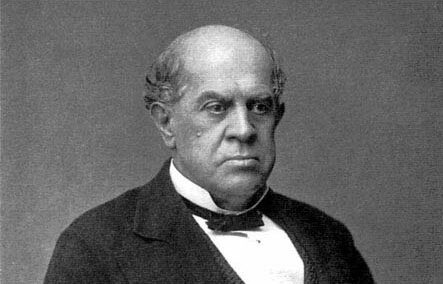
    In Argentina, this global turbulence acquires a singular historical density. Since the late nineteenth century—when figures such as Domingo Faustino Sarmiento promoted a republican, secular, and universalist vision of public education—and mainly since the University Reform of 1918, the public university has functioned as a political form that has articulated autonomy, equality, and intellectual citizenship. As such, it became an engine of social mobility and a key producer of public knowledge, rooted in an Enlightenment conception of education as a right and as a condition for democratic life.

    However, the arrival in Argentina in 2023 of an openly anarcho-capitalist government, informed by paleolibertarian ideas, marks the most profound rupture in this trajectory in more than a century. For the first time since 1918, the state not only withdraws material support from the university but also questions the very legitimacy of the institution, recasting it as a moral anomaly sustained by taxation, self government (professors, graduates, and students), and egalitarian values. This conflict crystallizes in an explicit culture war. The university is labeled part of the “casta,” a vestige of statist politics to be overcome. Faculty and researchers—especially in the social sciences and humanities—are accused of indoctrination. And the institution’s own temporality—slow, deliberative, accumulative—is reframed as incompatible with a political project that celebrates acceleration, rupture, and permanent deinstitutionalization. What is at stake is not merely funding but the very possibility of autonomous knowledge production.

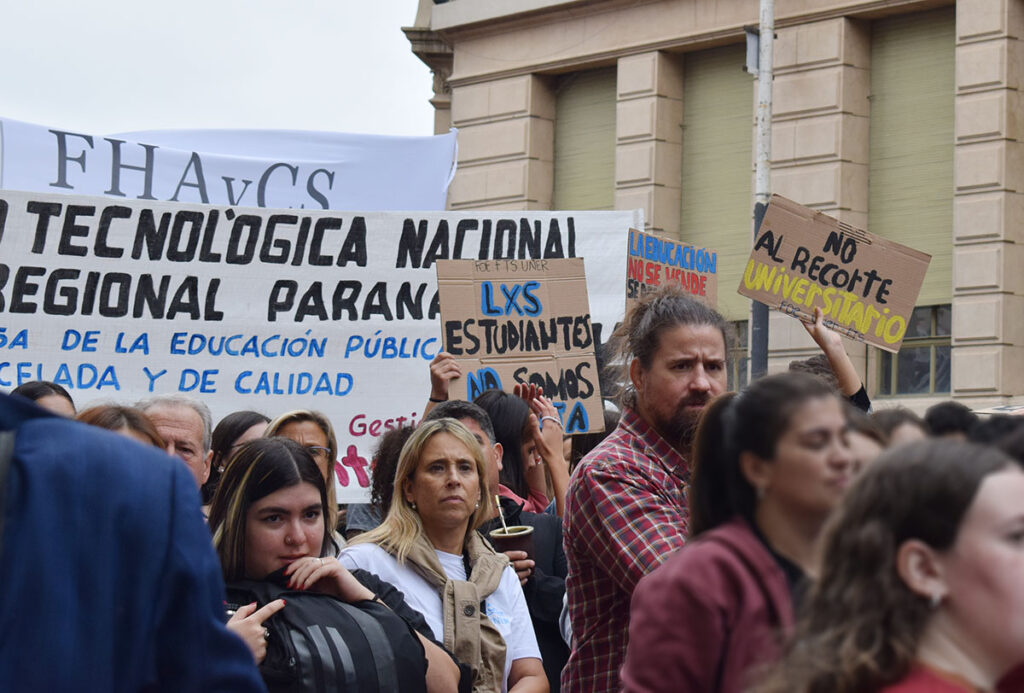
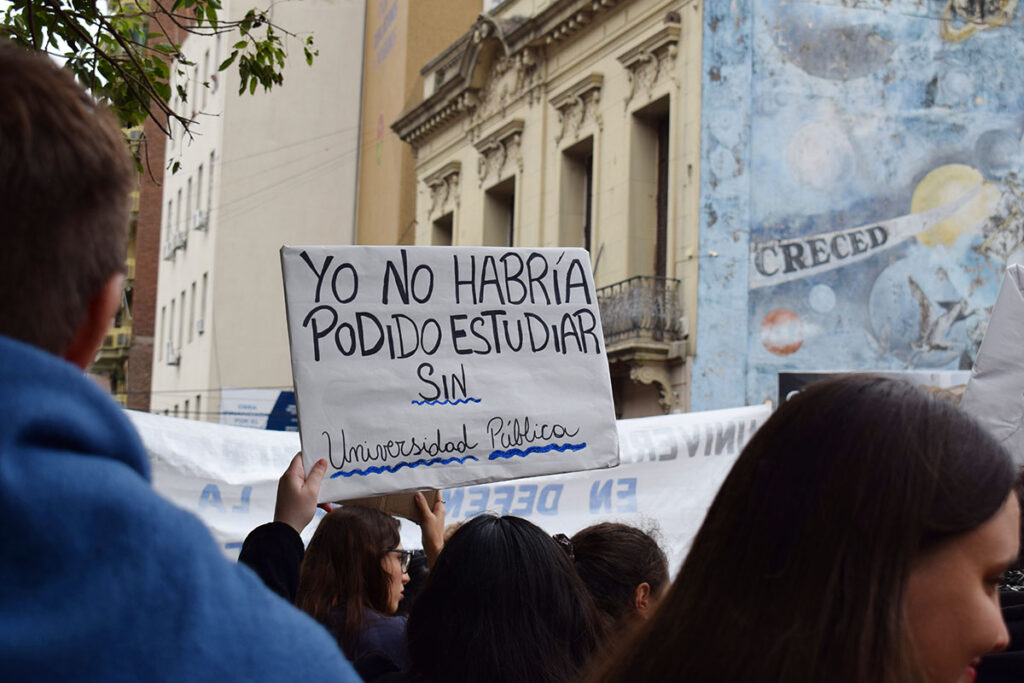
    Yet the crisis has also reshaped the university’s political role. The mass mobilizations of 2024 and 2025 showed that, despite the erosion of the old democratic consensus, the public university retains significant social legitimacy. Its defense, however, cannot be reduced to corporatist reflexes. The challenge—as the essays in this dossier argue—is conceptual: how to sustain critical knowledge when expertise itself becomes publicly contested, and how to reinvent the university without abandoning its historical commitments?

    Within this confrontation, the Social Sciences and Humanities (SSH) occupy a particularly vulnerable position. The anarcho-capitalist attack seeks to delegitimize them by portraying them as a “useless expense” or an elitist indulgence, contrasted with the supposed “indisputable utility” of the natural sciences. This opposition rests on an impoverished view of knowledge that recognizes only what can be immediately translated into a measurable, marketable, or technically operational product. Against this simplification, the defense of the SSH cannot be reduced to arguments about instrumental utility. Their value is deeper: they are historical practices of collective debate, bearing ethical, political, and critical dimensions, enabling societies to question what is taken for granted, revisit the past, and open possible futures. In a context where speed and efficiency become universal benchmarks, they remind us—as philosophy once insisted—of “the usefulness of the useless.” Their decisive contribution does not lie in producing immediate solutions but in sustaining a society’s capacity to think itself and to build a historical, political, and human “we.”

    Taken together, the texts in this chapter of the b2o Review’s dossier “The University in Turmoil: Global Perspectives” suggest that the path forward is not restoration but a vital search for the university’s new formations. At a moment when a global intellectual counterrevolution seeks to delegitimize collective institutions, the Argentine university offers a privileged vantage point from which to rethink what forms of democratic life remain possible. The university, that longstanding repository of promises and conflicts, may once again need to become a laboratory—an institution capable of imagining new modes of learning, participation, and everyday life amid this particular storm, and the ones to follow.

    Tomás Borovinsky is a researcher at CONICET (National Scientific and Technical Research Council, Argentina) and a professor at EIDAES–UNSAM (the Interdisciplinary School of Social Sciences at the National University of San Martín). His latest collective volume is ¿Hay algo que no esté en crisis? Arte y pensamiento en la era del cambio acelerado y sin fin (Siglo XXI). He is also the editorial director of the publishing imprint Interferencias (Adriana Hidalgo Editora), focused on contemporary thought, and the editor-in-chief of Supernova, a magazine of ideas and public debate.
  • Juan José Martínez Olguin–The University and Public Education in Argentina under “Libertarianism”

    Juan José Martínez Olguin–The University and Public Education in Argentina under “Libertarianism”

    This essay is part of “The Argentina Chapter” of the b2o Review‘s dossier “The University in Turmoil: Global Perspectives”. 

    The University and Public Education in Argentina under “Libertarianism”

    Juan José Martínez Olguin


    The Rise of Javier Milei and the Libertarian Revolution

    The Libertarian Revolution—the name which Javier Milei proposed to designate the set of radical transformations he intended to carry out in Argentine society if he was elected as its first and highest political authority—does not lend itself, at least at its most general level, to any confusion.[i] A revolution, today as in the past, is an invitation to make in a very intensive way profound changes of those societies where revolutionaries are called to enact it. Milei, in fact, was elected President of Argentina in the presidential elections held on November 19, 2023. His opponent was the Peronist Sergio Massa, defeated by more than ten percentage points, the largest difference between two candidates in the history of our contemporary democracy. The scene that those elections built clearly illustrated the differences between both candidates: on the one hand, there is Massa, a professional politician with a long trajectory in the different political parties that identify themselves as part of the Peronism movement. On the other, there is Milei, who is known in certain specialized circles as an outsider, someone who came from outside politics but also someone who wants to “defeat it”—that is to say, defeat politics, or at the least traditional way of doing politics, which includes the State. Paradoxically, Milei proposes doing so by weaponizing politics and the State towards their defeat–in his own words, the goal is to “destroy it (the State) from within”. His political trajectory is, frankly, astonishing: in just two years he founded his own party, La Libertad Avanza (Freedom Advances) and became a national deputy (in the 2021 legislative elections). As his appearances on various political television programs grew, so did his image and popularity.

    It is undoubtedly difficult to fully grasp the libertarian ideological and expressive universe upon which Milei’s Revolution relies or is founded, for one simple reason: beyond its presence in Western Europe and especially in the United States, libertarianism in Argentina emerges as a new political expression. Largely born in the context of pandemic isolation and lockdown policies, it fundamentally arose from the fragments of a political system in crisis due to the deep erosion of legitimacy of its two main parties: Peronism and Juntos por el Cambio (a center-right political party). However, aspects of that universe can be foregrounded due to the political activities of Milei–through his discourses and actions in the public sphere. In this sense, libertarian ideas in the Argentinian political frame come from various doctrines and intellectual traditions. First and foremost, there is the most explicit level of the libertarian symbolic universe: its economic doctrine, based on a marginal school in contemporary economic theory, the Austrian School of Economics led by von Mises and Friedrich Hayek. Milei himself frequently references them in his public appearances. Essentially, libertarianism advocates for shrinking the State to its minimum expression and expanding individual freedom over the State in all spheres of social life. This exaltation of liberty inevitably clashes with some of the most basic values of democratic life. Its strong defense of freedom—especially economic freedom—such as the legal buying and selling of organs and babies (a proposal that was floated and harshly criticized during Milei’s presidential campaign), is an example of this tension. A second defining component of the economic universe of Argentine libertarianism is Murray Rothbard’s anarcho-capitalism. Regardless of the ultimate success in implementing the transformations these doctrines propose (Milei’s government is only halfway through its term), the libertarian vocation marks, at least in this ideological-economic dimension, the most radical transformation of the economic foundations of Argentine capitalism in the last 100 years.

    The Libertarian Revolution, however, does not define itself only as an economic revolution based on the Austria School of Economics. It also and simultaneously assumes the form of a “cultural revolution”. The libertarian universe reserves a name for this facet of the revolution: the “culture war” (or “la batalla cultural,” a term popularized in Argentina by Agustín Laje, one of the ideologues of libertarianism and local radical right parties).[ii] This term and its specific meaning is shared, in fact, by the alt-right and radical right movements worldwide.[iii] Based on Gramsci’s old category of hegemony, Milei’s cultural battle seeks to transform the hegemonic meaning of some of the essential community values of at least the last 40 years—since the institution of contemporary democracy in Argentina and the rise of Ricardo Alfonsín as the first president of the country’s contemporary democratic Era (1983–1989). The culture war, in this sense, is an ideological struggle that entails profound changes in democratic life as we have known it in Argentina in recent decades. This culture war has, in fact, an enemy: “the caste,” which, according to the libertarian narrative has held Argentina’s political and cultural hegemony for the past 40 years. The caste is not, strictly speaking, a sociological and determinable group in the demographic makeup of the country. The term “caste” is the product of an expressive operation that twists perception, a “coherent deformation”[iv] of what is perceived, granting a particular form of being to a part of the “flesh of the social”.[v]

    Turned into a specific form of being of the element from which we are made—the flesh of the social—, the caste comprises different segments or social layers: the members of the cultural life of Argentina (writers, movie and television actors and actresses, film directors, etc.), welfare beneficiaries and public employees, the different political parties and politicians that alternately governed Argentina since the return of democracy in 1983, and finally, scientists and members and workers of the academic world. In each case, we can find a link to the “evils” that, according to libertarianism, plunged the country into decay: members of the cultural life and their “progressive doctrine,” welfare beneficiaries and public employees who are tied to an endemic evil: a corrupt and inefficient State, the “traditional” politicians and the failures of democracy, scientists and the public university system fostering social and political indoctrination in classrooms, on the one hand, and “partisan” or “ideologized” scientific research (especially in the Social Sciences), on the other. It is, indeed, in this context—in the context of the culture war and its various stakes, and not only in the context of its economic doctrine—that we can understand better libertarianism’s disdain for public universities and scientific research system, as well as the systematic and deliberate siege policies Milei’s government has been implementing against the whole public system of education.[vi]

    One aspect is particularly relevant: the specific twist of meaning that libertarianism gives to its notion of caste—the twist between rights and privileges. In most of his public interventions, but especially in the speech following his presidential victory, President Milei referred to his government’s vocation in terms that clearly express this twist: “We are not here to take away your rights; we are here to end privileges”.[vii] This phrase illustrates very well the constitutive twist of the ideological amalgam that defines libertarianism: what in the context of the last decades of transformations of contemporary democracies was delineated as new rights (social rights, gender rights, economic rights, etc.), have turned into privileges of what libertarians define as “the caste” in the context of the new demands and changes of democracies. This conversion, in effect, explains the figure of the State as the principal agent responsible of the promotion of those privileges, and simultaneously it delineated the ideology that must be defeated: el progresismo (the woke ideology; that is to say, those who identify themselves as “liberals” in the United States) that, according to libertarianism, expands the influence of “cultural Marxism”. Privileges, then, separate those who advocate for freedom, effort, and individual merit from those who are part of the State and live off the benefits and subsidies that the public sector provides them. This twist not only clashes with several rights enshrined in the National Constitution but, in one of its decisive aspects, confronts the very heart of the Argentine national project—from its founding to the present day, including especially the last 40 years of uninterrupted democracy: education as a right, that is, the guiding idea behind the constitution of the National State—the idea of public education. More profoundly still, it opposes the conception held by a figure who, through both his theoretical reflection and his political practice, played a central role in shaping the historically situated form of public education in Argentina: Domingo Faustino Sarmiento.

    The Figure of Sarmiento and Public Education in Argentina

    Sarmiento was not only President of Argentina during the years of the foundation of the National State (from 1868 to 1874) but also a profound thinker—not just a thinker of education but also of the social and political conditions of existence of his own Argentina, whose thought and actions made him a central figure throughout Latin America. Sarmiento’s thought radiates and permeates Argentine culture, but also Latin American culture, in an irreversible way.[viii] In the historical configuration of education as a public institution in particular, his thought was and remains decisive. Strongly influenced by the French Revolution and its ideas just a few decades after it took place, Sarmiento wrote a book that laid the foundations for the idea of public, common, or popular education on Argentine territory: Sobre la educación popular (On Popular Education).[ix] Sarmiento (who by then was in exile in Chile) begins the text that was commissioned as a “Technical Report for the Minister of Public Instruction of Chile, Manuel Montt,” by exploring the historical origin and essential condition of public education: its conception as a human right. He writes:

    Public instruction is a purely modern institution, born from the dissensions of Christianism and made a right by the democratic spirit of current association. Until two centuries ago, there was education for the ruling classes, for the priesthood, for the aristocracy; but the people, the plebeians, did not, properly speaking, form an active part of nations. It would have seemed as absurd at that time to claim that all men should be equally educated as it would have been two thousand years earlier to deny the right of making slaves… It is not my intention here to tell the history of the series of events and conquests that have brought Christian peoples to the point they have reached today… For now, let us be content with the fact that each progress in institutions has tended to this primary objective, and that the freedom acquired… has contributed in masse to the use of rights that today no longer belong to such or such class of society, but simply to the condition of human being.[x]

    This conception of public education as a human right had its institutional imprint on Argentine society in the nineteenth and twentieth centuries. And in this institutional imprint Sarmiento was, in fact, decisive. In this sense, the promulgation of Law 1420 in 1884, which established free and secular public education, was the first major step in this direction. The construction of public schools, particularly during Sarmiento’s presidency, and the literacy process of Argentinian citizens advanced in just a few decades by giant steps (by the early twentieth century, Argentina had the highest literacy rate in Latin America). Despite the antagonisms and political conflicts that configure the twentieth century in Argentina, and even the early twenty-first century, the materiality of the trace of Sarmiento’s thought regarding education and the public system remained intact. And despite, also, the institutional discontinuities and coups d’état that took place during the last century (and therefore, the selective policies the military governments adopted to undermine, above all, the public university through partial closures of certain careers or faculties).[xi] The arrival of democracy in 1983 expressed, in the words of the newly elected president Raúl Alfonsín–“With democracy, not only do we vote, but we also eat, heal, and educate”[xii]–the most intense moment of the omnipresent legacy of Sarmiento’s trace, by linking the form of public education with the very form of democracy (something Sarmiento indeed did throughout his own thinking). In other words: in the promise of a social democracy with greater rights, much of Sarmiento’s reflection and his political, cultural, and institutional roots, crystallized.

    The University and Public Education Under the Siege of the Libertarian Revolution

    Public universities in Argentina have a strong and decisive source of inspiration in Sarmiento’s legacy of education as a human right: “higher education,” it is stated in the current Higher Education Law, “is a public good and a human right”.[xiii] The set of laws and measures that Milei’s government has been implementing, particularly against the public university system, is framed, therefore, within this dual ideological pillar that inspires the Libertarian Revolution: its economic doctrine, on the one hand, and its political-cultural doctrine, the culture war, on the other. While the first defends the market’s presence as a regulator of the various spheres of social life, and consequently emphasizes its decisive role in offering education as a “public” service (and not as a right), the second entails a much deeper critique to our actual public system of education. In his recent book on this subject, Argentine anthropologist Pablo Semán points out a central aspect in this regard: those who identify themselves as militants of the libertarian movement do not show a detachment or direct rejection of the common wealth or the public sector, but rather of the “state of the State,” that is to say, they do not reject the “abstract idea” of the State, but its real and material conditions of operation and existence in daily life.[xiv] Rejection of the “state of the State” is also, therefore, a rejection of those who “live” due to the benefits of that State, whether in the form of benefits from social welfare programs or as public employees. A double gap, therefore, separates these individuals from private employees or entrepreneurs: first, the former maintain a salary without the risk involved in entrepreneurship, creativity, and sacrifice, while the latter dignify their income through the effort and merit that the risks of the labor market require. Second, this gap was widened by the pandemic and the restrictive measures and lockdowns that limited public freedoms, and especially, in the case of younger generations, the freedom to work. It is in this precise context that university professors and the academic world in general became targeted as part of the caste.

    There is, indeed, a second element which is critical for the libertarian political and cultural imagination regarding the academic world, an element inherent, on the other hand, in its condition as a caste: the excessive presence of political trends, especially Marxism, which, according to libertarianism, operate as a form of indoctrination of youth, limiting their freedom (this criticism, in effect, also applies for the scientific system, particularly the scientific productions of the National Council of Scientific and Technical Research [CONICET], for their “ideological biases”). The criticism, which I would argue extends to the scientific system in general, is proclaimed as part of the “culture war.” It is not, however, just a cultural critique. It is a rejection of the political views that libertarianism repudiates, and a form of rejection of “politics” in general. Public universities and the scientific system, for example, are, according to libertarianism, unnecessarily tainted with political practices and political ideologies. Unproductive papers, useless research, and superfluous activities are the consequence of the presence of the caste in the scientific and academic system of Argentine society. This rejection of the “university and scientific caste” as a source of political and ideological visions which are dangerous to society can also be easily seen in the criticism of Trumpism, which is very close to Milei’s movement, of woke ideology in the United States.[xv]

    One final aspect, however, is decisive for understanding the rupture that the Libertarian Revolution and its political principles produce, or aim to produce, in historical and political terms. This aspect pertains in particular to public universities and the university system as a whole, but more generally also to the educational system that founded and was founded in parallel with the Argentine State and which has in Sarmiento its most illustrious thinker. Paradoxically, public university and the Argentine university system reached what, for Sarmiento, was central in the process of democratizing public education, and is evident from the title of the aforementioned work, On Popular Education: the institution of a “popular action” capable of “improving public education”, that is to say, the institution of public education as a “collective work”.[xvi] Sarmiento’s greatest challenge was achieving the realization of that popular action and that collective work in primary education, a necessary pillar, of course, for the existence of higher education. What is important to emphasize at this point is, however, the status of those decisive terms—popular action and collective work—, because they reveal the relationship which Sarmiento establish between education and civil society or citizenship, or more specifically, between democracy and public education. In other words: they are decisive to understand his conception of popular education 

    Popular education, in fact, is not, for Sarmiento, an abstract concept or a model to follow in institutional, social, or pedagogical terms. On the contrary, it is a historically situated educational experience: that of 19th-century United States, and very particularly, that of the northern states of Massachusetts and Connecticut. There, Sarmiento notes, the funds and most elementary needs of district schools, unlike the public education systems of Holland, England, and Prussia, are obtained through what in the northern country are called annual meetings, which are public assemblies of parents, school staff, and “individuals with zeal and instruction,” who decide together and through debate the amounts of those funds and their different destinations. To put it in another way: Sarmiento found that, in these districts, education is the product of the collective action of those who are involved in the educational system. This aspect is decisive because it reveals the bond between democracy and education or, more precisely, their intrinsic, and to use Maurice Merleau-Ponty’s term, chiasmatic, relationship.[xvii]

    The idea of popular education thus implies the retreat of education upon itself, its institution and self-institution, the institution and self-institution of its form and content. In this sense, and returning to Sarmiento’s own words, if public education is a purely modern institution, born from the divisions of Christianity and turned into a right by the democratic spirit of the contemporary forms of society, this spirit, I add, is the one that simultaneously configures it and gives it its transitory form. The concept of popular education involves a self-reflective movement of education as a public good: it is not only a right enshrined for the individual and society as a whole but also an act that society and the individual give to themselves, and give in a double sense: they grant it (thus, it is a right) and they give it its form and content (it is the product of collective work). Democracy, as a form, thus coincides with education as a pedagogical and political act. In the Argentine university system, this conception of education and its self-instituting form as a constitutive principle adopted a specific historical and legal figure: that of self-government and that of autarky, enshrined today by the National Constitution and mobilized as a social and political process by the University Reform of 1918.

    Final Words

    The siege advances, and it advances with firm steps. By this, I mean: the siege that Milei’s libertarian government is imposing through its various policies on public education and, especially, on the public university system, that is, on universities. Public education, first of all, and universities, second (but no less important), are an active and decisive part of collective life, of its cultural and symbolic forms. No one embodies this active and decisive part of Argentine society like the figure of Sarmiento because, it is Sarmiento himself who founds and roots the public education system in a movement that unfolds “in three directions”: as I have shown, his pedagogical and political thought (first direction) unfolds simultaneously with the formation of the Argentine state (second direction), which is in turn characterized by the formation and consolidation of this public education system (third direction). Both public education, and especially the universities, are an active and decisive part of the collective life of Argentine society because this movement leaves a decisive trace in the political culture: the conception of public and university education as a human right, intrinsically tied since its genesis to the genesis of the modern Argentine state. This bond between state, education, and rights, which today was turned into a new bond between democracy, education, and rights, runs like blood through the veins of the flesh of Argentine society.

    That is the way in which public universities, the most complete institutional expression of Sarmiento’s project of public education and, by extension, of the national project for the formation of the educational system and the state, have been fundamental as a political actor in Argentine modern history. From the 1918 University Reform movement, which began the process of democratization and universalization of the higher education system itself, to La noche de los bastones largos (The Night of the Long Batons), a tragic and fateful episode of that history when students, teachers, and authorities from the Faculty of Exact Sciences of the University of Buenos Aires were brutally repressed on July 29, 1966, by the military government of Juan Carlos Onganía (1966–1970), leaving a large number of victims, university life has been intertwined with political and public life, and, vice versa, political and public life in Argentina has been intertwined with university life.

    Indeed, with the beginning of the contemporary democratic cycle (1983), led by the inauguration of former President Raúl Alfonsín, this delicate and singular fold between university life and political and public life reached its highest degree of (un)folding in the promise of the foundation of contemporary democracy. The process that Alfonsín himself opened with his government resides in the idea of education as a human right, but as a human right that is part of the very contemporary condition of democracy, that is: education is a constitutive and genetic part of the contemporary expression of the flesh of the social of Argentinian democratic society. In other words: since 1983, the words of the former president in his inaugural speech at the Legislative Assembly–“With democracy, not only do we vote, but we also eat, we heal, and we educate”–have run through the intimate fibers of the flesh that shapes our collective life.

    The Libertarian Revolution evoked and led by Milei therefore seeks to rest, and in fact rests, on a very fine and delicate thread. A fine and delicate thread, because its anti-elitist vocation, in which the university and its different actors (teachers, students, and authorities) are a parasitic part of the “caste,” stands in tension not only with the public nature of higher education, but also with primary education, and more profoundly, with the role that both higher education and primary education play as horizons that organize the possible and the impossible, the sayable and the unsayable of Argentine contemporary democracy. Therefore, the Libertarian Revolution is not just about the siege of one of the symbols of the Argentine state, a symbol, in fact, of distinction throughout Latin America: it is about the siege of democracy itself or, better yet, of one of the folds that form its contemporary expression. In the context of the “culture war” and political struggle against the university world, the Libertarian Revolution finds much more than a policy of “austerity” to shrink the state: it finds the key to carry out the radical transformations that change the very physiognomy of democratic system. And in the current political context of the Western democratic world, where the emergence of extreme right-wing or radical political expressions has gained unprecedented speed, and whose corollary is, to a large extent, the implementation of a global process that, in terms of French philosopher Jacques Rancière, takes the form of an “intellectual counter-revolution”[xviii] led by these very same radical right political expressions, the attack of Argentina’s libertarianism on the university, singular as it no doubt is, is likely to embody one of many global examples of the displacement of the university from the public and political life of our democracies.

    Juan José Martínez Olguín is a researcher in political theory at EIDAES–UNSAM (the Interdisciplinary School of Social Sciences of the National University of San Martín) and at CONICET (the National Scientific and Technical Research Council, Argentina). He is also a professor at the University of Buenos Aires. A specialist in political phenomenology (Merleau-Ponty, Lefort, Rancière), contemporary French philosophy, and theories of democracy. His latest book is Los pliegues de la democracia. Derechos humanos, populismos y polarización política (Buenos Aires–Madrid, Miño y Dávila, 2025).

    [i] Milei and his political party, La Libertad Avanza, are part of what it is known in academic circles, and mostly known in public conversation of contemporary democracies, as radical right movements or extreme rights. In another text, I have focused specifically on the study of these radical movements and their expressive universe: the Jacobin style of political antagonism. Cf. Martinez Olguín, Juan José: Los pliegues de la democracia. Derechos Humanos, populismos y polarización política, Buenos Aires, Miño y Davila, 2025.

    [ii] The book La batalla cultural: reflexiones críticas para una nueva derecha (Buenos Aires, Harper Enfoque, 2022) is where Agustín Laje mostly develop his ideas. 

    [iii] “Culture war” is, in effect, the English expression for what radical right movements in Latin America call batalla cultural.  

    [iv] Merleau-Ponty, Maurice: La prosa del mundo, Madrid, Trotta, p. 70, 2015. The translation is mine. Cf. Merleau-Ponty, Maurice: Œuvres, Paris, Gallimard, 2010.

    [v] I take the expression: “flesh of the social” from Lefort (El arte de escribir y lo político, Barcelona, Herder, 2007, p. 159).

    [vi] This set of politics that Milei’s libertarian government is implementing against the public system of education and mostly against Higher Education and universities in general is composed of different layers: first of all, a critical reduction of the funds destined for the scientific system, universities and public education, the reduction of salaries for professors and academic authorities, and a presidential veto of a law sanctioned by the Congress which intended to twist the situation and recover some of the institutional mechanisms to finance the system.

    [vii] Presidential speech, October 22, 2023. Source: Clarin.com

    [viii] I highly recommend, for a larger and more accurate perspective about the influence of Sarmiento in Argentine and Latin America culture, the book of the Argentinian sociologist Horacio González: Restos pampeanos. Ciencia, ensayo y política en la cultura argentina del siglo XX (Buenos Aires, Colihue, 1999).

    [ix] Cf. Sarmiento, Domingo, F.: Educación Popular, Buenos Aires, Banco de la Provincia de Córdoba, 1989.

    [x] Ibid., p. 55. The translation is mine.

    [xi] During the XX Century, political life in Argentina was characterized by six coups d’état which interrupt the democratic cycles. The last of them, the dictatorship led by the Army (1976-1986), which ends with the Peronist government of Isabel de Perón (1973-1976), finish with the election of Raul Alfonsín as the new democratic President.   

    [xii] Raul Alfonsín’s speech at the Legislative Assembly, during the day of his assumption. 10 Decembre, 1983. Source: Digital Repository of the Chamber of National Deputies. The translation is mine.

    [xiii] Law 24.521. Source: Digital Repository of the Chamber of National Deputies.

    [xiv] Cf. Semán, Pablo y Welschinger Nicolás: “Juventudes mejoristas y el mileismo de masas. Por qué el libertarianismo las convoca y ellas responden”, in Está entre nosotros. ¿De dónde sale y hasta dónde puede llegar la extrema derecha que no vimos venir? (Pablo Semán coord.), Buenos Aires, Siglo XXI, 2023. 

    [xv] Cf. Connolly, William: Aspirational Fascism. The Struggle for Multifaceted Democracy under Trumpism, Minnesota, University of Minnesota Press, 2017.

    [xvi] Sarmiento, Domingo F.: Educación Popular, op. Cit., p. 88.

    [xvii] Cf. Merleau-Ponty, Maurice: Œuvres, Paris, Gallimard, 2010.

    [xviii] Rancière, Jacques : Les trente inglorieuses. Scènes politiques, Paris, La Fabrique, 2022, p. 12. The translation is mine.

  • Mariela Cuadro and Sol Montero–Beyond Utility: A Defense of The Social Sciences and the Humanities

    Mariela Cuadro and Sol Montero–Beyond Utility: A Defense of The Social Sciences and the Humanities

    This essay is part of “The Argentina Chapter” of the b2o Review‘s dossier “The University in Turmoil: Global Perspectives”. 

    Beyond Utility: A Defense of The Social Sciences and the Humanities[1]

    Mariela Cuadro and Sol Montero


    The Argentine scientific system and public universities

    The Argentine scientific and university system is based on two main pillars: scientific research and higher education. It comprises a network of decentralized national science and technology organizations—most notably the National Scientific and Technical Research Council (CONICET)—and the university system, which includes 64 national public universities as well as around 50 private universities and university institutes. The two systems reinforce each other, and this is for two reasons. Firstly, universities provide workplaces for many researchers in the Science and Technology system to conduct research. Secondly, many of these researchers work as professors on university campuses. Consequently, changes related to national scientific development also affect the functioning of national universities, albeit indirectly.

    Argentina’s scientific-university system has been closely linked to scientific progress and broader models of economic and social development. Established in the 1950s to support the government’s developmentalist strategy of the time, the scientific system has historically been tied to oscillations between developmentalist/heterodox strategies and neoliberal/orthodox approaches. While the former were driven by governments that encouraged national scientific development, the latter sought to undermine science and development through defunding and discrediting. Despite repeated attempts to dismantle it, the system has remained standing.

    The Argentine university system’s status as free and publicly funded places it in a unique position within the global context of right-wing attacks on universities, particularly on the social sciences and humanities. Since many Argentine university students come from working-class backgrounds, the discourse prevalent in other countries that university students are part of an elite ‘privileged’ class is ineffective in Argentina. Consequently, right-wing discourse in Argentina has sought to create divisions between professors and students. Categorized as ‘the caste that lives off the state,’ professors and researchers are accused of ‘indoctrinating’ students.

    The government’s ‘cultural battle’ narrative frames the argument: professors at public universities are labelled ‘socialists’ and accused of forcing students to think the same way. Consequently, universities are no longer viewed as spaces for debate, exchange, and the free circulation and production of ideas. Instead, they are discursively constituted as hierarchical and authoritarian structures that obstruct free thought.

    If the main issue that the right-wing government identifies in university life lies in the realm of ideas, it should come as no surprise that its discourse particularly targets the disciplines that are concerned with them. Hence, they become the objects of continuous attacks, mainly directed at questioning their utility. “What use are the social sciences and humanities?” their critics ask. In their defense, many have tried to highlight their contributions to public policy. In this text, however, we argue that the social sciences and humanities are far more than mere tools for public policy. Due to their ethical and political dimensions, we view them as products of collective and historical debate, enabling us to reflect on our past, question our present, and imagine alternative futures.

    Right-wing discourses and the issue of universities

    Since the 2000s, universities have been targeted by reactionary and conservative movements. In countries such as the United States, England, and France, programs and departments adopting postcolonial, feminist, anti-racist, or environmentalist theoretical perspectives have been accused of indoctrinating students, restricting pluralism, and threatening Western values. These seem to be the theoretical origins of a ‘virus’ spreading across university campuses worldwide: wokism, cancel culture, and the tyranny of political correctness.

    Attacks on the university system also lie at the heart of the Argentine libertarian right’s discourse and project. Since the beginning of his presidency, Milei and his supporters have devoted themselves to attacking CONICET and public universities in two main ways. Firstly, they have discredited the intellectual, theoretical, and practical framework of the social sciences and humanities, accusing professors, intellectuals, and scientists of belonging to an elite of dilettantes and privileged individuals. Secondly, they have cut funding for universities and science, which has a tangible impact on the lives and work of teachers and students.

    In this context, the alleged uselessness of the social sciences and humanities is key to delegitimizing these disciplines. Compared with the indisputable usefulness of the natural sciences, history, anthropology, philosophy, and classical literature, to mention only some of the vilified disciplines, are accused of being a ‘pure (useless) expense’ in a context of scarce resources. Due to their supposedly ‘elitist’ nature, they are also dismissed as mere entertainment — a privilege enjoyed by a select few and financially supported by the masses.

    The topic of usefulness as a measure of the value of scientific knowledge has become so prevalent in public discourse that even defenders of the social sciences and humanities often resort to this argument to demonstrate the value of their disciplines: they highlight the tangible, material, and immediate benefits these disciplines contribute to society. The impact of sociology, political science, gender studies, and communication sciences on public policies, development, and the advancement of social programs is therefore often emphasized, among other areas in which these disciplines can demonstrate their performance and productivity.

    The fact is that this approach to scientific knowledge does not always fulfil its promise of productivity within a short timeframe. In times of precarity and acceleration, when frustrations mount and people seem increasingly replaceable, demonstrating the effectiveness of the social sciences and humanities is becoming increasingly complex. Nevertheless, human beings will continue to address and identify social, political, and economic problems and produce ideas to solve them. The ethical-political question is who will be able to do this: a select few financed by private interests or world powers, or the many financed by our own informed public decisions?

    In this sense, the question of the usefulness of social and human disciplines can be compared to that of democracy, which does not always fulfil its promises either. Is this reason enough to discard it? So, what are the social sciences and humanities for? What is democracy for? What are universities for, beyond their often unfulfilled promises of utility and productivity?

    First, we should acknowledge that our ability to question the usefulness of human inventions is a direct result of democracy, universities, and the social sciences. These institutions enable and encourage this type of inquiry, and it is through them that we address it. As the epigraph to Nuccio Ordine’s The Utility of the Useless Manifesto states, “It is precisely the task of philosophy to reveal to men the utility of the useless, or, if you will, to teach them to differentiate between two different senses of the word utility.”

    In his Manifesto, Ordine argues that there are forms of knowledge that are not a means to an end but ends in themselves. In hostile contexts, the value of useless knowledge “is radically opposed to the dominant notion of utility which, in the name of an exclusive economic interest, progressively kills the memory of the past, the humanities, classical languages, teaching, free research, imagination, art, critical thinking, and the civic horizon that should inspire all human activity. In the universe of utilitarianism, in fact, a hammer is worth more than a symphony, a knife more than a poem, a wrench more than a painting.”[3] The exercise of these non-instrumental forms of knowledge and practice is unique to human beings and, to that extent, distinguishes us from other creatures. But calling them useless does not mean that they lack social, political, or cultural function. Precisely because of “their gratuitous and disinterested nature—far  removed from any practical or commercial purpose—these forms of useless knowledge and practice can play a fundamental role in the cultivation of the spirit and in the civic and cultural development of humanity”[4], says the Italian writer.

    Secondly, usefulness is undoubtedly a slippery category. It invites us to ask infinite questions: Useful for whom? For what? And when? This brings us immediately to the problem of capitalism and money. If the financier is the state, one might ask: Useful for whom? For the state? For the country? For its people? Then, we should ask ourselves, “What is the state? What about the country? What about the people?” These are precisely the questions for which we need the social sciences and humanities.

    As social scientists, it is crucial for us to navigate this quagmire without seeking our own salvation but rather to highlight the specific knowledge produced by our disciplines and practices. To do so, we must change the question and shift our perspective. So, we should rather ask: what do the Social Sciences and the Humanities do? Here, the question of ‘doing’ has a double meaning: firstly, how are the social sciences and humanities done? In other words, what is our daily practice as researchers? But also: what effect do the humanities and the social sciences have on the world in which we live? What do they make happen?

    “La pregunta por el oficio”: Narrating our practices

    The social sciences and humanities deal with subjects that are part of our everyday lives. We are all familiar with the issues of political science, international relations, linguistics, economics, or sociology. How often do we find ourselves discussing populism, the role of a particular country in a war, or the use of the letter ‘e’ in inclusive language in everyday situations? Our disciplines are grounded in a shared language and common sense, which connect us to our society, politics, and history.

    In fact, the distinction between doxa (the realm of common sense and opinion) and episteme (the structured body of knowledge that shapes our scientific understanding) is necessary in the scientific field. However, we cannot detach ourselves from the interaction between expert and lay discourse or between native and analytical discourse. The discourse that actors produce within a social practice shapes and influences the specialized and analytical discourse that we produce in our academic disciplines. For this reason, researchers in the social sciences and humanities are inevitably immersed in the social reality they study, and their work has a public impact in that it concerns the public and the common good. This is why they are often accused of being ‘politicized’ or even ‘partisan’, i.e., biased and influenced by ideology.

    In Argentina, in particular, the accusation of ideological ‘indoctrination’ in public universities is a ghost that the current government has repeatedly invoked. The Argentinian president himself has mocked and publicly denounced teachers for ‘indoctrinating’ students in matters of gender or national history. These suspicions assume that there are sciences that could be exempt from ideology and politicization. Not coincidentally, these are the sciences considered more ‘useful’, productive, and strategic. The accusation of ‘indoctrination’ also has an instrumental and strategic outlook. It suggests that there is a hidden interest in changing the minds of our students and readers, which is hidden behind the ‘façade’ of our research and classes. As if we too sought instrumental utility and benefit.

    From this utilitarian perspective, nobody could imagine that our work involves rules and methods, that it is a job with highs and lows, that we are sometimes overwhelmed by bureaucracy, and generally affected by the same precariousness as our societies at large. However, our work is also often full of desire, enthusiasm, and passion. In fact, it is the love of knowledge and the intellectual pleasure we derive from reading, writing, thinking, and discussing ideas that essentially drives and sustains the generation of knowledge, even in contexts of precariousness and systematic attacks.

    Like anyone else, professors and researchers have political views, but that doesn’t mean we’re devoted to teaching those political visions in classrooms. Still, our practice is also framed by rules, verification mechanisms, and evaluation and demonstration processes, as is any other scientific practice. In this sense, we regularly submit our ideas and progress for evaluation by our peers in formal and informal settings (which, incidentally, are not exempt from productivity criteria). Thus, for example, in faculty competitions and in the evaluation of our publications, colleagues and experts intervene by assigning scores and accepting or rejecting our proposals. As the academic and scientific world has public and explicit rules about research methods, it is an egalitarian and democratic system that allows us to learn from shared knowledge and criticism. Of course, this system has been widely criticized for its colonial, disciplinary, and restrictive effects, and there are forces within academia that are contributing to its transformation. However, here we want to highlight its normative function, precisely because it enables certain equalization, hierarchization, and evaluation.

    In this sense, the social sciences and humanities are not deprived of techniques – methodologies for researching, speaking, transmitting, and teaching. However, they do not necessarily adopt a technicist approach to the phenomena they address. In other words, not all social scientists seek to solve problems. Instead, much of our work focuses on identifying issues, problematizing what is taken for granted, and highlighting the historicity of what is considered natural. This critical view is fundamental, as it enables us to innovate and create possible futures. It allows us to imagine new worlds that may not materialize immediately –or ever– but which enable us to overcome inertia and modify history. This is where the ethical and political nature of scientific knowledge lies.

    In contrast to the uniformity imagined by those who attack the social sciences and the humanities, the scientific and university fields are traversed by opposing forces, conflicting interpretations, and crosscutting arguments. This is why the rules that structure research are valuable, as they provide a framework within which we can build knowledge and community together.

    The effects and the affects: What the social sciences and humanities do

    The contributions of the social sciences and humanities are valuable in themselves. They address questions about what constitutes us as humans and as a community; the construction and challenge of common sense; the defense of, and opposition to, different forms of political and social organization; the tracing of history; the exploration of identity, difference, and justice; the understanding of beauty and usefulness; and the debate around freedom and equality. At the same time, they question all that seems obvious, evident to us. The topics of our disciplines are ever-changing, evolving alongside societies and humanity. However, they are also timeless, as specific issues persist and resurface.

    We argue that humans cannot and should not be reduced to mere survival, as human characteristics far exceed notions of functioning or utility. Consequently, matters concerning society, politics, aesthetics, language, history, and ideas cannot be considered mere accessories or ornaments added accidentally to the ‘essential’, i.e., the purely reproductive, tangible, and material.

    Attacks on the social sciences and the humanities (as well as culture and the arts in general) are rooted in an ethical-political position that treats humans as mere pieces in a mechanism whose sole function is to increase profits (‘for whom?’, the critics ask). This impoverished view of humanity enables the idea of utility, which questions the social sciences and humanities. As Piovani says, this is “a merely practical utility, which implies that knowledge can be immediately translated into a tangible product, into something that can be traded on the market, that can be priced, bought and sold”.[5]

    This does not mean that there are no researchers in these disciplines who are devoted to producing knowledge in response to demands from others (the state, political parties, economic actors, or social organizations). However, the social sciences and humanities are not restricted to this. From our point of view, it would be undesirable for them to lose their critical, creative, and questioning functions. The problems posed by our disciplines extend into the future in an open, unpredictable way in science. In this sense, the social sciences and humanities may not always be immediately helpful. Still, they undoubtedly contribute to the formation of a “we”, a historical, political, social, and human community.

    Mariela Cuadro is a researcher at CONICET (National Scientific and Technical Research Council, Argentina) and a professor at EPyG-UNSAM (the School of Politics and Government at the National University of San Martín). Her work focuses on Critical International Relations Theory, Global South theories, and Middle Eastern politics. She is the author of several articles on these debates, with a research agenda centered on critical thinking and knowledge constitution.

     Sol Montero is a researcher at CONICET (National Scientific and Technical Research Council, Argentina) and a professor at the EPyG- UNSAM (School of Politics and Government at the National University of San Martín). Her work focuses on the intersection of discourse and politics, and her latest book is Avatares en el poder. Claves sobre el discurso político en redes (UNSAM EDITA, 2024).

    [1] We are grateful to Paula Salerno (Escuela de Humanidades, UNSAM) and Nicolás Viotti (Escuela Interdisciplinaria de Altos Estudios Sociales, UNSAM) for their collaboration. Their reflections provided essential input for composing this text. Nevertheless, the authors alone are responsible for the ideas presented here.

    [2] Pierre Hadot, Ejercicios espirituales y filosofía antigua, quoted in Ordine, Nuccio, La utilidad de lo inútil, Acantilado, Madrid, 2023, p.2.

    [3] Ib. p. 3

    [4] Ib. p. 1

    [5] Piovani, Juan Ignacio, “Sobre la utilidad de las ciencias sociales en tiempos de neoliberalismo y posverdad”. En Brugaletta, F., González Canosa, M., Starcenbaum, M., Welschinger, N. (ed.), La política científica en disputa: diagnósticos y propuestas frente a su reorientación regresiva. Facultad de Humanidades y Ciencias de la Educación UNLP- CLACSO, 2019, p. 123.


  • Tomás Borovinsky–The University Experiment in a Reactionary Age

    Tomás Borovinsky–The University Experiment in a Reactionary Age

    This essay is part of “The Argentina Chapter” of the b2o Review‘s dossier “The University in Turmoil: Global Perspectives”. 

    The University Experiment in a Reactionary Age

    Tomás Borovinsky


    The University as a Political Form

    In recent decades, universities across the world have been experiencing a global crisis. Their traditional sources of legitimacy have weakened, their funding models are under permanent pressure, and their place in society no longer seems self-evident. While universities in the Global North have been increasingly strained by managerial logics, standardized evaluation systems, and the retreat of humanist ideals, in the Global South those same forces have advanced as well, though within a much more fragile institutional landscape. In both cases, universities have been forced to adapt to a common pressure: to demonstrate efficiency, justify their existence in terms of performance, and submit their intellectual autonomy to external metrics that rarely capture the deeper meaning of academic work.

    But in the Global South, these trends are combined with additional dilemmas. The crisis of the university is inseparable from the crisis of the public sphere: budgets that fluctuate with unstable economic cycles, periods of institutional hollowing-out that erode basic capacities, and a persistent dispute over the place of knowledge in societies marked by structural inequalities. Thus, rather than two distinct processes, North and South share a common diagnosis, albeit traversed by material asymmetries. Both face the same question: how to sustain an institution that produces critical knowledge and civic education? However, they do so under very different conditions, where each global pressure acquires a particular density as it embeds itself in unequal political, economic, and social histories.
    We are living through a context of public defunding of universities and a retreat of international cooperation more generally. Even institutions such as UNESCO (to mention just one example), which in earlier times were donors and funders of research programs, now compete for funds with the very institutions they once financed.
    At the same time, as we will see in the Argentine case in particular—but also globally—we are witnessing the rise of extreme political movements that call the role of universities into question. If the modern university, heir to the Enlightenment, saw itself as a generator of “useful” scientific knowledge but also assumed a critical role vis-à-vis society, today it finds itself besieged by a reactionary tsunami that positions the university as a privileged political enemy.

    In Latin America, and this is especially the case in Argentina, the public university is not simply a space for professional training nor (only) a gear in the market: it is a political institution, a device in which, over more than a century, the promises, conflicts, and contradictions of Argentine democratic life have been inscribed. The university “convulsion” in this context cannot be reduced to an administrative or budgetary problem (though it is that as well). Rather, it expresses a dispute over the meaning of the common good and over the place that knowledge occupies in the making of a society.
    Part of this specificity has historical roots. In Argentina, the university predates the state and, in a sense, the nation itself. The National University of Córdoba, founded in 1613, and the University of Buenos Aires, created in 1821, belong to a political time much older than the Republic (1853) or the formation of the modern Argentine state (1880). In other words, they are institutions older than the state and the republic that support them today. They accumulate legitimacies, traditions, and social expectations that no political cycle so far has been able to reconfigure fully. Their persistence through dictatorships, democratizations, economic crises, and institutional reconstructions reveals something important: the university is a repository of dreams that outlive time. But how long can that dream endure?

    From this vantage point, in Argentina, the university has not been—at least over the last century—a mere educational device. Rather, it has been—and continues to be—a political form, a privileged space in which the democratic promise of Argentine modernity has been imagined, contested, and also embodied. The university articulates autonomy, equality, and intellectual citizenship, and it is a major producer of public knowledge and common goods. In the social imagination, it has been more a horizon of possible social mobility than a machine for reproducing privilege.

    As public opinion studies from the University of San Andrés, a private Argentine university, indicate, Argentine science enjoys a very positive image in society.[1] Even in moments of precarization, the university continues to be one of the few sites where the meritocratic ideal still holds, albeit in partial and conflictive ways. Where other institutions have deteriorated or lost credibility, the university—and the scientific system organized around state institutions such as CONICET—continues to operate as a space where equality seems possible, where a certain idea of the future—so fragile in contemporary Argentina—still retains a place.

    The Long Century of the Argentine University (1918–2023)

    To think about the Argentine university between 1918 and 2023 is to reconstruct a historical cycle in which the university functioned as one of the symbolic and political lungs of the country. Unlike other systems, in Argentina the public university was not limited to the transmission of knowledge: it was a stage on which models of citizenship were projected, disputes over the meaning of the State unfolded, expectations of social mobility took shape, and, above all, an imaginary of equality traversed generations. In a way, this long century constitutes the political biography of the modern Argentine university.
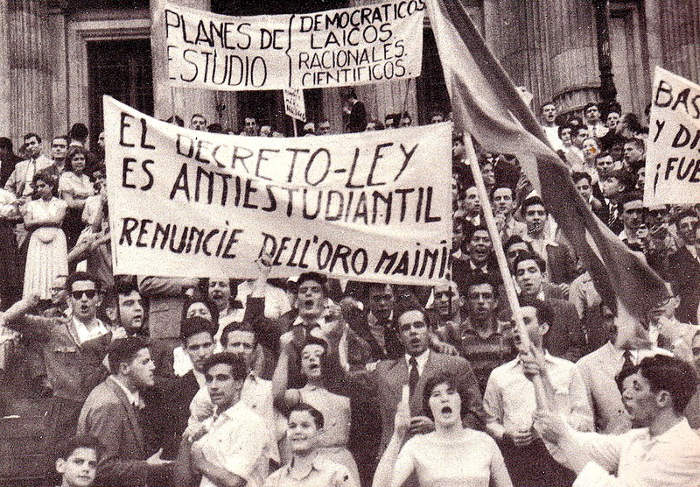
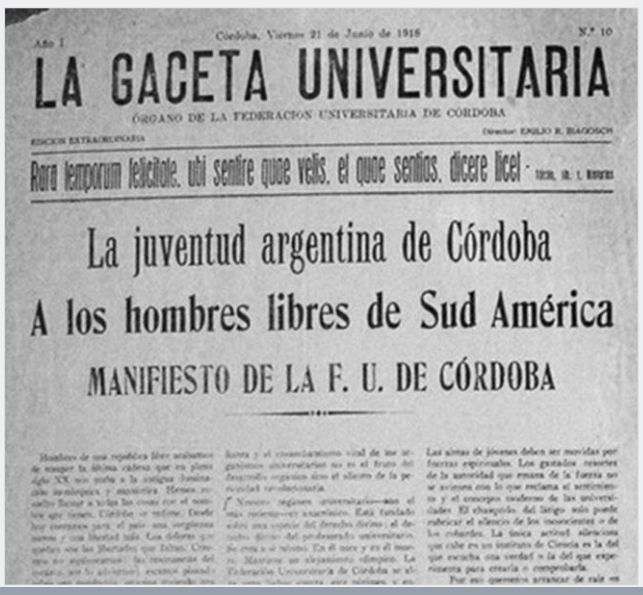
    The starting point is 1918. The University Reform of the province of Córdoba was much more than an academic reform: it established a way of understanding the university as a space open to deliberation, equality, and conflict. Co-governance among professors, graduates, and students, together with institutional autonomy, academic freedom, and a distinctive Latin American influence and resonance, introduced a political grammar that continued to radiate throughout the century. The 1918 University Reform emerged as a student insurrection that dismantled the inherited academic order, questioning the concentration of professorial power and the closure of participatory spaces. Its momentum opened the doors to a model of university more receptive to intellectual renewal, with selection mechanisms designed to prevent the stagnation of academic chairs, and with a conception of university life grounded in deliberation and the circulation of new currents of thought. As one of its most emblematic documents states: “Our university system—even the most recent—is anachronistic. It is founded on a kind of divine right: the divine right of the university professorship. It creates itself. It is born in it and dies in it. It maintains an Olympian distance. The University Federation of Córdoba rises up to fight against this system and understands that its life is at stake in doing so. It demands a strictly democratic government and maintains that the demos of the university, sovereignty, the right to self-government, resides principally in the students.”[2]

    The Córdoba Reform movement not only reorganized the political life of institutions but also established a generational sensibility that understood the university as a stage for social transformation, capable of projecting debates and demands beyond its own walls. Seen from today, the Reform is not so much an event of the past as an institutional language that made it possible to imagine the university as a place where knowledge circulates without tutelage, where hierarchies must justify themselves, and where power is always already in dispute. This permanent availability of conflict, this “empty place” of power, is one of the most enduring marks of Argentine university culture. As Claude Lefort writes: “where an empty place takes shape, there can be no possible conjunction between power, law, and knowledge.”[3] The university thus lives its internal effervescence while, even as part of the Argentine state, it maintains its autonomy from power.

    By the mid-twentieth century, the university entered a period of expansion, modernization, and politicization. Peronism (1945–1955), though in conflict with student organizations, ensured free tuition, and it was followed by the developmentalism of the late 1950s and early 1960s, which sought to turn the university into the engine of the national project. As a consequence, there was budget expansion, new faculties, academic professionalization, and the later creation of CONICET (the National Council for Scientific and Technical Research) as scientific infrastructure.   

    Understanding the Argentine university also requires taking seriously its intertwining with its scientific system. Since the creation in 1958 of CONICET, inspired by the French CNRS (the French National Centre for Scientific Research) and spanning the natural and exact sciences, the humanities, as well as the medical and economic fields, the country experimented with a singular architecture of knowledge: the university as a generator of knowledge and as a territory for teaching, conversation, and transmission; and CONICET as the structure that organizes research, gives it continuity, and projects it beyond political urgency. There emerged research careers, disciplinary commissions, mixed institutes: an ecosystem that breathes at the rhythm of the universities and, at the same time, gives them a depth that would be impossible without that support. Through crises and expansions, withdrawals and re-launches, CONICET maintained its mission of producing public knowledge. For this reason, speaking of the university in Argentina is never only about classrooms and students: it is about that scientific fabric that grants it historical continuity, social prestige, and a forward direction—even when the country seems to lose it.

    However, this technical impulse coexisted with a climate of growing political mobilization. Universities became territories where heterodox Marxisms, popular nationalisms, left-wing Christian movements, new social sciences, and a set of intellectual explorations circulated that exceeded the boundaries of the strictly academic. It was a time in which the militant intellectual, the modernizing scientist, and the student as political actor intersected. This politicized density transformed the university into a central battleground with authoritarian projects: intervention, censorship, expulsions, and episodes such as the “Night of the Long Batons” (1966) were attempts to break a university world that was perceived—rightly—as a hub of critical thought and social organization.

    The “Night of the Long Batons” was a turning point in the history of Argentine universities. The intervention of the dictatorship of Juan Carlos Onganía (1966–1970) and the police eviction of UBA (University of Buenos Aires) faculties revealed with absolute clarity the conflict between academic autonomy and state power. The operation interrupted research, dismantled research teams, and occurred at a moment of intense intellectual dynamism in Buenos Aires. Spaces such as the Di Tella Institute—a center for social studies and avant-garde art that, with the return of democracy, would later become a university—functioned as laboratories of artistic, scientific, and technological experimentation. This coexistence between a reformist university and an innovative cultural ecosystem, on the one hand, and a growing state desire for control, on the other, shows that the “Night of the Long Batons” was not an isolated event. It was the collision between two models of modernization: one open and experimental; the other vertical and disciplinary. The episode has since delineated the material and normative limits within which the university can produce knowledge and sustain long-term projects.

    This politicization accelerated in the 1970s, when the political radicalization of the Peronist left and the non-Peronist left was persecuted by para-state organizations such as the AAA (Argentine Anticommunist Alliance), until the 1976 military coup placed the university under direct military control. At that point, persecution intensified, censorship was consolidated, and state violence expanded, culminating in executions, kidnappings, and desaparecidos.

    With the return of democracy in 1983, the university regained its place as a laboratory of citizenship. Degree programs were reopened, exiled professors returned, institutional projects were reconstituted, and the idea that the public university was part of the democratic pact was restored. It was a period of massification, expansion into the metropolitan periphery, the creation of new national universities, and science and technology policies aimed at rebuilding a system devastated by years of authoritarianism. However, this momentum coexisted with new tensions: growing bureaucratization, internal fragmentation, budgetary difficulties, a crisis of the academic career, and a certain loss of the reformist horizon that had organized university life for half a century. The democratic university expanded access, but it did not always succeed in producing a new intellectual project capable of replacing either the militant ethos of the 1960s or the modernizing one of the 1950s.

    In the twenty-first century, the university system experienced an accelerated and unprecedented expansion. New universities in Greater Buenos Aires—a phenomenon already underway in the 1990s—expanded enrollment, and this period was marked by a renewed protagonism of the university in the public agenda. There was an increase in education spending, and investment in science grew steadily. Institutions were created, staffing expanded, and efforts were made to rebuild a scientific system battered by decades of instability and austerity. But this growth had a flip side: an increasingly unequal system between central and peripheral universities, an administrative structure that grew heavier, research circuits strained by precarization, and a proliferation of institutions, degrees, and initiatives that sometimes made it difficult to articulate a shared horizon. The reformist ethos, which in the past had operated as a motor of transformation, began to survive as a defensive gesture against the advance of a managerial culture that tended to turn the university into a collection of indicators and planning documents rather than a shared intellectual project.

    Since 1983, the Argentine student landscape has reorganized itself around a plurality of political traditions that alternated in influence. Reformist and social democratic and Peronist leadership marked the early years of the transition, promoting agendas centered on the defense of autonomy, institutional reconstruction, and the expansion of academic rights. Throughout the 1990s and 2000s, Reformist and Peronist student groups and independent formations also occupied important spaces, combining university concerns with broader debates on the role of the state and educational policy. By the early twenty-first century, the growth of left-wing groups—from Trotskyist organizations to new movements emerging from social, feminist, and territorial struggles—reconfigured the landscape, introducing a repertoire of demands tied more closely to critiques of the economic model, the democratization of academic life, and the active defense of the public sphere.

    By 2023, however, this long cycle seemed to have reached a turning point. Argentina was marking forty years of democracy (1983–2023) after half a century of dictatorships, authoritarian governments, bans, and political violence (1930–1983). The public university still retained its social legitimacy—surprisingly high for an institution subjected to recurrent crises—but it had lost part of its aura of upward mobility, future, and emancipation. The meritocratic imaginary that sustained it for decades is now eroded by a fragmented society, persistent inequalities, and a climate of political disorientation that affects all state institutions. The democratic consensus that once protected the university is no longer unquestionable: today it must justify itself, defend itself, and perhaps once again reimagine itself.
    This exhaustion of the reformist-democratic cycle defines the threshold from which the current offensive against the public university can be understood. And it turns the period from 1918 to 2023 not into a concluded era, but into a legacy now being disputed under new historical conditions.

    The Anarcho-Capitalist Offensive: Milei and the War Against Public Education

    The arrival of Javier Milei to government in 2023 marks a turning point not only in Argentine history but in that of the Argentine university in particular. For the first time since 1918, the State is not only reducing its material support for public education—something that has happened many times in the past—but is questioning the university’s social role and its very legitimacy. It’s worth noting that Milei comes to power in 2023, the year that marks forty years of uninterrupted democracy and half a century of erratic economic policies (1973–2023) producing a deterioration in people’s living conditions and successive extreme economic crises (1975, 1982, 1989, 2001, 2009, 2018, etc.) under all kinds of regimes and governments: dictatorships and democracies, right-wing or left-wing, statist or neoliberal.
    As I noted in a text I wrote with Martín Plot and Daniela Slipak, “2023 was marked by the exhaustion of a democratic regime that made economic uncertainty entirely intolerable and by the emergence of Milei as a leader who articulates critical solutions to the regime born in 1983.”[4] For the first time since 1983, a true outsider—someone outside the traditional political parties and the elite that has governed the Argentine Republic in democracy to varying degrees—had reached power. And it was Milei who knew how to make functional use of the tsunami of public anger that was emerging.[5]
    In this context, anarcho-capitalism, in its Argentine version, does not simply aim to cut budgets or reorganize ministries: it seeks to dismantle the very idea of the public as the organizing principle of common life. In this way, the public university—one of the most highly valued institutions of Argentine democracy, as we have shown—becomes a privileged ideological target. What is at stake is not only institutional continuity but the survival of a political-cultural model that associated knowledge, equality, and a shared social project.

    This movement is not unique to Argentina. There are resonances, mimicry, and contagion among movements worldwide. In Viktor Orbán’s Hungary, for example, free universities have come under such pressure that the Central European University in Budapest, founded and financed by George Soros, was forced to relocate its operations to Vienna, Austria’s capital. In the United States, radical figures such as J.D. Vance have openly declared that “university professors are the enemy.” Trumpist rhetoric has constructed the university as a polarizing figure through a convergence of dynamics also visible in Argentina: universities and the media are “hostile elites,” producers of a liberal culture deemed decadent or anti-national. The thought of Curtis Yarvin, with his theory of “The Cathedral,”[6] serves as an intellectual matrix for this worldview: the university and journalism appear as cultural devices that reproduce progressive values and block popular sovereignty. Milei feeds on this repertoire and on this global moment: he translates it into the local idiom, blends it with the media logic of provocation, and transforms it into a political program. And he also accelerates that Zeitgeist.

    Milei is a believer and an ideologue who jumped from the margins of the intellectual debate to become a global reference point for anarcho-capitalism. This transition—from professional economist to media panelist and later ideological activist—structures his relationship with knowledge: it is not so much a technical debate as a doctrinal alignment that views the public university as a bastion of “statism” to be dismantled. The problem is not only budgetary. It is philosophical: public education appears as a moral anomaly within a worldview that equates freedom with the market and the state with corruption. Ironically, Milei—a global referent of anarcho-capitalism—is a relative newcomer who found in this ideology a framework for measuring and transforming the world.

    Within this entire ideological constellation, paleolibertarianism occupies a central place. Milei came to Murray Rothbard’s work relatively late, in 2013, after which he named one of his dogs Murray. Following this epiphany, he would say: “When I finished reading Rothbard I said: ‘For more than 20 years I’ve been deceiving my students. Everything I taught about market structures is wrong. It’s wrong!’”[7] Another of his “idols” is Hans-Hermann Hoppe,[8] from whom he adopts a simultaneous critique of egalitarianism, the welfare state, and liberal democracy—an intellectual framework within which the public university becomes inconceivable: an institution supported by taxes, organized through collegiate bodies, and permeated by egalitarian values that Hoppe identifies as signs of cultural decadence. Milei takes up this matrix but cultivates it within Argentine public and historical debates, explicitly reclaiming Juan Bautista Alberdi (1810–1884), one of the founders of the Argentine constitutional order. Milei argues that the origins of all Argentine evils and of “Argentine decadence” began in 1916: curiously, the year in which “universal suffrage” (for men) was instituted. It is with the arrival of the vote, he claims, that Argentina ceased to be a “world power,” as dictated by the founding myth of the libertarian movement (we call it a myth because although Argentina’s GDP was indeed very high between the late nineteenth and early twentieth century, it is not true that it was a “world power” of any kind). And it is precisely in that democratization process initiated in 1916 that, in 1918, the spark of the aforementioned Argentine University Reform was ignited. Under this anarcho-capitalist logic, the public university is not merely an expense: it is an obstacle to the technocratic reorganization of power and to the ideal of a leader who acts without intermediaries, without checks, and without a public sphere that limits him. Within this framework, the public university—financed by the state, co-governed by professors, graduates, and students and ruled by norms that limit the market—embodies, for this new regime, the epicenter of ideological resistance.

    Thus, the offensive against public education must be read in continuity with another idea that Milei repeats insistently: the need to “destroy the State from within.” This formula—which he himself links to his admiration for paleolibertarians, and which echoes the neo-reactionary rhetoric of Silicon Valley—expresses a strategy of accelerated erosion of traditional institutional mechanisms. In this context, the public university appears as a symbol of the kind of state that the regime aims to dismantle: a state with territorial presence, egalitarian vocation, and cultural legitimacy. Rather than administering an education policy, the government seeks to modify the very conditions of possibility for any public knowledge project. The university thus becomes the site where this transformation becomes visible—not because it has been chosen as an enemy, but because it embodies what the new regime seeks to leave behind: the idea that knowledge can be organized collectively and outside the proprietary logic.

    The intellectual constellation surrounding Silicon Valley adds a decisive layer to the contemporary offensive against the public university—not only in the United States but also in Argentina under Milei. This is not a unified doctrine but a cultural milieu that associates innovation with deregulation, speed with virtue, and bureaucracy with decadence. Here we find extreme entrepreneurs, technolibertarians, accelerationists, and media figures such as Elon Musk, whose worldview rests on a simple premise: progress occurs best when there are no institutions to moderate it. In this vision, academia functions as a device that is too slow, normative, and attentive to collective procedures. The critique of scientific “slowness,” the exaltation of rapid motion, and the suspicion toward any deliberative instance shape an idea of knowledge in which the university appears as an artifact of the past. Faced with the epic of code, global scale, and technical solutionism, the public university is cast as an anachronistic world, organized in another temporality and faithful to values the new technological order deems obsolete.
    The meeting between the Argentine president and Peter Thiel at the Casa Rosada in March 2024—an event of which there are no photos, something that’s unusual for a government that constantly flaunts encounters with “great men”—symbolizes this convergence between technological acceleration and the politics of exception: two different ways of imagining the dismantling of the state converging in a shared anti-public logic.

    A more immediate gesture complements this ideological background: the de-hierarchization of expert knowledge. Martin Gurri, author of The Revolt of the Public: The Crisis of Authority in the New Millennium,[9] who, during his visit to Argentina, was struck by Milei’s rise, offers in his book a valuable lens for thinking about the cultural clash between the university and the anti-establishment political activism that in Argentina is dominated by mileísmo. His thesis is simple: we are living through a collision between a Center rooted in the industrial era and a digital Frontier that has not yet constituted itself as an order. The Center is hierarchical and professionalized; the Frontier is fragmentary, egalitarian, and corrosive. What collides are not political actors but two ways of organizing the world. The decisive element in this situation is information. Digital flow breaks the monopoly that sustained modern authority: there are no longer mediators, but a public that chooses, contradicts, ridicules, and multiplies narratives without limit. Any technical decision or expert knowledge can become the subject of suspicion within hours. It is no coincidence that the information age coincides with the rise of conspiracy theories. It is the price of deregulating the truth market. In this context, Gurri situates the university within the Center: a hierarchical institution, guardian of legitimate knowledge, dependent on a vertical chain of validation. The Frontier erodes that regime. It amplifies flaws, exposes errors, and turns criticism into a constant impulse toward dismantling. It is not an organized opposition; it is a multitude without a project of its own. The paradox is that the Frontier destroys more than it can replace. The Center resists out of inertia; the Frontier destabilizes without offering an alternative architecture. The result is a prolonged interregnum: an old order that does not fully recede and a new one that does not fully arrive. In this uncertain space, the university must reconfigure its legitimacy, because authority has ceased to be a value and has become another object of suspicion.

    As Gurri said during his visit, “Milei is the most interesting of the populists, because he has a proposal,”[10] thus distinguishing the Argentine president from Donald Trump’s first term. With Trump’s return to power in 2025, Gurri would later say: “Today Trump has a governing program derived from Milei’s influence.”[11]

    Within the intellectual ecosystem of the new Latin American right, the philosopher Agustín Laje functions as a strategic popularizer: someone who organizes scattered diagnoses, simplifies them into intervention-ready language, and projects them toward mass audiences. Author of highly circulated books across social media and traditional media—books that attempt to translate global debates on hegemony, subjectivity, and discourse into the local political terrain—Laje, born in 1989, is viewed by many as Milei’s heir and a potential presidential candidate in 2031.
    For Laje, drawing on readings from the new right in the Global North, since the late 1960s politics has reorganized itself around the dispute over culture. In his framework, this is not merely a rhetorical intuition but a structural shift: central conflicts are no longer defined by economic distribution but by the struggle over the codes that organize the perception of the world. The left, he argues, grasped this mutation earlier than anyone and oriented its strategy toward identities, language, and social sensibilities. The right, by contrast, remained attached to a technocratic reflex, trusting in the persuasive capacity of economic arguments.

    In this landscape, the university occupies a crucial place. As he writes, for example in his book Globalismo: “Western universities function increasingly as apparatuses for legitimizing woke derangement.”[12] For Laje, the university is not merely an educational device: it is an organizer of worldviews, a machinery of symbolic legitimization, and a vector for disseminating interpretive frameworks that then radiate outward into society. Hence his insistence on characterizing it as a space where the ideological direction of the era is defined. According to his diagnosis, a progressive hegemony consolidated in that territory, sustained by critical traditions—from French theory to contemporary feminism—and by transnational funding networks that promote specific agendas.
    Regardless of whether one agrees with his reading, Laje crystallizes a climate that permeates much of the new right: the idea that contemporary politics is, above all, a struggle over the production of meaning, and that universities—given their ability to shape languages, expectations, and sensibilities—are one of its decisive arenas.

    In its strategy against the university, mileísmo replaces academic debate with media impact, argumentation with performance, evidence with conviction. The criticism of “indoctrinating professors” does not aim to correct content but to disable the very idea that a legitimate sphere of autonomous knowledge production could exist. In this movement, the public university appears as the residue of an order that must be surpassed, a structure that operates according to a temporality incompatible with the immediacy demanded by the new regime. More than a confrontation between two educational models, this is a clash between two conceptions of political time: the university as a space of duration, accumulation, and critique; anarcho-capitalism as the accelerated time of rupture and permanent deinstitutionalization.

    Accusations of indoctrination, the denial of scientific knowledge on climate issues (the prohibition of discussing climate topics in official documents), economics (never-implemented economic ideas such as dissolving the central bank), or public health (denial of the usefulness of vaccines), and the systematic reduction of university and scientific budgets all fit within this framework. These are not isolated measures but part of a broader process of reconfiguring the internal enemy. The university no longer appears as a space of education but as an enclave supposedly producing “statist,” “socialist,” or “communist” ideas. Confrontation becomes inevitable: while anarcho-capitalist logic conceives the property-owning individual as the sole legitimate moral unit, the university belongs to an order that affirms the existence of public goods, shared languages, and collective ways of constructing the future.

    The clash became visible in the massive university mobilizations of 2024 and 2025, which were among the largest demonstrations of Argentina’s democratic era in recent years. There, the university reappeared as a political subject: open classrooms, assemblies, academic and student communities moving through the streets under the conviction that public education is a right, a common good, and a form of future. This reactivation of the reformist spirit—now defensive rather than expansive—exposed the symbolic dimension of the university: when it is attacked, it reemerges as one of the last places in which a significant part of Argentine society recognizes itself.

    Argentina’s public sphere became traversed by a persistent phenomenon: massive mobilizations that overflow any routine reading of social protest. A tide of people that surprised the government itself and produced the first rupture in the official narrative that labels universities as “elitist” or “privileged.” The sheer size of the demonstration in the center of Argentina’s capital—between 400,000 and 800,000 people[13]—forced even traditional opinion leaders who typically support the government to express reservations about its austerity toward universities. Along this trajectory, the marches in defense of the public university and public health occupied a decisive place: not only because of their scale—among the largest since the start of Milei’s presidency—but also because of the kinds of actors they mobilized and the way they revealed the symbolic role these institutions play in Argentine life.

    This collective gesture reactivated something that goes beyond the budgetary conflict. It expressed the idea that the public university is not merely a service that deteriorates or improves depending on the year’s budget: it is an institution that organizes life trajectories, defines horizons of mobility, and functions as a republican promise passed across generations. The social pressure had concrete effects. In this context, the National Congress approved a law granting public universities a larger budget, with adjustments for inflation and improvements in scholarships and salaries.[14] President Javier Milei vetoed the measure, arguing that funding sources were not defined. Subsequently, Congress rejected the veto and reinstated the law.[15] Despite this, the government did not implement the allocated funds, prompting universities to take the matter to court. The conflict is now in the judicial realm, and the Executive branch is, in effect, in rebellion against a law approved by both chambers.[16]

    But the paradox is evident. The attempt to defund the public university did not diminish its symbolic weight; it placed it at center stage. Where the government sought a cultural rupture, a latent fact emerged: the public university remains one of the broadest consensuses in Argentine society. However, the electoral dynamic followed another path. Despite the confrontation with university and scientific institutions, the government managed to prevail in the October 2025 midterm elections, strengthening its position while advancing its agenda of reducing educational spending.

    In this scenario, the Argentine university is situated in a particular zone of tension: it maintains high social legitimacy but operates under a political climate that distrusts its function and structure. The challenge is not only financial but conceptual: sustaining the production of knowledge and critical thought in an environment where the value of academic expertise is publicly disputed and where the figure of the intellectual loses centrality to influencers. The university thus moves between the need to ensure its institutional continuity and the difficulty of maintaining its place as a cultural reference in a country where the coordinates of public debate are being altered. The challenge was described by Michel Foucault when rethinking the question of Enlightenment half a century ago: “I would say that critique is the movement by which the subject grants itself the right to question truth concerning its power effects, and power concerning its truth discourses: critique will be the art of voluntary inservitude, of reflective indocility.”[17]

    Defending the University Through More Experimentation

    We can read the current crisis of the university not only as an external attack or a misunderstanding, but also as a test of its own experimental capacity. If democracy survives only when it conceives of itself as an open, everyday, and revisable process, the same holds for the university. Following John Dewey and William James, the Brazilian philosopher and Harvard professor Roberto Unger revives the concept of experimentalism. The point is that it is not enough to appeal to past credentials or insist on being “indispensable”: any institution that claims centrality in a time of generalized distrust must once again justify its place. That requires risking new forms of teaching, research, engagement with the broader community, and interaction with the world of work, and accepting that certain inherited rituals and hierarchies, rather than protecting the institution, now make it opaque and unreadable to a significant part of society.

    In this sense, the alternative is not between preserving the old model intact or resigning ourselves to its destruction, but between a corporatist defense of the existing order and a reinvention that seeks new legitimacies. An experimentalist university is not one that meekly adapts to managerial language nor one that retreats into nostalgia for the lost welfare state, but one that explores new forms of student and faculty participation, new modes of evaluation, and new ways of producing and circulating knowledge in dialogue with publics who are no longer passive recipients. In a saturated informational ecosystem, authority no longer comes from the scarcity of knowledge but from the capacity to organize shared experiences, to create spaces where conversation has rules but not gag orders. The challenge is precisely this: to recognize that the university can defend itself only if it dares to change. To reimagine it not as a prestigious vestige of the Middle Ages or the twentieth century, but as one of the few places where it is still possible to rehearse—calmly, at least to some degree—forms of democratic life that outside appear overwhelmed by polarization and fury. If the future of democracy depends on combining stable institutions with devices for experimentation and openness, the university is uniquely positioned to embody that tension.

    What is at stake, then, is not merely the budgetary continuity of a set of buildings, but the possibility that there exists, in the midst of the storm, a collective laboratory where it still makes sense to learn together what to do with the time that has befallen us. As Unger says once again, “we need a set of decentralized, pluralistic, participatory, and experimental forms of coordination.”[18] For an experimentalist and democratizing response cannot be a “corporate” defense of the “old order.” Our near future will determine whether what we are living through today is a terminal crisis, a decline, or a profoundly vital metamorphosis of the university to come.

    Tomás Borovinsky is a researcher at CONICET (National Scientific and Technical Research Council, Argentina) and a professor at EIDAES–UNSAM (the Interdisciplinary School of Social Sciences at the National University of San Martín). His latest collective volume is ¿Hay algo que no esté en crisis? Arte y pensamiento en la era del cambio acelerado y sin fin (Siglo XXI). He is also the editorial director of the publishing imprint Interferencias (Adriana Hidalgo Editora), focused on contemporary thought, and the editor-in-chief of Supernova, a magazine of ideas and public debate.

    [1] “Encuesta de satisfacción política y opinión pública”. UdeSA: https://images.udesa.edu.ar/sites/default/files/2025-09/47.%20UdeSA%20ESPOP%20Septiembre%202025_0.pdf

    [2] Manifiesto Liminar. La juventud argentina de Córdoba a los hombres libres de Sud América
    Manifiesto de la Federación Universitaria de Córdoba – 1918.

    https://www.unc.edu.ar/sobre-la-unc/manifiesto-liminar

    [3] Lefort, Claude, “¿Permanencia de lo teológico-político?”, en La invertidumbre democrática. Ensayos sobre lo político. Anthropos, Barcelona, 2005.

    [4] Borovinsky, Tomás, Plot, Martín and Slipak, Daniela, “Milei y los horizontes de lo político. Crisis de régimen y anhelo de clausura de la incertidumbre democrática”, en Alejandro Grimson, Desquiciados, Buenos Aires, Siglo XXI, 2024, p. 162.

    [5] Borovinsky, Tomás, “Tsunamis de ira pública”, junio de 2023, Revista Panamá.

    https://panamarevista.com/tsunamis-de-ira-publica/

    [6] Yarvin, Curtis, Unqualified Reservations, Passage Press, 2022.

    [7] As cited in Stefanoni, Pablo, “Peinado por el mercado”, Revista Anfibia, 2021.

    https://www.revistaanfibia.com/javier-milei-el-libertario-peinado-por-el-mercado/

    [8]  Hoppe, Hans-Hermann, Democracy: The God That Failed, Transactions, 2001.

    [9] Gurri, Martin, The Revolt Of The Public And The Crisis Of Authority, Stripe Press, 2018. For further uses of these concepts in the Argentine context, see Borovinsky, Tomás, “Presentación”, La rebelión del público, Interferencias, Buenos Aires-Madrid, 2023.

    [10] Entrevista de mayo de 2024 en diario La Nación:

    https://www.lanacion.com.ar/ideas/martin-gurri-milei-es-el-mas-interesante-de-los-populistas-porque-tiene-una-propuesta-nid04052024/

    [11] Entrevista de febrero de 2025 en el diario La Nación:

    https://www.lanacion.com.ar/conversaciones-de-domingo/martin-gurri-hoy-trump-tiene-un-programa-de-gobierno-derivado-de-la-influencia-de-milei-nid31012025/

    [12] Laje, Agustín, Globalismo. Ingeniería social y control total en el siglo XXI, Harper Collins Publishers, 2024, p. 170.

    [13] “Del Congreso a Plaza de Mayo”. Diario La Nación.

    https://www.lanacion.com.ar/sociedad/del-congreso-a-plaza-de-mayo-cuantas-personas-participaron-de-la-marcha-universitaria-nid24042024/#/

    [14] Ley de financiamiento universitario. Chequeado.

    https://chequeado.com/el-explicador/ley-de-financiamiento-universitario-las-claves-del-proyecto-que-tratara-el-senado/

    [15] “El congreso rechaza el veto de Milei”. Diario El País.

    https://elpais.com/argentina/2025-09-17/el-congreso-argentino-rechaza-el-veto-de-milei-a-las-leyes-de-financiamiento-universitario-y-emergencia-pediatrica.html

    [16] “El gobierno no cumple la ley y las universidades irán a la justicia”. Página 12.

    https://www.pagina12.com.ar/867490-el-gobierno-no-cumple-la-ley-y-las-universidades-iran-a-la-j/

    [17] Foucault, Michel, Sobre la Ilustración, Tecnos, Madrid, 2004, p. 10.

    [18] Mangabeira Unger, Roberto, La alternativa de izquierda, Fondo de Cultura Económica, Buenos Aires, 2010, p. 174.
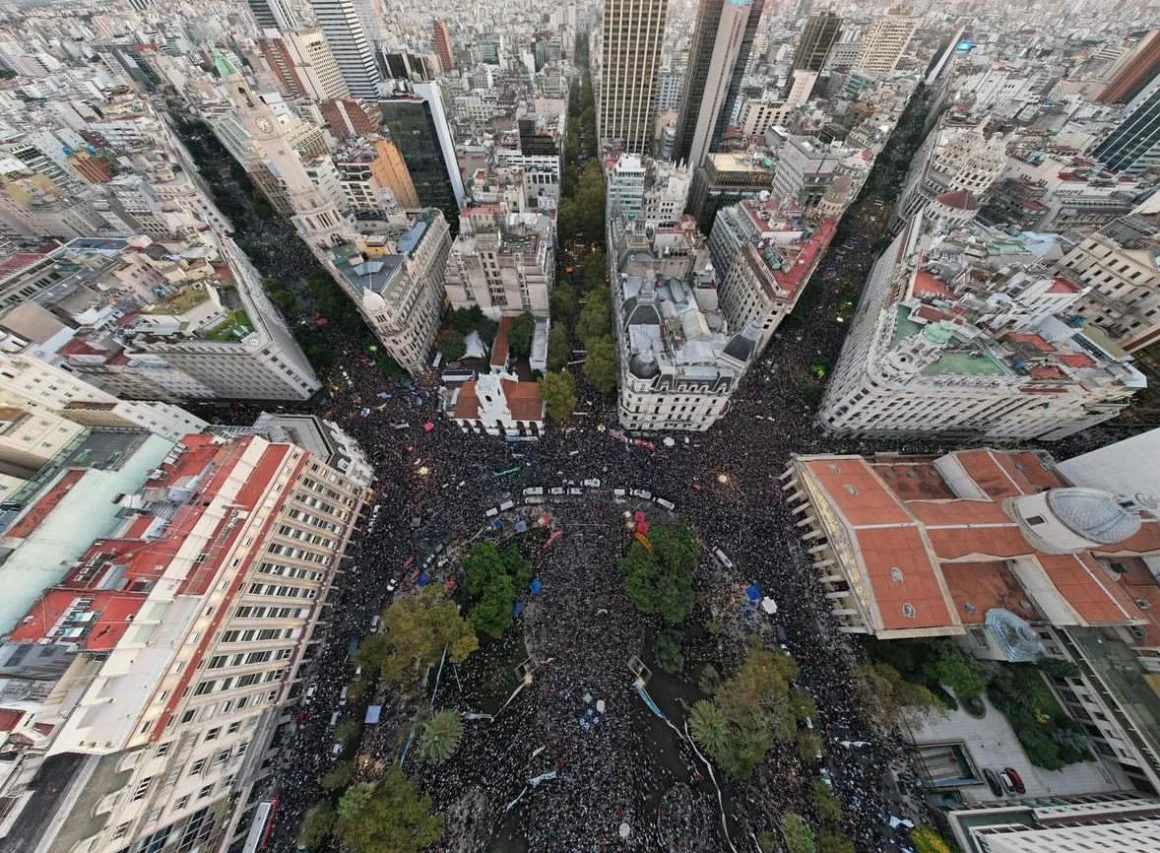
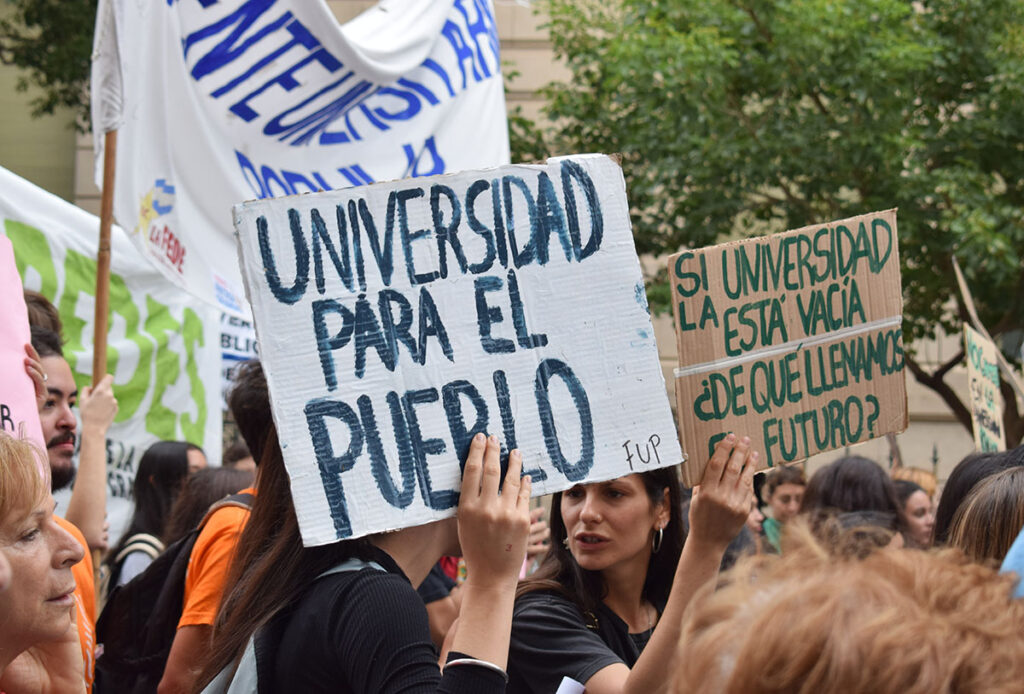
     

  • Naveeda Khan, Bareesh Hasan Chowdhury, and Shrobona Shafique Dipti–Shomonnoyok or Who Wants to be a Student Leader?

    Naveeda Khan, Bareesh Hasan Chowdhury, and Shrobona Shafique Dipti–Shomonnoyok or Who Wants to be a Student Leader?

    ©Mashruk Ahmed

    This post is Part Two of “The Bangladesh Chapter” of the b2o review’s “The University in Turmoil: Global Perspectives” dossier.

    Shomonnoyok or Who Wants to Be a Student Leader?

    Naveeda Khan, Bareesh Hasan Chowdhury, and Shrobona Shafique Dipti

    On July 26, 2024, the police in Dhaka city picked up three students by the names of Nahid Islam, Abu Baker Majumdar and Asif Mahmud. Over the next two day, three more students were taken into custody: Sarjis Alam, Hasnat Abdullah, and–the only woman in the initial group–Nusrat Tabassum. The 2024 Quota Reform Movement had already turned violent by this time: the Awami League’s student organization had begun beating the protestors; the police had fired on unarmed crowds; and some in the public had retaliated by burning government buildings and infrastructure.

    This instance of the police detaining students had broader consequences. It had broader consequences because by taking in specific students the Sheikh Hasina government was for the first time acknowledging that the movement was not just composed of innocent (read “ignorant”) students being manipulated by anti-state agitators; it was after all an organized effort led by the students themselves. The government could not help but identify several students as leaders of the movement simply by picking them up, supposedly for their own protection. Among these student leaders, Nahid Islam had already been picked up earlier and beaten, no doubt because he was most visible in the media. But this group sweep suggested that the Awami League government felt they had identified and seized the most influential of the student leaders, without whom the protests would surely come to a halt. This action repeated the strategy of the government during the 2018 Quota Movement when several key leaders were taken into custody by the detective branch of the police to break the movement.

    This performance of concern for the student leaders—they weren’t being arrested; they were being taken into protective custody—was also violent in a psychological sense as it forced the six students to partake in televised displays of their cordial relations with the police. They were filmed sharing a meal with their captors. For many, the scene of the students gathered in the main detective branch of the Dhaka Metropolitan Police to take a meal with the notorious chief of the branch, Harun-ur Rashid (also referred to as DB Harun), evoked many earlier scenes. In them DB Harun was shown on television to be breaking bread with those he had picked up without warrant and, one heard, was mistreating, if not torturing, sometimes before these tablemates were permanently “disappeared.” There was a macabre humor to the students being feted in what had come to be referred to as “Harun’s Rice Hotel” (“Haruner Bhater Hotel”).

    ©Shrobona Shafique Dipti, graffiti at Dhaka University of the six students in custody.

    Under ordinary circumstances, the leaders appearing on television, being made to read out a statement calling off the movement, would have marked the end of the student action, cut off at the head, with viewers savoring the forced jollity of condemned prisoners partaking of a last meal. But not this time. Not only did viewers balk at this effort to quell a movement by excising the efforts of the young, but the other students also watching the television performance rejected the statement to call off the movement and openly repudiated the leadership of the six.

    The act of seeking out and gathering student coordinators in the police station marked a moment of failed recognition by the government. It failed to recognize that the category of the student coordinator, the self-named shomonnoyok, well exceeded the six who had been picked up, having evolved into a generic category to include anyone willing to take up the reins of organization as befitting the decentralized nature of the movement. True to form, the extorted call to end the protests was answered by other self-proclaimed shomonnoyoks vowing to continue the protests regardless. Many shomonnoyoks in cities such as Chittagong and Rangpur, previously unknown to the public, came to dominate the TV screens and front pages of the newspapers, marking the proliferating lines of the movement in towns and cities outside of the capital.

    A precursor to such organizing was the 2018 Road Safety Movement, which had followed the first Quota Movement of 2018. This had been initiated by schoolchildren, who had concluded that their erstwhile pleadings with the government to make roads safe for the young would go unheard. The young protestors had unintentionally adopted a decentralized mode of gathering, shouting slogans such as “neta hotey ashi nain” (“We have not come to be leaders”), only to be met with violence. Perhaps, the decentralized nature of organizing by the current shomonnoyoks was informed by that earlier movement. Undoubtedly many of the school children involved in it were now of age to participate in the 2024 Quota Movement. They likely drew upon their past practices and encounters with the state and violent memories of that past to fuel their mobilization in the present. Or perhaps it was just the call of the hour; the 2024 movement had come too far and reached too deeply into the conscience of Bangladeshi society for it to falter on a statement made clearly under duress by the six shomonnoyoks in the police station. “Bhoi kete giyeche,” “Fear has gone.” The fear that had once tempered protests and empowered the regime had given way.

    While a message was shared widely across social media clarifying that students were to offer themselves as mere coordinators and not take on the mantle of leaders, it is not clear by what modality any decision on this question was taken, agreed upon, faithfully transmitted and taken up. The mimetic doubling, redoubling, multiplying of the figure of the shomonnoyoks was so forceful within the movement that the term, previously in general use in Bangladesh to refer to the coordinator of any movement, be it garment factory workers protesting better work conditions and wages or environmentalists protesting pollution, seems likely henceforth to refer only to the countless, effectively nameless leaders of the Quota Reform Movement, a number of whom gave their lives to bring down Hasina.

    The importance of the category of the shomonnoyok is manifest even after the fall of the Hasina government and the winding down of street protests. However, it has now gone from being a labile, even generic category donned by anybody to being a marker of some distinction, of a person backed by a successful uprising. Some, such as Abu Sayeed, deemed the first student to be killed in the movement, have been memorialized as martyred shomonnoyoks. Others, such as Nahid Islam and Asif Mahmud of the original six who were imprisoned, have taken up seats in government and acquired distinction that way. Others, such as Umama Fatema, have gained publicity by complaining of women students being left out of government despite being in the maelstrom from the start. But what is interesting is how the very act of claiming the title of shomonnoyok or being deputed by a shomonnoyok has come to indicate that one is authorized. Since the fall of Hasina, there have been notable incidents of those claiming to be shomonnoyoks or authorized by shomonnoyoks to carry out a range of activities, from enforcing change within institutions to rid them of Awami League loyalists to carrying out extortion rackets.

    As if to remind us that the title of the shomonnoyok carries no particular distinction and may be time-bound to the movement alone, Nahid Islam, one of the original six and now in the interim government as an upadeshta or advisor overseeing post, telecommunication and information technology, recently felt compelled to address a letter to various ministries assuring them that he had nothing to do with anyone claiming to be acting on his behalf: “Recently, some individuals have been using my name or claiming to be my relatives to seek favours in different offices, to fulfil their personal interests and gain illegal benefits, which is entirely unethical. This is tarnishing my reputation.” Newspaper reportage had him saying that if anyone tries to use his name or claim to be his relative in order to get something done or make a request, it should not be considered under any circumstances (The Business Standard, 2 January 2025). In effect, he was disavowing that his name meant anything in particular, as in the original meaning of shomonnoyok.

    At present, students in the government, such as Nahid Islam, are seen to be growing more pragmatic by the day: they have lost their shomonnoyok quality of splitting off and leading in the face of opposition. They are seen to emphasize instead broad-based consensus across political parties. Meanwhile others have gathered to take on the mantle of shomonnoyok, leaning into its demonstrated capacity to proliferate. The umbrella group of the movement, the Boishommo Birodhi Chhatra Andolon (Anti-Discrimination Students Movement) formed in 2024 has been joined by the 55 member-Jatiya Nagorik Committee (National Citizens Committee), also spearheaded by student coordinators during the July Uprising. The first seeks to represent students, while the second seeks to represent citizens more widely.

    These newest versions of shomonnoyoks have vowed to pressure the interim government to deliver on its promise of reforms to the country’s constitution, election process, and civil administration such that fascism may be forever stayed. Yet they were foiled in their most recent effort to get a declaration from the government, dubbed the July Proclamation, attesting to the rightfulness of the student uprising. They had sought such a proclamation so that the uprising may go down in the history books as necessary and legitimate, securing the legacy of the shomonnoyoks. They also sought to protect those who had been involved in the movement from future retaliatory action, as in the form of a general amnesty. The Proclamation was deferred, as the interim government sought consensus across party lines. However, such deferral is seen to be having a deleterious impact on the ability of students to deliver change, compounded by the fast recouped strength of traditional political parties who have been quick to capture political spaces. It is notable that Nurul Haque Nur and Rashed Khan, who had been leaders of the 2018 Quota Movement, became national level leaders in the aftermath of the movement, just as Nahid and others are now on their way to being. They may have wanted to stay shomonnoyoks, as Nahid’s recent words quoted above indicate, but it appears that they may be becoming student “netas” (“leaders”) in the old way.

    The July Uprising was a moment of unity in the face of unprecedented brutality by a regime that ultimately had no recourse for the decentralized and multitudinous movement of shomonnoyoks. But just as the population came together from different ideological fronts to uphold and support the evolving movement, in a post-uprising Bangladesh, they are fracturing once again. Islamists, nationalists and leftists marched together in July but have since recovered their differences. The shomonnoyoks have decided to focus on building a new political front. But that requires originality of thought and pursuit. Can an identity premised on schismatic mimesis to be effective provide such focus and newness?

    Naveeda Khan is professor of anthropology at Johns Hopkins University.  She has worked on religious violence and everyday life in urban Pakistan.  Her more recent work is on riverine lives in Bangladesh and UN-led global climate negotiations.  Her field dispatches from Dhaka in the middle of the July Uprising may be found here.

    Bareesh Hasan Chowdhury is a campaigner working for the Bangladesh Environmental Lawyers Association on climate, policy, renewable energy and human rights. 

    Shrobona Shafique Dipti, a graduate of the University of Dhaka, is an urban anthropologist and lecturer at the University of Liberal Arts Bangladesh with an interest in environmental humanities and multi-species entanglements. 

  • Naveeda Khan, Bareesh Hasan Chowdhury, and Shrobona Shafique Dipti–The July Movement of 2024

    Naveeda Khan, Bareesh Hasan Chowdhury, and Shrobona Shafique Dipti–The July Movement of 2024

    ©Rahul Talukder

    This post is Part One of “The Bangladesh Chapter” of the b2o review’s “The University in Turmoil: Global Perspectives” dossier.

    The July Movement of 2024

    Naveeda Khan, Bareesh Hasan Chowdhury, and Shrobona Shafique Dipti

    Raised on stories of the rebellious 1960s, we are aware of the large role played by students across the world protesting war, racial inequities, and human rights violations, among other issues. We are also well versed in the stories of reaction that set in soon afterwards, as police and armies beat back students, conservative governments came to power, and free-market ideology became dominant nearly everywhere. What, then, would it mean to encounter student protests in the present without this past determining its reception? How should we think about protests in parts of the world other than those which have been endowed with the capacity for historical change? Can we take our learning from emergent events whose trajectory we cannot claim to know in advance?

    In “The Bangladesh Chapter” of “The University in Turmoil”, we explore what the country’s student-led July Movement of 2024 has to teach us in terms of the contours of student demands, the nature of student organizing, the spatial conditions of possibility for protests, and the narrative battle over the past in order to secure a different future. From the outset we do not claim the movement to be a success or even that it has been liberatory; we will, rather, follow its grain to arrive at a dense emplotment of what it is to struggle for meaning and political salience from within universities in our present. We begin with an account of the July Movement to contextualize our contributions to this chapter.

    ©Faysal Zaman

    Starting in June 2024, students at the University of Dhaka, the eminent public university established in 1921, gathered in Shahbag, an area in the capital city well known for hosting protests. They demanded what seemed like an oddly specific thing. They wanted the reform of a quota system for lucrative government jobs that held a large quota (some 30%) for the children and grandchildren of those who had fought in the liberation struggle of 1971, which had secured Bangladesh’s independence from Pakistan. This quota for freedom fighters and their families had been reduced once already in the face of strong student protests in 2018, when it was brought down from 56% to 30%. The students’ request in 2024 to get rid of quotas entirely, including those for women, seemed specific and retrograde to boot. Intellectuals and ordinary people alike watched the protests from afar, uncertain as to whether it ought to matter to them or not.

    A series of discursive missteps by then Prime Minister Sheikh Hasina soon made clear that the protests turned on more than policy, that she herself was a problem, particularly her personalistic and paranoid mode of running the country. Hasina was the child of an assassinated politician, the very same one generally credited with liberating the nation from Pakistan. Almost her entire family, barring her sister, was assassinated in 1975. Her framing of the protests exposed her Manichean view of the world, divided between those who were with her and those against her. And the students who protested a quota system that favored those who fought in the liberation struggle alongside her father were clearly not with her. Despite putatively accepting their demands, her hostility to the students was made apparent by the escalating attacks on them, first by the student wing of the Awami League, the ruling party, then by law-enforcement personnel, and finally to an extent by the military, alongside a campaign of disinformation and an unprecedented internet and communications blackout. Joined by their peers from other educational institutions, notably both public and private, the students took to the streets with bricks, sticks and rods to engage in street battles with state forces. Those from the working class soon joined the fray.

    Many expected the government to dig in and massacre as many as required to hold onto power, but this was averted when the army chief of staff, who, reading the unrest in the streets and among rank-and-file soldiers, forced Sheikh Hasina to leave the country. It was a testimony to the hold that Hasina had over her party that her resignation couldn’t be salved by placing a more conciliatory member of the party as the interim head of the government. Her removal from the scene meant the collapse and universal discrediting of the Awami League party.

    Even as students most publicly associated with what has come to be called the July Movement or July Uprising negotiated over the composition of the interim government with army officials and members of the opposition parties, long ill-treated by Hasina, they–the students–made clear that this government was not to assume the usual caretaker role of calling elections to usher in a new administration. Rather, the interim government was to reform the existing political system such that fascibad or fascism may never again triumph. Representatives of the students who organized the movement took up seats of government to ensure this, while others took to the streets first to uphold order in the immediate aftermath of the fall of the government, then to keep pressure on the interim government not to cave to reconciliation with the prior ruling party or other parties but to stay the course of reform.

    What is meant by reform, however, and how it is to be brought about are still being deliberated some six months after the fall of the Awami League government. In that time the usual ageist, gerontological reaction to the utpat or mischief of the young has set in, particularly among the intelligentsia of the elite, and even some of the working class who strongly supported the students. And the students, those in government and those on the street, seem uncertain of the way forward. Recently, a large crowd of primarily young men demolished Hasina’s father’s house in Dhaka, once memorialized as a museum, out of a desire to be done with the past. Their past is of tyranny and trauma, and not of the progress recently preached by Hasina in an online address to her followers.

    It is from within this present that we think it important to return to the July Movement, not to memorialize it, but to ask: what were the unique features of this movement that laid the foundations for its efficacy? And just how efficacious has it been? Is that efficacy faltering?  The moment is complex. There are as many answers as there are questions.

    Naveeda Khan is professor of anthropology at Johns Hopkins University. She has worked on religious violence and everyday life in urban Pakistan. Her more recent work is on riverine lives in Bangladesh and UN-led global climate negotiations. Her field dispatches from Dhaka in the middle of the July Uprising may be found here.

    Bareesh Hasan Chowdhury is a campaigner working for the Bangladesh Environmental Lawyers Association on climate, policy, renewable energy and human rights. 

    Shrobona Shafique Dipti, a graduate of the University of Dhaka, is an urban anthropologist and lecturer at the University of Liberal Arts Bangladesh with an interest in environmental humanities and multi-species entanglements.