In Shadowlands, poet and non-fiction writer Anthony McCann writes about the 2016 occupation of the Malheur National Wildlife Refuge (in Eastern Oregon’s remote Harney County) by Ammon Bundy and his followers, a group McCann refers to as “The Bundyites.” McCann, who teaches creative writing at the California Institute of the Arts, describes and analyzes with generous feeling and a razor-sharp intelligence the occupation: its history, politics, philosophical grounds, assumptions, and consequences. The result is a work of in-depth political journalism that helps its readers navigate the current times.
In this interview, literary critic and political theorist Arne De Boever speaks with McCann about the politics of his book. While they share an office at CalArts, the interview was conducted by email as 2019 was coming to an end.
Arne De Boever: We live in complicated times, and Shadowlands strikes me as a book for these times. I struggle to describe the contemporary moment. “Confusing” is a word that comes to mind: it seems many of the old terms no longer make sense—many of them are being reevaluated—and that we haven’t quite come up yet with the new terms that will help us make sense of our situation. It’s no coincidence, I think, that the dictionary and the encyclopedia have become popular book formats recently in this time of disorientation: people need help redefining old terms or designing new ones to navigate the world. Or: people no longer know how to narrate the present. News often reaches us as leaked information, without a framing narrative, as if we’re no longer bothering to understand it all. When/ If narrative is provided, it’s often ideologically slanted, on both the “right” and the “left” (to use two terms that are also under pressure today).
Shadowlands stands out in this situation as a book that does provide a narrative, one that is, I would say, open-minded and honest. It does not bother with many of the traditional distinctions, even if it often goes back to tradition—the foundation of the United States of America, for example. Instead, it describes situations and assesses them, with feeling but especially through careful thinking. In that sense, it’s a rare account, one that’s about the desert but could perhaps also only have come from the desert, from the point of view of a person who’s tried to distance himself to some extent from the madness of the present. Was part of your goal in the book to provide a narration, some kind of orientation, in confusing times?
Anthony McCann: I’d say probably not in a direct way in the sense you describe, though it’s fair to say that I was trying to orient myself in some sense, through description—and descriptive narrative. I envisioned a narrative pinned to the momentum of the occupation tale and stained with its dark but also antic tonalities. I wanted a narrative that described lines, tangled-up narratives really, of political theology, of different kinds of messianic time, of different sovereign and un-sovereign geographies and of the psychic operations of history—of historical ontology. And I did hope that such a narrative would be one story of our present cultural/ political crisis, a story manifesting in deeply resonant landscapes of the American Intermountain West.
Those landscapes, their ecologies, and the relations—and non-relations—of those narratives above—of sovereignty, theology, etc.—to these specific patches of western earth were an important part of what the book needed to describe. If there’s an orientation going on here, I hope that some of it is toward the earth where we dwell, and must learn to dwell better—and I think that does happen at key moments in the high dramas of the Malheur occupation story, where the violence and absurdity of political abstraction manifests as the tragedy, comedy, and suicidal theatre of sovereign geographies as played out in these complex living landscapes, and in the relationships and huge timescales they bring into play. For example, in the very end of the occupation, where we have the settler dream of the Bundyites reduced abjectly to a patch of occupied dirt—their piece of claimed, Sovereign Property—out in the sagebrush, surrounded by the armed men of the State.
Q: Some of our times’ confusion congealed for me around the figure of David Fry, the last man standing at the Malheur Occupation, and one who only agreed to walk out if everyone praised him with a Hallelujah. “How had it come down to David Fry,” you write, “a long haired-young man from the outskirts of Cincinatti who had little to no familiarity with issues of public land? Like many Patriots, he was a libertarian. He was pro-gun rights, anti-abortion, and pro-marijuana legalization. Like Brand and Ryan Payne, he called himself a Messianic Jew—but he was also pro-Islam and liked to cite the Koran. The issue that seemed closest to his heart was the death of the oceans, an ongoing catastrophe he worried had dramatically accelerated with the nuclear disaster at Fukushima. Half-Japanese, Fry was also one of the only nonwhite participants in the occupation. He’d clashed with some of the occupiers over their bigotry; he’d been ready to leave over the issue, but in the end he’d thrown his farewell note in the trash. His friend LaVoy Finicum had helped convince him to stay. LaVoy was the main reason he was here in the first place” (212). Fry seems very lost, and his lost-ness reflects, I think, the lostness of many others today: people are just all over the place, confused in complicated times.
A: And one of the reasons David seems so lost, is that he was literally lost. He had no idea where he was. He had no conception of East Oregon ecologically or historically, and never seems to have developed one. That the occupation—an occupation about land and the history of land use and public land policy—didn’t require this of him or anyone involved—including the national and international media—is symptomatic not just of a curious pathology limited to the Bundyites. It is generalized, I see it everyday, in everyone around me and I see it in myself. We have no idea where we are. We often live in and through our phones, for instance. This is a pathology that has many names. “Property” is one of the names it has in this book. David Fry’s lostness is the alienation involved in making the earth the ground of abstract value, exchangeable economic values, as well as the abstract political theology that the Bundy crew seemed to be extracting from their time on the refuge. If the Bundy thing seemed suicidal in some ways, and it did, it is partly because it is an expression of what we now must accept to be a patently suicidal civilization—and one that certainly does seem lost today. It was fitting—if horrifying—that the end of the occupation consisted of the FBI talking David Fry out of blowing out his brains, while he also argued—at the same time—on his other phone with his allies about the nature of Jesus’ sacrifice. David was arguing that Christ’s death was really a form of suicide, while his comrades were giving the familiar counterargument that Jesus, in choosing sacrifice, had transcended earthly life and therefore really chosen “life”, not death. I happen to think David wasn’t exactly wrong in that moment about Christ—this is something that troubled me throughout my devout early childhood. The form of life Christ chose does seem deathly; eternal, non-earthly—extraterrestrial even. The foundational sacrifice of Jesus, that pain ceremony and its martyrology, remains profoundly operative in our secular cultural and political life, and in our sovereign geographies. That in our panicked present the continued operation of this suicidal/ sacrificial logic manifests in more panicked forms—like the meltdown at Malheur—is probably unsurprising.
Bruno Latour has described really effectively—to my mind—the current political disorientation regarding “right” and “left” and so forth that manifests around the crisis of the earth we are now facing, and which manifests also in the Malheur story and in the seeming political confusion of someone like David Fry. Given that the narrative of progress toward the unified and global is effectively dead, given that modernity has discovered in the climate crisis its real earthly limits, it doesn’t seem strange that the political categories organized around the debate about the meaning and goals of progress have become unmoored. “Right”, “Left”, and “Center”, partake of a certain investment in “Progress” and in certain modes of controlling, channeling progression, or preserving certain local traditional forms of life against its homogenizing force. If “Progress” is over, then our politics tends to become incoherent, because they lack a referent, they lack a future. Latour proposes that what must come to pass is that the earth itself, as a new, enormous actor, up till now insanely unacknowledged in the Modern global order, becomes the new attractor for politics—as opposed to the dream of global progress. Coming “down to Earth” replaces “Progress.” This re-mapping of the political has a certain—perhaps too easy—descriptive elegance. It lends immediate coherence to our mess. With this map we can see that Elon Musk and much of the tech world, Donald Trump, the Koch Brothers, ISIS, American right-wing evangelical Christianity, all manner of business-centrists, et cetera all share an orientation away from the goal of common dwelling on Earth, toward what Latour describes as extra-terrestriality. Whether that non-earth oriented goal is hunkering down with your wealth and your power in the bubble (perhaps walled) that that wealth and power enables you to build around yourself, or whether it means becoming a cyborg in space or dwelling in heaven in eternity, all of it is oriented away from the reality that now confronts capitalist civilization: the imperative to turn toward the earth and toward each other and our fellow non-human creatures as earthlings. We are not space people, almost none of us are billionaires, and none of us are celestial beings passing through this earthly life on our way to a more glorified existence elsewhere, as Malheur occupation leader Ryan Bundy, a devout Latter Day Saint, explicitly describes himself and his brother Ammon in Shadowlands. Those of us among the “we” that, to paraphrase Latour, come to assemble in the feel of the pull of the terrestrial, do not, cannot conceive of our existences in this non-earthly way. How do right and left and center remain relevant categories in this new trajectory—I don’t know. Maybe they can, maybe they cannot. David Fry strikes me as someone pulled in multiple directions by old and new political (and religious) orientations—as most of us are in some way or other, if considerably less dramatically.
Q: Is Shadowlands is a book about American (U.S.) exceptionalism? You start the book by saying that much of what can be found in the book’s account is “disturbing”; but you also note that “the book is a tale of a country where the possibility of a truly dynamic popular democracy has not wholly died a quiet death at the hands of corporate money and power, nor been subsumed in the arena-worship of a post-Nixonian, proto-fascist demagogue. It’s a story where a vision of civic life remains at the core of human purpose and being” (xviii). Did that second dimension of the book always stand out clearly to you, or was it something you arrived at gradually, reluctantly perhaps, maybe even in spite of the assumptions with which you’d entered into this project?
A: Some of my initial concerns, which I think remain among my strongest concerns, had to do with the ways in which what gets called in the language of American Exceptionalism “the American Experiment” is pinned to the Earth making American worlds, territories—sovereign geographies. And also in how people negotiate living in the fiction of the nation, which is a sovereign fiction, with a horribly violent history that is also failing to operate in the present according to its supposed ideals. In one sense the book is concerned, as that quote you cited suggests, with people insisting—in very different ways—that those ideals, those beautiful, exceptionalist words come true. But the book seems and generally always seemed to me to be more concerned with the various (often theologized to some degree) practices through which Americans negotiate their relationships to their nation, to each other and the living earth that sustains them. Because of the nature of the movement at the center of the main events of this book—the Bundyite faction of what is called the Patriot movement—the language of American Exceptionalism is constantly present, which meant I had to engage with it and its uses, and also with its uses by others opposed (like myself) or simply indifferent to the particular anti-federal land program of what I call the Bundy Revolution. Which meant also that I encountered mobilizations—pragmatic and otherwise—of these concepts that were at times quite compelling, at times troubling and confusing, and at other times wild and frankly bizarre. At the same time the world views and ecological and political understandings I often found most compelling omitted or eschewed rhetorics of American Exceptionalism—as in the world views articulated by members of the Burns Paiute tribe who emerged quickly in January 2016 as some of the main and most effective opponents of the Bundy program at Malheur.
Q: Can you talk a bit more within this framework—American exceptionalism—about why you consider the Burns Paiute tribe’s opposition to the Malheur occupation to be so effective? What is it about the tribe’s relation to the land that frustrates “the American experiment”? I’m curious about the terms we might use to describe that opposition.
A: The tribe insisted immediately, with clarity and persistent messaging, that all of us understand that the occupation was basically what I called in Shadowlands “a Neo-Homesteader reenactment.” From the tribe’s perspective, here was a group of armed white men, amped up on nostalgia for the era of the white men who’d wrested the tribes’ land from them in the first place, taking over land that had been absolutely central to the tribe and their ancestors for thousands of years. The Paiute name of the Burns Paiute band—Wadatika—ties them intimately to the territory Ammon and friends had occupied. Wadatika means “eaters of Wada”: wada is seepweed, a type of alkaline marsh plant that in the region grows in the territory of what is now the refuge. Its seeds were a key food source traditionally for the tribe.
When Ammon Bundy said—in one of the first of the occupiers’ picturesque press conferences out in the icy sagebrush—that the group was here to give the land back to “the rightful owners,” he presented the tribe with a perfect entry point into the conflict. The Wadatika didn’t bother addressing in depth the issue of who “the rightful owners” would be. Tribal chair Charlotte Roderique instead used Ammon’s remarks at the tribe’s own packed press conference in the gathering center on their tiny reservation as an occasion to joke about how she’d been preparing her letter of acceptance for the returned territory, before undercutting the laughter in the room with a dry remark: “we know they didn’t mean us, we know they meant themselves.” She followed this with a brief primer on Wadatika history. In the nineteenth century, that history becomes a tale of violent removal, and then the refusal of that removal—a powerful story of attachment, of deep entanglement with the specific land formations and ecologies of Harney County. “We were the ones who came back,” she told me later that year, “nothing could keep us away.”
The story the Wadatika told was one in which no land is equivalent to any other—it’s one where a specific old Juniper tree has the cultural value that outsiders might associate with a ruin, or an artifact. At this deeper, perhaps harder to grasp level, of the Wadatika intervention, the tribe’s entrance into the conflict made the Bundyites look like not just a traveling settler re-enactment camp, but also like extraterrestrials, touching down on Earth from their usual circulation in the ether of the internet, to plant a flag in terrain they knew nothing of at all. Some of Charlotte’s humor at the press conference was dedicated to highlighting this—with joke offers of heading down to the refuge to teach the crew local survival lessons, how to make jackrabbit fur blankets and so on. Meanwhile, out at the occupied compound the Bundyites had begun rooting around in the records of the refuge following the main paths of knowledge they seemed interested in applying to this unknown terrain; the property and land transfer records stored in the files of the Fish and Wildlife Service.
This is one place where the book really lingers with what you frame as “American Exceptionalism”—what I call in the book Ammon’s “beautiful pattern”, borrowing one of his own terms. In Bundy’s “beautiful pattern”—a very nostalgic, and idealized Jacksonian vision of western expansion—land is claimed, settled and turned into the invisible of freedom. Ammon sees this as the proper path of God’s chosen nation, America, homeland of Liberty in the Latter Days of human time—and it was the work of he and his patriot friends at Malheur to restore it.
Q: Yes, what Bundy calls a “beautiful pattern” is definitely part of the disturbing material that can be found in Shadowlands. I’m wondering, on the one hand, if you’d include the tribe’s opposition to the Bundy occupation under what you call, in your book’s opening pages “the possibility of a truly dynamic popular democracy”? “Popular democracy”: does that term, not part of indigenous history, apply in this context?
On the other hand, I’m asking about this because it seems to me that when you hint at “the possibility of a truly dynamic popular democracy”, you’re actually frequently talking about the Bundys. This is something that surprised me in your book. The split between the “disturbing” elements of Shadowlands and its hinting at the “possibility of a truly dynamic popular democracy” seems to match the split between the first and the second parts of your book: your account of the Oregon standoff ends on page 216, and the book then goes on for another 200 plus pages, following the trial of those involved. It’s part one that, by and large, I found the most disturbing; it’s in part two that I found the most indications of hope for a dynamic democratic life—sometimes coming from the Bundys, sometimes coming from elsewhere. You open part two of your book by explicitly recalling the first few pages Shadowlands, when you write that while attending and writing about the trial, “I had a glimpse of another kind of American public life, different from the corporate-dominated one I knew, I saw flickerings of a different kind of nation, a dynamic one that could be lived everywhere, both inside institutions like courts and city halls and also out in the open, in the streets, face-to-face, every day” (220). Sometimes this is described as “a sovereign circus” (220); sometimes you call it, more neutrally, “sovereign practice” (242). Earlier in our conversation, the word “un-sovereign” also came up. Which is it? How to differentiate?
Am I wrong to say—and at some level I can’t believe that I am saying this—that your book also associates aspects of the Bundy revolution with “the possibility of a truly dynamic popular democracy”?
A: I don’t know if this book is a hopeful book about American Democracy—I think that depends on the reader. Which is not to say that the book doesn’t catch glimpses of what a less moribund, more democratic republic might look like. While I’d say that for me personally the more lastingly hopeful moments in Shadowlands re: democracy probably come in the third section and not with the occupiers, the book does catch glimpses of a more vital public life through watching the Bundy Revolution at trial in section two, and later in a month-long anti-private prison protest in the Mojave Desert. Something changed when the occupiers made the jump from the specific earth of Harney County, with its ecology, its complex history—of Natives and Settlers—into the abstract space of federal court, the terrain not of landscapes and bodies in living relation, but of the necro-palimpsests of the Law.
I’d certainly place the successful engagement of the Burns Paiute tribe in the scrum of the occupation in the realm of a vital democracy. Absolutely. That such terms would be foreign to a tribal leader in 1830 or whenever is true, but it is not true now. Charlotte Roderique, Jarvis Kennedy and other tribal leaders adroitly used the platforms the occupation made available to them to mobilize their history and perspective in defense of their tribe’s interest and also the interest of the larger community—non-natives included—in being left to work out their own relations to federal power and the landscapes and ecologies to which most folks who live out there are profoundly attached, if in different registers. In the third section of the book you also get the story of the High Desert Partnership that has gathered erstwhile antagonists into consensus-based groups that ground their work in their common attachment to the local earth of Harney County and have thus made for themselves a new successful political form, capable, since federal agencies are among the participants, in directing federal sovereignty to the enactment of interventions in the troubled ecology of the region’s wetlands, sagebrush steppe, and dry pine forest. This to me, this form, is the one where I would personally locate the most “hope” about a vital democracy in the book—not in the theater of the Bundyites. But there was much of interest in their political theater.
That the Bundyites had seemed to know nothing (and mostly care nothing) about the particular ecologies and histories of Harney County was, to my mind, at the heart of the offense of the occupation. They brought all this calamity and real danger (the situation could have ended so much worse in Harney County than it did, there are a lot of guns out there) to a terrain they didn’t understand or have much interest in understanding beyond how it might give temporary body and power to the set of abstractions they carried with them. It was those abstractions: Freedom, God, Property, which—as theologized as they were in that group (in both explicitly Mormon and more secular ways)—lit them up one and all with the sense of camaraderie and jolly, apocalyptic fervor. And that sometimes seems to have been the real purpose of their whole endeavor, as if they were there merely to fuel those feelings, as if they were extracting their fervor from land to which they were otherwise indifferent, land that when it comes to the refuge, had been home to the Wadatika’s ancestors for thousands of years.
But when they brought their sovereign circus into the space Ammon and others declared was the space they were hoping to get to all along—that space of reified, near extra-terrestrial abstraction that is Federal Court—suddenly I had to admit that the game had changed along with the terrain. Now they were proposing to disrupt the conviction machine that is the justice system, and were also being charged in a way that reinforced dangerous precedents—and potentially set new ones for the prosecution, and potential persecution—of contemporary and future protest movements of all stripes: conspiracy to impede federal officers from doing their duty. To be clear, the charges were being used against the Bundyites in a way that could absolutely make it a federal felony for two people to discuss a plan to do something like stand in the driveway of an ICE detention facility, and shout slogans in the attempt to temporarily halt an ICE vehicle, or discuss a plan to publish the names of ICE officers online in order to shame them. That’s totally the kind of behavior the charge could criminalize should a federal attorney’s office choose to move in this way, or should they be directed to do so by the Attorney General.
And it turned out the Bundyites had some talent and knowledge when it came to bringing life to those necrotic chambers of the Law. Suddenly their histories didn’t seem so entirely faked up—as they had when it came to their narratives about land in Harney County. They had points to make and they made them—and they all coalesced, I’d say, around one major issue. That the judicial system is a key part of the American republic, and that its life depends on the participation of the People, and perhaps even on their assertion there of their ultimate sovereignty. The sovereignty of “We the People” is the core tenet of their movement, and in court it was fascinating to watch them insist on it, and consider alongside that insistence the question of popular sovereignty and whether or not under our Constitution what they were saying about it was true. Under the US Constitution, are the People really sovereign? Or was the patrician intent of the Constitution precisely to dilute and restrain this sovereignty from operating effectively? And has that intent been largely realized? Suddenly in court these were the questions for me—and they are important questions (to put it mildly). They are at the heart of our political crisis, a crisis that’s been building for a long time but exploded in the fall of 2016, which was exactly when the first Malheur trial took place.
If there is anything instructive to be found in Bundyite agitation, and I think there really is, it would be mostly in the agitation itself. It would be in their specific, often successful— and I think actually transferable—tactical efforts to inject public life into the deathly spaces of court. It would not be found anywhere in the content of their specific demands re: public land which are both tiresome and dangerous, being essentially re-iterations of white settler grievance restaged for a post-frontier age.
I also found something very important in the way that their theologized faith in the Constitution exposes how theologized faith in the Constitution really is across demographics; this was brought home for me by how often liberal and centrist voices have sententiously cited the Constitution in recent years, sometimes even producing their own pocket copies of the document—just like the occupiers at Malheur—as a kind of magic talisman against Donald Trump. It turns out the Constitution wasn’t coming to save us any more than Robert Mueller was—it’s a highly flawed, ambiguous document that creates an enormously powerful executive, something that alarmed many people from its very beginnings.
Q: Shadowlands presents much of this Bundyite insistence on sovereignty using the language of “feeling”. Let me ask you about a passage early in the book that addresses political feeling directly. Perhaps you can briefly situate it in the book, and comment on it: “He and his comrades seem to have had a direct, brief experience of what, in political theory terms—terms foreign to the Bundy Revolution—is called Constitutive Power. This is the power to institute a nation and law that in a modern democracy is supposed to be invested, in the final instance, in the citizenry. It’s related to Popular Sovereignty, the name in political thought for the ultimate rule of the People that is central to all notions of democratic republican governance. Constitutive Power and Popular Sovereignty, when they descend from their throne in the lofty realm of political ideas, manifest in human bodies and experience primarily as feeling. It’s a rare emotion. If it is sustained and successful, it is called Revolution.” (31) This is about the transformation of the people—lowercase p—into the People.
At the beginning of part two, you write that “Where in our world did the People properly take place?” (220) was and remains one of your questions in the book.
In your book’s second part, it appears to be especially during the trial, in what you just called “the necrotic chambers of the Law”, that a practice of sovereignty you might actually appreciate comes to life?
A: The first quote you cite is about the experience of sovereignty as an experience of revolution—or the intimation of it—that the Bundyites who were there the big day in April 2014, down in the Toquop Wash (near Bundy Ranch in Bunkerville, Nevada) experienced. This happened two years before the Malheur occupation; it was the moment when federal agents backed down due to the mass of protestors (a number of them militia members armed with long guns) that had gathered to support the Bundy family cause and halted confiscation of the Bundy family cattle for non-payment of grazing fees. (The Bundys had stopped recognizing federal jurisdiction on the public land near their ranch as part of a 20-plus year conflict involving the listing of the desert tortoise as an endangered species, and the growth of Las Vegas, among other things.) This is the foundational moment of the movement, when the people I call Bundyites came into being. (They call themselves “Patriots” if they use any term at all.) The Bundyites I met and the Bundys themselves refer to this moment constantly. (Those who weren’t there that day still refer back to it, visit the wash, post pictures of themselves there, et cetera.) That moment in the wash is what Alain Badiou would call an Event, and the subsequent subjectivation of the faithful—the militants—then birthed, as it does in Badiou’s theoretical model which derives from his reading of St. Paul as well as other sources, a form of life built of faithfulness to that event, to that subjectivation. And the Bundyites are nothing if they are not a messianic band of the faithful, living in their version of the final times where the God-inspired holy document of the Constitution “hangs by a thread.” Mostly the band is united through the connectivity of the internet, but just like many internet-based communities, that online sociality refers always to key face to face encounters—in this instance court cases, protest gatherings, and the famous standoffs at Malheur and Bundy Ranch.
But to the question of sovereignty. The moment of sovereignty the group experienced in that first, foundational event in the wash, to what degree it was illusory or not (they did drive the federal government from American territory for a long time), is an experience or intimation of what we call constitutive power. John Locke, so influential for the founders of the American Republic, wrote that sovereignty resides in the People only in these moments, of abolition and constitution of government. Otherwise, he says that sovereignty, if we are speaking of a republic, lies solely in the legislature. Given the tendency of the Bundyites, or the ones among them who read such things, to quote Locke, this formulation struck me as helpful in describing their activity. They sought out these extreme moments of constitutive—or abolitionary—power in Toquop Wash and at Malheur—and I think that the feeling of agency that was produced in those moments is no small part of why they did so. It’s also why their use of the land of Malheur for their sovereign settler ceremony gave so much offense—I’d say rightfully. They were appropriating territory they knew nothing of, in order to—in the language that Ammon explicitly uses—turn it into “freedom”.
But court was a very different territory. Now they were inside a State that had not at all been abolished. There they were in that big dead—or undead—thing that the State is, manifest as courtrooms and marble and armed marshals and security scans and judges and the churchly hush of the courtroom chamber itself.
When, on the first day of the trial, defendant Ken Medenbach, a chainsaw artist and anti-federal land activist (and now a congressional candidate) from the eastern Cascades, showed up in court with a custom-made shirt with the words of one of perhaps the most interesting court determinations on jury power, the majority opinion of Judge Leventhal in the United States V. Dougherty anti-war protest case of 1972, a decision that’s still basically in effect—it signaled to me as much as the whole court ritual and all that marble did that I was in a new terrain, not in Harney County anymore.
Q: There is a lot on this in the book. Can you briefly explain?
The Leventhal decision essentially states that the people as the jury have the power to determine law—that this power is essential to the functioning of the republic—but that the people need not be, and should not be informed of this power, because they already know it well enough. Leventhal states that added reminders of this power could lead to its abuse and that that abuse would be disastrous for the proper functioning of what I think we have to understand as a secret portion of popular sovereignty stowed away in the procedural folds of the Law. This is the legal situation now. Jurors have the right to judge Law, and the application of the Law in any case—but only if they don’t talk about it. Judges have the right, and most or all do, to sternly remind jurors that they can only judge the facts, but do not have the right to do anything about a jury’s not-guilty verdict.
It’s worth quoting from Leventhal’s decision which came in an appeal of Catholic anti-war protestors who’d vandalized Dow Chemical DC Headquarters in protest of the use of Napalm in Indochina. “Law is a system, and it is also a Language,” Leventhal wrote, “with secondary meanings that may be unrecorded yet are part of its life.” As it worked, he said, the jury system provided “play in the joints that imparts flexibility and avoids undue rigidity … with the jury acting as a ‘safety valve’ in exceptional cases.” As an example of exceptional cases Leventhal gave the federal Fugitive Slave Act, which numerous northern juries had refused to convict under—this had essentially overturned the law in practice in some northern states. Informing the jury of their right would ruin this flexibility, Leventhal says. “The jury knows well enough.”
This secret zone of flexibility where a jury can override the errors of the legislature or the overzealous prosecutor or both is exactly the sort of space that the more Sovereign Citizen-minded of Bundyites sought out (there are many “armchair attorney” types in the movement) as an occult space of popular sovereignty in the Law. This kind of space was where—and in a sense what—many of them seemed to want to be, regardless of if it meant going to federal prison for years for their stand. Ken Medenbach himself seemed especially indifferent to the prospect—it was a lot better than going to jail for drunk driving, he told me, which he said he knew about because he’d done that too.
And when Medenbach and friends were standing up to the increasingly juryless conviction machine of a justice system that incarcerates more people than anyone in the world, my interest, shall we say, took on a different quality and tone. Especially given the nature of the conspiracy charges they faced and how they might be used against dissenters in the future. (And are a bit less likely to be used now, after the failures of federal prosecutors to make them stick in this case.)
Q: So this is when a change happened.
A: What the Bundy crew was arguing for out in the desert strikes me as a huge mistake, one that would actually hurt the constituencies they claim to represent, the small-scale rancher especially, as well as further open up our wondrous remaining public lands to more industrial scale destruction just when climate change is making their ecosystems even more vulnerable. But in court what the Bundyites were fighting was something else: a specific set of charges, dangerous ones. What they were advocating—not taking plea deals, representing yourself, turning the space of the court into a public forum for political debate, empowering the jury to judge the Law and the proper applications of the Law as well as the facts in appropriate moments—were all things that need, to my mind to be considered if we are interested in making our governance structures more life-like, more invested with the energies and needs of the populace to find flexibility and life in the Law as Leventhal’s decision described it.
Q: Yes, that seems right—that’s what the book conveys.
A: I’ve been thinking about all this a lot recently as two deeply committed climate activists–Jessica Reznicek and Ruby Montoya—head to trial in Iowa facing massive federal charges. They are being egregiously overcharged, as is the way of federal prosecutors—who seek to avoid jury trials through intimidating defendants into taking plea deals. This in a case involving desperate sabotage of a number of sites of the Dakota Access Pipeline in the defendants’ home state of Iowa. Reznicek and Montoya were leaders among the Iowa resistance to the pipeline, which runs down from the Dakotas, through Iowa to the Mississippi. The defense they plan to make—the necessity defense—goes right to the same sort of place that the Bundy defense went (if in a very different cause) arguing that the people have a right to intervene in dangerous situations (like climate change) regardless of the law, including in refusing to convict folks for breaking laws that are being unjustly applied. (Curiously, opposition to the DAPL and support of Standing Rock was actually a galvanizing cause among some in the Bundyite crowd, something I think really surprises coastal folks unfamiliar with the complexities and glaring contradictions of Intermountain Western libertarianism.)
Reznicek and Montoya’s acts of sabotage can be seen as attempting to both overcome and draw attention to a huge problem Amitav Ghosh and others have brought attention to in our current political life and in the struggle against all the various forms of Climate Denialism. I mean the way politics tends to be confined to what Ghosh calls “individual moral adventure” if there is no way, in the last instance, to interfere meaningfully in the material infrastructure of power, namely the flow of oil.
While the Bundy movement is mostly climate denialist (though their denialism takes the form of what sometimes seems like a more explicit, apocalyptic and paranoid, acknowledgment of what we are facing than we see among pro-capitalist, nominally Green progressives) they were addressing the problem of the people having no leverage at all, of popular sovereignty being successfully diluted through layers of representation so much so as to be practically inoperative. This brings up a huge historical question in the American context. Is this dilution a result of the Constitution being ignored (as the Bundy Rebels would argue), or is it the actual intention of the original document to dilute popular sovereignty as much as possible? This issue was one that really fascinated me while watching the Bundyites at trial, and becomes pretty important in the final chapter of that trial section, which interrogates, among other things, the phrase “We the People” and whether the document so fetishized by the Bundy crew empowers a popular sovereignty or leaves “the People” essentially deluded by its promise.
A quote that was a touchstone for me in thinking about all this in our contemporary political life comes from 1788, from the public debates leading up to the far from unanimous ratification of the US Constitution. Zephaniah Swift, a Connecticut attorney, early abolitionist and author of America’s first legal dictionary, wrote of the new large voting districts enabled by the new charter, that they (the districts) were “calculated to induce the freeman to imagine themselves at liberty, while they are thus destined to be allured and driven around as if impounded, being at the same time told that nothing confines them, although they have not the powers of escape.” As historian Woody Holton (in whose important work on popular democracy in the Constitutional Era I first came upon this quote) pointed out to me, the impounded cattle metaphor—besides having strange resonance with the Bundy movement and their UR-moment with the Bundy family cows—had special meaning in Connecticut at that time. The young state was a cattle center in those days and protests against the confiscation of the property of impoverished farmers (many of them American Revolutionary War veterans) unable to pay high taxes destined for the coffers of the speculators who’d financed the war at considerable profit, often took the form of the armed liberation of impounded cattle.
Q: That’s fascinating. Your reference to Badiou earlier on—a communist—seems just right and draws out a charge that’s been levelled at Badiou (by Jean-François Lyotard among others): that his theory of the Subject (capital S, who is faithful to an Event etc. as you describe) shares a lot with Carl Schmitt’s theory of the sovereign as whoever decides on the state of exception (Schmitt, it’s worth noting, is usually associated with facism). Part of what interests me in your answers, apart from the specifics that it brings to our attention and that deserve another interview altogether, is the mix of elements here, which is characteristic of your book. There’s the Bundyites; there’s Alain Badiou; there’s John Locke; there’s the climate activists, the Dakota Access Pipeline, and Standing Rock; and there’s Zephaniah Swift, and the cattle. Some of these are combinable, but not all; and not all of each one of these is combinable with all of each other.
I’m wondering if I could present a few quotes to you to draw out some of this improbable mixing—they’re all quotes about sovereignty. You’ll recognize the first from your book; I don’t know if you’ll know the second and third. Let’s do this old-school: don’t look for them online. I’d just like you to comment on how they resonate with your book. I can tell you after where they’re from.
Here’s the first—could you situate it and explain?
“To Jason’s mind, popular sovereignty had by no means been given over to the government in the act of creating it, of constituting it. ‘The power absolutely remains there. The government does not exist without our consent,’ he said. That the founding charter was a contract, to his mind, established certain serious responsibilities—for the people as well as for the government. ‘If it’s a contract, who enforces it? You have rights but only if you claim, use, and defend them. And I claim them, I use them. I show up to be the press.”
A: Sure. Jason, in the above, is Jason Patrick, one of the most intriguing of the people who joined the core group of the Bundy Revolution. Jason’s a roofer from rural Georgia whose fortunes suffered severely in the crash of 2007-2008. When he was a child, his father, a Vietnam veteran, died of agent orange related cancer. Jason explicitly dates his distrust of the federal government and of the US military to this life event. (He personally holds that a standing army is unconstitutional, or has done so in the past—though I’d say he’s eliding anti-militarist tendencies in the early republic with the Constitution, which did provide the circumstances under which a standing army could be and was created.) Politically Jason’s a Ron Paul libertarian, and credits the Paul campaign with getting him involved in politics. Much of his activism has focused on opposition to police militarization, a huge issue for many libertarians. He’s protested about police shootings, SWAT raids, and the acquisition by local rural law enforcement in his area of a bear-cat type armored vehicle—the ridiculousness of which Jason drove home by pointing out that the only injuries suffered by local cops had been self-inflicted accidents. In 2014 he was moved by video of Ammon Bundy being repeatedly tased by Bureau of Land Management officers to travel to Bundy Ranch in Nevada where the Bundy cause became his.
During the Malheur trials he attempted to forge an alliance with Don’t Shoot Portland—a local Black Lives Matter community organization—over shared concerns about police militarization. He was not successful in this effort, as I describe in the book. The leader of Don’t Shoot Portland, Teressa Raiford, now a candidate for mayor in the city, becomes an important character in this part of the book as well.
Teressa’s explanation of why Jason was unable to get the traction he sought with her group is a key moment: she accuses Jason of making the error of thinking that he is his ideas. (“His views are who he thinks he is. He can’t let go of that.”) I think we can see in Jason’s “claim, use and defend” rhetoric above a bit of what Teressa is talking about. The phrase “claim, use and defend”, which is a refrain of the Bundyites, and which Jason liked to repeat in reference to more abstract political goods, like constitutional rights, the right to be the press, etcetera, emerges out of a settler context of land acquisition, and the claiming of things like water rights. Claim, use and defend refers to the sorts of land rights historically only white folks have been able to claim, use and defend, save in exceptional circumstances. That meaning lingers in those words, it is part of their historical being, what they are, beyond and beneath whatever immediate contemporary views regarding protest of police abuse and militarization Jason deploys them in, even if they are in support of the positions and actions of someone like Teressa. Still, I think it’s important to understand that Jason’s opposition to police militarization comes out of much thinking and research and a deep and impressive commitment of the sort few are willing to make. That commitment is a good reminder that dedicated opposition to police militarization, private prisons, mandatory sentencing, and the like comes not only from the left.
Q: Absolutely, and that’s something your book shows clearly. Here’s the second quote, which for me resonates with the first: “As democratic theorists have argued for some time, elections do not fully transfer sovereignty from the populace to its elected representatives—something of popular sovereignty remains nontransferable, marking the outside of the electoral process. If not, there would be no popular means of objecting to corrupt electoral processes. In a sense, the power of the populace remains separate from the power of those elected, even after they have elected them, for only in its separateness can it continue to contest the conditions and results of elections as well as the actions of elected officials. If the sovereignty of the people is fully transferred to, and replaced by, those whom the majority elect, then what is lost are those powers we call critical, those actions we call resistance, and that lived possibility we call revolution.”
A: This sounds a bit like Judith Butler? The prose doesn’t feel translated to me, and it sounds somewhat like what she was saying the last time I saw her speak, which was some time ago, at CalArts.
Q: You’re right, it’s from Butler’s public assemblies book.
A: I see why you’re bringing it up. I’d say it is almost the same argument that Jason is making, but without the American Exceptionalism. (Which is not a superficial distinction, by any means.) But I feel comfortable saying that Jason would agree with this statement. Whether the so-called founding fathers agreed with Judith Butler, Jason Patrick or each other is another story entirely. As is how much those intentions and confusions matter in the end.
Those who opposed the Constitution or were worried about the consolidations of power it enacted helped to push the reading of the “We the People” of the preamble toward a vision of a retained popular sovereignty and to limit just how much the Constitution was able to curb the popular powers of “democracy” which convention delegates had openly considered it their mission to curtail. This is one of the arguments of Unruly Americans and the Origins of the Constitution, historian Woody Holton’s excellent book about the making of the Constitution and its suppression of popular democracy in the early days of the republic.
And yet, pushback from historical opponents and critics of the Constitution notwithstanding, it’s still hard not to see the preamble in the light that Holton casts—as he said when I interviewed him for Shadowlands: “The Preamble starts with a bullshit phrase, ‘We the People’—‘don’t worry, you aren’t going to lose your popular sovereignty.’ But the rest of the preamble consists of very honest phrases about how the federal government is going to assert power over the people… ‘domestic tranquility’ doesn’t mean me sitting by the fireside with my family and my cat.”
Q: Let me give you the third quote, also taken from elsewhere, and also resonant for me in this context: “constituent power … can never exhaust itself into the institutions it has constituted. … a people ‘anterior to and above’ the constitution, that is, the presupposed people behind every democracy, can never quite reduce itself into a people ‘within’ the constitution, that is, into the people that the constitution identifies and recognizes as an institution. A constituent residue will, namely, always remains dormant in the institutions that the people may have constituted, and will re-emerge and activate itself if its political existence becomes threatened.”
A: That seems like it could be a lot of people. “A constituent residue” is what I’d venture the Bundyites imagined themselves personally to be, only they’d say they were simply “The People.” This is quite grandiose of course, claiming to be The People—though maybe it’s fair to say it partakes of a general grandiosity at the heart of politics in action. It takes a lot of nerve to proclaim a version of the People in the hope that that articulation will become a gathering site for a greater flock of living bodies of collective action, feeling and thought. (It wasn’t just because of the important role of real birds in this story that I thought often about flocking behaviors in the writing of this book.)
Because of the emphasis the Bundyites put on the actual text of the US Constitution, I keep returning to the question of whether a retained popular sovereignty or “a constituent residue” is figured in that document, or whether the American charter should be seen as an effort to restrain popular sovereignty to such an extent that it becomes mostly meaningless, as in the Zephaniah Swift quote above. There is certainly much historical and textual evidence to support this latter take. And I think this then dovetails with questions in our own time about how “the People”—whomsoever they might be—are effectively distanced from the levers of real material power in a petroleum-based economy. Still, at certain moments, the more optimistic take of someone like Butler can seem accurate to me as well.
A: The third quote is Panu Minkinnen summarizing Carl Schmitt’s Constitutional Theory, and pointing out that Schmitt’s position can be found in the work of democratic theorists Bruce Ackerman and Jason Frank. It’s not too far from Butler either.
My point is that there is some overlap between Jason Patrick’s discourse, left liberal discourse as it can be found in Butler, and Schmitt’s thinking about democracy. What do we make of this? What does it have to do with our times?
Also, and going to your repeated point about the Constitution’s effort to restrain popular sovereignty: from another point of view, of course, the popular sovereignty that is evoked in the three quotes above appears as “anarchy” (Butler in fact uses this term to characterize what she calls the “interval” between popular and state sovereignty; Schmitt abhorred anarchy so the term certainly couldn’t be used to characterize his position). Does anarchy have a role in your thinking about the Bundys—you suggest that it does at least once in your book (208)? You note that seen from another point of view, the Bundys’ identification with “We the People” appears as “a kind of proto-guerilla insurrection” (37). What’s your position on insurrection? I’m trying to think, somehow, of how Shadowlands relates to The Invisible Committee’s The Coming Insurrection, or Joshua Clover’s Riot Strike Riot’. Is it a criticism of those more radical politics? It seems that at some points in your book, you’re definitely more with the State than with the Bundy insurrection?
A: In response to your first question here—I think this is a time, as Wendy Brown has written of, of a major crisis in sovereignty for democratic republics—maybe this is the political crisis of “neo-liberalism” or “supply-chain capitalism” or whatever you want to call it. As Brown pointed out before we got our wall-building president, one way this manifests is in the right-wing dream of a walled sovereignty, as if the simple reifying magic of a wall could stop national and popular sovereignty from draining away, or being “contaminated” or whatever. I think it also has a lot to do with petroleum and the manufacturing of consent in the petroleum era. People of various political orientations are well aware of how distanced they are from the levers of power, and what the consequences are.
I do remember having conversations with anarchist-oriented friends during the occupation—and my own political yearnings are in anarchistic directions—about how strange it was to see this anti-State insurrection in which we had far more sympathy for the federal position, or for the position of those supporting that position. The Bundy position on land, while it is informed at times by an inchoate theory of the Commons (some even speak of the era of enclosure in England and so forth)—is really a disaster if applied in the current dispensation. There are too many billionaires ready to buy up land from cash-strapped states and localities should federal public land ever be turned over to those entities—and public land transfer to states and counties is the main stated goal of Bundyism. This would result in even further distancing of the rural proletariat from being able to work on and enjoy what are our current public lands, it would be disastrous for ranchers who would lose access to public grazing and it would be terrible for the public at large. Except in isolated cases of enlightened despotism where the billionaire in question locked up the land for conservation, it would be frightful for conversation efforts and all the non-human communities that struggle and thrive in the wildlands of the west. Federal public land is probably America’s greatest single common good, to lose it would have negative consequences on the society that I think would be irremediable.
An abstract or universal position on insurrection is always going to be problematic, especially since I’d say there’s no one—besides an absolutist tyrant (Kill them all! And make sure it really hurts!)—whose position is going to be consistent. Thomas Jefferson comes to mind, because he’s such a presence in Shadowlands. When it came to the desperate rural folks who rose up in Shay’s Rebellion of 1787 against regressive taxation, which targeted poor farmers—often American Revolutionary war veterans—as the source of funds to repay the loans of war speculators, Jefferson’s take was a tolerant, lenient, if patronizing defense of insurrection as an expression of retained popular sovereignty. As he wrote at the time: “What country can preserve its liberties if their rulers are not warned from time to time that their people preserve the spirit of resistance? Let them take arms. The remedy is to set them right as to facts, pardon and pacify them. What signify a few lives lost in a century or two? The tree of liberty must be refreshed from time to time with the blood of patriots and tyrants. It is its natural manure.”
Jefferson is also the figure among the aristocratic leadership of the revolutionary moment who was closest to more populist radicals like Thomas Paine and whose position comes the closest to admiration for what we now think of as anarchism, stating famously that he thought it possible that a society that existed without government might be best, but was “inconsistent with a great degree of population.” But even Jefferson’s position on popular insurrection was deeply inconsistent, and along painfully predictable lines. The enlightened thinker was also a racist slaveowner—and so the man who rebuked his fellow aristocrats for creating an over-powerful executive in the Constitution, who scolded them specifically for—to his mind—using the false justification of the insurrection of Shay’s rebellion in order to create a more powerful and centralized federal government—is also the same man whose deep fear of the successful insurrection in Haiti found him enraged at the minimal diplomatic openness of his far more conservative sometime-friend/ sometimes-enemy John Adams to the government of that new republic. Jefferson remained terrified to his dying day of the prospect of handing enslaved persons what he called “freedom and a dagger.” And, of course, his is far from the only famous “universal” position to reveal itself as actually not universal, but white.
As for anarchism and the Bundyites—yes, they are often described as anarchists. And there is much in their antinomian milieu, and their emphasis on leaderlessness, sharing all and horizontal networks that sounds like some kind of right-wing Christian anarchism. And there are some among them who really bend this way. But the core tenets of the movement, if we take the ideas of Ammon and people like LaVoy Finicum as the core—are really something else, with a long history in the United States. If we listen to somebody like LaVoy—with his notions of governance reduced to the Constitution, private property, and the ownership of guns to enforce mutual neighborliness, we are talking about a fantasy of white frontier democracy. It’s Jacksonian settler democracy—revamped in the contemporary form of a nomadic, internet-based community, an assemblage of political feeling. The ideological parallels to the ideology of Jackson and his populist movements are pretty consistent in the words of the Bundy family and close allies like Finicum. It’s about minimal government, claimable land and the resultant freedom that was absolutely explicitly white and male in Jackson’s day, if it is only implicitly or latently so in the rhetoric of Bundyism—which tries to profess a contemporary version of universality that Jacksonianism most certainly did not.
Q: You mentioned Wendy Brown, whose work explicitly appears in the book. You add a section at the end of your book discussing some of your sources (Giorgio Agamben for example appears there as well, and you and I have discussed Agamben’s work together over the years). I know that some of your recent teaching was closely related to this book—your course on “Magic and the State,” for example. But Shadowlands treads remarkably lightly when it comes to all of that theoretical homework. Was that your choice? Your editor’s? I recall that two advance publications from the book that appeared in the Los Angeles Review of Books were a little heavier on the theory.
A: Yes, those articles did make a few more—if brief—direct references to theorists, not so many really, but a few notable ones. When it came to writing the book, it seemed to me pretty quickly that the story of Malheur and the landscapes and the histories that traverse it were incredibly rich. It seemed to me that I needed to mostly stay in that story—but in a rather ample sense of the story, one that included its places and histories. There is a lot of thinking in the book, but to keep from thinking about the tale too much and too often from outside its own idioms, I wanted a lot of the thinking and primary terms of the book’s thought to emerge from the story, from its words, from its places and from its people, contemporary and historical, living and dead. It seemed to me the book needed to think inside the images and language of the tale, of the landscapes it touched, and the histories it pulled into view; it needed to get with those images and figures and phrases and stay with them.
A much more theoretical book wouldn’t have allowed that to the extent that seemed needed to me. It would have been abstract to a different degree than a more literary approach, and to me this story was partly about the potential dangers of really big abstractions—particularly the set of abstractions Ammon and friends sought to impose on the particular earth and history of Harney County, Oregon.
And I was pleased with how naturally the book found its own terminology in the words of the people in it: “The Beautiful Pattern”, “Communities of Dirt”, etc. So, the limiting of direct, extended and overt engagement with Theory with a capital T and with particular theorists, was a conscious plan of mine from the outset. That said, the work of certain theorists which I’d spent a lot of time unpacking with students at CalArts, proved very helpful in thinking about the story of Malheur as it unfolded.
Q: Michael Taussig’s work was an important reference for you.
A: Yes, Taussig’s work around magical practices of the State—especially his attention to the way State fetishisms congeal around ceremonies and objects which leak an aura of violence—was tremendously helpful in thinking about the lethality and the deathliness of State Magic that so marked the story of Malheur. An example would be in the shooting death of LaVoy Finicum, where the video images of his death became—seen through Patriot movement eyes—the images of a sacrifice in which Finicum, the living, breathing person with all his interesting flesh and blood complications and contradictions, was transformed into a political martyr, into a kind of secular (and not so secular) Holy Name. In the weeks before the combined FBI and Oregon State Police operation in which the leadership of the occupation was taken into custody and in which Finicum was killed, the undergirding teleology of the occupation, its theological drive, seemed to be funneling events toward some kind of culminating sacrifice of this nature. Harney County Sheriff David Ward, commented on this, calling the Bundyites a death cult. I don’t think Dave was wrong in that analysis. The theologized logic of the State is quite deathly and the occupation was dependent on that logic for the meanings—often expressed as intense feelings of community—the occupiers were able to extract from the “standoff” situation and circulate via the internet just through gathering and lingering in the proximity and under the continually building threat of lethal stately punishment. This was the dark side of what one of the wittier occupiers termed “Our Rural Electrification Project.”
The role of violence and death was brought home for me especially in the way patriot supporters of the occupiers flocked to the death site of Finicum in the days after his death—and the way this activity contrasted with the totally different traditionalist approach to sites of violent death described in the book by Burns Paiute Tribal Archeologist Diane Teeman. Diane describes how such sites are to be avoided, or only approached with ritual caution—how they are not sites for the ritual foundation of human geographies, not sites for congregating in and for the planting of flags and such. In the web of relations that traverse a living landscape, and intertwine the living and the dead, death sites are sites of danger for Diane and other Paiute traditionalists. Her take highlighted for me how much sovereign stately geography is pinned to earth with monuments to violent sacrifice of some kind, how deathly that geography is, how dead our official maps are with their unknown soldiers, battle memorials, Dead Father statues, tombs of great leaders, and all those dead Holy Names.
Q: This takes us back to the question of feeling. There is a lot of “feeling” in the book, especially on the side of the Bundys. But you too confess to having some strong feelings—about the land you live in, move through, and write about, for example. At the same time, you’re careful to say at several points in the book that you “disagree” or “agree” with your interlocutors—a choice of words that I read as deliberate, naming a mode of engagement that’s different from the “feelings” that are on display in much of your account. After completing this book, how do you feel about feeling? Is there too much of it out there (or in here, in us?)? Does it eclipse agreement or disagreement? You’re a poet as well, and poetry is sometimes—rightly or wrongly—associated with “feelings,” not so much with agreement/ disagreement. Did you come to this book because of your interest in feeling, and then somehow ended up agreeing and disagreeing in its pages? Was Shadowlands always intended to be a work of non-fiction? Was there a moment where you conceived of it as poetry?
A: I don’t know if I understand “agreement and disagreement” as being distinct from “feeling.” Opinion seems a site where reason often works in the service of passion. I think—and I get this simple argument from David Graeber—that our societal over-investment in our opinions may be partly a symptom of how democracy is impounded in the American Republic at present, or maybe structurally from the beginning as in Zephaniah Swift’s image. Overinvestment in opinion, Graeber suggests, is a symptom of, among other things, alienated voting—of political life being reduced to one gerrymandered vote, or one blue state or red state vote. If one doesn’t believe one actually has influence in the creation of meaningful consensus and collective action all you have is your opinion and you can make your stand for freedom there. I’d say there is some truth to this take and maybe that is why standoffs—and government shutdowns—seem such a political form of our time. I’d venture that in our now regular government shutdowns perhaps we see our legislators—and our media—become expressions of the dead end of opinion that they help to create.
When it comes to Shadowlands, I don’t think I came to the book out of a specific interest in feeling, and I don’t think that the book for me is mainly about agreement or disagreement with any of its parties, though there is plenty of that. As I say more than once in the book, I think the Bundyite position on public land is terrible. My “opinion” on that never changed really, but if the book had been about exposing how Bundy ideas about public land are bad—well—there’s just no book there. They are obviously bad ideas if you are ecologically minded at all. If you think just for a moment about local rural communities, they are also bad. (That’s not the same thing as saying that the federal government’s land management practices are uniformly good, they are certainly not. They are often quite dysfunctional. But that’s just simply widely known throughout the West—and it is one thing everyone, including federal employees, can mostly agree on, even if there is much dispute on the specifics.)
None of this is what’s really interesting about the people who occupied the refuge. More interesting is: why did this set of patently bad ideas—the Bundyite solutions to federal land management conundrums—energize these people, essentially none of them ranchers, in this intense way? “Feeling” is certainly part of the answer. Politics is always about mobilizing currents of feeling and turning them into power, which is one of the reasons I was so struck by occupier Neil Wampler’s figure for what he and his friends were doing: “Rural Electrification.” But more specifically, I found that the answer to what galvanized people about the Bundy thing had to do with the specific sorts of feelings the Bundys were offering, huge religious impulses really. That I found tremendously interesting, especially in the way that religious current connected to the ways history and past theological modes of understanding and being—“sovereign feelings” if you will—remain operative in living persons. All these feelings are surging in our apocalyptic moment. And I think we have to be serious about that: that this is a properly apocalyptic moment. That’s not hyperbole, it’s description. This specific human world we live in in this country will not last, it is not working, despite its present seeming—I’d say illusory—daily (often marginal) functionality, despite its ability still, for the moment, to maintain a large amount of people in relative physical comfort—fed, clothed, et cetera. The psychic discomfort, however, is marked across all sectors of American life.
And how could it not be. We have the return of the repressed past—and the ongoing white backlash that’s characterized our domestic politics since the Civil Rights era—fracturing the amnesia on which American dreams of an ethical freedom and prosperity are based. Meanwhile, dystopian hints of the world to come continually undermine hopes of a just future of shared prosperity—one example would be the realities of large homeless encampments in our largest richest cities, now partly populated, in California and elsewhere, by people displaced by climate change related calamities.
Given all that, I don’t know if I think there is too much feeling going on exactly. I think some people are just having to have more ugly feelings these days about American life than maybe they used to. And certainly the persistent, historical experiences of folks whose voices have been actively excluded from the public sphere, are now being heard with more frequency and amplification.
So I think what we are talking about when we talk about feeling right now is the distribution of feeling and the qualities of feelings in question, and the insistent demands they have on us. To me this seems to have a lot to do with technology on one hand—how present feeling can be made in a super-intimate but also freakily disembodied way through our devices and hyperconnectivity—and also, on the other hand, to have much do with the fact this this country as an idea simply doesn’t work right now, and may never work. The nation is largely built on amnesia and on lies about itself that it needs to believe to function. It seems often that it simply cannot handle its own historical weight. At the same time its economy, like the global economy, depends on ideologies of modernity and progress to not seem like institutionalized brutality, and those ideologies, like the economy itself have been revealed to be unsustainable. The Earth itself as an actor is informing us of this, of the limits of our American civilization. In response some dream of building walls, while others dream of expanding the American frontier myth to Mars—which seems mostly like a fantasy of finding a way to live like settlers inside our phones. Meanwhile in the milieus that flicker through the worlds that the Bundyites emerge from, some are preparing for societal breakdown in apocalyptic prepper or armed militia fantasy modes, or both. The conspiracy images that pass from mouth to mouth—and Facebook page to Facebook page—in that world include stories of how “rural Americans” will soon be rounded up and placed in FEMA camps in service of a global, secular humanist environmentalist agenda. These images—Mars Colony, Border Wall, FEMA Camp—are figures conjured in the various collective minds of a body politic that knows that at least some of the institutional forms of its world are soon to enter their death throes, or be massively transformed. If an American “we” exists, it knows something else is coming. We know that we don’t seem capable of authoring that future with any collective, compassionate, consensus of purpose. And we have a lot of feelings about that. Those feelings cannot be ignored or reasoned away; they must be collectively acknowledged, engaged, sat with and worked through. It’s very difficult to imagine that happening at the moment. Poetry is one place—a very small one!— that some people try to imagine this sitting with/ working through as possible. That said, I never thought to tell the story of Malheur in verse.
Q: One of the things I appreciated most about the book—and this continues our conversation about “feeling”—is that Shadowlands does not include knee-jerk reactions. When people “in your spheres” react to the trial of the Malheur Occupiers conveying “horror and shock”—“How could these guys get off? White privilege strikes again, etc.”—you don’t join “the chorus”. You write that “being at the trial had changed the terms for me—it had become a different battle in a different terrain” (318). Again and again, I was struck reading this book how much careful reading the Malheur Occupation and the trial afterwards requires. It seems only a very good reader could have made sense of it all. Is this part of what you tried to convey in the book? Were you reading the occupation and the trial in part to counter knee-jerk reactions on all sides? Another way of asking this would be: did you ever hope—perhaps in vain—that the book would be able to establish some common ground among more or less reasonable folks? Also—and we can perhaps close with this, we’ve covered a lot of ground: What are some of the reactions you’ve received to the book from people you’ve interviewed, or from the audience at your public readings?
A: Well, I want to be clear that the book does chronicle some of the “knee-jerk” reactions of its narrator, as well as the narrator’s sympathy with certain kinds of reactions—notably in the example you give above. I’m sure I would have seen the verdict in the same way, if I hadn’t been there—especially given how out in the Harney Basin the Bundyites had basically assembled a live-streamed wild-west reenactment of white settlement in a place where the violence of that original settlement was considerable and, crucially, in doing so had positioned themselves in the role of the aggrieved, a move that had become very familiar to anyone paying any attention to Fox News and other reactive expressions of white right wing grievance politics during the Obama years. In the milieu of 2016, without there being much coverage of the trial, and with most folks knowing little of the details of the events of the occupation, it’s understandable many people would have seen the trial results as an offense. Nobody knew, for example, that the federal government had built its case around a key piece of high impact evidence—occupier video footage of a crazy seeming weapons training, with semi-automatic rifles, out in the snowy marshlands of the refuge. It turned out, thanks to the intrepid work of two defense attorneys, Lisa Maxfield and Tiffany Harris, and the hunch of one of the many curious characters among the occupiers—Matthew Deatherage, an anti-Trump libertarian, and Montessori education and Tibetan independence advocate—that the person who led that training in that key piece of video evidence was an FBI informant. This was revealed literally at the very last moment of the trial—the defense tracked down this guy in Vegas and subpoenaed him, and so under oath he was forced to reveal his true identity on the stand. And that was the end of more than a month of testimony. The FBI, through the actions of its paid informant, was essentially leading the weapons training that was the government’s main image and proof of intimidation, and intimidation, specifically the intent to intimidate, was the fundamental issue in the trial, due to the nature of the conspiracy to intimidate charges.
The issue of intimidation is part of why the terrain had changed, now that we were in court. For one, as I said earlier, the use of the conspiracy to intimidate charge in the Malheur trial should probably be seen as potentially ominous by activists of all kinds. Anyone who has been involved in unionization campaigns has likely been accused of “intimidation” –disingenuously I’d say—for the simple act of knocking on doors and asking folks if they wanted to talk about the labor issues involved in the campaign. The Right consistently clamors for Black Lives Matter to be labeled a domestic terrorist organization, for its supposed intimidation of police officers. The president recently called for Antifa and anti-ICE protestors to be designated domestic terrorists, and those calls have been echoed all over the right.
In our political impasses, calling the other side “domestic terrorists” has become alarmingly commonplace. This becomes no less alarming in the light of the actual existence of demented and hateful persons in atomized social networks willing and able to return the historical outbursts of racist genocidal settler violence that accompanied the frontier and the extra-judicial anti-black violence of the reconstruction and Jim Crow eras, into the public spaces of post-frontier America, as in the atrocity committed this past summer in El Paso, or the massacre in Charleston in 2015. Charleston and El Paso are horrors that exhaust our vocabularies—domestic terrorism seems hardly sufficient a name for them, but if domestic terrorism is a thing, surely these are instances of it. At the same time it seems clear to me we have to be careful hurling this legal term around blithely as an epithet, as rhetoric—especially when that rhetoric derives from something as fundamentally troubling as the Patriot Act. And it is the Patriot Act’s definition of domestic terrorism that is behind the President’s and other—bi-partisan—uses of the term. That definition is fairly dependent on “intimidation.” And that’s a slippery word—a really complicated thing when it comes to the Law and the authorized use of the legal violence of law enforcement.
It’s complicated because neither can we say that “intimidation” is something the Law cannot or should not take into account. If we have law and law enforcement it must do this in some way—to prevent people from being threatened and abused in their communities and homes over disagreements political and otherwise, or in the terrifying and often deadly situations of domestic violence that occur daily across the country. But we can see quickly how slippery intimidation becomes as a justification for calling in the armed bodies of the State when we consider how clearly comfortable some persons—usually white—have been and continue to be in calling in the police to intervene in the allegedly “intimidating” presence of black persons, including children. And then this gets trickier when we get into political life, public life, where the issue of popular sovereignty enters. If ICE officers claim they are being “intimidated” by protestors protesting their work at their jobs, I’d say this might be best seen as an attempt to disable the ability of the People to call out the behavior of their government by using a charge of intimidation to intimidate people away from organized action. It’s similar with the often disingenuous charges of “intimidation” against door-to-door canvassers. But that doesn’t mean we can just ignore the issue of “intimidation” whenever the situation is a political speech one. We cannot ignore how extra-judicial intimidation has been central to white supremacy in the American context: a generalized climate of total intimidation, punctuated with cross burnings and actual murder have all been part of the nominally extra-legal effort to enforce, so often very successfully, the supremacy of white being and the priority of white property—including against the legally held property of non-white folks. In the Western context the Paiute of the Great Basin experienced the frontier versions of this kind of violence and intimidation—both in terms of assaults on their reservation and violent vigilante assaults on their individual property rights when individual Natives sought to take up the promise of white property owning freedom on its terms. And this forms the still rather recent—if selectively repressed—historical background of the neo-settler action of the Bundyites at Malheur. This is true even if the occupiers did not see themselves as attempting to intimidate the local citizenry, even if at no point did they engage in armed confrontation with the federal land management officials they were charged with conspiring to intimidate, even if they were able to continually highlight the fact that they were visited daily by lots of local people (often with their children in tow), bringing gifts of food and firewood.
But I want to return to your question and what you said about reading issues and events like the occupation and the trial. I’d probably use the word “description” as opposed to “reading”—but descriptive analysis is really “reading” so reading seems like a fine synonym. I wanted to approach the story in ways that culled out complexities, entanglements, ecologies, and histories with their often painful ironies. And I think the book does that throughout. Whether I have faith—and whether I had it during the writing of the book— that engaged description of this nature can really bring about more consensus-based action among current political foes, I’m not so sure. Maybe the book and its narrator occasionally feel this way as the story takes specific turns and dwells in them. (I don’t see the narrator as being identical to myself, I see him as a site, an object as much as a subject—wherein certain images and figures that emerge from the events can detonate and/ or develop. And where certain ideas or possibilities can have a stage.) Certainly, there are some moments where flickerings of possible collaboration across the so-called partisan divide appear in the book, and yet also many or most of those can be seen also as stories and images of impasse; the story of Jason Patrick of the Bundyites and Teressa Raiford of the Black Lives Matter group Don’t Shoot Portland is maybe the most compelling example. Despite their shared positions on police violence and militarization, and Jason’s support for Teressa and friends’ positions re: the racism of Portland policing, the different histories involved in Jason’s group and Teressa’s group, and the role of race in those histories—and the different notions of freedom involved—made alliance impossible.
The one place where consensus-based action across the famous partisan divide actually happens in the book, is with the High Desert Partnership in Harney County—where conservative ranchers and liberal environmentalists have been able to work with federal land managers on ecological restoration projects. There it is both the exhaustion engendered by decades of political impasse and the shared attachment of all involved to the land of Harney County that has allowed this improbable collaboration to sprout.
I think earthly attachment is also behind the methods of Shadowlands, behind my investment as a writer in embodied description. It seems to me I wrote the book in order to better understand the world I found myself in, in order to dwell better in the specific earthly place, the Intermountain West, where I find myself—and to which I have become profoundly attached.
Q: We’ve talked quite a bit about land. Other non-human beings have an important role in your book: the desert tortoise, and of course the birds that are so prominent in Shadowlands’ third section. As we’re wrapping this up, I’m just looking again at Joan Cocks’ book On Sovereignty and Other Political Delusions, which takes from indigenous politics a criticism of human exceptionalism and a focus on relationality that undermines property as the basic value of sovereignty. Is it from thinking with the tortoise, and the birds, and—ultimately—the land itself that in your view other, perhaps un-sovereign political futures will come about?
A: I’d like to write a book that had considerable narrative momentum, as this book does thanks to the events of the occupation and the trial, where the main character was a landscape, and where its non-human persons were central actors. There are little glimpses of this in Shadowlands—but the book remains pinned fairly tightly to human events and persons.
Critiques of human exceptionalism have been growing in academic and non-academic circles certainly—and here the influence of Native thought, of feminist ecological thought, and of ecological history combined with new work in biology have really successfully undermined the notions of ahistorical nature and species autopoiesis that complement individualist and property oriented human histories. Instead terms like “assemblage”, “entanglement”, “symbiosis”, and “sym-poiesis” emerge across disciplines. (The work of Anna Tsing has been tremendously important to me as I reflect on my experience of the Malheur story—the whole saga can be seen as a story of life in a rural capitalist ruin, to use Tsing’s terminology.)
All these “new” ways of understanding earthly relations certainly help to draw attention to indigenous forms of knowledge which are finally being listened to in more and more sectors—though there’s a very long way to go there. Native perspectives, as well as climate science, ecology and the discoveries being made by biologists in other disciplines, all tend to undermine property as a basic unit of sovereignty—in multiple senses of “property” and “the proper.” The level of relationality that Diane Teeman asks us to contemplate in Shadowlands when she describes Paiute land relationships is totally at odds with white sovereign notions of property in terms of land ownership. It also undermines claims to the proper beyond just the big issue of sovereignty over land. In traditional Paiute practices, sovereignty over one’s self seems a much more complicated thing—one’s power, life force—called “puha” in Paiute—comes from outside, from the landscape, from the snowy mountains, from other non-human creatures, from fire, from everything, the web of relation that is landscape. And this means one’s puha is also part of that landscape, lingering in the things you use and make and the places you’ve acted, creating sites of power and danger—it is all relationality, an ecology that is also cultural and historical.
As a description of earthly life Western science has just been catching up with the profound insights at the heart of Paiute practice—which emerges from a very old culture that learned collectively, collaboratively to cull sustenance—and meaning and joy—from a landscape which outsiders see as frightfully barren. This required centuries of attention to the entanglement of everything. All this kind of wisdom was completely ignored when white sovereign property came to the Intermountain West. Only now is the larger culture just beginning to face the full extent of the ecological catastrophe that that invasion, and all the other forms that invasion took across the globe, was from its beginning—locally and globally.
And maybe this is what the Malheur occupation was ultimately about for me: the intertwining of Stately Sovereignty and private property in the auratic violence that is the secular theology—and sacred geography—of the American Thing. Our American property lines are lines of secular magic traced on the earth by surveyors, secret priests of the invisible church of our settler nation. (It’s important to remember that surveying was the first profession of “the father of the nation,” George Washington, whose illegal real estate speculation in Native land in the Ohio Valley can be seen as a prime motivation for his participation in the American Revolution.) Those survey lines are then reified materially and continually with legal violence and intimidation. This secular transmogrification is the abstraction of the incommensurable earth into scalable, exchangeable portions without regard to the entanglement, to the ecological relationships that are the basis of earthly life. And this abstraction, at the core of modernity, is killing us—if us is “modern” human civilization. It will probably kill us unless we turn in a new direction today. I read the Bundyites as doing the opposite of turning away, doubling down—fetishistically—on property and sovereignty. I read their fetishism not as an anomaly but as an extreme expression of American society at the impasse it currently finds itself in. It’s tremendously difficult to turn away from property and the way it organizes being, it feels impossible. Maybe it feels impossible partly because turning in a new direction also requires a kind of collective dying—and I think this is the often misunderstood argument of Roy Scranton—a dying to the world that has unsustainably and deeply imperfectly sustained (some of) us up till now. This kind of dying may be necessary for new possibilities to finally more fully appear. If this sounds like a religious practice as much as an intellectual, political or aesthetic one, it’s because it probably is. To my mind, any practice of decathexis from unsustainable, Western petroleum culture, also asks human beings to understand birds, tortoises and other living creatures—as well as landscapes themselves—as persons. On the American scene, this is something Native peoples have already been doing for a very long time.
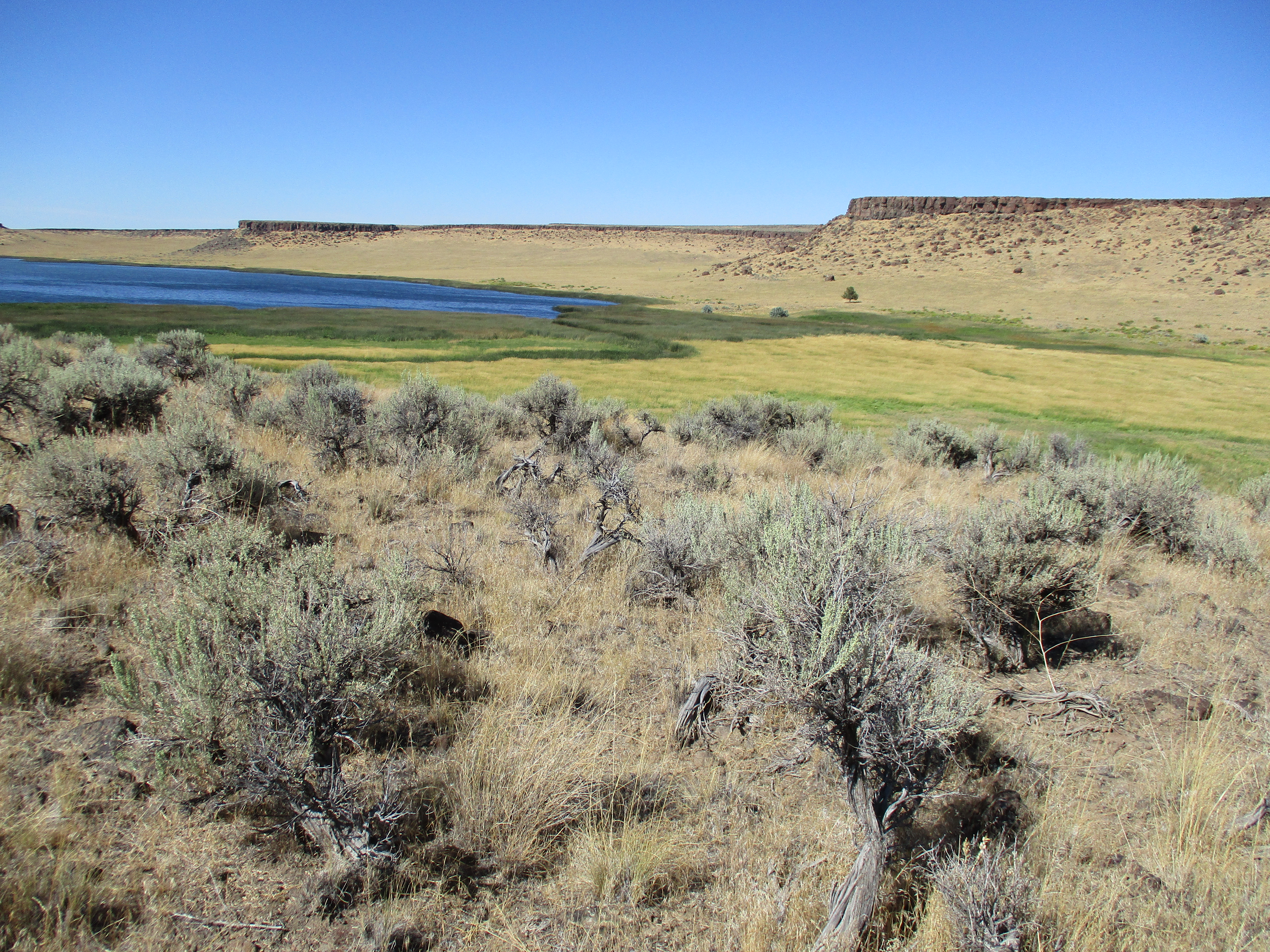

 The Financial Turn