b2o

  • Second-Hand Europe: a special b2 issue

    Second-Hand Europe: a special b2 issue


    Spring 2014: Volume 41, Number 1

    Second-Hand Europe: a special issue edited by Wlad Godzich and Anita Sarosta
    _________________________________________________________________________

    1.cover

    1.cover

    Contents

    Wlad Godzich
    Sekend-Hand Europe

    Yuri Andrukhovych
    From Twelve Cities

    Anita Starosta
    Imagine an Albanian Joyce: An Interview with Yuri Andrukhovych

    1.cover

    1.cover

    Aleš Erjavec
    Eastern Europe, Art, and the Politics of Representation

    Miglena Nikolchina
    Inverted Forms and Heterotopian Homonymy: Althusser, Mamardashvili, and the Problem of “Man”

    Ivaylo Ditchev
    Spaces of Desire: Consumer Bound and Unbound

    1.cover

    1.cover

    Anikó Imre

    Balázs Trencsényi
    Beyond Liminality? The Kulturkampf of the Early 2000s in East Central Europe

    Alexander Etkind
    Post-Soviet Russia: The Land of the Oil Curse, Pussy Riot, and Magical Historicism

    1.cover

    1.cover

    Zhivka Valiavicharska

    Anita Starosta


    ~
    Cover photo:
    Dwarf graffiti by Orange Alternative, 1982,
    Marszałkowska Street at People’s Army
    Avenue, Warsaw, photo by Tomasz Sikorski

    Browse the boundary 2 archive here.

  • Great American Authors Series: A Political Companion to Saul Bellow

    Great American Authors Series: A Political Companion to Saul Bellow

    Saul_Bellow

    Saul Bellow’s Political Soul

    by Ben Rogerson
    ~

    What connects literature and politics? On first glance, the editors of A Political Companion to Saul Bellow, an eight-essay collection in the series Political Companions to Great American Authors, offer incongruous answers. For the series editor Patrick Deneen, American literature hosts the “teaching of the great authors,” which amount to a “democratic public philosophy” that meditates on issues of perennial political interest (vii)1. Conversely, Lee Trepanier and Gloria L. Cronin, the volume’s editors, initially provide a historicist justification for why Bellow warrants a political companion, explaining that his fiction “captures the general political shift in mainstream America from liberalism to conservatism” (1). But their introduction concludes on a counterintuitive note, in which American literature teaches us about democracy, or politics more generally, to the extent that such literature isn’t political. Any study of Bellow’s fiction inevitably collides with his “genius,” and the realization that “neither his work nor his biography can be reduced to a purely political investigation” (7). After all, he is an “artist,” not an ideologue, and his fiction was ultimately concerned “‘not [with] politics but [with] the soul’” (Gordon qtd. 7). Great American authors may be great teachers, but some mysteries must remain.

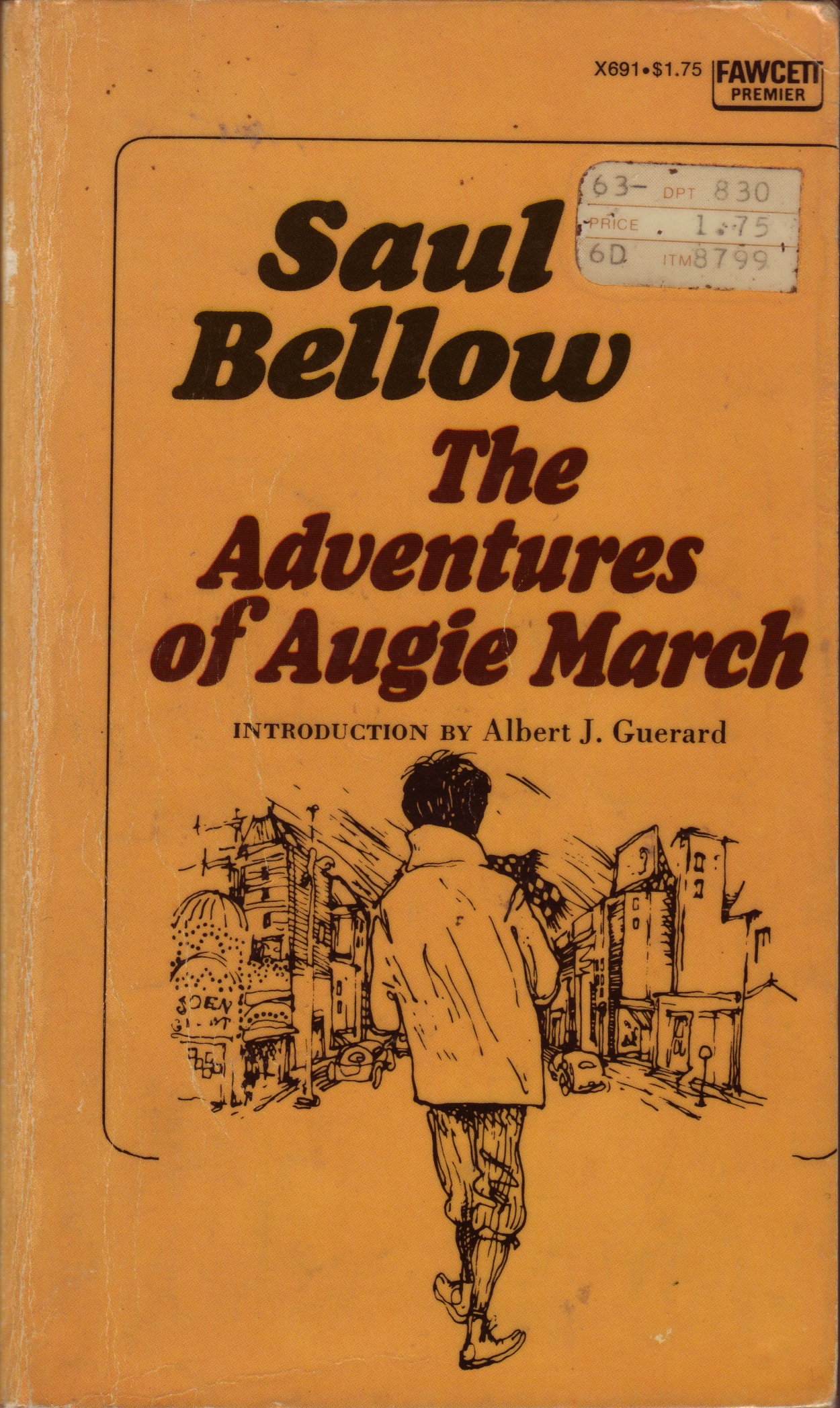
    A Political Companion to Saul Bellow does not announce the intellectual positions that it has inherited from Bellow’s era and which clarify aims that are, on one hand, public and pedagogical and, on the other, private and aesthetic. But these positions are familiar to readers of Stephen Schryer’s recent book Fantasies of the New Class, which argues that Bellow’s fiction closely articulates a literary and cultural politics that parallels the changing practice and ideologies of the “new class,” or America’s rapidly-expanding professional middle class2. Following World War II, new-class intellectuals such as Bellow, Lionel Trilling, and Mary McCarthy began to distrust the prevailing practices of “social trustee professionalism,” whose “technocratic pretensions towards social reform” seemed to only further ossify the bureaucratic welfare state (Schryer 6). BellowCompared to “institution building” (4), the response of new-class writers and intellectuals has often been mistaken for a “retreat” into the “purely private aesthetic sensibility” of the autonomous artist (Schryer 5)—what the Companion editors celebrate as Bellow’s “‘soul.’” But Schryer argues that this apparent retreat instead signified a new Arnoldian form of “public service” that “[favored] a different, humanistic model of cultural education oriented toward the educated middle class” (6). In this model, the very “example” of a new-class intellectual—in Bellow’s case, the aesthetic complexity of his literature—presumed a political efficacy capable of correcting the narrow materialism of American society (and capitalism in particular). Even as his politics shifted rightward in the 1960s, Bellow did not abandon the methods of new-class pedagogy. While increasingly suspicious of “intellectuals’ will-to-power,” he still saw the ongoing need “to reconquer the cultural center, using it to reeducate the American public” (Schryer 24).
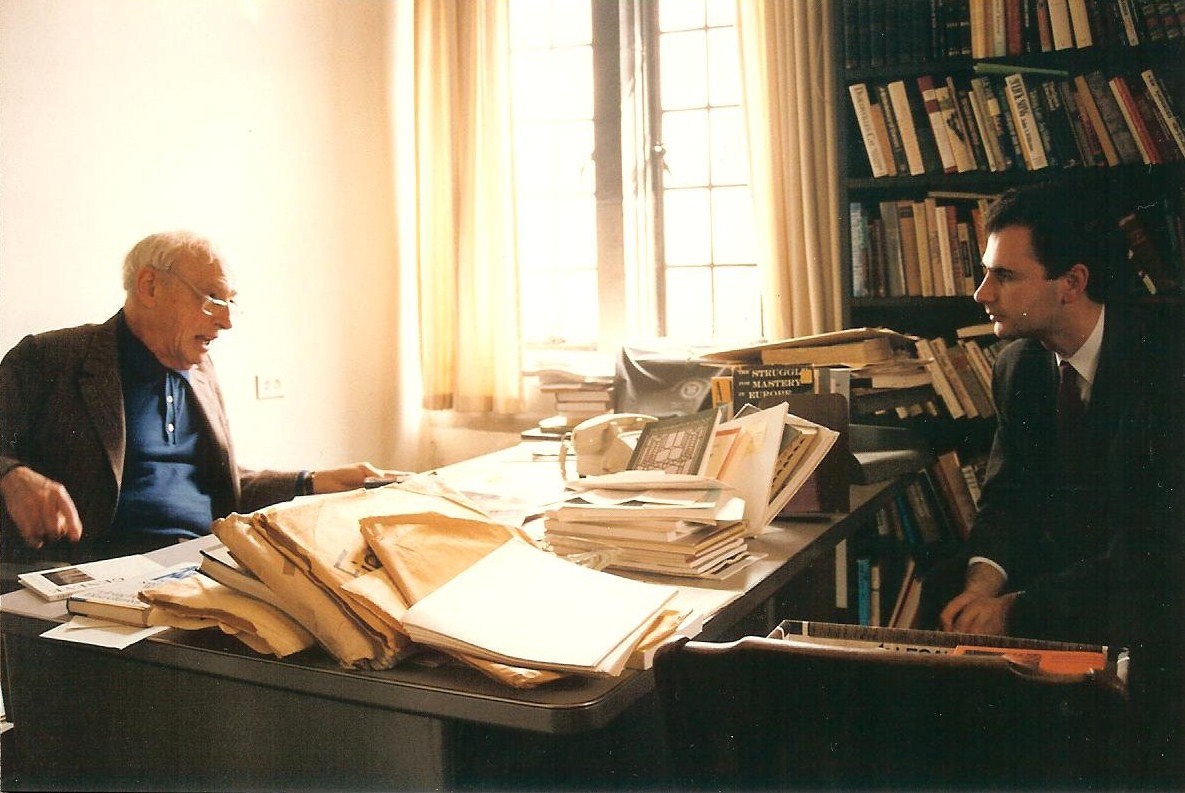
    Without necessarily embracing the editors’ conservatism, intimations of the new-class pedagogical project seem to suffuse many of the volume’s essays. For instance, Judie Newman argues that Bellow’s neoconservative reputation has concealed the impact of Trotskyism on his early political and fictional writing. That impact is never greater than in short stories such as “The Hell It Can’t” and “Two Morning Monologues,” as well as his first novel The Dangling Man (1944), which question American intervention in World War II and the ongoing viability of capitalism. By 1942, Bellow’s “threshold” short story “The Mexican General”— a fictionalized account of Bellow’s 1940 trip to Mexico to meet Trotsky, who was assassinated beforehand—makes clear that his Trotskyite enthusiasms were waning (20). Thus, a subsequent novel such as The Adventures of Augie March signifies not only an artistic but also a political maturation; its early drafts more explicitly displayed Bellow’s nascent social democratic politics. But the essay concludes by giving the final word to a familiar idea. In “Mosby’s Memoirs,” a 1968 short story that reflects on Bellow’s political past, the writer “satirizes both sides of the political spectrum” in order to teach readers, it would seem, to recognize the naïveté of political ideologies—socialist, conservative, or otherwise (24).

    Newman’s efforts notwithstanding, the neoconservative turn figures prominently in two essays on Mr. Sammler’s Planet, a 1970 novel that uses the Holocaust to frame shifts in Bellow’s political thought. Accepting the series’s moral-pedagogical challenge, Victoria Aarons explores the insights that Sammler and The Victim (1947), Bellow’s second novel, provide into “how to live in a post-Holocaust world” (134). For instance, Sammler, whose protagonist is a survivor, teaches us “that words, uttered irresponsibly, distort essential truths” (147). The novel charges Hannah Arendt with such irresponsibility, as she needlessly theorizes Nazi criminality—her famous conclusion about the banality of evil—“at the expense of clear, straightforward reckoning” (146) and, ultimately, “basic human decency” (149). But at the very least, Aarons’s conclusions are striking for their unreservedness. After all, Sammler is the novel whose only African American character is not only a pickpocket who steals, among other things, Social Security checks from elderly whites, but who maniacally pursues the protagonist so he can expose himself in animalistic fashion.

    By contrast, Andrew Gordon’s essay acknowledges how Sammler deploys the Holocaust as part of a political polemic. In the novel, the pickpocket’s theft and self-exposure bookend Sammler’s visit to Columbia University to deliver a lecture on the British Left in the 1930s, The Adventures of Augie Marchwhich Gordon compares to Bellow’s 1968 lecture at San Francisco State University on the role of writers in the academy. In both cases, New Left radicals rudely heckle the speakers, accusing each one of being an “effete old shit [who] can’t come.”3 (In fact, it was the Mexican-American writer and political activist Floyd Salas who heckled Bellow). More importantly, Gordon argues that Bellow exploits the differences between the two lectures in order to imply that fascistic tendencies within the New Left justify his own conservatism. In the novel, the student radical does not embarrass the self-assured, well-known, and combative Bellow during the Q&A; rather, Gordon points out that he victimizes an unknown and half-blind Holocaust survivor who has innocently mentioned George Orwell, another leftist guilty of breaking ranks.
    Two other essays primarily concern Henderson the Rain King, Bellow’s 1958 novel about an American millionaire whose spiritual search in Africa unexpectedly results in friendship with a tribal king. Carol R. Smith and Daniel K. Muhlestein stake out opposing answers to a single question: does this novel reinforce racist ideologies? Answering in the affirmative, Smith contends that Bellow’s latter-day anti-multiculturalism—his opposition to second-wave feminism and, especially, Black Power movements—realizes political trajectories initiated in his earlier fiction. As its protagonist rambles through deepest Africa, Henderson displaces “the history of the African passage with a history of the Jewish Atlantic” in order to produce what Smith calls an “assimilationist model of white America” (104). Jewishness is crucial to constructing such notions of “Americanness” because it signifies “elective immigration”—that is, Jewishness signifies a flight from European oppression (103). Following Toni Morrison, “Blackness” in turn necessitates the act of displacement because it persists as a troubling reminder of the “potentially disabling material circumstances”—enslavement and forced migration—that subtends American nation building and the transmission of liberal humanist values (106). Smith argues that Henderson ultimately attempts to nullify this racial unconsciousness through its symbolic geography. At the novel’s end, Henderson returns from Africa with a lion cub (itself the reincarnation of a dead African king) to realize renewal in the white snowy landscape of, of all places, Newfoundland.

    ~
    In this model, the very “example” of a new-class intellectual—in Bellow’s case, the aesthetic complexity of his literature—presumed a political efficacy capable of correcting the narrow materialism of American society (and capitalism in particular).
    ~

    Rather than the racialized lion, Muhlestein argues that the novel is preoccupied with a different animal—namely, the carnival bear from Henderson’s youth, and which he also recollects in the novel’s final pages. At first, this symbol seems only to confirm the presence of a carnivalesque aesthetic, in which the novel combines comic and grotesque elements to “torque” the “colonial library,” or those familiar tales of white exploration and evangelism in the heart of Africa (72). Deploying this aesthetic in scenes with King Dahfu and the Wahiri tribe, Henderson debunks the noxious ideology of the black Demonic Other so powerfully explored in Joseph Conrad’s fiction. But Muhlestein ultimately contends that the relationship between the carnivalesque and colonial politics is beside the point. Henderson is “not … a political novel per se,” a point on which Bellow insisted as well (96). Indeed, Muhlstein concludes that the novel’s “reason for existence” is purely vocational—the novel may use elements from the colonial library, but only incidentally, and only in order to “[facilitate] the creation of the carnivalesque” (96).

    Like Muhlestein’s contribution, the cumulative effect of Ben Siegel’s essay on Bellow as a Jew and Jewish writer—an essay about how Bellow rejects the constraints of one “label” after another—is to grant the writer his self-proclaimed status as an artist whose obligations are to his vocation (47). Bristling at the “‘parochial’” description “Jewish writer,” Bellow called it the literary equivalent of “‘ghetto walls’” (qtd. 49). “‘No good literature is parochial,’” Bellow once claimed, because good literature “‘should appeal to anyone.’” Furthermore, Siegel has also described a writer who disavows ethnic labels as obstacles to becoming one of the ““great-public … artists” whose fiction reaches—and teaches—a mass readership (Bellow qtd. 50). As Bellow said in a 1971 interview, “what Americans want to learn from their writers is how to live.” And Richard Ohmann has noted that readers were on the same page, excited to play their part in this pedagogical project.4

    In my opinion, Siegel’s brief sketch of how the writer conceived his relationship to his readership points to new directions for scholarship on Bellow—not for continuing the volume’s political-cum-pedagogical project as such, but for expanding the institutional context in which Bellow’s fiction and ideologies of professionalism circulate. Schryer typically addresses this writer-reader relationship through the university, the institution that educates the growing professional class that will comprise the mass readership for postwar writers. But this relationship is also an effect of another set of institutions, one which has garnered less critical attention—namely, the midcentury publishing industry, whose commercial success partly depended on promoting literary-pedagogical concerns complementary to those of the new class. Evan Brier has recently contributed to this discussion in A Novel Marketplace, his study of “postwar novel production” that suggests how publishers exploited “the genuinely felt alarm over the emergence of mass culture” in order to delineate “a space for the novel within a newly crowded commercial field” (9). To create such space, the industry marketed the novel “to an increasingly educated audience” as a commodity that “transcends commerce” (13). In isolation, this idea is unsurprising. Describing midcentury writers as “producers in a producer-oriented trade,” Brier’s insight is to demonstrate how they also “participated within their novels in the promotion of the novel in general as a cultural and political good, often in terms that echoed the industry’s promotional campaign and the rhetoric of culture critics” (15, emphasis in original).
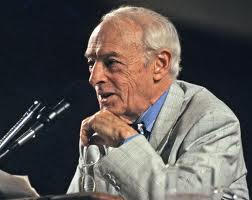
    images

    Brier’s book concentrates on five novelists, but his method seems capable of wrestling with Bellow, whose work could also be said to “[celebrate] … the writer’s solitariness … against a corrupt, decadent, or totalitarian mass culture” (16).5 To bridge the gap between Bellow’s work and biography, this method could also build on Ohmann’s influential 1983 essay “The Shaping of a Canon: U. S. Fiction, 1960-1975.” In light of Brier’s scholarship, Ohmann’s argument can be read to suggest that “precanonical” American novels—his discussion includes Henderson, Herzog, and Humboldt’s Gift— satisfy the book trade’s twin mandates of literary value and cultural criticism by striking a particular relationship between style and narrative (208). For Ohmann, the stories are almost uniformly “narratives of illness” in which new-class protagonists endure alienation in confronting the supposed sickness of mass society and culture (217).6 Although their stories may “look very similar,” these novels are actually staking their strongest claims for their literary and political value through the mechanism of authorial style, or “the pursuit of a unique and personal voice” (209). And this idea of an inimitable style, as we have seen, is legible as an example of either Bellow’s new-class public service (Schryer) or his soul (the Companion editors). The more onerous task is connecting such style to Bellow’s relationship with his publishers. On first glance, Bellow does appear to view Viking Press in much the same way that readers regarded novels. More than just a commercial business, his longtime publisher was an Arnoldian collaborator in his supposedly lonely struggle.7 Indeed, Bellow’s letters express “love” for Viking; the press enables his style by recognizing his “pride as a workman” and by refusing to view his fiction through the eyes of a “canning concern,” a phrase evocative of the mass culture industries.8

    Admittedly, the editors of Companion might view this approach with reservations since it implies that Bellow’s vocation motivates political beliefs—formal, cultural, or otherwise—that do not necessarily speak to the so-called perennial concerns of the American political condition. Nevertheless, I think that this approach shows how Bellow’s work can continue to teach us about, as Trepanier and Cronin put it, “the concrete and the complexity of life” (7).

    endnotes:
    1. Deneen complements this claim with a methodological one by promising that the essayists will “approach the classic texts not with a ‘hermeneutics of suspicion’”—the ubiquitous, corrosive tool of the left-of-center intellectual—“but with the curiosity of fellow citizens who believe that the great authors have something of value to teach their readers” (vii). But insofar as the phrase “hermeneutics of suspicion” describes a methodology, Deneen’s claim is overstated. Essays in this volume uncover the repressed histories of slavery, the Holocaust, the Vietnam War, and feminism “peek[ing] through the pages,” as one contributor puts it, of Bellow’s fiction (61).
    Back to essay

    2. Schryer, Fantasies of the New Class: Ideologies of Professionalism in Post-World War II American Fiction (New York: Columbia University Press, 2011), 2.
    Back to essay

    3. Bellow, Mr. Sammler’s Planet (New York: Viking Press, 1970), 42.
    Back to essay

    4. Ohmann makes the connection between Bellow’s quotation and studies of reading. See Ohmann, “The Shaping of a Canon: U. S. Fiction, 1960-1975,” Critical Inquiry 10, no. 1 (Sep. 1983): 201.
    Back to the essay

    5. Evan Brier’s A Novel Marketplace: Mass Culture, the Book Trade, and Postwar American Fiction (Philadelphia: University of Pennsylvania Press, 2010) has chapters focusing on Paul Bowles, Norman Mailer, Grace Metalious, Sloan Wilson, and Ray Bradbury.
    Back to the essay

    6. It should be noted that Ohmann does not use the phrase “new class,” but instead refers to Barbara and John Ehrenreich’s description of a “Professional-Managerial Class,” or PMC (209).
    Back to the essay

    7. Founded in 1925 by Harold K. Guinzburg and George S. Oppenheimer, Viking Press incorporated hostility towards mass culture in its premise: to publish “distinguished fiction with some claim to permanent importance rather than ephemeral popular interest.”
    Back to the essay

    8. See Saul Bellow’s letter in James Atlas, Bellow: A Biography (New York: Random House, 2000), 225.
    Back to the essay

    cover art by Zoran Tucić

    __________

    Ben Rogerson is a Ph. D student in the Department of English at the University of North Carolina, Chapel Hill. He is currently working on a book project that examines critiques of white-collar work in mid-twentieth century American film, fiction, poetry, and photography.

  • On the Archive III: The Secret; or, Borges at Yale

    Jorge_Luis_Borges_1963

    by Marc Nichanian
    Translated from French by Gil Anidjar
    ~

    “On the Archive III: The Secret” offers an extended commentary on Borges’s short story “The Ethnographer” and instigates a philosophical encounter between Borges and Derrida. As he carries on his fieldwork, Fred Murdock steals the “secret” of the Indian tribe he studies. He then comes back to the “civilized” world but refuses to write about the secret. He shall not be part of the Western community of knowledge, the community of university professors. Instead, he becomes an archivist at Yale. The commentary asks about the founding dichotomy between knowledge and the archive, and tries to radicalize (which also means to interrogate) Edward Said’s concept of Orientalism, on the heels of Michel de Certeau’s reflection on the modern distribution of knowledge, between the native and the savage, between writing and orality, between history and ethnography, between the philologist and the ethnographer, as an effect of our “transcendental” historicism, which determines once and for all the objects that circulate in our universities. The second part of the study shows the strange similitude of structure between the native’s testimony (the one that is expected from the native by the philologist, or put by the latter into the former’s mouth) and the survivor’s testimony, as circumscribed in our “era of the witness.” It also reflects on Derrida’s timidity in Archive Fever, with regard to explaining the intimate relationship between the “archive” and the “great holocaustic tragedies of our modern history and historiography.”

    Read the full article here.

    3.cover

    Fall 2013
  • February 20, 21: Curators & Historians on International Slavery

    image

    Curators & Historians on International Slavery

    From Thursday, February 20 to Friday, February 21, Panelists will include Morgan Grefe (Executive Director, Rhode Island Historical Society), Kristin Gallas (Director of Interpretation Projects, Tracing Center) and Louise Mirrer (President and CEO of the New York Historical Society), with a lecture from Haitian born artist Edouard Duval-Carrié. What is the relationship between history and exhibition?

    See full schedule here.

    Cosponsored by b2er Anthony Bogues and the Center for the Study of Slavery, with the Center for Public Humanities and the John Carter Brown Library.

  • Legacies of the Future

    Legacies of the Future

    On the Life and Work of Edward Said
    – November, 2013:

    Video coverage of boundary 2‘s Fall conference, featuring Joseph Cleary, Aamir Mufti, Nuruddin Farah, Wlad Godzich, Stathis Gourgouris, RA Judy, QS Tong, Jonathan Arac, Donald Pease, Bruce Robbins and Paul Bové.

  • Great American Authors Series: A Political Companion to John Steinbeck

    Great American Authors Series: A Political Companion to John Steinbeck

    Steinbeck sketch

    Enduring Ambivalence

    by David Wrobel
    ~

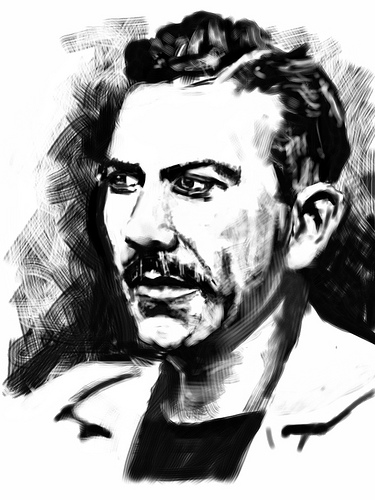
    “Critics do not like to be confounded in their attempts to compartmentalize,” Simon Stow writes in his short introductory essay “The Dangerous Ambivalence of John Steinbeck,” in A Political Companion to John Steinbeck (9). Stow identifies an ambivalence about nation, government, community, and individualism that characterizes Steinbeck’s works, confounds his critics, and helps explain both their consternation and the enduring popularity of his work among readers outside of the academy. It is worth considering that Steinbeck (1902-1968), contrary to the dismissive evaluations of most literary critics, remained a force in American cultural life for three decades after what have been labeled his “years of greatness,” from 1936-1939—a remarkably productive period marked by the publication of In Dubious Battle (1936), Of Mice and Men (1937), The Long Valley (1938), and his Pulitzer Prize-winning The Grapes of Wrath (1939)1.

    During the World War II years Steinbeck was subjected to federal background investigations, even as he worked to advance the nation’s cause, writing the much maligned, yet truly impactful novel and play The Moon Is Down (1942) (not explicitly, yet quite obviously about the Nazi invasion of Norway), and Bombs Away (1942) (a thoroughly positive account of a U.S. Air Force bomber team), as well as traveling to England in June 1943, and on to North Africa, Sicily, and the Italian mainland to report on the war for the New York Herald Tribune. He also wrote a pair of works set in Mexico, The Forgotten Village (1941) and The Pearl (1947), which addressed the ethical complications surrounding the intersections of modern medicine and indigenous folk cultures, and the highly successful Cannery Row (1945), which might be considered the first novel of the American counterculture.

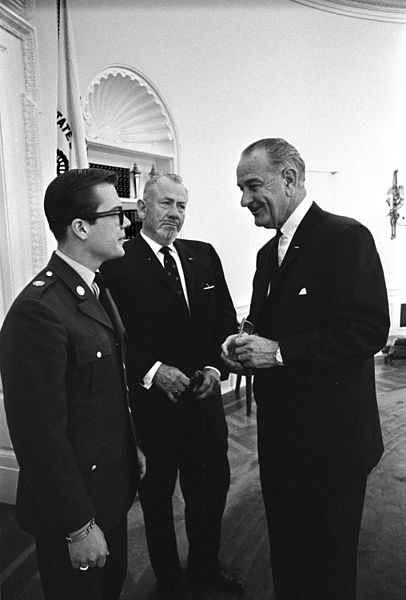
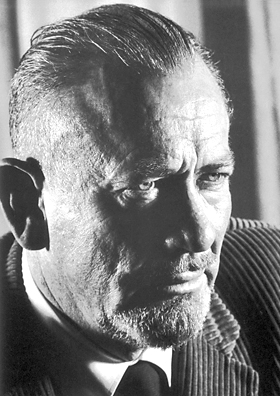
    406px-JohnSteinbeckWhile less productive in the fifties, that decade did see the appearance of one of Steinbeck’s most successful and enduring novels, East of Eden (1952), which reflected the generational conflicts that came to mark the post-WWII decades, as well as Sweet Thursday (1954), the critically undervalued sequel to Cannery Row. In addition, the 1950s saw the publication of Steinbeck’s screenplay for Elia Kazan’s acclaimed film Viva Zapata! (1952), and Once There Was a War, his collected World War II dispatches (1958). Steinbeck began the sixties with what would be his last novel, The Winter of Our Discontent (1961), and with his endearing and enduring Travels with Charley (1962), an effort to come to grips with his growing sense of alienation resulting from the pace of post-war change. He was awarded the Nobel Prize for literature in late 1962, over the lamentable protestations of some American critics, and then re-affirmed his deep attachment to the nation a few years later in a collection of essays on aspects of national life and character, America and the Americans (1966). He visited Vietnam from December 1966 to May 1967, where one of his two sons was serving, and wrote a series of dispatches, supportive of LBJ’s policies and critical of anti-war protests, though he would change his position on the war before he died.

    In short, Steinbeck’s writings serve as a remarkable guide through the controversies and complications that marked American politics and culture in the middle third of the twentieth century. If it is legitimate enough to consider the nation in middle third of the nineteenth century under the moniker Walt Whitman’s America (1995), as David Reynolds has, and to label the last third of that century Mark Twain’s America (1932), as author Bernard DeVoto did, then it seems no less reasonable to consider the years from the Depression to the Great Society through the lens of Steinbeck’s writings. Cyrus Ernesto Zirakzadeh and Simon Stow’s collection of essays, A Political Companion to John Steinbeck, is a strong addition to an excellent series of volumes (that also includes Henry Adams, Walt Whitman, Henry David Thoreau, and Ralph Waldo Emerson). The anthology moves us toward a fuller consideration of Steinbeck’s centrality to at least the first part of this mid-twentieth-century period.

    ~
    Indeed, whether the tensions in Steinbeck’s four decades’ of writing are between the group man and the individual, or traditionalism and liberalism, communism and capitalism, or alienation and affirmation (from the nation), it is these very sets of seeming contradictions and their accompanying ambiguities and consequent ambivalence that characterize Steinbeck’s literary work and political thought and help account for his continuing relevance.
    ~

    Not surprisingly, Steinbeck’s work in the 1930s and 1940s gets most of the contributors’ attention, including co-editor Zirakzadeh’s provocative discussion of Steinbeck as a “revolutionary conservative or a conservative revolutionary,” Donna Kornhaber’s treatment of politics and Steinbeck’s playwriting, Adrienne Akins Warfeld’s examination of Steinbeck’s Mexican works from the 1940s, Charles Williams’ insightful exploration of Steinbeck’s “group man” theory in In Dubious Battle, the volume’s standout essay by James Swensen on Dorothea Lange’s photographs and the work of the John Steinbeck Committee to Aid Agricultural Organization,” Zirakzadeh’s treatment of The Grapes of Wrath as novel, film, and inspiration for Bruce Springsteen, and Mimi R. Gladstein and James H. Meredith’s “Patriotic Ironies,” on Steinbeck’s wartime service. Other essays examine Steinbeck’s legacy in the work of Bruce Springsteen, Travels with Charley and America and Americans (together), and The Winter of Our Discontent.

    John_Steinbeck_1962However, in addition to the absence of any extended treatment of Cannery Row, the second half of Steinbeck’s career in general gets short shrift in the volume. There is no significant coverage of East of Eden, or of Steinbeck’s powerful defense of playwright Arthur Miller in 1957 against the charges of the House Un-American Activities Committee (HUAC), or of the political backdrop of the Cold War more generally 2. Party politics are largely absent from the collection, though Steinbeck certainly had his political preferences from the 1930s through the 1960s, as evidenced in his correspondence 3. Steinbeck’s very public responses to the Vietnam War, recently gathered and republished, are also absent from the volume 4. Fuller attention to the 1950s and 1960s would have made this anthology more complete. Also absent, among the essayists themselves, are representatives of an older and still active generation of groundbreaking Steinbeck scholars, including Robert DeMott, and some leading representatives of the current generation, including Susan Shillinglaw and Kevin Hearle, whose perspectives on the politics of race and place would have augmented the volume nicely.

    Nonetheless, for all the anthology’s voids, it does achieve the editors’ and contributors’ goal of illuminating the complexities of Steinbeck’s political thought and underscoring the enduring contributions of his work. It is a nicely edited and integrated set of explorations of the nuances and complications of Steinbeck’s political thought and a quite effective response to the generations of critics who have found Steinbeck’s work too popular, heroic, sentimental, moralistic, and too didactic. Indeed, whether the tensions in Steinbeck’s four decades’ of writing are between the group man and the individual, or traditionalism and liberalism, communism and capitalism, or alienation and affirmation (from the nation), it is these very sets of seeming contradictions and their accompanying ambiguities and consequent ambivalence that characterize Steinbeck’s literary work and political thought and help account for his continuing relevance.

    Grapes-of-wrathSteinbeck may not be read much in the academy, but he remains widely read outside of it. His deep and abiding dedication to the betterment of humanity and the nurturing of human relations through his art is too literally and literarily low brow for most of the arbiters of the cannon. Yet, while extremists on the right and the left attacked his work (from In Dubious Battle to The Grapes of Wrath and beyond) vehemently, a significant segment of the reading public has always felt deeply connected to it. Steinbeck conveyed, probably better than any other writer of his day, the common strivings of Americans during the Depression, War War II, and the post-war decades, and in so doing he continually sparked the appreciation of working class people and the conscience of the middle class, as well as the disdain of many members of the literary class. In placing Steinbeck’s “productive ambivalence” (9) at center stage, this companion to the intersections of Steinbeck’s literary and political journeys wisely nudges us toward a fuller appreciation of the writer and his work.

    endnotes:
    1. See Tetsumaro Hayashi, ed., John Steinbeck: The Years of Greatness, 1936-1939 (Tuscaloosa: University of Alabama Press, 1993).
    Back to essay

    2. See Esquire magazine, June 1957
    Back to essay

    3. See Elaine Steinbeck and Robert Wallsten’s collection John Steinbeck: A Life in Letters, (Viking, 1975; Penguin, 1989) and Jackson Benson’s finely detailed biography, John Steinbeck, Writer (New York: Penguin, 1990, and Viking, 1984).
    Back to essay

    4. Thomas E. Barden, ed., Steinbeck in Vietnam: Dispatches from the War (Charlottesville: University of Virginia Press, 2012).
    Back to the essay

    cover art by Kieran Guckian

    __________

    WrobelDavid Wrobel holds the Merrick Chair in Western American History at the University of Oklahoma. His most recent book is Global West, American Frontier: Travel, Empire and Exceptionalism, from Manifest Destiny to the Great Depression (Albuquerque: University of New Mexico Press, 2013). He is currently working on two book projects: “The West and America: A Regional History, 1900-2000,” for the Cambridge Essential Histories series, and “John Steinbeck’s America: A Cultural History of the Nation, 1930-1968.”

  • A Reading and Q&A with Nuruddin Farah

    A Reading and Q&A with Nuruddin Farah

    boundary2, in association with its Legacies of the Future conference, is privileged to present a reading and discussion led by Nuruddin Farah. Language from his novels Crossbones and Maps.

  • The Life and Work of Edward Said: lectures by Wlad Godzich and Stathis Gourgouris

    The Life and Work of Edward Said: lectures by Wlad Godzich and Stathis Gourgouris

    As a part of b2‘s series on Legacies of the Future: The Life and Work of Edward Said, Wlad Godzich presents “The Stateless and the Proper,” and Stathis Gourgouris on “The Epistemology of Edward Said.”

  • "What Can We Learn From Uniqueness?" and "Said's Melville"

    "What Can We Learn From Uniqueness?" and "Said's Melville"

    Another addition to b2‘s Legacies of the Future: Jonathan Arac‘s “What Can We Learn From Uniqueness?” and Don Pease‘s “Said’s Melville.”

    ~

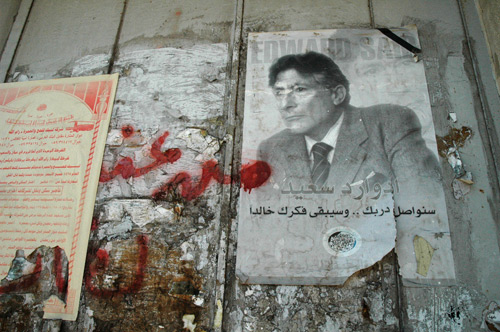
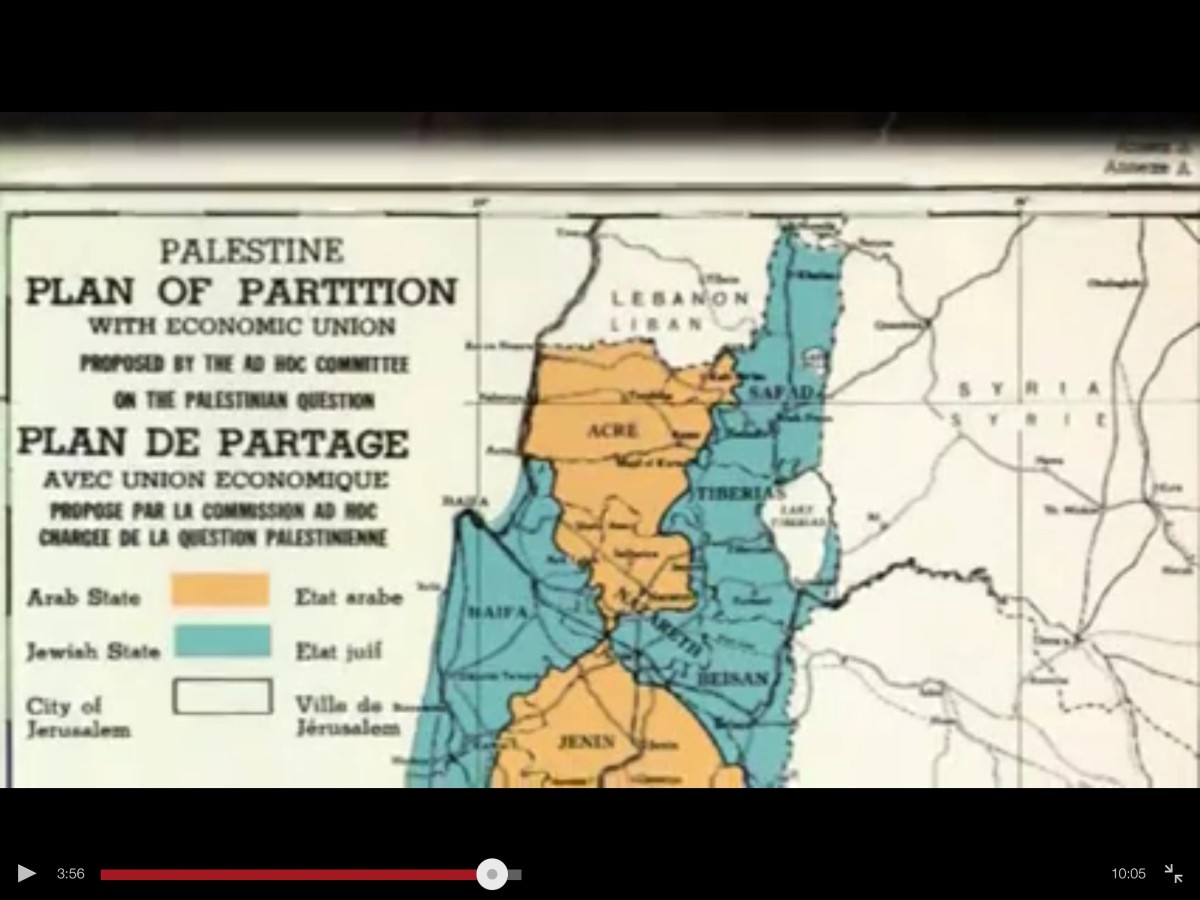
    Cover Photo: “In memoriam Edward Wadie Said, on the Israeli West Bank wall,” taken by Justin McIntosh.

  • Some of My Best Friends Are Zionists

    Some of My Best Friends Are Zionists

    A film by Bruce Robbins, Some of My Best Friends Are Zionists, featured here in continuation of b2‘s Legacies of the Future: On the Life and Work of Edward Said.

  • A Closing Discussion to 'Legacies of the Future'

    A Closing Discussion to 'Legacies of the Future'

    Only to put a pin in b2‘s Legacies of the Future: The Life and Work of Edward Said, and the question: what is criticism? And: what is ‘its relationship, among other things, to specifically–but not exclusively–literary form and the function of imagination?’ Here, the scope found in Said.

    Trace the entirety of the conference here. (The volume is better with earphones.)

  • Great American Author Series: A Political Companion to Walker Percy

    Walker Percy

    A Political Philosophy of Moviegoing?

    by Scott Dill
    ~

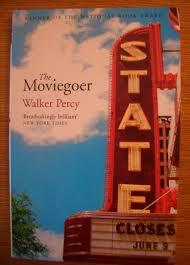
    While on a flight back to New Orleans, Binx Bolling, the protagonist of Walker Percy’s The Moviegoer, studies a young man who is reading The Charterhouse of Parma. Binx is curious to learn how he sits, “Immediately graceful and not aware of it or mediately graceful and aware of it?” The apparently innocent matter of posture becomes another sign in what Binx calls his “search.” Soon enough Binx concludes in disappointment that his fellow passenger is “mediately graceful” as well as “a romantic.” Because he is reading Stendhal? No, because his mere comportment is so deeply mediated with melancholy self-awareness. “The poor fellow,” Binx reflects, he “has just begun to suffer from it, this miserable trick the romantic plays upon himself: of setting just beyond his reach the very thing he prizes.” His desire will forever pant, but never be fulfilled. To sum up this desperate relationship to desire Binx comments, “He is a moviegoer, though of course he does not go to movies.” Moviegoers have enshrined a popularized form of romantic longing, Percy suggests, centuries after the height of Romanticism. Yet movies offer no innocent frolic among the wildflowers of poesy; for Binx, movies are a capitalist culture’s most exhaustive method of mediating the romantic individual’s desire. One need not even go to movies to be a moviegoer, so pervasive are their effects on the cultural imagination. This diagnosis of the moviegoer’s susceptibility, and subsequent unhappiness, captures Percy’s persistent critique of late twentieth-century American individualism—that its short-circuited self-knowledge cannot sustain a thriving culture.

    The Moviegoer

    A new edited collection of essays begins the important work of teasing out the various implications of Percy’s view of the individual for political thought. If the individual is finally unintelligible to himself, what does this imply for the politics of liberal individualism? A Political Companion to Walker Percy, in keeping with the intentions of the Political Companions to Great American Authors series at the University Press of Kentucky, seeks to elucidate Percy’s major contributions to a long, if not august, American tradition of belletristic political writing. For example, the volume’s final essay juxtaposes Percy’s twentieth-century vision of American society alongside of Alexis de Tocqueville’s from the nineteenth. The surprising foil flatters both writers. Yet, even more propitious, A Political Companion to Walker Percy evinces an admirable thematic coherence for a collection of critical essays. Editors Peter Augustine Lawler and Brian A. Smith’s introduction begins with the question: “Why do two political scientists say that an American Catholic novelist can teach us what nobody else can about our nation’s political life?” Though perhaps overstated, it sets the problem each essay shares, even if their topical concerns vary. Lawler and Smith’s answer is that the various ideologies Percy found plaguing our national political life—racism, the reductions of scientism, radical individualism, the ideal of stoicism—are best elucidated by Percy’s unique “indigenous Thomism.” Percy’s “indigenous Thomism” is, according to Lawler and Smith, a neglected but crucial strain of American political thought.

    The harmonization of what we know through science and what we know through revelation is the rather distinctively Catholic project called Thomism. There’s a neglected American Catholic tradition composed of Orestes Brownson (author of The American Republic, 1865), John Courtney Murray (We Hold These Truths, 1960), and Percy that holds that a Thomistic interpretation of the greatness of our Founder’s accomplishment is the gift American Catholics can offer their country.

    It is the gift of this volume to place Percy in such a tradition. Rather than dealing with Percy exclusively as a Southerner, Lawler and Smith place his thought in a national conversation stretching back to Brownson’s dissenting stand against the rugged individualism of his Transcendentalist contemporaries. This more ambitious, if not more appropriate, placement of Percy’s political thought is due to their view that Thomism offers America “a better foundation for its liberalism than that our nation’s most prominent political philosopher’s have provided us.” A curious claim, but then again, Percy himself loved to provoke.

    The argument that Catholic theology provides the key conceptual grounding for a distinctively American liberalism refrains from any legislative prescriptions in these pages. It is rather an argument about what constitutes the best soil for cultivating genuine human flourishing. The editors are quick to point out that Percy does not intend “to politicize the church” and more than he hopes “to have public policy animated by the personal virtue of charity.” His writing does, however, “show how our political life is limited and sustained by who we are as truthful, social, personal, joyful, and loving beings.” Lacking clear political prescriptions, they see Percy’s work as providing a philosophy of personal relations. For the individual is fundamentally social in Percy’s work. An essay by Nathan P. Carson explains Percy’s writing on semiotic theory in light of his convictions about communal virtue. What is often treated as an abstract theory of signification or a rarified problem in the philosophy of language becomes in Percy’s work the grounds for a virtue ethics—semiotics cum communitarianism. Carson concludes that Percy’s “conjunction of the ontological joys of scientific and philosophical inquiry, on the one hand, and radical dependence, other-regard, and community, on the other, is a refreshing and rare combination.” Several of the essays here collected unfold Percy’s conviction that neither language nor the individual can make any sense outside of the communities in which they are formed.

    Lawler and Smith’s answer is that the various ideologies Percy found plaguing our national political life—racism, the reductions of scientism, radical individualism, the ideal of stoicism—are best elucidated by Percy’s unique “indigenous Thomism.”

    Farrell O’Gorman gets past the isolating idiosyncrasies of Percy’s at times bizarre novels in “Confessing the Horrors of Radical Individualism in Lancelot: Percy, Dostoevsky, Poe.” First, O’Gorman traces the formative influence that reading Dostoevsky’s Notes from Underground had on Percy as he composed Lancelot. Both books “were created by authors who embrace traditional Christianity but utilize obsessive and intentionally offensive post-Christian narrators who simultaneously critique and personify what the authors see as the horrors of the radical individualism engendered by modernity.” If Percy lifted much of the structure of his novel’s critique of individualism from Dostoevsky’s acrimonious narrator, its generic roots stretch down deeper into American soil. In a deft revision of Edgar Allan Poe’s place in gothic fiction, O’Gorman shows how Percy’s time with Allen Tate and Tate’s writing on Poe influenced Percy’s use of gothic tropes, particular its figuration of the female body. O’Gorman argues that the gothic novel emerged from an eighteenth-century moment when a culture “that increasingly valued a self-reliant and essentially disembodied but figuratively masculine rationality sought in effect to exorcise its Catholic past.” He then traces Percy’s reading of Poe to show how the body remains a stubborn stay against the idealized rationality assumed in radical individualism. Rather than celebrate the “American Adam,” the masculine mind free from the gothic past’s figural femininity, Percy represents forms of embodiment that return to and revise the Catholic past so ashamedly disavowed earlier in the gothic tradition.

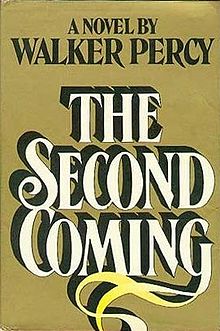
    The Second Coming

    “Radical individualism,” as here construed, is a threat to the very ideal it commends. Other threats to the liberal individual covered in these essays range from the moviegoer’s “Cartesian theater” to the collective consequences of pursuing happiness to the politics of love and marriage to the reductionist views of scientism. In “Walker Percy’s Alternative to Scientism in The Thanatos Syndrome,” Micah Mattix explicates the relationship between Percy’s semiotics and his view of the novel’s unique cultural work. As opposed to merely descriptive accounts of language, Mattix shows how Percy’s conviction that language is ontologically efficacious—that is, that words are essentially connected to actualities—informs his robust view of the novel. Novels do the moral work of accurately naming the social relations that compose human life. Writing novels, in restoring the moral burden of language, restores the possibility of genuine community.

    Percy’s moral commitments are not left alone to collect dust up on the shelf of theory. Brendan P. Purdy and Janice Daurio contribute an essay on the evolution of Percy’s personal views on race relations in the South. “The Second Coming of Walker Percy: From Segregationalist to Integrationist” documents the three strands of Percy’s thought that developed in the forties and informed his 1956 Commonweal article, “Stoicism and the South” (published four years prior to his debut novel, The Moviegoer). To Percy’s treatment of the stoicism he saw represented in the work and life of his famous uncle, William Alexander Percy, they add his reading of Kierkegaard, C.S. Pierce, and his conversion to the Catholic faith. Connecting Percy’s religion with his ethics and his politics, Purdy and Daurio best capture the spirit animating Percy revealed in this volume, “Being a Christian is not a matter of becoming one more political party; it is being formed as a person of a certain sort who brings the vision of who he is to his decision about what he does.” Percy’s Catholicism does not determine allegiance to a political party, but offers a political philosophy of the person that is also necessarily an ethics. To be formed as a person whose identity governs his or her actions is precisely what Percy’s Thomistic vision finds missing in the American polis.

    His writing does, however, “show how our political life is limited and sustained by who we are as truthful, social, personal, joyful, and loving beings.”

    As unified as these essays are in their exposition of Percy’s thought, a growing silence begins to clamor between the lines of A Political Companion to Walker Percy. While many of its chapters refer to Percy’s view of sacramental mediation, not a single one addresses the kinds of cultural forms that Percy despaired of too thoroughly mediating desire, such as movies or self-help books, and the conventions of the capitalist society in which they thrive. Percy’s indignation that the remnants of an ill-fated Christendom condone the economic structures of solipsistic individualism is largely ignored. This is a shortcoming insofar as it shows the volume’s tendency to pigeonhole Percy as yet another conservative Christian from the South. But Percy’s critique of Christendom is wide-ranging, especially when it comes to what Eugene McCarraher has memorably called “Chrapitalism,” “the lucrative merger of Christianity and capitalism, America’s most enduring covenant theology.” Percy’s work is never without an overwhelming awareness of the crippling effects of baptized consumerism and corporate greed. The flows of capital responsible for enshrining moviegoing as a way of life emerge from real institutions that can and should be fixed. A devout Catholic, Percy was no Chrapitalist.

    Love in the Ruins

    In his study of contemporary fiction, Partial Faiths: Postsecular Fiction in the Age of Pynchon and Morrison, John McClure traces the surprisingly frequent coalescence of religious and political economies in late twentieth-century American fiction. In what McClure calls the “age of Pynchon and Morrison,” into which Percy lodges squarely, a swath of novels portray new political formations, communities of “preterite spiritualities and neomonastic politics” that put into practice a “politics of engaged retreat.” Of Thomas Pynchon and Don DeLillo’s novels McClure writes, “Scorning the codes of theological order and exclusivity that characterize ‘high’ religious traditions, they develop modes of thought and practice that are scandalously impure.” Both Love in the Ruins and The Second Coming offer images of precisely such an “impure” community, as does the “engaged retreat” modeled on Dostoevsky’s underground man in Lancelot. Percy’s work certainly fits into McClure’s account of a neo-monastic politics. Like Alastair McIntyre’s call for a figure amalgamating Trotsky with St. Benedict, or Michael Hardt and Antonio Negri’s call for a new St. Francis of loving renunciation, Percy’s work longs for a new economic structure of more fulfilling affective resonances. Lawler and Smith’s collection has managed to wrench Percy free from purely regional concerns, but it is too content with the political limitations of red state/blue state quibbles. This book, which contains an essay by Richard M. Reinsch III that argues, “the South’s evangelicalism might […] demonstrate an alternative to the highly secular model blue states present,” suffers from a limited reading of Percy’s political imagination. Percy’s suspicion of the illusions of a left-right dichotomy, served up as the ridiculous feuds of the Knotheads and LEFTPAPASAN in Love in the Ruins, makes such crass correlations dubious, if not scurrilously narrow-minded. As helpful as this collection is in rethinking Percy’s politics, it has yet to come to terms with the vicious bite of this justly lionized Southern Catholic.

    __________

    Scott Dill is a PhD Candidate in the Department of English at UNC Chapel Hill. He is currently writing his doctoral dissertation on formal representations of the secular in contemporary American novels.