b2o: boundary 2 online

b2o: an online journal is an online-only, peer-reviewed journal published by the boundary 2 editorial collective, with a standalone Editorial Board.

  • Jimmy Fazzino – Inside the Whale: William Burroughs and the World

    Jimmy Fazzino – Inside the Whale: William Burroughs and the World

    by Jimmy Fazzino

    This essay has been peer-reviewed by the boundary 2 editorial collective


    A Tale of Two Whales

    Call Me Burroughs: A Life, Barry Miles’s landmark biography of William S. Burroughs, takes its name from a 1965 spoken word album, the first of many Burroughs would record over the course of his long and prolific life. Miles, then a co-owner of London’s Indica Bookshop, was in charge of the album’s UK distribution. “He made more records than most rock groups,” writes Miles (2013: 629). And later in life this “literary outlaw”[1] would become a rock star of sorts. Returning to the United States in 1974 after a quarter century of living abroad, he followed Allen Ginsberg’s example and began a “new career” of public readings (514). These engagements helped solidify Burroughs’s status as a countercultural icon; they also showcased the performative dimensions of his work. For those familiar with Burroughs’s singular drawl, which became even more pronounced onstage, it is impossible to read him without hearing that voice. It haunts the page. Burroughs is a master ventriloquist, inhabited by many personae, whose voice is best understood as a construction and, at times, a put-on. Establishing a sense of critical distance between author and performance, not easy to do when Burroughs’s performances are so incredibly convincing, is crucial for grasping his project as a writer. In a 1974 interview with David Bowie for Rolling Stone, he indicates the ultimate stakes of this project while gesturing toward a deeper performativity of writing when he says, “Writing is seeing how close you can come to making it happen, that’s the object of all art,” adding, “I think the most important thing in the world is that the artists should take over this planet because they’re the only ones who can make anything happen.”[2]

    It is fitting that Miles should borrow his book’s title from Burroughs, repurposing what was already an adaptation of the most famous opening line in all of US literature. This nod to the détournement of Burroughs’s writing practices, epitomized by the “cut-up” experiments of the 1960s, is also an implicit argument for Burroughs’s place in literary history. When Beat Generation writers—and the question of whether Burroughs was a “Beat” inevitably arises—get talked about at all in relation to literary history, they are usually confined to a distinctly American tradition stemming from nineteenth-century American Renaissance writers like Melville. (Burroughs did share an appreciation for Melville with Jack Kerouac and Allen Ginsberg, and when the latter two were students at Columbia, the English faculty happened to include Raymond Weaver, who had discovered the unpublished manuscript of Billy Budd and helped restore Melville’s reputation.) Beat writing continues mainly to be read and studied “domestically”—that is to say, as a latter-day manifestation of Emersonian individualism, Whitmanian populism and frankness, and Thoreau’s anti-materialist gospel.

    Burroughs himself consistently rejected the Beat label, but if public disavowal were enough, then one would have to exclude Kerouac and many others besides. Miles’s biography in no way privileges or gives prominence to the Beat years, treating them as one phase among many in the long, strange trajectory of Burroughs’s life. Miles does trace an evolution in the author’s thoughts regarding the Beat movement, writing that while “previously he had always distanced himself from the Beat Generation,” upon his return to the States, “He now claimed Kerouac as a friend, even though they had been estranged for the last decade of Kerouac’s life. He recognized Ginsberg’s role in shaping his career and helped him to rehabilitate the Beat Generation and give it its rightful place—as Allen saw it—in the pantheon of American letters.” Burroughs had by this time become an “elder statesman” (Miles 2013: 513) of the whole counterculture that the Beats helped launch.

    One of Burroughs’s earliest sustained attempts at writing, the 1945 novella And the Hippos Were Boiled in Their Tanks, he cowrote with Kerouac, and his eventual career as a writer is practically unthinkable without the support of Allen Ginsberg, Burroughs’s first agent and his most vociferous booster. In fact, most of the early work (classics like Junky and Naked Lunch) has its origins in letters to Ginsberg. Ultimately, such questions as “was Burroughs a Beat?” should be a secondary concern, although I happen to think that he can be productively read alongside Kerouac and Ginsberg, Diane di Prima and Amiri Baraka, Gregory Corso, Philip Lamantia, and a host of writers and artists called, however equivocally, “Beat.” In my own work this has meant a more careful reckoning of the transnational sources and contexts of the Beat movement as a whole.

    The Beats traveled widely and produced some of their most important works abroad. (Ginsberg: Kaddish, Kerouac: Mexico City Blues, Gregory Corso: Happy Birthday of Death, which includes the epochal poem “Bomb,” Burroughs: Junky, Queer, Naked Lunch, the Nova trilogy, just to name a few). This distance from home is precisely what opens up a space for all sorts of unexpected connections and crossings to arise in their work. And it turns out that Beat writers were profoundly engaged with the world at large, particularly colonial, postcolonial, and third world. Living and writing in places like Morocco, Mali, India, and Latin America (and centers of imperial power like Paris and London) at the great moment of decolonization across the globe, the Beats were more than just tourists. They could be very attuned to the immediate and usually fraught political situations unfolding around them, although it takes a certain kind of worlded reading practice to unearth these subterranean concerns in their work. For Burroughs in particular, it seems that his calling as a writer is predicated on leaving the United States behind. He turns out to be Ahab, not Ishmael, and the quest for his white whale—the “final fix,” as he first calls it in Junky (1953)—leads him all over the world.

    Accordingly, some of the best recent scholarship on writers in the Beat orbit has taken a transnationalist approach of one kind or another. This includes Timothy Gray’s (2006) Gary Snyder and the Pacific Rim and Rachel Adams’s (2009) Continental Divides. Adams argues that Kerouac is a quintessentially “continental” writer, while Hassan Melehy (2016) figures Kerouac as a Deleuzian nomad of the Québécois diaspora in Kerouac: Language, Poetics, and Territory. Todd Tietchen’s (2010) Cubalogues examines the impact that Castro’s Cuba had on Lawrence Ferlinghetti, LeRoi Jones, and Allen Ginsberg, all of whom visited the island in the years just following the revolution, and Brian Edwards’s (2005) Morocco Bound addresses the topic of Cold War orientalism in part by locating Burroughs’s Tangier writing within a persistent set of tropes surrounding Arab North Africa and demonstrating the ways in which Burroughs both exceeds and gets “trapped” by orientalist discourse. A number of related currents in Beat studies have converged in the volume The Transnational Beat Generation, edited by Nancy M. Grace and Jennie Skerl (2012), and collectively they lead to these conclusions: the Beats represent a transnational literary and cultural movement par excellence, and the study of Beat writing can shed new light not just on the transnationalism of US literary history but on the meaning of the transnational itself.

    So Miles’s title might turn out to be a red herring altogether. What if the whale in question isn’t the one who destroyed the Pequod but the one who swallowed up the prophet Jonah—the same one George Orwell invokes in his 1940 essay “Inside the Whale”? Chiefly a meditation on the proper relationship between art and politics in an age of totalitarianism, Orwell’s essay singles out for praise the work of American expatriate writer Henry Miller, who stands in sharp contrast to the “committed” writers of the day. In both spirit and style, Miller is a forerunner of the Beat Generation. Fans of Kerouac’s Big Sur (where Miller lived for two decades) are likely to regard their missed dinner date (Kerouac got drunk that night and never made it out of San Francisco) as one of the great lost opportunities of American letters. Along with Howl and Naked Lunch, Miller’s Tropic of Cancer became another milestone in the fight against censorship in the United States when the US Supreme Court declared it not obscene in 1964. Because of their affinities, Miller gets read in similar, and similarly reductive, ways as the Beats, and Orwell’s essay sets the tone for these later readings. It also points beyond them, offering by extension a fresh way to look at Beat writing in general and Burroughs’s work in particular. Finally, Orwell’s whale suggests an idiosyncratic image of transnationalism as worlding and a means of navigating some of the impasses that have grown up around the so-called “transnational turn” in the humanities.

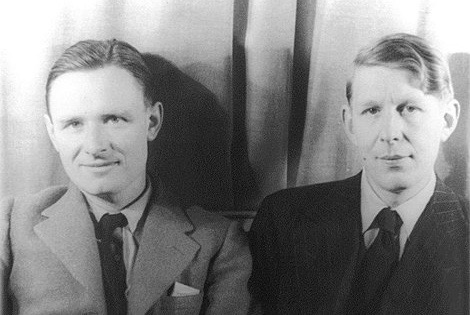
    Like Miller, Orwell had lived dead broke in Paris in the early 1930s, but his description of the experience in Down and Out in Paris and London is more akin to the reportage of Orwell’s own Road to Wigan Pier than to anything in Tropic of Cancer. That notwithstanding, he admired Miller’s work and championed it at a time when Miller was known only to a cognoscenti, who, like T. S. Eliot, had gotten hold of a copy printed in France by Jack Kahane’s Obelisk Press. (After the war, his son Maurice Girodias changed the name to Olympia Press and would go on to publish The Naked Lunch, as the 1959 first edition of Burroughs’s novel was called.) In his essay on Miller, Orwell frames his discussion of Miller with the story of their first meeting. It was 1936, and Orwell was on his way to Spain to serve the Republican cause, which Miller bluntly told him was “the act of an idiot.” Orwell recounts, “He could understand anyone going there from purely selfish motives, out of curiosity, for instance, but to mix oneself up in such things from a sense obligation was sheer stupidity” (2009: 129-30).

    After Spain, where Orwell was branded a Trotskyite and a fascist and forced to flee, he comes to agree, or at least sympathize, with Miller’s basic position. Moreover, he concludes that a literature of utter passivity and complete acceptance is far preferable, and more honest, than high-minded and resolutely political writing from the likes of Auden and Spender. In a world of such turmoil and flux, any art attaching itself to a cause, or worse yet a party, is doomed to failure. To capture the full extent of Miller’s detachment, Orwell borrows an image that Miller himself once used to describe good friend Anaïs Nin: he compares her “to Jonah in the whale’s belly.” Orwell writes:

    And however it may be with Anaïs Nin, there is no question that Miller himself is inside the whale. All his best and most characteristic passages are written from the angle of Jonah, a willing Jonah. Not that he is especially introverted—quite the contrary. In his case the whale happens to be transparent. Only he feels no impulse to alter or control the process that he is undergoing. He has performed the essential Jonah act of allowing himself to be swallowed, remaining passive, accepting.

    “Short of death,” Orwell calls this “the final, unsurpassable stage of irresponsibility” (132), but the implication is that sometimes irresponsibility is more principled than its opposite. The complexity of Orwell’s figuration lies in the dialectical twist whereby Miller is trapped in the belly of the whale, but the whale is transparent. I want to formulate things slightly differently and instead say that he is inside the whale, but the whale happens to contain the entire world. Read against the grain of its original intent, the whale becomes an image not of separation but of worlded connectedness. It points to an alternative, monist strain of worlded thought that appears everywhere in Beat writing and runs counter to the Beats’ supposed isolationism and indifference to the wider world.

    Ahab’s white whale as blank screen or “empty cipher” is akin to what some critics fear has become the transcendent sameness of the transnational. The prominent Americanist Donald Pease speaks for them when he remarks that in its rise to become a dominant paradigm transnationalism writ large has “exercised a monopoly of assimilative power that has enabled it to subsume and replace competing spatial and temporal orientations—including multicultural American studies, borderlands critique, and postcolonial American studies—within an encompassing geopolitics of knowledge” (2011: 1). Worse yet, this shift toward the “unmarked” space of the transnational mirrors and recapitulates the same global flows of capital and corporate power that transnationalist critics want to interrogate (10).[3] Transnationalism as worlding, however, with its counter-hegemonic animus, its emphasis on materiality, on local histories and lived experience, and its attention to the always uneven encounter between the local and the global, is particularly well-suited to retain the lessons of older critical formations, especially postcolonial theory. With roots in Spivak’s planetarity and Said’s global-materialist outlook, worlding privileges precisely those “peripheralized geographies and diasporic populations” that, for Pease, have been marked and marginalized by the transnational (10).

    Miller’s whale is more like worlding’s messy immanence—its belly a subterranean space that supplies what Ginsberg has called “the bottom-up vision of society” (in Raskin 2004: xiv), or what cultural historian David Pike characterizes as “the view from below” (2005: 8-12). The world as such is an oppositional term that upholds the local and the contingent in the face of the deracinating transcendence of global space. At its core, worlding entails a dialectic of near and far; it adopts the in-between-ness of James Clifford’s “translocal” sense of cultural adaptation (see in particular 1997) and Rob Wilson’s global/local (Wilson and Dissanayake 1996; Wilson 2000). Lawrence Buell (2007) associates these shifting spatial scales with the planetary “ecoglobalism” of environmental writers and activists, for the world/planet is fundamentally an ecological vision of a world-organism: earth as ecos (“home”) and lived space. Via the Beat ecopoetics of Gary Snyder, the etymology of “eco-” as oikos (house, family) is made worldly and worlded in Earth House Hold, Snyder’s 1969 collection of “Technical Notes and Queries to Fellow Dharma Revolutionaries.” That is to say, the lived, material experience of the near-at-hand (one’s “household”) is, in Snyder’s conception, the necessary ground upon which one might imagine communal ties that run much deeper than the nation (oikos as earth/planet). The world, then, becomes a necessary “third term,” as Christopher Connery has labeled it (2007: 3), preserving the local within the global as it confronts the relentless logic of East-West, colonialism-nationalism, communist-capitalist, self-other.

    Along with Spivak and Said, Immanuel Wallerstein and his pathbreaking “world-systems analysis” are part of a recognizable and increasingly consolidated canon of worlded thought. I want to hold on to their classic formulations of the worlded world even as I open up to a more expansive genealogy that comprises poetry, philosophy, and the sciences in addition to literary and cultural theory and criticism. Wallerstein makes a crucial distinction when defining “world-system.” He writes that “a world-system not is the system of the world, but a system that is a world and that can be, most often had been, located in an area less than the entire globe” (2004: 98). The world indicated by Wallerstein’s world-system is neither identical to nor coterminous with the world as empirical object (Wallerstein uses “globe” to mean the latter). It is thus a non-totalizing totality, a totality in the Marxian sense: that is to say, a critical concept that functions descriptively but also works to denaturalize what it describes. Just as our “species-being” is determined by, yet exceeds, the “totality of social relations” under the prevailing economic system. As Lukács points out, for Marx the totality itself is dialectical; it is precisely the universality of capitalism that sets the stage for the universal liberation of proletarian revolution. (Transferring things from base to superstructure, Peter Bürger will make an analogous argument when he writes that it is only after the Aestheticists declare the supremacy of “art for art’s sake” that avant-garde movements like Dada can come along and attempt to negate any distinction between art and life.) Wallerstein’s differentiation between a conceptual world and an empirical globe points to the dual nature of world as both physical and figural, topological and tropological. And the space opened up by this distinction is what makes the worlded imaginary possible.

    The Marxian world-system as non-totalizing totality means that civilization progresses in dialectical fashion from one world to the next (e.g., from the feudal world to the capitalist world). But what if multiple worlds, an infinite number of worlds, can exist simultaneously? This is the conclusion to draw from the work of biologist and proto-posthumanist Jakob von Uexküll, whose concept of Umwelt (environment, life-world) posits that each species’s sensorium is fundamentally unique and constitutes a world unto itself. In Uexküll’s most enduring work, A Foray into the Worlds (Umwelten) of Animals and Humans (1934), he asks readers to take an imaginary stroll with him:

    We begin such a stroll on a sunny day before a flowering meadow in which insects buzz and butterflies flutter, and we make a bubble around each of the animals living in the meadow. The bubble represents each animal’s environment and contains all the features accessible to the subject. As soon as we enter into one such bubble, the previous surroundings of the subject are completely reconfigured. Many qualities of the colorful meadow vanish completely, others lose their coherence with one another, and new connections are created. A new world arises in each bubble. (2010: 43 [emphasis added])

    The author will emphasize the salutary estrangement involved in such a pursuit when he writes, “Only when we can vividly imagine this fact [of the “bubbles”] will we recognize in our own world the bubble that encloses each and every one of us on all sides” (70). Uexküll’s perspective, which radically decenters human consciousness and imagines a dense, rhizomic web of inputs and interactions among all life forms, is picked up by Gilles Deleuze and Félix Guattari in A Thousand Plateaus and has come back to the fore in the field of animal studies and among today’s theorists of a posthuman biopolitics.

    This talk of worlds and bubbles is strangely reminiscent of Leibniz even, whose rationalist abstractions seem miles away from Uexküll’s empiricist phenomenology. Yet Leibniz’s “monad” is but the metaphysical counterpart to Uexküll’s model of ecological interdependence. On the surface, the self-sufficient monad—a substance without windows or doors, as Leibniz puts it—seems to be an image of extreme isolation, but the exact opposite is true. His “monadology” only works because we live in a universe where everything is connected to everything else and everything affects everything else; transculturally speaking, it is a version of Indra’s net. The philosopher writes, “This interconnection or accommodation of all created things to each other, and each to all the others, brings it about that each simple substance [i.e., monad] has relations that express all the others, and consequently, that each simple substance is a perpetual, living mirror of the universe” (1989: 220). Leibniz also plays on the tension between singularity and multiplicity inherent in the monad, and like Uexküll he is interested in perspective, writing, “Just as the same city viewed from different directions appears entirely different and, as it were, multiplied perspectively, in just the same way it happens that, because of the infinite multitude of simple substances, there are, as it were, just as many different universes, which are, nevertheless, only perspectives on a single one, corresponding to the different points of view of each monad” (221).

    In “Inside the Whale,” Orwell ponders the idea of “books that ‘create a world of their own,’ as the saying goes”—books that, like Tropic of Cancer, “open up a new world not by revealing what is strange, but by revealing what is familiar” (2009: 11). Burroughs’s Junky presents itself as exposé of the junk world (where there are not only junky habits and junky lingo but junk time and “junk cells” with their own “junk metabolism”). Ginsberg plays up this junk world in an early preface he wrote for the novel, which he promises will reveal a “vast underground life” and a “world of horrors.” The final pages of Junky prepare readers for the yagé world, which will soon become the world of Interzone in Naked Lunch, and so on. These are all instantiations of a “world-horizon come near” that Rob Wilson writes about in The Worlding Project (2007: 212). The zero degree formulation of the world-horizon in Beat writing is Dean Moriarty’s ecstatic “It’s the world! My God! It’s the world!” near the end of Kerouac’s On the Road, uttered after Sal and Dean cross the Mexican border. Such sweeping gestures always run the risk of erasing difference in the name of an essential oneness across time and space, but their sublime expansiveness is what also leads Beat writers to a more grounded or “situated” understanding of their world-historical moment of decolonization and Cold War geopolitics. This is especially true for Burroughs, whose worlded imaginary gives rise to complex textual geographies.

    Worlding Burroughs

    Barry Miles has been a prolific chronicler of the counterculture. I first encountered his work when I read The Beat Hotel: Ginsberg, Burroughs, and Corso in Paris, 1957–1963 (2000). His still authoritative account of the Beats in Paris, much of which gets reprised in the “City of Light” section of Call Me Burroughs, has proven indispensable to understanding those years of fertile experiment at 9 rue Gît-le-Coeur, especially Burroughs’s intense collaboration with painter and writer Brion Gysin, whom he had met in Tangier but didn’t really connect with until Paris. Despite the earlier book’s strengths, in Beat Hotel Miles makes a key claim that seems to me to encapsulate the most reductive tendencies of so much Beat scholarship. Describing Burroughs’s experience of Paris and his refusal to humor Ginsberg by joining him on trips to museums and sightseeing excursions, Miles writes that “his was more a landscape of ideas, and in many ways he could have been living anywhere” (2000: 160). A theme running through Beat Hotel figures Paris as a missed opportunity for Burroughs and the other Beat writers living there. It turns out, for example, that Burroughs was oblivious to the presence of the Lettrist/Situationist group who also made the Latin Quarter their base of operations and were engaging in similarly provocative textual experiments. The parallel evolution of the cut-up method alongside the Situationist practice of détournement is really quite remarkable, evidence that the Beats were soaking up similar energies and looking to common ancestors in Dada and Surrealism.

    The “landscape of ideas” thesis becomes more problematic when applied to Burroughs’s oeuvre. It means that a prominent setting like the Interzone of Naked Lunch gets read as a nightmarish abstraction or drug-induced hallucination rather than the satirical depiction of Tangier in the years immediately preceding and following Moroccan independence that it is. Since Miles’s Beat Hotel was first published, scholarship on Burroughs has made a spatial turn mirroring the “transnational turn” in literary and cultural studies more broadly. Brian Edwards, Oliver Harris, Allen Hibbard, and others have recently sought to restore a sense of place to the study of Burroughs’s work. These developments are echoed in the structure of Call Me Burroughs, which suggests a spatial turn in Miles’s thinking as well. His biography is organized chiefly by locale, with discrete sections on St. Louis (where Burroughs was born and raised), Mexico, New York, Tangier, London, and Lawrence, Kansas (where he lived for sixteen years before his death there in 1997), making Call Me Burroughs an itinerary as much as a chronology of the author’s life and work.

    Call Me Burroughs is not the first biography of the author that Miles has written. That would be William Burroughs: El Hombre Invisible, a slimmer volume published in 1992 that serves as a blueprint for the later book. (Miles inherited the project to write a follow-up from Burroughs’s longtime agent and partner James Grauerholz, who had compiled a vast archive but could not complete the undertaking.) The moniker refers to the persona Burroughs acquired while strung out on opiates in Tangier. In Call Me Burroughs, Miles writes:

    He was famously known as el hombre invisible to the Spanish boys in Tangier; this came from a conscious effort on his part to blend in so well that people would not see him, as well as the fact that, in his junk phase, he was gray and spectral-looking. … Bill practiced getting from the Villa Muniria to the place de France without being seen. He walked down the street, his eyes swiveling, checking everybody out. … Sometimes he could get through a whole line of guides without anyone seeing him, which in Tangier is a very good test. (2013: 296)

    The invisible Burroughs is unattached, non-aligned, and where Miles might have used the image to show how it gives the author’s work from and about Tangier a greater critical purchase, which it certainly does, Miles uses it instead to paper over the complexities of Burroughs’s attitude toward the momentous events that were unfolding around him. It is odd that in a book that assumes a kind of politics on Burroughs’s part—tied to a critique of power and language (its “viral” carrier) and a sincere belief in the potential of transgressive writing practices like the cut-up method “to do something about it” (335)—mostly sidesteps the much-debated question of the author’s “Moroccan politics.” In the pages just preceding the description of Burroughs cited above, Miles quotes a long passage from Naked Lunch dealing with the rise of nationalism in Morocco; he also quotes from the complicated and richly performative “Jihad Jitters” letter to Ginsberg (dated October 29, 1956, also the date of Tangier’s integration into Morocco—i.e., the end of the International Zone). But rather than follow this up with an acknowledgement of the difficult issues being raised in these texts, Miles cuts to el hombre invisible and thus performs a disappearing act of his own.

    Readers of Naked Lunch are vexed by what seems like the author’s inability or unwillingness to confront the realities of Moroccan independence and the end of the International Zone. Those who read Naked Lunch through the earlier Yage Letters, as the palimpsestic nature of both texts demands, may instead see a complex engagement with colonial legacies in the Maghreb and around the world. Initially conceived as “Naked Lunch, Book III: In Search of Yage” (Junky and Queer were books I and II), Burroughs’s epistolary account details his 1953 trek through the upper Amazon in search of the mythical hallucinogen ayahuasca, or yagé.[4] He arrived in Bogotá in the midst of Colombia’s long-simmering civil war, and Yage Letters is full of barely concealed political content. The centerpiece of Yage is Burroughs’s expansive, even utopian, ayahuasca vision of a great Composite City “where all human potentials are spread out in a vast silent market” (2006: 50). Language and imagery from the Composite City sequence will reappear throughout his later works, notably in Naked Lunch, where the passage is reproduced nearly verbatim; the Composite City becomes the Interzone while still retaining its earlier referents and resonances from Yage. South America becomes North Africa, and similar examples proliferate across an oeuvre that, as Burroughs once told an interviewer, is “all one book” (1989: 86). Recognizing these resonances and mapping the composite geographies and composite texts they produce just might be the key to answering some persistently thorny questions that surround Burroughs’s work.

    Burroughs’s Moroccan politics are equivocal, to be sure, but in Yage Letters he displays no such ambiguity. Through Lee, his epistolary alter ego, Burroughs repeatedly expresses his solidarity with the Liberals against the Conservatives, whom he aligns with the “dead weight of Spain” (2006: 10). The predation described throughout Yage is characteristically, for Burroughs, set in sexual terms but represents world-historical forces, which appear as the not-so-hidden underbelly of Wallerstein’s world-system, or a sinister variation on Wai Chee Dimock’s “deep time.” After his first, failed trek into Colombia’s Putumayo region, Burroughs recounts:

    On my way back to Bogota with nothing accomplished. I have been conned by medicine men (the most inveterate drunk, liar and loafer in the village is invariably the medicine man), incarcerated by the law, rolled by a local hustler (I thought I was getting that innocent backwoods ass, but the kid had been to bed with six American oil men, a Swedish Botanist, a Dutch Ethnographer, a Capuchin father known locally as The Mother Superior, a Bolivian Trotskyite on the lam, and jointly fucked by the Cocoa Commission and Point Four). Finally I was prostrated by malaria. (16)

    Not only have the power relations between predator and prey been inverted in Burroughs’s getting ripped off by the “local hustler,” but in one long parenthetical aside he lays bare the entire colonial and postcolonial history of oppression and exploitation in the Americas: economic, political, religious, and otherwise. And by including the “Swedish Botanist” and “Dutch Ethnographer” in his litany, he even foregrounds the notion of scientific knowledge as an epistemological violence that his own narrative is attempting to circumvent. It should come as no surprise that he recasts this history in terms of sexual violation. Both as an individual—“I thought I was getting that sweet backwoods ass”—and as an American citizen, Burroughs, through the persona (Lee) that emerges in his narration of Yage, writes himself into this chronicle of domination and abuse. The force of Burroughs’s critique derives in equal measure from his complicity and from the critical distance provided by his status as an “exile.”

    At one point in the narrative, prevented from leaving the town of Puerto Asís while his tourist card is set in order, Lee muses, “If I was an active Liberal what could I do … aside from taking the place over at gun point? (2006: 22-23), implying that he is one in spirit or sympathy and that it wouldn’t take much to force him over the line. Later on in Yage Burroughs writes, “What we need is a new Bolivar who will really get the job done” (38). Burroughs’s statement is echoed in a (real) letter written to Ginsberg from South America: “Wouldn’t surprise me if I ended up with the Liberal guerillas” (1994: 159) which also anticipates his “Jihad Jitters” routine. Reflecting on the possibility of rioting and revolution in the streets of Tangier in a letter to Ginsberg dated October 29, 1956, Burroughs writes, “If they stage a jihad I’m gonna wrap myself in a dirty sheet and rush out to do some jihading of my own” (339).[5] He tells him earlier in the letter, “The possibility of an all-out riot is like a tonic, like ozone in the air. … I have no nostalgia for the old days in Morocco, which I never saw. Right now is for me” (337), and in a subsequent dispatch meant to allay Kerouac’s fears about his upcoming trip to Morocco, he presses, “I will say it again and say it slow: TANGER IS AS SAFE AS ANY TOWN I EVER LIVE IN. … ARABS ARE NOT VIOLENT. … Riots are the accumulated, just resentment of a people subjected to outrageous brutalities by the French cops used to strew blood and teeth over a city block in the Southern Zone” (349). At moments like these Burroughs is clearly sympathetic to the Moroccans’ anticolonial aspirations and their right to self-determination, but he can also be cynical and mocking. In Naked Lunch he portrays imagined riots as grotesque orgies of violence, yet even here Burroughs’s kaleidoscope of obscene violence is meant, as it was for Beat hero Antonin Artaud, to shock his audience out of its moral complacency and to confront the West with its original sin of imperialism.

    Thinking transnationally means thinking about and beyond borders of all kinds, and Burroughs’s work keeps transgression front and center. Transnationalism as worlding is interested in transgressive acts; at the same time, it seeks to be transgressive: counterhegemonic, reading against the grain, writing against Empire and globalization transcendent. These last are tricky business, as Pease and others have noted, and a worlded critique needs to account for its own entanglements. Where transgression is concerned, one must ask who has the privilege, authority, and power to transgress—who gets denied passage, is the crossing undertaken willingly, and to what ends? Derrida claims in Rogues that transgression and sovereignty are always linked, and Beat writers, primarily though by no means exclusively white and male and carrying US passports, were at liberty to move about in the world in a way that most others are not. But it turns out that by and large the Beats were hip to these dynamics as well, making strategic use of their privilege in order to thematize cultural difference and comment incisively on Cold War geopolitics.

    The performance of transgression is a productive way to read Burroughs because for him crossing physical borders always seems to precipitate other kinds of breakthroughs. In particular, Burroughs’s “travel writing” throws into sharp relief legacies of western imperialism and the United States’ expanding postwar footprint abroad: every travelogue is also about home. Travel writing in the West came into its own during the age of discovery and is closely linked to colonialism and the modern world-system.[6] In Yage Letters, the author describes being mistaken for “a representative of the Texas Oil Company traveling incognito” and thus “treated like visiting royalty.” He explains that the “Texas Oil Company surveyed the area a few years ago, found no oil and pulled out. But everyone in the Putumayo believes the Texas Company will return. Like the second coming of Christ” (2006: 24). What reads as a statement mocking the childlike faith of the locals is in fact directed against a long history of exploitation and oppression, an unbroken chain from the Spanish missionaries to United Fruit. And while he doesn’t seem to mind the benefits his mistaken identity afford him—he fails to correct anyone, after all—he uses these instances of misprision to launch a critique of US military and economic policy in Latin America.

    In Burroughs’s writing, the author’s own privilege is consistently figured in the recurring type of the “ugly American,” a stock character who first appears in the routines of Queer and manifests a particularly virulent form in Naked Lunch with the characters Clem and Jody. But even where they appear identical with the author himself, the ugly American remains a textual construction on Burroughs’s part. As Oliver Harris argues, Burroughs is playing the ugly American. It may come off all too naturally, but it is a performance nonetheless. In Call Me Burroughs Miles writes about Burroughs’s long-held belief that he was inhabited by what he called the “ugly spirit,” a malevolent force that pursued him like a ghost. Miles’s biography opens, in fact, with a sweat lodge ceremony performed late in Burroughs’s life to try to rid him of the spirit once and for all. Burroughs felt that his was an especially difficult case, as Miles recounts:

    Burroughs had warned the shaman of the challenge before the ceremony: He “had to face the whole of American capitalism, Rockefeller, the CIA … all of those, particularly Hearst.” Afterward he told Ginsberg, “It’s very much related to the American Tycoon. To William Randolph Hearst, Vanderbilt, Rockefeller, that whole stratum of American acquisitive evil. Monopolistic, acquisitive evil. Ugly evil. The ugly American. The ugly American at his ugly worst. That’s exactly what it is.” (2013: 2)

    The ugly spirit corresponds on a psychic level to an ugly nation rapaciously at work in the world. “Particularly Hearst” indicates a theme Burroughs often sounds (Henry Luce a common variation): a news monopoly made all the more insidious by his conviction that to control information is to shape reality. The force of Burroughs’s critique derives from the fact that he doesn’t hesitate to implicate himself along the way. A scion of the Burroughs family (his grandfather invented the adding machine), his monthly allowance meant that he was at liberty to pursue writing as a career. Burroughs’s maternal uncle Ivy Lee is “considered to be the founder of public relations” and counted John D. Rockefeller Jr. and Joseph Goebbels among his clients and advisees (12-13). Coming to terms with these personal histories meant grappling with the cause and effect of American power in an American century.

    The most profound forms of transgression in Burroughs are textual and have to do with the denaturing of form and genre. Yage Letters is exemplary here as well: although its epistolary presentation promises a direct, unvarnished account of the author’s ordeal in the Amazon, those reading Yage for vicarious drug kicks are likely to be disappointed. The book is about much more, and the “letters” mask a fiction. Large portions of the text did originate in real missives sent to Allen Ginsberg, as did much of Burroughs’s early work—he once notably told Ginsberg, referring to Naked Lunch, “Maybe the real novel is letters to you” (1994: 217)—but by the time Yage is finally published by City Lights in 1963, the text has been thoroughly cut-up and rearranged and redacted. Like so much of the author’s corpus, it has also been marked by a good deal of contingency. Burroughs settled on the epistolary after trying out other forms and genres. One early draft resembled an ethnographic report, and the “final” version of Yage still bears the traces of ethnography, which he lampoons to great effect.

    Burroughs had studied anthropology as a graduate student at Harvard in the 1930s and later took classes in Mesoamerican archaeology at Mexico City College. While in South America he even accompanied renowned Harvard ethnobotanist Richard Schultes on one of his Amazon expeditions. It was with Schultes that Burroughs records his first experience taking yagé, and an early, non-epistolary draft of the Yage manuscript looks very much like ethnography. Through this lens, Junky begins to read like ethnography as well (from a participant observer, no less), this one dealing with the heroin subcultures of New York and New Orleans. And readers will recognize something of the anthropological in Burroughs’s later depictions of Interzone, in “The Mayan Caper” episode from The Soft Machine (1966) and in his catalog of The Cities of the Red Night in that later novel.

    Like Junky, whose prologue declares, “There is no key, no secret someone else has that he can give you,” Yage reveals and withholds simultaneously; Burroughs “scientific” account of ayahuasca and the rituals surrounding it may be as much a fiction as the letters themselves. Its opening lines suggest as much: Lee begins, “I stopped off here [Panamá] to have my piles out. Wouldn’t do to go back among the Indians with piles I figured” (2006, 3). With this frank admission, suggests Harris, the narrator immediately relinquishes any claim to objective distance or impartiality in what follows (2006a: xxv). At a deeper level, what this too-personal tale calls into question is the entire notion of scientific objectivity and transparent ethnographic knowledge. With Yage Burroughs anticipates the breakthroughs of poststructuralist anthropology by some years, whose practitioners (e.g., James Clifford, Clifford Geertz) would seek to account for the power differential inherent in the relationship between observer and subject, questioning the ideological assumptions that shape all knowledge of the Other.[7]

    For many, “Beat politics” means Allen Ginsberg chanting Hare Krishna at a Vietnam War demonstration. In this context Burroughs’s ethos appears as a non-politics of absolute rejection or disciplined disavowal—the “Absolute ZERO” ([1960] 2001: 208) of the junky that Deleuze fixates on. But, as Deleuze knows, the greatest so-called nihilists (Dostoevsky, Nietzsche come to mind) are the most profoundly affirmative, and Burroughs does not share Ahab’s will to death. His affirmation lies in the performative creation of transgressive communities like the whole “wild boys” mythology of the late 1960s and the queer utopias imagined in Cities of the Red Night (1981). In Miles’s biography, Burroughs’s project extends well beyond the written word and emerges as a transformational politics of the everyday. His remark to Bowie that “the artists should take over this planet because they’re the only ones who can make anything happen” is a version of Bürger’s “integration of art into the praxis of life”—the avant-garde attempt to redefine both art and politics simultaneously.

    At the heart of Burroughs’s work is a constant vigilance against “Control” in all its aspects. Significantly, these are often figured by Burroughs as a kind of colonization, whether it be the parasite of language (his famous “word virus”), possession by the “ugly spirit,” or a more historically situated encounter. Cities of the Red Night, a beautiful and important book that Burroughs worked on through much of the 1970s, tells the story a loose confederation of sixteenth-century outlaws bent on toppling Spanish and British rule in the Americas. The novel’s layered plot unfolds in the present as well, where a shadowy organization plots world domination from its South American headquarters, and I am again reminded of Artaud, who envisioned a first production of the Theatre of Cruelty to be called The Conquest of Mexico and justified it by writing, “Ce sujet a été choisi … à cause de son actualité” (This subject has been chosen … because it is of the present moment” ([1938] 1964: 196). Poised upon the world-historical moment of decolonization—the constant “present” of Burroughs’s writing—Burroughs is perfectly positioned to launch a postcolonial critique of Empire’s new hegemony.

    Miles’s biography came at a propitious moment in Burroughs and Beat studies. In 2014 Burroughs’s centennial year was marked with museum and gallery exhibitions, readings, performances, film screenings, and several major conferences, all proof of his continued relevance not just in the literary world but also among visual and performance artists, musicians, filmmakers, and troublemakers of all kinds. For scholars of Burroughs’s work, the past decade has seen a flowering of historically minded, materially grounded, and theoretically capacious criticism. This has in large measure been made possible by the assiduous research and recovery work of editors, archivists, and critics including Miles, James Grauerholz, Bill Morgan, and especially Oliver Harris, whose recent string of “redux” editions is making legible the labyrinthine textual histories of so much of what Burroughs wrote. Amid these developments, and despite some missed opportunities, Call Me Burroughs will deservedly become the standard reference on the author’s life for scholars and fans alike. Its greatest contribution lies in uncovering the experiences and above all the places that animated a body of work as significant as that of anyone writing in the latter half of the twentieth century.

    *          *          *          *          *

    Notes

    [1] The epithet refers to Ted Morgan’s early biography, Literary Outlaw: The Life and Times of William S. Burroughs, first published in 1988.

    [2] Bowie, who based his Ziggy Stardust aesthetic in part on Burroughs’s 1969 novel The Wild Boys, is among the many musicians inspired by Burroughs.

    [3] Whether one agrees with Pease’s basic contention—and more is at stake, after all, than disciplinary boundaries—probably has something to do with whether one agrees with Hardt and Negri that globalization and Empire’s new order are in fact liberatory because diffuse power engenders proliferating sites and modes of resistance while the totalizing pressure of capital’s global reach brings us that much closer to universal emancipation.

    [4] “Naked Lunch, Book III” is the title Burroughs gave when he published the “Composite City” letter in Black Mountain Review in 1953. See Oliver Harris 2006b for a complete textual history.

    [5] October 29, 1956, also happened to be the date of Tangier’s official reintegration into a newly independent Morocco and the end of the International Zone.

    [6] It was during the Enlightenment that Denis Diderot and the philosophes began to see the critical potential of the travelogue: Diderot’s Supplément au voyage de Bougainville (1772) purports to “supplement” the just-published Voyage autour du monde by Louis-Antoine de Bougainville, the first Frenchman to circumnavigate the globe.

    [7] James Clifford has written about “ethnographic surrealism,” particularly in relation to Georges Bataille and the Documents group.

    References

    Adams, Rachael. 2009. Continental Divides: Remapping the Cultures of North America. Chicago: University of Chicago Press.

    Artaud, Antonin. (1938) 1964. Le théâtre et son double. Paris: Gallimard.

    Buell, Lawrence. 2007. “Ecoglobalist Affects: The Emergence of US Environmental Imagination on a Planetary Scale.” In Shades of the Planet: American Literature as World Literature, edited by Wai Chee Dimock and Lawrence Buell, 227-48. Princeton, NJ: Princeton University Press, 2007.

    Burroughs, William. (1960) 2001. “Postscript … Wouldn’t You?” In Naked Lunch: The Restored Text, edited by James Grauerholz and Barry Miles, 207-10. New York: Grove.

    ——. 1994. Letters, Vol. 1: 1945-1959. Edited by Oliver Harris. New York: Penguin.

    ——. 1989. Conversations with William S. Burroughs. Edited by Allen Hibbard. Jackson: University Press of Mississippi.

    Burroughs, William, and David Bowie. 1974. “Beat Godfather Meets Glitter Mainman.” Interview by Craig Copetas, Rolling Stone, February 28. www.rollingstone.com/music/news/beat-godfather-meets-glitter-mainman-19740228.

    Burroughs, William, and Allen Ginsberg. 2006. The Yage Letters Redux. Edited by Oliver Harris.

    Clifford, James. 1997. Routes: Travel and Translation in the Late Twentieth Century. Cambridge, MA: Harvard University Press.

    Connery, Christopher L. 2007. “Worlded Pedagogy in Santa Cruz.” Introduction to The Worlding Project: Doing Cultural Studies in the Era of Globalization, edited by Rob Wilson and Christopher L. Connery, 1-11. Santa Cruz, CA: New Pacific.

    Edwards, Brian. 2005. Morocco Bound: Disorienting America’s Maghreb, from Casablanca to the Marrakech Express. Durham, NC: Duke University Press.

    Grace, Nancy M., and Jennie Skerl, eds. 2012. The Transnational Beat Generation. New York: Palgrave.

    Gray, Timothy. 2006. Gary Snyder and the Pacific Rim: Creating Countercultural Community. Iowa City: University of Iowa Press.

    Harris, Oliver. 2006a. Introduction to Burroughs and Ginsberg, Yage Letters, ix-lii.

    ——. 2006b. “Not Burroughs’ Final Fix: Materializing The Yage Letters,” Postmodern Culture 16, no. 2. http://muse.jhu.edu/journals/postmodern_culture/v016/16.2harris.html.

    Leibniz, Gottfried Wilhelm. 1989. “The Principles of Philosophy, or, the Monadology.” In Philosophical Essays, translated by Roger Ariew and Daniel Garber, 213-25. Indianapolis: Hackett.

    Melehy, Hassan. 2016. Kerouac: Language, Poetics, and Territory. London: Bloomsbury.

    Miles, Barry. 2000. The Beat Hotel: Ginsberg, Burroughs, and Corso in Paris, 1957-1963. New York: Grove.

    ——. 2013. Call Me Burroughs. New York: Twelve.

    Orwell, George. 2009. All Art Is Propaganda: Critical Essays. Boston: Mariner.

    Pease, Donald E. 2011. “Introduction: Re-mapping the Transnational Turn.” In Re-framing the Transnational Turn in American Studies, edited by Winfred Fluck, Donald E. Pease, and John Carlos Rowe, 1-47. Hanover, NH: Dartmouth College Press.

    Pike, David. 2005. Subterranean Cities: The World Beneath Paris and London, 1800-1945. Ithaca, NY: Cornell University Press.

    Raskin, Jonah. 2004. American Scream: Allen Ginsberg’s Howl and the Making of the Beat Generation. Berkeley: University of California Press.

    Snyder, Gary. 1969. Earth House Hold: Technical Notes and Queries to Fellow Dharma Revolutionaries. New York: New Directions.

    Tietchen, Todd. 2010. The Cubalogues: Beat Writers in Revolutionary Havana. Gainesville: University Press of Florida.

    Uexküll, Jakob von. 2010. A Foray into the Worlds of Animals and Humans. Translated by Joseph D. O’Neil. Minneapolis: University of Minnesota Press.

    Wallerstein, Immanuel. 2004. World-Systems Analysis: An Introduction. Durham, NC: Duke University Press.

    Wilson, Rob. 2000. Reimagining the American Pacific, from South Pacific to Bamboo Ridge and Beyond. Durham, NC: Duke University Press.

    ——. 2007. “Afterword: Worlding as Future Tactic.” In The Worlding Project: Doing Cultural Studies in the Era of Globalization, edited by Rob Wilson and Christopher L. Connery, 209-23. Santa Cruz, CA: New Pacific.

    Wilson, Rob, and Wimal Dissanayake, eds. 1996. Global/Local: Cultural Production and the Transnational Imaginary. Durham, NC: Duke University Press.

  • Olivier Jutel – Donald Trump’s Libidinal Entanglement with Liberalism and Affective Media Power

    Olivier Jutel – Donald Trump’s Libidinal Entanglement with Liberalism and Affective Media Power

    by Olivier Jutel

    ~

    This essay has been peer-reviewed by the b2o editorial board

    Introduction

    The emergence of Donald Trump as president of the United States has defied all normative liberal notions of politics and meritocracy. The decorum of American politics has been shattered by a rhetorical recklessness that includes overt racism, misogyny, conspiracy and support for political violence. Where the Republican Party, Fox News, Beltway think-tanks and the Koch brothers have managed their populist base through dog-whistling and culture wars, Trump promises his supporters the chance to destroy the elite who prevent them from going to the end in their fantasies. He has catapulted into the national discourse a mixture of paleo-conservatism and white nationalism recently sequestered to the fringes of American politics or to regional populisms. Attempts by journalists and politicians during the campaign to fact-check, debunk and shame Trump proved utterly futile or counter-productive. He revels in transgressing the rules of the game and is immune to the discipline of his party, the establishment and journalistic notions of truth-telling. Trump destabilizes the values of journalism as it is torn between covering the ratings bonanza of his spectacle and re-articulating its role in defence of liberal democracy. I argue here that Trump epitomizes the populist politics of enjoyment. Additionally liberalism and its institutions, such as journalism, are libidinally entangled in this populist muck. Trump is not simply a media-savvy showman: he embodies the centrality of affect and enjoyment to contemporary political identity and media consumption. He wields affective media power, drawing on an audience movement of free labour and affective intensity to defy the strictures of professional fields.

    Populism is here understood in psychoanalytic terms as a politics of antagonism and enjoyment. The rhetorical division of society between an organic people and its enemy is a defining feature of theoretical accounts of populism (Canovan 1999). Trump invokes a universal American people besieged by a rapacious enemy. His appeals to “America” function as a fantasy of social wholeness in which the country exists free of the menace of globalists, terrorists and political correctness. This antagonism is not simply a matter of rhetorical style but a necessary precondition for the Lacanian political “subject of enjoyment” (Glynos and Stavrakakis 2008: 257). Trump is an agent of obscene transgressive enjoyment, what Lacan calls jouissance, whether in vilifying immigrants, humiliating Jeb Bush, showing off his garish lifestyle or disparaging women. The ideological content of Trump’s program is secondary to its libidinal rewards or may function as one and the same. It is in this way that Trump can play the contradictory roles of blood-thirsty isolationist and tax-dodging populist billionaire.

    Psychoanalytic theory differs from pathology critiques of populism in treating it as a symptom of contemporary liberal democracy rather than simply a deviation from its normative principles. Drawing on the work of Laclau (2005), Mouffe (2005) and Žižek (2008), Trump’s populism is understood as the ontologically necessary return of antagonism, whether experienced in racial, nationalist or economic terms, in response to contemporary liberalism’s technocratic turn. The political and journalistic class’s exaltation of compromise, depoliticization and policy-wonks are met with Trump promises to ‘fire’ elites and his professed ‘love’ of the ‘poorly educated’. Trump’s attacks on the liberal class enmeshes them in a libidinal deadlock in that both require the other to enjoy. Trump animates the negative anti-fascism that the liberal professional classes enjoy as their identity while simultaneously creating the professional class solidarity which animates populist fantasies of the puppet-masters’ globalist conspiracy. In response to Trump’s improbable successes the Clinton campaign and liberal journalism appealed to rationalism, facts and process in order to reaffirm a sense of identity in this traumatic confrontation with populism.

    Trump’s ability to harness the political and libidinal energies of enjoyment and antagonism is not simply the result of some political acumen but of his embodiment of the values of affective media. The affective and emotional labour of audiences and users is central to all media in today’s “communicative capitalism” (Dean 2009). Media prosumption, or the sharing and production of content/data, is dependent upon new media discourses of empowerment, entrepreneurialism and critical political potential. Fox News and the Tea Party were early exemplars of the way in which corporate media can utilize affective and politicized social media spaces for branding (Jutel 2013). Trump is an affective media entrepreneur par excellence able to wrest these energies of enjoyment and antagonism from Fox and the Republican party. He operates across the field whether narcissistically tweeting, appearing on Meet the Press in his private jet or as a guest on Alex Jones’ Info Wars. Trump is a product of “mediatiaztion” (Strömbäck and Dimitrova 2011), that is the increasing importance of media across politics and all social fields but the diminution of liberal journalism’s cultural authority and values. As an engrossing spectacle Trump pulls the liberal field of journalism to its economic pole of valorization (Benson 1999) leaving its cultural values of a universal public or truth-telling isolated as elitist. In wielding this affective media power against the traditional disciplines of journalism and politics, he is analogous to the ego-ideal of communicative capitalism. He publicly performs a brand identity of enjoyment and opportunism for indeterminate economic and political ends.

    The success of Trump has not simply revealed the frailties of journalism and liberal political institutions, it undermines popular and academic discourses about the political potential of social/affective media. The optimism around new forms of social media range from the liberal fetishization of data and process, to left theories in which affect can reconstitute a democratic public (Papacharissi 2015). Where the political impact of social media was once synonymous with Occupy Wall Street, the Arab Spring and direct democracy we must now add Donald Trump’s populism and the so-called ‘alt-right’. While Trump’s politics are thoroughly retrograde, his campaign embodies what is ‘new’ in the formulation of new media politics. Trump’s campaign was based on a thoroughly mediatized constituency with very little ground game or traditional political machinery, relying on free media coverage and the labour of social media users. Trump’s campaign is fuelled by ‘the lulz’ which translates as the jouissance of hacker nerd culture synonymous with the “weird Internet” of Twitter, 4-Chan and message boards. For Trump’s online alt-right army he is a paternal figure of enjoyment, “Daddy Trump” (Yiannopoulos 2016), elevating ritualized transgression to the highest reaches of politics. Trump’s populism is a pure politics of jouissance realized in and through the affective media.

    Populism and Enjoyment

    The value of an obscene figure like Donald Trump is that he demonstrates a libidinal truth about right wing populist identity. It has become a media cliché to describe Donald Trump as the id of the Republican party. And while Trump is a uniquely outrageous figure of sexual insecurity, vulgarity and perversion, the insights of psychoanalytic theory extend far beyond his personal pathologies.[1] It should be stated that this psychoanalytic reading is not a singular explanation for Trump’s electoral success over and above racism, Clinton’s shockingly poor performance (Dovere 2016), a depressed Democratic turnout, voter suppression and the electoral college. Rather this is an analysis which considers how Trump’s incoherence and vulgarity, which are anathema to normative liberal politics, ‘work’ at the level of symbolic efficiency.

    The election of Trump has seemingly universalized a liberal struggle against the backward forces of populism. What this ‘crisis of liberalism’ elides is the manner in which populism and liberalism are libidinally entangled. Psychoanalytic political theory holds that the populist logics of antagonism, enjoyment and jouissance are not the pathological outside of democracy but its repressed symptoms, what Arditi borrowing from Freud calls “internal foreign territory” (2005: 89). The explosion of emotion and anger which has accompanied Trump and other Republican populists is a return of antagonism suppressed in neoliberalism’s “post-political vision” (Mouffe 2005: 48). In response to the politics of consensus, rationalism and technocracy, embodied by Barack Obama and Clinton, populism expresses the ontological necessity of antagonism in political identity (Laclau 2005). Whether in left formulations of the people vs the 1% or the nationalism of right wing populism, the act of defining an exceptional people against an enemy represents “political logic tout court” (Laclau: 229). The opposition of a people against its enemy is not just a rhetorical strategy commonly defined as the populist style (Moffitt 2016), it is part of the libidinal reward structure of populism.

    The relationship between antagonism and enjoyment is central to the psychoanalytic political theory approach to populism employed by Laclau, Žižek, Stavrakakis and Mouffe. The populist subject is the psychoanalytic “subject of enjoyment” (Glynos & Stavrakakis:  257) shaped by trauma, irrational drives and desires. Populist ontology is analogous to Lacanian “symbolic castration” in which the child’s failure to fulfill a phallic role for the mother “allows the subject to enter the symbolic order” (Žižek 1997: 17). Populism embodies this fundamental antagonism and sense of lost enjoyment. Populist identity and discourse are the perpetually incomplete process of recapturing this primordial wholeness of mother’s breast and child. It is in this way that Trump’s ‘America’ and the quest to ‘Make America Great Again’ is not a political project built on policy, but an affective and libidinal appeal to the lost enjoyment of a wholly reconciled America. America stands in as an empty signifier able to embody a sub-urban community ideal, military strength or the melding of Christianity and capitalism, depending upon the affective investments of followers.

    In the populist politics of lost enjoyment there is a full libidinal identification with the lost object (America/breast) that produces jouissance. Jouissance can be thought of as a visceral enjoyment which that defies language as in Barthes’ (1973) notion of jouissance as bliss. It is distinct from a discrete pleasure as it represents an “ecstatic release” and transgressive “absolute pleasure undiluted” by the compromises with societal constraints (Johnston 2002). Jouissance is an unstable excess, it cannot exist without already being lost. ‘America’ as imagined by Trump has never existed and “can only incarnate enjoyment insofar as it is lacking; as soon we get hold of it all its mystique evaporates!” (Stavrakakis 2007: 78). However this very failure produces an incessant drive and “desire structured around the unending quest for the lost, impossible jouissance” (Glynos and Stavrakakis: 261). Donald Trump may have won the White House but it is unclear whether American greatness has been restored, delayed or thwarted, as is the nature jouissance. The Trump campaign and presidency embodies jouissance as “pleasure in displeasure, satisfaction in dissatisfaction” (Stavrakakis: 78). With a dismal approval rating and disinterest in governing Trump has taken to staging rallies in order to rekindle this politics of jouissance. However the pleasure generated during the campaign has been lost. Matt Taibbi described the diminishing returns of jouissance among even his most devoted followers who turn out “for the old standards” like “lock her [Clinton] up” (2017) and are instead subjected to a narcissistic litany of personal grievances.

    The coalescence of libidinal energy into a populist movement depends on what Laclau calls an affective investment (2005) in a ‘people’ whose enjoyment is threatened. The shared affective experience of enjoyment in being part of the people is more important than any essential ideological content. In populist ontology ‘the people’ is a potent signifier for an organic virtue and political subjectivity that is seemingly pure. From Thomas Jefferson’s ode to the yeoman farmer, the Tea Party’s invocation of the producerist tradition and the humanism of Bernie Sanders[2] there is a belief in the people as the redeemer of politics. However for Laclau this people is always negatively defined by an antagonistic enemy, whether “mobs in the city” (Jefferson 1975: 216), liberal government, Wall Street or ‘Globalists.’ Trump’s promise to make America great again is at once destiny by virtue of the people’s greatness, but is continually threatened by the hand of some corrupting and typically racialized agent (the liberal media, George Soros, China or Black Lives Matter). In this way Trump supporters ‘enjoy’ their failure in that it secures an embattled identity, allows them to transgress civic norms and preserve the illusory promise of America.

    Within the field of Lacanian political theory there is rift between a post-Marxist anti-essentialism (Lacalau, 2005, Mouffe, 2005) which simply sees populism as the face of the political, and a Lacanian Marxism which retains a left-political ethic as the horizon of emancipatory politics (Žižek, 2008, Dean, 2009). With the ascent of populism from the margins to the highest seat of power it is essential to recognize what Žižek describes as the ultimate proto-fascist logic of populism (Žižek, 2008). In order to enjoy being of the people, the enemy of populism is libidinally constructed and “reified into a positive ontological entity…whose annihilation would restore balance and justice” (Žižek 2008: 278). At its zenith populism’s enemy is analogous to the construct of the Jew in anti-semitism as a rapacious, contradictory, over-determined evil that is defined by excessive enjoyment. Following Lacan’s thesis that enjoyment always belongs to the other, populist identity requires a rapacious other “who is stealing social jouissance from us” (Žižek 1997: 43). This might be the excessive enjoyment of the Davos, Bohemian Grove and ‘limousine-liberal’ elite, or the welfare recipients, from bankers, immigrants and the poor, who ‘enjoy’ the people’s hard earned tax dollars. For the populists enjoyment is a sense of being besieged which licenses a brutal dehumanization of the enemy and throws the populist into an self-fecund conspiratorial drive to discover and enjoy the enemy’s depravity. Alex Jones and Glenn Beck have been key figures on the populist right (Jutel 2017) in channelling this drive and reproducing the tropes of anti-semitism in uncovering the ‘globalist’ plot. In classic paranoid style (Hofstader 1965), this elite is often depicted as occultist[3] and in league with the lumpen-proletariat to destroy the people’s order.

    Trump brings a people into being around his brand and successful presidential in personifying this populist jouissance. He is able to overcome his innumerable contradictions and pull together disparate strands of the populist right, from libertarians, evangelicals, and paleo-conservatives to white nationalists, through the logic of jouissance. The historically high levels at which evangelicals supported the libertine Trump (Bailey 2016) were ideologically incongruous. However the structure of belief and enjoyment; a virtuous people threatened by the excessive enjoyment of transgender rights, abortion and gay marriage, is analogous. The libidinal truth of their beliefs is the ability to enjoy losing the culture wars and lash out at the enemy. Trump is able to rail against the elite not in spite of his gaudy billionaire lifestyle but because of it. As Mudde explains, populism is not a left politics of reflexivity and transformation aimed at “chang[ing] the people themselves, but rather their status within the political system” (2004: 547). He speaks to the libidinal truth of oligarchy and allows his followers to imagine themselves wielding the power of the system against the elite (as also suggested by Grusin 2017, especially 91-92, on Trump’s “evil mediation”). When he appeared on stage with his Republican rivals and declared that he had given all of them campaign contributions as an investment, it was not an admission of culpability but a display of potency. There is a vicarious enjoyment when he boasts as the people’s plutocrat “when they [politicians] call, I give. And you know what? When I need something from them…I call them, and they are there for me” (Fang 2016).

    Populist politics is not a means to a specific policy vision but enjoyment as its own end, even if Trump’s avarice runs counter to the people’s rational self-interest. The lashing out at women and immigrants, the humiliation of Jeb Bush, telling Chris Christie to ‘get on the plane’, the call to imprison Hillary Clinton, all offer a release of jouissance and the promise to claim state power in the name of jouissance. When he attacks Fox News, the Republican party and its donors he is betraying powerful ideological allies for the principle of jouissance and the people’s ability to go to the end in their enjoyment. The cascading scandals that marked his campaign (boasting of sexual assault, tax-dodging etc) and provoked endless outrage among political and media elites, function in a similar way. Whatever moral failings it marks him as unrestrained by the prohibitions that govern social and political behaviour.

    In this sense Trump’s supporters are invested in him as the ego-ideal of the people, who will ‘Make America Great Again’ by licensing jouissance and whose corruption is on behalf of the people. In his classic study of authoritarianism and crowds, Freud describes the people as having elevated “the same object in the place of their ego ideal and have consequently identified themselves with one another in their ego” (1949: 80). Trump functions in this role not simply as a figure of obscene opulence and licentiousness but in a paternalistic role among his followers. His speeches are suffused with both intolerance and professions of love and solidarity with the populist trope of the forgotten man, however disingenuous (Parenti 2016). Freud’s theory of the leader has rightly been criticized as reducing the indeterminacy of crowds to simply a singular Oedipal relation (Dean 2016). However against Freud’s original formulation Trump is not the primordial father ruling a group “that wishes to be governed by unrestricted force” (Freud: 99) but rather he is the neoliberal super-ego of enjoyment “enjoining us to go right to the end” (Žižek 2006: 310) in our desires. This libidinal underside is the truth of what Lakoff (2016) identifies as the “strict father” archetype of conservatism. Rather than the rigid moral frame Lakoff suggests subjects, this obscene father allows unrestrained transgression allowing one to “say things prohibited by political correctness, even hate, fight, kill and rape” (Žižek 1999: 6). Milo Yiannopolous’ designation of Trump as the ‘Daddy’ of the alt-right perfectly captures his role as the permissive paternal agent of jouissance.

    In an individuated polity Trump’s movement sans party achieves what can be described as a coalescence of individual affective investments. Where Freud supposes a totalizing paternal figure, Trump does not require full identification and a subsumption of ego to function as a super-ego ideal. This is the way to understand Trump’s free-form braggadocio on the campaign trail. He offers followers a range of affective points of identification allowing them to cling to nuggets of xenophobia, isolationism, misogyny, militarism, racism and/or anti-elitism. One can disregard the contradictions and accept his hypocrisies, prejudices, poor impulse control and moral failings so long as one is faithful to enjoyment as a political principle.

    The Liberal/Populist Libidinal Entanglement

    In order to understand the libidinal entanglement of liberalism and populism, as embodied in the contest between Trump and Clinton, it is necessary to consider liberalism’s conception of the political. Historical contingency has made liberalism a confused term in American political discourse simultaneously representing the classical liberalism of America’s founding, progressive-era reformism, New Deal social-democracy, the New Left and Third Way neo-liberalism. The term embodies the contradiction of liberalism identified by CB MacPherson as between the progressive fight to expand civil rights and simply the limited democracy of a capitalist market society (1977). The conflation of liberalism and the left has occurred in the absence of a US labour party and it has allowed Third Way neo-liberals to efface the contribution of 19th century populists, social-democrats and communists to progressive victories. The fractious nature of the 2016 Democratic primary process where the Democratic Party machinery and liberal media organs overwhelming supported Hillary Clinton against Bernie Sanders and a youthful base openly identifying as “socialist”, has laid bare the conflation of liberalism and the left. In this way it makes sense to speak of liberalism and neoliberalism interchangeably in contemporary American politics.

    Liberal politics disavows the central premise of psychoanalytic theory, that political identity is based on antagonism and enjoyment. Mouffe (2005) describes its vision of politics as process-oriented with dialogue and rational deliberation between self-interested parties in search of true consensus. And while the process may not be seemly there are no ontological obstacles to consensus merely empirical blockages. One can see this in Hillary Clinton’s elevation of the ‘national conversation’ as an end in and of itself (McWhorter 2016). While this may contribute to a democratic culture which foregrounds journalism and ‘the discourse’, it presents politics, not as the antagonistic struggle to distribute power, access and resources, but simply as the process of gaining understanding through rational dialogue. This was demonstrable in the Clinton campaign’s strategy to rebuff Trump’s rhetorical recklessness with an appeal to facts, moderation[4] and compromise. With the neoliberal diminution of collective identities and mass vehicles for politics, the role of politics becomes technocratic administration to expand individual rights as broadly as possible. Antagonism is replaced with “a multiplicity of ‘sub-political’ struggles about a variety of ‘life issues’ which can dealt with through dialogue” (Mouffe: 50). It is in this way that we can understand Clinton’s performance of progressive identity politics, particularly on social media,[5] while being buttressed by finance capital and Silicon Valley.

    The Trump presidency does not simply obliterate post-politics, it demonstrates how populism, liberalism and the journalistic field are libidinally entangled. They require one another as the other in order to make enjoyment in political identity possible. The journalist Thomas Frank has identified in the Democrats a shift in the mid-1970s, from a party of labour to highly-educated professionals and with it a fetishization of complexity and process (2016a). The lauding of expertise as depoliticized rational progress produces a self-replicating drive and enjoyment as one can always have more facts, compromise and dialogue. In this reverence for process the neoliberal democrats can imagine and enjoy the transcendence of the political. Liberal journalism’s new turn to data and wonk-centric didacticism, embodied in the work of Nate Silver and in the online publication Vox, represents this notion of post-politics and process as enjoyment. Process then becomes the “attempt to cover over [a] constitutive lack…through continuous identificatory acts aiming to re-institute an identity” (Glynos and Stavrakakis: 261). For neo-liberal Democrats process is a fetish object through which they are fulfilled in their identity.

    However try as they might liberals cannot escape their opponent and the political as a result of the inter-subjective dimensions of enjoyment. Those outside the dialogic process are seen as “old-fashioned ‘traditionalists’ or, more worryingly, the ‘fundamentalists’ fighting a backward struggle against the forces of progress” (Mouffe: 50). Where liberalism sees Trump as a dangerous xenophobe/fundamentalist, Bernie Sanders functions as a traditionalist clinging to an antagonistic political discourse and a universalist project (social democracy). Sanders’ universalism was widely criticized as undermining particular identity struggles with Clinton chiding him that ‘Breaking up the banks won’t end racism’. Thomas Frank systematically tracked the response of the Washington Post editorial page to the Sanders campaign for Harper’s Magazine and detailed a near unanimous “chorus of denunciation” of Sanders’ social democracy as politically “inadmissible” (2016b).

    The extent of the liberal/populist co-dependency was revealed in a Clinton campaign memo outlining the “Pied-Piper” strategy to elevate Trump during the Republican primary as it was assumed that he would be easier to beat than moderates Rubio and Bush (Debenedetti 2016). For liberalism these retrograde forces of the political provide enjoyment, virtue and an identity of opposing radicals from all sides, even as populism continues to make dramatic advances. The contradiction of this libidinal entanglement is that the more populism surges the more democrats are able to enjoy this negative and reactive identity of both principled anti-fascism and a cultural sophistication in mocking the traditionalists. The genre of Daily Show late night comedy, which has been widely praised as a new journalistic ideal (Baym 2010), typifies this liberal enjoyment[6] with populists called out for hypocrisy or ‘eviscerated’ by this hybrid of comedy and rational exposition. Notably John Oliver’s show launched the ‘Drumpf’ meme which was meant to both mock Trump’s grandiosity and point out the hypocrisy of his xenophobia. What the nightly ‘skewering’ of Trump by SNL, The Daily Show and Stephen Colbert’s Tonight Show achieves is the incessant reproduction of identity, widely shared on social media and other liberals sites like Huffington Post, that allows liberals an enjoyment of cultural sophistication in defeat.

    Immediately after the election of Trump SNL made a bizarre admission of this liberal over-identification with its negative identity. Kate McKinnon, who impersonated Hillary Clinton on SNL, began the show in character as Clinton while performing the late Leonard Cohen’s sombre ballad ‘Hallelujah’. Here the satirical character meant to provide the enjoyment of an ironic distance from political reality speaks for an overwrought full identification with liberalism through the cultural politics of late night comedy providing liberals what Rolling Stone called ‘catharsis after an emotionally exhausting’ election (Kreps 2016). Writer and comedian Matt Christman has described this as an elevation of comedians analogous to the conservative fetish of ‘The Troops’ (Menaker 2016). There is a fantasy of political potency and virtue embodied in what Žižek might call these ‘subjects supposed to eviscerate’ who wield power in our place.

    In the 2016 US Presidential elections, liberalism failed spectacularly to understand the political and to confront its own libidinal investments. While the Clinton campaign did manage to bring certain national security Republicans and moderates to her side in the name of consensus, this reproduced the populist imaginary of a class solidarity of the learned undermining The People’s natural order. Hillary Clinton’s vision of meritocracy included a diverse Silicon Valley cabinet (Healy 2016) and the leadership of “real billionaires.”[7] Meanwhile Trump spoke of the economy in antagonistic terms, using China and the globalist conspiracy to channel a sense of lost community and invert the energies of class conflict. Trump, the vulgar tax-dodging billionaire, is preferable to a section of working class voters than a rational meritocracy where their class position is deserved and their fate to learn code or be swept away by the global economy. Friedrich von Hayek wrote that the virtue of the market as a form of justice is that it relies on “chance and good luck” (1941: 105) and not simply merit. However erroneous this formulation of class power, it allows people to accept inequality as based on chance rather than an objective measure of their value. In contrast to Clinton’s humiliating meritocracy, Trump’s charlatanism, multiple bankruptcies and steak infomercials reinscribe this principle of luck and its corollary enjoyment.

    The comprehensive failure of liberal post-politics did not simply extend from the disavowal of antagonism but the fetishization of process. The party’s lockstep support of the neoliberal Clinton in the primary against the left-wing or ‘traditionalist’ Sanders created an insular culture ranging from self-satisfied complacency to corruption. The revelations that the party tampered with the process and coordinated media attacks on Sanders’ religious identity (Biddle 2016) fundamentally threatened liberal political identity and enjoyment. This crisis of legitimacy necessitated another, more threatening dark political remnant of history in order to restore the fetish of process. Since this moment liberals, in politics and the media, have relied on Russia as an omnipotent security threat, coordinating the global resurgence of populism and xenophobia and utilizing Trump as a Manchurian candidate and Sanders as a useful idiot.[8] This precisely demonstrates the logic of fetishist disavowal, liberals know very well that process has been corrupted but nevertheless “they feel satisfied in their [fetish], they experience no need to be rid of [it]” (Žižek 2009: 68). For the liberal political and media class it is easier to believe in a Russian conspiracy of “post-truth politics” than it is to confront one’s own libidinal investments in rationalism and consensus in politics.

    Affective Media Power and Jouissance

    The success of Trump was at once a display of journalistic powerlessness, as he defied predictions and expectations of presidential political behaviour, and affective media power as he used access to the field to disrupt the disciplines of professional politics. The campaigns of Clinton and Trump brought into relief the battle over the political meaning of new and affective media. For Clinton’s well-funded team of media strategists and professional campaigners data would be the means by which they could perfect the politics of rationalism and consensus. Trump’s seemingly chaotic, personality driven campaign was staked on the politics of jouissance, or ‘the lulz’, and affective identification. Trump represented a fundamental attack on the professional media and political class’ notions of merit and the discourse. And while his politics of reaction and prejudice are thoroughly retrograde, he is completely modern in embodying the values of affective media in eliciting the libidinal energies of his audience.

    By affective media I am not simply referring to new and social media but the increasingly universal logic of affect at the heart of media. From the labour of promoting brands, celebrities and politicians on social media to the consumption of traditional content on personalized devices and feeds, consumption and production rely upon an emotional investment, sense of user agency, critical knowingness and social connectivity. In this sense we can talk about the convergence of affect as a political economic logic of free labour, self-surveillance and performativity, and the libidinal logic of affective investment, antagonism and enjoyment. Donald Trump is therefore a fitting president for what Jodi Dean calls communicative capitalism (2009) in which capital subsumes personalized affective drives in circuits of capital. He exemplifies the super-ego ideal of communicative capitalism and its individuating effects as a narcissist who publicly ‘enjoys’ life and leverages his fame and media stakes to whatever end whether real estate, media contract negotiations or the presidency.

    The success of Trump’s populism and the contradictory responses he drew from establishment media must be understood in terms of the shifts of media political economy and the concurrent transformation of journalistic values. Journalism has staked its autonomy and cultural capital as a profession on the principle that it is above the fray of politics, providing objective universal truths for a public “assumed to be engaged in a rational process of seeking information” (Baym 2010: 32). Journalism is key to the liberal belief in process, serving a technocratic gatekeeping role to the public sphere. These values are libidinal in the sense that they disavow the reality of the political, are perpetually frustrated by the economic logic of the field, but nevertheless serve as the desired ideal. Bourdieu describes the field of journalism as split between this enlightened liberalism and the economic logic of a “populist spontaneism and demagogic capitulation to popular tastes” (Bourdieu 1998: 48). This was neatly demonstrated in the 2016 election when CBS Chairman Les Moonves spoke of Trump’s campaign to investors; “It may not be good for America, but it’s damn good for CBS” (Collins 2016). The Trump campaign and presidency conform to the commercial values of the field, providing the volatility and spectacle of reality television, and extraordinary ratings for cheap-to-produce content. Faced with these contradictions journalists have oscillated between Edward R. Murrow-esque posturing and a normalization of this spectacle.

    Further to this internal split in the field between liberal values and the economic logic of the Trump spectacle, the process of “mediatization” (Strömbäck and Dimitrova, 2011) explains the centrality of affective media to public political life. With neo-liberal post-politics and the diminution of traditional political vehicles and identities, media is the key public space for the autonomous neoliberal subject/media user. The media is ubiquitous in “producing a convergence among all the fields [business, politics, academia] and pulling them closer to the commercial pole in the larger field of power” (Benson 1999: 471). In this way media produces symbolic capital, or affective media power, with which media entrepreneurs can make an end-run around the strictures of professional fields. Trump is exemplary in this regard as all of his ventures, whether in real-estate, broadcasting, social media or in politics, rely upon this affective media power which contradicts the traditional values of the field. The inability of the journalistic and political fields to discipline him owes to both his transcendence of those fields and the indeterminacy of his actions. Trump’s run may well have been simply a matter of opportunism in an attempt to accrue media capital for his other ventures, whether in renegotiating his NBC contract or putting pressure on the Republican party as he has done previously.

    The logic of Trump is analogous to the individuated subject of communicative capitalism and the injunction to throw yourself into circulation through tweets and posts, craft your brand and identity, expand your reach, become and object of desire and enjoy. He exemplifies mediatized life as “a non-stop entrepreneurial adventure involving the pursuit of multiple revenue streams predicated on the savvy deployment of virtuosic communicative and image skills” (Hearn 2016: 657). Trump is able to bypass the meritocratic constraints of professional fields through the affective identification of a loyal audience in his enjoyment and brand. His long tenure on national television as host of The Apprentice created precisely the template by which Trump could emerge as a populist ego-ideal in communicative capitalism. He is a model of success and the all-powerful and volatile arbiter of success (luck) in a contest between ‘street-smart’ Horatio Algers and aspiring professionals with impeccable Ivy-League resumes. The conceit of the show, which enjoyed great success during some of America’s most troubled economic times, was the release of populist enjoyment though Trump’s wielding of class power. With the simple phrase ‘you’re fired’ he seemingly punishes the people’s enemy and stifles the meritocracy by humiliating upwardly mobile, well-educated social climbers.

    Trump’s ability to channel enjoyment and “the people” of populism relies upon capturing the political and economic logic of affect which runs through contemporary media prosumption (Bruns 2007). From the superfluousness of clickbait, news of celebrity deaths and the irreverent second-person headline writing of Huffington Post, affect is central to eliciting the sharing, posting and production of content and user data as “free labour” (Terranova 2004). Trump’s adherence to the logic of affective media, combined with a willing audience of affective labour, is what allowed him to defy the disciplines of the field and party, secure disproportionate air-time and overcome a 4-to-1 advertising deficit to the Clinton campaign (Murray 2016). The Trump campaign had a keen sense of the centrality of affect in producing the spectacle of a mass movement, often employing ‘rent-a-crowd’ tactics, to using his staff as a cheer squad during public events. In a manner similar to the relationship between the Tea Party and Fox News (Jutel 2013) the performance of large crowds produced the spectacle that secured his populist authenticity. While Fox effectively brought the Tea Party into the fold of traditional movement conservatism, through lobbying groups such as Freedom Works, Trump has connected his mainstream media brand with the online fringes of Brietbart, Info Wars and the so-called ‘alt-right’. It is from this space of politicized affective intensity that users perform free labour for Trump in sharing conspiracies, memes and personal testimony all to fill the empty signifier ‘Make America Great Again’ with meaning. Trump’s penchant for entertaining wild conspiracies has the effect of sending his online movement into a frenzied “epistemological drive” (Lacan 2007: 106) to uncover the depths of the enemy’s treachery.

    Where the Trump campaign understood the media field as a space to tap antagonism and enjoyment, for Hillary Clinton the promise of new media and its analogue ‘big data’ were a means to perfect communication and post-politics. Clinton was hailed by  journalists for assembling “Silicon Valley’s finest” into the “largest” and “smartest” tech team in campaign history (Lapowsky 2016). Where Clinton employed over 60 mathematicians using computer algorithms to direct all campaign spending, “Trump invested virtually nothing in data analytics” seemingly imperilling the future of the Republican party (Goldmacher 2016). The election of Trump did not simply embarrass the New York Times and others who made confident data-driven projections of a Clinton win (Katz 2016), it fundamentally undermined the liberal “technology fetish” (Dean 2009: 31) of new media in communicative capitalism. Where new media enthusiasts view our tweets and posts as communicative processes which empowers and expands democracy, the reality is a hyper-activity masks the trauma and “larger lack of left solidarity” (Dean 2009: 36). Trump is not simply the libidinal excess born of new forms of communication and participation, he realizes the economic logic and incentives of new media prosumption. The affective labour of Trump supporters share a connective tissue with the clickfarm workers purchased for page likes, the piece-meal digital workers designing promotional material or the Macedonian teenagers who circulate fake news on Facebook for fractions of a penny per click (Casilli 2016). Trump reveals both an libidinal and political economic truth nestled in the promise of new mediatized and affective forms of politics.

    The clearest demonstration of affective media as a space of enjoyment and antagonism, as opposed to liberal-democratic rationalism, is the rise of the so-called ‘alt-right’ under Trump. In journalistic and academic discourses, new media cultures defined by collaboration and playful transgression are seen as the inheritance of liberalism and the left. From Occupy Wall Street to the Arab Spring, affect is deemed central to enabling new democratizing public formations (Grusin 2010, Papacharissi 2016). The hacker and nerd cultures which proliferate in the so-called ‘weird internet’ of Twitter, Reddit and 4chan have been characterized as “a force for good in the world” (Coleman 2014: 50). Deleuzian affect theory plays a key role here in rejecting the traumatic and inter-subjective dimensions of enjoyment for a notion of affect, whose transmission between mediatizaed bodies, is seen as creating ‘rational goals and political effects’ (Stoehrel and Lindgren 2014: 240). Affect is the subcultural currency of this realm with ‘lulz’ (jouissance) gained through memes, vulgarity and trolling.

    However as the alt-right claim the culture of the “youthful, subversive, underground edges of the internet” (Bokhari and Yiannopoulos 2016) it is apparent that a politics of affective media is not easily sublimated for anything other than the circular logic of jouissance. It was in fact the troll ‘weev’, profiled in Coleman’s book on Anonymous as the archetypal troll, who claims to have launched ‘Operation Pepe’ to turn the Pepe the frog meme into a ubiquitous form of alt-right enjoyment as a prelude to race war (Sklar 2016). Trolling defines the alt-right and exemplifies the intractability of the other in enjoyment. Alt-righters might enjoy brutally dehumanizing their opponents in the purest terms of racism, anti-semitism and misogyny, but this is coupled with an obsessive focus on ‘political correctness’ on college campuses, through to pure fascist and racist nightmares of miscegenation and the other’s enjoyment. It should be clear that we are in the realm of pathological enjoyment and violent libidinal frustration particularly as the alt-right overlaps with the “manosphere” of unbridled misogyny and obsession with sexual hierarchies (Nagle 2017). The term “cuckseravtive” has become a prominent signifier of derision and enjoyment marking establishment conservatives as cuckolded or impotent, clearly placing libidinal power at the centre of identity. But it is also self-consciously referencing the genre of inter-racial ‘cuckold’ pornography in which the racial other’s virility is a direct threat to their own potency (Heer 2016). With the rise of the alt-right to prominence within internet subcultures and the public discourse it should be clear that affect offers no shortcuts to a latent humanism but populism and the logic of jouissance.

    Conclusion

    The election of Donald Trump, an ill-tempered narcissist uniquely unqualified for the role of US President, does not simply highlight a breakdown of the political centre, professional politics and the fourth estate. Trump’s populism speaks to the centrality of the libidinal, that is antagonism and enjoyment, to political identity. His vulgarity, scandals and outbursts were not a political liability for Trump but what marked him as an antagonistic agent of jouissance able to bring a people into being around his candidacy. In his paeans to lost American greatness he elicits fantasy, lost enjoyment and the antagonistic jouissance of vilifying those who have stolen “America” as an object of enjoyment. Trump’s own volatility and corruption are not political failings but what give the populist the fantasy of wielding unrestrained power. This overriding principle of jouissance is what allows disparate strains of conservatism, from evangelicals, paleo-conservatives and the alt-right, to coalesce around his candidacy.

    The centrality of Trump to the emergence of a people echoes Freud’s classic study of the leader and crowd psychology. He is a paternal super-ego, referred to as ‘Daddy’ by the alt-right, around which his followers can identify in themselves and each other. However rather than a figure of domination he embodies the neoliberal injunction to enjoy. In a political space of mediatized individuation Trump provides followers with different points of affective identification rather than subsumption to his paternal authority.  His own improbable run to the presidency personified the neo-liberal ethic to publicly enjoy, become an object of desire and ruthlessly maximise new opportunities.

    The response to Trump by the liberal political and media class demonstrates the libidinal entanglement between populism and neo-liberal post-politics. The more Trump defies political norms of decency the more he defined the negative liberal identity of urgent anti-fascism. The ascendance of reactionary populism from Fox News, the Tea Party and Trump has been meet in the media sphere with new liberal forms of enjoyment from Daily Show-style comedy to new authoritative data-driven forms of journalism. The affinity between Hillary Clinton and elite media circles owes to a solidarity of professionals. There is a belief in process, data and consensus which is only strengthened by the menace of Trump. The retreat to data functions as an endless circular process and fetish object which shields them from the trauma of the political and liberalism’s failure. It is from this space that the media could fail to consider both the prospects of a Trump presidency and their own libidinal investment in technocratic post-politics. When the unthinkable occurred it became necessary to attribute to Trump an over-determined evil encompassing the spectre of Russia and domestic fifth columnists responsible for a ‘post-facts’ political environment.

    Affective media power was central to Trump’s ascendance. Where journalists and the Clinton campaign imagined the new media field as a space for rationalism and process, Trump understood its economic and political logic. His connection to an audience movement, invested in him as an ego-ideal, allowed him to access the heights of the media and political fields without conforming to the disciplines of either. He at once defines the field through his celebrity and performances which generated outrageous, cheap-to-produce content with each news cycle, while opening this space to the pure affective intensity of the alt-right. It is the free labour of his followers which produced the spectacle of Trump and filled the empty signifier of American greatness with personal testimonies and affective investments.

    Trump’s pandering to conspiracy and his unyielding defiance of decorum allowed him to function as a paternal figure of enjoyment in affective media spaces. Where new media affect theory has posited a latent humanist potential, the emergence of Trump underlines the primacy of jouissance. In the alt-right the subcultural practices of trolling and ‘the lulz’ function as a circular jouissance comprised of the most base dehumanization and the concomitant racial and sexual terror. New media have been characterized as spaces of playful transgression however in the alt-right we find a jouissance for its own end that clearly cannot be sublimated into emancipatory politics as it remains stuck within the inter-subjective dimensions of enjoyment. Jodi Dean has described the effects of communicative capitalism as producing a ‘decline of symbolic efficiency’ (2010: 5), with new communicative technologies failing to overcome neoliberal individuation. Left attempts to organize around the principles of affective media, such as Occupy, remain stuck within discursive loops of misrecognition. Trump’s pure jouissance is precisely the return of symbolic efficiency that is most possible through a politics of affective media.

    _____

    Olivier Jutel (@OJutel) is a lecturer in broadcast journalism at the University of the South Pacific in Fiji. His research is concerned with populism, American politics, cyberlibertarianism, psychoanalysis and critical theory. He is a frequent contributor to Overland literary journal .

    Back to the essay

    _____

    Notes

    [1] While one should avoid constructing Trump as an enemy of pure jouissance, analogous to the enemy of populism, the barefaced boasts of sexual predation are truly horrific (see Stuart 2016).

    [2] While Laclau holds that all political ruptures have the structure of populism I believe it is important to distinguish between a populism, which constructs an overdetermined enemy and a fetishized people, against a politics which delineates an enemy in ethico-political terms. Bernie Sanders clearly deploys populist discourse however the identification of finance capital and oligarchy as impersonal objective forces place him in solidly in social-democratic politics.

    [3] The most widely circulated conspiracy to emerge from the campaign was ‘Pizzagate’. Fed by Drudge Report, Info Wars and a flurry of online activity the conspiracy is based on the belief that the Wikileaks dump of emails from Clinton campaign chairman revealed his complicity in a satanic paedophilia ring run out of Comet Pizzeria in Washington D.C. A YouGov/Economist poll found that 53% of Trump voters believed in the conspiracy (Frankovic 2016).

    [4] Having secured a primary victory against the left-wing Bernie Sanders, Clinton’s general election tact consisted principally of appealing to moderate Republicans. Democrat Senate Leader Chuck Schumer explained the strategy; “For every blue-collar Democrat we lose in Western Pennsylvania, we will pick up two moderate Republicans in the suburbs in Philadelphia, and you can repeat that in Ohio, Illinois and Wisconsin” (Geraghty 2016). While a ruinous strategy it appealed to notions of a virtuous, rational political centre.

    [5] In the build-up to the Michigan primary contest, and with the Flint water crisis foregrounded, Clinton’s twitter account posted a network diagram which typifies the tech-rationalist notion of progressive politics. The text written by staffers stated “We face a complex, intersectional set of challenges. We need solutions and real plans for all of them” (Clinton 2016). The diagram pictured interrelated concepts such as “Accountable Leadership”, “Environmental Protection”, “Investment in Communities of Color”. The conflation of intersectional discourse with network-speak is instructive. Politics is not question of ideology or power but managing social complexity through expert-driven policy solutions.

    [6] This form of satire is well within the confines of the contemporary liberal conception of the political. John Stewart’s pseudo political event “The Rally to Restore to Sanity” is instructive here as it sought primarily to mock right-wing populists but also those on the left who hold passionate political convictions (Ames, 2010). What is more important here than defeating the retrograde politics of the far-right is maintaining civility in the discourse.

    [7] At a campaign stop in Palm Beach, Florida Clinton stated that “I love having the support of real billionaires. Donald gives a bad name to billionaires” (Kleinberg 2016)

    [8] The Russia narrative was aggressively pushed by the Clinton campaign in the aftermath of the shock defeat. In Allen and Parnes’ behind the scenes book of the campaign they describe a failure to take responsibility with “Russian hacking…the centre piece of her argument” (2017: 238). While Russia is certainly an autocratic state with competing interests and a capable cyber-espionage apparatus, claims of Russia hacking the US election are both thin and ascribed far too much explanatory power. They rely upon the analysis of the DNC’s private cyber security firm Crowdstrike and a report from the Director of National Intelligence that was widely been panned by Russian Studies scholars (Gessen 2017; Mickiewicz 2017). Subsequent scandals concerning the Trump administration have far more to do with their sheer incompetence and recklessness than a conspiracy to subvert American democracy.

    _____

    Works Cited


  • Daniel T. O’Hara – “There Will Be No Peace”: Edward Mendelson’s “Early Auden, Later Auden”

    Daniel T. O’Hara – “There Will Be No Peace”: Edward Mendelson’s “Early Auden, Later Auden”

    Edward Mendelson, Early Auden, Later Auden: A Critical Biography (Princeton UP, 2017)
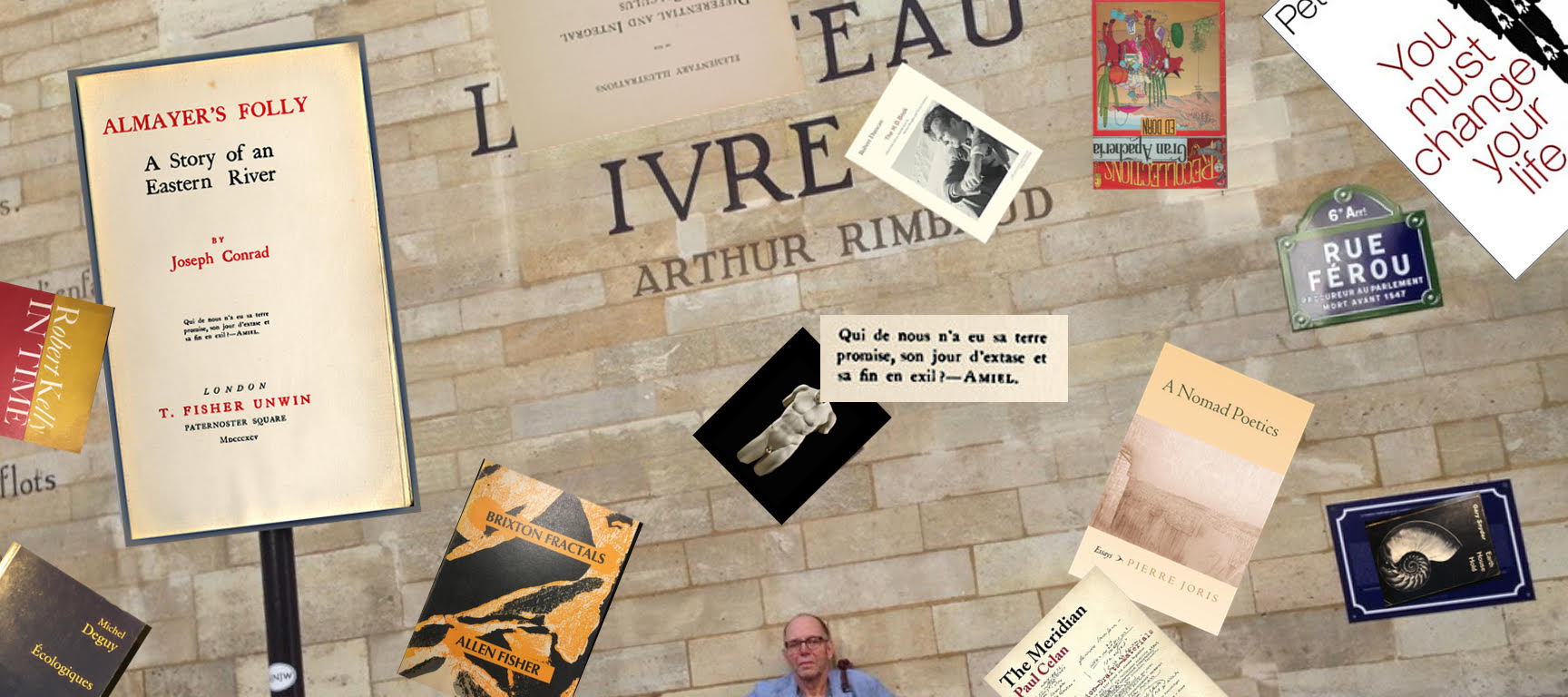

    Reviewed by Daniel T. O’Hara

    This essay has been peer-reviewed by the boundary 2 editorial collective. 

    Edward Mendelson’s Early Auden, Later Auden: A Critical Biography combines with minor revisions, as its author notes in the new preface, the two earlier separate volumes published eighteen years apart in 1981 and 1999, respectively. Of specific revisions, the most important is the addition of a postscript about Auden’s “secret life.” This does not consist of sensational or lurid adventures, but of Auden’s selfless, quiet giving and other acts of unannounced and otherwise unremembered charity. However, although updating scholarship where needed, including references to a recently discovered journal (2004) from August-November 1939 and eliminating as much repetition as possible, this one volume edition contains the earlier ones pretty much as they were. This includes introductions overviewing each volume to come, hefty numbered parts delineating and subdividing periods into chapters in Auden’s life and career of his English and then American affiliations. Auden spent his summers after World War II first in Ischia, an island off the coast of Naples, and then beginning in 1958 in Kirchstetten, a village that is forty kilometers from Vienna. He would winter usually in New York City, unless he was teaching around the USA at different universities and colleges for a term or two (one up to three years), from the University of Michigan to Swarthmore College. For five years in the second half of the 1950s he was the Professor of Poetry at Oxford, for three-week periods in the fall semesters. Oxford made allowances for Auden’s needing to be in New York to make money with his many and diverse prose projects of reviews, articles, prefaces, essays, editorial and anthology work. Mendelson’s separate biographies ended with epilogues wrapping up each of the original installments, and as the reader notes, they remain in place here. This all makes for a monumental, not to say magisterial 895-page tome by the literary executor of the Auden estate.

    Of Mendelson’s many remarkable accomplishments, it is the shift he makes in how we view and value the divide in the career between early English and later American Auden that stands out. When in 1981 the first volume appeared, it was the early English modernist Auden who was still loudly celebrated, with the later American Auden as progressively never quite measuring up, whether seen as a Christian existentialist humanist or postmodernist poet. To be sure, there were recognized rare virtuoso exceptions in the later work, such as a handful of lyrics (“The Shield of Achilles” [1955] being one famous instance) and perhaps Caliban’s final prose poetry address to the audience in “The Sea and the Mirror” (1944), done in the late most baroque style of Henry James’ The Golden Bowl and The American Scene. But also, then the later Auden was seen as progressively becoming lost both in the quixotic quest for creating a truly modern epic poem (his “For the Time Being” and “the Age of Anxiety” being viewed at that time as being wholly abstract and prolix failures); and in the la-la-land of Californian or more generally American popular culture, with all those lax poetic lines in the loose verse of the final five years of his life so filled with obviously narcissistic self-references. Mendelson, ever the smart partisan of the later Auden, has now won the battle, and reading this one-volume compilation makes the reader feel its rightness even more. Just as he had demonstrated in Early Auden (1981) that the English modernist “masterpieces,” however delightful or provocative at the time, such as “The Watershed” (as later named by Auden), were in fact more gamesmanship and puzzles than they needed to be, conflating Conradian spies and “secret sharers” with cruising gay lovers in Laura Riding/Thomas Hardy-like lines and enjambments; so, too, he revealed in Later Auden (1999) that the American Auden contained not only some of his greatest poetry, in original innovations in traditional styles of the canzone, the sestina, and the Italian sonnet, but simply some of the greatest poetry created in the twentieth-century, concerned like no other poets in the West were at the time with the worldly history and possible global future of the city, of citizenship, and of civilization itself.  This is not to say that Mendelson presents his critical perspective polemically, but in fact, he presents it as modulating, in response to the process of reading the poems themselves, so that he can say in his new Preface honestly: “If I were to rewrite the two books today, they would be even more admiring of their subject than they already are” ( ix).

    To see his achievement on behalf of the later “American” Auden, we must turn to “The Murderous Birth,” Chapter VIII in Part One “Vision and After” of the “Later Auden,” which is largely an elaborate original reading of “The Sea and the Mirror: A Commentary on Shakespeare’s The Tempest” (1944). I realize some of the irony using the nationalizing descriptors, of course, but as I hope to show, in tweaking a bit Mendelson’s reading of Caliban as Jamesian, the American label holds even truer than it at first appears.

    The kernel of Mendelson’s reading arises amid summarizing what Auden did for himself in writing “The Sea and the Mirror”:

    By writing “The Sea and the Mirror” as a series of monologues for fictional characters borrowed from Shakespeare, Auden could write autobiographically in a deeper and more comprehensive way than ni his first-person lyrics. He expressed a different aspect of himself in each character, without masking that aspect behind a self-consciously public face. . . . To think his death I thought myself alive. The murder that never quite occurs in “The Sea and the Mirror” [as Sebastian notes], was [really not in the play but] a murder that repeatedly did not quite occur in the thirty-five years of Auden’s life (534; author’s italics).

    What Mendelson means, and he supports this nugget of evidence by a prior step-by-step presentation and elucidation of supporting imagery from other poems, criticism, letters, notes, and so on, is suddenly and finally revealed in a brief rather blurted out note of intended consolation to Beata Wachstein, one of Elizabeth Mayer’s two daughters, who had recently suffered a miscarriage. Mendelson describes the note as “commiserating on her miscarriage in a blithe tone that concealed the private depths of his theme” (534). He then cites the note itself, linking it to one of Caliban’s most diabolic formulations addressed to the audience for this imagined performance of Shakespeare’s play, after which we the readers listen to the actors still apparently in character making sense of their magical experiences:

    “‘Just a note to say how sorry I am about your misfortune, and to wish you better luck next time. My mother had a miscarriage before me, for which I cannot be sorry, because if she hadn’t, perhaps I shouldn’t exist.’ Or, as he has Caliban say [as Mendelson interpolates here]: ‘We should not be sitting here now, washed, warm, well-fed . . . unless there were others who are not here . . . others who have not been so fortunate, others who did not succeed in navigating the narrow passage’” (535).

    For Mendelson, Auden confesses in this note to the final piece of the fateful nightmare scenario in which, somehow even before his conception, Auden, as Sebastian does with his living brother in the play, thought his unborn sibling’s death in order “to think myself alive.” This murderous cogito explains, Mendelson concludes, the presence of the life-long phantasm of obsessive guilt and ironic self-consciousness haunting the life and the work, taking the form in “The Sea and the Mirror” as Prospero’s cursed slave, Caliban. Auden’s own original sin is then this murderous birth because his very conception required the displacement into a miscarriage of the lost completely innocent child that was thus not to have been born.

    This bizarre paradox of repressed unconscious thinking is actually a now rare but once more familiar rhetorical figure, that of metalepsis or transumption. Harold Bloom brought it to critical attention in his theory of the anxiety of influence more than forty years ago, but it has now largely faded from discussion. Basically, it is the revisionary trope of displacing a prior reality, even as a later reality thereby may assume the imaginary position of creating and revising this prior reality. Just as Auden by giving Shakespeare’s Caliban the image of the late James’ voice, his style of speaking in his writing, so, too, Auden would displace both James thereby and at least Shakespeare’s original invention in this instance, albeit not Shakespeare himself, though certainly surpassing Browning’s revision in “Caliban on Setebos.”

    The cost of such flagrant lying against time is guilt primarily at the strongly violent, transgressive, even homicidal wishes involved in such post-romantic or modern revisionism in which the belated poet imprisons the precursor in the former’s chosen invention, thereby making the precursor over into the later poet’s creature. Mendelson sees such guilt in terms of the consequences of these transgressive or murderous wishes, following Auden’s lead, even as he recognizes it as delusional in actuality, except when it comes to Auden’s ambivalence about his own homosexuality. Mendelson concludes that Auden’s negative feelings about being gay arise from and compound the guilt he assumes for his impossible murder of his miscarried potential sibling, as if this extreme negativity proved he was divine or demonic, after all:

    In his darkest imaginings about himself, [Auden] connected his illusory sense of guilt about his own birth with his inescapable sense of guilt about his homosexuality, his sense of it as criminal and isolating. The crime was that his sexuality was itself a punishment for an earlier crime. The obscure offense against childbirth that he had committed by being born was now punished . . . by another obscure offense against childbirth. (535)

    Caliban, of course, becomes Auden’s revisionary vehicle for this transumptive metaphoric transformation. He is an instance of what I would more specifically call the revisionary phantasm. This is the autobiographical fiction representing the wish for divine power vis a vis others, known and unknown, in everyone, anyone. This mega-personification or giant form and the scenario accompanying it stands for the power of art to influence and determine the identities of others, those known personally or otherwise.

    Whether Mendelson’s reading is entirely fair to Auden—is the revisionary autobiographical phantasm and its scenario throughout the critical commentary Auden’s or Mendelson’s?–it does point (on the poet’s part) to a system of belief in daemons (a la Yeats and Goethe—or Plutarch?), spirits of genius with feelings for or, more likely against, the poet, as in “There Will Be No Peace” (1956):

         Though mild clear weather

                                   Smile again on the shore of your esteem

                                   And its colours come back, the storm has changed you:

                                   You will not forget, ever,

                                   The darkness blotting out hope, the gale

                                   Prophesying your downfall.


                                   You must live with your knowledge.

                                   Way back, beyond, outside of you are others,

                                   In moonless absences you never heard of,

                                   Who have certainly heard of you,

                                   Beings of unknown number and gender:

                                   And they do not like you.


                                   What have you done to them?

                                   Nothing? Nothing is not an answer:

                                   You will come to believe – how can you help it? –

                                   That you did, you did do something;

                                   You will find yourself wishing you could make them laugh,

                                   You will long for their friendship.


                                   There will be no peace.

                                   Fight back, then, with such courage as you have

                                   And every unchivalrous dodge you know of,

                                   Clear on your conscience on this:

                                   Their cause, if they had one, is no thing to them now;

                                   They hate for hate’s sake (Auden: Collected Poems [1991], 617).

    This is a remarkably lucid presentation of the nameless, faceless sources of guilt that so often in the poet’s life—or even prior to his birth–can be given something of a local habitation and a name, an embryonic figuration of personhood (at least), which then serves repeatedly as stand-in for the driven nature of the career. When we combine this belief in the daemonic, in daemons—as part of whichever psychologizing system or allegorizing psychomachia we follow Auden into reformulating this visionary belief in genius—we just may begin to hear another more familiar American voice than James’ reverberating now on Auden’s moonless night—rather than under the original “pale sagging moon”—that is flooding the shore with reiterations of “the sea”:

    Delaying not, hurrying not, 

    Whisper’d me through the night, and very plainly before day-break, 

    Lisp’d to me the low and delicious word death, 

    And again death, death, death, death, 

    Hissing melodious, neither like the bird nor like my arous’d child’s heart, 

    But edging near as privately for me rustling at my feet, 

    Creeping thence steadily up to my ears and laving me softly all over, 

    Death, death, death, death, death. 

    Which I do not forget, 

    But fuse the song of my dusky demon and brother, 

    That he sang to me . . . on Paumanok’s gray beach, 

    With the thousand responsive songs at random, 

    My own songs awaked from that hour, 

    And with them the key, the word up from the waves, 

    The word of the sweetest song and all songs, 

    That strong and delicious word which, creeping to my feet, 

    (Or like some old crone rocking the cradle, swathed in sweet garments, bending aside,) 

    The sea whisper’d me (Whitman [2002]: 253).

    Auden, as a radical anti-romantic modernist, was to be sure no fan of Whitman’s, just as he was not fond of the other romantics (American or British); but then, given Whitman’s large embrace of his “brother” Death, whose proper name or “word,” Whitman eagerly speaks as himself, and Auden’s dread of the specter of the potential sibling he “murdered” so he could be born originally–if one credits Mendelson’s argument fully—how could one expect otherwise? In the land of the id, Mendelson shows us learning so well from Freud and some of his most maverick followers, all contradictions are possible, equally true or false, at any one time.

    Beyond this familiar point (to Auden), however, there is a more salient one. Auden, seventy or more years before our time with its post-colonialist sensitivities, underscores via Caliban’s address to the audience–to the readers—how the liberal minded benefactors of those impoverished and sacrificed in wars and other preventable events must be held publicly accountable as any rabid imperialist, is also guilty up to the hilt: “We should not be sitting here now, washed, warm, well-fed, in seats we have paid for, unless there were others who have not here; our liveliness and good humour, such as they are, are those of survivors, conscious that there are others who have not been so fortunate, others who did not succeed in navigating the narrow passage . . . .” (Auden, Collected Poems 1991, p. 428). Why? Perhaps, as we have learned, thanks to Mendelson’s monumental achievement, because there is no peace. Or, so Antonio, Prospero’s Iago-like brother, would confirm as he sings to himself at the end of the speeches of the other characters, who don’t know they are actors right before Caliban, who does know, begins his address to the imagined audience of actual readers (us):

    One link is missing, Prospero,

    My magic is my own;

    Happy Miranda does not know

    The figure that Antonio,

    The Only One, Creation’s O

    Dances for Death alone

    (Auden [1991]: 422)

    Condescending mercy ever breeds no justice, as Prospero will ever discover, it appears, and no justice means for sure no peace can be forthcoming from any of our demons.

    References

    Auden, W. H. 1991. Collected Poems. Ed. Edward Mendelson. London: Faber and Faber.

    Mendelson, Edward. 2017.Early Auden, Later Auden: A Critical Biography.  New Preface.

    Princeton: Princeton University Press.

    Whitman, Walt. 2002. Leaves of Grass and Other Writings. Norton Critical Editions. Ed.

    Michael Moon. New York: W.W. Norton.

  • Pierre Joris – A Nomad Poetics Revisited: Poetry and Translation in a Global Age

    Pierre Joris – A Nomad Poetics Revisited: Poetry and Translation in a Global Age

    by Pierre Joris

    [presented as keynote address at the International Poetry Seminar

    Moving Back and Forth between Poetry as/and Translation:  Nomadic Travels and Travails with Alice Notley and Pierre Joris

    on 7-8 November 2013, Université Libre de Bruxelles, convened by Franca Bellarsi & Peter Cockelbergh.]


    1. “Who among us has not had his promised land, his day of ecstasy and his end in exile?” — signed: Amiel (with one “m” — the one with 2 “m”s will come in later). Thus begins or rather pre-begins Joseph Conrad’s novel Almayer’s Folly: A Story of an Eastern River (1895). The epigraph comes from Henri-Frédéric Amiel’s collection of poems & prose meditations Grains de Mil (Grains of Millet) (Paris 1854). This exergue stands at the head of, or, more accurately, stands before his first novel, thus before the vast oeuvre to come. Introïbo ad altarem Conradi.

    The world-weary and wandering sailor from Poland I often confuse with my own grandfather, Joseph Joris, also a sailor, though in the early parts of his life & of the 20C when Conrad had already abandoned ship to take up the pen. Joseph Joris’ writings — mainly a large correspondence with major scientists & politicians of his era, or so my father told me, and some notations of which only one 3 by 4 scrap of astrological calculations remains — went up in flames during the Rundstedt offensive when his house in Ettelbruck, Luxembourg — living quarters plus confiserie fine plus the ineptly, for its time, named Cinéma de la Paix — was shelled & burned out by advancing US troops liberating us from the Germans. Joseph didn’t live to see this: he had died 2 years earlier from an infected throat — but that is another story.

    So why do I begin here? Because this epigraph I came across a few days ago as I sat down to redact this “keynote” (more on that word in a minute) came into my mind — maybe because as I was thinking about what to say today I was looking out of my window, idly, and through the red & falling autumn leaves saw the flowing waters of the Narrows, where Hudson river and East river (tho not Conrad’s “Eastern River” — & yet?) mingle with the encroaching ocean in a daily tug-of-war, ebb & flood, riverrun riverrun — if I wanted to link elsewhere in modernism, but I don’t want to right now.

    So, Conrad’s epigraph was suddenly there & I saw it not as something that stands before one book, but as something that stands before, above, in front of a whole oeuvre, a life’s work. A door all of a sudden — a gate, as in Kafka’s story. (Though Kafka, remember, couldn’t go to sea as my two Josephs did, but maybe he didn’t need to do so, for as he puts it in his Journals, he had the experience of being “seasick on firm land.”) This door or gate is not one to be waited in front of, as it is open & indeed meant for who is in front of it, & thus meant to be walked, strode through, though the crossing of this door’s threshold is something fierce & fearsome because as Amiel points out, the promised land is in the past. (“n’a pas eu…:” in the original, even if Ian Watt in his excellent comment on the novel translates — or uses someone’s version who translates this as — “who among us does not have a promised land…” present tense. Even Conrad in the 1895 first edition misquoted the lines from memory as “Le quel de nous n’a sa terre de promission, son jour d’extase et sa fin dans l’exil,” though he corrected it for the 1914 edition).

    Thus: promised land in the past, while ecstasy may be back there too or in the present — let’s keep that ambiguity going & locate ecstasy also in the present day’s labor leading (after the promised land has long vanished) into the exilic future — through the gate, the door, the pre-text, that is the text — yes, I’ll own up to it — through writing, the act thereof. Writing is this exile, h.j.r, hejr, hejira, Hagar, she, me, wandering in desert or city, that nomadicity. I am certainly staying with that concept, or better, that process.

    And so I’m home again, in the present-future (thus not the future perfect or futur antérieur of the French), no, in the present-future that is the tense of writing, an ecstatic-exilic tense. I am formulating it this way now & wouldn’t mind leaving it at that, but this is a keynote, so let me go there now.

    1. A note on “keynote,” and then a look at 10 years after. A keynote, says my wikipedia, “is a talk that establishes the main underlying theme… (&) lays the framework for the following programme of events or convention agenda; frequently the role of keynote speaker will include the role of convention moderator. (No way, Josè!) It will also flag up a larger idea – a literary story, an individual musical piece or event.” Okay, I’ve already told a “literary story,” & the events I’d like to flag are the poetry readings, which is where the work comes most alive for me. As to “an individual musical piece,” well, my love for etymologies immediately drove me to locate the origin of “keynote” in the practice of a cappella, often barbershop singers, & the playing of a single note before singing, that determines the key in which the song will be performed. I know that Ornette Coleman wrote & once told me face to face that “there is no wrong note,” but as I do not like the concept of one note setting the agenda, I will not play any such note; happily Alice Notley will also give a keynote, which will thus already make it at least two notes, maybe already a chord, & then I’ll leave the singing of many notes arranged in what they call music up to Nicole Peyrafitte later on in the program.

    But I can’t resist to play a bit more with this notion of “key” — what does a key do, as it can do at least two things, something & its opposite, open or close? Of course at the beginning of an occasion the image will be of opening the proceedings, the door, maybe the gate mentioned earlier. And yet, a key does both open and close — maybe it does both at the same time! Who knows? My time is measured today, so let me just open-close this specific Pandora’s box via a poem by, you guessed it, Paul Celan:

    WITH A VARIABLE KEY

    With a variable key
    you unlock the house, in it
    drifts the snow of the unsaid.
    Depending on the blood that gushes
    from your eye or mouth or ear,
    your key varies.

    Varies your key so varies your word
    that’s allowed to drift with the flakes.
    Depending on the wind that pushes you away,
    the snow cakes around the word.

    So the word is there, variable, but needs to be spoken & I’ll take a further suggestion on how to go about this from Celan who writes:

    Speak —
    But do not separate the no from the yes.
    Give your saying also meaning:
    give it its shadow.

    Give it enough shadow,
    give it as much
    as you know to be parceled out between
    midnight and midday and midnight.

    Look around:
    see how alive it gets all around —
    At death! Alive!
    Speaks true, who speaks shadows.

    1. And so it is now “ten years after.” After what? One of the rock groups I liked in the 60s supposedly took that name from an event that had taken place ten years earlier, namely Elvis Presley’s breakthrough year of ’56. Lines from one of their songs still play in my mind from time to time: “Tax the rich, feed the poor / Till there are no rich no more.” And then the defeatist refrain: “I’d love to change the world / But I don’t know what to do / I’ll leave it up to you.” Has anything changed?

    Ten years ago I published a volume of essays under the title A Nomad Poetics, core to which was the piece of writing called “Notes Toward a Nomad Poetics,” which — though the central concern had been with me even longer, much longer — I had started giving expression to even before 1993 & which had been published in an earlier form as a chapbook called Towards a Nomad Poetics by Allen Fisher’s Spanner Books. Note the tentative titles: “towards a…” & for the final version even just “Notes towards a Nomadic Poetics.” I said “piece of writing” purposefully just now, because one of the small misunderstandings regarding A Nomad Poetics I have encountered from time to time is that this piece of writing has been called a “manifesto” — with all the stern-brow seriousness & raised fist ardor the term suggests. I would like, 10 years after, to nuance this take a bit.

    The manifesto, I’ve written elsewhere, is indeed one, if not the only new literary genre of the 20C, & I do draw on it to some extent — but I am very conscious of the fact that what I am trying to do is to write propositions for the 21C & to find a form that is both open & collaborative, that is culturally & politically critical, but not ideologically over-determined, as manifestos tend to be. It is neither an anonymous revolutionary pamphlet (as many of the Situationist manifestos were at a certain time), nor a synthetic piece with a number of signatures attached to it (from Marx & Engels, via the Surrealists, say, to the Manifeste des 120, for example, no matter how much I may like these). The proposition is different: it is a piece of writing I take full responsibility for, but to which I invite people to contribute — few have bothered to do so, though the 1993 text has at least the exemplary contribution of Brian Massumi, the excellent Deleuzian scholar & thinker.

    But — & I can only briefly mention it in this context — the idea of collaboration has opened up since then in a different manner & place,  namely as what Nicole Peyrafitte & I call “Domopoetics” & which finds its expression in performances that involve the two of us, in a combination of poetry, reflection (with it’s propositional moves, such as extensions of my rhizomatic moves & Nicole’s more “seepage” based processes), music & visuals, a project that also touches on something I will come to a bit later, ecology, be it as in Domopoetics, centered on the “household,” or in a wider in- & out-side sweep.

    Now, in that core essay I do make “manifestish” moves, like the über-title, THE MILLENNIUM WILL BE NOMADIC OR IT WILL NOT BE, a tournement of a well-known citation leading back to Foucault & Deleuze; then there are the various definitions of concepts & the oracular pronouncements… but if you take these together with the willed heteroclite manner of the piece that ends with the (possibly incongruous) inclusion and commentary on a translation of a pre-Islamic ode, you may also note the tongue-in-cheek, not to say cheekiness of the collage (more dada than surrealist manifesto, playfulness is meant to trump, no not trump, that’s wargame talk, — is meant to poke fun at and possibly deflate dour revolutionary literary ardor). What I wanted was in fact to create a new genre, post-manifesto, something I did then call the “manifessay.” I don’t know if I succeeded beyond giving expression to my own poetics, i.e., if it, the form, has become available or is of any possible use beyond me. I’ll return to the notion of a new genre or of post-genre writing toward the end of this talk.

    1. I now want to address two or three points that I opened up but probably not enough in the 2003 manifessay, & that, it seems to me, need either clarification or extension. The first one of these arises from a quote by Muriel Rukeyser who writes: “The relations of poetry are, for our period, very close to the relations of science. It is not a matter of using the results of science, but of seeing that there is a meeting place between all the kinds of imagination. Poetry can provide that meeting place.” So, this notion that science & poetry can, have to connect, that, in fact, “open-field” poetry may be the ground where those two discourses can enrich each other. Unhappily that was the only occasion “science” came up in the 2003 version to which I had given the version number 4.0. In a 4.1 version I would insert more reflections concerning this matter, as it seems to me to be getting more & more urgent (see the next section). To begin with I would quote Robert Kelly’s take of:

                                                 a scientist of the whole
    the Poet
              be aware from inside comes
                     the poet, scientist of totality,
                            specifically,
              to whom all data whatsoever are of use,
    world-scholar

    Which means that all data not only can but should enter the arena of the poem. Each poet can of course only bring her own knowledges & experiences into that field —  though the understanding that such a wide open field of possibilities does exist, right there in front of us, on the page or screen, with no restrictions imposed by pre-existing notions of form or content,  an understanding that has to function as a major incentive & goad.

    Scientific data as such, & in suspension with other information, would be central here as unhappily we have returned to an area where science is not only rightfully questioned for its excesses (in medicine, food-“science,” or its 19C underlying ideology of “progress,” etc.) but is also challenged in totally asinine but extremely dangerous ways by what may be the most disastrous unfolding event, namely the violent return of the religious (from the various US evangelical Christian fascisms to the Islamic totalitarianism of its Fundamentalist movements & beyond) & its denials of any scientific data, be that Darwinian evolution, the genetic egalitarianism of races, or what have you. This “return of the repressed” can however not be addressed by the same pious & self-righteous means used by positivist 19C determinism & traditional “atheistic” formulas.

    An investigative poetics (& that is one mode of a nomadic poetics) addressing this problem could well start with thinking through the rather odd but useful book by Peter Sloterdijk, You Must Change Your Life (note that the title is a quote from a poem!). For example, one may have to rethink certain poetic practices after reflecting on the following from early on in the book, where Sloterdijk has been talking about Rilke’s poem “Archaic torso of Apollo:”

    That this energized Apollo embodies a manifestation of Dionysus is indicated by the statement that the stone glistens ‘like wild beasts’ fur’: Rilke had read his Nietzsche. Here we encounter the second micro-religious or proto-musical module: the notorious ‘this stands for that,’ ‘the one appears in the other’ or ‘the deep layer is present in the surface‘ — figures without which no religious discourse would ever have come about. They tell us that religiosity is a form of hermeneutical flexibility and can be trained.

    Unhappily there have been rather few poets who have worked along those lines, i.e. bringing scientific discourse into the field of poetry to test & extend its possibilities. Of my generation, except for the use of scientific, mainly mathematical concepts in formal decisions, such as the great oeuvre of Jackson MacLow, or the OULIPO poets or, say, Inger Christensen or Ron Silliman using the Fibonacci series as formal compositional procedures,  I can only think of two poets deeply involved in that way & bringing actual scientific data into the work: Allen Fisher & Christopher Dewdney. The latter has put his relation to science very clearly. “My poetry,” he says, “is warped out of science. I think I’m a frustrated scientist in poetry and a frustrated poet in science. A lot of poets have an anti-science bias, a vision of themselves as romantics in a tower, but I don’t. I’m a naturalist, I believe that science and nature are one, that science is a perceptual tool which allows us to define nature more specifically. Science has to incorporate and mythologize as it happens. All poetry deals with information, finally.”

    Concerning Allen Fisher, I did say enough, I believe, in version 4.00, but let me re-quote a bit from his Introduction of Brixton Fractals::

    Imagination and action. My knowledge of the world exists validly only in the moment when I am transforming it. In this moment, in action, the imagination functions, unblocks passivity, refuses an overview. Discontinuities, wave breaks, cell divisions, collapsed structures, boundaries between tissue kinds: where inner workings are unknown, the only reliable participations are imaginative. The complex of state and control variables. The number of configurations depends on the latter: properties typical of cusp catastrophes: sudden jumps; hysteresis; divergence; inaccessibility. Boiling water’s phase change where the potential is the same as condensing steam. Random motion of particles in phase space allows a process to find a minimum potential. What is this all about? It’s a matter of rage and fear, where the moving grass or built suburbia frontier is a wave prison; where depth perception reverses; caged flight. With ambiguous vases it’s as if part of the brain is unable to reach a firm conclusion and passes alternatives along for a decision on other grounds. The goblet-and-face contour moves as it forms in your seeing.

    The result of which is a poetry of use, though the uses be not your usual aesthetic jouissance and/or socio-political alibis:

    Brixton Fractals provides a technique of memory and perception analysis. It can be used to sharpen out-of-focus photographs; to make maps of the radio sky; to generate images from human energy; to calculate spectra; to reconstruct densities; to provide probability factors from local depression climates. It becomes applicable to reading; to estimate a vector of survival from seriously incomplete or hidden data, and select the different structures needed. It can provide a participatory invention different from that which most persists.

    Among a younger generation, I fear I have not come across much work incorporating the discourse of science. This may be my own lack, the fact that I can no longer keep up with the incredible avalanche of poetry coming down on us. But I do want to mention at least one of the younger poets, namely James Belflower, who after a brilliant first book, Commuter, has just published a second book The Posture of Contour, rich in exactly those materials & thinking involving science & scientific discourse. This is excellent explorative work that is truly experimental without being gimmicky or surface “avant-gardist.” Belflower, by the way, is also presently at work on a translation of a book by our next presenter, Jan Baetens’s rewriting of a Jean-Luc Godard’s script, for which he has also corralled  Peter Cockelbergh help. But let me move on.


    1. The one word or concept I now see as most grievously underdeveloped is that of ecology. I do think of it as present in version 4.00, however, in that it is inherent if unspoken in the vision of a nomadic figure: the nomad’s life is based on a clear and sharp perception and discrimination of environmental factures. (I had first written “fractures” — which might be the right word). For the desert inhabitant it is of course a matter of survival. In the same way nomadic art is an eminently environment-conscious art: portable, spare, it clings to or arises from the everyday objects of perusal: embroidered & engraved saddles or bridles, painted portable utensils or inscribed, i.e. tattooed parts of the body; the core elements of the dwelling: rugs and carpets — all these are pure expressions of art, & the most formal and richest artifact is also the lightest as behoves a continuous traveler: the poem, no matter it’s size or weight, carried in mind or, as they say, by heart. A nomadic poetry was thus, for me, an obviously highly environment-conscious art.

    My own sense of the ecological question goes back to the late sixties  and, in poetry, the discovery of Gary Snyder’s work as poet and essayist.  It was clear back then already that environmental problems needed to be thought & written about, & indeed they were, even if as yet mainly or only  in the underground press, & entered into one’s daily practice in terms of food (first organic food movements, macrobiotic diets & restaurants, etc.) clothing, and as a political direction to be incorporated into any progressive ideology.

    But it is now clear, “ideology” or rather ideology-critique, though necessary, also became a hindrance later on. During those years (70s into 90s) of the “postmodern”, that stance entailed the deconstruction of what Jean-François Lyotard & others called the “grand narratives,” from Christianity to Communism, i.e. all single-centered soteriological utopian systems. The fervent yet cool-headed desire was: never again such eschatological, transcendental movements in the pursuance of whose aims all means are justified and thus all crimes permissible, from the grand medieval inquisitions to the Stalinist & Nazi exterminations. Politics, we now thought, have to become local, momentary, situationist, etc. What Félix Guattari & others called Micropolitics. Under this premise, one angle, one line of flight, one momentary territorialization of our space would be or could concern itself with the environmental problem.

    I’m putting all this very schematically as I don’t have the time to develop it in detail, but it now seems clear to me that the time has come to make ecology (oeco-logos, the logic of the house, of our house earth, of our earth-house-hold, to use Snyder’s term), to make ecology the engine of a new grand narrative. Such a grand narrative would differ from the old ones (& thus hopefully avoid the disasters provoked by human hubris that thought of this world as, or tried to force it into a scheme of the anthropocentric). It would not be anthropocentric, human-centered (as the Christian or Communist one were) but anchored, or come from, outside the human sphere, the earth, & thus restate, refocus,  the human in relation to the world it lives in. A world in a new age, an age that has come to be called the “anthropocene” to point to the overwhelming influence human actions now have on the earth. A non-transcendental, immanentist situation that does not have future perfection (paradise in heaven or on earth) as its aim but survival of life in all its rich & diverse forms (with the human only one such, and important only as the major danger to survival) in the contingent environment of this planet. Which also entails, despite the fact that the name of us, “anthropos” now glows radioactively in the age’s name, to start from the realization that homo sapiens (that misnomer!) is not outside, beyond creation; there is not a “nature” outside or surrounding us nature is us & the rest, the world with us included. “Nature” is everywhere, as Spinoza said of god.


    One way into this would be through a book I’d like to draw your attention to, namely Michel Deguy’s Écologiques, the quatrième de couverture of which states: “Geocide is in process; not “a” geocide, but “the geocide:” there will not be two. Ecology, a ‘logie’ [thought, word, saying] of the oikos [house, dwelling, terre des hommes] is not optional. If it is not radical, it is nothing.” This book, a series of small essays, notations, reflections, he himself calls it “a sort of witnessing,” is also formally fascinating in that the urgency & radicalness demanded eschew the scriptural “manifesto” form of the old grand narratives, but belongs exactly to the extrême contemporain in its assemblage form (& contains reflections on that form). Here are a few hints (in my translation):

    Another romantic leitmotiv, and thus to be transposed for us, come down to us from Hölderlin through Heidegerrian conduit — can it help — for a long time translated as “What remains is what the poets create.” [“Was bleibet aber stiften die Dichter”] and that our era (this mutation of “the crisis,” if you want) forces us to read thus: “the remains, art plays them again.” Even better to understand it thus: the remains we are left with, the relics, is it possible that the artists, those who work in language, philosophers and writers together with all those who work in other “arts,” including those that technique has added, will relaunch them. …Is a last chance called ecology?

    The poet Edward Dorn pointed out some few years back that one of our problems is that “we do not even yet / know what a crisis is.” Interestingly, Deguy in this books develops a notion of “crisis” that may answer Dorn’s slight, when he writes “this exercise in thinking (this ‘experience in thought’) has to rise to ‘its last consequences,’ in its hyperbolic paradoxical amplification,” where it will risk this: “…what is called the crisis offers the chance of a parabolic ‘rebroussement,’ a parabolic turning back. [Note that “rebroussement” is a term also used in geology where it means the ‘Torsion localisée des couches, due au frottement le long d’un contact anormal et montrant le sens du mouvement /torsion localized in the strata, caused by friction along an anormal contact and showing the direction of the movement/’ (Fouc.-Raoult Géol. 1980). Further in math it refers to the point where a curve changes direction; you also speak of an ‘Arête de rebroussement.’”

    How to translate this last phrase? “Arête” immediately rhymes for me with the Greek “arete” — & I’ll come to that soon enough. But interesting to note how problematic the translation from natural language to another, French to English here, a concept in mathematics, a so-called “universal” language can be. As a footnote on page 435 of Augustus de Morgan’s The Differential and Integral Calculus puts it:

    One sound writer on this subject (and perhaps more) has attempted to translate the words arête de rebroussement into English by edge of regression, which seems to me a closer imitation of the words than of the meaning. Many words might be suggested, such as the ligature of the normals, or their osculatrix, or their omnitangential curve. Also with reference to the developable surface, the arête, &c. might be called the generatrix, or the curve of greatest density, &c.

    Deguy concludes by defining it as “la ligne formée par les points d’intersection des génératrices rectilignes consécutives de la surface / the line formed by the intersection points of successive rectilinear generatrices of the surface.”

    So Deguy’s rebroussement is not a simple turning back on itself, not a return to the past, but another, a further, torque. He goes on: “A politician is someone who cannot understand, admit, that the crisis, from Hesiod to Husserl, from Sophocles to Valéry, names historicity itself. It is crisis forever. The ‘solution’ of the crisis is a new critical phase, of sharing — of the relation in general, of societies among themselves, of one society in relation to itself, of one subject to himself.”

    Deguy sees three movements in the overcoming, the coming out of the crisis: “an uprising, a revolution, reforms.” Which he then calls “by one of its great names, utopia.” And to suggest that “précisément l’utopie aujourd’hui, c’est l’écologie. / Utopia today is precisely ecology. There is no other one.” Fascinating too, how Deguy begins usefully to think through other rebarbative aspects of our relation to world. He thus suggests that “ecology does not concern the environment, literally what environs, what surrounds, (the “Umwelt” of the ethnologues) but the “world” (the “Welt” of the thinkers). It is the difference between those two that needs to be rethought from the bottom up, he suggests, because of the profound oblivion into which the world and its things (les choses), or “the oecumene” have fallen. Thus globalisation (in French la “mondialisation”) would be in truth an end of or to “le monde,” the world, a loss of world, because “the world worlds in things and its ‘worlding’ has to be entrusted not to technoscience, but to the philosophers and the artists — to all the humans in the arts (les hommes de l’art), and, specifically to the poetics of the works.”

    These formulations not only show the importance of Deguy’s writings in Ecologiques and thus the need for its translation — but also the difficulty this translation entails given the nomadicity between his philosophical logos & the poetics, which you can glimpse in the needed and relished neologisms above. And now, beginning to run out of time, let me turn to certain questions in regard to translation that have been haunting me since the publication of version 4.00 of the manifessay.

    1. And thus to the second Ammiel — but this one with two m’s — I mean Ammiel Alcalay and some parallel thinking we have been doing on the subject of translation. In the Nomad Poetics manifesto, the work of translation is only liminally mentioned when in fact it has been central to my endeavors from the beginning — though obviously it gets more thought & analysis in other essays in the Nomad Poetics volume. What I would like to add in a putative 4.1 version (why putative? — this is that version, probably) is an exploration of the limits of translation.

    Why limits? A strange term to use for someone who has always equated translation & writing itself, who has claimed (& stays with this claim) that all writing is translation & that therefore the traditional differences between the two have to be abolished as they are false “class” barriers. Over the last 10 years, I have been involved in two major but very different translation projects: first, the translation of the historico-critical edition of Paul Celan’s The Meridian, a volume that gathers all the various drafts, versions, notes, scraps, letters, even a radio-play, with all the (carefully reproduced) strike-outs, inserts, marginal marks & so on, that we have between the moment Celan was informed that he had been given the Georg Büchner prize and the date on which he had to give his acceptance speech.  The original editors, Bernard Böschenstein and Heino Schmull did an incredible job gathering these materials & devising a book structure to contain them. If I have one doubt about the book, it is this one: the book opens with the 18-page essay in its final, definite form, then proceeds backwards through the various drafts to the earliest scrap of paper. This makes for a very attractive book, though I now wonder if it wouldn’t have been more instructive to build the volume in the genetic sense, i.e. from the first idea to the final essay, so that a reader would be able to witness the creation of context & text in its / as a historical process. Be that as it may, the essential thing this translation taught me was the importance for a deeper textual understanding of involvement with and thus knowledge of its contexts, its process.

    During the years I put together Poems for Millennium vol 4: The UCP book of North African Literature, or Diwan Ifrikiya as I prefer to call it, the question of how to present over 2000 years of a literature to a major part unknown to Western readers (I first wrote “raiders” — which is also an accurate way of describing what the West did & still does to the Maghreb), that question came up, of course. Happily the “grand collage” format elaborated by Jerome Rothenberg & myself in the early volumes of the Poems for the Millennium series — chronological galleries, thematic “books,” individual commentaries, intros to all the sections, etc. — allowed for a presentation of actual contextual matters, from maps to alphabets, from images to amulets, that serve as a matrix for the poems. For example, the second diwan, El Adab or the invention of prose, endeavors to gather texts from historical literary treatises, history & geography manuals, philosophical meditations, erotic manuals etc.

    Despite what I think of as a rather successful if incomplete handling of these matters of context, I do agree with Ammiel Alcalay when he writes, after bringing up such different events as 9/11 & the ensuing sudden interest in Arab matters & translating from that language, followed by the Iraq war & the ‘official’ writing that has ensued from that catastrophe:

    How are those of us involved in transference and translation to respond to such circumstances? What is our role in the politics of imagination and transmission? Have we reached a point where NOT translating, providing access to, handing down works from the Arab world might be more legitimate? When we decide to participate, how do we insulate and protect such works and ourselves, not merely from assimilation, but from collaboration… Writers and translators often wind up playing someone else’s game, and become complicit, perpetuating the same rules with new players.

    Which leads Alcalay to conclude that no act of transmission is innocent and therefore demands utmost vigilance, a kind of vigilance, he goes on, “that recognizes, as the American poet Jack Spicer once put it, that ‘there are bosses in poetry as well as in the industrial empire.” As writers, translators, commentators in the area of what Michel Deguy called “le culturel,” — to be differentiated from “la culture,” but inescapable as the sphere in which we as ‘travailleurs du symbolique’ labor today — we have to be aware that, for example, translating a major novel by a third world author wrenches that work out of its natural habitat, plops it into an environment where it can only be read according to the latter’s rules (say, Kateb Yacine’s Nedjma, in relation to William Faulkner’s narrative universe, etc.) Or, more viciously as in the case of my translation of Abdelwahab Meddeb’s essay THE MALDAY OF ISLAM which was nearly hijacked by DC rightwing think tank people when Daniel Pipes asked the NY publisher for first serialization rights and the right to “subedit” the extracts — I managed to fight this off after investigating who those people were.

    So, there is also a need, a duty to provide contextual materials, to try to change the very framework of the translation activity, so that the act of translating can be “an act, a way of erecting a picket line against the bosses,  to reclaim some part of our suppressed and isolated humanity and participate in it in new ways.” Alcalay concludes that “ to protect against assimilation and collaboration requires more than fitting newly introduced and revived texts into existing frameworks. Defining what information is for us, where it comes from, and where to find it becomes an essential survival kit.”

    Thus part of such a watchful & critical process of translation is also what I like to call an ‘investigative nomad poetics,’ because ideological cons can go so far as to actually corrupt the very language. Take the example of the so-called “Confucius Institutes” which are under the supervision of the Chinese Language Council International (known as Hanban). These Institutes teach Chinese language and culture after setting up shop in Universities in the West. I’m drawing on an excellent investigative article by Marshall Sahlins that appeared in this week’s Nation. Hanban is an instrument of the PRC’s party apparatus operating as an international pedagogical organization. This means that its agreements with the foreign, including many American, institutions of higher learning, include non-disclosure clauses, making the terms of the agreement secret. US universities sign on to this— which is most likely totally illegal under US law — eager as they are to get an all-paid for “Confucius Institute” & the ensuing prestige. Besides such basic no-nos as being prohibited to mention the Tiannamen Square massacre, or Tibet, the Dalai Lama, or human rights, etc. the actual core problem, if you look closer, are the language teaching methods, in fact the very language taught. This looks innocent enough according to the bylaws, which state: “The Confucius Institutes conduct Chinese language instructions in Mandarin using Standard Chinese characters.” But, as Sahlin details, this is the “simplified script officially promulgated by the PRC as a more easily learned alternative…” This means that what is available in this script & thus what the CI students are taught to read are only those texts or revised texts the PRC allows you to read & has prepared & altered, and thus for example no Chinese texts from other parts of the world, Taiwan, or even Hong-Kong can be deciphered by people trained in the CI’s! Totalitarian censorship effected via creating & imposing a new language allowing for the rewriting of all cultural documents… 

    1. Finally, I’d like to speak to my current practice: what I want to do from now on is continue to some extent with nomadizing my writing as much as nomadizing in my writing, while moving toward some new trajectories, other complex meandering orbitals. You see, when I sit down & let the process of writing happen, it tends to come out as a recognizable “poem,” & I am by now somewhat bored by this. Ah, I say to myself, here’s another poem — couldn’t it be some another critter, somealien, unknown form? I guess the familiarity of recognizing the poem under hand has some comforting sides (it is comforting to recognize your own face in the mirror when you get up in the morning), & I enjoy detecting a new move, or rhythm or color or line or sound in the poem-matrix, and yet, and yet. (Thinking here of a poet I admire tremendously, John Ashbery, whose production into old age — John is 86 — has gone unabated, but whose yearly new volume seems to me to have the same poem rearranged again & again, a tremendous life-long flow, flood, or maybe better ribbon of writing Ashbery snips off bits to make into books & cuts those into smaller bits to make poems — it’s tremendous & astounding & a true feat, but I have to confess that my pleasure in the work by now has become mainly aesthetic recognition rather than discovery of anything new, thought, rhythm, music, form — or maybe better, it is absolutely wonderful comfort food I can cuddle up with in my armchair when the umpteenth rerun of my fav TV series, Law & Order, is too boring. And comfort is something we absolutely need in our lives, for sure. But.)

    A more serious reason to escape “the poem” (between quotation marks) is something I have to plead guilty to, that Frankenstein monster called “creative writing” which for part of my life provided the income that permitted me to read & write. But in the US we now create something like 3 to 6000 professional diploma’ed “poets” a year who are turning out hundreds of thousand “poems” day in day out — there are now at rough glance something close to half a million published poets in the US. Now, I prefer that to be the case rather than those kids having wandered off & joined the military or the evangelical troops. At the risk of sounding elitist, I want to suggest however that most of this work does not have what my third grandfather of the day, grand-pa Ezra called the “arete,”  which he translated as “virtue”, though for the Greeks the word actually probably meant something closer to “being the best you can be”, or “reaching your highest human potential”, & which I like to mistranslate further as “arête,” as in a French fish, though not as a French stop sign, or, better even, as the arresting quality of something with spine.

    So, what do I want? In my notebooks I found this entry, as I was preparing to envisage the writing to be done now, after I stopped teaching, & with several major projects out of the way:

    “…write something that is unrecognizable as a poem, write ‘books’ [never a, one, book, always the plural] but so that they are not beholden to that late 19C form of the book so elegantly proclaimed by Mallarmé & taken up under various guises by the 20C avant-garde. This here now is the 21C. Everything — pace Mallarmé — is not meant to end up in a book, even if as we screw up the planet more & more everything that will be left of us may end up in a book if one as heat resistant as the new climate requires can be devised, once we have become extinct on this gone planet veering from blue to red. No. The books or the writing I envisage are open books that have their prolongations, their links, within the ever more tenuous world that surrounds us, but not a writing that mimetically reflects the outside (which would only increase the heat by mirror-effect & in the cave of this non-platonic book we cannot have fires heating up) but one that proposes a range of coolants —”

    To put it another way, work seems to leak — out of the book and into the world, and from the world into the book. Nicole Peyrafitte’s notion of “seepage” (see her recent writings in her book bi-valve ) enters here to play with & off & extend the rhizomes & lines of flight of my nomadics. What is at stake here is circulation: of reading that turns into writing and vice-versa, but also of people, of words, of love, of blood — printer’s bleed but also terrorists’ victims’ blood, terrorists everywhere, from the US Congress & my gun-crazed co-citoyens, to the mad mujahiddin of Daech & AQIM. These books of multiple narratives & troubled typographies, which “may be incompletely / confused” (as the young poet James Belflower puts it), asks you to be a (not so innocent) active performer as much as a reader. Take the risk —

    How to come to this writing beyond genre is of course the question I have been groping with for some time now. I can only start from what I know, i.e. from the grand-collage century I come from, some specific realizations of that century, those for example I have spent years gathering with Jerome Rothenberg & Habib Tengour in our Millennium anthologies, others too. Here is a 20C quote to go forth with into our already quite entamé (nicked, gouged out, gored, gashed, i.e. wounded) 21C. It is a quote you will know as it is well-known, often used, that I would like to put again at the head of any such new writings, thus as an epigraph here, to bring to a close the keynote that started with a 19C epigraph that led into our 20C. It comes from Robert Duncan’s HD Book, from the chapter “Rites of Participation,” a chapter that begins “The drama of our time is the coming of all men (and women) into one fate, ‘the dream of everyone, everywhere.’”  First published in Caterpillar # 1 in fall of 1967 (a month after I first set foot on the American continent) it was written a few years earlier, I believe, so dates from the mid-sixties. Half a century later it holds a more ominous, less optimistic note, given the ecologistic aspects of the new grand narrative of that “single fate.” But here is the quote I was thinking of exactly, which happens a page or so later in Duncan’s ‘book,’ after he has been talking about Plato’s Symposium:

    The Symposium of Plato was restricted to a community of Athenians, gathered in the common creation of an arete [ah, that word again!], an aristocracy of spirit, inspired by the homoEros, taking its stand against lower or foreign orders, not only of men but of nature itself. The intense yearning, the desire for something else, of which we too have only a dark and doubtful presentiment, remains, but our arete, our ideal of vital being [ah! there’s another good definition!], rises not in our identification in a hierarchy of higher forms but in our identification with the universe. To compose such a symposium of the whole, such a totality, all the old excluded orders must be included. The female, the proletariat, the foreign; the animal and vegetative; the unconscious and the unknown; the criminal and failure — all that had been outcast and vagabond must return to be admitted in the creation of what we consider we are.

    I would only like to add to Duncan’s list the orders of geology and water & air, and to amend ever so slightly the last sentence to read: “all that had been outcast and vagabond must be joined by us out there to help in the nomadic creation of what we consider we are.”


    SOURCES

    Conrad, Joseph. Almayer’s Folly: A Story of an Eastern River (T. Fisher Unwin, London 1895).

    Amiel, Henri-Frédéric. Grains de Mil (Joël Cherbuliez, libraire-éditeur, Paris 1854).

    Watt, Ian. Conrad in the Nineteenth Century. Vol. 1, footnote #6 p.66 (University of California Press, 1979.

    Celan, Paul. “With a Variable Key” & “Speak, You Too,” in Paul Celan, Selections, edited by Pierre Joris, p. 51 & 54. (University of California Press, 2005.)

    _________. The Meridian. Final VersionDrafts—Materials. Translated by Pierre Joris. (Stanford University Press, 2011)

    Joris, Pierre. A Nomad Poetics (Wesleyan University Press, 2003.)

    _________, editor (with Habib Tengour). The University of California Book of North African Literature (vol. 4 in the Poems for the Millennium series, UCP, November 2012)

    Rukeyser, Muriel. The Life of Poetry. p. XI (Ashfield, Mass.  Paris Press 1996.)

    Kelly, Robert. In Time, p. 25 (Frontier Press, 1971)

    Sloterdijk, Peter. You Must Change Your Life (Polity, 2014)

    Fisher, Allen. Brixton Fractals. (Aloes Books, London 1985)

    Belflower, James. The Posture of Contour. (Springgun Press, 2013)

    Deguy, Michel. Écologiques, p.23. (Hermann, Editeur, 2012)

    Dorn, Edward, Recollections of Gran Apachería, n.p. (Turtle island                      Foundation, 1974)

    De Morgan, Augustus. The Differential and Integral Calculus. (Baldwin and           Cradock, London, 1842)

    Alcalay, Ammiel. “Politics & Translation,” in: towards a foreign likeness bent : translation, durationpress.com e-books series. http://www.durationpress.com, n.d.

    Sahlins, Marshall. China U. Confucius Institutes censor political discussion and restrain the free exchange of ideas. The Nation, October 30, 2013  https://www.thenation.com/article/china-u/

    Snyder, Gary. Earth House Hold. (New Directions, 1969)

    Lyotard, Jean-François. The Postmodern Condition: A Report on Knowledge. (University Of Minnesota Press, 1984.)

    Guattari, Félix & Deleuze, Gilles.  Guattari. A Thousand Plateaus: Capitalism and Schizophrenia. (University of Minnesota Press, 1987)

    Meddeb, Abdelwahab. The Malady of Islam. Translated by Pierre Joris. ( Basic Books,2003.)

    Peyrafitte, Nicole. Bi-Valve: Vulvic Space / Vulvic Knowledge. (Stockport Flats, 2013).

    Duncan, Robert. The H.D. Book. (University of California Press, 2011.)

  • Joseph S. O’Leary – Steve Bannon’s Ghostly Triumph

    Joseph S. O’Leary – Steve Bannon’s Ghostly Triumph

    by Joseph S. O’Leary

    This essay has been peer-reviewed by the b2o editorial collective

    Now that Stephen K. Bannon has been removed from the White House (August 18, 2017), it has become possible to consider his six months’ presence there as a unified, substantial whole. One stumbles already at the words “unified” and “substantial,” for though Bannon is more “all of a piece” than President Trump, the unity seems to reduce to vacuous slogans or vague ideologies such as “nationalism” and “populism,” supposedly pitted against the “globalism” of others in the White House. Trump, as Slavoj Žižek says, using a mathematical term sported by Alain Badiou, is an “inconsistent assemblage”; his very inconsistency is his strength, frustrating efforts to pin him down, as he instinctively changes tack in opportunistic response to audiences and situations—racist, or pretending to be, on the campaign trail, but stoutly declaring he hasn’t a racist bone in his body when challenged. In contrast, Bannon sticks to his ideological guns pertinaciously, but there is an emptiness to his consistency and a frustrating lack of substance to his presence. So he too, like Trump, is “as the air, invulnerable, / And our vain blows malicious mockery.”

    Now Bannon is yesterday’s man, and however he may rage, unshackled, against his former boss from his Breitbart pulpit, his words will be “but a spume that plays / Upon a ghostly paradigm of things.” Even his recital of his palmy days—“I said, ‘Look, I’ll focus on going after the establishment.’ He [Trump] said, ‘Good, I need that.’ I said, ‘Look, I’ll always be here covering for you’”—is destined to become an old wives’ tale, perhaps to share over an ebbing fire with Sarah Palin, about whom he once made a hagiographical movie. It is hard to write of these people without falling into the key of ridicule. But Noam Chomsky might approve: “The performances are so utterly absurd regarding the ‘post-truth’ moment that the proper response might best be ridicule. For example, Stephen Colbert’s recent comment is apropos: When the Republican legislature of North Carolina responded to a scientific study predicting a threatening rise in sea level by barring state and local agencies from developing regulations or planning documents to address the problem, Colbert responded: ‘This is a brilliant solution. If your science gives you a result that you don’t like, pass a law saying the result is illegal. Problem solved’” (Yancy and Chomsky, 2017).

    Looking back, one recognizes that Bannon’s brief career at the pinnacle of power must be deemed a triumph, since he achieved to an astonishing degree just what he aimed at. His boast in The Hollywood Reporter, “I am Thomas Cromwell in the court of the Tudors,” the power behind the throne and the real agent of revolutionary change, was not a vain one (Wolff, 2016). Like Cromwell, he sometimes failed to steer his monarch, who axed him in the end, but he did succeed in changing beyond recognition the State he served. Bannon modeled himself on Lenin as well: “Lenin wanted to destroy the state, and that’s my goal too. I want to bring everything crashing down, and destroy all of today’s establishment” (Radosh, 2016). In pursuit of this goal he had encouraged Sarah Palin, Lou Dobbs, and Jeff Sessions to run for President, sighting in them likely instruments of his revolutionary aim. Under normal circumstances such a sophomoric scheme would get nowhere, but Bannon knew the man of destiny when he saw him and adroitly won his confidence. As the world contemplates the shambles of American government today, surely Bannon can justly take some credit?

    A Slippery Customer

    To measure the difficulty of finding an effective critical perspective on Bannon and Trump, one need look no farther than to an article in Civiltà Cattolica titled “Fondamentalismo evangelicale e integralismo cattolico” and penned by editor Antonio Spadaro, SJ, along with Marcelo Figueroa, editor of LOsservatore Romano in Argentina. This authoritative piece takes the ideological stand-off between Pope Francis and President Trump beyond cartoonish slogans—“Care for the poor. Care for the earth, Embrace the immigrant. Strive for peace,” on one side, “Scrap benefits. Bring back coal. Build a wall. ‘I love war,’” on the other—and offers a more detailed hermeneutic of Francis’s allusions and frowns (such as the one that, quite deliberately, spoiled his photograph with the Trump family). But the article’s focus on a “mingling of politics, morals and religion” that “divides reality between absolute Good and absolute Evil,” seems rather beside the point. George W. Bush talked about an “axis of evil” and claimed that it was the USA’s duty to “free the world from evil,” but such language has little real purchase in the Trump world, any more than the language of truth and falsehood; such terms have become a thoroughly debased currency.  However, it is true that Bannon seems to have an entrenched view of apocalyptic warfare between good and evil: journalist James Ulmer claimed that Bannon “hoped to destroy the Hollywood establishment” and would say: “We’re the peasants with the pitchforks storming the lord’s manor.” Bannon “was always making these grand, hyperbolic analogies between good and evil, the culture of life versus the scourge of death that, in his view, Hollywood had become. Hollywood was the great Satan” (Bruck, 2017).

    When Spadaro and Figueroa decry the “dominionism” that sees ecologists as “people who are against the Christian faith” and sees “natural disasters, dramatic climate change and the global ecological crisis” as confirming “their non-allegorical understanding of the final figures of the Book of Revelation and their apocalyptic hope in a ‘new heaven and a new earth,’” their remarks are again off-key. Biblical references have a merely occasional and tactical function in the Trumpian regime of truth. The ideology behind Trump’s ecological recklessness may well be nothing more than dislike of liberal fads espoused by Obama and Hillary Clinton and belief that they are bad for American business.

    When the Civiltà Cattolica authors recite elements of the alleged Trumpian creed—“Theirs is a prophetic formula: fight the threats to American Christian values and prepare for the imminent justice of an Armageddon”—and offer a theological diagnosis—“Such a unidirectional reading of the biblical texts can anesthetize consciences or actively support the most atrocious and dramatic portrayals of a world that is living beyond the frontiers of its own ‘promised land’”—they seem to be floundering. They identify the “dominionism” of Rousas John Rushdoony as “the doctrine that feeds political organizations and networks such as the Council for National Policy and the thoughts of their exponents such as Steve Bannon, currently chief strategist at the White House and supporter of an apocalyptic geopolitics. … Rushdoony’s doctrine maintains a theocratic necessity: submit the state to the Bible with a logic that is no different from the one that inspires Islamic fundamentalism.” Most people have never heard of Rushdoony—perhaps Bannon and Trump haven’t either—and Bannon’s name does not figure on the leaked membership list of the secretive Council for National Policy. So the claim made here looks less like a brilliant piece of detection than a tilting at windmills.

    “Appealing to the values of fundamentalism, a strange form of surprising ecumenism is developing between Evangelical fundamentalists and Catholic Integralists,” an “ecumenism of hate” marked by a “xenophobic and Islamophobic vision that wants walls and purifying deportations.” Does this grasp the mind of Donald Trump? Probably not, since he does not work with a consistent ideology. Does it reflect the views of Stephen Bannon? Who can say, since Bannon remains quite discreet about his actual beliefs. The authors then turn on some noisy American bloggers, no doubt to their great delight: “There is a shocking rhetoric used, for example, by the writers of Church Militant, a successful US-based digital platform that is openly in favor of a political ultraconservatism and uses Christian symbols to impose itself. … It has created a close analogy between Donald Trump and Emperor Constantine, and between Hillary Clinton and Diocletian.” For some fundamentalist supporters, it’s true, Trump is the equivalent of King David, chosen by God as his anointed, and who can be forgiven anything, including adultery and murder, because of his status as the Lord’s instrument. But these are a fringe element. In general the article may comment correctly on troubling developments in the American religious landscape, but it does not close in on Bannon and Trump themselves. I would add it to the honorable list of failed attacks on Trumpism, on all of which Trump has thrived, from his rhetorical massacre of his fellow-contestants in the Republican primaries in 2016 down to the broad approval his reactions to the Nazi rally in Charlottesville secured despite condemnation from politicians and the media. For his supporters the New York Times and the Washington Post are every bit as biased and vicious as Fox News is in liberal eyes, and Trump knows he has nothing to lose by lashing out at “lying media.”

    Bannon has a previous history with the Vatican, as contributor to a conference of the Human Dignity Institute held there in 2014. The chairman of this Institute, Cardinal Raymond Burke, is Pope Francis’s foremost critic and an icon for diehard Catholic traditionalists. He holds that “Islam wants to govern the world”; “Islam is a religion that, according to its own interpretation, must also become the State. The Koran, and the authentic interpretations of it given by various experts in Koranic law, is destined to govern the world” (Catholic Herald, 2016). Bannon’s speech referred to a coming “brutal and bloody conflict” with “this new barbarity that’s starting.” The barbarity has two faces: soulless capitalism, and “a global war against Islamic fascism.” “It’s very difficult to know what Bannon is saying, because he’s so fuzzy,” commented theologian Matthew Fox: “His definition of Christianity is very archaic”; “it’s peculiar that he never uses the word ‘justice’” (Fox, 2017). But here again the trail peters out, for I do not know of any indication of further substantial links between Burke and Bannon, though they are said to have exchanged emails. Catholicism does not appear to have had any marked presence in the White House during Bannon’s tenure. 

    The Silent Sage

     Bannon is a simpler figure than Trump, yet a more elusive target, because of his silence and invisibility, based on his policy that “darkness is good” and “I am not doing media,” which, along with his reputation as an intellectual and a cogent thinker, lends him inscrutable dignity. The White House, a “dump” according to its present occupant, is said to be haunted, and Bannon loomed there rather spectrally. He did not provide the Trump presidency with a backbone or a secure framework, a task that has defeated even the “axis of adults” now surrounding the incumbent—Generals John Kelly, James Mattis, Joseph Dunford, and H. R. McMaster, along with Secretary of State Rex Tillerson. An opportunistic ectoplasm, Bannon made his influence felt as occasion offered. One can imagine him overawing his presidential protégé by a pregnant silence, or dropping laconic counsels at well-chosen moments into the depths of the presidential mind. Flourishing amid the insubstantiality and surreal evanescence of a White House that had become a reality show, that is, an unreality show, Bannon could inject a series of reactionary prompts on such matters as ecology, immigration, the transgender ban, the Iran nuclear agreement, the war in Afghanistan. One wonders how he would guide the unsteady finger that hovers over the nuclear button.

    This dignified eminence began to be punctured toward the end of his tenure, when Bannon flickered into eerie prominence in Anthony Scaramucci’s job-ending interview with a reporter he later compared with Linda Tripp. Scaramucci’s fantastical image of an auto-fellator exploiting the president’s strength to boost his own brand, and his gangster-style threats: “The president knows what he’s going to do” and “has a very good idea of the people that are undermining his agenda,” were good for a laugh, but the threats turned out not to be idle ones, though Scaramucci’s own head rolled before Bannon’s. Then came a second lurid flare: Bannon’s own astonishing interview with The American Prospect, seemingly a hasty effort to express his views forcefully while he still had the White House position he knew he was doomed to lose within days. He used the opportunity to focus not on Islam, but on Asia, now apparently a more real threat: “We’re at economic war with China. It’s in all their literature. They’re not shy about saying what they’re doing. One of us is going to be a hegemon in 25 or 30 years and it’s gonna be them if we go down this path.” Contrary to Trump’s threat of “fire and fury” to North Korea, Bannon said: “There’s no military solution, forget it. Until somebody solves the part of the equation that shows me that ten million people in Seoul don’t die in the first 30 minutes from conventional weapons, I don’t know what you’re talking about, there’s no military solution here, they got us.” When Bannon actually speaks, he is emphatic and grandiose; but when his words are no longer backed by the title of Chief Strategist they will lose most of their weight.

    Does Bannon write? Does he even tweet? One solid text by him would provide something to chew on, instead of having to speculate about the influences that feed his rhetoric. According to James Hohmann (2017) these include Sun Tzu’s The Art of War, David Halberstam’s The Best and the Brightest (a critique of J. F. Kennedy’s advisers), William Strauss and Neil Howe’s The Fourth Turning (an absurd theory of historical cycles), Steven Emerson’s American Jihad, and Nassim Taleb’s Antifragile (polemic against big government). This somewhat nerdy list does not yield a satisfyingly sharp profile, and in the absence of such the entertainment industry and even leading politicians have resorted to crude caricature (on Saturday Night Live) and ineffectual name-calling (“Nazi,” “white supremacist,” “Rasputin”). Bannon has also expressed himself in agitprop movies that are far outclassed by those of Michael Moore. One of them, Generation Zero, orchestrates a tale of cultural decline dating from Woodstock in 1969 with over-wrought images of an apocalyptic abyss. Its sees the USA as gripped in a fore-doomed “fourth turning,” which must lead to a big war. As Micah L. Sifry (2017) writes: “Bannon doesn’t just believe that we are in an existential conflict with Islam or with China.  It seems he wants to exacerbate those conflicts into a new world war.  As a believer in Strauss and Howe’s theory of history, Bannon fantasizes that he can use that cataclysm to forge a completely new order.”

    That a man in thrall to such a tawdry and dangerous ideology was allowed to attend the Principals Committee of the National Security Council from January to April 2017 troubled people greatly. Far from acting to restrain the president’s belligerent attitude towards the media, the judiciary, environmental protection, Obamacare, and the rights of immigrants and gender minorities, Bannon was suspected of acerbating it and feeding the president a fascist script. The contempt that Bannon expressed in his American Prospect interview for “ethno-nationalism” as a “fringe element”—“we gotta help crush it”—does not extend to his own economic nationalism; nor does it quite dispel the suspicion that he advised the president to spread the blame for Charlottesville equally between right and left (Kuttner, 2017). Yet it is clear that Trump needed no one’s advice for that, as shown in the pugnacious press conference of 15 August 2017. This press conference eerily echoed a CNN interview recorded, but not aired, two hours earlier with Jared Taylor, editor of the neonazi American Renaissance. “Same ideas, same ideology, same talking points,” noted Uygur (2017) on “The Young Turks;” but that does not necessarily make Trump anything as substantial as a white supremacist; he merely parrots the memes of the Charlottesville apologists who sprang up across the social media in the days preceding his press conference. In any case it remains possible that the chaos in the White House is entirely Trump’s doing, and that Bannon’s ministrations have had only atmospheric effect, so that even his claimed triumph in reshaping US politics may turn out to be yet another mere illusion.

    The Inaugural Address

    Bannon’s most glorious moment was Trump’s Inaugural Address of January 20, 2017, if it is true that he contributed to its composition, to the point that it offers an undiluted expression of Bannonism. Both in its picture of American decline and its promise of a glowing future, the speech had a hollow unreality that was far from the norm of US political discourse but that reflected the essence of Trumpism as Bannon would define it, namely the hollowing out of democratic values and their replacement by populist pap: “January 20th 2017, will be remembered as the day the people became the rulers of this nation again. The forgotten men and women of our country will be forgotten no longer. Everyone is listening to you now. You came by the tens of millions to become part of a historic movement the likes of which the world has never seen before” (Time, 2017). Trump embodies a revolt of the masses, and has a visceral bond of mutual loyalty with the people who have thrust him to supreme power. But he is likely to redeem them from the burden of too much government and regulation not by inaugurating any new deal that would end poverty and inequality, but by casting them loose to fend for themselves. He paints this disempowerment as empowerment: “For too long, a small group in our nation’s Capital has reaped the rewards of government while the people have borne the cost. … This American carnage stops right here and stops right now.” The willfully constructed scenario is mendacious on both sides: the negative picture bears no relation to actual achievements and efforts of previous administrations, and the promise of sudden, radical change is of a piece with Trump’s long history of false advertisement and unpaid wages. As a speech-act it is a salesman’s dazzling spiel, not a concrete commitment likely to be soberly enacted. It offers a blank check for unabashed plutocracy and kleptocracy, all covered by the assurance that this is what the people want.

    But above all its apocalyptic scenario is fantastically unreal, bearing the stamp of Bannon’s fanaticism. Before Trump, America was a scene of utmost desolation; but now a golden age has suddenly dawned. Before Trump we saw “mothers and children trapped in poverty in our inner cities; rusted-out factories scattered like tombstones across the landscape of our nation; an education system, flush with cash, but which leaves our young and beautiful students deprived of knowledge; and the crime and gangs and drugs that have stolen too many lives and robbed our country of so much unrealized potential.” He does not mention the mass incarceration of Americans by the prison industry, on racist premises, with massive use of solitary confinement; nor the huge inequality between the plutocrats and the poor; nor the relative success of the USA in protecting the environment, reducing crime, providing health care, ensuring civil rights of minorities, all of which Trump seeks in practice to reverse.

    The gap between glowing promise and mean practice is astronomical, yet the faith of Trump’s supporters is great enough to wing that abyss. The speech uses literary tropes to appeal to an apocalyptic imagination, and to dull the civic imagination traditional in America. Its use of the language of royal edicts underscores its tangentiality to sober reality: “So to all Americans, in every city near and far, small and large, from mountain to mountain, and from ocean to ocean, hear these words: You will never be ignored again.” Or the language may sound like the diktat of a revolutionary elite: “We assembled here today are issuing a new decree to be heard in every city, in every foreign capital, and in every hall of power.” The actual content of the grandiose decree turns out to be petty: Americans will no longer be pushed around, but will give priority to their own interests.

    Understanding the Post-Truth Ideology

     We are now seeing daily how an entire population can sleepwalk into the clutch of an authoritarian regime, and how fragile are the ideals and structures of modern liberal democracy. Even the famed checks and balances of the US system are proving ineffectual, and some suggest that the only effective action is a coup of some sort. Much of what is afoot is standard fare—attacks on freedom of the press, academic freedom, freedom of opinion, and independence of the judicial branch—but something eerily new is also emerging. We are beyond Neoconservativism, and beyond the “moderate right.” We are moving into the territory of the “reactionary right,” the “radical right,” the “extreme right” (see Eatwell and O’Sullivan, 1989).

    Trump’s new form of populist rightism draws elements from all these categories, but it also introduces an original twist that is principally located in the realm of epistemology. The reckless and compulsive lying of the President is a pathology, but one that has enabled him to sail to victory again and again. His claims that the head of the Boy Scouts of America phoned him to praise his deplorable speech to them as the greatest ever, and that the President of Mexico had phoned to compliment him on the wall, were so blatant and so easily refuted that one must wonder if “pathological” is a strong enough word; such a disconnect invites the label “psychotic.” But in the world of showmanship, business wheeling and dealing, and confidence trickstership, reality is what works, and the confident liar will feel he is more tuned in to things than the scrupulous fussers about veracity whom he scorns as losers. Reviewing three books titled Post-Truth, Leith (2017) writes: “Whereas the liar has a direct relationship with the truth value of what he or she is saying, and implicitly honours the truth by denying it, the bullshitter simply doesn’t care about whether his or her statement is true, half-true or outright false: he or she cares only about what it achieves. Here we are in the territory not of logic but of rhetoric.” Trump dismisses discomforting truth-tellers as liars, since truth and falsehood in his mind are reducible to what boosts the ego and what does not; he is presented with flattering reports twice a day by his excruciatingly servile staff. Truth holds no weight in his thought and rhetoric, as the language of “alternative facts” and the use of lying as a rhetorical method indicate. In contrast, Bannon is something of a true believer, asserting his tawdry ideology with real conviction. That is why Trump is President and Bannon is not.

    “Before mass leaders seize the power to fit reality to their lies, their propaganda is marked by its extreme contempt for facts as such, for in their opinion fact depends entirely on the power of man who can fabricate it” (Arendt, 1966, p. 350). For the Nazis, as the 1947 US War Department film Dont Be a Sucker says, truth was “their oldest and most persistent enemy” so “they decided to abolish truth,” via book burnings, propaganda, censorship, discouraging education, etc. This background lends gravity to the core scandal of Trumpism—its disregard for truth. But with Trump, this is not the cold calculation of a budding totalitarian leader. Rather it is inherent in his cultural milieu. Its matrix is a corruption of conservative culture. Ironically, though conservative critics of modernity frequently rail against relativism and cynicism, as conservatism has increasingly taken a postmodern turn this battle line has become blurred; those who originally stepped forward as champions of unchanging Truth have strangely morphed into intellectual opportunists who wave the banner of Truth as a weapon in their changing ideological battles.

    But there has been a treason of the clerks on the other side too, among clever postmodern intellectuals, who can find their own distorted image in Trump’s parody. Our endless delicate talk about the contextuality, historicity, culture-boundedness, conventionality, socio-political determination, and endless deferral of the “truth-effect,” has been orchestrated by Trump with a vengeance, while Bannon flaunts the fateful word “deconstruction.” If postmodern attitudes to truth secrete any poisons, they have materialized in the deadliest form in the Trump ideology. Not a subtle and refined relativism, but a blanket discrediting of experts, eggheads, science, journalism, facts, and truth itself, is the staple of Trump epistemics. Building on old resentments, this tactic has so far been astonishingly successful.

    One of Trump’s favorite locutions is “It’s true!” and he postures as the scourge of mendacity, be it that of the “lying media,” “lying Ted,” or “crooked Hillary.” But this is truth as ammunition for the will to power. When Trump finds a truth that works, it is raised to the status of a meme or a dogma to be intoned on all occasions. Sometimes the truth actually is true, as in his excoriation of the USA’s interventions in the Middle East. But it is not the true truths that are most to his taste or that he most often repeats. In a world where conspiracy theories flourish in proportion to their unbelievable strangeness, Trump’s weapon of choice is the untrue truth, proclaimed as a revelation that can be immediately sloganized, and stamped with his trademark “Believe me!” that recalls the “Amen, Amen, I say unto you” of the Gospels. As if challenging his supporters to ever braver acts of faith and loyalty, he not only advances implausible claims without a shred of evidence (as in the claim that millions voted fraudulently in the presidential election) but proclaims as fact matters that the simplest inspection of the empirical data shows to be false. One example of this “gaslighting” (from Patrick Hamilton’s play Gaslight about a husband who undercuts his wife’s perceptions, driving her mad) is Trump’s claim to have had a huge crowd at his inauguration, despite photographic proof to the contrary.

    The incredible power of someone who can thus disable truth and fact must be very exciting, and indeed many addicts of such media as Fox News and Breitbart have known this excitement for years. Bannon, in his Breitbart career, has both shaped and been shaped by the culture of round-the-clock slander, fear-mongering, and lurid speculation, but in some ways he is more reminiscent of the Bush era neo-cons such as Paul Wolfowitz and Donald Rumsfeld. He builds up an image of the ideological enemy, first Islamic terrorism and more recently China’s bid for world hegemony, but he does not subscribe to the fashionably postmodern claim that there are no facts, only interpretations.

    “The nature of reality is an open question in the age of Donald Trump. As the president regularly decries ‘the Fake News Media’ and journalists catalogue his many lies, the battles of our time seem not just political but philosophical, indeed epistemological” (Heer, 2017). But this “postmodern” twist to presidential politics goes back to Bill Clinton’s famous parsing of the meaning of “is” and Donald Rumsfeld’s sophistries. The denial of anthropogenic climate disruption by a host of specious arguments (whether advanced in good faith or as paid propaganda) was one of the earliest and most widespread manifestations of the turn to post-truth. Despite the clearest evidence of recent and sudden disruption, the post-truth apologists simply declared that climate change has always been happening (while ignoring the contrast between the this long-duration change and the suddenness of what has happened over the last century); some added a religious twist by denouncing the presumption and faithlessness of humans who usurped the Lord’s job of being the steward of creation and failed to trust him to make everything work out all right. Here the ludic attitude to truth has catastrophic impact in the real. Trump may turn out to be the most expensive joke of all time.

    Jeet Heer’s quotations from Fredric Jameson do not quite capture what is new in the Trump phenomenon: “a society of the image or the simulacrum and a transformation of the ‘real’ into so many pseudoevents;” “a new kind of flatness or depthlessness, a new kind of superficiality in the most literal sense” where “depth is replaced by surface.” Trump thrusts his all too solid or sullied flesh on the world’s attention daily—no subtle play of depth and surface here. When Trump is Trump, holding a crowd in the palm of his hand or fiercely confronting the press, he grabs attention; only when he is scripted is he an utter fake, as in his nauseous “let us love one another” rhetoric after Charlottesville.

    “For Baudrillard, ‘the perfect crime’ was the murder of reality, which has been covered up with decoys (‘virtual reality’ and ‘reality shows’) that are mistaken for what has been destroyed. ‘Our culture of meaning is collapsing beneath our excess of meaning, the culture of reality collapsing beneath the excess of reality, the information culture collapsing beneath the excess of information—the sign and reality sharing a single shroud,’ Baudrillard wrote in The Perfect Crime (1995). The Trump era is rich in such unreality” (Heer, 2017). That’s not entirely true, for there is an anemic or skeletal form that shows up through the frenetic flimflam of the Trump show, a pathetic reality—sad!—that stares back at us whenever we fix our eyes on the abyss, as in one act of blinding showmanship Trump fixed his own eagle eyes on the eclipsed sun.

    A boy sobs alone in the corner of an empty room, not for any “excess of meaning” but for its absence. Unlike The Truman Show, in which the “excess of reality” is stunningly unmasked as unreal, this show is known to be mere show from the start. Its harking back to the 1950s, or the 1930s, or even the “good old days” of the 1850s, when blacks who protested would be “ripped from their chairs” or “carried out on stretchers,” may launch a thousand rallies, a thousand golf weekends or expensive shopping expeditions, but cannot take a single step forward in real historical time. In the time of his imagination Trump is a king, but in 2017 no such matter. He does not belong to the real 2017 at all. A time-traveling stray from a dream past, he cannot grasp the first thing about the “brave new world” of today nor exclaim with Miranda “How many goodly creatures are there here!” Generic praise—“doing a great job” (even in speaking of the long dead Frederick Douglass) or “fine people” (even in speaking of the white supremacists of Charlottesville)—is the most articulate response he can manage; and when that world rises before him in its unpleasant facticity, all he can do is shriek “It’s a lie! it’s fake!”  No, this is not Baudrillard’s “information culture collapsing beneath the excess of information” but an extreme exinanition of real information. The social media, held in thrall for two years already by one man’s pathology, battens on his empty soundbites, stunts, and gags. It’s a roller coaster, with lots of thrills, but always ending where it began.  Or is this the new real? Are we just entering the Age of Trump? Has our entire culture prepared this ghastly moment, when it implodes on its own unsuspected hollowness?

    The Ghost of Ayn Rand

    The effort to pin down Bannon’s outlook by studying his sources leads to strange destinations. Perhaps a catalogue of the things to which he is virulently opposed is more revealing. Generation Zero, his 2010 documentary, shows how the “capitalist system” was undermined by spoilt baby boomers and socialist policies that sapped the spirit of enterprise. In a lecture for the Liberty Restoration Foundation he accused baby boomers of “abandoning the tried-and-true values of their parents (nationalism, modesty, patriarchy, religion) in favor of new abstractions (pluralism, sexuality, egalitarianism, secularism).” “Unmoored from a Judeo-Christian moral framework, capitalism can be a force of harm and injustice—exemplified by the US’s economic decline” (Guilford and Sonnad, 2017). Bannon wants to reform America and he proceeds about his task with moral earnestness.

    If the disruptive and unpredictable Trump is the Luther of this reform, a man who speaks from the gut and to the gut, and whose twitterstorms trouble the world’s ear as Luther’s printing avalanche did, then Bannon could be cast as his steady if shadowy Melanchthon, brooding on the principles of the movement and clarifying them. The President is a businessman and Bannon is an intellectual, a line-up that would gratify Ayn Rand, for it is exactly the combination she saw as replacing the ancient collusion of Throne and Altar: “Capitalism wiped out slavery in matter and in spirit. It replaced Attila and the Witch Doctor, the looter of wealth and the purveyor of revelations, with two new types of man: the producer of wealth and the purveyor of knowledge—the businessman and the intellectual” (Rand, 1961, p. 21). Ironically, Trump bids fair to rival all Attilas as looter, while Bannon purveys not knowledge but rather rigid formulas. A businessman unrestrained by business ethics (though he may see his presidency as fulfilling his social responsibility) and an intellectual hobbled by ideological fixation make a strange couple as they tread the halls of supreme power.

    Does Rand haunt those halls? Ray Dalio, a hedge fund billionaire, declared: “Her books pretty well capture the mindset. This new administration hates weak, unproductive, socialist people and policies, and it admires strong, can-do, profit makers” (Dalio, 2016). Rand’s influence is strong in the world of business, especially in Silicon Valley. “Her overarching philosophy that ‘man exists for his own sake, that the pursuit of his own happiness is his highest moral purpose, that he must not sacrifice himself to others, nor sacrifice others to himself,’ as she described it in a 1964 Playboy interview, has an obvious appeal for self-made entrepreneurs” (Stewart, 2017).

    Her appeal for Republican politicians seems just as strong. Her name keeps coming up, since she is probably the most convenient source for legitimizing their ideas. An article denying her influence nonetheless provides ample evidence of it:

    The Washington Posts James Hohmann recently devoted many column inches to trying, and failing, to paint the Trump administration as somehow Randian. His headline notwithstanding there’s virtually no evidence that Donald Trump is an Ayn Rand “acolyte.” Hohmann notes a report by USA Todays Kirsten Powers, which, in full goes: “Trump described himself as an Ayn Rand fan. He said of her novel The Fountainhead, ‘It relates to business (and) beauty (and) life and inner emotions. That book relates to … everything.’ He identified with Howard Roark, the novel’s idealistic protagonist who designs skyscrapers and rages against the establishment.” Hohmann’s article goes on to note that three of Trump’s cabinet appointees show appreciation of Rand’s works. Rex Tillerson called Atlas Shrugged his favorite book in a 2008 feature for Scouting Magazine. Andy Puzder named his private equity fund in honor of a Rand hero, one of whose friends stated that he reads Rand in his spare time, and he recommended to his six children that they read Fountainhead first and Atlas Shrugged later. Rep. Mike Pompeo told Human Events, in 2011, “One of the very first serious books I read when I was growing up was Atlas Shrugged, and it really had an impact on me….” (Benko, 2016).

    “In a 2005 speech, [Paul] Ryan said that Rand was required reading for his office staff and interns. ‘The reason I got involved in public service, by and large, if I had to credit one thinker, one person, it would be Ayn Rand,’ he told a group called the Atlas Society” (Benko, 2016). In a 2009 campaign video, prompted by soaring sales of Rand’s novels, Ryan acclaimed her as “sorely needed right now” when “we are living in an Ayn Rand novel, metaphorically speaking,” due to President Obama’s “attack on the moral foundation of America.” Rand “did a fantastic job in explaining the morality of capitalism, the morality of individualism.” Three years later he embraced Aquinas, dismissing as “an urban legend” the idea he was inspired by Rand. “‘I reject her philosophy. … It’s an atheist philosophy. It reduces human interactions down to mere contracts and it is antithetical to my worldview. If somebody is going to try to paste a person’s view on epistemology to me, then give me Thomas Aquinas. … Don’t give me Ayn Rand!’” (quoted by Costa, 2012). All of this suggests that Rand has been officially banished from GOP circles, but the need of exorcism suggests that her ghost does linger. Indeed, some might say that authentic Randism would be preferable to the parody of it offered by Trump and Bannon.

    But here Bannon eludes us again, for like his fellow-Catholic Ryan he is sharply critical of Rand in his speech to the 2014 conference in the Vatican; yet he speaks of her with a lingering sympathy, and treats her as an authoritative reference for understanding contemporary capitalist culture:

    There’s a strand of capitalism today—two strands of it, that are very disturbing. One is state-sponsored capitalism. And that’s the capitalism you see in China and Russia. … The second form of capitalism that I feel is almost as disturbing, is what I call the Ayn Rand or the Objectivist School of libertarian capitalism. And, look, I’m a big believer in a lot of libertarianism. I have many many friends that’s a very big part of the conservative movement—whether it’s the UKIP movement in England, it’s many of the underpinnings of the populist movement in Europe, and particularly in the United States. However, that form of capitalism is quite different when you really look at it to what I call the “enlightened capitalism” of the Judeo-Christian West. It is a capitalism that really looks to make people commodities, and to objectify people … and that is a form of capitalism, particularly to a younger generation [that] they’re really finding quite attractive. And if they don’t see another alternative, it’s going to be an alternative that they gravitate to under this kind of rubric of “personal freedom.” (Feder, 2016)

    The heroine of Rand’s first novel, We the Living (1936), indulges a violent Nietzscheanism: “What is the people but millions of puny, shrivelled, helpless souls that have no thoughts of their own, no dreams of their own, no will of their own, who eat and sleep and chew helplessly the words that others put into their mildewed brains? And for those you would sacrifice the few who know life, who are life? I loathe your ideals because I know no worse injustice than justice for all” (quoted in Merrill, 1991, p. 38) Robert E. Merrill believes that minor stylistic alterations in this passage in the second edition (1959), such as the replacement of “justice for all” with “the giving of the undeserved” and “men are not born equal” with “men are not equal in ability,” show how Rand kept Nietzsche’s “emphasis on achievement, on aspiration, on pursuing supremely important values” while “she was able to clear away the debris of his ethical monstrosities” (Merrill, 1991, 40). Nietzsche is caricatured for the purpose of this argument, and even so it seems clear that Rand remained a pop pseudo-Nietzschean in 1959 as in 1936. Merrill speaks of Rand in cultic tones: “A hundred years from now, if civilization survives its present crises, Rand will be seen as a giant among twentieth-century thinkers. Not only will Objectivism be recognized as a major contribution to philosophical thought; not only will Rand’s ideas be accepted as correct; but very likely our whole way of thinking about philosophy will have changed” (163). The grandiosity here and the awed expectation of radical change bear a resemblance to the Inaugural Address. This middle-brow philosophizing is matched by equally tawdry esthetic judgment: “Strictly as a writer, Rand will certainly be classed among the top ten of her century. Her novels are already classics by any sensible definition.… Our descendants will envy us that we were her contemporaries” (163). At a time when academics teach Star Wars as a classic epic, and when Bob Dylan is widely regarded as an exemplary Nobel Prize for Literature, this sophomoric, nay, adolescent level of thought has wide purchase. The semi-intellectual Bannon has sponged up such half-baked notions, which allow him to project wisdom and depth to the shallow and impressionable Trump.

    For another Rand scholar, she opposed “a statist society in which there is a deadly alliance between government, science, and big business” (Sciabarra, 1995, 339) and in the passage quoted by Merrill “Kira may not be expressing a Nietzschean contempt for the masses as much as she is expressing a desire to break free of a system that crushes the individual under the weight of an undifferentiated collective” (105). Bannon aimed to smash up government in favor of individualistic libertarianism, and Trump projected the charms of such an ethos; but in reality that is another bait and switch, for the winners will be the faceless capitalist and militaristic institutions that increasingly force citizens into a collectivist lifestyle. Had Trump been a truly charismatic great leader after Rand’s heart, who would raise the masses from their hebetude, the danger to democracy would be much greater than that posed by the actual farce his administration has become. Democracy faces a double threat: from economic liberalism, deregulation, and unbridled capitalism on one hand, and from right-wing populism on the other. But the two forces collude: the liberals need the rightists either to maintain order (Weimar and Hitler) or as a bogey man to get themselves elected (Hillary Clinton and Trump, Macron and Marine Le Pen). Their candidate may alienate support on the left, who “lack all conviction” about his or her merits, thus leaving the door open to the rightist candidate, sustained by the “passionate intensity” or his or her gung-ho supporters. Yeats’s “The Second Coming,” written just after the Great War, is more and more on our lips as a new season of convulsions opens. “The centre cannot hold” and makes way for a “rough beast, its hour come round at last.”

    The Ghost of Julius Evola

    America for Bannon is an empty signifier, provided with an unreal paradisal past, an unreal apocalyptic present—the “crisis”—and an unreal future, blank and undefined. An anonymous article at summeroflove85.wordpress.com (2017), titled “The Unhappy Ghost of American Identity: Hauerwas, Bannon and the ‘Emptiness’ of National Promise,” notes that “most of Bannon’s claims are less to do with cultural essence and more to do with economic freedom of the nation ‘to do things’ (‘sovereignty’, ‘bringing back jobs, and ‘supporting deregulation’);” “That’s all a story-less politics can really do. It can only talk about conditions of action, it has no account of what actions should be preferred and why. Beyond the defense of doing and choosing, it has little substance.” Should we think of the fascist hyper-activism, energeticism, decisionism cultivated in the age of Gabriele d’Annunzio, F. T. Marinetti, Ernst Jünger, and Carl Schmitt? Perhaps, but Bannon lacks their wit and their power to grip; his preachy prescriptions are banal and deathly dull.

    Still Bannon, playing Mephistopheles to Trump’s Faust and Rasputin to his Nicholas II, invites comparison with Baron Julius Evola who played, briefly, a comparable role for Mussolini. Here again connections are elusive. “While Bannon’s references to Evola don’t prove he sees eye to eye with the philosopher, the openness with which he mentioned the Italian philosopher suggests that Evola’s name is not only circulating in Bannon’s circles, but that Bannon does not consider Evola’s thinking particularly problematic” (Merelli, 2017). Bannon’s actual words, in response to a question about Russia, were: “When Vladimir Putin, when you really look at some of the underpinnings of some of his beliefs today, a lot of those come from what I call Eurasianism; he’s got an adviser who harkens back to Julius Evola and different writers of the early 20th century who are really the supporters of what’s called the traditionalist movement, which really eventually metastasized into Italian fascism” (quoted by Liverant, 2017). As in the case of Rand, Evola is put at a distance but his name keeps recurring. It is true, however, that his critics have been too quick to put Bannon in the same basket as these two thinkers.

    When Mussolini came to power with his amorphous and flexible fascist ideology, many stepped forward to give it shape: “Like Gentile, all the most articulate hierarchs or ideologues who served the regime nurtured the illusion that they could be the mid-wives of a new Italy reborn in their image” (Griffin, 1991, p. 69). Evola, a Dadaist painter who believed that civilization was entering the “black age” or Kali Yuga of Hinduism (Griffin, 2007, p. 6), bears a resemblance to the composer of the Inaugural Address. Evola was a similar literary attitudinist, and Mussolini “early decided that Evola was an hysteric—but that his views might serve to convey, to equally hysterical fanatics in National Socialist Germany, Fascism’s seriousness of purpose” (Gregor, 2005, 218). Meanwhile, “Evola clearly held Mussolini and Fascism to have been nothing other than a ‘hypnotic’ side show that might be conveniently employed as a means of communicating the profound realities of a transcendent world to those capable of understanding” (219). It would not be surprising if Bannon had an equally cynical attitude to Trump, for his own apocalyptic world-view is far more sublime than what any ordinary politician can begin to comprehend.

    Mussolini rued his use of Evola, who started an independent right wing movement that through its influence on Mussolini’s rump Republic of Salò rendered Fascism for the first time “complicit in the murder of Jews” (220).  Trump should have learnt from Mussolini’s mistake in “burdening Fascism with an ill-contrived and immoral racism” (221). Ideologists may look lightweight, but if given a hold on power they can swing things in a sinister direction. “Montini [the future Paul VI] identified Evola as suffering from ‘those strange forms of cerebralism and neurasthenia, of intensive cultivation of incomprehensibility, of the metaphysic of obscurity, of cryptology of expression, of pseudo-mystical preciosity, of cabalistic fascinations magically evaporated by the refined drugs of Oriental erudition’” (198). How many have trashed with equal flamboyance the intellectual misery of Trump and his supporters. But their kind of power is not measurable in those terms, and in fact is better secured by the intellectually mediocre who are adroit communicators. “The wholly Fascist intellectuals … were for the most part middle-notch figures, among whom one could distinguish the delirious Julius Evola or a dilettante in the vein of grandeur such as G. A. Fanelli, who defined Fascism as ‘integral monarchy.’ No one took them seriously” (Bobbio, 1973, 230-31). The doctrine of these thinkers had little consistent positive content beyond its opposition to democracy and socialism (232). Trump has found no major intellectual to lean on, no one like what Giovanni Gentile (Mussolini’s first education minister) was for Fascism or Carl Schmitt was for Nazism. Bannon may have seemed a lucky catch to him for a few months, but disappointment set in, for Bannon did not have the capacious and realistic political intelligence of figures in previous administrations who starred as the “brain of the president.” “The fact that totalitarian government, its open criminality notwithstanding, rests on mass support is very disquieting” (Arendt, 1961, vii). Trump enjoys the solid support of at least a third of the American population, and if he were called upon to be the leader in a terrorist or military crisis that support would shoot up. So it is perhaps fortunate that his charism is not of a higher order and that he has not found collaborators of genius.

    One difference from Evola is that neither Bannon nor Trump are traditionalist in the European style. They would not say, with Evola in his defense statement of October 1951, “My principles are only those that before the French Revolution every well-born person considered healthy and normal” (quoted in Furlong, 2011, p. 9). Also missing among Trumpists is the mystic exaltation that Evola experienced and that led him to study Buddhism (see Furlong, pp. 2-12). Yet their contempt for empirical fact and their faith in instinct (“my temperament” as Trump calls it) does suggest a quasi-religious assurance, a belief in an alternative source of truth, a gnosis.

    At the end of our brief inquiry, Bannon remains not so much an enigma as something of a blob. The alleged brain of Trumpism turns out to be a disappointing blank. There is nothing as substantial here as the neocon ideology of a previous deplorable regime. When the show ends, we will be left with a sense of empty exhaustion, for the sound and fury of this tale told by an idiot indeed signifies nothing. The morning after will be bleak and cheerless, but it will be a blessed relief to return to the light of common day, freed of all the ghostly ghastliness.

     References

    Arendt, Hannah. 1966. The Origins of Totalitarianism.  New York: Harcourt, Brace & World, Inc.

    Benko, Ralph. 2016. “Ayn Rand’s Ghost Does Not Haunt the Trump Administration.” Forbes, December 18. www.forbes.com/sites/ralphbenko/2016/12/18/ayn-rands-ghost-does-not-haunt-the-trump-administration/#d474a6435fd0

    Bobbio, Norberto. 1973. “La cultura e il fascismo.” In Fascismo e società italiana, edited by Guido Quazza. Turin: Einaudi, 209-46.

    Bruck, Connie. 2017. “How Hollywood Remembers Steve Bannon.” The New Yorker, May 1. www.newyorker.com/magazine/2017/05/01/how-hollywood-remembers-steve-bannon

    Catholic Herald. 2016. “Cardinal Burke: it’s reasonable to be afraid of Islam’s desire to govern the world.” Catholic Herald, July 22. www.catholicherald.co.uk/news/2016/07/22/cardinal-burke-its-reasonable-to-be-afraid-of-islams-desire-to-govern-the-world

    Costa, Robert. 2012.  “Ryan Shrugged,” National Review, April 26. www.nationalreview.com/article/297023/ryan-shrugged-robert-costa

    Dalio, Ray. 2016. “Reflections on the Trump Presidency, One Month after the Election,” LinkedIn, December 19. www.linkedin.com/pulse/reflections-trump-presidency-one-month-after-election-ray-dalio

    Eatwell, Roger, and Noël O’Sullivan, eds, 1989. The Nature of the Right: European and American Politics and Political Thought since 1789. London: Pinter.

    Feder, J. Lester. “This Is How Steve Bannon Sees the Entire World.” Buzzfeed, November 15. www.buzzfeed.com/lesterfeder/this-is-how-steve-bannon-sees-the-entire-world?utm_term=.jhQL2mDvD#.rb7Jgpaxa

    Fox, Mathew. 2017. “Steve Bannon on the Crisis of Capitalism and the Divine Right of Billionaires.” The Real News Network, 5 April 2017.

    Furlong, Paul. 2011. Social and Political Thought of Julius Evola. London and New York: Routledge.

    Gregor, A. James. 2005. Mussolinis Intellectuals: Fascist Social and Political Thought. Princeton and Oxford: Princeton University Press.

    Griffin, Roger. 1981. The Nature of Fascism. London: Pinter.

    Griffin, Roger. 2007. Modernism and Fascism: The Sense of a Beginning under Mussolini and Hitler. New York: Palgrave Macmillan.

    Guilford, Gwyn, and Nikhil Sonnad. 2017. “What Steve Bannon Really Wants.” Quartz, February 3. qz.com/898134/what-steve-bannon-really-wants

    Heer, Jeet. 2017. “America’s First Postmodern President.” The New Republic, July 8. www.newrepublic.com/article/143730/americas-first-postmodern-president

    Hohmann, James. 2017. “The Daily 202: Five Books to Understand Stephen K. Bannon.” Washington Post, February 7. www.washingtonpost.com/news/powerpost/paloma/daily-202/2017/02/07/daily-202-five-books-to-understand-stephen-k-bannon/58991fd7e9b69b1406c75c93/?utm_term=.1e26a77bc1f4

    Kuttner, Robert. 2017. “Steve Bannon, Unrepentant.” The American Prospect, August 16. www.prospect.org/article/steve-bannon-unrepentant

    Leith, Sam. 2017. “Nothing like the truth.” Times Literary Supplement, August 16. www.the-tls.co.uk/articles/public/post-truth-sam-leith/

    Liverant, Yigal. 2017. “How the Media Fabricated Bannon’s “Fascist” Connection.” Mida, February 21. www.mida.org.il/2017/02/21/media-fabricated-bannon-evola-connection/

    Merelli, Annalisa. 2017. “Steve Bannon’s interest in a thinker who inspired fascism exposes the misogyny of the alt-right.” Quartz, February 22. www.qz.com/909323/bannons-interest-for-julius-evola-unveils-the-sexism-at-the-core-of-trump

    Merrill, Ronald E. 1991. The Ideas of Ayn Rand. La Salle, IL: Open Court.

    Radosh, Ronald. 2016. “Steve Bannon, Trump’s Top Guy, Told Me He Was ‘a Leninist.’” The Daily Beast, August 22. www.thedailybeast.com/steve-bannon-trumps-top-guy-told-me-he-was-a-leninist1

    Rand, Ayn. 1961. For the New Intellectual. New York: Random House.

    Sciabarra, Chris Matthew. 1995. Ayn Rand: The Russian Radical. University Park, PA: The Pennsylvania State University Press.

    Sifry, Micah L. 2017. “Steve Bannon Wants To Start World War III.” The Nation, February 8. www.thenation.com/article/steve-bannon-wants-to-start-world-war-iii

    Spadaro, Antonio, and Marcelo Figueroa. 2017. “Fondamentalismo evangelicale e integralismo cattolico.” Civiltà Cattolica, July 15. www.laciviltacattolica.it/articolo/fondamentalismo-evangelicale-e-integralismo-cattolico

    Stewart, James B. 2017. “As a Guru, Ayn Rand May Have Limits. Ask Travis Kalanick.” The New York Times, July 13. www.nytimes.com/2017/07/13/business/ayn-rand-business-politics-uber-kalanick.html

    summeroflove85.wordpress.com. 2017. “The Unhappy Ghost of American Identity: Hauerwas, Bannon and the ‘Emptiness’ of National Promise.” The Armchair Theologian, February 25. summeroflove85.wordpress.com/2017/02/25/the-unhappy-ghost-of-american-identity-hauerwas-bannon-and-the-emptiness-of-national-promise

    Time, 2017. “Read Donald Trump’s Full Inauguration Speech.” January 20. time.com/4640707/donald-trump-inauguration-speech-transcript

    Uygur, Cenk. 2017. “Moneyish: Liberal political pundit tells Moneyish why he wants to bend and break the insufficiently progressive.” The Young Turks, June 12. www.tytnetwork.com/2017/06/12/liberal-political-pundit-tells-moneyish-why-he-wants-to-bend-and-break-the-insufficiently-progressive

    Wolff, Michael. 2016. “Ringside with Steve Bannon at Trump Tower as the President-Elect’s Strategist Plots ‘An Entirely New Political Movement’.” The Hollywood Reporter, November 18. www.hollywoodreporter.com/news/steve-bannon-trump-tower-interview-trumps-strategist-plots-new-political-movement-948747

    Yancy, George, and Noam Chomsky. 2017. “Noam Chomsky: On Trump and the State of the Union.” The New York Times, July 5. www.nytimes.com/2017/07/05/opinion/noam-chomsky-on-trump-and-the-state-of-the-union.html

  • Martin Hägglund – Knausgaard’s Secular Confession

    Martin Hägglund – Knausgaard’s Secular Confession

    by Martin Hägglund

    Karl Ove Knausgaard’s My Struggle has been widely celebrated and the English-speaking world is now awaiting the translation of the sixth and final volume, itself more than a thousand pages long. Drawing on the original Norwegian, Martin Hägglund here presents a reading of My Struggle as a whole, pursuing the existential stakes, philosophical implications, and transformative quality of Knausgaard’s project. 

    This article has been peer-reviewed by the boundary 2 editorial collective and will also be published in boundary 2.

    More than sixteen hundred years ago, Saint Augustine explored the experience of time through a simple exercise. You can still try it today. Choose a song that you love and learn it by heart. Keep practicing until you remember every part of the song and every shift in the melody. As you sing it, you will know how much of the song has passed since the beginning and how much of it remains until the end. Yet—in holding the song together—you will find that it is already slipping away. There is never a moment in which the song is present to you. You can sing it only by retaining the notes that have passed away, while anticipating the notes still to come. Even each individual tone is never present: it begins to recede as soon as it sounds and you have to hold onto it to hear anything at all.

    This experience of time is, according to Augustine, at work in every moment of our lives. You may think that you are present here today. But in everything you do, you are divided between the past and the future. As you get up in the morning, part of the day is already gone and what remains of the day is still to come. Even if you wake up at dawn and just focus on the first hour of the day, you will never be able to seize it as a present moment. “An hour,” Augustine writes, “is itself made of fleeting moments. Whatever part of the hour has flown away is past. What remains of the hour is future” (Augustine 1963: 11: 15).[1]

    You may then try to forget about the hour and direct all your attention to the present moment, concentrating on what you are experiencing right now. Yet, as you grasp the present moment, it is already ceasing to be. As Augustine observes, “if the present were always present and did not go by into the past, it would not be time at all, but eternity” (11: 14). Even the most immediate experience is marked by this temporality. There is never a presence that reposes in itself. Rather, every moment of time is disappearing. This is not to say that the experience of time is an illusion. On the contrary, it is at work in everything you do. Any experience requires that you hold onto a past that is no longer and project yourself into a future that is not yet.

    Augustine dramatically describes the experience of time as a distentio that pulls you apart in two different directions. Living on in time you are always distended, torn between a past that you cannot fully recover and a future that you cannot finally predict. By the same token, there is no guarantee that you can sustain what you love. Happiness consists in having and holding (habere et tenere) what you love. But since both you and the beloved are temporal, your having and holding will always tremble with the anticipation of mourning. The moments you stretch out to keep in memory may be taken away and the possibilities you strain toward in hope may never arrive.

    The result is a life where opportunity and danger are inseparable. The light of bliss—even when it floods your life—is always attended by the shadow of loss. “Either loss of what we love and have gained,” Augustine explains, “or failure to gain what we love and have hoped for” (Augustine 1982: 62). This is the condition of secular life. Augustine uses the Latin word saecularis to evoke how we are bound by time, through our commitments to a shared world and history, as well as to generations before and beyond us. The historical world in which we find ourselves is the saeculum and this world (hoc saeculo) depends on generation across time.

    Instead of pursuing the passions of a secular life, Augustine urges his soul to turn toward God’s eternity as “the place of peace that is imperturbable” (Augustine 1963: 4: 11). This is the movement of his religious conversion. Augustine implores himself not to be “foolish” by trying to hold onto what passes away. Unless the soul turns toward the eternity of God “it is fixed to sorrows” (4: 10), since all things that are temporal will cease to be. With remarkable precision, Augustine locates the risk of mourning not only in erotic love but also in the basic enjoyment of his physical senses. Merely to enjoy the light that illuminates the world is for Augustine a dangerous temptation, since it makes him dependent on something that is transient. “That corporeal light,” he explains, “is a tempting and dangerous sweetness” (10: 34). Enjoying the light of the day leads him to want more light and to suffer when it is absent. Because he loves the light that makes the world visible, “if suddenly the light is withdrawn, I seek for it with longing. And if it is absent for long, I grow sad” (10: 34). Similarly, when Augustine recites and is moved by a song, he warns himself against becoming attached to the sounds and words that vanish in time. “Do no let my soul attach itself to these words with the glue of love [glutine amore] through the sensations of the body. For all these things move along a path toward nonexistence. They tear the soul apart with contagious desires” (4: 10).

    Augustine’s aim, then, is to convert the passion of a secular experience that is bound by time into a passion for the eternity of God. He wants to persuade us that it would be better to enjoy the stillness of eternity than to suffer from the drama of living on in time, torn between the past and the future.

    Yet Augustine’s own account gives us good reasons to reject his appraisal of eternity. The attraction of eternity is supposed to be that “there you will lose nothing” (4: 11). But if you can lose nothing in eternity, it is because there is literally nothing left to lose. Nothing that happens can matter anymore and it is no accident that the activities offered in Heaven turn out to be remarkably monotonous. “All our activity will consist in singing ‘Amen’ and ‘Alleluia’,” Augustine explains in one of his sermons, and “we shall praise God not just for one day, but just as these days have no end in time, our praise does not cease” (Augustine 1992: 163). Leaving aside the question of whether one could sing or praise something forever, the real question is why one would want to and how any significant aspect of who we are could survive the transformation to timeless rapture. Being absorbed in eternity, there would be nothing left for you or me to do, since nothing could begin or end. As far as I am concerned, I would be dead.

    To pursue the latter perspective would be to write a secular—as distinct from a religious—confession. Such a confession would take up Augustine’s explorations of how the identity of the self depends on the fragile operations of memory and how the experience of time cuts through every moment. Like Augustine in his Confessions it would declare: “See, my life is distended” (Ecce distentio est vita mea). But unlike in Augustine, the distention of time would not be regarded as a fallen state from which we need to be redeemed by a religious revelation of eternity. Rather, the distention of time would be seen and felt as the opening of life itself. The task would be to “own” the fact that this is the only life we have—for better and for worse—rather than seeking to leave this life behind. While Augustine denounces the “glue of care” (curae glutino) that binds us to the world, a secular confession would maintain that it is only through finite bonds that we can seize our lives and become who we are.

    My aim here is to trace such a secular confession in Karl Ove Knausgaard’s My Struggle. First published in Norwegian and now the subject of wide international acclaim, My Struggle can be read as a contemporary response to Augustine. Ranging over three thousand six hundred pages, the six volumes of My Struggle are framed by Knausgaard’s resolution to tell the truth about his life in detail. Augustine initiated this genre of confessional autobiography with a move that was particularly radical in his religious context. Before Augustine, texts devoted to the lives of holy men (hagiographies) were all written in the third person, with the saint himself withdrawing from the world, leaving someone else to recount his path to transcendence. In contrast, Augustine tells the story of his own life, confessing his doubts, his sexuality, and his sins. Rather than hiding behind the third person, he owns the first person like no one before. We learn about his aging body, his psychological dramas, and even his nocturnal emissions. “In my memory,” Augustine confesses, “there still live images of the past acts that are fixed there by my sexual habit. These images attack me… in sleep they not only are pleasurable but even elicit consent and are very like the act itself” (Augustine 1963: 10: 30).

    To expose himself in such detail may seem to be risky for an aspiring theological authority, but for Augustine it is part of a strategy. He exhibits his finite life to inspire a sense of how shameful and inadequate it is by comparison to the eternity of God. This is what Augustine calls “making truth” (veritatem facere). To make truth is not only to tell the truth—to confess what one has done—but also to make truth come into being in oneself by relinquishing the sinful attachment to life in this world and instead turn toward God.

    Yet Augustine’s vivid account of the life he is supposed to leave behind also opens the chance for a secular inheritance of his work, where making truth is not a matter of devoting oneself to God but of remaining faithful to a finite life. The great French writer Jean-Jacques Rousseau was the first to take up this possibility (in his own epochal Confessions from 1769) but Knausgaard pushes it further. Unlike Rousseau, Knausgaard does not claim to be exceptional and he does not hold out the promise of a timeless presence. He is the subject of an ordinary life that will irrevocably end and yet he devotes more attention to its minute details than would have been thinkable for either Augustine or Rousseau. The one obligation he recognizes as the writer of My Struggle is to be true to this life.

    Thus, Knausgaard places himself under the obligation to account for his life as it is actually lived, only writing about things he has experienced while confessing to how he experienced them—no matter how quotidian, painful, or intimate the details may be. As readers, we get to follow the narrator and protagonist Karl Ove (avowedly identical to the author) in the midst of everyday life. At the time of writing My Struggle, he is in his early forties, absorbed and overwhelmed by being married with three young children. While this domestic life keeps getting in the way of his writing, he makes it a centerpiece of the story itself. We spend many pages going grocery shopping, pushing baby prams in the city, and attending to daily exchanges with his children. All is rendered with a fidelity to everyday life that neither idealizes nor deprecates the experiences in question. We become attuned to the weight of waking up too early while trying to meet the demands of family life, the sinking feeling of facing an apartment in chaotic disorder, and the numbness that follows from an endless array of tasks. Yet the same attunement also yields the radiant moments of everyday life. Precisely because Knausgaard perseveres in exploring his mundane existence, he loosens the hold of habit and makes us see the world anew.

    The same holds for when Knausgaard shifts focus from his present life and descends into his past, excavating the world of being twenty-five, or eighteen, or twelve, or seven. His achievement is not simply an act of remembering but of reliving: inhabiting the way the world was given at a time, letting the constraints and the promises, the mistakes and the fortunes, reverberate with the same force they had when first experienced. The impact of falling in love at the age of seven, or despairing over the future at the age of twelve, is here revived with the same depth as the pain of losing a parent or the bliss of having a child in adult life.

    As a result, Knausgaard enables the reader to turn back to her own life with a more profound attention and concern. This effect is one described not only by prominent critics but also by the large number of general readers who have been captivated by Knausgaard’s work. When My Struggle was released in Norway (selling more than half a million copies in a country of less than five million people), readers testified to how Knausgaard—in opening up his life through writing—had opened their own lives to them. The same testimony can be found among many of his readers in the US and elsewhere. The transformative effect of Knausgaard’s writing does not necessarily depend on sharing his cultural background or personal circumstances. You are a potential addressee of his work by virtue of being a time-bound, practically committed agent, who can be moved to explore and deepen the commitment to the life you are leading. Knausgaard’s writing can give you new access to your own life not necessarily because you identify with his experiences but because My Struggle exemplifies a devotion to life as it is lived—a devotion that you can take up and practice in relation to your own existence.

    The key here is the sustained act of attention that characterizes Knausgaard’s writing. When he dedicates twenty pages to exchanges over breakfast with his daughters on a rainy Wednesday morning—or seeks to pry open every sensation and emotion that resonated in his twelve-year old self on the way home from swim practice one particular winter night—he is not simply imposing his life on us. He is teaching us (and himself) how we can remember what we tend to forget. By describing the quotidian in painstaking detail, he opens our eyes to how much is going on even during days when nothing seems to happen. And by resuscitating his former selves, he sensitizes us to all the vanished moments that remain inscribed in us—triggering memories that can open painful wounds but also bring you back to life.

    The appeal of Knausgaard’s writing, then, is not that it forces you to see his life with your eyes. Rather, his writing enables you to see your life with his eyes—with the level of attention he bestows on a life. Thereby, you can come to recognize the myriad ways in which you are indeed alive, even when you seem dead to yourself or lost in the mundane events of everyday existence. As you take care of the tasks at hand, what you see bears the weight of your love and your evasions, the history of who you have been and may turn out to be. Evenings that no one else can remember live in you, when the snow touched your face or the rain caught you unprepared, when you were all alone and yet marked by all the others that have made you who you are. There are things you cannot leave behind or wish you could retrieve. And there is hope you cannot extinguish—whether buried or insistent, broken or confident, the one never excluding the other.

    Such a distended life is what Knausgaard’s prose invites you to recognize as your own. Stretching toward the past and straining toward the future, an entire world emerges through you. You did not make this world, you were made by it, and now you sustain it. This is your life. There is nothing else. But what there is—and what you do—binds you to the world in ways that are deeper than you can ever disentangle.

    The struggle, then, is how to make this life your own. That is the starting point for Knausgaard’s project. When My Struggle begins, he finds himself detached from the life he is living. He endures what he has to do, but he has withdrawn from being truly involved in what happens. At a remove from his existence, he feels as though he has nothing to lose and by the same token his life appears to be meaningless. “The life around me was not meaningful. I always longed to be away from it,” he writes. “So the life I led was not my own. I tried to make it mine, this was my struggle” (Knausgaard 2014: 67).

    The struggle to make life his own is not a quest to become independent or self-sufficient. His life is not his own in the sense that he would be able spontaneously to decide who he is or what he is going to do. On the contrary, there is a keen awareness in Knausgaard of how we belong to a world we did not create and depend on others who exceed our control. To own your life is not to free yourself from this dependence. Rather, your existence is inseparable from the ways you are engaged in and committed to being in the world. For example, you may find yourself (as Knausgaard does at the beginning of My Struggle) married with children and overcome by a sense that you cannot make it work. You are trying to succeed—trying really to be there for your loved ones—but keep failing and feel yourself disintegrating in the process.

    To disown your life in this situation is to settle for mere perseverance, going through the motions while numbing yourself and dreaming of being somewhere else. Knausgaard is attuned to this temptation and he himself repeatedly disowns his life. Yet the struggle he engages in through his writing is to own his life. He actively seeks to identify himself with what he is doing and acknowledge what he loves. This is an ongoing struggle. To own what you do and what you love is to put yourself at stake, to make your life depend on the fate of your commitments. To own your life is not to own what you love (it is not your possession) but to own that you love what you love. This is the condition for anything to matter to you—for anything to have meaning—but it also puts your life at risk. If you own what you do, you are bound to be deeply affected by how it is received. Precisely because you are engaged in a meaningful activity—precisely because you are doing something that matters to you—you are susceptible to the experience of failure. Likewise, if you own that you love what you love, you make yourself vulnerable to what happens. Your dreams may come true or your hopes may be shattered. You now have something that matters to you, but by the same token you have something to lose.

    To own your life, then, is not to have it as your sovereign property. On the contrary, to own your life is to expose yourself. Only someone who owns his life—only someone who makes his life depend on what he does and what he loves—can have the experience of it being taken away from him.

    Whence the temptation to disown your life: to bury your hopes before they fail to come true, to withdraw your love before it makes you suffer. These are paths of detachment, where you can come to seek protection from the pain of failure or loss by divesting yourself in advance. There are certainly situations where such strategies make sense and some degree of detachment is necessary to endure in our lives—otherwise anything could break us. But as a principle detachment is a dead end: it can lead to nothing but the destitution of meaning or a nihilistic rejection of the world.

    The animating principle of Knausgaard’s writing is rather one of attachment, which is all the more profound because it remains faithful to the ambivalence of any attachment. The credo of his work, I will argue, is a phrase that recurs throughout the six volumes of My Struggle and is difficult to translate. “Det gjelder å feste blikket,” Knausgaard writes in Norwegian. The phrase could be rendered as “one must focus the gaze” or “what matters is to focus the gaze.” But the Norwegian verb that we would then translate as to focus (“å feste”) literally means to attach and the phrase is clearly a personal injunction rather than a simple statement. So a better translation would be: attach yourself to what you see, focus your gaze by attaching yourself to what you see. This is the imperative of My Struggle.

    The imperative can be understood in three different senses. These senses are intertwined, but it is useful to distinguish them to see different aspects of Knausgaard’s writing. The first sense of the imperative is to focus your gaze on the life you are actually living. This explains why Knausgaard can devote more pages to apparently trivial activities than to transformative life events. If he is going to focus his gaze on the life he is actually living, he cannot just capture the moments of trauma or bliss that glow in the dark (birth, death, love, mourning); he must also capture the stretches of time out of which they emerge and the things he does on days he would not remember: setting the table, cleaning up the house, flipping through books, taking a walk on a gray afternoon, staring out the window. Knausgaard has an extraordinary ability to open up and dilate such moments, making even dull experiences come alive with the sensory, perceptual, and reflective richness of being in the world.

    Yet it is not enough to focus your gaze on what you do, you must also acknowledge the ways in which you are attached to what you see. This is the second sense of the imperative. Accordingly, Knausgaard seeks to render the waves of boredom and elation, ambition and frustration, intense joy and absentminded occupation, which form the rhythms of his days. Above all, he tries to focus his gaze on what means the most to him. Here too it is a matter of acknowledging how he is attached to what he sees, even at the cost of confessing painful ambivalence. We learn of the absorbing love affair that brought him and his wife together but also of the fears, the petty grievances, the daily resentments, and the storming conflicts that almost tear them apart. In focusing his gaze on his children, there can be an exceptional tenderness in attending to their unique personalities and the daily dramas of their vulnerable, growing selves. But there are also detailed, excruciating accounts of how he loses sight of who they are and what they need—of parental love clouded by anger, exhaustion, or resignation.

    Knausgaard’s writing could here be described as a form of mindfulness, but one must then separate mindfulness from Buddhist meditation, with which it is often associated. According to Buddhism, you should focus your inner gaze and attend to your attachments with the aim of detaching yourself from the struggles they entail. By paying attention to the thoughts and feelings that arise in your consciousness, you are supposed to learn to disengage from them—to not identify with what you think and feel. The goal is to attain a state of pure consciousness, where there is perfect serenity because you have ceased to care. Thus, while certain meditation techniques can be adapted for the secular purpose of reengaging with the world—helping you recover from negative experiences or simply increasing your concentration and energy—the religious aim of Buddhism is quite different. On a secular understanding, meditative detachment is a relative and temporary means employed for the sake of being able to better engage the struggles that follow from being attached to life. In Buddhism, on the contrary, absolute detachment is an end in itself. Since all attachments entail suffering, only absolute detachment can bring about the elimination of suffering that Buddhism holds out as your salvation. What ultimately matters is not who you are or what you do, what ultimately matters is that you attain a state of consciousness where everything ceases to matter—so that you can rest in peace.

    The aim of Knausgaard’s mindfulness is the opposite. By attending to the struggles that emerge from his attachments, he seeks to identify more deeply with them: to become more attached to the life he is living. This is the third sense of his imperative. You must attach yourself to what you see—even at the cost of suffering—because without attachment there is no meaning: nothing to care for and no one who binds you to the world. To counter such nihilism is the animating ambition of Knausgaard’s secular confession. “Indifference is one of the seven deadly sins, actually the greatest of them all, because it is the only one that sins against life,” he writes at the end of the second volume. And in the final, sixth volume he presses home the stakes of being able to focus your gaze, attaching yourself to what you see:

    I know what it means to see something without attaching yourself to it. Everything is there, houses, trees, cars, people, sky, earth, but something is missing nonetheless, because it does not mean anything that they are there. They could just as well be something else, or nothing at all. It is the meaningless world which appears like that. It is possible to live in the meaningless world too, it is just a matter of enduring, and that one will do if one must. The world can be beautiful… but it does not make any difference to you, it does not affect you. You have not attached yourself to what you see, you do not belong to the world and can, if push comes to shove, just as well leave it. (Knausgaard 2012: 365)

    This is the position of someone who has disowned his life. What renders the world meaningless—or meaningful—is not an objective feature of what there is but proceeds from the degree of your attachment to what you see. This does not imply that you are free to decide the meaning of the world. But it does entail that any meaningful engagement depends on your attachment to others and to being in the world. Your capacity to attach is not simply up to you—it can be enabled or disabled by what happens to you—but whether and how you attach makes all the difference in the world.

    The difficulty of owning such a life is an integral part of Knausgaard’s writing. He struggles with the temptation to disown his life and dwells on the many ways in which we may come to give up on our existence. The quotidian way is the slow death of a gradually increasing indifference, but prominent in his work is also the reckless renunciation of obligation at the depths of alcoholism, the short-circuiting of emotion at the heart of depression, or the ultimate self-destruction of suicide. Knausgaard explores these forms of disowning one’s life without recurring either to moralizing judgment or to condemnation. Yet, in and through these explorations, he recalls us to the fact that it is only by owning our lives—as essentially being in the world—that we have a chance at a meaningful existence. This is the secular conversion at work in Knausgaard’s confessions. By focusing his gaze on his life and attaching himself to what he sees, he turns us around: not toward eternity but toward our finite lives as the site where everything is at stake. Like all conversions, this is not one that can be achieved once and for all: it is a continuous struggle to own our lives. But unlike in a religious conversion, the goal is not for the struggle to come to an end. Rather, to own our lives is to acknowledge that struggle belongs to the very life we want to lead. If we want our lives to matter, we want to have something that we can lose.

    Nevertheless, Knausgaard himself is liable to devalue his life from a religious perspective. At one point in the final volume, he is reading the Church Fathers (of whom Augustine is the most prominent) and comes to feel that his own experiences are impoverished in contrast to their mystical ecstasies. Knausgaard now maintains that his own search for meaning is pathetic compared to “the devotion of the mystics” (Knausgaard 2012: 610) and condemns himself as “one of the world’s many soulless and banal human beings” (611). This is in line with the sense of shame Augustine hoped to inspire. From a religious point of view, a finite life without redemption is indeed soulless and banal. This view is inherited even by many who do not have religious faith—regarding their lives as futile because they lack a sense of the eternal—and Knausgaard is tempted by it in a number of the essayistic reflections that pervade My Struggle. He repeatedly argues that art aspires to retrieve a sense of the holy, while lamenting that we can no longer attain it. “The longing and melancholia that Romantic art expresses is a longing for this,” he writes with reference to a religious sense of the holy, “and a mourning of its loss. At least that is how I interpret my own attraction to the Romantic in art” (610). On this conception, art would strive to open a world that is “holy” in the sense of being untouched by time and finitude, a world where everything is present in itself, but which we cannot enter because we are “fallen”: incapable of living in “the indifference of the divine” and “the all extinguishing light of the good” (409).

    Since these religious ideas are so familiar—and supposedly profound—they are likely to be taken as a guide to Knausgaard’s work. Yet that would be a mistake. Throughout My Struggle (and particularly in the final volume) there are numerous statements or small essays that appear to present the philosophy of the book. Many of them are in conflict with one another or internally contradictory and to take them at face value would be to miss almost everything that is important in them. Knausgaard is a tremendous essayist, but his particular talent is to allow his essays to emerge as part of the narrative. The theoretical reflections exist on the same plane as the practical actions; they reflect how someone thinks and feels at a particular time rather than expressing the perspective of someone who is outside the narrative and in control of its meaning.

    To understand the philosophical poetics of My Struggle, then, we must attend to what happens in the narrative alongside the many and often contradictory statements of intent. The view that our secular lives are soulless and banal—that we need to be saved from our time bound existence—belongs to the tendency to disown his life. While this tendency persists throughout My Struggle, the very writing of the book goes in the opposite direction. Far from regarding his life as soulless or banal, the writer of My Struggle depends on the faith that there is enormous significance and depth in the experiences of a finite life, one worthy of being explored down to the most subtle nuances and emotional reverberations. The aim is to attach himself more deeply to his life, rather than transcend it. From this perspective, it is Augustine’s mystical ecstasies that are soulless and banal, since they seek to leave the world behind in favor of an eternal presence where nothing happens. What is profound in Augustine is not the ascent to heaven but the descent into time and memory. It is the latter, descending movement that Knausgaard follows in his practice as a writer.

    The key issue here is time. By using the first person like no one before, Augustine dramatizes what it means to be torn apart by time. Even his abstract philosophical speculations in the Confessions are marked by his concrete existence as he is longing and languishing, seized by hope or fear, elated by an insight or frustrated by an impasse. Accordingly, when Augustine pursues his philosophical analysis of time-consciousness in the Confessions, he also makes his reader feel how the problem of time is an intimate, personal concern. The investigation of time must itself be carried out in time and Augustine foregrounds the effort to articulate his own arguments, as an ongoing line of thought that at any moment may be broken. Likewise, when Augustine analyzes the work of memory, he does so by descending into “the caves and caverns” of his own memory (Augustine 1963: 10: 17), exposing the ways in which the integrity of his self is breached by a past he cannot fully recover. Moreover, as Augustine is writing his Confessions, he is still vulnerable to change and this drama becomes a part of the book itself. Intensifying the sense of his own vanishing presence, Augustine even highlights the fleeting time in which he composes his text: “Consider what I am now, at this moment [in ipso tempore], as I set down my confessions” (10: 3).

    The same turn toward his own passing presence is pursued by Knausgaard in My Struggle. “Today is February 27, 2008. The time is 11:43 p.m.,” we read early on in the first volume, as he records the night when he begins to work on the book (Knausgaard 2013: 25). A couple of pages later we learn that six days have passed for Knausgaard at the time of writing, as we find him at his desk again: “It is now a few minutes past eight o’clock in the morning. It is March 4, 2008. I am sitting in my office, surrounded by books from floor to ceiling, listening to the Swedish band Dungen while thinking about what I have written and where it is leading” (28). These explicit marks of time recur throughout My Struggle, returning with a particular frequency in the final volume, when he is trying to complete the book. “I am sitting all alone as I am writing this. It is June 12, 2011, the time is 06:17 a.m., in the room above me the children are asleep, at the other end of the house Linda is asleep, outside the window, a few yards out in the garden, angular sunrays descend on the apple tree. The foliage is filled with light and shadow” (Knausgaard 2012: 227).

    These apparently simple observations encapsulate the poetics of My Struggle. Knausgaard’s writing develops a careful attention to the time and place where he finds himself. The fundamental form of such attention is the turn toward what is happening at this very moment—trying to capture life as it unfolds right now. The aim is to slow down the experience of temporality, to dilate moments of time and linger in their qualities. This movement does not yield a stable presence but, on the contrary, a stronger sense of how the present moment is ceasing to be and has to be held in memory, as it opens onto a future that exceeds it. By instilling this sense of transience, Knausgaard seeks to awaken his own attention and the attention of his readers. He wants to counteract habit: to prevent himself from taking his life for granted and see the world anew. This attempt to break with habit—to deepen the sensation of being alive, to make moments of time more vivid—is necessarily intertwined with a sense of finitude. It is because his life is finite that he cannot take it for granted and his desire to linger in a moment is animated by the awareness that it is passing away. Indeed, the sense of transience is an essential part of the radiance of the moment itself. Seeing the world anew is inseparable from the sense that the world you see anew is finite. It has not always been, it will not always be, and therefore it must be seized before it vanishes.

    Knausgaard’s great predecessor here is the modern writer who explored the experience of time more deeply than any other: Marcel Proust. Knausgaard recalls that he not only read Proust’s In Search of Lost Time “but virtually imbibed it” (Knausgaard 2013: 29) and My Struggle bears the imprint of many passages from Proust. The influence is visible already in the basic form of the project. In Search of Lost Time devotes seven volumes, stretching over more than three thousand pages, to a man recollecting his life. My Struggle apparently follows the same model, devoting six volumes, also stretching over more than three thousand pages, to a man recollecting his life. While Knausgaard transforms the Proustian project in an important way—to which I will return—it is illuminating to dwell on what he learns from Proust. The protagonist Marcel is himself in the process of learning throughout In Search of Lost Time. From early childhood, he wants to become a writer, but he is plagued by doubts about his talent and not until the end does he discover what the subject of his book should be, namely, his own life. Rather than a transcendent topic of writing, which has always left Marcel’s imagination blank, it is “this life, the memories of its times of sadness, its times of joy” (Proust 2003: 208) that he comes to see as the basis for his book. “The greatness of true art,” he argues, “lies in rediscovering, grasping hold of, and making us recognize…this reality which we run a real risk of dying without having known, and which is quite simply our life” (204).

    Accordingly, Marcel emphasizes that his work will be devoted to “the thing that ought to be most precious to us,” namely, “our true life, our reality as we have felt it” (459). This is why he can dwell on the experience of falling asleep for more than thirty pages, or seek to distill every nuance of an erotic touch, a flickering memory, an awakening sensation. Through the power of his prose, he wants to sharpen our perception and refine our senses. The aim is not to transport us to another life, but to make us genuinely experience the life we are already living. And as Marcel understands, to achieve this aim we must transform our relation to time. If habit tends to deaden and dull our experience, it is because it reduces the impact of time on our senses. Even though every day is different and there is no guarantee that there will be another one, habit makes us feel as though our life has been all the same and will continue indefinitely. Thus, when we get used to seeing something we love, we tend no longer to notice its details or marvel at its existence. Likewise, when we get used to living with someone we love, we run the risk of taking him or her for granted and no longer appreciating his or her unique qualities.

    The key to breaking habit, then, is to recall that we can lose what we love. Far from devaluing life, the dimension of loss is part of what makes it emerge as valuable. We may know that we are going to die, but the role of art is to make us feel what that means and thereby intensify our attachment to life. Accordingly, when Marcel comes to narrate his own life, he is all the more attentive to the impact and nuance of his past experiences. Even many events that were unremarkable or unhappy return with a luminous quality in his memory, since they appear as irreplaceable in the light of loss. The value of a past experience may thus be enhanced when it is infused with the pathos of being lost, just as the value of a current experience may be enhanced by the sense that it will be lost.

    Yet Marcel pursues his insight only in relation to a distant past and not in relation to his ongoing life as he is writing. In Search of Lost Time ends with the revelation that leads Marcel to become an author and to write the book we have been reading. Nevertheless, we never learn under what circumstances Marcel is writing the seven volumes, how much time it takes, and what he is struggling with as he is trying to complete the book. To be clear, In Search of Lost Time is not Proust’s autobiography. It does not tell the story of Proust’s life but is the autobiography of the fictional character Marcel, who within the frame of the novel writes the story of his life. We know that Proust worked on In Search of Lost Time for more than thirteen years and was unable to finish the book before his death, struggling to enter revisions in the galley proofs up until the end. Within the frame of the novel, however, we do not get to witness an analogous struggle on the part of Marcel as the supposed author of the pages we are reading. Indeed, we have no sense of what his daily life is like as he is writing, or what happens to him during the years it takes to compose his autobiography. All his efforts are devoted to giving meaning and significance to his past, not to his ongoing life.

    This is the structure that Knausgaard transforms. Within the frame of My Struggle, the current life of the narrator Karl Ove is itself part of the story and we are even told exactly how long it takes for him to write the six volumes. He begins to work on the first volume at 11:43 p.m. on February 27, 2008, and he completes the last volume at 07:07 a.m. on September 2, 2011. To be sure, the beginning and end of the narration cannot be dated with such complete precision, but what is important is the ambition to situate his writing as part of an ongoing life. We learn in detail about how his work on the book is interrupted by child care, practical worries, relationship troubles, and personal anxiety. All of these things belong to the subject matter of the book itself. The struggle is not only to recover the past, but also to grasp hold of and engage with the life that continues.

    Knausgaard thereby reveals a difficulty that Proust tends to conceal. If you only focus on the distant past (as Marcel does) it is relatively easy to gain a new appreciation of your life, since you can transform the past into an object of contemplation that no longer makes any direct demands on your engagement. You can dwell on details you previously overlooked, absorb the impact of events you did not understand at the time, and even feel a surge of nostalgia for things you did not enjoy when you first experienced them. Indeed, the sense that all these things are irrevocably gone can make them appear more precious than they actually were. Your nostalgia, then, can come to shelter you from the demands of a life that still has to be lived. It is telling that In Search of Lost Time ends with Marcel withdrawing from the world to write his book. His life is effectively over and the only thing that remains for him is to tell his story. Of course, Marcel still has to live, but we are supposed to forget about this in favor of an immersion in the past. Thus, the few times we catch a glimpse of him in the act of narration, it is the image of someone who has reduced his engagements to a minimum and apparently places no value on his current life. “I, the strange human who, while he waits for death to release him, lives behind closed shutters, knows nothing of the world, sits motionless as an owl, and like that bird can only see things at all clearly in the darkness” (Proust 2002: 371).

    In contrast, the structure of My Struggle looks like a deliberate inversion of the one that shapes In Search of Lost Time. While Marcel’s book ends with him becoming an author through the decision to write the story of his life, Karl Ove’s book begins with him already being an author who decides to write the story of his life and ends with the declaration that he is no longer an author after the completion of his book. “I will enjoy, really enjoy, the thought that I am no longer an author,” are the last words of My Struggle (Knausgaard 2012: 1116), followed by a separate page with two sole sentences that address his wife and children: “For Linda, Vanja, Heidi, and John. I love you” (1117). Where Marcel ends by retreating from life into literature, Karl Ove ends by retreating from literature and turning toward life. This is not a strict opposition, since Marcel retreats into literature to understand and appreciate life, while literature is an essential part of Karl Ove’s ability to understand and appreciate life. Nevertheless, the way he transforms the ending of In Search of Lost Time indicates the challenge Karl Ove poses to himself. The retreat into writing is supposed to lead back into his actual life and not out of it. Indeed, he explicitly wants to change and become a better person in his daily existence. In addition to recovering the past, his task in My Struggle is to keep faith with what he is seeing and living now—not years later when he is looking back on it.

    By the same token, he has to confront the difficulty of appreciating his life and sustaining his deepest attachments. Loving his wife and children is not something that can be accomplished once and for all; it is an act of devotion that has to be sustained every day and one that can always fail, with joy giving way to tedium, loving care compromised by indifference or frustration, and the sense of wonder lost in deadening habit. The aim of My Struggle is not to purify one from the other, but to confront the daily, interminable battle between the two. This is why we find the narrator in the midst of life, rather than at a remove from life as in the case of Marcel. Karl Ove is never at rest and even when he retreats to the writing desk he is caught up in the practical engagements of everyday life. The engagements may be painful or passionate, tedious or elevating, but the point is to make them all glow in their particularity.

    Thus, at different intervals in telling the story of his life, Karl Ove transitions from recounting the past to depicting himself at the time of writing. Within the space of a sentence, we can move from a young Karl Ove in action to his older self recollecting the events several decades later. The first time this happens is early in the first volume, when we learn about his current life situation on the evening in February when he begins to work on the book. After an immersive description of one night when he was eight years old, Knausgaard looks up from his desk and speaks to us in ipso tempore—at the very moment of writing:

    As I sit here writing this, I recognize that more than thirty years have passed. In the window before me I can vaguely make out the reflection of my face. Apart from one eye, which is glistening, and the area immediately beneath, which dimly reflects a little light, the whole of the left side is in shadow. Two deep furrows divide my forehead, one deep furrow intersects each cheek, all of them as if filled with darkness, and with the eyes staring and serious, and the corners of the mouth drooping, it is impossible not to consider this face gloomy.

    What has engraved itself in my face?

    Today is February 27, 2008. The time is 11:43 p.m. I who am writing, Karl Ove Knausgaard, was born in December 1968, and I am accordingly, at this moment, 39 years old. I have three children, Vanja, Heidi, and John, and I am married for the second time, to Linda Boström Knausgaard. All four are asleep in the rooms around me, in an apartment in Malmö, where we have now lived for a year and a half. Apart from some parents of the children at Vanja and Heidi’s nursery we do not know anyone here. This is not a loss, at any rate not for me, I don’t get anything out of socializing anyway. I never say what I really think, what I really mean, but always more or less agree with whomever I am talking to at the time, pretend that what they say is of interest to me, except when I am drinking, in which case more often than not I go too far the other way, and wake up to the fear of having overstepped the mark. This has become more pronounced over the years and can now last for weeks. When I drink I also have blackouts and completely lose control of my actions, which are generally desperate and stupid, but also on occasion desperate and dangerous. That is why I no longer drink. I do not want anyone to get close to me, I do not want anyone to see me, and this is the way things have developed: no one gets close and no one sees me. This is what must have engraved itself in my face, this is what must have made it so stiff and masklike and almost impossible to associate with myself whenever I happen to catch a glimpse of it in a shop window. (Knausgaard 2013: 25-26)

    This is not only the night when he begins to write the book; it also marks the degree zero of his project. The man who looks at himself here is someone who can barely recognize himself. He has withdrawn from the world, but by the same token he has disowned his life and lost hold of himself. The writing of My Struggle is an attempt to reverse this process, to turn him back toward his own life. He who never says what he really thinks and really means will now do so for thousands of pages. And he who does not want anyone to see him, who does not want anyone to get close to him, will now expose himself and make his life visible for anyone to see. This is not to say that he has a hidden kernel of identity that is independent of others and ready to be revealed at will. On the contrary, the difficulty of owning his life is that he is inseparable from the way he is acting in the world. Even withdrawing from others is a form of being with them and seeking to leave the world behind is itself a way of being in it. To own his life is to acknowledge this dependence, to recognize—for better and for worse—that he is attached to what he sees.

    The project of owning his life, then, begins with a literal self-reflection. He sees his face in the dark window and has to grapple with what has happened to him. In a way, all of My Struggle can be seen as an attempt to answer the question he asks here: “What has engraved itself in my face?” He descends into the past to recover his life, but also to be able to engage the present and the future.

    Consequently, he has to confront what Proust calls “embodied time” (temps incorporé). Embodied time designates how we carry the past with us, even when we are not aware of it or in control of how it affects us. This embodied time is for Proust the very condition of writing an autobiography. Because the past is inscribed in our bodies, we have the chance of reconnecting to our former selves, recalling not only what we did but also how it felt and thereby retrieving a genuine sense of our lives. For the same reason, however, our connection to the past is tenuous. We may never gain access to many of the experiences that are stored in us and—even when we do—the meaning of the past is never given in itself but refracted through our current sense of self and our projections of the future. Moreover, if our memories are embodied it means that they can be damaged or effaced by what happens to the body. The duration of the past is not secured by an immaterial soul, but depends on the retention of time in a frail and material body.

    Thus, when Marcel discovers the importance of embodied time, he is haunted by an awareness of all the factors that may eradicate the memories that are retained in his body. “I felt the present object of my thought very clearly within myself… but also that, along with my body, it might be annihilated at any moment” (Proust 2003: 345-46). The discovery of embodied time inspires him to write In Search of Lost Time, but it also marks the precariousness of his project. At the end of the last volume, on the verge of beginning to write, Marcel worries about how brain damage or various accidents may prevent him from composing his autobiography. And indeed, before starting to work on his book, Marcel falls in a staircase and suffers from a memory loss that heightens his anxiety over not being able to write. “I asked myself not only ‘Is there still enough time?’ but also ‘Am I still in a sufficiently fit condition?’” (345). In pursuing the implications of embodied time, Marcel is thus finally led to the dead body, which underlines the finitude of the lived time to which he is devoted. “After death,” he writes on one of the last pages, “Time leaves the body, and the memories—so indifferent, so pale now—are effaced from her who no longer exists and soon will be from him whom at present they still torture, but in whom they will eventually die, when the desire of a living body is no longer there to support them” (357).

    While the problem of the dead body only appears at the end of Proust’s novel, it is foregrounded from the beginning of My Struggle. Like Proust, Knausgaard wants to evoke the depths of time in our lives; how we go far beyond our physical location in space by bearing the past with us and projecting ourselves into a future. It is this distention of time that allows us to have a history and a lived experience. Yet, in Knausgaard there is a strong parallel awareness of how the dimension of lived time—with its hopes and fears, hidden riches and emotional upheavals—depends on a material body that will remain after the distended life has expired.

    Thus, with a remarkable incision, the first sentences in the first volume of My Struggle force us to witness the very transition from a living to a dead body:

    For the heart, life is simple: it beats for as long as it can. Then it stops. Sooner or later, one day, this pounding action ceases of its own accord and the blood begins to run toward the lowest point of the body, where it gathers in a small pool, visible from the outside as a dark, soft patch on ever whitening skin, as the temperature sinks, the limbs stiffen and the intestines drain… The enormous hordes of bacteria that begin to spread through the body’s innards cannot be halted. Had they tried only a few hours earlier they would have met with immediate resistance, but now everything around them is still, as they delve deeper and deeper into the moist darkness. They advance on the Havers Channels, the Crypts of Lieberkühn, the Isles of Langerhans. They proceed to Bowman’s Capsule in the Renes, Clark’s Column in the Spinalis, the black substance in the Mesencephalon. And they arrive at the heart. As yet, it is intact, but deprived of the activity for which its whole construction has been designed, there is something strangely desolate about it, like a production plant that workers have been forced to flee in haste, one may imagine, the stationary vehicles shining yellow against the darkness of the forest, the huts deserted, a line of fully loaded cable-buckets stretching up the hillside. 

    The moment life departs the body, the body belongs to the dead. Lamps, suitcases, carpets, door handles, windows. Fields, marshes, streams, mountains, clouds, the sky. None of these is alien to us. We are constantly surrounded by objects and phenomena from the realm of the nonliving. Nonetheless, there are few things that arouse in us greater distaste than to see a human being caught up in it, at least if we are to judge by the efforts we make to keep corpses out of sight. In larger hospitals they are not only hidden away in discrete, inaccessible rooms, even the pathways there are concealed, with their own elevators and basement corridors, and should you stumble upon one of them, the dead bodies being wheeled by are always covered. When they have to be transported from the hospital it is through a dedicated exit, into vehicles with tinted glass; in the church grounds there is a separate, windowless room for them; during the funeral ceremony they lie in closed coffins until they are lowered in the ground or cremated in the oven. (Knausgaard 2013: 3-4)

    For a novel that is so devoted to the first-person perspective, it is striking to begin with a view of life that only can be given from a third-person perspective. No one can experience the moment of death that Knausgaard describes. We can infer it when we observe another body at the moment of death, but when it happens to ourselves we are already gone. And yet we belong to this body that is not under our command. We are altogether dependent on our body—cannot exist without it—but our body is not dependent on us. After we are gone, it can remain as an object in the world, indifferent to our absence. Presumably, this is why the dead body is so uncanny and tends to be hidden away. The dead body reminds us that we are not only in the world but also of the world, made of materials that will degrade and decompose.

    The materialist reminder runs throughout My Struggle. Specifically, Knausgaard employs a bifocal vision, where every existential phenomenon is seen both in its own right and as dependent on a physiological machinery. The paradigmatic example is the heart, which is the major and apparently conventional metaphor in My Struggle. The heart in Knausgaard is explicitly a metaphor for the living principle of his existence, expressed most forcefully in the intuitive experience of love. “The heart is never mistaken,” is the phrase he employs repeatedly, to explain his life changing decisions. The heart, then, designates his deepest and most intimate sense of self. At the same time, the heart is treated not metaphorically but literally. As in the opening paragraph quoted above, Knausgaard repeatedly lays bare the heart as a physical mechanism that is utterly indifferent to his sense of self. The heart beats and then it stops beating, whether he wills it or not. The dissection of his heart becomes not only an intimate confession but also an exploration of his own biological-material constitution, as though he were opening his heart in both a romantic and a chirurgical sense.

    Knausgaard thus pushes the notion of embodied time to a stark conclusion. Looking at pictures of himself as an infant, he asks:

    Is this creature [his infant self] the same person as the one sitting here in Malmö writing? And will the forty-year-old creature who is sitting in Malmö writing this one overcast September day—in a room filled with the drone of the traffic outside and the autumn wind howling through the old-fashioned ventilation system—be the same as the gray, hunched geriatric who forty years from now might be sitting dribbling and trembling in an old people’s home somewhere in the Swedish woods? Not to mention the corpse that at some point will be laid out on a bench in the morgue. Still known as Karl Ove. (Knausgaard 2015: 8).

    Both the tenuous connections and the ultimate fragility of embodied time are here underscored, as he contemplates the radical changes of his body across a lifetime. In composing his autobiography, Karl Ove has to reckon with physical decomposition and is haunted by the absolute termination of his life that will take place when his body is transformed into a corpse. Alongside the existential commitment to his first-person perspective, there is an equally strong third-person perspective, where his life runs from the newborn child to the dead body in the morgue.

    The key to Knausgaard’s writing is that these two perspectives are not mutually exclusive but interdependent. Knausgaard persistently recalls us to the automatic functions of our bodies, the decaying matter that we are made of, and the geological time that dwarfs the span of our existence. Yet this materialist perspective does not serve to diminish the importance of our lives. The fact that the duration of your existence is but a speck on the scale of geological time does not mean that it is insignificant. Likewise, the fact that your first-person perspective—the unique experience of your life—depends on a set of physical properties does not mean that it is an illusion. It only means that your life is finite.

    Such finitude does not devalue your life, but is an essential part of why it can matter and take on significance, against the backdrop of its possible dissolution. “Death,” Knausgaard writes in the final volume, “is the background against which life appears. If death had not existed, we would not have known what life is” (Knausgaard 2012: 596). Death is the background against which life can light up as something cherished and irreplaceable, but it is also the background that can extinguish all light. “Death makes life meaningless, because everything we have ever striven for ceases when life does, and it makes life meaningful, too, because its presence makes the little we have of it indispensable, every moment precious” (Knausgaard 2014: 98).

    Death is here understood as an existential category but it also opens onto the organic death of the body. Indeed, to confront the corpse—in its material existence—as the fate of everyone we love is a challenge Knausgaard repeatedly poses to himself and his reader. As we have seen, the first volume of My Struggle begins by depicting the moment of death in bacterial detail and the final paragraph of the same volume returns to the corpse, as Karl Ove visits the morgue to see the body of his deceased father one last time:

    Now I saw his lifeless state. That there was no longer any difference between what once had been my father and the table he was lying on, or the floor on which the table stood, or the wall socket beneath the window, or the cable running to the lamp beside him. For humans are merely one form among many, which the world produces over and over again, not only in everything that lives but also in everything that does not live, drawn in sand, stone, and water. And death, which I had always regarded as the most important dignity in life, dark, compelling, was no more than a pipe that springs a leak, a branch that cracks in the wind, a jacket that slips off a clothes hanger and falls to the floor. (Knausgaard 2013: 441)

    This is a strict materialist view of death. A body has stopped breathing and thereby ceased to function as a living being, instead becoming an object among other objects in the world. “Dad was no longer breathing,” we read a bit earlier. “That was what had happened to him, the connection with the air had been broken, now it pushed against him like any other object, a log, a gasoline can, a sofa” (350). To see the living body thus reduced to its dead counterpart is to see that nature is indifferent to our interests and desires, leaving the body to wither away when we can no longer draw on the world to sustain ourselves. “He no longer poached air, because that is what you do when you breathe, you trespass, again and again you trespass on the world” (350). This ability to interact with the world—and project yourself into a future—is precisely what is lost in death. No longer poaching the air but simply subject to its physical pressure, the individual body decomposes and is incorporated into a cycle of matter in transformation.

    There are two traditional ways of addressing this material death and the anxiety it may provoke. The first is to argue that we have an immortal soul that is separate from the decomposing matter of our bodies. Even though our bodies perish, we do not really die but ascend to a higher existence, independent of any body or endowed with an incorruptible body. The second strategy is to argue that we are continuous with matter and therefore have no reason to fear death. Because the matter of our bodies is transformed into something else, nothing substantial is actually lost but only takes on another form. This is, for example, the Stoic view of death. “Yes, you will cease to be what you are, but become something else of which the universe then has need,” as the Roman Stoic Epictetus holds in an influential argument (Epictetus 1995: 215).

    While these two perspectives are apparently opposed, they are united in their denial that death entails the loss of a life we should try to hold onto. In the first case, we are told to detach from the life that is lost in favor of an immortal soul. In the second case, we are told to detach from the life that is lost in favor of the continuation of matter. Both perspectives thus deny the tragedy of death. Only a secular faith—which remains committed to a life that irrevocably is lost in death—can counter these two forms of denial. Indeed, only a secular faith can account for why death is a tragic loss at all. The sense of tragic loss depends on keeping faith in the irreplaceable value of a life that is gone forever. Nature does not care whether we live or die, but that makes it all the more imperative that we care and remember what has been taken away.

    Precisely in and through a materialist vision of death, Knausgaard’s writing is devoted to secular faith. In forcing us to look at the dead body, he makes vivid what separates the dead from the living. For the living, time is distended: we recall a past and project ourselves into a future. This is the time of our lives, the time that Knausgaard is dedicated to exploring. The dead no longer see anything or feel anything, no longer recall a past and project a future. Our fidelity to the person who has died requires that we acknowledge this absolute loss of life. When faced with a dead body, we can remember that this body belonged to someone who lost everything in death—someone who is absolutely gone—and thereby we remain faithful to the memory of a person who is irreplaceable. Moreover, we can anticipate our own death—run ahead into the risk of losing everything—and thereby bring our own finite life into focus.

    The remarkable thing with Knausgaard’s writing is how such mortality is allowed to be the source of both fear and love, terror and beauty. The fear of death is not something that should be overcome. Rather, it is an expression of love for a life that will cease to be.

    Likewise, being bound to a mortal body can indeed be a source of terror. You may be crippled by injuries or ravaged by brain chemistry and in the end all the living spirit you gather will dissipate in dead matter. Yet, being bound to a body that is beyond your control is also the condition for being touched and moved, the chance of being receptive to the vanishing beauty of the world.

    Even in the most serene moments of bliss, then, Karl Ove is aware of how the precious existence of those he loves is bound to their precarious and limited physical conditions:

          I looked at Linda, she sat with her head against the seat, with her eyes closed. Vanja’s face was covered by hair, she lay like a tussock in her lap.

          I leaned forward a little and looked at Heidi, who gazed back at me uninterestedly.

          I loved them. They were my crew.

          My family.

          As pure biomass it was not very remarkable. Heidi weighed perhaps ten kilos, Vanja perhaps twelve, and if one added my and Linda’s weight we reached perhaps one hundred ninety kilos. That was considerably less than the weight of a horse, I would think, and about as much as a well-built male gorilla. If we lay close together our physical range was not much to brag about either, any given sea lion would be more voluminous. However, regarding what cannot be measured, which is the only important thing when it comes to families, regarding thoughts, dreams and emotions, the inner life, this group was explosive. Dispersed over time, which is the relevant dimension for understanding a family, it would cover an almost infinite surface. I once met my grandmother’s mother, which meant that Vanja and Heidi belonged to the fifth generation, and fate permitting they could in turn experience three generations. Thus, our little heap of meat covered eight generations, or two hundred years, with all that entails of shifting cultural and social conditions, not to mention how many people it included. A whole little world was being transported at full speed along the highway on this late spring afternoon…. (Knausgaard 2012: 916-17)

    The gentle happiness here is all the more radiant because of the bifocal vision. On the one hand: the tender evocation of an intimate love, where each member of the family is seen as an origin of the world, with “thoughts, dreams, and emotions” that distend beyond anything that can be measured. On the other hand: the reminder that this entire world depends on a limited “biomass” with a determinate weight and height, here even described as a “heap of meat” that is being “transported” along the highway. Remarkably, the latter perspective does not serve to denigrate the value of the lives that are woven together. They can be lost forever if the car meets a fatal accident on the highway, transforming their biomass into a heap of dead meat. Yet this risk is not held out as a morbid fantasy, but as a reminder of how their lives are a treasure that cannot be taken for granted. Anticipating death in the midst of life is a way of focusing his gaze on the ones he loves, attaching himself to what he sees, making their unique existence vivid.

    The love that radiates here is the love of a life that is secular in Augustine’s sense: bound to time, marked by history, dependent on generations that have come before and may come after. Throughout My Struggle, this temporal dimension is shown to hold the key to the passions of our lives. The distention of time marks every moment, but it can be stretched out in different ways and discloses the depths of who we are. Thus, Knausgaard explores the sedimentation and resuscitation of events in an individual body, the crystallization of a moment through memory and anticipation, the texture of time in a love relationship, intervals of pleasure and pain, the dead time of trauma and the elation of bliss.

    These are all forms of embodied time, through which we distend our lives beyond a physical location in space. But they are also bound to a limited body that cannot be left behind. The wager of My Struggle is to hold these two perspectives together. We are spirit but also matter and the former depends on the latter. We can compose our lives—give them form and meaning—but in the end we will disappear in a meaningless process of decomposition. Knausgaard makes us confront such decomposition, while keeping faith in the value of finite existence. He turns us back to our lives to see both form and formlessness, integration and disintegration.

    My Struggle thus moves in the opposite direction from the book whose title it takes over. Knausgaard’s Norwegian title Min Kamp is a direct translation of Mein Kampf, the title of Adolf Hitler’s autobiography. This may seem like a gratuitous provocation, but the choice of title is motivated in the final volume, when Knausgaard devotes more than four hundred pages to Mein Kampf and its context. Knausgaard gives a detailed account of the crisis of the times, as well as the complications of Hitler’s childhood and early adulthood, while showing how Mein Kampf systematically subordinates Hitler’s life story to ideology. The grittiness of everyday life is veiled by euphemism, the complexity of persons reduced to a typology of characters, and everything that is failure or suffering integrated in a narrative of gradual purification. Most importantly, all ambivalence, all doubts and hesitations, are dissolved in a discourse of certainty.

    In a remarkable move, Knausgaard here shows how Hitler excludes a second person mode of address. In Mein Kampf, there is an I, a we, and a they, but there is no you that would allow for an intimate relation. Hitler does not allow himself to be seen in any form of frailty and he does not obligate himself to anyone else in his or her frailty. He merges himself with a strong, idealized we and projects all weakness onto an external they. Hitler’s way of narrating his life is thus bound up with his larger ideological scheme for making sense of the world. In Hitler’s universe, there is a pure, good “we” that is in peril of being corrupted by “them”: the impure and evil others who most prominently are figured as the Jews. To the extent that we are in trouble—to the extent that our lives are unresolved or difficult—it is because of them, because of their corrupting influence. If only they (the evil forces) could be eliminated, we would be saved.

    Nazi ideology is thus another version—a particularly sinister version—of the religious longing for purity. Knausgaard acknowledges and reckons with such longing for purity, but his writing is an active resistance to any temptation of purification. Indeed, My Struggle is devoted to the imperfection that Mein Kampf sets out to erase. Nothing will save us, since irresolution, difficulty, and frailty are an essential part of the lives we care about. And no one can offer us a final salvation, since everyone who enters our lives are themselves finite. To own our lives is to acknowledge this essential finitude, as both the chance of being together and the risk of breaking apart. This is why My Struggle—which apparently is so devoted to the I—ultimately turns out to be dependent on you. In turning toward you, Karl Ove exposes himself in his dependence on a world that is beyond his control. But he also trains you to see and to acknowledge your own dependence and the dependence of others. This recognition of finitude does not offer any guarantees that we will lead a responsible life and take better care of each other. But without the recognition of finitude the question of responsibility and care would not even take hold of us. To turn toward you—to focus our gaze on another and attach ourselves to what we see—is the deepest movement of secular confession. We are turned back to our lives, not as something that is our property but as a form of existence that is altogether finite and altogether dependent on others. This is not the end of responsibility; it is the beginning.


    Martin Hägglund is Professor of Comparative Literature and Humanities at Yale University. He is the author of Dying for Time: Proust, Woolf, Nabokov (2012), Radical Atheism: Derrida and the Time of Life (2008), and Chronophobia: Essays on Time and Finitude (2002). The essay on Knausgaard published here is a part of his next book, This Life: Secular Faith and Spiritual Freedom.


    References

    Augustine. 1912. Confessiones. Cambridge, MA: Harvard University Press.

    Augustine. 1963. Confessions, translated by Rex Warner. New York: New American Library.

    Augustine. 1982. Eighty-three Different Questions, translated by David L. Mosher. Washington, D.C.: The Catholic University of America Press.

    Augustine. 1992. Sermons 148-183, translated by Edmund Hill. New York: New City Press.

    Epictetus. 1995. The Discourses of Epictetus, translated by Robin Hard. London: Everyman.

    Knausgaard, Karl Ove. 2012. Min kamp. Sjette bok. Oslo: Forlaget Oktober.

    Knausgaard, Karl Ove. 2013. My Struggle. Book One, translated by Don Bartlett. New York: Farrar, Straus, and Giroux.

    Knausgaard, Karl Ove. 2014. My Struggle. Book Two, translated by Don Bartlett. New York: Farrar, Straus, and Giroux.

    Knausgaard, Karl Ove. 2015. My Struggle. Book Three, translated by Don Bartlett. New York: Farrar, Straus, and Giroux.

    Proust, Marcel. 1988a. À la recherche du temps perdu, volume III, ed. J-Y Tadié. Paris: Gallimard.

    Proust, Marcel. 1988b. À la recherche du temps perdu, volume IV, ed. J-Y Tadié. Paris: Gallimard.

    Proust, Marcel. 2002. Sodom and Gomorrah, translated by John Sturrock. New York: Penguin.

    Proust, Marcel. 2003. Finding Time Again, translated by Ian Patterson. New York: Penguin.


    [1] All citations of Augustine’s Confessions are given by book number and chapter number respectively. I employ Rex Warner’s translation (Augustine 1963), while sometimes modifying it in light of the original Latin (Augustine 1912). In a few places, the cited translations of Proust have also been modified in light of the original French (Proust 1988a and 1988b). All translations from the original Norwegian of volume 6 of Min kamp (Knausgaard 2012) are my own, since this volume has not yet been translated into English.

  • David Thomas – On No-Platforming

    David Thomas – On No-Platforming

    by David Thomas

    No-platforming has recently emerged as a vital tactical response to the growing mainstream presence of the self-styled alt-right. Described by proponents as a form of cordon sanitaire, and vilified by opponents as the work of coddled ideologues, no-platforming entails the struggle to prevent political opponents from accessing institutional means of amplifying their views. The tactic has drawn criticism from across the political spectrum. Former US President Barack Obama was himself so disturbed by the phenomenon that during the closing days of his tenure he was moved to remark:

    I’ve heard some college campuses where they don’t want to have a guest speaker who is too conservative or they don’t want to read a book if it has language that is offensive to African-Americans or somehow sends a demeaning signal towards women. …I gotta tell you I don’t agree with that either. I don’t agree that you, when you become students at colleges, have to be coddled and protected from different points of view…Sometimes I realized maybe I’ve been too narrow-minded, maybe I didn’t take this into account, maybe I should see this person’s perspective. …That’s what college, in part, is all about…You shouldn’t silence them by saying, “You can’t come because I’m too sensitive to hear what you have to say” … That’s not the way we learn either. (qtd. Kingkade 2017 [2015])

    Obama’s words here nicely crystalize one traditional understanding of the social utility of free speech. In classical liberal thought, free speech is positioned as the cornerstone of a utilitarian account of political and technological progress, one that views the combat of intellectually dexterous elites as the crucible of social progress. The free expression of informed elite opinion is imagined as an indispensable catalyst to modernity’s ever-accelerating development of new knowledge. The clash of unfettered intellects is said to serve as the engine of history.

    For John Stuart Mill, one of the first to formulate this particular approach to the virtues of free expression, the collision of contrary views was necessary to establish any truth. Mill explicitly derived his concept of the truth-producing “free market of ideas” from Adam Smith’s understanding of how markets work. In both cases, moderns were counselled to entrust themselves to the discretion of a judicious social order, one that was said to emerge spontaneously as rational individuals exerted their vying bids for self-expression and self-actualization. These laissez faire arguments insisted that an optimal ordering of ends and means would ultimately be produced out of the mass of autonomous individual initiatives, one that would have been impossible to orchestrate from the vantage point of any one individual or group. In both cases – free speech and free markets – it was said that if we committed to the lawful exercise of individual freedoms we could be sure that the invisible hand will take care of the rest, sorting the wheat from the chaff, sifting and organizing initiatives according to the outcomes that best befit the social whole, securing our steady collective progress toward the best of all possible worlds. No surprise, then, that so much worried commentary on the rise of the alt-right has cautioned us to abide by the established rules, insisting that exposure to the free speech collider chamber will wear the “rough edges” off the worst ideas, allowing their latent kernels of rational truth to be developed and revealed, whilst permitting what is noxious and unsupportable to be displayed and refuted.

    A key point, then, about no-platforming is that its practice cuts against the grain of this vision of history and against the theory of knowledge on which it is founded. For in contrast to proponents of Mill’s proceduralist epistemology, student practioners of no-platforming have appropriated to themselves the power to directly intervene in the knowledge factories where they live and work, “affirmatively sabotaging” (Spivak 2014) the alt-right’s strategic attempts to build out its political legitimacy. And it is this use of direct action, and the site-specific rejection of Mill’s model of rational debate that it has entailed, that has brought student activists to the attention of university administrators, state leaders, and law enforcement.

    We should not mistake the fact that these students have been made the object of ire precisely because of their performative unruliness, because of their lack of willingness to defer to the state’s authority to decide what constitutes acceptable speech. One thing often left unnoticed in celebrations of the freedoms afforded by liberal democracies is the role that the state plays in conditioning the specific kinds of autonomy that individuals are permitted to exercise. In other words, our autonomy to express opposition as we see fit is already much more intensively circumscribed than recent “free speech” advocates care to admit.

    Representations of no-platforming in the media bring us to the heart of the matter here. Time and again, in critical commentary on the practice, the figure of the wild mob resurfaces, often counter-posed to the disciplined, individuated dignity of the accomplished orator:

    [Person X] believes that he has an obligation to listen to the views of the students, to reflect upon them, and to either respond that he is persuaded or to articulate why he has a different view. Put another way, he believes that one respects students by engaging them in earnest dialogue. But many of the students believe that his responsibility is to hear their demands for an apology and to issue it. They see anything short of a confession of wrongdoing as unacceptable. In their view, one respects students by validating their subjective feelings. Notice that the student position allows no room for civil disagreement. Given this set of assumptions, perhaps it is no surprise that the students behave like bullies even as they see themselves as victims. (Friedersdorf 2015)

    These remarks are exemplary of a certain elective affinity for a particular model citizen – a purportedly non-bullying parliamentarian agent or eloquent spokesperson who is able to establish an argument’s legitimacy with calm rationality. These lofty incarnations of “rational discourse” are routinely positioned as the preferred road to legitimate political influence. Although some concessions are made to the idea of “peaceful protest,” in the present climate even minimal appeals to the politics of collective resistance find themselves under administrative review (RT 2017). Meanwhile, champions of free speech quietly endorse specific kinds of expression. Some tones of voice, some placard messages, some placements of words and bodies are celebrated; others are reviled. In practice, the promotion of ostensibly “free” speech often just serves to idealize and define the parameters of acceptable public conduct.

    No-platforming pushes back against these regulatory mechanisms. In keeping with longstanding tactics of subaltern struggle, its practice demonstrates that politics can be waged through a diversity of means, showing that alongside the individual and discursive propagation of one’s political views, communities can also act as collective agents, using their bodies and their capacity for self-organization to thwart the rise of political entities that threaten their wellbeing and survival. Those conversant with the history of workers’ movements will of course recognize the salience of such tactics. For they lie at the heart of emancipatory class politics, in the core realization that in standing together in defiance of state violence and centralized authority, disenfranchised communities can find ways to intervene in the unfolding of their fates, as they draw together in the unsanctioned shaping and shielding of their worlds.

    It is telling that so much media reportage seems unable to identify with this history, greeting the renewed rise of collective student resistance with a combination of bafflement and recoil. The undercurrent of pearl-clutching disquiet that runs through such commentary might also be said to perform a subtle kind of rhetorical work, perhaps even priming readers to anticipate and accept the moment when police violence will be deployed to restore “order,” to break up the “mob,” and force individuals back onto the tracks that the state has ordained.

    Yet this is not to say there is nothing new about this new wave of free speech struggles. Instead, they supply further evidence that longstanding strategies of collective resistance are being displaced out of the factory systems – where we still tend to look from them – and into what Joshua Clover refers to, following Marx, as the sphere of circulation, into the marketplaces and the public squares where commodities and opinions circulate in search of valorization and validation. Disenfranchised communities are adjusting to the debilitating political legacies of deindustrialization. As waves of automation have rendered workers unable to express their resistance through the slowdown or sabotage of the means of production, the obstinacy of the strike has been stripped down to its core. And as collective resistance to the centralized administration of social conduct now plays out beyond the factory’s walls, it increasingly takes on the character of public confrontation with the state. Iterations of this phenomenon play out in flashpoints as remote and diverse as Berkeley, Ferguson, and Standing Rock. And as new confrontations fall harder on the heels of the old, they make a spectacle of the deteriorating condition of the social contract.

    If it seems odd to compare the actions of students at elite US universities and workers in the industrial factory systems of old, consider the extent to which students have themselves become increasingly subject to proletarianization and precarity – to indebtedness, to credit wages, and to job prospects that are at best uncertain. This transformation of the university system – from bastion of civil society and inculcator of elite modes of conduct, to frenetic producer of indebted precarious workers – helps to account for the apparent inversion of campus radicalism’s orientation to the institution of free speech.

    Longtime observers will recall that the same West Coast campuses that have been key flashpoints in this wave of free speech controversies were once among the most ardent champions of the institution. Strange, then, that in today’s context the heirs to Mario Savio’s calls to anti-racist civil disobedience seem more prone to obstruct than to promote free speech events. Asked about Savio’s likely response to this trend, social scientist and biographer Robert Cohen finds that “Savio would almost certainly have disagreed with the faculty and students who urged the administration to ban Milo Yiannopoulos from speaking on campus, and been heartened by the chancellor’s refusal to ban a speaker” (Cohen 2017). The alt-right has delighted in trolling student radicals over this apparent break with tradition:

    Milo Inc.’s first event will be a return to the town that erupted in riots when he was invited to speak earlier this year. In fact, Yiannopoulos said that he is planning a “week-long celebration of free speech” near U.C. Berkeley, where a speech by his fellow campus agitator, Ann Coulter, was recently canceled after threats of violence. It will culminate in his bestowing something called the Mario Savio Award for Free Speech. (The son of Savio, one of the leaders of Berkeley’s Free Speech movement during the mid-1960s, called the award “some kind of sick joke”.) (Nguyen 2017)

    Yet had Milo named his free speech prize after Savio’s would-be mentor John Searle, then the logic of current events might have appeared a little more legible. For as Lisa Hofmann-Kuroda and Beezer de Martelly have recently reminded us, in the period between 1965 and 1967 when the Free Speech Movement (FSM) was emerging as the home of more militant forms of student resistance, the US government commission Searle to research the movement. The resulting publication would eventually come to serve “as a manual for university administrators on how to most efficiently dismantle radical student protests” (Hofmann-Kuroda and de Martelly 2017). One of the keys to Searle’s method was the effort to “encouraged students to focus on their own … abstract rights to free speech,” a move that was to “shift campus momentum away from Black labor struggles and toward forming a coalition between conservatives and liberals on the shared topic of free speech rights” (Hofmann-Kuroda and de Martelly 2017). Summing up the legacies of this history from today’s vantage, Hofmann-Kuroda and de Martelly remark:

    In hindsight, it becomes clear that the “alt-right”‘s current use of the free speech framework as a cover for the spread of genocidal politics is actually a logical extension of the FSM — not, as some leftists would have it, a co-optation of its originally “radical” intentions. In addition to the increasingly violent “free speech rallies” organized in what “alt-right” members have dubbed “The Battle for Berkeley,” the use of free speech as a legitimating platform for white supremacist politics has begun to spread throughout the country. (Hofmann-Kuroda and de Martelly 2017)

    It is in relation to this institutional history that we might best interpret the alt-right’s use of free speech and the responses of the student left. For as Hofmann-Kuroda and de Martelly suggest, the alt-right’s key avatars such as Milo and Richard Spenser have now succeeded in building out the reach of Searle’s tactics. Their ambitions have extended beyond defusing social antagonisms and shoring up the prevailing status quo; indeed, in an eerie echo of Savio’s hopes for free speech, the alt-right now sees the institution as a site where dramatic social transformations can be triggered.

    But why then is the alt-right apt to see opportunities in this foundational liberal democratic institution, while the student left is proving more prone to sabotage its smooth functioning? It certainly appears that Searle’s efforts to decouple free speech discourse and anti-racist struggle have been successful. Yet to grasp the overall stakes of these struggles it can be helpful to pull back from the abstract debates that Searle proved so adept in promoting, to make a broader assessment of prevailing socio-economic and climatic conditions.

    For in mapping how the terrain has changed since the time of Salvo and Searle we might take account of the extent to which the universal summons to upward mobility, and the global promise of endless material and technological enfranchisement that defined the social experience of postwar modernization, have lately begun to ring rather hollow. Indeed as we close in on the third decade of the new millennium, there seems to be no end to the world system’s economic woes in sight, and no beginning to its substantive reckoning with problem of anthropogenic climate change.

    In response, people are changing the way they orient themselves toward the centrist state. In another instance of his welcome and ongoing leftward drift, Bruno Latour argues that global politics are now defined by the blowback of a catastrophically failed modernization project:

    The thing we share with these migrating peoples is that we are all deprived of land. We, the old Europeans, are deprived because there is no planet for globalization and we must now change the entire way we live; they, the future Europeans, are deprived because they have had to leave their old, devastated lands and will need to learn to change the entire way they live.

    This is the new universe. The only alternative is to pretend that nothing has changed, to withdraw behind a wall, and to continue to promote, with eyes wide open, the dream of the “American way of life,” all the while knowing that billions of human beings will never benefit from it. (Latour 2017)

    Apprehending the full ramifications of the failure of modernization will require us to undertake what the Club of Rome once referred to as a “Copernican revolution of the mind” (Club of Rome 1972: 196). And in many respects the alt-right has been quicker to begin this revolution than the technocratic guardians of the globalist order. In fact, it seems evident that the ethnonationalists look onto the same prospects as Latour, while proscribing precisely the opposite remedies. Meantime, guardians of the “center” remain all too content to repeat platitudinous echoes of Mills’ proceduralism, assuring us all that – evidence to the contrary – the market has the situation in invisible hand.

    This larger historical frame is key to understanding campus radicalism’s turn to no-platforming, which seems to register – on the level of praxis – that the far right has capitalized far more rapidly on emergent conditions that the center or the left. In understanding why this has occurred, it is worth considering the relationship between the goals of the FSM and the socioeconomic conditions that prevailed in the late 1960s and early 1970s when the movement was at its peak.

    For Savio and his anti-racist allies at the FSM, free speech afforded radicals both a platform from to which protest US imperialism with relative impunity, and an institutional lodestar by which to steer a course that veered away from the purges and paranoia of the Stalinist culture of command. It seemed that the institution itself served as a harbinger of a radicalized and “socialized” state, one that was capable of executing modernization initiatives that would benefit everyone.

    The postwar program of universal uplift then seemed apt to roll out over the entire planet, transforming the earth’s surface into a patchwork of independent modern nation states all locked into the same experience of ongoing social and technological enfranchisement. In such a context Savio and other contemporary advocates of free-speech saw the institution as a foreshadowing of the modern civil society into which all would eventually be welcomed as enfranchised bearers of rights. Student activism’s commitment to free speech thus typified the kind of statist radicalism that prevailed in the age of decolonization, a historical period when the postcolonial state seemed poised to socialize wealth, and when the prospect of postcolonial self-determination was apt to be all but synonymous with national modernization programs.

    Yet in contrast to this expansive and incorporative modernizing ethos, the alt-right savior state is instead being modeled around avowedly expulsive and exclusionary initiatives. This is the state reimagined as a gated community writ large, one braced – with its walls, border camps, and guards – to resist the incursion of “alien” others, all fleeing the catastrophic effects of a failed postwar modernization project. While siphoning off natural wealth to the benefit of the enwalled few, this project has unleashed the ravages of climate change and the impassive violence of the border on the exposed many. The alt-right response to this situation is surprisingly consonant with the Pentagon’s current assessment, wherein the US military is marketed as a SWAT team serving at the dispensation of an urban super elite:

    https://vimeo.com/187475823

    Given the lines along which military and official state policy now trends, it is probably a mistake to characterize far-right policy proposals as a wholescale departure from prevailing norms. Indeed, it seems quite evident that – as Latour remarks – the “enlightened elite” have known for some time that the advent of climate change has given the lie to the longstanding promises of the postwar reconstruction:

    The enlightened elites soon started to pile up evidence suggesting that this state of affairs wasn’t going to last. But even once elites understood that the warning was accurate, they did not deduce from this undeniable truth that they would have to pay dearly.

    Instead they drew two conclusions, both of which have now led to the election of a lord of misrule to the White House: Yes, this catastrophe needs to be paid for at a high price, but it’s the others who will pay, not us; we will continue to deny this undeniable truth. (Latour 2017)

    From such vantages it can be hard to determine to what extent centrist policies actually diverge from those of the alt-right. For while they doggedly police the exercise of free expression, representatives of centrist orthodoxy often seem markedly less concerned with securing vulnerable peoples against exposure to the worst effects of climate change and de-development. In fact, it seems all too evident that the centrist establishment will more readily defend people’s right to describe the catastrophe in language of their own choosing than work to provide them with viable escape routes and life lines.

    Contemporary free speech struggles are ultimately conflicts over policy rather than ironic contests over theories of truth. For it has been in the guise of free speech advocacy that the alt-right has made the bulk of its initial gains, promoting its genocidal vision through the disguise of ironic positional play, a “do it for the lolz” mode of summons that marshals the troops with a nod and wink. It seems that in extending the logic of Searle’s work at Berkley, the alt-right has thus managed to “hack” the institution of free speech, navigating it with such a deft touch that defenses of the institution are becoming increasingly synonymous with the mainstream legitimation of their political project.

    Is it then so surprising that factions of the radical left are returning full circle to the foundationally anti-statist modes of collective resistance that defined radical politics at its inception? Here, Walter Benjamin’s concept of “the emergency brake” suggests itself, though we can adjust the metaphor a little to better grasp current conditions (Benjamin 2003: 401). For it is almost as if the student left has responded to a sense that the wheel of history had taken a sickening lurch rightward, by shaking free of paralysis, by grabbing hold of the spokes and pushing back, greeting the overawing complexities of our geopolitical moment with local acts of defiance. It is in this defiant spirit that we might approach the free speech debates, arguing not for the implementation of draconian censorship mechanisms (if there must be a state, better that it is at least nominally committed to freedom of expression than not) but against docile submission to a violent social order—an order with which adherence to the doctrine of free speech is perfectly compatible. The central lesson that we might thus draw from the activities of Berkley’s unruly students is that the time for compliant faith in the wisdom of our “guardians” is behind us (Stengers 2015: 30).

    David Thomas is a Joseph-Armand Bombardier Canada Graduate Scholar in the Department of English at Carleton University. His thesis explores narrative culture in post-workerist Britain, and unfolds around the twin foci of class and climate change.

    Bibliography

    Benjamin, Walter. 2003. Selected Writings Volume 4: 1938 – 1940. Cambridge: Harvard University Press.

    Clover, Joshua. 2016. Riot. Strike. Riot. London: Verso.

    Cohen, Robert. 2017. “What Might Mario Savio Have Said About the Milo Protest at Berkeley?” Nation, February 7. www.thenation.com/article/what-might-mario-savio-have-said-about-the-milo-protest-at-berkeley/

    Friedersdorf, Conor. 2015. “The New Intolerance of Student Activism.” Atlantic, November 9. www.theatlantic.com/politics/archive/2015/11/the-new-intolerance-of-student-activism-at-yale/414810/

    Hofmann-Kuroda, Lisa, and Beezer de Martelly. 2017. “The Home of Free Speech™: A Critical Perspective on UC Berkeley’s Coalition With the Far-Right.” Truth Out, May 17. www.truth-out.org/news/item/40608-the-home-of-free-speech-a-critical-perspective-on-uc-berkeley-s-coalition-with-the-far-right

    Kingkade, Tyler. 2015. “Obama Thinks Students Should Stop Stifling Debate On Campus.” Huffington Post, September 9. [Updated February 2, 2017]: www.huffingtonpost .com/entry/obama-college-political-correctness_us_55f8431ee4b00e2cd5e80198

    Latour, Bruno. 2017.  “The New Climate.” Harpers, May. harpers.org/archive/2017/05/the-new-climate/

    “Right to Protest?: GOP State Lawmakers Push Back Against Public Dissent.” 2017. RT, February 4. www.rt.com/usa/376268-republicans-seek-outlaw-protest/

    Nguyen, Tina. 2017. “Milo Yiannopoulos Is Starting a New, Ugly, For-Profit Troll Circus.” Vanity Fair, April 28. www.vanityfair.com/news/2017/04/milo-yiannopoulos-new-media-venture

    Spivak, Gayatri. 2014. “Herald Exclusive: In conversation with Gayatri Spivak,” by Nazish Brohiup. Dawn, Dec 23. www.dawn.com/news/1152482

    Stengers, Isabelle. 2015. In Catastrophic Times: Resisting the Coming Barbarism. Open Humanities Press. openhumanitiespress.org/books/download/Stengers 2015 In Catastrophic-Times.pdf

  • Arne De Boever — Realist Horror — Review of “Dead Pledges: Debt, Crisis, and Twenty-First-Century Culture”

    Arne De Boever — Realist Horror — Review of “Dead Pledges: Debt, Crisis, and Twenty-First-Century Culture”

    by Arne De Boever

    Review of Annie McClanahan, Dead Pledges: Debt, Crisis, and Twenty-First-Century Culture (Stanford: Stanford University Press, 2017)

    This essay has been peer-reviewed by the boundary 2 editorial collective.

    The Financial Turn

    The financial crisis of 2007-8 has led to a veritable boom of finance novels, that subgenre of the novel that deals with “the economy”.[i] I am thinking of novels such as Jess Walter’s The Financial Lives of the Poets (2009), Jonathan Dee’s The Privileges (2010), Adam Haslett’s Union Atlantic (2010), Teddy Wayne’s Kapitoil (2010), Cristina Alger’s The Darlings (2012), John Lanchester’s Capital (2012), David Foster Wallace’s The Pale King (2012),[ii] Mohsin Hamid’s How To Get Filthy Rich in Rising Asia (2013), Nathaniel Rich’s Odds Against Tomorrow (2013), Meg Wolitzer’s The Interestings (2013)—and those are only a few.

    Literary criticism has followed suit. Annie McClanahan’s Dead Pledges: Debt, Crisis, and Twenty-First Century Culture (published in the post-45 series edited by Kate Marshall and Loren Glass) studies some of those novels. It follows on the heels of Leigh Claire La Berge’s Scandals and Abstraction: Financial Fiction of the Long 1980s (2015) and Anna Kornbluh’s Realizing Capital: Financial and Psychic Economies in Victorian Form (2014), both of which deal with earlier instances of financial fiction. By 2014, McClanahan had already edited (with Hamilton Carroll) a “Fictions of Speculation” special issue of the Journal of American Studies. At the time of my writing, Alison Shonkwiler’s The Financial Imaginary: Economic Mystification and the Limits of Realist Fiction has just appeared, and no doubt, many more will follow. In the Coda to her book, La Berge mentions that scholars are beginning to talk about the “critical studies of finance” to bring together these developments into a thriving field.

    Importantly, Dead Pledges looks not only at novels but also at poetry, conceptual art, photography, and film. Indeed, the “financial turn” involves more than fiction: J.C. Chandor’s Margin Call (2011), Costa-Gavras’ Capital (2012), Martin Scorcese’s The Wolf of Wall Street (2013), and Adam McKay’s The Big Short (2015) were all released in the aftermath of the 2007-8 crisis. American Psycho, the musical, premiered in London in 2013 and moved on to New York in 2016.

    All of this contemporary work builds on and explicitly references earlier instances of thinking and writing about the economy, so it is not as if this interest in the economy is anything new. However, given the finance novel’s particular name one could argue that while the genre of the finance novel—understood more broadly as any novel about the economy–precedes the present, it is only during the financial era, which began in the early 1970s, and especially since the financial crisis of 2007-8 that it has truly come into its own. For the specific challenge that is now set before the finance novel is precisely to render the historic formation of “finance” into fiction. Critics have noted that such a rendering cannot be taken for granted. While capitalism has traditionally been associated with the realist novel (as La Berge and Shonkwiler at the outset of their edited collection Reading Capitalist Realism point out[iii]), literary scholars consider that capitalism’s intensification into financial or finance capitalism or finance tout court also intensifies the challenge to realism that some had already associated with global capitalism.[iv] Abstract and complex, finance exceeds what Julia Breitbach has observed to be some of the key characteristics of realism: “narration”, associated with “readable plots and recognizable characters”; “communication”, allowing “the reader to create meaning and closure”; “reference”, or “language that can refer to external realities, that is, to ‘the world out there’”; and “ethics”, “a return to commitment and empathy”.[v]

    In the late 1980s, and just before the October 19th, 1987 “Black Monday” stock market crash, Tom Wolfe may still have thought that to represent finance, one merely had to flex one’s epistemological muscle: all novelists had to do, Wolfe wrote, is report—to bring “the billion-footed beast of reality” to terms.[vi] However, by the time Bret Easton Ellis’s American Psycho comes around, that novel presents itself as an explicit response to Wolfe,[vii] proposing a financial surrealism or what could perhaps be called a “psychotic realism” (Antonio Scurati) to capture the lives that finance produces. If (as per a famous analysis) late capitalism’s aesthetic was not so much realist but postmodernist, late late capitalism or just-in-time capitalism has only intensified those developments, leading some to propose post-postmodernism as the next phase in this contemporary history.[viii]

    At the same time, realism seems to have largely survived the postmodernist and post-postmodernist onslaughts: in fact, it too has been experiencing a revival,[ix] and one that is visible in, and in some cases dramatized in, the contemporary finance novel (which thereby exceeds the kind of financial realism that Wolfe proposes). Indeed, one reason for this revival could be that in the aftermath of the financial crisis, novelists have precisely sought to render abstract and complex finance legible, and comprehensible, through literature—to bring a realism to the abstract and complex world of finance.

    Given realism’s close association with capitalism, and its post- and post-postmodern crisis under late capitalism and finance, none of this should come as a surprise. Rather, it means that critics can consider the finance novel in its various historical articulations as a privileged site to test realism’s limits and limitations.

    Finance, Credit, Mortgage

    If Karl Marx’s celebrated formula of capital—M-C-M’, with money leading to money that is worth more via the intermediary of the commodity—is quasi-identified with the realist novel, the formula’s shortened, financial variation—M-M’, money leading to money that is worth more without the intermediary of the commodity[x]—has come to mark its challenges. Perhaps in part reflecting this narrative (though this is not explicitly stated in the book), Dead Pledges’ study of the cultural representations of finance starts with a discussion of the realist novel but quickly moves away from it in order to look elsewhere in search of representations of finance.

    McClanahan’s case-studies concern the early twenty-first century, specifically the aftermath of the 2007-8 crisis. However, the historical-theoretical framework of Dead Pledges focuses on credit and debt. It extends some 40 years before that, to the early 1970s and the transformations of the economy that were set in motion then. Dead Pledges thus takes up the history of financialization, which is usually dated back to that time. Neoliberalism, which is sometimes confused with finance and shares some of its history, comes up a few times in the book’s pages but is not a key term in the analysis.

    One could bring in various reasons for the periodization that McClanahan adopts, including—though with some important caveats—the Nixon administration’s unilateral decision in 1971 to abolish the gold standard, thus ultimately ending the Bretton Woods international exchange agreements that had been in place since World War Two and propelling the international markets into the so-called “Nixon shock.” However, in his key text “Culture and Finance Capital” Fredric Jameson already warned against the false suggestion of solidity and tangibility that such a reference to the gold standard (which was really “an artificial and contradictory system in its own right”, as Jameson points out[xi]) might bring. Certainly for McClanahan, who focuses on credit and debt and is not that interested in money, it would make sense to abandon so-called commodity theories of money and fiat theories of money—which have proposed that the origins of money lie in the exchange of goods or a sovereign fiat—for the credit or debt theory of money which, as per the revisionist analyses of for example David Graeber and Felix Martin,[xii] have exposed those other theories’ limitations. Indeed, McClanahan’s book explicitly mentions Graeber and other contemporary theorists of credit and debt (Richard Dienst, Maurizio Lazzarato, Angela Mitropoulos, Fred Moten and Stefano Harvey, Miranda Joseph, Andrew Ross) as companion thinkers, even if none of those writers is engaged in any detail in the book.

    Since the 1970s, consumer debt has exploded in the United States and Dead Pledges ultimately zooms in on a particular form of credit and debt, namely the home mortgage. McClanahan inherits this focus from the collapse of the home mortgage market, which triggered the 2007-8 crisis. McClanahan rehearses the history, and the complicated technical history, of this collapse at various moments throughout the book. Although this history is likely more or less familiar to readers, the repetition of its technical detail (from various angles, depending on the focus of each of McClanahan’s chapters) is welcome. As McClanahan points out, home mortgages used to be “deposit-financed” (6). While there was always a certain amount of what Marx in Capital: Vol. 3 called “fictitious capital”[xiii] (“fiktives Kapital”) in play—banks can write out more mortgages than they actually have money for based on their credit-worthy borrower’s promise to repay (with interest)—the amount of fictitious capital has increased exponentially since the 1970s. More and more frequently mortgages are being funded not through deposits but “through the sale of speculative financial instruments” (6)—basically, through the sale of a borrower’s promise to repay. This development is enabled by the practice of securitization: many mortgages are bundled together into what is called a tranche, which is then sold as a financial instrument—a mortgage backed security (MBS) or collateralized debt obligation (CDO). These kinds of instruments, so-called derivatives, are the hallmark of what in Giovanni Arrighi’s terms we can understand as the phase of capitalism’s financial expansion (see 14). This refers to an economic cycle during which value is produced not so much through the making of commodities but through value’s “extraction” (as Saskia Sassen puts it[xiv]) beyond what can be realized in the commodity—in this particular case, through the creation and especially the circulation of bundles of mortgages.

    As McClanahan explains, securitization is about “creating a secondary market” (6) for the sale of debt. The value of those kinds of debt-backed “commodities” (if we can still call them that) does not so much come from what they are worth as products—indeed, their value is dubious since for example the already mentioned tranches will include both triple A rated mortgages (mortgages with a low risk of default) and subprime mortgages (like the infamous NINJA mortgages that were granted to people with No Income, No Jobs, No Assets). Nevertheless, those MBSs or CDOs often still received a high rating, based on the flawed idea that the risk of value-loss was lessened by mixing the low risk mortgages with the high risk mortgages. What seemed to have mattered most was not so much the value of an MBS or CDO as product but their circulation, which is the mode of value-generation that Jasper Bernes among others has deemed to be central to the financial era. Ultimately, and while they brought the global financial system to the edge of collapse, they also generated extreme value for those who shorted those financial products. And shorted them big, as Adam McKay’s The Big Short would have it (Paramount, 2015; based on Michael Lewis’ 2010 book by the same title). By betting against them, the protagonists of Lewis’ and McKay’s story made an immense profit while everyone else suffered catastrophic losses.

    “Dematerialization” alone and cognate understandings of finance as “performative” and “linguistic”[xv]—in other words, this story as it could be told using the abolition of the gold standard as the central point of reference—cannot tell the whole truth here, especially not since credit and debt can actually be found at the origin of money. However, through those historico-economic developments of credit and debt there emerges a transformed role of credit and debt in our societies, from a “form of exchange that reinforces social cohesion” (185) to “a regime of securitization and exploitable risk, of expropriation and eviction” (182). Dematerialization—or perhaps better, various rematerializations: for example from gold or real estate to securitized mortgage debt—is important but without the material specifics of the history that McClanahan recounts, it does not tell us all that much.

    Echoing David Harvey’s description of the need for “new markets for [capital’s] goods and less expensive labor to produce them” as a “spatial fix” (Harvey qtd. 12), McClanahan reads the history summarized above as a “temporal fix” because “it allows capital to treat an anticipated realization of value as if it had already happened” (13). In 2007-8, of course, that fix turned out to be an epic fuck-up. McClanahan recalls Arrighi’s periodization (after Fernand Braudel) of capitalism as alternating “between epochs of material expansion (investment in production and manufacturing) and phases of financial expansion (investment in stock and capital markets)” (14) and notes that the 2007-8 crisis seems to have marked the end of the phase of financial expansion.

    In Arrighi’s view, that would mean the time has come for the emergence of a new superpower, one that will step in for the U.S. as the global hegemon. A return of American (U.S.) greatness through a return to an era of material expansion (as the current U.S. President Donald J. Trump is proposing) appears unlikely within this framework: at best, it will have some short-lived, anachronistic success before the new hegemon arrives. However, will that new hegemon arrive? According to some, and McClanahan appears to align herself with those, the current crisis of the system “will not lead to the emergence of a new regime of capitalist accumulation under a different imperial superpower” (15). “Instead, it heralds something akin to a ‘terminal crisis’ in which no renewal of capital profitability is possible” (15). Does this then lead to an eternal winter, as Joshua Clover already asked?[xvi] Alternatively, are we finally done with those phases, and ready for something new?

    The Novel: Scale and Character

    If all of this has been theoretical so far, Dead Pledges’ four chapters stand out first as nuanced readings of works of contemporary culture. As McClanahan sees it, culture is the best site to understand debt as a “ubiquitous yet elusive social form” (2). By that, she does not mean we should forget about economic textbooks; but to understand debt as a “social form”, culture is the go-to place. McClanahan’s inquiry starts out traditionally, with a chapter about the contemporary realist novel. In it, she takes on behavioral economics, a subfield of microeconomics. Unlike macroeconomics, microeconomics focuses on individual human decisions. Whereas microeconomic models tend to assume rational agents, behavioralism does not: non-rational human decisions might cause or result from a market crisis.

    What caused the 2007-8 crisis? There are multiple answers, and McClanahan shows that they are in tension with one another. One answer—the macroeconomic one–is that the crisis was the result of an abstract and complex financial system that caved in on itself. Such an explanation tends to avoid individual responsibility. On the other hand, microeconomics, and behavioralism in particular, blames the crisis on the bad decisions of a few individuals, which exculpates institutions. This seemed to be the dominant mode of explanation. In this explanation too, however, the buck seemed to stop nowhere: how many bankers went to jail for the catastrophic market losses they caused? This leads to a larger question: how should one negotiate, in economics, between the macro and the micro, between the individual and the system—how should one assign blame, enforce accountability? How should one regulate? How should one even think, and represent, the connections between systems and individuals?

    One cultural form that has been particularly good at this negotiation is the novel, which tends to tell a macro-story through its representation of the micro, and so seeks “to capture the reality of a structural, even impersonal, economic and social whole” (24) while also considering “individual investors’ ‘personal impulses’” (31). This is what McClanahan finds in Martha McPhee’s Dear Money (2010), Adam Haslitt’s Union Atlantic, and Jonathan Dee’s The Privileges. These novels marry the macro- and the micro-economical; they accomplish what McClanahan presents as a scalar negotiation. However, one should note that in doing so, they keep the behavioralist model intact—for they suggest that individual bad decisions lie at the origin of macroeconomic events. McClanahan shows, however, that as novels Dear Money, Union Atlantic, and The Privileges take on that behavioralist remainder, in other words: the novel’s characteristic “focus on subjective experience and the meaningfulness of being a subject” (33), through their awareness of their place in the genealogy of the novel. McClanahan’s readings ultimately reveal that the novels she looks at cannot save the individual from what she terms “a kind of ontological attenuation or even annulment” (33) that comes with their account of the 2007-8 crisis. Out go the full characters of the realist novel. The crisis demands it.

    What is left? The chapter culminates in a reading of Dee’s novel in which McClanahan cleverly suggests that the novel explores “the formal limits of sympathetic identification” and tells “money’s” story rather than the story of Adam and Cynthia “Morey” (51), who are the novel’s main characters. Thus, the novel is not so much about behavioralist psychology but about money itself. Capital is remade in the novel, McClanahan argues, “in the image of the human” (52), creating the uncanny effect of human beings who are merely stand-ins for money. Adam Morey/Money “has no agency, and he is all automaton, no autonomy. He has no interiority” (53). McClanahan does not note that this description places Adam in line with American Psycho’s “automated teller”[xvii] Patrick Bateman, who in a famous passage observes that while

    there is an idea of a Patrick Bateman, some kind of abstraction, … there is no real me, only an entity, something illusory, and though I can hide my cold gaze and you can shake my hand and feel flesh gripping yours and maybe you can even sense our lifestyles are probably comparable: I simply am not there”.[xviii]

    Like Bateman’s narrative voice, which echoes the abstraction of finance, The Privileges’ voice is that of “investment itself” (52), which swallows human beings up whole.

    If the neoliberal novel, as per Walter Benn Michaels’ analysis (from which McClanahan quotes; 53) reduces society to individuals (and possibly their families, following Maggie Thatcher’s claim), The Privileges as a finance novel goes beyond that and “liquidat[es]” (53) individuals themselves. We are encountering here the terminal crisis of character that writes, in the guise of the realist novel, our financial present. Rich characterization is out. The poor character is the mark of financial fiction.

    Yet, such depersonalization does not capture the full dynamic of financialization either. In Chapter 2, McClanahan draws this out through a discussion of the credit score and its relation to contemporary literature. Although one’s credit score is supposed to be objective, the fact that one can receive different credit scores from different agencies demonstrates that an instability haunts it—and resubjectifies, if not repersonalizes, it. McClanahan starts out with a reading of an ad campaign for a website selling credit reports that quite literally personalizes the scores one can receive. It probably comes as no surprise that one’s ideal score is personalized as a white, tall, and fit young man; the bad score is represented by a short balding guy with a paunch. He also wears a threatening hockey mask.

    McClanahan suggests that what structures the difference here between the objective and the subjective, the impersonal and the personalized, is the difference between neutral credit and morally shameful debt. The former is objective and impersonal; the latter is subjective and personalized. The problem with this distinction, however, is not only that the supposedly objective credit easily lets the subjective slip back in (as is evident from the ad campaign McClanahan discusses); discussions of subjective debt also often lack quantitative and material evidence (when they ignore, for example, “the return in debt collection to material coercion rather than moral persuasion”; 57). Rather than showing how the personal can become “a corrective for credit’s impersonality” and how “objectivity [can become] a solution to the problem of debt’s personalization” (57)—debt always operates on the side of both–McClanahan considers how contemporary literature and conceptual art have turned those issues into “a compelling set of questions to be pursued” (57).

    If in the finance novel, rich characterization is out, a question arises: what alternatives emerge for characterization at the crossroads of “credit, debt, and personhood” (57)? As McClanahan points out, there is a history to this question in the fact that “the practice of credit evaluation borrowed the realist novel’s ways of describing fictional persons as well as the formal habits of reading and interpretation the novel demanded” (59). The relation went both ways: “the realist novel drew on the credit economy’s models of typification … to produce socially legible characters” (59). Because “quantitative or systematized instruments for evaluating the fiscal soundness” of borrowers were absent, creditors used to rely “on subjective evaluations of personal character” to assess “a borrower’s economic riskiness” (59). Such evaluations used to take a narrative form; in other words, the credit report used to be a story. It provided a detail of characterization that readers of literature would know how to interpret. The novel—the information it provided, the interpretation it required—was the model for this, for the credit report.

    Enter the quantitative revolution: in the early 1970s the credit report becomes a credit score, the result of “an empirical technique that uses statistical methodology to predict the probability of repayment by credit applicants” (63). Narrative and character go out the window; the algorithmically generated score is all that counts. It is the end of the person in credit. As McClanahan is quick to point out, however, the credit score nevertheless cannot quite leave the person behind, as the “creditworthiness” that the credit score sums up ultimately “remains a quality of individuals rather than of data” (65). Therefore, the person inevitably slips back in, leading for example to the behavioralist models that McClanahan discusses in Chapter 1. Persons become numbers, but only to inevitably return as persons. McClanahan’s reading of the credit score negotiates this interchange.

    One can find some of this in Gary Shteyngart’s Super Sad True Love Story (2010). If critics have faulted the novel for its caricatures and stereotypes, which “[decline] the conventions of characterization associated with the realist novel” (68), McClanahan argues that Shteyngart’s characters are in fact “emblematic of the contemporary regime of credit scoring” (68). Shteyngart’s use of caricature “captures the creation of excessively particular data-persons”; his “use of stereotype registers the paradox by which a contemporary credit economy also reifies generalized social categories” (71). While the credit score supposedly does not “discriminate by race, gender, age, or class” (71), in fact it does. McClanahan relies in part on Frank Pasquale’s important work in The Black Box Society to note credit scoring systematizes bias “in hidden ways” (Pasquale qtd. 72)—hidden because black boxed. This leads McClanahan back to the ad campaign with which she opened her chapter, now noting “its racialization” (72). The chapter closes with a discussion of how conceptual art and conceptual writing about credit and debt have negotiated the issue of personalization (and impersonalization). If “the personal” in Chapter 1 was associated first and foremost with microeconomics and behavioralism (which McClanahan criticizes), McClanahan shows that it can also do “radical work” (77) in response to credit’s impersonalization as “a simultaneously expanded and denaturalized category … representing social relations and collective subjects as if they were speaking persons and thus setting into motion a complex dialectic between the personal and the impersonal” (77). She does this through a discussion of the work of conceptual artist Cassie Thornton and the photographs of the “We are the 99%” tumblr. Mathew Timmons’ work of conceptual writing CREDIT, on the other hand, plays with the impersonal to “provide an account of what constitutes the personal in the contemporary credit economy” (89).

    Although McClanahan does not explicitly state this, I read the arch of her Chapters 1 and 2 as a recuperation of the personal from its negative role in behavioralism (as well as its naturalized, racist role in the credit scoring that is discussed in Chapter 2), and more broadly from microeconomics. Following Thornton in particular (whose art also features on the cover of Dead Pledges), McClanahan opens up the personal onto the macro of the social and the collective. In Dead Pledges, the novel and especially the realist novel turn out to be productive sites to pursue such a project due to the scalar negotiation and rich characterization that are typical of the genre—and in the credit-crisis novel both of those are under pressure. If the novel gradually disappears from Dead Pledges to give way to photography and film in Chapters 3 and 4, the concern with realism remains. Indeed, McClanahan’s book ultimately seems to want to tease out a realism of the credit-crisis era, and it is that project to which I now turn.

    Foreclosure Photography and Horror Films

    In Chapters 3 and 4, once the novel is out of the way, McClanahan’s brilliance as a cultural studies scholar finally shines. Dead Pledges’ third chapter looks at post-crisis photography and “foreclosure photography” in particular. The term refers to photography of foreclosed homes but evokes the very practice of photography itself, which depends on a shutter mechanism that closes—or rather opens very quickly–in order to capture a reality. This signals a complicity between foreclosure and photography that McClanahan’s chapter explores, for example in a discussion of photographs of forced eviction by John Moore and Anthony Suau, which allow McClanahan to draw out the complicities between photography and the police—but not just the police. She notes, for example, that “[t]he photographer’s presence on the scene is underwritten by the capacity of both the state and the bank to violate individual privacy” (114). Dead Pledges ties that violation of individual privacy to a broader cultural development towards what McClanahan provocatively calls “unhousing” (115), evident for example in how various TV shows allow the camera to enter into the private sanctuary of the home to show how people live. Here, “the sanctity of domestic space [is defended] precisely by violating it” (115). In parallel, “sacred” real estate, the financial security of the domestic property has become transformed—violated—by the camera seeking to record foreclosure. The home now represents precarity. This development happened due to the creation of mortgage backed securities, which turned real estate into liquidity and the home into an uncanny abode.

    The chapter begins with a comparative discussion of photographs in which the home is “rendered ‘feral’—overrun by nature” (103). McClanahan considers the narratives that such photography evokes: one is that of the disintegration of civilization into a lawless zone of barbarism—the story of the home gone wild. Looking at the mobilization of this narrative in representations of Detroit, she discusses its biopolitical, racial dimensions. Often the economic hardship that the photographs document is presented as something that happens to other people. But the being of debt today is such that it is everywhere—in other words the “othering” of the harm it produces (its location “elsewhere”) has become impossible. So even though the photographs McClanahan discusses “represent the feral houses of the crisis as the signs of racial or economic Otherness, these photographs ultimately reveal that indebtedness is a condition more widely shared than ever before, a condition that can no longer be banished to the margins of either national space or of collective consciousness” (113). It is us—all of us.

    The last two sections of the chapter deal with the uncanny aspects of foreclosure photography—with the foreclosed home as the haunted home and the uncanny architectural landscape as the flipside of the financial phase that was supposed to “surmount” (135) the crisis of industrial production but actually merely provided a temporal fix for it. Ghost cities in China—cities without subjects, cities whose assets have never been realized, marking the failed anticipation of credit itself–are the terminal crisis of capital. The uncanny, in fact, becomes a key theoretical focus of this chapter and sets up the discussion of horror films in the next: real estate (in other words, the familiar and secure), becomes the site where the foreign and unstable emerges, and as such the uncanny becomes a perfect concept for McClanahan to discuss the home mortgage crisis.

    Far from being real estate, the house, and in particular the mortgaged home, is haunted by debt; so-called “homeowners” are haunted by the fact that the bank actually “owns” their home. Property is thus rendered unstable and becomes perceived as a real from which we have become alienated. In McClanahan’s vision, it even becomes a hostile entity (see 127). At stake here is ultimately not just the notion of property, but a criticism of property and “the inhospitable forms of domestic life produced by it” (105), an undermining of property—and with it a certain kind of “family”–as the cornerstone of liberalism. If McClanahan is critical of our era’s sanctification of the private through a culture of unhousing, her response is not to make the case for housing but rather to use unhousing to expose the fundamental uncanniness of property. With that comes the profanation (as opposed to the sanctification) of the private (as a criticism of inhospitable forms of domestic life). The domestic is not sacred. Property is not secure. Time to get out of the fortress of the house and the violence it produces. If the housing crisis has produced the precarization of the house, let us use it to reinvent domestic life.

    Given the horror film’s long-standing relationship with real estate—think of the haunted house–it was only a matter of time before the 2007-8 crisis appeared in contemporary horror films. And indeed, in the films that McClanahan looks at, it does appear—as “explicit content” (151). One has to appreciate here McClanahan’s “vulgar” approach: she is interested in the ways in which the horror films she studies “speak explicitly to the relationship between speculation, gentrification, and the ‘opportunities’ presented to investors by foreclosure” (151). Unlike for example American Psycho, which borrows a thing or two from the horror aesthetic, McClanahan’s horror flicks do not shy away from the nuts and bolts of finance; instead, they “almost [obsessively include] figures and terminology of the speculative economy in real estate” (151). This leads McClanahan to suggest that as horror films, they have “all the power of reportage”: they offer “a systematic account rendered with all the explicit mimetic detail one would expect of a realist novel” (151). At the same time, they do not do the kind of reporting Tom Wolfe was advocating back when: indeed, “they draw on the particular, uncanny capacity of the horror genre to defamiliarize, to turn ideological comfort into embodied fear” (151). McClanahan emphasizes, with a nod to Jameson (and his appropriation of Lévi-Strauss’ account of myth[xix]), that this is not just a performance of the “social contradictions” that always haunt narrative’s “imaginary solutions” (151). Instead, the films “oscillate between the imagined and the real or between ‘true stories’ and ‘crazy’ nightmares” (151). There are contradictions here both at the level of form and of content—both representational and material, McClanahan writes—and they remain without resolution. The credit-crisis era requires this sort of realism.

    Darren Lyn Bouseman’s Mother’s Day (Anchor Bay, 2010), for example, a remake of Charles Kaufman’s 1980 film, oscillates between competing understandings of property: “as labor and sentimental attachment”; “as nontransferable value and the site of hospitality”; “as temporal and personal”; “as primarily a matter of contingent need” (157). If those all contradict each other, McClanahan points out that what they have in common is that “they are all incompatible with the contemporary treatment of the house as fungible property and liquid investment” (157). Upkeep, sentimental investment, and use all become meaningless when a hedge fund buys up large quantities of foreclosed homes to make profit in renting. Such a development marks the end of “ownership society ideology in the wake of the crisis” (158). Like Crawlspace (Karz/Vuguru, 2013), another film McClanahan discusses, Mother’s Day reveals a strong interest in the home as fixed asset, and the changes that his asset has undergone due to securitization. Indeed, the two other films that McClanahan looks at, Drag Me to Hell (Universal, 2009) and Dream Home (Edko, 2010), are “more specifically interested in real estate as a speculative asset and in the transformation of uncertainty into risk” (161-2).

    By the time Dream Home ends, with an explicit reference—from its Hong Kong setting–to “America’s subprime mortgage crisis” (170), it is hard not to be entirely convinced that with the horror film, McClanahan has uncovered the perfect genre and medium for the study of the representation of the home mortgage crisis. It is here that realism undergoes its most effective transformation into a kind of horrific realism or what I propose to call realist horror, an aesthetic that, like so much else when it comes to finance, cannot be easily located but instead oscillates between different realms. Indeed, if Dream Home provides key insights into the home mortgage crisis in the U.S., it is worth noting that it does so from its Chinese setting, which McClanahan takes to indicate that many of the changes that happened as part of financialization from the 1970s to the present in the U.S. in fact “occurred first in Asia” (174). This opens up the American (U.S.) focus of McClanahan’s book onto the rest of the world, raising some questions about the scope of the situation that Dead Pledges analyzes: how global is the gloomy, even horrific picture that McClanahan’s book paints? This seems particularly important when it comes to imagining, as McClanahan does in the final part of her book, political responses to debt.

    Debt and the Revolution

    While the home mortgage is McClanahan’s central concern, Dead Pledges closes with a political Coda about student debt. If McClanahan returns here to student loans (a topic that she had already addressed in Chapter 2), it is because they are perhaps the representative example of the securitized debt markets that she has discussed. Given the staggering amount of student debt, the low-regulation environment of student loans, and the default rate on student loans, it is likely that the next major market crash will result from the collapse of the securitized student debt market. It is worth noting, indeed, that some are already shorting this market in the hopes of making a profit from its collapse a few years down the line (The Bigger Short, anyone?). In this situation, McClanahan proposes “sabotage”: like several others, most prominently the Strike Debt movement, she is calling on students to stop paying their debts. As the Strike Debt movement puts it: “If you owe the bank $10,000, you’re at the mercy of the bank. If you owe the bank $10 million, the bank is at your mercy”.[xx] Today, banks are at the mercy of students through the massive amounts of student credit that have been extended.

    McClanahan arrives at this politics of sabotage through her discussion of the collapse of the home mortgage market, and specifically of foreclosure. In the first part of her Coda, she discusses how people have responded to their homes being foreclosed by “acts of vandalism”, like “punch[ing] holes in the walls”, leaving “dead fish to rot in basements”, or breaking “pipes to flood their houses with water or sewage”, which she singles out as a “clever” way of “turning the problem of their home’s asset illiquidity on its head” (186). If these are acts of sabotage, it is because they “[remove] commodities from circulation or [block] the paths by which they (and money) circulate” (186). McClanahan embraces this tactic. From this vantage point, one can understand why, as someone reported to me recently after a visit to Greece, the banks there are holding off on foreclosing on those who have defaulted on their mortgages: by keeping the owners in their homes, the banks are trying to guarantee the protection of their assets—this is clearly the better option especially in view of the absence of renter or buyer demand for the apartments or homes whose owners have defaulted. For the moment, the banks in Greece are paying their borrowers for the maintenance of the bank’s assets.

    A couple of things are worth noting: first, “vandalism” or the destruction of an object does not necessarily coincide with the destruction of that object as a commodity. Indeed, if to destroy the object as commodity is to take it out of circulation—as McClanahan, following Bernes (following Marx), argues (186)—then the question is first and foremost how to block that circulation—and that might involve acts of vandalism, or not. In fact, one might imagine the situation in Greece, which involves labor being invested in the upkeep of a home, ultimately leading to a property claim—to taking the home out of the circulation that makes the bank its money. McClanahan considers such an understanding of property in her reading of Mother’s Day in Chapter 4. However, McClanahan is taking aim at the root of property (as becomes clear in both Chapters 3 and 4), and so the latter might not be a satisfactory solution since it keeps the notion of property intact. In addition, one might want to ask whether the home is the appropriate target for the vandalism? Why not sabotage the bank’s plumbing instead? Leave some fish to rot in the bank’s basement?

    Secondly, in the case of student loans, what is the asset to vandalize? The asset that students acquire through loans is “education.” It is an asset that the bank cannot reclaim although of course the diploma that formalizes it can be and has been taken away. But it is not inconceivable that, if the home mortgage crisis is the model here, the institutions and people providing an education will be vandalized: universities, professors, administrators—rather than the banks. And some (Trump University comes to mind) would certainly deserve it. At my own (private arts) institution, where tuition is currently set at a whopping $46,830, I have seen posters in which students bitterly thank the university president for their student debt or claim that the only thing that unites them as students is their debt. If the students look at the institute’s budget more closely, they are able to see that it is tuition-driven: specifically, the pie-chart clearly shows that (debt-based) tuition pays the faculty’s salaries. This pitches the students not only against the university president or other administrators (whose salaries, needless to say, far exceed those of the faculty) but ultimately against the faculty. McClanahan also notes that faculty retirement may also be involved in this: Student Loan Asset Backed Securities (or, in finance’s inexhaustible generation of acronyms, SLABS) are “tranched and sold to institutional investors, including many pension funds” and so “it’s possible for a professor at a university to be indirectly invested in the debt of her own students” (189). Not just in the present, through their salary, but also in the future, for their retirement.

    It is important to argue about student debt, and some faculty—like McClanahan–are bringing that argument into their classrooms. But it will be interesting to see how that develops once the student debt market collapses and faculty salaries and retirement implode. Kant’s answer to the question “What is Enlightenment?” was famously split between “Argue all you please” and “Obey.” What happens if, in this particular case, the students stop obeying? Unless they identify the agent of their subjection correctly—faculty? administrator? university president? university? bank? government? President?–, it might ring the death knell of the U.S. university system. Of course, that may have been the project all along–now with the students as its driving force.

    It is the political dimension of McClanahan’s book, which is somewhat disavowed in the introduction–McClanahan notes early on that “Dead Pledges is not a work of political economy” (15)–but then becomes prominent in the Coda, that may leave some readers frustrated. This is, on the one hand, because the Coda makes a comparative move from home mortgages to student loans that does not come with the nuanced discussion of economics that McClanahan develops elsewhere in the book (there is no consideration, for example, of how CDOs and SLABS are different: does it make sense to short SLABS? Why? Why not?). However, the economic specifics may be important when trying to decide on the most effective political response. The specific response that Dead Pledges offers—sabotage—may also leave some readers frustrated. While sabotage can be effective as a politics that would break financialization’s extraction of value through circulation, it remains, ultimately, a negative intervention that temporarily interrupts or destroys (perhaps in some cases definitively) its targets. But it seems obvious that as far as politics goes, that response can hardly be sufficient; some kind of positive engagement would be required to imagine the world that will come after it. It seems one would need to ask about the “affirmative”[xxi] dimension of the sabotage that is proposed here.

    In a review[xxii] of Wendy Brown’s book Undoing the Demos: Neoliberalism’s Stealth Revolution,[xxiii] McClanahan has criticized Brown on a number of counts, first of all because of her largely negative description of the collective as something that neoliberalism destroys; and second, because through that description, Brown uncritically projects a pre-neoliberal collective that was somehow unaffected by economic pressures. Sarah Brouillette, with whom McClanahan recently teamed up for her response to the Yale hunger strike,[xxiv] has made a similar point.[xxv] As far as positive descriptions of collectivity go, however, McClanahan’s sabotage may also leave one dissatisfied. Furthermore, one may wonder whether the turn to sabotage as a politics is not partly a consequence of Dead Pledges’ focus on the United States. When considering political responses to the debt crisis, it might be the limits and limitations of that focus—a version of the “there is no alternative” that is often associated with neoliberalism–that prevents for example any consideration of, say, the state’s potentially positive roles in processes of financial regulation or even wealth redistribution. Is sabotage the only politics that the left has left in the U.S.? Might not other parts of the world—for example, certain countries in Europe, certain countries in Latin America—offer alternatives from which the left in the U.S. could learn? I am not being naïve here about what I am proposing: it would require fundamental political changes in the U.S. for this to come about. But again, are those changes entirely beyond the American (U.S.) left—so much so that the political imaginary stops at sabotage? Who was it again that rhymed “sabotage” with “mirage”? Sabotage should target the mirage, to be sure; but it raises the question: does their rhyme also evoke sabotage’s complicity with the mirage? Has leftist politics really come down to leaving dead fish to rot in the basements of what used to be our homes? Of course, it may be unfair to expect that those who are defaulting on their mortgages become the agents of the leftist revolution. But what about the students who emerge as the political subjects of our time at the end of McClanahan’s book? Let us focus, post-sabotage, on what other universities they might imagine–what other states.

    I am thinking of what another revolutionary says during that famous rooftop conversation in Gillo Pontecorvo’s The Battle of Algiers (Rizzolo, Rialti Pictures, 1966):

    It’s hard to start a revolution. Even harder to continue it. And hardest of all to win it. But, it’s only afterwards, when we have won, that the true difficulties begin.

    Work in critical finance studies often recalls how it has become easier for us to imagine the end of the world than the end of capitalism.[xxvi] Point taken. But Pontecorvo’s film can help one adjust this position: yes, it is hard to imagine the end of capitalism; but it is even harder to imagine the world that will come after it.

    There is probably no point in worrying, as I will admit I do, about that world and the “true difficulties” that it will bring. Such worrying may prevent one from starting a revolution in the first place. Best to focus on the battle at hand. Certainly, McClanahan’s Dead Pledges provides the perfect impetus.

    I would like to thank Paul Bové and Sarah Brouillette for their generous editing of this review. 

    Notes

    [i] In an article titled “The Plutocratic Imagination”, Jeffrey J. Williams notes for example that “[s]ince the mid-2000s there has also been a spate of novels foregrounding finance” (Williams, “The Plutocratic Imagination.” Dissent 60:1 (2013): 96.

    [ii] David Foster Wallace may appear to be the odd one out in this list but Jeffrey Severs’ recent David Foster Wallace’s Balancing Books: Fictions of Value (New York, Columbia UP, 2017) justifies his inclusion.

    [iii] Berge, Leigh Claire La and Alison Shonkwiler, eds. Reading Capitalist Realism. Iowa City: U of Iowa P, 2014. 1.

    [iv] One can think here of Alberto Toscano and Jeff Kinkle’s book Cartographies of the Absolute (Winchester, Zero Books: 2015), which took its inspiration from Fredric Jameson’s work on these issues.

    [v] Breitbach, Julia. Analog Fictions for the Digital Age: Literary Realism and Photographic Discourses in Novels after 2000. Rochester: Camden House, 2012. 8.

    [vi] Wolfe, Tom. “Stalking the Billion-Footed Beast: A Literary Manifesto for the New Social Novel.” Harper’s Magazine Nov. 1989, 45-56. Here 52. Using a nickname that was used on the Salomon Brothers trading floor to refer to those who had made a monster bonds trade, Michelle Chihara aptly termed this kind of realism “big swinging dick realism” in a review of La Berge and Kornbluh’s books about financial fiction. See: Chihara, Michelle. “What We Talk About When We Talk About Finance.” Los Angeles Review of Books, 09/18/2015, accessible: https://lareviewofbooks.org/article/what-we-talk-about-when-we-talk-about-finance/.

    [vii] See, for example: Berge, Leigh Claire La. “The Men Who Make the Killings: American Psycho and the Genre of the Financial Autobiography”. In: Berge, Scandals and Abstraction: Financial Fiction of the Long 1980s. Oxford: Oxford UP, 2015. 113-147. Here in particular 139.

    [viii] Nealon, Jeffrey T. Post-Postmodernism: Or, The Cultural Logic of Just-In-Time Capitalism. Stanford: Stanford UP, 2012. The famous analysis evoked in the previous part of the sentence is of course Fredric Jameson’s.

    [ix] Kornbluh’s book, among others, testifies to this: Kornbluh, Anna. Realizing Capital: Financial and Psychic Economies in Victorian Form. New York: Fordham UP, 2014.

    [x] Note that Marx already singled out this shorter version as the formula for “interest-bearing capital”, a situation in which money begets more money without the intermediary of the commodity: Marx, Karl. Capital: Vol. 1. Trans. Ben Fowkes. New York: Penguin, 1990. 257. A discussion of M-M’ as the financial variation of the general formula of capital can be found for example in: Marazzi, Christian. Capital and Language: From the New Economy to the War Economy. Trans. Gregory Conti. Los Angeles: Semiotext (e), 2008.

    [xi] Jameson, Fredric. “Culture and Finance Capital.” In: The Cultural Turn: Selected Writings on the Postmodern 1983-1998. New York: Verso, 2009. 154.

    [xii] Graeber, David. Debt: The First 5,000 Years. New York: Melville House, 2011; Martin, Felix. Money: The Unauthorized Biography—From Coinage to Cryptocurrencies. New York: Vintage, 2015.

    [xiii] Marx, Karl. Capital: Vol. 3. Trans. David Fernbach. New York: Penguin, 1991. 596.

    [xiv] Sassen, Saskia. Expulsions: Brutality and Complexity in the Global Economy. Cambridge (MA): Harvard UP, 2014.

    [xv] See, for example, the already mentioned book by Marazzi or also: Berardi, Franco “Bifo.” Precarious Rhapsody: Semiocapitalism and the Pathologies of the Post-Alpha Generation. London: Minor Compositions, 2009; Berardi, The Uprising: Poetry and Finance. Los Angeles: Semiotext (e), 2012.

    [xvi] Clover, Joshua. “Autumn of the System: Poetry and Financial Capital.” JNT: Journal of Narrative Theory 41:1 (2011): 34-52.

    [xvii] This is how La Berge has perceptively analyzed American Psycho’s mode of narration: Berge, Scandals, 136.

    [xviii] Ellis, Bret Eason. American Psycho. New York: Vintage, 1991. 376-377.

    [xix] See: Jameson, Fredric. The Political Unconscious: Narrative as a Socially Symbolic Act. Ithaca: Cornell UP, 1981.

    [xx] McKee, Yates. “DEBT: Occupy, Postcontemporary Art, and the Aesthetics of Debt Resistance.” South Atlantic Quarterly 112:4 (2013): 784-803. Here 788.

    [xxi] I borrow the notion of “affirmative sabotage” from Gayatri Chakravorty Spivak. See, for example: Evans, Brad (interview with Gayatri Spivak), “When Law is Not Justice”, 07/13/2016, accessible: https://www.nytimes.com/2016/07/13/opinion/when-law-is-not-justice.html?_r.

    [xxii] McClanahan, Annie. “On Becoming Non-Economic: Human Capital Theory and Wendy Brown’s Undoing the Demos.” Theory & Event, forthcoming.

    [xxiii] Brown, Wendy. Undoing the Demos: Neoliberalism’s Stealth Revolution. New York: Zone Books, 2016.

    [xxiv] Brouillette, Sarah, Annie McClanahan, and Snehal Shingavi. “Risk and Reason/The Wrong Side of History: On the Yale University Unionization Efforts”, 05/16/2017, accessible: http://blog.lareviewofbooks.org/essays/risk-reasonthe-wrong-side-history-yale-university-unionization-efforts/.

    [xxv] Brouillette, Sarah. “Neoliberalism and the Demise of the Literary.” In: Huehls, Mitchum and Rachel Greenwald-Smith, eds. Neoliberalism and Contemporary Literature. Baltimore: Johns Hopkins UP, forthcoming. The uncorrected page proofs with which I am working are numbered 277-290.

    [xxvi] The statement is usually attributed to Fredric Jameson.

    Arne De Boever teaches American Studies in the School of Critical Studies at the California Institute of the Arts, where he also directs the MA Aesthetics and Politics program. He is the author of States of Exception in the Contemporary Novel (2012) Narrative Care (2013), and Plastic Sovereignties (2016), and a co-editor of Gilbert Simondon (2012) and The Psychopathologies of Cognitive Capitalism (2013). He edits Parrhesia and the Critical Theory/Philosophy section of the Los Angeles Review of Books and is a member of the boundary 2 collective. His new book, Finance Fictions, is forthcoming with Fordham University Press.

  • Racheal Fest — What Will Modernism Be?

    Racheal Fest — What Will Modernism Be?

    by Racheal Fest

    This essay has been peer-reviewed by the boundary 2 editorial collective. 

    The absence of imagination had itself to be imagined.

    — Wallace Stevens, “The Plain Sense of Things”

    US academics have expanded “modernism.” In a founding PMLA article, Douglas Mao and Rebecca Walkowitz (2008) gather under the rubric “The New Modernist Studies” (NMS) a range of contemporary scholarly activities they argue expand both modernism’s canon and the methods scholars employ when they examine it. More recently, Sean Latham and Gayle Rogers (2015) consolidate these practices and give them a history in Modernism: The Evolution of an Idea. As a look at these documents of self-presentation reveals, scholars loosely affiliated with NMS often imagine their academic work opposes from the left contemporary forces that produce inequality in the US and beyond. This essay reviews these documents and asks whether or not the expansionist methods the New Modernist Studies endorses can fulfill the political desires its practitioners share. It takes up a version of the self-reflexive project Raymond Williams urged upon a previous generation of oppositional academics. “[C]ultural theory,” Williams wrote in 1986, “which takes all other cultural production as its appropriate material, cannot exempt itself from the most rigorous examination of its own social and historical situations and formations, or from a connected analysis of its assumptions, propositions, methods, and effects” (Williams [1986] 1989, 163). Williams encouraged critics, scholars, and historians of culture who believed they carried out radical work to train their field’s critical resources upon their own activities.

    The New Modernist Studies deserves attention of this kind not only because its practitioners claim they have transformed the study of early-twentieth-century literary and cultural texts. NMS also typifies some of the guiding methods, values, and goals that animate contemporary literary studies across subfields. Because the study of literature in US universities emerged at once alongside and by way of the poems and novels we associate with modernism, NMS’s practitioners perform again for the present what has become a familiar scholarly gesture. To reflect upon the nature and value of modernism, critical histories of the term indicate, has been to reflect upon—and to make a case for one view of—the nature and value of academic and critical literary activity itself.[1] Although critics and scholars devoted primarily to this period no longer lead the profession, modernists share with others across subfields (and perhaps, disciplines) the hope that US academic activity might have broader social and political effects. Many also share the sense that a primary way to produce desired effects is to expand canons and revise conservative methods previous generations of literary critics established. If these common assumptions sometimes serve, rather than counter, the state and market interests that perpetuate contemporary inequality across economic and identity categories, as I suggest in what follows they may, the field might embrace alternative approaches across areas of specialization.[2] A troubling gulf separates the progress narratives left academics proliferate for a privileged audience of peers and students inside the US university from the narratives of increasing inequality that today pervade other domains of life in the US and beyond.[3] Recognizing this gulf might encourage oppositional critics to think beyond the self-regulating and self-justifying habits of professional life.

    The New Modernist Studies

    The New Modernist Studies, according to Mao and Walkowitz (2008), describes as “modernist” an increasingly broad set of materials. Over “the past decade or two,” they explain, “all period-centered areas of literary scholarship have broadened in scope,” and so “modernist literary scholarship” has likewise expanded in “temporal, spatial, and vertical directions” (737). Along a “temporal” axis, such scholars as Susan Stanford Friedman extend modernism’s reach beyond the late nineteenth and early twentieth centuries.[4] Jahan Ramazani and others associated with a “transnational turn” (744) attempt to “make modernism less Eurocentric by including or focusing on literary production outside Western Europe” (739). Still others—those who expand scholarship along society and culture’s “vertical” axes—no longer understand modernism as “a movement by and for a certain kind of high (cultured mandarins) as against a certain kind of low” (738). These scholars examine “reportage,” “propaganda,” and “news” alongside artworks and objects of mass culture (746).[5]

    Mao and Walkowitz suggest these diverse practices together constitute a common oppositional project. The New Modernist Studies aims to “disrupt” and alter the conservative methods for organizing and evaluating literary texts that dominated US literary studies in the past (738). When Mao and Walkowitz celebrate monographs that emphasize “modernism’s entanglement . . . with . . . feminism, socialism, nationalism, and other programs of social change” (737) or colleagues who “encounter[r] with fresh eyes and ears” artworks “by members of marginalized social groups” (738), they indicate powerful desires for social, political, and economic equality, at home and abroad, drive the disciplinary transformations NMS sanctions.

    As some of the major studies Mao and Walkowitz cite make clear, many NMS scholars hope their expansive activities will serve broader left agendas of this kind not only within the discipline of literary studies, but also, outside of the university. A moment in Jahan Ramazani’s acclaimed study, A Transnational Poetics (2009), exemplifies this desire. Ramazani gives new expression to the anti-nationalist and anti-colonial dreams such modernist writers as Claude McKay, Aimé Césaire, and Frantz Fanon first voiced when he describes what motivates his book:

    I write from within the early twenty-first-century US academy, when the most consequential nationalism in the world is American, when assumptions about civilizational differences sometimes underwrite political discourse and even projections of US military forces abroad. Under these circumstances . . . the usefulness of . . . pluralizing and creolizing our models of culture and citizenship, should not be underestimated. . . . A nuanced picture of cross-national and cross-civilizational fusion and friction is badly needed today, and denationalized disciplines in the humanities may help provide it, however limited their extra-institutional reach. (48–49)

    Ramazani hopes his scholarship contributes to vital efforts contemporary state violence requires of those who would combat it. He wants to counter imperial logics that devalue difference across the globe and in so doing license the US state to ruthlessly pursue its own interests. Literary scholars, he argues, might serve this project for equality by expanding, diversifying, and “denationalizing” their own disciplines inside US universities. This moving call for political change represents NMS’s determination to produce from inside of literary studies the new ways of thinking and being contemporary conditions demand.

    At the same time, however, Ramazani registers an anxiety that today pervades both the New Modernist Studies and literary studies in general. Ramazani is confident increasingly plural “models of culture and citizenship,” such as those he finds in the poems of the past and present, can counter the ways of thinking he believes perpetuate global inequities. And yet, he wonders whether or not he and other academics can finally contribute to this “extra-institutional” project when they revise disciplinary practices. When Ramazani emphasizes his position “within the early-twenty-first-century US academy”—he works inside a department (University of Virginia’s Department of English) and within one or more subfields (“modernist” and “postcolonial” poetry) of an already specialized area of study (literary studies)—he does so in order to at once identify his sphere of influence and to express doubts about the final significance of the activities he carries out within it. He speaks passionately for a disciplinary change his political commitments inspire, but he also worries about the restricted reach of the change he proposes.

    If we take seriously this consummate anxiety—and the urgency of the social and economic inequalities critics want to redress demands we do—we might pick up where Ramazani leaves off and investigate its sources more fully. To do so, I turn now to Modernism: The Evolution of an Idea, NMS’s longest and most ambitious document of self-presentation. Latham and Rogers’s book at once introduces the series, “New Modernisms,” which the authors edit for Bloomsbury’s academic imprint, and tells a story about professional progress that culminates in the New Modernist Studies. It develops an extended version of the narrative of expansion Mao and Walkowitz first sketched and fills in the academic history necessary to understand it. I believe a critical reading of this history, which tracks alongside NMS’s celebrated expansion a tandem movement of contraction, helps explain literary studies’ broader disquiet.

    What “Modernism” Was and Is

    Modernism: The Evolution of an Idea is the most recent contribution to the special genre of articles and monographs academics have dedicated to defining modernism.[6] It also gives an overview of this genre. The book describes and organizes the twentieth century’s many accounts of modernism before endorsing in conclusion the New Modernist Studies’ expanded vision of it. The writers display deep and wide expertise as they move nimbly over more than a century’s worth of fraught material. They offer students and colleagues a thorough overview of the debates that have constituted the field they call “modernist studies.”

    A new version of the genre’s definitional question—first posed by Harry Levin (1960) in the essay “What Was Modernism?”—guides the book. In their introduction and conclusion, Latham and Rogers ask: “What is modernism?” (1). Posing the question this way prepares them to develop a response importantly different from those previous critics generated. “Modernism” is no longer a proper noun, as it was for Levin’s generation, so readers know right away the authors will not try to describe a period’s dominant style and make big claims about Western life based upon it. By asking what modernism is, Latham and Rogers remind readers the term shares with all such constructions its perpetually unfinished character, and critics will always have to define it anew to serve present interests. They thus break with an earlier generation of critics Maurice Beebe (1974) typifies when he extends to readers mourning “the passing of the greatest literary age since the Renaissance” this small comfort: “we can now define Modernism with confidence that we shall not have to keep adjusting our definition in order to accommodate new visions and values” (1076).

    In order to answer their question anew for twenty-first century readers—as Latham and Rogers do in their fourth and final chapter on the New Modernist Studies—the authors tell us first what modernism used to be. They begin with the term’s emergence in the late nineteenth and early twentieth centuries. At first, they explain, “modernism” circulated widely, freely, and polemically among “writers, artists, and thinkers around the world,” all of whom “believed that something was happening, that the established conventions of realism, representation, and poetic form seemed to be failing in the face of new experiences, new audiences, and new things” (8). Usual suspects T. S. Eliot, Ezra Pound, James Joyce, and others argued in this period over modern art’s nature and value, in part, Latham and Rogers emphasize, as a way to secure a legacy for their own experimental works.

    Latham and Rogers next describe what we might understand to be the original contraction upon which their narrative of expansion depends. In chapter two, “Consolidation,” academics step in to settle artists’ charged, vital, and international quarrels. By the mid-twentieth century, the authors explain, the so-called New Critics moved modernism’s artworks out of the “bohemian garrets and ateliers” from which they had emerged and installed them in “college classrooms and student anthologies” (19). Borrowing a figure from Joyce, Latham and Rogers say this generation of critics understood modernism to be “a ‘strandentwining cable’ that weaves together a distinct group of writers and artists around shared aesthetic practices” (7). The New Critics and their kin, in other words, revered an exclusionary canon of difficult, formally sophisticated, and willfully apolitical literary works (mostly) white European and American men composed. In so doing, they “silenc[ed] the voices of artists marginalized by gender, race, sexuality, and geography” (207).

    “Iron Filings,” Latham and Rogers’s third chapter (named for a figure they take from Pound), maps the slow demise of this conservative vision. The authors explain how critics writing in the 1970s and 1980s—Edward W. Said, Raymond Williams, Fredric Jameson, and others populate their account—first challenged from the left the modernist canon and its attendant sense of art’s autonomy. The chapter glosses work by “feminists,” “Marxists,” “black modernists,” and “postmodernists” (103–49). These groups, Latham and Rogers argue, began “to move modernism away from the relative autonomy of aesthetic difficulty and toward a broader engagement with political and social issues that inhere within an increasingly global modernity” (14). Scholars and critics came to examine diverse texts and develop worldly and historical views of art. Latham and Rogers laud these efforts and find in them the origins for the work the New Modernist Studies advances.[7] These earlier oppositional efforts do not satisfy them, however. This generation, they argue, still focused too often upon the virtues of difficult, formally experimental texts elites composed, failed to privilege works for “identitarian” reasons (8), or promulgated esoteric theories of language with dubious claims to legitimacy (14).

    Enter the New Modernist Studies. This loosely affiliated movement, Latham and Rogers explain in their final chapter, emerged in the 1990s to overcome these failures and complete the oppositional project. NMS of course does so by expanding modernism’s materials along the spatial, temporal, and vertical axes Mao and Walkowitz name. Contemporary scholars let speak, on syllabi and in academic journals, those diverse voices literary studies once silenced. They devote increased attention to “women’s experiences of modernity” (161), promote “new awareness of the multiple ways in which homosexuality and queerness defined and constituted many of the works we now call ‘modernist’” (163), and treat race as a vital “part of a larger network of forces, practices, and identities” (168). As part of the same effort to displace elite texts, NMS makes new archives available to period specialists. It “attempt[s] to synthesize rather than to bracket or isolate forms of cultural expression across multiple media and throughout the world” (149–50). Examining a range of media forms, NMS scholars believe, unseats literature as an exclusive activity and affirms that other texts deserve critical attention. NMS scholars also continue to explore art’s many entanglements with history’s forces.

    When Latham and Rogers ask themselves one last time the book’s guiding question—“what is modernism?”—they answer it in a way they believe does justice to the radical openness these expanded practices affirm. They leave readers with this “desultory, if nevertheless provocative answer: ‘We don’t know’” (206). The New Modernist Studies, they say, accepts that “there is, finally, no right way to define modernism, just as there is finally no right way to carve up the rich multiplicity of human expression” (207–8). Because the New Modernist Studies is neither a movement nor a method, but rather “the collective work of thousands of scholars,” it generates conclusions that have been and are likely to be in the future “ultimately incommensurable” (149). The book’s final Whitmanian gesture accepts these contradictions in order to applaud expansion itself as a final good. NMS dispenses with the canon, the period container, and the category of the literary as identifiable features of the object it investigates. In so doing, contemporary scholars believe they fulfill a narrative of advancement earlier critics set in motion, but could not complete. According to the New Modernist Studies, fundamental indeterminacy itself constitutes a decisive victory for the left.

    This is a happy story. US academics have today completed a project decades in the making, and the left has at last triumphed inside humanities departments. And yet, as canons, periods, and materials have expanded inside US literary studies, the same narrative of inclusion and progress has not unfolded outside the university, as the 2016 US election made clear. If NMS’s practitioners hope the transformations for which they work within their field can contribute to broader political, social, and economic projects for equality, the radical divergence of these two chronologies might provoke oppositional scholars to examine anew the conviction that indeterminacy is itself a self-evident and absolute good. (This is not to suggest literary studies produced, or alone might have prevented, current emergencies. The profession’s progressive victory narrative simply sounds an eccentric note against the right’s rise.)

    A figure Latham and Rogers select to represent the New Modernist Studies helps us identify one possible source for this distressing incongruity and thus points the way to alternative projects. In their final chapter, the authors describe the new core exhibition Catherine Grenier curated for Paris’s Centre Pompidou in 2013. Under Grenier’s direction, they write, the Pompidou has traded its “canonical and almost exclusively Eurocentric understanding of modernism”—and the modes of display conventional to it—for a new logic of exhibition:

    Crucially, the museum abandons a narrative of development and opts instead simply to display as diverse an array of materials on the walls as it can. Picassos rub shoulders with architectural models from Brazil, Japanese prints, and paintings by the Moroccan artist Farid Belkahia—all placed against wallpaper made from hundreds of little magazines. (150–51)

    This exhibition style, Latham and Rogers believe, represents something essential about the current state of their field. It signals “we are in an ‘interrogatory’ moment that invites us to ask anew about the range, constitution, and value of modernism” (151). A viewer standing before this display, in other words, stands in the figural space the contemporary modernist scholar occupies.

    This figure should be familiar to expert readers of modern discourses. A genealogy of artists, critics, and philosophers proliferated versions of it in the late nineteenth and early twentieth centuries. (Marx and Nietzsche give two of the most famous accounts[8]). When Latham and Rogers invoke it here, they remind readers contemporary US academics confront under their own peculiar circumstances the prototypical dilemma “modern” minds face. The scholar stands before his materials as Walter Benjamin’s ([1940] 1968) “angel” stands before history’s ruins or as Wallace Stevens’s ([1942] 1997b) “Man on the Dump” straddles culture’s dross. To be “modern,” figures of this kind suggest, is to be aware one is a historical being that creates a future out of a past by evaluating materials in the present. It is also to face perpetually the crushing problems proper to this condition, among them, the knowledge that whatever sense one makes of the past will itself one day end up on history’s junk heap.

    The figure Benjamin invents to exemplify this dilemma, the “angel of history,” differs from the cheerful twenty-first-century modernist Latham and Rogers find in the museum, gazing raptly at the walls. The contrast is instructive. In “Theses on the Philosophy of History,” Benjamin’s angel, a trope for the radical or oppositional historian of culture, experiences the modern subject’s constituting crisis. He looks back upon a past that fills his entire perceptual field, a past he perceives as a “pile of debris” that “grows skyward” (257). As he gazes upon history’s ruins, he experiences a deep and awful longing. He wants nothing more than to “stay, awaken the dead, and make whole what has been smashed” (257–58). Confronted with a disorganized mass of cultural relics that overwhelms him, the radical historian must decide what to do with these materials in order to serve present needs. He wants desperately to make sense of, and in so doing redeem for the present, the violent and destructive chaos of human activity we call history.

    Tragically, though, a twofold danger frustrates the oppositional historian’s efforts. He knows, first, that the objects of the past that appear before him, many of which other historians regard as evidence of progress, do not enter his field of attention untouched by powerful interests. On the contrary, the same conditions of brutal inequality he hopes to oppose produce and pass along the “cultural treasures” others believe signal advancement (256). The historian therefore regards with suspicion both privileged works and the means by which they are “transmitted from one owner to another” (256). He believes that “even the dead will not be safe” from ruling interests, so he tries to wrest from them both revered and disdained objects (255).

    At the same time as the radical historian struggles to protect the dead, he also struggles to protect himself. While the angel attempts to recover out of the past resources for the present, a “storm irresistibly propels” him “into the future to which his back is turned” (258). The angel cannot easily reinterpret or redeem the ruins because, catastrophically, he is enmeshed himself within the very history he wants to grasp and transform. Just as cruel interests produce, organize, and preserve history’s materials for their own purposes, so too do present conflicts and conditions always over-determine the radical historian’s work. As Benjamin puts it, the “same threat hangs over both [the content of the tradition and its receivers]: that of becoming a tool of the ruling classes” (255). (This is in part why Benjamin imagines only a messianic figure, who stops time, can complete the revolutionary historian’s effort.[9])

    As Latham and Rogers’s version of this figure indicates, the contemporary scholar of modernism faces with satisfaction the conditions the angel meets with horror and yearning. This is in part because, by its own account, the New Modernist Studies believes it has fulfilled Benjamin’s charge to protect the dead from ruling interests. While Latham and Rogers are critical of Theodor Adorno and those friends of Benjamin’s who “effectively helped build the modernist canon and affirmed its terms,” they are grateful to Benjamin because he “offered a set of tools and perspectives for undoing that work” (106–7). The New Modernist Studies believes it has secured, in the figurative space of the institution the museum signifies, what Benjamin’s angel desperately wanted—time and venue to stay and awaken the dead, to recover and let sound out of the past’s ruinous violence excluded songs.

    If the New Modernist Studies protects the dead from ruling interests, however, it does not protect itself. NMS does not recognize, as Benjamin insists oppositional critics and scholars must, that it faces the same danger as do its objects. As the New Modernist Studies fulfills Latham and Rogers’s disciplinary progress narrative of expansion, it also completes the book’s corresponding narrative of contraction. The story about modernism’s enlargement, Latham and Rogers explicitly say, is also a story about its total “institutionalization and professionalization” (134). While some artists and critics in the early twentieth century “conceptualized [modernism] as a site of resistance to modernity’s regulatory and routinizing practices,” Latham and Rogers write, modernism has by 2015 “become part of an institutional system” (15). Today, modernism is, among other things, “an institutionalized profession, self-regulating and fitted somewhat uncomfortably between the nineteenth century and the always-moving present” (207). NMS finds “its strongest support and articulations in the institutions of academia: conferences, journals, scholarly organizations, and course catalogs” (156). The profession, in other words, with its self-directed procedures for formal training, publication, and credentialing, furnishes the domain within which NMS’s progress narrative can register as meaningful.

    Attention to the contraction upon which expansion depends reveals a profound contradiction legitimates the New Modernist Studies. As scholars have worked to extend modernism’s materials and to abandon dated claims about art’s independence from political and economic forces, they have at the same time embraced the apparent autonomy the profession seems to tender those (increasingly few) humanities academics universities employ. (Latham and Rogers [2015] note the number of tenure-track positions for specialists in modernism US universities advertise has declined in recent years [157]). The profession creates a seemingly sovereign space in which a fortunate few can freely play over an extended set of materials.

    Inside this apparently secure and exclusive domain, the fundamental indeterminacy Latham and Rogers hail as itself an achievement for the left performs another function entirely. Undirected expansion turns out to be a condition for the possibility of professional activity in the present. “Modernist studies,” Latham and Rogers explain, “has been strengthened by the lack of resolution over what exactly modernism is. A perpetual ‘definitional crisis’ has been a boon, in other words, to the wide-ranging debates about the field’s nature, boundaries, and contents” (151). This permanent emergency enables academics to produce scholarship an audience of like-minded period specialists will value. The authors celebrate the remarkable volume of discourse academics continue to publish out of the field’s authorizing crisis: “Even in the troubled world of academic publishing, studies of modernism, anthologies of modernist texts, introductions to the movement, essay collections on modernism and its formation, and other such texts have flourished since the mid-1990s, far outpacing the analogous publications in the 1960s and 1970s that helped entrench the field in universities” (156). The New Modernist Studies finally presents itself as an interminable (and profitable) set of classificatory squabbles elites with common aims perpetuate, but need not resolve, inside protected institutions.

    This insular vision of US intellectual activity is not exactly new, and its consequences are not newly dangerous. In the well-known essay “Reflections on American ‘Left’ Literary Criticism,” Edward W. Said (1983) warned literary critics that the so-called “culture wars” of the 1970s and 1980s might not produce the outcomes across culture and society rival factions on the right and left desired.[10] Drawing upon Antonio Gramsci’s prison writings, Said (1983) argued universities, as institutions located within “civil society,” cannot furnish a protected vantage point from which critics on the left might attack state and market interests (175). The concept of “culture,” as Raymond Williams (1983) has demonstrated, emerged in tandem with and as an instrument of the nation-state. Therefore, Said argues, a critic “acting entirely” within the traditionally restricted humanist “domain” of the “literary specialist” does not destroy, but rather “confirms the culture and the society enforcing those restrictions” (175). This “confirmation,” Said writes, “acts to strengthen the civil and political societies whose fabric is culture itself” (175). When academics conceive of literary criticism as an adversarial activity one can pursue within an autonomous professional space, then, culture’s indissoluble relationship to power ensures that activity paradoxically reinforces “the whole enterprise of the State” (175). The autonomous view of literary studies NMS propagates is an updated version of the one Said challenges.[11]

    Benjamin’s fable suggests oppositional scholars and critics who want to promote contemporary change should not be satisfied with this limited view of intellectual activity. To renew a vision of modernism responsive to contemporary inequality, scholars would have to expand more than their visions of the past. They would also have to expand their views of the present.[12] An expansion of this kind would multiply modernist studies’ materials along two new horizons. In addition to past artworks, modernist studies would explicitly consider, first, how ruling interests produce inequality in the present, and second, how its own relationship to those interests influences its activity. A disciplinary program such as NMS would have to begin with and attend to the logics, structures, and institutions that contribute to ongoing inequality, violence, and injustice, not only inside the discipline, but also more broadly, and then ask how its specialized activities might best transform these. Because liberating voices inside elite spaces has not countered inequalities the consequences of which those excluded from those spaces feel most acutely, literary studies might now begin with its expanded materials and ask anew what, more specifically, scholars might do with them.

    If these expanded practices guided the field’s historical work, modernist studies might be better positioned to pose and respond to its constituting question—what is modernism? Right now, the field’s leading experts do not believe they need to resolve among themselves answers to it. Perhaps this is because the question is not today an urgent one for radical or progressive movements, or worse, perhaps ruling interests have already seized the question in its moment of danger. We might ask then, not what modernism is or was, but instead what modernism would have to be for it to matter again what it is. How might we look anew at modernism in a way that will best serve our oppositional desires in the present so that we might shape the more equitable futures we want? What vision of modernism can help us best respond to our world? What will modernism be?

    What “Modernism” Might Be

    Because Benjamin encourages us to take a more expansive view of the conditions that produce contemporary inequality both within and outside of the university when we pose enormous questions of this kind, I want to develop one tentative response by adopting the approach he recommends. After the financial collapse of 2008, many critics of arts and culture writing from the left have come to use the word “neoliberalism” to describe the forces that produce inequality today in the US and beyond.[13] The term has its strengths and limitations. It is simultaneously capacious and specific, so it can name both contemporary economic and political conditions and the popular ways of thinking that fabricate them. At the same time, it often circulates too capaciously. Philosopher of economics Philip Mirowski (2013) reproaches left intellectuals, for instance, who “bandy about attributions of ‘neoliberalism’ as a portmanteau term of abuse when discussing grand phenomena often lumped together under the terminology of ‘globalization’ and ‘financialization’ and ‘governmentality’” (29). In an attempt to avoid this practice, I want to define this abstraction more precisely before I consider how it might help us reevaluate NMS’s progress narrative and develop a revised sense of what modernism might need to be. To do so, I rely upon the more particular sense of the word Mirowski (2013) offers in his recent account of the financial crisis and its aftermath, Never Let a Serious Crisis Go to Waste. Because Mirowski places at the center of his definition a view of epistemology he argues helps produce contemporary inequality, his account is of special interest to those who hope academic activities might counter ruling forces.

    For Mirowski (2013), neoliberalism is both a “program” right-wing intellectuals and elites operating across a network of public and private institutions developed over the course of the twentieth century (29) and a “worldview [that] has sunk its roots deep into everyday life, almost to the point of passing as the ‘ideology of no ideology’” (28). His bracingly critical and deeply historical book-length account of this program and worldview includes the familiar tenets we most often associate with the term. Neoliberalism, Mirowski explains, insists “market society must be treated as a ‘natural’ and inexorable state of mankind” (55); it “redefine[s] the shape and functions of the state” to better serve market interests (56); it regards “inequality of economic resources and political rights not as an unfortunate by-product of capitalism, but as a necessary functional characteristic of [an] ideal market system” (63); it maintains “corporations can do no wrong” (64); and so on. This program produces inequalities that cut across economic and identity categories. It sanctions the strong domestic police state activists hold responsible for the mass incarceration and frequent extra-judicial killings of African-American men, for instance (Mirowski 65–66).[14]

    Mirowski argues the specific “epistemological commitments” that ensured this program’s ascendency continue to guarantee its future, even in the wake of the devastating global crisis that should have delegitimized it (333). In service of the view that markets best organize human life, Mirowski argues, elites “deploy ignorance as a political tool” (12). He offers this interpretation of the role ignorance plays in economist and neoliberal pioneer Friedrich Hayek’s worldview:

    For Hayek, the conscious attempt to conceive of the nature of public interest is the ultimate hubris, and to concoct strategies to achieve it is to fall into Original Sin. True organic solidarity can obtain only when everyone believes (correctly or not) they are just following their own selfish idiosyncratic ends, or perhaps don’t have any clear idea whatsoever of what they are doing, when in fact they are busily (re)producing beneficent evolutionary regularities beyond their ken and imagination. Thus, ignorance promotes social order, or as he said, “knowledge and ignorance are relative concepts.” (81) 

    Because Hayek and those who share his views believe markets establish a transcendentally sanctioned order human reason, imagination, and will can only complicate and destroy, Mirowski argues they “strive to preserve and promote doubt and ignorance,” as many economists unwittingly did after 2008 (81). Motivated by this view of knowledge’s nature and value, recent policies have started to eliminate or weaken such knowledge producing institutions as the university by “put[ting] them on commercial footing” (82).[15] Doing so undercuts the critical, theoretical, and imaginative activities in which the humanities (and, just as vitally, the sciences[16]) conventionally offer training. These activities now seem, from this popular perspective, deleterious to omnipotent economic systems, and therefore, to human life. Policies of this kind deny “that it is even possible to speak truth to power, or that one can rationally plan social goals and their attainment” (Mirowski 82).

    At the same time, and paradoxically, Mirowski argues elites themselves have relied over the course of the twentieth century upon precisely those modes of knowledge production, theoretical planning, critical rigor, and imagination they denounce in order to construct market-friendly policies and to build cultures of consent around their notions of freedom, human life, and education. Friedman, Hayek, George Stigler, and others associated with the influential and international Mont Pèlerin Society cultivated robust, diffuse, and persistent networks for pursuing creative and epistemological activity inside think tanks, universities, corporations, and state institutions (37-38). As a tactic for consolidating power, neoliberal policies strategically deny opponents access to those resources they utilize to gain and safeguard influence (83).

    This epistemological paradigm, experts in modernism will recognize, imperils Benjamin’s figure. The very historical self-awareness writers and artists working in the late-nineteenth and early-twentieth centuries associated with being “modern,” in other words, today threatens to disappear. The idea that we might understand and evaluate present political and economic conditions and invent together ways to transform them is under pressure. While US and European elites continue to deploy such terms as “modernization” and “modernity” in what Fredric Jameson (2002) calls “a fundamental political discursive struggle” to guarantee free-market capitalism seems reality’s natural telos (9), they also tactically foreclose certain so-called “modern” ways of thinking others might use to resist current realities. As Mirowski argues, contemporary discourses in part shore up power by denying above all that human activity—be it political, imaginative, or intelligent—can help shape better futures.

    A range of practices inside knowledge-producing institutions such as the university contribute to this popular view. US economics, for instance, leaves historical circumstances out of its models, as Thomas Piketty (2014) argues (573–74), or psychology joins with evolutionary biology to prove timeless drives motivate men to purchase luxury vehicles (Sundie et al. 2010).[17] Scholars of culture might counter these tactics from within literary studies if we imagine we are in conversation, not only with our colleagues and our field’s bygone giants, but also with other producers of knowledge across epistemological institutions.[18] Work of this kind would complement interdisciplinary research contemporary scholars already pursue—Latham and Rogers emphasize an “interdisciplinary foundation” grounds the New Modernist Studies (168)—but it would also differ importantly from it. In addition to adopting approaches other fields generate, as many interdisciplinary projects now do, literary studies might challenge the epistemological assumptions that license inequality and violence across fields and identify instead the alternate views of those creative, imaginative, and intelligent human activities neoliberalism attempts to monopolize and conceal that humanities traditions hold out to us.

    Some such views, of course, contribute to transcendental worldviews new versions of which continue to foster inequality. Scholars therefore would not be able to return to the romantic or classically humanist ways of thinking about art theorists of the posthuman warn us are dangerously outmoded.[19] Rather, critics might recover and defend, before they disappear, literary visions of the tandem powers and limits of human activity historically conceived, in Benjamin’s sense. Professional readers of modernist texts are uniquely suited to contribute to projects of this kind because late-nineteenth- and early-twentieth-century writers and artists conceived in increasingly secular, material, and historical ways precisely those creative and imaginative capabilities popular discourses currently deny.[20]

    I turn in conclusion to one such conception. Over the course of a long career, Wallace Stevens developed in verse and prose a potent vision of the capabilities and limitations of human imagination. I want to conclude with Stevens because the demise of the canon NMS achieves—a necessary and vital destruction—enables us to look anew not only at previously excluded materials. It also invites us to see in new ways those now liberated from their advantaged places within a hierarchy Raymond Williams (1987) worried had captured imagination’s radical potential. Because many of us share the sense that lesser known works recently recovered (or, as in the case of the heretofore unknown Claude McKay novel a graduate student at Columbia University found in the archives, discovered[21]) deserve more robust attention, I want to demonstrate how the alternative mode of expansion I am proposing can also help us see previously favored figures in newly apposite ways. (As a tradition of African American writing that moves from Frederick Douglass to Toni Morrison and Claudia Rankine emphasizes, violent hierarchies also disfigure, though differently, those who claim a place at the top.[22]) The field’s pervasive view of Stevens has long been over-determined by such popular misreadings of his poems and essays as those Harold Bloom published in the 1970s.[23] Bloom misrepresents Stevens by insisting he adheres to the willfully ahistorical, autonomous, and unworldly understanding of art Bloom is one of the last US critics to prefer.

    Stevens offers one version of his vision of imagination in a poem he composed on the eve of the Second World War, “Extracts from Addresses to the Academy of Fine Ideas.” The poem gives an early sense of what later works—most famously, Notes Toward a Supreme Fiction and “The Noble Rider and the Sound of Words”—elaborate more fully, but it has the virtue, for my purposes, of lovingly antagonizing the same institutional audience I have just suggested literary studies might imagine for itself. “Extracts” assembles scraps taken from lectures and notes a speaker addresses to an audience with a stake in epistemological questions.

    The poem’s wry title, as usual, opens onto a subject that turns out to be deadly serious. In the first section, Stevens’s speaker establishes before an academic audience of bearded “Messieurs” a dichotomy readers of Stevens will recognize is fundamental to his project. The speaker contrasts a “wrinkled ros[e]” made of “paper” (227) with “the blood-rose living in its smell” (228). He entreats his audience to consider the relationship between the two categories of being for which these flowers stand, categories which go elsewhere in Stevens’s oeuvre by the familiar names “imagination” and “reality.” At first, the speaker seems melancholy as he remarks the differences between the blooms. The paper rose is “false” and it is “dust,” even if it makes for us “brilliant” sounds (228). The blood-rose might be “silent,” but it is vibrant, pungent, and alive in the “sun and rain” (228).

    Immediately, though, we realize Stevens does not establish this difference in order to privilege plant over paper, or reality over imagination, and his elegy gives way to affirmation. Ours, he tells the academy, “is an artificial world,” and the “rose of / Paper is of the nature of its world” (228). What we might call reality—the “sea,” the “mountains,” and the “sky”—is “so many written words” (228). We cannot, then, experience a world of necessity unmediated by or independent of the language we use to describe and know it, because this language shapes our perceptions of what we encounter. We must therefore accept that “the false and the true are one” (228).

    For Stevens, who here differs from such contemporaries as Eliot (a villain in the poem), understanding the interdependence of these two categories need not engender melancholy. The very notion that we can know the blood-rose, or the real, without exercising our human faculties seems to Stevens a dangerous fantasy, one he sees emerge out of transcendental traditions. (This essay’s epigraph formulates most simply this insight.) “The rainy rose belongs / To naked men, to women naked as rain,” and we have never truly been these men and women (228). “Where,” the speaker asks, “is that summer warm enough to walk / . . . Beyond the knowledge of nakedness, as part / Of reality, beyond the knowledge of what / Is real, part of a land beyond the mind?” (228). This rhetorical question suggests humans never could access the paradise of ignorance Christian traditions project into the species’ distant past. This is not because we sinners once traded for knowledge’s paltry spoils the immortality ignorance guaranteed. It is rather because the difficult environments we inhabit on earth—cold, poisonous, dirty—require finite, self-aware beings to know them, and change them, and change ourselves to suit them. In order to do so, the speaker makes clear, we have relied upon what the paper rose represents: intelligence and imagination.

    Stevens’s speaker thus asks the academy to renounce any fiction that requires its acolytes cleave epistemological and creative human activity from “reality” and its imagined fulfillments. He entreats his interlocutors to repudiate promises that ignorance can produce a paradise of the real. As the sections that follow demonstrate, Stevens has in mind Plato’s idealism, monarchy’s divine right, and the old world’s monotheisms, systems that make the same seductive promises contemporary “free-market fundamentalism” does (Krugman 2010). Stevens at once challenges these monumental metaphysical systems and suggests we attempt to better understand the character and purpose of the human faculties by which we invented them, faculties without which we can neither know, nor make, reality.

    The final section of “Extracts” models such an attempt. Here is the speaker’s closing plea to the institution of fine ideas:

    If earth dissolves

                Its evil after death, it dissolves it while

                We live. Thence come the final chants, the chants

                Of the brooder seeking the acutest end

                Of speech: to pierce the heart’s residuum

                And there to find music for a single line,

                Equal to memory, one line in which

                The vital music formulates the words.


    Behold the men in helmets borne on steel,

    Discolored, how they are going to defeat. (233-34)

    Stevens concludes the poem with a careful vision of the tandem possibilities and limitations of human creative power. Earth, here a figure for the conditions of necessity the constraints of time and space produce, “dissolves evil” when death erases, and does not oblige an everlasting soul to harbor forever, life’s accumulated injuries. If we accept our own finitude in this way—“Be tranquil in your wounds,” Stevens (after Whitman) bids us (229)—we can turn our attention to the earthly powers we do possess, powers that help us “dissolve evil . . . while we live.” These are our “final chants,” the songs, stories, and ideas we make out of the conditions of mortality we cannot transcend. We compose and perfect these chants, not only because we are intelligent, brooding over what words will satisfy the mind, but also because we are sensuous. Sounds please us. When we hear “the vital music,” we know we have found the material for beliefs that “pierce,” and thereby shape, us (234).

    Yet, even as the poem rises in the end to this fever pitch of human celebration, its final chant leaves us with the brutal image of soldiers “going to defeat.” This concluding volta serves a composite function. It warns us, as Stevens (1997) will again in the coda to Notes Toward a Supreme Fiction, that the songs of belief and knowledge we invent can stir us to violence. (“How gladly with proper words the soldier dies, / If he must, or lives on the bread of faithful speech,” the Notes concludes [352]). In so doing, Stevens undercuts the good/evil dichotomy he has developed and emphasizes we can use our saving faculties to produce the same pain they can alleviate. The final couplet also leaves us with an image of precisely that from which the poem suggests we cannot turn away. Our chants comfort us while we live, but we must keep before us our own mortality in order to truly understand what we are and can do. This tempered conclusion at once affirms human creative power and admits, with humility, our profound and irreducible limitations. Stevens neither elevates to divine status intelligence and imagination, as some romantics did, nor denies these faculties influence our lives on earth, as do some contemporary discourses.

    This vision cautions us to remain wary of explanations that promise an unknowable set of forces that operate beyond our control can best organize our lives and insists instead that humans are historical beings. Within limits, in other words, we shape out of the past, by way of our creative and critical activities, both the selves we are and the worlds we know. By affirming this vision (which Stevens is only one among many modernists, canonical and marginal, to leave us), and by sharpening it against those views that oppose it, we can seize at the moment it threatens to disappear a historical sense of ourselves. When we privilege this historical view of the human, we need not nostalgically return to and affirm the destructive and arrogant humanism that long licensed the West’s colonial violence and initiated environmental devastation. Rather, views such as Stevens’s can help us pursue in revitalized ways the increasingly material and historical search for self-understanding modernist genealogies value. Because a posthuman view of the species would still have to be able to explain the species’ historical activities, writers who describe these seem as important as ever.

    As Benjamin’s vision of the angel warns, oppositional criticism cannot be programmatic, so reading Stevens this way offers no final, reproducible answer to this essay’s title question. It is merely one attempt to mobilize in the face of the conditions that produce inequality today the resources of the past. Because the New Modernist Studies is satisfied simply to expand its store of past materials, it does not encourage scholars to open out of modernism’s discourses specific and identifiable ways of thinking the left might rely upon when it tries to oppose from within the university the forces that produce social and economic disparity. Indeterminacy ensures NMS can continue as an influential, autonomous, and relatively lucrative institutional force, in part because it does not encourage critics to oppose power. Its foundational indeterminacy (“we don’t know”) seems to complement and mirror, rather than to contest, the broader attitude toward epistemological and creative human activity upon which ruling interests strategically insist. When elite discourses attempt to control and conceal the critical and creative practices humanities disciplines previously cultivated, academic trends that do not value these practices can come to suit elite interests.

    To ameliorate these shortcomings, contemporary scholars need not necessarily flee the university or contritely devote themselves to public outreach projects. All institutional work is not identical. Mirowski’s epistemological reading of contemporary inequality suggests one of the most oppositional acts a scholar or critic can today perform is to insist—from inside and across the creative, critical, and knowledge-producing fields currently under attack—that historical activity is ongoing and vital.


    References

    Altieri, Charles. 2012. “How the ‘New Modernist Studies’ Fails the Old Modernism.” Textual Practice 26, no. 4: 763–82.

    Anderson, Chris. 2008 “The End of Theory: The Data Deluge Makes the Scientific Method Obsolete.” Wired. June 23. https://www.wired.com/2008/06/pb-theory/.

    Beebe, Maurice. 1974. “What Modernism Was.” Journal of Modern Literature 3, no. 5: 1065–84.

    Benjamin, Walter. (1940) 1968. “Theses on the Philosophy of History.” In Illuminations, edited by Hannah Arendt, translated by Harry Zohn, 253–64. New York: Schocken Books.

    Bloom, Harold. 1976. Poetry and Repression: Revisionism from Blake to Stevens. New Haven, CT: Yale University Press.

    Bové, Paul A. 2010. “Misprisions of Utopia: Messianism, Apocalypse, and Allegory.” Field Day Review 6: 71–93.

    Brzezinski, Max. 2011. “The New Modernist Studies: What’s Left of Political Formalism?” Minnesota Review 76: 109–25.

    Capehart, Jonathan. 2015. “From Trayvon Martin to ‘Black Lives Matter.’” Washington Post. February 27. www.washingtonpost.com/blogs/post-partisan/wp/2015/02/27/from-trayvon-martin-to-black-lives-matter/.

    Churchill, Suzanne W. 2006. The Little Magazine Othersand the Renovation of Modern American Poetry. Burlington, VT: Ashgate.

    Coleridge, Samuel Taylor. (1817) 1985. Biographia Literaria. Vol. 7 of The Collected Works of Samuel Taylor Coleridge. Edited by James Engell and W. Jackson Bate. Princeton: Princeton University Press.

    Friedman, Susan Stanford. 2001. “Definitional Excursions: The Meanings of Modern/Modernity/Modernism.” Modernism/modernity 8, no. 3: 493–513.

    ———. 2015. Planetary Modernisms: Provocations on Modernity Across Time. New York: Columbia University Press.

    Harvey, David. 2005. A Brief History of Neoliberalism. New York: Oxford University Press.

    Howarth, Peter. 2012. “Autonomous and Heteronomous in Modernist Form: From Romantic Image to the New Modernist Studies.” Critical Quarterly 54, no. 1: 71– 80.

    Jameson, Fredric. 2002. A Singular Modernity: Essays on the Ontology of the Present. New York: Verso.

    Jauss, Hans Robert. (1970) 2005. “Modernity and Literary Tradition.” Translated by Christian Thorne. Critical Inquiry 31, no. 2: 329–64.

    Josipovici, Gabriel. 2010. Whatever Happened to Modernism? New Haven, CT: Yale University Press.

    Kermode, Frank. 1986. “Modernisms.” London Review of Books 8, no. 9: 3–6.

    Krugman, Paul. 2010. “When Zombies Win.” “The Opinion Pages.” The New York Times. December 19. www.nytimes.com/2010/12/20/opinion/20krugman.html.

    Latham, Sean and Gayle Rogers. 2015. Modernism: The Evolution of an Idea. New York: Bloomsbury.

    Lee, Felicia R. 2012. “New Novel of Harlem Renaissance is Found.” New York Times. September 14. www.nytimes.com/2012/09/15/books/harlem-renaissance-novel-by-claude-mckay-is-discovered.html.

    Levin, Harry. 1960. “What Was Modernism?” The Massachusetts Review 1, no. 4: 609–30.

    Lichtblau, Eric. (2016). “US Hate Crimes Surge 6%, Fueled by Attacks on Muslims.” New York Times. November 14. http://www.nytimes.com/2016/11/15/us/ politics/fbi-hate-crimes-muslims.html.

    Mao, Douglas and Rebecca Walkowitz, eds. 2006. Bad Modernisms. Durham: Duke University Press.

    ———. 2008. “The New Modernist Studies,” PMLA 123, no. 3: 737–48.

    Marx, Karl. (1852) 1963. The Eighteenth Brumaire of Louis Bonaparte. New York: International Publishers.

    Mirowski, Philip. 2013. Never Let a Serious Crisis Go to Waste: How Neoliberalism  Survived the Financial Meltdown. New York: Verso.

    Morrison, Toni. 1987. Beloved. New York: Vintage.

    Nietzsche, Friedrich. (1876) 1997. “On the Uses and Disadvantages of History for Life.” In Untimely Meditations, translated by R. J. Hollingdale, 57–124. New York: Cambridge University Press.

    Piketty, Thomas. 2014. Capital in the Twenty-First Century. Translated by Arthur Goldhammer. Cambridge, MA: Belknap Press of Harvard University Press.

    Ramazani, Jahan. 2009. A Transnational Poetics. Chicago: University of Chicago Press.

    Readings, Bill. 1997. The University in Ruins. Cambridge, MA: Harvard University Press.

    Robbins, Bruce. 1985. “Modernism and Professionalism: The Case of William Carlos Williams.” In On Poetry and Poetics, edited by Richard Waswo, 191–205. Tubingen: Gunter Narr Verlag.

    Said, Edward W. 1983. “Reflections on American ‘Left’ Literary Criticism.” In The World, the Text, and the Critic, 158–177. Cambridge, MA: Harvard University Press.

    ———. 1993. Culture and Imperialism. New York: Vintage.

    ———. 2000. “Presidential Address 1999: Humanism and Heroism.” PMLA 115, no. 3: 285–91.

    ———. 2004. Humanism and Democratic Criticism. New York: Columbia University Press.

    Stevens, Wallace. (1942) 1997a. “Extracts from Addresses to the Academy of Fine Ideas.” Parts of a World, in Collected Poetry and Prose, 227–234.

    ———. (1942) 1997b. “The Man on the Dump.” Parts of a World, in Collected Poetry and Prose, 184–85.

    ———. (1951) 1997. “The Noble Rider and the Sound of Words.” The Necessary Angel, in Collected Poetry and Prose, 643–65.

    ———. (1955) 1997. “The Plain Sense of Things.” The Rock, in Collected Poetry and Prose, 428.

    ———. 1997. Collected Poetry and Prose. Edited by Frank Kermode and Joan Richardson. New York: Library of America.

    Sundie, Jill. M., Douglas T. Kenrick, Vladas Griskevicius, Joshua M. Tybur, Kathleen D. Vohs, and Daniel J. Beal. (2010). “Peacocks, Porsches, and Thorstein Veblen: Conspicuous Consumption as a Sexual Signaling System.” Journal of Personality and Social Psychology. November 1.

    Toomer, Jean. (1923) 2011. Cane. Edited by Rudolph P. Byrd and Henry Louis Gates, Jr. New York: W. W. Norton.

    United States Department of Labor. 2016. “Equal Pay.” December 12. https://www.dol.gov/featured/equalpay.

    V21 Collective. 2016. “Manifesto of the V21 Collective: Ten Theses.” December 12. http://v21collective.org/manifesto-of-the-v21-collective-ten-theses/.

    Wellek, René. 1985. “Literary Modern?” Review of Genealogy of Modernism, by Michael Levenson. The New Criterion 3, no. 9: 76.

    Wicke, Jennifer. 2001. “Appreciation, Depreciation: Modernism’s Speculative Bubble.” Modernism/modernity 8, no. 3: 389–403.

    Williams, Raymond. 1983. Culture and Society: 1780-1950. New York: Columbia University Press.

    ———. (1986) 1989. “The Uses of Cultural Theory.” The Politics of Modernism: Against the New Conformists, 163–176.

    ———. (1987) 1989. “When Was Modernism?” in Politics of Modernism: Against the New Conformists, 31–35.

    ———. 1989. The Politics of Modernism: Against the New Conformists. New York:Verso.

    Whitman, Walt. (1855) 1996. Leaves of Grass. In Whitman: Poetry and Prose, edited by Justin Kaplan, 1–146. New York: Library of America.

    Williams, William Carlos. (1923) 1970. Spring and All. Imaginations. New York: New Directions. 85–151.

    Epigraph taken from Wallace Stevens ([1955] 1997).

    Notes 

    [1] For a range of representative instances, see Robbins (1985), “Modernism and Professionalism: the Case of William Carlos Williams”; Williams ([1987] 1989), “When Was Modernism?”; Stanford Friedman (2001), “Definitional Excursions: The Meanings of Modern/Modernity/Modernism”; Jameson (2002), A Singular Modernity: Essays on the Ontology of the Present; and Josipovici (2010), Whatever Happened to Modernism?

    [2] A number of critics have challenged the New Modernist Studies and its assumptions from various perspectives. See Wicke (2001), “Appreciation, Depreciation: Modernism’s Speculative Bubble”; Jameson (2002); Brzezinski (2011), “The New Modernist Studies: What’s Left of Political Formalism?”; Altieri (2012), “How the ‘New Modernist Studies’ Fails the Old Modernism”; Howarth (2012), “Autonomous and Heteronomous in Modernist Form: From Romantic Image to the New Modernist Studies.”

    [3] In the US, for instance, inequality is today pervasive across categories of class, race, gender, and sexuality. Piketty (2014) compares rates of income disparity in the US in the early 2010s to those “in France and Britain during the Ancien Regime” (263). A 2010–11 survey indicates “the top decile own 72 percent of America’s wealth” (257). Capehart (2015) tracks recent instances of race violence in the US and the emergence of activist counter-movements. The United States Bureau of Labor (2016) reports US “women working full time only make about 79% of what men earn,” indicating one ongoing gender disparity liberal feminist movements often target.

    [4] Friedman’s (2015) book, Planetary Modernisms: Provocations on Modernity Across Time, pursues this “expansive” tendency to the limits of its logic. Friedman argues “modernism” might describe all “aesthetic movements or specific instances that innovatively engage with the specific modernities of their space/time/culture, particularly . . . those whose forms as well as content push against or reinvent inherited conventions” (190). She suggests critics might consider modernist such figures as the sixth-century Chinese poet Du Fu, whose formal innovations responded to changing political and economic conditions under the Tang Dynasty.

    [5] See Churchill (2006) and Mao and Walkowitz, eds. (2006).

    [6] For key works in this definitional genre, see Levin (1960), “What Was Modernism?”; Maurice Beebe (1974), “What Modernism Was”; Williams ([1987] 1989), “When Was Modernism?”; Friedman (2001), “Definitional Excursions: The Meanings of Modern/Modernity/Modernism”; Josipovici (2010), What Ever Happened to Modernism?

    [7] When Latham and Rogers (2015) rely upon a language of “networks” as a way to explain art’s place in the “world,” for instance, they indicate Edward W. Said is one important influence for NMS (149). Said (1983) encouraged critics with radical ambitions to scrutinize any “art-for-art’s-sake theory” that insists “the world of culture and aesthetic production subsists on its own, away from the encroachments of the State and authority” and to study instead the “network” of “affiliation” that “enables a text to maintain itself as a text” (169, 174).

    [8] Marx ([1852] 2004) describes historical consciousness and its challenges this way: “Men make their own history, but they do not make it just as they please; they do not make it under circumstances chosen by themselves, but under circumstances directly encountered, given and transmitted from the past. The tradition of all the dead generations weighs like a nightmare on the brain of the living” (15). A few years later, Nietzsche ([1876] 1997) writes: A “human being … cannot learn to forget but clings relentlessly to the past: however far and fast he may run, this chain runs with him” (61). See Jauss ([1970] 2005) for a critical etymology of the term “modern.” Jauss traces the different modes of historical consciousness it has named over the course of Western history.

    [9] See Paul A. Bové (2010), “Misprisions of Utopia: Messianism, Apocalypse, and Allegory,” for a challenge to the utopian, messianic element fundamental to Benjamin’s vision of history.

    [10] Said (1983) characterizes his moment—acerbically—this way: “Indeed, what distinguishes the present situation is, on the one hand, a greater isolation than ever before in recent American cultural history of the literary critics from the major intellectual, political, moral, and ethical issues of the day and, on the other hand, a rhetoric, a pose, a posture (let us at last be candid) claiming not so much to represent as to be the afflictions entailed by true adversarial politics. A visitor from another world would surely be perplexed were he to overhear a so-called old critic calling the new critics dangerous. What, this visitor would ask, are they dangers to? The state? The mind? Authority?” (160).

    [11] Said’s later work responds explicitly to these transformations. See, for instance, Said (1993; 2000; 2004).

    [12] US academics specializing in Victorian literature and culture have recently called for “presentist” approaches. See V21 Collective (2016).

    [13] Critics regularly rely upon the vision of neoliberalism anthropologist David Harvey (2005) develops in his rigorous and accessible A Brief History of Neoliberalism. The term has a long history, as Harvey demonstrates, but its popularity as an explanatory cipher for current political and economic conditions among intellectuals and activists who are not specialists in economics increased after 2008.

    [14] For a timeline of recent events, see Capehart (2015).

    [15] For an early account of the transformations corporate interests have inaugurated within the university, see Readings (1997).

    [16] The same ways of thinking are transforming disciplinary paradigms in the social and natural sciences. See Anderson (2008).

    [17] Sundie et al. (2010) claim to prove “conspicuous consumption is driven by men who are following a lower investment (vs. higher investment) mating strategy and is triggered specifically by short-term (vs. long-term) mating motives” (1).

    [18] During the “culture wars,” conservative humanists opposed critics on the left who wanted to expand the canon and privilege politics. Although this conservative position has virtually disappeared within humanities departments, contemporary scholars continue to claim as their primary antagonists the New Critics and the deconstructionists, figures from literary studies’ past. It remains vital to reflect upon professional practices so that our methods serve the projects we value—and again, historical self-consciousness teaches us this labor will be perpetual—but literary critics might better accomplish this if we cultivate simultaneously a more critical view of our discipline within a system of other disciplines, many of which endorse and promulgate views of the human and of history radically different from those many experts in culture often sanction.

    [19] A number of complementary and overlapping discourses put pressure on the category of the “human” as a means of pursuing a radical or progressive politics for democracy, liberty, and equality. These include the “posthumanist” projects we associate with Michel Foucault, Gilles Deleuze, and their inheritors, which attempt to destroy transcendental and ontotheological humanisms, and “posthuman” projects we associate with critics such as Donna Harraway, N. Katharine Hayles, and Ursula K. Heise, which assume humans have entered a new stage of being defined by technological innovation, biological change, and environmental catastrophe. These very different discursive formations both attempt to conceive the human anew in increasingly material terms and to trade anthropocentric models of the universe for more complex ones.

    [20] Samuel Taylor Coleridge’s ([1817] 1985) Biographia Literaria is an originary text for an Anglophone genealogy of poetry and poetics preoccupied with the nature and function of human imagination and intelligence. For a few key texts that pursue these questions in the US, see Walt Whitman’s ([1855] 1996) Leaves of Grass; Jean Toomer’s ([1923] 2011) Cane; and William Carlos Williams’s ([1923] 1970) Spring and All.

    [21] See Lee (2012).

    [22] Toni Morrison (1987) renders this violence in the novel, Beloved (234). Stevens also uses racist language in some of his letters and poems. See Hayes (2014) for a nuanced engagement with Stevens’s failures.

    [23] Bloom (1976) presents Stevens as an American transcendentalist in Poetry and Repression: Revisionism from Blake to Stevens.

  • Olivier Roy — French elections: Catholics vote Catholic, Muslims vote secular

    Olivier Roy — French elections: Catholics vote Catholic, Muslims vote secular

    by Olivier Roy

    Two days before the first round of France’s presidential elections, a terrorist attack on the Champs-Elysées, claimed by the Islamic State, sent a shock wave through the media: such an attack would surely play into the hands of the “anti-Islam” candidates—namely, the conservative François Fillon and the populist Marine Le Pen. In fact, nothing of the sort happened. Instead, the victor was centrist Emmanuel Macron, who said that France should learn to live with terrorism. The fear of Islam did not work. But religion did play a role, though not in the way that many would have predicted.

    Since the recognition of France’s secular Republic by the Catholic Church in 1890 (Cardinal Lavigerie, on behalf of Pope Leo XIII, made a toast “A la République Française!” after an official banquet in Algiers),therehas never been an avowedly Catholic political party in France. The Church rejected the idea, instead opting to promote its values by “secularizing” them and disseminating them through non-religious political actors. For instance, to same-sex marriage was couched in the 2012 by Cardinal Barbarin (bishop of Lyon) as a refusal to change the “anthropological paradigm” on which society is based; he referred to the natural law and not to the will of God.

    But the effort to reach out to secular circles and even other religious groups, including Jews, Protestants, and Muslims, failed in this case. Even the moderate right wound up endorsing same sex-marriage. As a consequence, militant Catholics took to the streets under their own flag (and cross). The movement, called la Manif pour tous (“the Demo for all”), which took shape in 2013became autonomous from the clerical hierarchy, by entering politics. By 2016, it had developed into its own political branch, called Sens Commun (common sense), which brought together some militants of Les Républicains, the “Gaullist” center-right party, of Chirac and Sarkozy, in order to push the agenda of the Manif pour Tous inside the party. It achieved a big victory with Fillon’s primary victory over Alain Juppé, the favorite. Although Fillon did not explicitly promise to rescind the law on same-sex marriage, he pledged to rewrite it and prevent full adoption by gay couples. Fillon was the only credible candidate for the presidency since the 1958 constitution to present himself as a practicing Catholic, eager to promote Christian identity and values (conversely: De Gaulle, also a devout Catholic, was a strong defender of the separation of Church and State).

    This sudden breakthrough of militant Catholicism took place at a time when the traditional right, in France and throughout Western Europe, had more or less finally but reluctantly endorsed liberal values like feminism, sexual freedom, abortion, gay’s rights, even animal rights. Moreover, even the populist extreme right has also endorsed liberal values where family and sexuality are concerned. Neither the Netherlands’s Geert Wilders, Marine Le Pen, or the Austrian Hans Christian Strache are known for attending church, or advocating Christian sexual and family norms, or Christian teachings on love and hospitality. Their definition of Christian identity is purely ethnic and folkloric, not rooted in the teachings of the Church.

    French society is strongly secular—a fact that Le Pen wove into the identity of her National Front (FN) party some time ago. Although the FN is steeped in its anti-immigrant, anti-Muslim fundamentals, from the start of the campaign she has endorsed laïcité—“political secularism,” the official term for the separation of church and state—over Christianity, as the template for French identity. Of course, her version of laïcité is directed against Islam, including banning the veil and halal food from the public space. Le Pen has also extended her particular version of laïcité to exemplifiers of all other religions in the public space, including yarmulke and kosher food.

     Nevertheless, this approach helped Le Pen finish second. But to defeat the centrist Macron in the run off, she will have to attract the Catholic constituency of Fillon and the anti-globalization, anti-capitalist, secularist electorate of Jean-Luc Mélenchon, a neo-communist and a “third-worldist,” who has supported Hugo Chavez, Fidel Castro, and the Palestinian people; like Le Pen, he has also been accused of anti-semitism. The former might be attracted by her stance against Islam, and the latter by her anti-European, anti-establishment position.

    Mélenchon, a staunch opponent of religious signs in the public sphere, offered perhaps the first round’s biggest surprise: he was the most-popular candidate among Muslim voters, of which there are between 2 and 4 millions, depending if we refer to believers or people from Muslim origin. Some attribute this to his support for the Palestinians and his open, controversial backing of Syrian leader Bashar al-Assad and Russia’s Vladimir Putin. But Palestine did not come up during the campaign. In addition, Mélenchon backs Assad because of his war against Salafist rebels; it’s difficult to see how this would appeal to pro-Salafist French Muslims living on the margins of French society—youth of destitute neighborhoods, the born-again of all kind, and converts. Traditionally, Salafists avoid political participation. In fact Mélenchon never addressed the concerns of faithful Muslims.

    The problem in understanding Muslim support for Mélenchon is that most people tend to think that Muslims vote as a single, undifferentiated faith community. For years, the debate over Islam in France has been oversimplified, reduced to an idea known commonly as communautarisation:by returning to a conservative and normative practice of Islam, the Muslim community is enforcing its own forms of social control in “the lost territories of the republic”—namely, the destitute neighborhoods. That move would lead to some sort of separation from mainstream society. But whether this has actually occurred is far from clear.

    Muslim support of Mélenchon likely had far more to do with class and social exclusion.

    There are, of course, both well-off and less-well-off French Muslims—those stuck in low-wage jobs in the destitute neighborhoods their contract-labor forefathers settled in in the 1960s and 70s, and those who have managed to move into the middle-class. France does not collect voting data by ethnic or religious group, so we cannot say for certain how these people voted; many of these middle-class Muslims likely voted for Macron or the socialist Benoit Hamon in the first round, and are likely to vote for Macron in the second. That’s because they represent middle-class aspirations.

    We know the voting patterns of less-well-off Muslims, by contrast, because they are concentrated in certain electoral precincts. Mélenchon came first in the department of Seine Saint Denis, which has the highest-percentage migrant population in France, with 37 percent; in Dreux, another city with a high percentage of migrants, he also captured 37 percent, and a peak of 57 percent in the electoral precinct with the highest percentage of Muslims. This general pattern was confirmed by an IFOP poll after the second round, which indicated that 37 percent of the French Muslims voted for Mélenchon, far exceeding the other candidates.

    The first round of the presidential elections showed no political expression or symptoms of such a religious separatism—they voted for Mélenchon, a neo-Marxist. On the contrary, despite the ban on voting declared by many Salafists, and despite a traditional disaffection of the youth towards elections, there has been an increase in participation versus the last elections. Mélenchon, then, likely won the Muslim vote on social issues: exclusion, joblessness, and precariousness attributed to capitalism, the free market, globalization and Europe. Muslims—poorer ones, at least—voted because of their social situation, not their religious convictions, choosing a candidate that based his campaign on social issues, while supporting laïcité and opposing the veil.

     Ahead of the second round, it’s interesting that while the Catholic hardliners made a more or less explicit call to vote for the FN, Le Pen is openly trying to court Mélenchon’s electorate without making any reference to the important proportion of Muslims in his electorate. While Mélenchon made it clear that he will vote for Macron, he refused to join the “Republican Front” against extreme right and “fascism” ; and let his supporters decide. Will some poor Muslims vote for Le Pen because they support the FN’s populist agenda? A bit difficult because the FN is still racist. Will they vote for Macron to fight racism? Not necessarily because Macron embodies, according to both Melenchon and Marine Le Pen, the global world of finance. The most probable option is that they will abstain, as many of them told me in Dreux.

    Olivier Roy is a political scientist, professor at the European University Institute in Florence, Italy. His most recent book is Holy Ignorance: When Religion and Culture Part Ways (Columbia University Press, 2010).