b2o

  • Travis Alexander–Rise of the Biological Conservatives

    Travis Alexander–Rise of the Biological Conservatives

    This essay is published as part of the b2o Review’s “Stop the Right” dossier.

    Rise of the Biological Conservatives:

    Or, The Curious Case of Marjorie Taylor Greene

    Travis Alexander

    One of the issues driving the recent U.S. government shutdown was the planned sunset of so-called “enhanced” Obamacare (ACA) subsidies. Originally introduced in the Covid-era American Rescue Plan of 2021 and then renewed the following year in the Inflation Reduction Act (2022), the enhanced subsidies effectively halved the amount that many Americans who buy their insurance on the public exchanges pay in monthly premiums. If congress doesn’t act to renew them, the enhanced subsides will expire on December 31st.  For the approximately five weeks that they held out, Democrats refused to enter into negotiations with Republicans to fund (that is, reopen) the government unless these subsidies were renewed. It’s a familiar drawing of the battle lines.

    Less familiar was the identity of one of the rare Republicans who broke with her party on this point: Marjorie Taylor Greene. In early October, Greene wrote on X that she was “absolutely disgusted” with the GOP’s leadership and rank and file over their willingness to let premiums double in the new year:

    I’m going to go against everyone on this issue because when the tax credits expire this year my own adult children’s insurance premiums for 2026 are going to DOUBLE, along with all the wonderful families and hard-working people in my district.

    In an attempt, perhaps, to placate some in her party, she did append a note that her support of enhanced subsidies hasn’t altered her opposition to providing healthcare to undocumented immigrants hasn’t changed. (Pointing out that this already doesn’t occur is necessary, but it isn’t really my concern here.)

    “[G]oing against everyone” in the GOP is a pretty sudden about-face for Greene. The Georgian maverick, after all, appeared on the floor of the House her first day in office in 2021, after the election of Joe Biden, wearing a mask that read “TRUMP WON.” And in the years since, she’s cosponsored resolutions in congress to expunge Trump’s two impeachments. Understandably, then, Vanity Fair and The Guardian have described her, respectively, as “rabidly loyal” to the MAGA movement and “one of Trump’s most loyal foot-soldiers.” Indeed, she’s voted with her party north of ninety percent of the time since arriving in congress.

    So, what’s going on? Some speculate that MTG just ran out of space for provocation on the right, having essentially over-farmed that territory long ago. This is the same woman who famously posted on Facebook in 2018 that the deadly California Camp Fire might have been caused by “what looked like lasers or beams of blue light” from “space solar generators” funded by companies linked to the “Rothschild & Co Inc.” This is where MTG’s association with the “Jewish Space Laser” conspiracy came from, despite having never appended the word Jewish itself. (She didn’t really need to.) And of course, though she’s now disavowed it, she was also once a vocal Q Anon proponent—about which, more later. With no cabals of global financiers or pedophiles left to reveal, MTG’s only means of continuing to signal her firebrand status might have been through the sporting adoption of the occasional left-coded position. Alexandra Ocasio-Cortez offers a slightly different spin on this perspective. She suspects it may be MTG’s attempt to punish Trump for refusing to endorse her in the Republican primary for the 2026 Senate race. (The seat is currently held by John Ossoff.) “[S]he has been on a revenge tour ever since,” suspects Ocasio-Cortez. With MTG, any of these accounts could be correct—revenge, self-promotion, or good old iconoclasm.

    But I actually think she’s up to something else.

    *

    Far, in fact, from breaking with the theories of Jewish Space Lasers or pedophile rings, MTG’s Obamacare position actually—as the military theorist von Clausewitz might say—continues them by other means.

    What do the Jewish Space Lasers (here standing in for any variety of her comparably colorful obsessions) represent for her but the fantasy that there exists an array of hidden forces preying on and immiserating “real” Americans—like those rural Californians, presumably, who perished in the Camp Fire? MTG’s Jewish Space Lasers reprise in especially distorted and down-market modern form the ancient “blood libel” dating to the twelfth century, according to which dark foreign actors—Jews, specifically—don’t simply manipulate the real Volk as witless puppets, but actually draw vital life force from them. In that ancient mythos, Jews kidnap Christian children whose true, real, healthy blood they use in vampiric rituals to sustain decrepit, ailing, and sickly Jewish life. The Nazis reprised this rhetoric directly in the 1930s, positioning German Jews as parasitically thriving on a body politic of real, authentic Germans after the humiliating defeat (itself a Jewish “stab in the back”) of World War I. Likewise, the dark and duplicitous Rothschilds (“& Co Inc”) in MTG’s conspiratorial theorizing grow wealthier through their extraterrestrial “solar generators” at the expense of the Good Country People burned to death in the pastoral Eden of Paradise, California.

    In this way, Jewish Space Lasers are fully of a piece with the Q Anon catechism to which MTG ascribed for some time. Q, too, focused blame for the “American carnage” Trump railed against in his first inaugural address on a cabal of “globalist elites,” often through their puppets in finance, the media, and Hollywood. Like the perpetrators of the blood libel and the German Jews of the Weimar Republic before them, the puppeteers in Q’s dark imagining may be powerful, but they, too, are fundamentally frail, feeble, and morbid. Thus, vampirically, do they require continuous infusions of adrenochrome harvested from helpless American children. While the rhetoric of Q Anon is therefore implicitly antisemitic, the argument I’m after doesn’t require that similarity. (It has, in any case, already been done exhaustively elsewhere.)

    What’s more important for my purposes is that the scripture of Q and the Jewish Space Lasers alike allow MTG to paint the portrait of an imperiled and enervated American body. If Tsar Nicholas I could describe the Ottoman Empire as the Sick Man of Europe in the nineteenth century—a phrase pundits subsequently applied to Britain in the 1970s—then MTG seems to view the United States, at present, as a Sick Man on the global stage. In her subscription to this essentially tragic view of recent American history, MTG is far from alone. Notions of American sickness, carnage, and predation animate a wide range of contemporary right-wing thought—from Nick Fuentes and his Groypers to Tucker Carlson, and from Senator Josh Hawley to the late Charlie Kirk.

    And thus it makes a certain kind of sense that someone as deep into the MAGA fever realms as MTG would feel a real if cross-pressured craving for the medical safety net represented by Obamacare. According to the Kaiser Family Foundation, enrollees in the Obamacare marketplace are more likely to be represented in Congress by a Republican than a Democrat. (Presumably these would include people like MTG’s own “adult children” whose premiums are set to double, which they wouldn’t were those individuals to receive healthcare through non-Obamacare routes such as from employers.) The same Kaiser report indicates that, since 2020, in the states that Trump would go on to win in 2024, enrollment in the ACA exchanges has grown by 157%, as compared to the 36% by which enrollment has grown in the states Kamala Harris would win in 2024. Without getting buried in the data here, my point is simply that, as even someone as ambivalent to data as MTG cannot fail to see, the “forgotten” people who she champions (e.g., rural or rural-coded whites) need and use Obamacare as much as if not perhaps more than anyone else. And thus supporting Obamacare becomes a way of sustaining them just as much or as crucially—in her way of thinking—as keeping immigrants out of the country, adrenochrome in the bodies of helpless white children, and solar lasers out of the hands of the Rothschilds (“& Co Inc”).

    The fact that she’s all but alone within the GOP conference in her advocacy for healthcare subsidies may well reflect the tendency toward vengeance and preening iconoclasm noted by AOC. But the perspective itself is—and here I’ll beg the reader’s forbearance—too logical, or at any rate, consistent, at least relative to her broader political theology, to be dismissed as pure cussed peacocking.

    It’s well past time that we see the position cryptically articulated by MTG and those in her ideological orbit as a sub-formation in its own right within the greater MAGA umbrella. I propose to call these the BioCons—short for Biological Conservatives. It would be particularly easy to conflate them with another of the sub-MAGA variant: the so-called NatCons, or National Conservatives. So it’s worth disentangling them at the outset.

    *

    National Conservatism, as its own website will tell you, names an ideological tendency in conservative politics (in the U.S. and globally) that emphasizes the nation-state, cultural identity, traditional social orders, national sovereignty, and often a skepticism of liberal internationalism, open borders, unfettered global trade, and (what they regard as) the excesses of liberal individualism. High profile NatCons would include Senators Mike Lee (R-UT), Josh Hawley (R-MO), and Eric Schmitt (R-MO), as well as Tucker Carlson. Sociocultural traditionalism is pretty much part and parcel of any constellation in the American right. So really it’s their opposition to liberalized markets and migration policies as well as the so-called “liberal-international order” that sets the Nat Cons apart from their predecessors at the core of the GOP brain trust: the Neocons (people like the late Dick Cheney). In fact, the NatCons mark a break from the entire “fusionist” project begun by (and associated with) William F. Buckley—the “fusing” in question referring to the jointure of interventionist foreign policy abroad laissez faire economics at home.

    The NatCons are often mistaken for or confused with a simpler populist spirit in today’s GOP. Because the latter is first and foremost an emotional or aesthetic category—one rooted in the American charismatic tradition more than anything—I don’t think it’s exactly synonymous with the legitimately intellectual moorings of National Conservatism.

    The BioCons share the NatCons’ attachment to the state form, cultural traditionalism, sovereign borders, and hostility to multilateralism. But it’s in their fantasies around not just the American body politic but the American body itself—its very corporeality—that the BioCons distinguish their project. Of course, a NatCon might have interests that touch on the flesh and blood body. What, after all, is the opposition to abortion rights if not a bodily interest? What differentiates the NatCon’s opposition to abortion to the BioCon’s, however, is his motivation. Where the NatCon might oppose abortion for its imagined religious heresy, or as an affront to whatever is meant by “traditional family values,” the BioCon—whether she knows it or not—opposes abortion because it imperils the production of more/new American bodies. The BioCon is therefore motivated above all by questions of demography and actuarial probability, even if she’s inclined to narrate these interests—to constituents as well as to themselves—through the residual appeal of tradition and culture. Access to medicine and healthcare—as well as to things like SNAP (ie, the Supplemental Nutritional Assistance Program)—is thus an essential component of the BioCon’s policy platform. All of which, by the way, is not tantamount to a critique of BioConservatism, so much as it’s a description of it. My interest here is taxonomical. It’s to provide a way of disentangling the BioCon’s occasional tendency to take positions that appear progressive from the motivations of the progressive. The latter, of course, no less than the former are often misunderstood by their own proponents.

    Humanists might recognize the BioCon as a practitioner of biopolitics rescripted to the unique exigencies (imagined or otherwise) and idiom of the American present. Like the biopoliticians that Michel Foucault traces back to the eighteenth century, today’s BioCons are aimed at maximizing populational aggregates. Indeed, we can find some of this BioConservative spirit elsewhere on the contemporary right, where demographic anxiety–panics about falling birthrate in the “West” (inclusive, curiously, of places like South Korea and Japan)–abound. JD Vance’s fixation on the “childless cat ladies” would supply just one especially salient example. Critics of that comment at the time were surely right in pointing out Vance’s misogyny—that is, its reification of right and wrong modes of femininity. Less theorized was its biopolitical valence. If Vance’s cat ladies transgressed standards of womanhood he’d surely trace back to the Bible, they also deprived the country of more American children. We might well think here, too, of the Right’s unique focus on how forms of gender-affirming care based in hormone therapy can eventuate in infertility. The questionable accuracy of such claims notwithstanding, here too we find a prurient interest in demography. Alongside and encrypted within the BioConservative’s residual misogyny and transphobia, then, is the imperative to make live—here produced through the imperative to reproduce, and to Save the Children so that they may, in their time, do the same. For what it’s worth, the isolationist tendency in MAGA could also be read as an enactment of BioConservatism, inasmuch as the aversion to warfare conservates biological (and therefore, again, demographic) capital. The current allergy within the MAGA politburo among all except the residually neoconservative (e.g., Marco Rubio) to an actual war with Venezuela, supplies a handy example of that speculation.[1]

    *

    And yet, if biopoliticians seek to maximize population, how do we make sense of MTG’s opposition to immigration and healthcare for immigrants? Wouldn’t a large body of immigrants healthy enough to reproduce actually serve her populational ends, at least as I’ve described them? As theorists as early as Foucault have shown, biopower seeks not only to enlarge but also to normalize populations. That positing of a norm—that is, a median body—necessarily designates bodies who are divergent from it, and indeed, whose increasing divergence, at successive deviations from the mean, actually stands as a threat to the normal body, and in turn to the herd. Thus, as Giorgio Agamben, and, after him, Achille Mbembe remind us, does biopolitics generate bare life and necropolitics. Bodies deemed aberrant are to be managed away—quarantined, segregated, imprisoned, institutionalized, deported, or killed. The Nazis, too, depicted Jews as a living and proximate threat to the health of the German people—bearers of disease, morbidity, and criminal impulsivity. The biopolitician—and therefore, too, the BioConservative—doesn’t simply make live; she also lets die, to recall Foucault’s formulas for capturing biopolitics.

    If the “illegal” immigrant, for instance, comes to be imagined as—in himself—a threat to the flourishing of the “American” body, then the withdrawal of his access to healthcare functions as a way of exposing him to death, gore, debility, atmospheric slow death. When he dies, a threat has been subtracted from the commonwealth, just as a tumor is removed. On this account, the BioCons’ hostility to immigrants and domestic undesirables alike enacts rather than contravenes their biopolitical mandate. The same calculus would square the apparent contradiction that the BioConservatives tend to favor liberalized gun control laws and the death penalty. Gun violence and executions do reduce the number of Americans with a pulse. And yet, inasmuch as the kind of Americans disproportionally killed by guns or the state, or, for that matter, by, to put it mildly, uneven Covid precautions, reside—through some intersectional calculus of race and class–outside, in the wake of the “real” American imago, the existence of capital punishment and rampant gun violence serve as crucial technologies in the thanatopolitical armature of normalization.

    BioConservatism is a politics constructed around a romance for the American body—a body that’s broken, beset, and bereaved, perhaps, but still salvageable. Because that body stands in dilapidation and disrepair, it would be more accurate to call BioConservatism a gothic romance—the body politic remaining, in its carnage, like the ruined abbeys and ancestral manors of Poe, Stoker, et al. In those tales, the ruin telegraphs a bygone grandeur plowed under by the depredations and degradations of modernity. If partially destroyed, however, it persists as a reminder of Greatness to Make Again. It could be argued, on this account, that all conservatisms, or at least those downstream of what I take to be their lodestar—the repulsed response to the French Revolution by foreign onlookers like Edmund Burke as much as by domestic supporters of the ancient regime like Joseph de Maistre—are, in the sense that they arrive, always belatedly, at a scene of (imagined) loss and set then, to the Arnoldian task of shoring fragments against further ruin, gothic.

    Travis Alexander is an Assistant Professor of English at Old Dominion University. His research deals with critical theory, American literature and film, and the health humanities. Writing on these subjects have appeared or are forthcoming in American Literature, Criticism, Cultural Critique, Discourse, Public Culture, and elsewhere. He also writes for non-academic outlets like the Los Angeles Review of Books, Liberties, and Aeon, and he has just completed a book manuscript entitled The Birth of Viropolitics.

    [1] My description of the BioConservative—a term that names the biopolitician incubated within the discursive conditions of modern American conservatism—implies the contrapuntal existence of the character we might call the BioProgressive. Although I will have to leave the theorization of the BioProgressive for another time, this would be a character who, likewise, seeks to maximize and normalize a certain kind of life—but for progressive ends. Where the maximizing and normalizing acts of the BioProgressive may in progressive spaces be glossed as plain and simple enactments of objective, altruistic “ethics,” they too would proceed first and foremost from the imperatives of biological optimization. In other words, to cast their acts as virtuous would be as incorrect as the depictions within the MAGA constellation that understand BioConservatism through the residual paradigm of “traditional values.” Where the BioConservative might maximize and normalize life through promoting childbearing (among the native born), maintaining access to healthcare (ditto), and spurning forms of gender affirmation that could imperil fertility, the BioProgressive could be said to derive from the rhizomatic and recombinant spectra of gender and sexuality a species of vitalist maximization in its own right.

  • Paul Bové–The Way-Out-There Right: The Claremont Institute

    Paul Bové–The Way-Out-There Right: The Claremont Institute

    This essay is published as part of the b2o Review’s “Stop the Right” dossier.

    The Way-Out-There Right: The Claremont Institute

    Paul Bové

    How the American Right has gone about ordering a new political hegemony in the US is an important if no longer an interesting question. Counter-revolutionary movements follow a recognizable path with few essential differences despite the newer tools available to later movements: from pamphlets and sermons, newspapers, mobs, crowds, radio, and other acoustic devices, up to now digital technology. Right-wing movements study history to find tactics that ease their way to power. Not surprisingly, they also study the mechanisms of left-wing revolutions finding, for example, in Lenin both a historically proximate example and a written record of strategies and tactics for clearing the terrain of competitors for power by defeating those that resist. The intellectuals of the contemporary American Right study Antonio Gramsci, whose careful analyses of fascism’s socio-economic foundations show the Right how to prepare the ground, the socio-economic culture of a nation, to make it available for seizure and control. Along with Lenin, Gramsci’s thinking shows on which points in the society that it intends to overthrow the counter-revolution should focus its attacks.

    In earlier Rightist intellectuals’ work, the new American Right finds accommodating mediations to understand its own situation, locate a needed familiar, that is, the political-historical justification of its desires, and perhaps most important learn how to fracture the society it wants to seize. While Leo Strauss is a significant resource with broad influence on the Right, Carl Schmitt’s thinking matters more in practical terms for the Right and more reveals its aims for the rest of us. Especially since George W. Bush launched a war on terror to protect the newly conjured “homeland,” American academic humanists especially, following European writers such as Giorgio Agamben emphasized Schmitt’s persistent discussion of the state of exception for its explanatory power and supposed political affect against (liberal) state action as a sovereign force outside constitution and Law. The Claremont Institute, however, finds more value in Schmitt’s creation of the “partisan” as a necessary figure to strike against the state and then to hold it. Schmitt in Claremont’s doings projects a handbook of tactics, intent, and theory for the violent breaking of a society to seize power as the sole alternative to what its visionary fever propagandizes as chaos and anarchy.[1]

    The Claremont Institute is home to much of the Right’s intellectual provisioning, including mythologies of national fall from innocence, the necessity of recovery, and the requirement that inherited carnage requires curative treatment by a post-democratic, extra-constitutional Caesar, established with impunity and plenary power.[2] I assemble Claremont’s poses and facades to see it and call it by its proper name to place before us the Right’s most basic motives, intents, and desires. If you will, this little essay is an exercise in summoning out and displaying an active but deeply shadowed will.[3]

    The political Right in the US has an expansive, fluid, well-funded, and varied system of both digital and analog institutions that generate propaganda, intrude in news cycles, and develop theories of state power and tactics for its control. A few examples give some sense of this structure’s variety and influence: Stormfront publishes and endorses what to many seems to be hate speech; the Heritage Foundation intends to overturn the Madisonian system of power balancing to concentrate unchecked power in the Executive; and the Claremont Institute supports and advances intellectual and tactical politics that justify and enable a post-democratic American state led by a historically necessary Caesar.

    Claremont has a lower public profile than other nodes in the Right’s ecosystem, and its façade hides its beliefs, procedures, and goals. Claremont effectively transforms the Right’s desires into high ideas and provides national narratives through which a massed political cohort sees US history and its present moment. Also, Claremont trains its agents—interns, fellows, and willing allies—in the intellectual discourse organic to the political Right’s desires, self-understanding, and political aims. It produces a thorough and saturating double-speak of an aspirant nationalism that would destroy the American constitutional republic to redeem what it dishonestly calls the lost origin of the American Nation. Claremont is something like a seminary for training priests or a Lukáscian vanguard, releasing mostly young men into the political ecosystem prepared rhetorically and ideologically to destroy the given, to redeem lost innocence. In toto, Claremont is both an instrument for the tyrannical seizure of power and a principal element in that seizure’s masking. It calls, as an instance, for a Caesarist post-democratic sovereign order in the guise of putatively restoring the ideals of the Declaration of Independence’s anti-monarchical politics. It thrives in comedy for tyrannical purposes.

    Claremont invites serious examination on its own terms. Intellectuals must resist this siren’s call.[4] Claremont defines its own intellectual origins in the writings of Leo Strauss and his ephebes. The invitation to study Claremont to expose its heritage plays Claremont’s game, which is multi-faceted and monumental, far less in need of explication that bothers with its “depths” than with description or naming that show what it is in its motives and desires. These last we can name if we resist the urge to examine Claremont in the complex terms with which it explicitly masks itself.

    Extended scholarly study of the Claremont Institute will add layers to the markings that hide the Institute’s threats to humanity, democracy, freedom, and creativity. Interpretive processes and misplaced curiosities that layer their expositions to understand Claremont make it seem complex and interesting, at best deferring its danger to continue to study its background, origins, and alignments; at worst, erroneously to deny those threats. Learned and cautious readers will hesitate to assent to the fact that Claremont threatens in these terms, deflecting the charge as exaggerating or misreading the status and effect of what is, after all, a “think tank” that publishes book reviews, holds conferences, and funds interns albeit in right-wing political rhetoric. For the hesitant, Claremont is the kind of serious intellectual diversity that liberally biased universities suppress or misunderstand. For the hesitant, then, conversation or dialogue, respectful exchange seems the best course to understanding Claremont and to the display and benefit of greater virtuous tolerance. Scholars might hesitate to declare Claremont a threat in my terms unless and until fuller scientific research provides adequate evidence to characterize the Institute. Those who refuse (yet) to accept that Claremont does, indeed, threaten in these ways typify the mind-set and political behavior on which Claremont relies to defeat those who, deferring judgment, become inactive or so slow as to be already belated. Claremont understands such deferral and hesitancy as a given, inherent political weakness on the part of its enemies, as not only the disablement of criticism, but more important in democratic republican politics as fleeing political struggle rather than making sacrifices in partisan combat.

    How then are we to know Claremont? Primarily by its actions especially as they link these to the purposive actionable motives of their writings and statements. We must read their motives, their will’s formations, and the strategies exposed in their tactics. For all this, reading them in themselves is essential with the help of excellent journalism. Or we might take another approach. Claremont’s and the American Right’s invocations of the so-called classical writings of the Eastern Mediterranean as sources of proper philosophy entitle us to recall Socrates’ encounter with Callicles to see Claremont’s attraction to physis and sophistry as a world-view and rhetorical practice with worrying political consequences, even for the non-democratic Plato. As Callicles turns away from Socratic criticism, refusing to defend rationally his own selfish claims to advantage the stronger in society, so Claremont rests immovably in its ideological commitments to Caesarism, limited liberty, and rule by the strong men who win and tightly hold power. Along the way, like Callicles, they show no concern with justice, truth, and language. Like Callicles, one of their predecessors, they use rhetoric to achieve their goal of rule by natural superiority and, presumably, its satisfied pleasures.

    The once mainstream newspapers report on the institute’s existence, its political alignments, and more rarely on its history or its funding sources, which Claremont obscures. Journalists mostly report on the façade not as such but with occasional interest in what putatively lies behind it. Taking the façade seriously would be productive good journalism, but, reports on Claremont’s connection to powerful politicians such as Vice-President JD Vance, whom the Institute celebrates as a favorite son, go almost nowhere.[5] The institute influences policy and political action, especially in legal theory, often with the support of prominent political actors. Claremont stresses its own commitment to litigation to restore what it calls the Founding after its distortion by democratic-republican politics.

    The litigation it promotes or supports is tactical; it often targets two elements in law. First, something the media will accept as at once important to what Claremont’s liberal enemies consider vital (a paper like The New York Times serving a large part of its audience), but second by undercutting the political legal formations upon which a democratic republic can exist. Following Schmitt to the letter, Claremont politicizes the legitimacy of law and of established institutional, constitutional arrangements both to encourage a mass cohort’s oppositional identity and to leave everything up for grabs by the organized and well-prepared Right that desires the sort of violent litigation Claremont encourages.

    When, for example, the federal government ordered an end to the practice, long set up in constitutional law of recognizing people born in the United States as citizens, The New York Times traced the government’s legal theory that justifies repealing the law and customary historical expectation to the now legally suspended California attorney John Eastman, a member of the Claremont Board.[6] The Times is not alone in noting Eastman’s association with Claremont and as the “idea man” behind the Right’s efforts to overturn the results of the 2020 presidential election. As part of daily political and legal news, Claremont sits next to matters of ordinary state business.

    Readers and viewers of written and visual news media became a little acquainted in various contexts with the Institute’s existence, its alignments, as a source of new thinking, often generated to the needs of its political allies. Like any such school for ideas, Claremont must circulate its own controlled news of itself and it does so always, sometime in print media, but regularly and widely on social media and, crucially in the case of Claremont, through its own text-based media—The Claremont Review on printed paper—and The American Mind, an online publication of the Claremont Institute attending, as the editors put it, “To the ideas that drive our political life.”

    Through these instruments and in response to curious requests for information and in interviews with its leading figures, The Claremont Institute tells stories of its own origins. In most versions, the Institute (1979) results from the simple efforts of a small group of ephebes, doctoral students of Harry V. Jaffa, under the influence of Leo Strauss. Claremont’s institutional existence started in a small propaganda project, called Public Research Syndicate, which flooded newspapers with conservative Op Eds. The Institute received generous seed funding from the NEH (Directors William Bennett and Lynne Cheney) during the Reagan administration and ever since from rightist oligarchs. Claremont has developed institutional affiliations and substantial ideological connections with and for allies among fellow travelers especially in intellectual and higher education circles. One thinks of Hillsdale College and Notre Dame University as examples of different sorts of alignment. With allied people and institutions, Claremont supports smaller ideological centers to house its offspring and their efforts, embody its influences, stabilize its projects, and enhance its prestige. For example, one of Claremont’s and the new Right’s leading figures, Michael Anton, both a fellow of the Claremont Institute and a member of government, became, when out of office, a research fellow at Hillsdale College’s Kirby Center in DC.[7] An ever-noisy Claremont never states the aims, effects, and desires behind its actions and maneuvers. To come near to the secrets not told, one must first see, describe, and warn of the projects, intentions, and consequences already set up and in motion.

    Public discussion links Claremont to a generalized Rightist politics that media and scholars too often call conservative or authoritarian. Journalism often calls the Institute a “think tank.” There are two errors in all this and both result from not calling a thing by its right name. In the spirit of Claremont’s often pretentious adoption of Shakespeare’s texts, let me say that his Juliet is wrong when she says a rose by any other name is just as sweet.[8] Tragedy teaches us she is wrong. Juliet is a child, grown only enough to feel romantic love and sexual attraction. “Tis but thy name that is my enemy,” she says to the night. She loves a Montague, which means as she knows that she has, in best Aristophanic fashion, found that part of her once cut away by jealousy and force. That cut away part has in history become her founding enemy; “Montague” is the ring fence limiting her possibility as agent and dreamer: “O, be some other name,” she demands. He must have another name improper to him and outside the essential inescapable relationship between them, namely, enmity. Romeo will be “new baptized” and left nameless: “I know not how to tell thee who I am. / My name, dear saint, is hateful to myself / Because it is an enemy to thee.” Yet, despite this and her earlier desire to detach proper name from an identity that has made her Juliet, she cannot escape: “I know the sound. / Are thou not Romeo, and a Montague?” Juliet’s efforts not to call Romeo by his name stabilize a tragic form. What does it do? How does it work? She cannot transform a murderous enemy by love. She cannot change force and historical burden by renaming, or worse, by ignoring all that which the inescapable name arrests and predicts. Her enemy draws her into a desire for a reality that mirrors her wish, that the enemy were like her, were part of her, were not the poison that would lead her to extinction. All these results come from not calling a thing by its proper name, believing renaming is a transformative power while all it does is misprise the situation, the state of power, and the enemy. Such misprision, feeling itself to be love, does not despise or undervalue except ultimately. It devalues the grasp of established power, and it undervalues threats in what she hopes to pacify or nurture by transforming the dehumanizing threat found precisely in the proper name. Long ago, we learned the proper name owns, but not that changing the name does no more than mask a reality the aspirant or lover cannot confront, defeat, a call to use its proper name. Baptism or rebaptizing deludes. Priests do not have the power to escape or transform what they would rebaptize—a superfluous, secondary, inert ritual—and together with their followers, they capitulate.

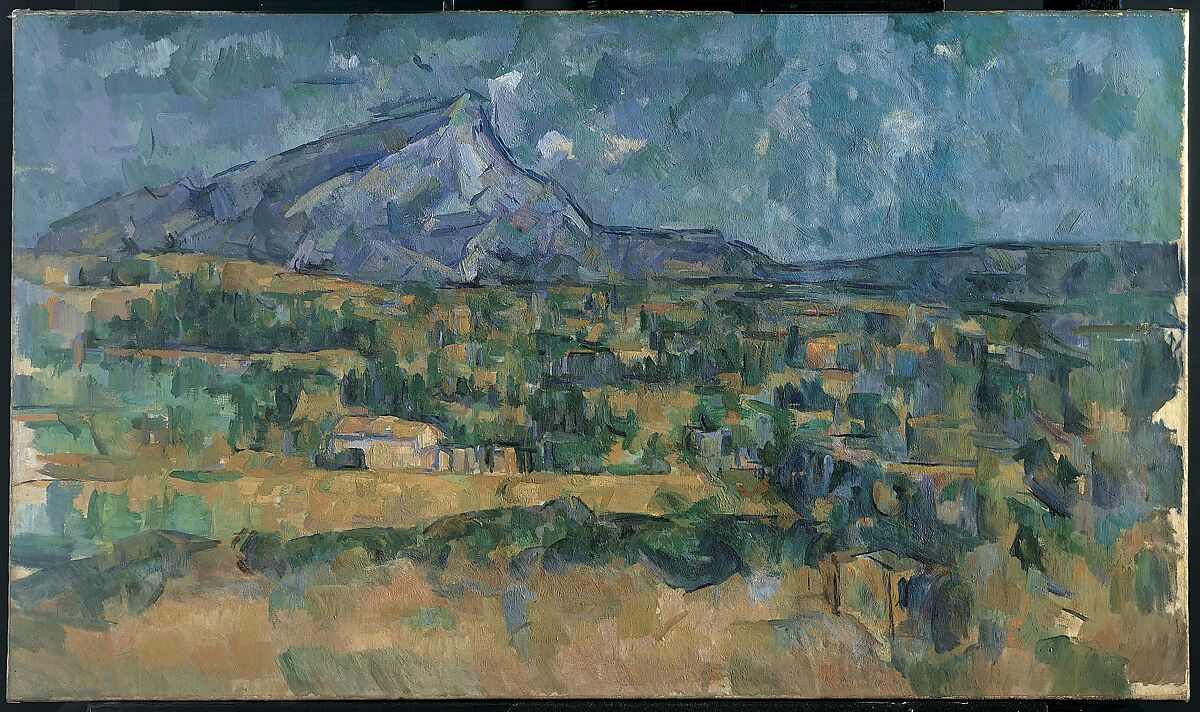
    Take Confucius as an example: call things by their proper names. Poets and critical writers insist on calling things by their proper names. “No ideas but in things” means things come before the names that ideas might provide for what they are. Names might even gesture towards the ideas or partially derive from them. Only a naïf, a selfish, a fearful or desiring critic believes they can change the thing with a word that flows like a tertiary effluent. History is replete with the inhuman consequences of this error, from early modern horrors of the Code Noir (1685) to the ongoing debasement of “aliens” who infect “our blood” (2023). Only the applied power of violence and money enforce these names against that which has lost its name. Shakespeare’s dawn song vignette unsettles the cliché popular and medium-brow culture derive from it. Claremont is not a “think tank” any more than it serves an authoritarian or conservative politics. Claremont is secretive, well-established, and influential. It may shade itself on the horizon, which means lights of distinct colors cast on it let it appear not each time “differently” but each time additively so that gradually the thing itself appears. To Rightists it might appear as the green ray. Critical reflection on a center of counter-revolutionary planning and training needs a poetic artistry, like a Cézanne patiently, actively, persistently intends to make a mountain and light itself seen. A mountain by any other name is not just as monumental. A secular critical mind does not bother with Claremont in a study of think tanks, of civil society institutions, of academies for conservative thought. Such studies, whether disinterested or not, whether detached and professional or angry and aggressive, oddly enough are less creative, less poetic than Claremont itself whose raison d’être is the creation of a new culture upon the rubble, after the carnage, of battering down the walls of its enemies’ bastions and institutions. In the end, all of that is to make sure “enemies” cannot return and that Claremont’s vision defines all life practices on the fields of social and cultural poiesis.

    How dangerous is this? Consider its antagonism not only to its racial, class, and ethnic enemies and the forms that gathered standing with them, but also its extermination of imaginations like Cézanne’s whose analyses made light an instrument of seeing, and of poets like William Carlos Williams who in the movements of time made life still for knowing and feeling. Cézanne or Williams were analytic and geometric—to uncover what names obscure and empower—so that their still lives would make new relations between forms, words, and things available for use, feeling, and repetition—for the freedom of poetic liberty. No ideas but in things, becomes with them no ideas but in poiesis. There are good and evil even in the working out of poetics. Confucius teaches that the only route to wisdom is to call things by their proper name. Claremont would decide and delimit who can name or have the power to make a name proper, that is, settled and all-embracing. If only one can name then there is no freedom, but only slavish incapacity in the face or grasp or trance of things. (Perhaps Orwell is a dystopian Claremont has studied.) The critic who opposes this usurpation of freedom must at least call by its proper name the agent of tyranny that will project its own, enduring unreformed sublime monumentality which might be called King, Caesar, or tyrant.

    The Claremont Institute has a geometry and the same sort of stable being in place as any mountain or wheelbarrow, even if Claremont is not yet called St. Victoire. And so, we can dissolve and rearrange its forces, pressures, and fissures. Balance gives it a normal place on a regular terrain of institutions, ambitions, and ideas. To see it, let ideas come from what it is, not what it says it is. Its founders made it normal and indistinct, inconspicuous. Cézanne worked with his mountain repeatedly over years because it had value as his art. Hardly inconspicuous, it was a settled regional monument, always well-known and unseen by cohabitants. Is it an illusion to think the same is true of Claremont? For a journalist or political writer, Claremont, well-financed, secretive, and intellectual, is part of the landscape, lodged in a suburb, withdrawn from view. Yet, knowing its actions and intents, it tempts, as the mountain must have tempted Cézanne to reassemble its fixed status, to explore its constituents. It is there inviting the exercise of the suspicious critical mind. In a Disney-fied Meta worldscape.

    Established hermeneutics and philological procedures let investigators study Claremont along two lines. First, the standard practice and ideological claim of historicists who study, map, and understand the contexts in which an object exists, words work, or nations extend themselves, make history expanding contexts, generating horizontal or adjacent relations along flows of power and interest as a field of reading. We now call this the “cultural text.” Claremont might call it the geopolitical or the new Imperium. Second, ahistorical hermeneutics, formalists, or allegorists, by attending to appearance, generate the conditions for genealogical questions, for forms of study that answer the question, how did it come to be? Nietzsche and Foucault are exemplary of this method. The thing is not ahistoricality as such, but the result of expressly nonlinear entanglements of will, desire, and often anonymous transformative forces.

    The much-admired German-American musicologist, Christoph Wolff, a renowned scholar of Johann Sebastian Bach, formulates in less than a paragraph the felt necessity of contextual location as essential to a serious understanding of Bach. At first, Wolff’s statement of intent, desire, and necessity is straightforward and enabling: “In the case of a painter, poet, or musician, the primary interest focuses, without a doubt, on the works of and their aesthetic power, but a deeper understanding of works of art presupposes also a special awareness of their historical context” (8).

    Such a normative approach to Claremont could interest readers, citizens, and politicians. Too often, however, historicism turns intelligence from the object or thing, the study of which in this manner turns the mind elsewhere and away. Contrast this to Cézanne’s unrelenting focus on the mountain’s light. Simple paraphrases of Claremont’s self-explanatory and self-justifying stories entice minds toward Leo Strauss and Harry Jaffa to highlight the intellectual ground of its ideology in action. Historicists, unsatisfied, will then question Claremont’s account and place it in relation both to contemporary sympathetic institutions and to predecessors with differing rhetorics and political nuance. What about Burke or Berkeley? What of the John Birch Society or the Southern Baptist Conference? Or the Opus Dei elements among Catholic reactionaries and traditionalists? And, finally, of what value are the answers to such questions and the endless debates they enable that then follow on to and encircle them? At the end, readers know a great deal around and about Claremont, but that knowledge is merely accretion upon a stable and still obscure part of Rightist politics that becomes increasingly monumental and eventually like the mountain is simply there, unseen. To describe Claremont or to refer to it as journalists sometimes do as an intellectual hotbed of conservative thought and aspirations polishes the stone façade of its facticity as a geopolitical, legal, and sociocultural agent in the landscape. And so, it becomes a mirror reflecting others back in their accounts. Claremont has succeeded in a task Lucifer could not carry out: To transform a place where the fallen and excluded could assemble, hatch a plot, act in revisionism and revulsion to promote resentment, or more precisely, ressentiment, on the expressive effect of which its creative power and destructive influence rest.

    We can say simple and plain things about Claremont. It develops narratives along two lines. As a normal counter revolutionary tactic it puts in place, naturalizes, a grand narrative of national decline from ambitions expressed and set in motion at what Claremont regards and repeatedly calls the “founding.” In US terms, this means Claremont tells stories about the US as if the nation were something that had an origin from which it sprang rather than the immensely complicated entity with diverging histories of a kind and number one could expect of a continental political entity that never at any time in its history existed as a nation-state that like Spain or France set an organic relation between ethnic and linguistic unity and state institutions. As far as those relations came to exist, violence and often extermination played a role (1209, 1492). Making the US into something with a sacralized origin, what Claremont calls the founding, is the first step in Claremont’s contribution to the counter-revolution against secular liberal developments since 1688. Claremont’s most important ideological contribution to the Rightist cause is a secular version of the myth of the fall. The institute sets in place the linear narrative of a fallen origin that sets the stage for a counter revolutionary recovery of something that never existed outside this story. In simple terms, Claremont’s narrative sets out from a counterfeited version of Jefferson’s Declaration of Independence filtered through Straussian orthodoxy. For the Right, the Declaration renews classical beliefs in natural right. From this pure high point, itself a recovery—and therefore from the first a counter-revolutionary document—Claremont’s story makes the US an inherently Rightist entity. From this simple and pure original and yet recuperative impulse Claremont would create a new world and make of Americans a set of new Adams. Conventionally, of course, the Founding, like the Garden of Eden begins a secular story of a fall into the sinfulness of liberalism. In this reading, the Declaration is a messianic document for a new world that liberal politics shattered and weakened with relativism, theories of civil and human rights, and stories that desacralized the origin and substituted stories of complex historical beginnings. The unity of the origin and its Founding impulse was decimated and dispersed. The origin became political and originally human. To recover the messianic counter-revolution of the Declaration requires a new counter-revolution.

    The Right adopts Claremont’s fantasy of origins as a mask for the simple evil corruption of the tyrannical seizure of power to set up a Caesar as an extra-legal, post-constitutional sovereign in what had seemed the democratic republic of the US. As Claremont’s story develops, the 1776 origin affirmed administratively in the Constitution of 1787 fell into a secular historical world of struggles, crosscurrents, battles over right and wrong, and most important, a protracted process to suppress the aspirant tyrannical right. In Claremont’s propagandized fantasy, the purity of the origin, lost in and to a history called “liberalism” justifies restoring a tyranny the Declaration only seems to reject. This is a wonderful instance of Claremont’s remarkable Calliclean sophistry: the “founders” justified their rebellion against monarchical tyranny, which was in fact a revolution against the settlements of 1688, with an appeal to natural rights. After liberalism undermines the restorative origin, dirties its purity, then, now only a tyrant, a Caesar can reclaim the origins’ legitimacy justifying not only the destruction of historically organized society but the seizure of plenary power with impunity. Why? As the natural and needed sovereign form available for a return, the necessity of which from atop and out of the origins’ ruins leaves no choice but to reclaim its own power as the origin.[9]

    Claremont logically advances the claim that Caesarism is the only political form based on and capable of sustaining a recovered natural right politics. As it set up, codified, and put into action the principles of the Declaration of Independence, the Constitution betrayed the origin, created the condition for administration that masks power in law and regulation and over-throws the very founding of America as the return of classical and biblical ideals. In telling this story, Claremont helps create the mass cohort essential to seizing electoral power and in so doing, by alignment with power, to erase from practice, common sense, and memory competing stories of the American nation discrediting other stories that might interrupt its own identity with sovereign power.  With feverish purpose it mocks the story, advanced in part by the New York Times, that the US began in 1619, the year enslaved Africans arrived in the US.

    For Claremont, the innocence of 1776 dissipated with ever increasing centralization of power, expansion of state administration, and a politics that restricted or regulated freedom that conflicted with natural rights by placing liberty and sovereignty in a controlling state. To authorize itself, Claremont finds resistance to this development throughout national politics, in figures such as Andrew Jackson and Abraham Lincoln whom “liberals” see as antagonists in the conflict of different political ideals put into action. Claremont intends its own story as a disruption of consensus, an end to struggle, and thus a replacement of political common sense. Harry V. Jaffa saw Lincoln as a Straussian hero, antagonistic not only to the liberal sentiments that began to seize power after 1776, but those of 1688 and earlier. In that antagonism, Lincoln, as his contemporary antagonists insisted, according to Jaffa, had become Caesarist and had broken the balancing order of the state Madison established. In an emergency, he not only stepped beyond the law, but over it when, for example, he ignored the Supreme Court’s order to grant habeas corpus to Confederate sympathizers and separatists. Most important, however, Lincoln, a minority president, made the rhetorical claim that national sovereignty rested in the people and upon that authority conducted the war and militarized the socio-economic fabric of the United States.

    Often Claremont draws on the ancient texts of the eastern Mediterranean searching, as did Strauss, for authoritative grounds for its worldview. Claremont’s desires lie behind its claimed discovery of the proper world view upon which, putatively, lie its sophistic and self-interested claims to find the desired world view in the US “origin.”  Only the decay of such origins, which leave Americans with carnage, justifies its seizure of power, which would end the persistent, if episodic, struggle of certain leaders and movements against liberalism by for the last time monopolizing power under the sign of rebirth. In a purely secular sense, American history—barring moments of Jacksonian resistance—is a record of sin against a recovered origin. The permanent recovery of that origin requires means necessary to end opposition to its regulative power.

    In other words, to anyone who has even the most basic grasp of western story-telling—an art Claremont claims for itself—the Institute’s basic repertoire is grossly familiar: identify an origin, a point of innocence capable of projecting force and motive both affiliatively and expansively. In the all too tired but effective instrumentalization of primal fears, needs, and ambitions, sin in the form of a liberal politics masks and sustains the violence of tyranny in an administrative state that surveils the people’s sovereignty that Lincoln invoked and followed to defeat slavery and sustain the Union. In other words, Claremont makes operational in a secular society an unsophisticated, fully cynical version of the Myth of the Fall, which Christians should recognize and readers might know, in more intelligent and liberatory fashion in such paragons of Western Civilization as Dante and Milton. To prefer Jaffa to these names should alone disqualify Claremont for poor judgment, ignorance, and mere sophistry.

    In the American electoral system of 2024, the narrative of the fall produced a paradox: a reactionary anti-elitist elite that had manufactured a mass cohort of voters seized power to disassemble the democratic republic, and remake politics to permanently keep power. In the counter revolution, the raw power of the police state forces cultural change across the spectrum of human life. A cadre of leading figures institutionalizes themselves and their heirs—and here we return to the affiliative nature of the origin in the Claremont stories—, because fulfilling the Counter-Revolution requires a permanent seizure of power, to make monumental its inaccessibility to competitors. Journalists, intellectuals, and politicians bemoan the Right’s desires and actions to fulfill its “authoritarian” or “anti-democratic” ambitions. Too rarely do they call it tyranny, or, to use Claremont’s own preferred proper and public term, Caesarism.

    “A fallen world requires redemption,” at least, common religio-political myths say as much. From this narrative comes millennial thinking, utopists, apocalyptics, and accelerationists. Claremont’s leading figures embrace various forms of millenarian necessity that Plato condemned as a tragedy. Since Claremont routinely claims it rests on Classical Greek thinking, remembering Plato points to what Claremont well knows, the falsity of its classical beliefs and the bullshit justifications of its hegemonic aspirations of its own stories.

    A star among Claremont’s peculiar progeny is Michael Anton. He is the Jack Roth Senior Fellow in American Politics at Claremont Institute. He took master’s degrees in liberal arts from St John’s College, in Annapolis and did advanced study in Claremont Graduate Universities. He worked on Wall Street for Blackrock and Citigroup, and he has served during both of President Trump’s administrations. In September 2025, he stepped down from his position as Director of Policy planning at the State Department, a position first held by George Kennan.

    For all its own disposition to practice ideology in language and print, Claremonters carry their message throughout the social media networks of Rightist public politics. The New Founding Podcast (10.3k subscribers) hosts “The Matthew Peterson Show: Conversation,” the first episode of which Anton helped launch as the de facto center of an explanation for the historical necessity of Caesarism. As an emergent higher form of sovereignty rising from the simple rules of post democratic and post constitutional governmental ruins, Caesarism’s establishment will require new stories for its advocates to sell it as the needed “the New Founding.” The videocast named as a site to host propagandists for this idea has lost financial support, not in 2025 an especially important fact. More to the point was Anton’s extended defense of Caesarism launching this site in the early 2020s. A simple search of online sites and traditional news outlets clarifies Anton’s interest in Caesarism, even as a state official, who had sworn loyalty to the constitution of a democratic republic.[10]

    For all of Claremont’s pretension to high intellect, its stock in trade is propaganda in two forms. First, its leaders, fellows, and adjuncts use Claremont’s story of the American Fall to encourage and justify actions that only the most extreme crises in civilizational collapses can justify. Claremont’s project had an immense success in President Trump’s first inaugural in which speech writers reduce the Claremont mythography of the Fall to the low mimetic mode in one now famous and effective meme: “This American carnage stops right here and right now.” Journalists and electoral opponents objected that America in 2017 was not a scene of carnage. In offering evidence to prove the President’s statement “wrong”—GDP numbers, data from crime reports—they showed, on the contrary, that they not only misunderstood the President’s statement but the politics it stood for and aimed to impose. Considering Claremont’s public statements and those of its ephebes like Anton, “carnage” signifies three things: first, it declares that the conditions for counter-revolution exist; second, that counter-revolutionaries can openly display their intent to seize state power; and most important, that their intent is to instrumentalize state power for their interests alone. Note that before the word “carnage” comes a Claremontian meme, standing for its project to define the “founding” as an “origin” that calls for its own redemption. Before “carnage” comes the anodyne sounding declaration that “We, the citizens of America, are now joined in a great national effort to rebuild our country and to restore the promise for all our people.” How can a world of carnage not demand redemption? Indeed, as always, redemption requires its own violence, its own carnage. What more effective way to find a just violence than in the verbal echoes of the original violence against liberal England in the name of natural law? Jefferson’s messianism that invoked a universal equality among men gives way to the first inaugural’s emphasis on citizenship as the qualifier to decide the political fate of “all our people.” And here that “our” is not anodyne because of its fully possessive force—all the people of we, the citizens of America. This points to an essential part of the Right’s politics and tactics as advanced especially by Claremont. The citizens of the first inaugural of 2017 have no interest in the universality of ineluctable rights nor, it becomes clear by 2025, in the cohort or partisan mass it gathered for electoral victory.

    The president’s speechwriter meant carnage metaphorically, referring to social decay, political disorder, moral disruption. In its sophism, carnage conveys images of disorder, ruination, or devastation. In this conjuring, carnage comes from violence, the stopping of which requires, of course, counter-violence, the direct application of the state’s defining monopoly on violence, political power in extremis deployed to effect the shaping of citizenry and carry out its desires. A new carnage destroys to save—an exhibit of long-standing US power politics, and in this way familiar from revolution to displacement, mass kidnapping, and enslavement, including economic war-making to show power in a unified state.

    In an explicit preemptive echo of Lincoln’s account of his authority as a derivative of the sovereign people, the executive in 2017 calls on “we the citizens” as the sovereign basis of its own authority. Given Claremont’s belief, inherited from Jaffa, in the priority of the Declaration over the administrative Constitution’s secondary status as mere implement, it neither defines nor constrains whatever violence “we, the citizens” conduct or institutionalize as administrative potential in redeeming the Declaration from carnage. In other words, the 2017 inaugural means the executive, speaking to define “we the citizens” as its authority and creation, as the executive’s declared sovereign will deploy violence as needed to create a new carnage to displace the old, which by the inaugural’s logic, in its liberalism prohibited the redemptive executive from acquiring salutary power.

    Of the customs, laws and institutions historical subjects built, Claremont’s fantasy of natural salvation demands negation, erasure, and lingering violent destruction. To achieve the mythological sovereign power capable of all this, negation cannot stop at laws, customs, and institutions—certainly not in recognition of an opposition’s legitimate interests. It must endlessly constrain the extent of “citizenship,” the concept which empowers the agency of belonging, meriting, benefiting. As such, for the content of this sign, “the citizen,” to keep its value, the Caesar must curate its content with the agreement of those already included in the inaugural we. Take this as an instance of this ambition: since 2024 the executive’s commitment to deport non-citizens (“illegal immigrants”) and to contest the 14th Amendment’s clear statement that “all persons born or naturalized in the United States, and subject to the jurisdiction thereof, are citizens of the United States and of the state where they reside.”

    Along with the 13th and 15th amendments, the 14th remade the US Constitution by assigning citizenship to all former slaves and by overturning the heinous three-fifth compromise in the original 1787 implementation of a crippled version of the Declaration’s universalist principles. Notoriously, the three-fifths compromise agreed to win slave states’ commitments to the constitutional arrangements and mechanically counted three of five enslaved persons when calculating a state’s proportional representation in the House of Representatives. The three-fifths compromise settled the slave power in control of Congress until 1865.

    The anthropology of the compromise is notorious and obvious in its dismemberment of enslaved persons and homicidal in its negation of enslaved people’s humanity, their degradation into less than integral units, bodily fragments without unity. The compromise gave power to a slave logic that could extrapolate its dehumanizing rule into the basis of an unreformable state system. The slave power had become the constitutional Caesar.

    Caesarism’s historical form gives plenary power to the executive and absolute impunity against all human and material laws. In the oddities of US history—and here I rely on the eyewitness expert testimony of Henry Adams—the slave power was Caesarist in its control of state power, most often by command of the government based on control of the Congress. Beginning with Andrew Jackson, slave power presidents, until Lincoln, gave the US over to a tyrannical executive Caesarism.

    The Claremont Institute aspires to create a new Caesar for the US and knows that to do so it must, as a counter-revolutionary measure, overthrow the 14th Amendment particularly to reverse again, in effect, the abolition of the three-fifths compromise. If that compromise set up power by controlling votes and consolidating partisan control to delimit state decisions, then its establishment need not take the same racist form of African slavery as had occurred in 1787. What mattered was what that original compromise implied and proved: the controlling power’s right and ability to define humanity by making citizenship an openly partisan prize, that is, making the ability to be “human” within the socius, an open question. To achieve these ends, that is, the defining control over population and humanity the Right desires in its “new form” executive Caesar—the “unitary executive”—it must win over the common sense. So, Claremont creates counter-revolutionary memes—stories, talking points, friend/enemy lines—that make what Claremont and its allies call “birthright citizenship” a controversy, an unsettled question, rather than a right proven by the 14th Amendment. On October 15, 2025, an online search of the institute’s website returns thirty-five results arguing the need to disestablish the 14th Amendment. On this question and others that the institute helps generate, Claremont, as it often does, provides the arguments that create a national need that the politics essential to the Right’s seizure of power alone might meet. For its ephebes and allies, it describes the tactics to put in play the question it creates and the maneuvers to achieve it. In this instance, as is often the case, the Institute offers grounds and procedures for bringing a case to the Supreme Court confident it will concede the Institute’s arguments against “birth right citizenship.”

    Amid the Right’s militarization of society by its deporting “illegal and other aliens,” “birthright citizenship” prepares steps against the 14th Amendment’s fundamental achievement, which is a legal, liberal, and common-sense obstacle to the Right’s new Caesarist ambitions. The post-civil war amendments stand as the basis for a refounding of the Republic along the universalist lines of the Declaration. As such, it is an obstacle to and proof of Claremont’s essential storyline that the nation needs a political movement that will return the US to its origins in natural law. If you will, the Right must overcome the hegemonic idea that the Declaration extends universal human rights and that the US must prove and defend them. Such a liberal notion is anathema to propagandists of natural law politics in which plenary power embodies and defends the priority of natural law against all encroachments by rights-based practice and discourse. Claremont’s second refounding, to return to natural law origins, requires sweeping away from power and politics the value, meaning, and effect of the post-Civil War amendments. Claremont takes aim through the birther movement at the 14th, so Caesarist power is unencumbered by limits on its basic power to control life and its humanity.

    Caesarism extends the neo-liberal state’s power over the population in absolute ways. Deportation purges the population, settles fear as the mode of governance, and places militarized force everywhere among the people, often pre-empting the police power and the independence of states’ rights. (That shibboleth, a long enduring phrase of the conservative right, having advanced a politics tinged with the old slave power Caesarism, has disappeared from the Right’s rhetoric and irony has no power make it a roadblock to the new Caesar’s absolutely empowered national government.) Conservatives’ appeal to “states’ rights,” a residue of Jeffersonian and Virginian theories of the original founding was only an aggressive defense against the democratic republic’s assertions of federal power over states’ “peculiar institutions.” Under a Caesarist Right, those institutions more likely extend those “peculiarities” than threaten them.

    Claremont prepares for SCOTUS, the Supreme Court of the United States to limit the 14th Amendment’s plain language. The tactics are clear enough. In early days of a renewed Caesarism’s control of government and given the Right’s naturalist and nationalist narrative, given its increasing control of information production and distribution as well, “birthright citizenship” rises up the chain of media importance and “culture wars” prominence. Caesarism, following Schmitt on the partisan, then uses this importance not primarily to prevent what the right vulgarly calls by the pejorative phrase, “anchor babies.”[11] That grotesque meme solidifies group identity and develops the leader / follower structure while giving popular form to the Right’s worst ambition, the nakedness of dehumanization, so clear to Plato as long ago as in the Protagoras.

    The 13th Amendment ended the worst peculiar institution and with the 14th and 15th amendments enabled Congress to institutionalize the legal force enabling the national government to supersede the states’ power to define humanity along racial and sexual lines citizenship within their territories and on occasion beyond. “States’ rights” meant, after all, rights that were the states to entitle or not. Claremont and its allies ask the Supreme Court to deny the constitutionality of Congressional capacities to limit the dehumanizing power of politicized identity and, in so doing, assure the recognition of all persons’ humanity manifest in their citizenship in the nation state.

    The Supreme Court’s willingness to engage Claremont’s problematic claim, that the phrase “subject to the jurisdiction thereof,” is not transparent, suggests legal arguments that the 14th and 15th Amendments that protected free slaves and later minorities discriminated against by political power should be inverted. The Rights’ refounding must overthrow the post-Civil War’s refounding to conclude Congress does not have the power to correct discrimination against minorities, since the claim contends such action discriminates against a majority that suffers from such racially intended revision. In effect, the Right, by law, would make the first refounding part of its own carnage that turns instruments of reform that would fully humanize all persons in the nation into instruments that expose minorities to the desire of groups with definitive impunity, the holding of power that gerrymanders its own perpetuity. The new Caesarism echoes the slave power’s first grasp on power.

    The Caesarist Right’s refounding renders unto Caesar alone the authority to decide who is and who is not human. Within the new arrangements, as Hortense Spillers declares, only one man is free.

    Claremont has formulated maximalist tactics within the current shell of US electoral politics. Claremont’s commitment to litigation, often guided by John Eastman, a disbarred attorney who theorized the means to overturn the certified results of the 2020 presidential elections. California’s bar and courts took away Eastman’s license to practice law for practicing outside constitutional limits. Eastman might pursue his reinstatement in what he imagines will be friendlier federal courts. If he succeeds along these lines, the right will also succeed in normalizing extra-constitutional law practiced on the basis purely of power, seized and held with impunity.

    Revolution against the administrative state masks a final seizure. Claremont’s role in this is large, even if not as at once pragmatic as, for example, that of the Heritage Foundation. Claremont envisions both means to and the achieved enduring Caesarism of an anti-democratic tyranny. Its refounding refers not back to the Jeffersonian Declaration or Madisonian constitution, but to pre-revolutionary forms of centralized single-person rule that often appeared after 1787 and 1789 in figures such as Bonaparte, Stalin, and Mussolini. Given the Caesarist success in creating its own paramilitary while purging the professional military of potentially unreliable leaders who famously swear loyalty not to Caesar, but rather to the Constitution, this then further parallels even the Caesarism of German National Socialism.

    Although Claremont publicly associates itself with Leo Strauss and his student Harry Jaffa, in its practical activities as mythmaker, as the acid-bath of legitimacy, and as a proponent of autocracy, it belongs to a cluster of extremist political organizations of a kind once bemoaned by President Reagan’s Ambassador to the United Nations. In a famous article distinguishing among political forms of oppression and justifying American support for anti-Soviet authoritarians, Jean Kirkpatrick described an evil political form of government antagonistic to American interests and ideals. She described these enemies of America in precise terms. They were autocratic, anti-democratic, Caesarist, and uniformly self-serving. The Leninist model, which Steve Bannon openly embraces as his own model for MAGA revolution, was the perfect anti-American model of government. It took freedom from Russians and others that it ruled. It made everyday life poor and riddled society with fear. It narrowed culture to the vulgar purposes of a ruling class mostly interested in its own power and wealth. Like Bannon, Claremont and its associates took Kirkpatrick’s account of a collapsing state form that once was America’s main enemy as a blueprint for its own revolutionary action. Kirkpatrick sees that other authoritarian Caesarist regimes had the same characteristics as the Soviets. She points to the revolutionary national religious government of Iran under the control of ayatollahs, who, “display an intolerance and arrogance that do not bode well for the peaceful sharing of power or the establishment of constitutional governments, especially since those leaders have made clear that they have no intention of seeking either.”[12] Claremont is quite willing to turn the US into a regime type that America identified as repulsive and threatening in a report by the extremely conservative figure of the New Right, itself. Where once the competition between the US and Iran presented itself as a conflict of ideas and values, now, competition between a Caesarist US and a Caesarist Iran exists only as a struggle for power in which the greater power abandons its values to adopt the virtues of its lesser enemies.

    We are in an American moment in which propaganda has done enough to make an extreme conservative like Kirkpatrick an implicit enemy of Claremont and the Right. In part, this is because Claremont and other Rightist thought leaders have studied Gramsci to understand the theory and practice of achieving cultural hegemony, to create a common sense in which such a moment as Kirkpatrick’s is forgotten and abandoned.[13] Current Leninist quick strike politics comes from the Right’s studying revolutionary texts, no doubt in the very universities they persistently undermine for bias. Certainly, Claremont has read and learned from both analysts of Caesarist regimes, such as Kirkpatrick, but also from Strauss’ most prominent student, Carl Schmitt. (Serious readers of early Schmitt remember that Strauss corrected his unreformed liberalism.)

    If the likes of Kirkpatrick, Lenin, and various extremists lay out the mechanisms of tyranny, then Schmitt’s catastrophic study of the partisan explains the value, the effectiveness of politics made into relentless partisan warfare, but also how to achieve permanent war. The technology that in Schmitt’s analysis shows the partisan is a congruous permanent irregularity. The partisan does not fight within the regular order, hence the need to replace leaders loyal to that order with irregular political cadres. The partisan is not an extension of official power during a state of exception. Importantly, the partisan and guerrilla are not the same, for the latter does not work in the open, as a public figure, immune and empowered. The guerrilla works in the spaces opened by war, struggling against an enemy as, for example, the French Resistance filled with maquis, rural unprofessional fighters who relied on their local knowledge of terrain, fought against the Nazis. At first, the Right imitates the form of the guerrilla to place partisans everywhere in the political world of decisions and actions. Just as the guerrilla is a temporary form in a targeted struggle so the guerrilla form of carefully placed partisans in the machinery of institutions passes quickly into the partisan who knows a line, holds to it, enrages opposition, and creates a purely partisan oppositional relation in what had been republican politics.

    The partisan is not only public, but professional despite being outside regular order, where partisans, having seized power, pose themselves forever. Schmitt’s partisan’s technological advantage, then, is not secrecy, local knowledge, or victory over an enemy. Rather, and Jacques Derrida noticed this decades ago, the partisan’s advantage within Caesarist politics is a permanent state of enmity: not merely an enemy it first defeats and displaces, but enmity for all that is not itself, forever. Claremont works for this final form that organizes state and techno power over and against all else, call it society, nature, culture, or questioners. While the “Left” concerned itself, as I suggest above, with the problem of the state of exception and its hypocrisies within liberal regimes, it failed to politicize an opposition to the Schmittian tactics, theory, and goal of partisan counter-revolution.[14] Often unrecognized, as part of the continuing revolution, the partisan brings war and violence everywhere. Given the Schmittian positions against the liberal state in all its post-17th century forms, one line of thought lies at the center of his condemnations and those of his followers at Claremont and in the US Right’s ambitions. Put very simply, for Schmitt, the liberal democratic republic always pretended to remove violence from politics and when secure look to suspend politics within and from the order of its own imperium. (Left critics of liberalism found Schmitt’s program useful here.) Hence, if you will, his theorizing the state of exception. According to Schmitt, to overthrow a liberal republic, however, requires partisans to bring political violence everywhere as essential element of Caesarist politics.

    At this point, to hurry to an end, review Michael Anton’s video defense of Caesarism as regrettable necessity after the carnage of the liberal state.[15] The Schmittian paradigm is clear. The tactics stand out: weaken the Republic with actions and stories that calmly announce civilizational failure, a process easier than imagined when the republic has no eloquent or organized defenders. In Anton’s performance, we see the Claremont playbook: regret that a Caesar is necessary but understand that it naturally emerges from the garbage heap of democracy’s decay. Caesar appears to reground civilization threatened with anarchy. Something about the executive’s politics appears historically necessary. But to what end? Who benefits? Those who have authority, control wealth with its power, and define people as inhuman and so as waste. Partisan politics is everywhere. To create fear, a new carnage. That leaves all final authority in Caesar’s hands.

    Intellectuals could devote themselves to endless discussion of the sources, qualities, and aims of this Rightist movement, accounting for the conditions of its success, the chances to displace it, and worries about its permanence. As valuable as those works will be and as happy I will be to continue to read them as they appear, for the moment it seemed best to peel back some of the cover from an important locale of the Right’s preparatory and persistent work: In the present moment, the idea that worse might come as intellectuals organic to the counter-revolution work out its end-goals and the means to sustain its winnings.

    Paul A. Bové is the author of Love’s Shadow (Harvard UP), Intellectuals in Power (Columbia UP), and several other books on criticism and theory. He has also written a book on torture (HKUP). For thirty-five years, he edited boundary 2, an international journal of literature and culture for Duke UP. He retired and lives on the ridges of Southwestern Pennsylvania.

    [1] James Hankins, “Hyperpartisanship,: A Barbarous Term for a Barbarous Age, Claremont Review of Books Vol. XX, no. 1 (Winter 2020): Hyperpartisanship – Claremont Review of Books. “As it happens, the most sophisticated theoretical languages for discussing issues of cultural dominance were created by Marxists during the 1930s: by Antonio Gramsci, a founder of the Italian Communist Party; by the Frankfurt School with its Critical Theory; and by Mao Zedong, who put his theories into action in the 1960s during the Cultural Revolution.”

    [2] Stephen Miller, Deputy Chief of Staff to the executive and recognized planner of deportations in the second Trump administration, said on CNN that the president has “plenary authority.” (October 8th, 2025)

    [3] I add this phrase to oppose (throw light on?) the clerk, Patrick Daneen of Notre Dame who strongly objects to the judgmental nature of leftist cultural politics. He makes this point at length and to great applause in Why Liberalism Failed and Regime Change: Toward a Postliberal Future. Daneen mistakes judgment for opinion when he objects to social protest and profit-motivated market formation as judgment but his own opinions on these and other matters as statements of truth. The Right’s intellectuals and petty political actors share the sophistry perfected by Claremont and its ephebes. Daneen’s defense of traditional culture comes from the pinnacle of elite academic formation and employment security. Contrast Daneen with Paul Kingsnorth to see how the rhetoric of traditional culture, profitable always on the Right, implicitly disdains a working eco-traditionalist.

    [4] I do not present myself as deaf to this seduction. I began to study and write about Claremont in 2024, and I presented papers on Claremont late in the year. I have posted the talk paper I presented in late 2024 on my blog. See PAB, “The Claremont Institute: Sophistry and the Power Grab,” Critical Reflections. Inside that post is an entry to a rump essay on the machinery of Claremont. The direct link to my rump paper that does some of the work I no longer want to do here is @ https://paulbove.wordpress.com/wp-content/uploads/2025/10/talk-paper-for-hopkins.pdf last accessed October 31, 2025.

    [5] “Vice President JD Vance Honored with Claremont’s Statesmanship Award,” July 8, 2025 @ Vice President JD Vance Honored with Claremont’s Statesmanship Award – The Claremont Institute. Politico reports that “Vance is closely tied to Claremont circles, frequently speaking at their events and appearing alongside their scholars. In a statement to the American Conservative on Monday, Claremont President Ryan Williams called Vance “the ideal pick for Trump’s Vice President,” adding: “It’s hard to find a more articulate and passionate advocate for the politics and policies that will save American democracy from the forces of progressive oligarchy and despotism.” @ The Seven Intellectual Forces Behind JD Vance’s Worldview – POLITICO. last visited on 10/22/25.

    [6] John C. Eastman, Senior Fellow, Founding Director of the Center for Constitutional Jurisprudence @ John C. Eastman – The Claremont Institute. Eastman earned his J. D. from the University of Chicago, clerked for Mr. Justice Thomas (1996 – 97) and served in a senior position in the Federalist Society. “In January 2023, OCTC filed 11 disciplinary charges against Eastman, alleging that he engaged in misconduct to plan, promote, and assist then-President Trump in executing a strategy, unsupported by facts or law, to overturn the legitimate results of the 2020 presidential election.” @ State Bar Court Hearing Judge Recommends John Eastman’s Disbarment – The State Bar of California – News, last accessed 10/2225.

    [7] Michael Anton was Deputy Assistant to the President for Strategic Communications on he National Security Council after 2017 @ Trump’s national security spokesman Michael Anton is resigning, last visited on October 22, 2025.

    [8] Mary Beth McConahey, “Publius Fellow,” Claremont Institute, answering the following question: “What’s your fondest memory of the Claremont Institute”: “I have so many memories and they’re all happy! I’m very nostalgic about my time as an intern—those halcyon days! Working down the hall from Professor Jaffa seemed the realization of an impossible dream. He was always teaching and, as interns, we couldn’t even use the microwave without getting a pretty extensive lecture on Lincoln or Shakespeare or Aristotle or Aquinas or Churchill or all of them combined. It was awesome.” @ Mary Beth McConahey – The Claremont Institute, last visited October 22, 2025.

    [9] Reread Wallace Stevens, “The Man on the Dump,” which includes the line, “One rejects / The trash.” Claremont, we can say, fears this possibility of rejecting its own ruination because as Stevens says, “and the moon comes up as the moon / (All its imagines are in the dump) and you see / As a man (not like an imagine of a man).”

    [10] The New York Times January 18th, 2025, reported that “The incoming State Department official Michael Anton has spoken with [Curtis Yarvin] about how an American Caesar might be installed into power.” Yarvin is best known as an advocate for monarchy, kingship, as the best, proper, and necessary form of sovereign executive for the post-constitutional United States. In The Claremont Review, Yarvin’s name appears only once. during a word search of the magazine, and this in an article by Michael Anton, “Are the kids Al(T) Right?” who refers to Yarvin as “the well-known anti-democracy blogger” (Summer 2019).

    [11] On CNN’s New Day, August 19. 25. Cf. CNN Transcript, CNN.com – Transcripts and per Politifact, on August 19, 2015 in New Hampshire, then candidate Donald Trump said “his plan to roll back birthright citizenship for children of illegal immigrants will pass constitutional muster because ‘many of the great scholars say that anchor babies are not covered.’” PolitiFact | Trump: ‘Many’ scholars say ‘anchor babies’ aren’t covered by Constitution.  All last accessed November 10, 2025.

    [12] “Dictatorships and Double Standards,” Commentary (November 1979), reprinted by America Enterprise Institute for Public Policy Research, 1979, p. 34. Ambassador Kirkpatrick was then a fellow of his Institute.

    [13] For a belated and seemingly surprised recognition of the Right’s sophisticated Leftist grasp of liberal politics’ weaknesses, see the civilized conservative, David Brooks, “Hey, Lefties! Trump Has Stolen Your Game,” The New York Times, October 30, 2025, @ Opinion | Hey, Lefties! Trump Has Stolen Your Game. – The New York Times, last accessed October 31, 2025.

    [14] Cf. Edward Luce, “Democrats are locked on campus: In politics you are what you talk about,” The Financial Times October 31, 2025, @ Democrats are locked on campus, last accessed on October 31, 2025.

    [15] It would help to understand Claremont’s aims, the effectiveness of its training, and the sufficiency of its tools to look through Anton’s book, The Stakes: America at the Point of No Return (Regnery, 2020). The book is fine and revealing propaganda, spreading fear, stoking nostalgia for a lost “origin” (California before immigration). Most important is its style, marked by the declarative sentence, easy accessibility, and the partisan’s battle against qualifications, evidence, and alternatives. Linearity to produce false memories to create nostalgia stoking resentment, and willing to adopt partisan stories as its own.

  • Olga V. Solovieva—Ales Bialiatski, Together: On the 2022 Nobel Peace Prize and East Slavic Solidarity

    Olga V. Solovieva—Ales Bialiatski, Together: On the 2022 Nobel Peace Prize and East Slavic Solidarity

    by Olga V. Solovieva

    The Peace Prize laureates represent civil society in their home countries. They have for many years promoted the right to criticize power and protect the fundamental rights of citizens. They have made an outstanding effort to document war crimes, human right abuses and the abuse of power. Together they demonstrate the significance of civil society for peace and democracy.”

    (The Nobel Peace Prize 2022 Announcement, October 7, 2022)

    In January 2020, boundary2 ran an interview with Ales Bialiatski, the Belarusian human rights activist. The interview was recorded during the 2019 University of Chicago’s Neubauer Collegium workshop “Cultures of Protest in Contemporary Ukraine, Belarus, and Russia.” Back then, the goal was to raise awareness of the democratic aspirations among Belarusian activists and their long history of grassroots organizing for human and civil rights, a struggle largely unknown beyond the country’s borders. At the Neubauer, with help from the Pozen Family Center for Human Rights, we strove to show that these aspirations were shared by citizens of the three East Slavic countries; were connected to the recovery and rethinking of the past; and pointed toward the future. Building upon these commonalities, we also wanted to highlight the differences in the trajectories and forms this struggle has taken throughout the region. We sought to forge collaborative relations among Russian, Belarusian and Ukrainian pro-democratic intellectuals in expectation that all three groups would cooperate and learn from each other. Not a shared identity but a common history, filtered through divergent interpretations and experiences, framed the project’s comparative perspective.

    Much changed in the following two years: In the spring and summer of 2020, Belarus saw unprecedented organizing and turnout in the presidential elections, expressing the will of the people to transition to a democratic form of government by peaceful means. The results, manipulated, reasserted the power of the generally despised dictator Alexander Lukashenko for the sixth time since 1994. And in February 2022, the war in Ukraine which Russia had led since March 2014, escalated and expanded to a full-scale invasion. Oppression within Russia and Belarus rose to unimaginable proportions. Ales is now once again a prisoner of conscience. After receiving the 2020 Right Livelihood Award from the Swedish government and the Sakharov Prize from the European Parliament, he is finally also the laureate of the 2022 Nobel Peace Prize, together…

    ***

    The solemn protocol of the Nobel Peace Prize ceremony on December 10, 2022 was emotionally wracking for those who keep close watch on Eastern Europe. The prize came at too high a price, and this price hasn’t even been paid in full. Ales Bialiatski has been in prison since July 14, 2021 because his human rights organization Viasna provided legal aid to victims of police violence during the peaceful democratic protests that followed the fraudulent presidential elections on August 9, 2020. In his absence he was represented by his wife Natalia Pinchuk. She combined some quotations from his previous speeches and conveyed some thoughts he shared with her while in prison in an acceptance speech that struck an uncanny und uncharacteristically metaphysical tone: The references to “the duel of Good and Evil” and to his “soul,” hovering freely over his dungeon and the land of Belarus, exuded an eerily funerary aura. (The Nobel Lecture, Bialiatski, 5-6) For anyone aware of unendurable conditions and torture in Belarusian prisons, it was difficult to ward off a sinister sense of desperation where liberation can be imagined only via a metaphysical escape. But Bialiatski’s fragmented, mediated voice resounded in the speeches of his co-laureates.

    Jan Rachinsky accepted the prize on behalf of the organization, Memorial. This organization documented Soviet and post-Soviet crimes against humanity for over thirty years. It was ordered to shut down by the Russian government as a “foreign agent” in December 2021, and liquidated the following April. Rachinsky was pressured to reject the prize. In a direct affront to the Russian government, he accepted it. The Russian ambassador to Norway was not present at the ceremony. Rachinsky’s speech was overwhelming in its honesty, intellectual integrity, and courage. His condemnation of the war and of its ideological underpinnings in the history of Soviet state-worship will be long remembered. Rachinsky voiced the conscience of Russian intellectuals at a time when they lack any other voice. In the City Hall of Oslo, this voice got an international hearing for the first time since February 2022. This was chilling and almost unbearable to observe, as Putin is known not to forgive those who criticize his wars. Rachinsky spoke as one for whom truth—historical truth in this case—is more valuable than life. The world was watching a man in an utterly unsentimental, matter-of-fact fashion offering his life for his country’s chance at moral survival. Ales’s career had begun in the same endeavor, organizing commemoration of the victims of Stalinist repression at the execution site in Kurapaty. It is from Kurapaty that Ales’ journey toward advocacy for human rights began.

    The Center for Civil Rights, the third recipient of the prize, was represented by Oleksandra Matviichuk. This Center was born out of the new democratic sensibility of the Maidan demonstrations in winter 2013-14. Ever since, the Center has been recording human rights violations in Ukraine in order to safeguard the legal basis of Ukraine’s democratic aspirations. Today, the Center documents the crimes against humanity committed by the Russian and Russia-affiliated troops in Ukraine. Like other recipients of the prize, its members are mortally endangered, but by external threat: it operates right now under conditions of a devastating war, under bombs and gunfire, surrounded by destroyed infrastructure and lack of resources basic to survival. It continues its work demanding justice and accountability in international venues, seeking to prevent the erasure of Ukraine from the surface of the Earth. Matviichuk called the international community to account for its complicity with the invasion of Ukraine, for its failure to intervene in the annexation of Crimea and the destabilization of the Donbass region. The international community’s insouciance—and its interest in Russian gas—enabled Putin’s invasion in February, an escalation of a war that has gone on for over nine years without attracting significant attention from the West. Matviichuk’s call for help to Ukraine echoed the bravery and perseverance of the other two speeches pitted against the grim reality of existential doom. “It’s time to assume responsibility. We don’t know how much time we still have.” (The Nobel Prize Lecture, The Center for Civil Rights, 6) A determination born of despair is shared by all of the laureates in their refusal to give up.

    What is a peace prize in time of war? A wishful projection? An unshakable belief in a common peaceful future against all odds? A lifebuoy thrown to a drowning world of East Slavic democracy couldn’t but be a requiem for a dream. In fact, the solemn, austere, restrained musical intermissions in the ceremony tactfully expressed the mourning at the heart of celebration. But the Norwegian Nobel Prize Committee recognized something that most outsiders to the tragedy in Eastern Europe do not recognize: the East Slavic togetherness in this political predicament. Without Maidan there would have been no Belarusian protests; without Belarusian protests there would have been no invasion of Ukraine; and without the Russian White Revolution, the massive anti-Putin protests of 2013, there would have been no Maidan. Since the Ukrainians successfully ousted their corrupt Putinist dictator Yanukovich and Ukraine de facto ceased to be a puppet state, Ukraine became the refuge of the Russian and Belarusian oppositions. Kiev meant a free place to emigrate to, second to London but preferable because of geographical and cultural proximity. Then the Belarusian and Russian authorities assassinated the exiled members of opposition one by one; but soon they had become too numerous to be targeted individually. The Norwegians understood: “Together they demonstrate…”—what? That the war on Ukraine is a war on civil society and democracy throughout the region, launched by a dictator on a pretense of popular consensus wrenched at gunpoint from his own population. The war against Ukraine is a war against democratic Europe and a consequence of the suppression of civil society in Russia and Belarus, that civil society which Memorial and Ales Bialiatski have been working to build. The most important aspect of the geo-political tragedy unfolding in the East Slavic region today is our divisions. The prize stands for, not peace that we won’t find for a long time, but our togetherness, the recognition that civil and human-rights activists in the region look forward to a common goal. This notion of solidarity permeated all the speeches.

    Ales summoned us to fight “international dictatorship.” This call especially resonates in the United States today when a former American president is forwarded to the Justice Department to face criminal charges for leading an insurrection to reverse the outcome of a democratic election. Matviichuk pointed out, unsparingly, Western complicity with the invasion; the necessity of transnational solidarity among peoples; the need of pressure from below on governments; the urgency to reform the international order that has failed to stand up properly for Ukraine. Her call should be heard globally, as we talk about the relevance of the war in Ukraine for the future of other young democracies. Martin Luther King’s words that “injustice anywhere is a threat to justice everywhere” couldn’t be more concretely topical today. Among signs of the current turn away from democratic norms, one might mention the overturning of Roe vs. Wade—a typical totalitarian move asserting state control over human bodies and abolishing the democratic right to privacy. The past of the East European dictatorships and the future of the United States converge in this uncanny present.

    Rachinsky’s talk connected the dots of history and its inversion. Speaking about the current war, he observed:

    One of the first victims of this madness was the historical memory of Russia itself. Indeed, in order to pass off aggression against a neighbouring country as “fighting fascism,” it was necessary to twist the minds of Russian citizens by swapping the concepts of “fascism” and “anti-fascism.” Now, the Russian mass media refer to the unprovoked armed invasion of a neighbouring country, the annexation of territories, terror against civilians in the occupied areas, and war crimes as justified by the need to fight fascism.

    Hatred is incited against Ukraine, its culture and language are publicly declared “inferior,” and the Ukrainian people are deemed not to have a separate identity from Russians. Resistance to Russia is called “fascism”. Such propaganda absolutely contradicts the historical experience of Russia and devalues and distorts the memory of the truly anti-fascist war of 1941-1945 and the Soviet soldiers who fought against Hitler. The words “Russian soldier” in the minds of many people will now be associated not with those who fought against Hitler, but with those who sow death and destruction on Ukrainian soil. (The Nobel Lecture, Memorial, 4-5)

    This open confrontation with a monstrous regime and its system of oppression is a matter of colossal risk. “Don’t be afraid!” was Ales’s message. Rachinsky and Matviichuk definitely aren’t afraid. “Through their consistent efforts in favour of humanist values, anti-militarism and principles of law, this year’s laureates have revitalised and honoured Alfred Nobel’s vision of peace and fraternity between nations – a vision most needed in the world today,” according to the Nobel Peace Prize 2022 Announcement.

    It is the first time that I see a Western institution demonstrate in a powerful way that they understand our solidarity, our common work, and our shared vision of a democratic future in the East Slavic region.

    Back in 2019 in Chicago, when Ales, the members of Memorial, and Vasyl Cherepanyn’s Visual Culture Research Center came together to enunciate the commonalities among East Slavic cultures of protest, our goal was to create a productive dialogue among Ukrainian, Belarusian and Russian intellectuals and artists who share the values of democratic governance, human and civil rights, and freedom of artistic expression, as well as among scholars of the recent history and culture of these three countries. Establishing this dialogue remains crucial to a better understanding of the complex interconnection of culture and politics in the region. Such a dialogue should be especially fruitful because these three countries have much political and cultural history in common, but interpret this cultural heritage differently. The fight for democracy, human rights and independence coincides in Belarus and Ukraine with the cultivation of national language, literature, and culture. It started like this in Russia too. At what point and why does the liberation of national consciousness turn into a suffocating chauvinism? When does it promote democracy and the embrace of the community of nations, and when does it lead to oppression, persecution of others, and political isolation? How do forms of cultivation of national identity come to differ in these three countries? What features of their historical backgrounds are most relevant? Are there cultural and political safeguards against the dangers of nationalism? This year’s Nobel Peace Prize recipients answered these questions by appeal to the universal, transnational nature of human rights. The recognition of one’s right to one’s own language and one’s own national narrative for yourself, as for others, is part of it, as Rachinsky pointed out:

    Every country and every society develop their own historical narratives, their own “national images of the past,” which often contradict those of their neighbours. The cause of disputes is usually not one fact or another, but different interpretations of the same events. Differences in the understanding and assessment of the same historical events by different peoples are inevitable, if only because their insights and assessments are born in the context of different national histories. We need to learn to recognize the reasons for these differences and to respect each people’s right to their own understanding of the past. (The Nobel Lecture, Memorial, 5)

    The three East Slavic cultures are conjoined by history and tradition, with Ukraine and Belarus having been for long stretches of time parts of the Russian and then Soviet empires. They also show many differences, conditioned by these countries’ peculiar political experience and geographical locations. Both contemporary Belarus and Ukraine belonged to the Duchy of Lithuania between the 13th and 16th centuries. Then part of Belarus and right-bank Ukraine belonged to the Polish Commonwealth. In the 18th century, the Austro-Hungarian empire claimed the Galician part of Ukraine. After a short episode of independence in 1918, both Belarus and Ukraine were reabsorbed as republics within the Soviet Union until they gained legal sovereignty in 1991. While sharing the common denominator of the traumatic Soviet past and the sense of liberation and new beginning at the time of democratic reforms in 1991, the three countries have taken different paths ever since: Belarus’s government continued as a Soviet-type authoritarian dictatorship, choosing to remain a protectorate of the Russian patron; Russia and Ukraine attempted neoliberal and democratic reforms but were swamped in the chaos of corruption and the return of totalitarianism. Although both Russia and Ukraine experienced a new awakening of democratic resistance to authoritarian corruption in 2013-14, their paths have radically diverged since. Ukraine managed to consolidate popular resistance to its regime and acquire a new independence from the kleptocratic interest, whereas Russia failed in a similar endeavor and was pulled back under a now explicitly nationalistic dictatorship. The triangulation of the political relationships among the three countries and their cultural development is complex. Nonetheless, the most productive way to understand the problems of democratization in each of them—problems that have led to the current war—would be through their togetherness, as this year’s Nobel Peace Prize challenges us to do.

    Interpretations and usages of historical memory are carried by cultural institutions and actors in various ways. The 2017 make-shift monument, raised by the people to the victims of Stalinist extralegal execution at Butovo—constituted an act of protest,an especially courageous act when one considers that sites formerly dedicated to the victims, like the former Gulag site Perm-36, have been refurbished to acknowledge the “patriotism” of their persecutors. Or in Ukraine, the holodomor, the famine resulting from the so-called collectivization of farmland, is often interpreted for local political purposes as a Russian genocide against Ukrainians in particular, rather than as a part of the Soviet regime’s sweeping extermination of its population across the whole country. The discovery of the major NKVD execution site in Kurapaty in 1988 gave momentum to the pro-democratic movement in Belarus and has ever since continued to inspire resistance against the continuation of Soviet-style dictatorship. While Belarus has never opened its KGB archives, they have been opened in Russia and Ukraine. Memorial and the Sakharov Center, founded as historical archives and research centers that collect documents and conduct research on the history of political persecutions in Soviet Russia, now find themselves at odds with a regime that glorifies and repeats Stalinist crimes against humanity. While the Belarusian government tried to deny and then refused to take a stance on the Soviet regime’s crimes against humanity at Kurapaty, the powerful popular movement resulted in thousands of memorial crosses erected by ordinary people. The recovery and preservation of collective memory was a humanist movement that fed into political activism and a culture of protest. Bringing together activists who participate in understanding the past, preserving the evidence, and demanding justice for the victims in the three countries, the Nobel Peace Prize brings out the complexity and the differences among various ideologies of memory, ranging from governmental suppression to various forms of preservation and different registers of memorialization, interpretation, and reinterpretation. These forms should not cancel each other out because, as Rachinsky observed, it is in their coexistence that they allow collective memory to persist.

    In 2019, when we came together at the Neubauer Collegium to share our experiences with the East Slavic cultures of protest—Ales Bialiatski of the organization Viasna (Belarus), Seguei Parkhomenko of The Last Address (Russia), and Vasyl Cherepanyn of the Visual Culture Research Center (Ukraine)—that was our plan. Much has changed since, and not in the way we expected. Today, we can ask ourselves with Rachinsky: “But did our work prevent the catastrophe of 24 February?” His response connects us all in the current predicament:

    The responsibility of a person for everything that happens to their country, and to the whole of humanity, is based, as Karl Jaspers also noted, on solidarity, civil and universal. The same applies to the sense of responsibility for the events of the past. It grows out of a person’s sense of his connection with previous generations, from the ability to realize himself as a link in the chain of these generations – that is, from the awareness of his belonging to a community that did not arise yesterday and, hopefully, will not disappear tomorrow. Readiness for responsibility is an exclusively personal quality: a person voluntarily assumes responsibility for what happened once or for something that is happening now, but in which he or she is not directly involved; no one else can put this burden on him. And most importantly, a sense of civic responsibility, unlike a sense of guilt, requires not “repentance,” but work. Its vector is directed not to the past, but to the future. (The Nobel Prize Lecture, Memorial, 5-6)

    Ales has been in prison for over a year now; my Ukrainian colleagues are being bombed, my Russian friends are underground, whether at home or abroad. This prize won’t help them right now, but it is a much-needed expression of understanding that we are in this together, and Putin and his foreign enablers will not prevail in their efforts to separate us, turn us against each other, and make us hate each other. Though speaking in different languages, all three laureates spoke of one thing: transnational solidarity. To quote Ales’s unassuming, quiet, simple words in response to my question in 2019, “What to do?”— “We’ll continue working…” These words, pronounced back then, resonate today with the final words of Rachinsky’s speech, “We are not giving up and continue to work…” I can only add: “Together.”

    _____

    Olga V. Solovieva is Assistant Professor in the Department of Comparative Literature at the University of Chicago. She is interested in comparative history of democratic thought and practice and intersection of culture and politics in East Slavic countries. She was a co-organizer of the 2019 workshop “Cultures of Protest in Contemporary Ukraine, Belarus, and Russia” at the Neubauer Collegium for Culture and Society at the University of Chicago.

    Back to the essay

  • Darren Byler — Discovering “Terrorists” among “Friends”: Policing in Xinjiang in the 1990s and 2000s

    Darren Byler — Discovering “Terrorists” among “Friends”: Policing in Xinjiang in the 1990s and 2000s

    by Darren Byler

    When Tursun decided to become a police officer in 1992, it seemed like the opportunity of a lifetime.[1] The state had just opened up a pathway for Uyghur high school students who excelled in Mandarin and political theory to study in elite policing academies and other schools in Eastern China (Grose 2019). At the end of the 6 years of training, a secure posting in an urban police department was virtually guaranteed. For someone who came from a village near China’s border with Kazakhstan, it promised a way out of rural poverty and, Tursun believed, a way of creating a more just society. But at the time Tursun was not yet fully aware of the fact that resource disputes between native Uyghurs and newly arrived Han settlers in the desert oases of Southern Xinjiang was one of the reasons why he was being trained to join the Xinjiang police force.

    As I write in my book Terror Capitalism (2022), the intensification of policing in Northwest China, coincided with a development of a Han migrant settlement campaign to “Open up the Northwest.” This campaign which centered on natural resource extraction and industrial farming in the ancestral lands of the Uyghurs in the Southern part of the region precipitated flashes of violence related to land theft, systemic ethnic discrimination and new restrictions on Uyghur autonomy. In April 1990, in the community of Barin, a village near the city of Kashgar, tension over access to irrigation and land, boiled over into a brief farmer-led Uyghur insurgency (Roberts 2020). A detachment of armed police and military arrived within several days and opened fire on the farmers who occupied a community government building armed primarily with hunting rifles and farming tools. Those who I interviewed who were in the surrounding communities at the time said that bodies of the insurgents were loaded in trucks and taken away.

    But there was a more fundamental change in the community beyond the disappearance of those directly involved in the uprising. Now, it appeared, that state authorities viewed the majority of Uyghur villagers in the surrounding communities as “troublemakers” simply because of their ethnicity and their proximity to the farmer uprising. Over the next several months nearly 8000 people were officially arrested (Roberts 2020). Vast numbers of people in the prefecture were forced to attend self-criticism sessions and study political ideology. They were asked to search their hearts and consider how they might have contributed to a lack of loyalty to the Party’s mission to develop and extract regional economic resources for the benefit of “the masses.” Did they consider Uyghur possession of their own lands more important than contributing to the wealth of the county? Didn’t they know that when they questioned the settlement and land distribution policies they were challenging the correctness of the Party?

    Uyghurs in this community said that it felt like the Maoist ideological campaigns that had ended with the Cultural Revolution in 1976 were returning, but that this time they were pointed not at “counterrevolutionary” enemies who supported the “capitalist road,” but rather at Uyghurs who opposed the preferential treatment for Han settlers in the new state-directed export-oriented capitalist economy. They came to understand that they were seen as impediments to the development of what was now becoming an internal settler colony in China’s post-Cold War economic rise. In the new social order, civilization itself was equated with state-led market development. Over the next two decades Uyghurs came to see how a discourse of terrorism could be used to deem them both an internal enemy of the state and of the civilized world in general if they opposed this disempowering form of development (see also Fischer 2013).  As always-already potentially terrorists Uyghurs could be framed by an internal otherness that justified drastic policing measures and eventually led to mass internment and imprisonment. Over time, the specter of the terrorist produced a fear-driven economic and political logic for the state, and the corporations it partnered with, that resulted in billions of dollars of investment in counter-terrorism surveillance in Uyghur communities.

    As social theorist Michael Dutton has argued (2005), since policing in China emerged out of this revolutionary context of the 1950s, rather than, for example, the hunting of slaves as in the United States or the pacification of the working class in Britain, Chinese policing was organized primarily around a friend or enemy distinction—with “friend” (pengyou) figured as the revolutionary masses, or the people, and the enemy figured as foreign imperialists and domestic counterrevolutionaries. Importantly, because of the revolutionary impulse of Chinese policing the latter category of enemies could at times be rehabilitated through education and carceral punishment if they were able to recognize the liberatory potential of socialist mass struggle.[2] They were, regardless of their ethnicity, still potential “compatriots” (tongbao) in the multi-national Chinese revolutionary project. But what happens when such compatriots are deemed “separatists” or “terrorists”? This is the central question this essay will explore.

    Mao’s 1957 essay on the “Correct Handling of Contradictions Among the People,” supplies a rationale for making fine distinctions between enemies and wayward friends. This sorting and productive capacity of policing as a tool of educating and persuading provided an opening for “thought work” (sixiang gongzuo)—communal struggle sessions where those deemed out-of-line proclaimed self-criticisms and professed their new understandings of Maoist thought. Such targeted individuals were often placed under concentrated surveillance in reeducation and labor camps as internal enemies, or at a minimum, they were stigmatized in their home communities and they were viewed as compatriots who had failed in their revolutionary resolve. Their fellow community members were tasked with observing their progress, looking for any slip-up in submissive attitudes. At the end of the Maoist campaigns in 1976, the spectrum of what counted as friend was expanded to include former political prisoners and these “wayward friends” were reunited with the masses through a process called “rehabilitation” (pingfan). This process was organized by “rehabilitation committees” (pingfan weiyuanhui) who considered formal appeals those on watchlists and petitions of family members on their behalf, and organized periods of close surveillance in the communities where the wayward friends returned.

    Throughout the 1980s democracy movements, particularly on college campuses, accompanied an emergence of capitalist production and export-oriented economy. And for a time, it appeared as though the category of the internal enemy was on the verge of disappearing. Then in 1989 that prospect collapsed with the mass killing in Tiananmen Square and subsequent disappearances of thousands of democracy activists—mostly Han college students, but also Uyghur and other ethnic minority young people—all of whom were deemed internal enemies of the state.

    With the violence in Barin in 1990, as noted at the beginning of this essay, a further reorientation of “enemies” and “friends” distinctions toward Muslims in Xinjiang demanded a new police force that was equipped to decode Uyghur opposition to the state—elaborating a new sub-category in the friend-enemy continuum—“separatists” (Ch: fenlie zhuyi zhe; Uy: bölgünchi)—and  the threat it posed toward settler claims to possession of Uyghur lands (Tynen 2020). Over the next decade, teams of state workers, would be tasked with surveilling families in communities where discontentment was most pronounced. As one of these surveillance workers put it, “We worked for months on end without any days off, rummaging through the villages and homes of Uyghur farmers, making lists of names of so called ‘separatists’ and reporting their names to the upper-level officials. As human surveillance workers we searched people’s homes, sometimes even at late night hours, looking for any suspicious books that might be spreading a ‘separatist” ideology’” (Ayup 2022, 27).

    In Xinjiang the term separatist, which emerged in Chinese state discourse in relation to Taiwan’s autonomy in the 1950s, rose to replace the Maoist term “counterrevolutionary” in the 1980s as changing cold war dynamics and the turn toward a market economy following Mao’s death made “national unification” (Ch: guojia tongyi) with Taiwan appear to be more of a possibility. The term was extended by Chinese state discourse beyond Taiwan to discussions in Tibet and Xinjiang in the 1990s in response to the rise to international prominence of the Dali Lama and Tibetan government in exile. As the Dali Lama garnered support in India and the endorsement of international celebrities, the Chinese authorities worried that the Free Tibet movement might spark a “ethnic separatist” revolt within      China’s borders. This fear was given more force with the dissolution of the Soviet Union in December 1991 and the independence of the Central Asian republics. In Xinjiang these factors solidified a shift toward policing the perceived Muslim “separatist” threat (Becquelin 2000).

    Chinese leaders viewed the Barin Uprising as a sign of Uyghur desires for greater self-determination. Increasing Han settlements in Uyghur majority areas had the benefit of both gaining access to natural resources, but also, as a result of the fracturing of the Soviet Union—China’s long-term rival—building new avenues for Chinese markets in Central Asia and attending to the resource needs of Chinese manufacturers. These economic and geopolitical factors precipitated a change in policing in Xinjiang—a change that Tursun, the Uyghur police officer whose story begins this essay, would be a part of.

    But, of course, historical changes are difficult to recognize at first, especially when they are orchestrated behind closed doors in the headquarters of the Ministry of State Security. About the time Tursun graduated from the police academy another major incident occurred. In 1997, near his home village in Ghulja, Uyghurs protested the breakup and arrest of a youth organization that taught Islamic and Uyghur moral behavior and traditions (Roberts 2020). Although the state denies this figure, it is likely that more than 100 Uyghurs were shot in the streets and more than a thousand more were taken away, arbitrarily detained in an opaque process that ranged from “reeducation through hard labor” in camps to more formal imprisonment. Some Uyghurs fled across the border to Central Asia, eventually fleeing to Afghanistan to escape extradition back to China only to be turned over to the U.S. military and sent to Guantanamo Bay where they were eventually released without charge.

    When Tursun graduated with a degree in policing science in a Chinese-language policing academy the next year, he found himself thrust almost immediately into a hunt for phantom “separatist gangs” like the protestors who organized the marches. Throughout the Xinjiang police force, officers were tasked with implementing a “hard strike campaign”—part of a series of campaigns that would culminate, as I will explain below, in the “People’s War on Terror.”  One of Tursun’s roles was to act as interpreter and translator, turning Chinese language policing science and directives into action in Uyghur communities by interpreting Uyghur confessions for Han police commanders. His beat was nearly exclusively in Uyghur neighborhoods and villages where he was often accompanied by a non-Muslim partner. He was to be the eyes, ears, and voice of the state.

    Then, almost immediately after September 11, 2001, a new category in the friend-enemy continuum was introduced in Chinese policing rhetoric and theory. “Now we were supposed to call them ‘terrorists,’” Tursun told me in Uyghur, interjecting the Chinese word for “terrorist” (Ch: kongbu fenzi). “The vast majority of the groups we found were not separatists or terrorists at all. These were labels we gave to people who committed other crimes, or didn’t commit any crime at all, but who had no one to defend them.” As Gardner Bovingdon (2010) shows in an encyclopedic index of state documents from this period, terrorism charges proliferated in the 2000s with crimes as minor as a Uyghur neighbor accused of stealing a cow from a Han settler being labeled a terrorist activity. Eager to associate the “Uyghur problem” with the Global War on Terror, Chinese officials removed most instances of the term “separatist” from official histories of the 1990s and replaced them with the term “terrorist.” The new term had a different utility. In the post-9/11 context “terrorism” allowed the Chinese state to position itself as an ally to the West and Central Asian republics in the global war against so-called Islamic “extremism” and terrorism. By offering Central Asian republics policing technology, training, and intelligence in addition to infrastructure development projects and trade incentives, Chinese authorities used a security framework to build strategic economic and political relationships that would eventually turn into its ambitious Belt and Road Development Initiative.

    Even more importantly, back in Xinjiang the terrorism label also hardened the “enemy” categorization of Muslims who opposed state-directed development and settlement of their land. No longer were “enemies” viewed simply as counterrevolutionaries or separatists, that is, those who were nevertheless compatriots and who could potentially be rehabilitated.

    For Tursun, “discovering” hidden terrorists became a primary objective. Police units that identified such “gangs” were given large rewards. From Tursun’s perspective, it was as though the policing came to serve a larger disinformation campaign. By “discovering” terrorists, the police units fulfilled their obligation in the crackdown and concealed the structural factors that caused Uyghur protest in the first place. Over and over again Tursun observed or participated in turning informants, forcing them to identify “terrorists,” and using them to break up community networks:

    We had a policy which encouraged people to spy on each other. Often they did this for money, or because we threatened them or their families. Of course we knew that a lot of our tips were just false accusations. Some people did that for money, while some people did that to take revenge on others. But we would arrest people regardless of the truth of information. For example, if four or five people gathered together for activities such as visiting a friend or attending a funeral and someone said it was an illegal gathering to teach Islam or plan violence we would arrest everyone who attended and label the host the ringleader. Everyone knew that at a funeral, people are required to conduct religious rituals. This is normal since Uyghurs are Muslim. But the spy would exaggerate and say it was extremist or terrorist. People who were being accused have no way to prove that they are innocent. Often they ended up being sentenced to 4 or 5 years in prison or “education through hard labor” camps. The informant was given money and we received our commendation. This was so common.

    Tursun found this form of state violence morally repugnant. “Most Uyghurs I met were disgusted by the very idea of terrorism,” he said, “They wanted a peaceful life, a better world for their children.” But he worried that a generation of Uyghur young people who grew up in this atmosphere, where disappearances of Uyghur community leaders became so common, would lash out. Indeed, as Sean Roberts has shown, in some instances the “terrorism” label became a self-fulfilling prophecy (Roberts 2020). While not the norm in Uyghur crimes labelled as terrorism, in a handful of cases in 2013 and 2014, Uyghurs did attack Han civilians in organized suicide attacks. These specific attacks did appear to meet international standards of what constitutes a terrorism crime—though even they may be more appropriately understood to be horrific incidents of mass murder that arise from colonial circumstances. Soon after the terrorism label arrived, Tursun tried to quit his job as an officer. He was told that he needed to serve at least 10 years before he could even begin to consider early retirement. Because he had been granted access to state secrets, quitting would be a slow process. He was told he could be arrested if he quit without a justifiable excuse.

    Over time it became clear that the hopes Tursun had for criminal justice reform would never happen. When he first joined the Public Security Bureau he thought that the presence of college-educated Uyghur officers would help improve the situation. Instead, he saw his fellow Uyghur officers, many of them who he had known for over a decade be worn down by the system. He saw many turn toward alcoholism and become withdrawn from their families. Uyghur police officers were treated with deference and fear by other members of the Uyghur community. It was good to have a friend who was a police officer, since the officer might be able to protect them from the counter-terrorism system by vouching for them. But this friendship was a guarded, political relationship. After all it was a relationship with the eyes and ears of the state, and what stood between being deemed a terrorist-enemy and a friend.

    Even though Tursun was eventually able to leave the Bureau and, through a loophole in the system, escape to Europe, he knows that had he stayed he would have been pressed into service of the mass internment camp system that was put in place in the mid-2010s. “At this point I can’t say that every Uyghur retains some aspect of their humanity,” he said quietly. “Some Uyghur officers will do anything to show their loyalty to the government, no matter what kind of suffering they cause. All they care about are the benefits and power they get from their position. I know there are some Uyghur police who feel bad about the torture that Uyghur detainees are going through now in the camps, but the percentage of those who care are not that high. At this point they are numb.”

    Although policing in China began in a revolutionary moment and was driven at first by Maoist “counterrevolutionary” politics, in the 1990s and 2000s in Northwest China it gave way to colonial-capitalist and counter-terrorism logics that participate in familiar forms of ethno-racialization and dehumanization found in post-9/11 policing systems and counter-terrorism around the world in which Muslims are racialized as deviant others. Although, they emerge from different histories, extrajudicial detention and surveillance of refugees and other unwanted populations from Kashmir, to Palestine, to France and the United States produce similar effects at differential scales (Byler 2022). As China was pulled into a global capitalist economy and the logic of developmentalism settled on a Han-centric mythos of China’s reemergence as a global power, the revolutionary multi-national inclusiveness of China’s framing of political struggle was deeply diminished.

    In 1990s China the Maoist frame of friends and enemies was folded into a concern with “unifying” the country to benefit the masses—understood as the Han majority to the East and the Han settlers who came to the frontier to claim resources for them. Here “friends” came to be those who supported this project, and “enemies” became Uyghur “separatists” who protested these settler claims. Then, in the 2000s, the discourse of Uyghur “separatist” enemies hardened into “terrorists.” Over time, the possibility of full citizenship as “friends” has severely narrowed for Uyghurs. Since 2017, hundreds of thousands of Uyghurs have been warehoused in an expansive prison system for alleged terrorism crimes (Byler 2022). Hundreds of thousands more whose “extremism and terrorism activities are not serious” have been placed in internment camps for reeducation (United Nations 2019). After an intensive period of Chinese language assimilation, ideological indoctrination, and brutal punishment, they are placed in securitized factories where they labor apart from their families and under intensive forms of technological and human surveillance. Together these carceral systems result in the largest internment of a religious minority since World War II. Uyghurs, as always-already “enemy” terrorists have become internal others, marking a turn from compatriot rehabilitation to new policing technologies of control and incarceration derived from global models of the war on terror.

    Darren Byler is an anthropologist and Assistant Professor in the School for International Studies at Simon Fraser University in Vancouver, British Columbia. He is the author of Terror Capitalism: Uyghur Dispossession and Masculinity in a Chinese City and In the Camps: China’s High-Tech Penal Colony. His current research is focused on policing and carceral theory, infrastructure development and global China.

    Works Cited

    Ayup, Abduweli. 2022. The Detainment Factory: A Memoir. Manuscript.

    Becquelin, Nicolas. 2000. “Xinjiang in the Nineties.” The China Journal 44: 65-90.

    Bovingdon, Gardner. 2010. The Uyghurs: Strangers in their own land. Columbia University Press.

    Byler, Darren. 2022. Terror Capitalism: Uyghur Dispossession and Masculinity in a Chinese City. Durham, NC: Duke University Press.

    Dutton, Michael. 2005. Policing Chinese Politics. Durham, NC: Duke University Press.

    Fischer, Andrew Martin. 2013. The disempowered development of Tibet in China: A study in the economics of marginalization. Lexington Books.

    Grose, Timothy. 2019. Negotiating Inseparability in China: The Xinjiang Class and the Dynamics of Uyghur Identity. Hong Kong University Press.

    Roberts, Sean R. 2020. The War on the Uyghurs. Princeton University Press.

    Tynen, Sarah. 2020. “Dispossession and displacement of migrant workers: the impact of state terror and economic development on Uyghurs in urban Xinjiang.” Central Asian Survey 39.3: 303-323.

    United Nations (UN). 2019. Information Received from China on Follow-Up to the Concluding Observations on its Combined Fourteenth to Seventeenth Periodic Reports. 8 October. Geneva: Committee on the Elimination of Racial Discrimination. Available from: undocs.org/CERD/C/CHN/FCO/14-17.

    References

    [1] Although “Tursun” is now living in Europe, he has asked me to use a pseudonym to protect his identity from Chinese authorities and the stigma associated with his past work as Xinjiang police officer.

    [2] Dutton (2005) relies quite heavily on Carl Schmitt’s theorization of political struggle in his analysis of Chinese policing. Scholarship on Maoist intellectual and grassroots history since Dutton’s important contribution to Chinese political theory shows that the generative potential of Maoist framings of revolutionary struggle demands a re-examination of Schmitt’s work and the fascist context it reflects.

  • Ania Aizman— Playing the Policeman: Russian Art Before the War

    Ania Aizman— Playing the Policeman: Russian Art Before the War

    by Ania Aizman

    Russian anti-government protest has never been weaker. Decades of repressive policing have had the desired effect, successfully reducing the range of actions that protesters are willing to undertake. A new form of protest against Russia’s war on Ukraine, for example, consists of a lone picketer holding up a blank sheet of paper on a public street. The war has dramatically limited artistic range, and shifted the terms of public discourse away from visionary proposals such as the elimination of police. Before the war, though, artists were sounding the alarm about Putin’s expansion of policing, and resisting it through playful appropriation, by “playing the policeman,” repurposing police uniforms and weapons. This essay explores the potentialities and limitations of this artistic device.

    In 2018, the estimated one billion people who tuned into the World Cup final match—the largest live audience of any single event on earth—became unsuspecting witnesses to what may well be the most-viewed direct action in history. Four members of the group Pussy Riot, disguised as police officers, snuck onto the pitch. Evading referees and security forces, they turned the tense global event, highly choreographed by the Russian state, into a live-action farce. Eventually the members of Pussy Riot were caught and dragged off the field, and into prison. But not before the striking images of cops chasing cops were broadcast by media around the world. Meanwhile, Pussy Riot’s social media accounts released a list of demands: the liberation of all Russian political prisoners, an end to false court cases against regime critics, and, striking an absurdist note, the transformation “of the earthly policeman into the heavenly policeman” (Pussy Riot).

    This was an erudite allusion to the late Soviet conceptualist writer and artist Dmitry Prigov––in fact the entire action was called The Policeman Enters the Game. Up until the start of Russia’s war on Ukraine, in the 2010s, artistic representations of the police frequently cited late Soviet art in order to reflect on the ways in which Putin redeployed the police tactics of the Brezhnev era. The Brezhnev regime had indeed expanded the existing surveillance of students and members of the intelligentsia, broadly encouraging self-censorship and developing a strategy of imprisoning potential leaders before they criticized the regime in public or organized a demonstration. Thus “eliminating public acts of challenge without the use of severe force against crowds,” the Brezhnev regime sought to avoid Stalin and Khrushchev’s reputations for mass repressions (Beissinger 32). Prigov’s late 1970s poems about the “Militsaner” (Police-a-man) portrayed the Militsaner as a figure of “quasi-mythological” and “heavenly” authority, an abstract “principle of governmentality” and, simultaneously, of “earthly” mediocre, bureaucratic tastes and a penchant for casual brutality (Kukulin). Sporting a militiaman cap and reciting his poems in the tone of a pedantic Russian schoolteacher, Prigov satirized the hero of Soviet children’s books, Uncle Styopa the Policeman, popularized during the Brezhnev era (Callen).  Like Uncle Styopa the Policeman, the Militsaner of Prigov’s poems is a giant who sees into the horizon––and, simultaneously, blocks it from view, denying the existence of anything beyond his authority.

    Casting themselves as inheritors of Prigov, Pussy Riot also reinterpreted him: in their view, the “heavenly policeman” was useful as a concept or symbol, but his manifestation in reality, with its censorship and brutality, ought to be abolished. Unlike Prigov, they made explicit demands for the end of policing. Prigov, by contrast, hardly conducted direct political protest. On the contrary, because his performances were confined to the private apartment and the informal gallery space, they were basically compatible with Brezhnevite policies of concealing government criticism. Direct political critique was far from his goal: he declared that he wanted to “disappear” inside of authoritarian discourses rather than “rationalize” them or “extract anything real” (Shapoval 32). The scholar of Soviet art Gerald Janecek concluded that Prigov felt “genuine admiration for his policemen” and “loving nostalgia…for the culture of [his] ‘happy childhood.’” Prigov’s Soviet audiences, members of private countercultural circles, experienced the mere pleasure of laughing at Soviet bureaucratic language as politically provocative. But Prigov admitted that policemen, too, have enjoyed his work (Lipovetsky 253). By contrast, critique was explicit in Pussy Riot’s reinterpretation of the Militsaner.

    Other contemporary Russian artists, too, adapted the tools of their Brezhnev-era predecessors to expose the hypocrisy of policing while simultaneously rejecting their predecessors’ ambivalent irony and political neutrality. For example, the late 2010s performance art group Party of the Dead borrowed the black-and-white, zombie aesthetic of 1980s necrorealist cinema but dispensed with the necrorealists’ reenactments of assaults and crowd fights. The 80s necrorealists had been inspired by rumors that Brezhnev and other geriatric political elites were dead or near death and that their public appearances were elaborate faked. Dressed in zombie makeup and bloody bandages, the necrorealists engaged in various forms of senseless violence, including beating an actor dressed in a police uniform, and recorded these displays in 8mm and 16mm short, silent, black-and-white films. In this way, they “did not attempt to contest the system’s representations of reality” but rather to insist on a “zone of indistinction” between conformity and resistance (Alsavi 78). The 2010s Party of the Dead, by contrast, dispensed with political indistinction. To announce their opposition to the regime, they relied text, displaying copious banners and posters, and on context, demonstrating during patriotic holidays or in the aftermath of police suppression of demonstrations. At the same time, they eschewed militancy, and, like Pussy Riot in their absurdist 2018 action, opted for multivalent expression. Party of the Dead slogans such as “The dead are for peace,” “There are more of us, dead ones,” and “The dead don’t fight” can be read variously as foreboding, mournful, or ironic (see examples in Evstropov). In all these readings, though, the Party’s artists appear to identify with the victims of state violence in a relation of solidarity, acknowledging shared vulnerability––and discursive potential. Likewise, the graffiti artist Philippenzo’s mural Kisses explored “art therapy for working through fear,” portraying a SWAT officer’s ID badge that says “KISSES” against a camouflage pattern that reveals itself as a lipstick kiss print. The work cited a famous Brezhnev-themed mural: Dmitry Vrubel’s 1990 close-up of a kiss that Brezhnev shared with GDR leader Erich Honecker in 1979. Vrubel’s title God Help Me Survive this Mortal Love suggested that the viewers ought to feel disgust at the larger-than-life image of two old men kissing on the lips. Philippenzo, by contrast, dispensed with Vrubel’s homophobic and ageist gaze, proposing abstraction.

    These artistic references to Brezhnev himself and the Brezhnev era responded to profound similarities in policing styles. Before the war on Ukraine, the Putin administration’s approach to policing Russian citizens was informed by Brezhnev-era preemptive censorship, in which authorities repressed potential dissent in advance, controlling domestic and international perception, partly through extensive spying. Like Brezhnev, Putin deployed censorship out of public view––in small ways (for example by denying event permits to opposition groups) as well as large ones (framing activists with drug charges, staging the seemingly random assaults or murders of independent journalists). Putin’s own professional trajectory, begun at the height of the Brezhnev “Stagnation” era, is illuminating here. A former KGB/FSB agent, he brought covert intelligence tactics to the presidency. In one memorable comment in 1999, just as he had risen to immense power from a relatively obscure position, he joked that his ascent was a secret power grab: “I would like to report that the group of FSB officers dispatched to work secretly in the federal government has been successful in its first set of assignments” (Wood).

    Preemptive censorship worked relatively well during the economic growth of the 2000s but the mass protests of 2012 (themselves partly a response to a stagnating economy) shifted the regime’s approach. On one hand, it continued to conduct its business of policing outside of mainstream attention, while encouraging political apathy in the Russian public (Jones). On the other hand, it increasingly responded to oppositional demonstrations with ruthless displays of violence. In August 2019, police officers beat and mass-arrested students and minors, producing hundreds of images of police brutality. Responding to these events, the artist Artem Loskutov bought a police baton from a retired officer of the Russian National Guard, applied the colors of the Russian flag to it like toothpaste to a toothbrush, and smacked a blank canvass. He announced the invention of a new style of painting called dubinopis’ (a term that recalls the Russian word for icon-painting, ikonopis’ and literally means “police baton-writing”) and proceeded to sell countless canvasses on social media as a fundraiser for the protesters. Loskutov’s dubinopis’ implied a comparison between the protest demonstration and the blank canvas, warning the police that they, too, create interpretable images.

    Loskutov’s dubinopis’ joined a genealogy of Russian artists using images of policing to enter a critical dialogue with their predecessors in anti-police art. These artists eschewed authoritarian self-representation. While “playing the policeman,” they used various forms of critical framing without reenacting violence, as in the 2011 action by Voina, in which performers forcibly kissed policewomen. They also rejected the practice of inviting violence, as in Oleg Kulik’s dog performances in the mid-1990s. Lastly, these artists criticized their artistic predecessors, the actionists and the conceptualists of the late- and post-Soviet era. They charged that the actionists conceal their authoritarianism and self-aggrandizement as art, presenting themselves as sages, martyrs, or outcasts, and leading to belated painful revelations of, for instance, reactionary attitudes––as in the support voiced by members of Voina for the annexation of Crimea or domestic violence (as in the case of Petr Pavlensky) (Gerasimenko). And they charged that the playfulness and political ambivalence of late Soviet nonconformist artists like Prigov and the necrorealists left them open for cooptation. Instead, they announced their political position and distributed images of their actions on social media to broadcast their political stance. In this way, they sought to enact a more transparent, public, and collective process of de-policing.

    Russia’s invasion of Ukraine spurred a mass exodus of the Russian creative class, prominently represented among the nearly four million Russians who have left the country during the war. As police target even the blandest forms of political expression, such as Ukraine-themed social media posts or blue and yellow clothing, the artistic language for de-policing employed before the invasion is rendered meaningless, or transformed beyond recognition. Thus, before the war, the painter Ekaterina Muromtseva’s 2017 cycle of canvasses called More (Of/Than) Us, spoke of the shared bodily experience of Russian protesters. Stood together, as if ordered by the police to raise their arms before a pat-down (or, possibly, execution), Muromtseva’s protesters are painted with a green camouflage pattern that bleeds across their bodies, suggesting that they share wounds, or organs. In their prewar context, these images implied the solidarity and vulnerability of demonstrators––their moral high ground, if not triumph over, police violence. Viewed during the war, however, the green camo print across the bodies of the protestors acquire a different meaning, suggesting the responsibility shared by agents of state violence with those who, in resisting it, capitulate before they have won. As Russian artists grapple with the extent of their own complicity in the war––or, as the Ukrainian artist Alevtina Kakhidze put it in her recent comic, “Russian culture is looking for an alibi that it is not a killer”––the strategy of playing the policeman looks decidedly short of radical protest. A future Russian art, if it is to be oppositional, will have to speak about the crimes committed by perpetrators of war and the trauma of their victims without playing at either.

    Ania Aizman is writing a book called Anarchist Currents in Russian Culture from Tolstoy to Pussy Riot. Her writing, translations, and book reviews have appeared with Columbia University Press and in Slavic and East European JournalSlavic Review, The LA Review of Books, and The New Yorker. She is Assistant Professor of Slavic at the University of Chicago.

    Works Cited

    Asavi, Marina-Alina. 2017. “Art and ‘Madness’: Weapons of the Marginal during Socialism in Eastern Europe.” In Dropping Out of Socialism edited by Juliane Fürst and Josie McLellan. Lanham: Lexington Books.

    Beissinger, Mark. 2002. Nationalist Mobilization and the Collapse of the Soviet State. Cambridge: University of Cambridge Press.

    Callen, Patrick. 2015. “Street Art Contra Police Abuse.” Area Studies in the Global Age, edited by Edith Clowes and Shelley Jarett Bromberg. Dekalb: NIU Press.

    Evstropov, Maksim. 2020 “Partiia mertvykh: ot nekrorealizma k nekroaktivizmu.” Moscow Art Magazine no. 113. http://moscowartmagazine.com/issue/101/article/2230.

    Gerasimenko, Olesya. 2018. “A War on Many Fronts.” The Calvert Journal, 12 July. https://www.calvertjournal.com/features/show/10405/a-war-on-many-fronts-the-story-of-voina

    Janecek, Gerald. 2000. “The New Russian Avant-Gardes: Postmodern Poetry and Multimedia in the Late Soviet and Early Post-Soviet Periods.” https://umanitoba.ca/libraries/units/archives/media/Lecture_VII___Janecek.pdf (accessed May 5, 2022).

    Jones, Sarah and Greg Yudin. 2022. “Russia is Completely Depoliticized.” New York Magazine, April 7. https://nymag.com/intelligencer/2022/04/sociologist-greg-yudin-how-russia-learned-to-deny-reality.html.

    Kakhidze, Alevtina. 2022. “Russian culture is looking for an alibi that it is not a killer.” https://www.instagram.com/p/Ca_dOR9qKji/ (accessed May 5, 2022).

    Kukulin, Il’ia and Mark Lipovetskii. 2022. Partizanskii Logos: Proekt Dmitriia Aleksandrovicha Prigova. Moscow: NLO.

    Lipovetsky, Mark. 2017. “Soviet ‘Political Unconscious’ in Dmitry A. Prigov’s Poetry of the 1970s-1980s.” Russian Literature no. 87-89: 225–260.

    Loskutov, Artem. 2019. “Dubinopis’ N1 (2019)”. https://www.instagram.com/p/B1mFSCwAl2z/ (accessed May 5, 2022).

    Pussy Riot. 2018. “Pussy Riot at the FIFA-2018 World Cup final match —Policeman enters the Game.” Youtube. https://www.youtube.com/watch?v=7zQGV7XBkLE (accessed May 5, 2022).

    Shapoval, Sergei and D. A. Prigov. 2014. D.A. Prigov: dvadtsat’ odin razgovor i odno druzheskoe poslanie. Moscow: NLO.

    Wood, Tony. 2019 Russia Without Putin: Money, Power, and the Myths of the New Cold War. New York: Verso.


  • Florian Mühlfried — “Seeing for a State: Policing the Border between Georgia and the Russian Federation”

    Florian Mühlfried — “Seeing for a State: Policing the Border between Georgia and the Russian Federation”

    by Florian Mühlfried

    Border studies are somewhat obsessed with issues of fluidity and mobility. This may be the reason why many post-Soviet borders, which have hardened after the collapse of the Soviet Union remain largely understudied (for an important exception, see Reeves 2014). The consolidation of these borders has not always been driven by militaristic claims or state security concerns, but has also been enacted “from below”. In his study of the Turkish-Georgian border, Mathijs Pelkmans (2006) has shown how the Laz people, a population divided by Soviet borders, emphatically embraced the opportunity to reunite with their kinfolk once the border was opened in the wake of the “collapse” of the Soviet Union, only to realize that decades of spatial separation had lead to cultural and social alienation between the two groups. When such experiences of alienation became overwhelming, Pelkmans argues, the Laz on both sides of the borders tried to keep their cross-border neighbors away, thus reinforcing the border by generating cultural and social barriers by transforming taken-for-granted practices of hospitality into thinly-veiled expressions of animosity.

    The border between Georgia and the Russian Federation in the Caucasian mountains is another such example, albeit with a different twist. While in the case of the Turkish-Georgian border the locals took an interest in tightening the border as a means of keeping distance from those on the other side, most people living on the Georgian-Russian border had no such interest. A case in point are the Tushetians, a subgroup of the Georgians who speak a dialect of the Georgian language and historically reside in a remote mountainous area bordering Chechnya and Dagestan within the contemporary borders of the Russian Federation. Presently consisting of about 15,000 inhabitants, many Tushetians live in the Georgian capital Tbilisi or abroad as labor migrants. Many still engage in a traditional sheep breeding economy, making use of summer pastures in the Caucasian highlands and winter pastures in the lowlands. These winter pastures are situated on the border with Azerbaijan, but formerly also included lands on the other side of the border in Dagestan. In order to support these traditional economic forms, Tushetians continue to engage in trade across a fluid northern border.

    However, when the Soviet Union began to dissolve, they began patrol this border, dressing in Soviet uniforms provided with Georgian state emblems and eventually becoming officially sanctioned as the first official border guards of the Georgian state. How did this come about? The following sketch of the history of the policing of the border between Northeast Georgia and the Russian Federation is meant to illustrate the captivating effect of putting on a uniform and acting in the name of the state. 

    Mobilisation

    Mutual raids have been frequent events for villagers in the alpine regions of the Caucasus, as testified by the numerous defence towers and castles that provided at least temporary shelter for those attacked during such incursions. The attackers were often neighbours, located in adjacent villages, but belonged to different ethnic groups. One such example considers a mountainous region stretching along the northeast range separating the North from the South Caucasus – and the Russian Federation from the republic of Georgia. On the southern side, this region is inhabited by Tushetians; while the residents of the northern side belong to one of the many ethnic groups of Dagestan and are predominantly Muslim. Despite nominal differences in religious affiliation, Tushetians and their neighbours to the north share many cultural practices as well as customary law.

    Under the Soviet Union, both sides and their respective populations belonged to the same state. And although it is said that the chopped-off hands of enemies displayed on Tushetian house walls as trophies were not infrequent sights well into the 20th century, at least in the last decades of the Soviet Union, the practice of raiding had practically come to an end. When the Soviet state started to break apart around 1990, the practice of raiding returned. The population most affected were the Tushetians, because most of them resided in the lowlands for much of the year, due to their traditional economic practice of transhumance (a form of mobile pastoralism based on a seasonal movement of livestock). Another decisive factors was a Soviet resettlement program in the 1950s that declared that remote regions in Georgia such as Tusheti had no viable economic prospects (neperspektivnye) and forced the inhabitants to resettle in more “promising” regions for economic development (Pallot 1990: 657–660, Jähnig 1983: 38, 52). By contrast, their northern neighbours in Dagestan, called “Leks” by the Tushetians, lived in the region year long. Tushetians, in turn, blamed the “Leks” for breaking into their houses and stealing valuables, as well as for cattle theft. According to Tushetian contemporary witnesses the raids increased during the following winter of 1991, requiring action to be taken.

    Tushetian men began to patrol the border, yet could not entirely control it, due to a lack of manpower and the roughness of the terrain. In order to address this problem, Tushetian representatives got in touch with the Georgian state ministry of defence. The latter was only gradually re-establishing itself after the civil war of 1991/92, during which criminal gangs had taken control over large portions of the military and police forces. Besides, the security, or even the very existence of the Georgian state was threatened by violent conflicts with the Russian Federation, which took place in the secessionist, self-proclaimed republics Abkhazia and South Ossetia during this period. Within this context, any initiative to control the border was welcomed by the Georgian state authorities. Consequently, the Tushetian brigades got officially sanctioned as the first border guards of post-Soviet Georgia by the Georgian ministry of defence. Their first uniforms still largely stemmed from the Soviet period, but they received some official looking badges and better equipment from the Georgian capital Tbilisi – and, more importantly, the authorisation to represent a state.

    In addition to policing the border, however, the Tushetians took another action to improve the situation: the resumption of micro-diplomatic ties with their northern neighbours. For this purpose, the head of the Tushetian council (sabch’o), the local political representative body that derived from its Soviet predecessor and maintained its name, got in touch with representatives from Dagestani villages where he expected the raiders to live. Those representatives were soldiers of higher rank or village administrators (or both), but the crucial factor for their informal political authority was their status as elders. All the elders in a community taken together constituted an institution referred to as jamaat.[1]

    Preserved in the archive of the Tushetian village council, two protocols (dated 1991 and 1994) recounted meetings of administrative bodies in Dagestan and eight letters written in Russian, which were exchanged between the council of Tusheti and the jamaat of Xusheti[2] between 1993 and 1995. These protocols and letters document political and legal procedures for criminal cases. The first initiative was taken by a Tushetian delegation sent to the region of Xusheti in order to contact the local jamaat. Acknowledging the complaints of their southern neighbours, the elders promised to punish the raiders and to prevent future criminal acts. For this purpose, they revived a pre-Soviet tradition that required every adult male villager to swear on the Qur’an that they would refrain from attacking the Tushetians and seizing their property. Additionally, they reported 13 names of robbers to the Tushetian council and told the council to get in touch with state representatives in Makhachkala (capital of Dagestan) “in order to punish severely the robbers by the [civil] law.”[3] The cases of cattle theft were also resolved by means of face-to-face negotiations, sometimes with the aid of the Tushetian border guards. As stated in a letter from “the administrator of Xusheti” from 1995, the Tushetian border guards kept two cows from their northern neighbours as a kind of deposit for cattle stolen and held on the other side of the border.


    Immobilisation

    The events of 11 September 2001 had a profound impact on politics across the world, including in Tusheti. In addition to Russian claims that Chechen fighters were taking refuge in the Georgian mountains during the second Chechen-Russian since 1999 and that the Georgian state was either unwilling or incapable of controlling its borders, now Al Qaida and even Bin Laden personally were suspected of residing on Georgian territory. The hot spot of the day was Pankisi, a valley neighbouring Tusheti and bordering Chechnya. The local population, who go by the name Kists, had fled from Chechnya in the 19th century, and many of them maintained close ties to relatives on the northern side of the Caucasus mountains.

    In the second half of the 1990s, the Georgian government effectively lost control over this region. There was widespread corruption involving Georgian state officials, drug trafficking, money laundering, reports of radical Muslim propaganda, and military training for Chechen fighters and their allies. In the years to come, an Arab and an Algerian citizen residing in Pankisi without Georgian visas were imprisoned by Georgian police forces. Some of the foreign trained fighters also fought in the second Chechen war.

    The Georgian government at that time attempted to dismiss the accusations, but with limited success. As the Russian government threatened to invade Georgia in order to arrest the Chechen and Muslim fighters, then president Shevardnadze appealed to the US government for support. With its strategic interest in the Caucasus and support for the Georgian political orientation towards the West, the US provided assistance in the form of military aid and training. In spring 2002, approximately 200 Special Operations Forces were sent to train and equip four 300-man Georgian battalions with light weapons, vehicles and communication devices. With this kind of support, the Georgian army was able to invade the Pankisi gorge in summer 2002 and reassert state control.

    The Georgian military and its capacity to control its national borders were monitored and fostered by the Organization for Security and Cooperation (OSCE). Having already started their mission to Georgia in 1992, the OSCE was mandated to observe and report on movement across parts of the border between Georgia and the Russian Federation from late 1999 until the end of 2004. While the area of operation initially only covered the border between Georgia and the Chechen Republic of the Russian Federation, it was extended in subsequent years to the Ingush and Dagestan segments of the Georgian-Russian border.

    In the heyday of the OSCE mission to Georgia, plenty of employees from all over Europe had focused their binoculars on the Russian side of the border. The monitors could testify that any kind of border transgression had clearly come to an end. With the beginning of the new millennium, the two sides of the Caucasus had been effectively disconnected. Locals from the Northern Caucasus could no longer go shopping in Omalo, as they had done in the 1990s, and the Georgian shepherds could no longer use pastures in Dagestan, as they had done for centuries. Any kind of trans-boundary diplomacy had to be enacted via state authorities and direct negotiations were no longer possible. Moreover, the Tushetians could no longer decide for themselves whom to allow on their territory and whom to reject.

    In the course of an OSCE training program – and possibly related to it – the organisational structure of the border guards underwent significant changes. In 2006, their affiliation was changed from military to police, thus bringing the personnel under control of the Georgian ministry of internal affairs and thus coordinating their actions with other forms of policing. In recent years, the recruiting and placement criteria have also altered. In the beginning, local affiliation was seen as an advantage for border guards because of the local expertise and social embeddedness of the soldiers. After a while, this policy was dismissed as disadvantageous. Consequently, the border guards today come from all parts of Georgia, with Tushetians in the minority. What began as an effort to police the border “from below” ended (and in some ways resulted) in a consolidation of policing authority in state hands.

    Conclusion

    The Georgian state the Tushetians sought to protect was envisioned as both a presence and an absence: a presence in the performances of physical control over territory, an absence in the practice of regulating the social, religious and legal relations with the neighbours. But the state the Tushetians invoked once they put on Georgian uniforms was a captivating one that, over the course of time, didn’t make any concessions: The intentions of its subjects ended at the borders it defined. The uniform the Tushetians voluntarily assumed in order to strengthen their status, in turn, became a captivating force of their own dispossession. Whereas initially, they hoped to increase their bargaining position in a more structured relationship with their neighbours, they later had to realize that representing a state can take various meanings in various contexts with different, sometimes paralyzing consequences. One such consequence was that Tushetians could no longer attend religious festivals alongside their Muslim neighbours, as they have done for centuries. Another consequence was that they were no longer capable of settling conflicts directly with their counterparts on the other side of the border, and that routinized practices of creating social bonds across lines of ethnic, religious and regional affiliation such as sworn brotherhood could no longer be practiced.

    What this case also illustrates is that acting and speaking in the name of the state occasionally causes unanticipated and unwanted consequences. What was initially expected to increase the scope of agency eventually paved the way for its very limitation. One obvious reason for this is that uniforms reproduce chains of command, and thus their use inadvertently stratified and solidified a hierarchical system. In the turmoil that accompanied the collapse of the Soviet Union and re-making of statehood in post-Soviet Georgia, central authority was rather weak and left much room for non-state actors to take state affairs in their own hands; this was the case for Tushetians. With the consolidation of centralized power, their superiors from the Georgian government based in the Georgian capital prioritized security concerns over local interests. This quest for security, in turn, was supported by Georgia’s Western allies such as the European Union and particularly the Unites States.

    Moreover, Tushetians began to invoke a new conception of statehood during this period. For centuries, Tushetians have guarded the northern border to Georgia, alongside other groups who live in the Caucasian mountains such as Khevsurs. In addition to the presence of self-armed forces ready to ward-off incursions, signal towers were erected by the locals, but not least in the interest of the political power holders in the lowlands to communicate the danger of an approaching enemy. Such border guarding, however, consolidated these local populations’ autonomy vis-à-vis the state centre by increasing their bargaining power because they acted outside of a chain of command. The Georgian state which began to consolidate amidst the chaos of the 1990s, however, was unwilling to accept these fluidity borders. In an ironic twist, Tushetians provided the very legibility needed to pave the way for the state apparatus to regulate their lives(cf. Scott 1998).

    Florian Mühlfried is full professor for social anthropology at the Ilia State University in Georgia. His publications include the monographs Mistrust: A Global Perspective (2019) and Being a State and States of Being in Highland Georgia (2014) as well as the co-edited volumes Sacred Places, Emerging Spaces: Religious Pluralism in the Post-Soviet Caucasus (2018) and Soviet Era Anthropology in the Caucasus and Central Asia (2012).

    Works Cited

    Jähnig, Wolfgang. 1983. Die Siedlungsplanung im ländlichen Raum der Sowjetunion mit besonderer Berücksichtigung des Konzepts der ‘Agrostadt’. Berlin: Duncker und Humblot.

    Mühlfried, Florian. 2014. Being a State and States of Being in Highland Georgia. Oxford, New York: Berghahn.

    Pallot, Judith. 1990. „Rural Depopulation and the Restoration of the Russian Village under Gorbachev.“ Soviet Studies 42 (2): 655–674.

    Pelkmans, Mathijs. 2006. Defending the Border: Identity, Religion, and Modernity in the Republic of Georgia. Ithaca, NY: Cornell University Press.

    Reeves, Madeleine. 2013. Border Work: Spatial Lives of the State in Rural Central Asia. Ithaka, NY: Cornell University Press.

    Scott, James C. 1998. Seeing Like a State. New Haven, CN: Yale University Press.

    References

    [1] For more details on the history and functions of these jamaats, see Mühlfried 2014: 133ff.

    [2] Xusheti (also called Iusheti in one letter) is an unofficial name of a region in Dagestan bordering Tusheti. It is used in the letters as a self-designation of the respective jamaat, and by the Tushetians in colloquial conversations. However, it is not testified for in official sources.

    [3] It is unknown to me, if this punishment was ever enacted. I also cannot verify if they were punished by the jamaat according to religious law, as stated by the head of the Tushetian council in an interview.

  • Eliot Borenstein — Police/State: All Bastards Are Cops

    Eliot Borenstein — Police/State: All Bastards Are Cops

    by Eliot Borenstein

    While I have never been one for fieldwork, it does occur to me that I have had several encounters with the post-Soviet police; fortunately, they were all in the 1990s, when the stakes for such incidents were relatively low.  Now I see that, when I was sitting in a Moscow militia van in 1999 after failing to produce documents 100 feet from my rented apartment, I should have anticipated that 21 years later, my need for data could have been satisfied if I had just asked the right questions.

    Instead, I just passed the time giving unsatisfactory answers to inquiries about my background until the cop finally asked straight out if I was Jewish.  This had nothing to do with any legal jeopardy I might have been in, and admitting to being Jewish would not have gotten me into any trouble. Quite the contrary: I was usually stopped by police in their ongoing attempts to round up suspicious “people of Caucasian nationality” (“Do you ever stop blonds?” I asked once, but only after brandishing my boss-level immunity in the form of the magic American passport that I had neglected to carry the day of the police van incident).  The Jewish Question (to coin a phrase) was more a matter of satisfying a mutual, if inconsequential need: his to peg my ethnicity, and mine to make him say it. After most likely missing several hints about possible bribes, I was let go, with a stern warning to carry my passport with me at all times.

    All of which is to say that, in interacting with the post-Soviet militia, I never was quite sure what sort of institution I was dealing with. Were they supposed to be stopping crime, or were they the Russian equivalent of ICE, keeping the city safe from the threat of undocumented dark hair?  Besides doing a poor job of ethnic profiling (they really could have learned a lot from their much more efficiently racist counterparts in the U.S.), and despite doing an even worse job at catching criminals (if the news was any indication), what were they really for?

    But the police are only one half of the theme of this collection of essays; the other is prisons.  Policing and prisons seem like an obvious pairing, like love and marriage (if only from a post-divorce point of view).  But in terms of their symbolic resonance for the Soviet Union and post-Soviet Russia, they are not equal partners.  As portrayed by critics and dissidents, the Soviet prison camp system was the country’s master metaphor:  the USSR was one vast carceral “zone,” but with less freedom of speech.  It worked well with the American Cold War metaphor of the Soviet Union as a penitentiary for “captive nations.” I bring these ideas up not to endorse them; the portion of the non-incarcerated Soviet population that saw themselves as “prisoners” was probably miniscule.  The power of these metaphors did not reside in their empirical accuracy, but in their rhetorical force.  From an oppositional point of view, they made intuitive sense.

    But that metaphorical power rested on the dissident’s familiar distinction between the “political” criminal and the “real” criminal.  Well before the Soviet Union ended, a romantic subculture surrounding the thieves’ prison life made its way outside the “zone,” particularly in the form of the blatnaya pesnia, a musical genre glorifying th life of the outlaw.  By the 1990s, prison became the source of important segments of popular culture: providing slang, serving as the setting for various flavors of criminal melodrama, and inspiring fashions and behaviors among the gopniki in a rough analog to the prison/hip-hop connection.

    It was only in the shift from medium- to high-Putinism that prison started once again to make inroads into the public political consciousness, thanks to high-profile cases (Khodorkovsky, Magnitsky, Pussy Riot). The post-Pussy Riot “Media Zona” project is important not just for the obvious reason (activism on behalf of the incarcerated), but also for the shear linguistic novelty of putting those two words (“Media” and “Zone”) together. As for their other activist endeavor, “Zona prava” (Zone of Law), the irony speaks for itself.

    The path of the “police” from the late-Soviet to the post-Soviet is more complicated.  I would like to put forward the proposition that the police as police occupied only a small corner of the country’s psychic real estate; the USSR was relatively short on police, but long on policing.

    Technically, there were no police, but rather the militia. The term initially signaled a break with the Tsarist-era police, and carried a whiff of spontaneous self-organization (even if that whiff was deceptive). Favoring a military-style hierarchy to a greater extent than its Western counterparts, the militia exemplified the Soviet tendency to turn the military into the template for an unofficial Table of Ranks: you get to be a general, and you get to be a general–everyone gets to be a general!

    In the (technical) absence of police, the USSR had hypertrophied police functions, shared not only by those very same military and militarized bodies (including, but not limited to, the KGB), but also Party structures, enterprises, and medical authorities.  The fight against crime (as we would understand the word) was never the cornerstone. If statistics have even minimal validity, crime was not a significant, widespread problem, or at least not framed as such. Instead, these institutions policed the borders of the behaviorally and ideologically permissible.  Crossing certain lines led to serious policing of the violators, but by bodies that were not, technically, police. It was not that all cops were bastards, but that all bastards were, in some way or another, cops.

    Some, but not all of this changes after 1991.  As crime becomes central to the news, it also colonizes popular entertainment: a perceived boom in robbers yields a similar growth in cops. The popularity of crime genres was already apparent in Soviet times, but kept under wraps by limited publication and scant imports of foreign crime film and fiction, and the ideological strictures that limited the ability to represent crime as a home-made phenomenon.  Actual cops (that is, militiamen) become heroes and anti-heroes, from the early days of the television series  Menty (Ulitsy razbitykh fonarei) (Cops/Broken Streetlights) (1998-2019) down to the more recent series  Mazhor (inexplicably plucked out of the Russian linguistic ghetto by Netflix and renamed Silver Spoon) (2014-).

    At the same time, the militia (now police) are more recognizable as a problem. It is the various divisions of the police and similar state organizations who are responsible for arresting and beating protesters, for example. The police are now more appropriate as a symbol of state repression, but they still do not have a monopoly on policing.  Those same repressive functions exercised by schools, enterprises, and medical establishments still have a policing role. In the case of the first two, it is they who are still responsible for mobilizing their constituencies to vote “correctly,” for example, while medical experts continue to be called upon to declare (or try to declare) inconvenient people “unfit.”  If this all sounds Foucauldian, I apologize, because I intend for it to be more along the lines of “Foucault-adjacent.” These institutions do not constitute power/knowledge, but rather enforce it. In other words, they police.

    As for the police/militia themselves, post-Soviet conditions require a level of visibility from them that was not as necessary under Late Socialism.  The police, and particularly OMON (the Russian equivalent of SWAT) are deployed not just operationally, but operatically, that is, performatively. With a dynamic weirdly inverted later by Pussy Riot, their masked anonymity and displays of overwhelming superior force help constitute the Putinist paradigm of strength and order. And technically, the Russian police, even when local, are the ground-level instantiation of a federal authority (serving within the Ministry of Internal Affairs (MVD)). In the state imaginary, federal authority replicates itself anywhere and everywhere, a structure that is as much fractal as it is hierarchical.

    The police function as both a symbol of state biopower and its most immediate physical manifestation.  Their bodies are sacred and untouchable in a way that those of ordinary citizens are not; think of the Bolotnaya Square Trial, where no officer got in trouble for beating protesters, but protesters were prosecuted for the equivalent of hurting the cops’ fists with their faces.[i] In such an unequal contest between differently valued and empowered bodies, what kind of resistance is available?

    To address this question, I want to end my talk by bringing in Actionism, and in particular, the collective known as Voina.[ii] The immediate audience for most of Voina’s actions in the Medvedev years (the feast in the subway car, the cats thrown at McDonald’s cashiers, and so on) are the by-standers: this is art that leverages physical presence and emphasizes the use of bodies in space (as they did during the Biological Museum orgy).[iii] The second, much larger audience, is on the Internet—most of what they did would have been local and ephemeral without video uploads.  But there is a third audience whose role is undeniable, even if that audience is not always physically present:  law enforcement.

    Law enforcement, or, put more simply, the police, are always a potential restraint on their activities. In fact, I would argue that the police play the same role of productive restriction as meter and rhyme do for traditional poetry: nearly all of Voina’s performances took place within short time frames limited by the inevitable arrival of the police.  Either the police’s arrival was part of the act, or a successful action relied on the complementary distribution of Actionist bodies and police bodies:  it all worked out as long as they weren’t in the same place at the same time.

    Voina’s last action, which now looks like a transitional, pupal stage between the larva of Voina and the butterfly of Pussy Riot, exposes the dangers in conflating the police as symbol and the police as body.  “Commemorating” the new law transforming the militia into the police, “Kiss the Pig,” consisted of female members of Voina (including Nadia Tolokonnikova and Katia Samutsevich, two future Pussy Riot trial defendants) surprising female cops and kissing them on the lips without permission.  Though Tolokonnikova says she wanted men involved, this was really the only arrangement unlikely to end in serious physical violence:  women kissing male cops could not be sure of getting away safely, men kissing female cops would be arrested for assault, and men kissing male cops would be lucky to escape with their lives. Faced with the obvious (and in my opinion, entirely valid) criticism that what she and her colleagues were doing was a kind of sexual assault, Tolokonnikova responded that when a person puts on a cop’s uniform, they stop being a person and become only a cop.

    In other words, she sees the symbolic cop as overriding the physical cop. Cops, like kings, have two bodies, but for the purposes of the action, only one of them really matters: the physical body is exploited as a weakness in the symbolic cop body.  In a way, this is a brilliant reductio ad absurdum of the symbolic prominence that the police have attained under High Putinism.  But it also means assenting to that very logic and deploying personal biological power in the cause of the negation of state biopower. This is a conundrum that cannot be solved, even by performance art.  It is a losing proposition, transforming the political protester into something akin to an actual criminal, thereby validating the state’s framework.

    When I was working on my book Pussy Riot: Speaking Punk to Power (2020), this was the only moment when I was truly disappointed in Tolokonnikova. For the most part, Actionists and the 2012 protesters had avoided the trap of binary, Manichaean thinking that caught so many Soviet-era dissidents (who, in their crusade for freedom, developed an ideologically rigid maximalism and became the mirror image of the regime they despised). The demonstrators and Actionists sidestepped this trap through absurdity, but also came close to the bodily self-sacrifice of the non-violence of Gandhi and King.

    The final irony is that the Actionist who seemed to literally embody this ethos was Pavel Pavlensky, notorious, for among other things, nailing his own scrotum to the cobblestones of Red Square. But now his former partner Oksana Shalygina has written a book detailing the sadistic abuse she suffered at his hands. Shalgyina ends her interview with Wonderzine with a statement that says it all:

    He was sincere in his struggle, but he was the same [repressive] authority as the one he fought against.

    Power, authority, the law –they are like quicksand: the more you fight, the more you are sucked in. Or, in the words of Sonny Curtis and the Crickets: I fought the law and the law won.

    Eliot Borenstein is Professor of Russian & Slavic Studies at New York University. His most recent books include Plots against Russia: Conspiracy and Fantasy after Socialism (winner of the 2020 Wayne S. Vucinich brook prize and the 2020 AATSEEL book prize), and Meanwhile, in Russia…: Russian Internet Memes and Viral Video  (2022).

    Works Cited

    Borenstein, Eliot. 2020. Pussy Riot: Speaking Punk to Power. London: Bloomsbury.

    Taratura, Iuliia. 2020 “’Eto byli ne bytovye izbieniia, a sadizm’: Oksana Shalygina o zhizni s Petrom Pavlenskim.” Wonderzine, November 2. https://www.wonderzine.com/wonderzine/life/life-interview/253377-intervyu-oksana

    References

    [i] The case refers to a protest that took place in Moscow on May 6, 2012. More than thirty protesters were charged with various offense, twelve of whom received prison sentences from two to four and a half years.

    [ii] Founded in 2007, Voina was a political performance art group with branches in both Moscow and St. Petersburg.

    [iii] On February 29, 2008, right before Dmitry Medvedev was elected president, 10 members of Voina protested by having sex in the Moscow Timiryazev Museum of Biology.

  • LI Zhimin and Daniel Braun — The Linking Matters: An International Poetics of Sense-Making and Innovation

    LI Zhimin and Daniel Braun — The Linking Matters: An International Poetics of Sense-Making and Innovation

    by LI Zhimin and Daniel Braun

    This article was peer-reviewed by the boundary 2 Editorial Collective.

    A subtle chain of countless rings

    The next unto the farthest brings;

    The eye reads omens where it goes,

    And speaks all languages the rose;

    And, striving to be man, the worm

    Mounts through all the spires of form.

    ——Ralph Waldo Emerson

    Charles Bernstein has been, of all contemporary American poets, the one who has done the most to bring back those important words and phrases that tend to be “excluded” from circulation.

                                          ——Marjorie Perloff

    When a mother gives an egg to her child and says “egg” at the same time, she is helping her child establish “a link” between language and the world. But what is the nature of this link? As the great Swiss linguist Ferdinand de Saussure explained, langue (by which he meant particular languages, like French, or English, or Mandarin Chinese) is a system of signs which parcels out the world of sense into discretely sayable things. The signs that comprise this system are complex: they are composed of a signifier – the acoustical image, as he called it, that is formed from a combination of a given language’s phonemes – and a signified – the conceptual image or item recalled and indivisibly linked with that string of phonemes. The linguistic sign is not the thing in the world which it names.[1] In the scene described, the mother teaches the child the link between all three elements in a single stroke, bringing the child irrevocably into the world of language – both the particular language, through which this introduction is made, and language in general, what Saussure called langage. Eventually, the child will learn to draw a self-conscious distinction between language and the world which it denominates, between what is sometimes called the linguistic functions of use and mention, as when he refers to ‘egg’: not the reproductive ovum and its nutriment, but the three-letter word spelled /e/g/g/. The creation of these links is the foundation for all human thinking, upon and out of which all of our most complicated thoughts are built. It is from the perspective of these links that we can examine some of the most pressing questions concerning what I will call international poetics, the communication of innovations and norms within and between the poetry of particular languages and cultures, and beyond.[2]

    The best recorded story to demonstrate how the first links between a signified, a signifier, and the real world are created is that of Helen Keller. As she recalled: “As the cool stream gushed over one hand, she spelled into the other the word water, first slowly, then rapidly. I stood still, my whole attention fixed upon the motions of her fingers. Suddenly I felt a misty consciousness as of something forgotten—a thrill of returning thought; and somehow the mystery of language was revealed to me. I knew then that ‘w-a-t-e-r’ meant the wonderful cool something that was flowing over my hand. That living word awakened my soul, gave it light, hope, joy, set it free!”[3 In this passage, Keller vividly describes the moment when “the link” between the word “water”, and the wonderful cool flowing water of the world that was impressed upon on her mind. Though the signifier of the linguistic sign is objective, common to all speakers of a language, the cognitive image to which it is linked, and the emotional associations it bears, are personal, subjective and changeable. The significance of this division between the objective elements of language, and the subjective half to which they are bound and supported, is significant to the study of poetics.

    T.S. Eliot’s theory of an “objective correlative” is a case in point. He states: “The only way of expressing emotion in the form of art is by finding an ‘objective correlative’; in other words, a set of objects, a situation, a chain of events which shall be the formula of that particular emotion; such that when the external facts, which must terminate in sensory experience, are given, the emotion is immediately evoked.”[4] Eliot is correct in suggesting that such an emotion can be “evoked”. However, it is mistaken to assume that “the link” between “the evoker” and “the evoked” is objective. In fact, as exemplified in the case of Helen Keller above, the emotional association with the image of a particular object in one’s mind is formed by a combination of personal experience and collective instruction, the results of which are at once common enough to allow communication among speakers, yet irreducibly individual, and variable among one another, such that we can never know if our signifieds are identical to each other’s. This is indeed one of the great mysteries and miracles of language. Beyond this brute difference of other minds, there are the idiosyncrasies and vagaries of experience that contribute to the formation of our sense of our language. For Helen Keller, the emotional response evoked by the word “water” included the unique joy and enlightenment she experienced when she learned the word. The word retained for her a sense of the discovery of its link to the world. Another reader, one perhaps not deprived of their senses in the way Keller was, might have a completely different emotional response to “a set of objects, a situation, a chain of events,” not only with respect to other readers, but to the artist endeavoring to evoke the objective correlative itself.

    Yet people do share certain common experience, which is what makes Eliot’s theory possible in the first place. All human beings, being human, share certain life experiences and outlooks upon the world that enable them to enjoy the same literary works. The notion of a classic work, enjoyed by people of all nations around the world, is tacit proof of the commonalities across regional differences that make international literary and artistic success possible. People of the same national or cultural background will of course share more personal experience than those of different national or cultural backgrounds. There are artistic works that are highly favored in one culture while not well regarded in others. A good example is the novel A Dream of Red Mansions (《红楼梦》,1744-1754)[5] which is regarded as the best novel ever written in Chinese, yet hardly read in the west.

    Literature often serves a pedagogical function. The degree to which works are read, and continue to enjoy success, often depends on their ability to continue to teach readers something about themselves, and their world. Ezra Pound, another remarkable theorist of literature (and poet), is among the most vociferous exponents of this theory of literary efficacy. He vividly describes the rewards a fruitful reading experience offers as “that sense of sudden liberation; that sense of freedom from time limits and space limits; that sense of sudden growth, which we experience in the presence of the greatest works of art.”[6] Indeed, rewarding reading experiences are those that enlighten and develop our minds, stimulating them to great satisfaction. At the root of any literary judgment, the overall motive force by which literary traditions are sustained, is this affective dimension of reading. To read in an engaged way, to persist in reading, is to be somehow moved by it.

    How does this affective core of reading, which binds traditions and communities together in spite of their differences and distances, hold for the international communication of modern poetry, not least when even the most highly experienced reader of one culture can feel lost in the works of another. Bewilderment occurs not just with respect to the idiomatic sense of another language and culture but, when it comes to poetry especially, the ways in which an artist plays and puns with every level of that language. A story told by the distinguished scholar Huang Yunte about his colleague Zhang Ziqing, is illustrative. Reading Charles Bernstein’s poem “Fear of Flipping,” Zhang persistently asked the poet for the lexical meaning of the words in the poem. Huang explained, “the poet is more invested in the ring of echoes of wall, ball, fall, all, and even the half- rhyming repel, than the lexical meaning of these words. The ricochet of sounds and syllables, creating the titular fear of flipping, like a flip or slip of tongue, looks to walls to keep it inside or floors to hold it up.”[7] In other words, Bernstein is experimenting with the sonic dimension of poetic lines; indeed, one could say that the ‘meaning’ of his verse here is produced by his play effects with the reverberation of rhyming syllables across the poem. Poetic meaning is therefore not restricted to, or even primarily, lexical here. The title of the poem sets the terms for this play by punning on the phrase “fear of falling,” a substitution of one term / phobia for another, which flips the sense of the phrase on its head. The echoing internal rhymes create a verbal image which gives shape and body to this gesture of flipping, retaining the ghost of the original phrase even as it ricochets across the altered soundscape of the lines. This practice will no doubt be recognizable to readers who are familiar with the poetics of the Language School. The play serves as a framework for linking mind and world beyond and between the confines of individual languages, and is definitive of Bernstein’s practice.

    Huang Yunte’s interpretation is not difficult to understand. However, it was wholly foreign to Zhang Ziqing, and would almost certainly be to anyone who did not come to Bernstein’s work with the framework of sound and cognitive play in mind. Modern poetry like his is not unique in being theory-laden – that is, constructed and expounded according to the unique poetics of its practitioners. Nevertheless, modern poetry and poetic theories are two sides of a coin; they stand by working together – all the more so as poetry becomes esoteric in form, further removed from the conventions of ordinary language use, and governed increasingly by rules of composition unique to it. Without knowledge of the theories which govern such an esoteric art, therefore, one can find oneself at sea while reading a modern poem.[8] This is especially true of poetry where innovation does not occur at the lexical level either: indeed, where the poetry at stake is not a matter of lexical play. The divergence of modern poetry from the rules which governed previous traditions – rules of a more subtle kind of artifice intelligible to a broader literate class – has made the dissemination of its doctrines and theories a necessary part of its reception and interpretation. The difficulty a lay but native reader faces with work like Bernstein’s is exacerbated in the international context, where neither fluency in the language of composition, nor education within a broadest concept of the originating culture, can serve as sure guides. It is paramount that Chinese scholars introduce both modern poetry and modern poetic theories together, teaching them as two facets of the same literary phenomenon.

    Many modern poems make good sense in a lot of ways other than the traditional lexical one, which is why they seem quite difficult to understand. T. S. Eliot once said: “We can only say that it appears likely that poets in our civilization, as it exists at present, must be difficult. Our civilization comprehends great variety and complexity, and this variety and complexity, playing upon a refined sensibility, must produce various and complex results. The poet must become more and more comprehensive, more allusive, more indirect, in order to force, to dislocate if necessary, language into his meaning.”[9] Indeed, modern poetry is as difficult to comprehend as modern civilization. The difficulties are comparable, mimetic even, in so far as the poet is driven, in Eliot’s reasoning, by a vocational maxim to both reflect and train the sensibility of his audience to his work through the dislocations of language he performs. The difficulty of modern poetry is a difficulty inherent in its context: modern civilization. What of its value, the other aspect (ever present) of Eliot’s judgment. A difficult poem is good not because it is difficult. In fact, the difficulty of many poems is not that difficulty of modernity refracted, but rather a failure to adequately make sense of the incoherence the poet intuits. It is a subtle difference, one with which Eliot was principally concerned. A difficult poem is good only when it creates one more possibility, “forcing language into meaning,” in an unconventional way. Again,“Fear of Flipping” is exemplary. From the perspective of linking, it is an exploration of more possible ways to make new, and possibly more efficient, thought ways and patterns. The poem’s difficulty is likewise a function of the way in which it is approached. Though Eliot would demur to such a consequentialist proposition, perhaps the test of a difficult poem’s quality may be the very satisfaction of mind, its inspiration and development, that has affectively and cognitively bound generations of poetry readers to one another in a tradition millennia-old, and world-wide.[10]

    What then of the transposition of these difficult poems into foreign contexts. From one perspective, it would be easy to conclude that poems like“Fear of Flipping” simply cannot be translated into Chinese. Semantics are not what a translator ought to target here, yet there are no characters in the Chinese language that reproduce the poem’s soundscape either: wall, ball, fall, all, and repel, are constructions of the sound system of English. Chinese phonology simply does not permit their formation. Yet this perspective is impoverished, for the link the poem creates (the link which is its essential, creative practice and energy) is certainly “translatable.” The poem’s signature effect, its ‘fear of flipping’ so to speak, can be reached in the target language of Chinese, and the minds of readers from this or another culture, like those of its author and his native culture, can be enlightened and developed by a translation which ‘translates’ those effects. From the linking perspective, the reward for reading a poem is to build up some new and better links, so that the minds of its readers can grow. In bringing, i.e., “translating”, poems like “Fear of Flipping” to readers in China, we need to explicate them in detail, line by line, giving more detailed interpretations than what Huang Yunte does in his essay; but we also must consider the general theory and framework of mind that the poem conjures. For it is only by doing both that Chinese readers will be rewarded in their encounter with the difficulty of works like those of Bernstein, or his Language School peers. This is the true project and mission of translation.[11] To deal with such poems that stand closely with the linguistic features of the particular language in which it is written that cannot be replicated in Chinese, the strategy for translation is not to focus on the technical details of linguistic features, but on helping readers in China in understanding the ways, i.e., the frameworks of mind presented in the poems, so that they could not only understand them but also create links in Chinese in the same spirit – and to replicate the features where possible, according to the rules of Chinese.

    Marjorie Perloff has noted: “Charles Bernstein has been, of all contemporary American poets, the one who has done the most to bring back those important words and phrases that tend to be ‘excluded’ from circulation.”[12] In other words, the contribution Bernstein’s works have made is not only to serve an individual reader by promoting his/her intellectual and emotional growth, but also, and more importantly, to serve contemporary American language and culture as a whole. With poems like“Fear of Flipping”, Bernstein has been constructing and reconstructing some delicate links to promote the growth of contemporary American thought capacity. That is to say, his work has contributed to the growth of the thinking capacity of the American cultural being, which, if well “translated”, can help other cultural beings develop in similar, relevant areas too.

    Different from lyrics, narrative works, both in verse and prose, tell stories that define the formation of certain links, as well as the associated emotions, so that they can often be translated in the traditional way. Story travels across cultural borders much more freely than poetic technique.

    In the field of international cultural communications, a mind, or a culture at large, grows in two ways: one is of transplantation, the other of inspiration. The key difference between these two learning ways is that the former offers something that cannot be logically developed out of the exercise of the learner’s own mind or the recipient culture’s institutional self-renewal, while the latter brings something that can be logically achieved by the recipient person or culture.

    Here are a few examples to further demonstrate the difference. When Sun Yat-sen established the Republic of China in 1911, he attempted to “transplant” the whole American political system into China, which was a failure because it did not function well in the Chinese culture by then. After the May Fourth Movement in 1919 (五四运动), the western ideology of free love and free marriage were introduced into China, which inspired many young people, who totally understood them, cherished them and were willingly guided by them, because in Chinese history there had been many people who had fought for their freedom of love and marriage, though they had not developed the theory of these practices to the degree the west had. In some cases, the transplantation model and the inspiration model are combined together, such as in the Socialism with Chinese Characteristics; Socialism was transplanted from the former Soviet Union, while Chinese Characteristics refers largely Chinese people’s own innovation, partly on basis of traditional Chinese political practice, and partly inspired by Western political practices.

    When a Chinese student learns English, s/he needs to learn a vocabulary and a grammar / syntax (words, and the rules for their formation and combination). In this way, his/her mind grows by “transplantation”. When a Chinese scholar learns Charles Bernstein’s poetics, acquiring a totally new way of thinking, it is also of transplantation. Inspiration, by contrast, is the event of learning something that can be interpreted, understood, and made good sense of in the context of one’s already established knowledge. For example, all traditional western poetry, especially Romanticist’s works, such as those by William Wordsworth, can be easily understood by Chinese readers, as they share much of the spirit with traditional Chinese poetry.

    Where do these processes of transplantation and inspiration fit in the current world of international poetics? Among the most interesting instances in the communication of inspirational learning is what one may call mis-interpretive innovation. These are cases defined by a fortunate mistake, in which the application of a norm in the target language and culture to the translation of a work produces something incongruous with the original cultural perspective. One famous example is Ezra Pound’s invention of the “Ideogrammic method”. As Xie Ming said, “This etymological, compositional theory of the ideogram, from which Pound derived his ‘ideogrammic’ method, had an enormous impact on his thinking about poetry and other cultural matters, and on the writing of the Cantos.”[13] The method has influenced many poets in the west: “An American mind, brought to ideographs by an art historian of Spanish descent who had been exposed to Transcendentalism, derived Vorticism, the Cantos, and an ‘ideogrammic method’ that modifies our sense of what Chinese can be.”[14] Indeed, it is for this reason that Pound is said, in a well-known oxymoronic idiom, to have ‘invented Chinese poetry in English”. And yet, as explained on the back cover of the book The Chinese Written Character as a Medium for Poetry, the Chinese language is just a set of signifiers, like the English language or any other languages.[15] This now seems to be common knowledge to most English readers. However, Ezra Pound’s invention of the “Ideogrammic method” made perfect sense in its context, and it was a wonderfully productive method for the composition of his works. It was an extremely valuable invention in poetics in English, inspired indeed.

    There are many more examples of mis-interpretive innovation. Let us offer a personal one. When Li Zhimin was invited to give a talk on Ezra Pound’s lyric “The River-Merchant’s Wife: A Letter”, Li found the other three panelists interpreted the poem as a war poem, the context for which was England’s involvement in WWI.[16] This appeared quite strange to him, as Li had been accustomed to interpretating the poem in the cultural context of its original author, the great Chinese poet Li Bai (701-762). In the traditional Chinese cultural context, this poem is normally taken as a love poem that romanticizes the mutual love and devotion of a young couple, which is considered a key virtue of the family ethics highly valued by Confucianism. Li found his American colleagues’ new (to me) interpretation compelling, making good sense as it does of the historic context in which the poem was translated and read in England. In fact, this new interpretation is inspiring and fascinating, and has contributed to the growth of Li’s understanding of the original and translated poem. What we can see from this example is that poetry not only exists in its original or translated context, but between them, in the historical and cultural rhymes that mutually illuminate diverse regions of the literary tradition.

    Let us give another example that illuminates the importance and shifting influence of context. A famous Chinese scholar prof. Yue Daiyun once held a seminar and discussed a novel entitled “Marriage of Xiao‘erhei (小二黑结婚)” with her American students. In the novel, there is a character named Sanxiangu (三仙姑) who often makes herself up to look more beautiful, which is meant to be inappropriate as she is of the working class, so that the conventional comments in the proletarian literary circle in China on this character is always negative. However, Yue Daiyun found all her American students were supporting Sanxiangu, as they thought there was nothing wrong with her making herself up. On the contrary, they considered Sanxiangu to be an admirable woman, as she seemed to them to love life.[17] Yue Daiyun came to agree with her American students’ comments, and has been retelling their views to her students and colleagues back in China, which is surely a contribution to the interpretation of the character Sanxiangu as well as the whole novel in China.

    The purpose of international interactions is not to make all cultures the same. Rather, international interactions can make all parties more perfect in their own way. We learn from each other in the transplantation model only when there is no alternative. We apply the model of inspirational learning in most cases. The overriding principle to decide whether any international communication is fruitful or not is whether it makes good sense in terms of the recipient individual or culture, indeed, whether it enriches the recipient through the change it rings.

    In the model of inspirational learning, the exchange can move in both directions: the innovative knowledge produced by the recipient may depart from the codes and conscience of the original culture, and yet in doing so inspire something novel in return, within the original culture. With the back and forth of such international communications, human knowledge on the whole is greatly expanded. In fact, the method of international communication, especially of the mind-expanding forms of poetry, is perhaps the best way for humanity to develop itself by diversifying itself: that is, to resist the pull of sameness.

    International interaction follows more or less the same principles in other fields. For example, in the field of politics, China and the West have learned and benefited from each other, and will continue to do so in the future. Jacques Gernet has said: “China furnished the first example of a disciplined, rich, and powerful state which owed nothing to Christianity and seemed to be based on reason and natural law. It thus made a powerful contribution to the formation of modern political thought, and even some of its basic institutions were imitated by Europe.”[18] Indeed, he convincingly argues that what the West has learned from China it has learned in the inspirational model. In return, China has learned a lot from the West as it developed during the modern age, much of which has transformed Chinese society to a great extent, such as in the fields of education, industrialization, urbanization and so on. And again, perhaps in the future, some of modern China’s successful institutions might serve as good examples from which the West might learn, and so on in perpetuity.[19]

    Ralph Waldo Emerson believed that all forms of life are linked: “A subtle chain of countless rings/ The next unto the farthest brings”[20] as he writes in the poem which prefaces his essay “Nature.” Helen Keller’s story about the creation of the link between the signifier “water,” the concept water the signified on her mind, and the water out there in the world, is a story about the origination of thought, without which she would have lived in a kind of intellectual darkness all her life. But the story is general: if human beings could not create links between the world and the world of signs, human beings would have lived in the darkness as well. Without poetry to further enhance these links, or to break and remake them, and without its transposition between languages, in which it is once more remade into a monster of linguistic and cultural confusion (in the etymological sense of this word), our thought would be even darker. The linking is everything; it is, as Emerson reminds us, life itself.

                                              2022/04/18

    _____

    LI Zhimin is “Guangzhou Scholar” Distinguished Professor of English at School of Foreign Studies, Guangzhou University (Guangzhou, China, 510006). He serves as President of Foreign Literature Society of Guangdong Province. His research interests focus upon studies on modern poetics, culture (philosophy) and English Education (Email: washingtonlzm@sina.com).

    Daniel Braun is English Lecturer with Special Honor at School of Foreign Studies, Guangzhou University. He got his PhD in English literature Studies in Princeton University in 2019.

    Back to the essay

    _____

    Notes

    [1] Ferdinand De Saussure, Course in General Linguistics, Trans. Wade Baskin, ed. Charles Bally and Albert Sechehaye (New York: Philosophical Library, 1959), 65-66.

    [2] More discussions on the formation, nature and functioning of such links are made in Li Zhimin’s monograph The Good and the True of Knowledge (Beijing: The People’s Press, 2011) [黎志敏:《知识的“善”与“真”》。北京:人民出版社2011年版。]

    [3] Helen Keller, Story of My Life (C. Rainfield, 2003), 11. This ebook was produced by Project Gutenberg. It is available at: http://www.CherylRainfield.com.

    [4] T. S. Eliot, “Hamlet and His Problems,” in The Sacred Wood: Essays on Poetry and Criticism, ed. T. S. Eliot (London: Methuen, 1920), 92.

    [5] TSAO Hsueh-Chin and Kao Heo, A Dream of Red Mansions, Trans. Yang Hsien-Yi and Gladys Yang (Beijing: Foreign Languages Press, 1994). TSAO Hsueh-Chin and Kao Heo are of the Wade-Giles System. In modern Pinyin system, they are Cao Xueqin and Gao E respectively.

    [6] Ezra Pound, “A Retrospect”. Literary Essays of Ezra Pound, ed. T. S. Eliot (Toronto:George J. Mcleod Ltd., 1968), 4.

    [7] Yunte Huang, “Ten Plus Ways of Reading Charles Bernstein: Improvisations on Aphoristic Cores,” boundary 2: an international journal of literature and culture, Vol. 48, No. 4, 2021, p. 275.

    [8] Please refer to LI Zhimin, “Modern English Poetry: Innovation through Theory,” Foreign Language and Literature Research, Vol. 35, No. 5, 2020, pp. 27-34. [黎志敏:《理论主导下英语诗歌的现代转型》,《外国语文研究》2020年第5期。] In this essay, Li argued that modern poetry and modern poetic theories have to be read side by side to make good sense of both of them.

    [9] T. S. Eliot, “The Metaphysical Poets,” Selected Essays, ed. T. S. Eliot (London: Faber and Faber, 1954), 289.

    [10] Please refer to LI Zhimin, “Innovative Spirit of Modern Poetry: To Develop Human’s Intellectual and Emotional Capacities,” Foreign Languages and Cultures, Vol. 16, No. 2, 2021: 1-8. [黎志敏:《现代诗歌的创新精神》,《外国语言与文化》2021年第2期。] In this essay, Li argues that one major function of modern poetry is to promote the development of human’s intellectual and emotional capacities.

    [11] In fact, this is what we have done in our on-line bilingual course on modern poetry in English. This on-line course can be reached at: https://www.ulearning.cn/course/25598. In this course, Charles Bernstein is invited to have given a talk on an excerpt from Dark City, in which he gives a line to line interpretation. This is indeed the best way to “translate” a difficult modern poem.

    [12] Marjorie Perloff, “Introduction to Charles Bernstein’s Distinguished Wenqin Yao Lectures at Zhejiang University, Hangzhou, Fall 2019,” boundary 2: an international journal of literature and culture. Vol. 48, No. 4, 2021, p. 86.

    [13] Ming Xie, Ezra Pound and the Appropriation of Chinese Poetry: Cathay, Translation, and Imagism (New York and London: Garland Publishing, Inc., 1999), 236-237.

    [14] Hugh Kenner, The Pound Era (London: Faber and Faber, 1972), 162.

    [15] See the note on the back cover in the book: Ernst Fenollosa, The Chinese Written Character as a Medium for Poetry, ed. Ezra Pound (San Francisco: City Lights Books, 1936).

    [16] A discussion of Ezra Pound’s “The River-Merchant’s Wife” by Al Filreis, Emily Harnett, Josephine Park, and Li Zhimin. https://media.sas.upenn.edu/app/public/watch.php?file_id=208367

    [17] Yue Daiyun and others, “Feminism and Literary Criticism,” Free Talks on Literature, No. 6, 1989, p. 19. [乐黛云等:《女权主义与文学批评》,《文学自由谈》1989年第6期。]

    [18] Jacques Gernet, A History of Chinese Civilization, trans. J. R. Foster (Cambridge: Cambridge University Press, 1982), 523.

    [19] Please refer to LI Zhimin, “The One Way Model of Cultural Interaction: Literary Interactions between China and Cambridge,” The Cambridge Quarterly, Vol. 41, No. 1, 2012: 111-127.

    [20] R.W. Emerson, The Essential Writings of Ralph Waldo Emerson. ed. Brooks Atkinson (New York: The Modern Library, 2009), 18.

    _____

    Works Cited

    • Eliot, T. S. “The Metaphysical Poets.” In Selected Essays, edited by T. S. Eliot, 281–291. London: Faber and Faber, 1954.
    • ——. “Hamlet and His Problems.” In The Sacred Wood: Essays on Poetry and Criticism, edited by T. S. Eliot, 87–94. London: Methuen, 1920.
    • Emerson, R.W. The Essential Writings of Ralph Waldo Emerson, edited by Brooks Atkinson. New York: The Modern Library, 2009.
    • Gernet, Jacques. A History of Chinese Civilization, translated by J. R. Foster. Cambridge: Cambridge University Press, 1982.
    • Huang, Yunte. “Ten Plus Ways of Reading Charles Bernstein: Improvisations on Aphoristic Cores.” boundary 2: an international journal of literature and culture, no. 4 (2021): 255–278.
    • Keller, Helen. Story of My Life. C. Rainfield, 2003. This ebook was produced by Project Gutenberg. It is available at: http://www.CherylRainfield.com.
    • Kenner, Hugh, The Pound Era. London: Faber and Faber, 1972.
    • Perloff, Marjorie. “Introduction to Charles Bernstein’s Distinguished Wenqin Yao Lectures at Zhejiang University, Hangzhou, Fall 2019.” boundary 2: an international journal of literature and culture, no. 4 (2021): 85-90.
    • Pound, Ezra. “A Retrospect.” In Literary Essays of Ezra Pound, edited by T. S. Eliot, 3-14. Toronto: George J. Mcleod Ltd., 1968.
    • Saussure, Ferdinand De. Course in General Linguistics, translated by Wade Baskin, edited by Charles Bally and Albert Sechehaye. NY: Philosophical Library, 1959.
    • Xie, Ming. Ezra Pound and the Appropriation of Chinese Poetry: Cathay, Translation, and Imagism. New York and London: Garland Publishing, Inc., 1999.
    • Yue, Daiyun and others. “Feminism and Literary Criticism.” Free Talks on Literature, no. 6 (1989): 18–24.

    _____

    Additional Reading

    Read more about Charles Bernstein’s writing and see responses to translations of his work in the boundary 2 special issue “Charles Bernstein: The Poetry of Idiomatic Insistences” (volume 48, issue 4).

  • Tessel Veneboer — Penetration as Philosophy (Review of McKenzie Wark’s Philosophy for Spiders: on the Low Theory of Kathy Acker)

    Tessel Veneboer — Penetration as Philosophy (Review of McKenzie Wark’s Philosophy for Spiders: on the Low Theory of Kathy Acker)

    a review of McKenzie Wark’s Philosophy for Spiders: on the Low Theory of Kathy Acker (Duke University Press, 2021) 

    by Tessel Veneboer

    In Philosophy for Spiders McKenzie Wark reads the novels of the punk avant-garde writer Kathy Acker as philosophical texts, or as the title proposes: as “low theory.” Low theory rejects the privileged terms of “high theory” and likes to remind the reader that the philosopher has a body. This theory “from below” often talks about sex and makes theoretical thinking a bodily task. Wark also finds this kind of thinking in Kathy Acker’s literary experimentation. Acker’s “null philosophy” comes from below – from the body and self of the author – while undoing that same self.

    As scholar and writer, Wark has made significant contributions to the fields of media theory and cultural studies with Hacker Manifesto (2004), Molecular Red (2015) and Capital is Dead: is this something worse? (2019). More recently, she turned to gender theory and memoir writing with Reverse Cowgirl (2019) and now she has published this personal-critical reading of Acker’s experimental prose. Philosophy for Spiders comes with a content warning for “sex, violence, sexual violence and spiders” as well as a form warning: “this book has elements of memoir and criticism but is neither” (4). As the subtitle of the book suggests, Wark proposes to read Acker’s work as philosophy, more specifically as low theory, a term first used to describe the work of cultural theorist Stuart Hall and popularized by Jack Halberstam in The Queer Art of Failure (2011). Wark follows Acker in her view that perhaps she was not writing novels: “they’re big chunks of prose, but are they novels? More groups of stories. Some of them aren’t even that” (54). Rejecting a clear-cut division between the novel and a philosophical text allows Wark to read Acker’s prose as “philosophical treatises” (54). The reader might wonder what the low in low theory reacts to: is it the dominance of the “master discourse” of high theory, or does the complicated content of high theory make the genre inaccessible? Developing low theory as an aspirational genre, Wark longs for a kind of philosophy that emerges outside of a (patriarchal; and even matriarchal) tradition:

    It is a philosophy without fathers (or even mothers), and so no more of their Proper Names will be mentioned. This philosophy for spiders is not a philosophy in which gentlemen discourse on the nature of the beautiful, the good, and the true. It is philosophy for those who were nameless as they had to spend their time working for the money. A philosophy not by those who could arise from their place to announce it, because their place was to be on their knees, their mouths full of cock. A theory in which otherwise quite tractable bad girls and punk boys go off campus and conduct base experiments in making sense and nonsense out of situations. “Recruited due to our good intentions, V and I’ve instead learned a brutal philosophy: ignorance of all rational facts and concepts; raging for personal physical pleasure; may the whole Western intellectual world go to hell.” (81)

    Where Wark aims for a philosophy without “Proper Names” Acker turns to the literary and philosophical canon to think with and write through. Acker’s work refers to (but never cites) a wide range of canonical thinkers such as Jacques Lacan, Georges Bataille, Marquis de Sade, Paul Verlaine and Arthur Rimbaud who inspire her to question the primacy of rationality and the Cartesian subject. In one of her first novellas Kathy Acker writes: “I’m trying to get away from self-expression but not from personal life. I hate creativity” (Acker 1998, 86) and in her short story New York City in 1979 the character Janey “believes it is necessary to blast open her mind constantly and destroy every particle of memory that she likes” (Acker 1981, 6-7)  Acker’s work rejects the idea that an author should have an original voice, which for her is a bourgeois conception of literature that only serves to support the capitalist “cult” of individuality. For Acker there is no creativity involved in creation. As Wark asserts, “the bourgeois writer is an acquisitive animal. A creature of power, ownership, and control. What it writes, it owns; that which writes is the kind of being that can own. Kathy was a different beast – or beasts” (5). Acker’s interest in anti-creativity stimulates her appropriation of “found” material such as canonical texts, overheard conversations and dreams – for Acker they are all as “real” as any other event. Throughout her work Acker compulsively recounts and repeats events from her life; her mother’s death, painful romantic encounters, unrequited crushes, dreams, gossip, and jobs she did. At the same time, Acker consistently lies about all of those aspects of her life – to the extent that even her date of birth is contested.[1] Treating events of her own life in a similar manner to the texts she plagiarizes, everything is part of Acker’s “anti-creative” project. Her work is sometimes seen as aggressively opposing meaning-making – thanks to her oft-cited mantra of “Get rid of meaning. Now eat your mind.” But Acker’s ambitious rewriting of the literary canon is not simply a postmodern displacement of meaning. Her literary experiments are concerned with procedure, method, and memory.

    One of the ways Acker explored her interest in (and suspicion of) memory was writing “fake autobiography”: a rewriting of her life interwoven with found materials, like conversations she overheard and texts she copied. In her early text “Politics” (1972) for example, she collages conversations between her stripper-colleagues together with scripts she wrote for a live sex show on 42nd Street with (clearly fictional) incestuous lesbian fantasies. In her biography of Acker Chris Kraus suggests that Kathy Acker’s numerous lies must be seen as a fundamental part of both her life and work. She even goes as far as to propose that her consistent lying was a condition for writing:

    Because in a certain sense, Acker lied all the time. She was rich, she was poor, she was the mother of twins, she’d been a stripper for years, a guest editor of Film Comment magazine at the age of fourteen, a graduate student of Herbert Marcuse’s. She lied when it was clearly beneficial to her, and she lied even when it was not. […] But then again, didn’t she do what all writers must do? Create a position from which to write? (Kraus 2017, 14)

    In Wark’s recounting of their shared past (Wark and Acker met in Australia in 1995 and embarked on a short affair) she is fully aware of Acker’s self-mythologizing tendencies. Wark fictionalizes their meeting and points to the gaps in her own memory as well as Acker’s habit to treat her life and her literature the same:

    Not everything Kathy ever said to me was—strictly speaking—true. Particularly when we got to New York. It was as if we were inside a Kathy Acker book, written on flesh and city. […] I knew nothing about New York at the time. Anything Kathy told me could be true to me, was true to me. She showed me the New York of myth. We wandered from Central Park toward the East River, to Sutton Place. Sutton Place, she told me, was her childhood home. In the psychogeography of New York, it is certainly a place from which a Kathy Acker should hail. It is in countless movies, from How to Marry a Millionaire to Black Caesar. Lou Reed has a song that mentions not walking there. It’s in Catcher in the Rye; it’s in Great Expectations and My Life My Death by Pier Paolo Pasolini—by Kathy Acker—and some of her other books. (33)

    Considering all the ways in which Acker put herself on the line in her work, her body as a performer, autobiographical material, her creation of the persona, makes it possible for Wark to read Acker’s life and work as a spider web of narratives, identities, and concepts. In the early 1970s Acker started publishing her first appropriative texts under the pseudonym “The Black Tarantula” and copying from the Marquis de Sade and a book of portraits of female serial killers. In her work Acker often puts everything she copies in the first person but she did not only steal from other texts, she also stole from her own life. Wark’s construction of a spider web of Ackers takes its cue from Martino Scioliona’s suggestion that Acker’s auto-plagiarism becomes a narrative web in which “Acker always recounted her own life story as if it, too, was a stolen text” (in Wark 2021, 5).

    Weaving a web of Acker’s selves, Wark unwraps herself too, at least the selves that Acker made possible in their affair and in her texts. Wark met Acker in 1995 at a reading in Sydney. At the dinner after the reading the two writers connected and started a short affair. An email correspondence followed their meeting and was published in 2015 as I’m Very Into You: an intimate document of the flirty and intellectual emails they exchanged over a period of a few weeks. Both I’m Very Into You and the memoir part of Philosophy for Spiders reveal how Wark felt seen in her femininity in this meeting with Acker in the 1990s and how this might have informed her recent gender transition. In 1995 Wark wrote in an email to Acker: “There are reaches of me that I can only put in language as feminine, and those reaches exposed themselves to you, felt comfortable next to you sometimes. That doesn’t happen very often” and now in her Philosophy for Spiders Wark says she wanted to escape masculinity and that “reading Kathy again helped to transition” (7). Wark remembers: “who I was starting to be with Kathy. I was starting to be her girlfriend. That concept” (22). In search of more concepts, Wark (re)reads Acker’s complete body of work almost thirty years after their initial meeting in Australia. From Acker’s texts Wark assembles phrases and claims around different concepts like “love,” “capitalism” and “penetration.” In so doing Philosophy for Spiders sketches a web of Acker’s selves along with concepts Wark finds in Acker’s work, providing a glimpse into what might turn out to be a philosophical system.

    Wark rightly points out that Acker’s texts are “studded with philosophical questions” (56) and that these questions predominantly center around desire, subjectivity, form, and the failure of language. Her novel Great Expectations (1982) is exemplary for how Acker’s philosophical mode, if we can detect one, rejects the linearity of logical thinking:

    Stylistically: simultaneous contrasts, extravagancies, incoherences, half-formed misshapen thoughts, lousy spelling, what signifies what? What is the secret of this chaos? (Since there is no possibility, there’s play. Elegance and completely filthy sex fit together. Expectations that aren’t satiated.) Questioning is our mode.” (Acker 1982, 107)

    Acker’s philosophical mode questions hierarchies of knowledge by asking the “big” questions of philosophy as if they were dumb questions. Moreover, this questioning mode is inherently tied to the body, and thus to sex and gender. In her essay “Seeing Gender” (1997 [1995]) Acker reflects on her writing practice and directly responds to the work of “high theorists” like Judith Butler and Luce Irigaray. In the essay she looks back on her writing practice, the (gender) politics of plagiarism, and her ambition to find what she called “the languages of the body.” In a typical Ackerian manner, she takes the figure of the young girl ­­– in this essay she uses Alice from Alice in Wonderland –who has yet to discover the limits of her being and knowledge. As a child, the girl wanted to become a pirate – the only way to see the world – but since “I wasn’t a stupid child, I knew that I couldn’t.” Still, she knows what “the pirates know”, namely that in writing and being “I do not see, for there is no I to see” (Acker 1997, 159). Instead, “to see was to be an eye, not an I.” The essay progresses as a theoretical inquiry into gender and the body through Luce Irigaray’s This Sex Which Is Not One (1979) and Butler’s reading of that text in Bodies that Matter (1996). Acker’s ambitious quest for self-knowledge and knowledge of the world come together in her observation of the self: this conflation of the eye and the I, consistently destabilizing the second through the first. In Acker’s logic then, a feeling is a concept. This doesn’t mean that experiencing an emotion will directly lead to knowledge, but that to see is a way of knowing. Since Acker’s girls don’t have a language of their own, they can’t know themselves except through feelings. In Don Quixote (1986) Acker writes that “real teaching happens via feelings” (159) and “my feelings’re my brains” (17). Barred entrance to the world of knowledge, the “stupid” girl as philosopher can make sense of her own subjectivity through sensuality, not rationality. Quoting a letter from the Romantic poet John Keats from 1817, Acker reflects in Great Expectations:

    Only sensations. What the imagination seizes as Beauty must be truth – whether it exists materially or not – for I have the same Idea of all our Passions as of Love they are all, in their sublime, creative of essential Beauty… The imagination may be compared to Adam’s dream – he awoke and found it truth. I am the more zealous in this affair, because I have never yet been able to perceive how anything can be known for truth by consecutive reasoning – and yet it must be. Can it be that even the greatest philosopher ever arrived at his goal without putting aside numerous objections? However it may be Oh, for a Life of Sensations rather than of Thoughts! (Acker 1982, 64)

    Acker rewrites Keats but keeps his opposing two notions of truth here: the reasoned truth of the philosopher and the truth of the artist which, for Keats, can only emerge through sensations and passions, through the imagination. As Wark’s Acker web suggests, Acker is not interested in a mastering feelings with language, rather the opposite: “I feel I feel I feel I have no language, any emotion for me is a prison” (Acker 1982, 24).

    Wark follows Acker in that she lets the intensity of their mutual crush precede the thinking. In the first chapters Wark serves the reader queer sex scenes before she turns to Acker’s philosophy. Both the story of their affair and Wark’s readings of Acker are tied to questions of gender and a dysphoric experience of the body. In “The City of Memory” Wark recalls:

    In our room at the Gramercy, sometimes I was Kathy’s girl. I wanted to watch her strap himself into her cocks. The leather harness was all black straps and shiny buckles. Its odor an appealing blend of leather, lube, and sweat. Kathy did not want my help with it, but she took her time. Choosing cocks. Inserting a cock in the harness, another in his cunt. Strapping on the harness without either falling back out again. Even after a few drinks Kathy was deft at this. I Just lay back and admired her technique, his presence. (35)

    Using this descriptive mode for a “phenomenology of the body” (81) allows Wark to narrate Acker’s genderqueerness too, underscored by the use of alternating he/she pronouns. Wark shows how remembering their encounter will always also be a rewriting of the meeting. Throughout the book Wark’s receptiveness and passivity are important–in bed but also in their shared thinking: “She had philosophical questions. I could only describe things” (22). In Philosophy for Spiders Wark connects Acker’s multiplication of the authorial self to gender and what she calls a “penetration theory” (92). Acker’s appropriative and autoplagiaristic writing becomes a practice of “selving: reproducing self-ness” (54). Wark shows how thinking about gender in terms of penetration destabilizes a coherent sense of the self as gendered. This is also a textual concern because reading and writing turn out to be processes of penetration too. In Reverse Cowgirl, Wark finds that “the great asymmetry of human being” is the division between the penetrators and the penetrated and this asymmetry allows for trans identifications:

    If I could not know who I was from the world touching me from the outside, prodding ‘til I felt a self; then I would become one by being touched from the inside. Edward’s cock would press my insides against their boundaries, pushing what would become, when pressed, against skin from the inside, a being I could call, a being I could call I. This coming into being, this inside out subjectivity, would change things between us. (Wark 2020, 53)

    Both the penetrator and the penetrated are “involuntary agents” but allow for different experiences of gender. In Reverse Cowgirl penetrative sex makes it possible for Wark to feel a “temporary non-masculinity” (Wark 2020, 176). In this space of “non-existence” the body comes first, negotiating power dynamics and identity through a relationality of being penetrated, penetrating and penetrable. Acker too was interested in penetration, particularly the penetrable body as a site of knowledge. In her experimentation Acker soughtliterary forms for “the languages of the body” (Acker 1997, 143) by way of masturbatory writing, bodybuilding and writing pornography. Foregrounding the body creates an articulation of gender as an asymmetry of sex rather than a binary position. This allows Wark to read the bodies in Acker’s work as “potentially trans:”

    Just as the eye and I, or sensation and desire, differ, so too the fucker and the fucked. This asymmetry of sex might be just one of the zones in which to think about gender, although in the Acker-text the asymmetries of sex acts can arise in all sorts of ways out of all sorts of bodies. There’s no essential diagram of gendered bodies. In that sense all Acker bodies are potentially trans. (90)

    Bodies are trans here to the extent that they are assumed as not-cis. Still, assuming that desire always destabilizes sexual difference doesn’t necessarily illuminate our understanding of what gender is, because as Wark writes in Reverse Cowgirl “there is never any symmetry to what wants” (26). To desire is to not know or understand that desire. Both in Reverse Cowgirl and in Philosophy for Spiders, Wark is interested in the way penetration potentiates a different experience of the body and self-consciousness: “being-penetrated creates a node around which every other difference— sensations, selves, genders—can disperse” (Wark 2021, 91).

    In Acker’s logic, penetration centers the self and makes thinking possible. In Wark’s words, to be penetrable and penetrated is “to have an axis for sensation in the world” as opposed to those who do the penetrating. They “act as subjects in the world but they don’t react, they don’t let the world in much” which leads Wark to claim that to penetrate is “just not that interesting” (92).  The question left unanswered here is: uninteresting for whom? And how are we expected to view Acker’s role of the penetrator in the sex scenes Wark describes? An obvious answer would be that switching positions allows access to both experiences but in this book being penetrated appears to be the privileged position because the penetrable body has access to a specific form of knowledge as it “comes to know itself, not its penetrator” (153).

    For Acker, the question of penetration is a problem of language. In her early text Breaking through memories into desire (2019 [1973]) Acker asks: “Language. How do I, fucked, use the language? I don’t want to be doing this writing” (381) and in My Mother: Demonology (1993) Acker writes that “the more I try to describe myself, the more I find a hole” (in Wark, 154). A temporary centralized subject emerges in the destabilizing encounter of sexual penetration. This is where Wark finds a first philosophical concept in Acker’s work: a phenomenology of the body or what she calls Acker’s “phenomenology without the subject” (54).

    Wark’s reading of Acker’s “languages of the body” as low theory raises the crucial question of how sex relates to knowledge.  To theorize through sex is to choose confusion over rationality, non-knowledge over knowledge and to problematize the subject’s relation to knowledge. Sexuality clearly interests Acker, not necessarily because it precedes patriarchal discourse or cannot translate the experience of sexuality to language, but because sex does not affirm a self or one’s personal pleasures. For Acker, sex is a crucial site of negativity: her texts reveal the failure of language to express identity and introduces sex as a question of the (incoherence) of subjecthood. Sex is the moment in which the self is destabilized, displaced once more, and thus where knowledge breaks down.[2]

    Acker’s recurring character Janey fails to be a sovereign subject in the patriarchal structures imposed on her. Her obsession with sex ruins her education as a proper young woman because rationalized knowledge is inaccessible to a “stupid” young girl like Janey. Her failure to know how to use language, how to behave properly, how to be, illustrates the typical young girl’s experience of inhabiting available structures of knowing and their limits. Stupidity in Acker’s work is not necessarily non-knowledge or absence of knowledge, it is more an investigation of the unknowability of the subject herself and the limits of her language. Avital Ronell has pointed out how Acker’s texts explore the emancipatory potential of stupidity.[3] Acker’s characters embrace stupidity in that they refuse knowledge in the form it is given to them. In her book Stupidity (2002) Ronell proposes to take stupidity seriously as a philosophical position because it does not “stand in the way of wisdom” (5) and asks how it can be turned into a productive category of thought and as a locus for the unmaking of language – one of Acker’s literary concerns too. Stupidity, Ronell writes, is a “political problem hailing from the father; it combines with conservative desires for stability, comfort, and authenticity, but it also opens up other spaces of knowing” (16). Wark makes a similar point:

    A philosophy of emotions, like a philosophy of language or sensations, has to start from doubt, uncertainly, confusion – with nonknowledge. “My emotional limbs stuck out as if they were broken and unfixable.” (GE 58) And: “I don’t think I’m crazy. There’s just no reality in my head and my emotions fly all over the place.” (63)

    The problem of the speaking subject in Acker’s work becomes a project of asking the “stupid” questions. This way, Acker’s project is concerned with a philosophical position from which to think “stupidly.” Reading Acker’s texts as philosophy should therefore not be a question of what ideological tendencies or feminist politics are being thought or taught, but a much narrower question: how to establish a thinking self without relying on the Cartesian model of the subject. Acker asks: “But what if I isn’t the subject, but the object?” (in Wark, 142).

    As her literary experiments started to take shape in the early 1970s, Acker sought words and ideas to understand what she was doing. Considering her radical decentralizing approach to identity, Acker found a home in the thinkers of poststructuralism. But any attempt to uncover intentionality in her work is tricky because she successfully mystified her own methods and theoretical influences in interviews. In an interview with her publisher Sylvère Lotringer, Acker claims she started to understand her experimental writings strategies when she got to know poststructuralist thought through Lotringer’s publishing house Semiotext(e). Interestingly, Acker places herself on the same level as the French philosophers she admired and was even surprised they didn’t know her work:

    I was like a death-dumb-and-blind person for years, I just did what I did but had no way of telling anyone about it, or talking about it. And then when I read ANTI-OEDIPUS and Foucault’s work, suddenly I had this whole language at my disposal. I could say, Hi! And that other people were doing the same thing. I remember thinking, why don’t they know me? I know exactly what they’re talking about. And I could go farther. (Acker 1991, 10)

    Whether Acker really was not aware of “French theory” before meeting Lotringer is disputed by Chris Kraus, but the typically poststructuralist concern with identity and desire through the fragmentation or decentralization of the “I” is present from her earliest published work in the 1970s. In 1975 Acker did take her place among the philosophers: at the “Schizo-culture” conference Lotringer organized with French thinkers like Michel Foucault, Gilles Deleuze and Jean-François Lyotard as well as American artists and writers like Richard Foreman, Philip Glass, and Acker’s literary idol William Burroughs. Lotringer’s introduction of the “then unknown radical philosophies of post-’68 France” (as MIT Press retroactively describes the event) to the American avant-garde marked a shift in how Acker relates to theory in her work. Acker’s poststructuralist tendencies were a perfect fit for the academic zeitgeist and appear to have contributed to the “meteoric rise of her academic reputation” (Punday 2003). Her texts proved popular among academics who aimed to lay bare the ways in which Acker engaged with theory: in her rewriting of film scripts, one might find a reflection of Baudrillard’s ideas; her wild science fiction novel Empire of the Senseless must be the result of reading Gilles Deleuze & Félix Guattari’s Anti-Oedipus. But as the Acker scholar Tyler Bradway recently pointed out, these theoretical readings of Acker “obscure her ultimate frustration with the way that these discourses, particularly deconstruction, made her writing too narrowly readable, rendering it ironically subordinate to and exemplary of an external master discourse” (Bradway 2017, 106). Still, Acker’s typically fragmented and “unreadable” texts continue to resist such theoretical interpretations – hence Wark’s interest in reading her as low theory.

    To render the text unreadable, to think non-intelligibly, writing stupidly, obviously implies a questioning of the distinction between false and true knowledge. Embracing stupidity as a philosophical mode blurs the line between true and false statements, but also informs Acker’s ambition to develop a non-authoritarian use of language. In 1984 Acker writes in Art Forum:

    I write. I want to write I want my writing to be meaningless I want my writing to be stupid. But the language I use isn’t what I want and make, it’s what’s given to me. Language is always a community. Language is what I know and is my cry.” (Acker 1984)

    Writing the immediacy of thought through a nontransparent use of language – language as a “cry” rather than expressive of an idea – leads to a “false clarity” (Harper 1987) and in Acker’s case results in a logic that sounds consciously contradictory and finds a ground in excessive affect. Acker’s writing of sex and romantic crushes seems personal and very intimate but the feelings she describes are not “hers” in the way that they belong to Kathy Acker, they are taken from or inspired by the texts she reads while writing. Wark proposes that in Acker’s work, “emotions, feelings, affect, might be keys to a certain kind of understanding that is subjective but not necessarily individuated” and that “feelings can become concepts” (63). The question of desire and self-reflection in narrative is crucial for Acker. In Great Expectations (1982) Acker writes that “narrative is an emotional moving” and in Eurydice in the Underworld (1997) that “as if reality was emotional, I perceived solely by feeling” (in Wark, 63). Acker works consistently against the idea that feeling opposes knowing. We can “know” our feelings but the feelings are not pieces of knowledge themselves, at least not in the kind of “high theory for whom Plato is daddy” (Wark, 54).

    To understand how Acker’s texts both work with and reject philosophy as high theory, it is worth considering her contribution to the Lotringer’s Schizo-culture conference, which was neither theoretical nor particularly literary. At the conference Acker presented translation exercises: Janey’s “Persian Poems” which would later become part of Janey’s education from age ten to fourteen in Blood and Guts in High School (1984). The translation exercise is short but unambiguous about Janey’s position as object: “to have Janey / to buy Janey / to want Janey / to see Janey / to come Janey / to beat up Janey” (1984, 84). In these evidently false translations Acker reaffirms her concern with how language constrains rather than liberates. The only possible agency for Acker’s recurring protagonist Janey is to surrender to the position of object. In these translation exercises and throughout Acker’s work, Janey is doomed to be the predicate of the sentence, the object to the subject. The first numbered lines are succeeded by a translated line that overflows, exceeding the initial format as it turns into a passionate address:

    5. The streets are black. You haven’t fucked for a long time. You forget how incredibly sensitive you are. You hurt. Hurt hurt hurt hurt hurt. You meet the nicest guy in the world and you fall in love with him you do and you manage to get into his house and you stand before him. A girl who puts herself out on a line. A girl who asks for trouble and forgets that she has feelings and doesn’t even remember what fucking’s about or how she’s supposed to go about it because she wasn’t fucked in so long and now she’s naïve and stupid. So like a dope she sticks herself in front of the guy: here I am; understood: do you want me? No, thank you. She did it. There she is. What does she do now? Where does she go? She was a stupid girl: she went and offered herself, awkwardly, to someone who didn’t want her. That’s not stupid. The biggest pain in the world is feeling but sharper is the pain of the self.

    6. Is there any fresh meat? (Acker 1984, 88-92)

    The turn from the interpellating “you” to the descriptive “a girl” signals a shift from an intimate address to a distant observation of the girl’s being as defined by rejection. The “there she is” is characteristic of the way the figure of the girl features as an ontological negation throughout Acker’s work; she momentarily comes into being through an encounter with lack, in this case simple and clear rejection, and thus when she starts questioning her own desires. These painful desires reveal how feelings are a problem for Acker’s subject: “the biggest pain in the world is feeling but sharper is the pain of the self.” In Wark’s reading the only agency Acker’s girls have is their “amorality and ability to exploit their own desirability” (151):

    Girls are, among other things, objects that power perceives as a thing to desire. As if they had no subjectivity. Rather than claiming to be subjects, girls in the Acker-web escape into unknowability, as far as power’s gaze is concerned. Their bodies may be penetrable, and that is the function assigned them as objects, but otherwise they can choose not to be known at all. The girl too is not an identity but an event, something produced by chance and fluid time. Lulu: “you can’t change me cause there’s nothing to change. I’ve never been.” (151)

    Acker’s radical determinism about the symbolic absence of woman in language and literature generated a wide range of feminist interpretations of her work, particularly as being exemplary of écriture féminine by studying Acker’s experimental literary form as a critique of the male canon (which it undoubtedly is) and her sex writing as expressive of a female voice. Even if Acker’s texts themselves appear to reject academic interpretations, Acker herself was a fanatic reader of philosophy, including “French feminists” like Luce Irigaray, Julia Kristeva and Helène Cixous. As she writes in “Seeing Gender”, philosophy pointed her towards knowledge she had experienced intuitively herself, namely that “woman” does not exist: “She has no essence, for all that comes into being, according to Plato, partakes of form. I knew this as a child, before I had ever read Plato, Irigaray, Butler. That, as a girl, I was outside the world. I wasn’t. I had no name. For me, language was being.” (Acker 1997, 161) Acker’s concern with the linguistic “I” as a being that always lacks, and thus must copy if she is to speak, also reveals the role that sex plays to understand the failure of language.

    Wark is not the first to suspect that Acker’s interest in the immediacy of language and sex can function as a form of theorizing. Martina Sciolino pointed out in 1990 that we might read Acker’s fiction as performative philosophy: “A writer of innovative narratives that converse with theorists as diverse in their constructions of desire as Georges Bataille and Andrea Dworkin, Acker creates fictions that are theories-in-performance” (Sciolino 1990, 438). Acker’s “theories-in-performance” reveal different ways in which lines can be drawn between the author and her theoretical material. To see how this kind of “performative philosophy” can function outside of an already established philosophical discourse, it might be helpful to turn to Chris Kraus again who reads the diaries of the French philosopher Simone Weil as philosophical investigations. For Kraus, the only condition for a text to be philosophical, to read these “personal” texts beyond memoir, is that the text must be concerned with rhetoric: “In Weil’s philosophy, just like in narrative or phone sex, it’s not the story that we’re really hearing, it is the fact and act of telling it” (Kraus 2004, 77).

    Considering the significant reception of Acker’s texts in the world of “high theory” and Wark’s reaction to these readings through the concept of low theory, the question of the intentionality of Acker’s project lingers. It is complicated because, for Acker, the subject always emerges as a being of language for whom no “genuine” agency is possible; in Acker’s world agency is limited to being a receptacle. To do is always a being done to. In this sense, it might not be particularly helpful to look at the influence of theory on Acker’s work because it assumes a text outside of, or a “before” reading theory, while Acker’s writing practice itself is a reading practice as much as it is a writing practice.

    Leslie Dick has observed how Acker’s writing functioned as an extension of her reading, that “her plagiarism was a way of reading, or re-reading, appropriating and customizing what she read, writing herself, so to speak, into the fabric of the original text” (Scholder et al. 2006, 1). Her writing consists of readings of texts that provoke her reaction, evoke a fantasy or stimulate her to rewrite the texts she is consuming. In this sense, her writing has always been a form of critical writing. In Learning for the Revolution (2011), Spencer Dew reads Acker’s work as instructive, labelling it a “pedagogical project,” and Martina Sciolino describes Acker’s work as “materially didactic” (437). Harper (1987) specifies Acker’s critical project further as “less a conscious political philosophy than a pursuit of the immediate the unregulated present” but argues that Acker “consciously participates in the poststructuralist project of the liberation of the signifier from fixed meaning” (47).  In Philosophy for Spiders, Wark smartly avoids the question of intentionality by emphasizing the inseparability of reading and writing and how that relation creates subjectivity in the text. Wark frames this as a relation of passivity and, again, penetration:

    The Acker-field is a sequence of books about—no, not about. They are not about anything. They don’t mean, they do. What do they do? Get rid of the self. Among other things. For writer but also reader. If you let them in. You have to want it to fuck you. It happens when there’s a hole. Rather than say one reads, one could say that one is booked. A body can be booked a bit like the way it can be fucked. A body uses its agency to give access to itself to another. A body lets go of its boundedness, its self, its selfishness, and through opening to sensation disappears into the turbulent real. (156)

    For Wark the reader as well as the writer is a hole, ready to be penetrated by other texts. Not that the author has no agency at all but in writing she is also being written. This is how Acker’s philosophy can be understood in terms of stupidity and unknowledge; it rejects the idea that anything we think we know or want is “ours.” Acker’s naïve lyrical I is also a displacement of the position of the philosopher.

    This penetrative relation between self and text is also what Wark scrutinizes with Acker’s words in Philosophy for Spiders. Wark’s reading of Acker is clearly this kind of “penetrated writing:” Wark herself does not emerge as a particularly original thinker here but instead lets Acker do the thinking. For Acker the impossibility to speak as an authentic self is at the center of her work and Wark’s proposition to let Acker talk to herself creates an interesting encounter of voices but is oftentimes awkward, especially when the reading lacks interpretative strength. Wark offers us Ackers on a plate but does not interpret this group of texts. The voices in Wark’s web of Ackers sometimes sound detached, as isolated sound bites. Wark appears to share the view of the artist Vanessa Place, who she cites early in the book: “citation is always castration: the author’s lack of authority made manifest by the phallus, presence of another authority” (7) but Wark does not really do the work of using the citations to create a different text. This makes it at times difficult to feel where Philosophy for Spiders is going with this mapping of concepts and raises the question what is exactly at stake in this low-theoretical reading of Acker. Is it to make way for other, more detailed, theoretical readings of Acker’s work, or for Wark to create a personal encounter with Acker’s texts? Both are of course possible and fair reasons to write the book, but the wide range of concepts and citations at times are puzzling when they are not brought together in a reading.

    The sex scenes in the book offer a way to read the book: Wark’s reading of Acker lets itself be penetrated by Acker. The meeting of texts as the meeting of bodies:

    Maybe gender is transitive in another sense. Between any two bodies is a difference. Maybe that difference is gender even when it is not, actually, gender. It’s what top and bottom imply, a difference. Maybe the genders could be transitive verbs, and can be applied in any situation where part of a person acts on another through that gender as an action: Kathy manned me. (29)

    This difference that is not sexual difference leads Wark to formulate an “asymmetrical” theory of penetration which can be mapped onto gendered bodies: “the body penetrating is often (but not always) male and the body penetrated is often (but not always) female” (93). Wark’s interest in penetration and penetrability sounds almost instructive when she tells us that “everyone ought to know how to top: ethics” (22). The lesson for the reader here seems to be that these dynamics in sex reveal “gender as an action” which in turn affirms the action of passive and active in terms of feminine and masculine – at least Wark herself when Acker “manned” her. Wark’s reading of Acker’s texts as making space for transness relies on this evocation of the “dysphoric body” and its needs and desires, “a category that maybe overlaps a lot with the trans body but is not ever identical to it” (178). Wark develops three “philosophies” of Acker in the book. The first is a “null philosophy” centered around the question of the self. Wark finds this philosophy in Acker’s questions around emotions, memory, and exteriority. The second philosophy is the encounter with the other, with sections ranging from “library” and “rape” to “fathers” and “death.” The third philosophy that Wark discerns is concerned with capitalism and Acker’s questions around sex work, the commercialization of art, and Acker’s fame.

    Acker’s legacy has had many faces. First as punk and transgressive in the NYC art and performance world, then the critical reception with poststructuralism in the 1980s and 1990s and today we are seeing another one of Acker’s afterlives in contemporary (auto)fiction, for which she functions as some sort of precursor, like in the works of Olivia Laing and Kate Zambreno.[4] Perhaps together with the publication of the emails I’m Very Into You these books stimulate the cultivation of Acker’s persona. In her blurb for Philosophy for Spiders, Sarah Schulman asserts that Wark’s “highly personal sex memoir evolves the growing ‘My Kathy’ genre in trans directions.”  One recent publication in this supposed ‘My Kathy’ genre is Olivia Laing’s novel Crudo (2018), whose fictional narrator is called “Kathy” and bears some characteristics of what we know of Acker’s life but at the same time functions as a placeholder for Laing to talk about developments in her own personal life: her approaching marriage to an older well-known poet during a summer holiday in an Italian villa. This kind of autobiographical writing would undoubtedly be the classic bourgeois novel form for Acker, despite the appropriation of the voice of “Kathy.”[5] In The Gentrification of the Mind: Witness to a Lost Imagination (2012) Schulman positions Acker as a central figure in an art scene that was “radically queer” and describes how Acker’s fiction “faded from view” due to gentrification: “[H]er context is gone. Not that she was a gay male icon, but rather that she was a founder and product of an oppositional class of artists, those who spoke back to the system rather than replicating its vanities” (Schulman 2012, 53). Even though Schulman is referring to a post-1980s gentrification, we might ask if the growing ‘My Kathy’ genre indicates a new kind of Acker reception. Now that Acker is no longer “fading from view” because of gentrification, might her renewed popularity point towards a new kind of gentrification? To see how Acker’s persona is being used today raises the question if she, as the typical transgressive and outcast writer, functions as some sort of token for radical literature in personal memoir and autofiction writing. And where can we situate Philosophy for Spiders in the web of Kathy Acker’s afterlives?

    In the afterword Wark claims that she wants to “push her back in the direction of a minor literature – trans lit: the writing of and by and for trans people” (170). Not to retroactively label Acker’s person as trans, but to think of her texts as a writing “among those for whom being cis gendered is not their state, their homeland, their family, their fantasy” (170). Wark wants to make space for Acker in a genre she calls “trans girl lit.” Wark’s own autofictional undertaking in Reverse Cowgirl might give us a clue as to how an author can be the “involuntary agent” of her own writing when Wark, high on shrooms, reflects on the narrative web she has created à la Acker: “Reverse Cowgirl made sense to me, finally, as a sort of autofiction account of someone who was trans all along and did not know it yet. In this case, even the writer didn’t know the shape of the web she made” (175). Like in Acker’s appropriative writing, other people’s texts have authorial agency and Wark’s own life is reframed as a web of unconscious narrative turns. Penetrating or penetrated, neither the life story nor the texts are in the author’s hands.

    Now that the reputation and position of Acker’s work is moving towards canonization and perhaps even gentrification, can we view Wark’s book indeed as a pushback against the canonization of Acker? Wark’s reading of Acker as “minor literature” provokes a shift in the reception of her work in two ways: to consider Acker as a theorist, which I’m sure will bring about various new Acker readings, as well as to pose the question of the “non-cisness” of Acker’s work.

    As such, Wark’s move does secure Acker’s radical work from being completely assimilated into a literary world where bourgeois story lines, plot development and stable subject-positions still reign – even if Wark does this work in the very contemporary self-reflective autofictional mode. On a more theoretical level, Wark’s reading of Acker is slightly opaque in a style we might call “after Kathy Acker,” namely dealing with (philosophical) knowledge as a question of subjectivation and sex. The knowledge in the text does not belong to the author-philosopher or the reader when the theorist refuses to engage with her material in a straightforward top-bottom relationship. Perhaps “theory” as a label is even outdated. Wark writes, with Acker:

    There’s no consistent and self-same subject that can be the author of theory from on high, and who could survey history, discover its hidden concept, and announce its destiny. “Since all acts, including expressive acts, are interdependent, paradise cannot be an absolute. Theory doesn’t work.” (138)

    As “switchy philosophers” Wark and Acker want to be topped and penetrated by the texts they encounter but in so doing they do not get rid of mastery completely. It cannot be denied that in the top/bottom difference Wark explores, the bottom has power too and can even be a form of mastery in itself,[6] especially in this case, when producing a new text. This is perhaps how the genre of low theory can function as a form of mastery as well. Even if we accept that low theory is accessible and not pretentious like classic high theory, it imposes a reading that is hard to object to. Whereas the critical reader can oppose high theory with arguments, low theory does not allow for a similar debate because it already preempts theoretical objections. Using the terms of penetration theory we might say that low theory works with the power of the bottom. A seduction that can hardly be countered – surely not with theoretical arguments. And this seems to be what Wark has learned from Acker and Philosophy for Spiders shows in a smart way: to think about and with the penetrable body as a site of power and (self)knowledge. In Kathy Acker’s texts the lyrical I as theorist emerges as an inarticulate subject who cries stupid phrases and expresses illogical desires: a girl. And even if “theory doesn’t work,” Acker’s girls and Wark’s web of Ackers remind us that as long as there is feeling, there will be thinking.

    _____

    Tessel Veneboer is a PhD candidate in English Literature at Ghent University. She specializes in queer theory and experimental literature. She is currently working on a dissertation on Kathy Acker (supported by the Research Foundation Flanders).

    Back to the essay

    _____

    Notes

    [1] Library of Congress gives her birth date as 1948 while most obituaries used 1944 as date of birth.

    [2] In her book What is Sex (2017), philosopher Alenka Zupančič takes psychoanalysis as a philosophical problem and proposes that sex is the missing link between epistemology and ontology: “sex is messy because it appears at the point of the breaking down of the signifying consistency, or logic (its point of impossibility), not because it is in itself illogical and messy: its messiness is the result of the attempt to invent a logic at the very point of the impasse of such logic. Its “irrationality” is the summit of its efforts to establish a sexual rationale” (What IS Sex, 43).

    [3] See “Kathy Goes to Hell: On the Irresolvable Stupidity of Acker’s Death” by Avital Ronell in Lust for Life: On the Writings of Kathy Acker (2006).

    [4] See Olivia Laing’s Crudo (2018) and Kate Zambreno’s Screen Tests (2019).

    [5] In an interview with Sylvère Lotringer Acker explains that she “always hated the bourgeois story-line because the real content of that novel is the property structure of reality. It’s about ownership. That isn’t my world-reality. My world isn’t about ownership. In my world people don’t even remember their names, they aren’t sure of their sexuality, they aren’t sure if they can define their genders.” (Acker 1991, 23).

    [6] In Homos (1995) Leo Bersani shows how S/M relations demonstrate the power of the bottom over the top and as such S/M practices have “helped to empower a position traditionally associated with female sexuality” (82). In light of Wark’s “penetration theory” this would mean that the position of the bottom is not necessarily female or powerless because for Bersani “the reversibility of roles in S/M does allow everyone to get his or her moment in the exalted position of Masculinity (and, if everyone can be a bottom, no one owns the top or dominant position), but this can be a relatively mild challenge to social hierarchies of power” (86).

    _____

    Works Cited

    • Acker, Kathy. Blood and Guts in High School. 1984. New York: Grove Press.
    • —. Bodies of Work: Essays. 1997. London: Serpent’s Tail.
    • —. Don Quixote. 1986. New York: Grove Press.
    • —. Great Expectations. 1982. New York: Grove Press.
    • —. Hannibal Lecter, My Father. 1991 New York: Semiotext(e).
    • —. “Models of our present.” Art Forum. February 1984.
    • —. My Mother: Demonology. 1993. New York: Grove Press.
    • —. Portrait of an Eye. 1982. New York: Grove Press.
    • Bersani, Leo. 1996. Homos. Cambridge, Mass.: Harvard University Press.
    • Bradway, Tyler. 2017. Queer Experimental Literature: The Affective Politics of Bad Reading. London: Palgrave Macmillan.
    • Gajoux, Justin. Ed. 2019. Acker 1971-1975. Paris: Editions Ismael.
    • Harper, Glenn A. 1987. “The Subversive Power of Sexual Difference in The Work of Kathy        Acker.” Substance 16, no. 3: 44-56.
    • Kraus, Chris. 2017. After Kathy Acker: A Biography. London: Allen Lane.
    • Punday, Daniel. 2003. Narrative After Deconstruction. Albany: State University of New York Press.
    • Ronell, Avital. 2002. Stupidity. Champaign: University of Illinois Press.
    • Scholder, Amy, Carla Harryman, Avital Ronell, eds. 2006. Lust for Life: On the Writings of Kathy Acker. London: Verso Books.
    • Schulman, Sarah. 2012. The Gentrification of the Mind. Berkely: California University Press.
    • Sciolino, Martina. 1990. “Kathy Acker and the Postmodern Subject of Feminism.” College English 52 (4), 437-445. http://aquila.usm.edu/fac_pubs/7342.
    • Scott, Gail, Robert Glück, Camille Roy, eds. 2000. Biting the Error: Writers Explore Narrative. Toronto: Coach House Books.
    • Wark, Mckenzie. 2020. Reverse Cowgirl. Los Angeles: Semiotext(e)
    • Wark, Mckenzie. 2021. Philosophy for Spiders: on the Low Theory of Kathy Acker. Durham: Duke University Press.


  • Dominique Routhier — Picasso’s Drone

    Dominique Routhier — Picasso’s Drone

    by Dominique Routhier

    This article has been peer-reviewed by the b2o editorial board.

    “Je suis oiseau, voyez mes ailes. Vive la gent qui fend les air!

      … Je suis souris: vivent les rats!”[1]

    A pigeon in a mural. In early August 2011, the American street artist Shepard Fairey paints a mural in Copenhagen, Denmark, on a wall adjacent to the “ground zero” of a recently demolished squat called Ungdomshuset (the Youth House). Fairey could hardly have chosen a worse spot in the city to sport his ready-made design of a pigeon hovering over the word “peace”: shortly after the mural’s completion, graffiti writers defaced what Fairey refers to as “my Peace Dove mural.”[2] Their message was clear: “no peace” and “go home yankee hipster.” To make matters worse, Fairey ended his trip to Copenhagen with a “black eye and a bruised rib” after a violent assault.[3]

    Today, Fairey’s pigeon—a take on Picasso’s famous peace dove—is still aloft in the mural high above the vacant lot, a serene emblem of triumphant peace. Unlike Hito Steyerl’s parable of contemporary art in “A Tank on a Pedestal”—where she recounts how pro-Russian separatists drove a Soviet battle tank “off a World War II memorial pedestal” to use it in guerilla warfare—the pigeon was never hijacked from its mural and redeployed as a war machine.[4] Or was it? Considering Fairey’s controversial mural from the combined perspective of art history, the history of counterinsurgency, and late-modern warfare prompts a series of questions that pertain to our “hypercontemporary” moment in much the same way that Steyerl’s example of a tank on a pedestal does: is the mural a theater of war? Picasso’s peace dove, a drone?

    Shepard Fairey’s “Peace Dove Mural”, Copenhagen, August 2011.

    In this essay, I consider Fairey’s pigeon in a mural as an art-historical index for the “bodies of beliefs, images, values and techniques of representation” that characterize the “historical situation” of US drone warfare under the Obama administration.[5] By analyzing the peace-dove motif, and situating it in the broader context of drone warfare, I argue that the pigeon-cum-peace-dove emerges as an instrument of war alongside its mechanical double, the drone. The pigeon in the mural, then, is more than some helpless animal caught in the crossfire of a chance conflict: it is also a cipher for late capitalist war.

    In what follows, I begin from the controversy surrounding Fairey’s Copenhagen peace dove mural before zooming out to reconsider how the peace dove motif relates to the conduct of war and politics from the end of the Second World War to the age of drone warfare—and beyond. As I show, the peace dove motif is historically at the center of an “image war” in which opposing political ideologies struggle for mastery in the realm of representations.[6] The story of the peace dove from Picasso through to Fairey, in other words, is the story of how an “icon of the left” was detached from its origins and aligned with a triumphant conception of liberal peace: one that effectively helped obscure US military aggression in the era of drone warfare.[7] Ultimately, then, the image conflict traced and contextualized in this essay points toward the historical limits of what the German philosopher Immanuel Kant, in a seminal essay from 1795, called the “sweet dream of perpetual peace.”[8]

    I

    “You don’t have to be Picasso, you just need to be inspired by Barack Obama.”[9]

     To the Copenhagen Youth House activists, Fairey’s artistic peace statement was unwanted because it literally and symbolically erased the traces of conflict from the site of a year-long struggle that revolved around systemic dynamics of capitalist gentrification, political repression, and police violence. But the activists’ fury—as the tag line “go home yankee hipster” suggests—was equally fueled by their perception that Fairey’s peace message converged with President Obama’s rhetoric in the US-led war on terror by other supposedly more “peaceful” means, mostly drones.

    On the street address Jagtvej 69 in Copenhagen where the Youth House once stood, there is now an empty, graffiti-covered lot. The house that once stood there, by contrast, was a vibrant hub for radical politics and dissidence for more than a century. Historical figures like Rosa Luxemburg and Lenin would pass through to give political speeches and conspire with local revolutionaries and exiled comrades. It was also here, in August 1910, that the German Marxist Clara Zetkin proposed the annual celebration of what is now known as the International Women’s Day.

    After the eclipse of the historical workers’ movement, the building was temporarily abandoned. In 1982, in the wake of severe street confrontations, the Copenhagen municipality surrendered the disused building to the “BZ-movement” of young squatters, dropouts, and punks.[10] People started referring to the building as Ungdomshuset (the Youth House), which became a crucial countercultural node for the European punk movement and radicals of various stripes.

    Around the turn of the millennium, the Copenhagen municipality sold off the estate to a Christian sect. The sale technically turned the building into an illegal “squat,” as its users refused to acknowledge the change of ownership. Instead, existing tensions rose, and conflicts about “the right to the city” developed into riots. The militants responded to eviction notices and a sensation-hungry press by hanging a banner from the windows of the occupied building, reading: “For sale, including 500 autonomist stone-throwing violent psychopaths from hell.”[11]

    Early one morning in March 2007, one of the most carefully planned and most spectacular police operations ever carried out in Denmark took place. In scenes resembling a film, police helicopters lowered a team of special operations agents onto the Youth House, broke through barricaded windows with power tools, and filled the house with tear gas to evict the militants and clear the house for demolition. As news of the eviction spread, Copenhagen’s streets became ablaze with anger. Hundreds of militants from all over Europe joined the struggle. In their effort to “keep the peace,” while facing some of the most severe riots Denmark had ever seen, the Copenhagen police department mustered reinforcements from neighboring districts, and even neighboring countries.[12]

    The state forces far outnumbered protesters and rioters, who could not prevent the Youth House’s eventual demolition.[13] Still, the riots, protests, and demonstrations carried on relentlessly after the demolition, and every single Thursday for several years, thousands of protesters would ritually march through the city. Even though in 2008 the municipality yielded to the pressure and allotted another building in the city’s outskirts to activist purposes, the Thursday protests carried on unrelentingly for several years. The original battle cry—nothing forgotten, nothing forgiven—still resounded among a discontented youth when Shepard Fairey made his cameo appearance in 2011.

    When Fairey flew in to decorate the city—Fairey’s stint as a Copenhagen street artist included an art show at the self-styled “street art gallery,” V1, and no fewer than seven murals in prime locations across the city—the Youth House struggles were still recent memory. In a blog post, Fairey recalls being aware that “the mural location in question had a controversial history” but says he thought to himself: “what a shame, I hope I can do something that is a symbolically positive transformation.”[14] Apparently, some activists thought differently. Even before the mural was completed it was destroyed by graffiti.

    The destruction of the Copenhagen mural and the ensuing image conflict soon attracted international media attention. The Guardian, for instance, reported that Fairey’s mural “appeared to reopen old wounds, with critics accusing Fairey of peddling government-funded propaganda.”[15] Fairey, in turn, insisted that his mural was non-political, stressing that he was merely promoting a universal message of peace, and went back to restore his mural. Just as quickly as he restored it, however, someone destroyed it anew.

    V1, Fairey’s local art gallery, stepped in to mediate by inviting some artists, who supposedly represented the Youth House, to repaint the bottom half of the mural in a design of their own choice. Fairey recalls:

    It was a powerful scene of hostile riot police like those who had evicted the Youth House dwellers and it incorporated one of the paint bombs on the mural as if it had been thrown by a riot cop. I thought it was a brilliant solution reflecting the history of the site and keeping my pro-peace message intact, but adding additional emphasis to the idea that peace is always facing attack from injustice that I felt was already more subtly implied by placing the dove in a target.[16]

    These changes did little to help, and the mural kept getting attacked. And so too, unfortunately, did the artist. Soon, a mock version of the famous Obama posters the artist created for the 2008 US presidential election appeared on Copenhagen street corners. Instead of a picture of Obama, the poster now featured Fairey, with a bruised eye, over the familiar caption: HOPE. But why such vehement opposition? And “how”—as the artist asked—“is a mural advocating global peace inflammatory”?[17]

    To understand the antagonism toward Fairey, one needs to consider how Fairey glossed over decades of struggles between local activists and a repressive state apparatus parading as the apotheosis of liberal democracy. As the mock poster amply suggests, the activists’ perception of Fairey as a useful idiot for American cultural imperialism originates in the street artist’s world-renown campaign to help elect Obama for president.

    In 2008, Fairey created and distributed thousands of stickers, posters, T-shirts, and other merchandise to support the future president. Fairey even painted an “Obama mural” in Hollywood, photographed from a spectacular bird’s eye view. Across these images, the graphic form of Obama’s face is invariant. Fairey’s instantly recognizable aesthetic, which borrows in equal parts from political propaganda, pop art, and advertising, led The New Yorker’s art critic, Peter Schjeldahl, to extol Fairey’s Obama HOPE poster as “the most efficacious American political illustration since ‘Uncle Sam Wants You.’”[18]

    Obama too, recognized the poster’s political efficacy. In a letter of appreciation to the street artist, Obama said: “I would like to thank you for using your talent in support of my campaign. […] Your images have a profound effect on people, whether seen in a gallery or on a stop sign. I am privileged to be a part of your artwork and proud to have your support.”[19] Soon after, with a little help from his “poster boy,” as the media later dubbed Fairey, Obama was elected. He was sworn into office on January 20, 2009. The rest is history. A history of hope, among other things.

    Looking back from the recent Trump era, Obama’s presidency might appear to embody the progressive march towards what Kant, in 1795, had called “perpetual peace.”  But the “sweet dream of perpetual peace,” as Kant stressed—to shield himself from allegations of subversive intent—remains precisely that: a philosopher’s dream, to which the “worldly statesman” does not need to “pay […] any heed.”[20] And though the worldly statesman Obama rhetorically advocated peace, he didn’t shy back from using military force.

    One of President Obama’s first military campaigns, what became known as the “Obama-surge,” consisted in ramping up US troops in Afghanistan by an additional 17.000 soldiers. Later Obama’s military strategy shifted toward a series of so-called “small wars” or military interventions in Libya, Iraq, and Afghanistan, among other places, that most certainly violated key philosophical articles in Kant’s treatise on peace – e.g. intervening forcibly in another state and employing “assassins.”[21] Advanced weapon technologies or “drones” for carrying out assassinations were instrumental to what some would describe as the Obama administration’s transformation of “the whole concept of war,” along with its attendant relationship to peace.[22]

    However, Obama was not yet another “war president” but rather an example of a statesman who carefully paid heed to the dream of lasting peace and whose chief political task, accordingly, was to engineer this peace by all means necessary. One of the most potent tools that Obama inherited and redefined was the infamous US drone program. However, while new technology may have changed the reality of warfare, it takes more than technical advances to change social conceptions of war. Critics have rightly exposed the ambiguities in Obama’s peace rhetoric.[23] But which other “instruments” may have helped transform our understanding of war and its relationship to peace?

    Key here, I believe, is how state and non-state actors ideologically supercharge artworks to wage “image war.”[24] One of the most famous examples of image war occurred when US officials, prior to the invasion of Iraq in 2003, deemed the reproduction of Picasso’s Guernica that was hanging in the UN Security Council chamber an inappropriate backdrop and ordered it to be concealed behind a curtain before the media arrived. According to the Retort collective’s analysis, this incident illustrates how states “struggle for mastery in the realm of the image.”[25] Can we pursue this analysis one step further to explore forms of image war that do not directly involve the state’s micromanagement of the “means of symbolic production”?

    The advent of blogs, social media, and algorithms has challenged traditional top-down approaches to the politics of representation. As the Situationist Guy Debord pointed out at the dawn of our networked era, new decentralized or “diffuse” forms of control in the realm of the image exist side by side with more “concentrated” forms of spectacular representation.[26] State power no longer relies to the same extent on micromanaging appearances. Instead, as in the case of the Obama administration’s quasi-official endorsement of Fairey’s artwork, state power now benefits equally from artists-as-influencers who more or less wittingly align their aesthetics with the ideological exigencies of those in power.

    Fairey placing his pigeon in a target to “subtly” imply, in his own words, “that peace is always facing attack from injustice” is an example of how ideology exists, independently of overt state control, in the expanded realm of art.[27] Fairey’s idea of a fragile and easily victimized peace—as not-so-subtly underscored by the white-feathered creature placed in a target—thus readily exposes a key ideological component of the liberal reasoning behind late-modern warfare: that perpetual peace requires an advanced pre-emptive “security” regime to ward off potential attacks from the enemies of peace.

    In the liberal conception of peace, “keeping the peace” does not mean waging war indiscriminately but protecting the international community’s fragile state of equilibrium from external threats. What the US-led international community refers to as “peace” is not just a misnomer for perpetual war but also, in a historically specific sense, the precondition for newfangled forms of pre-emptive state violence, the urbanization of drone warfare, and the policing of racialized “surplus populations.”[28] From war power to police power, in other words.[29]

    From such a perspective, Fairey’s pigeon dovetails with what Mark Neocleous calls the “liberal peace thesis.”[30] Now “a standard trope in the political discourse of international theory,” Neocleous argues, the liberal peace thesis is an untenable “claim for capitalism’s essentially pacific grounds.”[31] Since its inception in eighteenth-century political philosophy, the proponents of the liberal peace thesis have ignored evidence that contradicts the idea that free markets are an effective antidote to armed conflict. The constitutive violence at the heart of the liberal peace thesis, Neocleous notes, is encapsulated in ahistorical interpretations of Kant’s essay:

    Liberalism, and thus many international lawyers, like [sic] to cite Kant’s essay ‘Perpetual Peace’ as a key philosophical document outlining the liberal foundations of peace, yet usually omit the fact that the essay was published in October 1795, just one month after the military suppression of the revolt in Poland led by Tadeusz Kosciuszko and Poland’s partition by Russia and Prussia, and about which Kant had nothing to say.[32]

    Likewise, proponents of the liberal peace thesis in the age of drone warfare typically have little to say about the lethal violence undergirding the “peace” discourse of the Global North. Obama is, again, a case in point. As one of the most popular American presidents ever, Obama was—and to some extent still is—primarily perceived as the embodiment of liberal democracy. In terms of US politics, Obama is something close to the incarnation of the liberal peace thesis: a champion of the most politically progressive values, with “peace” chief among them.

    Eleven months into his presidency, in December 2009, Obama was awarded the Nobel Peace Prize for helping the US to play a more constructive role in world politics and for preferring “dialogue and negotiations” as “instruments for resolving even the most difficult international conflicts.”[33] The news that the 44th American president had received the world’s most prestigious peace prize resonated globally. Prefiguring Fairey’s pigeon mural, the Spanish newspaper El Pais published a cartoon picturing Obama as a “black peace dove.”[34]

    But the 2009 Nobel Peace Prize laureate admitted to having “instruments” other than just “dialogue and negotiations” in his peace arsenal. In his acceptance speech, Obama acknowledged that, as “the Commander-in-Chief of the military of a nation in the midst of two wars,” he was “filled with difficult questions about the relationship between war and peace.”[35] The answer to these “difficult questions,” as is now well known, took the form of the drone.

    As Daniel Klaidman stated in his contemporaneous bestselling book Kill or Capture: the War on Terror and the Soul of the Obama Presidency, “[b]y the time Obama accepted the Nobel Peace Prize in December 2009, he had authorized more drone strikes than George W. Bush had approved during his entire presidency.”[36] According to estimates produced by the Bureau of Investigative Journalism, Obama oversaw “ten times more” air strikes than his predecessor, amounting to “a total of 563 strikes, largely by drones,” in Pakistan, Somalia, and Yemen among other places. The corresponding death-by-drone casualties logged by the bureau amount to somewhere “between 384 and 807 civilians,” and counting.[37]

    In his Nobel Peace Prize remarks, Obama gauged the “costs of armed conflict” in relation to the “imperatives of a just peace” and concluded: “So yes, the instruments of war do have a role to play in preserving the peace.”[38] Obama’s closing remark?

    Clear-eyed, we can understand that there will be war, and still strive for peace. We can do that—for that is the story of human progress; that’s the hope of all the world; and at this moment of challenge, that must be our work here on Earth.[39]

    Leaving aside the question of whether the US-led, drone-based peace campaign is the story of human progress, it is clear that Obama’s work on Earth changed how we think about war and international conflict. Touting promises of “hope,” “progress,” and “change” (incidentally, the words that Fairey interchangeably used on his iconic HOPE posters), the Obama administration helped transform the concept of warfare into a logic of global “security.” As Grégoire Chamayou, in his instant classic of the drone age, pointed out, “in the logic of this security, based on the preventive elimination of dangerous individuals, ‘warfare’ takes the form of vast campaigns of extrajudiciary executions.”[40] As Chamayou remarks, “the names given to the drones—Predators (birds of prey) and Reapers (angels of death)—are certainly well chosen.”[41] So, is the pigeon in Fairey’s mural a bird of prey? The peace dove, an angel of death? Let’s examine in more detail the history of this magically ambiguous motif.

    II

    In 2010, the year before Fairey painted his “Peace Dove mural” in Copenhagen, there had been a global celebration of Picasso’s work. The temporary closure of the Picasso Museum in Paris, which sent many of Picasso’s works on tours of the global museum circuit, enabled major Picasso retrospectives in Moscow, New York, Münster, Seattle, Zürich, Vienna, and Liverpool.[42] The Liverpool exhibition, which took place at the Tate Liverpool gallery, was called Picasso: Peace and Freedom.

    The exhibition frontispiece sported one of the artist’s iconic peace dove designs. According to the exhibition statement, this would be the first exhibition “to examine in depth the artist’s engagement with politics and the Peace Movement,” and it would “reflect a new Picasso for a new time.”[43] A new Picasso for a new time—but what “new time,” exactly? A time before Brexit, Boris Johnson, and Trump. A time of “hope,” for sure. A time that embodied all the most progressive values and hopes of Western liberal democracies. But how did Picasso’s peace dove become an emblem for an overarching liberal narrative of progress, peace and freedom?

    Exhibition flyer ©Tate, Liverpool, 2010.

    While the dove has been a symbol of peace since ancient times, it was in the hands of the twentieth century’s most famous artist, Pablo Picasso, that it acquired its status as the quasi-official symbol of world peace. Appropriately to our story, Picasso’s peace dove originated, it is not often noted, as a fusion of street art avant la lettre and political propaganda. According to art historian Sarah Wilson, Picasso’s peace dove first appeared on the world stage in a poster on the streets of Paris announcing the World Congress for Peace, Paris-Prague, in 1949. It was the French communist and founding member of Surrealism, Louis Aragon, who, during a visit to Picasso’s studio, had chosen “Picasso’s pigeon—a soft wash drawing on a black ground” as a symbol for the upcoming international peace congress.[44]

    Thanks to mechanical reproduction techniques, Picasso’s pigeon or La Colombe (1949)—originally intended as a limited edition lithograph of 50 prints—was being churned out by the thousands. Under the French Communist Party (PCF) auspices, Picasso’s delicate peace dove motif thus evolved into what specialist in political imagery Zvonimir Novak fittingly describes as a machine de guerre graphique, a graphical war machine.[45]

    In response to the PCF’s “extremely successful billboard campaign,” French anti-communists, covertly sponsored by the CIA, formed a movement called Paix et Liberté (peace and freedom), with the sole purpose of discrediting the communist peace campaign that symbolically centered on Picasso’s wildly popular peace dove motif.[46] Did the 2010 Tate exhibition, Picasso: Peace and Freedom, perhaps intend some historical pun by alluding to the anti-communist propaganda of Paix et liberté in their exhibition title? It is difficult to tell, especially given that there was also a pacifist communist group with that name in the interwar years.[47] The changing ideological valence of the terms “peace and freedom” notwithstanding, the recuperation of Picasso’s peace dove exemplifies how art and politics intertwine in ways that exceed artistic intent. Much like Picasso’s Guernica was detached from its historical origins in “exchange for its continuing topicality”—as O.K. Werckmeister argued in his seminal book Icons of the Left—so too did his peace dove evolve into an all-purpose image of a politically non-descript peace. [48]

    The original Paix et liberté group is an essential component in the history of Picasso’s peace dove. It was the French socialist politician, Jean-Paul David, who in 1950 founded Paix et liberté together with fellow partisans of the North Atlantic Treaty. To their concern, the signing of the treaty had been “effectively eclipsed” in France by the press coverage of the first communist peace congress.[49] The group’s aesthetic counter-offensive launched a flood of “posters supplemented by newsletters, brochures, pamphlets, stickers, and tracts that used the words, themes and symbols of the Communist Party to counter their message.”[50] In the climate of tense ideological antagonism that characterized the early phases of the Cold War, Novak recalls, the Parisian “walls were a site for a permanent war between billposters, the streets a battlefield scattered with paper tracts.”[51] A recurrent feature of the anti-communist campaign was how it exploited a deep-seated cultural sense of ambiguity about birds to draw attention to the two-faced nature of the communist peace symbol.

    In a popular fable by Jean de La Fontaine, “The Bat and The Weasels,” a bat is caught by a weasel with an appetite for mice. The poor creature cunningly escapes death by convincing the predator that it is “not of that species” at all: “I, a mouse? No, no, some people must have told you merely out of malice. Thanks to the creator of the universe, I am a bird: behold my wings. Long live the nation that skims the air.” A little later, the same bat is caught again by another weasel, this time one that harbors an “enmity” toward birds. Again, the clever bat escapes. But this time by refusing to be a bird, insisting that, surely, it is the feathers that make the bird, not the mere ability to fly. La Fontaine’s fable—which, as one can imagine, also lent itself to French anti-Semitic political caricatures—was used against the communists to present them as morally suspect.

    Because much of the support for the PCF in the 1940s and 1950s stemmed from the glory of the communist resistance movement’s fight against fascism during the Second World War, the Fontainesque anti-communist propaganda centered on undermining the idea that communists could be French republican patriots. One particular tract, a precursor to the Paix et liberté variations that followed in its path, gets this message across: recto, there is a winged creature draped in the French colors, with a caption that reads “I am bird, behold my wings”; verso, the creature reveals its true colors, a deep communist red, hammer and sickle on its chest, with the caption now reading “I am a mouse! Long live the rats!”

    Perhaps the most successful attack of this kind was the poster, La colombe qui fait boum, which ingeniously transformed Picasso’s peace dove into an explosive device. According to Wilson, “the explosive slogan was soon pasted all over the walls of Paris as Picasso’s Dove had been: the print run was purportedly 300,000.”[52] As Wilson notes, Picasso’s voluminous FBI file references the satirical poster along with a press clipping from The Washington Post, February 17, 1952:

    The back, the pouting breast and the belly made the form of a tank: the tail feathers were exhaust fumes. The head was a turret and the beak a cannon, the hammer and sickle brand was on the shoulder. There was a simple five word caption: ‘The Dove that goes Boom’. All Paris laughed and the Communists were ridiculed.[53]

    Paix et liberté, Anti-communist poster, France, 1950. ©Courtesy of Princeton University Library.

    The satirical attacks may have harmed the PCF’s image momentarily, but Picasso’s peace dove took off to become the quasi-official mascot of the world peace movement. From today’s perspective, however, the peace dove of the Picasso: Peace and Freedom exhibition at Tate Liverpool Gallery stands, along with Fairey’s peace dove mural, at the end of the historical arc of triumphant liberalism.

    Retrospectively, 1989 was a hinge moment. On this crucial threshold from the “modern” to the “contemporary,” Francis Fukuyama famously trumpeted the “end of history” based on the alleged “fact that ‘peace’ seems to be breaking out in many regions of the world.”[54] In the prominent political scientist’s global peace narrative, “Western liberal democracy” had revealed itself to be the “endpoint of mankind’s ideological evolution.”[55] The future, from this perspective, was canceled. The only significant task left to humankind would be to come to terms with the past, a perpetual historical curating. Or, in Fukuyama’s own words: “In the post-historical period there will be neither art nor philosophy, just the perpetual caretaking of the museum of human history.”[56] But the “modern” constraints and contradictions of the pigeon-cum-peace-dove were carried over into the age of drone warfare and continues to shape our hypercontemporary—and oddly Fontainesque—condition.

    III

    Imagine this. Just as Shepard Fairey puts the finishing touches to his mural in Copenhagen, a mysterious mechanical bird crashes to the ground. But Fairey, in deep concentration, perhaps mulling over whether to include an olive branch in the pigeon’s beak, doesn’t notice it at all. The street artist is so immersed in his work that he forgets where he is. Los Angeles, New York, Reykjavik, or perhaps Tel Aviv? When Fairey looks around to see what the commotion is about, it is nightfall in Balochistan Province, Pakistan. A man, lit up by the headlights of a parked car, holds up what “looks a bit like a silver bird,” while another man stands guard with a Kalashnikov.[57] What’s going on here? Is it a bird? Is it a plane? A toy? No, it’s “a small combat-proven spy drone.”[58]

    Of course, Fairey painting his peace dove mural and the “weird, birdlike mystery drone” falling from the sky were two separate events that happened in two different places. Fairey wasn’t magically beamed into Pakistan. Sheer historical coincidence brings these two birds to the fore at this exact historical moment (August 2011). But there is something uncanny about these twin events that brings to mind the work of the Egyptian artist Heba Y. Amin, who in As Birds Flying (video, 2016) and The General’s Stork (mixed media, 2016–ongoing), mines the contemporary drone imaginary through an aesthetic exploration of the historical and ideological overlaps between birds and drones.

    Amin does not discuss Shepard Fairey’s peace dove, but she does refer to the Pakistan “mystery drone” as an example of how drones are nested in deep-seated cultural imaginaries about birds flying. In The Generals Stork, Amin relates the crashed mystery drone to its commercial twin, the then much-hyped “SmartBird” by Festo engineering, and brings these two birds-as-drones into a larger media narrative about how, in 2013, Egyptian authorities detained a migratory stork on suspicions of espionage because it was equipped with an electronic tracking device. A device that, as it transpired, merely registered the bird’s migratory patterns.

    To Amin, the Pakistan spy-drone crash highlights the progressive obscuring of the boundaries between natural beings and military artifacts that characterize situations of drone warfare and creates the conditions of possibility not only for storks being detained but also for generalizing a sense of paranoia that pervades everyday life under drone surveillance: “Imagine the confusion of finding such an object in a place where people are so accustomed to drone attacks. What happens when we can no longer differentiate a machine from a living thing?”[59]

    Amin critically addresses the projected drone future where birds-as-drones and other similar creatures “naturally” circle the sky above. And Festo’s “smart bird,” to be sure, marks a historical threshold. The “SmartbBird” has since inspired a flock of cheaply available “bionic” or “bio-mimetic” drones, so called because they are engineered to mimic birds and other living creatures. In 2016, for instance, Amazon patented new drone technology that would allow future delivery drones to perch “like pigeons” on streetlights, church steeples, and other vertical urban structures.[60] When the world’s largest online retailer jumps on the bionic drone bandwagon, we can start to imagine what the drone future might bring.

    Indeed, if one is to believe the media hype, bio-inspired drones might be the next big thing. One 2019 NBC news report rubric reads: “Inspired by the aerial abilities of birds, bats and insects, researchers are crafting a new generation of ultralight drones that lack propellers and are equipped not with fixed wings but with flapping ones.”[61] More recent examples confirming this trend are legion. In contemporary robotics, common pigeons of the kind that inspired Picasso’s peace dove motif are being anatomically dissected to teach semi-autonomous machines to perform more like their feathered brethren.[62] The common pigeon that inspired Picasso’s peace dove is, essentially, a proto-drone.[63]

    Amin’s art project, As Birds Flying, further instructs us about the historical and symbolic crossovers between birds and their mechanical counterparts, the drones, and crucially brings colonialism into the frame. Amin’s film is based on found drone footage of locations in the Middle East, including views of Israeli settlements, and poetically reinterprets how religious myths, colonial wars, airpower, spy birds, surveillance technologies, and late-modern drone warfare historically interlock.

    In the artistic research project The General’s Stork, Amin recalls the story of Lord Allenby’s seizure of Jerusalem from the Ottoman Turks in 1917 to show how deep the bird-as-drone imaginary reaches into the historical texture of orientalism and colonialism:

    [Lord Allenby] launched an attack based on a biblical prophecy found in the book of Isaiah 31:5, which states: “As birds flying, so will the Lord of hosts defend Jerusalem; defending also he will deliver it; and passing over he will preserve it.” By reason of this prophecy, he sent as many planes as possible to fly over Jerusalem, forcing the Turks to surrender the city. So, when Allenby marched into Jerusalem, it was seen as a prophecy fulfilled. Right at the core of this prophetic figure, or augury, is the symbolic and actual presence of the avian, the prophecy of the birds flying over Jerusalem, the birds mutating into airplanes, the airplanes mutating into drones, and the menace of predictive drone technology metastasizing into the specter of aerial bombardment. This prophecy has become predictive in terms of drone technology, envisioning what will be and what is yet to come.[64]

    Amin’s examination of “the symbolic and actual presence of the avian” in the historical ascendance of the drone underscores how the realms of the symbolic and the real overlap. Just as the biblical prophecy helped Lord Allenby visualize and ultimately legitimize Jerusalem’s destruction, the liberal peace thesis provides ideological justification for the US-led drone program. Lord Allenby’s prophecy materialized as mechanical birds flying over Jerusalem dropping bombs while Picasso’s peace dove, in turn, participates in an ongoing image war with no less deadly consequences. As diverse as these different historical contexts of killing may be, they are equally grounded in deep-seated cultural narratives with a near palpable orientalist subtext.

    Heba Y. Amin, As Birds Flying (2016, still from video) © Courtesy of Heba Y Amin.

    Seen from an art-historical perspective, the migration of the common pigeon (Colombia livia)—from Picasso’s 1949 ink-wash drawing through to Fairey’s 2011 peace dove mural and further still—forms an irregular pattern across history that culminates symbolically at the height of the age of drone warfare and resonates into our present moment. Today, there is a more-than-symbolic sense in which Picasso’s peace dove mutates into a drone—or a swarm of drones, to be exact.

    In December 2016, as Obama’s presidency was coming to an end, the skies above the Disney World theme park “dazzled with drones” in a spectacular night-time show: “For Starbright Holidays’ finale, the drones form a dove. With the music swelling, the sequence packs an emotional punch.”[65] In an article in USA Today, Ayala, one of Disney’s so-called Imagineers (that is, an imagination engineer) notes that “his team originally animated the word, ‘peace,’ but later removed it. The dove, the Imagineers figured, transcends language and culture. ‘We have the symbol of peace,’ notes Ayala. ‘What better way to show it than from the stars themselves—from the universe?’”[66]

    Although arbitrary to the events recounted in this essay, the Disney show appears as a grand finale of the ideology of liberal peace as epitomized by the drone. It also bespeaks what Andrea Miller calls the “specter of the drone,” an example of how “diffuse histories and geographies of war are folded into the sign of the drone” in new forms of entertainment.[67] The proliferation of drones as a tool of entertainment since 2016 practically refutes its reputation as an aggressive instrument of US neo-imperialist war in ways that are most certainly conducive to the drone industry. President-elect Joe Biden’s drone fireworks celebration in November 2020 testifies to this historical shift—and raises important questions about what the drone future might hold.[68] So where are we now? And what happened to the pigeon in the mural?

    *

    In 2013, Shepard Fairey fell out of love with his former political icon, Obama, and became an outspoken critic of drone warfare (if not of liberal peace).[69] As Fairey’s criticism of Obama’s use of drones became known to the public, one blogger quipped: “End of a Fairey Tale: Poster Artist Says Obama’s Drones Killed ‘Hope’.”[70] A 2015 Washington Post op-ed took a similar line: “Obama’s done. It’s the perfect metaphor for the Obama administration for Republicans. That widespread enthusiasm for Obama in 2008 has eroded, and with less than two years left in office, one of his most visible supporters, the guy who made the most iconic image of the Obama years has even turned on him.”[71] The commentator turned out to be correct: Obama was done. The Fairey Tale of perpetual peace ended, as we now know, with the brutal awakening in 2017 to the Trump era and the spectacular rise of late-capitalist fascism.[72]

    The story about the destruction of Fairey’s peace dove mural in Copenhagen now belongs in a backroom of Fukuyama’s “museum of human history.” And no one paid much attention to Shepard Fairey’s peace dove after its attempted assassination by graffiti writers in 2011. After Fairey returned to the US, the partly destroyed mural was left to its own devices; an aesthetic prop in the staging of a “radical chic” image that accompanies Copenhagen’s ongoing gentrification. To this day, Fairey’s pigeon remains intact in its mural, hovering peacefully above street level commotion. Its mechanical double, however, is as busy as a bee.

    The Covid 19-pandemic has rekindled interest in “bionic” drones inspired by flying creatures such as birds, bats, and bees. In China, for instance, drones disguised as white doves surveil the population, firing up the imagination of conspiracy theorists worldwide.[73] In the US and in many other countries, a new breed of Fontainesque drones with and without feathers are operating daily outside of the military context. In addition to commercial drones and drones operated by amateur hobbyists, so-called “pandemic drones” are now performing various roles: delivering medical supplies, sanitizing streets, or “shouting” at people to keep their distance.

    According to statistics from the Bard College Drone Center, more than 500 public safety agencies acquired drones between 2018 and 2020, bringing their total number close to 1,600—and counting. If the US is a bellwether of a global tendency for public safety agencies to add drones to their “peace arsenal,” the question remains whether this peace is preferable to what was called, once upon a time, by a more recognizable name: war.

    Taking recent political unrest in the US and elsewhere into consideration one can fear that the mainstream adoption of drones—under continuing capitalist relations of production—will reinforce rather than challenge existing systems of technologically enabled oppression. It is crucial to remember, as scholar of surveillance Simone Brown notes, that oppressive forms of surveillance did not arrive with new technologies such as drones. Instead, drone surveillance is but a new expression of the same racism and anti-blackness that undergird existing power structures.[74] Whether we are dealing with “ghetto birds” or drones disguised as white peace doves, racist police power is still, to paraphrase James Baldwin, policing black communities like occupied territories.[75] The “sweet dream of perpetual peace,” in other words, still weighs heavily on the brains of the living.[76]

    _____

    Dominique Routhier is a postdoctoral researcher affiliated with the research project Drone Imaginaries and Communities (Independent Research Fund Denmark) at the University of Southern Denmark. His first book With and Against: the Situationist International in the Age of Automation, is forthcoming with Verso Books in 2023.

    Back to the essay

    _____

    Notes

    [1] Jean de La Fontaine, Fables choisies, mises en vers par J. de La Fontaine, vol. 1 (Paris: Desaint and Saillant, 1755), 53, https://gallica.bnf.fr/ark:/12148/bpt6k1049428h.

    [2] Shepard Fairey, “Obey Copenhagen Post 1 (Good),” Obey Giant (blog), August 11, 2011, https://obeygiant.com/obey-copenhagen-post-1-good/.

    [3] Xan Brooks, Dominic Rushe, and Lars Eriksen, “Shepard Fairey Beaten up after Spat over Controversial Danish Mural,” The Guardian, August 12, 2011, http://www.theguardian.com/artanddesign/2011/aug/12/shepard-fairey-beaten-danish-mural.

    [4] Hito Steyerl, Duty Free Art (New York: Verso, 2017), 1–8.

    [5] T. J. Clark, “The Conditions of Artistic Creation,” Times Literary Supplement, May 24, 1974, 562.

    [6] The term “image war” has been used in various theoretical contexts since the Gulf War. Perhaps most famously, Jean Baudrillard theorized “the birth of a new kind of military apparatus which incorporates the power to control the production and circulation of images” in a series of essays that appeared in English translation under the title The Gulf War did not take place (Bloomington IN: Indiana University Press, 1995), 5.  Dora Apel in War Culture and the Contest of Images (New Brunswick: Rutgers Univeristy Press, 2012), W.J.T. Mitchell in Cloning Terror: The War of Images (Chicago: Chicago University Press, 2011), and, of course, the Retort collective in Afflicted Powers: Capital and Spectacle in a New Age of War (New York: Verso, 2005) all use the term (or corelates) in their analysis of the spectacular nature of late modern warfare.

    [7] In terms of methodology, I rely on Otto Karl Werckmeister, Icons of the Left: Benjamin and Eisenstein, Picasso and Kafka after the Fall of Communism (Chicago: The University of Chicago Press, 1999).

    [8] Immanuel Kant, “Toward Perpetual Peace: A Philosophical Sketch,” in Immanuel Kant, Toward Perpetual Peace and Other Writings on Politics, Peace, and History, ed. Pauline Kleingeld, trans. David L. Colclasure (New Haven: Yale University Press, 2006), 67.

    [9] Shepard Fairey, “Manifest Hope,” Obey Giant (blog), August 11, 2008, https://obeygiant.com/manifest-hope/.

    [10] For a more detailed historical contextualization of the Youth House, see René Karpantschof and Flemming Mikkelsen, “Youth, Space, and Autonomy in Copenhagen: the Squatters’ and Autonomous Movement, 1963-2012,” in The City is Ours: Squatting and Autonomous Movements from the 1970s to the Present, eds. Bart van der Steen, Ask Katzeff, and Leendert van Hoogenhuijze (Oakland: PM Press, 2014), 179-206.

    [11] As chronicled by CrimethInc Ex-Workers Collective, “CrimethInc. : The Battle for Ungdomshuset : The Defense of a Squatted Social Center and the Strategy of Autonomy,” CrimethInc., April 7, 2021, https://crimethinc.com/2019/03/01/the-battle-for-ungdomshuset-the-defense-of-a-squatted-social-center-and-the-strategy-of-autonomy. The following description of the Youth House events relies partly on the account by CrimetInc.

    [12] Anna Ringstrom, “Danish Police Battle Protesters,” Reuters, March 3, 2007, https://www.reuters.com/article/us-danish-clashes-1-idUSL0349757520070303.

    [13] Kate Connolly, “Tearful Protesters Fail to Save Historic Centre,” The Guardian, March 6, 2007, http://www.theguardian.com/world/2007/mar/06/topstories3.mainsection.

    [14] Shepard Fairey, “Obey Copenhagen Post 2 (Bad),” Obey Giant (blog), August 12, 2011, https://obeygiant.com/obey-copenhagen-post-2-bad/.

    [15] Brooks, Rushe, and Eriksen, “Shepard Fairey Beaten up.”

    [16] Fairey, “Obey Copenhagen Post 2 (Bad).”

    [17] Ibid.

    [18] Peter Schjeldahl, “Hope And Glory,” The New Yorker, February 23, 2009, https://www.newyorker.com/magazine/2009/02/23/hope-and-glory.

    [19] Shepard Fairey, “Thank You, from Barack Obama!,” Obey Giant (blog), March 5, 2008, https://obeygiant.com/check-it-out/.

    [20] Kant, “Toward Perpetual Peace: A Philosophical Sketch,” 67.

    [21] “Targeted killing” using drone airstrikes is arguably state assassination by another name. Thanks to Tim Carter for helping me clarify my argument here.

    [22] Christi Parsons and W. J. Hennigan, “President Obama, Who Hoped to Sow Peace, Instead Led the Nation in War,” Los Angelses Times, January 13, 2017, http://www.latimes.com/projects/la-na-pol-obama-at-war/.

    [23] See, for instance, Joshua Reeves and Matthew S. May, “The Peace Rhetoric of a War President: Barack Obama and the Just War Legacy,” Rhetoric and Public Affairs, Vol. 16, No. 4, 2013, pp. 623-650.

    [24] For an excellent discussion of this term in relation to the task of art history, see James Day, “Review Essay: Art History in Its Image War: Ten Recent Publications on Image-Politics in Relation to the Possibility of Art Historical Analysis,” The Nordic Journal of Aesthetics 24, no. 48 (2015), doi:10.7146/nja.v24i48.23071.

    [25] Iain Boal, T. J. Clark, Joseph Matthews, and Michael Watts (Retort), Afflicted Powers: Capital and Spectacle in a New Age of War (New York: Verso, 2005), 19.

    [26] See Guy Debord, Comments on the Society of the Spectacle, trans. Malcolm Imrie (London ; New York: Verso, 1990).

    [27] Fairey, “Obey Copenhagen Post 2 (Bad).”

    [28] See Ian G. R. Shaw, “The Urbanization of Drone Warfare: Policing Surplus Populations in the Dronepolis,” Geographica Helvetica 71, no. 1 (February 15, 2016): 19–28, doi:10.5194/gh-71-19-2016.

    [29] Mark Neocleous, War Power, Police Power (Edinburgh: Edinburgh University Press, 2014).

    [30] Ibid., 90.

    [31] Ibid., 90.

    [32] Ibid., 221n3.

    [33] “The Nobel Peace Prize 2009,” NobelPrize.Org, accessed February 2, 2021, https://www.nobelprize.org/prizes/peace/2009/press-release/.

    [34] Stephanie Busari and Claire Barthelemy, “Obama Peace Prize Win Polarizes Web,” CNN World, accessed April 21, 2021, https://edition.cnn.com/2009/WORLD/europe/10/09/obama.nobel.peace.reaction/index.html.

    [35] Barack Obama, “Remarks by the President at the Acceptance of the Nobel Peace Prize” (Oslo City Hall, Oslo, Norway, December 10, 2009), https://obamawhitehouse.archives.gov/the-press-office/remarks-president-acceptance-nobel-peace-prize.

    [36] Daniel Klaidman, Kill or Capture: The War on Terror and the Soul of the Obama Presidency (Boston: Houghton Mifflin Harcourt, 2012), 117.

    [37] Jessica Purkiss and Jack Serle, “Obama’s Covert Drone War in Numbers: Ten Times More Strikes than Bush,” The Bureau of Investigative Journalism, January 17, 2017, https://www.thebureauinvestigates.com/stories/2017-01-17/obamas-covert-drone-war-in-numbers-ten-times-more-strikes-than-bush.

    [38] Barack Obama, “Remarks by the President at the Acceptance of the Nobel Peace Prize,” December 10, 2009, https://obamawhitehouse.archives.gov/the-press-office/remarks-president-acceptance-nobel-peace-prize.

    [39] Ibid.

    [40] Grégoire Chamayou, A Theory of the Drone, trans. Janet Lloyd (New York: The New Press, 2015), 35.

    [41] Ibid.

    [42] Ina Cole, “Pablo Picasso and the Development of a Peace Symbol,” Art Times, May/June 2010, https://www.arttimesjournal.com/art/reviews/May_June_10_Ina_Cole/Pablo_Picasso_Ina_Cole.html.

    [43] Tate, “Picasso: Peace and Freedom – Exhibition at Tate Liverpool,” Tate, accessed April 21, 2021, https://www.tate.org.uk/whats-on/tate-liverpool/exhibition/picasso-peace-and-freedom.

    [44] Sarah Wilson, Picasso/Marx and Socialist Realism in France (Liverpool: Liverpool University Press, 2013), 131.

    [45] Zvonimir Novak, Agit tracts: un siècle d’actions politique et militaire (Les Éditions L’échapée, 2015), 210.

    [46] Anastasia Karel, “Brief History of Paix et Liberté,” Princeton University Libraries, accessed February 11, 2021, http://infoshare1.princeton.edu/libraries/firestone/rbsc/mudd/online_ex/paix/.

    [47] Novak, Agit tracts, 210.

    [48] See Otto Karl Werckmeister, Icons of the Left: Benjamin and Eisenstein, Picasso and Kafka after the Fall of Communism (Chicago: The University of Chicago Press, 1999), 78.

    [49] Wilson, Picasso/Marx, 132.

    [50] Karel, “Brief History of Paix et Liberté.”

    [51] Novak, Agit tracts, 207.

    [52] Wilson, Picasso/Marx, 142.

    [53] Ibid., 122.

    [54] Francis Fukuyama, “The End of History?,” The National Interest, no. 16 (1989): 3.

    [55] Ibid., 4.

    [56] Ibid., 18.

    [57] Spencer Ackerman, “Weird, Birdlike Mystery Drone Crashes in Pakistan,” Wired, August 29, 2011, https://www.wired.com/2011/08/weird-birdlike-mystery-drone-crashes-in-pakistan/.

    [58] David Cenciotti, “New Images of the Mystery Bird-like Drone Crashed in Pakistan. Taken in Iraq,” The Aviationist, September 14, 2012, https://theaviationist.com/2012/09/14/bird-drone/.

    [59] Heba Y. Amin, General’s Stork (Berlin: Sternberg Press, 2020), 137.

    [60] Kelsey D. Atherton, “Amazon Patent Lets Drones Perch On Streetlight Recharging Stations | Popular Science,” Popular Science, July 20, 2016, https://www.popsci.com/amazon-patent-puts-drones-on-streetlight-recharging-stations/.

    [61] Kate Baggaley, “Forget Props and Fixed Wings: New Bio-Inspired Drones Mimic Birds, Bats and Bugs,” NBC News, July 30, 2019, https://www.nbcnews.com/mach/science/forget-props-fixed-wings-new-bio-inspired-drones-mimic-birds-ncna1033061.

    [62] Eric Chang et al., “Soft Biohybrid Morphing Wings with Feathers Underactuated by Wrist and Finger Motion,” Science Robotics 5, no. 38 (January 16, 2020), doi:10.1126/scirobotics.aay1246.

    [63] The “animal prehistory” of drone technology is comparatively well-rehearsed, see Stubblefield, Drone Art, especially chapter 4, “The Animal Remainder: Excavating Nohuman Life from Contemporary Drones.”

    [64] Anthony Downey, “Drone Technologies and the Future of Surveillance in the Middle East” (interview with Heba Y. Amin), The MIT Press Reader, January 6, 2021, https://thereader.mitpress.mit.edu/drone-technologies-future-of-surveillance-middle-east/.

    [65] “Drones Dazzle at Disney World in a New Holiday Show,” USA Today, accessed April 14, 2021, https://www.usatoday.com/story/travel/experience/america/theme-parks/2016/12/20/disney-springs-holiday-drone-show-starbright-holidays/95628500/.

    [66] Ibid.

    [67] Andrea Miller, “Shadows of War, Traces of Policing: The Weaponization of Space and the Sensible in Preemption,” in Captivating Technology: Race, Carceral Technoscience, and Liberatory Imagination in Everyday Life, ed. Ruha Benjamin (Durham: Duke University Press, 2019), 86.

    [68] For an excellent analysis of Joe Biden’s drone fireworks in the shifting historical context of drones, see Caren Kaplan “Everyday Militarisms: Drones and the Blurring of the Civilian-Military Divide During COVID-19” Forthcoming in Drone Aesthetics: War, Culture, Ecology, eds. Michael Richardson and Beryl Pong, Open Humanities Press.

    [69] A more recent incident in France testifies to Fairey’s continued commitment to the liberal cause and his knack for appealing to world leaders with his propaganda art. Briefly told, Fairey painted a gigantic Marianne-mural, that, in an echo of the 2011 Copenhagen incident, was destroyed by anonymous graffiti artists. See HIYA! Rédaction, “Un Crew Anonyme Fait «pleurer» La plus Grande Marianne de France! #MariannePleure,” HIYA!, December 14, 2020, https://hiya.fr/2020/12/14/inedit-un-crew-anonyme-fait-pleurer-la-plus-grande-marianne-de-france-mariannepleure/.

    [70] Warner Todd Huston, “End Of a Fairey Tale: Poster Artist Says Obama’s Drones Killed ‘Hope,’” Wizbang, October 1, 2013, https://www.wizbangblog.com/2013/10/01/end-of-a-fairey-tale-poster-artist-says-obamas-drones-killed-hope/.

    [71] Hunter Schwarz, “The HOPE Poster Guy is Done with Obama. And Republicans Now Have Their Metaphor,” Washington Post, May 28, 2015, https://www.washingtonpost.com/news/the-fix/wp/2015/05/28/the-hope-poster-guy-just-handed-republicans-their-ideal-metaphor-for-obamas-presidency/.

    [72] For a forthcoming analysis of “late capitalist fascism,” see Mikkel Bolt Rasmussen, Late Capitalist Fascism (Cambridge: Polity Press, 2022).

    [73] See for instance the self-declared international movement “Birds Aren’t Real,” which absurdly claims that all birds are government-controlled drones. Whether or not these “activists” are serious about their claims is hard to tell.

    [74] Simone Browne, Dark Matters: On the Surveillance of Blackness (Durham: Duke University Press, 2015), 8.

    [75] James Baldwin, “A Report from Occupied Territory,” July 11, 1966, https://www.thenation.com/article/archive/report-occupied-territory/.

    [76] I would like to thank the two anonymous reviewers for their thoughtful comments and insightful criticisms that have helped me greatly improve this essay.

    _____

    Works Cited

  • Nathan Brown — Reviving the Nameless (Review of Jed Rasula, History of a Shiver and Acrobatic Modernism)

    Nathan Brown — Reviving the Nameless (Review of Jed Rasula, History of a Shiver and Acrobatic Modernism)

    a review of Jed Rasula, History of a Shiver: The Sublime Impudence of Modernism (Oxford, 2016) and Acrobatic Modernism from the Avant-Garde to Prehistory (Oxford, 2020)

    by Nathan Brown

    This essay has been peer-reviewed by the b2o: An Online Journal editorial board.

    Jed Rasula’s doctoral dissertation, submitted in 1989 for a Ph.D. in History of Consciousness at UC Santa Cruz, is titled “The Poetics of Embodiment: A Theory of Exceptions.” His forthcoming book with Oxford University Press is titled The Lower Frequencies: Genre and Extravagance in the Novel. From exception to extravagance: that relay offers an apt resumé of Rasula’s critical oeuvre, which has been consistently devoted to the discrepant, the illegible, the exorbitant, the eccentric, and the superfluous. Rasula’s first critical book, The American Poetry Wax Museum, studies the “reality effects” of anthologization and canon formation from 1940-1990. But while this is indeed a work of literary history and sociology, it amounts to a reckoning with the metaphysics of genteel cultural coercion, a study of “canontology” as that which signifies “the criteria for existence—the modes of being and appearing” that are stipulated by canons (471).

    Rasula is himself an anthologist of another stripe. Imagining Language (MIT, 2001), coedited with Steve McCaffery, convenes a vast assembly of linguistic deviation, experiment, and expansion across three millennia, organized conceptually and thematically so as to produce discordant congruities brought into theoretical and contextual focus by rigorously rhapsodic section introductions. Burning City: Poems of Metropolitan Modernity (Action Books, 2012), coedited with Tim Conley, assembles a vertiginous array of efforts by international modernists to include the cacophonous provocations of urban experience within the field of the poem through parataxis, visual forms, and aural effects. These are anthologies that do not reproduce canontology but rather explode its parameters.

    It is in his book This Compost: Ecological Imperatives in American Poetry (University of Georgia Press, 2002) that Rasula goes farthest toward undoing distinctions between the roles of literary critic, anthologist, and poet. The book traverses the sweep of American poetry from Whitman through Pound, Olson, and Zukofsky to such contemporary figures as Susan Howe, Nathaniel Mackey, and Rachel Blau DuPlessis, while referring to dozens of poets along the way. As it does so, This Compost deploys a unique style of quotation whereby texts are woven together in compound threads, constructing associative bonds between passages from different poets distinguished only by a tilde (~), with names and titles cited sequentially in endnotes. Amid these we find passages of Rasula’s poetic prose, distributed across subsections of a continuous essay and thinking with rather than interpreting the poetry—drawing out conceptual, historical, imaginative implications and consequences with often startling lucidity:

    The peculiar skill of any art is in making all that is available of itself be surface; even its depths (like the picaresque profundities of Moby-Dick) are disclosed only as surface events. This puts writer and reader on more or less equal footing, because although each has a different approach to the text, once the text is in place the surface it makes available is haunted or shadowed by an obverse, the obvious perversity by which it affords glimpses of eaches and anys where every and all appear to lurk. Both sides are never visible at once, although a fundamental tropical urge is to make both sides available in such rapid succession that, like a coin trick, a continuity of the alternating surfaces blends into one demonic animated texture that is posed as identity and surplus indistinguishably. (71)

    In This Compost, it is as though the surfaces of poems had descended into the darkness of the underworld along with their reader (or wreader, as Rasula sometimes writes, emphasizing the co-implication between reading and writing) before emerging once more into the light, now transfigured by their passage into possibilities of relation they always harbored among themselves.

    Rasula’s work cannot be subsumed under a “methodology,” but if there is one word that captures the enabling condition of his mode of thought it would modernism. The exceptions his work theorizes and the extravagance it displays are akin to the exteriorizing force of modernist  rupture, to the self-surpassing energies that go by the name of modernism and continue to agitate the present. Imagining Language delves into three thousand years of the archive, but the inspiration for that transhistorical editorial labor stems from the revolution of the word carried out by modernism, projected forward and backward from the rift it opens in the history of the letter, the line, and the law of genre. In The Shadow Mouth: Modernism and Poetic Inspiration (Palgrave, 2009) and Destruction was my Beatrice: Dada and the Unmaking of the Twentieth Century (Basic Books, 2015), Rasula turns his attention directly toward this subject matter, but it is only in his two most recent volumes that the full scope of his immersion in modernism across the arts comes into focus. History of Shiver: The Sublime Impudence of Modernism (Oxford University Press, 2016) and Acrobatic Modernism from the Avant-Garde to Prehistory (Oxford University Press, 2020) are companion volumes carving forking paths from early German Romanticism through Wagnerism to the proliferation of international avant-gardes and the global convulsions of jazz before following the ungrounding of these upheavals back to prehistoric precedents in cave painting, reading modernism as a “renaissance of the archaic.” With the prodigious and perhaps unprecedented range and variety of materials these volumes convene across nine hundred pages, Rasula has demonstrated that it is indeed possible to develop a research practice and a prose style adequate to the sheer profusion of modernist precedent—if not through an unattainable approximation of totality then by producing a sufficiently complex experience of its irreducible inventions.

    The signal claim of History of a Shiver is that “the first modernism was Romanticism” (73). If the eighteenth century querelle between the ancients and the moderns remained “a neoclassical affair” (73), we might deduce from this claim that modernism emerges within modernity not through the rupture between the classical and the modern, but rather between the classical and the romantic. The impetus of modernism—its sublime impudence—stems from the self-conscious affirmation of this break, signaled in particular by a movement beyond classical genres. Rasula argues that modernism might be “understood in broad historical terms as the self-overcoming of genres in all the arts, for it’s this above all that illuminates the distinguishing trait of modernism while making legible its basis in Romanticism” (74). The specific Romanticism to which Rasula refers is the circle of writers concentrated in Jena, Germany, in the late 1790s, including Friedrich Schlegel, A.W. Schlegel, Novalis, Friedrich Schleiermacher, and Ludwig Tieck. Through their journal, Athenaeum, the Jena Romantics made the overcoming of separations between genres and art forms their explicit project through such keywords as Romantische Poesie, Mischgedicht, or Roman, which constellate their ambition to inaugurate forms of writing, thought, and sociality fusing art, science, philosophy, and politics while displacing the opposition of literature and criticism. “To affirm creative activity in terms of perpetual expansion and self-overcoming,” writes Rasula, “is not so much to envision the completion of a work as to valorize a project exceeding any momentary incarnation in a particular work” (56). Through this “feeling for projects” affirmed by Friedrich Schlegel, Jena circa 1800 becomes a fragment of the future it anticipates and constructs, with unclassifiable works like Novalis’s Das Allgemeine Brouillon making manifest a mode of striving not only metaphysical or historical, but above all formal—a demand that forms become adequate to all that exceeds them.

    History of a Shiver coalesces around the recognition that such striving involves a passion for synesthesia: “The Mischgedicht—or blended composition—fanned the flames of an ambitiously synesthetic compulsion revisited with increasing urgency throughout the nineteenth century” (61). Moreover, in Rasula’s account the vehicle of this synesthetic compulsion was music. Due to an ineffability apparently exceeding that of other arts, and “because music was the art form least encumbered by mimetic criteria” (61), it served as an endlessly mutable locus of synesthetic reverie, such that experiences of “seeing music” or “listening to incense” pass over from idle analogy to transgenerational project, conveyed by the Wagnerian Gesamtkunstwerk from Romantische Poesie to early twentieth century avant-garde experimentation. Rasula is attentive to the irony of one particular art form taking on, through synesthetic revery, the burden of overcoming particular art forms—but what is irony? And how are we to understand the specific nature of this particular irony? It is by posing and indeed answering questions like this—which up the ante of art historical observation—that Rasula is able to illuminate the undercurrents of a century’s obsessions with an order of metaphysical insight equal to his objects of study, here in response to a fragment by Schlegel:

    “Irony is the clear consciousness of eternal agility, of an endlessly abundant chaos”—in short, the primordial cosmic potentiality from which art (and all creative effort) derives. Irony is the romantic salutation of a finite being greeting the infinite cosmos, graced by reciprocal genuflections of cricket and leviathan. According to the principle of the fragment, every creative act leaves some trace of its “infinitely teeming” energy in the        domain of the possible. Although the romantic concept of irony was mostly applied to literature, its artistic consequences are closely linked to the increasing eminence of music during the nineteenth century. Disclosing patterns of “eternal agility,” accompanied by an ironic awareness of the fragility of musical forms, music became the Trojan horse that smuggled Romanticism into modernism. (58-59)

    It is not only ironic that music is positioned as the art capable of overcoming divisions among the arts; music is the irony which bears and conveys that Romantic imperative through the nineteenth century: the eternal agility of a medium with no object and no delimited spatial frame, temporally restless and composed of fleeting tones that die upon the air into which they are born and within the senses they populate. It is the clear consciousness of endlessly abundant chaos, communicated by music, from which modernism draws its sublime impudence from Romanticism, an ironic consciousness that extends to the dialectical relation between medium specificity and interarts experimentation, each pole of that relation propelling the other into generative contradictions. Taking up Carl Dalhaus’s notion of the “pathos of emancipation” (23) implicit in the contradictions of medium specificity and synesthetic yearning, the first half of History of a Shiver tracks tantalizing efforts to “surmount the input/output ratio of sense-specific arts” (24) from the throes of melomania and the delirium of Wagnerism through the subtractive operations of symbolism, the untimely pastorals of pageantry, pictorialism, and dance in California, invocations of a fourth dimension and a sixth sense, and a theoretical excursion through the ideal of endless melody.

    Chapters on symbolism and on pictorialism and dance exemplify Rasula’s discrepant approaches to defamiliarizing modernism. “Drawing a Blank: Symbolist Retraction” is a beautiful, fluent meditation upon the “propensity to vacate the stage, reconvene space as magnitude, and generally clear the ground in order to start from scratch” (116). This “particular motif of retraction or clearing a blank,” Rasula argues, “is the salient feature of symbolism that persisted into modernism” (116). It’s not only the argument itself but also a subtle appreciation of the complex emotional textures of this subtractive operation that lend Rasula’s account its singularity. “I feel myself more trusting of the nameless,” Rilke intones, and as we read, that feeling of trust enters into the vacancies of Hammershøi’s interiors; into the “simple feelings” of Maeterlink’s plays and puppet theater (137); into the ghostly evanescence of Fernand Khnopff’s paintings, or their serial repetition of figures upon undeveloped ground; into portraits by Auguste Levêque, Mieczyslaw Jakimowicz, Odilon Redon, and Dante Gabriel Rossetti, wherein closed eyes bespeak a silent inner life; into Mallarmé’s compositions in which the lines “mustn’t be composed of words; but of intentions, and all the words must fade before the sensation” (121). Moving among so many names—some familiar, others less so—Rasula helps us sense the nameless blank of indeterminate meaning in the background or below the surface of what we thought we knew, of what we have been looking at for a long time:

    Symbolist painting exudes a kind of thematic huddling, suggesting the predatory nature of certain subjects, as though the subjects chose the painters and not the other way around. So those scenarios of silence and absence seem on the verge of releasing some sound, like the skittering of rats or a sudden flutter of pigeons. (145)

    To see sight renounced is to be asked to consider another sense (143); to trust the nameless is to let the object sink into indeterminacy, into resonance with undefined attributes—so symbolist retractions fertilize synesthesia and merge with the ineffability of music by evoking interiorities or elsewheres subtracted from recognition, suggesting reminiscence, and suffused with significance.

    The following chapter on pictorialism and dance in turn-of-the-century America follows such obscure figures as photographer Arnold Genthe into the neo-Hellenic fantasies of Carmel by the Sea, or poets Bliss Carman and Richard Hovey onto the open road in their Songs from Vagabondia (1894). Rasula reconstructs affinities between the bucolic idylls, hieratic poses, flowing gowns, and pagan mysteries of American pageantry and Pacific arts colonies with fin-de-siècle Europe through such transatlantic crossover figures as Isadora Duncan and Loie Fuller, imbibing and interpreting Wagner, praised by Mallarmé. Photography not only documented the bodily postures and physical mystique of such figures, it also sculpted, curated, and framed their production according to the contrasting subjective ideals looking both forward and backward at the switching point between centuries:

    Photography provides a vivid study of contrasts at that fin de siècle moment when Jean-Martin Charcot was documenting the convulsions of his hysterics for scientific purposes, while dance and body culture manuals were deploying a similar range of corporeal expressivity to illustrate modern standards of healthy living. In the genteel and ultimately redemptive petition to art by pictorial photography, the female form emerged as a tasteful return to Hellenistic animation—animus tamed by anima. (183)

    Moving from Muybridge and Étienne-Jules Marey’s experiments with the photographic documentation of movement to Diana Watts’s The Renaissance of the Greek Ideal and Genthe’s photographs of Duncan, his collaboration with Percy Mackay (leader of the American pageantry movement), and his link to the photographic pictorialism of Stieglitz’s Camera Work, to Edward Steichen’s affiliation with the same journal, Rasula tracks the curious capacity of burgeoning art photography to shuttle between pastoral bohemia, mechanical scientism, nostalgic Hellenism, and Hollywood glitz. Formal problems of lighting and pose link these apparently discrepant photographic worlds with symbolism, while documentation of outdoor dance links pictorialism to the “barefoot modernism” of Duncan and the Arcadian dream of Vagabondia. Anne Brigman would photograph a series of wilderness nudes posed on outcroppings in the high Sierras, evocative of H.D.’s poems in Sea Garden and of “new dimensions” of “the human form as part of tree and rock rhythms” (198). Such projects exemplify Rasula’s reminder that “the influential view of modernism as a series of formal advances in various arts has obscured the extent to which such advances were stations in a spiritual quest.” “It has been too easy,” he notes, “to recognize formal issues from outside, while the tangle of hunches and beliefs that actually drove someone’s engagement with his or her art can seem inscrutable and messy. Once something like an idea emerges, it seems to have little to do with the plangent psychological and material muck out of which it arose” (189-190). Rasula’s rare gift is his capacity to make that plangent substance and that tangle of hunches manifest, not only prior to but in the ideas they generate and by which they are displaced.

    The arabesque associations between major and minor streams of incipient modernism in History of a Shiver flow into Acrobatic Modernism like elaborately winding tributaries into a vast river, itself composing manifold currents. Understanding the structure of the book is crucial to grasping its method. We find three central chapters—“Make it New,” “Jazzbandism,” and “Multiplied Men”—constructed as something like encyclopedic catalogues. Here the task is to track down and include as many nodes in these thematic networks as possible: the writing moves briskly between names, practices, movements, and contexts, enumerating and briefly characterizing declarations of fidelity to the new in all its forms; the international scope and protean reception of jazz as a global phenomenon; invocations of plural selves and heteronymic displacements of identity. The sheer profusion of these chapters is at once exhausting and exhilarating, as the Preface anticipates:

    My advice to the reader, then, is to regard the text like a big crowd on Times Square, Berlin’s Alexanderplatz, Mexico City’s Zócalo, or Trafalgar Square in London. As you venture into the swarm, let the kaleidoscope spin. After a while patterns will emerge in prismatic rotation, and the poor old tired horse of modernism may turn out to be a zebra after all. Count the stripes, if you will, or at any rate, saddle up. (vii)

    One might add “buckle up,” in preparation for a ride that charges onward with the velocity of Marinetti’s automobile retrofitted for the freeway.

    Yet these three central chapters are bookended by five others which proceed at a somewhat more reflective pace, and which pursue more or less continuous lines of investigation through the opening and closing sections of the volume. The first three chapters—“The Ache of Modernism,” “Luminous Sores,” and “Gathering Hay in a Thunderstorm”—elaborate an approach to artworks as “pathic receptacles,” compounds of thought and feeling deposited by making, poiesis. “Signs in any medium,” Rasula notes, “propagate more signs even as they purport to close in on the object of representation or on some intended meaning.” Thus,

    To speak of an artwork as a pathic receptacle indicates this migratory propensity, this condition by means of which our sentience gets the better of us, as it were, thanks to which artifacts attain a life of their own. The transfigured object harbors a twofold pathos: on the one hand, like a corporeal dismemberment, the work is poignantly removed from the body that nourished it; on the other hand, in defiance of the medical model, the work itself (the disjected member) becomes the phantom sensation. (61)

    The notion of artworks as phantom sensations, and of prosthesis as constitutive of embodied apprehension and production, is theorized in greater detail and with striking insight in Rasula’s dissertation on “The Poetics of Embodiment.” Here it offers an approach to artworks traversing apparently discrete forms or distinct media and attentive to “a biomorphic insistence, a biologically exigent extension of corporeality” attending the work of artists whose “generative impulse is profoundly embedded in a somatic manifold” (62).

    In “Luminous Sores: The Pathic Receptacles of Modernism,” this approach enables a deep reckoning with the impact of the Great War on the relation between modernism and modernity. What distinguishes Rasula’s treatment of this well-worn topic is a concept of the artwork adequate to understanding how the war brought into “cataclysmic focus” (64) a wrenching recalibration of sensory ratios and a thoroughgoing displacement of generic norms that was already well underway. The “acute materialization of pathic intensity” focalized by the war is “a rupture that tells us, poignantly, that art is of the body and the body’s traumas extend to art” (115)—“that art’s receptacles hurt when they undergo transformation” (114). From the perspective of the synesthetic dialectic developed in History of Shiver—wherein synesthetic yearning becomes lodged in particular artforms, transgressing their distinctions precisely through intensifications of their address to particular sensory channels—we are in a position to understand how Nietzsche’s response to the Wagnerian Gesamtkunstwerk registers the pain of modernism in the element of both formal and historical transformation, given the body’s inadequacy to the demands of reception: “the absolute arts tear us to pieces, as it were, and we also enjoy only by bits, now as ear-people, now as eye-people, etc” (qtd on 115). “The siren call of ‘absolute art,’” writes Rasula, “endowed each sense with an enhanced perspective of loss—what it had to shed to partake of the absolute—as well as the advantages of further refinements along the paths of ‘eye-people’ and ‘ear-people’” (115).

    This clarification illuminates not only anticipations by artworks of the sundering of bodies by the war, but also competing claims of medium specificity and inter-arts experimentation as central to modernism. The apparent contradiction of those accounts attests to “the paradoxically enabling trauma of productive loss” (126) traversing the unsettling of both generic and historical regularities throughout the nineteenth century. To position the war as ruptural cause of modernist culture is to occlude an understanding of the war itself as an effect of complex historical determinations stemming from the upheavals of modernity—those which shape as well the affective field in which artworks express the pain of transformation, and in which they become adequate to register the force of the war’s catastrophe. One must have suffered a long time to be adequate to the crisis of suffering, and have been greatly transformed to endure such transformation. When we read Hegel’s critique of Enlightenment and his philosophical transubstantiation of the French Revolution, we may be acutely aware that the pathos which also suffuses Beethoven’s Eroica is preparing the ground for those artworks of the twentieth century which take up ruptural traditions in the name of the new. Rasula cites Loy’s “Apology of a Genius”:

    We come among you
    innocent
    of our luminous sores              (127)

    Among whom? one might ask. As Rasula will show, the genius of modernism is immersed in many thousands of years of cultural history, but it displays its wounds “among” the denizens of modernity. The sores of modernism illuminate the darkness of modernity like an underworld, by torchlight drawn from its own fires. Such a torch would be a prosthesis, supplementing the body’s lack, displaying its need, connecting it with the elements. The “excess of deficiency” (127) from which modernism suffers is bred in the bone of modernity, and its projects—whatever their explicit predecessors—stem in particular from the attunement of Jena Romanticism toward the dialectical overcoming of discrete artforms and genres.

    In “Gathering Hay in a Thunderstorm” (Chapter 3), Rasula draws Aby Warburg’s research toward his Bilderatlas and his concept of pathosformel into contact with H.D.’s poetry and the meditations of her Tribute to Freud, in order “to explore the affective force of antiquity as a healing agent” (129). As the chapter weaves together H.D.’s vision of writing on the wall in Corfu with her dream of a caterpillar writhing under salt, with the intensities of her bond with D.H. Lawrence, and with the religious impulses of her sensibility, the depth and subtlety of Rasula’s psychoanalytic learning becomes apparent. There’s a sensitivity to the intersection of psychic trace and historical complex that imbues this material with a density of insight which the volume slows down to register. Meanwhile, the linking of H.D.’s case not only with Warburg’s art historical investigations but also the fissures of his dual identity as psychiatric patient and scholar of Renaissance art realizes the concept of pathosformel through the elaboration of its parameters. Warburg “sought the disclosure of otherness as such, in any form” (130), and Rasula takes the pursuit of this disclosure as an occasion for its advent: Warburg’s experience of his own body as akin to “a telephone girl during a storm or under artillery fire” (133) is fused not only with the “heraldic electricity” (159) of H.D.’s disposition, but also with the shock of cinematic experience recorded in Mann’s Magic Mountain and the harrowing cuts of the film Borderline, starring H.D. and Paul Robeson. Rasula limns the pathic intensity registered by Warburg in Renaissance paintings as a “sense of density evoked by the intractable body” (136) and lodged in works of art, reading the psychic distress at issue as manifest in the scholar’s life as much as in the concepts he develops. It’s the shiver that passes from one to the other that passes as well from Warburg to H.D., and that gives us to think modernism writ large as akin to a caterpillar writhing under the sprinkled salt of modernity—as an image of somatic convulsion. Citing Maeterlinck—“perhaps illnesses are the various and authentic poems of the flesh” (161)—the chapter offers a profound if understated meditation on the inextricability of illness and health, with culture caught at the crux of their chiasmus.

    These opening chapters of Acrobatic Modernism enable us to imagine the quiver of the tightrope as it is traversed, or the sudden shudder of the fine line as one shifts to keep one’s balance above the void. The “acrobatic” is a matter of virtuosity, to be sure, but also of corporeal peril and exposure in the midst of the performance. The saltimbanque of Baudelaire’s “La Muse Vénale” not only shows off her charms, but does so through a “laughter soaked with tears that no one sees, / To split the sides of the vulgar.” The “hectic multiplicity” of modernism is riven by the very energies propelling its performances, such that “whether there’s a choice or not, modernism demands an acrobatic response to change, and change is the legislative circumstance of modernity” (11). Poised on the cusp of transformation, or undergoing its crux, the acrobat makes a living of the impossible, takes it as a test or “metabolic provocation” (12) productive of elaborate postures. Such performances take their toll, and Rasula’s title inspires attention, throughout, to the ways in which exposure to extremity—even when pulled off with aplomb— demands contortions as painful as impressive. “Historical mutation is the elective burden of modernism” (22) and artworks bear, as prostheses, the pain of the amputations they supplement, even those proceeding the birth of those who produce them.

    Precedent becomes the closing theme of this book, as “the new” intersects with the question of how much precedent invention can include. A chapter on “The Renaissance of the Archaic” is preceded by a chapter on “The New Mythology,” and these form a diptych at the hinge of prehistory. The metaphor is meant to evoke Rasula’s discussion of the symbol:

    In the original Greek, symbol refers to the two halves of a pledge split in two, so each half bears within it the potential for reunion. Moby-Dick is possessed of the perfect symbol: insofar as the white whale is symbolic, it’s because it is the living counterpart (and possessor) of Ahab’s lost leg. In that sense, then, a symbol emits phantom sensations, woeful registers of somatic penury. In addition to the spatial aspect of its object status, a symbol is also a temporal indicator. The sundered pledge attests to past truncation, portending the future reunion when the two halves of the pledge are reunited. (348)

    Modernism is a sundered reunion with the deep past: reunion becomes the very act of severance that proclaims the new even as it claims a destiny in common with the archaic.

    “The New Mythology” takes the landmark journal Transition as a signpost, dwelling on its publication of the “Work in Progress” that would become Finnegans Wake, with its sense of historical simultaneity wherein (as Siegfried Giedion claimed), “present, past, and future are not chopped off from one another but merge into one uninterrupted fabric” (296). But as usual, Rasula brings the usual suspects (Joyce) into contact with lesser-known figures, such as the German Surrealist Wolfgang Paalen or critic Carola Giedion-Welker, the latter becoming a kind of guide through both closing chapters. Giedion-Welker’s lucid commentaries on Joyce, Arp, Moholy-Nagy, Ozenfant and Jeanneret, Satie and others others illuminate the stakes of Dada, Constructivist, and Surrealist artworks and their archaic precedents. It’s her attunement to the problem of sensory ratios, the requirement of renovating human perception through mutations of proportion demanded by modernity, that Rasula particularly values in her perspective. “Reminiscence of the archaic,” she writes of Giacometti’s sculptures, “is this delicate awakening of the form from out of the plane of stone, this swelling up and down of the plane.” And of Arp she notes that the material is infused with “something growing, welling, gliding which admits neither of formal nor mental frontiers and fixations” (298). We might glean from such descriptions that, for Giedion-Welker, the reminiscence of the archaic in modernity involved a measureless formal flux or interior pressure transforming the dimensions of the work in accordance with historical forces traversing the present and connecting it with a distant past. What’s interesting in these passages is that the language is not one of rupture but of undulation, as if the deepest past were sculpting from within the immediacy of the present without the regulation of proportional laws.

    The inspiration of the archaic suggests a return to origins, to inaugural moments, thus fusing the new with the old as that which was not old when it took place, and it is this simultaneity of taking place which accounts for how allegiance to precedent strictly entails commitment to the unprecedented: the first instance of what once was, right now. The incipient curvature Giedion-Welker sees in the awakening of modernist forms to archaic precedent (think of Gaudier-Brzeska) is manifest in the dynamic, rather than static, equilibrium urged by Piet Mondrian, the kinetic rhythm advocated by Naum Gabo, or the asymmetrical balance of typographical design adopted by Jan Tschichold (302). Rasula positions the values and inventions of Constructivism, its realization of the apparently abstract in the concrete practice of making, as part of the pursuit of a new mythology—and in this sense in continuity with the project of Jena Romanticism. “We admit,” Naum Gabo acknowledged, “that we do not what what ‘reason’ is, what ‘myth’ is, where free fancy begins, and where knowledge ends,” and it was this uncertainty about parameters of knowledge, perception, and imagination in modernity which forced a production of the new often inseparable from a recovery of the old. Gabo declared that “the aim of our time consists in creating a harmonious human being” (319), where the emphasis falls upon creating, since harmony could no longer be taken for granted. And indeed this specifies the terrain upon which Constructivism and Surrealism—apparently divergent or opposing movements—converged upon the same goal in different ways. “New innocence and new experience,” Rasula writes, “join to produce (from a Constructivist perspective) or to induce (in the Surrealist outlook) a new sentience” (346)—a new sentience for which the boundaries between reason and the irrational are as unclear as those between knowledge and myth.

    In a sweeping final chapter, Acrobatic Modernism then considers “The Renaissance of the Archaic” such new sentience involved, again conjoining major figures (Georges Bataille, Maurice Blanchot, Charles Olson, Barnett Newman, Mark Rothko) with a host less familiar names, (Max Raphael, Anatole Jakovski, Andrea Caffi, Martha Graham, among many others). Abstract Expressionism anchors the chapter’s associative tour through investments in the paleolithic, and a trajectory comes into view from Constructivism and Surrealism into a postwar context for which avant-garde excavations of the archaic had themselves become historically mediated. “Prehistory” —that which comes before the beginning of record—comes to constitute an opening upon the way in which the archaic had been made new by modernism, as cave painting recalls the gestural inauguration of the unprecedented: art. The book draws toward a close with a moving meditation upon the hand print as prehistoric sign and modernist motif, wherein the marking of corporeal presence asserts or shadows or abstracts the being-there of the human in the midst of the ghostly apparitions of time’s passage. It’s through such associative gestures that Rasula is able to bring what seems to be unrelated into suggestive proximity, and this closing movement of the book’s final chapter might be regarded as itself a kind of methodological sign: any and all signs of what came to be called modernism are available for reconsideration of their significance, and of the way they snap the most profound depths of our history into altered focus.

    Together, these books are a massive contribution not only to modernist studies but to our understanding of modernity. In their passage across two centuries, across the breadth of international modernism, across the arts and experimental practices located among their interstices, History of a Shiver and Acrobatic Modernism show us just how much typical scholarly protocols tend to occlude the profusion of modernist practices. In particular, the acrobatic agility of Rasula’s writing—a compositional style willing to risk immersion in the materials to the point of saturation—enables the kind of alacrity urged by a figure like Friedrich Schlegel: an associative field of intelligence and attention constantly mutating, expanding its limits, frequently turbulent but at times settling into regions of meditative continuity. These are books that display a ferocious determination to know or at least to gather as much as possible, yet also a light touch that makes so much research and learning amenable to enjoyment and play. To read them is a difficult pleasure, teeming as they are with so many encounters and new prospects. As we contemplate the vexed energies they trace, they draw us near the most distant, and they suffuse what we thought with knew with intimations of the unknowable.

    While discussing the composition of these two books in a forthcoming volume of essays and conversations, Wreading: A Potential Intelligence (University of Alabama Press, 2021), Rasula notes, “The fact that these people were alive means a great deal to me.” You can tell. For it to mean a great deal that such people were alive requires us to encounter their works as refractory to the museum, to the catalog, to the backward gaze of the scholar. For it to matter that they were alive, they have to be brought to life. It means a great deal because the history of a shiver those lives transmit, of the luminous sores their works display, remains our own.


  • George Shulman — Interregnum not Impasse

    George Shulman — Interregnum not Impasse

    by George Shulman

    Since the 2016 election, and during Donald Trump’s Presidency as well as its violent aftermath on January 6, commentators on the left have engaged in two related debates. One has concerned the danger posed by Trump’s rhetoric and policies, by his base, and by the extra-parliamentary right. This debate involves contrasting assessments of the future of the Republican Party, and of the durability of the hegemonic center that has ruled American politics from Reagan to Obama. Running parallel is a second debate on the left, and intensified since the summer, about the meaning of the Movement for Black Lives (M4BL) and the massive inter-racial protests it organized last summer, but also about the potential of the Democratic Party as a vehicle of social change. These debates involve judgments of the character of American political culture and claims about the fluidity or rigidity of its manifest polarization. At stake are contrasting visions of our political moment. One vision, influential if not dominant, implicit if not always explicit, circulates through Democratic Socialists of America and Jacobin, and has been articulated by notable commentators like Samuel Moyn and Corey Robin in The New York Times and The New Yorker. Since 2016 it has depicted our political moment as both reflecting and continuing an ongoing impasse in politics and ideology. I support a contrasting vision, which also circulates through activist and academic circles on the left, and which depicts our moment as a fraught interregnum bearing both a real danger of an authoritarian or fascist turn, and, incipient possibilities of radical change. While the trope of impasse presumes the reconstitution of the hegemonic center ruling American politics since the 1980s, the trope of interregnum imagines both breakdown and transformation.

    I would begin by noting the elements of the orientation I am trying to capture with the trope of impasse. First, it has criticized ‘alarmism,’ and consistently minimized the sense that Trump’s presidency, his base, and the Republican Party posed dangers beyond historic patterns of harm. Second, it has minimized the extent and grip of racism, misogyny, and polarization in the political culture of whites and in general it discounts the power of political language and the potency of irrationality, in order to defend the premise that ‘common material interests’ (and demographic change) can and will underwrite a multi-racial, progressive, majority coalition. On the basis of that organizing fantasy, third, it attributes the character of the Democratic Party only to cowardice and corruption, bred by neoliberalism and elite complacency, and it has discounted how the party, as currently constituted, could undertake change more radical than tinkering. Fourth, it has imagined each party absorbing its radicalizing elements, thereby sustaining the hegemony of established elites. It expects that an ideological political center will be reconstituted, and that American politics will remain trapped in the deep structural impasse that it claims Trump merely manifested and never ruptured. The overall effect of such arguments, over the last five years, is to emphasize the undeniable inertial power of historical patterns and institutions, but diminish their contingency, fragility, and mutation. Such arguments minimize our sense of both danger and possibility, and magnify our sense of historical stasis. Though we hear an assumption that demographic change promises a brighter future, if only the Democratic Party supported truly progressive candidates, the repeated conclusion over five years is that the Trump moment and Biden’s election only continue the “interminable present”—the structural intractability and discursive paralysis—depicted by the academic left since the early 1990s.

    We cannot definitively validate, or decisively disprove, these claims and anticipations, both because “evidence” also warrants contrasting interpretations, and because assessments of the strength or weakness of a president, a movement, or a party concern objects whose character and power depend on actions that can and do remake political reality, whether by unexpectedly shattering a consensus, contesting entrenched power dynamics, or mobilizing unforeseen support. By foregrounding that sense of contingency, I would raise questions about each element or step of the “impasse talk” I am trying to identify, and propose instead how the trope of ‘interregnum’ better grasps the danger and the possibility in our recent history.

    My avowedly arguable premise is that politics cannot return to the neoliberalism and racial retrenchment of the last fifty years, and that post-Reagan conditions of political impasse cannot continue, either. Instead, I would propose that American politics has entered what Antonio Gramsci called an interregnum, in which the old gods are dying, the new ones have not yet been born, and we suffer ‘morbid symptoms.’ Though his Marxist teleology assured him which was which, we cannot be so confident about what is dying and what is emergent. For the last year manifested indigenous forms both of fascism, and of radical possibility, as enacted by M4BL and the multi-racial protests it organized and led. Each was incipient or inchoate, and each was amplified by COVID-19, one by the gross racial disparity and state abandonment, the other by manic denial of its mortal impact and political implications. Each rejected neoliberalism, each overtly named the centrality of race, each bespoke the extent to which liberal democracy has been hollowed out, each scorned the party system as failed representation, each refused the idiom of civic nationalism and its narrative of incremental progress, each depicted conditions of crisis and decisive choice. But the crystallization—or cooptation—of each emergent possibility is contingent, not only on organizing by white nationalists and abolitionists on streets, in localities, and by elections, but also on fateful choices by the Democratic Party about its policy and rhetoric.

    To anticipate, I propose that changes in both cultural landscape and party politics preclude reconstitution of the impasse that has arguably characterized American politics at least Reagan, and instead have opened an interregnum in which mobilized and antagonistic political constituencies—70% of whites, in one party, increasingly committed to minority and racial rule, facing a party increasingly committed to multi-racial democracy—see decisive choices shaping antithetical futures. If the question posed by the developments on the right is how to distinguish the danger of fascism from minority rule committed to white supremacy, the question posed by developments on the left is whether the radicalization on the streets since last summer, and danger from the right, engender a significant modification of liberal nationalism on the order of a third reconstruction. I would thus intensify both danger and possibility by amplifying the contingencies—and the rhetoric—that can interrupt, inflect, or transform inertial patterns.

    On the one hand, Trump was not repudiated in the 2020 election; he achieved a historic mobilization of working class, rural, and non-college educated voters to forge a coalition with explicit evangelical and capitalist elements, a long-sought Republican Party project, but he did so by disavowing creedal or civic nationalism, which had been the hegemonic rhetorical center that has long contained partisan difference. An explicitly anti-democratic and racially exclusionary Republican Party, no longer even evoking universalistic language, consistently won down ballot, protecting control of most states and redistricting, while retaining domination of the Supreme Court and the advantages bestowed by the constitution in the Senate and Electoral College. Roughly 70% of white voters, 40% of the electorate, deny legitimacy to the 2020 election, support the capitol invasion, and endorse not only voter suppression but overturning elections that Democrats win. Given the institutional grammar controlling elections, it is likely that a radicalized Republican Party will retake the Senate and perhaps the House in two years, and then win the Presidency in four years–unless the Biden administration produces tangible benefits clearly linked to electoral campaigns in states and nationally. Though a huge majority in public opinion polls support ‘bipartisanship,’ a default politics of ‘return to normal’ only allows the parliamentary obstruction that assures Republican electoral success. In turn, that success would cement an anti-democratic project of avowedly minority rule to protect authentic Americans from displacement, i.e. the native form of fascism that Du Bois and de Tocqueville–both seeing the imbrication of class rule, racial caste, and nationalism–called ‘democratic despotism.’ The newest iteration will amplify those inherited patterns, but in unprecedented ways it will abandon the universalist (creedal or civic) language that has both justified historic forms of domination, while also authorizing and yet containing protest against it.

    On the other hand, experience of COVID-19 and last summer’s massive protests fostered notable shifts in how whites view both endemic racism and state action, opening unexpected and perhaps unprecedented possibilities for progressive politics. What some call a third reconstruction or new New Deal is now spoken of in ways that no one could have imagined even 6 let alone 12 years ago, and yet, importantly, it is also a political necessity. For the democratic coalition that elected Biden must address the suffering and rancor, as well as the political infrastructure and constitutional bias, that sustains its adversary, or it will become an ever-losing minority party despite its majority support. But given the polarization in American political culture around race and gender, membership and immigration, the meaning of “America,” citizenship, and freedom, how can and should an openly social democratic and race-conscious approach be legitimated and narrated? That is the question of rhetoric, as Aristotle defined it: what are the available means of persuasion? Working through recent debates on the left will clarify possible answers.

    The impasse argument

    The first point of debate has been how to understand Trump’s electoral appeal and presidency, which has involved contention about naming -was Trump continuing conventional Republican goals (tax cuts and judges), or was ‘the F word’—fascism—appropriate to signal a mutation or intensification of inherited cultural and political patterns? These questions required judging the ways in which Trump simply repeated, or also modified, the white supremacy–and patriarchy–foundational in American history. One position feared the effects of ‘exceptionalizing’ Trump, which made him seem an anomaly in our history, rather than credit the racial and misogynist roots of his rhetoric and style, and rather than anchor his appearance in the failures of liberalism. The other position feared that ‘normalizing’ Trump would protect the ways that he represented a significant mutation of those historic patterns.

    Against those who used the F word to signal those departures, two different kinds of claims were made, each normalizing Trump. One claim called Trump an inherently ‘weak’ president, as evidenced by his policy failures, whereas a contrary view traced how he was repeatedly thwarted by massive political mobilization. Likewise, by defining power only by what we “do” and not also by what we “say,” Trump’s actions were cast as conventional and ineffective, whereas a contrary view traced how overt racial rhetoric, performative misogyny, and the practice of the Big Lie were transforming inherited political culture and party politics. Anxiety about ‘fascism’ was thus dismissed on the grounds that Trump did not govern like European fascists and autocrats, rather than see him in relation to recurring but also mutating forms of what Alberto Toscano called “racial fascism,” entwining cultural mobilization, popular terrorism, and state violence.

    The prevailing orientation, therefore, cast the “real” danger not as Trump or the right he was authorizing and mobilizing, but as the “alarmism,” even “hysteria” of those who used the F word. Why? Because the effect of “inflating” danger was to push the left to protect the regime of liberal democracy, as if it were the only and necessary alternative to fascism, whereas (and I agree) the failures and deep racial structure of liberalism in fact made Trump both possible and appealing. To reverse this argument’s logic, though, what is its effect?  It dismisses those who see danger and precludes taking (the idea of) danger seriously. What is thereby being protected? If there really were danger from a growing and militantly anti-democratic right increasingly occupying an established political party, and if the U.S. had entered a version of a ‘Weimar moment,’ what would that mean? The left would have to re-imagine the cultural landscape (and working class) it has fantasized, and, it would have to decide if defending even the minimal terms of liberal democracy is a necessary to protect the possibility for radical possibilities. It would have to rethink the working class subject it is invested in sanitizing, rethink its assumption that hegemonic impasse will continue, and thus rethink its relationship to the loathed liberal object on which its future may depend.

    The second point of debate involved the danger in the mobilization by the right, in increasingly networked and armed militias, in the alternate reality created by social media and FOX news, and in state and national sites of the Republican Party. The dangers have been consistently minimized by influential voices on the left, on the grounds that the extra-parliamentary right is not formally organized, and thus will be contained by the Republican Party. The capitol invasion and certification vote might have tested these claims, but influential judgment remains that the occupation ‘failed,’ as if that proved both the weakness of the right and the durability of the established order. Though the worst possible outcome did not materialize, that doesn’t mean the threat is not real and ongoing. The left faulted Biden for his fantasy of returning to normal that includes bipartisanship, but it has not traversed its own fantasy of the center holding until a progressive movement captures the Democratic Party and gains overt political power. Dramatizing a contrasting view, Richard Seymour responded to the capital invasion by inverting Marx: an “inchoate” and “incipient” fascism” has indeed appeared, as farce first; it can then reappear as tragedy. A first step has already occurred as the mobilized right has taken over and radicalized the Republican Party.

    It is not consigned to irrelevance by demographics, as too many on the left assume; rather, Trump created a template for its resurrection. Indeed, his defeat further radicalized the party, even as it retained its grip on state and local governments. Given the electoral college, the rural bias in the Senate, voter suppression, and the composition of the Supreme Court, there is every reason to expect the party to remain committed to minority rule, and to electoral viability on terms that include overturning elections that Democrats win. No establishment element in the party is available for bipartisan consensus; every incentive encourages the party to obstruct Biden’s initiatives, diminish economic recovery, and prove that government is ineffective, thereby to feed the despair and rage that enable Republican majorities in Congress in two years, and a successor to Trump in four. Autocratic rule has been averted for the moment, but merely postponed, not forestalled. Alarm seems at the least prudent, and I would argue that prudence requires defending electoral (and so, liberal) democracy, not as an idealized alternative or revered object to defend against an alien form of despotism, but as a grossly flawed framework whose declared rights and recent advances nevertheless can authorize and enable emergent radical projects of democratization to develop further.

    This broaches the third broad area of debate, concerning the character of public opinion and political culture. In simple terms, the election revealed that 72 million people, mostly white, across class lines, voted to reelect Trump–3 million more than in 2016, enough to have beaten Hillary in the popular vote and not only the electoral college. After the election, 80% of those voters remain convinced the election was stolen, a claim based on ‘disinformation’ that was taken as plausible because it confirmed prior racialized judgments about who is a legitimate citizen. Some of those voters were transactional, making a judgment on the basis of taxes and judges, but nevertheless, they knew they were voting for a candidate who refused to accept the peaceful transfer of power if he lost, as if Democrats could win only by fraud, i.e. by people of color voting. At issue is not only ‘denial of reality’ by enclosure within an alternate one, but mass investment in protecting white supremacy and patriarchy. The prevailing view of DSA and Jacobin would salvage this situation, to protect the vision of a class politics oriented by “material interest” rather than divided by the “identity politics” of race, gender, and nationalism. But for whites, class in the U.S. is lived through codes of race and gender, and by deep investments in both propertied individualism and nationalism. Indeed, a huge majority of whites has been wed to the death drive by the discourse of racial capitalism, aligning whiteness, work, and worth to masculinized self-reliance. Blocked grief at real losses has produced both the suicidal and manic features of melancholy. Rather than undergo mourning, many white men and women embraced death in the name of liberty, but they also are enraged, feel legitimized in their sense of victimization, and they are armed. The material realities of disease, precarity, and racial disparity must now include the invented reality of a stolen election, as well as the denial of reality embraced by the millions who voted for Trump. But the historic rationalism of the left, presuming the effectiveness of what Freud called the reality principle, prevents apprehension of the desires and fantasies–and so of the images and symbols–that constitute what class means in particular places and times.

    I would call our historical moment an interregnum, therefore, partly because the historic marriage of citizenship and whiteness is being regenerated, not only as militias enact historic forms of popular sovereignty and local civic power, but also as the Republican Party increasingly recruits men and women of color into a newly emergent, multiracial and not only ethnic, form of whiteness. This anti-democratic form of ‘American democracy’ defensively asserts the individualism, popular sovereignty, and nationalism once taken for granted in the civic language that wed whiteness and citizenship, but now it is severed from even the pretense of universalist ideals and appeals. This zombie politics of the undead, this resurrection of American greatness may be dismissed as farce, but it will thrive and not truly die unless its premise—in gendered and racialized forms of individualism and resentment–is addressed, and unless its constitutional scaffolding is dismantled. This challenge has also prompted debates on the left about the Democratic Party.

    The prevailing view, articulated by DSA and Jacobin, imagines a culture that is center-left in a readily accessible way, which implies that the only obstacle to a winning majority coalition is Democratic Party timidity, linked to the corrupt neo-liberalism of its established elites. If we recall that refusal to accept electoral norms has occurred before–when southern states seceded and then rejected open elections during reconstruction–it seems more plausible to say we have shifted from ‘polarization’ to a condition more like civil war, albeit so far a cold one, over antithetical visions of democracy and the future. Even if parliamentary stalemate persists, it reflects not so much structurally dictated foreclosure, as a condition of civil war whose outcome we cannot predict, because it is contingent on our action now.

    In these cultural circumstances, the Democratic Party mobilized 8 million more voters and created the basis for a multi-racial coalition with some 30% of whites, more affluent and educated than not, and people of color across class lines. DSA and Jacobin still claim that Bernie Sanders could have won the election, despite the fact that even in the primaries he could not cross the 30% threshold, because he could not gain significant support from Black and Latinix constituencies (except in Nevada). The base of the Democratic Party, Black women, rescued Biden in the primaries because they credited the depth of racism and anxiety among whites across class lines, because they valued his appeal to competence, and, I would argue, because his profound (Catholic) understanding of grief linked mourning to public service in ways that really resonated with the Black church tradition. But in turn progressives and millennials still mobilized (in ways they did not for Hillary Clinton) because so many accepted Bernie Sanders’ dire judgment that we had indeed entered a Weimar moment in which the choice was really between Trump and democracy.

    One incredible irony of our moment is thus that Biden’s reputation for moderation, his personal proximity to suffering, and his performance of a ‘common man’ version of a whiteness wed to decency not supremacy, were crucial to recruiting enough (suburban) whites to create a winning coalition with affluent progressives and people of color. Moreover, his first 100 days suggests that this persona may allow him to advance more progressive policies, perhaps a democratic version of Nixon going to China. Given our political culture, constitutional bias, and gerrymandering, the Democratic Party still needs both its moderate and its progressive wings if it is to fly, to use Cristina Beltran’s great metaphor, though this creates enormous parliamentary difficulty for progressive projects. And to complete the double bind, unless it produces benefits tangible to masses of people in the next two and four years, it is likely to be defeated electorally, but the actions that produce such benefits are likely to contradict the promises that are crucial to moderate voters.

    Interregnum and Rhetorical Possibility

    Rather than depict a durable center containing threats on the right as well as radical energies on the left, and rather than presume the readiness of working class Americans (across racial lines) to adopt a pointedly progressive political agenda, I see a darker and more dangerous situation in which a likely outcome is the victory of an openly anti-democratic Republican Party, anchored in an increasingly organized militia movement and a conspiratorial popular culture among the vast majority of whites, and recruiting enough people of color to appear nationalist rather than racist. Rather than moralize the character of the Democratic Party, I would emphasize that political culture among whites supports only some specific elements of the progressive or radical vision offered by the left, though to an uncertain degree some whites (across class lines) may be open to shifting affiliation. But tangible benefits are not self-evident in meaning and do not suffice to generate allegiance; rather, inferences from those benefits—that government can be effective for the many not the few, and that democracy is not a fraud—depends on the available means of persuasion. What are they? Which idioms might resonate, and with whom?

    The symbiosis of Trump’s presidency and his base was made possible by the conjunction of defensive nationalism, racial retrenchment, and neoliberal precarity, the dominant strands in American politics since Reagan, which set the limitations of Obama’s self-defeating and disappointing presidency. But in ways the left has not credited, this conjunction reflects the failure of prior populist and progressive projects to address how citizenship is racialized standing and capitalism is always-already racial. The repeated failure of American social reformers to sever citizenship from whiteness, to show the price that whites and not only blacks pay for white supremacy, and thereby to join a class politics to an abolition project, is the ongoing condition enabling this iteration of American-style fascism. Conversely, a politically effective and durable response to Trump and his white base must address both precarity and structural racism, as twinned not separate. Progressives must show that separating whiteness and citizenship brings tangible benefits to those disposed by zero-sum racial logic to see only loss. But we also must explain what those tangible benefits mean–narrate their meaning–in ways that reattach profoundly alienated people—not only working class whites but millennials across class and race lines—to democratic ideals and practices they understandably deem fraudulent and/or exclusionary. Those ‘values’ are not manifestly valuable in a time of rampant cynicism, but must be turned from empty nouns into active verbs by political poesis and praxis that vivifies and enlarges their historic (and limited) meaning. Politics has entered an interregnum, though, not only because of danger on the right, but also because the conjunction of COVID and M4BL organizing has created just that possibility, by linking precarity and race in democratizing ways.

    How might different ways of politically and rhetorically linking precarity and race address the danger of an emboldened and increasingly organized right? Aziz Rana, Robin Kelley, and many M4BL advocates have argued that the crisis in liberal nationalism and its creedal narrative, witnessed on the right and the left, is an opportunity to conceive a democratic politics no longer defined and contained by the nation-state. M4BL, drawing on traditions of black radicalism, is thus seen as a model of how social movements should sever projects of social justice even from a progressive version of civic nationalism and its redemptive narrative, to assemble instead coalitions that shape politics locally and influence policy nationally. On this view, radical social change requires not an over-arching national narrative, but a movement of movements, coalitions forged by transactional and strategic relations around intersecting issues, contiguous interests, and regional projects. The great benefit of this approach is to contest the settler colonialism presumed and erased by progressive versions of civic nationalism, and to instead foreground the patiently prefigurative politics that slowly but surely builds another world, a durable and vibrant res publica, within and against this one. Such ‘horizontalism’ may also offer a resilient practice of survival under conditions of a cold civil war, when political persuasion seems impossible, and mutual aid and mobilization seem paramount.

    These arguments are credible and appealing, but I fear they cede state power to a mobilized right intent on crushing sanctuary cities, anti-racism insurgency, climate change activism, queer politics, and critical race curricula, let alone social democratic attempts to increase social equality and address racial disparity. They cede state power because they relinquish a large-scale (say national) effort to seek a majoritarian hegemony on behalf of a democratic horizon of aspiration, to legitimate equality, popular power in participatory practices, and through elections and truly representative institutions. I would argue that social transformation requires more than a coalition of constituent movements, which are always at risk of acting as narrowing interest groups; it requires hegemony, to denote the symbolic legitimation and organization of political power that at once advances and protects the constituencies it brings into relation as a majoritarian formation. Such hegemony requires symbolic or figurative language, an organizing vision and historical narrative, to explain circumstances, invoke a ‘we,’ and stipulate ‘what is to be done.’ For democratic ideas and participatory practices are not self-evidently desirable or legitimate; by praxis and imaginative poesis we turn empty nouns into embodied verbs, visible realities, rhetorically compelling objects, and durable affective attachments.

    On the assumption that radical social change requires a persuasive idiom with broad appeal, my avowedly arguable proposition is for progressives to articulate a “third reconstruction” that, in Baldwinian terms, publicly reckons with the historical legacy, institutional features, and cultural meaning of white supremacy, while in Gramscian terms, symbolizes democratic renewal through a ‘national-popular’ idiom aspiring to hegemony. Because the toxic character of civic life and prevailing devaluation of public goods is inseparable from endemic racism, a third reconstruction is not only a program of ‘reparations’ directed to the ‘wealth gap’ suffered by Black communities, but is also the means and the signifier of a broadly democratic reconstitution of social life. That reconstitution requires the use of state power and public programs to break the grip of oligarchy and caste, but its democratic integrity depends on ongoing ‘movement’ in every locality and across of range of issues, to bear witness to historic injustice and present injuries, to sustain non-state infrastructures of mutual aid, to pressure elites, and to create stages on which people can see themselves assembled, enjoying civic life and public things. But as the freedman bureaus during the first reconstruction indicate, the survival, let alone vitality of any ‘democracy-from-below’ requires a state that challenges local tyrannies and supports insurgencies, which in turn requires a ‘national-popular’ idiom that shows the relevance of democratic ideas to people rightly cynical about them, and that recruits (some or enough of) those who inhabit the “non-intersecting” reality that is the legacy, not only of Trump, but of the failed liberalism that made him possible.

    Rather than recuperate the tired teleological narrative of progress, the trope of a “third” reconstruction emphasizes two prior but “splendid” failures, as Du Bois put it, to suggest a revolutionary experiment to make anew, the contingency of any victory or accomplishment, and the necessity for ongoing popular struggle with entrenched forms of power. We cannot know if such language could achieve hegemony until and if it is genuinely attempted. In this interregnum, when we do not know what is in fact dying–is it white supremacy or democratic possibility?–drawing on ‘national-popular’ or vernacular idioms seems necessary to reckon finally with the past, project a potentially common horizon, and thereby protect the very idea of a democratic, multi-racial politics. Failure does not mean a return to neo-liberal impasse, but an opening for an aspirational fascism to shift from incipience and farce to resurgence and tragedy.


    George Shulman teaches political theory and American Studies at the Gallatin School of New York University. In 2010, his second book, American Prophecy: Race and Redemption in American Politics, won the David Easton Award for best book in political theory. He is currently working on a book entitled Life Postmortem: Beyond Impasse.

  • Anton Jäger and Jan Overwijk — Measure or Misery: Hardt and Negri and the Multitude Twenty Years On

    Anton Jäger and Jan Overwijk — Measure or Misery: Hardt and Negri and the Multitude Twenty Years On

    This review has been peer-reviewed by the b2o editorial board.

    by Anton Jäger and Jan Overwijk

    On December 5th, 2019, London’s Conway Hall hosted an illustrious reunion. Michael Hardt and Antonio Negri – authors of the 2000 classic Empire, itinerant celebrities of the academic left – came to London to revisit their theses in a “world of Trump” (Hardt and Negri 2019a). “Twenty years on”, the announcement read, “globalization remains a central issue of our era, but commentators are conducting its postmortem, as forces across the political spectrum herald the return of national sovereignty” (Hardt and Negri 2019a). A lot had indeed changed in twenty years, the authors admitted. Across the world, evangelists of globalization found themselves in a state of retreat, embattled by Brexiteers, Orbánists, and other antiglobalists, led forth by the likes of Bolsonaro, Trump, and Duterte (Eichengreen 2018; Norris and Inglehart 2016). With supposed “populists” heading states from Budapest to Delhi, raising tariff barriers and restricting labor mobility, had Empire stood the test of time?

    There was a time when Empire occupied the center of global political theory. “Even if it doesn’t deliver the goods,” a reviewer charged in 2001, “Empire should inspire a multitude of empirical investigations and practical political projects” (Henwood 2001, 12). Others were less enthused: a member of the American LaRouchist movement described Negri as a “terrorist controller” who became “a leading ideologue of the new decasualization” (Celano 2001, 16). Despite such early pushback, the phrases deployed in Hardt and Negri’s book still occupy a stable place in the left’s vocabulary” – “multitude”, “cognitive capital”, “deterritorialization”, “post-Fordism” – and have found their way into scholarly language (Kioupkiolis 2016, 138-139). Interestingly, Hardt and Negri’s theory also seems to have been granted a paradoxical new lease on life after the failure of left populism in the 2010s. After ten years of experimenting with parties, institutions, elections, and representation the left finds itself sent back to a position resembling early 2000s horizontalism, but without facing a triumphantly cohesive neoliberal bloc.

    No thinkers provided a more trenchant diagnosis of this previous period than Hardt and Negri. Yet no thinkers also more clearly exemplified the limits of the previous horizontalist critique of the Washington Consensus than the authors of Empire – limits to which the left populist moment was all too attentive in its focus on party building and associative activity. The dogged return of the Hardt-Negri thesis thus speaks to a deeper contradiction in their oeuvre. While few theorists offered a more powerful theory of the new gods of fin de siècle capitalism – both economic and political – they had far less to say about the ‘old gods’ that stalked the neoliberal world, from the spread of general market dependence, the retrenchment of mid-century social rights, to the declining bargaining power of labor. On a surface level the hypothesis of Empire was so plausible as to be unassailable – the spreading of flexibility and creativity through the entirety of the capitalist labor market, and the digital ideologies this spawned. Hardt and Negri also offered a potent vision of the new modes of anti-representative politics that flourished on this new economic terrain, and how capital reconstituted both itself and the labor process. On a deeper level, Empire equally leaned into the most implausible of all hypotheses: that the fight for an old-style political economy and decommodification had to be abandoned for Marxism to remain viable, that old dogmas were only just that: dogmas, and that regression could be recast as progression.

    As the world returns to the squares and the “multitude” resurfaces, this article revisits the project begun with Empire. Although cognizant of the advancements and insights offered by Empire and the broader, anti-institutional mood it was part of, it claims that Hardt and Negri’s theory of the multitude, indexed to a specific understanding of capitalist logics and a Spinozist ontology, still retains a fatal ambiguity. That ambiguity deserves revisiting today, in a time when the left populism first proposed by Ernesto Laclau and Chantal Mouffe and later enacted by Podemos, La France Insoumise, and Syriza has waned and Hardt and Negri’s movementism is undergoing a revival.[1] While the 2010s swore by theorists such as Laclau and Mouffe’s “organizational” tendencies, the 2020s open a chapter continuous with Hardt and Negri’s horizon (Cunliffe 2020, 122). This article thus cautions both politically and theoretically against a hasty return to Hardt and Negri’s trilogy of four after the close of the populist decade, and urges us to move beyond it while maintaining some of its key insights. In this sense, it calls neither for uncritical acceptance nor unconditional rejection. We argue that even today still, much of value can be found in Hardt and Negri’s oeuvre, even if that value is often too one-dimensional.

    1. Metaphysics of Indistinction

    Any reckoning with Hardt and Negri’s legacy must move from the abstract to the concrete, peering at the foundations propping up the political theory: their ontology. From Empire (2000) to Commonwealth (2018), both authors understood the transition from the Fordist phase of capitalism to its post-Fordist phase primarily as one of a “multitude” coming into its own. But Hardt and Negri take this faith in the productive capacities of the global working class far beyond Mario Tronti’s (2019) original, post-operaist “reversal of perspective” (Shukaitis 2015, 3). In the 1960s, Tronti sought to correct classical Marxism’s overly strong emphasis on the autonomous development of the productive forces as the principal determinant of historical progress (Balestrini 2020). Instead of envisioning history as a chain of events in which a reactive working class pre-empts capital’s maneuvers, Tronti’s operaismo understands labor as the prime historic agent, to which capital is forced to ceaselessly respond. Post-Fordism, on this count, is not so much driven by new business opportunities for capital as by a need for capital to contain the struggle of organized labor through a new regulation regime – an endogenous, rather than an exogenous, shock. Like Boltanski and Chiapello (2007) in The New Spirit of Capitalism therefore, Hardt and Negri argue that the post-Fordist mode of regulation must be viewed as capital’s response to the revolts of May 1968. The soixante-huitards, as Paolo Virno (2004, 111) notes, demanded the abolition of wage labor but instead got the abolition of the stable job. That capital is merely a reactive force, then, does not mean that it cannot be historically effective.

    This Trontian worldview informs Hardt and Negri’s elegy to the concept of proletarian resistance. “Resistance”, Hardt and Negri write, “is actually prior to power” (2001, 360). What is distinctive about Hardt and Negri’s workerism, however, is that they do not primarily understand the agency of labor as a historical force but as an ontological power. Hence their nominal displacement: instead of “labor” or “the working class”, they speak of “the multitude”, inspired by Spinoza’s original multitudo. In its simplest formula, the multitude represents “the power to act”, an ontological principle of self-organization, a purely immanent source of “creative positivity” (Negri 1999, 79; Hardt and Negri 2009, 179-180; 2001, 61). The multitude forms the sole “constituent power”, the only creative agent that produces both itself as well as its historic antagonists, the “constituted power” that is capital, sovereignty and Empire. Capital is thus not so much a freestanding counterforce to labor but a historical aberration of the multitude itself – a “failure to realize our own power” as Benjamin Noys puts it (Noys 2010, 112; see also Hardt and Negri 2001, 312).

    More concretely, the multitude under post-Fordism makes up the collective subject of cooperative immaterial laborers under Empire. “Empire”, meanwhile, is understood as the global social order organized around “biopolitical production”, or the production of living labor and subjectivity (Hardt and Negri 2001, 24). With its post-Fordist mode of regulation, Empire thus forms the attempt of capital to capture the value that the multitude always already produces in its very mode of being and becoming. Empire’s stress on networked, collaborative and flexible production—what Hardt and Negri, following Maurizio Lazzarato (1996) call “immaterial labour”— necessarily mirrors the decentralized, cooperative creativities of the multitude, since capital must always follow labor as the sole source of value. In this sense, the post-Fordist moment can rightly be said to be a further realization of the productive capacities of the multitude, which finds itself in a feedback loop with the common: it produces the common in common through the common (Hardt and Negri 2009, 123, 148; 2017, 98). A principle of pure relationality, the multitude is this very feedback loop. Or to use Hardt and Negri’s Deleuzian language, it is the relation that pre-exists the relata.

    The pre-existence of labor as a creative force also drives its primal agency. “[T]he deterritorializing power of the multitude”, Hardt and Negri (2001, 61) contend, “is the productive force that sustains Empire”. The post-Fordist formation of Empire here appears as the historical end result of the ontological pressures of the multitude, forcing capital to battle on the multitude’s home terrain of total immanence. At first glance, this may appear as a problematic proposition. It appears that, in ontologizing Mario Tronti’s sociological reversal of perspective, Hardt and Negri pre-decide historical and empirical questions concerning the development of capitalism in ontological terms. For it is not at all empirically obvious that the labor conditions in post-Fordism are the result of the dynamism of the multitude rather than of a power grab of capital in the face of stagnating accumulation in the capitalist core in the 1960s and 1970s. Moreover, Hardt and Negri explicitly eschew the type of ontology that builds in a metaphysically coercive strain of teleology: “there are no final ends or teleological goals written in history” (Hardt and Negri 2004, 221). Instead, they follow the Marxist principle that theory follows practice (Hardt and Negri 2004, 140). History and ontology therefore appear to be pulling in opposite methodological directions: the one pointing to a timeless tension between “Empire” and the “multitude”, the other situating that tension in a distinct temporal setting with history as its facade.

    Hardt and Negri navigate this problem by distinguishing between a historical and an ontological multitude – in Spinozist jargon, a multitude of “actuality” versus one of “possibility”. Whereas the latter shapes an “absolute freedom” by acting in the eternity of the perpetual present, the former signals the politics required to constitute the multitude in the image of its absolute aspirations. Without falling into a Hegelianism, one can easily see these as a multitude for itself and a multitude in itself. The distinction, Hardt and Negri hurry to add, is merely analytic: the two dimensions of the multitude cannot ultimately be separated. The historical multitude, for instance, only recognizes itself in its political project based on its ontological potential. “The multitude, then, when we put these two together”, Hardt and Negri  conclude, “has a strange double temporality: always-already and not-yet” (2004, 222). By joining these two faces of the multitude, Hardt and Negri explicitly refuse a false dilemma between history and ontology and keep their eyes fixed on both at once. They then infuse their materialism with just enough historical contingency to steer clear of the philosophic vice of a grand teleology. As Kam Shapiro (2004, 294) puts it: “It is here, in the space between the potential and the actual […] that Hardt and Negri interject the teleological strain of their materialism”.

    Some tricky questions remain, however. It is difficult to comprehend, for instance, how a Spinozist monism that collapses yet separates the historical and the ontological does not simply end up muddying the two. There are, after all, still two countervailing tendencies in Hardt and Negri’s Spinozism: does the arrival of Empire and post-Fordism represent the liberation of the ontological by the historical? This fits well with the Spinozian picture in which the multitude is a vital force of excess that blooms through history like a flower slowly bursting through the asphalt. But this vision is explicitly denied by Hardt and Negri’s insistence on the priority of history (2004, 140), on the Marxian methodological principle that theory should always follow social reality. What, then, is history? Is it a contingent organization of materials that informs empirical sociology or is it a passive receptacle for the play of the ontological powers singled out by the Spinozists? If this question is rejected as a false dilemma, then one might ask: is the fact that historical Empire is the exact mirror image of the ontological multitude merely a momentous coincidence?

    Hardt and Negri’s question is never resolved. Rather than pre-deciding on the question of what entity or force forms the motor of history, Hardt and Negri’s confusion of the ontological and the historical makes it undecidable who or what is the prime mover in capitalism. This confusion stretches out over several dimensions: ontologically speaking, it remains unclear what constitutes the difference between Empire and the multitude, or, between post-Fordism and the labor force it subsumes. Empire, for Hardt and Negri (2001, 327), represents Deleuze and Guattari’s “smooth space defined by uncoded flows, flexibility, continual modulation”, a fully immanent network that sustains all relations (Hardt and Negri 2001, 327). In contrast to “sovereignty”, which is imbued with a transcendent logic, post-Fordist capital functions through what they call, again in reference to Deleuze and Guattari, an immanent “axiomatics” (Hardt and Negri 2001, 327). “The primary characteristic of such an axiomatic”, Hardt and Negri write, “is that relations are prior to their terms”. This means, shockingly, that Empire has the exact same conceptual structure as the multitude: it is the relation that precedes the relata. Empire and the multitude thus become ontologically indistinguishable.

    Adding to the confusion, Hardt and Negri argue that this indistinguishability between capital and labour is itself a product of history. Post-Keynesian capital, they maintain, survives in a permanent state of crisis: its modus operandi is the exploitation of disequilibrium and the unruly forces it discharges. As a result, it becomes increasingly difficult to grasp whether a crisis came “from above” or “from below”, whether the fall in profit was a ruse of capital or resistance from the multitude, whether rebellion or recuperation (Cooper 2011, 135). In an ironic twist, therefore, little to nothing remains of the original Trontian reversal of perspective. Both ontologically and historically, it has become impossible to say whether the current phase of capitalism results from the agency of labor or that of capital; ontologically speaking, they are both forces of pure “relationality” on the plane of immanence; historically speaking, it is radically uncertain on which empirical force one should pin crises.

    Despite adversity, Hardt and Negri maintain that the multitude represents the sole ontologically productive principle. Empire itself, they claim, “is not a positive reality” (Hardt and Negri 2001, 361), but merely a “parasite”, an “apparatus of capture that lives only off the ontological vitality of the multitude” (Hardt and Negri 2001, 62; 2019b, 83). Our concluding hypothesis is therefore that in this multifaceted confusion of the historical and the ontological as well as the multitude and Empire, Hardt and Negri ultimately go with the overpowering thrust of their Spinozian monist ontology. By this picture, the multitude is the causa sui, the liberating force of excess that pushes its way through history, now driving capital into the fully immanent Empire as the last vestige onto which capital is forced in anticipation of Commonwealth. The latter is Hardt and Negri’s term for communism, which, incidentally, Negri defines as “the negation of all measure, the affirmation of the most exasperated plurality—creativity” (1999, 33). However powerful the image, it brings with it a risk to misunderstand the precarious, flexible and networked labor conditions of post-Fordism as the deepest producing-desires of the working class – and thus to downplay the continuities between pre-Fordism and post-Fordism. It is to this risk that we will now turn.

    1. Historical Ambiguities

    Empire’s consequences were never exclusively philosophical. Besides its claims in ontological and philosophical registers, the implications of Hardt and Negri’s argument extend far into sociology and Marxist studies more generally, leading into social movement studies, political sociology, and political theory. Most of these fields of discussion can be centered around their description of a new, distinct accumulation regime that began in the 1970s. Hardt and Negri have consistently described the advent of their “polytechnic” work as part of a distinct, new historical phase of capitalist growth. During the late-Fordist age, they claim, workers used their historical advantages and pushed beyond the “dynamic stabilization” (Tronti) of the post-war period (Smith 2019, no page). Borrowing from cybernetics and systems theory, Tronti’s concept indicated the capacity of Italian capital to harness seemingly militant demands for wage increases and public sector expansion to their benefit, channeling popular energy into increased capital accumulation. Once it was clear that the interests of labor and the interests of capital began to diverge, however, capital went on the offensive and steadily deconstructed the post-war settlement. This could not be done without acknowledging the legitimacy of some of the revolts that had taken place within that system itself, which drove the demands for increasing spontaneity, creativity, and bottom-up input. Rather than the result of falling growth rates, Hardt and Negri argue, labor militancy itself drove declining profit margins and urged a different model of governance.

    A recurrent response to this deconstruction has been a version of left melancholy, lamenting capital’s supposed breach of contract after the Trente Glorieuses. But rather than lamenting the death of the post-war compromise, Hardt and Negri see a liberation from a corporatist cage which can stimulate even stronger militancy. Such activity was heralded in the Italian “hot autumn” of 1968-69, when workers ignored the dictates of union and party and began to agitate on their own terms. In ending this “dynamic stabilization”, a newly disorganized mass of casual workers became available in the interim, who would shun the large representative pillars which had structured mass working class politics throughout the twentieth century. A new “multitude” was becoming visible in the interstices of this old world, less beholden to organizational dogmas and open to institutional experimentation. Although it shared a structural location with the older, industrial proletariat, its set-up was also constitutively different, less tolerant of leaders, representation, and mediation, and less centered on the hierarchical, industrial workplace. The new class in the social factory tracked a broader systemic shift across capitalist economies. The model of the factory at the heart of Fordism separated a male sphere of production from a female sphere of consumption, the former’s commodification reliant on patriarchal decommodification in the latter (Winant 2019). Capital’s push to post-Fordism and the consequent “feminization of work”, in turn, transformed the whole of society into the factory, forcing workers to hire themselves out to a variety of employers and adopt an inviting, entrepreneurial pose (Hardt and Negri 2009, 133). “Neoliberalism” became the preferred mode of management for this new welfare world. After the tense maneuvering between capital and labor in the inflationary 1970s, an “entrepreneurial multitude” gradually came about, less collectivist than its industrial predecessor but still politically militant, and potentially more emancipatory.

    In its own time this vision also generated a familiar range of critiques from Marxists. Normatively, they questioned Hardt and Negri’s emphasis on labor’s supposedly deterritorializing powers and their key claim: that labor militancy rested on a supposed refusal for measurement (Negri 1999, 33). Earlier Marxists have mainly faulted Hardt and Negri for their account of the transition and for neglecting problems of industrial overcapacity in the current economy – rather than workers who wanted too large a segment of the social product, it was a global glut of manufacturing goods that drove capital’s profit rates down in the late 1960s (Brenner 2006, 2018). At the heart of Hardt and Negri’s chronicle, however, lies a deeper ambiguity: the substantial and eerie continuities between pre-Fordism and post-Fordism. These problems can be traced back to Hardt and Negri’s conceptualization of the Fordist regime itself. In their insightful passages, Hardt and Negri did acknowledge the political preconditions for this Fordist moment. Rather than an inevitable social formation, Fordism was often a political battle for decasualization and formal labor contracts, fought between workers and management in the 1920s.

    Before 1918, most labor was casual, underpaid, and precarious by nature; it was only when political struggles over these working conditions pushed towards decasualization and permanent contracts that a corporatist settlement was reached. As studies by Charles Maier (1975) and Marcel van der Linden (2014) have shown, most corporatist arrangements rebranded as “Fordist” were the result of intense revolutionary activity from 1918 to 1945, as socialist and communist parties made their first forays into bourgeois governments and began to use state power to coerce capital into the general interest (Maier 1975; van der Linden 2014, 9-21). “Fordism”, in this sense, was less of a natural stage for capitalism than a political imposition from below and above, as recent studies by Noam Maggor and Stefan Link (2011; 2018; 2020) have pointed out – an attempt to shortcut international competition and capital development without dependency, growing a solid labor force which could be kept in the factory and disciplined into consumption (see also Buck-Morss 2002). Rather than an evolutionary stage inherent in capitalism’s DNA, Fordism was a unique political product which arose out of workers’ struggles rather than being imposed on them. In no way was Fordism thus a natural development for capital, a fact that is acknowledged by Hardt and Negri but never properly thought through (Link 2018; Buck-Morss 2002; Link 2011, 2020). When viewed from the perspective of capital’s short-term interests, after all, labor protection, decasualization, welfare rights, and formal contracts are no more than legal and political barriers in the free flow of capital and its maximum valorization in production. As John Clegg notes, “in a capitalist order of fully specified property rights, it is wage labor rather than slave labor that is the anomaly” (Clegg 2015: 303). Completely “enforceable labor contracts”, in this sense, would “be the dream of many an employer”, allowing them to extract surpluses without having to honor any contractual obligations (Clegg 2015, 303).

    This prehistory of post-Fordism sensitively reshuffles the stages of capitalism implicit in Hardt and Negri’s story. Rather than a completely new historical situation, the post-Fordist era has seen the return of phenomena reminiscent of a pre-welfarist capitalism. Precarious labor conditions, loss of control over labor time, or the offloading of market risks have all reappeared vigorously, now coupled to a new ideology of human capital development. A return to self-entrepreneurship and self-employment form the legal counterpart of this shift, heralded by Hayek and other neoliberal ideologues. Organized capitalism, in this sense, was an interlude, not an evolutionary successor.[2] This similarity should induce healthy caution against Hardt and Negri’s periodization. What looks like the new is rather a resurrection of the old, now motivationally enforced through a radically “embedded” form of neoliberalism, organized by states, intergovernmental bodies, and carefully constructed trade treaties (see Slobodian and Plehwe 2020).

    This critique has both descriptive and normative ramifications. Descriptively, it relativizes the transition from pre-Fordism to Fordism from an ontological development to a contingent process mediated by political struggle. Normatively, this analysis casts doubt on Hardt and Negri’s assertion of labor’s supposedly deterritorializing powers, culminating in the prospect of commonwealth as the “negation of all measure” (Negri 1999, 33). Rather than a tool for employers, measurability and rationalization were often a demand pressed by workers who sought better contracts, clarified working hours, and higher pay rates. This became clear in the first bill for the 8-hour day and the setting of wage scales in Belgium, Germany, and France after the First World War. Likewise, late nineteenth century statistical research that uncoupled poverty from innate character and instead linked it to social forms of unemployment, though doubtless an instrument of state discipline and biopower, simultaneously effected a pushback against charity-based poverty relief and pried open a political field of labor market regulation and social security (Desrosières 1998, 262). More than a refusal to be “measured”, measurability was a potent response to market-dependence and workplace discipline – the insistence to enumerate the exact amount of labor paid rather than remain in the dark. As Max Henninger notes, “we have an interest in taking the categories developed in the Marxist critique of political economy more seriously than Negri seems to do, for the simple reason that if we don’t ‘do the math’ ourselves, others will do it for us” (Henninger 2007, 177; see also Morozov 2017).  Capital was in large part rational when forced to be so from below or above, whether a militant working class a domineering developmental state.

    1. The Politics of Immeasurability

    Unsurprisingly, the metaphysical and historical ambiguities and inconsistencies reverberate through the post-Operatist duo’s politics. In this context, a reckoning with the influence of cybernetic theory on left-wing thinking has also remained overdue. Taken in by a new digital ideology of verticality and absence of hierarchy, Hardt and Negri built on the promises of the terrain created by the end of “organized capitalism”, where large-scale institutions such as parties and unions were replaced with looser networks and assemblies. As Hardt and Negri put it in Multitude: “once again, a distributed network such as the Internet is a good initial image or model for the multitude because, first, the various nodes remain different but are all connected in the Web, and, second, the external boundaries of the network are open such that new nodes and new relationships can always be added” (2004, xv). Here, “immaterial labor” thus “seems to provide the potential for a kind of spontaneous and elementary communism” (Hardt and Negri 2001, 294).  The emancipatory switching of cybernetic languages has thus played a key role in this ambition, with computerized “societies of control” offering their own unique “line of flight” or “exodus” (Deleuze 1992). Yet, as contemporary critics continue to point out, cybernetics was never a neutral science and cannot be so today. Strangely, there are two contradictory risks involved, attesting to cybernetics’ complex logic and development: one of control and one of anti-control. First of all, with cybernetics implicated in war time strategy and post-war management, its in-built assumption of entropy and tendency toward homeostasis blunts the tools of critical analysis and smuggles in neoclassical assumptions about perfect capitalist equilibria (Galison 1994; Tiqqun 2020). On this account, offered most forcefully by Peter Galison (1994), cybernetics cannot simply be dissociated from its heritage of behaviorism, old-school rationalization and control. Rather than recognizing the persistence of hierarchy and domination in the new digital workplace, Hardt and Negri took the self-presentation of the neoliberal bloc at face value and saw the digital as a less vertical mode of organization.

    Contrary to these worries of persistent control, there exists the danger of importing the “Californian Ideology” (Barbrook and Cameron, 2015) into a supposedly emancipatory program. This celebration of anti-control runs from old libertarian fantasies through 1960s counterculture into the ideology of Silicon Valley today.  Underneath the rhetoric patina of horizontality and participation, this ideology thus hid an increasingly classical capitalism in which cybernetics simply imported market mechanisms into the realm of state management itself. Attempts at “repurposing” these new organizational logics – part of the general internet euphoria typical of the early 2000s – obscure this essential co-originality between cybernetic management and capitalist profit imperatives, the one driving the design of the other. And rather than superseding the immobile monolith of the party, the cybernetic swarm simply affirms and reproduces the disorganization and refusal of general will formation implicit in an atomized market. A mere fetishism for physicality – “nothing can beat the being together of bodies and the corporeal communication that is the basis of collective political intelligence and action”, as Hardt and Negri postulate recently – will not solve this organizational deficit (cited in Lovink 2016, 19; Gardiner 2020, 1-15). In the face of the paradoxical legacy of cybernetics, it is clear that there are no easy answers when it comes to politics in communication-heavy societies. The threat remains palpable however, that by buying into this “cybernetic illusion”, Hardt and Negri rather threaten to liquidate the only historic forces ever capable of coercing capital into a less adversarial mode.

    A similar problem of self-presentation holds for the concept of “cognitive capital” or its cognates recurrent in the Hardt and Negri corpus (Boutang 2011; Vercellone 2007). These theories can be traced to earlier debates in the 1980s and 1990s, when the disappearance of the industrial proletariat led to theorizing about a new “non-class of non-workers”  who would supervise an increasingly automated industrial landscape (Gorz 1982, 82). André Gorz’s work remains a prime point of reference here. Himself enamored with Hardt and Negri in his late life in the 1990s, Gorz and Negri claimed that the “crisis of measurability” inherent to the post-Fordist regime meant that labor itself had become impossible to standardize and all activities could now conceivably count as “work” (Marazzi 2008, 43). Workers outside of stable contracts spend their entire lives perfecting CVs and reskilling capacities or reframing every inch of human activity as enhanced human capital—all under the imperative to become as reprogrammable, networked and adaptive as the new cybernetic machines that now streamline the workplace. They thereby rendered the very notion of “socially necessary labor time” a pitiful anachronism.

    Since it was no longer possible to satisfyingly measure labor performance in strict clock hours, a permanent grant would provide the only natural political response to a measurability crisis, completing the neoliberal dissolution of the waged worker. This was three years after Gorz proclaimed that “as a system, socialism was dead,” together with its “philosophy of work and history.” If the left still “stood for the emancipation of the workers,” he claimed, this would turn them into the spokespersons for “those 15 percent who still define themselves chiefly by their work” (Gorz 1994, vii). Negri usually followed Gorz on this score. “Flexibility and mobility of labor force”, he claimed in 2001, “are irreversible: The question is not to oppose the new organization of labor, but to guarantee a salary and freedom for the post-Fordist worker.” Basic income schemes remain a classical alternative here, which would allow casual contracts to survive while offering workers a minimum means of sustenance. It is a logical train of thought if one sees the negation of measure as the fulfilment of a liberating ontological movement.

    A second, connected question concerns the key concept mobilized in Empire—“immaterial labor”. In Hardt and Negri’s view, the new multitude’s mode of production was less centered on the large scale, industrial factory but on the small-scale, flexible value chains of a globalized world. It also implied a change of personnel from a proletariat into a “cognitariat”, which worked with information rather than producing physical objects. As capitalist production shed its basis in concrete, physical objects, production was now more fleeting and moved into the confines of the human brain, or even into the network of cooperating brains—the social brain (Boutang 2011). Following the ontological push of the multitude, measurable labor-power had become immeasurable “invention-power”. This shift, Hardt and Negri claim, has had momentous consequences for Marx’s classical value theory. Loyalty to this theory would imply the view that labor can be measured in neat, homogeneous slices of time, which is then repaid in monetary form. Such a model of the labor theory of value was clearly premised on the figure of the factory clock, which herded workers to their posts at a time in the morning only to end by emptying at a designated ring of the bell.

    Around this Fordist set-up the post-war welfare state was constructed, centering male producers who spent wages earned from material production. Post-Fordist labor markets, in which workers surf from one job to the other desperately searching for gigs, hardly conform to the same model. They also severely complicate the claim to “measurability” posited in the classical labor theory of value. As Hardt and Negri note, in a world where time discipline has become diffuse, the workplace has dissolved into an encompassing ‘social factory’ and workers are not enumerated with the same wage scales, what future is there for a labor theory of value in the classical mold? Instead of relying on the intrinsically Fordist measurement unit of “labor time”, the age of the new entrepreneur celebrates more ethereal activities and efforts. This crisis of immeasurability has received a new lease on life in a burgeoning “platform capitalism” literature, which sees a return to new decentralized forms of domination through networks, rather than the semi-military forms of discipline associated with Fordist factory (Wood 2020; Standing 2016; Huws 2019).

    Yet critics have also continued to question the novelty of this “cognitariat” in recent years. As Charles Post notes, Hardt and Negri’s “immaterial labor” tends to “confuse highly material labor – work in the telecommunications industry creating and maintaining the infrastructure for computerization” with “forms of mental labor”  such as “designing machinery and work-systems” (Cummings and Post 2016, 251). Rather than debunking Marx’s value theory, the paying of wages for “immaterial” activities is simply an extension of capitalist practice, not a complete qualitative break. The same continuity has been applied to Hardt and Negri’s reworking of Marxian value theory. Michael Heinrich has similarly cautioned against Hardt and Negri’s innovation. Although the transition to a service economy has undeniably rewired European economies and initiated a switch from tradeables to non-tradeables, this has not put an end to classical processes of value creation. “What is relevant”, Heinrich counters, “is the act of exchange, not the fact that physical objects are being exchanged. “Services, after all, “can also be exchanged and therefore become commodities”, and “the difference between a material product and and ‘immaterial’ service consists solely of a different temporal relationship between production and consumption: the material product is first produced and subsequently consumed (a bread roll should be consumed on the same)” (Heinrich 2012: 44).

    Heinrich’s point provides a potent tonic against “the frequently stated argument” that with the “transition from an industrial to a service economy” or in the left-wing variant of Hardt and Negri— the transition from “material” to “immaterial” production—Marx’s value theory has become outmoded” (Heinrich 2012, 44). In regular economics registers, this shift has been explained in terms of a move towards non-exportables and services, part of the new “information economy” that implies a rewiring of classical economic registers (Castells 2011). Hardt and Negri’s incessant stress on the immeasurability of immaterial labor has been a powerful and welcome sociological gesture—one thinks of intellectual property, intangible assets and brand management—but should never tip over into denying the necessity of measurement as a moment in the realisation of value. Rather than a supersession of old capitalist logics, then, the advent of the computer or the cybernetic machine has not fundamentally displaced the question of class composition or the basics of class conflict, it has merely induced new cybernetic strategies for “governing” or “navigating” capitalism’s unruly contradictions.

    1. Before and After the Multitude

    If the twenty-first century looks uncannily more like the nineteenth than the twentieth, where does that leave us with Hardt and Negri’s multitude? Stripped of its linguistic charms, Empire’s subject looks more painfully familiar than it might: a planetary proletariat with no recourse to mass institutions or statist safety nets, slowly losing its claim to the “making” class due to deindustrialization. In essence, the new “multitude” thus reveals itself as the cybernetically managed proletariat of yore, stripped of its organizational encasing and as cruelly market-dependent as its nineteenth-century predecessor, but without the cage of “integration” (as Horkheimer put it) of a previous disciplinary era, indicating working class submission to the planning state (Abromeit 2011; Horkheimer 1978). Piece work, putting-out systems, and unsalaried labor have all seen a return in the era of neoliberalism, now engineered through algorithmic devices rather than despotic overseers. Yet the steady automation of middle management or the disappearance of the foreman in this new “digital Taylorism” do little to decrease the relevance of the nineteenth-century models Hardt and Negri are quick to reject (Leberecht 2015). In this sense, the “multitude” still offers a surface reading of a disorganized new global proletariat. Should the rise of precarious labor, sharply formulated, not rather be considered as an example of downright “class war from above”, rendering Hardt and Negri’s redeeming narrative “nothing less than ideology “ (Palmer 2014: 40)?

    Such an argument for putative continuity should not obscure real differences between the pre- and post-Fordist phase of capitalism. Hardt and Negri are fully correct to insist on the new techniques of management and steering which have been implemented since the late 1960s, when capital saw a chance to break free from the post-war compromise and reclaim prerogatives over investment. In terms of political leadership, the new regime did come with a new hegemonic order – indicated by Boltanski and Chiapello’s “projective city” (2007), the justificatory regime of the “third spirit of capitalism.” Networks function as the watchword of this new city, a normative space which interpolates workers to ‘surf” the decentralized market signals as “agile”, “lean”, “employable” agents (Bernes 2017, 122; Thrift 2005). The summum bonum of the cybernetic city is the virtue of “connexionism”: the extension of the network to the benefit of all. As with Foucault’s neoliberal “governmentality”, precarious market dependence reminiscent of the nineteenth century now figure in a new strategic field in which subjects are motivated to accept their material condition under the banner of self-entrepreneurship. This is also what distinguishes digital Taylorism from its analogue predecessor: not so much a radical change in the precarity of labor conditions, but in the celebration of this precarity as “gamified”, fluid existence (Neilson and Mezzadra 2019, 82-83; Slobodian 2020). What used to run through the soft power of impersonal market coercion now is increasingly glorified through the even softer attractions of human capital development. Capital’s political encasing has thus become less top-down, hierarchical, and vertical than in the managerial age. Yet none of these normative diagrams should lead one to overstate their importance in the face of the essential continuity with the capitalism analyzed by Marx’s generations, in which the capitalist macrocosm spanned only one part of the globe (Mattick 2018, 8-9).[3]

    This fact has become ever clearer to our post-2008 world, in which a global surplus population faces an increasingly stagnant capitalism unable to absorb its services. Notions such as the “multitude”, in turn, do little to elucidate the specific modalities of market dependence all workers experience and how these stratify labor markets across lines. Anno 2019, humanity inhabits an almost fully proletarianized planet: nearly 60% of the world is currently employed in wage relations with a sizable portion of the remaining 40% in partial or complete market-dependency. What was still a condition confined to European workers in the late nineteenth century – foreclosed by the safety valve of colonial emigration – is now a planetary fait accompli (Jäger 2019, 1-22).

    Capitalism’s universalization should however caution against deriving a new political stand to this order. Across the global South, market-dependent producers eke out a living without employers, selling wares on the streets or marketing themselves. Ever since urbanization’s decoupling from development and development’s decoupling from growth, this surplus population has not ceased to grow (Benanav 2019, 2014; Benanav and Clegg 2010). But there is a danger of taking this new subject as a prepackaged agent rather than a truly “deterritorialized” anti-subject deserving of legal rights. As Mike Davis notes, speculations about “a new politics of ‘multitudes’ in the ‘rhizomatic spaces’ of globalization remain ungrounded in any real political sociology” (Davis 2020, 7). Rather than focusing on the differing scales of market dependence in the new global economy, Hardt and Negri took the cyber-proletariat as a given and transposed it into an ontological category (Dyer-Witherford 2015). While the attempt to find a new idiom to collect and unite all those wretched of the earth—including those not employed in wage labor—must be applauded, there is a definite risk involved in the task. As Davis (2020, 7) sharply claimed, “imprudent coronations of abstractions like the ‘multitude’ as historical subjects simply dramatize a poverty of empirical research” and do little to point at potential conflicts of interest between sections of the wage dependent classes.

    Rather than a new phase of ontological prowess, the new multitude thus tends to appear as the result of a failed Fordist integration which has reverted back to the classical age – a radically embedded neoliberal capitalism in which capital is longer an agent of growth and thrives on state predation. Likewise, Davis cautions against celebrations of spontaneity and casualness which come with these “ideologies of informality” (Van Ballegooijen and Rocco 2013, 1794-1810; Scott 1999; DeLong 2007). Rather than arguing for cash transfers or microcredit for the slums, the classically “Fordist” demand for labor rights, coupled with transformative post-growth programs, should still be at the center of an anti-neoliberal left. To claim the proletariat is “fading away” in the face of the “increasing heterogeneity of work situations and, thus, of social conditions”, as sociologists in the information age often do, elides the fact that “informal workers… tend to be massively crowded into a few major niches where effective organization and “class consciousness” might become possible if authentic labor rights and regulations existed” (Davis 2000, 185 (f)). Overall, “it is the lack of economic citizenship, rather than livelihood heterogeneity per se, that makes informal labor so prone to clientelist subordination and ethnic fragmentation” (Davis 2000, 185 (f)) More than a new political subject, the new “multitude” thus risks tumbling into its very opposite: a floating signifier in desperate search of material grounding in our social reality. At worst, it is a symptom of the disorganization of the populist age in which the measurement techniques of focus groups, real time polls and approval ratings struggle to delineate “the people”. These metrologies have become the face of the multitude’s supposed “immeasurability” (Csigo 2017; Cooper 2011; Feher 2018).

    This strategy would require more than invocations of an “entrepreneurial multitude” which survives in the grottoes of globalization, and revisit earlier questions of social rights and decommodification (Hardt and Negri 2018, 146). “The main issue in the informal sector”, Davis notes, “is normalization of the rights and protections of labor, not property” (Davis 2000, 185 (f)). Such a vision would depart from the accelerationist optimism implicit in the Negrite vision, which celebrates the new informal masses as harboring an exclusively new emancipatory promise. Instead, even the oldest dogmas of social democracy, from labor rights to public provision, are “as good as ever”.[4] The closing of the left-populist decade, symbolized by the successive defeats of the Sanders, Syriza, and Corbyn coalitions, has made this point even clearer: rather than stick to an horizontalism, left populists began by returning to the party and rethinking the organizational basics of a previous age. Although they failed, the questions they asked had been left neglected and underused, distracting leftists from the task that the twentieth century originally posed – and which Hardt and Negri sought to bury in 1999.

    *

    Coming at the tail end of a series of anti-police protests and the storming of the Capitol, early 2021 offers a unique vantage point to assess the valences of Empire. At the close of the neoliberal 1990s, Hardt and Negri’s work offered creative and penetrating insights into the changing nature of labor under capitalism and the ramifications of the neoliberal settlement. It spoke to a disenchanted left traumatized by the counter-revolutionary wave of the 1980s and 1990s, which pulverized the structures of an organized left in the Third World, Europe, and the US, and liquidated the fragile counter-powers built up during the red century. Empire was a new theory for new times, forcing the left to strategies on new terrain. As a holistic theory of politics and social change, its omissions still risk underplaying the continuities between pre- and post-Fordist capitalism and reads an erroneously emancipatory dynamic into a mode of cybernetic management now sold as human capital development. This historical sloppiness and slipperiness stem from a series of metaphysical blunders, where cybernetic techniques of labor control and new strategies of accumulation are recast as an ontological subject reaching its final state. Its practical consequences remained equally suspect: the “multitude” refuses a politics and sociology of class articulation and skirts over real differences in today’s proletarian landscape, abandoning the sphere of production and measurability to a new illiberal bloc (Slobodian 2018; Körösényi, Illés, and Gyulai 2020). As the left-populist decade ends and movementism regains its attraction, Empire indeed seems to offer a useful point of retreat for a newly disillusioned left. One must wonder, however: what is gained by racing from one cul-de-sac into another?


    Bibliography

    Balestrini, Nanni. 2020. The Golden Horde: Revolutionary Italy, 1960-1977. New York: Seagull Books.

    Barbrook, Richard, and Cameron, Andy. 2015. The Internet Revolution: From Dot-com to Cybernetic Communism. Amsterdam: Institute of Network Cultures.

    Benanav, Aaron. 2014. “A Global History of Unemployment: Surplus Populations in the World Economy, 1949-2010,” PhD Thesis (2014), University of California, Los Angeles.

    Benanav, Aaron. 2019. “Demography and Dispossession: Explaining the Growth of the Global Informal Workforce, 1950-2000.” Social Science History, 1-25.

    Benanav, Aaron. 2020. Automation and the Future of Work. London: Verso Books.

    Benanav, Aaron, and Clegg, John. 2010. “Misery and Debt: On the Logic and History of Surplus Populations and Surplus Capital.” Endnotes 2: no page.

    Boltanski, Luc, and Chiapello, Ève. 2007. The New Spirit of Capitalism. London, New York: Verso Books.

    Boutang, Yann Moulier. 2011. Cognitive Capitalism. Cambridge; Malden: Polity Press.

    Brenner, Robert. 2006, Economics of Global Turbulence. The Advanced Capitalist Economies from Long Boom to Long Downturn. London: Verso.

    Buck-Morss, Susan. 2002. Dreamworld and Catastrophe: The Passing of Mass Utopia Between East and West. Cambridge, MA: The MIT Press.

    Castells, Manuel. 2011. The Rise of Network Society. London: John Wiley & Sons.

    Celano, Paulo. 2001. “Toni Negri, Profile of a Terrorist Ideologue.” Executive Intelligence Review: 16-17.

    Clegg, John. 2015. “Capitalism and Slavery.” Critical Historical Studies 2:2 (Fall): 281-304.

    Cooper, Melinda. 2011. “Complexity Theory After the Financial Crisis: The Death of Neoliberalism or the Triumph of Hayek?” Journal of Cultural Economy: 371-385.

    Cooper, Melinda. 2011. “Marx Beyond Marx, Marx Before Marx: Negri’s Lucretian Critique of the Hegelian Marx.” In Reading Negri: Marxism in the Age of Empire, edited by Pierre Lamarche, Max Rosenkrantz and David Sherman, 127-148. Chicago; LaSalle: Open Court.

    Csigo, Peter. 2017. The Neopopular Bubble: Speculating on “the People” in Late Modern Democracy, Budapest: Central European University Press, 2017.

    Cunliffe, Phillip. 2020. The New Twenty Years’ Crisis: A Critique of International Relations, 1999-2019. Montreal: McGill-Queen”s Press.

    Davis, Mike. 2000. Planet of Slums. London: Verso Books.

    Davis, Mike. 2020. Old Gods, New Enigmas: Marx”s Lost Theory. London: Verso Books.

    Eichengreen, Barry. 2018. The Populist Temptation: Economic Grievance and Political Reaction in the Modern Era. New York: Oxford University Press.

    Feher, Michel. 2018, Rated Agency: Investee Politics in a Speculative Age. New York: Zone Books.

    Desrosières, Alain. 1998. The Politics of Large Numbers: A History of Statistical Thinking. London; Cambridge, MA: Harvard University Press.

    Galison, Peter. 1994. “The Ontology of the Enemy: Norbert Wiener and the Cybernetic Vision.” Critical Inquiry 21(1).

    Gorz, André. 1991. Capitalism, Socialism, Ecology. London: Verso Books.

    Hardt, Michael, and Negri, Antonio. 2001. Empire. Cambridge, MA; London: Harvard University Press.

    Hardt, Michael, and Negri, Antonio. 2003. Labor of Dionysus: A Critique of the State-Form. Minneapolis: University of Minnesota Press.

    Hardt, Michael, and Negri, Antonio. 2004. Multitude: War and Democracy in the Age of Empire. New York: Penguin.

    Hardt, Michael, and Negri, Antonio. 2009. Commonwealth. Cambridge, MA; London: Harvard University Press.

    Hardt, Michael, and Negri, Antonio. 2017. Assembly. Oxford: Oxford University Press.

    Hardt, Michael, and Negri, Antonio. 2019a. “Empire, Twenty Years On”, see https://conwayhall.org.uk/event/michael-hardt-and-antonio-negri-empire-twenty-years-on/

    Hardt, Michael, and Negri, Antonio. 2019b. “Empire, Twenty Years On.” New Left Review 120 (November-December): 67-92.

    Heinrich, Michael. 2012. An Introduction to the Three Volumes of Karl Marx”s Capital. New York: NYU Press.

    Henninger, Max. 2007. “Doing the Math: Reflections on the Alleged Obsolescence of the Law of Value under Post-Fordism.” Ephemera 7(1): 158-177.

    Henwood, Doug. 2001. “Blows against Empire.” Left Business Observer 96 (February): no page.

    Huws, Ursula. 2019. Labour in Contemporary Capitalism: What Next? London: Springer.

    Jäger, Anton. 2019. “Back to Work: Review of David Graeber”s Bullshit Jobs.” nonsite: 1-22.

    Kioupkiolis, Alexandros. 2016. Radical Democracy and Collective Movements Today: The Biopolitics of the Multitude versus the Hegemony of the People. London: Routledge.

    Körösényi, Andras, Illés, Gábor and Gyulai, Attila. 2020. The Orbán Regime: Plebiscitary Leader Democracy in the Making. London: Routledge.

    Cummings, Jordy, and Post, Charles. 2016. “Rethinking Precarity and Capitalism: An Interview with Charlie Post.” Alternate Routes 27: 248-260.

    Lazzarato, Maurizio. 1996. “Immaterial Labor.” In Radical Thought in Italy: A Potential Politics, edited by Paolo Virno and Michael Hardt, 133-147. Minneapolis: University of Minnesota Press.

    Leberecht, Tim. 2015. The Business Romantic: Give Everything, Quantify Nothing, and Create Something Greater Than Yourself. New York: Harper & Collins.

    Linden, van der Marcel. 2014. “San Precario: A New Inspiration for Labor Historians.” Labor Studies in Working-Class History of the Americas (March): 9-21.

    Link, Stefan. 2011. “Rethinking the Ford-Nazi Connection.” Bulletin of the German Historical Review 49 (Fall): 134-141.

    Link, Stefan. 2018. “The Charismatic Corporation.” Business History Review 92 (Summer): 85-115.

    Link, Stefan. 2020. Forging Global Fordism: Nazi Germany, Soviet Russia, and the Contest over the Industrial Order. New York: Princeton University Press.

    Lovink, Geert. 2016. Social Media Abyss: Critical Internet Cultures and the Force of Negation. London: Polity.

    Maier, Charles. 1975. Recasting Bourgeois Europe: Stabilization in France, Germany and Italy in the Decade After World War I. New York: Princeton University Press.

    Marazzi, Christian. 2008. Capital and Language: From the New Economy to the War Economy. Los Angeles: Semiotext(e).

    Morozov, Evgeny. 2017. To Save Everything, Click Here: The Folly of Technological Solutionism. London: Public Books.

    Negri, Antonio. 1999. “Value and Affect.” Boundary2 26(2): 77-88.

    Neilson, Brett and Mezzadra, Sandro. 2019. The Politics of Operations: Excavating Contemporary Capitalism. New York: Duke University Press.

    Norris, Pippa, Inglehart, Ronald. 2016. “Trump, Brexit, and the Rise of Populism: Economic Have-Nots and Cultural Backlash.” Harvard Kennedy School Faculty Research Working Paper Series: 1-31.

    Noys, Benjamin. 2010. The Persistence of the Negative: A Critique of Contemporary Continental Philosophy. Edinburgh: Edinburgh University Press.

    Palmer, Bryan D. 2014. “Reconsiderations of Class: Precariousness as Proletarianization.” Socialist Register 50: 1-40.

    Shapiro, Kam. 2004. “The Myth of the Multitude.” In Empire’s New Clothes: Reading Hardt and Negri, edited by Paul Passavant and Jodi Dean, 291-317. New York; London: Routledge.

    Shukaitis, Stephen. 2015. The Composition of Movements to Come: Aesthetics and Cultural Labour After the Avant-Garde. London: Rowman & Littlefield.

    Slobodian, Quinn. 2020. Globalists: The End of Empire and the Birth of Neoliberalism. New York: Harvard University Press.

    Slobodian, Quinn. 2018. “You Live in Robert Lighthizer”s World Now.” Foreign Policy (August 6), no page.

    Slobodian, Quinn, and Plehwe (eds.), Dieter. 2020. Nine Lives of Neoliberalism. London: Verso Books.

    Smith, Jason. 2020. Smart Machines and Service Work: Automation in an Age of Stagnation. Chicago: Reaktion.

    Standing, Guy. 2016. The Precariat: The New Dangerous Class. London: Bloomsbury.

    Thrift, Nigel. 2005. Knowing Capitalism. London: Sage.

    Tiqqun. 2020. The Cybernetic Hypothesis. Cambridge, MA: Semiotext(e) and MIT Press.

    Tronti, Mario. 2019. Workers and Capital. Translated by David Broder. London: Verso Books.

    Van Ballegooijen, Jan, and Rocco, Roberto. 2013. “The Ideologies of Informality: Informal Urbanisation in the Architectural and Planning Discourses.” Third World Quarterly 34: 1794-1810.

    Vercellone, Carlo. 2007. “From Formal Subsumption to General Intellect: Elements for a Marxist Reading of the Thesis of Cognitive Capitalism, in Historical Materialism.” Historical Materialism 15(1): 13-36.

    Warde, Alan. 1985. Consensus and Beyond: The Development of Labour Party Strategy Since the Second World War. Manchester: Manchester University Press.

    Wood, Alex. 2020. Despotism on Demand: How Power Operates in the Flexible Workplace. New York: Cornell University Press.

    Winant, Gabriel. 2019. “Hard Times Make for Hard Arteries and Hard Livers” Deindustrialization, Biopolitics, and the Making of a New Working Class.” Journal of Social History 53(Fall): 107-132.

    [1] For contrasts with the “populist” decade, see Laclau (2005).

    [2] As Charles Post (in Cummings and Post 2016, 251) notes, “the ‘Golden Age’ was… exceptional in the history of capitalism… the product of a combination of a long period of rising profitability (1933-1966) and a militant labor movement across the industrialized world. Workers had threatened the foundations of capitalist rule (France and Spain in the mid-1930s, France and Italy immediately after World War II, France in 1968, Portugal 1974-1975) or severely disrupted capitalist accumulation in mass strike waves in the mid-1930s, immediate post-war years and again between 1965-1975. Capital was forced to make major concessions to labor.”

    [3] As Mattick (2018, 8-9) notes, “when Marx wrote Capital, capitalism was hardly the world’s primary system for the production and distribution of goods (even in England there were still more domestic servants than industrial workers), though it could be argued that at least in Europe and North America it was already socially dominant, in the sense that its institutions were central enough to social life to determine their continuing growth in importance as society continued to evolve. By abstracting from the complex range of features characterizing the actual societies of his time to focus on what he took to be basic to capitalism as such, Marx was able to explain both the evolution towards a more completely capitalist society and specific, apparently essential, features of that evolution.”

    [4] A phrase used by Michael Foot to celebrate Tribune’s twentieth anniversary (Warde 1982, 85).