This post is part of a dossier that features materials that were generated at, or in the aftermath of, the “Experiments in Listening” conference that boundary 2 co-organized with the California Institute of the Arts and the University of Southern California in January 2025.
Sonics of Silence: Lawrence Abu Hamdan’s Missing 19dB[1]
Reina Akkouche Halabi
“Saydnaya is the end of life – the end of humanity.”
–Abu Muhammed, former guard at Saydnaya
The downfall of the Bashar al-Assad regime in Syria promoted major geopolitical shifts in the Middle East, establishing a new era in Syrian history and leadership. The authoritarian dynasty of the al-Assad family, spanning decades, had been renowned for its brutal war crimes, corruption, enforced disappearances, mass surveillance and detention. In March 2011, masses of pro-democratic Syrian schoolchildren, inspired by events of the Arab Spring, spray painted anti-regime graffiti on their school walls. They were subsequently arrested, tortured and detained sparking a wave of local protests which escalated rapidly into full-fledged armed conflict. “Between 2011 and 2021, the Assad regime killed 306,887 civilians, including 27,126 children” (Human Rights Foundation 2024). The state would purposefully conceal the whereabouts of those who were forcibly detained, but whispers began to emerge in the shadows that spoke of a massive detention center notorious for its torture methods, mass executions and ill-treatment of prisoners: the Saydnaya prison. It was one of the al-Assad regime’s best concealed carceral centers and death camps. Located 19 miles north of the Syrian capital, Damascus, the prison became infamous for being one of the most brutal detention centers in the world. Saydnaya was emblematic of the regime’s repressive tactics, and a chilling symbol of state terror. While operational, access was completely denied to the public, and visual material of what lay behind its walls were scarce.
Since the onset of the Syrian civil war in 2011, Amnesty International estimates that more than 13,000 people had been executed in this prison. The few who manage to survive its brutal incarceration are left psychologically, physically, and mentally permanently marked by the memories of their incarceration.
Saydnaya was not merely a detention center, but a reminder of the potential of the state apparatus to extract, subjugate, observe, record, kill and render individuals invisible to the world beyond the carceral walls. Invisible, and thus easily dominated and controlled. In his book Discipline and Punish, Michel Foucault claims that the self-evident character of the prison is first and foremost that it deprives the incarcerated of their liberty (232). But this works on two levels. It’s not only that the prisoner subjected to forcible extraction and limitations within the prison walls; it’s also the whole of society that is reminded of the injury dictated by the conceptual existence of the prison structure—of everyone’s potential incarceration. Thus, the prison is a constant reminder of the precarity of the subject within the confines of the state, and the right of the regime to place its individuals in its disciplining barracks.
In 2016, at the height of the civil conflict in Syria which quickly became a global proxy war on Syrian grounds, Lebanese researcher and sound artist, Lawrence Abu Hamdan, began an experimental investigative journey, alongside Amnesty International and Forensic Architecture, to uncover the al-Assad regime’s most notorious carceral centers and death camps, Saydnaya. Known as the “Human Slaughterhouse”, the construction of the prison began in the late 1970s and became operational in the early 1980s. Throughout the decades leading up to the Syrian civil war, the prison would detain political rivals of the regime, journalists, students, military officers and had been rumored to have held detainees of other nationalities such as Lebanon, Turkey, Iraq and Sudan. The year of 2011 marked a shift in a ferocity of the regime’s systemic abuse perpetrated on the civilian population through a “furtherance of state policy” that concluded with persistent violations of human rights and mass amounts of crimes against humanity (Amnesty International 2017, 6).
In a sound installation and art box piece, Abu Hamdan explores the transformation of Saydnaya from a carceral center to a death camp through a demonstration of silence, a deliberate loss of audible decibels. The piece is a fictional documentation of the moment the sonic dimension clearly makes visible the willful silencing of anti-regime voices, whispers and cries within the penitentiary’s walls. “As the prison is still operational and access is completely denied, we cannot measure its silence on-site with a decibel meter; we can only attempt to reconstruct it through the voices of its former detainees and their acoustic memories. My primary way of doing this was to understand that the level at which the detainees could whisper and not be heard by the guards through the doors, walls, water pipes, and ventilation system provides a measure of the silence at Saydnaya…” (Lawrence Abu Hamdan 2017).
Abu Hamdan, who describes his work as that of a “private ear”, showcases a striking potentiality of the acousmatic. Derived from the Greek akousmatikoi, it refers to a sound or noise which is heard without the causes from which it originates being seen, an untraceable sound to the visual realm (Chion 2009, 11): “[…] The rare word ‘acousmatic’ also described in Greek a sect of the disciples of Pythagoras who were said to follow a form of teaching where the Master spoke to them hidden behind a screen. This was done in order to distract their visual attention from his physical appearance” to fully engage with the sonic without distracting interference from the visual” (12). Inspired by the emergence of musique concrète, a genre of music composition which utilizes recorded sounds as raw material that are later modified and assembled using techniques such as sound collage, Chion would expand on the notions of the Acousmatic and the Acoustic in his work Sound Objects. The compositions of musique concrète are non-traditional, unrestricted to normative musical rules of melody, rhythm, harmony and metre. Chion would emphasize the role listening plays on perception of the sound object where sight and hearing are dissociated, allowing the acousmatic to reveal “all its richness to us” (12). The emphasis is placed on the sound fragment rather than the circumstances surrounding it or its origins. The repeated listening experience illuminates new aspects of the object, enabling the subject to become “aware of [their] perceptual activity as well as of the sound object” (12).
The loss of visible access to the Saydnaya prison acted as the perfect site for investigating the potentiality of the acousmatic in uncovering truths long hidden from view. Abu Hamdan’s work engages with acousmatic fragments in the form of sound, noise and silence to draw out experiences perceivable only through an engaged listening practice.
*
In Aesthetics and its Discontents, French philosopher, Jacques Rancière views ‘contemporary art’ as a dispositif of the ‘aesthetic regime of art’ (see Rancière 2004: 22). He believed that in its origins, art practice displaced art objects such as film, music and other contemporary forms from their materiality, positioning them in partial spaces such as museums where “relations between bodies, images, spaces and time are redistributed” (22). The dispositif, according to Rancière, is the common concept which unites all these art practices, and what emphasizes the political in the art object:
Art is not, in the first instance, political because of the messages and sentiments it conveys concerning the state of the world. Neither is it political because of the manner in which it might choose to represent society’s structures, or social groups, their conflicts or identities. It is political because of the very distance it takes with respect to these functions, because of the type of space and time that it institutes, and the manner in which it frames this time and peoples this space. (23)
The investigative approach to the acousmatic in Abu Hamdan’s work reframes the material and symbolic audio-visual space by reconstructing narrative through memory and sound. The very existence of the prison is made visible through the acoustic realm of perception during a time in which the visible is forcibly concealed.
The visible was an obsolete sensorial dimension within the confines of Saydnaya as no light entered its walls. The inside of the detention center was a void, a blacked-out labyrinth with no clear exit. Upon arrival, new inmates are subjected to what was known as the “welcome party”. Former detainees would later assess that inmates who have not yet gotten accustomed to the rules of the prison would often exceed the silence threshold, a sonic deadline, which prompted brutal beatings. The louder the inmates would scream due to the pain inflicted on them, the harsher the beatings became. The intensity would only end when the prisoner learns to control their reactions, and complete silence would occupy the sonic field. The method in which these rules would be taught maintained a sense of control and confusion, both through visual incapacitation due to the darkness of the prison cells and through the willful hiding of direct knowledge as to how the penal system functioned (The Saydnaya Project 2017). The prisoners were literally and metaphorically kept in the dark.
In April of 2016, Abu Hamdan, alongside Amnesty, would travel to Turkey to meet with a group of former inmates and survivors of the Saydnaya prison. Images of the internal architecture of the prison were scarce, so the investigation was dependent on the oral narrative and memories of detainees to reconstruct the structure of the prison. The result was a striking narrative of detention, and an extensive 3D modeled reconstruction, including stairwells, corridors, moving doors and windows refined through interviews and sonic mapping. The “ear-witness” testimonies were crucial to understanding the inner workings of the prison, giving way to an acute experience of sound defined by visual restriction. “There was next to no daylight, and detainees were made to cover their eyes with their hands whenever a guard entered a room. What’s more, speaking was prohibited, so prisoners became attuned to any minute sound” (The Saydnaya Project 2017).
In a video reconstruction titled “Where Are We”, a former inmate named Salam recounts his experience in the solitary cell of Saydnaya:
And then they shut the door, and we were in a state of shock – there was a sense of horror. […] A long time passed before we started to communicate first just by touching and eventually, we had the courage to look […] There were no sounds at all, total silence. Only occasionally the sound of water dripping […] And now there was a smell of grease and blood. I started to feel the walls to try and find any messages written by previous prisoners. […] Eventually we started to see each other’s faces. We didn’t recognize each other. They had deliberately shaved our heads haphazardly, and we were all naked. We started to whisper to each other, trying to sense where we were. Asking each other: ‘Where are we?’ And then they said: We are in Saydnaya.
Salam’s account functions in a two-fold manner. On the one hand, it establishes the significance of the sensorial in accounts of perception beyond the visual sphere. On the other, it permeates the confines of the solitary cell and its concealment from the public through memory and narrative. Touch and smell would become direct markers of place, while listening would insinuate danger as it appeared. The sound of the guards’ boots approaching the cell, the water dripping, the wind of a cold storm, all created a unique interplay of perception and imminence. Witnesses interviewed in this project would listen to tones of different decibels to match them to specific incidents within the cell. A technology referred to as “echo-profiling” would determine the size of spaces by playing with reverberations, while “sound artefacts” would simulate sounds such as doors, lock and footsteps to generate further acoustic memories. The result was a fascinating revelation of the capabilities of the acousmatic to form the visual and material.
It is said that once a sense is lost, the brain can adapt and enhance the function of other senses through a process called neuroplasticity. Certain studies of MRIs pertaining to people with differently-abled visual aptitudes have shown an increased sensibility to non-visual forms of perception such as listening. This form of compensation is the essence of Abu Hamdan’s investigation of Saydnaya. Through meticulous interviews with former detainees, Abu Hamdan surveys the acousmatic in detainees’ memories, which are often enhanced due to limited visibility within the prison. Saydnaya was a true mystery, not only to the public but even to those imprisoned within it. While prisoners may not have recalled the inner architecture nor looks of their cells, they certainly remembered what they sounded like. In his book The Politics of Fiction, Jacques Rancière writes: “I have often emphasized that fiction is not the invention of imaginary worlds in contrast to solid reality. It is first and foremost a structure of rationality. It is a mode of presentation of things that cuts out a frame and places elements within it to compose a situation and make it perceptible and intelligible” (Rancière 2018: 269). Imagination was an integral part of the reconstruction process of Saydnaya, as often the prisoners’ testimonies would be tampered by their psychological traumas. Dehydration, rationing of food, sexual deprivation, solitary confinement and corporal punishment all enhanced the aesthetic and auditory experience of each inmate. A drop of water from a nearby faulty faucet would sound as intense as a loud bang.
Sound would not merely act as a means of orientation, but also as a tool of resistance. In “One Drop of Water”, former prisoners, Samer Al Ahmed and Jamal Abdou, recount a time when drinking water had been cut off from the prison for days. “We started to hallucinate, we couldn’t think straight, we were getting lost in our thoughts. When I closed my eyes, I started seeing waterfalls.” Facing symptoms of dehydration, one inmate gathered the courage to scream “Water!”, prompting other prisoners to follow suit. “So the next cell shouted the same: “Water!” and the next cell:
“Water!” “Water!” “Water!” “Water!” “Water!” “Water!”
“Water!” “Water!” “Water!” “Water!” “Water!” “Water!”
“Water!” “Water!” “Water!” “Water!” “Water!” “Water!”
“Water!” “Water!” “Water!” “Water!” “Water!” “Water!”
The collective voices of the imprisoned joining in acoustic protest had the entire floor echoing a scream for water.
Plop! Plop!
Plop! Plop!
Sometime later, the inmates would hear drops falling from the faucets. The water had returned. “At first we thought we were still hallucinating, that the sound wasn’t real […] Everyone started crying from the bottom of their souls like little children [banned from holding their favorite thing in life]” (The Saydnaya Project 2017).[2]
The politics of listening takes shape in unprecedented forms in Saydnaya. Listening becomes a survival method, an orientation tool of both space and temporality, and at times a means of control. Abu Hamdan’s work uncovering the forensics of sound gave agency back to the prisoners regarding their own listening practices and speech. Their earwitness testimonies offered integral information about the obscured horrors of the al-Assad regime, which otherwise would be unknown to the public to this day.
*
On December 8th, 2024, the prison was captured by rebel forces, the regime had fallen, and slowly but surely, detainees were released in an epic, unprecedented scene. Flocks of prisoners ran through the streets, sometimes wearing as little as a piece of cloth. The smokescreen had been unveiled, what laid behind the walls had been uncovered. Listening remained an integral praxis during the release of the prisoners. With no architectural maps or visual aid to rely on, the public had to make use of their listening during their search for the forcibly disappeared and detained. This would lead to underground discoveries of solitary cells where inmates had been deprived of food, water and light for days. As Abu Hamdan claims, “Most crimes are heard but not seen” (Abu Hamdan 2023).
This investigative approach to listening not only restored memories of acoustic events but also gave language to acoustic experiences that are often difficult to describe using language alone.
The goal of Saydnaya was to break prisoners’ souls and those imprisoned bore terminal scars from their time in confinement. The capture of the carceral center unveiled the persistence of suffering within its walls. Some prisoners were completely unaware of the passing of time, believing the rebels to be Ba’athist Iraqi troops under Saddam Hussein’s leadership. Other videos emerged of men in blankets sitting in complete darkness who could only utter the word “Bashar”, the name of the fallen dictator. Foucault writes:
Punishment will tend to become the most hidden part of the penal process. This has several consequences: it leaves the domain more or less of everyday perception and enters that of abstract consciousness; its effectiveness is seen as resulting from its inevitability, not from its visible intensity; it is the certainty of being punished and not the horrifying spectacle of public punishment that must discourage crime; the exemplary mechanics of punishment changes its mechanisms. As a result, justice no longer takes public responsibility for the violence that is bound up with its practice” (Foucault 1977: 9).
In the work of Abu Hamdan, the invisibility of carceral punishment is made visible through other means, that of sonic experimentation and composition as well as perception, narrative, fiction and memory. The subjective takes precedence leading to the objective, the sensible and intelligible are reconciled as converging rather than opposed.
The passing of time may have emptied out the prison cells. The water may have dried out. But the incarcerated space remains haunted by the specter of a corrupt establishment. The walls speak stories of suffering, mass executions, kidnappings and unknown fates of anonymous individuals. The imminence of imprisonment may have dissipated, but as Jalal Toufic (2010: 37) writes in his essay titled “Ruins”, war-damaged and historically wrought structures exist in an idiosyncratic, labyrinthine temporality outside of chronological time (see Toufic 2010). The anomalous temporality of Saydnaya, as its building slowly deteriorates with time, invites a certain sense of apprehension, both of the ghosts which inhabit its walls and the labyrinthine space-time of its ruins that has yet to find meaning in a fragile post-war transitional state. “Ruins: places haunted by the living who inhabit them” (Toufic 36). In the aftermath of the fall of the al-Assad regime, Abu Hamdan’s work shifts from sonic memories to ghost stories serving as revenant hauntings and warnings. They do not simply remind us of a dark past but caution for a future where the return of this kind of violence remains possible.
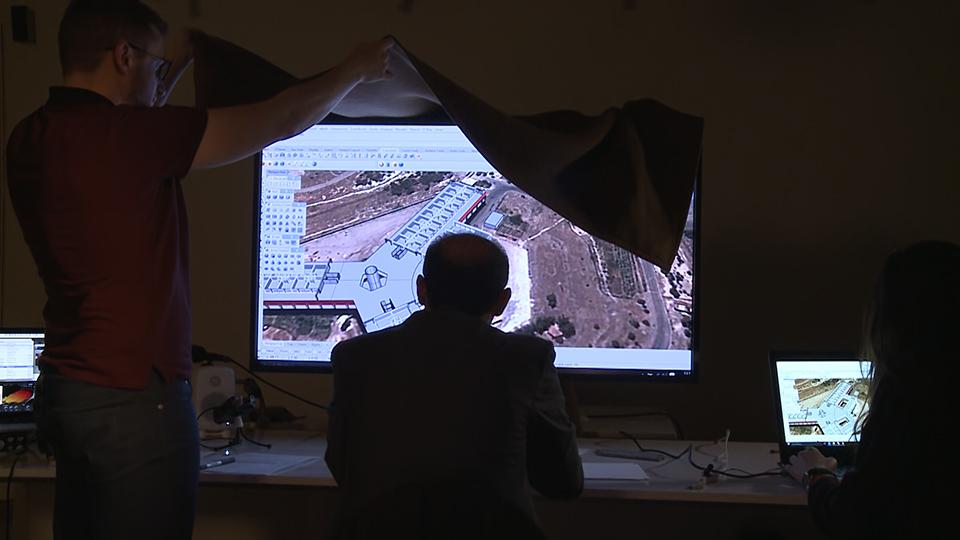
Figure 1. A detainee works with Forensic Architecture researchers to reconstruct Saydnaya prison, 2016. Courtesy Forensic Architecture.
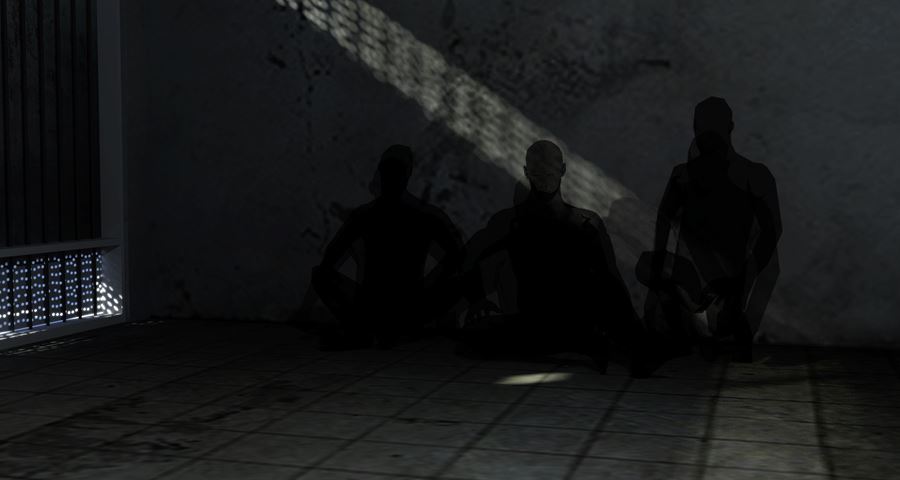
Figure 2. A rendered impression of a cell inside Saydnaya, constructed by researchers from survivors’ testimonies, 2016. Courtesy Forensic Architecture.
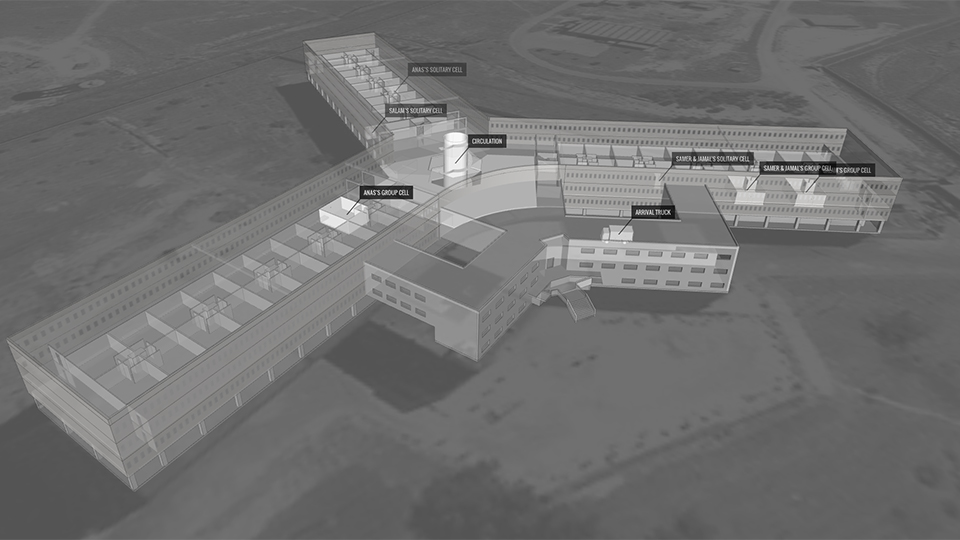
Figure 3. A rendered architectural plan of the Saydnaya prison, 2016. Courtesy Forensic Architecture.
Reina Akkouche Halabi is a graphic designer and critical theorist who recently completed an MA in Aesthetics and Politics at the California Institute of the Arts.
References
Abu Hamdan, Lawrence. 2017. Saydnaya (The Missing 19db). Accessed January 15, 2025. http://lawrenceabuhamdan.com/saydnaya.
Amnesty International. 2017. Human Slaughterhouse: Mass Hangings and Extermination at Saydnaya Prison, Syria. Amnesty International Ltd. https://www.amnesty.org/en/wp-content/uploads/2021/05/MDE2454152017ENGLISH.pdf
Amnesty International and Forensic Architecture. 2016. “Saydnaya.” Accessed on January 2, 2026. https://saydnaya.amnesty.org/?kind=explore
Chion, Michel. 2009. Guide to Sound Objects. Translated by John Dack and Christine North. Monoskop. https://monoskop.org/images/0/01/Chion_Michel_Guide_To_Sound_Objects_Pierre_Schaeffer_and_Musical_Research.pdf
Earshot. 2016. “Saydnaya: Inside a Syrian Torture Prison.” Featured Investigations. https://earshot.ngo/investigations/saydnaya-inside-a-syrian-torture-prison/
———. “Architecture of Sound.” YouTube video, 4:54. Posted November 2, 2023. https://www.youtube.com/watch?time_continue=3&v=DBsVQ8kNLuY.
———. “Earwitness Testimony.” Accessed January 15, 2025. https://earshot.ngo/what-we-do/earwitness-testimony.
———. “Saydnaya: Inside a Syrian Torture Prison.” Accessed January 12, 2025. https://earshot.ngo/investigations/saydnaya-inside-a-syrian-torture-prison.
Forensic Architecture. 2016. “Torture in Saydnaya Prison.” Last modified February 7, 2017. https://forensic-architecture.org/investigation/saydnaya
Foucault, Michel. 1977. Discipline and Punish: The Birth of the Prison. Translated by Alan Sheridan. Vintage Books.
Hamdach, Widyane, “The Fall of Bashar al-Assad: Winners, Losers, and Challenges Ahead.” Georgetown Journal of International Affairs, May 2025, https://gjia.georgetown.edu/2025/05/07/the-fall-of-bashar-al-assad-winners-losers-and-challenges-ahead/
Human Rights Foundation. “Assad regime overthrown after 53 years of repression and brutality; pivotal opportunity to establish rule of law and individual rights,” press release, December 9, 2024. https://hrf.org/latest/assad-regime-overthrown-after-53-years-of-repression-and-brutality-pivotal-opportunity-to-establish-rule-of-law-and-individual-rights/
Rancière, Jacques. 2004. Aesthetics and its Discontents. Polity Press.
Rancière, Jacques. “The Politics of Fiction.” Qui Parle: Critical Humanities and Social Sciences 27, no. 2 (December 2018): 269.
[1] This essay was first presented at the Experiments in Listening conference hosted by boundary2 at the University of Southern California and the California Institute of the Arts. I am grateful for the comments and dialogue it prompted at the gathering.
[2] See: “One Drop of Water”, accessible: https://saydnaya.amnesty.org/?kind=video&id=02.