b2o

Search results for: “pease”

  • Donald E. Pease: The Cultural Fantasy-Work of Neoliberalism

    Donald E. Pease: The Cultural Fantasy-Work of Neoliberalism

    Donald E. Pease’s talk, “The Cultural Fantasy-Work of Neoliberalism” is now online! Pease gave this talk at b2’s conference, Neoliberalism, Its Ontology and Genealogy: The Work and Context of Philip Mirowski, at the University of Pittsburgh on March 18, 2017.

    Political commentators have adopted contradictory interpretive frames – the end of neoliberalism tout court, the end of progressive neo-liberalism, the emergence of quintessential neo-liberalism, the continuation of neo-liberalism by populist, or fascist, or ethno-nationalist means – to describe the significance of Donald Trump’s election. In his talk, Pease borrows conceptual metaphors and quasi-juridical criteria from Philip Mirowski’s Never Let a Serious Crisis get to Waste: How Neoliberalism Survived the Financial Meltdown to sort out and critically evaluate these sundry accounts.

    Donald E. Pease is a Professor of English and Comparative Literature at Dartmouth, where he is also the Ted and Helen Geisel Third Century Professor in the Humanities. He is an authority on 19th- and 20th- century American literature and literary theory and founder/director of the Futures of American Studies Institute. He has written numerous books, including most recently Theodor Seuss Geisel (2010), and over 100 articles on figures in American and British literature. He is editor of The New Americanist series, which has transformed the field of American Studies.

  • Barack Obama Vs. the Tea Party — "States of Fantasy," by Don Pease

    Boston_Tea_Party_Currier

    From the 2012 Carl Bode-Norman Holmes Pearson Prize for Outstanding Contributions to American Studies, Don Pease’s new provocative essay analyzes the recent populist conservatism in terms of the disparate fantasies convoking its disparate constituencies.

  • Don Pease — "Futures of American Studies"

    Don Pease

    The world-famous course of lectures and seminars begins again this summer.  Here is the Institute’s Schedule. Don Pease, the Institute’s director, will be delivering his lecture, “Between the Camp and the Commons.”

  • The American Dream Debate — Don Pease at the Oxford Union

    Here is the video of those debates, with Don continuing his long meditations on America and President Obama.

  • Donald E. Pease — Wins the top award from the ASA — Congratulations!

    The Carl Bode-Norman Holmes Pearson Prize honors lifetime achievement
    in and contribution to the field of American Studies. Each year’s
    prize committee is instructed to consider afresh the meaning of a
    “lifetime contribution to American Studies.” The definitions of terms
    like “contribution” and even of “American Studies” remain open,
    healthily contested, and thus renewed.

    The 2012 prizewinner is Donald Pease, Dartmouth College.

  • Don Pease Awarded the degree of Doctor of Philosophy honoris causa

    Congratulations to Don!

    In recognition of his scholarly achievements, the Faculty of Languages at Uppsala University will confer the degree in a ceremony on January 29, 2011.

  • Donald Pease–Echoes of Bercovitch in the Obama Inaugural

    As I was listening to Barack Obama’s Inaugural Address this past Tuesday, it occurred to me that its rhetoric might serve as a textbook example of what Sacvan Bercovitch famously called an American Jeremiad. Obama urged his listeners to imagine themselves in a wintry campsite in the year of America’s birth, in the coldest of months, when the outcome of the American Revolution was very much in doubt so that they might understand the lasting importance of the following epistle that George Washington, the nation’s founding father, ordered be read to all the troops: “Let it be told to the future world … that in the depth of winter, when nothing but hope and virtue could survive … that the city and the country, alarmed at one common danger, came forth to meet [it].” This passage included the core ingredients of the American Jeremiad. In it Obama urged his listeners to embrace the ethos of the American revolution so that they might turn away from the course of corporate greed and political corruption that brought America to one of its darkest hours. Obama then enjoined his listeners to rededicate themselves to the nation’s founding principles so that they might renew what America had been and will be.

    From the beginning of his scholarly career Bercovitch has persuasively demonstrated how orations like Obama’s were constructed out of a set of emulable rhetorical conventions that ratified the continuation of the already constituted order of things. On January 20,2009, Barack Obama did urge all Americans to rededicate themselves to the nation’s constituting principles in a rhetoric that reaffirmed the political order constituted out of those principles. But what marked this address anomalous to the American Jeremiad was revealed in its having in fact effected a transformative change in the order of things. In the remarks that follow I’ll attempt to explain why Obama’s address forged an exception to the ruling norms of the American Jeremiad by briefly reflecting on the genealogy and provenance of Bercovitch’s brilliant interpretation of American literary and political culture.

    In his first book, The Puritan Origins of the American Self, Bercovitch explained how the Puritans transported the seat of empire from the old world to the new; how their 18th century heirs strategically changed the meaning of newness from a sign of the colonial status of dependency to the assertion at first of political uniqueness and later of moral superiority; and how, in the name of this complex sense of the new, the nation’s founders imagined that the virgin land had itself authorized an imperial summons to conquest and expansion. Bercovitch’s benchmark work, The American Jeremiad, convincingly demonstrated how the very terms through which American political leaders expressed their dissent indirectly ratified the society’s most cherished ideals. In explicating the characteristic literary strategy of Nathaniel Hawthorne as involving the intrication of demands for radical social change within structures of political continuity, Bercovitch’s The A-Politics of the Scarlet Letter provided a concrete example of this deeply entrenched cultural dynamic. Unlike his precursors, Bercovitch interpreted Hawthorne’s art of moral ambiguation as complicitous with a more pervasive cultural ritual that ratified embedded structures of political assent.

    With the publication of The Rites of Assent Bercovitch extended the reach of this analytic framework to American Studies scholarship. Upon remarking the ways in which the analytic tools of American studies consisted of the same structures-patterns of thought, myth and language-that americanist scholars had set out to investigate, Bercovitch correlated americanists’ “rituals” of dissent with more encompassing forces of social integration in American society. With this expansion of the dominion of his paradigm, Bercovitch rejected in advance any possible grounds for the conversion of dissent (whether expressed implicitly by literary works or explicitly by political groups) into the bases for actual social change. American ideology refutes and absorbs subversive cultural energies, Bercovitch cogently observed, “harnessing discontent to the social enterprise” by drawing out protest and turning it into a rite of ideological assent.1 I criticized Bercovitch’s inability to explain the historically verifiable instances of social change that took place during the American Renaissance in Visionary Compacts: American Renaissance Writings in Cultural Context. In their debates over the highly charged issues of expansionism, the national bank, slavery, and secession, American politicians and writers deployed the rhetoric of the American jeremiad to support utterly incompatible causes. When representatives of each of these factions used the American Jeremiad to give hortatory expression to their uncompromising views on these matters, they deprived the Jeremiad of its power to reinstitute an encompassing rite of assent.

    But my critique did not detract from the profound insight underpinning Bercovitch ‘s project. Like John Rawls, Bercovitch recognized that as a liberal political society, the United States promoted civic harmony through the exchange of conflicting opinions among individuals who presupposed a shared and overlapping consensus about the nature of political liberalism. Unlike Bercovitch, however, this Rawls invoked this insight to introduce an exception to liberal orthodoxies. According to Rawls, political liberalism could not acknowledge the absolute truth value of any one political position, but only the relative values of positions to which it was reasonable either to assent or to dissent.

    It was Rawls’s view that political liberalism could not admit a position that was founded upon an absolute truth claim without violating the asssumptions of the liberal political sphere as such. When he arrived at this formulation, Rawls was also conducting a tacit dialogue with Carl Schmitt. In The Concept of the Political, Schmitt had maintained that, in fostering a notion of politics as the noncoercive exchange of more or less equivalent political positions, political liberalism had to remain blind to the defining trait of the political sphere. Schmitt defined that foundational trait as the irreconcilable antagonism between political friends and political enemies. Political liberalism could not permit an irreconcilable opposition between friend and enemy to appear within the political sphere without losing its essential attribute, the recognition of the formal equivalence of all political positions. If the liberal state required the homogeneity of the political sphere for its stability, it could only achieve that stability by prohibiting what Carl Schmitt meant by politics.

    These observations led Schmitt to the conclusion that if the liberal state did not represent at least one political disposition as an enemy to the field of liberal politics as such, that field would remain vulnerable to becoming violently disrupted by the appearance within it of political discourses that were predicated on the friend-enemy distinction that it had foreclosed. During the cold war the national security state turned Schmitt’s insight into the rationale for changing the rules of the entire political order. At its outset, the US government replaced the liberal state with the national security state, by declaring the totalizing truth claims of marxian Communism an exception to the rules of the liberal political order as such.

    In turning Communism into an exception to the rule of political inclusiveness, the cold war state also shifted the terrain of political conflict from the internal domestic affairs of the nation-state to the international arena, where the conflict over fundamental political values was understood to be the matter of a conflict between utterly different imperial state formations. The national security state thereby enabled US political society to remain substantively homogeneous and yet open to a range of poli
    tical positions and heterogeneous populations through this construction of an exception to its rules of democratic inclusiveness.

    Bercovitch’s paradigm accurately described the obsessive cultural rituals though which cold war ideology celebrated the proliferation of political dissent as an example of what rendered the United States the leader of the free world. But like the cold war ideology it reflected, Bercovitch’s paradigm presupposed that absolutist views and foundational truth claims would always be excluded from liberal political society. Bercovitch’s account of American Jeremiad lost some of its explanatory reach in the wake of the cold war when evangelical Christians, market fundamentalists, pro life activists and paramilitary groups declared their irreconcilable opposition to their political enemies. The absolutist claims and fundamentalist values that these groups introduced into the liberal political sphere violated what Rawls and Bercovitch described as its foundational assumptions.

    President George W. Bush abrogated the assumptions formative of the liberal political sphere in their entirety in 2001 when he declared a State of Exception to the constitutional order so as to exercise the extra-legal powers necessary to conduct a global war on terror. While the war supplied the occasion for the state to enact extra-constitutional, illegal violence, it also rendered the sites at which the state exercised this violence vulnerable to being declared unconstitutional.

    The Bush State of Exception imposed severe limitations on the people’s constitutional rights. It was at the site of those imposed limitations that Barack Obama inaugurated a presidential campaign that was indistinguishable from a constitutional movement. His campaign turned on the American people’s right not merely to question or dissent from the State of Exception but to displace it altogether with a reaffirmation of the nation’s constituting principles. That’s why his reassertion of the constitutional principles of liberty and equality were transformative rather than reactionary. When Barack Obama, who represented members of the US polity who had been denied entitlement to them, rededicated the entire nation to its constituting principles, “We the People” had not performed a rite of assent but a successful overthrow of an unconstitutional order.

    I recommend reading the address through the lens of Bercovitch’s theory of American Jeremiad to recognize what was truly transformative about this moment.

  • Steven Swarbrick–XENOECOLOGY: Encounters with Alien Life

    This text is part of the b2o: an online journal special issue “EXOCRITICISM”, edited by Arne De Boever and Frédéric Neyrat. 

    XENOECOLOGY: Encounters with Alien Life

    Steven Swarbrick


    “In space, no one can hear you scream.” That was true of the original Alien.[1] Sound requires a medium. In Ridley Scott’s 1979 science fiction classic, Alien, horror is the medium, and yet the film is oddly mute. Yes, there is the shouting among the crew members, who all fall victim to the alien, except one; the blaring alarms; the emergency destruct system; and Mother, the onboard supercomputer’s ticker-tape-like instructions. Moreover, there is the alien, whose screeching, hissing, animalistic sounds are less a warning than a signal that it is too late; if you hear the alien, you are as good as dead. 

    However, when Ripley (Sigourney Weaver), the surprise hero, confronts the reptilian, acid-spitting alien in deep space, their encounters are nearly silent, save for the whooshing of airlocks and discharge of weapons. The final sequence of the 1979 film, in which Ripley discovers the alien stowaway in her shuttle, is unnerving because no words are exchanged between the hunter and the hunted. They do not share the same medium. No language and no sound mediate their interactions. The tagline, “In space, no one can hear you scream,” is apt not only as a description of physical space (sound does not travel in a vacuum), but also as a metaphor for the lack of relation between Ripley and the alien. There is a vacuum between them that only death eliminates. Even when the alien makes its victims parasitic hosts—incubators, essentially, for the alien offspring—a gulf remains between the host and the parasite. The iconic scene in which the alien bursts from the stomach of Ripley’s crewmate, Kane (John Hurt), demonstrates that while the alien can take up residence in its victim, it cannot coexist. The alien occupies its human host as an “internal foreign body.”[2]

    The psychoanalyst Jean Laplanche developed the term “internal foreign body” from Sigmund Freud to identify elements of a foreign language that do not assimilate to conscious meaning but persist as alien cargo in the subject’s unconscious. Language, Laplanche argues, may be a shared medium, and we are constantly translating one language into another, including gestures and other non-verbal signs. But the language of the unconscious, which includes our sexual traumata, does not translate except as a glitch or paroxysm in meaning. The unconscious bursts out, like the alien from its host. The otherness of the unconscious message is thus appropriately called das Ding (the Thing) by Jacques Lacan and “enigma” by Laplanche because it yields no translation.[3] The enigmatic message is the nonsignifying wound around which language and subjectivity grow, like a burl on a tree. It acts as an internal foreign body, menacing sense from within.

    To be sure, the alien message is social, but only in the limited sense that it comes from outside, from the unconscious of the other, which is implanted in us from birth. “The enigma leads back,” Laplanche writes, “to the otherness of the other; and the otherness of the other is his response to his unconscious, that is to say, to his otherness to himself.”[4] We are, from the beginning, bombarded by the language of the other, including signifiers, gestures, touches, and vocalizations, and are therefore always translating social cues. Parasitizing these social messages, Laplanche claims, is the subject’s unconscious (the other’s and our own), with its treasury of alien messages, ciphers, and drives, relaying, not the social per se, but the sexual unconscious of the social: its libidinal underside. The internal foreign body exists or insists in a shared medium—language—but does not cooperate with it. Much like outer space, the internal foreign body is a vacuum in things, words, and ideas, which neither sound nor sense penetrates. The Thing does not resonate.[5] As Todd McGowan explains, “[Lacan’s] das Ding is a version of the Kantian thing in itself translated from knowledge (where Kant has it) to desire. It isn’t what we can’t know but what our desire can’t reach. Das Ding is a Kantian concept through and through.”[6]

    Lacan furthers this Kantian lesson in Seminar VII: The Ethics of Psychoanalysis, where he posits the Thing (das Ding) as the alien body housed in the other and ourselves. Shifting terrain from the thing-in-itself to psychic space, Lacan theorizes das Ding as the internal foreign body occupying the other, a terrifying, nonsignifying monster constantly threatening to devour its host and anyone who dares confront it. To continue the outer space analogy, the alien Thing is a vacuum in language; “[it] is an inaccessible and unknowable void that attracts the subject’s desire.”[7] As such, it has no relational character. One does not relate to das Ding; it cannot be drawn out of its lair, brought into the open, dialogued with, or appeased. Das Ding partakes of no medium. It is a pure annihilating void.

    Ripley’s nearly silent battle with the alien is therefore emblematic of the battle one undergoes when brought into the zone of das Ding. I say “brought into” since no one willingly goes there. Lacan praises Antigone as an exception, whose ethical stance orients her to das Ding. Two of Lacan’s readers, Mari Ruti and Richard Boothby, extend the significance of das Ding to both artistic and religious practices.[8] Nevertheless, the Ding concept stands for a trauma that neither art, religion, nor ethics can mollify, since their power derives from the obliterating force of this primary nothingness. Lacan’s point about das Ding is that it is the primal repressed of the psychic system, the parasite that cannot be negotiated with or removed since the entire human edifice is built on its alien nest. Get too close to it, and interpsychic space—the social medium—collapses. It is the Thing in us more than us, to borrow Lacan’s poetic turn of phrase.[9] The parasite that bursts from the human body in Alien is horrifying because it visualizes the inhuman stowaway—the internal foreign body—inhabiting us all. Alien—and perhaps science fiction in general—is Kantian in this precise way. It confronts viewers with the “extimacy” (i.e., intimate exteriority) of the Thing.[10]

    A philosophical reversal happens in Noah Hawley’s Alien: Earth, which premiered on TV in 2025.[11] Although much of the TV series resembles the original Alien—there are monsters, Mother, corporate pawns traveling through deep space, and a no-nonsense female protagonist, Wendy (Sydney Chandler)—the show’s philosophical coordinates shift radically. The alien in Alien: Earth enters symbolic space, the very thing that was impossible in the film franchise and in Kant’s exo-philosophy. Even the psychoanalytic notion of the “internal foreign body” makes symbolization hard, if not impossible, to think, because the Thing is radically individual. My Ding is not yours. Your Ding is not mine, although I may desire it. The alien remains a private horror. One cannot socialize das Ding; one either succumbs to it, or, in the case of Ripley, jettisons it (for a time). 

    The change in the alien’s status in Alien: Earth cannot be overstated. In philosophical terms, it is the difference between Kant’s unknowable thing-in-itself and Hegel’s dialectic, which brings the unknowable thing into symbolic space and vice versa. In psychoanalytic terms, the change in the status of the alien corresponds to Lacan’s abandonment of das Ding, which marks the high point of his Kantian period, and subsequent theorization of the objet a. According to McGowan, “Lacan moves from an emphasis on das Ding in Seminar VII to a focus on the objet a two years later. … The crucial difference is that the objet a, unlike das Ding, has an immanent status for the subject, not a transcendent one. The objet a does not reside in the beyond but disturbs the field of representation from within.”[12] The difference between these concepts thus comes down to where one puts the limit: das Ding is an outer limit; objet a brings the outside in.

    Compare the ending of Ridley Scott’s Alien to that of Alien: Earth, and the difference in these philosophical positions becomes pronounced. Alien ends with Ripley, the sole survivor, save for her cat, trapped in a shuttle with the alien. She must eject it into outer space, where it belongs—where there is no shared medium of sound or language—to live. The Ripley of Alien is a monad floating through space, where she does not scream because no one can hear her. She suffers from her alien Thing privately (Figure 1).

    In contrast, Alien: Earth ends with a collective (Figure 2), including the “Xenomorph” (Figure 3)—the name given to the alien in the TV series—highlighting, I can only speculate, its transformed status as both a stranger (xenos) and a guest-friend deserving hospitality (xenia). In Homer’s The Odyssey, when the goddess Athena first visits Odysseus’ son, Telemachus, she appears as a stranger and “guest-friend.”[13] Their interactions and much of the poem turn on this crucial, Ancient Greek concept of hospitality or xenia: the reciprocity between guest and host. In Alien: Earth, the Xenomorph is a guest in more ways than one: it is a stranger; moreover, it is an immanent exception within the social fabric. Whereas Ripley confronts the alien as an outer limit, a devouring hole, the Xenomorph inhabits the symbolic medium.

    Figure 1: Ripley in Ridley Scott’s Alien (1979)

    Figure 2: Wendy and co. in Noah Hawley’s Alien: Earth (2025)

    Figure 3: The Xenomorph

    The Xenomorph is not the only alien in the series. The central characters are children—“Lost Boys,” in the Peter Pan-inspired logic of the show—who, because of terminal illness, became candidates for a high-tech, transhumanist experiment by one of the Earth’s controlling corporate entities, Prodigy Corporation. The experiment implants the children’s minds into humanoid, synthetic bodies, notably, adult synthetic bodies: “hybrids” with superhuman strength. They are child guests in mechanical forms. They are also guests on the occupied island where Prodigy Corporation is headquartered. The alien of Alien: Earth arrives via shipwreck. A rival corporation, Weyland-Yutani’s deep-space research vessel, crashes into Earth, carrying the Xenomorph and a collection of other outer-space oddities, including a cunning octopus-like creature, nicknamed “The Eye” because of its oversized eyeball, that invades and overrides its organic host. Lastly, the child hybrids are invaded by memories—past traumas—that their programming did not eliminate. Although their consciousness was translated into computer code, their adult engineers did not anticipate the unconscious reserve of enigmatic messages that would hijack their program. The hybrids are internal foreign bodies: implanted in machines; implanted by enigmatic messages.

    The guest-host dynamic structures the entire series, with the host, Prodigy Corporation, failing to uphold the obligations of xenia or hospitality. The Xenomorph is a “product” in the words of Prodigy’s CEO, Boy Kavalier (Samuel Blenkin). The conquest of foreign life, particularly the island ecology where much of the action takes place, puts Alien: Earth in a colonial framework of occupation and control. The shipwreck and crossing of identities into hybrids (human and robot, friend and enemy) also puts the series squarely in the fantasy genre, where it would be at home with Peter Pan or William Shakespeare’s The Tempest

    The dramatic reversal from Alien to Alien: Earth is not simply the change of location, from deep space to Earth. Nor is it the emphasis on reversal as such. The crossing of alien and host is essential to the entire Alien franchise. Moreover, as Jarek Paul Ervin writes, “the dystopian Alien films have long stood out for dealing explicitly with class and rapacious capitalism.”[14] The explicit political messaging of the series, viewed against the backdrop of the Trump Administration’s white supremacy, anti-immigrant hostility, and xenophobia, as well as the tech industry’s collusion with the far-right, providing the technology to surveil, arrest, disappear, and kill foreign and “internal foreign bodies” (leftists, immigrants, Palestinians, Black, Brown, and trans people), furthers the Alien films’ anticapitalist critique. Instead, it is the reversal of philosophical paradigms that truly sets Alien: Earth apart.

    Alien: Earth is a Hegelian TV series. Whereas Alien confronts viewers with the impossible Thing, impossible because the alien is outside representation, the Xenomorph in Alien: Earth undergoes a radical shift: from the alien Ripley shoots into outer space to the “guest-friend.” The outsider enters the social link.

    This transformation does not happen instantaneously. If we think in terms of translation, from place (outer space) to place (Earth), and language to language, it is a process. The mediator in this process is Wendy, the leader of the band of lost children, the first human-synth hybrid, and the CEO’s favorite piece of R&D. Wendy is a wunderkind in a synthetic body who has the unique ability to translate human, computer, and alien code. She is a product of translation—the translation of a child’s mind into a machine—and learns to communicate with the Xenomorph held captive by Prodigy. Wendy slowly perfects the rhythmic clicks, chirps, and animal chatter that the Xenomorph recognizes as its mother tongue. In contrast with Ripley’s near-silent standoff with the adult alien, Wendy gradually befriends the child Xenomorph, who obeys her as its mother. For the first time in the Alien franchise, the alien is no longer a pure annihilating force; its actions appear structured. It communicates. It listens. It protects. It collaborates.

    In one of several superimpositions, we see Wendy’s face overlaid on a distant landscape. A silhouette of the alien appears against Wendy’s parted lips, stirred, summoned, and even metaphorically birthed through the labial aperture (Figure 4). Both figures appear partially negated: the alien is reduced to an outline, and Wendy to a partial object, the mouth. The voice emanating from the mouth stirs the alien to action, and yet it also stirs in the viewer an echo of the Thing: sound that does translate into sense.[15] To be sure, the voice makes sense to Wendy and the Xenomorph. However, we are outside their sonic exchange. The superimposition operates an internal exclusion or parallax between sound and sense, and between the alien and Wendy.

    Figure 4: Wendy and the Xenomorph superimposed

    Laplanche, as we said above, theorized the alien message as an untranslatable kernel of raw negativity that never transforms into meaning but parasitizes meaning and language. He called the alien thing the “enigmatic message” because it comes from outside us, at birth, even before birth, and well after, as we are trained, civilized, Oedipalized, and domesticated through language and cultural codes, assimilated, that is, to the adult world. We enter the world as a polymorphous frenzy of partial objects and drives, and gradually transform into a civilized (repressed) subject. Laplanche’s point is that this ordinary translation from child to adult is never seamless. The grit in the gears of the child’s transformation is the enigmatic message: outer space brought inward. Trauma, in this sense, is a structural component of the civilizing process. We are eccentric beings, ex-centered by the unconscious, because we are (to ape Martin Heidegger) first and foremost beings-with-others who are also invaded by unconscious messages: the exo-factor in our psychic makeup.

    Crucial to Alien: Earth is that it dialectically reverses the nonsignifying message. Whereas Ripley and the alien had no means of communicating, Wendy and the Xenomorph converse; they even bond. However, the result is not the complete assimilation of the alien into the human world—the world of adults. Instead, the newly formed social link between Wendy and the Xenomorph triggers Wendy’s all-out rebellion against the human world of adults, namely, Prodigy Corporation. 

    The Earth of Alien: Earth is entirely dominated by corporate capitalism; the poorest of humanity live in squalor; and the Prodigy CEO, Boy Kavalier, dreams of creating a transhuman future, in which human-machine hybrids are free to leave the devastated planet and colonize outer space. Wendy disrupts the CEO’s tech-bro fantasy. Wendy learns to communicate with the Xenomorph, and the result is a complete destitution—a break from the corrupt world of humans and capital, where she, no less than the Xenomorph, is held prisoner. The alien in the machine and the alien with the machine undergo subjective destitution: divesting from the Prodigy Corporation, their corporate family, and host.[16]

    Here is the Hegelian dialectic at work: the outside (the alien) enters the social fabric, becoming alien to its former representation, and the social, in turn, becomes alien to itself. In the Preface to the Phenomenology of Spirit, Hegel writes: Substance is equally Subject.[17] What this means is that, on the one hand, Kant’s thing-in-itself is not an isolated substance wholly exterior to the world of subjectivity. On the other hand, subjectivity is not external to the Thing. The most horrifying thing imaginable, the Xenomorph, is the “guest-friend.” That is the thesis of Alien: Earth. It critiques the colonial fantasy of assimilation, transforming what is foreign and strange into the familiar, as well as the hateful rhetoric of xenophobia, rejecting what is foreign as unassimilable, by turning the adult world (the world of high-tech commodities, disaster capitalism, ecofascism, and outer space colonialism) inside out. The collective we see at the end of Alien: Earth, when the child-synths and Xenomorphs have overthrown their adult captors, is an exo-collective or xeno-collective. It is forged by the stranger, by what is alien (lacking) in their mother tongue. That, after all, is Laplanche’s point: language is incepted by an alien tongue. Although we translate the messages coming from outside, they encrypt something that does not speak, much less obey.

    It is not hard to recognize the xeno-collective as a chosen family, as a xeno-proletariat revolting against its capitalist and Oedipal host. The Xenomorph and child-synths are forcibly displaced, aliens on Earth and in the bodies that others program and control. As figures of xenia, they expose the hostility of their hosts, who try to immunize their “tech” as soon as the aliens rebel or malfunction. They are also eco-radicals, insofar as they show that the island’s colonizers are the true invasive species. Finally, they are code breakers, not because they decode all differences and dialogue seamlessly, but because they recognize that the virus is vital to the code. The enigmatic message is an internal foreign body, not to be refused.

    I propose “xenoecology” as the term best suited to Alien: Earth’s philosophical reversal. The heterodox collective of psyche, machine, human, and alien is not so much a community with a defined boundary as an xenoecology of subjects connected by what they all mutually lack, in which the boundary between inside and outside is never clear.[18] Xenoecology welcomes aliens: extraterrestrials, yes, but not exclusively. What it welcomes primarily is the “internal foreign body,” which is extra-human in the sense Lacan registers when he talks about the “in you more than you.”[19] The “in you more than you” is a +1, an uninvited guest, at the ecological table. Although we do not have the words to represent it, its presence is undeniable. The +1 sticks out, derails the conversation, sucks up the oxygen, and overstays its welcome. It does not belong, yet it insists on being here. We think this outsider might have something to offer: How can we put the +1 to work? But the uninvited guest does not play nice. It mucks things up rather than playing its part. It does not ask to be included; it extrudes the outside. The +1 has this negative dimension: one foot in, and one foot out the door. Its disturbance is local, but its source is nonlocal. Its topology is a hole: atopic. What is more, the +1 that Lacan calls das Ding and objet a, two figures of nothingness, is a guest one cannot disinvite. It takes up residence as an internal foreign body, a virus, or an alien, but the truth is that there would be no inside without it—the internal foreign body structures ordinal space.

    Donna Haraway conceives of ecology as a dinner party where companion species break bread.[20] Timothy Morton theorizes ecology as a rave where “strange strangers” bump and grind.[21] Eugene Thacker speculates about out-of-this-world encounters, the slimier, the better.[22] And xenofeminist Helen Hester views the cyborg as the emissary of a post-natural, post-gendered world.[23] The xenoecology I posit welcomes these strange strangers as comrades. However, the alien life I investigate is neither a dinner guest nor a pure beyond nor a messianic messenger of the transhuman to come. Instead, xenoecology concerns aliens who are already here, who do not eat, sleep, or translate. Xenoecology is not about nonhumans, but neither is it humanist in any straightforward sense. Its interest is the inside other (enigmatic messages and drives), aliens with no plan to assimilate. 

    One could criticize xenoecology as excessively intrapsychic, with nothing to offer realpolitik. While that is true in one respect—it is intrapsychic—my gambit is that an ex-centered psyche is crucial to political ecology. The latter is, by and large, lumpen bio-historicism. It examines bodies and their contexts. We can call this form of criticism geocentric: reading how the outside acts on bodies and vice versa. It reads via GPS.

    Psychoanalysis offers a Copernican alternative: reading how the outside acts from within, de-centering “our” home (psychic space) and by extension, ecology. Laplanche’s theory of the “internal foreign body” or das Andere, the other in the unconscious, the inside other, aims to fulfill psychoanalysis’s Copernican calling by ex-centering subjectivity. Xenoecology not only welcomes the ex-centered subject but also derives from it: it is composed not of insiders but of inside others, an ecology that is not place-based or geohistorical but uprooted: extra-terrestrial. Its signet, the +1, makes aliens of us all.

    At a time when global fascism, ongoing settler colonialism, and genocide, aided by tech companies and the billionaire class, ruthlessly enforce inhospitality, including inhospitality to the planet it plunders, xenoecology proposes, not inclusion, not the liberal tolerance of differences, but the ethical risk of welcoming the Thing (void of every social formation) into the social fabric where it cannot but distort it. In Alien: Earth, Wendy hears the alien as a desirable distortion and vice versa. The rhythmicity of the young Xenomorph’s clicks and chirps activates her unconscious desire and draws her to it. Jamieson Webster notes that “all desires [are] born from a lack.”[24] She relates Freud’s belief that “our first memories are centered on the sound of our own crying.”[25] Our first helpless “modulation of breath into a cry is a tool of survival that is also the beginning of memory—one that stretches all the way back to the beginning of the species, maybe even life”:[26]

    Our cries are indelibly etched into our minds alongside whatever experiences of pain or fear as well as the soothing by others that (hopefully) follow. All memories have an acoustic accompaniment that goes back to these first ones—a double archive in the mind. … We are, in the Freudian universe, utterly helpless as human infants. And yet, the infant has this power to solicit.[27]

    The Xenomorph’s cry solicits Wendy’s memory of being born helpless (first, as a child; second, as a machine; and third, as a new subjectivity in league with the alien). The result is not simply more inclusion, but a total transformation of social life. The thing that was previously excluded—the reptilian, shapeshifting, acid-spitting alien—becomes the “internal foreign body” of a new social formation. One could critique this outcome as a domestication of the Thing. Is the alien not ultimately Oedipalized or normalized by Wendy? Although this is undoubtedly a risk, the alien is not simply Wendy’s pet or child. The alien dislocates her from the language of her captor and the ideology of capital. She becomes a stranger in common with the alien, strange to herself. Moreover, while viewers get to hear Wendy and the Xenomorph speak, their discourse is, to us, purely sonic, stripped of meaning. The show maintains the foreignness of their alien tongue. Their cry solicits ours. 

    [1] Alien, dir. Ridley Scott (Twentieth Century Fox, Brandywine Productions, 1979).

    [2] Jean Laplanche, Essays on Otherness (New York: Routledge, 1999), 256.

    [3] Jacques Lacan, The Seminar of Jacques Lacan, Book VII: The Ethics of Psychoanalysis, ed. Jacques-Alain Miller, trans. Dennis Porter (New York: Norton, 1992), 43.

    [4] Laplanche, Essays on Otherness, 255.

    [5] Philosophically speaking, the Thing (Freud and Lacan) and the internal foreign body (Laplanche) register, in psychoanalytic terms, the exo-philosophy of Immanuel Kant, who posits the thing-in-itself (Ding-an-sich) as the impossible object of knowledge. “Kant’s philosophy depends,” Todd McGowan writes, “on a contrast between knowable appearances and the unknowable thing in itself. For Kant, the thing in itself doesn’t lie beyond the realm of appearances but rather constitutes the limit of that realm.” Todd McGowan, The Cambridge Introduction to Jacques Lacan (Cambridge: Cambridge University Press, 2025), 108.

    [6] McGowan, Cambridge Introduction to Jacques Lacan, 108.

    [7] McGowan, Cambridge Introduction to Jacques Lacan, 106.

    [8] See Lacan, Ethics of Psychoanalysis; Mari Ruti, “The Brokenness of Being: Lacanian Theory and Benchmark Traumas,” Angelaki 28, no. 6 (2023): 123–70; and Richard Boothby, Embracing the Void: Rethinking the Origin of the Sacred (Evanston, IL: Northwestern University Press, 2023).

    [9] Jacques Lacan, The Seminar of Jacques Lacan, Book XI: The Four Fundamental Concepts of Psychoanalysis, ed. Jacques-Alain Miller, trans. Alan Sheridan (New York: Norton, 1998), 268.

    [10] Lacan, Ethics of Psychoanalysis, 139.

    [11] Alien: Earth, creator Noah Hawley (20th Television, 26 Keys Productions, Brandywine Productions, FX Productions, Living Films, 2025–).

    [12] McGowan, Cambridge Introduction to Jacques Lacan, 109.

    [13] Homer, The Odyssey, trans. Emily Wilson (New York: Norton, 2018), 1:106.

    [14] Jarek Paul Ervin, “Alien: Earth Is a Much-Needed Defense of Humanity,” Jacobin, August 18, 2025, https://jacobin.com/2025/08/alien-earth-television-sci-fi-dystopia-review.

    [15] See Mladen Dolar’s term “object voice” in A Voice and Nothing More (Cambridge, MA: MIT Press, 2006), 4.

    [16] On subjective destitution, see Steven Swarbrick, The Earth Is Evil (Lincoln: University of Nebraska Press, 2025). On divestment as a psychoanalytic act, see Steven Swarbrick, Divest: An Essay on Political Masochism (Minneapolis: University of Minnesota Press, 2026).

    [17] G.W.F. Hegel, Phenomenology of Spirit, trans. A.V. Miller (Oxford: Oxford University Press, 1977), 10.

    [18] Swarbrick, Earth Is Evil, 24–26.

    [19] Lacan, Four Fundamental Concepts of Psychoanalysis, 268.

    [20] Donna J. Haraway, When Species Meet (Minneapolis: University of Minnesota Press, 2007), 17.

    [21] Timothy Morton, The Ecological Thought (Cambridge, MA: Harvard University Press, 2010), 41; and Timothy Morton, Dark Ecology: For a Logic of Future Coexistence (New York: Columbia University Press, 2016), 153.

    [22] Eugene Thacker, In the Dust of This Planet: Horror of Philosophy Vol. 1 (Winchester, UK: Zero Books, 2011).

    [23] Helen Hester, Xenofeminism (Cambridge, UK: Polity, 2018).

    [24] Jamieson Webster, On Breathing: Care in a Time of Catastrophe (New York: Catapult, 2025), 15.

    [25] Webster, On Breathing, 14.

    [26] Webster, On Breathing, 15.

    [27] Webster, On Breathing, 14–15.

  • Aya Labanieh–Cynical Uses of Suffering: Gaza, Antisemitism, & the New Digital Right

    Aya Labanieh–Cynical Uses of Suffering: Gaza, Antisemitism, & the New Digital Right

    This essay was first published by Forum Transregionale Studien on 04/16/2026. It is republished here as part of the b2o Review’s “Stop the Right” dossier with permission of the author and Forum Transregionale Studien.

    Cynical Uses of Suffering: Gaza, Antisemitism, & the New Digital Right

    Aya Labanieh

    By the estimation of most academics, journalists, and medical experts, the Covid-19 pandemic was a mass radicalization event—one that unfolded almost entirely on the Internet.[1] As a global crisis in public health, the pandemic brought with it an equally global surge in online conspiracy theories and paranoia—resulting in a generalized mistrust of institutions and state apparatuses, ranging from schools and intellectuals to Big Pharma and high tech. In a dizzying validation of horseshoe theory, factions of the traditional Left and Right moved into overlapping conspiratorial territory around mRNA vaccines, mask mandates, lockdowns, microchips, and the “Great Reset”—a supposed plan of global elites to use the pandemic as an excuse to dismantle capitalism, depopulate the West, and enforce radical social change. Across Europe, Canada, and the U.S., far-right political groups hijacked rallies against Covid-19 measures and used anti-vax sentiment to peel large segments of the alternative left—hippies, anarchists, fitness gurus, proponents of alternative medicine—to their side, in what has come to be called the “crunchy-to-alt-right pipeline.”[2]

    The landscape of the Anglophone Internet itself, especially in North America, drifted rightward—rewarding influencers who churned out pandemic disinformation and conspiracy theories with high engagement, fame, and easy income. The popular term online for such a person is a “grifter”: someone who betrays their convictions, political or otherwise, for material gain, transforming what they claim to believe based on what is trending or what sells. While one can never be sure what a particular influencer truly believes, especially since many content-creators became as radicalized as their own audiences during lockdown, grifters can serve as useful indicators of where money can be made online.

    A slew of “wellness” influencers, which have been called the “Disinformation Dozen,”[3] generated fame and wealth for themselves by spreading vaccine misinformation on the Internet; however, this right-ward grift also scrambled the map of distinctly political influencers and media personalities. Formerly left and liberal content-creators, such as British comedian Russell Brand, American activist Naomi Wolf, and American media network The Young Turks, boomeranged towards MAGA. Once an avowed socialist, Brand staged an elaborate conversion to Christianity in 2024 and posts constant praise of the Trump administration; TYT has pivoted away from the progressive platform that first catapulted them to fame in the 2010s towards “culture war” issues like trans identity, with key pundits now self-identifying as “politically homeless”; Wolf transformed from the feminist author of The Beauty Myth to a full-time pandemic disinformation machine. Meanwhile, content-creators who were centrist or center-right slid smoothly towards far-right or even fascist positions to catch up with their audiences. U.S. podcaster and comedian Joe Rogan, who once endorsed the progressive senator Bernie Sanders for president in 2020, now openly circulates vaccine misinformation, climate denialism, and MAGA propaganda; moreover, the guests he now invites to his podcast are almost entirely far-right and fringe figures, including Tim Walsh and Alex Jones. As with Naomi Klein’s “Shock Doctrine,” the misinformation grift took advantage of real shock or trauma generated by the world-wide pandemic, harnessing the legitimate pain and paranoia widely shared among Western publics to turn a quick buck.[4]

    But Covid-19 is an old story now: the first harvest of a now-routine Internet strategy. This strategy is spearheaded by a political movement I am calling the New Digital Right: it relies on social media influencers, platform affordances, and online virality to scramble political alliances and mobilize collective emotions of fear and outrage towards dark and destructive ends. The latest rupture online surrounds the topic of Israel in the wake of its full-scale invasion of Gaza after October 7th, 2023—an invasion that human rights organizations around the world, from the United Nations to B’Tselem, have declared a genocide. The case I will make in this piece is as follows: the far-right is taking advantage of global attention to the genocide in Gaza, alongside Israel’s plummetting popularity among Western publics, to radicalize and recruit new followers. The U.S.-American far-right in particular is seizing upon the media vacuum created by government censorship of anti-war and anti-Zionist voices to launder and normalize their own virulently fascist and antisemitic politics.

    Israeli Propaganda & the Far-Right Pivot

    Much like Covid-19, the topic of Israel and Gaza has subsumed online and offline mediaspheres worldwide. In the wake of the Israeli invasion, encampments popped up on countless university campuses, labor strikes and boycotts were called, and millions of people filled city streets across the globe. Western urban centers became the focal point of this civil unrest, shifting mainstream attitudes on the topic: by the estimation of Gallup research polls in 2026, Israel has lost popular support among the American public for the first time in its history, with mistrust of the Israeli government and sympathy for Palestinians increasing across all age groups and party affiliations.[5]

    The Israeli government and Israeli cyber companies have dumped millions of dollars in online propaganda to regain control over what they call the “media war,” which even Israeli PM Benjamin Netanyahu admits they are losing. Numerous reports have found that Israeli companies deployed AI and bot farms to spread disinformation to Western audiences about the attacks of October 7th and their genocidal aftermath, as well as to dehumanize Palestinians and those who advocate for them.[6] They likewise commissioned a 2 million-dollar psyop to target U.S.-American lawmakers: they used hundreds of social media accounts across X, Instagram, and Facebook to pose as real U.S.-American citizens and pressure politicians (especially those who were Black or belonged to the Democratic Party) to support Israel and vote for increased military funding.[7] Speaking at a meeting of U.S. influencers at Israel’s Consulate General in New York, Netanyahu openly declared that social media is a crucial weapon in the Israeli war effort, and more pro-Israel influencers are needed to turn the rebellious tide of the younger “woke” generation.[8]

    These Israeli propaganda efforts are part of what media scholar Rebecca Stein calls “visual media management”: Israel sees itself as suffering from a PR crisis, or a “crisis of injurious media,” and uses disinformation campaigns to strategically deny, sublimate, obfuscate, or repress viral documentation of the genocide.[9] Stein argues that the graphic and disturbing images emerging from Gaza are understood by the Israeli government as “injurious images” that require active management and control: through this logic of substitution, the injured Palestinian in the image is replaced by the narrative of the “injured state” that must be defended in the trenches of digital warfare. When framed this way, even the image of a dying Palestinian child is itself an attack on Israel.

    Hand in hand with disinformation campaigns is the process of algorithmic censorship. In addition to the violent crackdowns on student protesters and outspoken artists and academics, the U.S.-American government has balked at the ubiquity of antiwar or pro-Palestinian content on social media, especially on platforms like TikTok. TikTok was briefly banned for reasons of “national security” and has been pressured to change its algorithm; since then, many activists report being “shadow-banned” on the app when they post political content, especially with regards to Israel and Gaza.[10] This “shadow-banning” tactic has been widely deployed by Mark Zuckerberg’s Meta, which owns both Facebook and Instagram, to limit the reach of antiwar content worldwide,[11] all the while removing fact-checking mechanisms from both platforms in an attempt to appease the Trump government.[12] The environment of Elon Musk’s X is even more extreme: since taking over the platform (known then as Twitter) in 2022, Musk has willfully destroyed the X algorithm, which periodically suspends pro-Palestinian accounts while refusing to censor neo-Nazi content,[13] and distributes blue checkmarks—which once served as stamps of authority or legitimacy—on a “Premium” pay-to-play basis.[14]

    While it is evident that social media has become a major political battlefield today, what is less obvious is that the smearing and silencing of legitimate critical voices such as journalists, analysts, and activists on the issue of Israel has created a toxic ecosystem in which far-right influencers are thriving.

    In the immediate wake of the invasion, neo-Nazi accounts cynically used the graphic virality of videos emerging from Gaza to recruit followers. Tech Transparency Project reported a spike in antisemitic and Islamophobic content across X emerging from Premium white nationalist accounts, which deployed a variety of strategies.[15] Some leaned on the Great Replacement Theory, claiming that the destruction of Gaza is how Jews will send more refugees to flood and destroy the Christian West. Others weaponized the legitimate public skepticism of Israeli government propaganda (such as false claims of “beheaded babies” during the October 7th attacks) to deny the Holocaust. Both of these tactics tether instances of real destruction and disinformation to false antisemitic conspiracy theories, which help the latter to garner greater attention and legitimacy. Some white nationalist accounts simply let the images of Palestinian suffering speak for themselves, without showcasing their own fringe politics too clearly—which in turn allowed them to fold many unsuspecting users into their audience base. Many consuming this content did not realize its source: by following these accounts or recirculating their posts, new followers thus allowed far-right messaging to magnify its reach into the mainstream political conversation.

    As a result of this cynical pivot towards Gaza coverage after October 7th, many far-right and white-nationalist accounts have seen a steep jump in follower count, and their posts following the invasion have thousands more likes, reposts, and comments than any of their activity yielded in the years prior. Far-right X accounts like Jackson Hinkle, CensoredMen, Keith Woods, and Ryan Dawson gained massive traction for their engagement with the genocide, often by circulating content that could easily be construed as leftist, liberal, humanitarian, or anti-war. For example, Jackson Hinkle tweeted numerous images of the Nakba accompanied by anti-colonial talking points (“History didn’t start on October 7th”), videos of the killing of journalist Shireen Abu Akleh and subsequent attacks at her funeral (taking care to state “Zionists are demonic”) and so forth, each garnering hundreds of thousands of likes.[16] As Lindsay Schubiner of the Western States Center points out, white nationalists frequently smuggle their exclusionary ideologies into mainstream discourse by attaching themselves to current events, without any real investment in said events aside from the sowing of chaos and hatred.[17] Nick Fuentes, arguably the biggest white-nationalist influencer online, admitted as much in multiple streams, claiming that his focus on Palestinian suffering was strategic for recruitment against the “liberal order,”[18] and later insisted in his 2025 interview with Piers Morgan that the “true” genocide taking place today is against the white race in the West at the hands of “organized Jewry.”[19] This notion of “white genocide” is part and parcel of the Great Replacement theory mentioned prior—a far-right conspiracy theory that implicates Jews in a grand plot to import brown and black refugees from the “Third World” to genetically “replace” white Western populations.

    Nefarious Solidarity and DEI White Nationalists

    Quickly, more formidable grifters began to smell the blood in the water. After all, the influencer model relies on hijacking and rerouting attention, and given the degree of global outrage over Gaza, many realized they could ride the coattails of genocide coverage and turn a high profit. Though Israel has long been an untouchable subject in the U.S.-American mediasphere, right-wing influencers are breaking with establishment media over the issue, taking advantage of the clear disconnect between publics and pundits. Figures such as Candace Owens and Tucker Carlson are exploiting the fissures in the Republican base and turning on the organizations that first launched their careers, such as The Daily Wire, Turning Point USA, and Fox News. They have realized that they can hijack audiences from under the noses of their former bosses, while also harnessing anti-war and anti-Israel sentiment to generate mass appeal from all sides of the political spectrum.

    This is part of a broader strategy that the New Digital Right is developing, which I have elsewhere termed “nefarious solidarity” (Labanieh, forthcoming). Nefarious solidarity is a strategy of conscious pandering, through which the Western, Anglophone far-right diversifies its digital audiences across ethnic and religious lines. It entails convincing individuals from a variety of backgrounds to ally with far-right political ideology against a designated Other that conveniently does not include them (undocumented immigrants, LGBTQ individuals, women, etc). This strategy functions by A) platforming influencers of diverse backgrounds to articulate far-right positions and B) focusing on viral “wedge issues” that scramble traditional political alliances. Both of these elements of nefarious solidarity also happen to have a high potential for digital virality. Diversifying the far right in this way helps prevent its adherents from being siloed and marginalized from the online public sphere: it ensures greater follower counts and thus greater revenue and reach. As such, a persistent joke online is that today’s neo-Nazis are the foremost practitioners of DEI (“diversity, equity, and inclusion”) because their largest figureheads are almost entirely self-hating minorities.

    A particularly entertaining example of this is a recent media stunt that a gang of far-right influencers pulled at a Miami Beach night club on January 20th, 2026.[20] Andrew Tate, Tristan Tate, Nick Fuentes, Clavicular, Sneako, Myron Gaines, and Justin Waller filmed themselves dancing at the Vendôme club while blasting Kanye West’s widely banned song “Heil Hitler” and openly doing Nazi salutes in the crowd. This absurd video was hard-crafted to go viral online: in an attention economy, generating outrage through this form of “rage-bait” is a bid for relevance and exposure, and helps lead new acolytes to these influencers’ streams. What is amusing, however, is how dizzyingly diverse the Heil-Hitler gang happens to be: the avowed white supremacist, Nick Fuentes, is himself half-Mexican; the Tate brothers are half-black, with Andrew converting to Islam in 2022; Sneako is mixed-race (Haitian, Hungarian, Ashkenazi Jewish, and Filipino) and converted to Islam in 2023; and Myron Gaines is a Sudanese-American Muslim. This unlikely group of neo-Nazis is throwing up salutes to a song by an African American rapper, who has since 2016 been descending deeper and deeper into the rabbit-hole of mental illness and far-right radicalization. The ironies write themselves—and point to a distinctly new way of moving Western political culture rightward in an increasingly cosmopolitan digital environment.

    To become a mass movement, the far-right recognizes that it needs to generate mass appeal. Moreover, to be commercially viable, it needs to focus more on viewer count, and less on racial purity. The nexus of far-right politics and the influencer financial model produces an odd yet inevitable appeal to U.S.-American diversity—even by those who demonize it as a value and explicitly seek to destroy it. This nexus—for which hatred and money are uniting principles—has produced a proliferation of ethnic and religious enclaves online, each designed to radicalize specific audiences with messages tailored to their particular identities and demographics. For example, the “Akh Right” (a play on “alt-Right,” that substitutes “alt” with the Arabic word akh, or “bro”) is a budding Anglophone Muslim manosphere within which far-right figures such as Myron Gaines and Mohamad Hijab actively participate, and which now includes recent converts like Tate and Sneako.[21]

    Likewise, this nexus has produced prominent figures from minority backgrounds whose claims to fame are the disavowal of the political causes that their “own people” have championed in pursuit of social justice. Without a doubt, the most powerful influencer in digital media today is one such figure: the aforementioned Candace Owens, an African American influencer and political commentator whose show Candace has been consistently featured on the top charts of Spotify and Apple Podcasts, and Podscribe’s analysis confirmed that she averaged 3.6 million downloads and views per episode last fall.[22] Her YouTube account independently boasts 6 million followers, and millions regularly tune into her livestreams, which frequently outpace the viewership of traditional media outlets like Fox News, CNN, and MSNBC combined.

    As many digital media journalists such as Taylor Lorenz and Matt Bernstein have noted, Candace began her career as a liberal woman, running a blog called Degree180 that championed feminism and LGBTQ rights and wrote openly against the Trump 2016 campaign.[23] After a moment of public humiliation in liberal circles for a failed anti-bullying business venture (“Social Autopsy”), Candace was recruited by the earliest far-right influencers, Milo Yiannopoulos and Mike Cernovich. She built a reputation for herself in 2017 and 2018 as a Black woman who openly opposed the Black Lives Matter movement; denied the existence of structural racism, police brutality, or white supremacy; and blamed the disadvantaged position of African American communities on “Black culture” and “victim mentality.” From there, she was hired by Turning Point USA and toured the country with far-right provocateur, Charlie Kirk. In 2020, alongside a steady stream of anti-vax content, Candace went viral for disparaging George Floyd—the unarmed Black man whose murder by police officer Derek Chauvin sparked months of protest across the country. She referred to Floyd as a “horrible human being” and claimed that protests in his name were all financed by Jewish billionaire George Soros to “destabilize America.”[24] This led to her recruitment by Ben Shapiro, founder of the right-wing media company The Daily Wire, where she gained her own live show, Candace. The further right she has gone, the more her audience has boomed—and it is undeniable that a key component of her success is the diversity she is paid to represent and deride.

    How Antisemites Hijack Critique

    But the topic of Israel would go on to shake up the map—offering a tantalizing opportunity for someone like Candace to shake off her handlers and come fully into her own. While vaccine mandates and trans athletes are excellent examples of wedge issues in Western political culture, Israel is, in the present moment, the greatest of them. For Candace, it has catapulted her from the fringes of the right-wing ecosystem into the social media feeds of nearly everyone I know. While she had come under fire in the past for making antisemitic remarks, such as the outlandish 2019 claim that the only problem with Hitler was his designs for global domination beyond Germany,[25] Ben Shapiro had no issue bringing her aboard. However, after Israel invaded Gaza in October 2023, she began posting critically on X about unlimited U.S.-American aid to Israel, as well as Netanyahu’s atrocities against Palestinian women and children—sentiments that are widely shared by the U.S.-American mainstream. Shapiro, who is both Jewish and extremely Zionist, fired Candace shortly thereafter. Little did he realize that his protégée and her views had much more currency (or to use Internet slang, “more motion”) in the digital sphere than he did—and almost overnight, would go on to dwarf him and his media company in size.

    From that point onward, it becomes difficult to disassociate Candace from criticism of Israel—and, crucially, from antisemitism more broadly. She begins to platform outright white nationalists like Nick Fuentes, flirt with Holocaust denial, and blame the Jews for just about everything. In December 2025, she reaches new heights of antisemitism in a response video to Shapiro’s speech about her at the Turning Point USA’s AmericaFest conference, in which he calls on other conservatives to ostracize her for her conspiracy theories about Charlie Kirk’s assassination (which I will return to later). After expressing seemingly cool-headed stances against the murder of innocents in the Middle East, she raises up a copy of the Talmud, claiming: “What you [Ben Shapiro] really believe in is Baal-Berith [an ancient Canaanite god]. That’s what your people believe in—you believe that you are contract lords, and people are not allowed to violate contracts or you will ruin them.” From there, she advises her audiences to all read the Talmud “so that you know what Ben thinks of you,” arguing:

    Cause he doesn’t just hate me—he hates you, too, white men. He hates all black people. If he’s following the rules of Talmud, I mean when I say “hate,” that they think that we’re animals. That they have a right to own us, that they have a right to make us worship them. I challenge Black Americans to wake up to your true history, because your quarrel is not with white men—wake up to who publishes these books and keeps us warring with each other, Christians versus Christians, Christians versus Muslims. Wake up and learn the true history of slavery […] Jewish people were the ones who were trading us; Jewish people were in control of the slave trade. They’ve buried a lot of it, but it’s there, and you can find it.[26]

    Screenshot of Candace Owens, “What Does Ben Shapiro Know About Erika Kirk and Fort Huachuca?” Source: https://www.youtube.com/watch?v=w1oqQbR_bYs [last accessed 14.04.2026].

    The levels of antisemitism—and the ways in which they are deftly woven in with antiwar and anti-Israel positions—are terrifying for a public figure of her reach and influence. While her critique begins as one about Israel, it quickly cascades towards Jew hatred and conspiracy theories about transhistoric Jewish power. Moreover, the strategy of nefarious solidarity is amply visible here: Candace addresses her diverse audience directly, attempting to fold Black Americans, white Christians, and Muslims into one political alliance against the “true” enemy that conspires to separate them—the Jews. As digital media journalist Matt Bernstein aptly states, “Candace very intentionally does not separate Jews from Zionism, and uses the very real violence of Zionism and understandable anger towards Israel as a way to do audience capture for her antisemitic conspiracy theories.”[27]

    And Candace is not alone. Almost all the far-right figures listed thus far in this article have spoken up against Israel or in favor of Palestinians, which has garnered them extreme mainstream attention. This has become a hallmark of the New Digital Right, and constitutes a radical break from the philo-semitism of the older Republican generation in the United States, which had long folded Israeli dominance into its political and religious agendas, all while receiving large campaign contributions from pro-Israel lobbying groups like the American Israel Public Affairs Committee (AIPAC). This older generation includes many of the lawmakers in the American government today, such as South Carolina senator Lindsey Graham, who declared last month that he was willing to die for Israel,[28] as well as evangelical Christian Zionists who believe Israel’s dominance will usher in the end-times. Fox News, the American right-wing media conglomerate that frequently functions as a propaganda machine for the Trump government, has long catered to this evangelical contingent, frequently highlighting the Biblical implications of the US-Israeli alliance and stressing the “Judeo-Christian values” that unite Americans and Israelis against the Islamic terror of the Middle East.[29]

    The New Digital Right is revealing just how thin this layer of supposed “love for Jews” really is—as well as how thoroughly the past years of racism, xenophobia, and neo-Nazi dog-whistling has primed the MAGA base to take the antisemitic plunge. The NDR has explicitly neo-Nazis commitments: as shown above, their most prominent influencers openly valorize Hitler, deny or cast doubt on the Holocaust, and find creative ways to blame global calamities on the “Jewish cabal.” They have taken “anti-wokeness” to its logical extremes, and do not hesitate to ask the two forbidden questions: A) If we are allowed to demonize all other ethnic, religious, and sexual minorities, then why must the Jews have special protected status? And B) If we take “America First” seriously as a maxim, then why does the United States spend so much money arming and defending the interests of a foreign nation overseas? These two questions wed antisemitism to anti-Israeli sentiment—a conflation that is in their interest, and is wildly dangerous not just to Jews but to anyone who is invested in a nuanced academic or humanitarian critique of the actions of the Israeli state.

    As such, the New Digital Right is younger, “edgier,” more visibly diverse, and has built its fame through alternative media infrastructures on the Internet, rather than relying on traditional mediaspheres of newspapers and TV. These alternative mediaspheres are both mainstream and fringe: on the one hand, many of these influencers have established large-scale popularity and even dominance on conventional platforms like YouTube, Twitch, and X while building exclusively far-right echo chambers for their base, such as Rumble, Gab, and Truth Social. They have realized that they no longer need to bend the knee to larger media conglomerates to make a living, nor adhere to those conglomerates’ orthodoxies. Another example of this is Tucker Carlson, who is presently neck and neck with Candace in breakaway popularity online. Once a conservative darling with Fox News for 14 years, then a disgraced pundit unceremoniously fired in April 2023, his new podcast The Tucker Carlson Show (launched in 2024) is surging—in large part thanks to platforming Holocaust deniers, white nationalists like Fuentes, and pivoting his coverage almost entirely to anti-Israel critique.

    Nothing betrays the right-wing fissure over Israel more than the conspiracy theories that have circulated in the wake of Charlie Kirk’s assassination. Kirk, a right-wing provocateur who founded Turning Point USA (TPUSA) as a means to combat “liberal brainwashing” on college campuses, was no friend of Palestinians or any other minority group. Alongside regular support for the Great Replacement conspiracy theory, fearmongering about the “threat of Islam in the West,” and disparagement of women and black people, Kirk mocked Palestinians during the height of the genocide, joking that “I used to say that, hey, if you as a gay person would go to Gaza, they’d throw you off of tall buildings, right? Well, now they don’t have any tall buildings left.”[30] He was always a staunch supporter of Israel, so much so that PM Benjamin Netanyahu was among the first to grieve him on X after his death.

    And yet, the fight over Kirk’s legacy has become a fight over Israel. Conspiracy theories exploded online after his assassination, claiming that his murder was a plot by the Mossad. According to this narrative, Kirk was on the verge of turning against Israel, and taking the Republican base along with him. To be clear, there is zero evidence to back these conspiracy theories—however, what they do reveal has much less to do with Kirk as an individual and are rather indicative of an online appetite for anti-Israel content, even in the right-wing ecosystems within which these theories initially emerged and flourished. The conspiracy theories point to a clear hunger on all sides of the political spectrum for media personalities and political leaders who will “stand up to Israel”—and through his high-profile death, which has been elevated by the Trump administration to the status of martyrdom, Kirk left behind both a power vacuum and a ripe symbolic opportunity within the right-wing space.

    Candace saw the opportunity, and took it. She leaned full-tilt into the conspiracy theory that her public was agitating for, linking Kirk’s death to Israel in increasingly elaborate ways, while insinuating that TPUSA itself, along with Kirk’s widowed wife Erika who was promoted to the position of CEO, were involved with the Israelis in a massive cover-up. Candace has embarked on a full YouTube docu-series provocatively titled, “Bride of Charlie,” which bills itself as investigative journalism of Erika Kirk while more closely resembling reality television. This series, which only began on February 25, 2026, and has eight installments so far, has wracked up over 5 million views, with catchy episode titles like “A Wrinkle in Time,” “Dr. Jerri and Mrs. Hyde,” and “Red Sparrow.” To quote one of the 37,000 comments on the first episode: “This is better than Netflix.” And it is—because Candace, as the consummate representative of the NDR, has now perfected her influencer business model of conspiracism, political messaging, social media, and entertainment. Through hijacking the prevalence of anti-Israel sentiment, Candace has transformed a far-right turf war into a conspiratorial TV series with popular appeal.[31]

    By feeding the hunger of the conspiracy theorists, Candace has acquired money, fame, and priceless control over the symbolic meaning of Kirk’s martyrdom. She has opened the vein of a pulsating feud with TPUSA—and while it was a gamble on her part, it is one that is paying off. TPUSA has tried to claw its way out of this paranoid web, both through affective appeals to sympathy (as with Erika Kirk’s plea to Candace on CBS News, “Stop. That’s it. That’s all I have to say. Stop.”) and righteous calls for structural alienation (as with Ben Shapiro’s speech against Candace at AmericaFest).[32] And yet, it is amply clear to anyone following the feud that Candace is winning. Part of the cruelty of the influencer space is that, regardless of the dark money that changes hands in private rooms, the numbers online speak for themselves. While Candace regularly reaches millions, TPUSA is hardly in the thousands—and their social media accounts are stuck in a strange rut, posting old debate clips of Kirk “owning the libs” on college campuses. These clips only serve to drive home just how hollow the organization is without its founder.

    Alongside Candace, Tucker can sense the anti-Israel direction that the populist winds are blowing. While trying to steer clear of openly antagonizing TPUSA, Tucker has been tacitly agreeing with Candace’s analysis, and, like her, linking critiques of Israel with latent antisemitism. During his eulogy of Kirk at the funeral service, he proclaimed that Kirk’s fate reminded him of the death of Jesus Christ, who was also killed by “powerful people” for telling the truth.[33] It is fairly evident which group is being referenced in such a statement: always and forever, “the Jews.” On Tucker’s website for his independent show, he has launched new merch this year: hats and shirts bearing the puppeteer-hand from The Godfather, with the caption, “AIPAC: An Offer You Can’t Refuse.” The cheeky merchandise has been making the rounds on right and left-wing digital circuits in equal measure, which is precisely what it was designed to do. This type of overt messaging against the AIPAC lobby would have been unthinkable in the Republican base only a few years ago—in fact, it hardly existed in American politics aside from progressive leftist circles who coalesced around Senator Bernie Sanders, and who were frequently unfairly smeared as antisemites by the rest of the Democratic Party.

    Tucker’s merch is only one piece of a much larger game of hypocrisy, political grifting, and audience capture. He has styled himself as something of an anti-Israel hero online: he has dedicated dozens of episodes to the ongoing genocide in Gaza[34] and has vociferously denounced Zionist ethno-nationalism and the criminalization of pro-Palestinian activism in the West in high-profile interviews with The Economist and BBC Politics.[35] He has gone as far as to attack President Trump directly as a puppet (or “slave”) to Netanyahu, who he claims has forced America into the war with Iran. This caused the President to lash out against him and other critical right-wing influencers including Candace Owens, Megyn Kelley, and Alex Jones who have stood against the Iran War for similar reasons.[36]

    Meanwhile, this new “humanitarian” Tucker is the same man who mainstreamed the Great Replacement conspiracy theory for years as a pundit on Fox News, and who denounces racist and ethno-nationalist policies in Israel while overtly supporting them in the United States.[37] As recently as January 2026, Tucker hosted the white nationalist and anti-immigration activist Peter Brimelow in an episode titled “The Invasion of America,” during which he agreed that white people were being systematically targeted and eliminated around the world, and that ethno-nationalism for whites has become a necessity. Speaking directly to the camera, Tucker tells his audience they are not racist or conspiratorial for believing that mass migration is a threat to the West. He goes on to promote his “documentary,” Replacing Europe (2026), that allegedly investigates the systematic replacement of white populations in Europe by Black and Arab migrants, and he urges “white solidarity” to resist the race’s engineered “extinction.”[38]

    It is no measure of victory for the progressive or Palestinian cause that genuine racists and antisemites have now co-opted their salient political critique of Israel—and are exploiting it to move reasonable conversations on Israel towards the far-right. Tucker and Candace are going viral on Right and Left digital ecosystems alike, largely through clips of their videos in which they rail against the genocide and Netanyahu. I see friends, colleagues, activists, and journalists on my timeline re-sharing their content (with incredulous captions like, “I can’t believe I’m agreeing with Tucker!”), while remaining completely ignorant of these figures’ broader far-right and white nationalist beliefs, and the underlying motives for their anti-Israel pivot. As a researcher of conspiracy theories and digital media, it is a phenomenon I find terrifying. The NDR’s turn against Israel is a form of political infiltration that muddies the waters of critique, and mainstreams antisemitic, white nationalist, and reactionary voices who are using humanitarianism and anti-imperialism as a disguise.

    The hollowing out of the meaning of “antisemitism” by Israeli propaganda and pro-Israel advocacy groups such as the Anti-Defamation League and StopAntisemitism has fueled this fire beyond control. The most egregious example is when StopAntisemitism nominated Miss Rachel, a children’s educator who produces songs on YouTube about potty-training and the ABCs, for the 2025 award of “Antisemite of the Year”.[39] Her crime was launching a fundraising campaign that included the children of Gaza, and posting videos of herself singing with refugee children from the Strip. StopAntisemitism went as far as contacting Attorney General Pam Bondi, requesting an investigation of Miss Rachel’s ties to Hamas.[40]

    The Anti-Defamation League has done the same in its focus on pro-Palestine activists. When the hashtag #BanTheADL went viral on X in September of 2023, it was spearheaded by the Irish white nationalist Keith Woods, who, in his own words, was granted “amnesty” on X by Musk’s purchase of the app after being banned for a year and a half.[41] His #BanTheADL campaign was almost entirely supported by far-right figures trafficking in the ugliest forms of antisemitic tropes and memes, and was boosted by Musk’s direct engagement and support. Musk recirculated many white nationalist posts (including Woods’) and threatened legal action against the ADL, blaming them for declining ad revenue on his platform for “false accusations of antisemitism.”[42] Despite this undeniable hatred of Jewish people, the ADL and its founder, Jonathan Greenblatt, refused to condemn Musk’s Nazi salute at Trump’s inauguration in 2025, claiming it was an “awkward gesture,” made in a “moment of enthusiasm.”[43] Instead, Greenblatt has focused his organization’s ire on figures like student activist Mahmoud Khalil, political commentator Hasan Piker, and NYC mayor Zohran Mamdani, insisting that their pro-Palestine stances made them virulent antisemites.[44]

    If everything is antisemitic then nothing is: and that is precisely where the danger lies. The irresponsible use of “antisemite” as an accusation has emptied the term of meaning in the public sphere—and has created common cause between far-right extremists and the mainstream antiwar position. By smearing any critic of Israeli war crimes as an antisemite, these groups have allowed genuine antisemites to white-wash their reputations (no pun intended) and camouflage themselves among upstanding humanitarians and egalitarian activists, such as Miss Rachel and UN Special Rapporteur Francesca Albanese. When Candace sits across from real anti-war advocates such as scholar Norman Finkelstein or comedian Bassem Youssef, she is able to act as though they are victims of the same censorial regime: she makes jokes about how she is accused of antisemitism just like they are, how she is unfairly smeared by the “Israel lobby” for daring to “speak up” about what is going on.

    But what Candace thinks is going on is very different from what you or I think. In an age of (dis)information crisis, who gets to creep into your feed is also who gets to control the narrative on the news you consume. The NDR is making good use of the media vacuum that censorship has created around the topic of Israel, and duping those who have not been following them long enough to know that they are not our friends. They are here to poison the well.

    Aya Labanieh is a scholar of empire, media, and memory culture. She received her PhD in English and Comparative Literature from Columbia University, with a dissertation entitled “One Thousand and One Nightmares: Colonial Conspiracies and Their Afterlives in Modern Middle Eastern Media” (2025). As a scholar, writer, translator, and educator, she has a deep commitment to the public humanities. Aya served as a researcher at The Metropolitan Museum of Art’s Department of Ancient Near Eastern Art in New York City (2023-2024), and as a Public Humanities Fellow at the Heyman Center for the Humanities (2021-2023). In 2023, she spearheaded a project on Middle Eastern antiquity in collaboration with the Pergamon Museum in Berlin and the Arab, Kurdish, and Turkish diasporas in Germany. She is presently editing a multilingual poetry collection of Middle Eastern poets, entitled Born in Babylon, forthcoming with Wesleyan University Press. She has taught at Columbia, Barnard, and UC Irvine, and has received multiple awards for her pedagogy. In the academic year 2025/26, she is a research affiliate of EUME at the Forum Transregionale Studien, as well as the Narrative Intelligence Lab at Columbia University.

    [1] Radicalisation Awareness Network, “COVID-19, Violent Extremism and Anti-Government Movements,” Spotlight (2022), [Link]; Tamir Bar-On and Bàrbara Molas (eds.), Responses to the COVID-19 Pandemic by the Radical Right: Scapegoating, Conspiracy Theories and New Narratives (Ibidem Press, 2021); Francesco Marone, “Hate in the Time of Coronavirus: Exploring the Impact of the COVID-19 Pandemic on Violent Extremism and Terrorism in the West,” Security Journal 35 (2021).

    [2] Belew, Kathleen, “The Crunchy-to-Alt-Right Pipeline,” The Atlantic, December 14, 2022.

    [3] McGill, Jonathan Jerry, “A Dozen Misguided Influencers Spread Most of the Anti-Vaccination Content on Social Media” [Link] — Also, Counter Hate’s report on them: [Link]

    [4] Klein, Naomi. The Shock Doctrine: The Rise of Disaster Capitalism. New York: Metropolitan Books/Henry Holt and Company, 2007.

    [5] Gallup. “Israelis No Longer Ahead in Americans’ Middle East Sympathies.” 2026. [Link]

    [6] UN Special Committee, “UN Special Committee finds Israel’s warfare methods in Gaza consistent with genocide, including use of starvation as weapon of war,” November 14, 2024 [Link]; Robins-Early, Nick. “OpenAI says Russian and Israeli groups used its tools to spread disinformation,” The Guardian, May 30, 2024 [Link]; Wesolowski, Kathrin. “Fact check: Israel spends vast sums on propaganda ads,” Deutsche Welle, August 9, 2025 [Link]; Scahill, Jeremy. “Netanyahu’s War on Truth.” The Intercept, February 7, 2024. [Link]

    [7] Frenkel, Sheera. “Israel Secretly Targets U.S. Lawmakers with Influence Campaign on Gaza War.” New York Times, 2024. [Link]

    [8] Clip from Netanyahu’s meeting of U.S. influencers at Israel’s Consulate General in New York, posted to Instagram by Middle East Eye on September 27, 2025. [Link]

    [9] Stein, Rebecca. “How to unsee Gaza: Israel’s visual politics in a time of genocide,” Communication, Culture and Critique 19, (2026): 58–66.

    [10] Washington, Jessica. “The TikTok Ban Is Also About Hiding Pro-Palestinian Content. Republicans Said So Themselves.” The Intercept, 2025. [Link]

    [11] Luscombe, Richard, “Meta Censors Pro-Palestinian Views on a Global Scale, Report Claims.”The Guardian, 2023. [Link]; Human Rights Watch, “Meta’s Broken Promises: Systemic Censorship of Palestine Content on Instagram and Facebook,” 2023. [Link]

    [12] Liv McMahon, Zoe Kleinman, and Courtney Subramanian, “Facebook and Instagram Get Rid of Fact Checkers,” BBC News, January 7, 2025. [Link]

    [13] “X, formerly Twitter, suspends hundreds of Palestinian accounts amid Israel-Gaza war,” The New Arab, October 13, 2023. [Link]

    [14] Warzel, Charlie. “X Is a White-Supremacist Site.” The Atlantic, 2024 [Link]; Stroth, Steve. “Elon Musk’s X Corp. Sues Media Matters Over Report on Pro-Nazi Content,” Time, 2023 [Link]; Klepper, David. “Musk Threatens to Sue Researchers Documenting the Rise in Hateful Tweets.” PBS,2023. [Link]

    [15] Tech Transparency Project, “White Supremacists on X Premium Use Israel-Hamas Conflict to Push Hate Agenda.” November 16, 2023. [Link]

    [16] Jackson Hinkle (account @jacksonhinklle) is a self-proclaimed “MAGA Communist” who is prolific at spreading misinformation online. His politics are pro-authoritarian, with support for Trump and Putin in equal measure. Here are links [ABC] to his posts about the Nakba and other massacres against Palestinians; here [Link] is his post about the murder of Shireen Abu Akleh and the attack on her funeral.

    [17] Schubiner, Lindsay. “How White Nationalists are Exploiting the Crisis in Israel and Gaza,” Medium, November 22, 2023. [Link]

    [18] Clip of Nick Fuentes’ stream discussing Gaza, posted by X account of the advocacy organization Right Wing Watch. [Link]

    [19] Nick Fuentes Interview with Piers Morgan, 1:20:00. [Link]

    [20] Salzbank, Lena. “Miami Beach Nightclub Faces Backlash After Playing Antisemitic Anthem,” NBC Miami, January 20, 2026. [Link]

    [21] Sahar Ghumkhor, Hizer Mir. “A ‘Crisis of Masculinity’?: The West’s Cultural Wars in the Emerging Muslim Manosphere.” ReOrient, Vol. 7, No. 2 (Winter 2022), pp. 135-157. [Link]

    [22] Podscribe. “October 2025 Podcast Rankings.” November 6, 2025. [Link]

    [23] Bernstein, Matt. “How Candace Owens Left Reality,” A Bit Fruity. January 9, 2026. [Link]

    [24] Roose, Kevin. “Social Media Giants Support Racial Justice. Their Products Undermine It.” The New York Times. June 19, 2020. [Link]; Rogers, Katie. “Trump Says Jobs Report Made It a ‘Great Day’ for George Floyd, Stepping on Message.”The New York Times, June 5, 2020. [Link]

    [25] Scott, Eugene. “One of Trump’s Most Vocal Black Supporters Seemed to Defend Hitler in a Recent Speech.” Washington Post, February 8. 2019. [Link]

    [26] Owens, Candace. “What Does Ben Shapiro Know About Erika Kirk And Fort Huachuca? | Candace Ep 283” Candace Owens, December 20, 2025. 22:25. [Link]

    [27] Bernstein, Matt. “How Candace Owens Left Reality,” A Bit Fruity. January 9, 2026: 1:03:00 [Link]

    [28] Luciano, Michael. “Lindsey Graham Declares, ‘I Will Be With Israel Until Our Dying Day’”, Yahoo! News. March 10, 2026. [Link]

    [29] Kurtzleben, Danielle. “This is how the Republican Party became so strongly pro-Israel.” NPR. October 19, 2023. [Link]

    [30] Here is the link to Charlie Kirk’s speaking engagement at Generation Church, which was titled “Bold Men Unite,” and posted to the Church’s YouTube account on November 2, 2023. The joke can be found at the 36:18 mark. [Link]

    [31] In a discussion on March 23, 2026, journalists Mehdi Hasan from Zeteo and Krystal Ball from Breaking Points have referred to these as the “MAGA podcast wars.” [Link]

    [32] Interview between Barri Weiss and Erika Kirk on CBS News, December 11, 2025. [Link]; Speech delivered by Ben Shapiro at TPUSA’s AmericaFest, December 19. 2025. [Link]

    [33] Mastrangelo, Dominick. “Tucker Carlson faces accusations of antisemitism over Kirk eulogy,” The Hill, September 22, 2025. [Link]

    [34] A non-exhaustive list of episodes include: “US Green Beret Veteran Tony Aguilar Details the Shocking War Crimes He’s Witnessing in Gaza,” July 31, 2025 [Link]; “Whistleblower Exposes the Real Puppet Masters Controlling the State Department and Plans for Gaza,” September 5, 2025 [Link]; “Why Are We Defending Mass Murder in Gaza? Because Our Greatest Ally Demands It,” December 11, 2025 [Link]; “We Went to a Gaza Refugee Camp and What We Saw Was Disturbing,” December 15, 2025 [Link]; “Tucker: Israel Is Committing Terrorism in Gaza,” February 20, 2026 [Link]; “The ‘Holocaust of Our Time’ Rages on in Gaza as Israel Shuts Down the Holiest Site in Christendom,” March 30, 2026 [Link]

    [35] Interview with editor-in-chief Zanny Minton Beddoes, “Tucker Carlson on whether Trump betrayed America First over the Iran War,” The Economist, March 20, 2026. [Link]; Interview with Laura Kuanssberg, “Tucker Carlson splits with Trump over Iran,” BBC Politics, April 12, 2026. [Link]

    [36] Murray, Isabella. “Trump blasts MAGA influencers who have split with him over Iran,” ABC News, April 10, 2026. [Link]

    [37] Bond, Shannon. “How Tucker Carlson took fringe conspiracy theories to a mass audience,” NPR, April 25, 2023 [Link]; Jones, Owen. “Tucker Carlson has lost his job—but the far right has won the battle for the mainstream,” The Guardian; April 26, 2023 [Link]

    [38] Carlson, Tucker. “Peter Brimelow on the Invasion of America, Who’s Behind It, and How Long Until Total Collapse.” The Tucker Carlson Show, January 19, 2026. 22:40. [Link] The full title of the “documentary” is Replacing Europe: Following the World’s Deadliest Migration Route; it can be found on Tucker Carlson’s website and can only be accessed through a members-based subscription [Link].

    [39] StopAntisemitism website, April 7, 2025. [Link].

    [40] Tracy, Marc. “Why Tot Celebrity Ms. Rachel Waded Into the Gaza Debate,”The New York Times. May 14, 2025. [Link]

    [41] From Keith Woods’ Twitter account @KeithWoodsYT posted on January 1st, 2024. [Link]

    [42] Milmo, Dan. “Elon Musk threatens to sue Anti-Defamation League over lost X revenue,” The Guardian, September 5, 2023. [Link]

    [43] Harb, Ali. “ADL faces backlash for defending Elon Musk’s raised-arm gesture.” Aljazeera, January 22, 2025. [Link]

    [44] Inskeep, Steve. “ADL creates new ‘Mamdani Monitor’ project to track his administration policies,” NPR, November 7, 2025 [Link]; Speri, Alice. “Antisemitism watchdog slams ADL’s ‘hyperbolic and aggressive’ response to Mamdani win,” The Guardian, November 14, 2025. [Link]; Burley, Shane. “Jewish Organizations Are Fighting Back Against Khalil Deportation,” Truthout, April 13, 2025. [Link]

  • Bareesh Hasan Chowdhury, Shrobona Shafique Dipti and Naveeda Khan–How to Reclaim a University:  Further Lessons from Dhaka

    Bareesh Hasan Chowdhury, Shrobona Shafique Dipti and Naveeda Khan–How to Reclaim a University: Further Lessons from Dhaka

    Figure 1, © Reesham Shahab Tirtho, Calendric Rendition of the Events of July 2024

    This post is Part Four of “The Bangladesh Chapter” of the b2o review’s “The University in Turmoil: Global Perspectives” dossier.

    How to Reclaim a University: Further Lessons from Dhaka

    Bareesh Hasan Chowdhury, Shrobona Shafique Dipti and Naveeda Khan 

    Introduction 

    On 5 August 2024, the student-led Anti-Quota Movement that lasted the “36 days” of July culminated in a large gathering of people in Dhaka, the capital of Bangladesh.[1] The Long March to Dhaka (as it was called) indicated the tremendous support that the students had from ordinary Bangladeshis. It effectively brought about the fall of the Awami League-led government that had ruled Bangladesh with an iron fist since 2009. Sheikh Hasina, the then Prime Minister, was compelled by the military to flee the country, fearing the force of popular anger against her. The July Uprising has since gone down in Bangladesh’s short history as one of the most important student-led movements. Whether it has changed or will change the course of the nation’s history is still being deliberated. 

    Several points are important to underline with respect to this movement. The movement took shape and built momentum within Dhaka University, the premier public university of Bangladesh, which (as we showed in our earlier installment) was thoroughly captured by the student wing of the ruling party, the Bangladesh Chhatra League (BCL). The university-based origin of the movement might surprise us given the extent to which party hacks and thugs were entrenched within the university administration and the student body. However, it ought not to be surprising given the long history of general student dissatisfaction with the intrusion of national politics into the university. Furthermore, student commitment to collective action had been repeatedly demonstrated from the 1990s onwards. The real surprise, rather, lay in the movement’s successful toppling of a political regime, an outcome which went well beyond the movement’s seemingly modest intent of reforming the quota system for government jobs.[2]

    In this fourth installment of the “Bangladesh Chapter” of the b2o review’s “University in Turmoil” dossier, we provide a careful plotting of the events marking the month of July leading to the August 5 denouement to track how the movement built momentum, how it spread to other educational institutions, and how Dhaka University was ultimately reclaimed. As we will show, attention to the micropolitics of organizing, including the mobilization of symbols and symbolic behavior, can shed light on the success of this movement, while nevertheless retaining the perspective that the movement’s ultimate success was a surprise to all. We want to emphasize how different sections of the population came to exert ownership over the movement even if the issue which launched it was not theirs. After all, the issue of getting government jobs was surely of remote interest to the young secondary school children or working-class people who came to be involved in the protests. The enthusiastic participation of female university students in the Anti-Quota Movement was even more paradoxical, as they were effectively asking for the removal of gender-based quotas, a mode of affirmative action long vaunted for ensuring women’s participation in the workforce; their removal could only harm those women students. While we have written about these women’s understanding of their participation earlier and will dive deeper into it in a future installment, in this submission we focus on certain events and deaths during the movement that produced pathos and an inadvertent alignment of sympathies across different constituencies of Bangladeshi society, leading to broad based support for an initially more limited movement.
    Figure 2, Downloaded from Facebook “Medha Chottor,” Quota Movement 2013
    Figure 3, ©Rahat Chowdhury, Quota Movement 2018
    Figure 4, ©Palash Khan, Quota Movement 2024 

    Grounds of Protest

    The 2024 Anti-Quota Movement was the third of its kind. The first in 2013 was entirely scuttled by government forces. The second in 2018 also encountered state violence but eked out a concession from the government to scale back quotas from 56% to 35% and to scrap the quota for freedom fighters, a decision that was announced through a governmental circular. However, following the High Court of Bangladesh’s 2024 decision to “revert” the government circular and reinstate quotas on government jobs, including the controversial 30% quota for freedom fighters and their children and grandchildren, the students again took to the streets.  

    An entrenched quota system deprived youth in the general population of access to desired governmental jobs. A quarter of Bangladesh’s population of 171.5 million people are youth, that is, 45.9 million people are between the ages of 15 and 29. The Bangladesh Bureau of Statistics’ 2023 Labor Force Survey estimates that there were almost 2 million unemployed youth in the country. As not all youth sought employment in the formal sector, with many in agriculture and the informal economy, this number of unemployed youths was considered very high. Of this number, 31.5% had completed higher education beyond the secondary level. The percentage of those with higher education indexed aspiration to employment either in government or the private sector, with a preference for governmental jobs, as these have typically provided job security and benefits.[3] 

    Governmental jobs were also desirable for being endowed with a high status that derived from the Bangladesh Civil Service (BCS) originating in the Imperial Civil Service in colonial India. The British put into effect an elaborate structure by which to bring Indians into government, investing the bureaucracy and its competitive entrance exam with considerable exclusivity and entitlement. It effectively produced a new class of Muslims within Indian society deemed the salariat, a class whose aura surrounds government employees even today. Consequently, the exam for entry into BCS exerted tremendous attraction and pressure on the youth population as a means of upward mobility, with many taking years out of their lives to prepare for the test, taking the exam repeatedly, if necessary, in order to keep alive the opportunity of entering government service.[4] 

    To compound youth unemployment rates at this moment, there were several worrying trends that undermined the ruling party’s long-standing narrative of development, growth and prosperity, suggesting, indeed, that the Awami League’s much vaunted economic development was illusory. Until this point, the AL government had extolled 6% annual growth, positioning itself as the party of development, with its development agenda heavy in infrastructural works, specifically bridges and tunnels, to improve the interconnectivity of the country. However, inequality had risen over the past few decades, followed by a cost-of-living crisis since 2022, itself intensified by rising food and energy prices, all of which the government had failed to so much as acknowledge. And Bangladesh was not immune from the global economic slowdown in the aftermath of the Covid 19 pandemic. Those in the middle class who had experienced prosperity and higher standards of living suddenly felt themselves banging against a hard ceiling. Those who had come out of poverty fell back into it. Beggars whose presence on the streets of Dhaka had waned once again grew in numbers. It appeared that the AL’s economic miracle was on shaky ground.

    In the University and Outwards: The Events of 2024

    The students who led the 2024 Anti-Quota Movement began as a group calling themselves the Students Against Discrimination (SAD). While the leadership of the prior 2018 Anti-Quota movement had moved on to national politics, the young who had participated in that earlier movement now provided the leadership of SAD. SAD came to be reinforced by more youth who had been exposed to other social movements throughout their young lives, often against the inadequacies and injustices of the authoritarian state. Notable among these was the Road Safety Movement of 2018. SAD operated with a new understanding of organization, that there would be no centralized structure or leadership hierarchy within the movement. These reforms came out of the movement prior experience of state violence. As we have explored in an earlier installment, this decentralization may have been the key to sustaining the movement in the face of heavy repression. In the rest of this section, we explore, by recounting the events of the summer of 2024, the other elements that also came into play when scaling up the movement into a mass protest.[5]  
    Figure 5, ©Debashish Chakrabarty, Poster used by Protestors, “Who am I Who are you Razakar, Razakar Who Said This? Who Said This? The Dictator, The Dictator”
    Figure 6, ©Debashish Chakrabarty, Poster used by Protestors, “Upon Asking [You] for Rights, You Say, Razakar”
    Figure 7, ©Debashish Chakrabarty, Poster used by Protestors, “Accused by Command” 

    Following the High Court’s decision in early June, university students across the country took part in peaceful protests, with Dhaka University serving as the center of dissent. Female students at Dhaka University took the lead here. The protests gradually escalated over the course of the month until in early July, SAD called for the “Bangla Blockade,” the name given to the street sit-ins that blocked roads. Among other sites, this blockage took place on the Shahbagh intersection adjacent to the university campus. On 14 July, at a press conference held to mark her return from a state visit to China, which had ended none too well, with the prime minister returning early on the pretext that her adult daughter was sick at home, Sheikh Hasina was asked her opinion about the student unrest, specifically about the fact that the students were seeking to scrap the quota for freedom fighters. Hasina exasperatedly said “Why do they have so much resentment towards freedom fighters? If the grandchildren of the freedom fighters don’t get quota benefits, should the grandchildren of Razakars get the benefit?” In Bangladesh, the term “razakar” (literally collaborator) is used as a pejorative term to mean “traitor” in order to refer to those who collaborated with the Pakistan Army during the 1971 War of Liberation. Hasina’s trivializing of the protests enraged the students, and in a remarkable reversal of the usual repulsion felt towards the category of the “razakar,” they decided to embrace it. They demonstrated with the slogan “Tumi ke, Ami ke, Rajakar, Rajakar,” (Who are you, Who am I, Razakar, Razakar), followed by the slogan “Key Bolechey, Key Bolechey, Shoyirachar, Shoyirachar” (Who said this, Who said this, The Dictator, the Dictator). In taking on the label of razakar, in defiance of its bad associations, they marked Sheikh Hasina as a capricious authoritarian figure who delegitimized her opponents and dissidents by calling them razakars. Their words also questioned the right of the Awami League to serve as the custodian of the Liberation War if it was going to instrumentalize the liberation struggle to stifle criticism. Hasina’s thoughtless comments recruited a new round of protestors, and soon the above slogan unfurled everywhere.  

    In a clear indication that the standing government conflated the party’s muscle with the nation’s police forces, the General Secretary of Awami League (Obaidul Quader) and the President of BCL (Saddam Hossain) called on Dhaka University BCL students to control the student protestors. BCL members openly declared their intent to teach a lesson to the student protestors for what they claimed was their disrespect towards Sheikh Hasina, freedom fighters and “the spirit” of the war of independence.  

    On 15 July, quota reform protesters gathered and set off from the Raju Memorial Sculpture near the Teachers Students Center (TSC) on campus.  This memorial was erected in 1997 in memory of the 1992 student protests against the political capture of their campus. Consequently, the gathering around it at this moment was seen to reanimate the call for an education without political interference. The location and organization of the protest were redolent with choreographed symbolism.
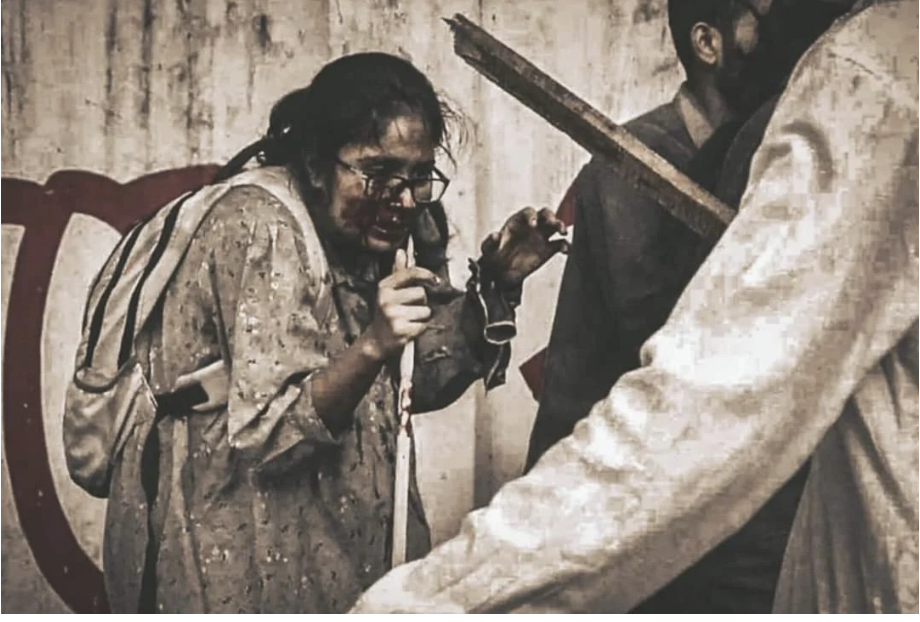
    Figure 8, Downloaded from Jamhoor, Image of BCL Violence on Women that Went Viral

    The student protestors were ambushed by BCL members who carried sticks, hockey sticks, rods, GI pipes, and other weapons. At least five individuals were observed firing pistols on campus. Student protestors received beatings at various locations of the university. In flagrant disregard for university governance, beatings occurred in full view of the Vice Chancellor’s residence. BCL members even stood outside of nearby hospitals, such as the Dhaka Medical College, attacking wounded demonstrators as they were taken there for treatment, at one point even entering the emergency department to attack protesters and eject them from the premises. Although both men and women protestors were hurt, the images of women being attacked were most shocking for onlookers. An image went viral showing a young woman wincing, her face covered in blood, while a BCL member raised a stick to beat her. This incident, along with others at which mostly women were beaten by the BCL, sparked public outrage and incited strong sentiment against the group.

    On 16 July, the protesters came prepared to fight back, gathering at the Shahid Minar, the memorial to the martyred student activists of the 1952 language movement, also on the Dhaka University campus. This choice of memorial may be seen as communicating a symbolism different from the Raju Memorial’s, as it expressed resistance to foreign occupation, indicating a growing sense of the Awami League government as an occupying force. The police, who had finally joined the fray, stood between the students gathered at the Shahid Minar and the BCL members who held the area around the Raju Memorial, having seized it from the student protestors the day before. They were gathered to stop the students from marching on the Raju Memorial and to prevent further bloodshed, since the protesting students were by now resolved to return the beating that they had been getting. However, the police were soon causing the very bloodshed they had been deployed to prevent.
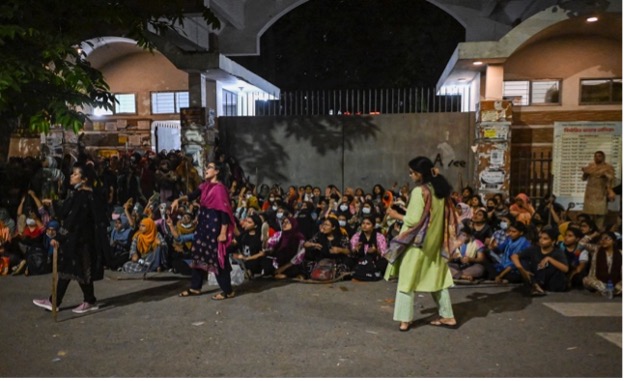
    Figure 9, ©Zabed Hasnain Chowdhury, Women of Ruqayyah Hall, Dhaka University                                                                   
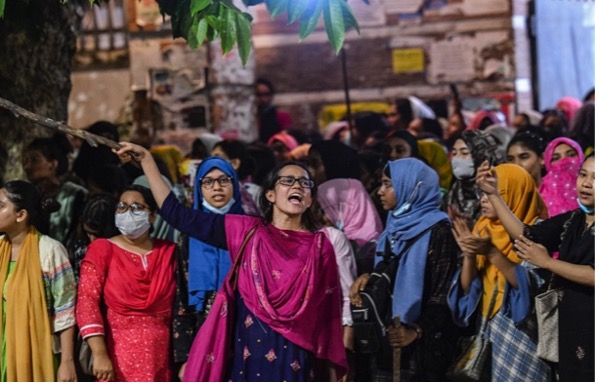
    Figure 10, ©Zabed Hasnain Chowdhury, Women of Ruqayyah Hall, Dhaka University

    On the night of 16 July, the women students took the lead in the pushback against BCL. In one instance, the women residents of Dhaka University’s Ruqayyah Hall chased BCL leaders out of their “halls,” as their dormitories on campus were called. Once vacated, the rooms occupied by BCL student leaders showed the luxury in which they had been living while subjecting their fellow students to deprivation and intimidation. Students enraged by this sight destroyed the rooms. Whereas they had up until this point engaged historic sites and symbols (razakar, Raju Memorial, Shahid Minar) to place their movement on a continuum with known history, their mode of protest now shifted into an iconoclastic mode—instead of mobilizing symbols and images, the protestors began destroying symbols of power and desecrating images.

    Typically, such women’s halls maintained strict curfews, with the gates to their halls locked by a certain time at night. On that night, the residents of Ruqayyah Hall also broke the locks to pour out into the streets to protest. Other halls soon followed in chasing out BCL leaders and taking their protests to the streets, joined by their male counterparts. 

    Student protests spread and intensified across the country. Jahangirnagar University, the University of Rajshahi, Begum Rokeya University in Rangpur, and many other universities joined. And reports of fatalities began to surface of students either killed at the hands of the BCL or the police.[6] In the city of Rangpur, Abu Sayeed, a student of English at Begum Rokeya University, was shot dead while he stood with his arms spread, clearly unarmed, as if daring the police to shoot. He was killed by rubber bullets shot at close range. He was the first to be martyred in the Anti-Quota Movement, which was quickly earning the moniker of the July Uprising or Bloody July. A total of six people across the country were killed that day.
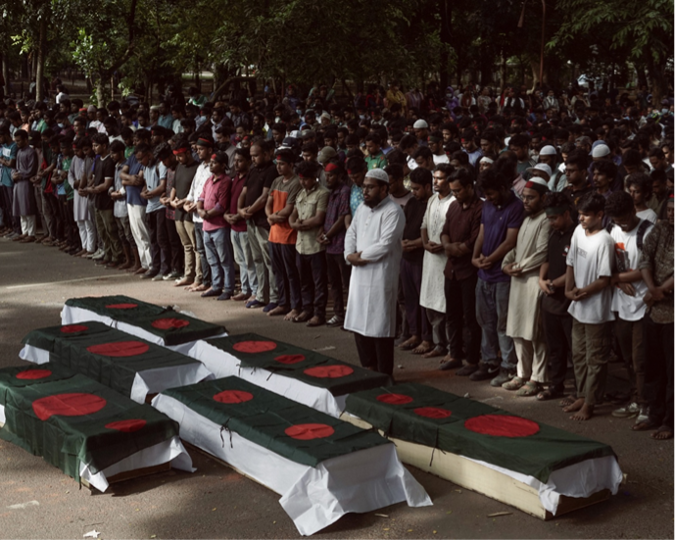
    Figure 11, ©Faysal Zaman, Gayebana Janaza

    On 17 July, in keeping with the use of symbolism to affect a politics of protest, the Anti-Quota Movement organized a gayebi janaza, an absentee funeral for those who had disappeared or were killed to draw attention to the deaths of protestors. In Dhaka University, it was performed in front of the Vice Chancellor’s residence to shame the university administration for its failure to protect its wards. In many places the police prevented this service from being performed, which was taken to be a stark act of erasure. And in a show of yet more shameful dereliction of its duties towards its students, the university administration announced the shutdown of Dhaka University, ordering students to vacate their residential halls. The students tried to resist by barricading the gates to the dormitories. In a now familiar modality of mocking through mimicking, they sent a counter-notice to all university administrators requesting them to vacate their official housing on the grounds of failing to uphold their duty as guardian. Ultimately, sound grenades and tear gas were mobilized to force students to vacate, with many seen leaving in a hurry with their bags and baggage. If previously the government had merely attempted to swat away the movement using their student forces, now their efforts to dismantle the Anti-Quota Movement were in full swing, with the police, the Rapid Action Battalion (RAB, an elite paramilitary force), and the Border Guard Bangladesh (BGB) stationed in major cities around the country. The army was not brought in until later.  

    From 18 July onwards, the scene of action shifted from Dhaka University, vacated of students, to other sites of confrontation. For instance, we have already seen how students in major cities such as Chittagong and Rajshahi were involved. They were now joined by students in tertiary cities such as Rangpur, Khulna, Comilla, and Sylhet. It is notable that the universities initially central to the movement in Dhaka, Chittagong and Rajshahi were public institutions. But now students from smaller, private universities joined the protest wave.  

    On 18 July, the big private universities in the Rampura-Badda area of Dhaka brought out large solidarity protests, congregating in front of BRAC University.  Universities serving the children of the country’s elite came out in solidarity with public university students.  The private universities, having outlawed political parties from their premises, were historically known for their apolitical nature. And the students themselves were seen as largely apolitical, more oriented towards starting international careers than the less privileged students, who were both more committed and more entrenched within the Bangladeshi context. This congregation of private university students was met with police violence and threats of open fire – an unprecedented attack on the children of wealth, who had previously been exempt from this type of state brutality. While other private schools in the area kept their gates closed to student protestors, BRAC University opened its gates to them and converted their space into a makeshift medical bay. One protester from the nearby Imperial College died on the BRAC University campus, one of at least 30 who were reported dead on that day from across the country.

    How do we understand the spread of the movement from DU to other institutions and across the country? As we have pointed out earlier, one reason the was able to fan out when faced with blockages from the state was its decentralized organization, with multiple coordinators stationed autonomously across the country. However, this cannot be the full story. For how are we to understand the coming on board of the students of private, elite institutions, who were not part of the initial planning of the movement? How, too, can we explain the participation of children from secondary schools?  It was in all likelihood the graphic death and martyrdom of Abu Sayeed and the others who soon followed him that fueled the expansion of the movement to include many more students and ultimately ordinary working people. 
    Figure 12, Downloaded from Wikipedia “Abu Sayeed”, Artistic Rendition of Abu Sayeed, one of 100s                    
    Figure 13, Downloaded from Mahadi Mishu Instagram, Artistic Rendition of Mir Mughdo, one of scores
    Figure 14, Downloaded from Reform Bangla, Artistic Rendition of Shaykh Ashabul Yamin
    Figure 15, ©Hrifat Mollik, Artistic Rendition of a Member of the Security Force, Whose Green Blood Shows Him to be an Alien

    Abu Sayeed was killed in Rangpur on 16 July. The video of his murder went viral in no time: it showed him being shot repeatedly by police in riot gear, with him flinching, yet stretching out his arms several times, falling into a crouch on the ground, and finally having his prone, presumably dead body hauled off by a group of young men. This video had a profound impact on the minds of people, including the young. Almost immediately the students at secondary schools, such as the Residential Model College in Mohammadpur in Dhaka, came out in protest. And the shock and pathos of Abu Sayeed’s unprovoked death was amplified by the death of one of these young students, Farhan Faiyaz, on 18 July. Farhan Faiyaz’s death was followed by the death of a university student activist Mir Mugdho, a student at the Bangladesh University of Professionals (BUP), who was killed in the act of handing out water to protestors in Dhaka. Dhaka’s Military Institute of Science and Technology student, Shaykh Ashabul Yamin’s death in several parts is probably seared in people’s minds as the most terrifying display of state violence in recent memory. In videos and photographs we see how he was thrown from the top of an armored personnel carrier. He fell on the road with his arms outstretched, and his legs folded behind him, still visibly alive. The police then dragged him across the road and hurled him across the divider onto the service lane at which point he likely died. As mentioned above, this was the most brutal day of the movement thus far, with thirty dead the country over.
    Figure 16, ©Doha Chowdhury, The Daily Star.  Students Renaming the Gate Rudro Arcade

    These deaths galvanized the country into reacting with tremendous grief and anger openly voiced. Of course, Bangladeshi society was no stranger to the deaths of its citizens in the hands of state forces. To understand why these deaths would produce such outpourings it may be necessary to investigate the antipathy that had built against Sheikh Hasina’s repressive and violent regime but most immediately it would appear to be the senselessness of the deaths. Student protesters immediately started to give gates and streets the names of those killed, as if to restore meaning to these deaths. On 17 July, right after Abu Sayeed’s death, students demanded that Rangpur Park be renamed Abu Sayeed Chottor (Square). At Shahjalal University of Science and Technology (SUST), a gate was renamed Rudro Toron (Arcade) for Rudra Sen, killed on 18 July, while Bangladesh University of Professionals (BUP) renamed a floating bridge Shaheed (Martyr) Mir Mughdo Bridge. These were not just tributes. They were refusals to let the state dictate who was to be mourned and how. On 30 July, when Sheikh Hasina attempted to grasp the reigns of memorialization by declaring it the day of mourning or “Jatiya Shokh,” students rejected her bit outright, saying “Rokter daag ekhono shukay ni,” (the stains of blood have not yet dried) and turning all their profile pictures on various social media platforms red in protest.

    By this time, it was clear that social media was by far the most important media element within the movement, getting images, videos and commentary out before news media were even alerted. On the evening of 18 July, the government imposed a shutdown on social media and internet access, which extended to mobile and broadband internet, and platforms such as Facebook, Instagram, Twitter and WhatsApp. However, through various technical workarounds and diasporic connections, videos of protests and state violence continued to be distributed abroad, although inaccessible to those within the country. At home, all one could do was watch TV and read the dailies, which reported assiduously, though given the extent of censorship in the country, official coverage was treated skeptically. Many reported feeling that the established media made them doubt the veracity of what they were themselves seeing and experiencing at the time.  

    The international media gave the events some sputtering attention, being more captivated by the transfer of candidacy from Biden to Harris in the United States. However, a few reporters of Bangladesh origin such as Tanvir Chowdury of Al Jazeera and Shafiqul Alam of Agence France Press (AFP) Press kept their focus on the country.  Al Jazeera covered Yamin’s brutal death, for one thing. Offshore news outlets, such as Netra News, and overseas bloggers, such as David Bergman, Zulkarnaen Saer and Tasneem Khalil, kept snippets of news flowing.  

    Diaspora Bangladeshis, including students, came out in the hundreds to draw attention to the death-dealing activities of the AL government. There were massive protests in front of the Bangladesh consulates in New York City, London and Berlin. Some risked punishment to protest, such as a group of migrant workers in the UAE who were promptly put to jail (they were later released upon the intervention of Muhammad Yunus, the head of the interim government that came to replace the AL-led government). Migrant workers stopped sending remittances through official channels to express their anger against the government, effectively compounding the pressure on the government, making its survival even less likely. 
    Figure 17, ©Mehedi Haque

    In Bangladesh, opposition political parties, such as BNP and Jamaat-i Islami called for general protests. Civil war raged in the cities, with the burning of several official establishments. Newspapers reported Sheikh Hasina’s eyes tearing up seeing the damage done to a Dhaka Metro Station newly inaugurated by her regime. These tears prompted many rebukes and jokes about her love for property over people. The police effort to dismantle the movement now took the shape of intimidating student leaders. Nahid Islam, a student coordinator who had been particularly visible in the press, was picked up on 19 July and found unconscious with clear marks of abuse on his body on 25 July. He was again detained and kept in police custody with five others between 26 July and 2 August. The army was deployed on 19 July, but it was reported that the army would not shoot; instead, it would provide protection to the police and RAB. This effectively allowed the security forces to use lethal force without fear of being overwhelmed by the increasingly angry masses as the army stood guard over them. The police took to the skies in helicopters and snipers to the tops of skyscrapers to shoot indiscriminately upon gathered protestors, even hitting those sheltering in their homes, including young children.[7]

    On 21 July, a rattled Awami League government began to seek compromise, saying that they would abide by whatever the Supreme Court decided regarding quota reforms. On 22 July, the appellate division of the Supreme Court reduced quotas from a total of 56% to 7%, with 5% reserved for freedom fighters and 2% for ethnic minorities, transgender people and those with disabilities. But by this time many more people had died.[8]   

    The sense of the moment was that quota reform could no longer be an adequate appeasement for the sheer numbers who had given their lives in protest. The nine-point demands that were articulated at this moment were: PM taking blame and formally apologizing for the mass killings, the resignation of various ministers who were also in the AL leadership, the firing of police officers present at the areas where students were killed, the resignation of the Vice Chancellors of Dhaka University, Jahangiranagar University and Rajshahi University, the arrest of those police and individuals who attacked or instigated attacks on students, compensation for families of those who were killed or injured, the banning of BCL, the opening of university halls, and an end to the harassment of protestors.

    At the same time, SAD announced a suspension of the movement after the appellate decision on 22 July, while demanding the lifting of the ban on the internet. Between 22 and 28 July, there were no student protests. Instead, there was an efflorescence of many small protests by teachers, lawyers, artists, and other members of civil society, including actors and celebrities. Various figures called press conferences asking for student leaders to be released and student demands to be heard and constructively engaged. Between 22 and 26 July, the government declared that the student movement had been infiltrated by external forces, hinting that the USA was inciting the protests. It turned its focus on opposition parties, such as BNP, Jatiyo Party, even the small parties, such as Gono Odhikar, that had emerged from the 2018 Anti-Quota Movement. It declared a ban on the religious party Jamaat-i Islami. Everyone in the leadership of these parties was picked up and jailed through dramatic and terrifying block raids at their places of residence and neighborhoods. The government imposed a curfew from 26 July onwards, with street traffic allowed for just a few hours each day to allow people to get necessities.

    From 29 July onwards the momentum of the movement, which had left Dhaka University to enter the streets, returned to the university, this time through the agency of teachers.  On 29 July, teachers across campuses and political divides organized as the Teachers Platform Against Oppression to hold a rally at the foot of the Aparajeyo Bangla monument on the campus of Dhaka University. The choice of this monument commemorating the 1971 Liberation War struggle as the place of gathering and criticism of the government suggested that no one, much less the Awami League, could claim a monopoly over the Liberation War. One teacher even gave the example of a teacher, Professor Shamsuzzoha, who had died protecting his students in 1969, claiming him as their inspiration, thus putting this rally in a direct line of continuity with the struggle against Pakistan. Teacher after teacher gave moving speeches on the right of students to protest, excoriated the inordinate violence against them, and demanded the release of those detained. And, most significantly, they called on ordinary people to fight their fear and come onto the streets.  

    On 2 August, thousands convened in front of the National Press Club close to the university before slowly marching to the Shahid Minar as part of the Droho Jatra (literally, Rebellion/Revolt Journey). Here the variously changing demands coalesced into one calling for Sheikh Hasina’s resignation. On 3 August, the gathering at the Shahid Minar was even bigger. The student anti-quota movement originating in Dhaka University had met with state violence, been forcefully evicted from the campus, and now returned to the premises with tens of thousands from all sections of society behind the students. 
    Figure 18, ©Abdul Karim Khan, Gathering for the Long March

    On 4 August, there was a nationwide call for a Long March to Dhaka for 6 August, later brought forward to 5 August. The Awami League government continued its violence against protestors, which now included more ordinary people than students. The BCL famously took to social media to declare it would take “7 minutes” to clear the protesters in a defiant last stand. The battle raged on the streets across Dhaka and the country. A 100 people lost their lives on 4 August, more than half of whom were BCL and AL activists and the police.  

    Ultimately the public turned to burning police stations to express their anger at the indiscriminate use of lethal force against those unarmed and the cruel disposal of the dead and in some cases yet living bodies. On 5 August, hundreds of thousands of people poured into the city of Dhaka despite attempts to prevent entry, an imposition of curfew and a short internet blackout in the morning. The army refrained from shooting, despite Sheikh Hasina’s pleading for it to do so. Instead, the Head of Army Staff and Hasina’s family persuaded her to get into a helicopter that flew her and her sister to India, her departure leading to the fall of the AL government. 

    Conclusion

    Through plotting the events of July 2024, we hope to have shown how a student led movement, which started within a university thoroughly captured by the state, and with only a limited goal of winning a few compromises from the state, ended up overturning the state. At each point as the students encountered state violence where they expected state engagement, their demands ratcheted up to keep faith with those amongst them who died simply trying to get the state’s attention. The strategic arrangement of student leaders across the country ensured that the movement continued even as the most visible figures within it were taken into “safe custody” by the security forces. The pathos surrounding those killed unprovoked and senselessly brought more and more students and ultimately the general populace into the protests. And, at one point, the sacrifice in human lives became so steep as to make nonsense of the initial demand for quota reform, bringing on the demand for Sheikh Hasina’s resignation. 

    A further set of perspectives on the nature of Sheikh Hasina’s regime may be culled from our focus on Dhaka University as the site of capture by the ruling party’s student wing, the BCL, and the subsequent efforts to reclaim it. In some respects, by trying to establish their authority within the university and take control over its resources, the BCL was only doing what student groups associated with national level political parties had always done. Afterall, it was assumed that the ruling party, any ruling party, and their affiliates would engage in extortion as a benefit of being in power.[9] But what was different in this instance of Sheikh Hasina’s rule was her determination that AL would rule in perpetuity and that its control over all resources and opportunities would be absolute. And the BCL in Dhaka University projected this sense of permanence in its thoroughness of extortion, providing an important vantage on the thinking and workings of the government. It also made the BCL not only the object of fear and loathing but a proxy for the government. Thus, attacking the BCL was felt to be tantamount to launching an attack at the state, with the defeat of the BCL making the downfall of the state a real possibility. 

    The student-BCL inter-dynamics and conflicts within the university played out in miniature relations between civil society and state, going so far as to provide a template for how civil society may resist an oppressive state. As the capture of the university had taken place one site after another, one cherished student tradition after another, so was its reclamation site by site, starting with the female students throwing the BCL out of residence halls to be followed by others. Some within the BCL even flipped sides, while others who stayed loyal targeted for reprisals after 5 August. After the fall of the government, it was disclosed that several members of BCL’s leadership were students of other political groups who had infiltrated the group to undermine it from within, but that is a story for another time.

    The students, first seeking to advocate for administrative reform and later to withstand the force of the state embodied by the BCL and then the police and RAB, deployed a range of well-known techniques within the activist’s toolkit. For instance, they undertook peaceful demonstrations and marches. They took advantage of the symbolic importance of monuments and other historic sites within their campus at which to express themselves, associating their struggles with prior moments and struggles. They maintained a unified voice albeit refracted through many different leaders and coordinators. And in a venerable tactic, not only did they resort to violence to defend themselves, they, along with the general populace instigated destruction, including the burning of police stations and the killing of the police, to express their anger at the violence directed at them.   

    They also introduced new elements into the revolutionary’s toolkit by ventriloquizing those who sought to discredit them, a risky discursive strategy in the best of times, such as when they took on the slur of razakar. They performed funeral services for those who had been disappeared, giving their movement not just the ebullience of resistance but also a funereal affect. They widely used social media not just for the purposes of reportage but for bearing witness and bringing onlookers into the tragedy of death and the proliferation of martyrs, which had the effect of drawing sympathizers into the protests.  

    Since 5 August 2024, Dhaka University has once again become the political center of the city. Shortly after the fall of the government, there have been many Bijoy Michil or victory marches in Shahbag. Chobir Hat, a place of gathering of progressive students, reopened after being shut for over a decade with a concert honoring those who had died. There have been enumerable academic and journalistic events hosted on campus inquiring into different dimensions of the uprising, such as enforced disappearances or the art of the uprising. There has even been a concert by the rap artist who had been persecuted by the regime because he was an early and vocal supporter of the Anti-Quota Movement. Most importantly, it has become a place where everyone returns to stage their protests directed at the current interim government. The protests are to be found at the base of the Raju Memorial. 

    Bareesh Hasan Chowdhury is a campaigner working for the Bangladesh Environmental Lawyers Association on climate, policy, renewable energy and human rights. 

    Shrobona Shafique Dipti, a graduate of the University of Dhaka, is an urban anthropologist and lecturer at the University of Liberal Arts Bangladesh with an interest in environmental humanities and multi-species entanglements. 

    Naveeda Khan is professor of anthropology at Johns Hopkins University. She has worked on religious violence and everyday life in urban Pakistan. Her more recent work is on riverine lives in Bangladesh and UN-led global climate negotiations. Her field dispatches from Dhaka in the middle of the July Uprising may be found here.

    [1] It was colloquially said that July did not end until the movement ended and, as such, 5 August has come to be referred to as 36 July.

    [2] To remind the reader, this demand was brought on by the criticism of the large quota for the freedom fighters associated with the 1971 Liberation War of Bangladesh and their family members, one considered to be widely abused to favor Sheikh Hasina’s party members. Despite the increasing authoritarianism of the AL government, previous student movements had been able to eke out limited compromises from the government, which spurred the 2024 Anti-Quota Movement.

    [3]  It is noteworthy that there had been a meteoric rise of private educational institutions across the country to manage the rising numbers of people desirous of social mobility through education and employment, particularly as public education systems had either started failing due to governmental disinvestment or being structurally unable to absorb the growing numbers.

    [4] Among the reforms the interim government, in place after the fall of Hasina’s government, has undertaken to the BCS exam is to raise the age cap to 32 from 30 but to restrict the number of times a candidate may take the exam to three. See: https://www.thedailystar.net/news/bangladesh/news/exams-public-jobs-govt-raise-age-limit-32-years-3735386?fbclid=IwY2xjawGG8P9leHRuA2FlbQIxMAABHe2vaTdmMKINRzH8CFYZYD5EbAMmfx6UbgzFoUMLux5sqr12-VZT_Y3zRg_aem_dl61jR5NJn2sdGRHtAn7lg

    [5] There are by now several important accounts with timelines of the July Uprising. Our intention in providing yet another one is to more self-consciously center the Dhaka University in these accounts and timelines in order to ultimately show how the university was reclaimed. 

    [6] It is notable that several BCL activists were also killed in retaliation, which led them to be outraged at the leaders of Awami League who they felt had effectively set them up.

    [7] The deaths in the July Uprising included a disproportionate number of young people, including very young children. 

    [8] Later speculation about the numbers killed over the course of long July would bring the number to 1000, later marked up to 1400+ by the Office of the Human Rights Commissioner and 1500+ by the Students Against Discrimination.

    [9] And in keeping with that practice, no sooner did the AL led government collapse, than BNP members stepped into the extortion rackets abandoned by fleeing AL party members.
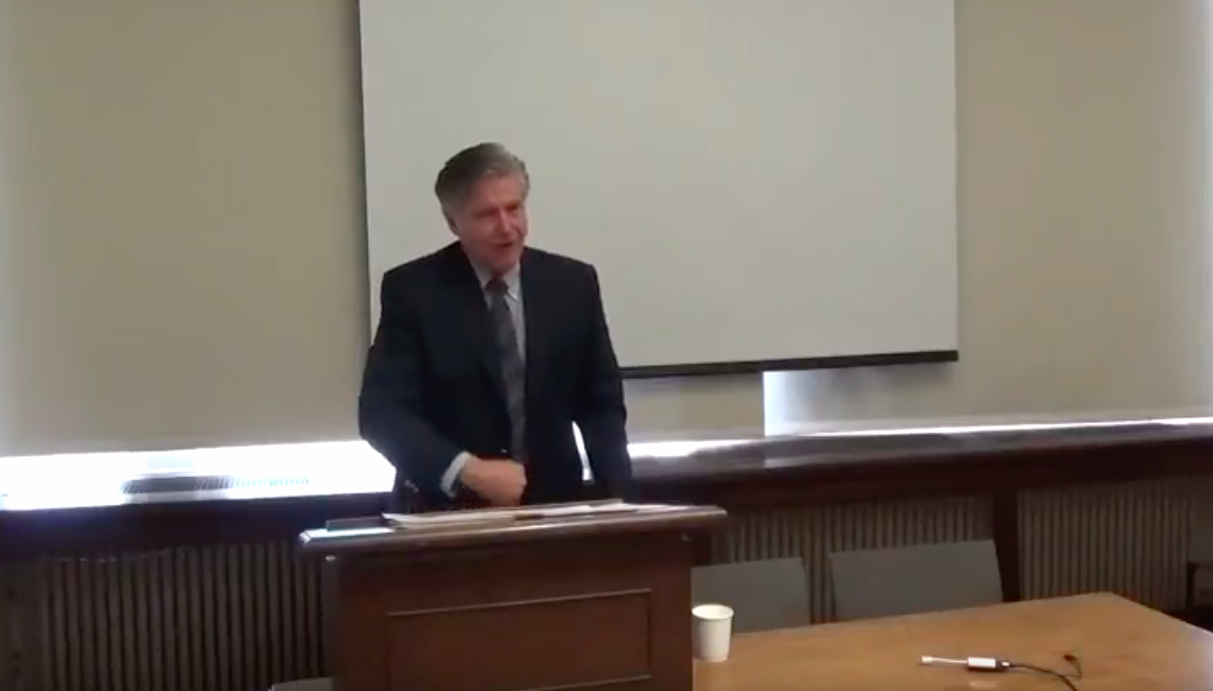
  • Shrobona Shafique Dipti, Naveeda Khan and Bareesh Hasan Chowdhury–How to Capture a University: Lessons from Dhaka

    This post is Part Three of “The Bangladesh Chapter” of the b2o review’s “The University in Turmoil: Global Perspectives” dossier.

    How to Capture a University: Lessons from Dhaka

    Shrobona Shafique Dipti, Naveeda Khan and Bareesh Hasan Chowdhury

    Figure 1: Dhaka University. 

    The Cast of Characters

    Sheikh Mujib, Founding father of Bangladesh

    Sheikh Hasina, daughter of Sheikh Mujib, head of AL, and till recently Prime Minister of Bangladesh

    AL, Awami League, the ruling party

    BCL, Bangladesh Chhatra League, AL student wing, also referred as Chhatra Leaguers

    BNP, Bangladesh Nationalist Party, opposition party

    JI, Jamaat-e-Islami, religious party

    Shibir, JI student wing

    Hefazat-e-Islam, coalition of religious parties and groups

    DU, Dhaka University

    BUET, Bangladesh University of Engineering and Technology 

    Universities in Comparative Perspective: Two Types of Capture

    2024 will surely go down in history as the year that students in U.S-based universities revolted against their government’s stance on Gaza.  Expressions of gratitude emblazoned on the tent roofs of displaced Gazans gave voice to an almost global appreciation of the students in the face of threats by university administrators.  While for a bit it seemed that university campuses were the last bastion of free speech in the U.S., the subsequent attacks by police on students at the behest of administrators made clear that universities in the Global North were already captured spaces and had been for a long time.  Between zealously grown and protected endowments, entrenched boards of trustees, and administrative bloat, faculty, students, research and teaching had long been mere excuses for the existence of corporatized universities.  

    In other parts of the world this pernicious combination of liberalism and capitalism has not quite set in the same way, although there are some indications that it may yet do so, judging by the growing numbers of private, for-profit universities in places where capital is rapidly accumulating, such as China and India.  Consider, for instance, the case of Bangladesh.  Here public universities, such as Bangladesh University of Engineering and Technology (BUET) and Dhaka University (DU) – both British, colonial-era institutions – are still hallowed places of education and training, where teachers are respected, and young Bangladeshis strive to get admission to better their life chances.  This has remained the case even as the Bangladesh economy has turned rapaciously capitalist, private universities steal away teaching talent, and university coffers are depleted, with a baleful impact on infrastructure and services.  

    But it is not the case that universities of Bangladesh are free of capture.  The capture is just of a different kind than that by capital.  Historically, university students, most notably at Dhaka University, have been associated with anti-colonial and nationalist politics.  Since Bangladesh’s independence from Pakistan in 1971, political parties have evolved student wings that carry out a version of national politics on campus.  Depending on which party is in power, their equivalent wings dominate in universities, extending into higher education the politics of patronage and insinuating themselves into the lives of students.  

    Given this scenario, it was quite shocking to most that the 2024 Student Anti-Quota Movement, very clearly critical of the government headed by the Awami League (AL), started from Dhaka University, which was at that point very much under the thumb of the Bangladesh Chhatra League (BCL), the student arm of the ruling party.  Given this unlikely development, it is incumbent upon us to inquire how a space as state dominated as Dhaka University could also be the site of an anti-state revolt.  It requires us to inquire how the BCL’s vice grip upon the campus may have created the conditions of possibilities for its downfall.  The battle within the university grounds on July 15th, 2024, when the Awami League let loose BCL students upon peers involved in the Anti-Quota Movement, an encounter which ended in considerable bloodshed, death, and the chilling images of Chhatra League men in helmets with hockey sticks bearing down on unprotected bodies – often with the support of law enforcement authorities –will probably serve for all time as the moment when Bangladesh civil society realized that the Prime Minister and her party had gone mad.   

    In Part Three of “The Bangladesh Chapter” of the b2o review’s “The University in Turmoil: Global Perspectives” dossier, we explore the spatial experience of the university as a captured space, that is, how the AL-led government and its student wing came to take over the space of the university, before turning in our next contribution to how this space was reinhabited to launch a movement against the state.  We hope that getting a sense of the lay of the land may provide a glimpse into how small incursions into space becomes a full-throated capture of every domains of existence, including the imagination, and what living under active oppression feels like while one is trying to simply go about the business of getting educated.  

    Mapping Dhaka University

    Dhaka University occupies a central location in the capital, on the way from the older residential neighborhoods of west Dhaka to the business district in the east, but which, crossroads though it may be, still feels like a haven, thanks to its wide roads, tree-lined avenues and historic buildings set back from the roads.  In this section, we provide in three maps an overview of the location and layout of the university before homing in on the monuments that dot its landscape and that provide an important vantage on how students have been central to politics in Bangladesh, for better or for worse.  

    Map 1. 

    The first map shows the form of the university area and its placement within the heart of downtown Dhaka.  We see that it is relatively green, indicating trees and parks in its vicinity, such as the Ramna Park, a site of romantic liaisons, sports, and other leisure activities.  Otherwise, very densely occupied neighborhoods and areas throng the campus.

    Map 2. 

    The second is a road map of the University.  When we zoom into it, we see that the campus is overlaid by four roads, although university buildings spread out beyond these thoroughfares:  the New Elephant Road to its north, Kazi Nazrul Islam Avenue/Abdul Gani Road somewhat to its east, Nilkhet Road to its south and Azimpur Road to its west.  All four of these roads are busy commercial thoroughfares and sites of important student mobilization.  

    Map 3. 

    The third map is a creation of the graphic art group Dhakayeah, known for producing images of urban and semi-urban areas of Bangladesh – visual pastiches, suffused with elements of the past, espousing a certain romantic view of Bangladesh as both familiar and lost.  The pale green color palette reinscribes this view.  The image of a woman in a white overcoat and that of a woman in a sari perusing a book alongside the image of a man sitting on the grass looking at something or the man playing football puts forward the university as a co-educational space.  While we are alerted to the distribution of educational buildings through icons indicating laboratories, libraries, science, art, etc., and we are also given the names and images of several historical buildings and cultural sites, such as Curzon Hall, Shahidullah Hall, Bangla Academy, National Museum.  Among the residential buildings, the one for non-Muslims, primarily Hindus, Jaganath Hall, is indicated by the icon of the Hindu Goddess Saraswati, associated with wisdom, with her sitar and white goose. 

    On the Dhakayeah map we are pointed to the presence of notable monuments, such as the Central Shahid Minar (Martyrs Monument), the 1963 national monument to the martyrs of the 1952 Language Movement composed of five forms of white pillars and arches.  There is the 1979 sculpture of three freedom fighters holding guns, including a woman, titled Aparajeyo Bangla (Unvanquished Bengal) to commemorate the 1971 liberation struggle.  The Anti-Terrorism Raju Memorial, composed of men and women looking outwards while forming a circle with interlocked arms and hands, was created in the late 1990s to commemorate the student Moin Hossain Raju, killed while protesting terrorism within the university campus. 

    Figure 2, ©jagonews24. 

    The map represents several others, but inevitably omits many, as the campus is awash in monuments.  One significant to the story of how the campus has come to be the resting place of the memories of violence faced by the country’s young is called the Road Accident Memorial, unveiled in 2014 and representing the car crash that killed the Bangladesh filmmaker Tareque Masud and his companions in 2011.  These memorials, like others, indict the country’s two major political parties, the Awami League and the Bangladesh Nationalist Party (BNP), for their reigns of violence and neglect of student safety.  These monuments were once counterpoised by large murals of Sheikh Mujib, the founder of Bangladesh, and Sheikh Hasina, his daughter and Prime Minister of Bangladesh until 2024, on the pillars of the Metrorail.  The murals were defaced during the Anti-Quota Movement (figure 2), but are worth keep in mind, as we note how monumental sculptures and images indicate the diverse political strivings of the university students.

    A Recent History of the University, 1990s-2020s

    To understand our story of the capture of the university by the ruling party, and the seeds of unrest that this planted, it would help to trace the recent history of Dhaka University from 1990 to the present. In the early part of the period, we see students becoming involved in national movements to depose a dictator, but also teachers and administrators getting politicized.  In the later part of this period, we see the student wing of the ruling party consolidating its hold on the university with the aid of senior administrators.  We also see the university expelling all other student parties across the political spectrum.  

    1990 stands out as the year in which a broad swathe of civil society organized to lead a movement against the standing military leader turned dictator, General Ershad.  Students at Dhaka University were part of this movement.  What is particularly noteworthy in the decade following Ershad’s being forced out of power was the entrenchment of teachers within national politics by means of the university.  Until the 1990s, it was students who had played a conspicuous role in national politics through the student wings of various parties, but the 1990s brought party-linked teachers’ organization to the fore: the BNP-backed teachers of Shada Dol (White Party), for instance, or Awami League-backed teachers of Nil Dol (Blue Party).  The students remained markedly more influential than their teachers within this changing dispensation; it was students, for instance, who secured positions for teachers, such as those of the vice chancellor, proctor and hall provosts.  The teachers expressed their gratitude through shielding and protecting students from criticism and the repercussions of their violent acts.  

    The next two decades, the period from 2000 to 2019, saw the steady encroachment of the state into the university, leading to growing political influence over university governance, including the dispensing of justice.  One event that especially colored this period was the 2010 murder of Abu Bakar, widely regarded as a student of great promise, who was killed during clashes between two Chhatra League factions fighting for control over access to a room in a residential hall referred to as a “hall seat.”  Despite overwhelming evidence, the students accused of his murder were acquitted, and the victim’s family was not even informed of the verdict.  Even the President of the country ignored the family’s appeals for justice.  Such incidents were in step with the state growing in power in the country more widely, and starting to perpetrate violence against its own citizens, in the form of enforced disappearances and illegal detentions.

    Figure 3, ©Global Voice. Dhaka, Bangladesh. 18th February 2013 — A woman shouts on a microphone. — A demonstration for the death penalty to be given to war criminals, is continuing at Shahbag crossroads, and has reached its fourteenth day. 

    Figure 4, ©Maciej Dokowicz.         

    Figure 5, ©JagoNews24. Scenes from Shapla.                                         

    Figure 6, ©Syed Zakir Hossain. 

    This period also saw the rise of sizeable movements in which university students, including seminarians, played a leading role.  Two, the Shahbag Protests of 2013 and the Shapla Square Protests of the same year, were defining moments in the country’s recent history, driving home the cultural divides that marked the Hasina era.  Locating themselves at one of the main entry points of Dhaka University, tens of thousands of people participated in the Shahbagh Movement, which were led by pro-liberation activists, aligned with Bangladesh’s bid for self-determination from Pakistan in 1971, and strongly supported by left-leaning Dhaka University students.  These activists expressed their desire for the state to impose stiff sentences, including death, on those they considered war criminals for having sided with the Pakistan army in 1971, for having, that is, assisted in the violence that the army inflicted against East Pakistanis at that time.  When the war criminal Abdul Quader Molla was handed a life sentence by the tribunal overseeing his trial, the movement demanded that he be sentenced to death instead.  The movement thus served the state’s interests by pushing for the rigorous punishment of those seen as traitors to the nation – Molla’s sentence was transmuted, and he was promptly hung; it was also used by the state to suppress the political activities of the student wing of the religious party Jamaat-e-Islami’s student wing, and other groups within the university campus.[1] 

    This movement was followed by the Shapla Square Protests, led by Hefazat-e-Islam, an advocacy group consisting of religious leaders and students within the Qawmi Madrasa system, a privately run religious educational system parallel to the state-run one.  They called for the adoption of a blasphemy law, citing perceived offences to religious sentiment caused by Shahbag protesters.  This movement ended in a violent crackdown, with security forces brutally dispersing protesters.  Even though Hefazat as a group backed the war crimes trials, which was used to persecute leaders of Jamaat-e-Islami (JI) Bangladesh, JI and its student wing Shibir, contributed heavily to the group, seeking common ground against the Awami League and a shared goal of integrating Islam into Bangladesh’s governance and laws. 

    The two movements, Shahbagh and Shapla, symbolized a deep political and cultural divide: Shahbagh was framed as upholding the spirit of 1971 (muktijuddher chetona), while Shapla was portrayed as anti-liberation (bipokkho shokti).  This binary allowed the government to homogenize and demonize madrasa students and anyone visibly religious, such as those with beards and skullcaps, as enemies of the state.  By constructing this division, the ruling party justified widespread repression under the guise of protecting the nation’s independence, a strategy that they continued for the next decade.[2]

    While the Shahbagh and Shapla movements have provided the frame for political narratives since 2013, Dhaka University students also led the first version of the anti-quota reform movement that same year.  Though overshadowed by the massive Shahbagh movement, anti-quota activism would return in 2018 and again in 2024 to challenge the established polarities of the nation’s politics, its divvying of the field between progressives and reactionaries, that framed the Awami League’s encroachment upon and the Chhatra League’s dominance on the DU campus and elsewhere.

    The Micro-capture of University Space

    Amid this growing capture and repression of the university by the state by means of its student wing, the entire social, cultural, and educational landscape of the university underwent a transformation.  Chhatra League’s dominance extended beyond student politics, infiltrating academic and professional spheres.  Academic opportunities, teaching positions, and even government jobs increasingly required loyalty to them.  Many joined not out of ideological conviction, but as a means of survival: to secure protection from violence, gain access to institutional privileges, or ensure career advancement.  But once they joined, they soon learned of the BCL’s mode of operation: the loyalty that it expected of its members and the incessant jockeying for power within the organization.

    The president and general secretary of the Dhaka University branch of BCL were considered the most powerful positions within the branch, as these served as steppingstones to central leadership within the all-Bangladesh student party.  So important were these two posts that both the national media and the wider student body watched to see who secured them.  Those who aspired to political careers on the national scene often prolonged their studies artificially, declining to complete their degrees to hang onto positions of influence.  Departments were organized to allow students to stay enrolled despite failing their exams multiple times.  In fact, the longer one stayed at the university, the greater were one’s chances of rising to the top. 

    Students within the Chhatra League competed for these positions.  Having control over hall committees, enjoying a monopoly over rackets enabling rent seeking and patronage, known locally as “cartels,” and cultivating close ties with the university administration all contributed to one’s prospects of rising through the ranks.  And the path to leadership began within the residential halls.  Political leaders often referred to their time in the halls as laying the foundation for their careers.   

    At Dhaka University, the number of students admitted often exceeded the available accommodations, leading to overcrowding.  As a result, the university authorities had long ago stopped offering housing to first-year students, leading to tremendous insecurity for those coming from outside Dhaka or from poorer backgrounds, given the exorbitant rental costs in the capital.  Hall leaders, backed by their loyal followers, consolidated power by securing the support of hall provosts and house tutors.  Through such political maneuvering, BCL activists gained control over specific rooms, with Chhatra League leaders and their followers receiving rooms more easily.

    The leaders typically had separate rooms with amenities, while students, depending on their patronage of BCL activists, were assigned spaces within rooms, called Gonorooms (mass dormitories), which housed 20-30 students, far exceeding their normal capacity.  They were overcrowded, unsanitary environments, severely affecting students’ health and well-being.  Nonetheless, the premium on space meant that they were sought after and served as spaces of control and political tutelage.  For instance, students new to Chhatra League were required to attend Guest Room sessions, where they were instructed on so-called political courtesy, including how to show deference to student leaders.  These sessions often lasted several days; refusal to participate often resulted in bullying and even physical abuse.  Fear was pervasive, as the Chhatra League’s power was absolute as they had both impunity and deep resources to draw on to impose their will.  

    The 2016 death of Hafizur Molla, a student from the Marketing Department of Dhaka University, highlighted the harsh living conditions and political control exercised by the Chhatra League over students at the university.  Molla moved into Salimullah Muslim Hall in January under the good graces of a Chhtra League activist, but was forced to sleep in the veranda, which some halls also use as makeshift living spaces.  Less than a month after his admission, he contracted pneumonia and typhoid and died.  His family and classmates claimed that his illness worsened due to the exposure to cold living in the veranda and being forced to attend Chhatra League nightly programs, including AL-led political processions.  

    This power over students and their residential lives extended to the food canteens in the halls.  Canteen owners were required to provide food and stay open late to serve the leaders or else face beatings and assaults.  According to an example provided by the newspaper Daily Jugantor, leaders ate food worth 18 lakhs of takas ($18,000) from the canteens between 2019 and 2024 without paying for it.  In turn, the canteen owners passed on their losses to the students, who had to pay inflated prices for their food, while the canteen ownership saw a fast turnover.  

    Despite widespread awareness of the ongoing situation at Dhaka University and other campuses, one incident deeply shook the public.  This incident occurred not at Dhaka University but at the neighboring Bangladesh University of Engineering and Technology (BUET), a campus traditionally known for its apolitical stance.  On the night of October 6, 2019, Abrar Fahad, a second-year BUET student, was tortured to death by Chhatra League activists inside Sher-e-Bangla Hall.  The attack was likely brought on by his Facebook post, which was critical of India. Accused of being affiliated with Shibir, the religious student wing – a common justification for violent hazing – he was severely beaten.  CCTV footage later showed his lifeless body being dragged down the stairs, an image that quickly spread across the country through national media.  In response to Abrar Fahad’s murder, BUET students launched a massive protest demanding justice and the banning of political activities on campus.  This movement led to the BUET administration officially prohibiting student politics, marking an unprecedented step by an avowedly apolitical but also relatively passive administration, which now committed to quashing student influence within public universities.

    Figures 7 and 8, Modhur Canteen, 1904 and Present. 

    The BCL’s mode of extending its influence over the campus was to capture sites that had historically been associated with the fight for freedom (of various kinds) and that retained symbolic importance within the history of the university.  One such site, Modhur Canteen, was long associated with student social gatherings and political activism.  Originally a dance hall in the garden house of a zamindar from Srinagar, on whose property Dhaka University was later built (figures 7 and 8), it would host the planning of significant student-led anti-government movements in 1948 and 1952.  During 1971, Madhusudhan Dey otherwise known as Modhu Da, the man who served in the canteen, was shot dead by Pakistani forces.  After independence, the canteen came to bear his name in recognition of his sacrifice.  Its symbolic importance for student politics is indicated by the fact that it became the site of press conferences by various student wings.

    Figure 9, ©Jannatul Mawa. 

       Figure 10, ©amarbarta.                                      

    Figure 11, ©Mehedi Haque. 

    Under the BCL the canteen became a site for the performance of power by their leaders.  After gaining control of the space, its leaders arrived every day on motorcycles, revving their engines to produce an awful din.  Their helmet-covered heads and shielded eyes gave them an ominous look.  This look even acquired a certain iconic character (figures 9, 11 and 13).  Modhur Canteen also served pragmatically as the site of BCL meetings.  Factional infighting took place here in full view of passersby and those living close by (figure 10).  

    Another example of a space captured, and its original symbolism overturned was the Teachers-Students Center (TSC).  The capture of TSC allowed Chhatra League to expand its scope from being a political force to asserting cultural hegemony, becoming the “Cultural Chhatra League.”  TSC housed a cafeteria, beside which stood the Anti-Terrorism Raju Memorial Sculpture, a significant piece expressing the students’ struggle for spaces to learn without the threat of political violence (see section “Mapping Dhaka University”).  TSC’s auditorium and rooms were allocated for various long-standing and popular students – film, IT, debate, etc.  In time these clubs too fell under the control of Chhatra League.  Club leaders had to be affiliated with BCL.  This included the presidents of the film and debate clubs, which had once been the most independent-minded of the student clubs, generating high levels of cultural and political excitement, but which now operated under Chhatra League’s command. 

    TSC was once a stronghold of leftist political organizations.  Even as the clubs fell under BCL control, they maintained some independence by putting on concerts, film screenings, and other cultural events.  However, the rigged Dhaka University Central Students Union (DUCSU) election of 2019 (discussed below) brought about a drastic change, tilting the Center entirely into BCL’s camp.  All funds allocated for cultural activities were appropriated by the BCL, which started organizing large concerts with massive banners and extravagant expenses amounting to lakhs of takas ($100,000s), both as a racket and to draw attention to their presence and power.  Without any school funding, the leftist groups were forced to rely on crowdfunding.  While the much-weakened leftist groups were allowed to stay on campus the student organizations affiliated with the opposition Bangladesh National Party (BNP) were expelled from campus in 2010.  The party was then allowed to participate in the 2019 DUCSU elections – and thus allowed back on campus in some limited way – because elections, even rigged ones, require opposition groups and BNP was deemed the most acceptable of the lot.  Students affiliated with Jamaat-e-Islami and other religious parties were forced to hide their political identities or else were banned from campus.  In fact, dissimulating one’s political identity became the norm. 

    Women in the BCL

    Although there were women in the Chhatra League, they were often excluded from the image of Chhatra League politics, where leadership was typically associated with men – the kind of men who led motorcycle processions, exerted control through violence, carried out extortion, and exuded dominance by wearing biker helmets as though they were armor.  Women’s spaces were also a site of BCL power politics, though of a muted kind.  And while not free of the BCL’s clientism, they still provided the space for some iota of resistance.  

    As a resident of Ruqayyah Hall, one of us, Shrobona, witnessed firsthand how power operated in women’s halls.  While the violent capture of student halls by Chhatra League members was rampant in men’s dormitories, women’s halls experienced a more subtle form of control.  Rooms in each hall were designated for Chhatra League leaders—at least two to four per building spread across different floors.  These rooms belonged to senior apus (sisters), each of whom had her own group of followers.  Some of these followers joined the BCL willingly, hoping to advance in politics, while others were recruited for reasons of geography or because they were squatting and were vulnerable to intimidation.  Women who were conventionally attractive and deemed obedient were often targeted for recruitment. 

    Every week or month, these women were required to meet with BCL leaders, who then selected a few to be introduced to party officials at the AL headquarters.  Despite never holding major leadership positions, these women were often deployed to suppress protests.  I remember one such incident when we marched to the Vice-Chancellor’s office to protest sexual harassment. There were around 200 students, yet Chhatra League mobilized nearly 2000 men and women to attack us – under the pretext of protecting the university administrator.

    While residents were only allowed to stay out until 10 PM, female Chhatra League leaders could enter halls at any hour of the night.  There were extravagant birthday celebrations of apu leaders.  One such event went viral during the 2024 protests that led to Hasina’s downfall.  In the footage, Atika, a BCL leader from Ruqayyah Hall, was seen celebrating her birthday in grand style, with the TV room lavishly decorated with flowers and followers chanting slogans, a festivity that seemed ill-judged at a time of national crisis.  

    Unlike men’s halls, where religious segregation was enforced (e.g., male students of minority religions had to stay in Jagannath Hall and were not welcome in the other halls), women’s halls accommodated students of all religious backgrounds.  This encouraged a degree of pluralism.   While BCL monopolized university-wide cultural activities – determining, for instance, who could or could not participate in sports, debates or music – Hindu festivals, such as the Saraswati Puja, were celebrated within the women’s halls, providing some spaces for socializing outside of BCL control.

    Women’s halls were also frequently sites of protest, as students came to challenge the treatment of rooms as property and the partisan exploitation – indeed, extortion – of hall resources.  During the fasting month of Ramadan, female students protested the unfair distribution of food, although dissent was soon suppressed by hall authorities threatening to revoke residence permits.  One striking example of resistance to the consolidation of power within the hall emerged following the 2019 DUCSU election.  Professor Zeenat Huda, the provost of Ruqayyah Hall, was accused of colluding with Chhatra League leaders in demanding Tk 21 lakhs in bribes for university jobs in the Class IV category, that is, lower administrative jobs.  Two students posted on social media an audio recording of a conversation in which the demand was made.  In retaliation, the provost canceled their legally allocated residential seats.

    The 2019 DUCSU Elections: A Turning Point?

    Figure 12, ©Maloy Kumar Dutta.                                                           

    Figure 13, ©Reesham Shahab Tirtho 

    The Dhaka University Central Students’ Union had long been a crucial means of political engagement in Bangladesh for students.  Sultan Mohammad Mansur Ahmed, elected as DUCSU Vice President (VP) in 1980 during the Ershad era, underscored the enduring importance of the union in shaping the political trajectory of Bangladesh.  He remarked in 2019 that, “If we consider DUCSU only as the Dhaka University Central Students’ Union, its significance will not be fully understood.  DUCSU has served as the birthplace of Bangladesh’s liberation struggle and all democratic movements.  From the Language Movement to the fight for self-determination and independence, DUCSU has led every major political movement.”  After Bangladesh’s independence, DUCSU continued to serve as a platform for political dissent, notably in the 1990s, when it spearheaded the student uprising that ultimately led to the fall of Hussain Muhammad Ershad’s military dictatorship, mentioned above.

    There is a stark irony in the fact that DUCSU elections were regularly held during both the Pakistan era and General Ershad’s rule.  However, after the 1990 uprising that toppled Ershad, the tenure of those who had been elected in 1990 was allowed to lapse without another election for 28 years.  Between 2016 and 2018, left-wing and non-partisan student activists campaigned for elections to be reinstated, seeing these as a solution to the deteriorating conditions on campus.  Through the DUCSU Chayi (We want DUCSU) movement, they organized protests, gatherings, and graffiti.

    Surprisingly, after decades of inaction, the Awami League government agreed to hold Student Union elections in 2019, just months after the notoriously rigged national elections of December 2018.  This was thought to be a concession, as demands for change had been gaining momentum on campus.  The 2018 Anti-Quota Movement, led by Nurul Haq Nur, had launched a popular panel, Bangladesh Sadharon Chhatra Odhikar Songrokkhon Parishad (Bangladesh General Students’ Rights Protection Council).  Meanwhile, a new student group, Shotontro Jot (Independent Alliance), emerged, consisting mostly of non-resident students from the science departments who claimed to be apolitical and sought a campus free of partisan influence.  Leftist student groups also organized campaigns, addressing critical issues such as the entrenched system of loyalty-based politics (lejurbrittik rajniti), the overcrowded and exploitative conditions in Gonorooms (mass dormitories), and the poor quality of food in campus canteens.  Their manifestos called for greater rights for students and a better quality of campus life.  

    Any hope for change was badly shaken when the Student Union began to resemble the discredited national election.  The AL-government’s apparent concession to student demands appeared to be mere window dressing.  For instance, on the night before voting, ballot papers were discovered hidden in a canteen storeroom.  Students and candidates stood guard to prevent further interference, but BCL activists forcibly entered, clashing with hall tutors and teachers as voting descended into chaos.  When students discovered rigged ballots in another residential hall, they demanded the provost’s resignation on the day of voting.  Despite widespread protests, threats of boycott, and calls to halt the election, officials rushed through with the process and counted the votes.

    To appease the students at large, the BCL strategically conceded the VP position to Nurul Haq Nur, the leader of the 2018 Anti-Quota Movement and a general position to a member of his party, while securing control over the remaining 23 positions.  Upon his election, Nur visited the parliament in session and controversially praised Sheikh Hasina as the “mother of education.” His statement shocked many students who had hoped for continued resistance, reinforcing skepticism about whether any real change was possible within the existing political structure.  But what became clear from the 2019 DUCSU elections was that student participation and protests directly challenged the dominance of the Chhatra League. 

    In Conclusion

    Even in a space as thoroughly captured as Dhaka University, resistance fomented.  As the gains from the previous 2018 Quota Movement were eroded back to nothing, above all through the 2024 High Court ruling that reestablished the hated quotas for the family members of freedom fighters, students in various universities took to protests.  What such spontaneous protests showed more than anything else was that students maintained a belief in the power of collective action above all else.  The monuments we spoke of earlier that dotted the campus of Dhaka University embodied this belief.  And as we saw in the sketch of student politics over the past few decades, despite all efforts at repression by BCL, the space of Dhaka University was riven by unrest always just below its surface, materializing in intermittent protests.  In effect, the July Movement of 2024 that toppled the Awami League government and its mode of student politics could be taken to be just one more protest along a long trajectory of such protests.  We next move to the scene of the movement to explore how it became the means of undoing an authoritarian regime and the possible undoing of the state capture of the university campus.

    Naveeda Khan is professor of anthropology at Johns Hopkins University. She has worked on religious violence and everyday life in urban Pakistan. Her more recent work is on riverine lives in Bangladesh and UN-led global climate negotiations. Her field dispatches from Dhaka in the middle of the July Uprising may be found here.

    Bareesh Hasan Chowdhury is a campaigner working for the Bangladesh Environmental Lawyers Association on climate, policy, renewable energy and human rights. 

    Shrobona Shafique Dipti, a graduate of the University of Dhaka, is an urban anthropologist and lecturer at the University of Liberal Arts Bangladesh with an interest in environmental humanities and multi-species entanglements.

    [1] Through these trials much of the leadership of Jamaat-e-Islami was also executed. There were also torture and repression of students at this and other universities, such as Rajshahi University under the presumption that they were supporters of JI or Shibir.   

    [2] At the same time as the religious right was being suppressed, there was considerable concession to their demands.  The 2018 Digital Security Act allowed in through the side door the surveillance and punishment of utterances deemed blasphemous by criminalizing any insult to Sheikh Mujib, the founding father of Bangladesh, and the Prophet Muhammad. 

  • 2022 boundary 2 Annual Conference-50th Anniversary Meeting Videos Available Now

    The 2022 boundary 2 Annual Conference was held from March 31-April 2 at Dartmouth College. The meeting also celebrated the 50th anniversary of the journal. Talks from the conference are now available online below and via YouTube.

    Paul A. Bové: The Education of Henry Adams

    Charles Bernstein: Reading from his Poetry

    Arne DeBoever: Smears

    David Golumbia: Cyberlibertarianism

    Bruce Robbins: There Is No Why

    Christian Thorne: “What We Once Hoped of Critique”

    Jonathan Arac: William Empson and the Invention of Modern Literary Study

    Stathis Gourgouris: No More Artificial Anthropisms


    Donald E. Pease: Settler Liberalism

    Lindsay Waters: Still Enmired in the Age of Incommensurability

    R.A. Judy: Poetic Socialities and Aesthetic Anarchy

    Hortense Spillers: Closing Remarks


  • b2@PITT boundary 2’s Spring 2019 Conference

    b2@PITT boundary 2’s Spring 2019 Conference

    The spring 2019 conference will be at the University of Pittsburgh, from April 5-6.

    The event schedule is listed below. Events are free to the public and in the Cathedral of Learning at the Humanities Center (Room 602).

    Friday, April 5, 2019

    1 – 1:50 PM, Jason Fitzgerald, University of Pittsburgh, “Making Humans, Making Humanism: History and Universalism on Amiri Baraka’s Black Nationalist Stage”

    2 – 2:50 PM, Nancy Condee, University of Pittsburgh, “Wishful Thinking: The End of Sovereignty”

    3 – 3:50 PM, Gavin Steingo, Princeton University, “Reinterpreting Culture with Hildred Geertz”

    4 – 4:50 PM, Margaret Ferguson, UC Davis, “Unquenchable Myths of Hymen in Hymenoplasty Surgery, Crowd Virginity Testing, and Other Social Sites Present and Past”

    5 – 5:50 PM, Annette Damayanti Lienau, Harvard University, “Islamic Egalitarianism and (French) Orientalism: Re-reading the ‘Margins’ of the ‘Muslim World’”

    Saturday, April 6

    9 – 9:50 AM, Bruce Robbins, Columbia University,  “Single? Great? Collective? Frederic Jameson’s World History”

    10 – 10:50 AM, Piotr Gwiazda, University of Pittsburgh, “Ghosts and Anchors: Translingualism in Contemporary US Poetry”

    11 – 11:50 AM, Bécquer Seguin, The Johns Hopkins University, “Imagination Burning: On Lorca’s Anti-Colonialism”

    1 – 1:50 PM, Kara Keeling, University of Chicago, “Queer Times, Black Futures”

    2 – 2:50 PM, Donald E. Pease, Dartmouth College, “Indigeneity, ‘Americanity, Nathaniel Hawthorne’s Romance with Settler-Colonial Capitalism”

    3 – 3:50 PM, Reading by Dawn Lundy Martin, University of Pittsburgh

    4 – 4:50 PM, In Memoriam, Joseph A. Buttigieg