b2o

  • Stephen Wright — Devising the Post-Capitalist Imaginary/A Device for the Post-Capitalist Imaginary

    Stephen Wright — Devising the Post-Capitalist Imaginary/A Device for the Post-Capitalist Imaginary

    The text below was initially presented at the “Algorithms, Infrastructures, Art, Curation” conference, organized by Arne De Boever and Dany Naierman, and hosted by the MA Aesthetics and Politics program (School of Critical Studies, California Institute of the Arts) and the West Hollywood Public Library.

    The text is published here as part of a dossier including the lecture by Brian Holmes to which it was responding.

    –Arne De Boever


    by Stephen Wright

    Above all, what I take away from Brian Holmes’s Cascadia project, and from the broad conceptual and affective setting that informs it — both nicely laid out in his user-friendly paper — is this: that we don’t so much lack a critique of capitalist globalization; we don’t even so much lack theories of communism; what we lack is a post-capitalist or post-globalization imaginary. We need, in other words — and those words will prove crucial in their own way — to experimentally implement full-scale (even if on a modest scale) devices to give embodiment to that imaginary. We need, that is, to devise a post-capitalist imaginary. And the good news is — at least, this is what I would like to be able to assert! — that this is precisely what his new projects on Bioregionalism put forth. But the reality is far more complex and it really does him no service to portray his critical cosmovision as incurably optimistic. Brian’s texts have always exuded a sense of pessimism, and delving deep into his findings over the course of detailed conversation where his critical edge is unchecked or unaccompanied by concrete experience of boots on the ground, one often feels that more critical knowledge in and of itself doesn’t lead to the heuristic elation one might expect; it sometimes feels more like backsliding into a wormhole — as if too much critical lucidity alone, or too much disembodied critical distance, occasions a kind of paralysis. This would be the sterility of critical theory for its own sake — fine for those of use who like that sort of thing, but not at all on a par with Brian’s demanding ethics of engagement.

    Let me quickly but systematically unpack some of those remarks which I admittedly draw as much from my several decades long friendship (and occasional collaboration) with Brian as from the paper he has just presented.

    When I first met Brian in Paris where he lived until 2008, he was a translator — he still is, in an expanded sense of course, but I mean in those days he was making a good living translating texts between one language and another. This obviously couldn’t last because, however one may learn by the more-than-intimate contact with the translated subject (I mean the internal merging with their perspective), one is inevitably frustrated by a kind of paradoxal algorithm of translation: the better the translation in a sense, the more one’s own subjectivity disappears.

    So Brian began to inject his writing skills into political activism, working with groups on the fringe of art and activism in Barcelona, Paris, London and elsewhere, and working as a core member of collectives as different (and hard-hitting) as the conceptual design activist group Ne Pas Plier, the critical cartography collective Bureau d’études, or the post-operaist journal Multitudes, amongst many others. I’m saying this stuff not because I’m planning to write Brian’s Wikipedia page (which presumably already exists, I don’t know) but because I want to draw out what are the underlying ethics of his practice as it evolved over time.

    Even as he was engaged in these collectives, another more ambitious but more personal investigative project was developing — in keeping with the rise of the continental trading blocks that were the jugulars of globalizing capitalism. In those years, Brian (and not only him) kept feeling like he was waking up on the wrong side of capitalism — no matter where on Earth he woke up! That graffitied slogan became the logo to the website Continental Drift, as the project came to be known. It was a staggeringly ambitious project, but simple in its conceit. As economic and financial power was usurped from sovereign states and concentrated on continental scales, then it was fair to assume that subjectivity was henceforth also being produced at that same macro- or mega- scale: NAFTA subjectification, EU subjectification, China-Japan-Korea subjectification. And Brian wanted to mobilize a critical analysis of the former to investigate the latter, and vice versa. So, Situationist style, Brian began to self-organize with a host of likeminded comrades and local informants, drifts across the continental subjectivity-production zones, in the Americas, Asia, etc. Rather than approach the macroeconomic and macropolitical exclusively on the level of critical analysis, he would do cartography with his feet. As if there were a need to feel, see, smell, hear — affect the affects — to keep things from being overwhelming.

    Perhaps for this reason too — or perhaps another — Brian chose as his lens of predilection for these drifts (their subsequent restitution, but on the ground too) the most micro-configurations he could find: artworks. Artworks are perhaps the pithiest, the most affect-intense and knowledge-energized symbolic configurations there are, and from their material can be teased out any number of insights, to which they themselves are often partially blind. Actually, this is the only thing that redeems art at all; the only justification for an other unjustifiable pursuit (I mean that in a good way!).

    Continental Drift was and was not an art project: it was an art usership project, not in any explicit way an artist-initiated endeavour.  But one can see all the methodology in germination of the current projects: the vertiginous confrontation of disparate scale, the paramount importance of clarity, the imperative to make territory palpable, pedestrian. Of Continental Drift one might say that although its ontology was not of art, its coefficient of art was already high.

    It came as no surprise that it was often taken as art, though not performed as such. Brian had become as he wrote to me “una suerte de artista que sabe de libros”. When he finally did become an artist in 2015, it was less of a coming out — though with hindsight one can see a logic unfolding — than a tactical choice for a site of engagement. For this is what it has always been about: not the specificity of some mode of doing or being, but its compatibility with other modes of doing and becoming. More precisely, about social engagement. In his text, he writes, “One of the most important things that artists and intellectuals can do is to express and analyze the constituents, forms, desires and aims of a bioregional culture.” Importantly, there is no conceptual distinction between “artists and intellectuals”; maybe just a slight shift in focus.

    Important too is the plural form. Brian didn’t spell it out in his text so I will (though it is abundantly implicit and should not really require emphasis): critical engagement of any kind cannot be done meaningfully alone; it is an inherently collective undertaking. That is the lesson of the avant-garde — the mutualization of competence and incompetence. Even the most strikingly original turn of phrase or analysis is never anything more than a collective enunciation in disguise. So people, work together! It’s at once the ways and means of devising the post-globalization imaginary…

    After Continental Drift, after the exhaustion of globalization, Bioregionalism appears a logical deduction — though that is an illusion due as more to the clarity of Brian’s exposition than to the reality of it — since it remains, precisely, an imaginary to be built. That clarity of exposition may be the upshot of years of writing, but it also embodies a deep-seated ethical imperative — a commitment to popular education, the exigency to vulgariser and render accessible — the essence of Brian’s ethics of engagement, which could more simply be described as generosity.

    Inseparable from this — and no less important, especially in this setting today — is the fact that all of these broad-scoped extradisciplinary investigations were done without any of the epistemic high-tailings and legitimation of academia. But they have all been informed — and Brian is inflexible on this — by a standard of rigor to which academia could rarely hold itself. We are talking about an emblematic instance of autonomous knowledge production — not the only one, to be sure, but one that is particularly exemplary. Like Continental Drift, we can look forward to finding in Bioregionalism a voracious appetite for theory and often dense analysis, crunched and if not quite digested, reformatted in reader- and user-friendly fashion. What a great way to practice theory! Make it palatable; make it palpable, make it useful.

    For sure there’s something of the escapologist in Brian’s work: Escaping the Overcode (2009) was the title of his third and most comprehensive collection of essays; escaping epistemic and academic capture; escaping institutional framing; escaping ontological capture as “just art”. But the singular temporality that in each of those cases characterizes escapology is that escape precedes capture — indeed only from the perspective of power is capture primary. Escape is always already underway; we never know when people may choose to escape; but we can be sure that they already are — which is what renders power so paranoid — and provides such traction to embodied projects of devising a new imaginary, rather than merely falling back on the disengagement of critique.

    A few years ago, my son Liam and I used to watch a mainstream TV show called Prisonbreak. It was a bit of a dudefest of a show, but beyond the action-packed episodes, there was something about the conceit that attracted my attention — and that in a way reminds me of Brian’s work. It’s the story of a man who wants to spring his brother from high-security prison, where he has been unjustifiably put by none other than a Wyoming-based vice president of the United States… So in order to orchestrate the escape, the protagonist first has to get into the prison himself, as a prisoner, and then use a sophisticated map of the super-max establishment to find the way out. The map, it turns out, is an incredibly detailed tattoo on his own body… This is the paradoxical and dialectical relation between the need to penetrate to the very core of the oppressive system, in order to embody the map out. On a wholly different scale with utterly different collaborators, but with a similar logic, this is the plan for Cascadia. Our bodies and practices as devices of the becoming bioregional imaginary.

  • Anthony Bogues — Writing About Empire in the Nineteenth Century Caribbean (Review of Christopher Taylor’s Empire of Neglect)

    Anthony Bogues — Writing About Empire in the Nineteenth Century Caribbean (Review of Christopher Taylor’s Empire of Neglect)

    by Anthony Bogues

    Review of Christopher Taylor, Empire of Neglect: The West Indies in the Wake of British Liberalism (Duke University Press, 2018).

    To write about Empire today is of some significance. To connect Empire to the practices of nineteenth century British liberalism is critical. Christopher Taylor’s Empire of Neglect, which argues that in British colonial policy, “liberal freedom becomes a form of liberal neglect,” Taylor, 2018, 3) is thus already doing important work. That it does this through a critical literary lens marks an opening for those of us who think that critical scholarship currently demands an interdisciplinary approach. In the field of political thought/political theory the writings of Uday Metha, Jennifer Pitts and others have laid some grounds for thinking about the ideology of liberalism and its entanglements with the various European  colonial projects, particularly the British and French colonial empires. In these studies, the Caribbean—despite being one of the early centers of British colonial rule and site of several conflicts and territorial transfers from one colonial power to the next — is often elided. And, all of this is strange since the Caribbean before the late 1870s scramble for Africa was the venue from which many theories about blackness were formulated. One only has to read Jefferson’s Notes on Virginia to see the copious references to the Jamaican colonial administrator and historian Edward Long’s three volumes on the history of Jamaica published in 1774. Jamaica was considered in the eighteenth century the “best jewel in the British Diadem.” And even after the abolition of slavery there was continued British preoccupation with these former slave societies.

    Nineteenth century British political ideas and thought in general were deeply engaged with the Caribbean in the aftermath of the abolition of the slave trade in 1807 and then the ending  of the formal social system of racial plantation slavery in 1838. In the words of the 1839 “Memorandum of the West Indian Assemblies” from the Colonial Office, the new key concern for the British colonial policy was the “institutions of the colonies and the new rights given to the negroes” (Cited in Bogues 2018, 156). These rights, which purported to make the once enslaved black population subjects but not citizens would become a contested terrain. All of this was not accidental once we recall that John Stuart Mill argued in Liberty that “despotic government” was acceptable for the colonies until they had arrived at a stage where they could be offered self-government. In this tutelage model of rule, what I have called elsewhere the “ladder of civilization,”(Bogues 2005, 217) there was a profound set of distinctions between being a subject and citizen. Included in these distinctions were issues of suffrage and conception of capacity. The conceptions of capacity meant several things including: political self-rule, mastery over the self, and forms of rationality, all summed in the word character.[i] This conception of capacity became a key element of Anglophone Caribbean anti-colonial  thought so that in many of the writings of the newly formed black intelligentsia during this period the frame for anti-colonial thinking was around them having the capacity for self-rule. However, a key issue issue would be who was judging who and therefore what did the color of capacity look like? Part of the strength of Empire of Neglect is to point to how capacity was a problematic terrain of anti-colonial thinking.

    Liberalism and colonialism

    Often times, in our general thinking about liberalism and empire we focus on the main political thinkers of the period. Yet, as Empire of Neglect reminds us, liberalism was not only wrought through theoretical work; it was constructed as well by colonial practices. And here one is thinking about what colonial power did and how these deeds were then formulated back into liberalism and where that did not happen, how liberalism would create sites of difference in which might was right. Liberalism therefore was not an ideology and theory without practices, but rather within forms of colonial rule it was one in which colonial practice shaped political ideas. Therefore, to tell a more complex story of the history of political thought requires us to probe practices of thought because in any ideological configurations there is a profound relationship between the deed and the word. In trying to grapple with British liberalism in the mid-nineteenth century it behooves us to grapple with the critical issue that faced British colonial power at that time. So one might read Empire of Neglect as working through a form of rule which British colonial policy sought to enact. In the case of the Caribbean, colonial rule was a complex matter  because the colonies were slave colonies. Within some Caribbean slave colonies there were local white legislative assemblies that governed the territories. All slave colonies were run by a colonial governor who worked in tandem with the British colonial office that set colonial policy based on British parliamentary decisions. In such contexts violence as an technology of rule was the order of the day.

    As stated before, after the abolition of slavery, the crucial question for British colonial policy and politics was: how were these colonies to be ruled now that slavery was abolished? One current of this preoccupation was expressed in the phrase the “new rights of the negroes.” By the 1850s this preoccupation about how the colonies should be ruled became a driver of British colonial policy towards the Caribbean. A figure who represented this drive and wrote many essays about this as an Oxford professor of political economy was Herman Merivale. His essays and speeches brought him some public acclaim and he moved from Oxford to become colonial secretary in the British colonial office.[ii] In the lecture “Colonies without slaves or convicts,” Merivale noted that “the economical objects of colonization are two only: First, to furnish means of bettering their condition to the unemployed, ill–employed, portion of  the people of the mother country. Secondly, to create a new market for the trade of the mother country” (Merivale 1842, 33). To create a new market for British trade required creating new subjects who were not slaves. For this to happen, Merivale recommended that the “duties of the colonial government … seem to arrange themselves under two heads – protection and civilization” (155). The idea of this form of rule, which I have called elsewhere “pastoral coloniality” (Bogues 2018, 156) was at the core of British rule of the Caribbean colonies in the immediate post abolition period. This did not mean that when deemed necessary by the colonial governor, the conventional practices of colonial power—that might was right–did not operate, clearly discernible by the actions of Governor Eyre in the aftermath of the 1865 Morant Bay Rebellion.[iii] Also, the black Jamaican was not simply a subject of the British colonial crown but he or she was in the words of Anthony Trollope, “a creole Negro.” This invented subject was in the mind of many British colonial officials different from continental Africans, a difference characterized by Trollope as one made possible by the close proximity of the African enslaved in the Caribbean living closely with and in societies with Europeans (See: Trollope 1860).

    The British Caribbean colonies from the abolition of slavery onwards were therefore former slave societies in gestation. Within this context, the Afro-Caribbean person operated on dual grounds partly shaped by the color-class codes of the period. On the one hand, there was the construction of the black ex-slave subject as a “Christian Black.”[iv] This was a subject who would wear the coat of Victorian respectability and who could, in the end and over time, might  be considered “civilized.” On the other hand, there were the ways in which many former black slaves created alternative subjectivities as they constituted new forms of culture and alternative Afro-Caribbean religious forms.[v] These latter subjectivities would never be and could never be considered civilized.

    An important aspect of the Empire of Neglect is its concern with the figure of the respectable black, the “Christian Black.” Taking its title from the poem England in the West indies; A Neglected and Degenerating Empire by the poet George Reginald Margetson, who hailed from St Kitts, the core arguments of Empire of Neglect are about the ways in which “the Jamaican ex-slave navigated  the institution of black life as worthless…[and how] ex-slaves moved through worthlessness to find another horizon of social being that they associated with empire (27). In this argument there is a concern for “imperial belonging” on the part of these ex-slaves. Taylor develops this argument through different readings including that of a pamphlet of an absentee white planter and the novel of Trinidadian intellectual Michel Maxwell Philip. The over-arching point of this book is to illustrate how Caribbean political imageries were constituted in relation to the rise of forms of anti-colonial nationalism as the “political horizon of Caribbean writing.” Yet, I pause here. I do so because black subjectivities in post-slavery Caribbean societies were not homogenous even within the newly emergent black intelligentsia. Because while there was black imperial belonging, there was another current of anti-colonialism one in which forms of black nationalism under various symbolic orders of Afro Caribbean religious-politico forms would appear. Alongside these counter-symbolic forms were mass actions so that in Jamaica in 1884 there was black mass anger which frightened the colonial authorities and by 1895 the dockworkers went on massive strike, one which Dr Robert Love perhaps the most radical black intellectual  in the Caribbean at the time suggested was a new marker. All of this pushed the British colonial authorities to increase Indian and Chinese indenture labor schemes. In recalling these moments while Empire of Neglect opens up the space for us to grapple with the complexities of “imperial belonging,” one might also attend to other archives and figures, such as the ordinary Caribbean ex-slave who sought to create different forms of belonging other than that which primarily rested upon an imperial imaginary. Empire of Neglect makes it clear that central to the emergence of a certain kind of Caribbean nationalism is J.J. Thomas’s work and his seminal book Froudacity.

     JJ Thomas and the struggle for recognition

    Empire of Neglect engages adroitly with the reception of J.J. Thomas’s work in Caribbean intellectual and political history. Following Empire of Neglect, I want to reread Froudacity as a complex anti-colonial text, one in which there is a longing for Britishness or recognition from the British colonial power of capacity, and within this capacity, a desire for some form of Caribbean self-government. In his writings on Thomas, Rupert Lewis makes clear that “the book marks a state of mind that is in direct transition to the ideas which later became known as Garveyism” (Lewis, 54). At the core of this complexity was Thomas’s idea that the Black Anglo-Caribbean person was equal to any British white person. It was an argument about capacity and the readiness of the colonies for forms of internal self-government, if not full independence.[vi] In his 1969 introduction to the republication of Thomas’s book, C.L.R. James noted that James Anthony Froude, the British professor who wrote the book The English in the West Indies: The Bow of Ulysses, to which Thomas had responded, had embarked on this project because he was part of the British intelligentsia opposed to any form of West Indian self-government. Thomas, who read the book in Grenada, wrote a series of articles in response to Froude’s travelogue.[vii]

    Christopher Taylor provides us with a nuanced and excellent read of Froudacity. He writes, “Froudacity did not simply cut ties with the empire … it also cut ties with the empire centered political and literary tradition” (232). In one sense, I think this is an accurate assessment, but in another, I wonder if we can think further about the complexity of this kind of anti-colonial thought, predicated as it was on  the idea that “we were ready.” On whose terms were we [the Caribbean] ready for self rule? And more importantly, who was ready? Thomas, while exposing the anti-black racism of Froude, simultaneously agrees with one of the markers of anti-black racism of the period, the ways in which the West understood the black sovereign power of the Haitian republic. One nineteenth century current of anti-black racism was the “Haitian Fear.” The idea of black sovereignty expressed through the dual Haitian revolution shook the colonial world. The idea of Haiti, was the worst nightmare for colonial powers and American slave masters.[viii] Liberalism feared Haiti. Many a liberal abolitionist believed that Haiti was the worst example of black freedom. Froude was not an exception to this and raged against the black republic. Thomas, while vindicating the black self, wrote in repose to this anti-black rage, “we saw them free, but perfectly illiterate barbarians, impotent to use the resources of their valour.” In this statement, he repeats what some black figures at the time felt about Haiti. Attempting to mitigate this sentiment, Thomas noted that part of the political difficulties in Haiti had been generated by the mulatto social grouping (Thomas 54). His ambivalences towards Haiti were rooted in a certain respectable black subjectivity created by British colonial power. Here we should remember that Thomas was a schoolmaster. Such a figure was at the pinnacle of what was then considered the “Christian Black.” But Thomas was a complex figure because he wrote the very first defense of the black vernacular languages of the Caribbean and his book, Creole Grammar, remains the starting point for creole linguistics in the Anglophone Caribbean.

    In the final chapter of his book, Thomas makes it clear that “the extra – African millions in the Western Hemisphere” will make a significant contribution to what he considers as human development. Interestingly, he deploys the American reconstruction period as an example of this, but elides the racial terror of the period. In all of this, Thomas was attempting to stake out a different ground for Caribbean anti-colonialism and the capacity of the black Caribbean person.[ix] Froude had written that within the Caribbean “there are no people here in the sense of the word and  the islands [were] becoming nigger warrens” (Cited in Thomas, 19). J.J. Thomas, learned schoolmaster and respectable Black, was not only deeply offended by this, but in his act of writing in defense of the capacity of the Caribbean black ex-slave, began to formulate the idea of a nation. I would argue that for him, as well for his work, Creole Grammar was in part illuminating capacity, making it clear that this nation in gestation had a language.[x]

    Thus, Taylor’s book, in teasing out a sentiment of “imperial belonging,” makes a signal contribution by bringing Thomas as an example of this kind of current. I would argue that this was one hall mark of this Caribbean black intelligentsia—a deep anti-racism combined with a sense of belonging to the British empire while desiring all the rights of citizenship. Thus even in his advocacy for a modicum of internal self-government within the juridical context of a crown colony, Thomas appeals to fact that the black Caribbean subject as outgrown “ the stage of political tutelage” (215). But this capacity or political readiness was not an argument for full independence but rather a call for fuller internal political participation and the end to crown colony government. Perhaps nowhere is this kind of advocacy most pronounced than in the writings of T. E. S. Scholes, an extraordinary figure who wrote two volumes attacking the idea of Black inferiority, The Glimpses of the Ages, or the Superior and Inferior Races So  Called, Discussed in the Light of Science and History (1905/1907). Before that he had written the important political economy pamphlet in 1897, “The Sugar Questions of the West Indies.”[xi]

    One of the major contributions of Empire of Neglect is to illuminate the political economy circumstances that Thomas and others inhabited. In the eighteenth century, colonial Britain operated economically through a closed system of mercantilism. One effect of industrialization, a process facilitated enormously by Caribbean plantation slavery was the demand by another set of British economic elites for free trade. In such a context the economic frame became a balance between the overseas sale to foreign regions of manufactured goods. Critical to that was the access to raw materials and finance. All this meant that the Caribbean colonies were no longer jewels in the British colonial crown. Thus, the matter of how to rule the newly emancipated ex-slaves occurred within an economic situation in which the core drives of colonial power had shifted from plantation slavery to imperial colonial control and command over new lands, as well as to the construction of the figure of the native in Africa and elsewhere. To put this in another way, deploying Stuart Hall, the conjecture had shifted. Yet, we know that in these kinds of shifts the old does not die but is reworked into new forms. One strength of Empire of Neglect is to mark this historic shift.

    It is safe to say that many Afro-Caribbean persons felt the shift but paid no attention. I would argue that, in part, this was due to the growing importance in the late nineteenth century and the early twentieth century of the banana trade, and the emergence of the United States as an economic presence in the region. And here we should recall that by December 1823, the US had promulgated the Monroe doctrine. The doctrine made it clear that Europe should no longer seek new colonies in the Western Hemisphere. It was a clear sign of the beginning of US hegemonic power in the region. By the late nineteenth and early twentieth century the so-called respectable Afro-Caribbean individual would still look to Britain as a place where he or she could make a mark. Thus, for example, between 1931 and 1932 C.L.R. James would first consider migrating to London, while Garvey and Sylvester Williams years earlier would think about moving to the US. One could argue that the migratory patterns of the Caribbean, even as British subjects, was largely directed toward Central America and the US before London recalling that West Indian labor was critical for the building of the Panama Canal and the revitalization of the sugar industry in Cuba in the early 20th century. So, while there were migratory movements in the late 19th and 20th centuries which social grouping went where is an important fact. Here the issue was not so much geography but rather the sense of the neglectful distance, which colonial Britain had so carefully cultivated. So we have a paradox: the Anglophone Caribbean person  was still constituted as a  British colonial subject and yet those black Caribbean political  subjects, who were preoccupied with forms of black consciousness, would find themselves in the US and while they belonged to empire, and also seeing themselves  as part of the Black world.[xii]

    The rule of Crown Colony

    Empire of Neglect provides an important alternative view of the emergence of Caribbean anti-colonialism and its nineteenth century context. One of the central features of British colonial rule in the Caribbean in the aftermath of the Jamaican Morant Bay rebellion in 1865 was the enactment of crown colony government. This form of juridical rule meant that the local white legislative assemblies were abolished. Some of the arguments for their abolishment circled around the sense that sooner rather later the emerging black intelligentsia would begin to clamor for rights and representation in the assemblies. From as early as the 1840s the colonial secretary of state wrote the following letter: “From all I can hear it seems certain that before long the negro population will obtain a preponderating influence in the Assby…[thus] the authority of the Crown should be for the protection of the higher classes be somewhat strengthened” (Cited in Hart, 66). But there were many complexities involved here. How was a liberal colonial government to treat the former black slaves as subjects? What did it mean to be subjects and not citizens? How was rule to be constituted over a black intelligentsia which was rapidly emerging in part through missionary education? Within this context this intelligentsia created forms of anti – racism. A feature of these forms was the ground for racial equality. It meant that the black Caribbean had the capacity for internal self rule. It also meant that as a black diaspora they were better equipped in their minds to redeem Africa.[xiii] This kind of anti-racism in the understanding of many of these figures was compatible with being a citizen of the British colonial empire. Therefore, in many instances their struggles circled around what was considered to be the features of the rights of this citizenship. In this sense one aspect of colonial rule and domination had created a Caribbean black native for whom empire was a form of rule in which they had rights. It is from this perspective that for them empire was neglectful.

    By the 1930s, this kind of anti-colonialism would congeal into forms of creole nationalism, a form of political nationalism which would focus on constitutional independence.[xiv] The various currents within this form of anti-colonial nationalism would eschew the ordinary black Jamaican and Caribbean person. For the ordinary black Caribbean person forms of black radical nationalisms dominated life, either through religious practices such as Rastafarianism, through the work of black prophets like Alexander Bedward, or through radical political organizations like the Poor Man’s Land Improvement Association.[xv]

    These various forms of anti-colonial nationalisms would tussle with each other even after constitutional independence in the 1960’s and would remain in a political alliance for a brief moment during the Michael Manley regime of the 1970s.[xvi] The importance of Empire of Neglect is that it allows us to revisit a historical period of Caribbean history when the conjuncture was in flux. In its close readings of some of the key texts of the period, it reminds us of another historiography of thought that demands our attention. Finally, it makes plain that the Caribbean continued to be a crucial site, even if a neglected one, for nineteenth century Imperial Britain. In all of this, the Caribbean created various forms of anti-colonial ideas and practices. These included radical anti-colonial ideas that drew from Afro-Caribbean alterative epistemological practices. In moments of what C.L.R. James would call the “fever and fret” of the times, these radical practices would challenge both colonial and post-colonial state formations and its ways of life (James xi). In thinking about mapping the intellectual history and political thought of the region, writers like J.J. Thomas and Maxwell Philips became key figures. However, in the words of Bob Marley, the half is still to be told. Empire of Neglect, in this way, gives us an excellent rendering of the figure of the respectable “Christian black” and his desire for racial vindication and self-government. It is a necessary book.


    Anthony Bogues is the Asa Messer Professor of Humanities and Critical Theory and  the inaugural director of the Center for the Study of Slavery and Justice at  Brown University. He is also a visiting professor  and curator at the University of Johannesburg. The author/editor of nine books, he has curated exhibitions in USA, Caribbean, and South Africa. He is currently working on a book titled Black Critique and editing with Bedour Algraa a volume on Sylvia Wynter’s work. He is the co-convener of an Africanand African Diasporic contemporary art project/platform on Black Lives today titled, Imagined New.


    [i] For a discussion of this see Stefan Collini, “The Idea of Character in Victorian Political Thought” Transactions of the Royal Historical Society, vol 35, fifth series (1985) 29-50.

    [ii]  For a discussion about the writings of Merivale, liberalism and nineteenth century Jamaica see Bogues 2018, 150-173.  Merivale’s lectures were published as Lectures on colonization and Colonies, delivered before the University of Oxford in1839, 1840 and 1841 (London 1842). As well it should be noted that there is a rich Caribbean historiography  which argues that the political contours of the Caribbean were put in place during this period. Emerging from this historiography is the concept posited by Rex Nettleford of the “battle for space.” The argument rests on the idea that within the Anglophone Caribbean there is not a revolutionary political tradition but rather a rebellious one which circles around contestations for space within society. For a historical account of these battles see, Moore and Johnson 2004. One of the most impressive historical text on the practices of the British Empire is Catherine Hall’s Civilizing Subjects: Metropole and Colony in the English Imagination 1830-1867 (2002).

    [iii] Of course, the debate within the Jamaica committee then led by John Stuart Mill was indicative of a divide about how to rule the Caribbean. Mill and his colleagues including Charles Darwin argued that the killing of the leadership of the rebellion by the colonial governor without due legal process of trial was an abrogation of the rights of British-Jamaican subjects. Thomas Carlyle and Charles Dickens argued otherwise.

    [iv] The idea of the “Christian Black” emerged out of studies of nineteenth century post-slavery Jamaica and complicated the imperial  narrative by foregrounding the role of British missionaries sent to Jamaica and the British Caribbean to train the ex-slave in Christianity and civilization. For a discussion of this concept see Russell, 51-58.

    [v] For a discussion of these Afro-Caribbean religious forms see Curtin 1955.

    [vi] It should be noted that at the core of C.L.R. James’s pamphlet, “The Case for West Indian Self Government” (1933) is the central political argument that West Indians were ready for self-rule. It was an argument against the colonial office which at that time made clear that there was need for more years of preparation before the region could be self-governing.

    [vii] It is important to note that Froude and Trollope were travel writers and both had written on South Africa and the Caribbean. Thomas’s response therefore should also be seen as a nationalist response to the colonial gaze which dominated European travel writing at that time.

    [viii] For a discussion of this vision of Haiti see the essays in the collection in eds. Dillon and Drexler 2016.

    [ix] I think in these views that the anti-colonial figure from Trinidad who follows closely some of the lines of thinking that Thomas lays down is Henry Sylvester Williams who was born in Trinidad in 1869 and by 1897 had formed the African Association in London. In 1901 he and W.E.B. Du Bois organized the first Pan African congress in London. Thomas’s thought moved from a focus on an emancipated ex-slave population to then consider the African diaspora. Williams began by thinking about blacks in the Caribbean and then moved to continental Africa. It is important to note that he lived for a time in Cape Town, South Africa.

    [x] For a full and careful reading of J.J. Thomas’s life and work see Smith 2002.

    [xi] For a good description of T. E. S. Scholes see Bryan, 47-67.

    [xii] It is interesting to note that Garvey seeks to build the UNIA in the US and that George Padmore comes to the US to study at Howard University where he joins the Communist Party before going to Moscow.

    [xiii] The idea of the “redemption of Africa” by the African diaspora in the Caribbean has a long history which includes figures of the Haitian revolution like Baron de Vastey, the writer and political personality whose 1814 text is critical in any study of the revolution. I would argue that  J.J. Thomas and others belonged to this current who believe that one of the obligations of the African diaspora is to “redeem Africa.” One does not understand the ways in which Africa becomes a signifier in the work of Garvey without not locating it inside this political tradition.

    [xiv]  I would argue that this kind of anti-racism would then merge  with a  Brown Jamaican nationalism which emerges with the formation of Sandy Cox and  Alexander Dixon’s  organization National Club  and the newspaper  Our Own, which began publication in July 1910. In Grenada in 1883 the newspaper Grenada People also began to advocate for a modicum of self rule and that blacks  should be allowed the right to vote and be  represented.

    [xv] For a discussion of nationalism in Jamaica see Bogues,  “ Nationalism and Jamaican Political  Thought’ in Kathleen Monteith & Glen Richards ( eds ) Jamaica in Slavery and Freedom: History , Heritage and Culture.  2002, 363-388. For a discussion of the leader of the Poor Man Land Improvement Association see, Rumble 1974. For a exemplary  novel that examines the ideas and work of Alexander Bedward see Miller 2016.

    [xvi] There has been intense discussion and debate about these nationalisms and how the 1970’s was a transformative moment, from constitutional independence to decolonization, as well as ar national liberation. This is part of a critical oral history project in political thought of the 1970’s that is currently underway in the Caribbean.  In the eyes of many,  this kind of  project is required to fill the gaps of the numerous the scholarly works of the period. Such a project also reimages what kinds of archives can and should be engaged in circumstances when a society is in deep flux and change.


    Works Cited:

    Merivale, Herman. 1842. Lectures on colonization and Colonies, delivered before the University of Oxford in 1839, 1840 and 1841. London: Longman, Brown, Green, and Longman.

    Bogues, Anthony. “John Stuart Mill and the “Negro Question” Race, Colonialism and the Ladder of Civilization.” In Andrew Valls, Race and Racism in Modern Philosophy Cornell University Press, 2005.

    Bogues, Anthony. “Liberalism, Colonial Power, Subjectivities and the Technologies  of Pastoral Coloniality: The Jamaica Case” in Tim Barringer & Wayne Modest, Victorian Jamaica  Duke University Press, 2018

    Elizabeth Dilion & Michael Drexler. The Haitian Revolution and the Early United States University of Pennsylvania Press, 2016.

    Miller, Kei. 2016. August Town. London: Weidenfeld and Nicolson.

    Moore, Brian and Michelle Johnson. 2004. Neither Led nor Driven: Contesting British Colonial Imperialism in Jamaica, 1865-1920. Kingston: University of West Indies Press.

    Richard Hart. From Occupation to Impendence ; A Short History of the Peoples of the English Speaking Caribbean (London: Pluto Press, 1998) p. 66.   

    Rumble, Robert. 1974. “As told to Robert Hill & Richard Small : The Teaching of Robert Rumble – A Jamaican Peasant Leader.” In Education and Black Struggle: Notes from the Colonized World. Cambridge: The Harvard Educational Review.

    Smith, Faith. 2002. Creole Recitations, J.J. Thomas and Colonial Formation in the Late 19th century Caribbean. Charlottesville: University of Virginia Press.

    Taylor, Christopher. 2018. Empire of Neglect. Durham: Duke University Press.

    Thomas, J.J. 1969. Froudacity. London: New Beacon Books.

    Trollope, Anthony. 1860. The West Indies and the Spanish Main. London: Chapman and Hall.

    Russell, Horace. 1983. “The Emergence of the Christian Black: The Making of a Stereotype.” Jamaica Journal, 16.1: 51-58.

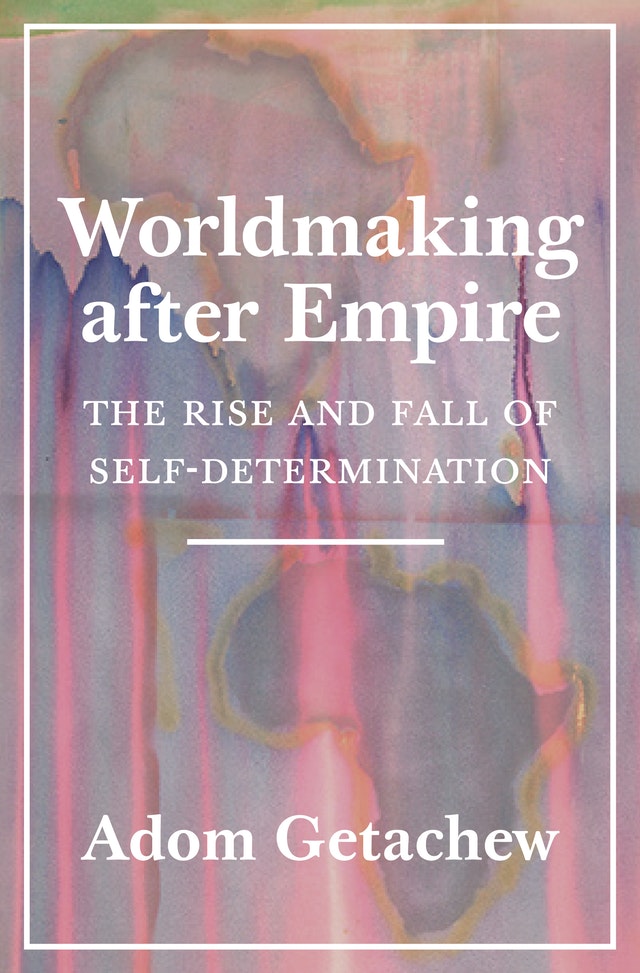
  • Andrew Zimmerman — Decolonizing Decolonization (Review of Adom Getachew’s Worldmaking after Empire)

    Andrew Zimmerman — Decolonizing Decolonization (Review of Adom Getachew’s Worldmaking after Empire)

    by Andrew Zimmerman

    A review essay on Adom Getachew, Worldmaking after Empire: The Rise and Fall of Self-Determination (Princeton, NJ: Princeton University Press, 2019).

    In Worldmaking after Empire Adom Getachew demonstrates how scholars might decolonize political theory by examining the political theory of decolonization. She works against the narrative, widespread in both popular and scholarly discourse, in which decolonization ironically completes, rather than rejects, the colonial project. It is a narrative in which colonized Africans, Asians, Indigenous Americans, and Pacific Islanders learn to demand national self-determination only from their colonizers, learn from those who oppress them to demand their freedom. By winning national sovereignty and independence, this common narrative suggests, colonized people did not overthrow but rather completed their European tutelage.[i] That narrative ultimately extends the colonial misrepresentation of conquest, oppression, and exploitation as beneficence. Worldmaking after Empire rejects this false and pernicious account. Its important contribution is then to analyze a body of decolonial political theory without recapitulating what Dipesh Chakrabarty has called the “‘first in Europe, then elsewhere’ structure of global historical time.”[ii]

    Eurocentric misrepresentations of decolonization typically credit US President Woodrow Wilson with the call for national self-determination, though this portrayal strains even so basic a feature of historical interpretation as chronology. Wilson, rather, appropriated Lenin’s earlier call for national self-determination in an effort to replace communist decolonial solidarity with a warmed over colonial “civilizing mission” perhaps best embodied in the “mandates” of  the League of Nations in Africa, the Middle East, and the Pacific. This has been clear even to scholars in the Global North at least since Arno Mayer’s 1959 Political Origins of the New Diplomacy and Gordon Levin’s 1968 Woodrow Wilson and World Politics, though it was, of course, obvious to intellectuals and activists in the Global South from the beginning.[iii] Wilson’s anti-Black racism, including his drive to introduce segregation into the U.S. Federal Government, was no anomaly to an otherwise consistent democratic internationalism. Whatever the shortcomings of Lenin’s own vision of decolonization and anti-racism, Lenin’s Marxism and his writings on the national question remained central to decolonial and anti-racist struggles around the world at least through the twentieth century.[iv]

    Who today could look for the origins of global anti-imperialism and anti-racism in the liberal internationalism of Woodrow Wilson and South African Jan Smuts rather than in the Black internationalism of Marcus Garvey, W.E.B. Du Bois, and so many others? Who would today see the League of Nations, with its declaration that the territories of the former German and Ottoman Empires would be placed under a “sacred trust of civilization” as anything but a cruel parody of decolonization? Many scholars, in fact: the Eurocentric view of decolonization that these views embody remains powerfully entrenched in ongoing neocolonial projects by the Global North. The United Nations, moreover, continued much of the frankly colonial internationalism of the League until enough colonies won their independence to use their voting powers as independent states to transform the United Nations, at least in its pronouncements.

    It is in this moment, Getachew shows, that intellectuals of the Global South, building on the longstanding, intertwined anti-imperialist traditions of Black and Communist internationalisms, worked out a theory of colonialism and decolonization that colonizers could not, as Wilson had done, assimilate to their own racial, political, and epistemological order.

    Getachew laid out her decolonial approach to theory in an important 2016 article on interpretations of the Haitian Revolution. She showed how the common view that the Haitian Revolution universalized the republican ideals of the French Revolution does so only by rendering the Haitian Revolution “neither Haitian nor revolutionary.”[v] This still common view strips the Haitian Revolution of much of its history in order to serve as the ironic completion of some other history, the history of its former colonizers and enslavers. That narrative of ironic completion is also the one that Getachew overturns in Worldmaking After Empire, in which decolonization completes, rather than overthrows, the project of colonial tutelage. In fact, as Getachew argues, the anti-racist universalism of the enslaved was a rejection of, and remains an alternative to, the racist universalism of the enslavers.

    In  a similar vein, Worldmaking After Empire presents the decolonial internationalism of the Global South not only as historical challenge to the imperialist world system, but also as a model of continuing importance for decolonizing the broad tradition of Eurocentric theory that emerged with that imperialist world system. The book reveals, moreover, the way thinkers of decolonial internationalism drew on the earlier anti-racist universalism of the enslaved

    Worldmaking After Empire focuses on a cohort of decolonizing intellectuals, most of whom became heads of post-colonial states. These philosopher sovereigns and internationalists include Nnamdi Azikiwe of Nigeria, Kwame Nkrumah of Ghana, Eric Williams of Trinidad and Tobago, Michael Manley of Jamaica, and Julius Nyerere of Tanzania. For each of these thinkers, decolonization did not mean full participation of their nations within the world system of European imperialism, for they already fully participated in that world system — as colonies. The imperialist world system, that is, already included their nations as subordinate members and was even predicated on that subordination. The politics of decolonization called, rather, for the creation of a fundamentally different world system, one predicated on equality rather than inequality, cooperation rather than exploitation, emancipation rather than oppression. Decolonization, Getachew agrees with much recent scholarship, did not aim at national autarky; it only appeared to do so to those who could not imagine an international system other than imperialism.

    The first transformation that Getachew focuses on is UN Resolution 1514, passed by the new postcolonial powers over the abstentions of the United States and other European colonial powers. The Resolution transformed the “principle of equal rights and the self-determination of peoples” from a distant goal, avowed but not pursued by the UN, into a language of sovereignty for present-day anti-colonial fighters and leaders. Resolution 1514 declared “the subjection of peoples to alien subjugation, domination and exploitation constitutes a denial of fundamental human rights.” This did not simply force the United Nations to endorse immediate decolonization but also transformed the meaning of decolonization. Colonialism was no longer just rule by a foreign nation. It also included domination and exploitation, the racist order of colonial rule. The framers of Resolution 1514 and the other thinkers of decolonization whom Getachew analyzes understood colonialism as a world system whose dismantling involved the transformation of regional and international economies.

    Getachew offers an illuminating analysis of two efforts to put this this decolonial internationalism into place: the first were the efforts at creating regional federations spearheaded by President Kwame Nkrumah of Ghana and Prime Minister Eric Williams of Trinidad and Tobago. These projects foundered on concerns of potential member states to protect their own sovereignty and the sovereignty of minority nationalities within multiethnic states. The second project was that for a New International Economic order (NIEO), which would have replaced the unequal exchange characteristic of the colonial world order with a decolonial system of equal exchange. This led to two important intellectual centers of decolonial thought: the New World Group of Jamaica and the Dar es Salaam school of Tanzania. But, drawing on work of Johanna Bockman, Getachew shows how the kinds of structural adjustments to the world economy that the NIEO demanded were undermined by IMF-imposed structural adjustments that drove Jamaica and Tanzania and much of the Global South into new forms of poverty and dependence.[vii]

    But while neither of these attempts succeeded in realizing a democratic, decolonial world system, the project of decolonizing political theory, including its original analysis of colonialism, remains as valid and urgent as ever. By revealing the profound and original political thought at the heart of these particular decolonial projects, Getachew makes clear that particular shortcomings of particular initiatives do not mean that decolonization was itself a failure, though this is a staple of much hegemonic thinking in the Global North. In this, World Making after Empire also participates in the project of decolonizing political theory.

    Getachew shows how decolonial theorists employed the history of Atlantic slavery to support their argument that colonialism was not simply foreign rule, but rather the global systems of racism and exploitation that continued even after formal decolonization. Works such as C.LR. James’s Black Jacobins, Eric Williams’s Capitalism and Slavery, and W.E.B. Du Bois’s Black Reconstruction make the history of the overthrow of slavery in the Americas central to anti-colonial struggles. The history of Atlantic slavery was also important for the colonial internationalism of Woodrow Wilson, as his own white supremacist history of the Civil War and Reconstruction makes clear.

    Getachew reveals, in one of the more surprising turns in her account, the important role that the history of the United States played in decolonial internationalist thought. One would hardly expect the thinkers Getachew discusses to look for positive models in the history of a nation that was arguably the most powerful enemy of the decolonial internationalism they advocated, and certainly one of the longest-lived and most powerful slave societies in the Americas. But, as Getachew shows, Nkrumah and Williams in fact turned to the U.S. Federalists and the U.S. Constitution for models of the federation of their own formerly colonized states.

    For Getachew this was neither Eurocentrism, nor an attempt by Nkrumah and Williams to defend themselves against one of their likely enemies by clothing their own projects in its stated ideals. Nkrumah and Williams figured, in Getachew’s words, “the postcolonial predicament as a recurring political problem and the federal idea as replicable answer.”

    But the anti-Black racism of the United States also continued to play a role in fighting against the democratic internationalism of decolonization. We thus see Daniel Patrick Moynihan, turning from his infamous culture of poverty account of supposed African American matriarchy to a screed against decolonization that is perhaps equally worthy of infamy. Neither the colonizers nor the decolonizers were pro- or anti- American, for the interpretation of the Americas was an agonistic field in which imperialists and anti-imperialists struggled.

    Getachew describes an anti-imperialist political theory that posits a world system that is neither a particularistic “no” nor a universalizing “yes” to the imperialist world system. Worldmaking after Empire proposes a number of interpretive tools to help understand decolonization instead as a form of global political thought that is different but not derivative from imperialist globalization. Rather than completions and universalizations of European theory, we see a struggle of appropriations and counterappropriations: Wilson appropriating from Lenin, the framers of Resolution 1514 appropriating from the UN, Nkrumah and Williams appropriating from the Federalists, for example.

    Getachew is of course not the first scholar to call for decolonizing theory. It is worth contrasting her approach with the earlier, and still influential, approach of the Subaltern Studies Group. Ranajit Guha and Dipesh Chakrabarty have each called on scholars to refuse to place popular, subaltern politics, into either the colonizers’ narrative arc of modernization or the decolonizing elites’ narrative of national liberation.[viii] Getachew reminds us that the two competing narratives should not be characterized as  imperialist internationalism and anti-imperialist nationalism, but rather as competing internationalisms on an agonistic field defined by racism and anti-racism, appropriation and counterappropriation. But, to borrow a question from Gayatri Spivak, can the subaltern speak in the political-theoretical landscape that Getachew offers?[ix] That is, is there a place in the intense struggle between colonial and decolonial internationalisms for varieties of subaltern politics that are amenable neither to the colonial nor the postcolonial elites? There is, of course, no necessary contradiction between the two approaches to decolonizing theory, Getachew’s and that of the Subaltern Studies Group. They are, perhaps, supplemental and mutually illuminating partial accounts.

    Decolonization was never, of course, political theory in isolation. Decolonial war making has always accompanied decolonial “Worldmaking.” Frantz Fanon argued that attempts “to settle the colonial problem around the negotiating table,” without combat, preserve the colonial class and international structures that true decolonization requires.[x] But by showing the ways that anti-colonial political theory offered a world diametrically opposed to the world of the colonizers, not simply a nationalist rejection of that world, Getachew suggests that even around Fanon’s “negotiating table” there was already a fundamental enmity. That is what makes this theory political.[xi] By decolonizing decolonization, Adom Getachew not only offers an important analysis of a group of political theorists who continue to be marginalized in our Eurocentric academies, but also calls on us to continue their projects of decolonial worldmaking.


    Andrew Zimmerman is professor of history at the George Washington University. He is the author of Alabama in Africa: Booker T. Washington, the German Empire, and the Globalization of the New South (Princeton, 2010) and the editor of Karl Marx and Friedrich Engels, The Civil War in the United States (International Publishers, 2016). He is currently writing a history of the US Civil War as a transnational revolution titled “A Very Dangerous Element.” Many of his publications can be found here.


    [i] Perhaps the best recent version of this common narrative is Erez Manela, The Wilsonian Moment: Self-Determination and the International Origins of Anticolonial Nationalism (New York: Oxford University Press, 2007). Getachew discusses this text on 192n19.

    [ii] Dipesh Chakrabarty, Provincializing Europe: Postcolonial Thought and Historical Difference (Princeton: Princeton University Press, 2000), 7.

    [iii]Arno J. Mayer, Political Origins of the New Diplomacy, 1917-1918, Yale Historical Publications. Studies 18 (New Haven: Yale University Press, 1959); N. Gordon Levin, Woodrow Wilson and World Politics: America’s Response to War and Revolution (New York: Oxford University Press, 1968). On the decolonial response to the version of national self-determination offered by Wilson and the League, see Marilyn Lake and Henry Reynolds, Drawing the Global Colour Line: White Men’s Countries and the International Challenge of Racial Equality (Cambridge: Cambridge University Press, 2008).

    [iv] See, for one account spanning much of the century, Harry Haywood’s splendid Black Bolshevik: Autobiography of an Afro-American Communist (Chicago: Liberator Press, 1978).

    [v] Adom Getachew, “Universalism After the Post-Colonial Turn: Interpreting the Haitian Revolution,” Political Theory 44, no. 6 (December 1, 2016): 821–45, 823.

    [vii] Johanna Bockman, “Socialist Globalization against Capitalist Neocolonialism: The Economic Ideas behind the New International Economic Order,” Humanity 6, no. 1 (March 16, 2015): 109–28.

    [viii] Ranajit Guha, “On the Prose of Counter-Insurgency,” in Selected Subaltern Studies (New York: Oxford University Press, 1988), 45–86; Chakrabarty, Provincializing Europe.

    [ix] Gayatri Chakravorty Spivak, “Can the Subaltern Speak?,” in Marxism and the Interpretation of Culture, ed. Cary Nelson and Lawrence Grossberg (Urbana: University of Illinois Press, 1988), 271–313.

    [x] Frantz Fanon, “On Violence,” in The Wretched of the Earth, trans. Richard Philcox (New York: Grove, 2004), 1–62, 23.

    [xi] In the sense of the political put forward by Carl Schmitt, The Concept of the Political, trans. George Schwab (1932; Chicago: University of Chicago Press, 2007).

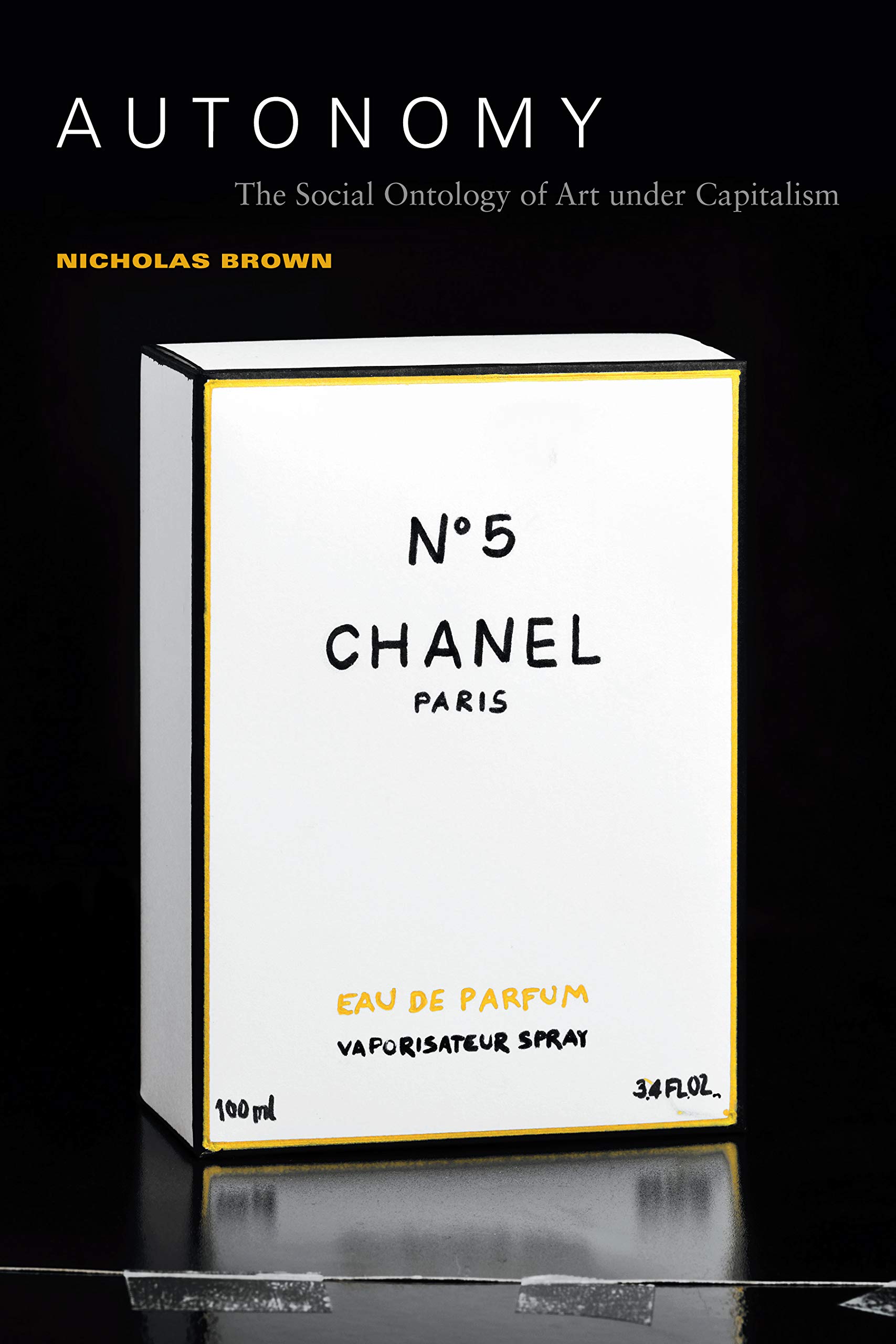
  • Christian Thorne — Immanuel Kant’s Manifesto for Dad Rock (Review of Nicholas Brown’s Autonomy: The Social Ontology of Art under Capitalism)

    Christian Thorne — Immanuel Kant’s Manifesto for Dad Rock (Review of Nicholas Brown’s Autonomy: The Social Ontology of Art under Capitalism)

    This article is part of a forthcoming special issue of CLCWeb: Comparative Literature and Culture, dedicated to Nicholas Brown’s book, Autonomy: The Social Ontology of Art Under Capitalism, edited by Mathias Nilges.

    By Christian Thorne

    Review of Nicholas Brown, Autonomy: The Social Ontology of Art under Capitalism (Duke, 2019)

    If there is one point that should be reasonably clear to anyone who has read “The Culture Industry” (1947/2002), it is that Adorno and Horkheimer do not reject popular culture. That essay, it’s true, gives us reasons to question any number of things that we typically hold dear: free time (for being unfree time, nearly as programmed as the work from which it nominally releases us) (104), laughter (for being the consolation prize you get for not having a life worth living) (112), style (for funneling all social and historical content into a pre-arranged matrix or inflexible scheme of aesthetic quirks and twitches; for holding out the promise of artistic individualism—the personal signature in literature or music—and then transposing this into its opposite, the iterative, unresponsive art-machine) (100ff). Most of us remember “The Culture Industry” as anti-pop’s cahier de doléance, its encyclopedia of anathema, the night in which all bêtes sont noires. But alongside the essay’s admittedly austere bill of grievances, it is easy enough to compile a second list, an inventory of things that Adorno and Horkheimer say they like and suggest we might admire: Charlie Chaplin, the Marx Brothers (109), Greta Garbo (106), the circus (114), old cartoons, Felix the Cat (maybe), Gertie the Dinosaur (perhaps), Betty Boop (for sure, because they name her) (106). Just to be clear: “The Culture Industry,” Exhibit A in any case against critical theory’s Left elitism, is also the essay in which Adorno attacks Mozart while praising “stunt films,” which we might more idiomatically translate as “Jackie Chan.” One can thus cite authentically Adornian precedence for an attitude that distrusts classical music and celebrates kung fu movies, and this will be hard to believe only if you prefer a critical theory shorn of its dialectics, stripped of the contradictory judgments that thought renders upon contradictory material—only, that is, if you prefer the Adorno of joke Twitter feeds and scowling author photos: bald, moon-faced, a Central European frown emoji inexplicably mad at his own piano. One suspects that readers have generally refused to take seriously the essay’s central category. For the culture industry is neither an epithet nor a gratuitously Marxist synonym for popular culture, but rather a different concept, distorted every time we paraphrase it in that other, more comfortable idiom, as a calumny upon pop culture or pop. There is plenty of evidence, in the essay itself, that Adorno and Horkheimer were drawing distinctions between forms of popular culture, and not just pitting the Glenn Miller Orchestra against Alban Berg.

    Such, then, is one way of taking the measure of Nicholas Brown’s Autonomy (2019). This is one of those books that you might have thought no-one could write anymore: four chapters that mean to restate the old, left-wing case for art, unapologetically named as such, as the artwork—and not as text or culture or cultural production—the idea being that art represents the survival of independent human activity under conditions hostile to such a thing. No longer homogenized under those master terms, art can again take as its rival entertainment, a word whose German equivalent derives from the verb unterhalten, which even English speakers can tell means “to hold under,” as though movies and TV shows existed to keep us down, as though R&B were a ducking or a swirlie. That the English word borrows the same roots from the French only confirms the point: entre + tenir, to keep amidst or hold in position. Entertain used to mean “to hire, as a servant.”

    Autonomy is also the book in which a next-generation American Marxist out-Mandarins Adorno, who, after all, begins his essay by insisting that the cultural conservatives are wrong. There has been no decline of standards, no cultural anarchy let loose by the weakening of the churches and the vanishing of the old, agrarian societies, hence no permissive culture in which anything goes. Just the contrary: Magazines and radio and Hollywood form a system with its own rigidly enforced standards, a highly regulated domain in which almost nothing goes. Adorno’s way of saying this is that there is no “cultural chaos.” But Nicholas Brown prefers the chaos thesis, endorsing the position that Adorno has preemptively rejected as both reactionary and implausible: “The culture industry,” Brown writes, couching in Frankfurtese his not-at-all Adornian point, is “the confusion in which everything worth saving is lost” (135).

    Similarly, readers are usually surprised to find Adorno writing in defense of “mindlessness.” His hunch is that Kantian aesthetics might find its niche among the lowest art forms and not, as we more commonly expect, among the most elevated. Sometimes I encounter an object and find it beautiful, and in that moment of wonderment, my attitude towards the object is adjusted. I stop trying to discern what the thing is for or how to use it. Where a moment ago, I was still scanning its instruction manual, I am now glad for the thing just so. Perhaps I am even moved to disenroll the beautiful thing from the inventory of useful objects, or find myself doting on it even having ascertained that it’s not good for much. But then sometimes this purposiveness without a purpose is going to strike me not as beautiful, but as stupid, and Adorno’s point is that the stupid can do the work of the beautiful, that the beaux arts are If anything outmatched by the imbecile kind. The activities that we do for their own sake, for the idiot joy of our own capacities, are the ones that our pragmatic selves are likely to dismiss as dopey: someone you know can pay two recorders at once with her nose; a guy you once met could burp louder than a riding mower; you’ve heard about people who can vomit at will and recreationally. Kantian Zweckmäßigkeit ohne Zweck enters the vernacular every time we mutter “That was pointless.” It is in this spirit that Adorno sticks up for “entertainment free of all restraint,” “pure entertainment,” “stubbornly purposeless expertise,” and “mindless artistry.” His claim, in fact, is that the culture industry is hostile to such “meaninglessness,” that Hollywood is “making meaninglessness disappear” (114). It might be enough here to recall the difficulties that the major studios have in making comedies that are funny all the way through, preferring as they do to recruit their clowns from improv clubs and sketch shows, to promote them to the rank of movie star, and then to impound them in the regularities of the well-made plot, complete with third-act twists and character arcs, gracelessly telegraphed in the film’s final twenty-five minutes, to make up for all the time squandered on jokes, and tending to position the buffo’s comic persona as a pathology to be cured, scripting a return to normalcy whose hallmark is a neutralized mirthlessness. Hollywood’s comic plots model the supersession of comedy and not its vindication.

    But Nicholas Brown is not on the side of meaninglessness. “In commercial culture,” he writes, “there are no works to critique and no meanings to be found”—and he does not mean this as praise (10). In Autonomy, there is no liberating nonsense, but only the English professor’s compulsion to discern meaning, his impatience with any art for which one could not readily devise an essay prompt. Whatever independence the book’s title is offering us, it is not the freedom to stop making sense. It feels bracing, in fact, to read a book so willing to discard the institutionalized anti-elitism of cultural studies and 200-level seminars offering to “introduce” 20-year-olds to horror movies. When Brown rolls his eyes over Avatar because of some dumb thing its director once said in an interview, or when he calls off a wholly promising reading of True Detective by announcing that it is “nothing more than an entertainment,” we need to see him as turning his back on the aging pseudo-Gramscians of the contemporary academy, all those populists without a movement, the media-studies scholars who imagine themselves as part of a Cultural Front that no-one else can see, a two-term alliance consisting entirely of Beyoncé fans and themselves; the shopping-mall Maoists of the 1990s who couldn’t tell the difference between aller au peuple and aller au cinema (71). Adorno, of course, was concerned that the desires and tastes of ordinary audiences could be manipulated or even in some sense produced. “The Culture Industry” prompts in its readers the still Kantian project to figure out which of the many pleasures they experience are authentically their own. Which are the pleasures that will survive your reflection upon them, and which are the ones that you might reject for having made you more object-like, for having come to you as mere stimulation or conditioning? The autonomy that Adorno is trying to imagine is therefore ours, in opposition to a mass media that muscles in to tell us what we want before we have had a chance to consider what else there is to want or how a person might want differently, to work out not just different objects of desire, but different modes of desiring and of seeking satisfaction. Brown, by contrast, complains repeatedly that artists more than ever have to make things that people like. The autonomy that he is after is thus not our autonomy from an insinuating system but the artist’s autonomy from us. It is no longer surprising for a tenured literature professor to disclose, in writing, that he’s been listening to early Bruno Mars records. The unusual bit comes when Brown says he doesn’t think they’re any good (24).

    *

    Rather than summarize Brown’s findings, it might be more instructive to think of his book as having been constructed, modularly, out of four blocks:

    1) A Marxist problem: The problem that drives Brown’s thinking arrives as a question: What is the condition of art in the era of the universal market? The very concept of art promises that there exists a special class of objects, objects that we intuitively set apart, that are exempt from our ordinary calculi, that indeed activate one of the mind’s more recondite and less Newtonian faculties. But it is the premise of the universal market that there exist no such objects. Art might thus seem to be one of the things that a cyclically expanding capitalism has had to eliminate, as rival and incompatibility, like late medieval guilds or Yugoslavia. And yet art plainly still exists. I swear I saw some last Sunday. What, then, is the status of art when it can no longer dwell, nor even pretend to dwell, outside of the market, when its claim to distinction can no longer plausibly be voiced, when we’ve all come to suspect that the work of art is just another luxury good? One way of thinking about Autonomy, then, is to read it as refurbishing the theory of postmodernism, thirty-five years after Jameson first put that theory in place.

    2) A Kantian solution: Maybe “refurbish” is the wrong word, though. Perhaps it would be more accurate to say that Brown means to call off the theory of postmodernism, to soothe readers steeped in Jameson by explaining how art survives even once, in the latter’s words, “aesthetic production … has become integrated into commodity production generally” (1991: 4). Autonomy amounts to a set of reassurances that aesthetic autonomy remains possible even within the market; that artworks can come to us with ISBN numbers and still elude the constraints of the commodity form. Brown’s book amounts to a list of the techniques available to contemporary artists for performing this feat. This is an argument that can be broadcast in different frequencies. Most often, it arrives in Kantian form, to the effect that there still exist non-instrumental objects, objects that, in some sense yet to be defined, display an anomalous relationship to purpose or use. At the same time, the argument can be modulated to carry a certain Marxist content. It was Marx’s claim, after all, that capitalism was bound to produce its own enemies, that bosses and investors were fated to produce a class of persons who would simultaneously serve and oppose them. One way of engineering the splice between Marxism and Kantian aesthetics is just to swap in the word objects where the last sentence had “persons.” Marx held that labor power was the commodity that did not behave like all the others. –Perhaps art is a second such. –And maybe work is the word that holds the two together. If we grant this point, postmodernism might reveal itself to have been a false problem all along. For which faithful Marxist ever thought we had to look outside of market society for solutions? Not Jameson, at any rate, whose mantra in the 1980s was that there was no advantage in opposing postmodernism, that the task for an emancipatory aesthetics was to pick its way through postmodernism and out the other side. Nicholas Brown, meanwhile, is more interested in what came before postmodernism than in what might come after it. In literary-historical terms, his argument is best understood as vouching for the survival of modernism within its successor form. Indeed, Brown is such a partisan of early twentieth-century art that he writes a chapter on The Wire, hailed by all and sundry as the great reinvention of Victorian social realism for the twenty-first century, and calls it “Modernism on TV” (152). The theorist’s attachment to the old modern is easiest to sense whenever the book’s readings reach their anti-utilitarian and aestheticist apotheoses. Brown thinks he can explain why, when presented with two versions of the same photograph, we should prefer the one with the class conflict left out (58-9). He also praises one white, Bush-era guitar band for negating the politics implicit in its blues rock, for achieving a pop formalism so pristine that it successfully brackets the question of race (145).

    3) A high-middlebrow canon:  That the band in question is The White Stripes lights up the next important feature of Autonomy, which is that it has assembled a canon of high-middlebrow art from the last forty years: Caetano Veloso, Jeff Wall, Alejandro Iñarritu, Ben Lerner, David Simon, Jennifer Egan, Richard Linklater, Cindy Sherman. That Brown shares the last-named with Jameson’s postmodernism book is a reminder that this set of objects could be variously named. The mind swoops in to say that the high-middlebrow is nothing but postmodernism itself (EL Doctorow, Andy Warhol, Blade Runner)—that the book’s dexterity is therefore to redescribe as neo-modernist what we had previously known only as pomo—but then pauses. If we follow the classic account, then one of the foremost characteristics of postmodern art—the first box to tick if you’re in a museum carrying the checklist—is  the collapsing of high and low, or what Jameson often identifies as elite art’s unwonted interest in its downmarket rival, its willingness to mimic trash, pulp, schlock, or kitsch. But it’s never been obvious that the latter really and truly triggered the former—that the mere quoting of popular media was enough to abolish the class-boundedness of art or even to weaken our habituated sense that cultural goods sort out into a hierarchy of distinction. If I am sitting in a concert hall listening to a string quartet, then this setting alone will be enough to frame the music as high even when the composer briefly assigns the cello the bassline from Stevie Wonder’s “Superstition.” One wishes to say, then, that the middlebrow—and not the citational—is the mode of art in which the distinction between high and low most fully collapses, which should make of Midcult the form of a perfected postmodernism, except that the doubling of the concept will now raise some puzzles of its own. For didn’t the middlebrow precede the postmodern? Wasn’t there middlebrow art before there was postmodern art? And if yes, then why wasn’t such art postmodern when it combined high and low in 1940? Were high and low commingling differently in 1980 than they had in The Old Man and the Sea? And doesn’t middlebrow art have its own, more or less direct way of reaching the median, its own styles and forms, without having to assemble itself afresh every time from pieces borrowed from high and low? So perhaps we would need after all to distinguish the middlebrow from the splicing-of-pop-and-art, for which we would continue to reserve the word postmodernism. At this point, watching those terms grow unwieldy, one casts about for new ones, and looking back over Brown’s list of autonomous artists, discerns the outlines of what until recently we were calling indie culture or alternative: small-label rock albums and small-studio features, supplemented by New Yorker fiction and the more accessible reaches of gallery art. If you are persuaded by Autonomy, you’re going to say that it is a thoughtful Gen X’ers riposte to Jameson, thirty-five years his senior, a careful explanation of why he has never experienced the art of his generation as all that broken. If you are unpersuaded by the book, you’re going to say that it is Immanuel Kant’s manifesto for dad rock.

    4) The methods of the literature seminar: At this point, it becomes important to identify the first of two ways that Brown has modified the Kantian arguments that he makes often and by name. The third Critique is at pains to explain that you are doing something unusual every time you call something beautiful. First of all, you are judging without interest; when you experience something as beautiful, you stop caring what it is for, or what it can do for you, or what it is worth. And if you are judging without interest, then it follows directly that your judgment should hold universally, since all other people equally capable of bracketing their interests should judge as you do. And yet the universality in question will be a fractured one even so. When I call this painting beautiful, I demand that everyone agree with me while knowing in practice that not everyone will. My claim is thus universalizing but not genuinely universal. Beauty is the occasion for what Kant (1790/1987) innocuously names our “subjective universality”—our failed and spectral commonality, which is, of course, the fate of all universalisms thus far, unusual here only because raised to consciousness (see especially section 8).

    Brown follows this argument closely, but has nothing at all to say about beauty, which is the term one might have thought a Kantian aesthetics could not forego. His revision goes like this: I know I am in the presence of art not when I experience an object as beautiful, but when I know it to be meaningful, and I discern its meanings even having admitted that I can never know what it was that the artist meant. Deliberating about art, Brown says, has to involve the “public ascription of intention,” and it’s worth taking the time to extract the Kantian structure of this claim (13). Intention is merely ascribed, something that I have to posit. But this ascription is necessarily public; I posit meaning while expecting others to co-posit it alongside me. Meaning is subjective but not private and in this sense the successor to Kant’s beauty. Brown’s niftiest trick is thus to get meaning to do the work of the beautiful, and we can accordingly read Autonomy both as the making-hermeneutic of the philosophy of art and as the making-aesthetic of meaning, hence as philosophical aesthetics’ revenge upon semiotics for having once taught us to talk about art in de-aestheticized ways.

    “The public ascription of meaning” is also Brown’s big proposal for authenticating an object as real art even when it comes to as us as commodity. It’s his bite test and dropper of nitric acid. Can I generate public meanings around x (Alison Bechdel, Gus Van Sant, Yeah Yeah Yeahs)? In practice, this is bound to mean: Can I teach a class on x (St. Vincent, Wes Anderson, Cormac McCarthy)? Will it work in seminar? We know something to be art, Brown says, when it “solicits close interpretative attention,” and Autonomy is most convincing when modeling such attention (22). Brown is a first-rate exegete, and his book tosses off one illuminating reading after another, repeatedly vindicating the program of an older criticism: why Boyhood isn’t really a coming-of-age movie; why the second season of The Wire is Greek rather than Shakespearean tragedy (and why that distinction matters); the particular way in which bossa nova bridges the divide between popular and art musics (and what this has to do with developmentalist politics in the global South). Readers might nonetheless be disappointed to learn that postmodern art’s paths to autonomy are the ones they already knew about. The book’s point, in fact, seems to be that the old paths still work, that new ones aren’t needed. Brown likes art when it displays a degree of self-consciousness about its own procedures and historical situation, and especially when an artwork includes a version of itself which it then subjects to critique. Simple self-referentiality is his most basic requirement: that art not reproduce without comment the inherited imperatives of its genre or medium, always glossed as market imperatives. He sticks up for “framing” and “citation” because of the meta-questions that these provoke; some guitars don’t just play rock songs, but get you to reflect on the condition of rock songs. All three of the novels he recommends are thus Künstlerromane, or at least readable as such, but these are only the clearest instance of Autonomy’s fundamentally didactic preference for literature when it interrupts our naïve attitude to fiction and instead makes us think afresh about same. The White Stripes are congratulated for having turned “fun” into an “inquiry” (149).

    This position is no more perspicuous than it has ever been. A person might finish Autonomy still wondering how it is that irony in this accustomed mode is able to “suspend the logic of the commodity” (34). The question is difficult: When irony comes to us in the form of the commodity, can we be sure that the commodity always loses? What keeps the self-ironizing commodity from functioning as commodified irony? In order to be convinced of Brown’s position, do I have to believe first that irony is the one uncommodifiable thing? Or that a work that confesses its dependence on the market has thereby neutralized that dependence? In Autonomy, autonomy sometimes withers back to my ability to name my subordination. Brown, moreover, is altogether inured to one version of clientage, which is the continued dependence of art upon the critic, who, after all, is the only one who can ratify it as art, via that public ascription of meaning. Artists forward works to the marketplace without knowing whether they will even count as art, generating instead a kind of proto-art, obliged to wait for the critics who produce the aftermarket meanings that classify some works as not-just-commodities. If you are an artist, then  autonomy apparently means marking time until somebody else certifies that you have successfully described your heteronomy.

    *

    A Marxist quandary, a Kantian path out—that’s Autonomy. If I say now that the path out is poorly blazed, and maybe even a trick, then you needn’t be disappointed, because it will also turn out that the quandary wasn’t one and that it didn’t need solving. You needn’t worry, I mean, that Brown’s account of art is unconvincing, and indeed disheartening, because the situation to which this art putatively responds is a non-problem. I’ll explain each in turn:

    The non-problem: “The work of art is not like a commodity,” Brown writes. “It is one” (34). That sentence is admirably hard-headed—but is it also correct? Are music and film and such available to us only as commodities? Do we never encounter art without having bought it first? It will be enough to consult your own experience to see that you are, in fact, surrounded by non-commodified art. Works of art are the only items that governments still routinely take out of the marketplace, amassing large collections of books, movies, and symphonies that citizens can access for free. Public libraries make of the arts the only remaining occasion for the otherwise atrophied traditions of municipal socialism. But when we start surveying our contemporary reserves of non-commodified art, we are talking about rather more than some picturesque Fabian survival. There was a period around the year 2000 when the new technologies more or less destroyed the market for recorded music. Even neoliberals concede that markets are not natural or spontaneous—that they have to be created and politically sustained. For the market in recorded music to have survived the rise of digital media, the governments of the capitalist states would have had to intervene massively to counter the wave of illegal downloading—the Moment of the MP3—when in fact they were largely content to let that market stop functioning. Brown is telling a story about the ever-intensifying logic of commodification, even though he has lived through the near decommodification of an entire art form, its remaking as a free good. If we are no longer talking much about media piracy, then this is only because filesharing has since been nudged back into a drastically redesigned marketplace, in the form of streaming and subscription services, which are the Aufhebung of the commodity form and its opposite: the non-market of free goods, available for a fee: Napster + the reassurance that you won’t get sued. But then is the Spotify playlist a commodity? It might be, though it seems wrong to say that I have bought such a thing, and we still lack a proper account of the new political economy of culture and its retailoring of the commodity form: Art in the Age of the Platform and the Deep Catalog. There is, of course, one position on the Left that has become totally contemptuous of the new technologies and especially of social media. The claim here is that we are gullibly creating free content for the new monopolies; we are writers and filmmakers and photographers—and we upload our work: our labor! our creativity!—and the companies make money (via advertising and the hawking of our data), and we don’t get a cut.[1] We are thus all in the position of the ‘90s-era pop star who has seen her royalties tank; against every expectation, Shania Twain has become the representative figure of our universal exploitation. This argument is worth hearing out, but it remains important even so to recall the situation that gives rise to this misgiving in the first place, which is that the creative Internet involves much more than people Instagramming their dinners. It produces Twitter essays, Ivy League professors anatomizing authoritarianism, lots of short movies, 15-second TikTok masterpieces, and song—everywhere song. To the anti-corporate line that calls me a chump for posting a video of myself playing Weezer’s “Hash Pipe” on the ukulele, the necessary Marxist rejoinder is that an arts communism is already in view—or at least that we have all the evidence we will ever need that people given the opportunity will gather without pay to fashion a culture together. Our snowballing insights into surveillance capitalism co-exist with the unforeclosed possibility that social media is the opening to socialist media. But then one wonders how new any of this is—wonders, indeed, whether the culture industry was ever tethered to the commodity form, since network television and pop radio in their canonical, postwar incarnations were already free goods, generating one of the great unremarked contradictions of twentieth-century arts commentary. Already in 1980, the art forms that a Left criticism excoriated under names like “corporate rock” and “consumer culture” were the ones that you could readily watch or hear without buying them. Before the advent of the full-scale Internet, it was alternative culture that existed only as a commodity, like that Sonic Youth CD I was once desperate to buy because I knew I was never going to hear it during morning drive time. (Only as a commodity? Almost only? Surely a friend might have hooked me up with a dub. Was I nowhere near a college radio station?) Indie used to be our name for music more-than-ordinarily dependent on the market, for art that one encountered mostly as commodity.

    That’s one way of understanding why Autonomy is trying, in vain, to solve a non-problem: The commodification of art is by no means complete. The relation of music, image, and story to the commodity form remains inconsistent and contradictory. But there’s a second way of getting at this point, and it goes back to the book’s fundamental misunderstanding of Marx and the commodity form. Brown’s promise, again, is that even in an era when we can no longer posit a distinction between the commodity and the non-commodity, we can still learn the subtler business of telling the mere commodity from the commodity-plus. Contemporary art might be a commodity, but it isn’t just a commodity. But in Marx, there is no such thing as the mere commodity. The very first point that Marx makes in Capital Volume 1 (1867/1992) is that commodities have a dual character; it is, in fact, this dualness that makes them commodities: Objects “are only commodities because they have a dual nature” (138)—they are simultaneously objects of use and objects of exchange, themselves as well as their fungible selves. Brown seems to hold that this condition is the special accomplishment of the neo-modernist artwork—its ability to escape commodification by being twofold. But that simply is the structure of the commodity. A Thomas McCarthy novel has no advantages in this regard over a tube sock or a travel mug, and Brown can only believe that it does by arguing repeatedly, contra Marx, that it is usefulness, and not doubleness, that makes something a commodity: “An experience is immediately a use value, and therefore in a society such as ours immediately entails the logic of the commodity…” (49). “Since the display value of a picture is a use value, there is nothing in the picture as an object that separates it from its being as a commodity” (68). This error is baffling, since twenty minutes spent reading Capital would have been enough to correct it, but it is also the predictable outcome of trying to get Marx and Kant to speak in the same voice. Marx’s argument has two steps: 1) It is exchange that makes something a commodity, and not use; useful objects obviously predated market society and will outlive it. 2) But then equally, use is not negated by exchange; the exchangeability of the object coexists with its usability, even though these require contradictory standpoints. It is thus impossible to understand why Brown thinks that art would stop functioning as art just because it’s for sale. Brown’s way of claiming this is to say that “the structure of the commodity excludes the attribute of interpretability” (22). If a movie comes to me as a commodity, I shouldn’t be able to interpret it, and if I am against all expectation able to discern meaning in it, I can congratulate it for having slipped free of its commodity shackles. But why would that be the case? A commodified rice cooker doesn’t stop functioning as a rice cooker. Commodified soap doesn’t stop cleaning your face. Why would artworks alone lose their particular qualities when commodified, such that we would wish to solemnize those putatively rare examples that achieve the doubleness that is in fact the commodity’s universal form?

    The fake solution: Brown’s argument gets itself into trouble by superimposing Kant on top of Marx, and yet its Kantianism is itself a mess. I should explain first why this matters. A critical theorist spots on the new arrivals shelf a book called Autonomy and can’t know at a glance what it is about, since its title exists in two registers at once. She might expect to find a book about the autonomy of art—a book, in other words, that belongs in the tradition of Gautier, Pater, Greenberg, and Rancière. But she might equally expect a book about the autonomy of workers, a book about autonomia, about the ability of workers to direct their own activity and set their own political goals without the superintendence of political parties and big trade unions. Anyone who notices that the book’s author is carrying a Duke-Literature PhD has got to expect this second autonomy, an Englishing of Potere Operaio and Lotta Continua; one might well be grateful for such a thing, since American Marxists still require the help of the Italians to make militant the cozily Jeffersonian program of “participatory democracy.” That Nicholas Brown holds no brief for the Italian Marxists is thus one of the book’s bigger surprises; if anything, the baldness of the book’s title seems designed to wrest the word autonomy away from the autonomists and to deliver it back to the aestheticism that historically predated Tronti and Virno. But the matter is more complicated than that. A certain workerism continues to inform Brown’s writing even so, if only because he so often makes about artworks arguments that we are used to hearing about proletarians. His biggest claim is that the artwork is wholly inserted into capitalism while also opposing it. “Art as such does not preexist capitalism and will not survive it; instead, art presents an unemphatic alterity to capitalism; art is not the before or after of capitalism but the deliberate suspension of its logic, its determinate other” (88-9). Or again: “The artwork is not an archaic holdover but the internal, unemphatic other to capitalist society (9). No Marxist should be surprised by this figure, though one might well marvel that it has taken the aesthetes so long to come round to it. It was the modernists, in this respect like the Third Worldists, who thought that the struggle against capitalism would have to come from some uncontaminated outside, from people who had wrenched free of the market or managed to avoid entering it in the first place. Brown’s project is to correct this bit of modernist doctrine by borrowing from Marxism its most basic dialectical motif, and in the process to get artworks to play the role formerly assigned to the working class. Brown’s artwork accordingly rumbles with otherwise diminished proletarian energies, and this has contradictory effects, for it is unclear in this scenario whether autonomous art comes to us as the ally of working people or as their rival. Brown is nowhere closer to a conventional Marxism than in his discussion of The Wire, where he offers some cogent remarks on the disappearance of the American working class, on casualization, the vanishing of jobs hitherto thought immune to mechanization, and the persistence of the category worker, as quasi-ethnic identity, even after work has disappeared. In this context, he has earmarked one line from the second season: “Modern robotics do much of the work” (qtd 174). But this last is a historical development that Brown’s argument emulates in the process of opposing, as his book palpably assigns to objects a set of historical tasks that were once thought proper for workers. Autonomy is accordingly stalked by automation, with the position of the working class—its superseded position? its only ever putative position?—now filled by quality television and smart novels. Robots do the work of capitalism; art does the work of “suspending” capitalism and is to that extent a second robot, the robot of negation: the nay-robot.

    At the same time, however, the artwork will continue to serve as the anticipatory figure for a free and self-determining humanity. If I can’t figure out how to be autonomous, I can delegate art to be autonomous in my stead. This is the not-so-secret use of those special objects to which we do not assign uses. The autonomy that we ascribe to the artwork will therefore say a lot about the independence that we wish for ourselves, and it is for this reason that the book’s explanation of Kant’s aesthetics matters, since it is from his third Critique—and not from his moral philosophy, nor from his overtly political essays—that we are expected to extract this political criterion and aim.

    The problem, then, is that Brown parses Kant’s theory of aesthetic autonomy in at least three different and incompatible ways.

    1) Sometimes, though not often, Brown cites Kant’s most distinctive formulation. Some objects strike me as manifestly designed—organized, patterned, not random—even though I can’t tell what they are for or, indeed, whether they are for anything at all. This Autonomy knows to call “purposiveness without purpose,” design without function (12, 179). Anyone aspiring to this condition is aiming for a kind of idleness, or at least an un-work, a kind of busy leisure. If lack of purpose is how we recognize autonomy, then we will ourselves only gain independence once we have resolved never to achieve anything—to swear off goals and undertakings and weekend to-do lists.

    2) But then Brown also praises some detective fiction for its ability to produce cognitive maps—for its “making connections” across “multiple milieux and classes,” and at that point one notices that he isn’t hostile to purpose after all (70). He has violated the Kantian stricture by assigning a purpose to Raymond Chandler and endorsing that purpose as worthy. The Big Sleep doesn’t just hum with needless pattern; it provides us with a service for which we might feel grateful (and for which we might pay Random House). What stands out at this point is that Brown has proposed a formulation of his own, which he prefers to “purposiveness without purpose”—namely, “immanent purposiveness,” a refusal, that is, of imposed or extrinsic ends (13). Sometimes he refers in this regard to “the self-legislating work”: “A work’s assertion of autonomy is the claim that its form is self-legislating. Nothing more” (182). For any Kantian, of course, autonomy is precisely something more—a rejection of all ends, and not just of “external” ones (31)—though the phrase “self-legislating” has a Kantian ring of its own, and we might soon conclude that Brown is silently correcting the third Critique by smuggling in a key concept from the second, in order to re-introduce purpose into a landscape forbiddingly devoid of it. He is putting the self-legislating subjects of Kantian moral philosophy in the place of the aimless objects of Kantian aesthetics.

    3) But when is an end “immanent” to a work of art? And when is it “external”? Are we confident that we know the difference between inside and out? Early in Autonomy, Brown lists among his goals a defense of the category of “intention” (10-11): We won’t even be able to regard artworks as intelligible if we treat them as non-intentional—if, that is, we stop conceiving of them as somebody’s attempt to say something. This claim is plainly incompatible with a rigorous Kantianism, since whatever intention I ascribe to the artwork will be a purpose, and Kant’s whole point is that artworks have no such purposes. But Brown’s retrieval of intention is no less damaging to the loose Kantianism he prefers. He instructs us to think of autonomy as “self-legislating,” but he also wants us to consider the intentions that activate a work of art, and the latter generates all sorts of ambiguity around the former, simply by introducing the problems of authors and artists. Where before we had one term, the artwork, now we have two, the artwork and its intender, and now we have to wonder which of them gets to be self-legislating. If we allow the artist to give herself the law, then the artwork will presumably be secondary, the vehicle and working-out of the poet’s self-chosen code, the telegram of her intention. Sometimes, however, Brown sidelines the artist and lets the movies choose their own ends: It is the job of the viewer, he writes, “to figure out what [the artwork] is trying to do” (31). And from this second perspective, one is compelled to distrust the artist’s intention as an externality—just another imposed demand: The artwork, if it is to be autonomous, should get to do what it wants, where this desire is usually understood as an inherited formal project, requiring that all new artists solve hitherto unsolved formal problems or that they re-do old aesthetic experiments in radicalized form. But in this second scenario, the autonomy of the artwork plainly comes at the expense of my autonomy. The artwork that I had hoped would secure my independence instead ends up bossing me around. It was Adorno (1970/1997: 36-37) who observed that modernism, which we typically describe to undergraduates as an emancipated anti-traditionalism, a discarding of the old conventions, an experimental drive to make art otherwise, actually amounted to a “canon of prohibitions”: an ever-expanding list of Things You Could Not Do: paint figurally, compose with triads, end your novel with a marriage.[2]

    But then do artworks really get to choose their own ends or give themselves the law? Brown sometimes writes as though they did, but mostly confesses that they don’t, preferring the following, thrice-repeated hedge:

    • “The novel presents itself as simply following a logic that is already present in the material, as though the novel were not written by an author” (99).
    • In the domain of art, all legitimate politics must “appear to emerge as if unbidden from the material on which these artists work” (38).
    • For an artist, one important skill is “the capacity to produce the conviction that what we are seeing belongs to the logic of the material rather than to some external, contingent compulsion” (59).

    This last sentence makes Brown’s point with special force: The artwork cannot, in fact, achieve autonomy; its glory is not to negate command, but merely to mask it, to produce in us a belief that the artwork was self-generating even when it wasn’t. Autonomy begins by recommending to us art as the undiminished paradigm of self-determination and free activity, and ends up enrolling it in that list of calculated things we misapprehend as spontaneous—consumer choice, electoral democracy, Spinozist consciousness—and this it does without ever admitting how dolefully it has dickered down its offer: We search art for the possibility of our freedom and walk away persuaded only that some things expertly disguise their subservience. They step forward “as though” unbidden. Autonomy … as if.


    Christian Thorne is a professor of English at Williams College.

    References

    Adorno, Theodor. Aesthetic Theory. 1970/1997. Translated by Robert Hullot-Kentor. Minneapolis: University of Minnesota Press.

    Brown, Nicholas. 2019. Autonomy. Durham, NC: Duke University Press.

    Horkheimer, Max and Theodor W. Adorno. 2002. Dialectic of Enlightenment Translated by Edmund Jephcott. Stanford: Stanford University Press.

    Jameson, Fredric. 1991. Postmodernism, or, The Cultural Logic of Late Capitalism. Durham, NC: Duke University Press.

    Kant, Immanuel. The Critique of Judgment. 1790/ 1987. Translated by Werner Pluhar. Indianapolis, IN: Hackett Publishing.


    [1] See for instance the writings of Cracker’s Davd Lowery, collected at The Trichordist, a collective of “artists for an ethical and sustainable Internet.” thetrichordist.com, last accessed November 12, 2019.

  • Joseph Slaughter — Who Owns the Means of Expression? (Review of Sarah Brouillette’s UNESCO and the Fate of the Literary)

    Joseph Slaughter — Who Owns the Means of Expression? (Review of Sarah Brouillette’s UNESCO and the Fate of the Literary)

    by Joseph R. Slaughter

    Review of Sarah Brouillette’s UNESCO and the Fate of the Literary (Stanford: Stanford University Press, 2019)

    The misfortune is that the forces of change are not always able to express themselves because they do not possess the means of expression.

    –Amadou-Mahtar M’Bow

    In April 1974, Houari Boumédiène, the Algerian Secretary General of the Non-Aligned Movement, opened a special session of the UN General Assembly with a blistering speech describing and denouncing the world system of neocolonial exploitation that continued to disadvantage and despoil the newly independent postcolonial states. “[T]he colonialist and imperialist Powers accepted the principle of the right of peoples to self-determination,” he asserted, “only when they had already succeeded in setting up the institutions and machinery that would perpetuate the system of pillage established in the colonial era” (Boumédiène 6). Sarah Brouillette’s important new book, UNESCO and the Fate of the Literary, offers a similarly searing account of Third World efforts to capture the institutional machinery of the United Nations Educational, Scientific, and Cultural Organization (UNESCO) and to redirect its work for the mass benefit of disenfranchised peoples everywhere, and of how those efforts were ultimately frustrated. Brouillette is concerned with “how cultural production emerges in relation to the real economy” (2). By “grounding the critical discourse of world literature in the political economy of global literary institutions and markets,” she places UNESCO at the center of a revealing story about the production, consolidation, and distribution of world literature in the post-war international order (2).

    Because, as Brouillette insists, the economic world system overlaps with, and to a great degree determines, the cultural world system, it seems helpful to sketch here the broader Third World legal efforts to decolonize international law and the administrative organs of the UN that provide background for Brouillette’s account of UNESCO’s historical role in shaping our current neoliberal assemblage of world literature. The 1974 UN special session that Boumédiène opened was convened to consider the problem of “raw materials and development”—namely, that “The Third World possesses 80 per cent of existing raw materials, but its share of overall industrial production is under 7 per cent” (Bedjaoui 27). The session culminated on May 1st with the Declaration on the Establishment of a New International Economic Order (NIEO), which sought to “reverse the effects of colonialism” (Anghie 199) by establishing a framework for “the economic advancement and social progress of all peoples . . . . which shall correct inequalities and redress existing injustices” (United Nations). The NIEO Declaration, adopted without a vote by a greatly expanded General Assembly in which the postcolonial states now constituted a substantial majority, intended to rectify the growing “gap between the developed and the developing countries” by (among other things) insisting on the “self-determination of all peoples,” “permanent sovereignty of every State over its natural resources,” the right “to restitution and full compensation” for colonial exploitation and “foreign occupation,” the “extension of active assistance to developing countries,” and guarantees for “developing countries [of] access to the achievements of modern science and technology” (United Nations).

    It is not entirely clear which specific “machinery” in the “system of pillage” Boumédiène had in mind when he suggested that old colonialist and new imperialist economic powers lay in wait for the postcolonial right of self-determination like its own doom. In 1965, however, Kwame Nkrumah had already famously recognized the trap of postcolonial self-determination conditioned by neo-colonialism: “the State which is subject to it is, in theory, independent and has all the outward trappings of international sovereignty. In reality its economic system and thus its political policy is determined from outside” (ix). Boumédiène similarly implies that the nominal right to political self-determination was undermined by the economic fact that “the developed countries have virtual control of the raw materials markets and what practically amounts to a monopoly on manufactured products and capital equipment” (6). (As Brouillette’s work has consistently shown, a similar dynamic of market domination in the global publishing industries operates in our current world literary system, effectively obviating any romantic or purist idea of cultural self-determination.) In his seminal study of the centrality of colonialism to the history and development of international law, Antony Anghie describes the provisional and partial nature of what he calls “Third World sovereignty,” whose “porous character” ensures the political and economic subordination of newly-independent states and their subjection to Euro-American international law that coalesced to legitimate the continuing exploitation of non-European peoples and their resources (269).

    The doctrine of permanent sovereignty over natural resources (PSNR), first examined at the UN in 1952 by the Commission on Human Rights in relation to a prospective declaration on the right of peoples to self-determination, was formally adopted by the General Assembly in 1962. Resolution 1803 on Permanent Sovereignty over Natural Resources declared the right of nations and peoples to explore, develop, and dispose of their natural wealth in the interest of “national development” and “the well-being of people of the State concerned.” One of the pillars of the NIEO in 1974 was the strengthening of the “[f]ull permanent sovereignty of every State over its natural resources and all economic activities” (United Nations). However, as Anghie shows, among the legal machinations by which “the West . . . negated Third World attempts to use the General Assembly as a means of transforming colonial international law” (222) was the creation of “a new legal framework, suggested by the term ‘transnational law’, to further undermine the economic [and political] sovereignty of the new states” (222-3). Indeed, as early as the 1950s Western-based multinational corporations were turning to “a complex combination of domestic law, private international law and public international law” in order to pursue (and impose) their economic interests in the emerging Third World (223). Thus, in a classic example of forum-shifting, a system of “transnational law” developed that shifted focus and force away from traditional international law and from the standard international legal forums of the United Nations system toward emerging frameworks for private arbitration between sovereign states and multinational corporate finance capital over rights and access to resources (223).

    Thus, one of the sad ironies of the Declaration of the New International Economic Order advocated by Boumédiène in 1974 is that in so many ways it, too, was too late: the newly-independent states were fighting the proverbial last war. By the early 1980s, the old and new imperial powers of Europe and the U.S. had by various means largely beaten back the radical Third World challenge that the NIEO posed to their historic hegemony. Indeed, as the postcolonial nations were claiming custody of and exercising some control over international law, the institutions and machinery of neocolonial exploitation were either already in place or were being erected elsewhere by the time of the NIEO’s declaration. In other words, the Third World’s major gambit to reverse colonial international law was in the process of being reversed by the creation of an alternative framework of “transnational” law that would itself perpetuate the system of pillage established in the colonial era by other means.

    The story of the NIEO in the 1970s, like the like the story of the hijacking of human rights that I’ve discussed elsewhere, is part of the more general history of the rise of neoliberalism and what Walden Bello has called the “rollback”: “the structural resubordination of the [Global] South within a U.S.-dominated global economy” (3). The Euro-American rollback was effectively a revanchist reversal that, among other things, undermined Third World efforts to capture the means of international legal expression. It set adrift the meaning and utility of a number of key political and legal terms in the lexicon of international affairs. Indeed, the growing pressure of decolonization through the 1970s (and reaction to it) instigated a dramatic lexical shift in some of those concepts, when a number of the most “fundamental principles of the international order . . . reversed polarity” (Slaughter 2018, 770). Among the many reversals of lexical fortune, self-determination doubled as “a neo-colonial tool for comprador elites in the Third World who colluded with Western neoliberal capital to dispossess the people of their rights and resources”; “permanent sovereignty over natural resources became a lever for multinational corporations to acquire concessions from newly independent states”; terrorism shifted from naming what states do to their own people to a label used to discredit ongoing national liberation movements; and “the Third World went from being a generative source of energy and inspiration for human rights[, a more just international order, and international law] to becoming a development problem and job opportunity for the new humanitarianism” (my emphasis 771).

    In Brouillette’s account of the “fate of the literary” under UNESCO policy, rollback and reversal also characterize the reactionary responses of the major economic powers to democratizing developments at the cultural wing of the UN. Indeed, in light of UNESCO and the Fate of the Literary, it is possible to see how “cultural development” also suffered the fate of reversal of those other key principles of international affairs, shifting from being on the side of cultural nationalist agendas of newly independent states to providing the policy rationale for the globalization of predatory intellectual property law. In her book, Brouillette astutely reveals how ideological, institutional, and economic forces effectively defused and disciplined efforts at radical reform in the fields of global cultural production, intellectual cooperation, and international communications policy through the politics and programs of UNESCO. Covering seventy years of its institutional history, that story spans the eras “from liberalism through decolonizing left-liberalism to neoliberalism” (2). Brouillette’s discussion of the changing fortunes of “the literary” in the signature programs in each of those periods intends to give “a deeper sense of how the logic of instrumentalization [of literature and culture] has changed with the tides of global economic development and integration” (9). Indeed, Brouillette’s book is written not only against the old Arnoldian “sweetness and light” thesis of literary value that still circulates, more or less surreptitiously, in much world literature discourse. It also challenges what she characterizes as its heir and antithesis: “the idealization of literature as a potent site of noncommercial humanistic social formation” (7). This latter ideal, she chastisingly suggests, is the refuge of some postcolonial and marxist approaches to world literature. By contrast, Brouillette plots the story of UNESCO (and with it, the fate of “the literary”) as a tragedy—in David Scott’s, if not Aristotle’s, sense.

    Brouillette divides the history of UNESCO into three distinct “phases,” with three different policy agendas and corresponding cultural programs that she sees as typifying the prevailing ideology of the period and instantiating the power relations among the states active in UNESCO at the time. In her account, the first period, from 1945 to the 1960s, was “dominated by a liberal cosmopolitan worldview” that promoted cultural understanding among nations as an antidote to fascism and totalitarianism (10). It produced the translation project of the UNESCO Collection of Representative Works that proposed to disseminate widely the world’s literary classics. The second phase, from the 1960s through the 1970s, was dominated by the economic and cultural development agendas of the newly independent postcolonial states who emphasized, through projects associated with International Book Year (1972) and proposals for a New World Information and Communications Order (NWICO), the role of knowledge, technology, literature, and literacy in “humanized development” and the redistribution of “cultural wealth” (16). The final phase, from the 1980s to the present, corresponds to the rise of neoliberal globalization and the rollback of the Third World agenda that I described. Literature, and culture more generally, is treated as a resource commodity requiring enhanced property protection. For Brouillette, the “Cities of Literature” program emblematizes this period and the “neoliberal governance” logic that “utterly transformed UNESCO,” which, in the third phase, began to promote “cultural programming mainly to prop up local industries and generate tourism and trade” (17).

    The first phase of UNESCO’s history that Brouillette identifies is probably the most familiar from the perspective of literary studies. It is also the subject of another very insightful  book from 2019, Miriam Intrator’s Books across Borders: UNESCO and the Politics of Postwar Cultural Reconstruction, 1945-1951 (Palgrave / Macmillan). Under the direction of Julian Huxley, UNESCO pursued its mandate to “increase the mutual understanding of peoples” through projects such as the Collection of Representative Works, which sought to identify, translate, disseminate, and promote literary “classics.” While the project had big ambitions, as Brouillette observes, the Collection “turned out to be largely an incorporative canon. The world’s various literatures were absorbed into English and French, which were thereby solidified in their roles as the languages of expert adjudication of the merit of literary works from any region” (34). In Brouillette’s assessment, because of the institutional eurocentrism of UNESCO, the Representative Works project ultimately was part of the machinery of cultural domination, serving to “secur[e] the former imperial powers’ ongoing trusteeship and dominant position in anchoring and orchestrating [post-war] global development” (33).

    The most illuminating parts of Brouillette’s book deal with the second and third phases in her history of UNESCO cultural policy. If the first phase proceeded under a colonialist/universalist ideology of cultural diffusionism, the second phase of UNESCO programs broadly reflected the Bandung spirit of political, economic, and cultural decolonization—what might be anachronistically called “decolonial” today. In what Brouillette describes as “its most radical phase” (59), UNESCO sought to use cultural policy throughout the 1960s and 70s to “humanize development” (68), to encourage local cultural production and a sense of collective identity, and to defend against cultural imperialism (or “Americanization”) and capitalist globalization (or “commercialization”) (59). Under the rubric of “cultural development,” as Brouillette shows, the newly-independent nations that dominated this period at UNESCO (demographically and ideologically, if not financially) pushed “not just for the expansion of publishing industries but for the right to tell their own stories and be heard” (13)—what the Senegalese Director General of UNESCO, Amadou-Mahtar M’Bow (1974-1987), characterized as “possess[ing] the means of expression” (M’Bow 212). M’Bow is a key figure in Brouillette’s account. Under his direction, UNESCO pursued the ideal of “a vast democratization of access to information and to the means of production of information” (91) through (among other things) its advocacy for the New World Information and Communications Order (NWICO), the cultural companion to the NIEO. Even as the writing was on the wall for the aspirations of the NIEO by the late 1970s, UNESCO continued to push against the tide of globalization and against Western hegemony over information and technology—eventually, as Brouillette suggests, prompting the U.S. and the U.K. to leave the organization in the mid-1980s. That reaction of forum-shifting set the stage for the third phase in Brouillette’s history and for the reversal of the Third World agenda at UNESCO.

    In Brouillette’s story, the second phase of UNESCO’s history amounted to something like a third-world interregnum that was undone by the third phase, dating roughly from the early 1980s, when “UNESCO had to win back its major funders” (10). As Brouillette argues, under the new regime, culture is neoliberalized as a market resource, “conceived as a form of wealth that, properly husbanded, protected, and promoted, results in job creation and economic development thanks to growing visitor and creative economies” (101). For Brouillette’s history, this third period is characterized by UNESCO programs, such as “Cities of Literature,” that promote “adherence to copyright and intellectual property laws and conformity with protocols set out by the World Intellectual Property Organization (WIPO) and in the General Agreement on Tarriffs and Trade (GATT)” (100-101). Thus, according to Brouillette, rather than advocating for the liberalization of intellectual property rights and the redistribution of cultural wealth and the means of expression (as it had done during its first two phases), “UNESCO is now regularly concerned with enforcing intellectual property regimes and copyright. . . . World Book Day is now World Book and Copyright Day” (130).

    One of Brouillette’s important insights that deserves special emphasis is her linking of the decline of UNESCO’s more radical cultural development agenda with the tightening of intellectual property regulation globally. This is a crucial connection for understanding the cultural politics and policies of UNESCO today, and it has important ramifications for contemporary literary studies. Indeed, I have argued previously that, although there is a clear “overlap in world-literary and world-intellectual-property space,” literature scholars have largely failed to appreciate the implications of intellectual property law on the field (and formation) of world literature and literary studies today (Slaughter 2014, 43-4). UNESCO and the Fate of the Literary goes a very long way towards remedying that lack, and Brouillette’s three-phase schema of UNESCO history is immensely helpful for beginning to chart the interaction of international cultural policy and intellectual property enclosure. Even so, like all periodizations (including my own above) it necessarily overstates some aspects of an organizational agenda as complex as UNESCO’s, while overlooking others. Moreover, the disciplinary lens of “literature” (or “the literary”) in Brouillette’s study misses some important legal maneuvers that took place outside the frame of UNESCO and distorts somewhat the picture of the organization’s third phase, since the World Heritage Sites program (rather than the Cities of Literature and Creative Cities Network) has arguably been the signature project of UNESCO over the past few decades. Likewise, some of the literary texts seem to have been selected (and bent) expediently to serve the historical narrative.

    As Brouillette tells it, the economic interests of the “producer nations” (97), who also provide the largest share of UNESCO’s budget, ultimately won out over the ideals of information democracy and more global and equitable access to the “means of expression” by subaltern classes everywhere. She writes: “A powerful minority, protected by an international intellectual property regime that favored producer nations, had a clear interest in ensuring that the developing nations would continue to be net consumers of culture” (97). That trajectory seems indisputable, but I would suggest that the story of the subversion of the NWICO looks more like the subversion of the NIEO than is apparent in Brouillette’s account, because the U.S. and other “producer nations” (or, more specifically, nations with major corporate intellectual property producers) could not simply turn to existing intellectual property law for the broad monopoly protection they desired. Rather, they had to reinvent that law and then get the rest of the world to “agree” to be regulated by it.

    In the 1980s, when “the content-producing, copyright-holding nations” (110) left UNESCO, they withdrew their funding and took their business elsewhere, turning away from the cultural politics of the UN organization in part to pursue their economic interests in culture and knowledge through trade agreements and the World Trade Organization. In a forum-shifting strategy that parallels the creation of “transnational law” that helped to undermine the NIEO, the U.S. (primarily U.S.-based pharmaceutical, information technology, and media companies) worked the levers of the WTO to convert cultural production and exchange into a trade issue, as they steered the Uruguay Round of GATT toward the Agreement on Trade-Related Aspects of Intellectual Property Rights (TRIPS) that came into effect in 1995 and continues to regulate international intellectual property relations today. Thus, like the NIEO, the NWICO was not only rebuffed (by the withdrawal of funding from UNESCO); it was also undermined by forum-shifting to trade councils, where new forms of intellectual property and cultural wealth were created under a stricter legal regime of intellectual property designed to protect the monopoly interests of “developed-world producers” (110).

    Thus, by the time the major donor nations returned to UNESCO and its heritage agenda in Brouillette’s third phase, the new “system of pillage” was already in place. In fact, one effect of the shift to trade-related intellectual property rights was the reification of an old colonial binary division between tradition and modernity that largely left cultural property, traditional knowledge, and cultural identity to the minor heritage industry at UNESCO, while taking the much more lucrative intellectual property economy to the transnational offices of patent attorneys and the arbitration forums of the WTO. This division of cultural assets ultimately reflects and reinforces “one aspect of the property bias built into the [current] system of world literature: individual intellectual property for us [the West]; collective cultural property for them [the rest]” (Slaughter 2014, 54). This, in turn, has knock on effects for the fate of “the literary” that Brouillette tracks.

    My supplement to Brouillette’s discerning account of the role of copyright in undoing the second-phase dreams of UNESCO and NWICO is intended as a friendly amendment; moreover, it is testament to how productive it can be to think with her provocative new book, which spurred me to revisit some of the original UNESCO sources and to reconsider my own understanding of the role of intellectual property in the neoliberalization of world literature. Brouillette offers salutary complication to the easy affirmative (and often ahistorical) discourse around “world literature” that has dominated literary studies (especially in the U.S.) over the past two decades, which tends to treat politics, economics, law, republics, the international, and the world itself (the list goes on) as mere metaphors. For instance, Pascale Casanova refers repeatedly to “the international laws” (94) that are said to govern world literary relations, but “law” in her world is mostly a metaphor. In fact, there is, somehow, no UNESCO in the World Republic of Letters, which is perhaps especially surprising given that Paris (its mythic capital) remains the UN organization’s institutional headquarters. For Brouillette, law and economy are not easy metaphors tossed around to make the work feel important, as with so much literary criticism today. Rather, law and economy are real, which makes the work of the literary critic so much harder but also so much more rewarding and explosive when, like Brouillette’s book, it successfully draws genuine links between economics and cultural production.

    Brouillette’s book will (and should) be important and influential for contemporary literary studies, but it does have some limitations that are worth acknowledging in order to advance more fully on its best insights. For one thing, in toggling between sociological analysis and literary textual explication, Brouillette confronts the constant interdisciplinary challenge of reading between law and literature—or, more precisely, between law, policy, economics, and literature—without deciding the methodological question in favor of one over the other. Topically, the book is broadly interested in, as Brouillette says, the “logic of instrumentalization” (9) of literature in UNESCO policy. Methodologically, however, it raises tacit questions about the instrumentalization of literature in literary studies today—especially of so-called non-Western literature in contemporary literary criticism. (This problem is particularly acute in light of what I see as continuing disciplinary efforts in literary studies, parallel to those in international law and economics, to contain the third world challenge to Eurocentrism: the ongoing rollback of postcolonial studies by the expansionist fields of world literature, global modernisms, and others.) Most of Brouillette’s chapters end with readings of literary texts offered to illustrate the logic of UNESCO policies; within the framework of the book, it seems that all third world texts must necessarily be read as UNESCO policy allegories. When the text fits, the allegorical reading wears well—as with Tayeb Salih’s famous early short story, “The Doum Tree of Wad Hamid.” However, if, under UNESCO cultural policy, the fate of the literary is to be instrumentalized, in literary criticism, too, it seems, the fate of literature is to be instrumentalized for other ends. Brouillette’s own analytical mode implicitly raises some basic questions that many of us in literary studies today are grappling with: not only what is literature for, but also what, in the world, is literary criticism for?

    I suppose that most readers will not be coming to Brouillette’s book for the literary readings; still, those familiar with the literary texts, especially the novels by Zakes Mda and NoViolet Bulawayo, are likely to find her textual analysis intriguing, but somewhat forced and flat. These readings might have been made richer and more robust by considering and citing some of what the many critics and specialist scholars of those books have said about them, but the flattening is also an effect of the topical pressure of Brouillette’s driving interests. For example, under allegorical reading pressure, Mda’s multilayered novel Heart of Redness is reduced to a whitepaper on cultural development policy in South Africa—an approach that not only weirdly conflates Mda’s personal experience and attitudes that Brouillette imputes to him about cultural development with those of one of his fictional characters, but also loses sight entirely of the novel’s sharp ironic sensibility. Irony does not belong to whitepapers, of course, but in Mda’s novel, the promise of economic development that is to come from commodifying a people’s historical culture for heritage tourism is one more of the likely-to-be-failed prophecies of future plenty that are the subject and theme of the novel. In other words, rather than “justif[ying] contemporary cultural policy making” (114), the novel makes cultural development policy produced by international institutions an object of its satire, intimating that it may consist of little more than false hopes and empty promises. Furthermore, in its heavy intertextual (some say plagiaristic) reliance on prior written histories of the Xhosa Cattle Killing, Mda’s novel raises interesting and relevant questions about intellectual and cultural property that are unexplored by Brouillette and that might have further complicated her reading and historical narrative.

    Like many sociological accounts of institutional systems and power relations, UNESCO and the Fate of the Literary is written largely in the anonymous, hedging voice of intellectual history. So much happens outside the purview of the passive sentences that report on the action and the worldly effects of ideas and ideology. To give just one example (of many): “The new liberal internationalism and humanism, enshrined perhaps above all in the United Nations’ 1948 Declaration of Human Rights, were precisely directed against the old modes of unthinking domination and cultural erasure. Instead, the preference was to imagine a new international order built on mutual respect, individual rights, and a shared desire to preserve monuments to authentic human diversity” (41). As certain about history as the passage may be, it is by no means clear exactly who does or wants what, who directs, who unthinks and erases, who prefers, or who shares. This is a common challenge for marxist accounts of political economy, for discourse analysis, for intellectual history and ideology critique. I note it, because the passive voice seems to encourage and license overstatement and dubious claims for the purposes of polemic. For example, it is simply not true, in any categorical way, that “[t]he field of contemporary Anglophone African literature relies on private donors . . .” (125).

    In this book about institutional contests over the means of expression, I have to wonder if the passive voice does not also contribute to the irksome sense of defeatism that emerges from its pages: the sense that “Western” power is generally successful, and “non-Western” efforts inevitably fail in the face of faceless capitalism and neoliberal globalization—that resistance, third world or otherwise, is finally futile. Brouillette’s sympathies are clearly with the futile, but the narrative mode makes it seem as if cultural policy rarely, if ever, misfires or backfires. Maybe it is the case that culture actually and effectively does what cultural policy organizations and cultural theorists think it will do—whether that is “helping to discipline subjects” or, as Brouillette is inclined to see it, serving as a “de-commodifying” branch of “governance, where concerns about the needs left unmet by capitalism are articulated and worked out” (69). However, culture and its effects seem more unreliable than that, and such a view leaves little room for grasping the ways in which people and peoples maneuver within and manipulate for themselves the policy frameworks (not to mention “culture” itself) that, in Brouillette’s narrative, otherwise seem to dominate and determine everything.

    Brouillette’s book is a vital contribution to the fields of Cold War cultural studies, postcolonial studies, world literature, and a globally-minded history of print culture. She has managed to synthesize the messy business of an international political organization in a way that both paints a convincing picture of UNESCO as a central forum and force in the world economy of literature and also paves the way for deeper examination by other scholars of specific moments, movements, and actors within that literary economy. I conclude with a final observation, in order to amplify one of Brouillette’s more offhanded provocations. Reviewing some of the literature from the massive bibliography of work on “books in development,” some of which were “backed by UNESCO” (79), in the 1960s and 70s, Brouillette singles out for special commendation the huge body of scholarship by Philip Altbach. As she notes, Altbach studied (among other things) “the Western bias of the international scholarly community,” and she suggests that perhaps it was “this same bias that placed research like his on the outskirts of the field . . . [of] book history” (79). I could not agree more about the importance and underappreciated value of Altbach’s work and other like-minded “studies of the book in the developing world” (79) that were produced during the decades of development. UNESCO and the Fate of the Literary, too, should take its place at the center of book history. Brouillette usefully sketches an alternative route for the field, pointing us back to a path not taken, but one that is certainly worth following her down.


    Joseph R. Slaughter teaches postcolonial literature and theory, cultural studies, human rights, and third-world approaches to literature and international law in the Department of English and Comparative Literature at Columbia University. He is currently completing two books: New Word Orders, on intellectual/cultural property and world literature, and Hijacking Human Rights, on the rise and fall of international law, from colonialism to neoliberalism.


    Works Cited

    Anghie, Antony. Imperialism, Sovereignty and the Making of International Law. Cambridge UP, 2004.

    Bedjaoui, Mohammed. Towards a New International Economic Order. UNESCO, 1979.

    Bello, Walden. Dark Victory: The United States, Structural Adjustment and Global Poverty. TNI/Pluto Press, 1994.

    Boumédiène, Houari. The Battle against Underdevelopment. Spokesman Pamphlet 42, 1974.

    Brouillette, Sarah. UNESCO and the Fate of the Literary. Stanford UP, 2019.

    Casanova, Pascale. The World Republic of Letters. Trans. M. B. DeBevoise. Harvard UP, 2004.

    Intrator, Miriam. Books across Borders: UNESCO and the Politics of Postwar Cultural Reconstruction, 1945-1951. Palgrave / Macmillan, 2019.

    M’Bow, Amadou Mahtar. “North-South Dialogue: Interviewd by Altaf Gauhar.” Third World Quarterly. 4.2 (1982): 211-220.

    Nkrumah, Kwame. Neo-Colonialism: The Last Stage of Imperialism. International Publishers CO., 1966.

    Slaughter, Joseph R. “World Literature as Property.” Alif: Journal of Comparative Poetics. 34 (2014): 39-73.

    Slaughter, Joseph R. “Hijacking Human Rights: Neoliberalism, the New Historiography, and the End of the Third World.” Human Rights Quarterly. 40.4 (2018): 745-775.

    United Nations General Assembly. “Declaration on the Establishment of a New International Economic Order.” A/RES/S-6/3201. 1 May 1974. http://www.un-documents.net/s6r3201.htm


  • Sareeta Amrute — Sounding the Flat Alarm (Review of Shoshana Zuboff, The Age of Surveillance Capitalism)

    Sareeta Amrute — Sounding the Flat Alarm (Review of Shoshana Zuboff, The Age of Surveillance Capitalism)

    a review of Shoshana Zuboff, The Age of Surveillance Capitalism: The Fight for a Human Future at the New Frontier of Power (PublicAffairs, 2019)

    by Sareeta Amrute

    Shoshana Zuboff’s The Age of Surveillance Capitalism begins badly: the author’s house burns down. Her home is struck by lightning, it takes Zuboff a few minutes to realize the enormity of the conflagration happening all around her and escape. The book, written after the fire goes out, is a warning about the enormity of the changes kindled while we slept. Zuboff describes a world in which autonomy, agency, and privacy–the walls of her house–are under threat by a corporate apparatus that records everything in order to control behavior. That act of monitoring and recording inaugurates a new era in the development of capitalism that Zuboff believes is destructive of both individual liberty and democratic institutions.

    Surveillance Capitalism  is the alarm to all of us to get out of the house, lest it burn down all around us. In making this warning however, Zuboff discounts the long history of surveillance outside the middle class enclaves of Europe and the United States and assumes that protecting the privacy of individuals in that same location will solve the problem of surveillance for the Rest.

    The house functions as a metaphor throughout the book, first as a warning about how difficult it is to recognize a radical remaking of our world as it is happening: this change is akin to a lightning strike. The second is as an indicator of the kind of world we inhabit: it is a world that could be enhancing of life, instead it treats life as a resource to be extracted. The third uses the idea of house as protection to solve the other two problems.

    Zuboff contrasts an early moment of the digitally connected world, an internet of things that was on a closed circuit within one house, to the current moment, where the same devices are wired to the companies that make them. For Zuboff, that difference demonstrates the exponential changes that happened in between the early promise of the internet and its current malformation. Surveillance Capital argues that from the connective potential of the early Internet has come the current dystopian state of affairs, where human behavior is monitored by companies in order to nudge that behavior toward predetermined ends. In this way, Surveillance Capitalism reverses an earlier moment of connectivity boosterism, exemplified by the title of Thomas Friedman’s popular 2005 book, The World is Flat, which celebrated technologically-produced globalization.[1] The decades from the mid to late 2000s witnessed a significant critique of the flat world hypothesis, which could be summed up as an argument for both the vast unevenness of the world, and for the continuous remaking of global tropes into local and varied meanings. Yet, here we are again it seems in 2020, except instead of celebrating flatness, we are sounding the flat alarm.

    The book’s very dimensions–it is a doorstop, on purpose–act as an inoculation against the thinness and flatness Zuboff diagnoses as predominant features of our world. Zuboff argues that these features are unprecedented, that they mark an extreme deviation from capitalism as it has been. They therefore require both a new name and new analytic tools. The name
    “surveillance capitalism” describes information-gathering enterprises that are unprecedented in human history, and that information, Zuboff writes, is used to predict “our futures for the sake of others’ gain, not ours” (11). As tech companies increasingly use our data to steer behavior towards products and advertising, our ability to experience a deep interiority where we can exercise autonomous choice shrinks. Importantly for Zuboff, these companies collect not just data willingly giving, but the data exhaust that we often unknowingly and unintentionally emit as we move through a world mediated by our devices. Behavioral nudges mark for Zuboff the ultimate endpoint for a capitalism gone awry, a capitalism drives humans to abandon free will in favor of being governed by corporations that use aggregate data about individual interactions to determine future human action.

    Zuboff’s flat alarm usefully takes the reader through the philosophical underpinnings of behaviorism, following the work of B.F. Skinner, a psychologist working at Harvard in the mid-twentieth century who believed adjusting human behavior was a matter of changing external environments through positive and negative stimuli, or reinforcements. Zuboff argues that behaviorist attitudes toward the world, considered outré in their time, have moved to the heart of Silicon Valley philosophies of disruption, where they meet a particular kind of mode of capital accumulation driven by the logics of venture, neutrality, and macho meritocracies. The result is a kind of ideology of tools and of making humans into tools, that Zuboff terms instrumentarianism, at once driven to produce companies that are profitable for venture capitalists and investors and to treat human beings as sources of data to be turned toward profitability. Widespread surveillance is a necessary feature of this new world order because it is through that observation of every detail of human life that these companies can amass the data they need to turn a profit by predicting and ultimately controlling, or tuning, human behavior.

    Zuboff identifies key figures in the development of surveillance capitalism, including the aforementioned Skinner. Her particular mode of critique tends to focus on CEOs, and Zuboff reads their pronouncements as signs of the legacy of behaviorism in the C-Suites of contemporary firms. Zuboff also spends several chapters situating the critics of these surveillance capitalists as those who need to raise the flat world alarm. She compares this need to both her personal experience with the house fire and the experience of thinkers such as Hanah Arendt writing on totalitarianism. Here, she draws an explicit critique that conjoins totalitarianism and surveillance capital. Zuboff argues that just as totalitarianism was unthinkable as it was unfolding, so too does surveillance capitalism seem an impossible future given how we like to think about human behavior and its governance. Zuboff’s argument here is highly persuasive, since she is suggesting that the critics will always come to realize what it is they are critiquing just before it is too late to do anything about it. She also argues that behaviorism is in some sense the inverse of state-governed totalitarianism, since while totalitarianism attempted to discipline humans from the inside out, surveillance capitalism is agnostic when it comes to interiority–it only deals in and tries to engineer surface effects. For all this ‘neutrality’ over and against belief, it is equally oppressive, because it aims at social domination.

    Previous reviews have provided an overview of the chapters in this book; I will not repeat the exercise, except to say that the introduction nicely lays out her overall argument and could be used effectively to broach the topic of surveillance for many audiences. The chapters outlining B.F. Skinner’s imprint on behaviorist ideologies are also useful to provide historical context to the current age, as is the general story of Google’s turn toward profitability as told in Part I. And, yet, the promise of these earlier chapters–particularly the nice turn of phrase, the “‘behavioral means of production” yield in the latter chapters to an impoverished account of our options and of the contradictions at work within tech companies. These lacunae are due at least in part to Zuboff’s choice of revolutionary subject–the middle class consumer.

    Toward the end of Surveillance Capitalism, Zuboff rebuilds her house, this time with thicker walls. She uses her house’s regeneration to argue for a philosophical concept she calls the “right to sanctuary,” based largely on the writings of Gaston Bachelard, whose Poetics of Space describes for Zuboff how the shelter of home shapes “many of our most fundamental ways of making sense of experience” (477). Zuboff believes that surveillance capitalists want to bring down all these walls, for the sake of opening up our every action to collection and our every impulse to guidance from above. One might pause here and wonder whether the breaking down of walls is not fundamental to capitalism from the beginning, rather than an aberration of the current age. In other words, does the age of surveillance mark such a radical break from the general thrust of capital’s need to open up new markets and exploit new raw materials? Or, more to the point, for whom does it signify a radical aberration?  Posing this question would bring into focus the need to interrogate the complicitness of the very categories of autonomy, agency, and privacy in the extension of capitalism across geographies, and to historicize the production of interiority within that same frame.

    Against the contemporary tendency toward effacing the interior life of families and individuals, Zuboff offers sanctuary as the right to protection from surveillance. In this moment, that protection needs thick walls. For Zuboff, those walls need to be built by young people–one gets the sense that she is speaking across these sections to her own children and those of her children’s generation. The problem with describing sanctuary in this way is that it narrows the scope for both understanding the stakes of surveillance and recognizing where the battles for control over data will be fought.

    As a broadside, Surveillance Capitalism works through a combination of rhetoric and evidence. Zuboff hopes that a younger generation will fight the watchers for control over their own data. Yet, by addressing largely a well-off, college-educated, and young audience, Zuboff restricts the people who are being asked to take up the cause, and fails to ask the difficult question of what it would take to build a house with thicker walls for everyone.

    A persistent concern while reading this book is whether its analysis can encompass otherwheres. The populations that are most at risk under surveillance capitalism include immigrants, minorities, and workers, both within and outside the United States. The framework of data exhaust and its use to predict and govern behavior does not quite illuminate the uses of data collection to track border crossers, “predict” crime, and monitor worker movements inside warehouses. These relationships require an analysis that can get at the overlap between corporate and government surveillance, which Surveillance Capitalism studiously avoids. The book begins with an analysis of a system of exploitation based on turning data into profits, and argues that the new mode of production makes the motor of capitalism shift from products to information, a point well established by previous literature. Given this analysis, it astonishing that the last section of the book returns to a defense of individual rights, without stopping to question whether the ‘hive’ forms of organization that Zuboff finds in the logics of surveillance capital may have been a cooptation of radical kinds of social organizing arranged against a different model of exploitation. Leaderless movements like Occupy should be considered fully when describing hives, along with contemporary initiatives like tech worker cooperatives and technical alternatives like local mesh networks. The possibility that these radical forms of social organization may be subject to cooptation by the actors Zuboff describes never appears in the book. Instead, Zuboff appears to mistranslate theories of the subject that locate agency above or below the level of the individual to political acquiescence to a program of total social control. Without taking the step considering the political potential in ‘hive-like’ social organization, Zuboff’s corrective falls back on notions of individual rights and protections and is unable to imagine a new kind of collective action that moves beyond both individualism and behaviorism. This failure, for instance, skews Zuboff’s arguments toward the familiar ground of data protection as a solution rather than toward the more radical stances of refusal, which question data collection in the first place.

    Zuboff’s world is flat. It is a world in which there are Big Others that suck up an undifferentiated public’s data, Others whose objective is to mold our behavior and steal our free will. In this version of flatness, what was once described positively is now described negatively, as if we had collectively turned a rosy-colored smooth world flat black. Yet, how collective is this experience? How will it play out if the solutions we provide rely on bracketing out the question of what kinds of people and communities are afforded the chance to build thicker walls? This calls forth a deeper issue than simply that of a lack of inclusion of other voices in Zuboff’s account. After all, perhaps fixing the surveillance issue through the kinds of rights to sanctuary that Zuboff suggests would also fix the issue for those who are not usually conceived of as mainstream consumers.

    Except, historical examples ranging from Simone Browne’s explication of surveillance and slavery in Dark Matters to Achille Mbembe’s articulation of necropolitcs teach us that consumer protection is a thin filament on which to hang protection for all from overweaning surveillance apparati–corporate or otherwise. One could easily imagine a world where the privacy rights of well-heeled Americans are protected, but those of others continue to be violated. To reference one pertinent example, companies who are banking on monetizing data through a contractual relationship where individuals sell the data that they themselves own are simultaneously banking on those who need to sell their data to make money. In other words, as legal scholar Stacy-Ann Elvy notes (2017), in a personal data economy low-income consumers will be incentivized to sell their data without much concern for the conditions of sale, even while those who are well-off will have the means to avoid these incentives, resulting in the illusion of individual control and uneven access to privacy determined by degrees of socioeconomic vulnerability. These individuals will also be exposed to a greater degree of risk that their information will not stay secure.

    Simone Browne demonstrates that what we understand as surveillance was developed on and through black bodies, and that these populations of slaves and ex-slaves have developed strategies of avoiding detection, which she calls dark sousveillance. As Browne notes, “routing the study of contemporary surveillance” through the histories of “black enslavement and captivity opens up the possibility for fugitive acts of escape” even while it shows that the normative surveillance of white bodies was built on long histories of experimentations with black bodies (Browne 2015, 164). Achille Mbembe’s scholarship on necropolitics was developed through the insight that some life becomes killable, or in Jasbir Puar’s (2017) memorable phrasing, maimable, at the same time that other life is propagated. Mbembe proposes “necropolitcs” to describe “death worlds” where “death” not life, “is the space where freedom and negotiation happen” where “vast populations are subjected to conditions of life conferring on them the status of living dead” (Mbembe 2003, 40). The right to sanctuary appears to short circuit the spaces where life has already been configured as available for expropriation through perpetual wounding. Crucial to both Browne and Mbembe’s arguments is the insight that the study of the uneven harms of surveillance concomitantly surfaces the tactics of opposition and the archives of the world that provide alternative models of refuge outside the contractual property relationship evoked across the pages of Surveillance Capitalism.

    All those considered outside the ambit of individualized rights, including those in territories marked by extrajudicial measures, those deemed illegal, those perennially under threat, those who while at work are unprotected, those in unseen workplaces, and those simply unable to exercise rights to privacy due to law or circumstance, have little place in Zuboff’s analysis. One only has to think of Kashmir, and the access that people with no ties to this place will now have to building houses there, to begin to grasp the contested politics of home-building.[2] Without an acknowledgement of the limits of both the critique of surveillance capitalism and the agents of its proposed solutions, it seems this otherwise promising book will reach the usual audiences and have the usual effect of shoring up some peoples’ and places’ rights even while making the rest of the world and its populations available for experiments in data appropriation.

    _____

    Sareeta Amrute is Associate Professor of Anthropology at the University of Washington. Her scholarship focuses on contemporary capitalism and ways of working, and particularly on the ways race and class are revisited and remade in sites of new economy work, such as coding and software economies. She is the author of the book Encoding Race, Encoding Class: Indian IT Workers in Berlin (Duke University Press, 2016) and recently published the article “Of Techno-Ethics and Techno-Affects” in Feminist Review.

    Back to the essay

    _____

    Notes

    [1] Friedman (2005) attributes this phrase to Nandan Nilekani, then Co-Chair, of Indian Tech company Infosys (and subsequently Chair of the Unique Identification Authority of India).

    [2] Until 2019, Articles 370 and 35A of the Indian Constitution granted the territories of Jammu and Kashmir special status, which allowed the state to keep on it’s books laws restricting who could buy land and property in Kashmir by allowing the territories to define who counted as a permanent resident.. After the abrogation of Article 370, rumors swirled that the rich from Delhi and elsewhere would now be able to purchase holiday homes in the area. See e.g. Devansh Sharma, “All You Need to Know about Buying Property in Jammu and Kashmir“; Parvaiz Bukhari, “Myth No 1 about Article 370: It Prevents Indians from Buying Land in Kashmir.”

    _____

    Works Cited

    • Browne, Simone. 2015. Dark Matters: On the Surveillance of Blackness. Durham, NC: Duke University Press.
    • Elvy, Stacy-Ann. 2017. “Paying for Privacy and the Personal Data Economy.” Columbia Law Review 117:6 (Oct). 1369-1460.
    • Friedman, Thomas. 2005. The World Is Flat: A Brief History of the Twenty-First Century. New York: Farrar, Straus and Giroux.
    • Mbembe, Achille. 2003. “Necropolitics.” Public Culture 15:1 (Winter). 11-40.
    • Mbembe, Achille. 2019. Necropolitics. Durham, NC: Duke University Press.
    • Puar, Jasbir K. 2017. The Right to Maim: Debility, Capacity, Disability. Durham, NC: Duke University Press.


  • D. Gilson — From Haiti to Georgia, With Skulls and Scotch (Review of Colin Dayan’s In the Belly of Her Ghost)

    D. Gilson — From Haiti to Georgia, With Skulls and Scotch (Review of Colin Dayan’s In the Belly of Her Ghost)

    This review has been peer-reviewed by the b2o editorial board.

    a review of Colin Dayan, In the Ghost of her Belly (LARB 2019)

    by D. Gilson

    Death hung around my house. No way around fate, that’s what my mother told me.

    “Once something bad happens, it will happen again.”

    “My mother’s indifference dismantled my life,” Colin Dayan writes in her new memoir, for “out of the dust and confusion of my childhood, only the desire to escape emerges” (109). In the Belly of Her Ghost (LARB True Stories, 2018) is at turns a gentle meditation on escape and a violent exorcism of that constant, thrumming, haunting Oedipal yank, that tide that brings us back again and again to our mothers. Or, as Saeed Jones ends his own recent memoir, How We Fight for Our Lives (2019), “Our mothers are why we are here” (190). They are, he’s right. How could we, whether we want to or not, ever escape them?

    The market of mother-fixated memoirs bubbles over. These include those written by celebrities, such as Melissa Rivers’ The Book of Joan: Tales of Mirth, Mischief, and Manipulation (2015) and Wishful Drinking (2008) by Carrie Fisher. The seminal of the literary memoir itself has often been mother-obsessed, such as Mary Karr’s The Liar’s Club (1995) and Jeannette Walls’ The Glass Castle (2005). Also, gorgeous tomes that break with conventional form, such as the graphic Are You My Mother: A Comic Drama (2012) by Alison Bechdel, or the comic-reveling Running With Scissors (2002) from Augusten Burroughs. There are lyric meditations on mothers in prosody coming from poets, such as Saeed Jones’ aforementioned How We Fight for Our Lives (2019) and The Long Goodbye (2008) by Meghan O’Rourke. There are those memoirs penned by the children of famous literary mothers, like Searching for Mercy Street: My Journey Back to My Mother (1994) by Linda Gray Sexton and I’m Supposed to Protect You From All This (2016) by Nadja Spiegelman. And this is all not to mention the glut of memoirs by mothers themselves.

    This list is hardly exhaustive, though even in its brevity, it begs the question: do we need another memoir about a mother, however extraordinary the circumstances between mother and child might have been. I might have been wont to answer, “Probably not,” but then Colin Dayan’s trailblazing memoir arrived in my mailbox, and I’ve been forced to reverse this impulsive answer completely. For Dayan’s slim memoir “doesn’t read like a conventional narrative,” Jane Tompkins explains in her Los Angeles Times review of the book, “It’s about a woman who tries to exorcise the ghost of her deceased mother through writing.” Tompkins is right; In the Belly of Her Ghost is an inherited reckoning. But I want to take the space offered by this longer review to talk about the book’s delightfully complicated existence. For “I know that I will never be free of the past,” Dayan chants, “that it will never quit feeding on the present” (79). Thank God we get to live in Dayan’s menacing, always-feeding, gorgeous, complicated present, a present that cannot shake off the past.

    Namely, I believe Colin Dayan’s In the Belly of Her Ghost generatively complicates four questions to which too many memoirs offer ready-made answers: 1) what is a mother? 2) what is a child? 3) what is race? and 4) what is the act of creative nonfiction-ing?


    I: What is a mother?

    “What has availed

    Or failed?

    Or will avail?

    —Robert Penn Warren, “Question and Answer”

    Penn Warren’s poem is not about mothers or mothering or being mothered. But the questions he asks offer us an interesting entry into considering how the mother functions as a narrative device. Many memoirs celebrate the triumphant mother, the one who has availed; mourn the disastrous mother, the one who has failed; or imagine alternative pasts or futures of the one who will avail. In the Belly of Her Ghost offers no simple progenitor for us to instantly recognize and digest. Instead, Dayan offers us a complex figure who defies our recognition, queers it, and makes us re-approach the mothers in our own lives and in the other texts we consume. Aren’t we all always, after all, consuming mothers one or another? Or perhaps, instead, we find ourselves being consumed?

    “Who was the sacrifice,” Dayan wonders, “my mother or me?” (43) The question comes early, but haunts the life, and afterlife, of the memoir, for sacrifice is always central to how Dayan and her mother relate, at times failing to relate, to one another. “As a child, I was in awe of the woman,” Dayan begins, “She laughed at me, screamed at me. She shunned me, but now, dead, she stays close. Sometimes she comes down the wall like a spider” (3). But who was this woman-cum-spider, and who is she still? The web of her identity confuses Dayan, and thus us, and draws one in. This mother was born in Haiti and could never, or would never, articulate her biracialness, though so much of her life was spent attempting to pass for white in public, while privately conjuring the songs of her childhood Caribbean home. Soon after this mother’s family immigrated to New York, she, aged 17, went on a date with man twenty years her senior. This man, “took her to the circus. He tried to teach her to ride horses and eat mussels” (7). Dayan never knows if her mother wanted to go with her father to the circus in the first place, but

    That same year, my mother traveled from Brooklyn to a honeymoon in Mexico. They traveled around for two years, then to Nashville and, finally, to Atlanta. The South must have seemed to her like a cross between Haiti and New York. ‘I would have been an actress,’ she told me. ‘Then I met your father.’ But she never stopped acting. She lived to be looked at. (8)

    By the time Dayan joined this cross-cultural family – her mother, a biracial Haitian immigrant, and her father, a Jewish immigrant from X – they were living in the cultural capital of the Jim Crow South. They were passing for white, or an acceptable shade of off-white, a type of sacrifice in and of itself that allowed them access to many, if not all, of Atlanta’s institutions. The family’s origin was thus muddled. For “in the south,” Dayan argues, “domesticity and chatter and ease are almost always accompanied by something gross. The sweetest memory depends on the shattered life of whatever is granted neither leisure nor mercy” (30).

    We are almost always seeking out our origins, often to our betterment, and often to our detriment. In August of 2019, The New York Times launched the 1619 Project in observation of the 400th anniversary of the first African slaves arriving to Point Comfort, Virginia; the project “aims to reframe the country’s history, understanding 1619 as our true founding, and placing the consequences of slavery and the contributions of black Americans at the very center of the story we tell ourselves about who we are.” This is a worthwhile endeavor, to be sure. Conversely, in late 2018 Democratic presidential contender Elizabeth Warren joined a swath of white Americans taking home DNA tests – such as Ancestry or 23andMe – in attempt to prove valid her claims of “authentic” Native American heritage; CNN reports that Stanford geneticist Carlos Bustamante, who analyzed Warren’s results, “places Warren’s Native American ancestor between six and 10 generations ago, with the report estimating eight generations.” Such focus on race’s chimerical and arbitrary nature is dangerous. Or to echo Cherokee Nation Secretary of State Chuck Hoskin, Jr., “Using a DNA test to lay claim to any connection to the Cherokee Nation or any tribal nation, even vaguely, is inappropriate and wrong. It… [dishonors] legitimate tribal governments and their citizens, whose ancestors are well documented and whose heritage is proven.” On the one hand, our search for our very origin can be a productive act of cultural and artistic reckoning; and on the other, our search can lead us to the abyss of reinforcing the appropriative violence that is certainly one of our American heritages.

    Thankfully, Dayan’s In the Belly of Her Ghost does not become the former. And though it is certainly an origin story, the book succeeds, in part, because I believe Dayan is seeking not her origin, per se, but to understand, and to reckon with, the remaining ghost of her mother, or mothers, because, she writes, “the dead remain hidden in us. But from time to time they make themselves known” (127). I say mothers in the plural in the most literal sense possible. For yes, Dayan’s biological mother was the Haitian woman passing for white in Atlanta, the thwarted actress, the doll in a beaded gown who would pass by (and through) Dayan’s ear singing Sinatra or bits of songs in the haunting lilt of French Creole. But there was another mother in Dayan’s life, the one I find too few reviews of the book have given her due. This mother was the charged with keeping the household in order like a fine-tuned engine. This mother was a black woman named Lucille.

    “Only two people mattered to me, and they are still on my mind,” Dayan writes (31). One was Thomas, the family’s yardman. And the other? “Lucille, the woman who raised me,” Dayan admits, “and, I almost wrote, ‘the love of my life’” (31). Whereas Dayan’s biological mother was, in many ways, a ghostly figure moving violently through Dayan’s childhood, Lucille offered corollary: “Lucille gave me joy… She taught me the kind of dread that as also desire: the longing to go out of this world and know what can’t be seen” (33). The caricature of the black “mammie” is all-too alive and well in Southern literature; one need only look as far back as Kathryn Stockett’s 2009 book The Help, which became a star-studded film. But even if Lucille might become such a caricature in lesser hands, in Dayan’s thoughtful, careful prose she is the mother Dayan needed — not perfect, but not ghostly, which is to say, present.

    “Lucille told me bedtime stories,” (36) Dayan explains, and “she saved me from the Lord’s fury, even though she scared the living daylights out of me” (40). This both-and-ness, the story teller and the fear maker, existed holistically in the relationship between Lucille and Dayan, a mixture I suspect should exist between every mother and child, especially those of the American South. And lest we forget: though Lucille was black, it is clear Dayan was not exactly white, no matter how hard her biological mother tried to hide this fact. Lucille, thankfully to Dayan, did not try to hide this fact, but let the color of their lives pass over them as if it was a quilt not to be hidden away in the humid heat of Atlanta. Lucille “must have known my mother was not really white,” Dayan explains, “but it didn’t matter anyway, and she called me her baby. It was all confused.” The memoir relishes in that confusion – particularly of who is the mother, and of what race even means at every corner – and it is the better for relishing in that very space of perplexity.

    And as with her biological mother, Dayan continues to be haunted by Lucille, too, a haunting that places the woman less as family servant, and more as competing matriarch, even in her various reincarnations in the afterlife. “Lucille died,” Dayan writes, “My story begins. She was never gone, but stayed with me in the dirt or in the wind, surprising me just when I thought I had survived the night terrors… She came before me just as she told me she would” (39).

    It is perhaps easy to read both mothers as failing, and indeed, in many ways they “fail.” But they also persist, and as Jack Halberstam argues, “if success requires so much effort, then maybe failure is easier in the long run and offers different rewards” (2011: 3). Dayan’s matriarchal origins are so out-of-focus, they fail on the level of absolute knowledge; but is that a failure? Or instead, does the slippery nature of motherhood in In the Belly of Her Ghost offer us different, perhaps better, rewards? In short, yes, resoundedly yes. Or as Dayan’s mother tells her, “We’re in a hole. I cannot exactly catch onto the rope to get out without hurting you. So we’ll never find each other, but maybe there are other ways to make our lives mean something when words are dead” (139). In the Belly of Her Ghost offers us a completely unique and appropriately complex vocabulary to discuss mothers, mothering, and motherhood, a vocabulary we lack because the words are coming to us already dead, and the book, in its conjuring of the ghostly, brings them back to life. And as the slim volume centralizes the ghostliness of mothers, it also brings into question the existence of children.


    II: What is a child?

    “Between the dark and the daylight,

    When the night is beginning to lower,

    Comes a pause in the day’s occupations,

    That is known as the Children’s Hour.”

    —Henry Wadsworth Longfellow, “The Children’s Hour”

    Longfellow argues, oddly enough for the nineteenth century, that the night and all its mysteries belong to children. The night, that time full of mystery, yes, but also the unknown, and the unknown danger, and the unknown danger that you know is there and yet cannot name. In In the Belly of Her Ghost, Colin Dayan works in this lineage, queering the line between child and adult, daughter and mother at every turn.

    And what is Dayan’s childhood, or better said, how do we come to spiritually experience it? For as Longfellow argues, Dayan’s childhood is lived “between the dark and the daylight.” We know Dayan’s childhood is perpetual, as she is always haunted by both her mother and Lucille, despite how much she ages. And despite where she visits or lives — Philadelphia, New York, Paris, Haiti, Nashville — it is always and forever a Southern childhood of Atlanta. For Dayan, and thus for us, that Southerness is palpable; “pussy and possum,” she writes, almost prays, “that’s about as close as I can get to my sense of the South: sticky, hot, and unusually cruel” (24). The comparison to other great Southern memoirs — especially Dorothy Allison’s semi-autobiographical Bastard Out of Carolina—would be easy to make, given Dayan’s shared focus on the potential and often simultaneous beauty and cruelty of Southern childhoods in their specificity. But whereas Bastard and other memoirs of the Southern canon enlighten readers to that particular brand of Southern poverty, Dayan offers us a unique vision of childhood in the South that I’ve yet to experience: one where glamour is always on the edges.

    Glamour rests on the edges like the photographs that punctuate In the Belly of Her Ghost, photographs that, in essence, spawn the writing of the memoir itself, which originates with Dayan receiving her mother’s earthly possessions and sifting through them (almost like a spider, the creatures that also punctuate the memoir). One photograph shows Dayan and mother on the flagstone patio of their northeast Atlanta home. “We look uncomfortable,” Dayan writes, “caught in a pose that tries to appear natural when everything about it is strained” (110). Dayan is dressed in a ballerinas’ outfit, replete with tutu and tiara, a look we are led to believe was not her usual finery. But then there’s her mother, within whom, Dayan describes, a grace and “lightness takes shape, as my eye follows her legs, taut and lean under her tight skirt, up to the hip casually slung, to the right arm, with bangles on the wrist and a cigarette held loosely in her hand” (110). It’s the picture, quite literally, of mid-twentieth-century Southern metropolitan elegance. But of course, for both mother and daughter, that elegance comes at a cost of mysterious measure: “the eyes are strained,” Dayan continues describing her mother, “too much of the eyebrow is plucked, and the face, though beautiful, looks dead, the smile held too long” (110-111). The cost, I suspect, as is the cost in many passing narratives of the American South in particular, is the desire to both belong and to be. Or as Dayan’s father tells her earlier with a sigh, “it’s no good to be too strange in a country you love” (8).

    Lucille and Dayan’s mother are not the only ghosts we reckon with here. That child in the ballerina get up, or that same child frying chicken in the kitchen with Lucille, or singing “Dixie” in Mrs. Guptill’s fifth grade class, later to irritate her parents and Lucille by taking the side of Civil Rights activists, that child that is Dayan herself, we reckon with her ghost, too, even though Dayan makes clear that “I hate my own nostalgia, [for] it goes against the grain of everything I believe in” (69). But what do we have beyond our nostalgia in the very act of writing a memoir? How do we answer the question of the children we were, and in many ways, will always be? This perpetual child is complex, admittedly, or as Kathryn Bond Stockton contends, “what a child ‘is’ is a darkening question. The question of the child makes us climb into a cloud… leading us, in moments, to cloudiness and ghostliness surrounding children as figures in time” (2009: 2). In the Belly of the Ghost forces us to face this cloudiness, this ghostliness, however, and shows us that we are all, as Dayan models, children or figures fallen out of time.

    Dayan allows us to unpack, consider closely, and make altars of her mother’s things alongside her because she’s not only a child fallen out of time, but, as Dayan confesses, she always “longed for [Mother’s]things as if they might magically transform my childhood irrelevance” (140). We are allowed to journey with her in attempt to transform the very tropes of childhood in literature itself. We are led, all-too-often, to believe that childhood itself is something we grow out of and shed; what is the twisted moral of Peter Pan, after all, if not that we all, every last one of us, must grow up? In the Belly of Her Ghost offers the lingering ghostliness of childhood to which Bond Stockton alludes. It is as if, Dayan seems to be learning, and thus we alongside her, we are playing dress up with decaying clothes, and yet clothes that never leave us entirely. Such as a heavily beaded outfit of her mother’s Dayan finds in a box after her mother’s death. “Things, like ghosts, know what they want,” Dayan writes when she finds the “evening gown and jacket, covered in blue and white sequins… I remembered how it held her body in its weight and beauty. The dress was more alive than my mother’s smile” (141). But when Dayan gives the dress to Goodwill, the dress, her mother, her childhood, is not done with her: “I walked back to the garage. There on the floor lay a small sequined belt. I picked it up and held my mother’s tight little waist in my hand. It is not easy to tell a ghost story that is not meant to frighten” (141). Childhood, like the belt, like the act of playing dress up, wants us to return to it, to be haunted by it, however frightening that prospect might be.

    Here, Dayan revels in the ghostliness of her childhood. She continues to live it, to face it, to make more and more life out of it. In the Belly of Her Ghost is “an elegy with a covert manifesto of hope,” Andrea Luka Zimmerman writes. This revelry, of both elegy and hope for the child that was, and yet, remains, is a necessary performance that too many memoirs are unable or not willing to take on. For this mixed-race child of immigrants always and forever on the edges of glamour and ruin is story that needs to be told.


    III: What is race?

    “The poet invents heroic moments where the pale black ancestor stands up

    on behalf of the race… She can see silent spaces

    but not what they signify, graphite markings in a forester’s code.”

    —Elizabeth Alexander, “Race”

    For those of us in the American South, whether by birth or migration, by choice or by necessity, and whether white or black or otherwise, we know race is key, albeit unstable centrality of our identity. Likewise, Roderick A. Ferguson contends that when “analyzed in terms of subjectivity, race helps to locate the ways in which identities are constituted” (207). Races constituted as non-white, at the height of Jim Crow in the South, nonetheless, are particularly analyzed and re-analyzed, subject to a haunting that will follow the body from birth well beyond death. Colin Dayan’s search for the ghost of her family’s — and thus her own — race is perhaps the squeaky mechanism that she must oil again and again. The pulley that, no matter how much she greases it, will not turn smoothly. In this way, In the Belly of Her Ghost becomes both a narrative of passing and of diaspora.

    Dayan’s mother, at the bequest of her wealthy husband — a prominent business owner of Atlanta society, perhaps despite his Jewishness — publicly played down her Haitian identity. Thus, her passing as white became a timely desire for Southern ease in the 1940s, ‘50s, and ‘60s. Or as Dayan writes, “this denial of her history was not anything like a grab for white power and privilege, but rather a casual act performed in exchange for a lifestyle of luxury, which just happened to be white,” adding that “this false if stylish veneer killed her spirit and destroyed any chance for happiness” (9). Though it perhaps “destroyed any chance for happiness,” it provided afternoons of sitting with friends in fabulous dresses drinking cocktails and listening to Frank Sinatra. Nights at The Standard Club, an Atlanta golf course and dinner society. But on the flipside of her easy white life, Dayan’s mother had in her employ two distinctly black bodies: Lucille and Thomas. “I hear my mother ringing the bronze bell my father brought back from Czechoslovakia in 1946,” Dayan remembers, “In the morning when she awakened, she called for Lucille to bring her breakfast in bed” (32). So of course, the mother’s passing had a cost not only for herself, but also for those around her, her competing matriarch Lucille, who could never pass as white, especially. But what strikes me in In the Belly of Her Ghost now is the effect her mother’s passing had on Dayan herself.

    This young Dayan, who craved, I believe, consciously or not, to align herself with the non-white bodies surrounding her. The Freedom Riders on television. The lunch counter protesters downtown near her father’s store. The Birmingham preachers on the radio. And of course, her other mother, Lucille, with whom Dayan created a secret, exclusive, and magical world all of their own. For, as Dayan recalls, Lucille

    figured I was in the enviable position of being not too white or too black, which meant that I could find out more things about such people than she could. That’s how we lived: she told me secrets about how to win the fight and sent me out into the world not exactly like bait, but pretty close to it, like an expendable spy. We waited. Waited until I got old enough to be mostly on my own, and by that time, as she knew, I’d have learned my lesson about which kind of people to fear, when to hate, and when to brawl. (114)

    For what are spies if not those who can pass (and what are children if not expendable)? As odd as it may be to claim, part of the magic—that strange concoction of glamour and tragedy always on the edges—of Dayan’s childhood is her role as expendable spy, the one who watches the world around her burn, figurative like Sherman’s Atlanta, and wraps herself “in a bundle of quotations…amulets stored up against my mother’s hatred and what I feared was a curse put on me” (45). For despite living in a seemingly white household, those curses brought from Haiti were always within arm’s reach.

    Thus, that house was not only a house of passing, but a house, too, of diaspora. For as Jonathan Boyarin and Daniel Boyarin argue, “diaspora offers an alternative ‘ground’ to that of the territorial state for the intricate and always contentious linkage between cultural identity and political organization” (10). If we think of the nuclear family as an analogue for the territorial state (and on the very micro level, the family surely is, especially a family like Dayan’s with its often warring factions), then cultural identity and political organization were always in flux, at war, and fluid in such a household containing a removed father, an always-acting mother, a set-in-her-ways alternative mother, and a ghostly child, all of whom were constituted of different races. It became a site of diaspora, though one difficult, perhaps impossible, to explain. As Dayan admits, “It is difficult to explain the kind of distortion that such incongruous mixing ushered into my life. I found myself a willing prey to such inconsistency, torn between a singular, sad fantasy of the South and the need to keep on walking on the wrong side of white devils. Either way, I remained haunted by the chimaera of whiteness” (73). Such unclear but persistent haunting marks a very contemporary form of diaspora, for as Brent Hayes Edwards explains, “seen through the lens of diaspora… traditional, even paradigmatic concerns… are thrown into question or rendered peripheral” (78). Whereas Dayan’s parents might have found themselves, as non-white immigrants themselves, aligned with the mid-twentieth-century Civil Rights movements, they rejected their own diaspora. Dayan, however, even as a child, allowed herself to live in that place called Other, in alignment with Lucille, the mother she loved.

    And this diasporic life is not something that leaves Dayan as she ages. “Now that I’ve returned to the South,” she writes, having moved to Nashville to become the Robert Penn Warren Professor at Vanderbilt, “an old fear beckons. That’s why Lucille keeps coming back to me. The white men are still tall and proud and their eyes bold and fearless… Their gaze takes me to a place of comfort that I don’t understand” (115). She doesn’t understand that place is a return to the racial questions of her childhood, perhaps, though she concludes that it is “something that gives me a respite from sensing that I don’t belong, that I am not right in my skin… I have a hunch that it has a lot to do with terror. [Those white men] still do not like me” (116). I suspect she will never understand. But I also suspect that this non-understanding of racial being is, in large part, what produced In the Belly of Her Ghost, so in a way, I pray Dayan never reaches the fulfillment of knowing.


    IV: What is nonfiction-ing?

    “Most nonfiction writers will do well to cling to the ropes of simplicity and clarity.”

    —William Zinsser, On Writing Well

    For those of us who teach memoir and creative nonfiction more generally, we’ve likely invoked William Zinsser, that monarch of our genre, a duke, perhaps, many times. I certainly have, telling my students, especially in the beginning stages of their sequence of creative writing workshops, to always aim for simplicity and clarity. That it is of paramount importance that your read always, at any moment, understand what is happening. We are not wrong to do this. Young writers often need to focus on simplicity, particularly of sentence structure, and clarity, particularly as they are often wont to, at the learned age of 19 or 20, explore the deep mysteries of their lives upon the page. So on the one hand, we quote William Zinsser and move on to talk about “the best” ways to plot an essay. And though this is sound advice for the beginning writer, as soon as we cross that line from novice to whatever-it-is-we-are-calling-ourselves-who-toil-and-then-publish this murky genre called nonfiction, we often through this advice right out the window (a cliché I would likely tell one of my students to strike).

    Let me confess: there are moments within In the Belly of Her Ghost where I am utterly confused. “She answers me,” Dayan writes of her mother, long after her mother’s death, long after the professor is tucked into her Nashville home, “Still, in the morning, hanging by a thread at the edge of the window, she moves when I call her, ‘Hey, mother,’ with a lilt and depth that surprise me” (154). There is a photo of a spider, perhaps twisting in the light coming through that window by which she has built her web, that follows this paragraph. And where most writers would position the spider as a metaphor for their mother, Dayan believes the spider is her mother herself.

    This is a surprising move, but one that fills me, so unexpectedly, with an unbridled joy that I cannot adequately express. Within the world of academic creative writers, it is not sexy to admit to a spiritual practice, especially one that, like Dayan’s, is constituted by parts of Christianity and mysticism. Most of us, it seems, are atheists, perhaps agnostics, and our un-belief is legion within the Ivory Tower. But on a very guttural level, I find myself questioning my un-belief through reading and re-reading In the Belly of Her Ghost, for Dayan succeeds in making so beautiful the thing I thought I had lost: that the ghosts of our pasts can haunt us and in turn, comfort us, however oddly, and make us never truly alone. Which is, in a way, a path to which we might, as Dayan so superlatively demonstrates here, approach the act of creative nonfiction-ing itself.

    Dayan starts in failure, writing of her mother, and of her own writerly self:

    As a child, I was in awe of the woman. She laughed at me, screamed at me. She shunned me, but now, dead, she stays close. Sometimes she comes down the wall like a spider.

    For years I’ve been writing her story. Much of it remains incomplete, pages with titles like “The Lady with Camellias,” “A Daughter’s Lament,” or “Blues in the Night.” I tried in vain to forget her, but she has stayed around as close to me as my breath, hovering like dust hanging in the air. (3)

    But as we’ve already seen, failure has its own unique benefits. By starting in failure, we are forced, thankfully, to take the spiritual journey this slim memoir requires of us. Lucille told Dayan the year before she died that “you can find God in an outhouse hole” (39). I believe, and how strange it is to even use that verb in this sense, that you can find God in In the Belly of Her Ghost. The ghost story Dayan so fears she is writing only to fright has, in surprising ways a levity we offered in our position as readers, hovering above the photos and the appropriately scattered collection of memories, the talisman and the bits of song in Creole and English, the devil’s bargains and the lord’s surprises and grit of things described so clearly we can almost feel them rough against our thusly bared skin.

    Madison Smartt Bell writes of the memoir that “here for the first time [Dayan] turns her rigorous intellect toward her own life, onto her vexed relationship with her mother and subsequent suffering.” Smartt Bell is certainly not wrong, and he joins a chorus of reviewers and blurbers offering similar praise; but I’m thankful for the space this long review essay has provided me because I think most reviewers have overlooked the utter, strange, often funny joys that also underlie the book. The turning of motherhood, and childhood, and race, and the very act of memoir on its head, spinning us something new, a stunning web into which we find ourselves, luckily, caught.


    REFERENCES

    Boyarin, Jonathan and Daniel Boyarin. 2002. Powers of Diaspora: Two Essays on the Relevance of Jewish Culture. Minneapolis: University of Minnesota Press.

    Dayan, Colin. 2018. In the Belly of Her Ghost. Los Angeles: LARB True Stories.

    Edwards, Brent Hayes. 2014. “Diaspora.” In Keywords for American Cultural Studies, edited by Bruce Burgett and Glenn Hendler. 76-78. New York: New York University Press.

    Ferguson, Roderick A. 2014. “Race.” In Keywords for American Cultural Studies, edited by Bruce Burgett and Glenn Hendler. 207-211. New York: New York University Press.

    Halberstam, Jack. 2011. The Queer Art of Failure. Durham, NC: Duke University Press.

    Jones, Saeed. 2019. How We Fight for Our Lives: A Memoir. New York: Simon & Schuster.

    Stockton, Kathryn Bond. 2009. The Queer Child, or Growing Sideways in the Twentieth Century. Durham, NC: Duke University Press.

  • David Newhoff —  The Harms of Digital Tech and Tech Law (Review of Goldberg, Nobody’s Victim: Fighting Psychos, Stalkers, Pervs, and Trolls)

    David Newhoff — The Harms of Digital Tech and Tech Law (Review of Goldberg, Nobody’s Victim: Fighting Psychos, Stalkers, Pervs, and Trolls)

    a review of Carrie Goldberg (with Jeannine Amber), Nobody’s Victim: Fighting Psychos, Stalkers, Pervs, and Trolls (Plume, 2019)

    by David Newhoff

    ~

    During an exchange on my blog in 2014 with an individual named Anonymous—it must have been a very popular baby name at some point—I was told, “Yes, yes, David, show us on the doll where the Internet touched you, because we all know that all evil comes from there.”  That discussion was in context to the internet industry’s anti-copyright agenda, but the smugness of the response, lurking behind a concealed identity while making an eye-rolling allusion to sexual assault, is characteristic of the tech-bro culture that dismisses any conversation about the darker aspects of digital life.  In fact, I am fairly sure it was the same Anonymous who decided that I had “failed the free speech test” because I wrote encouragingly about the prospect of making the conduct generally referred to as “revenge porn” a federal crime.

    Those old exchanges, conducted in the safety of the abstract, came rushing into the foreground while I read attorney Carrie Goldberg’s Nobody’s Victim:  Fighting Psychos, Stalkers, Pervs, and Trolls, because Goldberg and her colleagues do not address conduct like “revenge porn” in the abstract: they deal with it as a tangible and terrifying reality.  It is at her Brooklyn law firm where the victims of that crime (and other forms of harassment and abuse) arrive shattered, frightened and suicidally desperate to escape the hell their lives have become—often with the push of a button.  These are people who can show us exactly how and where the “internet touched” them, and Goldberg’s book is a harrowing tutorial in the various ways online platforms provide opportunity, motive, sanctuary, and even profit for individuals who purposely choose to destroy other human beings.

    Nobody’s Victim reads like an anthology of short thriller/horror stories but for the fact that each of the terrorized protagonists is a real person, and far too many of them are children.  These infuriating anecdotes are interwoven with the story of Goldberg’s own transformation from a young woman nearly destroyed by predatory men to become, as she puts it, the attorney she needed when she was in trouble.  The result is both an inspiring narrative of personal triumph over adversity and a rigorous critique of our inadequate legal framework, which needlessly exacerbates the suffering of people targeted by life-threatening attacks—attacks that were simply not possible before the internet as we know it.

    Covering a lot of ground—from stalking to sextortion—Goldberg tells the stories of her archetypal clients, along with her own jaw-dropping experiences, in a voice that pairs the discipline of a lawyer with the passion of a crusader. “We can be the army to take these motherfuckers down,” her introduction concludes, and “What happened to you matters,” is the mantra of her epilogue.  It is clear that the central message she wants to convey is one of empowerment for the constituency she represents, but the details are chilling to say the least.

    Anyone anywhere can have his or her life torn apart by remote control—i.e. via the web.  All the malefactor really needs is basic computer skills, a little too much time on his hands, and a profoundly broken moral compass.  Psychos, stalkers, pervs, trolls, and assholes are all specific types of criminals in the “Carrie Goldberg Taxonomy of Offenders.”  For instance, the ex-boyfriend who uploads non-consensual intimate images to a revenge-porn site is a psycho, while the site operator, profiting off the misery of others, is an asshole.

    As Goldberg notes in Chapter 6, by the year 2014, there were about 3,000 websites dedicated to hosting revenge porn.  That is a hell of a lot of guys willing to expose their ex-girlfriends to a range of potential trauma—these include public humiliation, job loss, relationship damage, sexual assault, PTSD, and suicide—simply because their partner broke off the relationship.  This volume of men engaging in revenge porn does seem to imply that the existence of the technology itself becomes a motive or rationale for the conduct, but that is perhaps a subject to explore in another post.

    One theme that comes through loud and clear for me in Nobody’s Victim—particularly in context to the editorial scope of my blog—is that the individual conduct of the psychos, et al is only slightly less maddening than our systemic failure to protect the victims.  As a cyber-policy matter, that means the chronic misinterpretation of Section 230 of the Communications Decency Act as a speech-right protection and a blanket liability shield for online service providers.

    Taking on Section 230

    Goldberg’s most high-profile client, Matthew Herrick, was the target of a disgruntled ex-boyfriend named Juan Carlos Gutierrez, who tried, via the gay dating app Grindr, to get Herrick at least raped, if not murdered.  By creating several Grindr accounts designed to impersonate Herrick, Gutierrez posted invitations to seek him out for rough, “rape-fantasy” sex, including messages that any protests to stop should be taken as “part of the game.”  Hundreds of men swarmed into Herrick’s life for more than a year—appearing at his home and work, often becoming verbally or physically aggressive upon discovering that he was not offering what they were looking for.

    With Goldberg’s help, Herrick succeeded in getting Gutierrez convicted on felony charges, but what they could never obtain was even the most basic form of assistance from Grindr.  You might think it would be at least common courtesy for an internet business to remove accounts that falsely claim to be you—particularly when those accounts are being used to facilitate criminal threats to your safety and livelihood.  In fact, the smaller dating app Gutierrez had been using called Scruff eagerly and sympathetically complied with Herrick’s plea for help.  But Grindr told him to fuck off by saying, “There’s nothing we can do.”

    Herrick, through Goldberg, sued Grindr for “negligence, deceptive business practices and false advertising, intentional and negligent infliction of emotional distress, failure to warn, and negligent misrepresentation.”  They lost in both the District Court and in the Second Circuit Court of Appeals, principally because most courts continue to read Section 230 of the CDA as absolute immunity for online service providers.  This cognitive dissonance, which chooses to ignore the fact that a matter like Herrick’s plight is wholly unrelated to free speech, is emphasized in an amicus brief that the Electronic Frontier Foundation (EFF) filed in the Second Circuit appeal on behalf of Grindr:

    Intermediaries allow Internet users to connect easily with family and friends, follow the news, share opinions and personal experiences, create and share art, and debate politics. Appellant’s efforts to circumvent Section 230’s protections undermine Congress’s goal of encouraging open platforms and robust online speech.

    Isn’t that pretty?  But what the fuck has any of it got to do with using internet technologies to impersonate someone; to commit libel, slander, or defamation in his/her name; to deploy violent people (or in some cases SWAT teams) against a private individual; or to get someone fired or arrested—and all for the perpetrator’s amusement, vengeance, or profit?  None of that conduct is remotely protected by the speech right, and all of it—all of it—infringes the speech rights and other civil liberties of the victims.  Perhaps most absurdly, organizations like EFF choose to overlook the fact that the first right being denied to someone in Herrick’s predicament is the right to safely access all those invaluable activities enabled by online “intermediaries.”

    No, Grindr did not commit those crimes, but let’s be real.  What was Herrick asking Grindr to do?  Remove the conduits through which crimes were being committed against him—online accounts pretending to be him.  Scruff complied, and I didn’t feel a tremor in the free speech right, did you?   If we truly cannot make a legal distinction between Herrick’s circumstances and all that frilly bullshit the EFF likes to repeat ad nauseum, then, we are clearly too stupid to reap the benefits of the internet while mitigating its harms.

    Suffice to say, a fight over Section 230 is indeed brewing.  As it heats up, Silicon Valley will marshal its seemingly endless resources to defend the status quo, and they will carpet bomb the public with messages that any change to this law will be an existential threat to the internet as we know it.  There is some truth to that, of course, but the internet as we know it needs a lot of work.  Meanwhile, if anyone is going to win against Big Tech’s juggernaut on this issue, it will be thanks to the leadership of (mostly) women like Carrie Goldberg, her colleagues, and her clients.

    It is an unfortunate axiom that policy rarely changes without some constituency suffering harm for a period of time; and those are exactly the people whose stories Goldberg is in a position to tell—in court, in Congress, and to the public.  If you read Nobody’s Victim and still insist, like my friend Anonymous, this is all a theoretical debate about anomalous cases, largely mooted by the speech right, there’s a pretty good chance you’re an asshole—if not a psycho, stalker, perv, or troll.  And that clock you hear ticking is actually the sound of Carrie Goldberg’s signature high heels heading your way.

    _____

    David Newhoff is a filmmaker, writer, and communications consultant, and an activist for artist’s rights, especially as they pertain to the erosion of copyright by digital technology companies. He is writing a book about copyright due out in Fall 2020. He writes about these issue frequently as @illusionofmore on Twitter and on the blog The Illusion of More, on which an earlier version of this review first appeared.

    Back to the essay

  • Audrey Watters — Education Technology and The Age of Surveillance Capitalism (Review of Shoshana Zuboff, The Age of Surveillance Capitalism)

    Audrey Watters — Education Technology and The Age of Surveillance Capitalism (Review of Shoshana Zuboff, The Age of Surveillance Capitalism)

    a review of Shoshana Zuboff, The Age of Surveillance Capitalism: The Fight for a Human Future at the New Frontier of Power (PublicAffairs, 2019)

    by Audrey Watters

    ~

    The future of education is technological. Necessarily so.

    Or that’s what the proponents of ed-tech would want you to believe. In order to prepare students for the future, the practices of teaching and learning – indeed the whole notion of “school” – must embrace tech-centered courseware and curriculum. Education must adopt not only the products but the values of the high tech industry. It must conform to the demands for efficiency, speed, scale.

    To resist technology, therefore, is to undermine students’ opportunities. To resist technology is to deny students’ their future.

    Or so the story goes.

    Shoshana Zuboff weaves a very different tale in her book The Age of Surveillance Capitalism. Its subtitle, The Fight for a Human Future at the New Frontier of Power, underscores her argument that the acquiescence to new digital technologies is detrimental to our futures. These technologies foreclose rather than foster future possibilities.

    And that sure seems plausible, what with our social media profiles being scrutinized to adjudicate our immigration status, our fitness trackers being monitored to determine our insurance rates, our reading and viewing habits being manipulated by black-box algorithms, our devices listening in and nudging us as the world seems to totter towards totalitarianism.

    We have known for some time now that tech companies extract massive amounts of data from us in order to run (and ostensibly improve) their services. But increasingly, Zuboff contends, these companies are now using our data for much more than that: to shape and modify and predict our behavior – “‘treatments’ or ‘data pellets’ that select good behaviors,” as one ed-tech executive described it to Zuboff. She calls this “behavioral surplus,” a concept that is fundamental to surveillance capitalism, which she argues is a new form of political, economic, and social power that has emerged from the “internet of everything.”

    Zuboff draws in part on the work of B. F. Skinner to make her case – his work on behavioral modification of animals, obviously, but also his larger theories about behavioral and social engineering, best articulated perhaps in his novel Walden Two and in his most controversial book Beyond Freedom and Dignity. By shaping our behaviors – through nudges and rewards “data pellets” and the like – technologies circumscribe our ability to make decisions. They impede our “right to the future tense,” Zuboff contends.

    Google and Facebook are paradigmatic here, and Zuboff argues that the former was instrumental in discovering the value of behavioral surplus when it began, circa 2003, using user data to fine-tune ad targeting and to make predictions about which ads users would click on. More clicks, of course, led to more revenue, and behavioral surplus became a new and dominant business model, at first for digital advertisers like Google and Facebook but shortly thereafter for all sorts of companies in all sorts of industries.

    And that includes ed-tech, of course – most obviously in predictive analytics software that promises to identify struggling students (such as Civitas Learning) and in behavior management software that’s aimed at fostering “a positive school culture” (like ClassDojo).

    Google and Facebook, whose executives are clearly the villains of Zuboff’s book, have keen interests in the education market too. The former is much more overt, no doubt, with its Google Suite product offerings and its ubiquitous corporate evangelism. But the latter shouldn’t be ignored, even if it’s seen as simply a consumer-facing product. Mark Zuckerberg is an active education technology investor; Facebook has “learning communities” called Facebook Education; and the company’s engineers helped to build the personalized learning platform for the charter school chain Summit Schools. The kinds of data extraction and behavioral modification that Zuboff identifies as central to surveillance capitalism are part of Google and Facebook’s education efforts, even if laws like COPPA prevent these firms from monetizing the products directly through advertising.

    Despite these companies’ influence in education, despite Zuboff’s reliance on B. F. Skinner’s behaviorist theories, and despite her insistence that surveillance capitalists are poised to dominate the future of work – not as a division of labor but as a division of learning – Zuboff has nothing much to say about how education technologies specifically might operate as a key lever in this new form of social and political power that she has identified. (The quotation above from the “data pellet” fellow notwithstanding.)

    Of course, I never expect people to write about ed-tech, despite the importance of the field historically to the development of computing and Internet technologies or the theories underpinning them. (B. F. Skinner is certainly a case in point.) Intertwined with the notion that “the future of education is necessarily technological” is the idea that the past and present of education are utterly pre-industrial, and that digital technologies must be used to reshape education (and education technologies) – this rather than recognizing the long, long history of education technologies and the ways in which these have shaped what today’s digital technologies generally have become.

    As Zuboff relates the history of surveillance capitalism, she contends that it constitutes a break from previous forms of capitalism (forms that Zuboff seems to suggest were actually quite benign). I don’t buy it. She claims she can pinpoint this break to a specific moment and a particular set of actors, positing that the origin of this new system was Google’s development of AdSense. She does describe a number of other factors at play in the early 2000s that led to the rise of surveillance capitalism: notably, a post–9/11 climate in which the US government was willing to overlook growing privacy concerns about digital technologies and to use them instead to surveil the population in order to predict and prevent terrorism. And there are other threads she traces as well: neoliberalism and the pressures to privatize public institutions and deregulate private ones; individualization and the demands (socially and economically) of consumerism; and behaviorism and Skinner’s theories of operant conditioning and social engineering. While Zuboff does talk at length about how we got here, the “here” of surveillance capitalism, she argues, is a radically new place with new markets and new socioeconomic arrangements:

    the competitive dynamics of these new markets drive surveillance capitalists to acquire ever-more-predictive sources of behavioral surplus: our voices, personalities, and emotions. Eventually, surveillance capitalists discovered that the most-predictive behavioral data come from intervening in the state of play in order to nudge, coax, tune, and herd behavior toward profitable outcomes. Competitive pressures produced this shift, in which automated machine processes not only know our behavior but also shape our behavior at scale. With this reorientation from knowledge to power, it is no longer enough to automate information flows about us; the goal now is to automate us. In this phase of surveillance capitalism’s evolution, the means of production are subordinated to an increasingly complex and comprehensive ‘means of behavioral modification.’ In this way, surveillance capitalism births a new species of power that I call instrumentarianism. Instrumentarian power knows and shapes human behavior toward others’ ends. Instead of armaments and armies, it works its will through the automated medium of an increasingly ubiquitous computational architecture of ‘smart’ networked devices, things, and spaces.

    As this passage indicates, Zuboff believes (but never states outright) that a Marxist analysis of capitalism is no longer sufficient. And this is incredibly important as it means, for example, that her framework does not address how labor has changed under surveillance capitalism. Because even with the centrality of data extraction and analysis to this new system, there is still work. There are still workers. There is still class and plenty of room for an analysis of class, digital work, and high tech consumerism. Labor – digital or otherwise – remains in conflict with capital. The Age of Surveillance Capitalism as Evgeny Morozov’s lengthy review in The Baffler puts it, might succeed as “a warning against ‘surveillance dataism,’” but largely fails as a theory of capitalism.

    Yet the book, while ignoring education technology, might be at its most useful in helping further a criticism of education technology in just those terms: as surveillance technologies, relying on data extraction and behavior modification. (That’s not to say that education technology criticism shouldn’t develop a much more rigorous analysis of labor. Good grief.)

    As Zuboff points out, B. F. Skinner “imagined a pervasive ‘technology of behavior’” that would transform all of society but that, at the very least he hoped, would transform education. Today’s corporations might be better equipped to deliver technologies of behavior at scale, but this was already a big business in the 1950s and 1960s. Skinner’s ideas did not only exist in the fantasy of Walden Two. Nor did they operate solely in the psych lab. Behavioral engineering was central to the development of teaching machines; and despite the story that somehow, after Chomsky denounced Skinner in the pages of The New York Review of Books, that no one “did behaviorism” any longer, it remained integral to much of educational computing on into the 1970s and 1980s.

    And on and on and on – a more solid through line than the all-of-a-suddenness that Zuboff narrates for the birth of surveillance capitalism. Personalized learning – the kind hyped these days by Mark Zuckerberg and many others in Silicon Valley – is just the latest version of Skinner’s behavioral technology. Personalized learning relies on data extraction and analysis; it urges and rewards students and promises everyone will reach “mastery.” It gives the illusion of freedom and autonomy perhaps – at least in its name; but personalized learning is fundamentally about conditioning and control.

    “I suggest that we now face the moment in history,” Zuboff writes, “when the elemental right to the future tense is endangered by a panvasive digital architecture of behavior modification owned and operated by surveillance capital, necessitated by its economic imperatives, and driven by its laws of motion, all for the sake of its guaranteed outcomes.” I’m not so sure that surveillance capitalists are assured of guaranteed outcomes. The manipulation of platforms like Google and Facebook by white supremacists demonstrates that it’s not just the tech companies who are wielding this architecture to their own ends.

    Nevertheless, those who work in and work with education technology need to confront and resist this architecture – the “surveillance dataism,” to borrow Morozov’s phrase – even if (especially if) the outcomes promised are purportedly “for the good of the student.”

    _____

    Audrey Watters is a writer who focuses on education technology – the relationship between politics, pedagogy, business, culture, and ed-tech. Her stories have appeared on NPR/KQED’s education technology blog MindShift, in the data section of O’Reilly Radar, on Inside Higher Ed, in The School Library Journal, in The Atlantic, on ReadWriteWeb, and Edutopia. She is the author of the recent book The Monsters of Education Technology (Smashwords, 2014) and working on a book called Teaching Machines, forthcoming from The MIT Press. She maintains the widely-read Hack Education blog, on which earlier version of this piece first appeared. and writes frequently for The b2o Review Digital Studies section on digital technology and education.

    Back to the essay

  • Zachary Loeb — Hashtags Lean to the Right (Review of Schradie, The Revolution that Wasn’t: How Digital Activism Favors Conservatives)

    Zachary Loeb — Hashtags Lean to the Right (Review of Schradie, The Revolution that Wasn’t: How Digital Activism Favors Conservatives)

    a review of Jen Schradie,The Revolution that Wasn’t: How Digital Activism Favors Conservatives (Harvard University Press, 2019)

    by Zachary Loeb

    ~

    Despite the oft-repeated, and rather questionable, trope that social media is biased against conservatives; and beyond the attention that has been lavished on tech-savvy left-aligned movements (such as Occupy!) in recent years—this does not necessarily mean that social media is of greater use to the left. It may be quite the opposite. This is a topic that documentary filmmaker, activist and sociologist Jen Schradie explores in depth in her excellent and important book The Revolution That Wasn’t: How Digital Activism Favors Conservatism. Engaging with the political objectives of activists on the left and the right, Schradie’s book considers the political values that are reified in the technical systems themselves and the ways in which those values more closely align with the aims of conservative groups. Furthermore, Schradie emphasizes the socio-economic factors that allow particular groups to successfully harness high-tech tools, thereby demonstrating how digital activism reinforces the power of those who are already enjoying a fair amount of power. Rather than suggesting that high-tech tools have somehow been stolen from the left by the right, The Revolution That Wasn’t argues that these were not the left’s tools in the first place.

    The background against which Schradie’s analysis unfolds is the state of North Carolina in the years after 2011. Generally seen as a “red state,” North Carolina had flipped blue for Barack Obama in 2008, leading to the state being increasingly seen as a battleground. Even though the state was starting to take on a purplish color, North Carolina was still home to a deeply entrenched conservativism that was reflected (and still is reflected) in many aspects of the state’s laws, and in the legacy of racist segregation that is still felt in the state. Though the Occupy! movement lingers in the background of Schradie’s account, her focus is on struggles in North Carolina around unionization, the rapid growth of the Tea Party, and the emergence of the “Moral Monday” movement which inspired protests across the state (starting in 2013). While many considerations of digital activism have focused on hip young activists festooned with piercings, hacker skills, and copies of The Coming Insurrection—the central characters of Schradie’s book are members of the labor movement, campus activists, Tea Party members, Preppers, people associated with “Patriot” groups, as well as a smattering of paid organizers working for large organizations. And though Schradie is closely attuned to the impact that financial resources have within activist movements, she pushes back against the “astroturf” accusation that is sometimes aimed at right-wing activists, arguing that the groups she observed on both the right and the left reflected genuine populist movements.

    There is a great deal of specificity to Schradie’s study, and many of the things that Schradie observes are particular to the context of North Carolina, but the broader lessons regarding political ideology and activism are widely applicable. In looking at the political landscape in North Carolina, Schradie carefully observes the various groups that were active around the unionization issue, and pays close attention to the ways in which digital tools were used in these groups’ activism. The levels of digital savviness vary across the political groups, and most of the groups demonstrate at least some engagement with digital tools; however, some groups embraced the affordances of digital tools to a much greater extent than others. And where Schradie’s book makes its essential intervention is not simply in showing these differing levels of digital use, but in explaining why. For one of the core observations of Schradie’s account of North Carolina, is that it was not the left-leaning groups, but the right-leaning groups who were able to make the most out of digital tools. It’s a point which, to a large degree, runs counter to general narratives on the left (and possibly also the right) about digital activism.

    In considering digital activism in North Carolina, Schradie highlights the “uneven digital terrain that largely abandoned left working-class groups while placing right-wing reformist groups at the forefront of digital activism” (Schradie, 7). In mapping out this terrain, Schradie emphasizes three factors that were pivotal in tilting this ground, namely class, organization, and ideology. Taken independently of one another, each of these three factors provides valuable insight into the challenges posed by digital activism, but taken together they allow for a clear assessment of the ways that digital activism (and digital tools themselves) favor conservatives. It is an analysis that requires some careful wading into definitions (the different ways that right and left groups define things like “freedom” really matters), but these three factors make it clear that “rather than offering a quick technological fix to repair our broken democracy, the advent of digital activism has simply ended up reproducing, and in some cases, intensifying, preexisting power imbalances” (Schradie, 7).

    Considering that the core campaign revolves around unionization, it should not particularly be a surprise that class is a major issue in Schradie’s analysis. Digital evangelists have frequently suggested that high-tech tools allow for the swift breaking down of class barriers by providing powerful tools (and informational access) to more and more people—but the North Carolinian case demonstrates the ways in which class endures. Much of this has to do with the persistence of the digital divide, something which can easily be overlooked by onlookers (and academics) who have grown accustomed to digital tools. Schradie points to the presence of “four constraints” that have a pivotal impact on the class aspect of digital activism: “Access, Skills, Empowerment, and Time” (or ASETs for short; Schradie, 61). “Access” points to the most widely understood part of the digital divide, the way in which some people simply do not have a reliable and routine way of getting ahold of and/or using digital tools—it’s hard to build a strong movement online, when many of your members have trouble getting online. This in turn reverberates with “Skills,” as those who have less access to digital tools often lack the know-how that develops from using those tools—not everyone knows how to craft a Facebook post, or how best to make use of hashtags on Twitter. While digital tools have often been praised precisely for the ways in which they empower users, this empowerment is often not felt by those lacking access and skills, leading many individuals from working-class groups to see “digital activism as something ‘other people’ do” (Schradie, 64). And though it may be the easiest factor to overlook, engaging in digital activism requires Time, something which is harder to come by for individuals working multiple jobs (especially of the sort with bosses that do not want to see any workers using phones at work).

    When placed against the class backgrounds of the various activist groups considered in the book, the ASETs framework clearly sets up a situation in which conservative activists had the advantage. What Schradie found was “not just a question of the old catching up with the young, but of the poor never being able to catch up with the rich” (Schradie, 79), as the more financially secure conservative activists simply had more ASETs than the working-class activists on the left. And though the right-wing activists skewed older than the left-wing activists, they proved quite capable of learning to use new high-tech tools. Furthermore, an extremely important aspect here is that the working-class activists (given their economic precariousness) had more to lose from engaging in digital activism—the conservative retiree will be much less worried about losing their job, than the garbage truck driver interested in unionizing.

    Though the ASETs echo throughout the entirety of Schradie’s account, “Time” plays an essential connective role in the shift from matters of class to matters of organization. Contrary to the way in which the Internet has often been praised for invigorating horizontal movements (such as Occupy!), the activist groups in North Carolina attest to the ways in which old bureaucratic and infrastructural tools are still essential. Or, to put it another way, if the various ASETs are viewed as resources, then having a sufficient quantity of all four is key to maintaining an organization. This meant that groups with hierarchical structures, clear divisions of labor, and more staff (be these committed volunteers or paid workers) were better equipped to exploit the affordances of digital tools.

    Importantly, this was not entirely one-sided. Tea Party groups were able to tap into funding and training from larger networks of right-wing organizations, but national unions and civil rights organizations were also able to support left-wing groups. In terms of organization, the overwhelming bias is less pronounced in terms of a right/left dichotomy and more a reflection of a clash between reformist/radical groups. When it came to organization the bias was towards “reformist” groups (right and left) that replicated present power structures and worked within the already existing social systems; the groups that lose out here tend to be the ones that more fully eschew hierarchy (an example of this being student activists). Though digital democracy can still be “participatory, pluralist, and personalized,” Schradie’s analysis demonstrates how “the internet over the long-term favored centralized activism over connective action; hierarchy over horizontalism; bureaucratic positions over networked persons” (Schradie, 134). Thus, the importance of organization, demonstrates not how digital tools allowed for a new “participatory democracy” but rather how standard hierarchical techniques continue to be key for groups wanting to participate in democracy.

    Beyond class and organization (insofar as it is truly possible to get past either), the ideology of activists on the left and activists on the right has a profound influence on how these groups use digital tools. For it isn’t the case that the left and the right try to use the Internet for the exact same purpose. Schradie captures this as a difference between pursuing fairness (the left), and freedom (the right)—this largely consisted of left-wing groups seeking a “fairer” allocation of societal power, while those on the right defined “freedom” largely in terms of protecting the allocation of power already enjoyed by these conservative activists. Believing that they had been shut out by the “liberal media,” many conservatives flocked to and celebrated digital tools as a way of getting out “the Truth,” their “digital practices were unequivocally focused on information” (Schradie, 167). As a way of disseminating information, to other people already in possession of ASETs, digital means provided right-wing activists with powerful tools for getting around traditional media gatekeepers. While activists on the left certainly used digital tools for spreading information, their use of the internet tended to be focused more heavily on organizing: on bringing people together in order to advocate for change. Further complicating things for the left is that Schradie found there to be less unity amongst leftist groups in contrast to the relative hegemony found on the right. Comparing the intersection of ideological agendas with digital tools, Schradie is forthright in stating, “the internet was simply more useful to conservatives who could broadcast propaganda and less effective for progressives who wanted to organize people” (Schradie, 223).

    Much of the way that digital activism has been discussed by the press, and by academics, has advanced a narrative that frames digital activism as enhancing participatory democracy. In these standard tales (which often ground themselves in accounts of the origins of the internet that place heavy emphasis on the counterculture), the heroes of digital activism are usually young leftists. Yet, as Schradie argues, “to fully explain digital activism in this era, we need to take off our digital-tinted glasses” (Schradie, 259). Removing such glasses reveals the way in which they have too often focused attention on the spectacular efforts of some movements, while overlooking the steady work of others—thus, driving more attention to groups like Occupy!, than to the buildup of right-wing groups. And looking at the state of digital activism through clearer eyes reveals many aspects of digital life that are obvious, yet which are continually forgotten, such as the fact that “the internet is a tool that favors people with more money and power, often leaving those without resources in the dust” (Schradie, 269). The example of North Carolina shows that groups on the left and the right are all making use of the Internet, but it is not just a matter of some groups having more ASETs, it is also the fact that the high-tech tools of digital activism favor certain types of values and aims better than others. And, as Schradie argues throughout her book, those tend to be the causes and aims of conservative activists.

    Despite the revolutionary veneer with which the Internet has frequently been painted, “the reality is that throughout history, communications tools that seemed to offer new voices are eventually owned or controlled by those with more resources. They eventually are used to consolidate power, rather than to smash it into pieces and redistribute it” (Schradie, 25). The question with which activists, particularly those on the left, need to wrestle is not just whether or not the Internet is living up to its emancipatory potential—but whether or not it ever really had that potential in the first place.

    * * *

    In an iconic photograph from 1948, a jubilant Harry S. Truman holds aloft a copy of The Chicago Daily Tribune emblazoned with the headline “Dewey Beats Truman.” Despite the polls having predicted that Dewey would be victorious, when the votes were counted Truman had been sent back to the White House and the Democrats took control of the House and the Senate. An echo of this moment occurred some sixty-eight years later, though there was no comparable photo of Donald Trump smirking while holding up a newspaper carrying the headline “Clinton Beats Trump.” In the aftermath of Trump’s victory pundits ate crow in a daze, pollsters sought to defend their own credibility by emphasizing that their models had never actually said that there was no chance of a Trump victory, and even some in Trump’s circle seemed stunned by his victory.

    As shock turned to resignation, the search for explanations and scapegoats began in earnest. Democrats blamed Russian hackers, voter suppression, the media’s obsession with Trump, left-wing voters who didn’t fall in line, and James Comey; while Republicans claimed that the shock was simply proof that the media was out of touch with the voters. Yet, Republicans and Democrats seemed to at least agree on one thing: to understand Trump’s victory, it was necessary to think about social media. Granted, Republicans and Democrats were divided on whether this was a matter of giving credit or assigning blame. On the one hand, Trump had been able to effectively use Twitter to directly engage with his fan base; on the other hand, platforms like Facebook had been flooded with disinformation that spread rapidly through the online ecosystem. It did not take long for representatives, including executives, from the various social media companies to find themselves called before Congress, where these figures were alternately grilled about supposed bias against conservatives on their platforms, and taken to task for how their platforms had been so easily manipulated into helping Trump win election.

    If the tech companies were only finding themselves summoned before Congress it would have been bad enough, but they were also facing frustrated employees, as well as disgruntled users, and the word “techlash” was being used to describe the wave of mounting frustration with these companies. Certainly, unease with the power and influence of the tech titans had been growing for years. Cambridge Analytica was hardly the first tech scandal. Yet much of that earlier displeasure was tempered by an overwhelmingly optimistic attitude towards the tech giants, as though the industry’s problematic excesses were indicative of growing pains as opposed to being signs of intrinsic anti-democratic (small d) biases. There were many critics of the tech industry before the arrival of the “techlash,” but they were liable to find themselves denounced as Luddites if they failed to show sufficient fealty to the tech companies. From company CEOs to an adoring tech press to numerous technophilic academics, in the years prior to the 2016 election smart phones and social media were hailed for their liberating and democratizing potential. Videos shot on smart phone cameras and uploaded to YouTube, political gatherings organized on Facebook, activist campaigns turning into mass movements thanks to hashtags—all had been treated as proof positive that high tech tools were breaking apart the old hierarchies and ushering in a new era of high-tech horizontal politics.

    Alas, the 2016 election was the rock against which many of these high-tech hopes crashed.

    And though there are many strands contributing to the “techlash,” it is hard to make sense of this reaction without seeing it in relation to Trump’s victory. Users of Facebook and Twitter had been frustrated with those platforms before, but at the core of the “techlash” has been a certain sense of betrayal. How could Facebook have done this? Why was Twitter allowing Trump to break its own terms of service on a daily basis? Why was Microsoft partnering with ICE? How come YouTube’s recommendation algorithms always seemed to suggest far-right content?

    To state it plainly: it wasn’t supposed to be this way.

    But what if it was? And what if it had always been?

    In a 1985 interview with MIT’s newspaper The Tech, the computer scientist and social critic, Joseph Weizenbaum had some blunt words about the ways in which computers had impacted society, telling his interviewer: “I think the computer has from the beginning been a fundamentally conservative force. It has made possible the saving of institutions pretty much as they were, which otherwise might have had to be changed” (ben-Aaron, 1985). This was not a new position for Weizenbaum; he had largely articulated the same idea in his 1976 book Computer Power and Human Reason, wherein he had pushed back at those he termed the “artificial intelligentsia” and the other digital evangelists of his day. Articulating his thoughts to the interviewer from The Tech, Weizenbaum raised further concerns about the close links between the military and computer work at MIT, and cast doubt on the real usefulness of computers for society—couching his dire fears in the social critic’s common defense “I hope I’m wrong” (ben-Aaron, 1985). Alas, as the decades passed, Weizenbaum unfortunately felt he had been right. When he turned his critical gaze to the internet in a 2006 interview, he decried the “flood of disinformation,” while noting “it just isn’t true that everyone has access to the so-called Information age” (Weizenbaum and Wendt 2015, 44-45).

    Weizenbaum was hardly the only critic to have looked askance at the growing importance that was placed on computers during the 20th century. Indeed, Weizenbaum’s work was heavily influenced by that of his friend and fellow social critic Lewis Mumford who had gone so far as to identify the computer as the prototypical example of “authoritarian” technology (even suggesting that it was the rebirth of the “sun god” in technical form). Yet, societies that are in love with their high-tech gadgets, and which often consider technological progress and societal progress to be synonymous, generally have rather little time for such critics. When times are good, such social critics are safely quarantined to the fringes of academic discourse (and completely ignored within broader society), but when things get rocky they have their woebegone revenge by being proven right.

    All of which is to say, that thinkers like Weizenbaum and Mumford would almost certainly agree with The Revolution That Wasn’t. However, they would probably not be surprised by it. After all, The Revolution That Wasn’t is a confirmation that we are today living in the world about which previous generations of critics warned. Indeed, if there is one criticism to be made of Schradie’s work, it is that the book could have benefited by more deeply grounding its analysis in the longstanding critiques of technology that have been made by the likes of Weizenbaum, Mumford, and quite a few other scholars and critics. Jo Freeman and Langdon Winner are both mentioned, but it’s important to emphasize that many social critics warned about the conservative biases of computers long before Trump got a Twitter account, and long before Mark Zuckerberg was born. Our widespread refusal to heed these warnings, and the tendency to mock those issuing these warnings as Luddites, technophobes, and prophets of doom, is arguably a fundamental cause of the present state of affairs which Schradie so aptly describes.

    With The Revolution That Wasn’t, Jen Schradie has made a vital intervention in current discussions (inside the academy and amongst activists) regarding the politics of social media. Eschewing a polemical tone, which refuses to sing the praises of social media or to condemn it outright, Schradie provides a measured assessment that addresses the way in which social media is actually being used by activists of varying political stripes—with a careful emphasis on the successes these groups have enjoyed. There is a certain extent to which Schradie’s argument, and some of her conclusions, represent a jarring contrast to much of the literature that has framed social media as being a particular boon to left-wing activists. Yet, Schradie’s book highlights with disarming detail the ways in which a desire (on the part of left-leaning individuals) to believe that the Internet favors people on the left has been a sort of ideological blinder that has prevented them from fully coming to terms with how the Internet has re-entrenched the dominant powers in society.

    What Schradie’s book reveals is that “the internet did not wipe out barriers to activism; it just reflected them, and even at times exacerbated existing power differences” (Schradie, 245). Schradie allows the activists on both sides to speak in their own words, taking seriously their claims about what they were doing. And while the book is closely anchored in the context of a particular struggle in North Carolina, the analytical tools that Schradie develops (such as the ASET framework, and the tripartite emphasis on class/organization/ideology) allow Schradie’s conclusions to be mapped onto other social movements and struggles.

    While the research that went into The Revolution That Wasn’t clearly predates the election of Donald Trump, and though he is not a main character in the book, the 45th president lurks in the background of the book (or perhaps just in the reader’s mind). Had Trump lost the election, every part of Schradie’s analysis would be just as accurate and biting; however, those seeking to defend social media tools as inherently liberating would probably not be finding themselves on the defensive today (a position that most of them were never expecting themselves to be in). Yet, what makes Schradie’s account so important, is that the book is not simply concerned with whether or not particular movements used digital tools; rather, Schradie is able to step back to consider the degree to which the use of social media tools has been effective in fulfilling the political aims of the various groups. Yes, Occupy! might have made canny use of hashtags (and, if one wants to be generous one can say that it helped inject the discussion of inequality back into American politics), but nearly ten years later the wealth gap is continuing to grow. For all of the hopeful luster that has often surrounded digital tools, Schradie’s book shows the way in which these tools have just placed a fresh coat of paint on the same old status quo—even if this coat of paint is shiny and silvery.

    As the technophiles scramble to rescue the belief that the Internet is inherently democratizing, The Revolution That Wasn’t takes its place amongst a growing body of critical works that are willing to challenge the utopian aura that has been built up around the Internet. While it must be emphasized, as the earlier allusion to Weizenbaum shows, that there have been thinkers criticizing computers and the Internet for as long as there have been computers and the Internet—of late there has been an important expansion of such critical works. There is not the space here to offer an exhaustive account of all of the critical scholarship being conducted, but it is worthwhile to mention some exemplary recent works. Safiya Umoja Noble’s Algorithms of Oppression provides an essential examination of the ways in which societal biases, particularly about race and gender, are reinforced by search engines. The recent work on the “New Jim Code” by Ruha Benjamin as seen in such works as Race After Technology, and the Captivating Technology volume she edited, foreground the ways in which technological systems reinforce white supremacy. The work of Virginia Eubanks, both Digital Dead End (whose concerns make it likely the most important precursor to Schradie’s book) and her more recent Automating Inequality, discuss the ways in which high tech systems are used to police and control the impoverished. Examinations of e-waste (such as Jennifer Gabry’s Digital Rubbish) and infrastructure (such as Nicole Starosielski’s The Undersea Network, and Tung-Hui Hu’s A Prehistory of the Cloud) point to the ways in which colonial legacies are still very much alive in today’s high tech systems. While the internationalist sheen that is often ascribed to digital media is carefully deconstructed in works like Ramesh Srnivasan’s Whose Global Village? Works like Meredith Broussard’s Artificial Unintelligence and Shoshana Zuboff’s Age of Surveillance Capitalism raise deep questions about the overall politics of digital technology. And, with its deep analysis of the way that race and class are intertwined with digital access and digital activism, The Revolution That Wasn’t deserves a place amongst such works.

    What much of this recent scholarship has emphasized is that technology is never neutral. And while this may be a point which is accepted wisdom amongst scholars in these relevant fields, these works (and scholars) have taken great care to make this point to the broader public. It is not just that tools can be used for good, or for bad—but that tools have particular biases built into them. Pretending those biases aren’t there, doesn’t make them go away. Kranzberg’s Laws asserted that technology is not good, or bad, or neutral—but when one moves away from talking about technology to particular technologies, it is quite important to be able to say that certain technologies may actually be bad. This is a particular problem when one wants to consider things like activism. There has always been something asinine to the tactic of mocking activists pushing for social change while using devices created by massive multinational corporations (as the well-known comic by Matt Bors notes); however, the reason that this mockery is so often repeated is that it has a kernel of troubling truth to it. After all, there is something a little discomforting about using a device running on minerals mined in horrendous conditions, which was assembled in a sweatshop, and which will one day go on to be poisonous e-waste—for organizing a union drive.

    Matt Bors, detail from "Mister Gotcha" (2016)
    Matt Bors, detail from “Mister Gotcha” (2016)

    Or, to put it slightly differently, when we think about the democratizing potential of technology, to what extent are we privileging those who get to use (and discard) these devices, over those whose labor goes into producing them? That activists may believe that they are using a given device or platform for “good” purposes, does not mean that the device itself is actually good. And this is a tension Schradie gets at when she observes that “instead of a revolutionary participatory tool, the internet just happened to be the dominant communication tool at the time of my research and simply became normalized into the groups’ organizing repertoire” (Schradie, 133). Of course, activists (of varying political stripes) are making use of the communication tools that are available to them and widely used in society. But just because activists use a particular communication tool, doesn’t mean that they should fall in love with it.

    This is not in any way to call activists using these tools hypocritical, but it is a further reminder of the ways in which high-tech tools inscribe their users within the very systems they may be seeking to change. And this is certainly a problem that Schradie’s book raises, as she notes that one of the reasons conservative values get a bump from digital tools is that these conservatives are generally already the happy beneficiaries of the systems that created these tools. Scholarship on digital activism has considered the ideologies of various technologically engaged groups before, and there have been many strong works produced on hackers and open source activists, but often the emphasis has been placed on the ideologies of the activists without enough consideration being given to the ways in which the technical tools themselves embody certain political values (an excellent example of a work that truly considers activists picking their tools based on the values of those tools is Christina Dunbar-Hester’s Low Power to the People). Schradie’s focus on ideology is particularly useful here, as it helps to draw attention to the way in which various groups’ ideologies map onto or come into conflict with the ideologies that these technical systems already embody. What makes Schradie’s book so important is not just its account of how activists use technologies, but its recognition that these technologies are also inherently political.

    Yet the thorny question that undergirds much of the present discourse around computers and digital tools remains “what do we do if, instead of democratizing society, these tools are doing just the opposite?” And this question just becomes tougher the further down you go: if the problem is just Facebook, you can pose solutions such as regulation and breaking it up; however, if the problem is that digital society rests on a foundation of violent extraction, insatiable lust for energy, and rampant surveillance, solutions are less easily available. People have become so accustomed to thinking that these technologies are fundamentally democratic that they are loathe to believe analyses, such as Mumford’s, that they are instead authoritarian by nature.

    While reports of a “techlash” may be overstated, it is clear that at the present moment it is permissible to be a bit more critical of particular technologies and the tech giants. However, there is still a fair amount of hesitance about going so far as to suggest that maybe there’s just something inherently problematic about computers and the Internet. After decades of being told that the Internet is emancipatory, many people remain committed to this belief, even in the face of mounting evidence to the contrary. Trump’s election may have placed some significant cracks in the dominant faith in these digital devices, but suggesting that the problem goes deeper than Facebook or Amazon is still treated as heretical. Nevertheless, it is a matter that is becoming harder and harder to avoid. For it is increasingly clear that it is not a matter of whether or not these devices can be used for this or that political cause, but of the overarching politics of these devices themselves. It is not just that digital activism favors conservatism, but as Weizenbaum observed decades ago, that “the computer has from the beginning been a fundamentally conservative force.”

    With The Revolution That Wasn’t, Jen Schradie has written an essential contribution to current conversations around not only the use of technology for political purposes, but also about the politics of technology. As an account of left-wing and right-wing activists, Schradie’s book is a worthwhile consideration of the ways that various activists use these tools. Yet where this, altogether excellent, work really stands out is in the ways in which it highlights the politics that are embedded and reified by high-tech tools. Schradie is certainly not suggesting that activists abandon their devices—in so far as these are the dominant communication tools at present, activists have little choice but to use them—but this book puts forth a nuanced argument about the need for activists to really think critically about whether they’re using digital tools, or whether the digital tools are using them.

    _____

    Zachary Loeb earned his MSIS from the University of Texas at Austin, an MA from the Media, Culture, and Communications department at NYU, and is currently a PhD candidate in the History and Sociology of Science department at the University of Pennsylvania. Loeb works at the intersection of the history of technology and disaster studies, and his research focusses on the ways that complex technological systems amplify risk, as well as the history of technological doom-saying. He is working on a dissertation on Y2K. Loeb writes at the blog Librarianshipwreck, and is a frequent contributor to The b2 Review Digital Studies section.

    Back to the essay

    _____

    Works Cited

    • ben-Aaron, Diana. 1985. “Weizenbaum Examines Computers and Society.” The Tech (Apr 9).
    • Weizenbaum, Joseph, and Gunna Wendt. 2015. Islands in the Cyberstream: Seeking Havens of Reason in a Programmed Society. Duluth, MN: Litwin Books.
  • Jorge Amar & Scott Ferguson—Power, Corruption & Lies: A Left View of the Upcoming Spanish Election

    Jorge Amar & Scott Ferguson—Power, Corruption & Lies: A Left View of the Upcoming Spanish Election

    By Jorge Amar & Scott Ferguson

    In a few weeks a general election will be held in Spain. The optimistic verdict of the Spanish mass media concerning the economy is clear: the Spanish economy is purportedly a paradigm of recovery and macroeconomic management that should serve as a model for other member countries of the Eurozone. If this is genuinely the case, however, then why is the Spanish miracle not providing any discernible hope for Spaniards? In surveys carried out by the reputable Centro de Investigaciones Sociológicas, 60.6 % of Spaniards identify unemployment as their greatest concern and for the most part perceive the economic situation as bad (35.7%) or very bad (14.9%). The answer is that most households have not shared in the “recovery.”

    Touting record growth, analysts both domestic and international have joined in chorus celebrating the success of the so-called “German Model” in Spain. This counter-intuitive and frankly suicidal approach to economic crisis recommends forcing further deflation via government cutbacks. The idea is to induce an internal devaluation of Spain’s economy relative its Eurozone partners, thereby rendering Spanish exports more “competitive” abroad. In other words, millions suffer and generations are lost, while neoliberals insist the only way up is paradoxically down.

    Spain’s apparent recovery is mostly an illusion built up from stylized facts. In truth, the acclaimed surplus in the current account balance has been the result of a deleterious free fall in imports and steady expansion of low-value added exports such as food, fuel and intermediate goods. So while aggregate demand has risen and the current account balance looks to be in surplus relative to its previous position, Spain’s productive capacity continues to atrophy as it replaces high- with low-skill jobs and ship materials outside the country.

    The perverse effects of this process have been registered by the National Statistics Institute’s Employer Confidence Index, showing that for the first time since 2017 more firms expect business to worsen than improve. They have appeared in Spain’s Industrial Production Index, which began downgrading the development of country’s industrial capabilities beginning at the end on 2018. And they are most evident in the balance sheets of Spanish firms and households,  which are now deeply and unsustainable in the red.

    Meanwhile, Spain’s alleged economic rebound has only normalized unemployment and poverty, as workers continuously lose ground in their share of national income to the owners of capital. “If the distribution that existed before the outbreak of the crisis had been maintained,” writes Javier G. Jorrín, “labour incomes would have to increase by 32.6 billion euros and Gross Operating Surplus (GOS) would have to be reduced by 8.1 billion. In short, a transfer of 40,000 million from capital to wages.Neither the number of employed nor total wages have recovered from the crisis. As Jorrín also notes, “Spain currently has the same total wages (at current prices) as in 2008 with 780,000 fewer wage earners.” What is more, Spain remains the nation with the second highest unemployment rate in the EU, surpassed only by Greece.

    It is unsurprising that high unemployment and uneven income distribution has been accompanied by a drastic increase in wealth inequality in Spain. This amounts to, on the one hand, an increase in the number of rich and ultra-rich from 144,600 in 2012 to 224,200 in 2017. Despite the economy’s precipitous fall during the first years of the global financial crisis, the Spanish 1% would come to  possess 25% of the country’s wealth by 2017. On the other hand, poverty and social exclusion are spreading. As Isabel García reports, nearly one in three children under 16 years of age (31%) with 10.8% living in severe poverty. 13.1% of the Spanish population retired between 2014 and 2018. And 14.1% of the employed now risk falling below the poverty line.

    At the same time, both centrist Social Democrats (PSOE) and right-wing PP in the Spanish government have approved debilitating austerity measures (euphemistically called “reforms”) that have strengthened capital in its struggle for national income. Spain’s social expenditure gap in comparison to other European economies has not been reduced at all. Totalling 16.8% of GDP, social expenditure in Spain is still significantly lower than the European Union average of 19.1%, with France spending 24.4% and Portugal 18% of GDP. The results of have been disastrous. Labor and capital battle over unpaid overtime, which today constitutes around 46% of overtime worked. And Spaniards continue to lose confidence in the major labor unions, which have all too readily conceded to the government’s austerity measures.

    Far from improving the Spanish economy, the growth strategy pursued by the PP and PSOE governments has exacerbated systemic problems, making life ever more difficult for the poor. Principally, the government’s strategy has been to stoke property bubbles and expand rental markets rather than spending directly on communities and delivering jobs to the unemployed. Such inflationary spending has reduced individual savings to a record low, mirroring the dangerous savings levels Spain saw on the eve of the financial crisis.

    The latest real estate bubble arose in two stages. First, the Zapatero Social Democrat government legalized real estate investment trusts (REITs). Next, the Popular Party created tax incentives and expedited the sale of public property, housing, and companies to vulture funds. (This includes properties held by the “bad bank” created by the Spanish government in the aftermath of the financial crisis, when it relieved the four nationalized Spanish financial institutions of their toxic assets.) As a consequence, Spain has seen an explosion in speculative real estate investments and now ranks second in the world in real estate investment trusts. Spanish cities are pushing out the poor to make room for the wealthy. In the words of Manuel Gabarre and Sonia Martínez, city centers are being “reduced to renting flats to tourists and housing ‘expatriates’, people coming from other countries with highly paid jobs and who can pay a rent that the normal Spanish citizen cannot afford.” And newly privatized public companies have also ended up in the hands of vulture funds. From the airport manager (AENA) to the railway service (RENFE ADIF), the government is abandoning public infrastructures and responsibilities and, instead, delivering enormous sources of income to the private sector.

    Should election forecasts prove correct and the PSOE maintains its grip on power, the PSOE government’s disastrous neoliberal policies will likely be carried out in full support of both Brussels and the major political parties on the right. A PSOE government will not lack allies in the Spanish parliament to pass neoliberal economic policy dictated from Brussels. Such parties include the PP, and the liberal “Ciudadanos” who, on economic matters, are typically allied with the Social Democrats in votes in the European Parliament. But could also include “Vox,” the party of the Spanish ultra-right.

    That said, resistance does persist, and especially in the embattled region of Catalonia. It is striking, for example, that left-wing parties in Catalonia did not support the PSOE’s 2018 draft budget and have since received increased support in the polls. At present, the Catalonian party known as “Esquerra Republicana de Catalunya” (ERC) is predicted to expand its 9 current deputies to around 14 or 15. The Spanish central government has officially lifted its former suspension of the regional government’s powers, but the Catalonian government nevertheless remains inactive. If Catalonian authorities manage to hold autonomous elections, however, ERC representatives could go from 32 currently to between 40 and 43.

    Still, the only ERC candidates who remain fully committed to the wishes of the Catalan voters are Oriol Junqueras (currently in prison) and Marta Rovira (exiled in Switzerland). They are also joined by Carles Riera i Albert, candidate for Catalonia’s anti-capitalist and pro-independence left-wing party CUP. Should they win in an autonomous election, anti-neoliberal representation would go from 4 to 8 deputies in the autonomous regions of Catalonia. Although this would not include representation in the Spanish Parliament, the Cortes Generales.

    The fracture in Spain’s disappointing leftist party, Podemos, is becoming most clear in Madrid’s local and regional elections, which are set to take place after the general election. Most indicative of this breakdown is the fact that Podemos’s celebrity campaign manager, Iñigo Errejón, has decided not to represent the party in Madrid’s upcoming gubernatorial election. Breaking with Podemos, Errejón is running as an independent on a business-friendly “Más Madrid” platform. Errejón’s campaign seems to hinge primarily on Errejón personal celebrity.

    Moreover, Errejón is now joining forces with the openly left, but tacitly neoliberal mayor of Madrid, Manuela Carmena, who is presently seeking re-election. As a retired judge and former member of PSOE-associated think tank “Fundación Alternativas,” mayor Carmena has long spoken the language of the left. In her 2015 “Ahora Madrid” (“Now Madrid”) campaign, for instance, she promised to build a meager 4,000 new public housing units and to make Madrid an asylum city for mostly African immigrant street vendors who have been intimidated by the city’s police and high-end retailers. During her first term, however, Carmena has built fewer than 1,000 public housing units. She has betrayed Madrid’s struggling street vendors by using city funds for a public relations campaign that instructs consumers to avoid buying their goods. And she facilitated the sale of 1.27 million square meters of land owned the public railway company to property speculators and did so in brash defiance of social opposition movements, including the municipal group of her “Now Madrid” project.

    Later commenting to Le Figaro on her failed promises, Carmena has characterized her platform as merely a “set of suggestions,” while dismissing the leftist politics she has courted as “inflexible.” With Errejón at her side, Carmena now speaks in managerial and technocratic terms about forming a “government of the best talents.” Thus far, however, such team-building has mostly translated into the firing of Carlos Sánchez Mato, a top leftist economist for the city government.

    Podemos party leaders are now expressly distancing themselves from Errejón on account of his shift toward Carmena’s centrism. However, it is important to remember that Carmena first rose to power with the express support of Podemos and Izquierda Unida, suggesting that Podemos’s current identity crisis is hardly new.

    A major wildcard in the upcoming election is the scandal involving high-stakes government corruption and Watergate-style criminality. Essentially, the PP utilized a corrupt faction of the national police to spy on Unidos Podemos and fabricate documents which, among other things, implied that the Podemos-associated CEPS Foundation had received $7.1 million euros in support from Hugo Chavez’s Venezuelan government. What is more, the PP has leaked to alt-right media sensitive personal information about Pablo Iglesias obtained illegally from a stolen cell phone belonging to a key aid of the Podemos leader. Podemos has repeatedly attempted to subpoena the high-ranking officer at the center of the plot as news of the scandal has come to light. In turn, the PP, PSOE, and centrist Ciudadanos parties have consistently blocked all such subpoenas. Yet recently, the ruling PSOE party was rocked by further scandal when presidential press secretary, Alberto Pozas, stepped down in response to espionage charges, linking him directly to the leakage of the cell phone information. The question now is whether last-minute developments or revelations in this developing story will introduce any surprises in the forthcoming election.

    Barring such a surprise, the anticipated results of the election are not likely to change the neoliberal policies that have shaped Spain over the past 30 years. Tragically, the 2019 General Election will almost certainly deliver a significant blow to the spirit of “15M,” the anti-austerity protest movement that began in March 2011 and defined a generation of Spanish political resistance. But all hope is not lost. Across Spain there are pensioners, tenants, feminists, students and numerous collectives of workers such as taxi drivers, researchers, and hotel cleaners, who continue to resist the neoliberal order and demand social justice in the streets.

    Looking ahead, the most crucial political contest for the Spanish left concerns the uncertain fate of the Euro currency zone and its fiscal straightjacket or “golden rule.” In the short term, Spain caught the tailwind of European Central Bank´s (ECB) bond purchase program, while benefiting from the ECB’s de facto suspension of its punishing golden rule for the PP government. For these reasons, the PP government’s discretionary fiscal deficit slightly rose and real GDP growth minimally returned by the end of 2018. Yet Spain is now the last remaining country enjoy the ECB’s soon-to-be defunct “excessive deficit procedure.” When the new government forms after the election, Spain is set to begin a new era of fiscal consolidation, which will not only curtail public deficits, but also dissolve the mirage of the Spanish miracle.

    For the foreseeable future, then, any Spanish left worthy of the name should do what every European leftist movement must do: overturn the Eurozone’s spiral of austerity, reclaim the public purse, and revive the European community in a far more just and sustainable fashion.

    ——————————————————————————————————

    Jorge Amar is a Research Scholar at the Global Institute for Sustainable Prosperity and the president, and founding member of, the Full Employment and Price Stability Association (APEEP) in Spain. Amar holds a University degree in economics from the University of Valencia and is presently a doctoral candidate in Applied Economics at the Universidad Valencia. He has also edited and participated in several Spanish translations of Modern Monetary Theory texts, including Warren Mosler’s Seven Deadly Innocent Frauds and Bill Mitchell’s Eurozone Dystopia.

    Scott Ferguson is Associate Professor of Film & Media Studies in the Department of Humanities & Cultural Studies at the University of South Florida. His book Declarations of Dependence: Money, Aesthetics, and the Politics of Care was published by University of Nebraska Press in 2018. Professor Ferguson is also a Research Scholar for the Global Institute for Sustainable Prosperity, co-director of the Modern Money Network Humanities Division, and co-host of the Money on the Left podcast.

  • Rob Wilson, Stubborn Resistance: Juliana Spahr’s Auto-ethnography in the U.S. Poetic Undercommons

    Rob Wilson, Stubborn Resistance: Juliana Spahr’s Auto-ethnography in the U.S. Poetic Undercommons

    by Rob Wilson

    a review of Julianna Spahr’s DuBois’s Telegram (Harvard University Press, 2018)

    He called his doctor and joked to him that he was ill with late capitalism.  His doctor did not laugh…

    –Juliana Spahr and David Buuck, “The Side Effect,” An Army of Lovers.[1]

    Change is quick but revolution

    will take a while.

    America has not even begun as yet.

    –Diane di Prima, “Revolutionary Letter # 10”[2]

    Amid atrophied hopes for a literature effectively ‘revolutionary’ in a precarious time of post-Occupy, authoritarian revanchism, the far-flung ills and blockages of Late Capitalism, and what she tracks as returns of “stubborn nationalism,” Juliana Spahr stakes her claim for U.S. poetry with a bleakly Adorno-esque refusal she aims to conjure into new millennial credibility: “’this is not a time for political works of art.’”[3]  The three postwar U.S. literary movements she tracks in Du Bois’s Telegram:  Literary Resistance and State Containment – turn-of-the-new-century alter Englishes, avant-garde modernism, and movement literatures of resistance since the mid-1960s– will offer an emplotted “slide from [Audré] Lorde to Adorno” (15).  This means the shift from claims of poetic activism in writing as such, back to negation, irony, or qualification of such immediate claims for transformative resistance.  All this movement is figured under the pervasiveness of capitalist structures and presumes what Spahr calls literature’s semi-autonomous or “half-in and half-out relationship with capitalism” (16) and so many varied refusals of “complicit nationalism” (53).  To phrase this in the book’s overall analytical trajectory, Spahr tracks how “movement literature with its ties to militant resistance [across the late 60s and early 70s] morphed into multicultural literature” across later decades that instead seek to represent national inclusion and canonical assimilation of diversity (127).

    Spahr’s much-needed lyric/critical jeremiad, putting the micro-literary (poetics) and the macro-political (structured relations) together where they belong, tracks an under-recognized trajectory of state interference in literary figurations and more sublimated avowals into the turn of the twenty-first century as immersive poet-scholar subject.  Spahr complicates and renews “the vexed and uneven relationship between literature and politics,” challenging the all too literary avowal that “literature has a role to play in the political sphere, that it can provoke and resist” (4); that writing (especially “language writing”) as such comprises a politics of resistance in its negations, fragments, non-linearity, and deconstructions.  Framing structural issues and social relations between literature and the state as well as alternative forms of what literature might do politically, Spahr deepens the grasp between such historical ties and private foundations, sites of higher education, as well as publishing outlets both multinational and “a localized, decentralized small press culture” (5) in localities like Honolulu, Oakland and Buffalo.  The book is ‘auto-ethnographic” of Spahr’s own entanglements, complicities, and refusals of American literary-national culture and its university programs and funding structures that sustain it short of revolution and resistance as nourished in the coalitional social “undercommons.”[4]

    Writing on the side of alternative languages and social forms, language becoming minor and de-Anglicized, Spahr embraces the micropolitical flux of what M. M. Bakhtin called the “heteroglossia” within the dialogics of the sign.[5] She yet warns that “there is no robust counter” as alternative to state funding forms and modes of liberal domination, “with a politics that is anything more contestatory than liberal” (26).  Her heart, as poet, editor, publisher, and teacher, remains tied to alternative production and circulation sites in communities of resistance from subpress collective in Honolulu and Chain in Philadelphia to Commune Editions in Oakland. Even as she elaborates multiple forms (experimental, multicultural, neo-formal modernist or worse) for containing, manipulating, acculturating, and restricting “literary resistance” by the American state, still somehow, this study remains hopeful of “antistate” (53) as well as “other-than-national” (53) poetics in form, substance, and social relation.

    This is no melancholic rear-view mirror, but a proleptic movement forward as such into and beyond the contemporary. The sustained argument or, better said, way of reading this poetry is finely scaled at critical-creative levels of macro and micro intervention that may just carry the new millennial day (“it survives”), even if as W. H. Auden demurred in the radical thirties of Yeats, Eliot, Pound, and Rukeyser,

    For poetry makes nothing happen: it survives

    In the valley of its making where executives</p

    From ranches of isolation and the busy griefs,

    Raw towns that we believe and die in; it survives,

    A way of happening, a mouth.[6]

    Making unexpected linkages from Paris and NYC to Africa and the Pacific, Spahr’s study shows that American liberal-literary culture (not just amid well-studied Cold War antagonisms and cooptation but into the blockages of the present moment), was never that free or autonomous.  It was never under-determined or “apolitical” in poetry’s homespun global diplomatic role to shape the world into an American telos figured as freedom, liberation, and self-determination, especially in the global wake of World War II and rise of English. 

    “Relentless monitoring” and co-optation of literary sites, outlets, and works became the US state-funded norm to counter, mollify, moderate, neutralize, and defuse resistance and thus keep any form of “armed militancy” (especially black or Third-World affiliated) at foreign bay (130-131). Networks of foundation funding and State Department support provided the capillary flow of power and capital, covertly and more openly so at times across the sixties and seventies if still “under recognized” (141) in its pervasive impact and consequences as Spahr claims.  At the university level, this meant “an institutionalization of these culturalist movements that would sever them from more insurgent and militant possibilities as they were located within the university” (139).  Such networks of biopower helped to produce and contain racialized resistance, as Roderick Ferguson, Eric Bennett, and Jodi Melamed et al have noted, as recuperated within if not beyond the Cold War academy.[7] 

    Challenging her own immersion in lyric ideologies of First World privilege and a university literary culture aligned with US “imperial globalization,” Spahr exposes claims, taking academic dominion as absorbed in her “avoidance” training at SUNY Buffalo,  that “the modernist tradition excluded [valuing] writing that had direct connection to thriving culturalist and anticolonialist movements of the time” (8).  “I was thinking,” Spahr admits while tracking her own counterconversion to “poetry’s [subaltern] socialities and prosovereignty literatures” in counter-nationalist Hawai’i in the 1990s and the alter- or other-than-Englishes then emerging, “in the way the State Department and the liberal foundations that worked with the State Department wanted me to think” (10).[8]  As Spahr will admit later in chapter three reflecting on another wave of stubborn nationalism, “in many ways this book is an autobiography about how my education [at Bard and Buffalo] told me that certain forms of literature were autonomous when they were not and how long it took me to realize this” (110). Still, Spahr’s will to cultivate resistance remains no less stubborn, no less deeply affiliated as material and literary intervention.

    We need a larger context for mapping strategies of liberal containment, then and now, as in the global critical visions of Aamir Mufti and Stathis Gourgouris working against the unity of the Anglo-global norm and residual claims of Bandung humanism.[9]  For this Spahr deftly turns back to a Cold War moment of resistance in an uncanny trans-Atlantic sign.  The Congress of Black Writers and Artists was planned, for Paris 1956, to serve as “a second Bandung” to help promote the production of literature by black writers, in effect aiming at a kind of literary self-determination beyond colonial interference or world-systemic alignment (1) by the US or USSR.  W.E.B. Du Bois, whose passport had been revoked by the US government the year before, sent a telegraph explaining his non-attendance and refusing acquiescence to the state:  “Any Negro-American who travels abroad today,” Du Bois wrote, “must either not discuss the conditions in the United States or say the sort of thing which our state department wishes the world to believe.”[10]  He further explained his action in terms of political refusal and social re-alignment:  “The government especially objects to me because I am a socialist and because I believe in peace with Communist states like the Soviet Union and their right to exist in security” (2). 

    Indeed, as Spahr elaborates this longer duration, CIA front groups would fund Americans attending as writers and expected ideological acquiescence in return for such support:  “In addition, all [writers, such as Richard Wright, Mercer Cook, and Horace Mann Bond et al] had agreed to file reports to the Congress for Cultural Freedom, another CIA front group created to covertly launder funds from the CIA into various cultural diplomacy projects, when they returned” (2).  In this particular Paris conference forum, the US state department wanted to assure that voices of anti-colonialism would not carry the agenda and that systemic critiques tying US racism to such figurations in Europe and the Caribbean would be diminished.  Here Richard Wright played anti-communist informant, assuring that figures such as Duke Ellington would attend the congress rather than the antinomian Paul Robeson whom James Baldwin, by contrast, had long defended as figure of radical black critique from Harlem to Paris to Moscow. 

    Bandung in 1955 had awoken this US apparatus to African literature as a site of decolonization struggle (93), even as embraced through quasi-blackface figures like Uli Beier funded from Nigeria to Papua New Guinea.[11] “The combination of cultural center and [literary] journal was a classic CIA pattern at the time,” meaning post-Bandung as Spahr explains (96). The CIA works with private US foundations to support postcolonial English writing in Africa and the Boom in Latin America as literary freedom beyond ordinary realism at best or some version of “apolitical’ influencing the transnational imaginary and containing the literature of decolonization. Not as Aime Cesaire advocated for Martinique, revolution in the name of bread, fresh air, and poetry.  All literature is embedded in social relations, struggles, and wars of position however sublimated.  Spahr rather jarringly supports Pascale Casanova’s all-too-Francocentric assumption of aesthetic experimentation that literature is created via “incessant struggle and competition over the very nature of literature itself—an endless succession of literary manifestos, movements, assaults and revolutions,” both at the world and national level.[12]  This agonistic struggle to define and canonize American poetry, Spahr shows, had the manipulation of the nation-state as long shadow to its formally “autonomous” achievements.

    Spahr presumes, with the world republic of letters model of Casanova she invokes, that there is an inherent conservation function to “literature that is written in the language of the state, the standard language” (12).  But such writing is always being opposed, denaturalized, and denationalized from various angles, as in the poetry of Myung Mi Kim et al.  Such resistance is read at best as partial or transient or, by now, “rare.”  Spahr views such resistance as “supplementary” to more radical claims.  She notes how literary ties to social movements of resistance “so often fail to be revolutionary for long, fail to grow, or merely maintain [community] solidarity” (14). 

    In chapter one, Spahr assumes that a poetics in by-now-dominant English that includes “languages other than English” might offer “a possible literature of resistance,” at least to “linguistic curtailment” or death of minor or other languages (29), linguicide-via-global-hegemony.[13]  Given the threat of monolingual nationalism cum globalization, other languages from Polish to Thai heritages et al begin to manifest in American English poetry, but hardly marked as “a language of liberation” (33).  Pidgin appears besides colonial languages and is used as investigative medium for global routes and colonial crossings that lead to the present settler-colonial layering:  as in the exemplary transpacific Korean/American work of Myung Mi Kim in Dura and Commons, read by Spahr as situating “the 38th Parallel [tied] to her personal narrative to be understood as a larger historical narrative, as the result of globalizing capitalism” (39). 

    Spahr rightly argues, in such contexts of language mixtures, language politics, and entangled resistances to state-sponsored English anguish in dominated spaces, that “Hawai’i provides an unusually succinct example here of both the importance of literature to [Hawaiian] nationalism and of resistance to [US] nationalism at the turn of the twenty-first century (41-42).  Her reading of these tensions in an array of contexts and struggles from the 1970s to the present is convincing.  Hawaiian language becomes imprisoned yet flourishing, Pidgin English both inflated into anticolonial tactic and accommodated into tourist functioning, as is her related reading of the ambivalent Narragansett language use in experimental texts in Rhode Island in the early 1990s and Nahuatl language use in Francisco X. Alarcon.  Nevertheless, as a force of resistance to dominant-state nationalism and the capitalist dynamics of globalization, Spahr invokes David Graeber on the militant anti-globalization movements from Seattle to Chiapas, assuring that for the state “it is puppets, not literature that police fear at this time” (55).[14]

    In chapter two, Spahr queries how much of an “other than national” challenge literary modernism was as an internationalism of resistance to any such U.S. “literary nationalism,” as she was taught at Buffalo.  Such a poetics embraced “syntactically atypical grammars” and dialectics of idiolects as in “smashing and crashing” (76) prosody of Gertrude Stein’s Tender Buttons that (in its “bourgeois interior” as “imperial space” [74]) yet challenged official verse culture in the New Critical mode (57).  “Nashville, not Paris, was the center” of this official American-verse culture refusal to be sure (57):  “I carried this division in my suitcase with me to my first job at the University of Hawai’i at Manoa” (58) she admits of her pre-conversion model opposing lyric quietude to post-language traditions. Stein’s works need to be read, as she learned in Hawaii, as a response to colonialism and imposed languages (61), “very aware of language politics” (61) in such sites of linguistic and cultural domination and shifting hierarchies. 

    Literary movements towards aesthetic revolution, even in the ferment of little magazines like Transition that played such a crucial role in fomenting international modernism, as Spahr will summarize, “are poked and prodded into existence by social forces and influences”(63).  This occurs even in sublimating modernists like Woof, Eliot and Stein, here read as writing “in a world changed by colonialism” (68). Even Stein, as Spahr tracks her modernist experimental movements into and out of abstractionism, becomes a “cringe-inducing” jingoist (77) and stubborn nationalist Example One.  As “national governments [began to] manipulate, cultivate, and fund what [Casanova] calls ‘autonomous’ literature to instrumentalized it as nationalist” (77).  Spahr rehearses how (ironically in a “Casanova-style rhetoric” [82] embracing aesthetic autonomy) the postwar CIA became increasingly interested in promoting “abstract and avant-garde art forms” as signals of American freedom, ideological transcendence, and anti-communist play via state-sponsored cultural diplomacy to rival that of the Soviet Union.

    Stein’s Four Saints in Three Acts and Gershwin’s Porgy and Bess would be funded, spread, performed, and highlighted internationally as American works “to instrumentalize blackness in cultural diplomacy” via state or private sponsorship (83). Fending off critiques of the USA became a mid-century literary goal, funded, sponsored, nourished at home and distributed abroad in a nexus of state and private sponsorship. This infrastructure makes this “world republic of letters” as Spahr rehearses in compelling scope and detail, wobble with capitalist distortion at the Cold War core of this emergent American-global nexus. Moreover, this core, on the American front from Richard Wright to James Baldwin and William Faulkner et al, took thick-cultural dominion in anthology and university study, as “writers amplified by these networks are disproportionally [still] represented in the canon of American literature” (89).  This cultural diplomacy and funding produced and contained resistance on the home front.  It became, in effect a capillary version of Foucault’s liberal nexus of power and resistance:  “It might be that at the end of the twentieth century one could not become a successfully resistant writer,” Spahr argues, “without having at some moment been supported or amplified by the publication and distribution technologies of these [state-sponsored] networks” (90-1).[15]

    Even in a seemingly post-national or multinational publishing era of the global novel, “the role the Standard English realist novel has in upholding U.S. nationalism” is not abolished especially as it can absorb other national forms and cultural modes, and even as “state sponsored multiculturalism” continues (146-147) through tactics of cultural diplomacy enduringly global. Resistance in the new millennium grows ever more atrophied. Mainstream American poetry, in the wake of programs like Poetry for Bush, becomes gleefully accommodationist, “conventional and outmoded” as in business-value poetic works of Kooser, Keillor, Barr, Gioia et al (157). Such literature produces a faux populism and apolitical muse of cheery pluralism, as in the nationalist inaugural poems (here read as multicultural “strawpoem[s]”) performed by Maya Angelou, Elizabeth Alexander and Richard Blanco. Spahr goes against the grain of this naturalized claim to ratify social diversity as achieved via American literary inclusion: “How to understand this insistence by institutions that U.S. literary production is diverse, is a sort of social justice program [justifying the nation], when it is not in the aggregate is something I am attempting to puzzle through” (182). All this is taking place at a time when the literary vocation has become increasingly professionalized and, at the core, tied to academic legitimation.

    Nowadays, across the new century signified by the neoliberal MFA industry, “literature has been sequestered into [American] irrelevance” (184),  Spahr concludes. This is a poetics shorn of ties to movements of social resistance, militant or antifascist dissent.[16]  More literature is produced but less is read, or read by smaller literary-supporting and reviewing communities, becoming inconsequential, sustained by those with a professional stake in literary production and consumption or its sheer continuation, limited in political efficacy by such “structural conditions” as she elaborates them in this study.


    “If I was a poet,” as the auto-fiction narrator in Ben Lerner’s Leaving the Atocha Station (2011) confesses, “I had become one because poetry, more intensely than any other practice, could not evade its anachronism and marginality and so constituted a kind of acknowledgement of my own preposterousness, admitting my bad faith in good faith, so to speak.”[17] This is one of many deconstructive feedback loops of self-irony undermining the postmodernist will to literary activism via formalist experimentation. Drifting into and out of “the handful of prefabricated subject positions proffered by capital or whatever you wanted to call it,” Lerner’s hyper-reflective expatriate poet (funded by a Fulbright fellowship) is haunted by dope-addled inaction, museum going, urban drifting, and North American privilege as well as what he calls “bad faith” leftist claims to overcome the political-literary divide running from the Spanish Civil War to 9/11 and the US War in Iraq.  “I could lie about my interest in the literary response to the war because by making a mockery of the notion that literature could be commensurate with mass murder I was not defaming the latter,” Lerner admits of his picaresque literary protagonist, “but the dilettantes of the former, rejecting the political claims repeatedly made by the so-called left for a poetry radical only in its unpopularity” (101).  The Fulbright director in Madrid is only too happy when the Spanish Civil War-researching American expatriate poet finally gives a talk on a “literature now” panel (as Spahr’s study would have predicted) disavowing the political efficacy of literature to alter history, in the tortured self-ironizing claim that “literature reflects politics more than it affects it, an important distinction” (175).

    Leaving behind the 2004 terrorist bombing of Madrid’s Atocha Station if not ironically abiding in deferral tactics of virtuality mimed in the John Ashbery poem of the novel’s very title, Lerner undermines more extremist claims (contra Du Bois, di Prima et al) that “poems [function] as machines to make things happen” (52) in history or society, then or now.[18]  By novel’s end, Lerner’s writer-hero gnostically abides in scare-quotes of irony (as in “the so-called left” or, later, “when history came alive, I was sleeping at the Ritz” [158]) and a future-perfect virtuality. Lerner’s novel is riddled with affects that Benjamin had called at the dawn of European literary modernism the “left-wing melancholy” of idealized attachments to the past, defeated causes, bad poetry, and failed revolutionary dreams.[19]  It is this sense of perpetual poetic self-irony that Spahr herself (as does Lerner’s persona by contemporary analogy) battles against by affirming (against neoliberal odds) the will to break through forever signifying utopic virtuality and backward-focused defeat or compulsion into stronger, transformative, and abiding forms of “resistance.”[20]

    In the face of stubborn nationalism, professionalized academia, white privilege, and multicultural accommodation, Spahr’s Du Bois’s Telegram (like a message blasted from future movements) refuses perpetual self-irony, left melancholy, and pessimism of the defeated will:  “We are for sure not there, yet.  But one can always hope” (194).  That is, to align with insurgent forces of the undercommons to manifest modes of “stubborn resistance” in poetry and other works and sites, as in an emergent subterranean nexus of social domains and labor.[21]


    [1] Juliana Spahr and David Buuck, “The Side Effect,” An Army of Lovers (San Francisco, CA:  City Lights Press, 2013), 101.

    [2] Diane di Prima, Revolutionary Letters (San Francisco, CA:  Last Gasp, 2007), 20.

    [3] Juliana Spahr, Du Bois’s Telegram:  Literary Resistance and State Containment (Cambridge, Massachusetts: Harvard UP, 2018), 15.  Spahr is quoting from Theodor W. Adorno, Notes to Literature, trans. Shierry Weber Nicholsen, vol. 2 (New York:  Columbia University Press, 1992), 93-94.  Further references to Du Bois’ Telegram will occur parenthetically.

    [4] In defense of revolutionary energies and tactics surging up in the present moment of neo-liberal blockage, Spahr credibly invokes Stefano Harney and Fred Moten, The Undercommons: Fugitive Planning and Black Study, (Brooklyn, New York: Minor Compositions, 2013).

    [5] See The Dialogic Imagination:  Four Essays by M. M. Bakhtin, trans. Caryl Emerson and Michael Holquist (Austin:  University of Texas, 1981) on literary language as “ideologically saturated” with contestation and subversion, 171.

    [6] W. H. Auden, “In Memory of W.B. Yeats,” Collected Poems, ed. Edward Mendelson (New York:  Random House, 1976), 197.

    [7] At varying levels of racial and class containment as well as productive proliferation across university culture, see Roderick Ferguson, The Reorder of Things:  The University and Its Pedagogies of Minority Difference (Minneapolis:  University of Minnesota Press, 2012); Jodi Melamed, Represent and Destroy:  Rationalizing Violence in the New Racial Capitalism (Minneapolis:  University of Minnesota Press, 2011); and Eric Bennet, Workshops of Empire:  Stegner, Engle, and American Creative Writing during the Cold War (Iowa City:  University of Iowa Press, 2015).

    [8] On counter-conversions taking place across the decolonizing Pacific at the time Spahr was teaching in Hawai’i during the 1990s, see Rob Wilson, Be Always Converting, Be Always Converted: An American Poetics (Cambridge, Mass.:  Harvard University Press,  2009), especially chapter four on the world vision of Epeli Hau’ofa’s polytheistic Oceania, 119-142.

    [9] See Aamir R. Mufti, Forget English!:  Orientalisms and World Literature (Cambridge, Mass:  Harvard University Press, 2016) and Stathis Gourgourias, The Perils of the One (New York:  Columbia University Press, 2019).

    [10] The FBI file of state surveillance on James Baldwin contains some 1884 pages of documents, becoming a kind of “fiction produced by the state” about the writer’s ties to the Communist party, the Black Panthers, and other radical movements, and his Paris ties:  see Hannah K. Gold, “Why Did the FBI Spy on James Baldwin?”, The Intercept, August 15, 2015):  https://theintercept.com/2015/08/15/fbi-spy-james-baldwin/.  Gold quotes Baldwin’s scathing insight that J. Edgar Hoover is “history’s most highly paid (and most utterly useless) voyeur.”

    [11] For global political contexts within and beyond anti-colonial claims at Bandung, see Aamir Mufti, “The Late Style of Bandung Humanism,” boundary 2 conference on February 12, 2013:  https://www.boundary2.org/2013/02/aamir-mufti-the-late-style-of-bandung-humanism/.

    [12] Pascale Casanova, The World Republic of Letters, trans. Malcolm DeBevoise (Cambridge, Massachusetts: Harvard University Press, 2004), 12.

    [13] Even in the US, Spahr observes in her capaciously empirical first chapter, there are still 169 languages indigenous to this mongrel polity and 430 languages spoken across it, reflecting and refracting varied reactions to the rise of global English, Du Bois’s Telegram, 30. 

    [14] David Graeber, Possibilities:  Essays on Hierarchy, Rebellion and Desire (Oakland, CA:  AK Press, 2007).

    [15] Although Foucault is not invoked in Spahr’s study, the problematic of state power not merely repressing but actually aiding, informing, producing, and abetting certain forms of resistance and dissent, would be compatible with his thickly elaborated model of neoliberal governmentality as an ‘agonism’ of reciprocal incitation, discipline, and struggle across social fields:  see Michel Foucault, The Foucault Effect:  Studies in Governmentality, ed. Graham Burchell, Colin Gordon, and Peter Miller (Chicago:  University of Chicago Press, 1991), 4-5, 141.

    [16] For the longer duration of poetry valued as a site of cultural production and imagination opposed to forms of state domination, tyranny, and terror, see Paul Bové, Poetry Against Torture:  Criticism, History, and the Human (Hong Kong:  Hong Kong University Press, 2010).

    [17] Ben Lerner, Leaving the Atocha Station (Minneapolis, Minnesota:  Coffee House Press, 2011), 101.  Further references to this work will occur parenthetically.

    [18] For a far-ranging intertextual reading of the relationship between Lerner’s two novels and his own hyper-reflective poetics signifying claims of ”virtuality” as contemporary American poet, in the postmodern wake of John Ashbery, Jack Spicer, Robert Creeley et al, see Daniel Katz, “’I did not walk here all the way from prose’:  Ben Lerner’s Virtual Poetics,” Textual Practice 31 (2017):  315-337.  Lerner’s post-Ashbery poetics, self-referentially cited by the novel’s Lerner-like protagonist Adam Gordon in To the Atocha Station, (pp. 90-91), had first been published as “The Future Continuous:  Ashbery’s Lyric Mediacy,” in boundary 2 37 (2010):  201-213.  See also Ben Lerner, “Of Accumulation:  The Collected Poems of Robert Creeley,” boundary 2 35 (2008): 251-262, as particularly relevant to the Marfa chapter of Lerner’s second novel, 10:04 (New York:  Faber and Faber, 2014) set “at the house where Creeley began to die” (167).

    [19] Walter Benjamin, “Left-Wing Melancholy,” republished in The Weimar Republic Sourcebook, edited A. Kaes, M. Jay, and E. Dimendberg (Berkeley: University of California Press, 1994),  305.  See also Wendy Brown’s focus on Stuart Hall’s overcoming this attachment to lost objects and idealizations of some quasi-Marxist revolutionary past, “Resisting Left Melancholia,” Verso Books blog (February 12, 2017):  https://www.versobooks.com/blogs/3092-resisting-left-melancholia.  Brown’s influential essay had first appeared in boundary 2 26 (1999):  19-27.

    [20] “Resistance” can seem an antiquated slogan.  In a neo-liberal capitalist regime assuming self-surveillance and self-exploiting labor and consumption, as Byung-Chul Han grimly argues, wherein “auto-exploitation” of the achievement-driven subject has become everyday norm, “People who fail in the achievement-society see themselves as responsible for their lot and feel shame instead of questioning society and the system…no resistance to the [neoliberal] system can emerge in the first place”  See Byung-Chul Han, Psychopolitics:  Neoliberalism and New Technologies of Power, trans. Erik Butler (London and New York:  Verso, 2017), 6; and (by contrast) the heretical tactics of “Idiotism” in Chapter 13.  Hence, “depressive” affects and the “psychopolitical” ills and compulsions of Late Capitalism are tracked in Spahr and Buuck, An Army of Lovers (see footnote one above).  Writing becomes less the resistance than the insistence of such psychosomatic and systemic ills.

    [21] I still admire the subterranean and quasi-messianic force of Bob Kaufman’s absurd/communist (Abomunist) demand from the undercommons of Cold War San Francisco, as first articulated in his Beatitude mimeograph journal (1959):  “Abomunists demand statehood for North Beach.”  See Bob Kaufman, “Abomunist Manifesto,” Solitudes Crowded with Loneliness (New York:  New Directions, 1965), 81. Kaufman’s “black Jesus” tactics of silence, flight, self-martyrdom, and absurdity seem close to what Byung-Chul Han calls (after Deleuze) the immanent beatitude of “Idiotism,” Psychopolitics, 86-87. 

  • Mikkel Krause Frantzen—No utopia, not now? (Review of Miguel Abensour’s Utopia from Thomas More to Walter Benjamin)

    Mikkel Krause Frantzen—No utopia, not now? (Review of Miguel Abensour’s Utopia from Thomas More to Walter Benjamin)

    by Mikkel Krause Frantzen

    “The situation is bad, yes, okay, enough of that; we know that already. Dystopia has done its job, it’s old news now, perhaps it’s self-indulgence to stay stuck in that place any more. Next thought: utopia. Realistic or not, and perhaps especially if not.

    Besides, it is realistic: things could be better.”

    (Kim Stanley Robinson)

    1. Da capo: The so-called death of utopia and other introductory remarks

    Utopia – if not now, when? If not today, tomorrow?

    There is a certain tiredness connected to the topic, before the investigation is even begun, a feeling of déjà dit, of having said it all before to the point of utter exhaustion, despair and self-hatred. Yet it seems imperative to continue anyway, to pursue the question once more: What is the fate of utopia today, in this day and age, where there really is no alternative, as Margaret Thatcher infamously declared, and history has (still) ended, as Francis Fukuyama just as triumphantly trumpeted in 1989?

    In the midst of economic and ecological crisis it does indeed appear as if the utopian spirit has vanished for good. As far as the (un)real economy is concerned, we are witnessing and living through a fully-fledged state of financialization,[1] characterized by ever more sophisticated forms of fictitious capital:  derivatives, futures, options and other products that are traded by algorithms with the speed of lightning (trades are reportedly made in 10 milliseconds or less). After the abolition of Bretton Woods by Nixon in 1971,[2] financial derivatives trading has long since surpassed $100 trillion, and is currently many times the size of the global GDP. Meanwhile, the levels of debt are through the roof. As German scholar Joseph Vogl states in an interview—in an inversion of the famous opening lines from the Communist Manifesto, which he has not only picked up from Don DeLillo’s 2003 novel Cosmopolis but also used as a title for one of his books:

    A spectre or an apparition is a present reminder that something has gone awry in our past. A debt has remained unpaid, or a wrong has not been righted. The spectre of capital works the other way around, signaling that something in the future will be wrong. It is a future of mounting debt that comes to weigh on the present. The ‘spectre of capital’ does not come out of the past, but rather as a memento out of the future and back into the present” (Vogl 2011).

    This specter of capital, which comes from the future rather than the past, haunts more than the world of finance, it also haunts society as such; the spectral tentacles of financialization reach far into everyday life. One concrete example would be the devastating state of chronic indebtedness that makes people suffer all over the world. Another and related example would be the fact that more and more people are getting depressed; globally no less than 300 million people are currently estimated to suffer from the mental illness according to WHO. And as I have shown elsewhere, depression is not only a personal problem but also and above all a political problem which manifests (or should I say conjures up) the alienation of the contemporary subject in its most extreme and pathological form.[4] It is the paradigmatic psychopathology of our time, and a symptom of a neoliberal world where the future is closed off, frozen once and for all.

    In this latest crisis in the cycles of capitalist accumulation, in this season of autumn, if not winter, the future is definitely not what it used to be.[5] As for the imminent ecological disaster, there literally is no future; very soon there is no tomorrow. At all. It should come as little surprise, then, that utopian impulses have seen better days. William Davies writes that there is no “enclave outside the grid” and no “future beyond already emerging trends,” concluding: “The utopia of neoliberalism is the eradication of all utopias” (Davies 2018: 20; 5). Even the harshest critics of neoliberalism and finance capital seem to be caught in a state of left or west melancholy, while other thinkers are all too delighted with having (finally!) arrived in the land of postcritical milk and postutopian honey.[6]

    To supplement the hypotheses of the end of history and the end of nature, then: The end of utopia. It is important to note, however, that this song has been sung before. Raymond Aron proclaimed the end of ideology, revolution and utopianism back in 1955, and very similar arguments were made by Judith N. Shklar in After Utopia: The Decline of Political Faith (1957)and Daniel Bell in The End of Ideology (1960), not to mention Christopher Lasch, a couple of decades later, in his bestseller The Culture of Narcissism: American Life in an Age of Diminishing Expectations from 1979. In 1989, Fukuyama’s article on the end of history was published, and in 1999 Russell Jacoby wrote The End of Utopia. Politics and Culture in an Age of Apathy, where he lays out this genealogy while at the same time describing how around the turn of the millennium he and his contemporaries “are increasingly asked to choose between the status quo or something worse. Other alternatives do not seem to exist,” how they have “little expectation the future will diverge from the present,” and how few “envision the future as anything but a replica of today” (Jacoby 1999: xi-xii).

    Yet there are those who sing a different tune and who insist on the value of utopian thinking (just as there are utopian practices out there).[7] Obviously, Fredric Jameson springs to mind here. In Archaeologies of the Future. The Desire called Utopia and Other Science Fictions from 2005, Jameson, following the work of Ernst Bloch, famously distinguishes between utopia as an impulse and utopia as a program in his general attempt “to reidentify the vital political function Utopia still has to play today”, specifically within the genre of science fiction (Jameson 2005: 21).[8] Also meriting consideration is the political philosopher Miguel Abensour, who passed away in 2017, but whose whole oeuvre was an ongoing analysis and discussion of the continued relevance of utopia in the late 20th and early 21st century through the historical method of revisiting canonical utopian texts, from Thomas More to Saint-Simon, from William Morris to Ernst Bloch. Persistent utopia, he called it in an article of the same name from 2006.

    However, it is the book with the no-nonsense title Utopia from Thomas More to Walter Benjamin, translated into English in 2017, which this review essay will orbit around. The questions probed by Abensour are the following ones: What does it mean to be a utopian animal in a postutopian age?[9] How do we think utopia in a time of crisis and in the face of danger? Can we find sites where utopia persists, and if so, how are we to interpret them? But the question that also animates my text is a question of historicization and periodization. As indicated above, however briefly, it stands to reason that our historical epoch goes back to the beginning of the 1970s, yet this does not mean that everything has remained the same ever since. So what are the continuities and discontinuities—not only between the age of More, the age of Benjamin and the contemporary age—but also between 2000, when Abensour’s book was originally published in French, and 2018, this year of grace (and here I am in particular thinking of the domains of economy and ecology, the transformations in and of finance and nature)? Let us in any case remember, as Abensour cautions us to do, that utopia precisely poses a question, rather than an answer or a solution (UBM: 10).[10]

    2. Between systematic deprecation and uncritical exaltation: Miguel Abensour’s reading of utopian thought in Thomas More and Walter Benjamin

    The book Utopia from Thomas More to Walter Benjamin is a twofold exegesis; a meditation on, first, Thomas More, and, then, Walter Benjamin. It is as simple as that, although as Abensour admits at the very outset, the two thinkers in question have little in common—except for their contribution to utopian thinking. What this means is that Abensour does not in any way carry out a traditional comparative study. “Rather,” the author writes himself, “the project is one of seizing hold of utopia in two different but powerful moments in its fortunes: the first moment is that of utopia’s beginning, and the second is the moment when utopia faced its greatest danger, the moment that Walter Benjamin called ‘catastrophe’” (UBM:9). Two names, two historical moments: Thomas More and the birth of utopia; Walter Benjamin and the danger and possible death of utopia.

    Saving for later a proper actualization of Abensour’s work and the addition of a third historical moment, namely our contemporary moment, about which Abensour more often than not kept his distance, let me simply note that for Abensour it is imperative to avoid two particular and equally untenable positions with regard to utopia: utopia’s “systematic deprecation as well as its uncritical exaltation” (UBM:13). And with that in mind, it is time to hone in on Abensour’s reading of Thomas More, a reading that precisely seeks to avoid praising or damning the book. Sitting with More’s book from 1516 (with the Latin title De Optimo Reipublicae Statu), which coined the word utopia as a play on the Greek words for ou-topia (non-place) and eu-topia (good-place), the reader therefore needs to take into account its “extraordinarily complex textual apparatus” (UBM:20). This implies that attention must be paid to the paratext, the metafictional framework and the oft neglected book I of Utopia—written after the more famous book II—where Raphael Hythloday (another pun), the character/author Thomas More and Peter Giles meet in the Belgian city of Antwerp and starts discussing a series of problems, familiar to any reader of Machiavelli and Plato, concerning the relation between philosophers and kings and how best to offer council to a prince. They also address some of the modern ills affecting Europe at the time: war, poverty, the enclosure of the commons, and the death penalty, which Raphael thinks is too harsh a punishment for a thief (“what other thing do you than make thieves and then punish them?” (More 1999: 24-25). This both sets the scene for and destabilizes book II in advance, the book where Raphael recounts the five years he spent on the Utopia, situated an unknown place in the New World and originally a peninsula but now an island due to the decision of the founder King Utopos to separate it from the mainland. It is here that the readers are rewarded with the image of a true commonwealth, with “no desire for money” and no private property: “For in other places,” Raphael tells his listeners and the readers, “they speak still of the commonwealth. But every man procureth his own private gain. Here, where nothing is private, the common affairs be earnestly looked upon” (More 1999: 119).

    Abensour’s claim, however, is that one should refrain from what he calls “the impatience of tyrannical readings,” which in this case implies that one ought to be wary of readings that interpret Utopia as a proper communist commonwealth, i.e. as “prophesying modern communism” (UBM:30; 22). By the same token, any catholic reading that views Utopia as More’s unequivocal defense of “the values of medieval Christian solidarity” is bound to shipwreck (UBM:22). Abensour groups these types of reading under the heading realist readings, which he contrasts with allegorical readings. The former foregrounds the question of politics, while the latter places the question of writing at the center, and the point is that both are wrong. Already it is clear that the utopian question is, for Abensour, a literary question, a question of both writing and reading. The question of politics and the question of literature must be thought alongside each other.

    Naturally, any utopia is the stuff of fiction; the very idea of utopia entails an imaginary process of fictionalization or fabulation, and borders as such on the genre of science fiction, which Abensour does not touch on. But Abensour’s book does offer a welcome reminder of the rhetorical and literary character of Utopia, the ways in which it operates in several registers at once (travel narrative, satire, political treatise etc.),and how this in turn creates and conditions the political character of the work: “Utopia, so often presented as one of the most vigorous expressions of political rationalism, in fact has much in common with the ruses of the trickster” (UBM:31). The conclusion Abensour draws from all this, is that the utopian task ultimately, in the last instance so speak, falls to the reader: “The privilege the textual device enjoys has the effect of engaging the reader in a different mode of reading, one separate from a sterile ideological one,” he writes in a passage that demands to be quoted at length:

    “It is as if Thomas More, as the title of the book might indicate, did not so much want to present his readers with “the best form of government” as to invite them to look into the topic themselves—and hence the importance of dialogue […] it is a matter of making his readers less into adepts at communism and more into Utopians whose intellects have been sharpened by reading.”

    Anyone with some knowledge of French philosophy in the second half of the 20th century will not have a hard time understanding where Abensour is coming from and why he seemingly has such a guarded attitude towards anything that smells even vaguely of ideology and/or communism.[11] A certain distance is needed, which is why More’s utopia, according to Abensour, rests on a double distance: a distance from the existing order and a distance from “the “positivity” whose contours are utopically drawn” (UBM:49). Manifesting a shift “from the solution or the particular program to the level of principle” is critical in that Utopia thereby “introduces plasticity, and prevents us from reading in a certain erroneous manner” (UBM:52). But I wonder if the price to be paid for the distance and ambiguity stressed so much by Abensour is simply too high? You might end up in front of a window so opaque that you cannot look out of it anymore; that you cannot see what is on the other side. The problem is that the utopia Abensour extracts from Thomas More’s book is so saturated with distance that the island risks disappearing from view. The problem is that the “oblique path of utopia” that Abensour also talks about might in fact be so oblique and curvy that you end up right where you started your journey: back on the mainland.[12]

    3. Utopia or catastrophe? Walter Benjamin and the utopian dreams of the 19th century

    Walter Benjamin, for his part, journeyed to the arcades in the Paris of yesteryear. If More’s Utopia instigated the dawn of utopia, Benjamin’s confronted the danger of utopia: A vision of utopia in the aftermath of the first world war and in the face of fascism across most of Europe. The key question is thus as simple as it is spectacular, if not eschatological: “Utopia or catastrophe?” (UBM:61). The point is clear: We should stick to the idea of utopia, not despite the fact that we are in a state of crisis or amidst a great catastrophe but because of it. As already Kierkegaard emphasized in his writings, hope is only needed when there is none. Utopia seems to have the same absurd and paradoxical quality. The imperative of utopia does not emerge in the hour of triumph, in times so bright that you need sunglasses to go outside; no, the necessity of utopia arises when the light has gone out and everything is completely dark. It is an easy matter to be utopian when everything is all right; the real task presents itself when everything goes to hell. This is one of the lessons that Abensour draws from Benjamin as well: “in the presence of extreme peril, utopia seemed to him more than ever to be the order of the day. In a time of crisis, the need for rescue seemed infinitely greater, and to respond to that need, it seemed best to first rescue utopia by forcing it free from myth and transforming it into a ’dialectical image’” (UBM:13).

    How to rescue utopia, and where? In the past. Abensour quotes a letter where Benjamin states that he aims his “telescope through the bloodied mist at a mirage from the nineteenth century” (UBM:10). What he is looking for in the past, especially in the 19th century, is the century’s dream-images (Wunschbilder), fantasies of the epoch, the hidden or veiled utopias, or the ones that were never realized to begin with. In Abensour’s own words, Benjamin is an “incomparable guide” who can help “us penetrate into the unexplored forest of utopias, not in order to give in to their magic, but to hunt down and chase out the mythology or delirium that haunts and destroys them” (UBM:64). From the beginning of his writing to his tragic death in Portbou at the French-Spanish border in 1940, Benjamin remained “intensely sensitive to the utopian vein that is present throughout the century” (UBM:69). Illumination and awakening was the goal, not to stay in the domain of the dream as Aragon and the other surrealists did in Benjamin’s eyes. This is where dialectics and the dialectical image (filled with ambiguity) comes into play, notwithstanding Adorno’s stubborn accusations in their private correspondences that Benjamin was never, ever dialectical enough: a dialectics of dream and awakening, of past and present, of myth and history, of utopia and catastrophe, of revolution and melancholia.[13]

    But the future? No. Or to be more precise: The notion of futurity remained an unresolved concept in Benjamin’s work. No need to rehearse his remarks, in Über den Begriff der Geschichte (Theses on the Philosophy of History)from the Spring of 1940, on Klee and Angelus Novus, and the storm called progress that blows the angel of history backwards into the future while the ruins of the past are piling up in front of its eyes (Benjamin 2007, 257-258). Instead, let me concentrate, as Abensour encourages his readers to do, on the textual differences between the two prefaces to Das Passagen-Werk that Benjamin wrote in 1935 and 1939, respectively. The Arcades Project as the work is called in English was Benjamin’s ongoing, unfinished project, spanning more than 10 years, in which he visited the old shopping arcades of Paris, these hubbubs of commerce built of iron and galls and filled with Parisian specialties, luxury products and commodities that abound, in the words of Marx, “in metaphysical subtleties and theological niceties” (Marx 2010: 81).

    As a comment on a Michelet-quote—“Each epoch dreams the one to follow”—the first so-called exposé of 1935 includes the lines ”in the dream in which each epoch entertains images of its successor, the latter appears wedded to elements of primal history <Urgeschichte> – that is, to elements of a classless society,” and ends with the following sentences: “The realization of dream elements, in the course of waking up, is the paradigm of dialectical thinking. Thus, dialectical thinking is the organ of historical awakening. Every epoch, in fact, not only dreams the one to follow, but, in dreaming, precipitates its awakening.” (Benjamin 1999, 4; 13) All of this was removed by Benjamin in the second exposé, from 1939, perhaps after the ‘advice’ of Adorno. No more references to Michelet, no more avenir, avenir, no more talk of the dialectical image at all (though it figured prominently in the theses on the concept of history a year later). In Abensour’s reading of this transformation, Benjamin opens up a passage from “a conception of history invoking progress (Michelet) to a conception of history under the sign of catastrophe (Blanqui)” (UBM:88). The exposé of ‘39 thus expires in a completely different affective register, with Louis-Auguste Blanqui and his prison book from 1871, Eternity via the Stars. “This book”, according to Benjamin, “completes the century’s constellation of phantasmagorias with one last, cosmic phantasmagoria which implicitly comprehends the severest critique of all the others […] the phantasmagoria of history itself” (Benjamin 1999: 25). Benjamin then goes on to quote an extensive and brilliant paragraph from Blanqui, where the French revolutionary states that “there is no progress” and notes, in a premonition of Nietzsche’s idea of eternal return, “the same monotony, the same immobility, on other heavenly bodies. The universe repeats itself endlessly and paws the ground in place. In infinity, eternity performs—imperturbably—the same routines.” (Benjamin 1999: 26). Without turning, as Abensour writes, Blanqui into an authority, Benjamin’s exposé of 1939 nevertheless ends on this note, in a “resignation without hope” (Benjamin 1999: 26—a line which Abensour also quotes).

    As such, the exposé resonates, rather unsurprisingly, with the Theses on the Philosophy of History from the following year. In the preparatory notes, the so-called ‘Paralipomena’, Benjamin repeatedly tries out formulations and ideas such as “Die Katastrophe ist der Fortschritt, der Fortschritt ist die Katastrophe” and “Die Katastrophe als das Kontinuum der Geschichte” (Benjamin 1991: 1244). The true catastrophe is not a break with things as they are; the true catastrophe is, rather, that things go on and on. The progress and continuum of history is history’s catastrophe—whereby the historical and political task becomes one of breaking with this continuum. Benjamin himself writes in some oft-quoted lines about revolution as the moment when you pull the emergency brake on the train of history. Utopia in Benjamin, then, is ultimately intimately and dialectically connected with catastrophe: ““The concept of progress must be founded on the idea of catastrophe,” writes Benjamin. It is the same with the practice of utopia” (101).

    4. A new utopian spirit? Five concluding questions to Abensour and the so-called postutopian age

    Abensour’s work takes the reader through two names and two historical moments: Thomas More and the dawn of utopia; Walter Benjamin and the dusk of utopia. To this I want to add a third moment, the contemporary moment, our historical age, in which utopia has not so much disappeared as become utterly irrelevant – which is of course far worse. Utopia is not even in a state of extreme peril anymore, it has simply been deemed too insignificant to attract the slightest attention let alone be put in danger, because, from the point of view of utopia’s sworn enemies, whybother?

    Unfortunately, Abensour is rather silent on the present moment and more or less refrains from actualizing his historical work, though he does sporadically comment on our anti-utopian age and “contemporary misery,” on the thinkers, “postmodern or otherwise” who want us to abandon emancipation altogether, and on the more general, wide-spread “hatred of utopia, that sad passion eternally reasserted over and over, that repetitive symptom which, generation after generation, afflicts the defenders of the existing order, seized with their fear of alterity” (UBM:61; 15; 12).[14] The motivation for the book is thus clear enough, and the fact that Abensour does not have any more to say, or does not want to say any more, about these contemporary matters is only all the more reason to do this ourselves in this context—without leaving behind his concise and useful definition of utopian thought as being ”beyond this or that particular project,” as it is “essentially a thought about a difference from what currently exists, an uncontrollable, endlessly reborn movement toward a social alterity” (UBM:51). As a way of concluding, then, five utopian questions, five questions to utopia, today. If Benjamin’s exposé of 1939 ended on a significantly darker and gloomier note than the one in 1935, then where do our exposés—the exposés of 2000, 2018, 2028—end? On what notes, in which affective attitudes? Do they end in resignation without hope, or in what Benjamin called, in 1931, Linke Melancholie?[15]

    Utopia and time. For all Benjamin’s illuminating thoughts on temporality, our time is not characterized by the “homogenous or empty” time that Benjamin writes about in his theses on the concept of history (Benjamin 2007: 264). By the same token, the problem no longer seems to be the linear, chronological time of historical progress, but rather the heterogenous, loop-like temporality of finance. Today, it is the image of the future, not the past, that “flits by” (“huscht Vorbei”).[16] It is the future that is capsized by capital, pre-emptied in advance by financial speculation and mountains of debt.[17] Yet what would it mean if, accordingly, the political and historical task, the revolutionary and utopian task, becomes one, to modify Benjamin’s thesis 17, of fighting for the oppressed future?[18]

    Utopia and fascism. By now we are certainly in a position to appreciate Abensour’s effort to insist that utopia persists and that it is imperative to attend to when and where it, in Benjamin’s formulation, “flashes up at a moment of danger” (Benjamin 2007: 255). Strangely though, Abensour is reluctant to name any real dangers, any concrete catastrophes. His historical work thus remains rather abstract. In fact, he mentions fascism only once in the part on Benjamin and at the very end at that—and fascism was the historical danger that tainted everything that Benjamin thought and wrote, not only in 1939, but also in 1935 and much sooner than that.[19] Such an omission is simply untenable, both in itself and in light of the current situation. Of course, there is no need to be excessively contemporary, and we cannot have too a myopic focus on the present. But there is historical continuity at stake here. It is impossible to ignore Brexit and Grexit, the reality-presidency of Donald Trump, the alt-right in America, and the European populist parties to the right of the right such as the Austrian Freedom Party (FPÖ), the Danish People’s Party (DFP), and Law and Justice (PiS) in Poland. The danger of fascism is not a thing of the past. Can we paraphrase Max Horkheimer and say that anyone who does not want to talk about capitalism and fascism must keep his or her silence about utopia too?

    Utopia and desire. What Abensour highlights time and again is that utopia is a question of desire (recall, also, the subtitle of Jameson’s book, The Desire called Utopia and Other Science Fictions).[20] In “William Morris: The Politics of Romance,” Abensour writes, “the point is not for utopia […] to assign ‘true’ or ‘just’ goals to desire but rather to educate desire, to stimulate it, to awaken it. Not to assign it a goal to desire but to open a path for it” (Abensour 1999: 145-146). He also states that desire “must be taught to desire, to desire better, to desire more, and above all to desire otherwise” (Abensour 1999: 145-146). The point is not to desire another world, but, as a precondition, to desire otherwise (à désirer autrement) to begin with.[21] This pedagogical endeavor runs like an undercurrent through Utopia from Thomas More to Walter Benjamin. In his reading of More, Abensour convinces the reader that More is more interested in the utopian regulation and configuration of desire than in, say, the construction of alternative institutions. Moreover, he discloses that the historical work undertaken by Benjamin was primarily a matter of locating and excavating the dreams and desire of a past epoch, its so-called oneiric dimension, even if or especially when the images of these dreams and desire were already in ruins, in decay or simply buried, dead or alive, which they always were from the vantage point of Benjamin’s melancholic method of allegory. How can we thus understand the question of utopia as a question of education, of learning to desire otherwise, of learning to desire differently, beyond capitalist realism, reproductive futurism and heteronormative moralism – beyond fascism even?

    Utopia and dystopia. Of course, there are no guarantees. The desire called utopia can in itself become anti-utopian, or dystopian. William Davies writes, “In our new post-neoliberal age of rising resentments, racisms and walls, the utopian desire to escape can be subverted in all manner of dark directions” (Davies 2018: 28). Which is true: Desire can indeed run in “all manner of dark directions.” It can lead in the opposite direction of what was intended, it can lead straight into a cul-de-sac. It can be perverted, corrupted. Utopias can be cruel, they have their limits, as China Miéville reminds us in his article “The Limits of Utopia.” The utopia of plastic, for instance. Once, plastic was the dream of a new century, a utopian material, from which Russian constructivist Naum Gabo made a sculpture more or less a hundred years ago. A cheap, submissive, servile, and yet unbreakable and indestructible material, plastic was quickly mass produced, and thus became an integral part of an everyday life that now was made more colorful, smooth and shining. Yet plastics, as we now know, had a flip side. In the Pacific Ocean, islands of microplastic the size of France float around. Plastic has indeed been transformed from a utopia to a dystopia: An omnipresent, indestructible sign of the ongoing ecological catastrophe. Some of the utopias of the historical avant-gardes have suffered a similar fate: their project of a unification of art and life has long ago been realized by contemporary capitalism, in workplaces all around the western world. Analogously, the interstellar aspirations of the Russian Cosmism—leaving planet Earth, defeating the sun, colonizing Mars, and achieving some form of immortality—live on in a perverted form in Silicon Valley, where venture capitalists like Elon Musk wish to conquer the unknown in a SpaceX-rocket. Yet giving up on utopias altogether is not an option. Addressing the liberal left, Nick Land writes: Your hopes are our horror story.” Utopias can indeed be toxic, but the loss of utopias can be toxic as well. Hope has a price, but what is the price of having no hope? What kind of horror is hidden in hopelessness?[22]

    Utopia and nature. Utopia and nature, utopia and ecology. The question is: How to think utopia on the brink of planetary annihilation. But also: How not to think it? Again, the utopian imperative, or impulse, does not emerge in spite of the factthat we are the end, but because of it. This is the lesson from Ernst Bloch, which Abensour carries on: “True genesis is not at the beginning but at the end” (Bloch 1995: 1376). Abensour does implicitly touch on these matters when writing about More and the privatization of the commons (continued today by the privatization of not only land, but of air, that is to say the Earth’s atmosphere) and about Benjamin’s reading of the Fourierist utopia, which seeks to find a new relation to nature and to ground itself on something else than a (technological) domination and exploitation of it.[23] Another relation to nature, another organization of nature, not dictated by Wall Street and Silicon Valley—which also implies other forms of temporality and technology, other structures of desire, other transformations and configurations of bodies, other kinds of social and sexual reproduction. Can we think of a way to think, not the end of history, the end of nature, or the end of utopia, but a history of the end, a nature of the end, a utopia of the end? A utopia at the very end, at long last? Let us, at all events, leave the “enemies of utopia to sing their favorite old song” (UMB: 52).[24]

    Bio

    Mikkel Krause Frantzen (b. 1983), PhD, postdoc at the University of Aalborg, Denmark. He is the author the author Going Nowhere, Slow – The Aesthetics and Politics of Depression (Zero Books, 2019). His work has appeared in Critique: Studies in Contemporary Fiction (2016), Journal of Austrian Studies (2017), Studies in American Fiction (2018), and Los Angeles Review of Books (2018). He has translated William Burroughs’ The Cat Inside and Judith Butler’s Frames of War into Danish, and works, in addition, as a literary critic at the Danish newspaper, Politiken.

    References

    Abensour, Miguel. 1999. “William Morris: The Politics of Romance.” In Revolutionary Romanticism: A Drunken Boat Anthology, edited and translated by Max Blechman. San Francisco: City Lights Books, 126–61. 

    —. 2008. “Persistent Utopia.” Constellations, Vol. 15, No. 3: 406-421.

    —. 2010. L’Homme est un animal utopique / Utopiques II. Arles, Les Editions de La Nuit.

    —. 2017. Utopia from Thomas More to Walter Benjamin. Minneapolis: University of Minnesota Press.

    Ahmed, Sara. 2010. The Promise of Happiness. Durham: Duke University Press.

    Arrighi, Giovanni. 1994. The Long Twentieth Century: Money, Power and the Origins of Our Times. London: Verso.

    Benjamin, Walter. 1991. Gesammelte Schriften. Band I·3. Frankfurt: Suhrkamp.

    —.  1994.“Left-Wing Melancholy.” In The Weimar Republic Sourcebook, edited by Anton Kaes, Martin Jay, and Edward Dimendberg. Berkeley and Los Angeles: University of California Press.

    —. 1999. The Arcades Project. Translated by Howard Eiland and Kevin McLaughlin. Cambridge, MA: Harvard University Press.

    —. 2007. Illuminations. Essays and Reflections, Edited by Hannah Arendt and translated by Harry Zohn. New York: Schocken Books

    Berardi, Franco ‘Bifo’. 2011. After the Future. Chico: AK Press, 2011.

    —. The Uprising: On Poetry and Finance. Los Angeles: Semiotext(e), 2012.

    Bloch, Ernst. 1995. The Principle of Hope. Translated by Neville Plaice, Stephen Plaice and Paul Knight. Cambridge, MA: The MIT Press.

    Brown, Wendy. 1999. “Resisting Left Melancholy.” boundary 2 Vol. 26, No. 3 (Autumn): 19-27.

    Davies, William. 2018. “Introduction to Economic Science Fictions.” Economic Science Fictions. Edited by William Davies. London: Goldsmiths Press: 1-28.

    Dienst, Richard. 2017. “Debt and Utopia.” Verso, September 20, 2017, https://www.versobooks.com/blogs/3401-debt-and-utopia.

    Edelman, Lee. 2004. No Future. Queer Theory and the Death Drive. Durham: Duke University Press.

    Fisher, Mark. 2009. Capitalist Realism. London: Zero Books.

    Frantzen, Mikkel Krause. 2017. Going Nowhere, Slow – Scenes of Depression in Contemporary Literature and Culture. PhD diss., University of Copenhagen.

    Haiven, Max. 2014. Cultures of Financialization. Fictitious Capital in Popular Culture and Everyday Life. London: Palgrave Macmillan.

    Jacoby, Russell. 1999. The End of Utopia. Politics and Culture in an Age of Apathy. New York: Basic Books.

    Jameson, Fredric. 1994. The Seeds of Time. New York: Columbia University Press.

    —. 1997. “Culture and Finance Capital.” Critical Inquiry, Vol. 24, No. 1 (Autumn): 246-265.

    —. 2005. Archaeologies of the Future. The Desire called Utopia and Other Science Fictions. London: Verso.

    —. 2016. An American Utopia: Dual Power and the Universal Army. London: Verso.

    Keucheyan, Razmig. 2016 Nature is a Battlefield. Towards a Political Ecology. Translated by David Broder. Cambridge: Polity Press.

    Lazzarato, Maurizio. 2011. The Making of the Indebted Man. Los Angeles: Semiotext(e).

    Levitas, Ruth. 2013.Utopia as Method. The Imaginary Reconstitution of Society. London: London: Palgrave Macmillan.

    Marx, Karl. 2010. Capital. Volume I (Marx & Engels: Collected Works, Volume 35). Chadwell Heath: Lawrence & Wishart.

    Miéville, China (year unknown). “The Limits of Utopia.” http://salvage.zone/mieville_all.html.

    More, Thomas. 1999. Utopia. In Three Early Modern Utopias. Utopia, New Atlantis and The Isle of Pines. Edited by Susan Bruce. Oxford: Oxford University Press.

    Muñoz, José Esteban. 2009. Cruising Utopia. The Then and There of Queer Futurity. New York: New York University Press.

    Nadir, Christine. 2010. “Utopian Studies, Environmental Literature, and the Legacy of an Idea: Educating Desire in Miguel Abensour and Ursula K. Le Guin.” Utopian Studies, Vol. 21, No. 1: 24-56.

    Robinson, Kim Stanley. 2018. “Dystopias Now.” Commune Magazine. https://communemag.com/dystopias-now/.

    Shaviro, Steven. 2006. “Prophesies of the present.” Socialism and Democracy, Vol. 20, No. 3: 5-24.

    —. 2018. “On Lisa Adkins, The Time of Money.” The Pinocchio Theory, September 21, 2018. http://www.shaviro.com/Blog/?p=1520.

    Vogl, Joseph. 2010. The Specter of Capital. Palo Alto: Stanford University Press.

    —. 2011. “Capital and Money are Profane Gods.” The European, November 20, 2018. https://www.theeuropean-magazine.com/joseph-vogl%E2%80%932/370-the-spectre-of-capital.

    Wright, Erik Olin. 2010. Envisioning Real Utopias. London: Verso.


    [1]For more on the concept of financialization, see: Vogl 2010: 83; Haiven 2014: 1.

    [2]As Jameson and others have warned, we should be careful when invoking the gold standard: “I don’t particularly want to introduce the theme of the gold standard here, which fatally suggests a solid and tangible kind of value as opposed to various forms of paper and plastic (or information on your computer)” (Jameson 1997: 261).

    [3]A generalized condition of debt carries with it, to use Maurizio Lazzarato’s phrase, a preemption of the future, i.e. a reduction of “what will be to what is” (Lazzarato 2011: 46).

    [4]See Frantzen 2017. I am, of course, standing on the shoulders of Franco ‘Bifo’ Berardi, who diagnoses the crisis as a crisis in the social imaginations of the future (Berardi 2011; 2012), and the late Mark Fisher who spoke about capitalist realism, i.e. “the widespread sense that not only is capitalism the only viable political and economic system, but also that it is now impossible even to imagine a coherent alternative to it” (Fisher 2009:2). Substantiating and elaborating on Jameson’s well-known claim that it is easier to imagine the end of the world than the end of capitalism, both of them have in their own way diagnosed depression as a prevalent symptom of this historical condition in the western world.  

    [5]Cf. Giovanni Arrighi’s The Long Twentieth Century: Money, Power and the Origins of Our Times (1994).

    [6]One might think of Rita Felski’s book The Limits of Critique from 2015 and Bruno Latour’s hugely influential article “Why Has Critique Run Out of Steam?” from 2004.

    [7]See Wright 2010.

    [8]Some years later, in An American Utopia from 2016, Jameson declared that“utopianism must first and foremost be a diagnosis of the fear of utopia, or of anti-utopianism” (21).

    [9]Here I am alluding to Abensour’s L’Homme est un animal utopique / Utopiques II from 2010.

    [10]Hereafter Utopia from Thomas More to Walter Benjamin is cited as UBM.

    [11]Conversely, it is imperative to remember that utopian is something Marxists traditionally do not want to be. Within the Marxist tradition, the word utopia/utopian has been an insult that Marxists have thrown at people who were deemed to be irresponsible, naïve, unscientific etc. – this has for instance been the case in the longstanding polemics between Marxists and anarchist.

    [12]A further and more traditionally academic objection, which does go beyond my field of expertise, is that I am not sure how original his reading of More is (it makes it hard to tell due to the lack of references to existing scholarship, such as the work of Quentin Skinner and Stephen Greenblatt, for instance).

    [13]It is worth remembering that Abensour has written a text called “Passages Blanqui: Walter Benjamin entre mélancolie et révolution.”

    [14]Queer theorist José Esteban Muñoz echoes this sentiment in his book Cruising Utopia: The Then and There of Queer Futurity, where he writes: “The antiutopian critic of today has a well-worn war chest of poststructuralism pieties at her or his disposal to shut down lines of thought that delineate the concept of critical utopianism” (Muñoz 2009: 10). Inspired by Ernst Bloch, Muñoz insists on the categorical value of futurity, hope and utopia for queer theory as such. Among other things, this leads to an important, loyal but critical discussion of Lee Edelman’s influential No Future: Queer Theory and the Death Drive. In the same queer-theoretical vein, Sara Ahmed asks the question: “Can we simply give up our attachment to thinking about happier futures or the future of happiness?” (Ahmed 2010: 161) The answer is no. Queer theory cannot renounce the future, or utopia proper. As Ahmed also writes: “The utopian form might not make the alternative possible, but it aims to make impossible the belief that there is no alternative” (Ahmed 2010, 163).

    [15]See Benjamin 1994. See also Brown 1999. A philosophical and political question of optimism versus pessimism lies hidden here, but I plan to venture into this particular matter elsewhere, rehabilitating a project of Blochean optimism too long forgotten or neglected by the left. In passing, I just want to bring to the reader’s attention this paragraph from Razmig Keucheyan’s Nature is a Battlefield, which takes a Benjamin-quote (“The experience of our generation: that capitalism will not die a natural death”) and the optimism of early/earlier Marxist historicism as its point of departure: “The Arcades Project was written between 1927 and 1940. Three-quarters of a century later, Benjamin’s comment takes on another meaning. Firstly, it does so because contemporary critical thought has renounced any sense of optimism. After the tragedies of the twentieth century, it is instead pessimism that rules. Currently the question is rather more that of whether revolutionary forces are capable of carrying forth a project of radical social change, or if such a project instead now belongs to the past” (Keucheyan: 2016,151).

    [16]The phrase turns up in the theses on the philosophy of history (Benjamin 2007: 255).

    [17]In a blogpost on Verso’ homepage, Richard Dienst asked the question: Utopia or debt (the economic catastrophe of our time)? See: Dienst 2017.

    [18]Steven Shaviro struggles with a set of similar concerns. How can we adopt speculative approaches to speculative temporality and futurity, he wrote in a recent blogpost, that are not “subsumed by, and subjected to, the speculative time of finance” (Shaviro 2018)? Having earlier written about that “stubborn strain in 20th-century Marxist thought – especially in the writings of Walter Benjamin and Ernst Bloch – that finds kernels of hope in the strangest places: in historical experiences of catastrophic failure and defeat, in all those old practices that the relentless march of capitalism has rendered obsolete, and even in the most debased and “ideological” moments of life under capitalism itself” (Shaviro 2006)—the examples being the arcades or more modern-day shopping malls—Shaviro’s current project seems to one of scrutinizing to what extent speculative fiction and science fiction, which is also is to say utopian fiction, are concentric with the logic of financial speculation.

    [19]For the single reference, see: Abensour 2017: 108.

    [20]Cf. “we might think of the new onset of the Utopian process as a kind of desiring to desire, a learning to desire, the invention of the desire called utopia in the first place.” (Jameson 1994: 90).

    [21]See also Christine Nadir’s brilliant article on Miguel Abensour and Ursula Le Guin’s science fiction-novels through the prism of utopia and the education of desire (Nadir 2010: 29-30). Another key work in this regard is Ruth Levitas’ Utopia as Method, in which she provides a definition of utopia ”in terms of desire” (Levitas 2013, xiii), and where, consequently, ”[t]he core of utopia is the desire for being otherwise, individually and collectively, subjectively and objectively” (Levitas 2013” xi). But the theoretical trajectory starts and ends with Ernst Bloch who on the very first page of his trilogy The Principle of Hope writes: “It is a question of learning hope.” (Bloch 1995: 3).

    [22]I am again relying on and inspired by Miéville’s “The Limits of Utopia.” Moreover, in his foreword to a new edition of More’s Utopia, Miéville writes: “We need utopia, but to try to think utopia, in this world, without rage, without fury, is an indulgence we can’t afford. In the face of what is done, we cannot think utopia without hate.”

    [23]Abensour 2017: 88-93; Benjamin 1999: 17 (though the reading only figures in the exposé from 1939).

    [24]After completing this review essay, I stumbled across a brilliant text by Kim Stanley Robinson, “Dystopias Now,” which I did not have the time to incorporate into this one, except for the epigraph, which is taken from there, and this illuminating quote, which goes into the Jamesonian distinction between utopia, dystopia, anti-utopia and anti-anti-utopia (like Jameson, Robinson argues for the latter, and I fully agree with that, as should be more than clear at this point): “One way of being anti-anti-utopian is to be utopian. It’s crucial to keep imagining that things could get better, and furthermore to imagine how they might get better. Here no doubt one has to avoid Berlant’s “cruel optimism,” which is perhaps thinking and saying that things will get better without doing the work of imagining how” (Robinson 2018).

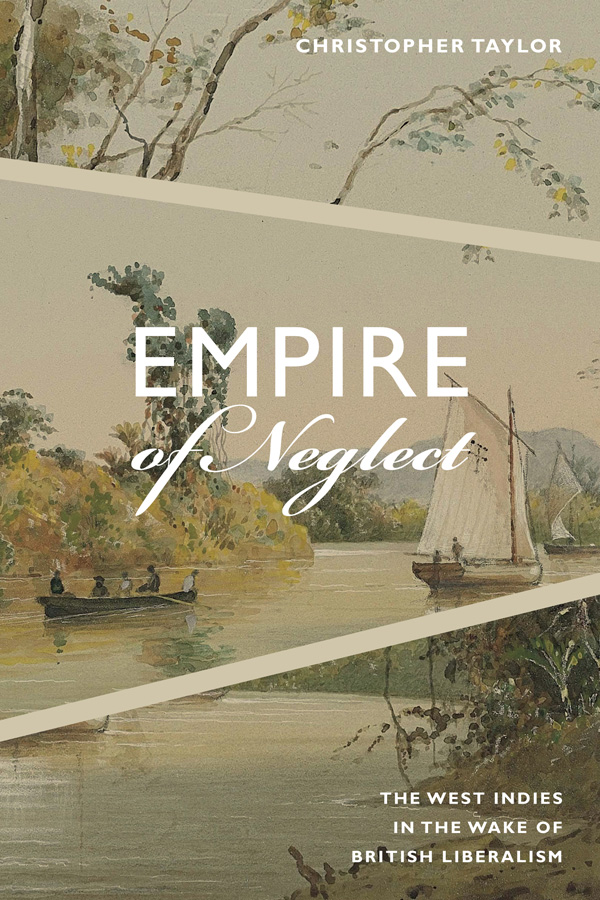


  • R. Joshua Scannell — Architectures of Managerial Triumphalism (Review of Benjamin Bratton, The Stack: On Software and Sovereignty)

    R. Joshua Scannell — Architectures of Managerial Triumphalism (Review of Benjamin Bratton, The Stack: On Software and Sovereignty)

    A review of Benjamin Bratton, The Stack: On Software and Sovereignty (MIT Press Press, 2016)

    by R. Joshua Scannell

    The Stack

    Benjamin Bratton’s The Stack: On Software and Sovereignty is an often brilliant and regularly exasperating book. It is a diagnosis of the epochal changes in the relations between software, sovereignty, climate, and capital that underwrite the contemporary condition of digital capitalism and geopolitics.  Anybody who is interested in thinking through the imbrication of digital technology with governance ought to read The Stack. There are many arguments that are useful or interesting. But reading it is an endeavor. Sprawling out across 502 densely packed pages, The Stack is nominally a “design brief” for the future. I don’t know that I understand that characterization, no matter how many times I read this tome.

    The Stack is chockablock with schematic abstractions. They make sense intuitively or cumulatively without ever clearly coming into focus. This seems to be a deliberate strategy. Early in the book, Bratton describes The Stack–the titular “accidental megastructure” of “planetary computation” that has effectively broken and redesigned, well, everything–as “a blur.” He claims that

    Only a blur provides an accurate picture of what is going on now and to come…Our description of a system in advance of its appearance maps what we can see but cannot articulate, on the one hand, versus what we know to articulate but cannot yet see, on the other. (14)

    This is also an accurate description of the prevailing sensation one feels working through the text. As Ian Bogost wrote in his review of The Stack for Critical Inquiry, reading the book feels “intense—meandering and severe but also stimulating and surprising. After a while, it was also a bit overwhelming. I’ll take the blame for that—I am not necessarily built for Bratton’s level and volume of scholarly intensity.” I agree on all fronts.

    Bratton’s inarguable premise is that the various computational technologies that collectively define the early decades of the 21st century—smart grids, cloud platforms, mobile apps, smart cities, the Internet of Things, automation—are not analytically separable. They are often literally interconnected but, more to the point, they combine to produce a governing architecture that has subsumed older calculative technologies like the nation state, the liberal subject, the human, and the natural. Bratton calls this “accidental megastructure” The Stack.

    Bratton argues that The Stack is composed of six “layers,” the earth, the cloud, the city, the address, the interface, and the user. They all indicate more or less what one might expect, but with a counterintuitive (and often Speculative Realist) twist. The earth is the earth but is also a calculation machine. The cloud is “the cloud” but as a chthonic structure of distributed networks and nodal points that reorganize sovereign power and body forth quasi-feudal corporate sovereignties. The City is, well, cities, but not necessarily territorially bounded, formally recognized, or composed of human users. Users are also usually not human. They’re just as often robots or AI scripts. Really they can be anything that works up and down the layers, interacting with platforms (which can be governments) and routed through addresses (which are “every ‘thing’ that can be computed” including “individual units of life, loaded shipping containers, mobile devices, locations of datum in databases, input and output events and enveloped entities of all size and character” [192], etc.).

    Each layer is richly thought through and described, though it’s often unclear whether the “layer” in question is “real” or a useful conceptual envelope or both or neither. That distinction is generally untenable, and Bratton would almost certainly reject the dichotomy between the “real” and the “metaphorical.” But it isn’t irrelevant for this project. He argues early on that, contra Marxist thought that understands the state metaphorically as a machine, The Stack is a “machine-as-the-state.” That’s both metaphorical and not. There really are machines that exert sovereign power, and there are plenty of humans in state apparatuses that work for machines. But there aren’t, really, machines that are states. Right?

    Moments like these, when The Stack’s concepts productively destabilize given categories (like the state) that have never been coherent enough to justify their power are when the book is at its most compelling. And many of the counterintuitive moves that Bratton makes start and end with real, important insights. For instance, the insistence on the absolute materiality, and the absolute earthiness of The Stack and all of its operations leads Bratton to a thoroughgoing and categorical rejection of the prevailing “idiot language” that frames digital technology as though it exists in a literal “cloud,” or some sort of ethereal “virtual” that is not coincident with the “real” world. Instead, in The Stack, every point of contact between every layer is a material event that transduces and transforms everything else. To this end, he inverts Latour’s famous dictum that there is no global, only local. Instead, The Stack as planetary megastructure means that there is only global. The local is a dead letter. This is an anthropocene geography in which an electron, somewhere, is always firing because a fossil fuel is burning somewhere else. But it is also a post-anthropocene geography because humans are not The Stack’s primary users. The planet itself is a calculation machine, and it is agnostic about human life. So, there is a hybrid sovereignty: The Stack is a “nomos of the earth” in which humans are an afterthought.

    A Design for What?

    Bratton is at his conceptual best when he is at his weirdest. Cyclonopedic (Negarestani 2008) passages in which the planet slowly morphs into something like HP Lovecraft and HR Geiger’s imaginations fucking in a Peter Thiel fever dream are much more interesting (read: horrifying) than the often perfunctory “real life” examples from “real world” geopolitical trauma, like “The First Sino-Google War of 2009.” But this leads to one of the most obvious shortcomings of the text. It is supposedly a “design brief,” but it’s not clear what or who it is a design brief for.

    For Bratton, design

    means the structuring of the world in reaction to an accelerated decay and in projective anticipation of a condition that is now only the ghostliest of a virtual present tense. This is a design for accommodating (or refusing to accommodate) the post-whatever-is-melting-into-air and prototyping for pre-what-comes-next: a strategic, groping navigation (however helpless) of the punctuations that bridge between these two. (354)

    Design, then, and not theory, because Bratton’s Stack is a speculative document. Given the bewildering and potentially apocalyptic conditions of the present, he wants to extrapolate outwards. What are the heterotopias-to-come? What are the constraints? What are the possibilities? Sounding a familiar frustration with the strictures of academic labor, he argues that this moment requires something more than diagnosis and critique. Rather,

    the process by which sovereignty is made more plural becomes a matter of producing more than discoursing: more about pushing, pulling, clicking, eating, modeling, stacking, prototyping, subtracting, regulating, restoring, optimizing, leaving alone, splicing, gardening and evacuating than about reading, examining, insisting, rethinking, reminding, knowing full-well, enacting, finding problematic, and urging. (303)

    No doubt. And, not that I don’t share the frustration, but I wonder what a highly technical, 500-page diagnosis of the contemporary state of software and sovereignty published and distributed by an academic press and written for an academic audience is if not discoursing? It seems unlikely that it can serve as a blueprint for any actually-existing power brokers, even though its insights are tremendous. At the risk of sounding cynical, calling The Stack a “design brief” seems like a preemptive move to liberate Bratton from having to seriously engage with the different critical traditions that work to make sense of the world as it is in order to demand something better. This allows for a certain amount of intellectual play that can sometimes feel exhilarating but can just as often read as a dodge—as a way of escaping the ethical and political stakes that inhere in critique.

    That is an important elision for a text that is explicitly trying to imagine the geopolitics of the future. Bratton seems to pose The Stack from a nebulous “Left” position that is equally disdainful of the sort of “Folk Politics” that Srnicek and Williams (2015) so loathe and the accelerationist tinge of the Speculative Realists with whom he seems spiritually aligned. This sense of rootlessness sometimes works in Bratton’s favor. There are long stretches in which his cherry picking and remixing ideas from across a bewildering array of schools of thought yields real insights. But just as often, the “design brief” characterization seems to be a way out of thinking the implications of the conjuncture through to their conclusion. There is a breeziness about how Bratton poses futures-as-thought-experiments that is troubling.

    For instance, in thinking through the potential impacts of the capacity to measure planetary processes in real time, Bratton suggests that producing a sensible world is not only a process of generalizing measurement and representation. He argues that

    the sensibility of the world might be distributed or organized, made infrastructural, and activated to become part of how the landscape understands itself and narrates itself. It is not only a diagnostic image then; it is a tool for geo-politics in formation, emerging from the parametric multiplication and algorithmic conjugation of our surplus projections of worlds to come, perhaps in mimetic accordance with one explicit utopian conception or another, and perhaps not. Nevertheless, the decision between what is and is not governable may arise as much from what the model computational image cannot do as much as what it can. (301, emphasis added)

    Reading this, I wanted to know: What explicit utopian project is he thinking about? What are the implications of it going one way and not another? Why mimetic? What does the last bit about what is and is not governable mean? Or, more to the point: who and what is going to get killed if it goes one way and not another? There are a great many instances like this over the course of the book. At the precise moment where analysis might inform an understanding of where The Stack is taking us, Bratton bows out. He’s set down the stakes, and given a couple of ideas about what might happen. I guess that’s what a design brief is meant to do.

    Another example, this time concerning the necessity of geoengineering for solving what appears to be an ever-more-imminent climatic auto-apocalypse:

    The good news is that we know for certain that short-term “geoengineering” is not only possible but in a way inevitable, but how so? How and by whom does it go, and unfortunately for us the answer (perhaps) must arrive before we can properly articulate the question. For the darker scenarios, macroeconomics completes its metamorphosis into ecophagy, as the discovery of market failures becomes simultaneously the discovery of limits of planetary sinks (e.g., carbon, heat, waste, entropy, populist politics) and vice versa; The Stack becomes our dakhma. The shared condition, if there is one, is the mutual unspeakability and unrecognizability that occupies the seat once reserved for Kantian cosmopolitanism, now just a pre-event reception for a collective death that we will actually be able to witness and experience. (354, emphasis added)

    Setting aside the point that it is not at all clear to me that geoengineering is an inevitable or even appropriate (Crist 2017) way out of the anthropocene (or capitalocene? (Moore 2016)) crisis, if the answer for “how and by whom does it go” is to arrive before the question can be properly articulated, then the stack-to-come starts looking a lot like a sort of planetary dictatorship of, well of who? Google? Mark Zuckerberg? In-Q-Tel? Y Combinator? And what exactly is the “populist politics” that sits in the Latourian litany alongside carbon, heat, waste, and entropy as a full “planetary sink”? Does that mean Trump, and all the other globally ascendant right wing “populists?” Or does it mean “populist politics” in the Jonathan Chait sense that can’t differentiate between left and right and therefore sees both political projects as equally dismissible? Does populism include any politics that centers the needs and demands of the public? What are the commitments in this dichotomy? I suppose The Stack wouldn’t particularly care about these sorts of questions. But a human writing a 500-page playbook so that other humans might better understand the world-to-come might be expected to. After all, a choice between geoengineering or collective death might be what the human population of the planet is facing (and for most of the planet’s species, and for a great many of the planet’s human societies, already eliminated or dragged down the road towards it during the current mass extinction, there is no choice), but such a binary doesn’t make for much of a design spec.

    One final example, this time on what the political subject of the stack-to-come ought to look like:

    We…require, as I have laid out, a redefinition of the political subject in relation to the real operations of the User, one that is based not on homo economicus, parliamentary liberalism, poststructuralist linguistic reduction, or the will to secede into the moral safety of individual privacy and withdrawn from coercion. Instead, this definition should focus on composing and elevating sites of governance from the immediate, suturing interfacial material between subjects, in the stitches and the traces and the folds of interaction between bodies and things at a distance, congealing into different networks demanding very different kinds of platform sovereignty.

    If “poststructuralist linguistic reduction” is on the same plane as “parliamentary liberalism” or “homo economicus” as one among several prevailing ideas of the contemporary “political subject,” then I am fairly certain that we are in the realm of academic “theory” rather than geopolitical “design.” The more immediate point is that I do understand what the terms that we ought to abandon mean, and agree that they need to go. But I don’t understand what the redefined political subject looks like. Again, if this is “theory,” then that sort of hand waving is unfortunately often to be expected. But if it’s a design brief—even a speculative one—for the transforming nature of sovereignty and governance, then I would hope for some more clarity on what political subjectivity looks like in The Stack-To-Come.

    Or, and this is really the point, I want The Stack to tell me something more about how The Stack participates in the production and extractable circulation of populations marked for death and debility (Puar 2017). And I want to know what, exactly, is so conceptually radical about pointing out that human beings are not at the center of the planetary systems that are driving transformations in geopolitics and sovereignty. After all, hasn’t that been exactly the precondition for the emergence of The Stack? This accidental megastructure born out of the ruthless expansions of digitally driven capitalism is not just working to transform the relationship between “human” and sovereignty. The condition of its emergence is precisely that most planetary homo sapiens are not human, and are therefore disposable and disposited towards premature death. The Stack might be “our” dhakma, if we’re speaking generically as a sort of planetary humanism that cannot but be read as white—or, more accurately, “capacitated.” But the systematic construction of human stratification along lines of race, gender, sex, and ability as precondition for capitalist emergence freights the stack with a more ancient, and ignored, calculus: that of the logistical work that shuttles humans between bodies, cargo, and capital. It is, in other words, the product of an older planetary death machine: what Fred Moten and Stefano Harney (2013) call the “logistics in the hold” that makes The Stack hum along.

    The tenor of much of The Stack is redolent of managerial triumphalism. The possibility of apocalypse is always minimized. Bratton offers, a number of times, that he’s optimistic about the future. He is disdainful of the most stringent left critics of Silicon Valley, and he thinks that we’ll probably be able to trust to our engineers and institutions to work out The Stack’s world-destroying kinks. He sounds invested, in other words, in a rhetorical-political mode of thought that, for now, seems to have died on November 9, 2016. So it is not surprising that Bratton opens the book with an anecdote about Hillary Clinton’s vision of the future of world governance.

    The Stack begins with a reference to then-Secretary of State Clinton’s 2013 farewell address to the Council on Foreign Relations. In that speech, Clinton argued that the future of international governance requires a “new architecture for this new world, more Frank Gehry than formal Greek.” Unlike the Athenian Agora, which could be held up by “a few strong columns,” contemporary transnational politics is too complicated to rely on stolid architecture, and instead must make use of the type of modular assemblage that “at first might appear haphazard, but in fact, [is] highly intentional and sophisticated” that makes Gehry famous. Bratton interprets her argument as a “half-formed question, what is the architecture of the emergent geopolitics of this software society? What alignments, components, foundations, and apertures?” (Bratton 2016, 13).

    For Clinton, future governance must make a choice between Gehry and Agora. The Gehry future is that of the seemingly “haphazard” but “highly intentional and sophisticated” interlocking treaties, non-governmental organizations, super and supra-state technocratic actors working together to coordinate the disparate interests of states and corporations in the service of the smooth circulation of capital across a planetary logistics network. On the other side, a world order held up by “a few strong pillars”—by implication the status quo after the collapse of the Soviet Union, a transnational sovereign apparatus anchored by the United States. The glaring absence in this dichotomy is democracy—or rather its assumed subsumption into American nationalism. Clinton’s Gehry future is a system of government whose machinations are by design opaque to those that would be governed, but whose beneficence is guaranteed by the good will of the powerful. The Agora—the fountainhead of slaveholder democracy—is metaphorically reduced to its pillars, particularly the United States and NATO. Not unlike ancient Athens, it’s democracy as empire.

    There is something darkly prophetic of the collapse of the Clintonian world vision, and perversely apposite in Clinton’s rhetorical move to supplant as the proper metaphor for future government Gehry for the Agora. It is unclear why a megalomaniacal corporate starchitecture firm that robs public treasuries blind and facilitates tremendous labor exploitation ought to be the future for which the planet strives.

    For better or for worse, The Stack is a book about Clinton. As a “design brief,” it works from a set of ideas about how to understand and govern the relationship between software and sovereignty that were strongly intertwined with the Clinton-Obama political project. That means, abysmally, that it is now also about Trump. And Trump hangs synechdochally over theoretical provocations for what is to be done now that tech has killed the nation-state’s “Westphalian Loop.” This was a knotty question when the book went to press in February 2016 and Gehry seemed ascendant. Now that the Extreme Center’s (Ali 2015) project of tying neoliberal capitalism to non-democratic structures of technocratic governance appears to be collapsing across the planet, Clinton’s “half-formed question” is even knottier. If we’re living through the demise of the Westphalian nation state, then it’s sounding one hell of a murderous death rattle.

    Gehry or Agora?

    In the brief period between July 21st and November 8 2016, when the United States’ cognoscenti convinced itself that another Clinton regime was inevitable, there was a neatly ordered expectation of how “pragmatic” future governance under a prolonged Democratic regime would work. In the main, the public could look forward to another eight years sunken in a “Gehry-like” neoliberal surround subtended by the technocratic managerialism of the Democratic Party’s right edge. And, while for most of the country and planet, that arrangement didn’t portend much to look forward to, it was at least not explicitly nihilistic in its outlook. The focus on management, and on the deliberate dismantling of the nation state as the primary site of governance in favor of the mesh of transnational agencies and organizations that composed 21st century neoliberalism’s star actants meant that a number of questions about how the world would be arranged were left unsettled.

    By end of election week, that future had fractured. The unprecedented amateurishness, decrypted racism, and incomparable misogyny of the Trump campaign portended an administration that most thought couldn’t, or at the very least shouldn’t, be trusted with the enormous power of the American executive. This stood in contrast to Obama, and (perhaps to a lesser extent) to Clinton, who were assumed to be reasonable stewards. This paradoxically helps demonstrate just how much the “rule of law” and governance by administrative norms that theoretically underlie the liberal national state had already deteriorated under Obama and his immediate predecessors—a deterioration that was in many ways made feasible by the innovations of the digital technology sector. As many have pointed out, the command-and-control prerogatives that Obama claimed for the expansion of executive power depended essentially on the public perception of his personal character.

    The American people, for instance, could trust planetary drone warfare because Obama claimed to personally vet our secret kill list, and promised to be deliberate and reasonable about its targets. Of course, Obama is merely the most publicly visible part of a kill-chain that puts this discretionary power over life and death in the hands of the executive. The kill-chain is dependent on the power of, and sovereign faith in, digital surveillance and analytics technologies. Obama’s kill-chain, in short, runs on the capacities of an American warfare state—distributed at nodal points across the crust of the earth, and up its Van Allen belts—to read planetary chemical, territorial, and biopolitical fluxes and fluctuations as translatable data that can be packet switched into a binary apparatus of life and death. This is the calculus that Obama conjures when he defines those mobile data points that concatenate into human beings as as “baseball cards” that constitute a “continuing, imminent threat to the American people.” It is the work of planetary sovereignty that rationalizes and capacitates the murderous “fix” and “finish” of the drone program.

    In other words, Obama’s personal aura and eminent reasonableness legitimated an essentially unaccountable and non-localizable network of black sites and black ops (Paglen 2009, 2010) that loops backwards and forwards across the drone program’s horizontal regimes of national sovereignty and vertical regimes of cosmic sovereignty. It is, to use Clinton’s framework, a very Frank Gehry power structure. Donald Trump’s election didn’t transform these power dynamics. Instead, his personal qualities made the work of planetary computation in the service of sovereign power to kill suddenly seem dangerous or, perhaps better: unreasonable. Whether President Donald Trump would be so scrupulous as his predecessor in determining the list of humans fit for eradication was (formally speaking) a mystery, but practically a foregone conclusion. But in both presidents’ cases, the dichotomies between global and local, subject and sovereign, human and non-human that are meant to underwrite the nation state’s rights and responsibilities to act are fundamentally blurred.

    Likewise, Obama’s federal imprimatur transformed the transparently disturbing decision to pursue mass distribution of privately manufactured surveillance technology – Taser’s police-worn body cameras, for instance – as a reasonable policy response to America’s dependence on heavily armed paramilitary forces to maintain white supremacy and crush the poor. Under Obama and Eric Holder, American liberals broadly trusted that digital criminal justice technologies were crucial for building a better, more responsive, and more responsible justice system. With Jeff Sessions in charge of the Department of Justice, the idea that the technologies that Obama’s Presidential Task Force on 21st Century Policing lauded as crucial for achieving the “transparency” needed to “build community trust” between historically oppressed groups and the police remained plausible instruments of progressive reform suddenly seemed absurd. Predictive policing, ubiquitous smart camera surveillance, and quantitative risk assessments sounded less like a guarantee of civil rights and more like a guarantee of civil rights violations under a president that lauds extrajudicial police power. Trump goes out of his way to confirm these civil libertarian fears, such as when he told Long Island law enforcement that “laws are stacked against you. We’re changing those laws. In the meantime, we need judges for the simplest thing — things that you should be able to do without a judge.”

    But, perhaps more to the point, the rollout of these technologies, like the rollouts of the drone program, formalized a transformation in the mechanics of sovereign power that had long been underway. Stripped of the sales pitch and abstracted from the constitutional formalism that ordinarily sets the parameters for discussions of “public safety” technologies, what digital policing technologies do is flatten out the lived and living environment into a computational field. Police-worn body cameras quickly traverse the institutional terrain from a tool meant to secure civil rights against abusive officers into an artificially intelligent weapon that flags facial structures that match with outstanding warrants, that calculates changes in enframed bodily comportment to determine imminent threat to the officer-user, and that captures the observed social field as  data privately owned by the public safety industry’s weapons manufacturers. Sovereignty, in this case, travels up and down a Stack of interoperative calculative procedures, with state sanction and human action just another data point in the proper administration of quasi-state violence. After all, it is Axon (formerly Taser), and not a government that controls the servers that their body cams draw on to make real-time assessments of human danger. The state sanctions a human officer’s violence, but the decision-making apparatus that situates the violence is private, and inhuman. Inevitably, the drone war and carceral capitalism collapse into one another, as drones are outfitted with AI designed to identify crowd “violence” from the sky, a vertical parallax to pair with the officer-user’s body worn camera.

    Trump’s election seemed to show with a clarity that had hitherto been unavailable for many that wedding the American security apparatus’ planetary sovereignty to twenty years of unchecked libertarian technological triumphalism (even, or especially if in the service of liberal principles like disruption, innovation, efficiency, transparency, convenience, and generally “making the world a better place”) might, in fact, be dangerous. When the Clinton-Obama project collapsed, its assumption that the intertwining of private and state sector digital technologies inherently improves American democracy and economy, and increases individual safety and security looked absurd. The shock of Trump’s election, quickly and self-servingly blamed on Russian agents and Facebook, transformed Silicon Valley’s broadly shared Prometheanism into interrogations into the industry’s infrastructural corrosive toxicity, and its deleterious effect on the liberal national state.  If tech would ever come to Jesus, the end of 2016 would have had to be the moment. It did not.

    A few days after Trump won election I found myself a fly on the wall in a meeting with mid-level executives for one of the world’s largest technology companies (“The Company”). We were ostensibly brainstorming how to make The Cloud a force for “global good,” but Trump’s ascendancy and all its authoritarian implications made the supposed benefits of cloud computing—efficiency, accessibility, brain-shattering storage capacity—suddenly terrifying. Instead of setting about the dubious task of imagining how a transnational corporation’s efforts to leverage the gatekeeping power over access to the data of millions, and the private control over real-time identification technology (among other things) into heavily monetized semi-feudal quasi-sovereign power could be Globally Good, we talked about Trump.

    The Company’s reps worried that, Peter Thiel excepted, tech didn’t have anybody near enough to Trump’s miasmatic fog to sniff out the administration’s intentions. It was Clinton, after all, who saw the future in global information systems. Trump, as we were all so fond of pointing out, didn’t even use a computer. Unlike Clinton, the extent of Trump’s mania for surveillance and despotism was mysterious, if predictable. Nobody knew just how many people of color the administration had in its crosshairs, and The Company reps suggested that the tech world wasn’t sure how complicit it wanted to be in Trump’s explicitly totalitarian project. The execs extemporized on how fundamental the principles of democratic and republican government were to The Company, how committed they were to privacy, and how dangerous the present conjuncture was. As the meeting ground on, reason slowly asphyxiated on a self-evidently implausible bait hook: that it was now both the responsibility and appointed role of American capital, and particularly of the robber barons of Platform Capitalism (Srnicek 2016), to protect Americans from the fascistic grappling of American government. Silicon Valley was going to lead the #resistance against the very state surveillance and overreach that it capacitated, and The Company would lead Silicon Valley. That was the note on which the meeting adjourned.

    That’s not how things have played out. A month after that meeting, on December 14, 2016, almost all of Silicon Valley’s largest players sat down at Trump’s technology roundtable. Explaining themselves to an aghast (if credulous) public, tech’s titans argued that it was their goal to steer the new chief executive of American empire towards a maximally tractable gallimaufry of power. This argument, plus over one hundred companies’ decision to sign an amici curiae brief opposing Trump’s first attempt at a travel ban aimed at Muslims, seemed to publicly signal that Silicon Valley was prepared to #resist the most high-profile degradations of contemporary Republican government. But, in April 2017, Gizmodo inevitably reported that those same companies that appointed themselves the front line of defense against depraved executive overreach in fact quietly supported the new Republican president before he took office. The blog found that almost every major concern in the Valley donated tremendously to the Trump administration’s Presidential Inaugural Committee, which was impaneled to plan his sparsely attended inaugural parties. The Company alone donated half a million dollars. Only two tech firms donated more. It seemed an odd way to #resist.

    What struck me during the meeting was how weird it was that executives honestly believed a major transnational corporation would lead the political resistance against a president committed to the unfettered ability of American capital to do whatever it wants. What struck me afterward was how easily the boundaries between software and sovereignty blurred. The Company’s executives assumed, ad hoc, that their operation had the power to halt or severely hamper the illiberal policy priorities of government. By contrast, it’s hard to imagine mid-level General Motors executives imagining that they have the capacity or responsibility to safeguard the rights and privileges of the republic. Except in an indirect way, selling cars doesn’t have much to do with the health of state and civil society. But state and civil society is precisely what Silicon Valley has privatized, monetized, and re-sold to the public. But even “state and civil society” is not quite enough. What Silicon Valley endeavors to produce is, pace Bratton, a planetary simulation as prime mover. The goal of digital technology conglomerates is not only to streamline the formal and administrative roles and responsibilities of the state, or to recreate the mythical meeting houses of the public sphere online. Platform capital has as its target the informational infrastructure that makes living on earth seem to make sense, to be sensible. And in that context, it’s commonsensical to imagine software as sovereignty.

    And this is the bind that will return us to The Stack. After one and a half relentless years of the Trump presidency, and a ceaseless torrent of public scandals concerning tech companies’ abuse of power, the technocratic managerial optimism that underwrote Clinton’s speech has come to a grinding halt. For the time being, at least, the “seemingly haphazard yet highly intentional and sophisticated” governance structures that Clinton envisioned are not working as they have been pitched. At the same time, the cavalcade of revelations about the depths that technology companies plumb in order to extract value from a polluted public has led many to shed delusions about the ethical or progressive bona fides of an industry built on a collective devotion to Ayn Rand. Silicon Valley is happy to facilitate authoritarianism and Nazism, to drive unprecedented crises of homelessness, to systematically undermine any glimmer of dignity in human labor, to thoroughly toxify public discourse, to entrench and expand carceral capitalism so long as doing so expands the platform, attracts advertising and venture capital, and increases market valuation. As Bratton points out, that’s not a particularly Californian Ideology. It’s The Stack, both Gehry and Agora.

    _____

    R. Joshua Scannell holds a PhD in Sociology from the CUNY Graduate Center. He teaches sociology and women’s, gender, and sexuality studies at Hunter College, and is currently researching the political economic relations between predictive policing programs and urban informatics systems. He is the author of Cities: Unauthorized Resistance and Uncertain Sovereignty in the Urban World (Paradigm/Routledge, 2012).

    Back to the essay

    _____

    Works Cited

    • Ali, Tariq. 2015. The Extreme Center: A Warning. London: Verso
    • Crist, Eileen. 2016. “On the Poverty of Our Nomenclature.” In Anthropocene or Capitalocene: Nature, History, and the Crisis of Capitalism, edited by Jason W. Moore, 14-33. Oakland: PM Press
    • Harney, Stefano, and Fred Moten. 2013. The Undercommons: Fugitive Planning and Black Study. Brooklyn: Autonomedia.
    • Moore, Jason W. 2016. “Anthropocene or Capitolocene? Nature, History, and the Crisis of Capitalism.” In Anthropocene or Capitalocene: Nature, History, and the Crisis of Capitalism, edited by Jason W. Moore, 1-13. Oakland: PM Press
    • Negarestani, Reza. 2008. Cyclonopedia: Complicity with Anonymous Materials. Melbourne: re.press
    • Paglen, Trevor. 2009. Blank Spots on the Map: The Dark Geography of the Pentagon’s Secrert World. Boston: Dutton Adult
    • Paglen, Trevor. 2010. Invisible: Covert Operations and Classified Landscapes. Reading: Aperture Press
    • Puar, Jasbir. 2017. The Right to Maim: Debility, Capacity, Disability. Durham: Duke University Press
    • Srnicek, Nick. 2016. Platform Capitalism. Boston: Polity Press
    • Srnicek, Nick, and Alex Williams. 2016. Inventing the Future: Postcapitalism and a World Without Work. London: Verso.
  • Richard Hill – Too Big to Be (Review of Wu, The Curse of Bigness: Antitrust in the New Gilded Age)

    Richard Hill – Too Big to Be (Review of Wu, The Curse of Bigness: Antitrust in the New Gilded Age)

    a review of Timothy Wu, The Curse of Bigness: Antitrust in the New Gilded Age (Random House/Columbia Global Reports, 2018)

    by Richard Hill

    ~

    Tim Wu’s brilliant new book analyses in detail one specific aspect and cause of the dominance of big companies in general and big tech companies in particular: the current unwillingness to modernize antitrust law to deal with concentration in the provision of key Internet services. Wu is a professor at Columbia Law School, and a contributing opinion writer for the New York Times. He is best known for his work on Net Neutrality theory. He is author of the books The Master Switch and The Attention Merchants, along with Network Neutrality, Broadband Discrimination, and other works. In 2013 he was named one of America’s 100 Most Influential Lawyers, and in 2017 he was named to the American Academy of Arts and Sciences.

    What are the consequences of allowing unrestricted growth of concentrated private power, and abandoning most curbs on anticompetitive conduct? As Wu masterfully reminds us:

    We have managed to recreate both the economics and politics of a century ago – the first Gilded Age – and remain in grave danger of repeating more of the signature errors of the twentieth century. As that era has taught us, extreme economic concentration yields gross inequality and material suffering, feeding an appetite for nationalistic and extremist leadership. Yet, as if blind to the greatest lessons of the last century, we are going down the same path. If we learned one thing from the Gilded Age, it should have been this: The road to fascism and dictatorship is paved with failures of economic policy to serve the needs of the general public. (14)

    While increasing concentration, and its negative effects on social equity, is a general phenomenon, it is particularly concerning for what regards the Internet: “Most visible in our daily lives is the great power of the tech platforms, especially Google, Facebook, and Amazon, who have gained extraordinary power over our lives. With this centralization of private power has come a renewed concentration of wealth, and a wide gap between the rich and poor” (15). These trends have very real political effects: “The concentration of wealth and power has helped transform and radicalize electoral politics. As in the Gilded Age, a disaffected and declining middle class has come to support radically anti-corporate and nationalist candidates, catering to a discontent that transcends party lines” (15). “What we must realize is that, once again, we face what Louis Brandeis called the ‘Curse of Bigness,’ which, as he warned, represents a profound threat to democracy itself. What else can one say about a time when we simply accept that industry will have far greater influence over elections and lawmaking than mere citizens?” (15). And, I would add, what have we come to when some advocate that corporations should have veto power over public policies that affect all of us?

    Surely it is, or should be, obvious that current extreme levels of concentration are not compatible with the premises of social and economic equity, free competition, or democracy. And that “the classic antidote to bigness – the antitrust and other antimonopoly laws – might be recovered and updated to face the challenges of our times” (16). Those who doubt these propositions should read Wu’s book carefully, because he shows that they are true. My only suggestion for improvement would be to add a more detailed explanation of how network effects interact with economies of scale to favour concentration in the ICT industry in general, and in telecommunications and the Internet in particular. But this topic is well explained in other works.

    As Wu points out, antitrust law must not be restricted (as it is at present in the USA) “to deal with one very narrow type of harm: higher prices to consumers” (17). On the contrary, “It needs better tools to assess new forms of market power, to assess macroeconomic arguments, and to take seriously the link between industrial concentration and political influence” (18). The same has been said by other scholars (e.g. here, here, here and here), by a newspaper, an advocacy group, a commission of the European Parliament, a group of European industries, a well-known academic, and even by a plutocrat who benefitted from the current regime.

    Do we have a choice? Can we continue to pretend that we don’t need to adapt antitrust law to rein in the excessive power of the Internet giants? No: “The alternative is not appealing. Over the twentieth century, nations that failed to control private power and attend to the economic needs of their citizens faced the rise of strongmen who promised their citizens a more immediate deliverance from economic woes” (18). (I would argue that any resemblance to the election of US President Trump, to the British vote to leave the European Union, and to the rise of so-called populist parties in several European countries [e.g. Hungary, Italy, Poland, Sweden] is not coincidental).

    Chapter One of Wu’s book, “The Monopolization Movement,” provides historical background, reminding us that from the late nineteenth through the early twentieth century, dominant, sector-specific monopolies emerged and were thought to be an appropriate way to structure economic activity. In the USA, in the early decades of the twentieth century, under the Trust Movement, essentially every area of major industrial activity was controlled or influenced by a single man (but not the same man for each area), e.g. Rockefeller and Morgan. “In the same way that Silicon Valley’s Peter Thiel today argues that monopoly ‘drives progress’ and that ‘competition is for losers,’ adherents to the Trust Movement thought Adam Smith’s fierce competition had no place in a modern, industrialized economy” (26). This system rapidly proved to be dysfunctional: “There was a new divide between the giant corporation and its workers, leading to strikes, violence, and a constant threat of class warfare” (30). Popular resistance mobilized in both Europe and the USA, and it led to the adoption of the first antitrust laws.

    Chapter Two, “The Right to Live, and Not Merely to Exist,” reminds us that US Supreme Court Justice Louis Brandeis “really cared about … the economic conditions under which life is lived, and the effects of the economy on one’s character and on the nation’s soul” (33). The chapter outlines Brandeis’ career and what motivated him to combat monopolies.

    In Chapter Three, “The Trustbuster,” Wu explains how the 1901 assassination of US President McKinley, a devout supporter of unrestricted laissez-faire capitalism (“let well enough alone”, reminiscent of today’s calls for government to “do not harm” through regulation, and to “don’t fix it if it isn’t broken”), resulted in a fundamental change in US economic policy, when Theodore Roosevelt succeeded him. Roosevelt’s “determination that the public was ruler over the corporation, and not vice versa, would make him the single most important advocate of a political antitrust law.” (47). He took on the great US monopolists of the time by enforcing the antitrust laws. “To Roosevelt, economic policy did not form an exception to popular rule, and he viewed the seizure of economic policy by Wall Street and trust management as a serious corruption of the democratic system. He also understood, as we should today, that ignoring economic misery and refusing to give the public what they wanted would drive a demand for more extreme solutions, like Marxist or anarchist revolution” (49). Subsequent US presidents and authorities continued to be “trust busters”, through the 1990s. At the time, it was understood that antitrust was not just an economic issue, but also a political issue: “power that controls the economy should be in the hands of elected representatives of the people, not in the hands of an industrial oligarchy” (54, citing Justice William Douglas). As we all know, “Increased industrial concentration predictably yields increased influence over political outcomes for corporations and business interests, as opposed to citizens or the public” (55). Wu goes on to explain why and how concentration exacerbates the influence of private companies on public policies and undermines democracy (that is, the rule of the people, by the people, for the people). And he outlines why and how Standard Oil was broken up (as opposed to becoming a government-regulated monopoly). The chapter then explains why very large companies might experience disecomonies of scale, that is, reduced efficiency. So very large companies compensate for their inefficiency by developing and exploiting “a different kind of advantages having less to do with efficiencies of operation, and more to do with its ability to wield economic and political power, by itself or conjunction with others. In other words, a firm may not actually become more efficient as it gets larger, but may become better at raising prices or keeping out competitors” (71). Wu explains how this is done in practice. The rest of this chapter summarizes the impact of the US presidential election of 1912 on US antitrust actions.

    Chapter Four, “Peak Antitrust and the Chicago School,” explains how, during the decades after World War II, strong antitrust laws were viewed as an essential component of democracy; and how the European Community (which later became the European Union) adopted antitrust laws modelled on those of the USA. However, in the mid-1960s, scholars at the University of Chicago (in particular Robert Bork) developed the theory that antitrust measures were meant only to protect consumer welfare, and thus no antitrust actions could be taken unless there was evidence that consumers were being harmed, that is, that a dominant company was raising prices. Harm to competitors or suppliers was no longer sufficient for antitrust enforcement. As Wu shows, this “was really laissez-faire reincarnated.”

    Chapter Five, “The Last of the Big Cases,” discusses two of the last really large US antitrust case. The first was breakup of the regulated de facto telephone monopoly, AT&T, which was initiated in 1974. The second was the case against Microsoft, which started in 1998 and ended in 2001 with a settlement that many consider to be a negative turning point in US antitrust enforcement. (A third big case, the 1969-1982 case against IBM, is discussed in Chapter Six.)

    Chapter Six, “Chicago Triumphant,” documents how the US Supreme Court adopted Bork’s “consumer welfare” theory of antitrust, leading to weak enforcement. As a consequence, “In the United States, there have been no trustbusting or ‘big cases’ for nearly twenty years: no cases targeting an industry-spanning monopolist or super-monopolist, seeking the goal of breakup” (110). Thus, “In a run that lasted some two decades, American industry reached levels of industry concentration arguably unseen since the original Trust era. A full 75 percent of industries witnessed increased concentration from the years 1997 to 2012” (115). Wu gives concrete examples: the old AT&T monopoly, which had been broken up, has reconstituted itself; there are only three large US airlines; there are three regional monopolies for cable TV; etc. But the greatest failure “was surely that which allowed the almost entirely uninhibited consolidation of the tech industry into a new class of monopolists” (118).

    Chapter Seven, “The Rise of the Tech Trusts,” explains how the Internet morphed from a very competitive environment into one dominated by large companies that buy up any threatening competitor. “When a dominant firm buys a nascent challenger, alarm bells are supposed to ring. Yet both American and European regulators found themselves unable to find anything wrong with the takeover [of Instagram by Facebook]” (122).

    The Conclusion, “A Neo-Brandeisian Agenda,” outlines Wu’s thoughts on how to address current issues regarding dominant market power. These include renewing the well known practice of reviewing mergers; opening up the merger review process to public comment; renewing the practice of bringing major antitrust actions against the biggest companies; breaking up the biggest monopolies, adopting the market investigation law and practices of the United Kingdom; recognizing that the goal of antitrust is not just to protect consumers against high prices, but also to protect competition per se, that is to protect competitors, suppliers, and democracy itself. “By providing checks on monopoly and limiting private concentration of economic power, the antitrust law can maintain and support a different economic structure than the one we have now. It can give humans a fighting chance against corporations, and free the political process from invisible government. But to turn the ship, as the leaders of the Progressive era did, will require an acute sensitivity to the dangers of the current path, the growing threats to the Constitutional order, and the potential of rebuilding a nation that actually lives up to its greatest ideals” (139).

    In other words, something is rotten in the state of the Internet: it has “collection and exploitation of personal data”; it has “recently been used to erode privacy and to increase the concentration of economic power, leading to increasing income inequalities”; it has led to “erosion of the press, leading to erosion of democracy.” These developments are due to the fact that “US policies that ostensibly promote the free flow of information around the world, the right of all people to connect to the Internet, and free speech, are in reality policies that have, by design, furthered the geo-economic and geo-political goals of the US, including its military goals, its imperialist tendencies, and the interests of large private companies”; and to the fact that “vibrant government institutions deliberately transferred power to US corporations in order to further US geo-economical and geo-political goals.”

    Wu’s call for action is not just opportune, but necessary and important; at the same time, it is not sufficient.

    _____

    Richard Hill is President of the Association for Proper internet Governance, and was formerly a senior official at the International Telecommunication Union (ITU). He has been involved in internet governance issues since the inception of the internet and is now an activist in that area, speaking, publishing, and contributing to discussions in various forums. Among other works he is the author of The New International Telecommunication Regulations and the Internet: A Commentary and Legislative History (Springer, 2014). He writes frequently about internet governance issues for The b2o Review Digital Studies magazine.

    Back to the essay