b2o

  • Richard Hill —  The Curse of Concentration (Review of Cory Doctorow, How to Destroy Surveillance Capitalism)

    Richard Hill — The Curse of Concentration (Review of Cory Doctorow, How to Destroy Surveillance Capitalism)

    a review of Cory Doctorow, How to Destroy Surveillance Capitalism (OneZero, 2021)

    by Richard Hill

    ~

    This short online (free access) book provides a highly readable, inspiring, and powerful complement to Shoshana Zuboff’s The Age of Surveillance Capitalism (which the author qualifies and to some extent criticizes) and Timothy Wu’s The Curse of Bigness. It could be sub-titled (paraphrasing Maistre) “every nation gets the economic system it deserves,” in this case a symbiosis of corporate surveillance and state surveillance, in an economy dominated by, and potentially controlled by, a handful of companies. As documented elsewhere, that symbiosis is not an accident or coincidence. As the author puts the matter: “We need to take down Big Tech, and to do that, we need to start by correctly identifying the problem.”

    What follows is my analysis of the ideas of the book: it does not follow the order in which the ideas are presented in the book. In a nutshell, the author describes the source of the problem: an advertising-based revenue model that requires ever-increasing amounts of data, and thus ever-increasing concentration, coupled with weak anti-trust enforcement, and, worse, government actions that deliberately or inadvertently favor the power of dominant companies. The author describes (as have others) the negative effects this has had for privacy (which, as the author says, “is necessary for human progress”) and democracy; and proposes some solutions: strong antitrust, but also a relatively new idea – imposed interoperability. I will summarize these themes in the order given above.

    However, I will first summarize four important observations that underpin the issues outlined above. The first is that the Internet (and information and communications technologies (ICT) in general) is everything. As the author puts it: “The upshot of this is that our best hope of solving the big coordination problems — climate change, inequality, etc. — is with free, fair, and open tech.”

    The second is that data and information are increasingly important (see for example the Annex of this submission), and don’t fit well into existing private property regimes (see also here and here). And this in particular because of the way it is currently applied: “Big Tech has a funny relationship with information. When you’re generating information — anything from the location data streaming off your mobile device to the private messages you send to friends on a social network — it claims the rights to make unlimited use of that data. But when you have the audacity to turn the tables — to use a tool that blocks ads or slurps your waiting updates out of a social network and puts them in another app that lets you set your own priorities and suggestions or crawls their system to allow you to start a rival business — they claim that you’re stealing from them.”

    The third is that the time has come to reject the notion that ICTs, the Internet, and the companies that dominate those industries (“Big Tech”) are somehow different from everything else and should be treated differently: “I think tech is just another industry, albeit one that grew up in the absence of real monopoly constraints. It may have been first, but it isn’t the worst nor will it be the last.”

    The fourth is that network effects favor concentration: “A decentralization movement has tried to erode the dominance of Facebook and other Big Tech companies by fielding ‘indieweb’ alternatives – Mastodon as a Twitter alternative, Diaspora as a Facebook alternative, etc. – but these efforts have failed to attain any kind of liftoff. Fundamentally, each of these services is hamstrung by the same problem: every potential user for a Facebook or Twitter alternative has to convince all their friends to follow them to a decentralized web alternative in order to continue to realize the benefit of social media. For many of us, the only reason to have a Facebook account is that our friends have Facebook accounts, and the reason they have Facebook accounts is that we have Facebook accounts.”

    Turning to the main ideas of the book, the first is that the current business model is based on advertising: “ad-driven Big Tech’s customers are advertisers, and what companies like Google and Facebook sell is their ability to convince you to buy stuff. Big Tech’s product is persuasion. The services — social media, search engines, maps, messaging, and more — are delivery systems for persuasion. Rather than finding ways to bypass our rational faculties, surveillance capitalists like Mark Zuckerberg mostly do one or more of three things: segment the market, attempt to deceive it, and exploit dominant positions.”

    Regarding segmentation, the author states: “Facebook is tops for segmenting.” However, despite the fine targeting, its ads don’t always work: “The solution to Facebook’s ads only working one in a thousand times is for the company to try to increase how much time you spend on Facebook by a factor of a thousand. Rather than thinking of Facebook as a company that has figured out how to show you exactly the right ad in exactly the right way to get you to do what its advertisers want, think of it as a company that has figured out how to make you slog through an endless torrent of arguments even though they make you miserable, spending so much time on the site that it eventually shows you at least one ad that you respond to.”

    Thus it practices a form of deception: “So Facebook has to gin up traffic by sidetracking its own forums: every time Facebook’s algorithm injects controversial materials – inflammatory political articles, conspiracy theories, outrage stories – into a group, it can hijack that group’s nominal purpose with its desultory discussions and supercharge those discussions by turning them into bitter, unproductive arguments that drag on and on. Facebook is optimized for engagement, not happiness, and it turns out that automated systems are pretty good at figuring out things that people will get angry about.”

    The author describes how the current level of concentration is not due only to network effects and market forces. But also to “tactics that would have been prohibited under classical, pre-Ronald-Reagan antitrust enforcement standards.”

    This is compounded by the current copyright regime: “If our concern is that markets cease to function when consumers can no longer make choices, then copyright locks should concern us at least as much as influence campaigns. An influence campaign might nudge you to buy a certain brand of phone; but the copyright locks on that phone absolutely determine where you get it serviced, which apps can run on it, and when you have to throw it away rather than fixing it. Copyright locks are a double whammy: they create bad security decisions that can’t be freely investigated or discussed.”

    And it is due to inadequate government intervention: “Only the most extreme market ideologues think that markets can self-regulate without state oversight. Markets need watchdogs – regulators, lawmakers, and other elements of democratic control – to keep them honest. When these watchdogs sleep on the job, then markets cease to aggregate consumer choices because those choices are constrained by illegitimate and deceptive activities that companies are able to get away with because no one is holding them to account. Many of the harms of surveillance capitalism are the result of weak or nonexistent regulation. Those regulatory vacuums spring from the power of monopolists to resist stronger regulation and to tailor what regulation exists to permit their existing businesses.”

    For example as the author documents, the penalties for leaking data are negligible, and “even the most ambitious privacy rules, such as the EU General Data Protection Regulation, fall far short of capturing the negative externalities of the platforms’ negligent over-collection and over-retention, and what penalties they do provide are not aggressively pursued by regulators.”

    Yet we know that data will leak and can be used for identity theft with major consequences: “For example, attackers can use leaked username and password combinations to hijack whole fleets of commercial vehicles that have been fitted with anti-theft GPS trackers and immobilizers or to hijack baby monitors in order to terrorize toddlers with the audio tracks from pornography. Attackers use leaked data to trick phone companies into giving them your phone number, then they intercept SMS-based two-factor authentication codes in order to take over your email, bank account, and/or cryptocurrency wallets.”

    But we should know what to do: “Antitrust is a market society’s steering wheel, the control of first resort to keep would-be masters of the universe in their lanes. But Bork and his cohort ripped out our steering wheel 40 years ago. The car is still barreling along, and so we’re yanking as hard as we can on all the other controls in the car as well as desperately flapping the doors and rolling the windows up and down in the hopes that one of these other controls can be repurposed to let us choose where we’re heading before we careen off a cliff. It’s like a 1960s science-fiction plot come to life: people stuck in a ‘generation ship,’ plying its way across the stars, a ship once piloted by their ancestors; and now, after a great cataclysm, the ship’s crew have forgotten that they’re in a ship at all and no longer remember where the control room is. Adrift, the ship is racing toward its extinction, and unless we can seize the controls and execute emergency course correction, we’re all headed for a fiery death in the heart of a sun.”

    We know why nobody is in the control room: “The reason the world’s governments have been slow to create meaningful penalties for privacy breaches is that Big Tech’s concentration produces huge profits that can be used to lobby against those penalties – and Big Tech’s concentration means that the companies involved are able to arrive at a unified negotiating position that supercharges the lobbying.” Regarding lobbying, see for example here and here.

    But it’s worse than lack of control: not only have governments failed to enforce antitrust laws, they have actively favored mass collection of data, for their own purposes: “Any hard limits on surveillance capitalism would hamstring the state’s own surveillance capability. … At least some of the states’ unwillingness to take meaningful action to curb surveillance should be attributed to this symbiotic relationship. There is no mass state surveillance without mass commercial surveillance. … Monopolism is key to the project of mass state surveillance. … A concentrated tech sector that works with authorities is a much more powerful ally in the project of mass state surveillance than a fragmented one composed of smaller actors.” The author documents how this is the case for Amazon’s Ring.

    As the author says: “This mass surveillance project has been largely useless for fighting terrorism: the NSA can only point to a single minor success story in which it used its data collection program to foil an attempt by a U.S. resident to wire a few thousand dollars to an overseas terror group. It’s ineffective for much the same reason that commercial surveillance projects are largely ineffective at targeting advertising: The people who want to commit acts of terror, like people who want to buy a refrigerator, are extremely rare. If you’re trying to detect a phenomenon whose base rate is one in a million with an instrument whose accuracy is only 99%, then every true positive will come at the cost of 9,999 false positives.”

    And the story gets worse and worse: “In the absence of a competitive market, lawmakers have resorted to assigning expensive, state-like duties to Big Tech firms, such as automatically filtering user contributions for copyright infringement or terrorist and extremist content or detecting and preventing harassment in real time or controlling access to sexual material. These measures put a floor under how small we can make Big Tech because only the very largest companies can afford the humans and automated filters needed to perform these duties. But that’s not the only way in which making platforms responsible for policing their users undermines competition. A platform that is expected to police its users’ conduct must prevent many vital adversarial interoperability techniques lest these subvert its policing measures.”

    So we get into a vicious circle: “To the extent that we are willing to let Big Tech police itself – rather than making Big Tech small enough that users can leave bad platforms for better ones and small enough that a regulation that simply puts a platform out of business will not destroy billions of users’ access to their communities and data – we build the case that Big Tech should be able to block its competitors and make it easier for Big Tech to demand legal enforcement tools to ban and punish attempts at adversarial interoperability.”

    And into a long-term conundrum: “Much of what we’re doing to tame Big Tech instead of breaking up the big companies also forecloses on the possibility of breaking them up later. Yet governments confronting all of these problems all inevitably converge on the same solution: deputize the Big Tech giants to police their users and render them liable for their users’ bad actions. The drive to force Big Tech to use automated filters to block everything from copyright infringement to sex-trafficking to violent extremism means that tech companies will have to allocate hundreds of millions to run these compliance systems.” Such rules “are not just death warrants for small, upstart competitors that might challenge Big Tech’s dominance but who lack the deep pockets of established incumbents to pay for all these automated systems. Worse still, these rules put a floor under how small we can hope to make Big Tech.”

    The author documents how the curse of concentration is not restricted to ICTs and the Internet. For example: “the degradation of news products long precedes the advent of ad-supported online news. Long before newspapers were online, lax antitrust enforcement had opened the door for unprecedented waves of consolidation and roll-ups in newsrooms.” However, as others have documented in detail, the current Internet advertising model has weakened conventional media, with negative effects for democracy.

    Given the author’s focus on weak antitrust enforcement as the root of the problems, it’s not surprising that he sees antitrust as a solution: “Today, we’re at a crossroads where we’re trying to figure out if we want to fix the Big Tech companies that dominate our internet or if we want to fix the internet itself by unshackling it from Big Tech’s stranglehold. We can’t do both, so we have to choose. If we’re going to break Big Tech’s death grip on our digital lives, we’re going to have to fight monopolies. I believe we are on the verge of a new “ecology” moment dedicated to combating monopolies. After all, tech isn’t the only concentrated industry nor is it even the most concentrated of industries. You can find partisans for trustbusting in every sector of the economy. … First we take Facebook, then we take AT&T/WarnerMedia.”

    It may be hard to break up big tech, but it’s worth starting to work on it: “Getting people to care about monopolies will take technological interventions that help them to see what a world free from Big Tech might look like. … Getting people to care about monopolies will take technological interventions that help them to see what a world free from Big Tech might look like.”

    In particular, the author stresses a relatively new idea: adversarial compatibility, that is, forced interoperability: “adversarial compatibility reverses the competitive advantage: If you were allowed to compete with Facebook by providing a tool that imported all your users’ waiting Facebook messages into an environment that competed on lines that Facebook couldn’t cross, like eliminating surveillance and ads, then Facebook would be at a huge disadvantage. It would have assembled all possible ex-Facebook users into a single, easy-to-find service; it would have educated them on how a Facebook-like service worked and what its potential benefits were; and it would have provided an easy means for disgruntled Facebook users to tell their friends where they might expect better treatment. Adversarial interoperability was once the norm and a key contributor to the dynamic, vibrant tech scene, but now it is stuck behind a thicket of laws and regulations that add legal risks to the tried-and-true tactics of adversarial interoperability. New rules and new interpretations of existing rules mean that a would-be adversarial interoperator needs to steer clear of claims under copyright, terms of service, trade secrecy, tortious interference, and patent.”

    In conclusion: “Ultimately, we can try to fix Big Tech by making it responsible for bad acts by its users, or we can try to fix the internet by cutting Big Tech down to size. But we can’t do both. To replace today’s giant products with pluralistic protocols, we need to clear the legal thicket that prevents adversarial interoperability so that tomorrow’s nimble, personal, small-scale products can federate themselves with giants like Facebook, allowing the users who’ve left to continue to communicate with users who haven’t left yet, reaching tendrils over Facebook’s garden wall that Facebook’s trapped users can use to scale the walls and escape to the global, open web.”

    In this context, it is important to stress the counter-productive effects of e-commerce proposals being negotiated, in secret, in trade negotiations (see also here and here). The author does not mention them, perhaps because they are sufficiently secret that he is not aware of them.

    _____

    Richard Hill is President of the Association for Proper internet Governance, and was formerly a senior official at the International Telecommunication Union (ITU). He has been involved in internet governance issues since the inception of the internet and is now an activist in that area, speaking, publishing, and contributing to discussions in various forums. Among other works he is the author of The New International Telecommunication Regulations and the Internet: A Commentary and Legislative History (Springer, 2014). He writes frequently about internet governance issues for The b2o Review Digital Studies magazine.

    Back to the essay

  • Richard Hill — “Free” Isn’t Free (Review of Michael Kende, The Flip Side of Free)

    Richard Hill — “Free” Isn’t Free (Review of Michael Kende, The Flip Side of Free)

    a review of Michael Kende, The Flip Side of Free: Understanding the Economics of the Internet (MIT Press, 2021)

    by Richard Hill

    ~

    This book is a must-read for anyone who wishes to engage in meaningful discussions of Internet governance, which will increasingly involve economic issues (17-20). It explains clearly why we don’t have to pay in money for services that are obviously expensive to provide. Indeed, as we all know, we get lots of so-called free services on the Internet: search facilities, social networks, e-mail, etc. But, as the old saying goes “there ain’t no such thing as a free lunch.” It costs money to provide all those Internet services (10), and somebody has to pay for them somehow. In fact, users pay for them, by allowing (often unwittingly: 4, 75, 92, 104, 105) the providers to collect personal data which is then aggregated and used to sell other services (in particular advertising, 69) at a large profit. The book correctly notes that there are both advantages (79) and disadvantages (Chapters 5-8) to the current regime of surveillance capitalism. Had I written a book on the topic, I would have been more critical and would have preferred a subtitle such as “The Triumph of Market Failures in Neo-Liberal Regimes.”

    Michael Kende is a Senior Fellow and Visiting Lecturer at the Graduate Institute of International and Development Studies, Geneva, a Senior Adviser at Analysis Mason, a Digital Development Specialist at the World Bank Group, and former Chief Economist of the Internet Society. He has worked as an academic economist at INSEAD as a US regulator at the Federal Communications Commission. In this clearly written and well researched book, he explains, in laymen’s terms, the seeming paradox of “free” services that nevertheless yield big profits.

    The secret is to exploit the monetary value of something that had some, but not much, value until a bit over twenty years ago: data (63). The value of data is now so large that the companies that exploit it are the most valuable companies in the world, worth more than old giants such as producers of automobiles or petroleum. In fact data is so central to today’s economy that, as the author puts it (143): “It is possible that a new metric is needed to measure market power, especially when services are offered for free. Where normally a profitable increase in price was a strong metric, the new metric may be the ability to profitably gather data – and monetize it through advertising – without losing market share.” To my knowledge, this is an original idea, and it should be taken seriously by anyone interested in the future evolution of, not just the Internet, but society in general (for the importance of data, see for example the annex of this paper, and also here).

    The core value of this book lies in Chapters 5 through 10, which provide economic explanations – in easy-to-understand lay language – of the current state of affairs. They cover the essential elements: the importance of data, and why a few companies have dominant positions. Readers looking for somewhat more technical economic explanations may consider reading this handbook and readers looking for the history of the geo-economic policies that resulted in the current state of affairs can read the books reviewed here and here.

    Chapter 5 of the book explains why most of us trade off the privacy of our data in exchange for “free” services: the benefits may outweigh the risks (88), we may underestimate the risks (89), and we may not actually know the risks (91, 92, 105). As the author correctly notes (99-105), there likely are market failures that should be corrected by government action, such as data privacy laws. The author mentions the European Union GDPR (100); I think that it is also worth mentioning the less known, but more widely adopted, Council of Europe Convention (108). And I would have preferred an even more robust criticism of jurisdictions that allow data brokers to operate secretively (104).

    Chapter 6 explains how market failures have resulted in inadequate security in today’s Internet. In particular users cannot know if a product has an adequate level of security (information asymmetry) and one user’s lack of security may not affect him or her, but may affect others (negative externalities). As the author says, there is a need to develop security standards (e.g. devices should not ship with default administrator passwords) and to impose liability for companies that market insecure products (120, 186).

    Chapter 7 explains well the economic concepts of economies of scale and network effect (see also 23), how they apply to the Internet, and why (122-129) they facilitated the emergence of the current dominant platforms (such as Amazon, Facebook, Google, and their Chinese equivalents). This results in a winner-takes-all situation: the best company becomes the only significant player (133-137). At present, competition policy (140-142) has not dealt with this issue satisfactorily and innovative approaches that recognize the central role and value of data may be needed. I would have appreciated an economic discussion of how much (or at least some) of the gig economy is not based on actual innovation (122), but on violating labor laws or housing and consumer protection laws. I would also have expected a more extensive discussion of two-sided markets (135): while the topic is technical, I believe that the author has the skills to explain it clearly for laypeople. It is a pity that the author didn’t explore, at least briefly, the economic issues relating to the lack of standardization, and interoperability, of key widely used services, such as teleconferencing: nobody would accept having to learn to use a plethora of systems in order to make telephone calls; why do we accept that for video calls?

    The chapter correctly notes that data is the key (143-145) and notes that data sharing (145-147, 187, 197) may help to reintroduce competition. While it is true that data is in principle non-rivalrous (194), in practice at present it is hoarded and treated as private property by those who collect it. It would have been nice if the author had explored methods for ensuring the equitable distribution of the value added of data, but that would no doubt have required an extensive discussion of equity. It is a pity that the author didn’t discuss the economic implications, and possible justification, of providing certain base services (e.g. e-mail, search) as public services: after all, if physical mail is a public service, why shouldn’t e-mail also be a public service?

    Chapter 8 documents the digital divide: access to Internet is much less affordable, and widespread, in developing countries than it is in developed countries. As the author points out, this is not a desirable situation, and he outlines solutions (including infrastructure sharing and universal service funds (157)), as have others (for example here, here, here, and here). It would have been nice if the author had explored how peering (48) may disadvantage developing countries (in particular because much of their content is hosted abroad (60, 162)); and evaluated the economics of relying on large (and hence efficient and low-cost) data centers in hubs as opposed to local hosting (which has lower transmission costs but higher operating costs); but perhaps those topics would have strayed from the main theme of the book. The author correctly identifies the lack of payment systems as a significant hindrance to greater adoption of the e-commerce in developing countries (164); and, of course, the relative disadvantage with respect to data of companies in developing countries (170, 195).

    Chapter 9 explains why security and trust on the Internet must be improved, and correctly notes that increasing privacy will not necessarily increase trust (183). The Chapter reiterates some of the points outlined above, and rightly concludes: “There is good reason to raise the issue [of lack of trust] when seeing the market failures taking place today with cybersecurity, sometimes based on the most easily avoidable mistakes, and the lack of efforts to fix them. If we cannot protect ourselves today, what about tomorrow?” (189)

    Chapter 10 correctly argues that change is needed, and outlines the key points: “data is the basis for market power; lack of data is the hidden danger of the digital divide; and data will train the algorithms of the future AI” (192). Even when things go virtual, there is a role for governments: “who but governments could address market power and privacy violations and respond to state-sponsored attacks against their citizens or institutions?” (193) Data governance will be a key topic for the future: “how to leverage the unique features of data and avoid the costs: how to generate positive good while protecting privacy and security for personal data; how to maintain appropriate property rights to reward innovation and investment while checking market power; how to enable machine learning while allowing new companies strong on innovation and short on data to flourish; how to ensure that the digital divide is not replaced by a data divide.” (195)

    Chapters 1 through 4 purport to explain how certain technical features of the Internet condition its economics. The chapters will undoubtedly be useful for people who don’t have much knowledge of telecommunication and computer networks, but they are unfortunately grounded in an Internet-centric view that does not, in my view, accord sufficient weight to the long history of telecommunications, and, consequently, considers as inevitable things that were actually design choices. It is important to recall that the Internet was originally designed as a national (US) non-public military and research network (27-28). As such, it originally provided only for 7-bit ASCII character sets (thus excluding character with accents), it did not provide for usage-based billing, and it assumed that end-to-end encryption could be used to provide adequate security (108). It was not designed to allow insecure end-user devices (such as personal computers) to interconnect on a global scale.

    The Internet was originally funded by governments, so when it was privatized, some method of funding other than conventional usage charges had to be invented (such as receiver pays (53)– and advertising). It is correct (39, 44) that differences in pricing are due to differences in technology, but only because the Internet technologies were not designed to facilitate consumption/volume-based pricing. I would have expected an economics-based discussion of how this makes it difficult to optimize networks, which always have choke points (54-55). For example, I am connected by DSL, and I pay for a set bandwidth, which is restricted by my ISP. While the fiber can carry higher bandwidth (I just have to pay more for it), at any given time (as the author correctly notes) my actual bandwidth depends on what my neighbours that share the same multiplexor are doing. If one of my neighbours is streaming full-HD movies all day long, my performance will degrade, yet they may or may not be paying the same price as me (55). This is not economically efficient. Thus, contrary to what the author posits (46), best-effort packet switching (the Internet model) is not always more efficient than circuit-switching: if guaranteed quality of service is needed, circuit-switching can be more efficient that paying for more bandwidth, even if, in case of overload, service is denied rather than being “merely” degraded (those of us who have had to abandon an Internet teleconference because of poor quality will appreciate that degradation can equal service denial; and musicians who have tried to perform virtually doing the pandemic would have appreciated a guaranteed quality of service that would have ensured synchronization between performers and between video and sound).

    As the author correctly notes, (59) some form of charging is necessary when resources are scarce; and (42, 46, 61) it is important to allocate scarcity efficiently. It’s a pity that the author didn’t explore the economics of usage-based billing, and dedicated circuits, as methods for the efficient allocation of scarcity (again, in the end there is always a scarce resource somewhere in the system). And it’s a pity that he didn’t dig into the details of the economic factors that result in video traffic being about 70% of all traffic (159): is that due to commercial video-on-demand services (such as Netflix), or to user file sharing (such as YouTube) or to free pornography (such as PornHub)? In addition, I would have appreciated a discussion of the implications of the receiver-pays model, considering that receivers pay not only for the content they requested (e.g. Wikipedia pages), but also for content that they don’t want (e.g. spam) or didn’t explicitly request (e.g. adversiting).

    The mention in passing of the effects of Internet on democracy (6) fails to recognize the very deleterious indirect effects resulting from the decline of traditional media. Contrary to what the book implies (7, 132) breaking companies up would not necessarily be deleterious, and making platforms responsible for content would not necessarily stifle innovation., even if such measures could have downsides.

    It is true (8) that anything can be connected to the Internet (albeit with a bit more configuration than the book implies), but it is also true that this facilitates phishing, malware attacks, spoofing, abuse of social networks, and so forth.

    Contrary to what the author implies (22), ICT standards have always been free to use (with some exceptions relating to intellectual property rights; further, the exceptions allowed by IETF are the same as those allowed by ITU and most other standards-making bodies (34)). Core Internet standards have always been free to access online, whereas that was not the case in the past for telecommunications standards; however, that has changed, and ITU telecommunications standards are also freely available online. While it is correct (24) that access to traditional telecommunication networks was tightly controlled, and that early data networks were proprietary, traditional telecommunications networks and later data networks were based on publicly-available standards. While it is correct (31) that anybody can contribute to Internet standards-making, in practice the discussions are dominated by people who are employed by companies that have a vested interest in the standards (see for example pp. 149-152 of the book reviewed here, and Chapters 5 and 6 of the book reviewed here); further, W3C (32) and IEEE (33) are a membership organization, as are the more traditional standardization bodies. While users of standards (in particular manufacturers) have a role in making Internet standards, that is the case for most standard-making; end-users do not have a role in making Internet standards (32). Regarding standards (33), the author fails to mention the key role of ITU-R with respect to the availability of WiFi spectrum and of ITU-T with respect to xDSL (51) and compression.

    The OSI Model (26) was a joint effort of CCITT/ITU, IEC, and ISO. Contrary to what the author implies (29), e-mail existed in some form long before the Internet, albeit as proprietary systems, and there were other efforts to standardize e-mail; it is a pity that the author didn’t provide an economic analysis of why SMTP prevailed over more secure e-mail protocols, and how its lack of billing features facilitates spam (I have been told that the “simple” in SMTP refers to absence of the security and billing features that encumbered other e-mail protocols).

    While much of the Internet is decentralized (30), so is much of the current telephone system. On the other hand, Internet’s naming and addressing is far more centralized than that of telephony.

    However, these criticisms of specific bits of Chapters 1 through 4 do not in any way detract from the value of the rest of the book which, as already mentioned, should be required reading for anyone who wishes to engage in discussions of Internet-related matters.

    _____

    Richard Hill is President of the Association for Proper internet Governance, and was formerly a senior official at the International Telecommunication Union (ITU). He has been involved in internet governance issues since the inception of the internet and is now an activist in that area, speaking, publishing, and contributing to discussions in various forums. Among other works he is the author of The New International Telecommunication Regulations and the Internet: A Commentary and Legislative History (Springer, 2014). He writes frequently about internet governance issues for The b2o Review Digital Studies magazine.

    Back to the essay

  • Anton Jäger and Jan Overwijk — Measure or Misery: Hardt and Negri and the Multitude Twenty Years On

    Anton Jäger and Jan Overwijk — Measure or Misery: Hardt and Negri and the Multitude Twenty Years On

    This review has been peer-reviewed by the b2o editorial board.

    by Anton Jäger and Jan Overwijk

    On December 5th, 2019, London’s Conway Hall hosted an illustrious reunion. Michael Hardt and Antonio Negri – authors of the 2000 classic Empire, itinerant celebrities of the academic left – came to London to revisit their theses in a “world of Trump” (Hardt and Negri 2019a). “Twenty years on”, the announcement read, “globalization remains a central issue of our era, but commentators are conducting its postmortem, as forces across the political spectrum herald the return of national sovereignty” (Hardt and Negri 2019a). A lot had indeed changed in twenty years, the authors admitted. Across the world, evangelists of globalization found themselves in a state of retreat, embattled by Brexiteers, Orbánists, and other antiglobalists, led forth by the likes of Bolsonaro, Trump, and Duterte (Eichengreen 2018; Norris and Inglehart 2016). With supposed “populists” heading states from Budapest to Delhi, raising tariff barriers and restricting labor mobility, had Empire stood the test of time?

    There was a time when Empire occupied the center of global political theory. “Even if it doesn’t deliver the goods,” a reviewer charged in 2001, “Empire should inspire a multitude of empirical investigations and practical political projects” (Henwood 2001, 12). Others were less enthused: a member of the American LaRouchist movement described Negri as a “terrorist controller” who became “a leading ideologue of the new decasualization” (Celano 2001, 16). Despite such early pushback, the phrases deployed in Hardt and Negri’s book still occupy a stable place in the left’s vocabulary” – “multitude”, “cognitive capital”, “deterritorialization”, “post-Fordism” – and have found their way into scholarly language (Kioupkiolis 2016, 138-139). Interestingly, Hardt and Negri’s theory also seems to have been granted a paradoxical new lease on life after the failure of left populism in the 2010s. After ten years of experimenting with parties, institutions, elections, and representation the left finds itself sent back to a position resembling early 2000s horizontalism, but without facing a triumphantly cohesive neoliberal bloc.

    No thinkers provided a more trenchant diagnosis of this previous period than Hardt and Negri. Yet no thinkers also more clearly exemplified the limits of the previous horizontalist critique of the Washington Consensus than the authors of Empire – limits to which the left populist moment was all too attentive in its focus on party building and associative activity. The dogged return of the Hardt-Negri thesis thus speaks to a deeper contradiction in their oeuvre. While few theorists offered a more powerful theory of the new gods of fin de siècle capitalism – both economic and political – they had far less to say about the ‘old gods’ that stalked the neoliberal world, from the spread of general market dependence, the retrenchment of mid-century social rights, to the declining bargaining power of labor. On a surface level the hypothesis of Empire was so plausible as to be unassailable – the spreading of flexibility and creativity through the entirety of the capitalist labor market, and the digital ideologies this spawned. Hardt and Negri also offered a potent vision of the new modes of anti-representative politics that flourished on this new economic terrain, and how capital reconstituted both itself and the labor process. On a deeper level, Empire equally leaned into the most implausible of all hypotheses: that the fight for an old-style political economy and decommodification had to be abandoned for Marxism to remain viable, that old dogmas were only just that: dogmas, and that regression could be recast as progression.

    As the world returns to the squares and the “multitude” resurfaces, this article revisits the project begun with Empire. Although cognizant of the advancements and insights offered by Empire and the broader, anti-institutional mood it was part of, it claims that Hardt and Negri’s theory of the multitude, indexed to a specific understanding of capitalist logics and a Spinozist ontology, still retains a fatal ambiguity. That ambiguity deserves revisiting today, in a time when the left populism first proposed by Ernesto Laclau and Chantal Mouffe and later enacted by Podemos, La France Insoumise, and Syriza has waned and Hardt and Negri’s movementism is undergoing a revival.[1] While the 2010s swore by theorists such as Laclau and Mouffe’s “organizational” tendencies, the 2020s open a chapter continuous with Hardt and Negri’s horizon (Cunliffe 2020, 122). This article thus cautions both politically and theoretically against a hasty return to Hardt and Negri’s trilogy of four after the close of the populist decade, and urges us to move beyond it while maintaining some of its key insights. In this sense, it calls neither for uncritical acceptance nor unconditional rejection. We argue that even today still, much of value can be found in Hardt and Negri’s oeuvre, even if that value is often too one-dimensional.

    1. Metaphysics of Indistinction

    Any reckoning with Hardt and Negri’s legacy must move from the abstract to the concrete, peering at the foundations propping up the political theory: their ontology. From Empire (2000) to Commonwealth (2018), both authors understood the transition from the Fordist phase of capitalism to its post-Fordist phase primarily as one of a “multitude” coming into its own. But Hardt and Negri take this faith in the productive capacities of the global working class far beyond Mario Tronti’s (2019) original, post-operaist “reversal of perspective” (Shukaitis 2015, 3). In the 1960s, Tronti sought to correct classical Marxism’s overly strong emphasis on the autonomous development of the productive forces as the principal determinant of historical progress (Balestrini 2020). Instead of envisioning history as a chain of events in which a reactive working class pre-empts capital’s maneuvers, Tronti’s operaismo understands labor as the prime historic agent, to which capital is forced to ceaselessly respond. Post-Fordism, on this count, is not so much driven by new business opportunities for capital as by a need for capital to contain the struggle of organized labor through a new regulation regime – an endogenous, rather than an exogenous, shock. Like Boltanski and Chiapello (2007) in The New Spirit of Capitalism therefore, Hardt and Negri argue that the post-Fordist mode of regulation must be viewed as capital’s response to the revolts of May 1968. The soixante-huitards, as Paolo Virno (2004, 111) notes, demanded the abolition of wage labor but instead got the abolition of the stable job. That capital is merely a reactive force, then, does not mean that it cannot be historically effective.

    This Trontian worldview informs Hardt and Negri’s elegy to the concept of proletarian resistance. “Resistance”, Hardt and Negri write, “is actually prior to power” (2001, 360). What is distinctive about Hardt and Negri’s workerism, however, is that they do not primarily understand the agency of labor as a historical force but as an ontological power. Hence their nominal displacement: instead of “labor” or “the working class”, they speak of “the multitude”, inspired by Spinoza’s original multitudo. In its simplest formula, the multitude represents “the power to act”, an ontological principle of self-organization, a purely immanent source of “creative positivity” (Negri 1999, 79; Hardt and Negri 2009, 179-180; 2001, 61). The multitude forms the sole “constituent power”, the only creative agent that produces both itself as well as its historic antagonists, the “constituted power” that is capital, sovereignty and Empire. Capital is thus not so much a freestanding counterforce to labor but a historical aberration of the multitude itself – a “failure to realize our own power” as Benjamin Noys puts it (Noys 2010, 112; see also Hardt and Negri 2001, 312).

    More concretely, the multitude under post-Fordism makes up the collective subject of cooperative immaterial laborers under Empire. “Empire”, meanwhile, is understood as the global social order organized around “biopolitical production”, or the production of living labor and subjectivity (Hardt and Negri 2001, 24). With its post-Fordist mode of regulation, Empire thus forms the attempt of capital to capture the value that the multitude always already produces in its very mode of being and becoming. Empire’s stress on networked, collaborative and flexible production—what Hardt and Negri, following Maurizio Lazzarato (1996) call “immaterial labour”— necessarily mirrors the decentralized, cooperative creativities of the multitude, since capital must always follow labor as the sole source of value. In this sense, the post-Fordist moment can rightly be said to be a further realization of the productive capacities of the multitude, which finds itself in a feedback loop with the common: it produces the common in common through the common (Hardt and Negri 2009, 123, 148; 2017, 98). A principle of pure relationality, the multitude is this very feedback loop. Or to use Hardt and Negri’s Deleuzian language, it is the relation that pre-exists the relata.

    The pre-existence of labor as a creative force also drives its primal agency. “[T]he deterritorializing power of the multitude”, Hardt and Negri (2001, 61) contend, “is the productive force that sustains Empire”. The post-Fordist formation of Empire here appears as the historical end result of the ontological pressures of the multitude, forcing capital to battle on the multitude’s home terrain of total immanence. At first glance, this may appear as a problematic proposition. It appears that, in ontologizing Mario Tronti’s sociological reversal of perspective, Hardt and Negri pre-decide historical and empirical questions concerning the development of capitalism in ontological terms. For it is not at all empirically obvious that the labor conditions in post-Fordism are the result of the dynamism of the multitude rather than of a power grab of capital in the face of stagnating accumulation in the capitalist core in the 1960s and 1970s. Moreover, Hardt and Negri explicitly eschew the type of ontology that builds in a metaphysically coercive strain of teleology: “there are no final ends or teleological goals written in history” (Hardt and Negri 2004, 221). Instead, they follow the Marxist principle that theory follows practice (Hardt and Negri 2004, 140). History and ontology therefore appear to be pulling in opposite methodological directions: the one pointing to a timeless tension between “Empire” and the “multitude”, the other situating that tension in a distinct temporal setting with history as its facade.

    Hardt and Negri navigate this problem by distinguishing between a historical and an ontological multitude – in Spinozist jargon, a multitude of “actuality” versus one of “possibility”. Whereas the latter shapes an “absolute freedom” by acting in the eternity of the perpetual present, the former signals the politics required to constitute the multitude in the image of its absolute aspirations. Without falling into a Hegelianism, one can easily see these as a multitude for itself and a multitude in itself. The distinction, Hardt and Negri hurry to add, is merely analytic: the two dimensions of the multitude cannot ultimately be separated. The historical multitude, for instance, only recognizes itself in its political project based on its ontological potential. “The multitude, then, when we put these two together”, Hardt and Negri  conclude, “has a strange double temporality: always-already and not-yet” (2004, 222). By joining these two faces of the multitude, Hardt and Negri explicitly refuse a false dilemma between history and ontology and keep their eyes fixed on both at once. They then infuse their materialism with just enough historical contingency to steer clear of the philosophic vice of a grand teleology. As Kam Shapiro (2004, 294) puts it: “It is here, in the space between the potential and the actual […] that Hardt and Negri interject the teleological strain of their materialism”.

    Some tricky questions remain, however. It is difficult to comprehend, for instance, how a Spinozist monism that collapses yet separates the historical and the ontological does not simply end up muddying the two. There are, after all, still two countervailing tendencies in Hardt and Negri’s Spinozism: does the arrival of Empire and post-Fordism represent the liberation of the ontological by the historical? This fits well with the Spinozian picture in which the multitude is a vital force of excess that blooms through history like a flower slowly bursting through the asphalt. But this vision is explicitly denied by Hardt and Negri’s insistence on the priority of history (2004, 140), on the Marxian methodological principle that theory should always follow social reality. What, then, is history? Is it a contingent organization of materials that informs empirical sociology or is it a passive receptacle for the play of the ontological powers singled out by the Spinozists? If this question is rejected as a false dilemma, then one might ask: is the fact that historical Empire is the exact mirror image of the ontological multitude merely a momentous coincidence?

    Hardt and Negri’s question is never resolved. Rather than pre-deciding on the question of what entity or force forms the motor of history, Hardt and Negri’s confusion of the ontological and the historical makes it undecidable who or what is the prime mover in capitalism. This confusion stretches out over several dimensions: ontologically speaking, it remains unclear what constitutes the difference between Empire and the multitude, or, between post-Fordism and the labor force it subsumes. Empire, for Hardt and Negri (2001, 327), represents Deleuze and Guattari’s “smooth space defined by uncoded flows, flexibility, continual modulation”, a fully immanent network that sustains all relations (Hardt and Negri 2001, 327). In contrast to “sovereignty”, which is imbued with a transcendent logic, post-Fordist capital functions through what they call, again in reference to Deleuze and Guattari, an immanent “axiomatics” (Hardt and Negri 2001, 327). “The primary characteristic of such an axiomatic”, Hardt and Negri write, “is that relations are prior to their terms”. This means, shockingly, that Empire has the exact same conceptual structure as the multitude: it is the relation that precedes the relata. Empire and the multitude thus become ontologically indistinguishable.

    Adding to the confusion, Hardt and Negri argue that this indistinguishability between capital and labour is itself a product of history. Post-Keynesian capital, they maintain, survives in a permanent state of crisis: its modus operandi is the exploitation of disequilibrium and the unruly forces it discharges. As a result, it becomes increasingly difficult to grasp whether a crisis came “from above” or “from below”, whether the fall in profit was a ruse of capital or resistance from the multitude, whether rebellion or recuperation (Cooper 2011, 135). In an ironic twist, therefore, little to nothing remains of the original Trontian reversal of perspective. Both ontologically and historically, it has become impossible to say whether the current phase of capitalism results from the agency of labor or that of capital; ontologically speaking, they are both forces of pure “relationality” on the plane of immanence; historically speaking, it is radically uncertain on which empirical force one should pin crises.

    Despite adversity, Hardt and Negri maintain that the multitude represents the sole ontologically productive principle. Empire itself, they claim, “is not a positive reality” (Hardt and Negri 2001, 361), but merely a “parasite”, an “apparatus of capture that lives only off the ontological vitality of the multitude” (Hardt and Negri 2001, 62; 2019b, 83). Our concluding hypothesis is therefore that in this multifaceted confusion of the historical and the ontological as well as the multitude and Empire, Hardt and Negri ultimately go with the overpowering thrust of their Spinozian monist ontology. By this picture, the multitude is the causa sui, the liberating force of excess that pushes its way through history, now driving capital into the fully immanent Empire as the last vestige onto which capital is forced in anticipation of Commonwealth. The latter is Hardt and Negri’s term for communism, which, incidentally, Negri defines as “the negation of all measure, the affirmation of the most exasperated plurality—creativity” (1999, 33). However powerful the image, it brings with it a risk to misunderstand the precarious, flexible and networked labor conditions of post-Fordism as the deepest producing-desires of the working class – and thus to downplay the continuities between pre-Fordism and post-Fordism. It is to this risk that we will now turn.

    1. Historical Ambiguities

    Empire’s consequences were never exclusively philosophical. Besides its claims in ontological and philosophical registers, the implications of Hardt and Negri’s argument extend far into sociology and Marxist studies more generally, leading into social movement studies, political sociology, and political theory. Most of these fields of discussion can be centered around their description of a new, distinct accumulation regime that began in the 1970s. Hardt and Negri have consistently described the advent of their “polytechnic” work as part of a distinct, new historical phase of capitalist growth. During the late-Fordist age, they claim, workers used their historical advantages and pushed beyond the “dynamic stabilization” (Tronti) of the post-war period (Smith 2019, no page). Borrowing from cybernetics and systems theory, Tronti’s concept indicated the capacity of Italian capital to harness seemingly militant demands for wage increases and public sector expansion to their benefit, channeling popular energy into increased capital accumulation. Once it was clear that the interests of labor and the interests of capital began to diverge, however, capital went on the offensive and steadily deconstructed the post-war settlement. This could not be done without acknowledging the legitimacy of some of the revolts that had taken place within that system itself, which drove the demands for increasing spontaneity, creativity, and bottom-up input. Rather than the result of falling growth rates, Hardt and Negri argue, labor militancy itself drove declining profit margins and urged a different model of governance.

    A recurrent response to this deconstruction has been a version of left melancholy, lamenting capital’s supposed breach of contract after the Trente Glorieuses. But rather than lamenting the death of the post-war compromise, Hardt and Negri see a liberation from a corporatist cage which can stimulate even stronger militancy. Such activity was heralded in the Italian “hot autumn” of 1968-69, when workers ignored the dictates of union and party and began to agitate on their own terms. In ending this “dynamic stabilization”, a newly disorganized mass of casual workers became available in the interim, who would shun the large representative pillars which had structured mass working class politics throughout the twentieth century. A new “multitude” was becoming visible in the interstices of this old world, less beholden to organizational dogmas and open to institutional experimentation. Although it shared a structural location with the older, industrial proletariat, its set-up was also constitutively different, less tolerant of leaders, representation, and mediation, and less centered on the hierarchical, industrial workplace. The new class in the social factory tracked a broader systemic shift across capitalist economies. The model of the factory at the heart of Fordism separated a male sphere of production from a female sphere of consumption, the former’s commodification reliant on patriarchal decommodification in the latter (Winant 2019). Capital’s push to post-Fordism and the consequent “feminization of work”, in turn, transformed the whole of society into the factory, forcing workers to hire themselves out to a variety of employers and adopt an inviting, entrepreneurial pose (Hardt and Negri 2009, 133). “Neoliberalism” became the preferred mode of management for this new welfare world. After the tense maneuvering between capital and labor in the inflationary 1970s, an “entrepreneurial multitude” gradually came about, less collectivist than its industrial predecessor but still politically militant, and potentially more emancipatory.

    In its own time this vision also generated a familiar range of critiques from Marxists. Normatively, they questioned Hardt and Negri’s emphasis on labor’s supposedly deterritorializing powers and their key claim: that labor militancy rested on a supposed refusal for measurement (Negri 1999, 33). Earlier Marxists have mainly faulted Hardt and Negri for their account of the transition and for neglecting problems of industrial overcapacity in the current economy – rather than workers who wanted too large a segment of the social product, it was a global glut of manufacturing goods that drove capital’s profit rates down in the late 1960s (Brenner 2006, 2018). At the heart of Hardt and Negri’s chronicle, however, lies a deeper ambiguity: the substantial and eerie continuities between pre-Fordism and post-Fordism. These problems can be traced back to Hardt and Negri’s conceptualization of the Fordist regime itself. In their insightful passages, Hardt and Negri did acknowledge the political preconditions for this Fordist moment. Rather than an inevitable social formation, Fordism was often a political battle for decasualization and formal labor contracts, fought between workers and management in the 1920s.

    Before 1918, most labor was casual, underpaid, and precarious by nature; it was only when political struggles over these working conditions pushed towards decasualization and permanent contracts that a corporatist settlement was reached. As studies by Charles Maier (1975) and Marcel van der Linden (2014) have shown, most corporatist arrangements rebranded as “Fordist” were the result of intense revolutionary activity from 1918 to 1945, as socialist and communist parties made their first forays into bourgeois governments and began to use state power to coerce capital into the general interest (Maier 1975; van der Linden 2014, 9-21). “Fordism”, in this sense, was less of a natural stage for capitalism than a political imposition from below and above, as recent studies by Noam Maggor and Stefan Link (2011; 2018; 2020) have pointed out – an attempt to shortcut international competition and capital development without dependency, growing a solid labor force which could be kept in the factory and disciplined into consumption (see also Buck-Morss 2002). Rather than an evolutionary stage inherent in capitalism’s DNA, Fordism was a unique political product which arose out of workers’ struggles rather than being imposed on them. In no way was Fordism thus a natural development for capital, a fact that is acknowledged by Hardt and Negri but never properly thought through (Link 2018; Buck-Morss 2002; Link 2011, 2020). When viewed from the perspective of capital’s short-term interests, after all, labor protection, decasualization, welfare rights, and formal contracts are no more than legal and political barriers in the free flow of capital and its maximum valorization in production. As John Clegg notes, “in a capitalist order of fully specified property rights, it is wage labor rather than slave labor that is the anomaly” (Clegg 2015: 303). Completely “enforceable labor contracts”, in this sense, would “be the dream of many an employer”, allowing them to extract surpluses without having to honor any contractual obligations (Clegg 2015, 303).

    This prehistory of post-Fordism sensitively reshuffles the stages of capitalism implicit in Hardt and Negri’s story. Rather than a completely new historical situation, the post-Fordist era has seen the return of phenomena reminiscent of a pre-welfarist capitalism. Precarious labor conditions, loss of control over labor time, or the offloading of market risks have all reappeared vigorously, now coupled to a new ideology of human capital development. A return to self-entrepreneurship and self-employment form the legal counterpart of this shift, heralded by Hayek and other neoliberal ideologues. Organized capitalism, in this sense, was an interlude, not an evolutionary successor.[2] This similarity should induce healthy caution against Hardt and Negri’s periodization. What looks like the new is rather a resurrection of the old, now motivationally enforced through a radically “embedded” form of neoliberalism, organized by states, intergovernmental bodies, and carefully constructed trade treaties (see Slobodian and Plehwe 2020).

    This critique has both descriptive and normative ramifications. Descriptively, it relativizes the transition from pre-Fordism to Fordism from an ontological development to a contingent process mediated by political struggle. Normatively, this analysis casts doubt on Hardt and Negri’s assertion of labor’s supposedly deterritorializing powers, culminating in the prospect of commonwealth as the “negation of all measure” (Negri 1999, 33). Rather than a tool for employers, measurability and rationalization were often a demand pressed by workers who sought better contracts, clarified working hours, and higher pay rates. This became clear in the first bill for the 8-hour day and the setting of wage scales in Belgium, Germany, and France after the First World War. Likewise, late nineteenth century statistical research that uncoupled poverty from innate character and instead linked it to social forms of unemployment, though doubtless an instrument of state discipline and biopower, simultaneously effected a pushback against charity-based poverty relief and pried open a political field of labor market regulation and social security (Desrosières 1998, 262). More than a refusal to be “measured”, measurability was a potent response to market-dependence and workplace discipline – the insistence to enumerate the exact amount of labor paid rather than remain in the dark. As Max Henninger notes, “we have an interest in taking the categories developed in the Marxist critique of political economy more seriously than Negri seems to do, for the simple reason that if we don’t ‘do the math’ ourselves, others will do it for us” (Henninger 2007, 177; see also Morozov 2017).  Capital was in large part rational when forced to be so from below or above, whether a militant working class a domineering developmental state.

    1. The Politics of Immeasurability

    Unsurprisingly, the metaphysical and historical ambiguities and inconsistencies reverberate through the post-Operatist duo’s politics. In this context, a reckoning with the influence of cybernetic theory on left-wing thinking has also remained overdue. Taken in by a new digital ideology of verticality and absence of hierarchy, Hardt and Negri built on the promises of the terrain created by the end of “organized capitalism”, where large-scale institutions such as parties and unions were replaced with looser networks and assemblies. As Hardt and Negri put it in Multitude: “once again, a distributed network such as the Internet is a good initial image or model for the multitude because, first, the various nodes remain different but are all connected in the Web, and, second, the external boundaries of the network are open such that new nodes and new relationships can always be added” (2004, xv). Here, “immaterial labor” thus “seems to provide the potential for a kind of spontaneous and elementary communism” (Hardt and Negri 2001, 294).  The emancipatory switching of cybernetic languages has thus played a key role in this ambition, with computerized “societies of control” offering their own unique “line of flight” or “exodus” (Deleuze 1992). Yet, as contemporary critics continue to point out, cybernetics was never a neutral science and cannot be so today. Strangely, there are two contradictory risks involved, attesting to cybernetics’ complex logic and development: one of control and one of anti-control. First of all, with cybernetics implicated in war time strategy and post-war management, its in-built assumption of entropy and tendency toward homeostasis blunts the tools of critical analysis and smuggles in neoclassical assumptions about perfect capitalist equilibria (Galison 1994; Tiqqun 2020). On this account, offered most forcefully by Peter Galison (1994), cybernetics cannot simply be dissociated from its heritage of behaviorism, old-school rationalization and control. Rather than recognizing the persistence of hierarchy and domination in the new digital workplace, Hardt and Negri took the self-presentation of the neoliberal bloc at face value and saw the digital as a less vertical mode of organization.

    Contrary to these worries of persistent control, there exists the danger of importing the “Californian Ideology” (Barbrook and Cameron, 2015) into a supposedly emancipatory program. This celebration of anti-control runs from old libertarian fantasies through 1960s counterculture into the ideology of Silicon Valley today.  Underneath the rhetoric patina of horizontality and participation, this ideology thus hid an increasingly classical capitalism in which cybernetics simply imported market mechanisms into the realm of state management itself. Attempts at “repurposing” these new organizational logics – part of the general internet euphoria typical of the early 2000s – obscure this essential co-originality between cybernetic management and capitalist profit imperatives, the one driving the design of the other. And rather than superseding the immobile monolith of the party, the cybernetic swarm simply affirms and reproduces the disorganization and refusal of general will formation implicit in an atomized market. A mere fetishism for physicality – “nothing can beat the being together of bodies and the corporeal communication that is the basis of collective political intelligence and action”, as Hardt and Negri postulate recently – will not solve this organizational deficit (cited in Lovink 2016, 19; Gardiner 2020, 1-15). In the face of the paradoxical legacy of cybernetics, it is clear that there are no easy answers when it comes to politics in communication-heavy societies. The threat remains palpable however, that by buying into this “cybernetic illusion”, Hardt and Negri rather threaten to liquidate the only historic forces ever capable of coercing capital into a less adversarial mode.

    A similar problem of self-presentation holds for the concept of “cognitive capital” or its cognates recurrent in the Hardt and Negri corpus (Boutang 2011; Vercellone 2007). These theories can be traced to earlier debates in the 1980s and 1990s, when the disappearance of the industrial proletariat led to theorizing about a new “non-class of non-workers”  who would supervise an increasingly automated industrial landscape (Gorz 1982, 82). André Gorz’s work remains a prime point of reference here. Himself enamored with Hardt and Negri in his late life in the 1990s, Gorz and Negri claimed that the “crisis of measurability” inherent to the post-Fordist regime meant that labor itself had become impossible to standardize and all activities could now conceivably count as “work” (Marazzi 2008, 43). Workers outside of stable contracts spend their entire lives perfecting CVs and reskilling capacities or reframing every inch of human activity as enhanced human capital—all under the imperative to become as reprogrammable, networked and adaptive as the new cybernetic machines that now streamline the workplace. They thereby rendered the very notion of “socially necessary labor time” a pitiful anachronism.

    Since it was no longer possible to satisfyingly measure labor performance in strict clock hours, a permanent grant would provide the only natural political response to a measurability crisis, completing the neoliberal dissolution of the waged worker. This was three years after Gorz proclaimed that “as a system, socialism was dead,” together with its “philosophy of work and history.” If the left still “stood for the emancipation of the workers,” he claimed, this would turn them into the spokespersons for “those 15 percent who still define themselves chiefly by their work” (Gorz 1994, vii). Negri usually followed Gorz on this score. “Flexibility and mobility of labor force”, he claimed in 2001, “are irreversible: The question is not to oppose the new organization of labor, but to guarantee a salary and freedom for the post-Fordist worker.” Basic income schemes remain a classical alternative here, which would allow casual contracts to survive while offering workers a minimum means of sustenance. It is a logical train of thought if one sees the negation of measure as the fulfilment of a liberating ontological movement.

    A second, connected question concerns the key concept mobilized in Empire—“immaterial labor”. In Hardt and Negri’s view, the new multitude’s mode of production was less centered on the large scale, industrial factory but on the small-scale, flexible value chains of a globalized world. It also implied a change of personnel from a proletariat into a “cognitariat”, which worked with information rather than producing physical objects. As capitalist production shed its basis in concrete, physical objects, production was now more fleeting and moved into the confines of the human brain, or even into the network of cooperating brains—the social brain (Boutang 2011). Following the ontological push of the multitude, measurable labor-power had become immeasurable “invention-power”. This shift, Hardt and Negri claim, has had momentous consequences for Marx’s classical value theory. Loyalty to this theory would imply the view that labor can be measured in neat, homogeneous slices of time, which is then repaid in monetary form. Such a model of the labor theory of value was clearly premised on the figure of the factory clock, which herded workers to their posts at a time in the morning only to end by emptying at a designated ring of the bell.

    Around this Fordist set-up the post-war welfare state was constructed, centering male producers who spent wages earned from material production. Post-Fordist labor markets, in which workers surf from one job to the other desperately searching for gigs, hardly conform to the same model. They also severely complicate the claim to “measurability” posited in the classical labor theory of value. As Hardt and Negri note, in a world where time discipline has become diffuse, the workplace has dissolved into an encompassing ‘social factory’ and workers are not enumerated with the same wage scales, what future is there for a labor theory of value in the classical mold? Instead of relying on the intrinsically Fordist measurement unit of “labor time”, the age of the new entrepreneur celebrates more ethereal activities and efforts. This crisis of immeasurability has received a new lease on life in a burgeoning “platform capitalism” literature, which sees a return to new decentralized forms of domination through networks, rather than the semi-military forms of discipline associated with Fordist factory (Wood 2020; Standing 2016; Huws 2019).

    Yet critics have also continued to question the novelty of this “cognitariat” in recent years. As Charles Post notes, Hardt and Negri’s “immaterial labor” tends to “confuse highly material labor – work in the telecommunications industry creating and maintaining the infrastructure for computerization” with “forms of mental labor”  such as “designing machinery and work-systems” (Cummings and Post 2016, 251). Rather than debunking Marx’s value theory, the paying of wages for “immaterial” activities is simply an extension of capitalist practice, not a complete qualitative break. The same continuity has been applied to Hardt and Negri’s reworking of Marxian value theory. Michael Heinrich has similarly cautioned against Hardt and Negri’s innovation. Although the transition to a service economy has undeniably rewired European economies and initiated a switch from tradeables to non-tradeables, this has not put an end to classical processes of value creation. “What is relevant”, Heinrich counters, “is the act of exchange, not the fact that physical objects are being exchanged. “Services, after all, “can also be exchanged and therefore become commodities”, and “the difference between a material product and and ‘immaterial’ service consists solely of a different temporal relationship between production and consumption: the material product is first produced and subsequently consumed (a bread roll should be consumed on the same)” (Heinrich 2012: 44).

    Heinrich’s point provides a potent tonic against “the frequently stated argument” that with the “transition from an industrial to a service economy” or in the left-wing variant of Hardt and Negri— the transition from “material” to “immaterial” production—Marx’s value theory has become outmoded” (Heinrich 2012, 44). In regular economics registers, this shift has been explained in terms of a move towards non-exportables and services, part of the new “information economy” that implies a rewiring of classical economic registers (Castells 2011). Hardt and Negri’s incessant stress on the immeasurability of immaterial labor has been a powerful and welcome sociological gesture—one thinks of intellectual property, intangible assets and brand management—but should never tip over into denying the necessity of measurement as a moment in the realisation of value. Rather than a supersession of old capitalist logics, then, the advent of the computer or the cybernetic machine has not fundamentally displaced the question of class composition or the basics of class conflict, it has merely induced new cybernetic strategies for “governing” or “navigating” capitalism’s unruly contradictions.

    1. Before and After the Multitude

    If the twenty-first century looks uncannily more like the nineteenth than the twentieth, where does that leave us with Hardt and Negri’s multitude? Stripped of its linguistic charms, Empire’s subject looks more painfully familiar than it might: a planetary proletariat with no recourse to mass institutions or statist safety nets, slowly losing its claim to the “making” class due to deindustrialization. In essence, the new “multitude” thus reveals itself as the cybernetically managed proletariat of yore, stripped of its organizational encasing and as cruelly market-dependent as its nineteenth-century predecessor, but without the cage of “integration” (as Horkheimer put it) of a previous disciplinary era, indicating working class submission to the planning state (Abromeit 2011; Horkheimer 1978). Piece work, putting-out systems, and unsalaried labor have all seen a return in the era of neoliberalism, now engineered through algorithmic devices rather than despotic overseers. Yet the steady automation of middle management or the disappearance of the foreman in this new “digital Taylorism” do little to decrease the relevance of the nineteenth-century models Hardt and Negri are quick to reject (Leberecht 2015). In this sense, the “multitude” still offers a surface reading of a disorganized new global proletariat. Should the rise of precarious labor, sharply formulated, not rather be considered as an example of downright “class war from above”, rendering Hardt and Negri’s redeeming narrative “nothing less than ideology “ (Palmer 2014: 40)?

    Such an argument for putative continuity should not obscure real differences between the pre- and post-Fordist phase of capitalism. Hardt and Negri are fully correct to insist on the new techniques of management and steering which have been implemented since the late 1960s, when capital saw a chance to break free from the post-war compromise and reclaim prerogatives over investment. In terms of political leadership, the new regime did come with a new hegemonic order – indicated by Boltanski and Chiapello’s “projective city” (2007), the justificatory regime of the “third spirit of capitalism.” Networks function as the watchword of this new city, a normative space which interpolates workers to ‘surf” the decentralized market signals as “agile”, “lean”, “employable” agents (Bernes 2017, 122; Thrift 2005). The summum bonum of the cybernetic city is the virtue of “connexionism”: the extension of the network to the benefit of all. As with Foucault’s neoliberal “governmentality”, precarious market dependence reminiscent of the nineteenth century now figure in a new strategic field in which subjects are motivated to accept their material condition under the banner of self-entrepreneurship. This is also what distinguishes digital Taylorism from its analogue predecessor: not so much a radical change in the precarity of labor conditions, but in the celebration of this precarity as “gamified”, fluid existence (Neilson and Mezzadra 2019, 82-83; Slobodian 2020). What used to run through the soft power of impersonal market coercion now is increasingly glorified through the even softer attractions of human capital development. Capital’s political encasing has thus become less top-down, hierarchical, and vertical than in the managerial age. Yet none of these normative diagrams should lead one to overstate their importance in the face of the essential continuity with the capitalism analyzed by Marx’s generations, in which the capitalist macrocosm spanned only one part of the globe (Mattick 2018, 8-9).[3]

    This fact has become ever clearer to our post-2008 world, in which a global surplus population faces an increasingly stagnant capitalism unable to absorb its services. Notions such as the “multitude”, in turn, do little to elucidate the specific modalities of market dependence all workers experience and how these stratify labor markets across lines. Anno 2019, humanity inhabits an almost fully proletarianized planet: nearly 60% of the world is currently employed in wage relations with a sizable portion of the remaining 40% in partial or complete market-dependency. What was still a condition confined to European workers in the late nineteenth century – foreclosed by the safety valve of colonial emigration – is now a planetary fait accompli (Jäger 2019, 1-22).

    Capitalism’s universalization should however caution against deriving a new political stand to this order. Across the global South, market-dependent producers eke out a living without employers, selling wares on the streets or marketing themselves. Ever since urbanization’s decoupling from development and development’s decoupling from growth, this surplus population has not ceased to grow (Benanav 2019, 2014; Benanav and Clegg 2010). But there is a danger of taking this new subject as a prepackaged agent rather than a truly “deterritorialized” anti-subject deserving of legal rights. As Mike Davis notes, speculations about “a new politics of ‘multitudes’ in the ‘rhizomatic spaces’ of globalization remain ungrounded in any real political sociology” (Davis 2020, 7). Rather than focusing on the differing scales of market dependence in the new global economy, Hardt and Negri took the cyber-proletariat as a given and transposed it into an ontological category (Dyer-Witherford 2015). While the attempt to find a new idiom to collect and unite all those wretched of the earth—including those not employed in wage labor—must be applauded, there is a definite risk involved in the task. As Davis (2020, 7) sharply claimed, “imprudent coronations of abstractions like the ‘multitude’ as historical subjects simply dramatize a poverty of empirical research” and do little to point at potential conflicts of interest between sections of the wage dependent classes.

    Rather than a new phase of ontological prowess, the new multitude thus tends to appear as the result of a failed Fordist integration which has reverted back to the classical age – a radically embedded neoliberal capitalism in which capital is longer an agent of growth and thrives on state predation. Likewise, Davis cautions against celebrations of spontaneity and casualness which come with these “ideologies of informality” (Van Ballegooijen and Rocco 2013, 1794-1810; Scott 1999; DeLong 2007). Rather than arguing for cash transfers or microcredit for the slums, the classically “Fordist” demand for labor rights, coupled with transformative post-growth programs, should still be at the center of an anti-neoliberal left. To claim the proletariat is “fading away” in the face of the “increasing heterogeneity of work situations and, thus, of social conditions”, as sociologists in the information age often do, elides the fact that “informal workers… tend to be massively crowded into a few major niches where effective organization and “class consciousness” might become possible if authentic labor rights and regulations existed” (Davis 2000, 185 (f)). Overall, “it is the lack of economic citizenship, rather than livelihood heterogeneity per se, that makes informal labor so prone to clientelist subordination and ethnic fragmentation” (Davis 2000, 185 (f)) More than a new political subject, the new “multitude” thus risks tumbling into its very opposite: a floating signifier in desperate search of material grounding in our social reality. At worst, it is a symptom of the disorganization of the populist age in which the measurement techniques of focus groups, real time polls and approval ratings struggle to delineate “the people”. These metrologies have become the face of the multitude’s supposed “immeasurability” (Csigo 2017; Cooper 2011; Feher 2018).

    This strategy would require more than invocations of an “entrepreneurial multitude” which survives in the grottoes of globalization, and revisit earlier questions of social rights and decommodification (Hardt and Negri 2018, 146). “The main issue in the informal sector”, Davis notes, “is normalization of the rights and protections of labor, not property” (Davis 2000, 185 (f)). Such a vision would depart from the accelerationist optimism implicit in the Negrite vision, which celebrates the new informal masses as harboring an exclusively new emancipatory promise. Instead, even the oldest dogmas of social democracy, from labor rights to public provision, are “as good as ever”.[4] The closing of the left-populist decade, symbolized by the successive defeats of the Sanders, Syriza, and Corbyn coalitions, has made this point even clearer: rather than stick to an horizontalism, left populists began by returning to the party and rethinking the organizational basics of a previous age. Although they failed, the questions they asked had been left neglected and underused, distracting leftists from the task that the twentieth century originally posed – and which Hardt and Negri sought to bury in 1999.

    *

    Coming at the tail end of a series of anti-police protests and the storming of the Capitol, early 2021 offers a unique vantage point to assess the valences of Empire. At the close of the neoliberal 1990s, Hardt and Negri’s work offered creative and penetrating insights into the changing nature of labor under capitalism and the ramifications of the neoliberal settlement. It spoke to a disenchanted left traumatized by the counter-revolutionary wave of the 1980s and 1990s, which pulverized the structures of an organized left in the Third World, Europe, and the US, and liquidated the fragile counter-powers built up during the red century. Empire was a new theory for new times, forcing the left to strategies on new terrain. As a holistic theory of politics and social change, its omissions still risk underplaying the continuities between pre- and post-Fordist capitalism and reads an erroneously emancipatory dynamic into a mode of cybernetic management now sold as human capital development. This historical sloppiness and slipperiness stem from a series of metaphysical blunders, where cybernetic techniques of labor control and new strategies of accumulation are recast as an ontological subject reaching its final state. Its practical consequences remained equally suspect: the “multitude” refuses a politics and sociology of class articulation and skirts over real differences in today’s proletarian landscape, abandoning the sphere of production and measurability to a new illiberal bloc (Slobodian 2018; Körösényi, Illés, and Gyulai 2020). As the left-populist decade ends and movementism regains its attraction, Empire indeed seems to offer a useful point of retreat for a newly disillusioned left. One must wonder, however: what is gained by racing from one cul-de-sac into another?


    Bibliography

    Balestrini, Nanni. 2020. The Golden Horde: Revolutionary Italy, 1960-1977. New York: Seagull Books.

    Barbrook, Richard, and Cameron, Andy. 2015. The Internet Revolution: From Dot-com to Cybernetic Communism. Amsterdam: Institute of Network Cultures.

    Benanav, Aaron. 2014. “A Global History of Unemployment: Surplus Populations in the World Economy, 1949-2010,” PhD Thesis (2014), University of California, Los Angeles.

    Benanav, Aaron. 2019. “Demography and Dispossession: Explaining the Growth of the Global Informal Workforce, 1950-2000.” Social Science History, 1-25.

    Benanav, Aaron. 2020. Automation and the Future of Work. London: Verso Books.

    Benanav, Aaron, and Clegg, John. 2010. “Misery and Debt: On the Logic and History of Surplus Populations and Surplus Capital.” Endnotes 2: no page.

    Boltanski, Luc, and Chiapello, Ève. 2007. The New Spirit of Capitalism. London, New York: Verso Books.

    Boutang, Yann Moulier. 2011. Cognitive Capitalism. Cambridge; Malden: Polity Press.

    Brenner, Robert. 2006, Economics of Global Turbulence. The Advanced Capitalist Economies from Long Boom to Long Downturn. London: Verso.

    Buck-Morss, Susan. 2002. Dreamworld and Catastrophe: The Passing of Mass Utopia Between East and West. Cambridge, MA: The MIT Press.

    Castells, Manuel. 2011. The Rise of Network Society. London: John Wiley & Sons.

    Celano, Paulo. 2001. “Toni Negri, Profile of a Terrorist Ideologue.” Executive Intelligence Review: 16-17.

    Clegg, John. 2015. “Capitalism and Slavery.” Critical Historical Studies 2:2 (Fall): 281-304.

    Cooper, Melinda. 2011. “Complexity Theory After the Financial Crisis: The Death of Neoliberalism or the Triumph of Hayek?” Journal of Cultural Economy: 371-385.

    Cooper, Melinda. 2011. “Marx Beyond Marx, Marx Before Marx: Negri’s Lucretian Critique of the Hegelian Marx.” In Reading Negri: Marxism in the Age of Empire, edited by Pierre Lamarche, Max Rosenkrantz and David Sherman, 127-148. Chicago; LaSalle: Open Court.

    Csigo, Peter. 2017. The Neopopular Bubble: Speculating on “the People” in Late Modern Democracy, Budapest: Central European University Press, 2017.

    Cunliffe, Phillip. 2020. The New Twenty Years’ Crisis: A Critique of International Relations, 1999-2019. Montreal: McGill-Queen”s Press.

    Davis, Mike. 2000. Planet of Slums. London: Verso Books.

    Davis, Mike. 2020. Old Gods, New Enigmas: Marx”s Lost Theory. London: Verso Books.

    Eichengreen, Barry. 2018. The Populist Temptation: Economic Grievance and Political Reaction in the Modern Era. New York: Oxford University Press.

    Feher, Michel. 2018, Rated Agency: Investee Politics in a Speculative Age. New York: Zone Books.

    Desrosières, Alain. 1998. The Politics of Large Numbers: A History of Statistical Thinking. London; Cambridge, MA: Harvard University Press.

    Galison, Peter. 1994. “The Ontology of the Enemy: Norbert Wiener and the Cybernetic Vision.” Critical Inquiry 21(1).

    Gorz, André. 1991. Capitalism, Socialism, Ecology. London: Verso Books.

    Hardt, Michael, and Negri, Antonio. 2001. Empire. Cambridge, MA; London: Harvard University Press.

    Hardt, Michael, and Negri, Antonio. 2003. Labor of Dionysus: A Critique of the State-Form. Minneapolis: University of Minnesota Press.

    Hardt, Michael, and Negri, Antonio. 2004. Multitude: War and Democracy in the Age of Empire. New York: Penguin.

    Hardt, Michael, and Negri, Antonio. 2009. Commonwealth. Cambridge, MA; London: Harvard University Press.

    Hardt, Michael, and Negri, Antonio. 2017. Assembly. Oxford: Oxford University Press.

    Hardt, Michael, and Negri, Antonio. 2019a. “Empire, Twenty Years On”, see https://conwayhall.org.uk/event/michael-hardt-and-antonio-negri-empire-twenty-years-on/

    Hardt, Michael, and Negri, Antonio. 2019b. “Empire, Twenty Years On.” New Left Review 120 (November-December): 67-92.

    Heinrich, Michael. 2012. An Introduction to the Three Volumes of Karl Marx”s Capital. New York: NYU Press.

    Henninger, Max. 2007. “Doing the Math: Reflections on the Alleged Obsolescence of the Law of Value under Post-Fordism.” Ephemera 7(1): 158-177.

    Henwood, Doug. 2001. “Blows against Empire.” Left Business Observer 96 (February): no page.

    Huws, Ursula. 2019. Labour in Contemporary Capitalism: What Next? London: Springer.

    Jäger, Anton. 2019. “Back to Work: Review of David Graeber”s Bullshit Jobs.” nonsite: 1-22.

    Kioupkiolis, Alexandros. 2016. Radical Democracy and Collective Movements Today: The Biopolitics of the Multitude versus the Hegemony of the People. London: Routledge.

    Körösényi, Andras, Illés, Gábor and Gyulai, Attila. 2020. The Orbán Regime: Plebiscitary Leader Democracy in the Making. London: Routledge.

    Cummings, Jordy, and Post, Charles. 2016. “Rethinking Precarity and Capitalism: An Interview with Charlie Post.” Alternate Routes 27: 248-260.

    Lazzarato, Maurizio. 1996. “Immaterial Labor.” In Radical Thought in Italy: A Potential Politics, edited by Paolo Virno and Michael Hardt, 133-147. Minneapolis: University of Minnesota Press.

    Leberecht, Tim. 2015. The Business Romantic: Give Everything, Quantify Nothing, and Create Something Greater Than Yourself. New York: Harper & Collins.

    Linden, van der Marcel. 2014. “San Precario: A New Inspiration for Labor Historians.” Labor Studies in Working-Class History of the Americas (March): 9-21.

    Link, Stefan. 2011. “Rethinking the Ford-Nazi Connection.” Bulletin of the German Historical Review 49 (Fall): 134-141.

    Link, Stefan. 2018. “The Charismatic Corporation.” Business History Review 92 (Summer): 85-115.

    Link, Stefan. 2020. Forging Global Fordism: Nazi Germany, Soviet Russia, and the Contest over the Industrial Order. New York: Princeton University Press.

    Lovink, Geert. 2016. Social Media Abyss: Critical Internet Cultures and the Force of Negation. London: Polity.

    Maier, Charles. 1975. Recasting Bourgeois Europe: Stabilization in France, Germany and Italy in the Decade After World War I. New York: Princeton University Press.

    Marazzi, Christian. 2008. Capital and Language: From the New Economy to the War Economy. Los Angeles: Semiotext(e).

    Morozov, Evgeny. 2017. To Save Everything, Click Here: The Folly of Technological Solutionism. London: Public Books.

    Negri, Antonio. 1999. “Value and Affect.” Boundary2 26(2): 77-88.

    Neilson, Brett and Mezzadra, Sandro. 2019. The Politics of Operations: Excavating Contemporary Capitalism. New York: Duke University Press.

    Norris, Pippa, Inglehart, Ronald. 2016. “Trump, Brexit, and the Rise of Populism: Economic Have-Nots and Cultural Backlash.” Harvard Kennedy School Faculty Research Working Paper Series: 1-31.

    Noys, Benjamin. 2010. The Persistence of the Negative: A Critique of Contemporary Continental Philosophy. Edinburgh: Edinburgh University Press.

    Palmer, Bryan D. 2014. “Reconsiderations of Class: Precariousness as Proletarianization.” Socialist Register 50: 1-40.

    Shapiro, Kam. 2004. “The Myth of the Multitude.” In Empire’s New Clothes: Reading Hardt and Negri, edited by Paul Passavant and Jodi Dean, 291-317. New York; London: Routledge.

    Shukaitis, Stephen. 2015. The Composition of Movements to Come: Aesthetics and Cultural Labour After the Avant-Garde. London: Rowman & Littlefield.

    Slobodian, Quinn. 2020. Globalists: The End of Empire and the Birth of Neoliberalism. New York: Harvard University Press.

    Slobodian, Quinn. 2018. “You Live in Robert Lighthizer”s World Now.” Foreign Policy (August 6), no page.

    Slobodian, Quinn, and Plehwe (eds.), Dieter. 2020. Nine Lives of Neoliberalism. London: Verso Books.

    Smith, Jason. 2020. Smart Machines and Service Work: Automation in an Age of Stagnation. Chicago: Reaktion.

    Standing, Guy. 2016. The Precariat: The New Dangerous Class. London: Bloomsbury.

    Thrift, Nigel. 2005. Knowing Capitalism. London: Sage.

    Tiqqun. 2020. The Cybernetic Hypothesis. Cambridge, MA: Semiotext(e) and MIT Press.

    Tronti, Mario. 2019. Workers and Capital. Translated by David Broder. London: Verso Books.

    Van Ballegooijen, Jan, and Rocco, Roberto. 2013. “The Ideologies of Informality: Informal Urbanisation in the Architectural and Planning Discourses.” Third World Quarterly 34: 1794-1810.

    Vercellone, Carlo. 2007. “From Formal Subsumption to General Intellect: Elements for a Marxist Reading of the Thesis of Cognitive Capitalism, in Historical Materialism.” Historical Materialism 15(1): 13-36.

    Warde, Alan. 1985. Consensus and Beyond: The Development of Labour Party Strategy Since the Second World War. Manchester: Manchester University Press.

    Wood, Alex. 2020. Despotism on Demand: How Power Operates in the Flexible Workplace. New York: Cornell University Press.

    Winant, Gabriel. 2019. “Hard Times Make for Hard Arteries and Hard Livers” Deindustrialization, Biopolitics, and the Making of a New Working Class.” Journal of Social History 53(Fall): 107-132.

    [1] For contrasts with the “populist” decade, see Laclau (2005).

    [2] As Charles Post (in Cummings and Post 2016, 251) notes, “the ‘Golden Age’ was… exceptional in the history of capitalism… the product of a combination of a long period of rising profitability (1933-1966) and a militant labor movement across the industrialized world. Workers had threatened the foundations of capitalist rule (France and Spain in the mid-1930s, France and Italy immediately after World War II, France in 1968, Portugal 1974-1975) or severely disrupted capitalist accumulation in mass strike waves in the mid-1930s, immediate post-war years and again between 1965-1975. Capital was forced to make major concessions to labor.”

    [3] As Mattick (2018, 8-9) notes, “when Marx wrote Capital, capitalism was hardly the world’s primary system for the production and distribution of goods (even in England there were still more domestic servants than industrial workers), though it could be argued that at least in Europe and North America it was already socially dominant, in the sense that its institutions were central enough to social life to determine their continuing growth in importance as society continued to evolve. By abstracting from the complex range of features characterizing the actual societies of his time to focus on what he took to be basic to capitalism as such, Marx was able to explain both the evolution towards a more completely capitalist society and specific, apparently essential, features of that evolution.”

    [4] A phrase used by Michael Foot to celebrate Tribune’s twentieth anniversary (Warde 1982, 85).
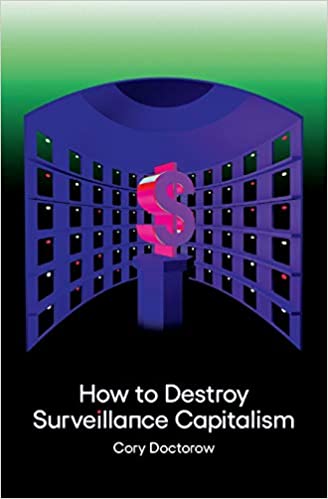
  • Arne De Boever  — The End of Art (Once Again)

    Arne De Boever — The End of Art (Once Again)

    by Arne De Boever

    ~

    Where they burn books, they will also ultimately burn people.
    —Heinrich Heine

    You Morons

    In early March 2021, a group of “tech and art enthusiasts” who make up the company Injective Protocol[1] burnt Banksy’s work Morons (White) (2006), which they had previously acquired from Tagliatella Galleries for $95,000.[2] At first sight, the burning could be read as performance art in the spirit of Banksy’s Morons (White), which shows an art auction where a canvas featuring the text “I CAN’T BELIEVE YOU MORONS ACTUALLY BUY THIS SHIT” is up for sale (and going for $750,450). As such, the performance would take further Banksy’s own criticism of the art market, a market whose dialectic has easily reappropriated Banksy’s criticism as part of its norm and turned it into economic value. The burning of the Banksy would then seek to more radically negate the value of the work of art that Banksy’s Morons (White) challenges but cannot quite escape as long as it remains a valuable work of art.

    However, such negation was not the goal of the burning. As the tech and art enthusiast who set the Banksy aflame explained, the burning was in fact accomplished as part of a financial investment, and to inspire other artists. In other words, the burning in fact confirmed the art market’s norm rather than challenging it, and it encouraged other artists to make work that does the same. You see, before Banksy’s Morons (White) was burnt, Injective Protocol had recorded the work as what is called a non-fungible token or NFT in the blockchain. This means that for the work’s digital image, a unique, original code was created; that code—which is what you buy if you buy and NFT–is the new, original, NFT artwork, henceforth owned by Injective Protocol even if digital copies of Banksy’s Morons (White) of course still circulate as mere symbols of that code.[3] Such ownership, and the financial investment as which it was intended, required the burning of the material Banksy because Injective Protocol sought to relocate the primary value of the work into the NFT artwork—something that could only be accomplished if the original Banksy was destroyed. The goal of the burning was thus to relocate the value of the original in the derivative, which had a bigger financial potential than the original Banksy.

    The Banksy burning was perhaps an unsurprising development for those who have an interest in art and cryptocurrencies and have been following the rise of cryptoart. Cryptoart is digital art that is recorded in the blockchain as an NFT. That makes cryptoart “like” bitcoin, which is similarly recorded in the blockchain: each bitcoin is tied to a unique, original code that is recorded in a digital ledger where all the transactions of bitcoin are tracked. As an NFT, a digital artwork is similarly tied to a unique, original code that marks its provenance. The main difference between bitcoin and an NFT is that the former, as currency, is fungible, whereas the latter, as art, as not.[4] Now, NFTs were initially created “next to” already existing non-digital art, as a way to establish provenance for digital images and artworks. But as such images and artworks began to accrue value, and began to comparatively accrue more value than already existing non-digital art, the balance in the art market shifted, and NFTs came to be considered more valuable investments than already existing works of non-digital art.

    The burning of Banksy’s Morons (White) was the obvious next step in that development: let us replace the already existing work of non-digital art by an NFT, destroy the already existing work of non-digital art, and relocate the value of the work into the NFT as part of a financial investment. It realizes the dialectic of an art market that will not hesitate to destroy an already existing non-digital work of art (and replace it with an NFT) if it will drive up financial value. The auction houses who have sold NFTs are complicit to this process.

    Crypto Value = Exhibition Value + Cult Value

    The digital may at some point have held the promise of a moving away from exceptionalism–the belief that the artist and the work of art are exceptional, which is tied to theories of the artist as genius and the unresolved role of the fake and the forgery in art history–as the structuring logic of our understanding of the artist and the work of art. The staged burning of the Banksy does not so much realize that promise as relocate the continued dominance of exceptionalism—and its ties to capitalism, even if the work of art is of course an exceptional commodity that does not truly fit the capitalist framework—in the digital realm. The promise of what artist and philosopher Hito Steyerl theorized as “the poor image”[5] is countered in the NFT as a decidedly “rich image”, or rather, as the rich NFT artwork (because we need to distinguish between the NFT artwork/ the code and the digital image, a mere symbol that is tied to the code). Art, which in the part of its history that started with conceptual art in the early 1970s had started realizing itself—parallel to the rise of finance and neoliberalism–as a financial instrument, with material artworks functioning as means to hedge against market crashes (as James Franco’s character in Isaac Julien’s Playtime [2014] discusses[6]), has finally left the burden of its materiality behind to become a straight-up financial instrument, a derivative that has some similarities to a cryptocurrency like bitcoin. Art has finally realized itself as what it is: non-fungible value, one of finance’s fictions.[7]

    Although the video of the Banksy burning might shock, and make one imagine (because of its solicitation to other tech enthusiasts and artists) an imminent future in which all artworks will be burnt so as to relocate their primary value in an NFT tied to the artwork’s digital image, such a future actually does not introduce all that much difference with respect to today. Indeed, we are merely talking about a relocation of value, about a relocation of the art market. The market’s structure, value’s structure, remain the same. In fact, the NFT craze demonstrates how the artwork’s structuring logic, what I have called aesthetic exceptionalism,[8] realizes itself in the realm of the digital where, for a brief moment, one may have thought it could have died. Indeed, media art and digital art more specifically seemed to hold the promise of an art that would be more widely circulated, where the categories of authorship, value, and ownership were less intimately connected, and could perhaps even—see Steyerl; but the argument goes back to Walter Benjamin’s still influential essay on the copy[9]—enable a communist politics. Such a communist politics would celebrate the copy against the potentially fascist values of authenticity, creativity, originality, and eternal value that Benjamin brings up at the beginning of his essay. But no: with NFT, those potentially fascist values are in fact realizing themselves once again in the digital realm, and in a development that Benjamin could not have foreseen “the aura” becomes associated with the NFT artwork—not even the digital image of an artwork but a code as which the image lies recorded in the blockchain. Because the NFT artwork is a non-fungible token, one could argue that it is even more of an original than the digital currencies with which it is associated. After all, bitcoin is still a medium of exchange, whereas an NFT is not. In the same way that art is not money, NFT is not bitcoin, even if the NFT needs to be understood (as I suggested previously) as one of finance’s fictions.

    What’s remarkable here is not so much that a Banksy is burnt, or that other artworks may in the future be burnt. What’s remarkable is the power of aesthetic exceptionalism: an exceptionalism so strong that it can even sacrifice the material artwork to assert itself.

    Of course, some might point out—taking Banksy’s Morons (White) as a point of departure–that Banksy himself invited this destruction. Indeed, at a Sotheby’s auction not so long ago, Banksy had himself already realized the partial destruction of one of his works in an attempt to criticize the art market[10]—a criticism that is evident also in the work of art that Injective Protocol burnt. But the art market takes such avant-garde acts of vandalism in stride, and Banksy’s stunt came to function as evidence for what has been called “the Banksy effect”[11]: your attempt to criticize the art market becomes the next big thing on the art market, and your act of art vandalism in fact pushes the dollar value of the work of art. If that happens, the writer Ben Lerner argues in an essay about art vandalism titled “Damage Control”,[12] your vandalism isn’t really vandalism: art vandalism that pushes up dollar value isn’t vandalism. Banksy’s stunt was an attempt to make art outside of the art market, but the attempt failed. The sale of the work went through, and a few months later, one can find the partially destroyed artwork on the walls of a museum, reportedly worth three times more since the date when it was sold. For Lerner, examples like this open up the question of a work of art outside of capitalism, a work of art from which “the market’s soul has fled”,[13] as he puts it. But as the Banksy example shows, that soul is perhaps less quick to get out than we might think. Over and over again, we see it reassert itself through those very attempts that seek to push it out. One might refer to that as a dialectic—the dialectic of avant-garde attempts to be done with exceptionalist art. Ultimately they realize only one thing: the further institutionalization of exceptionalist art.

    That dialectic has today reached a most peculiar point: the end of art that some, a long time ago, already announced. But none of those arguments reached quite as far as the video of the Authentic Banksy Art Burning Ceremony that was released in March: in it, we are quite literally witnessing the end of the work of art as we know it. It shows us the “slow burn”, as the officiating member of Injective Protocol puts it, through which Banksy’s material work of art—and by extension the material work of art at large—disappears (and has been disappearing). At the same time, this destruction is presented as an act of creation—not so much of a digital image of the Banksy work but of the NFT artwork or the code that authenticates that digital image, authors it, brands it with the code of its owners. So with the destruction of Banksy’s work of art, another work of art is created—the NFT artwork, a work that you cannot feature on your wall (even if its symbolic appendage, the digital image of the Banksy, can be featured on your phone, tablet, or computer and even if some owners of the NFT artwork might decide to materially realize the NFT artwork as a work that can be shown on their walls). But what is the NFT artwork? It strikes one as the artwork narrowed down to its exceptionalist, economic core, the authorship and originality that determine its place on the art market. It is the artwork limited to its economic value, the scarcity and non-fungibility that remain at the core of what we think of as art. This is not so much purposiveness without purpose, as Immanuel Kant famously had it, but non-fungible value as a rewriting of that phrase. Might that have been the occluded truth of Kant’s phrase all along?

    In Kant After Duchamp,[14] which remains one of the most remarkable books of 20th-century art criticism, Thierry de Duve shifted the aesthetic question from “is it beautiful?” (Kant’s question) to “is it art?” (Duchamp’s question, which triggers de Duve’s rereading of Kant’s Critique of Judgment). It seems that today, one might have to shift the question once again, to situate Kant after Mike Winkelmann, the graphic designer/ NFT artist known as Beeple whose NFT collage “Everydays: The First 5000 Days” was sold at a Christie’s auction for $69,346,250. The question with this work is not so much whether it is beautiful, or even whether it is art; what matters here is solely its non-fungible value (how valuable is it, or how valuable might it become?), which would trigger yet another rereading of Kant’s third critique. Shortly after the historic sale of Beeple’s work was concluded, it was widely reported that the cryptocurrency trader who bought the work may have profited financially from the sale, in that the trader had previously been buying many of the individual NFTs that made up Beeple’s collage—individual NFTs that, after the historic sale of the collage, went up significantly in value, thus balancing out the expense of buying the collage and even yielding the trader a profit. What’s interesting here is not the art—Beeple’s work is not good art[15]—but solely the non-fungible value.

    It seems clear that what has thus opened up is another regime of art. In his essay on the copy, Benjamin wrote of the shift from cult value, associated with the fascism of the original, to exhibition value, associated with the communism of the copy. Today, we are witnessing the anachronistic, zombie-like return of cult value within exhibition value, a regime that can be understood as the crypto value of the work of art. That seems evident in the physical token that buyers of Beeple’s NFTs get sent: in its gross materialism—it comes with a cloth to clean the token but that can also be used “to clean yourself up after blasting a hot load in yer pants from how dope this is!!!!!!111”; a certificate of authenticity stating “THIS MOTHERFUCKING REAL ASS SHIT (this is real life mf)”; and a hair sample, “I promise it’s not pubes”–, it functions as a faux cultic object that is meant to mask the emptiness of the NFT. Assuaging the anxieties, perhaps, of the investors placing their moneys into nothing, it also provides interesting insights into the materialisms (masculinist/ sexist, and racist—might we call them alt-right materialisms?) that reassert themselves in the realm of the digital, as part of an attempt to realize exceptionalism in a commons that could have freed itself from it.[16] As the text printed on the physical token has it: “strap on an adult diaper because yer about to be in friggn’ boner world usa motherfucker”.

    NFT-Elitism

    It’s worth asking about the politics of this. I have been clear about the politics of aesthetic exceptionalism: it is associated with the politics of sovereignty, which is a rule of the one, a mon-archy, that potentially tends abusive, tyrannical, totalitarian. That is the case for example with exceptionalism in Carl Schmitt, even if it does not have to be the case (see for example discussions of democratic exceptionalism).[17] With the NFT artwork, the politics of aesthetic exceptionalism is realizing itself in the digital realm, which until now seemed to present a potential threat to it. It has nothing to do with anti-elitism, or populism; it is not about leaving behind art-world snobbery, as some have suggested. It is in fact the very logic of snobbery and elitism that is realizing itself in the NFT artwork, in the code that marks originality, authenticity, authorship and ownership. Cleverly, snobbery and elitism work their way back in via a path that seems to lead elsewhere. It is the Banksy effect, in politics. The burning of the Banksy is an iconoclastic gesture that preserves the political theology of art that it seems to attack.[18] This is very clear in even the most basic discourse on NFTs, which will praise both the NFT’s “democratic” potential—look at how it goes against the elitism of the art world!—while asserting that the entire point of the NFT is that it enables the authentification that once again excludes fakes and forgeries from the art world. Many, if not all of the problems with art world elitism continue here.

    With the description of NFT artworks as derivatives, and their understanding as thoroughly part of the contemporary financial economy, the temptation is of course to understand them as “neoliberal”—and certainly the Banksy burning by a group of “tech and art enthusiasts” (a neo-liberal combo if there ever was one) seems to support such a reading. But the peculiar talk about authenticity and originality in the video of the Banksy burning, the surprising mention of “primary value” and its association to the original work of art (which now becomes the NFT artwork, as the video explains), in fact strikes one as strangely antiquated. Indeed, almost everything in the video strikes one as from a different, bygone time: the work, on its easel; the masked speaker, a robber known to me from the tales of my father’s childhood; the flame, slowly working its way around the canvas, which appears to be set up in front of a snowy landscape that one may have seen in a Brueghel. Everything is there to remind us that, through the neoliberal smokescreen, we are in fact seeing an older power at work—that of the “sovereign”, authentic original, the exceptional reality of “primary value” realizing itself through this burning ritual that marks not so much its destruction but its phoenix-like reappearance in the digital realm. In that sense, the burning has something chilling to it, as if it is an ancient ritual marking the migration of sovereign power from the material work of art to the NFT artwork. A transference of the sovereign spirit, if you will, and the economic soul of the work of art. For anyone who has closely observed neoliberalism, this continued presence of sovereignty in the neoliberal era will not come as a surprise—historians, political theorists, anthropologists, philosophers, and literary critics have shown that it would be a mistake to oppose neoliberalism and sovereignty historically, and in the analysis of our contemporary moment. The aesthetic regime of crypto value would rather be a contemporary manifestation of neoliberal sovereignty or of authoritarian neoliberalism (the presence of Trump in Beeple’s work is worth noting).

    Art historians and artists, however, may be taken aback by how starkly the political truth of art is laid bare here. Reduced to non-fungible value, brought back to its exceptionalist economic core, the political core of the artwork as sovereign stands out in its tension with art’s frequent association with democratic values like openness, equality, and pluralism. As the NFT indicates, democratic values have little to do with it: what matters, at the expense of the material work of art, is the originality and authenticity that enable the artwork to operate as non-fungible value. Part of finance’s fictions, the artwork thus also reveals itself as politically troubling because it is profoundly rooted in a logic of the one that, while we are skeptical of it in politics, we continue to celebrate aesthetically. How to block this dialectic, and be done with it? How to think art outside of economic value, and the politics of exceptionalism? How to end not so much art but exceptionalism as art’s structuring logic? How to free art from fascism? The NFT craze, while it doesn’t answer those questions, has the dubious benefit of identifying all of those problems.

    _____

    Arne De Boever teaches in the School of Critical Studies at the California Institute of the Arts and is the author of Finance Fictions: Realism and Psychosis in a Time of Economic Crisis (Fordham University Press, 2017), Against Aesthetic Exceptionalism (University of Minnesota Press, 2019), and other works. His most recent book is François Jullien’s Unexceptional Thought (Rowman & Littlefield, 2020).

    Back to the essay

    _____

    Acknowledgments

    Thanks to Alex Robbins, Jared Varava, Makena Janssen, Kulov, and David Golumbia.

    _____

    Notes

    [1] See: https://injectiveprotocol.com/.

    [2] See: https://news.artnet.com/art-world/financial-traders-burned-banksy-nft-1948855. A video of the burning can be accessed here: https://www.youtube.com/watch?v=C4wm-p_VFh0.

    [3] See: https://hyperallergic.com/624053/nft-art-goes-viral-and-heads-to-auction-but-what-is-it/.

    [4] A simple explanation of cryptoart’s relation to cryptocurrency can be found here: https://www.youtube.com/watch?v=QlgE_mmbRDk.

    [5] Steyerl, Hito. “In Defense of the Poor Image”. e-flux 10 (2009). Available at: https://www.e-flux.com/journal/10/61362/in-defense-of-the-poor-image/.

    [6] See: https://www.isaacjulien.com/projects/playtime/.

    [7] I am echoing here the title of my book Finance Fictions, where I began to theorize some of what is realized by the NFT artwork: Boever, Arne De. Finance Fictions: Realism and Psychosis in a Time of Economic Crisis. New York: Fordham University Press, 2017.

    [8] See: Boever, Arne De. Against Aesthetic Exceptionalism. Minneapolis: University of Minnesota Press, 2019.

    [9] See: Benjamin, Walter. “The Work of Art in the Era of Mechanical Reproduction” In: Benjamin, Walter. Illuminations: Essays and Reflections. Ed. Hannah Arendt. Trans. Harry Zohn. New York: Schocken Books, 1969. 217-251.

    [10] See: https://www.youtube.com/watch?v=vxkwRNIZgdY&feature=emb_title.

    [11] Brenner, Lexa. “The Banksy Effect: Revolutionizing Humanitarian Protest Art”. Harvard International Review XL: 2 (2019): 35-37.

    [12] Lerner, Ben. “Damage Control: The Modern Art World’s Tyranny of Price”. Harper’s Magazine 12/2013: 42-49.

    [13] Lerner, “Damage Control”, 49.

    [14] Duve, Thierry de. Kant After Duchamp. Cambridge: MIT, 1998.

    [15] While such judgments are of course always subjective, this article considers a number of good reasons for judging the work as bad art: https://news.artnet.com/opinion/beeple-everydays-review-1951656#.YFKo4eIE7p4.twitter.

    [16] The emphasis on materialism here is not meant to obscure the materialism of the digital NFT, namely its ecological footprint which is, like that of bitcoin, devastating.

    [17] See Boever, Against Aesthetic Exceptionalism.

    [18] On this, see my: “Iconic Intelligence (Or: In Praise of the Sublamental)”. boundary 2 (forthcoming).

  • Étienne Balibar — Politics and Science: One Vocation or Two?

    Étienne Balibar — Politics and Science: One Vocation or Two?

    by Étienne Balibar

    ~

    One might find it alarming (as I do) that the Ministers of Education and Higher Education, encouraged from the top, have dug out of the ideological gutter an epithet with sinister resonances to justify a purge of French Academia.

    One might be worried (as I am) by the speed at which publicly-funded independent research is being dismantled, both through financial austerity and the widespread use of targeted and monitored funding.

    One might feel disheartened (as I do), to see self-proclaimed spokespersons for the “excellence of French research” seeking to prevent our students from taking part in major international currents of innovation and critical thinking, deemed incompatible with our republican values, and thereby isolating us in a chauvinistic provincialism.

    One can, even while defending, as I do, the legitimacy of the study of race, gender, class, postcolonial studies and all of their intersections, be aware of, and denounce simplistic and historically unfounded arguments and sectarian censorship that exist on the margins of academia.

    And one can be disappointed (as I am) to see historians and social scientists who, after contributing landmark studies to the critique of inequality and forms of social or national exclusion, have joined, with bitterness, the camp of intellectual conservatism and corporatism.

    But these feelings don’t address the epistemological question at the heart of the matter. In the domain of the said human and social sciences, what is the relationship between the necessity of taking a stand and that of knowledge for knowledge’s sake (the only form of knowledge that indeed merits the name)? We are brought back to the question posed by Max Weber in his 1919 lectures: what is the “vocation” of science? How is it different from the “vocation” of politics?[1] It seems that the solution that he proposed at the time—that of “axiological neutrality,” the separation of ethics into two dimensions, “conviction” and “responsibility”—turned out to be impracticable.

    I see four reasons for this, and they form something like a unity of opposites, through which we must trace our path without sacrificing our exigence.

    First, universities and research centers can no longer afford to speak only to themselves. More than in the past, they must open their doors and their ears to the rest of society, or even better, to the polity. No one is contesting that it is essential to produce and transmit verified and verifiable knowledge and to practice rational argument. All of this takes place in the classroom. But the object of study, that which we try to make intelligible, can only be found outside of the classroom and it is unavoidably conflictual, because we do not live, nor will we live anytime soon, in a peaceful society. In order for us to grasp and understand this conflict, it cannot simply be studied and investigated from afar. It must enter into our spaces of learning and knowledge through the presence of its real actors, unless researchers venture out to find them (for example in a “jungle” or in a “neighborhood”).[2] As Foucault might have put it, we must bring the teachers, students, and researchers out and let the protesters, with or without gilets, and the activists or active citizens in. They must be given a chance to speak in the same places that have, until now, been reserved for magisterial discourse. However difficult it may be, we owe it to ourselves to experiment with ways of doing this.

    With conflict comes ideology. This is obvious. The problem lies in the fact that ideology does not just come from outside, it is always already there in more or less dominant forms. To state that the foundation of economic knowledge is the rational anticipation of market actors; that sociological knowledge is the constant interplay of methodological individualism and organic solidarity; that psychology and pedagogy share the adaptation of subjects as their common object of study; or that the trajectory of historical modernity tends to the secularization of religion, is not simply to state, it is to take an ideological standpoint, indissociable from relationships of power. Obviously, there are alternative positions to those outlined here, more or less visible depending on the period. An institution dedicated to learning that is alive, one that is capable of making space for the unknown, must pursue as its main goal the systematic questioning, including in national boards of evaluation, of every “incontestable” paradigm, to make sure that it becomes a subject of discussion. Let us not forget the disastrous episode that saw the elimination of the “Economics and Society” section within the CNU (National Council of Universities), and the price we’re paying for it now in the midst of the crisis.[3]

    But the conflict between what Canguilhem called “scientific ideologies” and what Althusser named the “philosophies of scientists” may not be the heart of the problem. One could again be led to think that the conflict only resides in the object, in the intrusion of the personal interests and commitments of the practitioners of knowledge, but not in the concept, which is the real heart of knowledge. Yet, nothing is less accurate. Knowledge does not come to a concept by avoiding conflict. On the contrary, it does so by intensifying conflict around big ontological alternatives, forcing us to choose between irreconcilable understandings of the nature of things or beings. The history of truth is not to be found in synthesis, even if it is provisional, but in the polemical ascent towards the points of heresy of a theory. This is evident in many fields, from the humanities to economics and environmental science, and perhaps even beyond ­– in biology, for instance, with the theory of evolution.

    Lastly, and more deeply, we cannot forget that knowledge does not exist without subject(s). This is not a shortcoming of scientific inquiry but its very condition of possibility, at least in any science that has an anthropological dimension, and perhaps in others too. In order to know we must venture as subjects into the field in which we are already “situated”, with all the baggage of “characters” (as Kant would call them), that make us “what we are” (through processes of historical and social construction, of course). There is no “transcendental subject” of scientific knowledge. Or better still, we must venture towards that point of identity “trouble” where every subject resides, with more or less difficulty, with/in their “difference”, whether it be masculinity, femininity, or another “gender” ; blackness, whiteness or another “color”; intellectual ability or inability, or “religious” belief or disbelief, in order to make that very point the analytical lens through which we read the social forces that imprison, exclude, and direct us. For even if no one can freely choose their place in society, by virtue of the power relationships that construct and traverse it, no place is assigned once and for all. The goal, then, is to turn our lived and recognized anthropological difference in all its uncertainty into the instrument with which we dissect our collective body politic, and to make the analysis of the mechanisms that produce and reproduce it, the means of countering its normative effects. This is perhaps not the royal road of scientific inquiry, but it is certainly a necessary step. I think here of what Sandra Harding called “strong objectivity” that includes knowledge of one’s own position as subject, and of how badly positivisms tend to miss the point.

    The road ahead of us is very difficult. I have been a professor in an era which we could in retrospect describe as “golden”. Conflicts could be violent at times, but the cold-war era bans and institutional prohibitions were behind us. The “value of science” was rarely contested. May 68 and its desire to shake the foundation of academicism and take down barriers left widespread disappointment in its wake, but also a fervor and furor that have nourished a large number of “programs” in which the young scholars of today, half of whom are living from one short-term contract to the next, were trained. We realize now that our ruling class is no longer a bourgeoisie in the historical sense of the word. It does not have a project of intellectual hegemony nor an artistic point of honor. It needs (or so it thinks) only cost-benefit analyses, “cognitive” educational programs, and committees of experts. That is why, with the help of the pandemic and the internet revolution, the same ruling class is preparing the demise of the social sciences, humanities and even the theoretical sciences. To accelerate the process, why not have the victim become the culprit (“Islamo-leftism”, “activism”, “ideology”…)? It will make things easier.

    As citizens and intellectuals we must oppose with all our strength this destruction of the tools of knowledge and culture. But our success is conditional on our awakening to the revolutions that the academy needs, and on discussing them among ourselves without being too reticent or holding back our opinions.

    Translated from the French by Tommaso Manfredini. b2o would like to thank Étienne Balibar and Libération for permission to publish this translation. We would also like to thank Madeleine Dobie for her help in arranging the translation.

    _____

    Étienne Balibar is Professor Emeritus of Moral and Political Philosophy at Université de Paris X–Nanterre; Distinguished Professor of Humanities at the University of California, Irvine; and Visiting Professor of French at Columbia University. His many books include Citizen Subject (Fordham, 2016); Equaliberty (Duke, 2014); We, the People of Europe? (Princeton, 2003); The Philosophy of Marx (Verso, new ed. 2017); and two important coauthored books, Race, Nation, Class (with Immanuel Wallerstein, Verso, 1988) and Reading Capital (with Louis Althusser and others, Verso, new ed. 2016).

    Back to the essay

    _____

    Notes

    A version of this article appeared on March 9 2021 in the French newspaper Libération under the title: “Le conflit fait partie des lieux de savoir.” It is a contribution to the debate that followed the announcement made by Frédérique Vidal, French Minister of Higher Education, on February 16 2021 to the National Assembly, to signal the launch of an official investigation of the presence of research programs inspired by “Islamo-leftism” in French universities. Even though the statement was immediately rejected by the CNRS (National Center of Scientific Research, France’s – and Europe’s – largest research body) and, among others, by a group of 200 researchers affiliated with American institutions who, in an editorial published in the newspaper Le Monde on March 4 2021, pointed out the chilling echo of “Judeo-bolshevism” in the Minister’s words, neither the French Government nor the President have officially condemned the use of the phrase. One may thus suspect that they approved it.

    [1] Max Weber, “Wissenschaft als Beruf” (1917) and “Politik als Beruf” (1919).

    [2] The original French words, “jungle” and “quartier” respectively, have social and political meanings in addition to their seemingly plain ethnographic sense. “Jungle” refers to the camps that regularly spring up – and are periodically dismantled by the French police – in various places around Calais, and in which find shelter and sometimes humanitarian assistance persons who are trying to cross the Channel without papers. Similarly, “quartier” also defines are the poorest neighborhoods in the banlieues of Paris and other great cities where the majority of the young generations, often of African and North-African origin, and heavily unemployed, are concentrated [Translator’s note].

    [3] In 2015, the CNU (National Board of Evaluation of Qualifications for Positions in Higher Education) was considering the creation of a special section called ‘Economy and Society’, which would create a space in Universities for economists working outside the ‘mainstream’ neo-classical school. It was abruptly cancelled, through the direct intervention of the Government, after intense lobbying from the establishment, especially from Jean Tirole, ‘Nobel’ Prize in Economics in 2014.

  • Richard Hill — Multistakeholder Internet Governance Still Doesn’t Live Up to Its PR (Review of Palladino and Santaniello, Legitimacy, Power, and Inequalities in the Multistakeholder Internet Governance)

    Richard Hill — Multistakeholder Internet Governance Still Doesn’t Live Up to Its PR (Review of Palladino and Santaniello, Legitimacy, Power, and Inequalities in the Multistakeholder Internet Governance)

    a review of Nicola Palladino and Mauro Santaniello, Legitimacy, Power, and Inequalities in the Multistakeholder Internet Governance: Analyzing IANA Transition (Palgrave MacMillan, 2020)

    by Richard Hill

    ~

    While multistakeholder processes have long existed (see the Annex of this submission to an ITU group), they have recently been promoted as a better alternative to traditional governance mechanisms, in particular at the international level; and Internet governance has been put forward as an example of how multistakeholder processes work well, and better than traditional governmental processes. Thus it is very appropriate that a detailed analysis be made of a recent, highly visible, allegedly multistakeholder process: the process by which the US government relinquished its formal control over the administration of Internet names and address. That process was labelled the “IANA transition.”

    The authors are researchers at, respectively, the School of law and Governance, Dublin City University; and the Internet & Communication Policy Center, Department of Political and Social Studies, University of Salerno, Italy. They have taken part in several national and international research projects on Internet Governance, Internet Policy and Digital Constitutionalism processes. They have methodically examined various aspects of the IANA (Internet Assigned Numbers Authority) transition, and collected and analysed an impressive body of data regarding who actually participated in, and influenced, the transition process. Their research confirms what others have stated, namely that the process was dominated by insiders with vested interests, that the outcome did not resolve long-standing political issues, and that the process cannot by any means be seen as an example of an ideal multistakeholder process, and this despite claims to the contrary by the architects of the IANA transition.

    As the authors put the matter: “For those who believe that the IANA is a business concerning exclusively or primarily ICANN [Internet Corporations for Assigned Names and Numbers], the IETF [Internet Engineering Task Force], the NRO [Numbering Resource Organization], and their respective communities, the IANA transition process could be considered inclusive and fair enough, and its outcome effectively transferring the stewardship over IANA functions to the global stakeholder’s community of reference. For those who believe that the IANA stakeholders extend far beyond the organizations mentioned above, the assessment can only have a negative result” (146). Because “in the end, rather than transferring the stewardship of IANA functions to a new multistakeholder body that controls the IANA operator (ICANN), the transition process allowed the ICANN multistakeholder community to perform the oversight role that once belonged to the NTIA [the US government]” (146). Indeed “in the end, the novel governance arrangements strengthened the position of the registries and the technical community” (148). And the US government could still exercise ultimate control, because “ICANN, the PTI [Post-Transition IANA], and most of the root server organizations remain on US territory, and therefore under US jurisdiction” (149).

    That is, the transition failed to address the key political issue: “the IANA functions are at the heart of the DNS [Domain Name System] and the Internet as we know it. Thus, their governance and performance affect a vast range of actors [other than the technical and business communities involved in the operation of the DNS] that should be considered legitimate stakeholders” (147). Instead, it was one more example of “the rhetorical use of the multistakeholder discourse. In particular, … through a neoliberal discourse, the key organizations already involved in the DNS regime were able to use the ambiguity of the concept of a ‘global multistakeholder community’ as a strategic power resource.” Thus failing fully to ensure that discussions “take place through an open process with the participation of all stakeholders extending beyond the ICANN community.” While the call for participation in the process was formally open “its addressees were already identified as specific organizations. It is worth noting that these organizations did not involve external actors in the set-up phase. Rather, they only allowed other interested parties to take part in the discussion according to their rules and with minor participatory rights [speaking, but non-voting, observers]” (148).

    Thus, the authors’ “analysis suggests that the transition did not result in, nor did it lead to, a higher form of multistakeholderism filling the gap between reality and the ideal-type of what multistakeholderism ought to be, according to normative standards of legitimacy. Nor was it able to fix the well-known limitations in inclusiveness, fairness of the decision-making process, and accountability of the entire DNS regime. … Instead, the transition seems to have solidified previous dominant positions and ratified the ownership of an essential public function by a private corporation, led by interwoven economic and technical interests” (149). In particular, “the transition process showed the irrelevance of civil society, little and badly represented in the stakeholder structure before and after the transition” (150). And “multistakeholderism [in this case] seems to have resulted in misleading rhetoric legitimizing power asymmetries embedded within the institutional design of DNS management, rather than in a new governance model capable of ensuring the meaningful participation of all the interested parties.”

    In summary, the IANA transition is one more example of the failure of multistakeholder processes to achieve their desired goal. As the authors correctly note: “Initiatives supposed to be multistakeholder have often been criticized for not complying with their premises, resulting in ‘de-politicization mechanisms that limit political expression and struggle’” (153). Indeed, “While multistakeholderism is used as a rhetoric to solidify and legitimize power positions within some policy-making arena, without any mechanisms giving up power to weaker stakeholders and without making concrete efforts to include different discourses, it will continue to produce ambiguous compromises without decisions, or make decisions affected by a poor degree of pluralism” (153). As others have stated, “‘multistakeholderism reinforces existing power dynamics that have been ‘baked in’ to the model from the beginning. It privileges north-western governments, particularly the US, as well as the US private sector.’ Similarly, … multistakeholderism [can be defined] as a discursive tool employed to create consensus around the hegemony of a power élite” (12). As the authors starkly put the matter, “multistakeholder discourse could result in misleading rhetoric that solidifies power asymmetries and masks domination, manipulation, and hegemonic practices” (26). In particular because “election and engagement procedures often tend to favor an already like-minded set of collective and individual actors even if they belong to different stakeholder categories” (30).

    The above conclusions are supported by detailed, well referenced, descriptions and analyses. Chapters One and Two explain the basic context of the IANA transition, Internet governance and their relation to multistakeholder processes. Chapter One “points out how multistakeholderism is a fuzzy concept that has led to ambiguous practices and disappointing results. Further, it highlights the discursive and legitimizing nature of multistakeholderism, which can serve both as a performing narrative capable of democratizing the Internet governance domain, as well as a misleading rhetoric solidifying the dominant position of the most powerful actors in different Internet policy-making arenas” (1). It traces the history of multistakeholder governance in the Internet context, which started in 2003 (however, a broader historical context would have been useful, see the Annex of this submission to an ITU group). It discusses the conflict between developed and developing countries regarding the management and administration of domain names and addresses that dominated the discussions at the World Summit on the Information Society (WSIS) (Mueller’s Networks and States gives a more detailed account, explaining how development issues – which were supposed to be the focus of the WSIS – got pushed aside, thus resulting in the focus on Internet governance). As the authors correctly state, “the outcomes of the WSIS left the tensions surrounding Internet governance unresolved, giving rise to contestation in subsequent years and to the cyclical recurrence of political conflicts challenging the consensus around the multistakeholder model” (5). The IANA transition was seen as a way of resolving these tensions, but it relied “on the conflation of the multistakeholder approach with the privatization of Internet governance” (8).

    As the authors posit (citing well-know scholar Hoffmann, “multistakeholderism is a narrative based on three main promises: the promise of achieving global representation on an issue putting together all the affected parties; the promise of overcoming the traditional democratic deficit at the transnational level, ‘establishing communities of interest as a digitally enabled equivalent to territorial constituencies’; and the promise of higher and enforced outcomes since incorporating global views on the matter through a consensual approach should ensure more complete solutions and their smooth implementation” (10).

    Chapter Three provides a thorough introduction to the management of Internet domain names and address and of the issues related to it and to the IANA function, in particular the role of the US government and of US academic and business organizations; the seminal work of the Internet Ad Hoc Group (IAHC); the creation and evolution of ICANN; and various criticism of ICANN, in particular regarding its accountability. (The chapter inexplicably fails to mention the key role of Mocakpetris in the creation of the DNS).

    Chapter Four describes the institutional setup of the IANA transition, and the constraints unilaterally imposed by the US government (see also 104) and the various parties that dominate discussions of the issues involved. As the authors note, the call for the creation of the key group went out “without having before voted on the proposed scheme [of the group], neither within the ICANN community nor outside through a further round of public comments” (67). The structure of that group heavily influenced the discussions and the outcome.

    Chapter Five evaluates the IANA transition in terms of one of three types of legitimacy: input legitimacy, that is whether all affected parties could meaningfully participate in the process (the other two types of legitimacy are discussed in subsequent chapters, see below). By analysing in detail the profiles and affiliations of the participants with decision-making power, the authors find that “a vast majority (56) of the people who have taken part in the drafting of the IANA transition proposal are bearers of technical and operative interests” (87); “Regarding nationality, Western countries appear to be over-represented within the drafting and decisional organism involved in the IANA transition process. In particular, US citizens constitute the most remarkable group, occupying 20 seats over 90 available” (89); and  “IANA transition voting members experienced multiple and trans-sectoral affiliations, blurring the boundaries among stakeholder categories” (151). In summary “the results of this stakeholder analysis seem to indicate that the adopted categorization and appointment procedures have reproduced within the IANA transition process well-known power relationships and imbalances already existing in the DNS management, overrepresenting Western, technical, and business interests while marginalizing developing countries and civil society participation” (90).

    Chapter Six evaluates the transition with respect to process legitimacy: whether all participants could meaningfully affect the outcome. As the authors correctly note, “Stakeholders not belonging to the organizations at the core of the operational communities were called to join the process according to rules and procedures that they had not contributed to creating, and with minor participatory rights” (107). The decision-making process was complex, and undermined the inputs from weaker parties – thus funded, dedicated participants were more influential. Further, key participants were concerned about how the US government would view the outcome, and whether it would approve it (116). And discussions appear to have been restricted to a neo-liberal framework and technical framework (120, 121). As the authors state: “Ultimately, this narrow technical frame prevented the acknowledgment of the public good nature of the IANA functions, and, even more, of their essence as public policy issues” (121). Further, “most members and participants at the CWG-Stewardship had been socialized to the ICANN system, belonging to one of its structures or attending its meetings” and “the long-standing neoliberal plan of the US government and the NTIA to ‘privatize’ the DNS placed the IANA transition within a precise system of definitions, concepts, references, and assumptions that constrained the development of alternative policy discourses and limited the political action of sovereignist and constitutional coalitions” (122).

    Thus, it is not surprising that the authors find that “a single discourse shaped the deliberation. These results contradict the assumptions at the basis of the multistakeholder model of governance, which is supposed to reach a higher and more complete understanding of a particular matter through deliberation among different categories of actors, with different backgrounds, views, and perspectives. Instead, the set of IANA transition voting members in many regards resembled what has been defined as a ‘club governance’ model, which refers to an ‘elite community where the members are motivated by peer recognition and a common goal in line with values, they consider honourable’” (151).

    Chapter Seven evaluates the transition with respect to output legitimacy: whether the result achieved its goals of transferring oversight of the IANA function to a global multistakeholder community. As the authors state “ the institutional effectiveness of the IANA transition cannot be evaluated as satisfying from a normative point of view in terms of inclusiveness, balanced representation, and accountability. As a consequence, the ICANN board remains the expression of interwoven business and technical interests and is unlikely to be truly constrained by an independent entity” (135). Further, as shown in detail, “the political problems connected to the IANA functions have been left unresolved, …  it did not take a long time before they re-emerged” (153).

    Indeed, “IANA was, first of all, a political matter. Indeed, the transition was settled as a consequence of a political fact – the widespread loss of trust in the USA as the caretaker of the Internet after the Snowden disclosures. Further, the IANA transition process aimed to achieve eminently political goals, such as establishing a novel governance setting and strengthening the DNS’s accountability and legitimacy” (152). However, as the authors explain in detail, the IANA transition was turned into a technical discussion, and “The problem here is that governance settings, such as those described as club governance, base their legitimacy form professional expertise and reputation. They are well-suited to performing some form of ‘technocratic’ governance, addressing an issue with a problem-solving approach based on an already given understanding of the nature of the problem and of the goals to be reached. Sharing a set of overlapping and compatible views is the cue that puts together these networks of experts. Nevertheless, they are ill-suited for tackling political problems, which, by definition, deal with pluralism” (152).

    Chapter Seven could have benefitted from a discussion of ICANN’s new Independent Review Process, and the length of time it has taken to put into place the process to name the panellists.

    Chapter Eight, already summarized above, presents overall conclusions.

    In summary, this is a timely and important book that provides objective data and analyses of a particular process that has been put forward as a model for multistakeholder governance, which itself has been put forth as a better alternative to conventional governance. While there is no doubt that ICANN, and the IANA function, are performing their intended functions, the book shows that the IANA transition was not a model multistakeholder process: on the contrary, it exhibited many of the well-known flaws of multistakeholder processes. Thus it should not be used as a model for future governance.

    _____

    Richard Hill is President of the Association for Proper internet Governance, and was formerly a senior official at the International Telecommunication Union (ITU). He has been involved in internet governance issues since the inception of the internet and is now an activist in that area, speaking, publishing, and contributing to discussions in various forums. Among other works he is the author of The New International Telecommunication Regulations and the Internet: A Commentary and Legislative History (Springer, 2014). He writes frequently about internet governance issues for The b2o Review Digital Studies magazine.

    Back to the essay

  • Marc Aziz Michael — Under Queer Eyes: Visibility Politics and the New Reaction (Review of Sa’ed Atshan’s Queer Palestine and the Empire of Critique)

    Marc Aziz Michael — Under Queer Eyes: Visibility Politics and the New Reaction (Review of Sa’ed Atshan’s Queer Palestine and the Empire of Critique)

    Queer Palestine and the Empire of Critique by Sa’ed Atshan (Stanford UP, 2020)

    by Marc Aziz Michael

    At the outset of the 20th century, an odd fever took hold of the civilized world: modern parliaments passed endless legislation ordering Oriental female subjects to discard fashion items covering their faces. From Lord Cromer to Atatürk, “unveiling” Oriental women became a matter of modernity or barbarism, life or death. Political tracts, traveler’s diaries, public health reports depicted the many untoward medical, social or political consequences of the “veil”. Financial incentives or meetings with heads of state rewarded unveiling volunteers. Soviet parliaments in Central Asia opened their meetings with unveiling rituals—dozens of women taking off their scarves while declaring allegiance to secular socialist progress, often reveiling on the way home.

    Over a century later, not much has changed. First Lady Laura Bush justified her husband’s Oriental genocides with liberation from the evils of the burqa. “Because of our recent military gains in much of Afghanistan, women are no longer imprisoned in their homes”. In 2010, French Law 092, “La République se vit à visage découvert[1]”, banned access to public space for any woman sporting a face-covering—uniting the political landscape around philosophical gems such as president Chirac’s “Like it or not, the veil is a kind of aggression” or Hollande’s “the veiled woman of today…could free herself of her veil and become French.” “To conceal one’s face is to threaten the minimal demands of social life,” concludes the text of the law. Democratic “vivre ensemble”—like the CIA—requires recognizable and identifiable faces. And thus the burqa stands proudly as the only piece of cloth criminalized within the EU.

    Once upon a time, the left could easily read this hunger for bare flesh as a symptom of colonial domination. In the 1950s, Martinique-born psychiatrist Franz Fanon diagnosed this political malady of the colonial gaze as an aggressive will to “possess” elusive brown women. “This woman who sees without being seen frustrates the colonizer. There is no reciprocity…She does not offer herself.” The veil drew the abrupt line beyond which colonial eyes failed to penetrate—refusing entry into the nooks of Muslim hearts and minds; a civilizational middle finger, testament to the failure of the West in seducing the Rest with its norms, beliefs, and ideals. Fearing for unsuspecting beachgoers, Prime Minister Valls conveyed this frustration with French eloquence: “The burkini is…the translation of a political project, a counter-society, founded amongst other upon the subjection of women.” In 2020, while the sanitary virtues of the niqab are hotly debated on air, the confused amongst us wonder what kind of faceless shadow society the French government is peddling in with compulsory COVID masks.

    Drifting far from Fanon, progressive dogma today equates visibility with representation and justice—rather than occupation. On international women’s day 2011, in the midst the largest uprising in living Egyptian memory, a small group of women in Tahrir staged their own unveiling rituals reminiscent of the good old British days, spectacularly committing to an open democratic existence far from Islamic obfuscations. In another corner of the square, half a dozen queer socialist youths donned slogans asserting their sexual difference publically, spring cleaning their personal and political closets in one swift move. The front of the War on Veils has expanded to queerer shores. The new bearers of the flame of transparent freedoms, the international LGBTQ movement, promotes de-closeting rituals that would leave Marie Kondo blushing. Amidst the 2019 Beirut uprisings, a young man walked through the protests with a banner reading “I am a top; why does the government still fuck me? #timetoswitch”. And on goes the axiomatic train wreck linking visibility and representation to leftist progress, unquestioned and unquestionable. How believable is this proposition on the left today?

    Saed Atshan’s recent Queer Palestine and the Empire of Critique provides a fertile terrain upon which to ponder the reactionary nature of visibility politics. Cornell West blurbs it “prophetic” for revealing that “justice and freedom against empire and homophobia are indivisible”. In my less religious view, Queer Palestine navigates the thin line separating woke-sex travel-guide and a jargon-inflated coming of age diary about the tribulations of leaving the closet in Arabia for an assistant professor at Swarthmore and a selection of close friends. The whole thing is packaged in queer corporate PR wrapping—Hate Crime Legislation, Marriage Equality and Don’t Ask Don’t Tell—and a veneer of “gayopolitics”: Tel-Aviv, all the tops have gone to Berlin, so why don’t you just let the sexy Arab doms in…

    Atshan has somehow convinced himself that his book’s “theoretical” innovations, “ethnoheteronomativity” and “discursive disenfranchisement”, will be of political use to the liberation of Palestine, sexually or otherwise. In his conspiracy, a shady set of “radical purists” he has outgrown—the likes of Michel Foucault, Edward Said and Joseph Massad—dominate Western academe and have been choking the queer Palestinian movement with an unrelenting focus on critical theory and anti-imperialist politics, marginalizing important “leftist” corners of the OPTs. The voice of a sad activist captures the depths of this queer Palestinian plight: “Massad’s criticism of our work is like a cloud that always hovers above me. How do I prove a negative? I am tired.” To combat radical “Western” [sic] theorists and their ploy to “level critiques against subaltern populations in the Global South for the pursuit of their financial livelihoods”, Atshan suggests acknowledging the presence of “ethnoheteronormativity” (syn: homophobia) as a central problem in Palestinian society—saving young queers from emigrating or becoming Mossad collaborators, while condemning the rest of us to another fatuous neologism.

    Here, Queer Palestine stumbles upon the problem of empiricism: evidence for Palestinian homophobia proves more visionary than real. “By and large, Palestinian society as a whole does not acknowledge the existence of homosexuals in their midst…As a result, queer Palestinian communities do not provoke repression from patriarchal authorities.” The plot thins: Palestinians do not seem to use “homosexuality” either as a category of lived experience or as a criminological one. Under such conditions, the hatred of homosexuality can remain elusive, and may require unorthodox evidencing. Hamas’s “homophobia”, for instance, Atshan derives from a lone article in the ‘entertainment’ section of Out magazine, entitled “Was Arafat Gay?”—by a conservative Zionist American journalist familiarized with Arabic via Google Translate. Later, Atshan conjures a Pew survey indicating low tolerance of “homosexuality” in the West Bank, and deplores the absence of similar data among Palestinian Israelis, but concludes “it would not be surprising if rates of acceptance among the population were confirmed to be higher than for the Occupied Territories.” It is unclear how Pew managed to survey a population weary of imperial or state surveillance—and for whom, as Atshan admits, the concept of homosexuality holds no meaning—about their attitudes towards homosexuality. It is equally unclear why Atshan assumes, without evidence, higher acceptance rates for Israeli Palestinians—unless proximity to modern occupiers improves the backward Arab mind.

    Atshan’s own liberal attacks against Palestinian populations, promoting “queer rights”—meaning violent state intervention into family life, novel techniques of policing, incarceration, and gentrification—in line with imperial political programs, are portrayed as somehow “empowering” and “progressive” for the Global South, whereas Massad or Puar’s critiques of imperial social engineering are presented as disempowering “radical purism”. Despite recognizing the absence of “repression from patriarchal authorities” for queer Palestinians, Atshan nonetheless goes on a crusade to render this queer population ever more visible to the state—a move reminiscent of imperial management of “vulnerable minorities” from “Oriental Christians” to “Eastern women”: imperial powers coaxed these “minorities” into visibility—from forcing special privileges and rights out of the Ottoman empire to overstaffing colonial administrations with these minorities, or later special access to Euro-American visas. This increase in privileges drew unwelcome popular attention to these otherwise integrated populations, until their environment became so hostile that only death or emigration remained.

    Atshan’s emulation of imperial ‘divide and rule’ can only pass as “progressive” within a framework equating political struggle with visibility. “[I]n addition to the white gaze I must also contend with the Zionist gaze, the heteronormative gaze, and the radical purist gaze… and this can be suffocating for Palestinian queers.” Some struggle with colonial occupation, police abuse, military strikes, or arbitrary prison sentences and torture. Atshan struggles with deer in the headlight syndrome, and elevates this photosensitivity to a political program. “Because I am a queer Palestinian who is also entrapped in forms of external surveillance, the development of my own consciousness in some ways mirrors the development of this [queer] movement at large.”

    This reader wished he had used the development of his consciousness as less of a template: from upper-middle-class background, attending an elite Anglo-Quaker school in Ramallah, moving onto Swarthmore and Harvard, following up with a job at his alma mater, he is hardly a Palestinian everyman. A more critical scrutiny of his peculiar social position, or a cursory reading of a sociology textbook, might have stopped him peddling in Orientalist stereotypes like Muslims believing “unmarried men have not yet completed ‘half of their religion’”; or that anti-imperial radical discourse prevents the advent of human rights in the Arab world—the main thesis of American foreign policy from Nixon to Clinton; or writing on behalf of Arab victims, while dedicating an entire chapter of his book to trashing the only two local queer organizations on the ground, and their female Palestinian founders. The accusations of profiteering waged against Massad and Said—who have defended their political positions at great personal costs—sound like an initiatory bashing ritual to access the highest spheres of American Academe.

    What emerges from Atshan’s methodological narcissism is a desire—not for less surveillance—but for the queer community in Palestine to achieve visibility in white eyes, no matter the costs. Atshan bemoans any suggestion toward a politics of invisibility as a relic from a pre-historical past, a cowardly attachment to the closet. “Bare sex”, for instance, is evidently inferior to romantic coupledom. Visibility politics amount to competition for the attention of the world’s elite, through fidelity to their codes of bourgeois respectability. Queer Palestine excels in that respect. The only two examples of “subversive” queer emancipation in the book drown under his thirst for white respectability. The first involves a gay West-Bank couple driven by gay foreign friends on a militarised Israeli road to Tel Aviv, where they breathe romantic seaside air from a hotel balcony, and where the “spirit of queer Palestinian resistance” gets ominously close to the spirit of consumerist entitlement.

    The second example has Atshan attend a party where “scripts and body movements could be as outrageous as was possible in a Palestinian context.” Translation: a woman impersonating Leonardo DiCaprio hugs a man embodying Kate Winslet standing at the helm of a boat. This queer reenactment of the Titanic script moves the assembly to tears at the thought of the dangers they escaped by confining their ‘subversive’ performance to a private event. We are now in Hollywood millenarian cult territory, replete with the invocation of queer American ancestor-spirits (Leonardo and Kate), ancient gay esoteric sounds (Celine Dion), and cathartic possession (“outrageous body movements”) healing the traumatic wounds of history. How does this ritual subvert the Israeli occupation, we will forever be left to ponder? More importantly, why would Atshan bother with the long history of Arab drag performances—from Fairuz to Ismail Yassin via Bassem Feghali—who occupied prime-time TV before Ru Paul was a thing, or with any relevant local cultural symbols when hegemonic imperial ones are widely available?

    Recognition from the powerless doesn’t taste as good as from those holding the reigns of grants, fame or tenure. While his friends are allowed to play DiCaprio behind closed doors or in Tel-Aviv hotels, Atshan resents that “[radical] queer Palestinian activists find it convenient to shield themselves behind arguments such as, “Coming out and gay pride are Western”. Escaping bloodthirsty Arabs’ gaze while dressed in American garb is good invisibility; escaping Pew surveys and the categories of Euro-American identity, statistics or academe, however, is bad invisibility. How seamlessly visibility converges with market success, and recognition with personal branding, for those in Swarthmore.

    There is a tacit understanding within marginalized queer communities that visibility entails a measure of personal risk. Drag culture perfected “reading” as an art form for that reason: with visibility comes exposure, and ritualized insults toughen the skin against the vicissitudes of life at the center of the stage. LGBT troublemakers of times long gone, say Harvey Milk, shook heaven and earth fighting with their lives on the line. Atshan, like many other Arab sex prophets—the likes of Mona al Tahawi—at the first signs of battle, swiftly teleported to safer shores, regrettably throwing many increasingly visible brown lives under the wheels of state torture and repression.

    The Sarah Hegazy affair is a prime example of such dynamic. In 2017, the activist raised a rainbow flag at a Mashrou’ Leila concert in Cairo—inspired by the Lebanese band’s openly queer lead singer, Hamed Sinno. Sarah was subsequently arrested, and tortured by state forces. A year later, both Sarah and the lead singer of the band ended up moving to North America—where she committed suicide—and the rest of the population had to reckon with a new law sanctioning homosexual acts with up to 5 years in prison, and new allowances for police to survey social media accounts. Visibility, at the school of middle-class gay, remains exclusively synonymous with success—despite all evidence to the contrary. This is where queer theory meets Chicago economics: ‘Tomorrow sex will be better; but first sacrifices must be made!’ One must break brown eggs to make queer omelettes; somehow, they always happen to be your neighbor’s.

    “In more recent years, the queer Palestinian movement has shifted toward radical purism, and its growth has plateaued.” One can only imagine all the grassroot Palestinian activists eagerly reading Massad or Puar, converting en masse to ‘radical purism’ and ‘existential paralysis’, and leading the movement into a “toxic plateau” stunting its highest visibility potential, “its natural market share in terms of audience and capacity”. Visibility cannot flirt with respectability unless it has a “sizeable” market share to back it up. So it flirts with the monogamous language of sales, drifting far away from the polyamorous speech of solidarity.

    *

    Unveiling and de-closeting are European obsessions as old as The Enlightenment, social reform and social engineering. Kant’s definition of the Aufklärung, “dare to know”, enjoined the elite to bring the Light of Reason to the reluctant masses, turning them into a tameable transparency. The grandfather of market thought, Adam Smith, bemoaned the invisibility of human desires, and therefore posited the deployment of the “invisible hands” of the market as the sole rational way of dealing with human opacity for a blind sovereign. Karl Marx clung on to a “scientific” view of socialism, which would empower the proletariat to “see” their “real”, “objective” interests, in beheading the global bourgeoisie. Freud’s lifelong project was to “bring the id into the ego”—make visible the lurking instincts that sabotage human agency.

    To convince large swathes of the middle classes that submitting to the gaze of the state and its army of corporate drones was somehow desirable involved sustained ideological work and financial carrots. Kim Kardashian’s fame has its roots in the 17th century abolition of curtains from Protestant areas of Holland or Germany. Why sport curtains if your living room is like a hospital reception room? Invisible hands do the Devil’s work. An entire culture of self-policing, confession and denunciation spread through these regions of Europe, cutting the costs of surveillance for the prince, and smoothing out their dominion. In Bavaria, neighbors who denounced a fellow peasant to the state for failing to maximize the use of their land would be gifted the land themselves. This protestant cult of visible virtue has trickled down so profoundly as to stay virtually unchanged in debates over online privacy today: why would I need privacy if I’ve got nothing to hide? Instead of land, the rewards come in Facebook likes.

    The holy trinity of visibility, recognition, power benefited the few, and hurt the masses—because the elite never nurtured irrepressible benevolence towards the wretched of the earth. And so increased visibility historically translated into greater ease of domination, as well as majoritarian resentments for the  claims of the vulnerable. The scars run deep. African-Americans reflexively shirk away from the lethal gaze of police officers. The bulk of colonial populations shy from corporate Randomized Control Trials. In Arabic, bahth, the word for research, is close to mabaheth, State Intelligence Services. Geolocation, contact tracing, and cyber-bullying have sent even middle-class protestants scrambling for anything resembling privacy. The multitude—bereft of money, status, networks, or access to powerful lawyers—experiences visibility not as a resource in the survival of the fittest, but as a tsunami of social hatred, isolation, and loss of livelihood. The backlash against affirmative action, feminism or queer minorities across the world speaks movingly of the social fragmentation resulting from a politics emphasizing visible differences. For the Kardashians of the world—a privileged few who own the social and symbolic resources to alchemize visibility into increased privilege—visibility remains a mark of virtue.

    Starting the 1960s, New Left intellectuals craftily repositioned this tercentennial cult of visibility into the realm of progressive dogma. In an effort to reform Marxist exclusive concerns with working classes and class conflict, these thinkers deployed a more ‘sophisticated’ politics of identity and visibility. This novel emancipatory equation linked visibility to social recognition to political rights. The American civil rights movement insisted that white supremacists see beyond the melatonin veil of Afro-American skin, and extend market and political participation to all. Feminist critiques of patriarchy gathered around “the personal is political”, emphasizing the continuity of patriarchy from the spotlight of the corporate boardroom to bedroom curtains. The most intimate desires were political acts, underwritten by social forces in dire need of change. In the midst of the AIDS crisis, the LGBT movement rallied around ACT UP’s now famous slogan, SILENCE=DEATH, to fight off governmental and societal indifference to their invisible plight. And within democratic theory, the new left’s focus made sense: how could progress occur without visibility, if visibility was a precondition for political representation?

    Foucault’s iconoclasm, from Panopticon to history of madness, insisted on the association between visibility and domination. The 19th century invention of sexuality was a central part of the Victorian state program to render the desires of the population visible, and thus manageable, through constant disclosure and attentive confession. The results, two centuries later, are clear: from the porn industry to night clubs, from compulsory gym memberships to plastic surgery, from steroids and amphetamines to Viagra and anti-depressants, from Incels to BDSM, and from sex work to trafficking. The hyper-emphasis on desire as the fundamental pillar of personal identity and of the “good life” has led to the crumbling of political solidarity, and the advance of competitive consumption. Imagine the hours of weight-lifting, porn-jerking, sexapp-chatting, redirected towards helping the poor and marginalized or fighting corporate predation, and you get a good idea of what the sexual privatization of pleasure has done to life in common.

    The Ancient and Medieval worldviews understood desires as accidental movements of the soul; mere weakness of flesh to be occasionally humored with derision. Desires dawdled at the periphery of the self. The invention of sexuality linked desires to personal identity, and thus reinforced the market dogma that desires are the foundations of the self, in need of relentless social scrutiny, medical examination, psychoanalytic questioning, and criminological analysis. Enshrining sexual desires as matters of human rights later facilitated the adjacent notion “there is no alternative” to market liberalism. If there is a right to pleasure—through sex—then there is a political right to all pleasures, including consumption. If desires deserve utmost attention and protection, then what better protection than a liberal market democracy to provide for a storm of ever changing desires? Communism, with its bland display of functional goods and perfunctory sex had historically failed.

    More than any other movement of the soul, lust provides a fertile terrain for governments arguing desires are political affairs in need of regulation. Left unattended, sexuality can be linked to a number of unspeakable dangers that threaten to bring society to its knees. Too many unsatisfied, “hysterical” women could threaten to turn into serial killing mothers. Too many paedophiles could lead to a generation of broken children. Too many homosexuals, to the plummeting of the fertility rate of the nation, and to a weakened military force. Too many interracial couples, to the disappearance of the white race. Too many “deadbeat dads” and “welfare queens”, to proliferating street gangs and the end of private property. Sexual perversions constitute one of the swiftest routes to national annihilation in the bourgeois imaginary, and therefore a site of prime surveillance. Thus, the queer, internal enemy came to complement fears of the barbarian at our doors.

    To a large degree, this history of sexuality and political domination remains a Eurocentric one. Sexuality has not been the most successful export of European imperialism. The case of Egyptian ‘journalist’ Mona Iraqi is instructive. She ran an “investigative” show called ‘The Hidden”. In 2016, she anonymously denounced the Beit El Bahr bathhouse for homosexual depravity to authorities. Her crew seamlessly captured the ensuing police raid on camera—filming multiple angles while the naked men were arrested on charges of public debauchery. A few days before the planned airing of her episode about invisible sex practices on Egyptian TV, her Facebook wall suffered a massive wave of popular discontent: few understood the necessity to pry into the sex lives of strangers, apart from satisfying Iraqi’s thirst for sensationalism and fame. The backlash was enough for Iraqi to pull the planned airing. A few months later, she announced the show would air on International Aids Day. In the meantime, it had been reframed as an investigation into male-to-male sexual practices spreading HIV between men, then to their wives at home, and eventually to the whole of the unsuspecting nation. Framed as a public health investigation into lurid corners of Cairene life, the show aired with minimal resistance. Nonetheless, the court cleared Iraqi’s victims of all accusations, and their families successfully litigated against Iraqi for defamation—earning her a six months prison sentence.

    Despite the post-colonial state’s constant click-bait assertions that gangs of “queers” are threatening to ruin the country, despite international journalistic and NGO reports discussing the existence of queers in the hearts of darkness, despite PornHub itself, the concept of sexuality still fails to take hold outside of a cosmopolitan section of Third World upper-middle classes. In the words of a Congolese UN chief of Security, “How did white men convince us that polygamy is unnatural, but that homosexuality isn’t?” Although many international observers decry this as a cause for concern for invisible minorities, the absence of sexuality and its numerous techniques of control over “normal” desires might present political opportunities to avoid the reactionary fate of Euro-American liberal politics. Fighting authoritarian leaders and their heavy handed legal prohibitions could turn out much easier than struggling against the social apathy of naturalized consumerism and normalized desires.

    The rise of homophobic homicides in 1970s San Francisco provides a good example of the reactionary prison of sexuality. In the words of an activist, visibility “may be our most basic achievement in the 1970s, but it also means that every homophobe in America knows what you look like and where to find us.” This trend only started receding in the 1980s, with the growing gentrification of the city, and the expulsion of the Catholic working classes from the city center, to the relief of many LGBT activists. As Dan White—Harvey Milk’s murderer and a Catholic-Irish working-class politician—explains in his prison notebooks, “The people in my neighborhood felt that gays have made things even harder for big families because they don’t have any children to worry about and several of them can put their salaries together and pay more rent than a single family, and this has the effect of driving up prices.” Are the victims of homophobic violence to blame for siding with their bourgeois benefactors—the police, redlining banks, and racist property developers? Perhaps. Or perhaps the choice between “being ourselves”/brown-nosing the bourgeoisie and “staying in the closet”/fighting the fight is no choice at all.

    *

    “There’s a big secret about sex: most people don’t like it.” Leo Bersani’s injunction to put the good old in-out back in its rightful position—at the periphery of our selves—sketches the outlines of an escape route from the prison of sexuality. Sex is not dangerous, transcendental, or particularly worthy of our time. Left to the confinements of mortgaged bedrooms, monopolized kisses and chemically-enhanced sexcapades, it would drown in its own standardized, repetitive boredom. Bonobos—our go-to sex experts—for all their indulging in the activity, seem not to enjoy it for much longer than 13 seconds at a time, perhaps for a reason. For the mythology of sex as the ultimate pleasure to survive, drama is needed—dressed in Oriental garb, surrounded by the specter of repression, and propped up by the closet and its multifarious police agents. Nothing like some mild impediment to consumption—the prohibitive pricing of a Louis Vuitton bag—to fan the flames of a refined governmental technique of control. The cult of sexuality is the negative psychology of the market state, a ham-fisted injection of regular doses of passion to avoid us falling into the blandness of a life of mere interests. Letting our desires recede to the shady backburners of our minds, where we can’t see, be obsessed or discuss them much, invites unexplored avenues of resistance.

    Could invisibility and opacity be plausible political strategies for another leftist program? Socialist universal rights are one such technique of political invisibility that benefits the most vulnerable without bringing the spotlight onto any particular plight. Trans women’s participation in female competitions wouldn’t be much of an issue if every professional athlete was given a livable wage instead of overpaying the 3 standing on the podium. Why campaign for an equal “right to drive” for women to drive in Saudi Arabia when the universal right to “free public transportation” awaits in a silent corner? If mobility matters to women in particular, it also matters to the poor majority. Why insist on disciplining Palestinian families in accepting their “queer” kids—Atshan’s human rights plea—rather than focus on all “vulnerable” children? Instead of imposing bourgeois sexual identity categories backed by the force of law, why not promote a universal right to housing and income so that all teenagers rejected from home (and adults) can live off the streets, and away from the warm embrace of Israeli intelligence services? Can the homeless only betray the homeland if queer?

    The same could be said of the gay marriage campaigns focusing on discriminatory treatment at the bedside of an agonizing unwedded lover. Instead of pushing for marriage equality, these self-proclaimed leftists could have fought for the abolishing of the legal and economic privileges of contractual love. The latter could appeal to much broader populations—widow(er)s, single-parents, the never-married, the married-and-repenting—and would have the added advantage of making inheritance more difficult for everyone—an old progressive goal. Egalitarian social, economic and political aims could be achieved by making vulnerable groups less visible, rather than more. But the bourgeoisie wants to buy and sell more cars, to shape working-class masculinities, to maintain familial structures of property and privilege, and to compete for millions at sports tournaments. And so we all foot the bill.

    Anarchists have long developed cultures of passing under the radar, carving up spaces of invisible freedom outside of state and corporate surveillance. The tuber drew its cult following amongst free peoples due to its capacity to thrive beneath the protective veil of the soil, and thus beneath the gaze of tax-collectors or scavenging invaders. Tribal social structures have long prized forms of extreme social disaggregation, based on scattered household units and subsistence agriculture, which Ernst Gellner has baptized the “divide that ye not be ruled” strategy. If Ottomans preferred dealing with Christian or Jews rather than heterodox sects; if Brits constantly invented tribal traditions as imperial administrative units, it was because amorphous, unstructured populations were much harder to rule—having no one common language but a complex mesh of adjacent idiolects, no demonstrable leader to bargain with, and nomadic mobility that made them hard to pin down.

    The same could be said of the near complete corporatization of LGBT movements in Europe against the multifarious Arab governmental anxieties “deviant” populations inspire: it is easier to deal with a structured gay community and its parliamentary representatives—bribing them with an impoverished diet of Grindr and marriage equality—rather than a multitude of discontented invisible subjects stirring up constant trouble. Without the attachment to visibility and identity politics, the current juncture contains great potential: instead of fearing the proliferation of incoherent ‘tribes’, we can let ourselves divide until we become an unidentifiable and ungovernable thorn in state and corporate bottoms. In the late 90s, when an epidemic of contagious spirit possessions took over Indonesian factory workers, panicked industrial owners were forced to sacrifice chickens to assuage angry ancestral spirits, and feed the laborers.  Perhaps it is time to let our desires grow tuber-like, veiled by our own disinterest; or perhaps to let them take possession of us at the most unpredictable times, like privilege-hacking vengeful spirits.

    While for most of human history invisibility has been a primary resistance art for the poor and powerless, over the last few centuries invisibility has become the prerogative of the chosen few. While everyone is forced into tighter identity handles, top corporate predation happens increasingly in the dark, behind closed doors. The luxury of withdrawal behind walled castles, ivory towers, and gated communities—immune from social regulations and the most deleterious effects of the marketplace—is now the landmark of true wealth and power. Ironically, the niqab obeyed this very elitist logic. It gained in popularity amongst rich Arab and Central Asian populations to distinguish their women from those who would be available for sex work to occupying European soldiers. During the 80s, the hijab found its way onto the hearts and heads of aspiring urban middle-classes, marketed as granting exclusive status and positional advantages on a saturated marriage market. If unveiling campaigns are so important in European eyes, it is because the veil mirrors the white elite’s own logic of power through invisibility—but in a monstrous form.

    “Perseus wore a magic cap so that the monsters he hunted down might not see him,” Marx writes. “We draw the magic cap down over our eyes and ears so as to deny that there are any monsters.” If predators hunt behind the cloak of darkness, the prey survives with camouflaging strategies. It is not surprising that predators denigrate both camouflaging and conspiracy as futile and primitive ways of ruining their fun. The veil is an adaptive strategy of survival in the face of much predation. Renunciation—the strategy of willfully reducing desires and consumption to their most invisible minimum—has been the only radical green political strategies of the 21st century to create an effective threat to corporate domination. Instead of denigrating the veil, wishfully denying the existence of monstrous power relations in the world, a progressive politics would insist on the importance of invisibility for the vulnerable masses, and on compulsory transparency for the rich and powerful. Instead of fighting “homophobia in Palestine” with increased policing and incarceration, let us fight its actual causes: militarism caused by Israeli occupation; the patriarchal family linked to the maintenance of private property relations; masculinity as aggression due to the demands of class conflict. The prey will adapt to shed its camouflage when the predators have been neutralized, when political economic structures are put in place that prevent massive accumulation of capital and power. Atshan’s book is no more than the continuation of centuries of unveiling campaigns, the degraded symptom of a neoliberal politics of visibility and identity. So instead of drawing the cap over our eyes, let us focus political energies to fight the very visible monsters who won’t let us be our best selves.


    Marc Aziz Michael teaches Sociology, Middle Eastern Studies and Gender Studies at the American University in Beirut. He has previously taught at NYU and NYU in Abu Dhabi. Beyond academic venues, his writings have appeared in Al Jazeera, Jadaliyya, The World Today, CounterPunch, OpenDemocracy. He is currently writing a book about the history of commercial banking. In his spare time, he is training as a group analyst.


    [1] “The Republic must be lived face on display”


    EDIT (2/11): An earlier version of this piece referred to the location of the Friends School attended by Sa’ed Atshan as Jerusalem rather than Ramallah.

  • Naomi Waltham-Smith — À (Review of Irving Goh’s L’Existence Prépositionelle)

    Naomi Waltham-Smith — À (Review of Irving Goh’s L’Existence Prépositionelle)

    Review of Irving Goh, L’Existence prépositionnelle. (Galilée 2019)

    By Naomi Waltham-Smith

    Irving Goh’s rich and intriguing book on recent French poststructuralist thought ends with a proposal for a new kind of writing that would belatedly fulfil the grammatological project, in other words elaborate a “positive science” of writing that generalizes the concept of writing beyond the narrow sense of a graphic gesture.[1] Following Jacques Derrida, Goh imagines a writing “under the weight of monstrosity,” but one that would also be constrained in the sense of a character limit on Twitter or the Oulipian project of George Perec’s 1969 novel, Disparition, which is a lipogram written entirely without the letter e (110). But instead of making a letter disappear, Goh is interested in putting in question everywhere the preposition à: a letter with its diacritical mark. This letter à, which is really a letter supplemented by its diacritical mark, is a letter before any alphabetical letter, or more precisely, simply the difference between the letter with diacritic and the mere letter, the difference between à and a.

    At first blush, this seems like an esoteric concern, one that might appear to justify deconstruction’s mistaken reputation for being inscribed within the very linguistic turn that it challenges. But Goh’s ambition rather exceeds the textual or rather it is an ambition for a textual detail, a mere preposition, to drive a radical rewriting of philosophy and ontological, ethical, and political concepts. For example, être-là (Heidegger’s Dasein) becomes être-l’à to suggest an altogether different kind of being-toward that Goh calls “prepositional being.” Goh also proposes a further quasi-homophonic twist on Derrida’s différance, rewriting it as différànce to underscore that, even before the explicit use of the prepositional phrases à-venir, deconstruction, in its attention to temporal and spatial self-differentiation, was always already a prepositional thought (15). To make an ethico-political revolution turn on a diacritical mark is an audacious move and one that does not entirely pay off, but the way in which it stumbles reveals the significant political stakes of the debates among Derrida and his followers and points to the urgent theoretical work to which Goh’s book is but a preposition.  After the complex philosophical maneuvers on display throughout  the book, the epilogue’s suggestion that we might begin to build a “prepositional community” by tweeting “à” in multiple languages as a form of hashtag activism not unlike the #MeToo movement might come as something of a surprise to the reader, less because of the change in register than because it reveals the political limits of a subtraction from representation, however philosophically nuanced or consistent, for the painstaking and crucial work of building solidarity and alliances across different experiences of oppression and exploitation. The proximity of communicative capitalism to its purported unworking shows the political perils of the post-deconstructive thinking to which Goh is attracted.

    Goh invites us to understand the term preposition in a double sense: both as a linguistic part of which à (to) is, for reasons that are more or less justified, the privileged exemplar, and also as the pre-positional or that which comes before taking position. As he notes, there is also the possibility for hearing the sense of près-position, suggesting a certain proximity (42n1).[2] For Goh, however, it is the implication of movement or momentum that gives à its appeal. Prepositional being is thus always on the way to being, never fixed or static. As such, it resists the reduction and substantialization of identity.[3] It is never permanent, given, or substantial. Rather, it is always in the process of becoming in relation to others. Prepositional being is always, to borrow the expression of the book’s most influential voice, a birth to presence (naître à la présence).

    In Goh’s hands, this prepositional existence is in the first instance an ontology and that is the focus of his book’s first substantial chapter. This ontology then becomes the basis for an ethics and a politics which are explored in the second and third chapters. The à above all expresses a constitutive relation or openness to the other, the fact that identity is always disrupted in advance by being exposed or disclosed to the other, an other that includes the internal difference that being “is.” It is for this reason that Goh boldly claims the preposition as the basis for an ethics and a politics that would end the hatred, discrimination, and violence in our world by affirming the freedom of the existence of each and every other. This bold claim, which appears to flirt with a post-racial stance, is perhaps the most controversial element of this provocative text and it requires closer scrutiny. Also provocative, though, is Goh’s claim that the preposition is not merely an ontological, ethical, or political category or object of philosophical thought but is what animates thinking itself. Thinking, by this reckoning, unlike thought “on paper” is instead dynamic and always in formation, a train of thought, as we say in English (la pensée en train de se penser—thought in the process of thinking [itself]). Thought itself, then, as Goh’s foreword describes, has the character of a preposition, remaining “open to all possibilities, trajectories, directions, and to all revisions and, indeed, changing its mind” (12). It is in that spirit that one perhaps ought to read this book: as a movement or force toward a prepositional philosophy but one whose goal is undetermined and which remains open to alternative paths and modifications in the act of reading corps à corps (literally body/ies-to-body/ies, but often connotes bodily struggle, especially hand-to-hand combat, and for deconstruction the originary interlocking of bodies with other bodies).

    Goh’s book is devoted to a cluster of recent French thinkers, including Jacques Derrida, Emmanuel Lévinas, Luce Irigaray, Alain Badiou, and Jacques Rancière, although the text is chiefly addressed to Jean-Luc Nancy, who was one of Goh’s doctoral advisors and remains a close intellectual collaborator. What brings together this group of thinkers should, according to the theory advanced in the book, be nothing other than an inclination toward prepositional thinking. And yet insofar as the focus here is exclusively on French thinkers, and to the extent that Goh entertains the possibility of a second volume devoted to German thought, a certain philosophical nationalism—of the kind that Derrida analyzed in the seminars of 1980s and the Geschlecht essays—threatens to reassert itself and thus to undo everything that is supposedly gained by this pre-positional thought. The question—and this is posed to Nancy as well as to Goh—is: how can one avoid the presupposition remerging at the heart of the pre-position? How to avoid the preposition turning into a foundation, albeit a negative one of the withdrawal traced by that hyphen?

    The hypothesis that the thought of the preposition is also prepositional is presumably meant to warn off this problem by replicating the logic of the re-marking that Derrida attributes to the trace as retrait (redrawing and retreat). And Goh, after Nancy, insists that à can never be understood as penetration or gaining access but must always respect the limits and the “mystery” of each being. The approach—in the toucher à (touching, infringing upon), for example—is always marked by withdrawal, distance, and separation in the sense of, for example, s’arracher à (tearing oneself away from). He notes, however, that while Nancy’s initial prepositional fascination was with the “in” of être-en-commun (being-in-common) and was then displaced onto the being-with in a deconstruction of the Heideggerian Mitsein (being-with), the à is “closer to the heart of Nancy’s thought.”[4] This exorbitant privilege of the à, its proximity to immediacy, thus comes up against the same dangers that Derrida finds so troubling in Nancy’s attachment to the motifs of community and fraternity. Whilst Goh makes trenchant comparisons with Lévinas, Irigaray, and Badiou, he somewhat retreats from the corps à corps between Derrida and Nancy. There is a specific scene, for instance, where they are face à face at the beginning of Derrida’s Le toucher—Jean-Luc Nancy where that dash between the noun and the proper name will transform by the end of the lengthy book into the very preposition at stake—“et à toi [and to you]” Goh touches briefly upon this important text but swerves away from tackling directly those moments where Derrida articulates his distance from Nancy.

    Even if Nancy thinks the purported immediacy of touch more exactly—which is to say more deconstructively— than the phenomenologists, Derrida suspects Nancy of holding out at a higher level. Insofar as touch, Derrida argues, is not merely one category among others for Nancy, it assumes a quasi-transcendental ontologization. Something similar occurs with the category of resonance, which provides an explicit model for Goh’s prepositional ontology as an archi-sonorité (arche-sonority) or an étreà l’écoute” (“to be listening to,” “to be attentive to,” or even “ears pricked” as an aural equivalent to “to be on the lookout”) as the title of Nancy’s book has it. Chosen for the way in which sound is propagated (its formless dissipation, its transitional status, and the way in which echoes do not return identical sounds), there is nonetheless nothing than can be said of aurality, Nancy argues, that must also not be said of the other senses, and yet sonority enjoys a certain privilege, much like touch or à, insofar as it is “nothing but” this reverberation.[5] Écriture (writing) thus assumes the character of a non- or pre-signifying language, a silence vibration before any meaning or even any sound.

    From Derrida’s perspective, Nancy’s tactful approach, which holds itself back from touching just as pre-positional existence or politics restrains itself from occupying a position, risks becoming a negative substantialization. Whereas Nancy will insist on the formulation “there is no ‘the’… [il n’y a pas ‘le’…]”—for example, there is no ‘the’ sense of touch—Derrida counterposes to this negative modality a conditional “if there is any such thing [s’il y en a].”[6] For Derrida, the difference between these two deconstructions is that Nancy’s risks losing precisely the contingency that he gains with the logic of the preposition by turning that contingency into a negative ground. Put differently, Nancy’s à is destined to never arrive whereas Derrida will stick to the undecidability of perhaps it will or will not arrive. The subtle difference here lies between structural impossibility and structural contingency, which has consequences for Goh’s politics and explains why the presuppositional lists toward the unpositioned (im-positioné). Like the inconditional, the unpositional—and any politics in the name of that unpositionality or unconditionality—only ever takes place in conditioned and conditional circumstances that render it both positional and positioned. From this standpoint, it is not simply race, for instance, that is an imposition but even more so the neoliberal deflection from structural constraints that multiples the injustice by the fiction that today we are on the way to stripping back the accumulation of oppression over many centuries to arrive at a post-racial future that mirrors a pre-racial ontology.

    In short, the danger is that the prepositional continues to presuppose a teleological horizon. Goh is certainly aware of the issue of turning politics into the long wait of infinite deferral and is careful to construe Derrida’s à-venir not as an event in some future horizon but as “an absolute surprise which would arrive at any time” (99). Goh’s arguments would, however, be even stronger if he had taken the time to patiently stage this corps à corps instead of eliding the difference between the kind of nomadic contingency he wants to capture with the notion of presupposition and the Derridean à-venir in which such contingency and drift is necessary.

    Another way to adjudicate this dispute between Nancy and Derrida is to say that Nancy inclines toward resolving the undecidability of the finite and the infinite in the direction of the infinite, always seeing the finite trace as a trace of the infinite, as Geoff Bennington has argued[7]—which, I might add, is why pre-positional existence ends up in dangerous proximity to the presupposition of the nation or other exclusionary logic as the basis for community. Even though Goh elsewhere insists that what is at stake in prepositional existence is a finite infinity, the difficulty remains insofar as the intricacies of the debate over Derrida’s little phrase “infinite différance is finite” and Nancy’s apparent misunderstandings of it on various occasions are left unchallenged here. In his book, Goh decribes the preposition as an infinite opening or an opening to infinity:

    The preposition à is at once the space and time of opening. It always opens itself to all alterity, to anything, to anyone, to any place, to any moment. Or, simply put, it opens infinitely. (18)

    He is at the same time careful to distinguish his être-l’à from the Heideggerian being-toward-death (Sein-zum-Tode) and offers a compelling reading of Derrida’s “À force de deuil” to tear a notion of survival beyond death—what Derrida calls survie or la vie la mort—away from Heidegger. The distinction, Goh appears to argue, rests on substituting an infinite opening for the fixed horizon of death that would limit that opening. What would have been fruitful to pry open the difference between Nancy and Derrida is an analysis of Derrida’s discussion of being-toward-death in his extended essay on the work of Hélène Cixous where she is, initially at least, positioned on the side of life. This position becomes increasingly uncertain as Derrida’s reading unfolds and it comes to turn precisely on a preposition. Derrida characterizes Cixous as “being for life,” but is quick to add that this should not be understood as symmetrically opposed to Heidegger’s Sein zum Tode for multiple reasons. In the first instance this is because the notion of life-death that Derrida advances dissolves the opposition between life and death. The experience evoked in Cixous’s writings is a “living of death but yes, still living death, living it for oneself, for the other, and for life.”[8] More pertinently for present purposes, it is also because the “for” in this “for life” is not translatable by any “to.”

    Finally, even if the “or life” that is being analyzed here did not merely designate the other side symmetrically opposed to being-toward-death (Sein zum Tode), and if life and death here were nor antonyms, the semantic turbulence of this verbal animal, “for,” would certainly nor let itself be translated, exhausted, or comprehended by a zu or zum, which anyway is itself difficult to translate into another language.[9]

    Derrida speaks here of “surrendering to a preposition,” but the for or pro differs from the à in one decisive way. Like the pre of pre-position, the pro comes before—is the “prolegomenon” of—everything, including all finality and destination. The for, though, also has an additional sense of substitution. It is less a question of the ex- or dis-posing (or even of de-posing) that Goh borrows from Nancy than of re-placing “this for that, this one in the place of the other.”[10] Différance, on this reading, is not simply fluid and dynamic but above all prosthetic.

    This prostheticity is closely related to a point that Derrida makes in a number of places and specifically in relation to being-toward-death at the end of his final seminar. In contrast with Dasein’s relation to death, the impossibility of which Derrida speaks is something of which one is capable. He makes a similar point expressly in response to Nancy during a conversation at the Collège International de Philosophie in January 2002 devoted to the topic of “Résponsabilité du sens à venir.” Nancy argues:

    If the address probably can and even must always miss its mark, if it is always destinerrant, as you say, then there can be this whole configuration—question-demand-address and response—only if the address has somewhere awakened the possibility of the response and thus if, behind the response, there is something that I would want to call resonance.[11]

    Nancy goes on to argue that while “I cannot be responsible, in the sense of a programmatic, calculated, and calculating appropriation . . . I am at least responsible for the capacity, for the condition of possibility, of the response that is found within the resonance.” Derrida’s response is that responsibility necessarily exceeds all performative power which instead contains precisely the surprise and risk that Goh wants to hold onto.[12] If I am capable to responding to the other, what is thus problematic is the possibilization of impossibility: it removes the chance that I not respond. The prosthetic character of différance is what dislocates this power from the outset, which also means that force at once resists itself.

    This prepositional difference raises important questions for the politics that Goh draws out as the corollary of an ethical injunction to respect and affirm the openness to difference that defines prepositional existence. Goh offers an interesting analysis of Badiou’s theory of the event as an example of prepositional thinking insofar as the event marks something that is strictly incalculable and unforeseeable form the standpoint of the status quo. And yet Goh argues that Badiou ultimately subordinates this eventality to the communist hypothesis and ultimately to the very philosophy whose grasp he intends to escape. From this, Goh concludes that the only conscionable political stance is one that declines to take any position but which remains pre-positional or even im-positional. While complying with the ethical demand of the other and of difference, this pre-positional politics must remain free to take any form (Marxist, communist democratic, etc.). What is at stake in l’à politique is a “position without position,” a minimal positioning which resists taking any fixed, permanent, or definitive position (105). Goh confesses that he has little knowledge of concrete politics in action, but insists that his refusal to take a position follows from the prepositional logic he has elaborated and its resistance to appropriation.

    Cixous’s for, though, suggests another logic of positioning which is explicitly one of repositioning and of taking the position of the other. For Derrida, the pre of pre-position—or more accurately, the pro of a pro-position—is nothing other than this for as substituting power. There is a subtle difference between these two prepositional forces, between à and pour. Goh seems determined to resist the propositional character of most politics and yet it is hard to imagine how simply tearing away from the politics of Trump and Brexit with the deterritorializing gesture of a minor politics would guarantee progress towards the proposition that Goh nonetheless clearly makes: namely the affirmation and respect for others and their differences that would end all racism and xenophobia.[13] This is where Nancy’s project reveals its political shortcomings because an attachment to the infinity of possibility in the guise of the infinite possibility of the impossible turns out to be more impotent than the Derridean and Cixousian impossibility of the possible whose might lies in a subjunctive or a conditional: would that it might happen! The implication of Goh’s prepositional thinking is that only an unconditional politics would be worthy of the name (digne de ce nom), as Derrida says of démocratie à venir.[14] Derrida, though, recognizes that the unconditional only takes place in conditional and conditioned—and typically undignified—circumstances and, in fact, that politics is only worthy of that name to the extent that it necessarily falls short. Goh’s à is perhaps best understood as naming this constitutive shortcoming, an approach that is necessarily always already in retreat.

    Goh’s project sometimes approximates something like a rehabilitation of indignity. Linking the notion of preposition to his earlier work on the figure of the reject and reinforcing his reading of Rancière’s notion of le part sans-part, Goh elsewhere argues that a “prepositional community” would entail the shift from reject as an abject, excluded, marginalized figure to one who, rejecting hypostasis, renounces any such position. On this logic, repositioning is at once ex-position and dis-position, even if Goh acknowledges that the refusal of all position would be tantamount to abandoning all politics since politics irreducibly involves taking a position. From this perspective the stakes of a mere diacritic could not be higher, but Goh’s attraction to transcendentalization shows how philosophy can so readily retreat into itself instead of recognizing that it unavoidably overflows its boundaries in the direction of practice and the work of changing material conditions. If we were to think instead of prepositional politics as the substitution or replacing of the irreplaceability of the other, this taking the place of would be precisely what opens up and gives place for the other in politics. And yet this would still only be the beginning of a political project.

    There is no doubting the sincerity of Goh’s commitment to a politics free of racialized hatred and discrimination and yet his rigorous theoretical endeavor at the same time reveals the limitations of (post)deconstructive philosophy when it comes, for instance, to articulating the difference between the freedom of the fluid, dynamic, nomadic flânerie that Goh describes and its ideological avatar in the flexible neoliberal subject. Insofar as the prepositional subject is without specific differences, it can only enter politics as an individual and not as a member of a class or oppressed group. The subtractive ontological gesture thus courts the dangers of a post-racial racism whose violence consists in bypassing the structural positionality of capitalist violence. Far from dissolving identity, liberation struggles demand a theory of situated empowerment (something that is also presupposed, for example, in post-autonomist notions of political exodus): that is, specifying exactly whence the preposition draws its force. Only then would it become possible to start reversing the horrific violence to which marginalized groups are subjected by taking up the places of oppressed others in a process of want Stuart Hall would call articulation. Instead of an identity out in front or to hand, Derrida’s deconstruction, if there is such a thing, points toward an originary prosthetic articulationality corps à corps (bodies-to-bodies).

    L’existence prépositionelle is a thought-provoking book, whose astute philosophical readings make a convincing case for a new way of understanding the connections among recent French thinkers. It makes an important contribution in opening up space for reassessing the political potential and limits of deconstructive and post-deconstructive thought. The book is a preposition both to Goh’s own future projects whose outlines are discernible in the text, including a tentative theory of failure, and also to a much-needed broader conversation about deconstruction and racialized politics.


    Naomi Waltham-Smith is Associate Professor in the Centre for Interdisciplinary Methodologies at the University of Warwick. She is the author of Music and Belonging Between Revolution and Restoration (Oxford, 2017) and Shattering Biopolitics: Militant Listening and the Sound of Life (Fordham, 2021), and in 2019–20 she was a fellow at Akademie Schloss Solitude.


    [1] Jacques Derrida, De la grammatologie (Paris: Minuit, 1967), 109.

    [2] Timothy Murray, “Philosophical Prepositions: Ecotechnics là où Digital Exhibition,” Special Issue on Jean-Luc Nancy, vol. 1, ed. Irving Goh and Timothy Murray, diacritics 42, no. 2 (2015), 10–34.

    [3] In the essay, Identité: fragments, franchises (Paris: Galilée, 2010), Jean-Luc Nancy explains why identity can never be self-identical but is always an act in the making, the identity of what- or whoever invents itself in the process of exposing itself both to others and to the other within.

    [4] Irving Goh, “Prepositional Thoughts,” Special Issue on Jean-Luc Nancy, vol. 1, ed. Irving Goh and Timothy Murray, diacritics 42, no. 2 (2015), 3.

    [5] Jean-Luc Nancy, À l’écoute (Paris: Galilée, 2002), 56n.

    [6] Jacques Derrida, Le toucher (Paris: Galilée, 323–24).

    [7] Geoffrey Bennington, “Handshake,” Derrida Today 1, no. 2 (2008), 182.

    [8] Jacques Derrida, H. C. pour la vie, c’est-a-dire … (Paris: Galilée, 2002), 79.

    [9] Ibid., 78.

    [10] Ibid.

    [11] Jacques Derrida and Jean-Luc Nancy, “Résponsabilité du sens à venir,” in Sens en tous sens: Autour des travaux de Jean- Luc Nancy, ed. Francis Guibal and Jean-Clet Martin (Paris: Galilée, 2004), 173.

    [12] Ibid., 177–78.

    [13] It is also not accurate to say that the majority, even if they distrust mainstream centre-left and centre-right parties, reject a liberal-progressive politics; electorates are gradually becoming more liberal on average. The support for the far right is often overestimated, even if it is undoubtedly the case that in failing to take clear anti-racist positions, parties in the centre have normalised ant-immigration sentiments, for instance.

    [14] Jacques Derrida, Voyous: deux essais sur la raison (Paris: Galilée, 2003), 27–28.

  • Zachary Loeb — Does Facebook Have Politics? (Review of Langdon Winner, The Whale and the Reactor, second edition)

    Zachary Loeb — Does Facebook Have Politics? (Review of Langdon Winner, The Whale and the Reactor, second edition)

    a review of Langdon Winner, The Whale and the Reactor: A Search for Limits in an Age of High Technology, second edition (University of Chicago Press, 2020)

    by Zachary Loeb

    ~

    The announcement that Mark Zuckerberg and Priscilla Chan would be donating $300 million to help address some of the challenges COVID-19 poses for the 2020 elections was met with a great deal of derision. The scorn was not directed at the effort to recruit poll workers, or purchase PPE for them, but at the source from whence these funds were coming. Having profited massively from allowing COVID-19 misinformation to run rampant over Facebook, and having shirked responsibility as the platform exacerbated political tensions, the funding announcement came across not only as too little too late, but as a desperate publicity stunt. The incident was but another installment in Facebook’s tumult as the company (alongside its CEO/founder) continually finds itself cast as a villain. Facebook can take some solace in knowing that other tech companies—Google, Amazon, Uber—are also receiving increasingly negative attention, and yet it seems that for every one critical story about Amazon there are five harsh pieces about Facebook.

    Where Facebook, and Zuckerberg, had once enjoyed laudatory coverage, with the platform being hailed as an ally of democracy, by 2020 it has become increasingly common to see Facebook (and Zuckerberg) treated as democracy’s gravediggers. Indeed, much of the animus found in the increasingly barbed responses to Facebook seem to be animated by a sense of betrayal. Many people, including more than a few journalists and scholars, had initially been taken in by Facebook’s promises of a more open and connected world, even if they are loathe to admit that they had ever fallen for that ruse now. Certainly, or so the shift in sentiment conveys, Facebook and Zuckerberg deserve to be angrily upbraided and treated with withering skepticism now… but who could have seen this coming?

    “Technologies are not merely aids to human activity, but also powerful forces acting to reshape that activity and its meaning” (6). When those words were first published, in 1986, Mark Zuckerberg was around two years old, and yet those words provide a more concise explanation of Facebook than any Facebook press release or defensive public speech given by Zuckerberg. Granted, those words were not written specifically about Facebook (how could they have been?), but in order to express a key insight about the ways in which technologies impact the societies in which they are deployed. The point being not only to consider how technologies can have political implications, but to emphasize that technologies are themselves political. Or to put it slightly differently, Langdon Winner was warning about Facebook before there was a Facebook to warn about.

    More than thirty years after its initial publication, The University of Chicago Press has released a new edition of Langdon Winner’s The Whale and the Reactor. Considering the frequency with which this book, particularly its second chapter “Do Artifacts Have Politics?,” is still cited today, it is hard to suggest that Winner’s book has been forgotten by scholars. And beyond the academy, those who have spent even a small amount of time reading some of the prominent recent STS or media studies works will have likely come across his name. Therefore, the publication of the this second edition—equipped with a new preface, afterword, an additional chapter, and a spiffy red cover—represents an important opportunity to revisit Winner’s work. While its citational staying power suggests that The Whale and the Reactor has become something of an essential touchstone for works on the politics of technological systems, the larger concerns coursing through the book have not lost any of their weight in the years since the book was published.

    For at its core The Whale and the Reactor is not about the types of technologies we are making, but about the type of society we are making.

    Divided into three sections, The Whale and the Reactor wastes no time in laying out its central intervention. Noting that technology had rarely been treated as a serious topic for philosophical inquiry, Winner sets about arguing that an examined life must examine the technological systems that sustain that life. That technology has so often been relegated to the background has given rise to a sort of “technological somnambulism” whereby many “willingly sleepwalk” as the world is technologically reconfigured around them (10). Moving forward in this dreamy state, the sleepers may have some vague awareness of the extent to which these technological systems are becoming interwoven into their daily lives, but by the time they awaken (supposing they ever do awaken) these systems have accumulated sufficient momentum as to make it seemingly impossible to turn them off at all. Though The Whale and the Reactor is not a treatise on somnambulism, this characterization is significant insofar as a sleepwalker is one who staggers through the world in a state of unawareness, and thus cannot be held truly responsible. Contrary to such fecklessness, the argument presented by Winner is that responsibility for the world being remade by technology is shared by all those who live in that world. Sleepwalking is not an acceptable excuse.

    In what is almost certainly the best-known section of the book, Winner considers whether or not artifacts have politics—answering this question strongly in the affirmative. Couching his commentary in a recognition that “Scarcely a new invention comes along that someone doesn’t proclaim it as the salvation of a free society” (20), Winner highlights that social and economic forces leave clear markers on technologies, but he notes that the process works in the opposite direction as well. Two primary ways in which “artifacts can contain political priorities” (22) are explored: firstly, situations wherein a certain artifact is designed in such a way as to settle a particular larger issue; and secondly, technologies that are designed to function within, and reinforce, a certain variety of political organization. As an example of the first variety, Winner gives an example of mechanization at a nineteenth century reaper manufacturing plant, wherein the process of mechanization was pursued not to produce higher quality or less expensive products, but for the purposes of breaking the power of the factory’s union. While an example of the second sort of politics can be seen in the case of atomic weaponry (and nuclear power) wherein the very existence of these technologies necessitates complex organizations of control and secrecy. Though, of the two arguments, Winner frames the first example as presenting clearer proof, technologies of the latter case make a significant impact insofar as they tend to make “moral reasons other than those of practical necessity appear increasingly obsolete” (36) for the political governance of technological systems.

    Inquiring as to the politics of a particular technology provides a means by which to ask questions about the broader society, specifically: what kind of social order gets reified by this technology? One of freedom and equality? One of control and disenfranchisement? Or one that distracts from the maintenance of the status quo by providing the majority with a share in technological abundance? It is easy to avoid answering such questions when you are sleepwalking, and as a result, “without anyone having explicitly chosen it, dependency upon highly centralized organizations has gradually become a dominant social form” (47). That this has not been “explicitly chosen” is partially a result of the dominance of a technologically optimistic viewpoint that has held to “a conviction that all technology—whatever its size, shape, or complexion—is inherently liberating” (50). Though this bright-eyed outlook is periodically challenged by an awareness of the ways that some technologies can create or exacerbate hazards, these dangers wind up being treated largely as hurdles that will be overcome by further technological progress. When all technologies are seen as “inherently liberating” a situation arises wherein “liberation” comes to be seen only in terms of what can be technologically delivered. Thus, the challenge is to ask “What forms of technology are compatible with the kind of society we want to build?” (52) rather than simply assume that we will be content in whatever world we sleepily wander into. Rather than trust that technology will be “inherently liberating,” Winner emphasizes that it is necessary to ask what kinds of technology will be “compatible with freedom, social justice, and other key political ends” (55), and to pursue those technologies.

    Importantly, a variety of people and groups have been aware of the need to push for artifacts that more closely align with their political ideals, though these response have taken on a range of forms. Instead of seeing technology as deeply intertwined with political matters, some groups saw technology as a way of getting around political issues: why waste time organizing for political change when microcomputers and geodesic domes can allow you to build that alternative world here and now? In contrast to this consumeristic, individualistically oriented attitude (exemplified by works such as the Whole Earth Catalog), there were also efforts to ask broader political questions about the nature of technological systems such as the “appropriate technology” movement (which grew up around E.F. Schumacher’s Small is Beautiful). Yet such attempts appear already in the past, rearguard actions that were trying to meekly resist the increasing dominance of complex technical systems. As the long seventies shifted into the 1980s and increasing technological centralization became evident, such movements appear as romantic gestures towards the dream of decentralization. And though the longing for escape from centralized control persists, the direction  “technological ‘progress’ has followed” is one in which “people find themselves dependent upon a great many large, complex systems whose centers are, for all practical purposes, beyond their power to influence” (94).

    Perhaps no technology simultaneously demonstrates the tension between the dream of decentralization and growth of control quite like the computer. Written in the midst of what was being hailed as “the computer revolution” or the “information revolution” (98), The Whale and the Reactor bore witness to the exuberance with which the computer was greeted even as this revolution remained “conspicuously silent about its own ends” (102). Though it was not entirely clear what problem the computer was the solution to, there was still a clear sentiment that the computer had to be the solution to most problems. “Mythinformation” is the term Winner deploys to capture this “almost religious conviction that a widespread adoption of computers and communications systems along with easy access to electronic information will automatically produce a better world for human living” (105). Yet “mythinformation” performs technological politics in inverse order: instead of deciding on political goals and then seeking out the right technological forms for achieving those goals, it takes a technology (the computer) and then seeks to rearrange political problems in such a way as to make them appear as though they can be addressed by that technology. Thus, “computer romantics” hold to the view that “increasing access to information enhances democracy and equalizes social power” (108), less as a reflection of the way that political power works and more as a response to the fact that “increasing access to information” is one of the things that computers do well. Despite the equalizing hopes, earnest though they may have been, that were popular amongst the “computer romantics” the trends that were visible early in “the computer revolution” gave ample reason to believe that the main result would be “an increase in power by those who already had a great deal of power” (107). Indeed, contrary to the liberatory hopes that were pinned on “the computer revolution” the end result might be one wherein “confronted with omnipresent, all-seeing data banks, the populace may find passivity and compliance the safest route, avoiding activities that once represented political liberty” (115).

    Considering the overwhelming social forces working in favor of unimpeded technological progress, there are nevertheless a few factors that have been legitimated as reasons for arguing for limits. While there is a long trajectory of theorists and thinkers who have mulled over the matter of ecological despoilment, and while environmental degradation is a serious concern, “the state of nature” represents a fraught way to consider technological matters. For some, the environment has become little more than standing reserve to be exploited, while others have formed an almost mystical attachment to an imagination of pristine nature; in this context “ideas about things natural must be examined and criticized” as well (137). Related to environmental matters are concerns that take as their catchword “risk,” and which attempt to reframe the discussion away from hopes and towards potential dangers. Yet, in addition to cultural norms that praise certain kinds of “risk-taking,” a focus on risk assessment tends to frame situations in terms of tradeoffs wherein one must balance dangers against potential benefits—with the result being that the recontextualized benefit is generally perceived as being worth it. If the environment and risk are unsatisfactory ways to push for limits, so too has become the very notion of “human values” which “acts like a lawn mower that cuts flat whole fields of meaning and leaves them characterless” (158).

    In what had originally been The Whale and the Reactor’s last chapter, Winner brought himself fully into the discussion—recalling how it was that he came to be fascinated with these issues, and commenting on the unsettling juxtaposition he felt while seeing a whale swimming not far from the nuclear reactor at Diablo Canyon. It is a chapter that critiques the attitude towards technology, that Winner saw in many of his fellow citizens, as being one of people having “gotten used to having the benefits of technological conveniences without expecting to pay the costs” (171). This sentiment is still fully on display more than thirty years later, as Winner shifts his commentary (in a new chapter for this second edition) to the age of Facebook and the Trump Presidency. Treating the techno-utopian promises that had surrounded the early Internet as another instance of technology being seen as “inherently liberating,” Winner does not seem particularly surprised by the way that the Internet and social media are revealing that they “could become a seedbed for concentrated, ultimately authoritarian power” (189). In response to the “abuses of online power,” and beneath all of the glitz and liberating terminology that is affixed to the Internet, “it is still the concerns of consumerism and techno-narcissism that are emphasized above all” (195). Though the Internet had been hailed as a breakthrough, it has wound up leading primarily to breakdown.

    Near the book’s outset, Winner observes how “In debates about technology, society, and the environment, an extremely narrow range of concepts typically defines the realm of acceptable discussion” (xii), and it is those concepts that he wrestles with over the course of The Whale and the Reactor. And the point that Winner returns to throughout the volume is that technological choices—whether they are the result of active choice or a result of our “technological somnambulism”—are not just about technology. Rather, “What appear to be merely instrumental choices are better seen as choices about the form of social and political life a society builds, choices about the kinds of people we want to become” (52).

    Or, to put it a slightly different way, if we are going to talk about the type of technology we want, we first need to talk about the type of society we want, whether the year is 1986 or 2020.

    *

    Langdon Winner began his foreword to the 2010 edition of Lewis Mumford’s Technics and Civilization with the comment that “Anyone who studies the human dimensions of technological change must eventually come to terms with Lewis Mumford.” And it may be fair to note, in a similar vein, that anyone who studies the political dimensions of technological change must eventually come to terms with Langdon Winner. The staying power of The Whale and the Reactor is something which Winner acknowledges with a note of slightly self-deprecating humor, in the foreword to the book’s second edition, where he comments “At times, it seems my once bizarre heresy has finally become a weary truism” (vii).

    Indeed, to claim in 2020 that artifacts have politics is not to make a particularly radical statement. That statement has been affirmed enough times as to hardly make it a question that needs to be relitigated. Yet the second edition of The Whale and the Reactor is not a victory lap wherein Winner crows that he was right, nor is it the ashen lamentation of a Cassandra glumly observing that what they feared has transpired. Insofar as The Whale and the Reactor deserves this second edition, and to be clear it absolutely deserves this second edition, it is because the central concerns animating the book remain just as vital today.

    While the second edition contains a smattering of new material, the vast majority of the book remains as it originally was. As a result the book undergoes that strange kind of alchemy whereby a secondary source slowly transforms into a primary source—insofar as The Whale and the Reactor can now be treated as a document showing how, at least some, scholars were making sense of “the computer revolution” while in the midst of it. The book’s first third, which contains the “Do Artifacts Have Politics?” chapter, has certainly aged the best and the expansiveness with which Winner addresses the question of politics and technology makes it clear why those early chapters remain so widely read, while ensuring that these chapters have a certain timeless quality to them. However, as the book shifts into its exploration of “Technology: Reform and Revolution” the book does reveal its age. Read today, the commentary on “appropriate technology” comes across more as a reminder of a historical curio than as an exploration of the shortcomings of an experiment that recently failed. It feels somewhat odd to read Winner’s comments on “the state of nature,” bereft as they are of any real mention of climate change. And though Winner could have written in 1986 that technology was frequently overlooked as a topic deserving of philosophical scrutiny, today there are many works responding to that earlier lack (and many of those works even cite Winner). While Winner certainly cannot be faulted for not seeing the future, what makes some of these chapters feel particularly dated is that in many other places Winner excelled so remarkably at seeing the future.

    The chapter on “Mythinformation” stands as an excellent critical snapshot of the mid-80s enthusiasm that surrounded “the computer revolution,” with Winner skillfully noting how the utopian hopes surrounding computers were just the latest in the well-worn pattern wherein every new technology is seen as “inherently liberating.” In writing on computers, Winner does important work in separating the basics of what these machines literally can do, from the sorts of far-flung hopes that their advocates attached to them. After questioning whether the issues facing society are genuinely ones that boil down to access to information, Winner noted that it was more than likely that the real impact of computers would be to help those in control stay in control. As he puts it, “if there is to be a computer revolution, the best guess is that it will have a distinctively conservative character” (107) .In 1986, it may have been necessary to speak of this in terms of a “best guess,” and such comments may have met with angry responses from a host of directions, but in 2020 it seems fairly clear that Winner’s sense of what the impact of computers would be was not wrong.

    Considering the directions that widespread computerization would push societies, Winner hypothesized that it could lead to a breakdown in certain kinds of in-person contact and make it so that people would “become even more susceptible to the influence of employers, news media, advertisers, and national political leaders” (116). And moving to the present, in the second edition’s new chapter, Winner observes that despite the shiny toys of the Internet the result has been one wherein people “yield unthinkingly to various kinds of encoded manipulation (especially political manipulation), varieties of misinformation, computational propaganda, and political malware” (187). It is not that The Whale and the Reactor comes out to openly declare “don’t tell me that you weren’t warned,” but there is something about the second edition being published now, that feels like a pointed reminder. As former techno-optimists rebrand as techno-skeptics, the second edition is a reminder that some people knew to be wary from the beginning. Some may anxiously bristle as the CEOs of tech giants testify before Congress, some may feel a deep sense of disappointment every time they see yet another story about Facebook’s malfeasance, but The Whale and the Reactor is a reminder that these problems could have been anticipated. If we are unwilling to truly confront the politics of technologies when those technologies are new, we may find ourselves struggling to deal with the political impacts of those technologies once they have wreaked havoc.

    Beyond its classic posing of the important “do artifacts have politics?” question, the present collision between technology and politics helps draw attention to a deeper matter running through The Whale and the Reactor. Namely, that the book keeps coming back to the idea of democracy. Indeed, The Whale and the Reactor shows a refreshingly stubborn commitment to this idea. Technology clearly matters in the book, and technologies are taken very seriously throughout the book, but Winner keeps returning to democracy. In commenting on the ways in which artifacts have politics, the examples that Winner explores are largely ones wherein technological systems are put in place that entrench the political authority of a powerful minority, or which require the development of regimes that exceed democratic control. For Winner, democracy (and being a participant in a democracy) is an active process, one that cannot be replaced by “passive monitoring of electronic news and information” which “allows citizens to feel involved while dampening the desire to take an active part” (111). Insofar as “the vitality of democratic politics depends upon people’s willingness to act together in pursuit of their common ends” (111), a host of technological systems have been put in place that seem to have simultaneously sapped “people’s willingness” while also breaking down a sense of “common ends.” And though the Internet may trigger some nostalgic memory of active democracy, it is only a “pseudopublic realm” wherein the absence of the real conditions of democracy “helps generate wave after wave of toxic discourse along with distressing patterns of oligarchical rule, incipient authoritarianism, and governance by phonies and confidence men” (192).

    Those who remain committed to arguing for the liberatory potential of computers and the Internet, a group which includes individuals from a range of perspectives, might justifiably push back against Winner by critiquing the vision of democracy he celebrates. After all, there is something rather romantic about  Winner’s evocations of New England townhall meetings  and his comments on the virtues of face-to-face encounters. Do all participants in such encounters truly get to participate equally? Are such situations even set up so that all people can participate equally? What sorts of people and what modes of participation are privileged by such a model of democracy? Is a New England townhall meeting really a model for twenty-first century democracy? Here it is easy to picture Winner responding that what such questions reveal is the need to create technologies that will address those problems—and where a split may then open up is around the question of whether or not computers and the Internet represent such tools. That “technologies are not merely aids to human activity, but also powerful forces acting to reshape that activity and its meaning” (6) opens up a space in which different technologies can be built, even as other technologies can be dismantled, but such a recognition forces us to look critically at our technologies and truly confront the type of world that we are making and reinforcing for each other. And, in terms of computers and the Internet, the question that The Whale and the Reactor forces to the fore is one of: which are we putting first, computers or democracy?

    Winner warned his readers of the dangers of “technological somnambulism,” but it unfortunately seems that his call was not sufficient to wake up the sleepers in his midst in the 1980s. Alas, that The Whale and the Reactor remains so strikingly relevant is partially a testament to the persistence of the sleepwalkers’ continual slouch into the future. And though there may be some hopeful signs of late that more and more people are groggily stirring and rubbing the slumber from their eyes—the resistance to facial recognition is certainly a hopeful sign—a danger persists that many will conclude that since they have reached this spot that they must figure out some way to justify being here. After all, few want to admit that they have been sleepwalking. What makes The Whale and the Reactor worth revisiting today is not only that Winner asks the question “do artifacts have politics?” but the way in which, in responding to this question, he is willing to note that there are some artifacts that have bad politics. That there are some artifacts that do not align with our political goals and values. And what’s more, that when we are confronted with such artifacts, we do not need to pretend that they are our friends just because they have rearranged our society in such a way that we have no choice but to use them.

    In the foreword to the first edition of The Whale and the Reactor, Winner noted “In an age in which the inexhaustible power of scientific technology makes all things possible, it remains to be seen where we will draw the line, where we will be able to say, here are the possibilities that wisdom suggests we avoid” (xiii). For better, or quite likely for worse, that still remains to be seen today.

    _____

    Zachary Loeb earned his MSIS from the University of Texas at Austin, an MA from the Media, Culture, and Communications department at NYU, and is currently a PhD candidate in the History and Sociology of Science department at the University of Pennsylvania. Loeb works at the intersection of the history of technology and disaster studies, and his research focusses on the ways that complex technological systems amplify risk, as well as the history of technological doom-saying. He is working on a dissertation on Y2K. Loeb writes at the blog Librarianshipwreck, and is a frequent contributor to The b2 Review Digital Studies section.

    Back to the essay

  • Efe Khayyat and Ariel Salzmann — On the Perils of Thinking Globally while Writing Ottoman History: God’s Shadow and Academia’s Self-Appointed Sultans

    Efe Khayyat and Ariel Salzmann — On the Perils of Thinking Globally while Writing Ottoman History: God’s Shadow and Academia’s Self-Appointed Sultans

    a response to reviews of Alan Mikhail, God’s Shadow: Sultan Selim, His Ottoman Empire, and the Making of the Modern World (Norton, 2020)

    by Efe Khayyat and Ariel Salzmann

    ~

    One of the more curious academic controversies to emerge during the pandemic revolves around the recent publication and positive reception of Alan Mikhail’s God’s Shadow: Sultan Selim, His Ottoman Empire, and the Making of the Modern World. Although it is Ottoman Sultan Süleyman I (r. 1520-66) who has received the lion’s share of publicity beyond the Middle East—thanks, most recently, to a popular Turkish soap opera with fans across the world, from Ukraine to Mexico—it is actually his father, Selim I (r. 1512-20), who died 500 years ago that marks the true inflection point for world history. Selim’s lifetime spanned a period that witnessed the re-peopling of the newly conquered City of Constantinople, the welcoming of Jewish refugees from Spain in the Ottoman Balkans and the Aegean, and the first Iberian voyages toward the Caribbean and the Indian Ocean. His relatively short reign overlapped with that of Moctezuma II, the ninth tlatoani of the Aztec Empire; Babur (Zahīr ud-Dīn Muhammad) who sent his armies from Afghanistan and founded the Mughal dynasty in India; the Ming dynasts in China; and the drafting of the 95 Theses by an otherwise obscure German Priest by the name of Martin Luther. Moreover, it was this sultan’s conquests that greatly expanded Ottoman hegemony across the Southern and Eastern Mediterranean, as well as into the Red Sea, leaving the empire in a commanding position that Selim’s neighbors to the east and west could ignore only at their peril.

    Given the number of endowed chairs in Ottoman and Turkish Studies at major research universities in the United States and the proliferation of scholars in Ottoman Studies at post-secondary North American institutions large and small, we Ottomanists should be better at inviting a wider audience to our field. And yet, almost singularly among historical fields, we have been unable to translate our research for nonspecialists and popular audiences. There are, of course, some noteworthy recent exceptions: popular works in German and English by the indefatigable Suraiya Faroqhi, Caroline Finkel’s synthetic overview, chapters on the Ottoman Empire in Elizabeth F. Thompson’s Justice Interrupted, Eugene Rogan’s timely book on the fall of the Ottoman Empire, and Leslie Peirce’s work on Roxelana.[1]

    Given the paucity of efforts to bridge the divide between the academia and popular readership, one might assume that Ottoman historians would welcome a work in Ottoman history which has garnered attention from The Wall Street Journal, The New Yorker, The New York Times, and The Washington Post. And yet quite the opposite has occurred: for some reason this book has provoked an intensely hostile reaction by some of the most prominent scholars in the field. Under the guise of a critical and purely academic assessment, Mikhail’s book has recently been subjected to an unfortunate attack by Cornell Fleischer, Cemal Kafadar, and Sanjay Subrahmanyam, published in English in an Italian online journal and then quickly translated into Turkish and other languages. It should be noted that only two of these scholars are Ottoman historians, while the third is an internationally known scholar specializing in the history of South Asia and the Indian Ocean. The very title of their screed, “How to Write Fake Global History,” portents ominously, borrowing from both the terminology and tone of the current occupant of the White House’s assaults on the press. Not only does their tract misrepresent and mischaracterize the aims and methods of God’s Shadow, but its vitriol launches a further broadside attack on other examples of global and popular history and has fueled a social media frenzy attacking the author and his book in Turkey as well as United States.

    We will leave aside the rather bizarre aspects of Fleischer, Kafadar, and Subrahmanyam’s text—the repeated ad hominem attacks; the immature disparaging of Mikhail; the abject ignorance of genre; the willful distortion of the methods and feigned naiveté about the nature of contemporary trade publishing; the suggestion of a conspiracy by Mikhail and his “agents and admirers;” and even the badgering of the editors of The Washington Post who refused to grant these critics a podium. Skipping these elements, we would like to declare in advance what their text truly is: an attempt by senior male scholars in a particular branch of American academy to flex institutional, professional, and cultural muscle within and abroad, particularly in Turkey, to defame and denigrate honest efforts to write Ottoman history and in doing so reinforce their own seemingly hegemonic and certainly outdated idea of what constitutes true history writing.

    A few examples should suffice to illustrate the disingenuousness Fleischer, Kafadar, and Subrahmanyam employ to make their case. Let’s take the Ottoman role in disseminating coffee and coffee drinking (two pages in Mikhail’s 450-page book). Citing page 318 of the book, they claim that Mikhail says that “it was Selim’s military that first discovered” coffee. In fact, he does not say that, but rather explains that it was “the intercontinental unity Selim achieved” that allowed coffee to become a global phenomenon, one the Ottomans would monopolize for centuries. In another instance, they point to Mikhail’s supposed overreliance on a book by Fatih Akçe as evidence of insufficient scrutiny of and attention to Ottoman Turkish and other sources, a point they pirate from a sober and scholarly review by Caroline Finkel. Thirty-one citations is hardly a lot in a book with over 1,300 total citations. To take the example of the section about the caliphate (one page) that seems particularly irksome to them, Mikhail cites Akçe once there, not as the sole source but alongside seven other sources. The main primary source is the eyewitness account of the Egyptian chronicler Ibn Iyās, and Mikhail footnotes the historiographical debate about the caliphate, including a citation to Finkel herself. Mikhail does not rely on Akçe for any substantive part of his argument.

    As for their conceptual objections, they rest their case on two principle lines. The first is that this book is nothing more than navel-gazing “great man” history, an interesting tactic given that at least two of these historians have published usefully on major (and male) historical figures. As if to reduce the book to its title, the three authors continually term Selim “Mikhail’s hero.” This is laughable. No honest reading of the book could conclude that Mikhail seeks the celebration (or destruction) of Selim. God’s Shadow is not a monument to Selim. If anything, in fact, Selim comes off as violent and conniving. And though Fleischer, Kafadar, and Subrahmanyam say Mikhail neglects Selim’s massacre of thousands of his own Alevi (Shiite) subjects, Mikhail does reference this event on pages 258-59 and then on page 402 and then in the book’s chronology.

    The rather obvious point Fleischer, Kafadar, and Subrahmanyam miss or ignore is that Mikhail uses the figure of this single and singular historical subject to show how an appropriately narrow scholarly focus can “shed light in a radiating fashion” on a world historical moment.[2] This method of picking the right “tangible hook” for traversing our vast and intricate cultural past has long been advocated by humanists since its pioneer, Erich Auerbach, taught us how to practice cultural criticism and interpret historical “figures.”

    The second major complaint the trio lodge against Mikhail may seem at odds with the first—that he grossly overstates the place of the Ottomans on the world stage. It is only the most limited understanding of the contingent nature of history that could prevent one from grasping how in the absence of concrete evidence of the concrete presence of the Ottomans in Mexico, or say a letter from an Ottoman to an Aztec, there could be any, in their words, “real connection of the conquest of Mexico to the Ottomans.” Here they slyly splice together sentences some 130 pages apart in God’s Shadow combined with a phrase from The Washington Post to suggest that Mikhail claims that Selim and Cortés were somehow in touch. There is no such claim in the book.

    Mikhail’s approach offers something far more sophisticated—an analysis of how the faculty of imagination shaped historical actions, decisions, ideas, and emotions. He takes us from the Middle East to Mexico to demonstrate the extent to which the terrible and fabulous Turk marked the European-Christian mind in the sixteenth century. In God’s Shadow, one of the great fears of Spanish merchants and colonial authorities on Mexico’s Pacific shore in the sixteenth century turns out to have been imaginary “Turks or Moors,” possibly plotting with Native Americans to attack Christians. We know that this is absurd—that no vassal of the “Grand Turk” or his spies made it to Mexico, let alone plotted with Native Americans. Yet Mikhail demonstrates that upon sighting a fearsome fleet of vessels, the first thing the Spaniards could think of remained their Old-World enemy. We will never know with exact certitude in what ways this fear and the association of Native Americans with the Grand Turk affected the actions and decisions of the colonizers. Yet we know that the Christian mind and imagination of the era was deeply marked by the Ottomans (and other Muslims)—that the state of mind of Spanish merchants and colonial authorities reflected a significant influence of the imaginary Turk. We know that Columbus considered his own adventures and even the crossing of the Atlantic to be merely a part of the Reconquista and the Crusades against Muslims, which had already expelled Jews and Muslims from Spain in 1492.The attempt by Fleischer, Kafadar, and Subrahmanyam to make it seem as though Mikhail is unaware of “real” history serves to excise a vast amount of evidence of vital early modern global connections: the papal bull issued in the immediate aftermath of the Ottoman conquest of Constantinople that licensed Iberian princes to conquer and enslave peoples to the west, including in Africa, or the keen Ottoman interest in reports and documents concerning the lands across the Atlantic as evidenced by the map of South America reproduced by the Ottoman admiral Piri Reis. Mikhail’s work here is akin to Carina L. Johnson’s research situating both the Ottomans and Aztecs in the mental map of the Habsburg world, a major contribution to understanding the lingering image of the Terrible Turk in western literature and cultural memory.[3]

    Focusing on Sultan Selim’s Ottoman Empire against the background of the world historical moment of the conquests, conflicts, and voyages of the sixteenth century, God’s Shadow makes a case for the centrality of the at once “real” and imagined, at once terrible and fabulous Turk in the making of our global cultural universe. On the one hand, this book of world history asks American readers to view Ottoman history as “a branch of world history à part entière.”[4] Yet it also allows anyone interested in Ottoman studies to view the Ottoman past with an eye on its intended and unintended implications for the world beyond the Ottoman cultural universe.

    Both interventions have significant consequences for world history and Ottoman history alike. The centrality of the figure of Selim to Mikhail’s world history seems almost conventional at first, yet it draws new boundaries for the globe by merely expanding them a little. Mikhail’s choice to zoom in on the “figure” of Sultan Selim while writing world history provides a synthetic view of a global historical moment without compromising historical and philological scrutiny. The new world that Mikhail’s gentle rhetorical move makes visible hardly resembles the image of anything we have seen before. That Mikhail’s “Ottoman” figure is not easily recognizable from an “Ottoman” or modern “Turkish” perspective is refreshing. Mikhail’s figure of Selim is not some self-sufficient, self-same, homogenous entity but one that was molded by multiple Western and non-Western rivals warring, trading, competing, and sharing, and in the process literally sculpting one another. This type of intellectual intervention is exactly what one expects from not only good history, but also the burgeoning disciplines of world literature and art, or comparative religions and all the other—impossibly—global perspectives on the past that the contemporary critical humanities pursue today. That Selim’s indelible mark on the world and world consciousness remained unaccounted for—as historical reality and as part of a historically real “fiction”—with all its implications for our cultural and political past, until the publication of God’s Shadow only makes the case for how urgent Mikhail’s intervention has been all along, especially for American readers.

    Mikhail does not only take the faculty of imagination seriously. He takes religion and its history seriously as well. Both gestures mean that the sort of history Mikhail writes is a service to disciplines beyond disciplinary history, from cultural criticism to literary and art history. Moreover, his argument is based on the simple and undeniable fact that the religion and culture of Christianity had a significant role to play in the making of our modern world. What Mikhail does with this fact is to turn the tables to remind us that the history of Christianity did not take shape in a vacuum. Islam had a hand in the making of Christianity. This is a simple and obvious fact that should be clear to any reader and that no competent and ethical student of history can possibly overestimate.

    It is both a perfectly reasonable objection and an objective fact that such a global scope can pose a challenge to the nuanced views of the past that we owe to scholarly specialization. Mikhail’s pioneering work in environmental history displays impeccable historical scrutiny and empirical depth. If the goal of God’s Shadow is to write Ottoman history against a global background, this obviously requires that he paint with broad strokes at times. Writing any sort of complete global history is obviously impossible, yet it is also imperative in our day and age to write world history. The goals of commensurability and comparison across all the fields of the humanities seeking world historical perspectives demand such impossible yet imperative tasks, not merely for the sake of writing and, in some cases, rewriting more inclusive histories, but also to account for the ways in which the reality of our radically intertwined contemporary world took shape despite very old and persistent claims to exceptionality and homogeneity, whether national, religious, ethnic, or otherwise.

    One must ask why this particular text and its author has generated such controversy. It is well known that coffee arrived in Europe via Ottoman connections and that the pressure from the Ottoman Empire prevented Catholic kings and emperors from repressing the “heresy” of Protestantism. What then is the real, not fake, reason for the energy behind this seemingly orchestrated campaign in the United States and Turkey against this book? Those outside the field of Ottoman history read this as “pique” by a trio of holders of major chairs at pinnacle institutions at the remarkable success of a younger, highly productive scholar. Pamela Kyle Crossley adds that the controversy serves as an opportunity and excuse for the three to paper over their “genteel misogyny” by feigning to enlarge the scope of historical interpretation by leveling a charge of “fake global history.” For students and established scholars in the field of Ottoman Studies, the transparent animus motivating this attack on the author and his work replay a politics of policing and gatekeeping that is by now as predictable as it is debasing to the field. The attendant social media mobbing of Mikhail and God’s Shadow in the US and Turkey demonstrates how this power flexing operates. In surrendering their intellectual autonomy, acolytes and former students signal their fealty to their hocas, for they know they must fear this type of public pillorying by chairs in Ottoman and Turkish studies who exert inordinate influence on appointments, publication possibilities, and tenure and promotion in our field.

    Although no field is free from such controversies, Ottoman historians in the United States should regard this episode with a degree of sadness and considerable embarrassment. To be clear—we see this tempest as an intellectual problem that underscores increasingly entrenched tendencies in our field that stymie development and renewal. Over the last decade the loss of highly productive and institution building senior scholars, the late Donald Quataert (1941-2011) in particular,[5] has left a critical vacuum in Ottoman Studies in the United States. Now to think big and comparatively and to raise large questions that affect the way we interpret entire periods of global history, or even parallel regional developments within what seem to be universal patterns, seem to detract from the increasing provincialism and the preciousness of mainstream Ottoman history in the United States, a historiography that seems to have moved only slightly beyond the cultural turn of the 1990s. In the last decades, dismissing more recent and sophisticated approaches in favor of a narrow range of outdated emphases and methods to interpret largely narrative sources of Ottoman history has contributed to the neo-Ottomanism of the contemporary moment, unwittingly or not.

    It has taken a collective, transnational and multi-disciplinary effort to begin to recover and restore the global legacy of the peoples and cultures of the tri-continental Ottoman polity. Indeed, scholars across the humanities and social sciences whose work engages different aspects of Ottoman, Turkish, and, more broadly, Middle Eastern pasts, have all contributed to the methodological sophistication Mikhail’s overall work reflects as well as helping to prepare the intellectual terrain for its reception. However we may regard the merits of God’s Shadow, we must thank its author for his efforts in making the empire’s significance understandable to new audiences while defying those who seek to impose boundaries on the horizons of Ottoman scholarship to solidify their fading authority.

    _____

    Efe Khayyat is Associate Professor of Comparative Literature at Rutgers and a Senior Researcher at St. Edmund’s College of Cambridge. He works mostly with Turkish (Ottoman and modern), Ladino (Judeo-Espagnol), Italian, French, German, and Arabic. He is the author of Istanbul 1940 and Global Modernity (Rowman & Littlefield, 2019). Among his awards are various fellowships and visiting professorships at Gutenberg in Mainz, Science Po and Paris 8 in Paris, Cambridge University, and Jamia Millia Islamia of Delhi; a UNESCO award, the Marjorie Hope Nicolson Fellowship and an ICLS fellowship at Columbia, and the Sir Mick and Lady Barbara Davis Fellowship at the Woolf Institute. He was a member of the founding board of Harvard’s Institute for World Literature. Efe is currently working on an edited volume on the cultural history of artificial intelligence, and a new book on “Kariye” (Khôra).

    Ariel Salzmann is Associate Professor of Islamic and World History at Queen’s University. Her intellectual interests span world regions, disciplines, past and present. In addition to her 2004 monograph on the political sociology of the later Ottoman Empire, Tocqueville in the Ottoman Empire: Rival Paths to the Modern State, Professor Salzmann has published articles on a wide range of subjects, from a sociological analysis of the integration/exclusion of religious minorities in Medieval Christendom and the Islamic World, to an account of the conversion of a Maltese priest to Islam in seventeenth-century Egypt and an analysis of the consumer craze over tulips in eighteenth-century Istanbul. Her scholarship has been supported by fellowships and grants from the National Endowment for the Humanities/American Research Institute in Turkey Fellowship (1988, 1999), the American Council of Learned Societies (2000), and Queen’s University’s A.R.C/ S.A.R.C. (2005, 2011). Her current research project, which seeks to document cultural and diplomatic relations between the popes and Ottoman sultans, was the alternate for the American Academy in Rome’s Senior Prize in Renaissance and Early Modern Italian Studies in 2010. She was awarded a Senior Fellowship at the Research Centre for Anatolian Civilisations of Koç University in Istanbul, Turkey for Winter Term 2011. Before Queen’s, Professor Salzmann taught graduate and undergraduate students at the Pratt Institute, the University of Cincinnati and New York University. At Queen’s University she teaches seminars and lectures on Middle Eastern and world history.

    Back to the essay

    _____

    Notes
    [1] Suraiya Faroqhi, A Cultural History of the Ottomans: The Imperial Elite and its Artefacts (London: I. B. Tauris, 2016); Suraiya Faroqhi, Kultur und Alltag im Osmanischen Reich: Vom Mittelalter bis zum Anfang des 20. Jahrhunderts (Munich: C.H.Beck, 1995); Caroline Finkel, Osman’s Dream: The Story of the Ottoman Empire, 1300-1923 (New York: Basic Books, 2006); Elizabeth F. Thompson, Justice Interrupted: The Struggle for Constitutional Government in the Middle East (Cambridge, MA: Harvard University Press, 2013); Eugene Rogan, The Fall of the Ottomans: The Great War in the Middle East (New York: Basic Books, 2015); Leslie Peirce, Empress of the East: How a European Slave Girl Became Queen of the Ottoman Empire (New York: Basic Books, 2017).

    [2] Erich Auerbach, “The Philology of World Literature,” in Time, History, and Literature: Selected Essays of Erich Auerbach, ed. James I. Porter, trans. Jane O. Newman (Princeton: Princeton University Press, 2014), 262-63.

    [3] Carina L. Johnson, Cultural Hierarchy in Sixteenth-Century Europe: The Ottomans and Mexicans (Cambridge: Cambridge University Press, 2011).

    [4] Suraiya Faroqhi, Approaching Ottoman History: An Introduction to the Sources (Cambridge: Cambridge University Press, 1999), 2.

    [5] Ariel Salzmann, “The Education of an Ottomanist: Donald Quataert and the Narrative Arc of Ottoman Historiography, 1985-2011,” in History From Below: A Tribute in Memory of Donald Quataert, eds. Selim Karahasanoğlu & Deniz Cenk Demir (Istanbul: Bilgi Üniversitesi Yayinlari 2016) pp.75-106.


  • Zachary Loeb — General Ludd in the Long Seventies (Review of Matt Tierney, Dismantlings)

    Zachary Loeb — General Ludd in the Long Seventies (Review of Matt Tierney, Dismantlings)

    a review of Matt Tierney, Dismantlings: Words Against Machines in the American Long Seventies (Cornell University Press, 2019)

    by Zachary Loeb

    ~

    The guy said, “If machinery
    makes you so happy
    go buy yourself
    a Happiness Machine.”
    Then he realized:
    They were trying to do
    exactly that.

    – Kenneth Burke, “Routine for a Stand-Up Comedian” (15)

    A sledgehammer is a fairly versatile tool. You can use it do destroy things, you can use it to build things, and in some cases you can use it to destroy things so that you can build things. Granted, it remains a rather heavy and fairly blunt tool, it is not particularly well suited for fine detail work requiring a high degree of precision. Which is, likely, one of the reasons why those who are famed for wielding sledgehammers often wind up being characterized as being just as blunt and unsubtle as the heavy instruments they swung.

    And, perhaps, no group has been more closely associated with sledgehammers, than the Luddites. Those early 19th century skilled crafts workers who took up arms to defend their communities and their livelihoods from the “obnoxious machines” being introduced by their employers. Though the tactic of machine breaking as a form of protest has a lengthy history that predates (and post-dates) the Luddites, it is a tactic that has come to be bound up with the name of the followers of the mysterious General Ludd. Despite the efforts of writers and thinkers to rescue the Luddite’s legacy from “the enormous condescension of posterity” (Thompson, 12), the term “Luddite” today generally has less to do with a specific historical group and has instead largely become an epithet to be hurled at anyone who dares question the gospel of technological progress. Yet, as the second decade of the twenty-first century comes to a close, it may well be that “Luddite” has lost some of its insulting sting against the backdrop of metastasizing tech giants, growing mountains of toxic e-waste, and an ecological crisis that owes much to an unquestioned faith in the benefits of technology.

    General Ludd may well get the last laugh.

    That the Luddites have lingered so fiercely in the public imagination is a testament to the fact that the Luddites, and the actions for which they are remembered, are good to think with. Insofar as one can talk about Luddism it represents less a coherent body of thought created by the Luddites themselves, and more the attempt by later scholars, critics, artists, and activists to try to make sense of what is usable from the Luddite legacy. And it is this effort to think through and think with, that Matt Tierney explores in his phenomenal book Dismantlings: Words Against Machines in the American Long Seventies. While the focus of Dismantlings, as its title makes clear, is on the “long seventies” (the years from 1965 to 1980) the book represents an important intervention in current discussions and debates around the impacts of technology on society. Just as the various figures Tierney discussed turned their thinking (to varying extents) back to the Luddites, so too the book argues is it worth revisiting the thinking and writing on the matter from the long seventies. This is not a book on the historical Luddites, instead this book is a vital contribution to attempts to theorize what Luddism might mean, and how we are to confront the various technological challenges facing us today.

    Largely remembered for occurrences including the Vietnam War, the Civil Rights movement, the space race, and a general tone of social upheaval – the long seventies also represented a period when technological questions were gaining prominence. With thinkers such as Marshall McLuhan, Buckminster Fuller, Norbert Wiener, and Stewart Brand all putting forth visions of the way that the new consumer technologies would remake society: creating “global villages” or giving rise to a perception of all of humanity as passengers on “spaceship earth.” Yet they were hardly the only figures contemplating technology in that period, and many of the other visions that emerged aimed to directly challenge some of the assumptions and optimism of the likes of McLuhan and Fuller. In the long seventies, the question of what would come next was closely entwined with an evaluation of what had come before, indeed “the breaking of retrogressive notions of technology coupled with the breaking of retrogressive technologies…undergoes a period of vital activity during the Long Seventies in the poems, fictions, and activist speech of what was then called cyberculture,” (15). Granted, this was a “breaking” that generally had more to do with theorizing than with actual machine smashing. Instead it could more accurately be seen as “dismantling,” the careful taking apart so that the functioning can be more fully understood and evaluated. Yet it is a thinking that, importantly, occurred against a recognition that the world was, as Norbert Wiener observed, “the world of Belsen and Hiroshima” (8). To make sense of the resistant narratives towards technology in the long seventies it is necessary to engage critically with the terminology of the period, and thus Tierney’s book represents a sort of conceptual “counterlexicon,” to do just that.

    As anyone who knows about the historical Luddites can attest, they did not hate technology (as such). Rather they were opposed to particular machines being used in a particular way at a particular place and time. And it is a similar attitude towards Luddism (not as an opposition to all technology, but as an understanding that technology has social implications) that Tierney discusses in the long seventies. Luddism here comes to represent “a gradual relinquishing of machines whose continued use would contravene ethical principles” (30), and this attitude is found in Langdon Winner’s concept of “epistemological Luddism” (as discussed in his book Autonomous Technology) and in the poetry of Audre Lorde. While Lorde’s line “for the master’s tools will never dismantle the master’s house” continues to be well known by activists, the question of “tools” can also be engaged with quite literally. Approached with a mind towards Luddism, Lorde’s remarks can be seen as indicating that it is not only that “the master’s house” must be dismantled but “the master’s tools” as well – and Lorde’s writing suggests poetry as a key tool for the dismantler. The version of Luddism that emerges in the late seventies represents a “sort of relinquishing” it “is not about machine-smashing at all” (47), instead it entails a careful work of examining machines to determine which are worth keeping.

    The attitudes towards technology of the long seventies were closely entwined with a sense of the world as made seemingly smaller and more connected thanks to the new technologies of the era. A certain strand of thinking in this period, exemplified by McLuhan’s “global village” or Fuller’s “Spaceship Earth,” achieved great popular success even as reactionary racist and nativist notions lurked just below the surface of the seeming technological optimism of those concepts. Contrary to the “fatalistic acceptance of new technological constraints on life” (48), works by science fiction authors like Ursula Le Guin and Samuel R. Delaney presented a notion of “communion, as a collaborative process of making do” (51). Works like The Dispossessed (Le Guin) and Triton (Delaney), presented readers with visions, and questions, of “real coexistence…not the passage but the sharing of a moment” (63). In contrast to the “technological Messianism” (74) of the likes of Fuller and McLuhan, the “communion” based works by the likes of Le Guin and Delaney focused less on exuberance for the machines themselves but instead sought to critically engage with what types of coexistence such machines would and could genuinely facilitate.

    Coined by Alice Mary Hilton, in 1963, the idea of “cyberculture” did not originally connote the sort of blissed-out-techno-optimism that the term evokes today. Rather it was meant to be “an alternative to the global village and the one-town world, and an insistence on collective action in a world not only of Belsen and Hiroshima but also of ongoing struggles toward decolonization, sexual and gender autonomy, and racial justice” (12). Thus, “cyberculture” (and cybernetics more generally) may represent one of the alternative pathways along which technological society could have developed. What “cyberculture” represented was not an exuberant embrace of all things “cyber,” but an attempt to name and thereby open a space for protest, not “against thinking machines” but which would “interrupt the advancing consensus that such machines had shrunk the globe” (81). These concepts achieved further maturation in the Ad Hoc Committee’s “Triple Revolution Manifesto” (from 1964), which sought to link an emancipatory political program to advances in new technology, linking “cybernation to a decrease in capitalist, racist, and militarist violence” (85). Seizing upon an earnest belief that the technological ethics could guide new technological developments towards just ends, “cyberculture” also imagined that such tools could supplant scarcity with abundance.

    What “cyberculture” based thinking consists of is a sort of theoretical imagining, which is why a document like a manifesto represents such an excellent example of “cyberculture” in practice. It is a sort of “distortion” that recognizes how “the fates of militarism, racism, and cybernation have only ever been knotted together” and “thus calls for imaginative practices, whether literary or activist, for cutting through the knot” (95). This is the sort of theorizing that can be seen in Martin Luther King, Jr.’s commentary on how science and technology had made of “this world a neighborhood” without yet making “of it a brotherhood” (96). The technological ethics of the advocates of “cyberculture” could be the tools with which to make “it a brotherhood” without discarding all of the tools that had made it first “a neighborhood.” The risks and opportunities of new technological forms were also commented upon in works like Shulamith Firestone’s Dialectic of Sex wherein she argued that women needed to seize and guide these technologies. Blending analysis of what is with a program for what could be, Firestone’s work shows “that if other technologies are possible, then other social practices, even practices that are rarely considered in relation to new technology, may be possible too” (105).

    For some, in the long seventies, challenging machinery still took on a destructive form. Though this often entailed a sort of “revolutionary suicide” which represented an attempt to “prevent the becoming-machine of subjugated human bodies and selves” (113). A refusal to become a machine oneself, and a refusal to allow oneself to become fodder for the machine. Such a self-destructive act flows from the Pynchon-esque tragic recognition of a growing consensus “that nothing can be done to oppose” the new machines (122). Such woebegone dejection is in contrast to other attitudes that sought to not only imagine but to also construct new tools that would put the people and community first. John Mohawk, of the Haudenosaunee Confederacy of Mohawk, Oneida, Onondaga, Cayuga, and Seneca people gave voice to this in his theorizing of “liberation technology.” As Mohawk explained at a UN session, “Decentralized technologies that meet the needs of the people those technologies serve will necessarily give life to a different kind of political structure, and it is safe to predict that the political structure that results will be anticolonial in nature” (127). The search for such alternative technologies suggested a framework in which what was needed was “machines to suit the community, or else no machines at all” (129) – a position that countered the technological abundance hoped for by “cyberculture” with an appeal for technologies of subsistence. After all, this was the world of Belsen and Hiroshima, “a world of new and barely understood technologies” (149), in such a world “where the very skin of the planet is a ledger of technological misapplications” (154) it is wise to proceed with caution and humility.

    The long seventies present a fascinating kaleidoscope of visions of technologies, how to live with them, how to select them, and how to think about them. What makes the long seventies so worthy of revisiting is that they and the present moment are both “seized with a critical discourse about technology, and by a popular social upheaval in which new social movements emerge, grow, and proliferate” (5). Luddism may be routinely held up as a foolish reaction, but “by breaking apart certain machines, we can learn to use them better, or never use them again. By dissecting certain technocentric cultural logics, we can likewise challenge or reject them” (162). That the Luddites are so constantly vilified may ultimately be a signal of their dangerous power, insofar as they show that people need not passively sit and accept everything that is sold to them as technological progress. Dismantling represents a politics “not as machine hating, but as a way to protect life against a large=scale regimentation and policing of security, labor, time, and community” (166).

    To engage in the fraught work of technological critique is to open oneself up to being labeled a Luddite (with the term being hurled as an epithet), to accusations of complicity in the very systems you are critiquing, and to a realization that many people simply don’t want to listen to their smartphone habits being criticized. Yet the various conceptual frameworks that can be derived from a consideration of “words against machines in the American long seventies” provide “tactics that might be repeated or emulated, if nostalgia and cynicism do not bar the way” (172). Such concepts present a method of pushing back at the “yes, but” logic which riddles so many discussions of technology today – conversations in which the downsides are acknowledged (the “yes”), yet where the counter is always offered that perhaps there’s still a way to use those technologies correctly (the “but”).

    In contrast to the comfortable rut of “yes, but” Tierney’s book argues for dismantling, wherein “to dismantle is to set aside the dithering of yes, but and to try instead the hard work of critique” (175).

    Running through many of the thinkers, writers, and activists detailed in Dismantlings is a genuine attempt to come to terms with the ways in which new technological forces are changing society. Though many of these individuals responded to such changes not by picking up hammers, but by turning to writing, this activity was always couched in a sense that the shifts afoot truly mattered. Agitated by the roaring clangor of the machines of their day, these figures from the long seventies were looking at the machines of their moment in order to consider what would need to be done to construct a different future. And they did this while looking askance at the more popular techno-utopian visions of the future being promulgated in their day. Writing of the historic Luddites, the historian David Noble commented that, “the Luddites were perhaps the last people in the West to perceive technology in the present tense and to act upon that perception” (Noble, 7), and it may be tempting to suggest that the various figures cataloged in Dismantlings were too focused on the future to have acted upon technology in their present. Nevertheless, as Tierney notes, “the present does not precede the future; rather the future (like its past) distorts and neighbors the present” (173) – the Luddites may have acted in the present, but their eyes were also on the future. It is worth remembering that we do not make sense of the technologies around us solely by what they mean now, but by what we think they will mean for the future.

    While Dismantlings provides a “counterlexicon” drawn from the writing/thinking/acting of a range of individuals in the late seventies, there is something rather tragic about reading these thoughts two decades into the twenty-first century. After all, readers of Dismantlings find themselves in what would have been the future to these late seventies thinkers. And, to be blunt, the world of today seems more in line with those thinkers’ fears for the future than with their hopes. An “epistemological Luddism” has not been used to carefully evaluate which tools to keep and which to discard, “communion” has not become a guiding principle, and “cyberculture” has drifted away from Hiton’s initial meaning to become a stand-in for a sort of uncritical techno-utopianism. The “master’s tools” have expanded to encompass ever more powerful tools, and the “master’s house” appears sturdier than ever – worse still many of us may have become so enamored by some of “the master’s tools” that we have started to entertain delusions that these are actually our tools. To a certain extent, Dismantlings stands as a reminder of a range of individuals who tried to warn us that we would wind up in the mess in which we find ourselves. Those who are equipped with such powers of perception are often mocked and derided in their own time, but looking back at them with hindsight one can get a discomforting sense of just how prescient they truly were.

    Matt Tierney’s Dismantlings: Words Against Machines in the American Long Seventies is a remarkable book. It is also a difficult book. Difficult not because of impenetrable theoretical prose (the writing is clear and crisp), but because it is always challenging to go back and confront the warnings that were ignored. At a moment when headlines are filled with sordid tales of the malfeasance of the tech behemoths, and increasingly terrifying news of the state of the planet, it is both reassuring and infuriating to recognize that it did not have to be this way. True, these long seventies figures did not specifically warn about Facebook, and climate change was not the term they used to speak of environmental degradation – but it’s doubtful that many of these figures would be particularly surprised by either occurrence.

    As a contribution to scholarship, Dismantlings represents a much needed addition to the literature on the long seventies – particularly the literature that considers technology in that period. While much of the present literature (much of it excellent) dealing with those years has tended to focus on the hippies who fell in love with their computers, Tierney’s book is a reminder of those who never composed poems of praise for their machines. After all, not everyone believed that the computer would be an emancipatory technology. This book brings together a wide assortment of figures and draws useful connections between them that will hopefully rescue many a name from obscurity. And even those names that can hardly be called obscure appear in a new light when viewed through the lenses that Tierney develops in this book. While readers may be familiar with names like Lorde, Le Guin, Delaney, and Pynchon – Tierney makes it clear that there is much to be gained by reading Hilton, Mohawk, Firestone, and revisiting the “Triple Revolution Manifesto.”

    Tierney also offers a vital intervention into ongoing discussions over the meaning of Luddism. While it may be fair to say that such discussions are occurring amongst a rather small group of people, it is a passionate debate nevertheless. Tierney avoids re-litigating the history of the original Luddites, and his timeline cuts off before the emergence of the Neo-Luddites, but his book provides valuable insight into the transformations the idea of Luddism went through in the long seventies. Granted, Luddism does not always appear to be a term that was being embraced by the figures in Tierney’s history. Certainly, Winner developed the concept of “epistemological Luddism,” and Pynchon is still remembered for his “Is it O.K. to Be a Luddite?” op-ed, but many of those who spoke about dismantling did not don the mask, or pick up the hammer, of General Ludd. Thus, this book is a clear attempt not to restate others’ views on Luddism, but to freshly theorize the idea. Drawing on his long seventies sources, Tierney writes that:

    Luddism is not the destruction of all machines. And neither is it the hatred of machines as such. Like cyberculture, it is another word for dismantling. Luddism is the performative breaking of machines that limit species expression and impede planetary survival. (13)

    This is a robust and loaded definition of Luddism. While it clearly moves Luddism towards a practice instead of simply a descriptor for particular historical actors, it also presents Luddism as a constructive (as opposed to destructive) process. There are several aspects of Tierney’s definition that deserve particular attention. First, by also evoking “cyberculture” (referring to Hilton’s ethically grounded notion when she coined the term), Tierney demonstrates that Luddism is not the only word or tactic for dismantling. Second, by evoking “the performative breaking,” Tierney moves Luddism away from the blunt force of hammers and towards the more difficult work of critical evaluation. Lastly, by linking Luddism to “species expression and…planetary survival,” Tierney highlights that even if this Luddism is not “the hatred of machines as such” it still entails the recognition that there are some machines that should be hated – and that should be taken apart. It’s the sort of message that you can imagine many people getting behind, even as one can anticipate the choruses of “yes, but” that would be sure to greet this.

    Granted, even though Tierney considers a fair number of manifestos of a revolutionary sort, Dismantlings is not a new Luddite manifesto (though it might be a Luddite lexicon). While Tierney writes of the various figures he analyzes with empathy and affection, he also writes with a certain weariness. After all, as was noted earlier, we are currently living in the world about which these critics tried to warn us. And therefore Tierney can note, “if no political overturning followed the literary politics of cyberculture and Luddism in their own moment, then certainly none will follow them now” (25). Nevertheless, Tierney couches these dour comments in the observation that, “even as a revolution fails, its failure fuels common feeling without which subsequent revolutions cannot succeed” (25). At the very least the assorted thinkers and works described in Dismantlings provide a rich resource to those in the present who are concerned about “species expression” and “planetary survival.” Indeed, those advocating to break up the tech companies or pushing for the Green New Deal can learn a great deal by revisiting the works discussed in Dismantlings.

    Nevertheless, it feels as though there are some key characters missing from Dismantlings. To be clear this point is not meant to detract from Tierney’s excellent and worthwhile book. Furthermore, it must be noted that devotees of particular theorists and social critics tend to have a strong “why isn’t [the theorist/social critic I am devoted to] discussed more in here!?” reaction to works. Nevertheless, there were certain figures who seemed to be oddly missing from Dismantlings. Reflecting on the types of machines against which figures in the long seventies were reacting, Tierney writes of “the war machine, the industrial machine, the computer, and the machines of state are all connected” (4). And it was the dangerous connection of all of these that the social critic Lewis Mumford sought to describe in his theorizing of “the megamachine” – theorizing which he largely did in his two volume Myth of the Machine (which was published in the long seventies). Though Mumford’s idea of “technic” eras is briefly mentioned early in Dismantlings, his broader thinking that touches directly on the core areas of Dismantlings are not remarked on. Several figures who were heavily influenced by Mumford’s work appear in Dismantlings (notably Bookchin and Roszak), and Mumford’s thought could have certainly bolstered some of the books arguments. Mumford, after all, saw himself as a bit of an anti-McLuhan – and in evaluating thinkers who were concerned with what technology meant for “species expression” and “planetary survival” Mumford deserves more attention. Given the overall thrust of Dismantlings it also might have been interesting to see Erich Fromm’s The Revolution of Hope: toward a humanized technology and Ivan Illich’s Tools for Conviviality discussed. Granted, these comments are not meant as attacks on Tierney’s excellent book – they are simply an observation by an avowed Mumford partisan.

    To fully appreciate why the thoughts from the long seventies still matter today it may be useful to consider a line from one of Mumford’s early works. As Mumford wrote, in 1931, “every generation revolts against its fathers and makes friends with its grandfathers” (Mumford, 1). To a certain extent, Dismantlings is an argument for those currently invested in debates around technology to revisit “and make friends” with earlier generations of critics. There is much to be gained from such a move. Notable here is a shift in an evaluation of dangers. Throughout Dismantlings Tierney returns frequently to Wiener’s line that “this is the world of Belsen and Hiroshima” – and without meaning to be crass this is an understanding of the world that has somewhat receded into the past as the memory of those events becomes enshrined in history books. Yet for the likes of Wiener and many of the other individuals discussed in Dismantlings, “Belsen and Hiroshima” were not abstractions or distant memories – they were not the crimes that could be consigned to the past. Rather they were bleak reminders of the depths to which humanity could sink, and the way in which science and technology could act as a weight to drag humanity even deeper. Today’s world is the world of climate change, border walls, and surveillance capitalism – but it is still “the world of Belsen and Hiroshima.”

    There is much that needs to be dismantled, and not much time in which to do that work.

    The lessons from the long seventies are those that we are still struggling to reckon with today, including the recognition that in order to fully make sense of the machines around us it may be necessary to dismantle many of them. Of course, “not everything should be dismantled, but many things should be and some things must be, even if we don’t know where to begin” (163).

    Tierney’s book does not provide an easy answer, but it does show where we should begin.

    _____

    Zachary Loeb earned his MSIS from the University of Texas at Austin, an MA from the Media, Culture, and Communications department at NYU, and is currently a PhD candidate in the History and Sociology of Science department at the University of Pennsylvania. Loeb works at the intersection of the history of technology and disaster studies, and his research focusses on the ways that complex technological systems amplify risk, as well as the history of technological doom-saying. He is working on a dissertation on Y2K. Loeb writes at the blog Librarianshipwreck, and is a frequent contributor to The b2 Review Digital Studies section.

    Back to the essay

    _____

    Works Cited

    • Lewis Mumford. The Brown Decades. New York: Dover Books, 1971.
    • David F. Noble. Progress Without People. Toronto: Between the Lines, 1995.
    • E.P. Thompson. The Making of the English Working Class. New York: Vintage Books, 1966.
  • Johannes von Moltke — Comment on the Draft Report of the Commission on Unalienable Human Rights

    Johannes von Moltke — Comment on the Draft Report of the Commission on Unalienable Human Rights

    by Johannes von Moltke

    ~

    Author’s Note: In the summer of 2019, Secretary of State Michael Pompeo announced the formation of a “Commission on Unalienable Rights.” Headed by Harvard Law Professor and former U.S. Ambassador to the Vatican, Mary Ann Glendon, the group was composed largely of academics and charged with “providing the U.S. government with advice on human rights grounded in our nation’s founding principles and the principles of the 1948 Declaration of Human Rights.” I am on record along with many others as having been skeptical of the Commission since its founding. I consequently followed its proceedings and results with attention and interest, and I certainly learned a great deal during that period and from the Commission’s Draft Report. Unfortunately, little of what I learned softened my skepticism – or that of others: when the report was released earlier this summer, 230 human rights organizations, religious groups, activists, and former U.S. government officials objected to the Commission’s findings in a forceful joint letter. Meanwhile, citizens were invited to comment on the Draft Report during an exceedingly short comment period of approximately two weeks. I did so, submitting for the record my account, largely reproduced here, of why some of the commission’s findings roundly confirmed the reasons for my initial skepticism. Whereas the Commission by its own admission chose to disregard such public comments in submitting its barely revised Final Report, I find there is reason for continued and increasing concern as we watch the Commission’s recommendations translate into U.S. policy, both domestically and in the international arena.


    Upon learning last year of the appointment of two colleagues in my academic field to Mike Pompeo’s newly minted “Commission on Unalienable Rights,” a group of fellow faculty members gathered to voice our concerns in an open letter that was subsequently signed by over 200 scholars in various fields of literary and cultural studies. In the letter, we expressed our worry over the work of a group commissioned by an administration whose record on human rights was already abysmal at the time and has only worsened in the intervening year. We also questioned the viability of a nation-centered approach to human rights based on the strictly limited review of founding documents of the United States and the 1948 Universal Declaration of Human Rights. The notion of human rights, we argued, “cannot be grounded in a national tradition, much less in the political agenda of a hyper-partisan administration. Pretending otherwise risks further undermining the already fragile international consensus of the post-war era.” Our letter implored our colleagues to use their voices to call out the Trump administration’s poor record on human rights at home and abroad, to speak up for the inviolability of human dignity, and to protect that dignity no matter the specific identity markers of any particular human being.

    On this last point, the Draft Report delivers, in the sense that it repeatedly centers the notion of human dignity in its approach to unalienable rights, correctly pointing to the importance of this concept for the UDHR and harping, less persuasively, on the latter’s parallels with the founding documents of the United States. As the Report points out, the UDHR refrains from specifying the source of that dignity. But the Commission had no qualms doing so, offering natural law and God as the only two possible fonts of unalienable rights. It does so in the context of an argument that privileges religious freedom, along with the right to property, above all other human rights.

    God and Nature or the Right to have Rights

    This narrow construal of two rights as more fundamental than, and (theo)logically preceding, any others was to be expected – and was expected by many observers. It is as flawed now that it appears within the reasoned argument of the Report as it was when critics expressed concern and worry about the way this commission was primed to generate precisely such a result. More on this below; for now let us just note what a slanted notion of the freedom of religion underpins a government document that appeals to a single religious tradition and anchors the notion of human dignity in the “beautiful Biblical teachings” that equate the human to the image of the Christian God. By contrast, it was entirely in keeping with the narrow political and ideological purview of the Commission that the public presentation of the report should have been blessed by Cardinal Dolan. In his opening prayer, Dolan clarified for all where those unalienable rights come from. Addressing himself to God, he invited the assembled audience to praise “the creator who has bestowed upon and ingrained into the very nature of his creatures certain inalienable rights, acknowledged by the founders, enshrined in our country’s normative documents, defended with the blood of grateful patriots. You – you, dear Lord – have bestowed these inalienable rights.”

    But it wouldn’t even have required this objectionable mix of religious and nationalistic registers to make the point. Clearly, this Report advocates a theologically anchored world view, to which the derivation of unalienable rights from natural law is hardly a serious alternative. Both God and Nature are metaphysical categories as sources of rights, allowing the Report to insist that every human being always has such rights, because they are universal, ahistorical, acultural. As such, they are posited to be uncontestable (here “unalienable”) – but of course, contestation merely moves one slot over. Now what is contested is either God or Nature; and although the Report does not even entertain the possibility of such contestation, there has been, to put it mildly, little agreement on the nature of either God or Nature.

    In the context of the Report, these two metaphysical categories are not only closely aligned but also treated as allowing no further alternatives. Unalienable rights, according to the Report, derive either from Nature or from God, or else the very notion of such rights is meaningless. This is a willful misrepresentation of human rights discourse as it has developed over the centuries, including at the time of the American founding. For alternative accounts exist – but to engage them and thereby offer readers a fair and full accounting of the human rights tradition would have required entertaining a kind of anti-foundationalist thinking that is integral to the history of human rights theory but is entirely elided by the Report. This thinking finds a key expression in Hannah Arendt’s oft-invoked notion (though her name is never mentioned in the Report) of the “right to have rights” – a right that depends for its existence not on God or nature but on recognition by others. “We are not born equal,” she asserts for example; “we become equal as members of a group on the strength of our decision to guarantee ourselves mutually equal rights.” Rather than the appeal to first principles, what is at stake here is the assertion of a community that can be counted on to uphold certain rights and prevent them from being abrogated. “We hold these truths to be self-evident” is precisely such a speech act, which is why it needs to precede the positing of rights as unalienable in the Declaration of Independence.

    In this line of thinking, unalienability can never shed its contingency – a point Arendt experienced personally and formulated forcefully in her chapter on the “End of the Rights of Man” in The Origins of Totalitarianism (1951). A few years later, Earl Warren, Chief Justice of the U.S. Supreme Court employed identical terminology. Though there is no evidence that he was aware of Arendt’s prior formulation, he, too, defined citizenship as a basic right “for it is nothing less than the right to have rights. Remove this priceless possession and there remains a stateless person, disgraced and degraded in the eyes of his countrymen. His very existence is at the sufferance of the state within whose borders he happens to be. … [H]e will presumably enjoy, at most, only the limited rights and privileges of aliens, and like the alien he might even be … deprived of the right to assert any rights.”

    Both Arendt and Warren came to similar conclusions, asserting the importance of basic human rights such as citizenship while recognizing that these are always fundamentally, literally alienable. The very assertion of the “right to have rights,” in other words, opens onto a conceptual abyss that the Commission refused to confront. To consider it seriously would have involved recognizing rights claims for what they have been, from the Declaration of Independence onward: “declarations that involve the invention and disclosure of a new political and normative world” (Ayten Gündogdu).

    Sticking to Founding Principles or Picking from the Partisan Menu

    The Commissioners might counter that Arendt and other critiques of human rights discourse were beyond their remit, for they had been tasked explicitly to confine themselves to a limited set of sources. Originally charged with “provid[ing] fresh thinking about human rights discourse where such discourse has departed from our nation’s founding principles of natural law and natural rights,” the Commission was at first asked to decant old wine (founding principles) into new bottles (fresh thinking). But then even such specious renewal was further curtailed as the official Charter told Commissioners to stick to “our nation’s founding principles and the 1948 Universal Declaration of Human Rights” while taking care “not to discover new principles.” In other words, here was an advisory commission staffed with intellectuals told to put on blinders to intellectual history. It remains difficult for me to understand how any self-respecting scholar could accept such conditions. That the group was nonetheless formed and complied, then, speaks to its partisanship – not only on matters of politics, but also on matters of theory. As is evident in the omission of entire swaths of human rights discourse from consideration, the blinkered derivation of human rights from natural law and theology seems to have been all but agreed in advance. For to entertain any alternatives would have thrown open the notion of “unalienability” to time and politics, from which the Commissioners appear to have been keen to protect it in the name of God and nature.

    The omission is not, I stress, for lack of knowledge; there were plenty of Commissioners, our two colleagues among them, who would have been familiar with anti-foundationalist political theory and philosophy. At one point, in the discussion of democracy and human rights, the authors do articulate the insight that “it is through democratic deliberation, persuasion, and decision-making that new claims of right come to be recognized and socially legitimated.” Even Mary Ann Glendon herself, the Commission’s chair, noted during the proceedings that “there can never be a closed catalogue of human rights because times and circumstances change.”

    One is left to wonder, then, about the political motivations for leaving such insights behind, if not actively sequestering them, in formulating the Report’s conclusions. For their inclusion would have messed up the tidy, essentializing findings of the Report, which ultimately – and shockingly – manages to assert that the protection of human dignity boils down to two foundational rights: religious freedom, and the right to own property. Adopting the founders’ perspective, the Commissioners state: “Foremost among the unalienable rights that government is established to secure, …are property rights and religious liberty. A political society that destroys the possibility of either loses its legitimacy.”

    How to square the sheer arbitrariness of this assertion, its essentializing reduction of a rich 18th century discourse to two principal rights plucked from a present partisan menu, with the undeniable erudition that suffuses this report? Why these two, as opposed to the rights to life, liberty, and the pursuit of happiness, just to pick the most proximate? The claim seems downright ludicrous, further weakened by the flagrant contradictions that it draws in its wake: how on earth can one hold that the founders meant “property” to “encompass life, liberty, and the pursuit of happiness” when this flies in the face of even the most well-meaning historical semantics, and when other documents such as the Fifth Amendment, which the Report also quotes, clearly distinguish property from life and liberty?

    The most disturbing contradiction, however, concerns the assertion of a hierarchy of human rights per se. The Report spends considerable time refuting such a hierarchy, pointing to the “integrated character” of rights in the Universal Declaration. The authors cite the Vienna Declaration’s important phrasing that “all human rights are universal, indivisible, and interdependent and interrelated.” According to the Commissioners, it “defies the intent and structure of the UDHR to pick and choose among its rights according to preferences and ideological presuppositions while ignoring other fundamental rights.” But such insights are reduced to lip service in view of the fact that the Draft Report does exactly that, endorsing “a sort of human rights cafeteria plan,” as Elisa Massimino and Alexandra Schmitt put it in a recent assessment. The Report picks and chooses property rights and religious freedom according to the preferences and ideological presuppositions that went into the appointment of the Commission itself, as numerous commentators pointed out already a year ago.

    America First or the Decline of Empire

    At the time, they also questioned the U.S.-centric scope of Pompeo’s brief, a concern we raised in our open letter as well. The Draft Report reflects an awareness of this issue, going to great lengths to outline a position on national sovereignty, democratic governance, and the international rights regime. While there is undeniable nuance in these reflections, they ultimately amount to a rationalization of the America First doctrine that runs from Lindbergh to Trump. Commissioned by the Secretary of State, the Report leaves it to U.S. foreign policy – and not to the instruments of any international human rights regime – to determine “which rights most accord with national principles and interests at any given time.” Like other passages that emphasize the role of national sovereignty in promulgating rights, this opens the door not only to establishing a hierarchy of rights, but also to their arbitrary invocation and application based on national (self-)interest. By contrast, a robust international human rights regime would be robust precisely by virtue of its ability to curtail such arbitrariness as well as limit national sovereignty.

    Although the Report appears briefly to recognize this intentional aspect of international human rights in the Introduction (where it notes that, in the wake of Nazism and the Nuremburg trials, “a nation’s treatment of its own citizens would no longer be regarded as immune from outside scrutiny and repercussions”), it soon loses this perspective from view. Instead, the Report repeatedly harps on the importance of national sovereignty and displays little to no interest in the instruments and treaties – including those ratified or signed by the U.S. – that place it in an international framework. Attempts to finesse this issue in terms of foreign policy prerogatives and enforcement concerns notwithstanding, the testimony by invited experts who “showed outright disdain for the international human rights system” and downplayed the importance of [international] treaties” still resonates in the draft.

    In light of this overall tone of the document, the claim that “after [the UDHR], no state may reasonably claim that the treatment of its own citizens in matters of human rights is solely a question of its own domestic affairs” rings hollow. For on the contrary, the report insists over and over again on the right of the United States to do just that – a normative claim that is buttressed by ample empirical evidence: the current administration tramples refugees’ rights with seeming impunity (here, too, the report provides normative cover, by broadly redefining refugees as migrants and impugning their motivations for flight). America, which Pompeo demands we think of as fundamentally “good” and “special,” is to stand as the beacon of freedom while it incarcerates children apart from their parents, eviscerates the right to asylum,  undermines the human rights of trans people serving in the military, and doesn’t even manage to ensure the basic right to vote. But of course none of those rights have to be construed as basic – that’s a priority reserved, we recall, for property and religious freedom.

    Empirical failures, the Commissioners might retort, do not undermine or invalidate normative claims. The Report stresses at several strategic points that the United States has fallen short of its own standards: it spends time discussing the stain of slavery on the Constitution, reconstructing women’s fight to see their rights recognized as human and unalienable, and acknowledging the ways in which the U.S. still falls short of enacting those rights for all. It even makes up-to-date reference to the continued murders of black people by the police, here reduced to “social convulsions” after the “brutal killing of an African-American man” – George Floyd – who remains unnamed. The Report implicitly acknowledges that the human rights it reconstructs from founding documents and the UDHR are aspirational more than anything else. “We are keenly aware,” the authors aver, “that America can only be an effective advocate for human rights abroad if she demonstrates her commitment to those same rights at home.” But the Report manages to imbue even that acknowledgment with a distinctly jingoistic ring: “One of the most important ways in which the United States promotes human rights abroad,” the authors write in their Prefatory Note, “is by serving as an example of a rights-respecting society where citizens live together under law amid the nation’s great religious, ethnic, and cultural heterogeneity. Like all nations, the United States is not without its failings. Nevertheless, the American example of freedom, equality, and democratic self-government has long inspired, and continues to inspire, champions of human rights around the world.”

    This strikes me as the language of a declining empire. In its decline, it seeks out and clings to new antipodes. And thus it is no accident that this Report zeroes in on China; given the events that have transpired in the weeks since its release – the shuttering of the Chinese consulate in Houston (and the Chinese retaliation in Chengdu), the renewed focus on China’s intellectual property rights infringement, and a “quad of bellicose speeches” from top administration officials, Pompeo among them – one could be forgiven for thinking that one of Pompeo’s key goals in commissioning the Report was to generate a founding document for a new Cold War. To point out this issue is not to engage in false moral equivalencies, as the new hawks like to claim and as the Report implies. Referring to China, Iran, and Russia, the authors warn that “There can be no moral equivalence between rights-respecting countries that fall short in progress toward their ideals, and countries that regularly and massively trample on their citizens’ human rights.” But this is beside the point. To question the administration’s China policy does not require us to overlook Chinese human rights infringements, let alone to equate them to American failings in this regard. On the other hand, it is impossible to reconcile the State Department’s tough stance on China with the President’s encouragement for Xi Jinping’s Uighur policies.

    Just as China and the refusal of “moral equivalences” serves as a useful foil abroad for keeping up morale and keeping our eyes off America’s shortcomings, so does an influential piece of journalism offer an unlikely domestic antipode for the Commission’s and Pompeo’s self-congratulating rhetoric. In his remarks at the Report’s unveiling, the Secretary singled out for public shaming the “1619 Project,” spearheaded by Pulitzer Prize winner Nikole Hannah-Jones for The New York Times. Describing the project as driven by “Marxist ideology,” Pompeo claims that the New York Times “wants you to believe that our country was founded for human bondage. They want you to believe that America’s institutions continue to reflect the country’s acceptance of slavery at our founding.” Anyone who has even cared to glance at this pathbreaking project will recognize the absurdity of this claim: while the “1619 Project” does powerfully re-center the American narrative on slavery, its story-telling is driven, in the published piece and the influential podcast alike, precisely by the aspirational quality of America’s founding principles – only that these are now measured far more consistently against the lasting realities of its historical founding on slavery. But instead of the pristine American flag that Hannah-Jones’s father routinely flies even in the face of his enduring oppression, Pompeo sees only the red flag of Marxism – and manages to tie America’s newspaper of record to China, just for good measure: “The Chinese Communist Party must be gleeful when they see the New York Times spout this ideology.”

    “Faithful, Quiet Citizens” or the Rollback of Rights

    Though this is no longer the language of the Report, it is an expression of the political stance that led to the formation of the Commission, which was designed to buttress it in turn. While the Report is undoubtedly more muted, measured, and nuanced than the brash commissioning Secretary, it is nonetheless strident in its political posturing, its blinkered notions of natural rights, its celebration of armed, self-reliant citizens (“the right to self-defense, in the American tradition, provides opportunities for citizens to develop habits of self-reliance”), and its strenuous derivation from the nation’s founding documents of limited government as the ostensible precondition of a democratic, rights-respecting polity. Translated back into Pompeo-speak, this amounts to a deeply regressive and partisan world-view, pitched with barely veiled disdain against the protestors who were marching for the recognition of their rights even as the Secretary delivered his remarks: “Free and flourishing societies cannot be nurtured only by the hand of government. They must be nurtured through patriotic educators, present fathers and mothers, humble pastors, next-door neighbors, steady volunteers, honest businesspeople, and so many other faithful, quiet citizens.” Faithful, quiet citizens, indeed. Rest in Peace and Power, George Floyd, Breonna Taylor, John Lewis.

    For all its historical detail and theoretical erudition, the Commission on Unalienable Rights has licensed bare-faced propaganda, directed alternately abroad and at the administration’s domestic constituents, whose free speech it happily impugns. Our colleagues on the commission either allowed themselves to be instrumentalized for this propaganda project, or actively signed up to support it – at this point, the difference hardly matters anymore. Anyone who thought this report would outrun its intended effects, or that it would seriously nuance the debate, was mistaken and will be disappointed. By contrast, the Draft Report amply confirms the concerns of those, including myself, who worried about the Commission’s “general skepticism toward international human rights, that there are too many rights, that rights protections should be rolled back, that there is a hierarchy among rights, and that religious freedom is one of the most important rights, if not the most important.” The resulting document is a pseudo-intellectual fig leaf for a Secretary of State who blithely talks about the US role in leading a new international order even as the administration he represents is actively withdrawing from that order where the environment, public health, and arms agreements are concerned (not to mention that they never even signed on to the international court). Meanwhile, the Report advances the government’s religious agenda and helps legitimize a belligerent disengagement from China through its erudite and patriotic historical narrative. The Commission’s Report could be described as a consummate form of ideological window dressing if it didn’t also pull back the curtain for all to see this administration going about its work.

    _____

    Johannes von Moltke is Professor of German and Film, Media & Television at the University of Michigan, where his research and teaching focus on film and German cultural history of the 20th and 21st centuries. He is the author of The Curious Humanist: Siegfried Kracauer in America (2015) and No Place Like Home: Locations of Heimat in German Cinema (2005).

    Back to the essay

  • Jensen Suther — Back to Life? The Persistence of Hegel’s Idealism (A Response to Karen Ng, Hegel’s Concept of Life: Self-Consciousness, Freedom, Logic)

    Jensen Suther — Back to Life? The Persistence of Hegel’s Idealism (A Response to Karen Ng, Hegel’s Concept of Life: Self-Consciousness, Freedom, Logic)

    a response to Karen Ng, Hegel’s Concept of Life: Self-Consciousness, Freedom, Logic (Oxford University Press, 2020)

    by Jensen Suther

    ~

    The question of Hegel’s idealism has haunted the traditions of philosophy and critical theory for nearly two hundred years. In Marx’s early works, he polemicizes against Hegel’s alleged rationalization of the modern state on the basis of his Science of Logic. Adorno conjures the indelible image of the Hegelian system as “the belly turned mind,” swallowing up the empirical world.[i] On the philosophical side, Schelling—Hegel’s contemporary and former mentor—objects to Hegel’s supposed prioritization of spirit over nature, while thinkers from Heidegger to Foucault spurn Hegel’s rationalism, his apparent neglect of contingency.[ii] In more recent history, the debate over Hegel’s idealism has taken the form of a contest between purportedly “metaphysical” and “non-metaphysical” readings of his system, represented by figures like Stephen Houlgate and Robert Pippin, respectively. As has recently been pointed out, this repeats with a difference, in a de-politicized form, a much older contest: between Left and Right Hegelianism.[iii] Haunting each of these contexts is the specter of a problem that, ironically, Hegel was the first to rigorously identify: the “subjective idealism” of Kant’s critical project. It is the problem of the imposition by mind of its own form on recalcitrant matter; the threat of a permanent disjunction between mind and world; a divide beyond which knowers cannot reach, the infamous no man’s land of “things in themselves.” The most ambitious recent accounts of Hegel—from Pippin’s Hegel’s Realm of Shadows to Robert Brandom’s A Spirit of Trust—have sought to clear Hegel of the charge of subjective idealism and to demonstrate the objective purport or world-directedness of his most fundamental categories. Hegel’s odds of beating his case have never looked better.

    Yet in several major ways, it could be argued, even these attempts have failed to fully vindicate the Hegelian project. As a number of commentators have noted over the years, thinkers like Pippin and Brandom have not done full justice to Hegel’s naturalism, a key ingredient in his attempt to overcome the subjective idealism of his two great predecessors, Kant and Fichte. For example, J.M. Bernstein and John McDowell have challenged Pippin’s disavowal of Hegel’s Aristotelian and post-Kantian emphasis on the category of life. As Pippin and Brandom have argued, human action cannot be satisfactorily explained in naturalistic terms. If we want to know why a young nationalist assassinated Archduke Franz Ferdinand in 1914, we do not ask which neurons fired when, or which physiological mechanism enabled his fingers to pull the trigger. We ask what his reasons were, why such an action showed up as worth undertaking under such conditions. For the anti-naturalists, then, what must be avoided is scientific reductionism, the cession of distinctly philosophical territory to neurobiology, but also bad metaphysics, the mythical idea of a world-creating spirit or of spirit as the “end” of nature. Whereas Pippin and Brandom have frequently argued that a hard distinction between spirit and nature, the space of reason and the space of causes, is at play in Hegel’s thought, McDowell in particular has sought to show that the anti-naturalists have a “boot-strapping” problem, whereby reason comes to look “supernatural” or “spooky.” According to McDowell, nature is not reducible to a disenchanted “space of causes,” since it also consists in the purposive activity of self-organized living beings, plants and animals. Such organisms establish a context of meaning internal to nature, which rational beings like us activate in a distinctly self-conscious, discursive, social, and historical manner. As McDowell argues, human freedom or reason is not “a kind of exemption from nature, something that permits us to elevate ourselves above it,” but rather “our own special way of living an animal life.”[iv] Likewise, in Bernstein’s critical writings on both Pippin and Brandom, he has argued that the “living” nature of rational agents is not only essential for rendering the idea of agency intelligible; it also has crucial implications for political questions surrounding social organization and what an emancipatory society would actually require—a key concern of all students of Hegel’s philosophy.[v]

    This critical discussion has unfolded over the course of several decades and has in recent years come to something of a head. Karen Ng’s new book, Hegel’s Concept of Life: Self-Consciousness, Freedom, Logic is the latest installment in the debate over Hegel’s naturalism and an important contribution to the ongoing “analytic” reassessment of Idealism in general and of Hegel’s Science of Logic in particular. The key claim of Hegel’s Concept of Life is that the idealist project of articulating the a priori conditions of action and experience remains radically incomplete “without a systematic accounting of life’s essential and constitutive role” in cognition (4). Ng is not alone here; other thinkers have recently defended the centrality of life to Hegel’s project, including Terry Pinkard, James Kreines, and Thomas Khurana, in addition to Bernstein and McDowell. An important neo-Aristotelean strand of Idealism scholarship has also exhibited a preoccupation with the question of life, as illustrated by the work of Michael Thompson and Robert Stern. But Ng takes her account to be distinguished by its singular focus on the systematic implications of Hegel’s logical concept of life, which is meant to specify—in a Kantian vein—a fundamental condition for the intelligibility of objects as well as of reason itself. Indeed, the most prominent refrain throughout the book is the claim that “life opens up the possibility of intelligibility as such” and that “life opens up the space of reasons itself” (7, 10).

    In the tradition of McDowell and others, Ng’s book turns to the concept of life to overcome the limitations of the strand of Hegel scholarship often associated with Pippin’s path-breaking work from 1989, Hegel’s Idealism, which reads Hegel in terms of his inheritance of Kant’s account of self-consciousness in the first Critique. While Ng does bring into view some essential components of a possible solution to problems raised by Pippin’s account, her work also exhibits some of the major pitfalls of a new naturalism. At the same time, Ng’s program should be starkly contrasted with the critique of Pippin’s work undertaken by thinkers like Slavoj Žižek and Adrian Johnston, who have sought to downplay claims about the priority of Hegel’s Science of Logic within the Encyclopedia (his system) and have defended a Schelling-inspired materialism against the “rationalism” of analytic Hegelianism, often in the name of a radical politics.[vi] Ng defends the priority of the Logic and is critical of the later Schelling—with a Marx-informed critical theory as the ultimate horizon of her philosophical endeavors.[vii]

    Hegel’s Concept of Life is a lucid, meticulously researched work that uncovers neglected yet deeply consequential aspects of Hegel’s thought, from his critique of Fichte’s underdetermination of the “objective” dimension of subjectivity to the explosive role played by the concept of life in the Logic. Divided into two parts, the book comprises three chapters on the concept of purposiveness in Kant and Hegel and five chapters on the “purposiveness of thinking” in the Logic. The work demonstrates a mastery over a broad swath of idealism scholarship and is positioned in relation to several contemporary debates, key among them the debate over the way in which Hegel inherits the Kantian project. This is both where Ng’s book makes its most important contribution and where—in certain crucial respects—it comes up short. As I will argue below, Ng’s own solution to the problem of subjective idealism fails to adequately address Hegel’s renovation of Kant’s understanding of self-consciousness and his famous Transcendental Deduction, which creates significant problems for her account as a whole.

    Ng announces early on her intention to displace what she calls “the apperception view” (13), a reading of Hegel she identifies with the work of Pippin, McDowell, and Brandom. This is already a somewhat problematic move, both because of the major disagreement between McDowell, on the one side, and Pippin and Brandom, on the other, over the naturalism question and because of significant differences between all three regarding the apperception issue itself.[viii] It is also worth noting that Ng does not engage with McDowell’s extensive discussions of the basis of reason in the activity of life, in the chapters on Aristotle in Mind and World but also in “Two Sorts of Naturalism” in Mind, Value, and Reality.[ix] Ng subsumes McDowell under the “Pippin reading,” frequently citing his famous claim regarding the “unboundedness of the conceptual” in Mind and World, but she ignores the naturalist argument—fervently contested by other proponents of the so-called “apperception view”[x]—that underlies McDowell’s notion of conceptuality. Drawing on Aristotle, McDowell works to overcome the idea that the spontaneity of thought is unconstrained by empirical reality and thus entails the “frictionless spinning” of our concepts. Against this view, he argues that reason is not a non-natural faculty operating separately from the perceptual capacities we share with other animals; rather, the true difference lies in that our sensible faculties themselves bear a rational, conceptual form.[xi]

    The differences just alluded to are levelled by Ng’s notion of the apperception view. Nevertheless, in broad strokes, this view holds that the crux of Hegel’s idealism lies in his attempt to fulfill the promise of the B-Deduction of Kant’s first Critique. That promise, so the claim goes, was to demonstrate that “the synthetic unity of apperception” is the original source of unity for both concept and intuition, understanding and sensibility. In the Deduction, Kant had shown that the pure categories of the understanding confer conceptual unity on the content delivered by the pure forms of intuition, space and time. What Kant calls “transcendental logic” is not an account of the formal rules of thinking regardless of the content (what he calls “general logic”) but an account of “the rules of the pure thought of an object.”[xii] Kant establishes that the unity of the content of experience is a function of the self-conscious or “apperceptive” application of the categories in judgment, the basic unit of thought in Kant’s account. Pure concepts or categories are not heuristic devices or rules of thumb that one can choose to follow or not; they are rather rules that we give to ourselves just in judging anything to be the case. The categories determine how we must judge if experience is to be intelligible.

    According to Pippin (and McDowell), Hegel radicalizes Kant’s position by arguing that there is no non-conceptual, species-specific form of intuition (space and time) that constrains the categories constitutive of knowledge; that self-consciousness alone determines the categorial conditions for the possibility of objects of experience. The conceptual is thus “unbounded” and does not “fall short” of “things in themselves”[xiii]; it is not limited by or relegated to the brute fact of “our” forms of intuition. Hegel’s Science of Logic thus does not need what Kant calls the “Transcendental Deduction,” whose aim was to demonstrate the applicability of the pure categories to the forms of intuition. All that is required is a “Metaphysical Deduction,” a derivation of the pure categories themselves. Hegel’s Science of Logic just is such an expanded metaphysical deduction, the determination by pure thought of the concepts required for determining a possible object—not just “for us” but as such, for any possible knower.

    On Ng’s view, the approach of the Pippin camp overestimates the significance of Kant’s Deduction argument and yields a “subjective idealism”—that is, a “prison-house” view of categoriality that cannot make contact with the empirical world (13). For reasons that will become apparent, I think this is a faulty objection, but Ng’s second criticism of the apperception view—which pursues a line of argument first developed by Bernstein and McDowell—is closer to the mark. Thinkers like Pippin and Brandom “affirm self-consciousness’s beginnings in life while stripping life of any positive explanatory force in the theoretical and practical activities of self-determining reason” (Ibid). For example, in Brandom’s influential reading of the master/slave dialectic, he claims that part of what is demonstrated by the “struggle to the death” over the desire for recognition is that “the life one risks is not an essential element of the self one is thereby constituting, while that for which one risks it [a position of recognized authority] is.”[xiv] Brandom’s approach must ignore Hegel’s own claim that “self-consciousness learns that life is as essential to it as is pure self-consciousness,”[xv] but it also renders inexplicable the relationship between sensibility and rationality, desire and freedom, nature and spirit. As Ng will proceed to argue, in a systematic manner virtually unparalleled in contemporary Hegel scholarship, self-consciousness has its ground in the category of life, without which the categories of reason, spirit, and self-consciousness would lack content, a determinate relation to the world.

    In contrast to the apperception view, Ng aims to demonstrate the outsized influence of Kant’s third Critique on Hegel’s project, arguing that the key to the Logic is Hegel’s appropriation of Kant’s category of “inner purposiveness,” which was employed in the third Critique in two key ways. First, Kant tried to show that the account of judgment in the first Critique was radically incomplete and troubled by a lingering problem of “cognitive fit” (45-6). In other words, Kant had not shown that nature actually exhibited the unity and regularity that the pure categories of the understanding were supposed to impose, leaving room for the possibility of what Ng calls “empirical chaos,” following Henry Allison (32). The category of substance may empower us to judge the unity of an object with properties persisting in time, but it is not able to grasp that object as a member of a species, as living or as non-living, and so on. In the third Critique, judgment assigns itself a new principle—the principle of purposiveness—in order to guide the formation of empirical concepts and the pursuit of scientific knowledge, which must presuppose the systematic unity of nature.

    Second, the principle of purposiveness licensed the distinction between law-governed, mechanical processes and the sorts of activities characteristic of living beings. This marked what Hegel refers to as “one of Kant’s great services to philosophy,”[xvi] his formulation and revival of the Aristotelian idea of inner purposiveness. Whereas the use of trees to make paper gives them an “external purpose,” relative to our ends, plants have the specific parts that they do (limbs, leaves, roots) and behave in specific ways (heliotropism, photosynthesis) in order to satisfy the “inner purpose” of their own self-reproduction (and the reproduction of their kind). A tree with a “sick” limb or dried up roots is deficient not by any external lights but by its own lights, in accord with its own purpose of maintaining itself. For a tree to be a tree, it must act to satisfy its purpose, “actualizing” its species-concept (Gattung), which furnishes a normative standard prescribing how individual trees ought to be. According to this Aristotelian conception of “actuality” (energeia), for something to be actual is for it to act in accord with its concept, to fulfill the potential (dynamis) its matter embodies.[xvii]

    Yet on Kant’s picture, purposiveness is merely a “regulative” rather than “constitutive” principle—a principle that judgment “heautonomously” requires of itself for scientific inquiry but that it does not “autonomously” give to nature as a principle genuinely constitutive of the objects of experience (47). Following Allison, on whom Ng relies extensively in the book’s early chapters, she argues that this distinction does not really hold up under scrutiny, that the “as if” character of regulative judgments itself seems to commit one to “the thought that nature is purposively constituted such that teleological explanations are satisfactory” (59). And it is precisely here where Hegel will seek to rescue Kant from himself, by showing that purposiveness is not just a regulative principle with merely subjective validity but a principle with actual purchase on objectivity. Ng emphasizes that Hegel is posing the “quid juris” question of our right to employ the concept of life and that he overcomes Kant’s subjectivism by showing that life is the “objective context in which subjects, objects, and their relationship come to have meaning at all” (7). There is little question that this is what Hegel is trying to do. The issue is how Hegel achieves such an overcoming of Kant.

    In developing the thesis of life’s constitutive role in cognition, Ng is careful to defend Hegel against the charge that he is a hylozoist who believes that all matter is living, that nature is one big organism or world-soul, and that all judgments are teleological judgments premised on the idea that everything has a purpose. As Ng makes clear, Hegel does not hold such views: the Science of Logic “eschews making substantial claims about the construction of matter” and is rather concerned with “a theory of conceptual form and activity” (63). Indeed, Hegel takes there to be and argues for a necessary distinction between mechanical/chemical, biological/organic, and rational/spiritual modes of being. Not everything in the world is living, but the inanimateness of the world is only intelligible from the standpoint of life—of living beings for whom the distinction between the living and the non-living, between the mechanical and the teleological, matters (226). It matters to the snake, for example, that it be distinct from its environment, that it not be just another inert thing. It strives to resist the mechanical and chemical process of decomposition, which threatens to reduce it to dust.

    As I have noted, Ng’s books aims to show that Hegel solves the problem of subjective idealism by virtue of the category of life. Yet what I want to begin to highlight here is that Ng’s approach leaves unanswered the question of how Hegel’s method of the derivation of such “constitutive” categories is distinct from Kant’s. Because of Ng’s denial of the centrality of Hegel’s take on the “deduction” issue (13), she misses an essential aspect of Hegel’s solution to the general problem of the subjectivism of the categories. As will become clear, Ng tends to treat life as a mediating category that ensures that cognition has content through its “living” contact with the empirical world. By contrast, on the interpretation of Hegel I want to defend, the Logic is concerned with the very intelligibility of a world as a world.[xviii] Life plays an essential role in this latter enterprise, but that role cannot be properly specified outside of an account of two key moves in Hegel: (1) Hegel’s overcoming of the Kantian distinction between transcendental and general logic, through which Hegel shows that there can be no coherent account of the pure forms of thought (general logic) that is not already an account of the pure forms of things (transcendental logic).[xix] And (2) Hegel’s radicalization of Kant’s strategy in the metaphysical deduction, whereby we do not just derive “our” “conceptual scheme” but the categorial form of being itself, in light of which any empirical being is in principle thinkable.[xx]

    In this context, it is also worth mentioning a problem on the level of rhetoric. Hegel calls the notion of inner purposiveness “one of Kant’s great services to philosophy [eines der großen Verdienste Kant um die Philosophie],”[xxi] whereas Ng repeatedly misquotes Hegel as saying that it is “Kant’s great service to philosophy” (6, 16, 260), going so far as to use the modified phrase as the title to chapter two. This is symptomatic of the general tendency towards one-sidedness in her study, its neglect of Hegel’s emphasis on Kant’s other great service: his articulation of the transcendental unity of apperception, which is the basis for the self-determination by thought of the necessary constraints on the thought of an object.[xxii] As the frequently cited passage reads: “It is one of the profoundest and truest insights to be found in the Critique of Reason that the unity which constitutes the essence of the concept is recognized as the original synthetic unity of apperception, the unity of the “I think,” or of self-consciousness.”[xxiii] A further consequence of Ng’s neglect of the structural significance of apperception—a consequence related to the inability of her Hegel to fully overcome subjective idealism—is that she cannot explain such claims as: “Every thought-determination of the Logic has revealed itself to be insufficient in some way […]. Very often in Hegel, these failures are couched in terms of one-sidedness, fixed dualisms, abstractions, or internal inconsistencies” (248). As we shall see, such inconsistencies are inconsistences internal to thinking, to which thought must be “apperceptively” responsive if it is to consistently think the thought of being—and ultimately the thought of thought itself.

    At the end of chapter two, Ng introduces one of her major interpretive theses, that Hegel’s notion of the “concept” is best understood in terms of the Kantian idea of inner purposiveness. In Kant, the categories are predicates of possible judgments, rules that prescribe how one ought to judge; they are necessary for the determination of any empirical content. By the concept, Hegel means to capture the general idea of such self-legislated normative constraints. The concept is thus Hegel’s theory of conceptuality. Ng’s claim is that inner purposiveness is constitutive of conceptual activity, that acting and believing in light of norms derives its self-determining character from the internally purposive structure of life (62). This claim is worked out in detail in the third chapter of the book, which is one of its best. Turning to Hegel’s Fichtekritik in his first published work, Ng highlights the Schellingian aspect of Hegel’s critique: while Fichte makes important progress by demonstrating the primacy of practical rationality and the irreducibility of the “self-positing” of the I, he conceives the natural, embodied self as merely subject to mechanical laws and thus—in Hegel’s words—as “dead” (88). As Ng shows, this results in a picture of the I as engaged in an “infinite” struggle to subsume its recalcitrant nature under the dictates of reason, undermining its purported autonomy. The Hegelian solution, in brief, which Hegel shares with the early Schelling, is to grasp the “objective subject-object” (life) as bearing a non-mechanical, internally purposive form and thus as being “speculatively identical” with the “subjective subject-object” (self-consciousness) (107). That is, reason is not something wholly heterogeneous to life but is a higher and freer actualization of the same self-organizing form. As I understand this claim, rational agents are constrained by the necessity of satisfying the internal purpose of self-maintenance, but the requirements that specify what counts as successful self-maintenance are, for beings like us, not simply given but must be recognized by us and are subject to change, giving rise to the complex historical dynamic for which Hegel’s philosophy is best known. This barely scratches the surface of this rich and suggestive chapter, which also contains an important and highly original account of Hegel’s appropriation of various Kantian transcendental strategies for his deduction of life prior to the Logic.

    Towards the end of part one, with the “apperception view” in her sights, Ng argues that Hegel answers the quid juris question of our entitlement to the concept of life “not by presenting life as a category among others in a metaphysical deduction” but by arguing that, without life, self-consciousness would itself remain unintelligible (111). While this is intended as a characterization of Hegel’s method in the Phenomenology, it also applies to Ng’s understanding of Hegel’s task in the Logic. As she further clarifies in Chapter 4 (an illuminating account of the engagements with Kant and Spinoza in the Logic of Essence), Hegel attempts “to provide, in the logical context, a series of arguments for the constitutive character of inner purposiveness for any account of self-conscious conceptual activity whereby determinations of thinking have the power to determine actuality” (126). Chapter 4 traces the transition from the Logic of Essence to the Logic of the Concept, showing how Hegel derives the standpoint of subjectivity—of which life is the first, immediate form—through a development of the concept of “actuality,” glossed earlier in terms of Aristotle’s notion of energeia. Through a demonstration of the emptiness of Spinoza’s conception of substance as the necessary cause of all finite things (137-8), Ng’s Hegel defends a version of what Paul Redding has called “modal actualism” (Redding 2017), the view that possibility and necessity are constrained by what is actually the case. (Kant’s theory of pure intuitions is also “actualist” in this sense, insofar as they are meant to limit the application of the pure categories to reality.) Contrary to widely held views about Hegel’s position, he establishes in the Logic of Essence the “necessity of contingency,” which grounds the idea of real rather than merely logical possibility: it is logically possible (it does not violate the law of non-contradiction) that the moon might be made of cheese, but it is not really possible—the contingent conditions are not in place for such a possibility to be actualized (145).

    Yet actuality remains “blind,” in Hegel’s words, reducible to mechanical necessity, without the notion of purposive self-actualization. Ng’s illuminating example is of a musician whose father’s death prompted him to cultivate his musical talent; his father in turn was shot and killed in a war. Does that mean that the bullet that killed the musician’s father was the cause of his musical career? The potential endlessness of such explanations—what about the causes that led to the bullet’s production?—reflects their unsatisfying nature. They point to the need for an internal explanatory principle, whereby the son can be grasped as determining for himself that music was worth taking up and pursuing (154-55). In holding himself to such a principle (in valuing himself under the description of the “practical identity” of musician, to borrow Korsgaard’s phrase),[xxiv] the son becomes subject to a norm, a criterion of success and failure, in light of which he must discriminate between what he ought and ought not do as a musician. Likewise, it can thus be asked whether he is “actually” a musician, whether he is not just pretending, perhaps acting on his father’s wishes, or just temporarily sublimating his grief. It is “actuality” in this sense of purposive striving that secures the determinacy of objectivity in Hegel’s account, constituting things as the distinct things that they are and furnishing a truly satisfying—that is, internal and self-determined—principle of explanation.

    Note that this does not mean that all things are “actual” in this sense. An inanimate entity like the moon does not have an internal purpose; to explain its constitution and its orbital activity, we must make reference to natural laws. It is thus subject to a lower explanatory principle, mechanism, which depends for its intelligibility on the activity of self-actualizing living beings, which distinguish themselves a priori from inert matter, just in striving to be what they are (155-56). While Ng does not make the point in this way, one can say that there are three fundamental principles of explanation, which pure thought requires of itself in judging anything to be the case: (1) laws, which govern the constitution of the inanimate; (2) purposes, which govern the self-constitution of the animate; and (3) reasons, which govern the self-legislating activity of the rationally alive. The progressive adequacy of such principles lies in their ability to render intelligible each prior criterion of explanation, with reason itself grounding the very idea of explanatory principles by virtue of its recognition that it alone is the source of their normative authority.[xxv]

    At the end of the Logic of Essence, however, we do not yet have an account of the dynamic of such self-actualization, which necessitates the transition to the Logic of the Concept. Over the remaining three chapters of Hegel’s Concept of Life, Ng develops an account of life as the “immediate form of the Idea,” Hegel’s term of art for the unity of concept and reality in self-determining activity. The Idea is meant to grasp Hegel’s notion of “immanent universals,” the species-concepts in light of which living beings constitute themselves as the kinds of beings they are. To return to my earlier example of plant life, the concept of a succulent is not just an organizing category for taxonomic purposes but a principle of self-organization for certain types of plants.[xxvi] As Ng argues, life is to be understood as the “original judgment” or activity of rendering intelligible (171, 259), since living beings must distinguish between what is worth pursuing and what ought to be avoided, what counts as pleasurable and what counts as painful. They thus posit a distinction between themselves and their external environment and a distinction between themselves and their species-concept, which they must constitutively strive to fulfill.

    On Ng’s account, this notion of a distinction internal to the living being is Hegel’s way of inheriting Hölderlin’s famous claim that judgment (Urteil) is the “original division” (Ur-Teil); as Hegel himself puts it, “Judgment is the self-diremption of the concept.” Whereas in Hölderlin judgment is the original division between subject and object that renders being in itself permanently inaccessible, Ng’s Hegel dispenses with the prelapsarian notion of unscathed being and understands the originary division in terms of life (168), which constitutes the immediate form of a meaningful responsiveness to reality, opening up the very space of determinate being. As Ng points out in a footnote (171n9), this interpretation diverges from that of Dieter Henrich, who claims in his path-breaking account of Hölderlin’s influence on Hegel that Hölderlinian being is replaced by Hegel not with life but with spirit (Geist).[xxvii] This again raises the key difficulty of Hegel’s method of deriving the categories: if the judgment enacted by living beings is itself only intelligible as such from the higher standpoint of self-conscious knowing, can it truly be said that life has explanatory priority over Geist in deducing the concept of full-blooded being?

    Nevertheless, Ng proceeds to argue that it is because life is distinct from and “lie[s] outside cognition” that it secures cognition’s determinate, contentful relation to empirical reality (258, 257). There are three necessary constraints on the idea of life. First, life must always be embodied in a living individual, which can feel irritated or excited by external stimuli on the basis of its purpose of self-reproduction. Second, life must consist in the metabolic activity of consuming and assimilating an external environment on which the living individual is inherently dependent. Third, life must always exemplify a genus (Gattung), which dictates how the embodied individual is to live (the life of a wolf is distinct from that of an elephant) and what would count as successful reproduction. It is because the species-category (Gattung) constitutive of living individuals cannot be grasped from the standpoint of life (living beings are not conscious of their species membership) that the transition to “Knowing” is required. This final category in the Logic actualizes the three constraints on life (Corporeality, Externality, and the Genus, as Ng enumerates them) in a distinctly self-conscious—social, historical, recognitive—form. “This self-conscious reflexivity transforms the determination of life,” Ng writes, “but it does not eliminate its distinctive contribution as the immediate schema of any possible unity of Concept and objectivity” (277). Knowing is grasped as the fundamental condition for rendering intelligible the idea of “intelligibility” itself, but it does not “leave nature behind,” to cite Pippin.[xxviii]

    Ng’s account of life as “original judgment” is a real contribution to our understanding of Hegel and should be carefully studied by students of the Science of Logic (and, I would argue, those interested in the issue of life in Marx). But tendentious readings of proponents of the “apperception view” as well as fundamental ambiguities in her own formulations regarding the “deduction” issue mar her approach. On the first point, Ng often greatly overplays her differences with Pippin in particular, as in a footnote early on in the book in which she takes remarks by Pippin out of context to obscure his own acknowledgment of the indispensability of Kant’s account of “reflecting judgment” in the third Critique (5). Pippin has long emphasized that the theory of judgment provided in the first Critique is insufficient, that the crucial move made in Kant’s later work is his demonstration of the necessity of a non-subsumptive, reflective form of judgment oriented by the “particular.”[xxix]

    Such moments not only weaken Ng’s argument on a rhetorical level; they are symptomatic of a more substantive difficulty: her contention that life lies “outside cognition” and is irreducible to acts of apperceptive judgment. Ng suggests that the addition of the category of life is what prevents Hegel’s “metaphysical deduction” from entailing subjective idealism, but this misses Hegel’s fundamental renovation of the Kantian notion of deduction, which now consists in the self-determination by thought of what would count as an intelligible conception of being. The apperceptive nature of any thinking lies in its minimal responsiveness to the demand for reasons: in writing this review, I take myself to be writing it as reviews ought to be written and am on that basis susceptible to mistakenness, open to the potential need for self-correction. In brief, this notion of self-conscious judgment accounts for the peculiar dynamic at the heart of the Logic. In resolving to think the thought of anything at all, pure thought tasks itself with thinking being as it ought to be thought and with thinking thought itself—the capacity for making sense of being—in its intelligibility.[xxx] To try, for example, to think of the object of thought solely under the rubric of “quantity,” as if judgments of magnitude were sufficient to account for the being or determinacy of objects, results in the “apperceptive” recognition that quantitative predicates are unable to specify what they are quantities of.[xxxi] This necessitates the legislation by thought of the new category of “measure,” which is a self-defeating attempt in its own right to grasp quality and quantity as co-constitutive. Thought thus determines for itself not just what “we” must think but a genuine requirement on being itself, in its potential knowability: objects cannot be—because not intelligible as—mere collections of magnitudes or quanta.

    As Hegel remarks, Kant had already attempted to “turn metaphysics [the forms of being] into logic [the forms of thought], but [he] gave to the logical determinations an essentially subjective significance out of fear of the object.”[xxxii] Hegel makes clear that his own approach to the deduction will lie in the self-development of “pure self-consciousness,” its determination of the pure categories constitutive of any possible judgment and of any possible object of judgment. As he puts the point against Kant:

    If there was to be a real progress in philosophy, it was necessary that the interest of thought should be drawn to the consideration of the formal side, of the ‘I,’ of consciousness as such, that is, of the abstract reference of a subjective awareness to an object, and that in this way that path should be opened for the cognition of the infinite form, that is, of the concept. Yet, in order to arrive at this cognition, the finite determinateness in which that form is as ‘I,’ as consciousness, must be shed. The form, when thought out in its purity, will then have within itself the capacity to determine itself, that is, to give itself a content, and to give it as a necessary content—as a system   of thought-determinations.[xxxiii]

    What Hegel means here by the “abstract reference of a subjective awareness” is a formalized notion of consciousness, “pure thinking,” abstracted from any notion of experience. At issue is not the consciousness of the Phenomenology, confronted by an external object, but the very concept of a possible object, “pure being.” Hegel is giving an account of the form of any possible empirical act of knowing as well as the pure form of the object of any such act. Thinking in the context of the Logic has itself as its object and thus the determinations of any possible thinking as its content. In the end, thought has its own self-determining form as its content, the thought of pure thought itself.

    We are in deep woods here, but the basic point against Ng is clear: throughout her book, she argues that the purposive drive of thought towards its own self-comprehension is a product of its “living” nature, which is itself understood to be irreducible to thought (120). In a recent review of Pippin’s book, Ng claims that since “intelligibility rests on immanent species-concepts actualized in things in themselves as a ‘foundation,’ this would appear to be independent of any acts of apperceptive judgment.”[xxxiv] But in the passage cited above and elsewhere in the Logic, Hegel argues that at each moment in the text, self-consciousness is giving a progressively more explicit account of itself. That is, even the concept of life, in its three distinct moments, is a self-specification by thought of the activity of thinking. In this sense, life both is and is not a thought-determination like the others. It is in the sense that life is self-legislated by thought. If the category of life were not a product of the apperceptive unity of thought, it would be hard to understand how it relates to the text as a whole, as the “science of pure thought.”[xxxv] Life does not lie “outside” cognition but is the first attempt by thought to grasp the condition of any act of cognition.

    By the same token, life is not like the other thought-determinations in that it is an explicit attempt to specify what it means to be a sense-maker, in the sense that Pippin misses and in the sense that Ng defends. In Hegel’s Realm of Shadows, Pippin shows that Hegel entitles himself to—does not just arrogate—a “constitutive” rather than merely regulative category of life: Hegel argues against the Kantian idea that pure concepts are “empty” by showing that “pure thinking’s determination of the necessary moments of possible conceptual determinacy are just thereby a specification of objects in their knowability.”[xxxvi] Nevertheless, Pippin tends to treat life as a possible object of judgment rather than as an initial specification of its active, objective form. In a response to Ng’s contribution to a symposium on Realm of Shadows, Pippin raises the worry that such an approach would render “the results of the logic species-specific and so provincial,” while also noting the “obviousness” of the fact that “any thinker must be alive to be thinking.”[xxxvii] Yet what Pippin merely takes for granted (the “fact” of any thinker’s living nature) is a categorial constraint on the form of subjectivity that his own reading of the Logic enables us to properly ground. While Ng does promote the unfortunate idea that Hegel is advancing a “formal anthropology,”[xxxviii] there is another way to understand the “life of thought,” made possible by Pippin’s conception of logic as metaphysics. For Hegel, thought is not an anthropological idiosyncrasy, an accident of Homo sapiens, nor is life a mere accident of thinking beings. As Hegel writes, “The fact that [the subject] is a living being is not contingent but in accordance with reason.”[xxxix] Accordingly, it is not that thought is necessarily restricted to some one species. There could or could not be other species of rational animals, whether in this galaxy or in another one, whether in the past or in the future. The point, however, is that thinking must be the activity of a living being to be thinking, in any possible universe. The logical category of life is both given to thought by itself (through apperceptive awareness of what further thought-determinations are required by the failure of the prior categories of the Logic) and can be understood to grasp a “proto” or “immediate” form of what, at the highest level, will be living, embodied apperceptive spontaneity. Life is the proto-form of apperceptive spontaneity and rational agency is self-conscious life.

    Ng attempts to tie everything together by pursuing a reading of Hegel’s notion of the Idea in terms of her earlier account of the Differenzschrift. In many ways, this is a productive strategy, but in at least one crucial respect, it is radically distorting. Ng draws on a pivotal remark from Faith and Knowledge in which Hegel suggests that the forms of intuition in the B-Deduction of the first Critique are already synthetic unities produced by apperceptive spontaneity. “From this passage,” Ng writes, “it is usually inferred that Hegel therefore does away with an intuition theory altogether and concentrates instead on a theory of thought’s autonomous self-determination” (251). Ng goes on to argue—against this Pippinian approach—that Hegel does develop an intuition theory, under the rubric of “life.” Yet this is precisely where Ng’s reliance on the Differenzschrift leads her astray: the Science of Logic as a whole is Hegel’s “intuition theory,” insofar as it is an attempt to grasp the form of any possible intuitive or empirical content, a “this-such” (an individualized, context-dependent token of a type).

    We can thus identify the fundamental problem with Ng’s overall argument. Life as a category cannot alone resolve the “subjective idealism” problem without a deduction of the status of categoriality in general. Without the renovated account of Kant’s Deduction, Ng’s emphasis on life as a category simply kicks the problem “down” a level: why would life on its own be any better equipped to guarantee the objective purport of the categories, including the category of life itself? This is what is at stake in Pippin’s thesis—argued for at length in his recent work, Hegel’s Realm of Shadows—that logic and metaphysics are shown to “coincide” in the Logic. That is, Hegel’s logic (the science of pure thought) articulates a consistent metaphysics, the science of pure being. Life plays a crucial role in specifying the basic form of purposive responsiveness to empirical reality, but it does so as part of the broader attempt to grasp being in its intelligibility.

    The systematic significance of Ng’s neglect of Hegel’s appropriation of the apperception thesis can be seen in her discussions of the transitions in the Logic. One example of how this plays out is Ng’s discussion of mechanism, chemism, and teleology, which comprise Hegel’s account of “objectivity” within the subjective Logic. Ng argues that we can understand the movement from mechanism to teleology and ultimately to life in light of life’s capacity for self-determination: mechanism, for example, is a “violent” external determination of the object by a law rather than a self-determination on the basis of an inner purpose (229-230). The problem with this interpretive tact is that it presupposes the category of life, rather than showing how mechanism, for example, fails on its own terms. Mechanism fails not because it is not yet life but because lawfulness is unable to adequately specify objects in their determinate individuality. As Hegel himself puts it, in his inimitable way, mechanism “does not have the objects themselves for its determinate difference; these are […] non-individual, external objects.[xl] Life not only grounds the activity of “rendering intelligible” but also fulfills (or begins to fulfill) the demand for an account of being in its intelligibility. Because Ng neglects or greatly downplays the status of the Logic as the “science of pure thought,” she is forced to derive a criterion for the inadequacy of the paradigms of objectivity from a later point in the text—a decidedly un-Hegelian procedure.

    Ng’s belief in the recalcitrance of life to thought has consequences for her understanding of the status of the Logic, its transitions, and perhaps most importantly, the account in Hegel’s text of the form of rational action. In the otherwise excellent sixth chapter, which rigorously reconstructs the Concept-Judgment-Syllogism sequence in the “Subjectivity” chapter, Ng follows Paul Redding in arguing that Hegel is committed to a “weak inferentialism”—a counter-position to Brandom’s “strong inferentialism” that holds that the role judgments play in inferences is not sufficient to account for the determinacy of their content (189). For Ng/Redding, this is an aspect of Hegel’s inheritance of the Kantian notion of reflecting judgment, a form of judgment indexed to its particular perceptual, experiential context. The “original judgments” made by living beings about what ought to be done under certain environmental conditions for the sake of their self-maintenance are judgments of precisely this sort. What it means to be a good friend here and now is situation-dependent, cannot be deduced from a general rule, and is thus a matter of “objective judgment” rather than syllogistic inference (240). By the same token, Ng does invoke Aristotle’s notion of the practical syllogism to explain the operation of the species-concept (Gattung) in the context of rational life. The major premises in practical syllogisms constitute the “inner purposes” of rational animals: I am your friend; friends go to their friend’s piano recital; I attend your recital (239). I satisfy my purpose of being a friend in attending the recital and thus constitute myself as the kind of rational being I am.

    Ng’s account of the logical form of inner purposiveness in terms of Aristotle’s practical syllogism is exactly right, but in her attempt to assert the priority of judgment over syllogism, her account falters. She helpfully invokes John McDowell’s “uncodifiability thesis” (the idea that judgments about what to do in concrete situations cannot be codified as universal principles),[xli] but she draws the wrong lesson from his argument. She writes that concrete situations “render the practical syllogism superfluous” because “self-determining, internally purposive activity cannot be reduced to being the conclusion of a sound practical syllogism” (241). Yet this misses the way the practical syllogism is distinct from theoretical syllogism, as underscored by McDowell and others (Wiggins and Nussbaum both come to mind).[xlii] It is rather that the practical syllogism is itself not reducible to the deductive theoretical model, insofar as its minor premise (“friends go to their friend’s piano recital”) is always a matter of what shows up as worth doing or avoiding in a concrete situation. The practical syllogism cannot be rendered superfluous because it is the very form of rational activity—what renders such activity intelligible as the distinctly intentional, reason-responsive activity that it is. This is why Hegel writes that “the connection of purpose is therefore more than judgment; it is the syllogism of the self-subsistent free concept that through objectivity unites itself with itself in conclusion.”[xliii] Practical syllogisms result not in “sound conclusions” (thoughts about what to do) but in actions themselves, which embody the syllogism as a whole. Moreover, as thinkers like Brandom have argued, the content of the concept of friendship is dependent on its use: each “objective judgment” about how to be a good friend inflects and transforms the concept of friendship, constituting it anew for future agents.[xliv] Ng’s understanding of the practical syllogism as a superfluous form used to retrospectively make sense of or to explicitly formulate practical purposes reflects her view that the category of life secures thought’s determinate relation to the empirical world as well as her hard separation of cognition from life. In contrast to Ng’s view that the practical syllogism is epiphenomenal, Hegel’s point is that the practical syllogism is what allows the objective judgment of life to become fully articulate, to come into its own.

    One might ask what the broader stakes are of an intervention that unfolds at such a high level of abstraction—indeed, the highest level of abstraction. One key “concrete” implication of her approach can be seen in her recent article, “Ideology Critique from Hegel and Marx to Critical Theory.” Ng draws heavily in the piece on her account of the Idea in the Science of Logic, which is held to provide a universal criterion for assessing ideologies as reason become unreason, “social pathologies, wrong ways of living” (393). She shows that in the conclusion to the Logic, “Hegel transforms the critique of reason into a critique of rational forms of life,” arguing that reason has empowered itself to reflexively examine its own collective and historical activities (396). Drawing on the three aspects of life delineated above (corporeality, externality, and the genus) and Axel Honneth’s idea of a “formal anthropology,” Ng develops an account of Marx’s notion of species-being as “providing formal, anthropologically rooted conditions of self-actualization that are subject to historical variation and yet substantial enough to help us identify social pathologies” (398). For instance, one of the three aspects of the anthropology she provides is the formal condition of “embodiment” (corporeality in the terms of the book), which is thought to provide “the basis for critiquing and assessing ideological distortions of practices surrounding health, for example, the commodification of health care” (402).

    Yet the problem with adopting embodiment as a critical criterion is that it establishes an ahistorical standard of “health,” against which historical “pathologies” like commodification are measured. This is a direct result of Ng’s claim that life lies “beyond cognition” in her reading of the Logic. If the commodification of health care is a form of suffering, it is not because it runs athwart the formal category of embodiment, but rather because commodified health care fails to fulfill its own promise, cannot adequately provide the care that it purports to provide, a historically novel need whose fulfillment we now recognize as essential. This marks the contradiction of a historical form of health, not a deficiency according to an anthropological criterion. Embodiment is a formal condition of the historical unfolding of rational life. But as such, it is too thin a category to function as a critical yardstick. Indeed, throughout history, embodiment has itself often been considered a sickness or stain, a condition to be overcome, as in Novalis, the model for the “beautiful soul” in the Phenomenology: “Life is a disease of the spirit.” As we learn from Hegel, embodiment is a logical constraint that pure reason must give to itself—not an anthropological given it simply discovers. Accordingly, while a truly free form of life would recognize the embodied nature of spirit as a positive condition rather than as a negative restriction, what counts as successful embodiment, as sickness versus health, is determined by us, on the basis of collective self-legislation.

    What is needed, consequently, is not a formal anthropology (as Ng claims), but a speculative account of the formal conditions for the possibility of a critical theory. And to be fair, Ng takes us a long way in the right direction. Hegel’s Concept of Life is a valuable work of Hegel scholarship, contributing in major ways to our understanding of the Logic of the Concept and to many other aspects of Hegel’s text. It breathes new life into what is arguably Hegel’s most important work, whose radical ambition is to bring reason to consciousness of its own status as living. It is crucial, however, to keep in view Hegel’s radical renovation of Kant’s deduction, if we are to truly have a chance of achieving the holy grail of an absolute idealism. We must not forget either of Kant’s two greatest services to philosophy: the concept of life (inner purposiveness) and the original synthetic unity of apperception.

    _____

    Jensen Suther is a PhD candidate in Comparative Literature at Yale University. His work has appeared or is forthcoming in a range of academic publications, including Modernism/modernity and The Review of Metaphysics. 

    Back to the essay

    _____

    Notes

    [i] See Marx (1970) and Adorno 2004, 23.

    [ii] For the clearest statement of Schelling’s position, see Schelling 2008, 134-163. In Heidegger (1988), the issue is framed primarily in terms of Hegel’s prioritization of subjectivity over time, in contrast to Heidegger’s prioritization of time over subjectivity. For Foucault’s claim that we should “free ourselves from Hegel,” see Foucault (1998).

    [iii] See Comay (2013).

    [iv] McDowell 2000, 65.

    [v] See the magisterial chapter “To Be Is to Live, to Be Is to Be Recognized” in Bernstein (2015); for a more sustained critique of Pippin, see Bernstein (2017).

    [vi] For a recent critique of Pippin and Robert Brandom, see Žižek (2015). While I am sympathetic to Žižek’s critique of Pippin’s “transcendental dualism,” I think his own proposed solution—a Schellingean naturalism—is anti-Hegelian and serves to undermine the principle of freedom on which German Idealism—and ultimately Marxism—is founded. See also Johnston (2018). For Pippin’s response to Žižek, see Pippin (2012); for his response to Johnston, see Pippin (2018c).

    [vii] See Ng’s article—discussed below—on the implications of Hegel’s logic of the “Idea” for ideology critique, Ng (2015).

    [viii] For a concise enumeration of those differences, see Pippin (2018b).

    [ix] There is one minor exception to this. While Ng does engage with McDowell’s arguments about the practical syllogism (see the discussion below) as well as with his conception of the “deductive impotence” of the Aristotelian categorical in the case of rational animals, the only allusion in her book to his distinctly naturalistic understanding of self-consciousness is in a short footnote just a few pages before the end (277n47).

    [x] See Pippin (2007).

    [xi] One difficulty with McDowell’s account is that some of his formulations suggest that we are born “mere animals” and become rational animals through initiation into a language; see McDowell 2000, 125. If human children are merely animals, what renders their motivations and desires—as distinct from those of non-human animals—susceptible to being shaped by reason? For McDowell’s view to be coherent, he would have to acknowledge that human animals are born with a distinctly rational form of the power of self-maintenance, which is not, therefore, first obtained but only fully actualized in adulthood. For my own account of the actualization of the structure of self-maintenance by rational animals, see Suther (2020).

    [xii] See Kant 1998, A55/B80.

    [xiii] See McDowell (2000).

    [xiv] See Brandom 2007, 130. See also Brandom’s comment regarding the prospects of analytic philosophy: “My hope is that by slighting the similarities to animals which preoccupied Locke and Hume and highlighting the possibilities opened up by engaging in social practices of giving and asking for reasons, we will get closer to an account of being human that does justice to the kinds of consciousness and self-consciousness distinctive of us as cultural, and not merely natural, creatures” (Brandom 2001, 35). Yet by ceding an account of our nature to Lockean and Humean thought, Brandom misses the Aristotelian account of nature that preoccupied Hegel. On that account, culture is not simply other than nature but is a distinctly rational form of the natural.

    [xv] See Hegel 2018, 112/§189. Not to mention Hegel’s further claim, in the Logic, that life is not simply “left behind” in the progression of categories. As he writes in the Encyclopedia, “The absolute idea is first the unity of the theoretical and practical and, by this means, at the same time the unity of the idea of life and the idea of knowing” (Hegel 2010a, 299/§236A).

    [xvi] See Hegel 2010b, 654/12.157. Translation modified.

    [xvii] For Aristotle’s development of the concept of energeia, see books VII-IX of Aristotle (2016). For an important book-length argument for the translation of energeia as “activity,” see Kosman (2013).

    [xviii] For a full defense of such a reading, see Suther (2020).

    [xix] Hegel links Kant’s distinction between transcendental and general logic to his subjectivism at Hegel 2010b, 40/21.46-7. It is crucial, however, to understand that Hegel is not simply running the two together and trying to derive things themselves from thought, as in the rationalist tradition. For an extended defense of Hegel against the rationalism charge, see chapter two of Pippin (2018a).

    [xx] Hegel calls his rewriting of the metaphysical deduction an “immanent deduction” of the concept, at Hegel 2010b, 514/12.16. Ng takes note of Hegel’s notion of an immanent deduction but reads it exclusively in terms of “his attempt to provide, in the logical context, a series of arguments for the constitutive character of inner purposiveness for any account of self-consciousness conceptual activity” (126). Yet this ignores Hegel’s vitally important claim that “the content and determination of the [concept]” have been provided on the basis of the deduction—that is, the determinate content of being itself.

    [xxi] See Hegel 2010b, 654/12.157. My emphasis.

    [xxii] Hegel uses this same phrase at Hegel 2010a, 245/§171 to refer to Kant’s partial satisfaction of the demand for “a totality determined by thinking” of the “various species of judgment.”

    [xxiii] See Hegel 2010b, 515/12.18.

    [xxiv] See Korsgaard 1996, 101.

    [xxv] See also Hegel 2010b, 675/12.175: “Finite things are finite because, and to the extent that, they do not possess the reality of their concept completely within them but are in need of other things for it—or, conversely, because they are presupposed as objects and consequently the concept is in them as an external determination.”

    [xxvi] See Hegel’s discussion of how the features of animals are not just “distinguishing marks” useful for subjective classification but “the vital point of animal individuality,” in Hegel 2010b, 717/12.219.

    [xxvii] See Henrich 2007, 132.

    [xxviii] This is the unfortunate, waggish title of Pippin’s first critique of McDowell, in Pippin (2005). To be fair, Hegel himself does sometimes talk this way: “[The being of spirit] is this motion of freeing itself from nature” (Hegel 1978, 93). Yet this must be understood, as Hegel explains in that context, in terms of an emancipation from given notions of “human nature” and from determination by natural necessity, rather than in terms of an emancipation from life, embodiment, finitude. Pippin would not deny spirit’s inseparability from nature, but he offers no positive account of what that inseparability (the nature of spirit’s “nature”) looks like and often just takes it for granted. In a word, spirit does not strive to leave nature behind but to render life activity fully free. Or as Hegel puts it: “The fact that [the subject] is a living being is not contingent but in accordance with reason, and to that extent [she] has a right to make [her] needs [her] end. There is nothing degrading about being alive, and we do not have the alternative of existing in a higher spirituality. It is only by raising what is present and given to a self-creating process that the higher sphere of the good is attained” (Hegel 1991, 151/§123A, my emphasis). That we have genus requirements is given; what those requirements are has been determined historically through violence and domination and—more recently—debate and negotiation; and why they are sustained is a matter of rational deliberation over what would constitute the good life, a flourishing world we could call our own.

    [xxix] See, for example, Pippin 1997, 140, for an earlier account of Hegel’s reliance on the Kantian notion of reflecting judgment. For a more recent account of the crucial role played by reflecting judgment in the Science of Logic, see Pippin 2018a, 290-91.

    [xxx] This is the reading of the Science of Logic defended in Pippin (2018a).

    [xxxi] Hegel 2010a, 168/§106A.

    [xxxii] Hegel 2010b, 30/21.35.

    [xxxiii] Ibid., 41-42/21.48.

    [xxxiv] See Ng 2020, 7.

    [xxxv] Hegel 2010b, 38/21.45.

    [xxxvi] Pippin 2018a, 289.

    [xxxvii] Pippin 2019, 1072.

    [xxxviii] Ng 2015, 401.

    [xxxix] Hegel 1991, 151/§123A.

    [xl] Hegel 2010b, 644/12.147.

    [xli] McDowell 2002, 65-69.

    [xlii] See Nussbaum (1985) and Wiggins (1998).

    [xliii] See Hegel 2010b, 656/12.159.

    [xliv] See Brandom 2002, 48: “What we actually do, perform, and produce affects the contents of the conceptual norms, and so what inferences and exclusions determine what we ought and ought not to do, perform, and produce.”

    _____

    Works Cited

    • Adorno, Theodor. 2004. Negative Dialectics. Translated by E.B. Ashton. New York: Routledge.
    • Aristotle. 2016. Metaphysics. Translated by C.D.C. Reeve. Indianapolis: Hackett Publishing Company.
    • Bernstein, J.M. 2017. “‘Our Amphibian Problem’: Nature in History in Adorno’s Hegelian Critique of Hegel.” In Hegel on Philosophy in History. Edited by Rachel Zuckert and James Kreines. Cambridge: Cambridge University Press.
    • —. 2015. Torture and Dignity: An Essay on Moral Injury. Chicago: University of Chicago Press.
    • Brandom, Robert. 2001. Articulating Reasons: An Introduction to Inferentialism. Cambridge: Harvard University Press.
    • —. 2019. A Spirit of Trust: A Reading of Hegel’s Phenomenology. Cambridge: Harvard University Press.
    • —. 2007. “The structure of desire and recognition: Self-consciousness and self-constitution.” Philosophy & Social Criticism 33, no. 1: 127-150.
    • —. 2002. Tales of the Mighty Dead: Historical Essays in the Metaphysics of Intentionality. Cambridge: Harvard University Press.
    • Comay, Rebecca. 2013. “Hegel: Non-Metaphysical, Post-Metaphysical, Post-Traumatic (Response to Lumsden, Redding, Sinnerbrink).” Parrhesia 17: 50-61.
    • Foucault, Michel. 1998. “Theatrum Philosophicum.” In Aesthetics, Method, and Epistemology, edited by James Faubion and translated by Robert Hurley et al. New York: The New Press.
    • Hegel, G.W.F. 1991. Elements of the Philosophy of Right. Edited by Allen W. Wood and translated by H.B. Nisbet. Cambridge: Cambridge University Press.
    • —. 2010a. Encyclopedia of the Philosophical Sciences in Basic Outline. Part I: Science of Logic. Translated by Klaus Brinkmann and Daniel O. Dahlstrom. Cambridge: Cambridge University Press.
    • —. 1978. Hegel’s Philosophy of Subjective Spirit. Volume I. Introductions. Edited and translated by M.J. Petry. Boston: D. Reidl Publishing Company.
    • —. 2018. The Phenomenology of Spirit. Translated by Terry Pinkard. Cambridge: Cambridge University Press.
    • —. 2010b. The Science of Logic. Translated by George Di Giovanni. Cambridge: Cambridge University Press.
    • Heidegger, Martin. 1988. Hegel’s Phenomenology of Spirit. Translated by Parvis Emad and Kenneth Maly. Bloomington: Indiana University Press.
    • Henrich, Dieter. 1997. The Course of Remembrance and Other Essays on Hölderlin. Edited by Eckart Förster. Stanford: Stanford University Press.
    • Johnston, Adrian. 2018. A New German Idealism: Hegel, Žižek, and Dialectical Materialism. New York: Columbia University Press.
    • Kant, Immanuel. 2000. Critique of the Power of Judgment. Edited by Paul Guyer and translated by Paul Guyer and Eric Matthews. Cambridge: Cambridge University Press.
    • —. 1998. Critique of Pure Reason. Translated and edited by Paul Guyer and Allen W. Wood. Cambridge: Cambridge University Press.
    • Korsgaard, Christine. 1996. The Sources of Normativity. Cambridge: Cambridge University Press.
    • Kosman, Aryeh. 2013. The Activity of Being: An Essay on Aristotle’s Ontology. Cambridge: Harvard University Press.
    • Marx, Karl. 1970. Critique of Hegel’s ‘Philosophy of Right. Translated by Annette Jolin and Joseph O’Malley. Cambridge: Cambridge University Press.
    • McDowell, John. 2009. Having the World in View: Essays on Kant, Hegel, and Sellars. Cambridge: Harvard University Press.
    • —. 2002. Mind, Value, and Reality. Cambridge: Harvard University Press.
    • —. 2000. Mind and World. Cambridge: Harvard University Press.
    • Ng, Karen. 2015. “Ideology Critique from Hegel and Marx to Critical Theory.” Constellations 22, no. 3: 393-404.
    • —. 2020. “Science of logic as critique of judgment? Reconsidering Pippin’s Hegel.” European Journal of Philosophy 24, no. 4: 1055-1064.
    • Nussbaum, Martha. 1985. Aristotle’s De Motu Animalium. Princeton: Princeton University Press.
    • Pippin, Robert. 2012. “Back to Hegel?” in Mediations 26, no. 2.
    • —. 1989. Hegel’s Idealism: The Satisfactions of Self-Consciousness. Cambridge: Cambridge University Press.
    • —. 2018a. Hegel’s Realm of Shadows: Logic as Metaphysics in The Science of Logic. Chicago: The University of Chicago Press.
    • —. 1997. Idealism as Modernism: Hegelian Variations. Cambridge: Cambridge University Press.
    • —. 2007. “McDowell’s Germans,” in European Journal of Philosophy 15, no. 3: 411-434.
    • —. 1995. The Persistence of Subjectivity: On the Kantian Aftermath. Cambridge: Cambridge University Press.
    • —. 2018b. “Reading Hegel,” in Australasian Philosophy Review 2, no. 4: 365-382.
    • —. 2019. “Replies to critics,” in European Journal of Philosophy 27: 1065-1074.
    • —. 2018c. Review of A New German Idealism: Hegel, Žižek, and Dialectical Materialism, in Notre Dame Philosophical Reviews.
    • Redding, Paul. 2017. “Findlay’s Hegel: Idealism as Modal Actualism.” Critical Horizons: 1-19.
    • Schelling, F.W. J. 2008. On the History of Modern Philosophy. Translated by Andrew Bowie. Cambridge: Cambridge University Press.
    • Suther, Jensen. 2020. “Hegel’s Logic of Freedom: Towards a ‘Logical Constitutivism,’” in The Review of Metaphysics 73, no. 4: 771-814.
    • Wiggins, David. 1998. Needs, Values, Truth: Essays in the Philosophy of Value. Oxford: Oxford University Press.
    • Žižek, Slavoj. 2015. “In Defense of Hegel’s Madness.” Filizofija 24 no. 4: 785-812


  • Zachary Loeb — Flamethrowers and Fire Extinguishers (Review of Jeff Orlowski, dir., The Social Dilemma)

    Zachary Loeb — Flamethrowers and Fire Extinguishers (Review of Jeff Orlowski, dir., The Social Dilemma)

    a review of Jeff Orlowski, dir., The Social Dilemma (Netflix/Exposure Labs/Argent Pictures, 2020)

    by Zachary Loeb

    ~

    The myth of technological and political and social inevitability is a powerful tranquilizer of the conscience. Its service is to remove responsibility from the shoulders of everyone who truly believes in it. But, in fact, there are actors!

    – Joseph Weizenbaum (1976)

    Why did you last look at your smartphone? Did you need to check the time? Was picking it up a conscious decision driven by the need to do something very particular, or were you just bored? Did you turn to your phone because its buzzing and ringing prompted you to pay attention to it? Regardless of the particular reasons, do you sometimes find yourself thinking that you are staring at your phone (or other computerized screens) more often than you truly want? And do you ever feel, even if you dare not speak this suspicion aloud, that your gadgets are manipulating you?

    The good news is that you aren’t just being paranoid, your gadgets were designed in such a way as to keep you constantly engaging with them. The bad news is that you aren’t just being paranoid, your gadgets were designed in such a way as to keep you constantly engaging with them. What’s more, on the bad news front, these devices (and the platforms they run) are constantly sucking up information on you and are now pushing and prodding you down particular paths. Furthermore, alas more bad news, these gadgets and platforms are not only wreaking havoc on your attention span they are also undermining the stability of your society. Nevertheless, even though there is ample cause to worry, the new film The Social Dilemma ultimately has good news for you: a collection of former tech-insiders is starting to speak out! Sure, many of these individuals are the exact people responsible for building the platforms that are currently causing so much havoc—but they meant well, they’re very sorry, and (did you hear?) they meant well.

    Directed by Jeff Orlowski, and released to Netflix in early September 2020, The Social Dilemma is a docudrama that claims to provide a unsparing portrait of what social media platforms have wrought. While the film is made up of a hodgepodge of elements, at the core of the work are a series of interviews with Silicon Valley alumni who are concerned with the direction in which their former companies are pushing the world. Most notable amongst these, the film’s central character to the extent it has one, is Tristan Harris (formerly a design ethicists at Google, and one of the cofounders of The Center for Humane Technology) who is not only repeatedly interviewed but is also shown testifying before the Senate and delivering a TED style address to a room filled with tech luminaries. This cast of remorseful insiders is bolstered by a smattering of academics, and non-profit leaders, who provide some additional context and theoretical heft to the insiders’ recollections. And beyond these interviews the film incorporates a fictional quasi-narrative element depicting the members of a family (particularly its three teenage children) as they navigate their Internet addled world—with this narrative providing the film an opportunity to strikingly dramatize how social media “works.”

    The Social Dilemma makes some important points about the way that social media works, and the insiders interviewed in the film bring a noteworthy perspective. Yet beyond the sad eyes, disturbing animations, and ominous music The Social Dilemma is a piece of manipulative filmmaking on par with the social media platforms it critiques. While presenting itself as a clear-eyed expose of Silicon Valley, the film is ultimately a redemption tour for a gaggle of supposedly reformed techies wrapped in an account that is so desperate to appeal to “both sides” that it is unwilling to speak hard truths.

    The film warns that the social media companies are not your friends, and that is certainly true, but The Social Dilemma is not your friend either.

    The Social Dilemma

    As the film begins the insiders introduce themselves, naming the companies where they had worked, and identifying some of the particular elements (such as the “like” button) with which they were involved. Their introductions are peppered with expressions of concern intermingled with earnest comments about how “Nobody, I deeply believe, ever intended any of these consequences,” and that “There’s no one bad guy.” As the film transitions to Tristan Harris rehearsing for the talk that will feature later in the film, he comments that “there’s a problem happening in the tech industry, and it doesn’t have a name.” After recounting his personal awakening, whilst working at Google, and his attempt to spark a serious debate about these issues with his coworkers, the film finds “a name” for the “problem” Harris had alluded to: “surveillance capitalism.” The thinker who coined that term, Shoshana Zuboff, appears to discuss this concept which captures the way in which Silicon Valley thrives not off of users’ labor but off of every detail that can be sucked up about those users and then sold off to advertisers.

    After being named, “surveillance capitalism” hovers in the explanatory background as the film considers how social media companies constantly pursue three goals: engagement (to keep you coming back), growth (to get you to bring in more users), and advertising (to get better at putting the right ad in front of your eyes, which is how the platforms make money). The algorithms behind these platforms are constantly being tweaked through A/B testing, with every small improvement being focused around keeping users more engaged. Numerous problems emerge: designed to be addictive, these platforms and devices claw at users’ attention; teenagers (especially young ones) struggle as their sense of self-worth becomes tied to “likes;” misinformation spreads rapidly in an information ecosystem wherein the incendiary gets more attention than the true; and the slow processes of democracy struggle to keep up with the speed of technology. Though the concerns are grave, and the interviewees are clearly concerned, the tonality is still one of hopefulness; the problem here is not really social media, but “surveillance capitalism,” and if “surveillance capitalism” can be thwarted then the true potential of social media can be attained. And the people leading that charge against “surveillance capitalism”? Why, none other than the reformed insiders in the film.

    While the bulk of the film consists of interviews, and news clips, the film is periodically interrupted by a narrative in which a family with three teenage children is shown. The Mother (Barbara Gehring) and Step-Father (Chris Grundy) are concerned with their children’s social media usage, even as they are glued to their own devices. As for the children: the oldest Cassandra (Kara Hayward) is presented as skeptical towards social media, the youngest Isla (Sophia Hammons) Is eager for online popularity, and the middle child Ben (Skyler Gisondo) eventually falls down the rabbit hole of recommended conspiratorial content. As the insiders, and academics, talk about the various dangers of social media the film shifts to the narrative to dramatize these moments – thus a discussion of social media’s impact on young teenagers, particularly girls, cuts to Isla being distraught after an insulting comment is added to one of the images she uploads. Cassandra (that name choice can’t be a coincidence) is presented as most in line with the general message of the film and the character refers to Jaron Lanier as a “genius” and in another sequence is shown reading Zuboff’s The Age of Surveillance Capitalism. Yet the member of the family the film dwells on the most is almost certainly Ben. For the purposes of dramatizing how an algorithm works, the film repeatedly returns to a creepy depiction of the Advertising, Engagement, and Growth Ais (all played by Vincent Kartheiser) as they scheme to get Ben to stay glued to his phone. Beyond the screens, the world in the narrative is being rocked by a strange protest movement calling itself “The Extreme Center” – whose argument seems to be that both sides can’t be trusted – and Ben eventually gets wrapped up in their message. The family’s narrative concludes with Ben and Cassandra getting arrested at a raucous rally held by “The Extreme Center,” sitting handcuffed on the ground and wondering how it is that this could have happened.

    To the extent that The Social Dilemma builds towards a conclusion, it is the speech that Harris gives (before an audience that includes many of the other interviewees in the film). And in that speech, and the other comments made around it, the point that is emphasized is that Silicon Valley must get away from “surveillance capitalism.” It must embrace “humane technology” that seeks to empower users not entangle them. Emphasizing that, despite how things have turned out, that “I don’t think these guys set out to be evil” the various insiders double-down on their belief in high-tech’s liberatory potential. Contrasting rather unflattering imagery of Mark Zuckerberg (without genuinely calling him out) testifying with images of Steve Jobs in his iconic turtleneck, the film claims “the idea of humane technology, that’s where Silicon Valley got its start.” And before the credits roll, Harris seems to speak for his fellow insiders as he notes “we built these things, and we have a responsibility to change it.” For those who found the film unsettling, and who are confused by exactly what they are meant to do if they are not part of Harris’s “we,” the film offers some straightforward advice. Drawing on their own digital habits, the insiders recommend: turning off notifications, never watching a recommended video, opting for a less-invasive search engine, trying to escape your content bubble, keeping your devices out of your bedroom, and being a critical consumer of information.

    It is a disturbing film, and it is constructed so as to unsettle the viewer, but it still ends on a hopeful note: reform is possible, and the people in this film are leading that charge. The problem is not social media as such, but what the ways in which “surveillance capitalism” has thwarted what social media could really be. If, after watching The Social Dilemma, you feel concerned about what “surveillance capitalism” has done to social media (and you feel prepared to make some tweaks in your social media use) but ultimately trust that Silicon Valley insiders are on the case—then the film has succeeded in its mission. After all, the film may be telling you to turn off Facebook notifications, but it doesn’t recommend deleting your account.

    Yet one of the points the film makes is that you should not accept the information that social media presents to you at face value. And in the same spirit, you should not accept the comments made by oh-so-remorseful Silicon Valley insiders at face value either. To be absolutely clear: we should be concerned about the impacts of social media, we need to work to rein in the power of these tech companies, we need to be willing to have the difficult discussion about what kind of society we want to live in…but we should not believe that the people who got us into this mess—who lacked the foresight to see the possible downsides in what they were building—will get us out of this mess. If these insiders genuinely did not see the possible downsides of what they were building, than they are fools who should not be trusted. And if these insiders did see the possible downsides, continued building these things anyways, and are now pretending that they did not see the downsides, than they are liars who definitely should not be trusted.

    It’s true, arsonists know a lot about setting fires, and a reformed arsonist might be able to give you some useful fire safety tips—but they are still arsonists.

    There is much to be said about The Social Dilemma. Indeed, anyone who cares about these issues (unfortunately) needs to engage with The Social Dilemma if for no other reason than the fact that this film will be widely watched, and will thus set much of the ground on which these discussions take place. Therefore, it is important to dissect certain elements of the film. To be clear, there is a lot to explore in The Social Dilemma—a book or journal issue could easily be published in which the docudrama is cut into five minute segments with academics and activists being each assigned one segment to comment on. While there is not the space here to offer a frame by frame analysis of the entire film, there are nevertheless a few key segments in the film which deserve to be considered. Especially because these key moments capture many of the film’s larger problems.

    “when bicycles showed up”

    A moment in The Social Dilemma that perfectly, if unintentionally, sums up many of the major flaws with the film occurs when Tristan Harris opines on the history of bicycles. There are several problems in these comments, but taken together these lines provide you with almost everything you need to know about the film. As Harris puts it:

    No one got upset when bicycles showed up. Right? Like, if everyone’s starting to go around on bicycles, no one said, ‘Oh, my God, we’ve just ruined society. [chuckles] Like, bicycles are affecting people. They’re pulling people away from their kids. They’re ruining the fabric of democracy. People can’t tell what’s true.’ Like we never said any of that stuff about a bicycle.

    Here’s the problem, Harris’s comments about bicycles are wrong.

    They are simply historically inaccurate. Some basic research into the history of bicycles that looks at the ways that people reacted when they were introduced would reveal that many people were in fact quite “upset when bicycles showed up.” People absolutely were concerned that bicycles were “affecting people,” and there were certainly some who were anxious about what these new technologies meant for “the fabric of democracy.” Granted, that there were such adverse reactions to the introduction of bicycles should not be seen as particularly surprising, because even a fairly surface-level reading of the history of technology reveals that when new technologies are introduced they tend to be met not only with excitement, but also with dread.

    Yet, what makes Harris’s point so interesting is not just that he is wrong, but that he is so confident while being so wrong. Smiling before the camera, in what is obviously supposed to be a humorous moment, Harris makes a point about bicycles that is surely one that will stick with many viewers—and what he is really revealing is that he needs to take some history classes (or at least do some reading). It is genuinely rather remarkable that this sequence made it into the final cut of the film. This was clearly an expensive production, but they couldn’t have hired a graduate student to watch the film and point out “hey, you should really cut this part about bicycles, it’s wrong”? It is hard to put much stock in Harris, and friends, as emissaries of technological truth when they can’t be bothered to do basic research.

    That Harris speaks so assuredly about something which he is so wrong about gets at one of the central problems with the reformed insiders of The Social Dilemma. Though these are clearly intelligent people (lots of emphasis is placed on the fancy schools they attended), they know considerably less than they would like the viewers to believe. Of course, one of the ways that they get around this is by confidently pretending they know what they’re talking about, which manifests itself by making grandiose claims about things like bicycles that just don’t hold up. The point is not to mock Harris for this mistake (though it really is extraordinary that the segment did not get cut), but to make the following point: if Harris, and his friends, had known a bit more about the history of technology, and perhaps if they had a bit more humility about what they don’t know, perhaps they would not have gotten all of us into this mess.

    A point that is made by many of the former insiders interviewed for the film is that they didn’t know what the impacts would be. Over and over again we hear some variation of “we meant well” or “we really thought we were doing something great.” It is easy to take such comments as expressions of remorse, but it is more important to see such comments as confessions of that dangerous mixture of hubris and historical/social ignorance that is so common in Silicon Valley. Or, to put it slightly differently, these insiders really needed to take some more courses in the humanities. You know how you could have known that technologies often have unforeseen consequences? Study the history of technology. You know how you could have known that new media technologies have jarring political implications? Read some scholarship from media studies. A point that comes up over and over again in such scholarly work, particularly works that focus on the American context, is that optimism and enthusiasm for new technology often keeps people (including inventors) from seeing the fairly obvious risks—and all of these woebegone insiders could have known that…if they had only been willing to do the reading. Alas, as anyone who has spent time in a classroom knows, a time honored way of covering up for the fact that you haven’t done the reading is just to speak very confidently and hope that your confidence will successfully distract from the fact that you didn’t do the reading.

    It would be an exaggeration to claim “all of these problems could have been prevented if these people had just studied history!” And yet, these insiders (and society at large) would likely be better able to make sense of these various technological problems if more people had an understanding of that history. At the very least, such historical knowledge can provide warnings about how societies often struggle to adjust to new technologies, can teach how technological progress and social progress are not synonymous, can demonstrate how technologies have a nasty habit of biting back, and can make clear the many ways in which the initial liberatory hopes that are attached to a technology tend to fade as it becomes clear that the new technology has largely reinscribed a fairly conservative status quo.

    At the very least, knowing a bit more about the history of technology can keep you from embarrassing yourself by confidently making claiming that “we never said any of that stuff about a bicycle.”

    “to destabilize”

    While The Social Dilemma expresses concern over how digital technologies impact a person’s body, the film is even more concerned about the way these technologies impact the body politic. A worry that is captured by Harris’s comment that:

    We in the tech industry have created the tools to destabilize and erode the fabric of society.

    That’s quite the damning claim, even if it is one of the claims in the film that probably isn’t all that controversial these days. Though many of the insiders in the film pine nostalgically for those idyllic days from ten years ago when much of the media and the public looked so warmly towards Silicon Valley, this film is being released at a moment when much of that enthusiasm has soured. One of the odd things about The Social Dilemma is that politics are simultaneously all over the film, and yet politics in the film are very slippery. When the film warns of looming authoritarianism: Bolsanaro gets some screen time, Putin gets some ominous screen time—but though Trump looms in the background of the film he’s pretty much unseen and unnamed. And when US politicians do make appearances we get Marco Rubio and Jeff Flake talking about how people have become too polarized and Jon Tester reacting with discomfort to Harris’s testimony. Of course, in the clip that is shown, Rubio speaks some pleasant platitudes about the virtues of coming together…but what does his voting record look like?

    The treatment of politics in The Social Dilemma comes across most clearly in the narrative segment, wherein much attention is paid to a group that calls itself “The Extreme Center.” Though the ideology of this group is never made quite clear, it seems to be a conspiratorial group that takes as its position that “both sides are corrupt” – rejecting left and right it therefore places itself in “the extreme center.” It is into this group, and the political rabbit hole of its content, that Ben falls in the narrative – and the raucous rally (that ends in arrests) in the narrative segment is one put on by the “extreme center.” It may appear that “the extreme center” is just a simple storytelling technique, but more than anything else it feels like the creation of this fictional protest movement is really just a way for the film to get around actually having to deal with real world politics.

    The film includes clips from a number of protests (though it does not bother to explain who these people are and why they are protesting), and there are some moments when various people can be heard specifically criticizing Democrats or Republicans. But even as the film warns of “the rabbit hole” it doesn’t really spend much time on examples. Heck, the first time that the words “surveillance capitalism” get spoken in the film are in a clip of Tucker Carlson. Some points are made about “pizzagate” but the documentary avoids commenting on the rapidly spreading QAnon conspiracy theory. And to the extent that any specific conspiracy receives significant attention it is the “flat earth” conspiracy. Granted, it’s pretty easy to deride the flat earthers, and in focusing on them the film makes a very conscious decision to not focus on white supremacist content and QAnon. Ben falls down the “extreme center” rabbit hole, and it may well be that the reason why the filmmakers have him fall down this fictional rabbit hole is so that they don’t have to talk about the likelihood that (in the real world) he would likely fall down a far-right rabbit hole. But The Social Dilemma doesn’t want to make that point, after all, in the political vision it puts forth the problem is that there is too much polarization and extremism on both sides.

    The Social Dilemma clearly wants to avoid taking sides. And in so doing demonstrates the ways in which Silicon Valley has taken sides. After all, to focus so heavily on polarization and the extremism of “both sides” just serves to create a false equivalency where none exists. But, the view that “the Trump administration has mismanaged the pandemic” and the view that “the pandemic is a hoax” – are not equivalent. The view that “climate change is real” and “climate change is a hoax” – are not equivalent. People organizing for racial justice and people organizing because they believe that Democrats are satanic cannibal pedophiles – are not equivalent. The view that “there is too much money in politics” and the view that “the Jews are pulling the strings” – are not equivalent. Of course, to say that these things “are not equivalent” is to make a political judgment, but by refusing to make such a judgment The Social Dilemma presents both sides as being equivalent. There are people online who are organizing for the cause of racial justice, and there are white-supremacists organizing online who are trying to start a race war—those causes may look the same to an algorithm, and they may look the same to the people who created those algorithms, but they are not the same.

    You cannot address the fact that Facebook and YouTube have become hubs of violent xenophobic conspiratorial content unless you are willing to recognize that Facebook and YouTube actively push violent xenophobic conspiratorial content.

    It is certainly true that there are activist movements from the left and the right organizing online at the moment, but when you watch a movie trailer on YouTube the next recommended video isn’t going to be a talk by Angela Davis.

    “it’s the critics”

    Much of the content of The Social Dilemma is unsettling, and the film makes it clear that change is necessary. Nevertheless, the film ends on a positive note. Pivoting away from gloominess, the film shows the rapt audience nodding as Harris speaks of the need for “humane technology,” and this assembled cast of reformed insiders is presented as proof that Silicon Valley is waking up to the need to take responsibility. Near the film’s end, Jaron Lanier hopefully comments that:

    it’s the critics that drive improvement. It’s the critics who are the true optimists.

    Thus, the sense that is conveyed at the film’s close is that despite the various worries that had been expressed—the critics are working on it, and the critics are feeling good.

    But, who are the critics?

    The people interviewed in the film, obviously.

    And that is precisely the problem. “Critic” is something of a challenging term to wrestle with as it doesn’t necessarily take much to be able to call yourself, or someone else, a critic. Thus, the various insiders who are interviewed in the film can all be held up as “critics” and can all claim to be “critics” thanks to the simple fact that they’re willing to say some critical things about Silicon Valley and social media. But what is the real content of the criticisms being made? Some critics are going to be more critical than others, so how critical are these critics? Not very.

    The Social Dilemma is a redemption tour that allows a bunch of remorseful Silicon Valley insiders to rebrand themselves as critics. Based on the information provided in the film it seems fairly obvious that a lot of these individuals are responsible for causing a great deal of suffering and destruction, but the film does not argue that these men (and they are almost entirely men) should be held accountable for their deeds. The insiders have harsh things to say about algorithms, they too have been buffeted about by nonstop nudging, they are also concerned about the rabbit hole, they are outraged at how “surveillance capitalism” has warped technological possibilities—but remember, they meant well, and they are very sorry.

    One of the fascinating things about The Social Dilemma is that in one scene a person will proudly note that they are responsible for creating a certain thing, and then in the next scene they will say that nobody is really to blame for that thing. Certainly not them, they thought they were making something great! The insiders simultaneously want to enjoy the cultural clout and authority that comes from being the one who created the like button, while also wanting to escape any accountability for being the person who created the like button. They are willing to be critical of Silicon Valley, they are willing to be critical of the tools they created, but when it comes to their own culpability they are desperate to hide behind a shield of “I meant well.” The insiders do a good job of saying remorseful words, and the camera catches them looking appropriately pensive, but it’s no surprise that these “critics” should feel optimistic, they’ve made fortunes utterly screwing up society, and they’ve done such a great job of getting away with it that now they’re getting to elevate themselves once again by rebranding themselves as “critics.”

    To be a critic of technology, to be a social critic more broadly, is rarely a particularly enjoyable or a particularly profitable undertaking. Most of the time, if you say anything critical about technology you are mocked as a Luddite, laughed at as a “prophet of doom,” derided as a technophobe, accused of wanting everybody to go live in caves, and banished from the public discourse. That is the history of many of the twentieth century’s notable social critics who raised the alarm about the dangers of computers decades before most of the insiders in The Social Dilemma were born. Indeed, if you’re looking for a thorough retort to The Social Dilemma you cannot really do better than reading Joseph Weizenbaum’s Computer Power and Human Reason—a book which came out in 1976. That a film like The Social Dilemma is being made may be a testament to some shifting attitudes towards certain types of technology, but it was not that long ago that if you dared suggest that Facebook was a problem you were denounced as an enemy of progress.

    There are many phenomenal critics speaking out about technology these days. To name only a few: Safiya Noble has written at length about the ways that the algorithms built by companies like Google and Facebook reinforce racism and sexism; Virginia Eubanks has exposed the ways in which high-tech tools of surveillance and control are first deployed against society’s most vulnerable members; Wendy Hui Kyong Chun has explored how our usage of social media becomes habitual; Jen Schradie has shown the ways in which, despite the hype to the contrary, online activism tends to favor right-wing activists and causes; Sarah Roberts has pulled back the screen on content moderation to show how much of the work supposedly being done by AI is really being done by overworked and under-supported laborers; Ruha Benjamin has made clear the ways in which discriminatory designs get embedded in and reified by technical systems; Christina Dunbar-Hester has investigated the ways in which communities oriented around technology fail to overcome issues of inequality; Sasha Costanza-Chock has highlighted the need for an approach to design that treats challenging structural inequalities as the core objective, not an afterthought; Morgan Ames expounds upon the “charisma” that develops around certain technologies; and Meredith Broussard has brilliantly inveighed against the sort of “technochauvinist” thinking—the belief that technology is the solution to every problem—that is so clearly visible in The Social Dilemma. To be clear, this list of critics is far from all-inclusive. There are numerous other scholars who certainly could have had their names added here, and there are many past critics who deserve to be named for their disturbing prescience.

    But you won’t hear from any of those contemporary critics in The Social Dilemma. Instead, viewers of the documentary are provided with a steady set of mostly male, mostly white, reformed insiders who were unable to predict that the high-tech toys they built might wind up having negative implications.

    It is not only that The Social Dilemma ignores most of the figures who truly deserve to be seen as critics, but that by doing so what The Social Dilemma does is set the boundaries for who gets to be a critic and what that criticism can look like. The world of criticism that The Social Dilemma sets up is one wherein a person achieves legitimacy as a critic of technology as a result of having once been a tech insider. Thus what the film does is lay out, and then set about policing the borders of, what can pass for acceptable criticism of technology. This not only limits the cast of critics to a narrow slice of mostly white mostly male insiders, it also limits what can be put forth as a solution. You can rest assured that the former insiders are not going to advocate for a response that would involve holding the people who build these tools accountable for what they’ve created. On the one hand it’s remarkable that no one in the film really goes after Mark Zuckerberg, but many of these insiders can’t go after Zuckerberg—because any vitriol they direct at him could just as easily be directed at them as well.

    It matters who gets to be deemed a legitimate critic. When news networks are looking to have a critic on it matters whether they call Tristan Harris or one of the previously mentioned thinkers, when Facebook does something else horrendous it matters whether a newspaper seeks out someone whose own self-image is bound up in the idea that the company means well or someone who is willing to say that Facebook is itself the problem. When there are dangerous fires blazing everywhere it matters whether the voices that get heard are apologetic arsonists or firefighters.

    Near the film’s end, while the credits play, as Jaron Lanier speaks of Silicon Valley he notes “I don’t hate them. I don’t wanna do any harm to Google or Facebook. I just want to reform them so they don’t destroy the world. You know?” And these comments capture the core ideology of The Social Dilemma, that Google and Facebook can be reformed, and that the people who can reform them are the people who built them.

    But considering all of the tangible harm that Google and Facebook have done, it is far past time to say that it isn’t enough to “reform” them. We need to stop them.

    Conclusion: On “Humane Technology”

    The Social Dilemma is an easy film to criticize. After all, it’s a highly manipulative piece of film making, filled with overly simplified claims, historical inaccuracies, conviction lacking politics, and a cast of remorseful insiders who still believe Silicon Valley’s basic mythology. The film is designed to scare you, but it then works to direct that fear into a few banal personal lifestyle tweaks, while convincing you that Silicon Valley really does mean well. It is important to view The Social Dilemma not as a genuine warning, or as a push for a genuine solution, but as part of a desperate move by Silicon Valley to rehabilitate itself so that any push for reform and regulation can be captured and defanged by “critics” of its own choosing.

    Yet, it is too simple (even if it is accurate) to portray The Social Dilemma as an attempt by Silicon Valley to control both the sale of flamethrowers and fire extinguishers. Because such a focus keeps our attention pinned to Silicon Valley. It is easy to criticize Silicon Valley, and Silicon Valley definitely needs to be criticized—but the bright-eyed faith in high-tech gadgets and platforms that these reformed insiders still cling to is not shared only by them. The people in this film blame “surveillance capitalism” for warping the liberatory potential of Internet connected technologies, and many people would respond to this by pushing back on Zuboff’s neologism to point out that “surveillance capitalism” is really just “capitalism” and that therefore the problem is really that capitalism is warping the liberatory potential of Internet connected technologies. Yes, we certainly need to have a conversation about what to do with Facebook and Google (dismantle them). But at a certain point we also need to recognize that the problem is deeper than Facebook and Google, at a certain point we need to be willlng to talk about computers.

    The question that occupied many past critics of technology was the matter of what kinds of technology do we really need? And they were clear that this was a question that was far too important to be left to machine-worshippers.

    The Social Dilemma responds to the question of “what kind of technology do we really need?” by saying “humane technology.” After all, the organization The Center for Humane Technology is at the core of the film, and Harris speaks repeatedly of “humane technology.” At the surface level it is hard to imagine anyone saying that they disapprove of the idea of “humane technology,” but what the film means by this (and what the organization means by this) is fairly vacuous. When the Center for Humane Technology launched in 2018, to a decent amount of praise and fanfare, it was clear from the outset that its goal had more to do with rehabilitating Silicon Valley’s image than truly pushing for a significant shift in technological forms. Insofar as “humane technology” means anything, it stands for platforms and devices that are designed to be a little less intrusive, that are designed to try to help you be your best self (whatever that means), that try to inform you instead of misinform you, and that make it so that you can think nice thoughts about the people who designed these products. The purpose of “humane technology” isn’t to stop you from being “the product,” it’s to make sure that you’re a happy product. “Humane technology” isn’t about deleting Facebook, it’s about renewing your faith in Facebook so that you keep clicking on the “like” button. And, of course, “humane technology” doesn’t seem to be particularly concerned with all of the inhumanity that goes into making these gadgets possible (from mining, to conditions in assembly plants, to e-waste). “Humane technology” isn’t about getting Ben or Isla off their phones, it’s about making them feel happy when they click on them instead of anxious. In a world of empowered arsonists, “humane technology” seeks to give everyone a pair of asbestos socks.

    Many past critics also argued that what was needed was to place a new word before technology – they argued for “democratic” technologies, or “holistic” technologies, or “convivial” technologies, or “appropriate” technologies, and this list could go on. Yet at the core of those critiques was not an attempt to salvage the status quo but a recognition that what was necessary in order to obtain a different sort of technology was to have a different sort of society. Or, to put it another way, the matter at hand is not to ask “what kind of computers do we want?” but to ask “what kind of society do we want?” and to then have the bravery to ask how (or if) computers really fit into that world—and if they do fit, how ubiquitous they will be, and who will be responsible for the mining/assembling/disposing that are part of those devices’ lifecycles. Certainly, these are not easy questions to ask, and they are not pleasant questions to mull over, which is why it is so tempting to just trust that the Center for Humane Technology will fix everything, or to just say that the problem is Silicon Valley.

    Thus as the film ends we are left squirming unhappily as Netflix (which has, of course, noted the fact that we watched The Social Dilemma) asks us to give the film a thumbs up or a thumbs down – before it begins auto-playing something else.

    The Social Dilemma is right in at least one regard, we are facing a social dilemma. But as far as the film is concerned, your role in resolving this dilemma is to sit patiently on the couch and stare at the screen until a remorseful tech insider tells you what to do.

    _____

    Zachary Loeb earned his MSIS from the University of Texas at Austin, an MA from the Media, Culture, and Communications department at NYU, and is currently a PhD candidate in the History and Sociology of Science department at the University of Pennsylvania. Loeb works at the intersection of the history of technology and disaster studies, and his research focusses on the ways that complex technological systems amplify risk, as well as the history of technological doom-saying. He is working on a dissertation on Y2K. Loeb writes at the blog Librarianshipwreck, and is a frequent contributor to The b2 Review Digital Studies section.

    Back to the essay

    _____

    Works Cited

    • Weizenbaum, Joseph. 1976. Computer Power and Human Reason: From Judgment to Calculation. New York: WH Freeman & Co.
  • Peter Valente — The Body’s Prehistories (Review of Hervé Guibert’s Written in Invisible Ink)

    Peter Valente — The Body’s Prehistories (Review of Hervé Guibert’s Written in Invisible Ink)

    The Body’s Prehistories: On Hervé Guibert’s Written in Invisible Ink

    by Peter Valente

    One of the many pleasures of reading Hervé Guibert’s collection of stories, Written in Invisible Ink (Semiotext(e), 2020), is following his development as a writer from the earliest  stories in this volume, which date from the late 1970s, to the latest (which were collected in 1988’s Mauve Virgin). According to his widow Christine Guibert, he did not write any stories after 1988 and focused more on longer works such as the novel To The Friend Who Did Not Save My Life (1990).[1] Several of the stories published in this present volume have never been published before. Interestingly, the ones collected here, chosen by the translator Jeffrey Zuckerman, coincide with Guibert’s time as a journalist; many of the texts have the journalist’s attention for details that will capture a reader’s attention.

    The stylistic difference between Propaganda Death, the earliest of his books, and the later stories is between the raw passionate writing of the former and the more controlled prose of the latter. Guibert was one of first French writers of “autofiction,”: he used writing from his diary as well as memoir and fiction to complicate the narrative “I.” The writing in Propaganda Death is almost cinematic in its cataloguing of physical violence to the body mixed with an unbridled sexual urge: “My body, due to the effects of lust and pain, has entered a state of theatricality, of climax, that I would like to reproduce in any manner possible: by photo, by video, by audio recording” (27). Its scenes of the savage torturing and disemboweling of the human body, amidst slaughterhouses and hospitals, exhibit the frightening transparency of what lies beneath the skin, revealing its secrets: “no need for candles to brighten this night of the body; its internal transparency illuminates all” (27). In “Final Outrages” Guibert imagines himself as the young girl Ophelia, “stolen away in the bloom of youth by an ailment gnawing slowly at her interior (while making her exterior radiate!)” (81). In “Five Marble Tables”, he writes, imagining himself dead: “I won’t let go of my body, I cling to it, I push out everything I can inside but it all stops immediately, I’m clean forever now, my muscles tear apart, I can’t go back in myself anymore and I leave this deserted place, all the fight gone, all the fury slain” (70). Death in life is imagined as transformative; in a later work, Crazy for Vincent (Semiotext(e), 2017), published in 1989, a year after the latest stories in this volume, Guibert writes: “I struggle with the mystery of the violence of this love…and I tell myself that I would like to describe it with the solemnity of the sacred, as if it were one of the great religious mysteries…I don’t have too many sexual thoughts, of fucking or of defilement, violent hallucinations that would bring sex or lechery into play, but rather the suspended grace of bearing witness to a transfiguration” (85). The thrust of these stories is away from materiality, and toward a refiguring of the male body as a site for spiritual transformation.[2]

    Propaganda Death is also an ecstatic fantasy of destruction, desecration, and horror, calling for nothing less than the annihilation of the petit-bourgeois world through a complete reversal of cherished mores and customs, and its obsession with good hygiene, both physical and mental: “I’d like to smear my gonorrhea over the entire world, infect the planet, contaminate dozens of asses at a go, …my bed every morning is a field of carnage, a slaughterhouse” (51).  He continues: “Let’s open abscesses in all this stupid flesh!…Let’s love ourselves and hate them! Let’s orgasm as we pull our heads from our bodies!” (47). Wayne Koestenbaum writes:

    Filth is Guibert’s passport to infinity. Filth, as literary terrain, belongs to de Sade, but Guibert reroutes s/m through the pastoral landscape of religious interiority, as if ghosted by hungry Simone Weil, or by Wilde’s scarified, Christological denouement. (To skeptics, such spirituality might seem papier-mâché, but I’m a believer.) Guibert sees a cute young man at a party and “instead of imagining his sex or his torso or the taste of his tongue, in spite of myself it’s his excrement I see, inside his intestines.” (Kostenbaum 2020)[3]

    These passionate, anarchic early texts are difficult to read. They are unpolished, raw, unedited, obsessed with the violence of desire, and with orifices; but nevertheless, they are works of great intensity, written when Guibert was 21 years old, and likely to shock a reader into a recognition of his/her own body, and its impermanence, and the weakness of the flesh. They are performance, spectacle, and indeed, propaganda in defense of homosexuality and the violence of desire.

    Guibert seeks to “to uncover my body’s prehistories,” the traces of the animal inside the human. In the story, “Flash Paper,” he writes that while kissing Fernand, he imagines that “Out of the extended, warm pleasure of the kiss came other visions: we were two animals that had met on the terreplein, each from our own half of the forest, two horned beasts, two giant snails, two unhappy hermaphrodites” (Invisible Ink 230-31). And, continuing with this theme in the same story: “His wide-opened eye had awakened mine and did not leave it: we had become insects” (232). He and Fernand are, “two poor shameful animals” (233). Finally, he writes: “we danced like two spider crabs being boiled, destroying everything in their path” (234). The erotic charge of an encounter turns men into animals searching for their release. There is danger and excitement in the kill, the sexual energy of it: “If I fuck him, if I decide to fuck him, it’s first to annihilate him.”[4] This is “no simple sadism…no simple equation of fucking and killing, of penetrating and violating – instead, the wish to fuck or be fucked…is a sensation of being voided, chiseled, scalded, disemboweled. Is this consciousness a queer privilege? Is it shamanistic? Is it in fact not trans or queer or anything of the sort, but simply poetic?” (Kostenbaum 2014). Guibert could certainly be melodramatic, as well as poetic. Sex in his work is theatrical; he plays a game of hide and seek with a reader; but he doesn’t sugar coat desires that are complex or grotesque and this is what makes his work so valuable as a document of honest writing in a time such as ours when the line between truth and falsity has been blurred.                            

    In the section, “Personal Effects” Guibert examines objects rather than bodies and reveals their hidden meanings or forbidden histories. About the “Cat o’Nine Tails”, for instance, he writes: “The cat o’ nine tails has been hung, among the cobwebs dusters, from ceiling hooks, in the dim backroom of the hardware store. It carries within itself, in its unmoving straps, the screams of battered children, it exhales the pleasure of perverted lovers” (Invisible Ink 97). Gloves are a normal part of winter wear or when working in the garden, or in construction et cetera, but Guibert reminds us that “it should never be forgotten that the hands they’re keenest to help are those of thieves and stranglers” (103). With regard to the “vibrating chair,” he notes that the dukes of Pomerania found “extravagant” uses for it, including attaching a large dildo to its seat (107). This section of the book is representative of Guibert’s poetics. As a journalist, he was accustomed to examining the forbidden histories behind things which elude the eye of the observer. In “Newspaper Clipping,” he talks about certain facts concerning the death of a person and cautions about imaginatively reconstructing the scene. “Let’s come back to reality!,” he writes, concluding that “…everything, for now, remains purely hypothetical” (56). The secret will not reveal itself easily and it requires patient and research to reveal a truth perhaps stranger than fiction.

    In the world of these stories, love is essentially a complex power game, where the weak person is always at a disadvantage. Guibert is not a psychological writer, concerned with exploring in depth the subjective feelings of lovers. There is no utopian idea about love in these stories. Love is often deceptive, leading to betrayals and even violence. “For P. Dedication in Invisible Ink,” concerns a young writer who has complex desires toward an older, more established writer, and is called upon to help him write a book. At the end of the story, the young writer speaks of their erotic dynamic in the following way:

    The king of the jungle had been tamed, or maybe it was the lion that subdued its tamer, but one or the other, at his point of submission, attacked the other in hopes of breaking him, and these visits grew increasingly rare. The break-up happened over the course of the seventh year, bit by bit, as if by blows, and neither the assailant nor the stronghold, at risk of breaking their necks, wanted to bow down. (159)

    Love often begins with a kind of “tacit contract” that one or the other eventually betrays. In one of the central stories, “The Sting of Love,” love is imagined as a liquid that is injected in the lover. The story traces its various effects on those who have been “infected” and concludes:

    A happiness so great becomes unbearable unless one is shackled, or better yet, in bed, because the effect of this injected liquid doesn’t end with any climax, it persists all the way into sleep. It is impossible here to determine the specific link between consciousness and dreams. Anyone who wants to fight against this surreptitious transition with conscious effort, who is afraid because the dream, at first still just as wholly gentle, slowly turns into nightmare, flickering with swift animal shapes, anyone who wants to prolong this amorous stupor indefinitely with a second injection is struck with melancholy, as with a tarantula’s bite, and loses speech, nails, job. (135)

    Physical attraction is just as capricious and mysterious and not necessarily the result of erotic language: “We sat facing each other in the small, unlit kitchen, and I immediately felt within his physical presence a sense of elevation, adventure, freedom. The words he had said had nothing overtly erotic about them, but they suddenly, mysteriously had my penis swelling” (182). There is no attempt to seek a reason for his desire which would amount to a kind of defense; Guibert was open about his homosexuality and its relation to danger as well as pleasure. Furthermore, this physical excitement can suddenly turn into potential violence: “two years earlier, walking behind him, I had suddenly wanted to use all my force to hit the back of his neck with the heft of the camera hanging by a strap around my wrist” (178). In “For P. Dedication in Invisible Ink”, Guibert writes, “My feelings about this man were skewed: even as I could have said that I loved him, when I found myself before him, at long last, I wanted to go for his throat” (153).

    Danger extends to sexual encounters in the park. In “A Lover’s Brief Journal,” Guibert relates an incident in the Tuileries, where, after “a guy whispers the word cop,” he and another man get dressed, and leave the park; but Guibert is then assaulted: “the first one punches me in the face, another kicks me in the balls, right after a third guy takes a running start to headbutt me, I fall down, I get back up, I shout for help without thinking about it, they run off, I run in the other direction, I turn around, I see one of them hurrying to pick up the coins that fell out of my pocket, hungry, greedy” (48-49). The violence has as much to do with money as with sexuality: the link here is between capitalist greed and homophobia.  Though capitalism created the material conditions so that both men and women could lead independent sexual lives, it also, at the same time, imposed heterosexual norms on society to create an economic, ideological, and sexual regime, centered in the family. In the present time, when Trump, a symbol of capitalist greed, is seen as a spokesman for the white, heterosexual male, and encourages violence against marginalized groups on the basis of their skin color, religion or sexual preference, it is no surprise that we see a rise in violence against gay and trans men and women.

    For the narrator of “Flash Paper,” love is, “ a voluntary obsession, an unsure decision” (239). But Guibert writes of the man who died in “A Man’s Secrets,” “All the strongholds had collapsed, except for the one protecting love: it left an unchangeable smile on his lips, when exhaustion closed his eyes” (254). And the aging star in “The Desire to Imitate” says, “In this impossibility of love there will have been all the same a little love” (212). In these stories, love and cruelty are woven together; this unholy union was born of Guibert’s hatred of his own body, his self-pity, his anger, his theatricality, his passion for the grotesque. He is attacking bourgeoise values, and inherited ideas about morality, thus turning our assumptions about love and hate upside down. Men who knew him said he was cruel but he hated pity and charity; Marie Darrieussecq writes that he preferred real friendship and despised cowardly people (“Guibert’s Ghost” 2015). For Guibert, true love may be impossible, but all the same, he valued the love that was possible in genuine friendships. He sought the truth in himself by testing the limits of his body and of his desires. In a world where our freedoms are being assaulted by both far right conservatives and neoliberals, a writer like Guibert is necessary and should be read, because he questions our conventional ideas about the nature of sexuality, love and hate.

    Death hovers on the periphery of the stories in Written in Invisible Ink, and is often a central theme, and linked mysteriously with desire. In “Five Marble Tables,” Guibert imagines himself on a laboratory table, communing with other bodies, one of which is a young child. As I suggested earlier on, in the story Guibert feels in some way liberated: “I’m clean forever” (Invisible Ink 70). Guibert speaks of the dream, a kind of death-state in itself, as concealing, “a geography of pleasure, an itinerary with its impasses, its openings, its stairwells, its gulfs, its forbidden directions. Desire is there alone, idealized, freed of all materiality” (75). It can also contain, “desirable monsters,” such as the man whose “suffering was immense” because his “head is four times larger than his body” (129) and who believes the hand that gives him his food through a trapdoor is the hand of God. The monstrous, the forbidden, is a gateway to the spiritual.

    In this palace of desirable monsters are men with “dog’s or wolf’s heads” or with “scales or moss growing on their skin” (129, 128). The animal and the vegetal are mixed and the monstrous appears beautiful. A world based on reason, a human creation, gives over to the animal, the irrational, the monstrous. This space contains an alternate time that exists simultaneously with the real world. In “Posthumous Novel,” one of my favorite stories, Guibert writes of a space where, as a result of a “deatomization effort” in Holland, “countless words, incomplete sentences” are “hanging like clumps off of trees and, broken and sown over the ground” (143). Words are not necessarily attached to sentences but exist alone as fragments. In the story, Guibert writes that when one is travelling by train, one’s thoughts release, “more or less clouded and blinded” words into the air of the surrounding countryside and that they take root in the “roadside dust, a branch shaken by the wind, setting sun” (144). These words or sentences, cast into the world by the living, are “nourishment for the dead…a vital message of what happens in the hereafter” (144). By accessing these “sentences” through “x-raying” the “final trajectories” of the young writer in the story who committed suicide, the author is able to partly reconstruct the dead man’s novel (146). The narrator is like Orpheus, in Cocteau’s film, listening to the transmissions on the radio which are actually the voices of the dead. These words of the dead need to be remembered. History must be remembered in order not to repeat the same mistakes to the point of unconsciousness.

    It is in this forbidden space, this underworld that does not obey the laws of physics, that Guibert, a kind of Orphic figure, is able to imagine a language that is not bound to its materiality; it exists in the air, unrealized, incipient, spiritual, the image of a ghost. It is here where the monstrous, the aborted, the abject thoughts reside, and where the dead dwell. It is a land that “had never been described or transcribed on a map” (220). It is a forbidden and magical place, where one has the “courage to be oneself, to present oneself, and to liberate every secret, to invent them” (150). Guibert wrote this book in “invisible ink,” from that place, as if the stories themselves are only the visible traces of what lies behind them: the sexual encounters that produced them.[5]

    In January, 1988, Guibert was diagnosed with AIDS. As a result, he immediately found himself the focus of media attention and appeared on numerous talk shows. Early in his career, Guibert was openly gay and unashamed of his homosexuality and this, according to his translator Jeffrey Zuckerman, “was not meant as a provocation” but as “a quietly revolutionary stance in line with his particular brand of rebelliousness, in which, to quote a line from the end of “Ghost Image,” ‘secrets have to circulate” (“Translator’s Preface”13). Furthermore, Zuckerman writes, “When I began this project, all of Guibert’s translated novels were out of print – even To the Friend Who Did Not Save My Life. At the time, it felt symbolic yet saddening: if gay rights were moving so steadily forward toward equality with the broader population, why preserve this particular, liminal past? Indeed, such an unprecedented nationwide – and even global – sea change in attitudes toward gay marriage and adoption risked effacing the long struggle that came before it, from Oscar Wilde’s trials and Alan Turing’s cyanide-laced apple to the Stonewall riots and the ACT-UP movement” (“Translator’s Preface” 15). And for this reason, the stories in Written in Invisible Ink are a valuable addition to Guibert’s work in English, and a good starting point for the reader unfamiliar with his work.


    Peter Valente is the author of A Boy Asleep Under the Sun: Versions of Sandro Penna  (Punctum Books 2014), which was nominated for a Lambda award, The Artaud Variations (Spuyten Duyvil 2014), Let the Games Begin: Five Roman Writers (Talisman House 2015) and Catullus Versions (Spuyten Duyvil  2017). He has also published translations from the Italian, Blackout by Nanni Balestrini (Commune Editions 2017) and Whatever the Name by Pierre Lepori (Spuyten Duyvil 2017), Two Novellas: Parthenogenesis & Plague in the Imperial City (Spuyten Duyvil, 2017). He is the co-translator of the chapbook Selected Late Letters of Antonin Artaud, 1945-1947 (Portable Press at Yo-Yo Labs,2014), and has translated the work of Gérard de Nerval, Cesare Viviani, and Pier Paolo Pasolini. His poems, essays, and photographs have appeared or are forthcoming in journals such as Mirage #4/Periodical, First Intensity, Aufgabe, Talisman, Oyster Boy Review, spoKe, and Animal Shelter. His most recent book is a co-translation of Succubations and Incubations: The Selected Letters of Antonin Artaud (1945-1947). Forthcoming is a collection of essays, Essays on the Peripheries (Punctum 2020) and his translation of Guillaume Dustan’s Nicolas Pages (Semiotext(e) 2021).

    Works Cited

    Darrieussecq, Marie. “Guibert’s Ghost.” Tin House, 13 January, 2015: https://tinhouse.com/guiberts-ghost/

    Guibert, Hervé . 2020. Written in Invisible Ink. trans. Jeffrey Zuckerman. Los Angeles:  Semiotext(e).

    —-  2017. Crazy for Vincent. trans Christine Pichini. Los Angeles: Semiotext(e).

    Kostenbaum, Wayne. “The Pleasures of the Text.” Book Forum, June-August, 2014: https://www.bookforum.com/print/2102/herve-guibert-s-unbridled-eroticism-13298

    Zuckerman, Jeffrey. “Translator’s Preface” in Written in Invisible Ink. trans. Jeffrey Zuckerman. Los Angeles:  Semiotext(e), 2020, 1-15.


    Notes

    [1] Guibert married Christine in 1989, so that she could protect his estate and so that the royalty from the sale of his books would go to her children. The publication of the mentioned novel, in which Guibert told the world he had AIDS, caused a scandal because in it he disguised Michel Foucault, who had the same disease, under another name (Muzil). However, the public discovered that this was Foucault; he had been dead for six years (reportedly from cancer) at the time of the publication of Guibert’s book.

    [2] For Bataille, the indulgence in “perversity” also contained a strong drive for the metaphysical, for that which lies beyond the body.

    [3] I would also add Artaud to the list above in his researches into “fecality.”

    [4]Quoted in Kostenbaum, The Pleasures of the Text,” accessed on May 17, 2020, https://www.bookforum.com/print/2102/herve-guibert-s-unbridled-eroticism-13298

    [5] In “A Lover’s Brief Journal,” Guibert writes, “I got completely undressed, I write and that gets me hard, I jerk myself off with one hand…” Hervé Guibert, Written in Invisible Ink, 49.