b2o

  • Audrey Watters – Public Education Is Not Responsible for Tech’s Diversity Problem

    Audrey Watters – Public Education Is Not Responsible for Tech’s Diversity Problem

    By Audrey Watters

    ~

    On July 14, Facebook released its latest “diversity report,” claiming that it has “shown progress” in hiring a more diverse staff. Roughly 90% of its US employees are white or Asian; 83% of those in technical positions at the company are men. (That’s about a 1% improvement from last year’s stats.) Black people still make up just 2% of the workforce at Facebook, and 1% of the technical staff. Those are the same percentages as 2015, when Facebook boasted that it had hired 7 Black people. “Progress.”

    In this year’s report, Facebook blamed the public education system its inability to hire more people of color. I mean, whose fault could it be?! Surely not Facebook’s! To address its diversity problems, Facebook said it would give $15 million to Code.org in order to expand CS education, news that was dutifully reported by the ed-tech press without any skepticism about Facebook’s claims about its hiring practices or about the availability of diverse tech talent.

    The “pipeline” problem, writes Dare Obasanjo, is a “big lie.” “The reality is that tech companies shape the ethnic make up of their employees based on what schools & cities they choose to hire from and where they locate engineering offices.” There is diverse technical talent, ready to be hired; the tech sector, blinded by white, male privilege, does not recognize it, does not see it. See the hashtag #FBNoExcuses which features more smart POC in tech than work at Facebook and Twitter combined, I bet.

    Facebook’s decision to “blame schools” is pretty familiar schtick by now, I suppose, but it’s still fairly noteworthy coming from a company whose founder and CEO is increasingly active in ed-tech investing. More broadly, Silicon Valley continues to try to shape the future of education – mostly by defining that future as an “engineering” or “platform” problem and then selling schools and parents and students a product in return. As the tech industry utterly fails to address diversity within its own ranks, what can we expect from its vision for ed-tech?!

    My fear: ed-tech will ignore inequalities. Ed-tech will expand inequalities. Ed-tech will, as Edsurge demonstrated this week, simply co-opt the words of people of color in order to continue to sell its products to schools. (José Vilson has more to say about this particular appropriation in this week’s #educolor newsletter.)

    And/or: ed-tech will, as I argued this week in the keynote I delivered at the Digital Pedagogy Institute in PEI, confuse consumption with “innovation.” “Gotta catch ’em all” may be the perfect slogan for consumer capitalism; but it’s hardly a mantra I’m comfortable chanting to push for education transformation. You cannot buy your way to progress.

    All of the “Pokémon GO will revolutionize education” claims have made me incredibly angry, even though it’s a claim that’s made about every single new product that ed-tech’s early adopters find exciting (and clickbait-worthy). I realize there are many folks who seem to find a great deal of enjoyment in the mobile game. Hoorah. But there are some significant issues with the game’s security, privacy, its Terms of Service, its business model, and its crowd-sourced data model – a data model that reflects the demographics of those who played an early version of the game and one that means that there are far fewer “pokestops” in Black neighborhoods. All this matters for Pokémon GO; all this matters for ed-tech.

    Pokémon GO.
    Pokémon GO

    Pokémon GO is just the latest example of digital redlining, re-inscribing racist material policies and practices into new, digital spaces. So when ed-tech leaders suggest that we shouldn’t criticize Pokémon GO, I despair. I really do. Who is served by being silent!? Who is served by enforced enthusiasm? How does ed-tech, which has its own problems with diversity, serve to re-inscribe racist policies and practices because its loudest proponents have little interest in examining their own privileges, unless, as José points out, it gets them clicks?

    Sigh.
    _____

    Audrey Watters is a writer who focuses on education technology – the relationship between politics, pedagogy, business, culture, and ed-tech. She has worked in the education field for over 15 years: teaching, researching, organizing, and project-managing. Although she was two chapters into her dissertation (on a topic completely unrelated to ed-tech), she decided to abandon academia, and she now happily fulfills the one job recommended to her by a junior high aptitude test: freelance writer. Her stories have appeared on NPR/KQED’s education technology blog MindShift, in the data section of O’Reilly Radar, on Inside Higher Ed, in The School Library Journal, in The Atlantic, on ReadWriteWeb, and Edutopia. She is the author of the recent book The Monsters of Education Technology (Smashwords, 2014) and working on a book called Teaching Machines. She maintains the widely-read Hack Education blog, and writes frequently for The b2 Review Digital Studies magazine on digital technology and education.

    Back to the essay

  • Gavin Mueller – Civil Disobedience in the Age of Cyberwar

    Gavin Mueller – Civil Disobedience in the Age of Cyberwar

    a review of Molly Sauter, The Coming Swarm: DDoS Actions, Hacktivism, and Civil Disobedience on the Internet (Bloomsbury Academic, 2014)

    by Gavin Mueller

    ~

    Molly Sauter’s The Coming Swarm begins in an odd way. Ethan Zuckerman, director of MIT’s Center for Civic Media, confesses in the book’s foreword that he disagrees with the book’s central argument: that distributed denial of service (DDoS) actions, where specific websites and/or internet servers are overwhelmed by traffic and knocked offline via the coordinated activity of many computers acting together, should be viewed as a legitimate means of protest.[1] “My research demonstrated that these attacks, once mounted by online extortionists as a form of digital protection racket, were increasingly being mounted by governments as a way of silencing critics,” Zuckerman writes (xii). Sauter’s argument, which takes the form of this slim and knotty book, ultimately does not convince Zuckerman, though he admits he is “a better scholar and a better person” for having engaged with the arguments contained within. “We value civic arguments, whether they unfold in the halls of government, a protest encampment, or the comments thread of an internet post because we believe in the power of deliberation” (xv). This promise of the liberal public sphere is what Sauter grapples with throughout the work, to varying levels of success.

    The Coming Swarm is not a book about DDoS activities in general. As Sauter notes, “DDoS is a popular tactic of extortion, harassment, and silencing” (6): its most common uses come from criminal organizations and government cyberwar operations. Sauter is not interested in these kinds of actions, which encompass the vast majority of DDoS uses. (DDoS itself is a subset of all denial of service or DoS attacks.) Instead they focus on self-consciously political DDoS attacks, first carried out by artist-hacker groups in the 1990s (the electrohippies and the Electronic Disturbance Theater) and more recent actions by the group Anonymous.[2] All told, these are a handful of actions, barely numbering in the double digits, and spread out over two decades. The focus on this small minority of cases can make the book’s argument seem question-begging, since Sauter does not make clear how and why it is legitimate to analyze exclusively those few instances of a widespread phenomenon that happen to conform to an author’s desired outlook. At one level, this is a general problem throughout the book, since Sauter’s analysis is confined to what they call “activist DDoS,” yet the actual meaning of this term is rarely interrogated: viewed from the perspective of the actors, many of the DDoS actions Sauter dismisses by stipulation could also be–and likely are–viewed as “activism.”

    From its earliest inception, political DDoS actions were likened to “virtual sit-ins”: activists use their computers’ ability to ping a server to clog up its functioning, potentially slowing or bringing its activity to a stand-still. This situated the technique within a history of nonviolent civil disobedience, particularly that of the Civil Rights Movement. This metaphor has tended to overdetermine the debate over the use of DDoS in activist contexts, and Sauter is keen to move on from the connection: “such comparisons on the part of the media and the public serve to only stifle innovation within social movements and political action, while at the same time cultivating a deep and unproductive nostalgia for a kind of ‘ideal activism’ that never existed” (22-3). Sauter argues that not only does this leave out contributions to the Civil Rights Movement that the mainstream finds less than respectable; it helps rule out the use of disruptive and destructive forms of activism in future movements.

    This argument has merit, and many activists who want to move beyond nonviolent civil disobedience into direct action forms of political action appear to agree with it. Yet Sauter still wants to claim the label of civil disobedience for DDoS actions that they at other moments discard: “activist DDoS actions are not meaningfully different from other actions within the history of civil disobedience… novelty cannot properly exempt activist DDoS from being classified as a tactic of civil disobedience” (27). However, the main criticisms of DDoS as civil disobedience have nothing to do with its novelty. As Evgeny Morozov points out in his defense of DDoS as a political tactic, “I’d argue, however, that the DDoS attacks launched by Anonymous were not acts of civil disobedience because they failed one crucial test implicit in Rawls’s account: Most attackers were not willing to accept the legal consequences of their actions.” Novelist and digital celebrity Cory Doctorow, who opposes DDoS-based activism, echoes this concern: “A sit-in derives its efficacy not from merely blocking the door to some objectionable place, but from the public willingness to stand before your neighbours and risk arrest and bodily harm in service of a moral cause, which is itself a force for moral suasion.” The complaint is not that DDoS fails to live up to the standards of the Civil Rights Movement, or that it is too novel. It is that it often fails the basic test of civil disobedience: potentially subjecting oneself to punishment as a form of protest that lays bare the workings of the state.

    Zuckerman’s principle critique of Sauter’s arguments is that DDoS, by shutting down sites, censors speech opposed by activists rather than promoting their dissenting messages. Sauter has a two-pronged response to this. First, they say that DDoS attacks make the important point that the internet is not really a public space. Instead, it is controlled by private interests, with large corporations managing the vast majority of online space. This means that no arguments may rest, implicitly or explicitly, on the assumption that the internet is a Habermasian public sphere. Second, Sauter argues, by their own admission counterintuitively, that DDoS, properly contextualized as part of “communicative capitalism,” is itself a form of speech.

    Communicative capitalism is a term developed by Jodi Dean as part of her critique of the Habermasian vision of the internet as a public sphere. With the commodification of online speech, “the exchange value of messages overtakes their use value” (58). The communication of messages is overwhelmed by the priority to circulate content of any kind: “communicative exchanges, rather than being fundamental to democratic politics, are the basic elements of capitalist production” (56). For Dean, this logic undermines political effects from internet communication: “The proliferation, distribution, acceleration and intensification of communicative access and opportunity, far from enhancing democratic governance or resistance, results in precisely the opposite – the post-political formation of communicative capitalism” (53). If, Sauter argues, circulation itself becomes the object of communication, the power of DDoS is to disrupt that circulation of context. “In that context the interruption of that signal becomes an equally powerful contribution…. Under communicative capitalism, it is possible that it is the intentional creation of disruptions and silence that is the most powerful contribution” (29).

    However, this move is contrary to the point of Dean’s concept; Dean specifically rejects the idea that any kind of communicative activity puts forth real political antagonism. Dean’s argument is, admittedly, an overreach. While capital cares little for the specificity of messages, human beings do: as Marx notes, exchange value cannot exist without a use value. Sauter’s own “counterintuitive” use of Dean points to a larger difficulty with Sauter’s argument: it remains wedded to a liberal understanding of political action grounded in the idea of a public sphere. Even when Sauter moves on to discussing DDoS as disruptive direct action, rather than civil disobedience, they return to the discursive tropes of the public sphere: DDoS is “an attempt to assert a fundamental view of the internet as a ‘public forum’ in the face of its attempted designation as ‘private property’” (45). Direct action is evaluated by its contribution to “public debate,” and Sauter even argues that DDoS actions during the 1999 Seattle WTO protests did not infringe on the “rights” of delegates to attend the event because they were totally ineffective. This overlooks the undemocratic and illiberal character of the WTO itself, whose meetings were held behind closed doors (one of the major rhetorical points of the protest), and it implies that the varieties of direct action that successfully blockaded meetings could be morally compromised. These kinds of actions, bereft of an easy classification as forms of speech or communication, are the forms of antagonistic political action Dean argues cannot be found in online space.

    In this light, it is worth returning to some of the earlier theorizations of DDoS actions. The earliest DDoS activists the electrohippies and Electronic Disturbance Theater documented the philosophies behind their work, and Rita Raley’s remarkable book Tactical Media presented a bracing theoretical synthesis of DDoS as an emergent critical art-activist practice. EDT’s most famous action deployed its FloodNet DDoS tool in pro-Zapatista protests. Its novel design incorporated something akin to speech acts: for example, it pinged servers belonging to the Mexican government with requests for “human rights,” leading to a return message “human rights not found on this server,” a kind of technopolitical pun. Yet Raley rejects a theorization of online political interventions strictly in terms of their communicative value. Rather they are a curious hybrid of artistic experiment and militant interrogation, a Deleuzian event where one endeavors “to act without knowing the situation into which one will be propelled, to change things as they exist” (26).

    The goal of EDT’s actions was not simply to have a message be heard, or even to garner media attention: as EDT’s umbrella organization the Critical Art Ensemble puts it in Electronic Civil Disobedience, “The indirect approach of media manipulation using a spectacle of disobedience designed to muster public sympathy and support is a losing proposition” (15). Instead, EDT took on the prerogatives of conceptual art — to use creative practice to pose questions and provoke response — in order to probe the contours of the emerging digital terrain and determine who would control it and how. That their experiments quickly raised the specter of terrorism, even in a pre-9/11 context, seemed to answer this. As Raley describes, drawing from RAND cyberwar researchers, DDoS and related tactics “shift the Internet ‘from the public sphere model and casts it more as conflicted territory bordering on a war zone.’” (44).

    While Sauter repeatedly criticizes treating DDoS actions as criminal, rather than political, acts, the EDT saw its work as both, and even analogous to terrorism. “Not that the activists are initiating terrorist practice, since no one dies in hyperreality, but the effect of this practice can have the  same consequence as terrorism, in that state and corporate power vectors will haphazardly return fire with weapons that have destructive material (and even mortal) consequences” (25). Indeed, civil disobedience is premised on exploiting the ambiguities of activities that can be considered both crime and politics. Rather than attempt to fix distinctions after the fact, EDT recognized the power of such actions precisely in collapsing these distinctions. EDT did criticize the overcriminalization of online activity, as does Sauter, whose analysis of the use of the Computer Fraud and Abuse Act to prosecute DDoS activities is some of the book’s strongest and most useful material.

    Sauter prefers the activities of Anonymous to the earlier actions by the electrohippies and EDT (although EDT co-founder Ricardo Dominguez has been up to his old tricks: he was investigated by the FBI and threatened with revocation of tenure for a “virtual sit-in” against the University of California system during the student occupations of 2010). This is because Anonymous’ actions, with their unpretentious lulzy ardor and open-source tools, “lower the barriers to entry” to activism (104): in other words, they leverage the internet’s capacity to increase participation. For Sauter, the value in Anonymous’ use of its DDoS tool, the Low Orbit Ion Cannon, against targets such as the MPAA and PayPal “lay in the media attention and new participants it attracted, who sympathized with Anonymous’ views and could participate in future actions” (115). The benefit of collaborative open-source development is similar, as is the tool’s feature that allows a user to contribute their computer to a “voluntary botnet” called the “FUCKING HIVE MIND” which “allows for the temporary sharing of an activist identity, which subsequently becomes more easily adopted by those participants who opt to remain involved” (130). This tip of the hat to theorists of participatory media once again reveals the notion of a democratic public sphere as a regulative ideal for the text.

    The price of all this participation is that a “lower level of commitment was required” (129) from activists, which is oddly put forth as a benefit. In fact, Sauter criticizes FloodNet’s instructions — “send your own message to the error log of the institution/symbol of Mexican Neo-Liberalism of your choice” — as relying upon “specialized language that creates a gulf between those who already understand it and those who do not” (112). Not only is it unclear to me what the specialized language in this case is (“neoliberalism” is a widely used, albeit not universally understood term), but it seems paramount that individuals opting to engage in risky political action should understand the causes for which they are putting themselves on the line. Expanding political participation is a laudable goal, but not at the expense of losing the content of politics. Furthermore, good activism requires training: several novice Anons were caught and prosecuted for participating in DDoS actions due to insufficient operational security measures.

    What would it mean to take seriously the idea that the internet is not, in fact, a public sphere, and that, furthermore, the liberal notion of discursive and communicative activities impacting the decisions of rational individuals does not, in fact, adequately describe contemporary politics? Sauter ends up in a compelling place, one akin to the earlier theorists of DDoS: war. After all, states are one of the major participants in DDoS, and Sauter documents how Britain’s Government Communications Headquarters (GCHQ) used Denial of Service attacks, even though deemed illegal, against Anonymous itself. The involvement of state actors “could portend the establishment of a semipermanent state of cyberwar” with activists rebranded as criminals and even terrorists. This is consonant with Raley’s analysis of EDT’s own forays into online space. It also recalls the radical political work of ultraleft formations such as Tiqqun (I had anticipated that The Coming Swarm was a reference to The Coming Insurrection though this does not seem to be the case), for whom war, specifically civil war, becomes the governing metaphor for antagonistic political practice under Empire.

    This would mean that the future of DDoS actions and other disruptive online activism would not be in its mobilization of speech, but in its building of capacities and organization of larger politicized formations. This could potentially be an opportunity to consider the varieties of DDoS so often bracketed away, which often rely on botnets and operate in undeniably criminal ways. Current hacker formations use these practices in political ways (Ghost Squad has recently targeted the U.S. military, cable news stations, the KKK and Black Lives Matters among others with DDoS, accompanying each action with political manifestos). While Sauter claims, no doubt correctly, that these activities are “damaging to [DDoS’s] perceived legitimacy as an activist tactic (160), they also note that measures to circumvent DDoS “continue to outstrip the capabilities of nearly all activist campaigns” (159). If DDoS has a future as a political tactic, it may be in the zones beyond what liberal political theory can touch.

    Notes

    [1] Instances of DDoS are typically referred to in both the popular press and by hacktivsts as “attacks.” Sauter prefers the term “actions,” a usage I follow here.

    [2] I follow Sauter’s preferred usage of the pronouns “they” and “them.”

    Works Cited

    • Critical Art Ensemble. 1996. Electronic Civil Disobedience. Brooklyn: Autonomedia.
    • Dean, Jodi. 2005. “Communicative Capitalism: Circulation and the Foreclosure of Politics.” Cultural Politics 1.1. 51-74.
    • Raley, Rita. 2009. Tactical Media. Minneapolis: University of Minnesota Press.
    • Sauter, Molly. 2014. The Coming Swarm: DDoS Actions, Hacktivism, and Civil Disobedience on the Internet. New York: Bloomsbury Academic.

    _____

    Gavin Mueller (@gavinsaywhat) holds a Ph.D. in Cultural Studies from George Mason University. He is currently a Visiting Assistant Professor of Emerging Media and Communication at the University of Texas-Dallas. He previously reviewed Hacker, Hoaxer, Whistleblower, Spy: The Many Faces of Anonymous for The b2 Review.

    Back to the essay

  • Zachary Loeb – Mars is Still Very Far Away

    Zachary Loeb – Mars is Still Very Far Away

    a review of McKenzie Wark, Molecular Red (Verso, 2015)

    by Zachary Loeb

    ~

    There are some games where a single player wins, games where a group of players wins, and then there are games where all of the players can share equally in defeat. Yet regardless of the way winners and losers are apportioned, there is something disconcerting about a game where the rules change significantly when one is within sight of victory. Suddenly the strategy that had previously assured success now promises defeat and the confused players are forced to reconsider all of the seemingly right decisions that have now brought them to an impending loss. It may be a trifle silly to talk of winners and losers in the Anthropocene, with its bleak herald climate change, but the epoch in which humans have become a geological force is one in which the strategies that propelled certain societies towards victory no longer seem like such wise tactics. With victory seeming less and less certain it is easy to assume defeat is inevitable.

    Molecular_Red_300dpi_CMYK-max_221-dc0af21fb3204cf05919dfce4acafe57

    “Let’s not despair” is the retort McKenzie Wark offers on the first page of Molecular Red: Theory for the Anthropocene. The book approaches the Anthropocene as both a challenge and an opportunity, not for seeing who can pen the grimmest apocalyptic dirge but for developing new forms of critical theory. Prevailing responses to the Anthropocene – ranging from faith in new technology, to confidence in the market, to hopes for accountability, to despairing of technology – all strike Wark as insufficient, what he deems necessary are theories (which will hopefully lead to solutions) that recognize the ways in which the aforementioned solutions are entangled with each other. For Wark the coming crumbling of the American system was foreshadowed by the collapse of the Soviet system – and thus Molecular Red looks back at Soviet history to consider what other routes could have been taken there, before he switches his focus back to the United States to search for today’s alternate routes. Molecular Red reads aspects of Soviet history through the lens of “what if?” in order to consider contemporary questions from the perspective “what now?” As he writes: “[t]here is no other world, but it can’t be this one” (xxi).

    Molecular Red is an engaging and interesting read that introduces its readers to a raft of under-read thinkers – and its counsel against despair is worth heeding.  And yet, by the book’s end, it is easy to come away with a sense that while it is true that “there is no other world” that it will, alas, almost certainly be exactly this one.

    Before Wark introduces individual writers and theorists he first unveils the main character of his book: “the Carbon Liberation Front” (xiv). In Wark’s estimation the Carbon Liberation Front (CLF from this point forward) represents the truly victorious liberation movement of the past centuries. And what this liberation movement has accomplished is the freeing of – as the name suggests – carbon, an element which has been burnt up by humans in pursuit of energy with the result being an atmosphere filled with heat-trapping carbon dioxide. “The Anthropocene runs on carbon” (xv), and seeing as the scientists who coined the term “Anthropocene” used it to mark the period wherein glacial ice cores began to show a concentration of green house gases, such as CO2 and Ch4 – the CLF appears as a force one cannot ignore.

    Turning to Soviet history, Wark works to rescue Lenin’s rival Alexander Bogdanov from being relegated to a place as a mere footnote. Yet, Wark’s purpose is not to simply emphasize that Lenin and Bogdanov had different ideas regarding what the Bolsheviks should have done, what is of significance in Bogdanov is not questions of tactics but matters of theory. In particular Wark highlights Bogdanov’s ideas of “proletkult” and “tektology” while also drawing upon Bogdanov’s view of nature – he conceived of this “elusive category” as “simply that which labor encounters” (4, italics in original text). Bogdanov’s tektology was to be “a new way of organizing knowledge” while proletkult was to be “a new practice of culture” – as Wark explains “Bogdanov is not really trying to write philosophy so much a to hack it, to repurpose it for something other than the making of more philosophy” (13). Tektology was an attempt to bring together the lived experience of the proletariat along with philosophy and science – to create an active materialism “based on the social production of human existence” (18) and this production sees Nature as the realm within which laboring takes place. Or, as Wark eloquently puts it, tektology “is a way of organizing knowledge for difficult times…and perhaps also for the strange times likely to come in the twenty-first century” (40). Proletkult (which was an actual movement for some time) sought “to change labor, by merging art and work; to change everyday life…and to change affect” (35) – its goal was not to create proletarian culture but to provide a proletarian “point of view.” Deeply knowledgeable about science, himself a sort of science-fiction author (he wrote a quasi-utopian novel set on Mars called Red Star), and hopeful that technological advances would make workers more like engineers and artists, Bogdanov strikes Wark as “not the present writing about the future, but the past writing to the future” (59). Wark suggests that “perhaps Bogdanov is the point to which to return” (59) hence Wark’s touting of tektology, proletkult and Bogdanov’s view of nature.

    While Wark makes it clear that Bogdanov’s ideas did have some impact in Soviet Russia, their effect was far less than what it could have been – and thus Bogdanov’s ideas remain an interesting case of “what if?” Yet, in the figure of Andrey Platonov, Wark finds an example of an individual whose writings reached towards proletkult. Wark sees Platonov as “the great writer of our planet of slums” (68). The fiction written by Platonov, his “(anti)novellas” as Wark calls them, are largely the tales of committed and well-meaning communists whose efforts come to naught. For Platonov’s characters failure is a constant companion, they struggle against nature in the name of utopianism and find that they simply must keep struggling. In Platonov’s work one finds a continual questioning of communism’s authoritarian turn from below, his “Marxism is an ascetic one, based on the experience of sub-proletarian everyday life” (104). And while Platonov’s tales are short on happy endings, Wark detects hope amidst the powerlessness, as long as life goes on, for “if one can keep living then everything is still possible” (80). Such is the type of anti-cynicism that makes Platonov’s Marxism worth considering – it finds the glimmer of utopia on the horizon even if it never seems to draw closer.

    From the cold of the Soviet winter, Wark moves to the birthplace of the Californian Ideology – an ideology which Wark suggests has won the day: “it has no outside, and it is accelerating” (118). Yet, as with the case of Soviet communism, Wark is interested in looking for the fissures within the ideology, and instead of opining on Barbook and Cameron’s term moves through Ernst Mach and Paul Feyerabend en route to a consideration of Donna Haraway. Wark emphasizes how Haraway’s Marxism “insists on including nonhuman actors” (136) – her techno-science functions as a way of further breaking down the barrier that had been constructed between humans and nature. Shattering this divider is necessary to consider the ways that life itself has become caught up with capital in the age of patented life forms like OncoMouse. Amidst these entanglements Haraway’s “Cyborg Manifesto” appears to have lost none of its power – Wark sees that “cyborgs are monsters, or rather demonstrations, in the double sense of to show and to warn, of possible worlds” (146). Such a show of possibilities is to present alternatives even when, “There’s no mother nature, no father science, no way back (or forward) to integrity” (150). Returning to Bogdanov, Wark writes that “Tektology is all about constructing temporary shelter in the world” (150) – and the cyborg identity is simultaneously what constructs such shelter and seeks haven within it. Beyond Haraway, Wark considers the work of Karen Barad and Paul Edwards, in order to further illustrate that “we are at one and the same time a product of techno-science and yet inclined to think ourselves separate from it” (165). Haraway, and the web of thinkers with which Wark connects her, appear as a way to reconnect with “something like the classical Marxist and Bogdanovite open-mindedness toward the sciences” (179).

    After science, Wark transitions to discussing the science fiction of Kim Stanley Robinson – in particular his Mars trilogy. Robinson’s tale of the scientist/technicians colonizing Mars and their attempts to create a better world on the one they are settling is a demonstration of how “the struggle for utopia is both technical and political, and so much else besides” (191). The value of the Mars trilogy, with its tale of revolutions, both successful and unsuccessful, and its portrayal of a transformed Earth, is in the slow unfolding of revolutionary change. In Red Mars (the first book of the trilogy, published in 1992) there is not a glorious revolution that instantly changes everything, but rather “the accumulation of minor, even molecular, elements of a new way of life and their negotiations with each other” (194). At work in the ruminations of the main characters of Red Mars, Wark detects something reminiscent of tektology even as the books themselves seem like a sort of proletkult for the Anthropocene.

    Molecular Red’s tour of oft overlooked, or overly neglected thinkers, is an argument for a reengagement with Marxism, but a reengagement that willfully and carefully looks for the paths not taken. The argument is not that Lenin needs to be re-read, but that Bogdanov needs to be read. Wark does not downplay the dangers of the Anthropocene, but he refuses to wallow in dismay or pine for a pastoral past that was a fantasy in the first place. For Wark, we are closely entwined with our technology and the idea that it should all be turned off is a nonstarter. Molecular Red is not a trudge through the swamps of negativity, rather it’s a call: “Let’s use the time and information and everyday life still available to us to begin the task, quietly but in good cheer, of thinking otherwise, of working and experimenting” (221).

    Wark does not conclude Molecular Red by reminding his readers that they have nothing to lose but their chains. Rather he reminds them that they still have a world to win.  

    Molecular Red begins with an admonishment not to despair, and ends with a similar plea not to lose hope. Granted, in order to find this hope one needs to be willing to consider that the causes for hopelessness may themselves be rooted in looking for hope in the wrong places. Wark argues, that by embracing techno-science, reveling in our cyborg selves, and creating new cultural forms to help us re-imagine our present and future – the left can make itself relevant once more. As a call for the left to embrace technology and look forward Molecular Red occupies a similar cultural shelf-space as that filled by recent books like Inventing the Future and Austerity Ecology and the Collapse-Porn Addicts. Which is to say that those who think that what is needed is “a frank acknowledgment of the entangling of our cyborg bodies within the technical” (xxi), those who think that the left needs to embrace technology with greater gusto, will find Molecular Red’s argument quite appealing. As for those who disagree – they will likely not find their minds changed by Molecular Red.

    As a writer Wark has a talent for discussing dense theoretical terms in a readable and enjoyable format throughout Molecular Red. Regardless of what one ultimately thinks of Wark’s argument, one of the major strengths of Molecular Red is the way it introduces readers to overlooked theorists. After reading Wark’s chapters on Bogdanov and Platonov the reader certainly understands why Wark finds their work so engrossing and inspiring. Similarly, Wark makes a compelling case for the continued importance of Haraway’s cyborg concept and his treatment of Kim Stanley Robinson’s Mars trilogy is an apt demonstration of incorporating science fiction into works of theory. Amidst all of the grim books out there about the Anthropocene, Molecular Red is refreshing in its optimism. This is “Theory for the Anthropocene,” as the book’s subtitle puts it, but it is positive theory.

    Granted, some of Wark’s linguistic flourishes become less entertaining over time – “the carbon liberation front” is an amusing concept at first but by the end of Molecular Red the term is as likely to solicit an eye-roll as introspection. A great deal of carbon has certainly been liberated, but has this been the result of a concerted effort (a “liberation front”) or has this been the result of humans not fully thinking through the consequences of technology? Certainly there are companies that have made fortunes through “liberating” carbon, but who is ultimately responsible for “the carbon liberation front?” One might be willing to treat terms like “liberation front” with less scrutiny were they not being used in a book so invested in re-vitalizing leftist theory. Does not a “liberation front” imply a movement with an ideology? It seems that the liberation of carbon is more of an accident of a capitalist ideology than the driver of that ideology itself. It may seem silly to focus upon the uneasy feeling that accompanies the term “carbon liberation front” but this is an example of a common problem with Molecular Red – the more one thinks about some of the premises the less satisfying Wark’s arguments become.

    Given Wark’s commitment to reconfiguring Marxism for the Anthropocene it is unsurprising that he should choose to devote much of his attention to labor. This is especially fitting given the emphasis that Bogdanov and Platonov place on labor. Wark clearly finds much to approve of in Bogdanov’s idea that “all workers would become more like engineers, and also more like artists” (28). These are largely the type of workers one encounters in Robinson’s work and who are, generally, the heroes of Platonov’s tales, they make up a sort of “proto-hacker class” (90). It is an interesting move from the Soviet laborer to the technician/artists/hacker of Robinson – and it is not surprising that the author of A Hacker Manifesto (2004) should view hackers in such a romantic light. Yet Molecular Red is not a love letter to hackers, which makes it all the more interesting that labor in the Anthropocene is not given broader consideration. Bogdanov might have hoped that automation would make workers more like engineers and artists – but is there not still plenty of laboring going on in the Anthropocene? There is a heck of a lot of labor that goes into making the high-tech devices enjoyed by technicians, hackers and artists – though it may be a type of labor that is more convenient to ignore as it troubles the idea that workers are all metamorphosing into technician/artist/hackers. Given Platonov’s interest in the workers who seemed abandoned by the utopian promises they had been told it is a shame that Molecular Red does not pay greater attention to the forgotten workers of the Anthropocene. Yet, contemporary miners of minerals for high-tech doodads, device assemblers, e-waste recyclers, and the impoverished citizens of areas already suffering the burdens of climate change have more in common with the forgotten proletarians of Platonov than with the utopian scientists of Robinson’s Red Mars.

    One way to read Molecular Red is as a plea to the left not to give up on techno-science. Though it seems worth wondering to what extent the left has actually done anything like this. Some on the left may be less willing to conclude that the Internet is the solution to every problem (“some” does not imply “the majority”), but agitating for green technologies and alternative energies seems a pretty clear demonstration that far from giving up on technology many on the left still approach it with great hope. Wark is arguing for “something like the classical Marxist and Bogdanovite open-mindedness toward the sciences…rather than the Heidegger-inflected critique of Marcuse and others” (179). Yet in looking at contemporary discussions around techno-science and the left, it does not seem that the “Heidegger-inflected critique of Marcuse and others” is particularly dominant. There may be a few theorists here and there still working to advance a rigorous critique of technology – but as the recent issues on technology from The Nation and Jacobin both show – the left is not currently being controlled by a bogey-man of Marcuse. Granted, this is a shame, for Molecular Red could have benefited from engaging with some of the critics of Marxism’s techno-utopian streak. Indeed, is the problem the lack of “open-mindedness toward the sciences” or that being open-minded has failed thus far to do much to stall the Anthropocene? Or is it that, perhaps, the left simply needs to prepare itself for being open-minded about geo-engineering? Wark describes the Anthropocene as being a sort of metabolic rift and cautions that “to reject techno-science altogether is to reject the means of knowing about metabolic rift” (180). Yet this seems to be something of a straw-man argument – how many critics are genuinely arguing that people should “reject techno-science”? Perhaps John Zerzan has a much wider readership than I knew.

    Molecular Red cautions its readers against despair but the text has a significant darkness about it. Wark writes “we are cyborgs, making a cyborg planet with cyborg weather, a crazed, unstable disingression, whose information and energy systems are out of joint” (180) – but the knowledge that “we are cyborgs” does little to help the worker who has lost her job without suddenly becoming an engineer/artist, “a cyborg planet” does nothing to heal the sicknesses of those living near e-waste dumps, and calling it “cyborg weather” does little to help those who are already struggling to cope with the impacts of climate change. We may be cyborgs, but that doesn’t mean the Anthropocene will go easy on us. After all, the scientists in the Mars trilogy may work on transforming that planet into a utopia but while they are at it things do not exactly go well back on Earth. When Wark writes that “here among the ruins, something living yet remains” (xxii) he is echoing the ideology behind every anarcho-punk record cover that shows a better life being built on the ruins of the present world. But another feature of those album covers, and the allusion to “among the ruins,” is that the fact that some “living yet remains” is a testament to all of the dying that has also transpired.

    McKenzie Wark has written an interesting and challenging book in Molecular Red and it is certainly a book with which it is worth engaging. Regardless of whether or not one is ultimately convinced by Wark’s argument, his final point will certainly resonate with those concerned about the present but hopeful for the future.

    After all, we still have a world to win.
    _____

    Zachary Loeb is a writer, activist, librarian, and terrible accordion player. He earned his MSIS from the University of Texas at Austin, and is currently working towards an MA in the Media, Culture, and Communications department at NYU. His research areas include media refusal and resistance to technology, ethical implications of technology, infrastructure and e-waste, as well as the intersection of library science with the STS field. Using the moniker “The Luddbrarian,” Loeb writes at the blog Librarian Shipwreck and is a frequent contributor to The b2 Review Digital Studies section.

    Back to the essay

  • Data and Desire in Academic Life

    Data and Desire in Academic Life

    a review of Erez Aiden and Jean-Baptiste Michel, Uncharted: Big Data as a Lens on Human Culture (Riverhead Books, reprint edition, 2014)
    by Benjamin Haber
    ~

    On a recent visit to San Francisco, I found myself trying to purchase groceries when my credit card was declined. As the cashier is telling me this news, and before I really had time to feel any particular way about it, my leg vibrates. I’ve received a text: “Chase Fraud-Did you use card ending in 1234 for $100.40 at a grocery store on 07/01/2015? If YES reply 1, NO reply 2.” After replying “yes” (which was recognized even though I failed to follow instructions), I swiped my card again and was out the door with my food. Many have probably had a similar experience: most if not all credit card companies automatically track purchases for a variety of reasons, including fraud prevention, the tracking of illegal activity, and to offer tailored financial products and services. As I walked out of the store, for a moment, I felt the power of “big data,” how real-time consumer information can be read as be a predictor of a stolen card in less time than I had to consider why my card had been declined. It was a too rare moment of reflection on those networks of activity that modulate our life chances and capacities, mostly below and above our conscious awareness.

    And then I remembered: didn’t I buy my plane ticket with the points from that very credit card? And in fact, hadn’t I used that card on multiple occasions in San Francisco for purchases not much less than the amount my groceries cost. While the near-instantaneous text provided reassurance before I could consciously recognize my anxiety, the automatic card decline was likely not a sophisticated real-time data-enabled prescience, but a rather blunt instrument, flagging the transaction on the basis of two data points: distance from home and amount of purchase. In fact, there is plenty of evidence to suggest that the gap between data collection and processing, between metadata and content and between current reality of data and its speculative future is still quite large. While Target’s pregnancy predicting algorithm was a journalistic sensation, the more mundane computational confusion that has Gmail constantly serving me advertisements for trade and business schools shows the striking gap between the possibilities of what is collected and the current landscape of computationally prodded behavior. The text from Chase, your Klout score, the vibration of your FitBit, or the probabilistic genetic information from 23 and me are all primarily affective investments in mobilizing a desire for data’s future promise. These companies and others are opening of new ground for discourse via affect, creating networked infrastructures for modulating the body and social life.

    I was thinking about this while reading Uncharted: Big Data as a Lens on Human Culture, a love letter to the power and utility of algorithmic processing of the words in books. Though ostensibly about the Google Ngram Viewer, a neat if one-dimensional tool to visualize the word frequency of a portion of the books scanned by Google, Uncharted is also unquestionably involved in the mobilization of desire for quantification. Though about the academy rather than financialization, medicine, sports or any other field being “revolutionized” by big data, its breathless boosterism and obligatory cautions are emblematic of the emergent datafied spirit of capitalism, a celebratory “coming out” of the quantifying systems that constitute the emergent infrastructures of sociality.

    While published fairly recently, in 2013, Uncharted already feels dated in its strangely muted engagement with the variety of serious objections to sprawling corporate and state run data systems in the post-Snowden, post-Target, post-Ashley Madison era (a list that will always be in need of update). There is still the dazzlement about the sheer magnificent size of this potential new suitor—“If you wrote out all five zettabytes that humans produce every year by hand, you would reach the core of the Milky Way” (11)—all the more impressive when explicitly compared to the dusty old technologies of ink and paper. Authors Erez Aiden and Jean-Baptiste Michel are floating in a world of “simple and beautiful” formulas (45), “strange, fascinating and addictive” methods (22), producing “intriguing, perplexing and even fun” conclusions (119) in their drive to colonize the “uncharted continent” (76) that is the English language. The almost erotic desire for this bounty is made more explicit in their tongue-in-cheek characterization of their meetings with Google employees as an “irresistible… mating dance” (22):

    Scholars and scientists approach engineers, product managers, and even high-level executives about getting access to their companies’ data. Sometimes the initial conversation goes well. They go out for coffee. One thing leads to another, and a year later, a brand-new person enters the picture. Unfortunately this person is usually a lawyer. (22)

    There is a lot to unpack in these metaphors, the recasting of academic dependence on data systems designed and controlled by corporate entities as a sexy new opportunity for scholars and scientists. There are important conversations to be had about these circulations of quantified desire; about who gets access to this kind of data, the ethics of working with companies who have an existential interest in profit and shareholder return and the cultural significance of wrapping business transactions in the language of heterosexual coupling. Here however I am mostly interested in the real allure that this passage and others speaks to, and the attendant fear that mostly whispers, at least in a book written by Harvard PhDs with Ted talks to give.

    For most academics in the social sciences and the humanities “big data” is a term more likely to get caught in the throat than inspire butterflies in the stomach. While Aiden and Michel certainly acknowledge that old-fashion textual analysis (50) and theory (20) will have a place in this brave new world of charts and numbers, they provide a number of contrasts to suggest the relative poverty of even the most brilliant scholar in the face of big data. One hypothetical in particular, that is not directly answered but is strongly implied, spoke to my discipline specifically:

    Consider the following question: Which would help you more if your quest was to learn about contemporary human society—unfettered access to a leading university’s department of sociology, packed with experts on how societies function, or unfettered access to Facebook, a company whose goal is to help mediate human social relationships online? (12)

    The existential threat at the heart of this question was catalyzed for many people in Roger Burrows and Mike Savage’s 2007 “The Coming Crisis of Empirical Sociology,” an early canary singing the worry of what Nigel Thrift has called “knowing capitalism” (2005). Knowing capitalism speaks to the ways that capitalism has begun to take seriously the task of “thinking the everyday” (1) by embedding information technologies within “circuits of practice” (5). For Burrows and Savage these practices can and should be seen as a largely unrecognized world of sophisticated and profit-minded sociology that makes the quantitative tools of academics look like “a very poor instrument” in comparison (2007: 891).

    Indeed, as Burrows and Savage note, the now ubiquitous social survey is a technology invented by social scientists, folks who were once seen as strikingly innovative methodologists (888). Despite ever more sophisticated statistical treatments however, the now over 40 year old social survey remains the heart of social scientific quantitative methodology in a radically changed context. And while declining response rates, a constraining nation-based framing and competition from privately-funded surveys have all decreased the efficacy of academic survey research (890), nothing has threatened the discipline like the embedded and “passive” collecting technologies that fuel big data. And with these methodological changes come profound epistemological ones: questions of how, when, why and what we know of the world. These methods are inspiring changing ideas of generalizability and new expectations around the temporality of research. Does it matter, for example, that studies have questioned the accuracy of the FitBit? The growing popularity of these devices suggests at the very least that sociologists should not count on empirical rigor to save them from irrelevance.

    As academia reorganizes around the speculative potential of digital technologies, there is an increasing pile of capital available to those academics able to translate between the discourses of data capitalism and a variety of disciplinary traditions. And the lure of this capital is perhaps strongest in the humanities, whose scholars have been disproportionately affected by state economic retrenchment on education spending that has increasingly prioritized quantitative, instrumental, and skill-based majors. The increasing urgency in the humanities to use bigger and faster tools is reflected in the surprisingly minimal hand wringing over the politics of working with companies like Facebook, Twitter and Google. If there is trepidation in the N-grams project recounted in Uncharted, it is mostly coming from Google, whose lawyers and engineers have little incentive to bother themselves with the politically fraught, theory-driven, Institutional Review Board slow lane of academic production. The power imbalance of this courtship leaves those academics who decide to partner with these companies at the mercy of their epistemological priorities and, as Uncharted demonstrates, the cultural aesthetics of corporate tech.

    This is a vision of the public humanities refracted through the language of public relations and the “measurable outcomes” culture of the American technology industry. Uncharted has taken to heart the power of (re)branding to change the valence of your work: Aiden and Michel would like you to call their big data inflected historical research “culturomics” (22). In addition to a hopeful attempt to coin a buzzy new work about the digital, culturomics linguistically brings the humanities closer to the supposed precision, determination and quantifiability of economics. And lest you think this multivalent bringing of culture to capital—or rather the renegotiation of “the relationship between commerce and the ivory tower” (8)—is unseemly, Aiden and Michel provide an origin story to show how futile this separation has been.

    But the desire for written records has always accompanied economic activity, since transactions are meaningless unless you can clearly keep track of who owns what. As such, early human writing is dominated by wheeling and dealing: a menagerie of bets, chits, and contracts. Long before we had the writings of prophets, we had the writing of profits. (9)

    And no doubt this is true: culture is always already bound up with economy. But the full-throated embrace of culturomics is not a vision of interrogating and reimagining the relationship between economic systems, culture and everyday life; [1] rather it signals the acceptance of the idea of culture as transactional business model. While Google has long imagined itself as a company with a social mission, they are a publicly held company who will be punished by investors if they neglect their bottom line of increasing the engagement of eyeballs on advertisements. The N-gram Viewer does not make Google money, but it perhaps increases public support for their larger book-scanning initiative, which Google clearly sees as a valuable enough project to invest many years of labor and millions of dollars to defend in court.

    This vision of the humanities is transactionary in another way as well. While much of Uncharted is an attempt to demonstrate the profound, game-changing implications of the N-gram viewer, there is a distinctly small-questions, cocktail-party-conversation feel to this type of inquiry that seems ironically most useful in preparing ABD humanities and social science PhDs for jobs in the service industry than in training them for the future of academia. It might be more precise to say that the N-gram viewer is architecturally designed for small answers rather than small questions. All is resolved through linear projection, a winner and a loser or stasis. This is a vision of research where the precise nature of the mediation (what books have been excluded? what is the effect of treating all books as equally revealing of human culture? what about those humans whose voices have been systematically excluded from the written record?) is ignored, and where the actual analysis of books, and indeed the books themselves, are black-boxed from the researcher.

    Uncharted speaks to perils of doing research under the cloud of existential erasure and to the failure of academics to lead with a different vision of the possibilities of quantification. Collaborating with the wealthy corporate titans of data collection requires an acceptance of these companies own existential mandate: make tons of money by monetizing a dizzying array of human activities while speculatively reimagining the future to attempt to maintain that cash flow. For Google, this is a vision where all activities, not just “googling” are collected and analyzed in a seamlessly updating centralized system. Cars, thermostats, video games, photos, businesses are integrated not for the public benefit but because of the power of scale to sell or rent or advertise products. Data is promised as a deterministic balm for the unknowability of life and Google’s participation in academic research gives them the credibility to be your corporate (sen.se) mother. What, might we imagine, are the speculative possibilities of networked data not beholden to shareholder value?
    _____

    Benjamin Haber is a PhD candidate in Sociology at CUNY Graduate Center and a Digital Fellow at The Center for the Humanities. His current research is a cultural and material exploration of emergent infrastructures of corporeal data through a queer theoretical framework. He is organizing a conference called “Queer Circuits in Archival Times: Experimentation and Critique of Networked Data” to be held in New York City in May 2016.

    Back to the essay

    _____

    Notes

    [1] A project desperately needed in academia, where terms like “neoliberalism,” “biopolitics” and “late capitalism” more often than not are used briefly at end of a short section on implications rather than being given the critical attention and nuanced intentionality that they deserve.

    Works Cited

    Savage, Mike, and Roger Burrows. 2007. “The Coming Crisis of Empirical Sociology.” Sociology 41 (5): 885–99.

    Thrift, Nigel. 2005. Knowing Capitalism. London: SAGE.

  • The Human Condition and The Black Box Society

    The Human Condition and The Black Box Society

    Frank Pasquale, The Black Box Society (Harvard University Press, 2015)a review of Frank Pasquale, The Black Box Society: The Secret Algorithms That Control Money and Information (Harvard University Press, 2015)
    by Nicole Dewandre
    ~

    1. Introduction

    This review is informed by its author’s specific standpoint: first, a lifelong experience in a policy-making environment, i.e. the European Commission; and, second, a passion for the work of Hannah Arendt and the conviction that she has a great deal to offer to politics and policy-making in this emerging hyperconnected era. As advisor for societal issues at DG Connect, the department of the European Commission in charge of ICT policy at EU level, I have had the privilege of convening the Onlife Initiative, which explored the consequences of the changes brought about by the deployment of ICTs on the public space and on the expectations toward policy-making. This collective thought exercise, which took place in 2012-2013, was strongly inspired by Hannah Arendt’s 1958 book The Human Condition.

    This is the background against which I read the The Black Box Society: The Secret Algorithms Behind Money and Information by Frank Pasquale (references to which are indicated here parenthetically by page number). Two of the meanings of “black box“—a device that keeps track of everything during a flight, on the one hand, and the node of a system that prevents an observer from identifying the link(s) between input and output, on the other hand—serve as apt metaphors for today’s emerging Big Data environment.

    Pasquale digs deep into three sectors that are at the root of what he calls the black box society: reputation (how we are rated and ranked), search (how we use ratings and rankings to organize the world), and finance (money and its derivatives, whose flows depend crucially on forms of reputation and search). Algorithms and Big Data have permeated these three activities to a point where disconnection with human judgment or control can transmogrify them into blind zombies, opening new risks, affordances and opportunities. We are far from the ideal representation of algorithms as support for decision-making. In these three areas, decision-making has been taken over by algorithms, and there is no “invisible hand” ensuring that profit-driven corporate strategies will deliver fairness or improve the quality of life.

    The EU and the US contexts are both distinct and similar. In this review, I shall not comment on Pasquale’s specific policy recommendations in detail, even if as European, I appreciate the numerous references to European law and policy that Pasquale commends as good practices (ranging from digital competition law, to welfare state provision, to privacy policies). I shall instead comment from a meta-perspective, that of challenging the worldview that implicitly undergirds policy-making on both sides of the Atlantic.

    2. A Meta-perspective on The Black Box Society

    The meta-perspective as I see it is itself twofold: (i) we are stuck with Modern referential frameworks, which hinder our ability to attend to changing human needs, desires and expectations in this emerging hyperconnected era, and (ii) the personification of corporations in policymaking reveals shortcomings in the current representation of agents as interest-led beings.

    a) Game over for Modernity!

    As stated by the Onlife Initiative in its “Onlife Manifesto,” through its expression “Game over for Modernity?“, it is time for politics and policy-making to leave Modernity behind. That does not mean going back to the Middle Ages, as feared by some, but instead stepping firmly into this new era that is coming to us. I believe with Genevieve Bell and Paul Dourish that it is more effective to consider that we are now entering into the ubiquitous computing era instead of looking at it as if it was approaching fast.[1] With the miniaturisation of devices and sensors, with mobile access to broadband internet and with the generalized connectivity of objects as well as of people, not only do we witness an increase of the online world, but, more fundamentally, a collapse of the distinction between the online and the offline worlds, and therefore a radically new socio-technico-natural compound. We live in an environment which is increasingly reactive and talkative as a result of the intricate mix between off-line and online universes. Human interactions are also deeply affected by this new socio-technico-natural compound, as they are or will soon be “sticky”, i.e. leave a material trace by default and this for the first time in history. These new affordances and constraints destabilize profoundly our Modern conceptual frameworks, which rely on distinctions that are blurring, such as the one between the real and the virtual or the ones between humans, artefacts and nature, understood with mental categories dating back from the Enlightenment and before. The very expression “post-Modern” is not accurate anymore or is too shy, as it continues to position Modernity as its reference point. It is time to give a proper name to this new era we are stepping into, and hyperconnectivity may be such a name.

    Policy-making however continues to rely heavily on Modern conceptual frameworks, and this not only from the policy-makers’ point of view but more widely from all those engaging in the public debate. There are many structuring features of the Modern conceptual frameworks and it goes certainly beyond this review to address them thoroughly. However, when it comes to addressing the challenges described by The Black Box Society, it is important to mention the epistemological stance that has been spelled out brilliantly by Susan H. Williams in her Truth, Autonomy, and Speech: Feminist Theory and the First Amendment: “the connection forged in Cartesianism between knowledge and power”[2]. Before encountering Susan Williams’s work, I came to refer to this stance less elegantly with the expression “omniscience-omnipotence utopia”[3]. Williams writes that “this epistemological stance has come to be so widely accepted and so much a part of many of our social institutions that it is almost invisible to us” and that “as a result, lawyers and judges operate largely unself-consciously with this epistemology”[4]. To Williams’s “lawyers and judges”, we should add policy-makers and stakeholders.  This Cartesian epistemological stance grounds the conviction that the world can be elucidated in causal terms, that knowledge is about prediction and control, and that there is no limit to what men can achieve provided they have the will and the knowledge. In this Modern worldview, men are considered as rational subjects and their freedom is synonymous with control and autonomy. The fact that we have a limited lifetime and attention span is out of the picture as is the human’s inherent relationality. Issues are framed as if transparency and control is all that men need to make their own way.

    1) One-Way Mirror or Social Hypergravity?

    Frank Pasquale is well aware of and has contributed to the emerging critique of transparency and he states clearly that “transparency is not just an end in itself” (8). However, there are traces of the Modern reliance on transparency as regulative ideal in the Black Box Society. One of them is when he mobilizes the one-way mirror metaphor. He writes:

    We do not live in a peaceable kingdom of private walled gardens; the contemporary world more closely resembles a one-way mirror. Important corporate actors have unprecedented knowledge of the minutiae of our daily lives, while we know little to nothing about how they use this knowledge to influence the important decisions that we—and they—make. (9)

    I refrain from considering the Big Data environment as an environment that “makes sense” on its own, provided someone has access to as much data as possible. In other words, the algorithms crawling the data can hardly be compared to a “super-spy” providing the data controller with an absolute knowledge.

    Another shortcoming of the one-way mirror metaphor is that the implicit corrective is a transparent pane of glass, so the watched can watch the watchers. This reliance on transparency is misleading. I prefer another metaphor that fits better, in my view: to characterise the Big Data environment in a hyperconnected conceptual framework. As alluded to earlier, in contradistinction to the previous centuries and even millennia, human interactions will, by default, be “sticky”, i.e. leave a trace. Evanescence of interactions, which used to be the default for millennia, will instead require active measures to be ensured. So, my metaphor for capturing the radicality and the scope of this change is a change of “social atmosphere” or “social gravity”, as it were. For centuries, we have slowly developed social skills, behaviors and regulations, i.e. a whole ecosystem, to strike a balance between accountability and freedom, in a world where “verba volant and scripta manent[5], i.e. where human interactions took place in an “atmosphere” with a 1g “social gravity”, where they were evanescent by default and where action had to be taken to register them. Now, with all interactions leaving a trace by default, and each of us going around with his, her or its digital shadow, we are drifting fast towards an era where the “social atmosphere” will be of heavier gravity, say “10g”. The challenge is huge and will require a lot of collective learning and adaptation to develop the literacy and regulatory frameworks that will recreate and sustain the balance between accountability and freedom for all agents, human and corporations.

    The heaviness of this new data density stands in-between or is orthogonal to the two phantasms of bright emancipatory promises of Big Data, on the one hand, or frightening fears of Big Brother, on the other hand. Because of this social hypergravity, we, individually and collectively, have indeed to be cautious about the use of Big Data, as we have to be cautious when handling dangerous or unknown substances. This heavier atmosphere, as it were, opens to increased possibilities of hurting others, notably through harassment, bullying and false rumors. The advent of Big Data does not, by itself, provide a “license to fool” nor does it free agents from the need to behave and avoid harming others. Exploiting asymmetries and new affordances to fool or to hurt others is no more acceptable behavior as it was before the advent of Big Data. Hence, although from a different metaphorical standpoint, I support Pasquale’s recommendations to pay increased attention to the new ways the current and emergent practices relying on algorithms in reputation, search and finance may be harmful or misleading and deceptive.

    2) The Politics of Transparency or the Exhaustive Labor of Watchdogging?

    Another “leftover” of the Modern conceptual framework that surfaces in The Black Box Society is the reliance on watchdogging for ensuring proper behavior by corporate agents. Relying on watchdogging for ensuring proper behavior nurtures the idea that it is all right to behave badly, as long as one is not seen doing do. This reinforces the idea that the qualification of an act depends from it being unveiled or not, as if as long as it goes unnoticed, it is all right. This puts the entire burden on the watchers and no burden whatsoever on the doers. It positions a sort of symbolic face-to-face between supposed mindless firms, who are enabled to pursue their careless strategies as long as they are not put under the light and people who are expected to spend all their time, attention and energy raising indignation against wrong behaviors. Far from empowering the watchers, this framing enslaves them to waste time monitoring actors who should be acting in much better ways already. Indeed, if unacceptable behavior is unveiled, it raises outrage, but outrage is far from bringing a solution per se. If, instead, proper behaviors are witnessed, then the watchers are bound to praise the doers. In both cases, watchers are stuck in a passive, reactive and specular posture, while all the glory or the shame is on the side of the doers. I don’t deny the need to have watchers, but I warn against the temptation of relying excessively on the divide between doers and watchers to police behaviors, without engaging collectively in the formulation of what proper and inappropriate behaviors are. And there is no ready-made consensus about this, so that it requires informed exchange of views and hard collective work. As Pasquale explains in an interview where he defends interpretative approaches to social sciences against quantitative ones:

    Interpretive social scientists try to explain events as a text to be clarified, debated, argued about. They do not aspire to model our understanding of people on our understanding of atoms or molecules. The human sciences are not natural sciences. Critical moral questions can’t be settled via quantification, however refined “cost benefit analysis” and other political calculi become. Sometimes the best interpretive social science leads not to consensus, but to ever sharper disagreement about the nature of the phenomena it describes and evaluates. That’s a feature, not a bug, of the method: rather than trying to bury normative differences in jargon, it surfaces them.

    The excessive reliance on watchdogging enslaves the citizenry to serve as mere “watchdogs” of corporations and government, and prevents any constructive cooperation with corporations and governments. It drains citizens’ energy for pursuing their own goals and making their own positive contributions to the world, notably by engaging in the collective work required to outline, nurture and maintain the shaping of what accounts for appropriate behaviours.

    As a matter of fact, watchdogging would be nothing more than an exhausting laboring activity.

    b) The Personification of Corporations

    One of the red threads unifying The Black Box Society’s treatment of numerous technical subjects is unveiling the oddness of the comparative postures and status of corporations, on the one hand, and people, on the other hand. As nicely put by Pasquale, “corporate secrecy expands as the privacy of human beings contracts” (26), and, in the meantime, the divide between government and business is narrowing (206). Pasquale points also to the fact that at least since 2001, people have been routinely scrutinized by public agencies to deter the threatening ones from hurting others, while the threats caused by corporate wrongdoings in 2008 gave rise to much less attention and effort to hold corporations to account. He also notes that “at present, corporations and government have united to focus on the citizenry. But why not set government (and its contractors) to work on corporate wrongdoings?” (183) It is my view that these oddnesses go along with what I would call a “sensitive inversion”. Corporations, which are functional beings, are granted sensitivity as if they were human beings, in policy-making imaginaries and narratives, while men and women, who are sensitive beings, are approached in policy-making as if they were functional beings, i.e. consumers, job-holders, investors, bearer of fundamental rights, but never personae per se. The granting of sensitivity to corporations goes beyond the legal aspect of their personhood. It entails that corporations are the one whose so-called needs are taken care of by policy makers, and those who are really addressed to, qua persona. Policies are designed with business needs in mind, to foster their competitiveness or their “fitness”. People are only indirect or secondary beneficiaries of these policies.

    The inversion of sensitivity might not be a problem per se, if it opened pragmatically to an effective way to design and implement policies which bear indeed positive effects for men and women in the end. But Pasquale provides ample evidence showing that this is not the case, at least in the three sectors he has looked at more closely, and certainly not in finance.

    Pasquale’s critique of the hypostatization of corporations and reduction of humans has many theoretical antecedents. Looking at it from the perspective of Hannah Arendt’s The Human Condition illuminates the shortcomings and risks associated with considering corporations as agents in the public space and understanding the consequences of granting them sensitivity, or as it were, human rights. Action is the activity that flows from the fact that men and women are plural and interact with each other: “the human condition of action is plurality”.[6] Plurality is itself a ternary concept made of equality, uniqueness and relationality. First, equality as what we grant to each other when entering into a political relationship. Second, uniqueness refers to the fact that what makes each human a human qua human is precisely that who s/he is is unique. If we treat other humans as interchangeable entities or as characterised by their attributes or qualities, i.e., as a what, we do not treat them as human qua human, but as objects. Last and by no means least, the third component of plurality is the relational and dynamic nature of identity. For Arendt, the disclosure of the who “can almost never be achieved as a wilful purpose, as though one possessed and could dispose of this ‘who’ in the same manner he has and can dispose of his qualities”[7]. The who appears unmistakably to others, but remains somewhat hidden from the self. It is this relational and revelatory character of identity that confers to speech and action such a critical role and that articulates action with identity and freedom. Indeed, for entities for which the who is partly out of reach and matters, appearance in front of others, notably with speech and action, is a necessary condition of revealing that identity:

    Action and speech are so closely related because the primordial and specifically human act must at the same time contain the answer to the question asked of every newcomer: who are you? In acting and speaking, men show who they are, they appear. Revelatory quality of speech and action comes to the fore where people are with others and neither for, nor against them, that is in sheer togetherness.[8]

    So, in this sense, the public space is the arena where whos appear to other whos, personae to other personae.

    For Arendt, the essence of politics is freedom and is grounded in action, not in labour and work. The public space is where agents coexist and experience their plurality, i.e. the fact that they are equal, unique and relational. So, it is much more than the usual American pluralist (i.e., early Dahl-ian) conception of a space where agents worry for exclusively for their own needs by bargaining aggressively. In Arendt’s perspective, the public space is where agents, self-aware of their plural characteristic, interact with each other once their basic needs have been taken care of in the private sphere. As highlighted by Seyla Benhabib in The Reluctant Modernism of Hannah Arendt, “we not only owe to Hannah Arendt’s political philosophy the recovery of the public as a central category for all democratic-liberal politics; we are also indebted to her for the insight that the public and the private are interdependent”.[9] One could not appear in public if s/he or it did not have also a private place, notably to attend to his, her or its basic needs for existence. In Arendtian terms, interactions in the public space take place between agents who are beyond their satiety threshold. Acknowledging satiety is a precondition for engaging with others in a way that is not driven by one’s own interest, but rather by their desire to act together with others—”in sheer togetherness”—and be acknowledged as who they are. If an agent perceives him-, her- or itself and behave only as a profit-maximiser or as an interest-led being, i.e. if s/he or it has no sense of satiety and no self-awareness of the relational and revelatory character of his, her or its identity, then s/he or it cannot be a “who” or an agent in political terms, and therefore, respond of him-, her- or itself. It does simply not deserve -and therefore should not be granted- the status of a persona in the public space.

    It is easy to imagine that there can indeed be no freedom below satiety, and that “sheer togetherness” would just be impossible among agents below their satiety level or deprived from having one. This is however the situation we are in, symbolically, when we grant corporations the status of persona while considering efficient and appropriate that they care only for profit-maximisation. For a business, making profit is a condition to stay alive, as for humans, eating is a condition to stay alive. However, in the name of the need to compete on global markets, to foster growth and to provide jobs, policy-makers embrace and legitimize an approach to businesses as profit-maximisers, despite the fact this is a reductionist caricature of what is allowed by the legal framework on company law[10]. So, the condition for businesses to deserve the status of persona in the public space is, no less than for men and women, to attend their whoness and honour their identity, by staying away from behaving according to their narrowly defined interests. It means also to care for the world as much, if not more, as for themselves.

    This resonates meaningfully with the quotation from Heraclitus that serves as the epigraph for The Black Box Society: “There is one world in common for those who are awake, but when men are asleep each turns away into a world of his own”. Reading Arendt with Heraclitus’s categories of sleep and wakefulness, one might consider that totalitarianism arises—or is not far away—when human beings are awake in private, but asleep in public, in the sense that they silence their humanness or that their humanness is silenced by others when appearing in public. In this perspective, the merging of markets and politics—as highlighted by Pasquale—could be seen as a generalized sleep in the public space of human beings and corporations, qua personae, while all awakened activities are taking place in the private, exclusively driven by their needs and interests.

    In other words—some might find a book like The Black Box Society, which offers a bold reform agenda for numerous agencies, to be too idealistic. But in my view, it falls short of being idealistic enough: there is a missing normative core to the proposals in the book, which can be corrected by democratic, political, and particularly Arendtian theory. If a populace has no acceptance of a certain level of goods and services prevailing as satiating its needs, and if it distorts the revelatory character of identity into an endless pursuit of a limitless growth, it cannot have the proper lens and approach to formulate what it takes to enable the fairness and fair play described in The Black Box Society.

    3. Stepping into Hyperconnectivity

    1) Agents as Relational Selves

    A central feature of the Modern conceptual framework underlying policymaking is the figure of the rational subject as political proxy of humanness. I claim that this is not effective anymore in ensuring a fair and flourishing life for men and women in this emerging hyperconnected era and that we should adopt instead the figure of a “relational self” as it emerges from the Arendtian concept of plurality.

    The concept of the rational subject was forged to erect Man over nature. Nowadays, the problem is not so much to distinguish men from nature, but rather to distinguish men—and women—from artefacts. Robots come close to humans and even outperform them, if we continue to define humans as rational subjects. The figure of the rational subject is torn apart between “truncated gods”—when Reason is considered as what brings eventually an overall lucidity—on the one hand, and “smart artefacts”—when reason is nothing more than logical steps or algorithms—on the other hand. Men and women are neither “Deep Blue” nor mere automatons. In between these two phantasms, the humanness of men and women is smashed. This is indeed what happens in the Kafkaesque and ridiculous situations where a thoughtless and mindless approach to Big Data is implemented, and this from both stance, as workers and as consumers. As far as the working environment is concerned, “call centers are the ultimate embodiment of the panoptic workspace. There, workers are monitored all the time” (35). Indeed, this type of overtly monitored working environment is nothing else that a materialisation of the panopticon. As consumers, we all see what Pasquale means when he writes that “far more [of us] don’t even try to engage, given the demoralizing experience of interacting with cyborgish amalgams of drop- down menus, phone trees, and call center staff”. In fact, this mindless use of automation is only the last version of the way we have been thinking for the last decades, i.e. that progress means rationalisation and de-humanisation across the board. The real culprit is not algorithms themselves, but the careless and automaton-like human implementers and managers who act along a conceptual framework according to which rationalisation and control is all that matters. More than the technologies, it is the belief that management is about control and monitoring that makes these environments properly in-human. So, staying stuck with the rational subject as a proxy for humanness, either ends up in smashing our humanness as workers and consumers and, at best, leads to absurd situations where to be free would mean spending all our time controlling we are not controlled.

    As a result, keeping the rational subject as the central representation of humanness will increasingly be misleading politically speaking. It fails to provide a compass for treating each other fairly and making appropriate decisions and judgments, in order to impacting positively and meaningfully on human lives.

    With her concept of plurality, Arendt offers an alternative to the rational subject for defining humanness: that of the relational self. The relational self, as it emerges from the Arendtian’s concept of plurality[11], is the man, woman or agent self-aware of his, her or its plurality, i.e. the facts that (i) he, she or it is equal to his, her or its fellows; (ii) she, he or it is unique as all other fellows are unique; and (iii) his, her or its identity as a revelatory character requiring to appear among others in order to reveal itself through speech and action. This figure of the relational self accounts for what is essential to protect politically in our humanness in a hyperconnected era, i.e. that we are truly interdependent from the mutual recognition that we grant to each other and that our humanity is precisely grounded in that mutual recognition, much more than in any “objective” difference or criteria that would allow an expert system to sort out human from non-human entities.

    The relational self, as arising from Arendt’s plurality, combines relationality and freedom. It resonates deeply with the vision proposed by Susan H. Williams, i.e. the relational model of truth and the narrative model to autonomy, in order to overcome the shortcomings of the Cartesian and liberal approaches to truth and autonomy without throwing the baby, i.e. the notion of agency and responsibility, out with the bathwater, as the social constructionist and feminist critique of the conceptions of truth and autonomy may be understood of doing.[12]

    Adopting the relational self as the canonical figure of humanness instead of the rational subject‘s one puts under the light the direct relationship between the quality of interactions, on the one hand, and the quality of life, on the other hand. In contradistinction with transparency and control, which are meant to empower non-relational individuals, relational selves are self-aware that they are in need of respect and fair treatment from others, instead. It also makes room for vulnerability, notably the vulnerability of our attentional spheres, and saturation, i.e. the fact that we have a limited attention span, and are far from making a “free choice” when clicking on “I have read and accept the Terms & Conditions”. Instead of transparency and control as policy ends in themselves, the quality of life of relational selves and the robustness of the world they construct together and that lies between them depend critically on being treated fairly and not being fooled.

    It is interesting to note that the word “trust” blooms in policy documents, showing that the consciousness of the fact that we rely from each other is building up. Referring to trust as if it needed to be built is however a signature of the fact that we are in transition from Modernity to hyperconnectivity, and not yet fully arrived. By approaching trust as something that can be materialized we look at it with Modern eyes. As “consent is the universal solvent” (35) of control, transparency-and-control is the universal solvent of trust. Indeed, we know that transparency and control nurture suspicion and distrust. And that is precisely why they have been adopted as Modern regulatory ideals. Arendt writes: “After this deception [that we were fooled by our senses], suspicions began to haunt Modern man from all sides”[13]. So, indeed, Modern conceptual frameworks rely heavily on suspicion, as a sort of transposition in the realm of human affairs of the systematic doubt approach to scientific enquiries. Frank Pasquale quotes moral philosopher Iris Murdoch for having said: “Man is a creature who makes pictures of himself and then comes to resemble the picture” (89). If she is right—and I am afraid she is—it is of utmost importance to shift away from picturing ourselves as rational subjects and embrace instead the figure of relational selves, if only to save the fact that trust can remain a general baseline in human affairs. Indeed, if it came true that trust can only be the outcome of a generalized suspicion, then indeed we would be lost.

    Besides grounding the notion of relational self, the Arendtian concept of plurality allows accounting for interactions among humans and among other plural agents, which are beyond fulfilling their basic needs (necessity) or achieving goals (instrumentality), and leads to the revelation of their identities while giving rise to unpredictable outcomes. As such, plurality enriches the basket of representations for interactions in policy making. It brings, as it were, a post-Modern –or should I dare saying a hyperconnected- view to interactions. The Modern conceptual basket for representations of interactions includes, as its central piece, causality. In Modern terms, the notion of equilibrium is approached through a mutual neutralization of forces, either with the invisible hand metaphor, or with Montesquieu’s division of powers. The Modern approach to interactions is either anchored into the representation of one pole being active or dominating (the subject) and the other pole being inert or dominated (nature, object, servant) or, else, anchored in the notion of conflicting interests or dilemmas. In this framework, the notion of equality is straightjacketed and cannot be embodied. As we have seen, this Modern straitjacket leads to approaching freedom with control and autonomy, constrained by the fact that Man is, unfortunately, not alone. Hence, in the Modern approach to humanness and freedom, plurality is a constraint, not a condition, while for relational selves, freedom is grounded in plurality.

    2) From Watchdogging to Accountability and Intelligibility

    If the quest for transparency and control is as illusory and worthless for relational selves, as it was instrumental for rational subjects, this does not mean that anything goes. Interactions among plural agents can only take place satisfactorily if basic and important conditions are met.  Relational selves are in high need of fairness towards themselves and accountability of others. Deception and humiliation[14] should certainly be avoided as basic conditions enabling decency in the public space.

    Once equipped with this concept of the relational self as the canonical figure of what can account for political agents, be they men, women, corporations and even States. In a hyperconnected era, one can indeed see clearly why the recommendations Pasquale offers in his final two chapters “Watching (and Improving) the Watchers” and “Towards an Intelligible Society,” are so important. Indeed, if watchdogging the watchers has been criticized earlier in this review as an exhausting laboring activity that does not deliver on accountability, improving the watchers goes beyond watchdogging and strives for a greater accountability. With regard to intelligibility, I think that it is indeed much more meaningful and relevant than transparency.

    Pasquale invites us to think carefully about regimes of disclosure, along three dimensions:  depth, scope and timing. He calls for fair data practices that could be enhanced by establishing forms of supervision, of the kind that have been established for checking on research practices involving human subjects. Pasquale suggests that each person is entitled to an explanation of the rationale for the decision concerning them and that they should have the ability to challenge that decision. He recommends immutable audit logs for holding spying activities to account. He calls also for regulatory measures compensating for the market failures arising from the fact that dominant platforms are natural monopolies. Given the importance of reputation and ranking and the dominance of Google, he argues that the First Amendment cannot be mobilized as a wild card absolving internet giants from accountability. He calls for a “CIA for finance” and a “Corporate NSA,” believing governments should devote more effort to chasing wrongdoings from corporate actors. He argues that the approach taken in the area of Health Fraud Enforcement could bear fruit in finance, search and reputation.

    What I appreciate in Pasquale’s call for intelligibility is that it does indeed calibrate the needs of relational selves to interact with each other, to make sound decisions and to orient themselves in the world. Intelligibility is different from omniscience-omnipotence. It is about making sense of the world, while keeping in mind that there are different ways to do so. Intelligibility connects relational selves to the world surrounding them and allows them to act with other and move around. In the last chapter, Pasquale mentions the importance of restoring trust and the need to nurture a public space in the hyperconnected era. He calls for an end game to the Black Box. I agree with him that conscious deception inherently dissolves plurality and the common world, and needs to be strongly combatted, but I think that a lot of what takes place today goes beyond that and is really new and unchartered territories and horizons for humankind. With plurality, we can also embrace contingency in a less dramatic way that we used to in the Modern era. Contingency is a positive approach to un-certainty. It accounts for the openness of the future. The very word un-certainty is built in such a manner that certainty is considered the ideal outcome.

    4. WWW, or Welcome to the World of Women or a World Welcoming Women[15]

    To some extent, the fears of men in a hyperconnected era reflect all-too-familiar experiences of women. Being objects of surveillance and control, exhausting laboring without rewards and being lost through the holes of the meritocracy net, being constrained in a specular posture of other’s deeds: all these stances have been the fate of women’s lives for centuries, if not millennia. What men fear from the State or from “Big (br)Other”, they have experienced with men. So, welcome to world of women….

    But this situation may be looked at more optimistically as an opportunity for women’s voices and thoughts to go mainstream and be listened to. Now that equality between women and men is enshrined in the political and legal systems of the EU and the US, concretely, women have been admitted to the status of “rational subject”, but that does not dissolve its masculine origin, and the oddness or uneasiness for women to embrace this figure. Indeed, it was forged by men with men in mind, women, for those men, being indexed on nature. Mainstreaming the figure of the relational self, born in the mind of Arendt, will be much more inspiring and empowering for women, than was the rational subject. In fact, this enhances their agency and the performativity of their thoughts and theories. So, are we heading towards a world welcoming women?

    In conclusion, the advent of Big Data can be looked at in two ways. The first one is to look at it as the endpoint of the materialisation of all the promises and fears of Modern times. The second one is to look at it as a wake-up call for a new beginning; indeed, by making obvious the absurdity or the price of going all the way down to the consequences of the Modern conceptual frameworks, it calls on thinking on new grounds about how to make sense of the human condition and make it thrive. The former makes humans redundant, is self-fulfilling and does not deserve human attention and energy. Without any hesitation, I opt for the latter, i.e. the wake-up call and the new beginning.

    Let’s engage in this hyperconnected era bearing in mind Virginia Woolf’s “Think we must”[16] and, thereby, shape and honour the human condition in the 21st century.
    _____

    Nicole Dewandre has academic degrees in engineering, economics and philosophy. She is a civil servant in the European Commission, since 1983. She was advisor to the President of the Commission, Jacques Delors, between 1986 and 1993. She then worked in the EU research policy, promoting gender equality, partnership with civil society and sustainability issues. Since 2011, she has worked on the societal issues related to the deployment of ICT technologies. She has published widely on organizational and political issues relating to ICTs.

    The views expressed in this article are the sole responsibility of the author and in no way represent the view of the European Commission and its services.

    Back to the essay
    _____
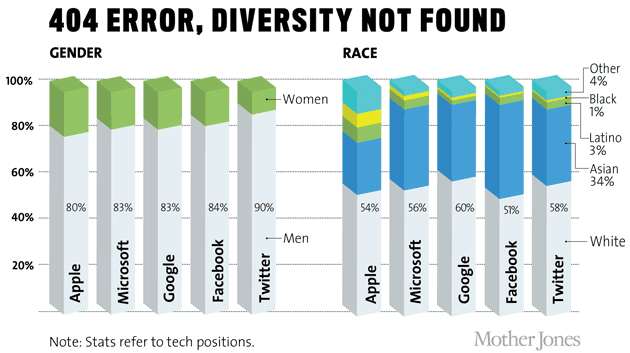
    Acknowledgments: This review has been made possible by the Faculty of Law of the University of Maryland in Baltimore, who hosted me as a visiting fellow for the month of September 2015. I am most grateful to Frank Pasquale, first for having written this book, but also for engaging with me so patiently over the month of September and paying so much attention to my arguments, even suggesting in some instances the best way for making my points, when I was diverging from his views. I would also like to thank Jérôme Kohn, director of the Hannah Arendt Center at the New School for Social Research, for his encouragements in pursuing the mobilisation of Hannah Arendt’s legacy in my professional environment. I am also indebted, and notably for the conclusion, to the inspiring conversations I have had with Shauna Dillavou, excecutive director of CommunityRED, and Soraya Chemaly, Washington-based feminist writer, critic and activist. Last, and surely not least, I would like to thank David Golumbia for welcoming this piece in his journal and for the care he has put in editing this text written by a non-English native speaker.

    [1] This change of perspective, in itself, has the interesting side effect to take the carpet under the feet of those “addicted to speed”, as Pasquale is right when he points to this addiction (195) as being one of the reasons “why so little is being done” to address the challenges arising from the hyperconnected era.

    [2] Williams, Truth, Autonomy, and Speech, New York: New York University Press, 2004 (35).

    [3] See, e.g., Nicole Dewandre, ‘Rethinking the Human Condition in a Hyperconnected Era: Why Freedom Is Not About Sovereignty But About Beginnings’, in The Onlife Manifesto, ed. Luciano Floridi, Springer International Publishing, 2015 (195–215).

    [4]Williams, Truth, Autonomy, and Speech (32).

    [5] Literally: “spoken words fly; written ones remain”

    [6] Apart from action, Arendt distinguishes two other fundamental human activities that together with action account for the vita activa. These two other activities are labour and work. Labour is the activity that men and women engage in to stay alive, as organic beings: “the human condition of labour is life itself”. Labour is totally pervaded by necessity and processes. Work is the type of activity men and women engage with to produce objects and inhabit the world: “the human condition of work is worldliness”. Work is pervaded by a means-to-end logic or an instrumental rationale.

    [7] Arendt, The Human Condition, 1958; reissued, University of Chicago Press, 1998 (159).

    [8] Arendt, The Human Condition (160).

    [9] Seyla Benhabib, The Reluctant Modernism of Hannah Arendt, Revised edition, Lanham, MD: Rowman & Littlefield Publishers, 2003, (211).

    [10] See notably the work of Lynn Stout and the Frank Bold Foundation’s project on the purpose of corporations.

    [11] This expression has been introduced in the Onlife Initiative by Charles Ess, but in a different perspective. The Ess’ relational self is grounded in pre-Modern and Eastern/oriental societies. He writes: “In “Western” societies, the affordances of what McLuhan and others call “electric media,” including contemporary ICTs, appear to foster a shift from the Modern Western emphases on the self as primarily rational, individual, and thereby an ethically autonomous moral agent towards greater (and classically “Eastern” and pre-Modern) emphases on the self as primarily emotive, and relational—i.e., as constituted exclusively in terms of one’s multiple relationships, beginning with the family and extending through the larger society and (super)natural orders”. Ess, in Floridi, ed.,  The Onlife Manifesto (98).

    [12] Williams, Truth, Autonomy, and Speech.

    [13] Hannah Arendt and Jerome Kohn, Between Past and Future, Revised edition, New York: Penguin Classics, 2006 (55).

    [14] See Richard Rorty, Contingency, Irony, and Solidarity, New York: Cambridge University Press, 1989.

    [15] I thank Shauna Dillavou for suggesting these alternate meanings for “WWW.”

    [16] Virginia Woolf, Three Guineas, New York: Harvest, 1966.