b2o

  • Ragini Tharoor Srinivasan – What Literature Does (Review of Amit Chaudhuri, ed., Literary Activism)

    Ragini Tharoor Srinivasan – What Literature Does (Review of Amit Chaudhuri, ed., Literary Activism)

    A review of Literary Activism: Perspectives ed. Amit Chaudhuri (Oxford University Press, 2017)

    by Ragini Tharoor Srinivasan

    There’s a debate going on among some of my English department colleagues, centered on the following questions. What responsibility do faculty trained primarily in American and British literatures have to the teaching of English literatures of the non-West? How should English literature of South Asia or East Africa, for instance, be contextualized in terms of the relevant subcontinental and regional literatures in other languages? On what grounds might texts originally written in Bengali, Urdu, Swahili, or Arabic be taught in an English department? Is knowledge of the original language in which a text was written required for teaching it in translation? If so, what constitutes such knowledge?

    I’ve been thinking about these questions lately through the terms offered by Literary Activism, an idiosyncratic volume that collects proceedings from a 2015 Oxford symposium and even some of the email debriefing that followed. The title refers to a broad constellation of activities and object relations that motor critical engagements with literature in and beyond the academy. Literary activism is not quite “championing,” except when it is. It is not literature in service of what we conventionally understand as the political, nor is it simply an affirmation of the politics of aesthetics. Literary activism has a newly urgent brief given how markets and information technology have debased contemporary discourses on the literary; by that same token, it has been practiced as long as writers have written and readers have read. In editor and symposium-convener Amit Chaudhuri’s words, literary activism bears “a strangeness that echoes the strangeness of the literary…[it] may be desultory, in that its aims and values aren’t immediately explicable” (2017a: 6).

    Contributors to Literary Activism include scholars, journalists, publishers, creative writers, and literary critics. In response to Chaudhuri’s capacious opening gambit, they variously explore literary activism as “the crucial work that seeks to restore the importance of the literary to the public sphere” (Majumdar 2017: 122); the championing of writers by colleagues who believe “unconditionally in the value of [their] work” (Zecchini 2017: 20); a “critical” practice that can reorient debates on literary tradition and the modern (R. Chaudhuri 2017: 190); a counterpart to market activism (Graham: 2017); exemplified by the “passionate advocacy” of poetry translation (Mckendrick 2017: 249); a combination of literary “karma or work…jnana, or knowledge…and srishti, or creation” (Chakravorty 2017: 268); and “activism on behalf of an idea of literature” (Cook 2017: 298). These accounts are not mutually exclusive. Rather, they are consistent with how literature bridges and confounds private-public distinctions: traversing the figural space within and between minds, on the one hand, and passing materially through hands and institutions, on the other.

    Literary activism can be private, as in the case of English-Marathi poet Arun Kolatkar, who Laetitia Zecchini describes as having practiced his art in “a hostile or indifferent environment” (2017: 25). Kolatkar and his fellow poets “did not need the market or the public to know that their work was outstanding” (30); in fact, neglect by mainstream publishers was the enabling condition of their work. Spurning market logics, Kolatkar and his contemporaries published in their own presses, retained control over all aspects of production, and actively translated their and others’ works. They were “creating a world of their own, with their own standards and audience, however limited” (30). Zecchini’s translation of Kolatkar began with a private intimation as well, through an unexpected encounter with his poetry that she describes in terms of falling in love.

    Literary activism is also public, as in Amit Chaudhuri and Peter McDonald’s joint nomination of Arvind Krishna Mehrotra, a superlative poet, translator, and critic, for the post of 2009 Oxford Professor of Poetry. That nomination brought together novelists, scientists, historians, political thinkers, philosophers, and numerous other “well-wishers” in service of a campaign that was, Chaudhuri stresses, never going “to win”; it was “a deliberate long shot that should succeed” (2017b: 240, 245). That it didn’t succeed (the post ultimately went unfulfilled, a turn of events involving an alleged smear campaign by Ruth Padel against Derek Walcott, regarding his history of sexual harassment) was the point. By highlighting the work of Mehrotra, Chaudhuri and McDonald were able to lay bare the extra-literary considerations operative in the filling of posts like that of Oxford Professor.

    Zecchini’s and Amit Chaudhuri’s essays situate literary activism between acts of private creation and public consumption, between literature as a practice of living and literature as products in circulation. They contribute to the volume’s larger discussion of the relationship between literary activism and the “market activism” of publishing houses, agents, and booksellers. David Graham offers a normative account of market activism as the work of “experts” who are able “to bring new, fresh, and important voices to readers around the world” (2017: 80). Graham, a publisher, describes himself as both “a businessman whose business has been making literary works sell” and “a midwife to literary talent” (73). This tellingly mixed language captures the simultaneously opportunistic and beneficent nature of publishing.

    For most contributors, however, market activism is the province of those less interested in literature than in what sells. “[H]ow do we establish what is authentic,” Dubravka Ugrešić asks, “and what a product of market compromise?” (2017: 208). “[C]an any amount of activism really re-energize [literature’s] declined importance in the contemporary public sphere?” Saikat Majumdar wonders (141). Tim Parks laments the pervasive conflation of literary worth with accessibility, exemplified by how publishers and literary-festival organizers celebrate the success of texts that they themselves have been responsible for promoting (“How pleasant, then, to convince oneself that what reaches out to everyone is also the best” [2017: 157]). Reflecting on her own circumscribed position as a “Croatian writer who lives in Amsterdam,” Ugrešić wryly observes the mass culture industry’s unwillingness to read transnational literatures in anything other than national terms (208).

    Critiques of the culture industry, pandering publishers, and the marketplace of least-common-denominators are not new. But the contributors to Literary Activism go further by routing the literature-market binary through a significant third term: the academy. Derek Attridge describes how, over the course of many years, he championed the work of J.M. Coetzee and Zoë Wicomb, writing critical essays and a monograph about the former, and planning a conference and editing a volume about the latter (Attridge also nominated Wicomb for the Windham-Campbell Prize, which she received). It is the kind of affirmative academic attention that Gayatri Chakravorty Spivak has paid to Mahesweta Devi’s stories, or for that matter, which Majumdar has given to Amit Chaudhuri’s novels. All of this, Attridge speculates, “must have had some effect on publishers’ decisions, prize-awarding bodies, reviewers, and all the other agents in the literary marketplace” (2017: 59).

    What is the nature of this effect? How does academic attention to certain writers inflect their position in the literary marketplace—and vice versa? There is a long history of scholarship on literature’s relations to the market (Brier 2017), but it is only recently that the academy is taking stock of its particular mediation of those relations. As Andy Hines observes in an essay on the new institutionalism, only now are literary critics “willing to admit that we have been pushed around all along” (2018: np). Two remarkable paragraphs in Amit Chaudhuri’s essay strike at the heart of this vexed triangulation. He writes:

    By the late 1980s…departments of English…looked with some prejudice upon value and the symbols of value, such as the canon; problematized or disowned terms such as ‘classic’ and ‘masterpiece’; often ascribed a positive political value to orality, which it conflated with non-Western culture, and a negative one to inscription or ‘good writing’, which it identified with the European Enlightenment. Some of this was overdue and necessary. (2017b: 224)

    Chaudhuri is referencing two concurrent phenomena here. For one, a spate of works including Pierre Bourdieu’s rules of art (1992), John Guillory’s work on canon formation (1993), and Pascale Casanova’s world republic of letters (1999) problematized accepted terms and modes of literary valuation. At the same time, English studies was being transformed by critical theory, postcolonialism, feminism, and cultural studies. Construed positively, the discipline underwent significant internal reformation; viewed more suspiciously, it metabolized the oppositional knowledge projects that had emerged to contest its disciplinary hegemony.

    Chaudhuri’s passage then shifts subtly in focus:

    Meanwhile, publishers robustly adopted the language of value – to do with the             ‘masterpiece’ and ‘classic’ and ‘great writer’ – that had fallen out of use in its old location, fashioning it in their own terms. And these were the terms that academics  essentially accepted. They critiqued literary value in their own domain, but they were unopposed to it when it was transferred to the marketplace. Part of the reason for this was the language of the market and the language of the publishing industry were…populist during a time of anti-elitism…For example: from the 1990s onward, publishers insisted there was no reason that literary novels couldn’t sell…What they meant was that, in the new mainstream category of ‘literary fiction’, only literary novels that sold well would be  deemed valid literary novels. Academics neither exposed this semantic conflict nor  challenged the way literary value had been reconfigured. (2017b: 224-225)

    This is “the genius of market activism” that “disinherits and revivifies” terms of literary value that have fallen out of favor in the academy (A. Chaudhuri 2017b: 226). The result is that the status of Harold Bloom’s latest entrant into the Western canon is rightly debated, but first-time novelists debut “instant classics” and “modern masterpieces” that are unblinkingly received as such. And it’s not just that an indiscriminate public is being told what to read by Oprah, Reddit, or for that matter the Times. Now, rather than an Attridge elevating a Wicomb, the market tells the academic who and what is worthy of study. This transformation in market-academy relations has most significantly impacted those who teach and study contemporary and non-Western literatures. Chaudhuri’s passage closes with a note on such academics:

    When, in response to political changes in the intellectual landscape, they extended the old canon and began to teach contemporary writers, or novelists from the former colonies, they largely chose as their texts novels whose position had been already decided by the  market and its instruments, such as certain literary prizes. (2017b225)

    Chaudhuri is treading lightly here, but anyone familiar with his creative and critical oeuvre knows who he is talking about. The South Asian and South Asian diasporic writers most frequently taught and researched in the Anglo-American academy are Booker winners (Salman Rushdie, Arundhati Roy, Aravind Adiga), Pulitzer winner (Jhumpa Lahiri), and a Nobel Laureate (V.S. Naipaul). High profile nominations can bring otherwise minor texts to prominence, as do reviews in outlets like the Times or New Yorker. Scholars wondering which contemporary works will stand the test of time (as if the test of time were an adequate arbiter of literary value) turn to prizes and bestseller-lists in order to identify what is worthy of study. This is the context in which we “subsist on a sense that the lineage of the Indian English novel is an exemplary anthology of single works, rather than a tradition of cross-referencing, borrowing, and reciprocity” (A. Chaudhuri 2017b: 229). This is the context in which we become literary activists.

    This is also the context in which South Asian literature, to continue with the above example, becomes equated with South Asian literature in English, when in fact, as contributors to Literary Activism discuss, South Asian literature in English is part of a rich South Asian literary archive and must be studied in the context of the subcontinent’s multilingual traditions. For example, Rosinka Chaudhuri’s essay on the literary sphere of early 19th-century Bengal shows how “contentions between the major literary languages of India, including the classical and folk languages, nouveau urban and mixed languages, colonial and ‘native’ languages, played an instrumental role in the many negotiations between modernity and literary craft” (2017: 190). Zecchini’s approach to Arun Kolatkar and Amit Chaudhuri’s reading of Arvind Krishna Mehrotra are attuned to such negotiations in the 20th-century context.

    Which brings me back to the questions at the top of this essay. Originally hired as a Global Anglophonist, I am one of only two members of our literature faculty whose primary scholarly field is neither American nor British literature. I am also on the executive committee of an undergraduate major in World Literature that is housed in another college (formally and institutionally at our university, the “world” doesn’t belong to English). I therefore approach the debate about teaching texts in translation from my position at the interstices of the “Global Anglophone” and “World Literature,” which are distinct paradigms for the teaching of non-Western literatures. The former admits only texts written in English and is arguably a renomination of the postcolonial; the latter conventionally allows for the teaching of non-English texts in English translation.

    Surprising even myself, I have become an advocate—I dare say an activist—for the inclusion of non-Anglophone works of “World Literature” in English translation alongside works of “Global Anglophone” literature in our seminars and Masters exam lists. Why? Because we cannot teach and administer exams as if Chinua Achebe (a usual suspect) is only in conversation with Joseph Conrad, as if Things Fall Apart has nothing to say to Tayeb Salih’s Season of Migration to the North (translated from Arabic). Because graduate students reading Rushdie and Roy (more usual suspects) should very well know Intizar Hussain (translated from Urdu) and Kamala Suraya (translated from Malayalam). Because, as Roanne Kantor puts it, “no coherent historiography of the Global Anglophone can be built within the ‘Anglophone’ itself” (2018: np).

    My advocacy has been met by a complicated resistance. Faculty who oppose the teaching of texts in translation worry that the delinking of these texts from their source languages is intellectually irresponsible. They argue that our contemporary reading practices have, in Tim Parks’ words, “drastically weakened and in many cases altogether severed” “the old connections that linked writer to community” (149-150), and that teaching literature in translation will only exacerbate this problem. This critique, along with the suspicion that World Literature is “the educational equivalent of a shopping-mall food court” (Damrosch 2013: 153, 158), is worth heeding. But what is the alternative? The Global Anglophone circumvents the vexed politics of translation, but it valorizes Booker- and Nobel-prize winning writers like Rushdie, Wole Soyinka, and Nadine Gordimer. To return to Amit Chaudhuri’s argument, the Global Anglophone is preoccupied with Anglo-centric international prizes and the “instant classics” they create. It is by nature overly focused on the contemporary, as colonial histories prefigure the relevant 20th and 21st-century texts.

    Rigid adherence to the Global Anglophone rubric reflects an impoverished theory of translation as well, a topic discussed at length in Literary Activism. It is of course true, as Parks notes, that translations are not “always enriching” (170). By that same token, as Ugrešić writes, “Every translation is not only a multiplication of misunderstandings, but also a multiplication of meanings” (204). Translation is “cultural catalyst” (McKendrick 2017: 249). It is a practice “meant to forge affiliations and connections, to assert bonds of kinship, and to clear a space, however minor or marginal, for [writers] and their predecessors—who are turned into contemporaries by the process of translation itself” (Zecchini 2017:31). Electing not to read literature in translation because one risks misunderstanding is as suspect as assuming translation is a one-to-one “process of recoding” (Cook 2017: 322).

    That the above isn’t obvious is a reflection on the conservatism of English in some quarters, and maybe even literary scholarship more generally. In its final significant through-line, Literary Activism theorizes criticism as an alternative to scholarship, and amateurism as an alternative to expertise. Expert publishers and expert scholars who mediate between author and reader are distinguished from “amateur” critics—the category is Majumdar’s—who read and write without consideration of prize-winners, bestseller lists, market, or promotion-and-tenure-committee approval. For Majumdar, scholars are defined by their commitment to the objective, to their “archive of study” (2017: 115). By contrast, the critic “celebrates and foregrounds her subjective self” and practices literary interpretation as “a creative act” (115). Unlike professional scholars, whose archival considerations are overdetermined, amateur literary critics are characterized by their interdisciplinarity, willingness to take intellectual risks, and love of literature. They practice what Attridge describes as an “affirmative criticism, one that operates…to understand, explore, respond to, and judge what is of value in”—as opposed to the value of—“works of literature” (2017: 51).

    Majumdar is currently editing, with Aarthi Vadde, a volume called The Critic as Amateur that further develops the distinctions between private and public, scholar and critic, literature, market, and academy offered here. That volume (to which I have contributed) also includes essays by Attridge, Rosinka Chaudhuri, and McDonald. Taken together, the pair of books, Literary Activism and The Critic as Amateur, suggest another scene in which literary activism is performed: transnational collaborators deciding over symposia coffee breaks what to publish together next.

    I have come to think of much of the work I do as an English professor as literary activism. Certainly, my advocacy of an expansive literature curriculum is activism on behalf of an idea of literature. This essay is a minor piece of activism as well, a gesture of affirmative criticism that aspires to shore up the links between two projects and draw attention to them both. It can be painful at times, both urgent and pointless-feeling, and it might never be “properly remembered or noticed” (A. Chaudhuri 2017b: 244). Say what you want about love. In the first and final instance, literary activism is a form of labor.

    _____

    Ragini Tharoor Srinivasan is an assistant professor of English and Social, Cultural, and Critical Theory at the University of Arizona. She has also taught at the University of Nevada, Reno, and at the University of California, Berkeley, where she earned a PhD in Rhetoric in 2016. A former magazine editor and award-winning journalist, Srinivasan has contributed essays and criticism to scholarly, public, and semi-public venues on three continents. More from www.raginitharoorsrinivasan.com

    Back to the essay

    _____

    References

    • Attridge, Derek. 2017. “The Critic as Lover: Literary Activism and the Academy,” Literary Activism: Perspectives, edited by Amit Chaudhuri. New Delhi: Oxford University Press.
    • Brier, Evan. 2017. “The Literary Marketplace,” Oxford Research Encyclopedia of Literature. Oxford University Press.
    • Bourdieu, Pierre. 1992. The Rules of Art: Genesis and Structure of the Literary Field, trans. by Susan Emanuel. Stanford: Stanford University Press.
    • Casanova, Pascale. 1999. The World Republic of Letters, trans. By M.B. DeBevoise. Cambridge: Harvard University Press.
    • Chakravorty, Swapan. 2017. “Literary Surrogacy and Literary Activism: Instance from Bengal,” Literary Activism: Perspectives, edited by Amit Chaudhuri. New Delhi: Oxford University Press.
    • Chaudhuri, Amit. 2017a. “A Brief Background to the Symposium, and Some Acknowledgments,” Literary Activism: Perspectives, edited by Amit Chaudhuri. New Delhi: Oxford University Press.
    • –. 2017b. “The Piazza and the Car Park: Literary Activism and the Mehrotra Campaign,” Literary Activism: Perspectives, edited by Amit Chaudhuri. New Delhi: Oxford University Press.
    • Chaudhuri, Rosinka. 2017. “The Practice of Literature: The Calcutta Context as a Guide to Literary Activism,” Literary Activism: Perspectives, edited by Amit Chaudhuri. New Delhi: Oxford University Press.
    • Cook, Jon. 2017. “Literary Activism: Where Now, What Next?” Literary Activism: Perspectives, edited by Amit Chaudhuri. New Delhi: Oxford University Press.
    • Damrosch, David. 2013. “World Literature in a Postliterary Age,” Modern Language Quarterly 74.2.
    • Graham, David. 2017. “‘Market Activism’: A Publisher’s Perspective,” Literary Activism: Perspectives, edited by Amit Chaudhuri. New Delhi: Oxford University Press.
    • Guillory, John. 1993. Cultural Capital: The Problem of Literary Canon Formation. Chicago: The University of Chicago Press.
    • Hines, Andy. 2018. “The Material Life of Criticism,” Public Books, Jan. 22, http://www.publicbooks.org/the-material-life-of-criticism/, accessed Sept. 13, 2018.
    • Kantor, Roanne. 2018. “Even If You Gain the World: South Asia, Latin America, and the Unexpected Journey to Global English (working title).” Unpublished manuscript, last modified October 17, 2018. Microsoft Word file.
    • Majumdar, Saikat. 2017. “The Amatory Activist,” Literary Activism: Perspectives, edited by Amit Chaudhuri. New Delhi: Oxford University Press.
    • Mckendrick, Jamie. 2017. “Forms of Fidelity: Poetry Translation as Literary Activism,” Literary Activism: Perspectives, edited by Amit Chaudhuri. New Delhi: Oxford University Press.
    • Parks, Tim. 2017. “Globalisation, Literary Activism, and the Death of Critical Discourse,” Literary Activism: Perspectives, edited by Amit Chaudhuri. New Delhi: Oxford University Press.
    • Ugrešić, Dubravka. 2017. “Transnational vs. National Literature,” trans. David Williams. Literary Activism: Perspectives, edited by Amit Chaudhuri. New Delhi: Oxford University Press.
    • Zecchini, Laetitia. 2017. “Translation as Literary Activism: On Invisibility and Exposure, Arun Kolatkar and the Little Magazine ‘Conspiracy,’” Literary Activism: Perspectives, edited by Amit Chaudhuri. New Delhi: Oxford University Press.

    *Editorial Note (Nov 5, 2018): A broken link was fixed and a line that originally read “…I am the only member of our literature faculty whose primary scholarly field is neither American nor British literature” was changed to read: “…I am one of only two members of our literature faculty whose primary scholarly field is neither American nor British literature.”

  • Mark Lipovetsky – A Culture of Zero Gravity (Review of Pomerantsev, Nothing Is True and Everything Is Possible: The Surreal Heart of the New Russia)

    Mark Lipovetsky – A Culture of Zero Gravity (Review of Pomerantsev, Nothing Is True and Everything Is Possible: The Surreal Heart of the New Russia)

    Peter Pomerantsev, Nothing Is True and Everything Is Possible: The Surreal Heart of the New Russia (First edition, London: Faber & Faber, 2014. Revised edition, New York: PublicAffairs, 2015)

    reviewed by Mark Lipovetsky

    This essay has been peer-reviewed by the boundary 2 editorial collective. 

    Peter Pomerantsev’s book Nothing Is True and Everything Is Possible: Adventures in Modern Russia offers a chain of seemingly disparate but conceptually tied, stories – about  the Kremlin ideologue Vladislav Surkov,  the former “king maker” and oligarch Boris Berezovsky, post-soviet TV networks, Moscow night clubs, the suicides of top models’, new religious sects, the victims of business wars between different branches of power, former gangsters-cum-TV producers, Western expats, the Night Wolves (an organization of bikers which has become an avant-garde of Putin’s supporters), and many other truly exciting subjects. Through these stories, written with a sharp, sometimes satirical pen,  Pomerantsev presents modern Russian as a specific type of cultural organism rather than  a projection of Putin’s or anybody else’s political manipulations and propaganda.

    Pomerantsev clearly rejects a stereotype shared by many contemporary political commentators but harkening back to Soviet times: a reduction of the entire society to the whims of its leaders (sometimes confronted only by a small group of brave and wise dissidents). Although Nothing Is True and Everything Is Possible portrays such “political technologists” as Surkov and depicts several figures of contemporary dissent, Pomerantsev clearly tries to deconstruct this cliche and deliver a much more complex vision. Notably, Putin is rarely mentioned in the book; he is designated simply as “the President,” which suggests that his personality is less important than his position within the system.

    Pomerantsev’s book methodically dismantles the myth about “the return of the Soviet” in recent years – the myth shared by many, within and outside Russia alike. While demonstrating the continuity between the late Soviet modus vivendi, the political compromises of the 1990s, and today’s radical changes, Pomerantsev consistently argues that we have to deal with a completely new kind of the political discourse, within which recognizably Soviet elements play a very different role and disguise rather than reveal what is actually happening.

    The third widespread stereotype that is splendidly absent in Pomerantsev’s book is the discourse on “the Russians’ love of the strong hand,” Russia’s innate gravitation to authoritarian regimes and leaders, and, most notoriously the alleged lack of a democratic tradition in Russia.  Unlike numerous publications about contemporary Russia, these Orientalizing and profoundly essentialist labels never appear in Nothing Is True and Everything Is Possible.[1] For Pomerantsev, Russia is not a backwards and isolated player looking up at the perfect Western world; on the contrary, his book directly leads to an opposite conclusion: “Today’s Kremlin might perhaps be best viewed as an avant-garde of malevolent globalization. The methods it pursues will be taken up by others, and […] the West has no institutional or analytical tools to deal with it” (Pomerantsev and Weiss 2015, 7).

    This quotation is borrowed from a special report, “The Menace of Unreality: How the Kremlin Weaponizes Information, Culture and Money,”  written by Pomerantsev together with Michael Weiss for Mikhail Khodorkovsky’s Institute of Modern Russia. The authors of the report ask: “How does one fight a system that embraces Tupac and Instagram but compares Obama to a monkey and deems the Internet a CIA invention? That censors online information but provides a happy platform to the founder of WikiLeaks, a self-styled purveyor of total ‘transparency’? That purports to disdain corporate greed and celebrates Occupy Wall Street while presiding over an economy as corrupt as Nigeria’s? That casts an Anschluss of a neighboring country using the grammar of both blood-and-soil nationalism and anti-fascism?” (Pomerantsev and Weiss 2015, 5).

    The report works with ideas which have been brewing in Nothing Is True and Everything Is Possible. Yet, this lively and observant book is less about politics per se, and more about culture as an effective form of politics. The reader of Pomerantsev’s book eventually cannot help but realize that Russia’s political turns and twists are born in night clubs and at parties, rather than in Kremlin offices,  that “the President,” despite his unconcealed hatred for western-style democracy, is indeed truly democratic, since his thoughts and acts are synchronized with the desires of the majority of the Russian people (many of his supporters are well-educated, well-travelled representatives of the newly-born middle class);  that in a society dependent on TV broadcasting – and the Russia depicted in the book is exactly such a society –the distance between the cultural and political phenomena is minimal, if existing at all. Although the first edition of the book appeared before Russia’s political turn of 2014, Pomerantsev only had to add a few pages to the 2015 version to reflect the new political reality after the annexation of Crimea. These pages do not stand out but look quite natural, since in the main body of Nothing Is True… Pomerantsev managed to pinpoint exactly those processes and tendencies that made the insanity possible.

    Freedom from stereotypes coupled with Pomerantsev’s spectacular ability to present complex ideas through vivid snapshots, makes his book fertile ground for the discussion of much broader subjects. First and foremost, Nothing Is True and Everything Is Possible raises questions about the role of cynicism in Soviet and post-Soviet culture and politics, as well as about the relation between cynicism, authoritarianism  and postmodernism in both the Russian and global contexts. I will try to present a “dialogical” reading of Pomerantsev’s book, sometimes problematizing its concepts, sometimes expanding on them, sometimes applying them to the material beyond the book’s content. It is a truly rare occasion when a journalistic reportage provokes historical and theoretical questions, which proves that Nothing Is True and Everything Is Possible is a phenomenon out of the ordinary.

     “Reality Show Russia”

    Petr Pomerantsev was born in Kiev in 1977. In 1978 his father, the well-known poet and journalist Igor’ Pomerantsev, emigrated with his family from the USSR and began working as a broadcaster, first at the BBC Radio Russian Service and from 1987 and until present at Radio Liberty. Pomerantsev Jr. recollects in his Newsweek article how he enjoyed playing in the hallways of the BBC Bush House in London (see Pomerantsev 2011a). The BBC Russian service was one of the most vibrant centers of anti-Soviet intellectual activity, so it is safe to assume (and the book confirms this impression) that the author of Nothing Is True and Everything Is Possible  has absorbed the ethos of late Soviet dissidents. This ethos might have served as a repellent in Russia of the 2000s, a country enraptured with nostalgic myths about Soviet imperial might and the stability of the Brezhnev era along with growing demonization of the Yeltsin period of democratic reforms, which strangely resonated with the rapidly increasing number of former and current officers of FSB (the KGB successor) taking up prestigious political, economic and media offices…

    In 2001, after graduating from Edinburgh University and some job experience at British TV, Pomerantsev decides to try himself in Russia – where he stays until 2010, working as a producer at the popular Russian entertainment TV channel TNT. Stays, because, as he explains,  Moscow in these years “was full of vitality and madness and incredibly exciting”; it was “a place to be” (Castle 2015). Along with the increasing monopolization of political, economic, and media power in the hands of the FSB-centered clique,  the 2000s was a period of a noticeable economic growth, when Russia’s cities became cleaner and safer, when ordinary people started to travel abroad on a regular basis, when one could hardly find a Russian-made car within a thick stream of urban vehicles, when restaurants flourished, book sales were on the rise and theatres were full every night … In short, when the economic reforms of the accursed Yeltsin years in combination with the skyrocketing oil and gas prices stated to bring long-awaited fruits (see Iasin 2005).

    While in Moscow Pomerantsev produced reality shows, documentaries, and generally had to bring the “western” style to the “news-free” – i.e., supposedly apolitical – broadcasts of the TNT channel. Nothing Is True and Everything Is Possible is in many ways a memoir about these years on Russian TV. The reality show was one of the genres Pomerantsev produced, so the metaphor of Russian politics as a reality show holds a central places in his book; the first part of the book is entitled: “Reality Show Russia”.

    One of Pomerantsev’s first discoveries associated with these – relatively free and diverse – years, concerns the blurring of the borderline between fact and fiction, between a staged show and the news, especially on  the Russian national channels united by the term “Ostankino” (the major TV studio in Moscow).  As a TV news anchor from Ostankino explained to him, a young foreigner, speaking fluent Russian and working on Russian TV: “Politics has got to feel like … like a movie!” (6)[2]. Pomeranstev’s explains how this motto works in practice: “… the new Kremlin won’t make the same mistake the old Soviet Union did: it will never let TV become dull… Twenty-first century Ostankino mixes show business and propaganda, ratings with authoritarianism […] Sitting in that smoky room,  I had the sense that reality was somehow malleable, that I was with Prospero who could project any existence they wanted onto post-Soviet Russia” (7).  However, his own career on a Russian entertainment channel serves as an illuminating example of the limits of “Prospero”’s power. Pomerantsev describes how he had been producing a reality show about people meeting and losing each other at the airport. Intentionally, he tried to avoid staged and scripted situations, seeking interesting characters and stories instead of sentimental effects. The result was quite predictable:  “The ratings for Hello-Goodbye had sucked. Part of the problem was that the audience wouldn’t believe the stories in the show were real. After so many years of fake reality, it was hard to convince them this was genuine” (73). Furthermore, when Pomerantsev made several documentaries addressing societal conflicts and problems, they all were rejected by the channel on the premise that its viewers did not want to see anything negative.

    Yet, this is only half of the picture. In the second half of the book, Pomerantsev  describes how he received a very tempting invitation to the federal First Channel. The head of programming, the best-selling author of self-help books (this is an important detail in the context of the book) offered him the chance “to helm a historical drama-documentary… With a real, big, mini-movie budget for actors and reconstructions and set designers… The sort of thing you make when you’re right at the top of the TV tree in the West…” (226). And the story was great: “about a Second World War admiral who defied Stalin’s orders and started the attack on the Germans, while the Kremlin was still in denial about Hitler’s intentions and hoped for peace. The admiral was later purged and largely forgotten. It’s a good story. It’s a really good story. It’s a dream project” (227). Most importantly, it was a true story that obviously defied  the newly-rediscovered admiration for Stalin’s politics in Russia’s public and media discourse (these days Putin even speaks highly about the Molotov-Ribbentrop pact). Yet, eventually Pomerantsev decided to decline this generous offer: “… I realise that though my film might be clean, it could easily be put next to some Second World War hymn praising Stalin and the President as his newest incarnation.  Would my film be the ‘good’ programme that validates everything I don’t want to be a part of? The one that wins trust, for that trust to be manipulated in the next moment?” (231). In other words: “In a world that really has been turned on its head, truth is a moment of falsehood,” as Guy Debord writes in The Society of the Spectacle (1995, 14).

    This is a very important realization, not only as the turning point in Pomerantsev’s Russian odyssey, but also as an insight into the logic of the Russian “society of spectacle”, itself resonant with Baudrillard’s almost forgotten concept of the “hyperreality of simulacra”.  What seemed to be an almost grotesque philosophic hyperbole, appears to be Pomerantsev’s and his colleagues’ practical experience in Nothing Is True and Everything Is Possible. As follows from this experience,  the capitalist society of the spectacle, unlike Debord’s conceptualization,  is not opposed to the communist social order but directly grows from it. Post-Soviet TV viewers remember and even nostalgically long for Soviet media where ideological images constantly produced their own spectacle,  perhaps not as attractive as the capitalist one, but still capable of fulfilling its main function: “By means of spectacle the ruling order discourses endlessly upon itself in an uninterrupted monologue of self-praise” (Debord 1995, 19). As to the “hyperreality of simulacra”,  it appears in Pomerantsev’s book  not only as a result of capitalist market forces (images that sell better, dominate), but as a horizon in which public demand for captivating (or entertaining, or horrifying) images and the political and economic interests of the ruling elite meet and happily fuse with each other. As follows from Nothing Is True…, the “hyperreality of simulacra” in its totality can be most successfully achieved not by capitalism alone, but by the blend of capitalism with post-soviet authoritarianism, accomplished through the  homogenization of the information flow.

    Back in the early 2000s, the prominent Russian sociologists Lev Gudkov and Boris Dubin, defined Russian society as “the society of TV viewers”. The society of TV-viewers had formed on the ruins of Soviet ideocracy, i.e. the society with a single official ideology which served either as an ally or as an opponent to multiple others non-official ones.  In this new cultural realm. political doctrines were replaced by entertainment which seemed to be apolitical, yet, (surprise, surprise!) were quite political indeed.  For example, in the 2000s appeared numerous TV series about heroic, charming and, yes,  suffering officers of the Cheka/NKVD/KGB: they were entertaining and even captivating, but eventually they have produced the figure of the representative of this organization as the epitome of the national destiny – who defends the motherland, takes the hit from his (always his!) native organization,  successfully overcomes the difficulties (temporary of courses) and triumphs over enemies (see Lipovetsky 2014).  In the scholars’ opinion, the mass dependence of Russian society on TV images signified the process opposite to the formation of the civil society: “Today’s social process of Russian ‘massovization’… is directed against differentiation and relies on the most conservative groups of the society” (Gudkov and Dubin 2001, 44).  The scholars argued that while promoting negative identification – through the figures of enemies and demonized “others”— television offered uplifting “participatory rituals of power” that substituted for actual politics while feeding the longing for national grandeur, heroic history and symbolic superiority.

    However, in the 1990s, the post-Soviet mediaspace was a battlefield of various competing discourses – liberal, neo-liberal, nationalist, nostalgic, statists, libertarian, etc. During the 2000s-2010s the full spectrum of these discourses gradually narrowed down toward cultural neo-traditionalism and political neo-conservatism (focalized on lost imperial glory, “Russia raising itself from its knees”, collapse of the USSR as “the greatest geopolitical catastrophe of the century”, etc.). Pomerantsev observes the completion of this process in the TV-orchestrated nationalist mass hysteria accompanying the Crimean affair and invasion of Ukraine in  2014: “… the Kremlin has finally mastered the art of fusing reality TV and authoritarianism to keep the great 140-million strong population entertained, distracted, constantly exposed to geopolitical nightmare that if repeated enough times can become infectious” (273)

    Without any competing media  (no more than 5% of the Russian population gets its news from internet), the homogenized narrative of post-Soviet TV not only shapes the opinions of the vast majority of Russian population – the notorious 85% that (allegedly) wholeheartedly support all of Putin’s initiatives.  The TV narrative becomes an ultimate reality symbolically superseding immediate everyday experience. In other words, the television offers neither a simulation of reality, nor a distortion of truth, but a parallel, and more real, world.

    Baudrillard wrote about “the desert of the real” (Natoli and Hutcheon 1993, 343), indicating that his hyperreality of simulacra was inseparable from the “metaphysical despair” evoked by “the idea that images concealed nothing at all” (345). On the contrary, Pomerantsev’s non-fictional characters, TV producers and “political technologists” feel no despair whatsoever, rather they enjoy their power over the “real” and celebrate the disappearance and malleability of any and all imaginable truth. In the formulation of Gleb Pavlovsky, a Soviet-time dissident, who became a leading “political technologist” of  “the Putin system” (although  eventually he was expelled from the circle of the Kremlin viziers):  “The main difference between propaganda in the USSR and the new Russia […] is that in Soviet times the concept of truth was important. Even if they were lying they took care to prove what they were doing was ‘the truth.’ Now no one even tries proving the ‘truth.’ You can just say anything. Create realities” (Pomerantsev and Weiss 2015, 9).

    At the same time, as one can see from the example with the offer received by Pomerantsev from the Ostankino boss, this system recognizes truth and even effectively employs discourses that might be uncomfortable for the dominant ideology. Yet, here these elements of credibility are instrumentalized as mere means for the performance of reality, a performance that neither its producers nor its consumers seem to judge by its truthfulness. Here, some other criteria matter more.  In the post-Soviet hyperreality of simulacra truth is triumphantly defied; it has been openly manipulated through the process of constant constructions, negations, and reconstruction in front of the viewer’s eyes.  This is why emphasis falls onto the flamboyance and virtuosity of the (reality) performance, be it the Olympics or the public burning of tons of imported cheese from countries sanctioning Russia. This may be the Achilles heel of contemporary Russian politics.  If performance supersedes reality, then invisible economic sanctions on Russian leadership are much less painful than a boycott of, say, the Football World Championship of 2018.

    “Postmodern Dictatorship”?

    Curiously, the vision of the malleable TV-dominated- reality in Pomerantsev’s book deeply resonates with Generation ‘P’ (Homo Zapiens in American version, Babylon  in British) by Viktor Pelevin, one of the most famous Russian postmodernist novels, published in 1999. The novel appeared before Putin was known to the broad public, and was initially perceived as a summation of  the Yeltsin period. Yet, it proved to be an prescient account of the ideological shifts in Putin’s decade. Even on a surface level, the novel presents a shrewd political forecast for the 2000s. In Generation P, a graduate from the Literary Institute  trained to translate poetry from languages he does not know, a character without features but with a “pile of cynicism,” Vavilen Tatarsky, becomes a copywriter, first for commercial advertisements, later for political ones,  eventually rising from mediocrity to become the supreme ruler of the media, the living god secretly ruling post-Soviet Russia. This plotline retroactively reads as a parody of Vladimir Putin’s ascent to the role of the “national leader”. With an uncanny acuity of foresight, Pelevin imagines the transformation of a non-entity into the “face of the nation”, in a diapason from the elimination of the “well-known businessman and political figure Boris Berezovsky” (2002,  249) – another character of Nothing Is True and Everything Is Possible — to a new cultural mainstream instigating nationalist nostalgia for the Soviet empire and novel and familiar forms of class hatred.  Pelevin even anticipated Russia’s newly-found desire to lead the reactionaries of the world (Pomerantsev and Weiss write about this in their memorandum)– in his commercial for Coca Cola Tatarsky appears as the frontrunner for the “congress of radical fundamentalists from all of the world’s major confessions” (2002, 249).

    In Generation P, a gangster commissions Vavilen to produce a Russian national idea: “Write me a Russian idea about five pages long. And a short version one page long. And lay it out like real life, without any fancy gibberish […] So’s they won’t think all we’ve done in Russia is heist the money and put up a steel door. So’s they can feel the same kind of spirit like in ’45 at Stalingrad, you get me?” (Pelevin 2002, 138) This request, albeit expressed in slightly different terms punctuates a wide spectrum of cultural debates about the national idea in Russia of the 1990s and 2000s, reflected in Pomerantsev’s book as well. However, when asked in 2008 if Russia had found its national idea in Putin, Pelevin responded affirmatively: “That’s precisely what Putin is” (Rotkirch 2008, 82). Following this logic, one may argue that although Vavilen failed to accomplish the task assigned him, his creator did not. Like Putin, Vavilen is a manifestation of Russia’s new national idea. He just isn’t sure what that truly is, since it is hyperreal and he himself created it.

    But let us pause for a second and ask whether the fusion of postmodernism and authoritarianism is possible at all? For Pomerantsev they are compatible.  He respectfully cites the Russian oligarch Oleg Deripaska saying: “This isn’t a country in transition but some sort of postmodern dictatorship that uses the language and institutions of democratic capitalism for authoritarian elites” (50). In 2011, Pomerantsev published in The London Review of Books the article “Putin’s Rasputin” that now reads as a seed from which the book was born (slightly altered, this text would be included into Nothing Is True…). The article describes Vladislav Surkov, a former deputy head of the President’s administration, Putin’s aid and vice-premier, the inventor of the concept of Russian “sovereign democracy” and builder of the United Russia Party;  currently one of the chief coordinators of both the “hybrid war” in Ukraine and its orchestrated representation in the Russian media.  In Surkov, who is also known as a novelist and song-writer, Pomerantsev sees (with good reason) the main designer of contemporary Russia’s political and societal system. Surkov, he contends, has fused authoritarianism with postmodernism, creating a completely new political system, which Pomerantsev tentatively defines as “postmodern authoritarianism”:

    Newly translated postmodernist texts give philosophical weight to the Surkovian power model. [Jean-] François Lyotard, the French theoretician of postmodernism, began to be translated in Russia only towards the end of the 1990s, at exactly the time Surkov joined the government. The author of Almost Zero [a postmodernist novel allegedly written by Surkov] loves to invoke such Lyotardian concepts as the breakdown of grand cultural narratives and the fragmentation of truth: ideas that still sound quite fresh in Russia. […] In an echo of socialism’s fate in the early 20th century, Russia has adopted a fashionable, supposedly liberational Western intellectual movement and transformed it into an instrument of oppression. (Pomerantsev 2011)

    This description continues in the book:

    Surkov likes to invoke the new postmodern texts just translated into Russian,  the breakdown of grand narratives, the impossibility of truth, how everything is only ‘simulacrum’ and ‘simulacra’… and then in the next moment he says how he despises relativism and lives conservatism, before quoting Allen Ginsberg’s ‘Sunflower Sutra’ in English and by heart […] Surkov’s genius has been to tear those associations apart,  to marry authoritarianism and modern art, to use the language of rights and representation to validate tyranny, to recut and paste democratic capitalism until it means the reverse of its original purpose. (87-88)

    Although, this way of reasoning seems to be a little naïve  (one man’s cultural convictions cannot be directly reproduced by the entire country or just Moscow) the question remains: how can one so easily marry postmodernism and authoritarianism? Similarities between what Pomerantsev depicts in his non-fiction and postmodernist theoretical models, as well as Russian postmodernist fiction are too obvious to be ignored.

    It should be noted that Russian postmodernism has been radically different from the model described by Fredric Jameson as the “cultural logic of late capitalism”. Although participants of late Soviet underground culture, had very fragmented, if any knowledge of Western theory,  their works embodied Lyotarian “incredulity towards grand narratives” in scandalously transgressive and liberating forms of  the counterculture, which had been subverting both Soviet official and intelligentsia’s hegemonies (see in more detail Lipovetsky 1999, 2008). Although acknowledged in the 1990s, postmodernist writers and artists like Dmitrii Prigov, Vladimir Sorokin, Lev Rubinshtein and their colleagues by underground circles by and large,  have preserved their critical position towards neo-traditionalist and neo-conservative ideologies and cultural trends.

    Notably, Vladimir Sorokin in 2006 wrote a postmodernist dystopian novel The Day of the Oprichinik (translated into English in 2011), in which, as readers and critics admit almost unanimously, predicted, outlined and exaggerated the actual features of the grotesque political climate of the 2010s. Lev Rubinshtein, the experimental poet famous for “the index cards poetry”, in the 2000s has become one of the most brilliant and influential political essayist of the anti-Putin camp. Dmitrii Prigov, one of the founding fathers of Moscow Conceptualism, also published political columns critical of the new conformism and nostalgia for the lost grand narratives. Most importantly, he has directly influenced protest art of the new generation: before his untimely death in 2007 he collaborated with the group Voina (War) famous for its radical political performances. The founder of Voina, Oleg Vorotnikov, called Prigov the inspiration for the group’s creation and activities, and the former member of Voina and spokesperson  for Pussy Riot, Nadezhda Tolokonnikova, repeatedly mentions Prigov as a deep influence, exposing her to contemporary, i.e., postmodernist, art and culture (see, for example, Volchek 2012).

    Although Pomerantsev does not write about these figures (he only briefly mentions Voina’s actions and “the great tricksters of the Monstration movement”[149]), it is with apparent tenderness that he describes the conceptualist artist Vladislav Mamyshev-Monro whose impersonations of various cultural and political celebrities, including “the President”, were at first perceived as a part of the culture of simulation but turned out to be its subversion incompatible with the new political freeze:  “Vladik himself was dead. He was found floating in a pool in Bali. Death by heart attack. Right at the end an oligarch acquaintance had made him an offer to come over to the Kremlin side and star in a series of paintings in which he would dress up and appear in a photo shoot that portrayed the new protest leaders sodomizing. Vladik had refused” (278).

    These examples, although admittedly brief, nevertheless complicate and problematize the picture of “postmodern dictatorship” painted by Pomerantsev. Minimally, they testify to the fact that postmodernism hosts dissimilar and even conflicting organisms, that postmodernist culture since the 1980s has been evolving in various directions, some of which lead to Surkov while others lead to Pussy Riot. An informative parallel might be made to Boris Groys’s conceptualization of Stalinism and its cultural manifestation Socialist Realism. In The Total Art of Stalinism (original title: Gesamtkunstwerk Stalin) Groys argued that Stalinism  adopted avant-garde aesthetic methods and substituted the avant-gardist demiurge with the state (and Stalin as  its personification): “… Socialist realism candidly formulates the principle and strategy of its mimesis: although it advocates a strictly ‘objective’, ‘adequate’ rendering of  external reality,  at the same time it stages or produces this reality. More precisely, it takes reality that has already been produced by Stalin and the party, thereby shifting the creative act onto reality itself, just as the  avant-garde had demanded” (1992, 55). Groys’s argument has been criticized by historians of Socialist Realism pointing to the antagonism between Socialist Realism and the avant-garde and its reliance on much more populist and traditionalist discourses (see for example, Dobrenko 1997). However, the very logic of the transformation of a liberatory aesthetics into sociocultural authoritarianism seems to be relevant to contemporary Russia. Despite Benjamin’s maxim, politics has been aestheticized since ancient times, but when the state acts as an artist, repression becomes inevitable.

    Although historical parallels can help to contour the phenomenon, by default they are never accurate. This is why, I believe that in the cultural situation described by Pomerantsev, we are dealing with something different: with the postmodernist redressing of a far more long-standing cultural and political phenomenon, which tends to change clothing every new epoch, and Nothing Is True… excels in describing its current Russian outfit.

    From the History of Cynicism

    Throughout his entire book, using very dissimilar examples, Pomerantsev demonstrates the functioning of one and the same cultural (political/social/psychological) mechanism: the coexistence of mutually exclusive ideologies/beliefs/discourses in one and the same mind/space/institution.  More accurately, it is not their co-existence, but the painless and almost artistic shifting from one side to the opposite; a process which never stops and is never is reflected upon as a problem.

    Consider just a few examples from Nothing Is True:

    About Moscow’s new architecture: “A new office center on the other side of the river from the Kremlin starts with a Roman portico, then morphs into medieval ramparts with spikes and gold-glass reflective windows, all topped with turrets and Stalin-era spires. The effect is at first amusing, then disturbing. It’s like talking to the victim of a multiple personality disorder.” (124).

    About politics of “a new type of authoritarianism”: “The Kremlin’s idea is to own all forms of political discourse, to not let any independent movement develop outside its walls. Its Moscow can feel like an oligarchy in the morning and a democracy in the afternoon, a monarchy for dinner and a totalitarian state by bedtime” (79).

    About new “spiritual gurus”: “Surkov had gathered together all political models to create a grand pastiche, or Moscow’s architecture tried to fill all styles of buildings onto one, Vissarion [a popular new “prophet”] had created a collage of all religions” (210)

    About media producers:

    The producers who work at the Ostankino channels might all be liberals in the private lives, holiday in Tuscany, and be completely European in their tastes. When I ask how they marry their professional and personal lives, they look at me as if I were a fool and answer: ‘Over the last twenty years we’ve lived through a communism,  we never believed in, democracy and defaults and mafia state and oligarchy, and we’ve realized they are illusions, that everything is PR.’ ‘Everything is PR’ has become the favorite phrase of the new Russia; my Moscow peers are filled with a sense that they are both cynical and enlightened. […] ‘Can’t you see your own governments are just as bad as ours?’ they ask me. I try to protest – but they just smile and pity me. To believe in something and stand by it in this world is derided, the ability to be a shape-shifter celebrated… conformism raised to the level of aesthetic act. (87)

    And once again about them:

    For when I talk to many of my old  colleagues who are still working in the ranks of Russian media or in state corporations, they might laugh off all the Holy Russia stuff as so much PR (because everything is PR!), but their triumphant cynicism in turn means they can be made to feel there are conspiracies everywhere; because if nothing is true and all motives are corrupt and no one is to be trusted, doesn’t it mean that some dark hand must be behind everything? (273)

    About social psychology:

    Before I used to think the two worlds were in conflict, but the truth is a symbiosis. It’s almost as if you are encouraged to have one identity one moment and the opposite one the next. So you’re always split into little bits, and can never quite commit to changing things […] But there is great comfort in these splits too: you can leave all your guilt with your ‘public’ self. That wasn’t you stealing that budget/making that propaganda show/bending your knee to the President, just a role you were playing: you’re a good person really. It’s not much about denial. It’s not even about suppressing dark secrets. You can see everything you do, all your sins. You just reorganize your emotional life so as not to care. (234)

    Indeed, “conformism raised to the level of aesthetic act” is a great definition of cynicism. Furthermore, the post-Soviet complex illuminated by Pomerantsev, deeply resonates with a brilliant description of the  modern cynic from Peter Sloterdijk’s famous book Critique of Cynical Reason:

    … the present-day servant of the system can very well do with the right hand what the left hand never allowed. By day, colonizer, at night, colonized; by occupation, valorizer and administrator, during leisure time, valorized and administered; officially a cynical functionary, privately a sensitive soul; at office a giver of orders, ideologically a discussant; outwardly a follower of the reality principle, inwardly a subject oriented towards pleasure; functionally an agent of capital, intentionally a democrat; with respect to the system a functionary of reification, with respect to Lebenswelt  (lifeworld), someone who achieves self-realization; objectively a strategist of destruction, subjectively a pacifist; basically someone who triggers catastrophes, in one’s own view, innocence personified <…> This mixture is our moral status quo.’ (1987, 113)

    Obviously, there is nothing specifically post-Soviet in this description. According to Sloterdijk, “a universal diffuse cynicism” (1987, 3) is the widespread cultural response to the heavy burden of modernity. He defines cynicism as “enlightened false consciousness” as opposed to Marx’s famous definition of ideology. Sloterdijk argues that cynicism offers the modern subject a strategy of pseudo-socialization to reconcile individual interest with social demands by the splitting their personality into unstable and equally false and authentic social masks. The constant switching of these masks is the strategy of cynical accommodation to modernity.  There is nothing specifically postmodern in this strategy either. Sloterdijk traces a genealogy of cynicism from ancient Greece to the twentieth century.

    However, he almost completely excludes the Soviet experience from his “cabinet of cynics.” Slavoj Zizek, probably, was the first to apply Sloterdijk’s concept to Stalinism. In The Plague of Fantasies  he argued that the Stalinist henchmen far exceeded the cynicism of their Nazi colleagues,  “The paranoiac Nazis really believed in the Jewish conspiracy, while the perverted Stalinists actively organized/ invented ‘counterrevolutionary conspiracies’ as a pre-emptive strikes. The greatest surprise for the Stalinist investigator was to discover that the subject accused of being a German or American spy really was a spy: in Stalinism proper,  confessions counted only as far as they were false and extorted … “(1997, 58). And in the book Did Somebody Say Totalitarianism? even in more detail he argued that in the Soviet political system “a cynical attitude towards the official ideology was what the regime really wanted – the greatest catastrophe for the regime would have been for its own ideology to be taken seriously, and realized by its subjects.” (2001, 92).

    On the other hand, as historians of Soviet civilization have demonstrated,  the authorities’ cynicism generated matching cynical methods of adaptation among ordinary Soviet citizens, the “broad masses” and intelligentsia alike (although, of course, it would be wrong to generalize and imagine all Soviet people as seasoned cynics). Oleg Kharkhordin in his The Collective and the Individual in Russia: A Study of Practices, which deals with the Soviet purges and the origins of the Soviet subjectivity writes about the results of this process: “Their double-faced life is not a painful split forced upon their heretofore unitary self; on the contrary, this split is normal for them because they originate as individuals by the means of split. […] One of the steps in this long development was individual perfection of the mechanism for constant switching between the intimate and the official, a curious kind of unofficial self-training, a process that comes later that the initial stage of dissimilation conceived as ‘closing off’ (pritvorstvo) and one that we may more aptly call dissimilation as ‘changing faces’ (litsemerie) – and, we might add, as its summation – cynicism”  (1998, 275, 278).  In her book Tear off the Masks! Identity and Imposture in Twentieth Century Russia, Sheila Fitzpatrick, the well-known social historian of Stalinism makes no reference to Sloterdijk, but uses many documents from the 1920s and 1930s to demonstrate the constantly shifting logic of class discrimination and how it compelled the average person to manipulate their own identity, Sloterdijk-style, rewriting the autobiography and seeking a place in the official and unofficial systems of social relations.

    The heyday of Soviet cynicism falls onto the post-Stalin period of late socialism when, according to Alexey Yurchak, the author of the seminal study Everything Was Forever, Until It Was No More: The Last Soviet Generation, ideological beliefs frayed into pure rituals, participation in which demonstrated one’s loyalty to the regime and secured social success without embodying true belief.  Pomerantsev in his book directly establishes the link between the late Soviet cynicism and today’s cultural reality:

    Whenever I ask my Russian bosses, the older TV producers and media types who run the system, what it was like growing up in the late Soviet Union, whether they believed in the communist ideology that surrounded them, they always laugh at me.

    ‘Don’t be silly,’ most answer.

    ‘So you were dissidents? You believed in finishing the USSR?”

    ‘No. It’s not like that. You just speak several languages at the same time. There’s like several you’s.’ (233-4)

    Having recognized the genealogical connection between late Soviet cynicism and the present day triumph of cynicism of Russia’s elites, Pomerantsev offers the following diagnosis: “Seen from this perspective, the great drama of Russia is not the ‘transition’ between communism and capitalism, between one fervently held set of beliefs and another, but that during the final decades of the USSR no  one believed in communism and yet carried on living as if they did, and now they can only create a society of simulations” (234).

    It sounds very logical but a little too straightforward to be accurate.  Besides, this logic fails to explain the internal shift that has resulted in the current state of affairs. What Pomerantsev disregards is the subversive power of cynicism, its insidiousness. In the late Soviet period, what may be defined as cynicism, or a cynical split in multiple I’s, was also responsible for numerous practices and discourses that Yurchak unites by the term “living vnye”:

    … the meaning of this term, at least in many cases, is closer to a condition of being simultaneously inside and outside of some context” (2006, 128) – here the system of Soviet ideas, expectations, scenarios, etc. The system of “vnye” discourses and milieus, in the scholar’s opinion, explains the sudden collapse of the invincible Soviet system: “although the system’s collapse had been unimaginable before it began, it appeared unsurprising when it happened. (1)

    Furthermore, Soviet culture, since the 1920s and until the 80s, has been creating a whole rogue’s gallery of attractive and winning cynics and non-conformists, brilliantly defeating the system. This cultural trope spectacularly manifested the “power of the powerless” to use Vaclav Havel’s famous formulation. Literary and cinematic works about such characters enjoyed cult status, while belonging to official and non-official culture alike, from personages like Ostap Bender from Ilf and Petrov’s diptych of satirical novels The Twelve Chairs (1928) and The Golden Calf (1932) – both the subjects of multiple films,  and the suite of demons accompanying the Devil Woland in Mikhail Bulgakov’s famous novel The Master and Margarita (written mainly in the 1930s, first published in 1966) to the authors and characters of Russian postmodernism, including the aforementioned Moscow to the End of the Line with its philosophizing trickster in the center, to Dmitrii Prigov, who had been constructing his cultural personality as a trickster’s ploy, throughout his entire career.

    In my book Charms of the Cynical Reason (Lipovetsky 2011), I argue that the figure of the trickster in Soviet culture played a dual role. On the one hand, s/he provided cultural legitimacy to Soviet cynicism, even lending it the aura of artistry. The cynical split- or multi-personality may have been essential to survive and endure enforced participation in the grey economy and society. But, as a rule, this was accompanied by feelings of guilt and shame, compounded by the official Soviet rhetoric which demonized bourgeois conformism and interest in material comfort. The charming and versatile Soviet tricksters removed the feelings of guilt that Soviet readers and spectators might experience, turning the battle for survival into a jolly game exposing contradictions between official Soviet rhetoric and mundane survival.

    On the other hand, in full correspondence to Sloterdijk’s thesis that “Cynicism can only be stemmed by kynicism, not by morality” (194), the artistic and non-pragmatic trickster playfully mocked and demolished widespread cynical discourses and practices. By the term “kynicism” the philosopher defines non-pragmatic, scandalous and artistic aspects of cynicism – exactly those that the Soviet tricksters embodied.  Thus, the lineage coming from Soviet tricksters finds its direct continuation in Sorokin’s scandalizing use of scatological and cannibalistic motifs in his writings. Voina’s cynical performances include such “cynical” acts as stuffing a frozen chicken up a vagina or simulating the lynching of immigrants in a supermarket. Pussy Riot with their punk-prayer in the main Moscow cathedral appear to be true  heirs to this tradition, adding new edges of political, religious, and gender critique to the trickster’s subversion.

    Thus, the “genius” of the Putin/Surkov system lies in the balancing of conformity and subversion associated with refurbished and even glamorized late Soviet cynicism.  Yet, neither Surkov, nor Pomerantsev realize that a balance based on cynicism is unstable precisely due to the self-subversive nature of the latter.  This balance was disturbed in 2011 by the excessive cynicism of Putin and Medvedev’s “switcheroo” that generated a wave of protests lasting until May 6,  2012 (the day prior to Putin’s third inauguration), when a rally at Bolotnaya Square was brutally dispersed by the police.  Notably, this protest movement was distinguished by a very peculiar – cynical or tricksterish –brand of humor. For example, when the President compared the white ribbons of the protestors with condoms, the crowd  responded by proudly carrying a huge, ten-meter long condom at the next protest. Pussy Riot’s punk prayer  requesting the Mather of God to force Putin away,  appeared as an inseparable part of this movement.[3]

    Troubled by these reactions, the regime responded in an increasingly aggressive and conservative way: from imprisoning Pussy Riot and the participants of peaceful demonstrations, to homophobic laws, from the introduction of elements of censorship to the discrediting, persecution, and  simply assassination of prominent liberal politicians, from the  elevation of the  Russian Orthodox Church as the ultimate authority in culture and morality, to the promotion of  a filtered “heroic history” as opposed to “negative representations” of the Russian and Soviet past;  from rabid anti-Americanism to the general promotion of anti-liberal sentiment, etc.  Spurred by the Ukrainian revolution, this trend in 2014 transformed into the active implementation of imperialist dreams, along with a nationalist and anti-Western media frenzy,  and a paranoid quest for enemies both foreign and domestic.

    All these tendencies clearly match Umberto Eco’s well-known criteria of Ur-Fascism. First and foremost, the cult of tradition (the infamous “spiritual bonds” about which Putin and his cronies like to speak so much), the  rejection of modernism (in this case, postmodernism  – as exemplified not only by the persecution of Pussy Riot, but also by pogroms of exhibitions of contemporary art, or the scandal around an experimental production of Wagner’s Tannhäuser in Novosibirsk); the macho cult of action for action’s sake (in a diapason from Putin;s naked torso to the Sochi Olympics as the main even in contemporary Russian history); “popular elitism” along with contempt for parliamentary democracy and liberalism (“Gayrope”!);  and of course,  nationalism enhanced by “the obsession with a plot, possibly an international one” (Eco 1995, 7).

    However, Eco did not mention that fascism can be born from an excess of cynicism turning on itself. This transition has been most illuminatingly described by Sloterdijk, when he discusses the birth of Nazism from the joyfully cynical atmosphere of the Weimar republic. He argues that fascism positions itself as the enemy of ambivalence, histrionics and deception, supposedly overcoming the cynical components of culture.  It does so through the promotion of a radically primitive and reductionist conservative mythology, which is presented as a modern tool capable of releasing modernity from its controversial and demoralizing effects.

    However, as the philosopher demonstrates, fascism also represent the highest manifestations of cynical culture.  First, according to Sloterdijk, Nazi mythology originates from the same philosophical premises as cynical culture: “In their approach, they are all chaotologists.  They all assume the precedence of the unordered, the hypercomplex, the meaningless, and that which demands too much of us.  Cynical semantics … can do nothing other than to charge order to the account of cultural caprice or the coercion toward a system” (399).  Second, in totalitarian culture, theatricality becomes a crucial weapon of political warfare through the orchestrated representation of the leader and the aesthetics of mass political spectacles. The performance of the power’s transcendental status, which is guaranteed by messianic ideology, as well as by spectacles of national unity that cover up constant, “tactical” ideological shifts, struggles within the upper echelons of power, the appropriation of “alien” ideological doctrines and practices etc., is no less important here.

    Pomerantsev’s  analysis deeply correlates with these observations. Russian media generously uses the word “fascists” typically applying it to the Ukrainian authorities and sometimes to Western countries, yet they use this word as an empty signifier, a universal label for everything “alien” and dangerous.  Pomerantsev never uses this word, yet, Nothing Is True…  compellingly documents the rise of fascism in Post-Soviet Russia (however postmodern it might be).

    Pomerantsev’s book is about fascism of a new kind, which existing political radars fail to detect and thus overlook, which is able to mimic western discourse, while thoroughly opposing it.  This fascism is armed with the “hyperreality of simulacra” (instead of mere theater) and promotes its “traditional values” with an openly cynical smirk. It also effectively transforms the cynical negation of truth into a foundation for a new political paranoia, and masterfully adopts a liberal rhetoric when needed. In Pomerantsev’s words:  “This is a new type of Kremlin propaganda, less about arguing against the West with a counter-model as in the Cold War, more about slipping inside its language to play and taunt it from inside” (57).

    Only on the surface does this new fascism resemble Stalinism or late Soviet culture, in fact, it is a new phenomenon: unlike them, it is deeply embedded in capitalist economic, media and cultural regimes. It is no longer based on a clear ideology, but to use Pomerantsev’s incisive formula, on “the culture of zero gravity”, it  successfully utilizes capitalist mechanisms and liberal rhetoric,  donning fashionable masks, including postmodern ones. Pomerantsev’s book warns the Western world that a monster has arisen within its own global cultural discourse.  This monster rises in contemporary Russia, but it can rise elsewhere: this is why Pomerantsev and Weiss call Russia “an avant-garde of malevolent globalization”.  At the very least, this means that the country and its current situation deserves very close and very well informed attention and that those resisting this new fascism within Russia, in culture, politics, or society, deserve the whole-hearted support and understanding of the rest of the world.

    Notes

    [1] Tellingly in The New York Times  review of Pomerantsev’s book, Miriam Elder noticed the absence of Putin, but nevertheless reduced stories of its diverse characters to the cliché: “they’re characters playing parts in the Kremlin’s script” (Elder 2014). It is little wonder that the reviewer chastises Pomerantsev for not writing about “Russia’s long and tortured history with authoritarianism”, i.e., Russia’s alleged authoritarian “habit”.

    [2] For all quotations from Pomerantsev’s book, I am using the 2015 edition.

    [3] Ilya Gerasimov in his brilliant analysis of a popular rock singer Sergei Shnurov, who has been considered an epitome of post-Soviet cynicism, shows how his songs of 2012-14 have transformed cynicism into a self-critical discourse (see Gerasimov 2014).

    Works Cited

    • Stephen Castle 2015. “A Russian TV Insider Describes a Modern Propaganda Machine.” The New York Times, February 13, http://www.nytimes.com/2015/02/14/world/europe/russian-tv-insider-says-putin-is-running-the-show-in-ukraine.html
    • Guy Debord 1995. The Society of the Spectacle, transl. by Donald Nicholson-Smith (New York: Zone Books).
    • Masha Gessen 2014. Words Will Break Cement: The Passion of Pussy Riot (New York: Riverhead Books).
    • Lev Gudkov and Boris Dubin 2001.  “Obshchestvo telezritelei: massy i massovye kommunikatsii v Rossii kontsa 1990-kh, “ Monirtoring obshchestvennogo mneniia,  2 (52),  March-April: 31-44.
    • Miriam Elder 2014. “Nothing Is True and Everything Is Possible by Petr Pomerantsev. The New York Times, November 25, http://www.nytimes.com/2014/11/30/books/review/nothing-is-true-and-everything-is-possible-by-peter-pomerantsev.html?_r=0
    • Umberto Eco 1995. “Ur-Fascism,” The New York Review of Books,  June 22, http://www.pegc.us/archive/Articles/eco_ur-fascism.pdf
    • Evgeny Dobrenko 1997. The Making of the State Reader: Social and Aesthetic Contexts of the Reception of Soviet Literature (Stanford: Stanford University Press).
    • Sheila Fitzpatrick 2005. Tear Off the Masks!: Identity and Imposture in Twentieth-Century Russia (Princeton: Princeton University Press).
    • Ilya Gerasimov 2014. “Lirika epokhi tsinicheskogo razuma,” http://net.abimperio.net/node/3353
    • Evgenii Iasin 2005. Prizhivetsia li demokratiia v Rossii. Moscow: Novoe izdatel’stvo.
    • Nadia Kalachova 2014. “Piter Pomerantsev: ‘Zapad legko verit v to, chto Ukrainy ne sushchestvuet’.” LB.ua, April 1.  http://www.interpretermag.com/wp-content/uploads/2015/07/PW-31.pdf
    • Oleg Kharkhordin 1999. The Collective and the Individual in Russia: A Study of Practices. (Berkeley, Los Angeles, London: University of California Press).
    • Mark Lipovetsky 1999.  Russian Postmodernist Fiction: Dialogue with Chaos (Armonk, NY: M.E. Sharpe).
    • Mark Lipovetsky 2008.  Paralogies:  Transformations of the (Post)Modernist Discourse in Russian Culture of the 1920s-2000s (Moscow: Novoe Literaturnoe Obozrenie).
    • Mark Lipovetsky 2011. Charms of the Cynical Reason: The Transformations of the Trickster Trope in Soviet and Post-Soviet Culture (Boston: Academic Studies Press).
    • Mark Lipovetsky 2014. “Breaking Cover: How the KGB became Russia’s favorite TV heroes?”  The Calvert Journal,  April 30, http://calvertjournal.com/comment/show/2433/the-rise-of-kgb-television-series
    • Joseph Natoli and Linda Hutcheon 1993. A Postmodern Reader (New York: State University of New York).
    • Viktor Pelevin 2002. Homo Zapiens, transl. by Andrew Bromfield (New York and London: Viking).
    • Petr Pomerantsev 2011. “Putin’s Rasputin.” London Review of Books.  October (30:20), http://www.lrb.co.uk/v33/n20/peter-pomerantsev/putins-rasputin
    • Petr Pomerantsev 2011a. “The BBC’s Foreign Language Cuts Are Britain’s Loss.” Newsweek, April 3. http://www.newsweek.com/bbcs-foreign-language-cuts-are-britains-loss-66439
    • Petr Pomerantsev and Michael Weiss 2015. “The Menace of Unreality: How the Kremlin Weaponizes Information, Culture and Money.” A Special Report presented by The Interpreter, a project of the Institute of Modern Russia. http://www.interpretermag.com/wp-content/uploads/2015/07/PW-31.pdf
    • Kristina Rotkirch 2008. Contemporary Russian Fiction: A Short List. Russian Authors Interviewed by Kristina Rotkirch, ed. by Anna Ljunggren, transl. by Charles Rougle (Evanston: Northwestern University Press).
    • Peter Sloterdijk 1987. Critique of Critical Reason, trans. Michael Eldred (Minneapolis: University of Minnesota Press).
    • Dmitrii Volchek 2012. “Iskusstvo, pobezhdaiushchee strakh,” Radio Svoboda, May 16, www.svoboda.mobi/a/__/24583384.html
    • Slavoj Žižek 1997. The Plague of Fantasies (London, New York: Verso).
    • Slavoj Žižek 2001. Did Somebody Say Totalitarianism? Five Interventions in the (Mis)Use of a Notion (London, New York: Verso).

    Mark Lipovetsky is Professor of Russian Studies at the University of Colorado-Boulder. He is the author of more than a hundred of articles and eight books. Among his monographs are Paralogies: Transformation of (Post)modernist Discourse in Russian Culture of the 1920s-2000s (2008) and Charms of Cynical Reason: The Transformations of the Trickster Trope in Soviet and Post-Soviet Culture (2011).
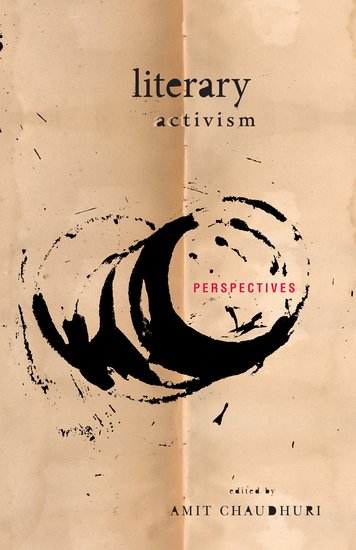
  • David Tomkins – Assuming Control: Spielberg Rewires Ready Player One

    David Tomkins – Assuming Control: Spielberg Rewires Ready Player One

    by David Tomkins

    I.

    Ernest Cline’s bestselling novel Ready Player One (2011) envisions a future ravaged by war, climate change, famine, and disease in which most lived experience takes place in an immense multi-player virtual reality game called the OASIS. Created by James Halliday, an emotionally stunted recluse obsessed with 1980s pop culture, the OASIS promises relief from real world suffering by way of a computer-generated alternative reality overflowing with ‘80s pop culture references. Cline’s novel follows teenager Wade Watts on an adventure to locate the digital “Easter egg” that Halliday buried deep within the OASIS shortly before his death. Those seeking the egg must use three hidden keys (made of copper, jade, and crystal, respectively) to open secret gates wherein players face challenges ranging from expertly playing the arcade game Joust to flawlessly reenacting scenes from Monty Python and the Holy Grail. The first person to find the egg will inherit Halliday’s fortune, gain controlling stock in his company Gregarious Solutions, and assume control of Halliday’s virtual homage to the ‘80s, the OASIS.

    Rich in the ‘80s nostalgia saturating popular entertainment in recent years, and with a particular reverence for Steven Spielberg’s ‘80s corpus, Cline’s novel attracted legions of readers upon publication and became an instant best seller.[1] The signing of Spielberg to direct and produce the film version of Ready Player One underscored the treatment of Spielberg’s films in the novel as quasi-sacred texts, and generated a kind of closed feedback loop between textual and visual object.[2] Shortly before the film went into production, Cline told Syfy.com that it was “still hard for [him] … to wrap [his] … head around Steven Spielberg directing this movie,” in part, because the director showed himself to be such a huge fan of Cline’s novel, arriving at pre-production meetings with a paperback copy of Ready Player One containing dozens of notes regarding moments he wanted to include in the film.[3]

    But none of these moments, it turns out, included references to Spielberg’s earlier films. In fact, Spielberg made it a point to remove such references from the story. In 2016, Spielberg told Collider.com that he decided to make Ready Player One because it “brought [him] back to the ‘80s” and let him “do anything [he wanted] … except for with [his] own movies.”[4] “Except for the DeLorean and a couple of other things that I had something to do with,” [5] Spielberg added, “I cut a lot of my own references out [of the film].”[6] One can read Spielberg’s decision simply as an attempt to avoid self-flattery—a view Spielberg appears keen to popularize in interviews.[7] But equally compelling is the idea that Spielberg felt at odds with the version of himself celebrated in Cline’s novel, that of the marketable and broadly appealing director of block-busters like Jaws, E.T., and Raiders of the Lost Ark—in other words, the Spielberg of the ‘80s. Over the last twenty-five years, Spielberg has largely moved away from pulp genres toward a nominally more “serious,” socially conscious direction as a filmmaker (recent family-friendly films such as The BFG and The Adventures of Tintin notwithstanding). Ready Player One, however, a science fiction movie about teenage underdogs coming of age, sits comfortably among the films of Spielberg’s early canon—the deeply sentimental, widely appealing family-oriented films generally understood to have shaped the landscape of contemporary Hollywood.

    The tension between early and late Spielberg in Ready Player One is among the driving forces shaping the director’s adaption of Cline’s novel. By removing most references to himself from the film, Spielberg not only rewrites an important aspect of the source material, he rewrites American cinematic history of the last 40 years. Jaws, Close Encounters, E.T., the Indiana Jones films—these works are in certain ways synonymous with ‘80s pop culture. And yet, in making a movie about ‘80s nostalgia, Spielberg begins by pointing this nostalgia away from its most famous and influential director. This self-effacing act, which effectively erases the Spielberg of the ‘80s from the film, and by extension from the era it commemorates, belies the humility animating Spielberg’s public comments on self-reference. Spielberg saturates Ready Player One—as Halliday does the OASIS—with a meticulously crafted self-image, and what’s more, affords himself total control over the medium wherein (and from which) that image is projected. Spielberg paradoxically rewrites popular memory as a reflection of his own preoccupations, making Ready Player One a film in which the future the audience is asked to escape into is defined by Spielberg’s rewriting of the cinematic past.

    Central to Spielberg’s project of recasting ‘80s nostalgia in Ready Player One is an attempt to recuperate figures of corporate or governmental power—entities unlikely to have faired well in his ‘80s work. From the corrupt Mayor Vaughn in Jaws, to the pitiless government scientists in Close Encounters and E.T., to the bureaucrats who snatch Indy’s prize at the end of Raiders of the Lost Ark, figures in elite institutional positions typically pose a threat in early Spielberg. What’s more, in E.T., as well as Spielberg-produced films like The Goonies, these figures commit acts that compel young characters to take heroic, rebellious action. But in portraying Halliday as a meek, loveable nerd in Ready Player One, Spielberg introduces something new to the classic Spielbergian playbook that has implications not only for how we understand Spielberg’s ‘80s films, but also for how Ready Player One situates itself vis-à-vis contemporary pop culture. In Cline’s novel, Halliday comes across as a trickster figure in the mold of Willy Wonka—so much so that one of the first rumors to emerge about Spielberg’s adaptation of Ready Player One was that the director had coaxed Gene Wilder out of retirement to perform the role. Not only did that rumor turn out to be baseless, but the characterization of Halliday in Spielberg’s film neutralizes the faintly sinister underpinnings of Cline’s portrayal, replacing them with a goofy innocence, and an insistence—informed as much by contemporary celebrity worship as by Spielberg’s own status as an elder statesman of Hollywood—that the audience sympathize with, rather than despise, the all-powerful multi-billionaire.

    Halliday’s vast corporate empire, his incalculable wealth, the extraordinary political and cultural power he undoubtedly wields as the creator of an entertainment technology juggernaut—none of these things factor into Spielberg’s portrayal. Rather, Spielberg’s film compels us to pity Halliday, to see him as someone who has suffered, someone whose genius has denied him the kind of emotional life that we, the audience, take for granted (or that Spielberg wants us to take for granted, as the rich emotional interiority he imagines is itself a construct). Given that both Halliday (in Cline’s novel and Spielberg’s film) and Spielberg (in the real world) share global renown as authors of popular entertainment, it’s unsurprising that Spielberg would sympathize with the character. After all, the name Spielberg, whether cited in a production or directorial capacity, or as a generic descriptor (“Spielbergian”), suggests  “a mélange of mass appeal, sentiment and inchoate childlike wonder”—a description one could easily imagine applied to the OASIS.[8] But what is surprising is that Spielberg redeploys the sentimentality of his early work in Ready Player One to affirm the vertical social organization and imperialist ideology those films, at least on the surface, appear to attack.

    The truth-to-power ethos of Spielberg’s ‘80s corpus is enlisted in Ready Player One to sentimentalize the corporate overlord’s yearning to protect his product and control his legacy. Similar to how the rebel struggle against the evil empire in George Lucas’s Star Wars films ultimately reinforces another corporate empire (Lucasfilm), Spielberg’s early rebellions—which were never all that “radical” to begin with, given Spielberg’s fondness for traditional hetero-normative social structures—fold in on themselves in Ready Player One, readjusted to serve the film’s confirmation of neoliberal ideology and corporate sovereignty. What looks superficially in Ready Player One like a toning down of Spielberg and a celebration of Cline is in fact Spielberg through and through, but with the ironic upshot being the recuperation of institutional and corporate power, the affirmation of existing class structures, and a recasting of the heroic rebellions one finds in Spielberg’s early work as far more conservative.

    Unlike Spielberg’s film, Cline’s novel focuses a great deal on Halliday’s astonishing wealth, and it’s clear that for “gunters”—characters like Wade in search of Halliday’s egg—the acquisition of Halliday’s wealth is easily as important as gaining control of the OASIS. Wade, like most characters in Cline’s novel, is dirt poor: he, like millions of others, lives in a broken down mobile home stacked, along with dozens of others, hundreds of feet high. The world Cline describes is one of abject poverty: while the vast majority of people have next to nothing, Halliday, and a handful of corporate overlords like him, possess all the wealth, and wield all the power. This is not to overstate Cline’s interest in class in Ready Player One; indeed, he spends precious little time exploring the penurious world outside Halliday’s OASIS. Like his characters, it’s clear that Cline can’t wait to get back to the OASIS. But in Spielberg’s film, the at-best perfunctory acknowledgement of class dynamics seen in Cline’s novel is utterly ignored. Instead, Spielberg asks us to empathize with Halliday, maybe even to identify with him as much as—if not more than—we do with Wade.

    Rather than encouraging us to revile the corporate overlord responsible for impoverishing the world and controlling the lives of the story’s youthful heroes, Ready Player One stands out among Spielberg’s oeuvre (and recent Hollywood films generally) for the way it recasts the “innocent” teenager Spielberg marketed so effectively as an implicit bulwark against oppressive powers in the ‘80s as a figure sympathetic to the dominant, unassailable corporate forces of the future.[9] Whereas in Cline’s novel Wade suggests using his newfound wealth to “feed everyone on the planet,” and to “make the world a better place,” Spielberg glosses over Wade’s windfall entirely, focusing instead on what Wade’s acquisition of the OASIS allows him to take away from—rather than give to—the powerless masses. In effect, the wayward teenagers of Spielberg’s corpus mature into a kind of “ghost in the machine” of capital.

    The control Spielberg wishes to exert—over audiences, the film, the ‘80s—is perhaps most evident in the final moments of Ready Player One. As the film draws to a close, main character Wade speaks of disengaging from the OASIS to delight in the sensory and emotional experiences accessible only in the real world. In the novel, Cline similarly concludes with Wade revealing that “for the first time in as long as [he] could remember, [he] … had absolutely no desire to log back in to the OASIS”.[10] But in Spielberg’s hands, Wade’s newfound ambivalence about the OASIS has broader implications, as Wade, who ultimately wins control of the OASIS, sets limits on its availability, effectively forcing the tech-addled masses of 2045 to accept, as Wade now does, that “people need to spend more time in the real world.”[11]

    However, the restrictions that Wade—and by extension Spielberg—puts in place fail to do this; rather, they reveal the film’s great irony: that Spielberg asks audiences to discover an empathetic, authentic reality in the context of a simulated world that he, Spielberg, creates (and, it is implied, that he alone could create). By adding to Wade’s character a strong inclination toward hetero-normative romantic connection in the real world, and by directing Wade to downgrade public access to the OASIS so that its millions of users may find “real” love, Spielberg invites his audience to seek out and prioritize “authentic” humanity in contrast to that offered in the OASIS. But Spielberg does so by positing as authentic a simulation of human connection, which he then presents as the corrective not only to the film’s characters’ obsession with technology, but also to that of contemporary western society. In doing so, Spielberg attempts to situate himself apart from peddlers of artificiality like Halliday (with whom he nevertheless clearly identifies). But instead he succeeds, despite his lifelong preoccupation with celebrating and stirring human connections and emotions, in becoming the master generator of simulacra. Ultimately the film’s viewers find themselves absorbed into the position of the creator of the OASIS, so that the absence of specific references to Spielberg’s early films conceals a remaking of the entire world of the film in Spielberg’s image.

    II.

    In the film’s final scene, Spielberg assembles numerous sentimental cues to soften Wade’s mandate that users henceforth limit their time in the OASIS, thus making his demands appear more altruistic than draconian. As the camera pans across what appears to be Wade’s spacious new apartment (a significant step up from the cramped trailer he lived in previously), we see Wade and his recently acquired girlfriend Samantha sharing a kiss as he explains in a voice-over his plans for the OASIS, and as the ‘80s pop of Hall and Oates’s “You Make My Dreams Come True” gradually dominates the soundtrack. While neither the voice-over nor the establishment of the romantic couple are particularly common tropes among Spielberg’s endings overall, the collision of familial sentimentality and budding romance we see in Ready Player One nevertheless recalls several of Spielberg’s endings from the late ‘70s and early ‘80s in films like Close Encounters, E.T., and Indiana Jones and the Temple of Doom.[12]

    In anticipation of this highly sentimental ending, the film drastically accelerates the pace of the pair’s relationship: in the novel, they don’t meet in the real world until the last few pages, and their relationship—at least as far as Samantha is concerned—seems at best a work in progress. But Spielberg brings Wade and Samantha together in the real world halfway through the film, and makes their romantic connection a central concern. In doing so, and in explicitly depicting them in the final shot as a romantic couple, Spielberg creates contextual support for the argument he clearly wishes to make: that real world romance, rather than virtual game play, makes “dreams come true.” But even if this is so for Wade and Samantha, there’s little evidence to suggest that OASIS addicts around the world have had a similar experience. The suggestion, of course, is that they will—once they’re forced to.

    Not only do Wade’s new rules for the OASIS disregard the social upheaval that the narrative all but ensures would take place, they also aggressively elide the anti-social foundation upon which the OASIS was conceived. In an earlier scene, Halliday reveals that he created “the OASIS, because [he] … never felt at home in the real world,” adding that he “just didn’t know how to connect with the people there.” Whether simulations of Atari 2600 games like Adventure or of movie characters like Freddie Kruger, the contents of the OASIS are not only replicas, they’re replicas of replicas—virtual manifestations of Halliday’s adolescent obsessions placed in a world of his own making, and for his own pleasure. One “wins” in the OASIS by collecting virtual inventories of Halliday’s replicas, and gains social significance—in and outside the OASIS—according to what (and how much) one has collected.

    Despite cautioning Wade to avoid “getting lost” in the OASIS and revealing that, for him, the real world is “still the only place where you can get a decent meal,”[13] Halliday stops short of amending the central function of the OASIS as a replacement of, rather than supplement to, human interaction in the real world. Meanwhile, Wade’s parting words in the film limiting access to the OASIS point spectators toward an artificial reality of Spielberg’s making that is deeply invested in hiding its own artifice, and that punctuates a series of rewritings that remove Spielberg references from the film while simultaneously saturating it with his presence. At the same time, Spielberg ensures that the spectator’s sense of the ‘80s conforms to his own preoccupations, which themselves took hold in the context of the increasingly aggressive corporatization of the film industry that took place during this period. Consequently, the nostalgic universe generated in the film offers no exit from Spielberg, despite the absence of his name from the proceedings.

    The film rehearses this paradox once again in its treatment of Halliday’s end, which differs significantly from that of the novel. Arguably Spielberg attempts to secure his controlling presence—both in the film, and of cinematic history—by leaving ambiguous the fate of the OASIS’s creator. Although in both the book and the movie Halliday’s avatar Anorak appears to congratulate Wade (known as Parzival in the OASIS) on acquiring the egg, Cline describes an elaborate transfer of powers the film all but ignores. Upon taking Anorak’s hand, Wade looks down at his own avatar to discover that he now wears Anorak’s “obsidian black robes” and, according to his virtual display, possesses “a list of spells, inherent powers, and magic items that seemed to scroll on forever.”[14] Halliday, now appearing as he often did in the real world with “worn jeans and a faded Space Invaders T-shirt” comments, “Your avatar is immortal and all-powerful.”[15] Moments later Cline writes:

    Then Halliday began to disappear. He smiled and waved good-bye as his avatar slowly faded out of existence … Then he was completely gone.[16]

    Under Spielberg’s direction, this scene—and in particular Halliday’s exit—play out very differently. While we are made aware of Wade’s victory, his avatar’s appearance remains unchanged and there’s no mention of Wade gaining all-powerful immortality. And whereas Cline explicitly refers to the image of Halliday that Wade encounters as an avatar—and therefore a program presumably set to appear for the benefit of game’s victor—the film goes out of its way to establish that this image of Halliday is nothing of the sort. When Wade asks if Halliday is truly dead, the image responds in the affirmative; when asked if he’s an avatar, the image replies no, and doesn’t respond at all to Wade’s final question, “what are you?” Instead Halliday’s image, accompanied by another image of his childhood self, walks silently through a doorway to an adjacent room and closes the door.

    Rather than supplanting himself with a younger overlord and “fading out of existence” as he does in the novel, Spielberg’s Halliday remains part of the world he created, hesitant to relinquish full control. Closing the door behind him may signify an exit, but it doesn’t preclude the possibility of a return, especially given that neither he nor Wade locks the door. In place of closure, Halliday’s departure, along with his acknowledgement that he’s neither real nor simulation, suggests a more permanent arrangement whereby Halliday remains the animating essence within the OASIS. Halliday cannot “fade out of existence” in the OASIS because he effectively is the OASIS—its memory, its imagination, the means through which its simulations come to life. Whereas in the novel, Anorak’s transferal of power to Wade/Parzival suggests an acquisition of unadulterated control, the film proposes an alternative scenario in which Halliday’s creative powers are not fully transferable. In order for the OASIS to function, the film implies, Halliday must somehow remain within it as a kind of guiding force—a consciousness that animates the technological world Halliday created.

    By replacing the simulation of Halliday that Wade encounters at the end of the novel with a mysterious deity figure taking up permanent residence inside the OASIS, Spielberg betrays a level of affection for the multi-billionaire world builder reminiscent of his treatment of the John Hammond character in Jurassic Park (1993). In that film, Spielberg spares the life of the deadly park’s obscenely wealthy creator and CEO—portrayed with jolly insouciance by Richard Attenborough—despite being ripped to pieces by dinosaurs in Michael Crichton’s novel of the same name. In Ready Player One Spielberg ups the ante, allowing the world builder and corporate overlord to ascend to godly status, therefore ensuring that while the OASIS exists, so will its creator Halliday.

    III.

    In contrast to the clear-cut usurpation of the eccentric billionaire by the indigent but tenderhearted teenager seen in Cline’s novel, the movie version of Ready Player One asks audiences to accept a more opaque distribution of controlling interests. While on the one hand the film presents the OASIS as a site of emotional suppression wherein users—following Halliday’s example—favor artificial stimulation over real world emotional connection, it also insists viewers recognize that Halliday created the OASIS in response to real world emotional trauma. The film uses this trauma to neutralize the class distinctions between Wade and Halliday that the novel highlights, and asks spectators to view both characters through a lens of universalized emotional vulnerability. The film then uses this conception of emotional trauma to encourage spectators to sympathize and identify with the corporate billionaire, welcome his transcendence into technological deification, and accept Wade not as a usurper but as an administrator of Halliday’s corporate vision.

    But by magnifying the role social anxiety and fear of human intimacy played in creating the OASIS, the film also sets up the OASIS itself as, ultimately, a site of redemption rather than emotional suppression. Nowhere is this reworking of the OASIS more striking than during Wade’s attempt to complete Halliday’s second challenge. In a total overhaul of the novel, Wade (as Parzival) seeks clues unlocking the whereabouts of the Jade Key by visiting Halliday’s Journals, a virtual reference library located inside the OASIS. In the novel, gunters carefully study a digital text known as Anorak’s Almanac, an encyclopedia of ‘70s and ‘80s pop culture memorabilia compiled by Halliday and named after his avatar. The film replaces the almanac with a “physical” archive holding various pop culture artifacts of importance to Halliday, as well as memories of actual events in Halliday’s life. Crucially, like everything else in the OASIS, the contents of Halliday’s Journals are simulations created by Halliday based on his own memories.

    These memories appear as images carefully re-imagined for cinematic display: gunters watch Halliday’s “memory movies” via a large rectangular screen through which (or on which) the images themselves appear (or are projected) as a kind of three-dimensional hologram. Looking at the screen is to look into the environment in which the events occurred, as if looking through a wall. In the memory containing Halliday’s one and only reference to Karen Underwood—his one-time date, and the future wife of his former business partner Ogden Morrow—Halliday approaches what is essentially the “fourth wall” and, while not necessarily “breaking” it, peers knowingly into the void, signaling to gunters—and thus to spectators—that recognizing the significance of this “leap not taken” regarding his unrealized affection for Karen is crucial to completing the second challenge. Spielberg latches on to Halliday’s failure with Karen, making this missed romantic opportunity the site of significant lifelong emotional trauma, and the de facto cause of Halliday’s retreat into creating and living in the OASIS.

    Halliday’s archive also contains all of his favorite ‘80s movies, which appear as immersive environments that gunters may explore. Upon learning that Halliday, on his one and only date with Karen, took her to see Stanley Kubrick’s 1980 adaptation of Stephen King’s novel The Shining (1980), Wade (again, as Parzival) and his comrades (and the film’s audience) enter the lobby of the Overlook Hotel exactly as it appears in Kubrick’s film. The ensuing sequence is particularly revelatory in that we witness the camera gleefully roaming the interiors of Kubrick’s Overlook Hotel. Spielberg clearly delights in this scene, in the same way that Halliday, in Cline’s novel, relishes simulating the cinematic worlds of War Games and Monty Python and the Holy Grail. But in those cases, OASIS players must adopt one of the film’s characters as an avatar in order to show reverence by reciting dialogue and participating in scenes. In Cline’s novel, Halliday is interested in using reenactment to measure the depth of players’ devotion to Halliday’s favorite films.

    In Spielberg’s adaptation, however, Parzival enters Halliday’s simulation of The Shining not as part of the story, but as a spectator. In one sense, Spielberg’s Halliday opens cinema up to players, enabling them to remain “themselves” while interacting with cinematic environments to discover clues leading to the jade key and therefore victory in Halliday’s second challenge. The theory of spectatorship that the film seems to advance during this sequence insists that the real pleasure of cinema lies not in the passive watching of it, but in its imaginative regeneration and exploration. The spectator’s imagination has the ability to call up a cinematic memory, and to stage one’s own stories or scenes in the environments recalled there. To connect with a film is to hold it in one’s memory in such a way that in can be explored repeatedly, and in different ways.

    But while this conception of spectatorship appears to give viewers the ability to make cinema broadly their own, in fact, with Spielberg’s inhabiting of The Shining, we witness a specific transmutation of Kubrick’s text into an entry in Spielberg’s own corpus. In The Shining, Kubrick crushes those aspects of Stephen King’s narrative that would have importance for Spielberg, namely King’s interest in family trauma and intergenerational conflict. For Kubrick, the family is a scene of a pure violence that infects and corrodes the human capacity for empathy and rationality, thereby forcing violent action recursively back on itself. Kubrick’s film is clearly anti-Spielbergian in this sense, and yet in his replay of The Shining in Ready Player One, Spielberg does his own violence to Kubrick’s vision, taking control of the simulacrum and re-producing The Shining as a site of redemption, whereas in Kubrick it’s certainly not.

    After a series of gags that play some of Kubrick’s most haunting images—the twin sisters, the torrent of blood, the decaying women in room 237—for laughs, Wade finds himself in the ballroom of the hotel. Once there, the simulation of Kubrick’s film gives way to a new setting completely unique to Halliday’s imagination, wherein dozens of decomposing zombies dance in pairs, with a simulation of Halliday’s never-to-be love, Karen Underwood, being passed from zombie to zombie. To win the challenge, a player must figuratively make the “leap” that confounded Halliday, using small, suspended platforms, as well as zombie shoulders and heads, to make his way to Karen, whom he must then ask to dance. This challenge reveals to players, and to the audience, Halliday’s emotional vulnerability, highlighting his regret, and foreshadowing the lesson Spielberg imposes on viewers at the film’s end: namely, that audiences should see Halliday’s story as a cautionary tale warning against using technology to repress the need to connect with other human beings.

    Spielberg begins his adaption of Cline’s novel with another radical revision, substituting an action set piece—a car race—for an elaborate two-tier challenge wherein Wade must best a Dungeons and Dragons character playing the classic arcade game Joust and later recite dialogue from the ‘80s movie War Games starring Mathew Broderick. After several failed attempts, Wade discovers that in order to win the race he must travel backwards, a move clearly highlighting the film’s nostalgic turn to the ‘80s. Although this sequence features the film’s most overt reference to Spielberg’s ‘80s corpus in the form of Wade’s car, a replica of Marty McFly’s DeLorean from the Spielberg-produced film Back to the Future, more significant is the extremity of the challenge’s revision, and the fact that nothing within the film or Cline’s novel suggests that a big action spectacle with lots of fast cars might be at all in keeping with Halliday’s ‘80s pop culture preoccupations.

    More likely, given the affinity Spielberg shows throughout the film for redressing Halliday’s world in his own image, is that this sequence pays homage to Spielberg’s friend (and fellow Hollywood elder) George Lucas, whose own early corpus was defined, in part, not only by his film American Graffiti, but by his trademark directorial note, “faster and more intense”—a note this sequence in Ready Player One takes to heart. With this scene and the others mentioned previously, Ready Player One recasts “classic Spielberg” by shifting emphasis away from teenage innocents and toward corporate overlords with whom the story’s young heroes are complicit in the project of subjugation. What emerges is the supremacy and permanence of the corporate overlord whom Spielberg both identifies with and wishes to remake in his own image in such a way that the overlord’s world becomes a site for the Spielbergian values of homecoming and redemption rather than emotional repression aided by escape into simulacra. The irony being that the world of homecoming and redemption he offers is itself nothing other than cinema’s simulation.

    Bibliography

    Breznican, Anthony. “Steven Spielberg Vowed to Leave His Own Movies Out of ‘Ready Player One’—His Crew Vowed Otherwise.” Ew.com, March 22, 2018, http://ew.com/movies/2018/03/22/ready-player-one-steven-spielberg-references/.

    Cabin, Chris. “’Ready Player One’: Steven Spielberg Says He’s Avoiding References to His Own Movies.” Collider.com, June 22, 2016, http://collider.com/ready-player-one-steven-spielberg-easter-eggs/.

    Cline, Ernest. Ready Player One. Broadway Books: New York, 2011.

    Hunter, I.Q. “Spielberg and Adaptation.” A Companion to Steven Spielberg. Ed. Nigel Morris. Wiley Blackwell: West Sussex, 2017. 212-226.

    Kramer, Peter. “Spielberg and Kubrick.” A Companion to Steven Spielberg. Ed. Nigel Morris. Wiley Blackwell: West Sussex, 2017. 195-211.

    Nealon, Jeffrey T. Post-Postmodernism or, The Cultural Logic of Just-in-Time Capitalism. Stanford, CA: Stanford UP, 2012.

    Russell, James. “Producing the Spielberg ‘Brand.’” A Companion to Steven Spielberg. Ed. Nigel Morris. Wiley Blackwell: West Sussex, 2017. 45-57.

    Spielberg, Steven, Dir. Ready Player One. 2018.

    Walker, Michael. “Steven Spielberg and the Rhetoric of an Ending.” A Companion to Steven Spielberg. Ed. Nigel Morris. Wiley Blackwell: West Sussex, 2017. 137-158.

    Watkins, Denny. “Ernest Cline Geeks Out About Spielberg Adapting ‘Ready Player One.’” Syfy.com, May 2, 2016, http://www.syfy.com/syfywire/ernest-cline-geeks-out-about-spielberg-adapting-ready-player-one.

    Vinyard, Papa, “Be Ready for ‘Ready Player One’ in December 2017.” Ain’t it Cool News, August 6, 2015, http://www.aintitcool.com/node/72613.

    Notes

    [1] From remakes (The Karate Kid, Clash of the Titans) and sequels (Tron: Legacy, Wall Street: Money Never Sleeps) to original TV shows drawing on ‘80s cultural influences (Stranger Things, The Americans), ‘80s nostalgia has been exceedingly popular for the better part of a decade. Addressing the current ubiquity of the ‘80s, Jeffery T. Nealon argues that “it’s not so much that the ‘80s are back culturally, but that they never went anywhere economically,” adding, “the economic truisms of the ‘80s remain a kind of sound track for today, the relentless beat playing behind the eye candy of our new corporate world” (Post-Postmodernism).

    [2] When it was announced that Spielberg would adapt Ready Player One, entertainment journalists rejoiced, describing the move as a “return to ‘blockbuster filmmaking’” for Spielberg that would give Cline’s story both “street cred and … mainstream appeal” (Vinyard, “Be Ready for ‘Ready Player One’”).

    [3] Watkins, “Ernest Cline Geeks Out”

    [4] Cabin, “‘Steven Spielberg Says”

    [5] In both the novel and film, Wade’s avatar, known as Parzival in the OASIS, drives a simulation of the DeLorean featured in the Back to the Future films, which Spielberg produced.

    [6] Cabin, “Steven Spielberg Says”

    [7] Spielberg remarked in 2016 that, “[he] was very happy to see there was enough without [him] that made the ‘80s a great time to grow up” (Cabin, “Spielberg Says”), and in a 2018 interview with Ew.com Spielberg insisted, “I didn’t corner the ‘80s market … there’s plenty to go around” (Breznican, “Steven Spielberg Vowed”).

    [8] Russell, “Producing the Spielberg ‘Brand.’”

    [9] While it’s true, in both the novel and the film, that prohibiting corporatist Nolan Sorrento from acquiring the OASIS is a priority for Wade, what motivates him is not antipathy to capitalist enterprise, but rather the desire to preserve the “pure” capitalist vision of the OASIS’s corporate creator, Halliday. Averse to Sorrento’s plans to further monetize the OASIS by opening up the platform to infinite numbers of advertisers, Wade simply prefers Halliday’s more controlled brand of corporatism, which appears rooted in what Nealon would describe as “the dictates of ‘80s management theory (individualism, excellence, downsizing)” (5, Post-Postmodernism). The film likewise shares an affinity for heavily centralized, individualized, and downsized corporate control.

    [10] Cline, Ready Player One, 372.

    [11] Spielberg, Ready Player One.

    [12] Walker, “Rhetoric of an Ending,” 144-145, 149-150.

    [13] Spielberg, Ready Player One

    [14] Cline, Ready Player One, 363.

    [15] Cline, Ready Player One, 363.

    [16] Cline, Ready Player One, 364.

  • Dermot Ryan – In Defense of Principles: A Response to Joseph North

    Dermot Ryan – In Defense of Principles: A Response to Joseph North

    by Dermot Ryan

    This essay is part of a dossier on Joseph North’s Literary Criticism: A Concise Political History. Dermot Ryan reviewed North’s volume in January 2018. North responded here. This essay is Ryan’s reply to North’s response. 

    I am grateful to b2o: An Online Journal for providing a venue where Joseph North and I can discuss Literary Criticism: A Concise Political History (2017), North’s account of the history and future of literary studies. Like North, I consider disciplinary histories invaluable: not only to account for where we stand as a discipline and how we got here, but also to discern and propose new directions for our field. I share with him an interest in how we relate institutional and disciplinary histories to other historical narratives. For instance, I too am exercised by the question of how we might relate recent changes in universities generally (and in literature departments particularly) to the latest phase of capitalism analyzed by commentators under the moniker of neoliberalism. That said, I reviewed Literary Criticism because I think that its history of our discipline is flawed: it offers an inaccurate account that relies on a reductive historiographical model. Moreover, I am concerned that North’s account and the historical assumptions that undergird it do not serve the kind of left politics that North and I would appear to share.

    North’s response to my review reminded me that schoolboy errors (whether in the form of inadequate citation, vague attribution, or sloppy quotations) should be avoided as avidly in book reviews as in the books they are reviewing. North concludes his response by stating that he hopes for “critiques that engage with the arguments [he] actually make[s] – critiques that then offer, in response to those arguments, a rigorous and principled defense of the existing paradigm.” While I suspect that North was more concerned with discrediting me as a reader than engaging me as an interlocutor, I will take him at his word. Rather than get into the weeds (or in this case, the footnotes) with North, I will use this response to reengage with his book’s arguments. But I will disappoint North in one respect. I will not defend the “existing paradigm” because the paradigm as it is described by North is one hardly worth defending. Who would champion a straw man? Instead, I will take this opportunity to highlight my disagreements with him about how literary texts work, what literary scholars do, and how we tell the history of our discipline.

    Conscious of North’s claim that I have misunderstood and misrepresented his main argument, let me briefly restate it here. Literary Criticism: A Concise Political History is “an introduction to the lost ‘critical’ paradigm in literary studies, as well as an overview of the historicist/contextualist paradigm that has replaced it” (3). Since the discipline’s inception, North argues, the field’s central axis of dispute has been between critics and scholars, the key distinction being that the former treated the study of literature as an opportunity to intervene in culture, while the latter treated it as a means by which to analyze it (1-2). At some point in the late 1970s or early 1980s, North argues, the literary scholarship became the dominant mode (2). Since this “scholarly turn,” the majority of practitioners in the field have tended to “treat literary texts chiefly as opportunities for cultural and historical analysis,” replacing critical approaches, which tended to “treat literary texts as a means of cultivating readers’ aesthetic sensibilities” (2). While criticism developed close reading as “a tool with which to cultivate readers’ aesthetic sensibilities in something approaching a materialist sense” with the goal of more general cultural and political change, close reading under the historicist/contextualist paradigm entails a “focus on small units of text for the purposes of understanding what the text has to teach us about histories and cultures” (105-6).

    I want to pause here to note that in North’s schema, both paradigms and their attendant reading methods deploy the literary text as an instrument: the critic uses it as a means of fostering “new ranges of sensibility, new modes of subjectivity, new capacities for experience” (6); the scholar uses it as a means of analyzing history and culture. Neither approaches literary texts as ends in themselves. North never entertains the idea that the role of literary criticism and scholarship might be to figure out the way a text works—not as an instrument to facilitate the development of a reader’s aesthetic sensibility, not as evidence of the culture within which they were written and read (7)—but as a material event in its own right, whose constitutive powers we need to analyze. North thinks that the work of critics and scholars has been to figure out how to make a literary text work, not to figure out how it is working.

    For the sake of brevity, I will focus on his characterization of the ways scholars historicize. According to North, the majority of today’s scholars treat literary texts chiefly “as opportunities for producing knowledge about the cultural contexts in which they were written and read” (7). “In contrast to the nonspecialist reader,” North claims, “the majority of today’s literary scholarship is most interested in Woolf for what she can teach us about her time and place” (7). I genuinely don’t recognize these as descriptions of what literary scholars do. Rather than treat literary texts as records of a historical moment, historically-informed scholarship of any value makes visible the ways texts produce new values and meanings, new affects, new uses of language, new worlds, new practices, new ways of seeing, and new subjectivities. Scholars historicize in order to better see the complex and historically variable way a text, a genre, or a mode works. For instance, Kurt Heinzelman and Raymond Williams don’t analyze country house poetry as a more or less accurate record of the rural worlds they purport to represent. Rather, their work shows the manner in which the genre and its conventions make the notion of the country count by using the country to articulate new values or ratify existing ones, to produce actions, to foster and reproduce social relationships.

    Now obviously texts don’t read themselves. Texts get cooked up in and react with the bodies and minds of readers. Readers encounter texts in historically and geographically variable ways. Texts remain culturally active by being connected with other texts and mobilized in different ways, and these types of renewals will often involve educational institutions and disciplinary formations. So, literary historians also consider the history of a text’s reception: the concrete and historically variable ways it has been received and produced as a culturally active text. Indeed, we could think of North’s book as contributing to this work. Far from being in any tension with the kind of aesthetic education North is advocating, this kind of historically informed scholarship is a prerequisite to a robust and sensitive encounter with a text’s full complexity. When North characterizes the purpose of historical scholarship of the last thirsty years, he fails to acknowledge the necessary and multifaceted ways scholars historicize literary texts for the purpose of reading them better.

    Having noted the manner in which North characterizes the majority of today’s literary scholarship, I want to turn to his historical account of the demise of criticism and the rise to dominance of scholarship. As I describe at some length in my review, North proposes an alternative tripartite historical narrative to the “pre- and post-Theory” narrative that he believes characterizes most accounts of literary studies. In his model, three periods in the history of literary criticism—I.A. Richards and his incipiently materialist account of the aesthetic; the New Critical project which replaced the materialist with an idealist aesthetic; and the current historicist/contextualist paradigm—map onto three moments in the history of capitalism (a crisis in capitalism between the wars; a Keynesian period of relative stability; and our moment in which the establishment of a neoliberal order followed the crisis of Keynesianism). North summarizes this insight in the following manner:

    When we track these three lines of thinking as they develop through the century, treating them as central to the discipline, something rather surprising emerges: it begins to look as though the history of literary studies since the 1920s falls roughly into three periods—three periods that match rather closely those of what I have called the “new periodization.” (14)

    In my review, I had some fun at North’s expense for his coining of the phrase the “new periodization.” North correctly points out that his coinage designates the division of the twentieth century into three periods, a division proposed by scholars across many disciplines, and not his own proposal for periodizing literary studies. Fair enough. As his response indicates, his book does propose a new way of periodizing the history of literary studies, one that maps his three periods in literary studies onto the aforementioned moments in the history of global capitalism. And North is silent on my critique of his model, which I think I am right in concluding posits that shifts in the social order determine shifts in the discipline. I read evidence of this “base/superstructure” historiographical model in his book’s claim that the “two paradigms of ‘criticism’ and ‘scholarship’ both serv[ed] real superstructural functions within Keynesianism” (17). Or again when he asks “what would one expect to find except that the history of the disciplines marches more or less in step with the underlying transformations of the social order?” (17). And finally, I see proof of a base/superstructure model in this formulation: “on a larger scale the discipline has stepped out its fundamental movement from paradigm to paradigm in close synchronization with the broader advance of the social order itself from phase to phase. This has always of course been the historical materialist line in theory, but to my mind it has not often been taken seriously enough on the ground” (196).

    Those of us on the ground might respond that the “historical materialist line” has itself a history, and North’s model of a set of cultural practices shifting from paradigm to paradigm in synchronization with the broader advance of the social order is just one version of Marxist historiography, one that has been subjected to a robust critique by Williams and many others. When North quarantines literary studies outside “the social order” and then claims that this field is determined by “the broader advance of [that] social order,” the constellation of social and material practices that actually constitute the field become epiphenomenal and cannot be investigated as active elements in a larger material social process. Nor can we recognize that these practices possess their own dynamics; dynamics that extend far beyond the ability to speed up, slow down, resist, or accommodate the “underlying transformations in the social order” (17). Let me be clear here that I am not proposing anything like “the relative autonomy” of universities understood as part of the social order’s superstructure with respect to the base. Universities are not only integral parts of the knowledge economy; they are also central to the reproduction of capital’s value-producing commodity: skilled and disciplined labor power. Rather, I am suggesting that all models of determination that identify and prioritize a reified “social order” and then confine whole bodies of social and material practice to a superstructure will always account for changes in those social and material practices by reference to dynamics in another realm (the economy; the social order).

    There are real hegemonic struggles taking place over a wide range of social and material practices in universities: we might consider the manner in which the extension of “learning outcomes” disciplines not only students but also faculty; or the increasing role of assessment in driving educational priorities; or the role student debt plays in producing a submissive labor force; or the ways in which the outsourcing of literacy instruction to graduate and adjunct labor is restructuring the political economy of the humanities; or the impact true cost accounting and data-driven decision making is having on the curricula of majors within the humanities. Each item in this list can be investigated as an instance of neoliberalism, defined as the shifting of the state and public institutions from sites of social provision to sites of monetization, surveillance, and control. At a disciplinary level, we could discuss the manner in which big data, digital humanities, the cognitive turn, the science/humanities partnerships undertaken by the environmental humanities, the discourse of the anthropocene, and big history might become sites of neoliberal revenue generation or cost sharing. But you wouldn’t gain insight into any of these practices and their potential to be recoded according to the logic of neoliberalism by prioritizing the transformation of a social order outside the political economy of the university. On the contrary, North’s approach leads to abstract “bird’s eye” formulations like the following:

    Williams’ sweeping critique of the project of “criticism” and of the associated categories of “literature” and the “aesthetic,” which at least in its early stages had been directed at a genuine target to the right, was turned to quite different ends when it was taken up in the very different environment of the United States in the 1980s and 1990s, at a moment when neoliberal forces within the university were systematically favoring the scholarly over the critical model of literary studies. In this newly professionalized and scientized context, the scholarly model of intellectual inquiry—intellectual work as knowledge-production, now usually conceived of within the discipline as the production of historical knowledge—was simply assumed to constitute the central task of literary study (99/100).

    I am not persuaded by North’s suggestion that neoliberalism favors scholarship because it treats “intellectual work as knowledge production” and that “in this newly professionalized and scientized context,” scholarship as knowledge production “was simply assumed to constitute the central task of literary study.”

    In my review, I objected to this claim by North on the grounds that critics and scholars alike have held that the production of knowledge is the central task of literary study since the discipline’s foundation. In his response, North takes exception to this part of my argument, pointing out that his opening chapter acknowledges as much. North adds that his “claim is certainly not that the neoliberal period saw the birth of literary scholarship” (a claim I never suggested he was making), but “that the neoliberal period saw the death of literary criticism.” Rather than clarify his argument, North uses his response as an opportunity to suggest I didn’t read the “first few pages of the first chapter” of his book. He spurns the opportunity to explain why neoliberal forces would favor the knowledge produced by scholars when we both agree that the commitment to professionalism and the scientific model of knowledge stretches back to the origin of the discipline and when we both accept that critics successfully argued that close reading was a method that produced new knowledge. This being the case, how did the demise of literary criticism impact neoliberalism’s elevation of scholarship? Was criticism somehow holding the disciplinary commitment to intellectual work as knowledge production in check (even as it claimed it was itself a kind of knowledge production)? If both scholars and critics framed the mission of literary studies as the production of knowledge, what was new about the knowledge production of the “historicist/contextualist” paradigm? Because he has chosen to impugn my abilities as a reader rather than clarify his own position, I will offer my own interpretation. I would suggest that the “historical materialist line,” as North understands it, requires that scholarship is dominant because it performs some kind of superstructural function. After all, the historicist/contextualist paradigm has been “pushed into position by more general political, economic, and institutional forces of a much harsher kind” (20). Why was this paradigm pushed into this dominant position? The only explanation I can find in North’s book is that the scholarship produced under the auspices of the historicist/contextualist paradigm “fits hand in glove with the model of specialized knowledge production that the thoroughly scientized neoliberal university assumes as the default” (188). In short, the “scientized neoliberal university” privileges “specialized knowledge production.” If North has a more persuasive reason for why neoliberal forces favor scholarship, he did not use his response to enlighten me.

    North claims that I have fundamentally misunderstood what he describes as “a fairly simple argument.” As I draw my own response to a close—having restated North’s position and my concern with it—I have a sinking feeling that North will remain unpersuaded of the fact that I understand his account and, as a result, won’t consider my objections to it. At this stage, if North and I disagree so fundamentally about the argument his book actually makes, I can only invite interested parties to read his book and decide for themselves.


  • Kenneth Gross – Review of Angus Fletcher’s “The Topological Imagination: Edges, Spheres, and Islands”

    Kenneth Gross – Review of Angus Fletcher’s “The Topological Imagination: Edges, Spheres, and Islands”

    by Kenneth Gross

    This essay has been peer-reviewed by the boundary 2 editorial collective. 

    Angus Fletcher. The Topological Imagination:  Edges, Spheres, and Islands. Cambridge, MA: Harvard University Press, 2016.

    The Topological Imagination:  Edges, Spheres, and Islands appeared in April of 2016, just half a year before Angus Fletcher’s death.  Topology is, in his view, principally “a theory of edges”—the edge being, like the horizon, something the mind invents and plays with, translates, dissolves, and hardens, rather than something merely found in nature.  Like all of Fletcher’s books, starting with Allegory:  The Theory of a Symbolic Mode (1964), this last book is centrally about the shape of our imagining, in this case our imagining of the earth and our own life on earth, the radicality of our place here.  It is in this “an essay in praise of the most unusual sphere ever imagined,” as he says at the close.  He means the earth, of course, but also our minds of earth, our earthly minds.  Indeed, the book asks us to re-imagine our imagining, to see better its shapes and stakes.  Fletcher wants to consider how the imagination takes in the nature of change and stability in change, also the imagination’s ambitions toward wholeness.  He wants to educate our imaginations in the need to embrace adaptive, emergent patterns of thought that yet honor the “bass note” of terrestrial existence, our ties to diurnal cycles.   It is, he writes, about “diurnal thinking,” a redeemed journalism such as he finds in the poetry of Walt Whitman, master of waveforms and lists, the “middle voice.”

    The book is complex, often daunting in its compression and rapid leaps of association.  Old preoccupations come into play throughout:  Giambattista Vico on the primitive poetry that shapes law, history, and culture (forms shaped as much by fear as desire); Samuel Taylor Coleridge on the haunted nature of thresholds and crossing thresholds; I. A. Richards (Fletcher’s cherished thesis advisor at Harvard) on the “disparity action” of metaphor, its way of marking strange difference as much as similarity.  You also can see the book’s continuities with the account of horizons and the nature of descriptive poetry that Fletcher develops in A New Theory for American Poetry (2004), especially in his analyses of John Clare—the feeling Clare gives us, as John Ashbery puts in “For John Clare,” “that the sky may be at the back of someone’s mind.”  The Topological Imagination also shows an ever-deepening engagement with scientific and mathematical thought.  Fletcher dwells at length, for instance, on the eighteenth century mathematician Leopold Euler’s invention of “the edge,” basic to his founding of what was only later named “topology”—that branch of mathematics which studies shape and place, particularly (as opposed to geometry) those aspects of natural or made form which survive despite that form’s being bent, deformed, or stretched.  Playing out these pre-occupations, Fletcher explores Rachel Carson’s dark reflections about life and death at the shoreline, the living edge between sea and land.  He further considers the quantum theorist David Bohm’s work on the “implicate order” of the physical and mental world, on James Lovelock’s controversial “Gaia hypothesis,” on Vladimir Ivanovich Vernadsky’s posit of the “biosphere.”

    There are also many instances of what Kenneth Burke calls “representative anecdotes.”  At one point, to illustrate the mysterious yet pragmatic implications of topology, Fletcher describes what it meant when astronauts on the damaged Apollo 13 were challenged with making (or re-making), out of the few available materials, a shaped tool by which to breathe in their capsuled environment circling the terrestrial sphere.   (The sculpturally arranged rolls of duct tape on the book-cover allude this event.)  Looking to his own life, Fletcher makes vivid what is involved in the policing of borders, and the misunderstanding, madness, and even comedy this can provoke on all sides, in a story of driving back and forth into the Eastern Bloc, during a trip to an academic conference in Russia in the 1960s.

    Trying to cross or build bridges between realms of thought too often separated, the book broods on what it means for us “to be inside a world that is also inside us,” a situation that marks for Fletcher “the mysterious dimensionality of our existence.”  The Topological Imagination is a book that includes a complex meditation on the many boundaries, edges, cuts, walls, thresholds, and horizons that shape our experience.  Fiercely skeptical as it is, the book also asks us to take seriously a model for a kind of idealism that doesn’t slander time, or the life of earth, by banking on violent, rigid models of truth, narrowly framed (and hence destructive) explanations or maps of cause.

  • Natania Meeker and Antónia Szabari – The Horrors and Pleasures of Plants Today: Vegetal Ontology and “Stranger Things”

    Natania Meeker and Antónia Szabari – The Horrors and Pleasures of Plants Today: Vegetal Ontology and “Stranger Things”

    by Natania Meeker and Antónia Szabari

    I.

    The second half of the twentieth century witnessed the rise of a peculiar cinematic genre: plant horror. This somewhat embarrassing product of post-war Hollywood proliferated throughout the century and soon went global, although without much critical fanfare. Its ascension has its origins in the burgeoning consumer culture of the 1950s, which cultivated an audience for low-budget sci fi and horror, and in the onset of the Cold War, which provided a fertile environment for fears of invading aliens, vegetal or otherwise. Yet the genealogy of plant horror is multiple. Defining influences include both developments in plant science and changing literary and visual representations of an animate natural world. At least in the North American context, its genesis can be traced as far back as Edgar Allan Poe’s short story “The Fall of the House of Usher” (1839) and the latter’s fascination with the disturbing effects of “the sentience of all vegetable things.”[1]

    The Duffer Brothers’ television series Stranger Things (2016-present) can lay claim to plant horror as part of its pedigree, although initially it does so almost discreetly, with fleeting references to classic entries in the plant horror tradition either evoked in passing or positioned in the background of various shots, such as a poster from Sam Raimi’s 1981 The Evil Dead. As the series develops, these references multiply and eventually move more consistently into the foreground. A tree serves as a portal to another dimension; a monster resembles an animate, blood-thirsty flower; forests provide not just greenery and escape but also a means by which the dark terrain of the Upside Down can take hold of reality; and a blighted field of pumpkins leads to the discovery of a kind of supernatural root system undergirding the small town in which the series is set.

    Stranger Things tells the story, often from the perspective of children on the cusp of adolescence, of the gradual interpenetration of two worlds: the “normal” world of Hawkins, Indiana and the alternative dimension of the Upside Down. This second world, connected by portals to Hawkins, is a horrifying, indeed apocalyptic, zone into which various characters stumble or are thrust. The specifically vegetal qualities of the Upside Down are initially less striking than the humanoid shape and animalistic thirst for blood of the first season’s central monster: the Demogorgon, named after the Dungeons and Dragons character known as the Prince of Demons. Yet this figure, which roams the Upside Down in search of prey and eventually moves into the space of reality as it is represented in the series, has a face in the shape of a monstrous carnivorous plant—which is to say no face at all, but only a mouth, exposed by fleshy petals that open to reveal a central orifice filled with teeth. In another nod to the plant horror tradition, the Upside Down, described in terms borrowed from Dungeons & Dragons as the “shadow material plane of necromancy and evil magic,” is overwhelmed by vegetal matter, albeit decaying and often intermixed with animal qualities or organs.

    The Upside Down dimension is at once horrifyingly in touch with the human world, invading and penetrating it at inopportune times and in many different forms, and this world’s uncanny and alien bad copy—its disgusting and disturbing duplicate. In this double operation the Upside Down is reminiscent of the pods from the 1956 and 1978 Invasion of the Body Snatchers films, in which plants serve as replicas of the humans whose bodies they take over. The thematic preoccupation with “fake” vegetal copies of “real” human beings or worlds is underscored not just by the vegetal attributes of the Upside Down generally but in an early scene from the first season of Stranger Things in which cotton is being pulled from the counterfeit corpse of the young Will Byers (played by Noah Schnapp). Will is the first human to be lost, as far as the viewer knows, in the alternate dimension. In short, the aesthetic forms and tropes of plant horror structure and inform the series, although they are not always its most obvious focus.

    At the same time, the Duffer Brothers (Matt and Russ Duffer) famously borrow heavily from the defining features of well-known 1980s genre films, including perhaps most prominently the oeuvre of Steven Spielberg.[2] As a master of the contemporary melodrama, Spielberg updates the genre by mixing it with speculative or fantastic elements. Stranger Things is set in the early 1980s—the first season begins in 1983—in a more or less middle-class housing development that strongly evokes the Southern Californian suburban settings of films like Spielberg’s E.T. (1982), although it does not fully replicate these settings. The series gestures with care and a certain obsessive love toward experiences and cultural artifacts from the “real” 1980s as well as the most memorable episodes from those of Spielberg’s (and, to a certain extent George Lucas’s) films that appeared during this same period. The Duffer Brothers’ portrayal of Hawkins also emphasizes, in a highly Spielbergian mode, the experience of children who are profoundly and in a sense irretrievably alienated from their parents, whose bourgeois domesticity covers over pervasive trauma. The invading alien force of the Upside Down exposes the hypocrisy and power dynamics that structure private life, as parents are forced to confront their own inability to care for their children, and children are obliged to bear witness to the stupidity, witless desires, and empty conformity of their parents.

    Hawkins is also in thrall to an institutionalized, government-sponsored scientific agency—supposedly a branch of the Energy Department—that not only has unleashed the monster to begin with but has been engaged for some time in a series of sinister and family-destroying experiments.[3] Here we are reminded of the paranoia around “big government” fostered in the Reagan 80s, and indeed the series contains direct references to the election of 1984, with the display of yard signs (Reagan/Bush in the home of the Wheelers, the most self-consciously bourgeois household in the film, and Mondale/Ferraro in the yard of the Henderson family, consisting of a single mother and her quirky son Dustin).

    The various tropes drawn from films of the period are gradually resituated in vegetal contexts, so that the Energy Department turns out to be engaged in a kind of strange harvesting operation, which involves culling and pruning the invading tendrils of the plant life from the Upside Down. The characters’ familial traumas and divisions are themselves not only infected by but restaged within the vegetal world of the Upside Down. Moreover, the wide streets down which groups of kids ride their bikes, and other archetypal “small town” attributes of Hawkins, are repeated within the Upside Down, this time covered in vines, branches, and strange floating spores, as if not just the human characters but the space itself had been consumed by rapacious vegetality. The Upside Down and Hawkins turn out to be connected to one another by root systems that allow passage both between dimensions and across any given zone.

    Stranger Things thus references not only vegetal monsters—which act to a certain extent as individuals and share characteristics with animals—but also forests and fields where plant life maintains a less individuated presence. Unlike the suburbs of Southern California that often serve as a privileged setting for the 80s films referenced in the series,[4] Hawkins is notable for its vegetation: forests, hanging vines, fields full of pumpkins and houses that are framed by plants of many kinds, both wild (or “feral”[5]) and domesticated.[6] The camera lingers over images of vine and root systems to evoke a more explicitly rhizomatic vegetality: in these contexts, plants appear as networks, rather than as animal-like desiring individuals. In episode six of season one, the iconic red letters of the title fade into an image of dark forests framed by the outlines of the words, suggesting that the strange, speculative elements of the series reside within these collective plant bodies. This de-individuated vegetal mode is visible both in Hawkins and in the Upside Down. In fact, it seems to be the connection, on the visual plane of the film, between the two realms. For example, the portal that appears in the forest outside Steve Harrington’s (Joe Keery) house takes the form of membranous, decaying vegetal matter which opens a cut in the bark of a tree; this opening is later sutured and solidified into bark as soon as Steve’s  girlfriend Nancy Wheeler (Natalia Dyer) is rescued from the Upside Down and comes back out through the portal. In this scene, the individual tree is a point of entry into a space where plants appear not as individuals so much as masses, groups, bunches, and lines, but the tree itself is part of the forest, which represents its own kind of rhizomatic multitude.

    Stranger Things’ extensive citations of 1980s middle-brow cinema and culture come across as much more poignant and, paradoxically, more authentic than the somewhat generic images from plant horror. Indeed the former are what the films are probably best known and appreciated for. Yet the many evocations of plant horror nonetheless remain worthy of consideration in the series even though, or precisely because, they are not invested with as intense a nostalgia as some of the other pop culture references. In fact, taken as mere throwbacks to an earlier moment in U.S. culture and politics, the references to specific plant horror films might be considered a red herring. It is not so much the recollection of a particular time—in this case, the 1980s—in its minute details that matters where the plants are concerned, but the way in which the tropes drawn from this era are subtly reconfigured by Stranger Things to invest the memory of the decade with a vegetal quality. The lingering vegetal presence in the series draws the past closer to our own, more ecologically-focused moment. In other words, where the plants are concerned, the 80s nostalgia of Stranger Things points toward the future. But it does so not just by (re)writing the earlier period as infested by plants but by invoking the structuring force of this particular decade on our present.

    The increasingly marked vegetality of the series is situated in the context of a general reflection on the relationship of the 1980s to consumption and commodification. Stranger Things stresses the attachment of this period to cultural artifacts as sources of affect and identity formation, a dynamic that has arguably grown only more intense over time. The series lingers lovingly over images of the ambivalent commodification of culture, including narratives and “souvenirs” of 1960s rebellion, that is one of the hallmarks of the 1980s, as Jeffrey T. Nealon has explored in his book Post-Postmodernism.[7] Economically, as Nealon points out, the decade was shaped by the ongoing deterritorialization of capital, “floating flexibly free from production processes,”[8] and the rise of the finance sector and financial speculation, which brought with it increasing concentrations of wealth and heightened social, economic, and political inequality. At the same time, the consumption of particular cultural products began to work as a form of biopolitics, which allowed for identities to be formed and defined. As Nealon puts it, “The rock n’ roll style of rebellious, existential individuality, largely unassimilable under the mass-production dictates of midcentury Fordism, has become the engine of post-Fordist, niche-market consumption capitalism. Authenticity is these days wholly territorialized on choice, rebellion, being yourself, freedom, fun . . . .”[9] The series plays with this tension throughout, with its images of bands of children working hard to outrun the adults who seek to control them. Yet these images themselves inevitably evoke not just the pleasures of childhood resistance to adult authority but Spielberg’s own representations of such bands, which continue to circulate as highly successful (nigh iconic) commodities.

    B-grade horror, which takes on cult-like status in and around the 1980s, particularly in the films of Sam Raimi, John Carpenter, and Wes Craven, is likewise caught in the contradictions symptomatic of an era that is nostalgic for earlier moments of social and political critique and activism. This is true of plant horror as well as of other entries in the genre. Is the vegetal Upside Down the figuration, in fleshy, pulpy terms, of the invisible, speculative agency of capital that invades the lives of so-called ordinary Americans without always being acknowledged, at least in the suburban context of the series? Is Stranger Things an Invasion for the twenty-first century? Plant horror has often delighted in lending capitalism a particularly vegetal power. For instance, Philip Kaufman’s 1978 remake of the Invasion of the Body Snatchers (set in San Francisco) protests the globalization of U.S. cinema that arrives, a year earlier, with the Star Wars franchise. But Kaufman’s film also reveals the power of this globalization to interpellate audiences in ways they find appealing. Here the global economy is shown to function along vegetal lines; plants both attract and replace the humans who are drawn to them. Kaufman’s Invasion rewrites the 1956 pods as the figures of a standardized globalized culture, while also making them seductive or at least fascinating envoys from an active alternative reality.

    Stranger Things suggests that there are new pleasures and dangers to be found in the strange, niche appeal of plant-themed horror and its critical take on globalization. The decentered operations of the plant-like forces inherent in the Upside Down (both monstrous and rhizomatic) contribute to but also upend and destabilize the work done by the evil government agency, itself in thrall to a Cold War project. The first portal to the Upside Down is opened in a misguided attempt to make contact with a Soviet agent; the Upside Down works as a zone of global connectivity even before it is fully vegetalized. As the series develops, conspiracy theories generated out of an older Cold War paranoia meet those of the globalized free markets, and both are reconfigured as the networked vines and tunnels of the Upside Down, doing their invisible work. From this vantage Stranger Things becomes a pessimistic reflection on the 1980s as a moment to which we remain sadly, even monstrously, indebted—economically even more so than culturally—a period when we might come to realize the rhizomatic power of capital both to sustain us and to destroy the world as we know it. Plants serve as the privileged figures of this ambivalently double operation. But their action is at the same time something other than figural, as Stranger Things suggests. They also generate a range of affective transformations, particularly in the Upside Down, where speculative capitalism might be said to meet speculative fiction.

    II.

    In the larger context of their reflection on capitalism as a mode of affective entanglement—from which we struggle and fail to extricate ourselves—we can read the Duffer Brothers’ work as a revision of the Spielbergian canon. This rewriting may be consciously connoted by the comparative form “stranger” in the title of the series: stranger than what, the audience is obliged to ask? In his 80s corpus, Spielberg arguably brings a speculative dimension to a genre, that of melodrama, strongly associated with interiority and the domestic sphere. His films situate a melodramatic preoccupation with familial relationships in narrative contexts that draw from science fiction, the “creature feature,” and the thriller, thereby theoretically enhancing what might be called the speculative potential of the family romance as the latter is portrayed in middle-brow cinema. In films like Jaws (1975), E.T. (1982), and even Close Encounters of Third Kind (1977), however, this nominally speculative or explicitly fantastic dimension tends to be recuperated by a therapeutic mode, which emphasizes the power of alien forces not to disturb or disrupt familial ties—for this disturbance has already happened prior to the arrival of the extraterrestrial or creature—but to re-consolidate them. For instance, E.T. may at first destabilize the human world he accidentally inhabits but eventually serves to reaffirm and solidify family bonds that have been frayed by divorce. E.T.—the best therapy that money cannot buy!

    Thus, aliens, undersea creatures, and various other monsters and strangers to our human world work in Spielberg’s oeuvre not necessarily to expand our sense of what is possible or even thinkable but to revitalize our attachments to family life and bourgeois domesticity. E.T. heals the trauma of the family wrenched apart; in Jaws, the struggle with the shark allows the hero to re-establish order and dominance over nature in his small town; even the extraterrestrials of Close Encounters confirm our sense of the beauty of the world and a cosmos not necessarily made by humans but harmonically in tune with them (the ending of the film notwithstanding).[10]

    The Duffer Brothers preserve Spielberg’s thematic emphasis on moments of trauma and therapeutic healing even as they expand the speculative dimension of Stranger Things to render the world of the Upside Down less reparative than is typically the case with Spielberg. In this sense they move this key influence closer to a kind of open-ended horror, as we will discuss in the third section of this essay. One reason for this shift may be formal.[11] The Duffer Brothers are working in a serialized form, which lends itself to the stoking of plot tensions and the evasion of definitive resolution. Spielberg, on the other hand, does not typically operate in a serialized mode (with one notable exception to this rule being the Indiana Jones series).[12] But the Duffer Brothers are also clearly inspired by a Spielbergian emphasis on the power of what seems alien and strange to reaffirm that which is most familiar—to become a source of comfort in an uncomfortable world. This is the case even if their monsters just do not leave Hawkins alone at the conclusion of any given episode. The telekinetic girl Eleven (known as “El” and portrayed by Millie Bobby Brown) seems to serve this function; she is both otherworldly and, at times, the source of an empathy and love that parents in the series do not (or cannot) generally provide.[13]

    But the Upside Down itself also becomes the source of a strange intimacy, although not one that reliably serves to heal or make whole the characters who find themselves trapped within it. This is part of what constitutes the comparative strangeness of the Upside Down: it generates affects that cannot be fully realized in a “normal” world, since they are unacceptable to or impeded by the bourgeois community that the films portray. Take for instance the scene at the end of the first season, when Will Byers is reunited with his mother Joyce, played by Winona Ryder, and the good-hearted but gruff town sheriff Jim Hopper (David Barbour), in a kind of uncanny family tableau. The placement of a crying Joyce holding Will’s supine body in her arms even evokes the Pietà, with Jim augmenting the scene of a mother holding the limp body of her child, into whom later life is breathed by the efforts of the two adults to perform CPR. This visual evocation of the Biblical holy family is later reinforced with the first season ending at Christmas, which brings with it a number of reconciliations.  As Jim and Joyce attempt to reanimate Will’s lifeless body, a scene from the past, with Jim and his now estranged ex-wife helplessly watching while doctors in a hospital attempt and fail to resuscitate their daughter Sarah, is intercut with the images of Will, Joyce, and Jim in the Upside Down. This flashback suggests that the second moment of trauma, despair, and (possible) death is either a resolution to or repetition of the first. But Will, unlike Sarah, emerges alive, albeit inhabited by a monster. The scene in the Upside Down thus presents to viewers the possibility of a family made “whole” through the power of love. It stands in contrast to the many images of the families of Hawkins, Jim’s included, which are splintered by trauma and the failure to empathize. Still, this moment of healing can only take place within the apocalyptic frame provided by the Upside Down. The “broken” family is in a sense momentarily repaired, but the entire world around them has been destroyed.

    Here the Spielbergian move toward a kind of reparative normativity is obviously in tension with the use of the Upside Down as a source of more destabilizing and unfamiliar affects—a tension that is heightened by the camera’s willingness to linger on the scene as well as by the soundtrack, Moby’s moody “When It’s Cold I Would Like To Die.” Is the series, we may ask, presenting us with an image of death followed by a birth? If so, as we have suggested earlier, it also commits to repeating the cycle ad infinitum, for the characters have to keep returning to the Upside Down to survive the traumas that in the “normal” world seem hardly bearable. The Upside Down is in this sense that place where, as Jim puts it, painful experiences are “shut up” in the mind—the site of the unconscious where both suffering and its cure are to be found. In a sense, then, the Duffer Brothers deploy the Upside Down as an affective zone that supplements and structures reality. It is a world in which families and connections might be briefly reformed, and thus not only the source of horror for the viewer and the characters but of different kinds of feelings, sensations, and connections than those sanctioned by the normal world (including, perhaps, queer sympathies that are otherwise unexpressed in the context of Hawkins, as we will suggest). The Upside Down thus allows the characters to survive the very destruction of the world against which they seem to be struggling, but to do so momentarily transformed: it engenders a mode of survival otherwise.

    If Stranger Things has an ambivalent relationship to the tensions and contradictions structuring 80s popular culture, then, it also has an ambivalent relationship to Spielberg and the psychological narratives that he both popularizes and revises. It offers us images of trauma endured and assuaged only in the dark terrain of the Upside Down, and then only to reinitiate the cycle of violence. The presence of vegetal elements serves to distill and heighten this double ambivalence. The motifs drawn from 80s plant horror point to the nostalgic consumption of culture as a means by which capitalism invades and takes over the social body. But they also suggest the power of capitalism to maintain this body and to stimulate desire. More pointedly, the visual emphasis on plants as inhabitants of the Upside Down brings a latently ecological dimension to bear on what might otherwise be a set of throw-away references. In the Upside Down, plants overtake humans, whose sensitivity becomes a form of vulnerability and exposure.[14] Plant horror from the 80s invades and infects the world more generally.

    The vegetalization of Spielberg’s universe makes it difficult, on the one hand, to see the plants as fully alien, in the sense that plant life inhabits both Hawkins and the Upside Down from the outset. When we do view plants in this way, as in the case of the monstrous Demogorgon, they notably fail to provide a satisfying or even viable resolution to the forms of alienation and trauma that mark family life. The animal-vegetal inhabitants of the Upside Down cannot hold the kind of therapeutic value that a character like E.T. so richly embodies. (We might note in this context that E.T. is a botanist: he loves, cultivates, collects, and heals plants, and eventually humans too. He does not become a plant!) A case in point is the baby Demogorgon lovingly baptized “Dart” (for “D’Artagnan”) by Dustin Henderson (Gaten Matarazzo). This creature is both enlisted as an alien other in need of care (in this sense functioning somewhat as El does for Mike Wheeler, played by Finn Wolfhard) and turns out to not quite fit the bill, even if Dustin continues to recognize their mutual attachment and to elicit acknowledgement from Dart when encountering him again in the Upside Down. Where the attachment to E.T. represents a kind of alternative nurturing—one which the mother in the film is incapable of fully providing—the connection to Dart seems both a product of parental lack of involvement and a repetition of this failure to care.

    A similar ambivalence may be visible in El’s ventures into the Upside Down in obedience to the demands of the man whom she thinks of as her father (Dr. Martin Brenner, played by Matthew Modine), the head of the laboratory who in fact abducted her from her mother. El moves in and out of the Upside Down, initially in the mode of the dutiful daughter, and later, after she has escaped the laboratory, in service to her friends. Her forays into the alternate dimension suggest a kind of horrific shock therapy, but of course the outcome of these explorations is not healing but the repetition of the initial traumas of abandonment and abuse. El’s destruction of the Demogorgon in the first season is visually linked to the destruction of Brenner himself. But it does not resolve her alienation from the human world.

    While season one ends on the ambivalent theme of death and resurrection, season two concludes on a more directly upbeat note, since the children seem to have momentarily remedied the many dysfunctions rampant in their social and familial circles. As we pass from the first to the second season, the psychodynamics linking the characters to one another seem to become more and more formulaic, and perhaps more and more “postmodern,” often self-consciously so.[15] The family life of the characters circles around the same set of tensions and challenges, which can never fully be overcome or even set aside. At the same time, the landscape in which these dramas are set becomes more interesting, more penetrative and more engaging. The series returns again and again to the therapeutic trope, while also revealing that the structures or affects of attachment and care have no hold over plants or the Upside Down generally, thereby enabling the series to continue.

    In season two, strange things happen not only in the forest but also in the fields and in the soil under the town, which is mined by a gigantic system of tunnels filled with fleshy roots. According to the logic of seriality established thus far, season three promises another eruption of the Upside Down into the temporarily restored normal life of the town rather than proffering resolution to the traumas and lost attachments that have so far proliferated in the series and will, no doubt, continue to multiply. What will be yet stranger in season three? As critics and as viewers, we might hope that the next season will bring some more consistent intermingling or interpenetration of the two dimensions, in which Hawkins becomes the Upside Down (or vice versa), thus giving up the investment in the therapeutic mode. However, the series is also clearly invested in maintaining the separation between the two worlds, since this separation is key to drawing out the plot: the two are never allowed quite to meet or combine, even as the one becomes more and more infested by the other. The therapeutic dimension of Stranger Things is its own kind of dead end, since it holds out hope for a resolution of the conflicts structuring the series but can never allow for an encounter with the alien on its own terms. It is a mechanism that turns around itself. At the end of the second season, we can thus ask: what is the function of those vines, spores, and monsters from the Upside Down? Are they simply kept at bay to provide more catharsis for the characters, even as they also serve to repeat, again and again, the trauma of a formative loss?

    III.

    Alternately, we can claim that the series does occasionally allow us to imagine a fruitful expansion of its own speculative dimension in the references to plant horror, but it does so with hesitation and, again, ambivalence. Plants are admittedly monstrous, dangerous figures, but they are also systems that structure and connect characters, places, and even memories. In this capacity, they once again open up affective possibilities that the characters are loath to acknowledge, especially insofar as both seasons labor to reach an ending in which the normalcy of the human world is reaffirmed after the invasion from the Upside Down is momentarily kept at bay. However, alongside yet apart from this return to the normal, as the vines and spores gradually take over Hawkins and are allowed to proliferate in the visual landscape of an “ordinary” small town, the series hints at the idea that the invasion makes a new, “weird” intimacy available to viewers and characters alike.

    One of the most powerful visual and cinematic tools used in Stranger Things is the intercutting of scenes from the two dimensions, so that the action appears to be taking place simultaneously in reality and in the Upside Down. This technique is used not so much to show parallel events in two different places as actions that happen at the same place and time but are experienced in different modalities or according to different rules. For example, in a scene from episode three (season one), in which Nancy is having sex with Steve, shots of their sexual encounter are intercut with images of a more properly monstrous relation, itself an intimate one, in which Nancy’s best friend Barbara “Barb” Holland (Shannon Purser) is attacked by the Demogorgon. This cinematic rendering of two dimensions as intimately linked in time and space, although they remain irreconcilable, makes possible the invention of alternate affects linking the characters. In this scene in and around Steve’s house, two distinct filmic locations (outside the house and inside the bedroom) are interlinked, with the former repeating, in disturbing ways, some of the gestures of affection and desire from the first. Here the cinematography of Stranger Things opens onto non-normative intimacies, and, perhaps tellingly, fan appreciation has grown over time for Barb as a queer character. The initial episodes of the first season indeed allude to a mutual affection connecting Nancy and Barb (in an implicit departure from the otherwise heteronormative plot), even if only to all but ignore this affection after Barb’s exit from the series.

    The other character lost to the Upside Down, Will, is also described as “queer” by his mother, in a comment attributed to Will’s rigidly authoritarian father, and as “gay” by some of his bullying classmates. But this allusion is only made in the context of the oppressive and coercive social forces exerted against non-normative sexualities. A more tacit, visual acknowledgment of queerness occurs in the violent scenes when both Barb and Will are coopted, in very physical ways, into the fleshy and pulpy regions of the Upside Down.

    Perhaps we can view the disturbing encounters between Barb and the Demogorgon, or Will and the creatures of the Upside Down, as moments of what Timothy Morton has termed “dark” ecology, in an allusion both to the gloomy aesthetics of such scenes and to their ability to challenge social norms and boundaries. In The Ecological Thought, Morton affirms, reflecting both on what he calls the “mesh” of evolution and the aesthetics of creature horror: “That’s the disturbing thing about ‘animals’—at bottom they are vegetables” (68). Dark ecology thus sets us in relation with things that are unavoidably real but also announce the receding of the familiar parameters defining  our world and ourselves. Morton conceives this dark aesthetics as a non-individualist form of counter-culture, if not rebellion, one that operates nonetheless from within capitalism and the entertainment industry. Morton’s vegetables do not so much solicit connection as they allow us to stare down the holes that puncture our seemingly seamless reality. In the cases of both Will and Barb, however, Stranger Things seems to pose the question of the non-normative intimacies available in the Upside Down, perhaps its own space of rebellion or departure from normalcy, even as these intimacies are relegated to an apocalyptic zone and dropped from further narrative development. In this context, the vegetal is thus not given its own agency as a disruptor of the main plot. Barb and Will are abducted into the Upside Down; they do not enter it willingly. In Barb’s case, the initial encounter with the Demogorgon resembles an act of rape, and both Will and Barb are later shown to have been violently penetrated by the tendrils and tentacles of the Upside Down. The suggestion that this intimacy could be sought out is aggressively dismissed, then, in both instances. Here we should recall that the most famous plant horror scene in The Evil Dead is one of rape by a tree. The latent queerness of the Upside Down is clearly presented as a menace. As Jonathan’s father aptly remarks, pointing to the poster of the movie in his estranged son’s room: “Take it down! It is inappropriate.”

    In the second season, however, the nature of the monster changes. At this point Stranger Things moves closer to imagining a threat—and a set of relations—that are more ecological than individual, more rhizomatic than merely monstrous. We discover that the Upside Down contains not one Demogorgon but a pack of “Demodogs” (a portmanteau word coined by Dustin), which are controlled by the elusive Mind Flayer (also called the Shadow Monster)—a force of nature that is itself not a single, centralized agent (although it does get visualized in the form of a giant spider) but a hive mind. Appearing as a ghostly presence only thanks to various now out-of-date technologies (most spectacularly a videotape played on a television set), the Mind Flayer evokes the evolution not of biological bodies but of electronic media, especially television, as these media come to inhabit and infest family life.[16] But the Mind Flayer is of course even stranger and more immediately horrifying than this sometimes frightening human intimacy[17] with electronic media, often seen as an intrusion into domestic and family life. U.S. popular film and television have long had a proclivity for capitalizing on the image of the “hive mind” to cultivate anxiety about collective identity early on associated with communist and socialist political and economic organizations—or simply with anything that seemed to threaten capitalist individualism. This is to a large extent the fear that Don Siegel’s 1956 Invasion of the Body Snatchers exploits quite effectively—the horror of losing one’s individual and authentic identity to an authoritative and de-individualizing social regime. The Mind Flayer not only cites this cultural trope but complicates it, in part by admitting this hive mind to be more American than has been generally or traditionally recognized, at least in the context of horror.

    Tellingly, the Mind Flayer becomes another instance of the intersection of nature and technology that has been staged by the Upside Down all along. Critics like Akira Mizuta Lippit and Jussi Parikka have described the rich history of the entanglement of media with animals, with Parikka in particular zooming in on the use of insects for imagining new technological and mediatic possibilities including that of artificial intelligence.[18] Plant biologists Stefano Mancuso and Alessandra Viola, who have recently claimed that the existence of a “plant intelligence” opens up sci-fi-worthy possibilities for technological development, similarly characterize this intelligence as networked in a way akin to the insect hive mind or the behavior of human crowds.[19] The presence of the Mind Flayer draws out these intersections (between plant-animal and human, between ecologies and media, between outside and inside) thanks to its technological affinities and through its engagement with the children of Hawkins, who operate in swarms or decentered networks. Spielberg’s roving child bands take on a more ecological but also more technologically-informed cast.

    Indeed, the “pack” of children who roam Hawkins is shadowed by the pack of  Demodogs, a veritable army of adolescent plant-animal creatures. In Parikka’s terms, the children’s encounters with the Upside Down “reveal . . .  a whole new world of sensations, perceptions, movements, stratagems, and patterns of organization that work much beyond the confines of the human world.”[20] It is the Upside Down that enables these new mediated experiences; in this respect it is a stand-in for the power that the intersection of the physical and the technological world has in shaping experience. The Upside Down is a hybrid zone where nature, body, affect, technology, and representation meet; it is more powerful than any board game, television program, or film can hope to be, because it supplements, intensifies, modifies, and outdoes the current configurations of techno-culture. This mixture of nature and technology is animate, agential, and actively intervening in our lives. In other words, media no longer haunts us but comes to live with us. As a life form, it is at once fleshy, rhizomatic, and machinic. An animal that is a vegetable, perhaps? From this perspective, we might begin to understand the effect of the Upside Down on the electrical grid—the first sign that something is wrong in Hawkins—as a symptom not just of the power of plant life but of the intertwining of vegetal and technological forces.

    The Upside Down is not a figure of the excluded and exploited natural other or a cipher for the environment; it has a pulsating, vibrating materiality that is not human but swarming and spore-like, and it does not bring resolution to the social and psychological problems the characters face, or, when it does, it tends to affirm human exceptionalism. For all its aporia and hesitations, then, Stranger Things participates in the proliferation of a more intensely ecological mode of horror, one that privileges the plant not as a central character but as the end of character in the onset of the rhizomatic swarm. Moreover, the series underlines the links between the organic realm of the plant and the inorganic domain of the machine, troubling the divide between the two. At the same time, the series oscillates between exposing some of the traumas of American life—its submission to decentered flows of capital and to technologies that are marketed to individuals but operate by aggregating data and algorithms—and reverting to a therapeutic resolution to these traumas, however fleeting. Maybe we find here another inheritance from the 1980s, with its tentative attempts to organize a counter-culture from the elements presented to consumers in the service of corporate profiteering and the liberal marketplace, but in the guise of emancipation. Stranger Things offers us not so much a zone of outright rebellion as a mode of decisively weird bricolage.

    Notes

    [1] A small bibliography on plant horror has begun to emerge in recent years. See Dawn Keetley and Angela Tenga’s edited collection, Plant Horror: Approaches to the Monstrous Vegetal in Fiction and Film (Palgrave-Macmillan, 2016); T.S. Miller’s “Lives of the Monster Plants: The Revenge of the Vegetable in the Age of Animal Studies,” in The Journal of the Fantastic in the Arts 23.3 (2012): 460-479; and our own “From the Century of the Pods to the Century of the Plants: Plant Horror, Politics, and Vegetal Ontology,” in Discourse: Journal for Theoretical Studies in Media 34.1 (2012), 32-58. We note that a poster featuring Poe briefly appears in a high school classroom in Stranger Things.

    [2] The influences on Stranger Things are obviously not only filmic. In interviews and discussions, the Duffer Brothers are explicit about the debt they owe to Stephen King as an author of horror fiction. Moreover, Spielberg is not the only important director cited by the series, which includes both direct and indirect references to the B-movie horror genre more generally, including the work of John Carpenter, Wes Craven, and the aforementioned Sam Raimi.

    [3] This reference inspired a wonderful blog post hosted on the Energy Department site: https://energy.gov/articles/what-stranger-things-didn-t-get-quite-so-right-about-energy-department.

    [4] Spielberg’s 1977 Close Encounters of the Third Kind, however, is set in Muncie, Indiana.

    [5] See Matthew Battles’ Tree (New York: Bloomsbury, 2017) for an illuminating discussion of feral plants.

    [6] The two film versions of The Invasion of Body Snatchers also make use of the de-individuating power of the plant trope, especially in the 1978 film, which highlights botanical references including the “grex” (a hybrid cultivar) and the vines that appear in the famous final scene. In Stranger Things, the defaced and defacing flowers, the dark forests, the fields, and the rhizomatic root systems are similarly invested with a defamiliarizing power.

    [7] Jeffrey T. Nealon, Post-Postmodernism, or The Cultural Logic of Just-in-Time Capitalism (Stanford, 2012), 2, 12.

    [8] Ibid., 20.

    [9] Ibid., 56-57. Stranger Things pays a kind of homage to this process with the character of Jonathan (played by Charlie Heaton), the big brother of Will Byers, whose fondness for The Clash is symptomatic of consumers who sought out narratives of rebellion while often remaining oblivious to the inefficacy of this consumption as a response to the economic processes that structured the decade. Jonathan Byers’s love for The Clash suggests the ability of free-market capitalism to harness the individualism of rebellion as a mode of consumption (even though Jonathan himself, the child of a working-class single mother, is marginalized and denigrated by the more well-to-do kids in the town). Of course, The Clash are aware of and sing elsewhere about precisely this paradox.

    [10] Of course, the ending of Close Encounters, in which the hero leaves earth and his family behind, seems to entail an embrace of the alien and a rejection of the terrestrial life. Critics have remarked that this film is unusual in the context of an oeuvre that returns again and again to the primacy and psychological significance of the family.

    [11]  Another may be the effect of the Duffer Brothers’ attachment to Stephen King, whose horror fiction is typically less reparative than Spielberg’s work. Often, the trauma that both induces and is caused by the horror, in King, cannot be or fails to be resolved.

    [12] We are indebted to David Tomkins for these observations.

    [13]  On the other hand, El is not consistently a benevolent or benign force (unlike, say, E.T.); the series remains ambivalent about her ability to heal, rather than generate, trauma.

    [14] For an investigation of exposure as both theory and practice, see Stacy Alaimo’s Exposed: Environmental Politics and Pleasures in Posthuman Times (Minneapolis: University of Minnesota Press, 2016).

    [15] Here we once again seem to be in the domain of the intensification of the post-modern identified by Nealon as “post-postmodernism.”

    [16] In Haunted Media, Jeffrey Sconce describes the perception of television as “alive” (to the extent that people treated their television sets as living entities, often as intruders). Sconce’s focus is on the 1950s, but the prominent role of the television set in 80s family life is also underscored by the Duffer Brothers. Jeffrey Sconce, Haunted Media: Electronic Presence from Telegraphy to Television (Duke, 2000).

    [17] “Variously described by critics as ‘presence,’ ‘simultaneity,’ instantaneity,’ ‘immediacy,’ ‘now-ness,’ ‘present-ness,’ ‘intimacy,’ ‘the time of the now,’ or, as Mary Ann Doane has dubbed it, ‘a This-is-going-on’ rather than a ‘This-has-been…,’ this animating, at times occult, sense of ‘liveness’ is clearly an important component in understanding electronic media’s technological, textual, and critical histories.” Sconce, 6.

    [18] Akira Mizuta Lippit, Electric Animal: Toward a Rhetoric of Wildlife (University of Minnesota Press, 2000); Jussi Parikka, Insect Media: An Archeology of Animals and Technology (Minneapolis: University of Minnesota Pres, 2010).

    [19] Stefano Mancuso and Alessandra Viola, Brilliant Green: The Surprising History and Science of Plant Intelligence, trans. Joan Benham (Island Press, 2015), 157.

    [20] In Insect Media, Parikka thus describes “swarm intelligence” as a vital term for media theory, ix.

  • Daniel Villegas Vélez – Review of Michel Chion’s “Sound, an Acoulogical Treatise”

    Daniel Villegas Vélez – Review of Michel Chion’s “Sound, an Acoulogical Treatise”

    by Daniel Villegas Vélez

    This essay has been peer-reviewed by the boundary 2 editorial collective.

    We listen before awakening. How could a sound—Agamemnon’s voice in Racine’s Iphigénie, for example—wake us up, if we were not listening in our sleep? This reflection opens Michel Chion’s Sound, an Acoulogical Treatise, suggesting that sound comes before everything else, yet is hardly grasped in the instant. Elaborating on the relation between sound and awakening, Chion reads a short text by Victor Hugo that begins “I hear some voices. Glimmers through my eyelid” (3). The poet goes on to describe a multiplicity of sonorous fragments from the waking world, including “a bell,” “shouts of swimmers,” “A trowel/[scraping] a roof,” “Impacts. Murmurs,” “Military music that comes in gusts,” “Hubbub on the quay. French voices. Merci,” and finally “A fly [that] enters. Immense breath of the sea.” (4) Through this opening acoustic tableau, Chion introduces sounds as unsettling and unstable events; with determinate and indeterminate sources: animal, mechanical, spoken, musical, and noisy; sounds that evoke directions, distance, the passing of time, and the wandering attention of the waking ear. The interest of Hugo’s privileged piece—the opening nine pages of Sound are devoted to a close reading of its sixteen verses—lies in the French poet’s attention to language’s capacity to qualify sounds as vague, definite, punctual, or transient.[1] For Chion, sound is always in passing, often vaguely heard and only occasionally preserved, never without alteration. As he argues, it is in the nature of sound “to be often associated with something lost—with something that fails at the same time it is captured, and yet is always there” (3). In Sound, Chion follows the traces of this fleeting event across various media—literature, cinema, music—offering a renewed vocabulary to engage with sound’s distributed ontology and technological transformations.

    The present book is not a history of sound, but it assumes that sound has a historical character, which is inseparable from both the types of questions we ask about its nature and its forms of production, mediation, and reception. As an object of study, the notion of sound is coetaneous with that of the modern subject: both arguably emerged together around Descartes’ Compendium Musicae (Descartes 1618). Written as a private gift for Isaac Beeckman and published later in 1650, the short text opens with the statement that “the object of this musical treatise is sound,” (huius objectum est sonus). Here, Descartes conceives of sound as resulting from vibrating strings of different lengths, perceived by a listener aware that her perception of sound differs from sound’s existence in itself (1618, 89). This opuscule, the first work on music to take the hearer as its starting point, ended a long tradition of speculative music theory focused on pure proportions—the microcosmic manifestations of a macrocosmic sonorous universe. In this tradition, sound as heard (and in this case only pure musical proportion or consonance) was the secondary manifestation of the immutable ratios that organized the cosmos. After this Copernican revolution, sound depends on the relation between subject and object in acts of perception in which the subject emerges as a self-grounded locus of cognition (Moreno 2004, 52). As a result, sound became either the object of acoustics as a branch of physics and later psychoacoustics, or was reduced to the musical entities—the triad, the tone—that came to dominate music theory in the West by the end of the nineteenth century; yet these entities, abstracted from their sounding context, are not necessarily audible—in some cases, they are necessarily not audible (Rehding 2000).

    Like Descartes, Chion is concerned with the relation between sound as a physical occurrence and its human perception and cognition. Yet the object of Sound is of an entirely different kind: for Chion, sound is an event. Inextricable from its human audition, conditions of observation, and linguistic mediation, sound has an ambiguous status between a sign and an object. As he writes towards the end of the book, “that the question of sound as an object should remain problematic, contradictory even, means that sound is this contradiction” (210). Similarly, this contradiction is the object of his “acoulogical” treatise, which offers an account of how sound—a fleeting event—will have become the object of analysis and manipulation of contemporary musical practice, theory, and cinema.

    Indeed, Chion has focused on exploring sound’s productive contradictions in diverse settings: as a composer of musique concrète, a musicologist, and a scholar of sound theory. Chion is best known in Anglo-American contexts by his work on film sound, most importantly through his books Audio-Vision and Film: A Sound Art, where he convincingly argues that cinema must be understood as an audiovisual medium; any approach that fails to rigorously account for the complex relations between sound and vision on the screen remains theoretically limited (2009, 2010). Chion has also published on the role of the voice in cinema (1999) in addition to numerous monographs on filmmakers including David Lynch (2006).[2]

    Sound, as published by Duke University Press, is a translation of the 2010 revised edition of Le Son: Traité d’acuologie (Chion 1998). The excellent English translation by James A. Steintrager contains 12 chapters divided into five sections. The first two sections explore sound in its multifariousness and ambiguity. Chapter 1 concludes with a psychoanalytical account of the ontogeny of listening to argue that language and listening emerge coextensively through the imitation of external sounds (15). Chapter 2 offers a critique of mechanicist models of listening, distinguishing between sound as a physical event and sound as heard/felt. Chion offers the word verberation to refer to sound as it exists in the physical world, as a wave composed solely of frequencies and amplitudes. Towards the end of the book, he opposes verberation to auditum—sound as perceived—as the main object of his newly defined acoulogy (192). Chion further explores sound in relation to time (chapter 3); the voice and language (chapter 4); and the distinction between musical sound and noise (chapter 5). These chapters are less argumentative in tone and aim, often reading more like an “omnium-gatherum”—or a collection of miscellanea—than a treatise proper. In fact, Chion remarks on how books on sound and listening (R. Murray Schafer’s The Soundscape [1977] and his own included) tend towards the rhapsodic, since sound does not belong strictly in a single field and cannot be exhausted from one privileged perspective. Sound, Chion writes, “is torn, like the body of Orpheus, between disparate disciplines” (195). The main effect of this disciplinary dispersion, as Chion approaches it, is to decenter traditional notions of the ear, the voice, and music as the privileged sites of theorization of sound, thus opening the book—and thought about sound in general—to wide ranging considerations that include literature, psychoanalysis, and cinema studies.

    Having traced sound across temporal, disciplinary, and sensorial boundaries, Chion devotes the three argumentative sections that follow (chapters 6-12) to recover theoretically what the first part disseminated. In chapter 9, Chion argues that the possibility of capturing, transmitting, amplifying, fixing, and modifying the traces of all kinds of sonorous events has transformed sound at an ontological level—or perhaps what changed is how we conceive of what sound is (132). Through these technological transformations, we can listen to a sound repeatedly, and this possibility makes sound into a permanent, analyzable object that exceeds its function as a sonorous index interpreted as the effect of a given cause (149). In this respect, Sound is an exposition (with important revisions), of the work of Pierre Schaeffer (2017). A radio technician-turned-composer and amateur phenomenologist, Schaeffer questions the naive attitude that identifies a sound with its “cause,” reducing auditory experience to visual prejudice. During the 1960s, Schaeffer reflected on the experience—which he dubbed acousmatic—of listening to music on the radio without visual access to performing instruments and bodies, seeking to develop a musical practice of “concrete music,” that took advantage of this “pure” listening situation. A canonical figure in the history of music for his work on “found sound” composition or musique concrète, Schaeffer was a musician who considered the gramophone, tape recorder, and the cutting board as his instruments, proposed that the infinite repeatability of sounds afforded by phonography yields an entity with an independent, objective reality: a “sound object” (2017, 15).  The incessant repetition of a given sound—the paradigmatic broken record or “closed loop,” as Schaeffer called it—might transform our understanding of sound’s ontology. Schaeffer then developed a vocabulary and a philosophical approach, couched in Husserl’s phenomenology and Jakobson’s linguistics, to theorize sound as an object: a semi-stable, intentional entity different from its source or signal, dependent on, but irreducible to its “support” in a given recording medium, and disclosed by a mode of listening called “reduced listening.”

    While Schaeffer makes his first appearance early in the treatise, Chion gives him most attention in Chapters 6-8. Chion has already produced a workable presentation of Schaeffer’s thought in his Guide to Sound Objects (Chion 1997).[3] The present book, subtitled An Acoulogical Treatise, is again a lucid, encompassing exploration of listening that helps broadening our understanding of the sound object beyond its status as an acousmatic event. In fact, one of Chion’s most important contributions in this book is to demonstrate that the notion of acousmaticity is actually superfluous for a post-Schaefferian conception of sound. If acousmatic sound à la Schaeffer is sound listened to without regard to its cause, so as to provide new sonorous materials for vanguardist musical practice, then Chion’s redefined acoulogy—a term he borrows from Schaeffer himself—re-inscribes the sound object onto an expanded field beyond strictly musical applications (210). To this end, Chion overhauls “reduced listening”—which attends to sound as such, without regard to causes or effects—with several other helpful notions. For example, Chion introduces the term figurative listening to supplement Schaeffer’s distinction between causal listening (which treats sound as indexical) and semantic listening (which treats sound as a medium for the transmission of a coded meaning).[4] While reduced listening attends to sound “in itself,” Chion remains interested in the ways the myriad other sounds enmeshed in daily life might also become an object of theoretical concern. Not every mode of listening that seeks to relate a sound to something beyond itself is naive, as Schaeffer’s account seems to imply. To be sure, there are “causalist” accounts that limit or “lock up sound…within a spatially delimited cause” (105), but there are other modes of listening in which causes or meanings need not—or must not—be banished to access what matters in a given sound. As it happens, it is almost impossible not to posit a cause for sounds or, in Chion’s paradigmatic example—the mother in Hitchcock’s Psycho—not to fold the voice back into the body (Chion 1999, 21). Disembodied voices (and by extension all acousmatic sound) carry an uncanny affect—often an obstacle for electroacoustic music, yet well exploited in cinema and literature—that propels us to posit the existence of a body as their source. In other words, there is no purely acousmatic sound.

    Departing from Schaeffer, Chion sees causal listening as the unavoidable attempt to attribute a definite source to a given sound by extrapolating the source’s material characteristics from the sound’s perceived qualities (Chion calls these telling qualities “materializing sound indices” (103). However, one can distinguish between the real cause (the totality of interacting bodies, media, and spaces that produce a given sound) and the attributed cause (the element in this assemblage we deem most relevant when a describing a given sound), which might differ from the real cause but makes a sound meaningful in a specific context. In fact, a sound does not have a single real cause: sound is a distributed phenomenon involving bodies in contact, resonance spaces, transmitting media, physiological and psychoacoustic listening mechanisms, and so on. Chion suggests we use the phrase “the sound of a piano” to refer to the real cause, and “piano sound” to refer to the attributed cause—where, for example, a synthesizer produces the piano sound (115). In opposition to these two forms of causal listening, figurative listening is not concerned with a sound’s real or attributed causes. Instead, it describes what the sound suggests or represents. Chion’s new mode of listening reincorporates into sound everything that Schaeffer’s bracketing left behind in its attempt to produce a “pure” sounding material that could be used in musique concrète. Through figurative listening, we can approach sound as a sign that is not exhausted by its function as index, icon, or symbol, but which does not give up these functions either. Instead, it preserves both material and figural dimensions, much like the written word is suspended between its textual form and its reference.

    Most readers interested in sound can profit from Chion’s exposition and development of Schaeffer, whether they are already familiar with the theory of the sound object but also if they are hesitant to engage Schaeffer’s notoriously arcane—and until recently, untranslated—prose. Moreover, in taking Schaeffer’s theory beyond its purely musical concerns, Chion transforms sound in general into a critical term—akin to the literary notion of text—that holds great promises for interdisciplinary research. Through this transformation, critics can reincorporate causes, meanings, contexts, and non-musical uses of sound into theoretical concerns without returning to the naive notion sound as index, while expanding the applications of the theory of the sound object to musicology, literary theory, psychoanalysis, phenomenology, and film studies. Conspicuously missing from this enumeration is the emerging field of sound studies. For the latter, Chion offers not only possible applications, but also a formalized, general theory of sound still lacking in the field.

    If the Guide to Sound Objects sought to synthesize Schaeffer’s thought into a manageable and utilitarian form, Sound takes the opposite approach, preserving only a selection of Schaeffer’s key terms, while complicating them and thus enlarging their scope and applicability. Yet, as the heading of one section puts it, “there is no getting around Schaeffer” (188). In the penultimate chapter, Chion offers a succinct presentation of Schaeffer’s vocabulary for describing a sound object’s perceived characteristics, as disclosed through reduced listening. Already in the Treatise, Schaeffer called for abandoning the notion of timbre, for him a confused category that subsumed many distinguishable features under what Chion calls “a fundamentally causalist notion” (174).[5] Where timbre can only name a source or at best a texture, Schaeffer approaches sound as composed of two dimensions: mass (how a sound occupies the field of pitch) and sustainment (how a sound extends or not in terms of duration) (175). In turn, these two aspects yield nine categories (in Chion’s simplified typology) that allow organizing almost every kind of sound, from “continuous tonic” sounds to “varied iterative” sounds (176). Once the typology is established, one can describe a sound’s morphological qualities in terms of mass, dynamic profile, harmonic timbre, grain, bearing (or allure in French), melodic profile, and mass profile (178). This basic scheme is less a rigorous classificatory system than a heuristic model to describe sounds. It has the potential to become a shared language for sound students from all disciplines if taught as part of introductory sound courses that might supplement or even replace the standard music theory sequence.

    Chion follows this helpful exposition with a discussion of common objections to the theory of the sound object. He swiftly dispatches critics who claim that Schaeffer’s system fails to accommodate all sounds, particularly those with ambiguous typological or morphological criteria that seem to exceed the given parameters. Chion defends Schaeffer here, explaining that unlike the differential system of language described by Saussure, the “meaning” of the sound object does not reside in either/or decisions (182). The descriptive approach, instead, seeks to disclose aspects of sound that we often subsume under broad oppositions, like tone/noise, for example. For Chion, however, Schaeffer’s real shortcoming is that he gives too little attention to the sound object’s behavior in space, like the distance from the real or imaginary sound source, or the presence of reverberations that might alter or entirely change a sound’s morphology. Sounds change depending on the space and conditions of listening. By disregarding these transformations, Chion argues, Schaeffer ends up defining the sound object “as outside of space” (186).

    Chion ascribes Schaeffer’s disregard for these spatial considerations to his attempt to conceptualize the sound object as, precisely, a self-same object with defined limits and boundaries. Chion’s objections are thus, first, that Schaeffer’s sound object conforms to “an ideal of ‘good form,’” and second, that it is still “defined from a naturalistic perspective” (186). “In other words,” Chion continues, Schaeffer

    leaves aside the fact that the object is only repeatable, observable, and definable by dint of a recording medium and that it thus exists by being fixed. In fact, Schaeffer’s sound object is supposed to correspond to the laws of a logical and total acoustic unfolding; it is supposed to be born or burst forth, then unfold and decay “naturally,” in accordance with an acoustic model whereas in fact it is only accessible as an object of observation insofar as the technical conditions, by which it is fixed, make it escape these acoustic laws and allow for the generation, by a simple process of sampling, of an object like any other. (186)

    Brian Kane (2016) has leveraged a similar critique of the theory of the sound object in Sound Unseen, a book that might stand next to Sound as one of the best accounts of Schaeffer’s theory in English. Kane argues that Schaeffer’s theory of the sound object is “mythological” and “phantasmagoric,” since it conceives of acousmaticity and reduced listening in a way that leads to the occultation of production, thus committing itself “to an ahistorical view about the nature of musical material” (Kane 2016, 37). Schaeffer’s sound object—an object different from its source, which can be studied, analyzed, and worked upon—turns out to be a reified, ideal entity, not unlike the tone and the triad we invoked earlier. As Kane puts it, the sound object “is heard in sounds, but must also be distinguishable from the actual sonorousness of sounds. The sound object is not in itself sonorous” (Kane 2016, 34). Kane indicts Schaeffer on three counts: for his reliance on phenomenology, for his “phantasmagoric view of technology,” and for his reliance on “myth”—the famous Pythagorean acousmatic veil and the reverence held by Schaeffer’s students. Together these flaws deliver the theory of the sound object to ideology (Kane 2016, 41).

    Kane’s critique brings into focus the most obvious gap in Chion’s own response to Schaeffer, namely the absence of any concern with the political in a general sense. While Chion corrects Schaeffer’s dismissal of technological mediation as inseparable from the sound object’s essence, this acknowledgment does not immediately reincorporate everything the sound object had bracketed, as Kane would expect. Here, the sound object remains relatively apolitical. Chion’s study is unashamedly Eurocentric, only reaching for any hint of “cultural difference” by means of quasi-stereotypical praises of Japanese haiku or the presumed richness of “other” cultures’ vocabulary to describe sound. Its predominantly Francophone emphasis is balanced in the last chapter by Chion’s project of developing an “international lexicological database” that attempts to gather an inventory of words, in every language, that accurately designate and qualify sonic impressions (226). In Sound, the “international” aspect remains circumscribed to French and German—supplemented by Steintrager’s English, which is at its best in this section—but one expects future, less Eurocentric endeavors. In all, the emerging field of sound studies has already begun to face its ethnocentric limitations. Gavin Steingo and Jim Sykes (2018) have recently called for a remapping of sound studies grounded on the Global South, questioning the field’s relationship to technology and the conception of a linear history that underpins it, and its humanist conception of the ontology of sound. At a time of rising awareness of the political stakes of ontological claims, the latter issue—whether we can think of sound independently from its human listeners—is poised to become a central point of contention in sound studies. For Steingo and Sykes, we should at once acknowledge “the ontology of sound from a posthumanist perspective (i.e., there exists an independently real or noncorrelational entity beyond human experience) and cultural differences in prehending sound” (2018). At the same time, James Lavender, Annie Goh, and Marie Thompson have called attention, in a recent issue of parallax, to how the field’s return to ontology and embrace of new materialisms risk preserving the racial and patriarchal exclusions that vitiate these new trends (Lavender 2017). An alternative approach might resemble Dominic Pettman’s invitation to “listen to the world” as if every being had a voice, to decenter the privilege we still ascribe to the human (Pettman 2017). As these authors remind us, concerns about the theoretical and political complicities between sound studies and the disciplines that inform it must be prioritized in forthcoming theories of sound and listening. Predating the turn to ontology and concerns with the Anthropocene, the first edition of Sound nonetheless rethinks traditional distributions of the senses and examines their technological mediation from an authoritative and informed perspective, making this new translation a critical contribution to a new generation of engaged sound studies.

    Yet another issue arises from the metaphysics that underlie Schaeffer’s “dogged pursuit of sound as object” (188). Kane avoids the problem by abandoning the notion of “object” altogether and conceiving of sound exclusively as an event: the result of a source, a cause, and an effect, in which the latter underdetermines the former two, giving rise to a feeling of uncertainty and anxiety (Kane 2016, 147). For Chion, instead, sound remains an ambiguous entity between an event and its fixed traces. Critiques to Schaeffer notwithstanding, he insists that we ultimately cannot entirely “reify” sound into an object. According to Chion, sound lacks a self-same identity: it remains unstable, hard to isolate in time and space, given to contamination by sources, references, and the other senses (194-203). Sound, Chion argues, is unlike any other object. It is divided phenomenologically between verberation and auditum, and sensorially between hearing and touch (206); it is distributed across its multiple mediations through reproduction technologies. Most importantly, sound has a particular relation to time that distinguishes it from objects that endure: in sonic space, we perceive simultaneity in terms of succession (10). As Chion insists from the beginning of the book, the temporality of sound is tied to—and conditioned by—perception and attention, which lag behind the event of sound and have a limited “window” for grasping a sound as an individual entity. Hence, Chion writes, “we systematically listen in the past tense” (28). Paradigmatic examples of this deferred perception include situations in which we miss a word in a sentence, yet recall it seconds later (36), or the sudden awareness that a sound—an air conditioner, for example—has ceased, even if we were not conscious of it before (38). One can define many compositional, analytical, and technological tools and strategies solely as attempts to grapple with sound’s evanescent nature, as Chion does through many pages devoted to articulating how different aspects of sound are captured and forsaken in various types of notation and recording (214-222).

    Yet, the fact that we can record and play back a sound—and this is perhaps Chion’s most important rebuttal to Schaeffer—does not mean that sound loses “its quality of event, ripping through the silence, surging forth.” Recording does not abolish sound’s perishability; we must replay the sound in order to hear it, “thus setting into motion a movement of loss and passing” (33). If all listening is in the past tense, then it makes little sense to distinguish between a sound and its recorded trace. The idea of a recorded sound implies the existence of a prior sonic reality captured by a medium with more or less “fidelity” (135). Moreover, listening to a recorded sound—or a “fixed sound,” in Chion’s parlance—still takes time (31). The presence of a sound in the medium that Schaeffer thought would make it into a stable object still yields further deferrals; repeated listening will never produce a stable, autonomous object. Under the banner of Husserl’s phenomenology, Schaeffer sought to capture the invariant qualities of sounds, through multiple auditions, to attain an ideal sound object. For Chion however, each iteration further defers and transforms the auditum. Even under reduced listening, all sounds are traces, recorded or not.

    Much of the emphasis on sound’s constitutive perishability relies on commonplace opposition between vision and sound, where permanent, visual objects are opposed to ephemeral auditory events—what Jonathan Sterne called the “audiovisual litany,” or what Rey Chow and Steintrager called the “Romantic paradigm.” (Sterne 2003, 15; Chow and Steintrager 2011, 4). Yet, as redescribed by Chion, sound attests to the way language and signification depend on constantly producing differences and deferring their arrival. If we cannot treat sound as an object, this might be because no object is present as such. Thus, instead of being an exceptional event among a world of objects, sound’s temporality might suggest instead that we live among events, even if we insist on treating them as objects. Perhaps we might invert Schaeffer and Chion to suggest—with Jacques Derrida—that, rather than treating sound as an object, we should think of objects in general under the paradigm of sound. Perhaps this is what Jean-Luc Nancy (who is entirely absent from Sound) suggests when he speaks—preserving the middle voice of différance—of resonance (Nancy 2007).

    Ironically, the only explicit mention Chion makes of Derrida is to criticize his treatment of the phenomenon of “hearing-oneself-speak.” According to Chion, Derrida fails to “investigate the oddness of this situation, which in my judgment he turns too quickly into a ‘seamless’ experience of self-presence” (94). This is by now a typical move for writers still threatened by Voice and Phenomenon, as if Derrida’s critique of Husserl were a general indictment of listening, the voice, or sound in general (Derrida 1967). Granted, Derrida does not say much about listening as such in this text. Anti-Derridean sound students tend to criticize Derrida for not thinking long enough about sound, not going deep enough, or not getting the point at all.[6] What is more, as Chion exemplarily does here, Derrida’s critics will offer a reconstruction of his argument where Derrida is made to defend the position he is in fact in the process of deconstructing: in this case that hearing-oneself-speak is “a ‘seamless’ experience of self-presence.” Chion is right in emphasizing that the voice that we hear is never ours, that it is never immediately heard, and that this places the subject’s phantasmic identity in crisis—but this is precisely what Derrida argues. The payoff of this dismissal is that Chion can continue to examine sound from a phenomenological perspective—one closer to Don Ihde’s (2007) Listening and Voice than to Schaeffer’s Husserlian experiments. A good example is Chion’s phenomenological description of “ergo-audition,” in which one is at the same time the listener and emitter of a sound (91). Nevertheless, Chion elsewhere displays what Steintrager, in his illuminating introduction to Sound, calls a “helpful fuzziness [that] might be seen as deconstruction in action,” while also remarking that Chion cannot be easily fitted in a single theoretical shelf (xix).

    Like the object it discusses, Sound is an accomplished and broad-ranging book that straddles many disciplines and remains obedient to none. This is not the author’s concession or infatuation with fashionable interdisciplinarity and its attending woes.[7] Schaeffer had already subtitled his Traité des objets musicaux an essai interdisciplines (sic), borrowing freely from anthropology, structural linguistics, and phenomenology, as well as musicology and his practice as a composer. Chion adds literature, psychoanalysis, and cinema studies into the mix, affording sound students with multiple avenues in which to continue our research. Perhaps, most urgently, we should focus on the political gaps left in a conversation that, for the most part, has remained within a certain cultural monolingualism. Steintrager’s accomplished translation of Chion’s Sound is a formidable start, but sound students must keep their ears ever open to difference in all its resonant forms.


    References

    Chion, Michel. 1997. Guide des objets sonores: Pierre Schaeffer et la recherche musicale. Paris: Buchet/Chastel; Institut National de l’audiovisuel.

    ———. 1998. Le Son: Traité d’acuologie. Cinema et Image. Paris: Nathan-Université.

    ———. 1999. The Voice in Cinema. Translated by Claudia Gorbman. New York: Columbia University Press.

    ———. 2006. David Lynch. London: BFI.

    ———. 2009. Film, a Sound Art. Translated by Claudia Gorbman. New York: Columbia University Press.

    ———. 2010. Audio-Vision: Sound on Screen. Translated by Claudia Gorbman. New York: Columbia University Press.

    Chow, Rey, and James A. Steintrager. 2011. “In Pursuit of the Object of Sound: An Introduction.” Differences 22 (2–3):1–9. https://doi.org/10.1215/10407391-1428816.

    Derrida, Jacques. 1967. Voice and Phenomenon: Introduction to the Problem of the Sign in Husserl’s Phenomenology. Translated by Leonard Lawlor. Evanston, IL: Northwestern University Press.

    Descartes, René. 1618. “Compendium Musicae.” In Oeuvres de Descartes, edited by Charles Adam and Paul Tannery, X:79–142. Paris: J. Vrin.

    Eidsheim, Nina Sun. 2015. Sensing Sound: Singing & Listening as Vibrational Practice. Durham, NC: Duke University Press.

    Erlmann, Veit. 2010. Reason and Resonance: A History of Modern Aurality. New York, NY: Zone Books.

    Ihde, Don. 2007. Listening and Voice: Phenomenologies of Sound. Albany, NY: State University of New York Press.

    Kane, Brian. 2016. Sound Unseen: Acousmatic Sound in Theory and Practice. New York, NY: Oxford University Press.

    Kramer, Lawrence. 2016. The Thought of Music. Oakland, CA: University of California Press.

    Kramnick, Jonathan. 2017. “The Interdisciplinary Fallacy.” Representations 140 (1):67–83. https://doi.org/10.1525/rep.2017.140.1.67.

    Lavender, James. 2017. “Introduction: Sounding / Thinking.” Parallax 23 (3):245–51. https://doi.org/10.1080/13534645.2017.1339962.

    Moreno, Jairo. 2004. Musical Representations, Subjects, and Objects: The Construction of Musical Thought in Zarlino, Descartes, Rameau, and Weber. Bloomington: Indiana University Press.

    Nancy, Jean-Luc. 2007. Listening. Translated by Charlotte Mandell. New York, NY: Fordham University Press.

    Pettman, Dominic. 2017. Sonic Intimacy: Voice, Species, Technics (or, How to Listen to the World). Stanford, CA: Stanford University Press.

    Rehding, Alexander. 2000. “The Quest for the Origins of Music in Germany Circa 1900.” Journal of the American Musicological Society 53 (2):345–85. https://doi.org/10.2307/832011.

    Schaeffer, Pierre. 2017. Treatise on Musical Objects: Essays Across Disciplines. Translated by Christine North and John Dack. Oakland, CA: University of California Press.

    Steingo, Gavin, and Jim Sykes. 2018. “Remapping Sound Studies.” Text. Franklin Humanities Institute. February 22, 2018. https://humanitiesfutures.org/papers/remapping-sound-studies/.

    Sterne, Jonathan. 2003. The Audible Past: Cultural Origins of Sound Reproduction. Durham, NC: Duke University Press.

    Woessner, Martin. 2017. “The Sociologists and the Squirrel — Review of ‘Georg Simmel and the Disciplinary Imaginary.’” The B2o Review, July. https://www.boundary2.org/2017/07/martin-woessner-the-sociologists-and-the-squirrel-review-of-georg-simmel-and-the-disciplinary-imaginary/.


    [1] Many more writers, mostly French—Rabelais, Stendahl, Verlaine, Rimbaud, Proust, Mallarmé, but also Kafka and Rilke—populate the pages of Sound, and Chion is at his best as a collector and reader of literary attention to sound. He also draws profitably from the cinema of Jacques Tati, Francis Ford Coppola, Ingmar Bergman, and Sergio Leone among others.

    [2] Sound retakes much of this work, particularly in chapter 10, where Chion explores the various ways sound and vision interact in cinema noting, for example, that we seem to understand simultaneous punctual sonic and visual events as a single event manifesting itself aurally and visually (“synchresis”), or that sounds seem to “attach” themselves to visible causes on screen, even when they are coming from loudspeakers placed elsewhere in the room (“spatial magnetization”). The audiovisual couple, for Chion, creates a specific novel entity, “akin to a chord or interval in music” (151).

    [3] An English translation by John Dack and Christine North is available as a PDF at the EARS: ElectroAcoustic Resource Site (http://ears.pierrecouprie.fr)

    [4] In this text, Chion seems less interested in Schaeffer’s well-known account of the four modes of listening—écouter, entendre, comprendre, and ouïr (Schaeffer 2017, 74). (See Kane 2016, 26–30 for an exposition of these modes of listening,).

    [5] Chion (2011) continues his attack on the notion of timbre.

    [6] See, for example, Erlmann (2010); Eidsheim (2015); Kramer (2016).

    [7] For recent critiques of interdisciplinarity, see Kramnick (2017); Woessner (2017).

  • Michaela Brangan – Hey, Not You!: The Failure Politics of Misinterpellation: Review of James Martel’s “The Misinterpellated Subject”

    Michaela Brangan – Hey, Not You!: The Failure Politics of Misinterpellation: Review of James Martel’s “The Misinterpellated Subject”

    by Michaela Brangan

    The list of things which ought to register as politically dire on a mass scale but do not is long. It includes the “kettling”[1] and mass arrest of over two hundred people by DC Metro police at Donald Trump’s inauguration. The remaining defendants’ plight portends dimly for the right to assemble and protest without being targeted by police and arrested.[2] To defray the high costs of litigation and lives upended, two groups, Dead City Legal Posse and DefendJ20 Resistance, formed and work in tandem to organize support for the J20 defendants, prosecuted as “the Rioting Defendants.” The vast majority of support and media coverage for this activism has been provided by members of the left-anarchist community. Emphasized on the front page of Defend J20/DCLP’s fundraising site is the dangerous precedent convictions would set, and the “astonishing display of legal solidarity” of the defendants, almost all of whom are unified in fighting their charges in court. None of the few who have pleaded guilty to misdemeanors have cooperated with the prosecution in exchange for lesser charges.

    Maybe this gives pause to those who might assume anarchists don’t do legal strategy, which the phrase “legal solidarity” would imply. Procedural engagement with the state apparatus? Arguing the right to dissent under the First Amendment? Is DCLP/DefendJ20 using the master’s tools to dismantle the master’s house? Is it uncovering state hypocrisy through the performance of legal theater, one piece of a multifarious project of resistance? Or, is the collective defense strategy rooted in a simple necessity: obtaining liberation for those threatened by the state, “Until everyone is free,” as DefendJ20 Resistance vows?

    Does it matter? Knowing how solidarity happens, how it is sustained, and why it is necessary, is more than a sidebar to resistance politics. In The Misinterpellated Subject (Duke University Press), James Martel points to one method of analyzing antiauthoritarian reactions to oppression. Martel, a political science professor at San Francisco State University, promises a “political agenda…[which is] to think about a phenomenon that is ongoing and to try to understand why it happens, how it could be multiplied and extended, and finally, what the results of such subversion are in terms of the kinds of subjects that emerge from the process.” This subversive process he names “misinterpellation”: what happens when you respond to a “call…not meant for you.”

    The need for a rehabilitated understanding of Louis Althusser’s famous concept goes unquestioned. But Martel is going further, with a “political agenda” of “discipline—a form of training,” to uncover “a conspiracy, a form of resistance based on a common rejection of the practices of law, politics, and economics—with an accompanying form of subjectivity…a deeper ‘we’…the anarchism of the soul.” If what is meant by the phrase “political agenda” is the outlay of steps available for enactment, Martel’s is hard to follow, especially his reluctance to theorize solidarity in regard to anarchist political action. Instead, he sources politics out of Nietzschean individualism, and stretches his theory over community struggles, such as the Movement for Black Lives. It seems human solidarity is a “liberal universal” trap, to be avoided.

    Martel intersperses clusters of historical events with philosophical and literary examples that point to different ways of calling (“Come, Come!” (Lauren Berlant); “Look! A Negro!” (Frantz Fanon)) over a wide swath of rebellions. I will cover some, beginning with the original interpellative call: “Hey, you there!” The respondent to this call is likely the intended hearer. Althusser explains, “they hardly ever miss…(nine times out of ten it is the right one);” the Man (almost) always gets its man. But “[w]hat,” Martel asks, “do we make of this [one out of ten] mistakenly hailed subject?” to whom the cop says, impatiently, looking past him: no, not you. Martel deftly exploits the interpellative misfire. Even a minor misfire undoes interpellation’s whole purpose; rather than error or “an occasional phenomenon,” the misinterpellative moment reveals the state’s inherent weakness. Misinterpellation gives the clearest view of the always failed subject, and then, the possibility for something else becomes visible: that we might have said “‘no’ to great systems that otherwise overwhelm us,” such as law, such as politics, such as economics.

    Is this resistance for which failure is always necessary? Revolution springing out of the failed subject resonates with the materialist’s mounting contradictions that prompt the shedding of false consciousness, but Martel categorically rejects what he calls the “dupes” theory and favors James Scott’s “hidden transcripts” of resistance. What appears “‘spontaneous’” or revelatory on the surface are offshoots of “deep roots in practices of resistance that effectively never cease.” (The book contains many scare-words. For example, “spontaneous” is in scare-quotes on first and second mentions with no referent, which indicates critique of the concept; when “spontaneous” is cited a third time, it is with approval. “Authentic,” truth,” “real,” “obvious” and “happy ending” may send some readers hunting before realizing that they are nudges, however inconsistent. “Happy ending” did make me laugh, though.)

    The Haitian Revolution is a perfect example of misinterpellative empowerment, as Martel sees it. When slaves heard of the French Declaration of the Rights of Man and Citizen, a few leaders cynically latched onto the plain language meaning to mobilize slaves to fight behind them. But rank-and-file ex-slaves interpreted the Declaration as a document of unmediated self-determination, exposing their self-styled leaders’ hypocrisy, as well as the incoherence of the rights-declaring documents that excluded them. Martel rightly draws from this that “the concept of the universal serves as a site upon which we can clearly observe the failure of the universal to appear.” Another example falls a little more flatly. Mohammad Bouazizi, the Tunisian fruit-seller who self-immolated in front of the governor’s office, “attempt[ed] to assert his subject position,” his suicide “the only path he felt that he could” take “in order to assert his own form of counteragency, or at the very least, to allow his failure as a subject to be complete and undeniable.” According to Martel, the masses’ reaction to Bouazizi’s suffering was not as political solidarity, but a mimetic function. His suffering “became true for nearly everyone else in Tunisia as well,” as “[s]omehow the story…dramatized a form of injustice that was already present and already known but held back from…what had been borne…was no longer possible.” At the risk of sounding like a betrayer of the literary, my field: something is lost when reading revolutionary upheaval solely as dramatic catharsis.

    Martel wants us to reclaim failure as the impetus to conspire and create “radically contingent, agonal, and undetermined state[s]” of being. While he invokes Scott’s theory of hidden community resistance, he forgets to explain how he sees organizing working. He suggests the concept of unity is a phantasm of liberal desire. His anarchic soul opposes unity and forms “far messier and unstructured” politics, “temporary and shifting sets of relationships.” But it is hard to know what the moral or political problem is with structure. Sustainable structures can be for the mutual benefits of those who make, participate in, and rely on them. Decentralized structures are not necessarily messy. Mutual aid collectives work to undo perceptions that anti-statist and anti-capitalist organizing means a lack of structure or rootedness in existing community formations. A common rallying cry for political anarchists is “Solidarity, not charity,” which suggests a critique of one-off relations. In her account of the Tunisian uprising, which Martel cites, Alcinda Honwana describes an outpouring of solidarity across widely disparate groups, and catalogues the careful coordination of marches, strikes, and sit-ins. Though she does call the movement leaderless, there is little room to interpret Honwana’s as anything than an ethnography of organized mass struggle. What appears messy or unstructured may only be so in the eye of the statist, and all the better for the anti-statist.  Structures the state cannot understand are good assets.

    Virtuous messiness leads to interesting alignments. Frantz Fanon’s refusals of universalism and negritude is precisely a refusal of imposed ideologies, “of the false choices…he opts for neither ‘yes’ nor ‘no’ but both,” and this is well explained and named as political resistance. Yet Martel reads Nietzsche’s amor fati alongside Fanon, folding it into a kind of mantra that reads a little like a tricked-out version of dialectical behavioral therapy.

    If we love our fate, doesn’t that mean that we have to accept the world as it is? … Clearly, this is a ‘rhetorical’ question: I have already begun to suggest how this not necessarily the right way to read Nietzsche. [A]mor fati just means loving the present, accepting it, and, from that position rearticulating and reconceptualizing the subject position itself.

    Again:

    Amor fati means loving and accepting the mess that we are.

    Again:

    [F]or Nietzsche, we must love all of this messy self that we are, warts and all, including the part of us that hates and denies our self.

    And again:

    What the misinterpellated subject finds, via the process of amor fati, is herself, her crazy quilted, weird, multiple subjectivity.

    While I am intrigued by this notion, as it indulges my feelings of self-worth, I am hard-pressed to find a substantial difference between these maxims and Oprah’s (Oprah-man?), or those of the charismatic Cal Roberts, Hugh Dancy’s character on Hulu’s The Path. What I do know is that these do not form a political agenda but a method of personal growth that can just as easily lead away from politics than towards it. Messiness is mystifying.

    So it goes with Martel’s analyses of various fictional characters as practitioners of amor fati. He claims that his readings go “against the grain”: rather than being “read as losers, as boring or quiescent, or as angry or crazy” as readers “often…scorn” them, Martel privileges marginal characters as worthwhile subjects. This generalization about what readers “often” do struck me, and it was here that the theory began to reveal that its subversive power depends solely on detachment. Isolated subjects, supposedly rescued from the margins, are fried by the glare of Martel’s theoretical lens to become useful, if unrecognizable, objects. Martel argues against Agamben, asserting that Bartleby is not passive. “Prefer[ring] not to” indicates doing only what he wants, his object-like-ness becoming an anarchic choice. The novel’s fascinating and paradoxical descriptor for Bartleby’s irritating behavior, “passive resistance,” is left mysteriously unanalyzed. The “seemingly minor and irrelevant character” of To the Lighthouse, Lily Briscoe, is trashed as an unattractive loser—we take Mrs Ramsey’s opinion of Lily as truth—so she can then be sided with as the “ultimate protagonist.” Dozens of scholars have shown Lily Briscoe to be a major and relevant, and dignified, subject for study. None of these arguments are cited. Few would be interested in discovering an “ultimate protagonist” within this novel, but one would least of all expect Martel to think that is a worthy goal, since he rejects hero-centered analyses. “Woolf is not the kind of author or thinker who affords us…an easy conclusion,” he says, but also: “In looking at these two characters, Bartleby and Lily, we see that often it is the most despised and the lowliest of creatures who have the most to teach us.” Reading these novels as lessons in pathos is surely the easiest route, isn’t it? I cannot think of what “kind of…thinker” Martel would compare Woolf to, but I speculate that she would least like to be put in the moralist camp. (On the other hand, Melville seems to have lived for it.)

    Misinterpellated subjects learn to welcome the prospect of being mowed under, like Lilies growing out of place in the monocultural, universal field of existence. This is good because “these characters [Bartleby and Lily] succeed by failing [normatively]. Unnoticed, they are able to subvert from deep within the system that oppresses them.” Martel recommends the amor fati to brutalized, over-policed persons and communities of color. This is “not a passive acceptance of what must be but rather an active engagement with the world” by refusing “the liberal universal,” and embracing self-love. This subversion points the way out of immiseration. Franz Kafka, Ta-Nehisi Coates, Ralph Ellison, Michael Brown, and Fred Moten are mashed together to demonstrate this. While this literary assemblage is subversive, recommending how black people should think about themselves so they can get ahead in the world is not.

    Perhaps there is an alternative to “TINA,” Martel thinks, in amor fati and anarchism. But this will always be a hard row to hoe because, he warns, “archism will always promote itself as being better, flashier, funner, and easier” promising “wholeness and fulfillment…Anarchists will often be seduced by these shiny, empty promises, adopting archist practices in the midst of their anarchist politics and dooming them to failure.” No concrete example is provided for what “archist practices” and anarchists he’s referring to, but I deduce that this failure isn’t the kind he talks about with approval, like Bartleby dying in a prison yard, which compels his former boss to remember him. One might fill in the failed “archic practices of anarchists” blank with, say, Defend J20 Resistance. The failure would be buying into the con of “wholeness,” or structure, or unity, or solidarity, or humanity. Organizing for collective liberation. Hoping to beat the state.

    Margaret Thatcher’s famous “TINA”—“There Is No Alternative”—which Martel equates to liberalism ought to be squared with her not quite as famous, but much more seductive, vision of “No Society.”

    There are individual men and women and there are families…There is no such thing as society. There is living tapestry of men and women and people and the beauty of that tapestry and the quality of our lives will depend upon how much each of us is prepared to take responsibility for ourselves and each of us prepared to turn round and help…

    No great fan of the state herself, Thatcher never lost an opportunity to re-kick the British left as it was flailing. She dismisses the idea of society because it raises the possibility that society could be organized in the alternative. For his part, Martel dismisses “the liberal universal” to embrace a politics that consists of “the seeking out of failure rather than success and resolution.” I aver that, whatever the problems are with universalism, the opposite approach is not inherently political. A nihilist can embrace individualist anarchism, but political anarchism cannot easily become nihilist, since it relies on the assumption that solidarity will not fail.

    The activism around the J20 prosecutions is one example of the structures that arise when misinterpellated (accused) subjects conspire to resist oppression. To jointly agree to a statement of unity; to offer a statement of solidarity to the public; to engage with law’s formal practices to get free and prove a point; to make public-facing arguments about rights and legal precedent; to not sell out your comrades; to raise funds online. The state does not expect these actions from “the Rioting Defendants.” It would surely prefer they conceived of themselves and their politics as messy failures instead of a unified front. Solidarity, as they say, gets the goods and annoys the state. Not, David Palumbo-Liu has recently pointed out, a merely “imaginative” solidarity, “a sentimental kind of transitory alliance,”  but concrete, “risk-taking” solidarity. “[I]t is a call for generosity,” he argues, “what Paul Gilroy has termed ‘conviviality,’ rather than solitude and isolation.” Martel is right that the opportunity for political reinvention come in moments of misinterpellation, the chance to deny power by refusing imposed subjectivities. But if liberation from oppression relies on training up anti-joinerist, even morbid, habits of mind, then how will new subjects recognize and inhabit conspiracies and convivialities—the breaths, and lives, of others?

    Notes

    [1] A crowd control tactic that forces demonstrators into a confined area and traps them there between barricades and lines of armored police, and has been argued to be a human rights violation before the ECHR. The J20 protesters were confined for several hours without access to medical care, food, water, or facilities; some protesters claim to have been victims of excessive force while in custody. The ACLU is representing several J20 defendants as plaintiffs in a civil lawsuit against the District of Columbia.

    [2] As of March 25th, the number of defendants who originally faced prosecution has been reduced, through various dismissals and acquittals, from 194 to 59. The remaining defendants will go on trial in small groups every few weeks, starting April 17. Source: Jude Ortiz, National Lawyers Guild (phone interview) and defendJ20resistance.org

    Michaela Brangan holds a JD from Cardozo School of Law, and is a PhD candidate in the Department of English at Cornell University.

  • Richard Hill – Review of Bauer and Latzer, Handbook on the Economics of the Internet

    Richard Hill – Review of Bauer and Latzer, Handbook on the Economics of the Internet

    a review of Johannes M. Bauer and Michal Latzer, eds., Handbook on the Economics of the Internet (Edward Elgar, 2016)

    by Richard Hill

    ~

    The editors of this book must be commended for having undertaken the task of producing it: it must surely have taken tremendous persistence and patience to assemble the broad range of chapters.  The result is a valuable book is valuable, even if at some parts are disappointing.  As is often the case for a compilation of articles written by different authors, the quality of the individual contributions is uneven: some are excellent, others not.  The book is valuable because it identifies many of the key issues regarding the economics of the Internet, but it is somewhat disappointing because some of the topics are not covered in sufficient depth and because some key topics are not covered at all.  For example, the digital divide is mentioned cursorily on pp. 6-7 of the hardback edition and there is no discussion of its historical origins, economic causes, future evolution, etc.

    Yet there is extensive literature on the digital divide, such as easily available overall ITU reports from 2016 and 2017, or more detailed ITU regional studies regarding international Internet interconnectivity for Africa and Latin America.  The historical impact of the abolition of the traditional telephony account settlement scheme is covered summarily in Chapter 2 of my book The New International Telecommunication Regulations and the Internet: A Commentary and Legislative History (2013).  One might have expected that a book dedicated to the economics of the Internet would have started from that event and explained its consequences, and analyse proposals regarding how to address the digital divide, for example the proposals made during the World Summit on the Information Society to create some kind of fund to bridge the gap (those proposals were not accepted).  I would have expected such a book to discuss the possibilities and the ramifications of an international version of the universal service funds that are used in many countries to minimize national digital divides between low-density rural areas and high-density cities.  But there is no discussion at all of these topics in the book.

    And there is little discussion of Artificial Intelligence (some of which is enabled by data obtained through the Internet) or of the disruption of labour markets that some believe is or will be caused by the Internet.  For a summary treatment of these topics, with extensive references, see sections 1 and 8 of my submission to the Working Group on Enhanced Cooperation.

    The Introduction of the book correctly notes that “Scale economies, interdependencies, and abundance are pervasive [in the Internet] and call for analytical concepts that augment the traditional approaches” (p. 3).  Yet, the book fails, on the whole, to deliver sufficient detail regarding such analytical concepts, an exception being the excellent discussion on pp. 297-308 of the Internet’s economic environment for innovation, in particular pp. 301-303.

    Of the 569 pages of text (in the hardcover edition), only 22 or so contain quantitative charts or tables (eight are in one chapter), and of those only 12 or so are original research.  Only one page has equations.  Of course the paucity of data in the book is due to the fact that data regarding the Internet is hard to obtain: in today’s privatized environment, companies strive to collect data, but not to publish it.  But economics is supposed to be a quantitative discipline, at least in part, so it would have been valuable if the book had included a chapter on the reasons for the relative paucity of reliable data (both micro and macro) concerning the Internet and the myriad of transactions that take place on the Internet.

    In a nutshell, the book gives good overall, comprehensive, and legible, descriptions of many trees, but in some cases without sufficient quantitative detail, whereas it mostly fails to provide an analysis of the forest comprised by the trees (except for the brilliant chapter by Eli Noam titled “From the Internet of Science to the Internet of Entertainment”).

    The book will be very valuable for people who know little or nothing about the Internet and its economics.  Those who know something will benefit from the extensive references given at the end of each chapter.  Those who know specific topics well will not learn much from this book.  A more appropriate title for the book would have been “A Comprehensive Introduction to the Economics of the Internet”.

    The rest of this review consists of brief reviews of each of the chapters of the book.  We start with the strongest chapter, followed by the weakest chapter, then review the other chapters in the order in which they appear in the book.

    1. From the Internet of Science to the Internet of Entertainment

    This chapter is truly excellent, as one would expect, given that it is written by Eli Noam.  It captures succinctly the key policy questions regarding the economics of the Internet.  We cite p. 564:

    • How to assure the financial viability of infrastructure?
    • Market power in the entertainment Internet?
    • Does vertical integration impede competition?
    • How to protect children, old people, and traditional morality?
    • How to protect privacy and security?
    • What is the impact on trade? What is the impact of globalization?
    • How to assure the interoperability of clouds?

    It is a pity that the book did not use those questions as key themes to be addressed in each chapter.  And it is a pity that the book did not address the industrial economics issues so well put forward.  We cite p. 565:

    Another economic research question is how to assure the financial viability of the infrastructure.  The financial balance between infrastructure, services, and users is a critical issue.  The infrastructure is expensive and wants to be paid.  Some of the media services are young and want to be left to grow.  Users want to be served generously with free content and low-priced, flat-rate data service.  Fundamental economics of competition push towards price deflation, but market power, and maybe regulation, pull in another direction.  Developing countries want to see money from communications as they did in the days of traditional telecom.

    Surely the other chapters of the book could have addressed these issues, which are being discussed publicly, see for example section 4 of the Summary of the 2017 ITU Open Consultation on so-called Over-the-Top (OTT) services.

    Noam’s discussion of the forces that are leading to fragmentation (pp. 558-560) is excellent.  He does not cite Mueller’s recent book on the topic, no doubt because this chapter of the book was written before Mueller’s book was published.  Muller’s book focuses on state actions, whereas Noam gives a convincing account of the economic drivers of fragmentation, and how such increased diversity may not actually be a negative development.

    Some minor quibbles: Noam does not discuss the economic impact of adult entertainment, yet it is no doubt significant.  The off-hand remark at the bottom of p. 557 to the effect that unleashing demand for entertainment might solve the digital divide is likely not well taken, and in any case would have to be justified by much more data.

    1. The Economics of Internet Standards

    I found this to be the weakest chapter in the book.  To begin with, it is mostly descriptive and contains hardly any real economic analysis.  The account of the Cisco/Huawei battle over MPLS-TP standards (pp. 219-222) is accurate, but it would have been nice to know what the economic drivers were of that battle, e.g. size of the market, respective market shares, values of the respective products based on the respective standards, who stood to gain/lose what (and not just the manufacturers, but also the network operators), etc.

    But the descriptive part is also weak.  For example, the Introduction gives the misleading impression that IETF standards are the dominant element in the growth of the Internet, whereas it was the World Wide Web Consortium’s (W3C) HTML and successor standards that enabled the web and most of what we consider to be the Internet today.  The history on p. 213 omits contributions from other projects such as Open Systems Interconnection (OSI) and CYCLADES.

    Since the book is about economics, surely it should have mentioned on pp. 214 and 217 how the IETF has become increasingly influenced by dominant manufacturers, see pp. 148-152 of Powers, Shawn M., and Jablonski, Michael (2015) The Real Cyberwar: The Political Economy of Internet Freedom; as Noam puts the matter on p. 559 of the book: “The [Internet] technical specifications are set by the Steering Group of the Internet Engineering Task Force (IETF), a small group of 15 engineers, almost all employees of big companies around the world.”

    And surely it should have discussed in section 10.4 (p. 214) the economic reasons that lead to greater adoption of TCP/IP over the competing OSI protocol, such as the lower implementation costs due to the lack of security of TCP/IP, the lack of non-ASCII support in the early IETF protocols, and the heavy subsidies provided by the US Defence Projects Research Agency (DARPA) and by the US National Science Foundation (NSF), which are well known facts recounted on pp. 533-541 of the book.  In addition to not dealing with economic issues, section 10.4 is an overly simplified account of what really happened.

    Section 10.7 (p. 222) is again, surprisingly devoid of any semblance of economic analysis.  Further, it perpetuates a self-serving, one-sided account of the 2012 World Conference on International Telecommunications (WCIT), without once citing scholarly writings on the issue, such as my book The New International Telecommunication Regulations and the Internet: A Commentary and Legislative History (2013).  The authors go so far as to cite the absurd US House proposition to the effect that the Internet should be “free of government control” without noting that what the US politicians meant is that it should be “free of foreign government control”, because of course the US has never had any intent of not subjecting the Internet to US laws and regulations.

    Indeed, at present, hardly anybody seriously questions the principle that offline law applies equally online.  One would expect a scholarly work to do better than to cite inane political slogans meant for domestic political purposes.  In particular when the citations are not used to underpin any semblance of economic analysis.

    1. The Economics of the Internet: An Overview

    This chapter provides a solid and thorough introduction to the basics of the economics of the Internet.

    1. The Industrial Organization of the Internet

    This chapter well presents the industrial organization of the Internet, that is, how the industry is structured economically, how its components interact economically, and how that is different from other economic sectors.  As the authors correctly state (p. 24): “ … the tight combination of high fixed and low incremental cost, the pervasive presence of increasing returns, the rapidity and frequency of entry and exit, high rates of innovation, and economies of scale in consumption (positive network externalities) have created unique economic conditions …”.  The chapter explains well key features such as multi-sided markets (p. 31).  And it correctly points out (p. 25) that “while there is considerable evidence that technologically dynamic industries flourish in the absence of government intervention, there is also evidence of the complementarity of public policy and the performance of high-tech markets.”  That is explored in pp. 45 ff. and in subsequent chapters, albeit not always in great detail.

    1. The Internet as a Complex Layered System

    This is an excellent chapter, one of the best in the book.  It explains how, because of the layered nature of the Internet, simple economic theories fail to capture its complexities.  As the chapter says (p. 68), the Internet is best viewed as a general purpose infrastructure.

    1. A Network Science Approach to the Internet

    This chapter provides a sound and comprehensive description of the Internet as a network, but it does not go beyond the description to provide analyses, for example regarding regulatory issues.  However, the numerous citations in the chapter do provide such analyses.

    1. Peer Production and Cooperation

    This chapter is also one of the best chapters in the book.  It provides an excellent description of how value is produced on the Internet, through decentralization, diverse motivations, and separation of governance and management.  It covers, and explains the differences between, peer production, crowd-sourcing, collaborative innovation, etc.  On p. 87 it provides an excellent quantitative description and analysis of specific key industry segments.  The key governance patterns in peer production are very well summarized on pp. 108-109 and 112-113.

    1. The Internet and Productivity

    This chapter actually contains a significant amount of quantitative data (which is not the case for most of the other chapters) and provides what I would consider to be an economic analysis of the issue, namely whether, and if so how, the Internet has contributed to productivity.  As the chapter points out, we lack sufficient data to analyse fully the impacts of the development of information and communication technologies since 2000, but this chapter does make an excellent contribution to that analysis.

    1. Cultural Economics and the Internet

    This is a good introduction to supply, demand, and markets for creative goods and services produced and/or distributed via the Internet.  The discussion of two-sided markets on p. 155 is excellent.  Unfortunately, however, the chapter is mostly a theoretical description: it does not refer to any actual data or provide any quantitative analysis of what is actually happening.

    1. A Political Economy Approach to the Internet

    This is another excellent chapters, one of the best in the book.  I noted one missing citation to a previous analysis of key issues from the political economics point of view: Powers, Shawn M., and Jablonski, Michael (2015) The Real Cyberwar: The Political Economy of Internet Freedom.  But the key issues are well discussed in the chapter:

    • The general trend towards monopolies and oligopolies of corporate ownership and control affecting the full range of Internet use and development (p. 164).
    • The specific role of Western countries and their militaries in supporting and directing specific trajectories (p. 165).
    • How the general trend towards privatization made it difficult to develop the Internet as a public information utility (p. 169).
    • The impact on labour, in particular shifting work to users (p. 170).
    • The rise and dominance of the surveillance economy (where users become the product because their data is valuable) (p. 175).
    1. Competition and Anti-Trust in Internet Markets

    This chapter provides a very good overview of the competition and anti-trust issues related to the Internet, but it would have been improved if it had referred to the excellent discussion in Noam’s chapter “From the Internet of Science to the Internet of Entertainment.”  It would have been improved by referring to recent academic literature on the topic.  Nevertheless, the description of key online market characteristics, including that they are often two-sided, (p. 184) is excellent.  The description of the actual situation (including litigation) regarding search engines on p. 189 ff. is masterful: a superb example of the sort of real economic analysis that I would have liked to see in other chapters.

    The good discussion of network neutrality (p. 201) could have been improved by taking the next step and analysing the economic implications of considering whether the Internet infrastructure should be regulated as a public infrastructure and/or, for example, be subject to functional separation.

    1. The Economics of Copyright and the Internet

    This is an excellent introduction to the issues relating to copyright in the digital age.  It provides little data but that is because, as noted on pp. 238-241, there is a paucity of data for copyright, whereas there is more for patents.

    1. The Economics of Privacy, Data Protection and Surveillance

    As one would expect from its author, Ian Brown, this is an excellent discussion of the issues and, again, one of the best chapters in the book.  In particular, the chapter explains well and clearly (pp. 250 ff.) why market failures (e.g externalities, information asymmetries and anti-competitive market structures) might justify regulation (such as the European data privacy rules).

    1. Economics of Cybersecurity

    This chapter provides a very good overview of the economic issues related to cybersecurity, but, like most of the other chapters, it provides very little data and thus no detailed economic analysis.  It would have benefited from referring to the Internet Society’s 2016 Global Internet Report, which does provide data, and stresses the key market failures that result in the current lack of security of the Internet: information asymmetries (section 13.7.2 of the book) and externalities (section 13.7.3).

    However, the section on externalities fails to mention certain possible solutions, such as minimum security standards.  Minimum safety standards are imposed on many products, such as electrical appliances, automobiles, airplanes, pharmaceuticals, etc.  Thus it would have been appropriate for the book to discuss the economic implications of minimum security standards.  And also the economic implications of Microsoft’s recent call for a so-called Geneva Digital Convention.

    1. Internet Architecture and Innovation in Applications

    This chapter provides a very good description, but it suffers from considering the Internet in isolation, without comparing it to other networks, in particular the fixed and mobile telephone networks.  It would have been good to see a discussion and comparison of the economic drivers of innovation or lack of innovation in the two networks.  And also a discussion of the economic role of the telephony signalling network, Signalling System Seven (SS7) which enabled implementation of the widely used, and economically important, Short Messaging Service (SMS).

    In that context, it is important to note that SS7 is, as is the Internet, a connectionless packet-switched system.  So what distinguishes the two networks is more than technology: indeed, economic factors (such as how services are priced for end-users, interconnection regimes, etc.) surely play a role, and it would have been good if those had been explored.  In this context, see my paper “The Internet, its governance, and the multi-Stakeholder model”, Info, vol. 16. no. 2, March 2014.

    1. Organizational Innovations, ICTs and Knowledge Governance: The Case of Platforms

    As this excellent chapter, one of the best in the books, correctly notes, “platforms constitute a major organizational innovation” which has been “made possible by technological innovation”.

    As explained on pp. 338-339, platforms are one of the key components of the Internet economy, and this has recently been recognized by governments.  For example, the Legal Affairs Committee of the European Parliament adopted an Opinion in May 2017 that, among other provisions:

    Calls for an appropriate and proportionate regulatory framework that would guarantee responsibility, fairness, trust and transparency in platforms’ processes in order to avoid discrimination and arbitrariness towards business partners, consumers, users and workers in relation to, inter alia, access to the service, appropriate and fair referencing, search results, or the functioning of relevant application programming interfaces, on the basis of interoperability and compliance principles applicable to platforms.

    The topic is covered to some extent a European Parliament Committee Report on online platforms and the digital single market, (2016/2276(INI).  And by some provisions in French law.  Detailed references to the cited documents, and to other material relevant to platforms, are found in section 9 of my submission to the Working Group on Enhanced Cooperation.

    1. Interconnection in the Internet: Peering, Interoperability and Content Delivery

    This chapter provides a very good description of Internet interconnection, including a good discussion of the basic economic issues.  As do the other chapters, it suffers from a paucity of data, and does not discuss whether the current interconnection regime is working well, or whether it is facing economic issues.  The chapter does point out (p. 357) that “information about actual interconnection agreements … may help to understand how interconnection markets are changing …”, but fails to discuss how the unique barter structure of Internet interconnections, most of which are informal, zero-cost traffic sharing agreements, impedes the collection and publication of such information.

    The discussion on p. 346 would have benefited from an economic analysis of the advantages/disadvantages of considering the basic Internet infrastructure to be a basic public infrastructure (such as roads, water and electrical power distribution systems, etc.) and the economic tradeoffs of regulating its interconnection.

    Section 16.5.1 would have benefited from a discussion of the economic drivers behind the discussions in ITU that lead to the adoption of ITU-T Recommendation D.50 and its Supplements, and the economic issues arguing for and against implementation of the provisions of that Recommendation.

    1. Internet Business Strategies

    As this very good chapter explains, the Internet has had a dramatic impact on all types of businesses, and has given rise to “platformization”, that is the use of platforms (see chapter 15 above) to conduct business.  Platforms benefit from network externalities and enable two-sided markets.  The chapter includes a detailed analysis (pp. 370-372) of the strategic properties of the Internet that can be used to facilitate and transform business, such as scalability, ubiquity, externalities, etc.  It also notes that the Internet has changed the role of customers and both reduced and increased information asymmetries.  The chapter provides a very good taxonomy of Internet business models (pp. 372 ff.).

    1. The Economics of Internet Search

    The chapter contains a good history of search engines, and an excellent analysis of advertising linked to searches.  It provides theoretical models and explains the important of two-sided markets in this context.  As the chapter correctly notes, additional research will require access to more data than are currently available.

    1. The Economics of Algorithmic Selection on the Internet

    As this chapter correctly notes (p. 395), “algorithms have come to shape our daily lives and realities.”  They have significant economic implication and raise “significant social risks such as manipulation and data bias, threats to privacy and violations of intellectual property rights”.  A good description of different types of algorithms and how they are used is given on p. 399.  Scale effects and concentration are discussed (p. 408) and the social risks are explained in detail on pp. 411 ff.:

    • Threats to basic rights and liberties.
    • Impacts on the mediation of reality.
    • Challenges to the future development of the human species.

    More specifically:

    • Manipulation
    • Diminishing variety
    • Constraints on freedom of expression
    • Threats to data protection and privacy
    • Social discrimination
    • Violation of intellectual property rights
    • Possible adaptations of the human brain
    • Uncertain effects on humans

    In this context, see also the numerous references in section 1 of my submission to the Working Group on Enhanced Cooperation.

    The chapter includes a good discussion of different governance models and their advantages/disadvantages, namely:

    • Laissez-fair markets
    • Self-organization by business
    • Self-regulation by industry
    • State regulation
    1. Online Advertising Economics

    This chapter provides a good history of what some have referred to as the Internet’s original sin, namely the advent of online advertising as the main revenue source for many Internet businesses.  It explains how the Internet can, and does, improve the efficiency of advertising by targeting (pp. 430 ff.) and it includes a detailed analysis of advertising in relation to search engines (pp. 435 ff.).

    1. Online News

    As the chapter correctly notes, this is an evolving area, so the chapter mostly consists of a narrative history.  The chapter’s conclusion starts by saying that “the Internet has brought growth and dynamism to the news industry”, but goes on to note, correctly, that “the financial outlook for news providers, old or new, is bleak” and that, thus far, nobody has found a viable business model to fund the online news business.  It is a pity that this chapter does not cite McChesney’s detailed analysis of this issue and discuss his suggestions for addressing it.

    1. The Economics of Online Video Entertainment

    This chapter provides the history of that segment of the Internet industry and includes a valuable comparison and analysis of the differences between online and offline entertainment media (pp. 462-464).

    1. Business Strategies and Revenue Models for Converged Video Services

    This chapter provides a clear and comprehensive description of how an effect of convergence “is the blurring of lines between formerly separated media platforms such as over-the-air broadcasting, cable TV, and streamed media.”  The chapter describes ten strategies and six revenue models that have been used to cope with these changes.

    1. The Economics of Virtual Worlds

    This chapter provides a good historical account of the evolution of the internal reward system of games, which went from virtual objects that players could obtain by solving puzzles (or whatever) to virtual money that could be acquired only within the game, to virtual money that could be acquired with real-world money, to large professional factories that produce and sell objects to World of Wonders players in exchange for real-world money.  The chapter explores the legal and economic issues arising out of these situations (pp. 503-504) and gives a good overview of the research in virtual economies.

    1. Economics of Big Data

    This chapter correctly notes (p. 512) that big data is “a field with more questions than answers”.  Thus, logically, the chapter is mostly descriptive.  It includes a good account of two-sided markets (p. 519), and correctly notes (p. 521) that “data governance should not be construed merely as an economic matter but that it should also encompass a social perspective”, a position with which I wholeheartedly agree.  As the chapter says (p. 522), “there are some areas affected by big data where public policies and regulations do exist”, in particular regarding:

    • Privacy
    • Data ownership
    • Open data

    As the chapter says (p. 522), most evidence available today suggests that markets are not “responding rapidly to concerns of users about the (mis)use of their personal information”.  For additional discussion, with extensive references, see section 1 of my submission to the Working Group on Enhanced Cooperation.

    1. The Evolution of the Internet: A Socioeconomic Account

    This is a very weak chapter.  Its opening paragraph fails to consider the historical context of the development of the Internet, or its consequences.  Its second paragraph fails to consider the overt influence of the US government on the evolution of the Internet.  Section 26.3 fails to cite one of the most comprehensive works on the topic (the relation between AT&T and the development of the internet), namely Schiller, Dan (2014) Digital Depression: Information Technology and Information Crisis, University of Illinois Press.  The discussion on p. 536 fails to even mention the Open Systems Interconnection (OSI) initiative, yet that initiative undoubtedly affected the development of the Internet, not just by providing a model for how not to do things (too complex, too slow), but also by providing some basic technology that is still used to this day, such as X.509 certificates.

    Section 26.6, on how market forces affect the Internet, seems oblivious to the rising evidence that dominant market power, not competition, is shaping the future of the Internet, which appears surprising in light of the good chapter in the book on that very topic: “Competition and anti-trust in Internet markets.”  Page 547 appears to ignore the rising vertical integration of many Internet services, even though that trend is well discussed in Noam’s excellent chapter “From the Internet of Science to the Internet of Entertainment.”

    The discussion of the role of government on p. 548 is surprisingly lacunary, given the rich literature on the topic in general, and specific government actions or proposed actions regarding topics such as freedom of speech, privacy, data protection, encryption, security, etc. (see for example my submission to the Working Group on Enhanced Cooperation).

    This chapter should have started with the observation that the Internet was not conceived as a public network (p. 558) and build on that observation, explaining the socioeconomic factors that shaped its transformation from a closed military/academic network into a public network and into a basic infrastructure that now underpins most economic activities.

    _____

    Richard Hill is President of the Association for Proper internet Governance, and was formerly a senior official at the International Telecommunication Union (ITU). He has been involved in internet governance issues since the inception of the internet and is now an activist in that area, speaking, publishing, and contributing to discussions in various forums. Among other works he is the author of The New International Telecommunication Regulations and the Internet: A Commentary and Legislative History (Springer, 2014). He writes frequently about internet governance issues for The b2o Review Digital Studies magazine.

    Back to the essay

  • Nicole Erin Morse – Review of Ilan Stavans’ “I Love My Selfie”

    Nicole Erin Morse – Review of Ilan Stavans’ “I Love My Selfie”

    Ilan Stavans, I Love My Selfie (Durham, NC: Duke University Press, 2017)


    reviewed by Nicole Erin Morse

    This essay has been peer-reviewed by the boundary 2 editorial collective. 

    The figure of Narcissus haunts both popular and academic discussions of selfies. Usually, his absorption with his own image is taken to stand in for the experience of creating selfies, while his death beside his reflection is read as a warning about the perceived negative consequences of this image-making practice. Framed in this way, selfies are described merely as a symptom of a narcissistic era and as the cause of further cultural narcissism. And while narcissism may indeed be a central feature of selfie practices, accounts of selfies that focus on their narcissism tend to be so disturbed by the cultural practice that they neglect any consideration of the formal and aesthetic properties of specific images. Furthermore, the myth of Narcissus is not so simple, and in linking selfies to the Narcissus myth, the other principle character is always excised from the telling: Echo. Yet in Book III of Ovid’s Metamorphoses, Echo’s role is significant, and although her character is often read primarily as a parable of the conflict between sound and image, the figure of Echo also has critical implications for our understanding of selfies. Echo, the nymph who cannot speak for herself, falls in love with a man who cannot recognize himself, their twin inadequacies fueling her passion for him at the same time that they ensure that reciprocal love between the two is impossible. Ultimately, Echo is the witness to Narcissus’ passion for his reflection and her voice transforms the glade in which Narcissus discovers his own image into a space that responds to and repeats his dying words to himself. Echo’s voice turns Narcissus’s endless invocations of his love and desire for his mirror image into something that has an element of reciprocation: a call and response. Within discussions of selfies, the figure of Echo should remind us that selfies are addressed to others, with the role of reception challenging any account of digital self-representation that presents it only as a closed or solipsistic loop—a relationship between self and reflection that involves no others.

    Commentary on selfies is divided between two general trends, one that condemns selfies for their narcissism and one that attempts to redeem selfies from the charge of narcissism by arguing that selfies invite or produce interpersonal relationships (Goldberg 2017, 1), but in both cases, the actual formal specificity of individual images is elided. Curiously uniting these two trends, critic Ilan Stavans’ and artist Adál Maldonado’s I Love My Selfie (2017) reads selfies through Narcissus and condemns their narcissism without ever mentioning the role of Echo. Indeed, Maldonado, otherwise known as ADÁL, describes his participation in the project thus: “I wanted to create an exhibition in which I compare the self-portrait as an artistic expression versus the selfie as a narcissistic expression” (ARC Magazine 2014). Yet as a collaborative volume, created by an artist and by a critic who deeply admires that artist, the book’s very structure stresses relationality. As Stavans narrativizes his encounter with ADÁL, his enthusiasm for ADÁL’s work and his admiration for the artist shape the entire text, as he strives to turn ADÁL’s stylized, black-and-white self-portraits from the 1980s and 1990s into a commentary on contemporary selfies. Both Stavans and Adal have produced immense bodies of work independently of their collaboration, and it is not my intention here to contextualize this particular project within their larger oeuvres. Instead, I contend that, although I Love My Selfie points the way toward many of the most compelling questions about selfies, nonetheless, Stavans’ and ADÁL’s collaboration does not answer these questions. Instead, it offers, by way of illustration, a demonstration of some of the issues that currently hinder selfie scholarship more broadly. Ultimately, although it is titled I Love My Selfie, this book is far less concerned with selfies than it is interested in self-portraits. And as the volume details the relationship between the artist and the critic, both selfies and self-portraits serve as a vehicle through which Stavans meditates on the nature of the self. In so doing, I Love My Selfie demonstrates how difficult it is for critics to talk about selfies without turning immediately to other representational practices and to seemingly more important topics—in other words, it seems to be extremely difficult to take selfies seriously on their own terms as aesthetic, political, and theoretical texts.

    Repeatedly, when new media have emerged, there is a tendency to argue for their value by analogizing them to more established art practices. For selfies, this tendency is often encapsulated in the seemingly ever-present urge to compare them to the work of photographer Cindy Sherman—always to the detriment of selfies—so that even when Sherman herself began taking selfies and sharing them on Instagram, The New York Times asserted that this only revealed “the gap between Ms. Sherman’s vital, unsettling practice of sideways self-portraiture and the narcissistic practice of selfie snapping” (Farago 2017). In I Love My Selfie, this pattern surfaces within Stavans’ persistent privileging of ADÁL’s self-portraits over more vernacular selfie practices. It also emerges in their joint assessment of ADÁL’s black-and-white style as a kind of “Nazi Tropic Noir” (118), which Stavans then attempts to further legitimize by describing how it invokes the work of Leni Riefenstahl, “the German director of films like Triumph des Willens (Triumph of the Will), whose critique of fascism was done from inside the Third Reich” (118-119). This sentence alone should give us pause. The fact that Stavans so easily accepts Riefenstahl’s post facto justification of her work as a critique—rather than an embodiment—of fascist aesthetics is troubling in its eschewal of established critical consensus. Even so, what is especially striking about this in context is the extent to which Stavans goes in his persistent attempts to validate ADÁL’s self-portraiture by aligning it with fine art practices and against vernacular snapshot photography.

    Despite the surprise of its politics, this is an unsurprising move by Stavans. As artists have begun exploring selfies as a realm for art practice, a variety of efforts have been made to delineate what distinguishes artistic uses of selfies from vernacular selfies. For example, the #artselfie project seeks to position selfies in relation to art by curating selfies taken in proximity to classical art works (#artselfie 2014; Droitcour 2012), while a recent exhibition of selfies in London was organized around the principle that artistic intention differentiates vernacular selfies from selfies that are worthy of being considered art (Jones 2013). Tulsa Kinney describes her first encounter with Zackary Drucker’s and Rhys Ernst’s Relationship thus: “At first glance, thumbing through, they look like a lot of selfies—if they weren’t photographs.” Distinguishing between selfies and “photographs,” Kinney asserts that she subsequently realized that “These were far from selfies. These are of the fine craft of art photography with an edge, with hints of Larry Clark, Nan Goldin, and maybe a little Cindy Sherman” (2014). Courting controversy at the boundary between vernacular selfies and art works, artist Richard Prince transformed appropriated selfies from Instagram into works that sold for up to six figures by blowing up the original photos and adding emoji captions (Parkinson 2015). Finally, artists like Audrey Wollen and Melanie Bonajo undo the very logic of selfies, exploring negative affect through self-portraits and what Bonajo calls “anti-selfies,” or images that reject those qualities of selfies strongly associated with their vernacular use, such as their polished self-presentation and positivity (Barron 2014; Capricious 2014). Amid such boundary negotiations, what disappears in commentary on selfies, including Stavans and ADÁL’s work, is the question of what individual selfies—whether artistic or vernacular—actually do.

    Instead, the heart of this book is Stavans’ recognition of a kindred spirit in ADÁL, his admiration for the artist, and, finally, Stavans’ own narration of his personal experience. Given this, a more appropriate title for the book might be “I ♥ ADÁL,” or even ADÁL’s original, antagonistic title for his photography series: “Go F_ck Your Selfie.” Here, selfies and self-representational art are not a sustained object of art historical inquiry but instead the catalyst for the narrative of a relationship between artist and critic. As a result, personal narrative or loosely-structured memoir is the form of self-representation that permeates a volume that actually features few selfies. After encountering ADÁL’s self-portraits, Stavans is inspired to reach out to him, and eventually makes contact. As Stavans tells it, in approximately 2013, ADÁL asked if Stavans “would be interested in exploring together the nature—make that the ‘condition’—of the selfie as a newly arrived art form”; Stavans adds, “the sheer question sent my mind into a roller-coaster ride” (38). Stavans describes the questions that he and ADÁL wanted to answer through their collaboration, but he seems to be unaware that these questions had already been asked and answered (largely by cisgender women and transgender artists) in exhibitions and collections that emerged well-before this volume went to press. Critically, these interventions speak more to the formal and aesthetic possibilities of selfies than to their availability for representational politics. For example, the question of whether selfies should be exhibited at MoMA was certainly at issue in 2014 when Relationship, a photographic series that opens with several selfies, was included in the Whitney Biennial (Drucker and Ernst 2016). Additionally, as Stavans and ADÁL were beginning their collaboration, the question of whether “anti-selfies” exist was being actively explored by feminist artists (Barron 2014; Capricious 2014). However, inspired by ADÁL’s questions, Stavans travels to visit the artist, proposing that they should “take out-of-focus selfies” together (38), building on ADÁL’s long history of taking self-portraits with soft focus.

    Because Stavans understands selfies through self-portraiture, there is a constant tension between the move to historicize selfies as an evolution of self-portraiture and the unrealized attempt to distinguish selfies from self-portraiture. As a result, it is difficult to determine whether Stavans’ conclusions about self-representational art—developed through reflections on painted self-portraits and ADÁL’s photography—even apply to selfies. Though Stavans indicates that there are a variety of distinctions between selfies and self-portraiture (114, 120), it seems that, for Stavans, the primary differences are related to technology, with selfies characterized by the fact that they are taken with consumer-grade digital electronics and recognizable because of the typical compositions that follow from this fact. In this vein, ADÁL asserts, “for a photograph to be a selfie, it needs to be taken with a cell phone or on a laptop. The entire aesthetic is that of a photographic image created digitally, by the cyberculture with cybertools, with the cybernet in mind” (119). Even though ADÁL allows that some selfies could be taken with a laptop, which introduces a degree of compositional flexibility, Stavans suggests that selfies are identifiable as such because of the typical composition that results from holding a front-facing smartphone camera at arm’s length (32), stating that the problem with selfie-sticks is that they make “selfies look unselfie-like” (38). Although these distinctions between selfies and self-portraits are not as clearly developed as they could be, one thing seems certain: based on these categorical definitions, almost none of ADÁL’s photographs in this volume, around which Stavans’ discussion of selfies develops, are actually selfies.

    Indeed, there are few selfies in the volume at all—six or seven out of the seventy-four total images—and as a result most of the specific analysis of individual images concerns self-portraits. Furthermore, because Stavans and ADÁL assert that there are rigid distinctions between selfies and self-portraits, it is unclear to what extent Stavans’ meditations on the self and on self-representation even apply to selfies; in any case, these musings do not appear to arise from the selfies reproduced in the volume. Chapter Six is primarily concerned with self-portraiture, and in it Stavans uses self-portraiture as a springboard for pondering narcissism, gesturing obliquely to selfies when he writes, “we aren’t more narcissistic than our predecessors; we simply have more tools to parade that narcissism. They might not be better, but they surely are more efficient” (99). Caught between a technological determinism in which photography thoroughly changes the nature of art (103) and a confident claim that the only difference between a Rembrandt self-portrait and a selfie is that “the tools are different” (102), Stavans attempts to historicize selfies through self-portraiture. Yet the history of self-representation that Stavans offers is not only inconsistent but unpredictable. On the one hand, he emphasizes the technological shift that distinguishes selfies from painting and photography (103). On the other, he elides this distinction when detailing the history of ADÁL’s work; in discussing ADÁL’s “series on the selfie,” Stavans writes, “Adál started it while living in San Juan in 1987 and continued it in New York, where he returned in 1988” (118). The problem here is that, as Stavans notes, the “invention” of the word “selfie” is generally dated to 2002 (4), and in any case the consumer-grade digital technologies that ADÁL and Stavans regard as essential to selfie production were certainly not widely available in 1987; moreover, ADÁL’s series, reproduced in this volume, was initiated in the 1980s through analog photography (118). Unable to resolve the contradiction between a technologically deterministic position and an account of selfies that locates their “selfieness” elsewhere, Stavans’ attempt to offer a genealogy of selfies remains inconclusive.

    Despite the limitations of his argument, Stavans’ key intuition that selfies might be understood in dialogue with self-portraiture is significant, as putting pressure on the definitions of selfies and self-portraiture—whether in the present moment or across the history of photography—can yield rich insights. For example, in her analysis of the early-twentieth century photographs usually attributed to Claude Cahun, Tirza True Latimer argues that these photographs of Cahun—almost all of which have been posthumously titled “Self-Portrait”—should not be understood as self-portraits so much as collaborative performances, given that they were created with Cahun’s partner and lover, Marcel Moore. According to Latimer, the discourse of self-portraiture that has followed Cahun elides the collaborative, queer relationship that was inextricable from her—actually their—work. Through close analysis of these photographs, Latimer identifies what she describes as “statements of or about Moore’s participation in the creative process within the work itself” (2006, 56), statements that emerge through formal techniques including reversals, doubling, and in particular the intrusion of the photographer’s shadow into the frame of the photograph. Beyond Latimer, other scholars also argue for a reconsideration of the status of Cahun’s “self-portraits,” with Abigail Solomon-Godeau emphasizing the relationality of the body of work. She argues that, since Moore was not only the photographer but also the audience to whom the photographic poses are addressed, the photographs should not be understood as female representation, which places undue stress on the individual subject of the photograph, but rather as lesbian representation, to capture the relationship between the subject and the photographer (1999, 117). In one example of the complex relationality captured in these photographs, an image from 1927 shows Cahun, in vampire-style makeup, gazing into the camera while holding a reflecting ball. In the depths of the reflective orb, shadows suggest the presence of a photographer, and yet the obscurity of the image doesn’t offer the viewer a clear understanding of the photograph’s production situation. Instead, we are drawn into the image’s depths, seeking out a glimpse of the person to whom Cahun’s direct look is addressed. Although such efforts to reassert Moore’s role in Cahun’s “self-portraits” are compelling and necessary, at the same time, the fact that these collaborative queer images are described as “self-portraits” opens up the possibility of asking to what extent the self is always collaborative and relational.

    While Cahun and Moore’s Surrealist collaborations from the 1920s and 1930s might seem quite distanced from contemporary selfie practices, artistic practices like their “self-portraits” can illuminate how contemporary selfie practices offer an exploration of “the self” that is always-already relational, formed through multiplicity, reflection, and doubling. Such possibilities appear in Drucker’s and Ernst’s Relationship series, which begins with several selfies shot with an inexpensive digital point-and-shoot camera, and employs the visual rhetoric of doubling to capture fleeting moments from the artists’ six-year relationship. Although Relationship also contributes to trans visibility, demonstrating selfies’ role in representational politics, it is the formal particularities of Relationship’s images that make the series such a rich exploration of the possibilities of selfies. Across the series, Drucker and Ernst double each other through pose, gesture, and other formal strategies, ultimately challenging the idealism of the singular, unified self (in part by explicitly complicating the use of the Lacanian mirror stage to understand self-representational art). Rather than valorize the discrete, bounded, and separate individuated self, Drucker and Ernst employ shadows and silhouettes to repeatedly represent themselves as a unified, doubled body, in images that evoke Aristophanes’ account of love from Plato’s Symposium. In one such image, titled “Flawless Through the Mirror,” the two figures stand near each other, not quite touching, the distance between them emphasized by the wide-angle lens while shadows create a distinction between Drucker’s arm and Ernst’s body. [FIG 1] However, thrown—or projected—onto Ernst’s body, Drucker is doubled in two shadows that overlap and intertwine, producing a single compound figure with four arms, and the hint of two faces, with this vision of the double-bodied being appearing within the larger photograph. As an image-within-the-image, this silhouette’s flatness contrasts with their material bodies, and its dissolution of boundaries highlights, by contrast, the very real distance between them. Staging the desire for this idealized union, along with its real impossibility, the melancholy, blue-tinged photograph shows Drucker’s and Ernst’s bodies serving as the literal support for an image of love and wholeness that—the photograph tells us—can only be produced through representational trickery.

    Although admittedly, many selfies might offer more limited opportunities for artistic expression and critical analysis, the possibilities of selfies are indicated by such intricate accounts of the self in relation. Moreover, the way in which work like Drucker’s and Ernst’s evokes the messiness of self-constitution reveals the inadequacies in Stavans’ emphasis on the way that ADÁL’s work represents an autonomous, agential, and singular self. This model of the self is expressed through the gendered language Stavans uses to discuss selfies, as well as through the duo’s disavowal of and disdain for most vernacular selfie practices, practices which are associated with young women. Thus, a description of “an adolescent photographing herself half-naked in a compromising position” (37-38)—an off-handed, dismissive, yet highly gendered description of selfie practices—immediately follows Stavans’ praise of a self-portrait by ADÁL that also includes “a woman, her curves emphasized”—emphasized, obviously, by the artist, rather than by the woman’s own agency. Furthermore, right after Stavans’ description of the half-naked teenage girl “in a compromising position” Stavans returns to his valorization of ADÁL’s masculinity, writing that in his self-portraits, ADÁL’s “pose is invariably stolid. He looks stern, even defying” (38). Here, Stavans emphasizes the stern, dominant masculinity of ADÁL’s pose, implicitly claiming that, even though ADÁL is engaged with his own image, it is as art rather than narcissism. And since narcissism as pathology has long been linked to both femininity and homosexuality (Goldberg 5-7), Stavans’ attempts to deny ADÁL’s narcissism while stigmatizing vernacular selfies for their narcissism are in the service of asserting that ADÁL’s work is straight rather than queer. It seems that the kind of self-representation in which Stavans is interested is emphatically not that of the adolescent exploring her sexuality—nor is it what Stavans describes as Kim Kardashian’s “anodyne, sexually explicit selfies” (16) nor even Frida Kahlo’s “exhibitionistic” self-portraits (106)—but instead, self-representation in which female sexuality functions as a prop to be utilized by a “stolid, stern,” and hence firmly masculine, male artist.

    Here, Stavans is aligned with much of the discourse about selfies, for agentive female self-representation is often heavily critiqued in discussions of selfies, particularly when that self-representation includes overt sexuality (Burns 1723), and when criticisms of sexualized selfies deride such images as “attention-seeking” they discipline women’s independent sexual expression (1724). Of course, the fact that selfies might facilitate female self-representation is not enough to justify critical analysis that attends to their formal properties; rather, the fact that selfies are so routinely dismissed because of their overdetermination as feminine should give us pause. Across Stavans’ essay, anxieties about women engaging in independent self-representation are expressed through gendered and sexualized language that suggest an attempt to discipline unregulated female agency through continuously putting women in relation to men. For example, in reflecting on Frida Kahlo’s work, Stavans asserts that “she usurps the spotlight reserved to her husband Diego Rivera, always perceived as the better artist” (28)—a concern about a woman usurping a man’s rightful place that uggests more about Stavans than it illuminates about the reception history of Kahlo’s and Rivera’s work. After dismissing Kahlo, Stavans turns to a two-page-long history of the photograph of Sharbat Gula—a young, female Afghan refugee famously featured on National Geographic Magazine’s June 1985 cover. As he speculates about how the image would have been different if it had been a selfie, asking whether self-representational photography by a woman might be “less assured, more confusing” than a portrait by a male photographer, Stavans also notes that the thirty-five-year-old National Geographic photographer could have been the twelve-year-old Gula’s “father,” adding nonchalantly, “he could also have been her lover” (32). Stavans’ meditation on the famous photograph of the “Third World Mona Lisa” (29) concludes with a brief reflection on the original Mona Lisa (1503). Here, Stavans notes that a subsequent photograph of Gula in middle age “makes us feel grateful to Leonardo da Vinci for not having returned to La Giaconda…years after he made her portrait” (32).

    Through their discussion of the place of women in images of self-representation, these pages illustrate that the central organizing principle of the book is not selfies themselves but rather Stavans’ own subjective encounter with them. And of course, Stavans is hardly the first critic to seek out the ontology of the image through offering deeply personal responses to particular images. Roland Barthes’ Camera Lucida reflects on the nature of photography through intimate descriptions of Barthes’ experiences of select photographs, including a childhood photograph of his mother (1984). But in Stavans’ essay, photography has a different function from that which it serves in Barthes’ text, and rather than moving from diverse individual photographs toward wider claims about the medium, Stavans moves to a variety of other, loosely connected ruminations. As a result, the most incisive commentary in the section about Kahlo emerges only in Stavans’ description of the way Kahlo has been turned into a pop icon and a symbol of Mexican femininity. “Kahlo is no longer Mexican,” Stavans writes, “she is what the gringos have turned Mexico into.” What emerges in such passages is a literary self-portrait of a middle-aged Mexican man, one who can critique the global north’s subjugation of the global south, but one who seems to be far less aware of what his attitude toward images of women says about his ability to understand subjugation intersectionally.

    This subjective lens also lands Stavans in other interpretive difficulties. Since he believes that selfies “promise smiles, happiness, and engagement” (4), he asserts that “certain topics become taboo,” noting immediately, as an illustration of this claim, “I have seen a selfie taken next to a corpse and found it nauseating” (5). It is likely that many people have similar experiences of selfies, and would respond similarly to selfies taken beside dead bodies. However, Stavans’ anecdote does not actually prove such an image is excluded from the category of selfies through a taboo—instead, what it shows is that such images do indeed exist, making selfies as a category more capacious than Stavans imagines. Instead of opposing the “smiles, happiness, and engagement” of selfies with the taboo of morbidity, a different approach might ask what happens when selfies unite the performance of happiness with the morbid or disturbing, such as in the Holocaust memorial selfies that Shahak Shapira criticizes on his website Yolocaust.de (Gunter 2017). Yet this is not a question that Stavans essay raises, as he notes instead that when he was in a Havana cemetery, “it never crossed my mind…to take a selfie” (5).

    But what might a richer account of selfies offer us? Selfie scholarship itself frequently relies on the definition offered by Theresa M. Senft and Nancy K. Baym, who describe selfies as both objects and practices, writing:

    A selfie is a photographic object that initiates the transmission of human feeling in the form of a relationship (between photographer and photographed, between image and filtering software, between viewer and viewed, between individuals circulating images, between users and social software architectures, etc.). A selfie is also a practice—a gesture that can send (and is often intended to send) different messages to different individuals, communities, and audiences. (2015, 1589, emphasis in original)

    This nuanced definition of selfies as gestural as well as imagistic is echoed in other scholarship, with Matthew Bellinger and Paul Frosh asserting that selfies can be identified through pose and gesture rather than through the technical details of their production and circulation (Bellinger 2015; Frosh 2015).

    Stavans can be positioned within this debate, although ultimately his work requires an attention to the restrictions within these seemingly expansive definitions of selfies. On the one hand, he is aligned with this trend in selfie scholarship, for at times his definition of selfies is exceedingly broad, extending far beyond the limited definition that selfies are “self-generated digital photographic portraiture, spread primarily via social media” (Senft and Baym 2015, 1588). On the other, because Stavans’ thought experiments about the boundaries of the category of “the selfie” put pressure on the flexible, reception-oriented descriptions of selfies offered by Bellinger and Frosh, they ultimately reveal the value in the kind of precision offered by Senft’s and Baym’s attention to the kinds of relationships selfies produce. For example, when Stavans uses the phrase “selfie taker” to describe the videographer behind the “amateur (i.e., domestic) video taken of the Rodney King beating in 1991” (112), his decision to engage with that video (as well as with other instances of video of police brutality) as a form of self-representation cannot be understood as simply one available spectatorial position among many others. Stavans’ interest in the “selfie taker [who] will step out of the frame” in order to capture a “selfie as incriminating evidence” (112) emphasizes the gesture that produces these videos rather than the violent acts captured therein. As a result, the relationships that selfies produce—in the spectatorial situation Stavans proposes—become relationships that turn on imagining the action of a witness to police violence (“stepping out of the frame”), rather than responding in outrage, disgust, or distress to this violence. As Stavans describes it, “the selfie as incriminating evidence” offers a way to escape from our interpolation into the position of witness to state-sponsored racist violence. Deliberately choosing to read such images as “selfies” functions as a distancing technique in which the murders of Amadou Diallo and Michael Brown become mere material for detached reflection on the nature of “the self.” Yet if these videos reveal anything about our selves, they reveal how identity is marked and far from universal, and hence hardly adequately captured by a singular noun.

    Throughout scholarship on selfies, the relationship between selfies and the self is a persistent question. It seems natural to think that the encounter with the face of the other might prompt reflection upon the “self” thus encountered. However, in our contemporary moment, selfies are in fact an incredibly impoverished way to access information about the self—either our own selves or the selves of others. After all, as we navigate our networked world we produce “data doubles” that preserve traces of all of our online and much of our offline activity (Haggerty and Ericson 2000, 614), with these records of our purchases, searches, and movements arguably containing far more information about “the self” than a static image could convey. In fact, what we encounter in selfies is not a window into “the self” but the radical alterity of the face of an other. It in this context that Stavans’s fixation on using selfies to interrogate the nature of the self, and specifically, to propose that the self is a performance, falls short. Repeatedly, Stavans speculates about whether this means that the self is, therefore, inauthentic, highlighting this question immediately through the epigraph, a line from Polonius’s speech to Laertes in Hamlet in which the father tells his son: “This above all: to thine own self be true, and it must follow, as the night the day, thou canst not then be false to any man.” Paired with a comical self-portrait in which ADÁL poses with a banana superimposed over his face, the fruit standing in for a smile on the lips that it conceals, this epigraph leads Stavans to propose that the self is a performance that combines truth and falsehood. Noting that Polonius is hardly a model of transparency and truth, Stavans writes that the lines from Polonius’s speech express a paradox: “being true to one’s self means being fundamentally adaptable, contingent, provisional, all of which are attributes of falseness” (7).

    For Stavans, this play between the true self and the false performance is at the heart of self-representation. Unlike the extensive scholarship that follows Erving Goffman’s and Judith Butler’s work on performance and performatives, however, Stavans appears to remain invested in the idea that a true self does in fact exist, and that it can even be identified and recognized. For example, in a statement that is as much a platitude as anything Polonius tells Laertes, Stavans writes of self-portraits: “the face is the portal through which the self finds expression” (106). The claim here is that the self can be recognized as authentic precisely when it is not a self-conscious performance, and Stavans contrasts Frida Kahlo’s paintings, which he dismisses as “exhibitionistic,” with more “authentic” images of female suffering by artist Ana Mendieta (106). For Stavans, Mendieta’s work is comparatively unique, as he presents self-representation, especially through selfies, as tarred by inauthenticity. This categorial distinction runs throughout. Writing about “felfies,” a hashtag that on Instagram that includes everything from “feline selfies” to “food selfies” to “filtered selfies” to “farmer selfies,” Stavans more narrowly defines them as false selfies that “look real” (122). He asserts that “felfies…misrepresent the past in a way that is egregious, not because they play on impossibilities but because the gesture depicted in them isn’t authentic to selfies, which in themselves are inauthentic items” (123). Although he does not elaborate on what gesture might be authentic to selfies, the inauthenticity of selfies seems to lie not only in their performative nature, but also in what Stavans sees as their inability to be self-aware and self-critical. While he embraces the Polonius speech for its irony (3), and celebrates Montaigne’s account of the self because of the ironic tone of “Of Cannibals” (23), Stavans seems unable to see selfies as capable of similarly ironic expression. Instead, Stavans can only locate such self-aware commentary on the relationship between self-representation and the self in ADÁL’s self-consciously artistic self-portraits. For Stavans, these portraits capture the paradoxical play of truth and falsehood that he identifies as the essential nature of the self. The collection of ADÁL self-portraits, he writes, “feels to me absolutely true, even authentic, yet it argues that the self is a mask, that our identity is in a constant state of flux” (38). From this position, selfies are simply a foil to self-portraiture, a debased form unable to produce such insight into the nature of identity.

    Across popular and academic writing, selfies are repeatedly referred to in the singular—the selfie—rather than as selfies, plural, although the latter use more clearly indicates that selfies involve a multiplicity of practices. A similar trend also appears throughout scholarship on self-portraiture, which often interrogates “the self-portrait” to produce generalized and unified statements about self-portraiture. On the surface, such assessments of “the selfie” or “the self-portrait” appeal to common sense, and they indeed capture something that is true about many images. When Stavans writes that “the selfie is a portal through which we share the handsomest, least frightening side of our self” (5), this description appears to be applicable to the majority of selfies. Nonetheless, this account of selfies is immediately inadequate, something that Stavans effectively admits as he states, “I don’t often come across selfies taken in a state of depression” (5). What is neglected by any such homogenizing account of “the selfie” are the possibilities that can be glimpsed at the margins of conventional practice. And although such possibilities may indeed be marginal, they are possibilities that open up provocative alternative discourses through challenging the very conventions that descriptions of “the selfie”—singular—merely reiterate.

    For example, a selfie that performatively stages apathy or depression can carry a significant political charge precisely because this affect is less common in selfie practice, and as a result, like any art work that puts pressure on the conventions of the medium or of a genre, such a selfie can offer rich rewards to the critic. In a selfie posted on Tumblr in 2014 for Trans Day of Visibility, trans activist Zinnia Jones appears listless and uninterested, leaning on her hand with an unfocused gaze, looking off into the distance, past the camera. [FIG 2] The color palette is muted, and instead of her typical, posed facial expression—with tightly pursed lips—the pressure of her hand against her face pulls her mouth sideways. The pose carries resonances of a reluctant child, one who is enduring the photograph rather than posing for it. Captioned “happy trans visibility day or whatever / be visible,” the photo presents Trans Day of Visibility as a demand to which Jones, and those whom she in turn half-heartedly exhorts to “be visible,” must comply, reluctantly and even unwillingly. Visibility becomes a type of compulsory labor, and Jones’ pose combines with the caption, which eschews capitalization or punctuation, to performatively convey her lack of enthusiasm for Trans Day of Visibility and her ambivalence toward its demands. In this way, attending to the possibilities of selfie practices—of “selfies” in the plural—reveals political and theoretical potential that exceeds what any account of “the selfie” might allow. Furthermore, Stavans’ confident descriptions of the ontology of “the selfie” open up possibilities for contestation, not only from the reader, who might mentally supply counter-examples in response to Stavans’ declarations, but potentially from artists, who might find the boundaries Stavans describes to be productive grounds for artistic interventions.

    Of course, producing such spaces for contestation is one of the key functions of genre, and great art is often recognizable because it puts pressure on genre conventions. Simultaneously, selfies are indeed characterized by recognizable conventions, and given the extent to which these conventions are overdetermined by race and gender (with young, white, cisgender women as the prototypical selfie-takers), naming these conventions may allow us to recognize how they simultaneously produce and police self-expression. Yet even though defining the boundaries of a genre creates opportunities for creative contestation, Stavans is not describing the boundaries of a form that might later be contested, nor is he outlining a general direction in order to productively discuss alternative possibilities, but he is instead attempting to delimit a category that is always already exploded by works that have antecedently transgressed the definitions that Stavans now articulates. As such, Stavans’ essay is slightly reminiscent of Rosalind Krauss, “Video: The Aesthetics of Narcissism” (1976). As Krauss attempts to define the possibilities of the relatively new medium of video, she is ultimately misdirected by her own limited understanding of the technology and her concern about its potential narcissism, with the result that the boundaries of the medium as she describes it are in fact already broken by some of the works she discusses. Nonetheless, even in its inadequacies Krauss’ essay offers a compelling analysis of the temporality of video work, as well as a productive discussion of what it means for a video work to be not only medium specific, but also critical or analytical with regard to its medium. Unfortunately, Stavans does not consider how selfies might critically engage with issues of medium specificity, since the work he examines is largely self-portraiture. Given this, Stavans misses an opportunity to engage with selfies on their own terms, once again relegating selfies to the role of foil to an artistic self-portrait practice.

    Though his account of selfies is not necessarily medium-specific, Stavans does attend to technology through a curious term that he introduces but does not develop: cellfie. Provocatively defined as “a cellphone picture but not a shot of myself” (2), the term “cellfie” raises critical questions about the intimate relationship between contemporary people and cellphones, prompting the reader to ask whether—and how—cellphone pictures that are not selfies might nonetheless be a form of self-representation. Given that only 3-5% of the photos posted on Instagram are selfies (Manovich 2014), and given that SnapChat is frequently used to share the sender’s perspective on something rather than an image of their face, “cellfie” could be a productive term for considering self-representation through social media more expansively. After all, celebrity Instagram accounts increasingly privilege images that are not selfies in order to create a fuller “sense of self” than selfies alone might provide (Kafer 2018). However promising, the idea of a “cellfie” is never fully developed in Stavans’ essay, only appearing in a few off-hand references in the opening and concluding chapters. Toward the end, for example, “cellfie” appears amid Stavans’ justification for his method, as he writes that ADÁL’s self-portraits “are not selfies (or cellfies) in the traditional sense, yet they are an immensely imaginative way of looking at the self” (120). Thus, despite the potential richness of “cellfie,” selfies remain relegated to the sidelines of Stavans’ essay on self-portraiture.

    This focus on artistic self-portraiture is unfortunate, as Stavans’ interest in ADÁL’s “Go F_ck Your Selfie” could also illuminate one of the more critical features of selfie aesthetics: seriality. By basing his discussion of selfies on a photographic series, Stavans could have interrogated the fact that selfies are rarely if ever singular works, existing instead in relation to multiple potential series—from the series of all selfies, to the series of all selfies by a particular creator, to the many subseries that viewers identify by noticing visual rhymes, compositional patterns, and other similarities, including repetition in the captions and hashtags that accompany these selfies. Furthermore, the boundaries of all of these selfie series are expanded by network technologies, with creators relinquishing complete control over their self-representation when they post selfies online. Online, selfies can easily be repurposed and re-imagined by others, which has consequences for our understanding of the boundaries of “the self,” and which also produces additional, proliferating series. Finally, social media platforms both produce and incentivize serial production and reception of selfies through platform specific network structures, like tags and hashtags.

    From their serial nature, to their ties to self-portraiture, to our relationships to our cellphones, I Love My Selfie opens up critical questions about selfies, but in the attempt to address these questions, the volume falls into traps that currently weaken both popular and academic discourse about selfies. Like many others, Stavans is so troubled by the narcissism of selfies that he never talks about specific images, even though close analysis of individual selfies might actually support his characterization of selfies as a symptom of cultural narcissism. Additionally, Stavans’ account of the Narcissus myth is incomplete, given that reproduces the typical absence of Echo. Through highlighting relationality, the figure of Echo can remind us that selfies are also addressed to others, shared and circulated to be seen and engaged, producing face-to-face relationships between people separated by space and time. In underscoring the ways that selfies are relational, Echo’s relation to Narcissus does not merely absolve selfies from the charge of narcissism by revealing that they are about interpersonal relationships, and hence, in some way, redeemed from narcissism’s stigma. Rather, the figure of Echo unveils the self-other interactions at the heart of selfie practices without characterizing these relations as positive—after all, Echo struggled to be heard and understood, ultimately watched her beloved die, and the only thing she was able to do after this experience was to persuade the gods to turn his body into a flower. Read through the full Narcissus myth, selfies are in fact about much more than the solipsistic engagement with one’s own image. Instead, their multiple uses and forms—vernacular as well as artistic—stage complicated networks of recognition, misrecognition, mimicry, mirroring, invitation and response. We can begin to better understand this full complexity if we turn a little to the side, and seek out not only the youth enamored of his reflection in the pool but also the nymph whose active participation turns this static moment of self-absorption into a narrative of encounter.

    Bibliography

    #artselfie. 2014. Paris: Jean Boîte Éditions.

    ARC Magazine. 2014. “Adál Maldonado presents ‘Go Fuck Your Selfie . . .’ at Roberto Paradise Gallery. 8 October, http://arcthemagazine.com/arc/2014/10/adal-maldonado-presents-go-fuck-your-selfie-at-roberto-paradise-gallery.

    Barron, Benjamin. 2014. “richard prince, audrey wollen, and the sad girl theory,” i-D Blog, 12 November, https://i-d.vice.com/en_us/article/richard-prince-audrey-wollen-and-the-sad-girl-theory.

    Barthes, Roland. 1984. Camera Lucida: Reflections on Photography. Richard Howard, trans. London: Fontana Paperbacks.

    Bellinger, Matthew. 2015. “Bae Caught Me Tweetin’: On Selfies, Memes, and David Cameron.” International Journal of Communication 9, 1806–1817.

    Burns, Anne. 2015. “Self(ie)-Discipline: Social Regulation as Enacted Through the Discussion of Photographic Practice.” International Journal of Communication 9, 1716–1733.

    Capricious. 2014. “Anti-selfies and bondage furniture.” Dazed Digital, 1 August, http://www.dazeddigital.com/photography/article/21087/1/anti-selfies-and-bondage-furniture.

    Droitcour, Brian. 2012. “Let Us See You See You.” Discover: The DIS Blog, 3 December, http://dismagazine.com/blog/38139/let-us-see-you-see-you.

    Drucker, Zackary and Rhys Ernst. 2016. Relationship. New York: Prestel.

    Farago, Jason. 2017. “Cindy Sherman Takes Selfies (as Only She Could) on Instagram,” The New York Times, 6 August, https://www.nytimes.com/2017/08/06/arts/design/cindy-sherman-instagram.html.

    Frosh, Paul. 2015. “The Gestural Image: The Selfie, Photography Theory, and Kinesthetic Sociability.” International Journal of Communication 9, 1607-1628.

    Goldberg, Greg. 2017. “Through the Looking Glass: The Queer Narcissism of Selfies.” Social Media + Society.

    Gunter, Joel. 2017. “’Yolocaust’: How should you behave at a Holocaust memorial?” BBC News, 20 January, http://www.bbc.com/news/world-europe-38675835.

    Haggerty, K. and R. V. Ericson. 2000. “The Surveillant Assemblage.” British Journal of Sociology 51(4).

    Jones, Abigail. 2013. “The Selfie as Art? One Gallery Thinks So.” Newsweek, 17 October, http://www.newsweek.com/selfie-art-one-gallery-thinks-so-445.

    Kafer, Gary. 2018 (forthcoming). “Believing is Being: Selfies, Referentiality, and the Politics of Belief in Amalia Ulman’s Instagram.” The Self-Portrait in the Moving Image. L. Busetta, M. Monteiro, and M. Tinel-Temple, eds. Oxford: Peter Lang Publishing.

    Kinney, Tulsa. 2014. “Trading Places: Zackary Drucker and Rhys Ernst at the Whitney Biennial,” Artillery Magazine, 4 March, http://artillerymag.com/zackary-drucker-and-rhys-ernst.

    Krauss, Rosalind. 1976. “Video: The Aesthetics of Narcissism.” October, 51–64.

    Latimer, Tirza True. 2006. “Acting Out: Claude Cahun and Marcel Moore,” Don’t Kiss Me: The Art of Claude Cahun and Marcel Moore, Louise Downie, ed. New York: Aperture Foundation.

    Manovich, Lev. 2014. SelfieCity.net.

    Parkinson, Hannah Jane. 2015. “Instagram, an artist and the $100,000 selfies – appropriation in the digital age.” The Guardian, 18 July, https://www.theguardian.com/technology/2015/jul/18/instagram-artist-richard-prince-selfies.

    Senft, Theresa., & Baym, Nancy. 2015. “What Does the Selfie Say? Investigating a Global Phenomenon.” International Journal of Communication 9, 1588-1606.

    Solomon-Godeau, Abigail. 1999. “The Equivocal ‘I’: Claude Cahun as Lesbian Subject.” Inverted Odysseys: Claude Cahun, Maya Deren, and Cindy Sherman. Shelley Rice, ed. Cambridge, MA: MIT Press.

    Stavans, Ilan and Adál Maldonado. 2017. I Love My Selfie. Durham, NC: Duke University Press.

  • Anders Engberg-Pedersen – Specters of War: Review of Elisabeth Weber’s “Kill Boxes: Facing the Legacy of US-Sponsored Torture, Indefinite Detention, and Drone Warfare”

    Anders Engberg-Pedersen – Specters of War: Review of Elisabeth Weber’s “Kill Boxes: Facing the Legacy of US-Sponsored Torture, Indefinite Detention, and Drone Warfare”

    Kill Boxes: Facing the Legacy of US-Sponsored Torture, Indefinite Detention, and Drone Warfare (Punctum Books, 2017)

    Reviewed by Anders Engberg-Pedersen

    Anders Engberg-Pedersen’s work also appears in Issue 44(4) of boundary 2, The Militarization of Knowledge.”

    On March 11, 2005, The Washington Post reported on a newly minted secret military category: “ghost detainees.” In an agreement with the CIA, intelligence officials at the Abu Ghraib prison in Guantánamo had decided to hide a number of prisoners without registering them. It was suggested that they be fingerprinted and processed under an assumed name, but the intelligence officer in charge, Thomas M. Pappas, decided against it. Locked in isolation cells on Tier 1A in the facility without an internment number and without a paper trail, the detainees’ existence was officially denied. Not prisoners of war, nor simply a specimen of the contentious category “unlawful enemy combatants,” these prisoners, hovering between biological being and symbolic non-being, had been transformed into ghosts of war. The process was named with a novel linguistic creation in the English language: the verb “ghosting” – i.e. making someone disappear at a black site often with the intent of torturing them. In 2005, according to the Department of Defense, prisons in Iraq contained in the vicinity of 100 ghosts (White 2005).

    Ghosting is merely one example of the spectral nature of 21st century warfare. The development of high tech weaponry, the intermingling of warfare and digital culture, and the continued interest in obscuring the actual nature and consequences of war have given rise to various forms of invisibility that pervade modern warfare. To see without being seen, to attack without being attacked, and to wage war without waging war have been guiding principles of the US military efforts summed up in the ‘war on terror.’ Drone strikes in Afghanistan and Pakistan planned and carried out on military sites in Nevada and Florida have created such distance between enemies that traditional notions of what constitutes a soldier, an enemy, and war itself, have been put to the test. If, some two hundred years ago, military thinker Carl von Clausewitz sought to expand our understanding of war by theorizing elements such as friction, emotions, and uncertainty, his basic model of battle was an event clearly limited in time and space: During the Napoleonic wars a battle lasted a given number of days and was fought out in a confined geographical space. On these post-Westphalian warscapes, large armies would stage grand battles whose theatrical aspect did not elude Clausewitz. The theaters of war were just that, grand spectacles to be viewed as much as won.

    Contemporary warfare is very different. Tracking targets from thousands of miles away for days, weeks, or months and completely removed from the zone of danger, drone operators stretch the Clausewitzian model of battle beyond its breaking point, just as they transform what it means to be a soldier and an enemy. While the enemy is rendered hypervisible, blind, and permanently vulnerable, the drone operator has become invisible, all-seeing, and beyond reach. With drone warfare the differences in the balance of military advantage have become nearly absolute.

    As the practice of ghosting reveals, the invisibilities of contemporary warfare also include a recalibration of our common language. “Black sites,” “stealth torture,” “enhanced interrogration techniques” – all appelations reveal the elaborate linguistic camouflage meant to deflect the attention of civil society from the realities they obscure. If the ‘war on terror’ puts war on display in a strategic, but peculiar and self-contradictory use of the concept, a number of inventive and at times perverse circumlocutions are at work to ensure that contemporary warfare remains out of sight and out of mind.

    This is where Elisabeth Weber’s new book intervenes. In an effort to jolt the public out of its carefully induced slumber, she has gathered five previously published essays and one new one that from different angles examine the subtle processes by which war is made invisible, in particular through distortions of language. Focusing on torture, detention, and drones, she proceeds from the premise that language itself constitutes a primary battleground and that language forms a central tool for the production of a series of strategic blind spots in the general public. Weber revisits a number of canonical literary authors and makes use of their reflections on torture and war to highlight the linguistic distortions that accompany 21st century warfare. Twisting the mistreated words back into shape she tries to bring the brutalities they designate clearly into view.

    Of course, such an endeavor isn’t entirely new. In 1947 Victor Klemperer documenting the language practices of the National Socialists during the Third Reich in LTI – Lingua Tertii Imperii, recording the euphemisms, circumlocutions and procedures of resignification that came to shape the language of an era. In more recent times Derrida in particular wrote important essays on torture and global warfare in response to the ‘war on terror’ before his death 2004. And in a series of books W. J. T. Mitchell has complemented the examination of the language of war with illuminating analyses of the images of war and their cunning détournements by various artistic projects. Weber quotes liberally from Derrida and Mitchell throughout the book, but she also extends their insights to new material.

    Two of her essays examine literary censorship at the Guantánamo Bay Prison Camp. During their incarceration, some of the prisoners have written hundreds, perhaps even thousands, of poems. In 2007 a small selection of twenty-two poems was declassified and published in translation as Poems from Guantánamo: The Detainees Speak. The vast majority of the poems, however, remains under lock in a military facility in Virginia. The reason was reported in a Wall Street Journal front-page article shortly before the publication of the collection, viz. that “poetry presents a special risk, and DOD standards are not to approve the release of any poetry in its original form or language” (Dreazen 2007). Wary of secret messages hidden in the imagery, alliterations, personifications – the entire poetic dimension of language – the military refused to declassify the remaining body of literature. And because of their perceived threat to national security, the poems were translated by linguists with security clearances rather than by professional translators of poetry. Whether silenced or deformed, the Guantánamo poems make visible the degree to which fear of language and the attempt control language continue to be central elements of the war effort. As Weber rightly points out, “The silencing of legal justice goes hand in hand here with the silencing of literary justice.”

    Weber’s close readings raise the larger question of method and purpose. For what is the task of the scholar and in particular the scholar with a background in literary and cultural studies living in a time of seemingly endless war? One approach would be to deploy the critical and hermeneutic apparatus of the humanities to contemporary representations of war in order to unearth the latent hypocrisies inherent to state-sponsored torture and indefinite detention. Another would be to historicize in the belief that history remains a magistra vitae and that the contemporary farce is the repetition of an instructive tragedy that can offer perspective and illumination. Weber does both, but she also combines the two approaches by way of a method of indirection. The first chapter juxtaposes the Austrian writer and Holocaust survivor Jean Améry with the recent history of US-sponsored torture, while the last chapter views drone warfare through the prism of Kafka’s Metamorphosis. Many readers will probably find the connection between the scene in which Gregor Samsa is bombarded by his apple-throwing father and the victims of drone operators colloquially referred to as “bug splat” more than a tad imaginative.

    The method of indirection does show its merit in the opening chapter, however.

    As Weber explains, Améry’s testimony from 1966, translated as At the Mind’s Limits: Contemplations by a Survivor on Auschwitz and its Realities not only claimed that torture was the essence of National Socialism. It also prefigured the practice of “ghosting” with its account of how human beings are transformed when they are subjected to torture. For Améry, who survived Auschwitz, Buchenwald, and Bergen-Belsen, torture reduces it victims to pure flesh, rendering them into nothing but a thing writhing in pain. As he puts it, “flesh becomes a total reality in self-negation” (Weber 2017: 59). This complete transformation of the subject’s will, memories, desires, and emotions into a body in pain is, for Améry, the experience of death while still alive. Even after the torture ends, its victims inhabit an indeterminate zone between the living and the dead.

    To give testimony to this experience, Améry has to reinvent the German language. Victims are “fleshifized,” and it is no longer they that scream, rather “it screams” – the grammar as distorted in German as in its English translation. To bear witness means twisting a grammar whose conventional order is incapable of depicting the experience of torture. In what is perhaps the book’s best chapter, Weber’s careful attention to the poetics of a testimony from 1966 serves as a useful counterpoint to the linguistic camouflage that pervades the official discourse on torture. As the old French term for torture “la question” reminds us, torture has long been intimately tied up with language, and it remains so today.

    As so often with books compiled from individual essays, Kill Boxes suffers somewhat from both repetitions and gaps. It does, however, effectively summarize and add its own voice to recent critiques of US militarism. The guiding thread, as Weber frames it in the introduction, is the pursuit of “shocks of recognition” – be they in the images from Abu Ghraib or in the mute poetry from Guantánamo. Recognition, that is, of the torture performed by the “other” in the torture performed by oneself, as well as of common suffering and the shared vulnerability of the flesh. In her analyses of such shocks of recognition in the images and language of contemporary warfare, however, Weber’s descriptions often take the form not of a description of actual emotional responses but of an injunction: let us be shocked. As if the public has become inured to the uncomfortable truths that have flooded our news screens. In her often perceptive close readings of contemporary warfare, Weber knows that she is addressing an anaesthesized public whose sensorium has been blunted to such an extent that it no longer seems capable of experiencing the emotional state of shock. Weber must tell her readers that horrific images and testimonies are indeed horrifying. The condition that Walter Benjamin diagnosed about a hundred years ago after the First World War seems to have shifted. As he famously wrote: “Was it not evident that the people who returned from the field had fallen silent? that they were not richer in communicable experience, but poorer” (Benjamin 1977, 2:439). Today, paradoxically, it is less the soldiers who have lost the ability to narrate, than the public that has lost its ability to listen. Seventeen years into the ‘war on terror,’ the shock of war has gradually lost its force to engage let alone change the minds of a war weary nation. And with the world’s attention continuously hijacked by the histrionics of a tweeting US President, who has made shock into his preferred tactics of distraction, the public store of affect required for the experience of shock has been depleted. Weber’s exhortation to be shocked therefore reveals at once the limits of the affective strategies of persuasion she invokes, but also the importance of scholarly work like hers that make us cognizant of this state of public affairs and seeks new ways of interpretation and interpellation to make both visible and relevant the specters of war that ought to haunt society in the 21st century.

    References

    Benjamin, Walter. 1977. Gesammelte Schriften II, 2. Frankfurt am Main: Suhrkamp.

    Dreazen, Yochi J. 2007. “The Prison Poets of Guantanamo Find a Publisher.” Wall Street Journal, June 20. https://www.wsj.com/articles/SB118217520339739055

    Weber, Elisabeth. 2017. Kill Boxes: Facing the Legacy of US-Sponsored Torture, Indefinite Detention, and Drone Warfare. Goleta, CA: Punctum Books.

    White, Josh. 2005. “Army, CIA Agreed on ‘Ghost’ Prisoners.” Washington Post, March 11.


  • Tom Eyers – The Matter of Poetry: A Review of Nathan Brown’s “The Limits of Fabrication: Materials Science, Materialist Poetics”

    Tom Eyers – The Matter of Poetry: A Review of Nathan Brown’s “The Limits of Fabrication: Materials Science, Materialist Poetics”

    by Tom Eyers

    The Limits of Fabrication: Materials Science, Materialist Poetics
    New York: Fordham University Press, 2017

    If there is a million dollar question in contemporary theory, it is that of materialism. To declare oneself a materialist remains an attractive proposition, and this despite the tangled confusions that have attended the term since the Ancients. There is something dashing about its implications, although any core definition, even any vaguely related set of appropriate objects or applications, remains stubbornly elusive. Materialism, especially in our flighty anxious present, promises something hard-edged, impatient of airy abstractions – the irony being, of course, that this most apparently earthy of terms seems able only to generate ever more windy attempts to pin it down. Historically, it is most often defined according to what it is not, and this is appropriate enough. There has always been something suspiciously thrusting, positive and hubristic about the idealisms, with their over-eager willingness to propose and impose system upon system, and the various materialisms have most often taken shape in flinty opposition to just such empire building.
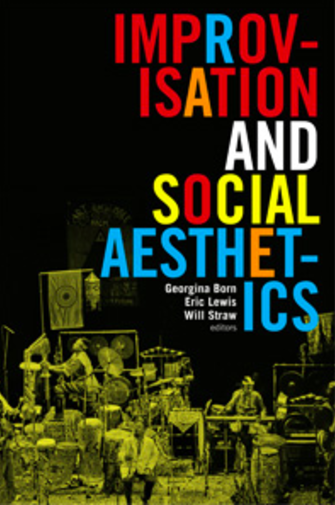
    This is not to say that materialist philosophers have lacked ambition. Karl Marx, the most recognizable and influential materialist in history, came close to proposing an all-embracing schema for interpreting the general movements of human history, scolding Hegel for downplaying the inconveniences of economy and physicality to human history-making, but reproducing the latter’s theoretical capaciousness all the same. If it is fairly easy, if not without controversy, to identify what the ‘material’ in Marxism is – in shorthand, the historically variable productive processes that shape how human beings live and labor – it is rather more difficult to imagine a ‘materialist poetics’. While poetry may aspire to capture something of the density of living matter within the looser folds of literary language – think, among many other possible examples, of the Romantics’ wrangling with the apparently imperturbable autonomy of nature, of Ponge’s poetics of mid-sized objects – it is less clear that the ‘stuff’ of poetry, figural language, can in any non-analogous sense be considered ‘material’.

    Of course, materialisms have rarely been concerned only with matter understood as more or less synonymous with the physical. Materialists have more often located characteristics one usually associates with the material in domains that cannot entirely be reduced to the latter. Marx finds in the manner in which human beings perpetually become through labor a combination of historical permanence and flexibility, one that equally characterizes the physical stuff upon which they work, and through which they are able to achieve a kind of relative autonomy. Viewed from such a vantage, the elusive linguistic compressions that make up modern and contemporary poetry seem evanescent, impermanent, allusive, if not quite ‘ideal’. Nathan Brown’s superb and energizing first book is not the first to attempt to square this circle, of course. There are those for whom deconstruction at its most fastidious approached something like a literary materialism, insofar as it trained its gaze on those aspects of meaning-making in literature that seemed most intransigent, those moments of figural contradiction that refused to yield to any smooth or final translation of non-sense to sense. Marxist literary theory would seem another fruitful source. Since Althusser, and especially since Pierre Macherey provided the elaborated Althusserian literary theory that Althusser never quite did, Marxist critics have been wary of too quickly reading the sturdiness of the economic base into the apparently more ephemeral products of literary culture. Instead, and cannily, the likes of Jameson and Eagleton have found in literary form itself intimations of historical conflict that might more conventionally be sought in political-economic contextualizations of literary content. It is dismaying, given this rich history, that recent, ostensibly Marxist literary-critical readings of, say, the neoliberal, have tended toward just such vulgar historicisms, so wary of a caricatured-in-advance aestheticism that they neglect the very matter of their chosen object of study, literary language itself.

    To his credit, Brown largely leaves such polemics to one side, preferring to immanently build a poetics of fabrication from the ground up, tracing suggestive parallels between 20th and 21st century avant-garde poetry and materials science. It would do this book a disservice to describe it as a creative reinvention and defense of close reading, not least because the latter has more often obscured the material density of the words on the page than it has illuminated it. Nonetheless, the hard theoretical labor of reading that Brown performs, sweeping from the granular to the scalar, should come to place in stark relief the reigning common sense in literature departments, where the too-easy task of doing history badly has proven far more attractive than any knotty reckoning with the density of the literary signifier. In a virtuosic account of the cross-cutting history of nanoscale carbon chemistry and Ronald Johnson’s ‘architectural’ long poem ARK, Brown quotes the following capitalized line of Johnston’s: “TO GO INTO THE WORDS AND EXPAND THEM”. (142) If a pithy summation of Brown’s practice of reading were possible, it would read something like this: ‘go into the words’, not to extract any pre-ordained ideality of sense, and neither to dwell nostalgically on their ‘literariness’, but rather to expand them, to identify their intersections with practices of fabrication that might at first blush seem entirely unrelated.  To read materially in this way is not just to recognize the constructedness of poetry, its crystals and nanotubes and grains, although this is crucial enough, but also to expand such a materiality through creative articulation with other sites of construction.

    To be clear, such articulations very rarely occur in this book by means of any simple, contextualist, or symmetrical glomming of literature onto historical or scientific correlates. Instead, this is a book that takes mediation seriously, that resists the now-commonplace assumption that literary artifacts must by default have everything to do with whatever contemporaneous historical event or framework the scholar has decided to foreground. What brings Johnson and carbon chemistry into agonistic dialogue, for instance, is the ambiguous and complicating intervention of a third figure, Buckminster Fuller. Those familiar with Johnson’s poetry will recognize the affinity – the poet has described his verse as “literally an architecture…fitted together with shards of language, in a kind of cement music”. (Johnson quoted in Brown, 99) But there is more at stake here than the mere recognition of a common architecturality across science and recent avant-garde poetry. Brown is equally attuned to the evasive ideologies that couple with these constructions: “At the center of this story”, Brown writes in his chapter on Johnson, “will be the concept (the ideology, in fact) of ‘design’ and its relation to a certain idealist concept of ‘nature’ and the ‘nature poem’”. (99) While idealized conceptions of nature significantly predate even the Romantics, the adhesion of such notions to the ideologeme of ‘design’, itself a trope that in its (post)modern guise tends to be assiduously scrubbed of anything so messy as manufacture, is rather more recent. Brown locates one root of this problematic in Buckminster Fuller’s writings, where design is figured as eternal, as universal, and as exemplarily accessible. He then traces an opposing trend also emerging from Black Mountain College, that of Olson’s ‘objectism’. If Fuller understands the materials of fabrication as being “just exactly where they want to be” (112), the poet instead affirms the ‘proper confusions’ of objects, their giving out onto a fragmentation resistant to the universal. Johnson, in turn, insists on similar tensions between “whole systems and the materials of which they are composed”. (131)

    If these intertwined histories of fabrication and the production of ideology are compelling in their own right, Brown is at his best when he registers the materialities of sound and inscription that are particular to poetry, the better to reveal with due emphasis what the matter of poetry does, over against other forms of materiality. There are times reading this book when the particular curvature and atomicity of poetic materiality is rather lost in the mix, as Brown offers example after example of how one practice – nanotechnology, say – accords with, or helps reorient, our understanding of another – poetry. Some of these case studies could profitably have been left in the archive. But for all that, Brown is a strikingly inventive reader, and there emerges across his book a powerful, if largely implicit, theory of materialist reading that rivals the accompanying account of materialist poetic and scientific practice. Take, for instance, the reading of Emily Dickinson that appears in the book’s Prologue. A line of Dickinson’s poem ‘I cannot live with You’ catches Brown’s eye. The line reads ‘You there – I  – here –‘.

    One finds, of course, those characteristic Dickinsonian dashes, but more than this, “[the poem] is composed entirely of deictic terms, or shifters. The dash is a minimal graphemic unit – pen touching down on paper with an instant’s pressure, leaving the barest trace of furtive contact. Shifters are the piezoelectric transducers of grammar – minutely sensitive to the voltage of voice, expanding to generate an apparent fusion of body, language, world at the interface of the tongue’s tip: ‘there’”. (5).  Gradually, the substantiality of that ‘I’ and that ‘You’ seem less important than what Brown refers to as the ‘paragrammatic’, and, one might add, insistently material transformations at the level of the line:

    In Dickinson’s line, the paragram operates on a scale below that of even the letter and the phoneme – indeed, below the level of the grapheme. The second half of the line, ‘-I – here – ‘, might be taken to emerge from the subgraphemic elements of ‘there’. Dickinson’s ‘t’ transforms into ‘I’ as the crossbar of the former splits in half to form dashes that both separate and conjoin the vertical stroke of ‘I’ with the remainder of this rupture, ‘there’”. (10).

    Ultimately, “grasping this potential significance of the line demands that we read an invisible, subgraphemic dimension of writing operating prior to signification”. (10) These ostensibly invisible elements of transformation are what, for Brown, link materialist poetics to materials science; “to situate these at the limits of fabrication is to open a space between ‘there’ and ‘here’ in which we are approached by bodies and words, in which the poetic image gives way onto invisible structures, wherein text passes over into texture”. (10)

    While Brown’s claims here have something in common with all that became bound up with the slogan ‘the materiality of the signifier’, fanning out from French theory of the 1960s, it is rare indeed to see the stakes of the claim unfolded with such finesse and to the fullest of its consequences. It is rarer still to encounter reading pitched at this level of granularity and sensitivity, impervious to the lures of over-contextualization or the widespread fetish for content over form. One wants to know, nonetheless, what the rapid zooms in and out of multiple scales here, from close-ups of the poetic line to widescreen trans-historical tracings, would look like were the question of causality explicitly asked, not at the level of shared metaphors or suggestive parallels but rather according to the very different ontological properties that inhere in the vastly divergent materials that capture Brown’s attention.

    From one angle, this is the very question that animates the book, and Brown provides the reader with numerous examples of the transformations of space that the sciences and literature alike are able to induce. Moreover, the problem has an irreducibly political charge. If, as Joshua Clover has claimed, Language poetry and other recent avant-gardes bought their meticulous attention to the minutiae of language at the expense of thinking the ramifications of political totality[1], Brown is concerned to locate a poetics that would be both micro and macro, nano and cosmological. In a bravura chapter on Shanxing Wang’s 2005 collection ‘Mad Science in Imperial City’, Brown finds in its attempted “mathematical formalization of historical processes” (217) a poetic suturing of time and space, drawing together the urban imaginaries of Beijing circa Tiananmen Square and New York following 9/11. More than this, Wang’s collection takes up other oppositions that its initial concern with divergent scales opens up, most pertinently for Brown those between intellectual and manual labor, between the abstract and the concrete – these, one infers, to be understood as implicated in the contrast between the infinitesimally small and the yawningly vast that materials science is especially concerned to explore. Ultimately, Sohn-Rethel’s extension of Marx’s concept of ‘real abstraction’ provides a lens through which Brown is able to historicize the shift in spatial and material imaginaries that Wang’s history-spanning poetry pictures.

    And yet, the materialities that compose urban geographies, the nanomaterial, poetry, or collectivities of labor, are anything but equivalent. If one of the characteristics that different forms of matter, in all of their variant forms, may be said to share is a certain resistance, a capacity to elude attempts at their refabrication or repurposing, it may be this most common aspect of materiality that is unwittingly minimized in Brown’s account. To fully foreground this would be to ponder just how that resistance is overcome; how it is that the very different forms of matter in question resonate upon one other or, just as likely, how they are ultimately fated not to do so. The dialectical peculiarity of this logic should not be lost: the characteristic that unites different manifestations of the material, that of resistance, is also that which singularizes, which precludes the formation in material actuality of the very totality that one is nonetheless rightfully enjoined, in theory, to map. One would, in brief, have liked at the level of this book’s concept-production a little more of the spatial noise and constitutive resistance suggested in these lines by Charles Olson, a signal source for Brown:

    In the five hindrances men and angels
    stay caught in the net, in the immense nets
    which spread out across each plane of being, the multiple nets
    which hamper at each step of the ladders as the angels
    and the demons
    and men
    go up and down
    (‘As the Dead Prey Upon Us’ in The Collected Poems of Charles Olson: Excluding the ‘Maximus’ Poems, (Berkeley: University of California Press, 1997), 389).

    Leaving aside the post-theistic, ghostly metaphysic that shapes these famous lines, we find a numerical order and a structured kind of spatial disorder in combination here, such that vertical nets and horizontal ladders both enable and disable one another. The nets within which men and angels are caught are immense, and yet somehow limiting; a different order of space, the ladders upon which angels, demons and men ascend, intersects the nets while also being hampered by them. Hindrance and expansiveness; hindrance, perhaps, as expansiveness. Such limitations to possibility are also, potentially, conditions of possibility, and they are not given a sufficient shake in Brown’s otherwise capacious, sometimes too capacious, attention to the movements between various domains of material construction.

    For all that, Brown’s practice of reading is tuned to detect precisely such contradictions and aporias, and he often does so beautifully at the level of the line. Nonetheless, the vaulting ambition that supercharges his historical claims occasionally renders artificially smooth what are, one suspects, rather rougher and more incomplete moments of connection and disconnection between the scientific and the poetic, between the minute and the gargantuan. At any rate, this is one of the very finest works of speculative poetics to emerge in quite some time, and one hopes that its highly creative deviations from the historicist-contextualist hegemony in literary studies will spark equally incandescent acts of theoretical disobedience in its wake.

    [1] Brown cites this claim on page 222, and takes it seriously. There is certainly something to it, but the argument risks ignoring the over-determined imbrication of historical-political archival work and formal alchemy to be found, for instance, in the Language poetry of Ron Silliman, all the better to boost more recent, performatively militant verse as uniquely and purely radical. I have tried to situate the ambiguous but powerfully formalized political imaginary of Silliman and others in the fifth chapter of my Speculative Formalism: Literature, Theory, and the Critical Present, (Evanston, Il.: Northwestern University Press, 2017). The danger, of course, is any recrudescent nostalgia for modernist, pseudo-formalist invocations of literariness, something that the Language poets, admittedly, were often prone to.

    Tom Eyers is Associate Professor of Philosophy at Duquesne University.

  • Dan DiPiero – Improvising What?: A Review of Georgina Born, Eric Lewis, and Will Straw’s “Improvisation and Social Aesthetics”

    Dan DiPiero – Improvising What?: A Review of Georgina Born, Eric Lewis, and Will Straw’s “Improvisation and Social Aesthetics”

    by Dan DiPiero

    Throughout the history of Western European musical aesthetics, improvisation has been largely derided or else ignored outright, enjoying “a status of literally zero value in the Western economy of musical ‘works’” (Iyer 2014).1 In marked contrast, the emerging field of critical improvisation studies has worked not only to highlight the universal importance of improvisation in musical cultures, but also to expand what we understand by improvisation in the first place.

    Improvisation and Social Aesthetics is one of the latest examples of critical scholarship on improvisation, a collection of essays that began as a 2010 conference of the same name. Both the conference and the book emerged from what was the Improvisation, Community, and Social Practice (ICASP) research project, and which is now the International Institute for Critical Studies in Improvisation, the intellectual home of critical improvisation studies.2 In general, the book interrogates a double relation between its two key terms: it argues on one hand that improvisation embodies and is reflective of social aesthetics. The latter idea is posed here as an intervention into the canonical Western understanding of aesthetics, an intervention that argues that aesthetic perception, judgment, and action is embedded in, constitutive of, affected by socio-cultural discourses, relationships, and practices. At the same time, the notion of a social aesthetics helps to understand what is at stake when thinking improvisation in a more rigorous and less colloquial usage.

    In order to accomplish that, the editors– Georgina Born, Eric Lewis, and Will Straw– begin by demonstrating how the work in this collection operates according to a different understanding of aesthetics than those which have emerged from Western philosophy. As they write in their introduction “What is Social Aesthetics?”, the Western musical valorization of composition (as a “work” of art) over improvisation (as a real-time performance) is reflective of the broader aesthetic paradigm that the their book targets. In the same way that a composition is seen as an autonomous “object” that transcends the individual particularities of a given performance, Western aesthetic values have similarly concerned themselves with the possibility of “objective” valuations that remain true regardless of who is experiencing that art (which is another way of understanding improvisation’s low position in Western aesthetic theory). For Born, Lewis, and Straw this system of thinking

    resulted in theories that are peculiarly barren of nuance, unable to understand actual aesthetic attitudes, and blind to how such social relations as those pertaining to class, race, ethnicity, religion, gender, sexuality, or nationality, and the histories and power relations in which they are entwined, as well as the socialites animated by art objects and events, inflect aesthetic experience–often in ways that precisely deny that they are so inflected (Born et al. 2017, 2).

    In contrast to such theories, which invariably privilege atomism (individual works of art, individual auteurs, individual perceivers), “social aesthetics” is a concept intended to foreground the collective, social, and improvisatory nature of perception and pleasure. Unlike relational aesthetics, which avoids sociological questions by focusing on “sociality as an end in itself” (Born, 38), social aesthetics seeks to understand all the myriad ways in which artistic practices are already socially engaged.3 Both the people making artworks and the people perceiving them are people with particular bodies and histories, and they interact in various modalities. Even a single painter is painting with an aesthetic sensibility, artistic technique, and subjective perspective shaped in social situations; moreover, that artist will eventually engage in new socialities when her work is shown. Social aesthetics recognizes the difference between these engagements at the same time that it recognizes each of them as essential to theorizing aesthetics. Neither artworks nor our understanding of them exist in a vacuum; instead, they are situated within networks of assumptions that are shared among groups of people, which are also malleable.

    This argument will be familiar to those versed in cultural studies, sociology, anthropology, or ethnomusicology, “…where there is a long tradition of viewing…music as culture…as something that people do, as opposed to being a work-based object” (Monson, 2010). What is new here is that social aesthetics makes an explicit call for perspectives from those other disciplines, and that it uses such perspectives to ask different questions. “A social aesthetics is, then, less concerned with demarcating a class of aesthetically valuable objects that it is with explaining how and why a given set of objects or experiences…is judged to be valuable…” (Born et al., 3). While the introduction to this book proposes a new understanding of aesthetics, the essays themselves demonstrate examples of where such an approach could lead. As with the notion of improvisation itself, readers should expect to find the appeal in this book in the diverse applications and understandings presented in its essays, rather than in a unified theory. Additionally, because of the focus on multiple examples of artistic production, this collection is more about nuancing the understanding of aesthetics as it relates to artistic practices than it is about exploring, returning to, or reinvigorating the original sense of aesthetics as a study of sense perception and the totality of human experience.4

    Returning to the question of improvisation, one of the most valuable aspects of this collection is the various ways in which it foregrounds the fact that improvisation is in fact a question. In other words: “All of the contributors are aware of the dangers that arise from the very outset in discussing improvisation, whose definition and limits remain contested” (Born et al., 10). While the notion of improvisation as a line of flight in a stratified world has produced compelling work (especially in applied cases), this collection takes seriously the possibility that improvisation is no guarantee of egalitarianism or freedom of any sort, that improvisation itself is a multiple and contingent phenomenon. For instance, in her contribution, “After Relational Aesthetics,” Georgina Born argues that many of the broad theoretical statements about improvisation’s transformative potential do not take into account the full range of music’s social entanglements, and that this failure is what allows the easy association between improvisation and freedom. Born writes that such utopian arguments “invariably draw their inspiration from three sources” which, in her view, are selective in their understanding of music’s sociality: “the social phenomenology of Alfred Schutz (1964); the post-Foucauldian stance of Jacques Attali’s Noise (1985)…; and the writings of Christopher Small (1998)” (44). In drawing on these texts, Born argues, one specific type of social interaction involved in improvisation–the microsocial–is elevated at the expense of others. Born argues that music, which has “no material essence but a plural and distributed material being” (44) must therefore be understood across four planes of social interaction, rather than just one. The microsocial relates to the first plane, the “most apparent,” which consists of the “immediate microsocialities of musical performance and practice and in the social relations embodied in musical ensembles and associations” (43). In other words, the microsocial consists of the social dynamics among performing musicians, or the interactions and relationships inherent to music-making. The argument that improvisation can be associated with egalitarian social practices emerges from the way in which improvisers collectively negotiate a piece of music, as opposed to classical musicians (for example), who, in the Western tradition, follow the various kinds of instructions that are laid before them (as well as the corresponding hierarchies implicit in the social arrangements between conductor, composer, and various musicians).5 Theoretical statements emerging from only this first plane–as if it exists in isolation–“tend to be idealized and to occlude several additional ways that music…meditate[s] and [is] mediated by social processes”(13). For instance, while it might be true that a jazz ensemble collectively negotiates an improvised musical performance, drawing emancipatory conclusions from that immediate scene does not take into account the larger structures of power that prevent women from being taken seriously as jazz musicians, that prevent women from being present in that microsocial scene in the first place. To guard against such conclusions, Born’s essay spells out a theoretical approach for doing the work that, in many ways, emerges from this collection as a whole–that is, work that seeks to understand all of the ways in which improvisation is implicated within sociality, both in how improvisation is social, and in how the social is improvisatory.

    In order to situate microsocial investigations within a broader framework, Born proposes a total of four planes of musical mediation.6 In addition to the microsocial (the first plane), she also introduces a second plane, in which music “has the power to animate imagined communities”; a third plane, in which “music refracts wider social relations, from the most concrete to the most abstract of collectivities” (e.g. “the nation,” “social hierarchies,” “or the social relations of class, race, religion, ethnicity, gender, or sexuality.”); and the fourth, in which music is “bound up on the broader institutional forces that provide the basis for its production” (43). From all of these perspectives, Born hopes to “provide a measure of rigor for those concerned with theorizing art’s multiple social mediations” (57). Because music is a uniquely slippery kind of “object,” it is all too easy for writers to privilege one or more of these “social moments”–or else to glide between them–without recognizing the potential differences that such differences make. Born’s efforts to clarify and nuance what we talk about when we talk about music should prove extremely productive for future studies.

    Additionally, Born’s nuanced analysis of such “moments” of improvisation reinforce the arguments in the introduction regarding the multiple understandings of improvisation itself. In other words, if the microsocially-derived and idealized characterization of improvisation remains dominant, it is still one understanding among many.7 Improvisation is a more complicated notion than its colloquial invocations would imply, and it cannot be reduced to a set of binaries (free vs restricted, creative vs habitual, etc.). The essays included in Improvisation and Social Aesthetics–for example Darren Wershler’s “Kenneth Goldsmith and Uncreative Improvisation” and Winfried Siemerling’s “Social Aesthetics and Transcultural Improvisation”–take this premise seriously, and situate it squarely at the center of the questions that they pose. Improvisation, like all artistic practices, means different things to different people at different times in different places, and between those improvising as performers and those improvising as listeners.

    It is, then, the differences in how the term ‘improvisation’ may be employed, and the ways in which practices, discourses, and cultures of improvisation diverge or are in tension, that are of greatest interest, since they point to the radically contingent nature of improvisation as it is understood and empractised, and as it has developed historically in relation to specific artistic media (11).

    An example of such a difference is explored by Ingrid Monson in her essay “From the American Civil Rights Movement to Mali.” Here, Monson shows through her ethnographic work in Mali that while the idea of improvisation as a practice of community-making is shared between Mali and the West, there are no such parallels in terms of the West’s use of “sonic dissonance and avant-garde experimentalism as a sign of social and cultural critique” (89).  In other words, improvisation, like any artistic practice, is not a technique, method, or skill that emerges in the same way across cultures (or genres, locations, moments); rather, how it is practiced and how those practices are understood become specific to certain communities and discourses over time. By detailing and comparing the contours of these discourses, Monson is able to break away from a monolithic view of improvisation in a manner that also takes into account Born’s call to move beyond the microsocial:

    My discomfort with uncritical claims for the creation of new social relations through music has led me to take the position that ensemble improvisation is not inherently egalitarian or emancipatory; instead it offers only the potential for such human interaction…Whatever microsocial claims we make for musical process as modeling the social relations we would like to achieve, in other words, need to be tempered by a larger understanding of power and social hierarchy (83).8

    Both Born and Monson’s essays belong to the first section in this book, “The Social and the Aesthetic.” Accordingly, both essays show the diverse ways in which improvisation and social aesthetics–two seemingly unrelated concepts–are in fact deeply implicated in one another. The second section, “Genre and Definition”, shows this relation by exploring the ways in which understandings of genre both express certain social commitments and further constitute them. Genre, in other words, provides another lens through which to understand how and why improvisation comes to be understood according to the definitions particular to a generic discourse at a given moment (however unstable they may prove).

    As an example of how genre figures into social aesthetics, David Brackett’s essay “The Social Aesthetics of Swing in the 1940s” identifies the different connotations improvisation contained simultaneously within a plural discursive environment. Here, Brackett uses a specific case study to show what others have also argued concerning Jacques Rancière’s aesthetic theory: namely, that in its focus on European high culture, it does not account for the multiple, competing, coexisting regimes of sense through which popular culture moves, nor does it account for the ways in which those works shift through such social mediation.9 Rather than understanding the social aesthetics of swing as situated strictly in Rancière’s aesthetic regime of art, Brackett argues that tracks like “Tuxedo Junction” operate within

    simultaneous and competing artistic and aesthetic regimes that had been enshrined in music industry practice since the 1920s with three main categories: popular/mainstream (implying a white, bourgeois audience), race music (implying an African American audience), and old-time/hillbilly music (implying a white, middle-and upper-class audience) (119).

    While a genre and a regime of sense are not synonymous, they are still tied up in one another, since the generic distinction shapes, at least in part, the sense according to which musical criteria are interpreted. In his essay, Brackett analyzes two interpretations of “Tuxedo Junction”–one by African American bandleader Erskine Hawkins and one by white musician Glenn Miller–to show the ways in which

    differences in approaches to improvisation and other musical elements were often correlated with the social position of the recordings, the fluidity of their circulation, the size of their audience, and their access to various modes of dissemination (120).

    In other words, it is not just that the different uses of improvisation affected listener’s racial perceptions of the performances, but also that these perceptions corresponded to larger generic categories (“race records” among them) that carried certain material consequences for how the music circulated. In showing how the material, ideological, and aesthetic intertwine in specific ways, Brackett demonstrates how the “large categories used by the U.S. music industry…map certain aspects of musical style onto categories of group identification” (130). The question of whether improvisation is perceived as either present or absent (where and how), as well as the question of what such absence or presence might signify, are circumscribed by the understandings these regimes permit. And, as with Eric Lewis’ examination of perceptions of the Association for the Advancement of Creative Musicians (AACM) in 1960s Paris, the perceived significance of improvisation often bears directly on questions of racial identity, with musical and generic demarcations that were entangled with perceptions of race and of collective subjectivities. Thus, once again, improvisation is not a transcendental notion but one which is understood contingently, as it associated with other concepts from within a regime of sense. Both Lewis and Brackett’s essays demonstrate not only that this is true, but how and with what consequences.

    The linkages that exist between improvisation and racial identities–one of the most central concerns in contemporary cultural studies on jazz–sets the tone for the third section in this collection, “Sociality and Identity.” Here, Lisa Barg discusses the queer sociality of Billy Strayhorn’s arranging practices; Tracey Nicholls examines improvisation in the visual art criticism of bell hooks; and Marion Froger explores how improvisation functioned as a signifier within the discourse of French New Wave cinema. The latter two essays (along with Zoë Svendsen’s “The Dramaturgy of Spontaneity”) in particular bring to the fore the “very different senses that the term [improvisation] has accrued in relation to particular media and art forms, their cultures of production, and their communities of practice” (11). For instance, where Nicholls locates improvisation in bell hooks’ aesthetics of everyday life objects, Froger details the ways in which improvisation was employed by various participants (actors and directors) and the ways in which it was perceived by various parties (audiences, tradespeople, et al.) working in film. In demonstrating the specific ways in which improvisation is understood, located, perceived, and discussed between these media, Nicholls and Froger continue the discussion from the previous section viz a viz improvisation’s multiple manifestations, at the same time that such negotiations are invoked in the service of foregrounding questions of identity. Improvisation as practiced always carries particular connotations for the performers and the perceivers; just as improvisation carries different aesthetic implications from genre to genre, it also carries different implications for the individual and collective identities of the improvisers and the audiences in question.

    The final section of the collection, titled “Performance,” focuses on the myriad social relations involved in live performance, the real-time active process that distinguishes improvisation from other art objects (or at least, which allows improvisation to direct attention to the real-time active processes involved in all artistic production). In this section, to touch on one final theorization between improvisation and social aesthetics, consider Susan Kozel’s essay “Devices of Existence.”

    In this essay, Kozel uses two separate dance performances–Small Acts and IntuiTweet–to show that improvisation, always occurring through the body, is social by virtue of what the French phenomenologist Maurice Merleau-Ponty would term inter-corporeality, where “perception, agency, and subjectivity in general take place as a body opened up to the bodies of other” (284).  Kozel draws a link between Merleau-Ponty’s notion of subjectivity as being constructed intracorporeally and improvisation as an inherently intercorporeal practice. From this, she theorizes improvisation along the lines of a Rancièrean aesthetics, as a “mode of being” rather than one of “doing.”10 Improvisation, in short, is a Merleau-Pontian mode of being in which we are connected to each other and to the world through the body. Subjectivity, for Merleau-Ponty, is constructed through this element-in-common, an opening towards the other in which we are both seeing and seen, toucher and touched, in which we experience the common world both together (in it) and separately (from our own viewpoint), self-reflexively but never omnisciently. In the same way, when we improvise, we are touching the external world, and the others who compose it; we cannot distinguish strictly where we end and the world begins, just as we cannot distinguish which of our connected hands is the toucher and which is the touched. Both improvisation and subjectivity consist in a being-with, in a connection to our element in common. When we improvise, we are touching the world through which interaction and improvisation occur. How we exist in the world is therefore “fundamentally improvisational in that I am forever acting and responding, without really having a starting point in one or the other…” (284).

    This quote from Kozel is specific in its conceptualization of improvisation as an “ontological” and “experiential” mode of navigating the word; it is also general in that it reprises the central focus of this book: “Improvisation is a mode of social interaction” (285). Here, rather than focusing on the ways in which improvisation is understood discursively or practically in a given time and place, Kozel focuses on the improvisatory nature of life itself, pushing the outer limits of how we understand this multivalent practice. At the same time, this understanding still links itself with the notion of the social–that is, if improvisation is more synonymous with being as such, it is in part because being is always being-with.

    Improvisation is perhaps the creative practice that most obviously demonstrates the social and collective aspects that constitute (ultimately) all artistic practices, and perhaps all experience in general. Again, improvisation both embodies (is reflective of) and elucidates (reflects back on) the social aesthetics of both art, and, in this final sense, of life itself. Improvisation and Social Aesthetics is a means of demonstrating different approaches to these various understandings of improvisation, with projects that both investigate improvisation and which use improvisation to investigate. Like the other IICSI publications, it forms an indispensable collection that cracks open a site for more rich and interdisciplinary work.

    References

    Attali, Jacques. Noise: The Political Economy of Music. 1985. Minneapolis: University of Minnesota Press.

    Berlant, Lauren. 2017. “Big Man.” Social Text. Accessed August 10. https://socialtextjournal.org/big-man/.

    Born, Georgina, Eric Lewis, and Will Straw. 2017. Improvisation and Social Aesthetics. Durham: Duke University Press.

    Certeau, Michel de. 2013. The Practice of Everyday Life. Berkeley: University of California Press.

    DJ Spooky and Vijay Iyer. 2013. “Improvising Digital Culture” in People Get Ready: the Future of Jazz Is Now! edited by Ajay Heble and Rob Wallace, 225-243. Durham: Duke University Press.

    Iyer, Vijay. “Theorizing Improvisation Syllabus.” 2017. Facebook post. Accessed August 10, 2017.

    Highmore, Ben. 2011. “Bitter After Taste: Affect, Food, and Social Aesthetics.” in The Affect Theory Reader, edited by Melissa Gregg, and Gregory J. Seigworth, 118-137. North Carolina: Duke University Press.

    Monson, Ingrid, in conversation with Georgina Born, Elizabeth Jackson, Eric Lewis, and Jason Stanyek at the “Social Aesthetics Conference,” IICSI McGill Colloquium, Montreal. 2010.

    Nettl, Bruno. 1974. “Thoughts on Improvisation: A Comparative Approach.” The Musical Quarterly 60 (1): 1-19.  http://www.jstor.org/stable/741663

    Ranciere, Jacques. 2004. Disagreement: Politics And Philosophy. Translated by Julie Rose. Minneapolis: University of Minnesota Press.

    Rockhill, Gabriel. 2011. “Rancière’s Productive Contradictions: From the Politics of Aesthetics to the Social Policity of Artistic Practice.” Symposium 15 (2): 28-56. doi:10.5840/symposium201115227

    Thompson, Scott. “The Pedagogical Imperative of Musical Improvisation”. Critical Studies in Improvisation/Études critiques en improvisation 3(2).

    Notes

    1. This is not the same as claiming that improvisation has not been practiced or valued at any point in Western art music; improvisation clearly figured heavily in pre-Romantic musical practices, but did so in such a way that its separation from other musical activities–composition and performance–was not clear-cut. It is with the rise of Romantic conceptions of genius and the composition as a work of art that such distinctions take over. Generally speaking, insofar as such distinctions remain commonplace, this Romantic aesthetic tradition is still dominant.

    2. See: http://improvisationinstitute.ca

    3. Born discusses her understanding of Nicholas Bourriaud’s Relational Aesthetics in the first chapter of this book as “engaging” but ultimately beholden to “reductive generalizations.” Moreover, relational aesthetics explicitly dismisses sociology and similar disciplines, concerning itself with one particular type of sociality generated by contemporary art, rather than the myriad ways in which social practices figure in making and experiencing artworks.

    4. Although some of that work is done intermittently throughout the book. In particular, see Kozel, “Devices of Existence.” For more on the distinction between these senses of the aesthetic, see Highmore, 2011.

    5. Perhaps the most well-known of these arguments is that of Jacques Attali in Noise (Attali 1985). While his argument does focus on broader societal formations, Born’s critique still holds in that Attali’s contentions on behalf of free improvisation are based on inter-group musical dynamics.

    6. “Moreover, the four planes are irreducible to one another, yet they are articulated in contingent and nonlinear ways through relations of conditioning, affordance, or causality. It is precisely the mutual mediations of and complex articulations among the four planes that enable musical assemblages to engender certain kinds of socio-musical experience that are also forms of aesthetic experience, as well as offering the potential for experimentation with those diverse modes of social aesthetic experience” (43).

    7. One of the more prevalent colloquial uses of improvisation is referenced by Lauren Berlant in relation to her notion of “genre flailing” (Berlant, 2017). On the 2016 Presidential election, she writes, “In a crisis we engage in genre flailing so that we don’t fall through the cracks of knowledge and noise into suicide or psychosis. In a crisis we improvise like crazy, where “like crazy” is a little too non-metaphorical. Plus, when crisis is ordinary, flailing…can be fabulously unimaginative, a litany of lists of things to do, to pay attention to, say, to stop saying, to discipline and sanction. Prefab frames are a lot of what there is to fling because as the powerful hunker down into phrases that become acts, so must the freshly vulnerable find some phrases too, anchoring and transformative.” Far from a “non-rigorous” notion of improvisation, Berlant’s usage simply points to the existence of the many understandings contained in this word. This quotation is useful in illustrating a notion of improvisation that is non-idealized in at least two senses: first, that it is “unimaginative” or repetitive (which decouples improvisation from originality) and second, that it is more reflexive or reactionary than it is the herald of newly imagined futures. In other words, we improvise when something goes wrong. This usage also has some resonances with Michel De Certeau’s use of the word (De Certeau, 2013).

    8. I would also note here that even a provisional focus on the emancipatory potential of microsocial interactions is predicated on a kind of sensory consensus, one which I would argue should not in actuality be taken for granted. The ostensibly horizontal, anti-hierarchical, or smooth space of an improvising group should not, in my view, be read as fundamentally different from any other kind space of musical interaction for at least three reasons: first, because as Nicholas Cook points out in this collection (he is supported by other, earlier arguments–see Nettl 1974; Thompson 2008) the distinction between improvised and non-improvised music is far from clear or steadfast; second, because the musicians in an improvising scenario are still operating based on a set of affordances over which they have limited to no control; and third, because these musicians operate based on a kind of consensus that is assumed but is in fact radically contingent. In Rancière’s terms, those playing together are already those equals who recognize or are in a position to recognize the sounds of the others as speech, rather than noise. The utopian microcosm of musical interaction is such because it contains not a radical politics but no politics at all; it is the place of consensus, of parapolitics, an isolated community of equals operating “freely” within a police order. (For more on these terms, see Rancière 2004.)

    9. Notably, see Rockhill 2011.

    10. In this sense, Kozel’s understanding of improvisation resonates with one proposed by Vijay Iyer, in which improvisation is more synonymous with experience itself than it is a particular behavior. Significantly, this is an understanding that cuts against the grain of many of the most well-known claims made on behalf of improvisation. On Iyer’s view, improvisation cannot be understood as, for instance, inherently (or extrinsically) egalitarian or emancipatory unless we somehow intervene in the definition; nor would improvisation be limited to a kind of “making-do” in adverse circumstances. If life itself is improvised, then emancipatory, flailing, and also overtly evil deeds are all equally the purview of improvisation. In other words, we would have to take seriously the possibility that improvisation is a power harnessed not only by anti-capitalist humanitarians, but also by the “Dick Cheneys” and the “Haliburtons” of the world (quoted in DJ Spooky, 2013). As Iyer puts it, “they’re improvising, too” (227).


  • Anthony Galluzzo — Utopia as Method, Social Science Fiction, and the Flight From Reality (Review of Frase, Four Futures)

    Anthony Galluzzo — Utopia as Method, Social Science Fiction, and the Flight From Reality (Review of Frase, Four Futures)

    a review of Peter Frase, Four Futures: Life After Capitalism (Verso Jacobin Series, 2016)

    by Anthony Galluzzo

    ~

    Charlie Brooker’s acclaimed British techno-dystopian television series, Black Mirror, returned last year in a more American-friendly form. The third season, now broadcast on Netflix, opened with “Nosedive,” a satirical depiction of a recognizable near future when user-generated social media scores—on the model of Yelp reviews, Facebook likes, and Twitter retweets—determine life chances, including access to basic services, such as housing, credit, and jobs. The show follows striver Lacie Pound—played by Bryce Howard—who, in seeking to boost her solid 4.2 life score, ends up inadvertently wiping out all of her points, in the nosedive named by the episode’s title. Brooker offers his viewers a nightmare variation on a now familiar online reality, as Lacie rates every human interaction and is rated in turn, to disastrous result. And this nightmare is not so far from the case, as online reputational hierarchies increasingly determine access to precarious employment opportunities. We can see this process in today’s so-called sharing economy, in which user approval determines how many rides will go to the Uber driver, or if the room you are renting on Airbnb, in order to pay your own exorbitant rent, gets rented.

    Brooker grappled with similar themes during the show’s first season; for example, “Fifteen Million Merits” shows us a future world of human beings forced to spend their time on exercise bikes, presumably in order to generate power plus the “merits” that function as currency, even as they are forced to watch non-stop television, advertisements included. It is television—specifically a talent show—that offers an apparent escape to the episode’s protagonists. Brooker revisits these concerns—which combine anxieties regarding new media and ecological collapse in the context of a viciously unequal society—in the final episode of the new season, entitled “Hated in the Nation,” which features robotic bees, built for pollination in a world after colony collapse, that are hacked and turned to murderous use. Here is an apt metaphor for the virtual swarming that characterizes so much online interaction.

    Black Mirror corresponds to what literary critic Tom Moylan calls a “critical dystopia.” [1] Rather than a simple exercise in pessimism or anti-utopianism, Moylan argues that critical dystopias, like their utopian counterparts, also offer emancipatory political possibilities in exposing the limits of our social and political status quo, such as the naïve techno-optimism that is certainly one object of Brooker’s satirical anatomies. Brooker in this way does what Jacobin Magazine editor and social critic Peter Frase claims to do in his Four Futures: Life After Capitalism, a speculative exercise in “social science fiction” that uses utopian and dystopian science fiction as means to explore what might come after global capitalism. Ironically, Frase includes both online reputational hierarchies and robotic bees in his two utopian scenarios: one of the more dramatic, if perhaps inadvertent, ways that Frase collapses dystopian into utopian futures

    Frase echoes the opening lines of Marx and Engels’ Communist Manifesto as he describes the twin “specters of ecological catastrophe and automation” that haunt any possible post-capitalist future. While total automation threatens to make human workers obsolete, the global planetary crisis threatens life on earth, as we have known it for the past 12000 years or so. Frase contends that we are facing a “crisis of scarcity and a crisis of abundance at the same time,” making our moment one “full of promise and danger.” [2]

    The attentive reader can already see in this introductory framework the too-often unargued assumptions and easy dichotomies that characterize the book as a whole. For example, why is total automation plausible in the next 25 years, according to Frase, who largely supports this claim by drawing on the breathless pronouncements of a technophilic business press that has made similar promises for nearly a hundred years? And why does automation equal abundance—assuming the more egalitarian social order that Frase alternately calls “communism” or “socialism”—especially when we consider the  ecological crisis Frase invokes as one of his two specters? This crisis is very much bound to an energy-intensive technosphere that is already pushing against several of the planetary boundaries that make for a habitable planet; total automation would expand this same technosphere by several orders of magnitude, requiring that much more energy, materials, and  environmental sinks to absorb tomorrow’s life-sized iPhone or their corpses. Frase deliberately avoids these empirical questions—and the various debates among economists, environmental scientists and computer programmers about the feasibility of AI, the extent to which automation is actually displacing workers, and the ecological limits to technological growth, at least as technology is currently constituted—by offering his work as the “social science fiction” mentioned above, perhaps in the vein of Black Mirror. He distinguishes this method from futurism or prediction, as he writes, “science fiction is to futurism as social theory is to conspiracy theory.” [3]

    In one of his few direct citations, Frase invokes Marxist literary critic Fredric Jameson, who argues that conspiracy theory and its fictions are ideologically distorted attempts to map an elusive and opaque global capitalism: “Conspiracy, one is tempted to say, is the poor person’s cognitive mapping in the postmodern age; it is the degraded figure of the total logic of late capital, a desperate attempt to represent the latter’s system, whose failure is marked by its slippage into sheer theme and content.” [4] For Jameson, a more comprehensive cognitive map of our planetary capitalist civilization necessitates new forms of representation to better capture and perhaps undo our seemingly eternal and immovable status quo. In the words of McKenzie Wark, Jameson proposes nothing less than a “theoretical-aesthetic practice of correlating the field of culture with the field of political economy.” [5] And it is possibly with this “theoretical-aesthetic practice” in mind that Frase turns to science fiction as his preferred tool of social analysis.

    The book accordingly proceeds in the way of a grid organized around the coordinates “abundance/scarcity” and “egalitarianism/hierarchy”—in another echo of Jameson, namely his structuralist penchant for Greimas squares. Hence we get abundance with egalitarianism, or “communism,” followed by its dystopian counterpart, rentism, or hierarchical plenty in the first two futures; similarly, the final futures move from an equitable scarcity, or “socialism” to a hierarchical and apocalyptic “exterminism.” Each of these chapters begins with a science fiction, ranging from an ostensibly communist Star Trek to the exterminationist visions presented in Orson Scott Card’s Ender’s Game, upon which Frase builds his various future scenarios. These scenarios are more often than not commentaries on present day phenomena, such as 3D printers or the sharing economy, or advocacy for various measures, like a Universal Basic Income, which Frase presents as the key to achieving his desired communist future.

    With each of his futures anchored in a literary (or cinematic, or televisual) science fiction narrative, Frase’s speculations rely on imaginative literature, even as he avoids any explicit engagement with literary criticism and theory, such as the aforementioned work of  Jameson.  Jameson famously argues (see Jameson 1982, and the more elaborated later versions in texts such as Jameson 2005) that the utopian text, beginning with Thomas More’s Utopia, simultaneously offers a mystified version of dominant social relations and an imaginative space for rehearsing radically different forms of sociality. But this dialectic of ideology and utopia is absent from Frase’s analysis, where his select space operas are all good or all bad: either the Jetsons or Elysium.

    And, in a marked contrast with Jameson’s symptomatic readings, some science fiction is for Frase more equal than others when it comes to radical sociological speculation, as evinced by his contrasting views of George Lucas’s Star Wars and Gene Roddenberry’s Star Trek.  According to Frase, in “Star Wars, you don’t really care about the particularities of the galactic political economy,” while in Star Trek, “these details actually matter. Even though Star Trek and Star Wars might superficially look like similar tales of space travel and swashbuckling, they are fundamentally different types of fiction. The former exists only for its characters and its mythic narrative, while the latter wants to root its characters in a richly and logically structured social world.” [6]

    Frase here understates his investment in Star Trek, whose “structured social world” is later revealed as his ideal-type for a high tech fully automated luxury communism, while Star Wars is relegated to the role of the space fantasy foil. But surely the original Star Wars is at least an anticolonial allegory, in which a ragtag rebel alliance faces off against a technologically superior evil empire, that was intentionally inspired by the Vietnam War. Lucas turned to the space opera after he lost his bid to direct Apocalypse Now—which was originally based on Lucas’s own idea. According to one account of the franchise’s genesis, “the Vietnam War, which was an asymmetric conflict with a huge power unable to prevail against guerrilla fighters, instead became an influence on Star Wars. As Lucas later said, ‘A lot of my interest in Apocalypse Now carried over into Star Wars.” [7]

    Texts—literary, cinematic, and otherwise—often combine progressive and reactionary, utopian and ideological elements. Yet it is precisely the mixed character of speculative narrative that Frase ignores throughout his analysis, reducing each of his literary examples to unequivocally good or bad, utopian or dystopian, blueprints for “life after capitalism.” Why anchor radical social analysis in various science fictions while refusing basic interpretive argument? As with so much else in Four Futures, Frase uses assumption—asserting that Star Trek has one specific political valence or that total automation guided by advanced AI is an inevitability within 25 years—in the service of his preferred policy outcomes (and the nightmare scenarios that function as the only alternatives to those outcomes), while avoiding engagement with debates related to technology, ecology, labor, and the utopian imagination.

    Frase in this way evacuates the politically progressive and critical utopian dimensions from George Lucas’s franchise, elevating the escapist and reactionary dimensions that represent the ideological, as opposed to the utopian, pole of this fantasy. Frase similarly ignores the ideological elements of Roddenberry’s Star Trek: “The communistic quality of the Star Trek universe is often obscured because the films and TV shows are centered on the military hierarchy of Starfleet, which explores the galaxy and comes into conflict with alien races. But even this seems largely a voluntarily chosen hierarchy.” [8]

    Frase’s focus, regarding Star Trek, is almost entirely on the replicators  that can make something,  anything, from nothing, so that Captain Picard, from the eighties era series reboot, orders a “cup of Earl Grey, hot,” from one of these magical machines, and immediately receives Earl Grey, hot. Frase equates our present-day 3D printers with these same replicators over the course of all his four futures, despite the fact that unlike replicators, 3D printers require inputs: they do not make matter, but shape it.

    3D printing encompasses a variety of processes in which would-be makers create an image with a computer and CAD (computer aided design) software, which in turn provides a blueprint for the three-dimensional object to be “printed.” This requires either the addition of material—usually plastic—and the injection of that material into a mould.  The most basic type of 3D printing involves heating  “(plastic, glue-based) material that is then extruded through a nozzle. The nozzle is attached to an apparatus similar to a normal 2D ink-jet printer, just that it moves up and down, as well. The material is put on layer over layer. The technology is not substantially different from ink-jet printing, it only requires slightly more powerful computing electronics and a material with the right melting and extrusion qualities.” [9] This is still the most affordable and pervasive way to make objects with 3D printers—most often used to make small models and components. It is also the version of 3D printing that lends itself to celebratory narratives of post-industrial techno-artisanal home manufacture pushed by industry cheerleaders and enthusiasts alike. Yet, the more elaborate versions of 3D printing—“printing’ everything from complex machinery to  food to human organs—rely on the more complex and  expensive industrial versions of the technology that require lasers (e.g., stereolithography and selective laser sintering).  Frase espouses a particular left techno-utopian line that sees the end of mass production in 3D printing—especially with the free circulation of the programs for various products outside of our intellectual property regime; this is how he distinguishes his communist utopia from the dystopian rentism that most resembles our current moment,  with material abundance taken for granted. And it is this fantasy of material abundance and post-work/post-worker production that presumably appeals to Frase, who describes himself as an advocate of “enlightened Luddism.”

    This is an inadvertently ironic characterization, considering the extent to which these emancipatory claims conceal and distort the labor discipline imperative that is central to the shape and development of this technology, as Johan Söderberg argues, “we need to put enthusiastic claims for 3D printers into perspective. One claim is that laid-off American workers can find a new source of income by selling printed goods over the Internet, which will be an improvement, as degraded factory jobs are replaced with more creative employment opportunities. But factory jobs were not always monotonous. They were deliberately made so, in no small part through the introduction of the same technology that is expected to restore craftsmanship. ‘Makers’ should be seen as the historical result of the negation of the workers’ movement.” [10]

    Söderberg draws on the work of David Noble, who outlines how the numerical control technology central to the growth of post-war factory automation was developed specifically to de-skill and dis-empower workers during the Cold War period. Unlike Frase, both of these authors foreground those social relations, which include capital’s need to more thoroughly exploit and dominate labor, embedded in the architecture of complex megatechnical systems, from  factory automation to 3D printers. In collapsing 3D printers into Star Trek-style replicators, Frase avoids these questions as well as the more immediately salient issue of resource constraints that should occupy any prognostication that takes the environmental crisis seriously.

    The replicator is the key to Frase’s dream of endless abundance on the model of post-war US style consumer affluence and the end of all human labor. But, rather than a simple blueprint for utopia, Star Trek’s juxtaposition of techno-abundance with military hierarchy and a tacitly expansionist galactic empire—despite the show’s depiction of a Starfleet “prime directive” that forbids direct intervention into the affairs of the extraterrestrial civilizations encountered by the federation’s starships, the Enterprise’s crew, like its ostensibly benevolent US original, almost always intervenes—is significant. The original Star Trek is arguably a liberal iteration of Kennedy-era US exceptionalism, and reflects a moment in which relatively wide-spread first world abundance was underwritten by the deliberate underdevelopment, appropriation, and exploitation of various “alien races’” resources, land, and labor abroad. Abundance in fact comes from somewhere and some one.

    As historian H. Bruce Franklin argues, the original series reflects US Cold War liberalism, which combined Roddenberry’s progressive stances regarding racial inclusion within the parameters of the United States and its Starfleet doppelganger, with a tacitly anti-communist expansionist viewpoint, so that the show’s Klingon villains often serve as proxies for the Soviet menace. Franklin accordingly charts the show’s depictions of the Vietnam War, moving from a pro-war and pro-American stance to a mildly anti-war position in the wake of the Tet Offensive over the course of several episodes: “The first of these two episodes, ‘The City on the Edge of Forever‘ and ‘A Private Little War,’ had suggested that the Vietnam War was merely an unpleasant necessity on the way to the future dramatized by Star Trek. But the last two, ‘The Omega Glory‘ and ‘Let That Be Your Last Battlefield,’ broadcast in the period between March 1968 and January 1969, are so thoroughly infused with the desperation of the period that they openly call for a radical change of historic course, including an end to the Vietnam War and to the war at home.” [11]

    Perhaps Frase’s inattention to Jameson’s dialectic of ideology and utopia reflects a too-literal approach to these fantastical narratives, even as he proffers them as valid tools for radical political and social analysis. We could see in this inattention a bit too much of the fan-boy’s enthusiasm, which is also evinced by the rather narrow and backward-looking focus on post-war space operas to the exclusion of the self-consciously radical science fiction narratives of Ursula LeGuin, Samuel Delany, and Octavia Butler, among others. These writers use the tropes of speculative fiction to imagine profoundly different social relations that are the end-goal of all emancipatory movements. In place of emancipated social relations, Frase too often relies on technology and his readings must in turn be read with these limitations in mind.

    Unlike the best speculative fiction, utopian or dystopian, Frase’s “social science fiction” too often avoids the question of social relations—including the social relations embedded in the complex megatechnical systems Frase  takes for granted as neutral forces of production. He accordingly announces at the outset of his exercise: “I will make the strongest assumption possible: all need for human labor in the production process can be eliminated, and it is possible to live a life of pure leisure while machines do all the work.” [12] The science fiction trope effectively absolves Frase from engagement with the technological, ecological, or social feasibility of these predictions, even as he announces his ideological affinities with a certain version of post- and anti-work politics that breaks with orthodox Marxism and its socialist variants.

    Frase’s Jetsonian vision of the future resonates with various futurist currents that  can we now see across the political spectrum, from the Silicon Valley Singulitarianism of Ray Kurzweil or Elon Musk, on the right, to various neo-Promethean currents on the left, including so-called “left accelerationism.” Frase defends his assumption as a desire “to avoid long-standing debates about post-capitalist organization of the production process.” While such a strict delimitation is permissible for speculative fiction—an imaginative exercise regarding what is logically possible, including time travel or immortality—Frase specifically offers science fiction as a mode of social analysis, which presumably entails grappling with rather than avoiding current debates on labor, automation, and the production process.

    Ruth Levitas, in her 2013 book Utopia as Method: The Imaginary Reconstitution of Society, offers a more rigorous definition of social science fiction via her eponymous “utopia as method.”  This method combines sociological analysis and imaginative speculation, which Levitas defends as “holistic. Unlike political philosophy and political theory, which have been more open than sociology to normative approaches, this holism is expressed at the level of concrete social institutions and processes.” [13] But that attentiveness to concrete social institutions and practices combined with counterfactual speculation regarding another kind of human social world are exactly what is missing in Four Futures. Frase uses grand speculative assumptions-such as the inevitable rise of human-like AI or the complete disappearance of human labor, all within 25 years or so—in order to avoid significant debates that are ironically much more present in purely fictional works, such as the aforementioned Black Mirror or the novels of Kim Stanley Robinson, than in his own overtly non-fictional speculations. From the standpoint of radical literary criticism and radical social theory, Four Futures is wanting. It fails as analysis. And, if one primary purpose of utopian speculation, in its positive and negative forms, is to open an imaginative space in which wholly other forms of human social relations can be entertained, Frase’s speculative exercise also exhibits a revealing paucity of imagination.

    This is most evident in Frase’s most  explicitly utopian future, which he calls “communism,” without any mention of class struggle, the collective ownership of the means of production, or any of the other elements we usually associate with “communism”; instead, 3D printers-cum-replicators will produce whatever you need whenever you need it at home, an individualizing techno-solution to the problem of labor, production, and its organization that resembles alchemy in its indifference to material reality and the scarce material inputs required by 3D printers. Frase proffers a magical vision of technology so as to avoid grappling with the question of social relations; even more than this, in the coda to this chapter, Frase reveals the extent to which current patterns of social organization and stratification remain under Frase’s “communism.” Frase begins this coda with a question: “in a communist society, what do we do all day?”  To which he responds: “The kind of communism   I’ve described is sometimes mistakenly construed, by both its critics and its adherents,  as a society in which hierarchy and conflict are wholly absent. But rather than see the abolition of the capital-wage relation as a single shot solution to all possible social problems, it is perhaps better to think of it in the terms used by political scientist, Corey Robin, as a way to ‘convert hysterical misery into ordinary unhappiness.’” [14]

    Frase goes on to argue—rightly—that the abolition of class society or wage labor will not put an end to a variety of other oppressions, such as those based in gender and racial stratification; he in this way departs from the class reductionist tendencies sometimes on view in the magazine he edits.  His invocation of Corey Robin is nonetheless odd considering the Promethean tenor of Frase’s preferred futures. Robin contends that while the end of exploitation, and capitalist social relations, would remove the major obstacle to  human flourishing, human beings will remain finite and fragile creatures in a finite and fragile world. Robin in this way overlaps with Fredric Jameson’s remarkable essay on Soviet writer Andre Platonov’s Chevengur, in which Jameson writes: “Utopia is merely the political and social solution of collective life: it does not do away with the tensions and inherent contradictions  inherent in both interpersonal relations and in bodily existence itself (among them, those of sexuality), but rather exacerbates those and allows them free rein, by removing the artificial miseries of money and self-preservation [since] it is not the function of Utopia to bring the dead back to life nor abolish death in the first place.” [15] Both Jameson and Robin recall Frankfurt School thinker Herbert Marcuse’s distinction between necessary and surplus repression: while the latter encompasses all of the unnecessary miseries attendant upon a class stratified form of social organization that runs on exploitation, the former represents the necessary adjustments we make to socio-material reality and its limits.

    It is telling that while Star Trek-style replicators fall within the purview of the possible for Frase, hierarchy, like death, will always be with us, since he at least initially argues that status hierarchies will persist after the “organizing force of the capital relation has been removed” (59). Frase oscillates between describing these status hierarchies as an unavoidable, if unpleasant, necessity and a desirable counter to the uniformity of an egalitarian society. Frase illustrates this point in recalling Cory Doctorow’s Down and Out in The Magic Kingdom, a dystopian novel that depicts a world where all people’s needs are met at the same time that everyone competes for reputational “points”—called Whuffie—on the model of Facebook “likes” and Twitter retweets. Frase’s communism here resembles the world of Black Mirror described above.  Although Frase shifts from the rhetoric of necessity to qualified praise in an extended discussion of Dogecoin, an alternative currency used to tip or “transfer a small number of to another Internet user in appreciation of their witty and helpful contributions” (60). Yet Dogecoin, among all cryptocurrencies, is mostly a joke, and like many cryptocurrencies is one whose “decentralized” nature scammers have used to their own advantage, most famously in 2015. In the words of one former enthusiast: “Unfortunately, the whole ordeal really deflated my enthusiasm for cryptocurrencies. I experimented, I got burned, and I’m moving on to less gimmicky enterprises.” [16]

    But how is this dystopian scenario either necessary or desirable?  Frase contends that “the communist society I’ve sketched here, though imperfect, is at least one in which conflict is no longer based in the opposition between wage workers and capitalists or on struggles…over scarce resources” (67). His account of how capitalism might be overthrown—through a guaranteed universal income—is insufficient, while resource scarcity and its relationship to techno-abundance remains unaddressed in a book that purports to take the environmental crisis seriously. What is of more immediate interest in the case of this coda to his most explicitly utopian future is Frase’s non-recognition of how internet status hierarchies and alternative currencies are modeled on and work in tandem with capitalist logics of entrepreneurial selfhood. We might consider Pierre Bourdieu’s theory of social and cultural capital in this regard, or how these digital platforms and their ever-shifting reputational hierarchies are the foundation of what Jodi Dean calls “communicative capitalism.” [17]

    Yet Frase concludes his chapter by telling his readers that it would be a “misnomer” to call his communist future an “egalitarian configuration.” Perhaps Frase offers his fully automated Facebook utopia as counterpoint to the Cold War era critique of utopianism in general and communism in particular: it leads to grey uniformity and universal mediocrity. This response—a variation on Frase’s earlier discussion of Star Trek’s “voluntary hierarchy”—accepts the premise of the Cold War anti-utopian criticisms, i.e., how the human differences that make life interesting, and generate new possibilities, require hierarchy of some kind. In other words, this exercise in utopian speculation cannot move outside the horizon of our own present day ideological common sense.

    We can again see this tendency at the very start of the book. Is total automation an unambiguous utopia or a reflection of Frase’s own unexamined ideological proclivities, on view throughout the various futures, for high tech solutions to complex socio-ecological problems? For various flavors of deus ex machina—from 3D printers to replicators to robotic bees—in place of social actors changing the material realities that constrain them through collective action? Conversely, are the “crisis of scarcity” and the visions of ecological apocalypse Frase evokes intermittently throughout his book purely dystopian or ideological? Surely, since Thomas Malthus’s 1798 Essay on Population, apologists for various ruling orders have used the threat of scarcity and material limits to justify inequity, exploitation, and class division: poverty is “natural.” Yet, can’t we also discern in contemporary visions of apocalypse a radical desire to break with a stagnant capitalist status quo? And in the case of the environmental state of emergency, don’t we have a rallying point for constructing a very different eco-socialist order?

    Frase is a founding editor of Jacobin magazine and a long-time member of the Democratic Socialists of America. He nonetheless distinguishes himself from the reformist and electoral currents at those organizations, in addition to much of what passes for orthodox Marxism. Rather than full employment—for example—Frase calls for the abolition of work and the working class in a way that echoes more radical anti-work and post-workerist modes of communist theory. So, in a recent editorial published by Jacobin, entitled “What It Means to Be on the Left,” Frase differentiates himself from many of his DSA comrades in declaring that “The socialist project, for me, is about something more than just immediate demands for more jobs, or higher wages, or universal social programs, or shorter hours. It’s about those things. But it’s also about transcending, and abolishing, much of what we think defines our identities and our way of life.” Frase goes on to sketch an emphatically utopian communist horizon that includes the abolition of class, race, and gender as such. These are laudable positions, especially when we consider a new new left milieu some of whose most visible representatives dismiss race and gender concerns as “identity politics,” while redefining radical class politics as a better deal for some amorphous US working class within an apparently perennial capitalist status quo.

    Frase’s utopianism in this way represents an important counterpoint within this emergent left. Yet his book-length speculative exercise—policy proposals cloaked as possible scenarios—reveals his own enduring investments in the simple “forces vs. relations of production” dichotomy that underwrote so much of twentieth century state socialism with its disastrous ecological record and human cost.  And this simple faith in the emancipatory potential of capitalist technology—given the right political circumstances despite the complete absence of what creating those circumstances might entail— frequently resembles a social democratic version of the Californian ideology or the kind of Silicon Valley conventional wisdom pushed by Elon Musk. This is a more efficient, egalitarian, and techno-utopian version of US capitalism. Frase mines various left communist currents, from post-operaismo to communization, only to evacuate these currents of their radical charge in marrying them to technocratic and technophilic reformism, hence UBI plus “replicators” will spontaneously lead to full communism. Four Futures is in this way an important, because symptomatic, expression of what Jason Smith (2017) calls “social democratic accelerationism,” animated by a strange faith in magical machines in addition to a disturbing animus toward ecology, non-human life, and the natural world in general.

    _____

    Anthony Galluzzo earned his PhD in English Literature at UCLA. He specializes in radical transatlantic English language literary cultures of the late eighteenth- and nineteenth centuries. He has taught at the United States Military Academy at West Point, Colby College, and NYU.

    Back to the essay

    _____

    Notes

    [1] See Tom Moylan, Scraps of the Untainted Sky: Science Fiction, Utopia, Dystopia (Boulder: Westview Press, 2000).

    [2] Peter Frase, Four Futures: Life After Capitalism. (London: Verso Books, 2016),
    3.

    [3] Ibid, 27.

    [4] Fredric Jameson,  “Cognitive Mapping.” In C. Nelson and L. Grossberg, eds. Marxism and the Interpretation of Culture (Illinois: University of Illinois Press, 1990), 6.

    [5] McKenzie Wark, “Cognitive Mapping,” Public Seminar (May 2015).

    [6] Frase, 24.

    [7] This space fantasy also exhibits the escapist, mythopoetic, and even reactionary elements Frase notes—for example, its hereditary caste of Jedi fighters and their ancient religion—as Benjamin Hufbauer notes, “in many ways, the political meanings in Star Wars were and are progressive, but in other ways the film can be described as middle-of-the-road, or even conservative. Hufbauer, “The Politics Behind the Original Star Wars,” Los Angeles Review of Books (December 21, 2015).

    [8] Frase, 49.

    [9]  Angry Workers World, “Soldering On: Report on Working in a 3D-Printer Manufacturing Plant in London,” libcom. org (March 24, 2017).

    [10] Johan Söderberg, “A Critique of 3D Printing as a Critical Technology,” P2P Foundation (March 16, 2013).

    [11] Franklin, “Star Trek in the Vietnam Era,” Science Fiction Studies, #62 = Volume 21, Part 1 (March 1994).

    [12] Frase, 6.

    [13] Ruth Levitas, Utopia As Method: The Imaginary Reconstitution of Society. (London: Palgrave Macmillan, 2013), xiv-xv.

    [14] Frase, 58.

    [15]  Jameson, “Utopia, Modernism, and Death,” in Seeds of Time (New York: Columbia University Press, 1996), 110.

    [16]  Kaleigh Rogers, “The Guy Who Ruined Dogecoin,” VICE Motherboard (March 6, 2015).

    [17] See Jodi Dean, Democracy and Other Neoliberal Fantasies: Communicative Capitalism and Left  Politics (Durham: Duke University Press, 2009).

    _____

    Works Cited

    • Frase, Peter. 2016. Four Futures: Life After Capitalism. New York: Verso.
    • Jameson, Fredric. 1982. “Progress vs. Utopia; Or Can We Imagine The Future?” Science Fiction Studies 9:2 (July). 147-158
    • Jameson, Fredric. 1996. “Utopia, Modernism, and Death,” in Seeds of Time. New York: Columbia University Press.
    • Jameson, Fredric. 2005. Archaeologies of the Future: The Desire Called Utopia and Other Science Fictions. London: Verso.
    • Levitas, Ruth. 2013. Utopia As Method; The Imaginary Reconstitution of Society. London: Palgrave Macmillan.
    • Moylan, Tom. 2000. Scraps of the Untainted Sky: Science Fiction, Utopia, Dystopia. Boulder: Westview Press.
    • Smith, Jason E. 2017. “Nowhere To Go: Automation Then And Now.” The Brooklyn Rail (March 1).


  • Martin Woessner — The Sociologists and the Squirrel — Review of “Georg Simmel and the Disciplinary Imaginary”

    Martin Woessner — The Sociologists and the Squirrel — Review of “Georg Simmel and the Disciplinary Imaginary”

    by Martin Woessner

    Review of Elizabeth S. Goodstein, Georg Simmel and the Disciplinary Imaginary (Palo Alto: Stanford UP, 2017).

    Georg Simmel only began to be recognized as one of the founding figures of modern sociology shortly before his death in 1918.  The recognition came too late and generally amounted to the backhanded compliment in which scholars specialize: Simmel was brilliant, but. As an academic discipline in continental Europe and North America, sociology was still in the process of finding its methodological and institutional footing at the time.  It had neither the heritage nor the prestige of philosophy, but modernity was on its side.  It was the discipline of the future.  Sociologists were rigorous, scientific, and systematic—everything that Simmel supposedly was not.  Especially in comparison to Durkheim and Weber, Simmel’s work seemed dilettantish, more subjective and speculative than objective or empirical; more like poetry, in other words, than sociology.  It was a strange complaint to make of somebody who wrote a tome like The Philosophy of Money, which was hundreds of pages long and chock full of concrete examples. But it stuck.

    In the early decades of the twentieth century, as sociology became ever more scientific, Simmel’s fame became that of the negative example.  Neither his methodological preoccupations, which were wide-ranging, nor his intellectual style, which shunned footnotes and bibliographies, fit within the narrowing confines of academic sociology. He thus had to be written into and out of the discipline simultaneously.  In a 1936 survey of social thought across the Rhine, Raymond Aron conceded that “the development of sociology as an autonomous discipline can, in fact, scarcely be explained without taking his work into account,” but then proceeded to dispatch Simmel in just a few short pages, as if he were some kind of embarrassing distant relative who had to be acknowledged, but not necessarily celebrated.[1]  Another, perhaps more poetic but no less dismissive portrait came from Jose Ortega y Gasset, who likened Simmel to a “philosophical squirrel,” more content to leap from branch to branch, indeed from tree to tree, than to harvest the insights of any one particular area of inquiry.[2]

    Simmel may have ended up a squirrel by necessity rather than by choice.  Unable to secure a fully funded academic post until very late in his career, and then only in out-of-the-way Strasbourg—rather than, say, Heidelberg, where, with the help of Weber, he had hoped to obtain an appointment, or Berlin, where he lived and studied and taught as an unsalaried lecturer for most of his life—Simmel never enjoyed the academic security that might have lent itself to less squirrelish, more scientific pursuits.  His Berlin lectures were fabled performances—attended by everyone from Rainer Maria Rilke to George Santayana, who praised them to his Harvard colleague William James—but he nevertheless “remained,” as Elizabeth Goodstein argues in her new book, Georg Simmel and the Disciplinary Imaginary, “at the margins of the academic establishment.”[3]

    Goodstein revisits Simmel’s marginality because she thinks it is the key to understanding not just his career, which was simultaneously storied and tenuous, but also his curious absence from academic debates today.  Something essential about Simmel has been lost, she argues, in the narrative that transformed Simmel into a sociological ancestor, in the “decoupling” of his more sociological work from its philosophical foundations.[4]  Indeed, as David Frisby pointed out some time ago, Simmel never really thought of himself as a sociologist anyhow.[5]  There was a reason he didn’t call it The Sociology of Money.  Writing to a French colleague already in 1899, Simmel confessed that “it is altogether rather painful for me that abroad I am only known as a sociologist—whereas I am a philosopher, see my life’s vocation in philosophy, and only pursue sociology as a sideline.”[6]

    Heeding this remark, Goodstein urges us to see Simmel more as he saw himself: a marginalized figure, caught between ascendant “social science” on the one hand and “a kind of philosophy that was passing away” on the other.[7]   If we do so, we might begin to appreciate how very relevant Simmel’s work is to contemporary debates not just in sociology, but also across the humanities and social sciences more generally. In the vicissitudes of Simmel’s career and legacy, in other words, Goodstein sees a parable or two for the current intellectual epoch, in which academic disciplines seem to be in the process of reforming themselves along new and sometimes competing lines of inquiry.

    Instead of presenting us with Simmel as squirrel, then, Goodstein offers us a portrait of Simmel as conflicted interdisciplinarian.  It is reassuring, I suppose, to think that what our academic colleagues dismiss as our most evident weaknesses might one day be viewed as our greatest strengths, that what seems scatterbrained now may be heralded as innovative in the future.  For those of us who work in the amorphous field of interdisciplinary studies, Goodstein’s book might serve as both legitimation and justification—a defense of our squirreliness to our colleagues over in the harder sciences maybe.  Still, it is difficult to shake the idea that interdisciplinarity is, like disciplinarity was a century ago, just another fad, another way to demonstrate to society that what we academics do behind closed doors is valuable and worthy of recognition, if not also funding.

    As Louis Menand and others have argued, talk of interdisciplinarity is, at root, an expression of anxiety.[8]  In the academy today there is certainly plenty to be anxious about, but, like Menand, I’m not sure that the discourse of interdisciplinarity adequately addresses any of it.  Interdisciplinarity does not address budget crises, crumbling infrastructure, or the increasingly contingent nature of academic labor.  In fact, it may even exacerbate these problems, insofar as it questions the rationale for having distinct disciplinary departments in the first place: why not collapse two or three different programs in the humanities into one, cut half their staff, and run a leaner, cheaper interdisciplinary program instead?  If we are all doing “theory” anyways, what difference does it make if we are attached to a literature department, a philosophy department, or a sociology department?

    That sounds paranoid, I know.  Interdisciplinarity is not an evil conspiracy concocted by greedy administrators.  It is simply the academic buzzword of our times.  But like all buzzwords, it says a lot without saying anything of substance, really.  It repackages what we already do and sells it back to us.  Like any fashion or fad, it is unique enough to seem innovative, but not so unique as to be truly independent.  Well over a century ago Simmel suggested that fashion trends were reflections of our competing desires for both “imitation” and “differentiation.”[9]  Interdisciplinarity’s fashionable status in the contemporary academy suggests that these desires have found a home in higher education.  In an effort to differentiate ourselves from our colleagues, we try to imitate the innovators.  We buy into the trend.  Interdisciplinary programs, built around interdisciplinary pedagogy, now produce and promote interdisciplinary research and scholarship, the end results of which are interdisciplinary curricula, conferences, journals, and textbooks.  All of them come at a price.  None of them, it seems to me, are worth it.

    When viewed from this perspective at least, Goodstein’s book isn’t about Simmel at all.  It is about what has been done to Simmel by the changing tides of academic fashion.  The reception of his work becomes, in Goodstein’s hands, a cautionary tale about the plight of disciplinary thinking in the twentieth- and twenty-first centuries.  The first section of the book, which investigates the way in which Simmel became a “(mostly) forgotten founding father” of modern sociology, shows how “Simmel’s oeuvre came to be understood as simultaneously foundational for and marginal to the modern social sciences.”[10]  Insofar as he made social types (including “the stranger” and “the adventurer”) and forms of social interaction (such as “exchange” and “conflict,” but also including “sociability” itself) topics worthy of academic scrutiny Simmel proved indispensible; insofar as he did so in an impressionistic as opposed to empirical or quantitative style he was expendable.  He was both imitated and ignored.  Simmel helped make the discipline of sociology possible, but he would remain forever a stranger to it—“a philosophical Monet,” as his student György Lukács described him, surrounded by conventional realists.[11]

    Goodstein uses the Simmel case to warn against the dangers of what now gets called, in those overpriced textbooks, “disciplinary reductionism.”  She doesn’t use that term, but she is not immune to similar sounding jargon, which is part and parcel of interdisciplinary branding.  “In exploring the history of Simmel’s representation as (proto)sociologist,” she writes, “I render more visible the highly tendentious background narratives on which the plausibility of that metadisciplinary (imagined, lived) order as a whole depends—and call into question the (largely tacit) equation of the differentiation and specialization knowledge practices with intellectual progress.”[12]  An explanatory footnote tacked on to this sentence doesn’t clarify things all that much: “My purpose is not to argue against the value disciplines or to discount the modes of knowing they embody and perpetuate, but to emphasize that meta-, inter-, pre-, trans-, and even anti-disciplinary approaches are not just supplements or correctives to disciplinary knowledge practices but are themselves valuable constitutive features of a vibrant intellectual culture.”[13]  Sounds squirrely to me, and not necessarily in a good way.

    If Simmel’s reception in academic sociology serves as a cautionary tale about the limits of disciplinary knowledge for Goodstein, his writings represent something else entirely: a light of inspiration at the end of the disciplinary tunnel.  They offer “an alternative vision of inquiry into human cultural or social life as a whole,” one that rejects the narrow tunnel-vision of specialized, compartmentalized, disciplinary frameworks.[14]  It is a vision that might also help us to think critically about interdisciplinarity as well, for as Goodstein points out later in the book, in a more critical voice, “the contemporary turn to interdisciplinarity remains situated in a discursive space shaped and reinforced by disciplinary divisions.”[15]

    The middle section of Goodstein’s book is devoted to a close reading of The Philosophy of Money.  Its three chapters argue, each from a slightly different angle, that Simmel’s magnum opus substantiates just such an “alternative vision.”  Here Simmel is presented not as the academic as which sociologists came to portray him, but as what he so desperately wanted to be seen, namely a philosopher.  Goodstein argues that Simmel should be understood as a  “modernist philosopher,” a kind of missing link, as it were, between Nietzsche on the one side and Husserl and Heidegger on the other.  Simmel takes from Nietzsche the importance of post-Cartesian perspectivism, and, in applying it to social and cultural life, anticipates not just the phenomenology of Husserl and the existential philosophy of Heidegger, but also the critical theory of Lukács, and, later, the Frankfurt School.  This is the theory you have been waiting for, the one that brings it all together.

    In Goodstein’s view, The Philosophy of Money attempts nothing less than an inquiry into all social and cultural life through the subject of money relations. As such, it is neither “inter- or transdisciplinary.”  “It is,” she writes, “metadisciplinary.”[16]  It operates at a level all its own.  It uses the phenomena associated with money—abstraction, valuation, and signification, for example—to explore larger questions associated with epistemology, ethics, and even metaphysics more generally.  It shuttles back and forth between the most concrete and immediate observations to the most far-reaching speculations.  It helps us understand how calculation, objectivity, and relativity, for example, become the defining features of modernity.  It shows us how seemingly objective social and cultural forms—from artistic styles to legal and political norms—emerge out of intimate, subjective experience.  But it also shows how these forms come to reify the forms of life out of which they initially sprang.[17]

    In Simmel’s hands, money becomes a synecdoche—the “synecdoche of synecdoche” Goodstein repeats, one too many times—for social and cultural life as a whole.[18]  What Hegel’s Phenomenology of Spirit did for history, The Philosophy of Money does for cold, hard cash.  In this regard, at least, Goodstein’s efforts to re-categorize Simmel as a “modernist philosopher”—to put the philosophy back into the book, as it were—are insightful.  Still, as I read Georg Simmel and the Disciplinary Imaginary, I couldn’t help but wonder if it might not be more valuable these days to put some of the money back into it instead.  Given all the ways in which interdisciplinarity has been sold to us, and given the neoliberal reforms that are sweeping through the academy, now might be the time to focus on money as money, and not merely as synecdoche.

    The problems we face today, both within and beyond the academy, are tremendous.  We live in an age, as Goodstein puts it, of “accelerating ecological, economic, and sociopolitical crises.”[19]  No matter what its promotional materials suggest, interdisciplinarity will not rescue us from any of them.  Goodstein eventually admits as much: “the proliferation of increasingly differentiated inter-, trans-, and post-disciplinary practices reinforces rather than challenges the philosophical—ethical, but also metaphysical—insufficiencies of the modern disciplinary imaginary.”[20]  In the final section of her book she emphasizes not so much the disciplining of Simmel’s work by those narrow-minded sociologists as the liberating theoretical potential of his “practices of thought,” which “even today do not comfortably fit into existing institutional frameworks.”[21]  After depicting Simmel as a victim of academic rationalization, Goodstein now presents him as a potential savior—a way out of the mess of disciplinarity altogether.

    Attractive as that sounds, I’m not sure that Simmel’s “modernist philosophy” will rescue us, either.  In fact, I’m not sure that any philosophical or theoretical framework will, by itself, give us what we need to confront the challenges we face.  Worrying about finding the right intellectual perspective may not be as important as worrying about where, in our society, the money comes from and where—and to whom—it goes at the end of the day.  We need some advocacy to go along with our philosophy, and fretting over the merits of inter-, trans-, post-, meta-, anti-disciplinarity may just get in the way of it.

    Simmel predicted that he would “die without spiritual heirs,” which was, in his opinion, “a good thing.”  In a revealing quotation that serves as the guiding leitmotif of Goodstein’s book, he likened his intellectual legacy to “cold cash divided among many heirs, and each converts his portion into an enterprise of some sort that corresponds to his nature; whose provenance in that inheritance is not visible.”[22]  Georg Simmel and the Disciplinary Imagination goes a long way towards reestablishing that provenance.  Maybe it’s about time we start calling for an inheritance tax to be imposed upon the current practitioners and proponents of interdisciplinarity, who have turned that cold cash into gold.

    Martin Woessner is Associate Professor of History & Society at The City College of New York’s Center for Worker Education.  He is the author of Heidegger in America (Cambridge UP, 2011).

    Notes

    [1] Raymond Aron, German Sociology, trans. Mary and Thomas Bottomore (New York: Free Press of Glencoe, 1964), 5 n.1.  Aron’s text was first published in French in 1936.

    [2] Quoted in Lewis Coser, Masters of Sociological Thought: Ideas in Historical and Social Context, Second Edition (Long Grove, Illinois: Waveland Press, 1997), 199.

    [3] Goodstein, Georg Simmel, 15.

    [4] Ibid., 112.

    [5] David Frisby, Fragments of Modernity: Theories of Modernity in the Work of Simmel, Kracauer and Benjamin (Cambridge, Massachusetts: MIT Press, 1986), 64.

    [6] Goodstein, Georg Simmel, 41.

    [7] Ibid., 29.

    [8] Louis Menand, The Marketplace of Ideas: Reform and Resistance in the American University (New York: Norton, 2010), 97.

    [9] Georg Simmel, “Fashion,” in On Individuality and Social Forms, edited and with an introduction by Donald N. Levine (Chicago: University of Chicago Press, 1971), 296.

    [10] Goodstein, Georg Simmel, 106.

    [11] “Introduction to the Translation,” in Simmel, The Philosophy of Money, trans. Tom Bottomore and David Frisby, from a first draft by Kaethe Mengelberg (London: Routledge & Kegan Paul, 1978), 29.

    [12] Goodstein, Georg Simmel, 33.

    [13] Ibid., note 43.

    [14] Ibid., 67.

    [15] Ibid., 131.

    [16] Ibid., 155.

    [17] This point is emphasized in Simmel’s final work, The View of Life: Four Metaphysical Essays with Journal Aphorisms, trans. John A.Y. Andrews and Donald N. Levine, with an introduction by Donald N. Levine and Daniel Silver, and an appendix, “Journal Aphorisms, with an Introduction” edited, translated, and with an introduction by John A.Y. Andrews (Chicago: University of Chicago Press, 2010), 351-352.

    [18] Goodstein, Georg Simmel, 171.

    [19] Ibid., 329.

    [20] Ibid., 258.

    [21] Ibid., 254.

    [22] Ibid., 1.