This review is part of a dossier of texts on Amitav Ghosh’s The Great Derangement. boundary 2 also published a conversation between J. Daniel Elam and Amitav Ghosh in March 2017.
Amitav Ghosh, The Great Derangement (University of Chicago Press, 2016)
Reviewed by Kate Marshall
One of the most commonly bemoaned features of the contemporary climate crisis is its resistance to narrativity. The source of this resistance might vary, from scalar incompatibility, to the nature of data representation, to the insidiousness of discourses that subordinate the needs of collectives to those of individuals. Who better to bridge the gap between subject and object, or narrator and that which shrinks from narration, than a novelist versed in the logics of scale, one whose range includes not only the future of science (The Calcutta Chromosome) but also the grandeur of intertwined family, political, spatial and environmental networks of historical fiction (The Ibis Trilogy)?
Amitav Ghosh’s quietly startling account of the novel in the era of climate change, The Great Derangement: Climate Change and the Unthinkable, gathers a set of stories about both the subjects of fiction that takes place on a warming planet and about their authors. And while the failings of the latter set, as well as their cultural arbiters, constitute much of the deranging to which the title refers, the most fascinating author to emerge in the book is a nonhuman one. This nonhuman author, Ghosh notes early in the text, is one he had recognized much earlier without fully apprehending the consequences of such recognition, and quotes himself in 2002 describing “land that is demonstrably alive,” a vision of the earth as, as he put it then, “protagonist” (6).
Of great fascination to Ghosh is the manner and richness with which the protagonicity of the planet and nonhuman matter have emerged in critical discourse and as agents of ecological awareness. The Great Derangement opens with the question, “Who can forget those moments when something that seems inanimate turns out to be vitally, even dangerously alive?” He then immediately posits a speculative subject, “the readers of the future,” a collective that understands, through the material experience of its effects, the unfolding ecological catastrophe of today (3). The readers of the future, for Ghosh, know more than is contained in the subject matter of the literary fiction of our present, which is a “manor house” controlled by publishing interests and critical discourses more interested in the intimate dilemmas of bourgeois life and the valuing of “freedom” writ large to be attuned either to geological scales or the agency of nonhuman objects, systems, and lifeforms. This present-day literary world, in addition, is held back from such topics by its refusal of the scalar dramas, cosmic viewpoints, and nonhuman assemblages more at home in genres that precede the contemporary novel (like epic and romance) or run parallel lives to it (like science fiction and fantasy). In light of the failures of our novels and our readers, Ghosh points to the Anthropocene itself as the one knowing critic of our time, registering the issues persistently at hand yet stubbornly evading the gaze of the literary.
The periodizing derangement named by the title refers to such failure – the inability to produce within the cultural frame of contemporary literary fiction accurate accounts of both the totality of the unfolding catastrophe as well as the unevenness with which it is experienced. These, however, are just some of the narratives that Ghosh’s text provides and analyzes. Much of the volume, while unfolding from the original claim about the novel today, deals instead with providing a timely and well-told tale about the mixed legacies of imperialism when climate change takes precedence in historical narrative.
Ghosh contextualizes his account of the novel in the time of climate change within this larger tale of how colonial policies and points of view play a surprising role in the development of ecological behavior in colonial and postcolonial Asia. While sympathetic to the important developments in humanist studies of the Anthropocene that focus on its deep entwinement with capitalist development, he finds that these narratives often leave empire and imperialism in an awkward blind spot. “The imperatives of capital and empire,” he says, “have often pushed in different directions sometimes producing counterintuitive results” (87). These imperatives, importantly here, become more visible when brought into contact with skilled narration. Early in the volume Ghosh provides a lesson in point of view, suggesting that a colonial perspective always aligns “power and security, mastery and conquest,” with proximity to water, resulting in the great nineteenth-century cities like Singapore and Hong Kong as products of that vision whose futures are tied to its ultimate ends – manifested in their proximate and rising seas (37). The colonial point of view, which for Ghosh is an agent with material force, also produces habits of mind that are reflected in the most readily available narrative technologies for registering larger-scale shifts in how we understand capricious categories like collective ways of seeing.
The most succinct and surprising section of The Great Derangement, “History,” unpacks the consequences of narrating climate change from the point of view of empire. It includes the kinds of hyperbole that are endemic to studies invoking the vocabulary of the Anthropocene, such as his argument that “certain crucial aspects of modernity would not have become apparent if they had not been put to an empirical test, in the only continent where the magnitudes of population are such that they can literally move the planet” (92). While true, this participates in a grandiosity of collective human agency at the geological level about which Ghosh himself seems otherwise suspicious. More illuminating by far is his point about how the present-day carbon economies of countries like India were shaped by colonial commitments that proved paradoxically beneficial. Telling the story of carbon fuel in these regions with an attention to the point of view of empire, he suggests, results in an alternate story.
Ghosh’s ultimate argument about how the colonial worldview shaped the destiny of carbon consumption worldwide is that “the emerging fossil-fuel economies of the West required that people elsewhere be prevented from developing coal-based energy systems of their own, by compulsion if necessary” (107). This, then, is for Ghosh a formal alignment of the carbon economy with the human, at least in terms of genealogy, where “many different lines of descent are commingled in its present form” (108). The unexpected case he makes is nonetheless an outstanding demonstration of his point about point of view, for he shows that the vantage point it produces lets in a powerful thought, which is that colonial power delayed the current climate crisis. It did so by restricting the access of the most demographically powerful region of the planet to fossil fuels. From this position, the present crisis is a reprieve brought on by colonial rapaciousness (he mentions, for example, that the first steps toward contemporary petroculture were taken in Burma, which could have led to an accelerated per capita global carbon expenditure if the forces of empire had not intervened when they did). Ghosh’s inclusion of this narrative within the broader critique he makes of the absence of Asian-specific conditions from broader discussions of climate politics and policy is illustrative of the richness of his narrative acumen and critical nous. If the earth is narrator and the Anthropocene a “sly critic” (80), Ghosh is the kind of interlocutor they urgently demand.
The introduction of historical paradox into the interlocking yet divergent narratives of capital and empire in The Great Derangement lead to a larger realization about how these historical narratives ultimately overlap, which is at the point where individual and national lives become structured in historical patterns that, no matter how divergent, nevertheless orient their subjects toward self-annihilation. But adept as these counternarratives prove toward illuminating how historical and fictional narratives together conspire to produce derangments of ever-increasing greatness, there is an important gap between them. What seems profoundly clear in The Great Derangement is that the complexity Ghosh affords to climate crises, historical narratives, and political motivations is the one thing he refuses to allow contemporary literary fiction.
Two key presumptions underlie Ghosh’s account of contemporary fiction’s response to climate change: first, that realism must rely on direct representation if it is to engage with a major socio-political or geological issue; and second, that only a certain kind of realist fiction is read by those interested in the “literary” novel today. Both of these presumptions lead him to argue that those future readers he mentions will look back at the literature of the early 21st century and will be stunned through hindsight to discover how little equipped our literature was to grasp the most important, and synthetic, issue of our time.
It’s hard to underestimate the importance of these claims, precisely because of their attachment to the status of the realist novel and contemporary fiction more broadly. For Ghosh the central periodizing claim to make about the novel in the 21st century is that its central topics and concerns were the farthest from what mattered. Moreover, he sees an attunement to nonhuman interests, agents, and assemblages as absolutely central to the mattering and recognition of anthropogenic climate change. This now-uncontroversial point is extrapolated beautifully in this text, and Ghosh does a great service in rendering the urgency of a broader nonhuman reorientation of thought and art in genuinely accessible terms. But when he asks, “what is the place of the nonhuman in the modern novel?” and provides the answer, as seen by future readers, that answer is surprisingly rigid: “To attempt an answer is to confront another of the uncanny effects of the Anthropocene: it was in exactly the period in which human activity was changing the earth’s atmosphere that the literary imagination became radically centered on the human. Inasmuch as the nonhuman was written about at all, it was not within the mansion of serious fiction but rather in the outhouses to which science fiction and fantasy had been banished” (66). The banishment to which he refers is the product of the twentieth century achieving its apotheosis in contemporary literature, and, in his view, its criticism. So when he asks, “now that the stirrings of the earth have forced us to recognize that we have never been free of nonhuman constraints how are we to rethink those conceptions of history and agency?” it’s logical that he should argue that the same question must now be posed to literature and art, but he then also insists that in the latter case the twentieth century reveals simply a “radical turn away from the nonhuman to the human, from the figurative to the abstract” (119). This is a move that he makes frequently throughout the book, but one that receives very little pressure, and the embedded assumptions about both genre and the status of representation within the argument are absolutely crucial to the future the Ghosh both imagines and wants to prevent.
The first assumption, about the relegation of genre fiction to the “outhouse” of the literary establishment, seems to me a strange one to make after not only the rise to prominence of several late twentieth and early twenty-first century science fiction and fantasy authors in the literary main stream, but also ignores the marked engagement with genre that has become a commonplace feature of the contemporary Anglophone novel. To consider the role of genre hybridity in mainstream literary fiction in 2017, for example, one can look immediately to the fabulism central to the American winner of the Booker prize, George Saunders, or to the most recent novel of the 2017 Nobel prize winner, Kazuo Ishiguro’s experiment with the fantastic The Buried Giant. These casual examples are hardly exceptional – an element of fabulism and genre hybridity is central to the 2016 National Book Award-winning The Underground Railroad by Colson Whitehead – and yet Ghosh insists on the seemingly anachronistic observation that the moves of fabulism, or the generic intermingling of science fiction, fantasy, romance and realism, are all alien to what will ossify as the canon of literary production in the decades most aligned with climate catastrophe. In Ghosh’s words, “The expulsion of hybrids from the manor house has long troubled many who were thus relegated to the status of genre writers, and rightly so, for nothing could be more puzzling than the strange conceit that science fiction deals with material that is somehow contaminated; nothing could better express the completeness of the literary mainstream’s capitulation to partitioning” (71).
What’s interesting here is that his argument about the potential of genre to think with the nonhuman is incisive and illuminating, even as he withdraws it from the horizon of possibility for writers with mainstream aspirations in the past half century. What novels need, he says, are “the unheard-of and the unlikely,” “fractures in time,” and a confrontation with “the centrality of the improbable,” all of which are characteristics of the kind of global systems, events and outcomes he thinks the fiction of this time requires for its non-humiliating posterity. I think he’s absolutely right about this, but it remains startling that Ghosh imagines his readers of the future looking back at the literature of the present, and our critical accounts of it, and seeing none of the generic complexity and narrative experimentation that seems so central not only to some of his recent work but also so much of the contemporary, and even realist, literary world. Why would this be?
The answer, I think, lies in the kind of critical eye these imagined readers possess. To look back on the literature of the age of accelerated carbon usage and anthropogenic climate change, as these imagined readers do, and not see deep, complex engagement with both the nonhuman and with the strange scales of ecological symptoms, is to fall prey to a demand that is often placed on scholars of the contemporary as well as scholars broadly concerned with the relationship of the environment to literature. We could call this most simply a demand for content: an idea that the work of the critic is simply to show where climate change is represented directly, centrally to the plot or setting, and easily identifiable. Critics then become collators of texts that are “about” forms of climate change or experience, or that contain aspects of such fact or experience within their most overt characteristics. And while it’s certainly useful to develop a library of “cli-fi” and understand and describe its generic and representational tendencies, to argue that it’s only this kind of direct fictional representation that can provide the kind of engagement with the material complexity of our current era is both dangerous and not a little depressing. Ghosh does not go this far, but does lament the relegation of “fiction that deals with climate change” to a science fiction excluded from the literary mainstream (7, italics mine), and nevertheless will describe a contemporary literary world that, in contrast to the epic, cannot contain multitudes in a manner that would require it to do so in its content: “Within the mansion of serious fiction, no one will speak of how the continents were created; nor will they refer to the passage of thousands of years: connections and events on this scale appear not just unlikely but absurd within the delimited horizon of a novel – when they intrude, the temptation to lapse into satire, as in Ian McEwan’s Solar, becomes almost irresistible” (61).
Happily, at least the possibility of resisting reading McEwan’s Solar remains alive in this account, and Ghosh does acknowledge writers like J. G. Ballard, Margaret Atwood, and Cormac McCarthy as novelists whose works address aspects of climate crisis with something more like a formal complexity. These are the writers whose ability to escape what Ghosh sees as the trap of the “individual moral crisis” as the primary subject matter of the modern novel makes them exceptional cases rather than the story of our contemporary literary scene and its inheritances from the course of fiction in the twentieth century. What they make clear, moreover, is that the crisis of “the great derangement” may not be what he calls it – a crisis in the production of fiction or in its market reception – but rather a crisis in criticism, or in our ability to value good criticism over bad.
For Ghosh is absolutely right, and urgently so, when he remarks that “to reproduce the world as it exists need not be the project of fiction,” and part of what our criticism can do is remain committed to unpacking the project of fictionality as such, especially as it transforms in changing material conditions. “What fiction,” he says, “…makes possible is to approach the world in a subjunctive mode, to conceive of it as if it were other than it is: in short, the great, irreplaceable potentiality of fiction is that it makes possible the imagining of possibilities. And to imagine other forms of human existence is exactly the challenge that is posed by the climate crisis” (128). An alternative beginning of the project Ghosh envisions would be to make a stronger case for the literature of the twentieth and twenty-first centuries whose response to systematic change may not be overt but rather subtly and insistently present, and to look not only for the primary genres of climate fiction but rather their hybrid traces in novels not otherwise considered within that frame. It would also require keeping a critical attitude alive that can think the conjunction of form and materiality, in all of its abstraction and conceptual rigor, without relegating such thought to the realm of inaccessible or esoteric discourse. We need, in other words, to prepare the readers of the future to be good readers just as much as we need good aesthetic responses to the world as it is.
Kate Marshall is Associate Professor of English at the University of Notre Dame.
Ilan Stavans, I Love My Selfie (Durham, NC: Duke University Press, 2017)
reviewed by Nicole Erin Morse
This essay has been peer-reviewed by the boundary 2 editorial collective.
The figure of Narcissus haunts both popular and academic discussions of selfies. Usually, his absorption with his own image is taken to stand in for the experience of creating selfies, while his death beside his reflection is read as a warning about the perceived negative consequences of this image-making practice. Framed in this way, selfies are described merely as a symptom of a narcissistic era and as the cause of further cultural narcissism. And while narcissism may indeed be a central feature of selfie practices, accounts of selfies that focus on their narcissism tend to be so disturbed by the cultural practice that they neglect any consideration of the formal and aesthetic properties of specific images. Furthermore, the myth of Narcissus is not so simple, and in linking selfies to the Narcissus myth, the other principle character is always excised from the telling: Echo. Yet in Book III of Ovid’s Metamorphoses, Echo’s role is significant, and although her character is often read primarily as a parable of the conflict between sound and image, the figure of Echo also has critical implications for our understanding of selfies. Echo, the nymph who cannot speak for herself, falls in love with a man who cannot recognize himself, their twin inadequacies fueling her passion for him at the same time that they ensure that reciprocal love between the two is impossible. Ultimately, Echo is the witness to Narcissus’ passion for his reflection and her voice transforms the glade in which Narcissus discovers his own image into a space that responds to and repeats his dying words to himself. Echo’s voice turns Narcissus’s endless invocations of his love and desire for his mirror image into something that has an element of reciprocation: a call and response. Within discussions of selfies, the figure of Echo should remind us that selfies are addressed to others, with the role of reception challenging any account of digital self-representation that presents it only as a closed or solipsistic loop—a relationship between self and reflection that involves no others.
Commentary on selfies is divided between two general trends, one that condemns selfies for their narcissism and one that attempts to redeem selfies from the charge of narcissism by arguing that selfies invite or produce interpersonal relationships (Goldberg 2017, 1), but in both cases, the actual formal specificity of individual images is elided. Curiously uniting these two trends, critic Ilan Stavans’ and artist Adál Maldonado’s I Love My Selfie (2017) reads selfies through Narcissus and condemns their narcissism without ever mentioning the role of Echo. Indeed, Maldonado, otherwise known as ADÁL, describes his participation in the project thus: “I wanted to create an exhibition in which I compare the self-portrait as an artistic expression versus the selfie as a narcissistic expression” (ARC Magazine 2014). Yet as a collaborative volume, created by an artist and by a critic who deeply admires that artist, the book’s very structure stresses relationality. As Stavans narrativizes his encounter with ADÁL, his enthusiasm for ADÁL’s work and his admiration for the artist shape the entire text, as he strives to turn ADÁL’s stylized, black-and-white self-portraits from the 1980s and 1990s into a commentary on contemporary selfies. Both Stavans and Adal have produced immense bodies of work independently of their collaboration, and it is not my intention here to contextualize this particular project within their larger oeuvres. Instead, I contend that, although I Love My Selfie points the way toward many of the most compelling questions about selfies, nonetheless, Stavans’ and ADÁL’s collaboration does not answer these questions. Instead, it offers, by way of illustration, a demonstration of some of the issues that currently hinder selfie scholarship more broadly. Ultimately, although it is titled I Love My Selfie, this book is far less concerned with selfies than it is interested in self-portraits. And as the volume details the relationship between the artist and the critic, both selfies and self-portraits serve as a vehicle through which Stavans meditates on the nature of the self. In so doing, I Love My Selfie demonstrates how difficult it is for critics to talk about selfies without turning immediately to other representational practices and to seemingly more important topics—in other words, it seems to be extremely difficult to take selfies seriously on their own terms as aesthetic, political, and theoretical texts.
Repeatedly, when new media have emerged, there is a tendency to argue for their value by analogizing them to more established art practices. For selfies, this tendency is often encapsulated in the seemingly ever-present urge to compare them to the work of photographer Cindy Sherman—always to the detriment of selfies—so that even when Sherman herself began taking selfies and sharing them on Instagram, The New York Times asserted that this only revealed “the gap between Ms. Sherman’s vital, unsettling practice of sideways self-portraiture and the narcissistic practice of selfie snapping” (Farago 2017). In I Love My Selfie, this pattern surfaces within Stavans’ persistent privileging of ADÁL’s self-portraits over more vernacular selfie practices. It also emerges in their joint assessment of ADÁL’s black-and-white style as a kind of “Nazi Tropic Noir” (118), which Stavans then attempts to further legitimize by describing how it invokes the work of Leni Riefenstahl, “the German director of films like Triumph des Willens (Triumph of the Will), whose critique of fascism was done from inside the Third Reich” (118-119). This sentence alone should give us pause. The fact that Stavans so easily accepts Riefenstahl’s post facto justification of her work as a critique—rather than an embodiment—of fascist aesthetics is troubling in its eschewal of established critical consensus. Even so, what is especially striking about this in context is the extent to which Stavans goes in his persistent attempts to validate ADÁL’s self-portraiture by aligning it with fine art practices and against vernacular snapshot photography.
Despite the surprise of its politics, this is an unsurprising move by Stavans. As artists have begun exploring selfies as a realm for art practice, a variety of efforts have been made to delineate what distinguishes artistic uses of selfies from vernacular selfies. For example, the #artselfie project seeks to position selfies in relation to art by curating selfies taken in proximity to classical art works (#artselfie 2014; Droitcour 2012), while a recent exhibition of selfies in London was organized around the principle that artistic intention differentiates vernacular selfies from selfies that are worthy of being considered art (Jones 2013). Tulsa Kinney describes her first encounter with Zackary Drucker’s and Rhys Ernst’s Relationship thus: “At first glance, thumbing through, they look like a lot of selfies—if they weren’t photographs.” Distinguishing between selfies and “photographs,” Kinney asserts that she subsequently realized that “These were far from selfies. These are of the fine craft of art photography with an edge, with hints of Larry Clark, Nan Goldin, and maybe a little Cindy Sherman” (2014). Courting controversy at the boundary between vernacular selfies and art works, artist Richard Prince transformed appropriated selfies from Instagram into works that sold for up to six figures by blowing up the original photos and adding emoji captions (Parkinson 2015). Finally, artists like Audrey Wollen and Melanie Bonajo undo the very logic of selfies, exploring negative affect through self-portraits and what Bonajo calls “anti-selfies,” or images that reject those qualities of selfies strongly associated with their vernacular use, such as their polished self-presentation and positivity (Barron 2014; Capricious 2014). Amid such boundary negotiations, what disappears in commentary on selfies, including Stavans and ADÁL’s work, is the question of what individual selfies—whether artistic or vernacular—actually do.
Instead, the heart of this book is Stavans’ recognition of a kindred spirit in ADÁL, his admiration for the artist, and, finally, Stavans’ own narration of his personal experience. Given this, a more appropriate title for the book might be “I ♥ ADÁL,” or even ADÁL’s original, antagonistic title for his photography series: “Go F_ck Your Selfie.” Here, selfies and self-representational art are not a sustained object of art historical inquiry but instead the catalyst for the narrative of a relationship between artist and critic. As a result, personal narrative or loosely-structured memoir is the form of self-representation that permeates a volume that actually features few selfies. After encountering ADÁL’s self-portraits, Stavans is inspired to reach out to him, and eventually makes contact. As Stavans tells it, in approximately 2013, ADÁL asked if Stavans “would be interested in exploring together the nature—make that the ‘condition’—of the selfie as a newly arrived art form”; Stavans adds, “the sheer question sent my mind into a roller-coaster ride” (38). Stavans describes the questions that he and ADÁL wanted to answer through their collaboration, but he seems to be unaware that these questions had already been asked and answered (largely by cisgender women and transgender artists) in exhibitions and collections that emerged well-before this volume went to press. Critically, these interventions speak more to the formal and aesthetic possibilities of selfies than to their availability for representational politics. For example, the question of whether selfies should be exhibited at MoMA was certainly at issue in 2014 when Relationship, a photographic series that opens with several selfies, was included in the Whitney Biennial (Drucker and Ernst 2016). Additionally, as Stavans and ADÁL were beginning their collaboration, the question of whether “anti-selfies” exist was being actively explored by feminist artists (Barron 2014; Capricious 2014). However, inspired by ADÁL’s questions, Stavans travels to visit the artist, proposing that they should “take out-of-focus selfies” together (38), building on ADÁL’s long history of taking self-portraits with soft focus.
Because Stavans understands selfies through self-portraiture, there is a constant tension between the move to historicize selfies as an evolution of self-portraiture and the unrealized attempt to distinguish selfies from self-portraiture. As a result, it is difficult to determine whether Stavans’ conclusions about self-representational art—developed through reflections on painted self-portraits and ADÁL’s photography—even apply to selfies. Though Stavans indicates that there are a variety of distinctions between selfies and self-portraiture (114, 120), it seems that, for Stavans, the primary differences are related to technology, with selfies characterized by the fact that they are taken with consumer-grade digital electronics and recognizable because of the typical compositions that follow from this fact. In this vein, ADÁL asserts, “for a photograph to be a selfie, it needs to be taken with a cell phone or on a laptop. The entire aesthetic is that of a photographic image created digitally, by the cyberculture with cybertools, with the cybernet in mind” (119). Even though ADÁL allows that some selfies could be taken with a laptop, which introduces a degree of compositional flexibility, Stavans suggests that selfies are identifiable as such because of the typical composition that results from holding a front-facing smartphone camera at arm’s length (32), stating that the problem with selfie-sticks is that they make “selfies look unselfie-like” (38). Although these distinctions between selfies and self-portraits are not as clearly developed as they could be, one thing seems certain: based on these categorical definitions, almost none of ADÁL’s photographs in this volume, around which Stavans’ discussion of selfies develops, are actually selfies.
Indeed, there are few selfies in the volume at all—six or seven out of the seventy-four total images—and as a result most of the specific analysis of individual images concerns self-portraits. Furthermore, because Stavans and ADÁL assert that there are rigid distinctions between selfies and self-portraits, it is unclear to what extent Stavans’ meditations on the self and on self-representation even apply to selfies; in any case, these musings do not appear to arise from the selfies reproduced in the volume. Chapter Six is primarily concerned with self-portraiture, and in it Stavans uses self-portraiture as a springboard for pondering narcissism, gesturing obliquely to selfies when he writes, “we aren’t more narcissistic than our predecessors; we simply have more tools to parade that narcissism. They might not be better, but they surely are more efficient” (99). Caught between a technological determinism in which photography thoroughly changes the nature of art (103) and a confident claim that the only difference between a Rembrandt self-portrait and a selfie is that “the tools are different” (102), Stavans attempts to historicize selfies through self-portraiture. Yet the history of self-representation that Stavans offers is not only inconsistent but unpredictable. On the one hand, he emphasizes the technological shift that distinguishes selfies from painting and photography (103). On the other, he elides this distinction when detailing the history of ADÁL’s work; in discussing ADÁL’s “series on the selfie,” Stavans writes, “Adál started it while living in San Juan in 1987 and continued it in New York, where he returned in 1988” (118). The problem here is that, as Stavans notes, the “invention” of the word “selfie” is generally dated to 2002 (4), and in any case the consumer-grade digital technologies that ADÁL and Stavans regard as essential to selfie production were certainly not widely available in 1987; moreover, ADÁL’s series, reproduced in this volume, was initiated in the 1980s through analog photography (118). Unable to resolve the contradiction between a technologically deterministic position and an account of selfies that locates their “selfieness” elsewhere, Stavans’ attempt to offer a genealogy of selfies remains inconclusive.
Despite the limitations of his argument, Stavans’ key intuition that selfies might be understood in dialogue with self-portraiture is significant, as putting pressure on the definitions of selfies and self-portraiture—whether in the present moment or across the history of photography—can yield rich insights. For example, in her analysis of the early-twentieth century photographs usually attributed to Claude Cahun, Tirza True Latimer argues that these photographs of Cahun—almost all of which have been posthumously titled “Self-Portrait”—should not be understood as self-portraits so much as collaborative performances, given that they were created with Cahun’s partner and lover, Marcel Moore. According to Latimer, the discourse of self-portraiture that has followed Cahun elides the collaborative, queer relationship that was inextricable from her—actually their—work. Through close analysis of these photographs, Latimer identifies what she describes as “statements of or about Moore’s participation in the creative process within the work itself” (2006, 56), statements that emerge through formal techniques including reversals, doubling, and in particular the intrusion of the photographer’s shadow into the frame of the photograph. Beyond Latimer, other scholars also argue for a reconsideration of the status of Cahun’s “self-portraits,” with Abigail Solomon-Godeau emphasizing the relationality of the body of work. She argues that, since Moore was not only the photographer but also the audience to whom the photographic poses are addressed, the photographs should not be understood as female representation, which places undue stress on the individual subject of the photograph, but rather as lesbian representation, to capture the relationship between the subject and the photographer (1999, 117). In one example of the complex relationality captured in these photographs, an image from 1927 shows Cahun, in vampire-style makeup, gazing into the camera while holding a reflecting ball. In the depths of the reflective orb, shadows suggest the presence of a photographer, and yet the obscurity of the image doesn’t offer the viewer a clear understanding of the photograph’s production situation. Instead, we are drawn into the image’s depths, seeking out a glimpse of the person to whom Cahun’s direct look is addressed. Although such efforts to reassert Moore’s role in Cahun’s “self-portraits” are compelling and necessary, at the same time, the fact that these collaborative queer images are described as “self-portraits” opens up the possibility of asking to what extent the self is always collaborative and relational.
While Cahun and Moore’s Surrealist collaborations from the 1920s and 1930s might seem quite distanced from contemporary selfie practices, artistic practices like their “self-portraits” can illuminate how contemporary selfie practices offer an exploration of “the self” that is always-already relational, formed through multiplicity, reflection, and doubling. Such possibilities appear in Drucker’s and Ernst’s Relationship series, which begins with several selfies shot with an inexpensive digital point-and-shoot camera, and employs the visual rhetoric of doubling to capture fleeting moments from the artists’ six-year relationship. Although Relationship also contributes to trans visibility, demonstrating selfies’ role in representational politics, it is the formal particularities of Relationship’s images that make the series such a rich exploration of the possibilities of selfies. Across the series, Drucker and Ernst double each other through pose, gesture, and other formal strategies, ultimately challenging the idealism of the singular, unified self (in part by explicitly complicating the use of the Lacanian mirror stage to understand self-representational art). Rather than valorize the discrete, bounded, and separate individuated self, Drucker and Ernst employ shadows and silhouettes to repeatedly represent themselves as a unified, doubled body, in images that evoke Aristophanes’ account of love from Plato’s Symposium. In one such image, titled “Flawless Through the Mirror,” the two figures stand near each other, not quite touching, the distance between them emphasized by the wide-angle lens while shadows create a distinction between Drucker’s arm and Ernst’s body. [FIG 1] However, thrown—or projected—onto Ernst’s body, Drucker is doubled in two shadows that overlap and intertwine, producing a single compound figure with four arms, and the hint of two faces, with this vision of the double-bodied being appearing within the larger photograph. As an image-within-the-image, this silhouette’s flatness contrasts with their material bodies, and its dissolution of boundaries highlights, by contrast, the very real distance between them. Staging the desire for this idealized union, along with its real impossibility, the melancholy, blue-tinged photograph shows Drucker’s and Ernst’s bodies serving as the literal support for an image of love and wholeness that—the photograph tells us—can only be produced through representational trickery.
Although admittedly, many selfies might offer more limited opportunities for artistic expression and critical analysis, the possibilities of selfies are indicated by such intricate accounts of the self in relation. Moreover, the way in which work like Drucker’s and Ernst’s evokes the messiness of self-constitution reveals the inadequacies in Stavans’ emphasis on the way that ADÁL’s work represents an autonomous, agential, and singular self. This model of the self is expressed through the gendered language Stavans uses to discuss selfies, as well as through the duo’s disavowal of and disdain for most vernacular selfie practices, practices which are associated with young women. Thus, a description of “an adolescent photographing herself half-naked in a compromising position” (37-38)—an off-handed, dismissive, yet highly gendered description of selfie practices—immediately follows Stavans’ praise of a self-portrait by ADÁL that also includes “a woman, her curves emphasized”—emphasized, obviously, by the artist, rather than by the woman’s own agency. Furthermore, right after Stavans’ description of the half-naked teenage girl “in a compromising position” Stavans returns to his valorization of ADÁL’s masculinity, writing that in his self-portraits, ADÁL’s “pose is invariably stolid. He looks stern, even defying” (38). Here, Stavans emphasizes the stern, dominant masculinity of ADÁL’s pose, implicitly claiming that, even though ADÁL is engaged with his own image, it is as art rather than narcissism. And since narcissism as pathology has long been linked to both femininity and homosexuality (Goldberg 5-7), Stavans’ attempts to deny ADÁL’s narcissism while stigmatizing vernacular selfies for their narcissism are in the service of asserting that ADÁL’s work is straight rather than queer. It seems that the kind of self-representation in which Stavans is interested is emphatically not that of the adolescent exploring her sexuality—nor is it what Stavans describes as Kim Kardashian’s “anodyne, sexually explicit selfies” (16) nor even Frida Kahlo’s “exhibitionistic” self-portraits (106)—but instead, self-representation in which female sexuality functions as a prop to be utilized by a “stolid, stern,” and hence firmly masculine, male artist.
Here, Stavans is aligned with much of the discourse about selfies, for agentive female self-representation is often heavily critiqued in discussions of selfies, particularly when that self-representation includes overt sexuality (Burns 1723), and when criticisms of sexualized selfies deride such images as “attention-seeking” they discipline women’s independent sexual expression (1724). Of course, the fact that selfies might facilitate female self-representation is not enough to justify critical analysis that attends to their formal properties; rather, the fact that selfies are so routinely dismissed because of their overdetermination as feminine should give us pause. Across Stavans’ essay, anxieties about women engaging in independent self-representation are expressed through gendered and sexualized language that suggest an attempt to discipline unregulated female agency through continuously putting women in relation to men. For example, in reflecting on Frida Kahlo’s work, Stavans asserts that “she usurps the spotlight reserved to her husband Diego Rivera, always perceived as the better artist” (28)—a concern about a woman usurping a man’s rightful place that uggests more about Stavans than it illuminates about the reception history of Kahlo’s and Rivera’s work. After dismissing Kahlo, Stavans turns to a two-page-long history of the photograph of Sharbat Gula—a young, female Afghan refugee famously featured on National Geographic Magazine’s June 1985 cover. As he speculates about how the image would have been different if it had been a selfie, asking whether self-representational photography by a woman might be “less assured, more confusing” than a portrait by a male photographer, Stavans also notes that the thirty-five-year-old National Geographic photographer could have been the twelve-year-old Gula’s “father,” adding nonchalantly, “he could also have been her lover” (32). Stavans’ meditation on the famous photograph of the “Third World Mona Lisa” (29) concludes with a brief reflection on the original Mona Lisa (1503). Here, Stavans notes that a subsequent photograph of Gula in middle age “makes us feel grateful to Leonardo da Vinci for not having returned to La Giaconda…years after he made her portrait” (32).
Through their discussion of the place of women in images of self-representation, these pages illustrate that the central organizing principle of the book is not selfies themselves but rather Stavans’ own subjective encounter with them. And of course, Stavans is hardly the first critic to seek out the ontology of the image through offering deeply personal responses to particular images. Roland Barthes’ Camera Lucida reflects on the nature of photography through intimate descriptions of Barthes’ experiences of select photographs, including a childhood photograph of his mother (1984). But in Stavans’ essay, photography has a different function from that which it serves in Barthes’ text, and rather than moving from diverse individual photographs toward wider claims about the medium, Stavans moves to a variety of other, loosely connected ruminations. As a result, the most incisive commentary in the section about Kahlo emerges only in Stavans’ description of the way Kahlo has been turned into a pop icon and a symbol of Mexican femininity. “Kahlo is no longer Mexican,” Stavans writes, “she is what the gringos have turned Mexico into.” What emerges in such passages is a literary self-portrait of a middle-aged Mexican man, one who can critique the global north’s subjugation of the global south, but one who seems to be far less aware of what his attitude toward images of women says about his ability to understand subjugation intersectionally.
This subjective lens also lands Stavans in other interpretive difficulties. Since he believes that selfies “promise smiles, happiness, and engagement” (4), he asserts that “certain topics become taboo,” noting immediately, as an illustration of this claim, “I have seen a selfie taken next to a corpse and found it nauseating” (5). It is likely that many people have similar experiences of selfies, and would respond similarly to selfies taken beside dead bodies. However, Stavans’ anecdote does not actually prove such an image is excluded from the category of selfies through a taboo—instead, what it shows is that such images do indeed exist, making selfies as a category more capacious than Stavans imagines. Instead of opposing the “smiles, happiness, and engagement” of selfies with the taboo of morbidity, a different approach might ask what happens when selfies unite the performance of happiness with the morbid or disturbing, such as in the Holocaust memorial selfies that Shahak Shapira criticizes on his website Yolocaust.de (Gunter 2017). Yet this is not a question that Stavans essay raises, as he notes instead that when he was in a Havana cemetery, “it never crossed my mind…to take a selfie” (5).
But what might a richer account of selfies offer us? Selfie scholarship itself frequently relies on the definition offered by Theresa M. Senft and Nancy K. Baym, who describe selfies as both objects and practices, writing:
A selfie is a photographic object that initiates the transmission of human feeling in the form of a relationship (between photographer and photographed, between image and filtering software, between viewer and viewed, between individuals circulating images, between users and social software architectures, etc.). A selfie is also a practice—a gesture that can send (and is often intended to send) different messages to different individuals, communities, and audiences. (2015, 1589, emphasis in original)
This nuanced definition of selfies as gestural as well as imagistic is echoed in other scholarship, with Matthew Bellinger and Paul Frosh asserting that selfies can be identified through pose and gesture rather than through the technical details of their production and circulation (Bellinger 2015; Frosh 2015).
Stavans can be positioned within this debate, although ultimately his work requires an attention to the restrictions within these seemingly expansive definitions of selfies. On the one hand, he is aligned with this trend in selfie scholarship, for at times his definition of selfies is exceedingly broad, extending far beyond the limited definition that selfies are “self-generated digital photographic portraiture, spread primarily via social media” (Senft and Baym 2015, 1588). On the other, because Stavans’ thought experiments about the boundaries of the category of “the selfie” put pressure on the flexible, reception-oriented descriptions of selfies offered by Bellinger and Frosh, they ultimately reveal the value in the kind of precision offered by Senft’s and Baym’s attention to the kinds of relationships selfies produce. For example, when Stavans uses the phrase “selfie taker” to describe the videographer behind the “amateur (i.e., domestic) video taken of the Rodney King beating in 1991” (112), his decision to engage with that video (as well as with other instances of video of police brutality) as a form of self-representation cannot be understood as simply one available spectatorial position among many others. Stavans’ interest in the “selfie taker [who] will step out of the frame” in order to capture a “selfie as incriminating evidence” (112) emphasizes the gesture that produces these videos rather than the violent acts captured therein. As a result, the relationships that selfies produce—in the spectatorial situation Stavans proposes—become relationships that turn on imagining the action of a witness to police violence (“stepping out of the frame”), rather than responding in outrage, disgust, or distress to this violence. As Stavans describes it, “the selfie as incriminating evidence” offers a way to escape from our interpolation into the position of witness to state-sponsored racist violence. Deliberately choosing to read such images as “selfies” functions as a distancing technique in which the murders of Amadou Diallo and Michael Brown become mere material for detached reflection on the nature of “the self.” Yet if these videos reveal anything about our selves, they reveal how identity is marked and far from universal, and hence hardly adequately captured by a singular noun.
Throughout scholarship on selfies, the relationship between selfies and the self is a persistent question. It seems natural to think that the encounter with the face of the other might prompt reflection upon the “self” thus encountered. However, in our contemporary moment, selfies are in fact an incredibly impoverished way to access information about the self—either our own selves or the selves of others. After all, as we navigate our networked world we produce “data doubles” that preserve traces of all of our online and much of our offline activity (Haggerty and Ericson 2000, 614), with these records of our purchases, searches, and movements arguably containing far more information about “the self” than a static image could convey. In fact, what we encounter in selfies is not a window into “the self” but the radical alterity of the face of an other. It in this context that Stavans’s fixation on using selfies to interrogate the nature of the self, and specifically, to propose that the self is a performance, falls short. Repeatedly, Stavans speculates about whether this means that the self is, therefore, inauthentic, highlighting this question immediately through the epigraph, a line from Polonius’s speech to Laertes in Hamlet in which the father tells his son: “This above all: to thine own self be true, and it must follow, as the night the day, thou canst not then be false to any man.” Paired with a comical self-portrait in which ADÁL poses with a banana superimposed over his face, the fruit standing in for a smile on the lips that it conceals, this epigraph leads Stavans to propose that the self is a performance that combines truth and falsehood. Noting that Polonius is hardly a model of transparency and truth, Stavans writes that the lines from Polonius’s speech express a paradox: “being true to one’s self means being fundamentally adaptable, contingent, provisional, all of which are attributes of falseness” (7).
For Stavans, this play between the true self and the false performance is at the heart of self-representation. Unlike the extensive scholarship that follows Erving Goffman’s and Judith Butler’s work on performance and performatives, however, Stavans appears to remain invested in the idea that a true self does in fact exist, and that it can even be identified and recognized. For example, in a statement that is as much a platitude as anything Polonius tells Laertes, Stavans writes of self-portraits: “the face is the portal through which the self finds expression” (106). The claim here is that the self can be recognized as authentic precisely when it is not a self-conscious performance, and Stavans contrasts Frida Kahlo’s paintings, which he dismisses as “exhibitionistic,” with more “authentic” images of female suffering by artist Ana Mendieta (106). For Stavans, Mendieta’s work is comparatively unique, as he presents self-representation, especially through selfies, as tarred by inauthenticity. This categorial distinction runs throughout. Writing about “felfies,” a hashtag that on Instagram that includes everything from “feline selfies” to “food selfies” to “filtered selfies” to “farmer selfies,” Stavans more narrowly defines them as false selfies that “look real” (122). He asserts that “felfies…misrepresent the past in a way that is egregious, not because they play on impossibilities but because the gesture depicted in them isn’t authentic to selfies, which in themselves are inauthentic items” (123). Although he does not elaborate on what gesture might be authentic to selfies, the inauthenticity of selfies seems to lie not only in their performative nature, but also in what Stavans sees as their inability to be self-aware and self-critical. While he embraces the Polonius speech for its irony (3), and celebrates Montaigne’s account of the self because of the ironic tone of “Of Cannibals” (23), Stavans seems unable to see selfies as capable of similarly ironic expression. Instead, Stavans can only locate such self-aware commentary on the relationship between self-representation and the self in ADÁL’s self-consciously artistic self-portraits. For Stavans, these portraits capture the paradoxical play of truth and falsehood that he identifies as the essential nature of the self. The collection of ADÁL self-portraits, he writes, “feels to me absolutely true, even authentic, yet it argues that the self is a mask, that our identity is in a constant state of flux” (38). From this position, selfies are simply a foil to self-portraiture, a debased form unable to produce such insight into the nature of identity.
Across popular and academic writing, selfies are repeatedly referred to in the singular—the selfie—rather than as selfies, plural, although the latter use more clearly indicates that selfies involve a multiplicity of practices. A similar trend also appears throughout scholarship on self-portraiture, which often interrogates “the self-portrait” to produce generalized and unified statements about self-portraiture. On the surface, such assessments of “the selfie” or “the self-portrait” appeal to common sense, and they indeed capture something that is true about many images. When Stavans writes that “the selfie is a portal through which we share the handsomest, least frightening side of our self” (5), this description appears to be applicable to the majority of selfies. Nonetheless, this account of selfies is immediately inadequate, something that Stavans effectively admits as he states, “I don’t often come across selfies taken in a state of depression” (5). What is neglected by any such homogenizing account of “the selfie” are the possibilities that can be glimpsed at the margins of conventional practice. And although such possibilities may indeed be marginal, they are possibilities that open up provocative alternative discourses through challenging the very conventions that descriptions of “the selfie”—singular—merely reiterate.
For example, a selfie that performatively stages apathy or depression can carry a significant political charge precisely because this affect is less common in selfie practice, and as a result, like any art work that puts pressure on the conventions of the medium or of a genre, such a selfie can offer rich rewards to the critic. In a selfie posted on Tumblr in 2014 for Trans Day of Visibility, trans activist Zinnia Jones appears listless and uninterested, leaning on her hand with an unfocused gaze, looking off into the distance, past the camera. [FIG 2] The color palette is muted, and instead of her typical, posed facial expression—with tightly pursed lips—the pressure of her hand against her face pulls her mouth sideways. The pose carries resonances of a reluctant child, one who is enduring the photograph rather than posing for it. Captioned “happy trans visibility day or whatever / be visible,” the photo presents Trans Day of Visibility as a demand to which Jones, and those whom she in turn half-heartedly exhorts to “be visible,” must comply, reluctantly and even unwillingly. Visibility becomes a type of compulsory labor, and Jones’ pose combines with the caption, which eschews capitalization or punctuation, to performatively convey her lack of enthusiasm for Trans Day of Visibility and her ambivalence toward its demands. In this way, attending to the possibilities of selfie practices—of “selfies” in the plural—reveals political and theoretical potential that exceeds what any account of “the selfie” might allow. Furthermore, Stavans’ confident descriptions of the ontology of “the selfie” open up possibilities for contestation, not only from the reader, who might mentally supply counter-examples in response to Stavans’ declarations, but potentially from artists, who might find the boundaries Stavans describes to be productive grounds for artistic interventions.
Of course, producing such spaces for contestation is one of the key functions of genre, and great art is often recognizable because it puts pressure on genre conventions. Simultaneously, selfies are indeed characterized by recognizable conventions, and given the extent to which these conventions are overdetermined by race and gender (with young, white, cisgender women as the prototypical selfie-takers), naming these conventions may allow us to recognize how they simultaneously produce and police self-expression. Yet even though defining the boundaries of a genre creates opportunities for creative contestation, Stavans is not describing the boundaries of a form that might later be contested, nor is he outlining a general direction in order to productively discuss alternative possibilities, but he is instead attempting to delimit a category that is always already exploded by works that have antecedently transgressed the definitions that Stavans now articulates. As such, Stavans’ essay is slightly reminiscent of Rosalind Krauss, “Video: The Aesthetics of Narcissism” (1976). As Krauss attempts to define the possibilities of the relatively new medium of video, she is ultimately misdirected by her own limited understanding of the technology and her concern about its potential narcissism, with the result that the boundaries of the medium as she describes it are in fact already broken by some of the works she discusses. Nonetheless, even in its inadequacies Krauss’ essay offers a compelling analysis of the temporality of video work, as well as a productive discussion of what it means for a video work to be not only medium specific, but also critical or analytical with regard to its medium. Unfortunately, Stavans does not consider how selfies might critically engage with issues of medium specificity, since the work he examines is largely self-portraiture. Given this, Stavans misses an opportunity to engage with selfies on their own terms, once again relegating selfies to the role of foil to an artistic self-portrait practice.
Though his account of selfies is not necessarily medium-specific, Stavans does attend to technology through a curious term that he introduces but does not develop: cellfie. Provocatively defined as “a cellphone picture but not a shot of myself” (2), the term “cellfie” raises critical questions about the intimate relationship between contemporary people and cellphones, prompting the reader to ask whether—and how—cellphone pictures that are not selfies might nonetheless be a form of self-representation. Given that only 3-5% of the photos posted on Instagram are selfies (Manovich 2014), and given that SnapChat is frequently used to share the sender’s perspective on something rather than an image of their face, “cellfie” could be a productive term for considering self-representation through social media more expansively. After all, celebrity Instagram accounts increasingly privilege images that are not selfies in order to create a fuller “sense of self” than selfies alone might provide (Kafer 2018). However promising, the idea of a “cellfie” is never fully developed in Stavans’ essay, only appearing in a few off-hand references in the opening and concluding chapters. Toward the end, for example, “cellfie” appears amid Stavans’ justification for his method, as he writes that ADÁL’s self-portraits “are not selfies (or cellfies) in the traditional sense, yet they are an immensely imaginative way of looking at the self” (120). Thus, despite the potential richness of “cellfie,” selfies remain relegated to the sidelines of Stavans’ essay on self-portraiture.
This focus on artistic self-portraiture is unfortunate, as Stavans’ interest in ADÁL’s “Go F_ck Your Selfie” could also illuminate one of the more critical features of selfie aesthetics: seriality. By basing his discussion of selfies on a photographic series, Stavans could have interrogated the fact that selfies are rarely if ever singular works, existing instead in relation to multiple potential series—from the series of all selfies, to the series of all selfies by a particular creator, to the many subseries that viewers identify by noticing visual rhymes, compositional patterns, and other similarities, including repetition in the captions and hashtags that accompany these selfies. Furthermore, the boundaries of all of these selfie series are expanded by network technologies, with creators relinquishing complete control over their self-representation when they post selfies online. Online, selfies can easily be repurposed and re-imagined by others, which has consequences for our understanding of the boundaries of “the self,” and which also produces additional, proliferating series. Finally, social media platforms both produce and incentivize serial production and reception of selfies through platform specific network structures, like tags and hashtags.
From their serial nature, to their ties to self-portraiture, to our relationships to our cellphones, I Love My Selfie opens up critical questions about selfies, but in the attempt to address these questions, the volume falls into traps that currently weaken both popular and academic discourse about selfies. Like many others, Stavans is so troubled by the narcissism of selfies that he never talks about specific images, even though close analysis of individual selfies might actually support his characterization of selfies as a symptom of cultural narcissism. Additionally, Stavans’ account of the Narcissus myth is incomplete, given that reproduces the typical absence of Echo. Through highlighting relationality, the figure of Echo can remind us that selfies are also addressed to others, shared and circulated to be seen and engaged, producing face-to-face relationships between people separated by space and time. In underscoring the ways that selfies are relational, Echo’s relation to Narcissus does not merely absolve selfies from the charge of narcissism by revealing that they are about interpersonal relationships, and hence, in some way, redeemed from narcissism’s stigma. Rather, the figure of Echo unveils the self-other interactions at the heart of selfie practices without characterizing these relations as positive—after all, Echo struggled to be heard and understood, ultimately watched her beloved die, and the only thing she was able to do after this experience was to persuade the gods to turn his body into a flower. Read through the full Narcissus myth, selfies are in fact about much more than the solipsistic engagement with one’s own image. Instead, their multiple uses and forms—vernacular as well as artistic—stage complicated networks of recognition, misrecognition, mimicry, mirroring, invitation and response. We can begin to better understand this full complexity if we turn a little to the side, and seek out not only the youth enamored of his reflection in the pool but also the nymph whose active participation turns this static moment of self-absorption into a narrative of encounter.
Bibliography
#artselfie. 2014. Paris: Jean Boîte Éditions.
ARC Magazine. 2014. “Adál Maldonado presents ‘Go Fuck Your Selfie . . .’ at Roberto Paradise Gallery. 8 October, http://arcthemagazine.com/arc/2014/10/adal-maldonado-presents-go-fuck-your-selfie-at-roberto-paradise-gallery.
Barron, Benjamin. 2014. “richard prince, audrey wollen, and the sad girl theory,” i-D Blog, 12 November, https://i-d.vice.com/en_us/article/richard-prince-audrey-wollen-and-the-sad-girl-theory.
Barthes, Roland. 1984. Camera Lucida: Reflections on Photography. Richard Howard, trans. London: Fontana Paperbacks.
Bellinger, Matthew. 2015. “Bae Caught Me Tweetin’: On Selfies, Memes, and David Cameron.” International Journal of Communication 9, 1806–1817.
Burns, Anne. 2015. “Self(ie)-Discipline: Social Regulation as Enacted Through the Discussion of Photographic Practice.” International Journal of Communication 9, 1716–1733.
Droitcour, Brian. 2012. “Let Us See You See You.” Discover: The DIS Blog, 3 December, http://dismagazine.com/blog/38139/let-us-see-you-see-you.
Drucker, Zackary and Rhys Ernst. 2016. Relationship. New York: Prestel.
Farago, Jason. 2017. “Cindy Sherman Takes Selfies (as Only She Could) on Instagram,” The New York Times, 6 August, https://www.nytimes.com/2017/08/06/arts/design/cindy-sherman-instagram.html.
Frosh, Paul. 2015. “The Gestural Image: The Selfie, Photography Theory, and Kinesthetic Sociability.” International Journal of Communication 9, 1607-1628.
Goldberg, Greg. 2017. “Through the Looking Glass: The Queer Narcissism of Selfies.” Social Media + Society.
Gunter, Joel. 2017. “’Yolocaust’: How should you behave at a Holocaust memorial?” BBC News, 20 January, http://www.bbc.com/news/world-europe-38675835.
Haggerty, K. and R. V. Ericson. 2000. “The Surveillant Assemblage.” British Journal of Sociology 51(4).
Jones, Abigail. 2013. “The Selfie as Art? One Gallery Thinks So.” Newsweek, 17 October, http://www.newsweek.com/selfie-art-one-gallery-thinks-so-445.
Kafer, Gary. 2018 (forthcoming). “Believing is Being: Selfies, Referentiality, and the Politics of Belief in Amalia Ulman’s Instagram.” The Self-Portrait in the Moving Image. L. Busetta, M. Monteiro, and M. Tinel-Temple, eds. Oxford: Peter Lang Publishing.
Kinney, Tulsa. 2014. “Trading Places: Zackary Drucker and Rhys Ernst at the Whitney Biennial,” Artillery Magazine, 4 March, http://artillerymag.com/zackary-drucker-and-rhys-ernst.
Krauss, Rosalind. 1976. “Video: The Aesthetics of Narcissism.” October, 51–64.
Latimer, Tirza True. 2006. “Acting Out: Claude Cahun and Marcel Moore,” Don’t Kiss Me: The Art of Claude Cahun and Marcel Moore, Louise Downie, ed. New York: Aperture Foundation.
Manovich, Lev. 2014. SelfieCity.net.
Parkinson, Hannah Jane. 2015. “Instagram, an artist and the $100,000 selfies – appropriation in the digital age.” The Guardian, 18 July, https://www.theguardian.com/technology/2015/jul/18/instagram-artist-richard-prince-selfies.
Senft, Theresa., & Baym, Nancy. 2015. “What Does the Selfie Say? Investigating a Global Phenomenon.” International Journal of Communication 9, 1588-1606.
Solomon-Godeau, Abigail. 1999. “The Equivocal ‘I’: Claude Cahun as Lesbian Subject.” Inverted Odysseys: Claude Cahun, Maya Deren, and Cindy Sherman. Shelley Rice, ed. Cambridge, MA: MIT Press.
Stavans, Ilan and Adál Maldonado. 2017. I Love My Selfie. Durham, NC: Duke University Press.
This review is part of a dossier of texts on Amitav Ghosh’s The Great Derangement. boundary 2 also published a conversation between J. Daniel Elam and Amitav Ghosh in March 2017.
Amitav Ghosh, The Great Derangement: Climate Change and the Unthinkable (University of Chicago Press, 2016)
Reviewed by Ursula K. Heise
“Let us make no mistake: the climate crisis is also a crisis of culture, and thus of the imagination,” Amitav Ghosh writes toward the beginning of his book of three essays, The Great Derangement: Climate Change and the Unthinkable (9). With this still startling if no longer new claim, he places his essays into the growing body of analyses that approach climate change from a cultural, historical, philosophical, and narrative angle rather than the still more common perspective of science, technology, and policy. Mike Hulme’s Why We Disagree about Climate Change (2009), Dipesh Chakrabarty’s “The Climate of History” (2009) and its follow-up essays, Kari Marie Norgaard’s Living in Denial (2011), John L. Brooke’s Climate Change and the Course of Global History (2014), Dale Jamieson’s Reason in a Dark Time (2014), Adam Trexler’s Anthropocene Fictions (2015), and E. Ann Kaplan’s Climate Trauma (2015), among others, have established a way of thinking about climate change that foregrounds historical memory and amnesia, socio-economic inequalities and cultural differences, and the story templates and metaphors that have shaped public debates about the issue.
Like many writers in this field, Ghosh uses the concept of the Anthropocene as essentially synonymous with climate change, even though it encompassed far more numerous and quite different global transformations in the original formulations by the ecologist Eugene Stoermer and the atmospherical chemist Paul Crutzen (Stoermer and Crutzen 2000; Crutzen 2003). And like other cultural theorists of global warming, he sees it as a fundamental test for established ways of reasoning, telling stories, and acting politically: “The Anthropocene presents a challenge not only to the arts and humanities, but also to our commonsense understandings and beyond that to contemporary culture in general” (9). He analyzes this challenge as it affects the writing of mainstream novels (“Stories”), the standard historical narrative of technological innovation and fossil fuel use (“History”), and social movements for climate justice (“Politics”).
The most innovative and persuasive of these essays is no doubt the one concerning history, which resolutely shifts the focus of the climate change narrative from Europe and North America to Asia, and from capitalism to empire and imperialism. Ghosh has no fundamental disagreement with leftist critics such as Naomi Klein, Jason Moore, or Slavoj Žižek, who define climate change primarily as a consequence of capitalism and its global spread. But he foregrounds how from an Asian perspective, the critique of capitalism does not smoothly align with the critique of colonialism. In Burma and China, the exploitation of oil as fuel preceded or was contemporaneous with its development in Europe and North America. Steam engines were so quickly adopted and improved in India that a carbon economy might have developed rapidly in the region. What impeded these developments from unfolding into fully fledged carbon economies was not lack of ingenuity or entrepreneurism, Ghosh argues, but the exercise of colonial power which diverted resources to the metropolis and held back technological development in the colonies. Indigenous resistance movements contributed their own to oppose the early development of industrial capitalism. Because of these factors, the carbon footprint of most Asian nations began to expand only after decolonization.
Seen from this angle, Ghosh suggests, imperialism may actually prevented climate change from setting in earlier. “Could it be the case that imperialism actually delayed the onset of the climate crisis by retarding the expansion of Asian and African economies? Is it possible that if the major twentieth-century empires had been dismantled earlier, then the landmark figure of 350 parts per million of carbon dioxide in the atmosphere would have been crossed long before it actually was? It seems to me the answer is almost certainly yes” (109-110). This insight, Ghosh highlights, strengthens arguments in favor of global distributive justice (formerly colonial nations indeed have a right to claim that they have to make up for time lost), but attaining such justice entails putting all human societies at even greater risk. In a gesture reminiscent of Chakrabarty’s call for a “negative universal history” in the face of climate change (2009: 221-222), Ghosh emphasizes that this paradox undermines the utility of an “us-versus-them” approach to the climate crisis – including, presumably, the approach of critics who see the abolition of capitalism as a prerequisite for solving the climate crisis. “While there can be no doubt that the climate crisis was brought on by the way in which the carbon economy evolved in the West, it is also true that the matter might have taken many different turns. The climate crisis cannot therefore be thought of as a problem created by an utterly distant ‘Other’” (114).
Ghosh’s argument in the “History” essay remains brilliant and thought-provoking even if one takes his suggestion that the matter of the carbon economy might have taken different turns in other directions. Certainly it is sobering to think that without imperialism (or with an earlier end to empire), carbon emissions might have reached crisis thresholds a century or more earlier. But in the same scenario, it is also possible that alternative energy economies would have developed sooner, and that they might have done so at a time when the world population was far smaller than it is today. Emissions reached 400 parts per million (50ppm above what most climate scientists deem safe) for the first time in 2014, when the world population numbered 7.1 billion. The world population was about 1.2 billion in 1850, 1.6 billion in 1900, and 2.55 billion in 1950. Even given earlier decolonization and more rapid development of carbon-intensive economies in Africa and Asia, it is not clear whether these population numbers would have been sufficient to trigger a climate crisis of the magnitude we are currently facing. Earlier decolonization and industrial development, if it went along with an empowerment of women as it has in some regions, might also have helped in themselves to alter population growth rates. Even granting Ghosh’s historical thought experiment, therefore, his own emphasis on the importance of numbers – population numbers included – make it uncertain whether an earlier end to colonialism would have accelerated carbon emissions in the way he hypothesizes. Under a variety of other scenarios, the critique of capitalism and the critique of colonialism would remain more firmly aligned than his argument allows.
In his “Politics” essay, Ghosh shifts from climate change as an issue of economic inequality to one of inequality in power. Even in the anglophone countries where climate denialism has found its most fertile territory (such as Australia, Canada, and the United States), he notes, the military and intelligence establishments have been conspicuously exempt from such skepticism, and have instead zeroed in on climate change as a major threat to national security. This is because “the nature of the carbon economy is such that power, no less than wealth, is largely dependent on the consumption of fossil fuels” (142), and climate justice would therefore imply a redistribution of power that is ultimately unacceptable to those nations who currently possess it. “From this perspective, global inaction on climate change is by no means the result of confusion of denialism or a lack of planning: to the contrary, the maintenance of the status quo is the plan. Climate change may itself facilitate the realization of this plan by providing an alibi for ever-greater military intrusion into every kind of geographic and military space,” Ghosh argues (145). In this context, he articulates his difference with critics of capitalism even more sharply by arguing that these “imperatives of political and military dominance” (146) – imperial aspirations, in other words – would persist even if capitalism were replaced by a different economic system.
Given the continuing power of empire, Ghosh sharply criticizes the rhetoric of climate change as a moral issue, which substitutes individual changes for the large-scale political transformations that are really needed. In the same vein, he holds out little hope for the success of emergent social movements for climate justice, which in his view will take longer to consolidate power than the urgency of global warming leaves room for. Instead, via a brilliant tour-de-force textual comparison of the Paris Climate Agreement and the papal encyclica Laudato Si’, both published in 2015, Ghosh proposes that the transnational mobilization abilities of major religions and a broad idea of the sacred, which he loosely associates with an “acceptance of limits and limitations” (161), may offer more promising prospects for the politics of the future. This is an odd turn of argument not only because quite a few major religions rely on the centrality of individual conversion as the key to changing the world – the individual perspective Ghosh had earlier rejected. Many institutionalized religions have also historically distinguished themselves by their expertise in pitting populations against each other at least as much as by the ability to “join hands with popular movements” and with each other that Ghosh stakes his hope on (161).
If the conclusion of the argument in “Politics” persuades less than its sharply insightful analysis, this disjunction is even more palpable in Ghosh’s first essay, “Stories.” The mainstream novel such as it arose in Europe in the eighteenth century and has dominated the literary scene worldwide since, Ghosh argues in this more literature-oriented essay, is incapable of dealing with climate change. Unlike premodern epic, the modern novel is concerned with everyday people and ordinary affairs, not the improbable and extraordinary events that climate change has already begun to visit on humans and their environments: increasingly frequent hurricanes and typhoons, floods, droughts, sea level rise. It is typically keyed to the scale of the individual, the family, and the nation – not the planetary framework climate change requires. And it is structured so as to separate human culture out from nonhuman processes and forms of agency that are instead relegated to the realm of the natural sciences. All of these tendencies entail that “the Anthropocene [resists] the techniques that are most closely identified with the novel: its essence consists of phenomena that were long ago expelled from the territory of the novel – forces of unthinkable magnitude that create unbearably intimate connections over vast gaps in time and space” (63). Premodern forms of narrative, of course, were not constrained in similar ways: myths, epics, and fairy tales often ranged over large spaces and time intervals, and included a wide variety of human as well as nonhuman agents. But it is precisely in the Anthropocene, Ghosh highlights, “that the literary imagination became radically centered on the human” (66).
So far, one may agree with Ghosh: the conventional realist, high-modernist and postmodernist or postcolonial novel may not offer ready-made narrative strategies for addressing climate change. Ghosh himself, however, notes that mainstream novelists have in fact addressed climate change – one might think here of such texts as Ilija Trojanow’s EisTau (Ice Thaw, 2011) and Barbara Kingsolver’s Flight Behavior (2012). But mostly, Ghosh laments, climate change in the perspective of “serious literary journals” such as the London Review of Books, the New York Review of Books, or the Los Angeles Review of Books appears only in connection with nonfiction. In fiction, it has appeared more often in the “outhouses” (66) of science fiction, fantasy, and horror fiction – genres too invested in the hybridization of nature and culture to be tolerated by a mainstream Zeitgeist invested in keeping these two realms apart, in his view (71).
But it remains unclear why this neglect on the part of a certain kind of literary establishment should be a matter of intrinsic aesthetic concern. If science fiction, for example, satisfactorily addresses the challenges of narrating the Anthropocene, why should we care whether the mainstream novel does or not? None of the constraints that Ghosh so lucidly analyzes in conventional novels handicap science fiction. Indeed, science fiction distinguishes itself generically from the novel not just by its dual focus on nature and culture, but by perpetuating many of the conventions of epic in the age of the novel. Science fiction enthusiastically embraces nonhuman agents, from aliens and sentient animals to robots and AIs. It often focuses on extraordinary events such as the discovery of new planets, the destruction of civilizations, encounters with aliens, and revolutionary technological change. And it has never limited itself in temporal or spatial scale in the way mainstream novels have: Olaf Stapledon’s novel Last and First Men (1930) covers two billion years and eighteen human species, for example; Isaac Asimov’s Foundation series of novels (1950s-80s) hundreds of years; and Doris Lessing’s Canopus in Argos novels (1979-83) describe human history on Earth from the point of view aliens to whom the planet and its dominant species appear unusually tumultuous and short-lived, compared to their own, much vaster temporal scales. More recently, Dietmar Dath’s Die Abschaffung der Arten (The Abolition of Species, 2008) and Kim Stanley Robinson’s 2312 (2012) have taken readers hundreds of years and Neal Stephenson’s Seveneves (2015) 5,000 years into the future to narrate technological, ecological, and biological evolutions. Constraints of probability, individualism, and scale that shape the mainstream novel, as this mere handful of examples shows, have not mattered significantly for science fiction.
This leads to the question whether “science fiction is better equipped to address the Anthropocene than mainstream literary fiction?” (72). Not so, according to Ghosh. In what is perhaps one of the most striking argumentative shortfalls in his otherwise perceptive and eloquent essay, he draws on the Canadian novelist Margaret Atwood’s claim that “‘science fiction and speculative fiction . . . draw from . . . imagined other worlds located somewhere apart from our everyday one’” (72). Therefore, he claims, “the Anthropocene resists science fiction: it is precisely not an imagined ‘other’ world apart from ours; not is it located in another ‘time’ or another ‘dimension’” (72-73). It is unfortunate that Ghosh would have chosen to rely on an author who has repeatedly incited the anger of other science fiction writers and readers by dismissing a genre in which she herself has established part of her writerly reputation. Both she and Ghosh fundamentally misunderstand the “elsewheres” of science fiction. One can argue, with the literary theorist Fredric Jameson, that science fiction’s basic narrative strategy is to present to us our present society as the past of a future yet to come (2005: 255); or one can go along with science fiction novelist William Gibson’s claim that the future is here, just not evenly distributed yet, so that the present becomes a kind of future in science fiction (Kennedy 2012). Either way, science fiction of course always addresses its audience’s here and now through the detour of imagined futures. Denying this connection to the present, as Ghosh does, implies an oddly literalist misunderstanding of the genre that is all the more surprising as he himself has pointed out in an interview with boundary2 that “much of the work that continues to be read today, that survives from the mid-twentieth century, is science fiction,” whereas the appeal and audience of mainstream fiction continue to dwindle (https://www.boundary2.org/2017/03/the-temporal-order-of-modernity-has-changed-j-daniel-elam-in-conversation-with-amitav-ghosh-on-the-anthropocene-climate-change-and-world-literature/ ). Readers, even in Ghosh’s own asssessment, seem to have no trouble in translating the imagined worlds of science fiction to their present.
Science fiction has been at the forefront of climate change narrative, and not invariably in the guise of “disaster stories set in the future” rather than the present, as Ghosh claims (72). In science fiction film, one might usefully contrast Roland Emmerich’s The Day After Tomorrow (2004), which does use the story template of the disaster movie, with the much quieter and more lyrical exploration of climate futures in Nghiem-Minh Nguyen-Vo’s Nước 2030 (Water 2030; 2014), which follows a young woman in her investigation of her husband’s murder on a floating farm in the mostly flooded southern Vietnam of 2030. In fiction, the Australian novelist George Turner’s The Sea and Summer (1987) explores how class differences persist and change as the seas rise in Melbourne. Nathaniel Rich’s Odds Against Tomorrow (2013), so accurate in its forecast that its galley proofs needed only minor edits when Hurricane Sandy translated its literary vision into reality in late 2012, recasts the disaster story in the framework of commodified risk analysis. Paolo Bacigalupi’s The Windup Girl (2009) has readers imagine Thailand as a bastion of resistance against both biotech plagues and climate change in the future. And Kim Stanley Robinson, without denying the challenges and disasters climate change will bring, also highlights the varied kinds of ingenuity, expertise, political engagement, and aesthetic beauty climate change will generate in his Climate in the Capital trilogy (2004-2007) and in his more recent novels 2312 and New York 2140 (2017). Building on earlier futuristic portrayals of rising seas and (non-anthropogenic) climate change in such novels as Abe Kōbō’s 第四間氷期 (Dai Yon Kampyōki, translated as Inter Ice Age 4; 1959) and J.G. Ballard’s The Drowned World (1962), science fiction novels ranging from David Brin’s Earth (1990) to Claire Vaye Watkins’ Gold Fame Citrus (2015) have explored the upheavals and catastrophes climate change will bring, but also and above all the altered everyday experiences and psychological structures it will generate.
That science fiction is becoming the default genre for the narrative engagement with climate change is also obvious from recent environmental nonfiction. As I have discussed in more detail elsewhere (Heise 2016: 215-220), journalists like Alan Weisman (The World Without Us, 2007), climate scientists like James Hansen (Storms of my Grandchildren, 2009), and activists like Bill McKibben (Eaarth, 2011) have all adopted themes and narrative strategies from science fiction to convey environmental realities. This tendency culminated, in 2014, in the science fiction novella The Collapse of Western Civilization: A View from the Future by the historians of science Naomi Oreskes and Erik M. Conway, who had earlier published a well-received analysis of climate science denialism (The Merchants of Doubt, 2010). Collapse tells the story of climate change in the twenty-first and twenty-second centuries from the perspective of a Chinese historian looking back from 2393. In spite of its shortfalls as a science fiction texts, Collapse beautifully exemplifies the recent convergences between environmental nonfiction and science fiction around the issue of climate change.
Why does as astute a literary critic and as accomplished a writer as Amitav Ghosh not seem to take these developments seriously? Ghosh himself has ventured into science fiction in The Calcutta Chromosome (1995) – a novel that, in spite of its intriguing mix of colonial history and futurism, remains elusive at the end. His major achievements have come in the form more conventionally realist novels, The Hungry Tide (2004) and Sea of Poppies (2008) among them, whose genius lies in the way in which they make historical facts come alive for the present through imagined characters. Ghosh’s deep investment in history and anthropology may keep him from fully appreciating the import of more speculative approaches to the present and future that are visible in current science fiction.
Considering how many writers have engaged with climate change over the last two decades, the fact that journals such as the New York Review of Books and the London Review of Books rarely review such fiction may bespeak a shortfall of the editorial rather than the literary imagination. Whatever the challenges of representing climate change in literature, film, and art may be, narrative tools for telling climate change stories at various scales and across different cultures are not in short supply. That these tools are now being developed and deployed in genres that do not conform to what Ghosh and his boundary2 interviewer, J. Daniel Elam, understand as the world literature canon may be regrettable by the standards of a certain kind of literary criticism. But is likely immaterial to most readers – certainly to those who are interested in environmental narrative and communication. The stories of climate change are being told, in print, in film, and on the internet. Ghosh’s lucid and innovative analyses of the historical and political quandaries that surround demands for global climate justice provide an immensely helpful framework for understanding when and how such narratives have been successful and where they have failed in the past, and how they might succeed in the future.
References
Brooke, John L. 2014. Climate Change and the Course of Global History. Cambridge: Cambridge University Press.
Chakrabarty, Dipesh. 2009. “The Climate of History: Four Theses.” Critical Inquiry 35: 197-222.
Crutzen, Paul J. 2002. “Geology of Mankind.” Nature 415: 23.
—, and Eugene F. Stoermer. 2000. “The ‘Anthropocene.’” Global Change Newsletter 41: 17–18.
Hansen, James. 2009. Storms of my Grandchildren: The Truth about the Coming Climate Catastrophe and the Last Chance to Save Humanity. New York: Bloomsbury.
Heise, Ursula K. 2016. Imagining Extinction: The Cultural Meanings of Endangered Species. Chicago: University of Chicago Press.
Hulme, Mike. 2009. Why We Disagree about Climate Change: Understanding Controversy, Inaction and Opportunity. Cambridge: Cambridge University Press.
Jameson, Fredric. 2005. Archaeologies of the Future: The Desire Called Utopia and Other Science Fictions. London: Verso.
Kaplan, E. Ann. 2015. Climate Trauma: Foreseeing the Future in Dystopian Fiction and Film. Brunswick, NJ: Rutgers University Press.
McKibben, Bill. 2011. Eaarth: Making a Life on a Tough New Planet. New York: St. Martin’s.
Norgaard, Kari Marie. 2011. Living in Denial: Climate Change, Emotions, and Everyday Life. Cambridge, MA: MIT Press.
Oreskes, Naomi, and Erik M. Conway. 2010. Merchants of Doubt: How a Handful of Scientists Obscured the Truth on Issues from Tobacco Smoke to Global Warming. New York: Bloomsbury.
—. 2014. The Collapse of Western Civilization: A View from the Future. New York: Columbia University Press.
Trexler, Adam. Anthropocene Fictions: The Novel in a Time of Climate Change. Charlottesville: University of Virginia Press, 2015.
Weisman, Alan. 2008. [2007]. The World Without Us. New York: Picador.
In 1997, Harold Bloom looked back on The Anxiety of Influence, much as I will do here. In his then new “Preface,” Bloom gave us the ultimate authority for his own work, his own way of doing criticism. If I count correctly, Shakespeare’s name appears on as few as two pages of The Anxiety of Influence, most importantly page 11 of the Introduction where Bloom defines Shakespeare as the limit case to his work and so off limits. In 1997, however, Shakespeare appears on nearly every page of the new Preface, there ostensibly because Bloom has matured, learned, grown to meditate on the limit that is Shakespeare as originality. More important, in this Preface, Bloom gives us Shakespeare as both his original and his own mask. In 1973, Shakespeare excluded himself from anxiety because he was greater than his predecessor, whom Bloom called Marlowe, whereas by contrast, Milton confronted a great poetic predecessor, Spenser, who like all strong poets, left Milton or any successor merely traces and ruins of inspiration. Surprisingly, Bloom had recourse to an historical explanation, making Shakespeare a Vichian primitive man who existed prior to the flood of anxiety that surfeits modernizing imaginations. (Edward Said aspired to discredit The Anxiety of Influence by naming Goethe as another giant who suffered no secondariness, no anxiety.) We could read the 1997 Preface then as completing the 1973 project. What had once been unthought as the condition of reading and theorizing, after long study emerged through the optics of a Shakespeare successor and Bloom predecessor, Emerson. What had been lost was found. What came before returned. Belatedness found the impossible original. Proficient productivity had found its source and, to echo the Unnamable, could keep on going on.
I want to exposit two passages from Bloom’s writings. Each is very simple. In the first, I draw attention to critical will that is all too human and craves satisfaction. In the second, I suggest that this will’s satisfaction costs too much for poetry and the human. The lesson I propose is that production, understood in the gesture as mapping or proliferating in the demonstration of echo—that production has no inherent value. Compulsion requires measure and outcome requires judgment.
The Preface to the 1997 edition of Anxiety of Influence is generically legitimating autobiography. Cast as retrospective explanation, the preface recasts basic principles of reading now familiar to all. Here is the first brief passage that deserves attention: “Palpably and profoundly an erotic poem, Sonnet 87 (not by design) also can be read as an allegory of any writer’s (or person’s) relation to tradition, particularly as embodied in a figure taken as one’s own forerunner” (xiii). As a diktat of critical appropriation, nothing is sharper, more economical, or formulaic. Any text, no matter its design, “also can be read as an allegory.” The passive voice intrigues me. The Preface might have said, “I can read this allegorically.” I can enact the figure of allegoresis. The passive’s depersonalization hides not only the nominative, but replaces agency with capacity. All texts, no matter their design, have no defense against allegoresis, against allegorists who show no restraint and call their violence strength. This extremely radical claim stands only if we ignore the ‘can’ in its active form. The critic displaces the desire to act into the weakness of a text, its inability to protect its design from the devouring reduction of its reader, who claims strength in the extension of allegoresis. Sonnet 87, allegorically, tells the story of unhappy freedom, which really cannot describe or designate the critical joy found in such doubly legitimating discoveries of self-justification. The result is self-justificatory because if even Shakespeare’s design cannot resist the willful allegoresis of the ‘can be read,’ then nothing exists outside the range of such mismanaged, or if you prefer, misprized literacy. The text cannot stand, despite the normal allegorist claim that allegoresis is the sole and necessary mode of reading in ruined history.
Opening Chapter 1 of Wallace Stevens: The Poems of Our Climate,[i] allegoresis in its pure form reveals its own baroque intentions. The reduction that calls for the self-employing process of decreation and recreation, a perpetual act carried out under the sign of anxiety and response. “I begin,” the critic writes, “by proposing an antithetical formula as the motto for post-Emersonian American poetry” (1). This 1976 designation is not as modest as it seems given that in the 1997 Preface, Emerson provides the allegorical key to reading Shakespeare. He also appears as the imaginative ground legitimating allegoresis via idealism and transcendentalism. The 1997 text declares, “Shakespeare largely invented us” (xiii), a claim I deny by referring to Poetry Against Torture, reserving that honor for Dante.[ii] (This is not a sign of my siding with Eliot.) Nonetheless, the preface elaborates this invention as a form of influence and as an influx, a word that, predictably, brings us to Emerson. “The invention of the human, as we know it, is a mode of influence far surpassing anything literary. I cannot improve upon Emerson’s account of this influx” (xiii-xiv). Emerson becomes a close cousin to the author of John’s Gospel, and the place we must go for the word on the Word. Influx and influence are more or less the same word, but we can say that influx reminds us of plurality as tributaries have influx whereas influence aspires to be an inflow, a single stream. Influx let us read these lines, then, as saying that Emerson is only one tributary of the great stream of humanity called Shakespeare. This is good to know because it reminds us that choosing to make Emerson the main tributary to Shakespeare leaves out others and suggests the Preface should have offered some justification of this tribute to Emerson. Of course, the tribute is an act of mirroring for if the critic cannot improve upon the Emerson it does a small and fine task of linking the ‘can’ of reading Sonnet 87 as an allegory and the ‘cannot’ that identifies the critic with the supreme articulation of the voice that can. All of this, you see, is the play of critical production.
It returns us to the opening of Wallace Stevens. “I begin by proposing an antithetical formula as the motto of post-Emersonian poetry: Everything that can be broken should be broken” (1). This statement aspires to be a temporal precursor that in fact follows from the violence that holds all texts can be allegorized, no matter their design. We should not err, however, into taking this as a statement about literature, poetry, imagination, or the human. Rather it is a programmatic extension of allegoresis to subsume the literary text to esoteric modes of meaning production, to the baroque elaboration of basic tropes that belong to a view of the world, of human history, that has dire consequences for the human, which is not itself quite the result of any influence or influx. Modern criticism had an intensive preoccupation with the Baroque, most famously in Walter Benjamin. In his work, we find an easy way to characterize Baroque style, the finish of the rough pearl: “peculiarly baroque features . . . . include an exaggerated and violent bombast in their language (including a figurative tendency towards linguistic contraction), an absence of psychological depth in its characters, a preponderance of and dependency upon theatrical props and machinery, and a crude emphasis on violence, suffering and death.”[iii] There have been few critics capable of Baroque style, despite the commonality of allegoresis. (Speaking of Emerson, the book on Stevens says, “This multiplication of terms is more than a little maddening” [4]). Simple allegory—national allegory, post-colonial allegory—these are simple figures of easy reproduction: hence, the success of the then New Historicism. Baroque allegory requires verbal and inventive skill, extraordinary spatial sense, and fabulous memory that survives by mapping itself upon the spatial structure it creates for itself.
Calling itself visionary, it has a commonplace undergirding familiar from classical and religious traditions: abnegation and abjection. Its rhetorical form is the return, hence the first principle of post-Emersonian poetry, that is, of the influx to which the critic assigns the name, human. The radical gesture has the boldness of a desperate weak stroke: a formula as a motto for poetry. Rivers need a channel and estuaries need gateways, but a formula that is a muttered word for all that is poetry and human? In addition, when we remember that formula is a diminutive, we see the desperate weakness of an action trying to be bold from the already defined position of the abject. Muttered words in a small form standing in for poetry and humanity—this sounds like the moderns and their concern for the loss of and attempt to find again myth and ritual.
The 1997 Preface makes the claim, as we have seen, that Shakespeare’s influence results in the existence of the human. From that starting point, esoteric visionary criticism embraces anagoges, the rhetorical mode that would make the universe as such available for literature and the recall of its readers. The Aeneid is the best first instance of this double effect: all the world as culture available to literature and literature as institution allied to certainty. The esoteric mode of anagoges is also certain within a narrative that kills the human as the goal of its creation. Its stories of decreation and recreation negate the human whose existence, coming into being, is a fall. Shakespeare’s great original power, the power of anxiety free creativity, is not, despite appearances, an assurance of human life and value but rather the starting point only of a story of endless ruination redeemable only in the inhuman. We know this story from Walter Benjamin.
Wallace Stevens: The Poems of Our Climate, having begun with the ritual act of murderous reduction to a small form—remember how allegoresis ignores poetry’s design, which not accidentally in Sonnet 87 is erotic—would seduce its readers by assigning the qualities of strong imagination to the completion of this formula’s reduction of human capacity. How does the little form become murmured sound when proposed for a poet of Stevens’ erotic sensibility? Here is the explanation: “in the dialectic of all Stevens’ poetry, this reads: One must have a mind of winter, or reduce to the First Idea; one must discover that to live with the First Idea alone is not to be human; one must reimagine the First Idea” (1). Logically, since Stevens is the paradigm of post-Emersonian poetry, the book starts by mapping the so-called ‘scene’ that summons and allows Stevens to be poet. In short, “Emerson” stands for “poverty” represented as “imaginative need, the result of Emerson’s version of a reduction to a First Idea” (9).[iv]
In 1977, the essay, “Wallace Stevens: Reduction to the First Idea,” held that C. S Peirce or Simone Weil might have influenced the emergence of the trope, first idea, in Stevens. That essay chose, because it could, to recast that trope of emergence as reduction. Critical kenosis enacted the little formula’s motto: decreate. On its first page, Wallace Stevens: The Poems of Our Climate repeats a single line, admitting that the aesthetic formula is the critical first principle of visionary pronouncement. This Gnostic apothegm anagogically links thesis and antithesis in the agonistics of the motto: “Everything that can be broken should be broken.” (There is a deep link here to Walter Benjamin of course.) These pages circumscribe the poetry of Wallace Stevens as part of an agon between Wordsworth and American or Emersonian self-reliance, an aspiration for Freedom, itself another name for poverty. This is a struggle to the death; it requires and justifies breaking all that came before so ruin might serve the ambitions of a latecomer who, supposedly, cannot stand the anxiety induced by belatedness. (Here, one wants to think of Adorno writing on the late Beethoven.[v]) In its Gnostic aspirations it concludes that “any death is also without consequence, in the context of natural sublimity; for us, below the heavens, there is stasis, but the movement of a larger intentionality always goes on, above the heavens” (1976: 49).
I prefer a different critical mode, one that chooses not to sacrifice the human because supposedly it cannot survive when it revisits the first look that is the condition of its culture, love, and creativity. In 1960, another critic discussed Stevens’ ‘poverty’ with measured intelligence, and drew on Emerson as well as Bergson to explain the trope. In 1989, however, the same critic dismissed each of those influences, especially Emerson, as unnecessary to Stevens. Stevens’ poetry is creatively worldly, freely recollective, and creatively traditional—a poiesis that passes on without the anxious need to decreate in florid prose. Stevens’ poverty has no tinge of messianism or its melancholy. It is purely secular. The critic writes in 1989, that Stevens’s “fundamental richness lay in his sense of poverty and of poetry as its quite normal mitigation, merely his vision of what everybody needs to live in the world” (xviii).[vi] If such affection needs a name we might call it ‘gift’ and if it needs a motto, it would be this, and in the poet’s own words: “’The words of the world are the life of the world’”[vii] (xviii). Stevens had no anxiety, presenting poetry as always ready for the dump as time demanded its replacement. Yet, in Stevens’ tradition, thirteen years after The Poems of Our Climate, Kermode showed that worldly, humanistic, and historical critical reading, comment, and enthusiasm could sustain understanding, communication, and love across spaces and generations. “’The words of the world are the life of the world’” is the motto for criticism that sustains the human and its creativity by passing on the enthusiasm of words for the needs of our world. Mottos assigned to poets are merely slogans. The critical motto must always turn back to words in and for the world, which is where poets and their works reside doing the work they design.
[i] Bloom, Wallace Stevens: The Poems of Our Climate, especially pp. 2-26.
[ii] Bové, pp. 47-49, which discusses Auerbach and Dante together to propose the creation of the literary human in The Inferno.
[iii] Osborne, Peter and Matthew Charles. 2012. “Walter Benjamin.” In The Stanford Encyclopedia of Philosophy, edited by Edward N. Zalta.
[iv] “Poverty” is a fundamental term in Stevens’s poetry, appearing at least 24 times in his Collected Poems. “In a Bad Time,” from The Auroras of Autumn (1950), offers a good example of Bloom’s Emersonian tinge in Stevens’s language: “He has his poverty and nothing more. / His poverty becomes his heart’s strong core” (367). Of course, one must take lines such as these as meta-verse keys to allegorize the works and career.
[v] Adorno, Theodor. 1998. “Text 3: Beethoven’s Late Style,” in “The Late Style (I),” in Beethoven: The Philosophy of Music, Fragments and Texts, edited by Rolf Tiedemann and translated by Edmund Jephcott. Redwood City, CA: Stanford University Press.
[vi] Kermode, Frank. 1989. Wallace Stevens [1st ed., 1960; 2nd. ed., 1989]. My citation comes from the Preface to the second edition. Kermode studied Stevens’s interest in ‘poverty’ over nearly thirty years and after Bloom’s monumental book on Stevens, proposed a very different understanding of poverty and so of Stevens’s poetry. It should be noted that Kermode had praised Bloom’s book on Stevens in a long review: “Notes Toward a Supreme Poetry,” New York Times, June 12, 1977, http://www.nytimes.com/books/98/11/01/specials/bloom-stevens.html.
[vii] Kermode quotes Stevens’ late poem, “An Ordinary Evening in New Haven,” which is also one of Bloom’s touchstones for thinking about Stevens and all poetry.
XII
The poem is the cry of its occasion,
Part of the res itself and not about it.
The poet speaks the poem as it is,
Not as it was: part of the reverberation
Of a windy night as it is, when the marble statues
Are like newspapers blown by the wind. He speaks
By sight and insight as they are. There is no
Tomorrow for him. The wind will have passed by,
The statues will have gone back to be things about.
The mobile and immobile flickering
In the area between is and was are leaves,
Leaves burnished in autumnal burnished trees
And leaves in whirlings in the gutters, whirlings
Around and away, resembling the presence of thought
Resembling the presences of thoughts, as if,
In the end, in the whole psychology, the self,
the town, the weather, in a casual litter,
Together, said words of the world are the life of the world.
This is a seminal and important book, which should be studied carefully by anyone interested in the evolution of society in light of the pervasive impact of the Internet. In a nutshell, the book documents how and why the Internet turned from a means to improve our lives into what appears to be a frightening dystopia driven by the collection and exploitation of personal data, data that most of us willingly hand over with little or no care for the consequences. “In our digital frenzy to share snapshots and updates, to text and videochat with friends and lovers … we are exposing ourselves‒rendering ourselves virtually transparent to anyone with rudimentary technological capabilities” (page 13 of the hardcover edition).
The book meets its goals (25) of tracing the emergence of a new architecture of power relations; to document its effects on our lives; and to explore how to resist and disobey (but this last rather succinctly). As the author correctly says (28), metaphors matter, and we need to re-examine them closely, in particular the so-called free flow of data.
As the author cogently points out, quoting Media Studies scholar Siva Vaidhyanathan, we “assumed digitization would level the commercial playing field in wealthy economies and invite new competition into markets that had always had high barriers to entry.” We “imagined a rapid spread of education and critical thinking once we surmounted the millennium-old problems of information scarcity and maldistribution” (169).
“But the digital realm does not so much give us access to truth as it constitutes a new way for power to circulate throughout society” (22). “In our digital age, social media companies engage in surveillance, data brokers sell personal information, tech companies govern our expression of political views, and intelligence agencies free-ride off e-commerce. … corporations and governments [are enabled] to identify and cajole, to stimulate our consumption and shape our desires, to manipulate us politically, to watch, surveil, detect, predict, and, for some, punish. In the process, the traditional limits placed on the state and on governing are being eviscerated, as we turn more and more into marketized malleable subjects who, willingly or unwillingly, allow ourselves to be nudged, recommended, tracked, diagnosed, and predicted by a blurred amalgam of governmental and commercial initiative” (187).
“The collapse of the classic divide between the state and society, between the public and private sphere, is particular debilitating and disarming. The reason is that the boundaries of the state had always been imagined in order to limit them” (208). “What is emerging in the place of separate spheres [of government and private industry] is a single behemoth of a data market: a colossal market for personal data” (198). “Knots of statelike power: that is what we face. A tenticular amalgam of public and private institutions … Economy, society, and private life melt into a giant data market for everyone to trade, mine, analyze, and target” (215). “This is all the more troubling because the combinations we face today are so powerful” (210).
As a consequence, “Digital exposure is restructuring the self … The new digital age … is having profound effects on our analogue selves. … it is radically transforming our subjectivity‒even for those, perhaps even more, who believe they have nothing to fear” (232). “Mortification of the self, in our digital world, happens when subjects voluntarily cede their private attachments and their personal privacy, when they give up their protected personal space, cease monitoring their exposure on the Internet, let go of their personal data, and expose their intimate lives” (233).
As the book points out, quoting Software Freedom Law Center founder Eben Moglen, it is justifiable to ask whether “any form of democratic self-government, anywhere, is consistent with the kind of massive, pervasive, surveillance into which the United States government has led not only its people but the world” (254). “This is a different form of despotism, one that might take hold only in a democracy: one in which people loose the will to resist and surrender with broken spirit” (255).
The book opens with an unnumbered chapter that masterfully reminds us of the digital society we live in: a world in which both private companies and government intelligence services (also known as spies) read our e-mails and monitor our web browsing. Just think of “the telltale advertisements popping up on the ribbon of our search screen, reminding us of immediately past Google or Bing queries. We’ve received the betraying e-mails in our spam folders” (2). As the book says, quoting journalist Yasha Levine, social media has become “a massive surveillance operation that intercepts and analyses terabytes of data to build and update complex psychological profiles on hundreds of millions of people all over the world‒all of it in real time” (7). “At practically no cost, the government has complete access to people’s digital selves” (10).
We provide all this data willingly (13), because we have no choice and/or because we “wish to share our lives with loved ones and friends” (14). We crave digital connections and recognition and “Our digital cravings are matched only by the drive and ambition of those who are watching” (14). “Today, the drive to know everything, everywhere, at every moment is breathtaking” (15).
But “there remain a number of us who continue to resist. And there are many more who are ambivalent about the loss of privacy or anonymity, who are deeply concerned or hesitant. There are some who anxiously warn us about the dangers and encourage us to maintain reserve” (13).
“And yet, even when we hesitate or are ambivalent, it seems there is simply no other way to get things done in the new digital age” (14), be it airline tickets, hotel reservations, buying goods, booking entertainment. “We make ourselves virtually transparent for everyone to see, and in so doing, we allow ourselves to be shaped in unprecedented ways, intentionally or wittingly … we are transformed and shaped into digital subjects” (14). “It’s not so much a question of choice as a feeling of necessity” (19). “For adolescents and young adults especially, it is practically impossible to have a social life, to have friends, to meet up, to go on dates, unless we are negotiating the various forms of social media and mobile technology” (18).
Most have become dulled by blind faith in markets, the neoliberal mantra (better to let private companies run things than the government), fear of terrorism‒dulled into believing that, if we have nothing to hide, then there is nothing to fear (19). Even though private companies, and governments, know far more about us than a totalitarian regime such as that of East Germany “could ever have dreamed” (20).
“We face today, in advanced liberal democracies, a radical new form of power in a completely altered landscape of political and social possibilities” (17). “Those who govern, advertise, and police are dealing with a primary resource‒personal data‒that is being handed out for free, given away in abundance, for nothing” (18).
According to the book “There is no conspiracy here, nothing untoward.” But the author probably did not have access to Shawn M. Powers and Michael Jablonski’s The Real Cyberwar: The Political Economy of Internet Freedom (2015), published around the same time as Harcourt’s book, which shows that actually the current situation was created, or at least facilitated, by deliberate actions of the US government (which were open, not secret), resulting in what the book calls, quoting journalist James Bamford, “a surveillance-industrial empire” (27).
The observations and conclusions outlined above are meticulously justified, with numerous references, in the numbered chapters of the book. Chapter 1 explains how analogies of the current surveillance regime to Orwell’s 1984 are imperfect because, unlike in Orwell’s imagined world, today most people desire to provide their personal data and do so voluntarily (35). “That is primarily how surveillance works today in liberal democracies: through the simplest desires, curated and recommended to us” (47).
Chapter 2 explains how the current regime is not really a surveillance state in the classical sense of the term: it is a surveillance society because it is based on the collaboration of government, the private sector, and people themselves (65, 78-79). Some believe that government surveillance can prevent or reduce terrorist attacks (55-56), never mind that it might violate constitutional rights (56-57), or be ineffective, or that terrorist attacks in liberal democracies have resulted in far fewer fatalities than, say, traffic accidents or opiod overdose.
Chapter 3 explains how the current regime is not actually an instantiation of Jeremy Bentham’s Panopticon, because we are not surveilled in order to be punished‒on the contrary, we expose ourselves in order to obtain something we want (90), and we don’t necessarily realize the extent to which we are being surveilled (91). As the book puts it, Google strives “to help people get what they want” by collecting and processing as much personal data as possible (103).
Chapter 4 explains how narcissism drives the willing exposure of personal data (111). “We take pleasure in watching [our friends], ‘following’ them, ‘sharing’ their information‒even while we are, unwittingly, sharing our every keyboard stroke” (114). “We love watching others and stalking their digital traces” (117).
Yet opacity is the rule for corporations‒as the book says, quoting Frank Pasquale (124-125), “Internet companies collect more and more data on their users but fight regulations that would let those same users exercise some control over the resulting digital dossiers.” In this context, it is worth noting the recent proposals, analyzed here, here, and here, to the World Trade Organization that would go in the direction favored by dominant corporations.
The book explains in summary fashion the importance of big data (137-140). For an additional discussion, with extensive references, see sections 1 of my submission to the Working Group on Enhanced Cooperation. As the book correctly notes, “In the nineteenth century, it was the government that generated data … But now we have all become our own publicists. The production of data has become democratized” (140).
Chapter 5 explains how big data, and its analysis, is fundamentally different from the statistics that were collected, analyzed, and published in the past by governments. The goal of statistics is to understand and possibly predict the behavior of some group of people who share some characteristics (e.g. they live in a particular geographical area, or are of the same age). The goal of big data is to target and predict individuals (158, 161-163).
Chapter 6 explains how we have come to accept the loss of privacy and control of our personal data (166-167). A change in outlook, largely driven by an exaggerated faith in free enterprise (168 and 176), “has made it easier to commodify privacy, and, gradually, to eviscerate it” (170). “Privacy has become a form of private property” (176).
The book documents well the changes in the US Supreme Court’s views of privacy, which have moved from defending a human right to balancing privacy with national security and commercial interests (172-175). Curiously, the book does not mention the watershed Smith vs. Maryland case, in which the US Supreme Court held that telephone metadata is not protected by the right to privacy, nor the US Electronic Communications Privacy Act, under which many e-mails are not protected either.
The book mentions the incestuous ties between the intelligence community, telecommunications companies, multinational companies, and military leadership that have facilitated the implementation of the current surveillance regime (178); these ties are exposed and explained in greater detail in Powers and Jablonski’s The Real Cyberwar. This chapter ends with an excellent explanation of how digital surveillance records are in no way comparable to the old-fashioned paper files that were collected in the past (181).
Chapter 7 explores the emerging dystopia, engendered by the fact that “The digital economy has torn down the conventional boundaries between governing, commerce, and private life” (187). In a trend that should be frightening, private companies now exercise censorship (191), practice data mining on scales that are hard to imagine (194), control worker performance by means beyond the dreams of any Tayorlist (196), and even aspire to “predict consumer preferences better than consumers themselves can” (198).
The size of the data brokerage market is huge and data on individuals is increasingly used to make decision about them, e.g. whether they can obtain a loan (198-208). “Practically none of these scores [calculated from personal data] are revealed to us, and their accuracy is often haphazard” (205). As noted above, we face an interdependent web of private and public interests that collect, analyze, refine, and exploit our personal data‒without any meaningful supervision or regulation.
Chapter 8 explains how digital interactions are reconfiguring our self-images, our subjectivity. We know, albeit at times only implicitly, that we are being surveilled and this likely affects the behavior of many (218). Being deprived of privacy affects us, much as would being deprived of property (229). We have voluntarily given up much of our privacy, believing either that we have no choice but to accept surveillance, or that the surveillance is in our interests (233). So it is our society as a whole that has created, and nurtures, the surveillance regime that we live in.
As shown in Chapter 9, that regime is a form of digital incarceration. We are surveilled even more closely than are people obliged by court order to wear electronic tracking devices (237). Perhaps a future smart watch will even administer sedatives (or whatever) when it detects, by analyzing our body functions and comparing with profiles downloaded from the cloud, that we would be better off being sedated (237). Or perhaps such a watch will be hijacked by malware controlled by an intelligence service or by criminals, thus turning a seemingly free choice into involuntary constraints (243, 247).
Chapter 10 show in detail how, as already noted, the current surveillance regime is not compatible with democracy. The book cites Tocqueville to remind us that democracy can become despotic, and result is a situation where “people lose the will to resist and surrender with broken spirit” (255). The book summarily presents well-known data regarding the low voter turnouts in the United States, a topic covered in full detail in Robert McChesney’s Digital Disconnect: How Capitalism is Turning the Internet Against Democracy (2014) which explains how the Internet is having a negative effect on democracy. Yet “it remains the case that the digital transparency and punishment issues are largely invisible to democratic theory and practice” (216).
So, what is to be done? Chapter 11 extols the revelations made by Edward Snowden and those published by Julian Assange (WikiLeaks). It mentions various useful self-help tools, such as “I Fight Surveillance” and “Security in a Box” (270-271). While those tools are useful, they are not at present used pervasively and thus don’t really affect the current surveillance regime. We need more emphasis on making the tools available and on convincing more people to use them.
As the book correctly says, an effective measure would be to carry the privatization model to its logical extreme (274): since personal data is valuable, those who use it should pay us for it. As already noted, the industry that is thriving from the exploitation of our personal data is well aware of this potential threat, and has worked hard to attempt to obtain binding international norms, in the World Trade Organization, that would enshrine the “free flow of data”, where “free” in the sense of freedom of information is used as a Trojan Horse for the real objective, which is “free” in the sense of no cost and no compensation for those the true owners of the data, we the people. As the book correctly mentions, civil society organizations have resisted this trend and made proposals that go in the opposite direction (276), including a proposal to enshrine the necessary and proportionate principles in international law.
Chapter 12 concludes the book by pointing out, albeit very succinctly, that mass resistance is necessary, and that it need not be organized in traditional ways: it can be leaderless, diffuse, and pervasive (281). In this context, I refer to the work of the JustNet Coalition and of the fledgling Internet Social Forum (see also here and here).
Again, this book is essential reading for anybody who is concerned about the current state of the digital world, and the direction in which it is moving.
On March 11, 2005, The Washington Post reported on a newly minted secret military category: “ghost detainees.” In an agreement with the CIA, intelligence officials at the Abu Ghraib prison in Guantánamo had decided to hide a number of prisoners without registering them. It was suggested that they be fingerprinted and processed under an assumed name, but the intelligence officer in charge, Thomas M. Pappas, decided against it. Locked in isolation cells on Tier 1A in the facility without an internment number and without a paper trail, the detainees’ existence was officially denied. Not prisoners of war, nor simply a specimen of the contentious category “unlawful enemy combatants,” these prisoners, hovering between biological being and symbolic non-being, had been transformed into ghosts of war. The process was named with a novel linguistic creation in the English language: the verb “ghosting” – i.e. making someone disappear at a black site often with the intent of torturing them. In 2005, according to the Department of Defense, prisons in Iraq contained in the vicinity of 100 ghosts (White 2005).
Ghosting is merely one example of the spectral nature of 21st century warfare. The development of high tech weaponry, the intermingling of warfare and digital culture, and the continued interest in obscuring the actual nature and consequences of war have given rise to various forms of invisibility that pervade modern warfare. To see without being seen, to attack without being attacked, and to wage war without waging war have been guiding principles of the US military efforts summed up in the ‘war on terror.’ Drone strikes in Afghanistan and Pakistan planned and carried out on military sites in Nevada and Florida have created such distance between enemies that traditional notions of what constitutes a soldier, an enemy, and war itself, have been put to the test. If, some two hundred years ago, military thinker Carl von Clausewitz sought to expand our understanding of war by theorizing elements such as friction, emotions, and uncertainty, his basic model of battle was an event clearly limited in time and space: During the Napoleonic wars a battle lasted a given number of days and was fought out in a confined geographical space. On these post-Westphalian warscapes, large armies would stage grand battles whose theatrical aspect did not elude Clausewitz. The theaters of war were just that, grand spectacles to be viewed as much as won.
Contemporary warfare is very different. Tracking targets from thousands of miles away for days, weeks, or months and completely removed from the zone of danger, drone operators stretch the Clausewitzian model of battle beyond its breaking point, just as they transform what it means to be a soldier and an enemy. While the enemy is rendered hypervisible, blind, and permanently vulnerable, the drone operator has become invisible, all-seeing, and beyond reach. With drone warfare the differences in the balance of military advantage have become nearly absolute.
As the practice of ghosting reveals, the invisibilities of contemporary warfare also include a recalibration of our common language. “Black sites,” “stealth torture,” “enhanced interrogration techniques” – all appelations reveal the elaborate linguistic camouflage meant to deflect the attention of civil society from the realities they obscure. If the ‘war on terror’ puts war on display in a strategic, but peculiar and self-contradictory use of the concept, a number of inventive and at times perverse circumlocutions are at work to ensure that contemporary warfare remains out of sight and out of mind.
This is where Elisabeth Weber’s new book intervenes. In an effort to jolt the public out of its carefully induced slumber, she has gathered five previously published essays and one new one that from different angles examine the subtle processes by which war is made invisible, in particular through distortions of language. Focusing on torture, detention, and drones, she proceeds from the premise that language itself constitutes a primary battleground and that language forms a central tool for the production of a series of strategic blind spots in the general public. Weber revisits a number of canonical literary authors and makes use of their reflections on torture and war to highlight the linguistic distortions that accompany 21st century warfare. Twisting the mistreated words back into shape she tries to bring the brutalities they designate clearly into view.
Of course, such an endeavor isn’t entirely new. In 1947 Victor Klemperer documenting the language practices of the National Socialists during the Third Reich in LTI – Lingua Tertii Imperii, recording the euphemisms, circumlocutions and procedures of resignification that came to shape the language of an era. In more recent times Derrida in particular wrote important essays on torture and global warfare in response to the ‘war on terror’ before his death 2004. And in a series of books W. J. T. Mitchell has complemented the examination of the language of war with illuminating analyses of the images of war and their cunning détournements by various artistic projects. Weber quotes liberally from Derrida and Mitchell throughout the book, but she also extends their insights to new material.
Two of her essays examine literary censorship at the Guantánamo Bay Prison Camp. During their incarceration, some of the prisoners have written hundreds, perhaps even thousands, of poems. In 2007 a small selection of twenty-two poems was declassified and published in translation as Poems from Guantánamo: The Detainees Speak. The vast majority of the poems, however, remains under lock in a military facility in Virginia. The reason was reported in a Wall Street Journal front-page article shortly before the publication of the collection, viz. that “poetry presents a special risk, and DOD standards are not to approve the release of any poetry in its original form or language” (Dreazen 2007). Wary of secret messages hidden in the imagery, alliterations, personifications – the entire poetic dimension of language – the military refused to declassify the remaining body of literature. And because of their perceived threat to national security, the poems were translated by linguists with security clearances rather than by professional translators of poetry. Whether silenced or deformed, the Guantánamo poems make visible the degree to which fear of language and the attempt control language continue to be central elements of the war effort. As Weber rightly points out, “The silencing of legal justice goes hand in hand here with the silencing of literary justice.”
Weber’s close readings raise the larger question of method and purpose. For what is the task of the scholar and in particular the scholar with a background in literary and cultural studies living in a time of seemingly endless war? One approach would be to deploy the critical and hermeneutic apparatus of the humanities to contemporary representations of war in order to unearth the latent hypocrisies inherent to state-sponsored torture and indefinite detention. Another would be to historicize in the belief that history remains a magistra vitae and that the contemporary farce is the repetition of an instructive tragedy that can offer perspective and illumination. Weber does both, but she also combines the two approaches by way of a method of indirection. The first chapter juxtaposes the Austrian writer and Holocaust survivor Jean Améry with the recent history of US-sponsored torture, while the last chapter views drone warfare through the prism of Kafka’s Metamorphosis. Many readers will probably find the connection between the scene in which Gregor Samsa is bombarded by his apple-throwing father and the victims of drone operators colloquially referred to as “bug splat” more than a tad imaginative.
The method of indirection does show its merit in the opening chapter, however.
As Weber explains, Améry’s testimony from 1966, translated as At the Mind’s Limits: Contemplations by a Survivor on Auschwitz and its Realities not only claimed that torture was the essence of National Socialism. It also prefigured the practice of “ghosting” with its account of how human beings are transformed when they are subjected to torture. For Améry, who survived Auschwitz, Buchenwald, and Bergen-Belsen, torture reduces it victims to pure flesh, rendering them into nothing but a thing writhing in pain. As he puts it, “flesh becomes a total reality in self-negation” (Weber 2017: 59). This complete transformation of the subject’s will, memories, desires, and emotions into a body in pain is, for Améry, the experience of death while still alive. Even after the torture ends, its victims inhabit an indeterminate zone between the living and the dead.
To give testimony to this experience, Améry has to reinvent the German language. Victims are “fleshifized,” and it is no longer they that scream, rather “it screams” – the grammar as distorted in German as in its English translation. To bear witness means twisting a grammar whose conventional order is incapable of depicting the experience of torture. In what is perhaps the book’s best chapter, Weber’s careful attention to the poetics of a testimony from 1966 serves as a useful counterpoint to the linguistic camouflage that pervades the official discourse on torture. As the old French term for torture “la question” reminds us, torture has long been intimately tied up with language, and it remains so today.
As so often with books compiled from individual essays, Kill Boxes suffers somewhat from both repetitions and gaps. It does, however, effectively summarize and add its own voice to recent critiques of US militarism. The guiding thread, as Weber frames it in the introduction, is the pursuit of “shocks of recognition” – be they in the images from Abu Ghraib or in the mute poetry from Guantánamo. Recognition, that is, of the torture performed by the “other” in the torture performed by oneself, as well as of common suffering and the shared vulnerability of the flesh. In her analyses of such shocks of recognition in the images and language of contemporary warfare, however, Weber’s descriptions often take the form not of a description of actual emotional responses but of an injunction: let us be shocked. As if the public has become inured to the uncomfortable truths that have flooded our news screens. In her often perceptive close readings of contemporary warfare, Weber knows that she is addressing an anaesthesized public whose sensorium has been blunted to such an extent that it no longer seems capable of experiencing the emotional state of shock. Weber must tell her readers that horrific images and testimonies are indeed horrifying. The condition that Walter Benjamin diagnosed about a hundred years ago after the First World War seems to have shifted. As he famously wrote: “Was it not evident that the people who returned from the field had fallen silent? that they were not richer in communicable experience, but poorer” (Benjamin 1977, 2:439). Today, paradoxically, it is less the soldiers who have lost the ability to narrate, than the public that has lost its ability to listen. Seventeen years into the ‘war on terror,’ the shock of war has gradually lost its force to engage let alone change the minds of a war weary nation. And with the world’s attention continuously hijacked by the histrionics of a tweeting US President, who has made shock into his preferred tactics of distraction, the public store of affect required for the experience of shock has been depleted. Weber’s exhortation to be shocked therefore reveals at once the limits of the affective strategies of persuasion she invokes, but also the importance of scholarly work like hers that make us cognizant of this state of public affairs and seeks new ways of interpretation and interpellation to make both visible and relevant the specters of war that ought to haunt society in the 21st century.
References
Benjamin, Walter. 1977. Gesammelte Schriften II, 2. Frankfurt am Main: Suhrkamp.
Dreazen, Yochi J. 2007. “The Prison Poets of Guantanamo Find a Publisher.” Wall Street Journal, June 20. https://www.wsj.com/articles/SB118217520339739055
Weber, Elisabeth. 2017. Kill Boxes: Facing the Legacy of US-Sponsored Torture, Indefinite Detention, and Drone Warfare. Goleta, CA: Punctum Books.
White, Josh. 2005. “Army, CIA Agreed on ‘Ghost’ Prisoners.” Washington Post, March 11.
This review is part of a dossier of texts on Amitav Ghosh’s The Great Derangement. boundary 2also published a conversation between J. Daniel Elam and Amitav Ghosh in March 2017.
Amitav Ghosh, The Great Derangement: Climate Change and the Unthinkable (University of Chicago Press, 2016)
Reviewed by Jesse Oak Taylor
This article has been peer-reviewed by the boundary 2 editorial collective.
What is the storyteller’s task in the Anthropocene? This is the question at the heart of Amitav Ghosh’s The Great Derangement: Climate Change and the Unthinkable. Ghosh’s answer is implied in his subtitle: the storyteller must render climate change thinkable, and thus, if not entirely containable, then at least survivable in a more humane manner than what Christian Parenti calls the “armed lifeboat” (qtd. on 143) scenario in which wealthy, nominally-democratic countries seal their borders against rising tides and refugees. The Great Derangement ought to be required reading for every literate citizen of the Anthropocene. It abounds with the kind of insight that is obvious only once you see it, and impossible to unsee thereafter. Whether he is pointing to the pattern of settlement in which the houses of the wealthy line the coasts, inviting the oceans’ wrath, the sheer fact that “the continent of Asia is conceptually critical to every aspect of global warming” (87), or the inversion whereby “the Anthropocene has reversed the temporal order of modernity: those at the margins are now the first to experience the future that awaits us all” (62-63), Ghosh’s point of view is infectious and estranging in the best sense, never settled, never complacent, never boring. The Anthropocene emerges from Ghosh’s interrogation an inherently imperial condition, both in origin and consequence, one demanding new language, new forms, and new political affiliations if we are to confront it with equity and justice for all.
By contrast with many recent accounts of climate fiction, or “cli fi,” Ghosh reminds us that this predicament is not an unprecedented challenge for the narrative arts. Rather, it marks a return to the storyteller’s oldest practice: “Nowhere is the awareness of nonhuman agency more evident than in the traditions of narrative,” including religious and epic traditions from Asia, Africa, and the Mediterranean (64). Ghosh is careful to note that this includes not only “systems of belief, but also to techniques of storytelling: nonhumans provide much of the momentum of the epics; they create the resolutions that allow the narrative to move forward” (64). “Even in the West,” he writes, “the earth did not come to be regarded as moderate and orderly until long after the advent of modernity” (56). Hence, Ghosh imagines, “humans of the future will surely understand that, knowing what they presumably will know about the history of their forbearers on Earth, that only in one, very brief era, lasting less than three centuries, did a significant number of their kind believe that planets and asteroids are inert” (3). However, the central irony remains that “it was in exactly the period in which human activity was changing the earth’s atmosphere that the literary imagination became radically centered on the human” (66). Telling this old story, in which the Earth is alive, human and nonhuman histories entwine, and collective ecological responsibilities must be taken seriously thus also means untelling a different story, one in which all narrative agency lies with individuated human beings, aligns with the conditions of everyday life, and depends on the linear movement of modernity. The problem is that this other story is the only one we remember, the only one “serious fiction” can tell. Hence, “this era” [that is, our era] which so congratulates itself on its self-awareness, will come to be known as the time of the Great Derangement” (11).
In making this case, Ghosh offers an ecological history of the modern novel that includes its “rise” alongside liberal individualism, capitalism, the mathematical theory of probability and (most importantly for his argument) European imperialism, all of which compound to render the novel complicit in our present predicament: “When we see a green lawn that has been watered with desalinated water, in Abu Dhabi or Southern California or some other environment where people had once been content to spend their water thriftily in nurturing a single vine or shrub, we are looking at an expression of a yearning that may have been midwifed in the novels of Jane Austen” (10). Similarly, he explains, “I have come to recognize that the challenges that climate change poses for the contemporary writer . . . derive ultimately from the grid of literary forms and conventions that came to shape the narrative imagination in precisely that period when the accumulation of carbon in the atmosphere was rewriting the history of the earth” (7). Escaping the “great derangement” isn’t just about incorporating different subject matter into the novel, however. Instead, doing so will entail confronting the degree to which the very idea of plausibility currently rendering climate change unthinkable is both baked into and at least partly derived from the way that modern realist novels construct their worlds and hence the category of “the real” that emerges from them. For Ghosh, the problem is not simply that climate change is difficult to render realistically in fiction because it is difficult to conceive in reality, but rather that it is difficult to appreciate in reality because it violates the conditions of possibility as produced within realist fiction. Key elements of this argument include the novel’s focus on the human (as both narrative agent and scalar determinate), and its emergence alongside uniformitarian geology, industrial capitalism, and the mathematical theory of probability.
The anthropocentrism of the novel is so pervasive as to become almost invisible. It extends not only to a focus on cultivating individuality in “round” characters, but also to the scale of the narrative itself, which is usually anchored on the span of individual lives and the sensory perception of human individuals. By contrast, the Anthropocene presents a “scalar” challenge to the novel because “its essence consists of the phenomena that were long ago expelled from the territory of the novel—forces of unthinkable magnitude that create unbearably intimate connections over vast gaps in time and space” (63). One of the key mechanisms for that expulsion, Ghosh argues, is the realist novel’s generation of narrative interest out of everyday events in a world that accords with the mathematics of probability. He writes, “probability and the modern novel are in fact twins, born at about the same time, among the same people, under a shared star that destined them to work as vessels for the containment of the same kind of experience” (16). This is important because it connects to the distinction (as old as Aristotle’s Poetics) between “possibility” and “plausibility” in narrative. While it seems obvious that realist novels cannot contain impossibilities, Ghosh argues that they also depend on a restricted sense of plausibility, such that the manufactured coincidences upon which many plots hinge, as when Flaubert’s Madam Bovary sees her lover at the opera. Though Ghosh doesn’t say so, this focus on probability also connects to the oversimplification on which novels depend: even sprawling works like Dickens’s Bleak House or Hugo’s Les Miserables, which seem complex and overpopulated as novels, are vastly simpler than the metropolises they depict. Hence, Ghosh concludes, “the irony of the ‘realist’ novel: the very gestures with which it conjures up reality are actually a concealment of the real” (23).
This eloquent and forceful account expands on the burgeoning discourse around “cli fi” in numerous ways, especially in expanding the purview beyond a narrow focus on the contemporary. It also suggests the degree to which climate change (and/or the Anthropocene) may be at odds with the narrative techniques associated with the novel, a point minimized in accounts of the rise of cli fi, which focus on the “cli” while leaving the relevance of the “fi” largely uninterrogated, and provides the basis for vital political interventions that follow later in the book, when Ghosh argues that “we need . . . to find a way out of the individualizing imaginary in which we are trapped” (135). Insofar as that “individualizing imaginary” is the product of the modern novel (a point on which Ghosh’s account aligns with that of influential theorists from Ian Watt to Nancy Armstrong), then the modern novel does indeed have some explaining to do. However, this very point exposes one of the more perplexing features of Ghosh’s account: namely, his relentless focus on realism and the realist novel as the only paradigm for “serious fiction.” Ghosh suggest that to depart from this history by including “a scene in which a character is walking down a road at the precise moment when it is hit by an unheard-of-weather phenomenon” is to “court eviction from the mansion in which serious fiction has long been in residence” and “risk banishment to the humbler dwellings that surround the manor house—those generic outhouses that were once known by names such as ‘the Gothic,’ ‘the romance,’ or ‘the melodrama,’ and have now come to be called ‘fantasy,’ ‘horror,’ and ‘science fiction’” (24). Thus, on the one hand he critiques “the modern novel” (by which he means the realist novel) for rendering climate change unthinkable while largely refusing to countenance the very modes of fiction that seem to reject the elements of the modern novel that he takes to task for its deafness to “the archaic voice whose rumblings, once familiar, had now become inaudible to humanity: that of the earth and its atmosphere” (124).
This is particularly odd given that his primary interest is not in literary history, but literary modernity. His book is as much a call for the kinds of novels that should be written today, as it is an account of the genre to date. Thus, its primary object is the landscape of contemporary literature, an era of literary history in which the alignment between “serious fiction” and realism seems especially tenuous. On this point, Ghosh’s case is at its strongest when arguing against John Updike’s dismissal of Abdel Rahman Munif’s Cities of Salt. In a review, Updike wrote that Munif is “insufficiently Westernized to produce a narrative that feels much like a what we call a novel” because “his voice is that of a campfire explainer” more interested in “men in the aggregate” than “individual moral adventure” (qtd. on 76-77). Ghosh responds, quite rightly, that “it is a matter of record that historically many novelists from Tolstoy and Dickens to Steinbeck and Chinua Achebe have written very effectively about ‘men in the aggregate’” and that “in many parts of the world, they continue to do so even now” (79). To these examples, one might add the example of Walter Scott and the historical novel, which is largely absent from Ghosh’s discussion (an odd elision given that his own Ibis Trilogy is a one of the most prominent recent examples of that genre). However, in pointing to such variety in the forms of serious fiction, Ghosh invites a similar rejoinder to his own case: if the modern novel is deaf to the voice of the nonhuman, then Moby Dick is surely not a novel and neither is Heart of Darkness or anything by Thomas Hardy. Turning to the late 20th and 21st centuries (the period Ghosh singles out for particular censure), what fiction can claim to be more “serious” than the works of Gabriel Garcia Marquez, Salman Rushdie, or Toni Morrison? The same holds true for the rise of science and/or speculative fiction and fantasy in the mid-20th century with the works of J. R. R. Tolkien, Isaac Asimov or others. What about Margaret Atwood, Octavia Butler, Ursula LeGuin, and Kim Stanley Robinson? Indeed, the fact that the Anthropocene is increasingly dated to the mid-20th century Great Acceleration (its signature the residue of the nuclear bomb), suggests that speculative fiction got “serious” at precisely the moment that humanity emerged as a force within the Earth system.
Ghosh himself praises a number of these authors and laments the critical dismissal of speculative fiction, even suggesting that Arthur C. Clarke, Raymond Bradbury, and Philip K. Dick may be remembered when other late 20th century writers “who once bestrode the literary world like colossi” are forgotten (72). However, he also participates in that very dismissal himself when he objects to magical realism or surrealism as modes for engaging today’s weird weather because “these events are neither surreal nor magical” (72). This, he suggests, not only raises “ethical difficulties” in “treating them as magical or allegorical” but also aesthetic ones, because treating them “magical surreal would rob them of precisely the quality that makes them so urgently compelling—which is that they are actually happening on this earth, at this time” (27). Ghosh levels a similar complaint against “cli fi,” which he understands to be “made up mostly of disaster stories set in the future” whereas “the Anthropocene resists science fiction” because “it is precisely not an imagined ‘other’ world apart from ours; nor is it located in another ‘time’ or another ‘dimension’” (72-73). Thus, while at times he seems to critique the literary history of exclusivity that holds realism as the canonical basis of the novel, his own criteria for what substantive engagement with climate change in fiction would look like replay that exclusion, suggesting that only realist novels set in the historical present can fulfill the obligation of rendering the crisis both present and real. And yet, his opening example of our predicament comes from Star Wars, when “Han Solo lands the Millennium Falcon on what he takes to be an asteroid . . . only to discover that he has entered the gullet of a sleeping space monster,” a moment in which “something that seems inanimate turns out to be vitally, even dangerously alive” (3). Such moments belie his own grounding assumption because they show how vividly applicable and relevant a story may be, even if it takes place on a galaxy far far away. The problem, in other words, may be less that we need a realist account of the Anthropocene but rather that Anthropocene reality is simply too weird for realism.
This critique is not intended to dismiss Ghosh’s argument altogether, tossing both baby and bathwater into the runoff from a melting glacier. Ghosh’s account does far more than most to situate the history of the novel within the emergence of the Anthropocene, and its culpability therein. At the same time, this paradoxical feature of his argument raises a question about his opening premise: namely, that the future readers he imagines combing the archives of contemporary fiction for evidence of climate change might not seek in vain. Neither Salman Rushdie’s Satanic Verses (1988) nor Martin Amis’s London Fields (1989), are likely appear in a genealogy of “cli fi,” and yet both explicitly feature strange weather as a signal of their historical moment, a moment that aligns with the publication of Bill McKibben’s The End of Nature (1989), the first work to popularize concern about global warming. Charles Dickens’s works are obsessed with the manufactured atmosphere of mid-Victorian London. Herman Melville’s Moby Dick not only provides an extensive account of “nonhuman forces” like the whale (and the ocean) but also offers a detailed portrait of an extraction economy in its account of New Bedford. George Eliot’s The Mill on the Floss situates its narrative within geological and evolutionary time and concludes (much like Ghosh’s own The Hungry Tide) with a cataclysmic flood that has been forecast throughout the book. Joseph Conrad’s The Nigger of the ‘Narcissus’ derives much of its narrative interest from the forces of wind, water, and storm. I could go on, but the key point is this: evidence of anthropogenic climate change is not absent from the history of the novel. Hence, when future readers living in “a substantially altered world, when sea-level rise has swallowed the Sundarbans and made cities like Kolkata, New York, and Bangkok uninhabitable” look to the literary archives of modernity I think it highly unlikely that they will find no “traces and portents of the altered world of their inheritance” (11). Instead, I suspect that they will find those traces and portents everywhere. The real question is why we don’t.
If the foregoing examples highlighting the centrality of nonhuman forces within the modern novel is surprising, that is because readers approach these works with different expectations, focusing on individual characters and their domestic pursuits rather than the historical and/or geomorphological settings in which they appear. The problem, then, may not be so much with novels (or novelists) as with readers, a turn that expands culpability for the climate crisis in ways that parallel the paradoxical position of consumers and citizens enmeshed within a toxic system that exceeds us on all sides. The storyteller can only take us so far; we must also be prepared to listen. My point is thus not simply that Ghosh is insufficiently reflexive in situating his own aesthetic categories in relation to the very history he outlines, but rather that the relation between climate, atmosphere, and other nonhuman forces within the modern novel is actually reflective of the way those forces impinge upon human life itself, hovering in the background until the occasional cataclysm when they rush in and steal the show. Ghosh is right that a particular understanding of the novel (an understanding that some works of course support more fully than others), of which John Updike is an exemplar, and which emerged most distinctly in the work of Henry James. However, contrary to what its proponents have suggested, it is not and never was the only one: there are as many counterexamples to the realist-novel-as-vehicle-for-exploring-individual-consciousness as there are exemplars of it. To overplay its dominance of the novel form is thus to minimize all of these other currents swirling around in the history of the novel, currents that could well have carried us in very different directions: the might-not-have-beens of the Anthropocene.
Ghosh is a professional writer. I am a professional reader. It is thus hardly surprising that he would attend to the challenges of authorship, while I would be drawn to those of interpretation. However, livelihoods aside, there is a good reason to think more seriously about the position of the reader—and hence the capacity to reinterpret familiar works in a new way—in confronting the “great derangement.” A reader (or viewer) encountering a work of art is in a position of constrained freedom, limited not by the author’s intent but by the properties of the work itself. You can make of a work what you will, but only in terms of what the work itself affords. The same is true for the world: we cannot reinvent the Earth, even in the Anthropocene. Instead, we must make what we can of what it is, while embedded within it. Our embeddedness includes not only planetary systems, but also the webs of economics and ideology in which we are situated. We will not be given a new system, or a new story, that will make the Anthropocene easy. Instead, we must find our way, re-working the remnants left to us by the history that has brought about our present predicament. Shrugging off outmoded and toxic schemes of value, repurposing forms, genres, and histories, are all central to this work. Ghosh concludes with his hope for the future: “I would like to believe that out of this struggle will be born a generation that will be able to look upon the world with clearer eyes that those that preceded it; that they will be able to transcend the isolation in which humanity was entrapped in the time of its derangement; that they will rediscover their kinship with other beings, and that this vision, at once new and ancient, will find expression in a transformed and renewed art and literature” (162). In this, Ghosh and I are in full agreement.
“Not quite right, I’m afraid,” said Alice, timidly; “some of the words have got altered.”
“It is wrong from beginning to end,” said the Caterpillar decidedly, and there was silence for some minutes.
—Lewis Carroll, Alice’s Adventures in Wonderland
As a graduate student at Columbia in the early noughties, I attended Gayatri Chakravorty Spivak’s seminar on Poststructuralism. It was an often tense seminar, where once a week my classmates and I would flounder and generally fail to say anything illuminating about the assigned text for that session. One fraught morning, I attempted to answer a question of textual detail in Derrida to which Spivak responded, “Exactly wrong!” Lost in the rabbit hole of French theory and crazed for any crumb of comfort, I vacillated between hope and despair in my reading of Spivak’s “exactly.” Could an interpretation that was “exactly wrong” provide, through the looking glass as it were, a clue to the right reading? Was my answer so wrong that it was partially right? Or did my wrong answer, like a donut hole, merely identify where the good stuff would not be found. I found myself returning to these questions as I read Joseph North’s Literary Criticism: A Concise Political History (2017). North purports to offer a new history of literary studies, a diagnosis of its current malaise, and a prescription for where it should go from here. The book raises a number of important questions: What would a political history of literary criticism look like? What is the relationship (if any) between literary studies and politics? How is neoliberalism reshaping universities generally and literary studies in particular? North’s answers to these questions are wrong. And wrong in ways that are damaging to the discipline and give ammunition to reactionary forces within and beyond it. But my wager is that they are exactly wrong. North’s history of literary criticism—an account that is wrong from beginning to end, to quote the Caterpillar—can point us in the direction of its true history. Even, if it does so, like that donut hole, by identifying the places we need not look.
North frames his history as an overview rather than an exhaustive survey. His stated goal is to “step back from individual figures and movements in order to bring into focus the basic paradigms that have determined the development of Anglo-American literary studies throughout its history, and that therefore seem likely at least to condition its possible lines of development in the future” (2017, ix). In North’s account, two paradigms have dominated the field: the “critical” and the “scholarly.” In one of North’s many formulations, scholars are those who treat the study of literature “as a means by which to analyze culture” while critics treat the study of literature “as an opportunity to intervene in culture” (2). While scholars treat literary texts “chiefly as opportunities for producing knowledge about the cultural contexts in which they were written and read,” critics use literature as a means of enriching culture by “cultivating new ranges of sensibility, new modes of subjectivity” and “new capacities for experience” (6-7). According to North, the changing fortunes of these two paradigms have shaped the broad history of the field.
Hoping to bring the revolutionary potential of criticism into sharper focus and to explain its current institutional occlusion by the most recent scholarly turn he labels “the historicist/contextualist paradigm,” North proposes an alternative history to the “pre- and post-Theory” narrative, which he believes characterizes most accounts of literary studies. Labeling his own version rather grandly as “the new periodization,” North offers an alternative tripartite historical narrative. In the first period, I. A. Richards puts criticism on a disciplinary footing by developing an “incipiently materialist account of the aesthetic” (x). Richards’s characteristic methods of close reading and practical criticism helped readers, “each from their own specific material situations, to use the aesthetic instruments of literature to cultivate their most useful practical capabilities” (15). In the second period, the project of criticism was taken up by Leavisites and the New Critics, who transformed a materialist aesthetic into an idealist one. That is to say, they shifted the function of close reading and practical criticism from the cultivation of a reader’s aesthetic capabilities to the cultivation of aesthetic judgment. In the third period, which began in the late seventies and continues to our present, the project of criticism was rejected for historicism, reducing close reading and practical criticism to a means of producing historical and cultural knowledge about the contexts in which specific literary texts were written and received. According to North, these three periods of literary criticism map onto three moments in the history of capitalism in the twentieth century: an earlier period between the wars, where a crisis in capitalism raised the possibility of a radical break with the liberal consensus; a period of relative stability, where criticism and scholarship served “real superstructural functions within Keynesianism” (17); and lastly our own present, in which the establishment of a neoliberal order following the crisis of Keynesianism, has resulted in the “complete dominance of the ‘scholar’ model in the form of the historicist/contextualist paradigm” (17).
Perhaps the quickest way to trouble the neat binary between the critical and scholarly paradigm which this historical schema presupposes is to think about the role of close reading in so-called historicist/contextualist scholarship. North claims that historicists treat “literary texts chiefly as opportunities for producing knowledge about the cultural contexts in which they were written and read” (7). Under this paradigm, close reading entails “a focus on small units of the text for the purposes of understanding what the text has to teach us about histories and cultures” (105). In other words, historicists use literary texts as “diagnostic tools for the analysis of historical and cultural phenomena” (106). But is this actually the case? As a British Romanticist whose period interest dictates a deep engagement with historicist scholarship, I have found historically-oriented scholars do not tend to instrumentalize literary texts in order to produce knowledge about the cultural contexts in which texts were written and read. Rather, most historicist research is in the service of close reading: scholars restore the cultural archive that the work assumes, activates, challenges, and subverts. They do this out of necessity and as a matter of course. Imagine a study of American television comedy two hundred years from now. What kind of historical research would be required before future scholars could offer a “close reading” of an episode of The Simpsons or Seinfeld worthy of that name? Without reconstructing this cultural archive (always, in part, an act of imagination), we miss a text’s rich intertextuality. Historical scholarship here is not using a literary text as a diagnostic instrument to understand a historical and cultural moment; rather, it is using historical knowledge in an endeavor to make the full complexity of the text available to be read. Of course, North knows this because his entire argument is built on the premise that unless we understand the real history of literary studies, we are unable to read it correctly: “to understand the character of the neoliberal order that established within literary studies,” he notes, “we need to reconsider the history from the ground up” (14). In other words, we need to put an object of analysis in its historical context to understand it properly. North laments that the “literary disciplines’ sense of their own history is still stuck in the older two-period mode, and as a result fails to capture the quality of our present moment” (13). In short, bad historical research leads to poor reading. North’s historical corrective is a classic example of the “historicist/contextualist” paradigm in action.
And there is nothing wrong with that. Unfortunately, the revisionary history he proceeds to tell is wrong. It is wrong in its facts and in its method. One example can stand synecdochically for a series of unpersuasive historical claims and moves. According to North, during the eighties and nineties, neoliberal forces within the university systematically favored the scholarly over the critical model of literary studies. In this “professionalized and scientized context, the scholarly model of intellectual inquiry—intellectual work as knowledge production” became the central task of literary study (100). It’s a compelling story. And it’s completely inaccurate. Literary Studies has benefited enormously from the disciplinary histories of Gerald Graff, Louis Menand, Chris Baldick, Bill Readings and many others. Indeed, it is a sobering fact that the accretive crisis in literary studies has stimulated brilliant scholarship in this area. North references many of these scholars. But, having read them, he should know that the disciplinary commitment to professionalism and the scientific model of knowledge production in literary studies predates neoliberalism. It stretches back to the origin of English as a discipline. At the turn of the twentieth century, the first English Departments were composed of scholars—philologists and literary historians—who emphasized the utilitarian and scientific value of their research and pedagogy. Indeed, in the fifties, the new critics successfully lobbied the MLA to add the category of criticism to the association’s mission statement arguing that close reading was a method that produced new knowledge. No matter. Let’s return to North’s convenient morality play. In the late seventies or early eighties, according to North, literary studies opted for a form of professional scholarship, one predicated on “technological expertise, much along the lines of the social sciences” (11). Here the problems with North’s historical methodology kick in. Bracketing for a moment the inaccuracy of such claims, this account begs some questions. Who enacted this shift? Was it a voluntary choice within the discipline, one that occurred outside of broader institutional concerns? Or was it a result of institutional pressure? Did it come from university administrators as a vanguard of neoliberalism? Why would the mandarins of neoliberalism within the academy view disciplinary work as valid only to the degree that it resembled the scientific production of new knowledge? North is silent on these questions of historical agency and motivation; or rather, he resurrects a reductive version of the “base/superstructure” model to account for these paradigmatic institutional changes. That is to say, in North’s mind, the discipline has moved from paradigm to paradigm in lockstep with phase shifts in the capitalist economic order. When the mythical economic base shifted to neoliberalism, the disciplines were bound to follow suit. According to this logic, which North describes, in another fit of intellectual nostalgia, as “the historical materialist line,” the future course of the discipline will depend on the nature of the subsequent phase of capital to emerge out of our current crisis (196). To paraphrase the political quietism of Karl Kautsky, we cannot prepare the coming revolution, we can merely prepare ourselves for it.
Such economic determinism, long jettisoned by Marxist cultural theory, can only lead to a very imprecise account of the current political economy of the academy. Whatever we label the new economic model that is transforming third-level education in the United States and beyond—the continued abuse of “neoliberalism” as a buzzword renders its use increasingly problematic—it has shown itself perfectly happy to accommodate both literary criticism and scholarship. As long as these pursuits generate or do not interrupt the flow of revenue, neoliberalism is content neutral. Without fear of censure, North is free to deploy close reading as a means of training the sensibilities of his students. Many of his students, on the other hand, now find themselves in a far more precarious position. While scholars ranging from David Harvey and Wendy Brown to Philip Mirowski and Angus Bergin have debated the defining characteristics of neoliberalism, all share a sense that neoliberalism involves the curtailment of the state as an instrument of social provision (even as the state’s power grows in the areas of surveillance, incarceration, and the maintenance and extension of free markets and private property rights). Accordingly, at the level of third-level education, neoliberalism manifests itself at the level of funding: funding for programs, for students, and for academic labor. As state and federal funding for third-level education have dried up, the focus of university administrations has shifted to cutting costs and generating revenues, favoring those schools and disciplines that can maximize tuition and endowments. Faculty who run programs feel neoliberalism’s effects in the institution of “true cost accounting” as the metric that decides the survival of individual classes and entire programs. For students, federal grants have been replaced by student loans. As a result, future initiates into the sensibility-expanding capacities of close reading will be increasingly burdened by massive student debt. They will already know capitalism isn’t working for them; they won’t need a close analysis of Wordsworth to tell them that. In those programs that are not generating tuition and whose alumni do not contribute to university endowments, neoliberalism is felt in the shrinking of tenure lines and the massive expansion of graduate and adjunct labor. I couldn’t help reflecting that North, like me, was a graduate student at Columbia and that while he was working on Literary Criticism, Columbia’s graduate students (as was the case while I was there) were fighting to gain recognition for their union and collectively bargain with the university. I wondered why this latest union drive had so little impact on North’s thinking about neoliberalism, literary criticism, and the political economy of universities.
North’s decision to make his history a “concise” one results in some serious and troubling exclusions. North states that his history makes “no programmatic attempt to recover the work of thinkers who have been ignored or marginalized because of their subject position” (viii). Viewing this acknowledgement as adequate restitution, North proceeds to ignore these thinkers throughout Literary Criticism, participating in their continued institutional marginalization. This omission seems particularly perverse when scholars of color historically and institutionally, have pioneered, often at considerable risk to their careers, the practice of literary criticism as political intervention. The scholarship of Edward Said, bell hooks, Spivak, Fred Moten, and Hortense Spillers (among many others) is invested in making literary studies and questions of aesthetics count politically in the very manner North demands. The failure to discuss these scholars in any depth seems all the more egregious when North is happy to indulge in a kind of victim blaming when assessing their broader impact on the field. The following swipe at feminism must stand in for a long list of North’s leading questions directed at the legacy of feminist, queer, and postcolonial criticism: “To what extent were second-wave feminist critiques of the welfare state likely to secure basic structural changes, and to what extent were they working to replace a material politics with a mere politics of recognition, thereby serving, albeit often inadvertently, as the hand-maidens of neoliberalism?” (58). In a historical narrative that repeatedly understands literary studies as being reshaped by economic forces outside the academy, feminist scholars are accorded a striking degree of agency here as midwives of the new neoliberal order. North’s choice of hand-maiden to characterize the work of his feminist colleagues is particularly unwelcome. At the same time, North claims their entry into the academy in the sixties and seventies had no institutional or disciplinary effects. We can only assume he believes they were too busy helping deliver neoliberalism. North complacently opines that “actual political struggle—the kind that involve a group, or class ‘forcing’ its way into something—does not take place within the world of scholarship” (88). Here as elsewhere, North’s discussion of the efforts by marginalized groups to challenge the academy’s exclusionary culture is not aided by his clubby tone, which comes off as privileged, tweedy, and smug. North goes on to suggest that “people from marginalized groups who entered the academy and became scholars were, in time, no less ‘trained specialists’ than the gentile white men who had tried to keep them out” (91). Perhaps. But in pursuing careers as ‘trained specialists’ these scholars radically transformed university cultures, helped overhaul admission policies, reshaped disciplinary scholarship, opened up the canon, and diversified campuses. As a matter of fact, their entrance into the academy corresponds with the flight of many of those “gentile white men” from the humanities, which is surely one of the factors in literary studies’ increasing institutional marginalization, the nominal focus of North’s work.
North’s ultimate goal is to recover the lost project of literary criticism and his most original and provocative claim is that the “incipient materialist aesthetic” at the root of Richards’s understanding of close reading can be harnessed as an instrument of radical politics. North sees a lot at stake politically in this project of recovery: “The incipiently materialist account of the aesthetic that lies at the root of the discipline and continues to mark its central practice of ‘close reading,’ is properly understood as part of a longer history of resistance to the economic, political, and cultural systems that prevent us from cultivating deeper modes of life” (x). Accordingly, North identifies one of his book’s desired audiences as the radical left: “the collective, or incipient collective, of those who have found themselves in the difficult and vexed position of trying to articulate and even to live a critique, not merely of the excesses of capitalism in its current form, but of capitalism itself” (ix). This is a curious formulation of the radical left, which smacks more of the romantic anti-capitalism of bohemia than the collective and organized political activism of the historical left. Be that as it may, North cites the proper goal of criticism as “a programmatic commitment to using works of literature for the cultivation of aesthetic sensibility, with the goal of more general cultural and political change” (3). In the wake of Richards, according to North, literary criticism was “an institutional program of aesthetic education—an attempt to enrich the culture directly by cultivating new ranges of sensibility, new modes of subjectivity, new capacities for experience—using works of literature as a means” (6). Once cultivated, this aesthetic sensibility demands ways of being far richer than those that can be offered by capitalism.
Here then is an attempt to articulate a political program for literary studies. Unfortunately, at the precise point where North’s argument needs to get into the details, unsupported pronouncements proliferate. The task of “higher students of literature,” writes North, is the “development of new methods for cultivating subjectivities and collectivities” (20). North never explains why and how literature is a good instrument for such work. Why would it be an effective instrument as opposed to say critical theory, cultural studies, political science, sociology, mindfulness, or yoga? He also struggles to delimit the category of literature. Conceding the sustained difficulty literary scholars have had securing a stable category of “literature,” North can still complacently ask, “Is it too naive, given our investigation of Williams’s cunning critique of the category of the literary, to object that the justification for literary studies surely has to rest, at some stage, on the concept of literature?” (108). The simple, if inconvenient, answer to this question is “yes, it is too naive.” Wanting a stable concept of literature doesn’t make one exist. The discipline has a rich body of work over the course of the twentieth century dedicated to establishing the quality of “literariness” that might distinguish literary and non-literary texts. These various projects were fascinating, but ultimately unsuccessful. Doubling down, however, North declares that “a discipline needs to justify its object of study, not just its method for studying it” (108). If that is the case, literary studies is in trouble. Even North cannot be consistent here and a supplement immediately and necessarily appears in this anxious declaration: “For of course literary and other aesthetictexts are particularly rich training grounds for all sorts of capabilities and sensibilities” (my emphasis, 109). Of course they are. And of course, we won’t ask what these “other aesthetic texts” might be. Finally, it is never made entirely clear in what manner Richards’ aesthetic is “incipiently materialist” (x). If I follow North’s argument, Richards’ aesthetic is materialist because it refuses to set up the aesthetic as “a self-sufficient category insulated from the rest of life” (30). Richards asks us to shift our focus from artworks in themselves to the relationship between artworks and their audience. The experience of art elicits a set of complex cognitive and affective processes deeply imbricated in the reader’s life world. And yet I can imagine an aesthetic theory that provides a rich account of the mental and affective nature of our encounter with art that is not materialist. I found myself wishing that North had more carefully delineated the materialism of Richards’s approach as well as explain what is at stake politically in designating it materialist in the first place.
For those of us working within the discipline who had registered a certain fatigue with the constant hand-wringing, the countless articles and conference panels diagnosing “the crisis in the humanities,” and the elegies on the demise of literary studies, the alacrity with which the London Review of Books, the Los Angeles Review of Books, and n+1 have championed Literary Criticism is reason enough to take notice of North’s book. For the most part, reviewers have joined North in piling on the discipline and its practitioners, endorsing the book’s conclusion that literary studies is truly in a parlous state. Perhaps we literary scholars can take comfort from the fact that if we are worth kicking (even when we’re down), then we still matter. Apart from offering these dubious consolations, however, the book’s critical reception serves as an important barometer: it confirms that recent efforts to revamp the discipline (distance reading, the cognitive turn, digital and public humanities, the ecological turn) have failed to win over a skeptical public, a public that includes state legislators, university administrators, prospective students and their parents. In other words, those stakeholders who will decide whether the discipline has a future. The broad embrace of North’s old-school model of criticism suggests that many outside the discipline remain unconvinced of the value of these latest developments in literary studies. But the need for an engagement with North’s book goes beyond the fact that its reception highlights the discipline’s ongoing public relations problem. If North’s book failed to answer any of the important questions it raises, it did persuade me that our discipline could benefit from a genuine history of materialist aesthetics that might include Richards, but would stretch further back to William Hazlitt and Edmund Burke and would include figures ranging from Herbert Marcuse and Spivak to Paul de Man and Sianne Ngai. One of the goals of such a history would be to bring into sharp focus the political implications of the kinds of aesthetic education we offer our students. Now that is a hole worth filling.
Dermot Ryan is professor of English at Loyola Marymount University. He is the author of Technologies of Empire: Writing, Imagination and the Making of Imperial Networks, 1750-1820 (2013).
Jasper Bernes, The Work of Art in the Age of Deindustrialization (Stanford University Press, 2017)
Reviewed by Laura Finch
Jasper Bernes’s The Work of Art in the Age of Deindustrialization inherits not only its title from Walter Benjamin’s “The Work of Art in the Age of its Technological Reproducibility” (1936) but also Benjamin’s concern with the “developmental tendencies of art under present conditions of production” (Benjamin 2010 [1936]: 11). For Bernes this means tracing the dialectical relationship between poetry and labour over the course of the deindustrialisating era of post-1960s North America. One story that has been told of this relationship between art and late capital has been that of homology: the dematerialisation of both that can be seen in the correspondence between the related abstractions of the postmodern and the postindustrial. This argument has been made most famously by Fredric Jameson who depicts the post-1970s epoch of finance capital as the moment when “capital itself becomes free-floating [and] separates from the concrete context of its productive geography” (1997: 250-1), while analogously “the narrativized image fragments of a stereotypical postmodern language … suggest a new cultural realm or dimension that is independent of the former real world” (265). The converging narrative of aesthetics and labour that Bernes tells largely follows this logic of dematerialisation, where “the work of art and work in general share a common destiny” (Bernes 2017: 1, emphasis in original).
The story of deindustrialisation that Bernes narrates clearly and succinctly in his introduction describes the move from the profitable production-based economy of post-war industry towards financialisation, while automation led to a shift from a blue-collar to a white-collar workforce, a “massive demographic and occupational transformation, as workers moved away from goods-producing to service-providing sectors of the economy and as women entered the workplace in massive numbers” (179). Similarly, art turns away from making objects and in the wake of Duchamp increasingly treats its materials as things that need “rearranging, sorting, cataloguing, parsing, transcribing, excerpting” (21) such that “artwork becomes paperwork” (20).
However, where Jameson and Bernes diverge is in their analysis of the closeness of the relationship between art and capital. While for Jameson postmodern culture “cleaves almost too close to the skin of the economic to be stripped off and inspected in its own right,” (Jameson 1994: xv) [i], The Work of Art is interested in exactly the ways that culture and the economic inform one another. Bernes’s writing proceeds with a rigorous dialectical energy as he narrates the mutually influencing evolution of art and capital from the 1960s to the present day: that is, how does the shift in the North American economy in this period (from production and manufacturing to white-collar work) effect how labour is conceptualised, and how, in turn, does culture represent these changes? Rather than arguing that art and labour are exactly homologous or in direct opposition, The Work of Art details the convergence of art and work as a “complex set of reversible mediations” (1). Bernes works with what he terms a “loosely deterministic relationship,” where “the social and technical conditions of labor in a given society delimit a ‘horizon of possibilities’ for art” (33), an approach that “does not rely on simplistic notions of correspondence, homology or reflection” (33).
In Bernes’s account, the increasingly porous boundary between art work and work allowed the aesthetic to have agency in the transformation of the workplace. The corollary to the shift from factory production to office work also led to a change in the kind of demands workers were making on their employers: while during the first half of the twentieth century organized labour couched demands in a quantitative language, asking for better pay, shorter hours, greater job security, and safety protections, the latter half of the century brought a turn to explicitly qualitative demands such as “calls for greater participation in decision making, for a democratization of the workplace, for more varied and creative work, for greater autonomy, and even for [sic] self-management” (8).[ii] The relative difficulty of expressing a growing workplace ennui despite the quantitative gains made by the labour movement created a space for “various literary and artistic experimental cultures of the 1960s and 1970s … to articulate, though certainly not to create, these new qualitative complaints and demands” (8 italics in original), providing “tropes, motifs, and forms of articulation for [d]issatisfaction” (16) in the newly refigured workplace of deindustrialising North America.
The optimistic reading of the cultural response to the increased “alienation, monotony, and authoritarianism” (9) of the workplace is the commitment of artworks to critique the “division of labor between artist and spectator, writer and reader, which condemns the latter to inactivity” (15) by making of the art work “performances, conceptual elaborations, installations, environments, and earthworks” (11). However, this is not where Bernes’s account ends: under the pavement, the beach, but watch out for the dialectical kicker because “under the beach, the office” (130). While the turn to qualitative demands allowed for a shared vocabulary between art and work, this permeability came at a cost. While art helped to articulate problems of the workplace, these new articulations were then borrowed in turn by the workplace to further its own goals, such that “the critique of labor posed by experimental writers and artists of the postwar period became a significant force behind the restructuring of capitalism, by providing important coordinates, ideas, and images for that restructuring” (18). Here is the centre of Bernes’s argument, the case that he makes convincingly throughout the book: that, finally, “the qualitative critique of work passes into the quantitative worsening of work” ( Bernes acknowledges that he is not the first to make this claim, citing the work of Eve Chiapello and Luc Boltanski, Alan Liu, and David Harvey (17). However, he is interested in adding granularity to this claim by showing that while some aesthetic forms are co-opted wholesale (chapter one), at other times the art world and the corporate world are fighting it out over a set of terms made available by a third discourse (in chapter three, for example, the language of cybernetics).
Chapter one opens with of Frank O’Hara’s Lunch Poems (1964). O’Hara is a good choice – he is the poet of feelings and personal experience and this collection in particular, written by O’Hara in his lunchbreaks, is typically read in opposition to work: the stolen moments of artistic and bodily freedom as O’Hara walked through NYC on his breaks, “a lunch-hour flâneur in an urban landscape” (39). In contrast to this reading, Bernes reorients us to the ways that the Lunch Poems intersect with a vocabulary of work. In particular, O’Hara’s poems seem to foreshadow the turn from a focus on the commodity to the focus on aestheticised experience that was to become the central ploy of advertising, where “the commodity-object itself is simply a placeholder, an empty form that facilitates experience” (43). Retrospectively, O’Hara’s commitment to experience over the object (which puts him in line with a larger movement towards event and performance that Bernes traces throughout the art of the 1960s and 70s) seems to “prefigure and perhaps even contribut[e] to, indirectly” (41) the sale of experience by advertising. Bernes clearly shows this at work in the final lines of the poem “Having a Coke with You,” where O’Hara claims that the experiences of artists in the past were impoverished by their exclusive focus on objects: “it seems they were all cheated of some marvelous / experience / which is not going to go wasted on me which is why I’m telling / you about it.” Bernes’s sassy rejoinder to O’Hara’s call for pure experience is: “in other words: just do it,” (46) citing Nike’s ultimately motto as a bathetic reminder of the infinite recuperability of art by argument that 1960s counter-culture was swiftly recuperated by advertising is not new – in fact, Bernes gives a nice reading of how it is staged in the closing scene of Mad Men where Don Draper, with beatific smile, leverages his “proximity to liberated, bohemian spaces” (61) into Coca-Cola’s 1971 “Hilltop” commercial where the aesthetics of “perfect harmony” can be reached through “buy[ing] the world a Coke” (63). The likening of O’Hara to Nike and Mad Men works well, as do Bernes’s sharp close readings, for example when he makes the counter-intuitive claim that O’Hara is “a poet of service work as much as a poet of consumption” (39). Equally successful is the reading of O’Hara’s curatorial work at MoMA as a kind of training ground for his future shaping of New York as commodity, “cultivating an image of the worldly cultural space of New York for an equally worldly, international audience in the discursive context of the Cold War” (60).
Where I hesitate in Bernes’s reading of Lunch Poems is over the question of identity – a question that The Work of Art keeps bringing me back to. Let me pause on two readings of O’Hara mentioned by Bernes: Terrell Scott Herring’s “Frank O’Hara’s Open Closet,” and José Esteban Muñoz’s Cruising Utopia. Bernes turns to Herring’s theory of “impersonal intimacy” (2002: 422), a form of belonging that, Herring argues, O’Hara created as a queer counterpublic to provide (and create) sociality without the personalisation that would lead to the violence of surveillance. While Bernes recognises that O’Hara developed impersonal intimacy as a way “to solve the specific problems of queer counterpublics” (Bernes 2017: 50), his interest is in how this partial universalism made O’Hara’s work open to recuperation: for example, the creation of this affect through a circulating commodity (such as a can of Coke) was catnip to advertisers who sought exactly this kind of staged intimacy. Certainly, the tool of impersonal intimacy could, as Bernes writes, “anticipat[e] quite well the affective rhetorics that advertisers and retailers [would] use to lubricate the flow of commodities, generating rapport in the absence of familiarity” (50) (is “lubricate” being deployed by Bernes as a reminder of the queer history embedded here, or is it just a Freudian slip?). However, the too swift separation of the queer form from the content of O’Hara’s poems operates on the logic that O’Hara’s work and the history of labour are separable from O’Hara’s experience of sexuality.
We can see the consequence of this separation of queer from career in Herring and Bernes’s divergent readings of O’Hara’s “Poem”. Bernes reads the line “Lana Turner has collapsed!” as “available to us as mode and mood and model because it is not clearly addressed toward anyone or anything in particular” (53); Herring’s reading offers “Poem” as the “search [for] a localized public though it uses the techniques of mass subjectivity” (422). Further, Herring argues that “given O’Hara’s admiration for William Carlos Williams and for Williams’ belief that the poem should function as a material ‘thing’ in the social realm, it follows that individual men (or, potentially knowledgeable women) meet and attract each other through the circulation of the personal poem, a stimulant to desire akin to a tight pair of pants” (422).[iii] While for Bernes, O’Hara’s use of celebrity is an open invitation, Herring argues that Lana Turner’s position as gay icon attracts “a readership familiar with homosexual semiotic codes … the property of a mass public is now reclaimed for a particularized, more restricted audience” (422), and this audience is explicitly sexualised. Bernes’s claim to a mode, mood, and model of universalism is a move that effaces the erotic and the corporeal, both of which are necessary parts of Herring’s argument and of O’Hara’s life.
A similar move is made in relation to José Esteban Muñoz’s reading of O’Hara’s “Having a Coke with You” as “signif[ying] a vast lifeworld of queer relationality, an encrypted sociality, and a utopian potentiality” (6). Bernes terms this reading from Muñoz “exemplary” but swiftly closes down the queer potential by stating that Muñoz’s “dereifying maneuver … is itself rather easily reified” (44). Muñoz’s Cruising Utopia is exactly about the way that utopian queerness is so often silenced: “shutting down utopia is an easy move … social theory that invokes the concept of utopia has always been vulnerable to charges of naiveté, impracticality, or lack of rigor” (Muñoz 2009: 10).[iv] The thing is – Bernes is not anti-utopian. He is “not afraid to make claims for the effectivity of the aesthetic sphere” (6) and the book ends with the potential of a utopian horizon outside of work. Further, Muñoz’s reading is hardly against the history of labour: his O’Hara is a “queer cultural worke[r]” who can “detect an opening and indeterminacy in what for many people is a locked-down dead commodity” (9). I am not sure why Bernes is so quick to hand the coke bottle back to straight white masculinity, i.e. to Don Draper.[v] A queer reading is not antagonistic to a reading of the marketplace.
While Bernes is attendant to the specificities of O’Hara’s life insofar as they pertain to his work, spending a fair amount of time on O’Hara’s position as a curator at MoMA, the queer impetus that gives the poems their commercially recuperable form is quickly put to the side. This situates Bernes’s reading of O’Hara on a spectrum of criticism that separates identity politics and class criticism (whose bluntest proponent is Walter Benn Michaels and his frequently reiterated claims that identity politics are a distraction from the real work of class analysis[vi]). In the current moment, this feels like an impossible position to hold – although hasn’t it always felt impossible given the white supremacy that is the foundation and fuel for American capitalism? Bernes’s writing is not blunt; quite to the contrary, he is a generous and nuanced reader. However, this winnowing out of concerns that are outside of a very delimited idea of labour recurs throughout The Work of Art. I will return later to the epilogue of the book, titled “Overflow,” which uses the poetry of Fred Moten and Wendy Trevino to look at the relationship between race and labour. It suffices to say, for now, that the idea that a critique of wage labour could address sexuality or race only as an overflow is one that maintains the white, straight subject as the default and proper centre of labour history and separates vectors of social oppression from a class-based analysis.
Bernes is certainly aware of the problem of treating the straight white male worker as the only subject of history, and deals with this problematic universal in his second chapter. Rather than deny the central position of the white male worker to his narrative, Bernes argues instead that “such claims [to universality] derive from real features of white-collar work, since these workers were, in fact, often both bosses and employees, as well as mediators between executives and simple subordinates. This does not make their experience universal, but it does give such workers a uniquely privileged viewpoint, however full of contradictions” (66). It is through this idea of viewpoint that Bernes approaches John Ashbery’s writing. We begin with a setup: how on earth, asks Bernes, could we be expected to read Ashbery’s early work with the tools provided by poetry criticism when Ashbery’s use of proliferating points of view is more akin to that of a modernist novel? Citing a dozen lines from The Tennis Court Oath (Ashbery 1962), Bernes identifies five different viewpoints (as well as the multiple standpoints offered to the reader in the various pathways that can be taken through the poem’s exploded layout). In response to this proliferation of narrative standpoints and readerly viewpoints, Bernes suggests that free indirect discourse may be the best critical tool for navigation.
Turning to Marx’s work on commodities, Bernes reminds us that exchange occurs indirectly – we sell our time in order to make money, which we then use to buy the products of other peoples’ time. These transactions are also characterised by their appropriation by others, such that our work is not to create products for ourselves but to create products for an employer to sell. Bringing the analysis of poetic form and labour together we now see that “labor is both indirect (undertaken on behalf of others) and free (capable of being stripped from its producers and appropriated by someone else). We might say, therefore, that labor in capitalism is a form of free indirect activity, in which others act through us or we act on behalf of others” (78, italics in original). While free indirect activity is a consistent facet of capital, its formal centrality to Ashbery’s work is a sign of the newly slippery reversibility between layers of hierarchy within the corporation such that “management becomes more difficult to locate in a particular person, and the source of particular commands becomes more difficult to trace” (78). This confluence of Ashbery’s formal technique with economic theory is great: innovative and unexpected.
Bernes situates his reading of the universal voice of the white-collar worker in opposition to work such as Andrew Hoberek’s Twilight of the Middle Class: “whereas Hoberek wants to demystify white-collar pretensions to universality,” writes Bernes, “I argue that such claims derive from real features of white-collar work” (66). Again, it is unclear to me why these lines of argument have to be in opposition to each other. Both Hoberek’s and Bernes’s accounts of the formation of the white-collar worker are persuasive and accurate. Hoberek argues that the universal white white-collar subject was only made possible in its formation against a raced background of non-white blue-collar workers. Bernes’s reading of Ashbery serves to provide another dimension to the way that white privilege and capital work to prop each other up. A historical situation that presses white white-collar workers into a fractured and contradictory managerial position could certainly create a form of uniquely classed viewpoint; this managerialisation of the white-collar worker is also, as Hoberek writes, a “shift of focus from the manipulation of things to the manipulation of people[. T]he resulting, self-alienating collapse between person and thing is long established for African Americans … The white-collar class is formed in a crucible of the perceived [attack] both racially and economically” (2008: 68). Even if we set aside Hoberek’s desire to efface the universality of the white-collar worker, and accept that there was in fact a structurally new subject position open to the white managerial class, the formation of this white-collar position is created not just against blue-collar work but also against black bodies. That an argument about class feels the need to eject the specificity of certain bodies to make its argument speaks to the white elephant that isn’t in the room but is the room. As Glen Sean Coulthard (Yellowknives Dene) writes, capital is “a structure of domination predicated on dispossession … the sum effect of the diversity of interlocking oppressive social relations that constitute it” (2014: 15).
*
The next two chapters of The Work of Art burrow further into the mutual imbrication of work and leisure as we head further through the century. Chapter three details the brief but influential obsession with cybernetics in the 1950s and 60s, a distinctly masculine-gendered managerial approach that took on the same gender inflection in culture such that “if you were a white man and interested in experimentation in prose fiction in the 1960s and 1970s, then you were probably writing about machines, entropy, and information [i.e. cybernetics]” (85). In its promise of “social self-regulation based on horizontal, and participatory relations rather than explicit hierarchies” (29) cybernetics appealed as much to artists as it did to office managers who were looking to “trim administrative bloat” (29) and ease worker dissatisfaction. Chapter four continues this discussion of the dual exigencies of promoting worker morale and increasing profits by turning to the feminisation of labour where “not only [did] large numbers of women enter the workforce but labor methods and job positions [were] themselves feminized” (122). By importing ideas associated with leisure and home life into the workplace, the office was meant to be made more tolerable (29), while the further blurring of the line between life and work led to the now-familiar situation where “the entirety of life [is subsumed] by the protocols and routines of work” (30).
Bernes gives an impressively detailed history of the battle over cybernetics’ utopian possibilities. In line with the era’s general shift from control from above to self-management, cybernetics evolved from a Fordist/ Keynesian phase (a rigid and controlled structure) to the 1970s and beyond where “productive dynamism and creative disorder are valued over stability” (100). The post-1970s model led to management that was decentralised – workers do not get commands but are given “structures, protocols, and objectives” (104). This new freedom, is of course, not uncomplicated: “cybernetics presents an image of social self-regulation based on reciprocal, horizontal, and participatory relations rather than explicit hierarchies” (29). The open potential of cybernetics made it an interesting prospect across the political spectrum, both to employers hoping to cut costs by instituting self-governing practices of work and to artists who felt that cybernetics’ claims to totality offered the possibility of a utopian “global language” (101). This chapter is cautious in its assessment of the disruptive powers of the works it attends to. The ambivalence over what kind of freedom cybernetics would actually bring is at the centre of Hannah Weiner’s Code Poems (1968), which Bernes presents as a playing out of the conflicts over cybernetic potential: her poems are either “a model of the adaptivity, mutability, and openness to contingency that employers will demand from their workers” (106) or “a critique in advance of these new participatory models, revealing the violence and disorientation inherent in them” (106).[vii]
The false freedom of permutational choice was only one way that the tedium of the workplace was addressed: chapter four turns to the feminisation of labour as another corporate tactic to make work feel less tedious and automated. Through a reading of Bernadette Mayers’ Memory (a 1976 piece that mixes photography, performance, and text) Bernes criticises the way that the merging of private and public serves only to double the amount of labour the female worker has to do. Again, Bernes excels in his close attention to the texts – there’s a great reading of a scene in Memory where the staccato rhythm of a typewriter interacts with the rhythm of dishwashing to display the collapse of the once separate spheres of domestic life and office labour.
Bernes argues that this collapse is not only spatial – as the metaphor of spheres would suggest – but also creates “forms of interconnection that are temporal” (125): women must work the “double day … of paid and unpaid labor” (126). Time is also encountered through the growing role of technology in the 1970s. Here, Bernes takes another detour through Marx, describing a “temporality where the past remains present in an objective form, in the form of material accumulation that makes demands on, limits, and fates the course of the present. This is the sense in which Marx’s project is historical materialism – an account of history and historical change as materialized force” (140). This can be seen in Mayer’s Memory where “the superabundant complexity of her documented past comes to require continuous transfusions of present attention and creates … an explicit sense of tyrannical control in her presentation of the relationship between past and present” (142). The weight of this past is what Marx calls the “general intellect,” that is the huge amounts of knowledge stored in machinery that are external to man and therefore make the past an alienated and over-determined behemouth “speed[ing] onward, relentlessly, but not toward anything” (148). Beyond the faster pace of the growth of technology in the contemporary era, it strikes me that this description of Memory where “attempting to document the past in all its fullness, continually creates new, undocumented pasts” (144) could just as well apply to, for example, Samuel Beckett’s Krapp’s Last Tape (1958) as to the information age.
Perhaps a more surprising link not made (given the title of Bernes’s book) is to Walter Benjamin’s much theorised Angel of History, that celestial “historical materialist” who, like Mayer, “would like to pause for a moment so fair, to awaken the dead and to piece together what has been smashed” (Benjamin 2007 [1955]: 257) but cannot as the rubble piles up in front of him.[viii]
The motivation of both chapter three and four are a little less clear than the first two chapters. The readings of Weiner (chapter three) and Mayer (chapter four) interestingly flesh out histories of cybernetics and the accelerated work day. However, the conclusion that these chapters reach – that artworks have an ambivalence such that “what is potentially revolutionary in one moment can become definitively system reinforcing in another” (117) and that the past materialisation of capital makes “the present a mere adjunct to the past” (148) – are not specifically new to the deindustrialised age. Possibly this is an intentional move in order to show that there is continuity (with intensification) across the century as well as a break in the 1960s, but if so the argument is not brought out quite clearly enough for this reader to find it.
*
The final chapter of The Work of Art hops forward to the twenty-first century in order to look at the effect on art of this over-determination by the general intellect, i.e. “what happens when art confronts a workplace whose very technologies, attitudes, and structures are a materialization of its own defeated challenges?” (156)[ix] We turn first to Flarf poetry, an experimental form that emerged in 2001 that mines the internet’s propensity for ridiculous juxtapositions; as Flarf-er Mike Magee puts it: “you search Google for 2 disparate terms, like ‘anarchy + tuna melt’” and stitch the quotes captured by Google into a poem (qtd. on 157). Flarf is explicitly tied to the workplace, both by “fucking around on the man’s dime” (164) as another Flarf practitioner Drew Gardner claims, and also by re-purposing the language of technology. The anhedonic other of Flarf is conceptual poetry, which creates homologies with clerical work by framing itself, in the words of Kenneth Goldsmith, as “information management” (qtd. on 166). Bernes cites Vanessa Place’s Statement of Facts – a reproduction of the briefs she wrote as a public criminal Appellate defence lawyer – as “one of the most remarkable confirmations of the thesis that work activity and nonwork activity have become nearly identical at present” (167).[x] Faced with the qualitative demands of white collar workers, capitalism takes these demands and converts them into a banalised version (156): demands for community are replaced by team work; for variety by adding more responsibilities to job descriptions; to complaints of the domination of work over life, employers responded with contingent and flexible labour; and the demand for creativity was taken in and spat back as the playful workplace that might offer you a growing wall and granola while exploiting you for longer hours.
Articulating an exitlessness that is redolent of Adorno and Horkheimer’s view of the culture industry, Bernes asks: “what possibilities for the aesthetic critique of work remain now that workplaces have been designed to anticipate and neutralize such critiques?” (156). Seeing conceptual poetry’s “emptying out of the libidinal content of the work landscape” (168) as a return to the very workplace tedium that began the narrative of his book, Bernes suggests the work of British poet Sean Bonney as a possible escape from this bind. Writing from a place of long-term unemployment, Bonney locates his critique of labour from outside the productive sphere of the gainfully employed. Of course, unemployment is bound up with precarity and “given the tendency of release from work to become a lack of work, or unwork, such joys are inextricable from agonies various and sundry” (172). (In particular, the Jobseeker’s Act of 1996 shifted the terminology in the UK from “unemployment benefits” to “Jobseeker’s Allowance” such that not working is always also a form of work.) Despite the difficulty of positioning oneself outside the labour market, it allows Bernes to find a space of possibility: “perhaps the task of the aesthetic challenge of our time is not to demand freedom in work but freedom from work” (171). No one is going to disagree with that sentiment, although whether escape from work is the most useful utopian horizon of course depends on one’s subject position. This point is briefly addressed with the inclusion of the Mexican American poet Wendy Trevino, who swats away the idea that the desire to be freed from work is anything to do with poetic freedom: “I’ve been told grant writing / Will ruin my writing. In the long list / Of reasons I wish I could quit my job / What it’s doing to my poems is absent” (196). I would have liked to see more of a critique of the demographically-limited possibility of un-work than this brief moment spent with Trevino.
This brings us to the previously mentioned Epilogue, containing the “overflow” of the book. It opens with a history of the vagabond as a way of living outside of labour, where Bernes writes that “just as literary history provides numerous examples of a poetics of labor so too there is an abundance of formal and thematic resources from which we might elaborate a poetics of wagelessness” (184), citing examples that range from broadside ballads to Wordsworth, John Dos Passos to Claude McKay. Bernes then links the “fugitivity” of the vagabond to the theorisation of fugitivity in Fred Moten’s work (189). One model of this fugitivity, Bernes suggests, is Sean Bonney’s turn away from work. The application of Moten’s terminology to the white poet Bonney is justified, for Bernes, by Moten’s statement that the use of fugitivity can “expan[d], ultimately, in the direction of anyone who wants to claim it” (qtd. on 193). This leads Bernes to write that “the African American radical tradition, both poetic and political, provides examples that will be increasingly crucial for all antagonists to capital and the state” (193). On the one hand, this desire for an all-inclusive collaboration of anti-capitalist agitators is exactly what will be necessary when we crush the state. On the other hand, the attention to emancipatory African American aesthetics arrives only when they become relevant to the increasingly precarious position of white male workers. This clarifies what has been a cumulative experience over the course of reading The Work of Art, namely that even a book that is explicitly thinking about production still manages to theorise art outside of the full conditions of its production by circumscribing “work” to the limited sphere of class.
*
Instead of moving from particular to universal, I will conclude with a little specificity by spending some time with Wendy Trevino.[xi] The work that is addressed in Bernes’s Epilogue is her 2015 piece, “Sonnets of Brass Knuckles Doodles.” This sonnet is centered on Trevino’s job at a nonprofit organization and the fraught fact that she is there working for a white female poet whom she met through poetry circles. Bernes focuses on the way that Trevino documents “the vanishing of the boundary between work and life under the force of new, social media that instrumentalize the affective languages of friendship … [and] the incorporation of artistic technologies and relationships into the work place” (195). Bernes then, importantly I think, shows how Trevino resists this encroachment of work upon her life:
According to Human Resources, I’m white.
I have been confused for other women
With dark hair. Maybe I am them sometimes.
In the elevator, taking the stairs
Walking back from lunch, saying ‘it’s not me.’ (Trevino 2015)[xii]
Of this moment, Bernes writes that “work is all-encompassing but its compulsive identifications – its identity with the self – can be resisted. For Trevino, this means refusing the identifications of poetry as well” (195). This is true – Trevino wrestles with the structural difficulty of writing in the enmeshed sites of the workplace and the institutions of poetry. But these lines are also about race and ethnicity. Her refusal of work – “it’s not me” – is a refusal of all the things Bernes lists, but also a refusal of the inadequate racial categories offered by human resources and of the fungibility created between herself and other women based on ethnic markers.
In the penultimate verse of this ten-sonnet cycle, she also writes:
Next time we talk about race & poetry
I’d be interested in talking about
How many poets of color end up
Working for their white friends, who are also
Poets & how that might affect what they
Write & publish & do & how they talk
About it – instead of talking about
How many poets of color are in
This or that anthology. We always
Talk about that. More than half the staff of
The non-profit I work for are people
Of color. For various fundraising
Materials, they tell their stories. They
All sound the same & don’t take up much space.
Certainly, the collapse of work place and art work is evident in the parallel ways that these arenas both demand the inclusion of the voices of women of colour, while simultaneously disregarding them. But there is more. The stanza opens with the conjunction “race & poetry,” and while the workplace is discussed, it is under this interpretational rubric. Having posited this dyad as the centre of the stanza, Trevino directs the reader to the more and less important ways that race and poetry can be addressed. There is a clear “we” and “I” in this stanza. The “we” talks about the number of people of colour included in poetic journals, the alliterative “this and that” pointing to the banality of an abstract inclusivity when it is reduced to a statistic. The “I” points to a different form of sociality. It is plural, linked immediately with the other people of colour that Trevino works. From this plurality, the “I” is not interested in inclusion, when this inclusion means adding a single name to the contents page of a journal while leaving the material condition of the (indistinguishable, negligible) co-workers untouched. We can see here that without an analysis of race (and at other times in “Sonnets of Brass Knuckles Doodles,” gender) the material inequities of class cannot be approached.
Part of the difficulty of writing about certain topics is the whiteness of the archive. I find Sara Ahmed’s work good to think with here, in particular her idea of building a citational house that welcomes those beyond whiteness. To this end, Ahmed has a clear policy in her book Living a Feminist Life: “to not cite any white men. By white men I am referring to an institution … Instead I cite those who have contributed to the intellectual genealogy of feminism and antiracism” (15). This is a strong policy, which makes sense in the context of Ahmed’s book, which is a (brilliant) toolkit for thinking, feeling, living feminism. Not all books need, should, can, be as trenchant as this in their citational practices. However, as Ahmed writes, “citations can be feminist bricks: they are the materials through which, from which, we create our dwellings. My citation policy has affected the kind of house I have built” (16).
No matter how compelling the individual readings are in Bernes’s The Work of Art, as a whole it implicitly makes the claim that “gender and race are not material while class is material, an argument articulated so often that it feels like another wall, another blockage that stops us getting through” (Ahmed 147). The experience of reading a history of deindustralisation in the U.S. that sequesters gender to one chapter and race to an Epilogue confronts the reader with the inhospitality of a white house that serves only to remind her of the ways that her gender, race, sexuality, or ethnicity are barriers to entry. As Trevino shows us, we need to think about race when we write about white poets. We also need to think about gender when we write about male poets, sexuality when we write about straight poets, disability when we write about able-bodied poets. This, and only this, will destabilise the white male as the universal category where race, gender, sexuality, and disability can be sloughed off as the concerns of others – namely the bodies that bear those categories.
References
Ahmed, Sara. 2017, Living a Feminist Life. Durham: Duke University Press.
Benjamin, Walter. 2007 [1955]. “The Work of Art in the Age of its Technological Reproducibility.” Trans. Harry Zohn. In Illuminations. Schocken Books: New York.
Bernes, Jasper. 2017. The Work of Art in the Age of Deindustrialization. Stanford: Stanford University Press.
Coulthard, Glen Sean. 2014. Red Skin, White Masks: Rejecting the Colonial Politics of Recognition. Minneapolis: University of Minnesota Press.
Goldman, Judith. 2001. “Hannah=hannaH: Politics, Ethics, and Clairvoyance in the Work of Hannah Weiner.” differences: A Journal of Feminist Cultural Studies 12.2: 121-168.
Hoberek, Andrew. 2005. The Twilight of the Middle Class: Post-World War II American Fiction and White-Collar Work. Princeton, N.J.: Princeton University Press.
Jameson, Fredric. –. 1994. Postmodernism, Or, the Cultural Logic of Late Capitalism. Durham, N.C.: Duke University Press.
–. 1997. “Culture and Finance Capital.” Critical Inquiry 24.1: 246-65.
McCarthy, Michael A. 2016. “Alternatives: Silent Compulsions: Capitalist Markets and Race.” Studies in Political Economy 97.2: 195-205.
Michaels, Walter Benn. 2016. The Trouble with Diversity: How We Learned to Love Identity and Ignore Inequality. New York: Picador.
Muñoz, José Esteban. 2009. Cruising Utopia: The Then and There of Queer Futurity. New York: New York University Press.
O’Hara, Frank. 1995 [1959]. “Personism: A Manifesto.” In The Collected Poems of Frank O’Hara. Ed. Donald Allen. Berkeley: University of California Press.
Roediger, David R. 2017. Class, Race and Marxism. London and New York: Verso.
[i] Jameson uses the terms synonymously at times: for example, “the economic preparation of postmodernism or late capitalism began in the 1950s” (Jameson 1994: xx).
[ii] Of course, quantitative demands such as shorter hours hopefully lead to a qualitative improvement of work conditions, but the distinction Bernes is making here is between the language that these demands are couched in.
[iii] The image of the “tight pair of pants” is a reference to O’Hara’s “Personism: A Manifesto,” where he celebrates poetry’s inextricable relationship with consumerism: “as for measure and other technical apparatus … if you’re going to buy a pair of pants you want them to be tight enough so everyone will want to go to bed with you” (O’Hara 1995 [1959]: 498-99).
[iv] Sara Ahmed provides an invaluable defense of the intellectual rigour of hope: “I am relatively comfortable in critical theory, but I do not deposit my hope there, nor do I think this is a particularly difficult place to be: if anything, I think it is easier to do more abstract and general theoretical work … The empirical work, the world that exists, is for me where the difficulties and thus the challenges reside. Critical theory is like any language; you can learn it, and when you learn it, you begin to move around in it. Of course, it can be difficult, when you do not have the orientation tools to navigate your way around a new landscape. But explaining phenomena like racism and sexism—how they are reproduced, how they keep being reproduced – is not something we can do simply by learning a new language. It is not a difficulty that can be resolved by familiarity or repetition; in fact, familiarity and repetition are the source of difficulty; they are what need to be explained” (Ahmed 2017: 9).
[v] In fact, not even Don Draper can keep a straight face: he only becomes Don Draper by closeting his birth name Richard “Dick” Whitman.
[vi] In particular, see The Trouble with Diversity: How We Learned to Love Identity and Ignore Inequality (Benn Michaels 2016). For refutations of this argument see “Alternatives: Silent Compulsions: Capitalist Markets and Race” (McCarthy 2016) and Class, Race and Marxism (Roediger 2017).
[vii] While Bernes points out that cybernetics is a hyper-masculine domain, he does not make anything of the fact that Hannah Weiner is his key exemplar. For a reading of Weiner’s code in relation to gender, see Goldman, 2001. For Goldman, Weiner’s Code Poems reveal “gender [as] a code for code and additionally a code for the intrinsic failure of code to carry a stable meaning: gender as an error message” (2001: 128).
[viii] Thanks to Katy Hardy for pointing out this parallel with Benjamin, and more broadly thanks to Jessica Hurley, Isabel Gabel, and Thea Riofrancos for their comments.
[ix] A version of this chapter appeared as “Art, Work, Endlessness: Flarf and Conceptual Poetry among the Trolls” in Critical Inquiry in 2016. A version of chapter two appeared as “John Ashbery’s Free Indirect Labor” in MLQ, 2013.
[x] It feels strange to discuss Place and Goldsmith without referring to the controversies surrounding the anti-black sentiments of their more recent work (Place’s tweeting of Gone with the Wind in its entirety; Goldsmith’s reading of Michael Brown’s autopsy) or Marjorie Perloff’s response to Place’s Statement of Facts at the 2010 Rethinking Poetics conference, where she “caused the audience to collectively gasp when she claimed that what Statement of Facts reveals to us is that the victims of rape are ‘at least as bad as or worse than the rapists’” (Zultanski 2012).
[xi] Thanks to Arne de Boever for encouraging me to write this section. (Of course, all responsibility for its content rests on my head alone.)
[xii] The title is misspelled in The Work of Art as “Sonnets of Brass Knuckle Doodles.”
This essay has been peer-reviewed by the b2o editorial collective. It is part of a dossier on Stuart Hall.
A Lost Moment
There is an intriguing quote in Kuan-Hsing Chen’s 1996 interview with Stuart Hall, in which Stuart, in response to Chen’s question/comment “But you never tried to exercise your intellectual power back home”, responds:
There have been moments when I have intervened in my home parts. At a certain point, before 1968, I was engaged with dialogue with the people I knew in that generation, principally to try to resolve the difference between a black Marxist grouping and a black nationalist tendency. I said, you ought to be talking to one another. The black Marxists were looking for the Jamaican proletariat, but there were no heavy industries in Jamaica; and they were not listening to the cultural revolutionary thrust of the black nationalists and Rastafarians, who were developing a more persuasive cultural, or subjective language. But essentially, I never tried to play a major political role there. (Morley and Chen 1996:501-2; see also MacCabe 2008:17)
He explains this through his recognition that he had found both a personal space – marriage to Catherine – and a political space, as a collaborator in the British New Left and that Jamaica herself, in the transition to independence, had become a somewhat different society, breaking with the past, making it somewhat easier for him to leave and that these were coincident with the domestic and political changes in his own life.
This conscious sense of not seeking to intervene in a changed political space with which he no longer felt intimately familiar was captured when both Tony Bogues (Bogues 2015: 177-193) and I met with Stuart separately in 2003 to encourage him to attend the Centre for Caribbean Thought’s conference that we were planning in his honor the following year. His response to both of us was that, yes, he was born in Jamaica, but it would be difficult to describe himself as a ‘Caribbean intellectual’ and therefore, was it appropriate to include him in a series of conferences honoring key contributors to Caribbean thought? In the end we managed to convince him to attend and that being from the Caribbean and with much of his critical formation occurring here, he was very much a Caribbean intellectual. The 2004 conference turned out to be a remarkable event (see Meeks 2007) in which Hall ‘came home’ and found, as it were, not only his Jamaican and Caribbean audience, but that there was already some younger scholars who were drawn to his work. On balance though, beyond the cognoscenti, Hall’s work was in the period after 1968 to which he referred – the period of the popular upsurge of radical politics in the region – right up until the moment of our conference, still largely unknown. I knew of Stuart as a brilliant Jamaican because he had been my Dad’s classmate at Jamaica College and as one of the School’s Rhodes Scholars, I recognized his name inscribed along with that of Norman Manley and others on the long blackboards outside the neo-gothic Simms building at school. But it was not until the mid-Eighties that I had heard anything about his work and I read my first Hall article long after finishing my PhD thesis in 1988.
Thus, aside from the tantalizing intervention quoted above, his name and more so his thinking, were largely unknown to the generation of Sixty-Eight, those who were tossed into politics after the infamous exclusion of Walter Rodney on his return home to Kingston from the 1968 Montreal Congress of Black Writers (see Austin 2013:22). The intense, one-day Black Power riots which followed the police tear-gassing of the student protest in support of Rodney, signaled the beginning of a decade and a half process of radicalization which led to the 1970 ‘Black Power Revolution’ in Trinidad and Tobago, the election of the Michael Manley government in Jamaica in 1972 and the Grenada Revolution of 1979-1983. (See Ryan and Stewart 1995; Quinn 2014)
The Generation of Sixty-Eight
Another famous Anglo-Caribbean expatriate thinker of the Left – C.L.R. James – was certainly better known and influenced a generation of Caribbean scholars, (Meeks and Girvan 2010:4) but in terms of a substantial impact on the theoretical orientation, form, strategy and tactics of the burgeoning movement, Jamesian ideas were, at best, marginal.[1] (Mars 1998:31-61) There was the Antigua Caribbean Liberation Movement (ACLM) in Antigua, under the leadership of the Jamesian Tim Hector and the Working People’s Alliance (WPA) in Guyana, where Rodney himself, before his assassination (in 1980), Rupert Roopnarine, Eusi Kwayana and others, sought to build a more independent left. Other Jamesian tendencies included the Revolutionary Marxist Collective (RMC) in Jamaica, the New Beginning Movement (NBM) in Trinidad and the Movement for Assemblies of the People (MAP) in Grenada. Only MAP would emerge to play a central role in the evolving political landscape, but only after its merger with JEWEL (Joint Endeavour for Welfare, Education and Liberation) to form the Marxist-Leninist New Jewel Movement (NJM), later to become the vanguard party of the Grenadian Revolution.
Thus, by the mid-Seventies, most of the independent, radical trends had either been eclipsed by or converted to one or another variant of what I refer to here as ‘Caribbean Marxism-Leninism’. I use this notion in order both to avoid a simplistic reductionism of compressing all Marxist trends and simultaneously to tease out and identify the specific characteristics of the parties and movements which came to dominate the Caribbean Left. These parties included the Cheddi Jagan-led People’s Progressive Party (PPP) of Guyana, which had held office and been excluded from power twice by the British, but remained bedeviled by the ethnic question and its partisan rootedness in the East Indian bloc; (see Palmer, 2010) the Movement for National Liberation (MONALI) in Barbados; the Youlou Liberation Movement (YULIMO) in St Vincent; the Workers Revolutionary Movement (WRM) in St Lucia and the Dominica Liberation Movement (DLM). However, the two most significant, aside from the PPP, were the Workers Party of Jamaica (WPJ) and the NJM.
The WPJ, despite dominating what constituted the Jamaican Left outside of Manley’s governing People’s National Party (PNP), failed to gain any significant electoral support in the elections-driven Jamaican political system. It nonetheless accumulated significant influence through its almost hegemonic control over a generation of activist students and scholars at the University of the West Indies Mona campus, its informal linkages to the left in the PNP regime and most importantly and in the end most damagingly, its close connections and influence within the NJM. The NJM for its part, not only became part of the opposition alliance following the 1976 elections, but the leader of the Party, Maurice Bishop became the constitutional Leader of the Opposition. Three years later, with the successful overthrow of the Eric Gairy regime, Bishop would become Prime Minister of the People’s Revolutionary Government (PRG) of Grenada for the next four and a half years. The Grenadian Revolution ended tragically with open divisions surrounding questions of leadership in the Party leading to the October 1983 arrest of Bishop, his release by an incensed crowd of supporters, his attempt to wrest control of the military fort, a clash with the military which remained loyal to the Party and his execution along with some of his closest supporters, at the hands of his own soldiers. (See Meeks 1993; Lewis 1987; Marable 1987; Puri 2011 and Scott 2014)
This tragic and unprecedented end to the Grenadian Revolution which also signaled the demise of an organized and vibrant Caribbean left, has led to heated, often recriminatory interventions seeking to explain and understand how it could have happened. Most analyses, including, I admit, my own, focus more on personalities, leadership, structures and the supporting or denying of purported conspiracies. Thus, Bobby Clarke, not untypically, blames Bernard Coard, Bishop’s Deputy Prime Minister, whom he argues, without further elaboration of this emotive notion and its applicability in this context, had been influenced by the ‘Stalinist’ Trevor Munroe (Meeks 2014:113). In one of the more thoughtful attempts to come to terms with the tragic sequence of events, G.K. Lewis, however, along with recognizing the dangers inherent in military overthrows and ‘the mixture of revolution and armed force’ (Lewis 1987:162) also raises warnings about the danger of mechanically applying Leninist approaches to party organization in entirely different historical contexts to that of Russia in 1917. (167)
It is in the spirit of Lewis’s attempt to understand the theoretical weaknesses and lacunae in the NJM and by implication in Caribbean Marxism-Leninism[2] that I want to proceed with the following hypothetical exercise, by counterpoising critical features of Caribbean Marxism-Leninism with Stuart Hall’s career-long and profoundly humanist engagement with Marxism through the avenue of the conjuncture. I want to suggest that it was precisely a perspective like Hall’s that might have provided an effective counterpoint to the damaging, authoritarian features of Caribbean Marxism-Leninism. An approach like his was missing in Jamaica and this absence contributed to the de facto emergence of particularly wooden and dogmatic theories that came to dominate the Jamaican and other critical components of the Caribbean Left and contributed in no small measure to the tragedy of the Grenada Revolution.
Hall’s Core
I begin by suggesting that unlike positions taken by Rojek and certainly Mills in his critique of Hall’s approach to race (see Rojek 2003; Meeks 2007:120-148) and despite recognizing an evolution, particularly a shift from an earlier more Gramscian inflection to a later, more discursive approach, there is an evident and consistent[3] core to Hall’s oeuvre that includes the following elements:
Unlike some post-Marxian perspectives, Hall throughout his mature writing continues to place critical importance on capital and of ‘material conditions’ generally, in the shaping of the contemporary world. Thus in his 1988 essay “The Toad in the Garden; Thatcherism Among the Theorists”, while recognizing that there is no “univocal” way in which class interests are expressed, he nonetheless underlines that “…class interest, class position, and material factors are useful, even necessary, starting points in the analysis of any ideological formation.” (Hall 1998: 45) And in his 2007 interview with Colin MacCabe, he reminds him of the importance of the tendencies in capital to concentrate wealth and shape intellectual expression: “…global capitalism is an incredibly dynamic system. And it’s capable of destroying one whole set of industries in order to create another set. Incredible. This is capitalism in its most global, dynamic form, but it is not all that secure. It’s standing on the top of huge debt and financial problems. And I can’t believe those problems won’t come eventually to find their political, critical, countercultural, intellectual expression. We’re just in the bad half of the Kondratiev cycle!” (MacCabe 2008:42)
Nonetheless, he discounts the mechanical notion of any direct cause and effect relationship between material conditions and so-called superstructural spheres. Social and cultural life, Hall has consistently argued, is not only mediated and articulated away from the ‘forces of production’, but particularly in the contemporary era of intensified media engagement, the internet and the image, this autonomy is even more enhanced. “This approach replaces the notion of fixed ideological meanings and class-ascribed ideologies with the concepts of ideological terrains of struggle and the task of ideological transformation. It is the general movement in this direction, away from an abstract general theory of ideology, and towards the more concrete analysis of how, in particular historical situations, ideas ‘organize human masses, and create the terrain on which men move, acquire consciousness of their position, struggle etc.” (Hall 1996: 41)
Specifically, in relation to classes and organized systems of domination, he opposes the mechanical approach inherent in certain Marxisms, which assume an automatic connection, for instance, between working classes and socialist ideas, or ruling classes and ruling ideas. Hegemony, Hall insists, emerge through complex processes of articulation and interpellation: “Ideas only become effective if they do, in the end, connect with a particular constellation of social forces. In that sense, ideological struggle is part of the general social struggle for mastery and leadership – in short for hegemony. But ‘hegemony’ in Gramsci’s sense requires, not the simple escalation of a whole class to power, with its fully formed ‘philosophy’, but the process by which a historical bloc is constructed and the ascendancy of that bloc is secured. So the way we conceptualize the relationship between ‘ruling ideas’ and ‘ruling classes’ is best thought in terms of the processes of ‘hegemonic domination’. (43-4)
He is fully appreciative of and utilizes effectively Gramsci’s notion of organic philosophy as the contradictory yet critically important way of thinking utilized by ‘ordinary’ people. This philosophy or common sense, he asserts, has within it elements of conservatism and of progress towards something new, and by implication must be engaged with from an approach of critical respect. “But what exactly is common sense? It is a form of ‘everyday thinking’ which offers us frameworks of meaning with which to make sense of the world. It is a form of popular, easily-available knowledge which contains no complicated ideas…It works intuitively, without forethought or reflection. It is pragmatic and empirical…” (Hall and O’Shea 2013:8) This approach, I suggest, is at the heart of Hall’s outlook, because it not only suggests his deep respect for ordinary people and their perspectives, but underwrites his open, non-hierarchical approach to politics.
Closely wedded to this and elaborated in more detail in his iconic essay ‘What is this Black in Black Popular culture’ is a consistent anti-essentialist grain. The essay is itself a paean against the elevating of racial or cultural blackness as a bulwark against racism. Hall first argues that we need to deconstruct racism itself and appreciate that it is not static in order to also appreciate that anti-racist thinking cannot afford to become a victim of the same essentialist thinking that makes racism abhorrent: “The moment the signifier ‘black’ is torn from its historical, cultural and political embedding and lodged in a biologically constituted racial category, we valorize, by inversion, the very ground of the racism we are trying to deconstruct”. (Morley and Chen 1996: 472)
Hall’s perspective is always elaborated through an approach that can be called ‘thinking through the conjuncture’. Again, he usefully adopts Gramsci’s notion of the social conjuncture as the array of articulated social forces, ideas and culturally tendencies in a given moment, as a particularly effective and robust lens with which to view and understand contemporary reality. It allowed him, captured most famously with Martin Jacques in his characterization of ‘New Times’ to appreciate the changing social relations in Britain in the Eighties and to theorize and predict the rise of Thatcherism and Neo-Liberalism: “If ‘post-Fordism’ exists then it is as much a description of cultural as of economic change. Indeed, that distinction is now quite useless. Culture has ceased (if ever it was-which I doubt) to be a decorative addendum to the ‘hard world’ of production and things, the icing on the cake of the material world. The word is now as ‘material’ as the world. Through design, technology and styling, ‘aesthetics’ has already penetrated the world of modern production. Through marketing, layout and style, the ‘image’ provides the mode of representation and fictional narrativization of the body on which so much of modern consumption depends. Modern culture is relentlessly material in its practices and modes of production. (233)
I end with Hall’s far less referenced perspectives on international politics, which are critically important for our purposes. These were forged at the time of the crushing by the Soviet Army of the Hungarian Revolution (see Blackburn 2014: 77; Derbyshire, 2012) and the Khrushchev revelations concerning the brutal, authoritarian nature of Stalin’s rule. These I suggest, inoculated him against any romantic view of the Soviet Union as the fountainhead of ‘really existing socialism’ and any illusion that the USSR was the automatic bulwark of defense against imperialism for the newly independent countries. It also forced him, along with many of his generation who formed the British New Left, on to the back foot in order to rethink Marxism from the ground up, without a set of already successful prescriptions just waiting to be applied and with a willing and able physician standing ready in the wings.
We can best summarize the heart and essence of Hall’s work through the words of one of his critics. Despite his expressed reservations as to whether his academic preoccupations could ever be converted into a genuine praxis, Chris Rojek nonetheless generously proposes that “Hall’s politics favors widening access, exercising compassion, encouraging collaboration and achieving social inclusion”. (Rojek 2003: 193) Many of these features were either absent or incorporated into hierarchies of authority and exclusion in both the theoretical approaches and application of 1970s Caribbean Marxism-Leninism.
Caribbean Marxism-Leninism
To begin with Hall’s international perspectives first, it is fair to say that Caribbean Marxism-Leninism, if nothing else, held a remarkably un-historic view of the Soviet Union, leaping across time from the glory moments of the 1917 October Revolution, via the Red Army’s heroic defense and victories against Nazi Germany to the contemporary (1970s-80s) period. Elided entirely is mention of the brutality of collectivization, the Stalin show trials, Trotsky’s assassination or any reference to Khrushchev’s revelations about Stalin after his death. No mention, of course, is made of the Hungarian events or of the much more contemporary Czechoslovakian Spring and Soviet invasion of 1968. Two quotes from Trevor Munroe’s booklet Social Classes and National Liberation, derived from a series of ‘socialism lectures’ given to students in the early Seventies, suggests the tone and tenor of the times. In relation to the significance of the Soviet Union:
The Russian Revolution, therefore, did these three things: mash down the colonial system, mash down feudal exploitation and mash down capitalist exploitation in one-sixth of the world in October of 1917; and on those foundations began to build a new life, a new society in which no class lived on the backs of the labor of any other class…The great October Socialist Revolution broke forever and ever the monopoly of the capitalist class on power and when I say power, I mean every kind of power. (Munroe 1983: 29-30)
And on the relationship between ‘socialism’ (i.e. the Soviet Union and its allied countries) and the National Liberation Movement:
The very existence of socialism is the biggest help to the National Liberation Movement, even when the leaders of particular countries under imperialism completely reject and are totally against socialism, it is still the biggest help to the whole area of National Liberation…Therefore, we say that the alliance between socialism and National Liberation is a natural thing because socialism is the biggest force against imperialism and imperialism is the block to National Liberation. (33)
Looking back now on this simplistic, severely edited version of history to which many young, otherwise thoughtful students and young people in the Caribbean were so easily won, the search for the reasons as to why is not easily answered, but among them I suggest:
The decisive defeat of the Left in Jamaica in the Fifties with the expulsion of the four leaders of that tendency (the Four H’s) from the PNP. This effectively silenced debates around Marxism and its role in national liberation for two decades (see Bertram 2016:231-240) and particularly at a moment in the fifties when Hall and many others were forging their radical perspective, but in the full glare of Hungary and of Khrushchev’s famous speech.
The banning of Left-Wing literature in Jamaica in the Sixties, which made virtually all radical literature contraband, along with the emerging Black Power literature (and tragi-comically, Anna Sewell’s novel ‘Black Beauty’ among them!)
The re-emergence of legal Marxist literature in the Seventies, following the election of Manley to power in 1972, but with titles and ideas drawn almost exclusively from the Soviet presses, Novosti and Progress. Thus, works by Brutents, Ulyanovsky and others on national liberation and the role of the Socialist countries, which were written precisely to eliminate swathes of contemporary history, were the only easily available literature and became the dominant sources of information for this eager and thirsty generation.
The example of neighboring Cuba in which the Soviet Union had given generous support was interpreted as an exemplary instance of ‘proletarian internationalism’ and in which it was assumed that the Soviet Union would replicate this assistance in each and every instance in which there was a revolution against imperialism.
The stance of Maoist China particularly in its attitude to liberation movements in this period is also relevant. As the potential alternative pole of “really existing socialism”, China might have provided an option for radically oriented youth to coalesce around. However, on almost all the touchstone questions, whether support for North Vietnam, choice of allies in the liberation movements against Portuguese colonialism, or solidarity with the Cuban Revolution, the Chinese supported positions and movements which seemed to place them on the wrong side of history. The default position was support for the Soviets, who were solidly behind Vietnam, the Cubans, the MPLA, FRELIMO, the PAIGC and others.
The overall effect of this was the emergence of an intellectual mindset which was less concerned with the fine-grained understanding of the local situation, the broad terrains of ideological struggle and how these interacted with the international, (indeed, a Hallian, conjunctural approach,) as it was convinced that the arrow of history had already been launched and was on its straight and accurate flight. From such a vantage point, events were already overdetermined by the revealing truths of Marxism-Leninism and the social and political leaps and advances of really existing socialism. All that was required was to make the local revolution, if a revolutionary situation emerged and join the stream of the victorious worldwide socialist and national liberation movements.
In contrast to Hall’s conception of organic philosophy and the need to respectfully engage in a conversation, with the inevitable elements of give and take, Caribbean Marxism-Leninism overtly adopted the notion that the majority of the working class was backward, both culturally and ideologically and thus needed to be taught and guided by the advanced elements. So, in the WPJ booklet The Working Class Party: Principles and Standards the conclusion is drawn that:
So the first thing we need to understand about the position of the working class in capitalist society and the effects of capitalism on the working class and on the working people is that the system itself makes the vast sections of the working class backward at the same time as it makes a small section advanced. (Munroe 1983: 15)
This led inevitably to the corollary that the party, the vanguard, had to be the instrument to bring consciousness to the majority of backward workers, best exemplified in Maurice Bishop’s oft-quoted 1982 “Line of March for the Party” speech to NJM cadres:
And the fifth point, the building of the Party, because again it is the Party that has to be at the head of the process, acting as representatives of the working people and in particular, the working class. That is the only way it can be because the working class does not have the ideological development or experience to build socialism on its own. The Party has to be there to ensure that the necessary steps and measures are taken. And it is our primary responsibility to prepare and train the working class for what their historic mission will be later on down the road. That is why the Party has to be built and built rapidly, through the bringing in the first sons and daughters of the working class. (Seabury and McDougall 1984: 73)
Reading this speech again after many years, its deeply patronizing essence is even more evident. Indeed, Bishop’s invocation here goes beyond the typical vanguardist argument, in the suggestion that the party in this instance is not just the vehicle of the advanced workers, but a substitute for them, until such time as they can be brought into the organization and educated up to the required advanced standing. If there is any central feature then of Caribbean Marxism-Leninism that might be teased out for closer scrutiny, it is this hierarchical structuring of levels of consciousness with its implications of the necessity for tutelage and guidance, not only from the advanced workers – the more ‘Leninist’ formulation – but in the absence altogether of ‘advanced workers’ from the party, that is the undisguised tutelage of the intellectual stratum. Surely, this leads as night follows day, to the Grenada crisis of 1983. The Party derogated the right to modify its leadership structure at will, including the effective demoting of the leader and Prime Minister to joint leader, without any reference to the population and to what it might think. This led to a series of events which have been adequately discussed elsewhere and need not be repeated, marching in lockstep fashion, to Bishop’s death, the US-led invasion and the end of radical Caribbean politics for a generation.
What If?
As this short essay began, somewhere during the Nineteen Sixties, Stuart Hall took a decision to lay his bed permanently in the United Kingdom, where he helped to build the formidable discipline of cultural studies at Birmingham, thereby influencing a generation of scholars in the UK and contributing immeasurably to critical global political and cultural discourse in Britain, Europe, the USA and beyond. The enigmatic question of course, which can never be answered, is what would have been the outcome had he brought his formidable intellect and his remarkably fluid and democratic theoretical approaches to bear on his own Jamaica of the 1960s, the very country in which a popular upheaval with region-wide consequences was ignited in 1968. What would the radical movement of the Seventies have looked like with a Stuart Hall contending with some of the more dogmatic, hierarchical and wooden perspectives that came to dominate in the radical Jamaican space? Perhaps it might have made little difference, (as indeed was the case with CLR James and his supporters across the Anglophone Caribbean) as the international environment may well have weighed decisively in favor of the rise of pro-Soviet, Marxist-Leninist tendencies that did, in fact briefly gain momentum and enjoyed their moment in the sun. But perhaps with his prestige and fluency and his possessing the undoubted, if ironic cachet of being a Rhodes Scholar, Stuart Hall, returning from the United Kingdom, might have been taken seriously and might have influenced the emergence of a more flexible, open, radical and popular movement in Jamaica. What would this have meant for the course of events in that country and more so, for the entire Caribbean, including, most of all Grenada, where the Gairy regime had created a political opening and the groundwork had already been laid for more insurrectionary forms? History evidently didn’t follow this course, but it is worthwhile to muse about the far-reaching consequences if it had.
Brian Meeks is professor and chair of Africana Studies at Brown University. He has published many books and edited collections on Caribbean Revolutions, Caribbean thought and questions of hegemony and power in contemporary Caribbean politics. He taught at the University of the West Indies, Mona campus for many years.
References
Austin, David. 2010. “Vanguards and Masses: Global lessons from the Grenadian Revolution.” In Learning from the Ground Up: Global Perspectives on Social Movements and Knowledge Production edited by Aziz Choudry and Dip Kapoor, 173-189. New York: Palgrave Macmillan.
Austin, David. 2013. Fear of a Black Nation: Race, Sex and Security in Sixties Montreal. Toronto: Between the Lines.
Bertram, Arnold. 2016. N.W. Manley and the Making of Modern Jamaica. Kingston. Arawak Publications.
Bishop, Maurice. 1984. “Line of March for the Party.” In The Grenada Papers, edited by Paul Seabury and Walter A. McDougall, 59-88. San Francisco: Institute for Contemporary Studies.
Blackburn, Robin. 2014. “Stuart Hall: 1932-2014.” New Left Review 86, March-April 75-93.
Bogues, Anthony. 2015. “Stuart Hall and the World We Live In.” Social and Economic Studies 64:2, 177-193.
Chen, Kuan-Hsing. 1996. “The Formation of a Diasporic Intellectual: An Interview with Stuart Hall.” Stuart Hall: Critical Dialogues in Cultural Studies, edited by David Morley and Kuan-Hsing Chen, 501-2. London and New York: Routledge.
Clarke, Robert. 2014. “Statement on Grenada by Robert “Bobby” Clarke October 14, 2009.” Cited in Brian Meeks Critical Interventions in Caribbean Politics and Theory, 113. Jackson. University Press of Mississippi.
Derbyshire, Jonathan. 2012. “Stuart Hall: We Need to Talk About Englishness.” New Statesman August 23 www.newstatesman.com
Girvan, Norman. 2010. “New World and its Critics.” In The Thought of New World: The Quest for Decolonisation, edited by Brian Meeks and Norman Girvan. Ian Randle Publishers: Kingston and Miami.
Hall, Stuart and Allan O’Shea. 2013. “Common Sense Neoliberalism.” Soundings, 55, Winter. 8-24.
Hall, Stuart. 1988. “The Toad in the Garden: Thatcherism among the Theorists”. In Marxism and the Interpretation of Culture edited by Carey Nelson and Lawrence Grossberg, 35-73. Urbana and Chicago: The University of Illinois Press.
Hall, Stuart. 1996. “The Meaning of New Times.” In Stuart Hall: Critical Dialogues. Morley and Chen eds. 225-237.
Hall, Stuart. 1996. “The Problem of Ideology: Marxism without Guarantees.” In Stuart Hall: Critical Dialogues in Cultural Studies, edited by David Morley and Kuan-Hsing Chen, 25-46. London and New York: Routledge.
Hall, Stuart. 1996. “What is this Black in Black Popular Culture?” In Stuart Hall: Critical Dialogues. Morley and Chen eds. 465-475.
Lewis, Gordon K. 1987. Grenada: The Jewel Despoiled. Baltimore and London: The Johns Hopkins University Press.
MacCabe, Colin. 2008. “An Interview with Stuart Hall: December 2007.” Critical Quarterly 50 nos. 1-2.
Marable, Manning. 1987. African and Caribbean Politics: from Kwame Nkrumah to Maurice Bishop. London: Verso.
Mars, Perry. 1998. Ideology and Change: The Transformation of the Caribbean Left. Kingston: The University of the West Indies Press.
Meeks, Brian ed. 2007. Culture, Politics, Race and Diaspora: The Thought of Stuart Hall. Kingston: Ian Randle Publishers and London: Lawrence and Wishart.
Meeks, Brian. 1993. Caribbean Revolutions and Revolutionary Theory: An Assessment of Cuba, Nicaragua and Grenada. London and Basingstoke: Macmillan Caribbean.
Meeks, Brian. 1996. Radical Caribbean: from Black Power to Abu Bakr. Kingston: The University of the West Indies Press.
Mills, Charles. 2007. “Stuart Hall’s Changing Representation of “Race.” In Culture, Politics, Race and Diaspora: The Thought of Stuart Hall, edited by Brian Meeks, 120-148, Kingston: Ian Randle publishers.
Munroe, Trevor. 1983. Social Classes and National Liberation in Jamaica. Kingston: Workers Party of Jamaica.
Puri, Shalini. 2014. The Grenadian Revolution in the Caribbean Present: Operation Urgent Memory. New York: Palgrave Macmillan.
Quinn, Kate ed. 2014. Black Power in the Caribbean. Gainesville Fl. The University Press of Florida.
Rojek, Chris. 2003. Stuart Hall. Cambridge: Polity Press.
Ryan, Selwyn and Taimoon Stewart eds. 1995. The Black Power Revolution 1970: A Retrospective. Trinidad: ISER.
Scott, David. 2014. Omens of Adversity: Tragedy, Time, Memory, Justice. Durham: Duke University Press.
Notes
[1] James’s notions of a non-vanguardist, spontaneous movement of the people had some initial influence particularly through the Antiguan, Grenadian and Trinidadian movements, but as I have argued elsewhere, James had no developed strategy for insurrection, beyond the advocacy of popular spontaneous uprising. When an insurrectionary situation arose, as in Grenada between 1974 and 1979, the NJM therefore turned to the old playbook of the underground vanguard, which turned out to be an effective tool for overthrowing the Gairy regime, but not for popular rule in the aftermath. The other factor was the clearly compelling international situation, in which, in the seventies Cuba, based on booming sugar prices seemed to be thriving, the Vietnamese had liberated their country and the liberation movements had achieved independence through guerrilla warfare in Angola, Guinea Bissau and Mozambique. All were led by Marxist-Leninist parties, raising significantly the cachet of this trend. See Meeks 1996: 72 ;1993: 178 and Austin 2010: 173-189)
[2] I want to nuance Perry Mars’s argument in which he suggests that the weaknesses that led to the demise of the Caribbean Left lay more in questions of leadership, than ideology. There is much truth and indeed, I am invested in the argument that it was the leadership and its failures which contributed immeasurably to the crisis in Grenada with its debilitating impact on the Left in general. However, the role of ideology has been underplayed, or presented as a stock word or phrase, such as ‘Leninism’ or sometimes even ‘Pol Potism’ which unfortunately is a lazy alternative to more careful analysis. Ideology in the end informed the leadership and shaped the framework and boundaries of their decision-making. It thus needs far more careful scrutiny in the new round of scholarship that will eventually appear on this period. (Mars 1998: 162)
[3] Both Chris Rojek and Charles Mills can be considered as among Hall’s more respectful critics, acknowledging what they consider his important theoretical advances yet remaining weary as to whether, in the case of Rojek, his emphases on difference and anti-essentialism have not undercut the ability of his project to have an impact on real political life. Rojek asks, “Can difference be the basis for effective political agency?” (Rojek 2003:187) Charles Mills’ misgivings include the suggestion that Hall’s fabled eclecticism, in seeking, for instance, to utilize both Gramscian notions of hegemony with its implications of a dominant class/bloc and Foucauldian notions of dispersed power, may in the end be incompatible. He pleads “How could it be possible to test and verify or falsify a theoretical mélange with so many conflicting components?” (Meeks 2007: 141) the detailed exploration of these genuine questions certainly remains legitimate, but go somewhat beyond the purposes of this short engagement.
This essay has been peer-reviewed by the b2o editorial collective. It is the first entry in a dossier on Stuart Hall.
As an itinerant Caribbean scholar, I have been profoundly shaped by Stuart Hall. Much of this is legible to me, but so much is not; Hall’s mode of intellectual practice (conjuncture, strategy, contingency, articulation) imprinted on many of us as if by osmosis. My generation of anglophone Caribbean children were taught literature of the Caribbean for O’Levels; we were introduced to Shakespeare through The Tempest, encouraged to read it from our postcolonial, national situation. Kamau Brathwaite’s nation-language informed our literary education; C. L. R. James’s “literary history” of the Haitian Revolution shaped our engagement with West Indian History; and Hall’s notion of what he has called the “cultural question” permeated our social studies. These were not the only intellectuals who shaped my generation’s schooling in the 1990s, but I name them to give some sense of the difference between the anglophone Caribbean schoolroom of my own generation from those of previous generations. We were at least a decade into independence.[i] If nothing else, Hall should live in the pantheon of anglophone Caribbean (West Indian) intellectual-activists I was taught to revere as child. When C. L. R. James passed away in 1989 I was not yet a teenager, but I remember the nation[ii] mourning. Pride seemed to burst forth from every chest about how far one of our bright boys[iii] had gone. There was a sadness that he was no longer amongst us, even if many of my generation struggled to reconcile the image of the frail man we saw on Trinidad and Tobago Television[iv] (TTT) with Pan-African revolt or the vigor of West Indian cricket at its revolutionary zenith. This kind of celebration of a local boy (or girl) who makes it overseas is not uncommon in small places, island spaces, “Caribbean Spaces” (Kincaid 1988; Boyce Davies 2013). As calypsonian David Rudder told us in his Windies anthem for the 1987 Cricket World Cup, “Rally Round the West Indies,” we live in “a divided world that don’t need islands no more”; so asserting Caribbean identity and filiality is about claiming intellectual, metaphysical, and geographic space as it shifts, translocates or erodes in our present. But if in 1989 there seemed to be ample space allotted for mourning James as a Caribbean intellectual, in 2014 the scene of mourning for Hall, a great island scholarship boy himself, was more subdued.
At the 2013 Callaloo conference (held at Oxford University, where Hall was a Rhodes Scholar in 1951) the question was posed if another C. L. R. James were possible.[v] The question, I think, was about the conditions of possibility in the Caribbean (at home and in diaspora?) for such another intellectual to emerge. The reply was no. I wondered why not. Was Stuart Hall not such a one? I remembered the Channel Four interview Hall did of James; it could be read as a kind of passing of the torch from one to the next, James to Hall. It was clearly born of more than a desire to ask a few questions of the man for a curious British public. If that imperative was there, there was also what can be understood to be the desire to talk to another son of the (anglophone) Caribbean soil, familiar with that terrain before independence and the nation-state. A profoundly, uniquely Caribbean moment.[vi] Hall after all was a radical Caribbean intellectual who was arguably Jamesian in a way—deeply knowledgeable on a range of subjects but whose breadth of inquiry is born of a “particular” Caribbean time and place.[vii] Without making this about some kind of closed monarchy with the crown passing from James to Hall to Sylvia Wynter to … I want to think about what figures such as they, but namely Hall and James, mean to the region, and the ways in which they seemed unable to find room for themselves in their island homelands, especially as intellectuals. If these island-spaces incubated their curiosity and promiscuous reading, they were also not the spaces in which they seemed to think that their radical and black radical politics could be sustained. Often this has been understood to say something about the UK and the US in the case of James, and the UK in the case of Hall. Not wrongly so; there were British anti-immigrant policies that resulted in case of the Mangrove Nine in 1970—in which nine West Indian immigrants were charged for protesting police brutality and the targeting of the West Indian restaurant, Mangrove—or the Brixton Riots of the 1980s, 1990s and most recently 2011. As part of the Windrush generation—the West Indian immigrants who moved the UK in the 1950s and ‘60s—Hall came comfortably into himself as a racialized subject alongside many of his fellow windrushers. It is not that he was unaware of racial difference before, but Hall himself acknowledged, he could not easily have been a radical black man in Jamaica. There he was brown, even if too dark for his own mother’s comfort.
Unlike Hall, Wynter and James attempted return; that is, they traveled back to the (anglophone) Caribbean to make lives for themselves, not only to visit family and friends. Born in 1901, James left Trinidad for England in 1932. Between 1958 to 1962 James resettled in Trinidad at the invitation of his then friend and former student at Queen’s Royal College (QRC), Eric Eustace Williams, author of Capitalism and Slavery (1944) and the first prime minister of independent Trinidad.[viii] he left shortly before Trinidad and Tobago gained independence as a result of their falling out, largely over the collapse of the West Indian Federation (Williams having withdrawn his support with the infamous line that primary school children of my generation had to memorize: “one from ten leaves nought”).[ix] In spite of this, James remained active in Trinidad politics until 1968 and continued to hold a place in the hearts of the people of Trinidad and Tobago, returning for a year in 1980. In the 1980s the people of Trinidad campaigned for the government to honor James with a house, and in 1989 his remains were returned to Trinidad and he was laid to rest in state in Tunapuna, the eastern corridor town where he had been born (Cudjoe 1992: 124).
Wynter and Hall are born within a few years of each other, in 1928 and 1932 respectively. In 1963, Wynter was appointed assistant lecturer in Hispanic Literature at the University of the West Indies, Mona; she stayed until 1974, when she leaves for a visiting professorship at the University of California, San Diego and then a permanent post at Stanford University in Afro-American Studies and Spanish Literature from 1977. For Wynter, the growing chasm between her intellectual interest and the curricula in Spanish at UWI made staying untenable; in the US she could teach to the intellectual questions uppermost on her mind (Wynter 2000: 172 – 3).
I want use the occasion of this dossier commemorating Stuart Hall to think about his place in what we might call the canon of Caribbean thought. As I use the word “canon” in relation to Hall my mind’s eye conjures an image of the great man somewhat discomforted by the supposition that that term could have anything to do with him or his work. Though he began as a literary scholar, Hall left literary studies as a formal home for his intellectual work quite early on in his career—with something like the English literary “canon” at least one of the impetuses of such a change of course. Here I mean canon not in terms of content but a structure of relations. The word “canon” confers authority, power, hierarchy; it deems some texts valuable and worthy of scholarship (those within its borders) and others less valuable (those without its borders). In fact, it is to Hall as one of the progenitors of Cultural Studies, of course, that many of us in literary studies interested in cultural production (not accommodated by the canon, whatever that may be) are indebted. The rise of Cultural Studies helped open up space in most humanities’ disciplines to cross-pollinate our objects of study and challenge our conditions of knowledge production; one could contemplate new media and urban, street culture from literature and sociology. Without question Hall’s stint as editor of New Left Review (1960 – 1962) and authoring and editing texts such s Culture, Media, Language: Working Papers in Cultural Studies, 1972 – 79 (1980), Policing the Crisis: Mugging, the State and Law and Order (1980), and others cemented his place at the heart of the global re-imagining of the university and the humanities from the 1960s – 1980s and gave us new vocabularies for social and cultural critique. Certainly there are many perspectives from which to think through Hall’s body of work and his legacy for the scholars, activists, and every-folk who read him or simply inhabit a world in which terms like “cultural identity, race, and ethnicity” are givens. That these are categories with which we work in today’s humanities, that there is something under the rubric of “cultural studies,” owes much to Hall’s labor. Yet as “cultural studies” itself seems embattled and work on identity, increasingly is denigrated as “identity politics” and even passé, I wonder what the future of such scholarship is. With Hall there was always the assumption of the incomplete work; the article, the radio interview, sites of the unfinished and the urgent, of contingency.
I am not sure it is fair of me to push the two—Hall with his commitment to the conjuncture, the contingent or “without guarantees” and canon—together. I persevere with canon though, mindful of Hall’s own claim that before Marx hated capitalism “he admired it and respected it”; it was his admiration and respect for it that got him beyond capitalism as it were (Hall 1983: 39). Hall’s admiration, love even, of canonical English literature and literary studies is central to his move beyond it into sociology of literature and cultural studies, maintaining a commitment to the “cultural questions” (Hall, “Politics,” 1997: 146). I do so because at the heart of this, I think, is question of what is considered valuable to thinking Caribbean or uniquely Caribbean thought as opposed to that of an elsewhere. In other words, “to think something like ‘Caribbean studies’ is already to be inside, to be in a conversation with … what the Caribbean supposedly is, supposedly was” (Scott 2013: 1)[x] My simple premise here is that Hall is not always understood “to be inside…in conversation with” the Caribbean as such. Even when deemed “an extension of” James, Hall is never quite read as Caribbean as much or unquestioningly as the former (Hall 1997).[xi] The question I want to ask then is: what “is…was” the Caribbean of Hall’s work? In asking this question I am taking Hall at his word “that the interest never goes away, the interest in the Caribbean and the interest in race” never dissipated for him, even if it was not always “the most prominent and visible part of [his] work” (Hall, “Politics,” 1997: 155). In my attempt to grapple with Hall’s Caribbean I want to explore two moments that bring the toe together. First, his participation in the conference for Rex Nettleford held in Jamaica in 1996 and his interview in the first issue of Small Axe, to which I have just referred, and immediately after his passing.
I
In March 1996 the first Conference on Caribbean Culture was hosted by the faculty of Social Sciences of the University of the West Indies (UWI) and the Institute of Caribbean Studies at the university’s Mona Campus. The conference was held in honor of the choreographer, historian, and then pro vice-chancellor of UWI, Rex Nettleford.[xii] Supposedly eight leading intellectuals were invited to give plenaries, though the program only lists Kamau Brathwaite, Stuart Hall, and George Lamming. The others were: Rex Nettleford himself, Lloyd Best, Erna Brodber, Edward Seaga, and George Rohlehr (Chevannes 1997: iii; see Figure 1. “Draft Program”).
Figure 1. “Draft Program”
Michael Manley was to open the conference. The Caribbean Quarterly published their addresses in its March-June 1997 issue as “The Plenaries: Conference On Caribbean Culture In Honour Of Professor Rex Nettleford,”[xiii] with Gordon Rohlehr’s piece replaced by Michael Manley’s (Chevannes 1997: vi). Along with Barry Chevannes’s introduction are the following essays: George Lamming’s opening address, in which Lamming gave an overview of Caribbean/Antillean thought and letters and thanked Nettleford for his contribution to thinking Caribbean culture and making space for a “roots”-derived Caribbean culture; Lloyd Best’s “Independent Thought and Caribbean Freedom: Thirty Years Later”; Stuart Hall’s “Caribbean Culture: Future Trends”; Kamau Brathwaite’s “Rex Nettleford and the Renaissance of Caribbean Culture”; Erna Brodber’s “Re-engineering Blackspace”; Edward Seaga’s “The Significance of Folk Culture in the Development of National Identity”; Rex Nettleford’s “The Continuing Battle for Space—the Caribbean Challenge Final Session”; and, Michael Manley’s “Rex Nettleford: A Revolutionary Spirit.” Thus by the special issue, if not at the conference, two former prime ministers of Jamaica—Edward Seaga and Michael Manley—come together with the poet Brathwaite, the novelists Lamming and Brodber, the literary and cultural critic Rohlehr, Nettleford himself, and Hall. Who is Hall here in this milieu?
The plenary papers, as they appear in Caribbean Quarterly, make it is clear that not only was Nettleford the person that the gathering was meant to celebrate, but that “culture,” the question of culture, the Caribbean cultural question was also the star. It was the return of culture as a worthy object of study and site of intellectual discourse in the region. That unique gathering of intellectual stars each in their own right:
represented a powerful symbol of culture coming (back) in from the cold where it had been thrown out by a social science that had lost its bearing and wandered far afield in realms of vanguardism and name-calling; represented, in the thoughtful pronouncement of the Griot Kamau Brathwaite, a healing. (Chevannes 1997: iii)
The “healing” to which Chevannes referred can be understood as the denigration of the arts and culture—whether highbrow (novels, poetry, art, drama, dance not too identifiable with the laboring classes) or low (kaiso, reggae, steel drums, tassa etc)—and the concomitant valorization of economics, history (of a certain kind) and social sciences meant to credentialize the civil service. Of the eight essays only three do not specifically speak to this moment of reconciliation—Brodber’s, Seaga’s and Manley’s (iii). Seaga seems to have received a different brief from the others. Barry Chevannes, then head of sociology and the main organizer of the conference, explains in his introduction that everyone, except Seaga, was asked to speak to “any issue they felt to be of importance.” Seaga was given a strict brief as “an anthropologist” and “a promoter of native art forms…to address the question of the role of the folk in the formation of national identity” (iii). Seaga, as such, makes no reference to Nettleford or what others seem to view as the rebirth of the cultural in the Caribbean context, at least of the anglophone Caribbean context. Brodber tackles the question of completing the emancipation begun in 1834/8; so that while her interest is in the “Caribbean cultural” as it were, it is less in the study of culture in the Caribbean and the social sciences as much as the place of culture in liberating black people (Brodber 1997: 70 – 81). Manley speaks of the two groups (social scientists and cultural practioners/critics) coming together for the conference, but never mentions that they were ever divided (Manley 1997: 96 – 100); the split between the two groups features in all other submissions.
In Kamau Brathwaite’s own words, the conference was a Caribbean first:
[The] first time in our 500 yrs of post Columbian history that we have such a happenin—there was P R in 1958, Carifesta 72 in Guyana & these are LANDMARKS too, but mainly as PERFORMANCES—distillations & enactments—of the culture. This is the first time we have a concentrated comprehensive reflexion on it. Put together, the two streams strands events begin create an IMAGE of ourselves.(Brathwaithe 1997: 36)
If the conference were a ritual undertaken for healing, it was not to heal the rift between disciplines, but actual persons, namely “Nettleford & the social scientists, who, as this Conference indicates, have come the long road backround to a recognition—i hope—of the centrality of culture to our functional reality & where how why we are ourselves in the world” (50).
George Lamming explained it thus:
the West Indian historian is not an active and informing influence in the popular consciousness. The language of economic advisers conveys little or no meaning to people outside their immediate circle of colleagues. Novelists function without a substantial and continuing reading class—even among the certified graduates of the region’s university. This literature has hardly aroused the active interest of many who make up the political intelligentsia. (Lamming 1997: 12)
Social science (economists) and culture (historians or novelists) suffer from a split; the economists are incomprehensible to though who are not economists and the novelists rarely write for those at home in the region as they do not provide a reliable and regular readership.
In “Independent Thought and Caribbean Freedom: Thirty Years Later,”[xiv] Lloyd Best argued that what was needed was a turn to the creative arts, for only they “will here open up the philosophical as well as the scientific questions” (Best 1997: 24). He submitted that the crisis that beset the social sciences as the twenty-first century was to emerge was:
a failure at the bottom of which is the epistemological question. How do the Caribbean people learn about themselves and for their own purposes with the resources they now have? How does a community,a tribe, a race, a State, a nation, a people, save itself from impending damnation? How does a culture escape from itself? How does a system generate its own fertility?
The first thing would be to plumb the dimensions of our own predicament. In the case of the social sciences, had we fixed the manifestations of dislocated personality, plantation economy, segmented multi-ethnic society and submerged subversive culture in their common historical matrix, I doubt we would have had to follow the disciplinary specializations of the European tradition, multiplied the overheads, and confused the heads of the students in the bargain—by compelling them to add Marshallian or Keynesian economics to Parsonian, Weberian or Marxian sociology, to Malinovskyesque anthropology and to the Westminster political science of Mill, all of which are premised on a different set of institutions—all of which are set in a different landscape. You can see why I am advocating an extra-disciplinary approach, a Caribbean approach. (Best 1997: 24)
Best’s contention seems to be that such a split between the social sciences and the arts in the Caribbean occurred because the model of the university and knowledge production was simply transplanted from the UK, with no real consideration as to how to grow a Caribbean derived model. Attention and genuine incorporation of the creative arts and the humanities across (higher) education was his proposed solution.
But if Nettleford, culture, and a new moment of significance for cultural in the Caribbean are the chief, named protagonists, Hall seems an implied one. Lloyd Best names Hall as one of his predecessor, declaring that though
[t]he whole world knows my great teachers…to have been Gocking, Demas, Brathwaite and James…What even Stuart Hall may not know is that it all began at Richmond Road in Oxford where Demas was his [Hall’s] housemate and where Stuart’s New Left Review … I make bold to say we need other conferences mounted on the work of both William Demas and Stuart Hall … (17)
Best makes known the hitherto little known fact that his own thought is indebted to Hall. Best is, of course, one of the most widely read anglophone Caribbean scholars as knowing the Caribbean condition; and there he stood, during this quintessentially, uniquely moment in the study of culture from/in the Caribbean paying homage to Hall, calling for a similar (conference on Caribbean Culture?) in honor of Hall’s work.
Yet in his essay, “Caribbean Culture: Future Trends,” perhaps fittingly, meant to gesture at the next frontier, the next conjuncture, he seems to refuse that potential moment of canonization. By the time Hall gave his plenary, Best had already given his; this is evidenced by Hall’s assertion that he “think[s] about these questions in the context of rereading that marve[l]ous essay to which interestingly Lloyd Best referred this morning” (Hall 1997: 25). After thanking Nettleford for the invitation and his scholarship, Hall commences, telling his audience that he was “asked to say something about the future and in that context it has to be something about how Caribbean culture travels, it being itself the product of an enforced travelling, but also well travelled” (25). He stages his distance from that Caribbean scene, perhaps reminding the audience of what Best may have made them forget for the time:
I have got to figure out how to talk about that because I have lived out of the region for most of my adult life and therefore what I have observed at close hand and worked amongst our people from the Caribbean, from the African Caribbean Diaspora, especially, who helped undertake a second migration, a ‘double diasporization’, I would call it. (25)
He will not make mention of his time on Caribbean Voices, the BBC program that gave most of the writers now considered synonymous with (modern) anglophone Caribbean literature—V. S. Naipaul, Andrew Salkey, Samuel Selvon, Derek Walcott, George Lamming—work for Caribbean periodicals such as Bim or Savacou. Erased are the frequent trips he made to Jamaica (home?) from the 1970s onward (after the cultural revolution of the 1960s makes brown, middle class existence no longer easy or tenable).[xv] The documentaries on the Caribbean expunged. His participation in the Caribbean Artists Movement (CAM, 1966 – 1972) unmentioned (See Walmsley 1992). In fact, according to Anne Walmsley’s account of the second CAM conference (August 31 – September 2, 1968), Hall’s contribution shaped much of the rest of the conference. At least two of these show Hall thinking the Caribbean with diaspora. The first being that, “[t]he Afro-West Indian has had a kind of clarification of experience in the last decade in Britain that the West Indian at home, with the neocolonial regimes, has not had.” Secondly, his contention, following John La Rose, that “the West Indian had been obliged to define himself in global terms, in terms of movements of black peoples throughout the world” (164). Thus in 1968 we begin to hear the outlines of engagement with diaspora, race, and articulation in relation to the anglophone Caribbean community(ies) in the UK, years before Policing the Crisis or “Race, Articulation, and Societies Structured in Dominance.”[xvi]
But in 1996, Hall refuses any of these enunciations that would give his audience definitive and consistent confirmation of his investment in the Caribbean. Instead he wants to use diaspora to problematize theorizations of Caribbean “roots” and “routes” (Hall 1997: 27). It is the “discrepancy between some of the ways in which we still think about culture and in which we still live and practise it” that Hall chooses, “want[s],” to address in his plenary (27).
He ends, provocatively, informing us that only through “retranscription (by resignification)” can diasporic culture occur and sustain itself (33). He urges his audience to hold on to
… a notion of the diasporic which lives with the notion of dissemination, of the scattering. The seed has gone out. It is not going to come back to its original ecology. It now has to learn to live in new climates in other soils. It has to learn to resist pests that it never resisted before.
The one thing you do not get in nature is a clone. It’s not given to repeat itself as it was, because to repeat itself would be to die. It’s going to use its new ecology to construct a culture of a different kind. It is going to live with dissemination. It knows that unless we have made the return to our symbolic home in our hearts and minds we will never know who we are, but it knows at the same time that you can’t go home again. (33; italics mine)
What does it mean that one “can’t go home again?” And how to apply that to the discussion of Caribbean culture that is its scene of presentation?
II
I don’t want to psychologize Hall, but I want to put in conversation his notion of being unable to “go home again” and his interview for the first issue of Small Axe that Hall would have given shortly after this address.[xvii] The interview stages a much more explicit set of interventions about the Caribbean as a formative space for Hall and an object of his study. It is possible that this is more function of genre. It allows for another kind of engagement it is by definition dialogic, two people looking for each other; the plenary on Caribbean Culture calls for a kind of declaration of a self and subjectivity that is less provisional. In another 1997 interview, Caryl Phillips asks him how he feels about the Caribbean, and Hall speaks of “home” in less definitive terms than the final lines of “Caribbean Culture: Future Trends.” “No,” he says to Phillips:
I don’t feel detachment from [the Caribbean]. I maintain that terrible ambiguity about home. I never know it. I never know what question I’m being asked when I’m asked about home. On the other hand, when I go home I know it’s not my home. And I know it’s not my home principally because it’s a small place and all the people that I was at school with are still there, and all have had a different life from mine, I can literally see the divergence. I can’t possibly recapitulate the way in which they have lived the first 30 years of independence. I didn’t live them like that. It’s not an odd question of whether you can be friends or not, it just, it’s formed us differently. (Hall 1997)
Hall here is ambiguous about the Caribbean, Jamaica, as his home. It is not simply that he is unsure of his answer; he is uncertain of what he is being asked when asked of the Caribbean as “home.”
As far as Caribbean scholarship the Small Axe interview ushers in a moment. Hall’s is the first interview of a series of interviews of Caribbean intellectuals born in the 1920s, 1930s, and 1940s that Scott undertakes.[xviii] It appears in the first issue of a journal that has forged a frontier zone in the field over the last while (in two years it will be twenty). At its inception, this moment of birth of which Hall is made a part, the journal was meant to “fashio[n] a vernacular idiom of criticism,” taking up the charge from older outfits such as Lloyd Best’s New World Quarterly and Kamau Brathwaite’s Savacou. Interestingly, Hall was a part of each—Best claims his in this 1996 moment as a kind of third (if silent) parent; Hall attended the conferences of the Caribbean Artists Movement and wrote for Savacou; and he is chosen as the first Caribbean intellectual to be interviewed for Small Axe.
There is a fascinating elliptical moment in the interview; allow me to quote from it at length:
David Scott (DS): … Clearly there you are thinking about the Caribbean. This is the middle to late ‘70s, yes. What is prompting that rethinking of the Caribbean?
Stuart Hall (SH): Well I suppose what is prompting it is the sense that ll that was bubbling up in the ‘60s has had a very profound impact on Caribbean societies. It’s a very different place. And its a place that I can re-ground in my o[w]n mind in a way that I’d sort of decided that I couldn’t re-ground the old Caribbean like that. By the ‘70s I start to come back more often. Mainly to visit family. I don’t come back for official purposes. There is a long period in the ‘60s when having taken the decision I don’t come very much.
DS: Do you lecture here when you come back in the ‘70s?
SH: Hardly ever.
DS: Is your work known among intellectuals here?
SH: No, no. Not very much. And it doesn’t feel relevant to me to tell them about it.
DS: No, sure, that I can understand. But certainly the way . . . .
SH: They still don’t . . . .
DS: I know they still don’t . . . .
SH: I’m not complaining about it.
DS: Yes, but I am. (Hall, “Politics,” 1997: 155)
Here is Hall, interviewed for the first issue of Small Axe, a journal committed to a critical tradition in Caribbean studies, largely concerned with Caribbean thought. This set of exchanges between Hall and Scott is riddled with the unsaid. Scott keeps the question of the (anglophone) Caribbean ever present; Hall seems to want this. If Hall’s address of the future of study of Caribbean Culture does not disavow that “[i]t is perhaps too little remembered … that Stuart Hall is a Jamaican and a West Indian whose work has been informed by some of the journeys and debates that constitute this region as a zone of history, culture, and politics,” he does do so in the interview (Hall, “Politics,” 1997: 141). Yet much as the interview tells us about Hall’s development as a (anglophone) Caribbean intellectual and his sustained interest in the region, the ellipses perform a withholding that makes the answer to our very question of Hall’s place in the canon of Caribbean thought, most especially the “why” of it, elusive. And, perhaps, even an acceptance of his lot as a kind of second-class citizen in the pecking order of the home-based academy. What was intended to follow “the way”? Don’t they still do? Is it the way that Hall is marginalized in the region, or the way that he is celebrated elsewhere? Is it that “intellectuals here” still don’t read him, or acknowledge him? The first suggests lack of awareness, knowledge of Hall and his work, his theoretical interventions; the latter suggests a refusal that articulates critique either of scholarly practice (either in terms of concepts or the general eclecticism of Hall’s oeuvre) or geographic location (that he never settles and works from back home and in this way in strong contrast to Lloyd Best, Rex Nettleford, Barry Chevannes and even Brathwaite and Lamming who work from ‘home’ for periods).
III
Let us leave the 1996 conference and interview for a moment and look at the ways in which Hall has been memorialized since his passing. By now it should go without saying that I am interested in the ways in which he has, or has not been, honored from the Caribbean or Caribbean-centered spaces and platforms.
In her review for the Caribbean Review of Books of John Akomfrah’s documentary, The Stuart Hall Project, Annie Paul writes:
It never fails to astonish me how little Hall and his path-breaking work are known back here in the Caribbean, where he comes from—in Jamaica, where he was born and raised, for instance, he’s a complete nonentity. For those not in the know: Hall is a globally renowned intellectual (an “intellectual rock star,” as one publication has referred to him), a founding editor of New Left Review, and more famously the main progenitor of the influential field of cultural studies. Arising in the 1960s, this interdisciplinary juggernaut that signalled the advent of postmodern scholarship rapidly gained popularity, dealing a body-blow to traditional academic disciplines from sociology to political science to literature, and completely rewriting the scope of intellectual work worldwide. That it only arrived at the University of the West Indies in the 1990s is a measure of what a well-kept secret Hall remains in these parts. (Paul 2013)
Paul, of course, is correct: Hall’s scholarship so profoundly influenced the ways in which we study human experience globally—in terms of subjectivity, power, identity formation, home and diaspora to name but a few—yet continues to be “a well-kept secret in [the Caribbean]”; and this persistent secrecy around Hall is a barometer of something. The paucity of elegies, eulogies or memorials in Caribbean or Caribbean-centric outlets since his passing continues the occlusion of Hall from the region and tells us something not only about Hall’s own sense of who he was, and where he belonged in relation to the island of his birth, but also speaks to his Caribbean legacy, his place in Caribbean thought, and what exactly the Caribbean is now, maybe what it is becoming.
By my count five pieces emerged from the Caribbean or Caribbean-focused sources after Hall’s homegoing. These were: two obituaries; an announcement by the Trinidad and Tobago Film Festival as well as a free screening of The Stuart Hall Project (the Tuesday after he passed);[xix] a moving, searing letter from the editor of Small Axe (Scott 2014) and a special section of that same journal titled “The Gift of Stuart Hall”; and a tribute from the Centre for Caribbean Thought. I want to focus on those that speak explicitly to Hall and the Caribbean.
In their tribute from the Centre for Caribbean Thought, Brian Meeks, Anthony Bogues and Rupert Lewis, assert:
that Hall did not return “home” like … George Lamming, or Sylvia Wynter (who returned for a while) and others did not mean that he was not Caribbean. What it meant was that the Caribbean was now working through a different geographical and cultural location. (Bogues, Lewis & Meeks 2014: 128)
This was preceded by Meeks’s singular celebration of Hall almost a week before in the Jamaica Gleaner, “Rediscovering Stuart Hall” (Meeks 2014). He tries to attend to the relatively subdued nature of the local response, or lack thereof, in the week of Hall’s passing. Meeks explains that it “should not, maybe, be surprising” that there is such quiet (it took local newspaper several days to pick up the news) as Hall had not lived in Jamaica in over six decades (Meeks 2014). But, for Meeks, Hall’s diasporic existence has little to do with Jamaicans’ ignorance of him, rather such lack of awareness “says more of national inattention to ideas and the people who generate them.” He ends with an invitation to the Hall’s alma mater, Jamaica College, or the government to honor Hall.
But in “Stuart Hall Roots an Legacy” Carolyn Cooper, professor of literary and cultural studies at UWI, Mona, goes directly to the question of Hall having never returned home. Writing in Jamaican patois, in Chaka-Chaka Spelling and again in Prapa-Prapa Spellin, she brings the question of Hall’s place of domicile to the fore. She asks:
So wa mek Stuart Hall never come back a yard? Im did visit. But im live out im life a Inglan. Inna 1997, im do one interview wid Caryl Phillips, one next Oxford man weh born a St Kitts an go a England when im a four month ‘old’. Phillips aks Hall di said same question: “The time you were leaving Oxford—1957—was exactly the same time that there was a potential for great change in the Caribbean. It was the beginning of the short-lived federation among the islands. Why did you choose not to go back?” Hall gi two answer: “There was no need to hurry back, because by then federation was a dead idea.” Dead fi true. An CARICOM no hearty to dat … See di next answer ya: “But there’s a second reason which is more personal. You see, I came from this peculiar coloured middle class in Jamaica which was oriented toward Britain … I didn’t want to go back to that. To have a job as a lawyer with my family close at hand, watching over me, I couldn’t bear it. I’d always meant to go home, but I’d always had reservations about becoming a member of that class.”
Di problem a no so-so class. Plenty colour did mix up inna it. Hall do one next interview inna 2007 wid one journalist, Tim Adams. Hear wa im seh: “I was always the blackest member of my family and I knew it from the moment I was born. My sister said: ‘Where did you get this coolie baby from?’ Not black baby, you will note, but low-class Indian.” Seet deh now! Good ting Stuart Hall never bodder come back ya so. Im might as well tan a England.[xx]
For Cooper Hall’s legacy is haunted by the incomplete return. It is not that Hall’s ideas were too big for ‘home’ as Meeks hints, but rather there it is color and class questions that disrupt Hall’s return at least in 1957. In this way his not a Caribbean existence simply in another geographic location, but a flight from the color politics of Jamaica, an escape.
For his part Hall does offer several, varied reasons for his decision to settle in the UK. If Caryl Phillips is told that it had everything to do with the death of the West Indian Federation, Hall makes plain his unwillingness (like Claude McKay’s Bita Plant[xxi]) to be sucked into brown, respectable middle class society. He also speaks of the ‘problem’ of his own skin color—decidedly darker than other members of his family—in terms of having easy relations with his family (most of whom were of lighter skin color). In other words Hall might not disagree with Cooper that the question was not only one of class, but profoundly of color.
Yet it seems to me that there is also something of a discomfort, a worry in that earlier moment of the 1996 conference that may add another dimension. In other words, I want to take Hall at his word that the interest, his interest, in the Caribbean never goes away. And, if so, the seeming finality of his “Caribbean Culture: Future Trends” suggests that he can never be a Caribbean intellectual, he can never really be part of that canon. At the same time I think there is a desire (expressed in the dialogic spaces of the interviews) to suture, to make a return.
As editor of Caribbean Reasonings: Culture, Politics, Race, and Diaspora—The Thought of Stuart Hall and one of the organizers of the third Caribbean Reasonings conference held in 2004 in honor of Hall out of that collection emerged, Meeks has been integral in plotting Hall’s return to the intellectual terrain of contemporary Jamaica and the Caribbean academy. In his introduction to that collection, Meeks contends that it was only after giving the keynote for the conference, and receiving a standing ovation, that, Meeks writes in his introduction to the text, “Hall, after more than half a century, had at last, come home” (Meeks 2007).
If that conference was the coming to fruition of what Lloyd Best suggested in 1996, that Hall and his work be the subject of a conference meant to honor him, it was also a retake on that earlier moment in which Hall’s name was placed on the roll under Caribbean intellectual and he stayed clear of answering too loudly in the affirmative. In his talk to the 2004 conference in his honor he tells the crowd that he nearly back out; what business did he have at that point in his career to claim “to be a Caribbean intellectual?” (Hall 2007). But rather than attempt to shake off the label like so many participles of dust, Hall took hold of it, laid claim to it. I would not say that he did so at last, because I suspect in his quieter more private moments he may have accepted the label (remember his time with the Caribbean Artists Movement?). Instead I will say that this talk is the occasion for him to do so publicly, in the haloed halls of the University of the West Indies. Here Hall revises the origin myths about how Cultural Studies started; in essence he leaves literature and turns to Cultural Studies because he “had to confront the problem of trying to understand what Caribbean culture was and what my relationship” (Hall 2007). He may not have a deep investment in the postcolonial project of “nation-building,” but in that regard he is not alone—many of his generation bemoaned the nation state. It is not only that Hall becomes black in there, but he forges community with fellow West Indians he may never have doon amongst other West Indians:
London streets — one more turn in the story of the Middle Passage and a critical moment in the formation of another displaced black diaspora — I resolved to go back, to read, read about, try to understand and to make a part of me the culture which had made me and from which I could never — and no longer wished — to escape. (Hall 2007)
He speaks of himself as one of many other Jamaicans and anglophone Caribbean folk making their way in that work, rather than an isolated, rare individual. Diaspora becomes a kind of double-bind that ties on to home and the world, here and there. Diaspora here is not only that state which induces and produces a kind of homelessness, it also makes home. Diaspora not a way to disavow one home as one tries, if never succeeding valiant in the effort, to make another one’s new home. It is an uneven and imbalanced dance between the locations. It is in this understanding of diaspora Hall finds his Caribbean. Or rather lets the rest of us see it; he has been wrestling with it all the while, the interest always there. His entire career becoming in some ways “[his] very long way of trying to answer the question, in what sense can [he] be ‘a Caribbean intellectual’?” (Hall 2007).
Travel well.
Contributor’s Note
Victoria J. Collis-Buthelezi is lecturer of African Diaspora and African literature and theory in the English Department at the University of Cape Town. Her current book project is Empire, Nation, Diaspora: The Making of Modern Black Intellectual Culture.
References
Best, Lloyd. 1997. “Independent Thought and Caribbean Freedom: Thirty Years Later,” in special issue “The Plenaries: Conference on Caribbean Culture in Honour of Professor Rex Nettleford.” Caribbean Quarterly, 43, no. 1/2: 16 – 24.
__________.. 1997. “The Vocation of a Caribbean Intellectual: An Interview with Lloyd Best,” interview by David Scott. Small Axe 1: 119 – 139.
__________.. 1967. “Independent Thought and Caribbean Freedom,” New World Quarterly (Croptime): 13 – 35.
Bogues, Anthony, Rupert Lewis and Brian Meeks. 2014. “Stuart Hall, Caribbean Thought and the World We Live in.” Caribbean Quarterly, 60, no. 1: 128.
__________.. 2002. “Michael Manley, Equality and the Jamaican Labour Movement,” in special issue” Michael Manley: A Voice at the Workplace,” Caribbean Quarterly, 48, no. 1: 77 – 93.
Brathwaite, Kamau. 1997. “Rex Nettleford and the Renaissance of Caribbean Culture,” in special issue “The Plenaries: Conference on Caribbean Culture in Honour of Professor Rex Nettleford.” Caribbean Quarterly, 43, no. 1/2: 34 – 69.
Brodber, Erna. 1997. “Re-engineering Blackspace,” “The Plenaries: Conference on Caribbean Culture in Honour of Professor Rex Nettleford,” Caribbean Quarterly, 43, no. 1/2: 70 – 81.
Chevannes, Barry. 1997. “Introduction” to special issue “The Plenaries: Conference on Caribbean Culture in Honour of Professor Rex Nettleford,” Caribbean Quarterly, 43, no.1/2: iii – vi.
Cooper, Carolyn. “Stuart Hall Roots an Legacy.” Jamaica Gleaner, jamaica-gleaner.com/gleaner/20140216/cleisure/cleisure3.html, accessed December 20, 2014.
Cudjoe, Selwyn R. 1992. “C. L. R. James Misbound.” Transition, no. 58: 124 – 136.
Hall, Stuart. 2007. “Epilogue: Through the Prism of an Intellectual Life,” in Caribbean Reasonings: Culture, Politics, Race, and Diaspora—The Thought of Stuart Hall, edited by Brian Meeks, Kingston and Miami: Ian Randle Publishers. Kindle ebook.
_________. 1997. “Politics, Strategy, Contingency: An Interview with Stuart Hall,” by David Scott. Small Axe, no. 1: 141 – 159.
_________. 1997. “Caribbean a Culture: Future Trends,” in special issue “The Plenaries: Conference On Caribbean Culture in Honour of Professor Rex Nettleford.” Caribbean Quarterly, 43, no. 1/2: 25 – 33.
_________. 1983. “For a Marxism without Guarantees.” Australian Left Review 83: 38 – 43.
_________. 1980. “Race, Articulation, and Societies Structured in Dominance,” in Sociological Theories: Race and Colonialism. Paris: UNESCO, 16–60.
Lamming, George. 1997. “Opening Address,” in special issue “The Plenaries: Conference on Caribbean Culture in Honour of Professor Rex Nettleford.” Caribbean Quarterly, 43, no. 1/2: 1 – 15.
Manley, Michael. 1997. “Rex Nettleford: A Revolutionary Spirit,” in special issue “The Plenaries: Conference On Caribbean Culture In Honour Of Professor Rex Nettleford.” Caribbean Quarterly, 43, no. 1/2: 96 – 100.
_________. 2007. “Introduction: Return of a Native Sun,” in Caribbean Reasonings: Culture, Politics, Race, and Diaspora—The Thought of Stuart Hall, edited by Brian Meeks, . Kingston and Miami: Ian Randle Publishers. Kindle ebook.
Walmsey, Anne. 1992. Caribbean Artists Movement, 1966 –1972: A Literary and Cultural History. London and Port of Spain: New Beacon Books.
Wynter, Sylvia. 2000. “The Re-enactment of Humanism: An Interview with Sylvia Wynter,” interview by David Scott. Small Axe, no. 8: 119 – 207.
Seaga, Edward. 1997. “The Significance of Folk Culture in the Development of National Identity,” in special issue “The Plenaries: Conference on Caribbean Culture in Honour of Professor Rex Nettleford.” Caribbean Quarterly, 43, no. 1/2: 82 – 89.
Scott, David. 2014. “The Last Conjuncture.” Small Axe, 18, no. 2 44: vii – x.
_________. 2013. “On the Question of Caribbean Studies,” introduction to special issue on “What is Caribbean Studies?” Small Axe, Volume 17, Number 2 41: 1 – 7.
[iii] James did not win a scholarship to study in the UK as Norman Manley, Eric Williams, Stuart Hall, or many others would, but I include him in this number because he was one of those students (and then teacher) of the prestigious island schools who would have been expected to win one of the island scholarship—a middle-class/lower middle-class boy, as he describes himself in the BBC Channel Four interview he did with Stuart Hall (See James, “C. L. R. James in conversation with Stuart Hall,” Channel 4, 1983-85).
[iv] The only television station in Trinidad and Tobago until 1991.
[v] Hortense Spillers asked this of Anthony ‘Tony’ Bogues during his keynote.
[vi] They spoke of George Padmore and the work he and James did together in the African Bureau.
[vii] I use “particular” thinking of James’s invocation of the word in his history of the first Pan-African Conference of 1900 in reference to the actions and history of Henry Sylvester Williams as convenor of the conference and a Caribbean intellectual. See James 1984: 236-250.
[ix] Eric E. Williams says this after Jamaica pulls out of the West Indian Federation in order to justify Trinidad and Tobago’s withdrawal thereafter.
[x] Scott’s term of choice (represented by the ellipsis in my citation above) is “archive”; he refers to an “archive of thinking” around what Caribbean means. He writes:
I mean to press the idea, in other words, that to think something like “Caribbean studies” is already to be inside, to be in a conversation with, one dimension or another of the archive of thinking about what the Caribbean supposedly is, supposedly was. (2013: 1)
Archive, I think, does not quite get at what interests me on the question of Stuart Hall and the Caribbean because as much as archives are products of power, there is some sense that within an archive traces might exist, the archive might hold sources the value of which change over time. The canon on the other hand may change content over time, but that which is within is that which is authorized in particular ways; the archive can contain within its borders items that are not deemed valuable, but that sit there as if waiting to be discovered. In other words, Hall’s work may sit within a Caribbean archive, but it is not considered canonical in Caribbean scholarship.
[xi] In this essay, to distinguish between the two 1997 interviews I cite Hall’s interview in Small Axe as Hall, “Politics” 1997 and his interview Bomb with Caryl Phillips as Hall 1997.
[xii] Nettleford remained would become vice-chancellor of UWI (its first graduate to do so) just two years later in 1998 until 2004.
[xiii] Selected literature papers were also compiled for another special issue of Caribbean Quarterly from the conference. See Caribbean Quarterly, Volume 43, Number 4, Conference on Caribbean Culture in Honour of Professor Rex Nettleford The Literature Papers: A Selection (December 1997).
[xiv] This is Best’s return to his 1967 piece in the New World Quarterly, “Independent Thought and Caribbean Freedom.” See Lloyd Best, “Independent Thought and Caribbean Freedom.” New World Quarterly (Croptime 1967): 13 – 35.
[xv] Brown here refers to the mulatto elite. See Anthony Bogues, “Michael Manley, Equality and the Jamaican Labour Movement,” in special issue” Michael Manley: A Voice at the Workplace,” Caribbean Quarterly, 48, no. 1, (2002): 77–93.
[xvi] See Stuart Hall, “Race, Articulation, and Societies Structured in Dominance,” in Sociological Theories: Race and Colonialism (UNESCO, 1980), reprinted in Black British Cultural Studies: A Reader, ed. Houston A. Baker, Manthia Diawara, and Ruth H. Lindeborg (Chicago: University of Chicago Press, 1996), 16–60.
[xvii] The interview is dated March 6, 1996. The draft program for the conference show three plenaries scheduled on: Monday, March 4; Tuesday, March 5; and Wednesday March 6 (See “Conference on Caribbean Culture Registration Brochure,” National Library of Jamaica). Hall would have given his plenary on on of those days, those most likely not in the morning slot as scheduled in the draft program since he refers to Best’s paper having been given in morning before his own.
[xviii] Lloyd Best’s interview also features in the first issue of the journal, and before Hall’s in pagination, but in conversation with Hall again in 2005, Scott says that this was the first interview he did of Hall’s generation of intellectuals for Small Axe. See David Scott, interview with Stuart Hall, Bomb: A Quarterly Arts and Culture Magazine 90 (Winter 2005), http://bombmagazine.org/article/2711/david-scott, accessed July 10, 2015.
So what made Stuart Hall never come back home? He visited. But he lived out his life in England. In 1997, he did an interview with Caryl Phillips, another Oxford man who was born in St. Kitts and went to England when he was four months ‘old.’ Phillips asked Hall the same question: “The time you were leaving Oxford—1957—was exactly the same time that there was a potential for great change in the Caribbean. It was the beginning of the short-lived federation among the islands. Why did you choose not to go back?” Hall gave two answers: “There was no need to hurry back, because by then federation was a dead idea.” Dead in truth. An CARICOM is no better … Look at the next answer: “But there’s a second reason which is more personal. You see, I came from this peculiar coloured middle class in Jamaica which was oriented toward Britain … I didn’t want to go back to that. To have a job as a lawyer with my family close at hand, watching over me, I couldn’t bear it. I’d always meant to go home, but I’d always had reservations about becoming a member of that class.”
The problem is not so much class. Plenty color issues are mixed in. Hall did another interview in 2007 with another journalist, Tim Adams. Listen to what he said: “I was always the blackest member of my family and I knew it from the moment I was born. My sister said: ‘Where did you get this coolie baby from?’ Not black baby, you will note, but low-class Indian.” See there now! Good thing Stuart Hall never bothered to come back here so. He might as well tan in England.
[xxi] See Claude McKay. Banana Bottom. New York: Harcourt Brace, 1933.
boundary 2 editor Nancy Condee is director of the Center for Russian and East European Studies (REES) at the University of Pittsburgh. Recently, REES announced that Sean’s Russia Blog has become a major addition to the center’s resources and electronic presence. Hosted by Sean Guillory, Digital Scholarship Curator at REES, Sean’s Russia Blog is an invaluable web source that features interviews with writers, filmmakers, academics, and policy figures from Russia, the US, and elsewhere. It joins such US web resources as NYU Jordan Center’s All the Russias blog, David Johnson’s Johnson’s Russia List at GWU’s Elliott School, or Maxim Trudolyubov’s The Russia Fileat the Kennan Institute (Wilson Center).
Sean’s Russia Blog provides hour-long interviews ranging from Russian LGBTQ and New Left Activism to The Early Russian Empire and Reforging Roma into New Soviet Gypsies.Subscribers will find something for any vector of curiosity: interested in Russian Punk Rock? The Stillbirth of the Soviet Internet? The Political Life of Vodka? Gangs in Russia? To subscribe, search Sean’s Russia Blog in your favorite podcast app or go directly to seansrussiablog.org.
Call Me Burroughs: A Life, Barry Miles’s landmark biography of William S. Burroughs, takes its name from a 1965 spoken word album, the first of many Burroughs would record over the course of his long and prolific life. Miles, then a co-owner of London’s Indica Bookshop, was in charge of the album’s UK distribution. “He made more records than most rock groups,” writes Miles (2013: 629). And later in life this “literary outlaw”[1] would become a rock star of sorts. Returning to the United States in 1974 after a quarter century of living abroad, he followed Allen Ginsberg’s example and began a “new career” of public readings (514). These engagements helped solidify Burroughs’s status as a countercultural icon; they also showcased the performative dimensions of his work. For those familiar with Burroughs’s singular drawl, which became even more pronounced onstage, it is impossible to read him without hearing that voice. It haunts the page. Burroughs is a master ventriloquist, inhabited by many personae, whose voice is best understood as a construction and, at times, a put-on. Establishing a sense of critical distance between author and performance, not easy to do when Burroughs’s performances are so incredibly convincing, is crucial for grasping his project as a writer. In a 1974 interview with David Bowie for Rolling Stone, he indicates the ultimate stakes of this project while gesturing toward a deeper performativity of writing when he says, “Writing is seeing how close you can come to making it happen, that’s the object of all art,” adding, “I think the most important thing in the world is that the artists should take over this planet because they’re the only ones who can make anything happen.”[2]
It is fitting that Miles should borrow his book’s title from Burroughs, repurposing what was already an adaptation of the most famous opening line in all of US literature. This nod to the détournement of Burroughs’s writing practices, epitomized by the “cut-up” experiments of the 1960s, is also an implicit argument for Burroughs’s place in literary history. When Beat Generation writers—and the question of whether Burroughs was a “Beat” inevitably arises—get talked about at all in relation to literary history, they are usually confined to a distinctly American tradition stemming from nineteenth-century American Renaissance writers like Melville. (Burroughs did share an appreciation for Melville with Jack Kerouac and Allen Ginsberg, and when the latter two were students at Columbia, the English faculty happened to include Raymond Weaver, who had discovered the unpublished manuscript of Billy Budd and helped restore Melville’s reputation.) Beat writing continues mainly to be read and studied “domestically”—that is to say, as a latter-day manifestation of Emersonian individualism, Whitmanian populism and frankness, and Thoreau’s anti-materialist gospel.
Burroughs himself consistently rejected the Beat label, but if public disavowal were enough, then one would have to exclude Kerouac and many others besides. Miles’s biography in no way privileges or gives prominence to the Beat years, treating them as one phase among many in the long, strange trajectory of Burroughs’s life. Miles does trace an evolution in the author’s thoughts regarding the Beat movement, writing that while “previously he had always distanced himself from the Beat Generation,” upon his return to the States, “He now claimed Kerouac as a friend, even though they had been estranged for the last decade of Kerouac’s life. He recognized Ginsberg’s role in shaping his career and helped him to rehabilitate the Beat Generation and give it its rightful place—as Allen saw it—in the pantheon of American letters.” Burroughs had by this time become an “elder statesman” (Miles 2013: 513) of the whole counterculture that the Beats helped launch.
One of Burroughs’s earliest sustained attempts at writing, the 1945 novella And the Hippos Were Boiled in Their Tanks, he cowrote with Kerouac, and his eventual career as a writer is practically unthinkable without the support of Allen Ginsberg, Burroughs’s first agent and his most vociferous booster. In fact, most of the early work (classics like Junky and Naked Lunch) has its origins in letters to Ginsberg. Ultimately, such questions as “was Burroughs a Beat?” should be a secondary concern, although I happen to think that he can be productively read alongside Kerouac and Ginsberg, Diane di Prima and Amiri Baraka, Gregory Corso, Philip Lamantia, and a host of writers and artists called, however equivocally, “Beat.” In my own work this has meant a more careful reckoning of the transnational sources and contexts of the Beat movement as a whole.
The Beats traveled widely and produced some of their most important works abroad. (Ginsberg: Kaddish, Kerouac: Mexico City Blues, Gregory Corso: Happy Birthday of Death, which includes the epochal poem “Bomb,” Burroughs: Junky, Queer, Naked Lunch, the Nova trilogy, just to name a few). This distance from home is precisely what opens up a space for all sorts of unexpected connections and crossings to arise in their work. And it turns out that Beat writers were profoundly engaged with the world at large, particularly colonial, postcolonial, and third world. Living and writing in places like Morocco, Mali, India, and Latin America (and centers of imperial power like Paris and London) at the great moment of decolonization across the globe, the Beats were more than just tourists. They could be very attuned to the immediate and usually fraught political situations unfolding around them, although it takes a certain kind of worlded reading practice to unearth these subterranean concerns in their work. For Burroughs in particular, it seems that his calling as a writer is predicated on leaving the United States behind. He turns out to be Ahab, not Ishmael, and the quest for his white whale—the “final fix,” as he first calls it in Junky (1953)—leads him all over the world.
Accordingly, some of the best recent scholarship on writers in the Beat orbit has taken a transnationalist approach of one kind or another. This includes Timothy Gray’s (2006) Gary Snyder and the Pacific Rim and Rachel Adams’s (2009) Continental Divides. Adams argues that Kerouac is a quintessentially “continental” writer, while Hassan Melehy (2016) figures Kerouac as a Deleuzian nomad of the Québécois diaspora in Kerouac: Language, Poetics, and Territory. Todd Tietchen’s (2010) Cubalogues examines the impact that Castro’s Cuba had on Lawrence Ferlinghetti, LeRoi Jones, and Allen Ginsberg, all of whom visited the island in the years just following the revolution, and Brian Edwards’s (2005) Morocco Bound addresses the topic of Cold War orientalism in part by locating Burroughs’s Tangier writing within a persistent set of tropes surrounding Arab North Africa and demonstrating the ways in which Burroughs both exceeds and gets “trapped” by orientalist discourse. A number of related currents in Beat studies have converged in the volume The Transnational Beat Generation, edited by Nancy M. Grace and Jennie Skerl (2012), and collectively they lead to these conclusions: the Beats represent a transnational literary and cultural movement par excellence, and the study of Beat writing can shed new light not just on the transnationalism of US literary history but on the meaning of the transnational itself.
So Miles’s title might turn out to be a red herring altogether. What if the whale in question isn’t the one who destroyed the Pequod but the one who swallowed up the prophet Jonah—the same one George Orwell invokes in his 1940 essay “Inside the Whale”? Chiefly a meditation on the proper relationship between art and politics in an age of totalitarianism, Orwell’s essay singles out for praise the work of American expatriate writer Henry Miller, who stands in sharp contrast to the “committed” writers of the day. In both spirit and style, Miller is a forerunner of the Beat Generation. Fans of Kerouac’s Big Sur (where Miller lived for two decades) are likely to regard their missed dinner date (Kerouac got drunk that night and never made it out of San Francisco) as one of the great lost opportunities of American letters. Along with Howl and Naked Lunch, Miller’s Tropic of Cancer became another milestone in the fight against censorship in the United States when the US Supreme Court declared it not obscene in 1964. Because of their affinities, Miller gets read in similar, and similarly reductive, ways as the Beats, and Orwell’s essay sets the tone for these later readings. It also points beyond them, offering by extension a fresh way to look at Beat writing in general and Burroughs’s work in particular. Finally, Orwell’s whale suggests an idiosyncratic image of transnationalism as worlding and a means of navigating some of the impasses that have grown up around the so-called “transnational turn” in the humanities.
Like Miller, Orwell had lived dead broke in Paris in the early 1930s, but his description of the experience in Down and Out in Paris and London is more akin to the reportage of Orwell’s own Road to Wigan Pier than to anything in Tropic of Cancer. That notwithstanding, he admired Miller’s work and championed it at a time when Miller was known only to a cognoscenti, who, like T. S. Eliot, had gotten hold of a copy printed in France by Jack Kahane’s Obelisk Press. (After the war, his son Maurice Girodias changed the name to Olympia Press and would go on to publish The Naked Lunch, as the 1959 first edition of Burroughs’s novel was called.) In his essay on Miller, Orwell frames his discussion of Miller with the story of their first meeting. It was 1936, and Orwell was on his way to Spain to serve the Republican cause, which Miller bluntly told him was “the act of an idiot.” Orwell recounts, “He could understand anyone going there from purely selfish motives, out of curiosity, for instance, but to mix oneself up in such things from a sense obligation was sheer stupidity” (2009: 129-30).
After Spain, where Orwell was branded a Trotskyite and a fascist and forced to flee, he comes to agree, or at least sympathize, with Miller’s basic position. Moreover, he concludes that a literature of utter passivity and complete acceptance is far preferable, and more honest, than high-minded and resolutely political writing from the likes of Auden and Spender. In a world of such turmoil and flux, any art attaching itself to a cause, or worse yet a party, is doomed to failure. To capture the full extent of Miller’s detachment, Orwell borrows an image that Miller himself once used to describe good friend Anaïs Nin: he compares her “to Jonah in the whale’s belly.” Orwell writes:
And however it may be with Anaïs Nin, there is no question that Miller himself is inside the whale. All his best and most characteristic passages are written from the angle of Jonah, a willing Jonah. Not that he is especially introverted—quite the contrary. In his case the whale happens to be transparent. Only he feels no impulse to alter or control the process that he is undergoing. He has performed the essential Jonah act of allowing himself to be swallowed, remaining passive, accepting.
“Short of death,” Orwell calls this “the final, unsurpassable stage of irresponsibility” (132), but the implication is that sometimes irresponsibility is more principled than its opposite. The complexity of Orwell’s figuration lies in the dialectical twist whereby Miller is trapped in the belly of the whale, but the whale is transparent. I want to formulate things slightly differently and instead say that he is inside the whale, but the whale happens to contain the entire world. Read against the grain of its original intent, the whale becomes an image not of separation but of worlded connectedness. It points to an alternative, monist strain of worlded thought that appears everywhere in Beat writing and runs counter to the Beats’ supposed isolationism and indifference to the wider world.
Ahab’s white whale as blank screen or “empty cipher” is akin to what some critics fear has become the transcendent sameness of the transnational. The prominent Americanist Donald Pease speaks for them when he remarks that in its rise to become a dominant paradigm transnationalism writ large has “exercised a monopoly of assimilative power that has enabled it to subsume and replace competing spatial and temporal orientations—including multicultural American studies, borderlands critique, and postcolonial American studies—within an encompassing geopolitics of knowledge” (2011: 1). Worse yet, this shift toward the “unmarked” space of the transnational mirrors and recapitulates the same global flows of capital and corporate power that transnationalist critics want to interrogate (10).[3] Transnationalism as worlding, however, with its counter-hegemonic animus, its emphasis on materiality, on local histories and lived experience, and its attention to the always uneven encounter between the local and the global, is particularly well-suited to retain the lessons of older critical formations, especially postcolonial theory. With roots in Spivak’s planetarity and Said’s global-materialist outlook, worlding privileges precisely those “peripheralized geographies and diasporic populations” that, for Pease, have been marked and marginalized by the transnational (10).
Miller’s whale is more like worlding’s messy immanence—its belly a subterranean space that supplies what Ginsberg has called “the bottom-up vision of society” (in Raskin 2004: xiv), or what cultural historian David Pike characterizes as “the view from below” (2005: 8-12). The world as such is an oppositional term that upholds the local and the contingent in the face of the deracinating transcendence of global space. At its core, worlding entails a dialectic of near and far; it adopts the in-between-ness of James Clifford’s “translocal” sense of cultural adaptation (see in particular 1997) and Rob Wilson’s global/local (Wilson and Dissanayake 1996; Wilson 2000). Lawrence Buell (2007) associates these shifting spatial scales with the planetary “ecoglobalism” of environmental writers and activists, for the world/planet is fundamentally an ecological vision of a world-organism: earth as ecos (“home”) and lived space. Via the Beat ecopoetics of Gary Snyder, the etymology of “eco-” as oikos (house, family) is made worldly and worlded in Earth House Hold, Snyder’s 1969 collection of “Technical Notes and Queries to Fellow Dharma Revolutionaries.” That is to say, the lived, material experience of the near-at-hand (one’s “household”) is, in Snyder’s conception, the necessary ground upon which one might imagine communal ties that run much deeper than the nation (oikos as earth/planet). The world, then, becomes a necessary “third term,” as Christopher Connery has labeled it (2007: 3), preserving the local within the global as it confronts the relentless logic of East-West, colonialism-nationalism, communist-capitalist, self-other.
Along with Spivak and Said, Immanuel Wallerstein and his pathbreaking “world-systems analysis” are part of a recognizable and increasingly consolidated canon of worlded thought. I want to hold on to their classic formulations of the worlded world even as I open up to a more expansive genealogy that comprises poetry, philosophy, and the sciences in addition to literary and cultural theory and criticism. Wallerstein makes a crucial distinction when defining “world-system.” He writes that “a world-system not is the system of the world, but a system that is a world and that can be, most often had been, located in an area less than the entire globe” (2004: 98). The world indicated by Wallerstein’s world-system is neither identical to nor coterminous with the world as empirical object (Wallerstein uses “globe” to mean the latter). It is thus a non-totalizing totality, a totality in the Marxian sense: that is to say, a critical concept that functions descriptively but also works to denaturalize what it describes. Just as our “species-being” is determined by, yet exceeds, the “totality of social relations” under the prevailing economic system. As Lukács points out, for Marx the totality itself is dialectical; it is precisely the universality of capitalism that sets the stage for the universal liberation of proletarian revolution. (Transferring things from base to superstructure, Peter Bürger will make an analogous argument when he writes that it is only after the Aestheticists declare the supremacy of “art for art’s sake” that avant-garde movements like Dada can come along and attempt to negate any distinction between art and life.) Wallerstein’s differentiation between a conceptual world and an empirical globe points to the dual nature of world as both physical and figural, topological and tropological. And the space opened up by this distinction is what makes the worlded imaginary possible.
The Marxian world-system as non-totalizing totality means that civilization progresses in dialectical fashion from one world to the next (e.g., from the feudal world to the capitalist world). But what if multiple worlds, an infinite number of worlds, can exist simultaneously? This is the conclusion to draw from the work of biologist and proto-posthumanist Jakob von Uexküll, whose concept of Umwelt (environment, life-world) posits that each species’s sensorium is fundamentally unique and constitutes a world unto itself. In Uexküll’s most enduring work, A Foray into the Worlds (Umwelten) of Animals and Humans (1934), he asks readers to take an imaginary stroll with him:
We begin such a stroll on a sunny day before a flowering meadow in which insects buzz and butterflies flutter, and we make a bubble around each of the animals living in the meadow. The bubble represents each animal’s environment and contains all the features accessible to the subject. As soon as we enter into one such bubble, the previous surroundings of the subject are completely reconfigured. Many qualities of the colorful meadow vanish completely, others lose their coherence with one another, and new connections are created. A new world arises in each bubble. (2010: 43 [emphasis added])
The author will emphasize the salutary estrangement involved in such a pursuit when he writes, “Only when we can vividly imagine this fact [of the “bubbles”] will we recognize in our own world the bubble that encloses each and every one of us on all sides” (70). Uexküll’s perspective, which radically decenters human consciousness and imagines a dense, rhizomic web of inputs and interactions among all life forms, is picked up by Gilles Deleuze and Félix Guattari in A Thousand Plateaus and has come back to the fore in the field of animal studies and among today’s theorists of a posthuman biopolitics.
This talk of worlds and bubbles is strangely reminiscent of Leibniz even, whose rationalist abstractions seem miles away from Uexküll’s empiricist phenomenology. Yet Leibniz’s “monad” is but the metaphysical counterpart to Uexküll’s model of ecological interdependence. On the surface, the self-sufficient monad—a substance without windows or doors, as Leibniz puts it—seems to be an image of extreme isolation, but the exact opposite is true. His “monadology” only works because we live in a universe where everything is connected to everything else and everything affects everything else; transculturally speaking, it is a version of Indra’s net. The philosopher writes, “This interconnection or accommodation of all created things to each other, and each to all the others, brings it about that each simple substance [i.e., monad] has relations that express all the others, and consequently, that each simple substance is a perpetual, living mirror of the universe” (1989: 220). Leibniz also plays on the tension between singularity and multiplicity inherent in the monad, and like Uexküll he is interested in perspective, writing, “Just as the same city viewed from different directions appears entirely different and, as it were, multiplied perspectively, in just the same way it happens that, because of the infinite multitude of simple substances, there are, as it were, just as many different universes, which are, nevertheless, only perspectives on a single one, corresponding to the different points of view of each monad” (221).
In “Inside the Whale,” Orwell ponders the idea of “books that ‘create a world of their own,’ as the saying goes”—books that, like Tropic of Cancer, “open up a new world not by revealing what is strange, but by revealing what is familiar” (2009: 11). Burroughs’s Junky presents itself as exposé of the junk world (where there are not only junky habits and junky lingo but junk time and “junk cells” with their own “junk metabolism”). Ginsberg plays up this junk world in an early preface he wrote for the novel, which he promises will reveal a “vast underground life” and a “world of horrors.” The final pages of Junky prepare readers for the yagé world, which will soon become the world of Interzone in Naked Lunch, and so on. These are all instantiations of a “world-horizon come near” that Rob Wilson writes about in The Worlding Project (2007: 212). The zero degree formulation of the world-horizon in Beat writing is Dean Moriarty’s ecstatic “It’s the world! My God! It’s the world!” near the end of Kerouac’s On the Road, uttered after Sal and Dean cross the Mexican border. Such sweeping gestures always run the risk of erasing difference in the name of an essential oneness across time and space, but their sublime expansiveness is what also leads Beat writers to a more grounded or “situated” understanding of their world-historical moment of decolonization and Cold War geopolitics. This is especially true for Burroughs, whose worlded imaginary gives rise to complex textual geographies.
Worlding Burroughs
Barry Miles has been a prolific chronicler of the counterculture. I first encountered his work when I read The Beat Hotel: Ginsberg, Burroughs, and Corso in Paris, 1957–1963 (2000). His still authoritative account of the Beats in Paris, much of which gets reprised in the “City of Light” section of Call Me Burroughs, has proven indispensable to understanding those years of fertile experiment at 9 rue Gît-le-Coeur, especially Burroughs’s intense collaboration with painter and writer Brion Gysin, whom he had met in Tangier but didn’t really connect with until Paris. Despite the earlier book’s strengths, in Beat Hotel Miles makes a key claim that seems to me to encapsulate the most reductive tendencies of so much Beat scholarship. Describing Burroughs’s experience of Paris and his refusal to humor Ginsberg by joining him on trips to museums and sightseeing excursions, Miles writes that “his was more a landscape of ideas, and in many ways he could have been living anywhere” (2000: 160). A theme running through Beat Hotel figures Paris as a missed opportunity for Burroughs and the other Beat writers living there. It turns out, for example, that Burroughs was oblivious to the presence of the Lettrist/Situationist group who also made the Latin Quarter their base of operations and were engaging in similarly provocative textual experiments. The parallel evolution of the cut-up method alongside the Situationist practice of détournement is really quite remarkable, evidence that the Beats were soaking up similar energies and looking to common ancestors in Dada and Surrealism.
The “landscape of ideas” thesis becomes more problematic when applied to Burroughs’s oeuvre. It means that a prominent setting like the Interzone of Naked Lunch gets read as a nightmarish abstraction or drug-induced hallucination rather than the satirical depiction of Tangier in the years immediately preceding and following Moroccan independence that it is. Since Miles’s Beat Hotel was first published, scholarship on Burroughs has made a spatial turn mirroring the “transnational turn” in literary and cultural studies more broadly. Brian Edwards, Oliver Harris, Allen Hibbard, and others have recently sought to restore a sense of place to the study of Burroughs’s work. These developments are echoed in the structure of Call Me Burroughs, which suggests a spatial turn in Miles’s thinking as well. His biography is organized chiefly by locale, with discrete sections on St. Louis (where Burroughs was born and raised), Mexico, New York, Tangier, London, and Lawrence, Kansas (where he lived for sixteen years before his death there in 1997), making Call Me Burroughs an itinerary as much as a chronology of the author’s life and work.
Call Me Burroughs is not the first biography of the author that Miles has written. That would be William Burroughs: El Hombre Invisible, a slimmer volume published in 1992 that serves as a blueprint for the later book. (Miles inherited the project to write a follow-up from Burroughs’s longtime agent and partner James Grauerholz, who had compiled a vast archive but could not complete the undertaking.) The moniker refers to the persona Burroughs acquired while strung out on opiates in Tangier. In Call Me Burroughs, Miles writes:
He was famously known as el hombre invisible to the Spanish boys in Tangier; this came from a conscious effort on his part to blend in so well that people would not see him, as well as the fact that, in his junk phase, he was gray and spectral-looking. … Bill practiced getting from the Villa Muniria to the place de France without being seen. He walked down the street, his eyes swiveling, checking everybody out. … Sometimes he could get through a whole line of guides without anyone seeing him, which in Tangier is a very good test. (2013: 296)
The invisible Burroughs is unattached, non-aligned, and where Miles might have used the image to show how it gives the author’s work from and about Tangier a greater critical purchase, which it certainly does, Miles uses it instead to paper over the complexities of Burroughs’s attitude toward the momentous events that were unfolding around him. It is odd that in a book that assumes a kind of politics on Burroughs’s part—tied to a critique of power and language (its “viral” carrier) and a sincere belief in the potential of transgressive writing practices like the cut-up method “to do something about it” (335)—mostly sidesteps the much-debated question of the author’s “Moroccan politics.” In the pages just preceding the description of Burroughs cited above, Miles quotes a long passage from Naked Lunch dealing with the rise of nationalism in Morocco; he also quotes from the complicated and richly performative “Jihad Jitters” letter to Ginsberg (dated October 29, 1956, also the date of Tangier’s integration into Morocco—i.e., the end of the International Zone). But rather than follow this up with an acknowledgement of the difficult issues being raised in these texts, Miles cuts to el hombre invisible and thus performs a disappearing act of his own.
Readers of Naked Lunch are vexed by what seems like the author’s inability or unwillingness to confront the realities of Moroccan independence and the end of the International Zone. Those who read Naked Lunch through the earlier Yage Letters, as the palimpsestic nature of both texts demands, may instead see a complex engagement with colonial legacies in the Maghreb and around the world. Initially conceived as “Naked Lunch, Book III: In Search of Yage” (Junky and Queer were books I and II), Burroughs’s epistolary account details his 1953 trek through the upper Amazon in search of the mythical hallucinogen ayahuasca, or yagé.[4] He arrived in Bogotá in the midst of Colombia’s long-simmering civil war, and Yage Letters is full of barely concealed political content. The centerpiece of Yage is Burroughs’s expansive, even utopian, ayahuasca vision of a great Composite City “where all human potentials are spread out in a vast silent market” (2006: 50). Language and imagery from the Composite City sequence will reappear throughout his later works, notably in Naked Lunch, where the passage is reproduced nearly verbatim; the Composite City becomes the Interzone while still retaining its earlier referents and resonances from Yage. South America becomes North Africa, and similar examples proliferate across an oeuvre that, as Burroughs once told an interviewer, is “all one book” (1989: 86). Recognizing these resonances and mapping the composite geographies and composite texts they produce just might be the key to answering some persistently thorny questions that surround Burroughs’s work.
Burroughs’s Moroccan politics are equivocal, to be sure, but in Yage Letters he displays no such ambiguity. Through Lee, his epistolary alter ego, Burroughs repeatedly expresses his solidarity with the Liberals against the Conservatives, whom he aligns with the “dead weight of Spain” (2006: 10). The predation described throughout Yage is characteristically, for Burroughs, set in sexual terms but represents world-historical forces, which appear as the not-so-hidden underbelly of Wallerstein’s world-system, or a sinister variation on Wai Chee Dimock’s “deep time.” After his first, failed trek into Colombia’s Putumayo region, Burroughs recounts:
On my way back to Bogota with nothing accomplished. I have been conned by medicine men (the most inveterate drunk, liar and loafer in the village is invariably the medicine man), incarcerated by the law, rolled by a local hustler (I thought I was getting that innocent backwoods ass, but the kid had been to bed with six American oil men, a Swedish Botanist, a Dutch Ethnographer, a Capuchin father known locally as The Mother Superior, a Bolivian Trotskyite on the lam, and jointly fucked by the Cocoa Commission and Point Four). Finally I was prostrated by malaria. (16)
Not only have the power relations between predator and prey been inverted in Burroughs’s getting ripped off by the “local hustler,” but in one long parenthetical aside he lays bare the entire colonial and postcolonial history of oppression and exploitation in the Americas: economic, political, religious, and otherwise. And by including the “Swedish Botanist” and “Dutch Ethnographer” in his litany, he even foregrounds the notion of scientific knowledge as an epistemological violence that his own narrative is attempting to circumvent. It should come as no surprise that he recasts this history in terms of sexual violation. Both as an individual—“I thought I was getting that sweet backwoods ass”—and as an American citizen, Burroughs, through the persona (Lee) that emerges in his narration of Yage, writes himself into this chronicle of domination and abuse. The force of Burroughs’s critique derives in equal measure from his complicity and from the critical distance provided by his status as an “exile.”
At one point in the narrative, prevented from leaving the town of Puerto Asís while his tourist card is set in order, Lee muses, “If I was an active Liberal what could I do … aside from taking the place over at gun point? (2006: 22-23), implying that he is one in spirit or sympathy and that it wouldn’t take much to force him over the line. Later on in Yage Burroughs writes, “What we need is a new Bolivar who will really get the job done” (38). Burroughs’s statement is echoed in a (real) letter written to Ginsberg from South America: “Wouldn’t surprise me if I ended up with the Liberal guerillas” (1994: 159) which also anticipates his “Jihad Jitters” routine. Reflecting on the possibility of rioting and revolution in the streets of Tangier in a letter to Ginsberg dated October 29, 1956, Burroughs writes, “If they stage a jihad I’m gonna wrap myself in a dirty sheet and rush out to do some jihading of my own” (339).[5] He tells him earlier in the letter, “The possibility of an all-out riot is like a tonic, like ozone in the air. … I have no nostalgia for the old days in Morocco, which I never saw. Right now is for me” (337), and in a subsequent dispatch meant to allay Kerouac’s fears about his upcoming trip to Morocco, he presses, “I will say it again and say it slow: TANGER IS AS SAFE AS ANY TOWN I EVER LIVE IN. … ARABS ARE NOT VIOLENT. … Riots are the accumulated, just resentment of a people subjected to outrageous brutalities by the French cops used to strew blood and teeth over a city block in the Southern Zone” (349). At moments like these Burroughs is clearly sympathetic to the Moroccans’ anticolonial aspirations and their right to self-determination, but he can also be cynical and mocking. In Naked Lunch he portrays imagined riots as grotesque orgies of violence, yet even here Burroughs’s kaleidoscope of obscene violence is meant, as it was for Beat hero Antonin Artaud, to shock his audience out of its moral complacency and to confront the West with its original sin of imperialism.
Thinking transnationally means thinking about and beyond borders of all kinds, and Burroughs’s work keeps transgression front and center. Transnationalism as worlding is interested in transgressive acts; at the same time, it seeks to be transgressive: counterhegemonic, reading against the grain, writing against Empire and globalization transcendent. These last are tricky business, as Pease and others have noted, and a worlded critique needs to account for its own entanglements. Where transgression is concerned, one must ask who has the privilege, authority, and power to transgress—who gets denied passage, is the crossing undertaken willingly, and to what ends? Derrida claims in Rogues that transgression and sovereignty are always linked, and Beat writers, primarily though by no means exclusively white and male and carrying US passports, were at liberty to move about in the world in a way that most others are not. But it turns out that by and large the Beats were hip to these dynamics as well, making strategic use of their privilege in order to thematize cultural difference and comment incisively on Cold War geopolitics.
The performance of transgression is a productive way to read Burroughs because for him crossing physical borders always seems to precipitate other kinds of breakthroughs. In particular, Burroughs’s “travel writing” throws into sharp relief legacies of western imperialism and the United States’ expanding postwar footprint abroad: every travelogue is also about home. Travel writing in the West came into its own during the age of discovery and is closely linked to colonialism and the modern world-system.[6] In Yage Letters, the author describes being mistaken for “a representative of the Texas Oil Company traveling incognito” and thus “treated like visiting royalty.” He explains that the “Texas Oil Company surveyed the area a few years ago, found no oil and pulled out. But everyone in the Putumayo believes the Texas Company will return. Like the second coming of Christ” (2006: 24). What reads as a statement mocking the childlike faith of the locals is in fact directed against a long history of exploitation and oppression, an unbroken chain from the Spanish missionaries to United Fruit. And while he doesn’t seem to mind the benefits his mistaken identity afford him—he fails to correct anyone, after all—he uses these instances of misprision to launch a critique of US military and economic policy in Latin America.
In Burroughs’s writing, the author’s own privilege is consistently figured in the recurring type of the “ugly American,” a stock character who first appears in the routines of Queer and manifests a particularly virulent form in Naked Lunch with the characters Clem and Jody. But even where they appear identical with the author himself, the ugly American remains a textual construction on Burroughs’s part. As Oliver Harris argues, Burroughs is playing the ugly American. It may come off all too naturally, but it is a performance nonetheless. In Call Me Burroughs Miles writes about Burroughs’s long-held belief that he was inhabited by what he called the “ugly spirit,” a malevolent force that pursued him like a ghost. Miles’s biography opens, in fact, with a sweat lodge ceremony performed late in Burroughs’s life to try to rid him of the spirit once and for all. Burroughs felt that his was an especially difficult case, as Miles recounts:
Burroughs had warned the shaman of the challenge before the ceremony: He “had to face the whole of American capitalism, Rockefeller, the CIA … all of those, particularly Hearst.” Afterward he told Ginsberg, “It’s very much related to the American Tycoon. To William Randolph Hearst, Vanderbilt, Rockefeller, that whole stratum of American acquisitive evil. Monopolistic, acquisitive evil. Ugly evil. The ugly American. The ugly American at his ugly worst. That’s exactly what it is.” (2013: 2)
The ugly spirit corresponds on a psychic level to an ugly nation rapaciously at work in the world. “Particularly Hearst” indicates a theme Burroughs often sounds (Henry Luce a common variation): a news monopoly made all the more insidious by his conviction that to control information is to shape reality. The force of Burroughs’s critique derives from the fact that he doesn’t hesitate to implicate himself along the way. A scion of the Burroughs family (his grandfather invented the adding machine), his monthly allowance meant that he was at liberty to pursue writing as a career. Burroughs’s maternal uncle Ivy Lee is “considered to be the founder of public relations” and counted John D. Rockefeller Jr. and Joseph Goebbels among his clients and advisees (12-13). Coming to terms with these personal histories meant grappling with the cause and effect of American power in an American century.
The most profound forms of transgression in Burroughs are textual and have to do with the denaturing of form and genre. Yage Letters is exemplary here as well: although its epistolary presentation promises a direct, unvarnished account of the author’s ordeal in the Amazon, those reading Yage for vicarious drug kicks are likely to be disappointed. The book is about much more, and the “letters” mask a fiction. Large portions of the text did originate in real missives sent to Allen Ginsberg, as did much of Burroughs’s early work—he once notably told Ginsberg, referring to Naked Lunch, “Maybe the real novel is letters to you” (1994: 217)—but by the time Yage is finally published by City Lights in 1963, the text has been thoroughly cut-up and rearranged and redacted. Like so much of the author’s corpus, it has also been marked by a good deal of contingency. Burroughs settled on the epistolary after trying out other forms and genres. One early draft resembled an ethnographic report, and the “final” version of Yage still bears the traces of ethnography, which he lampoons to great effect.
Burroughs had studied anthropology as a graduate student at Harvard in the 1930s and later took classes in Mesoamerican archaeology at Mexico City College. While in South America he even accompanied renowned Harvard ethnobotanist Richard Schultes on one of his Amazon expeditions. It was with Schultes that Burroughs records his first experience taking yagé, and an early, non-epistolary draft of the Yage manuscript looks very much like ethnography. Through this lens, Junky begins to read like ethnography as well (from a participant observer, no less), this one dealing with the heroin subcultures of New York and New Orleans. And readers will recognize something of the anthropological in Burroughs’s later depictions of Interzone, in “The Mayan Caper” episode from The Soft Machine (1966) and in his catalog of The Cities of the Red Night in that later novel.
Like Junky, whose prologue declares, “There is no key, no secret someone else has that he can give you,” Yage reveals and withholds simultaneously; Burroughs “scientific” account of ayahuasca and the rituals surrounding it may be as much a fiction as the letters themselves. Its opening lines suggest as much: Lee begins, “I stopped off here [Panamá] to have my piles out. Wouldn’t do to go back among the Indians with piles I figured” (2006, 3). With this frank admission, suggests Harris, the narrator immediately relinquishes any claim to objective distance or impartiality in what follows (2006a: xxv). At a deeper level, what this too-personal tale calls into question is the entire notion of scientific objectivity and transparent ethnographic knowledge. With Yage Burroughs anticipates the breakthroughs of poststructuralist anthropology by some years, whose practitioners (e.g., James Clifford, Clifford Geertz) would seek to account for the power differential inherent in the relationship between observer and subject, questioning the ideological assumptions that shape all knowledge of the Other.[7]
For many, “Beat politics” means Allen Ginsberg chanting Hare Krishna at a Vietnam War demonstration. In this context Burroughs’s ethos appears as a non-politics of absolute rejection or disciplined disavowal—the “Absolute ZERO” ([1960] 2001: 208) of the junky that Deleuze fixates on. But, as Deleuze knows, the greatest so-called nihilists (Dostoevsky, Nietzsche come to mind) are the most profoundly affirmative, and Burroughs does not share Ahab’s will to death. His affirmation lies in the performative creation of transgressive communities like the whole “wild boys” mythology of the late 1960s and the queer utopias imagined in Cities of the Red Night (1981). In Miles’s biography, Burroughs’s project extends well beyond the written word and emerges as a transformational politics of the everyday. His remark to Bowie that “the artists should take over this planet because they’re the only ones who can make anything happen” is a version of Bürger’s “integration of art into the praxis of life”—the avant-garde attempt to redefine both art and politics simultaneously.
At the heart of Burroughs’s work is a constant vigilance against “Control” in all its aspects. Significantly, these are often figured by Burroughs as a kind of colonization, whether it be the parasite of language (his famous “word virus”), possession by the “ugly spirit,” or a more historically situated encounter. Cities of the Red Night, a beautiful and important book that Burroughs worked on through much of the 1970s, tells the story a loose confederation of sixteenth-century outlaws bent on toppling Spanish and British rule in the Americas. The novel’s layered plot unfolds in the present as well, where a shadowy organization plots world domination from its South American headquarters, and I am again reminded of Artaud, who envisioned a first production of the Theatre of Cruelty to be called The Conquest of Mexico and justified it by writing, “Ce sujet a été choisi … à cause de son actualité” (This subject has been chosen … because it is of the present moment” ([1938] 1964: 196). Poised upon the world-historical moment of decolonization—the constant “present” of Burroughs’s writing—Burroughs is perfectly positioned to launch a postcolonial critique of Empire’s new hegemony.
Miles’s biography came at a propitious moment in Burroughs and Beat studies. In 2014 Burroughs’s centennial year was marked with museum and gallery exhibitions, readings, performances, film screenings, and several major conferences, all proof of his continued relevance not just in the literary world but also among visual and performance artists, musicians, filmmakers, and troublemakers of all kinds. For scholars of Burroughs’s work, the past decade has seen a flowering of historically minded, materially grounded, and theoretically capacious criticism. This has in large measure been made possible by the assiduous research and recovery work of editors, archivists, and critics including Miles, James Grauerholz, Bill Morgan, and especially Oliver Harris, whose recent string of “redux” editions is making legible the labyrinthine textual histories of so much of what Burroughs wrote. Amid these developments, and despite some missed opportunities, Call Me Burroughs will deservedly become the standard reference on the author’s life for scholars and fans alike. Its greatest contribution lies in uncovering the experiences and above all the places that animated a body of work as significant as that of anyone writing in the latter half of the twentieth century.
* * * * *
Notes
[1] The epithet refers to Ted Morgan’s early biography, Literary Outlaw: The Life and Times of William S. Burroughs, first published in 1988.
[2] Bowie, who based his Ziggy Stardust aesthetic in part on Burroughs’s 1969 novel The Wild Boys, is among the many musicians inspired by Burroughs.
[3] Whether one agrees with Pease’s basic contention—and more is at stake, after all, than disciplinary boundaries—probably has something to do with whether one agrees with Hardt and Negri that globalization and Empire’s new order are in fact liberatory because diffuse power engenders proliferating sites and modes of resistance while the totalizing pressure of capital’s global reach brings us that much closer to universal emancipation.
[4] “Naked Lunch, Book III” is the title Burroughs gave when he published the “Composite City” letter in Black Mountain Review in 1953. See Oliver Harris 2006b for a complete textual history.
[5] October 29, 1956, also happened to be the date of Tangier’s official reintegration into a newly independent Morocco and the end of the International Zone.
[6] It was during the Enlightenment that Denis Diderot and the philosophes began to see the critical potential of the travelogue: Diderot’s Supplément au voyage de Bougainville (1772) purports to “supplement” the just-published Voyage autour du monde by Louis-Antoine de Bougainville, the first Frenchman to circumnavigate the globe.
[7] James Clifford has written about “ethnographic surrealism,” particularly in relation to Georges Bataille and the Documents group.
References
Adams, Rachael. 2009. Continental Divides: Remapping the Cultures of North America. Chicago: University of Chicago Press.
Artaud, Antonin. (1938) 1964. Le théâtre et son double. Paris: Gallimard.
Buell, Lawrence. 2007. “Ecoglobalist Affects: The Emergence of US Environmental Imagination on a Planetary Scale.” In Shades of the Planet: American Literature as World Literature, edited by Wai Chee Dimock and Lawrence Buell, 227-48. Princeton, NJ: Princeton University Press, 2007.
Burroughs, William. (1960) 2001. “Postscript … Wouldn’t You?” In Naked Lunch: The Restored Text, edited by James Grauerholz and Barry Miles, 207-10. New York: Grove.
——. 1994. Letters, Vol. 1: 1945-1959. Edited by Oliver Harris. New York: Penguin.
——. 1989. Conversations with William S. Burroughs. Edited by Allen Hibbard. Jackson: University Press of Mississippi.
Burroughs, William, and David Bowie. 1974. “Beat Godfather Meets Glitter Mainman.” Interview by Craig Copetas, Rolling Stone, February 28. www.rollingstone.com/music/news/beat-godfather-meets-glitter-mainman-19740228.
Burroughs, William, and Allen Ginsberg. 2006. The Yage Letters Redux. Edited by Oliver Harris.
Clifford, James. 1997. Routes: Travel and Translation in the Late Twentieth Century. Cambridge, MA: Harvard University Press.
Connery, Christopher L. 2007. “Worlded Pedagogy in Santa Cruz.” Introduction to The Worlding Project: Doing Cultural Studies in the Era of Globalization, edited by Rob Wilson and Christopher L. Connery, 1-11. Santa Cruz, CA: New Pacific.
Edwards, Brian. 2005. Morocco Bound: Disorienting America’s Maghreb, from Casablanca to the Marrakech Express. Durham, NC: Duke University Press.
Grace, Nancy M., and Jennie Skerl, eds. 2012. The Transnational Beat Generation. New York: Palgrave.
Gray, Timothy. 2006. Gary Snyder and the Pacific Rim: Creating Countercultural Community. Iowa City: University of Iowa Press.
Harris, Oliver. 2006a. Introduction to Burroughs and Ginsberg, Yage Letters, ix-lii.
——. 2006b. “Not Burroughs’ Final Fix: Materializing The Yage Letters,” Postmodern Culture 16, no. 2. http://muse.jhu.edu/journals/postmodern_culture/v016/16.2harris.html.
Leibniz, Gottfried Wilhelm. 1989. “The Principles of Philosophy, or, the Monadology.” In Philosophical Essays, translated by Roger Ariew and Daniel Garber, 213-25. Indianapolis: Hackett.
Melehy, Hassan. 2016. Kerouac: Language, Poetics, and Territory. London: Bloomsbury.
Miles, Barry. 2000. The Beat Hotel: Ginsberg, Burroughs, and Corso in Paris, 1957-1963. New York: Grove.
——. 2013. Call Me Burroughs. New York: Twelve.
Orwell, George. 2009. All Art Is Propaganda: Critical Essays. Boston: Mariner.
Pease, Donald E. 2011. “Introduction: Re-mapping the Transnational Turn.” In Re-framing the Transnational Turn in American Studies, edited by Winfred Fluck, Donald E. Pease, and John Carlos Rowe, 1-47. Hanover, NH: Dartmouth College Press.
Pike, David. 2005. Subterranean Cities: The World Beneath Paris and London, 1800-1945. Ithaca, NY: Cornell University Press.
Raskin, Jonah. 2004. American Scream: Allen Ginsberg’s Howl and the Making of the Beat Generation. Berkeley: University of California Press.
Snyder, Gary. 1969. Earth House Hold: Technical Notes and Queries to Fellow Dharma Revolutionaries. New York: New Directions.
Tietchen, Todd. 2010. The Cubalogues: Beat Writers in Revolutionary Havana. Gainesville: University Press of Florida.
Uexküll, Jakob von. 2010. A Foray into the Worlds of Animals and Humans. Translated by Joseph D. O’Neil. Minneapolis: University of Minnesota Press.
Wallerstein, Immanuel. 2004. World-Systems Analysis: An Introduction. Durham, NC: Duke University Press.
Wilson, Rob. 2000. Reimagining the American Pacific, from South Pacific to Bamboo Ridge and Beyond. Durham, NC: Duke University Press.
——. 2007. “Afterword: Worlding as Future Tactic.” In The Worlding Project: Doing Cultural Studies in the Era of Globalization, edited by Rob Wilson and Christopher L. Connery, 209-23. Santa Cruz, CA: New Pacific.
Wilson, Rob, and Wimal Dissanayake, eds. 1996. Global/Local: Cultural Production and the Transnational Imaginary. Durham, NC: Duke University Press.
Alison Shonkwiler, The Financial Imaginary: Economic Mystification & The Limits of Realist Fiction (University of Minnesota Press, 2017)
Peter Knight, Reading the Market: Genres of Financial Capitalism in Gilded Age America (Johns Hopkins University Press, 2016)
Reviewed by Matt Seybold
Matthew Arnold spends much of Civilization in the United States (1888) savaging the nation’s literary tastes. Arnold derides “the glorification of ‘the average man,’” the “addiction to ‘the funny man,’ who is a national misfortune,” and, in case it isn’t abundantly clear who he’s talking about, “the Quinionian humour of Mr. Mark Twain, so attractive to the Philistine of the more gay and light type” (Arnold 1888: 92, 177). Twain read Arnold’s book shortly after it was published and felt “a friendly word was needed in our defense” (Clemens 1888: 5). This he offered in an open letter to the President of Yale University.
The conceit of the letter is that the honorary degree Yale had recently awarded him is “sufficient” to relieve Twain of the temptation to publicly rebuke Arnold. He speculates as to what kind of immodest and unbecoming things he “might” have said, but “since you have rehabilitated us it is not necessary” (5), he writes, just before copying this “private” correspondence to his local Hartford Courant. From there the letter circulated virally through the newspapers Arnold had recently recriminated, as Twain knew it would, further feeding the native “addiction” to his sarcastic wit.
It is a master class in the art of trolling.
But the Yale letter also contains a sincere apologia for the brand of literature appearing in the U.S. periodicals Arnold denounced, like Atlantic Monthly. Twain’s letter was ingeniously designed to “remind the world that ours is a useful trade, a worthy calling” with “one serious purpose, one aim, one specialty, and it is constant to it – the deriding of shams, the exposure of pretentious falsities, the laughing of stupid superstitions out of existence…whoso is by instinct engaged in this sort of warfare is the natural enemy of royalties, nobilities, privileges, and all kindred swindles, and the natural friend of human rights and human liberties” (5).
In the final two decades of his career, as his celebrity continued to grow, Twain pursued this singular purpose more aggressively, focusing especially on the shams and pretentions of colonialism and cultural imperialism. It was as if Matthew Arnold’s face was pasted to his dartboard. Many of his fellow novelists, some of whom he expressly trained in “this sort of warfare,” took their fight to a “kindred swindle,” and even won a few skirmishes against the likes of J. P. Morgan and J. D. Rockefeller. The concurrence of muckraking realism and progressive political economy at the turn of the twentieth century is a notable example of how “the novel has,” as Alison Shonkwiler puts it, “at various times in its history, aimed to destabilize capitalist reality” (Shonkwiler 2017: xxx).
Both Shonkwiller, in The Financial Imaginary (2017), and Peter Knight, in Reading the Market (2016), present U.S. literature engaged in a “sort of warfare” with financialization. It is not, as one might expect, a conflict driven by difference. Rather, it is a dispute over shared territory, a border war mobilized by concordances in how financiers and novelists “think,” as Shonkwiler frames it; that is, how they deal with the representational limitations imposed upon them by their prescribed mediums, their imagined audiences, and their own subjectivities. Knight shows how genres of financial capitalism, from the ticker tape itself to conspiracy theories aimed at influencing investment patterns, depend upon readers whose literacy is developed through popular forms. Financial media must, therefore, borrow liberally from familiar narratives, both fictional and factual, until the reading habits of the nation are no longer “merely a passive reflection of an existing economic reality but part of the cultural armature that helps create it” (Knight 2016: 15).
Crucial to both accounts is the inherent “fictiveness,” “fictionality,” and “fictitiousness” of finance. The imaginative and speculative pretexts to literary and financial forms create grounds for analogies between them. Both scholars explore these parallels, but are most interested in whether (and how) the mutual territory of the literary and financial imaginary endows literature, particularly realist literature, with the capacity to reveal and resist the totalizing forces of financialization. Because of the overlap between these crafts, Shonkwiler argues, critical readers of novels may be better prepared to interrogate financial forms. Knight shows that nineteenth-century fiction writers sought to create competing representations of the financial economy to expose and unsettle the “cultural armature” upon which it rests.
For Shonkwiler, it is a kamikaze “sort of warfare.” Novelists have increasingly been willing to highlight the counterfactuality and constructedness of their own works, and by doing so reveal the counterfactuality and constructedness of other mediums, like financial products, which prefer to evade such transparency. For Twain and Henry James, the demystification of British cultural imperialism was achieved in part by ridiculing the romantic precedents to their own preferred genre: the novel. In many of the “economic novels” of 1890s and 1900s, realists would exchange the romantic hero as object of demystification for what Shonkwiler calls “economic virtue,” the strained effort to “maintain the integrity of the self in the face of gambling temptations” (2). Knight traces the manufacture of such virtue through corporate publicists’ and neoclassical economists’ efforts to glorify greed with shallow appropriations of Adam Smith, efforts pilloried in Upton Sinclair’s The Moneychangers (1908) and Frank Norris’s The Octopus (1901).
According to Shonkwiler, that generation of economic novels “marks the historical end of one kind of capitalist realism, where market value is grounded in character, and the beginning of another kind of capitalist realism, where character and history are both grounded in the market” (29). Most of her book focuses on this second kind. Post-45 novels may not be conventionally associated with realism, but possess “the persistence of a realist narrative impulse towards demystification” (xii). The novels of Don DeLillo, Richard Powers, and Jane Smiley “revive the premodernist interest in demystification” (xv) while remaining characteristically postmodern in their mimetic and metafictional disembowelings, which make them more effective “tools to critique finance and to resist the narrowings of its imaginary” (127). These novelists are experts at drawing attention to the intentional ambiguity, abstraction, arbitrariness, elusion, and contradiction in their own works. When they depict financialization, they bring that expertise to bear.
Shonkwiler and Knight agree that financialization relies on processes of mystification and abstraction which have reached an absurd precipice in recent years. “Structural pressures of abstraction…that were emergent in the nineteenth century,” Shonkwiler writes, “are now fully articulated in the twenty-first” (xx). Since 2008 finance has been an emperor with no clothes. The fictiveness of finance capital now stands so ludicrously exposed that even those who benefit from its sustained pretenses seem shocked that their imaginary wealth continues to reproduce itself and be accepted in exchange for commodities and political favors. They are reduced, as Leigh Claire la Berge has shown, to increasingly outrageous affectations of counterintuitive intelligence. If the public recognizes the financial system is as automated and autarchic as it seems in the works of contemporary muckrakers like Michael Lewis and Matt Taibbi, the persuasive illusions of economic virtue which justify their compensation and, indeed, their existence, are jeopardized. “If we’re so rich, why aren’t I smart” is the logos of 21st-century banking executives.
Knight focuses on how the elaborate representational and rhetorical architecture of finance capitalism, now crumbling, was erected. Even when reading nineteenth-century novels, Shonkwiler describes finance in the “fully articulated” terms of our late stage, with a critical eye towards how the well-intentioned efforts of earlier generations of realists failed to adequately antagonize the ascendant hegemon. Theodore Dreiser, for instance, accepts fictive finance and the rhetoric of economic virtue with an ambivalence that is easily read as endorsement. While Knight also regards texts of the Gilded Age as productively conversant with financialization in the New Gilded Age, which has “reached a level of abstraction and opacity that is hard to comprehend, let alone regulate” (255), aside from his introduction and epilogue, he remains embedded in the emergent financial culture of the nineteenth century. His hope is to support critiques of contemporary financialization by “demystify[ing] the logically prior notion of the market as an entity that is both abstract and yet curiously animated” (12). He tracks a series of market metaphors common to financial genres of the Gilded Age explicitly designed to combat the impression that financial wealth is purely imaginary.
Knight’s interpretation of familiar literary works – William Dean Howells’s Rise of Silas Lapham (1885), Herman Melville’s The Confidence-Man (1857), Edith Wharton’s House of Mirth (1905) – would fit naturally into Shonkwiler’s account, as he shows them allegorizing the dematerialization of U.S. economic infrastructure via securitization. But Knight is more insistent on how these novels and other popular literary forms competed with a series of new mediums and genres created explicitly to depict the “financescape” (10). Several populist publications – James Gordon Bennett’s “Money Market” columns, Puck magazine’s political cartoons, and sensational memoirs of market immorality – were designed to both profit from the public fascination with finance and warn readers that finance was a rigged game. Others – counterfeit detectors, stock-picking manuals, pseudo-scientific economic pamphlets, and bucket shop advertisements – enticed amateur investors by presenting speculation as Americanization: a challenging, democratic enterprise. Becoming a market “insider,” like becoming American (at least according to Theodore Roosevelt and Andrew Carnegie), was simply a matter of effort and ingenuity. Anybody could learn how to “read the market” through newspapers reports, government documents, tip sheets, and, above all, the ticker tape.
Through Knight’s account we see how the fictions of finance were perpetuated despite being persistently interrogated by literary forms, some evolving expressly to pursue that purpose. The warfare between popular literature and Wall St. has been waged in US for as long as either has been a recognizable institution. Many of the authors closely associate with US literary realism were keenly aware that they were losing ground. As Edith Wharton recalls it, even after decades exploring “the deep connection between the personal and financial realms” in the era of emerging capitalist hegemony, Henry James felt he was only scratching the surface of this “impenetrable mystery” (Knight 2016: 190). Knight argues that the elusiveness which frustrated James was produced not only by the sometimes purposeful complexity and obscurity of rapidly-developing securities markets, financial institutions, and commercial relationships, but also by finance capital’s propensity to invent and inspire new methods and mediums expressly to confuse and compete with existing modes of representation.
In the final scene of James’s “The Real Thing” (1892), a pair of penniless aristocrats, having failed as figure models for a series of dimestore novels the narrator is illustrating, beg to be kept on as hired help, replacing the housekeeper and valet who have proven superior impersonators of noble characters in spite of their rank. Pressed nearly to starvation, Major Monarch and Lady Monarch, lacking any marketable trade, are reduced to pleading for menial employment. “If my servants were my models, my models might be my servants,” the narrator muses, “They would reverse the parts” (NY Sun 1892: 2). It is an almost perfect allegory for the triumph of capitalism over the feudal system. Almost.
James expects US readers to relish the parable of a transatlantic marketplace that annihilates titles and evaluates everybody according to the exchange value of their labor. His image of high-toned Monarchs “emptying my slops” strikes a burlesque note appropriate to the U.S. newspapers in which the story was syndicated. But the triumphalism of “The Real Thing” is marred by the evident regret expressed in the story’s final lines.
As the illustrator pays the Monarchs “a sum of money to go away,” he admits that despite the expense and delay caused by their worthless attempts to serve him, he is “content to have paid the price – for the memory” (2). This narrator, like James, recognizes that the death of aristocracy is also the destruction of the patronage system that sustained literary and visual art in Europe for half a millennium. In its absence, artists will be forced to submit to the demands of the masses, demands unlikely to be aligned with the tastes and talents of the artist over the course of a long career. The narrator, for instance, would prefer to paint portraits, but can only make an adequate living by drawing and, even in this medium, is limited by the preferences of publishers rushing to satisfy U.S. consumers clamoring, ironically, for romantic tales of feudal Europe.
With this hint of nostalgic sympathy for the Monarchs, James signals both reluctant acceptance of the ascendant logic of capitalism and reticence about the future it promises. When the Monarchs initially propose that their gentility is “the real thing,” it seems a comically desperate cry of entitlement. But James does not let his readers revel in the tidy poetic justice of the Monarchs coup de grace. Instead he provokes them to submit their new world order to the same litmus test. Is exchange capital any more durably precious than hereditary titles? Is a society divided by wealth any less arbitrarily organized? When a financial oligarch claims to possess “the real thing,” does his claim have any more intrinsic merit?
The St. Louis Dispatch was apparently so frustrated by the irreconcilability of James’s remorseful final lines with the fable of American Exceptionalism promised by the preceding episode, they “corrected” the final word of the story, changing memory to money. The tautological phrase thus produced – “to have paid the price – for the money” (STL Post-Dispatch: 26) – is transactional, rather than existential. In James’s manuscript, “price” is metaphorical, referring to potential damage done to the illustrator’s marketability by subtle aesthetic alterations precipitated by sympathizing too deeply with the Monarchs. “Price” in the Post-Dispatch version asserts a strict relationship between the “sum of money” paid to get rid of the Monarchs and the profits to be generated by securing a contract for additional books in the popular series. The Post-Dispatch, in a word, rescues the narrator’s economic virtue, his native allegiance to the laissez-faire logic of neoclassical economics, a logic which insists that faith in future returns is sound justification for financial decisions, that individuals are exchangeable “human resources,” and that the correlation between private accumulation and public benefit need not be carefully interrogated.
As with Shonkwiler’s reading of “The Jolly Corner”(1909), in “The Real Thing” James “presents a problem of defining self-interest at a moment when older forms of economic selfhood appear superannuated” (Shonkwiler 2017: 13). He stood, in 1892, at the intersection of two epochs, one organized by the divine right of kings, the other by the divine justice of markets. That the delusion of the former seemed apparent and absurd did not ensure that devotion to the latter was any more rational. James was unenthusiastic about the “science” of capitalism and the society it promised, but he was appropriately awed by the popularity and persuasive power of its fictions.
Reading The Market and The Financial Imaginary are part of a subfield of post-2008 econo-literary criticism which appears, as Shonkwiler poetically puts it, “deep in the ‘autumn’ stage of the American century” (xxi). We stand, in this epochal moment, revolted by the steady march of market imperialism and its associated atrocities and hypocrisies, as apparent to us as King Leopold and Edward VII’s were to James and Twain. These scholars also provoke us, however, to turn a skeptical eye towards the Utopian promises of finance capitalism’s would-be usurpers. It remains uncertain “whether the logic of abstract value and equivalence can be coopted for less violent and antisocial ends” (xxi). What new simulacra and ideological abstractions will successfully make themselves personal and persuasive?
Knight emphasizes Wharton’s claim that James “often bewailed to me his total inability to use the ‘material,’ financial and industrial, of modern American life” (Knight 2016: 176). But James’s oeuvre shows that he did in fact mine an extraordinary amount of material from this supposedly inaccessible territory. The continuous and often comical breaches of patriarchal decorum by obscenely wealthy Americans are the means by which James shows the erosion of European class structures. That which once seemed the very essence of reality, a set of coded behaviors by which power relationships were performed and understood by the powerful, came to signify nothing except the obsolescence of those who cared about those codes.
Finance offered an alternative code. It offered an “impersonal market,” as Knight puts it, “made intelligible by concretizing its abstractions” (256). That financial representations of reality are frequently delegitimized by crises of economic confidence during which “all that had been taken as solid and dependable melt[s] so quickly into thin air” (170) does not necessarily make its claim to realism any more or less specious than what preceded it, or what follows. Or, as Shonkwiler reminds us: “It is important to forestall the conclusion that more abstract means less real” (Shonkwiler 2017: xxiv).
Matt Seybold is Assistant Professor of American Literature & Mark Twain Studies at Elmira College and co-editor of the forthcoming Routledge Companion to Literature & Economics.
Clemens, Samuel. 1888. “Mark Twain Accepts.” Hartford Courant, June 29.
James, Henry. 1892. “The Real Thing.” New York Sun, April 10.
James, Henry. 1892. “The Real Thing.” St. Louis Post-Dispatch, April 10.
Knight, Peter. 2016. Reading the Market: Genres of Financial Capitalism in Gilded Age America. Baltimore: Johns Hopkins.
Le Berge, Leigh Claire. 2014. Scandals and Abstractions: Financial Fiction of the Long 1980s. New York: Oxford.
Shonkwiler, Alison. 2017. The Financial Imaginary: Economic Mystification & the Limits of Realist Fiction. Minneapolis: University of Minnesota.

 This review is part of a dossier of texts on Amitav Ghosh’s The Great Derangement. boundary 2 also published a conversation between J. Daniel Elam and Amitav Ghosh in March 2017.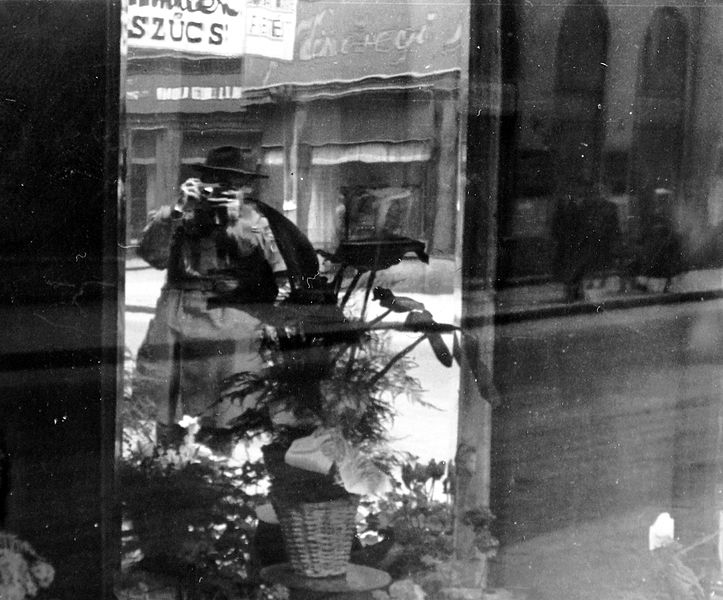
 Ilan Stavans, I Love My Selfie (Durham, NC: Duke University Press, 2017)


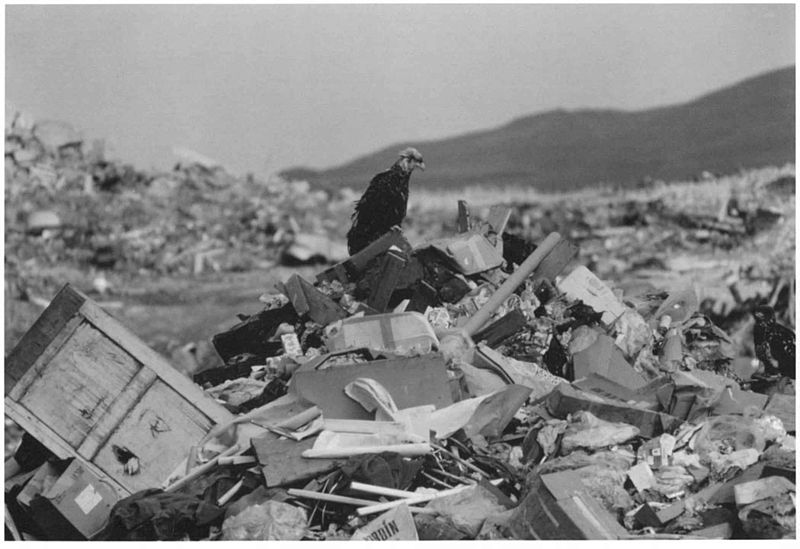
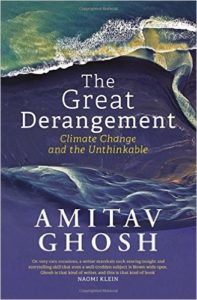




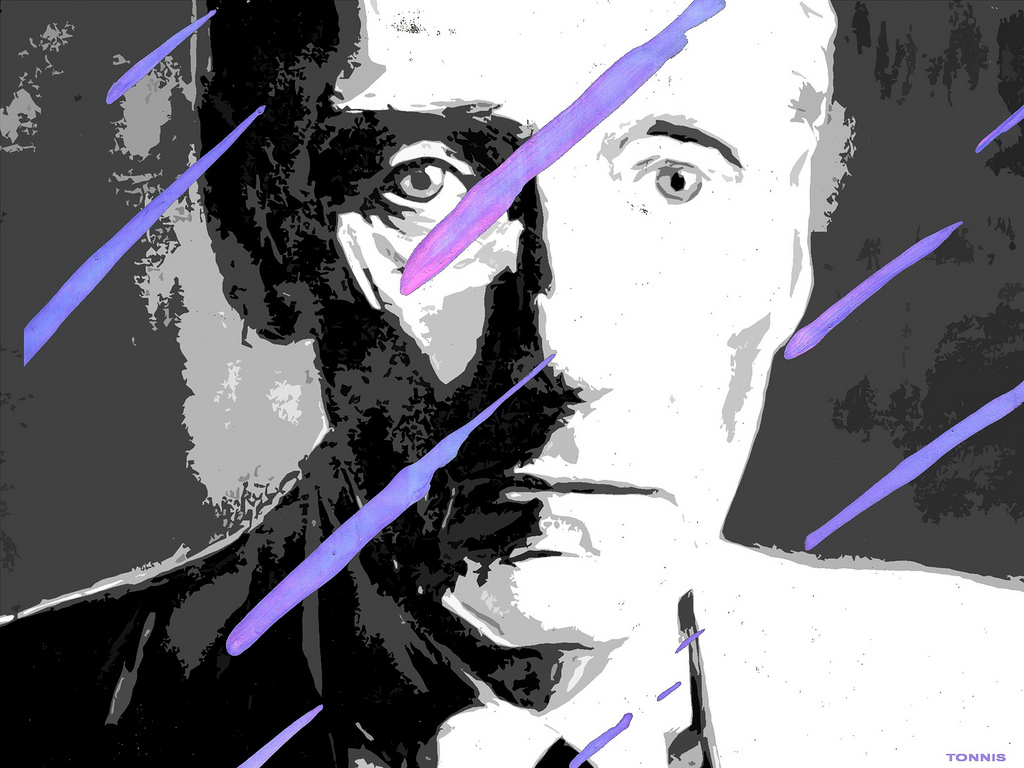


 Alison Shonkwiler, The Financial Imaginary: Economic Mystification & The Limits of Realist Fiction (University of Minnesota Press, 2017)