b2o

  • Great American Author Series: A Political Companion to Ralph Waldo Emerson

    Great American Author Series: A Political Companion to Ralph Waldo Emerson

    Emerson3_cropped

    The Prodigal Political Emerson

    by Sarah Blythe
    ~

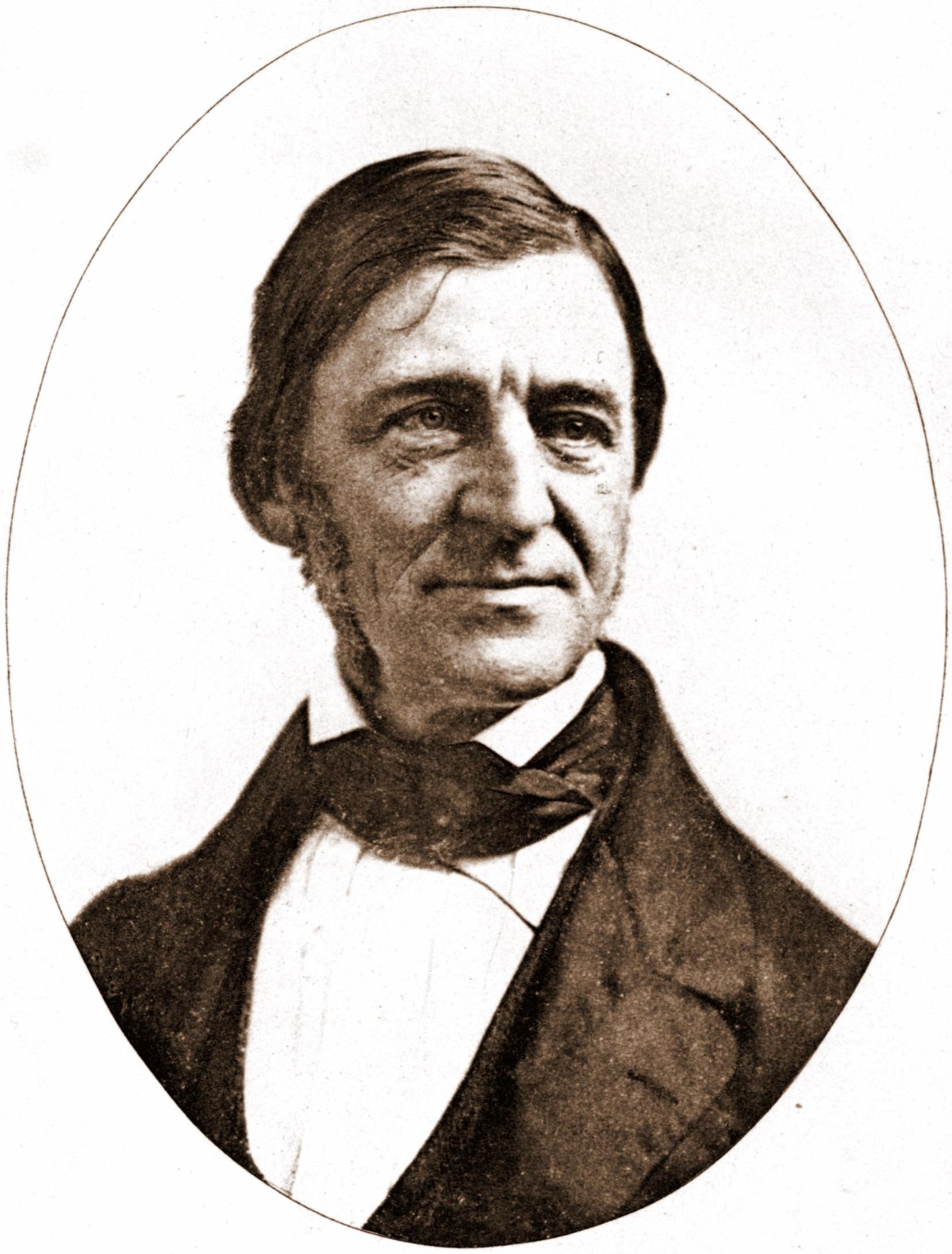
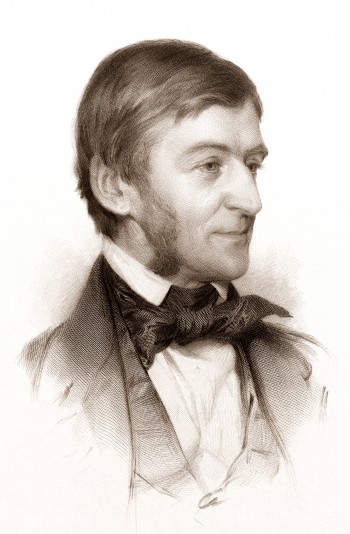
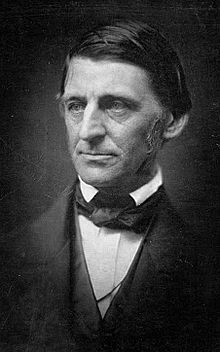
    Much like the other volumes in the series, the chief aim of A Political Companion to Emerson is to challenge the notion that a particular author is much more politically minded than past scholarship has allowed. Ralph Waldo Emerson was no stranger to such censure, even within his own lifetime. The most biting assessment comes from fellow author, Rebecca Harding Davis, who reflected on her interactions with Emerson and his “Atlantic coterie” in her 1904 cultural memoir, Bits of Gossip. She describes the coterie as thinking “they were guiding the real world,” while in fact “they stood quite outside of it, and never would see what it was.”1 Of Emerson as an individual, she had only this chilly assessment: “He took from each man his drop of stored honey, and after that the man counted for no more to him than any other robbed bee.”2 This version of Emerson—the alienated dreamer, or worse, the intellectual vampire—is certainly unfair but not altogether groundless. Some of Emerson’s writings can be off-putting at times, especially when taken out of context. Most famously, in Emerson’s hymn to nonconformity—“Self-Reliance”—the transcendentalist professes such a radical disavowal of social obligations in pursuit of genius that his individualism seemingly transforms into something akin to an unfeeling libertarianism. He first proclaims he will “shun father and mother and wife and brother” when his genius calls, writing on “the lintels of the door-post, Whim,” and in the next breath flippantly disregards his obligation to the poor: “Are they my poor?”3 But to suggest that Emerson is simply coldly rejecting his social obligations or taking an apolitical stance is to willfully misunderstand him.

    518px-Daguerreotype_Lydia_Jackson_Emerson_and_Edward_Waldo_Emerson_1840

    The primary achievement of A Political Companion to Emerson, then, is in righting this complicated, and oft-skewed version of the famous transcendentalist. As several of the critics in this volume point out, Emerson is posturing here. He aims for shock in his attack on “the thousandfold Relief Societies” that merely conform instead of reform and thus offer relief to no one.4 Ever the “reluctant reformer” (as Lawrence Buell terms him in his recent biography), this younger, 3more idealistic Emerson ultimately confirms his commitment to self-reliance even when faced with the pragmatic realities of slavery and other social injustices later in life.5 It is only after his death that Emerson became increasingly estranged from these moments of political activism. Defanged of his radical politics and abolitionist stance beginning with Holmes’s and Cabot’s biographies in the 1880s, this depoliticized version of Emerson was perpetuated by critics through the 1980s, who tended to emphasize his passive self-reliant (and apolitical) individualism, as volume editors Alan M. Levine and Daniel S. Malachuk highlight in their lengthy introduction (16-17). Within this context, Emerson is a prime candidate for sustained political study, the first of its kind in Emerson studies.

    Youthful scholars more familiar with Emerson criticism of the last twenty years will be surprised that he was ever so roughly handled by late-nineteenth- and earlier twentieth century Emerson scholars. It may seem strange to image an author, who wrote so movingly about abolition, de-politicized first by his contemporaries and later by the academy. Some readers might even question the value of pushing against such fossilized scholarship. However, working through A Political Companion to Ralph Waldo Emerson, from its “classic” re-readings of Emerson’s political mind from the 1990s through more current twenty-first century scholarship, readers will perceive not just a dynamic picture of the famous transcendentalist’s political mind, but also a multi-vocal intellectual history of political scholarship on Emerson. As a political companion, the collection sketches the complicated and sometimes contradictory development of Emerson’s political thinking as much as the complicated and contradictory development of scholarly uses of Emerson’s political thinking. Dissonant and melodious, frustrating and engaging, the authors and texts thankfully do not present an explicit or clear picture of Emerson’s politics; but nor should they. The selected authors instead rub up against each other, praising and censuring accordingly, but never quite coming to consensus, forming the kind of dissensus that Emerson would heartily approve.

    A substantial volume (thirteen essays in all), the book is divided into four sections beginning with four “classic” texts on Emerson by notable political theorists and philosophers: William Carey McWilliams, Judith Shklar, George Kateb and Stanely Cavell. In choosing a chapter from McWilliams’s formidable 1973 study of national manhood, The Idea of Fraternity in America, to begin their collection, Levine and Malachuk forward a version (albeit mild) of the apolitical Emerson the volume is designed to contradict. But this is done to effect. McWilliams argues that Emerson wasn’t so much an apolitical thinker but a political idealist who believed that human progress would eventually abolish slavery and the United States would become a “political brotherhood.” For McWilliams, Emerson “firmly believed that progress did not require a movement; it was written in the motion of nature, and would come of itself” (46). Because the political brotherhood was inevitable, Emerson was able to eschew politics, McWilliams maintains. While McWilliams briefly concedes that Emerson’s rhetorical use of fraternity has allowed numerous critics to cast Emerson as a philosopher of democracy, he ultimately concludes that, “Emerson’s was a doctrine of activity, individualistic romanticism, not democracy” (48-9). Emerson, then, is not a champion of democracy but of individualism in such a reading. McWilliams’s essay may seem out of place given the aim of this volume, but it represents an important shift from previous attacks on Emerson’s self-reliant individualism: McWilliams does not completely depoliticize Emerson but instead makes him politically passive. It is this version of Emerson’s political passivism that later essays in this volume vividly confront.

    The second “classic” text by Judith Shklar likewise reconsiders the notion that Emerson’s individualism was at odds with democracy. Where McWilliams sees in Emersonian thinking a call for a progressive political brotherhood, Shklar finds reconciliation between democracy and individualism in Emerson’s skepticism. Focusing on Representative Men and “Self-Reliance,” Shklar suggests that skepticism and democracy were joined in Emerson’s mind because individuals participating in a democracy necessarily have doubts about the opinions of fellow citizens (65-66). But Emerson’s purpose in writing Representative Men is not merely to praise Montaigne’s skepticism, Shklar maintains, but to demonstrate the “absolute necessity of great men for revealing the possibilities of reason, imagination, discovery, and beauty” without “begrudging the great men their glory, not because he was small minded but because an uncritical belief in great people was not compatible with his democratic convictions” (59). Because Emerson thought we were all reformers, there must be doubts, Shklar ultimately insists.
    220px-Ralph_Waldo_Emerson_ca1857_retouched

    Shklar’s essay is in many ways a platform for her working out of her own political theory to contend with the current problems of American democracy and has been used as such by fellow political theorists. Shklar finds redemption in political skepticism. In this sense, the editors might have been better served using Sacvan Bercovitch’s “Emerson, Individualism, and the Ambiguities of Dissent” (published in 1990) in the South Atlantic Quarterly instead of Shklar’s more politically provocative piece. Bercovitch’s essay comes to roughly the same conclusion—finding in Emersonian thinking a space for dissent within a democratic consensus—and has had a greater impact on American literary studies than Shklar’s treatise.

    The final two authors in this first section—Cavell and Kateb—are most aptly selected. In Buell’s fitting assessment, “No one has written more searchingly about Emerson’s theory of self-reliance than George Kateb.”6 As the essay selected for this volume demonstrates, Kateb has come to understand Emerson’s self-reliance as promoting an individualism that works within instead of against democracy. Emerson’s problem with democracy, as Kateb notes, is that it requires “association,” which has the potential to disturb self-reliance. But since Emerson calls for self-reform in his self-reliance, Kateb finds in Emerson a means to defend the individual against institutional regulation. Elsewhere Kateb calls this means “negative individuality,” or the kind of character that disobeys unjust conventions and laws.7 The resulting struggle for self-reliance, in Kateb’s estimation, “is a struggle against being used” (87). Stanley Cavell is also invested in the philosophical matter of instrumentalism, but he finds a more suitable answer in Emerson’s skepticism or his “averse thinking” as the title suggests, connecting Emerson directly to the philosophy of Heidegger and Nietzsche. That said, much like Shklar’s skepticism, Cavell’s “averse thinking” has had more impact in philosophy and political theory than Emerson studies or the study of American literature but it is a worthy inclusion none-the-less.

    Part 2 of this volume is ambiguously titled “Emerson’s Self-Reliance Properly Understood,” but it might be better identified as “Emerson’s Self-Reliance and the Politics of Slavery.” The three essays contained in it look more carefully at Emerson’s self-reliance in the context of a democracy that suffers slavery, arguably the most troubling aspect of Emerson’s writings. Jack Turner, James H. Read, and to a lesser extent Len Gougeon, each explore Emerson’s philosophy of self-reliance in conjunction with slavery and social reform. Both Turner and Read call attention to Emerson’s increasingly public abolitionist stance beginning with the passing of the Fugitive Slave Law of 1850 precisely because it made him and every other northern explicitly complicit to slavery, an institution which likewise denied slave and master the ability to realize self-reliance.

    ~
    Dissonant and melodious, frustrating and engaging, the authors and texts thankfully do not present an explicit or clear picture of Emerson’s politics; but nor should they.
    ~

    In Turner’s careful reading of Emerson’s “ethics of citizenship,” he discerns a “complex interplay” of two key ideas: self-reliance and complicity (126-7). While Turner is attentive to the fact that Emerson never addressed these two terms directly (complicity and self-reliance), he finds in Emerson’s antislavery writings and his abolitionist activities a clear demonstration of his (Emerson’s) belief in their incompatibility, for complicity is just another name for conformity. Turner is likewise careful to not exaggerate Emerson’s activism, noting that he was reluctant to speak out about slavery until the Fugitive Slave Law required more action of him. In the end, Turner finds in Emerson’s ethics of citizenship “a politics of self-reliance that allows for moral compromise” and “a promising model for meeting the contemporary challenge of civic engagement (142).

    Moving from Turner’s ethics of citizenship, Gougen and Read focus on the complicating factors informing Emerson’s self-reliance as well as his changing relation to the abolition movement as new laws began to force citizens into conformity and complicity with the institution of slavery. Clearly the traumatic events of the mid-nineteenth century troubled Emerson’s definition of self-reliance. Emerson responded, Read claims, by embracing John Brown and his radical politics and speaking out against slavery more vociferously. Both acts are deeply political for Read: speaking out against slavery in antebellum America was tantamount to taking action against it (162). In this context, Emerson’s self-reliance becomes a model for moral compromise and a means of taking action against slavery “without along the way compromising or suffocating one’s own intellectual and practical self-reliance” (153). But most importantly, Read contributes a picture of Emerson as a growing intellectual mind who recognized the limits of his self-reliant philosophy later in life and strove to reconcile these limits in a democracy that denied self-reliance to slave and master alike. Along these lines, Gougeon looks beyond Emerson’s self-reliant treatise to see how Emerson used his transcendental philosophy in the service of social reform. This philosophy allows for every person (regardless of race) to participate in the universal (the “Over-Soul”) “providing the basis for both individual self-reliance and a collective identity” (186). For Gougeon, Emersonian social reform may begin with the individual, but it does not end there; self-reform leads to social reform. And, like Read and Turner, Gougeon also highlights Emerson’s evolving transcendental thinking, demonstrating a commitment to “rotation” and “becoming.”

    Part 3 of the collection is dedicated to probing Emerson’s transcendental philosophy in an effort to recover Emerson’s transcendentalism without setting it apart from his political philosophy. As numerous critics in this volume note, Emerson has been as much denuded of his transcendental philosophy as his political philosophy. The essays put forward in this section, then, “retranscendentalize” Emerson whilst they repoliticize his thinking, locating in Emersonian transcendentalism no opposition to political engagement. Alan M. Levine grapples with Emerson’s skepticism, concluding that Emerson’s doubt was fundamental to his transcendental beliefs, while Daniel S. Malachuk battles past scholarship that has effectively detranscendentalized Emerson, obscuring the commitment to equality in his transcendental thinking. Finally, Shannon L. Mariotti examines Emerson’s metaphors of vision, questioning his ability to see problems clearly with transcendental sight. Noting a change in his thinking around 1844, Mariotti concludes that Emerson came to question the validity of his transcendental vision, ultimately finding a middle ground in his transcendental visual practice of “focal distancing.” Mariotti’s essay ultimately explores a version of Emersonian political theory that reconciles his transcendental idealism with the practicalities of social reform.

    The fourth and final section is also the most knotty, designed to cast Emerson as a devout liberal (or progressive) democrat. While Emerson’s progressive democratic leanings are undeniable (Buell goes so far as to claim Emerson personified the Union ideal for moderates as well as progressives during the Civil War), the three contributors concluding this volume emphasize (or perhaps over-emphasize) certain aspects of liberal democracy said to be embraced by Emerson.8
    1280px-Ralph_Waldo_Emerson's_study

    Neal Dolan’s recent account of Emerson’s theories of commerce aims to reinterpret our understanding of his vision of liberal democracy. In doing so, Dolan offers a new interpretation of Emerson’s use of the language of ownership, commerce, and property. At once muddled and overly rigid, Dolan’s argument maintains that Emerson uses the language of property and commerce to “symbolically resolve a cultural dilemma” between old world economics and new world economics (344). For Dolan, Emerson championed America’s liberal democratic values against European feudal-aristocratic social systems on the one hand; on the other, he was weary of the American tendency to “reduce all relationships to marketplace calculations” (344). Dolan concludes that “Emerson inflected this economic idiom in distinctive ways in an attempt to raise his audiences understanding of their rightful property, and thus of their rightful selves, to a yet higher, more spiritual, and more ecstatic plane” (345). However, in interpreting Emerson’s economic idioms within the context of “Puritanism, the Scottish Enlightenment, and the full emergence of a market economy in antebellum America,” Dolan strips Emerson (and his contemporary transcendentalists) of his more radical politics in order to frame the transcendentalist as a pro-capitalist liberal democrat (345). This version of Emerson is not only unpalatable but also largely incorrect. One must remember that Emerson rubbed elbows with Orestes Brownson, who espoused a brand of socialism in the 1830s that Marx would make famous a decade later. This is not to suggest that Emerson was as radical a socialist as Marx or even Brownson (no need to rush-order your Che Emerson t-shirts), but I would challenge Dolan’s assertion that Emerson was “pro-market” during his “supposedly radical phase” in both action and thought (361). As evidence for this claim, Dolan first points out that Emerson “participated” in market-capitalism to the extent that he marketed himself (the action). He then offers a problematic reading of a passage from “Politics,” in which Emerson makes the outrageous assertion that “while the rights of all as persons are equal…their rights in Property are very unequal” (the thought). If taken at face value, this evidence is indeed damning, but here Dolan fails to recognize Emerson’s posturing as a mechanism for criticizing a political system of which he was often skeptical.

    In contrast to Dolan’s interest in property, Jason Frank probes Emerson’s understanding of representation and representativeness in order to demonstrate the democratic importance the “representative man.” For Frank, Emerson’s representative men are not departures from his philosophy of self-reliance because “they elicit the transformative capacities of democratic constituencies forever in the midst of a process” (385). Because there is a distinct relational dynamic between the representative and the represented according to Frank, “this relation stimulates perfectionist transformation” not at odds with Emerson’s theory of self-reliance. The final essay by G. Borden Flannigan likewise reassesses Emerson’s commitment to excellence in the face of liberal democracy in “Representative Men,” but does so by stressing his debt to Plato and Aristotle.

    In reading this collection of essays one gets the sense that Emerson was not an explicitly political thinker; nor was he an explicitly apolitical thinker. He might be best represented as an evocative thinker, a philosopher (often a political philosopher), a humanist, and of course a transcendentalist. He thought carefully and “becomingly” (in an Emersonian sense) about the world in which he inhabited. It is therefore difficult to locate his philosophy—political or otherwise—in just one text or at just one moment in his life. When Emerson wrote, “rotation is the law of nature” in Representative Men, he is not dwelling on physical laws of change; his meaning is social and political, suggesting process, progress, and most importantly change over time on a personal level as much as a national level. And since we now readily accept that personal is political, this volume, along with this series, reminds us never to regard any thinker as wholly removed from the political sphere.

    __________

    Sarah Blythe is a PhD Candidate in the Department of English at UNC Chapel Hill. Tentatively titled “Juicy Effects,” her doctoral dissertation examines the excessive florid and floral rhetoric populating the American short story in the decades straddling the Civil War.
    __________

    Notes
    1. Davis, Rebecca Harding. Bits of Gossip. Boston: Houghton, Mifflin & Co., 1904. 33.
    Back to essay

    2. Ibid. 46.
    Back to essay

    3. Emerson, R.W. “Self-Reliance.”
    Back to essay

    4. Ibid.
    Back to essay

    5. Buell, Laurence. Emerson. Cambridge; Harvard UP, 2004.
    Back to essay

    6. Ibid. 158.
    Back to essay

    7. Kateb, George. The Inner Ocean: Individualism and Democratic Culture. Ithica: Cornell UP, 1992.
    Back to essay

    8. Buell. Op. Cit. 206.
    Back to essay

  • José Esteban Muñoz (1967-2013): A Collage

    José Esteban Muñoz (1967-2013): A Collage

    José Esteban Muñoz’s sudden passing in December 2013 has saddened many and sent shock waves through the queer theory, performance studies, queer of color and critical race studies communities. A prolific author, editor, beloved teacher and mentor, and Professor of Performance Studies at NYU’s Tisch School of the Arts, Cuban-born José Muñoz made vibrant contributions to the intellectual life of our era and to the personal and professional lives of many individuals in our communities. To honor his life and work, I asked several of José’s close friends and colleagues to contribute a brief essay focusing on a specific idea, passage, or personal memory and share with us what Muñoz’s work has meant to them. What follows is a rich personal collage of love, wonder, grief, appreciation, and admiration for a scholar and a friend whose work and life will continue to resonate and inspire beyond his death.

    – Petra Dierkes-Thrun

    chusma rodriguez pink brooks jungle fiol-matta yellow kent study paredez
    blue moten orange halberstam Jose Esteban Munoz2 gold ferguson purple browning
    brown cvetkovich blue villajero maroon stadler freeman green normative love
  • Great American Author Series: A Political Companion to Henry David Thoreau

    Henry_David_Thoreau

    Politically Transcendental

    by David Faflik
    ~

    A Political Companion to Henry David Thoreau, Ed. Jack Turner

    To begin his study At Emerson’s Tomb: The Politics of Classic American Literature, John Carlos Rowe levels a late twentieth-century charge against American transcendentalism (and, by extension, American transcendentalists) that might as well have been made a century prior. Indeed, Rowe’s antebellum predecessors anticipated his complaint that Concord, Massachusetts’s so-called sage, the sometime area minister Ralph Waldo Emerson, was a crank; that his idealistic minions were starry-eyed dreamers; and that the “New School” in literature and religion with which Emerson and his adherents were affiliated was hopelessly removed not only from the everyday concerns of this world, but the eternal concerns of the next. In due course the members of the mostly young, middle class, and restless circle surrounding Emerson had the “transcendental” label attached to them. This was not a flattering designation at the time. Nor has the term entirely lost its negative connotations, as witnessed by the modern practitioners of what Rowe styles “political critique.” In Rowe’s reading, and in Rowe’s words, transcendentalism to this day can be said to suffer from inherent “limitations” as a means of ideological inquiry. Central to these supposed shortcomings is “the romantic idealist assumption that rigorous reflection on the processes of thought and representation constitutes in itself a critique of social reality and effects a transformation of the naïve realism that confuses truth with social convention” (1). Transcendental dissent is from this perspective at best an oxymoron. At worst it’s seen as part of an insidious bourgeois cultural apparatus, the dismantling of which is long overdue.

    Walden_Thoreau

    Among those of Emerson’s contemporaries to have escaped, just barely, the dubious charge of transcendental by association is Henry David Thoreau. The Concord native writer, reformer, and day laborer aspired no less than did his mentor to romantic realms of consciousness. Thoreau as a result has received his share of criticism over his alleged Emersonian abstractions. By and large, however, Thoreau is acknowledged in this our twenty-first century to be a different kind of transcendental animal. On the one hand, he’s been accorded the status of a first-rate artist on the strength of his master work, Walden. On the other hand, Thoreau is celebrated today as much for his politics as his aesthetics. The unabashed contrarian’s reform writings and lectures alone have earned him the reputation of being a social activist who didn’t rest on high-minded principles. And it’s within the context of this abiding revisionist view that we receive A Political Companion to Henry David Thoreau. The sixteen individually composed essays that are collected in this volume together set out to test the texture and extent of Thoreau’s political convictions. More to the point, they attempt to answer whether and how the politically signifying words of a reputed transcendentalist such as Thoreau could translate into meaningful action. Here the general consensus is that they did.

    As part of the Political Companions to Great American Authors series, Turner has rallied his contributing scholars around the premise that the literary is necessarily political. Or, as the Series Editor Patrick J. Deneen writes, American literature itself must be considered “one of the greatest repositories of the nation’s political thought and teachings,” over and above the usual suspects of political theory and philosophy (Turner vii). Turner accordingly divides the essay contributions from his collection into four broad areas of political interest. These include “Thoreau and Democracy”; “Conscience, Citizenship, and Politics”; “Reverence, Ethics, and the Self”; and “Thoreau and Political Theory.” In the first of these, we witness Thoreau in the perennial transcendental light of his public commitments, as opposed to his private pursuits. In Part II, we’re shown a writer whose work is to be judged in the aggregate as a kind of conscientious speech act, the effectiveness of which performance we’re invited to measure by its contemporary reception. Part III takes on the ethical and metaphysical concerns that Turner sees “both informing and issuing from Thoreau’s politics” (7). Part IV, finally, situates Thoreau’s thoughts and deeds within the comparative framework of canonical political theory, past and present. For this final section, we’re treated to a utopian Thoreau who was influenced by the likes of Jean Jacques Rousseau, before we go on to weigh the great chain of political thinkers (Gandhi, Theodor Adorno, Martin Luther King, Jr., Stanley Cavell) who felt, in turn, Thoreau’s influence. Throughout, Thoreau is credited with “repelling us even as he charms us,” in the process fostering what Turner names “intellectual agon” (10). But not once is the Harvard-trained Latinist turned teacher, tinkerer, writer, lecturer, naturalist, and anti-slavery agitator accused of what commentators in the tradition of John Carlos Rowe might characterize as transcendental fecklessness. In every sense of the word, Turner’s Thoreau matters.

    The varieties of Thoreau’s political significance constitute the operative argument of this Companion. There are, for example, fresh reexaminations of Walden. Nancy L. Rosenblum writes of that work’s “romantic aversion,” “calculated to épater la bourgeoisie” (16-17). Brian Walker ranks Walden as “a democratic advice book” for anyone seeking “trade-offs … between freedom and consumption” (59-60). George Shulman bypasses Walker’s “alternative economics” to examine the “poesis” of “prophecy” that’s distilled in the multivalent (“extra-vagant,” in Thoreau’s famous formulation) language of the author’s opus (138). Walden in this reckoning becomes a discursive template for transformation, its imaginative prose a provocative model for readers who would “link citizenship to resistance rather than to subjection” (136).

    Not all the Companion is dedicated to Walden, of course. Much as Robert Milder once went about Reimagining Thoreau, in a wide-ranging study that bears that title, Turner’s contributors canvass the full catalog of Thoreau’s writings in an attempt at repoliticizing his entire oeuvre. One popular topic for discussion is “Resistance to Civil Government,” the essay Thoreau wrote in 1849 after his refusal to pay a local poll tax. This latter show of defiance, the author’s chosen protest against U.S. involvement in the Mexican War, landed him for a night in a Concord jail. Now it’s become an occasion for continuing political analysis. Some forty years after Hannah Arendt upbraided the author for allowing “moral obligation” to obviate his political involvements (Arendt 84), scholars debate the impact that “Resistance” has had on everything from the current environmental movement to what Jane Bennett posits are the oppositional “techniques of self” (Turner 294). Equally innovative treatment is given to the web of revealing connections to be drawn when we situate Thoreau’s diverse works – A Week on the Concord and Merrimack Rivers, “Life Without Principle,” “Slavery in Massachusetts,” and “Walking,” among others – alongside such disparate figures as the American abolitionist John Brown, President Abraham Lincoln, Hobbes, Locke, Plato, and Karl Marx. We’re even asked to read Adorno’s negative dialectics back into Thoreau, and vice versa. There is, in short, a Thoreau for more or less everyone, irrespective your politics, historical period, or personal expectations of a man whose memory led no less an earnest advocate than India’s Mahatma to urge his followers to be “so many Thoreaus in miniature” (Gandhi 7:267).

    ~
    But not once is the Harvard-trained Latinist turned teacher, tinkerer, writer, lecturer, naturalist, and anti-slavery agitator accused of what commentators in the tradition of John Carlos Rowe might characterize as transcendental fecklessness. In every sense of the word, Turner’s Thoreau matters.
    ~

    images

    If there’s anything missing in this Companion, it’s the old Thoreau. By “old” I don’t mean Rowe’s Emersonian transcendentalist, for whom politics was beside the point. Rather, I mean the man of letters who’s been a mainstay of many an English Department curriculum since at least the appearance in 1941 of F. O. Matthiessen’s canon-making American Renaissance. The Companion’s Series editor, Patrick Deneen, is inclined to conceive of “the great works of America’s literary tradition” as “the natural locus of democratic political teaching.” Belles lettres are from his standpoint best suited for attracting citizen readers who’ll remember the message precisely because of the medium. But whereas an Americanist (and Christian socialist) such as Matthiessen might speak in passing of the “possibilities of democracy” without ever committing himself to the specific political qualities of his texts (Matthiessen 146), A Political Companion to Henry David Thoreau suffers from the opposite problem. Deneen again speaks of “the pleasures afforded by … literary form,” and all the “subtle” attentiveness the very category of the literary demands from “careful” and “patient” close readers. Deneen in fact dismisses outright any overly politicized readings that have been predicated on “a hermeneutics of suspicion” (Turner vii). Yet in the end there’s precious little “hermeneutics” at all in Jack Turner’s otherwise ably compiled volume. With several important exceptions, and to state the obvious, most of the essayists in this collection approach Thoreau not as formalists but as political scientists. They’re interested in topics, not tropes.

    This isn’t to wish for a return to the apolitical days of the New Criticism. A passing fashion for New Formalism notwithstanding, a harkening back to text as text hardly seems possible, or desirable, in the wake of the cultural turn of the 1970s. What I’m suggesting, instead, is for scholars from any and all academic disciplines to recognize that life and language need not be deemed mutually exclusive, any more than transcendental optimism be regarded as proof positive of political quietism. At the very least, A Political Companion to Henry David Thoreau marks the start of that project.

    David Faflik

    __________

    Works Cited

    Arendt, Hannah. “Civil Disobedience” (1970), in Crises of the Republic. San Diego: Harcourt Brace, 1972, 49-102. Print.

    Gandhi, M. K. The Collected Works of Mahatma Gandhi, 100 vols. New Delhi: Publications Division, Government of India, 1958-1994. Print.

    Matthiessen, F. O. American Renaissance: Art and Expression in the Age of Emerson and Whitman. 1941. Rept. New York: Oxford UP, 1968. Print.

    Milder, Robert. Reimagining Thoreau. New York: Cambridge UP, 1995. Print.

    Rowe, John Carlos. At Emerson’s Tomb: The Politics of Classic American Literature. New York: Columbia UP, 1997. Print.

  • The Realm of Potentiality

    The Realm of Potentiality

    potentiality post

    by Roderick A. Ferguson, University of Minnesota

    ~

    Of José Munoz’s inspiring work, the argument in which I would most locate and recognize my own interests and solidarities would be his almost incantatory observation in Cruising Utopia: The Then and There of Queer Futurity. After calling for a queer politics that dares to “see or imagine the not-yet-conscious,” a politics that can derive much of its revolutionary energies from past insurgencies, he wrote, “The not-quite-conscious is the realm of potentiality that must be called on, and insisted on, if we are ever to look beyond the pragmatic sphere of the here and now, the hollow nature of the present. Thus, I wish to argue that queerness is not quite here; it is in the language of Italian philosopher Giorgio Agamben, a potentiality.”1 I am drawn to this argument in particular because it is clear that for José a very powerful realm of potentiality—one that can provide us with the resources for the not-quite-conscious, for the utopian future whose materiality we can find in the audacious dreams and visions of past formations—lies in and with minoritized communities and peoples themselves. Remember, for instance, that he opens the chapter from which the passage comes with the 1970 manifesto produced by that queer of color organization that disbanded almost as soon as it emerged—Third World Gay Revolution. In his chapter, the organization stands as a metaphor for that dazzling resource of all minoritized communities—that is, the power to yearn for and suggest something beyond the given state of affairs. And in many ways, he was, trying to encourage us to develop optics for seeing (where minoritized life is concerned) not only what “is” but what—if provided the conditions for its own liberation—“can be.”

    In this way, his argument and indeed his work are rebuttals to those stultifying and empiricist methodologies that attempt to pin down the lives of queers, women, and people of color, pinning them down in that longstanding and misguided effort to capture their “true” and “unchanging” meanings. In this regard, we find José performing a maneuver that is characteristic of his work: the use of minoritized subjects as levers for epistemological and philosophical considerations. In addition, his work assumes political import as it excavates and rearranges critical formations like queer theory and Marxism to point to and call for insurrections in the current state of affairs, recognizing that the existing conditions never exhaust historical or social possibility. Here, he takes a page from Herbert Marcuse who argued, “to express and define that-which-is on its own terms is to distort and falsify reality. Reality is other and more than that codified in the logic and language of facts.”2

    By coincidence or providence, I have been reading Howard Eiland and Michael W. Jennings’s biography Walter Benjamin: A Critical Life. There is a part in that text that makes me appreciate José’s originality and genealogy all the more and helps me figure out what to do with the space he left behind. In a summary of the young Benjamin’s 1913-1914 essay “Metaphysics of Youth,” Eiland and Jennings write, “What we do and think, [Benjamin] says, is filled with the being of our ancestors—which, having passed away, becomes futural. Each day, like sleepers, we use ‘unmeasured energies’ of the self-renewing past… In awakening its own historical resonance, the present gathers to a moment of decision, by which, rooted in the past, it grounds a future…”3 Queerness, like the figure of sleep for Benjamin, was José’s way of describing a practice that—while sometimes giving the appearance of disengagement—actually reprocesses the “unmeasured energies of a self-renewing past” to break new and non-normative ground.

    _____

    Visit the full José Esteban Muñoz gallery here.

    _____
    Notes
    1. José Esteban Munoz, Cruising Utopia: The Then and There of Queer Futurity (New York: New York University Press, 2009), 21.
    Back to essay

    2. Marcuse, “A Note on Dialectic,” in The Essential Frankfurt School Reader, ed. Andrew Arrato and Eike Gebhardt (New York: Continuum, 2000), 447.
    Back to essay

    3. Howard Eiland and Michael W. Jennings, Walter Benjamin: A Critical Life (Cambridge: Harvard University Press, 2014), 44.
    Back to essay

  • Brown Study

    study post

    by Deborah Paredez, University of Texas-Austin

    ~

    It was the blue hour.

    That time when bodies turn silhouette against the vast azure.

    When you stumble home from the bar towards bed—yours, anyone’s—to, as Joni Mitchell sings, “lay down an impression and your loneliness.”1

    When, at last, the baby sleeps and you can now prepare for your morning class.

    The blue hour.

    Which actually lasts less than an hour, the blue burned to dawn after about 20 minutes.

    But what’s an hour, really, when you measure your days against straight time?

    It was the blue hour on the last class day of the semester. I was writing up my final notes for my lecture course, “Performing America.” How to end it? How to convey to my students a model for performing (against) America? I turned to José Feliciano’s version of “The Star-Spangled Banner,” letting it play over and over as I stared out the window towards the cerulean horizon.

    It was José Muñoz who, years ago, first introduced me to Feliciano’s minor key take on the anthem. It was José who taught me how to practice a critical and ethical attentiveness to a wide range of performances by Latina/o artists. José who helped so many of us identify “all sorts of antinormative feelings that correspond to minoritarian becoming.”2 José who helped us hear in Feliciano’s song the tentative strumming of those first measures, the plaintive “Ohhhhh,” the steady murmur of the melody and the languorous voice refusing to keep the time. The lag. The longing the longing the longing. This, José instructed us, is what it sounds like to feel brown.

    For those of us invested in and, indeed, in love with Latina/o performance (studies), José’s work was the light of the blue hour: the source of illumination against which we positioned our own bodies of work in the hopes of being made to seem more luminous, more clearly defined. The distinct shape of our work was impossible to achieve in any other light. He named our feelings and their relationship to our (lack of) access to citizenship; he chronicled the disidentificatory practices so central to our identificatory pursuits; he legitimated our strivings for that sparklingly sapphire queer beyond.

    Oh say, can you see, by the dawn’s early light?

    It was the blue hour on 4 December 2013, a moment of passage.

    It was the blue hour and Feliciano’s voice shirred the silence and the dawn broke the blue and I taught my class, playing Feliciano’s song under my lecture for the whole hour, and I returned to my office and received word of the news.

    It was the blue hour and it passed too soon and I was left feeling brown.

    _____

    Visit the full José Esteban Muñoz gallery here.

    _____

    Notes
    1. Joni Mitchell, “Down to You,” Court and Spark, CD, Asylum, 1974.
    Back to essay

    2. José E. Muñoz, “Feeling Brown, Feeling Down: Latina Affect, the Performativity of Race, and the Depressive Position,” Signs 31.1 (Spring 2006): 679.
    Back to essay

  • Our Chusma, Ourselves: On the Ghosts of Queerness Past

    chusmeria post

    by Juana María Rodríguez, University of California, Berkeley

    ~

    José was a ghost even before he ever left us. He refused “the burden of liveness” demanded of a young genius, delivering instead a performance haunted by party boy, theorist, punk, hipster, mentor, nerd, sissy, and chusma par excellence (Disidentifications, 189). (Chusma: loud, bitchy, hysterical, snarky, demanding and unapologetically colored, a hot, messy “occasion to speak queer and beyond” [195].) Into the hallowed spaces of erudite scholarship, he dragged the remains of his working-class immigrant upbringing like the gaudy train of a second-hand wedding dress ready to take over the room, sullied and storied. These were the unruly ghosts he conjured and enlisted to do the dirty work of making institutions accountable to those they had excluded. Muñoz translated class shame into the high theory spectacle of chusmería to refuse the beige decorum of whiteness and middle-class respectability and revel in the colored excesses of feminized drama and gossip, crying, a moco tendido, into a sea of left-over Latino feeling.

    The future queerness of José’s intellectual imagination has always been peopled with the still beating hearts of the ghosts of his chusma past, those far away from the limelight of the academic stages he graced so ungracefully. Carrying the memory of dreams deferred, and the promise of raucous outrage, he demanded a new formulation of time that could encompass both. Refusing the burden of liveness is about rejecting the restrictive temporality of minoritarian subjects to dwell in the contained chambers of our singular relevance, to call out the ways we precede and exceed the stages of our signification. To name the haunts of our hurts is to envision the pressures and potentialities of being social subjects capable of envisioning future worlds together.

    Refusing liveness, and forever animated, the performance of Muñozity that erupted whenever José arrived (late of course) was always a happening that he had helped to create and defile before his entrance. Like a street kid, passing out flyers to the latest club opening, Muñoz invited everyone to the party, ready to crowd the dance floor of his utopian world-making. The air would change with the rumor of his presence; it became perfumed with the sticky possibility that there might be enough breathing room for others who were never imagined as belonging, let alone worth inhaling. But once on the dance floor, José made you work for your place in the soul train line. Like the oracle that he was, he had the ability to read all the possibilities of your intended academic attire, and pluck out the precise theoretical accessories that would turn your shit out. A ghost that could send you back to start, armed with a new shade of fabulous to make your own. The dark emotions of José’s open windows were also there in the teary blue light of city mornings stumbling home alone to contemplate a lifetime of losses.

    I like to imagine José as a queer child in his Hialeah home, the imprint of clear hard plastic still pressed onto the tender flesh of his moist thighs, pondering the performance of the color green, theorizing the scent of his tias’ heavy bosoms, and feeling brown. It is these twists of queer time that float through his work—the ghosts of other horizons. Chusmería is about honoring the imprint of plastic, of La Lupe whining to Heidegger, of stepping out of and into the ecstasy that exists in another temporal register where José is about to walk into the room (or was that him who just left?). Even and especially in the stillness of death, he asks us to refuse the burden of liveness, insisting instead that we make the most of chusma gestures of ephemera, the trace in the text, the question in the quote, the promise in the queerness yet to come. Having joined the ghosts in the wings throwing shade and brilliance, he invites us—even now—to come out and make a queer production of our broken hearts.

    _____

    Visit the full José Esteban Muñoz gallery here.

    _____

  • Please Come Flying

    please come flying post

    by Kathryn R. Kent, Williams College

    Please Come Flying1

    From Brooklyn, over the Brooklyn Bridge, on this fine morning,
    please come flying…

    Come with the pointed toe of each black shoe
    trailing a sapphire highlight,
    with a black capeful of butterfly wings and bon-mots,
    with heaven knows how many angels all riding
    on the broad black brim of your hat,
    please come flying.

    Bearing a musical inaudible abacus,
    a slight censorious frown, and blue ribbons,
    please come flying.
    Facts and skyscrapers glint in the tide; Manhattan
    is all awash with morals this fine morning,
    so please come flying.

    Mounting the sky with natural heroism,
    above the accidents, above the malignant movies,
    the taxicabs and injustices at large,
    while horns are resounding in your beautiful ears…
    …please come flying.

    On the second-to-last page of Cruising Utopia, José cites my analysis of Elizabeth Bishop’s encomium-as-inducement-as-enticement, “Invitation to Miss Marianne Moore.” He summarizes the heart of my reading: “Kent explains the ways in which Bishop’s work signaled a queer discourse of invitation that did not subsume the other but instead was additive” (188). Not “subsum[ing] the other” but inviting, inciting them–this might just as well describe José’s presence, his understanding of friendship, his sometimes fierce teasing, which pushed me to recognize and own my weaknesses as a critic, an activist, a writer, a co-conspirator, as well as my strengths. I don’t think I could have fathomed the dynamics of this poem if I hadn’t spent six years in graduate school with José as my constant, loving, demanding interlocutor. As he writes of the Bishop poem, “[t]his invitation, this plea, is made despite the crushing force of the dynasty of the here and now. It is an invitation to desire differently, to desire more, to desire better” (189). How many times did so many of us find José’s work, and his way of being—itself, in his words, a form of “performative provocation”—calling us to “collective political becoming,” to a “stepping out of this place and time to something, fuller, vaster, more sensual, and brighter” (ibid.)? In that somewhere, someplace, not yet here, I like to imagine José is waiting, not always so patiently, for the rest of us to, in Bishop’s words, “please come flying.”

    _____

    Visit the full José Esteban Muñoz gallery here.

    _____

    1. Elizabeth Bishop, The Complete Poems: 1927-1979 (New York: Farrar Strauss Giroux, 1987), 82-83.
    Back to essay

  • A Leap Into the Void: Finding Muñoz through the Process of Losing Him

    void post

    by Jack Halberstam, University of Southern California

    ~

    Some will say that José Ésteban Muñoz died an untimely death – he died too young with too much still to do. However, like his formulation of queerness as a state of being that is present in its absence, available as a lost past, unreachable as a beckoning future, I would rather say that Muñoz died as he lived, in a queer time that he may not have chosen but that insistently chose him. Like many of the exotic queer art world natives about whom he wrote, Muñoz sacrificed everything within the here and now for a then and there that had not yet and could not yet arrive. Like Jack Smith arriving late to a performance that he would then abort, or like Fred Herko meeting death early by making his last performance “a perfect jeté” out of a friend’s apartment window (Cruising Utopia, 148), Muñoz left us all shocked and surprised by his sudden exit, saddened and bereft by his final decline. Muñoz’s departure was not quite a jeté, nor was it a failure to show; it was rather an abrupt cessation of a life that had spun quickly around a chain of precious moments offering brief glimpses of another world while losing energy in the present for the here and now.

    How might we understand Muñoz’s early death through his own work as a gesture of refusal, a refusal of timeliness itself? In “A Jeté Out the Window” in Cruising Utopia, Jose writes about the staging of Fred Herko’s suicide as his final performance. Using the concept of surplus value to frame acts, work, modes of being which exceed capitalist flows, José uses Herko’s leap into the void as an example of an excessive gesture – one that could be read as useless, childish, wasteful, nonsensical – but that literally refuses all that capitalism, and capitalist notions of time, offer. Instead, it signals the way in which, within queer aesthetic production, escape and refusal are juxtaposed in an altered temporality that does not respect the markers of “late” and “early” at all.

    In the context of queer worlds, furthermore, excess and loss sit side by side as potent evidence of the utopian imagination. For the queer utopian, the ideal world cannot be reached through the here and now; it must be conjured by crazy, risky, wild leaps into the void. This notion of the utopian situates art as a guide to future terrains that may or may not ever surface. Muñoz reminded us of this other function for art through his bravura readings of Ernst Bloch. Bloch, Muñoz tells us, understands art as “enacting a pre-appearance in the world of another mode of being that is not yet here” (147). The “not yet here,” like the “already gone,” represent non-straight temporalities within which other possibilities appear fleetingly, like ghosts from the past, glimmers of the future, markers of the anticipated and the lost.

    In Fred Herko’s death-embracing leap out of the window of a friend’s apartment, Muñoz finds a performance that defies explication, understanding or rationality; it defies capitalist logics of sense and accumulation. It sheds what it should embrace and embraces what it should fear. It is perfect in its unknowability and absolute vulnerability. The controlled leap into the void performed by Herko makes art out of what is otherwise an uncontrollable descent into death. And Herko’s last dance places queer art in an oblique relation to life itself. If vulnerability is proximity to harm, to unbecoming, then queerness seeks to rewrite the conditions of pain, harm and fear not as identity formations, but as routes to wild embodiment.

    Accordingly, I do not come to mourn José Esteban Muñoz; I come to celebrate his wild sense of time, possibility, potentiality. “Queerness is not yet here,” he writes in Cruising Utopia. “Queerness is an ideality. Put another way, we are not yet queer. We may never touch queerness, but we can feel it as the warm illumination of a horizon imbued with potentiality. We have never been queer, yet queerness exists for us as an ideality that can be distilled from the past and used to imagine a future” (1). José, in death as in life, brings us a step closer to “the warm illumination of the horizon” that he possessed the unique ability to see, to describe and to touch. The fact that this horizon is as often death as it is art should not dissuade us from basking in its glow.

    _____

    Visit the full José Esteban Muñoz gallery here.

    _____

  • Survival, and Then Some

    survival post

    by Heather Love, University of Pennsylvania

    ~

    In one of the opening moments of Disidentifications: Queers of Color and the Performance of Politics, José Esteban Muñoz describes a scene from a performance by Marga Gomez in which she recalls her childhood fascination with some “lady homosexuals” she saw on TV.1 Exploring the apparent paradox of Gomez’s identification with these “‘very depressed, very gloomy’” women (cited in Muñoz, 3), Muñoz writes, “Gomez luxuriates in the seemingly homophobic image of the truck-driving closeted diesel dykes,” describing how she transforms these damaging images into “powerful and seductive sites of self-creation” (4). For many of us “lady homosexuals,” Muñoz’s deep appreciation for the folkways of lesbians—and his willingness to take the bad with the good— was a source of delight. In this passage, Muñoz wasn’t only defining the concept of disidentification or introducing me to a style of performance; he was also showing me a way of being in the world, and a world I wanted to be in.

    Disidentification is a complex concept for Muñoz, routed through divergent traditions in performance studies, ethnic studies, psychoanalysis, black studies, queer theory, Marxist social thought, and, as always, through the “ground-level” (110) theorizing and politics of the artists whose work he discusses. It is, in Muñoz’s words, “a hermeneutic, a process of production, and a mode of performance” (25). Rather than try to address disidentification in its fullness, I will focus on what has been most influential for me in the concept, namely, Muñoz’s claim that the damaging elements of subject-formation in a culture of violent normativity cannot ever be fully overcome; rather than triumphing over such elements, minority subjects continually rework them in their projects of self-making and world-making. He writes, “To disidentify is to read oneself and one’s own life narrative in a moment, object, or subject that is not culturally coded to ‘connect’ with the disidentifying subject. It is not to pick and choose what one takes out of an identification. It is not to willfully evacuate the politically dubious or shameful components within an identificatory locus. Rather, it is the reworking of those energies that do not elide the ‘harmful’ or contradictory components of any identity” (12).

    My work in Feeling Backward, deeply indebted to Disidentifications, focused on these “harmful or contradictory” components of identity. My more recent work has focused on Erving Goffman’s work on social stigma, in particular on the strategies for the “management of spoiled identity” that he discusses and that Muñoz cites in relation to the stigmatized Latina identity of the chusma.2 This approach acknowledges how the structures of ethnicity, class, sexuality, gender, and nation are worked into our identities, such that, as Muñoz writes, “our prescribed ‘public’ scripts of identification and our private and motivating desires, are not exactly indistinguishable but blurred” (15). Given these conditions, our politics and our survival depend on our ability to manage, reckon with, and remake the damage of a world that was not made for us.

    Politics and survival—of the two, survival is the more contested term, since it tends to imply accommodation to the normative world rather than transformation of it. Although Muñoz defines disidentification early on in the book as “descriptive of the survival strategies the minority subject practices in order to negotiate a phobic majoritarian public sphere” (4), by the book’s final chapter on “Latina Performance and Queer Worldmaking,” he asserts that the book is about the vision of “performers, cultural workers, and activists who are not content merely to survive” (200). As a performative text, Disidentifications follows the trajectory that it describes, moving from an account of a damaged world to the laying out “a utopian blueprint for a possible future” (200).

    I was never fully able to respond to Muñoz in his call to follow the example of these artists and “risk utopianism” (25), a call since amplified and extended in Cruising Utopia. Instead I have lingered in my attachments to the smoky, mysterious world that Gomez conjures in her account of seeing those ladies in the life (“‘short for the hard and painful life’” [cited in Muñoz, 33]) on TV. My doubts about utopia are grounded in the fact that I don’t think it gives enough credit to survival. In the damaged worlds that Muñoz describes, survival should be understood as an achievement and not necessarily an accommodation—and it can’t be taken for granted. Muñoz could be critical of this kind of depressive realism, and recently I have struggled with my inability or refusal to venture the kind of fantastic investments and risks that he wrote about and that he modeled for us, his readers. In a world palpably diminished by his loss, disidentification persists as a name for everyday practices of survival and transformation.

    _____

    Visit the full José Esteban Muñoz gallery here.

    _____

    Notes
    1. José Esteban Muñoz, Disidentifications: Queers of Color and the Performance of Politics (Minneapolis: University of Minnesota Press, 1999), 3.
    Back to essay

    2. For Muñoz’s discussion of “spoiled identity” in relation to chusmería, see 185. Also see Erving Goffman, Stigma: Or the Management of Spoiled Identity (Englewood, NJ: Prentice Hall, 1963).
    Back to essay

  • Listening, Ephemerality, and Queer Fidelity

    fidelity post

    by Gustavus Stadler, Haverford College

    ~

    Although he never identified as a music scholar, musicians, musical genres, bands, and songs run across and beneath the surface of José’s writing like a vital circulatory system; indeed, his work as a whole would be unthinkable without the breakthrough acts of listening of his teenage years, instigated when he walked into an independent record store in Miami and encountered the alluring covers of records by L. A. punk bands like X, the Gun Club, and the Germs. I, too, remember that moment of invitation, when punk almost instantly turned from something one was accustomed to seeing mocked in media culture into something magnificent in its promise of an elsewhere, the exhilarating medium of, as José recently put it, “a salient desire for an encounter.” Punk rock and its culture galvanized José’s way of seeing the world, well before he became an accomplished theorist. Indeed, one could plausibly argue that virtually all of it extends directly from the messy business of being a queer Cuban-born kid on the threshold of a subculture so often oblivious to its racism and homophobia.

    In particular, that early listening underwrote the theory of “disidentification” and helped to bring us together, in graduate school, in the 1990s. At that point, the main target of our shared, untidy cathexis was the arty straight-boy indie rock of bands like Pavement and Sonic Youth, and the Muppet-y floppiness of their lanky front men, Stephen Malkmus and Thurston Moore. Although the affective range of this music was less forthright and brash than the punk of his earlier fixation, José loved to think about and practice listening as a jarring process that provided breakthroughs—not just as the spark for the originary teenaged moment of quasi-initiation, but as a renewable resource providing energy for one’s intellectual and social engagements. Most of my memories of my first two years of graduate school involve sitting with José in his ever-more broken-down Mazda, its backseat strewn with books and CDs, deep in conversations, whose topics ranged from music to theory to music to seminar papers to music to gossip to music to sex, and so on. It was as though music provided a frame, an orientation, for talking about everything else. I learned so much.

    In some way, I think José’s relationship to pop music scholarship was its own act of disidentification. For José, to write about music wasn’t to write “about music” because for him, as with so many things in his queer worldview, the boundaries of where music ended and began were tantalizingly blurry. For José, music facilitated privately staged scenes of self-care—the classic queer teen alone in her bedroom, listening for another world through headphones—but it also meant nightlife and sociality. In other words, it wasn’t an isolable object of study that could be extracted from its context and the social relations surrounding it. He rendered its presence the way it actually exists in the world—in the background, in interstices, and then, at a particular moment of vulnerability or necessity, stunningly forward and available.

    He thought of music as slippery and evasive in the same way he thought of queerness as slippery and evasive, as a medium particularly well-suited to failure: “The queer failure . . . that is more nearly a refusal or an escape.” Pop music’s ephemerality was a vital part of its attraction. One would always need more, and one couldn’t know in advance what that “more” would look and sound like, and that was a good thing. Music resonated not primarily as a cultural object or genre but as an event, something that happened and then was gone. This explains, no doubt, his fascination with the ritual of the “Germs burn,” described in his recent Social Text essay on the band, “’Gimme Gimme This… Gimme Gimme That’: Annihilation and Innovation in the Punk Rock Commons.” This practice, by which one Germs’ fan would burn another’s arm with a cigarette in a chain initiated by the band’s central figure, Darby Crash, was a way of marking a moment of kinship, both preserving the event of the burn and affirming its ephemerality.

    Events happen and then they’re gone. In that recent essay, José invoked Alain Badiou’s notion of “fidelity”: “We understand and know the event not so much through the moment itself, but instead through the fidelity we have to a transformative spike in our public or personal histories” (99). I think we can infer that this, too, is what a term like “audio fidelity” meant to him—not a set of fixed principles of sonic quality, but a kind of fidelity to the work the medium of sound offered in helping one carry through on the promise of such a “transformative spike.” Undoubtedly, the reading of the Magnetic Fields’ song “Take Ecstasy with Me” in the coda to Cruising Utopia is his most stirring enactment of these ideas. It’s there that we see, more explicitly than anywhere else in his work, the formative, almost structural way that listening shaped Jose’s sense of queerness as always perched on the promise of the future, as an invitation to a time and place where there would always be another song.

    _____

    Visit the full José Esteban Muñoz gallery here.

    _____

  • The Beauty of José Esteban Muñoz

    beauty post

    by Frederick C. Moten, University of California, Riverside

    ~

    At bottom, above all, in the heart of it all, for José queerness is a utopian project whose temporal dimensionality is manifest not only as projection into the future but also as projection of a certain futurity into and onto the present and the past, piercing their previous arrangement and administration. Queerness also has a spatial dimension for José, but only insofar as it is located in displacement, at sites that are both temporary and shifting, in underground, virtual neighborhoods, ephemeral, disappearing clubs and ordinary, everyday venues broken and reconstructed by extraordinary everynight presences whose traces animate his writing with the sound and feel—as well as the principle—of hope. Like Heidegger, but wholly against Heidegger’s grain, José inhabits the convergence of “ecstasy” as spatio-temporal derangement with “existence” as stepping in and out of time. He studies study’s performative appearance in and as the social life of the alternative. He knows that sometimes the alternative is lost. That sometimes it has to get lost. That sometimes the alternative is loss. To be or to get lost might be neither to hide nor to disappear. Similarly: to lose, to relinquish or to veer away from—even if within—a given economy of accumulation—José thinks this in relation to, or as a certain disruption of, property, of propriety, of possession and self-possession, of the modes of subjectivity these engender especially in fucked-up, Locke/d down, America. Inappropriateness such as José’s—which is his, and his alone, because it is not his, because he gave it to us from wherever he was and gives it to us from wherever he is—remains undefined by the interplay of regulation and accumulation that it induces.

    Consider (which is to say feel, which is to say dig) Kevin Aviance (deviance and perfume, the trace of another scent and gest and groove) as José approaches (which is to dances with, which is to say grounds with) him—accursed share and shard, cracked vessel of essence-in-motion, counterfetish instantiating the critique of possession that only the dispossessed can make. Such consideration isn’t easy. In their mutual approach, José and Aviance become something else; something else becomes them and we have to try to get beautiful like that. That beauty is hard, brown, black, black brown and beige, tinged with the sadness that attends our, and that keeps us, moving through the ongoing history of brutal enjoyment to get to what survival demands that we enjoy. José says that on the way to that—in the slow, inescapably lowdown path of our escape—we critically rush the impasse of our fetishization, the sociosynaptic (log)jam that keeps us from becoming instruments for one another, which is our destiny. What José knows about Aviance is what we also know about José. If the force of the counterfetish is lost in the Roxy, lost in the all the various pragmatisms whose asses José kicked, lost in Marx though he, at least, as Althusser might say, produces the concept that José came to discover. If the “fetish, in its Marxian dimensions, is about occlusion, displacement, concealment and illusion,” then it can also be said to be about loss or to be the lost.1 The fetish is a representation of loss or of the lost. The condition of possibility of this necessary representational function is loss. Heidegger might say that the fetish, or the counterfetishistic property of the fetish, tends toward unconcealment, aletheia, truth. He would say that unconcealment has concealment at its heart, which we recognize in the anarepresentational content that is borne, the ephemeral and performative energy that is transmuted and transmitted when Aviance and José dance their queer, spooky pas de deux at a distance. What Marx figures as subjunctive we now know to be actual. This is to say that José neither reads nor interprets the rematerialization of dance; he extends it, becomes part of the ongoing rematerialization that is (its) performance. This is a migrant curve evading straightness and its time. This is the counterfetishistic, redistributive, performative, gesturally perfumative content of José’s writing, which theorizes loss as the instantiation of another condition of possibility: the prefigurative supplement of loss that deconstructs and reconstructs identity, that reproduces a personhood at odds with, or radically lost within, the accumulative-possessional drive; the future lost in the present, fugitive of and in the present; our subterranean movement; the shard of light we share.

    José, whose irreplaceability is given in that he was always writing with somebody, and Aviance shed that light. They remain as “queer ephemera, transmutation of the performance energy, that also function as a beacon for queer possibility and survival” so we can see ourselves, both descriptively and prescriptively, as the history of abnormative in(ter)vention (ibid., 74). We have to see our everyday selves like that everynight, until the party becomes The Party; and though we’re not party to this exchange, because we’re not, we feel it, because it moves through us when we feel (for) one another. The ones who don’t see the gravity of this have never been on, let alone under, the ground. Such grounding, such approach was José, flying. The velocity of his escape remains in (f)light. See, if Aviance and José hip us to the notion that ephemera mark the ongoing production of (a) performance whose origin is always before us, then every vanishing point signals the inevitably of a return, even if it’s just the way we get up tomorrow, even if our loss make us not want to get up, because tomorrow we’ll see that the one we lost has left us something that will help us find him. Deeper still, way before the end, the ephemeral counterfetish will either make the bosses beautiful—multiply perspectival, contrapuntally out, in recovery of what’s lost in the stiffness of their stride and minds—or destroy them. Now that José is lost and found, improperly dispersed in us, it’s our job to bear that, to be borne by that, to keep being reborn in that. So let’s play.

    _____

    Visit the full José Esteban Muñoz gallery here.

    _____

    Notes
    1. José Esteban Muñoz, “Gesture, Ephemera and Queer Feeling: Approaching Kevin Aviance,” in Cruising Utopia: The Then and There of Queer Futurity (New York: New York University Press, 2009), 78.
    Back to essay

  • The Sense of José

    sense post

    by Licia Fiol-Matta, Lehman College and the Graduate Center, CUNY

    ~

    (En Orihuela, su pueblo y el mío, se me ha
    muerto como del rayo Ramón Sijé,
    con quien tanto quería.)

    I turned to the Miguel Hernández poem, “Elegía,” as soon as I received the terrible news of José’s departure. Its words could easily be transposed to December 4th, 2013: “In New York, his city, and mine, out of the blue, José Muñoz has died on me, he with whom I loved so much.” Con quien tanto quería. We loved together queer theory, US latinidad, queer of color artists and, in pride of place, Cuba, José’s beloved homeland and one of my research areas since my undergraduate years.

    I have felt terribly sad at the thought that José is not to go back to the land where he was born and with which he held such an intricate and loving relationship. As a scholar, José unfolded and performed his Cubanity by creating an “impersonal self” which animates his writing (Disidentifications, 178).1 Through eye-opening explorations of Cuban artists—many “private loves,” others “public heroes” (179)—he went beyond simple recovery to theorizing their conceptual interventions. In the process, he reconceptualized Cuban America’s status as an ethnic “success story” of the United States, from queerness. Cubanity sequentially appeared as a “disidentity,” a “feeling brown,” part of a “brown undercommons” and finally as an artistic manifestation of the “sense of brown.” One of José’s final essays, on Ana Mendieta, outlines the stakes of a negative vitalism that, to my mind, he also practiced: a relationship to a land that was no less present because it was evanescent, existing as both intimate and public “connotation” (177) to be read beyond the appropriations of experts and the cognoscenti, in a principled “being singular plural” that includes personal experience without the traps of simplistic biographism.2

    Some of my favorite passages in José’s work concern the Cuban artist Félix González-Torres. An artist of evanescence, González-Torres was familiar to me as a Cuban figure who attended high school and university in my hometown, San Juan, Puerto Rico. José’s writings on González-Torres exhibit an exemplary distance from identification. It is obvious that González-Torres’s exilic estrangement from Cuba informed all of his work, but José takes an oblique approach to this all-important event—much like he took an oblique approach to representing his personal, familial situation while infusing his entire scholarly oeuvre with his own identity markers. Exilic loss and the devastation wrought by AIDS, and Gonzalez-Torres’s own death from AIDS in 1996, compounded the mercantilistic reception of his artworks as a gay male, ethnic artist who should respond to mainstream art’s coordinates. José demolished this coercive reading in an elegant, graceful weaving together of González-Torres’ billboards, installations, and portraits in jigsaw puzzles and plastic bags, a dazzling interpretation I experienced as a sort of critical sublime precisely because of its emotional austerity.

    José did not need to go to Cuba to “complete” himself as a scholar, although, on a personal level, I can only imagine it was important to him. However, “completion” was anathema to his thought. Throughout his works, he crafted an original vision of cubanía inflected by the beautiful suppleness of his radical latinidad. José gave us a road map or toolkit to point us in the direction of the gap, wound, or hole of displacement as a necessary condition for interpretation to take place, a critical move he and I shared. He refused to assimilate into normative channels of ethnic citizenship, particularly available to exiled Cubans in the United States. Instead, he made palpable, reachable, a queer ethnic space of negativity and futurity, taking Félix González-Torres as an early guide to his thinking on “disidentity,” following his own road map to arrive at Ana Mendieta as a Cuban artist-thinker of the “sense of brown.”

    José and I came of age together in the academic profession. He was working on Disidentifications while I was researching A Queer Mother for the Nation. We were both thrust into Anglo and heteronormative worlds that made our academic existences difficult as Latin@ queers. We were equally invested in the political aspects of our work and how we could bring our academic research into institutions. Thus we worked on the initial Crossing Borders conference in 1996, which focused on Latin America and Latino queer sexualities, and were Board Members of CUNY’s Center for Lesbian and Gay Studies around the same time. And José recruited me into Social Text in 1997. Beyond our personal itineraries, we shared a methodological approach that concentrated on figures and figurations. While he found hope in the strategies his objects of study enacted in the face of a homicidal society bent on their annihilation, I studied how one such figure did part of the state’s work in reproducing normativity. Disidentifications doesn’t shy away from celebrating these queer artists; Queer Mother sounded a cautionary note against seeing queer artists as resistive. In both our works, melancholy and loss become hermeneutical tools to grasp at, in an “almost articulate” way, “a possibility of freedom” (177, 179).

    I never met González-Torres, but as an artist he inspires in me the cariño I feel for José as a scholar-creator of worlds. Returning to González-Torres’ artworks, I’m often visited by a sense of grief at his untimely passing. José writes: “González-Torres refused to limit his grief to a privatized self” (179). I, for one, will follow José’s instruction not to let my grief be limited to a privatized self and continue the work of José Muñoz’s visionary presentness, one he discerned so generously for us in González-Torres’s and Mendieta’s mournful yet hopeful art of counterpoint and fugue, one he embodied in his own “impersonal” writing of his Cuban self, of his Cubanity “lived as brownness.”3

    _____

    Visit the full José Esteban Muñoz gallery here.

    _____

    Notes
    1. José Esteban Muñoz, Disidentifications: Queers of Color and the Performance of Politics (Minneapolis: University of Minnesota Press, 1999).
    Back to essay

    2. Jean Luc-Nancy, Being Singular Plural (Stanford: Stanford University Press, 2000).
    Back to essay

    3. José Esteban Muñoz, “Vitalism’s After-Burn: The Sense of Ana Mendieta.” Women & Performance: a journal of feminist theory 21:2 (2011), 192.
    Back to essay

  • José's Hope, or What Muñoz Taught

    hope post

    by Amy Villarejo, Cornell University

    “[T]here is no hope without anxiety and no anxiety without hope, they keep each other hovering in the balance…”

    Ernst Bloch, The Principle of Hope1

    José Muñoz gravitated toward Ernst Bloch’s voice and logic for Cruising Utopia. Why? What in those wildly uneven 1400+ pages of The Principle of Hope or Bloch’s other writings compelled him? Several years ago, I read Bloch in part because José told me to, and, despite the weirdness of Bloch’s exilic take on America, I came to feel deeply invested in the method of hope, in the relentless pursuit of micro-details of possibility. It has nevertheless taken me these weeks after José’s death to understand, as it were, the attraction. I think I have come up with a provisional answer, and it is not the familiar one that Cruising Utopia sought to answer the “anti-social thesis” of Lee Edelman and other thinkers of “the negative” with a fierce defense of hope. While that may be true, I think it is also likely, and more Blochian, that, in the imbrication of hope and anxiety, we learn something about the risk that we are and that we take in each other. We learn, moreover, less about anxiety (the less the better!) and more about the critique of what is present.

    Queer thinkers I loved keep dying. Eric Clarke died, and Alex Doty died, and José died, none of them of AIDS or of “risk factors” we have discussed much in our queer cultures, but they died nonetheless, before their time. Or they died in an improper time, as Alexander García Düttmann says in his reflections on the time of and beyond AIDS, a split or fractured sense that “foils the constitution of a coherent time and of the coherence of a life.”2 It is in fact the contention of At Odds with AIDS that the threat of dying before one’s time makes visible, or renders palpable, a fundamental “being not one” (a German pun on uneins/un-eins, “Un-eins-sein”, with which the translators wrestle) of the subject, an improper or non-identical subjectivity, as well as this fractured time or timeline. And it should not surprise us that sometimes this impropriety both of life and of time, of “lifetime,” is felt precisely as anxiety and its complement, anger, even or especially when the point ought to be to recognize a more fundamental impertinence or primordial non-belonging that alone can measure up to the horizon that is AIDS. Such, I think, was José’s pursuit, too.

    The word “anxiety” does not appear a single time in Cruising Utopia, a book that is also not exactly about AIDS, although it certainly situates its flourishing lifeworlds of performance and art in the prehistory of the disease. Anxiety need not attend the conviction, the same one articulated by García Düttmann in what I have just cited, that we need to step out of the “rigid conceptualization that is a straight present” (185). This is the gift of impertinence. Stepping out, however, entails, as José knows, risking the imaginative line of a queer horizon. Whether those risks have the name AIDS or other names (disease, drugs, nightlife, travel, poverty, migration, unsafe sex, police…), whether we ecstatically embrace or resistingly refuse them with all of our energy, they will have enlisted us in our self-definition all the same. Or all the different: the project of Cruising Utopia is to offer us an anatomy of queer utopia as well as disappointment in many different guises, noticing exactly how potentialities become submerged in recollection, reflection, and other sober insistences upon so-called realism.

    Cruising Utopia is emblematic of José’s irreverent and improper riposte to such realism not in the anxious disavowal (or avowal, amounting to the same thing) of identity but in the critique of what is, a critique elaborated in an impertinent reading practice. When he cites Bloch in conversation with Theodor Adorno, for example, it is in the service of reading queer performance artist and poet John Giorno’s text about unsafe sex in the Prince Street toilets, understood, rightly and breathtakingly, as a utopian vision of noble transport and social transformation. José enlists Ernst and Teddy, that is, in the vigilant work of negation not to “queer” them but to steer the critical energy that José finds exciting in them toward something else that Giorno, too, discloses. He calls this reading practice an oscillation: it sets something in motion, it repeats, it vibrates, and it touches us. He feels he has to defend it all the time throughout Cruising Utopia: I know I’m taking a risk in citing these together, he says, but, really, look what happens! Feel how you’re learning. Let it shift. Let it happen again. Like a heartbeat. Like this beautiful body of work José left for us that keeps us moving, returning and edging toward something else.

    _____

    Visit the full José Esteban Muñoz gallery here.

    _____

    Notes
    1. Ernst Bloch, The Principle of Hope, Volume One. Trans. by Neville Plaice, Stephen Plaice, and Paul Knight (Cambridge: The MIT Press, 1986), 333.
    Back to essay

    2. Alexander García Düttmann, At Odds with AIDS: Thinking and Talking About a Virus. Translated by Peter Gilgen and Conrad Scott-Curtis (Stanford: Stanford University Press, 1996), 3.
    Back to essay

  • Nothing More Than Feelings

    tshirts freeman

    by Elizabeth Freeman, University of California Davis

    ~

    Sometime during the days when all the Facebook photos of José with his friends flooded in, José looking at once noble and goofy, fiercely handsome and anime-cute, I had a vision of a T-shirt with a black-and-white, high-contrast picture of José’s face. It would echo the Cuban photographer Alberto Korda’s famous photo of Che Guevara as made over by Andy Warhol–you know the one. The T-shirt would of course disidentify with Che, capturing and redeploying a certain Latino butchness, a certain solidarity with the freaky people, faggot-style. It would come in turquoise, fuschia, tangerine, sweat yellow, and ACT UP white. José’s many friends, so many that we have not all met, would glimpse one another disappearing down subway staircases or turning corners at conferences or lurking at dingy bars. And we’d know we always had more comrades to meet.

    What did José teach me about X? Look, we were girls together, kids from fancy liberal arts colleges who arrived at graduate school to do what we did not yet know to call queer theory in about 1990. I can’t say I’ve ever pivoted my own work directly around a particular term or scholarly move of José’s, though rereading him always reminds me that I owe him even more citations even than I thought I did. For example, he understood camp as a memorial practice long before I got there: “like a melancholic subject holding on to a lost object, a disidentifying subject works to hold onto this object and invest it with new life” (Disidentifications, 12). I’m working on sacramentality now, on the sacramental as a way of imagining a history of sexuality that doesn’t march relentlessly toward the secular, and it turns out Cruising Utopia already knows a lot of what I’m trying to say when I wrote this sentence: “queer culture parts ways with New Historicism by treating [a] fragment as a doorway not just into ‘the past,’ but into a series of complex temporal relations: acknowledgements of contemporary paradoxes and struggles, invocations of a future to come, surrogate relations to the dead, nonlinear models of descent (and dissent).” I think I’ll read José from here on the way so many of us now read Eve Sedgwick, seeing the things I am struggling to come to already there in work dating back to the early 1990s. I can live with that temporal twist, though: he lives in a future I haven’t reached yet.

    But the Che/José T-shirt vision recalls me to a moment that José cites in Disidentifications. This vision and this moment don’t fit the academic-legacy, high theory model I’ve been struggling to figure out how to inhabit for this in memoriam (I struggle in part because if he’s dead, we are no longer thinking the same cultural moment together, not in any literal way, and that’s too painful). Anyway, José cites Augie Roble’s 1993 documentary Cholo Joto, where Valentín describes seeing a mural of Che accompanied by a quote: “A true rebel is guided by deep feelings of love” (quoted in Disidentifications, 14). José reads Valentín’s response to this quote—“I’m not going to fight out of anger but because I love myself and I love myself and I love my community”—as a disidentifying rearticulation of masculinist Chicano nationalism in queer terms, a way of reanimating of the lost homoerotic valences of early nationalist thought (15). And that is not wrong. But in 1993, this quote had another future too.

    “A true rebel is guided by deep feelings of love.” Yeah, that’s right, as Valentín puts it – that could go on the T-shirt, too. Because what José taught me was less a theory or an argument than a method of being in the world as a researcher, a writer, a teacher, and a denizen of multiple worlds (in his case, underworlds). Here is a thing everyone knows about José: he loved a scene he wasn’t the center of. He liked to set them spinning, step back, and make exquisite fun of them. His scenes were the opposite of the traditional dramatological kind: you never knew when they’d start (except never on time) or finish (though always after hours). They often changed locations. The personnel shifted regularly. They had no goals and they had multiple, multi-tentacled conflicts. José loved drama; pretty much everything lesbians did, for example, was already performance art to him. Yet—and it took insecure me a couple of years to figure this out—all of his social mongering and fomenting, all his screwball choreography, was a practice of love. In other words, it really was all about you, not about him. He made it for you. A friend of mine left his memorial in New York last weekend saying, “What I learned from José was to have more parties.”

    That is not not theory. José built the worlds he thought about. In his work, and in any number of concrete spaces from the classroom to the lecture hall to the gallery to the club, he created glorious mash-ups of artists and academics, oddballs and wannabes, the fabulous and the pasty-faced. Though you might wonder sometimes if you were cool enough to keep up, nobody was ever the butt of anything for more than a minute, though he did quip about his life as a matchmaker, mentor, network-tangler, and slut, that everything happened in “This Bridge Called My Crack.”1 His rebellion—sneaky boy!—was not to leave anyone out, not to limit his conversations with those as well-educated as he, not to read people’s work contemptuously or decide who was smart enough and who wasn’t (at least, not in public—what he said off the record sometimes traveled, but it was always too funny to hurt much). His party could always be bigger.

    So a lot of us who knew José Muñoz, thought with him, cruised with him, laughed with him, made fun of ourselves with him, I think a lot of us have taken up his practice of rebelling against the academy’s, the art world’s, the “community’s,” the Queer Mafia’s most banal forms of cruelty, though he left and we will still leave room, please, for a good joke cracked about anyone. Professionally—to narrow the world a bit, just for a moment—this has meant: figure out what someone is saying even if it sounds like crazytalk. Introduce people to one another. Don’t be afraid of people who are smarter than you. Consider everyone’s success a piece of yours, too. Cite down, gossip up, psychoanalyze lushly and lovingly, invite everyone in. Rebel against the idea that we’re narrowing the gates because these gates—the ones you can see, like tenure-track jobs or book awards or art stardom or the velvet ropes at the coolest club—they are not the ones that count. The ones that count are in front of José’s heaven, and they are wide open. So get out that T-shirt. Put it on, it’s the only thing we have to wear.

    _____

    Visit the full José Esteban Muñoz gallery here.

    _____

    Notes
    1. Muñoz’s essay “Feeling Brown: Ethnicity and Affect in Ricardo Bracho’s The Sweetest Hangover (and Other STDs)” (in Theatre Journal 52 [2000]: 67-79) includes a subsection entitled “This Bridge Called My Crack.”
    Back to essay

  • Turning In to The Sense of Brown

    feeling brown post

    by Ann Cvetkovich, University of Texas at Austin

    ~

    In the wake of José’s death, many people have invoked passages from Cruising Utopia in order to express the significance of his work and what he meant to them. His call to “hear something else” and “feel something else” in the “then and there of queer futurity” has been a form of solace, as though we might be able to feel him while “cruising utopia.” Although I too feel that call, my thoughts have turned more to the book he hadn’t yet published, which was once called Feeling Brown but which morphed over time to become The Sense of Brown. I’ve been waiting for the book at least as far back as the essay called “Feeling Brown,” about Ricardo Bracho’s The Sweetest Hangover, which was published in 2000. It is an article to which I returned again and again to ponder José’s ambitious aim of “describing how race and ethnicity are to be understood as “affective difference.” By affective difference I mean the ways in which different historically coherent groups “feel” differently and navigate the material world on a different emotional register” (70). I found these sentences so thrilling for what they meant about the promise of the affective turn.

    But it took a while before I was able look back to those old publications. When José first died, I just wanted to think about him as a friend not a colleague. It was too heartbreaking to acknowledge how much I will miss the live encounters with his thinking and how much I have come to depend on learning about his ideas in conversations about work in progress—from queer faculty working groups years ago at NYU, to Public Feelings events, to a salon about the good life in my living room last year. When I was finally able to turn to his writing, one of the first things I reached for was the work that I taught most recently—“Feeling Brown, Feeling Down,” his essay about Nao Bustamante’s Neapolitan and Melanie Klein’s depressive position. I had assigned it for my spring 2013 graduate seminar on “Queer Affect, Queer Archives,” and the students wanted to return to it at the end of the semester because we hadn’t had enough time to cover it the first time around. My files thus contain two sets of notes, which makes it easier to see which points seemed most important. What follows are some of the things that stood out then and that I find myself wanting to remember and pass on now.

    First and foremost is this more recent essay’s articulation of the turn away from identity and towards affect in order to describe brown as a “feeling,” including the brilliant rephrasing of Gayatri Spivak to yield the compelling question, “How does the subaltern feel?” I quote at some length in order to provide the context:

    My endeavor, more descriptively, is intended to enable a project that imagines a position or narrative of being and becoming that can resist the pull of identitarian models of relationality. Affect is not meant to be a simple placeholder for identity in my work. Indeed, it is supposed to be something altogether different; it is, instead, supposed to be descriptive of the receptors we use to hear each other and the frequencies on which certain subalterns speak and are heard or, more importantly, felt. This leaves us to amend Gayatri Chakravorty Spivak’s famous quotation, “Can the subaltern speak?” (1988, 1999) to ask How does the subaltern feel? How might subalterns feel each other? (677)

    I love the modification of Spivak’s question because the original has been crucial to my own intellectual formation, and the revised version echoes a question that has driven my research, “How does capitalism feel?” José’s questions not only signal the affective turn but affirm the use of the vernacular word “feel” as a theoretical term. Even as he is gearing up to explain how Kleinian object-relations theory and the depressive position have something to offer, he signals the value of ordinary feelings and lived experience as a foundation for thinking, as in: “Describing the depressive position in relation to what I am calling “brown feeling” chronicles a certain ethics of the self that is utilized and deployed by people of color and other minoritarian subjects who don’t feel quite right [my emphasis] within the protocols of normative affect and comportment” (676). For those who often “don’t feel quite right,” this is profoundly enabling work.

    Also apparent in the longer passage quoted above is the conceptual challenge of the turn from identity to affect, evident in the rhetorical gestures that underscore this move–the insistence that affect is not a mere “placeholder” and the stated desire that it “be something altogether different.” As a reader, I lean in closely for the next sentence where José mentions the “receptors” and “frequencies” that allow us (or “certain subalterns”) to hear and feel each other. I love this sense of “tuning in” to something that can’t fully be felt, and I want to hear more about the notion of “racialized attentiveness” (680), which constitutes not only a method but a way of living or a structure of feeling. A close reading of this vocabulary of attention helps explain why José might have moved from “feeling” to “sense” as a keyword or critical concept, as he developed a language for tracking the subtle mechanisms by which queers of color or “minoritarian subjects” find and connect with one another.

    José’s distinctive mix of high and low archives, including his range of theoretical sources, constitutes a queer method or, as he puts it, “the stitching I am doing between critical race theories, queer critique, and psychological object-relations theory” in order to produce a “weak” and/or reparative theory. Here as elsewhere, his work is also distinguished by his commitment to a canon of white Marxist and European theory and his ability, often through disidentification, to put what might seem like unlikely sources to service in thinking about queers of color. Through “stitching” together somewhat unlikely companions, and a willingness to let the seams show, he avoids the “cryptouniversalism” (688) of those who are too faithful or narrow in their theoretical allegiances. One of the reasons I am so upset to lose him is because we need “brown feelings” if affect theory, including its queer versions, is not to become too white. His insistence that the affective turn be about race needs to be carried forward.

    José also staged encounters between different bodies of theory by working closely with queer of color artists, who produce theory in a different register. In “Feeling Brown, Feeling Down,” he turns to Nao Bustamante, one of the fellow travelers with whom he had a long connection and through whose work and friendship his projects were conceived. In his analysis of Nao’s tears and her literal use of stitching in Neapolitan’s crocheted video installation, he offers an account of “the depressive position” as a historically specific form of racialized affect. He invites us to hear the “sound of brown feelings” in the work’s soundtrack and to appreciate the outlandishness of the “sad crow of depression” perched on top of the TV monitor that features Nao’s crying face. And he gently but firmly admonishes those who would mistake this particularity for something either stereotypically Mexican or universally human. It is poignant to read this account now in retrospect and to hope for the reparative potential of tears.

    As I turned reluctantly to the necessity of now meeting with José through writing rather than in person, one of the things my archive yielded was the original book proposal for Feeling Brown. I have one version that we discussed in the NYU Queer Faculty Working Group, likely sometime in 1999-2000, and another version that I read for Duke UP in 2000 so that he could get an advance contract. I was surprised to remember how long ago the proposal had been written; José had just barely published Disidentifications, and he already had a robust second book project. I think it was useful for him to publish Cruising Utopia first; because The Sense of Brown was so ambitious, it benefited from continuing to evolve over time. In the interim, affect theory exploded and morphed in no small part as a result of José’s own work, including the Women and Performance special issue he edited, which stakes out the relations between affect theory and psychoanalysis, the essay on Ana Mendieta in which he more directly addresses sense over feeling, or the talk he had been giving over the last year on Wu Tsang’s documentary film Wildness, in which he was developing his notion of a “brown commons.”

    But even in this early version of the project, the key point that race is experienced as a feeling is already present. In both versions, I circled the sentences (quoted in my initial paragraph) that also appear in the Ricardo Bracho essay. My notes show excited questions that would prove generative for me and so many others — about national affect, about the relation between Marxism and psychoanalysis, and about the use of Williams and DuBois as sources for affect theory. Queer affect theory was still emerging at that point, and although we would come to fuller set of tools, José, who had a head start as Eve Sedgwick’s student, was inventing something very rich in order to make good on his vision of “a radical reconceptualization of ethnicity as affective specificity.” I will continue to tune in to his work to “feel something else” — including “the sense of brown.”1

    _____

    Visit the full José Esteban Muñoz gallery here.

    _____

    Notes
    1. The phrases “hear something else” and “feel something else” are underscored in Kay Turner’s song “Cruising Utopia,” the lyrics for which are taken from José’s book and originally performed at “Otherwise: Queer Scholarship into Song,” Dixon Place, April 4, 2013 and subsequently at memorials for him in New York.
    Back to essay

    Works Cited
    José Esteban Muñoz, “Feeling Brown: Ethnicity and Affect in Ricardo Bracho’s The Sweetest Hangover (and other STDs).” Theatre Journal 52:1 (2000): 67-79.
    —–, “Feeling Brown, Feeling Down: Latina Affect, the Performativity of Race, and the Depressive Position.” Signs 31:3 (2006): 675-688.