b2o

b2o: an online journal is an online-only, peer-reviewed journal published by the boundary 2 editorial collective, with a standalone Editorial Board.

  • Maya Kronfeld–Rhythmic Concepts and New Knowledge

    Maya Kronfeld–Rhythmic Concepts and New Knowledge

    Image taken by author. 

    This article is part of the b2o: an online journal special issue “(Rhy)pistemologies”, edited by Erin Graff Zivin.

    Rhythmic Concepts and New Knowledge

    Maya Kronfeld

    My collaboration with Michael J. Love (see video below) is an attempt to work against the all-too-common backgrounding of rhythmic forms and their epistemic contributions.* Rhythm in jazz and Black music more generally is often trivialized and denigrated even when it is being applauded – the proverbial “damning with faint praise.” Specifically, when the complexities of polyrhythm and swing are admired, they are increasingly treated as decontextualized, ready-made ratios to be labeled and then implemented according to some “cheat code.” Unlike melodic and harmonic virtuosity, the rhythmic language that takes decades of study to acquire, develop and master often does not even register as a zone of competence. Reducing or denying rhythmic knowledge-making and the central role it plays in the music has always formed part and parcel of the fear and control of blackness and black form, especially as jazz gains what Rey Chow calls “cultural legitimation” (Chow 2010; E. Davis 2025; Ramsey 2004; Lewis 1996).[1]

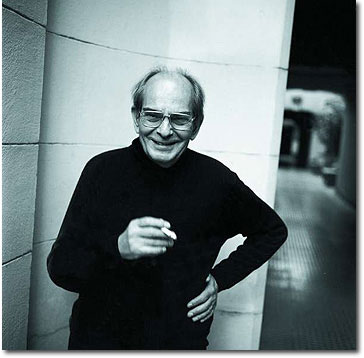
    “One of the most malevolent characteristics of racist thought,” Toni Morrison writes in her foreword to the novel Paradise, is “that it never produces new knowledge… It seems able to merely reformulate and refigure itself in multiple but static assertions” (Morrison 1998: xv).  In a photo from Morrison’s 1994 collaboration with Max Roach at the Festival d’Automne in Paris in 1994, one glimpses the new forms of inquiry that emerge from the interplay between verbal and rhythmic art.[2] 

    I elaborate the literary dimension of my argument elsewhere (Kronfeld 2025), but I include Morrison’s critical observation here to clarify what’s at stake for Love and me in our artistic and scholarly practice and help us shake off some tired old binaries about the relationship between aesthetics and politics. Jazz’s emphasis on the new emerges precisely in the context that Morrison describes: jazz and other experimental art forms are not inherently radical (a fact which is crucial to their radical potential) but rather contain the prerequisites for radical action and change, namely to be able to produce new knowledge, in contradistinction to self-replicating discourses. Not having had the luxury of resting well with conventional meanings, Black musical aesthetics continue to be necessary for clarifying the sociohistorical and racial contexts that make modernist crisises of referentiality so salient (Best 2018; Moten 2018; Gilroy 1995).

    Elsewhere I have discussed the elision of jazz drummers’ epistemic contributions within the context of modernist aesthetics and critical theory (Kronfeld 2019, 2025). But as Samuel A. Floyd, Jr. reminds his readers in The Power of Black Music, “Rhythms… are not solely situated within the confines of drums” (Floyd, 2017: xxvi). Here I focus on the rhythmic contributions of pianists in order to de-essentialize the rhythmic imaginary while simultaneously emphasizing time’s primacy as jazz’s most salient text. These pianistic traditions can be seen as the afterlife of those “other percussive devices” named by Baraka in the wake of the criminalization of the drums and their communicative power (Baraka 1963: 27). In what follows, I draw on theorizations of swing by Louis Armstrong, Thelonious Monk and Georgia Anne Muldrow, and of the blues by James Baldwin and Ahmad Jamal.

    It bears reminding here that rhythm qua aesthetic dimension provides space for the recovery of past forbidden, as well as the discovery of new, not-yet-available concepts, for past/future thoughts not yet thinkable (cf. A. Davis 1997: 163-64). This emphasis on process carries affinities both with Frankfurt School aesthetics (Kaufman 2005, 2000) and with Brenda Dixon Gottschild’s characterization of Africanist aesthetics (Gottschild 1996; Love 2021); but it also sets into sharp relief the divergences between these critical traditions. Angela Davis navigates this critical juncture between Frankfurt School and Black aesthetics in her Blues Legacies and Black Feminism, which remains ever salient: “My use of…the aesthetic dimension rejects its association with ‘transhistorical,’ ‘universal’ truths. I propose instead a conceptualization of ‘aesthetic dimension’ that fundamentally historicizes and collectivizes it.” (A­­. Davis 1997: 164).  In a section from her Billie’s Bent Elbow (2025) entitled “Aesthetic Form in the New Thing,” Fumi Okiji draws a distinction between aesthetic form and musical form: “aesthetic form is ultimately processual even when it is encountered in the objectified work thing” (84). Okiji continues: “Aesthetic form is as much the means toward our congregating in performance or rehearsal, practice, or listening as our (co)habitation of musical space is the means to aesthetic form” (85).[3]

    The potentialities that swing encodes in jazz and Black music more generally are never finished being known, rendering them answerable to unforeseen future circumstances, as well as to past and present experiences that have been occluded from view by structures of oppression, domination and appropriation (Okiji 2025, Kronfeld 2025). As jazz musicians have always taught, the innovative spatio-tempo/ral building blocks of Black music are attuned to the now precisely by virtue of being historically saturated, encoding what Georgia Anne Muldrow calls “new paths of articulation” (pers. comm 2023; cf. Ramsey 2004; Floyd 1996). [4]

    Think of the way that Thelonious Monk’s rhythmic phrasing disrupts racialized aesthetic conventions of beauty qua the “pleasant” or “agreeable” while opening new, disruptive possibilities within the beautiful, what Monk called “ugly beauty” (Monk 1968). It is, in fact, this capacity for disruption that is beauty’s philosophical legacy (Ginsborg 2015, Moten 2017).  In the process of his simultaneous rejection and illumination of the beauty ideal, Monk repurposes and radicalizes Charles Baudelaire’s postromantic metaphor in Les fleurs du mal  (Baudelaire 1994 [1857]).

    It is crucial to theorize from what rhythm artists say and do before “applying” theory to them (Defrantz 2001:43). As Dizzy Gillespie maintains in Notes and Tones, the landmark musician-to-musician collection of interviews, the history of Black music in recorded form – the sound – ought to be the primary text of jazz studies:  “We are documented in records, and the truth will stand” (A. Taylor 1977:127). That primary text can be fruitfully interpreted and put into dialogue with any number of theoretical frameworks – if, that is, the sonic text itself has not been erased by being conflated ontologically with its transcriptions.[5] Increasingly, as musician-educators around the world can attest, jazz theory and even the widely-circulating jazz transcriptions of recorded standards and original compositions (e.g., The Real Book) not only pre-empt but often replace entirely the listener’s (and musician’s!) direct encounter with the musical text itself, cancelling out the epistemic interventions embedded within rhythmic, harmonic and melodic form.[6] This has created an unhappy correspondence between what Barbara Christian called “The Race for Theory” and the racist exclusion of the musicians from the study of the music (Christian 1987).

    So what does it mean to theorize new categories from Monk, from Ahmad Jamal, etc.?

    Let’s attune ourselves to the new forms of knowledge embedded, for example, in the first bar of Monk’s twelve-bar blues “Straight No Chaser.” One aesthetic theory perspective here might see Monk as producing inchoative knowledge (knowledge-in-process), or as engaged in a negative mimesis that encodes the violent attempts at the erasure of earlier Afrodiasporic rhythmic traditions of communication (Adorno 1997; for critiques see Okiji 2018 and Kronfeld 2019).[7] But does this sit comfortably with the epistemic theories embedded within Monk’s left hand and the traditions it both registers and transcends?  In contradistinction and perhaps even in challenge to the interpretive framework of inchoative knowledge that I have gestured at above, the term jazz musicians often use for what the music offers –without invoking the usual positivist-empiricist baggage – is information. More accurately, the positivist-empiricist connotations of the term are both ironized and re-signified. This is how pianist Fred Hirsch, quoted in Paul Berliner (1994) puts it: “A Charlie Parker tune like ‘Confirmation’ should give you information” (231). And Amiri Baraka explains, invoking a Black Music epistemology that dismantles the alienating distinction between life and art: “Music is a living creature…The sounds carry whatever information rests in those frequencies and rhythms and harmonies” (Baraka 1996:141).[8] As Monkish re-imaginings and critical analyses by contemporary pianists continue to attest, the beginning of  “Straight No Chaser” is replete with information (Jason Moran 2015; Eric Reed 2011; Fred Hirsch 1998).  On the 1960 recording of “Straight No Chaser,” there is a flat-9 (a B-natural in the key of Bb) in Monk’s left hand that destabilizes the later oversimplified popular reception of the tune (listen to the accents at 0:00, 0:02, 0:08 and 0:13). Monk sounds like he is playing a G, Ab and a B-natural – the kind of “closed-position voicing” with a minor-second interval on the bottom that Robin D. G. Kelley rightly characterizes as a Monkish signature (R.D.G. Kelley 1999). As I have described elsewhere (Kronfeld 2021), the kind of listening that jazz practitioners engage in often runs counter to what Monk disciple Steve Lacy once described as “the bad habit of thinking in chords” (Eiland 2019, 95; R.D.G. Kelley 2009: 291).[9] Now, I love chords as much as the next piano player, but I understand why they have come to represent a characteristically American paint-by-numbers epistemology.[10] The “chord” applied as a pre-conceived, static generality (as in “Oh, just play a Bb7 chord in the first bar of ‘Straight No Chaser’”) risks obscuring the singularity of these notes, these intervals and voicings that need to be given credence and discrete attention. A Monkish theory of knowledge warns against allowing a pre-determined category to co-opt or occlude what’s in front of us. It may not be too much to read this as an allegory against white supremacy that is embedded in jazz listening practice – and offered to all listeners.

    Just as Monk’s harmony requires unlearning the “bad habit of thinking in chords,” fully internalizing his rhythmic language calls for acquiring a new episteme, even as this language in turn sets the terms for basic fluency after Monk. Prof. Thomas Taylor, who instructs his drum students to study Monk’s piano comping, describes the studious listening required for such language acquisition when it comes to Monk’s rhythm: “If you haven’t listened to this 200 times, you don’t know it. And 200 is actually really on the short end.” [11] Even Miles Davis famously commented that it took him ages to properly learn “Round Midnight”: “I used to ask [Monk] every night after I got through playing [‘Round Midnight’], ‘Monk, how did I play it tonight?’ And he’d say, looking all serious, ‘You didn’t play it right.’ The next night, the same thing and the next and the next and the next” (M. Davis 1989: 78).

    In the piano intro to “Straight No Chaser,” before being joined by the rest of the band, Monk plays through one chorus (12 bars) of the melody (from 0:00 to 0:14).  Monk’s left-hand chord (a cluster more than a chord), with its modernist flat-9 harmonic intervention expressed as if it were a simple statement, alternately reinforces and plays off of the right hand’s melody by first accenting beat 1, then the “and” of beat 2, then beat 1 again, then beat 4, then the “and” of beat 4, then beat 2, then beat 2 again, finally landing on the “and” of beat 2. Thomas Taylor observes about Monk’s spatialization of rhythm: “He is a master at playing in unpredictable places. So unless you really know this version, you won’t ever put your left hand where he’s playing. It is as if Monk is doing an exercise where he plays every possible beat, but you don’t know which will come when.”[12] The spaces generated in between the accents are, of course, a crucial component of the rhythmic structure. John Edgar Wideman writes, letting his own elisions do the talking: “Silence one of Monk’s languages, everything he says laced with it… An extra something not supposed to be there, or an empty space where something usually is” (Wideman 1999: 551; cf. Sawyer 2025; Holiday 2023; Moran 2015). After this Intro, Monk plays the changes under “Straight No Chaser”’s melody in a more conventional way. But because we have become attuned to those dissonant clusters and accents in the Intro, now the expected itself sounds unexpected (T. Taylor, pers. comm. March 2, 2025).  

    From a drummer’s perspective, Thomas Taylor criticizes the overwhelming tendency to flatten out Monk’s rhythmic concepts. Take Monk’s comping under Charlie Rouse in “Bright Mississippi,” for example. The bouncing right-hand figure that Monk plays high up on the piano in response to the melody is neither swung eighth notes, nor straight eighths, nor triplets. “Maybe they are triplets that get slower, stretched and straighten out,” offers Taylor. The drummer’s perspective demonstrates the inchoative, in-process forms that real rhythmic concepts take – as opposed to the cookie-cutter molds and oversimplifying labels that prevent such rhythmic phrases from being heard accurately.

    The very idea that harmonic analysis can be pursued independently of rhythmic phrasing is one of the fallacies that we need to shine a light on, and it’s a deeply ingrained problem in institutionalized jazz pedagogy (Murray 2017: 118; Wilf 2014; McMullen 2021; Baraka [Jones] 1967). Monk’s swing is the refutation of the “straight” in his title “Straight No Chaser” – even and especially when the left-hand harmonic accent lands squarely on the 1 –akin to what Amiri Baraka calls a “negation of a negation” (Baraka 1996: 22).  Thus, it is not just that Monk swings what is straight, but rather that his rhythmic phrasing undoes the binary between swung time and straight time. As composer Anthony Kelley (pers. comm., May 6, 2023) pointed out to me, Monk’s composition “Misterioso” and its left-hand phrasing is an excellent example of the way in which the straight is also swung—is in effect reclaimed by swing as a parody of rigid conventionality. (Monk 2012 [1958]; A. Kelley 2024).[13] Monk shows the connection between rhythmic syncopation and harmonic dissonance. They operate in tandem. Rather than taking for granted syncopation as rhythm manqué (displaced rhythm; rhythm ‘minus’ something), Monk’s polyrhythmic vernacular lays bare the distortion that results from the presupposition that something called “straight time” is primary. As saxophonist Howard Wiley suggests, the construct of syncopation itself is perpetually in the process of being freed by its practitioners, although, by the same token, this generates the ever-present danger that it can be “‘taken back’ [by hegemonic powers] at any time” (Wiley, pers. comm, 2019; Kronfeld, 2019: 35)[14].

    Just as Morrison rhetorically asks in relation to Ralph Ellison’s novel—“Invisible to whom?”, one may ask about Monk’s fame for his off-beat syncopations—syncopated to whom?[15] In other words, what is perfectly logical, to quote Monk himself (Kelley 2009, 2020), only appears as a deviation when going out of one’s way to negate and ignore the epistemologies embedded in Black Musical Space (in James Gordon Williams’ terms; Williams 2021). Thus, contrary to popular belief, what makes jazz unpredictable is precisely what makes it a language (cf. Moten 2018 on Chomsky 1986). Monk’s unpredictability becomes the language one needs to know. Monk’s swing is the refutation of the “straight” in his title “Straight No Chaser” – even and especially when the left-hand harmonic accent lands squarely on the 1 –akin to what Amiri Baraka calls a “negation of a negation” (Baraka 1996: 22).

    I center Monk in the context of this issue on R(hy)pistemologies because Monk’s rhythmic prowess on the piano has been vastly underacknowledged by critics.[16] To put it bluntly, Monk’s harmonic interventions have fit more comfortably within modernism as it is traditionally construed than has his sense of rhythmic groove, swing and danceability.[17]  In contrast, Robin D.G. Kelley offers a key discussion of the racial politics of “swing” and their impact on Monk’s conditional acceptance into the avant-garde (RDG Kelley 1999:52). Indeed, musicians have always emphasized the primacy of Monk’s time.[18]  James Gordon Williams writes that Monk “encapsulated Black musical space” (Williams 2021: 15).  Williams describes the profound impact of Monk’s teaching on the master drummers of his generation and after: “From Monk, [Billy] Higgins received observational lessons about space and time” (Williams 2021:54). Williams “view[s] African American improvisation as a deployment of oppositional spatial knowledge that reflects the material conditions and imaginations that shape Black lives on a daily basis” (Williams 2021: 9). Williams’ theorization of “musical place-making,” the improvisational mapping, even the “spatial insubordination” of Black music draws on Katherine McKittrick’s Black Geographies and bell hooks’ “radical creative space” (Williams 2021:6). The black sense of place reflected and generated in “African-American improvisatory and compositional practices” both indexes and calls into question the “spatial domination” and “hegemonic spaces that have displaced Black people” (Williams 2021:6-8).[19] Black musical space becomes especially salient in the context of policing and the racialized state violence inflicted on Monk himself.[20]

    In his solo piano recording of “Evidence” (Monk 1954). Monk’s rigorous implication of the “one,” [i.e. beat 1], evoked via negation, becomes particularly salient.[21] A complete rhythm section unto himself, Monk breaks the silence on the “and” of beat 1, opening up the possibility of a half-time feel – the kind of implied time that evokes the clave and a whole past and future of progressive Afro-Cuban music. As is well known, Monk’s composition was based on the standard tune “Just You Just Me,” which he later retitled “Justice” spelled “JUST – US” – an ironic criticism of the Justice that is “just” for the racially unmarked (Edwards 2001; Leal 2023). His new title, “Evidence” takes apart rhythmically the feigned coherence of dominant evidentiary norms.[22]

    But Monk’s use of time and rhythmic form, as we have seen, also points—both ways, as it were—to past and future transnational developments within Black American music from timba to funk to R&B and hip-hop. Here is Miles Davis in 1989:

     I think a lot about Monk these days because all the music that he wrote can be put into these new rhythms that are being played today by a lot of young musicians – Prince, my new music… a lot of his music reminds me of the West Indian music being played today”… You could adapt some of his music to what’s going on now in fusion and in some of the more popular veins; maybe not all of them, but the ones that got the pop in the motherfucking head, you could. You know, that black rhythmic thing that James Brown could do so good, Monk had that thing and it’s all up in his compositions (80).

    Davis’ remarks toward the end of his life foreshadow emerging theoretical paradigms drawing on Black musical aesthetics in recent years to theorize non-linear, trans-generational temporality (Okiji 2017; Sawyer 2025). They also resonate with recent intergenerational jazz practice by contemporary drummers like Kendrick Scott, who during COVID organized thirty-eight drummers to perform a virtual communal version of Monk’s “Evidence” (Scott 2020).[23]

    In my dialogue with Michael J. Love about this, inspired by Love’s own work on the marginalization of the rhythmic vernacular within contemporary dance, I shared that an issue closely related to Monk’s often misunderstood rhythmic syncopation are the “grace notes” that are often illegible because they are taken as mistakes and sometimes kept out of the transcriptions, rather than attended to in their complexity as being where the music is actually happening.[24] This has to do with the idea that the rhythmic vernacular is the core text; but as Love has shown, drawing on Brenda Dixon Gottschild, it is precisely this Africanist dimension that is repressed (Love 2021, Gottschild 1996). Love and I have both witnessed with frustration from the dance and piano sides of jazz performance that in mass culture, extensive, convoluted maneuvers are often performed to avoid acknowledging the existence of Afrodiasporic rhythmic intelligence on its own terms.

    In his important but still underappreciated 1936 philosophical monograph on the music of the Harlem Renaissance, Alain Locke writes that “jazz is in constant danger” from commercialization (Locke 1936: 174). In fact, this is one of the main preoccupations of his book on the Black music of his time (Porter 2002:45-47).[25] Locke quotes at length from Louis Armstrong’s own book Swing that Music, which was also published in 1936. Armstrong’s Swing that Music has frequently been mistaken for “mere” biography or memoir, rather than offering the radical theoretical and historiographical critique of the music that he in fact contributes in this work (Veneciano 2004: 272; O’Meally 2022). Armstrong writes: “The reason swing musicians insist upon calling their music ‘swing music’ is because they know how different it is from the stale brand of jazz they’ve got so sick of hearing. But in the early days, when jazz was born, jazz wasn’t that way at all… We can now look back [remember, he is saying this in 1936!] and see where jazz got side-tracked. We won’t have many excuses… if we let today’s swing music go the same way” (Armstrong 1993 [1936]:122, qtd. in Locke 1936: 110). Armstrong anticipates the critical stance Baraka takes as LeRoi Jones in his 1963 Blues People in the chapter “Swing: From Verb to Noun,” where the noun is the grammatical correlate of reification.  But already for Armstrong, “swing music” is itself the name of the attempt to wrest jazz back from the co-opting forces that dilute it and threaten its newness. Margo Natalie Crawford’s readings of “anticipatory, liminal” texts of the Harlem Renaissance provide an important context for Armstong’s observations. Crawford demonstrates that Langston Hughes and Zora Neal Hurston “anticipate” (a technical notion Crawford imbues with both historiographical and rhythmic aesthetic valences) the Black Arts Movement in their trenchant critiques of black music’s commercialization (Crawford 2017).[26] Enriching the dialogue with the verbal art of his day, Armstrong draws an analogy in Swing that Music between the linear plots of pulp fiction and the commercialized versions of jazz. He writes: “I do know that a musician who plays in ‘sweet’ orchestras must be like a writer who writes stories for some popular magazines. He has to follow along the same kind of line all the time” (29). Armstrong continues: “[The conventional writer] has to write what he thinks the readers want just because they’re used to it. But a real swing musician never does that” (29).  He speaks here from the center of the Afromodernist call for experimental renewal, for a novel musical language that will continually resist the stultifying linear progressions demanded by white commercial markets.

    After drawing on Louis Armstrong’s critical poetics of swing, there is another artist Alain Locke specifically identifies as being able to preserve his art in an unadulterated way – Jimmie Lunceford. In the 1935 recording entitled “The Melody Man” (Lunceford 1935) you can hear a syncopation that evades capture. Propelled by drummer Jimmy Crawford’s brushes, the tightness between the horns and rhythm section prefigures James Brown’s band. I take this to be an example of the swing under the swing that continues to inform contemporary creative practice.


    Mama, You Can Bet! (2020); Denderah (2013). Written, produced, arranged & performed by Georgia Anne Muldrow. 

    Georgia Anne Muldrow (b. 1983) is a composer, multi-instrumentalist and producer whose works brings together rhythmic and harmonic innovation, new epistemologies, and community-based activism. She recorded the 2013 album Denderah and the 2020 Mama, You Can Bet! as Jyoti, the pseudonym given to her by Alice Coltrane and reserved for what Muldrow calls her “one-woman jazz ensemble.” Here, as on all her studio albums, Muldrow plays every instrument. On Denderah’s fourth track, “Sup,” which echoes the BPM (beats per minute, or tempo) of “Melody Man,” listen for the drum language of the brushes – done on synthesizer. Muldrow is taking apart the syncopation even further. Peeling back the swing behind the (co-opted) swing, she layers her brushes over existing syntax of the 1920s and 30s, disclosing that era’s own repudiation of the commercialized “pulp fiction” music diagnosed by Louis Armstrong. Her brushwork on synthesized drums here illustrates the avant-garde reach of both past and present: “The syntax is there for you to be able to create a new path of articulation, but there always comes a time when it comes back to where it began” (Muldrow, pers. comm, October 30, 2023).

    Georgia Anne Muldrow with Maya Kronfeld on keyboards as part of Justin Brown’s NYEUSI. 2018 Nublu Jazz Festival at SESC Pompeia in São Paulo, Brazil. Featuring Josh Hari, Chad Selph, Nadia Washington, Jaime Woods, Josh Hari. Photo courtesy of the author.  

    This intergenerational focus on rhythm lays bare the shortcomings of critical discussions of improvisation that center exclusively on melodic instruments, rather than on rhythm section instruments (drums, piano, bass) in their rhythmic functions. These trends are related to the willful misperception that blues is merely jazz’s more simple precursor, an erroneous historiography that is all too often used to justify the exclusion of Black artists and teachers from educational spaces. Counteracting these tendencies, Rhonda Benin reminds us in her vocal performance course of the same name that “Jazz Ain’t Nothing but the Blues” (Benin 2024). Benin, a vocal artist-educator and member of the Linda Tillery Cultural Heritage Choir makes clear that Blues as avant-garde roots music is precisely jazz’s chief template for ongoing revision, mutation and innovation (Tillery 1999, 2014; cf. Hunter 1998).

    In James Baldwin’s essay “On the Uses of the Blues” (1964), he argues that black music is engaged in a form of direct truth-telling that makes good on the very communicative function that hegemonic language has abandoned. Baldwin makes the surprising move of correlating blues singer Bessie Smith with fiction writer Henry James, arguing that both artists fulfill the promise of creating non-reductive, non-deadening knowledge in a dominant culture whose expertise lies in the “distinctly American inability (like a frozen place somewhere)…to perceive the reality of others” (Baldwin 1986: 14). This provocatively interracial, trans-disciplinary rewriting of the American canon is based on black music as the irreplaceable model for truth-telling (“information” in the language of jazz artists) in a culture of evasion and denial. Baldwin writes: “‘Gin House Blues’ is a real gin house. ‘Backwater Flood’ is a real flood. This is what happened, this is what happened, this is what it is” (59). Baldwin’s own rhythmic reiteration asks us to grapple with the idea that the blues song is a real gin house, rather than a reference to one—flying in the face of the sacrosanct use-mention distinction in Anglo-American analytic philosophy of language (Cappelen, Herman, Lepore, & McKeever, 2023). But we can correlate Baldwin’s astonishing claim (his subsumption of the mere mention of the blues to the uses of the blues) with an idea shared across Frankfurt School and Afro-modernist aesthetics that art works, particularly in social contexts of violent erasure, must embody rather than describe (M. Davis 1998; Kaufman 2005). Baldwin’s twist, however, is to insist on the primacy of these acts of artistic embodiment, claiming—from the standpoint of Black music—that the possibility of literal truth-telling hinges on such artistic acts.

    The modernist trope of exhaustion with available descriptions is greatly clarified by its Black critique of referentiality. But this critique is only possible thanks to the complex legacies of Black rhythmic forms in the music itself, legacies which are still often feared by and excluded from academically-codified philosophical aesthetics (and we can argue, are not fully theorized even in Baldwin’s essay, where discussions of lyric and lyricization are most prominent).

    Baldwin’s own use of “the blues” would have been invoking a holistic notion of the oneness of Black music (Wiley, pers. comm. May 15, 2009) that even now emphasizes the continuities among and between jazz, blues, gospel, R&B, funk, hip-hop and even those genres later coded as white, such as rock n’ roll and punk. Genre distinctions between jazz and blues are widely regarded among practitioners of the music as artificial, and too often marshalled to perform a colonizing function (Baraka 1963).  I’ve suggested that Black music according to Baldwin catalyzes the modernist critique of descriptive, propositional knowing. At the same time, however Baldwin also calls into question Kantian/Frankfurt School notions of aesthetic autonomy by insisting on the claim that in a coercive society, Black music is literal description. 

    The salience of rhythm in the U.S. and other regions of the African diaspora is due not only to the textural – and indeed textual! – richness and complexity of Black rhythmic forms but also to the systemic racism that has prevented descriptive content from being encoded in other channels; for example, in the lyrics, as Tyfahra Singleton has shown (Singleton 2011). James Baldwin writes: Americans are able to admire Black music only to the extent that “a protective sentimentality limits their understanding of it” (Baldwin 1951; my emphasis). And what is being protected, he’s saying, is the white sense of self. The sentimental in American culture, we might say, is a defense against the tragic and the critical. 

    As a closing counterpoint, I’d like to offer an example from Ahmad Jamal’s album Happy Moods (Jamal, 1960). I’ve selected the track “Excerpts of the Blues” because we are often taught harmony on the model of a binary cliché between major chords as happy and minor chords as sad; but applying that false binary to the blues make the innovations of the blues form illegible (recall that Monk’s “Straight No Chaser” is also a blues!) The blues take us behind that notion of major as opposed to minor thirds, but more importantly, they take us beyond the emotional binaries that Baldwin diagnoses as so uniquely American, where “happiness” is a vapid, saccharine substitute for real joy. This is what makes Ahmad Jamal’s Happy Moods so interesting. In the piece entitled “Excerpts from the Blues,” Jamal demonstrates that major seven chords are part of the blues (whereas in codified jazz pedagogy, blues harmony is most frequently associated with dominant-seven chords). This then becomes a point of departure for other colors and hues, as when he lets C major 7 (the piece’s tonic or “home” key) get inflected by its minor 4 (F minor). Like Monk’s swinging of straight time, Jamal reclaims this major 7 sound not as empty optimism but as containing within it all the emotional complexities of the blues.  The form of the composition itself holds all that together: the A section is built on a 1 chord that is a major seven; then the B section is a traditional blues as we might expect it to be, based on the dominant sound.

    Every bar of “Excerpts of the Blues” is a masterclass; indeed, it is sometimes observed that one bar of Ahmad Jamal contains within it the whole future of recorded music. I have created a two-bar loop out of the material from 0:11-0:14, which I have notated (imperfectly!) as a bar of 4/4 followed by a bar of 2/4. At the “(Rhy)pistemologies: Thinking Through Rhythm” Conference, I improvised on the piano along with this six-beat loop, joined by Paris Nicole Strother, founder of the group We Are KING.[27] 

    Along with trio mates Israel Crosby on bass and Vernel Fournier on drums (brushes), Ahmad Jamal expands existing concepts of rhythm and harmony, but does so out of a capacious sense of spaciousness.  The array of interlocking parts means that it’s never just one thing. There is 1) the relationship between the drums and bass; 2) the relationship between Jamal’s two hands at the piano (note the unexpected accent on the triplet in the left-hand chord just as the harmony darkens and deepens); 3) the change in rhythmic feel within a single line in the right hand, where Jamal’s melodic phrase switches mid-stream from triplet time (swung) to march time (straight), and back again. With Ahmad Jamal, you feel the “both/and” of it all. The trio is playing different facets of the blues simultaneously, just as Jamal himself is showing us so many different facets of the harmony and rhythm, all at the same time. 

    Many thanks to Thomas Taylor and Tobin Chodos for help with notation-interpretation.

    References

    Adorno, Theodor W. Aesthetic Theory, ed. Gretel Adorno and Rolf Tiedemann, trans. Robert Hullot-Kentor. Minneapolis: University of Minnesota Press.

    Armstrong, Louis. 1993 [1936]. Swing That Music. Cambridge, MA: Da Capo Press.

    Atkinson,Daniel E. 2016. “‘Feets Don’t Fail Me Now”: Navigating an Unpaved, Rocky Road to, through and from the Last Slave Plantation’, in Civic Labours: Scholar Activism and Working-Class Studies, eds. Dennis A. Deslippe, Eric Fure-Slocum, and John W. McKerley. Chicago: University of Illinois Press.

    Baldwin, James. 1986. Interview with David Adams Leeming. “An Interview with James Baldwin on Henry James,” The Henry James Review 8, no. 1: 47-56.

    Baldwin, James. 2011 [1964]. “The Uses of the Blues.” In The Cross of Redemption: Uncollected Writings, ed. Randall Kenan. New York: Vintage International.

    Baraka, Amiri. [LeRoi Jones].1963. Blues People: Negro Music in White America. Wesport, Conn.: Greenwood Press.  

    Baraka, Amiri. 2009. Digging: The Afro-American Soul of American Classical Music. Berkeley: University of California Press.

    Baraka, Amiri [LeRoi Jones]. 2010 [1967]. “The Changing Same (R&B and New Black Music).” In Black Music. New York: Da Capo Press.

    Baraka, Amiri [LeRoi Jones]. 2010 [1963]. “Jazz and the White Critic.” In Black Music. New York: Da Capo Press.

    Batiste, Jon. 2021. “Jon Batiste on THELONIOUS MONK: STRAIGHT, NO CHASER.” Turner Classic Movies: TCM. Juneteenth – 6/19. https://www.facebook.com/watch/?v=868065477121956

    Baudelaire, Charles. 1994 [1857/1869]. Flowers of Evil & Paris Spleen, trans. William H. Crosby. Rochester, NY: BOA Editions.

    Benin, Rhonda. “Jazz Ain’t Nothing But the Blues.” The Jazzschool and California Jazz Conservatory. https://jazzschool.cjc.edu/event/jazz-aint-nothing-but-the-blues/ Accessed August 31, 2024.

    Berliner, Paul. 1994.The Infinite Art of Improvisation. London & Chicago: Chicago University Press.

    Best, Stephen. 2018. None Like Us: Blackness, Belonging and Aesthetic Life. Durham, NC.: Duke University Press.

    Cappelen, Herman, Ernest Lepore, and Matthew McKeever. 2023. “Quotation.” The Stanford Encyclopedia of Philosophy, eds. Edward N. Zalta & Uri Nodelman. <https://plato.stanford.edu/archives/sum2023/entries/quotation/>.

    Carr, Raymond. 2023. “The Dancing Monk and the Rhythm of Divine Life.” Harvard Divinity Bulletin. https://bulletin.hds.harvard.edu/the-dancing-monk-and-the-rhythm-of-divine-life/.

    Christian, Barbara. 1987. “The Race for Theory.” Cultural Critique 6: 51-63.

    Chomsky, Noam. 1986. Knowledge of Language: Its Nature, Origin and Use. New York: Praeger.

    Chow, Rey. 2010 [1998]. “The Postcolonial Difference: Lessons in Cultural Legitimation.” In The Rey Chow Reader, edited by Paul Bowman. New York: Columbia University Press.

    Cobo-Piñero, Rocío. 2022. “Beyond Literature: Toni Morrison ‘s Musical and Visual Legacy for Black Women Artists.” Feminismo/s 40: 27-51.

    Coleman, Kwami. “Free Jazz and the ‘New Thing’: Aesthetics, Identity, and Texture, 1960-1966.” The Journal of Musicology 38 no.3: 261-295.

    Crawford, Margo Natalie. 2017. Black Post-Blackness: The Black Arts Movement and Twenty-First Century Aesthetics. Champaign, IL: University of Illinois Press.

    Davis, Miles. With. 1989. Quincy Troupe, Miles: The Autobiography. New York: Simon & Schuster, 1989.  

    Davis, Angela Y. 1998 Blues Legacies and Black Feminisn: Gertrude “Ma”Rainey, Bessie Smith, and Billie Holiday. New York: Pantheon Books.

    Davis, Eisa. 2025. The Essentialisn’t (paperback). New York: Theatre Communications Group.

    Defrantz, Thomas F. 2001. Dancing Many Drums: Excavations in African American Dance. Madison: University of Wisconsin Press.

    Deveaux, Scott. 1999. “The Jazzman’s True Academy.” In Bebop: A Social and Musical History. Berkeley, CA: University of California Press, 202-235.

    DiPiero, Dan. 2021. “Race, Gender, and Jazz School: Chord-Scale Theory as White Masculine Technology,” Jazz and Culture 6, no.1: 52-77.

    Dunning, Jennifer. 1985. “DANCE REVIEW; 3 Icons Exploring Life’s Horrors and Joys.” The New York Times, July 27.

    Eiland, Howard. 2019. Notes on Literature, Film and Jazz. New York: Spuyten Duyvil.

    Edwards, Brent Hayes. 2001. “Evidence.” Transition, no. 90: 42-67.

    Feurzig, David. 2011 “The Right Mistakes: Confronting the ‘Old Question’ of Thelonious Monk’s Chops.” Jazz Perspectives 5, no. 1: 29-59.

    Floyd, Samuel A., Jr. with Melanie L. Zeck and Guthrie P. Ramsey, Jr. 2017. The Transformation of Black Music: The Rhythms, the Songs, and the Ships of the African Diaspora. Oxford: Oxford University, Press.

    Floyd, Samuel A. The Power of Black Music: Interpreting its History from Africa to the United States. 1996. Oxford: Oxford Universeity Press.

    Gilroy, Paul. 1995. The Black Atlantic: Modernity and Double-Consciousness. Cambridge: Harvard University Press.

    Gottschild, Brenda Dixon. 1996. Digging the Africanist Presence in American Performance: Dance and Other Contexts. Westport, Connecticut & London: Praeger.

    Greenfield-Sanders, Timothy. 2019. Toni Morrison: The Pieces I Am. Magnolia Pictures.

    Hirsch, Fred.  1998. Thelonious: Fred Hirsch Plays Monk (Nonesuch).

    Haywood, Mark S. “Rhythmic readings in Thelonious Monk” Annual Review of Jazz

    Studies 7, (1994-1995): 25-45.

    Holiday, Harmony. “The Fraught Dance Between Artist and Interviewer in ‘Rewind & Play.’” March 18 2023. The New Yorker.

    Hunter, Tera. 1998. To ’Joy My Freedom: Southern Women’s Lives and Labors After the Civil War. Cambridge, Mass.: Harvard University Press. 

    Jamal, Ahmad. 1960. Happy Moods. Argo

    Kaufman, Robert. 2000. “Red Kant, or the Persistence of the Third Critique in Adorno and Jameson.” Critical Inquiry 26, no. 4: 682-724.

    Kaufman, Robert. 2005. “Lyric’s Expression: Musicality, Conceptuality, Critical Agency.” Cultural

    Critique 60: 97-216 

    Kelley, Anthony. Interview with  Jerad Walker, Anisa Khalifa, and Charlie Shelton-Ormond. 2024. “The Hunt for a Long-Lost Musical Masterpiece.” WUNC Radio, May 30. https://www.wunc.org/podcast/the-broadside/2024-05-30/mary-lou-williams-jazz-history-duke-anthony-kelley

    Kelley, Robin D. G. 1999. “New Monastery: Thelonious Monk and the Jazz Avant-Garde.” Black

    Music Research Journal 19, no. 2: 135-168.

    Kelley, Robin D.G. 2009. Thelonious Monk: The Life and Times of an American Original. New York: Free Press.

    Kelley, Robin D.G. 2020. “‘Solidarity Is Not a Market Exchange’: An Interview with Robin D.G. Kelley.” BLACK INK. https://black-ink.info/2020/01/16/solidarity-is-not-a-market-exchange-an-interview-with-robin-d-g-kelley/

    Kronfeld, Maya. 2019. “The Philosopher’s Bass Drum: Adorno’s Jazz and the Politics of Rhythm,” Radical Philosophy 205: 34-47.

    Kronfeld, Maya. 2021. “Structure in the Moment: Rhythm Section Responsivity.”

    Kronfeld, Maya. 2025. “Spontaneity.” In Political Concepts: A Lexicon 7. Literature Edition. https://www.politicalconcepts.org/category/issue-7/

    Kronfeld, Maya. 2025. “The Indispensability of Form: A Kantian Approach to Philosophy and Literature.” In The Cambridge Companion to Philosophy and Literature, eds. Lanier Anderson and Karen Zumhagen-Yekplé (in press).

    Lacy, Steve. 2006. “Steve Lacy Speaks,” interview with Paul Gros-Claude, in Steve Lacy: Conversations, ed. Jason Weiss. Durham, NC: Duke University Press.

    Leal, Jonathan.2023. Dreams in Double Time: Refiguring American Music. Durham: Duke University Press.

    Lewis, George E. 2002. “Improvised Music After 1950: Afrological and Eurological Perspectives.” Black Music Research Journal 22: 215-246. 

    Locke, Alain. 2022. The New Negro Aesthetic: Selected Writings, eds. Jeffrey C. Stewart and Henry Louis Gates, Jr. New York: Penguin Classics.

    Locke, Alain. 1936. The Negro and His Music. Albany, NY: J.B. Lyon Press.

    Love, Michael J. 2021. “’Mix(tap)ing’: A Method for Sampling the Past to Envision the Future,” Choreographic Practices, 12:1 (March 2021): 29-45

    Lunceford, Jimmie. 1935. “The Melody Man.” The Complete Jimmie Lunceford Decca Sessions (Mosaic)

    McMullen, Tracy. “Jazz Education After 2017: The Berklee Institute of Jazz and Gender Justice and the Pedagogical Lineage.” Jazz and Culture 4, no. 2 (2021): 27–55.

    McPherson, Jadele. 2025. “Fugitive Acts: One Hundred Years of Afro-Cuban Performance,” in “Overcoming the Difficulty: The Racial and Gender Politics of Cuban Performance in Tampa.” PhD Dissertation, CUNY Graduate Center. 

    Monk, Thelonious. 1968. “Ugly Beauty.” Underground (Columbia Records).

    Monk, Thelonious. 1954. “Evidence.” Piano Solo (Disques Vogue).

    Monk, Thelonious.2012 [1958]. “Misterioso.” Misterioso (Concord).

    Moran, Jason. BlindFold Test with Dan Ouellette. Downbeat April 2018.

    Moran, Jason. 2015. In My Mind: Monk At Town Hall, 1959. Jazz Night in America. NPR. https://www.npr.org/2015/10/08/446866440/jason-moran-plays-thelonious-monks-town-hall-concert

    Morrison, Toni. 1998. Paradise. New York: A. A. Knopf.

    Moten, Fred. 2018. Stolen Life, vol. 2 of consent not to be a single being. Durham, NC.: Duke University Press.

    Moten, Fred. 2017. Black and Blur, vol. 1 of consent not to be a single being. Durham, NC.: Duke University press.

    Muldrow, Georgia Anne. 2023. Author Interview, Durham, N.C., October 30.

    Muldrow, Georgia Anne [as Jyoti]. 2020.  Mama, You Can Bet!  (SomeOthaShip Connect).

    https://someothaship.bandcamp.com/album/mama-you-can-bet

    Muldrow, Georgia Anne [as Jyoti]. 2013. Denderah (SomeOthaShip Connect).

                  https://someothaship.bandcamp.com/album/denderah

    Murray, Albert. 2017 [1976]. Stomping the Blues. 40th Anniversary Edition. Minneapolis: University of Minnesota Press.

    Okiji, Fumi. 2018. Jazz as Critique: Adorno and Black Expression Revisited. Stanford, California: Stanford University Press. 

    Okiji, Fumi. 2017. “Storytelling in Jazz Work as Retrospective Collaboration.” Cambridge: Cambridge University Press.

    Okiji, Fumi. 2025. Billie’s Bent Elbow: Exorbitance, Intimacy, and a Nonsensuous Standard. Stanford, CA: Stanford University Press

    O’Meally, Robert G. 2022. Antagonistic Cooperation: Jazz, Collage, Fiction and the Shaping of African American Culture. New York: Columbia University Press.

    Prouty, Kenneth E. “The History of Jazz Education: A Critical Assessment.” Journal of Historical Research in Music Education 16, no. 2.

    Ramsey, Guthrie P. 2004. Race Music: Black Cultures from Bebop to Hip-Hop. Berkeley, CA.: University of California Press.

    Ratliff, Ben. 2016. “Review: ‘We Are King,’ With Its Deep R&B Strategies, Is a Musicians’ Album.” February 13. New York Times

    Reed, Eric. 2011. The Dancing Monk (Savant).

    Reed, Anthony. Soundworks: Race, Sound, and Poetry in Production. Durham, NC: Duke University Press.

    Sawyer, Michael. 2025. “So What: Kind of More or Less Than All Blue(s).”Boundary 2 Online. Special Issue: “(Rhy)pistemologies: Thinking Through Rhythm.”

    Sawyer, Michael. 2025. The Door of No Return: A Phenomenology of Black(ness). Forthcoming.

    Singleton, Tyfahra.2011.  “Facing Jazz, Facing Trauma: Modern Trauma and the Jazz Archive.” Ph.D. diss., UC Berkeley.

    Somers, Steven. 1988. “The Rhythm of Thelonious Monk,” Caliban 4: 44-49.

    Taylor, Art. 1977. Notes and Tones: Musician-to-Musician Interviews. New York: Da Capo Press.

    Taylor, Thomas E., Jr.  It’s All About the Ride! The Ride Cymbal and Snare Drum Book. Forthcoming, 2025. 

    Taylor, Thomas E., Jr. “Comping With Miles and Wynton.” Jazz Drummers’ Workshop. Modern Drummer 285 (Aug. 2003): 94-96. https://www.moderndrummer.com/article/august-2003-volume-27-number-8/

    Tillery, Linda. 1999. Oral History Interview with Linda Tillery. March 29. University of Denver. https://mediaspace.du.edu/media/Oral+history+interview+with+Linda+Tillery%2C+1999/0_vy0u97zv/168664692

    Tillery, Linda. 2014. Interview: 2014 Community Leadership Awards. San Francisco Foundation. https://www.youtube.com/watch?v=CDyEJoR1zUI

    “Toni Morrison/ Max Roach: Performance lecture et batterie.” Festival d’automne, archive. https://www.festival-automne.com/en/edition-1994/toni-morrison-max-roach-performance-lecture-batterie. Accessed August 31, 2024.

    “Toni Morrison et Max Roach: la voix et le rythme.” 2020. Les Nuits de France Culture. https://www.radiofrance.fr/franceculture/podcasts/les-nuits-de-france-culture/toni-morrison-et-max-roach-la-voix-et-le-rythme-6555310April 18.

    Veneciano, Jorge Daniel. 2004. “Louis Armstrong, Bricolage, and the Aesthetics of Swing.” In Uptown Conversation: The New Jazz Studies, edited by Robert G. O’Meally, Brent Hayes Edwards, and Farah Jasmine Griffin.

    Wideman, John Edgar. 1999. “The Silence of Thelonious Monk.” Callaloo 22, no. 3: 550-557.

    Wiley, Howard. May 5, 2019. Personal Communication.

    Wiley, Howard. 2019. The Angola Project, 12 Gates to the City. Compact Disc. https://www.discogs.com/release/10414938-Howard-Wiley-And-The-Angola-Project-Featuring-Faye-Carol-12-Gates-To-The-City?srsltid=AfmBOoqCHCqH4JKgIGmliHsr6t9dylE8TKgYmJFuortQWNDh2NLUpYnu

    Wilf, Eitan Y. 2014. School for Cool: The Academic Jazz Program and the Paradox of Institutionalized Creativity. Chicago: Chicago University Press.

    Williams, James Gordon. 2021. Crossing the Barlines: The Politics and Practices of Black Musical Space. Jackson, Miss.: University Press of Mississippi.

    Wolfson, Susan and M. Brown, eds. 2000. Reading for Form. Seattle: University of Washington Press. 

    Notes

    * I am grateful to Erin Graff Zivin, Jonathan Leal, Michael J. Love, Paris Nicole Strother, Georgia Anne Muldrow, Thomas Taylor, Inger Flem and the participants of the “‘(Rhy)pistemologies’: Thinking Through Rhythm” conference at the USC Experimental Humanities Lab, and to Art Share Los Angeles. Special thanks to my longtime interlocutor, Michael Sawyer. Earlier drafts were presented at the 2024 ACLA in Montreal, and at the University of Pittsburgh, 53rd Annual Jazz Seminar. Special thanks to Aaron J. Johnson, Michael C. Heller, and Yoko Suzuki. My discussion of Ahmad Jamal here benefited from “Ahmad Jamal: In Appreciation,” moderated by Dr. Michael P. Mackey with panelists Dr. Alton Merrell, Dr. Nelson Harrison, and Judge Warren Watson. November 3, 2024.  University of Pittsburgh Hill Community Engagement Center. I thank Stephen Best, Anthony Kelley, Philip Rupprecht, Davina Thompson and the two anonymous reviewers for valuable discussions and feedback. I would like to acknowledge my late father Amichai Kronfeld (ז״ל) for teaching me drum exercises before I could walk. 

    [1] Guthrie P. Ramsey discloses “the ways in which blackness troubles the disciplinary boundaries among the subfields of music scholarship” (Ramsey 2004: 19). See George E. Lewis on “an ongoing narrative of dismissal, on the part of many…composers, of the tenets of African-American improvisative forms” (2002:216). My participation in Eisa Davis’ sound-based conceptual art work “The Essentialisn’t” informs my thinking here. For full text see E. Davis 2025 . See also https://www.jackny.org/whats-on/the-essentialisnt-5 .

    [2] Audio available via Les Nuits de France Culture 2020; cf. Cobo-Piñero 2022; Dunning 1995; Kronfeld 2024.

    [3] Recall that Amiri Baraka insisted that the term Aestheticin the “Black Aesthetic” is “useful only if it is not depoliticization of reference.” See Baraka’s 1989 essay entitled, “The ‘Blues Aesthetic’ and the ‘Black Aesthetic’: Aesthetics as the Continuing Political History of a Culture” (Baraka 2009: 9-28). He writes, “The Blues is not even twelve [bars] necessarily, the insistence on that form is formalism” (24). Baraka’s notion of “functional music” has offered a key challenge to reductively formalist paradigms of aesthetic autonomy (Baraka [Jones] 1963). For in-depth discussion of Baraka’s explicit and implicit poetics, see A. Reed 2021. Kwami Coleman illuminates the “ostensible [and ultimately untenable] wedge” in jazz criticism of the mid-60s “between writings on the avant-garde that focused on the music’s design and writings that addressed its social politics” (2021:268). The deeper readings of aesthetic form offered by Okiji and Davis all too often fell out of view in formalist criticism of the twentieth century and beyond. Kaufman (2000) and Wolfson (2000) critique and correct this reductive reception.

    [4] Guthrie P. Ramsey, following Samuel A. Floyd, Jr., writes: “The process of repetition and revision that characterizes these musical styles shows how black musicians and audiences have continually established a unified and dynamic ‘present’ through music” (Ramsey 2004: 36; Floyd 1996). See Baraka, “The Changing Same (R&B and New Black Music)” (Jones 1967).  For critical engagement with Baraka’s influential essay, see Ramsey 2004: 36.

    [5] See Berliner (1994), DiPiero (2021), Lewis (2002), Monson (1996), Wilf (2014) for critical perspectives on the dominating “paper-based” approach. See Prouty (2005) for an illuminating study redressing the limits of “prevailing institutionally based narratives of jazz education’s history.”

    [6] For an illustration via divergent interpretations of Monk’s “Round Midnight,” see DeVeaux 1999, 223-24. See Baraka as LeRoi Jones (1964) on the racial and epistemological problematics of notation when it comes to Monk’s and Louis Armstrong’s solos (14).

    [7] For an account of embodied knowledges and Afro-diasporic rhythmic form that denies the success of such attempts at erasure, see McPherson 2025.

    [8] See also Fumi Okiji’s discussion of Muhall Richard Abrams (Okiji 2018).

    [9] See also pianist Barry Harris: “Coleman Hawkins would say, ‘I play movements; I don’t play chords’” (Harris 2011).  https://tedpanken.wordpress.com/2013/12/15/its-barry-harris-84th-birthday-a-link-to-a-2011-post-of-a-downbeat-article-and-several-verbatim-interviews-conducted-for-the-piece/.

    [10] See Lewis (2002). See DiPiero (2021).

    [11] See the unprecedented article by Taylor in Modern Drummer featuring trumpet and piano transcriptions from Kind of Blue rendered for drumset, “Comping With Miles and Wynton” (T. Taylor 2003) and his forthcoming book, It’s All About the Ride!: The Ride Cymbal and Snare Drum Book (T. Taylor 2025).  For further resources, see https://www.thomasdrum.com/teaching

    [12] See Samuel A. Floyd: “In Monk’s playing, almost every event is unexpected” (Floyd 1995: 82)

    [13] See Kronfeld, 2019. See also Kelley on his recent completion of Mary Lou Williams’ unfinished last work “History: A Wind Symphony,” performed by the Duke Wind Symphony on April 13, 2024. Interview in Walker, Khalifa and Shelton-Ormond, 2024

    [14] For a major musical and ethnographic intervention in the historiography of swing, based on research at the Louisiana State Penitentiary at Angola, see Howard Wiley & The Angola Project, 12 Gates to the City, 2010, compact disc. See also Atkinson 2016.

    [15] See Morrison’s challenge to Ralph Ellison: “Invisible to whom?” (Greenfield-Sanders 2019)

    [16] In contrast, see Robin D. G. Kelley on Monk’s “rhythmical melodies” and his stride piano mastery, as heard from the perspective of Herbie Nichols (RDG Kelley 2009: 98-99).  And see Somers 1988, Haywood 1994-1995.

    [17] See R.D.G. Kelley 2009: 46, 231-232 on Monk’s dancing reflecting his desired rhythmic pulse for the band; for further philosophical implications centering swing see Carr 2023.

    [18] Jason Moran comments in a Downbeat Blindfold Test on Carmen McRae’s lyricized arrangement of “Straight No Chaser,” entitled “Get It Straight”: “The lyric that jumped out was ‘The time is a dancer’ because that’s one of the most important things about… Monk” (Moran/Alouette 2018: 98).

    [19] See also Baraka on polyrhythm as a Pan-African “acknowledgment of several…‘places’ … existing simultaneously” (Baraka 2009: 23).

    [20] See Robin D.G. Kelley for an account of Monk’s beating by police in Delaware: “According to Nica…one cop started beating on his hands with a billy club, his pianist’s hands” (R.D.G. Kelley 2009: 254). See also Art Blakey on Charlie Parker, Bud Powell and Monk: “I watched… how they destroyed [Bird] and Bud and the way they’re destroying Thelonious Monk now” (A. Taylor 1979: 248).

    [21] “The one” (i.e. the first beat of the measure or phrase) is the implicit temporal marker that serves as the point of departure for each rhythmic phrase and is loaded with metaphysical significance.  Pianist Jon Batiste describes Monk’s “Evidence” as exemplifying a technique he calls “the rhyming of notes” (Batiste 2021).

    [22] Both Brent Hayes Edwards and Jonathan Leal have written brilliantly on Monk’s composition as making palpable “fragmentary evidence” (Edwards 2001; Leal 2023). Amiri Baraka’s earlier reading flips the script by stressing an Africanist epistemology: “Evidence, Monk says… [Black] life is meant, consciously, as evidence…Everything is in it, can be used, is then, equal  — reflecting the earliest economic and social form, communalism” (Baraka 1996: 21-22).

    [23] See Kendrick Scott, “A Community Post: Thelonious Monk’s Evidence ” Recorded May 23 2020 at the start of the COVID-19 pandemic. https://www.youtube.com/watch?v=W9MKcem0tAs. For Scott’s latest release Corridors (Blue Note, 2025), see http://www.kendrickscott.com/

    [24]  See citations of Ran Blake and Chick Corea in Feurzig 2011.

    [25] See Eric Porter’s discussion of Locke’s ambivalence: “Locke’s optimism was tempered by a recognition that the popularity of jazz threatened the integrity of the music as a black expression”(Porter 2002: 47; Locke 2022).

    [26] Crawford focuses on Langston Hughes’ Ask Your Mama, written after Newport Jazz Festival, where the speaker asks “What’s gonna happen to my music?” (Crawford 2017, 28).  

    [27] https://www.weareking.com/about. See “‘We Are King,’ With Its Deep R&B Strategies, is a Musicians’ Album” (Ratliff 2016).  

  • Michael E. Sawyer–So What: Kind of More or Less Than All Blue(s)

    Michael E. Sawyer–So What: Kind of More or Less Than All Blue(s)

    Image taken by the author.

    This article is part of the b2o: an online journal special issue “(Rhy)pistemologies”, edited by Erin Graff Zivin. 

    So What: Kind of More or Less Than All Blue(s)

    Michael E. Sawyer

    Toni Morrison, deep in the complexity of the novel Beloved, asks a question for all writers that is relevant for the thinking that I am going to present here: “…how can I say things that are pictures?” (Morrison 2004)  Voicing what Morrison has written, the author saying through the writing of “things” that are the images of the transgenerational and transsubjective mode of cognition, Rememory, that is the engine of Beloved, introduces the technology of sound that is the preoccupation the guiding concept here: Rhythm. This allows us to propose, a series of questions:

    1. How can I write things that are sounds?
    2. How can I make sounds that are pictures?

    I want to begin again with the technology of shattering as a form of making that will serve as the common mode of inquiry for this exploration; adding a question to the ones that have begun to pile up: how can I say things that are broken? A text that allows us into this question is Makoto Fujimura’s Art & Faith where the artist writes:

    Kintsugi, the ancient Japanese art form of repairing broken tea ware by reassembling ceramic pieces, creates anew the valuable pottery, which now becomes more beautiful and more valuable than the original vessel. (Fujimura 2004)

    This art form consists of, in the first place the search for a beautiful object, that then, in the second place, must be shattered, to serve as the beginning of a new beginning, when in the third place it is reassembled. Similar to the limitations of writing, Kintsugi is not a practice that can be presented in its totality—finding/shattering/reassembling—and it is only through the final movement that we can reverse the journey from caterpillar to butterfly across the temporal smear of the metamorphic journey. In the 16th century, according to Fujimura, “Kintsugi is likely to have been refined out of tea culture … and the aesthetic of Sen no Rikyū.” (Fujimura) Rather than kill a servant who shattered a prized piece of tea ware, one of Rikyū’s acolytes had it reassembled, “using the Urishi Japanese lacquering technique with gold gilding.”[1] What all this means is “[t]hat Japanese kin stands for ‘gold’ and tsugi means to reconnect” but tsugi also has, significantly, connotations of “connecting to the next generation.” (Fujimura) 

    Stitch 1

    I want to be intentional here and in the first act of connecting broken and separated shards emphasize the connection between generations exemplified by these Japanese art practices to Morrison’s project of dealing with the crisis of the Middle Passage with Rememory. “And you think it’s you thinking it up. A thought picture. But no. It’s when you bump into a rememory that belongs to someone else.” (Morrison)

    Fujimura, in his text, visits his native Japan and finds himself at the 6th Dimension Café to think with Nakamura-san, “a youthful Kintsugi master…in the midst of vinyl records.”[2] That afternoon, Fujimura, and Nakamura-san work through the dimensions in order to arrive at a definition of the Sixth Dimension, which is where I want to linger for a moment before, ultimately, proposing a Seventh. Fujimura writes:

    We live, let’s say in the 3rd dimension trying the best we can to deal with time and space. The idea of Kintsugi mending…perhaps is the 4th dimension. The 5th dimension…will be what Nakamura-san showed me next; an 18th century teacup mended with early 20th century fragments…Nakamura-san opened a 6th dimension…it’s the Kintsugi master searching for fragments and broken pots, not for the purpose of mending them, but for contemplation. (Fujimura)

    Following the logic of the space that Fujimura has presented for our thinking I want to turn attention to the vinyl records that line the walls of the 6th Dimension Café. Out of that gathering I will pull two objects for our work in an effort to participate in the practice of existing in the 6th dimension, mindfully, and its preoccupation with shards. Shard #1 is Sonny Rollins’ side The Saxophone Colossus that is itself a shard made up of jagged fragments of other broken objects. The particular part of the Shard of the album that allows us this practice is the first track, “St. Thomas”. A fragment that is made up of a rhythmic fragmenting and rupture of what I will call here the coherent incoherence of the undisturbed disruption of the rhythmic necessity of the Blues.

    The second object of preoccupation is the recording that serves as the disciplining framework of this thinking, Miles Davis’s Kind of Blue that I want to shatter further to focus our attention on the shimmering omnipresence of the bearable lightness of the darkness of something less and more than the most velvety shades of dark blue.

    Shard 1: Saint Thomas

    I want to be careful and in doing so explicit about the stitching together that is here. Morrison asks us about representation and the break between the thing and the expression of the thing. Fujimura regards his art practice as an act of faith that is informed by the art of pulling together the pieces of a whole that has been broken. Returning with never having ever left, it is Morrison’s cognitive realm of the recognition of the non-existence of the breach that is the weaving together of the break that is already full. It is the lack of faith of St. Thomas the Apostle, who probes the stigmata of the risen Christ in order to prove to himself, in a deficit of faith, that this figure is who he purports to be. St. Thomas is the ancestral home of the saxophonist and the tune of the same name that erupts for our consideration.

    I want to go to Sonny’s second solo and examine how the artist breaks it and then, in the practice of sonic Kintsugi, puts it back together in an act of blasphemy in the shadow of the colossus. I want to point us to the moment of the breaking that preoccupies me here that is underscored by what I believe is a gasp of disbelief from master percussionist Max Roach. Sonny finally and belatedly disrupts the blues, approaching the resolution of the line from another direction to satisfy the need for completion that is only coherent because Roach knows the form and practice of that which Sonny has shattered for the purpose of reassembly.

    I want to lay alongside this shattering a shattering of the shattering by putting back together what Rollins broke before leaving this object as Fujimura and Nakamura-san have allowed us to consider the implication and aesthetic value of its existence as sublime in its shattered nature.

    Shard 2: Oh Ye of Little Faith

    Third Citizen:  We have power in ourselves to do it, but it is a power that we have no power to do; for, if he shows us his wounds and tells us his deeds, we are to put our tongues into those wounds and speak for them.

    Coriolanus, Act 2 Scene 3

    William Shakespeare

    I want to first present at least two trigger warnings that will introduce my examination of the opening object of the canonical Kind of Blue. First, the album is in the wrong order. Second, Cannonball Adderley walks off with every solo on the album.

    The first instance of blasphemy is exemplified by an ongoing conversation Prof. Kronfeld (Maya) and I have that has spanned over ten years and elaborates itself in a back and forth between us that trades objects and thinking. Here is one on this point.

    Me: I figured out why I never really “got” “Blue in Green”. The order of the album should be “So What,” “Freddie Freeloader,” “All Blues,” “Flamenco Sketches,” then!!! and only then “Blue in Green.” It slows down the pace and I just need to get to “All Blues” after “So What” and “Freddie Freeloader.”

    Kronfeld: I really wonder who decided the album order. Would not be surprised if it was NOT Miles. And as usual your attention to temporality and it’s non-ornamental function prevails!! (pers. comm., 2024)

    What this conversation implies is that Miles, or whoever organized the album, is practicing the same type of disruption of the resolution of the blues that we witnessed in the play between Rollins and Roach within the confines of St. Thomas.

    As is clear from the title of this paper, I want to center the opening moment of the album “So What,” and think with and through it to unearth its relationship to the question of generative disruption, and re-constitution. I’m most interested in the way in which the first opportunity we have to live with the song unfolds by thinking with Miles fully mindful of his iconic and predictable admonition that if you knew what he was thinking you’d be him. An interesting improvisation of Descartes…I think like Miles therefore I am Miles. We will leave that to the side for now.

    This reveals the primary point of separation for us to develop some way to suture the break(s), so to speak, between artist and listener. To this point I am most interested in the in the long durée of the song from its birth at an iconic recording session and the way it evolves over the next several years.

    Careful attention to the life of Miles Davis reveals an anecdote. Miles never owned a car that was not constructed by Ferrari or Maserati. For my part, the opening of the version of “So What” on the album is resonant of Miles’s love affair with Italian automotive art.

    The start of the original album version is exploratory. Miles has just picked up the car and walks slowly around it, his fingers, that normally are employed to tease notes from his horn, trail over the hand formed sheet metal before he finally lowers himself into the driver’s seat and turns over the engine that rumbles to life. There is an existential or perhaps even ontological gesture I want to mark. Ferraris are the product of an unbroken genealogy back to the art practice of the Italian Renaissance. Miles didn’t create the car, but he is in the position to appreciate, operate, and stress it to unearth its performance. Similarly, “So What” is the product of an unbroken line back to the foundation of the blues and Miles is a steward of that apparition.

    The rhythm section here serves as the engine, Bill Evans on piano, Paul Chambers on bass, and the pistons in the form of Jimmy Cobb, on traps.

    Stitch 2

    Bill Evans helps us here with his liner notes to Kind of Blue that bind us to the framing we have been pursuing all along writing:

    There is a Japanese visual art in which the artist is forced to be spontaneous. He must paint on a thin stretched parchment with a special brush and black water paint in such a way that an unnatural or interrupted stroke will destroy the line or break through the parchment. Erasures or changes are impossible. These artists must practice a particular discipline, that of allowing the idea to express itself in communication with their hands in such a direct way that deliberation cannot interfere.

    The resulting pictures lack the complex composition and textures of ordinary painting, but it is said that those who see well find something captured that escapes explanation.

    This conviction that direct deed is the most meaningful reflections, I believe, has prompted the evolution of the extremely severe and unique disciplines of the jazz or improvising musician. (Evans 1959)

    I am interested here in thinking about the breach between what we have learned about the series of unbroken lines I am attentive to here. In this instance the one between object, breaking, and repair that Evans wants to further blur by speaking to the need to produce the coherent line, without discernible breach between thought and performance. This analogy, pursued by Evans, takes us back to Morrison’s question regarding saying something about or that is a picture. Here the pianist wants us to understand that the album before us is a picture converted to sound; broken while at the same time seamlessly related to the larger form that provides the linkage necessary for proper translation and evolution that can be rendered coherent.

    Miles has started the engine, and its note arrives in the form of Jimmy Cobb on ride who makes the cymbal shimmer, emitting a form of unbroken light that revolves around the groove… a lighthouse guarding a rocky and dangerous coastline. Cobb defines the contours of the groove while at the same time filling it to the point of overflowing and then, in an act of kenosis, lets the air out of it before filling it again. This is the back and forth of swing, the pendulum that flows hither and yon that allows me to take up the second instance of blasphemy.

    What we know about the pendulum and its swing is that it loses power with each trip through the arc of its travel. In the world we inhabit this means that you can hold a cannonball to your nose, literally touching it, release the 300-pound piece of iron and let it swing and stand your ground because on its return it will be short of hitting your face. It has expended energy on its trip there and back so it will eventually come to rest. This is one type of swing and one type of cannonball.

    This does not apply to the Cannonball otherwise known as Julian Adderley. I want to contextualize the praise I intend to heap on Adderley here over and above that I grant to the play of Miles, Trane, and Evans. Miles is eager to leave bop behind. Clap hands, here comes Charlie. Cannonball represents a shattering of the shattering of the project that Miles has insisted upon; playing with and thorough modes which the altoist demonstrates is the invitation to find the blues-based possibility in that problem. Miles is fly fishing. Cannonball is trolling the bottom with stink bait for catfish. He is pure soul and his insistence on anchoring Miles’s project to the vernacular of the blues is revelatory. It frees it and allows us to flatten the relationship between rhythm section and soloist blasting the hole in the blues that James Brown will fill. The relationship, no, marriage between Cannonball, Paul Chambers, and the metronomic Jimmy Cobb cannot be put asunder. Evans insists upon comping with the cords and here I mean cords not chords woven by Miles and these three collectively become the Third Citizen of Coriolanus breaking the bond, sticking their tongue in the wound and giving it voice. Clap hands here comes Charlie.

    Shard 3: So What Now

    Here we are: at some distance yet closer than ever to the vinyl we pulled from the shelves of the 6th Dimension Café, we find ourselves years later in the past in Copenhagen. Cannonball has been told to lay out to the point of not making the trip and Bill Evans has been replaced with the symmetrical blues shouting of the sonic architect Wynton Kelly. Cobb and Chambers remain, forming the engine block that Miles intends to modify seeking not just more but a different form of performance. Now there is no need for the slow walk around the machine, it is already fueled and ready to go, and Miles snaps off the time to signal the breakneck pace he requires. They, the collectivity, understand everything there is to know about this thing and this tour is the angle quickest for flight for Coltrane, the event horizon of his trip to beyond. I am curious here about this process that is the mana of sonic art but the poison of literature: plagiarism, self or otherwise. So what?

    These restatements of the case, over and over, night after night on this European tour are worth exploring in detail. “So What” becomes like a sea monster that has some parts of its body above water, recognizable, and others below the surface. All of them connected and labyrinthine. The version we are thinking with in Copenhagen witnesses Miles returning to the language of bop that he has tried to abandon. The modal complexity of “So What” invites or perhaps requires the rhythmic and harmonic intricacy of bebop. Clap Hands. Here comes Charlie.

    In the other versions on this tour, Miles finishes his solo in his classic form. Laconic. Clipping off the final sentence leaving the listener to wonder if they missed the final farewell, never to hear from him again. Not here. He hangs around daring Coltrane to get rid of him by blowing him away on a flight of fancy that the crowd boos; sound that is edited from the recording. Trane is preoccupied with the line he is exploring; this is the tour that includes the iconic and revealing interview when he answers the following question from the too hip to be hip radio host:

    Interviewer: Would you say, would you say that you’re trying to play everything you hear?

    Artist: Well…

    Interviewer: At one time, or something like that?

    Artist: No, there – there are some set things that I know, some devices that I know, harmonic devices that I know that will take me out of the ordinary path, you see? If I use them. But I haven’t played ‘em enough and I’m not familiar with them enough yet to take the one single line through ‘em so I play all of ‘em, you know, tryin’ to acclimate my ear so I can hear.

    I mentioned earlier that Cannonball had opened the portal between this improvisational form and the blues that is filled by funk. There is joy in repetition. The time is short, but I want to propose that the James Brown walks the road Cannonball paves all the while repeating the groove until he has exhausted it of its kinetic energy only after he has been able to acclimate his ear. Doin’ it to Death. When JB calls for horns, he is adding that to the groove to discipline it before it slips the tether and spirals out of control. Trane’s horn serves as warning to the possibility of opening doors that are hidden in the groove that cannot be closed. A shattering that can only be repaired with more breaking. These are the two paths that lead to the 7th Dimension.

    Conclusion

    I want to return to the beginning in order to get to the end and truncate Morrison’s question, rendering it as “How do I say things?” Fujimura, along with Nakamura-san propose a method: Make the beautiful object. Break the beautiful object. Repair the now more beautiful object for the breaking. Recall the sixth dimension stops short here, using the broken object as the site of meditation and contemplation in service of the production of the new thing.

    Morrison calls this Rememory, the encounter with a sufficiently shattered object with another sufficiently shattered object both of which mix the shards together so the separation, time and place of breaking, and the possibility of joining is lost to the point of mattering in not mattering.

    “Oh, yes. Oh, yes, yes, yes. Someday you be walking down the road and you hear something or see something going on. So clear. And you think it’s you thinking it up. A thought picture. But no. It’s when you bump into a rememory that belongs to somebody else.” (Morrison)

    Sonny is rememory-ing. We left unremarked his calypsonian reading of the blues or vice versa that itself is another shattering, a rememory that belongs to somebody else, but the Brooklyn born Saxophone Colossus has grown up with the sound of his Island ancestors all around him. How it arrives or who it belongs to or its situatedness in or out of time and place is the thing of the thing. He plays with the rememory of the blues and shatters it by failing to resolve it which becomes the object of confusion and upon reflection the practice of kintsugi by Max Roach who is determined to reassemble the tea set and is taken aback when Sonny steps on the already broken porcelain. And so what?

    It is all more and less than the darkest shades of kinda blue(ish) because Miles is in flight from Bird only to find that it is swing that sung and delivered him to where had already always been. Clap Hands. Here comes Coltrane.

    None of this is possible without Nakamura-san’s Sixth Dimension, the form, practice, and café. Recall it is the identification of the broken object for purposes of contemplation that is the stuff of the 6th form. I want to propose that the 7th Dimension is both a contemplative and active practice of working with objects that are properly broken which requires that we identify the component parts of the thing in order to identify where this ends and that begins.

    “So What” exemplifies this because there is no melody per se. It has already distanced itself from the concept of song and in that separation the shards become the thing they were not meant to be: a song in the hands of other artisans.

    Literature—the practice of writing—resists this generative technology. The journey from Morrison to Fujimura along with Nakamura-san, to tarry with Max and Sonny, to arrive at the limitations of the album version that only gets itself figured out by hundreds of acts of what writers and critics of writers would call plagiarism, is needed in this world so we can say things that are pictures.

    References

    Evans, Bill. 1959. Liner notes to Miles Davis, Kind of Blue. Columbia Records.

    Fujimura, Makoto. 2021. Art + Faith: A Theology of Making. New Haven: Yale University Press.

    Morrison, Toni. 2004. Beloved. New York: Vintage Books.  

  • Jamal Batts–Black Queer Cadence: Hearing as Diasporic Seeing

    Jamal Batts–Black Queer Cadence: Hearing as Diasporic Seeing

    Marlon Riggs, Anthem, 1991, film still. Copyright Signifyin’ Works, by courtesy of Frameline Distribution. 

    This article is part of the b2o: an online journal special issue “(Rhy)pistemologies”, edited by Erin Graff Zivin. 

    Black Queer Cadence: Hearing as Diasporic Seeing

    Jamal Batts

    Rhythm is as central to Black film as it is to the blackness of life. I’m interested in thinking about sound as foundational to what scholar Darius Bost terms the Black Gay Cultural Renaissance of the 1970s, 80s and 90s, might provide a reading of works from this era. Here, I will take two paths toward a theory of sound in and as Black queer diasporic cinema. I will reserve my comments to two interrelated elements, rhythm and the voice. I will work to draw out how the filmmaker Marlon Riggs’s montage and poet Essex Hemphill’s voice in various experimental film works lay a rhythmic mark on the constellation of the varied labors referred to as Black film.

    One unlikely source to begin thinking the itinerary of rhythm and Black queer film might be scholar Robeson Taj Frazier’s recently published book KAOS Theory: The Afro-Kosmic Ark of Ben Caldwell, about experimental L.A. Rebellion filmmaker Ben Caldwell’s astro-grounded aesthetics. Caldwell, the founder of KAOS Network—a media arts education center and performance space in historically Black Leimert Park—produces work that evinces an artistic hydraulics which moves across scales. In remarks delivered during the 1992 Black Popular Culture conference filmmaker, Arthur Jafa, Caldwell’s former student at Howard University, proposes an aesthetic agenda for the Black filmmaker—to transpose the tonality and movement of Black music into the making of Black film. In Jafa’s forward to KAOS Theory, he reveals that it is in Caldwell’s work where he first encounters what he terms a “fully realized jazz cinema” (Jafa 2023: 6). Frazier’s work guides the reader through the aesthetic maneuvers that visualize this improvisatory impulse in Caldwell’s visual practice, or what scholar Fumi Okiji might describe as “the play, the wrestling and cooperation, of disparate parts” that is the “fecund blackness” of jazz (Okiji 2018: 6, 4).  

    In the 1980s, Caldwell co-founded the performance ensemble Hollywatts which included actor Roger Guenveur Smith, musicians Mark Broyard and Vernon “King Oji” Vanoy, and filmmaker Wesley Groves. Hollywatts employed video work, hip-hop, reggae, vocalization, theater, and musicianship in order to forge uncommon connections amongst distinct community formations. Their performances and Caldwell’s film works were projected on site via monitors controlled by Caldwell and Groves. Their projections were manipulated in such a way that they would tremble, pause, deform, and play in reverse—a live improvised rhythmic visual response to the sounds of Hollywatts’s musical performance (Batts 2024). Hollywatts’s practice gave presence to the always immanent liveness of the moving image. Caldwell’s and Groves’ skill as filmmakers and projectionists “enabled Roger to engage in a call-and-response with the videos; he would ask the screen a question, and Ben’s edited videos answered with an image or cinematic sequence. Then the image was rewound and reshown when Roger repeated the question or made a statement, he and the screen engaging in back-and-forth chant” (Frazier 2023: 178).

    In this essay, I argue that much of the Black queer experimental film of the 1980s and 90s, considered in the most expansive of terms, utilizes both sonic and visual rhythms to challenge the racializing mechanisms that seek to submerge the queer potency of blackness across the Black diaspora. This work, resonant with Hollywatts’s extension of the cinematic via Black sonic methodologies (i.e. call-and-response), is conversant with Michael Gillespie’s concept film blackness, which seeks to “[suspend] the idea of black film by pushing for a more expansive understanding of blackness and cinema” (Gillespie 2016: 5).  Gillespie queries “What do we mean when we say black film? Black directors, actors, or content?…What does the designation black film promise, and what does it disallow?” (5). Part of the impetus for this line of questioning is to expand the objects and modes of study available for understanding how blackness becomes visible on screen and the variegated work its figuration performs. The avant-garde musical methodologies employed in experimental Black queer cinema offer a potent avenue for thinking the import of (Black) sexuality, in its filmic deployment, as a rhythmic-visual tool advancing a processual blackness.

    Visual Polyrhythms

    In his forward to KAOS Theory, Jafa describes a scene from Caldwell’s 1977 film I&I: An African Allegory that makes me see Riggs’s 1991 experimental film Anthem with new eyes. Anthem is an 8-minute short film/music video soundtracked by house music, punctuated pauses in the rhythm, and a whiplash sound effect. Riggs dances in front of a white tarp graffitied in memorialization to the late Joseph Beam, the progenitor of Black gay cultural production as the editor of the first anthology of Black gay men’s poetry and prose. Certain motifs flash briefly but effectively, punching through the frame and rhythmically playing as what could be termed imagistic beats interrupting the moving image. I’m most interested in the still images of drag queens and trans women, including the legendary activist Marsha P. Johnson, which work in the montage alongside Riggs’s image and stock footage of West African dance from the continent. Although, as Stuart Hall has argued, we always risk the flattening of Africa with the excision of context, the images of moving and leaping bodies conspire to both thicken and collapse our vision of time (Hall 1989). I would argue that this is accomplished through rhythm.

    The house music that is played throughout is given a visual polyrhythm via figures whose appearance does not necessarily align with the metronomic back beat of the music, but form their own contrapuntal incision. This maneuver is heightened in scenes of dance filmed at Club Bella Napoli (the dancers are listed as the Bella Boys in the credits). The scenes give off the feeling of a strobe light, where vision oscillates between granular clarity and complete darkness. The metaphorical strobes do not align with the soundtrack, much like in Riggs’s experimental documentary from 1991, Tongues United, where still newspaper obituary photographs of those who have died from AIDS-related complications are flashed sullenly in and out of time with the sound of a heartbeat and then a fast-ticking clock, ending with a picture of the director himself in preparation for his own certain death. I would place the sound of (Riggs’s?) heartbeat in dialogue with the mimetic sound of the heart in another experimental short film/music video from the era; white filmmaker John Sanborn’s Untitled (1989), an impassioned exploration of choreographer Bill T. Jones’s grief for and memory of his late partner and collaborator Arnie Zane through dance, montage, and music. The video ends with Jones forcefully and rhythmically beating his chest, the sound and echo giving the impression of a powerful though slowing heart in motion as Sanborn gradually pans the camera away from Jones and the lights fade to black, leaving Jones in the otherworldly place of his deceased partner’s voice, which provides the background for the film.

    In Anthem, as in Tongues and Untitled, it is as if the beat were a form of rhythmic visual accumulation. In Jafa’s elaboration of Caldwell’s film I&I, he focuses on “a sequence… composed entirely of black-and-white still images that triggered such a shift in my thinking, that I’m still working out its implications… There’s a staccato montage of images that demonstrated conclusively the possibility of imposing on cinema the feel and flow of black music” (Jafa 2023: 16). Caldwell’s mixing of photographer Diane Arbus’s imagery with Black representations leads Jafa to ask “How was it” then, “black cinema?” and Caldwell’s later work made Jafa question “Does cinema have any potential therapeutic value?” (7). I’m interested in this provocation to questioning because it speaks to Gillespie’s assertion that “black film is always a question, never an answer” (Gillespie 2016: 16). Potentially, a focus on the rhythm of film blackness, as opposed to the Black on film, can go some way toward keeping the collapse of racial “referent and representation” in abeyance (2). Other still images that Riggs calls upon to flash on screen are ACT UP’s slogan Silence = Death, the American flag, and the Pan-African flag in red, black, and green. At the end of the video, all of these images flash, waver, and visually layer as blues musician Blackberri sings “America” a cappella while Hemphill, looking directly at the camera, confidently recites in his deep voice, with a slight lisp, the words to his poem “American Wedding,” here an erotic suture to a mesh of moving imagery without certain confluence.

    The film is, in an aslant way, conversant with Caldwell’s Hollywatts and what Frazier describes as the group’s use of certain “film/video images” and “audio cues” as “predetermined ‘constants [which] served as the groups collective metronome supplying them with the foundational indicators, cues, and steady pulse to perform and ‘play in time.’ It was within the gaps and breaks between these cues that they experimented, improvised, and cultivated new interpretations. Such improvisatory shifts were often rhythmic…” (Frazier 2023: 178). The use of improvisation as a technique in the cutting and editing of sound and video—a visual rearticulation of jazz improvisation—allows for readings of blackness as recombinant and always already in process as opposed to fixed (Linscott 2016). Thinking with Riggs’s Anthem as improvising with the prerecorded audio of Black queer house music, American and Pan-African visual and sonic iconography, archival still images of Black queer life, movement imagery, and stock and pre-recorded footage opens a new texture for considering the ways in which his work signifies an ongoingness, an enduring aesthetic and corporeal beat at some distance from the registers of mourning, melancholia, and political malaise and toward what Aliyyah Abdur-Rahman calls the Black ecstatic or “black queer… representational practices that punctuate the awful now with the joys and possibilities of the beyond (of alternate worlds and ways)” (Abdur-Rahman 2018: 344). Riggs’s non-linear, rhythmic, and arrhythmic experimental juxtapositions of video and sound picture compressed, dense, and compassionate relations out of step with normative scripts and clock time, allowing for dynamic, mutable, and vital interpretations.

    The Black Queer Ensemblic

    In the DVD extras from the Frameline distributed version of Marlon Riggs’ Tongues Untied there is footage of poet Essex Hemphill practicing his narration for the documentary. Unlike the talking head footage featured in the actual film, here Hemphill’s head is for the most part faced down, looking at the pages from which he’s reading as opposed to the direct and straightforward glare he delivers in Tongues. When he does look up from the page, it’s an obvious look behind the camera at Riggs as if for approval. He looks to the director, a fellow Black gay man, for confidence as to his delivery. Two things stand out to me about these images. The first, is my own surprise at seeing Hemphill unsure of himself. On screen, both visually and vocally there is an assuredness to his posture and tone that did not prepare me for Hemphill in rehearsal for his part, in the process of steadying his body for the screen.

    There’s much yet to be written on Hemphill. There’s that striking voice, its particular grain evoking the work it was put to across open mics, college campuses, bookstores, and films throughout his life. His voice is special. There’s a reason it was so often utilized. It’s the anoriginary Black queer vocal, strong and sensual, the erotic considering the pornographic, a vocal caress (Lorde 1984). It has the quality of leadership in its steadfastness, found consequential under a context of heightened premature death. His voice could also be read at the level of pace, the quality of his pauses and repetition. His masterful control of his instrument, from the page to film, is why hearing difference in that voice is so shocking; like when his voice cracks when facing his mortality as an ambivalent Person with AIDS at the Black Nations/Queer Nations? conference in 1995. His is also a voice that requested a complement. His live performance work was often performed in chorus. What would it mean to read that replayed instrument that is the materiality of Hemphill’s voice on film as music?

    The second aspect of this footage that draws my attention is its focus on the sound of the voice. Hemphill and Riggs share moments of poetic dialogue, reciting poems meant to be read in tandem, that require their voices to layer and rhythmically meld. At one point in this behind-the-scenes footage, Riggs admonishes himself for forgetting to pause as Hemphill had suggested. His rereading of the text is lovely, varying mightily in tone, intonation, and texture as to communicate the anguish of silence and the multitude of inscriptions it bears. The intense focus on sound between two stars of the Black Gay Renaissance reveals a keen understanding of its import in this moment. In particular, the sound of Hemphill’s voice is a leitmotif in Black queer cinema. It is utilized in Riggs’s films Tongues Untied, Anthem, and Black Is…Black Ain’t (1995), Isaac Julien’s Looking for Langston (1989), Aishah Simmons’ No! A Rape Documentary (2006), Ada Gay Griffin and Michelle Parkerson’s A Litany for Survival: The Life and Work of Audre Lorde (1995), and as the narrator’s voice in a documentary on Black gay men and transgender women based in Philadelphia titled Out of the Shadows.

    If, as Amy Lawrence has argued, the projection of the seamless convergence of sound and image that is film produces a “fantasmic body” which Mary Ann Doane refers to as a “unity, cohesion, and hence, an identity… holding at bay the potential trauma of dispersal, dismemberment, difference,” then it could be reasonably argued that Hemphill’s voice is an indispensable joint that holds together a Black queer body (in pieces) (Lawrence 1992: 179; Doane 1980: 45). I, of course, use the term “joint” here in reference to Brent Hayes Edward’s deployment of the term in his elaboration of the underexplored gaps between the politics and cultural productions of diasporic and Pan-African artists and organizers thought to be a cohesive body. As Edwards theorizes, “The joint is a curious place, as it is both the point of separation… and the point of linkage… Articulation is always a strange and ambivalent gesture, because finally, in the body, it is only difference—the separation between the bones and members—that allows movement” (Edwards 2001: 66). I want to consider this difference as movement via the voice of Hemphill as it crosses the ocean between the United States and Britain in two films that feature his voice (as well as that of blues singer Blackberri).

    Both Julien and Riggs highlight a number of Hemphill’s poems and share one entitled “Now We Think.” Julien, in Looking for Langston, uses the work during a sparsely decorated scene where a Black man sits while watching a pornographic film. Alone, Hemphill shares the well-known words “Now we think, as we fuck, this nut might, kill us” in a rather straightforward manner. The film pictures the Black man cropped in shadows, smoking a cigarette with close ups of his mouth. When the poem mentions the possibility of “a pin-sized hole in the condom, a lethal leak,” Julien cuts to a close up on his pursed lips with the slightest of openings. At the mention of a kiss, the lips reappear. When Hemphill utters “turn to stone,” there is a cut to the making of a statue. As with the majority of the film, the scene is full of potential associations and unanswered questions. Hemphill never appears but is gestured toward by imagistic substitutes. His voice is a specter, a potentiality for the image but not its dictation.[1]

    In Riggs’s Tongues, Hemphill performs the work with his frequent collaborator Wayson Jones. The scene is embellished by a pig latin version of the line “now we think as we fuck” (repeated rhythmically by Jones in the background throughout) and quick visual fades between Hemphill and Jones that intensify in pace as the poem accelerates. For the majority of the poem Hemphill’s voice is contained and steady, but as his reading proceeds his voice becomes more brash and emphatic, ultimately leading to his sensual and panicked belting of the line “this nut might…” repeatedly in a crescendo that ends with his unexpectedly composed and quiet recitation of the words “kill us.” The scene concludes with Hemphill and Jones delivering shared orgasmic moans to the camera, mouths wide in ecstasy. The filmic rhythm of the poem is slowed and then quickened to enact an erotic intensity.

    The scenes share an interest in the gaze. However, in Julien’s work the subject looks past the audience toward his own projected screen, whereas in Riggs’s work you are the desired, a direct interpolation into sensuality, the hoped for other to the “we.” There’s also an emphasis placed on the line “sucking mustaches” in Julien’s film not present in Riggs’s. The erotic intensity of these scenes, work with different vocal paces and volumes; they stimulate differing affects, punctuating and overlaying the deathly stakes of the AIDS crisis. They offer various direct and clipped orations and introspective muted tones, a Black queer ensemble under the influence of a singular voice.[2]

    There are numerous understudied and untraveled pathways for thinking sound and Black queerness on film. The cacophony of sound and image that Black queer film instances may be the raucous band that forms the polyrhythm of blackness in and as what Okiji refers to as “sociomusical play;” here, around the terms of sensuality (Okiji 2018: 4). In the defiance of form located in the rhythms of jazz and house music, Black queer experimental cinema finds fugitive movements that refract and recompose the terms of blackness and sexuality in a moment of acute narrative constriction, risk, and crisis for Black life. Play and improvisation with the structure of visuality through rhythm provides lines of flight from the imperatives of racialized erotic restraint, punctuating convivial and unexpected relations across time. To focus on the sound of the visual, and the visual of sound might give us a peek into the unruly intramural sociality of Black and queer as entangled, relational, and stereophonic forces.

    References

    Batts, Jamal. 2024. “Toward a Black Alternative Media: On Robeson Taj Frazier’s ‘KAOS Theory.’” Los Angeles Review of Books, April 30, 2024. lareviewofbooks.org/article/toward-a-black-alternative-media-on-robeson-taj-fraziers-kaos-theory/.

    Bost, Darius. 2019. Evidence of Being: The Black Gay Cultural Renaissance and the Politics of Violence. Chicago: University of Chicago Press.

    Carroll, Rachel Jane. 2023. “What Can Beauty Do?” In For Pleasure: Race, Experimentalism, and Aesthetics, 39–86. New York: New York University Press.

    Doane, Mary Ann. 1980. “The Voice in the Cinema: The Articulation of Body and Space.” Yale French Studies 60:33–50.

    Edwards, Brent Hayes. 2001. “The Uses of Diaspora.” Social Text 19 (1): 45–73.

    Frazier, Robeson Taj, and Ben Caldwell. 2023. KAOS Theory: The Afro-Kosmic Ark of Ben Caldwell. Los Angeles, CA: Angel City Press.

    Gillespie, Michael Boyce. 2016. Film Blackness: American Cinema and the Idea of Black Film. Duke University Press.

    Gilroy, Paul. 1998. “It’s A Family Affair.” In Black Popular Culture, edited by Gina Dent, 310–15. New York: The New Press.

    Hall, Stuart. 1989. “Cultural Identity and Diaspora.” Framework 36: 222–37.

    Jafa, Arthur. 1998. “69.” In Black Popular Culture, edited by Gina Dent, 249–54. New York: The New Press.

    Jafa, Arthur, Robeson Taj Frazier, and Ben Caldwell. 2023. “Forward.” In KAOS Theory: The Afro-Kosmic Ark of Ben Caldwell, 6–7. Los Angeles: Angel City Press.

    Julien, Isaac, dir. 1989. Looking for Langston. Strand Home Video.

    ———. 1994. “Confessions of a Snow Queen: Notes on the Making of The Attendant.” Critical Quarterly 36 (1): 120–26.

    Lawrence, Amy. 1992. “Women’s Voices in Third World Cinema.” In Sound Theory/Sound Practice, 178–90. New York: Routledge.

    Linscott, Charles “Chip” P. 2016. “In a (Not So) Silent Way: Listening Past Black Visuality in Symbiopsychotaxiplasm.” Black Camera 8 (1): 169–90.

    Lorde, Audre. 1984. “Uses of the Erotic: The Erotic as Power.” In Sister Outsider: Essays & Speeches, 53–59. Freedom, CA: The Crossing Press.

    Moten, Fred. 2017. “The New International of Rhythmic Feel/Ings.” In Black and Blur, 86–117. Durham: Duke University Press.

    Neumeyer, David. 2019. “Studying Music and Screen Media.” In The Routledge Companion to Music and Visual Culture, edited by Tim Shephard and Anne Leonard, 67–74. New York: Routledge.

    Riggs, Marlon, dir. 1989. Tongues Untied. Frameline.

    ———, dir. 1991. Anthem. Frameline.

    Sanborn, John, dir. 1989. Untitled. Electronic Arts Intermix.

    Stilwell, Robynn. 2007. “The Fantastical Gap between Diegetic and Nondiegetic.” In Beyond the Soundtrack, edited by Daniel Goldmark, Lawrence Kramer, and Richard Leppert, 184–202. Berkeley: University of California Press.

    Notes

    [1] Robynn Stilwell refers to filmmakers’ play with diegetic (a part of the story) and nondiegetic (outside of the story) sound as the “fantastical gap,” a visual-sonic in betweenness that allows for the subversion of viewers’ aural expectations. Rachel Jane Carroll notes Julien’s use of this technique with house music and the sound of the ocean in Looking for Langston as ways of probing identification and diasporic loss and connectivity. See Stilwell 2007. See Neumeyer 2019. See Carroll 2023.

    [2] In much the way that Fred Moten in “The New International of Rhythmic Feel/ings” reads a productive and “sexual politics” in the disagreements of Black diasporic musicians who seek to exceptionalize the national character of their Black music and its genres (while disallowed from entry into the national family) the work of Riggs found strife in diaspora; critics who, including Julien, read an essentializing impulse in Riggs’s work in terms of racialized desire and masculinity. Instead of plotting Riggs and Julien as combative aesthetic forces, I read the way they rhythmically play with the same instrument, Hemphill’s voice, as a shared though tenuous desire in the making and positioning of difference as an unfixed commitment to new creative potentialities. Their relation is generatively posed as disjunctively choral due to the history and present of blackness and its spatial dispersion. See Moten 2017. See Julien 1994. See Gilroy 1998.

  • Seth Brodsky–Losing and Finding Death Drive’s Beat

    Seth Brodsky–Losing and Finding Death Drive’s Beat

    Screenshot of Brittany Howard, “Stay High” music video. 

    This article is part of the b2o: an online journal special issue “(Rhy)pistemologies”, edited by Erin Graff Zivin. 

    Losing and Finding Death Drive’s Beat[1]

    Seth Brodsky

    1

    Brittany Howard’s “Stay High” was the second single off her 2019 solo album Jaime, released along with the video that summer.[2] I recall finding it cute and sweet and then forgetting it; in 2021 it won a Zoom Grammy for best rock song. By then, it had swooped back into my memory while driving regularly with my kid from the city out to the bird sanctuaries of greater Chicagoland in late March 2020. “I already feel,” I’d sing in relief and exhaustion, “like doin’ it aga-aaaaa-in, honey.” It became, not an escape exactly, but a suspension bridge between the present and a “beforetime” which was also miserable but differently so. By contrast, this bridge was built out of happiness. Or more specifically, a trove of musical grammars and signifiers of “happiness”, easy life, incipience, tender humor. “To me,” Howard told the Song Exploder podcast, “the music is sunlight.”[3]

    This would include Robert Glasper’s glinting celesta, its trills oscillating between old toy and fairy dust. But also the song’s complex semiotic register, a stylistic pastiche of distinct idealized chronotopes: the early 70s sound of the Muscle Shoals Studio in Sheffield, Alabama, not too far from Athens where Howard grew up; the unflappable falsettos of Curtis Mayfield and Al Green; but also the triplets, figures, and harmonies of 50s doo-wop, even the early Sam Cooke of the gospel quartets. It is as if the song’s basic message—that “everything is, everything is, everything is … wonderful”—was so provocatively delusional in 2019 America that it lobbed the music backwards a half-century, not to the anthemic Cooke of “A Change is Gonna Come” but the guileless Cooke of “You Send Me.” Howard’s voice meanwhile snakes through deep-pocketed grooves seducing, preaching, above all enjoying itself, autoerotic, pressing melody and letter onto lungs, mouth, lips, teeth. To paraphrase Maya Kronfeld on Marvin Gaye, Howard is syncopation, syncopation as rhythmic displacement, rhythmic displacement as being itself. One could say she “weaves [her] melody through the spaces between the beats [as] the rule, not the exception”—especially when she lands on the downbeat.[4] Songs are always in part coordinated slips. They time-travel, teleport, render any particular time and place a brief everywhere-and-elsewhere. This song quite so: already sounding like “beforetime” the year of its release, in lockdown, that effect likely telescoped for millions of listeners.

    The song is a work song, a song to help you get by, about grind in all its polysemy and how there’s no escape from it, but that’s OK, soon enough, you’ll “already feel like doin it again.” So: a nice chunky piece of ideology. Floating from its original position in a pre-pandemic spleen to a new locked down panic, its soul pastiche accidentally transformed what Emily Lordi calls “soul’s recuperative logic, whereby suffering is made to pay off,” into a balloon floating above terror and despair.[5] “I would play this song to and from work everyday for 17 days straight before I got a day off working 16 hour shifts as a Covid nurse at the peak of Covid,” wrote one among more than 12,000 YouTube commenters on the video. “This song was so comforting. Now every time I hear this song it reminds me of those tough days.”[6]

    But let’s not do ideology critique. This is shooting fish in a barrel. One could, for instance, dive into how Terry Crews laundered his persona in the song’s video—he plays a line worker at an actual poultry feed factory, the Aviagen Feed Mill in Howard’s hometown Athens—into a TikTok ad where he stunts as an Amazon warehouse picker—“@terrycrews ##ad @Amazon has got gigs (and benefits) for days. So, check them out. Like now!”[7] Or one could analyze Howard’s status, hardly her own doing alone, as a compromise formation symptomatic of liberal establishment culture’s crisis during the first Trump era, her ascent along the Tiny-Desk-Concert-to-New-Yorker-Profile pipeline an especially ambivalent expression of elite capture.[8] But neither approach would tell us anything new about liberalism’s endless exploitation of pictures of good life to neutralize actual good future; nor would they tell us much specific about this song and how it works.

    I want to do something both less and more ambitious here: a formalist reconstruction of aspects of this song that seem so generic as to go unnoticed as anything other than “music,” and at the same time a little pocket general-theory-of-music as an art and activity of making repetition—and with it, rhythm, period, time itself—possible. As such, I want to focus on what insists more than expresses here, does more than says, what is so musically generic as to almost pass by. The opening guitar chords, for instance: they are the song’s motor, steadfast throughout the track, strummed gently with the flesh of the fingertip, just two chords, a tonic A and then subdominant D, triplets with no accents. Bassist Zac Cockrell adds the hook, Glasper responds on celesta. Producer Shawn Everett outfits a heavily reduced drum kit with small pressure mics stuck on with putty to help drummer Nate Smith get a bathtub-sized back-of-guitar sound, tacky and fibrous and super DIY.

    These little components are already more complex than what I mean; I mean more the conceptual-sensual sound-knots one might do worse than to call “impulses” or, taking a page from Daniel K. L. Chua and Alexander Rehding’s recent book Alien Listening, “pieces”— “piece[s] of time,” woven by repetition into a Penelopean fabric, a warp-and-weft one generalizes as “musical” but also experiences only as “a particular configuration, making time uniquely present.”[9]

    Braided together by Howard’s voice, these little modules each induce and then enfold a gap. This gap-induction and gap-enfolding then produce a circuit which aims at—and gets—something which, in its getting, retrospectively reveals itself as not the aim. Repetition itself, this aiming and missing and aiming again, and the turning of that into a temporal circuit, a “time-piece,” becomes the thing. Each “piece” is hence the result of a kind of delayed activation, folding a gap into something which, because of that gap, retroactively becomes that something, helping weave a temporal fabric that expands in an almost fractal way. This process is most schematically laid out in Nate Smith’s drum track; note how its circuit, its “piece,” feels split between long-and-short—DAH de DAH de—and a solid triplet feel, marked by these sticky, gum-on-shoe ghost notes: DAH-ke-de-DAH-ke-de. The drums are an aural duck-rabbit, a thatchwork of two incompatible ways of hearing. But unlike the eye, the ear can hear both, if not exactly at the same time, then as a toggle for which the drums are themselves the rhythmic circuit. Music gives the duck-rabbit conundrum, not a solution, but something better: a tempo, a meter, an extracurricular enjoyment that laughs or dances at a cognitive problem. In this process, music installs a gap where there might otherwise be simply a tension, a confusion or impasse. It dilates that impasse, inflates it into something spaced rather then just smushed or stuck. But then music also fabricates, sutures even: it knits that gap into a larger sequence or cycle whose momentum and sustain suggest something other than circularity—a spiral, perhaps, aiming at and getting a kind of missing, on and on.

    This fabricating expansion becomes literal in the video for “Stay High,” a process of medium-inversion: it is arguably not video that visualizes sound cues, but sound—these circuits of gap induction and enfolding—that musicalizes images. Everything the camera captures becomes music, which is to say, a Penelopean folding of gaps into time; time into repetition; repetition into pieces; and these pieces into an expanding social, cultural, historical, geographic tapestry. Factory machines become music. Poultry feed sloshing into bags become music. Push brooms, dust, punch clock and punched card. The way Terry Crews walks, his head and mouth, his need to sing even before he opens his mouth, becomes music. His old battered pickup truck becomes music, the door-seatbelt-gearshift montage its own little time-piece. And of course, driving is music: chugging cylinders, spinning wheels, snap conversions of a million years of liquified death into enough carbon to get you around. Parking lots, flatbed rims, loitering, supermarket aisles with wild kids and distracted parents: music. Cemetery tombstones and flowers are music; eager lines at Kreme Delite are music and so is their connecting network of streets and traffic lights. Wishful rapport between Black folks and white folks, citizens and police, strip and home, town and family. Music’s gaps enfold the living, the dead, and their infrastructure, issuing an elegant retort to Susanne K. Langer’s mantra that “music is our myth of the inner life.”[10] Here music does not “play” or “run” so much as stick promiscuously to everything it touches, and make what it touches begin to stick together; it is arguably less expression here than adhesive, driving assembly, convening, spacing, building. Contrary to a Wagnerian-Nietzschean lineage that ascribes to music some originary force as the most immediate art, the only art that doesn’t dupe, a Faustian means of “binding the world’s innermost core,” music here is a portal or bridge between inside and outside. It affords an erotic weave of reality itself, and calls the bluff on a longstanding musical pseudo-formalism whose avatars—“tonally moving forms” and “purely structural relationships”—mask a fantasy of material immersion.[11] “Stay High” proposes the inverse: a town, with all its residents and roads and parts, can be a tonally moving form.

    On the one hand, song and video are pure pop: frictionless, easy, happy—again, “the music is sunlight.” And the video is an unreal picture of reconciliation, not just of people and peoples, but nothing less than family, civil society, and state. On the other hand, we end up in properly cosmological territory, Rumi’s place where “everything is music.” A speculative utopian mythology of music more proper to the Black radical tradition ends up underwriting the song’s otherwise pop-historical being. Underneath its easy sway, Anthony Braxton’s conviction that “everything is music in various densities and intensities”; or Cecil Taylor’s insistence that “music is everything that you do.”[12] Behind the chuckling conundrum of Smith’s DAH-ke-de DAH-ke-de, Fred Moten’s constant citation of Cedric Robinson: “the preservation of the ontological totality” in the conceptual dissonance of the groove.[13]

    2

    Drive is hard. It’s hard because sexuality, from which it is inextricable, is hard.[14] Still, roughly a century after Freud’s now-canonical tanglings with drive—Trieb, infamously mistranslated as “instinct,” from which it signified a divergence—some things can be rehearsed more easily.[15] Drive is not organic instinct; it doesn’t serve survival, of the individual or the species. It serves enjoyment. One could say that drive emancipates instinct, or better, perverts it. So the instinct to eat is not the drive to eat. The instinct to eat satisfies itself—which is to say, completes itself, brings itself to completion—by eating. The drive to eat originates at the intersection of instinct and speech, bodily demand and language. It is at this point that instinctual completion becomes impossible—as impossible as the final word, the final metaphor, the final meaning. It is at this point too that the instinctual object—in this case, food—recedes: it recedes into the infinity of language, metaphor, meaning. The instinct to eat satisfies itself with food, but the drive enjoys itself with unending objects: not just by eating, but by perverting the act of eating through language, enjoying the mouth but also enjoying using the mouth to order food off a menu; enjoying sucking, but also sucking all the air out of a room; devouring, but also devouring the competition, or digesting entire fields of knowledge, or drinking up every drop of praise.[16]

    Drives are sticky, promiscuous, matters of not of completion but compulsion—to go “beyond the pleasure principle,” to repeat and to seek satisfaction in repetition itself. Located, as Freud put it, “at the borderline of the psychic and the somatic,” drives seem to repeat (compulsively) that very borderline.[17] Grasping for terminology and often coining it, Freud stumbles on the portmanteau Vorstellungsrepräsentanz, “ideational delegate,” to describe drives: they are nothing more or less than this savoring of the breach opened up between psyche and soma, symbolic and material, through the intervention of the signifier, which drives seize upon as a surface, rim, or limit to enjoy.[18] Drives are hence neither mere flesh nor mere symbolic, signifiers taken for flesh or hardened into commodity or fetish. Unconscious, they nonetheless have no object of excavation. They are, as Tracy McNulty puts it, a matter of “ungivenness” and “the corresponding need to substantiate or construct it”[19]—“mythical entities, magnificent in their indefiniteness,” Freud wrote: “our mythology.”[20] So drives are, strictly speaking, neither historical nor material. And yet a material history of capitalism is also a history of driven being. Not least as the historical interaction, dialectic, or even polyphony between two forms of compulsive labor or “endless work”—one coercively beating down collective human life from above, the other welling up endogenously from inside individual life.[21]

    And yet it does seem like the present long moment is in an exceptional place with the drives. One figure in particular, “death drive,” is in great circulation these days, legion not just in theory but in journalism and social media, often in response to US political parties—the “Republican Party Death Drive,” the “Democrats’ Climate Death Drive,” “Trump’s death drive”—but also more generally: the “US death drive,” “Death drive nation,” “death drive capitalism.”[22] Just before the 2024 US general election, Eric Reinhart warned of how the death drive, as a “compulsion toward destructive repetition,” remains “a basic force in not just psychic life but also politics.”[23] Common to virtually all these accounts is a strange knot of conviction and despair: conviction that a primordial psychic force predestines humanity toward aggression and self-destruction, and despair at precisely this conviction. Simultaneously, the historical-material quandary of the drive is aggressively resolved: conviction, shaking hands with despair, receives as its consolation prize the consistency of a mass judgement whose satisfaction is incompatible with drive itself. We are here in the domain not of drive but of fantasy—that is, of drive’s emergent superstructure.

    But there is a curious relation here. Drive, as a breach that gives way to fantasy as both its defense and employment, here becomes fantasy’s idealized device: drive as a paradoxical “object of desire,” of the kind mapped out in Anna Kornbluh’s recent critique of immediacy as a cultural style.[24] As with many fantasms of immediacy, a neutralization of agency is rendered enjoyable, if not pleasurable, but at a significant cost; collective power denied us at every turn is redeemed as panoramic doomer-vision—gothy vitalism in the sheets, political paralysis in the streets. Reinhart’s essay, admirable in its commitments and exhortations, nonetheless continues this preemptive knee-capping logic: politics yes, but only after we sustain the fatalizing wound of humanity’s innately suicidal program. In this and countless other cases, it becomes the grim legacy of psychoanalysis to throw us into existential debt. We get caught in a bad bootstrap paradox, where any attempt to save our species first pays an impossible tab: we don’t want saving and are wired for losing.

    This fatalism’s lure is understandable. It provides a pit orchestra for the present’s operatic disastrousness, characterized by so many drive-like logics now raised to highest values or greatest vices. It compels the larger construction that we live in an “age of the drive” defined by narcissism and autoeroticism; vibe, energy, compression; a corresponding hatred of fiction, mediation, infrastructure; intensity and pressure without break; inescapability; entropy; headlessness; and above all repetition, which seems to bind all the above into its juggernaut. This repetition already marks countless bodies as the cortisol shot after another instance of suicidal gun terror or extrajudicial murder by police; another political obscenity, sham ruling, ban, or broken promise; another round of neo-imperial saber-rattling and nuclear brinksmanship; another a Boschian vision of genocidal or ecocidal hell; another reminder that history repeats. After October 7th, 2023, death drive all too predictably becomes a conceptual concession for the Israeli genocide in Gaza: Zionism, ethnostate, Netanyahu, all death drive incarnate, all repeating themselves into preordained oblivion.[25] Humans are just that way.

    It is true that what makes all these forms and modes of repetition difficult, or more properly, impossible, is their disruptive intensity, how each iteration paradoxically feels like the end of the world. One could, after Anahid Nersessian, think of the mediations such repetition takes today as “calamity forms,” the present’s rehearsal of what early 19th-century lyric poetry registered, without being able to yet articulate, as an “‘apocalyptic rate of change and nature-loss’.”[26] Alenka Zupančič gets at this end-looping with her sharp warning: “The world will surely end, but that wont necessarily be the end of our troubles.”[27] But these repetitions are also impossible in how they undo the very work of repetition, its binding of the otherwise sundry into greater consistencies, what Freud might call repetition’s erotic energy. Repetition today appears as an unbound energy in service to disunity, degeneration, contraction. There is a stultifying arrhythmia, a cadential havoc to repetition now, a hole in its pocket. One could formalize this as a double paradox: each repetition dooms like the last and shocks like the first.

    Current drive discourse repeats, not so much Freud, but the same defense by which late Freud and some of his followers resorted to biologism: the dream of an unriven, selfsame material consistency operating with absolute exigency—all Sade, no Kant.[28] This is a perfect inversion of how Jacques Lacan theorized drive in his “return to Freud.” There is, he maintained, only one drive, all drives are death drives.[29] But this one drive is itself constitutionally partial: incomplete, self-split, nothing more than this self-splitting. This is why Lacan stressed Freud’s use of the phrase Vorstellungsrepräsentanz, “ideational delegate.” In this model, drives are not propulsive bodies that break into immaterial psychic life like headless beasts. They are rather the delegates themselves, which is to say missives mistaken for body; in a brilliant phrase, Joan Copjec called drives “traitorous delegates,” delegates who “betray [their] mandator.”[30] In other words, “faithless electors” who, instead of sealing the deal of proper signification, get lost along the way, play hooky, get hooked on hooky. In this simple point Freud recognized language and letter—human fabrication, the nature-culture split, the metabolic rift—at the core of drive creation.

    In so much death drive discourse, this difficult knotting of letter and body is conveniently covered over by biological fantasy. That fantasy is now writ large as grand-guignol destiny and given a material consistency perfectly at odds with the unnatural montage of the drive, its inorganic, undead self-inconsistency. Its surreality too: Lacan compared the drive to a “surrealist collage”; when you think of the drive, don’t think of pitiless, heaving throb, think instead of a mad contraption, like “a dynamo connected up to a gas-tap” in which “a peacock’s feather emerges, and tickles the belly of a pretty woman, who is just lying there looking beautiful.”[31] Copjec similarly recalls the director David Cronenberg marveling: “What if you were born with lysergic acid as part of your metabolism?” It is, she insists, “no weirder than our actual circumstances” vis-à-vis the drives: “as humans, we are all born with the signifier as part of our metabolism.”[32]

    It is this bug of original absurdity that renders drive so resistant to theory. Drive is not a theory. It is instead a terrain, a topic, upon whose surface one traces the traitorous delegations of the signifier as it gets hooked on something else, some other satisfaction. This applies to conceptualization too: what after all is satisfaction without completion, energy without entropy, demand without end, mechanism without function, repetition without rhythm— “no day or night, no spring or autumn, no rise and fall” as Lacan put it; for Freud, an anti-biological konstante Kraft, “constant force.”[33] Leon Brenner points out that instinct can be modeled by frequency, the rise and fall of the sine wave; drive, by contrast, is a straight line—a novel way of understanding Freud’s assertion that “the death drives are essentially mute.”[34] Nowhere is drive theory more koan-like then when it comes to rhythm and time: the double conundrum of constancy without frequency and punctuation without period. What conceptual vandalism! And yet: what an elegant articulation of the fact that drive does not “add up”—that drive is not a concept but a kind of theoretical frottage, enjoying rubbing up against the rim of any concept that tries to clinch it. No wonder then that a culture already thick in ecocide might not want to struggle with these abysmal riddles, instead turning the clock back to Nietzsche (with the help of Foucault) and insisting that “there is only one kind of force”: power.[35]

    The Freudian-Lacanian legacy of drive is opposed to precisely this. Drive, as a self-splitting force, generates tension, teeming, life. Drive tries to close; it tries, paradoxically, to obey the pleasure principle: tension extinction. But its mechanism is the signifier, the ideational delegate, and signifiers don’t die, don’t know how to die, indeed, only know how, not to live, but to persist, insist, repeat. One could put it this way: the death drive doesn’t have it in itself to die, doesn’t have the guts. This weird alloy of strength and weakness, durability and incapacity, ultimately means that death drive persists because it fails, and it fails because the being through which it persists lives. Death drive is not suicide, it is failed suicide. It is, as Kornbluh memorably puts it, “the accumulation of the failure to die”; or as Aaron Schuster writes, it is the record of the human organism’s “failure not to be born.”[36]

    What this entails is not fate, program, agency, struggle, decision, but rather something small, partial, radically local and mobile, not building, not destroying, but repeating. And not repeating in service to others big and small but to no one. It is thus a kind of first, asocial sublimation, a sublimation for this no-one, the template of sublimation itself—“not something that happens to the drive under special circumstances,” as Copjec puts it, but “the proper destiny of the drive.”[37] That’s a very drive-y way of putting it: drives destiny is its exile from fate. From nature and culture too, as Todd McGowan writes, which is our subjectivity “rather than an unfortunate condition we must overcome”; only through the drives are we “alienated into equality.”[38] Or at least the “ungivenness” of equality, and “the corresponding need to substantiate or construct it.” Drive is, as such, the negative condition of possibility for fantasy and fantasmatic life generally, for the fabricating work it does, helpful and harmful. This is partly what it means to say the drives are “our mythologies.” And this is why drive harbors promise for a theory of rhythm and music more generally: as a form of impossible repetition, it is also a kind of un-time, a temporal ungivenness that, like a vacuum or undertow, gives way to time as its influx. Musically, one could call drive the unending anoriginal rim shot that trips us into a rhythmic being for which even the downbeat itself is already syncopation. “In the absence of time,” Fred Moten tells Harmony Holiday, “we made rhythm.”[39]

    3

    The song did not return to my mind in March 2020 just as a simple sunlit “promise of happiness” during a difficult time. It also returned, of course, as something symptomatic, a way of preserving that difficulty in a more bearable, admissible way. Song and video aren’t just an escape into wish-fulfillment: say, the wish to be able to “work hard and grind all day” and, “at night,” still feel like “doin’ it again.” “Stay High” is also a quite self-conscious attempt to replace torpor with grind—to sublimate an unbearable repetition, a repetition of the impossible, with a repetition that at least makes sense, that makes possibility possible. In this sense, its sublimation is economic in nature: to substitute one economy—of desire, the pursuit of the unobtainable—for another: the economy of drive, the pressure of the inescapable.[40] “Stay High” really is a “work song,” but a utopian one: its utopia is that good work is still possible, that work can still be and feel good, that grind is good.

    One thing the song is not is—drive. No music is the drive, or rather: all music, any music, is precisely not the drive. A song, with its little teleporting circuits of extracurricular self-satisfaction, is still not a drive. The dictate that a drive toward self-destruction lies at the root of our civilization, or that we now inhabit an “age of the drive”: these are also not drives. What song and story each are, psychoanalytically speaking, is a fantasy. They each manifest a distinct register on which the psychic capacity for fantasy—for fabricating fields which transform drive’s inescapable pressure into desire’s pursuit of the unobtainable—can do its dilating and transpositional work. But a song and a conceptually derelict story of civilizational suicide are two very different kinds of fantasy. And their difference reflects back on the drive in an illuminating way. It points us toward something general—a theory of music as a foundational practice of driven beings—and something particular: a critique of the contemporary deployment of psychoanalysis in service to fatalism, and an argument for its alternate tradition, as a discourse and practice of human freedom.

    If drive, in its aim-inhibition, is a first asocial sublimation, music might be considered a second, inherently social sublimation, worldly even in its cosmic departures and flights of abstraction. But it is a strange sublimation, as incomplete as the drive itself, a sublimation that remains aimed at, even fixated on, the drive it leaves behind—music as the drive’s angel of history, or Orpheus turning back to Eurydice; in any case happier and certainly more flush with enjoyment. This leaving behind one could imagine as music’s leap from drive into desire, from drive’s ineliminable intensities into the fugitive domains of representation and language. But music gets caught up in this leap, goes only halfway, stays suspended in air, its vibratory forms hovering between what cannot be avoided and what cannot be grasped.

    At its most basic, music could be considered an inevitable consequence of being driven, a dialectical response to living with drives: the ongoing “work song” mediating the drive’s endless labors and the world’s unending coercions. More specifically, music becomes a mediation of the drive’s temporal ungivenness which preserves that ungivenness. A mediation, and a corresponding act of substantiation and construction—which nonetheless insists on gap and repetition. Music substantiates and constructs the drive’s own arrhythmias as rhythm; its impossible repetitions as possible; its flatline as frequency; its constant pressure as punctuation, perforation, ebb and flow. This isn’t just dreamwork, condensation and displacement, but something stranger: a Penelopean erotics whose weave neither escapes nor disavows the silence of the drive but rather induces it through frequency, putting that silence to work as gap, not a missing link but a linking through missing. Paraphrasing Freud on dreams as “the royal road” to the unconscious, Mladen Dolar has proposed the voice as “the royal road to the drive.” One should widen this infrastructure and imagine music tout court as such a royal road: not the drive itself, but a less impeded conceptual pathway, diminishing what keeps drive otherwise so unconscious, unimaginable, disavowed, “at bay.”[41] At the least, music is Eros-work that refuses to antagonize Thanatos-work. It rejects the Manichaean contest of life and death, abstains from making drive’s immortal movement its mortal enemy. It makes a partner of drive, folds death into its vitality, makes nihil the spectral support of its peculiar brand of presence. “I just want to stay high … with you …”

    Nothing is farther from our “age of the drive,” whose entire project could be better understood as an aggressive deployment of fantasy in order to plug up and smooth out the drive’s ineliminable negativity and disruptive tension—a cultural style. Fantasies are ambivalent, ambidextrous constructions, always aimed at transposing the drive from which they originate into some unreachable horizon. But in this case, fantasy wages a full counterinsurgency against the drive: the fantasy is a wishful dream of having eliminated the drive that induced it, not least by a kind of theoretical gaslighting that defines the drive as the very opposite of what it is. 

    Such counterinsurgent logic against the drive ultimately spans from the annihilation of the conceptual gap to the annihilation of surplus populations. This annihilation of the gap occupies the entire political spectrum, and can be achieved as much through anesthetic disavowal or sweaty repression as through blatant aggression and sadistic arrest. Its primary mode is imaginary: an alternately rageful and tearful patching, stuffing, and collapsing of time and space into consolations and cruelties that brook no “absence at the heart of the address,” as Willi Apollon put it.[42] A desperate, ultimately despairing exercise in fabrication, it is deeply related to music’s Penelopean erotics. But it is done as a hatred of music, a refusal of address, a rejection of the fragile act of listening itself. Repetition’s hegemonic forms today—shooting, streaming, scrolling, vibing, driving, capitalizing—could in this sense be understood as forms of music-hatred, or at least as fulcra where a mutual hatred of drive and of music meet. These forms practice repetition not to affirm it, but, repeatedly, to make it stop.

    What we instead have in the Freudian-Lacanian legacy of drive is a singular account of freedom: a mythology of human destiny as exile from fate, the saving incapacity to not-sublimate, the comic failure to not be born, the inability to not-queer the libidinal aim. Such a mythology need not deny human history as a seemingly transhistorical struggle to overcome precisely this constitutional openness through the ambivalent, often reactionary power of fantasy. Drive is, again, radically promiscuous; drive drifts. It attaches itself even to dreams of its liquidation because the drive can enjoy anything. But precisely this is the best evidence of its freedom. And this freedom, this promiscuous incompleteness, must not be coopted for a tragic account of human fate. We cannot do our enemies’ work for them. Music provides one dialectical model, one royal road, toward reaffirming the freedom of the drive in an era that finds that freedom unbearable.

    [1] Deep thanks to the wonderful participants in the exploratory ACLA seminar that led to this essay, and especially to Erin Graff Zivin and Jonathan Leal for their generous work and guidance making it happen; thanks also to Tracy McNulty, Farah Bakaari, Nathan Gorelick, Mladen Dolar, and my Drive/Music seminar students Hiro Cho, Nathan Friedman, Juan Rivera, Yesha Shukla, and Alex Tripp for invaluable responses to previous versions; thanks finally to Anna Kornbluh, steadfast interlocutor in all things drive.

    [2] Brittany HowardVEVO, “Stay High,” YouTube, published July 16, 2019, accessed November 3, 2024: https://www.youtube.com/watch?v=CfizQsGWOxI.

    [3] Thao Nguyen and Brittany Howard, “Episode 168: Brittany Howard, ‘Stay High,” produced by Hrishikesh Hirway, in Song Exploder, Sept. 18, 2019, podcast, MP3 audio, 18:33, https://songexploder.net/brittany-howard.

    [4] Maya Kronfeld, “The Philosopher’s Bass Drum: Adorno’s Jazz and the Politics of Rhythm,” Radical Philosophy 2/5 (2019), 43.

    [5] Emily J. Lordi, The Meaning of Soul: Black Music and Resilience Since the 1960s (Durham: Duke, 2020), 8.

    [6] See comment from @143Chriztophur, accessed Nov. 3, 2024: https://www.youtube.com/watch?v=CfizQsGWOxI&lc=UgyFJE44B78RnbLY7-V4AaABAg.

    [7] See the ad at https://www.businessinsider.com/terry-crews-amazon-ad-video-2021-11. See also a fine analysis of the song and video’s contradictions from David Yearsley at https://www.counterpunch.org/2019/09/13/joie-de-job-staying-high-at-work/.

    [8] See “Brittany Howard: NPR Music Tiny Desk Concert,” filmed on Oct. 15, 2019, and posted on YouTube on October 23, 2019, at https://www.youtube.com/watch?v=XyW5Zz0w1zg&ab_channel=NPRMusic. See also Amanda Petrusich, “Brittany Howard’s Transformation,” The New Yorker, April 20, 2020, at https://www.newyorker.com/magazine/2020/04/27/brittany-howards-transformation.

    [9] Daniel K.L. Chua and Alexander Rehding, Alien Listening: Voyager’s Golden Record and Music from Earth (Brooklyn: Zone Books, 2021), 191.

    [10] Susanne K. Langer, Philosophy in a New Key, 3rd ed. (Cambridge: Harvard, 1957), 245.

    [11] See  Eduard Hanslick, On the Musically Beautiful, trans. Lee Rothfarb and Christoph Landerer (Oxford: Oxford, 2018), 41ff.

    [12] See “Anthony Braxton on the Radiance of Standards, his Search for Charlie Parker & the Forces that Divide America,” at https://www.grammy.com/news/2021-anthony-braxton-interview-12-comp-zim-quartet-standards; see also “Cecil Taylor on Music as Life/Life as Music,” https://www.youtube.com/watch?v=BvFyvPAWuug; both links last accessed Nov. 3, 2024.

    [13] See Cedric Robinson, Black Marxism: The Making of the Black Radical Tradition, 2nd ed. (Chapel Hill: University of North Carolina Press, 2000), 168; see also Fred Moten, among other writings, “Criminality and Uplift,” in Stolen Life (Durham: Duke, 2018), especially 128–38. I thank Derek Baron for connecting Moten’s thinking here to Diedrich Diederichsen’s notion of groove as preserving the dissonance polyrhythmically rather than resolving it harmonically. See Diedrichsen, Freiheit macht arm: Das Leben nach dem Rock nRoll (Cologne: Kiepenheuer & Witsch, 1993), 109.

    [14] On the specifically contemporary “difficulty” of sex, see among others Gila Ashtor, Homo Psyche: On Queer Theory and Erotophobia (New York: Fordham, 2021), Alenka Zupančič, What Is Sex? (Cambridge: MIT Press, 2017), and Lauren Berlant and Lee Edelman, Sex, or the Unbearable (Durham: Duke, 2014).

    [15] See especially Sigmund Freud, “Instincts and their Vicissitudes” (1915), in Standard Edition of the Complete Psychological Works of Sigmund Freud 14, trans. and ed. James Strachey (London: Hogarth Press, 1957), 109–140; and “Beyond the Pleasure Principle,” in Standard Edition 18, 1–64. Standard Edition abbreviated below as SE.

    [16] Jacques Lacan, The Seminar of Jacques Lacan, Book XI: The Four Fundamental Concepts of Psychoanalysis, trans. Alan Sheridan (New York: W. W. Norton, 1981), 167.

    [17] Freud, “Instincts,” 120–21.

    [18] Freud first uses this phrase in “The Unconscious” (1915), in SE 14, 176. I take the substitute translation “delegate” (instead of the traditional “representation”) from Joan Copjec, Imagine There’s No Woman: Ethics and Sublimation (Cambridge: MIT, 2002), 37. For an exploration of Freud’s struggle with language around drives, see Rolf Flor, “On the Very German-ness of Freud’s Trieb,” in Dan Collins and Eve Watson, eds., Critical Essays on the Drive: Lacanian Theory and Practice (New York: Routledge, 2024), 43–52.

    [19] Tracy McNulty, “Unbound: The Speculative Mythology of the Death Drive,” differences 28/2 (2017), 88.  

    [20] Freud, “New Introductory Lectures on Psycho-Analysis” (1930), SE 22, 95.

    [21] For two distinct but systematic approaches to problems of drive, labor, and the history of capitalism, see Samo Tomsiç, The Capitalist Unconscious: Marx and Lacan (London: Verso, 1913) and Adrian Johnston, Infinite Greed: The Inhuman Selfishness of Capital (New York: Columbia, 2024).

    [22] There are too many examples to list here, but for a wide selection, see: Ben Ware, “The Death Drive at the End of the World,” e-flux 134 (March 2023), https://www.e-flux.com/journal/134/525929/the-death-drive-at-the-end-of-the-world/; Patrick Blanchfield, “Death Drive Nation,” Late Lite 1 (Nov. 2022), https://late-light.com/issues/issue-1/death-drive-nation; Liza Featherstone, “The Democrats’ Climate Death Drive,” Jacobin, June 12, 2019;

    https://jacobin.com/2019/06/democratic-party-climate-2020-presidential-debate; Byung-Chul Han, Capitalism and the Death Drive, trans. Daniel Steuer (Cambridge: Polity Press, 2021). For a withering critique of this trend and a formidable list of further examples, see Anna Kornbluh, “We Didn’t Start the Fire,” Parapraxis 3 (Dec. 2023), https://www.parapraxismagazine.com/articles/we-didnt-start-the-fire. All accessed Nov. 3, 2024.

    [23] Eric Reinhart, “Confronting the Death Drive in Trump’s America,” Jacobin, Oct. 27, 2024, https://jacobin.com/2024/10/death-drive-trump-freud-liberalism.

    [24] Anna Kornbluh, Immediacy: or, the Style of Too-Late Capitalism (London: Verso, 2024).

    [25] See for instance Neve Gordon, “The Myth of Israel’s ‘Most Moral Army’,” Al Jazeera, Oct. 16, 2023, https://www.aljazeera.com/opinions/2023/10/16/the-myth-of-israels-most-moral.

    [26] Anahid Nersessian, The Calamity Form: On Poetry and Social Life (Chicago: University of Chicago Press, 2020), 3.

    [27] Alenka Zupančič, “The End of Ideology, the Ideology of the End,” South Atlantic Quarterly 119/4 (2020): 844.

    [28] For the best recent critique of Freud’s biologism, see Dan Collins, “Debunking the Drive,” in Critical Essays on the Drive, 1–39.

    [29] Lacan’s most complete account of the drive comes in The Four Fundamental Concepts of Psychoanalysis, 161ff.

    [30] Copjec, Imagine, 37.

    [31] Lacan, Seminar XI, 169.

    [32] Copjec, “Editorial: Montage of the Drives,” UMBR(a): A Journal of the Unconscious 1 (1997): 11.

    [33] Lacan, Four Fundamental Concepts, 164–65; see also Freud, “Instincts,” SE 14, 118.

    [34] Leon Brenner, “Autistic Rims and Their Vicissitudes,” European Journal of Psychoanalysis 9/1 (2022), https://www.journal-psychoanalysis.eu/articles/autistic_rims_and_their_vicissitudes/. See also Freud, “The Ego and the Id,” SE 19, 46.

    [35] Friedrich Nietzsche, The Will to Power, trans. Walter Kaufmann & R.J. Hollingdale (New York: Random House, 1968) 432.

    [36] Kornbluh, “We Didn’t Start the Fire”; Aaron Schuster, The Trouble with Pleasure: Deleuze and Psychoanalysis (MIT Press, 2016), 15.

    [37] Copjec, Imagine, 30.

    [38] Todd McGowan, Universality and Identity Politics (New York: Columbia, 2020), 176.

    [39] Harmony Holiday (@Harmony_Holiday), “In the absence of time we made rhythm. — Fred

    Moten,” Twitter, August 13, 2023, 9:40pm, https://x.com/Harmony_Holiday/status/1690810634240446464. Cited with permission.

    [40] I am paraphrasing Jodi Dean’s distinction between drive and desire; see Dean, “Complexity as Capture: Neoliberalism and the Loop of Drive,” new formations 80 (2013): 139.

    [41] See Freud, The Interpretation of Dreams, SE 5, 608; see also Mladen Dolar, A Voice and Nothing More (MIT Press, 2006), 157.

    [42] Willi Apollon, “Psychoanalysis and the Freudian Rupture,” trans. Tracy McNulty, differences 28/2 (2017), 16.

  • Eyal Peretz–Oppenheimer’s Arrhythmia: Between the Cinematic Image and the Atomic Bomb

    Eyal Peretz–Oppenheimer’s Arrhythmia: Between the Cinematic Image and the Atomic Bomb

    This article is part of the b2o: an online journal special issue “(Rhy)pistemologies”, edited by Erin Graff Zivin. 

    Oppenheimer’s Arrhythmia – Between the Cinematic Image and the Atomic Bomb

    Eyal Peretz

    Clip 1. Opening of Christopher Nolan’s Memento

    Christopher Nolan’s breakout film, Memento, opens with one of the paradigmatic images of Nolan’s cinema, namely one of those primal images embodying his obsessive conception of the image as such, around which everything else revolves. A decontextualized hand is holding a photograph showing a room, its walls splashed with blood, likely belonging to a man lying on the floor, his face unseen.

    We have been given no context, so we cannot say when or where the event depicted in the photograph happened, what its place in a temporal and spatial order is, or whether it is the inauguration of a chain reaction that will now begin or whether it is already the result of a chain of events hidden from us. Most importantly, perhaps, we cannot say who is responsible for, or guilty of, this stain of blood on the wall, which we can designate as enigmatic, that is a stain that does not yet have a meaningful place in some contextual order.

    Read allegorically, and doubtless too quickly due to our time constraints, we can say that the photograph itself, a technological product — namely something that emerges not in relation to any natural given order but out of something we can call a cut in existence, or perhaps existence as a cut out of any given order — here shows, in the stain deprived of recognizable meaning, something that haunts the very being of the photographic image as such: the fact of being cut out of any meaningful order. This stain, I suggest, can thus be understood as the inscription of the technological cut as such.

    We can think of the photographic medium which is film, when understood as an artistic or poetic medium, as that which revolves around the creation of images that are fascinated by the technological cut, that is, images that — as opposed to regular images, which are interested mainly in the content given in the image rather than in the being of the medium — revolve around the exploration of the very fact that what is seen on screen always emerges first and foremost as a cutting out of a slice of the world from any spatial and temporal continuity and order. The cinematic-photographic medium as projection emerging out of technological cutting is, in this sense, when used poetically, that which is both the activation of, as well as the fascination by, what we can call a withdrawal from any specific temporal and spatial order and context, that is, fascination by mediality as such as something which is beyond any specific time/place and meaningful context, and thus beyond any determinate content (which is always in a specific time and place), a beyond out of which all possible contents emerge, and which is thus itself withdrawn from all content.

    We can thus say that when used poetically film can be understood as the withdrawn (namely that which is grounded in a cut and that as such is in excess of any order and thus meaning) that is dedicated to exploring the very dimension of withdrawal, and the enigmatic stain itself — namely something distinguishable from a figure, that which has a meaningful place in a context — can thus be understood as a paradoxical content, the coming to appearance, indeed the memento, of the medium as the non-meaningful withdrawn in excess of all determinate content.

    As the withdrawal from any specific temporal order, the medium as such can also be understood to carry with it the mystery of an excessive time, or something we might perhaps call pure time, a time out of joint and out of order, a time in excess of any recognizable and determined temporal organization. In this sense the stain, as the coming to paradoxical appearance of the withdrawn medium, is also the inscription of excessive time.

    Since the enigmatic stain in this opening image is a bloodstain, it immediately connects us to the question of the wound — both bodily and psychic — and that of violence, which is to be thought of as the decontextualizing excessive event of disturbance to an ordered or organized formation. Such violent disturbance manifesting itself in the stain can be understood as the bringing about of an exposure — i.e., that to which one is subjected unwillingly — to the dimension of the medium as such, understood as pure excessive time.

    The wound, then, in its most fundamental, call it psychic or mental aspect can be understood as the suffering of a violent exposure to pure time as such in excess of any specific temporal organization. What speaks most powerfully in the wound in Nolan’s cinema, the wound inflicted from its psychic aspect, is guilt. Guilt is the affect belonging to the wound-memento of the withdrawn medium, the excessive dimension of pure time that one suffers an exposure to.

    This pure time of the medium expressing itself in guilt can be regarded as a fundamental, uncanny foreignness that haunts existence from outside, so to speak, precisely to the degree that, as in the case of the ghost (a prominent question in Nolan’s Interstellar), it cannot be placed or located in it, even as it is somehow present. This is the case since the medium, by definition, is foreign, or Other to, or outside of, any content emerging from it. The placeless enigmatic stain can be understood, then, as the inscription of this ghostly foreignness. The time that is out of joint, the pure time of the medium as such, is that which haunts existence as a fundamental foreignness, manifesting itself as guilt inscribed in the enigmatic stain.

    We can say that this pure time, the foreign time of the withdrawn medium, a ghostly time in excess of any determined temporal ordering, is the condition for the possibility of the emergence of an infinite multiplicity of different temporal orderings, some of which will be actualized by coming to characterize the content that emerges out of the pure medium and that will populate the screen. From Inception onwards, Nolan’s cinema has increasingly been fascinated with the exploration of the co-inhabiting of a single cinematic work by a multiplicity of different temporalities. Perhaps the term to use for this multiplicity of temporalities is Bergson’s famous durée, in the sense that such temporalities are to be thought of in relation to an excessive openness that each expresses differently rather than according to a homogenized temporality in which all of them are ordered equally. These durées — for example the differentiation in Nolan’s Dunkirk among the time of the foot soldiers, the time of boats, and the time of planes — do not stand in a hierarchical relation to one another, precisely because their emergence out of pure time, out of the cut, expresses the very fact that there is no originary ordering.

    If pure time, the medium as such, is to be transformed into different temporal organizations that will characterize the actual content emerging out of the medium and populate the screen, it will require a mediating agent that possesses, so to speak, two faces: one inscribing the ghostly outside of pure time as such, the other becoming that which a singular organization begins to gather itself around. We can call such a mediator a sovereign beat. The sovereign beat can be understood as a representative or messenger of pure time or as an inscriber of the openness of the medium — hence the epithet “sovereign,” since the medium is the background power upon which the emergence of anything depends — that becomes an axis around which a singular ordering of time, thus a specific way of expressing the medium, is called to gather, and to gather in such a way that each singular ordering can be said to be a specific activation of time. This singular organization around the sovereign beat is what we usually call rhythm. As representative of pure time, the time of the pure cut to which we are unwillingly exposed, the sovereign beat is a foreign agent (namely the agent of the foreign medium) in excess of our will and to which we are unwillingly exposed, and thus subjected. Possessed of two faces — one directed toward pure time, the other toward a singular organization of time as rhythm — each beat, as in the paradigmatic case of the heartbeat, is always under the pressure of the foreign excess of pure time which threatens it with arrhythmia and an attack, exposing it to a fundamental guilt.[1]

    Since each rhythm is a singular organization emerging out of pure time that is also always under internal threat of foreign arrhythmia (or perhaps of a syncope, the missing of a beat, to allude to Nolan’s production company, Syncopy, a name that plays on this term), we can say that, always, a rhythm testifies to there being no ultimate One, in the sense both of one guiding hierarchical order, one sovereign beat, that will be the whole’s grounding medium, and of an occupant of the medium, one of the durées or rhythms emerging from the pure cut, which can be considered a fundamental unity, an atom, fully itself and thus not subject or exposed to the cut. Strictly speaking there is no fundamental atom, nothing that, as the word’s etymology suggests, cannot be subject to the cut. Every atom is subject to a cut and a split, every atom is subject to fission, exposing it to an explosion (the ex-, as in exposure, marking the presence of an ex-cessive outside that is pure time as the force of dissolution of any order) that has inscribed within it a fundamental guilt. 

    Clip 2. Opening of Christopher Nolan’s Oppenheimer. This clip is not yet fully available online. This particular clip unfortunately covers over the soundtrack with Nolan’s narration. 

    We might say that Nolan’s Oppenheimer revolves around three interrelated questions: 1) What is the atomic bomb and how are we to think of its historical and philosophical significance?; 2) What exactly is the nature of the guilt inscribed in Oppenheimer’s biographical adventure — a question that dominates the film’s final part, consisting of Oppenheimer’s hearing before the security committee, presenting in many ways the film’s central enigma, namely Oppenheimer’s voluntary agreement to these proceedings; and 3) What is the cinematic medium’s relation to these questions? 

    The opening scene immediately brings these three interrelated questions to the fore, orchestrated in relation to all the issues mentioned above. We cannot delve fully into the complexity of this scene, but there are a few things I would like to highlight, starting with the visual component of these images.

    In what is undoubtedly an echo of the opening of Tarkovsky’s Solaris, the film begins with a vision of a decontextualized surface of water on which raindrops are falling. The lack of context means that everything that strikes the surface, every drop, arrives enigmatically, that is, as inscribing within itself the mystery of the withdrawn medium. As such, each drop already contains something of the nature of what we have called a stain and is therefore not experienced as a fully meaningful figure within a particular context. In this sense each drop is already a source of what we have called fascination, acting as a messenger of the withdrawn, the medium, which we have also associated with pure time. Because each drop carries the withdrawn and is not a figure in a context or in a unified whole, it also immediately acts as a singular member of a multiplicity or plurality that cannot be brought under an organizing One. Thus, much like the organized soldiers on Nolan’s decontextualized Dunkirk beach, who, upon the arrival of a plane from beyond the screen, from an empty sky without orientation and thus from the direction of the withdrawn, start to disperse and fragment, no longer part of their formations, here each drop, arriving from a sky not experienced as orientation, expresses the fragmentation of the forming One. We can see that as singularities without the One, each inscribing, indeed we might say expressing the withdrawn medium or pure time differently, each drop striking the surface of the water can also be said to be characterized, at least to a degree, by its own singular rhythm, its own durée expressed in the manner of its expansion into differing circles upon hitting the surface. Thus one aspect of rhythm that this scene in particular, as well as Nolan’s cinema in general, will be interested in is what we can call (very inadequately) material consistency. Even though each drop of water possesses its own distinct rhythm, we can nevertheless talk perhaps about the rhythms of the rain, and later of fire, gas, or, elsewhere in the film, wind, earth, dust, etc. Such a differentiation of rhythmic consistencies increasingly fascinates Nolan and is evident in his cinematic experimentations with relative temporalities.

    Having opened with the question of the multiplicity of temporalities and singular rhythms implied in the dissolution of the One brought about by the technological cut and its decontextualized surface, the movie continues to explore the question of rhythm and temporal organization through its bringing the question of the cut to the forefront, most importantly via the question of the way that the cut, most essentially here as an editing cut (though a cut between the visual and the auditory as well, something we won’t be able to explore), implies the emergence of a series, a series of cuts.

    I have started to suggest that the question of the pure time of the cut is related to what I have called a sovereign beat, that representative of pure time around which singular organizations of time start to emerge. At the heart of a sovereign beat is the activation of the cut, thus of pure time, but if it is to become rhythm the cut must be part of a series. Only when becoming part of a series do the editing cuts start to function as sovereign beats, namely as inscriptions of the pure medium — that which cuts out of any order —  the forming of the relations between which establishes a specific way for a temporal organization to emerge out of pure time.

    However, the dimension of the poetic, we saw, involves the fascinated exposure not to this or that rhythm, or not only, but also, and most essentially, to the dimension of the medium as such, its being as pure cut in excess of every specific rhythm emerging out of it, even as it is the beating source at the heart of all these rhythms. We might thus say that the medium as such can only be opened to via the tension of the differences between singular rhythms, the tension in between the singular drops, so to speak. As such the poetic dimension will always have to activate the double side of the sovereign beat, that of the excessive medium beyond any specific rhythm, and that of the series that is the source of characterization of everything that emerges in relation to the pure medium. This means that the poetic dimension always needs to circulate around an a-rhythmia, or a syncope, namely around the tension between the emergence of rhythms and the excess of the pure medium, a tension also internal to every rhythm insofar as it is exposed to pure time. The dimension of the poetic is always on the verge of a heart attack or a fainting spell due to a missed beat.

    Thus, following the opening image and its singularly differentiated raindrops, we experience an editing cut, the film’s first, indicating an exposure to the medium emerging out of the differences between singularities. Out of this first cut Oppenheimer is born, so to speak, into the world, his eyes opened to it, causing him to be fascinated by what he sees: the decontextualized, singularly differentiated raindrops. Oppenheimer is a fascinated watcher to the degree that, being sensitive to the fragmentation of the One into the differences of incommensurable singularities, he is exposed to the cut, the pure medium as such. This fascination, of course, immediately echoes our own fascinated look, namely the look of those in whom a poetic cinematic watching opens due to the cutting exposure to the medium.

    This fascinated look, born of the first cut, will also be characterized by the exposure to a series of beats that immediately follow this cut, as if these beats were marking the opening of the world according to the question of rhythm. Yet this series of cuts/beats that follows, which rhythmically characterizes Oppenheimer and us as well, is irregular, since each segment’s length and breath is different. Thus exposed to a series of irregular beats — an irregularity at the heart of his vision, characterized by sensitivity to the differences between singularities and to the excessive pure medium, due to the collapse of the regulating One — Oppenheimer’s existence, and our own existence as cinematic watchers, opens under the sign of an a-rhythmia, a syncopated fainting, even a heart attack. We might mention that later in the film, at the moment of the Bomb’s explosion during the Trinity test scene (with “Trinity” already announcing the mystery of the split in the one), as the rhythm of the music keeps increasing in intensity and changing, Oppenheimer says that these things are hard on your heart. We might also mention that Emily Blunt, one of the film’s stars, has described the film as a three-hour heart attack.

    If the dimension of the One implies the dimension of a Whole, the encompassing of existence in its entirety and its placement under the sign of what has been called a cosmic order or rhythm, then we can think of this opening scene, which exposes us to a thinking beyond the logic of the One, as introducing a cosmic a-rhythmia, an entropic decomposition, to be distinguished from the harmonious and proportionate music of the spheres. We can also think of the film, and the irregular series of its cuts that expose us to a cosmic arrhythmia beyond the logic of the One, as itself being the activation of a fission, in the sense that every dimension of unity — including the most basic, the atom — is split. The film itself can, in this sense, also be understood as an ex-plosion (the activation of a pure outside, the ex, that decomposes and fragments the whole), which at its extreme limit we can characterize as atomic.

    In such a cinematic-atomic explosion, as this opening scene already demonstrates, each fragment, each segment emerging in between the irregular cuts becomes decontextualized. We do not know how one segment refers to the next, and all become enigmatic stains filled with wounds and guilt — hence our scene ending with the question of judgment — in an a-rhythmatic cosmos bereft of all unity and order, a cosmos where God plays dice.

    In this explosive, a-rhythmic, and polyrhythmic cosmos we are increasingly exposed to the pure cut, the medium, in such a way that time is fully out of joint and out of order: nothing is in its place and no thing has a given place, not even a clearly marked before and after, there is a constitutional non-linearity. It is therefore unclear whether this fragmentary vision, this cinematic ex-plosion following Oppenheimer’s introduction is something that has already happened or is something that will happen, or perhaps it might only be a hallucination of someone collapsing amid a heart attack, as seemingly suggested by the view of Oppenheimer’s face almost sinking into the enigma of the watery surface. It is the atomic bomb itself, which this scene in a way already is, that expresses in this sense the extreme limit of this out-of-jointness and rhythmic decomposition. In splitting the cosmos into decontextualized fragments, sub-atomic particles in a way, it is no longer clear whether the Bomb has happened, will happen, or has always already happened in a time out of time, in a Big Bang.

    This temporal out-of-jointness is most powerfully expressed in this opening scene in the auditory dimension, which I do not have time to elaborate upon, especially in the accelerating beats that toward its end arrive seemingly out of nowhere and interrupt any formation of regulated rhythm. Only much later on, in a logic of aprés-coup that structures much of the film, in a scene following the Hiroshima bombing, will we, in a way, understand these accelerated beats. They arrive almost as if they were attacking Oppenheimer at the moment of his utmost guilt, where he seems to realize, in a hallucinatory moment on the verge of collapse, the significance of the Bomb he brought into the world. The accelerating beats, as if they were leading up to a heart attack, thus mark both Oppenheimer’s explosive guilt and, through the first scene’s highlighting of their decontextualized nature, the non-place and non-time of the guilt associated with the Bomb, an existential guilt that has always already happened, way before its actual explosion, and that perhaps is what is responsible for bringing it about.

    Yet here is precisely where we can start to glimpse the difference between the Bomb’s explosion and the cinematic medium, itself developed by Nolan, as we saw, according to the a-rhythmatic logic of the explosion, the bringing to its limit the logic of the One, a logic we can call also metaphysic-theological. For if film as Nolan develops it marks the explosion of the logic of the One this does not mean that it is without some mysterious new unity that allows the whole to cohere, a unity that has to do with our never losing sight of the withdrawn, the medium, in excess of all the fragments and all the singular durées emerging from it. The film achieves its unity by being guided by the medium in excess of all the explosive fragments. It is the excess that unites, in that, though not consisting in any ordering or completion, it nevertheless functions as that which allows all the fragments to communicate, to share in existence by being exposed to one another through the irregularity of their beats, in a new way[2].

    We can call such communication through excess, and indeed of excess and thus of the medium itself beyond any specific rhythmic order and contextual meaning, music, perhaps atonal music, which, as we heard, opens the film before we encounter any visual image and in many ways holds it together. Music as a poetic medium — which is not limited to any specific sensory modality since it is the activation of a fundamental aspect of a general logic of temporality — is the communication of non-meaningful excess achieved through the exposure of multiple rhythms to one another at their a-rythmatic limits. In the film’s second scene, in an essential encounter with Niels Bohr — the pacifist physicist who will refuse to join the project to develop the Bomb, opting instead to try to keep the post-Bomb world together so that it does not annihilate itself – Bohr tells Oppenheimer: “Algebra’s like sheet music, the important thing isn’t can you read the music, it’s can you hear it? Can you hear the music, Robert?” Oppenheimer responds: “Yes I can.” Yet there are reasons to suspect that the Oppenheimer we encountered in the first scene, subjected to explosive a-rhythmia and fragmentary vision, cannot fully hear the music, since he is too much under the sign of stain and guilt, if we understand guilt not only as the affect of the exposure to the excessive dimension of the withdrawn medium or pure time, but as the desire to bring the fragmentation of existence entailed by such exposure back into the fold of the logic of the One, in the manner of Hamlet’s desire to restore the Father. In this sense, the development of the Bomb is not simply the expression of the insight into the new a-rhythmatic cosmos but the attempt to restore the theologico-metaphysical One at the moment of its radical annihilation or nihilism. The Bomb is the ultimate extension of nihilism’s logic and attendant will to power, its desire to restore a lost One through the will, and this perhaps accounts for Oppenheimer famously naming the first bomb test Trinity, unconsciously sensing the relation between the Bomb and the desire for the theology of the One. If we do not want the Bomb to be the ultimate result of the discovery of the a-rhythmatic cosmos, the film suggests (and thus do not want, as in the opening of Tenet, for the concert to be replaced by destruction), we need to go beyond guilt and move toward the condition of music (as the musical therapy recommended to Vertigo’s Scottie, haunted by his guilt, seems to point to). Rather than succumbing to nihilistic destruction, it is in attempting to be such a polyrhythmic, a-rhythmatic, and atonal musical communication that this explosive movie relates itself to, as well as distinguishes itself from, the atomic bomb.

    Notes

    [1] https://suddencardiacarrestuk.org/2023/09/cardiac-arrest-guilt/

    [2] Gilles Deleuze has famously characterized such logic connecting in a new way unity and dispersal as a disjunctive synthesis.

  • Naomi Waltham-Smith–Deconstruction’s Hemiolas

    Naomi Waltham-Smith–Deconstruction’s Hemiolas

    The rhythm of anti-fascist protest: author’s own photo taken during fieldwork at a demonstration against Le Front national in Aubervilliers in 2017. 

    This article is part of the b2o: an online journal special issue “(Rhy)pistemologies”, edited by Erin Graff Zivin. 

    Deconstruction’s Hemiolas

    Naomi Waltham-Smith

    I

    Steve McQueen’s 2020 film Mangrove is an historical drama about the racism of the criminal justice system and Black resistance against police repression in London in the late 1960s and early 1970s, through the prism of the trial of a group of demonstrators known as the Mangrove Nine. One scene set in April 1970 shows a young Darcus Howe, recently returned from Trinidad, trying to educate a distracted Frank Crichlow, the owner of the eponymous Caribbean community restaurant in Notting Hill that was subjected to a dozen police raids in the period January 1969 to July 1970: “Trinidad has been remade, Frank. I saw it. I heard it. The revolution has changed the very rhythm of the people’s speech, talking with greater deliberation, pausing before speaking and such. As if it has provoked an unconscious social patience. It was truly something to behold” (Siddons and McQueen n. d.: 34). It was fitting to cite this passage in a paper given in the city of Montréal.[1] The immediate spark for the Black power revolution in Trinidad was a demonstration against the visit of the Canadian Governor-General in solidarity with students from the West Indies at Sir George Williams University in Montréal who had been singled out for arrest after an occupation on campus protesting a professor’s racial prejudice.

    Before he can invoke C. L. R. James, Howe is interrupted by the phone ringing. Crichlow’s speech, as he complains in vain to his local MP about police harassment of a Black business, is hurried and marked by increasing exasperation, cutting across the measured rhythm delivered by revolutionary action that Howe extols. Frustrated by the impunity with which the police engaged in racial targeting and violence, members of local community, together with Black Panther activists, organized a demonstration on August 9, 1970 at which the Mangrove Nine were arrested. They were later charged with incitement to riot in what was widely seen among Black communities and leftwing allies as a deliberate strategic attempt to put a halt to the emerging Black power movement in Britain. One of the striking features of the trial was that Howe, who would become a prominent anti-racist campaigner, writer, and broadcaster, and Altheia Jones-LeCointe, who was the leader of the Black Panther Movement, would choose—against the advice of the majority of the defendants’ white lawyers—the radical tactic of self-representation. Toward the end of the film, Howe, played by the British second-generation Jamaican actor Malachi Kirby, delivers what a newspaper at the time described as a “‘blockbuster’ defence closing speech” at the Old Bailey (Post Mercury 1971).

    In the absence of surviving court transcripts, the screenplay drew on extensive documentary research: a newspaper that serialized the proceedings, other publications at the time, and the files of the radical white lawyer Ian Macdonald representing one of the other defendants which contained a copy of Howe’s closing statement (Siddons 2020). The screenwriters punctuate Howe’s speech with iterations of the phrase “it’s closing time” to signify that, while the case may be coming to an end, it marks the opening up not only of specific issues but also, irreparably, of British history as a whole to Black consciousness. It marks, in short, the necessary possibility that any closure or teleology be interrupted. This is what brings the rhythm of speech into critical dialogue with the rhythm of history’s unfolding and of the metaphysical unfolding of the concept of history. As if to analyze this asynchronicity, Howe prefaces his rhetorical triple strike with a reference to Hamlet, scribbled by his co-defendant and partner Barbara Beese on the top of his script and itself a syncopated repetition in that it displaces the white sovereign subject of politics and thereby disrupts the rhythm of Shakespeare’s line, itself an interruption of verse by prose: “The time is out of joint. O cursed spite, / That ever a Black people were born to set it right” (Siddons and McQueen n.d.: 87; emphasis mine).

    This is a film in part about rhythm and its syncopation. A letter from 1946 to his second wife Constance Webb shows that Howe’s hero, C. L. R. James, is very much attuned to rhythm. While James is more interested in Shakespeare and other European examples, he shares with Caribbean musicians an awareness of how rhythm can not only materialize racial and class oppressions but also analyze them critically and express the struggle for liberation (James 1992: 151–52).[2] This may seem paradoxical for a close reader of Hegel such as James. The German philosopher reserves the radical capacity for openness to the other and for negativity to the white European, leaving Africa without relation and without history, as Rei Terada (2023) has argued. And yet James continues to think the syncopated rhythm of revolutionary history with, not against, speculative logic. His idiosyncratic reading of Hegel and its ramifications for his politics are beyond the scope of this article, except to note that, in his close readings of the Logic in his Notes on Dialectics, the self-movement of the dialectic in the mutual implication of subjective consciousness and object—what in the Preface to the Phenomenology is figured as “the immanent rhythm of the concept” (1977 [1807]: 36; trans. modified)—lies at the heart of James’s theory of historical development and working-class emancipation (1980 [1948]).[3] What I will, however, suggest is that the radical rhythmic action of the Mangrove Nine, on the streets and in court, participates in a heterodox syncopation of Hegel that has affinities with deconstruction, without collapsing into or being exhausted by it. There are, if you like, syncopated deconstructions.

    In what follows, I will analyze the key sections from the Phenomenology’s Preface and then, with reference to a few passages where Derrida speaks to the notion of rhythm, I will assess to what extent the self-differentiation of Hegel’s speculative proposition might be said to anticipate or even already to march in step with deconstruction’s law of spacing. Baart Zandvoort (2020), for example, summarizes the issue at stake—namely, whether there is another difference whose contradiction would not be merely a moment on the way to self-identity—while also questioning whether Hegel and Derrida can be so cleanly distinguished on this point.

    Where is the point where arrhythmia breaks away from rhythm to be located? How can we be sure the arrhythmic pulsation of the arrest will not be resolved once again in a more rhythmic rhythm? The impossibility of deciding on such a point, which Derrida elaborates again and again, is already fully prefigured in all its baffling complexity in Hegel (Zandvoort 2020: 368).

    Especially given Derrida’s idea of the trace as re-marking, as a double strike, the thought would be that that a genuinely radical rhythm necessarily remains at least somewhat arrhythmic, that it would always already have to have interrupted even itself and have ruined any teleology—and, with it, any Eurocentrism—in advance. The idea that the concept is irreducibly syncopated is not unique to deconstruction. But deconstruction may nonetheless be the movement of philosophical thought that is most passionately moved by, even finds its own engine in, the rhythming of the concept—in its beating, spasming, jerking, pulsating, vibrating. In its syncopated re-marking, rhythm resists being subsumed by the totalizing and exclusionary point of the concept. This gives deconstruction an affinity with other heterodox modes of conceptualization—decolonial, Black-radical, anarchist, queer thought that is inextricably rhythmed with practice and syncopated against Hegel.

    II

    Hegel invokes the metaphor of rhythm as a way to distinguish two ways of thinking or reading. The difference between speculative and ordinary proposition is likened in §61 to “to the conflict that occurs in rhythm between meter and accent” (Hegel 1977 [1807]: 38).[4] The notion of rhythm had been introduced in §56, which asserts that logical necessity just is the “self-moving” and “self-differentiation” of the subject in its being its own concept (34), and in §60 the concept is said to “present itself as the coming-to-be of the object” (37). This “rhythm of the organic whole” is characterized as an interruption of what Hegel calls “picture-thinking [Vorstellung],” as well as of formalism. In each of those kinds of thinking there is a degree of stasis or stability. In the ordinary propositions of representational thinking, the subject relates to the content as predicate or accident, “remaining inertly over against it” as a “fixed self,” “passive” in the face of a multiplicity of passing predicates (37–38). Formalist argumentation, in §58 meanwhile, is “freedom from all content, and a sense of vanity towards it” (35), turning its presentation into the “principle of the content” (36).

    Speculative thinking and reading, Hegel contends in §60, leaves this “solid ground” “shaken” (37). Once the subject has passed over into the predicate, it finds there is not a predicate as such but the substance of the concept and that, instead of being able to float freely above, it has entered and is absorbed into the content. As the predicate becomes the organic whole, it has the effect of weighing down thinking, depriving it of a sovereign liberty. The effect is akin to a rhythmic jolt. Thinking, which at the same time “in reality feels itself checked by the loss of the Subject” as something that is not already implicated in its own otherness, “missing it, is thrown back on the thought of the subject” (38). In §62, Hegel repeats the same propulsive metaphor in conclusion: “Thinking therefore loses the firm objective basis it had in the subject when, in the predicate, it is thrown back on to the subject, and when, in the predicate, it does not return into itself, but into the subject of the content” (38).

    The speculative proposition is said to “destroy” the ordinary proposition in a “counterthrust [Gegenstoß]” against the distinction between subject and predicate that it presupposes (37–38). Katrin Pahl expressly reads speculative logic as a syncopation of ordinary representational thinking, disrupting its grammar’s triple strike of “A is B” by failing to deliver the predicate’s expected third-beat accent (2012: 111–12). Figured as a dance in Pahl’s analysis, speculative logic leaves the choreography tottering by throwing the subject back on the other foot, only for it to miss its own first-beat accent in an “awkward pirouette.” Pahl wants to read Hegel as a deconstructionist avant la lettre.

    To assess the extent to which Hegel’s rhythm is already arrhythmic, let us read closely what he says in §61 about the rhythm of the concept and the conflict between meter and accent:

    Rhythm results from the oscillating midpoint and the unification of the two. So, too, in the philosophical proposition the identification of Subject and Predicate is not meant to destroy the difference between them, which the form of the proposition expresses; their unity, rather, is meant to emerge as a harmony. The form of the proposition is the appearance of the determinate sense, or the accent that distinguishes its fulfillment; but that the predicate expresses the Substance, and that the Subject itself falls into the universal, this is the unity in which the accent dies away. (Hegel 1977 [1807]: 38)

    Translating Hegel’s “schwebende Mitte” as “juggle,” Pahl contends that “this harmony, to be sure, amplifies dissonance, interference, and syncopation” and that “for Hegel, this conflict [between identity and difference] does not have to be (dis)solved but can be made productive as a harmonic disunity in oscillating motion” (2012: 109–10). On this interpretation, speculative logic balances the two rhythms by treating syncopation as a kind of counterbalancing act. And yet, Hegel openly concedes, this unifying harmony results in accent dying away. Notwithstanding the argument she wants to make about the priority of syncopation in Hegel’s conception of rhythm, Pahl’s metaphorical footwork illustrates precisely this point: that, far from creating, say, a hemiola, any off-beat accentuation actually falls away in the harmonious unity of a vibration. This raises an interesting question about the rhythm of reading—one which preoccupies Derrida in Geschlecht III (2020b) where he employs a tactic of leaping and zigzagging when reading Heidegger so as to head off the risk of collapsing its different and sometimes conflicting beats into consonance. When a text declares A to mean B, not simply does it allow for a strong reading “C” that it says without meaning to; it has perhaps already gone so far as to declare that A is C. Does this rhythm of reading Hegel itself exhibit the juggle that Pahl attributes to Hegel?

    III

    Writing in the left-hand column of Glas about the “ternary rhythm of the ‘potencies’” in Hegel’s philosophy of nature, Derrida takes a different view:

    What Hegel says about the structure of the Potenz—which will also be true of the dialectical moment—explains to us how he, Hegel, intended to be read. One can transpose what he states about each Potenz to each organized totality of his text, which both repeats and anticipates, and yet marks a leap, a jump, a rupture in repetition, all the while ensuring the continuity of the passage and the homogeneity of a development. A plurality of continuous jolts, of uninterrupted jerks: such would be the rhythm. (Derrida 2020a: 121b)

    Derrida’s reading depends on the way in which “the absolute totality arrests itself,” much as, in §58 of the Phenomenology, Hegel describes how the subject, in order to “sink [its] freedom in the content,” in a “refusal to intrude into the immanent rhythm of the concept,” must exercise a measure of restraint “which is itself an essential moment of the concept” (Hegel 1977 [1807]: 36).

    Derrida analyzes the way in which the concept holds itself back under the heading of what he calls here and elsewhere “stricture,” a self-strangulation that makes the gl catch in the throat and which logic, he claims, “organizes Hegel’s text”:

    Any commentary would disqualify itself that, qua commentary, did not follow its prescription or that dragged its feet hesitating between explication and rupture, within all the oppositional couples that sustain in general the history of the historians of philosophy. There is no possible displacement of this history without displacement . . . of what in Hegel’s text imposes this rule of reading, i.e. a displacement that itself would escape the dialectical law and its strict rhythm. It seems like we are not there yet; and this can no more be done in one blow than by continuous approach. The event cannot be as noisy as a bomb, as flashy or burning hot as metal placed in the fire. Even if it were an event it would here be—stricture against stricture—unobtrusive and marginal. (Derrida 2020a: 123–24a)

    In the right-hand column, Derrida glosses the gl as

    a voiceless voice stifling a sob or clot of milk in the throat, tickled laugh or gluey vomit of a gluttonous baby, the imperial flight of a bird of prey swooping down all of a sudden on the back of your neck, the sticky, frozen, cold piss name of an impassive Teutonic philosopher, with his well-known stammer, sometimes liquid and sometimes guttural and tetanic, with swollen or cooing goiter, everything that rings strange in the tympanic pit or canal, spit or paste on the soft palate, orgasm of the glottis or uvula, clitoral glue, abortion cloaca, spermchoke, rhythmic hiatus of an occlusion, staccatodance spasm of an eruptojaculation, syncopated valve of the tongue and lips, or a nail falling in the silence of the milky voice” (137–39b).

    The displacement of Hegel’s rhythm would entail neither continuous transformation nor rupture but stricture against stricture, the syncopation of stricture. Instead of one rhythm against another, there would be arrhythmia against arrhythmia, and a redoubling of speculative logic. Or as he puts it in his introduction to Philippe Lacoue-Labarthe’s Typography, if rhythm’s double bind “is still too linked to opposition, contradiction, dialectic . . .  to that kind of undecidable that derives from calculation and from a nervous dialectical contraction . . . it would be necessary to think an other undecidable, to interrupt this double bind with a gap or a hiatus—and recognize in an arrhythmic caesura the respiration of rhythm” (Derrida 1989: 34–35). The “antirhythmic” rhythm that Derrida thinks with Hölderlin and Lacoue-Labarthe interrupts interruption as oppositionality (1989: 42).

    Glas is replete with references with spasmodic rhythms. In a key passage it refers back to one of Derrida’s earliest and most extensive discussions of rhythm in “The Double Session,” which I am proposing to read as elaborating a way of breathing rhythm into arrhythmia, less as a transcription of the voice than of a machinic pneumatics. Rhythm is involved early on with a footnote to Émile Benveniste, who emphasizes its pre-Socratic conception as movement rather than form: “what . . . works toward the decapitation or ungluing of the text is the regular intervention of the blanks, the ordered return of the white spaces, the measure and order of dissemination, the law of spacing, the rhuthmos” (Derrida 1981: 171). Rejecting the hypothesis of an infinite undifferentiated polysemia, Derrida speaks of “a kind of poverty, I would even call it a very singular and very regular monotony,” which is rigorously distinguished from the totalizing power of the concept to pin down multiplicity to a single point (251). Rather, the blank folds back upon or re-marks the play of meaning. This mark, imprint, or strike belongs to the series that it might be added to or subtracted from without being its transcendental origin or end while pointing to the blanks, gaps, or spacing between the terms in the series (252–254). It thus “re-marks” the syncopations that make the series possible through the relations among the elements that unite them in their dispersion—syncopations on account of which seriality, as identity, is impossible.

    Rhythm is also at the front of Derrida’s mind in Geschlecht III where his theme is, as already mentioned, reading “in abrupt jumps, leaps, and [this time—NWS] zigzags” (2020b: 1).  Setting deconstruction against the rhythm of metaphysics, he upbraids Heidegger for gathering the plurality of poetic tones into the harmonious resonance of the fundamental tone or Einklang, which literally means sounding as one (71). Analyzing the distinction that Geschlecht III draws between polysemia and dissémination, Geoffrey Bennington provocatively suggests that deconstruction’s rhythmic re-marking or re-striking may yet invite a closer comparison than Derrida might want with the harmony of metaphysical logic.

    We might still wonder if the monos of the monotonous re-mark does not invite a more generous re-reading against all the unifying or gathering motifs that Derrida is so suspicious of in Heidegger, and even whether that kind of monotony (or writing, textuality, trace, dissemination, différance . . . ) is really so clearly distinguishable from what Heidegger repeatedly characterizes in terms of oneness, unity, uniqueness, Einklang, and so on. (Bennington 2020: 435)

    IV

    Is there, though, a political urgency to syncopate monotonies? For Rebecca Comay and Frank Ruda (2018), the syncope in the speculative dialectic is re-marked by a mark—the dash that comes at the Phenomenology’s closing time, signaling, if not a lapse of consciousness, then digression and also propulsion. But one ought not be seduced by its monotonous regularity into reducing the Derridean blank to the simplicity of self-propelling speculative thought, “having its otherness within itself” (Hegel 1977 [1807]: 34). One consequence of Derrida’s rhythming of arrhythmia, his syncopated stricture, is that there is no “the” deconstruction that would march to the same beat but rather multiple deconstructions each choreographed to rhythms out of step with one another and even with themselves, a series of deconstructions only by virtue of the spacings that separate them. Every other is every bit other.

    These multiple, syncopated deconstruction give rise to a vertiginous precipitation, as Derrida might put it—as the kind of accelerated rush to close embodied in the hemiola as we approach a cadence. Rushing headlong into these syncopations, then, Jean-Luc Nancy’s rhythm of the senses—which must also be understood as the syncopations that disjoin them—and his deconstruction of Hegelian dialectic do not coincide with Derridean dissémination but tend more toward an “archaic propulsion” or primordial recitative that opens up the space of the subject (Nancy 2013: 254–55). Nancy’s transcendental vibration is rhythmed, Bennington suggests, even to the point of noise—“rhythm’s scum,” he quips (Bennington 2011: 19). Even Nancy and Lacoue-Labarthe’s twin embraces of rhythm as condition of possibility subtly beat against each other, one drawn toward haptocentrism, the other psychoanalysis.

    Then there is Hélène Cixous’s virtuosic meditation on the rhythms of puppetry, in which every person and object involved in the theatre is imagined as being “put into movement by . . . the gentle shocks of the puppeteer” (Cixous 2016 [1999]: 66). Puppetry is a metaphor not only for writing, reading, and staging but further, I am suggesting, for speculative rhythm. The playwright dreams of being a drumskin on which characters stamp out a rhythm with puppet steps (64). The movement of the puppet, “so abandoned to the motilities and movements of its puppeteer that it no longer bangs at the edges,” enjoys a suspended freedom, not weighed down by having to tap its feet on the ground (68). Equally, on its immobile face there is “a scrolling through of all the great tragic grimaces” (72). The puppet must be “two-but-one” in a simple, exact unfolding of the dance, without jerking (70–72). But it also has a double rhythm that evokes the blanks of “The Double Session” without collapsing into them: “The puppet writes with time, in full intervals, in (invisible) whites [blancs], separating and tying together the regular full stops, the sentences, the lines, the bonds of passion, drawing the space from which will burst forth the shout, the crisis, the access, disjoining, cutting” (Cixous 2016 [1999]: 72).

    Cixous’s description of punctuation as outburst, as the release of vibrational anticipation, like “the leap of the cat crouching for a long time in the vibrating body” (72), brings me to my final example. Fred Moten’s explicitly political filtering of the Derridean deconstruction of dialectical oscillation as a “deconstruction of the machinery of exclusion” in his reading of Amiri Baraka’s essay “The Burton Greene Affair” (Moten 2003: 125). In Moten’s reading, Baraka’s essay is all cross-rhythm, syncopation, and stammering in a recalibration of the “rhythmic marking of racial difference” (127). In turn, the vibration of improvisation and Black aesthetics in Moten’s thought is set—in syncopated resonance with and resistance to Derridean deconstruction—against the “interminable and systematic opposition and oscillation” of European metaphysics between identity and difference, collection and division (132), which, he reminds us, “begins and ends at the illusion of the originary” (130). In an interesting re-punctuation of Derrida’s assault on the gathering power of the logos, Moten’s focus is the question of “ensemble.” Via this concept, he reminds us of the political stakes of rhythm and its deconstruction: that the question of rhythm and its interruption is also that of community and belonging, of being together. Situating Baraka’s particular variant of nationalism amid the neocolonial capture of Third World liberation movements, amid “a certain economic world picture in which the dual motion of fragmentation and homogenization, exclusionary differentiation and metaphysical sameness, are evident” (130), Moten underscores the possibility of “obfuscate[ing] the ensemble in the spirit of an other tradition, one that would read, reflect, and transcend the interinanimation of being, language, race, and (the crisis of European) humanity” (131).  This ensemble, he exhorts, “will have been given in the cut between rhythms . . . in the arrhythmia that separates these rhythms” (127).

    The ensemble of hemiolas that I have enumerated—more in precipitous haste toward closing time than measured rhetorical strikes—likewise resists any unity or gathering into a harmonious resonance. There is no “the” deconstruction of Hegelian rhythm. And deconstruction and Black radical thought, if they make an alliance, it is not in a traditional convergence of struggles under a single banner or a unity of tactics. Rather, it comes only in the negotiations, the tension of one thread or string beating against the other, even as they become more or less tightly entangled. If there is any single strike, any monotony, among this scattered or shattered set of arrhythmias, it is found only in the syncopations that separate their deconstructions. And politics perhaps just is the insistent sustaining of these hemiolas.

    References

    “Why I’ll fight the heavy mob.” 1971. Post Mercury, December 17. The National Archives, catalogue ref: MEPO 31/21. Accessed March 1, 2024. https://www.nationalarchives.gov.uk/education/resources/mangrove-nine-protest/source-eight/.

    Bennington, Geoffrey. 2011. “In Rhythm: A Response to Jean-Luc Nancy,” SubStance 40, no. 3: 18–19.

    Bennington, Geoffrey. 2020. “Geschlecht pollachos legetai: Translation, Polysemia, Dissemination,” Philosophy Today 64, no. 2: 423–39.

    Cixous, Hélène. 2016 [1999]. “Theatre Surprised by Puppets” [Le Théâtre surpris par les marionettes].” In Cixous, Politics, Ethics and Performance: Hélène Cixous and the Théâtre du Soleil, bilingual edition, edited and translated by Lara Stevens, 64–79.Melbourne: re.press.

    Comay, Rebecca and Frank Ruda. 2018. The Dash: The Other Side of Absolute Knowing. Cambridge, MA: The MIT Press.

    Derrida, Jacques. 1981. “The Double Session.” In Dissemination, translated by Barbara Johnson, 176–285. Chicago: University of Chicago Press.

    Derrida, Jacques. 1989. “Désistance.” In Phillipe Lacoue-Labarthe, Typography: Mimesis, Philosophy, Politics, translated by Christopher Fynsk, 1–42. Stanford: Stanford University Press.

    Derrida, Jacques. 2020a. Clang. Translated by Geoffrey Bennington and David Wills. Minneapolis: University of Minnesota Press.

    Derrida, Jacques. 2020b. Geschlecht III: Sex, Race, Nation, Humanity, edited by Geoffrey Bennington, Katie Chenoweth, and Rodrigo Therezo, translated by Katie Chenoweth and Rodrigo Therezo. Chicago: Chicago University Press.

    Hegel, G. W. F. 1977 [1807]. Phenomenology of Spirit, trans. A. V. Miller. Oxford: Oxford University Press.

    Ilieva, Evgenia. 2024. “Notes on Dialectics: C. L. R. James’s Hegel.” Hegel Bulletin 45, no. 1: 144–65.

    James, C. L. R. 1980 [1948]. Notes on Dialectics: Hegel, Marx, Lenin. Westport CT: Lawrence Hill & Co.

    James, C. L. R. 1992. “Letters to Constance Webb.” In The C. L. R. James Reader, ed. Anna Grimshaw, 151–152. Oxford: Blackwell.

    Mahabir Joy A. I. 2002. “Rhythm and Class Struggle: The Calypsoes of David Rudder.” Jouvert: A Journal of Postcolonial Studies 6, no. 3: 1–22.

    Moten, Fred. 2003. In the Break: The Aesthetics of the Black Radical Tradition. Minneapolis: University of Minnesota Press.

    Nancy, Jean-Luc. 2013. “Récit Recitation Recitative.” In Speaking of Music: Addressing the Sonorous, edited by Keith Chapin and Andrew T. Clark, 242–55. New York: Fordham University Press.

    Pahl, Katrin. 2012. Tropes of Transport: Hegel and Emotion. Evanston, IL: Northwestern University Press.

    Siddons, Alastair. 2020. “How Research Allowed Co-Writer Alastair Siddons to Nail Every Detail for Steve McQueen’s ‘Mangrove.’” Interview with Joey Moser. Awards Daily, November 25. Accessed March 1, 2024. https://www.awardsdaily.com/2020/11/20/how-research-allowed-to-alastair-siddons-to-nail-every-detail-for-steve-mcqueens-mangrove/.

    Siddons, Alastair and Steve McQueen. n.d. Mangrove screenplay (Small Axe Films Ltd.). Accessed March 1, 2024. http://tvwriting.co.uk/tv_scripts/2020/Drama/Small_Axe_1x01_-_Mangrove.pdf.

    Terada, Rei. 2023. Metaracial: Hegel, Antiblackness, and Political Identity. Chicago: Chicago University Press.

    Zantvoort, Bart. 2020. “Arrested Development: On Hegel, Heidegger and Derrida.” International Journal of Philosophical Studies 28, no. 3: 350–69.

    Notes

    [1]   I first presented this essay at the 2024 Annual Conference of the American Comparative Literature Association as part of a seminar, organized by Erin Graff Zivin and Jonathan Leal, on “(Rhy)pistemologies: Thinking Through Rhythm.” I am most grateful to the comments and questions made by participants and auditors.

    [2]   On the political significance of rhythm in Caribbean music, especially Trinidadian calypso, see Mahabir 2002.

    [3]   For a discussion of James’s reading of Hegel’s Logic, see Ilieva 2024.

    [4]   Throughout I have modified the translation of this text in various places for clarity.

  • Alex E. Chávez–Sonorous Present

    Alex E. Chávez–Sonorous Present

    Overlooking the Sierra Gorda Queretana. Photo Credit: Alex E. Chávez.

    This article is part of the b2o: an online journal special issue “(Rhy)pistemologies”, edited by Erin Graff Zivin.

    Sonorous Present

    Alex E. Chávez

    Often, we think of elegies as commemorations, as moments of sadness.

    But really, an elegy is about the praise of something.

    You can’t mourn something you don’t love.

    — Roger Reeves

    break

    Art both feels and is witness to how life unfolds as a relational universe of individuated and collective experiences that together form the political subject. Art can intervene across this social surround, across literal and figurative borders—the divides of nation-states, the threshold between life and death. Art bears witness. Art bears witness. Art takes up the call to elevate the seemingly ordinary—like mourning and grief—those moments when we all feel that lump in the throat. Knot in the chest. Knees buckle. Chin trembles. Hollow stomach—an emotive and cognitive stream that flows, empties out, elsewhere, beyond “here,” leaving only tracings of its own imaginings.

    Like many, a fair amount of trauma lives in me. Most of it concerns death and dying. My sister—a fatal victim of domestic violence, gunned down in our home when I was eleven. My mother—died suddenly in Mexico fifteen years ago. My father also died suddenly two years ago. This, it seems, has shaped much of what I have created over the years as an artist and musician, for nothing is quite what it seems when you are mourning. This is often so because the proper space to grieve escapes you. Such has been my experience. In those moments, I found myself taking care of and being strong for those around me, keeping it together for them. Thus, I’ve held space for myself elsewhere—creating through loss, through the disturbance, at the prophetic edge of wreckage, when things aren’t quite right. Truth be told, we all move through loss in our own way. This struggle takes on many forms.

    And so, over these past few years—particularly in the wake of COVID-19 and the death of my father—I crafted a suite of compositions attuned to my own grief; songs of border-crossings, sunrises, and mournings: Sonorous Present. This was/is a mediation,

    a eulogy

    an apology

    a conversation

    provocation

    oral history

    fiction

    confession

    testimonio

    an offering

    an attempt, an urge, an inclination


    A center

    An edge

    A Border

    A Break

    Thinker, writer, and philosopher Fred Moten (2003) speaks to us about the break, the unique epistemological standpoint where we construct other possible worlds through art, worlds that perform the necessary work of amplifying presence and choreographed collective memory that offers political possibility. The break in which broken bodies and broken memories dwell, defy, endure, refuse, bear witness, and heal. These compositions broke my heart. Yet, I believe we all need to dwell in heartache sometimes. It has the capacity to open a space for healing. And so, Sonorous Present invites listeners into this space, this break—to meditate, to mourn, to celebrate a memory.

    Indeed, aesthetic enactments put on display lived-in worlds of attunements—interpretive, imaginative, relational, contingent, improvisational experiments that louden the resonance of memories (Berlant and Stewart 2019). In this instance, my memories of music, migration, rhythms, scenes, encounters, and grief have come to form and inform my creative process. This is what Gloria Anzaldúa (2015) elsewhere describes as conocimiento:

    Skeptical of reason and rationality, conocimiento questions conventional knowledge’s current categories, classifications, and contents … . A form of spiritual inquiry, conocimiento is reached via creative acts—writing, art-making, dancing, healing, teaching, meditation, and spiritual activism—both mental and somatic (the body, too, is a form as well as a site of creativity). (119)

    As epistemic practice, conocimiento grounds theory in everyday life, interweaving history, art, culture, the compositional, world-making, and the self, forming the basis of what she terms autohistoria-teoría. She continues:

    Autohistoria is a term I use to describe the genre of writing about one’s personal and collective history using fictive elements, a sort of fictionalized autobiography or memoir; and autohistoria-teoría is a personal essay that theorizes (Anzaldúa 2009b: 578).

    This set of approaches is in dialogue with the adjacent scholarly project of ethnography, in particular auto-ethnography, wherein the present-tense social entanglement of our storied selves and others’ stories is the space where ethnography becomes “a point of impact, curiosity, encounter” (Stewart 2007: 5). However, autohistoria-teoría includes and expands beyond autobiography and cultural narratives: theorizing from the margins of scholarly convention, opening up a bridge between art and scholarship, voicing knowledges and experiences that open up sites of struggle and connection. Sonorous Present is inspired by these ideas.

    More broadly, my ethnographic engagements concern regimes and practices of amplifying, surveilling, and displacing sound, particularly as these intersect with histories of migration and racialization of Latinxs in the United States. I’ve approached these topics with an interest in sound and aurality in the borderlands to consider: what sonorous phenomena abound/resonate as you move through/across borders? And as we listen, what assumptions are we making, what aural connections? And how are these evaluative processes shaped by social relations? What histories undergird them? And how might all of this evidence the way “sound appears simultaneously as a force that constitutes the world and a medium for constructing knowledge about it” (Ochoa 2014, 3).

    These questions are quite prescient, particularly given the intensified attacks on asylum seekers and migrant communities amidst the challenges of transnational migration. Most recently, we are bearing witness to mass deportation efforts pulling children out of schools, families from their homes, and people from their places of work; the stationing of federal troops along the U.S.-Mexico border; and assaults on sanctuary cities. All of this currently made possible by a series of unlawful gambits and the hostile takeover of the administrative state in the service of “totalitarian fantasies of racial, gendered, and sexual purification” in which, for instance, shipping migrants to Guantanamo Bay and rescinding the birthright citizenship clause of the 14th amendment are key components (Rosas 2022: 184). Relatedly, the discourses that brace these extreme actions, I’ve argued elsewhere, are part of a long-standing rhetorical project, or a well-worn genre in US-American racial talk, evincing a deep-seated discursive enterprise that has produced “the savage” or “illegal” in the American racial imagination as necessary to the project of white supremacy. In Aurality, Ana María Ochoa explores how listening has been central to the production of notions of language, music, sound, and the voice—determining the politics of life at the juncture of the human and nonhuman and in service of the construction of notions of personhood. Here, I am also reminded of Sylvia Wynter’s writings concerning the violence that the genre of the human as man performs as ontological ethno-class index for the species. These works help particularize Western-centric voice studies’ ostensibly universal claims; that is, they provincialize Western ontologies regarding the voice in order to understand how both race and language are situated enactments within specific histories of European colonialism and its various modes of governance. Returning to migration and the U.S.-Mexico border, anti-immigrant rhetoric performs the cultural work of perpetually positioning migrants—particularly from Latin America and the global south—outside the boundaries of national belonging, a type of linguistic violence that goes hand-in-hand with the US-Mexico border as a physical site, as a literal theater of violence.

    My ethnographic work has born witness to this spectacular terror, yet beyond telling the story of suffering in a country that outstrips (Robbins 2013), I’ve loudly voiced stories of intimacy, of struggle, of refusal. For a critical aurality is necessary—an always urgent listening to the whole of America amid the deafening swell of a lethal white supremacy, a critical aurality that beckons us to situate necro-subjection to the center of analysis. Or as Gilberto Rosas (2022) describes:

    Making dead in order to live is part of a project of documenting and expressing contemporary brutalities without exacerbating the obscene suffering of border crossers and demands to revictimize them both in legal proceedings and engaged traditions of scholarship, so that we analyze, recognize, and ultimately struggle against violence and oppression, both spectacular and mundane. (177)

    Making dead to let live is attuned to conditions of existence at the margins wherein those subjected as illegal, criminal, etc. “are situated socially, materially, discursively, and ideologically closer and closer to death” in order that they may live (190).

     Although most of my immediate family—my mother, my father, and older sister—are now dead, they lived. They survived the border. Their stories of crossing always seemed impossible to me: my mother crossed Ciudad Juárez, Chihuahua/El Paso, Texas in the trunk of a car; my father survived the crossing in Ojinaga, Chihuahua and a week-long trek across West Texas in the dead of winter. They lived. These stories defined much of who my mother and father were. They’ve long become a part of me. And over the years, sounds have attached themselves to them. Sonorous Present is the culmination of these memories, it chronicles this universe of story, of family, of borders, of trauma, of migration—through sound, lyric, poetry, theory, verse, ethnography, autohistoria, and rhythm. A break to remember, mourn, and heal.

    qualia

    Ethnography is an affective experience, always in tension with the seemingly elusive attempt to render the feeling of being there in textual form. Songwriting is not too dissimilar, yet in being less script-centric, it opens up the possibility of translating and expressing experience through sonic and performative registers. Ultimately, Sonorous Present is an album—an aesthetic statement that integrates my experience and talents as an artist, educator, musician, and scholar in order to reimagine what a studio recording should sound like and the forms scholarship should take. While artistic and scholarly practices are often treated as discrete domains, Sonorous Present manifests robust articulations between heterogeneous modalities with little regard to disciplinary distinctions. In this way, it puts on display the possibilities of multi-modal scholarship and ethnographic songwriting to expand our understanding of what arts-based methodologies can achieve.

    Similar to a conventional ethnography, an album requires refinement and attention to production. Further, “if ethnography is understood not as a science but as an interpretive art,” to quote Kristina Jacobsen (2017), “then it is in the interpretation and the craft of writing about a lifeworld with compassion, depth, and nuance where the greatest skill—and challenge—arguable lies” (116). In my case, my ethnographic songwriting was an attempt to honor the memories of family members that have passed, touch on the topic and politics of immigration, source the sounds of Mexican folk traditions, and connect this world of personal story and sound to my long-standing research on both sides of the border. And so, what began as an experimental, collaborative, and improvised performance in 2019—inspired by the music and poetics of my book Sounds of Crossing: Music, Migration, and the Aural Poetics of Huapango Arribeño (2017)—was subsequently reimagined as a studio album in collaboration with Grammy Award-winning producer Quetzal Flores. Recorded in Los Angeles and Chicago, dynamic explorations of Mexican Regional and Latin American sounds and traditions are deepened on Sonorous Present by avant-garde jazz arrangements and field recordings, alongside poems written and recited by renowned author and poet Roger Reeves. Featuring luminaries from the worlds of traditional Mexican son, jazz, and R&B—including, Martha González, Aloe Blacc, Matt Ulery, Ramón Gutiérrez, and Lucía Gutiérrez Rebolloso, among many others—this suite explores an aesthetic terrain that is worlds away from the projects I am most known for. Nevertheless, I source the sounds of Mexican musical traditions I am familiar with and have been a student of for years, including huapango huasteco, huapango arribeño, and son jarocho. These sounds are rooted in communities of practice that have long utilized music as a form of healing in the face of brutal circumstances. In the end, to honor and grieve—for me—was to fully, honestly, and vulnerably engage in a process of elevating the seemingly ordinary—like grief—through music, rhythm, and verse; that is, to lend sounded significance to the everyday of migration and amplify the desire to mourn through “dramaturgical voice” (Ihde 2007: 167). 

    Writing and recording Sonorous Present provided an avenue to deeply explore co-creative methods alongside producer Quetzal Flores. While I have worked with producers in the past and have recorded with countless other music projects, Sonorous Present is the first to solely feature my music and my stories. Beneath the surface of what we were able to craft exists a well of musical and cultural reference that—with the aid of Flores—was always in play, as we both pushed at the edges of traditional sounds and ethnography. We electrified traditional instruments like the guiarra de son; recorded, sampled, and looped the zapateado dance footwork directly from the wooden tarima stomp box; incorporated field-recordings from my research into the sonic and compositional scaffolding of several songs; re-interpreted Mexican son rhythms in asymmetrical time signatures; and combined traditional instruments with seemingly disparate elements. These strategies were integral to our multi-modal approach to songwriting as ethnographic and ethnography as aesthetic—all part of a sonic border-crossing methodology through which we explored a world of sonic possibility unachievable through conventional ethnographic means alone.

    cómplices de luto (accomplices in mourning)

    In my writing and songcraft, one question remains constant, a concern that continues to shape my thinking: what makes this sound possible? An adjacent query emerges in response: what are the possibilities of (this) sound? Sonorous Present crosses the emotional landscape of these ideas, telling of migrant lives across seemingly disparate places through sound, song, poetry, rhythm, and lyric. And indeed, as Claudia Rankine (2014) reminds us, America’s lyric is racism, and so we must continue to grapple with it in the face of being told to accept brutality as the condition of “how you are a citizen” and to “Let it go. Move on” (151). Sonorous Present refuses to move on.

    Sonorous: capable of sound; in the offing.

    Present: occurring now; impermanent; gift.

    Sound must exist in time. “Acoustic feedback in the process of auditory inscription” (Ochoa 2014: 82) is constituted by the interdiscursive temporal movement and interplay between repetition, replay, and relay. Yet, in inviting listeners into the space of “lasting presence” (Chion 2016: 29), Sonorous Present asks us to stay put (in space) and to be still (in time) in order to honor the process and possibility of (sonic) mourning in a bordered world. For amid the repeating violences and numbing political rhythms so much a part of life in the United States of America, we must pursue conceptual, political, and artistic breaks in order to get free. Resting in the break to heal, to mourn, to remember, enacts an analytical push away from normative analysis of what counts as research within dominant knowledge formations. Resting in the break is an attempt at sounding out the possibilities of the unrecognized, of the unheard and thus carries with it longstanding “legacies as minoritarian subjects of/with the dead in constant acts of mourning (Ruiz 2024: 5).

    My dead. Personal, political, unconventional, communal, past, present, and future-oriented, Sonorous Present seeks to mourn in common.

    References

    Anzaldúa, Gloria. 2009. “now let us shift … the path of conocimiento … inner works, public acts.” In The Gloria Anzaldua reader, ed. Ana Louise Keating. Durham, NC: Duke University Press.

    Anzaldúa, Gloria. 2015. Light in the Dark/Luz en lo Oscuro: Rewriting Identity,  Spirituality, Reality.  Durham, NC: Duke University Press.

    Berlant, Lauren and Kathleen Stewart. 2019. The Hundreds. Durham, NC: Duke University Press.

    Chávez, Alex E. 2017. Sounds of Crossing: Music, Migration, and the Aural Poetics of Huapango Arribeño. Durham, NC: Duke University Press.

    Chávez, Alex E., and Gina M. Pérez. 2022. Ethnographic Refusals, Unruly Latinidades.Santa Fe, NM: School for Advanced Research Press.

    Chion, Michael. 2016. Sound: An Acoulogical Treatise. Durham, NC: Duke University Press.

    Ihde, Don. 2007. Listening and Voice: Phenomenologies of Sound. Albany: State University of New York Press.

    Jacobsen, Kristina. 2017. “Songwriting as Ethnographic Practice: How Stories Humanize”. In Arts-Based Research Education: Foundations for Practice, Second Edition, ed. Melissa Cahnmann-Taylor and Richard Siegesmund. London: Routledge.

    Moten, Fred. 2003. In the Break: The Aesthetics of the Black Radical Tradition. Minneapolis: University of Minnesota Press.

    Ochoa Gautier, Ana María. 2014. Aurality: Listening and Knowledge in Nineteenth- Century Colombia. Durham, NC: Duke University Press.

    Rankine, Claudia. 2014. Citizen: An American Lyric. Minneapolis: Graywolf Press.

    Robbins, Joel. 2013. “Beyond the Suffering Subject: Toward an Anthropology of the Good.” Journal of the Royal Anthropological Institute 19 (3): 447–462.

    Rosas, Gliberto: 2022. “Witnessing in Brown: On Making Dead to Let Live” In Ethnographic Refusals, Unruly Latinidades, ed. Alex E. Chávez and Gina M. Pérez. Santa Fe, NM: School for Advanced Research Press.

    Ruiz, Sandra. 2024. Left Turns in Brown Study. Durham, NC: Duke University Press.

    Stewart, Kathleen. 2007. Ordinary Affects. Durham, NC: Duke University Press.

    Wynter, Sylvia. 2003. “Unsettling the Coloniality of Being/Power/Truth/Freedom: Towards the Human, After Man, Its Overrepresentation–An Argument.”  The New Centennial Review 3(3): 257-337.

  • Michael Gallope and Edwin Hill–Drone, Groove, and the Specificity of Musical Sound (A Conversation)

    Michael Gallope and Edwin Hill–Drone, Groove, and the Specificity of Musical Sound (A Conversation)

    This article is part of the b2o: an online journal special issue “(Rhy)pistemologies”, edited by Erin Graff Zivin. 

    Drone, Groove, and the Specificity of Musical Sound – A Conversation

    Michael Gallope and Edwin Hill

    May 9, 2024

    USC Dornsife Experimental Humanities Lab/Art Share LA

    This transcript has been lightly edited for clarity and readability. 

    Edwin Hill: Thank you. That was beautiful, powerful. I’m not sure beautiful is too simple of a word—unless we think about also the expansiveness of beauty that Maya [Kronfeld] brought up with respect to avant-garde experimental music practice, which is definitely something you’re engaged in. I had a couple of questions that I wanted to start with and then open it up for discussion. And the questions are really built from the discussion that we’ve already been having—really all semester—as we engaged with all of your work, but also, today, with different topics that came up. And in a lot of this, I’m borrowing the language [from the] the words that have been coming up.

    I wanted to start asking you to talk more about what it means to perform in an academic space, which, on one level is a surface question: Why is it meaningful to you? What sorts of things does it allow for? And why do you think it’s typically so difficult to do? But beyond the surface level, of course, as we got a chance to think about reading your work and the work of others—it relates to a “deep refrain”—and your thought that has to do with the interrogation of the paradoxes—or impasses or seeming irreconcilable relations—between musical praxis, the limits of language, ineffability, and the production of knowledge. And that’s what we’ve been talking about a lot. As Erin [Graff Zivin] was summarizing our discussions from this morning, she talked about the question of what’s legible or audible, or what is otherwise able to be registered—maybe not always in expressible and satisfying ways. But what do we do with the break, between what’s registered in hearing and playing and what’s registered in discourse? I see this performance as engaging with this, so I want to note, also for all of you—that at one point Michael said—I don’t want to talk. I was like, oh, he’s really struggling with this thing right now, you know what I mean? At one point you wanted to make a point not to speak, as maybe a continuation of this interrogation that you’re doing in written words, [as a] kind of performance strategy, with what you shared and how we experienced. So, what does it mean to perform in an academic space and what can you say about it?

    Michael Gallope: Thanks so much, Edwin. I think it’s a really tricky question. From the most sociological level, music departments are not places where there’s a lot of creative work, right? It is mostly a kind of cultural industry for music education and classical music—training musicians in a professional context. There are some institutions that do jazz extremely well in different kinds of ways. It’s interesting—Why is that the case? Why could you get an MFA in poetry and do avant-garde poetry in an academic context in the 60s and 70s, but in music, the institutions were based in an academic style of composition, and this was racialized in a very particular way in the United States to exclude figures like Ornette Coleman who probably could have worked as professors—or Alice Coltrane—but would not have been hired [at the time]. So, when we think about music and the production of knowledge, there are very specific historical questions about the way these institutions have been built that have made certain kinds of legitimacy—and again, in a way that is deeply racialized—that made that [legitimacy] complicated and difficult and unequal. It’s an ideological question, in an institutional sense.

    And me being the dialectician I am, I think, okay—so what about me personally? How do I feel about that? Michael [Love] and Maya and I were talking about this outside. I had become very used to doing my music in another context and doing my creative work in another context at Zebulon over here [in Los Angeles], or at cultural institutions, or clubs, or whatever, in places where the whole semiosis of the scene and the situation makes sense. And the kind of music I play is not going to support me, so I never looked at it as something that I could commit myself to, but it always existed in a separate space for me and in a separate social space for me. One of the things I couldn’t help reflect on, seeing the incredibly powerful performances [over the past two days], is first of all, all the work and the artistry that Maya and Michael did to synthesize that duet, and to have their work speak to each other. But just the techne and the existential intensity of presenting work in a context where—maybe this is just me being the grizzled academic that I’ve become—but it is very easy to sit here and give a paper and talk about ideas, and it is very challenging to present work in a context that doesn’t historically seem to square with what that object is.

    That’s been an instructive lesson for me in terms of just thinking about music. Because the fear and anxiety and intensity of just doing it, that is, to me, the ontology of the medium. If you take that out, if you take the risk that one puts in—the risk of humiliation, the sense that you’re going to totally fuck your life up by committing to music—if you’re going to go down that road, you’re being honest with what music is—which is this thing that reveals Being, right? It reveals the deepest pain, and it’s trauma and it’s inequity, and it’s utopia, and it’s ecstasy, and it’s these things layered together in all kinds of uncomfortable ways that we don’t even—we’re not very good at even interpreting it most of the time. And I think maybe there is something about the way academic spaces have been set up that are just—it’s easier to domesticate the art form than it is to live with some of the political, social, [and] erotic intensity of [music’s ineffability] that is just part of the production of the art. And so, I think, in all my work, I’m trying to recall that. And in this most recent book [The Musician as Philosopher: New York’s Vernacular Avant-Garde, 1958–78] I’m trying to think like that when I go through the archive. I try to listen for those traces of people feeling like their life is at stake in order to get their thing out there.

    Hill: I think that’s really powerful. Sometimes I wonder if, on the one hand, we’re thinking about, bringing the academic and this other space together, and then sometimes there’s part of me that’s thinking—but maybe it’s nice if they’re not [together]. Maybe this other place is this safer place or allows me room to do things I couldn’t do and I kind of like that. And maybe I don’t want to introduce myself as a professor, you know, because that will mess the vibe up, you know what I mean? And I don’t want people to think I know things, for example. Do you struggle or think about that aspect also? That’s part of the risk of bringing these together is that maybe that other world is now your world, and therefore it doesn’t serve as a refuge in the same way as before.

    Gallope: This is interesting; it has changed for me over the last ten years. When I first started, I had this very paranoid [impulse]—okay, I’m not going to tell anybody if I go on tour or do something. And at the time I was playing with this Sierra Leonean musician, Janka Nabay, and I was managing. And it was an intense kind of West African, Afro-beat style of electronic dance music, and I was playing keyboards in it. And it was just as far away from the academic world as you could imagine in terms of the situations that we were in, and so I had become very used to separating them. And then, maybe it is something about being in a state university, the University of Minnesota, and also being in a department community who all have different perspectives on what means to be, a lefty, right? And there are a lot of students that actually don’t see a distinction [between the academic and non-academic world]. They do creative work. They live praxis in all these different ways. And so, when they meet you and they’re in a teaching space and then they see you in a show, they’re like—this is great. So, part of it was the community wore down some of those boundaries in Minneapolis, where the public institution—my attitude became that it’s less of a distinctive realm. It’s more like a public good. And in order for it to remain a public good, it should be available in many ways as possible, and I don’t want to draw boundaries around it. And but it took me a while to come to that.

    Hill: I’m glad you are talking about your other experiences too, and just like the programming of this event has been kind of interesting—the musical playlists that’ve gotten put together and I feel like there is a logic or coherence that maybe is coming after the fact. I want to talk about groove. Can we talk about groove? And grooves? I was thinking about the talks this morning about fragments and shattered pieces, and I started wondering about grooves as sites of a kind of cut, but that are also where and how things might fit together. And Maya was talking a little bit about groove also in that presentation. We can think of course, along with Alex Weheliye about the imbrication of rhythm and grooves of history and sound technologies and we can ask how rhythmic feeling good can serve in the suturing of historic trauma, the suturing of the body as was mentioned this morning, and some of the comments are of an aesthetic, but also maybe suturing the human and the machine. So that’s a general question I wanted to ask. Since we’ve been discussing repair, how do grooves do reparative work, how they afford possibilities of reconciliation or perhaps open possibilities for reincarnation after death? And more specifically, I would love to hear you talk about how groove, rhythmic feeling, a certain kind of way, how grooves manifest and work within the aesthetic, temporal, and spatial contexts of drone music, experience, and performing. I am also curious about the performance of the music. How does your music put you in a groove, a groove of Being, a groove of feeling, and also speculation? But take it wherever you want.

    Gallope: What I played today didn’t have much groove obviously. It is sort of anti-groove. There is a lot of emptiness, and something happens, and you don’t really know what it is. And there’s language-like stuff, maybe. I don’t know if it is a conversation. I want to create something that I don’t understand. So that’s what I’m searching for, and it’s very much about reincarnation. I’m searching for—Michael [Love] and I were talking about creating metaphysics. Sometimes it’s not going to happen, you know? Otherwise, it wouldn’t… that’s what music is—trying to find that. I think there is a parallel to groove. I find groove very hard. I have played a lot of dance music. And I am the kind of person—after I’ve recorded, I’m doing little edits, and pushing stuff behind the beat just because I can’t [play it the way I’d like]—[so] I [edit it in the way I] want it to be—[and, when I listen, I think] oh my gosh, I wish I could do that live. [I want to] just have that kind of—whatever it is. Maybe if I had a bigger body and I had more [of a sense of] relaxation or something, I could find that side of the groove that was a little behind the beat, and I just can’t do it. But when it works—it’s like, you know, consciousness is open or something. There is this disclosure when it’s happening and when it’s dancing. I was feeling that a lot, you know, during various moments like of this collaboration [with Janka Nabay]. And it’s about volume and there’s a fragility to it. And then when it’s locked in, it’s like—I don’t know—there’s the historicity in terms of forms, in terms of the break, in terms of Blackness and the way we were talking about Michael Sawyer’s talk earlier, with respect to [Fred] Moten and all of these metaphors of formal displacement and thinking. When that groove is truly alive, that thinking is suddenly three-dimensional to me and there’s a whole lot happening. But it’s very tricky to put it into shape. I guess I’m very respectful of people that specialize in it because it’s an incredible thing to find that attunement, and to be able to be with it. There’s a certain, almost passivity to it—like letting it happen.

    Hill: After you performed, I almost wanted to say that it was glorious, but then I was remembering… Alice Coltrane, Ornette Coleman… it could make you hear a musical history, when you listen to electronic music and its experimental dimensions and you think about the play of tone that’s happening with artists that you’re citing, and it was really interesting to think about these kind of genealogies. But I also know that you push back against a utopian notion of music, or an essentializing of music. One way I read your work is that it’s kind of a critique of the audio-visual litany that Jonathan Sterne talks about and the way the music is kind of figured in a certain way with respect to Judeo-Christian philosophies and histories. Before we turn it over, I wondered if you could talk a little bit more about the notion of paradox within this.

    Gallope: I’ve been accused of being a sonic or a musical exceptionalist—maybe I am sort of—but I don’t even know what that means. I think, in my work, I am trying to [respond to my past experience] going to school and learning about semiotics and being a part of this “linguistic turn” and using language as a metaphor and model for everything. I think part of me was trying to push against that and understand the specificity of sound in its inconsistency—how it operates. Because it’s obviously filled with all kinds of language-like things, but there’s also a difficulty that one has—I always say it’s like an embarrassment. Okay, you could talk about music for a while, but when you press play, or Maya goes and sits at the piano, or Michael turns on the [iPad], there’s just pppshhhhh—just this surplus. It’s impossible to remember, you know? It’s just like, oh, I forgot how complicated that groove is when we were breaking down. Just looping this single thing [as Alex Chávez asked us to do yesterday] and finding the multidimensionality in it. I think in my work I am trying to sustain attention—not like I’m some sort of theologian for music that believes it exists in some totally separate space—but [I am] just trying to call attention to the character of the depth of it, and the oddity of it, and the multidimensional inexhaustibility of it. You sit down and you find that magnetic groove or a loop of something, and you could sit there and listen to it for—Alex [Chávez] was talking about what, 16 hours? Until 5 a.m.? How does that happen, right? That’s a kind of fascination.

    Hill: Let’s open it up for questions.

    Q1: Thank you so much. That performance for me really expanded a lot of categories. I wanted to ask you, Michael, what is it like to play music where overtones are—it’s hard to call it overtones—are the primary thing? I was really struck with the care with which you set up what then became a drone. There were so many choices you made in the beginning to support what was to come in terms of how you were honing those opening tones that then became the basis for more playing. To me, that’s where the groove really resided, is in that whirring—what would erroneously be taken as a single tone. And all the movement in the groove, it seemed like you had so much patience in really not proceeding to the next phase until you had kind of laid that kind of groundwork. And so, I was just wondering what it’s like to hear and prepare in that way.

    Gallope: That’s helpful. This keyboard is the drone keyboard. And it’s a Casiotone from the 80s, but—this is one of the things where 90% of the sounds [on the keyboard] I don’t like, but there’s a few things that are just magic. You know, there’s metaphysics on a couple of these buttons for some reason. And these only cost $100, and they’re made like toys; you can just throw them around and they don’t break. But it’s an 80s keyboard, and then you put it on top of the Yamaha organ drone, and then suddenly you just see this instability, right? And then you can kind of just take a few variables and play with that. There’s a lot of drone music that—in the scene in the Twin Cities you have laptop-based stuff, you have modular synthesis—which is a whole other can of worms in terms of indeterminacy—you have live performance, you have homemade instruments. I was interested in the idea of—a keyboard like an organ is going to make one sound and then, you can layer drones and do things. And people kind of hear your decisions, and maybe they’re listening with you, or you want them to listen with you. And that became an interesting thing for me, to find a way to move through it and build it and make it—I think of it as a kind of sculpture.

    Q2: The Brazilian scholar and musician José Miguel Wisnik’s book O som e o sentido (1989) [Sound and sense] has this wonderful moment at the beginning where he derives pitch, and then harmony, from rhythm, right? An oscillation. And this also goes to what Maya was mentioning in terms of beats. But I also noticed that just before the sort of ending if you wanted to call it when the car alarm took over, your piece entered into what we might call a rhythm section, right? Pitch sort of fell away, and you’re really asking us to focus on that more oscillatory part that’s no longer pitched. So, I was wondering, not necessarily just that moment—How does this allow you to think through rhythm, given that that’s one of the focuses today? This is also ostensibly arrhythmic—I mean, it isn’t but, right?

    Gallope: At the end, I am doing what are referred to as “difference tones.” When you [have] low frequencies where the frequency is not that fast, when you have two dissonant frequencies, they phase with each other, and you start hearing this prrrrrrrrr. You never know how it’s going to sound; it is all dependent on the system. If there are sub[woofers], it could make the whole floor [vibrate], and also the resonance of the room. So, there’s a lot of indeterminacy there. But it’s a little bit like—I know, in the 80s, you know those old TVs, where you’d turn the channel, and it would be static? I’m very into those kinds of things where you just turn it and there’s some weird thing on the television. So, they’re kind of cuts, in a way.

    Hill: There’s shapes, right? There’s contours in the sound.

    Gallope: Yeah. Just to make sure, in case you were confused that I was trying to express something, this makes it clear I wasn’t, you know, it’s crrrrrr—the TV’s off.

    Q3: This was super interesting in terms of how there seemed to be a narrative without this stable temporal architecture. And especially this last part that I perceived it as a narrative through some kind of mimicry, let’s say the sound of shotguns or helicopters or something like that, so how there was a sense of suspense building up, but how that is usually these specific affects of uneasiness and anxiety are usually attached through Hollywood representations, these kind of tones that follow, let’s say, police chasing or something like that, or shot guns. So, how that sense of in a way that it was—you said empty space, but how much that empty space creates affect and what it does to our bodies. I just felt my hormonal oscillations kind of attuning to what you were trying to say or express but also shaped by these other cultural notions that we had attached to these particular notions of suspense or sound. What do you think that your music does, for you, or for your audience?

    Gallope: It is a kind of terrifying way to end it. It’s like being caught between two big fans or something like that. But what I’m interested in a sequencing, you use the word narrative, and I think, there’s no causality, right? If we take Aristotle’s definition of narrative that has causality—right, a beginning, a middle, and an end. When you change the TV, there’s no causality, other than you switching it so there is a cut. I’m interested in the way that affects your memory of what you heard before you know. So, it’s like: Oh, what was that? That was excessive and weird and then, after this happens, what was that thing? That’s where maybe the language-like stuff comes into the fore, because these things are obviously not related to each other, but they also are related to each other—and you don’t want to solve that, you know?

    Q4: From a different angle, one thing that strikes me about understanding drone and various types of ambient music in general is that it works around temporal dilation and makes us sit with maybe that discomfort right? There’s usually a kind of acclamation period like in the first minute or two—are we really doing this? Two or three minutes after that, yeah we are. And I think about something like the temporal dilation in the moment. And then I think about your other main profession on the page, on the various types of temporal compression and dilation that are required in either narrative or argumentative discourse. On one side you can have the story of [Gabriel García Márquez’s] 100 Years of Solitude compressed into 400 pages—a whole century. Or you could have the Joycean Ulysses story of a single day sprawling over hundreds of pages. I’m just curious, to boil down the question for you, given [where] your musical and aesthetic sensibilities are taking you: Do you feel like you write slower? Are your sentences doing different things with time because of the way you’re playing?

    Gallope: That’s a great question. I don’t think so. Now I’m thinking about Aristotle for some reason—thinking about narrative—but my teaching is really Aristotelian. It’s organized. And my writing—when I write it’s just like—shhhhhhhh—I am just editing. I don’t know if other musicians feel this way—the music/writing difference—which is that for my writing I can sit there and keep working on it and I can trust that it’ll always be getting better the more hours I put in on it. I’m finding more things and fixing little sentences. But music—you can go down a hole and make it a lot worse. And all the best music that you write is the stuff that happens by accident. It’s like: oh yeah that was the throwaway tune and then we took the beat out and it was actually great. [When writing a] lot of music, I choose not to play for a while in order not to listen. I can’t listen to a lot of music especially in the age of streaming. I actually have listened to less just because—I just can’t do it. It kind of crowds me out. So [music and writing] have two different economies for me in a weird way but that doesn’t mean they don’t affect one another. What [music] really has affected are the things I pay attention to as a writer. It’s like—what is the that surreal unconscious depth of why someone would come out to hear music? The strangeness of that and the metaphysics that people are trying to incarnate. If I am going to write about music, I need to make sure that particularity is alive in some way, that I’m listening to the archive in a way that’s attentive to and affected by what I pay attention to. I am not spending as much time like labeling chords like a music theorist would. There are lots of biographies in my book, and there is lots of history and backdrop, but when I talk about the object, I’m trying to recover those [musical] decisions and those moments that my practice is helping me think about.

  • Adam Dean–Toll Roads and Gated Communities: How Private Commerce Took Over the Public Internet

    Adam Dean–Toll Roads and Gated Communities: How Private Commerce Took Over the Public Internet

    This text is published as part of a special b2o issue titled “Critique as Care”, edited by Norberto Gomez, Frankie Mastrangelo, Jonathan Nichols, and Paul Robertson, and published in honor of our b2o and b2 colleague and friend, the late David Golumbia.

    Toll Roads and Gated Communities:
    How Private Commerce Took Over the Public Internet

    Adam Dean

    “The kind of environment that we developed Google in, the reason that we were able to develop a search engine, is the web was so open. Once you get too many rules, that will stifle innovation” (Katz 2012).

    When the Internet went private with the High Performance Computing Act of 1991, it was the metaphorical Wild West—the land-grab decade, where unknown companies popped up to claim untapped real estate in the form of domain names, and prospecting users invented pathways to share unlimited unlegislated copyrighted material. It was in this period that long-established telecommunications companies grew their existing infrastructure to deliver faster Internet to our homes, and a new generation of hosting companies were born. Those companies that got in early parceled out the Internet into what it is today—high-speed toll roads leading to gated communities. Decades later, when the problems with this model became noticeable to the everyday user, the FCC began to assert itself as regulator by establishing Net Neutrality, which limited the Internet Service Provider’s (ISP) legal right to control the direction and speed of Internet traffic for the everyday user. President Barack Obama called it, “…a victory for the millions of Americans who made their voices heard in support of a free and fair Internet” (2016).

    That victory was short-lived. When those regulations were rolled back by the FCC in 2017, it was done under the banner of freedom as well. The title of the press release that introduced the rollbacks read: “CHAIRMAN PAI CIRCULATES DRAFT ORDER TO RESTORE INTERNET FREEDOM AND ELIMINATE HEAVY-HANDED INTERNET REGULATIONS” (Pelkey 2017). Then, in 2022, the FCC announced plans to support legislation to make Net Neutrality regulations law. Chairwoman Jessica Rosenworcel said, “…everyone should be able to go where they want and do what they want online without their broadband provider making choices for them. I support Net Neutrality because it fosters this openness and accountability” (Perez 2022). That legislation, introduced that year in the House (H.R. 8573) and Senate (S.4676), which “expressly classifies broadband internet as a telecommunications service rather than an information service for purposes of regulation by the Federal Communications Commission,” never advanced in either chamber (Markey and Matsui 2021). As a result of this stall, the FCC under Rosenworcel’s Chairship voted to regulate the ISPs in three specific ways: 1) By prohibiting ISPs from blocking, throttling, or engaging in paid prioritization of lawful content, 2) By empowering the FCC with the discretion and ability to revoke the authorizations of foreign-owned broadband operators, and 3) By empowering the FCC to monitor and intervene in service outages (FCC 2024). Of course, the battle for a free internet didn’t end there. In January, 2025, the FCC’s jurisdiction of oversight was struck down in federal court (Bowman 2025).

    Through all of this, the battle over Net Neutrality has been defended and opposed under the banner of freedom—on one side the freedom banner protects the everyday consumer/end user so that they can visit any law-abiding website without restrictions or throttling, and on the other the freedom banner protects the ISP’s interests to compete in an open marketplace, where, as traffic controller, the ISP can direct end users and restrict or promote sites and content in their business interest. But the Net Neutrality battle isn’t actually limited to these two sides—the FCC v. the ISPs—and at risk of defending those should-be telecommunications companies that deliver the Internet to our homes, this simplified two-sided battle distracts from another group of traffic controllers who have been given a pass. In caring for our public Internet, the deeper critique in this essay is of the true winners of the Internet land grab. Content curators like Google (Alphabet) and Facebook (Meta) are not, by the strict definition, ISPs, nor are they telecommunications companies, and so they would not have answered to the FCC even if the 2024 order had been upheld by the federal court. Instead, these commerce companies abide by the regulations set by the FTC despite their role as the replacement for traditional radio and television broadcast stations, charged with the responsibility to curate the daily news and entertainment options for 5.5 billion users each day while restricting access to those that do not pay with their personal data (Statista 2022).

    In caring for the public Internet, this essay critiques precisely how the Internet was built with tax dollars and then given away to private content curators from whom the public now must rent. References made to the Internet throughout this essay are not meant to indicate published content in/on/across the Internet, but there should be some understanding that freedom of access to the Internet and freedom to access the information therein are coupled. While it is intuitive to assume access applies to both the same, there are different public and private partnerships with stakes in one or the other, and sometimes both, so their access challenges often differ. For example, Google does not have the ability to restrict access to a URL on the World Wide Web. A user can navigate directly to a website; however, most users search, even using the address bar to do so, and are subject to omissions made by the search engine in the result. On the other hand, the Internet Corporation for Assigned Names and Numbers (ICANN) is the international governing body of the domain names and has the technical power to revoke a website name from public access through its Uniform Domain-Name Dispute-Resolution Policy. However, its regulatory power is restricted to enforcing the basic rules of the registry, such as cybersquatting and trademark violations (ICANN 2016). As an international governing body, ICANN is one example of the existing structure already in place to enforce Internet regulation, but apart from the FCC’s push for Net Neutrality, there is no U.S. regulation for how companies, such as Alphabet or the ISP, direct, divert, dissuade and restrict users as they navigate.

    The Public’s Internet

    “The ARPANET was not started to create a Command and Control System that would survive a nuclear attack, as many now claim. … Rather, the ARPANET came out of our frustration that there were only a limited number of large, powerful research computers in the country, and that many research investigators, who should have access to them, were geographically separated from them” (Hertzfield 2019).

    Much has been published on the Internet’s roots, through amusing intra-government memos on over-the-network etiquette, its truncated first transmission message “LO”[i], and its ties to the U.S. Military’s first air defense system S.A.G.E. Despite its establishment by the U.S. Department of Defense, the original Internet known as ARPANET (Advanced Research Projects Agency Network) was a means to tie together the nation’s most powerful computers at various research institutions. In short, in its origin, the Internet had no commercial appeal:

    It is considered illegal to use the ARPANet for anything which is not in direct support of Government business … Sending electronic mail over the ARPANet for commercial profit or political purposes is both anti-social and illegal. By sending such messages, you can offend many people, and it is possible to get MIT in serious trouble with the Government agencies which manage the ARPANet (Stacy 1982).

    While ARPA held oversight over its own network, it did not deter private companies from copying the technology, and copy they did:

    A number of U.S. companies have also procured or are procuring private corporate networks utilizing many of the techniques developed for ARPANET. For instance, it was recently announced that Citibank of New York City has constructed (by contract to BBN) a private network very similar to the ARPANET. …A number of companies have taken advantage of the fact that the ARPANET technology is in the public domain to obtain the listings of the ARPANET software. (Bolt, Beranek and Newman Inc. 1981).

    By 1980 taxpayers had invested billions of dollars in the Internet’s infrastructure, through research grants to public universities and the RAND Corporation from ARPA, the National Science Foundation and other government entities, but the handoff to private corporations was not formalized for another decade. In 1991 the High Performance Computing Act appropriated more than $1.5 billion from the National Science Foundation to “serve as the primary source of information on access to and use of the Network” (Commerce, Science, and Transportation, and Gore 1991). With the research directive still prevalent, computer science programs at UCLA, MIT, Stanford, Wisconsin and others received substantial funding toward the collective goal to provide high speed internet to the public. ISPs emerged and remained attached to the regulatory structure that came with the funding. But there were pockets of research that fell beyond the scope of ARPA—namely the organization and curation of the content published on the Internet and the potential profits in collecting and selling user data that were still untapped. While private ISPs worked closely with government partners to make the internet accessible to the everyday user, another group developed websites to host the traffic that was coming.

    Google: Popularity is not Accuracy

    Google began its success nearly two decades ago with this now infamous public promise to itself: “Don’t be Evil”—a mantra that helped the company become the most trusted search engine in the world. But what on earth did it mean? The phrase floated around Google in its early days, where buzzwords like accuracy, transparency and democracy were thrown around in every meeting. The phrase gained enough traction to be included in the young company’s code of conduct until 2015 when it restructured under Alphabet, Inc. Eric Schmidt attributes the phrase as “invented by Larry and Sergey” and talks about it often, including in his book, How Google Works, co-authored with Jonathan Rosenberg. Schmidt makes a strong case that it was perhaps a legitimate foundation for a code of conduct still in place at Google, or maybe not. As a guest on NPR’s quiz show “Wait Wait Don’t Tell Me!” in 2013, Schmidt remembers a conversation with an engineer, as an example of this sincerity:

    Well, it was invented by Larry and Sergey. And the idea was that we don’t quite know what evil is, but if we have a rule that says don’t be evil, then employees can say, I think that’s evil. Now, when I showed up, I thought this was the stupidest rule ever, because there’s no book about evil except maybe, you know, the Bible or something. So what happens is, I’m sitting in this meeting, and we’re having this debate about an advertising product. And one of the engineers pounds his fists on the table and says, that’s evil. And then the whole conversation stops, everyone goes into conniptions, and eventually we stopped the project. So it did work (NPR.org 2013).

    So it did work, says Schmidt. And perhaps it did in some way create a subtle check at the brainstorming sessions, or perhaps it could have even been internalized by programmers and designers, who may have resisted subtle changes pressed by their sales wing. Perhaps. We can only know anecdotally what Google chose not to do, yet we can take a careful look at what it has done. In an interview for Logic magazine, Fred Turner, a prolific critic of cyberlibertarianism and tech utopianism, said:

    About ten years back, I spent a lot of time inside Google. What I saw there was an interesting loop. It started with, “Don’t be evil.” So then the question became, “Okay, what’s good?” Well, information is good. Information empowers people. So providing information is good. Okay, great. Who provides information? Oh, right: Google provides information. So you end up in this loop where what’s good for people is what’s good for Google, and vice versa (Turner and Weigel 2017).

    At the heart of the mantra is not whether Google is good or evil in abstraction, but that they curate what is good and evil for their users. Looking back at the company’s foundation, Brin and Page wrote in their famous paper, “The Anatomy of a Large-Scale Hypertextual Web Search Engine”, that PageRank would improve search quality, which is described really as keyword accuracy:

    “Junk results” often wash out any results that a user is interested in. In fact, as of November 1997, only one of the top four commercial search engines finds itself (returns its own search page in response to its name in the top ten results). … Indeed, we want our notion of “relevant” to only include the very best documents since there may be tens of thousands of slightly relevant documents. This very high precision is important even at the expense of recall (the total number of relevant documents the system is able to return) (Brin and Page 2012).

    The notion of “quality” is the first hint in the original writings that PageRank could quickly get caught between two competing goals: most accurate and most popular. The word “accurate” appears only twice in the document (and accuracy does not appear). First in reference to anchor text as providing more accurate descriptions than the pages themselves, and second to criticize a web user’s lack of specificity in keyword searches (“some argue that on the web, users should specify more accurately what they want and add more words to their query”) (Brin and Page 2012). Neither of these address the question, is quality accuracy, and is accuracy quality? But Brin and Page did not seek to answer this question in the original document, perhaps relying on a public trust—whatever their answer, it won’t be evil.

    At the heart of Brin and Page’s famous paper is the argument that PageRank will bring order to the Web, and certainly it has done that if the public consensus is the indicator. Google’s search engine is the most popular in the world, with 80% of the desktop market share (Statistica Research Department 2022). Credit is due to the Internet pioneers like Tim Berners-Lee and John Postel, who organized the underlying system upon which Brin and Page could organize, and credit is due to Brin and Page for discovering that hyperlinks are the lexicon of the web and can be used not just as a map of the entire globe, but to create a hierarchy for all pages. What PageRank did that had not been accomplished previously, was determining the value of pages on the web by how they relate to one another. In essence, this is the voting system that determines which webpages are “the best”. As Brin and Page explain it in their paper,

    These maps allow rapid calculation of a web page’s “PageRank”, an objective measure of its citation importance that corresponds well with people’s subjective idea of importance. Because of this correspondence, PageRank is an excellent way to prioritize the results of web keyword searches. For most popular subjects, a simple text matching search that is restricted to web page titles performs admirably when PageRank prioritizes the results (demo available at google.stanford.edu). For the type of full text searches in the main Google system, PageRank also helps a great deal (Brin and Page 2012).

    They go on to explain the algorithm, which weighs and thus ranks pages according to not only the amount of links to the page but again the quality. This is the root of the democracy, as each page is a voter and is also in the pool to be voted for, and this is objective somehow. An earlier paper Brin and Page wrote with their advisor at Stanford, Terry Winograd, places this idea of PageRank’s inherent objectivity in the abstract, placing all subjective interpretation on users alone. It reads:

    The importance of a Web page is an inherently subjective matter, which depends on the reader’s interests, knowledge and attitudes. But there is still much that can be said objectively about the relative importance of Web pages. This paper describes PageRank, a method for rating Web pages objectively and mechanically, effectively measuring the human interest and attention devoted to them (Brin et al. 1998).

    Their very idea of a popularity ranking metric, which is measured in a way that “corresponds well with people’s subjective idea of importance” really means that each page has been cited by another page in the form of a hyperlink. And if we take a step back and consider that a person created the hyperlink, we are now in the loop that Fred Turner described. Who made the link? Someone that knows how to make links. Who decided how important that link was? Google. But the question this essay seeks to answer is not whether Google’s own judgment of evil is a proper measure, or even whether there is a notion of good and bad on which we’d settle. Making an argument for Google as good or evil would have to include their lesser-known contributions, like DeepMind, or the mobile Wi-Fi surveillance probe built into the Google Maps car, or lawsuits that charge the company with giving “unfair preference” to their own services and subsidiaries over those of their rivals. And we would have to talk about censorship and surveillance, both at the company’s own discretion and in cooperation with its regulators and partnership. All that, including the ethics of simultaneously controlling the information hierarchy and the ad revenue—AdWords and AdSense, which work hand-in-hand with PageRank—would be a long discussion of what is good, and what is evil, indeed. There is already a great deal of opinion on “Don’t be Evil” in popular media as well, so it’s safe to say that testing the morality of the mantra has been covered. What has hardly been touched, though, is the public trust in which Google is deeply embedded. Despite the widespread exposure of “Don’t be Evil”, there is some agreement, as indicated in number of users, that Google is trustworthy. It may be trust in accuracy, speed, convenience, or something else, but trust is the right word. The democracy that it is founded on, according to the original workings of PageRank, might even be a symbol of U.S. citizen trust in democracy itself. Many users may not know or consider the implications of the PageRank’s dependence, but there is significant implicit trust in its democracy, if the market share is the indicator.

    But it’s important to note here that at best it’s a misunderstanding that Google is democratic, and it is not entirely clear that this was ever its purpose. It was certainly its key to the success of PageRank, but it was only the foundation. In addition to targeted search results weighing heavily on top of PageRank, the myth of the “objective” voting system has been trusted for two decades. Only in the wake of the 2016 election did the public really begin to take seriously the question: is the democracy rigged? Carole Cadwalladr reports on an ad hoc test in The Guardian, allowing Google’s autocomplete function to guide her in toward the most popular/accurate/quality results. She started with a simple keyword and allowed autocomplete to choose for her, and the results are shocking. She writes:

    Google is knowledge. It’s where you go to find things out. And evil Jews are just the start of it. There are also evil women. I didn’t go looking for them either. This is what I type: “a-r-e w-o-m-e-n”. And Google offers me just two choices, the first of which is: “Are women evil?” I press return. Yes, they are. Every one of the 10 results “confirms” that they are, including the top one, from a site called sheddingoftheego.com, which is boxed out and highlighted: “Every woman has some degree of prostitute in her. Every woman has a little evil in her… Women don’t love men, they love what they can do for them. It is within reason to say women feel attraction but they cannot love men” (Cadwalladr 2016).

    Cadwalladr hoped these were not the most popular/accurate/quality results, so she contacted Google and received the following response.

    Our search results are a reflection of the content across the web. This means that sometimes unpleasant portrayals of sensitive subject matter online can affect what search results appear for a given query. These results don’t reflect Google’s own opinions or beliefs – as a company, we strongly value a diversity of perspectives, ideas and cultures (Cadwalladr 2016).

    Jonathan Albright, Director of the Digital Forensics Initiative at the Tow Center for Digital Journalism, studied this too. He created a list of 306 widely circulated fake news sites and followed the lexica, just as PageRank was designed to do (Albright et al. 2017). Essentially Albright revealed through the hyperlinks that there had been a vast movement to manipulate PageRank’s popularity-based results to favor this subset of pages. Understanding how this is done is the key to breaking any illusion that the PageRank democracy is representative of popular opinion. Pages vote for one another by the amount and quality of hyperlinks, which means, in oversimplified terms, the creator of the link submits the vote. Albright’s experiment shows clearly that democracy can be rigged, or even automated. This subset contained 23,000 pages and 1.3 million hyperlinks. It is very unlikely these represent the popular vote of people making the pages, and even more unlikely that it resembles the popular opinion of the searching public. Add to this the more recent and increasing deployment of Artificial Intelligence to aid in content curation and the immediate creation of webpages that are included in search results, and it is clear that Brin’s and Page’s original ideas about organizing the Internet by either popularity or democracy are dead.

    Facebook: Move Fast and Break Things

    Hierarchies of information are big business, as Google has proven. Like traveling, the business of digital information is not in the destination. It’s the journey. Page visits are the blue ribbon for the web. The almighty click has stripped away any attention to content itself. Facebook has a famous sign that hangs in its office. It is big red lettering that says, “Move Fast and Break Things.” Indeed, the symbol of the company’s take on “Don’t be Evil.” Facebook was, for at least the four years following its launch, a community closed to advertisers. This meant that content circulated within the community by account holders, posting on their own behalf more or less. Sharing information this way, whether it was news articles, cat pictures, or political opinions, could be traced back to a user. When Facebook launched its Initial Public Stock Offering on May 18, 2012, the community-curated content dynamic broke. Facebook transformed its entire platform and mission from giving “people the power to build community and bring the world closer together” into an advertising company “making the world more open and connected.” Under Meta, Facebook logs more than 2 billion daily active users (Dixon 2022). Facebook is popular for reasons that should be obvious by now; a cult of personality that so effectively brings like minds together with individualized pseudo-authority to “friend”, “like”, “unfollow”, “block.” This may be the source of the widespread success of content curation that has seated Meta among the top 10 most valuable companies in the world, but the content is no longer managed by the community of active users any more than the search results over at Google. The newsfeed now contains ads from outside the friend circle, and the ever-changing “Trending” section consists of popular news, selected by a concoction of user likes and shares, and Meta’s magic dust. What was once an exclusive friends network, with the “.edu” email address as its user criterion origin story, is now an advertiser-consumer matchmaking app. It is spelled out plainly in Meta’s Transparency Center:

    Facebook’s goal is to make sure you see posts from the people, interests, and ideas that you find valuable, whether that content comes from people you’re already connected to or from those you may not yet know. When you open Facebook and see Feed in your Home tab, you experience a mix of “connected content” (e.g., content from the people you’re friends with or are following, Groups you’ve joined, and Pages you’ve liked) as well as “recommended content” (e.g., content we think you’ll be interested in from those you may want to know). We also show you ads that are tailored to you (Meta Platforms 2024).

    As an aside, when auto-generating a citation for this webpage, the result is on point: “‘Log in or Sign up to View.’ n.d. Transparency.meta.com.”‌ In short, the introduction of advertisers into the closed community of Facebook has sparked the downward spiral that we are struggling to reverse. Advertisers inside the social circle means an exchange of data, but it is not a free exchange. The data flows overwhelmingly in one direction. As we converse, like and share, the advertiser listens. 

    The Gated Community

    As the leading two aggregators of unprecedented amounts of market research, these two companies effectively direct and manage what is accessible on the World Wide Web without having to take part in the ongoing battle for a neutral net. And, while the two companies gained credibility and user loyalty through long held outspoken advocacy of free and accessible information, their business models are now based almost exclusively on restriction. Users are contractually restricted to access only curated monetized content through their services, in exchange for opting in to a vast digital infrastructure of behavioral analytics. Most of the world accesses the Internet through Alphabet and Meta, having opted-in to participate as subjects of for-profit behavioral analytics, and we have been lured through their gateways on foundational promises of democracy and free information.

    Despite these false promises, younger generations on social media may have never experienced a free Internet, where their clicks were not tracked, and we see the window for such a freedom actually shrinking further. ISPs have always been privy to our data, but have not been allowed to monetize it as the curators have. With the rollbacks on Net Neutrality protections, the ISPs could join the data free-for-all, but their entry is late in the game. Alphabet and Meta continue to expand the transactional design of their Internet, tightening the terms under which we all surf, and locking off the information they curate behind a login screen—the gated community.

    Putting this together, everyday users must pay an ISP to access the Internet, then exchange personal data to search it, then log in to view and interact with one another on the most popular social media websites. There are still niche social and search companies that allow users to interact without the paywall, but the majority of users choose to pay the toll road to enter the gated community. Users still can choose to rent or purchase a domain in order to share their own intellectual property without having to grant permissions for the hosting party to monetize it, but so many users instead choose to post original content through their social media accounts, where the owners of those servers are within their users agreements to harvest and sell it.

    The question of free space is just part of it. There is also the question of free information, which has been the main subject of this essay. When posting on social media, for example, we are led to believe that what we write is sent out to our friends, but we know that the property owner will decide that for us. Having a personal account on a social site is comparable to renting a house because it lets you be with your friends, but the landlord prohibits curtains, enters without asking, and sometimes takes your stuff. The restriction of information is at the discretion of the landlord, and there is no obligation, implied or written, that we have a role in this decision process. All information has restriction inherently, too. We know that if we click on a news essay, for instance, that publisher is under similar constraints. They must pay to let you enter their gate, come in their home and eat their food. A paywall is often how they do that, or agreeing to the cookies statement that pops up, or whitelisting to allow ads on your screen. The question emerges, if the information wasn’t free in newspapers, why do we expect it to become free on the Internet? In some ways, that’s a fair question, but what is unfair is the introduction of new gates to the community, each with their own tolls and taxes. It is not only the access point at which we arrive at the information. It is the service-oriented process of finding it. At one of the gates to the Internet community, you are asked, “what are you looking for?” The answer we give is the search query. You are not only given directions to the content (that would be the URL). We are given the door itself…the link directly to the information. The search engines do not promise to help us find the information. They promise that they have already found it for us. This has the makings of a utopia indeed, the world at our fingertips! But the search transaction is the exact opposite really. The queries deliver us to the information, not the information to us. The choice is narrowed down, organically we are told, so that we can choose from the very best sources related to our search. This is the trust we have in search. It is not that we used their service to find what we’re looking for within a myriad of information, it is that we were delivered to their preferred information based on the words we typed. That’s what targeting is.

    It is safe to say that these companies have made the rules that suit their needs, and our choice is between their way or the highway. Opt-in culture is comparable to an entry fee at a movie theater, but you have to keep paying while you’re watching the movie. Given the backward progress of Net Neutrality, which may be an idea of the past, it is difficult to see a path that puts the freedoms of the everyday user over those of the ISPs and content curators. Though a solution that protects the everyday user’s freedom to use their public Internet feels quite out of reach at this time, it is at least worth declaring that there is one, and it is attainable, if only on the technical side. The solution to the problem is two-fold: First, the FCC can restore and extend privacy protections that were approved by the FCC in October 2016 but repealed under then chairman, Ajit Pai, in March 2017, however the cycle could continue if future chairpersons choose to roll them back again. Instead of limiting oversight power to the FCC, Congress can revisit The Net Neutrality and Broadband Justice Act of 2022, and this has the potential to solidify Net Neutrality into law. Second, Net Neutrality should go beyond the ISP, into the domains, where the content curators monetize the clicks. ICANN already acts as a licenser in assigning domains, and so it can enforce as licenser in accordance with Net Neutrality law, which should include a standard for “basic service” for companies in the business of mass information dissemination.

    For the first solution, it’s important to make a distinction between the end-user license agreements (EULA) and privacy policies. EULA are not mandatory by law, and terms of service are fairly broad and unregulated. The most common types are explicit (clickwrap) and implicit (browser wrap). EULAs are common on the web and ubiquitous in OS software and mobile apps. While equally hostile and unreadable to the end-user, it is more pressing that a solution be found within the privacy policy documents, as they must by law directly address data collection and use. Privacy laws are already subject to federal regulations, however there is almost no regulation in effect at this time. Further, a user has no option to opt-out. That option would mean that you choose not to use the service in any capacity. Considering the requirements from employers for e-mail, as the most obvious example, the forceful nature of opting-in to keep your job or do your homework reveals the high costs of the information access hierarchy. As mentioned, a gradual step toward protecting individual privacy was made by the FCC in 2016, and should be expanded. The Broadband Consumer Privacy Rules, (approved October 2016 then repealed 2017) separated the standard all-or-nothing Opt-in agreement into the following:

    • Opt-in: ISPs are required to obtain affirmative “opt-in” consent from consumers to use and share sensitive information. The rules specify categories of information that are considered sensitive, which include precise geo-location, financial information, health information, children’s information, social security numbers, web browsing history, app usage history and the content of communications.
    • Opt-out: ISPs would be allowed to use and share non-sensitive information unless a customer “opts-out.” All other individually identifiable customer information – for example, email address or service tier information – would be considered non-sensitive and the use and sharing of that information would be subject to opt-out consent, consistent with consumer expectations.
    • Exceptions to consent requirements: Customer consent is inferred for certain purposes specified in the statute, including the provision of broadband service or billing and collection. For the use of this information, no additional customer consent is required beyond the creation of the customer-ISP relationship.

    Obviously, these rules aren’t broad enough to shake us free from Alphabet’s and Meta’s information headlock, but it is the place to start. The ability to select from tiers of service might sound problematic, since it is actually adding another hierarchy on top of the hyperlink hierarchy Google has put in place for us. However, the tiers of service has an immediate and measurable improvement to all-or-nothing opt-in privacy agreements because, like initialing each page of a legal document to indicate it has been read, incremental agreement options mean more opportunities to stop and think. Alphabet and Meta have made improvements to their privacy policies, at least in transparency, but both companies retain full power to restrict content from those that will not allow their personal data to be sold. It is still, in essence, a strong-arm agreement. Regulation could ensure that access to any site is independent of that site’s own policy document. In other words, a universal agreement that grants access to all sites on the World Wide Web.

    For the second solution we must create and enforce a standard for “basic service” for companies in the business of mass information dissemination. Given that the underlying infrastructure of the World Wide Web has always depended on public funding, it would be consistent with the investment to regulate mass information disseminators that utilize the infrastructure for private profits. There is precedent for this. Newton Minow proposed that networks have an obligation to serve the public interest in his famous “Vast Wasteland” speech to the National Association of Broadcasters in 1961. Specifically, a universal set of “basic services” must be publicly accessible with a default “opt-out” privacy agreement. For example, a person not logged in to any account could utilize Google’s search engine with the inherent agreement that their search habits may not be shared or sold. Some may argue further, that under a default opt-out agreement the data should not even be logged.

    The enforcement model, too, is in place. Indirectly, the FCC must establish “basic services” for mass information disseminators and work directly with ICANN to enforce it. In simplest terms, the information contained behind the gates of these companies must be accessible without entering. Facebook’s login page is the most striking example. It is a moat around a castle, and the only drawbridge is your login. ICANN, which has the authority to restrict domains for registration violations, can be expanded beyond trademark and general uniformity of the domain names. The organization’s internal governance structure needs modification if it is to become an enforcing body. It currently consists of “governments and international treaty organizations, root server operators, groups concerned with the Internet’s security and the ‘at large’ community, meaning average Internet users” (ICANN 2014). When it was established in partnership with the U.S. government, it included a mandate that it must operate in a bottom-up and democratic manner. However, ICANN has stated repeatedly in public meetings that input from a global community is not amenable to the Board. In addition, ICANN has not conducted its “Conflicts of Interest and Ethics Practices Review” since 2012, and gives no indication that it intends to schedule another review (ICANN 2023).

    Due to its impartial governance structure, under the proposed solution ICANN should remain limited to the management of the domain register, but could be directed by the FCC to restrict domains when for-profit mass information disseminators would violate a “basic services” mandate. It should be said, at this time, that this proposal does not take lightly the role of FCC oversight historically and looking to the future. It is crucial that the FCC return to its charge of regulating the venues of public information, far from which it has strayed.

    Dr. Adam Dean is the Program Director for Communication and Media at LMU. He holds a BA in Media Studies from Penn State University, an MA in Radio, Television and Film from the University of North Texas, and a PhD in Media, Art and Text from Virginia Commonwealth University. Before joining the faculty at LMU Dr. Dean taught Digital Media Arts at Barry University in Miami while working professionally as an Adobe Certified Expert for CBS and Univision. His research and professional work focus on digital democracy and include creative projects that bring students and community partners together to produce documentaries, podcasts and other educational media.

    Bibliography

    “Accountability Mechanisms – ICANN.” n.d. www.icann.org. https://www.icann.org/resources/pages/mechanisms-2014-03-20-en.

    Albright, Jonathan, Janna Anderson and Rainie Lee. 2017. “The Future of Free Speech, Trolls, Anonymity and Fake News Online.” Pew Research Center: Internet, Science & Tech. March 29, 2017. https://www.pewresearch.org/internet/2017/03/29/the-future-of-free-speech-trolls-anonymity-and-fake-news-online/.

    “Board of Directors’ Code of Conduct.” 2023. www.icann.org. January 21, 2023. https://www.icann.org/en/governance/code-of-conduct.

    Bolt, Beranek & Newman Inc., A History of the ARPANET: The First Decade (Report prepared for DARPA). Apr. 1, 1981. https://ia600108.us.archive.org/15/items/DTIC_ADA115440/DTIC_ADA115440.pdf.

    Bowman, Emma. 2025. “Net Neutrality Is Struck, Ending a Long Battle to Regulate ISPs like Public Utilities.” NPR. January 3, 2025. https://www.npr.org/2025/01/03/nx-s1-5247840/net-neutrality-fcc-struck.

    Brin, Sergey, and Lawrence Page. 2012. “Reprint Of: The Anatomy of a Large-Scale Hypertextual Web Search Engine.” Computer Networks 56 (18): 3825–33. https://doi.org/10.1016/j.comnet.2012.10.007.

    Brin, Sergey, Lawrence Page,  Rajeev Motwani and Terry Winograd. 1998. “The PageRank Citation Ranking: Bringing Order to the Web.” Technical Report. Stanford InfoLab. January 29, 1998.

    Cadwalladr, Carole. 2016. “Google, Democracy and the Truth about Internet Search.” The Guardian. December 4, 2016. https://www.theguardian.com/technology/2016/dec/04/google-democracy-truth-internet-search-facebook.

    Commerce, Science, and Transportation, and Albert Gore. Bill, High-Performance Computing Act of 1991 §. S.272 (1991).

    Dixon, S. 2022. “Number of daily active Facebook users worldwide as of 2nd quarter 2022.” Statista. https://www.statista.com/statistics/346167/facebook-global-dau/.

    “FCC Restores Net Neutrality.” 2024. Fcc.gov. April 25, 2024. https://www.fcc.gov/document/fcc-restores-net-neutrality.

    Gallagher, S. 2022. “50 Years Ago Today, the Internet Was Born. Sort Of.” Ars Technica, October 29, 2019. https://arstechnica.com/information-technology/2019/10/50-years-ago-today-the-internet-was-born-sort-of/.

    Internet Live Stats. 2022. “Google Search Statistics.” Internetlivestats.com. https://www.internetlivestats.com/google-search-statistics/.

    Katz, Ian. 2012. “Web Freedom Faces Greatest Threat Ever, Warns Google’s Sergey Brin.” The Guardian. April 15, 2012. https://www.theguardian.com/technology/2012/apr/15/web-freedom-threat-google-brin.

    Markey, E. 2021. “S.4676 – 117th Congress (2021-2022): Net Neutrality and Broadband Justice Act of 2022.” Congress.gov. 2021. https://www.congress.gov/bill/117th-congress/senate-bill/4676.

    Matsui, D. 2021. “H.R.8573 – 117th Congress (2021-2022): Net Neutrality and Broadband Justice Act of 2022.” Congress.gov. 2021. https://www.congress.gov/bill/117th-congress/house-bill/8573.

    Meta Platforms. “Our Approach to Facebook Feed Ranking.” Transparency.meta.com, 19 Dec. 2024, transparency.meta.com/features/ranking-and-content/.

     NPR.org. n.d. 2013. “Google Chairman Eric Schmidt Plays Not My Job.” May 11, 2013. https://www.npr.org/2013/05/11/182873683/google-chairman-eric-schmidt-plays-not-my-job.

    Obama, Barack. 2016. “Net Neutrality: A Free and Open Internet.” The White House. June 14, 2016. https://obamawhitehouse.archives.gov/net-neutrality.

    Pelkey, Tina. 2017. “CHAIRMAN PAI CIRCULATES DRAFT ORDER to RESTORE INTERNET FREEDOM and ELIMINATE HEAVY-HANDED INTERNET REGULATIONS.” Federal Communications Commission. November 21, 2017. https://www.fcc.gov/document/chairman-pai-proposes-restore-internet-freedom.

    Perez, Paloma. 2022. “CHAIRWOMAN ROSENWORCEL STATEMENT ON NET NEUTRALITY LEGISLATION.” Federal Communications Commission. July 28, 2022. https://www.fcc.gov/document/chairwoman-rosenworcel-statement-net-neutrality-legislation.

     Statistica Research Department. 2022. “Worldwide desktop market share of leading search engines from January 2010 to July 2022.” https://www.statista.com/statistics/216573/worldwide-market-share-of-search-engines/

    Stacy, Christopher C. “Getting Started Computing at the AI Lab.” MIT Artificial Intelligence Laboratory, September 7, 1982. https://dspace.mit.edu/bitstream/handle/1721.1/41180/AI_WP_235.

    “Uniform Domain-Name Dispute-Resolution Policy – ICANN.” 2016. Icann.org. 2016. https://www.icann.org/resources/pages/help/dndr/udrp-en.

    [i]                 On October 29, 1969, Leonard Kleinrock successfully transmitted the first message over the ARPANET from UCLA to the Stanford Research Institute. The message was “LO” while the intended message was “LOGIN”, interrupted by a computer crash.

  • Rian C. Johnson–There Are No Good Games: Dismantling Canonicity in Videogame Studies

    Rian C. Johnson–There Are No Good Games: Dismantling Canonicity in Videogame Studies

    This text is published as part of a special b2o issue titled “Critique as Care”, edited by Norberto Gomez, Frankie Mastrangelo, Jonathan Nichols, and Paul Robertson, and published in honor of our b2o and b2 colleague and friend, the late David Golumbia.

    There Are No Good Games: Dismantling Canonicity in Videogame Studies

    Rian C. Johnson

    Broken Machines: An Ugly Ontology of the Videogame 

    Videogames are bad objects.[1] They proliferate hidden structures of control, concentrated power, and inequity (Golumbia 2009b, 154). They are vehicles for the ideology of neoliberal capitalism (Jagoda 2020, 44). They are the “paradigmatic media of empire,” and they operate as the “ideological avatar of play,” insisting on a correct way to play that isn’t even really play at all (Dyer-Witheford and De Peuter 2009; Boluk and LeMieux 2017, 281). They promulgate rhetorics of destruction, conquest, exploitation, colonization, and violence (Mukherjee 2018; Harrer 2018; Dooghan 2019). They are a medium steeped in misogyny and the objectification and aestheticization of women (Gray, Voorhees, and Vossen 2018; D. J. Leonard and Kishonna L. Gray 2018; DeWinter and Kocurek 2017). They minstrelize people of color when not erasing them entirely (Everett and Watkins 2008; D. J. Leonard and Kishonna L. Gray 2018; D. Leonard 2003). And they are inextricably embedded in the American military-industrial complex (Ivory 2015).

    Videogame culture is bad; it is “dark” and always has been (Paul 2018, 2). Popular videogame culture proselytizes the most toxic logic of the videogame in all its noxious glory. From booth babes to in-game harassment to eSports to GamerGate to the racist frenzy that forced a Japanese politician to declare official neutrality towards a Canadian-produced Samurai game in the Summer of 2024, videogame culture is toxic to everyone who sets foot outside of its punitive magic circle (Cryer 2024). The culture is the circle, and the circle is toxic. The magic circle of popular videogame culture is the proverbial embodiment of Hidetaka Miyazaki’s poisonous swamp, and like “hardcore” logic of Miyazaki’s Souls-like games, it reproduces the hidden hierarchy created through pseudo-meritocracy that ensures those who begin on top remain on top (Paul 2018, 13).

    The videogame industry is very, very bad. Born in the laboratories of Brookhaven and MIT, it reached maturity amid the capitalist parable of Atari that began with dorm room piracy, snowballed into the Magnavox vs. Atari lawsuit, and ended under concrete in the New Mexico desert. From Atari to Nintendo to Blizzard, the development of videogames has been inseparable from the exploitation, harassment, and abuse of workers: fan laborers, outsourced grunt coders, and white-collar American women in Irvine, California, alike (Bulut 2020). The videogame industry is both an arm of the American military entertainment complex and an agent of warfare in its own right (Milburn 2018, 173; Dyer-Witheford and De Peuter 2009, 98–105).

    Even videogame scholarship has its problems. The gendered undertones of the Narratology vs. Ludology debates, a tendency to smooth over unseemly edges, a longstanding aversion to politics, ludo-orientalist and techno-orientalist tendencies, the murky conflation of game development and critical game studies, even a cursory survey of the field indicates that it is far from tidy. Despite this mire, the field is also always attempting perpetual normalizations in the form of theories, methods, actions, and, indeed, canons. And yet, lest negativity be misconstrued as hatred, as I write this critique, like so many others, I am simultaneously producing works arguing for the liberatory, radical, anamorphic, ameliorative, or at the very least, harmless potential in videogames. I argue, however, that if videogames offer us any chance or experience of liberation from the oppressive weight of late capitalism, it is as a glitch, a bug, a tactical action informed either by hybridity, a reparative reading, or an oppositional gaze. Left to their own devices, videogames will not bring about a revolution; they will dehumanize global workforces through a simulation fever of ludic optimization.

    By nature, videogames are part and parcel of computation. Videogames are, after all, just software. If, as Tara Fickle poses in the Race Card, Eurocentrist and white supremacist cultural frameworks position Eastern cultures as ludic mirrors of Western culture, then videogames are the ludic mirror of functionalist software (Fickle 2019, 113–37). They are one and the same, operating under different mythologies. Stephanie Boluk and Patrick LeMieux suggest that if one gets close enough to the game, it ceases to be one (Boluk and LeMieux 2017, 287). Up close, all is reduced to computation.

    David Golumbia wrote that “computation is not a neutral technology; it is a means for expanding top-down, hierarchical power, for concentrating rather than distributing” (Golumbia 2009b, 151). It is perhaps easy to imagine macro-level computational infrastructures striating and concentrating power through systemic mechanisms of economic, political, and social control. However, it’s harder to imagine the logic of computationalism at play in our everyday micro-encounters with computer technology, especially the kind disguised as play. If I was once told that Golumbia was not really a videogames scholar, it is because he was a scholar of computation and software, the latter of which videogames are but one variety, like word processors, web browsers, and media players.

    As software, videogames operate as mechanisms for organizing power (and often towards the end of producing labor).[2] On games, Golumbia wrote that “within a wide variety of computer games, one can see a process exactly isomorphic to such software applications, in which quantified resources are maximized so that the player can win the game.” These games, he contended, “reveal exactly the oligarchical-monopolist, Statist, even fascist politics at issue throughout the computerized world” (Golumbia 2009b, 135). Videogames both materially concentrate their operational powers at the hidden level of the code and offer a simulation of power concentration to players through an interface essentialism that obscures everything that the player does not control. Like computers, videogames are inherently ideological objects. They are immersive, interactive, fictional worlds that invite simulational, speculative, and parasocial thinking on the part of players and, at the same time, mask the mechanics of their own functionality and material composition, projecting outward to the surface only that which is desirable, accessible, pleasurable, fun, interesting, exciting, or entertaining when what lies beneath is always, and only, binary code.

    If videogames are indeed bad, can they be fixed and made better? Can the videogame be redeemed? Can it be reborn anew, as it should have been, as factions of the independent and avant-garde games movements strive towards? No, nor should they be. Every attempt to reform the videogame reproduces in some other iteration what was problematic to begin with, simply shuffling its contents around and forcing the form’s most toxic ooze out of a different orifice. All we can do as game scholars and game players is confront them as they are and accept them for it. This is, of course, a monumental undertaking. Within the scope of this work, however, is one argument that I hope will serve as a small but necessary cog in the greater mechanism of critical videogame studies.

    If we are to acknowledge videogames as bad objects, we must stop trying to salvage our favorites among them, imbuing them with the nullifying powers of aestheticization in the market economy of cultural capital. We must cease construction on and dismantle the foundations that have already been laid for the “canon” of videogames that implicitly shapes videogame studies. Multiple scholars warn of the increasing stagnation, narrowness, and coalescence of game studies (Gekker 2021; Deterding 2017; Murray 2018; Phillips 2020; Paul 2018). They are correct. To begin to remedy this pressing threat, we must surrender our attempts at mimicking the cohesion of other fields of textual study in desperate attempts at legitimization or separatism. Despite the best efforts of videogame studies’ most prominent scholars to prevent the field’s “colonization” by literature, film, or visual studies, it has ultimately colonized itself anyway (E. Aarseth 2001).

    Almost twenty-five years after the discipline’s formal opening ceremony, videogame studies has colonized itself by promoting the hierarchical, bourgeois, and ultimately counterproductive economic logic of cultural capital. By arguing fervently for the legitimization of the videogame as an artistic, aesthetic object imbued with cultural capital, the videogame has been not only divorced from its origin as software but from the problematics of computationalism writ large. The result is the implementation of a logic of canonicity within videogame studies, culminating in the uneven allocation of cultural capital and the imposition of yet another layer of hierarchy upon objects that are always already incarnations of concentrated, hierarchical power.

    I contend that this hyperconcentration of hierarchy has created an intellectual choke point. Only the deconstruction, dismantling, and destruction of the extant canon of videogames can correct already-established trajectories of concern within videogame studies and cultivate a freer, more diverse, and more productive future for the study of videogames. A game studies discourse grounded in the deeply flawed nature of all videogames, can more easily describe their reparative potential than one couched in terms of “good” games, “bad” games, “real” games, and “junk” games.

    Culture, industry, and scholarly toxicity aside, videogames are still tricky, “grotesque” objects. They are profoundly unstable commodities and objects.  Like all new media, particularly those associated with analog gaming (and thus also with gambling), the videogame was born into a marginalized and subordinate status within the popular media landscape (Kocurek 2016). Outside of their hegemonic origins in the political and technological realms, videogames have an infamously low standing in the social and cultural hierarchy. Even if, as so many critics have argued, the videogame has or will soon achieve cultural and artistic legitimacy, this legitimacy is still largely meaningless outside of academic, industry, and entertainment gaming cultures. It should, moreover, already be clear that we cannot expect videogame culture to improve the medium’s standing in general culture.

    Dismissal, denigration, and disinterest in videogames as a medium still pervades Western cultural sentiment. In 2023, 13-year-old Willis Gibson became the first human recorded to “beat” Tetris, a typically unending and thus unbeatable game (Mohtasham 2024). This accomplishment is remarkable in terms of gaming as a hobby, sport, practice, and field of study and made more so by the roughly forty years between the game’s creation and the event. One would be hard-pressed to think of many other games, particularly as ubiquitous as Tetris, that required forty years of global effort to beat. And yet, Gibson’s accomplishment was overshadowed in the news cycle by a single snide remark from a Sky News anchor three weeks later (Rogers 2024).[3] John Walker’s Kotaku article from October of 2024 also iterates this point: Walker asks one simple and critical question about the failure of a 400-million-dollar game, “Sony’s Concord might be the biggest entertainment failure of all time, so why wasn’t it news?” (Walker 2024). Indeed, outside of Kotaku and other popular gaming presses, it wasn’t. However, the news cycle at that same moment in time did focus on a 200-million-dollar box office flop. [4]

    A lack of cultural capital is not the only way videogames have a unique relationship to the dominant culture. Like film, the history of videogames is filled with legends of lost, damaged, or unfinished games. Lost media is a feature rather than a bug in the production and circulation of the videogame, which is native to digitized late capitalism. From development to production, games have a “limited lifespan” enforced by interindustry apathy towards data preservation, techno-industrial practices of planned obsolescence, and the generational cycle of console development (Newman 2012). This ephemerality is reinforced by economic systems of release, trade-in and used sales, intellectual property laws, region-locking, digitally native releases and updates, the politics of backward compatibility, and finally (outside even of the control of publishers, manufacturers, or capitalism itself) bit rot. While bit rot and data discarding may be the only empirically objective factors currently contributing to the lifespan of the videogame, their effect is exacerbated by the industry. Videogames are a mortal medium.

    I am not arguing that this dismissal, disinterest, or resignation to decay is correct, good, or culturally beneficial. I am in firm agreement with Shira Chess and Mia Consalvo’s sentiment that “the future of media studies is game studies,” not because of some unique, essential power of the videogame to eclipse and supplant all other media, but because “as convergence culture becomes less of a special case and more of an everyday reality, the medium itself matters less” (Chess and Consalvo 2022, 160). Rather, I argue that the marginalization of video games as a form has not ended in mainstream culture, at least not yet. No matter how many canons have been constructed by games scholars, journalists, developers, or archivists, and how many treatises on games-as-art those same demographics publish, the game has not been elevated to an equal cultural evaluation as other, older mediums, including those that historically faced the same hurdles such as the novel, the film, or the television series. As such, these processes have accomplished little and have only limited knowledge production within game studies.

    I can’t deny that, in my day-to-day life, a videogame canon is appealing. Subjectively, perhaps the driving impetus of this article stems from my own disagreement with those games that have been deemed canonical within videogame studies. However, it is by being earnest about such sentiments that the more significant issue becomes visible. As John Vanderhoef argues, following Bourdieu’s work on cultural capital, videogame canons are the product of “taste cultures,” in which the taste of dominant groups shapes the perceived importance, legitimacy, and material value of individual cultural artifacts characterized as videogames (Vanderhoef 2012). Moreover, as Glas and Von Vught demonstrate through practical experience, these dominant groups are almost always white, male, cis-gendered, and heterosexual (Glas and van Vught 2019, 9). While I do not meet all of these criteria, I meet most of them. Thus, I must also recognize that the imposition of my own fantasy canon on the field at large would be nothing more than the slightest alteration of who exactly the dominant party is. Instead of canon reformation, I argue for self-awareness. I argue for the acknowledgment that it is not the current canon that is bad or even current games that are bad, but that these problematics or “badness” are inherent attributes of the videogame. We must instead work with them rather than fruitlessly attempt to breed out these sine qua non traits.

    In short, this negativity is not an argument for the obliteration of the videogame in some formalist eugenics any more than it is a call for the obliteration of any and all media that bear some problematic origin (as so many do). Rather, it is a reminder that the videogame was born in a network of power, politics, economics, and Empire, and acts of reclamation, redemption, subversion, or even radical liberation attempted with or through the videogame must neither set aside nor willfully ignore that origin. If we are to continue to study videogames, and if they are to be recovered, redeemed, or even simply neutralized, we must acknowledge their faults.

    The Invisible (Master) Hand: Of Canons and Videogames

    The current videogame studies canon is a fluid collection of works imbued with exceptional levels of cultural capital, and, like all canons, it does not really exist. There is no stone tablet engraved with the words World of Warcraft, Grand Theft Auto, EverQuest, Tetris, or the Sims preserved in the basement of the Strong Museum of Play, nor even the Library of Congress. The videogame canon is, as John Guillory wrote of the literary canon, “an imaginary totality of works” (Guillory 1993, 30). And yet, “what does have a concrete location as a list…is not the canon, but the syllabus,” and “every construction of a syllabus institutes once again the process of canon formation” (Guillory 1993, 30–31). Like literary syllabi, game studies syllabi certainly exist, and the games on them are, more often than not, canonical games by virtue of their citational, instructional, and analytic repetition. Game studies, like film and literature, shapes its canon through material acts of scholarship, research, theorization, and dissemination. Jonathan Frome and Paul Martin consider the five games listed above canonical through a disproportionately high citation frequency in the two most prominent game studies journals (Frome and Martin 2019, 6). Published in 2019, Frome and Martin’s study is profoundly limited in that it only surveys two journals, disregarding published monographs, edited volumes, and not exclusively game-focused journals. However, even in this microcosmic analysis, evidence of disproportionate citation and, thus, canonization is immediately evident. In 2017, two years before Frome and Martin put the word “canon” to print, Coavoux, Boutet, and Zabban gestured towards the presence of a canon in videogame studies. Yet, they argued against it without ever actually using the word, instead decrying the harmful limitations of “selective focus on a few particular games” (Coavoux, Boutet, and Zabban 2017, 573). While I agree with Coavoux et al. in positionality, I insist on calling a canon a canon, because only by doing so can we access the depths of its potential harm.

    If videogames are inherently problematic, so are cultural canons. Canons are hegemonies that confer cultural dominance upon a particular collection of artifacts. Hegemonies, however, are not static. Canons are lived hegemonies, and “a lived hegemony is always a process…it is a realized complex of experiences, relationships, and activities with specific changing pressures and limits” (Williams 2009, 112). They necessitate relationships of domination and subordination, and the dominant, in this case, is manifest in what is culturally accorded the status of art or literature, creating the familiar dichotomy of high and low culture or the distinction between art and culture (Williams 2009, 110). As Williams suggests and Liam Dee expands on in Against Art and Culture, “art and culture are thus clearly the concepts of human expression, transcending rational or natural dictates, but they have an important distinction. One makes this expression extraordinary [art]. The other makes it ordinary [culture]” (Williams 2009, 145; Dee 2018, 15). That is, art and culture are the same thing inside different rhetorical frames, and thus why Dee refuses the separation between them and instead writes against “art/culture” as a dyad “to make explicit the shared qualities of ‘high art’ and ‘popular culture’…and make clear that I am not referring to ‘skill’…nor an amorphous ‘way of life’” (Dee 2018, 17).

    One of the cultural frames that enforces this false dichotomy and hegemonic relationship is that of the canon. For John Guillory, “the problem of what is called canon formation is best understood as a problem in the constitution and distribution of cultural capital, or more specifically, a problem of access to the means of literary production and consumption” (Guillory 1993, ix). This is simply another means of describing Williams’ hegemony in which certain objects are attributed higher values of cultural capital than others and accordingly venerated, elevated, and distributed in controlled or institutional contexts. Ultimately, canonicity is intrinsically a problem of inclusivity and diversity, for “canonization of a work is nothing but the affirmation of the social values expressed in the work” even when that affirmation is hidden beneath a veneer of artistic aestheticization. As such, the social values expressed in canonical videogames (and indeed all videogames as pieces of software) are hierarchy, exclusion, and dominance (Guillory 1993, 270).

    While Guillory is not explicit in attributing the intentionality of canon formation to any individual or system, I would like to posit here that the process of canonization that has been churning in game studies for the last twenty years has been enacted through what Simone Winko theorizes as an “invisible hand.” Hans-Joachim Backe translates and synthesizes Winko’s theory as “a process in which countless individual (micro-level) actions—which may have altogether different goals—will result, in conjunction, in the (macro-level) phenomenon of canon formation” (Backe 2015, 11). In this light, canon formation is not enacted singularly or with necessary intentionality. Certainly, scholars’ selection and valuation of texts are intentional, but their usage in the canonization process is not. Canons are constructed through evaluation, and for literature, “evaluations can influence the act of writing either beforehand…or during the writing process” and are made by “literary mediators…television and radio producers…literary critics, scholars, and teachers” with the latter operating in the mode described above by the decision “to give the text more or less space” or “other works whose values have already been defined are used as points of comparison” (von Heydebrand and Winko 2010, 225). In what follows, I would like to briefly survey three significant moments of interaction between this invisible hand and the game studies canon that served to establish, legitimize, and reformat it over the nearly four decades since the field’s foundation. These moments are, chronologically, the beginning of videogame studies, the height of the videogame legitimation debate, and the recent (ironic) dominance of “independently developed” games. 

    In the primordial moment, 1985 and 1986, respectively, Mary Ann Buckles and Brenda Laurel separately and coincidentally completed the first videogame studies dissertations long before videogame studies existed. When Buckles and Laurel were researching and writing about interactive narratives within videogames, they were doing so within the German Literature and Theatre departments, respectively. Working without precedent, they established the first approaches to videogame analysis, and, with them, which videogames provided the most productive analytical fodder. Thus, they also established which games would become early canonical texts.

    Buckles’ dissertation is a close reading of the storied text-based role-playing game Adventure. In her introduction, Buckles delineates her area of study, distinguishing Adventure from contemporary arcade games: “Let me first emphasize what Adventure and other works of interactive fiction are not: they are not video arcade games. They do not resemble games like Donkey Kong, Space Invaders, or Pac-Man, which require good hand-eye co-ordination and quick physical reactions” (Buckles 1985, 6). Notably, Buckles does not disvalue “video arcade games” or place them in a value hierarchy with “interactive fiction” but rather creates a taxonomy based on the skills and actions required to play.

    Laurel creates a different taxonomy that, while divided along similar lines as Buckles’, introduces an element of hierarchy in its teleological orientation. Laurel’s primary area of study is what she calls “interactive fantasy systems,” which produce “interactive dramas,” a “first-person experience within a fantasy world, in which the user may create, enact, and observe a character whose choices and actions affect the course of events just as they might in a play” (Laurel 1986, 10–11). Her two primary examples are Zork! and Star Raiders, which both allow “the user to participate in the fantasy world as an active character” (Laurel 1986, 86). Arcade games are characterized as “antecedents to interactive fantasy” or “poetic interactive works” that generate affective experiences for the player but do not integrate the player into the world (Laurel 1986, 19–20). While Laurel does not position this class of “poetic interactive works” as oppositional to or less than “interactive dramas,” the connotation of antecedent implicitly argues for an evolutionary view of games in which the latter represent the more evolved, more complex and more capable (and thus more valuable) form of the former, creating a hierarchy between them.

    The establishment of both systems of taxonomy fragmented the vast body of media called video or computer games. From the starting point of Buckles’ analysis, Adventure has become a canonical text, representative of the literary qualities of the videogame.[5] As videogame studies, videogame history, videogame culture, and videogame development influence one another in a digital feedback loop, Adventure has remained relevant and briefly achieved prominence once again with the release and subsequent studies of the serially released 2012-2020 and acclaimed game Kentucky Route Zero which directly references and indirectly alludes to Adventure.[6] Conversely, while Buckles and Laurel may have purposefully omitted (and articulated their reasons for doing so) Space Invaders from their studies, it has hardly been omitted from the subsequent forty years of game studies. Returning to Frome and Martin’s survey, Space Invaders was cited 34 times, ranking 20th out of 38 in 2019 (Frome and Martin 2019, 6). In this, the game has come to stand as synonymous with both the arcade genre and a particular moment in video game history.[7] Moreover, the ludic turn in videogame studies in the early 2000s emphasized exactly the kind of highly structured, ludus games that Space Invaders represent as if in direct response to Buckles and Laurel’s emphasis on gamic fiction.[8] A direct correlation between Adventure and contemporary videogame studies is as clearly recognizable as its inverse: the omission of arcade games from these original studies, and the ludic fixation in early organized game studies.

    What I hope to bring attention to here in this first moment is the process through which games assume and maintain prolonged and disproportionate relevance within game studies over the course of decades, rather than Mary Ann Buckles and Brenda Laurel’s personal responsibility for the field’s subsequent trajectory. It matters that these games still receive citations in game studies survey texts when innumerable other early, influential, or impactful games do not.[9] However, no two games are alike, and this delicate negotiation of relevance shapes the ways we play, think about, study, analyze, and promulgate videogames and their study. There is a parallel universe in which the team at Cardboard Computer who developed Kentucky Route Zero made a game that takes place not around the Mammoth Cave National Park on which the world of Adventure was based, but in and around the highly fantastic Great Underground Empire of Zork! This is the power of the invisible hand that shapes canonization through individual evaluations.

    A second crucial moment in the formulation of a videogame studies canon comes in the late 2000s and early 2010s in the form of popular and scholarly legitimation discourse. In Felan Parker’s 2017 article for Games and Culture, “Canonizing Bioshock,” Parker untangles the structural and rhetorical actions that made 2K’s 2007 first-person shooter Bioshock the quintessential entry in the game studies canon. Parker argues that Bioshock’s rapid incorporation into the canon of videogame studies coincided with a different moment in videogame culture: the apex of the legitimization discourse, a discourse that has plagued videogame studies to various degrees since Laurel and Buckles’ time as doctoral students (Parker 2018, 83).[10] This discourse has always been predicated on the artificial dichotomy between “art” and “culture.” Were videogames doomed to be forever considered popular or “low” culture? Could they be art? Should they be art? Which games are art? And which games definitely are not art? These questions were voiced loudly by oft-cited works like Aaron Smuts’ “Are Videogames Art?” and Grant Tavinor’s The Art of Videogames. In both scholarly and popular culture, this phenomenon was most evident in what Parker called “Ebert versus Games,” in which, between 2005 and 2010, film critic Roger Ebert became the representative of “the prejudice against digital games as art,” disparaging the artistic legitimacy of videogames in his film reviews and on his personal blog (Parker 2018, 80).

    The question of whether videogames were or could be art inspired a moment of mutual panic for scholarly and popular videogame critics. This duality is a process accounted for by Winko and von Heydebrand’s schema and is evident in the canonization of Bioshock as described by Parker. Bioshock was used to produce a “special class of AAA game that is expected to excel commercially but has a distinction from other popular favorites and best sellers by the grace of its supposed artistic quality and canonical status,” known familiarly as the prestige game (Parker 2017, 740).[11] This definition purposefully conflates popular and scholarly consumers because, for these games to achieve the status of prestige and warrant canonization, they must be commercially, culturally, and critically successful. This formula produces games that feature dense textual experiences and raise philosophical, ethical, political, social, or cultural questions without limiting market shares by remaining “neutral enough in…politics to be widely marketable” (Parker 2017, 747). “Attractive, marketable gameplay is seen as a kind of delivery mechanism for the game’s highfalutin subject matter, and in this sense, the prestige game purports to be both more entertaining and more effective than other ‘message’ games” (Parker 2017, 748). That is, Bioshock and other prestige games juggle accessibility, entertainment, “literary” value, and novelty, culminating in an experience that Parker argues “is designed from the ground up to invite sustained reflection, debate, and criticism” and thus operates as a justification for “the whole enterprise of games criticism and scholarship” (Parker 2017, 751–52).

    The traits that render Bioshock legitimate art and warrant its canonization skew strongly to the technological and economic. The game includes “attractive, marketable gameplay” and requires the newly evolved technological capabilities of the seventh generation of videogame consoles, the PlayStation 3 and Xbox 360, as well as the ability of developers to anticipate and respond to the needs of broad audiences. As Grant Tavinor writes in The Art of Videogames, “the stunning representational advances may also provide one of the most compelling reasons to see videogames as a form of art” (Tavinor 2009, 70). Similarly, Smuts considers art to be those games that meet the following conditions: “integrated narratives, graphics, nearing photo-realism and elaborate three-dimensional worlds with rich and detailed textures” (Smuts 2005). We can see a clear correlation between technological capability and perceived artistic legitimacy. Notably, the games chosen as art by both Tavinor and Smuts, Grand Theft Auto IV, Max Payne, Halo, Tom Clancy’s Splinter Cell, and, of course, Bioshock, are all games that, while demonstrating cutting-edge technological capabilities, were also exceedingly successful on the commercial market. It should come as no surprise that these are hardly attributes that legitimize other cultural artifacts as “art.” After all, art films are collectively imagined to be the most inaccessible (and often unappealing) of films, and literary fiction is much less often profitable in the book and adaptation market than genre fiction. It matters that the attributes of “prestige videogames” are counterintuitive to other mediums’ conceptions of prestige. That these attributes are promoted and valued by popular videogame culture should be a point of, if not worry, then inquiry to videogame studies.

    These prestige games, as marked by their success in the marketplace and culture, are ideologically aligned with the dominant logic of computation and the oozing toxicity it produces within popular “hardcore” videogame culture. It is also these games that were used within academic and popular contexts to nullify any lingering arguments for the potential illegitimacy of videogames as art. Scholars arguing for the artistic legitimacy of videogames positioned themselves in opposition to social sciences research on potential correlations between videogames and violent or antisocial behavior, put succinctly by Liam Dee in Against Art and Culture, in that “the pathology of the obsessive gamer is such that computer game addiction is recognized as a mental addiction, while poetry addiction is not” (Dee 2018, 206). To finally move beyond this discourse, videogames must be legitimized as art, for as Dee argues, “once an image is deemed aesthetic, it is abstracted from the representational hurley-burley, no longer treated as a document of reality,” which permits the aesthetic image as art to bypass sociological concerns and discourses of obscenity (Dee 2018, 68). This is not to say that I believe in a narrow or reductive relationship between videogames, violence, or addiction as the social scientists of the day were investiating or that games scholars should not play or study Bioshock because it happens to be a favorite title of “hardcore” gaming culture and the reactionary Internet bigots and trolls “hardcore” gaming culture contains. Rather, I argue that the conversion of culture to art is an established remedy to such concerns. As art, neither a text’s content nor popular fandom can be used against it. This remedy is made all the more appealing by the fact that so many videogame scholars can be described, as Simon Deterding does, “as aca/fans who turn their passion into a research profession, defending their lifestyle through research that defuses moral panics and elevates gaming as a valuable cultural practice”(Deterding 2017, 525). Yet, this solution to the crisis of legitimation is ultimately harmful, concretizing and reduplicating some of video games’ worst aspects.

    But, is it possible these problems are exclusive to AAA games? Is there a form of game that has separated itself from the poisonous swamp of the mainstream games industry?  Perhaps the solution is simply to canonize different games as the “ludologists” once did to avoid the domination of the field by narrative and text heavy games like Adventure and Myst. Perhaps upon the release of Bioshock: Infinite, with its ludic stagnancy, implicit racism, and questionable political commentary, the problems in these new canonical texts, like those before them, would float to the discursive surface. This scenario could then allow for corrective actions without sacrificing the newfound artistic legitimacy of the videogame (Parker 2017, 753–55). This has happened over the last decade or so in game studies, in which a new dichotomy rivaling that of ludology and narratology has emerged: that of mainstream and independent (indie) gaming. It is this confrontation that emerges as the third and most recent moment of canonization.

    The advent of indie games has come with benefits, including greater insight into abstract procedural rhetorics, the trickle-down ideological effects of binary logic in computing, increased probes into and criticism of dominant gaming cultures, and a more welcoming venue for marginalized scholars to enter and thrive within game studies. That indie games offer salvation from the hellish mire of mainstream gaming is an explicit sentiment, unlike the presence of a canon. In the 2022 special edition of Critical Studies in Media and Communications dedicated to the future of game studies, Amanda L. L. Cullen et al. argues that “it is also the role of game studies to fight for the legitimization of creators who do not engage with the games industry in normative fashions,” ultimately working towards “making queer games a sustainable alternative” to mainstream gaming (Cullen et al. 2022, 203). In this scenario, we see queer used almost synonymously for independent, for it is posed as oppositional to the mainstream. The reader must assume Cullen’s “queer” games are not merely the inclusion of diverse identities in the newest $250 million Dragon Age game but the independent. In videogame studies, the subaltern speaks through itch.io.

    The veneration of the indie game as an alternative to mainstream AAA games imbues the indie game itself with a level of ontological benevolence that should immediately set off alarms. In fixating on indie games as a social good, one sees metaphysical reorientation that extrapolates more from legitimate art’s cultural function than gamers’ potential to accumulate cultural capital. As Cullen et al. conclude their argument for non-normative creators, their definition becomes apparent in their desire to look towards “creators who are making games and content for non-monetary practices” (Cullen et al. 2022, 203). Despite this, Stephanie Boluk and Patrick LeMieux      rightly characterize indie games as a concretized “genre” of videogames that are “games about games” (Boluk and LeMieux 2017, 28–29). And the games these indie games are about are, more often than not, the “mainstream” games to which they are positioned as alternatives (Boluk and LeMieux 2017, 31–32). On the level of creative production, indie games are created through the cannibalization and regurgitation of the mainstream, not its opposite regardless of the intentionality of their production.

    This is, in effect, the sort of “mystical bullshit” that Liam Dee argues still “dominates” the concept of art itself, in which “creative expression is seen as special and wonderful precisely because there is a non-creative quotidian for it to be contrasted with” (Dee 2018, 3; 24). The quotidian in question is, of course, day-to-day existence under capitalism. In art, however, “even when commercial relationships are explicit, there are many strategies that are undertaken to make it seem that commerce is not what our culture is really about and that, in fact, it is anti-commercial” (Dee 2018, 114).  When Cullen et al. and others praise the indie game for its ability to shirk the economics of the marketplace and instead free the artistic vision of the creator, they transpose onto videogames the bourgeois logic of literary hierarchy that begets canons in the first place. As Raymond Williams explained,

    Art is a kind of production which has to be seen as separate from the dominant bourgeois productive norm: the making of commodities. It has, then, in fantasy, to be separated from ‘production’ altogether, described by the new term ‘creation’; distinguished from its own material processes; distinguished, finally, from other products of its own kind or closely related kinds—‘art’ from ‘non-art’; ‘literature’ from ‘para-literature’ or ‘popular literature; ‘culture’ from mass ‘culture’ (Williams 2009, 154).

    Or, perhaps, Indie Game from AAA Game.

    Little exemplifies this problem better than Melissa Kagen’s resounding critique of the production and representational logic of the former indie darling Eastshade. Kagen argues that the game’s creator, Danny Weinbaum, “threads the needle between presenting himself as the visionary artist he is…and humble laborer” and that Weinbaum is not alone in this rhetoric of self-sacrifice for artistry amongst indie developers (Kagen 2022, 60). What is really happening “in this paradigm [in which] successful independent game development consists of a complicated cocktail of work, luck, and affect” is the possession of “enough privilege to survive precarity and the promise of overcoming it through hard work, patience, and (crucially) the subjugation of both personal needs and artistic vision in deference to player/consumers” (Kagen 2022, 62-63). In totality, Eastshade is “a fairy tale of late capitalist precarity,” in which “twenty-first-century ideologies and prejudices…make sense to have and do no harm. They aren’t underhanded, racist, or backstabbing, and they result in a gorgeous experience where everything is beautiful, and nothing hurts” (Kagen 2022, 63; 56).

    “Everything is beautiful, and nothing hurts” just as easily describes the now-canonical indie game Stardew Valley, which possesses a similar production narrative of the bootstrapping auteur in developer Eric Barone.[12] In Stardew Valley, the player experiences the quotidian of small-scale agriculture in a contemporary village in a simulacral Euramerica, farming, managing livestock, retailing crops, and marrying townsfolk. The game has been nearly universally acclaimed and ushered in a new wave of non-mimetic farming simulators, which are indeed the games that, as an indie game, Stardew Valley is about on a metatextual level.

    Stardew Valley is a quintessential indie game. It is emblematic of the manner in which “indie games circulate as a form of cultural imperialism that both colonizes profitable forms of independent production and sanitizes them for mass consumption” and which “reduces all independent development to this particular aesthetic and mechanic genre of videogames and also reduces all independent developers to those white, Noth American men able to make a living developing games” (Boluk and LeMieux 2017, 33). Like Eastshade, “Stardew Valley may appear anti-capitalist and environmentalist in its invocation of a slow, community-oriented life that leaves the office cubicle behind. The gameplay…suggests a different attitude” (Jagoda 2020, 68). Patrick Jagoda argues that this different attitude is the neoliberal ideology underpinning all videogames, indie or mainstream, problematic or ameliorative. For Jagoda, “Stardew Valley is something more than a representation of neoliberal life: it is a participatory training ground for the types of processes, modes of thinking, and habits necessary to survive and thrive within—and in many active senses to build—a neoliberal lifeworld” (Jagoda 2020, 69). And, as Golumbia once wrote, “a more apt name,” for the state of the contemporary world under computationalism itself “might be ‘neoliberalism” (Golumbia 2009b, 144; Jagoda 2020, 13).

    Indie games may appear to provide a break from the dominant concerns of mainstream gaming, such as technological development, homogeneity, conquest, and heroics, and that delicate balance of difficulty and accessibility that makes for a respectable prestige title. However, on a sublimated level, they replicate the same underlying ideologies of pseudo-meritocratic neoliberalism, bourgeois cultural hierarchy, and artistry while obscuring the harmful realities of the videogame as a medium. Even when the invisible hand attempts to correct itself, it cannot escape the systems that animate it in the first place. The only way out of the double bind is to get outside of it. To do so, we must acknowledge that the issues we take with some games are present at some level in all. This is to say, Stardew Valley is not special. It is not special either as a beacon of cozy comfort amidst the dominance of the epic and brutal conquests of mainstream gaming or as a reaffirmation of the neoliberal capitalist world order. Under a system of canonicity in scholarship, when only touchstone texts are ever given complete critical treatment, both our praise and critique of Stardew Valley have the same effect: reinforcing its canonical status and unrivaled cultural importance.

    The prominence of indie games brings forth one peripheral problem that haunts the videogame canon and the maneuvers of the hand itself. This is the specter of a stubborn, implicit Orientalism. That is to say, for all of the influx of interest in Stardew Valley within popular and scholarly gaming cultures, there has been little interest in uncovering, addressing, and analyzing the game’s immediate East Asian ancestor, the storied and still in production, Harvest Moon series.[13] Christopher B. Patterson argues that “videogames are Asiatic even when they contain no explicit racial representations, as they are manufactured and innovated upon in Asian contexts and remain colored by Asian associations as new media products” (Patterson 2020, 27). Meanwhile, the list of 38 canonical games compiled by Frome and Martin features only seven games developed in East Asia, and if we discount arcade cabinets which carry loose regional associations despite their origins, only five remain: Super Mario Bros., Final Fantasy, Resident Evil, the Legend of Zelda, and Metal Gear Solid. Much like the conversation around issues of inclusion and diversification in the Western canon, the canonical texts of game studies are remarkably homogenous despite the fact that East Asian products overwhelmingly dominate the global videogame marketplace. We must ask if the videogame is indeed Asiatic in the collective cultural imagination, how can a canon of videogames be no more than 13-18% East Asian in origin? The pivot to indie games over AAA titles has made no more room for a discussion of these regional biases. As Stardew Valley’s cannibalization of Harvest Moon demonstrates, the games that indie games are so often about are East Asian. An uneven distribution of cultural capital is visible, and it is predicated upon a reductive conception of regional origin. Geographically and racially coded exclusion is a profound consequence of sheer inattention to the systemic mechanisms at play in the discursive formation of a games canon.

     As the three moments detailed above demonstrate, the academy’s structural conditions empower the invisible hand of canonicity to propagate the generation, maintenance, and dissemination of cultural capital embodied through canon formation and organization. In this way, canonicity operates in a manner equivocal to computation by obscuring the operations of already-established systems that constantly accumulate, condense, and employ power. The presence of a canon in game studies doubles the relationship between the game and hierarchical power, manifest in both games themselves as software and in canons as creations of institutionalized cultural capital. When we write about games only because other scholars have discussed them, ignored them, undervalued them, or overvalued them, we replicate the binary logic of value judgments predicated on the individual tastes of others. When we endlessly discuss the merits and demerits of the same AAA games, we reproduce them and all that comes with them. When we value games made by individual creators or studios because of their relationship to an authorial or artistic presence, we reinforce the bourgeois ideology of art as a metaphysical product of genius, discrete from the material production of commodities. When we write about only those games we think other people want to read about, we allow imagined demographics to shape material knowledge production. Each of these moments arose because of the implicit presence, fluid though it may be, of a canon of games deemed worthy of research, which shapes the how, why, and for whom we research games at the cost of all possible alternatives. When we replicate and reinforce the shadow canon of videogame studies, we allow ourselves to be manipulated by an invisible, immaterial, and unnecessary presence created by and for institutions and cultural ecosystems very incongruent with the videogame.

    Player 3, Select Name, Double A: On Becoming the Hand

    Like many scholars working in and around the field right now, I am concerned for the future of videogame studies. Following Alex Gekker, I am concerned that “the emphasis on certain types of (commercial) gaming phenomena” within the field, e.g. canonicity, “leads to a path of dependence that pushes game scholars to focus on a limited number of highly visible games, genres, and related practices, limiting publishing opportunities to those lacking in certain gaming capital” (Gekker 2021, 74). These limitations are what Kelly Bergstrom worries are a defining reason for the lack of diversity within videogame development and videogame studies, encapsulated by young scholars’ (including my own) worry that “their work [is] too niche, too concerned with edge cases, and too far afield to be considered within the boundaries of game studies” (Bergstrom 2022, 178). Gekker suggests a solution grounded in reframing game studies as a post-humanities field in which scholars intermix “various forms of humanities and social sciences analyses to better account for the material shift in media technologies,” or essentially, an opening up of the boundaries of game studies to include all scholars who work on, around, with, or even in videogames (Gekker 2021, 78). Bergstrom’s suggestion is similar. She asks that “we reframe our field’s genesis point,” positioning issues of identity and culture at the forefront (Bergstrom 2022, 178).

    While I do not disagree with either of these suggestions, and attempt to uphold them in my own work, I question whether the amount of coalescent organization required from the field of game studies to make an organized and concerted effort of reform is not simply a reproduction of the problem itself. An organized game studies that can make a majority decision to correct its own course is a narrow game studies. This narrow game studies then once again excludes those who, Gekker writes “might be participating in game studies but not defining themselves according to their affinity with the field” (Gekker 2021, 75). Simon Deterding has already pointed out that game studies is an “increasingly narrow inter-discipline” intellectually dominated by humanities scholars and game developers within the field, and as such, an orchestrated reorientation of the field predicated on identification with the extant field only replicates the same omissions (Deterding 2017, 532).

    I am also concerned that taking on any actions at the strategic level reinforce Soraya Murray’s worries about the effects of neoliberalism in the university. Like Gekker and Bergstrom, Murray is troubled about the state of game studies, emphasizing “the residue” of game studies’ origins in “entertainment writing” and “the overwhelming priority given within the academy” to “technical, training, development, and interaction” (Murray 2018, 9; 12). However, as a post-colonialist scholar, Murray is also concerned that “the neoliberalism of the university has resulted in an environment in which the critical cultural theorist of technological forms is often made to feel that, as they are not ‘making’ something, what they are doing is not productive” (Murray 2018, 17). That is to say, we do not need to make videogames, make things from video games, or (re-)make the field of videogame studies to produce insight into the cultural functions of the videogame. And yet, because videogames as objects and videogame studies are closely tethered to production, both in the material production of games themselves or the theorized production of new skills, affinities, attitudes, and information through interaction with them, it is often especially difficult to escape the logic of productivity when dealing with them in any capacity. This potential to lapse into the whims of neoliberal capitalism is especially worrisome, considering that, as we have already seen, the videogame can often double as a rhetorical instrument of neoliberalism itself. As such, instituting a post-humanities turn, reframing our field’s genesis, the promotion of specific creators, or even Christopher A. Paul’s “obligation” to address problems within videogame studies, while noble and beneficial projects, verge on simply other ways to “make” things, to prove productivity under neoliberalism (Paul 2018, 2).

    What I suggest here, then, is tactical action, attention, and inattention to the field in tandem so as to produce scholarship that responds to inquiry and need. The implicit production of a canon that results in numerous chapters on Bioshock, treatises on Stardew Valley, and conference panels on The Last of Us is simply one of many components that maintain and limit the purview of game studies. It is one boundary spurring on an “increasing coalescence” of game studies “into a relatively closed community” (Deterding 2017, 536–37). Despite the depth to which canonicity is ingrained in Western scholastic culture and textual studies, de-canonization seems to be one of the easiest reparative projects to initiate within game studies. When players over 100,000 players gather in the subreddit for Palia or when Splendid Land, the working name for developer and artist Samanthuel Louise Gillson, publishes simple, short, metatextual games like Franken which comment on and promote the consumption of other niche or dying genres, they are doing de-canonization through the selection and rendering visible of these works. For, if the canon is crafted in the shadows by an invisible hand who picks and chooses, values and devalues, remembers and forgets, includes and excludes, and if we can agree that the presence of a canon in game studies is as, if not more, problematic than the existence of a canon in literary or film studies, then we must render the hand visible in game studies, as well.

    The title of this subsection refers to the glitch through which the final boss of Super Smash Brothers Melee, Master Hand, a hostile, disembodied, gloved hand, can become a playable character. By plugging in two controllers, one in the 3rd slot of a Nintendo Gamecube, loading the character select screen, lingering over the select name option on Player 3’s character slot, and pressing A on both controllers simultaneously, the player can enter battle as Master Hand. As neat as access to an otherwise forbidden character may be, playing as Master Hand is less than fun. It freezes frequently in battle and is unusable in certain game scenarios. The Super Smash Brothers fan wiki describes the pros and cons of utilizing Master Hand succinctly: “if Master Hand is allowed in a game, he may at first appear to have a considerable advantage, as he does not take knockback and thus cannot be KOed at all,” but “since the Master Hand glitch most often causes a major disadvantage to the player using it, few players even consider the option, preventing the situation from being a competitive issue” (“Master Hand Glitch” 2024). As a boss, Master Hand is a hostile NPC and a part of the encoded structures of the game itself, an unchangeable, essential quality of it. With the glitch, however, Master Hand becomes interactive, controllable, and strategically deployable as a broken character capable of breaking itself, others, and the game it inhabits. I suggest here that the system of canonization that has taken place over the last forty years of game studies has occurred through an invisible hand that we, as games scholars, might do well to think of as Master Hand. To ameliorate some of the harm it has enacted on the field, we might consider using the glitch and becoming Master Hand.

     To become Master Hand, we must become aware of our own actions in the field and how they shape it. If we want to see it changed, we must be willing to make those changes on an individual, tactical level in our own scholarship. This could mean anything from a fundamental refusal to acknowledge the existence of Bioshock to a persistent, granular inquiry into those games that are neither prestigious nor subversive like Madden ’13, Cat Quest, or The Sims: Medieval. If we desire not only the survival of game studies but the realization of its transformative power, we must accept games as they are: as a diverse array of commodified software. Eventually, if the structural logic of canonicity is left in place, the field will be reduced to a true echo chamber, appraising and sponsoring the same games, the same types of games, the same players, and the same game cultures. We cannot kill our personal Master Hand any more than we can kill the one that lives inside a tiny disc for the Nintendo Gamecube; attempting to do so will only cause it to respawn, perhaps a bit wilder this time, as Crazy Hand. Rather, we must control the Hand. Before this sounds too much like the neoliberal reforms suggested above, I want to clarify that the control I imagine is that of small, imprecise, and often ineffective gestures, just as controlling Master Hand for a round of Smash feels.

    To control the Hand, we must become it and simultaneously ignore it. And as the Master Hand, we could study and theorize those games that we are interested in, that our students (all of them) are interested in, that the world at large is interested in, and those games that carry meaning for us, for others, or no one. We could study games broadly, diffusely, and carefully. We could contradict ourselves and others within our field and allow those contradictions to hold without the easy answers of reform or replacement. We could both continue to write, as we have, about the ways in which Stardew Valley offers the image of liberation from the oppression of late-stage techno-capitalism and simultaneously reinforces it under a more quaint, rural veneer. We could also write about the way the game plays, the way it was created, the way it was received culturally, its lineage as a Western descendent of East Asian non-mimetic farming simulators, and its relationship to ultra-realistic Western-produced farming simulators, and who plays it, why they play it, where they play it, and why they enjoy playing. We are also able to ask and answer all the same questions for those quaint, cozy, lightly fantastic farming games that came before it and the genre of “cozy” indie games that have come after it, and finally, we must compare our answers. We could ask if Stardew Valley is exceptional amongst its peers, and if so, try to articulate why, even if that answer turns out to be, disappointingly, nothing more than a matter of historical timing. We could acknowledge that videogames as objects are computational commodities, born in the military-industrial complex and nurtured to maturity on the sustenance of exploited labor, resource extraction, abuse, hate, and profound misogyny just as often as we rightfully acknowledge the radical, liberatory, speculative, ameliorative, healing, and educational possibilities equally embedded within the medium. Acknowledging these things means choosing not only what we say about games but also what games we say things about and why. Even when Master Hand freezes up and cancels out the game, we could always continue to try to control it to prevent it from controlling us.

    Rian C. Johnson is a doctoral candidate in the Media, Art, and Text program at Virginia Commonwealth University, where he is also an adjunct instructor in the English department. His primary areas of interest are critical video game studies, speculative fiction studies, and cultural studies. Rian is currently in the process of completing a dissertation exploring representations of the mundane, the quotidian, and the everyday in high-fantasy single-player Japanese role-playing games.

    Bibliography

    Aarseth, Espen. 2001. “Computer Game Studies, Year One.” Game Studies 1 (1). https://www.gamestudies.org/0101/editorial.html.

    ———. 2004. “Genre Trouble: Narrativism and the Art of Simulation.” In First Person: New Media as Story, Performance, and Game, edited by Noah Wardrip-Fruin, Pat Harrigan, and Michael Crumpton, 45–55. Cambridge, Mass: MIT.

    Aarseth, Espen J. 1997. Cybertext: Perspectives on Ergodic Literature. Baltimore: Johns Hopkins University Press.

    Amis, Martin. 1982. Invasion of the Space Invaders: An Addict’s Guide to Battle Tactics, Big Scores and the Best Machines. First. London: Hutchinson.

    Anable, Aubrey. 2018. Playing with Feelings: Video Games and Affect. Minneapolis: University of Minnesota Press.

    Anderson, Sky LaRell. 2013. “Start, Select, Continue: The Ludic Anxiety in Video Game Scholarship.” Review of Communication 13 (4): 290–301. https://doi.org/10.1080/15358593.2014.886333.

    Backe, Hans-Joachim. 2015. “The Literary Canon in the Age of New Media.” Poetics Today 36 (1–2): 1–31. https://doi.org/10.1215/03335372-2879757.

    Bergstrom, Kelly. 2022. “Ignoring the Blood on the Tracks: Exits and Departures from Game Studies.” Critical Studies in Media Communication 39 (3): 173–80. https://doi.org/10.1080/15295036.2022.2080847.

    Bloom, Steve. 1982. Video Invaders. New York: Arco Pub.

    Bogost, Ian. 2015. How to Talk About Video Games. Electronic Mediations 47. Minneapolis: University of Minnesota Press.

    Boluk, Stephanie, and Patrick LeMieux. 2017. Metagaming: Playing, Competing, Spectating, Cheating, Trading, Making, and Breaking Videogames. Electronic Mediations. Erscheinungsort nicht ermittelbar: University of Minnesota Press.

    Buckles, Mary Ann. 1985. “Interactive Fiction: The Computer Storygame ‘Adventure.’” Doctoral Dissertation, San Diego, California: University of California.

    Bulut, Ergin. 2020. A Precarious Game: The Illusion of Dream Jobs in the Video Game Industry. Ithaca: ILR Press.

    Chess, Shira, and Mia Consalvo. 2022. “‘The Future of Media Studies Is Game Studies.’” Critical Studies in Media Communication 39 (3): 159–64. https://doi.org/10.1080/15295036.2022.2075025.

    Coavoux, Samuel, Manuel Boutet, and Vinciane Zabban. 2017. “What We Know About Games: A Scientometric Approach to Game Studies in the 2000s.” Games and Culture 12 (6): 563–84. https://doi.org/10.1177/1555412016676661.

    Crawford, Chris. 2003. “Interactive Storytelling.” In The Video Game Theory Reader, edited by Mark J. P. Wolf and Bernard Perron, 259–73. New York ; London: Routledge.

    Cryer, Hirun. 2024. “Assassin’s Creed Shadows Debate Somehow Reaches Japanese Government Ministries, Who Reportedly Remind Everyone That Historical Fiction Isn’t Really Their Concern at All.” GamesRadar. July 24, 2024. https://www.gamesradar.com/games/assassin-s-creed/assassins-creed-shadows-debate-somehow-reaches-japanese-government-ministries-who-reportedly-remind-everyone-that-historical-fiction-isnt-really-their-concern-at-all/.

    Cullen, Amanda L. L., Rainforest Scully-Blaker, Ian R. Larson, Kat Brewster, Ryan Rose Aceae, and William Dunkel. 2022. “Game Studies, Futurity, and Necessity (or the Game Studies Regarded as Still to Come).” Critical Studies in Media Communication 39 (3): 201–10. https://doi.org/10.1080/15295036.2022.2080845.

    Dee, Liam. 2018. Against Art and Culture. Singapore: Springer Singapore. https://doi.org/10.1007/978-981-10-7092-1.

    Deterding, Sebastian. 2017. “The Pyrrhic Victory of Game Studies: Assessing the Past, Present, and Future of Interdisciplinary Game Research.” Games and Culture 12 (6): 521–43. https://doi.org/10.1177/1555412016665067.

    DeWinter, Jennifer, and Carly A. Kocurek. 2017. “Aw Fuck, I Got a Bitch on My Team! Women and the Exclusionary Cultures of the Computer Game Complex.” In Gaming Representation: Race, Gender, and Sexuality in Video Games, edited by Jennifer Malkowski and TreaAndrea M. Russworm, 57–73. Digital Game Studies. Bloomington: Indiana University Press.

    Dooghan, Daniel. 2019. “Digital Conquerors: Minecraft and the Apologetics of Neoliberalism.” Games and Culture 14 (1): 67–86. https://doi.org/10.1177/1555412016655678.

    Dyer-Witheford, Nick, and Greig De Peuter. 2009. Games of Empire: Global Capitalism and Video Games. Electronic Mediations 29. Minneapolis: University of Minnesota Press.

    Erard, Michael. 2004. “2 Decades Later; Let Down by Academia, Game Pioneer Changed Paths.” The New York Times, May 6, 2004, sec. Technology. https://www.nytimes.com/2004/05/06/technology/2-decades-later-let-down-by-academia-game-pioneer-changed-paths.html.

    Everett, Anna, and S. Craig Watkins. 2008. “The Power of Play: The Portrayal and Performance of Race in Video Games.” In The Ecology of Games: Connecting Youth, Games, and Learning, edited by Katie Salen, 141–66. The John D. and Catherine T. MacArthur Foundation Series on Digital Media and Leaning. Cambridge: MIT Press.

    Fickle, Tara. 2019. The Race Card: From Gaming Technologies to Model Minorities. Postmillennial Pop. New York: New York University Press.

    Frome, Jonathan, and Paul Martin. 2019. “Describing the Game Studies Canon: A Game Citation Analysis.” Conference Presentation presented at the DiGRA, Kyoto, Japan.

    Funk, Tiffany. 2022. Video Game Art Reader: Volume 2. Amherst College Press. https://doi.org/10.1353/book.101009.

    Gekker, Alex. 2021. “Against Game Studies.” Media and Communication 9 (1): 73–83. https://doi.org/10.17645/mac.v9i1.3315.

    Glas, René, and Jasper van Vught. 2019. “The Politics of Game Canonization: Tales from the Frontlines of Creating a National History of Games.” Conference Presentation presented at the DiGRA, Kyoto, Japan.

    Golumbia, David. 2009a. “Games without Play.” New Literary History 40 (1): 179–204.

    ———. 2009b. The Cultural Logic of Computation. Cambridge, Mass: Harvard University Press.

    Gray, Kishonna L., Gerald Voorhees, and Emma Vossen. 2018. “Introduction: Reframing Hegemonic Conceptions of Women and Feminism in Gaming Culture.” In Feminism in Play, edited by Kishonna L. Gray, Gerald Voorhees, and Emma Vossen, 1–18. Cham: Springer International Publishing. https://doi.org/10.1007/978-3-319-90539-6.

    Guillory, John. 1993. Cultural Capital: The Problem of Literary Canon Formation. Chicago: University of Chicago Press.

    Guins, Raiford. 2014. Game after: A Cultural Study of Video Game Afterlife. Cambridge, Massachusetts: MIT Press.

    Harrer, Sabine. 2018. “Casual Empire: Video Games as Neocolonial Praxis.” Open Library of Humanities 4 (1): 5. https://doi.org/10.16995/olh.210.

    Heydebrand, Renate von, and Simone Winko. 2010. “The Qualities of Literatures: A Concept of LIterary Evaluation in Pluralistic Societies.” In The Quality of Literature: Linguistic Studies in Literary Evaluation, edited by Willie Van Peer, 223–39. Linguistic Approaches to Literature 1569-3112, v. 4. Amsterdam Philadelphia: John Benjamins Pub.

    Ivory, James D. 2015. “A Brief History of Video Games.” In The Video Game Debate: Unravelling the Physical, Social, and Psychological Effects of Digital Games, edited by Rachel Kowert and Thorsten Quandt, 1st ed., 1–21. Routledge. https://doi.org/10.4324/9781315736495.

    Jagoda, Patrick. 2020. Experimental Games: Critique, Play, and Design in the Age of Gamification. Chicago: The University of Chicago Press.

    Jerz, Dennis G. 2007. “Somewhere Nearby Is Colossal Cave: Examining Will Crowther’s Original ‘Adventure’ in Code and in Kentucky.” Digital Humanities Quarterly 1 (2).

    Juul, Jesper. 2001. “Games Telling Stories? A Brief Note on Games and Narratives.” Game Studies 1 (1).

    ———. 2005. Half-Real: Video Games between Real Rules and Fictional Worlds. Cambridge, Massachusetts: MIT Press.

    Kagen, Melissa. 2022. Wandering Games. Cambridge, Massachusetts: The MIT Press.

    King, Geoff, and Tanya Krzywinska. 2006. Tomb Raiders and Space Invaders: Videogame Forms and Contexts. First edition. London [England]: I.B. Tauris & Co. Ltd. https://doi.org/10.5040/9780755695546.

    Kocurek, Carly A. 2016. “Against the Arcade: Video Gaming Regulation and the Legacy of Pinball.” In Video Game Policy: Production, Distribution, and Consumption, edited by Steven Conway and Jennifer DeWinter, 206–16. Routledge Advances in Game Studies 6. New York London: Routledge Taylor & Francis Group. https://doi.org/10.4324/9781315748825.

    Laurel, Brenda. 1986. “Toward the Design of a Computer-Based Interactive Fantasy System.” Doctoral Dissertation, Ohio: Ohio State University.

    LeClerc, Jérémie. 2024. “Gaming in the Dark: Colossal Cave Adventure, Kentucky Route Zero , and the Racial Imaginary of the Mammoth Cave System.” Configurations 32 (3): 233–56. https://doi.org/10.1353/con.2024.a932024.

    Leonard, David. 2003. “‘Live in Your World, Play in Ours’: Race, Video Games, and Consuming the Other.” SIMILE: Studies In Media & Information Literacy Education 3 (4): 1–9. https://doi.org/10.3138/sim.3.4.002.

    Leonard, David J. and Kishonna L. Gray. 2018. “Introduction: Not a Post-Racism and Post-Misogyny Promised Land: Video Games as Instruments of (In)Justice.” In Woke Gaming: Digital Challenges to Oppression and Social Injustice, edited by Kishonna L. Gray and David J. Leonard, 3–26. Seattle: University of Washington Press.

    “Master Hand Glitch.” 2024. SmashWiki. October 11, 2024. https://www.ssbwiki.com/Master_Hand_glitch.

    Milburn, Colin. 2018. Respawn: Gamers, Hackers, and Technogenic Life. Duke University Press. https://doi.org/10.1353/book.76628.

    Mohtasham, Diba. 2024. “A 13-Year-Old in Oklahoma May Have Just Become the 1st Person to Ever Beat Tetris.” NPR, January 3, 2024, sec. Gaming. https://www.npr.org/2024/01/03/1222737191/beat-tetris-willis-gibson-oklahoma-kill-screen.

    Montfort, Nick. 2003. Twisty Little Passages: An Approach to Interactive Fiction. Cambridge, MA: MIT Press.

    Moulthrop, Stuart. 2021. “Hypertext Fiction Ever After.” In Electronic Literature as Digital Humanities: Contexts, Forms, & Practices, edited by Dene Grigar and James Christopher O’Sullivan, 151–62. Electronic Literature, volume 2. New York: Bloomsbury Academic.

    Mukherjee, Souvik. 2018. “Playing Subaltern: Video Games and Postcolonialism.” Games and Culture 13 (5): 504–20. https://doi.org/10.1177/1555412015627258.

    Murray, Soraya. 2018. “The Work of Postcolonial Game Studies in the Play of Culture.” Open Library of Humanities 4 (1): 13. https://doi.org/10.16995/olh.285.

    Parker, Felan. 2017. “Canonizing Bioshock: Cultural Value and the Prestige Game.” Games and Culture 12 (7–8): 739–63. https://doi.org/10.1177/1555412015598669.

    ———. 2018. “Roger Ebert and the Games-as-Art Debate.” Cinema Journal 57 (3): 77–100. https://doi.org/10.1353/cj.2018.0032.

    Patterson, Christopher B. 2020. Open World Empire: Race, Erotics, and the Global Rise of Video Games. Postmillennial Pop. New York: New York University Press.

    Paul, Christopher A. 2018. The Toxic Meritocracy of Video Games: Why Gaming Culture Is the Worst. Minneapolis [Minnesota]: University of Minnesota Press.

    Phillips, Amanda Denise. 2020. Gamer Trouble: Feminist Confrontations in Digital Culture. New York: New York University Press.

    Reed, Aaron A., Anastasia Salter, and John Murray. 2020. Adventure Games: Playing the Outsider. First edition. Approaches to Digital Game Studies, volume 7. New York: Bloomsbury Academic. https://doi.org/10.5040/9781501346576.

    Reinhard, Andrew. 2021. “Colossal Cave Archaeology: Epigraphy, FORTRAN Code-Artifacts, and the Ur -Game.” Near Eastern Archaeology 84 (1): 86–92. https://doi.org/10.1086/713375.

    Rogers. 2024. “Tetris: Sky News Presenter Tells Teenager to ‘Go Outside.’” BBC, January 4, 2024. https://www.bbc.com/news/newsbeat-67885320.

    Smuts, Aaron. 2005. “Are Video Games Art?” Contemporary Aesthetics 3 (3).

    Snider, Jesse. 2023. “‘Is This Place Inside or Outside?’: Issues of Space in Kentucky Route Zero.” Kaleidoscope: A Graduate Journal of Qualitative Communication Research 21.

    Švelch, Jaroslav. 2023. Player vs. Monster: The Making and Breaking of Video Game Monstrosity. Playful Thinking. Cambridge, Massachusetts: The MIT Press.

    Tavinor, Grant. 2009. The Art of Videogames. 1. Aufl. New Directions in Aesthetics. Hoboken: Wiley-Blackwell.

    Vanderhoef, John. 2012. “Canon Fodder: Taste, Gender, and Video Game Culture(s).” In . Boston, MA. http://pressstarttodrink.blogspot.com/2012/03/canon-fodder-taste-gender-and-video.html.

    Walker, John. 2024. “A Video Game Flopped Harder Than Anything At The Box Office This Year, And The Mainstream Press Barely Noticed.” Kotaku. October 18, 2024. https://kotaku.com/concord-sony-biggest-flop-failure-box-office-1851676475.

    White, Sam. 2018. “‘Stardew Valley’ Creator Eric Barone on the Game’s Lonely Origins and His Secretive Next Game.” GQ. March 20, 2018. https://www.gq.com/story/stardew-valley-eric-barone-profile.

    Williams, Raymond L. 2009. Marxism and Literature. Repr. Marxist Introductions. Oxford: Oxford University Press.

    Wolf, Mark J.P. 1997. “Inventing Space: Toward a Taxonomy of On- and Off-Screen Space in Video Games.” Film Quarterly 51 (1): 11–23.


    [1] No matter how hyperbolic, provocative, or subjective it may sound to call videogames bad objects, I am not the first. Ian Bogost once characterized games as “gross, revolting heaps of arbitrary anguish” in which players engage in a desperate, unnecessary “attempt to get a broken machine to work again” (Bogost 2015, 1). Videogames are, Bogost claimed, “grotesque” (Bogost 2015, 1). As the theorist behind procedural rhetoric, Bogost’s orientation towards games has always been markedly more computational than most of the field and equally hyperbolic. While Bogost was referring to Flappy Bird in the above quotation, his descriptors apply to videogames in general and should do so explicitly.

    [2] See Golumbia’s “Games without Play” for more on the inextricable relationship between games and labor (Golumbia 2009a). 

    [3] The anchor, Jayne Secker, received substantial online blowback, including demands for an apology from anonymous netizens. Yet, an apology was never issued, nor was the comment acknowledged by the anchor or the network which in and of itself demonstrates a pervasive cultural, if not dismissal of, or at least disinterest in videogames as valuable artifacts.

    [4] Unlike Concord’s simultaneous flop, publications ranging from film news to entertainment news more broadly and to mainstream general news platforms like CNBC, NPR, BBC News, and the Guardian were all invested in the post-mortem of Todd Phillips’ Joker: Folie a Deux (Kim 2024; Barber 2024; Whitten 2024; Hoad 2024).

    [5] On Adventure’s equivocation with storytelling and literary textuality in early game studies see Espen Aarseth’s 1997 monograph, Cybertext, which takes the game as a primary case study, Chris Crawford’s 2003 chapter “Interactive Storytelling” which names Adventure as a sort of videogamic proto-narrative, Aarseth’s 2004 chapter “Genre Trouble” in which he does much the same, taking Adventure’s narrative identity as a priori, Jesper Juul’s Half-Real, in which Adventure is used again as an early prototype of Juul’s category of “progression” games in which linear, teleological ludic and narrative progression is valued above freeplay or exploration, and finally, Nick Montfort’s 2003 Twisty Little Passages, named after a quotation from the game itself. (E. J. Aarseth 1997; E. Aarseth 2004, 51; Crawford 2003, 259–60; Juul 2005, 76; Montfort 2003)

    [6] For more recent research on or around Adventure, see Reed, Murray, and Salter’s 2020 Adventure Games, which encapsulates both Adventure and Kentucky Route Zero, Stuart Moulthrop’s 2021 chapter on the legacy of hypertext fiction, “Hypertext Fiction Ever After,” Andrew Reinhard’s 2021 archaeological investigation of the game, Jérémie LeClerc’s work on race, Adventure, and Kentucky Route Zero, Dennis G. Jerz, Tiffany Funk, and Jesse Snider’s work on the relationship between the in-game world and the real Mammoth Cave complex, and finally, Aubrey Anable’s phenomenal affective reading of the metatextuality between both games in Playing with Feelings (Reed, Salter, and Murray 2020; Moulthrop 2021; Reinhard 2021; LeClerc 2024; Jerz 2007; Funk 2022; Snider 2023; Anable 2018, 1–37). 

    [7] A few exceptional examples are Mark J.P. Wolf’s early article on video game spatiality utilizing Space Invaders as a primary example, King and Krzywinska’s formal analyses of Space Invaders, Raiford Guins’ discussion of the Space Invaders cabinet, Jaroslav Svlech’s semiotic reading of the depiction of enemies within Space Invaders, and works from within popular video game culture like Steve Bloom’s Video Invaders or Martin Amis’ Invasion of the Space Invaders. (Wolf 1997; King and Krzywinska 2006; Guins 2014; Švelch 2023; Bloom 1982; Amis 1982)

    [8] The most glaring relation between this turn and Space Invaders as an early “non-canonical” text that was then incorporated into the canon is Jesper Juul’s “Games Telling Stories?” which uses the game as a primary example in investigating the existence and presentation of narratives within videogames, but the phenomenon is what Sky LaRell Anderson considers “ludic anxiety” and provides a discursive summary in “Start, Select, Continue,” (Juul 2001; Anderson 2013)

    [9] Consider the fundamental relation between texts like Ultima IV, Dragon Quest, Missile Command, Mystery House, or even Puyo Puyo and contemporary, canonical video games as well as their relative absence from anglophone video game scholarship.

    [10] For insight into Mary Ann Buckles’ time as a graduate student, see Michael Erard’s 2004 profile (Erard 2004).

    [11] AAA games are those games produced by major video game studies which receive the largest investment of resources, including economic, creative and skilled labor, manufacturing and distribution, and the most popular attention within and without gaming culture.

    [12] For a particularly succinct and ostentatious example of this, see GQ’s 2018 photoshoot-accompanied feature on Barone as the “alchemist” of gaming (White 2018).

    [13] The series’ first iteration was released in 1996, and new installments have been released regularly since then. However, in 2015, the series changed its title in the Anglosphere from Harvest Moon to Story of Seasons due to changes in licensing, localization, and publication deals. Despite this, the Japanese title, Bokujō Monogatari, and the series continuity have remained unchanged. 

  • Adin Lears–Bitcoin Vitalism and the Elixir of Life

    Adin Lears–Bitcoin Vitalism and the Elixir of Life

    This text is published as part of a special b2o issue titled “Critique as Care”, edited by Norberto Gomez, Frankie Mastrangelo, Jonathan Nichols, and Paul Robertson, and published in honor of our b2o and b2 colleague and friend, the late David Golumbia.

    Bitcoin Vitalism and the Elixir of Life

    Adin E. Lears

    At the 2021 Bitcoin convention in Miami, Michael Saylor, CEO of the business intelligence company MicroStrategy, lauded Bitcoin as a form of energy:

    Bitcoin is a system for collecting, channeling, and storing energy in the most efficient way we’ve ever invented. It is storing potential energy to stay alive. You have fat on your body? If I cut you off from food for ninety days, you’d still be alive…When you’re putting energy into Bitcoin, you’re storing fat. Fat is organic energy. Bitcoin is monetary energy (Saylor qtd. Stephenson 2022: 33).[1]

    Saylor seems to imagine Bitcoin here as an energy that is economic as well as biophysical: it is an energy that supports the condition of being alive. He seems to confuse the actual and the metaphorical, taking a metaphor—Bitcoin as energy—and treating it as an actuality—Bitcoin is life-energy. In doing so, he conflates the domains of the economic and the physical in a way that would seem to correlate material wealth with greater strength and longevity. There is a kind of vitalism to this thinking, which can be characterized as a belief that the foundations and processes of life are dependent on a force beyond the physical realm. What that force is—God? Money?—remains unclear.

    Saylor’s vitalist and specifically physio-economic thought is the logical extension of a rationale for cryptocurrency writ large. Proponents of crypto believe that the US dollar has been devalued at the whim of an establishment of banking “elites,” effectively breaking down the strength and vigor of the US economic system. Saylor—and other proponents—believe Bitcoin offers a better, stronger alternative. It is a means of bringing economic control, autonomy, and “sovereignty” back to the people. Ultimately, as I will show, proponents like the economist Saifedean Ammous believe that this will bring about a social and cultural revitalization, improving the quality of art, ending war, and even restoring nutrients to the soil.

    Tracing the ideologies of Bitcoin back to the formation of the John Birch Society in the 1960s, David Golumbia (2016: 14-16) has detailed how such an emphasis on freedom and individual sovereignty—among other techno-utopian promises—evinces a form of cyberlibertarianism particular to the alt-right. Here I find early quickenings of such vitalism in another techno- utopian pursuit driven by a desire for both economic and physical vigor: the alchemy of the European middle ages. Since its inception among ancient natural philosophers, alchemy sought to purify and vivify matter, turning base metal into gold and restoring youth with the elixir of life. Through the European middle ages, alchemical pursuits were often informed by the promise of alchemical knowledge as a means of restoring the perfection humans had lost as a result of the biblical Fall. For many of its proponents, Bitcoin offers a similar means of eluding the constraints of government and banking “elites” and revivifying a “fallen” culture. As Elizabeth Povinelli (2016: 20) reminds us, a spirit of vitalism undergirds capitalism writ large in its impulse to see in all things a volatile potential to create profit. Bitcoin’s vitalism literalizes this perspective, yoking an animist language of material communalism with processes of economic and social exploitation and extraction. Attending to this long history of economic vitalism allows us to look past the rationalist logic favored by proponents of Bitcoin to identify its quasi-mystical appeal.

    Medieval Alchemy and the Elixir of Life

    In recent decades, alchemy’s vitalism has been a vexed subject among historians of science, many of whom have sought to rescue alchemy from the realm of occult esotericism by accentuating its concern with physical materials, processes, and transformations. Indeed, the influence of early alchemical theories and practices on modern chemistry and pharmacology has been well-established (DeVun 2009; Chang 2011). Yet, as scholars like Leah DeVun (2009: 102-105) and Zachary Matus (2017: 7-14) have demonstrated, alchemy’s spirituality and materialism are mutually imbricated: its theology underpins its understanding of the material world and material practices drive its spiritual aims. It is hardly necessary to keep these two realms separate in the study of medieval alchemy. This is especially true in the realm of alchemy’s metaphors, which frequently draw from religious imagery and ideas in the process of describing alchemical materials and processes. As DeVun (2009; 102-28) argues, such spiritual metaphors reveal the complexly theological basis that underpins much medieval alchemy and, moreover, serve at least two rhetorical aims: first, to render abstract scientific processes in more widely comprehensible terms and second, to imbue alchemical programs with the heft of the spiritual, even revelatory. As we will see, in articulating the meaning and value of Bitcoin, its proponents walk a similar line, melding “hard” science with the spiritual affects and feelings of religious belief.

    Medieval alchemy was, in a fundamental sense, a life science. It drew from Aristotelian natural philosophy and other intellectual traditions, seeking to create an elixir or “Philosophers’ Stone” that would purify metal and prolong human life. Medieval natural philosophers drew on the ideas of Arabic naturalists, who posited a “medicine” that would heal metals, turning them from base metal into gold and silver (DeVun 2009: 84). The original aim of alchemy was this transmutation of metal; the Arabic word al-iksīr, from which the word elixir derives, originally referred only to the perfection of metals (Matus 2017: 40-41). Yet medieval thinkers like the thirteenth-century English philosopher and Franciscan friar Roger Bacon (d. 1292), perhaps influenced by earlier Chinese Taoist ideas about the prolongation of human life, combined the aim of purifying or tempering metal with treating the human body (DeVun 2009: 84).

    The relationship between the purification of metal to gold and the prolongation of human life was not a metaphor: the same alchemical principles governed each one. For early alchemists who sought to turn base metal into gold, all metallic matter was constituted by “primary qualities”—hot, dry, wet, or cold—which could be transformed through alchemy, along with the metal’s appearance. The primary quality of tin, for example, was dry. But this quality could be transformed into the heat attributed to gold or the cold attributed to silver, through the elixir. In this way, alchemy was believed to transform both the constitutive substance and the superficial appearance of metal. Yet these primary qualities—hot, dry, cold, and wet—constituted not only metal but elemental matter—fire, earth, air, and water. And these elements, in turn, comprised the humoral matter that made up the human body: yellow bile, black bile, blood, and phlegm. This material correspondence between matter and the human body enabled medieval thinkers to extend the logic of the elixir from the purification of metal to the prolongation of human life (Matus 2017: 40-41). Bacon, for example, held that all material substances, including both metals and flesh, were composed of elemental humors (Newman 1997: 319-23). The goal of alchemy was to encourage a state of what Bacon called “equal complexion”: to temper matter—metallic or fleshly—so that all of its elemental qualities or humors were in perfect balance (Newman 1997: 328-32).

    Bacon’s theory of alchemical medicine offers a useful example of medieval alchemy’s techno utopianism: its aim to improve the state of the physical body, and also the value of the immaterial soul. The elixir had the capacity for moral as well as physical improvement. Bacon’s ideas on the possibility of achieving “equal complexion,” and with it the perfection of the body and soul, were grounded in biblical accounts of both prelapsarian corporeality and Pauline accounts of the resurrection of the body. In his Opus Majus, Bacon wrote:

    For this condition [of immortality] will exist in our bodies after the resurrection. For an equality of elements in those bodies excludes corruption forever. For this equality is the ultimate end of the natural matter in mixed bodies, because it is the noblest state, and therefore in it the appetite of matter would cease, and would desire nothing beyond. The body of Adam did not possess elements in full equality, and therefore the contrary elements in him acted and were acted on, and consequently there was waste, and he required nourishment. For this reason, he was commanded not to eat the fruit of life. But since the elements in him approached equality, there was very little waste in him; and hence he was fit for immortality, which he could have secured if he had eaten always the fruit of the tree of life. For this fruit is thought to have elements approaching equality; and therefore it was able to continue incorruption in Adam, which would have happened if he had not sinned (DeVun 2009: 85-86).

    Bacon stresses that the equal complexion of the resurrected body can be achieved on earth. He reasons that Adam’s prelapsarian body was subject to humoral imbalance that could be adjusted and equalized by consuming from the tree of life; if Adam had not sinned, consuming the tree of life might have sustained him forever. Significantly, Bacon equates alchemical “equal medicine” with the fruit of the tree of life: both possess material elements in perfect balance and both have the capacity to transfer this perfection to the body of Adam (Matus 2017: 44-46; Newman 1997: 325; DeVun 2009: 85-86). Here and across his corpus of work, Bacon stresses a direct relationship between sin and the physical body: sin caused the body to deteriorate and lose its life force; purification from sin could make the human body more vigorous and extend life. His aim was to use alchemy to turn the human body to a more pure state: a natural balance of equal complexion that approached immortality. In comparing the therapeutic effects of the alchemical elixir to the effects of the resurrection, Bacon reveals his aim to promote the perfection of heaven on earth (DeVun 2009: 86).

    Indeed, for Bacon, alchemy was not simply a potent medicine. It also offered a means of converting the physical complexions and corresponding morals of non-Christians. In outlining alchemy’s purpose in this endeavor, Bacon drew on the purported advice from Aristotle to Alexander the Great presented in the pseudo-Aristotelian text the Secret of Secrets. Because various regions had their own complexions, which in turn influenced the physiology and morals of the people who dwelled there, the Secrets-author reasoned that changing the landscape would influence the bodies and minds of the inhabitants, “pacifying” them into submission. In the absence of details supplied in the Secret of Secrets, Bacon offered his alchemical elixir as a means of accomplishing this change in landscape, physiology, and moral make-up (Matus 2017: 49-52).

    Bacon was not alone in his desire to draw the perfection of heaven into the earthly realm. Writing several decades after Bacon, the early fourteenth-century French Franciscan alchemist John of Rupicessa (b. 1310) elaborated on the alchemical theory of Bacon to articulate a “quintessence” that might extend life (DeVun 2009: 81-89). Rupicessa’s alchemical quintessence was based on a “fifth element,” drawn in part from Aristotelian and Stoic conceptions of the pneuma, or vital spirit pervading all things, which Rupicessa understood as a manifestation of heaven on earth (DeVun 2009: 67). Whereas the primary qualities of the four earthly elements were fixed—fire is hot and dry and cannot become cold or moist—Rupicessa held that the fifth element could shift in its quality when it is necessary, making it “strong against all opposing things” (DeVun 2009: 66). It was a kind of universal cure, adding any “quality” needed to balance the humoral complexion.

    Like his predecessor, Roger Bacon, Rupicessa’s description of the process of the creation and operations of the quintessence sought the restoration of spiritual purity. He extended this ideal, by additionally emphasizing that such purification could be achieved through a distinctly human ingenuity.  Describing the quintessence, Rupicessa wrote:

    [T]hrough the virtue which God contributed to ornamented nature and subjected to human magisterium, man is able to cure the inconveniences of old age—which impeded the works of the Evangelical life too much among the ancient men of the gospel—and to restore the loss of youth and to recover the pristine powers and to have them again….This is what all who have worked to seek the thing created for the use of humans desire, to be able to protect the corruptible body from putrefaction and to conserve it without diminution so that it may be conserved, if it is possible, in perpetuity. This is the thing that all desire naturally: never to be corrupted, nor to die” (DeVun 2009: 65).

    Though he does not frame the operation of the quintessence in terms of the biblical Fall, as Bacon does, Rupicessa’s account here nevertheless evinces a similar desire to “restore” and “recover” a “pristine power” that has been lost. Significantly, Rupicessa’s account emphasizes human exceptionalism as a foundation for scientific ingenuity. Nature has “virtue” (virtutem)—an early term for vital power or force. But this natural force is ultimately “subjected” to “human magisterium.” Such an emphasis on human power over nature implicitly recalls the prelapsarian condition of Genesis, in which God created Adam in his own image, giving him dominion over all other creatures (Genesis 1:26).

    Rupicessa’s emphasis on restoring purity through human control over nature extends into his account of the materials of the quintessence. For Rupicessa, the quintessence should be made of:

    something which is in itself incorruptible (if it exists in eternity), and which always makes anything that comes into unity with it uncorrupted, most of all flesh, something which nurses the virtue and spirit of life and augments and restores it; something which digests all rawness, and reduces all that has been digested to equality, and which removes from anything all excess of any quality and restores to it any lost quality (DeVun 2009: 66).

    The elusive “something” Rupicessa seeks is a substance that is entirely original and sovereign; it is incorruptible “in itself,” i.e. through its own force or power, and not through something added. Its originary power allows it to exert a force that influences any matter it comes in contact with, including corruptible human flesh. Using a viscerally material metaphor of digestion, Rupicessa describes the work of the quintessence as a process of breaking human flesh down to an essence and adding back what has been lost. The originality of this substance—its purity and self-sufficiency—gestures to the ways that Rupicessa’s ideals of purity inform a related standard of sovereignty. His quintessence, in short, sought a substance of such purity and sovereign force that it could transfer such qualities to the human body and soul, restoring some of the perfection lost in the Fall.

    Indeed, Rupicessa’s ideal of human sovereignty is particularly evident in his rationale for the quintessence, which emerged from the theory that humans suffered three kinds of death: natural death, violent death, and “death [that] arrives sooner than the end predetermined by God.” Medicine was fruitless against the first two. But the last kind was “because of too much regeneration and dissolution, or through too much austere abstinence or despair, or through negligence in avoiding danger of death, one kills oneself” (DeVun 2009: 64-65). In other words: Rupicessa’s third form of death was due to human error and failure to avoid danger. His quintessence sought to address this last kind of death. By acknowledging that some, not all, deaths could be prevented, Rupicessa maintained that supreme power lay in the hands of God. At the same time, he suggests a kind of human culpability for certain illness, corruption, and death, a premise undergirded by a belief in human free will. Medieval theologies of the Fall understood the postlapsarian condition as a state of spiritual slavery, defined by the sinful violation of divine law (Wyatt 2009: 248-49). Nevertheless, unlike animals, humans could exercise free will, enabling them to attain a certain freedom, even in their sinful lapsed state (Shannon 2013: 135-41; Davis 2016: 158-60).  By situating his quintessence as a remedy for “bad” human choices, Rupicessa reinforces the theology of the Fall as a crucial cornerstone of his alchemical theory. Eschewing foundational religious ideals of poverty, humility, and charity, such theory weaves the alchemical pursuit of longevity with a desire for a sovereign self-sufficiency and control.

    Indeed, such individualism informed Rupicessa’s political program for the quintessence.  As DeVun has shown, Rupicessa’s “apocalyptic alchemy” was informed and made urgent by a millenarian mindset that predicted the imminent arrival of the Antichrist (DeVun 2009: 57). His quintessence promised to bolster the strength of the institutional Church at multiple levels. The alchemical production of precious metals could be used to buy necessities for Christians, and therefore contribute to funding the Church’s war against the Antichrist (DeVun 2009: 58). At the same time, alchemy’s medicinal uses could help to heal the bodily injuries resulting from that war; stronger human bodies would in turn mean longer-lived evangelizing, more powerful adversaries for the Antichrist and allies for the Church (DeVun 2009: 61-62). In this way, Rupicessa’s religious beliefs and ideals were fundamental to his alchemical theories and aims. Attending to the convergence of spiritual and material registers in medieval alchemy can amplify its emphasis on physical and moral purification, as well as human ingenuity and mastery over the natural world—all ideas that also emerge in the vitalism that undergirds much contemporary discourse on Bitcoin.

    Bitcoin Vitalism

    As Golumbia (2016: 14-16) has shown, the conspiratorial affects and cyberlibertarian ideals around Bitcoin arguably found their origins in the paranoid economic theory popularized by the John Birch Society, whose founder Robert Welch was among the first to give voice to notions of economic control by government and banking elites. Welch’s essay, “The Truth in Time” (1966) framed social welfare programs—many of them emerging directly from the New Deal—as a means of reducing the responsibility and thus autonomy of individual citizens while building the authority and reach of the federal government. Other John Birch Society publications outlined how the US Federal Reserve has devalued the US dollar while maintaining sole control over the issuance of bank notes. Bitcoin’s emergence as a “decentralized” or “distributed” economic system responds in part to this paranoia about government control over banking. The software does not exist in a single physical location, nor is it hosted by a single company like Amazon or Google. It is, instead, networked across multiple machines. For these reasons, proponents of Bitcoin have lauded it as a form of “distributed authority” which places economic power back in the hands of ordinary people rather than banking elites. Yet, as Golumbia shows, this idea of distributed authority masks a commitment to the sovereign individuality of Bitcoin’s users, who remain free from government regulation and interference (Golumbia 2016: 27-32; 2024: 281-96).

    These alt-right impulses toward freedom and individual sovereignty masked in an anti-authority, even quasi-communalist ethos are evident in Bitcoin’s vitalist currents. In his book, The Bitcoin Standard (2018: 75-76), the economist Saifdean Ammous argued that, as a sound money system less subject to the fluctuations in value emerging from fiat-systems, Bitcoin could cultivate the low time preference that he believes is essential for a flourishing human culture. For Ammous, those with low time preference are more apt to think about the future; they are more likely to delay gratification and invest, thereby yielding higher returns on their investments. In contrast, those with a high time preference tend to live in the moment, seeking instant gratification. For Ammous, this is the prevailing economic atmosphere today, a form of Keynesian economics centered on “a creed of consumption and spending to satisfy immediate wants.” He continues:

     By constantly expanding the money supply, central banks’ monetary policy makes saving and investment less attractive and thus it encourages people to save less and invest less while consuming more. The real impact of this is the widespread culture of conspicuous consumption, where people live their lives to buy ever-larger quantities of crap they do not need…The financial decisions of people also reflect on all other aspects of their personality, engendering a high time preference in all aspects of life: depreciating currency causes less saving, more borrowing, more short-termism in economic production and in artistic and cultural endeavors, and perhaps most damagingly, the depletion of the soil of its nutrients, leading to ever-lower levels of nutrients in food (141).

    The baggy environmentalism of this passage—Ammous loosely links overconsumption of resources to depletion of nutrients in the earth’s soil, without explaining the relationship—amplifies a vitalist current in Ammous’s thinking: as a sound money system, Bitcoin can repair cultural and environmental devitalization.[2] More pointedly, the logic of the passage moves seamlessly from economic value to cultural value to organic value: an inability or failure to accumulate wealth dilutes cultural production to cheap “crap,” which in turn diminishes nutrients from the soil. Humans are not living up to our full potential, Ammous implies. Our civilization is watered down and as a result, the environment around us is failing to support our basic needs. We may not even be fully human anymore, since, as Ammous makes clear in an earlier passage, animals have a higher time preference than humans (74).

    Indeed, Ammous’s logic of devolution implies a desire to return to a more pure, vigorous, and human state of being, proposing that Bitcoin offers a means for such a return. He writes at length on the “artistic flourishing” of Europe under systems of sound money, juxtaposing the work of Bach and Beethoven with the “animalistic noises” produced in contemporary recording studios, which turn a profit by “selling to man the titillation of his basest instincts.” A prior  “golden era” produced music that “spoke to man’s soul and awakened him to think of higher callings than the mundane grind of daily life.” In contrast, “today’s musical noises speak to man’s most base animalistic instincts, distracting him from the realities of life by inviting him to indulge in immediate sensory pleasures (99).” Similarly, Michelangelo spent four years painting the Sistine Chapel, eating very little in order to perfect his craft. Modern art—Ammous has a particular disdain for Rothko—could have been made in several hours by “a bored six-year-old” (100). Today’s art is animalistic and childish, a devolution from the mature vigor of the past. With tremendous self-control, the great artists of prior centuries eschewed base materialism, holding their minds on the higher spiritual realm of beauty and “refined tast[e]” (101). For Ammous, Bitcoin approaches a social ethic, through which human culture can return to a thriving and peaceful state—his discussion of sound money and individual freedom makes a claim that unsound money creates the conditions for “perpetual war” (145-49). Yet it is a vision not of mutual aid, but of individual self-sufficiency. The purity implied in his logic of devolution—the “return” to material potency in both high value cultural production and greater health—underscores Ammous’s claim that sound money generates the individual freedom and self-governance that undergirds an idealized golden age of high culture.

    There is a fascistic impulse to these ideals of purity and self-governance—one that becomes apparent as we consider the strange aesthetics and materialism that emerges in the use of another blockchain technology: non-fungible tokens (NFTs), a digital identifier recorded on blockchain, which typically compiles visual and audio digital files into a kind of collage of digital art. As Arne De Boever (2021) has shown, NFTs enact a strange transfiguration of value that reinforces a fetishistic affirmation of the sovereign individual, even as it purports to distribute authority. With their emphasis on the creation of art in a digital space through copies of previously existing works, NFTs have been lauded as a more “democratic” art form, unmoored from categories like authorship, ownership, and value that tie art to the market. Yet, as De Boever argues, NFTs reinforce the very categories of authenticity, creativity, and eternal value they seem to refute, buttressing an “aesthetic exceptionalism” that accentuates the singular, even transcendent qualities of the work of art and the artist. The value of NFTs is so exceptional, in fact, that the material work of art does not matter. Rather than physical objects of art, buyers of NFTs receive “cultic objects”—a token, a certificate, even a clump of hair—to signify their ownership. Such objects refer obsessively to the gross materiality of the human body. Buyers of work by the NFT artist known as Beeple, whose art sold for a record $69,346,250 at Christies in 2021, receive a small token with a cloth, which can be used to clean the token, or “to clean yourself up after blasting a hot load in yer pants.” De Boever calls this “alt-right materialis[m]” a kind of trolling assertion of excess and often sexualized materiality to mask the immateriality of the NFT. The vitalist currents that circulate through Bitcoin discourse are another example of such alt-right materialism. Though such gross tokens are a far cry from the high culture promised by Ammous, both ultimately reinforce individual sovereignty through ideals of aesthetic exceptionalism. And they hide their immaterial nature with a persistent emphasis on matter: the stuff of the human body and the living earth.

    The vitalism and alt-right materialism that is implicit in Ammous’s purist vision of Bitcoin becomes far more explicit in Michael Saylor’s insistent assertion that Bitcoin is energy. In an interview with Robert Breedlove, the influencer and host of the Bitcoin-promoting “What is Money?” podcast, Saylor compares Bitcoin to other digitally networked systems like Apple, Google, and Facebook. Once they reach a certain point of economic development, these corporations are “fires that have been unleashed into society…and the effect is exothermal.”[3] He goes on:

    We have the collapse, the dematerialization of some product or service or virtue or some ineffable quality, be it friendship, or mobile devices, or information. It’s collapsing into a lower energy state. And as it collapses into a lower-energy state, huge amounts of energy in the form of profit, cash flow, and value, get given off….Facebook can improve the way you communicate to your loved ones overnight for a nickel…[W]hen you have these massive dematerializations of value and they get on a network with a network effect, it’s almost like… a crystallizing structure: you’ve got an amorphous substance and as it crystalizes we go from steam to water to ice. It collapses, it gives off energy. [Bitcoin] is that first digital monetary system: it’s collapsing into a much more efficient form; it’s giving off energy. And that just brings us back to the entire subject of how important is energy to the human race.

    Saylor moves freely between descriptive and analogical modes here with a rhetorical style suitable to a venue promoting itself as “a podcast about Wisdom, Intelligence and Meaning” and “one of the most powerful philosophy podcasts in the world.” The effect is to muddle the relationship between the literal and the metaphorical, so that the analogy of Bitcoin as geothermal energy lends a vital physicality to an abstract monetary process: Bitcoin “gives off energy.” This confusion of the literal and the metaphorical is a rhetorical extension of the alt-right materialism that DeBoever identifies in NFT tokens. Just as the gross and often sexualized materiality of the token stands in for the fact that there is no material piece of art, Saylor’s Bitcoin vitalism occludes the immateriality of the currency. The stakes are higher with Saylor, however. The cultic fetish objects that stand in for NFTs make no claim they will help extend life (indeed, while their common references to masturbatory climax suggest virility, it also implies an expense of life force). For Saylor, Bitcoin can make a claim to such longevity.

    The animating energy Saylor attributes to Bitcoin suffuses it with agency: later in his interview with Breedlove, Saylor describes how monetary energy “leaps from gold to Bitcoin” and “leaps from fiat to Bitcoin.” Humans can harness this energy for their own ends. Saylor explains “Money is the highest form of energy that human beings can channel. So if I went back through time, human beings as a species prosper by channeling energy. When we mastered fire, we channeled chemical energy. When we mastered missiles, we channeled kinetic energy…” Adopting Bitcoin is the next phase in human technological development necessary to prosper as a species. Like Frankenstein’s monster, the paradigmatic “creature” or “created thing” animated through the genius of human ingenuity, Bitcoin has come alive. And Saylor seeks to harness its life force.

    Indeed, Saylor inadvertently places himself within a Shelleyan historical and literary genealogy of animated technology, invoking the corporation as a creature. In an interview with the Austrian podcaster and Bitcoin enthusiast Robin Seyr, Saylor responds to a question Seyr poses about what a future might look like under a Bitcoin standard:

    I think, if you look at economic creatures, the classic economic creature in modern society is the corporation. The average life expectancy of the corporation is something like ten years…The number of corporations that are more than a hundred years old [trails off]. What percentage of people live to be more than a hundred, like .1 percent or .01 percent? What percent of corporations live to be more than a hundred, .0001 percent. Well, what if I told you I could make your company live forever?

    In his comparison between the corporation and the “creature,” and in his attention to the lifespan of the corporation, Saylor’s response amplifies the etymological root of “corporation” in the post-classical Latin corporare: “to form into a body.” In doing so, it frames Bitcoin as a kind of vital medicine that can heal and protect the corporation, extending its lifespan to previously unseen proportions. Significantly, Saylor moves back and forth between corporate endurance and human longevity. His explicit claim is that the animating force of Bitcoin can invigorate corporations, making them “live forever.” But submerged within his response is the implicit claim that such economic energy might extend the human lifespan as well.

    The logistics of Bitcoin’s capacity to improve human lifespan are unclear, beyond the simple fact that a currency perceived to build wealth might also offer more resources to live longer—better food, exercise, and healthcare, to name a few. But Saylor never substantively acknowledges the effects of economic imparity. He asks vaguely, “What’s the difference between perfect money and imperfect money?” And responds “Perfect money is economic immortality. Imperfect money is: we all have a short, brutal life.” He juxtaposes “people living in skyscrapers on the 80th floor” with “people in Africa living in mud huts.” His answers set aside any concern for the ways Bitcoin might offer practical material improvement for economic imbalances, nor does he make any attempt to understand the culturally-specific context of such conditions, in Africa or elsewhere. Instead, he is animated by a zealous drive for human improvement. Bitcoin as a new phase in human development, one in which science has realized aims that had previously been consigned to the realm of thought alone—the domain of art and religion:

    Projecting economic energy through time and space has really been more of an aspirational fantasy…or an art than it was ever a science or engineering discipline. Bitcoin takes something from the artistic and from the religious and from the political domain and it moves it into the engineering domain where now there is actually a precise way to move capital…How will the world change? Profoundly [shrug]. I can create an AI that can live in cyberspace capitalized by Bitcoin that will live forever, that will have economic immortality that is completely sovereign from a company, a person, a country. That AI could, in theory split itself…spawn ten million more AIs that are all sovereign. It’s a life form….I could endow a university or nonprofit with Bitcoin that could conceivably last a thousand years without anybody working for it….I can create a company with a likely life expectancy of one hundred or five hundred or a thousand years.

    Here is Saylor’s clearest turn to rhetorical alt-right materialism. By proposing that Bitcoin will materialize what has previously been consigned to the realms of art and religion, he makes literal the ideas that have dwelled in the domain of imaginative speculation and spiritual faith, sealing them with the certainty of science. In doing so, he proposes a future out of science fiction itself, one in which a new and sovereign life form is capable of spawning itself into an infinite number of other sovereign beings: a chilling vision of sovereignty on steroids.

    Conclusion

    I have argued that attending to the ways science and technology was—and is—imbricated with certain religious and spiritual affects amplifies the political ideals—freedom, individualism, sovereignty—behind both. Without drawing a direct line of influence between medieval alchemy and contemporary Bitcoin, I have shown how they are similar techno-utopian projects, seeking to use advances in science and technology to “perfect” society, or to bring about a utopian ideal. What is clear from the alchemical theory of Bacon and Rupicessa is that the purifying impulses of medieval alchemy could be used in the service of assuring Christian dominion: a totalizing project demanding the power of the one—the sovereign individual, nation, or faith—over the rest. Bitcoin poses a similar threat.

    Alchemy was a contested subject and practice in the middle ages. Some of its critics saw it as a form of counterfeiting: if false gold entered economic circulation it could lead real gold to lose its value in the marketplace. Others took a more theological view, asserting that alchemy was a dangerous improvement on God’s creation by hubristic scientists too focused on earthly power and authority (Newman 2004: 34-114; Principe 2012: 59-60). In his under-appreciated Canterbury tale, The Canon’s Yeoman’s Tale, Geoffrey Chaucer (d. 1400), offered a powerful critique of the wasting effects of alchemical labor in fruitless pursuit of the Philosophers’ Stone. The tale is, in part, a fictional autobiography or confession from the perspective of an apprentice alchemist on the verge of shucking the ideals of mastery that have been hammered into him by a domineering master alchemist (Lears 2024). In one passage, the Yeoman describes how

    He [the Philosophers’ Stone] hath ymaad us [the alchemists] spenden muchel good,

    For sorwe of which almoost we wexen wood,

    But that good hope crepeth in oure herte,

    Supposynge evere though we sore smerte,

    To be releeved by hym afterward.

    Swich supposyng and hope is sharp and hard;

    I warne yow wel, it is to seken evere.

    That future temps hath maad men to dissevere,

    In trust therof, from al that evere they hadde (Chaucer 2008: 274).

    The passage vividly attests to the “sharp” and “hard” feeling of hope as the yeomen alchemists invest both their money and their bodies in the pursuit of the Philosophers’ Stone. Such desperate labor has affected them both physically and spiritually in their loss of “good”—both material goods and the more abstract quality that comprises what is good about them. The allure of “future temps”—of some promise of wealth or happiness—has resulted in the laborers’ separation from “al that ever they hadde.”

    Chaucer wrote in a time of great social and civil unrest, as England was still recovering from the ravages of the plague and the economic and social transformations it had wrought. The enchanted promise of gold is keenly alive in the Yeoman’s tale; and Chaucer is sensitive to it. He acknowledges both alchemy’s promise of happiness and the ways that the pursuit of such happiness creates the very conditions the Yeoman seeks to escape: the feelings of a life dulled by work, of being used up. The mystical promise of medieval alchemy was a very real and human response to the material conditions of living in the European middle ages. As Zachary Matus has argued, alchemy was an extension of the emphasis on embodied and affective experience that suffused late-medieval religiosity (Matus 2017: 8-9). The blood of the suffering and dying body of Christ was a reminder of one’s own fleshly vulnerability and, for many alchemists, a potent symbol of the everlasting life they sought through the elixir (DeVun 2009: 116-27).

    Behind the rationalist quasi-logic of Bitcoin is a similar mystical appeal. At the time of writing this essay, the Crypto platform Kraken was running an ad during Premier League soccer coverage, comparing Bitcoin to “digital gold” and promising that “it can never be counterfeited,” and that “no one can decide to just print more or shut it down.” The ad concludes with the image of a hand holding a golden ball of light, currents of buzzing electricity coursing from it, against the claim: “it puts the power back in all our hands.” In our current moment, as market-oriented government, economic, and healthcare institutions bear down upon us, foreclosing our capacity to thrive, who wouldn’t want such autonomy—for themselves and for everyone? The ad promises both.

    The appeal of Bitcoin and other cryptocurrencies and blockchain-based technologies has weathered a host of controversies since Bitcoin’s inauguration in 2009. Its ascendancy appears to be all but assured, particularly after the 2024 election of Donald Trump. David Golumbia’s critiques of the alt-right origins and ideals of Bitcoin offer a powerful and real model of critique as care. Attending to the mystical aspects of Bitcoin’s appeal is, I hope, an extension of this impulse—one that seeks to identify not only the dangers of Bitcoin and its misleading rhetoric, but also to look deeper, probing the dangerously wounded spirit at its core.

    I thank the editors and guest editors at b2o for including me in this special issue on “Critique as Care” in honor of my friend and colleague David Golumbia. Special thanks must go to the memory of David himself, who first made me believe I might have something to say about Bitcoin and alchemy. This essay is for him.

    Adin E. Lears is the author of World of Echo: Noise and Knowing in Late-Medieval England (Cornell, 2020) as well as articles and essays on medieval embodiment and poetics and their implications for thinking about contemporary life. Her current book project offers a premodern history of life force and its social and literary effects in post-plague England. She is an Associate Professor at Virginia Commonwealth University.

    References

    Ammous, Saifedean. 2018. The Bitcoin Standard: The Decentralized Alternative to Central Banking. Hoboken, NJ: John Wiley and Sons.

    Breedlove, Robert. “Michael Saylor: Bitcoin, Energy, and Humanity.” Swan Bitcoin. https://www.youtube.com/watch?v=07nAJvGoU9g&t=160s (accessed February 25, 2025).

    ____. “Robert Breedlove.” https://www.youtube.com/@RobertBreedlove22 (accessed February 25, 2025).

    Chang, Ku-Ming. 2011. “Alchemy as Studies of Life and Matter: Reconsidering the Place of Vitalism in Early Modern Chymistry.” Isis 102, no. 2: 322-29.

    Chaucer, Geoffrey. 2008. “The Canon’s Yeoman’s Tale” in The Riverside Chaucer, gen. ed. Larry D. Benson, 3rd ed. Oxford: Oxford University Press. 272-81.

    Davis, Rebecca. 2016. Piers Plowman and the Books of Nature. Oxford: Oxford University Press.

    De Boever, Arne. 2021. “The End of Art (Once Again).” boundary 2https://www.boundary2.org/2021/03/arne-de-boever-the-end-of-art-once-again/ (accessed February 25, 2025).

    DeVun, Leah. 2009. Prophesy, Alchemy, and the End of Time: John of Rupicessa in the Late Middle Ages. New York: Columbia University Press.

    Golumbia, David. 2016. The Politics of Bitcoin: Software as Right-Wing Extremism. Minneapolis: University of Minnesota Press.

    ____, 2024. Cyberlibertarianism: The Right-Wing Politics of Digital Technology (Minneapolis: University of Minnesota Press.

    Huestis, Samuel. 2023. “Cryptocurrency’s Energy Consumption Problem.” Rocky Mountain Institute. https://rmi.org/cryptocurrencys-energy-consumption-problem/ (accessed February 25, 2025).

    Kraken Crypto Exchange. “See What Bitcoin Can Be.” https://www.youtube.com/watch?v=W4YkblM3McM (accessed February 25, 2025).

    Lears, Adin E. 2024. “Corruption, Consumption, and Chaucer’s Reenchantment of Craft in the Canon’s Yeoman’s Tale.” Studies in the Age of Chaucer 46: 37-65

    Matus, Zachary. 2017. Franciscans and the Elixir of Life: Religion and Science in the Late Middle Ages. Philadelphia: University of Pennsylvania Press.

    Middle English Dictionary, s.v. “god n.2,” https://quod.lib.umich.edu/m/middle-english-dictionary/dictionary/MED18946/track?counter=4&search_id=173783 (accessed February 25, 2025).

    Newman, William R. 1997. “An Overview of Roger Bacon’s Alchemy.” In Roger Bacon and the Sciences: Commemorative Essays, edited by Jeremiah Hackett, 317-36. Leiden, NL: Brill.

    ____.  2004. Promethean Ambitions: Alchemy and the Quest to Perfect Nature. Chicago: University of Chicago Press.

    Oxford English Dictionary, s.v. “creature (n.),” December 2024, https://doi.org/10.1093/OED/8061309761.

    Oxford English Dictionary, s.v. “corporation (n.),” December 2024, https://doi.org/10.1093/OED/1200365536.

    Povinelli, Elizabeth. 2016. Geontologies: A Requiem to Late Capitalism. Durham, NC: Duke University Press.

    Principe, Lawrence M. 2012. The Secrets of Alchemy. Chicago: University of Chicago Press.

    Seyr, Robin. “Michael Saylor: ‘Bitcoin is Economic Immortality’.” https://www.youtube.com/watch?v=A60jVnAIX40 (accessed February 25, 2025).

    Shannon, Laurie. 2013. The Accommodated Animal: Cosmopolity in Shakespeare. Chicago: University of Chicago Press.

    Stephenson, Will. 2022. “Cryptonomicon: Among the Bitcoin Maximalists.” Harpers Magazine 344, no. 2062: 25-34.

    Wyatt, David. 2009. Slaves and Warriors in Medieval Britain and Ireland, 800-1200. Leiden, NL: Brill. 

    1 There is, of course, an irony to the idea that Bitcoin might be a boon to the environment. Energy consumption is a leading cause of the current climate crisis and in 2023, Bitcoin alone (setting aside other cryptocurrencies) was estimated to consume 127 terawatt hours per year; more than many developed nations (Huestis 2023).

    2 Quotations from Saylor have been lightly edited for clarity and to avoid repetition.

  • Michelle Chihara–Return of the Repressed: Oceanwide’s Angeleno Ghost City

    Michelle Chihara–Return of the Repressed: Oceanwide’s Angeleno Ghost City

    This article is part of the b2o: an online journal Special Issue “The Gordian Knot of Finance”

    Return of the Repressed: Oceanwide’s Angeleno Ghost City

    Michelle Chihara

    In the early 2000s, the American press became fascinated with Chinese “ghost cities.” Images of darkened condo towers in new but empty districts appeared across the media, from Al Jazeera to CNN.  In Ordos, at the edge of the Gobi desert, a modernist museum like a flattened Lego egg sat surrounded by canyons of silent skyscrapers. Tianducheng was a faithful mini-recreation of the city of Paris, France, complete with flower boxes and Tour Eiffel, that stood eerily quiet. Other extravagant developments were never finished or occupied, from Chenggong to Guangzhou.[1]

    China’s unprecedented boom cycle had provoked a building frenzy far beyond what the economy could absorb. When the bubble burst, thousands of newly middle-class Chinese investors lost their savings and never received the homes they had been promised. The results looked post-apocalyptic. Trampled banners in deserted ballrooms and parkways gathered dust, among row upon row of echoing McMansions, with vines crawling up the unused walls.

    Across the press, and in Chinese official discourse itself, the ghost city trope “supplied a charged new metaphor through which to report on China’s property sector” (Woodworth 2017, 1273). The idea never gained a precise sociopolitical definition. It was always a phrase that served as a lightning rod for controversy and debate, even as it gained currency within China itself. The state worried about ghost cities, as it sought to balance its command-and-control policies with the actions taken by Chinese families now free to use real estate—in the proud US tradition—as both shelter and primary investment strategy (Ibid.).

    Most of the journalists writing for North American audiences assumed that ghost cities were the problems of a planned economy not our own. Some economic papers on the topic also functioned on the premise that authoritarian capitalism and its failure to respond to market signals were to blame for “government subsidized overbuilding.”[2] Both presumed that the ghosts were exotic and foreign, fallout from misguided policies. But the realities of the global economy have brought these specters back to haunt the West.

    One critic calls London’s architectural trend of catering to the needs of empty luxury dwellings the necrotecture of the global super-rich (Atkinson 2019). Dubai and South Korea have ghost cities; the website Vacant New York tracks empty commercial and residential properties; historic chateaux listed as short-term luxury rentals on AirBnB dot the French countryside amongst the overcrowded and under-funded banlieues. To many Marxist critics, this is garden-variety over-accumulation. These are simply the busts at the end of the boom cycles, they’re endemic to capitalism, authoritarian or liberal. And it’s true that, like the original ghost towns of frontier California, the Ordos Municipality was built on speculative mining profits.

    Even if they’re not new, however, the dynamics that created ghost cities in China persist and metastasize. If anything, they’re getting more severe. The Western coverage of China may have been laden with the ironies of Orientalist clichés, and yet, the aesthetics were a transnational means of involving the public. Ghost cities give democratic stakeholders a way to see the severity of the problem, a way to grasp the local consequences of finance’s Gordian knot, in all its international interconnectedness.

    ***

    In downtown Los Angeles, about a year ago, base jumpers and graffiti artists claimed an abandoned development as their own by filming viral videos from inside the empty towers. On Instagram, one video is captioned “the calm before the storm.” It opens with a wide shot, drone footage set to hip hop.

    Two young men stand at the top of an unfinished building. On iron girders high above the city, they swim in golden sunset light. As they move catlike across the bare beams, they look deliberate but impossibly relaxed. They control the swoop of their cameras with their thumbs.

    In the next beat, they base jump. A series of five narrow rectangular parachutes glides down, flashes popping off all around. But if the silks spiraling between the graffitied towers were the main attraction, the preamble at sunset best captures the lonely dangerous beauty of the act.

    Every floor of these unfinished high-rises–on every level, in every window–was tagged by a graffiti crew. Leaving a mark on the buildings became, through online subcultures, a sine qua non of street self-branding. The aesthetic additions to the abandoned towers, at the heart of the city, brought press attention and sparked global interest. The police stationed themselves around the perimeter, parked at every corner of the lot, to shut it all down.[3]

    Most of the public discussion at the time centered on whether or not the graffiti was art. Should taxpayers should be responsible for the clean-up and police patrols? But in February, the Los Angeles Times’ last article about the empty buildings called them a “Capital Fail”(Miranda 2024). Of the many journalistic articles about the towers, this one, in the Arts and Culture section, came the closest to articulating what the ghost towers in eye of the storm truly represented: The fact that land use in global cities, including in the heart of urban America, is being driven by the opaque needs of international capital.

    ***

    The original project in the heart of downtown L.A. was built by a Chinese company called Oceanwide (now Tonghai), through a funding mechanism known as the EB-5 visa program. This program has been inviting foreign investment into the US since the 1990s, giving predominantly Chinese and sometimes Indian people a way to transform their home currencies into dollars, while essentially purchasing green cards. If they invest a certain amount, they receive a financial path to permanent residency and citizenship. The program is a highly-contested set of rules, subject to multiple news investigations and Senate hearings, with detractors labeling it “Citizenship-for-Sale.”[4] EB-5 investments have raised persistent concerns about fraud and money laundering.[5] And yet, despite recent controversies around Trump’s son-in-law Jared Kushner using the program to finance part of a deal in New York, the program was recently renewed (Hackman and Putzier 2022; Democracy Forward 2022). EB-5 was originally supposed to create American jobs in rural areas or districts with high unemployment. The evidence suggests that it has, instead, primarily served the needs of international real estate developers.

    Oceanwide is down the block from the Metropolis, another EB-5 project created by some of the same players. The Metropolis was completed, and it includes a finished boutique hotel with requisite rooftop pool and spa, plus luxury condos. The developer sold the complex at a loss in 2022 (TRD staff 2022). The owners have had trouble filling the sparkling columns. It’s not so much a ghost city as a glass zombie.

    Commercial vacancy rates are at a record high in downtown Los Angeles, and EB-5 investments have contributed to a glut of overly-vacant luxury units, in an area desperately in need of affordable housing.[6] Some of the Oceanwide contractors are now suing to get paid. The property was named in an FBI warrant targeting the corrupt city councilman, Jose Huizar, who is serving time for fraud related (of course) to real estate development and a bribery scheme with yet another Chinese developer.[7] The results, in other words, for the city, are an aesthetically interesting mess. And as with the scandals around the mayor of New York taking bribes from Turkey, local politics have become inseparable from the demands of far-flung developers.

    During China’s boom, unsurprisingly, the economy provided Chinese investors with myriad methods of circulating their funds into global dollars, like EB-5. But this isn’t exactly what Xi Jinping wanted. Since 2016 or 2017, Jinping has been cracking down on capital controls. By 2020 and 2021, the Chinese state was locked in a game of chicken with its own real estate giant, Evergrande. The Communist Party had generally worked to backstop problems in its economy, to stop them from spreading. But in the face of $300 billion debts and the need to slow overheating markets, Evergrande was ultimately forced to back down, all the way down, into liquidation (Wu and Steinberg 2017; Saeedy and Feng 2024). You can now see some of Evergrande’s ghost cities being demolished online.

    The CCP wanted to water its local economy with more of its own funds, it wanted investors to spur growth at home. It also wanted to discourage high-risk, high-reward speculation. These goals are sometimes at odds.

    Money created quickly is fast money. It carries a certain momentum when it goes looking for high rates of return. It needs appreciating asset classes in which to park itself. Much of the capital that has fled China has gone against the wishes of the CCP, but not all, and not all fast money can technically be counted as fraud.

    Money laundering, in the original sense, meant hiding the criminal source of profits by routing the funds through legitimate businesses. But much of the fast money coming out of China falls into more of a grey area, within systems that obscure all profit sources equally. Drug cartels, Eastern European oligarchs, crooked Malaysian prime ministers, American tech entrepreneurs, and middle-class Chinese investor—they all share the same access to financial anonymity.

    Capital flees into dark money, increasingly out of reach of the regulations of any one nation. As soon as Chinese developers amass a certain level of capital, they become international players. Once fortunes reach a certain size, they enter a space in some ways above and between Wall Street and The City, above and between the laws on the books in any one center of global finance—what one financial journalist calls Moneyland (Bullough 2019a).

    The US national security state does sometimes lash out against truly illicit money, with tools largely provided by the Patriot Act. The Department of Justice has powerful allies and works with NGOs like Global Financial Integrity. And at the same time, the US is the fastest growing tax haven in the world (Bullough 2019; Bullough 2019b). It has brought the race to the bottom of the deregulation barrel back to its own shores. While the US is the home base for the most powerful shadow banks and hedge funds, capital flows with no restrictions across borders, hunting for the next loophole or program that might provide an edge or an arbitrage opportunity. The aftermath of the 2008 crisis has only entrenched the dynamics that knit high-end real estate developers across the globe into one unstable, highly speculative market.

    Many middle-class Chinese investors have lost out through the EB-5 program, alongside Angeleno taxpayers. But the needs of finance’s big dogs never jibed with the needs of regular people. International capital pushes funds into luxury building trends that don’t take their cues from local markets. The result is almost never good local jobs, the erstwhile promise of EB-5. It’s empty towers in the midst of a housing crisis, as the tent cities continue to rise around the tagged and abandoned monuments to indifferent global wealth.[8]

    ***

    The drone footage at sunset—with the bright painted letters popping against a tangerine sky and the young people dangling their legs off sky-high rafters—was created by young street artists and influencers. They were looking to create value, for themselves, on the social media platforms owned by corporate America. They incidentally aestheticized faultlines in the global regime. But the images haunted the public and drew audiences because they expose a tear in the fabric of the city.

    The display of daring by the base jumpers invites comparison with an iconic 1932 photograph of iron workers in New York City. The New York Herald-Tribune’s black-and-white image of “Lunch Atop A Skyscraper” similarly captured the public’s attention. In that moment, workers on a beam 850 feet in the air—eating and smoking— sat in for the aspiration and hopes of a generation of immigrants. Their bravado became the symbol of the skyscraper itself, an incarnation of the zeitgeist.

    Today, the young men on the girders with their drones are the dystopic version, Miracle on 34th Street reshot as Blade Runner. Romanticizing the bravery of the Irish laborers in the ‘30s validated their role in the emerging financial order, just before the New Deal. The 21st century ghost towers in L.A. are more counter-cultural, more cyberpunk than daily news, more dystopic carnival than imagined community.

    At the same time, the taggers and base jumpers created a kind of impromptu and spontaneously vibrant public space. They acted as a reminder that in the wake of hollowed-out cultural institutions, in search of least a certain density of weak ties, people will take back the city center. The aesthetic is the only way for the public to engage, on the ground, with the consequences of dark global finance.

    ***

    In moneyland, it’s almost impossible for local municipalities like Los Angeles to hold developers accountable. The concrete construction of the Oceanwide towers means the luxury units can’t be remodeled into smaller apartments. Even demolishing the towers represents an extraordinary expense in a dense urban context.

    Corporate partnerships that span both countries, and currency-sterilization in a dollar-based global economy, are pulling China and the US deeper into an increasingly complex relationship. Conflict has been growing around everything from the Belt and Road program to China’s push to control resources in Africa to the data and IP policies of social media giant TikTok. International security concerns and trade wars, state capitalism and crony capitalism and the gray areas in-between, all are increasingly enmeshed. Local interests are increasingly pit against the needs of capital, with no resolution in sight, as the temperature rises (Loughlin and Grimsditch 2021; Ip 2024).

    There are coalition groups like the Hedge Clippers (as in, they clip the excess growth of hedge funds) trying to address issues like the carried interest tax loophole, a boring-sounding but multi-billion dollar glitch that lets hedge funds avoid massive amounts of taxation. Organizations like LAANE and SAJE, here in Los Angeles, are doing the long slow work of organizing community stakeholders across sectors. These groups seek to hold big, international money locally and democratically accountable. Aesthetics will always play a part in that organizing work.

    Ghost cities may once have seemed exotic and foreign. But the street artist Nick Sozonov’s drone shots of Oceanwide bring the trope home and give local audiences purchase on the topic. Attention spans now move at the speed of TikTok. It’s hard to keep people focused on the details of financial loopholes, they keep slipping away behind a cat meme. But art reminds us that when we look in the mirror, the empty towers are still there, looming right behind us.

    Michelle Chihara is Associate Professor of English at Whittier College, where she teaches media studies, contemporary American literature, and journalism. Recent peer-reviewed publications include chapters in Money and American Literature and Los Angeles, A Literary History, both forthcoming in Cambridge University Press (2025. Other essays have appeared in Post45: Contemporaries, Politics/Letters, Bloomberg, n+1 and Avidly.org. She was formerly the section editor for Econ & Finance at The Los Angeles Review of Books, where she also served as Editor-in-Chief. Her current book project is a journalistic trade book about behavioral economics, working title Behave! The science of influence in American culture.

    References

    Atkinson, Rowland. 2019. “NECROTECTURE: Lifeless Dwellings and London’s Super-Rich.” INTERNATIONAL JOURNAL OF URBAN AND REGIONAL RESEARCH 43 (1): 2–13. https://doi.org/10.1111/1468-2427.12707.

    “BASE Jumper Leaps from Graffitied Towers in Downtown L.A.” 2024. KTLA News at 5. KTLA. https://www.youtube.com/watch?v=x9dEFqbgX-Q.

    Bullough, Oliver. 2019a. Moneyland. New York: NY: St. Martin’s Press.

    ———. 2019b. “The Great American Tax Haven: Why the Super-Rich Love South Dakota.” The Guardian, November 14, 2019, sec. World news. https://www.theguardian.com/world/2019/nov/14/the-great-american-tax-haven-why-the-super-rich-love-south-dakota-trust-laws.

    Chan, Melissa. 2009. “China’s Empty City.” Al Jazeera, November 09, 2009. YouTube https://youtu.be/0h7V3Twb-Qk?si=1p3oQJcXuaBSuBcB

    Chung, Stephy. 2016. “Abandoned Architectural Marvels in China’s Largest Ghost Town.” CNN, November 21, 2016. https://www.cnn.com/style/article/china-ordos-ghost-town/index.html.

    Democracy Forward. 2017. “Uncovering Kushner’s Involvement in Renewing Visa Program,” 2017. https://democracyforward.org/lawsuits/uncovering-kushners-involvement-in-renewing-visa-program/.

    Hackman, Michelle, and Konrad Putzier. 2022. “Congress Set to Revive EB-5 Program Giving Green Cards to Foreign Investors.” The Wall Street Journal, March 9, 2022. https://www.wsj.com/articles/congress-set-to-revive-eb-5-program-giving-green-cards-to-foreign-investors-11646861559.

    “Hearing on ‘Citizenship for Sale: Oversight of the EB-5 Investor Visa Program’ before the Senate Committee on the Judiciary on June 19, 2018 | USCIS.” 2018. June 19, 2018. https://www.uscis.gov/tools/resources-for-congress/testimonies/hearing-on-citizenship-for-sale-oversight-of-the-eb-5-investor-visa-program-before-the-senate.

    Huang, Josie. 2017. “As DTLA Vacancies Rise, Landlords Increase Breaks on Rent, Parking | LAist,” September 15, 2017. https://laist.com/news/kpcc-archive/in-high-vacancy-dtla-landlords-offer-move-in-speci.

    Ip, Greg. 2024. “America Is Sliding Toward Chinese-Style Capitalism.” The Wall Street Journal, March 21, 2024. https://www.wsj.com/economy/america-is-sliding-toward-chinese-style-capitalism-fff67df4.

    “L.A. Joins Ranks of Cities with ‘ghost Towers’ with Graffiti-Covered Oceanwide Plaza.” 2024. Los Angeles Times. February 10, 2024. https://www.latimes.com/entertainment-arts/newsletter/2024-02-10/la-oceanwide-plaza-essential-arts-arts-culture.

    Lloyd, Annie. 2017. “Downtown L.A. Vacancy Rate Highest In 17 Years | LAist.” LAist, September 16, 2017. https://laist.com/news/downtown-la-vacancy-rate-highest-in.

    Loughlin, Neil, and Mark Grimsditch. 2021. “How Local Political Economy Dynamics Are Shaping the Belt and Road Initiative.” Third World Quarterly 42 (10): 2334–52.

    “Newly-Discovered EB-5 Scam Highlights Fraud, National Security Weaknesses, Need for Long-Term Reform.” 2017. https://www.grassley.senate.gov/news/news-releases/newly-discovered-eb-5-scam-highlights-fraud-national-security-weaknesses-need.

    “Our Latest Report: Housing Shortage on the Rise in LA – The Angeleno Project.” 2023. https://theangelenoproject.org/the-hard-facts/.

    Saeedy, Alexander, and Rebecca Feng. 2024. “Evergrande Was Once China’s Biggest Property Developer. Now, It Has Been Ordered to Liquidate. – WSJ.” The Wall Street Journal, January 20, 2024. https://www.wsj.com/articles/evergrande-faces-imminent-liquidation-after-talks-with-top-creditors-break-down-4af5f657.

    TRD staff. 2022. “Greenland Sells Metropolis Apartment Tower for $504 Million.” The Real Deal, November 9, 2022. https://therealdeal.com/la/2022/11/09/greenland-sells-metropolis-apartment-tower-for-500m/.

    Witthaus, Jack. 2023. “Downtown in Distress: Los Angeles Signals Why Nation’s Office Space Headaches Could Last for Years.” CoStar, March 19, 2023. https://www.costar.com/article/531623023/downtown-in-distress-los-angeles-signals-why-nations-office-space-headaches-could-last-for-years.

    Wu, Jane, and Julie Steinberg. 2017. “Big Chinese Deals Stall on Capital-Outflows Clampdown.” The Wall Street Journal, January 27, 2017. https://www.wsj.com/articles/big-chinese-deals-stall-on-capital-outflows-clampdown-1485563072?mod=article_inline.

    Zahniser, David, Emily Alpert Reyes, and Joel Rubin. 2019. “FBI Corruption Probe Goes beyond L.A. Councilman Jose Huizar to Include Other City Hall Figures.” Los Angeles Times, January 12, 2019, sec. California. https://www.latimes.com/local/lanow/la-me-ln-huizar-warrant-20190112-story.html.

    [1] Al Jazeera (Chan, 2009) and CNN (Chung, 2016) are just two of many examples.

    [2] See Ghost Cities of China website at MIT (http://ghostcities.mit.edu/)

    [3] This was widely covered in the news, but see (“BASE Jumper Leaps from Graffitied Towers in Downtown L.A.” 2024)

    [4] See (“Hearing on ‘Citizenship for Sale: Oversight of the EB-5 Investor Visa Program’ before the Senate Committee on the Judiciary on June 19, 2018 | USCIS” 2018)

    [5] See (“Newly-Discovered EB-5 Scam Highlights Fraud, National Security Weaknesses, Need for Long-Term Reform” 2017)

    [6] See (Witthaus 2023), (Huang 2017) (Lloyd 2017)and (LA CAN) and (SAJE) reports.

    [7] See LA Times article for a link to the federal warrant (Zahniser, Reyes, and Rubin 2019)

    [8] (“Our Latest Report: Housing Shortage on the Rise in LA – The Angeleno Project” 2023)

  • Janet Roitman–Teleological Limits: Value Creation on Financial Platforms

    Janet Roitman–Teleological Limits: Value Creation on Financial Platforms

    This article is part of the b2o: an online journal Special Issue “The Gordian Knot of Finance”.

    Teleological Limits:  Value Creation on Financial Platforms

    Janet Roitman

    There is a widespread but unspoken, bedrock assumption: finance is always already effective. It therefore seems, from the durable perspective of that foundational premise, impossible to untie the Gordian knot of finance.[1] One response to the challenge of the Gordian knot is to forgo attempts to loosen it and instead find the fissures in the rope – the fault-lines of change. The fault-line approach admits to the profound structuring effects of financial practices, financial devices, and financial institutions. But it raises the question of the very notion of “financial power.”

    To address that question of power, we need to consider the following questions: What are the limits of finance? How are specific financial practices expressed in heterogeneous terms? How are they instantiated in diverse ways – and thereby create fault-lines, generating the grounds for what Arjun Appadurai (1986) called paths and diversions?

    The Limits of Finance

    While establishing the limits to finance might be a metaphysical endeavor insofar as it seems to imply that we can define the essence  of finance, some scholars have documented the limits to processes of financialization, or the limits to efforts to extend financial institutions, services, and products both geographically and to new consumer markets (Christophers 2015; Davis and Walsh 2017; Mader 2018, Engelen 2008; Bernards 2019a, 2019b). These limits are both empirical and analytical.

    First, as Brett Christophers has argued, the intensification of financialization in an increasing number of domains (i.e. the financialization of “everyday life”) is not inexorable. Attempts to generate financial assets have resulted in particular responses.  For instance, Christophers (2010 and 2015: 194-5) examines limits to the financialization of land – perhaps the Ur-asset – which is instantiated through recourse to cash economies and other exit options.  And, while land might be the asset of original capitalist sin, we can observe something similar more recently established asset classes, based on data sets, for instance, which one might deem the forefront of capitalist transgression. In those instances, as well, we see the limits: in Sub-Saharan Africa, for example, although the implementation of national digital identities and thereby automated taxation would seem to close the door to exit options, it has incited an overwhelming return to the anonymity of cash (and cryptocurrencies).

    Second, there are analytical limits to finance, which is not a totalizing institution nor expressed in a seamless logic. Similarly, financialization is not a totalizing, seamless practice. This doesn’t mean that it is possible to locate the “outside” of finance; that would assume a bird’s-eye view – a God perspective or absolute truth vision – from which to do that. What we encounter here is precisely the problem of immanence: financial objects and financial practices are constantly produced as constituent elements of socio-technical networks, which we can observe in terms of particular epistemologies, but not know as ontological entities (cf. Latour 2003).

    But, even in spite of the empirical and analytical limits to finance noted above, we nonetheless typically posit finance as a totalizing concept and assume its teleology – that it achieves its endpoint, that it ties and always tightens into a Gordian knot.

    However – and this is where we get to the knot’s internal fissures -, finance signifies heterogeneous terrain.  When we refer to finance, are we referring to investment banks, asset management firms, central banks, pension funds, stock markets, bond markets, capital markets, consumer credit markets, sovereign wealth funds? When we refer to finance, are we referring to the operations of finance, which includes pricing, trading, hedging, intermediation, accounting, computation, modeling, automation, etcetera?  Or are we referring to the practice of finance – also an expansive terrain, since we’d have to account for the myriad instantiations of financial practice in the world today (China, India, Singapore, United Arab Emirates, South Africa).

    Despite this heterogeneity and these open-ended questions, we seem to assume that “finance” is a unified system and that it has a particular unidirectional logic which is always already effective. It seems that – while we evidently took heed of the critique of the teleology of developmentalist thinking – articulated in the 1980s, but harking back to the critique of 1950s modernization theory – we reproduce developmentalist logic with regard to finance and financialization.

    Kinks and Fissures in the Gordian Knot

    To illustrate my point about the limits to finance and the political significance of its expression in specific financial practices expressed in heterogeneous terms, I’ll walk through a scenario. And I’ll do so with reference to a place considered the most subjugated by global finance: Sub-Saharan Africa (SSA).  My illustration refers to infrastructures of emergent financial technology (fintech) platforms across the continent.

    Financial platforms are perhaps best defined as infrastructures for the extension of financial technologies. Fintech platforms are the basis for modes of intermediation in commercial banking and retail payments through non-bank payment rails – that is, through financial entities that don’t have banking licenses.  And they’re increasingly – if not gingerly – becoming a means to manage the historical subjugation of non-convertible currencies.

    How does that work? In SSA, payments and transfers between different African states are international operations involving international currency exchanges. This is because African currencies are non-convertible: they are “soft” currencies, not openly traded on the forex market. Due to the non-convertibility constraint, transfers both into and across Africa are the most expensive in the world, especially when they transmit through legacy systems like commercial banks or Western Union. On average, the cost of an international transfer of $200 is 7.9 %, compared to the world average of 6.9%. And, amazingly, the costliest transfers are between African neighbors. For instance, a $200 remittance transfer from Tanzania to Uganda costs 39.1% (World Bank/KNOMAD 2023: 43). Because most cross-border payments and transfers are international currency operations, settlement involves buying and selling dollars and clearing through non-African banks. In 2017, only about 12% of intra-African payments were cleared within the continent. This obligation to route settlement through overseas banks adds an estimated $5 billion a year to the cost of intra-African currency transactions (Wellisz 2022: 47). When we add to this the fact that African sovereigns are constrained to the Eurobond markets for debt issuance (see Gabor 2021), we can say that this schematic description is evidence of the structural power of global finance.

    The combination of US dollar hegemony and currency hierarchy, along with the abiding centrality of neocolonial banking institutions that service the commodities sectors (oil, mining) but not retail banking, creates a tight Gordian knot that speaks to the problem of financial sovereignty in contemporary currency regimes.  And since it’s extremely unlikely that global banking institutions will adopt the South African rand or the Nigerian naira as a reserve currency, it’s very likely that resistance can only come from within, per Michel Foucault (1978).

    It’s worth digressing to note that while Foucault didn’t focus on cutting the Gordian Knot, he did lament that we “still have not cut off the king’s head,” a reference to our monolithic and monological conception of power. We might wonder whether such a conception of power as sovereignty is perhaps reproduced in our approaches to finance either as an always already effective teleology; or, in the terms that have dominated recent debates in political economy, as an effective infrastructural power.  The latter approach illustrates – convincingly – the effects of infrastructures that participate in processes of politico-economic subordination, such as what I just described with regard to currency subordination in SSA (Braun 2018, Braun and Gabor 2020, Rethel 2010, Hardie 2012, amongst others). This work maintains that infrastructural power translates into the power of financial agents. Though there are real merits to this research, the conclusion is somewhat tautological: by virtue of infrastructural power, agents exercise power. But, more importantly, those living in SSA (consumers, but also financial sector actors) focus on the extent to which there are fault-lines in the operations of infrastructures, which is a worthy view.

    New Modes of Intermediation: Mobile Money and the Float

    One sector which has exhibited the potential to generate fault lines is the non-bank payments and mobile money sector. Mobile money sounds like some kind of monopoly money, but the value of transactions in the global mobile money sector for 2022 totaled a massive 1.26 trillion USD, about half the GDP of France. In SSA, mobile money platforms and non-bank payment service providers are the overwhelming services of choice for payments and money transfer operations. This is true for both international and intra-African transactions.

    Again, the scale of this should not be underestimated: in 2022, the African continent hosted 763 million registered mobile money accounts (of the 1.6 billion global accounts).  There were 218 million monthly active accounts (more than half the global amount); and the continent represented $32 billion of the global $1.26 trillion transaction value (GSMA 2023a). Sub-Saharan Africa is the “global epicentre of mobile money” (GSMA 2023b), which involves peer-to-peer and business-to-business transactions as well as $1.3 billion in international remittances processed per month for that same year.

    Mobile money is a financial service provided by the mobile network operators/mobile money issuers. It’s a money transfer tool. Because mobile network operators don’t have banking licenses and hence can’t take deposits, they create subsidiaries, which are licensed nonbank entities. Through these nonbank subsidiaries, the telecoms establish a trust account with a partner bank, where the fiat money equivalent to the e-value of customer base digital wallets is held.  This is ‘the float,’ which is one of the primary forms of value generated by the mobile money financial platform. It’s a liquidity pool generated by the e-money/fiat money interface. And it’s significant: the mobile money transaction float value in Ghana alone in April 2023 totaled over $1 billion (Bank of Ghana 2024: 13).

    In commercial banking, regulations stipulate that floats be held as liquid assets, or in accounts that are classified as current accounts, typically earning 0% interest. In the fintech sector, this has been a blind spot. In the US and Europe, fintech and big tech firms pay customers zero interest to digital wallets and yet collect interest on the float held by banks (Carstens 2019). In SSA, there has been conflict over the attribution of interest accrued to these funds held in commercial bank custodian accts, which involves debate over the status of digital wallet accounts. Regulations have been implemented that prescribe profit-sharing arrangements, most of which entail returning interest to digital wallet holders.

    This contestation and consequent redistribution indicates how digital platforms represent new modes of intermediation that tighten the Gordian knot of finance through the extension of financial institutions and associated markets and yet generate fault lines, which fray the strands of that knot (for elaboration, cf. Roitman forthcoming). Apart from minor instances of revenue sharing, liquidity pools are also increasingly used for treasury and foreign currency management. And this practice is increasingly seen as a means to circumvent – if not eliminate – the costs of soft-currency subjugation.

    To do this, the liquidity pool generated by the non bank financial service providers (the float) is used to solve nonconvertible currency and liquidity constraints. Increasing numbers of pan-African payments companies enable interoperable cross-border and domestic digital payments. Their services include payments and settlement, as well as foreign exchange and treasury management across multiple countries and currencies. These firms are effective alternatives to the international correspondent banking system, which is costly and is a vestige of colonial banking and currency regimes.

    These platforms are cognizant and often explicit about the political stakes of their services. At a digital finance sector industry conference held in 2022, the CEO of “ABC Finance” [pseudonym] underscored a central problem: no one will hold African currency in the national banking systems across the continent. Because the vast majority of government and corporate bonds are denominated in dollars, African central banks are mandated to support the value of their respective currencies, which means rationing dollars and other hard currencies. ABC’s response is to become the largest non-bank foreign exchange broker in Africa: it buys and sells currencies using its own balance sheet. In other words, it sells balance sheet liquidity and offers wholesale foreign exchange (sometimes using crypto stablecoins). Hence the CEO characterizes ABC’s financial platform as a means to “deconnect Africa from the US dollar.”

    That wild aspiration aside, we have seen a recent, though very modest, decrease in the share of US currency usage in payments clearing, which dropped from 50% in 2013 to 45% in 2017.  During the same time, the use of the British pound decreased from 6.2% to 4.6%. These declines result from the increased usage of regional currencies (e.g. West African franc) and the South African rand (SWIFT 2018). [Note that figures reported by SWIFT don’t account for the use of cryptocurrencies]. We can also note an increase in intra-African trade that relies on regional payment platforms, facilitated by emerging solutions to real-time multi-currency clearing across the continent. A key element in the advancement of this trend is the development of payment systems denominated in local currencies. Thus, for example, existing regional payment systems – such as the East African Payments System (EAPS), the Southern African Development Community’s Real Time Gross Settlement System (SADC-RTGS), and STAR-UEMOA, the Automated Transfer and Settlement System led out by the Central Bank of West African States – are currently formulating plans to operationalize interconnections between their organizations with the aim to establish a pan-African settlement platform.

    Importantly, these aren’t just private market-based ventures. In 2021, the Pan-African Payment & Settlement System (PAPSS) was established with the explicit mission to enhance financial sovereignty. PAPSS is a cross-border, financial market infrastructure that enables real-time gross settlement through participating central banks.  It aims to reduce the need for banks to source hard currencies to support transactions between two African parties. It serves commercial banks, payment service providers, and fintech firms; and it provides an alternative to the high-cost transactions that transpire through correspondent banks located outside of the continent. Also, as an aside, it is devised to generate the conditions for local currency lending instead of dollar financing, or the development of local currency bond markets (see Gabor 2021). Ultimately PAPSS displaces the role of non-African intermediaries, such as the European-based SWIFT system. In that sense, it’s a concrete response to hard currency subjugation and an effort to “free foreign exchange in Africa” (Wellisz 2022).

    ***

    Is the freeing of foreign exchange in African transpiring through processes of financialization?  Yes. But these are equally concrete practices that serve to loosen the Gordian Knot, or to generate fault lines in existing financial infrastructures. In other words, what I’ve described herein could be subsumed into the “logics of finance” arguments – the extension of the tentacles of financial institutions into the Dark Continent. But Africans, like the Chinese or those living on the Indian subcontinent and in the Middle East, have always had finance. In Sub-Saharan Africa, finance existed from the days of the great Ashanti gold empire through to today’s interoperable mobile money platforms. In that sense, finance hasn’t “come to” Africa.  And, like everywhere, those living on the continent are subjected to financial practices and institutions as much as they create kinks in the Gordian knot through appropriation and transgression.

    Janet Roitman is a professor at RMIT University. She is founder/director of the Platform Economies Research Network (PERN) and an Associate Investigator with ARC Centre of Excellence for Automated Decision-making and Society (ADM+S). Her research focuses on digital financial technologies and emergent forms of value. She is the author of Fiscal Disobedience: An Anthropology of Economic Regulation in Central Africa (Princeton University Press) and Anti-Crisis (Duke University Press). She sits on the editorial boards of The Journal of Cultural EconomyFinance & SocietyPlatforms & Society, and Cultural Anthropology. Prior to joining RMIT, Janet was a University Professor at The New School in New York. Her research has received support from the Ford Foundation, The MacArthur Foundation, The US Institute of Peace, Agence française du developpement, The American Council of Learned Societies, The Institute for Public Knowledge, and The National Science Foundation.

    References

    Appadurai, A. 1986. The Social Life of Things. Cambridge University Press.

    Bank of Ghana. 2024. Summary of Economic and Financial Data. May 2024: www.bog.gov.gh

    Bernards, N. 2019a. The Poverty of Fintech? Psychometrics, Credit Infrastructures, and the Limits of Financialization. Review of International Political Economy, 26(5), 815–838.

    _____. 2019b. Tracing Mutations of Neoliberal Development Governance: ‘Fintech’, Failure and the Politics of Marketization. Environment and Planning A: Economy and Space, 51(7), 1442–1459.

    Braun, B. 2018. Central banking and the infrastructural power of finance: The case of ECB Support for repo and securitization markets. Socio-Economic Review 107. 515.

    Braun, B., & Gabor, D. 2020. Central Banking, Shadow Banking, and Infrastructural Power. In P. Mader, D. Mertens, & N. van der Zwan (Eds.), The Routledge International Handbook of Financialization. Routledge, 241-252.

    Carstens, A. 2019. Big Tech in Finance and New Challenges for Public Policy. SUERF Policy Note, 54, 1–12.

    Christophers, B. 2010. On Voodoo Economics: Theorizing Relations of Property, Value and Contemporary Capitalism. Transactions of the British Geographers 35: 94-108.

    _____. 2015. The Limits to Financialization. Dialogues in Human Geography, 5(2), 183–200.

    Davis, A., & Walsh, C. 2017. Distinguishing Financialization from Neoliberalism. Theory, Culture & Society, 34(5–6), 27–51.

    Engelen, E. 2008. The Case for Financialization. Competition & Change, 12(2), 111–119.

    Foucault, M. 1978. The History of Sexuality. Vol. I (trans. R. Hurley). New York: Random House.

    Gabor, D. 2021. The Liquidity and Sustainability Facility for African Sovereign Bonds: Who Benefits? (Eurodad Report):https://www.eurodad.org/the_liquidity_and_sustainability_facility_for_african_sovereign_bonds_who_benefits

    GSMA. 2023a. The State of the Industry Report on Mobile Money 2023. GSM Association.

    GSMA. 2023b. State of the Mobile Money Industry in Sub-Saharan Africa 2023. GSM Association.

    Hardie, I. 2012. Financialization and Government Borrowing Capacity in Emerging Markets. Palgrave Macmillan.

    Latour, B. 2003. The Promises of Constructivism. In, D.Ihde and E. Selinger, eds. Chasing Technoscience.  Indiana University Press: 27-46.

    Mader, P. 2018. Contesting Financial Inclusion: Debate: Contesting Financial Inclusion. Development and Change, 49(2), 461–483.

    Rethel, L. 2010. Financialisation and the Malaysian Political Economy. Globalizations, 7(4), 489–506.

    Roitman, J. forthcoming. Financial Platforms: Beyond the North-South Divide. in Westermeier, C., Campbell-Verduyn, M., Brandl, B. eds. Cambridge Global Companion to Financial Infrastructure. Cambridge University.

    SWIFT. 2018. African Payments: Insights into African Transaction Flows. White Paper.

    Wellisz, C. (2022). Freeing Foreign Exchange in Africa. IMF Finance & Development. https://www.imf.org/en/Publications/fandd/issues/2022/09/Digital-Journeys-Africa-freeing-foreign-exchange-wellisz

    World Bank/KNOMAD. 2023. Migration and Development Brief 39, December.

    [1] This contribution is based on research supported by the US National Science Foundation. It also benefitted from discussions at the “Cutting the Gordian Knot of Finance” Symposium, University of Sydney, 4-5 April 2024.

  • Dick Bryan–Functionalism, Token Economies, and Money Design

    Dick Bryan–Functionalism, Token Economies, and Money Design

    This article is part of the b2o: an online journal Special Issue “The Gordian Knot of Finance”

    Functionalism, Token Economies, and Money Design: Slipping Past the Gordian Knot of Finance

    Dick Bryan

    It’s quite standard for orthodox explanations of money to go immediately to its three core functions: means of exchange, store of value and unit of account. Such a functionalist definition of money does not define what money is; just what its ideal social roles are.

    The emergence of privately issued tokens, sometimes referred to as ‘crypto’, presents a significant challenge to functionalist framings of money. The concern here is not some holistic defense or critique of ‘crypto’, for there are so many tokens (the current estimation is 2.5 million[1]) and each has its own objective, its own protocol, and its own credibility. Some are best understood as creative and reliable record-keeping and trading infrastructure, others are best understood as memes or cultural expressions. Their quality and viability is variable. Instead, my concern is to explore the challenge to mainstream functionalist definitions of money, and ultimately to capitalist formalism, that come with the emergence of privately issued tokens.

    Perhaps they point to the Gordian knot of finance as a specifically capitalist knot, and the solution is to build ways to go around it; not to try and unpick it.

    Functionalism

    The theoretical foundation of a functionalist approach is the proposition that the institutions that make up society, be they education, religion, family of the economy, all perform a purpose that maintains society as a stable system of norms and values. So, when money is defined by its functions, it is by reference to its ability to maintain social stability. For Durkheim, often credited with being the father of functionalism, a shortage of functional norms resulted in the growth of anomie and could over time even lead to the breakdown of social order and stability. We see, then, that a functionalist account of money immediately, embeds a conservative agenda that systematically delimits what gets called ‘money’. When we see the current Gordian knot, the appeal of anomie, at least in relation to money and financial design, starts to grow.

    Before we move to alternatives to functionalism, it is important to see how functionalism systematically shuts down innovations in money and finance. Although the functionalist definition of money makes no explicit reference to the state, it has been clear for the last hundred years or so that money tied to the state – chartalist money relying on the state’s reputation, capacity for enforcement and underwriting capacities – represents the contemporary money standard. Functionalism is therefore tied to the capacities of the state, and alternatives without comparable governmental affiliations, be they crypto-based or other, become defined outside the category of money.

    There are many examples where the state’s role is invoked as the delineator of ‘money’ and ‘non-money’. Are community or local currencies, such as Sardex or the Bristol pound, money? Generally, they are not defined as money; they get called ‘complementary’ currencies in that they are used to substitute for ‘real’ money in particular and limited contexts. They are seen by money conservatives to lack in any of three domains: a) they are only local (national scale is inserted into the functionalist criteria as an implicit condition of being ‘money’); b) many are digital (and so are currently thought of as existing outside of state financial regulation) and c) they are not recognized by the state as ‘legal tender’ (so they cannot be used in monetary relations with the state).

    Does a token have to be stable in order to be money? The conventional answer is emphatically ‘yes’. Indeed, the claim is that state money is not just stable; it defines stability. A prominent argument is that bitcoin can’t be money because it is not a stable store of value; it is often called a ‘volatile speculative asset’.  Leaving aside the fact that for many lengthy parts of the last 15 years – since bitcoin’s initial appearance – bitcoin has been by far a better store of wealth than bank deposits, why does volatility preclude something being a store of value? It may be considered a volatile store of value, but why is there the condition that money must be ‘stable’? If people are actually using the asset to store wealth, its volatility per se cannot be a constraint on its moneyness. Indeed, the question could eventually be posed as to whether bitcoin is volatile with respect to the US dollar, or whether it is the dollar that is volatile with respect to bitcoin?

    There are further twists here, for connection to the state does not in fact always guarantee money’s stability. The Zimbabwean dollar, for example, has had an average annual inflation rate of over 600 percent per year over the past 20 years, reaching a peak rate in the global Financial Crisis in the billions, and at various times in that duration the government has ceased issuing dollars, letting other national currencies be used instead. Yet the Zimbabwean dollar is still called ‘money’, even though it clearly lacks money functionality, because of its connection to the state, though it is certainly not ‘functional’ for Zimbabwean society.[2]

    Money or ‘moneyness’

    Functionalism uses secondary criteria, such as state, scale, and stability, to create a binary differentiation of ‘real’ money from its various digital and local contenders. Yet in the practices of financial markets, the issue is really one of degrees and dimensions of ‘moneyness’, where the condition of moneyness is not legal tender, scale, or stability, but liquidity. Liquidity itself once meant how close to cash an asset is, so economics could define degrees of liquidity that start with cash-as-money (‘cash is king’) followed by a series of asset classes defined on the basis of their distance from cash: money in the bank is a bit less liquid, term deposits even less liquid, etc., on up to treasury bonds. This was the basis of definitions of money supply associated with central banks’ adherence in the 1980s to ‘monetarism’(i.e. measures such as M1 (money in circulation) and M2 (M1 plus savings deposits and mutual funds, etc.) that once dominated debates about monetary policy). The problem that became apparent was that these different measures started moving at different rates, leaving central banks unsure as to which version of ‘money supply’ they should be targeting. Yet this framing of money and liquidity remains dominant.

    The other meaning of liquidity is how readily an asset can be sold at its ‘full’ price (the narrowness of the bid-ask spread); that is, whether instant sale requires a significant price discount or sale at full price takes significant time. This alternative definition is important, for as financial markets and communication technology develop, liquidity can be found outside of conventionally-defined ‘money’. One aspect of this is that cash, once the liquidity benchmark, has itself become less liquid – increasingly vendors refuse to handle cash, and various central banks have raised the possibility of fees for use of cash, to cover the costs of its provision. The other aspect is that certain financial markets, especially financial derivative markets, have such high turnover that their bid-ask spread is negligible: any asset can be converted to any other asset almost instantly and without the need to discount from the current price. Assets in these markets appear to have a degree of moneyness. Crypto markets are also achieving these liquidity conditions, particularly the largest tokens.

    The point here is that derivatives and crypto tokens have moneyness in that they meet certain attributes of money. In the official functional binary, they are deemed ‘non-money’, but they are actually breaking down the coherence of that binary. Derivatives are designed to bridge financial categories, for example, between money and commodities (derivatives are themselves produced in financial houses, as commodities to be sold) and between debt and equity (total return swaps or convertible bonds have attributes of each financial claim). Similarly, crypto tokens are part financial assets, part money, and they can substitute for money in certain settings. The desire by central banks to exclude them from the definition of money has a clear state policy pragmatism: if their issuance cannot be controlled by central banks they are deemed outside the domain of stabilizing monetary policy – it is simpler to define them as ‘not money’. Yet central banks themselves are starting to introduce digital money, recognizing the virtues of blockchain technology to offer fast, verifiable transactions. With shifts in crypto ledger verification systems from proof of work to proof of stake, the energy costs of blockchain transactions are now lower than the costs of conventional financial clearing houses.

    Functionalism may save us from ambiguity about money, giving greater apparent clarity to definition, but it does so by simply taxonomically precluding ‘real’ financial developments that are breaking down that clarity, so forcing that definition of money towards incoherence. This doesn’t, of itself, make privately-issued tokens either usable or coherent, but it must open the space where their potential role is addressed more openly.

    Unit of account

    The unit of account function of money is probably the least discussed, as it seems to be a passive function. Most explanations point to it as the unit in which records (accounts, ledgers) are kept, and immediately slip to the nomination of a national currency as the form of the unit of account (the baht is Thailand’s unit of account; the birr is Ethiopia’s, etc.).

    Several critical issues slide by in this framing. First is the connection of the unit of account to the naming of a national currency. The baht is not a ‘function’ of money, it is a unit of denomination of (a particular) money, and that denomination is an insufficient condition for being a unit of account. What matters, when we think of the production and sale of a cup of coffee for $4, is not that it is denominated in dollars (a somewhat trivial insight), but that it ‘scores’ a 4, while a sandwich may score 3 times higher, and a bottle of water half.  Economic and accounting practices and conventions specify the processes by which these relative scores are attributed, and money simply offers the units in which they are expressed.

    J.M. Keynes, in his 1930 A Treatise on Money, using the term “money of account” rather than “unit of account”, contended that money of account is the “primary concept” of a theory of money.

    Perhaps we may elucidate the distinction between money and money of account by saying that the money of account is the description or title and money is the thing that answers to the description. Now if the same thing always answered to the same description, the distinction would have no practical interest, but if the thing can change, whilst the description remains the same, the distinction can be highly significant. (emphasis in original) (Keynes, 1930: 3)

    Keynes went on to the illustration that debt denominated in gold equal to the weight of the king varies with who is appointed king. But the point applies also to Zimbabwe: money (the thing) is changing in ways unrelated to the description. It is apparent, then, that popular depictions of the unit of account tacitly rely on precisely the functionalist presumption that ‘the same thing always answers to the same description’, such that the money thing and the unit of account can indeed stand in for each other.

    However, if things financial, economic, and social are not stable, then this presumed passive function of money itself becomes volatile. A functionalist approach does not want to engage the possibility of disparity, and it will try to ignore emerging volatility until it expresses itself as a monetary crisis. Such volatility can have various origins. It can stem from a rapid buildup of assets on the books of central banks and raise the question of whether the underwriting of financial market stability is infinitely sustainable. Another challenge could be a looming failure of accounting conventions, for instance the inability to account for the value of intellectual capital, which makes up the predominant value of the world’s big tech companies, and hence the incongruity of  these companies’ share prices remaining so exceptionally high relative to company earnings.[3] Another expression of failure, ‘external’ to current accounting would be the incapacity to deliver modes of measuring and recording that depict the real costs of environmental damage.

    A further assumption in the functionalist depiction of a unit of account is the notion that there should be just one unit: just one way to attribute value, for a value monologic is functional to social stability. Two related issues arise here.

    First, two countries with different currencies may well share a unit of account. Britain and the United States have different currencies, but they adopt basically – though certainly not completely – the same ways of measuring (accounting conventions; state levies and bounties). Indeed, it is only because they have this shared base that shifts in exchange rates can give information about ‘the economy’ rather than just about the money thing itself. Put simply, focusing on different currency denominations as different units of account exaggerates state autonomy and diminishes the underlying level of globality in economic processes.

    Second, we should challenge the functionalist premise that a singular unit of account is itself an expression of social stability and consider whether it is actually a statement of power, asserting the hegemony of one discourse of value over all others. Specifically, the (single) unit of account in capitalist countries reflects capitalist modes of calculation and the rule of the conditions of profit. The coffee scores 4 and the sandwich 12 because these are the profitable number of dollar units at which these goods are supplied to the market. Corporate assets are, by convention, valued according to the expected future capacity to deliver profit (which is why the extraordinary valuations of the tech giants is such a transgression of coherence).

    For most progressive political movements, challenging the unit of account is out of reach, so politics becomes the process of demanding the state modify the power of the rule of profit: to tax polluters and to subsidize the living standards of the poor, etc. One of the potential virtues of ‘crypto’ token systems, as privately issued ‘money’, is that they could trigger challenges to the state’s unit of account: a new ‘money’ could provide the space for new criteria for measuring the values of goods and of assets and liabilities.

    At the base of all tokens are accounting practices: recording transfers on a reliable ledger. So defining a unit of account – or the protocol by which units of account will be socially defined and enacted – is one of their genesis design questions. The problem is, however, that most leading crypto designers are not seeing this potential. Bitcoin embeds no alternative ‘views’ on the unit of account, so it operates just as an aspiring contender with state monies, utilizing their units of account. Stablecoins, managed to maintain parity with the dollar, are heavily invested in treasury bonds as collateral, so they too operate within the units of account of state money.

    Other crypto designers are rather entranced by the deceptive simplicity of Hayek’s libertarian economics, and his advocacy of private money competing with state money for popular use resonates with their deeper politics. But Hayek is by no means challenging the capitalist unit of account: indeed his challenge is to the propensity of states to meddle with the profit-based unit of account by ‘distorting’ market signals. We may consider whether we find here an economic basis for the alliance of libertarianism and authoritarianism that is so visible in political life right now.

    To move away from a capitalist economic framework, we must start by challenging functionalist definitions of money and seek disruptive, but creative, reframings of what money can become. One such project, with which I am involved, uses financial technology and distributed ledgers to create postcapitalist protocol, designing the conditions of an economy with multiple, coexisting units of account and allowing members of a network to express which value criteria they wish to endorse. Perhaps some will support capitalist profit criteria, but others will support investments and outputs with environmental and social criteria embedded in their value propositions and ledger systems. The challenge is how to keep these multiple value systems coexisting and determined in distributed, not centralized, processes, and preclude collapse to a monologic. I invite you to read our recent book Protocols for Postcapitalist Expression (Bryan, Lopez and Virtanen 2023)[4] which seeks to build protocol to meet those challenges.

    Dick Bryan is emeritus Professor in Political Economy at the University of Sydney where he has worked on the digitization of financial assets and its relation to financial risk. He is also Chief Economist at the Economic Space Agency, a digital ledger organization building the protocol for a postcapitalist economic network.

    References

    Bryan, D. Lopez, J. and Virtanen, A. 2023 Protocols for Postcapitalist Expression. London: Minor Compositions.

    Keynes, J.M. 1930 A Treatise on Money. London: Macmillan.

    [1] This compares with 180 national currencies and 334 million joint stock companies (companies listed on stock exchanges. In 2024, 5,300 new tokens are launched each day.  See  https://www.coingecko.com/research/publications/how-many-cryptocurrencies-are-there?utm_source=newsletter&utm_campaign=Data%2BVisualization&utm_medium=email

    [2] A similar, though less extreme case could be made regarding the currencies of ​​Turkey and Argentina

    [3] See, for example, https://www.ft.com/content/308541a8-5f14-42c8-9b7d-e314059dadb4.

    [4] See https://postcapitalist.agency/

  • Amin Samman–Capital of Lies

    Amin Samman–Capital of Lies

    This article is part of the b2o: an online journal Special Issue “The Gordian Knot of Finance”

    Capital of Lies

    Amin Samman

    What metaphors should we use to talk about finance? There are many provocative formulations to choose between. A relentless machine, processing everything in its path; a bulimic stomach, spitting out all that it chews up; a central nervous system, sensing and sending messages for capital; a firm hand that has a chokehold on policymaking; a giant squid sucking on the face of humanity.[1] Each of these opens up a different way of thinking about the power of financial mechanisms. But what happens when thought itself is imagined as integral to financial power? What role do “mechanisms of the mind” play in maintaining the rule of finance? Neither political science nor political economy is well-equipped to answer this question. The philosophical and literary discourse on nihilism gives us a language much richer in possibility. There are lies and there is the lie. The lie keeps us coming back for more, generating yet more lies. It never pays to unmask the lie. Lies are more lucrative. Perhaps this is why public policymakers persist in imagining and administering the world in financial terms.

    ***

    What is “the lie”? The lie is not the same as lying as we normally understand it. Lying is something we do with words. One lies when one intentionally deceives others with words. The lie entails something else—namely, deceiving ourselves about the status of words and of thought. Words are not things; concepts are not reflections of entities or worldly configurations; symbolic systems are not the expression of a cosmic mechanics. All of these things—words, concepts, theories—are ultimately metaphors. This was Nietzsche’s point. “Truth” is an effect achieved through the repetition of metaphors. Nietzsche makes this case in a posthumously published essay called “On Truth and Lie in an Extra-Moral Sense”:

    What, then, is truth? A mobile army of metaphors, metonyms, and anthropomorphisms—in short, a sum of human relations, which have been enhanced, transposed, and embellished poetically and rhetorically, and which after long use seem firm, canonical, and obligatory to a people; truths are illusions about which one has forgotten that this is what they are; metaphors that are worn out and without sensuous power […] (Nietzsche 1976: 46-47)

    There are two important points to draw from this commentary. First, if truth is nothing but worn-out metaphors, then the lie is that these metaphors are something else: classifications, descriptions, windows onto the structure of the world. We tend to forget that metaphors are none of these things. And this is why forgetting is a form of lying. We lie to ourselves when we imagine that there is something rather than nothing at the bottom of our words. This amounts to a psychology of denial, repression, or self-deception. The second point, which Nietzsche immediately goes on to make himself, relates to a group dynamic. To be truthful means to employ the usual metaphors, “to lie according to a fixed convention” (47), to lie with the herd.

    These points correspond to the opposing poles of Western nihilism. On one side, an emptiness at the bottom of words that haunts existence (the problem of religious nihilism), on the other, a social formation that turns this condition into a plastic cage (the nihilistic condition of postmodernity). This duality provides a potentially valuable perspective on financial power. During the heyday of neoliberalism, it was common to hear about the power of financial ideas, ideologies, and imaginaries. This was the case with neo-Gramscian political economy and constructivist political science, for example, which sought to explain our enduring attachment to the neoliberal-financial worldview.[2] But these theoretical projects failed to reach their goal because they did not go far enough. They did not follow their suspicions about discursive framing and sloganeering through to their logical conclusions. And for good reason: any attempt to get to the bottom of words can only end in self-sabotage.

    Theoretical projects sabotage themselves by wearing out their metaphors and hardening into an edifice of interlocking concepts. An economy of ideas, interests, and institutions coagulates around a founding lie, be that rational choice or historical necessity. This is self-deception playing out at the level of theory. But it is also the consequence of a more basic self-deception. We want to lie to ourselves.

    ***

    What makes the lie so appealing, so lucrative? Cioran had an answer. Though influenced by Nietzsche and often compared to him by critics, Cioran was suspicious of even the most sensuous illusions. Hence the exquisitely wrought but dark vision he paints, in The Temptation to Exist, of lies piling up on top of one another.

    everything which keeps us from self-dissolution, every lie which protects us against our unbreatheable certitudes is religious […] We last only as long as our fictions. When we see through them, our capital of lies, our religious holdings collapse. To exist is equivalent to an act of faith, a protest against the truth, an interminable prayer […] (Cioran 1968: 221)

    Cioran’s metaphors mix here to startling effect. The lie appears as a religious craving to cover over the absence of truth, and existence, in turn, assumes the form of a financial challenge: to manage one’s religious holdings, to accumulate a capital of lies, ultimately, to “profit by one’s share of unreality” (210).

    There are two ways of bringing this idea to bear on financial society. The first entails using it to think through the technical operations of finance. Joseph Vogl (2022: 105) has recently done something like this, describing the financial sector as an elaborate arrangement of “profitable truth game[s].” Valuations and therefore fortunes emerge “from opinions mirroring opinions about opinions” (34), giving us a society heavily invested in “value ghosts” and “referential illusions” (103). This point should by now be relatively uncontroversial. The second route, yet to be adequately explored, runs in the opposite direction. It entails thinking about the entire financial system as a gigantic decorative fantasy, a Baroque structure whose primary purpose is to “obscure the truth of the absence of the truth” (Pefanis 1991: 114). It is not the only such structure, but it appears to be among the more captivating, the more transfixing, of our time.

    A concrete example: In March 2024, the Financial Times reported a global stock market rally driven by the boom in Artificial Intelligence (Steer et al. 2024). It is easy to think about this as an outcome of the financial process, the product of its temporal mechanisms and the way these spiral into an ecstasy of speculation (see, for example, Szepanski 2024). But we can also think about it as a “façade to the void” (Cioran 1975: 48). And this façade will not survive too much scrutiny. As it happens, the markets never threaten this kind of scrutiny. They are too busy linking one thing to the next to worry about the absent foundations of finance or value. Meanwhile, the rule makers find themselves in a different situation. They must do exactly the same as market traders, only without appearing to do anything of the sort. Baudrillard wrote about this delicate balancing act in Forget Foucault:

    the secret of the great politicians was to know that power does not exist […] To know that it is only a perspectival space of simulation […] and that if power seduces, it is precisely […] because it is simulacrum and because it undergoes a metamorphosis into signs and is invented on the basis of signs. This secret […] also belongs to the great bankers, who know that money is nothing, that money does not exist […] Power is truly sovereign when it grasps this secret and confronts itself with that very challenge. When it ceases to do so and pretends to find a truth, a substance, or a representation […] then it loses its sovereignty […] it dies also when it fails to recognize … itself as a void […] (Baudrillard 1987: 58-59, emphasis in original)

    The business of finance thrives on runaway lies. The politics of finance consists in a carefully renovated façade that maintains the illusion of truth. These are important points that the critique of finance has yet to fully grasp.[3]

    ***

    Why can’t we just unmask the lie and get on with it? This is key to the hegemony of finance and our seeming inability to break free from its spell. The cultural turn in political economy led to the naïve belief that this was a simple matter of mobilizing competing ideas and countervailing ideologies. If only we could swap out one discourse for another, we could win a whole new world. It was a cul-de-sac and this kind of theory had next to nothing to do with the demise of neoliberalism, which was already on its own reincarnation cycle. Constructivism and neo-Gramscianism may no longer be in vogue, but the underlying impulse has migrated to the fringes of economic theory, where it blends legal scholarship with policy activism. The entire Modern Monetary Theory project should be understood as a political attempt to implement the theory of economic constructivism.

    Perhaps the best example, at least the most revealing, is the Mint the Coin movement. Founded in 2011 against a backdrop of mounting fiscal crisis, it proposes to harness the fictitious character of money by minting a trillion-dollar coin and paying off US government debt in one fell swoop. Scott Ferguson speaks about this kind of measure as rekindling and partaking in the plenitude of the holy fisc. Money is a “boundless center of abstraction” (Ferguson 2018: 167), he says, and if only we were able to embrace this, we could enjoy a world of limitless generosity and care. The problem is we remain wedded to “cruel fiction[s]” (3) like finite money, unsustainable debts, and so on. Ferguson is far too optimistic about our ability to do without fictions.

    Consider the following model, which appears in a 1994 essay by Mark Taylor called “Discrediting God”:

    The currency of psychological investment is the libidinal current whose flow is regulated by the constantly shifting difference between credit and debit. Though seeming to tend toward equilibrium, the psychic economy can only operate if books do not balance. When the positive and the negative or pluses and minuses cancel each other, we reach the null point where eros becomes thanatos and being becomes non-being. (Taylor 1994: 604, emphasis in original)

    He continues:

    While the establishment and maintenance of equilibrium might appear to be the aim of economic systems, the achievement of this purpose would result in the annihilation of the structure. (617)

    Libidinal economists like Deleuze and Guattari would tell you that none of this is metaphorical. That may well have been the key to their success, but only because libidinal economy itself is nothing more than the circulation and exchange of metaphors (Bennett 2016). And in this case, Taylor’s model provides an interesting metaphor for our relationship to metaphysical fictions. Imagine belief in terms of credit and disbelief in terms of debt. One can disbelieve some things and believe others, one can disbelieve everything and believe nothing, one can even believe everything and disbelieve nothing. But the books cannot be allowed to balance. One cannot reach the point where belief and non-belief neutralize each other. One needs to keep moving, keep believing and disbelieving.

    The next question is how to allocate one’s credulity, how to manage one’s portfolio of lies. Going all in on disbelief is to court metaphysical bankruptcy. Not for the faint of heart. The other extreme—total credulity—is the way to delirium. A decadent pursuit that normally requires a considerable outlay of resources. The normal thing to do is to maintain a more balanced portfolio; to use the usual metaphors, to lie and to believe according to fixed convention, to go with the herd.

    Modern Monetary Theory (MMT) now appears in a new light. MMT identifies a number of cruel economic fictions. It then presents the world with a theoretical fiction of its own, albeit one that alleges to do away such things. But the MMT project, at least in its current form, is doomed to fail for two reasons. First, because it underestimates the psychological value of our fictions. We know this because it sets out to rob us of our most important fiction: namely, that we live in a “real” economy composed of something other than illusions. Second, because it overestimates the political value of unmasking our fictions. If the art of power is keeping its emptiness a secret, then MMT commits the mortal sin of exposing the secret. Instead of renovating the façade of power, it draws attention to the void beneath.

    The implications of this stretch beyond the political fate of MMT. Indeed, the case of MMT suggests a much broader lesson about the interplay between heterodoxy and the lie in public policy. Lying against the herd is one thing, but at least one can accumulate a capital of lies amongst a group of new believers. Unmasking the lie in order to harness the fictitious quality of economic order is much more treacherous. If one’s capital of lies were to evaporate, if one’s religious holdings were to collapse, what would happen to one’s constituency of believers? It would disappear. In short, the psycho-political arithmetic of unmasking the lie is all wrong. The only way to make it add up is to tell more lies. This raises some extremely thorny questions about duplicity and politics. Would not the most effective platform for MMT be to lie in order to acquire the status of a truth, instead of try in vain to unmask the lies of public finance? In which case, would it not then have to choose between power and transparency?

    ***

    All this comes back around to the riddle of what sets or keeps the financial world in motion. The only satisfactory way to approach this question is through an unusual metaphor, a metaphor that we still remember to be a metaphor. And this metaphor, which likens lies to capital and existence to a portfolio of lies, opens up a new perspective on the value of orthodoxy. The image of an economic world consisting of all the usual metaphors masquerading as truths offers a considerable degree of consolation, a significant metaphysical return on psychic investment, enabling everyone to get on with the business of managing their capital of lies. It is no wonder, then, that economic policymakers cannot or will not trade in the market worldview for anything else, especially not the idea that we can choose any worldview we want. The psychic payoff attached to the idea of market rule is of greater political value than the one attached to various efforts to harness the fictitious quality of economic order. That is why policy discourse struggles to part ways with economic and financial orthodoxy.

    Amin Samman is Reader in International Political Economy at City, University of London, and author of History in Financial Times (Stanford University Press, 2019). He is Editor-in-Chief of the journal Finance and Society, as well as Director of the Finance and Society Network. He is currently completing a book manuscript with the working title Currency of Nihilism.

    References

    Abdelal, Rawi, Mark Blyth, and Craig Parsons, eds. 2010. Constructing the International Economy. Ithaca, NY: Cornell University Press.

    Baudrillard, Jean. 1987. Forget Foucault. Translated by Philip Beitchman, Lee Hildreth, and Mark Polizzotti. New York: Semiotext(e).

    Bennett, David. 2016. Currency of Desire: Libidinal Economy, Psychoanalysis and Sexual Revolution. London: Lawrence & Wishart.

    Best, Jacqueline, and Matthew Paterson, eds. 2010. Cultural Political Economy. London: Routledge.

    Cioran, E. M. 1968. The Temptation to Exist. Translated by Richard Howard. Chicago, IL: Quadrangle Books.

    Cioran, E. M. 1975. A Short History of Decay. Translated by Richard Howard. New York: Viking Press.

    Crockett, Andrew. 2011. “What Financial System for the Twenty-First Century?” In Per Jacobsson Lecture, 3–25. Washington, D.C.: International Monetary Fund.

    De Boever, Arne. 2018. Finance Fictions: Realism and Psychosis in a Time of Economic Crisis. Bronx, NY: Fordham University Press.

    Deleuze, Gilles, and Félix Guattari. 1983. Anti-Oedipus: Capitalism and Schizophrenia. Translated by Robert Hurley, Mark Seem, and Helen R. Lane. Minneapolis: University of Minnesota Press.

    Ferguson, Scott. 2018. Declarations of Dependence: Money, Aesthetics, and the Politics of Care. Lincoln: University of Nebraska Press.

    Konings, Martijn. 2015. “What is Constructivism For?” Progress in Political Economy, February 18. https://www.ppesydney.net/what-is-constructivism-for/.

    Konings, Martijn. 2024. “Symposium: Cutting the Gordian Knot of Finance.” Finance and Society Network. https://financeandsocietynetwork.org/gordian-knot-symposium

    Nietzsche, Friedrich. 1976. “On Truth and Lie in An Extra-Moral Sense.” In The Portable Nietzsche, edited and translated by Walter Kaufmann, 42–47. London: Penguin.

    Pefanis, Julian. 1991. Heterology and the Postmodern: Bataille, Baudrillard, and Lyotard. Durham, NC: Duke University Press.

    Steer, George, Harriet Clarfelt, Kate Duguid, and Stephanie Stacey. 2024. “AI Boom Drives Global Stock Markets To Best First Quarter In 5 Years.” Financial Times, March 29. https://www.ft.com/content/1f471c88-d49f-4a52-8619-cc5c0c506008

    Szepanski, Achim. 2024. Capitalism in the Age of Catastrophe. Basingstoke: Palgrave Macmillan.

    Taibbi, Matt. 2010. “The Great American Bubble Machine.” Rolling Stone, April 5. https://www.rollingstone.com/politics/politics-news/the-great-american-bubble-machine-195229/.

    Taylor, Mark C. 1994. “Discrediting God.” Journal of the American Academy of Religion 62, no. 2: 603–23.

    Vighi, Fabio. 2016. “Capitalist Bulimia: Lacan on Marx and Crisis.” Crisis and Critique 3, no. 3: 415–32.

    Vogl, Joseph. 2022. Capital and Ressentiment: A Brief Theory of the Present. Translated by Neil Solomon. Cambridge: Polity.


    Notes

    [1] These formulations echo Deleuze and Guattari 1983, Vighi 2016, Crockett 2011, Konings 2024, and Taibbi 2010, respectively.

    [2] The interested reader should consult Abdelal et al. 2010 or Best and Paterson 2010 for the particulars. Konings 2015 provides one of the few sane commentaries on this development.

    [3] There are of course notable exceptions. See, for example, De Boever 2018.