a review of Andrew Pickering, The Cybernetic Brain: Sketches of Another Future (University of Chicago Press, 2011)
by Jonathan Goodwin
~
Evgeny Morozov’s recent New Yorkerarticle about Project Cybersyn in Allende’s Chile caused some controversy when critics accused Morozov of not fully acknowledging his sources. One of those sources was sociologist of science Andrew Pickering’s The Cybernetic Brain. Morozov is quoted as finding Pickering’s book “awful.” It’s unlikely that Morozov meant “awful” in the sense of “awe-inspiring,” but that was closer to my reaction after reading Pickering’s 500+ pp. work on the British tradition in cybernetics. This tradition was less militarist and more artistic, among other qualities, in Pickering’s account, than is popularly understood. I found myself greatly intrigued—if not awed—by the alternate future that his subtitle and final chapter announces. Cybernetics is now a largely forgotten dead-end in science. And the British tradition that Pickering describes had relatively little influence within cybernetics itself. So what is important about it now, and what is the nature of this other future that Pickering sketches?
The major figures of this book, which proceeds with overviews of their careers, views, and accomplishments, are Grey Walter, Ross Ashby, Gregory Bateson, R. D. Laing, Stafford Beer, and Gordon Pask. Stuart Kauffman’s and Stephen Wolfram’s work on complexity theory also makes an appearance.[1] Laing and Bateson’s relevance may not be immediately clear. Pickering’s interest in them derives from their extension of cybernetic ideas to the emerging technologies of the self in the 1960s. Both Bateson and Laing approached schizophrenia as an adaptation to the increasing “double-binds” of Western culture, and both looked to Eastern spiritual traditions and chemical methods of consciousness-alteration as potential treatments. The Bateson and Laing material makes the most direct reference to the connection between the cybernetic tradition and the “Californian Ideology” that animates much Silicon Valley thinking. Stewart Brand was influenced by Bateson’s Steps to an Ecology of Mind (183), for example. Pickering identifies Northern California as the site where cybernetics migrated into the counterculture. As a technology of control, it is arguable that this countercultural migration has become part of the ruling ideology of the present moment. Pickering recognizes this but seems to concede that the inherent topicality would detract from the focus of his work. It is a facet that would be of interest to the readers of this “Digital Studies” section of The b2 Review, however, and I will thus return to it at the end of this review.
Pickering’s path to Bateson and Laing originates with Grey Walter’s and Ross Ashby’s pursuit of cybernetic models of the brain. Computational models of the brain, though originally informed by cybernetic research, quickly replaced it in Pickering’s account (62). He asks why computational models of the brain quickly gathered so much cultural interest. Rodney Brooks’s robots, with their more embodied approach, Pickering argues, are in the tradition of Walter’s tortoises and outside the symbolic tradition of artificial intelligence. I find it noteworthy that the neurological underpinnings of early cybernetics were so strongly influenced by behaviorism. Computationalist approaches, associated by Pickering with the establishment or “royal” science, here, were intellectually formed by an attack on behaviorism. Pickering even addresses this point obliquely, when he wonders why literary scholars had not noticed that the octopus in Gravity’s Rainbow was apparently named “Grigori” in homage to Gregory Bateson (439n13).[2] I think one reason this hasn’t been noticed is that it’s much more likely that the name was random but for its Slavic form, which is clearly in the same pattern of references to Russian behaviorist psychology that informs Pynchon’s novel. An offshoot of behaviorism inspiring a countercultural movement devoted to freedom and experimentation seems peculiar.
One of Pickering’s key insights into this alternate tradition of cybernetics is that its science is performative. Rather than being as theory-laden as are the strictly computationalist approaches, cybernetic science often studied complex systems as assemblages whose interactions generated novel insights. Contrast this epistemology to what critics point to as the frequent invocation of the Duhem-Quine thesis by Noam Chomsky.[3] For Pickering, Ross Ashby’s version of cybernetics was a “supremely general and protean science” (147). As it developed, the brain lost its central place and cybernetics became a “freestanding general science” (147). As I mentioned, the chapter on Ashby closes with a consideration of the complexity science of Stuart Kauffman and Stephen Wolfram. That Kauffman and Wolfram largely have worked outside mainstream academic institutions is important for Pickering.[4]Christopher Alexander’s pattern language in architecture is a third example. Pickering mentions that Alexander’s concept was influential in some areas of computer science; the notion of “object-oriented programming” is sometimes considered to have been influenced by Alexander’s ideas.
I mention this connection because many of the alternate traditions in cybernetics have become mainstream influences in contemporary digital culture. It is difficult to imagine Laing and Bateson’s alternative therapeutic ideas having any resonance in that culture, however. The doctrine that “selves are endlessly complex and endlessly explorable” (211) is sometimes proposed as something the internet facilitates, but the inevitable result of anonymity and pseudonymity in internet discourse is the enframing of hierarchical relations. I realize this point may sound controversial to those with a more benign or optimistic view of digital culture. That this countercultural strand of cybernetic practice has clear parallels with much digital libertarian rhetoric is hard to dispute. Again, Pickering is not concerned in the book with tracing these contemporary parallels. I mention them because of my own interest and this venue’s presumed interest in the subject.
The progression that begins with some variety of conventional rationalism, extends through a career in cybernetics, and ends in some variety of mysticism is seen with almost all of the figures that Pickering profiles in The Cybernetic Brain. Perhaps the clearest example—and most fascinating in general—is that of Stafford Beer. Philip Mirowski’s review of Pickering’s book refers to Beer as “a slightly wackier Herbert Simon.” Pickering enjoys recounting the adventures of the wizard of Prang, a work that Beer composed after he had moved to a remote Welsh village and renounced many of the world’s pleasures. Beer’s involvement in Project Cybersyn makes him perhaps the most well-known of the figures profiled in this book.[5] What perhaps fascinate Pickering more than anything else in Beer’s work is the concept of viability. From early in his career, Beer advocated for upwardly viable management strategies. The firm would not need a brain, in his model, “it would react to changing circumstances; it would grow and evolve like an organism or species, all without any human intervention at all” (225). Mirowski’s review compares Beer to Friedrich Hayek and accuses Pickering of refusing to engage with this seemingly obvious intellectual affinity.[6] Beer’s intuitions in this area led him to experiment with biological and ecological computing; Pickering surmises that Douglas Adams’s superintelligent mice derived from Beer’s murine experiments in this area (241).
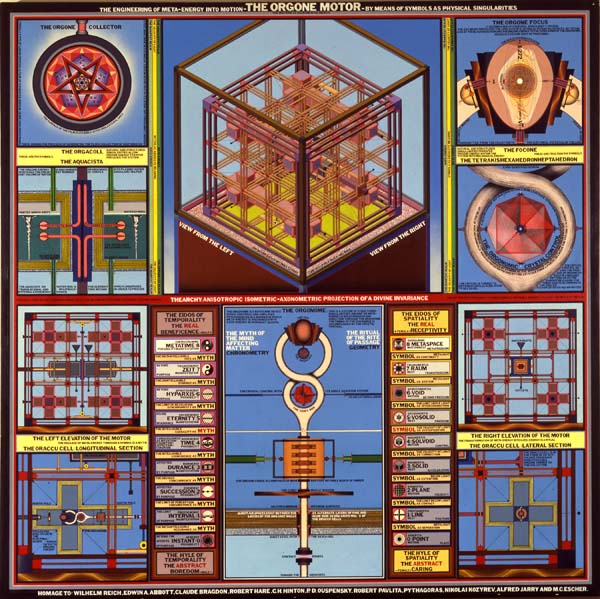
In a review of a recent translation of Stanislaw Lem’s Summa Technologiae, Pickering mentions that natural adaptive systems being like brains and being able to be utilized for intelligence amplification is the most “amazing idea in the history of cybernetics” (247).[7] Despite its association with the dreaded “synergy” (the original “syn” of Project Cybersyn), Beer’s viable system model never became a management fad (256). Alexander Galloway has recently written here about the “reticular fallacy,” the notion that de-centralized forms of organization are necessarily less repressive than are centralized or hierachical forms. Beer’s viable system model proposes an emergent and non-hierarchical management system that would increase the general “eudemony” (general well-being, another of Beer’s not-quite original neologisms [272]). Beer’s turn towards Tantric mysticism seems somehow inevitable in Pickering’s narrative of his career. The syntegric icosahedron, one of Beer’s late baroque flourishes, reminded me quite a bit of a Paul Laffoley painting. Syntegration as a concept takes reticularity to a level of mysticism rarely achieved by digital utopians. Pickering concludes the chapter on Beer with a discussion of his influence on Brian Eno’s ambient music.
Paul Laffoley, “The Orgone Motor” (1981). Image source: paullaffoley.net.
The discussion of Eno chides him for not reading Gordon Pask’s explicitly aesthetic cybernetics (308). Pask is the final cybernetician of Pickering’s study and perhaps the most eccentric. Pickering describes him as a model for Patrick Troughton’s Dr. Who (475n3), and his synaesthetic work in cybernetics with projects like the Musicolor are explicitly theatrical. A theatrical performance that directly incorporates audience feedback into the production, not just at the level of applause or hiss, but in audience interest in a particular character—a kind of choose-your-own adventure theater—was planned with Joan Littlewood (348-49). Pask’s work in interface design has been identified as an influence on hypertext (464n17). A great deal of the chapter on Pask involves his influence on British countercultural arts and architecture movements in the 1960s. Mirowski’s review shortly notes that even the anti-establishment Gordon Pask was funded by the Office of Naval Research for fifteen years (194). Mirowski also accuses Pickering of ignoring the computer as the emblematic cultural artifact of the cybernetic worldview (195). Pask is the strongest example offered of an alternate future of computation and social organization, but it is difficult to imagine his cybernetic present.
The final chapter of Pickering’s book is entitled “Sketches of Another Future.” What is called “maker culture” combined with the “internet of things” might lead some prognosticators to imagine an increasingly cybernetic digital future. Cybernetic, that is, not in the sense of increasing what Mirowski refers to as the neoliberal “background noise of modern culture” but as a “challenge to the hegemony of modernity” (393). Before reading Pickering’s book, I would have regarded such a prediction with skepticism. I still do, but Pickering has argued that an alternate—and more optimistic—perspective is worth taking seriously.
_____
Jonathan Goodwin is Associate Professor of English at the University of Louisiana, Lafayette. He is working on a book about cultural representations of statistics and probability in the twentieth century.
[1] Wolfram was born in England, though he has lived in the United States since the 1970s. Pickering taught at the University of Illinois while this book was being written, and he mentions having several interviews with Wolfram, whose company Wolfram Research is based in Champaign, Illinois (457n73). Pickering’s discussion of Wolfram’s A New Kind of Science is largely neutral; for a more skeptical view, see Cosma Shalizi’s review.
[2] Bateson experimented with octopuses, as Pickering describes. Whether Pynchon knew about this, however, remains doubtful. Pickering’s note may also be somewhat facetious.
[3] See the interview with George Lakoff in Ideology and Linguistic Theory: Noam Chomsky and the Deep Structure Debates, ed. Geoffrey J. Huck and John A. Goldsmith (New York: Routledge, 1995), p. 115. Lakoff’s account of Chomsky’s philosophical justification for his linguistic theories is tendentious; I mention it here because of the strong contrast, even in caricature, with the performative quality of the cybernetic research Pickering describes. (1999).
[4] Though it is difficult to think of the Santa Fe Institute this way now.
[5] For a detailed cultural history of Project Cybersyn, see Eden Medina, Cybernetic Revolutionaries: Technology and Politics in Allende’s Chile (MIT Press, 2011). Medina notes that Beer formed the word “algedonic” from two words meaning “pain” and “pleasure,” but the OED notes an example in the same sense from 1894. This citation does not rule out independent coinage, of course. Curiously enough, John Fowles uses the term in The Magus (1966), where it could have easily been derived from Beer.
[6] Hayek’s name appears neither in the index nor the reference list. It does seem a curious omission in the broader intellectual context of cybernetics.
[7] Though there is a reference to Lem’s fiction in an endnote (427n25), Summa Technologiae, a visionary exploration of cybernetic philosophy dating from the early 1960s, does not appear in Pickering’s work. A complete English translation only recently appeared, and I know of no evidence that Pickering’s principal figures were influenced by Lem at all. The book, as Pickering’s review acknowledges, is astonishingly prescient and highly recommended for anyone interested in the culture of cybernetics.
In this paper written for the MLA roundtable “Toward an Academic Commons: Academic Freedom and Sites of Contested Speech,” Colin Dayan reflects on what happens when academic freedom is cornered and subsumed by the demands of “civility” and “rationality.”
_____
And these are knaves that brawl for better laws
And cant of tyranny in stronger powers
Who glut their vile unsatiated maws
And freedoms birthright from the weak devour
–John Clare, “To a Fallen Elm”
Who gets to speak? “To speak,” Fanon wrote in Black Skin, White Masks is to exist for the other. “To speak means to be in a position to use a certain syntax, to grasp the morphology of this or that language, but it means above all to assume a culture, to support the weight of a civilization.” To acquire a “civilizing language,” then, is to be an exile in your own land, however we define the terrain of personal significance and conviction.
The “academic commons,” is something of an oxymoron, a paradox as heady as St. Paul’s encounter with the vexation of bodily resurrection. Must not a new definition of the body be coined? The crux of the matter lies in the spirit that is also the flesh, in something quite intangible, even insensate, but persistent and always quite thing-like.
The call to the commons, to a “common ground,” or, as some would endorse “the common interests,” is to revel in what we as teachers and students share “in common.” But who is to say what the ground of the common, the commonplace or commonality is? As Morrison wrote in Beloved, “definitions are always in the hands of the definers.” To hold ideas in common is much like the call for consensus: whoever calls for this fellowship has a pretty good idea of what is or is not to be accepted or permissible as shared values. Or to put it more bluntly, these values are akin to holding certain “truths to be self-evident.” As Justice Taney made explicit in his opinion in Dred Scott: “we the people” was never meant to include that class of persons who carried the “indelible mark” of “degradation”:
The men who framed this declaration were great men — high in literary acquirements, high in their sense of honor, and incapable of asserting principles inconsistent with those on which they were acting. They perfectly understood the meaning of the language they used, and how it would be understood by others, and they knew that it would not in any part of the civilized world be supposed to embrace the negro race, which, by common consent, had been excluded from civilized Governments and the family of nations, and doomed to slavery.
Which people, or persons, or members of the global Academy are excluded from the commons? Zones of exclusion mark off indelibly the lives that are cordoned off, trapped, demolished, bulldozed, expropriated, uprooted, by-passed.
But for some of our colleagues, those of us who would bring these lives to light are guilty of “partisan politics,” “purges,” and “censorship,” even though there is absolutely no evidence of such practice or intent. Politics is never separate from scholarship. Thought, imagination, and learning is always enhanced by collision and conflict. In “On Lyric Poetry and Society,” Theodore Adorno wrote, and I paraphrase, any poet who claims not to be political is in fact proclaiming a politics—and I would add—silencing others in a far more devious because subtle way.
* * * * * * * * *
Why should I speak? I’ve always been haunted by Gramsci’s warning that we are all “experts in legitimation” and by the savvy insight of Bourdieu and Passeron in Reproduction in Education, Society, and Culture published in 1977, that we – no matter what we intend—can never shed that ermine robe of authority. An authority honed to say what needs to be taught and thought in the right, the tasteful, the distinctive and recognizable—the civil—way.
But there is always a politics to the under-read and the critical background against which such silences are made. William Carlos Williams recognized the silencing generated by experts, the careening authority of the estimable critics. Before the formidable and raging Book 3 of Paterson, against the background of a library burning and books in flames, he scorned the “knowledgeable idiots, the university,/…../The outward masks of the special interests/that perpetuate the stasis and make it profitable.”
He recognized how inextricable is the language, the craft, the tools of scholarship from the casual disregard, the everyday violence in the “corrupt cities.” So it was not artlessness that he wanted but something else, something he called “the foulness”—the kind of writing that threatened the moneyed and the privileged, the extensions of state-sanctioned racism and its sanguine exclusivity.
The affront to the reasonable, the necessary, and the secure matters now more than ever. Reasonable consensus and civility: these words engage me, unsettled as I am by the prospect of divisions (not only of subject but also genre) that allow the continued dispossession of those creatures – human and non-human alike–who remain outside the circle of grace, delivered to subjection without recourse. How can we shed the mantle of civility, consensus, and rationality just long enough to question the claims of decency?
How do we speak? When it comes to matters of civility and befouling, we need to question our role as teachers and scholars, as well the threats to our profession by a silencing that is racially driven though culturally masked. The remedy of culture always excuses or conceals the experience of racism. In this time of terror, in our complicity with “kill lists,” drone strikes, global dispossession, mass incarceration, and murders of black citizens on our streets, what are the choices offered us as academics?
A cure for all kinds of threats, reasonableness has long been a way to extend persecution, civil death, and torture. But this rationality, like the theory that accompanies it, is tied to figurative power, and its metaphors can at any time become more insistent. What the anthropologist and historian, the late Michel-Rolph Trouillot, called the “explanatory power of culture” allowed the contexts for inequality and racism to continue. Indeed, they became harsher because hidden by the call for a common ground.
Our embrace of the “commons” or “academic commons,” though well-intentioned, risks enabling the false ideal of “consensus” that always rears its ugly, if “reasonable” head just when social and racial stratification is at its worst. Against the fashionable cartography of the commons, or a search for common ground, stands the language of stigma, incarceration, control—and downright extermination. Should we not reclaim the singularity of lives that do not span borders, or more precisely, who never —at least not in this country—gained the right to have rights in common?
Matters of terminology delimit privilege, just as they silence the disenfranchised, the invisible ones, who are always quite visible though objects of serene disregard. Our thought should be supple and ever watchful for the terms that perpetuate the very contexts of inequality—and specifically, racism. I’m grappling here with the push-and-pull of the call for the commons, always moderated and even reproduced by the humanitarian concern that is analogous to it, and hence always already closed to criticism. I learned from Trouillot—may he rest in peace—how the most benign of academic trends carried with it a strategy of extermination that always targets people of color, the poor or the powerless. He knew its eugenic violence even as he confronted its universalizing promise, what he called “totalitarian humanism” and the bugbears of academia: civility and compromise.
* * * * * * * * *
Retaliation hides behind a logic that is at once exclusionary and authoritarian. This policing of thought indulges in all manner of intolerant behavior. In the context of the de-hiring of a scholar like Salaita, we have sought in our conscience how to respond to coercion and threat found in the least likely of places—the university’s so-called “ivory tower.”
Sickened by the civility-mongers’ pieties and the costs to scholars who dare to think hard and feel passionately, I recall Poe’s disdain for the oracles of “higher morality.” These “thinkers-that-they-think” used “civility”–and all such words for self-righteous sentiment–to destroy literary careers and exclude anyone who threatened the status quo. Such entrenched proclivities for what Poe condemned as “doggerel aesthetics” masked the ugly money-fundament to such cunning ideality. What has happened to Steven Salaita matters to us all, no matter our views or our assumed status in the groves of academe. The resilience of genuine academic freedom is that it ensures that these abuses, and the watchdog groups and alumni that abet them, are no longer hidden from the eyes of the world, immune to the prescriptive force of morality, beyond the judgment of society, masked by the appeal to “civility.”
a review of Erik Brynjolfsson and Andrew McAfee, The Second Machine Age: Work, Progress, and Prosperity in a Time of Brilliant Technologies (W.W. Norton, 2014)
Business futurism is a grim discipline. Workers must either adapt to the new economic realities, or be replaced by software. There is a “race between education and technology,” as two of Harvard’s most liberal economists insist. Managers should replace labor with machines that require neither breaks nor sick leave. Superstar talents can win outsize rewards in the new digital economy, as they now enjoy global reach, but they will replace thousands or millions of also-rans. Whatever can be automated, will be, as competitive pressures make fairly paid labor a luxury.
Thankfully, Erik Brynjolfsson and Andrew McAfee’s The Second Machine Age (2MA) downplays these zero-sum tropes. Brynjolffson & McAfee (B&M) argue that the question of distribution of the gains from automation is just as important as the competitions for dominance it accelerates. 2MA invites readers to consider how societies will decide what type of bounty from automation they want, and what is wanted first. The standard, supposedly neutral economic response (“whatever the people demand, via consumer sovereignty”) is unconvincing. As inequality accelerates, the top 5% (of income earners) do 35% of the consumption. The top 1% is responsible for an even more disproportionate share of investment. Its richest members can just as easily decide to accelerate the automation of the wealth defense industry as they can allocate money to robotic construction, transportation, or mining.
A humane agenda for automation would prioritize innovations that complement (jobs that ought to be) fulfilling vocations, and substitute machines for dangerous or degrading work. Robotic meat-cutters make sense; robot day care is something to be far more cautious about. Most importantly, retarding automation that controls, stigmatizes, and cheats innocent people, or sets up arms races with zero productive gains, should be a much bigger part of public discussions of the role of machines and software in ordering human affairs.
2MA may set the stage for such a human-centered automation agenda. Its diagnosis of the problem of rapid automation (described in Part I below) is compelling. Its normative principles (II) are eclectic and often humane. But its policy vision (III) is not up to the challenge of channeling and sequencing automation. This review offers an alternative, while acknowledging the prescience and insight of B&M’s work.
I. Automation’s Discontents
For B&M, the acceleration of automation ranks with the development of agriculture, or the industrial revolution, as one of the “big stories” of human history (10-12). They offer an account of the “bounty and spread” to come from automation. “Bounty” refers to the increasing “volume, variety, and velocity” of any imaginable service or good, thanks to its digital reproduction or simulation (via, say, 3-D printing or robots). “Spread” is “ever-bigger differences among people in economic success” that they believe to be just as much an “economic consequence” of automation as bounty.[1]
2MA briskly describes various human workers recently replaced by computers. The poor souls who once penned corporate earnings reports for newspapers? Some are now replaced by Narrative Science, which seamlessly integrates new data into ready-made templates (35). Concierges should watch out for Siri (65). Forecasters of all kinds (weather, home sales, stock prices) are being shoved aside by the verdicts of “big data” (68). “Quirky,” a startup, raised $90 million by splitting the work of making products between a “crowd” that “votes on submissions, conducts research, suggest improvements, names and brands products, and drives sales” (87), and Quirky itself, which “handles engineering, manufacturing, and distribution.” 3D printing might even disintermediate firms like Quirky (36).
In short, 2MA presents a kaleidoscope of automation realities and opportunities. B&M skillfully describe the many ways automation both increases the “size of the pie,” economically, and concentrates the resulting bounty among the talented, the lucky, and the ruthless. B&M emphasize that automation is creeping up the value chain, potentially substituting machines for workers paid better than the average.
What’s missing from the book are the new wave of conflicts that would arise if those at very top of the value chain (or, less charitably, the rent and tribute chain) were to be replaced by robots and algorithms. When BART workers went on strike, Silicon Valley worthies threatened to replace them with robots. But one could just as easily call for the venture capitalists to be replaced with algorithms. Indeed, one venture capital firm added an algorithm to its board in 2013. Travis Kalanick, the CEO of Uber, responded to a question on driver wage demands by bringing up the prospect of robotic drivers. But given Uber’s multiple legal and PR fails in 2014, a robot would probably would have done a better job running the company than Kalanick.
That’s not “crazy talk” of communistic visions along the lines of Marx’s “expropriate the expropriators,” or Chile’s failed Cybersyn.[2] Thiel Fellow and computer programming prodigy Vitaly Bukherin has stated that automation of the top management functions at firms like Uber and AirBnB would be “trivially easy.”[3] Automating the automators may sound like a fantasy, but it is a natural outgrowth of mantras (e.g., “maximize shareholder value”) that are commonplaces among the corporate elite. To attract and retain the support of investors, a firm must obtain certain results, and the short-run paths to attaining them (such as cutting wages, or financial engineering) are increasingly narrow. And in today’s investment environment of rampant short-termism, the short is often the only term there is.
In the long run, a secure firm can tolerate experiments. Little wonder, then, that the largest firm at the cutting edge of automation—Google—has a secure near-monopoly in search advertising in numerous markets. As Peter Thiel points out in his recent From Zero to One, today’s capitalism rewards the best monopolist, not the best competitor. Indeed, even the Department of Justice’s Antitrust Division appeared to agree with Thiel in its 1995 guidelines on antitrust enforcement in innovation markets. It viewed intellectual property as a good monopoly, the rightful reward to innovators for developing a uniquely effective process or product. And its partner in federal antitrust enforcement, the Federal Trade Commission, has been remarkably quiescent in response to emerging data monopolies.
II. Propertizing Data
For B&M, intellectual property—or, at least, the returns accruing to intellectual insight or labor—plays a critical role in legitimating inequalities arising out of advanced technologies. They argue that “in the future, ideas will be the real scarce inputs in the world—scarcer than both labor and capital—and the few who provide good ideas will reap huge rewards.”[4] But many of the leading examples of profitable automation are not “ideas” per se, or even particularly ingenious algorithms. They are brute force feats of pattern recognition: for example, Google’s studying past patterns of clicks to see what search results, and what ads, are personalized to delight and persuade each of its hundreds of millions of users. The critical advantage there is the data, not the skill in working with it.[5] Google will demur, but if they were really confident, they’d license the data to other firms, confident that others couldn’t best their algorithmic prowess. They don’t, because the data is their critical, self-reinforcing advantage. It is a commonplace in big data literatures to say that the more data one has, the more valuable any piece of it becomes—something Googlers would agree with, as long as antitrust authorities aren’t within earshot.
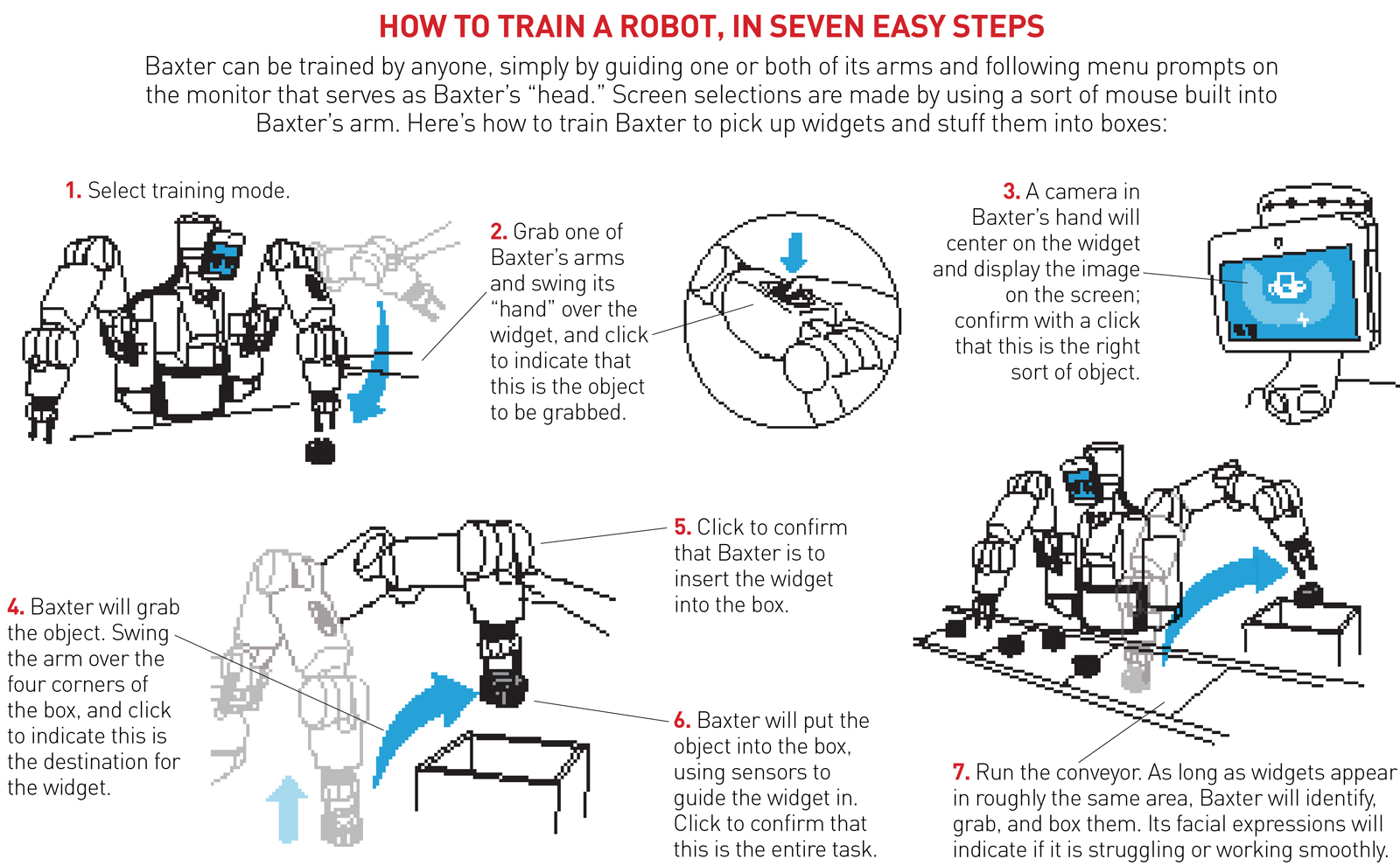
As sensors become more powerful and ubiquitous, feats of automated service provision and manufacture become more easily imaginable. The Baxter robot, for example, merely needs to have a trainer show it how to move in order to ape the trainer’s own job. (One is reminded of the stories of US workers flying to India to train their replacements how to do their job, back in the day when outsourcing was the threat du jour to U.S. living standards.)
From direct physical interaction with a robot, it is a short step to, say, programmed holographic or data-driven programming. For example, a surveillance camera on a worker could, after a period of days, months, or years, potentially record every movement or statement of the worker, and replicate it, in response to whatever stimuli led to the prior movements or statements of the worker.
B&M appear to assume that such data will be owned by the corporations that monitor their own workers. For example, McDonalds could train a camera on every cook and cashier, then download the contents into robotic replicas. But it’s just as easy to imagine a legal regime where, say, workers’ rights to the data describing their movements would be their property, and firms would need to negotiate to purchase the rights to it. If dance movements can be copyrighted, so too can the sweeps and wipes of a janitor. Consider, too, that the extraordinary advances in translation accomplished by programs like Google Translate are in part based on translations by humansof United Nations’ documents released into the public domain.[6] Had the translators’ work not been covered by “work-made-for-hire” or similar doctrines, they might well have kept their copyrights, and shared in the bounty now enjoyed by Google.[7]
Of course, the creativity of translation may be greater than that displayed by a janitor or cashier. Copyright purists might thus reason that the merger doctrine denies copyrightability to the one best way (or small suite of ways) of doing something, since the idea of the movement and its expression cannot be separated. Grant that, and one could still imagine privacy laws giving workers the right to negotiate over how, and how pervasively, they are watched. There are myriad legal regimes governing, in minute detail, how information flows and who has control over it.
I do not mean to appropriate here Jaron Lanier’s ideas about micropayments, promising as they may be in areas like music or journalism. A CEO could find some critical mass of stockers or cooks or cashiers to mimic even if those at 99% of stores demanded royalties for the work (of) being watched. But the flexibility of legal regimes of credit, control, and compensation is under-recognized. Living in a world where employers can simply record everything their employees do, or Google can simply copy every website that fails to adopt “robots.txt” protection, is not inevitable. Indeed, according to renowned intellectual property scholar Oren Bracha, Google had to “stand copyright on its head” to win that default.[8]
Thus B&M are wise to acknowledge the contestability of value in the contemporary economy. For example, they build on the work of MIT economists Daron Acemoglu and David Autor to demonstrate that “skill biased technical change” is a misleading moniker for trends in wage levels. The “tasks that machines can do better than humans” are not always “low-skill” ones (139). There is a fair amount of play in the joints in the sequencing of automation: sometimes highly skilled workers get replaced before those with a less complex and difficult-to-learn repertoire of abilities. B&M also show that the bounty predictably achieved via automation could compensate the “losers” (of jobs or other functions in society) in the transition to a more fully computerized society. By seriously considering the possibility of a basic income (232), they evince a moral sensibility light years ahead of the “devil-take-the-hindmost” school of cyberlibertarianism.
III. Proposals for Reform
Unfortunately, some of B&M’s other ideas for addressing the possibility of mass unemployment in the wake of automation are less than convincing. They praise platforms like Lyft for providing new opportunities for work (244), perhaps forgetting that, earlier in the book, they described the imminent arrival of the self-driving car (14-15). Of course, one can imagine decades of tiered driving, where the wealthy get self-driving cars first, and car-less masses turn to the scrambling drivers of Uber and Lyft to catch rides. But such a future seems more likely to end in a deflationary spiral than sustainable growth and equitable distribution of purchasing power. Like the generation traumatized by the Great Depression, millions subjected to reverse auctions for their labor power, forced to price themselves ever lower to beat back the bids of the technologically unemployed, are not going to be in a mood to spend. Learned helplessness, retrenchment, and miserliness are just as likely a consequence as buoyant “re-skilling” and self-reinvention.
Thus B&M’s optimism about what they call the “peer economy” of platform-arranged production is unconvincing. A premier platform of digital labor matching—Amazon’s Mechanical Turk—has occasionally driven down the wage for “human intelligence tasks” to a penny each. Scholars like Trebor Scholz and Miriam Cherry have discussed the sociological and legal implications of platforms that try to disclaim all responsibility for labor law or other regulations. Lilly Irani’s important review of 2MA shows just how corrosive platform capitalism has become. “With workers hidden in the technology, programmers can treat [them] like bits of code and continue to think of themselves as builders, not managers,” she observes in a cutting aside on the self-image of many “maker” enthusiasts.
The “sharing economy” is a glidepath to precarity, accelerating the same fate for labor in general as “music sharing services” sealed for most musicians. The lived experience of many “TaskRabbits,” which B&M boast about using to make charts for their book, cautions against reliance on disintermediation as a key to opportunity in the new digital economy. Sarah Kessler describes making $1.94 an hour labeling images for a researcher who put the task for bid on Mturk. The median active TaskRabbit in her neighborhood made $120 a week; Kessler cleared $11 an hour on her best day.
Resistance is building, and may create fairer terms online. For example, Irani has helped develop a “Turkopticon” to help Turkers rate and rank employers on the site. Both Scholz and Mike Konczal have proposed worker cooperatives as feasible alternatives to Uber, offering drivers both a fairer share of revenues, and more say in their conditions of work. But for now, the peer economy, as organized by Silicon Valley and start-ups, is not an encouraging alternative to traditional employment. It may, in fact, be worse.
Therefore, I hope B&M are serious when they say “Wild Ideas [are] Welcomed” (245), and mention the following:
Provide vouchers for basic necessities. . . .
Create a national mutual fund distributing the ownership of capital widely and perhaps inalienably, providing a dividend stream to all citizens and assuring the capital returns do not become too highly concentrated.
Depression-era Civilian Conservation Corps to clean up the environment, build infrastructure.
Speaking of the non-automatable, we could add the Works Progress Administration (WPA) to the CCC suggestion above. Revalue the arts properly, and the transition may even add to GDP.
Unfortunately, B&M distance themselves from the ideas, saying, “we include them not necessarily to endorse them, but instead to spur further thinking about what kinds of interventions will be necessary as machines continue to race ahead” (246). That is problematic, on at least two levels.
First, a sophisticated discussion of capital should be at the core of an account of automation, not its periphery. The authors are right to call for greater investment in education, infrastructure, and basic services, but they need a more sophisticated account of how that is to be arranged in an era when capital is extraordinarily concentrated, its owners have power over the political process, and most show little to no interest in long-term investment in the skills and abilities of the 99%. Even the purchasing power of the vast majority of consumers is of little import to those who can live off lightly taxed capital gains.
Second, assuming that “machines continue to race ahead” is a dodge, a refusal to name the responsible parties running the machines. Someone is designing and purchasing algorithms and robots. Illah Reza Nourbaksh’s Robot Futures suggests another metaphor:
Today most nonspecialists have little say in charting the role that robots will play in our lives. We are simply watching a new version of Star Wars scripted by research and business interests in real time, except that this script will become our actual world. . . . Familiar devices will become more aware, more interactive and more proactive; and entirely new robot creatures will share our spaces, public and private, physical and digital. . . .Eventually, we will need to read what they write, we will have to interact with them to conduct our business transactions, and we will often mediate our friendships through them. We will even compete with them in sports, at jobs, and in business. [9]
Nourbaksh nudges us closer to the truth, focusing on the competitive angle. But the “we” he describes is also inaccurate. There is a group that will never have to “compete” with robots at jobs or in business—rentiers. Too many of them are narrowly focused on how quickly they can replace needy workers with undemanding machines.
For the rest of us, another question concerning automation is more appropriate: how much can we be stuck with? A black-card-toting bigshot will get the white glove treatment from AmEx; the rest are shunted into automated phone trees. An algorithm determines the shifts of retail and restaurant workers, oblivious to their needs for rest, a living wage, or time with their families. Automated security guards, police, and prison guards are on the horizon. And for many of the “expelled,” the homines sacres, automation is a matter of life and death: drone technology can keep small planes on their tracks for hours, days, months—as long as it takes to execute orders.
B&M focus on “brilliant technologies,” rather than the brutal or bumbling instances of automation. It is fun to imagine a souped-up Roomba making the drudgery of housecleaning a thing of the past. But domestic robots have been around since 2000, and the median wage-earner in the U.S. does not appear to be on a fast track to a Jetsons-style life of ease.[10] They are just as likely to be targeted by the algorithms of the everyday, as they are to be helped by them. Mysterious scoring systems routinely stigmatize persons, without them even knowing. They reflect the dark side of automation—and we are in the dark about them, given the protections that trade secrecy law affords their developers.
IV. Conclusion
Debates about robots and the workers “struggling to keep up” with them are becoming stereotyped and stale. There is the standard economic narrative of “skill-biased technical change,” which acts more as a tautological, post hoc, retrodictive, just-so story than a coherent explanation of how wages are actually shifting. There is cyberlibertarian cornucopianism, as Google’s Ray Kurzweil and Eric Schmidt promise there is nothing to fear from an automated future. There is dystopianism, whether intended as a self-preventing prophecy, or entertainment. Each side tends to talk past the other, taking for granted assumptions and values that its putative interlocutors reject out of hand.
Set amidst this grim field, 2MA is a clear advance. B&M are attuned to possibilities for the near and far future, and write about each in accessible and insightful ways. The authors of The Second Machine Age claim even more for it, billing it as a guide to epochal change in our economy. But it is better understood as the kind of “big idea” book that can name a social problem, underscore its magnitude, and still dodge the elaboration of solutions controversial enough to scare off celebrity blurbers.
One of 2MA’s blurbers, Clayton Christensen, offers a backhanded compliment that exposes the core weakness of the book. “[L]earners and teachers alike are in a perpetual mode of catching up with what is possible. [The Second Machine Age] frames a future that is genuinely exciting!” gushes Christensen, eager to fold automation into his grand theory of disruption. Such a future may be exciting for someone like Christensen, a millionaire many times over who won’t lack for food, medical care, or housing if his forays fail. But most people do not want to be in “perpetually catching up” mode. They want secure and stable employment, a roof over their heads, decent health care and schooling, and some other accoutrements of middle class life. Meaning is found outside the economic sphere.
Automation could help stabilize and cheapen the supply of necessities, giving more persons the time and space to enjoy pursuits of their own choosing. Or it could accelerate arms races of various kinds: for money, political power, armaments, spying, stock trading. As long as purchasing power alone—whether of persons or corporations—drives the scope and pace of automation, there is little hope that the “brilliant technologies” B&M describe will reliably lighten burdens that the average person experiences. They may just as easily entrench already great divides.
All too often, the automation literature is focused on replacing humans, rather than respecting their hopes, duties, and aspirations. A central task of educators, managers, and business leaders should be finding ways to complement a workforce’s existing skills, rather than sweeping that workforce aside. That does not simply mean creating workers with skill sets that better “plug into” the needs of machines, but also, doing the opposite: creating machines that better enhance and respect the abilities and needs of workers. That would be a “machine age” welcoming for all, rather than one calibrated to reflect and extend the power of machine owners.
_____
[1] One can quibble with the idea of automation as necessarily entailing “bounty”—as Yves Smith has repeatedly demonstrated, computer systems can just as easily “crapify” a process once managed well by humans. Nor is “spread” a necessary consequence of automation; well-distributed tools could well counteract it. It is merely a predictable consequence, given current finance and business norms and laws.
[2] For a definition of “crazy talk,” see Neil Postman, Stupid Talk, Crazy Talk: How We Defeat Ourselves by the Way We Talk and What to Do About It (Delacorte, 1976). For Postman, “stupid talk” can be corrected via facts, whereas “crazy talk” “establishes different purposes and functions than the ones we normally expect.” If we accept the premise of labor as a cost to be minimized, what better to cut than the compensation of the highest paid persons?
[3] Conversation with Sam Frank at the Swiss Institute, Dec. 16, 2014, sponsored by Triple Canopy.
[4] In Brynjolfsson, McAfee, and Michael Spence, “New World Order: Labor, Capital, and Ideas in the Power Law Economy,” an article promoting the book. Unfortunately, as with most statements in this vein, B&M&S give us little idea how to identify a “good idea” other than one that “reap[s] huge rewards”—a tautology all too common in economic and business writing.
[5] Frank Pasquale, The Black Box Society (Harvard University Press, 2015).
[6] Programs, both in the sense of particular software regimes, and the program of human and technical efforts to collect and analyze the translations that were the critical data enabling the writing of the software programs behind Google Translate.
[10] Erwin Prassler and Kazuhiro Kosuge, “Domestic Robotics,” in Bruno Siciliano and Oussama Khatib, eds., Springer Handbook of Robotics (Springer, 2008), p. 1258.
an essay byCharles Bernstein
~
In November 2014, my wife, Susan Bee, and I visited Lodz and Warsaw, Poland, for the first time, along with our friend, the poet Tracie Morris. Susan’s mother was born in Lodz, moving to Berlin when she was around five. When I spoke at the American centers at the University of Lodz and Warsaw, I acknowledged standing on the ground of a great experiment from the decade before I was born, which aimed to expel difference in order to increase harmony through sameness, but the move toward homogenization versus miscegenation is powerful in the Americas as well, since the poetics of the Americas is the continuation of European poetics by other means.
When I explore the poetics of representation of the Systematic Extermination Process, I said in Warsaw, I don’t do so as an American looking at Poland and Germany but as someone whose intellectual and cultural foundations are European. I feel it as much my story as anyone else now alive and that a part of European culture destroyed here lives on with me, in and as an American, and is expressed through a commitment to the syncretic and miscegenated poetics of Americas.
The aversion of an originary or authentic or correct language is foundational for the poetics of Americas and makes a sharp contrast with those European (and American) nationalists that place a single language as fundamental to national or literary identity or who work to police national identities in ways that go beyond being born in a place, which, unlike in parts of Europe, is sufficient for U.S. citizenship. Several years ago, at the urging of my daughter, my father-in-law, who was born and grew up in Berlin, tried to reclaim his German citizenship under repatriation laws. His request was denied because he had never actively claimed this citizenship during the Nazi period, when he was a teenager. He was told that he was Polish, the country of origin of his parents. But he would be unable to claim Polish citizenship because, for that, knowledge of Polish is required; Yiddish was not then, nor is it now, considered a proper language of this nation, which was just the problem in the first place, now compounded. (As long as monoculture laws stand in Poland, the stain of the destruction of the Jews will be ineradicable.)
The power of American poetry comes from the mixing of many languages and the resistance to the dominance of any one language, including English – or anyway and one kind of English. As I argue in “The Poetics of the Americas” in My Way: Speeches and Poems, it is the overturning of standard English by second languages and vernacular/dialect speakers that defines American poetry, which is not to say that there is no resistance to this idea in America.
The question of who owns a nation or a people is not, of course, just one of language. We can say in the U.S. that Occupy Wall Street raised the specter of the one percent whose control is through cultural tolerance combined with economic dominance. But the closer analogy in the U.S. for the systematic extermination process here is the mass incarceration of African-American young men, stripping them of opportunities to fully participate in American cultural and economic life.1 In Poland, you have about 224 prisoners per 100,000 people, in the US it’s over 750 but for some age groups of black men it’s over 10,000, one in nine people in that population. More than one in three young black men without a high school diploma is currently behind bars.2
In Warsaw, we found an extraordinary new museum created as if from ashes. POLIN: The Museum of the History of Polish Jews is a site-specific work, situated on the ground of the Jewish Ghetto and as such serving as a memorial as well as a tribute to those who fought in the uprising. The museum’s main entrance is directly across from the more traditional and figurative “Monument to the Ghetto Heroes”, which was erected in 1948. The meaning of the museum is fundamentally connected to its location: as we descended into the core exhibition on the lower level, a ghostly presence makes itself felt and was a constant, and welcome, companion. This is a museum not of artifacts but of the historical record. POLIN overwhelms not with abstract splendor or holocaust memorial kitsch (as in the statue in front of Berlin’s Friedrichstrasse station, of children going off to “camp” as if the camp was “summer” and not “death”).3 This is a museum of deep, or thick, description. In place of sentimental, monumental, or abstract gestures of loss, icons that mark an absence, POLIN, in its core exhibition, curated by Barbara Kirchenbaum-Gimlet, provides a superfluity of what was present to substantiate (and transubstantiate) what has been lost. The museum is a not a funeral pyre but a living archive of what the Jews called Po-Lan when they arrived in the Middle Ages. And it succeeds in making indelible the presence of the Jews in and as Poland: not an eradicated blip in Polish history but as ineradicable thread in the fabric of Poland. Ineradicable even after being eradicated. As in Poe’s “Tell-tale Heart” –– under the floorboards that seem to seal us off from the ground, is a beating heart –– or here, let’s just say, once the floor board that covers the ground is removed, a vast underground cavern is revealed, as deep as the world and as wide as possibility. This cavern is not filled with broken rocks or statuettes of forlorn children. As we look into it more closely, we can see that it is a book.
Jane Eisner’s “Chasing Ghosts, Reviving Spirits: The Fall and Rise of Poland’s Jews” provides account of a trip to Poland at the same time as ours; and, indeed, Eisner’s experiences were close to ours.4 A number of Polish commentators on this article lamented the author’s failure to blame the Nazi’s for the systematic extermination of the Polish Jews or that she failed to acknowledged the horrific suffering of many Polish people during the war. As Benjamin might have said, history is written by the (self-) righteous. He made me do it. POLIN brings the horse of denial to the water but it doesn’t make it drink. In that sense, the museum is programmatically gentle, a wise choice. There is much documentation of the role the Jewish ghetto police played in the extermination process. As for Polish complicity, there is a small placard that notes, with a bloodless tone, that Poles had their own battles to fight and their own everyday lives to live; most stood by and did nothing. (And that leaves out the active participation, and profit, on part of many Poles but also the active resistance on the part of some others.) Daddy, what did you do during the war? POLIN starkly documents the continuing anti-Semitic terror in Poland during what the Poles call the “Communist time”: under this new post-Nazi regime, most of the remaining Polish Jews left Poland – but not to the Poles but rather to what was left of them. The Jewish extermination in Poland was a Polish extermination or, let’s just say, the blood is mixed on the ground. It’s not a blame game, it’s a change game.
I SURVIVED THE MUSEUM OF THE HISTORY OF POLISH JEWS
On our final evening in Warsaw, we went to see the last remains of all the Jewish Ghetto, with bullet-ridden walls over which stenciled words say “never forget” and “truth.” There was one small peephole on a stone wall, similar to Duchamp’s peephole for “Étant donnés.” The view opened onto a dark, stagnant alley, caught in a time neither now nor then, a liminal space haunted by its own aching hollowness. On the other side of the alley was a window with a flickering light; someone was still there, barely there. In a year this last remnant of the ghetto will be covered over with new, chic shops, where perhaps you will be able to buy a figurine of an old Jew floating in amber. Maybe the one we nearly saw in the ghostly light that last night.
_____
notes:
1. The House I Live In, a 2012 film by Eugene Jarecki, makes a compelling case for this analogy.Back to the essay
3. One of the Kindertransport Sculptures by Frank Meilser, “Trains to Life – Trains to Death” (2008): “Standing at the Friedrichstrasse Railway Station this bronze sculpture commemorates 1.6 million children murdered in the Holocaust and 10,000 children whose lives were saved by being granted entry into England in 1938.” The site includes images and a line of Meisler’s Jewish kitsch figurines. Ten thousand divided by 1.6 million comes to .00625 (but whose counting?).Back to the essay
Nelson Mandela died on December 5, 2013. Tony Bogues, a member of the boundary 2 Collective, was in South Africa, watching the endless coverage of the news and of Mandela’s life. Bogues had met Mandela during his time with the Jamaican government of Michael Manley, and he has spent considerable time working in South Africa, especially in Cape Town, on questions of freedom, archives, African and African Diaspora intellectual history, and political thought.
At least one generation of intellectuals had stood against apartheid and reflected on Mandela as a political figure of freedom and liberation. Mandela never produced anything equivalent to the political writings of a Gramsci, Fanon, or Césaire. Because of the media and the global support for the struggles he led, Mandela acquired a resonance with effects across the globe. His career, with all its changes, posed challenges for thinking about politics.
It seemed right that boundary 2 should take notice of Mandela and his influence. We decided to gather responses to Mandela as a political figure. b2 issued a call for very brief papers from several spots on the globe and from different generations. Our contributors have given us reason to feel this attempt was a success.
an essay byArif Dirlik
~
In 1997, the British government handed Hong Kong over to the People’s Republic of China(PRC) after 150 years of colonial rule. Some observers at the time could not but wonder if Hong Kong would be absorbed and remade by the behemoth to the north, or transform with its proverbial dynamism “the motherland” that already was undergoing radical change. The popular uprising under way in Hong Kong is the most recent indication that the question was not an idle one. The answer is yet to come.
Hong Kong investments and technology played an important part in the 1980s in laying the ground for the PRC’s economic take-off. The “special economic zones” that were set up in Guangdong province at the beginning of “reform and opening” as gateways to global capitalism (while keeping the rest of the country immune to its effects) were intended to take advantage of the dynamic capitalism of neighboring Hong Kong. And they did. To this day, Guangdong leads the rest of the country in industrial production and wealth. It also heavily resembles Hong Kong with which it shares a common language and, despite three decades of separation after 1949, common cultural characteristics. Hong Kong has continued to play a crucial part in the country’s development.
It has been a different matter politically. Since the take-over in 1997 the leadership in Beijing has left no doubt of its enthusiasm for the oligarchic political structure that was already in place before the end of colonial rule. The many freedoms and rule of law Hong Kong people enjoyed were less appealing to a regime that preferred a population obedient to its strictures and a legal system more pliable at the service of Communist Party power. Already in the 1980s, Hong Kong people’s doubts about unification with the “motherland” were obvious in the exodus of those who could afford to leave to places like the United States, Canada and Australia. The exodus speeded up following the Tiananmen tragedy in 1989 which put to rest any hopes that reforms might open up a greater space for political freedoms. The colony practically disqualified itself as any kind of political inspiration for the Mainland with the enthusiastic participation of Hong Kongers in the Tiananmen movement leading up to the June Fourth massacre, and annual commemorations thereafter of the suppression of the student movement. In the early 1990s the Party under Deng Xiaoping settled on the example of Singapore as a model more attuned to its own authoritarian practices.
The same reasons that made the regime suspicious of Hong Kong people for their “lack of patriotism” due to the legacies of colonialism have made Hong Kong into an inspiration as well as a base for radical critics of the regime struggling for greater freedom and democracy on the Mainland. The take-over of 1997 was under the shadow of Tinanmen, but even so few would have imagined at the time that within two decades of the celebrations of the end of colonialism and “return” to the motherland, protestors against Beijing “despotism” would be waving British flags. Once the initial enthusiasm for “liberation” was over, Hong Kongers rediscovered as the source of their “difference” the colonial history which in nationalist historiography appeared as a lapse in the nation’s historical, a period of humiliation remembered most importantly to foster nationalist sentiment. PRC democracy activists such as the jailed Nobel Prize winner Liu Xiaobo have drawn the ire of the regime for suggesting that Hong Kong’s freedoms and democratic sentiments were legacies of colonial acculturation that Mainlanders had missed out on.
Current protests have their origins in a consciousness born of the anxieties provoked by the prospect of unification in the 1980s and 1990s, and even though both the Mainland and Hong Kong have changed radically in the intervening period, the Hong Kong identity that assumed recognizable contours at the time is a fundamental driving force of the protests. The immediate issue that has provoked the protests—call for universal suffrage in the selection of the chief executive and legislative council of the Special Administrative Region—harks back to the Basic Law of 1984 agreed upon by the British and the PRC as a condition of unification. The Basic Law stipulated that Hong Kong would be subject internally to its own laws for fifty years after the take-over under a system of “one country, two systems,” with its own chief executive and a legislature elected by an election committee representing various functional constituencies in a corporatist arrangement. The arrangement openly favored the corporate and financial ruling class in Hong Kong which in turn was prepared to align its interests with those of the Communist regime in a mutually beneficial relationship. The Hong Kong Special Administrative Region (SAR) was something of a political counterpart to the “special economic zones”—an exception that was granted not to compromise national sovereignty but as an act of sovereign power. In all matters pertaining to governance and the law, the SAR would be accountable to the National People’s Congress (NPC) in Beijing. Hong Kong was granted representation in the NPC which, like all representation in that body, has served more to consolidate central control than to allow for the democratic airing of public opinion and grievances.
“One country, two systems” was an unstable structure. It was important to the PRC for patriotic reasons to put an end to the colonialism at its doorstep and retrieve territory lost a century and a half ago. But some compromise with the departing British was unavoidable given the strategic importance to the new project of development of the global corporate and financial hub that was Hong Kong. The autonomy granted to Hong Kong was subject to the good faith of the Beijing government. What might happen if the PRC no longer needed this hub seemed like a remote contingency in the 1980s, but already by the 1990s there was talk of the rise of Shanghai as a competitor. It is not out of the question that the present unrest which may undermine faith in Hong Kong as a corporate and financial center is not entirely undesirable to the regime now that preparations have been completed to launch a new financial center in Shanghai.
A similar uncertainty attended the issue of governance under the system. The Basic Law held out the possibility of democratic government and universal suffrage in Hong Kong subject to circumstances to be determined by the NPC. It nourished hopes in democracy, but reserved for Beijing final say on when and how democracy was to be exercised. There were no guarantees that full democracy would be granted if Hong Kongers invited the displeasure of the government in Beijing—or circumstances within the country made it undesirable. This is the immediate issue in the current protests (along with public dissatisfaction with the current chief executive, Leung Chun Ying who, like his two predecessors since 1997, is widely viewed as a Beijing puppet). To Hong Kong democracy advocates, the offer of universal suffrage is a mockery of the promise of full democracy when the choices are limited to candidates carefully selected by an electoral commission packed with Beijing loyalists.
The take-over in 1997, and the circumstances of its negotiation, had one very significant consequence that in likelihood was unanticipated: the politicization of Hong Kong society. Hong Kong long had a reputation as a cultural and political “desert.” The British colonial regime was successful in diverting popular energies to the struggle for everyday existence, and for those who could, the pursuit of wealth. At the height of the Cultural Revolution on the Mainland in 1967, labor disputes erupted into riots against the colonial government led by pro-Beijing leftists. But sustained political activity dates back to the negotiations surrounding the take-over, especially the mobilization instigated by the Tiananmen movement in Beijing. Politics over the last twenty-five years has revolved around the assertion of a Hong Kong identity against dissolution into the PRC. As a new political consciousness has found expression in the efflorescence of a Hong Kong culture in film and literature, the latter has played no little part in stimulating political activity. Ironically, while the goal of “one country, two systems” was to ease Hong Kong into the PRC, the very recognition of the differences of Hong Kong from the rest of the country would seem to have underlined the existence of a Hong Kong identity that differentiated the former colony from the rest of PRC society.
Current protests have focused attention on issues of governance. Far more important are the social tensions and the economic transformations that lend urgency to protestors’ demand for political recognition and rights. One important indication is the part young people—teenagers—have played in the protests. Joshua Wong, who has emerged as a leader, is seventeen years old, which means that he was born in 1997, the year of the take-over.
The generation Wong represents has come of age in a society subject to deepening social and economic problems. The wealth gap in Hong Kong is nothing new, but as elsewhere in the world, inequality has assumed critical proportions with increased concentration of wealth in the hands of the elite allied with Beijing. Since 1997, the experience of marginalization has been intensified with the inundation of the city by Mainlanders with their newfound wealth which has increased prices of commodities, put pressures on public services––including housing, health and education––and introduced new cultural fissures. Some Hong Kong businesses prefer Mainland customers on whose business they have come to be dependent. In the 1990s, Mainlanders living in Hong Kong used to complain about the prejudice they suffered from Hong Kongers with their pretensions to superior cultural sophistication. That has been reversed. Even the most uncouth Mainlanders are likely to look down on Hong Kongers for not being authentically Chinese, which typifies PRC attitudes toward Chinese populations elsewhere. While Hong Kongers complain about “locusts” from the North, a very-unConfucian Beijing University professor descended from Confucius refers to Hong Kongers as “bastards” contaminated by their colonial past. The central government in Beijing, sharing the suspicious of southerners of its imperial predecessors, is engaged in efforts to discourage the use of Cantonese while instilling in the local population its version of what it means to be “Chinese.” We may recall that the present protests were preceded two years ago by successful protests against Beijing-backed efforts to introduce “patriotic” education to Hong Kong schools. It is not that Hong Kong people are not patriotic. They are very patriotic indeed. But their patriotism is mediated by their Hong Kong identity, a very product of the take-over that Beijing would like to erase.
The upheaval in Hong bears similarities to “Occupy” movements elsewhere in the economic issues that inform it. It also has its roots in the special circumstances of Hong Kong society, and its relationship to Beijing. The movement may be viewed as the latest chapter in a narrative that goes back to the 1980s, the emergence of a neoliberal global capitalism of which the PRC has been an integral component, and the Tiananmen movement which was one of the earliest expressions of the social and political strains created by shifts in the global economy. The demands for democracy in the protests are clearly not merely “political.” Democracy is important to the protestors not only as a means to retrieving some control over their lives, but also to overcome inequality. The authorities in Beijing are quite aware of this link. A Law professor from Tsinghua University in Beijing who also serves as an advisor on Hong Kong affairs just recently announced that democracy would jeopardize the wealthy who are crucial to the welfare of Hong Kong’s capitalist economy. It may seem ironic that a Communist Party should be devoted to the protection of wealthy capitalists, but that is the reality of contemporary PRC society that the protestors are struggling against.
The protests are also the latest chapter in the formation of a Hong Kong identity which assumed urgency with the prospect of return to the “motherland” in the 1980s. This, too, is a threat to a regime in flux that finds itself threatened by identity claims among the populations it rules over. It seems superfluous to say that allowing the people of Hong Kong the self-rule they demand would have adverse consequences in encouraging separatism among the various ethnic groups already in rebellion against the regime, and further stimulate democracy activists among the Han population. Hitherto pro-Beijing Guomindang leader in Taiwan, Ma Ying-jeou, has recently voiced his opposition to unification under the “one country, two-systems” formula.
It would probably take something of a miracle for the protest movement in Hong Kong to achieve its stated goals. Rather than risk a Tiananmen style confrontation, the authorities have taken a wait-and-see attitude, waiting for the movement to spend its force, or opponents to force it to retreat. There are signs already that the movement has run its course in clashes between the protestors and members of the general public weary of the disruption of life and business. It is suspected that the attackers included members of Triad gangs. Whom they might be serving is, for the moment, anybody’s guess.
What the next chapter might bring is uncertain, to say the least. It is unlikely that a movement that has been in the making for two decades will simply fade away into oblivion. The problems it set out to resolve are very real, and offer little sign of resolution, and the movement has proven its resilience through the years. The distinguished scholar of Hong Kong-Mainland relations at the City University of Hong Kong, Joseph Cheng Yu-shek,who is also an advocate of democracy, stated in a recent interview that, “All the protesters here and Hong Kong people know it is extremely unlikely the Chinese leaders will respond to our demands…. We are here to say we are not going to give up, we will continue to fight on. We are here because as long as we fight on, at least we haven’t lost.”
Masturah Alatas, a boundary 2 contributor, has written about the ‘I want to touch a dog’ event in Malaysia for CounterPunch. You can read “Malaysia’s Dog Issue” here.
boundary 2 is proud and honored to announce that Arne De Boever has become an Advisory Editor.
Arne De Boever works on contemporary American fiction and critical theory and teaches at the California Institute of the Arts, where he also directs the MA Aesthetics and Politics program. His books include States of Exception in the Contemporary Novel and Narrative Care: Biopolitics and the Novel.
Thomas Piketty’s Capital in the Twenty-First Century has succeeded both commercially and as a work of scholarship. Capital‘s empirical research is widely praised among economists—even by those who disagree with its policy prescriptions. It is also the best-selling book in the century-long history of Harvard University Press, and a rare work of scholarship to reach the top spot on Amazon sales rankings.[1]
Capital‘s main methodological contribution is to bring economic, sociological, and even literary perspectives to bear in a work of economics.[2] The book bridges positive and normative social science, offering strong policy recommendations for increased taxation of the wealthiest. It is also an exploration of historical trends.[3] In Capital, fifteen years of careful archival research culminate in a striking thesis: capitalism exacerbates inequality over time. There is no natural tendency for markets themselves, or even ordinary politics, to slow accumulation by top earners.[4]
This review explains Piketty’s analysis and its relevance to law and social theory, drawing lessons for the re-emerging field of political economy. Piketty’s focus on long-term trends in inequality suggests that many problems traditionally explained as sector-specific (such as varied educational outcomes) are epiphenomenal with regard to increasingly unequal access to income and capital. Nor will a narrowing of purported “skills gaps” do much to improve economic security, since opportunity to earn money via labor matters far less in a world where capital is the key to enduring purchasing power. Policymakers and attorneys ignore Piketty at their peril, lest isolated projects of reform end up as little more than rearranging deck chairs amidst titanically unequal opportunities.
Inequality, Opportunity, and the Rigged Game
Capital weaves together description and prescription, facts and values, economics, politics, and history, with an assured and graceful touch. So clear is Piketty’s reasoning, and so compelling the enormous data apparatus he brings to bear, that few can doubt he has fundamentally altered our appreciation of the scope, duration, and intensity of inequality.[5]
Piketty’s basic finding is that, absent extraordinary political interventions, the rate of return on capital (r) is greater than the rate of growth of the economy generally (g), which Piketty expresses via the now-famous formula r > g.[6] He finds that this relationship persists over time, and in the many countries with reliable data on wealth and income.[7] This simple inequality relationship has many troubling implications, especially in light of historical conflicts between capital and labor.
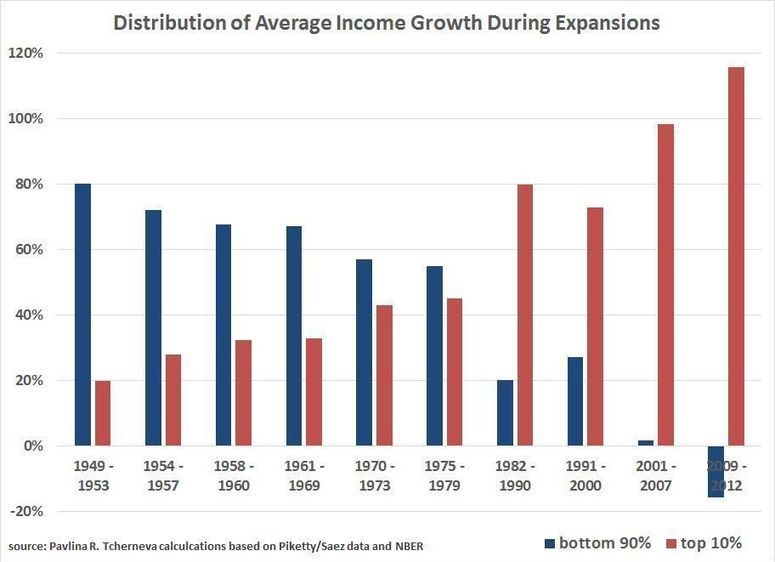
Most persons support themselves primarily by wages—that is, what they earn from their labor. As capital takes more of economic output (an implication of r > g persisting over time), less is left for labor. Thus if we are concerned about unequal incomes and living standards, we cannot simply hope for a rising tide of growth to lift the fortunes of those in the bottom quintiles of the income and wealth distribution. As capital concentrates, its owners take an ever larger share of income—unless law intervenes and demands some form of redistribution.[8] As the chart below (by Bard economist Pavlina Tcherneva, based on Piketty’s data) shows, we have now reached the point where the US economy is not simply distributing the lion’s share of economic gains to top earners; it is actively redistributing extant income of lower decile earners upwards:
In 2011, 93% of the gains in income during the economic “recovery” went to the top 1%. From 2009 to 2011, “income gains to the top 1% … were 121% of all income increases,” because “incomes to the bottom 99% fell by 0.4%.”[9] The trend continued through 2012.
Fractal inequality prevails up and down the income scale.[10] The top 15,000 tax returns in the US reported an average taxable income of $26 million in 2005—at least 400 times greater than the median return.[11] Moreover, Larry Bartels’s book, Unequal Democracy, graphs these trends over decades.[12] Bartels shows that, from 1945-2007, the 95th percentile did much better than those at lower percentiles.[13] He then shows how those at the 99.99th percentile did spectacularly better than those at the 99.9th, 99.5th, 99th, and 95th percentiles.[14] There is some evidence that even within that top 99.99th percentile, inequality reigned. In 2005, the “Fortunate 400″—the 400 households with the highest earnings in the U.S.—made on average $213.9 million apiece, and the cutoff for entry into this group was a $100 million income—about four times the average income of $26 million prevailing in the top 15,000 returns.[15] As Danny Dorling observed in a recent presentation at the RSA, for those at the bottom of the 1%, it can feel increasingly difficult to “keep up with the Joneses,” Adelsons, and Waltons. Runaway incomes at the very top leave those slightly below the “ultra-high net worth individual” (UHNWI) cut-off ill-inclined to spread their own wealth to the 99%.
Thus inequality was well-documented in these, and many other works, by the time Piketty published Capital—indeed, other authors often relied on the interim reports released by Piketty and his team of fellow inequality researchers over the past two decades.[16] The great contribution of Capital is to vastly expand the scope of the inquiry, over space and time. The book examines records in France going back to the 19th century, and decades of data in Germany, Japan, Great Britain, Sweden, India, China, Portugal, Spain, Argentina, Switzerland, and the United States.[17]
The results are strikingly similar. The concentration of capital (any asset that generates income or gains in monetary value) is a natural concomitant of economic growth under capitalism—and tends to intensify if growth slows or stops.[18] Inherited fortunes become more important than those earned via labor, since the “miracle of compound interest” overwhelms any particularly hard-working person or ingenious idea. Once fortunes grow large enough, their owners can simply live off the interest and dividends they generate, without ever drawing on the principal. At the “escape velocity” enjoyed by some foundations and ultra-rich individuals, annual expenses are far less than annual income, precipitating ever-greater principal. This is Warren Buffett’s classic “snowball” of wealth—and we should not underestimate its ability to purchase the political favors that help constitute Buffettian “moats” around the businesses favored by the likes of Berkshire-Hathaway.[19] Dynasties form and entrench their power. If they can make capital pricey enough, even extraordinary innovations may primarily benefit their financers.
Deepening the Social Science of Political Economy
Just as John Rawls’s Theory of Justice laid a foundation for decades of writing on social justice, Piketty’s work is so generative that one could envision whole social scientific fields revitalized by it.[20] Political economy is the most promising, a long tradition of (as Piketty puts it) studying the “ideal role of the state in the economic and social organization of a country.”[21] Integrating the long-divided fields of politics and economics, a renewal of modern political economy could unravel “wicked problems” neither states nor markets alone can address.[22]
But the emphasis in Piketty’s definition of political economy on “a country,” versus countries, or the world, is in tension with the global solutions he recommends for the regulation of capital. The dream of neoliberal globalization was to unite the world via markets.[23] Anti-globalization activists have often advanced a rival vision of local self-determination, predicated on overlaps between political and economic boundaries. State-bound political economy could theorize those units. But the global economy is, at present, unforgiving of autarchy and unlikely to move towards it.
Capital tends to slip the bonds of states, migrating to tax havens. In the rarefied world of the global super-rich, financial privacy is a purchasable commodity. Certainly there are always risks of discovery, or being taken advantage of by a disreputable tax shelter broker or shady foreign bank. But for many wealthy individuals, tax havenry has been a rite of passage on the way to membership in a shadowy global elite. Piketty’s proposed global wealth tax would need international enforcement—for even the Foreign Accounts Tax Compliance Act (FATCA) imposed via America’s fading hegemony (and praised by Piketty) has only begun to address the problem of hidden (or runaway) wealth (and income).[24]
It will be very difficult to track down the world’s hidden fortunes and tax them properly. Had Piketty consulted more legal sources, he may have acknowledged the problem more adequately in Capital. He recommends “automatic information exchange” among tax authorities, which is an excellent principle to improve enforcement. But actually implementing this principle could require fine-grained regulation of IT systems, deployment of whole new types of surveillance, and even uniform coding (via, say, standard legal entity identifiers, or LEIs) globally. More frankly acknowledging the difficulty of shepherding such legislation globally could have led to a more convincing (and comprehensive) examination of the shortcomings of globalized capitalism.
In several extended interviews on Capital (with CNN Money, Econtalk, The New York Times, Huffington Post, and the New Republic, among others), Piketty pledges fealty to markets, praising their power to promote production and innovation. Never using the term “industrial policy” in his book, Piketty hopes that law may make the bounty of extant economic arrangements accessible to all, rather than changing the nature of those arrangements. But we need to begin to ask whether our very process of creating goods and services itself impedes better distribution of them.
Unfortunately, mainstream economics itself often occludes this fundamental question. When distributive concerns arise, policymakers can either substantively intervene to reshape the benefits and burdens of commerce (a strategy economists tend to derogate as dirigisme), or may, post hoc, use taxes and transfer programs to redistribute income and wealth. For establishment economists, redistribution (happening after initial allocations by “the market”) is almost always considered more efficient than “distortion” of markets by regulation, public provision, or “predistribution.”[25]
Tax law has historically been our primary way of arranging such redistribution, and Piketty makes it a focus of the concluding part of his book, called “Regulating Capital.” Piketty laments the current state of tax reporting and enforcement. Very wealthy individuals have developed complex webs of shell entities to hide their true wealth and earnings.[26] As one journalist observed, “Behind a New York City deed, there may be a Delaware LLC, which may be managed by a shell company in the British Virgin Islands, which may be owned by a trust in the Isle of Man, which may have a bank account in Liechtenstein managed by the private banker in Geneva. The true owner behind the structure might be known only to the banker.”[27] This is the dark side of globalization: the hidden structures that shield the unscrupulous from accountability.[28]
The most fundamental tool of tax secrecy is separation: between persons and their money, between corporations and the persons who control them, between beneficial and nominal controllers of wealth. When money can pass between countries as easily as digital files, skilled lawyers and accountants can make it impossible for tax authorities to uncover the beneficial owners of assets (and the income streams generated by those assets).
Piketty believes that one way to address inequality is strict enforcement of laws like America’s FATCA.[29] But the United States cannot accomplish much without pervasive global cooperation. Thus the international challenge of inequality haunts Capital. As money concentrates in an ever smaller global “superclass” (to use David J. Rothkopf’s term), it’s easier for it to escape any ruling authority.[30] John Chung has characterized today’s extraordinary concentrations of wealth as a “death of reference” in our monetary system and its replacement with “a total relativity.”[31] He notes that “[i]n 2007, the average amount of annual compensation for the top twenty-five highest paid hedge fund managers was $892 million;” in the past few years, individual annual incomes in the group have reached two, three, or four billion dollars. Today’s greatest hoards of wealth are digitized, as easily moved and hidden as digital files.
We have no idea what taxes may be due from trillions of dollars in offshore wealth, or to what purposes it is directed.[32] In less-developed countries, dictators and oligarchs smuggle ill-gotten gains abroad. Groups like Global Financial Integrity and the Tax Justice Network estimate that illicit financial flows out of poor countries (and into richer ones, often via tax havens) are ten times greater than the total sum of all development aid—nearly $1 trillion per year. Given that the total elimination of extreme global poverty could cost about $175 billion per year for twenty years, this is not a trivial loss of funds—completely apart from what the developing world loses in the way of investment when its wealthiest residents opt to stash cash in secrecy jurisdictions.[33]
An adviser to the Tax Justice Network once said that assessing money kept offshore is an “exercise in night vision,” like trying to measure “the economic equivalent of an astrophysical black hole.”[34] Shell corporations can hide connections between persons and their money, between corporations and the persons who control them, between beneficial and nominal owners. When enforcers in one country try to connect all these dots, there is usually another secrecy jurisdiction willing to take in the assets of the conniving. As the Tax Justice Network’s “TaxCast” exposes on an almost monthly basis, victories for tax enforcement in one developed country tend to be counterbalanced by a slide away from transparency elsewhere.
Thus when Piketty recommends that “the only way to obtain tangible results is to impose automatic sanctions not only on banks but also on countries that refuse to require their financial institutions” to report on wealth and income to proper taxing authorities, one has to wonder: what super-institution will impose the penalties? Is this to be an ancillary function of the WTO?[35] Similarly, equating the imposition of a tax on capital with “the stroke of a pen” (568) underestimates the complexity of implementing such a tax, and the predictable forms of resistance that the wealth defense industry will engage in.[36] All manner of societal and cultural, public and private, institutions will need to entrench such a tax if it is to be a stable corrective to the juggernaut of r > g.[37]
Given how much else the book accomplishes, this demand may strike some as a cavil—something better accomplished by Piketty’s next work, or by an altogether different set of allied social scientists. But if Capital itself is supposed to model (rather than merely call for) a new discipline of political economy, it needs to provide more detail about the path from here to its prescriptions. Philosophers like Thomas Pogge and Leif Wenar, and lawyers like Terry Fisher and Talha Syed, have been quite creative in thinking through the actual institutional arrangements that could lead to better distribution of health care, health research, and revenues from natural resources.[38] They are not cited in Capital¸but their work could have enriched its institutional analysis greatly.
An emerging approach to financial affairs, known as the Legal Theory of Finance (LTF), also offers illumination here, and should guide future policy interventions. Led by Columbia Law Professor Katharina Pistor, an interdisciplinary research team of social scientists and attorneys have documented the ways in which law is constitutive of so-called financial markets.[39] Revitalizing the tradition of legal realism, Pistor has demonstrated the critical role of law in generating modern finance. Though law to some extent shapes all markets, in finance, its role is most pronounced. The “products” traded are very little more than legal recognitions of obligations to buy or sell, own or owe. Their value can change utterly based on tiny changes to the bankruptcy code, SEC regulations, or myriad other laws and regulations.
The legal theory of finance changes the dialogue about regulation of wealth. The debate can now move beyond stale dichotomies like “state vs. market,” or even “law vs. technology.” While deregulationists mock the ability of regulators to “keep up with” the computational capacities of global banking networks, it is the regulators who made the rules that made the instantaneous, hidden transfer of financial assets so valuable in the first place. Such rules are not set in stone.
The legal theory of finance also enables a more substantive dialogue about the central role of law in political economy. Not just tax rules, but also patent, trade, and finance regulation need to be reformed to make the wealthy accountable for productively deploying the wealth they have either earned or taken. Legal scholars have a crucial role to play in this debate—not merely as technocrats adjusting tax rules, but as advisors on a broad range of structural reforms that could ensure the economy’s rewards better reflected the relative contributions of labor, capital, and the environment.[40] Lawyers had a much more prominent role in the Federal Reserve when it was more responsive to workers’ concerns.[41]
Imagined Critics as Unacknowledged Legislators
A book is often influenced by its author’s imagined critics. Piketty, decorous in his prose style and public appearances, strains to fit his explosive results into the narrow range of analytical tools and policy proposals that august economists won’t deem “off the wall.”[42] Rather than deeply considering the legal and institutional challenges to global tax coordination, Piketty focuses on explaining in great detail the strengths and limitations of the data he and a team of researchers have been collecting for over a decade. But a renewed social science of political economy depends on economists’ ability to expand their imagined audience of critics, to those employing qualitative methodologies, to attorneys and policy experts working inside and outside the academy, and to activists and journalists with direct knowledge of the phenomena addressed. Unfortunately, time that could have been valuably directed to that endeavor—either in writing Capital, or constructively shaping the extraordinary publicity the book received—has instead been diverted to shoring up the book’s reputation as rigorous economics, against skeptics who fault its use of data.
To his credit, Piketty has won these fights on the data mavens’ own terms. The book’s most notable critic, Chris Giles at the Financial Times, tried to undermine Capital‘s conclusions by trumping up purported ambiguities in wealth measurement.His critique was rapidly dispatched by many, including Piketty himself.[43] Indeed, as Neil Irwin observed, “Giles’s results point to a world at odds not just with Mr. Piketty’s data, but also with that by other scholars and with the intuition of anyone who has seen what townhouses in the Mayfair neighborhood of London are selling for these days.”[44]
One wonders if Giles reads his own paper. On any given day one might see extreme inequality flipping from one page to the next. For example, in a special report on “the fragile middle,” Javier Blas noted that no more than 12% of Africans earned over $10 per day in 2010—a figure that has improved little, if at all, since 1980.[45] Meanwhile, in the House & Home section on the same day, Jane Owen lovingly described the grounds of the estate of “His Grace Henry Fitzroy, the 12th Duke of Grafton.” The grounds cost £40,000 to £50,000 a year to maintain, and were never “expected to do anything other than provide pleasure.”[46] England’s revanchist aristocracy makes regular appearances in the Financial Times “How to Spend It” section as well, and no wonder: as Oxfam reported in March, 2014, Britain’s five richest families have more wealth than its twelve million poorest people.[47]
Force and Capital
The persistence of such inequalities is as much a matter of law (and the force behind it to, say, disperse protests and selectively enforce tax regulations), as it is a natural outgrowth of the economic forces driving r and g. To his credit, Piketty does highlight some of the more grotesque deployments of force on behalf of capital. He begins Part I (“Income and Capital”) and ends Part IV (“Regulating Capital”) by evoking the tragic strike at the Lonmin Mine in South Africa in August 2012. In that confrontation, “thirty-four strikers were shot dead” for demanding pay of about $1,400 a month (there were making about $700).[48] Piketty deploys the story to dramatize conflict over the share of income going to capital versus labor. But it also illustrates dynamics of corruption. Margaret Kimberley of Black Agenda Report claims that the union involved was coopted thanks to the wealth of the man who once ran it.[49] The same dynamics shine through documentaries like Big Men (on Ghana), or the many nonfiction works on oil exploitation in Africa.[50]
Piketty observes that “foreign companies and stockholders are at least as guilty as unscrupulous African elites” in promoting the “pillage” of the continent.[51] Consider the state of Equatorial Guinea, which struck oil in 1995. By 2006, Equatoguineans had the third highest per capita income in the world, higher than many prosperous European countries.[52] Yet the typical citizen remains very poor.[53] In the middle of the oil boom, an international observer noted that “I was unable to see any improvements in the living standards of ordinary people. In 2005, nearly half of all children under five were malnourished,” and “[e]ven major cities lack[ed] clean water and basic sanitation.”[54] The government has not demonstrated that things have improved much since them, despite ample opportunity to do so. Poorly paid soldiers routinely shake people down for bribes, and the country’s president, Teodoro Obiang, has paid Moroccan mercenaries for his own protection. A 2009 book noted that tensions in the country had reached a boiling point, as the “local Bubi people of Malabo” felt “invaded” by oil interests, other regions were “abandoned,” and self-determination movements decried environmental and human rights abuses.[55]
So who did benefit from Equatorial Guinea’s oil boom? Multinational oil companies, to be sure, though we may never know exactly how much profit the country generated for them—their accounting was (and remains) opaque. The Riggs Bank in Washington, D.C. gladly handled accounts of President Obiang, as he became very wealthy. Though his salary was reported to be $60,000 a year, he had a net worth of roughly $600 million by 2011.[56] (Consider, too, that such a fortune would not even register on recent lists of the world’s 1,500 or so billionaires, and is barely more than 1/80th the wealth of a single Koch brother.) Most of the oil companies’ payments to him remain shrouded in secrecy, but a few came to light in the wake of US investigations. For example, a US Senate report blasted him for personally taking $96 million of his nation’s $130 million in oil revenue in 1998, when a majority of his subjects were malnourished.[57]
Obiang’s sordid record has provided a rare glimpse into some of the darkest corners of the global economy. But his story is only the tip of an iceberg of a much vaster shadow economy of illicit financial flows, secrecy jurisdictions, and tax evasion. Obiang could afford to be sloppy: as the head of a sovereign state whose oil reserves gave it some geopolitical significance, he knew that powerful patrons could shield him from the fate of an ordinary looter. Other members of the hectomillionaire class (and plenty of billionaires) take greater precautions. They diversify their holdings into dozens or hundreds of entities, avoiding public scrutiny with shell companies and pliant private bankers. A hidden hoard of tens of trillions of dollars has accumulated, and likely throws off hundreds of billions of dollars yearly in untaxed interest, dividends, and other returns.[58] This drives a wedge between a closed-circuit economy of extreme wealth and the ordinary patterns of exchange of the world’s less fortunate.[59]
The Chinese writer and Nobel Peace Prize winner Liu Xiaobo once observed that corruption in Beijing had led to an officialization of the criminal and the criminalization of the official.[60] Persisting even in a world of brutal want and austerity-induced suffering, tax havenry epitomizes that sinister merger, and Piketty might have sharpened his critique further by focusing on this merger of politics and economics, of private gain and public governance. Authorities promote activities that would have once been proscribed; those who stand in the way of such “progress” might be jailed (or worse). In Obiang’s Equatorial Guinea, we see similar dynamics, as the country’s leader extracts wealth at a volume that could only be dreamed of by a band of thieves.
Obiang’s curiously double position, as Equatorial Guinea’s chief law maker and law breaker, reflects a deep reality of the global shadow economy. And just as “shadow banks” are rivalling more regulated banks in terms of size and influence, shadow economy tactics are starting to overtake old standards. Tax avoidance techniques that were once condemned are becoming increasingly acceptable. Campaigners like UK Uncut and the Tax Justice Network try to shame corporations for opportunistically allocating profits to low-tax jurisdictions.[61] But CEOs still brag about their corporate tax unit as a profit center.
When some of Republican presidential candidate Mitt Romney’s recherché tax strategies were revealed in 2012, Barack Obama needled him repeatedly. The charges scarcely stuck, as Romney’s core constituencies aimed to emulate rather than punish their standard-bearer.[62] Obama then appointed a Treasury Secretary (Jack Lew), who had himself utilized a Cayman Islands account. Lew was the second Obama Treasury secretary to suffer tax troubles: Tim Geithner, his predecessor, was also accused of “forgetting” to pay certain taxes in a self-serving way. And Obama’s billionaire Commerce Secretary Penny Pritzker was no stranger to complex tax avoidance strategies.[63]
Tax attorneys may characterize Pritzker, Lew, Geithner, and Romney as different in kind from Obiang. But any such distinctions they make will likely need to be moral, rather than legal, in nature. Sure, these American elites operated within American law—but Obiang is the law of Equatorial Guinea, and could easily arrange for an administrative agency to bless his past actions (even developed legal systems permit retroactive rulemaking) or ensure the legality of all future actions (via safe harbors). The mere fact that a tax avoidance scheme is “legal” should not count for much morally—particularly as those who gain from prior US tax tweaks use their fortunes to support the political candidacies of those who would further push the law in their favor.
Shadowy financial flows exemplify the porous boundary between state and market. The book Tax Havens: How Globalization Really Works argues that the line between savvy tax avoidance and illegal tax evasion (or strategic money transfers and forbidden money laundering) is blurring.[64] Between our stereotypical mental images of dishonest tycoons sipping margaritas under the palm trees of a Caribbean tax haven, and a state governor luring a firm by granting it a temporary tax abatement, lie hundreds of subtler scenarios. Dingy rows of Delaware, Nevada, and Wyoming file cabinets can often accomplish the same purpose as incorporating in Belize or Panama: hiding the real beneficiaries of economic activity.[65] And as one wag put it to journalist Nicholas Shaxson, “the most important tax haven in the world is an island”—”Manhattan.”[66]
In a world where “tax competition” is a key to neoliberal globalization, it is hard to see how a global wealth tax (even if set at the very low levels Piketty proposes) supports (rather than directly attacks) existing market order. Political elites are racing to reduce tax liability to curry favor with the wealthy companies and individuals they hope to lure, serve, and bill. The ultimate logic of that competition is a world made over in the image of Obiang’s Equatorial Guinea: crumbling infrastructure and impoverished citizenries coexisting with extreme luxury for a global extractive elite and its local enablers. Books like Third World America, Oligarchy, and Captive Audience have already started chronicling the failure of the US tax system to fund roads, bridges, universal broadband internet connectivity, and disaster preparation.[67] As tax avoiding elites parley their gains into lobbying for rules that make tax avoidance even easier, self-reinforcing inequality seems all but inevitable. Wealthy interests can simply fund campaigns to reduce their taxes, or to reduce the risk of enforcement to a nullity. As Ben Kunkel pointedly asks, “How are the executive committees of the ruling class in countries across the world to act in concert to impose Piketty’s tax on just this class?”[68]
US history is instructive here. Congress passed a tax on the top 0.1% of earners in 1894, only to see the Supreme Court strike the tax down in a five to four decision. After the 16th Amendment effectively repealed that Supreme Court decision, Congress steadily increased the tax on high income households. From 1915 to 1918, the highest rate went from 7% to 77%, and over fifty-six tax brackets were set. When high taxes were maintained for the wealthy after the war, tax evasion flourished. At this point, as Jeffrey Winters writes, the government had to choose whether to “beef up law enforcement against oligarchs … , or abandon the effort and instead squeeze the same resources from citizens with far less material clout to fight back.”[69] Enforcement ebbed and flowed. But since then, what began by targeting the very wealthy has grown to include “a mass tax that burdens oligarchs at the same effective rate as their office staff and landscapers.”[70]
The undertaxation of America’s wealthy has helped them capture key political processes, and in turn demand even less taxation. The dynamic of circularity teaches us that there is no stable, static equilibrium to be achieved between regulators and regulated. The government is either pushing industry to realize some public values in its activities (say, by investing in sustainable growth), or industry is pushing its regulators to promote its own interests.[71] Piketty may worry that, if he too easily accepts this core tenet of politico-economic interdependence, he’ll be dismissed as a statist socialist. But until political economists do so, their work cannot do justice to the voices of those prematurely dead as a result of the relentless pursuit of profit—ranging from the Lonmin miners, to those crushed at Rana Plaza, to the spike of suicides provoked by European austerity and Indian microcredit gone wrong, to the thousands of Americans who will die early because they are stuck in states that refuse to expand Medicaid.[72] Contemporary political economy can only mature if capitalism’s ghosts constrain our theory and practice as pervasively as communism’s specter does.
Renewing Political Economy
Piketty has been compared to Alexis de Tocqueville: a French outsider capable of discerning truths about the United States that its own sages were too close to observe. The function social equality played in Tocqueville’s analysis, is taken up by economic inequality in Piketty’s: a set of self-reinforcing trends fundamentally reshaping the social order.[73] I’ve written tens of thousands of words on this inequality, but the verbal itself may be outmatched in the face of the numbers and force behind these trends.[74] As film director Alex Rivera puts it, in an interview with The New Inquiry:
I don’t think we even have the vocabulary to talk about what we lose as contemporary virtualized capitalism produces these new disembodied labor relations. … The broad, hegemonic clarity is the knowledge that a capitalist enterprise has the right to seek out the cheapest wage and the right to configure itself globally to find it. … The next stage in this process…is for capital to configure itself to enable every single job to be put on the global market through the network.[75]
Amazon’s “Mechanical Turk” has begun that process, supplying “turkers” to perform tasks at a penny each.[76] Uber, Lyft, TaskRabbit, and various “gig economy” imitators assure that micro-labor is on the rise, leaving micro-wages in its wake.[77] Workers are shifting from paid vacation to stay-cation to “nano-cation” to “paid time off” to hoarding hours to cover the dry spells when work disappears.[78] These developments are all predictable consequences of a globalization premised on maximizing finance rents, top manager compensation, and returns to shareholders.
Inequality is becoming more outrageous than even caricaturists used to dare. The richest woman in the world (Gina Rinehart) has advised fellow Australians to temper their wage demands, given that they are competing against Africans willing to work for two dollars day.[79] Or consider the construct of Dogland, from Korzeniewicz and Moran’s 2009 book, Unveiling Inequality:
The magnitude of global disparities can be illustrated by considering the life of dogs in the United States. According to a recent estimate … in 2007-2008 the average yearly expenses associated with owning a dog were $1425 … For sake of argument, let us pretend that these dogs in the US constitute their own nation, Dogland, with their average maintenance costs representing the average income of this nation of dogs.
By such a standard, their income would place Dogland squarely as a middle-income nation, above countries such as Paraguay and Egypt. In fact, the income of Dogland would place its canine inhabitants above more than 40% of the world population. … And if we were to focus exclusively on health care expenditures, the gap becomes monumental: the average yearly expenditures in Dogland would be higher than health care expenditures in countries that account for over 80% of the world population.[80]
Given disparities like this, wages cannot possibly reflect just desert: who can really argue that a basset hound, however adorable, has “earned” more than a Bangladeshi laborer? Cambridge economist Ha Joon Chang asks us to compare the job and the pay of transport workers in Stockholm and Calcutta. “Skill” has little to do with it. The former, drivers on clean and well-kept roads, may easily be paid fifty times more than the latter, who may well be engaged in backbreaking, and very skilled, labor to negotiate passengers among teeming pedestrians, motorbikes, trucks, and cars.[81]
Once “skill-biased technological change” is taken off the table, the classic economic rationale for such differentials focuses on the incentives necessary to induce labor. In Sweden, for example, the government assures that a person is unlikely to starve, no matter how many hours a week he or she works. By contrast, in India, 42% of the children under five years old are malnourished.[82] So while it takes $15 or $20 an hour just to get the Swedish worker to show up, the typical Indian can be motivated to labor for much less. But of course, at this point the market rationale for the wage differential breaks down entirely, because the background set of social expectations of earnings absent work is epiphenomenal of state-guaranteed patterns of social insurance. The critical questions are: how did the Swedes generate adequate goods and services for their population, and the social commitment to redistribution necessary in order to assure that unemployment is not a death sentence? And how can such social arrangements create basic entitlements to food, housing, health care, and education, around the world?
Piketty’s proposals for regulating capital would be more compelling if they attempted to answer questions like those, rather than focusing on the dry, technocratic aim of tax-driven wealth redistribution. Moreover, even within the realm of tax law and policy, Piketty will need to grapple with several enforcement challenges if a global wealth tax is to succeed. But to its great credit, Capital adopts a methodology capacious enough to welcome the contributions of legal academics and a broad range of social scientists to the study (and remediation) of inequality.[83] It is now up to us to accept the invitation, realizing that if we refuse, accelerating inequality will undermine the relevance—and perhaps even the very existence—of independent legal authority.
[2] Intriguingly, one leading economist who has done serious work on narrative in the field, Dierdre McCloskey, offers a radically different (and far more positive) perspective on the nature of economic growth under capitalism. Evan Thomas, Has Thomas Piketty Met His Match?, http://www.spectator.co.uk/features/9211721/unequal-battle/. But this is to be expected as richer methodologies inform economic analysis. Sometimes the best interpretive social science leads not to consensus, but to ever sharper disagreement about the nature of the phenomena it describes and evaluates. Rather than trying to bury normative differences in jargon or flatten them into commensurable cost-benefit calculations, it surfaces them.
[3] As Thomas Jessen Adams argues, “to understand how inequality has been overcome in the past, we must understand it historically.” Adams, The Theater of Inequality, at http://nonsite.org/feature/the-theater-of-inequality. Adams critiques Piketty for failing to engage historical evidence properly. In this review, I celebrate the book’s bricolage of methodological approaches as the type of problem-driven research promoted by Ian Shapiro.
[4] Thomas Piketty, Capital in the Twenty-First Century 17 (Arthur Goldhammer trans., 2014).
[8] As Piketty observes, war and revolution can also serve this redistributive function. Piketty, supra n. 3, at 20. Since I (and the vast majority of attorneys) do not consider violence a legitimate tool of social change, I do not include these options in my discussion of Piketty’s book.
[9] Frank Pasquale, Access to Medicine in an Era of Fractal Inequality, 19 Annals of Health Law 269 (2010).
[10] Charles R. Morris, The Two Trillion Dollar Meltdown: Easy Money, High Rollers, and the Great Credit Crash 139-40 (2009); see also Edward N. Wolff, Top Heavy: The Increasing Inequality of Wealth in America and What Can Be Done About It 36 (updated ed. 2002).
[16]See Thomas Piketty & Emmanuel Saez, The Evolution of Top Incomes: A Historical and International Perspective, 96 Am. Econ. Rev. 200, 204 (2006).
[17] Piketty, supra note 4, at 17. Note that, given variations in the data, Piketty is careful to cabin the “geographical and historical boundaries of this study” (27), and must “focus primarily on the wealthy countries and proceed by extrapolation to poor and emerging countries” (28).
[18]Id. at 46, 571 (“In this book, capital is defined as the sum total of nonhuman assets that can be owned and exchanged on some market. Capital includes all forms of real property (including residential real estate) as well as financial and professional capital (plants, infrastructure, machinery, patents, and so on) used by firms and government agencies.”).
[23] Philip Mirowski, Never Let a Serious Crisis Go to Waste: How Neoliberalism Survived the Financial Meltdown (2013).
[24] The Foreign Account Tax Compliance Act (FATCA) was passed in 2010 as part of the Hiring Incentives to Restore Employment Act, Pub. L. No. 111-147, 124 Stat. 71 (2010), codified in sections 1471 to 1474 of the Internal Revenue Code, 26 U.S.C. §§ 1471-1474. The law is effective as of 2014. It requires foreign financial institutions (FFIs) to report financial information about accounts held by United States persons, or pay a withholding tax. Id.
[25] Christopher William Sanchirico, Deconstructing the New Efficiency Rationale, 86 Cornell L. Rev. 1003, 1005 (2001).
[28] Ronen Palan, Richard Murphy, and Christian Chavagneux, Tax Havens: How Globalization Really Works 272 (2009) (“[m]ore than simple conduits for tax avoidance and evasion, tax havens actually belong to the broad world of finance, to the business of managing the monetary resources of individuals, organizations, and countries. They have become among the most powerful instruments of globalization, one of the principal causes of global financial instability, and one of the large political issues of our times.”).
[38] Thomas Pogge, The Health Impact Fund: Boosting Pharmaceutical Innovation Without Obstructing Free Access, 18 Cambridge Q. Healthcare Ethics 78 (2008) (proposing global R&D fund);William Fisher III, Promise to Keep: Technology, Law, and the Future of Entertainment (2007); William W. Fisher & Talha Syed, Global Justice in Healthcare: Developing Drugs for the Developing World, 40 U.C. Davis L. Rev. 581 (2006).
[39] Katharina Pistor, A Legal Theory of Finance, 41 J. Comp. Econ. 315 (2013); Law in Finance, 41 J. Comp. Econ (2013). Several other articles in the same journal issue discuss the implications of LTF for derivatives, foreign currency exchange, and central banking.
[40] University of Chicago Law Professor Eric A. Posner and economist Glen Weyl recognize this in their review of Piketty, arguing that “the fundamental problem facing American capitalism is not the high rate of return on capital relative to economic growth that Piketty highlights, but the radical deviation from the just rewards of the marketplace that have crept into our society and increasingly drives talented students out of innovation and into finance.” Posner & Weyl, Thomas Piketty Is Wrong: America Will Never Look Like a Jane Austen Novel,” The New Republic, July 31, 2014, at http://www.newrepublic.com/article/118925/pikettys-capital-theory-misunderstands-inherited-wealth-today. See also Timothy A. Canova, The Federal Reserve We Need, 21 American Prospect 9 (October 2010), at http://prospect.org/article/federal-reserve-we-need.
[42] Jack M. Balkin, From Off the Wall to On the Wall: How the Mandate Challenge Went Mainstream, Atlantic (June 4, 2012, 2:55 PM), http://www.theatlantic.com/national/archive/2012/06/from-off-the-wall-to-on-the-wall-how-the-mandate-challenge-went-mainstream/258040/ (Jack Balkin has described how certain arguments go from being ‘off the wall‘ to respectable in constitutional thought; economists have yet to take up that deflationary nomenclature for the evolution of ideas in their own field’s intellectual history. That helps explain the rising power of economists vis a vis lawyers, since the latter field’s honesty about the vagaries of its development diminishes its authority as a ‘science.’). For more on the political consequences of the philosophy of social science, see Jamie Cohen-Cole, The Open Mind: Cold War Politics and the Sciences of Human Nature (2014), and Joel Isaac, Working Knowledge: Making the Human Sciences from Parsons to Kuhn (2012).
[55] Geraud Magrin & Geert van Vliet, The Use of Oil Revenues in Africa, in Governance of Oil in Africa: Unfinished Business 114 (Jacques Lesourne ed., 2009).
[56]Interview with President Teodoro Obiang of Equatorial Guinea, supra note 89 .
[57] S. Minority Staff of Permanent Subcomm. on Investigations, Comm. on Gov’t Affairs, 108th Cong., Rep. on Money Laundering and Foreign Corruption: Enforcement and Effectiveness of the Patriot Act 39-40 (Subcomm. Print 2004).
[64] Ronen Palan et al., Tax Havens: How Globalization Really Works (2013); see also Carolyn Nordstrom, Global Outlaws: Crime, Money, and Power in the Contemporary World (2007), and Loretta Napoleoni, Rogue Economics (2009).
[67] Arianna Huffington, Third World America: How Our Politicians Are Abandoning the Middle Class and Betraying the American Dream (2011); Jeffrey A. Winters, Oligarchy (2011); Susan B. Crawford, Captive Audience: The Telecom Industry and Monopoly Power in the New Gilded Age (2014).
[68] Benjamin Kunkel, Paupers and Richlings, 36 London Rev. Books 17 (2014) (reviewing Thomas Piketty, Capital in the Twenty-First Century).
[73] It would be instructive to compare political theorists’ varying models of Tocqueville’s predictive efforts, with Piketty’s sweeping r > g. See, e.g., Roger Boesche, Why Could Tocqueville Predict So Well?, 11 Political Theory 79 (1983) (“Democracy in America endeavors to demonstrate how language, literature, the relations of masters and servants, the status of women, the family, property, politics, and so forth, must change and align themselves in a new, symbiotic configuration as a result of the historical thrust toward equality”); Jon Elster, Alexis de Tocqueville: the First Social Scientist (2012).
[74] See, e.g., Frank Pasquale, Access to Medicine in an Era of Fractal Inequality, 19 Annals of Health Law 269 (2010); Frank Pasquale, The Cost of Conscience: Quantifying our Charitable Burden in an Era of Globalization, at http://papers.ssrn.com/sol3/papers.cfm?abstract_id=584741 (2004); Frank Pasquale, Diagnosing Finance’s Failures: From Economic Idealism to Lawyerly Realism, 6 India L. J. 2 (2012).
[83] Paul Farmer observes that “an understanding of poverty must be linked to efforts to end it.” Farmer, In the Company of the Poor, at http://www.pih.org/blog/in-the-company-of-the-poor. The same could be said of extreme inequality.
a review of Christian Fuchs, Social Media: A Critical Introduction
by Zachary Loeb
~ Legion are the books and articles describing the social media that has come before. Yet the tracts focusing on Friendster, LiveJournal, or MySpace now appear as throwbacks, nostalgically immortalizing the internet that was and is now gone. On the cusp of the next great amoeba-like expansion of the internet (wearable technology and the “internet of things”) it is a challenging task to analyze social media as a concept while recognizing that the platforms being focused upon—regardless of how permanent they seem—may go the way of Friendster by the end of the month. Granted, social media (and the companies whose monikers act as convenient shorthand for it) is an important topic today. Those living in highly digitized societies can hardly avoid the tendrils of social media (even if a person does not use a particular platform it may still be tracking them), but this does not mean that any of us fully understand these platforms, let alone have a critical conception of them. It is into this confused and confusing territory that Christian Fuchs steps with his Social Media: A Critical Introduction.
It is a book ostensibly targeted at students. Though when it comes to social media—as Fuchs makes clear—everybody has quite a bit to learn.
By deploying an analysis couched in Marxist and Critical Theory, Fuchs aims not simply to describe social media as it appears today, but to consider its hidden functions and biases, and along the way to describe what social media could become. The goal of Fuchs’s book is to provide readers—the target audience is students, after all—with the critical tools and proper questions with which to approach social media. While Fuchs devotes much of the book to discussing specific platforms (Google, Facebook, Twitter, WikiLeaks, Wikipedia), these case studies are used to establish a larger theoretical framework which can be applied to social media beyond these examples. Affirming the continued usefulness of Marxist and Frankfurt School critiques, Fuchs defines the aim of his text as being “to engage with the different forms of sociality on the internet in the context of society” (6) and emphasizes that the “critical” questions to be asked are those that “are concerned with questions of power” (7).
Thus a critical analysis of social media demands a careful accounting of the power structures involved not just in specific platforms, but in the larger society as a whole. So though Fuchs regularly returns to the examples of the Arab Spring and the Occupy Movement, he emphasizes that the narratives that dub these “Twitter revolutions” often come from a rather non-critical and generally pro-capitalist perspective that fail to embed adequately uses of digital technology in their larger contexts.
Social media is portrayed as an example, like other media, of “techno-social systems” (37) wherein the online platforms may receive the most attention but where the, oft-ignored, layer of material technologies is equally important. Social media, in Fuchs’s estimation, developed and expanded with the growth of “Web 2.0” and functions as part of the rebranding effort that revitalized (made safe for investments) the internet after the initial dot.com bubble. As Fuchs puts it, “the talk about novelty was aimed at attracting novel capital investments” (33). What makes social media a topic of such interest—and invested with so much hope and dread—is the degree to which social media users are considered as active creators instead of simply consumers of this content (Fuchs follows much recent scholarship and industry marketing in using the term “prosumers” to describe this phenomenon; the term originates from the 1970s business-friendly futurology of Alvin Toffler’s The Third Wave). Social media, in Fuchs’s description, represents a shift in the way that value is generated through labor, and as a result an alteration in the way that large capitalist firms appropriate surplus value from workers. The social media user is not laboring in a factory, but with every tap of the button they are performing work from which value (and profit) is skimmed.
Without disavowing the hope that social media (and by extension the internet) has liberating potential, Fuchs emphasizes that such hopes often function as a way of hiding profit motives and capitalist ideologies. It is not that social media cannot potentially lead to “participatory democracy” but that “participatory culture” does not necessarily have much to do with democracy. Indeed, as Fuchs humorously notes: “participatory culture is a rather harmless concept mainly created by white boys with toys who love their toys” (58). This “love their toys” sentiment is part of the ideology that undergirds much of the optimism around social media—which allows for complex political occurrences (such as the Arab Spring) to be reduced to events that can be credited to software platforms.
What Fuchs demonstrates at multiple junctures is the importance of recognizing that the usage of a given communication tool by a social movement does not mean that this tool brought about the movement: intersecting social, political and economic factors are the causes of social movements. In seeking to provide a “critical introduction” to social media, Fuchs rejects arguments that he sees as not suitably critical (including those of Henry Jenkins and Manuel Castells), arguments that at best have been insufficient and at worst have been advertisements masquerading as scholarship.
Though the time people spend on social media is often portrayed as “fun” or “creative,” Fuchs recasts these tasks as work in order to demonstrate how that time is exploited by the owners of social media platforms. By clicking on links, writing comments, performing web searches, sending tweets, uploading videos, and posting on Facebook, social media users are performing unpaid labor that generates a product (in the form of information about users) that can then be sold to advertisers and data aggregators; this sale generates profits for the platform owner which do not accrue back to the original user. Though social media users are granted “free” access to a service, it is their labor on that platform that makes the platform have any value—Facebook and Twitter would not have a commodity to sell to advertisers if they did not have millions of users working for them for free. As Fuchs describes it, “the outsourcing of work to consumers is a general tendency of contemporary capitalism” (111).
While miners of raw materials and workers in assembly plants are still brutally exploited—and this unseen exploitation forms a critical part of the economic base of computer technology—the exploitation of social media users is given a gloss of “fun” and “creativity.” Fuchs does not suggest that social media use is fully akin to working in a factory, but that users carry the factory with them at all times (a smart phone, for example) and are creating surplus value as long as they are interacting with social media. Instead of being a post-work utopia, Fuchs emphasizes that “the existence of the internet in its current dominant capitalist form is based on various forms of labour” (121) and the enrichment of internet firms is reliant upon the exploitation of those various forms of labor—central amongst these being the social media user.
Fuchs considers five specific platforms in detail so as to illustrate not simply the current state of affairs but also to point towards possible alternatives. Fuchs analyzes Google, Facebook, Twitter, WikiLeaks and Wikipedia as case studies of trends to encourage and trends of which to take wary notice. In his analysis of the three corporate platforms (Google, Facebook and Twitter) Fuchs emphasizes the ways in which these social media companies (and the moguls who run them) have become wealthy and powerful by extracting value from the labor of users and by subjecting users to constant surveillance. The corporate platforms give Fuchs the opportunity to consider various social media issues in sharper relief: labor and monopolization in terms of Google, surveillance and privacy issues with Facebook, the potential for an online public sphere and Twitter. Despite his criticisms, Fuchs does not dismiss the value and utility of what these platforms offer, as is captured in his claim that “Google is at the same time the best and the worst thing that has ever happened on the internet” (147). The corporate platforms’ successes are owed at least partly to their delivering desirable functions to users. The corrective for which Fuchs argues is increased democratic control of these platforms—for the labor to be compensated and for privacy to pertain to individual humans instead of to businesses’ proprietary methods of control. Indeed, one cannot get far with a “participatory culture” unless there is a similarly robust “participatory democracy,” and part of Fuchs’s goal is to show that these are not at all the same.
WikiLeaks and Wikipedia both serve as real examples that demonstrate the potential of an “alternative” internet for Fuchs. Though these Wiki platforms are not ideal they contain within themselves the seeds for their own adaptive development (“WikiLeaks is its own alternative”—232), and serve for Fuchs as proof that the internet can move in a direction akin to a “commons.” As Fuchs puts it, “the primary political task for concerned citizens should therefore be to resist the commodification of everything and to strive for democratizing the economy and the internet” (248), a goal he sees as at least partly realized in Wikipedia.
While the outlines of the internet’s future may seem to have been written already, Fuchs’s book is an argument in favor of the view that the code can still be altered. A different future relies upon confronting the reality of the online world as it currently is and recognizing that the battles waged for control of the internet are proxy battles in the conflict between capitalism and an alternative approach. In the conclusion of the book Fuchs eloquently condenses his view and the argument that follows from it in two simple sentences: “A just society is a classless society. A just internet is a classless internet” (257). It is a sentiment likely to spark an invigorating discussion, be it in a classroom, at a kitchen table, or in a café.
* * *
While Social Media: A Critical Introduction is clearly intended as a text book (each chapter ends with a “recommended readings and exercises” section), it is written in an impassioned and engaging style that will appeal to anyone who would like to see a critical gaze turned towards social media. Fuchs structures his book so that his arguments will remain relevant even if some of the platforms about which he writes vanish. Even the chapters in which Fuchs focuses on a specific platform are filled with larger arguments that transcend that platform. Indeed one of the primary strengths of Social Media is that Fuchs skillfully uses the familiar examples of social media platforms as a way of introducing the reader to complex theories and thinkers (from Marx to Habermas).
Whereas Fuchs accuses some other scholars of subtly hiding their ideological agendas, no such argument can be made regarding Fuchs himself. Social Media is a Marxist critique of the major online platforms—not simply because Fuchs deploys Marx (and other Marxist theorists) to construct his arguments, but because of his assumption that the desirable alternative for the internet is part and parcel of a desirable alternative to capitalism. Such a sentiment can be found at several points throughout the book, but is made particularly evident by lines such as these from the book’s conclusion: “There seem to be only two options today: (a) continuance and intensification of the 200-year-old barbarity of capitalism or (b) socialism” (259)—it is a rather stark choice. It is precisely due to Fuchs’s willingness to stake out, and stick to, such political positions that this text is so effective.
And yet, it is the very allegiance to such positions that also presents something of a problem. While much has been written of late—in the popular press in addition to by scholars—regarding issues of privacy and surveillance, Fuchs’s arguments about the need to consider users as exploited workers will likely strike many readers as new, and thus worthwhile in their novelty if nothing else. Granted, to fully go along with Fuchs’s critique requires readers to already be in agreement or at least relatively sympathetic with Fuchs political and ethical positions. This is particularly true as Fuchs excels at making an argument about media and technology, but devotes significantly fewer pages to ethical argumentation.
The lines (quoted earlier) “A just society is a classless society. A just internet is a classless internet” (257) serve as much as a provocation as a conclusion. For those who ascribe to a similar notion of “a just society” Fuchs book will likely function as an important guide to thinking about the internet; however, to those whose vision of “a just society” is fundamentally different from his, Fuchs’s book may be less than convincing. Social Media does not present a complete argument about how one defines a “just society.” Indeed, the danger may be that Fuchs’s statements in praise of a “classless society” may lead to some dismissing his arguments regarding the way in which the internet has replicated a “class society.” Likewise, it is easy to imagine a retort being offered that the new platforms of “the sharing economy” represent the birth of this “classless society” (though it is easy to imagine Fuchs pointing out, as have other critics from the left, that the “sharing economy” is simply more advertising lingo being used to hide the same old capitalist relations). This represents something of a peculiar challenge when it comes to Social Media, as the political commitment of the book is simultaneously what makes it so effective and that which threatens the book’s potential political efficacy.
Thus Social Media presents something of a conundrum: how effective is a critical introduction if its conclusion offers a heads-and-tails choice between “barbarity of capitalism or…socialism”? Such a choice feels slightly as though Fuchs is begging the question. While it is curious that Fuchs does not draw upon critical theorists’ writings about the culture industry, the main issues with Social Media seem to be reflections of this black-and-white choice. Thus it is something of a missed chance that Fuchs does not draw upon some of the more serious critics of technology (such as Ellul or Mumford)—whose hard edged skepticism would nevertheless likely not accept Fuchs’s Marxist orientation. Such thinkers might provide a very different perspective on the choice between “capitalism” and “socialism”—arguing that “technique” or “the megamachine” can function quite effectively in either. Though Fuchs draws heavily upon thinkers in the Marxist tradition it may be that another set of insights and critiques might have been gained by bringing in other critics of technology (Hans Jonas, Peter Kropotkin, Albert Borgmann)—especially as some of these thinkers had warned that Marxism may overvalue the technological as much as capitalism does. This is not to argue in favor of any of these particular theorists, but to suggest that Fuchs’s claims would have been strengthened by devoting more time to considering the views of those who were critical of technology, capitalism and of Marxism. Social Media does an excellent job of confronting the ideological forces on its right flank; it could have benefited from at least acknowledging the critics to its left.
Two other areas that remain somewhat troubling are in regards to Fuchs’s treatment of Wiki platforms and of the materiality of technology. The optimism with which Fuchs approaches WikiLeaks and Wikipedia is understandable given the dourness with which he approaches the corporate platforms, and yet his hopes for them seem somewhat exaggerated. Fuchs claims “Wikipedians are prototypical contemporary communists” (243), partially to suggest that many people are already engaged in commons based online activities and yet it is an argument that he simultaneously undermines by admitting (importantly) the fact that Wikipedia’s editor base is hardly representative of all of the platform’s users (it’s back to the “white boys with toys who love their toys”), and some have alleged that putatively structureless models of organization like Wikipedia’s actually encourage oligarchical forms of order. Which is itself not to say anything about the role that editing “bots” play on the platform or the degree to which Wikipedia is reliant upon corporate platforms (like Google) for promotion. Similarly, without ignoring its value, the example of WikiLeaks seems odd at a moment when the organization seems primarily engaged in a rearguard self-defense whilst the leaks that have generated the most interest of late has been made to journalists at traditional news sources (Edward Snowden’s leaks to Glenn Greenwald, who was writing for The Guardian when the leaks began).
The further challenge—and this is one that Fuchs is not alone in contending with—is the trouble posed by the materiality of technology. An important aspect of Social Media is that Fuchs considers the often-unseen exploitation and repression upon which the internet relies: miners, laborers who build devices, those who recycle or live among toxic e-waste. Yet these workers seem to disappear from the arguments in the later part of the book, which in turn raises the following question: even if every social media platform were to be transformed into a non-profit commons-based platform that resists surveillance, manipulation, and the exploitation of its users, is such a platform genuinely just if to use it one must rely on devices whose minerals were mined in warzones, assembled in sweatshops, and which will eventually go to an early grave in a toxic dump? What good is a “classless (digital) society” without a “classless world?” Perhaps the question of a “capitalist internet” is itself a distraction from the fact that the “capitalist internet” is what one gets from capitalist technology. Granted, given Fuchs’s larger argument it may be fair to infer that he would portray “capitalist technology” as part of the problem. Yet, if the statement “a just society is a classless society” is to be genuinely meaningful than this must extend not just to those who use a social media platform but to all of those involved from the miner to the manufacturer to the programmer to the user to the recycler. To pose the matter as a question, can there be participatory (digital) democracy that relies on serious exploitation of labor and resources?
Social Media: A Critical Introduction provides exactly what its title promises—a critical introduction. Fuchs has constructed an engaging and interesting text that shows the continuing validity of older theories and skillfully demonstrates the way in which the seeming newness of the internet is itself simply a new face on an old system. While Fuchs has constructed an argument that resolutely holds its position it is from a stance that one does not encounter often enough in debates around social media and which will provide readers with a range of new questions with which to wrestle.
It remains unclear in what ways social media will develop in the future, but Christian Fuchs’s book will be an important tool for interpreting these changes—even if what is in store is more “barbarity.”
_____
Zachary Loeb is a writer, activist, librarian, and terrible accordion player. He earned his MSIS from the University of Texas at Austin, and is currently working towards an MA in the Media, Culture, and Communications department at NYU. His research areas include media refusal and resistance to technology, ethical implications of technology, alternative forms of technology, and libraries as models of resistance. Using the moniker “The Luddbrarian” Loeb writes at the blog librarianshipwreck. He previously reviewed The People’s Platform by Astra Taylor for boundary2.org. Back to the essay
‘Uighur academic Ilham Tohti sits during his trial on separatism charges in Urumqi, Xinjiang region, in this still image taken from video shot on September 17-18, 2014. REUTERS/CCTV via Reuters TV’ credit: Reuters a lecture presented at the University of Pittsburgh on September 10th, 2014
by Arif Dirlik
~ I will make a case in this discussion* for closer attention to demands on criticism thrown up by current global circumstances that are yet to be recognized in mainstream critical practice for their urgent significance. That we are living through a time of unprecedented crisis is widely acknowledged. What is less certain is whether this crisis is one of the crises endemic to the capitalist world system, an outcome of systemic transformations at work that suggest an impending hegemonic shift (with the People’s Republic of China[PRC] as the up-and-coming claimant), or a terminal crisis that signals the collapse of life as we know it as unbridled capitalist development in its various competing versions runs up against the ecological limitations of the earth.
At the same time, the social and geo-cultural issues that have dynamized criticism for the past half century seem presently to have reached a dead-end. The drift to social division, political authoritarianism and cultural fragmentation no doubt is responsible for the apparent sense of helplessness that has become the refrain of critical work, and needs to frame discussion of the crisis of criticism. But there is also an urgent need to attend to the part played in this crisis by the failure of critical practice to update its concerns in response to changing social and global circumstances. These circumstances call for reconsideration of the conceptual and political orientations that inspired criticism in its origins in the 1960s, but are most striking presently for their seeming helplessness if not irrelevance in the face of a new global situation.
Of special interest in my discussion are issues of culture and cultural difference at both national and global levels. The relationship between culture and criticism has been a staple for the last two decades both of postcolonial criticism and geopolitical thinking, provoked by questions pertaining to the past and present status of the hegemony of Euromodernity and Eurocentric ways of thinking. Ongoing reconfiguration of power relations globally, and emergent claims to alternative “centrisms”(and “alternative modernities”), suggest a need to recast the terms of this relationship: whether or not criticism, if it is to remain meaningful, needs to reconsider some of the intellectual and ideological impulses that have driven it since the upheavals of the 1960s. Any such consideration raises delicate political questions, which may be one fundamental reason for the reluctance to confront them. Criticism, if it is to be worthy of the name, needs to face up to these problems lest it in its silence over these questions it degenerates into complicity with emergent configurations of political power, social oppression, and cultural obscurantism.
Central to the question of criticism are the problematic legacies of the Enlightenment as the cultural hallmark of Euromodernity, especially the issue of universalism. The Enlightenment has been credited with the achievements of Euromodernity. It also has been condemned for the latter’s destructive consequences. Its claims to universality have drawn much criticism in recent years along with the challenges to Euromodernity. As the Enlightenment also has been endowed with seminal significance as the fountainhead of critical practice, the appearance of alternative claims on modernity throws up significant questions for criticism. I take up some of these questions below.
It is not my intention here to engage in an abstract discussion of what may constitute “criticism,” which already has been taken up by a long line of thinkers but also because too much preoccupation with abstraction often ends up in a theoretical autism that afflicts much critical writing that appears lost in the maze of its own theoretical elaborations. Suffice it to say that I understand criticism not in the routine professionalized and politically constrained sense that it appears in our educational system (as in the promise of cultivating “critical thinking”—often not very critical in what it excludes), but radical critical work that seeks to go “to the root” of things, pursues inquiry into foundations and totalities, into the very categories of analysis we deploy to grasp and explain the conditions of our existence, and throws it all back in the face of power to demand a better world. Critical work in any meaningful sense needs to be transformative in its consequences, not just in exploring more efficient functioning of the existing system but in opening its social and political assumptions to questioning and change. It seems increasingly that there is no promise on the horizon of all the things criticism seeks to achieve (including “critical thinking”), which raises painful questions about the meaning of radical criticism and what is to be expected of its further pursuit. And yet, this makes criticism not less but all the more urgent against a status quo whose promise of a bright future secured by unencumbered markets and technological innovation is not sufficient to cover over the deepening marginalization if not the threat of actual extinction of ever greater numbers of people around the world–dangers widely recognized even by those who preside over the existing system, as well as those who are responsible for its ideological sustenance.1
* * *
I would like to enter my discussion through a scandalous incident that took place at the recent 20th biennial meeting of the European Association of Chinese Studies (EACS). The meeting this year, hosted by the venerable universities of Minho and Coimbra in Portugal, was devoted to the exploration of the development of China studies, entitled, “From the origins of Sinology to current interdisciplinary research approaches: Bridging the past and future of Chinese Studies.” When they received their conference programs, the participants discovered that two pages had been torn out of the programs by the organizers, apparently at the insistence of Mme. Xu Lin, Director-General of the Hanban, the Peoples Republic of China (PRC) state organ in charge of the so-called Confucius Institutes, who in 2009 was appointed counselor to the State Council (the cabinet) with vice-ministerial rank, presumably in recognition of her contribution to the propaganda goals of the state. The pages torn out related to the Chiang Ching-kuo Foundation in Taiwan, which long had sponsored the EACS and, according to a report in a Taiwanese newspaper, donated 650, 000 Taiwanese yuan (around US$ 22,000.-) to this year’s meeting.2 EACS investigation of the incident also found that, according to Mme. Xu, some of the abstracts in the program “were contrary to Chinese regulations, and issued a mandatory request that mention of the support of the CCSP [Confucius China Studies Program] be removed from the Conference Abstracts. She was also annoyed at what she considered to be the limited extent of the Confucius Institute publicity and disliked the CCKF [Chiang Ching-kuo Foundation] self-presentation.”3
This act of academic vandalism has been met with dismay, at least among those who are still capable of being shocked at the intrusion of PRC propaganda organs into the very institutional structures of academic work. If I may share with you responses from distinguished colleagues who must remain nameless since I do not have their permission to cite them by name:
A Danish historian who long has been involved with EACS:
Indeed, what did the organizers of the conference and the EACS have in mind when accepting such a move? It is a very hot summer in Europe, but surely no excuse for not fighting Hanban considering the very long relationship between the EACS and the CCK Foundation. As far as I have understood, the CCK Foundation did not even have any representatives present at the conference! Well, it is difficult in Europe in general fighting back Hanban’s Confucius Institutes…
A distinguished historian of religion in China from the University of Paris, presently teaching in Hong Kong:
Europeans are even more gutless than Americans, and clearly no less stupid. You are right: disgusting! Every book I put out in Shanghai I have to fight to get “CCK-financed” in the English acknowledgements. Impossible to put it in the Chinese version.
A US historian of religion commenting on a news item on the conference I had posted on FB:
Moments like these when the veil drops are precious, let’s hope it exposes some truths.
A distinguished anthropologist from Beijing University:
This kind of “original rudeness” has been practiced for decades as “civility.” A disgrace, urgently needing treatment.
And after I asked him to further explain these terms:
by “civility” I usually refer to civilization; “original rudeness” is what I invent in English to describe the rough manners encouraged in Mao’s time and continued to be performed until now. In old and new Chinese movies, we often see those boys or girls who look really straightforward and “foolish” are more attractive to their opposite sex. To some extent, this kind of rudeness has been seen as what expresses honesty…but the bad performance from the official of Hanban might just be another thing. I would see it as stupid; but other Chinese may see it differently – some may be even proud of him[sic] we can see from this that cosmopolitan civility is still needed in China.
I share these messages with you to convey a sense of the deep frustration among many scholars of China with their impotence against the insinuation of PRC state and propaganda organs in educational institutions in Europe and North America.4 In the case of the colleague from Beijing University, there is also embarrassment at the delinquent behavior of a government official, combined with a different kind of frustration: that the act is unlikely to make much impression on a PRC academic and popular culture that is inured to vandalism if it does not actually condone it, beginning with the Party-state itself.
The frustration is not restricted to scholars of China. The Canadian Association of Higher Education Teachers and the American Association of University Professors have both rebuked universities in the two countries for allowing Confucius Institutes into universities and/or for their compliance with the terms set by the PRC.5 University of Chicago professors have petitioned the university administration to reconsider its agreement with the Hanban. The most thorough and eloquent criticisms of the institutes have been penned not by a China specialist but the distinguished anthropologist Marshall Sahlins.6 This broad involvement of university faculty indicates that the issues at hand go beyond Confucius Institutes or the PRC, and is revealing of accumulating frustration with significant trends that promise to end higher education as we have known it. The Institutes have been beneficiaries but also possibly the most offensive instance to date of the increasingly blatant administrative usurpation of faculty prerogatives in university governance, progressive subjection of education to business interests, and the normalization of censorship in education. At the behest of the Hanban for confidentiality, agreements over the institutes have been entered in most cases without consultation with the faculty, or at best with select faculty who, whatever the specific motivations may be in individual cases, display few qualms about complying with trends to administrative opacity or the secrecy demanded by the propaganda arm of a foreign state. The promise of the institutes to serve as bridges to business opportunities with the PRC has served as a major enticement, giving business and even local communities a stake in their acceptance and promotion, but further compromising academic autonomy. Despite all manner of self-serving protestations by those involved in the institutes, formally entered agreement to avoid issues that might conflict with so-called Chinese cultural and political norms—or whatever might “hurt the feelings of the Chinese people”—translates in practice to tacit self-censorship on questions the PRC would like to keep out of public hearing—the well-known issues of Taiwan, Tibet, June Fourth, jailed dissidents, etc., etc. It also legitimizes censorship.7
These issues concern, or should concern, everyone who has a stake in higher education. The questions facing scholars of China are narrower in focus and more specific to disciplinary concerns, but they may be even more fundamental and far-reaching in their implications than the institutional operations of the university. Beneath mundane issues of language teaching, teacher quality, academic rigorousness lie a very important question: who controls the production of knowledge about China. Like other similar organizations, including the Chiang Ching-kuo Foundation, the Hanban has already entered the business of sponsoring research and conference in research universities. But control is another matter. Interestingly, in its very vulgarity, Xu Lin’s attempt to suppress the mention of a Taiwan competitor at an academic conference brings up this question more insistently than the sugar-coated representations of Confucius Institutes as simple providers of knowledge of Chinese language and culture to school-children, or facilitators of business. The conjoining of teaching and business in Hanban activity itself should give us pause about easy acceptance of those representations. But the problem goes deeper.
It is a puzzle that a great many commentators in the US and Europe should be in self-denial about PRC aspirations to global hegemony when within the PRC it is a matter of ongoing conversation among Party leaders and influential opinion-makers, as well as the general public. To be sure, there is no end of speculation over elusive questions of whether or not and when the PRC might achieve global hegemony.8 But there is far less attention to the more immediate question of aspirations to hegemony—except among some on the right—possibly because it might fuel animosity and ill-feeling. It seems safer to go along with the more diplomatically innocuous official statements that all the PRC wants is equality and equal recognition, not world hegemony, even as it carves out spaces of “influence” around the globe.
In recent years, PRC leaders have made no secret that they wish to replace the existing world order over which the US presides. At the most modest level, President Xi Jinping’s suggestion to the US President that the Pacific was big enough for the two countries to share as part of a “new great power relationship” was remarkable for its erasure of everyone else who lives within or around the Pacific. It would take the utter blindness of servile partisanship to portray PRC activity in eastern Asia, based on spurious historical claims, as anything but moves to establish regional hegemony which, John Mearsheimer has argued, is the first step in the establishment of global hegemony—a Monroe Doctrine for Eastern Asia.9At the popular level, an obscure philosopher at the Chinese Academy of Sciences, Zhao Tingyang, has achieved fame nationally and in international power circles for his design of an alternative to the current international system based on a modernized version of the hierarchical “Under-Heaven”(Tianxia) tributary system that informed imperial China until the early twentieth century.10
Zhao’s work is interesting because it has been acclaimed as a plausible example of the call for “IR theory with Chinese characteristics” that corresponds to the PRC’s rising status—a call that eloquently brings together knowledge-production and the search for hegemony. The prevalent obsession with tagging the phrase “Chinese characteristics” onto everything from the most mundane to the most abstractly theoretical is well-known. But it seems to have acquired some urgency with the Xi Jinping leadership’s apparent desire to regulate “Western” influence on scholarship and intellectual activity in general as part of his vaunted “China Dream” that also includes the elimination of corruption along with rival centers of power, enhancing Party prestige and control over society, and the projection of PRC hard and soft power both upon the global scene.
The policy blueprint laid down in the landmark third plenary session of the 18th Central Committee stressed “the strengthening of propaganda powers and the establishment of a Chinese system of discourse (Zhongguo huayu xitong) to propel Chinese culture into the world at large (tuidong Zhonghua wenhua zouxiang shijie).”11 The discourse is to be constructed upon the three pillars of “the fine tradition of making Marxism Chinese,” or “socialism with Chinese characteristics,” the creation of a contemporary Chinese culture by melding the Chinese and the foreign, and the old and the new. The Xi leaderships stress on the “ninety-year” revolutionary tradition—perhaps the foundation of Party legitimacy—is not necessarily in conflict with the plans for greater integration with the global neoliberal economy, since in Party theorization of “Chinese Marxism” the content of “socialism with Chinese characteristics” is subject to change in response to changing circumstances—and in accordance with the policies of each new generation of leaders.12 While the “China dream” is the subject of ongoing discussion, Xi Jinping has made his own the long standing “dream” of the rejuvenation and renaissance of the Chinese nation as the marker of “socialism with Chinese characteristics” under his leadership. Lest this be taken to be a return to a parochial conservatism, it is important to note that discussions of “Chinese discourse” note his emphasis on “making our own the good things from others” as well as “making the old serve the present” as fundamental characteristic of “Chinese” cultural identity. It might be recalled that the latter slogan caused much distress among foreign observers during the Cultural Revolution amidst reports that peasants, taking the slogan at its word, had begun to dismantle the Great Wall to use its stones to build homes for themselves! Presently, according to President Xi, the rich products of this 5000 year old tradition should be taken out to the world to foster awareness of the universal value of a living Chinese culture that transcends spatial and temporal boundaries in its rich intellectual and artistic achievements. He also called upon Chinese scholars around the world to “tell China’s story” (Zhongguode gushi).
A PRC expert on foreign relations and the US active in global international relations circles has provided a convenient summary of Party leaders and intellectuals’ close attention to “discursive struggles” over the last decade, beginning with the Hu Jintao leadership, and its institutional and intellectuals issues.13 The motivation, as he puts it, was to carve out a political cultural space of its own corresponding to the PRC’s rising stature as a world power:
Although China has already joined the mainstream international community through this policy [Deng Xiaoping’s opening-up policy], one of the main findings of the paper is that China does not want to be a member of Western system. Instead, China is in the process of developing a unique type of nation-building to promote the Chinese model in the coming years.14
The formulation of a Chinese discourse was both defensive and promotional: to defend the PRC against its portrayals as a threat to world economy and politics, but at the same time to promote an image that would enhance its reputation in the world as a counterpart to a declining US hegemony caught up in constant warfare, economic problems, cultural disintegration and waning prestige.
It is interesting, however, that revamping the propaganda apparatus in public relations guise drew its inspiration mainly from the US example. The major inspiration was the idea of “soft power” formulated by the US scholar and one time government official Joseph Nye. US public relations practices and institutions are visible in everything from sending intellectuals out to the world to present a picture of PRC realities as the “Chinese people” perceive them to hosting international events, from publication activity in foreign languages to TV programming, from students sent abroad to students attracted to the PRC, and in the wholesale transformation of the very appearance and style of those who presented the PRC to the world. The idea of discourse was of Foucauldian inspiration, subject to much interpretation and misinterpretation. But its basic sense was quite clear. Participants in the discussion of discursive power and in its institutional formulations “all emphasize discourse as a kind of power structure and analyze the power of discourse through the lens of dominant characteristics such as culture, ideology and other norms. They consist of the ways we think and talk about a subject matter, influencing and reflecting the ways we act in relation to it. This is the basic premise of discourse theory.”15 And they all share a common goal. In the author’s own words, without editing,
Obviously, China chooses to join the international society led by a western value held concept from thirty years ago, but it did not plan to accept completely the named “universal value concept” of the western countries, nor wish to be a member of those countries. Instead, China wishes to start from its national identity and form a world from China’s word, and insist in the development road with Chinese characteristics, so as to realize the great revival of the Chinese nation. In order to realize this century dream, China is busy drawing on its discursive power and achieving this strategy with great efforts in public diplomacy.16
Confucius Institutes (going back to 2004) were conceived as part of this discursive struggle, with “Confucius identified as a teaching brand to promote the[sic] Chinese culture.”17 Language teaching was crucial to this task. The number of foreigners learning Chinese (“40 million” at last count) is itself a matter of pride, but the ultimate goal is the assimilation of “Chinese culture” through introduction to the language and whatever cultural resources may be available locally (from art, opera, singing and dancing to cooking and wine-tasting). It would be good to know how so-called Chinese culture is actually represented in the classroom beyond these consumer routines. To my knowledge, no one has so far been able to do a thorough ethnography of the Institutes, partly because of the opaqueness (at the “mandatory request” of Hanban) of their operations.18 One of the most interesting and probably far-reaching aspect of Hanban educational activities is to employ higher education Confucius Institutes as platforms to reach out into the community and public school classrooms. While we may only guess at the intentions behind this outreach, I think it is plausible to assume that they are not there to train future China specialists, although that, too, may happen, but to create cultural conditions where “China” ceases to be foreign, and acquires the same kind of familiarity that most people around the world have with United States cultural activity and products; at its best, to feel at home in a Chinese world. Kids in kindergarten and elementary school are more likely to be amenable to this goal than the less reliable college students!19
Lest it seem that I am reading too much into this activity, let me recall a portrayal of an imaginary (“dreamlike?”) Chinese world by Tu Wei-ming, former Harvard professor, prominent promoter of Confucianism as a global idea, and presently founding Dean of the Institute for Advanced Humanistic Studies at Beijing University—a highly respected and influential senior intellectual. In an essay published in 1991, he offered the following as a description of what he called “cultural China”:
Cultural China can be examined in terms of a continuous interaction of three symbolic universes. The first consists of mainland China, Taiwan, Hong Kong, and Singapore—that is, the societies populated predominantly by cultural and ethnic Chinese. The second consist of Chinese communities throughout the world, including a politically significant minority in Malaysia…and a numerically negligible minority in the United States…The third symbolic universe consists of individual men and women, such as scholars, teachers, journalists, industrialists, traders, entrepreneurs, and writers, who try to understand China intellectually and bring their conceptions of China to their own linguistic communities. For the last four decades the international discourse on cultural China has been shaped more by the third symbolic universe than by the first two combined…Sinologists in North America Japan, Europe, and increasingly Australia have similarly exercised a great deal of power in determining the scholarly agenda for cultural China as a whole.20
“China’s rise” over the last two decades has reconfigured the geography of “cultural China,” and the dynamics of the interaction between these three “symbolic universes,” with the relocation of the “center” in mainland China which now seeks to bring the other two spheres under its hegemony. We need not view Tu’s description as some kind of blueprint in order to appreciate the valuable insight it offers into reading the contemporary situation. The PRC seeks to bring under its direct rule the Chinese societies of Hong Kong and Taiwan, with Singapore somewhat more problematic given its distance from the mainland, and this despite the fact that it served as a model for PRC development beginning in the 1990s. Chinese overseas are obviously a major target of PRC cultural activity, especially now that their numbers are being swelled by new immigrants from the PRC with considerable financial and political clout. What I have discussed above—and the Xu Lin episode—provide sufficient evidence, I think, to indicate the significance placed upon expanding the third sphere, and shaping its activities. Hegemony over the production of knowledge on China is crucial to this end.
There is nothing particularly earth-shattering about this activity except that the PRC’s habitual conspiratorial behavior makes it seem so. We may observe that the PRC is doing what other hegemonic powers—especially the US—have done before it: recruit foreign constituencies in the expansion of cultural power. To put it in mundane terms, as the so-called “West” established its global hegemony by creating “westernized” foreigners, the PRC in search of hegemony seeks through various means to expand the sphere of “Chinized” foreigners, to use the term offered by the author of the article discussed above.21
There has been considerable success over the last decade in promoting a positive image for the PRC globally, although it is still unclear how much of this success is due not to cultural activity but the economic lure of a fast developing economy.22 PRC analysts are quite correct to feel that this may be the opportune moment, given that the existing hegemon is mired in social division, dysfunctional political conflict, continual warfare and a seeming addiction to a culture of violence. It is also the case that the craze for what is called “development” trumps in the eyes of political leaders and large populations around the world qualms about human rights and democracy, especially where these are not major concerns to begin with.
It is also the case that similarly to its predecessors going back to the Guomindang in the 1930s, the current PRC regime has been unable to overcome a nativist provincialism intertwined with anxieties about the future of the Communist Party that is a major obstacle to its hegemonic aspirations.23 Complaints about cultural victimization and national humiliation sit uneasily with assertions of cultural superiority and aspirations to global hegemony. Hankerings for a global “Tianxia” ignore that despite the scramble to partake of the PRC’s economic development, other nation-states are just as keen about their political sovereignty and cultural legacies as the PRC itself—just as surely as they are aware of the spuriousness of claims to genetic peacefulness when PRC leaders, with enthusiastic support from public opinion, openly declare that “national rejuvenation” includes the recapture, if necessary by violence, the domains of their imperial predecessors, and then some.24 Pursuit of the globalization of so-called “Chinese culture” is accompanied by a cultural defensiveness that tags “Chinese characteristics” to everything from the most mundane everyday practices to crucial realms of state ideology. Claims of universal value for Chinese cultural products are rendered questionable by the simultaneous denial of universality as a tool of “Western” hegemony. PRC leaders and their spokespeople officially deny any aspirations to global hegemony, needless to say, but then we might wonder what they have in mind when they accuse other powers of “obstructing China’s rise,” when those powers celebrate the PRC’s economic development on which they have become dependent, and allow its propaganda organs into their educational systems! Similarly, if the goal is not hegemony over knowledge production about “China,” why would these same leaders and their functionaries be so concerned to show the world the universal value of Chinese civilization, when that is already very much part of the global perception that has made the PRC the beneficiary of a benign Orientalism—or tear out pages of a conference program on the Chiang Ching-kuo Foundation which shares the same goal of promoting “Chinese” civilization?
While the new “public relations” approach has yielded impressive results, discursive struggle entails more than a competition in the global cultural or “discourse market,”25 but finds expression also in the suppression of competing discourses at home and abroad. The “good things” from the outside world do not include the seven deadly sins which have been expressly forbidden as “dangerous western influences”: universal values, freedom of speech, civil society, civil rights, the historical errors of the Chinese Communist Party, crony capitalism, and judicial independence.26While the PRC boasts a constitution, talk of matters such as “constitutional democracy” is not to be permitted.27 A prohibition against the use of terms like “democracy,” “dictatorship,” “class,” etc., has been in effect for some time and, according to a colleague from Shanghai, authorities look askance at the use even of a seemingly word like “youth” (qingnian) in titles of scholarly works. Just recently, the Institute of Modern History of the Chinese Academy of Social Sciences was chosen by the Party Central Commission for Discipline Inspection as the location from which to warn the Academy that “it had been infiltrated by foreign forces.”28 The persecution and incarceration of both Han and Minority scholars and activists who transgress against these prohibitions is a matter of daily record. The same commentator who was cited above for the reference to a “global discourse market,” writes that “basically speaking,” the prohibitions have not changed the widespread attitude of reverence in the intellectual world for things western, “the blind and superstitious following of western scholarship and theories, and entrapment in the western `discourse pitfall’ (xianjin).” People may contend all they want, she concludes, but the discourse we need is one with Chinese “airs” (fengge) that strengthens China’s “discursive power”(huayu quan).29 This translates in practice to the construction of theories (including Marxism) and historical narratives built around Chinese development (with the Party at its core) that may also serve as inspiration if not an actual model for others.
* * *
The case of the PRC is especially important for illustrating the challenge to knowledge production of the reconfigurations of global power, but it is by no means the only one. Arguably even more egregious than Xu Lin’s attempt at censorship at the EACS conference was the lawsuit brought against the University of Chicago scholar Wendy Doniger’s book, The Hindus: An Alternative History, for its alleged insults to Indian religion, which resulted in Penguin publishers’ agreement to pulp the copies of the book in India. The lawsuit was brought by a Dina Nath Batra whose own books, devoted to purging the study of the past of “Western cultur[al]” influences, have been compulsory reading in Gujarat under state minister, Narendra Modi, now the prime minister of India. The Modi government recently appointed as the chairman of the Indian Council of Historical Research a little-known historian also devoted to what Indian scholars describe as “the saffronization of education.”30
If such incidents were just about censorship, we could easily ignore them as merely more vulgar and extreme cases of censorship which is not particularly novel at either the national or the global level, including in the USA. This is not to downplay their significance as threats to democracy and academic freedom globally, as they also set examples for others. Silence before such acts is to be complicit in oppressive practices.
Nevertheless, it would be a serious mistake to allow preoccupation with these oppressive practices to distract attention from even deeper problems with long term consequences. What renders these acts truly significant are the alternative knowledge or value system in whose name the censorship is exercised. The grievances that they express are hardly to be denied. Nor may we dismiss without due consideration the alternatives they offer at a time when the existing order presided over by Euro/American hegemony shows every sign of being unsustainable materially and spiritually.
It has been clear for some time now that “our ways of knowing” are in deep crisis. The social upheaval of the 1960s brought diverse new constituencies into educational institutions, who demanded representation both in the content of learning and its mode of delivery, which has expanded the scope of knowledge enormously but also made it more complicated than ever to determine what is and is not worth knowing. Similarly, on the global scene, postcolonial and postrevolutionary regimes that emerged from post-World War II national liberation struggles demand new kinds of knowledge that counter the erasure of their pasts and their cultural interests by colonial domination and imperialist hegemony. 31 This has been a concern all along of Chinese revolutionaries of differing stripes. The Gandhian legacy in India is even better known. The list may easily be expanded to include diverse peoples around the world, from indigenous peoples to formerly imperial entities. The colonial hubris that “progress” or “modernization” would doom to forgetfulness the pasts of the colonized or the dominated overlooked the very part colonial domination and imperial hegemony played in provoking the construction of the pasts that would serve the cause of independence and development. Those pasts have surfaced with a vengeance, insisting on their own voices in modernity, and the inclusion of their pasts in its making. Their very presence exposes the fallibility of the knowledge claims of Euromodernity, and the damage it has inflicted on nature and human societies in the very course of forcing them onto the path of “progress.” Almost by tacit common consent, it seems, modern knowledge is on trial, facing claimants who demand recognition of their various versions of how things came to be, and where they would like to see them headed.
These claims, however, are beset by contradictions. The same processes that have opened up the intellectual space to “alternative modernities,” as they are described, also are inexorably forcing people into a common future that will allow no viable alternative—what is commonly called globalization and/or development. This is a condition that I have described as global modernity: the simultaneous integration of the world through the globalization of capital, and its fracturing along a variety of faultlines which finds expression not only in conflicts of interest but in the assertion of reified sovereign cultural identities.<sup32 The contradiction is visible also in the realm of knowledge in the denial of universality to social, political and cultural practices while endowing with nearly universal status the logic of technology and the culture of consumption. The former appear not only as endowments of nation or civilization, but also as guarantors that identity will not be lost in its globalization. This is the significance of knowledge production in support of the cultivation of those values. On the other hand, it is difficult to keep apart the two realms of knowledge, the kind of knowledge for success in the capitalist economy and the kind of knowledge necessary to the cultivation of national or civilizational identity, as the dynamic interplay between the two realms produce new demands on identity and subjectivity.33 For over a century now, Chinese thinkers and leaders have not been able to find an answer to their search for a modernity that would preserve and strengthen a “Chinese” substance with “Western” instrumentality, the famous ti-yong distinction. Indeed, I hope it is clear from my discussion above of the search for a “Chinese discursive system” that even the effort to eliminate the influence of so-called “Western discourse” resorts to a conceptual vocabulary provided by the latter. This does not mean that there are no real differences among peoples, but it does suggest that those differences be viewed at all times also through the commonalities which are also a pervasive presence.
It seems deeply ironic that economic and to some extent social and cultural globalization should signal the end of universalism but it is not very surprising. Political universals follow the logic not of philosophy but of power and hegemony. Globalization may have been intended to complete the conquest of the globe for the capitalist modernity that for nearly half a millennium had empowered Euro/American domination. Capitalist modernity has emerged victorious, but contrary to expectations, rather than buttress the existing centers of hegemony, its benefits have gone mostly to challengers who now make their own claims on global power and hegemony, in the process denying the universality of value- and knowledge-claims that for two centuries have denied recognition to their intellectual and ethical inheritances. The denial of universality is at bottom little more than the denial of Euro/American hegemony in search of intellectual and ethical sovereignty, with the exception of the PRC whose aspirations, I have suggested, suggest not just a defensive nationalism but alternative global designs.
It might be useful here to recall two competing metaphors that appeared in the 1990s, almost simultaneously, that have a direct bearing on this question: the “clash of civilizations,” put forward by the late Samuel Huntington, and “hybridization,” that has held a central place in postcolonial criticism.34 We can see both paradigms at work in the contemporary world, albeit in different mixes and subject to local inflections. It is interesting that both paradigms criticized Eurocentric universalism, if for different reasons. Huntington’s exclusivist culturalism led him to advocate hardened cultural boundaries for the reason that others did not or could not share the values the “West” considered universal. Postcolonial criticism, on the other hand, perceived in hybridity the possibility of rendering cultural boundaries porous as a first step in the recognition of cultures only unsuccessfully suppressed under Euromodernity, and offering the possibility of exchange and negotiation between different cultural entities once they had achieved some measure of equivalence. Radical critics have understandably been drawn to the latter alternative, and in the process ignored the appeals of the “clash” paradigm among patriotic groups, including “leftist” patriotic groups in countries like China where memories of revolutionary anti-imperialism survive the abandonment of revolution. The puzzling attraction to Carl Schmitt’s friend/enemy distinction among such groups also appears more easily comprehensible when taken in conjunction with the Huntingtonian anticipation of “clash” if and when these groups emerged from under the hegemony of “western civilization,” which they already seemed to be doing when he offered his paradigm in the early 1990s. The “clash” paradigm has insistently moved to the foreground over the last two decades. The “hybridity” paradigm is by no means dead, but its vulnerabilities have also become increasingly evident. Cultural hybrids are not “things,” as they may appear in their biological counterparts—like nectarines, as it were—but complexes of relationships and contradictions the resolution of which depends on concrete historical circumstances.35 Put bluntly, depending on context, “hybrids” may end up on the political right or the left—or anywhere on a broad spectrum of possibilities. The stress in much postcolonial criticism on hybridity along ethnic, national or “civilizational” boundaries, moreover, invites reification of these categories, distracting attention from the differences and hybridities in their very constitution. In a global environment of counterrevolutionary shift to the right—combined with nostalgia for lost imperial greatness—pressures to exclusionary culturalism along these boundaries are quite powerful despite intensifying transnationalism propelled by a globalized capitalism. This may be seen, for example, in the growth of diasporic nationalism in closer identification with nations of origin, especially in the case of countries such as the PRC, India and Turkey which have registered impressive success in their ability to employ globalization to national ends.
What these changes imply for critical practice is worth pondering. Globalization insistently forces into one common intellectual space diverse conversations on knowledge and values. It creates commonalities but also differences that challenge assumptions of universality in hegemonic societies that long have been able to treat alternative voices as a minor nuisance. Comparisons between the present and Cold War conflicts are widely off the mark. Cold War confrontations between capitalism and socialism presupposed competing political economic spatialities, but shared common assumptions about universality. Socialism assumed national form, to be sure, but we may recall that differences between existing socialist societies were voiced in the language of “revisionism,” suggesting deviation from a political project informed by universal principles. To take the case of the Chinese revolution, when revolutionaries in the 1940s began to insist on “making Marxism Chinese”(Makesi zhuyi Zhongguohua), the project was conceived as the integration of “the universal principles of Marxism” with the concrete circumstances of Chinese society. The phrase is still commonplace in ideological discourse in postrevolutionary PRC, but more as a fading trace from the past than a meaningful guide to the future. The globalization of capitalism has abolished the competing spaces of political economy. Differences are expressed instead in claims to alternative cultural spaces. “Socialism with Chinese characteristics” is above all a cultural idea yoked to aspirations of national rejuvenation that are conspicuously suspicious of universality. To speak of “revisionism” in our day would no doubt seem farcically anachronistic. The global space capitalism claimed in the aftermath of the Cold War is already fragmenting under pressure from claims of cultural difference empowered by reconfigurations of the capitalist world economy. If universalism persists as a goal, it can no longer be phrased in the same terms as it was under the hegemony of Euromodernity, but will have to be formulated out of contemporary conversations that now include voices silenced or marginalized under the regime of Euromodernity.
Rescuing alternative knowledge and value systems from the erasures of Euromodernity has been part and parcel of radical critical thinking since the 1960s, nourished by a very universalist belief in the possibilities of human diversity. This task is much more complicated than it may appear. What these alternative knowledge and value systems consist of has been open to question all along—whether we speak of the cultures of women, ethnicities, indigenous peoples or nations and civilizations. The “traditions” that identified nations and civilizations in Euro/American modernization discourses were reified misrepresentations of complex intellectual and cultural legacies, often with blurred boundaries between the inside and the outside. Diversity in these societies is erased by a multiculturalism that similarly identifies “authentic” cultural identity with reified traditions.
The relationship to Euromodernity has been equally complicated. After two centuries of global revolutionary transformation, it is hardly possible to speak of East/West, Asia/Europe, Chinese/Western, etc., as if they were mutually exclusive cultural entities. The cultural identities that are attributed to Chineseness, Hinduism, Islam, or even more crudely, continental entities like Asia and Europe, are ironically legacies of Euromodern reification of these cultural entities. Their defense equally notably, draws upon the language of critical analysis that is rejected for being “Western.” Their sustenance requires not only warding off baneful “Western influences” by political fiat but also erasing or rewriting memories of their own revolutionary pasts in which those influences played crucial parts. After all, while the Communist Party of China may insist on the “Chineseness” of its Marxism, there is still a persistent reminder in the term “Marxism” of what it owes to the outside world, and the universalist vision that initially inspired its politics. Scholars of religion have argued that “religion” itself is a category that came with “the West,” along with all the other disciplinary appellations that have shaped the discourse on learning globally.
The point here is that how we respond to claims on alternative knowledges and values—or what appears in our discourse as national or global “multiculturalism—is not simply a matter of respect for difference, or of cultural tolerance and cosmopolitanism, but is deeply political in its implications that calls for critical judgment and discrimination, not just on competing cultural claims but more profoundly the notions of culture that inform them. Radical multiculturalism driven by universal human goals that temper difference with commonality is a different matter entirely than the multiculturalism of an identity politics obsessed with difference, with little regard for commonality, the managerial multiculturalism of transnational corporations, or the consumptive multiculturalism promoted by global capitalism. The appreciation of “cultural complexity,” the porosity of cultural boundaries, and the historicity of culture that emerged from the radical struggles of the 1960s challenged the reification of culture in modernization discourse but never quite overcame it. It has retreated in intervening years before the “polyculturalism” that multi-national corporations began to promote at about the same time, which replicated the reification of culture in modernization discourse, albeit with a recognition of contemporary presence to “traditions” that hitherto had been viewed as relics of doomed historical legacies.36 “Difference,” likewise, has come to overshadow commonality as categories that inspired collective affinity and action such as class or third world solidarity” have lost their plausibility, or have been systematically discredited, along with the universalist ethic in which they were grounded.
In her recent study, Moral Clarity, Susan Neiman writes that “the relativism that holds all moral values to be created equal is a short step from the nihilism that holds all talk of values to be superfluous.”37 We know that just as all cultural legacies and practices (including our own) are not bad, neither are they all good. We know that different cultural orientations have different motivations and consequences, so they are not all equal, without resorting to the language of good and evil. We know, or should know, that everyday life presents us with antinomies where choice seems impossible. We are all familiar with problems in the imposition of gender norms across ethnic and national boundaries. How do we respond when an elected member of the national assembly is prevented from taking her seat on account of wearing a head-dress, setting secular against democratic commitments? How do we respond when in the name of national order and security a state abuses its own citizens and intellectuals? What do we do when the identification of national culture with a set of religious precepts results in the oppression not only of its secular intellectuals but other sets of religious precepts upheld by its minority populations? Perhaps most relevant to the question at hand of critical practice, how do we respond to the bizarre proclamation of an American academic that academic freedom is a “Western” idea that should not be imposed upon others when a PRC academic loses his job for his promotion of “Western” freedoms? There are differences within differences, and dealing with them calls upon us to make choices, choices that are not just intellectual but deeply ethical and political.
Neiman’s study is devoted to an argument for the retrieval of Enlightenment values that have been under attack for the last half century from the left, for their alleged complicity in Euro/ American imperialism and, from the right, for the secular humanism that allegedly has undermined national morality and purpose. The argument draws on the work of Jonathan Israel, who has drawn a distinction between radical and moderate Enlightenment, with the former supplying most of the values that have come to be associated with Enlightenment as such. Israel identifies the “basic principles” of radical Enlightenment as:
democracy; racial and sexual equality; individual liberty of lifestyle; full freedom of thought, expression, and the press; eradication of religious authority from the legislative process and education; and full separation of church and state… Its universalism lies in its claim that all men have the right to pursue happiness in their own way, and think and say whatever they see fit, and no one, including those who convince others they are divinely chosen to be their master, rulers or spiritual guides, is justified in denying or hindering others in the enjoyment of rights that pertain to all men and women equally.38
These are the same values, we might add, that are condemned by spokespeople for the PRC regime, orthodox Muslims, or fundamentalist Hindus for their incompatibility with so-called native cultures which, in their claims to cultural purity, find alibi in multi-culturalist reification of cultural identity. Among the foremost casualties of the repudiation of the Enlightenment in cultural criticism is criticism itself. In the words of the British writer, Kenan Malik,
The issue of free speech and the giving of offence have become central to the multiculturalism debate. Speech, many argue, must be less free in a plural society. For such societies to function and be fair, we need to show respect for all cultures and beliefs. And to do so requires us to police public discourse about those cultures and beliefs, both to minimize friction between antagonistic cultures and beliefs, and to protect the dignity of individuals embedded in them. As [Tariq] Modood puts it, “If people are to occupy the same political space without conflict, they mutually have to limit the extent to which they subject each others’ fundamental beliefs to criticism.” One of the ironies of living in a plural society, it seems, is that the preservation of diversity requires us to leave less room for a diversity of views.39
What we seem to be witnessing, I might add, is a slide to the logic of communal politics. The motivating impulse behind multi-culturalism may be the recognition of difference, but even more significant is the part it plays in producing and defining cultural identities.40
* * *
About a year ago, I had the pleasure of visiting a university in your neighboring state to the north at the invitation of the Department of Sociology. Over a casual dinner, some mention was made of the Enlightenment, possibly by self, as a resource for countering the seemingly worldwide drift to intellectual and cultural obscurantism. The response from one of the colleagues was swift and decisive: “there is nothing good to be said for the Enlightenment!”
What impressed me most about this response was the categorical denial of ambiguity and historicity to the Enlightenment and its legacies that left no opening for critical engagement and dialogue. The Enlightenment presently invites criticism for endowing with universal status what were but the cultural assumptions of an emergent capitalist modernity infused with the values of its Euro/American origins. This meant by implication the denial of contemporary validity and relevance to alternative epistemologies and value-systems. In the unfolding of Euromodernity, universal reason would be captured for economic and technological rationality, and universal morality for the moral imperatives of the market economy and the nation-state. Euro/American capitalism was entangled from its origins in the colonization of known and unknown lands and peoples. Colonial modernity found ideological justification for rule over others in its claims to universal reason and morality, which made it “the white man’s burden” to rescue them from stagnant “traditions” they were mired in and usher them into modernity. Under the hegemony of Euromodernity, these assumptions have guided both politics and the production of knowledge of the world. Others—exterminated, colonized, deracinated, hegemonized—until recently have been silenced, by force if necessary but most effectively by being woven into an epistemological web designed by the hegemonic according to the dictates of Euromodernity. As a recent work puts it,
Euro-American social theory, as writers from the south have often observed, has tended to treat modernity as though it were inseparable from Aufklarung, the rise of Enlightenment reason. Not only is each taken to be a condition of the other’s possibility, but together they are assumed to have animated a distinctively European mission to emancipate humankind from its uncivil prehistory, from a life driven by bare necessity, from the thrall of miracle and wonder, enchantment and entropy. 41
None of this should be in dispute for anyone with an unbiased eye. What may be done about it, however, is much more problematic. Critics of the Enlightenment range from those who object to its ethnocentrism and its entanglement in colonial modernity to Tea Party ethnocentrists critical of democracy, science and secular humanism. The choices we make in dealing with the legacies of two centuries of colonial erasure and imperial hegemony are not merely intellectual, they are also profoundly political. The anti-hegemonic impulse that informs criticisms of the Enlightenment from anti-colonial anti-racist or gendered perspectives is more than matched by the service such criticism renders to political and cultural reaction and repression globally.42
The fact that these attacks on Enlightenment culture and epistemology coincide with the globalization of capitalist modernity should give us pause about rendering the Enlightenment and Euromodernity into Siamese twins, or dissolving the one into the other.43 If Euromodernity was about Enlightenment, it was also about religious legacies the Enlightenment sought to counter that nevertheless shaped European societies, about narratives of capitalism and the nation-state. There are different possibilities in the articulation of these various narratives that shape our understanding of the emergence and consequences of the Enlightenment. Where “social theory” is concerned, too much emphasis has been placed on its Eurocentrism, obscuring its origins in the need for new ways of organizing knowledge demanded by the rise of capitalism and the nation-state. This may explain why despite criticism of its Eurocentrism, the globalization of capitalism seems inevitably to bring in its wake the disciplinary products of so-called “Western” theory.
These relationships in their complexity deserve a more dialectical analysis that accounts for the contradictory historical relationship between the two, exemplified by Horkheimer and Adorno’s critique of Enlightenment in response to the rise of Nazi’ism and the “culture industries.”44 For all their political manipulation of human rights and democracy, capital and the capitalist state as in the US have repeatedly shown that they are no slaves to their professions of either of reason or the autonomous thinking individual, human rights and secularism—at home or abroad. If the Enlightenment could not resolve the tension between instrumental reason and a transcendent rationality, as generations of social philosophers attest to, it is also the case that instrumental reason is what matters in the pursuit of economic and political power—including the instrumentalization of human beings as labor power and consumers.45 It is not to be forgotten that to the extent Enlightenment ideals have become social realities in Euro/American societies, it was a result not of some cultural disposition but of prolonged and arduous struggles against power by constituencies from workers to women and subaltern ethnic groups. These struggles continue—now with the additional burden of resisting efforts by states and capital to roll back these past gains.
The need to distinguish capitalist modernity and Enlightenment legacies is even more apparent presently in the case of non-EuroAmerican societies anxious to partake of the fruits of global capitalism but equally anxious to keep at arm’s length the values most commonly associated with Enlightenment legacies. The reconfiguration of global power relations with the globalization of capital has empowered challenges to the cultural hegemony of Euromodernity, opening up the ideological space to the reappraisal of Enlightenment legacies from locations where they appeared not as instruments of liberation and progress but indispensable components of an oppressive apparatus of power. The rejection of these legacies is part of a broader effort to recover cultural and intellectual identities that had been consigned to the past as dead or stagnant traditions under the regime of Euromodernity. These traditions are now called upon as resources for “alternative modernities” that account for native values and system of knowledge, be it Islam, Confucianism, Buddhism, Hinduism or the many indigenous legacies that demand recognition. The universalistic assumptions of Euromodernity are giving way, at least in the realm of thought, to alternative claims on both reason and morality.
In praise or in condemnation, the juxtaposition of the Enlightenment as the source of Euromodernity against alternative cultural modernities inevitably produces cultural reification and reductionism, which is itself a consequence of the many encounters of modernity. It is often overlooked(if not viewed as of marginal significance) that the same Enlightenment legacies that capitalist modernity claimed for itself have also provided legitimation for struggles against the new forms labor, gender and racial oppression and exploitation took under the market economy. If Enlightenment legacies provided cultural justification for colonialism, moreover, it also offered a language of anti-colonialism that was readily assimilated by many in their struggles against European domination and capitalist modernity—not to speak of homegrown oppression and exploitation.46
Euromodernity may have claimed possession of universal reason and morality, but what these consisted of have been subjects all along of disagreement, contention and conflict—and the considerable measure of openness that owed much to the institutionalization of dissent. Contrary to simplistic binarisms that set the vitality of modernity against the quietude of tradition, no world of thought and morality is free of dissent and disagreement, however strenuous the imposition of orthodoxy. Nevertheless, the institution of dissent as a normative principle over enforced loyalty to any ideological orthodoxy or lineage may be the distinguishing feature of Euromodernity as a cultural formation, embodied in the capitalist economy that empowered it. Neiman writes that “the Enlightenment is inherently self-critical, morally bound to examine its own assumptions with the same zeal it examines others.”47 Michel Foucault, whose influential writings have done much to reveal the complicity of Enlightenment ideals in shaping modern practices of power, wrote nevertheless that
between the high Kantian enterprise and the little polemical professional activities that are called critique, it seems to me that there has been in the modern Western world (dating, more or less, empirically from the 15th to the 16th centuries) a certain way of thinking, speaking and acting, a certain relationship to what exists, to what one knows, to what one does, a relationship to society, to culture and also a relationship to others that we could call, let’s say, the critical attitude….critique only exists in relation to something other than itself: it is an instrument, a means for a future or a truth that it will not know or happen to be, it oversees a domain it would want to police but is unable to regulate.48
In her commentary on Foucault’s text, “What is Critique?,” Judith Butler suggests, along lines similar to Neiman’s, that to Foucault this critical attitude, “this exposure of the limit of the epistemological field is linked with the practice of virtue, as if virtue is counter to regulation and order, as if virtue itself is to be found in the risking of established order. He is not shy about the relation here. He writes, `there is something in critique that is akin to virtue.’ And then he says something which might be considered even more surprising: `this critical attitude [is] virtue in general.’”49 Karl Marx, we may recall, felt equally virtuous in his commitment to “ruthless criticism of all that exists.”
It should be obvious why political regimes that demand loyalty to their legitimizing principles should find this “critical attitude” undesirable or even dangerous. Attempts to establish ideological orthodoxies have been unable to withstand this combined force of economy and culture that demanded constant flexibility, innovation and criticism—including in so-called democratic societies. The Enlightenment may be the fountainhead of Euromodernity, but conflicts over its meaning are as much a defining feature of Euromodernity as loyalty to the universalism it has claimed. Legacies of the Enlightenment are visible in the very criticisms of the Enlightenment. The question, “What is Enlightenment?,” Foucault writes,
marks the discreet entrance into the history of thought of a question that modern philosophy has not been capable of answering, but that it has never managed to get rid of, either….for two centuries now. From Hegel through Nietzsche or Max Weber to Horkheimer or Habermas, hardly any philosophy has failed to confront this same question, directly or indirectly. What, then, is this event that is called the Aufklärung and that has determined, at least in part, what we are, what we think, and what we do today?50
The same complexity attended the reception of Enlightenment ideas outside of Euro/ America. Viewed in historical perspective, the contemporary attacks on the Enlightenment represent a reversal of the hopes Enlightenment ideals inspired for a century among intellectuals of the Global South struggling against despotism at home and imperialism abroad—and continue to do so. To be sure, Euromodern ideas and values provoked opposition among elites and populations at large for their foreignness or subversion of native values, and more often than not forced upon them.51 But they were also assimilated in one form or another by generations who were products of the encounter as sources of new visions of change that ranged from the total repudiation of “tradition” in the name of the modern to indigenized modernities that sought to translate the new values to native idiom. Liberal and socialist visions that bore upon them the imprint of the Enlightenment would trigger revolutionary changes that have launched societies globally on new trajectories of change. Indigenization itself is a two-way street: indigenizing foreign ideas to accommodate native legacies transforms not only the imported ideas but the traditions to which they are articulated. Even so-called “conservative” efforts to uphold native legacies have ended up endowing those legacies with new meanings and functions. Here, too, a distinction needs to be drawn between capitalist modernity and Enlightenment legacies, as the acceptance of one did not need automatically to acceptance of the other. Revolutions against capitalism and imperialist domination drew upon imported socialist and anarchist ideas for their legitimation. Conversely, participation in the global capitalist economy offers no guarantee of respect for freedom, democracy or human rights.
It may be no coincidence that contemporary attacks on the Enlightenment have acquired a hearing in a literally counter-revolutionary drift globally. Ideas derivative of the Enlightenment have nourished revolutionary or more broadly progressive movements and aspirations for two centuries not just in Europe and North America but globally. The relationship of Enlightenment legacies to modern revolutionary movements is as complex as their relationships to capitalist modernity, but the entanglement of Enlightenment visions in modern revolutionary movements is one important reason for the attacks directed against it at a time of wholesale repudiation of revolutionary pasts.52 As in the PRC beginning in the 1980s, revolutions have been consigned to a “conservative” past while the mantle of progress has been transferred to an alliance of economic neoliberalism and increasingly dictatorial states aligned with global capital that nourish off cultural nationalism.53
What needs to be underlined is that the criticism of Euromodernity is not limited to the repudiation of the hegemony of Euro/America but also targets the revolutionary pasts which appear now not as agents of progress and liberation but deviations from the proper historical paths of development. In the process, the pasts that revolutions sought to cast aside as obstacles to modernity have been revived as the sources of alternative modernities. Especially noteworthy is the mutually reinforcing relationship between liberal multiculturalism and cultural nativism or ethnocentrism that share common grounds in the criticism of Eurocentrism which is also their raison-d’etre. It is not uncommon these days to encounter attacks in the name of alternative cultural traditions and multiculturalism on legacies of academic freedom and critical thinking for being “Western” peculiarities—even as millions around the world continue to engage in political struggles to achieve those ends. This supposed “Western” peculiarity, moreover, is under attack in the “West,” as institutions avail themselves of a rising tide of censorship and surveillance to restrict free speech in accordance with the dictates of political and economic pressures.54
Kant’s own understanding of Enlightenment is phrased it in terms that are striking for their relevance in a global political environment that seems devoted to the infantilization of populations or, in the more colorful phrasing of imperial Chinese critics of despotism, “stupid people policy” (yumin zhengce).55 The terms have been echoed repeatedly in anarchist thinking in subsequent years:
Enlightenment is man’s emergence from his self-imposed immaturity. Immaturity is the inability to use one’s understanding without guidance from another…The guardians who have so benevolently taken over the supervision of men have carefully seen to it that the far greatest number of them (including the entire fair sex) regard taking the step to maturity as very dangerous, not to mention difficult. Having first made their domestic livestock dumb, and having carefully made sure that these docile creatures will not take a single step without the go-cart to which they have been harnessed, these guardians then show them the dangers that threaten them, should they attempt to walk alone…Thus, it is difficult for any individual man to work himself out of the immaturity that has all but become his nature…Thus a public can only attain enlightenment slowly…Nothing is required for this enlightenment, however, except freedom; and the freedom in question is the least harmful of all, namely, the freedom to use reason publicly in all matters.56
The “freedom” Kant has in mind here is not the freedom of consumer society, which juxtaposes freedom against democracy, but the freedom to deploy reason for public ends, which is the very condition of democracy. Referring to the anarchist Rudolf Rocker, Noam Chomsky notes in a recent talk that,
This brand of socialism, [Rocker] held, doesn’t depict “a fixed, self-enclosed social system” with a definite answer to all the multifarious questions and problems of human life, but rather a trend in human development that strives to attain Enlightenment ideals. So understood, anarchism is part of a broader range of libertarian socialist thought and action that includes the practical achievements of revolutionary Spain in 1936; reaches further to worker-owned enterprises spreading today in the American rust belt, in northern Mexico, in Egypt, and many other countries, most extensively in the Basque country in Spain; and encompasses the many cooperative movements around the world and a good part of feminist and civil and human rights initiatives. This broad tendency in human development seeks to identify structures of hierarchy, authority and domination that constrain human development, and then subject them to a very reasonable challenge: Justify yourself. 57
Critics of Enlightenment bear the burden for explaining why Enlightenment aspirations for freedom and democracy should be inconsistent with respect for and accommodation of alternative cultural legacies rather than as the very conditions that make possible recognition of those legacies in all their richness and diversity. Colonialism, denying the “maturity” of its subjects, also denied them the freedom necessary to come into their own as political and cultural subjects. Arguments based on “ontological differences” between native traditions and democracy or freedom share with the cultural colonialism they would resist assumptions that perpetuate popular dependence on the state not merely as an organ of government but also as the arbiter of cultural identity. On the other hand, from Frantz Fanon to Edward Said, seminal critics of Eurocentrism and colonialism from what used to be called the “third world” did not see any inconsistency between asserting the rights of the colonized and Enlightenment universalism, arguably because their affirmations of anti-colonial rights and subjectivities were framed within the critique of oppression in general rather than the temptations of identity politics.58
Like it or not, we live in a post-Euromodern world. Repudiation of Euro/American cultural hegemony is not the same as repudiating the history of Euromodernity that has transformed societies globally, launching them in new historical trajectories. At a more substantial level, the legacies of the Enlightenment continue to offer legitimation for the embrace of difference that is missing from many of the ethnocentric culturalisms that would challenge it.
At the same time, it is equally the case that reaffirmation of Enlightenment values may no longer be phrased in the language of the historical Enlightenment but has to answer to problems thrown up in the intervening two centuries, especially the postcolonial challenge. In the words of the late Emmanuel Eze,
In contrast to traditional theories of colonialism, critical theory in the postcolonial age, in its many facets, carries forward the promise of emancipation embodied in aspects of the Enlightenment and modernist discourses. But it also seeks to hold the processes of modernity and the European-inspired Enlightenment accountable for the false conceptual frameworks within which they produced, for example, the idea of history as something in the name of which peoples outside of the narrow spheres of Europe appeared to many European states as legitimate objects of capitalist enslavement, political conquest and economic depredation. It is in these dual intentions that the critical element in postcolonial theory is to be understood. 59
As Chomsky’s statement suggests, Enlightenment universalism is not a given, it is a project that remains to be realized. The project is no longer just Euro/American but needs to be global—not just in scope but in inspiration, inspiration that draws not only upon different historical legacies but even more importantly on ongoing grassroots struggles for human liberation, dignity and welfare—and increasingly, it seems, for survival in the face of impending ecological catastrophe. Against contemporary reifications of culture, we may recall the eloquent words of a thinker who, ironically, has been a foremost resource for postcolonial criticism of Euromodernity:
A national culture is not a folklore, nor an abstract populism that believes it can discover the people’s true nature. … A national culture is the whole body of efforts made by a people in the sphere of thought to describe, justify and praise the action through which that people has created itself and keeps itself in existence. 60
National culture as Fanon conceived it was an ongoing project that drew its inspiration not from parochial yearnings for past glory, or chauvinistic fantasies of global hegemony, but from struggles for liberation driven by universally shared aspirations to justice and democracy. It was a conception that has been shared widely among those frustrated by Euromodernity’s denial of who they were, but who also found a new promise in the vision of universality it offered. The author of a recent study writes, with reference to the seminal Chinese intellectual Liang Qichao and his social democratic disciples, Zhang Dongsun and Zhang Junmai, that, they
devised their cultural plan for constructing a new China along with their universal vision of a new world from a global perspective. …they re- discovered cultural differences (Chinese tradition) within the global system of culture and evaluated all differences by a universal standard of morality…their cultural vision can be understood in terms of “global universalism,” which denies “European universalism” but never abandons the universal itself….[they]envisioned a universal culture based on the universal human capacity for morality, and embraced Chinese culture as a local representation of this universal morality….they challenged Western universalism without falling into the traps of cultural relativism or nationalist cultural pride. 61
These sentiments may sound quaint in a neoliberal global environment in which Social Darwinian norms and conflicts over civilizational claims are on the ascendancy, and the fate of humanity hangs in the balance. Enlightenment is at its most elusive when we may need it the most. Enlightenment universalism is not to be dismissed as merely a handmaiden of capitalist modernity or colonialism, even though its entanglements with the latter have marred its image among those who encountered it upon the banners of Euro/American imperialism. We need to recall that it was also the inspiration for radical aspirations to freedom to live and breathe in dignity. Freedom is the condition of Enlightenment, as Kant maintained, but also its goal. It may hardly be discarded for its European origins, or the foul deeds that have been perpetrated in its name, for it is an integral part of histories globally that continues to inspire struggles for human rights to existence—and democracy—against the betrayals of capital and its states. The answer to problems of public enlightenment is more enlightenment, not willing surrender to oppression and bigotry in the guise of cultural difference.
* I am grateful to Paul Bove, Christopher Connery, Leo Douw, Russell Leong, Liu Zixu, Martin Miller, Ravi Palat, David Palumbo-Liu, and Wang Mingming for their comments on this article. They are in no way responsible for my argument(s). Back to the essay
_____
Notes
1. See, for example, Erik Brynjolfsson and Andrew McAfee, The Second Machine Age: Work, Progress, and Prosperity in a Time of Brilliant Technologies (New York: W.W. Norton & Co., 2014). Back to the essay
3. EACS, “Report: The Deletion of Pages from EACS Conference Materials in Braga(July 2014),” Issued August 1, 2014. For the report and the letter of protest (“To whom it may concern”), see, the association website, here, viewed 2 August 2014. Back to the essay
4. For a broader spectrum of China specialists, see, “The Debate Over Confucius Institutes,” in two parts, China File, 06.23.14 and 07.01.14, here (Consulted 10 August 2014). It is interesting that most of the contributors to the debate are critical of the institutes. Indeed, in this sample at any rate, the defenders are those associated with the institutes or with business. Business organizations all along have been against criticism of the PRC for fear that it will interfere with business, and also supportive of the institutes for facilitating it. Back to the essay
5. Peter Schmidt, “AAUP Rebukes Colleges for Chinese Institutes and Censures Northeastern Illinois”, The Chronicle of Higher Education, June 15 2014, (consulted 10 August 2014). It is possible, hopefully, that the arrogance of PRC functionaries is finally catching the public eye. See, “Beijing’s Propaganda Lessons”, The Wall Street Journal, August 7, 2014, (viewed 10 August 2014). Rather than accede to Hanban demands for greater control, the Lyons (France) Confucius Institute was shut down in Fall 2013. Back to the essay
7. Naïve and sometimes self-serving arguments that the Confucius Institutes are under the Hanban which answers to the Ministry of Education disguise the importance of the reach of the Central Propaganda Bureau into all state organs, including Party think-tanks, and especially education. For a discussion, see, David Shambaugh, “China’s Propaganda System: Institutions, Processes and Efficacy,” The China Journal, No. 57 (January 2007): 25-58. See also, Anne-Marie Brady, Marketing Dictatorship: Propaganda and Thought Work in Contemporary China (Lanham, MD: Rowman&Littlefield, 2009). Back to the essay
8. World system analysts such as Immanuel Wallerstein and the late Giovanni Arrighi long have been interested in the question of hegemonic transition. The most thorough discussion I am aware of is Giovanni Arrighi, Adam Smith in Beijing: Lineages of the 21st Century (London: Verso, 2009) Back to the essay
9. John J. Mearsheimer, “The Gethering Storm: China’s Challenge to US Power in Asia,” The Chinese Journal of International Politics, Vol. 3(2010): 381-396, pp. 387-388. Mearsheimer is absolutely correct that the PRC search for hegemony has learned a great deal from the previous US experience. We might add that over the last three decades, the PRC has persistently mimicked the US in its pursuit of power and development. Back to the essay
10. For a brief English version, see, Tingyang Zhao, “Rethinking Empire from a Chinese Concept ‘All-under-Heaven’ (Tian-xia),” Social Identities, 12.1 (2006): 29-41. The idea has found favor among some US international relations experts such as David Kang at the University of Southern California. For critical discussions, see, William A. Callahan, “Chinese Visions of World Order: Post-Hegemonic or a New Hegemony?” International Studies Review, 10(2008): 740-761; Xu Bijun, “Is Zhao’s Tianxia System Misunderstood?” Tsinghua China Law Review, Vol. 6 (January 29, 2014): 95-108; Christopher R. Hughes, “Reclassifying Chinese nationalism: the geopolitik turn,” Journal of Contemporary China, 20(71) (2011): 601-20; and, Zhang Feng, “The Tianxia System: World Order in a Chinese Utopia”, China Heritage Quarterly, No. 21 (March 2010), (consulted 31 July 2014). Works like Zhao’s are part of an ongoing effort to construct an “IR theory with Chinese characteristics,” corresponding to the PRC’s global stature. For a historically sensitive account of the concept, see, Wang Mingming, “All under heaven (tianxia): Cosmological perspectives and political ontologies in pre-modern China,” HAU: Journal of Ethnographic Theory 2(1)(2012): 337-383. For a reminder that the tributary system might not be welcome to modern nations with their claims on sovereignty, see, Amitav Acharya, “Will Asia’s Past Be Its Future,” International Security, 28.3 (Winter 2003/04): 149-164. Others, most notably pan-Islamists, have their own vision of a new world order that, similarly to tianxia, seek to transcend the nation-based order overseen by “the West.” See, Behlul Ozkan, “Turkey, Davutoglu, and the Idea of Pan-Islamism,” Survival: Global Politics and Strategy, 56.4(2014): 119-141, published online. I am grateful to Prof. Tugrul Keskin for bringing this article to my attention. Back to the essay
12. For a detailed discussion, see, Arif Dirlik, “The Discourse of `Chinese Marxism.’” In Modern Chinese Religion: 1850-Present, Value Systems in Transformation, ed. Vincent Goossaert, Jan Kiely, and John Lagerwey (Leiden and Boston: Brill, forthcoming). Back to the essay
19. One may surmise that Confucius Institutes (and PRC students) are recruited to serve as the “eyes and ears” of officials who seem also to watch closely what happens in communities. When a US citizen of Taiwanese descent decided to have a mural on Tibet painted on a building he owned in the small town of Corvallis that is home to Oregon State University, officials from the PRC Consulate in San Francisco were dispatched to warn the mayor of consequences if the “transgression” was not stopped. See, “China asks city in Oregon to scrub mural for Tibetan, Taiwanese independence”, NBC News, Wednesday, September 12, 2012, (consulted 14 February 2014). PRC leaders are quick to take offense at outsiders’ “interference” in “China’s internal affairs,” which does not stop them from interfering in the affairs of others. Most common is the retaliation for friendly gestures toward the Dalai Lama. The Xu Lin episode is only one more example, if an egregious one, of the export of censorship. See, Elizabeth Coates, “Chinese Communist Party-backed Tech Giants Bring Censorship to the Global Stage”, TechCrunch, August 2, 2014, (consulted 7 August 2014). In spite of all this, and for all the complaints by PRC officials, the US State Department backed off from terminating the visas of “academics at university-based institutes…teaching at the elementary- and secondary-school levels” in violation of “the terms of their visas.” See, Karin Fischer, “State Department Directive Could Disrupt Teaching Activities of Campus-Based Confucius Institutes”, The Chronicle of Higher Education, May 21, 2012, (consulted 10 August 2014). According to the Wall Street Journal (see above, note 5), Confucius classrooms continue to spread in US primary and secondary schools in collusion with the administrators of the SAT. Back to the essay
20. Tu Wei-ming, “Cultural China: The Periphery as the Center,” in Tu Wei-ming(ed), The Living Tree: The Changing Meaning of Being Chinese Today (Stanford, CA: Stanford University Press, 1994), pp. 1-34, pp. 15-16. Back to the essay
21. The editors of an English-language theoretical journal recently invited members of the editorial board (all foreign) to submit discussions of the “China Dream” for a special issue. Getting well-known foreign Marxist or socialist intellectuals involved in such a discussion is of obvious symbolic significance in centering the PRC, and President Xi as a theorist. Upon inquiring about criticism of internal and external developments under President Xi, the editor honestly informed me that, yes, that might be a bit of a problem. This does not mean that there aren’t many socialists, among others, who think that the PRC’s is a socialist road, choosing to ignore the authoritarian capitalism that drives the system, the colonial policies toward minority populations, and an income gap more severe than most capitalist countries where, according to a recent report, one percent owns one-third of the national wealth. See, Xinhua Network, “1% of Chinese own one-third of national wealth: report”, 26 July 2014, (consulted 4 August 2014). It would appear that a world order dominated by corporate capitalism and oligarchy of wealth has become part of “Chinese Marxism,” and the “China Dream.” Tsinghua law professor and advciser to the government, Wang Zhenmin, recently explained that democracy had to be limited in Hong Kong in order to protect the wealthy and secure capitalist development. See, Michael Forsythe and Keith Bradsher, “On Hong Kong, Democracy and Prorecting the Rich”, The New York Times, August 29, 2014, (viewed 2 September 2014). Back to the essay
22. For further discussion, see, Arif Dirlik and Roxann Prazniak, “Social Justice, Democracy and the Politics of Development: The People’s Republic of China in Global Perspective,” International Journal of China Studies, 3.3(December 2012): 285-313. Back to the essay
24. The reference here is to President Xi’s assertion that Chinese are genetically indisposed to aggression against others. See, “Xi: there is no gene for invasion in our blood”, China Daily, 16 May 2014, (consulted 4 August 2014). Even if it is rhetorical, the racialization of the notion of “Chineseness” in this claim is noteworthy. Now that PRC historians once again have made Mongols into part of “Chinese” history, I wonder if this includes genes of the likes of Genghis Khan. What we call “China,” of course is a product of colonization, mainly by the Han people from the north. William Callahan informs us that according to a study published by the Chinese Academy of Military Science, over three thousand years, imperial dynasties were engaged in 3756 wars, an average of 1.4 wars a year. William A. Callahan, China Dreams: Twenty Visions of the Future (Oxford, UK: Oxford University Press, 2013), p. 48. See also Callahan’s study of “national humiliation” discourse, The Pessoptimist Nation (Oxford, UK: Oxford University Press, 2010). Back to the essay
25. “Marketing” of culture has been part of these discussions on discursive power. As with the other market, the Party-state does not hesitate to step in and determine its limits. The reference here is to a recent article published in the official Party journal, Qiushi (Seeking Truth, formerly the Red Flag), Yin Xia, “Jianli Zhongguo tese huoyu tixi ji xu sixiang jiede damianji juexing” (The establishment of discourse with Chinese characteristics urgently requires broad awakening of the intellectual world), Qiushi theory network, July 22, 2014. Back to the essay
26. Benjamin Carlson, “7 things you can’t talk about in China”, globalpost, June 3, 2013. For background in the new leadership’s ideological plans, see “Document 9: A China File Translation”, 11/08/13, (consulted 6 August 2014). The prohibition has been accompanied by criticism of the hypocrisy of the US government which exports “freedom” while betraying it at home. See, “Experts: the so-called `press freedom’ is just a `beautifying tool’”, Guangming online, 30 October 2013, (consulted 7 August 2014), The experts included three academics, regulars on the IR scene, and often cited in the press: Shi Yinhong of Renmin University, Shen Dingli of Fudan University and Zhao Kejin, the author discussed above. Back to the essay
29. Yin Xia, “Jianli Zhongguo tese huoyu tixi ji xu sixiang jiede damianji juexing. “Chinese airs” was the term Mao Zedong used in 1940 his seminal essay, “On New Democracy,” which inaugurated “making Marxism Chinese.” Back to the essay
32. Arif Dirlik, Global Modernity: Modernity in an Age of Global Capitalism (Boulder, CO: Paradigm Press, 2007). Back to the essay
33. This recalls an anectode the author was told by the late distinguished Pcific writer Epeli Hau’ofa, who was then head of the business school at the University of the South Pacific in Suva, Fiji. We have to teach our students two kinds of English, he said, World Bank English and pidgin English, one for success in the world, the other for the conduct of everyday life. The question is global. It nevertheless has to be ditingusihed according to power relations. There is a big difference between the deployment of “native” knowledge for global hegemony, and its importance for the survival of a small fragile society. Ethical neutrality may only end up in complicity with power. See, Arif Dirlik, “The Past as Legacy and Project: Postcolonial Criticism in the Perspective of Indigeneous Historicism,” American Indian Culture and Research Journal, 20.2(1996):1-31. Back to the essay
34. For “clash of civilizations,” see, Samuel P. Huntington, “The Clash of Civilizations?” Foreign Affairs 72.3 (Summer 1993): 22-49; “If not Civilizations, What? Paradigms of the Post-Cold War,” Foreign Affairs 72.5 (Nov/Dec 1993): 186-195; and, “The West Unique, Not Universal,” Foreign Affairs 75.6(Nov/Dec 1996): 28-46. These various essays were compiled and expanded in The Clash of Civilizations and the Remaking of World Order (New York: Simon and Shuster, 1996). The most thorough study of hybridity in historical perspective is Robert J.C. Young, Colonial Desire: Hybridity in Theory, Culture and Race (London, UK: Routledge, 1995). A prominent Chinese scholar who advocates similar ideas is He Chuanqi. See, “China Modernization Report 2009: The Study of Cultural Modernization”, China Development Gateway. See, also, an influential advocate of “Confucianism,” Kang Xiaoguang, “Confucianization: A Future in the Tradition,” Social Research, 73.1 (Spring 2006): 77-120. See, also, David Ownby, “Kang Xiaoguang: Social Science, Civil Society, and Confucian Religion,” China Perspectives, #4 (2009): 101-111. Kang views belief in democracy as a “superstition. Back to the essay
35. For further discussion, see, Arif Dirlik, “Bringing History Back In: Of Diasporas, Hybridities, Places and Histories,” Review of Education/Pedagogy/Cultural Studies, 21.2 (1999):95-131. Back to the essay
36. For the origins of multiculturalism in corporate managerial needs, see, Arif Dirlik, “The Postmodernization of Production and Its Organization: Flexible Production, Work and Culture,” in A. Dirlik, The Postcolonial Aura: Third World Criticism in the Age of Global Capitalism (Boulder, CO: Westview Press, 1997), pp. 186-219. Back to the essay
37. Susan Neiman, Moral Clarity: A Guide for Grown-up Idealists, revised edition (Princeton, NJ: Princeton University Press, 2009), p. 12. Back to the essay
38. Jonathan Israel, A Revolution of the Mind: Radical Enlightenment and the Intellectual Origins of Modern Democracy (Princeton, NJ: Princeton University Press, 2010), pp. vii-viii. Back to the essay
39. Kenan Malik, Multiculturalism and Its Discontents (London: Seagull Books, 2013), pp. 71-72. Indeed, any such criticism is met almost in knee-jerk fashion with charges of racism. The mutual tolerance in most cases is also less than mutual—as the example of the PRC, among others, illustrates. Back to the essay
40. Vijay Prashad, Uncle Swami: South Asians in America Today (New York: The New Press, 2012), esp. pp. 12-19, 110-114. Back to the essay
41. Jean Comaroff and John L. Comaroff, Theory from the South, Or, How Euro-America Is Evolving Toward Africa (Boulder, CO: Paradigm Publishers, 2012), p. 2. For the deployment of universalism in the service of Euro/American power, see, Immanuel Wallerstein, European Universalism: The Rhetoric of Power (New York: The New Press, 2006). Back to the essay
42. There is, moreover, a fallacy to the kind of criticism offered by Comaroff and Comaroff in the work just cited. It seems as if they would like to eat their cake, and have it, too. Bringing other perspectives into theory should not present much of a problem, even if it has become a major concern only recently. The more fundamental issue is that of theory itself, and the disciplinary organization of learning, which casts a web over our ways of knowing. If the hegemony of Enlightenment knowledge is to be challenged, that means questioning the whole enterprise of theory and disciplinary division of intellectual labor. This, of course, is the position of radical critics such as Ashis Nandy and Vine DeLoria, Jr., as well as Islamic fundamentalists and radical advocates of national learning in Chinese societies. Back to the essay
43. Anthony Appiah has observed that “attacks on `Enlightenment humanism’ have been attacks not on the universality of Enlightenment pretensions but on the Eurocentrism of their real bases. The confounding of Enlightenment and Eurocentrism is a pervasive problem. See, Kwame Anthony Appiah, The Ethics of Identity (Princeton, NJ: Princeton University Press, 2005), pp. 249-250. Back to the essay
44. Max Horkheimer and Theodor W. Adorno, The Dialectic of Enlightenment, tr. by John Cumming (New York: The Seabury Press, 1944). This devastating critique of the Enlightenment’s complicity in the rising tide of despotism in the 1930s nevertheless ends with the conclusion that “Enlightenment which is in possession of itself and coming to power can break the bounds of enlightenment.”(p. 208). Back to the essay
45. Darrow Schechter, The Critique of Instrumental Reason: From Weber to Habermas(New York: Continuum Books, 2010) for a comprehensive critical discussion. Back to the essay
46. Sankar Muthu, Enlightenment Against Empire (Princeton, NJ: Princeton University Press, 2002). Back to the essay
48. Michel Foucault, “What is Critique?” in Foucault, The Politics of Truth, ed by Sylvere Lotringer (Los Angeles: Semiotext(e), 2007), pp. 41-01, p. 42. Back to the essay
50. Michel Foucault, “What is Enlightenment?” in The Foucault Reader, ed. By Paul Rabinow (New York: Pantheon Books, 1984), pp. 32-50, p. 32. Back to the essay
51. The disillusionment with “Western civilization” has antecedents. It was especially pronounced in the aftermath of World War I which to many represented the spiritual bankruptcy of the “West.” See, Cemil Aydin, The Politics of Anti-Westernismin in Asia: Visions of World Order in Pan-Islamic and pan-Asian Thought (New York: ColumbiaUniversity Press, 2007), and, Dominic Sachsenmaier, “Alternative Visions of World Order in the Aftermath of World War I: Global Perspectives on Chinese Approaches,” in Sebastian Conrad and Dominic Sachsenmaier eds., Competing Visions of World Order: Global Moments and Movements, 1880s-1930s (New York: Palgrave Macmillan, 2007). Ironically, such disillusionment was also a reason for the attraction to socialist alternatives, suggesting a distinction between “Western” modernity and capitalism. Back to the essay
52. Enlightenment (qimeng) has been an ongoing concern of Chinese intellectuals since the New Culture Movement of the 1910s-1920s. See, Vera Schwarcz, The Chinese Enlightenment: Intellectuals and the Legacy of the May Fourth Movement of 1919 (Berkeley, CA: Univerity of California Press, 1986); He Ganzhi, Jindai Zhongguo qimeng yundong shi (History of the Modern Chinese Enlightenment Movement) (Shanghai: no publisher, 1936); Gu Xin, Zhongguo qimende lishi tujing (Historical Prospects of the Chinese Enlightenment) (Hong Kong: Oxford University Press, 1992); and, Zhang Xudong, Chinese Modernism in the Era of Reforms Cultural Fever, Avant-garde Fiction, and the New Chinese Cinema (Durham, NC: Duke University Press, 1997). Back to the essay
53. It is also important to note that this shift is anything but spontaneous. The surge in religion has been financed by states, and encouraged by Euro/American geopolitical interests, as in the case of Islam, with explicitly anti-revolutionary intentions. Organized activity also has played a major part, as in the case for example of the Gulen movement, whose impressive use of education in popularizing its goal of an Islamic capitalist modernity compare favorably with the censorial clumsiness of Confucius Institutes. For sympathetic studies, see, Helen Rose Ebaugh, The Gulen Movement: A Sociological Analysis of a Civic Movement Rooted in Moderate Islam (Dordrecht, the Netherlands: Springer, 2010), and, Turkish Islam and the Secular State: The Gulen Movement, ed. By M. Hakan Yavuz and John L. Esposito (Syracuse, NY: Syracuse University Press, 2003). Back to the essay
54. The dismissal of the Amerindian scholar Ward Churchill from the University of Colorado for negative comments about 9/11 has been followed by ongoing efforts to restrict speech on a variety of issues, most egregiously in the US, Israel. The most recent case is that of Steven Salaita who has been “unhired” by the University of Illinois at Champagne-Urbana on the grounds of “uncivil” language in tweets that were critical of Israel. The chilling effect on criticism of a vague charge that potentially covers a broad range of speech and behavior is imaginable. See, David Palumbo-liu, “Why the `Unhiring’ of Steven Salaita Is a Threat to Academic Freedom”, The Nation, August 27, 2014, (viewed 28 August, 2014). Ironically, Salaita is also a scholar of Amerindian Studies, with an interest in settler colonialism. Settler colonialism as the experience both of Amerindians and Palestinians has received increased attention among Amerindian scholars in recent years. Back to the essay
55. Herbert Marcuse similarly referred to “the systematic moronization of children and adults alike.” See, Marcuse, “Repressive Tolerance,” in Robert Paul Wolff, Barrington Moore, Jr., Herbert Marcuse, A Critique of Pure Tolerance (Boston: Beacon Press, 1965), pp. 81-117, p. 83. “Repressive tolerance” also effectively captures the repression of diversity (as well as critical reason) by unthinking tolerance of multiculturalism! Back to the essay
56. Immanuel Kant, “An Answer to the Question: What is Enlightenment?”(1784), in Immanuel Kant, Perpetual Peace and Other Essays, tr. by Ted Humphrey (Indianapolis, IN: Hackett Publishing Co., 1983), pp. 41-48, pp. 41-42. Emphases in the original. Back to the essay
57. Noam Chomsky, “What is the Common Good?” Dewey Lecture at Columbia University, December 6, 2013, adapted for publication in Truthout, 07 January 2014, (consulted 27 April 2014). See, also, Jacques Ranciere for a view of anarchy as the condition for democracy: “Democracy first of all means this: anarchic `government’, one based on nothing other than the absence of every title to govern.” Ranciere, Hatred of Democracy (London: Verso, 2006), p. 41. In his many works, the Japanese social philosopher Kojin Karatani also has elaborated on the links between Kantian notions of Enlightenment and anarchism, especially the anarchism of Pierre-Joseph Proudhon. See, Kojin Karatani, The Structure of World History: From Modes of Production to Modes of Exchange, tr. by Michael K. Bourdaghs (Durham, NC: Duke University Press, 2014). Back to the essay
58. For a sustained philosophical argument that is as down to earth as it is analytically sharp, see, Emmanuel Chukwudi Eze, On Reason: Rationality in a World of Cultural Conflict and Racism (Durham, NC: Duke University Press, 2008). We may also recall here an observation by Ernesto Laclau on “a dimension of the relationship particularism/universalism which has generally been disregarded. The basic point is this: I cannot assert a differential identity without distinguishing it from a context, and, in the process of making the distinction, I am asserting the context at the same time. And the opposite is also true: I cannot destroy a context without destroying at the same time the identity of the particular subject who carries out the destruction.” Laclau, Emancipation(s) (London and New York: Verso, 1996), Chap. 2, “Universalism, Particularism and the Question of Identity,” p. 27. The “ontological differences” is with reference to the work of Ahmet Davutoglu, Alternative Paradigms: The Impact of Islamic and Western Weltanshauungs on Political Theory (Lanham, MD: University Press of America, 1994), p. 195, where the author describes the “Islamic paradigm” as “absolutely alternative to the Western.” Davutoglu is currently the foreign minister(and soon-to-be prime minister) of Turkey. He is an advocate of Pan-Islamic expansionism, with Turkey at the center, and for all his insistence on “ontological difference,” draws heavily on Euro/American geopolitical ideas, especially German notions of lebensraum from the early 2oth century. See, Ozkan, “Turkey, Davutoglu, and the Idea of Pan-Islamism,” op.cit., fn. 10. Back to the essay
60. Frantz Fanon, The Wretched of the Earth, tr. by Constance Frrington (New York: Grove Press, 1963), p. 188. Back to the essay
61. Soonyi Lee, “Culture and Politics in Interwar China: The Two Zhangs and Chinese Socialism,” Ph.D. dissertation, Department of East Asian Studies, New York University (2014), p. 27. Back to the essay
Seventy years after the horror of Hiroshima, intellectuals negotiate a vastly changed cultural, political and moral geography. Pondering what Hiroshima means for American history and consciousness proves as fraught an intellectual exercise as taking up this critical issue in the years and the decades that followed this staggering inhumanity, albeit for vastly different reasons. Now that we are living in a 24/7 screen culture hawking incessant apocalypse, how we understand Foucault’s pregnant observation that history is always a history of the present takes on a greater significance, especially in light of the fact that historical memory is not simply being rewritten but is disappearing.1 Once an emancipatory pedagogical and political project predicated on the right to study, and engage the past critically, history has receded into a depoliticizing culture of consumerism, a wholesale attack on science, the glorification of military ideals, an embrace of the punishing state, and a nostalgic invocation of the greatest generation. Inscribed in insipid patriotic platitudes and decontextualized isolated facts, history under the reign of neoliberalism has been either cleansed of its most critical impulses and dangerous memories, or it has been reduced to a contrived narrative that sustains the fictions and ideologies of the rich and powerful. History has not only become a site of collective amnesia but has also been appropriated so as to transform “the past into a container full of colorful or colorless, appetizing or insipid bits, all floating with the same specific gravity.”2 Consequently, what intellectuals now have to say about Hiroshima and history in general is not of the slightest interest to nine tenths of the American population. While writers of fiction might find such a generalized, public indifference to their craft, freeing, even “inebriating” as Philip Roth has recently written, for the chroniclers of history it is a cry in the wilderness.3
At same time the legacy of Hiroshima is present but grasped, as the existential anxieties and dread of nuclear annihilation that racked the early 1950s to a contemporary fundamentalist fatalism embodied in collective uncertainty, a predilection for apocalyptic violence, a political economy of disposability, and an expanding culture of cruelty that has fused with the entertainment industry. We’ve not produced a generation of war protestors or government agitators to be sure, but rather a generation of youth who no longer believe they have a future that will be any different from the present.4 That such connections tying the past to the present are lost signal not merely the emergence of a disimagination machine that wages an assault on historical memory, civic literacy, and civic agency. It also points to a historical shift in which the perpetual disappearance of that atomic moment signals a further deepening in our own national psychosis.
If, as Edward Glover once observed, “Hiroshima and Nagasaki had rendered actual the most extreme fantasies of world destruction encountered in the insane or in the nightmares of ordinary people,” the neoliberal disimagination machine has rendered such horrific reality a collective fantasy driven by the spectacle of violence, nourished by sensationalism, and reinforced by scourge of commodified and trivialized entertainment.5 The disimagination machine threatens democratic public life by devaluing social agency, historical memory, and critical consciousness and in doing so it creates the conditions for people to be ethically compromised and politically infantilized. Returning to Hiroshima is not only necessary to break out of the moral cocoon that puts reason and memory to sleep but also to rediscover both our imaginative capacities for civic literacy on behalf of the public good, especially if such action demands that we remember as Robert Jay Lifton and Greg Mitchell remark “Every small act of violence, then, has some connection with, if not sanction from, the violence of Hiroshima and Nagasaki.”6
On Monday August 6, 1945 the United States unleashed an atomic bomb on Hiroshima killing 70,000 people instantly and another 70,000 within five years—an opening volley in a nuclear campaign visited on Nagasaki in the days that followed.7 In the immediate aftermath, the incineration of mostly innocent civilians was buried in official government pronouncements about the victory of the bombings of both Hiroshima and Nagasaki. The atomic bomb was celebrated by those who argued that its use was responsible for concluding the war with Japan. Also applauded was the power of the bomb and the wonder of science in creating it, especially “the atmosphere of technological fanaticism” in which scientists worked to create the most powerful weapon of destruction then known to the world.8Conventional justification for dropping the atomic bombs held that “it was the most expedient measure to securing Japan’s surrender [and] that the bomb was used to shorten the agony of war and to save American lives.”9 Left out of that succinct legitimating narrative were the growing objections to the use of atomic weaponry put forth by a number of top military leaders and politicians, including General Dwight Eisenhower, who was then the Supreme Allied Commander in Europe, former President Herbert Hoover, and General Douglas MacArthur, all of whom argued it was not necessary to end the war.10 A position later proven to be correct.
For a brief time, the Atom Bomb was celebrated as a kind of magic talisman entwining salvation and scientific inventiveness and in doing so functioned to “simultaneously domesticate the unimaginable while charging the mundane surroundings of our everyday lives with a weight and sense of importance unmatched in modern times.”11 In spite of the initial celebration of the effects of the bomb and the orthodox defense that accompanied it, whatever positive value the bomb may have had among the American public, intellectuals, and popular media began to dissipate as more and more people became aware of the massive deaths along with suffering and misery it caused.12
Kenzaburo Oe, the Nobel Prize winner for Literature, noted that in spite of attempts to justify the bombing “from the instant the atomic bomb exploded, it [soon] became the symbol of human evil, [embodying] the absolute evil of war.”13What particularly troubled Oe was the scientific and intellectual complicity in the creation of and in the lobbying for its use, with acute awareness that it would turn Hiroshima into a “vast ugly death chamber.”14 More pointedly, it revealed a new stage in the merging of military actions and scientific methods, indeed a new era in which the technology of destruction could destroy the earth in roughly the time it takes to boil an egg. The bombing of Hiroshima extended a new industrially enabled kind of violence and warfare in which the distinction between soldiers and civilians disappeared and the indiscriminate bombing of civilians was normalized. But more than this, the American government exhibited a ‘total embrace of the atom bomb,” that signalled support for the first time of a “notion of unbounded annihilation [and] “the totality of destruction.”15
Hiroshima designated the beginning of the nuclear era in which as Oh Jung points out “Combatants were engaged on a path toward total war in which technological advances, coupled with the increasing effectiveness of an air strategy, began to undermine the ethical view that civilians should not be targeted… This pattern of wholesale destruction blurred the distinction between military and civilian casualties.”16 The destructive power of the bomb and its use on civilians also marked a turning point in American self-identity in which the United States began to think of itself as a superpower, which as Robert Jay. Lifton points out refers to “a national mindset–put forward strongly by a tight-knit leadership group–that takes on a sense of omnipotence, of unique standing in the world that grants it the right to hold sway over all other nations.”17 The power of the scientific imagination and its murderous deployment gave birth simultaneously to the American disimagination machine with its capacity to rewrite history in order to render it an irrelevant relic best forgotten.
What remains particularly ghastly about the rationale for dropping two atomic bombs was the attempt on the part of its defenders to construct a redemptive narrative through a perversion of humanistic commitment, of mass slaughter justified in the name of saving lives and winning the war.18This was a humanism under siege, transformed into its terrifying opposite and placed on the side of what Edmund Wilson called the Faustian possibility of a grotesque “plague and annihilation.”19 In part, Hiroshima represented the achieved transcendence of military metaphysics now a defining feature of national identity, its more poisonous and powerful investment in the cult of scientism, instrumental rationality, and technological fanaticism—and the simultaneous marginalization of scientific evidence and intellectual rigour, even reason itself. That Hiroshima was used to redefine America’s “national mission and its utopian possibilities”20was nothing short of what the late historian Howard Zinn called a “devastating commentary on our moral culture.”21 More pointedly it serves as a grim commentary on our national sanity. In most of these cases, matters of morality and justice were dissolved into technical questions and reductive chauvinism relating matters of governmentally massaged efficiency, scientific “expertise”, and American exceptionalism. As Robert Jay Lifton and Greg Mitchell stated, the atom bomb was symbolic of the power of post-war America rather than a “ruthless weapon of indiscriminate destruction” which conveniently put to rest painful questions concerning justice, morality, and ethical responsibility. They write:
Our official narrative precluded anything suggesting atonement. Rather the bomb itself had to be “redeemed”: As “a frightening manifestation of technological evil … it needed to be reformed, transformed, managed, or turned into the vehicle of a promising future,” [as historian M. Susan] Lindee argued. “It was necessary, somehow, to redeem the bomb.” In other words, to avoid historical and moral responsibility, we acted immorally and claimed virtue. We sank deeper, that is, into moral inversion.22
This narrative of redemption was soon challenged by a number of historians who argued that the dropping of the atom bomb had less to do with winning the war than with an attempt to put pressure on the Soviet Union to not expand their empire into territory deemed essential to American interests.23 Protecting America’s superiority in a potential Soviet-American conflict was a decisive factor in dropping the bomb. In addition, the Truman administration needed to provide legitimation to Congress for the staggering sums of money spent on the Manhattan Project in developing the atomic weapons program and for procuring future funding necessary to continue military appropriations for ongoing research long after the war ended.24 Howard Zinn goes even further asserting that the government’s weak defense for the bombing of Hiroshima was not only false but was complicitous with an act of terrorism. Refusing to relinquish his role as a public intellectual willing to hold power accountable, he writes “Can we … comprehend the killing of 200,000 people to make a point about American power?”25 A number of historians, including Gar Alperowitz and Tsuyoshi Hasegawa, also attempted to deflate this official defense of Hiroshima by providing counter-evidence that the Japanese were ready to surrender as a result of a number of factors including the nonstop bombing of 26 cities before Hiroshima and Nagasaki, the success of the naval and military blockade of Japan, and the Soviet’s entrance into the war on August 9th.26
The narrative of redemption and the criticism it provoked are important for understanding the role that intellectuals assumed at this historical moment to address what would be the beginning of the nuclear weapons era and how that role for critics of the nuclear arms race has faded somewhat at the beginning of the twenty-first century. Historical reflection on this tragic foray into the nuclear age reveals the decades long dismantling of a culture’s infrastructure of ideas, its growing intolerance for critical thought in light of the pressures placed on media, on universities and increasingly isolated intellectuals to support comforting mythologies and official narratives and thus cede the responsibility to give effective voice to unpopular realities.
Within a short time after the dropping of the atom bombs on Hiroshima and Nagasaki, John Hersey wrote a devastating description of the misery and suffering caused by the bomb. Removing the bomb from abstract arguments endorsing matters of technique, efficiency, and national honor, Hersey first published in The New Yorker and later in a widely read book an exhausting and terrifying description of the bombs effects on the people of Hiroshima, portraying in detail the horror of the suffering caused by the bomb. There is one haunting passage that not only illustrates the horror of the pain and suffering, but also offers a powerful metaphor for the blindness that overtook both the victims and the perpetrators. He writes:
On his way back with the water, [Father Kleinsorge] got lost on a detour around a fallen tree, and as he looked for his way through the woods, he heard a voice ask from the underbrush, ‘Have you anything to drink?’ He saw a uniform. Thinking there was just one soldier, he approached with the water. When he had penetrated the bushes, he saw there were about twenty men, they were all in exactly the same nightmarish state: their faces were wholly burned, their eye sockets were hollow, the fluid from their melted eyes had run down their cheeks. Their mouths were mere swollen, pus-covered wounds, which they could not bear to stretch enough to admit the spout of the teapot.27
The nightmarish image of fallen soldiers staring with hollow sockets, eyes liquidated on cheeks and mouths swollen and pus-filled stands as a warning to those who would refuse blindly the moral witnessing necessary to keep alive for future generations the memory of the horror of nuclear weapons and the need to eliminate them. Hersey’s literal depiction of mass violence against civilians serves as a kind of mirrored doubling, referring at one level to nations blindly driven by militarism and hyper-nationalism. At another level, perpetrators become victims who soon mimic their perpetrators, seizing upon their own victimization as a rationale to become blind to their own injustices.
Pearl Harbor enabled Americans to view themselves as the victims but then assumed the identity of the perpetrators and became willfully blind to the United States’ own escalation of violence and injustice. Employing both a poisonous racism and a weapon of mad violence against the Japanese people, the US government imagined Japan as the ultimate enemy, and then pursued tactics that blinded the American public to its own humanity and in doing so became its own worst enemy by turning against its most cherished democratic principles. In a sense, this self-imposed sightlessness functioned as part of what Jacques Derrida once called a societal autoimmune response, one in which the body’s immune system attacked its own bodily defenses.28 Fortunately, this state of political and moral blindness did not extend to a number of critics for the next fifty years who railed aggressively against the dropping of the atomic bombs and the beginning of the nuclear age.
Responding to Hersey’s article on the bombing of Hiroshima published in The New Yorker, Mary McCarthy argued that he had reduced the bombing to the same level of journalism used to report natural catastrophes such as “fires, floods, and earthquakes” and in doing so had reduced a grotesque act of barbarism to “a human interest story” that had failed to grasp the bomb’s nihilism, and the role that “bombers, the scientists, the government” and others played in producing this monstrous act.29McCarthy was alarmed that Hersey had “failed to consider why it was used, who was responsible, and whether it had been necessary.”30 McCarthy was only partly right. While it was true that Hersey didn’t tackle the larger political, cultural and social conditions of the event’s unfolding, his article provided one of the few detailed reports at the time of the horrors the bomb inflicted, stoking a sense of trepidation about nuclear weapons along with a modicum of moral outrage over the decision to drop the bomb—dispositions that most Americans had not considered at the time. Hersey was not alone. Wilfred Burchett, writing for the London Daily Express, was the first journalist to provide an independent account of the suffering, misery, and death that engulfed Hiroshima after the bomb was dropped on the city. For Burchett, the cataclysm and horror he witnessed first-hand resembled a vision of hell that he aptly termed “the Atomic Plague.” He writes:
Hiroshima does not look like a bombed city. It looks as if a monster steamroller had passed over it and squashed it out of existence. I write these facts as dispassionately as I can in the hope that they will act as a warning to the world. In this first testing ground of the atomic bomb I have seen the most terrible and frightening desolation in four years of war. It makes a blitzed Pacific island seem like an Eden. The damage is far greater than photographs can show.31
In the end in spite of such accounts, fear and moral outrage did little to put an end to the nuclear arms race, but it did prompt a number of intellectuals to enter into the public realm to denounce the bombing and the ongoing advance of a nuclear weapons program and the ever-present threat of annihilation it posed. In the end, fear and moral outrage did little to put an end to the nuclear arms race, but it did prompt a number of intellectuals to enter into the public realm to denounce the bombing and the ongoing advance of a nuclear weapons program and the ever-present threat of annihilation it posed.
A number of important questions emerge from the above analysis, but two issues in particular stand out for me in light of the role that academics and public intellectuals have played in addressing the bombing of Hiroshima and the emergence of a nuclear weapons on a global scale, and the imminent threat of human annihilation posed by the continuing existence and danger posed by the potential use of such weapons. The first question focuses on what has been learned from the bombing of Hiroshima and the second question concerns the disturbing issue of how violence and hence Hiroshima itself have become normalized in the collective American psyche.
In the aftermath of the bombing of Hiroshima, there was a major debate not just about how the emergence of the atomic age and the moral, economic, scientific, military, and political forced that gave rise to it. There was also a heated debate about the ways in which the embrace of the atomic age altered the emerging nature of state power, gave rise to new forms of militarism, put American lives at risk, created environmental hazards, produced an emergent surveillance state, furthered the politics of state secrecy, and put into play a series of deadly diplomatic crisis, reinforced by the logic of brinkmanship and a belief in the totality of war.32
Hiroshima not only unleashed immense misery, unimaginable suffering, and wanton death on Japanese civilians, it also gave rise to anti-democratic tendencies in the United States government that put the health, safety, and liberty of the American people at risk. Shrouded in secrecy, the government machinery of death that produced the bomb did everything possible to cover up the most grotesque effects of the bomb on the people of Hiroshima and Nagasaki but also the dangerous hazards it posed to the American people. Lifton and Mitchell argue convincingly that if the development of the bomb and its immediate effects were shrouded in concealment by the government that before long concealment developed into a cover up marked by government lies and the falsification of information.33 With respect to the horrors visited upon Hiroshima and Nagasaki, films taken by Japanese and American photographers were hidden for years from the American public for fear that they would create both a moral panic and a backlash against the funding for nuclear weapons.34 For example, the Atomic Energy Commission lied about the extent and danger of radiation fallout going so far as to mount a campaign claiming that “fallout does not constitute a serious hazard to any living thing outside the test site.”35 This act of falsification took place in spite of the fact that thousands of military personal were exposed to high levels of radiation within and outside of the test sites.
In addition, the Atomic Energy Commission in conjunction with the Departments of Defense, Department of Veterans’ Affairs, the Central Intelligence Agency, and other government departments engaged in a series of medical experiments designed to test the effects of different levels radiation exposure on military personal, medical patients, prisoners, and others in various sites. According to Lifton and Mitchell, these experiments took the shape of exposing people intentionally to “radiation releases or by placing military personnel at or near ground zero of bomb tests.”36 It gets worse. They also note that “from 1945 through 1947, bomb-grade plutonium injections were given to thirty-one patients [in a variety of hospitals and medical centers] and that all of these “experiments were shrouded in secrecy and, when deemed necessary, in lies….the experiments were intended to show what type or amount of exposure would cause damage to normal, healthy people in a nuclear war.”37 Some of the long lasting legacies of the birth of the atomic bomb also included the rise of plutonium dumps, environmental and health risks, the cult of expertise, and the subordination of the peaceful development technology to a large scale interest in using technology for the organized production of violence. Another notable development raised by many critics in the years following the launch of the atomic age was the rise of a government mired in secrecy, the repression of dissent, and the legitimation for a type of civic illiteracy in which Americans were told to leave “the gravest problems, military and social, completely in the hands of experts and political leaders who claimed to have them under control.”38
All of these anti-democratic tendencies unleashed by the atomic age came under scrutiny during the latter half of the twentieth century. The terror of a nuclear holocaust, an intense sense of alienation from the commanding institutions of power, and deep anxiety about the demise of the future spawned growing unrest, ideological dissent, and massive outbursts of resistance among students and intellectuals all over the globe from the sixties until the beginning of the twenty-first century calling for the outlawing of militarism, nuclear production and stockpiling, and the nuclear propaganda machine. Literary writers extending from James Agee to Kurt Vonnegut, Jr. condemned the death-saturated machinery launched by the atomic age. Moreover, public intellectuals from Dwight Macdonald and Bertrand Russell to Helen Caldicott, Ronald Takaki, Noam Chomsky, and Howard Zinn, fanned the flames of resistance to both the nuclear arms race and weapons as well as the development of nuclear technologies. Others such as George Monbiot, an environmental activist, have supported the nuclear industry but denounced the nuclear arms race. In doing so, he has argued that “The anti-nuclear movement … has misled the world about the impacts of radiation on human health [producing] claims … ungrounded in science, unsupportable when challenged and wildly wrong [and] have done other people, and ourselves, a terrible disservice.”39
In addition, in light of the nuclear crises that extend from the Three Mile accident in 1979, the Chernobyl disaster in 1986 and the more recent Fukushima nuclear disaster in 2011, a myriad of social movements along with a number of mass demonstrations against nuclear power have developed and taken place all over the world.40 While deep moral and political concerns over the legacy of Hiroshima seemed to be fading in the United States, the tragedy of 9/11 and the endlessly replayed images of the two planes crashing into the twin towers of the World Trade Center resurrected once again the frightening image of what Colonel Paul Tibbetts, Jr., the Enola Gay’s pilot, referred to as “that awful cloud… boiling up, mushrooming, terrible and incredibly tall” after “Little Boy,” a 700-pound uranium bomb was released over Hiroshima. Though this time, collective anxieties were focused not on the atomic bombing of Hiroshima and its implications for a nuclear Armageddon but on the fear of terrorists using a nuclear weapon to wreak havoc on Americans. But a decade later even that fear, however parochially framed, seems to have been diminished if not entirely, erased even though it has produced an aggressive attack on civil liberties and given even more power to an egregious and dangerous surveillance state.
Atomic anxiety confronts a world in which 9 states have nuclear weapons and a number of them such as North Korea, Pakistan, and India have threatened to use them. James McCluskey points out that “there are over 20,0000 nuclear weapons in existence, sufficient destructive power to incinerate every human being on the planet three times over [and] there are more than 2000 held on hair trigger alert, already mounted on board their missiles and ready to be launched at a moment’s notice.”41 These weapons are far more powerful and deadly than the atomic bomb and the possibility that they might be used, even inadvertently, is high. This threat becomes all the more real in light of the fact that the world has seen a history of miscommunications and technological malfunctions, suggesting both the fragility of such weapons and the dire stupidity of positions defending their safety and value as a nuclear deterrent.42 The 2014 report, To Close for Comfort—Cases of Near Nuclear Use and Options for Policynot only outlines a history of such near misses in great detail, it also makes terrifyingly clear that “the risk associated with nuclear weapons is high.”43 It is also worth noting that an enormous amount of money is wasted to maintain these weapons and missiles, develop more sophisticated nuclear weaponries, and invest in ever more weapons laboratories. McCluskey estimates world funding for such weapons at $1trillion per decade while Arms Control Today reported in 2012 that yearly funding for U.S. nuclear weapons activity was $31 billion.44
In the United States, the mushroom cloud connected to Hiroshima is now connected to much larger forces of destruction, including a turn to instrumental reason over moral considerations, the normalization of violence in America, the militarization of local police forces, an attack on civil liberties, the rise of the surveillance state, a dangerous turn towards state secrecy under President Obama, the rise of the carceral state, and the elevation of war as a central organizing principle of society. Rather than stand in opposition to preventing a nuclear mishap or the expansion of the arms industry, the United States places high up on the list of those nations that could trigger what Amy Goodman calls that “horrible moment when hubris, accident or inhumanity triggers the next nuclear attack.”45 Given the history of lies, deceptions, falsifications, and retreat into secrecy that characterizes the American government’s strangulating hold by the military-industrial-surveillance complex, it would be naïve to assume that the U.S. government can be trusted to act with good intentions when it comes to matters of domestic and foreign policy. State terrorism has increasingly become the DNA of American governance and politics and is evident in government cover ups, corruption, and numerous acts of bad faith. Secrecy, lies, and deception have a long history in the United States and the issue is not merely to uncover such instances of state deception but to connect the dots over time and to map the connections, for instance, between the actions of the NSA in the early aftermath of the attempts to cover up the inhumane destruction unleashed by the atomic bomb on Hiroshima and Nagasaki and the role the NSA and other intelligence agencies play today in distorting the truth about government policies while embracing an all-compassing notion of surveillance and squelching of civil liberties, privacy, and freedom.
Hiroshima symbolizes the fact that the United States commits unspeakable acts making it easier to refuse to rely on politicians, academics, and alleged experts who refuse to support a politics of transparency and serve mostly to legitimate anti-democratic, if not totalitarian policies. Questioning a monstrous war machine whose roots lie in Hiroshima is the first step in declaring nuclear weapons unacceptable ethically and politically. This suggests a further mode of inquiry that focuses on how the rise of the military-industrial complex contributes to the escalation of nuclear weapons and what can we learn by tracing it roots to the development and use of the atom bomb. Moreover, it raises questions about the role played by intellectuals both in an out of the academy in conspiring to build the bomb and hide its effects from the American people? These are only some of the questions that need to be made visible, interrogated, and pursued in a variety of sites and public forums.
One crucial issue today is what role might intellectuals and matters of civic courage, engaged citizenship, and the educative nature of politics play as part of a sustained effort to resurrect the memory of Hiroshima as both a warning and a signpost for rethinking the nature of collective struggle, reclaiming the radical imagination, and producing a sustained politics aimed at abolishing nuclear weapons forever? One issue would be to revisit the conditions that made Hiroshima and Nagasaki possible, to explore how militarism and a kind of technological fanaticism merged under the star of scientific rationality. Another step forward would be to make clear what the effects of such weapons are, to disclose the manufactured lie that such weapons make us safe. Indeed, this suggests the need for intellectuals, artists, and other cultural workers to use their skills, resources, and connections to develop massive educational campaigns.
Such campaigns not only make education, consciousness, and collective struggle the center of politics, but also systemically work to both inform the public about the history of such weapons, the misery and suffering they have caused, and how they benefit the financial, government, and corporate elite who make huge amounts of money off the arms race and the promotion of nuclear deterrence and the need for a permanent warfare state. Intellectuals today appear numbed by ever developing disasters, statistics of suffering and death, the Hollywood disimagination machine with its investment in the celluloid Apocalypse for which only superheroes can respond, and a consumer culture that thrives on self-interests and deplores collective political and ethical responsibility.
There are no rationales or escapes from the responsibility of preventing mass destruction due to nuclear annihilation; the appeal to military necessity is no excuse for the indiscriminate bombing of civilians whether in Hiroshima or Afghanistan. The sense of horror, fear, doubt, anxiety, and powerless that followed Hiroshima and Nagasaki up until the beginning of the 21st century seems to have faded in light of both the Hollywood apocalypse machine, the mindlessness of celebrity and consumer cultures, the growing spectacles of violence, and a militarism that is now celebrated as one of the highest ideals of American life. In a society governed by militarism, consumerism, and neoliberal savagery, it has become more difficult to assume a position of moral, social, and political responsibility, to believe that politics matters, to imagine a future in which responding to the suffering of others is a central element of democratic life. When historical memory fades and people turn inward, remove themselves from politics, and embrace cynicism over educated hope, a culture of evil, suffering, and existential despair. Americans now life amid a culture of indifference sustained by an endless series of manufactured catastrophes that offer a source of entertainment, sensation, and instant pleasure.
We live in a neoliberal culture that subordinates human needs to the demand for unchecked profits, trumps exchange values over the public good, and embraces commerce as the only viable model of social relations to shape the entirety of social life. Under such circumstances, violence becomes a form of entertainment rather than a source of alarm, individuals no longer question society and become incapable of translating private troubles into larger public considerations. In the age following the use of the atom bomb on civilians, talk about evil, militarism, and the end of the world once stirred public debate and diverse resistance movements, now it promotes a culture of fear, moral panics, and a retreat into the black hole of the disimagination machine. The good news is that neoliberalism now makes clear that it cannot provide a vision to sustain society and works largely to destroy it. It is a metaphor for the atom bomb, a social, political, and moral embodiment of global destruction that needs to be stopped before it is too late. The future will look much brighter without the glow of atomic energy and the recognition that the legacy of death and destruction that extends from Hiroshima to Fukushima makes clear that no one can be a bystander if democracy is to survive.
notes: 1. This reference refers to a collection of interviews with Michel Foucault originally published by Semiotext(e). Michel Foucault, “What our present is?” Foucault Live: Collected Interviews, 1961–1984, ed. Sylvere Lotringer, trans. Lysa Hochroth and John Johnston,(New York: Semiotext(e), 1989 and 1996), 407–415. Back to the essay
2. Zygmunt Bauman and Leonidas Donskis, Moral Blindness: The loss of Sensitivity in Liquid Modernity, (Cambridge, UK: Polity Press, 2013), p. 33. Back to the essay
4. Of course, the Occupy Movement in the United States and the Quebec student movement are exceptions to this trend. See, for instance, David Graeber, The Democracy Project: A History, A Crisis, A Movement, (New York, NY,: The Random House Publishing Group, 2013) and Henry A. Giroux, Neoliberalism’s War Against Higher Education (Chicago: Haymarket, 2014). Back to the essay
5. Of course, the Occupy Movement in the United States and the Quebec student movement are exceptions to this trend. See, for instance, David Graeber, The Democracy Project: A History, A Crisis, A Movement, (New York, NY,: The Random House Publishing Group, 2013) and Henry A. Giroux, Neoliberalism’s War Against Higher Education (Chicago: Haymarket, 2014). Back to the essay
7. Jennifer Rosenberg, “Hiroshima and Nagasaki (Part 2),” About.com –20th Century History (March 28, 201). Online: http://history1900s.about.com/od/worldwarii/a/hiroshima_2.htm. A more powerful atom bomb was dropped on Nagasaki on August 9, 1945 and by the end of the year an estimated 70,000 had been killed. For the history of the making of the bomb, see the monumental: Richard Rhodes, The Making of the Atomic Bomb, Anv Rep edition (New York: Simon & Schuster, 2012. Back to the essay
8. The term “technological fanaticism” comes from Michael Sherry who suggested that it produced an increased form of brutality. Cited in Howard Zinn, The Bomb. (New York. N.Y.: City Lights, 2010), pp. 54-55. Back to the essay
11. Peter Bacon Hales, Outside the Gates of Eden: The Dream Of America From Hiroshima To Now. (Chicago. IL.: University of Chicago Press, 2014), p. 17. Back to the essay
12. Paul Ham, Hiroshima Nagasaki: The Real Story of the Atomic Bombings and Their Aftermath (New York: Doubleday, 2011). Back to the essay
13. Kensaburo Oe, Hiroshima Notes (New York: Grove Press, 1965), p. 114. Back to the essay
15. Robert Jay Lifton and Greg Mitchell, Hiroshima in America, (New York, N.Y.: Avon Books, 1995). p. 314-315. 328. Back to the essay
16. Ibid., Oh Jung, “Hiroshima and Nagasaki: The Decision to Drop the Bomb.” Back to the essay
17. Robert Jay Lifton, “American Apocalypse,” The Nation (December 22, 2003), p. 12. Back to the essay
18. For an interesting analysis of how the bomb was defended by the New York Times and a number of high ranking politicians, especially after John Hersey’s Hiroshima appeared in The New Yorker, see Steve Rothman, “The Publication of “Hiroshima” in The New Yorker,” Herseyheroshima.com, (January 8, 1997). Online: http://www.herseyhiroshima.com/hiro.php Back to the essay
19. Wilson cited in Lifton and Mitchell, Hiroshima In America, p. 309. Back to the essay
20. Ibid., Peter Bacon Hales, Outside The Gates of Eden: The Dream Of America From Hiroshima To Now, p. 8. Back to the essay
22. Ibid., Robert Jay Lifton and Greg Mitchell, Hiroshima In America. Back to the essay
23. For a more recent articulation of this argument, see Ward Wilson, Five Myths About Nuclear Weapons (new York: Mariner Books, 2013). Back to the essay
24. Ronald Takaki, Hiroshima: Why America Dropped the Atomic Bomb, (Boston: Back Bay Books, 1996), p. 39 Back to the essay
26. See, for example, Ibid., Haseqawa; Gar Alperowitz’s, Atomic Diplomacy Hiroshima and Potsdam: The Use of the Atomic Bomb and the American Confrontation with Soviet Power (London: Pluto Press, 1994) and also Gar Alperowitz, The Decision to Use the Atomic Bomb (New York: Vintage, 1996). Ibid., Ham. Back to the essay
27. John Hersey, Hiroshima (New York: Alfred A. Knopf, 1946), p. 68. Back to the essay
28. Giovanna Borradori, ed, “Autoimmunity: Real and Symbolic Suicides–a dialogue with Jacques Derrida,” in Philosophy in a Time of Terror: Dialogues with Jurgen Habermas and Jacques Derrida (Chicago: University of Chicago Press, 2004), pp. 85-136. Back to the essay
31. George Burchett & Nick Shimmin, eds. Memoirs of a Rebel Journalist: The Autobiography of Wilfred Burchett, (UNSW Press, Sydney, 2005), p.229. Back to the essay
40. Patrick Allitt, A Climate of Crisis: America in the Age of Environmentalism (New York: Penguin, 2015); Horace Herring, From Energy Dreams to Nuclear Nightmares: Lessons from the Anti-nuclear Power Movement in the 1970s (Chipping Norton, UK: Jon Carpenter Publishing, 2006; Alain Touraine, Anti-Nuclear Protest: The Opposition to Nuclear Energy in France (Cambridge, UK: Cambridge University Press, 1983); Stephen Croall, The Anti-Nuclear Handbook New York: Random House, 1979). On the decade that enveloped the anti-nuclear moment with a series of crisis, see Philip Jenkins, Decade of Nightmares: The End of the Sixties and the Making of Eighties America (New York: Oxford University Press, 2008). Back to the essay
This essay criticizes Ahmet Davutoğlu’s proposal that Islamic civilization complete the “unfinished project of modernity” (Jürgen Habermas), by challenging the concept of civilization itself. As scholars in multiple disciplines have demonstrated, civilizations are hybrid constructions that cannot be contained within a uniform conceptual frame, such as Islamic “authenticity.” The past is shared, and the present is as well. The Arab Spring demonstrates that modernity confronts political actors with similar problems, whatever their background. The essay addresses successive paradoxes within the unfinished project of democracy: the contradiction between free markets (capitalist inequality) and free societies (political equality), the hierarchical relationship between the people and their leaders (Jacques Ranciére’s Ignorant Schoolmaster is discussed), and the lack of democracy between nations within the present world order.
Feature Image: leaflet dropped on MNLA during the Malayan Emergency, offering $1,000 in exchange for the individual surrender of targeted MCP insurgents and the turning in of their Bren gun. A labeled “emergency” and not “war” for insurance purposes, it is suggested.
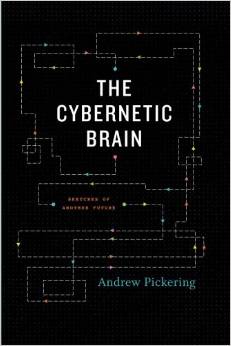 a review of Andrew Pickering, The Cybernetic Brain: Sketches of Another Future (University of Chicago Press, 2011)