b2o

  • Richard Hill — “Free” Isn’t Free (Review of Michael Kende, The Flip Side of Free)

    Richard Hill — “Free” Isn’t Free (Review of Michael Kende, The Flip Side of Free)

    a review of Michael Kende, The Flip Side of Free: Understanding the Economics of the Internet (MIT Press, 2021)

    by Richard Hill

    ~

    This book is a must-read for anyone who wishes to engage in meaningful discussions of Internet governance, which will increasingly involve economic issues (17-20). It explains clearly why we don’t have to pay in money for services that are obviously expensive to provide. Indeed, as we all know, we get lots of so-called free services on the Internet: search facilities, social networks, e-mail, etc. But, as the old saying goes “there ain’t no such thing as a free lunch.” It costs money to provide all those Internet services (10), and somebody has to pay for them somehow. In fact, users pay for them, by allowing (often unwittingly: 4, 75, 92, 104, 105) the providers to collect personal data which is then aggregated and used to sell other services (in particular advertising, 69) at a large profit. The book correctly notes that there are both advantages (79) and disadvantages (Chapters 5-8) to the current regime of surveillance capitalism. Had I written a book on the topic, I would have been more critical and would have preferred a subtitle such as “The Triumph of Market Failures in Neo-Liberal Regimes.”

    Michael Kende is a Senior Fellow and Visiting Lecturer at the Graduate Institute of International and Development Studies, Geneva, a Senior Adviser at Analysis Mason, a Digital Development Specialist at the World Bank Group, and former Chief Economist of the Internet Society. He has worked as an academic economist at INSEAD as a US regulator at the Federal Communications Commission. In this clearly written and well researched book, he explains, in laymen’s terms, the seeming paradox of “free” services that nevertheless yield big profits.

    The secret is to exploit the monetary value of something that had some, but not much, value until a bit over twenty years ago: data (63). The value of data is now so large that the companies that exploit it are the most valuable companies in the world, worth more than old giants such as producers of automobiles or petroleum. In fact data is so central to today’s economy that, as the author puts it (143): “It is possible that a new metric is needed to measure market power, especially when services are offered for free. Where normally a profitable increase in price was a strong metric, the new metric may be the ability to profitably gather data – and monetize it through advertising – without losing market share.” To my knowledge, this is an original idea, and it should be taken seriously by anyone interested in the future evolution of, not just the Internet, but society in general (for the importance of data, see for example the annex of this paper, and also here).

    The core value of this book lies in Chapters 5 through 10, which provide economic explanations – in easy-to-understand lay language – of the current state of affairs. They cover the essential elements: the importance of data, and why a few companies have dominant positions. Readers looking for somewhat more technical economic explanations may consider reading this handbook and readers looking for the history of the geo-economic policies that resulted in the current state of affairs can read the books reviewed here and here.

    Chapter 5 of the book explains why most of us trade off the privacy of our data in exchange for “free” services: the benefits may outweigh the risks (88), we may underestimate the risks (89), and we may not actually know the risks (91, 92, 105). As the author correctly notes (99-105), there likely are market failures that should be corrected by government action, such as data privacy laws. The author mentions the European Union GDPR (100); I think that it is also worth mentioning the less known, but more widely adopted, Council of Europe Convention (108). And I would have preferred an even more robust criticism of jurisdictions that allow data brokers to operate secretively (104).

    Chapter 6 explains how market failures have resulted in inadequate security in today’s Internet. In particular users cannot know if a product has an adequate level of security (information asymmetry) and one user’s lack of security may not affect him or her, but may affect others (negative externalities). As the author says, there is a need to develop security standards (e.g. devices should not ship with default administrator passwords) and to impose liability for companies that market insecure products (120, 186).

    Chapter 7 explains well the economic concepts of economies of scale and network effect (see also 23), how they apply to the Internet, and why (122-129) they facilitated the emergence of the current dominant platforms (such as Amazon, Facebook, Google, and their Chinese equivalents). This results in a winner-takes-all situation: the best company becomes the only significant player (133-137). At present, competition policy (140-142) has not dealt with this issue satisfactorily and innovative approaches that recognize the central role and value of data may be needed. I would have appreciated an economic discussion of how much (or at least some) of the gig economy is not based on actual innovation (122), but on violating labor laws or housing and consumer protection laws. I would also have expected a more extensive discussion of two-sided markets (135): while the topic is technical, I believe that the author has the skills to explain it clearly for laypeople. It is a pity that the author didn’t explore, at least briefly, the economic issues relating to the lack of standardization, and interoperability, of key widely used services, such as teleconferencing: nobody would accept having to learn to use a plethora of systems in order to make telephone calls; why do we accept that for video calls?

    The chapter correctly notes that data is the key (143-145) and notes that data sharing (145-147, 187, 197) may help to reintroduce competition. While it is true that data is in principle non-rivalrous (194), in practice at present it is hoarded and treated as private property by those who collect it. It would have been nice if the author had explored methods for ensuring the equitable distribution of the value added of data, but that would no doubt have required an extensive discussion of equity. It is a pity that the author didn’t discuss the economic implications, and possible justification, of providing certain base services (e.g. e-mail, search) as public services: after all, if physical mail is a public service, why shouldn’t e-mail also be a public service?

    Chapter 8 documents the digital divide: access to Internet is much less affordable, and widespread, in developing countries than it is in developed countries. As the author points out, this is not a desirable situation, and he outlines solutions (including infrastructure sharing and universal service funds (157)), as have others (for example here, here, here, and here). It would have been nice if the author had explored how peering (48) may disadvantage developing countries (in particular because much of their content is hosted abroad (60, 162)); and evaluated the economics of relying on large (and hence efficient and low-cost) data centers in hubs as opposed to local hosting (which has lower transmission costs but higher operating costs); but perhaps those topics would have strayed from the main theme of the book. The author correctly identifies the lack of payment systems as a significant hindrance to greater adoption of the e-commerce in developing countries (164); and, of course, the relative disadvantage with respect to data of companies in developing countries (170, 195).

    Chapter 9 explains why security and trust on the Internet must be improved, and correctly notes that increasing privacy will not necessarily increase trust (183). The Chapter reiterates some of the points outlined above, and rightly concludes: “There is good reason to raise the issue [of lack of trust] when seeing the market failures taking place today with cybersecurity, sometimes based on the most easily avoidable mistakes, and the lack of efforts to fix them. If we cannot protect ourselves today, what about tomorrow?” (189)

    Chapter 10 correctly argues that change is needed, and outlines the key points: “data is the basis for market power; lack of data is the hidden danger of the digital divide; and data will train the algorithms of the future AI” (192). Even when things go virtual, there is a role for governments: “who but governments could address market power and privacy violations and respond to state-sponsored attacks against their citizens or institutions?” (193) Data governance will be a key topic for the future: “how to leverage the unique features of data and avoid the costs: how to generate positive good while protecting privacy and security for personal data; how to maintain appropriate property rights to reward innovation and investment while checking market power; how to enable machine learning while allowing new companies strong on innovation and short on data to flourish; how to ensure that the digital divide is not replaced by a data divide.” (195)

    Chapters 1 through 4 purport to explain how certain technical features of the Internet condition its economics. The chapters will undoubtedly be useful for people who don’t have much knowledge of telecommunication and computer networks, but they are unfortunately grounded in an Internet-centric view that does not, in my view, accord sufficient weight to the long history of telecommunications, and, consequently, considers as inevitable things that were actually design choices. It is important to recall that the Internet was originally designed as a national (US) non-public military and research network (27-28). As such, it originally provided only for 7-bit ASCII character sets (thus excluding character with accents), it did not provide for usage-based billing, and it assumed that end-to-end encryption could be used to provide adequate security (108). It was not designed to allow insecure end-user devices (such as personal computers) to interconnect on a global scale.

    The Internet was originally funded by governments, so when it was privatized, some method of funding other than conventional usage charges had to be invented (such as receiver pays (53)– and advertising). It is correct (39, 44) that differences in pricing are due to differences in technology, but only because the Internet technologies were not designed to facilitate consumption/volume-based pricing. I would have expected an economics-based discussion of how this makes it difficult to optimize networks, which always have choke points (54-55). For example, I am connected by DSL, and I pay for a set bandwidth, which is restricted by my ISP. While the fiber can carry higher bandwidth (I just have to pay more for it), at any given time (as the author correctly notes) my actual bandwidth depends on what my neighbours that share the same multiplexor are doing. If one of my neighbours is streaming full-HD movies all day long, my performance will degrade, yet they may or may not be paying the same price as me (55). This is not economically efficient. Thus, contrary to what the author posits (46), best-effort packet switching (the Internet model) is not always more efficient than circuit-switching: if guaranteed quality of service is needed, circuit-switching can be more efficient that paying for more bandwidth, even if, in case of overload, service is denied rather than being “merely” degraded (those of us who have had to abandon an Internet teleconference because of poor quality will appreciate that degradation can equal service denial; and musicians who have tried to perform virtually doing the pandemic would have appreciated a guaranteed quality of service that would have ensured synchronization between performers and between video and sound).

    As the author correctly notes, (59) some form of charging is necessary when resources are scarce; and (42, 46, 61) it is important to allocate scarcity efficiently. It’s a pity that the author didn’t explore the economics of usage-based billing, and dedicated circuits, as methods for the efficient allocation of scarcity (again, in the end there is always a scarce resource somewhere in the system). And it’s a pity that he didn’t dig into the details of the economic factors that result in video traffic being about 70% of all traffic (159): is that due to commercial video-on-demand services (such as Netflix), or to user file sharing (such as YouTube) or to free pornography (such as PornHub)? In addition, I would have appreciated a discussion of the implications of the receiver-pays model, considering that receivers pay not only for the content they requested (e.g. Wikipedia pages), but also for content that they don’t want (e.g. spam) or didn’t explicitly request (e.g. adversiting).

    The mention in passing of the effects of Internet on democracy (6) fails to recognize the very deleterious indirect effects resulting from the decline of traditional media. Contrary to what the book implies (7, 132) breaking companies up would not necessarily be deleterious, and making platforms responsible for content would not necessarily stifle innovation., even if such measures could have downsides.

    It is true (8) that anything can be connected to the Internet (albeit with a bit more configuration than the book implies), but it is also true that this facilitates phishing, malware attacks, spoofing, abuse of social networks, and so forth.

    Contrary to what the author implies (22), ICT standards have always been free to use (with some exceptions relating to intellectual property rights; further, the exceptions allowed by IETF are the same as those allowed by ITU and most other standards-making bodies (34)). Core Internet standards have always been free to access online, whereas that was not the case in the past for telecommunications standards; however, that has changed, and ITU telecommunications standards are also freely available online. While it is correct (24) that access to traditional telecommunication networks was tightly controlled, and that early data networks were proprietary, traditional telecommunications networks and later data networks were based on publicly-available standards. While it is correct (31) that anybody can contribute to Internet standards-making, in practice the discussions are dominated by people who are employed by companies that have a vested interest in the standards (see for example pp. 149-152 of the book reviewed here, and Chapters 5 and 6 of the book reviewed here); further, W3C (32) and IEEE (33) are a membership organization, as are the more traditional standardization bodies. While users of standards (in particular manufacturers) have a role in making Internet standards, that is the case for most standard-making; end-users do not have a role in making Internet standards (32). Regarding standards (33), the author fails to mention the key role of ITU-R with respect to the availability of WiFi spectrum and of ITU-T with respect to xDSL (51) and compression.

    The OSI Model (26) was a joint effort of CCITT/ITU, IEC, and ISO. Contrary to what the author implies (29), e-mail existed in some form long before the Internet, albeit as proprietary systems, and there were other efforts to standardize e-mail; it is a pity that the author didn’t provide an economic analysis of why SMTP prevailed over more secure e-mail protocols, and how its lack of billing features facilitates spam (I have been told that the “simple” in SMTP refers to absence of the security and billing features that encumbered other e-mail protocols).

    While much of the Internet is decentralized (30), so is much of the current telephone system. On the other hand, Internet’s naming and addressing is far more centralized than that of telephony.

    However, these criticisms of specific bits of Chapters 1 through 4 do not in any way detract from the value of the rest of the book which, as already mentioned, should be required reading for anyone who wishes to engage in discussions of Internet-related matters.

    _____

    Richard Hill is President of the Association for Proper internet Governance, and was formerly a senior official at the International Telecommunication Union (ITU). He has been involved in internet governance issues since the inception of the internet and is now an activist in that area, speaking, publishing, and contributing to discussions in various forums. Among other works he is the author of The New International Telecommunication Regulations and the Internet: A Commentary and Legislative History (Springer, 2014). He writes frequently about internet governance issues for The b2o Review Digital Studies magazine.

    Back to the essay

  • Anton Jäger and Jan Overwijk — Measure or Misery: Hardt and Negri and the Multitude Twenty Years On

    Anton Jäger and Jan Overwijk — Measure or Misery: Hardt and Negri and the Multitude Twenty Years On

    This review has been peer-reviewed by the b2o editorial board.

    by Anton Jäger and Jan Overwijk

    On December 5th, 2019, London’s Conway Hall hosted an illustrious reunion. Michael Hardt and Antonio Negri – authors of the 2000 classic Empire, itinerant celebrities of the academic left – came to London to revisit their theses in a “world of Trump” (Hardt and Negri 2019a). “Twenty years on”, the announcement read, “globalization remains a central issue of our era, but commentators are conducting its postmortem, as forces across the political spectrum herald the return of national sovereignty” (Hardt and Negri 2019a). A lot had indeed changed in twenty years, the authors admitted. Across the world, evangelists of globalization found themselves in a state of retreat, embattled by Brexiteers, Orbánists, and other antiglobalists, led forth by the likes of Bolsonaro, Trump, and Duterte (Eichengreen 2018; Norris and Inglehart 2016). With supposed “populists” heading states from Budapest to Delhi, raising tariff barriers and restricting labor mobility, had Empire stood the test of time?

    There was a time when Empire occupied the center of global political theory. “Even if it doesn’t deliver the goods,” a reviewer charged in 2001, “Empire should inspire a multitude of empirical investigations and practical political projects” (Henwood 2001, 12). Others were less enthused: a member of the American LaRouchist movement described Negri as a “terrorist controller” who became “a leading ideologue of the new decasualization” (Celano 2001, 16). Despite such early pushback, the phrases deployed in Hardt and Negri’s book still occupy a stable place in the left’s vocabulary” – “multitude”, “cognitive capital”, “deterritorialization”, “post-Fordism” – and have found their way into scholarly language (Kioupkiolis 2016, 138-139). Interestingly, Hardt and Negri’s theory also seems to have been granted a paradoxical new lease on life after the failure of left populism in the 2010s. After ten years of experimenting with parties, institutions, elections, and representation the left finds itself sent back to a position resembling early 2000s horizontalism, but without facing a triumphantly cohesive neoliberal bloc.

    No thinkers provided a more trenchant diagnosis of this previous period than Hardt and Negri. Yet no thinkers also more clearly exemplified the limits of the previous horizontalist critique of the Washington Consensus than the authors of Empire – limits to which the left populist moment was all too attentive in its focus on party building and associative activity. The dogged return of the Hardt-Negri thesis thus speaks to a deeper contradiction in their oeuvre. While few theorists offered a more powerful theory of the new gods of fin de siècle capitalism – both economic and political – they had far less to say about the ‘old gods’ that stalked the neoliberal world, from the spread of general market dependence, the retrenchment of mid-century social rights, to the declining bargaining power of labor. On a surface level the hypothesis of Empire was so plausible as to be unassailable – the spreading of flexibility and creativity through the entirety of the capitalist labor market, and the digital ideologies this spawned. Hardt and Negri also offered a potent vision of the new modes of anti-representative politics that flourished on this new economic terrain, and how capital reconstituted both itself and the labor process. On a deeper level, Empire equally leaned into the most implausible of all hypotheses: that the fight for an old-style political economy and decommodification had to be abandoned for Marxism to remain viable, that old dogmas were only just that: dogmas, and that regression could be recast as progression.

    As the world returns to the squares and the “multitude” resurfaces, this article revisits the project begun with Empire. Although cognizant of the advancements and insights offered by Empire and the broader, anti-institutional mood it was part of, it claims that Hardt and Negri’s theory of the multitude, indexed to a specific understanding of capitalist logics and a Spinozist ontology, still retains a fatal ambiguity. That ambiguity deserves revisiting today, in a time when the left populism first proposed by Ernesto Laclau and Chantal Mouffe and later enacted by Podemos, La France Insoumise, and Syriza has waned and Hardt and Negri’s movementism is undergoing a revival.[1] While the 2010s swore by theorists such as Laclau and Mouffe’s “organizational” tendencies, the 2020s open a chapter continuous with Hardt and Negri’s horizon (Cunliffe 2020, 122). This article thus cautions both politically and theoretically against a hasty return to Hardt and Negri’s trilogy of four after the close of the populist decade, and urges us to move beyond it while maintaining some of its key insights. In this sense, it calls neither for uncritical acceptance nor unconditional rejection. We argue that even today still, much of value can be found in Hardt and Negri’s oeuvre, even if that value is often too one-dimensional.

    1. Metaphysics of Indistinction

    Any reckoning with Hardt and Negri’s legacy must move from the abstract to the concrete, peering at the foundations propping up the political theory: their ontology. From Empire (2000) to Commonwealth (2018), both authors understood the transition from the Fordist phase of capitalism to its post-Fordist phase primarily as one of a “multitude” coming into its own. But Hardt and Negri take this faith in the productive capacities of the global working class far beyond Mario Tronti’s (2019) original, post-operaist “reversal of perspective” (Shukaitis 2015, 3). In the 1960s, Tronti sought to correct classical Marxism’s overly strong emphasis on the autonomous development of the productive forces as the principal determinant of historical progress (Balestrini 2020). Instead of envisioning history as a chain of events in which a reactive working class pre-empts capital’s maneuvers, Tronti’s operaismo understands labor as the prime historic agent, to which capital is forced to ceaselessly respond. Post-Fordism, on this count, is not so much driven by new business opportunities for capital as by a need for capital to contain the struggle of organized labor through a new regulation regime – an endogenous, rather than an exogenous, shock. Like Boltanski and Chiapello (2007) in The New Spirit of Capitalism therefore, Hardt and Negri argue that the post-Fordist mode of regulation must be viewed as capital’s response to the revolts of May 1968. The soixante-huitards, as Paolo Virno (2004, 111) notes, demanded the abolition of wage labor but instead got the abolition of the stable job. That capital is merely a reactive force, then, does not mean that it cannot be historically effective.

    This Trontian worldview informs Hardt and Negri’s elegy to the concept of proletarian resistance. “Resistance”, Hardt and Negri write, “is actually prior to power” (2001, 360). What is distinctive about Hardt and Negri’s workerism, however, is that they do not primarily understand the agency of labor as a historical force but as an ontological power. Hence their nominal displacement: instead of “labor” or “the working class”, they speak of “the multitude”, inspired by Spinoza’s original multitudo. In its simplest formula, the multitude represents “the power to act”, an ontological principle of self-organization, a purely immanent source of “creative positivity” (Negri 1999, 79; Hardt and Negri 2009, 179-180; 2001, 61). The multitude forms the sole “constituent power”, the only creative agent that produces both itself as well as its historic antagonists, the “constituted power” that is capital, sovereignty and Empire. Capital is thus not so much a freestanding counterforce to labor but a historical aberration of the multitude itself – a “failure to realize our own power” as Benjamin Noys puts it (Noys 2010, 112; see also Hardt and Negri 2001, 312).

    More concretely, the multitude under post-Fordism makes up the collective subject of cooperative immaterial laborers under Empire. “Empire”, meanwhile, is understood as the global social order organized around “biopolitical production”, or the production of living labor and subjectivity (Hardt and Negri 2001, 24). With its post-Fordist mode of regulation, Empire thus forms the attempt of capital to capture the value that the multitude always already produces in its very mode of being and becoming. Empire’s stress on networked, collaborative and flexible production—what Hardt and Negri, following Maurizio Lazzarato (1996) call “immaterial labour”— necessarily mirrors the decentralized, cooperative creativities of the multitude, since capital must always follow labor as the sole source of value. In this sense, the post-Fordist moment can rightly be said to be a further realization of the productive capacities of the multitude, which finds itself in a feedback loop with the common: it produces the common in common through the common (Hardt and Negri 2009, 123, 148; 2017, 98). A principle of pure relationality, the multitude is this very feedback loop. Or to use Hardt and Negri’s Deleuzian language, it is the relation that pre-exists the relata.

    The pre-existence of labor as a creative force also drives its primal agency. “[T]he deterritorializing power of the multitude”, Hardt and Negri (2001, 61) contend, “is the productive force that sustains Empire”. The post-Fordist formation of Empire here appears as the historical end result of the ontological pressures of the multitude, forcing capital to battle on the multitude’s home terrain of total immanence. At first glance, this may appear as a problematic proposition. It appears that, in ontologizing Mario Tronti’s sociological reversal of perspective, Hardt and Negri pre-decide historical and empirical questions concerning the development of capitalism in ontological terms. For it is not at all empirically obvious that the labor conditions in post-Fordism are the result of the dynamism of the multitude rather than of a power grab of capital in the face of stagnating accumulation in the capitalist core in the 1960s and 1970s. Moreover, Hardt and Negri explicitly eschew the type of ontology that builds in a metaphysically coercive strain of teleology: “there are no final ends or teleological goals written in history” (Hardt and Negri 2004, 221). Instead, they follow the Marxist principle that theory follows practice (Hardt and Negri 2004, 140). History and ontology therefore appear to be pulling in opposite methodological directions: the one pointing to a timeless tension between “Empire” and the “multitude”, the other situating that tension in a distinct temporal setting with history as its facade.

    Hardt and Negri navigate this problem by distinguishing between a historical and an ontological multitude – in Spinozist jargon, a multitude of “actuality” versus one of “possibility”. Whereas the latter shapes an “absolute freedom” by acting in the eternity of the perpetual present, the former signals the politics required to constitute the multitude in the image of its absolute aspirations. Without falling into a Hegelianism, one can easily see these as a multitude for itself and a multitude in itself. The distinction, Hardt and Negri hurry to add, is merely analytic: the two dimensions of the multitude cannot ultimately be separated. The historical multitude, for instance, only recognizes itself in its political project based on its ontological potential. “The multitude, then, when we put these two together”, Hardt and Negri  conclude, “has a strange double temporality: always-already and not-yet” (2004, 222). By joining these two faces of the multitude, Hardt and Negri explicitly refuse a false dilemma between history and ontology and keep their eyes fixed on both at once. They then infuse their materialism with just enough historical contingency to steer clear of the philosophic vice of a grand teleology. As Kam Shapiro (2004, 294) puts it: “It is here, in the space between the potential and the actual […] that Hardt and Negri interject the teleological strain of their materialism”.

    Some tricky questions remain, however. It is difficult to comprehend, for instance, how a Spinozist monism that collapses yet separates the historical and the ontological does not simply end up muddying the two. There are, after all, still two countervailing tendencies in Hardt and Negri’s Spinozism: does the arrival of Empire and post-Fordism represent the liberation of the ontological by the historical? This fits well with the Spinozian picture in which the multitude is a vital force of excess that blooms through history like a flower slowly bursting through the asphalt. But this vision is explicitly denied by Hardt and Negri’s insistence on the priority of history (2004, 140), on the Marxian methodological principle that theory should always follow social reality. What, then, is history? Is it a contingent organization of materials that informs empirical sociology or is it a passive receptacle for the play of the ontological powers singled out by the Spinozists? If this question is rejected as a false dilemma, then one might ask: is the fact that historical Empire is the exact mirror image of the ontological multitude merely a momentous coincidence?

    Hardt and Negri’s question is never resolved. Rather than pre-deciding on the question of what entity or force forms the motor of history, Hardt and Negri’s confusion of the ontological and the historical makes it undecidable who or what is the prime mover in capitalism. This confusion stretches out over several dimensions: ontologically speaking, it remains unclear what constitutes the difference between Empire and the multitude, or, between post-Fordism and the labor force it subsumes. Empire, for Hardt and Negri (2001, 327), represents Deleuze and Guattari’s “smooth space defined by uncoded flows, flexibility, continual modulation”, a fully immanent network that sustains all relations (Hardt and Negri 2001, 327). In contrast to “sovereignty”, which is imbued with a transcendent logic, post-Fordist capital functions through what they call, again in reference to Deleuze and Guattari, an immanent “axiomatics” (Hardt and Negri 2001, 327). “The primary characteristic of such an axiomatic”, Hardt and Negri write, “is that relations are prior to their terms”. This means, shockingly, that Empire has the exact same conceptual structure as the multitude: it is the relation that precedes the relata. Empire and the multitude thus become ontologically indistinguishable.

    Adding to the confusion, Hardt and Negri argue that this indistinguishability between capital and labour is itself a product of history. Post-Keynesian capital, they maintain, survives in a permanent state of crisis: its modus operandi is the exploitation of disequilibrium and the unruly forces it discharges. As a result, it becomes increasingly difficult to grasp whether a crisis came “from above” or “from below”, whether the fall in profit was a ruse of capital or resistance from the multitude, whether rebellion or recuperation (Cooper 2011, 135). In an ironic twist, therefore, little to nothing remains of the original Trontian reversal of perspective. Both ontologically and historically, it has become impossible to say whether the current phase of capitalism results from the agency of labor or that of capital; ontologically speaking, they are both forces of pure “relationality” on the plane of immanence; historically speaking, it is radically uncertain on which empirical force one should pin crises.

    Despite adversity, Hardt and Negri maintain that the multitude represents the sole ontologically productive principle. Empire itself, they claim, “is not a positive reality” (Hardt and Negri 2001, 361), but merely a “parasite”, an “apparatus of capture that lives only off the ontological vitality of the multitude” (Hardt and Negri 2001, 62; 2019b, 83). Our concluding hypothesis is therefore that in this multifaceted confusion of the historical and the ontological as well as the multitude and Empire, Hardt and Negri ultimately go with the overpowering thrust of their Spinozian monist ontology. By this picture, the multitude is the causa sui, the liberating force of excess that pushes its way through history, now driving capital into the fully immanent Empire as the last vestige onto which capital is forced in anticipation of Commonwealth. The latter is Hardt and Negri’s term for communism, which, incidentally, Negri defines as “the negation of all measure, the affirmation of the most exasperated plurality—creativity” (1999, 33). However powerful the image, it brings with it a risk to misunderstand the precarious, flexible and networked labor conditions of post-Fordism as the deepest producing-desires of the working class – and thus to downplay the continuities between pre-Fordism and post-Fordism. It is to this risk that we will now turn.

    1. Historical Ambiguities

    Empire’s consequences were never exclusively philosophical. Besides its claims in ontological and philosophical registers, the implications of Hardt and Negri’s argument extend far into sociology and Marxist studies more generally, leading into social movement studies, political sociology, and political theory. Most of these fields of discussion can be centered around their description of a new, distinct accumulation regime that began in the 1970s. Hardt and Negri have consistently described the advent of their “polytechnic” work as part of a distinct, new historical phase of capitalist growth. During the late-Fordist age, they claim, workers used their historical advantages and pushed beyond the “dynamic stabilization” (Tronti) of the post-war period (Smith 2019, no page). Borrowing from cybernetics and systems theory, Tronti’s concept indicated the capacity of Italian capital to harness seemingly militant demands for wage increases and public sector expansion to their benefit, channeling popular energy into increased capital accumulation. Once it was clear that the interests of labor and the interests of capital began to diverge, however, capital went on the offensive and steadily deconstructed the post-war settlement. This could not be done without acknowledging the legitimacy of some of the revolts that had taken place within that system itself, which drove the demands for increasing spontaneity, creativity, and bottom-up input. Rather than the result of falling growth rates, Hardt and Negri argue, labor militancy itself drove declining profit margins and urged a different model of governance.

    A recurrent response to this deconstruction has been a version of left melancholy, lamenting capital’s supposed breach of contract after the Trente Glorieuses. But rather than lamenting the death of the post-war compromise, Hardt and Negri see a liberation from a corporatist cage which can stimulate even stronger militancy. Such activity was heralded in the Italian “hot autumn” of 1968-69, when workers ignored the dictates of union and party and began to agitate on their own terms. In ending this “dynamic stabilization”, a newly disorganized mass of casual workers became available in the interim, who would shun the large representative pillars which had structured mass working class politics throughout the twentieth century. A new “multitude” was becoming visible in the interstices of this old world, less beholden to organizational dogmas and open to institutional experimentation. Although it shared a structural location with the older, industrial proletariat, its set-up was also constitutively different, less tolerant of leaders, representation, and mediation, and less centered on the hierarchical, industrial workplace. The new class in the social factory tracked a broader systemic shift across capitalist economies. The model of the factory at the heart of Fordism separated a male sphere of production from a female sphere of consumption, the former’s commodification reliant on patriarchal decommodification in the latter (Winant 2019). Capital’s push to post-Fordism and the consequent “feminization of work”, in turn, transformed the whole of society into the factory, forcing workers to hire themselves out to a variety of employers and adopt an inviting, entrepreneurial pose (Hardt and Negri 2009, 133). “Neoliberalism” became the preferred mode of management for this new welfare world. After the tense maneuvering between capital and labor in the inflationary 1970s, an “entrepreneurial multitude” gradually came about, less collectivist than its industrial predecessor but still politically militant, and potentially more emancipatory.

    In its own time this vision also generated a familiar range of critiques from Marxists. Normatively, they questioned Hardt and Negri’s emphasis on labor’s supposedly deterritorializing powers and their key claim: that labor militancy rested on a supposed refusal for measurement (Negri 1999, 33). Earlier Marxists have mainly faulted Hardt and Negri for their account of the transition and for neglecting problems of industrial overcapacity in the current economy – rather than workers who wanted too large a segment of the social product, it was a global glut of manufacturing goods that drove capital’s profit rates down in the late 1960s (Brenner 2006, 2018). At the heart of Hardt and Negri’s chronicle, however, lies a deeper ambiguity: the substantial and eerie continuities between pre-Fordism and post-Fordism. These problems can be traced back to Hardt and Negri’s conceptualization of the Fordist regime itself. In their insightful passages, Hardt and Negri did acknowledge the political preconditions for this Fordist moment. Rather than an inevitable social formation, Fordism was often a political battle for decasualization and formal labor contracts, fought between workers and management in the 1920s.

    Before 1918, most labor was casual, underpaid, and precarious by nature; it was only when political struggles over these working conditions pushed towards decasualization and permanent contracts that a corporatist settlement was reached. As studies by Charles Maier (1975) and Marcel van der Linden (2014) have shown, most corporatist arrangements rebranded as “Fordist” were the result of intense revolutionary activity from 1918 to 1945, as socialist and communist parties made their first forays into bourgeois governments and began to use state power to coerce capital into the general interest (Maier 1975; van der Linden 2014, 9-21). “Fordism”, in this sense, was less of a natural stage for capitalism than a political imposition from below and above, as recent studies by Noam Maggor and Stefan Link (2011; 2018; 2020) have pointed out – an attempt to shortcut international competition and capital development without dependency, growing a solid labor force which could be kept in the factory and disciplined into consumption (see also Buck-Morss 2002). Rather than an evolutionary stage inherent in capitalism’s DNA, Fordism was a unique political product which arose out of workers’ struggles rather than being imposed on them. In no way was Fordism thus a natural development for capital, a fact that is acknowledged by Hardt and Negri but never properly thought through (Link 2018; Buck-Morss 2002; Link 2011, 2020). When viewed from the perspective of capital’s short-term interests, after all, labor protection, decasualization, welfare rights, and formal contracts are no more than legal and political barriers in the free flow of capital and its maximum valorization in production. As John Clegg notes, “in a capitalist order of fully specified property rights, it is wage labor rather than slave labor that is the anomaly” (Clegg 2015: 303). Completely “enforceable labor contracts”, in this sense, would “be the dream of many an employer”, allowing them to extract surpluses without having to honor any contractual obligations (Clegg 2015, 303).

    This prehistory of post-Fordism sensitively reshuffles the stages of capitalism implicit in Hardt and Negri’s story. Rather than a completely new historical situation, the post-Fordist era has seen the return of phenomena reminiscent of a pre-welfarist capitalism. Precarious labor conditions, loss of control over labor time, or the offloading of market risks have all reappeared vigorously, now coupled to a new ideology of human capital development. A return to self-entrepreneurship and self-employment form the legal counterpart of this shift, heralded by Hayek and other neoliberal ideologues. Organized capitalism, in this sense, was an interlude, not an evolutionary successor.[2] This similarity should induce healthy caution against Hardt and Negri’s periodization. What looks like the new is rather a resurrection of the old, now motivationally enforced through a radically “embedded” form of neoliberalism, organized by states, intergovernmental bodies, and carefully constructed trade treaties (see Slobodian and Plehwe 2020).

    This critique has both descriptive and normative ramifications. Descriptively, it relativizes the transition from pre-Fordism to Fordism from an ontological development to a contingent process mediated by political struggle. Normatively, this analysis casts doubt on Hardt and Negri’s assertion of labor’s supposedly deterritorializing powers, culminating in the prospect of commonwealth as the “negation of all measure” (Negri 1999, 33). Rather than a tool for employers, measurability and rationalization were often a demand pressed by workers who sought better contracts, clarified working hours, and higher pay rates. This became clear in the first bill for the 8-hour day and the setting of wage scales in Belgium, Germany, and France after the First World War. Likewise, late nineteenth century statistical research that uncoupled poverty from innate character and instead linked it to social forms of unemployment, though doubtless an instrument of state discipline and biopower, simultaneously effected a pushback against charity-based poverty relief and pried open a political field of labor market regulation and social security (Desrosières 1998, 262). More than a refusal to be “measured”, measurability was a potent response to market-dependence and workplace discipline – the insistence to enumerate the exact amount of labor paid rather than remain in the dark. As Max Henninger notes, “we have an interest in taking the categories developed in the Marxist critique of political economy more seriously than Negri seems to do, for the simple reason that if we don’t ‘do the math’ ourselves, others will do it for us” (Henninger 2007, 177; see also Morozov 2017).  Capital was in large part rational when forced to be so from below or above, whether a militant working class a domineering developmental state.

    1. The Politics of Immeasurability

    Unsurprisingly, the metaphysical and historical ambiguities and inconsistencies reverberate through the post-Operatist duo’s politics. In this context, a reckoning with the influence of cybernetic theory on left-wing thinking has also remained overdue. Taken in by a new digital ideology of verticality and absence of hierarchy, Hardt and Negri built on the promises of the terrain created by the end of “organized capitalism”, where large-scale institutions such as parties and unions were replaced with looser networks and assemblies. As Hardt and Negri put it in Multitude: “once again, a distributed network such as the Internet is a good initial image or model for the multitude because, first, the various nodes remain different but are all connected in the Web, and, second, the external boundaries of the network are open such that new nodes and new relationships can always be added” (2004, xv). Here, “immaterial labor” thus “seems to provide the potential for a kind of spontaneous and elementary communism” (Hardt and Negri 2001, 294).  The emancipatory switching of cybernetic languages has thus played a key role in this ambition, with computerized “societies of control” offering their own unique “line of flight” or “exodus” (Deleuze 1992). Yet, as contemporary critics continue to point out, cybernetics was never a neutral science and cannot be so today. Strangely, there are two contradictory risks involved, attesting to cybernetics’ complex logic and development: one of control and one of anti-control. First of all, with cybernetics implicated in war time strategy and post-war management, its in-built assumption of entropy and tendency toward homeostasis blunts the tools of critical analysis and smuggles in neoclassical assumptions about perfect capitalist equilibria (Galison 1994; Tiqqun 2020). On this account, offered most forcefully by Peter Galison (1994), cybernetics cannot simply be dissociated from its heritage of behaviorism, old-school rationalization and control. Rather than recognizing the persistence of hierarchy and domination in the new digital workplace, Hardt and Negri took the self-presentation of the neoliberal bloc at face value and saw the digital as a less vertical mode of organization.

    Contrary to these worries of persistent control, there exists the danger of importing the “Californian Ideology” (Barbrook and Cameron, 2015) into a supposedly emancipatory program. This celebration of anti-control runs from old libertarian fantasies through 1960s counterculture into the ideology of Silicon Valley today.  Underneath the rhetoric patina of horizontality and participation, this ideology thus hid an increasingly classical capitalism in which cybernetics simply imported market mechanisms into the realm of state management itself. Attempts at “repurposing” these new organizational logics – part of the general internet euphoria typical of the early 2000s – obscure this essential co-originality between cybernetic management and capitalist profit imperatives, the one driving the design of the other. And rather than superseding the immobile monolith of the party, the cybernetic swarm simply affirms and reproduces the disorganization and refusal of general will formation implicit in an atomized market. A mere fetishism for physicality – “nothing can beat the being together of bodies and the corporeal communication that is the basis of collective political intelligence and action”, as Hardt and Negri postulate recently – will not solve this organizational deficit (cited in Lovink 2016, 19; Gardiner 2020, 1-15). In the face of the paradoxical legacy of cybernetics, it is clear that there are no easy answers when it comes to politics in communication-heavy societies. The threat remains palpable however, that by buying into this “cybernetic illusion”, Hardt and Negri rather threaten to liquidate the only historic forces ever capable of coercing capital into a less adversarial mode.

    A similar problem of self-presentation holds for the concept of “cognitive capital” or its cognates recurrent in the Hardt and Negri corpus (Boutang 2011; Vercellone 2007). These theories can be traced to earlier debates in the 1980s and 1990s, when the disappearance of the industrial proletariat led to theorizing about a new “non-class of non-workers”  who would supervise an increasingly automated industrial landscape (Gorz 1982, 82). André Gorz’s work remains a prime point of reference here. Himself enamored with Hardt and Negri in his late life in the 1990s, Gorz and Negri claimed that the “crisis of measurability” inherent to the post-Fordist regime meant that labor itself had become impossible to standardize and all activities could now conceivably count as “work” (Marazzi 2008, 43). Workers outside of stable contracts spend their entire lives perfecting CVs and reskilling capacities or reframing every inch of human activity as enhanced human capital—all under the imperative to become as reprogrammable, networked and adaptive as the new cybernetic machines that now streamline the workplace. They thereby rendered the very notion of “socially necessary labor time” a pitiful anachronism.

    Since it was no longer possible to satisfyingly measure labor performance in strict clock hours, a permanent grant would provide the only natural political response to a measurability crisis, completing the neoliberal dissolution of the waged worker. This was three years after Gorz proclaimed that “as a system, socialism was dead,” together with its “philosophy of work and history.” If the left still “stood for the emancipation of the workers,” he claimed, this would turn them into the spokespersons for “those 15 percent who still define themselves chiefly by their work” (Gorz 1994, vii). Negri usually followed Gorz on this score. “Flexibility and mobility of labor force”, he claimed in 2001, “are irreversible: The question is not to oppose the new organization of labor, but to guarantee a salary and freedom for the post-Fordist worker.” Basic income schemes remain a classical alternative here, which would allow casual contracts to survive while offering workers a minimum means of sustenance. It is a logical train of thought if one sees the negation of measure as the fulfilment of a liberating ontological movement.

    A second, connected question concerns the key concept mobilized in Empire—“immaterial labor”. In Hardt and Negri’s view, the new multitude’s mode of production was less centered on the large scale, industrial factory but on the small-scale, flexible value chains of a globalized world. It also implied a change of personnel from a proletariat into a “cognitariat”, which worked with information rather than producing physical objects. As capitalist production shed its basis in concrete, physical objects, production was now more fleeting and moved into the confines of the human brain, or even into the network of cooperating brains—the social brain (Boutang 2011). Following the ontological push of the multitude, measurable labor-power had become immeasurable “invention-power”. This shift, Hardt and Negri claim, has had momentous consequences for Marx’s classical value theory. Loyalty to this theory would imply the view that labor can be measured in neat, homogeneous slices of time, which is then repaid in monetary form. Such a model of the labor theory of value was clearly premised on the figure of the factory clock, which herded workers to their posts at a time in the morning only to end by emptying at a designated ring of the bell.

    Around this Fordist set-up the post-war welfare state was constructed, centering male producers who spent wages earned from material production. Post-Fordist labor markets, in which workers surf from one job to the other desperately searching for gigs, hardly conform to the same model. They also severely complicate the claim to “measurability” posited in the classical labor theory of value. As Hardt and Negri note, in a world where time discipline has become diffuse, the workplace has dissolved into an encompassing ‘social factory’ and workers are not enumerated with the same wage scales, what future is there for a labor theory of value in the classical mold? Instead of relying on the intrinsically Fordist measurement unit of “labor time”, the age of the new entrepreneur celebrates more ethereal activities and efforts. This crisis of immeasurability has received a new lease on life in a burgeoning “platform capitalism” literature, which sees a return to new decentralized forms of domination through networks, rather than the semi-military forms of discipline associated with Fordist factory (Wood 2020; Standing 2016; Huws 2019).

    Yet critics have also continued to question the novelty of this “cognitariat” in recent years. As Charles Post notes, Hardt and Negri’s “immaterial labor” tends to “confuse highly material labor – work in the telecommunications industry creating and maintaining the infrastructure for computerization” with “forms of mental labor”  such as “designing machinery and work-systems” (Cummings and Post 2016, 251). Rather than debunking Marx’s value theory, the paying of wages for “immaterial” activities is simply an extension of capitalist practice, not a complete qualitative break. The same continuity has been applied to Hardt and Negri’s reworking of Marxian value theory. Michael Heinrich has similarly cautioned against Hardt and Negri’s innovation. Although the transition to a service economy has undeniably rewired European economies and initiated a switch from tradeables to non-tradeables, this has not put an end to classical processes of value creation. “What is relevant”, Heinrich counters, “is the act of exchange, not the fact that physical objects are being exchanged. “Services, after all, “can also be exchanged and therefore become commodities”, and “the difference between a material product and and ‘immaterial’ service consists solely of a different temporal relationship between production and consumption: the material product is first produced and subsequently consumed (a bread roll should be consumed on the same)” (Heinrich 2012: 44).

    Heinrich’s point provides a potent tonic against “the frequently stated argument” that with the “transition from an industrial to a service economy” or in the left-wing variant of Hardt and Negri— the transition from “material” to “immaterial” production—Marx’s value theory has become outmoded” (Heinrich 2012, 44). In regular economics registers, this shift has been explained in terms of a move towards non-exportables and services, part of the new “information economy” that implies a rewiring of classical economic registers (Castells 2011). Hardt and Negri’s incessant stress on the immeasurability of immaterial labor has been a powerful and welcome sociological gesture—one thinks of intellectual property, intangible assets and brand management—but should never tip over into denying the necessity of measurement as a moment in the realisation of value. Rather than a supersession of old capitalist logics, then, the advent of the computer or the cybernetic machine has not fundamentally displaced the question of class composition or the basics of class conflict, it has merely induced new cybernetic strategies for “governing” or “navigating” capitalism’s unruly contradictions.

    1. Before and After the Multitude

    If the twenty-first century looks uncannily more like the nineteenth than the twentieth, where does that leave us with Hardt and Negri’s multitude? Stripped of its linguistic charms, Empire’s subject looks more painfully familiar than it might: a planetary proletariat with no recourse to mass institutions or statist safety nets, slowly losing its claim to the “making” class due to deindustrialization. In essence, the new “multitude” thus reveals itself as the cybernetically managed proletariat of yore, stripped of its organizational encasing and as cruelly market-dependent as its nineteenth-century predecessor, but without the cage of “integration” (as Horkheimer put it) of a previous disciplinary era, indicating working class submission to the planning state (Abromeit 2011; Horkheimer 1978). Piece work, putting-out systems, and unsalaried labor have all seen a return in the era of neoliberalism, now engineered through algorithmic devices rather than despotic overseers. Yet the steady automation of middle management or the disappearance of the foreman in this new “digital Taylorism” do little to decrease the relevance of the nineteenth-century models Hardt and Negri are quick to reject (Leberecht 2015). In this sense, the “multitude” still offers a surface reading of a disorganized new global proletariat. Should the rise of precarious labor, sharply formulated, not rather be considered as an example of downright “class war from above”, rendering Hardt and Negri’s redeeming narrative “nothing less than ideology “ (Palmer 2014: 40)?

    Such an argument for putative continuity should not obscure real differences between the pre- and post-Fordist phase of capitalism. Hardt and Negri are fully correct to insist on the new techniques of management and steering which have been implemented since the late 1960s, when capital saw a chance to break free from the post-war compromise and reclaim prerogatives over investment. In terms of political leadership, the new regime did come with a new hegemonic order – indicated by Boltanski and Chiapello’s “projective city” (2007), the justificatory regime of the “third spirit of capitalism.” Networks function as the watchword of this new city, a normative space which interpolates workers to ‘surf” the decentralized market signals as “agile”, “lean”, “employable” agents (Bernes 2017, 122; Thrift 2005). The summum bonum of the cybernetic city is the virtue of “connexionism”: the extension of the network to the benefit of all. As with Foucault’s neoliberal “governmentality”, precarious market dependence reminiscent of the nineteenth century now figure in a new strategic field in which subjects are motivated to accept their material condition under the banner of self-entrepreneurship. This is also what distinguishes digital Taylorism from its analogue predecessor: not so much a radical change in the precarity of labor conditions, but in the celebration of this precarity as “gamified”, fluid existence (Neilson and Mezzadra 2019, 82-83; Slobodian 2020). What used to run through the soft power of impersonal market coercion now is increasingly glorified through the even softer attractions of human capital development. Capital’s political encasing has thus become less top-down, hierarchical, and vertical than in the managerial age. Yet none of these normative diagrams should lead one to overstate their importance in the face of the essential continuity with the capitalism analyzed by Marx’s generations, in which the capitalist macrocosm spanned only one part of the globe (Mattick 2018, 8-9).[3]

    This fact has become ever clearer to our post-2008 world, in which a global surplus population faces an increasingly stagnant capitalism unable to absorb its services. Notions such as the “multitude”, in turn, do little to elucidate the specific modalities of market dependence all workers experience and how these stratify labor markets across lines. Anno 2019, humanity inhabits an almost fully proletarianized planet: nearly 60% of the world is currently employed in wage relations with a sizable portion of the remaining 40% in partial or complete market-dependency. What was still a condition confined to European workers in the late nineteenth century – foreclosed by the safety valve of colonial emigration – is now a planetary fait accompli (Jäger 2019, 1-22).

    Capitalism’s universalization should however caution against deriving a new political stand to this order. Across the global South, market-dependent producers eke out a living without employers, selling wares on the streets or marketing themselves. Ever since urbanization’s decoupling from development and development’s decoupling from growth, this surplus population has not ceased to grow (Benanav 2019, 2014; Benanav and Clegg 2010). But there is a danger of taking this new subject as a prepackaged agent rather than a truly “deterritorialized” anti-subject deserving of legal rights. As Mike Davis notes, speculations about “a new politics of ‘multitudes’ in the ‘rhizomatic spaces’ of globalization remain ungrounded in any real political sociology” (Davis 2020, 7). Rather than focusing on the differing scales of market dependence in the new global economy, Hardt and Negri took the cyber-proletariat as a given and transposed it into an ontological category (Dyer-Witherford 2015). While the attempt to find a new idiom to collect and unite all those wretched of the earth—including those not employed in wage labor—must be applauded, there is a definite risk involved in the task. As Davis (2020, 7) sharply claimed, “imprudent coronations of abstractions like the ‘multitude’ as historical subjects simply dramatize a poverty of empirical research” and do little to point at potential conflicts of interest between sections of the wage dependent classes.

    Rather than a new phase of ontological prowess, the new multitude thus tends to appear as the result of a failed Fordist integration which has reverted back to the classical age – a radically embedded neoliberal capitalism in which capital is longer an agent of growth and thrives on state predation. Likewise, Davis cautions against celebrations of spontaneity and casualness which come with these “ideologies of informality” (Van Ballegooijen and Rocco 2013, 1794-1810; Scott 1999; DeLong 2007). Rather than arguing for cash transfers or microcredit for the slums, the classically “Fordist” demand for labor rights, coupled with transformative post-growth programs, should still be at the center of an anti-neoliberal left. To claim the proletariat is “fading away” in the face of the “increasing heterogeneity of work situations and, thus, of social conditions”, as sociologists in the information age often do, elides the fact that “informal workers… tend to be massively crowded into a few major niches where effective organization and “class consciousness” might become possible if authentic labor rights and regulations existed” (Davis 2000, 185 (f)). Overall, “it is the lack of economic citizenship, rather than livelihood heterogeneity per se, that makes informal labor so prone to clientelist subordination and ethnic fragmentation” (Davis 2000, 185 (f)) More than a new political subject, the new “multitude” thus risks tumbling into its very opposite: a floating signifier in desperate search of material grounding in our social reality. At worst, it is a symptom of the disorganization of the populist age in which the measurement techniques of focus groups, real time polls and approval ratings struggle to delineate “the people”. These metrologies have become the face of the multitude’s supposed “immeasurability” (Csigo 2017; Cooper 2011; Feher 2018).

    This strategy would require more than invocations of an “entrepreneurial multitude” which survives in the grottoes of globalization, and revisit earlier questions of social rights and decommodification (Hardt and Negri 2018, 146). “The main issue in the informal sector”, Davis notes, “is normalization of the rights and protections of labor, not property” (Davis 2000, 185 (f)). Such a vision would depart from the accelerationist optimism implicit in the Negrite vision, which celebrates the new informal masses as harboring an exclusively new emancipatory promise. Instead, even the oldest dogmas of social democracy, from labor rights to public provision, are “as good as ever”.[4] The closing of the left-populist decade, symbolized by the successive defeats of the Sanders, Syriza, and Corbyn coalitions, has made this point even clearer: rather than stick to an horizontalism, left populists began by returning to the party and rethinking the organizational basics of a previous age. Although they failed, the questions they asked had been left neglected and underused, distracting leftists from the task that the twentieth century originally posed – and which Hardt and Negri sought to bury in 1999.

    *

    Coming at the tail end of a series of anti-police protests and the storming of the Capitol, early 2021 offers a unique vantage point to assess the valences of Empire. At the close of the neoliberal 1990s, Hardt and Negri’s work offered creative and penetrating insights into the changing nature of labor under capitalism and the ramifications of the neoliberal settlement. It spoke to a disenchanted left traumatized by the counter-revolutionary wave of the 1980s and 1990s, which pulverized the structures of an organized left in the Third World, Europe, and the US, and liquidated the fragile counter-powers built up during the red century. Empire was a new theory for new times, forcing the left to strategies on new terrain. As a holistic theory of politics and social change, its omissions still risk underplaying the continuities between pre- and post-Fordist capitalism and reads an erroneously emancipatory dynamic into a mode of cybernetic management now sold as human capital development. This historical sloppiness and slipperiness stem from a series of metaphysical blunders, where cybernetic techniques of labor control and new strategies of accumulation are recast as an ontological subject reaching its final state. Its practical consequences remained equally suspect: the “multitude” refuses a politics and sociology of class articulation and skirts over real differences in today’s proletarian landscape, abandoning the sphere of production and measurability to a new illiberal bloc (Slobodian 2018; Körösényi, Illés, and Gyulai 2020). As the left-populist decade ends and movementism regains its attraction, Empire indeed seems to offer a useful point of retreat for a newly disillusioned left. One must wonder, however: what is gained by racing from one cul-de-sac into another?


    Bibliography

    Balestrini, Nanni. 2020. The Golden Horde: Revolutionary Italy, 1960-1977. New York: Seagull Books.

    Barbrook, Richard, and Cameron, Andy. 2015. The Internet Revolution: From Dot-com to Cybernetic Communism. Amsterdam: Institute of Network Cultures.

    Benanav, Aaron. 2014. “A Global History of Unemployment: Surplus Populations in the World Economy, 1949-2010,” PhD Thesis (2014), University of California, Los Angeles.

    Benanav, Aaron. 2019. “Demography and Dispossession: Explaining the Growth of the Global Informal Workforce, 1950-2000.” Social Science History, 1-25.

    Benanav, Aaron. 2020. Automation and the Future of Work. London: Verso Books.

    Benanav, Aaron, and Clegg, John. 2010. “Misery and Debt: On the Logic and History of Surplus Populations and Surplus Capital.” Endnotes 2: no page.

    Boltanski, Luc, and Chiapello, Ève. 2007. The New Spirit of Capitalism. London, New York: Verso Books.

    Boutang, Yann Moulier. 2011. Cognitive Capitalism. Cambridge; Malden: Polity Press.

    Brenner, Robert. 2006, Economics of Global Turbulence. The Advanced Capitalist Economies from Long Boom to Long Downturn. London: Verso.

    Buck-Morss, Susan. 2002. Dreamworld and Catastrophe: The Passing of Mass Utopia Between East and West. Cambridge, MA: The MIT Press.

    Castells, Manuel. 2011. The Rise of Network Society. London: John Wiley & Sons.

    Celano, Paulo. 2001. “Toni Negri, Profile of a Terrorist Ideologue.” Executive Intelligence Review: 16-17.

    Clegg, John. 2015. “Capitalism and Slavery.” Critical Historical Studies 2:2 (Fall): 281-304.

    Cooper, Melinda. 2011. “Complexity Theory After the Financial Crisis: The Death of Neoliberalism or the Triumph of Hayek?” Journal of Cultural Economy: 371-385.

    Cooper, Melinda. 2011. “Marx Beyond Marx, Marx Before Marx: Negri’s Lucretian Critique of the Hegelian Marx.” In Reading Negri: Marxism in the Age of Empire, edited by Pierre Lamarche, Max Rosenkrantz and David Sherman, 127-148. Chicago; LaSalle: Open Court.

    Csigo, Peter. 2017. The Neopopular Bubble: Speculating on “the People” in Late Modern Democracy, Budapest: Central European University Press, 2017.

    Cunliffe, Phillip. 2020. The New Twenty Years’ Crisis: A Critique of International Relations, 1999-2019. Montreal: McGill-Queen”s Press.

    Davis, Mike. 2000. Planet of Slums. London: Verso Books.

    Davis, Mike. 2020. Old Gods, New Enigmas: Marx”s Lost Theory. London: Verso Books.

    Eichengreen, Barry. 2018. The Populist Temptation: Economic Grievance and Political Reaction in the Modern Era. New York: Oxford University Press.

    Feher, Michel. 2018, Rated Agency: Investee Politics in a Speculative Age. New York: Zone Books.

    Desrosières, Alain. 1998. The Politics of Large Numbers: A History of Statistical Thinking. London; Cambridge, MA: Harvard University Press.

    Galison, Peter. 1994. “The Ontology of the Enemy: Norbert Wiener and the Cybernetic Vision.” Critical Inquiry 21(1).

    Gorz, André. 1991. Capitalism, Socialism, Ecology. London: Verso Books.

    Hardt, Michael, and Negri, Antonio. 2001. Empire. Cambridge, MA; London: Harvard University Press.

    Hardt, Michael, and Negri, Antonio. 2003. Labor of Dionysus: A Critique of the State-Form. Minneapolis: University of Minnesota Press.

    Hardt, Michael, and Negri, Antonio. 2004. Multitude: War and Democracy in the Age of Empire. New York: Penguin.

    Hardt, Michael, and Negri, Antonio. 2009. Commonwealth. Cambridge, MA; London: Harvard University Press.

    Hardt, Michael, and Negri, Antonio. 2017. Assembly. Oxford: Oxford University Press.

    Hardt, Michael, and Negri, Antonio. 2019a. “Empire, Twenty Years On”, see https://conwayhall.org.uk/event/michael-hardt-and-antonio-negri-empire-twenty-years-on/

    Hardt, Michael, and Negri, Antonio. 2019b. “Empire, Twenty Years On.” New Left Review 120 (November-December): 67-92.

    Heinrich, Michael. 2012. An Introduction to the Three Volumes of Karl Marx”s Capital. New York: NYU Press.

    Henninger, Max. 2007. “Doing the Math: Reflections on the Alleged Obsolescence of the Law of Value under Post-Fordism.” Ephemera 7(1): 158-177.

    Henwood, Doug. 2001. “Blows against Empire.” Left Business Observer 96 (February): no page.

    Huws, Ursula. 2019. Labour in Contemporary Capitalism: What Next? London: Springer.

    Jäger, Anton. 2019. “Back to Work: Review of David Graeber”s Bullshit Jobs.” nonsite: 1-22.

    Kioupkiolis, Alexandros. 2016. Radical Democracy and Collective Movements Today: The Biopolitics of the Multitude versus the Hegemony of the People. London: Routledge.

    Körösényi, Andras, Illés, Gábor and Gyulai, Attila. 2020. The Orbán Regime: Plebiscitary Leader Democracy in the Making. London: Routledge.

    Cummings, Jordy, and Post, Charles. 2016. “Rethinking Precarity and Capitalism: An Interview with Charlie Post.” Alternate Routes 27: 248-260.

    Lazzarato, Maurizio. 1996. “Immaterial Labor.” In Radical Thought in Italy: A Potential Politics, edited by Paolo Virno and Michael Hardt, 133-147. Minneapolis: University of Minnesota Press.

    Leberecht, Tim. 2015. The Business Romantic: Give Everything, Quantify Nothing, and Create Something Greater Than Yourself. New York: Harper & Collins.

    Linden, van der Marcel. 2014. “San Precario: A New Inspiration for Labor Historians.” Labor Studies in Working-Class History of the Americas (March): 9-21.

    Link, Stefan. 2011. “Rethinking the Ford-Nazi Connection.” Bulletin of the German Historical Review 49 (Fall): 134-141.

    Link, Stefan. 2018. “The Charismatic Corporation.” Business History Review 92 (Summer): 85-115.

    Link, Stefan. 2020. Forging Global Fordism: Nazi Germany, Soviet Russia, and the Contest over the Industrial Order. New York: Princeton University Press.

    Lovink, Geert. 2016. Social Media Abyss: Critical Internet Cultures and the Force of Negation. London: Polity.

    Maier, Charles. 1975. Recasting Bourgeois Europe: Stabilization in France, Germany and Italy in the Decade After World War I. New York: Princeton University Press.

    Marazzi, Christian. 2008. Capital and Language: From the New Economy to the War Economy. Los Angeles: Semiotext(e).

    Morozov, Evgeny. 2017. To Save Everything, Click Here: The Folly of Technological Solutionism. London: Public Books.

    Negri, Antonio. 1999. “Value and Affect.” Boundary2 26(2): 77-88.

    Neilson, Brett and Mezzadra, Sandro. 2019. The Politics of Operations: Excavating Contemporary Capitalism. New York: Duke University Press.

    Norris, Pippa, Inglehart, Ronald. 2016. “Trump, Brexit, and the Rise of Populism: Economic Have-Nots and Cultural Backlash.” Harvard Kennedy School Faculty Research Working Paper Series: 1-31.

    Noys, Benjamin. 2010. The Persistence of the Negative: A Critique of Contemporary Continental Philosophy. Edinburgh: Edinburgh University Press.

    Palmer, Bryan D. 2014. “Reconsiderations of Class: Precariousness as Proletarianization.” Socialist Register 50: 1-40.

    Shapiro, Kam. 2004. “The Myth of the Multitude.” In Empire’s New Clothes: Reading Hardt and Negri, edited by Paul Passavant and Jodi Dean, 291-317. New York; London: Routledge.

    Shukaitis, Stephen. 2015. The Composition of Movements to Come: Aesthetics and Cultural Labour After the Avant-Garde. London: Rowman & Littlefield.

    Slobodian, Quinn. 2020. Globalists: The End of Empire and the Birth of Neoliberalism. New York: Harvard University Press.

    Slobodian, Quinn. 2018. “You Live in Robert Lighthizer”s World Now.” Foreign Policy (August 6), no page.

    Slobodian, Quinn, and Plehwe (eds.), Dieter. 2020. Nine Lives of Neoliberalism. London: Verso Books.

    Smith, Jason. 2020. Smart Machines and Service Work: Automation in an Age of Stagnation. Chicago: Reaktion.

    Standing, Guy. 2016. The Precariat: The New Dangerous Class. London: Bloomsbury.

    Thrift, Nigel. 2005. Knowing Capitalism. London: Sage.

    Tiqqun. 2020. The Cybernetic Hypothesis. Cambridge, MA: Semiotext(e) and MIT Press.

    Tronti, Mario. 2019. Workers and Capital. Translated by David Broder. London: Verso Books.

    Van Ballegooijen, Jan, and Rocco, Roberto. 2013. “The Ideologies of Informality: Informal Urbanisation in the Architectural and Planning Discourses.” Third World Quarterly 34: 1794-1810.

    Vercellone, Carlo. 2007. “From Formal Subsumption to General Intellect: Elements for a Marxist Reading of the Thesis of Cognitive Capitalism, in Historical Materialism.” Historical Materialism 15(1): 13-36.

    Warde, Alan. 1985. Consensus and Beyond: The Development of Labour Party Strategy Since the Second World War. Manchester: Manchester University Press.

    Wood, Alex. 2020. Despotism on Demand: How Power Operates in the Flexible Workplace. New York: Cornell University Press.

    Winant, Gabriel. 2019. “Hard Times Make for Hard Arteries and Hard Livers” Deindustrialization, Biopolitics, and the Making of a New Working Class.” Journal of Social History 53(Fall): 107-132.

    [1] For contrasts with the “populist” decade, see Laclau (2005).

    [2] As Charles Post (in Cummings and Post 2016, 251) notes, “the ‘Golden Age’ was… exceptional in the history of capitalism… the product of a combination of a long period of rising profitability (1933-1966) and a militant labor movement across the industrialized world. Workers had threatened the foundations of capitalist rule (France and Spain in the mid-1930s, France and Italy immediately after World War II, France in 1968, Portugal 1974-1975) or severely disrupted capitalist accumulation in mass strike waves in the mid-1930s, immediate post-war years and again between 1965-1975. Capital was forced to make major concessions to labor.”

    [3] As Mattick (2018, 8-9) notes, “when Marx wrote Capital, capitalism was hardly the world’s primary system for the production and distribution of goods (even in England there were still more domestic servants than industrial workers), though it could be argued that at least in Europe and North America it was already socially dominant, in the sense that its institutions were central enough to social life to determine their continuing growth in importance as society continued to evolve. By abstracting from the complex range of features characterizing the actual societies of his time to focus on what he took to be basic to capitalism as such, Marx was able to explain both the evolution towards a more completely capitalist society and specific, apparently essential, features of that evolution.”

    [4] A phrase used by Michael Foot to celebrate Tribune’s twentieth anniversary (Warde 1982, 85).

  • Arne De Boever  — The End of Art (Once Again)

    Arne De Boever — The End of Art (Once Again)

    by Arne De Boever

    ~

    Where they burn books, they will also ultimately burn people.
    —Heinrich Heine

    You Morons

    In early March 2021, a group of “tech and art enthusiasts” who make up the company Injective Protocol[1] burnt Banksy’s work Morons (White) (2006), which they had previously acquired from Tagliatella Galleries for $95,000.[2] At first sight, the burning could be read as performance art in the spirit of Banksy’s Morons (White), which shows an art auction where a canvas featuring the text “I CAN’T BELIEVE YOU MORONS ACTUALLY BUY THIS SHIT” is up for sale (and going for $750,450). As such, the performance would take further Banksy’s own criticism of the art market, a market whose dialectic has easily reappropriated Banksy’s criticism as part of its norm and turned it into economic value. The burning of the Banksy would then seek to more radically negate the value of the work of art that Banksy’s Morons (White) challenges but cannot quite escape as long as it remains a valuable work of art.

    However, such negation was not the goal of the burning. As the tech and art enthusiast who set the Banksy aflame explained, the burning was in fact accomplished as part of a financial investment, and to inspire other artists. In other words, the burning in fact confirmed the art market’s norm rather than challenging it, and it encouraged other artists to make work that does the same. You see, before Banksy’s Morons (White) was burnt, Injective Protocol had recorded the work as what is called a non-fungible token or NFT in the blockchain. This means that for the work’s digital image, a unique, original code was created; that code—which is what you buy if you buy and NFT–is the new, original, NFT artwork, henceforth owned by Injective Protocol even if digital copies of Banksy’s Morons (White) of course still circulate as mere symbols of that code.[3] Such ownership, and the financial investment as which it was intended, required the burning of the material Banksy because Injective Protocol sought to relocate the primary value of the work into the NFT artwork—something that could only be accomplished if the original Banksy was destroyed. The goal of the burning was thus to relocate the value of the original in the derivative, which had a bigger financial potential than the original Banksy.

    The Banksy burning was perhaps an unsurprising development for those who have an interest in art and cryptocurrencies and have been following the rise of cryptoart. Cryptoart is digital art that is recorded in the blockchain as an NFT. That makes cryptoart “like” bitcoin, which is similarly recorded in the blockchain: each bitcoin is tied to a unique, original code that is recorded in a digital ledger where all the transactions of bitcoin are tracked. As an NFT, a digital artwork is similarly tied to a unique, original code that marks its provenance. The main difference between bitcoin and an NFT is that the former, as currency, is fungible, whereas the latter, as art, as not.[4] Now, NFTs were initially created “next to” already existing non-digital art, as a way to establish provenance for digital images and artworks. But as such images and artworks began to accrue value, and began to comparatively accrue more value than already existing non-digital art, the balance in the art market shifted, and NFTs came to be considered more valuable investments than already existing works of non-digital art.

    The burning of Banksy’s Morons (White) was the obvious next step in that development: let us replace the already existing work of non-digital art by an NFT, destroy the already existing work of non-digital art, and relocate the value of the work into the NFT as part of a financial investment. It realizes the dialectic of an art market that will not hesitate to destroy an already existing non-digital work of art (and replace it with an NFT) if it will drive up financial value. The auction houses who have sold NFTs are complicit to this process.

    Crypto Value = Exhibition Value + Cult Value

    The digital may at some point have held the promise of a moving away from exceptionalism–the belief that the artist and the work of art are exceptional, which is tied to theories of the artist as genius and the unresolved role of the fake and the forgery in art history–as the structuring logic of our understanding of the artist and the work of art. The staged burning of the Banksy does not so much realize that promise as relocate the continued dominance of exceptionalism—and its ties to capitalism, even if the work of art is of course an exceptional commodity that does not truly fit the capitalist framework—in the digital realm. The promise of what artist and philosopher Hito Steyerl theorized as “the poor image”[5] is countered in the NFT as a decidedly “rich image”, or rather, as the rich NFT artwork (because we need to distinguish between the NFT artwork/ the code and the digital image, a mere symbol that is tied to the code). Art, which in the part of its history that started with conceptual art in the early 1970s had started realizing itself—parallel to the rise of finance and neoliberalism–as a financial instrument, with material artworks functioning as means to hedge against market crashes (as James Franco’s character in Isaac Julien’s Playtime [2014] discusses[6]), has finally left the burden of its materiality behind to become a straight-up financial instrument, a derivative that has some similarities to a cryptocurrency like bitcoin. Art has finally realized itself as what it is: non-fungible value, one of finance’s fictions.[7]

    Although the video of the Banksy burning might shock, and make one imagine (because of its solicitation to other tech enthusiasts and artists) an imminent future in which all artworks will be burnt so as to relocate their primary value in an NFT tied to the artwork’s digital image, such a future actually does not introduce all that much difference with respect to today. Indeed, we are merely talking about a relocation of value, about a relocation of the art market. The market’s structure, value’s structure, remain the same. In fact, the NFT craze demonstrates how the artwork’s structuring logic, what I have called aesthetic exceptionalism,[8] realizes itself in the realm of the digital where, for a brief moment, one may have thought it could have died. Indeed, media art and digital art more specifically seemed to hold the promise of an art that would be more widely circulated, where the categories of authorship, value, and ownership were less intimately connected, and could perhaps even—see Steyerl; but the argument goes back to Walter Benjamin’s still influential essay on the copy[9]—enable a communist politics. Such a communist politics would celebrate the copy against the potentially fascist values of authenticity, creativity, originality, and eternal value that Benjamin brings up at the beginning of his essay. But no: with NFT, those potentially fascist values are in fact realizing themselves once again in the digital realm, and in a development that Benjamin could not have foreseen “the aura” becomes associated with the NFT artwork—not even the digital image of an artwork but a code as which the image lies recorded in the blockchain. Because the NFT artwork is a non-fungible token, one could argue that it is even more of an original than the digital currencies with which it is associated. After all, bitcoin is still a medium of exchange, whereas an NFT is not. In the same way that art is not money, NFT is not bitcoin, even if the NFT needs to be understood (as I suggested previously) as one of finance’s fictions.

    What’s remarkable here is not so much that a Banksy is burnt, or that other artworks may in the future be burnt. What’s remarkable is the power of aesthetic exceptionalism: an exceptionalism so strong that it can even sacrifice the material artwork to assert itself.

    Of course, some might point out—taking Banksy’s Morons (White) as a point of departure–that Banksy himself invited this destruction. Indeed, at a Sotheby’s auction not so long ago, Banksy had himself already realized the partial destruction of one of his works in an attempt to criticize the art market[10]—a criticism that is evident also in the work of art that Injective Protocol burnt. But the art market takes such avant-garde acts of vandalism in stride, and Banksy’s stunt came to function as evidence for what has been called “the Banksy effect”[11]: your attempt to criticize the art market becomes the next big thing on the art market, and your act of art vandalism in fact pushes the dollar value of the work of art. If that happens, the writer Ben Lerner argues in an essay about art vandalism titled “Damage Control”,[12] your vandalism isn’t really vandalism: art vandalism that pushes up dollar value isn’t vandalism. Banksy’s stunt was an attempt to make art outside of the art market, but the attempt failed. The sale of the work went through, and a few months later, one can find the partially destroyed artwork on the walls of a museum, reportedly worth three times more since the date when it was sold. For Lerner, examples like this open up the question of a work of art outside of capitalism, a work of art from which “the market’s soul has fled”,[13] as he puts it. But as the Banksy example shows, that soul is perhaps less quick to get out than we might think. Over and over again, we see it reassert itself through those very attempts that seek to push it out. One might refer to that as a dialectic—the dialectic of avant-garde attempts to be done with exceptionalist art. Ultimately they realize only one thing: the further institutionalization of exceptionalist art.

    That dialectic has today reached a most peculiar point: the end of art that some, a long time ago, already announced. But none of those arguments reached quite as far as the video of the Authentic Banksy Art Burning Ceremony that was released in March: in it, we are quite literally witnessing the end of the work of art as we know it. It shows us the “slow burn”, as the officiating member of Injective Protocol puts it, through which Banksy’s material work of art—and by extension the material work of art at large—disappears (and has been disappearing). At the same time, this destruction is presented as an act of creation—not so much of a digital image of the Banksy work but of the NFT artwork or the code that authenticates that digital image, authors it, brands it with the code of its owners. So with the destruction of Banksy’s work of art, another work of art is created—the NFT artwork, a work that you cannot feature on your wall (even if its symbolic appendage, the digital image of the Banksy, can be featured on your phone, tablet, or computer and even if some owners of the NFT artwork might decide to materially realize the NFT artwork as a work that can be shown on their walls). But what is the NFT artwork? It strikes one as the artwork narrowed down to its exceptionalist, economic core, the authorship and originality that determine its place on the art market. It is the artwork limited to its economic value, the scarcity and non-fungibility that remain at the core of what we think of as art. This is not so much purposiveness without purpose, as Immanuel Kant famously had it, but non-fungible value as a rewriting of that phrase. Might that have been the occluded truth of Kant’s phrase all along?

    In Kant After Duchamp,[14] which remains one of the most remarkable books of 20th-century art criticism, Thierry de Duve shifted the aesthetic question from “is it beautiful?” (Kant’s question) to “is it art?” (Duchamp’s question, which triggers de Duve’s rereading of Kant’s Critique of Judgment). It seems that today, one might have to shift the question once again, to situate Kant after Mike Winkelmann, the graphic designer/ NFT artist known as Beeple whose NFT collage “Everydays: The First 5000 Days” was sold at a Christie’s auction for $69,346,250. The question with this work is not so much whether it is beautiful, or even whether it is art; what matters here is solely its non-fungible value (how valuable is it, or how valuable might it become?), which would trigger yet another rereading of Kant’s third critique. Shortly after the historic sale of Beeple’s work was concluded, it was widely reported that the cryptocurrency trader who bought the work may have profited financially from the sale, in that the trader had previously been buying many of the individual NFTs that made up Beeple’s collage—individual NFTs that, after the historic sale of the collage, went up significantly in value, thus balancing out the expense of buying the collage and even yielding the trader a profit. What’s interesting here is not the art—Beeple’s work is not good art[15]—but solely the non-fungible value.

    It seems clear that what has thus opened up is another regime of art. In his essay on the copy, Benjamin wrote of the shift from cult value, associated with the fascism of the original, to exhibition value, associated with the communism of the copy. Today, we are witnessing the anachronistic, zombie-like return of cult value within exhibition value, a regime that can be understood as the crypto value of the work of art. That seems evident in the physical token that buyers of Beeple’s NFTs get sent: in its gross materialism—it comes with a cloth to clean the token but that can also be used “to clean yourself up after blasting a hot load in yer pants from how dope this is!!!!!!111”; a certificate of authenticity stating “THIS MOTHERFUCKING REAL ASS SHIT (this is real life mf)”; and a hair sample, “I promise it’s not pubes”–, it functions as a faux cultic object that is meant to mask the emptiness of the NFT. Assuaging the anxieties, perhaps, of the investors placing their moneys into nothing, it also provides interesting insights into the materialisms (masculinist/ sexist, and racist—might we call them alt-right materialisms?) that reassert themselves in the realm of the digital, as part of an attempt to realize exceptionalism in a commons that could have freed itself from it.[16] As the text printed on the physical token has it: “strap on an adult diaper because yer about to be in friggn’ boner world usa motherfucker”.

    NFT-Elitism

    It’s worth asking about the politics of this. I have been clear about the politics of aesthetic exceptionalism: it is associated with the politics of sovereignty, which is a rule of the one, a mon-archy, that potentially tends abusive, tyrannical, totalitarian. That is the case for example with exceptionalism in Carl Schmitt, even if it does not have to be the case (see for example discussions of democratic exceptionalism).[17] With the NFT artwork, the politics of aesthetic exceptionalism is realizing itself in the digital realm, which until now seemed to present a potential threat to it. It has nothing to do with anti-elitism, or populism; it is not about leaving behind art-world snobbery, as some have suggested. It is in fact the very logic of snobbery and elitism that is realizing itself in the NFT artwork, in the code that marks originality, authenticity, authorship and ownership. Cleverly, snobbery and elitism work their way back in via a path that seems to lead elsewhere. It is the Banksy effect, in politics. The burning of the Banksy is an iconoclastic gesture that preserves the political theology of art that it seems to attack.[18] This is very clear in even the most basic discourse on NFTs, which will praise both the NFT’s “democratic” potential—look at how it goes against the elitism of the art world!—while asserting that the entire point of the NFT is that it enables the authentification that once again excludes fakes and forgeries from the art world. Many, if not all of the problems with art world elitism continue here.

    With the description of NFT artworks as derivatives, and their understanding as thoroughly part of the contemporary financial economy, the temptation is of course to understand them as “neoliberal”—and certainly the Banksy burning by a group of “tech and art enthusiasts” (a neo-liberal combo if there ever was one) seems to support such a reading. But the peculiar talk about authenticity and originality in the video of the Banksy burning, the surprising mention of “primary value” and its association to the original work of art (which now becomes the NFT artwork, as the video explains), in fact strikes one as strangely antiquated. Indeed, almost everything in the video strikes one as from a different, bygone time: the work, on its easel; the masked speaker, a robber known to me from the tales of my father’s childhood; the flame, slowly working its way around the canvas, which appears to be set up in front of a snowy landscape that one may have seen in a Brueghel. Everything is there to remind us that, through the neoliberal smokescreen, we are in fact seeing an older power at work—that of the “sovereign”, authentic original, the exceptional reality of “primary value” realizing itself through this burning ritual that marks not so much its destruction but its phoenix-like reappearance in the digital realm. In that sense, the burning has something chilling to it, as if it is an ancient ritual marking the migration of sovereign power from the material work of art to the NFT artwork. A transference of the sovereign spirit, if you will, and the economic soul of the work of art. For anyone who has closely observed neoliberalism, this continued presence of sovereignty in the neoliberal era will not come as a surprise—historians, political theorists, anthropologists, philosophers, and literary critics have shown that it would be a mistake to oppose neoliberalism and sovereignty historically, and in the analysis of our contemporary moment. The aesthetic regime of crypto value would rather be a contemporary manifestation of neoliberal sovereignty or of authoritarian neoliberalism (the presence of Trump in Beeple’s work is worth noting).

    Art historians and artists, however, may be taken aback by how starkly the political truth of art is laid bare here. Reduced to non-fungible value, brought back to its exceptionalist economic core, the political core of the artwork as sovereign stands out in its tension with art’s frequent association with democratic values like openness, equality, and pluralism. As the NFT indicates, democratic values have little to do with it: what matters, at the expense of the material work of art, is the originality and authenticity that enable the artwork to operate as non-fungible value. Part of finance’s fictions, the artwork thus also reveals itself as politically troubling because it is profoundly rooted in a logic of the one that, while we are skeptical of it in politics, we continue to celebrate aesthetically. How to block this dialectic, and be done with it? How to think art outside of economic value, and the politics of exceptionalism? How to end not so much art but exceptionalism as art’s structuring logic? How to free art from fascism? The NFT craze, while it doesn’t answer those questions, has the dubious benefit of identifying all of those problems.

    _____

    Arne De Boever teaches in the School of Critical Studies at the California Institute of the Arts and is the author of Finance Fictions: Realism and Psychosis in a Time of Economic Crisis (Fordham University Press, 2017), Against Aesthetic Exceptionalism (University of Minnesota Press, 2019), and other works. His most recent book is François Jullien’s Unexceptional Thought (Rowman & Littlefield, 2020).

    Back to the essay

    _____

    Acknowledgments

    Thanks to Alex Robbins, Jared Varava, Makena Janssen, Kulov, and David Golumbia.

    _____

    Notes

    [1] See: https://injectiveprotocol.com/.

    [2] See: https://news.artnet.com/art-world/financial-traders-burned-banksy-nft-1948855. A video of the burning can be accessed here: https://www.youtube.com/watch?v=C4wm-p_VFh0.

    [3] See: https://hyperallergic.com/624053/nft-art-goes-viral-and-heads-to-auction-but-what-is-it/.

    [4] A simple explanation of cryptoart’s relation to cryptocurrency can be found here: https://www.youtube.com/watch?v=QlgE_mmbRDk.

    [5] Steyerl, Hito. “In Defense of the Poor Image”. e-flux 10 (2009). Available at: https://www.e-flux.com/journal/10/61362/in-defense-of-the-poor-image/.

    [6] See: https://www.isaacjulien.com/projects/playtime/.

    [7] I am echoing here the title of my book Finance Fictions, where I began to theorize some of what is realized by the NFT artwork: Boever, Arne De. Finance Fictions: Realism and Psychosis in a Time of Economic Crisis. New York: Fordham University Press, 2017.

    [8] See: Boever, Arne De. Against Aesthetic Exceptionalism. Minneapolis: University of Minnesota Press, 2019.

    [9] See: Benjamin, Walter. “The Work of Art in the Era of Mechanical Reproduction” In: Benjamin, Walter. Illuminations: Essays and Reflections. Ed. Hannah Arendt. Trans. Harry Zohn. New York: Schocken Books, 1969. 217-251.

    [10] See: https://www.youtube.com/watch?v=vxkwRNIZgdY&feature=emb_title.

    [11] Brenner, Lexa. “The Banksy Effect: Revolutionizing Humanitarian Protest Art”. Harvard International Review XL: 2 (2019): 35-37.

    [12] Lerner, Ben. “Damage Control: The Modern Art World’s Tyranny of Price”. Harper’s Magazine 12/2013: 42-49.

    [13] Lerner, “Damage Control”, 49.

    [14] Duve, Thierry de. Kant After Duchamp. Cambridge: MIT, 1998.

    [15] While such judgments are of course always subjective, this article considers a number of good reasons for judging the work as bad art: https://news.artnet.com/opinion/beeple-everydays-review-1951656#.YFKo4eIE7p4.twitter.

    [16] The emphasis on materialism here is not meant to obscure the materialism of the digital NFT, namely its ecological footprint which is, like that of bitcoin, devastating.

    [17] See Boever, Against Aesthetic Exceptionalism.

    [18] On this, see my: “Iconic Intelligence (Or: In Praise of the Sublamental)”. boundary 2 (forthcoming).

  • Linette Park — Fantasies of Utopia: On the Property of Black Suffering (Review of Alex Zamalin’s Black Utopia: The History of an Idea from Black Nationalism to Afrofuturism)

    Linette Park — Fantasies of Utopia: On the Property of Black Suffering (Review of Alex Zamalin’s Black Utopia: The History of an Idea from Black Nationalism to Afrofuturism)

    This review has been peer-reviewed by the b2o editorial board.

    Review of Alex Zamalin, Black Utopia: The History of an Idea from Black Nationalism to Afrofuturism (New York: Columbia University Press, 2018)

    by Linette Park

    Split between the injuries of the past and the possibilities of the future, black political thought has always emerged from inequalities of power that avow a property of suffering. Whether this suffering is conceived in relation to the systematic and repressive forces of the nation-state that fortify structural inequality, or in relation to the limits of the reason and laws of the state, the split between the terms of the past and the contours of the future has led black political thought to scrutinize the ineffable conditions that allow black suffering in the name of the political. The notion of the political has held up well, presenting a mirage of politics that hinges on a structure of anti-blackness. This structure of anti-blackness is most sharply indexed by the unprecedented intensification of black murder at the hands of law enforcement and the growing carceral archipelago in the United States and globally.

    On this score, the property and conditions of black suffering in the United States in relation to Western political thought have rightly, in the words of Saidiya Hartman and Frank B. Wilderson III, remained fundamentally unthought.[i] Black suffering, in other words, remains absent in the theorization of the political in spite of the monumental history of racial slavery’s violence, which gives rise to the political, social, and economic orders of modernity in the Americas and the relations that conceive them. More simply put, such an absence constitutes and sustains the relation between political thought and possibility. In the face of deep-seated insecurities (and an even deeper and axiomatic incommensurability of anti-blackness in Western political thought), Black Studies, to this ever unfolding (and enfolding) split, has engaged with questions of the imagination, freedom and rights, sovereignty, and matter(ing) of black life. In this broadest sense, black political thought—whether it be formulated via Afro-pessimism, Black optimism, or Afro-futurism or by taking up their internal theoretical differentiations—is necessarily critical of the political and the conditioning of thought that avers the plural and intersubjective character of political formations all whilst excluding the question of blackness. Positing these varying movements of thought just now is not to say that they are all one and the same. For, indeed, the debates at the fore of Black Studies—the political movements and praxes of black thought—are contiguous in their critiques and take form on different sides of this constellation.[ii] The intellectual history of black political thought binds invention to the ontological question of blackness, which is dispositioned as a disinheritance from civil society.[iii] For slavery always preceded (and inadvertently enabled) “the empty space of power” in which people could lay claim to the possibility and property of the commons.[iv] Within this history, the turn to hope has been figured as probability, object of critique, and course of action with utopia as its horizon.[v]

    Alex Zamalin’s Black Utopia: The History of an Idea from Black Nationalism to Afrofuturism is in high pursuit of utopia as a horizon for political thought, with fantasies of its possibilities as its engine. In the book, Zamalin, author and scholar of several books on political thought and African American freedom struggle in the US, confronts the split between past injuries and future possibilities. At the outset of the book, he writes:

    Utopia’s landscapes are unfamiliar because they bring into life familiar fantasies. Utopia is like religion not because of the dogmatic theology or secular truths it postulates, but because it conjures powerful, irrepressible, sometimes ecstatic feelings: of salvation, of being at home in the world, and of reconciliation with strife. For this reason, utopia is as fruitful a site from which to test the value of our extant political formulations as it is a horizon toward which we might look to improve our lives (6).

    Zamalin premises Black Utopia on this feeling of hope driven by the familiarity of fantasy through which, accordingly, a transcendent culture and politics emerge in spite of the subjugation of black life in the long and present history of enslavement and imprisonment. Alluding to the iconography of Frederick Douglass, Sojourner Truth, and Martin Luther King Jr., Zamalin is the first to point out that such a trajectory of hope and utopia has been evident in African American political thought, yet nonetheless he puts forth the concept of utopia as the neglected site in the American cultural and political imagination. For Zamalin, something is lost in contemporary American political thought—and utopia, as conceived in Black Utopia, is able to retrieve this loss while also advancing its way forward in the African American political and literary tradition and its praxis. In this schema, however, one might argue that black utopia can only spring from a recuperative gesture which has been internal and external to, which is also to say that it does not depart different from, the liberal repressive mechanisms of the nation-state that perpetuate the structural and systematic exclusion of black life in civil society and politics in the US. Zamalin submits that the methodological approach to the book is not “analytical” but “more concerned with politics” in its excavation of black utopia as an untheorized site for political thought (17). He writes, “Black Utopia’s intellectual ambition is to texture and restore its proper place a neglected site of the black American political and cultural imagination; and it is to offer a critical interpretation of the idea of utopia” (18). Further, Zamalin claims that the goal of the book is “as much to understand the boundaries of the black political and cultural imagination as it is to see what lessons it has for contemporary political life. It is to assess which elements of black utopian and antiutopian thought ought to be reclaimed or abandoned” (18, emphasis added).

    Zamalin’s invitation to center the black American political and cultural thought to the center is admirable and reflects his own sustained commitment to the multiplicity within African American literary and political traditions over the years. Yet, because Zamalin separates the “analytical” from “the political”—the structural from the theoretical field and the terms within it which mark an absence and assume the demand to be reclaimed or abandoned—utopia, too, becomes both an ambiguous yet ostensibly malleable concept for Zamalin that allows for a recuperative reading of and for politics. With this, both black utopic and dystopic thought—which appear interchangeable at times in the book—and the boundaries of their imagination, gesture to a politics and ethics that have yet to be realized in the political present but, nonetheless, can be retrieved from black utopic thought. Hope becomes the operative tour de force to acquiesce an (un)imagined and unattained politics that has yet to arrive. But what remains unclear: if “utopia” is as fungible as it is imagined to be restorative for politics, why black utopic and dystopic thought? Why not simply black thought as a meditation on the movement of thinking and imagination that remains veiled in the common political and theoretical fields and in what is proper to politics?

    To posit the landscapes of utopia as “unfamiliar,” given their capacity to “bring into life familiar fantasies,” Zamalin designates a particular model of politics and an intrusive mode of enjoyment (disguised as fantasy) as the decisive representations of hope. I would argue, however, that the question as concerns black political thought—what and how it may throw light on contemporary political life—lies not in the exceptional space of fantasy, but rather in the exceptional place in fantasy where the most burdened and buried components of the imaginary reside and are illicit from the conditions of hope. To centralize the space of fantasy as the possible site of liberation for and of black politics sets up a mechanism through which a politics can be reclaimed over and over again while eliding the ethical and structural problematic of how blackness occupies a position in the American psyche and has yet to be truly liberated. This reclaiming is neither politics nor political, but is an insistence on a method of finding a representative of black political thought that represses the originality of a resistance within that which is unnamable in the symbolic practices and politics of culture.[vi] What underlies Zamalin’s book is a structural problematic: how is the imagination of the free black in a post-emancipation context conceived and re-inscribed through language at the level of imagination and collective fantasy? In other words, whose fantasy of utopia is this and whom is it for? The reinscription of the black imagination as a politics—full stop—and the reading of that imagination as reducible to fantasy would seem to disavow the privilege in reading and rewriting the other’s dreams of freedom as an emancipatory world. This might be evident in Zamalin’s use of the phrase “utopia in black” as interchangeable with “black utopia” throughout the book.[vii] Indeed, the book never articulates this important distinction between whose fantasy it is and who is subject to it. Such a distinction would not only provide a reorientation that gives view to a horizon of utopia undercut and projected by an imagined “we,” but it also would signal more explicitly how the configurations of fantasy at the expense of blackness authorize the subjects of political thought—utopic or otherwise.

    Zamalin’s Black Utopia ambitiously draws an intellectual and literary history of utopia and dystopia in African American cultural production, focusing on particular works by Martin Delany, W.E.B. Du Bois, George Schuyler, Richard Wright, Sun Ra, Samuel Delaney, Octavia Butler, and others. Reading this set of texts symptomatically as a restaging of the drama of and for hope, Zamalin attempts to substantiate his claim that the utopic image of hope offers a vision of “untapped possibilities already embedded within society—unconditional freedom, equality, interracial intimacy, solidarity, and social democracy” (10). These symptomatic readings  perform a structure of “affirming the affirmation…of utopia,”[viii] and in doing so, they bypass the question of how these very terms—freedom, equality, interracial intimacy, solidarity, democracy—scaffold the illusions of political promise without interrogating the grammar of the political itself or the radical site of difference in which black aesthetics has been constituted. In this sense, Zamalin’s discussion throughout the book of the sight of black cultural production as an interventional force relies on utopia as a primary conceptual device to marshal the explanatory power of black inequality in the history of politics and the societal makeup of anti-blackness. Utopia is a placeholder; conceptually, as Zamalin figures it, it functions to suspend the struggle that calls it forth as a space.

    Zamalin traces the utopic characteristics of the “black radical imagination”—a concept he positions in conversation with major African American scholars, notably Robin D.G. Kelley, author of Freedom Dreams: The Black Radical Imagination, and Cedric Robinson, author of Black Marxism: The Making of the Black Radical Tradition—through a selection of African American texts. While he acknowledges in his footnotes the contributions made by scholars such as Kelley and Robinson to the history of black radicalism, he ultimately claims that his exploration departs from this history, in which Kelley and Robinson “consider the links between class and race.” Instead, Black Utopia intends to focus on a “vision of utopia within black communities” that is “left open-ended and not specified” in the vein of Marx (148). Following this view, Zamalin’s “utopia in black” might be better understood as appropriating utopia with and within representations of blackness and as pursuing a selective reading of German idealism and French philosophy. This gesture contains a contradiction that undergirds Zamalin’s desire for visions of black utopic thought “on its own terms” that could also be productive for Western political thought. While for Zamalin the ostensibly utopic (and dystopic) ruptures signal a teleology for theorizing the political, black political thinkers and black feminists have long asked about the very viability of a teleological turn which, in turn, has reflected on the conditions and terms that a black radical tradition may signify.[ix]

    Let us turn to his reading of Martin Robison Delany, which commences the book. For Zamalin, Delany, an African American abolitionist and emigrationist, is emblematic of “[extending] to black citizens a vision missing from the nineteenth-century utopian communitarian energy being spread throughout the United States” (21). Accordingly, Zamalin writes about Delany: “his work imagined what history couldn’t: black liberation on black terms” allowing for “Black escape to a new world was the first idea of black utopia” (21). Centralizing Delany’s fictional work, Blake; or the Huts of America (1859), rather than his previous substantive work, The Condition, Elevation, Emigration, and Destiny of the Colored People of the United States (1852), Zamalin takes great interest in the ways in which Delany offers “a story” about race, interracial intimacy, black citizenship, and sovereignty at the height of the long nineteenth century. With Delany’s fiction, “race became a story that required a beginning, middle, and end” (31). While, as Zamalin makes clear, the often contradictory views on race and politics staged by Delany set up an uneven gender politics, Zamalin distinguishes Delany as “nonetheless [providing] the very architecture for how to articulate a radical black imagination beyond the possible and to defend black utopia” (33). Even across contradictions, Zamalin maintains that Delany’s politics were utopic, turning “blackness into a force for resistance against arbitrary power” (25). As Zamalin writes, “Delany found equality, dignity, and freedom in black lives. He said no to white supremacy, exposed the drama of political contingency, and told of power’s vulnerability. This was the vision Delany modeled to inspire resistance to reach black utopia abroad. But it wasn’t extended to a defense of gender equality, popular rule, and economic freedom” (33). The utopic imperative here rests on the disavowal of a racialized gendered politics in several aspects: escape (into an imagined and pure homeland), what Zamalin describes as sovereign mind, and interracial desire—all read through the genre of fiction or story. These aspects are not fully interrogated yet are industrialized under and for the banner of utopia and this raises the question: can or is a politics, (or aesthetics) of utopia be compromised in relation to other registers of difference? This question returns us implicitly to our previous one: who is this fantasy for and who is authorizing this fantasy? If the above  are the objects of politics—escape to a pure homeland of Africa, sovereignty, interracial intimacy—why have these dimensions been legislated as prohibitions in the first instance and cast off as forbidden pleasures of freedom? This question echoes the problem of the relation between law and the renunciation of black desire theorized by David Marriott: “It is because [blackness] is deprived of being and forced to renounce desire that the black experiences the whiteness of the law in terms of what both allows and commands his rebellious servility.”[x] The inextricable relation between the whiteness of law and the renunciation of black desire that Marriott identifies raises questions about how to consider black self-governance in a utopia that has yet to come.  For Zamalin, the illusion of utopia that has yet to arrive requires politics to have a narrative arc that assumes racial self-governance as its vitalization or at the very least a form of agency. That said, a story of race that requires a teleology and an order to politics underscores precisely how black agency and desire are veiled and subordinated by the whiteness of law and its vision of race. Put otherwise, the story of race—the one “with a beginning, middle, and end”— reproduces the prohibition of black desire that Zamalin believes to be unveiled through utopia. The separation of issues of gender and sexuality from race, and the idea that they can be compromised in and for a utopic vision underscores the negation of black desire in this schema.

    In my reading of Zamalin, interracial relationships return as an object of politics and thus are the consolation of a pure politics of desire and a pure desire of politics—a perverse representation of how desire has been desexualized and deracialized in its articulation.[xi] In the third chapter, “W.E.B. Du Bois’s World of Utopian Intimacy,” Zamalin pursues the idea of interracial relationships further in his idea of a harmonious society of relationships. Following an attempt to recuperate a black feminist politics in the previous chapter, Zamalin finds promise in the respective visions of “an unknown postracist community” in Du Bois’s “The Comet,” Darkwater, and Dark Princess (53). According to Zamalin, Du Bois’s depictions of a postracist society stem from his ability to reverse practices such as dominant forms of knowledge production, namely that which finds value in scientific notions of racial hierarchy. However, Zamalin does not consider here the ways in which Du Bois explicitly questions race as a teleological concept in the making of the modern subject. In construing Du Bois’s own narrativization as a “postracist ethics,” Zamalin misses the nuance of Du Bois’s reformulation of narrative, which, as Nahum Chandler argues, provides a necessary and critical “desedimentation” of a “privileged orientation toward the very texts and historiographical subjects that are themselves the products of social hegemony.”[xii]  Instead, Zamalin finds a “postracist ethics” in Du Bois’s fictionalization of another world wherein there is a future of possibility outside of normative constructions that deem interracial intimacy as socially and morally objectionable. After attempting to translate Du Bois to critics who characterized his work as racial essentialism, Zamalin peculiarly endeavors to advance his claims of a “postracist ethics” by describing Du Bois’s approach to “[dismantling] knowledge based on utopian scientific rationality, that everything could be measured, known, tested, fully understood.” He writes about Du Bois: “Values instead came from the failure to fully recognize social meaning and, instead, a sensitivity to human expressiveness—the different gestures, tones of voice, and textures of speech—that provides cues for responding to an engaging with the person who appears before them” (53). Zamalin’s project of finding value in human expressiveness rather than questioning the signs of race that culture and politics prescribe, sets up in Du Bois’s work a utopian intimacy wherein “the suffering, pain, violence, and marginalization associated with ‘darkness’ are as apparent as the light—the reflection of beauty and resilience in the ocean of a reimagined blackness” (61, emphasis added). And yet, within this reflection, Zamalin cannot see how he mirrors a necessary reimagining of race that reinscribes the very problem at the heart of Du Bois’s work, the “problem of the color-line,” organized “around an axis of denial… with regard to the ensemble of practices and concept-metaphors organized around the sign of race.”[xiii] Chandler stresses this in his rigorous theoretical and archival account of Du Bois’s oeuvre, that “from the turn to the twentieth century Du Bois had already offered a narrativization of the formation of a new organization of hierarchy, a new global order, as ‘the problem’ of that century.”[xiv] The distinction between the concept of race and what organizes that concept is critical to understanding the remaining problem of the color-line.

    For the achievement of utopian intimacy and postracial ethics then, one must shed both sexuality and race from the very nature of difference—an onto-political rupture in and of itself. To be clear, this exfoliation engenders a postracial politics premised on barring the intermingling of sexuality and race. Zamalin’s suspension of the ontological via this separation allows for the reimagining not only of a harmonious society but of blackness as something other than one’s own being. Zamalin does not explore these ontological distinctions, or the debates raised within Black Studies about the status of blackness and being. Rather, he moves away from the problematization of what constitutes racial distinction at a crucial point in his argument in order to imagine the parameters of a new ethics. In this move, he elides the issues of deracination and the tendency of blackness to be exploited by politics and the political. And while Zamalin’s objectives may not concern the current debates around ontology and blackness, Black Utopia’s endeavors to conceptualize the current status and state of the field of black political thought would benefit from these discussions that emphasize that blackness can neither be reduced to identity nor politics. That is to say, these critical discussions signal that blackness is more than identity and politics and elicits an inhabitation for political thought in its multiplicity and without term.[xv]

    In Black Utopia, the most utopic form of intimacy is imagined to coalesce around an antagonism between race and sexuality rather than to seek out the incommensurable conflict between anti-blackness and civil society, which projects a necessary segregation between differences (of race, gender, and sexuality). Zamalin reimagines blackness in the light of the “darkness,” failing to see the violence that accompanies segregating a miscegenation of desire. In doing so, he unwittingly allows for the disposability of blackness itself, along with the queering of gender and sexuality, and stages (white) desire in an even more particular (hetero)normative way. Utopic intimacy performs a transgression against the myth of interracial desire: it makes representable the becoming and intermingling of race and sexuality, but only in principle by emptying the radical difference of blackness and sexuality from their uncertainty rather than by addressing their existing entwinement in identity, culture, and society.  As Jared Sexton writes, “racism is not an obstacle to interracial intimacy but its condition of possibility.”[xvi] Following Sexton’s argument, we can then also assume that the post- in postracial inhabits a curious and cruel arrangement of temporality and historicity wherein utopia must necessarily bracket blackness as something other than being. Utopia is therefore forced to follow an identity politics of multiracialism, imprisoning itself within the language and signs produced synonymously with a utopic politics.

    It is not surprising that Zamalin cannot see this dialectical imprisonment between blackness and the signs of culture in his reading of Richard Wright’s formidable work, Black Power. In this chapter, Zamalin makes utopia interchangeable with dystopia while leveraging the utopic/dystopic as a way of reading the possibilities for black social and political life. The irony to this approach is strikingly clear in his misuse of the word “unconscious” to describe Wright’s engagement with Ghanaian citizens, culture, and political life during his visit to Africa. Zamalin writes, “Wright lost sight of the way Black Power was itself an unconscious catalogue. It was something of a waking daydream, of how to accomplish this differently in a way that created a postcolonial society unmoored from the political theory of Western colonialism” (83, emphasis added). He goes on: “Dreams, for (Wright), were the apolitical ream of fantasy, immaturity, and unconscious desire. Reality, in contrast, was that of strategy, rule and government. But this very opposition was betrayed by Wright’s unconscious investment in psychoanalysis” (84, emphasis added). Throughout the chapter, Zamalin positions Wright as if without the self-awareness to realize his “American” views eclipsed the ways in which traditional political art was celebrated in the Gold Coast’s revolutionary movement for independence. As a result, Zamalin argues that Wright “mistakenly denigrat[ed] the nonrational elements of traditional culture” and therefore “couldn’t appreciate the way its symbolism contained a philosophy that challenged the orthodoxy of Western systems that promoted inequality” (92). Ultimately, this is what leads Wright, according to Zamalin, to develop his anti-utopian critique in Black Power. But who is performing their unconscious? Could it be that the unconscious cataloguing that Zamalin reads in Wright’s own meditation—which one might also call a conscious study of the way in which censorship, political desire, and blackness intersect—is his own racial anxiety and guilt for a more African black than a black African American? Could this be why Zamalin finds that Wright cannot supposedly see the utopic transcendence in traditional Ghanaian song and dance? Is it this idea of blackness that Zamalin refers to in the introduction when he writes utopia in black?

    Nearly twenty years before Zamalin’s reflections on Wright’s Black Power, David Marriott wrote about the importance of Wright’s meditations on the Gold Coast in his path-breaking book, On Black Men, a reference that is surprisingly absent given Zamalin’s assessment that Black Power has been left more or less unexplored.[xvii] Marriott’s elaborations on Wright’s Black Power are, in fact, short, but serve as a compelling and incisive provocation to questions of political thought, dreams, and blackness, implicitly returning us to the function of the unconscious in the projection of utopia or hope. Marriott begins with a scene in which Wright reflects on a projection of blackness that is always already thrown in an alienating crisis of one’s identity and psychic life in public: the cinema. Explaining a scene in which Wright attends a movie house in northwestern Africa, Marriott writes:

    … for Wright the spectacle of African spectators reacting to cinematic images, advertisements and stories throws him into disarray. It is as if Africans are not credulous enough, unable to surrender to the fascination of dream and illusion which cinema (and storytelling) represents. They cannot dream because they cannot project themselves into that trance of relinquishment which true dreaming and true spectatorship warrant. In fact, throughout Black Power, Africa and Africans remain, for Wright, an underdeveloped film negative, a censored dream: ‘Though the African’s whole life was a kind of religious dream, the African scorned the word ‘dream’…. The African takes his religion, which is really a waking dream, for reality, and all other dreams are barred, are taboo.’[xviii]

    Marriott importantly highlights Wright’s critical investment and investigation into the world of collective fantasy and takes seriously Wright’s own question about what it means to have one’s (black) dreams barred. In contrast to Zamalin, who perceives Wright to be writing as if in “a waking daydream” (83), Marriott points to how signs of culture produce substitutive images as “waking dreams for reality” for one’s black existence.[xix] The difference is crucial: Zamalin portrays white fantasies of how blacks dream, whereas Marriott  underscores Wright’s ongoing observation about how dreams are necessarily always already blackened out of existence—leaving one’s unconscious “to live with hatred as our most intimate possession [to become], then, the truly difficult task of our dreams.”[xx] While Zamalin disavows the projection of his own desires for identification leaving unquestioned how such identifications are not separate from, and in fact work with, the fantasies of culture to typecast how blackness should be, Marriott addresses the relations of  culture, image, fantasy, and projection (as it were) structurally untenable. Ultimately, these are the structural political and ethical questions that go unattended in Black Utopia.

    Zamalin’s explicit engagements with the notion of Afrofuturism in the remainder of the book do little other than reproduce a teleological narrative of redemption upon which Black Utopia relies heavily. Although Zamalin makes efforts to move away from this point—for example, on Samuel Delany he writes that “the science fiction writer brings into a relief a future that is not driven by the demands of the present, but explodes its commons sense” (112)—an  Afrofuturistic utopia remains an eschatological concept, a final destination for black liberation. Zamalin finds this emancipatory politics in the utopic/dystopic depiction of social transformation in the works of Sun Ra, Samuel Delaney, and Octavia Butler. Afrofuturism in these works is linked with postracialism, destabilizing gender binaries, and “taking seriously radical hope in the face of the unknown without messianic deliverance” (140).[xxi] Throughout the book, utopia has been the end point of a destination that has yet to be reached and the future, a vision “from which to rethink the present” (108). In the futures imagined by Ra, Delany, and Butler, “subjecting power to immanent critique would forget a society in which freedom became more of a reality for most. And it would create a world where what seemed fixed became overturned” (113). Here, Zamalin alludes to the structural inequalities coextensive with settler-colonialism, housing crises, as well as trans-, gender, and racial violence addressed by the authors. But assuredly for Zamalin, “Black utopian and antiutopian work chastens contemporary American faith in postracialism—that good intentions and better laws could solve the problem of racism, as if it can be remedied through better civic education or harsher penalties for bad deeds” (140). This faith in postracialism or a postracial moment can only be further secured by “better” law, though there is little reference to the profane system of belief and commandment that composes America’s existing juridical order and cannot be separated from anti-blackness. It is the moralistic undertone and the peculiar (and perverse) pairing of political reform and black futurity with which Black Utopia ends that may leave some readers dissatisfied with the book’s promise to provide serious engagement with black political thought. But if this is the case, it is not because something like Afrofuturism or current questions of black futurity do not engage with the political. Rather, it is because Black Utopia oddly partitions off a vast constellation of black political thought that engages with such questions in its intellectual history and in the very present. In her own brilliant explorations of Sun Ra and Octavia Butler’s work, Kara Keeling elucidates the difficult formulation and double bind from which these works labor to imagine a world outside of the preconditions of anti-blackness. Keeling writes on Sun Ra’s Space Is the Place:

    Sun Ra’s solution in Space Is the Place to the violence and humiliation of US race relations is to give Black folks a world they can own. Sun Ra seems unconcerned about the specter of African American and Black complicity in a settler colonial project when he advocates for a spatio-temporal rupture in Black consciousness sparked by his musical vibrations and profound enough to transport Black people to another planet. Afrofuturist narratives that advocate for colonizing another planet raise (and less often consider, and/or offer, speculative strategies and solutions to) the ethico-political issues that have attended anti-Black settler colonial societies.[xxii]

    Keeling’s attention to how black world-making opposes the act of (white heteronormative) reproduction can be extended to include its opposition to the specters of anti-blackness that qualify an understanding of the ethical and political conditions that structure the modern world. It is worth concluding that hope for a black future is never simply utopic nor dystopic. An aesthetic of black futurity, of what has yet to be from the world as one knows it, cannot be retrieved simply by way of revolutionary instruction. It is in this way that blackness (re-)invents thought, which, in spite of its uncertainty, its contested meaning, or non-meaning, is political. To conclude with Keeling then: “From within the logics of existing possible worlds and the range of possible trajectories into the future that they currently make perceptible, a Black future looks like no future at all.”[xxiii] Otherwise put, the end is not the beginning.


    Linette Park is the Thurgood Marshall Postdoctoral Fellow in the African and African American Studies Program at Dartmouth College. She is currently preparing her first book monograph, At the Edge of Abolition: Violence and Imagination in the History of California Lynch Law, which examines the present day “lynching arrests” by interrogating the historical, political, and psychosocial formations of violence that inextricably bind these arrests to the afterlife of racial slavery, lynching, and segregation in the United States. She has published in Theory and Event, Haunt: Journal of Art, and has forthcoming work in the peer-reviewed journals: Black Scholar: Journal of Black Studies and Research, Souls: A Critical Journal of Black Politics, Culture, and Society, and Political Theology.


    [i] See Saidiya Hartman and Frank B. Wilderson III, “The Position of the Unthought.” Qui Parle, vol. 13, no. 2, Spring/ Summer 2003, pp. 183-201.

    [ii] At the time of writing this, Black Studies celebrates its fiftieth anniversary. The first Black Studies program was established at San Francisco State University in 1970 due to the relentless labor of students who went on strike and fought for the program and for the formation of Ethnic Studies (1968). This historical fact is important because the set of literary and historical references in the study of hope and utopia (and the study of that study) in Black Utopia is somewhat peculiar and problematic given that utopia has been an object of extensive exploration and critique in Black Studies. See forthcoming special issues in the journals on the fiftieth anniversary of Black Studies, “Inheriting Black Studies” with Souls: A Critical Journal of Black Politics, Culture and Society and “What Was Black Studies?” in Black Scholar: Journal of Black Studies and Research (2020).

    [iii] Most notably, perhaps, Frantz Fanon has written on the notion of invention in Black Skin, White Masks, translated by Charles Lam Markmann, London, Pluto Press, 1952. The notion of “invention” has also been powerfully taken up in contemporary scholarship by David Marriott in his book, Whither Fanon?: Studies in the Blackness of Being, Stanford University Press, 2018. I take up the notion of disinheritance and anti-blackness as a structural condition of political life in “Whence Disinheritance Holds: On Ida B. Wells and America’s ‘Unwritten Law,” Souls, forthcoming, 2020.

    [iv] See Claude Lefort, Democracy and Political Theory, translated by David Macey, Polity, 1991.

    [v] For a compelling critique on the politics of hope, humanism, and the political in relation to blackness, see Calvin Warren’s “Black Nihilism and the Politics of Hope.” CR: The New Centennial Review, vol. 15, no. 1, Spring 2015, pp. 215-248.

    [vi] Frank Wilderson, Red, White, and Black: Cinema and the Structure of U.S. Antagonisms, Duke University Press, 2010, p. 57.

    [vii] For example, he writes: “Utopia in black became much more critical and infused by a sense of tragedy. It became defined by unfinished conversations, unresolved debates, critical problematics which resisted easy resolution.” He writes immediately thereafter: “In black utopia, a sense of committed struggle in the face of the unknown was coupled with a realistic sense of subversion and collapse” (12).

    [viii] See David Marriott’s critique of José Muñoz’s Cruising Utopia: The Then and There of Queer Futurity, “Black Cultural Studies.” This Year’s Work in Critical and Cultural Theory, vol. 19, 2011.

    [ix] There are several thinkers on this topic that are explored chiefly in the works of Afro-pessimism. See Frantz Fanon, Black Skin, White Masks; Zakiyyah Iman Jackson, “Losing Manhood: Animality and Plasticity in the (Neo)Slave Narrative.” Qui Parle: Critical Humanities and Social Sciences, vol. 25, no. 1-2, 1 Dec. 2016, pp. 95-136; Jared Sexton, “People-of-Color Blindness: Notes on the Afterlife of Slavery.” Social Text, vol. 28, no. 2, summer 2010; Christina Sharpe, In the Wake: On Blackness and Being. Duke University Press, 2016; Frank Wilderson. Red, White, and Black: Cinema and the Structure of U.S. Antagonism; and Sylvia Wynter, “Unsettling the Coloniality of Being/ Power/ Truth/ Freedom: Towards the Human, After Man, Its Overrepresentation—An Argument,” CR: The New Centennial Review, vol. 3, no. 3, 2003), pp. 257-337. David Scott directly contends with the question of the political and a black radical tradition. He writes: “Similarly, radical is an idea no less complex, no less ambiguous (“radical” as opposed to what?), if also no less important to the story of the modern black subject. But in the constrained aftermaths of the various black nationalisms, black Marxism, the Cold War, and so on, what idea of politics does radical signify or organize? It is not easy to say with any certainty. And finally, what idea of a “tradition” does the idea of a black radical tradition depend upon? Tradition is a term with a complex and contested genealogy. Indeed, some would argue that the tradition does not belong in the same semantic universe as radical, appearing as it does to be the very reverse of subversion or transgression. What relation between past, present, and future does a tradition comprehend?… And yet, curiously, however contested, there seems a persisting demand for some notion of a tradition that is black and radical (implicit or explicit, marginal or central) in organizing the strategies of criticism within the discursive area of black intellectual life, some stubborn grain against which to position our dissent, a recognition perhaps that even in our attempts to disengage from the claims of tradition we are nevertheless oriented by it” (2). See David Scott, “On the Very Idea of a Black Radical Tradition.” Small Axe, vol. 17, no. 1, 2013, pp. 1-6.

    [x] David Marriott, Haunted Life: Visual Culture and Black Modernity. Rutgers University Press, 2007, p. 102.

    [xi] See Jared Sexton. Amalgamation Schemes: Antiblackness and the Critique of Multiculturalism. University of Minnesota Press, 2008.

    [xii] Nahum Chandler. X—The Problem of the Negro as a Problem for Thought. Fordham University Press, 2014, p. 137.

    [xiii] Chandler, p. 73.

    [xiv] Chandler, p. 133.

    [xv] See Jared Sexton. “The Social Life of Social Death: On Afro-Pessimism and Black Optimism.” InTensions Journal, Issue 5, Fall/ Winter 2011, pp. 1-47.

    [xvi] Sexton, Amalgamation Schemes, p. 175.

    [xvii] On this note, it is also worth exploring Dorothy Stringer’s essay, “Psychology and Black Liberation in Richard Wright’s Black Power (1953),” which explains Wright’s attention to the quotidian violence and economic control of post-colonial rule. Stringer also offers an eloquent assessment on Wright’s use of classical psychoanalytic concepts while also departing from Freudian thought to revise his own notion of black identity. Dorothy Stringer, “Psychology and Black Liberation in Richard Wright’s Black Power (1954).” Journal of Modern Literature. vol. 32, no. 4, Summer 2009, pp. 105-124.

    [xviii] David Marriott, On Black Men. Columbia University Press, 2000. p. x.

    [xix] Marriott, On Black Men, p. xiii.

    [xx] Marriott, On Black Men, p. xv.

    [xxi] In contradistinction to Zamalin’s use of the messianic here, Marriott, following Fanon, incisively points out that  any liberatory possibility of the future is one that is “radically unwriteable” and that “the revolution, insofar as it always timely in its untimeliness and not just the teleological outcome of what went before, brings neither redemption, nor erasure, but the messianic promise of a new écriture.” See Whither Fanon? p. 25. With this, one could argue that a transformation in the way in which one imagines a black future (or Afrofuturism) is political not because a postracial moment that has yet to arrive delivers a reconciliation with the profound injuries of anti-black racism, but because such a transformation of and from the future presents a “historical awareness of the present as necessarily self-interrupting” unto one’s black being as a radical difference (29).

    [xxii] Kara Keeling, Queer Times, Black Futures. New York University Press, 2018, p. 67.

    [xxiii] Keeling, p. 67.

  • Étienne Balibar — Politics and Science: One Vocation or Two?

    Étienne Balibar — Politics and Science: One Vocation or Two?

    by Étienne Balibar

    ~

    One might find it alarming (as I do) that the Ministers of Education and Higher Education, encouraged from the top, have dug out of the ideological gutter an epithet with sinister resonances to justify a purge of French Academia.

    One might be worried (as I am) by the speed at which publicly-funded independent research is being dismantled, both through financial austerity and the widespread use of targeted and monitored funding.

    One might feel disheartened (as I do), to see self-proclaimed spokespersons for the “excellence of French research” seeking to prevent our students from taking part in major international currents of innovation and critical thinking, deemed incompatible with our republican values, and thereby isolating us in a chauvinistic provincialism.

    One can, even while defending, as I do, the legitimacy of the study of race, gender, class, postcolonial studies and all of their intersections, be aware of, and denounce simplistic and historically unfounded arguments and sectarian censorship that exist on the margins of academia.

    And one can be disappointed (as I am) to see historians and social scientists who, after contributing landmark studies to the critique of inequality and forms of social or national exclusion, have joined, with bitterness, the camp of intellectual conservatism and corporatism.

    But these feelings don’t address the epistemological question at the heart of the matter. In the domain of the said human and social sciences, what is the relationship between the necessity of taking a stand and that of knowledge for knowledge’s sake (the only form of knowledge that indeed merits the name)? We are brought back to the question posed by Max Weber in his 1919 lectures: what is the “vocation” of science? How is it different from the “vocation” of politics?[1] It seems that the solution that he proposed at the time—that of “axiological neutrality,” the separation of ethics into two dimensions, “conviction” and “responsibility”—turned out to be impracticable.

    I see four reasons for this, and they form something like a unity of opposites, through which we must trace our path without sacrificing our exigence.

    First, universities and research centers can no longer afford to speak only to themselves. More than in the past, they must open their doors and their ears to the rest of society, or even better, to the polity. No one is contesting that it is essential to produce and transmit verified and verifiable knowledge and to practice rational argument. All of this takes place in the classroom. But the object of study, that which we try to make intelligible, can only be found outside of the classroom and it is unavoidably conflictual, because we do not live, nor will we live anytime soon, in a peaceful society. In order for us to grasp and understand this conflict, it cannot simply be studied and investigated from afar. It must enter into our spaces of learning and knowledge through the presence of its real actors, unless researchers venture out to find them (for example in a “jungle” or in a “neighborhood”).[2] As Foucault might have put it, we must bring the teachers, students, and researchers out and let the protesters, with or without gilets, and the activists or active citizens in. They must be given a chance to speak in the same places that have, until now, been reserved for magisterial discourse. However difficult it may be, we owe it to ourselves to experiment with ways of doing this.

    With conflict comes ideology. This is obvious. The problem lies in the fact that ideology does not just come from outside, it is always already there in more or less dominant forms. To state that the foundation of economic knowledge is the rational anticipation of market actors; that sociological knowledge is the constant interplay of methodological individualism and organic solidarity; that psychology and pedagogy share the adaptation of subjects as their common object of study; or that the trajectory of historical modernity tends to the secularization of religion, is not simply to state, it is to take an ideological standpoint, indissociable from relationships of power. Obviously, there are alternative positions to those outlined here, more or less visible depending on the period. An institution dedicated to learning that is alive, one that is capable of making space for the unknown, must pursue as its main goal the systematic questioning, including in national boards of evaluation, of every “incontestable” paradigm, to make sure that it becomes a subject of discussion. Let us not forget the disastrous episode that saw the elimination of the “Economics and Society” section within the CNU (National Council of Universities), and the price we’re paying for it now in the midst of the crisis.[3]

    But the conflict between what Canguilhem called “scientific ideologies” and what Althusser named the “philosophies of scientists” may not be the heart of the problem. One could again be led to think that the conflict only resides in the object, in the intrusion of the personal interests and commitments of the practitioners of knowledge, but not in the concept, which is the real heart of knowledge. Yet, nothing is less accurate. Knowledge does not come to a concept by avoiding conflict. On the contrary, it does so by intensifying conflict around big ontological alternatives, forcing us to choose between irreconcilable understandings of the nature of things or beings. The history of truth is not to be found in synthesis, even if it is provisional, but in the polemical ascent towards the points of heresy of a theory. This is evident in many fields, from the humanities to economics and environmental science, and perhaps even beyond ­– in biology, for instance, with the theory of evolution.

    Lastly, and more deeply, we cannot forget that knowledge does not exist without subject(s). This is not a shortcoming of scientific inquiry but its very condition of possibility, at least in any science that has an anthropological dimension, and perhaps in others too. In order to know we must venture as subjects into the field in which we are already “situated”, with all the baggage of “characters” (as Kant would call them), that make us “what we are” (through processes of historical and social construction, of course). There is no “transcendental subject” of scientific knowledge. Or better still, we must venture towards that point of identity “trouble” where every subject resides, with more or less difficulty, with/in their “difference”, whether it be masculinity, femininity, or another “gender” ; blackness, whiteness or another “color”; intellectual ability or inability, or “religious” belief or disbelief, in order to make that very point the analytical lens through which we read the social forces that imprison, exclude, and direct us. For even if no one can freely choose their place in society, by virtue of the power relationships that construct and traverse it, no place is assigned once and for all. The goal, then, is to turn our lived and recognized anthropological difference in all its uncertainty into the instrument with which we dissect our collective body politic, and to make the analysis of the mechanisms that produce and reproduce it, the means of countering its normative effects. This is perhaps not the royal road of scientific inquiry, but it is certainly a necessary step. I think here of what Sandra Harding called “strong objectivity” that includes knowledge of one’s own position as subject, and of how badly positivisms tend to miss the point.

    The road ahead of us is very difficult. I have been a professor in an era which we could in retrospect describe as “golden”. Conflicts could be violent at times, but the cold-war era bans and institutional prohibitions were behind us. The “value of science” was rarely contested. May 68 and its desire to shake the foundation of academicism and take down barriers left widespread disappointment in its wake, but also a fervor and furor that have nourished a large number of “programs” in which the young scholars of today, half of whom are living from one short-term contract to the next, were trained. We realize now that our ruling class is no longer a bourgeoisie in the historical sense of the word. It does not have a project of intellectual hegemony nor an artistic point of honor. It needs (or so it thinks) only cost-benefit analyses, “cognitive” educational programs, and committees of experts. That is why, with the help of the pandemic and the internet revolution, the same ruling class is preparing the demise of the social sciences, humanities and even the theoretical sciences. To accelerate the process, why not have the victim become the culprit (“Islamo-leftism”, “activism”, “ideology”…)? It will make things easier.

    As citizens and intellectuals we must oppose with all our strength this destruction of the tools of knowledge and culture. But our success is conditional on our awakening to the revolutions that the academy needs, and on discussing them among ourselves without being too reticent or holding back our opinions.

    Translated from the French by Tommaso Manfredini. b2o would like to thank Étienne Balibar and Libération for permission to publish this translation. We would also like to thank Madeleine Dobie for her help in arranging the translation.

    _____

    Étienne Balibar is Professor Emeritus of Moral and Political Philosophy at Université de Paris X–Nanterre; Distinguished Professor of Humanities at the University of California, Irvine; and Visiting Professor of French at Columbia University. His many books include Citizen Subject (Fordham, 2016); Equaliberty (Duke, 2014); We, the People of Europe? (Princeton, 2003); The Philosophy of Marx (Verso, new ed. 2017); and two important coauthored books, Race, Nation, Class (with Immanuel Wallerstein, Verso, 1988) and Reading Capital (with Louis Althusser and others, Verso, new ed. 2016).

    Back to the essay

    _____

    Notes

    A version of this article appeared on March 9 2021 in the French newspaper Libération under the title: “Le conflit fait partie des lieux de savoir.” It is a contribution to the debate that followed the announcement made by Frédérique Vidal, French Minister of Higher Education, on February 16 2021 to the National Assembly, to signal the launch of an official investigation of the presence of research programs inspired by “Islamo-leftism” in French universities. Even though the statement was immediately rejected by the CNRS (National Center of Scientific Research, France’s – and Europe’s – largest research body) and, among others, by a group of 200 researchers affiliated with American institutions who, in an editorial published in the newspaper Le Monde on March 4 2021, pointed out the chilling echo of “Judeo-bolshevism” in the Minister’s words, neither the French Government nor the President have officially condemned the use of the phrase. One may thus suspect that they approved it.

    [1] Max Weber, “Wissenschaft als Beruf” (1917) and “Politik als Beruf” (1919).

    [2] The original French words, “jungle” and “quartier” respectively, have social and political meanings in addition to their seemingly plain ethnographic sense. “Jungle” refers to the camps that regularly spring up – and are periodically dismantled by the French police – in various places around Calais, and in which find shelter and sometimes humanitarian assistance persons who are trying to cross the Channel without papers. Similarly, “quartier” also defines are the poorest neighborhoods in the banlieues of Paris and other great cities where the majority of the young generations, often of African and North-African origin, and heavily unemployed, are concentrated [Translator’s note].

    [3] In 2015, the CNU (National Board of Evaluation of Qualifications for Positions in Higher Education) was considering the creation of a special section called ‘Economy and Society’, which would create a space in Universities for economists working outside the ‘mainstream’ neo-classical school. It was abruptly cancelled, through the direct intervention of the Government, after intense lobbying from the establishment, especially from Jean Tirole, ‘Nobel’ Prize in Economics in 2014.

  • Richard Hill — Multistakeholder Internet Governance Still Doesn’t Live Up to Its PR (Review of Palladino and Santaniello, Legitimacy, Power, and Inequalities in the Multistakeholder Internet Governance)

    Richard Hill — Multistakeholder Internet Governance Still Doesn’t Live Up to Its PR (Review of Palladino and Santaniello, Legitimacy, Power, and Inequalities in the Multistakeholder Internet Governance)

    a review of Nicola Palladino and Mauro Santaniello, Legitimacy, Power, and Inequalities in the Multistakeholder Internet Governance: Analyzing IANA Transition (Palgrave MacMillan, 2020)

    by Richard Hill

    ~

    While multistakeholder processes have long existed (see the Annex of this submission to an ITU group), they have recently been promoted as a better alternative to traditional governance mechanisms, in particular at the international level; and Internet governance has been put forward as an example of how multistakeholder processes work well, and better than traditional governmental processes. Thus it is very appropriate that a detailed analysis be made of a recent, highly visible, allegedly multistakeholder process: the process by which the US government relinquished its formal control over the administration of Internet names and address. That process was labelled the “IANA transition.”

    The authors are researchers at, respectively, the School of law and Governance, Dublin City University; and the Internet & Communication Policy Center, Department of Political and Social Studies, University of Salerno, Italy. They have taken part in several national and international research projects on Internet Governance, Internet Policy and Digital Constitutionalism processes. They have methodically examined various aspects of the IANA (Internet Assigned Numbers Authority) transition, and collected and analysed an impressive body of data regarding who actually participated in, and influenced, the transition process. Their research confirms what others have stated, namely that the process was dominated by insiders with vested interests, that the outcome did not resolve long-standing political issues, and that the process cannot by any means be seen as an example of an ideal multistakeholder process, and this despite claims to the contrary by the architects of the IANA transition.

    As the authors put the matter: “For those who believe that the IANA is a business concerning exclusively or primarily ICANN [Internet Corporations for Assigned Names and Numbers], the IETF [Internet Engineering Task Force], the NRO [Numbering Resource Organization], and their respective communities, the IANA transition process could be considered inclusive and fair enough, and its outcome effectively transferring the stewardship over IANA functions to the global stakeholder’s community of reference. For those who believe that the IANA stakeholders extend far beyond the organizations mentioned above, the assessment can only have a negative result” (146). Because “in the end, rather than transferring the stewardship of IANA functions to a new multistakeholder body that controls the IANA operator (ICANN), the transition process allowed the ICANN multistakeholder community to perform the oversight role that once belonged to the NTIA [the US government]” (146). Indeed “in the end, the novel governance arrangements strengthened the position of the registries and the technical community” (148). And the US government could still exercise ultimate control, because “ICANN, the PTI [Post-Transition IANA], and most of the root server organizations remain on US territory, and therefore under US jurisdiction” (149).

    That is, the transition failed to address the key political issue: “the IANA functions are at the heart of the DNS [Domain Name System] and the Internet as we know it. Thus, their governance and performance affect a vast range of actors [other than the technical and business communities involved in the operation of the DNS] that should be considered legitimate stakeholders” (147). Instead, it was one more example of “the rhetorical use of the multistakeholder discourse. In particular, … through a neoliberal discourse, the key organizations already involved in the DNS regime were able to use the ambiguity of the concept of a ‘global multistakeholder community’ as a strategic power resource.” Thus failing fully to ensure that discussions “take place through an open process with the participation of all stakeholders extending beyond the ICANN community.” While the call for participation in the process was formally open “its addressees were already identified as specific organizations. It is worth noting that these organizations did not involve external actors in the set-up phase. Rather, they only allowed other interested parties to take part in the discussion according to their rules and with minor participatory rights [speaking, but non-voting, observers]” (148).

    Thus, the authors’ “analysis suggests that the transition did not result in, nor did it lead to, a higher form of multistakeholderism filling the gap between reality and the ideal-type of what multistakeholderism ought to be, according to normative standards of legitimacy. Nor was it able to fix the well-known limitations in inclusiveness, fairness of the decision-making process, and accountability of the entire DNS regime. … Instead, the transition seems to have solidified previous dominant positions and ratified the ownership of an essential public function by a private corporation, led by interwoven economic and technical interests” (149). In particular, “the transition process showed the irrelevance of civil society, little and badly represented in the stakeholder structure before and after the transition” (150). And “multistakeholderism [in this case] seems to have resulted in misleading rhetoric legitimizing power asymmetries embedded within the institutional design of DNS management, rather than in a new governance model capable of ensuring the meaningful participation of all the interested parties.”

    In summary, the IANA transition is one more example of the failure of multistakeholder processes to achieve their desired goal. As the authors correctly note: “Initiatives supposed to be multistakeholder have often been criticized for not complying with their premises, resulting in ‘de-politicization mechanisms that limit political expression and struggle’” (153). Indeed, “While multistakeholderism is used as a rhetoric to solidify and legitimize power positions within some policy-making arena, without any mechanisms giving up power to weaker stakeholders and without making concrete efforts to include different discourses, it will continue to produce ambiguous compromises without decisions, or make decisions affected by a poor degree of pluralism” (153). As others have stated, “‘multistakeholderism reinforces existing power dynamics that have been ‘baked in’ to the model from the beginning. It privileges north-western governments, particularly the US, as well as the US private sector.’ Similarly, … multistakeholderism [can be defined] as a discursive tool employed to create consensus around the hegemony of a power élite” (12). As the authors starkly put the matter, “multistakeholder discourse could result in misleading rhetoric that solidifies power asymmetries and masks domination, manipulation, and hegemonic practices” (26). In particular because “election and engagement procedures often tend to favor an already like-minded set of collective and individual actors even if they belong to different stakeholder categories” (30).

    The above conclusions are supported by detailed, well referenced, descriptions and analyses. Chapters One and Two explain the basic context of the IANA transition, Internet governance and their relation to multistakeholder processes. Chapter One “points out how multistakeholderism is a fuzzy concept that has led to ambiguous practices and disappointing results. Further, it highlights the discursive and legitimizing nature of multistakeholderism, which can serve both as a performing narrative capable of democratizing the Internet governance domain, as well as a misleading rhetoric solidifying the dominant position of the most powerful actors in different Internet policy-making arenas” (1). It traces the history of multistakeholder governance in the Internet context, which started in 2003 (however, a broader historical context would have been useful, see the Annex of this submission to an ITU group). It discusses the conflict between developed and developing countries regarding the management and administration of domain names and addresses that dominated the discussions at the World Summit on the Information Society (WSIS) (Mueller’s Networks and States gives a more detailed account, explaining how development issues – which were supposed to be the focus of the WSIS – got pushed aside, thus resulting in the focus on Internet governance). As the authors correctly state, “the outcomes of the WSIS left the tensions surrounding Internet governance unresolved, giving rise to contestation in subsequent years and to the cyclical recurrence of political conflicts challenging the consensus around the multistakeholder model” (5). The IANA transition was seen as a way of resolving these tensions, but it relied “on the conflation of the multistakeholder approach with the privatization of Internet governance” (8).

    As the authors posit (citing well-know scholar Hoffmann, “multistakeholderism is a narrative based on three main promises: the promise of achieving global representation on an issue putting together all the affected parties; the promise of overcoming the traditional democratic deficit at the transnational level, ‘establishing communities of interest as a digitally enabled equivalent to territorial constituencies’; and the promise of higher and enforced outcomes since incorporating global views on the matter through a consensual approach should ensure more complete solutions and their smooth implementation” (10).

    Chapter Three provides a thorough introduction to the management of Internet domain names and address and of the issues related to it and to the IANA function, in particular the role of the US government and of US academic and business organizations; the seminal work of the Internet Ad Hoc Group (IAHC); the creation and evolution of ICANN; and various criticism of ICANN, in particular regarding its accountability. (The chapter inexplicably fails to mention the key role of Mocakpetris in the creation of the DNS).

    Chapter Four describes the institutional setup of the IANA transition, and the constraints unilaterally imposed by the US government (see also 104) and the various parties that dominate discussions of the issues involved. As the authors note, the call for the creation of the key group went out “without having before voted on the proposed scheme [of the group], neither within the ICANN community nor outside through a further round of public comments” (67). The structure of that group heavily influenced the discussions and the outcome.

    Chapter Five evaluates the IANA transition in terms of one of three types of legitimacy: input legitimacy, that is whether all affected parties could meaningfully participate in the process (the other two types of legitimacy are discussed in subsequent chapters, see below). By analysing in detail the profiles and affiliations of the participants with decision-making power, the authors find that “a vast majority (56) of the people who have taken part in the drafting of the IANA transition proposal are bearers of technical and operative interests” (87); “Regarding nationality, Western countries appear to be over-represented within the drafting and decisional organism involved in the IANA transition process. In particular, US citizens constitute the most remarkable group, occupying 20 seats over 90 available” (89); and  “IANA transition voting members experienced multiple and trans-sectoral affiliations, blurring the boundaries among stakeholder categories” (151). In summary “the results of this stakeholder analysis seem to indicate that the adopted categorization and appointment procedures have reproduced within the IANA transition process well-known power relationships and imbalances already existing in the DNS management, overrepresenting Western, technical, and business interests while marginalizing developing countries and civil society participation” (90).

    Chapter Six evaluates the transition with respect to process legitimacy: whether all participants could meaningfully affect the outcome. As the authors correctly note, “Stakeholders not belonging to the organizations at the core of the operational communities were called to join the process according to rules and procedures that they had not contributed to creating, and with minor participatory rights” (107). The decision-making process was complex, and undermined the inputs from weaker parties – thus funded, dedicated participants were more influential. Further, key participants were concerned about how the US government would view the outcome, and whether it would approve it (116). And discussions appear to have been restricted to a neo-liberal framework and technical framework (120, 121). As the authors state: “Ultimately, this narrow technical frame prevented the acknowledgment of the public good nature of the IANA functions, and, even more, of their essence as public policy issues” (121). Further, “most members and participants at the CWG-Stewardship had been socialized to the ICANN system, belonging to one of its structures or attending its meetings” and “the long-standing neoliberal plan of the US government and the NTIA to ‘privatize’ the DNS placed the IANA transition within a precise system of definitions, concepts, references, and assumptions that constrained the development of alternative policy discourses and limited the political action of sovereignist and constitutional coalitions” (122).

    Thus, it is not surprising that the authors find that “a single discourse shaped the deliberation. These results contradict the assumptions at the basis of the multistakeholder model of governance, which is supposed to reach a higher and more complete understanding of a particular matter through deliberation among different categories of actors, with different backgrounds, views, and perspectives. Instead, the set of IANA transition voting members in many regards resembled what has been defined as a ‘club governance’ model, which refers to an ‘elite community where the members are motivated by peer recognition and a common goal in line with values, they consider honourable’” (151).

    Chapter Seven evaluates the transition with respect to output legitimacy: whether the result achieved its goals of transferring oversight of the IANA function to a global multistakeholder community. As the authors state “ the institutional effectiveness of the IANA transition cannot be evaluated as satisfying from a normative point of view in terms of inclusiveness, balanced representation, and accountability. As a consequence, the ICANN board remains the expression of interwoven business and technical interests and is unlikely to be truly constrained by an independent entity” (135). Further, as shown in detail, “the political problems connected to the IANA functions have been left unresolved, …  it did not take a long time before they re-emerged” (153).

    Indeed, “IANA was, first of all, a political matter. Indeed, the transition was settled as a consequence of a political fact – the widespread loss of trust in the USA as the caretaker of the Internet after the Snowden disclosures. Further, the IANA transition process aimed to achieve eminently political goals, such as establishing a novel governance setting and strengthening the DNS’s accountability and legitimacy” (152). However, as the authors explain in detail, the IANA transition was turned into a technical discussion, and “The problem here is that governance settings, such as those described as club governance, base their legitimacy form professional expertise and reputation. They are well-suited to performing some form of ‘technocratic’ governance, addressing an issue with a problem-solving approach based on an already given understanding of the nature of the problem and of the goals to be reached. Sharing a set of overlapping and compatible views is the cue that puts together these networks of experts. Nevertheless, they are ill-suited for tackling political problems, which, by definition, deal with pluralism” (152).

    Chapter Seven could have benefitted from a discussion of ICANN’s new Independent Review Process, and the length of time it has taken to put into place the process to name the panellists.

    Chapter Eight, already summarized above, presents overall conclusions.

    In summary, this is a timely and important book that provides objective data and analyses of a particular process that has been put forward as a model for multistakeholder governance, which itself has been put forth as a better alternative to conventional governance. While there is no doubt that ICANN, and the IANA function, are performing their intended functions, the book shows that the IANA transition was not a model multistakeholder process: on the contrary, it exhibited many of the well-known flaws of multistakeholder processes. Thus it should not be used as a model for future governance.

    _____

    Richard Hill is President of the Association for Proper internet Governance, and was formerly a senior official at the International Telecommunication Union (ITU). He has been involved in internet governance issues since the inception of the internet and is now an activist in that area, speaking, publishing, and contributing to discussions in various forums. Among other works he is the author of The New International Telecommunication Regulations and the Internet: A Commentary and Legislative History (Springer, 2014). He writes frequently about internet governance issues for The b2o Review Digital Studies magazine.

    Back to the essay

  • Seamus Deane — Apocalypse Now

    Seamus Deane — Apocalypse Now

    by Seamus Deane

    In its drive for universal dominion, the most barbaric global force of the last seventy years has been American foreign policy. Among its most notable creations has been American domestic right-wing nationalism. By extension, this has been reproduced, as part of the enormous projection of American power, as similar domestic nationalisms in numerous parts of the globe. So exact has this process of reproduction been that the leaders of these ‘populist’ movements bear an uncanny resemblance to one another, boiler-plate reproductions of a composite of gangsterism, deceit, violence, ignorance, racism, baroque evangelical religious convictions and a matching derision for expertise (a contemporary mode of anti-intellectualism), plus billionaire support and well-honed social media skills. They include Trump, Netanyahu, Johnson, Bolsonaro, Modi, Berlusconi, Salvini, Orbán, Erdoğan, Kaczynski, Sisi — to name but a few.

    The USA had been producing Republican grotesques for some decades —Nixon, Reagan, the elder Bush, but then, like fully evolved mutations of a political climate change, emerged two paragons in excelsis of the type – George W. Bush and Trump. The sun belts and the bible belts had combined to produce the first three of these for the Republican party. Trump, though, went further; he fused them with the rust belt(s) and made bigotry, racism, resentment, the celebration of economic inequality, the most active core values of an under-educated and brainwashed electorate. These became renovatory for a party that needed to find some species of ideology to bolster its practices of gerrymander, voter suppression and non co-operation that, since Newt Gingrich and Karl Rove, had become daily exercise routines for a Republican Party, determined by every possible means to ward off the threat of demographic change. These populist movements also bear strong family resemblances – fundamentalist religious furies, bug-eyed on the same issues, like hostility to abortion, immigration, support for internal domestic and for international violence; white racism, always front and centre, imperial fantasies, enmities old and new – Russia, China, Iran, Islam,’socialism’ –and a global economic system run like a protection racket.

    ‘We can’t predict the future but we can always change the past’ is an old joke but works also as a rationale for many historians. The past American century could do with some revisionism; otherwise, it would be possible to believe that the astonishing power and incompetence of the US military and political classes have had no rival since the Fall of Rome. Unopposed in the air, the US has spent twenty years in Afghanistan, seventeen years in Iraq, in Syria openly since 2014, bombing non-stop in all.  We can only roughly count in multi-millions the civilian deaths inflicted by the USA, starting in 1950, from Korea to Vietnam, Laos, Cambodia, across Asia to the ruined Middle East – not to mention Central and South America. American presidencies are primarily remembered in the wider world for catastrophic war: Truman (atomic war on Japan, pulverizing of North Korea), Johnson (chemical warfare, (plus white phosphorus and napalm), Vietnam), Reagan (Central America), Bush Snr. (Panama, Iraq), Clinton (Serbia, Iraq), Bush Jnr. (Iraq, Afghanistan), Obama (Afghanistan, Libya, Syria, Yemen, Somalia, Pakistan) and the proxy wars of its criminal allies, Israel (Gaza, Lebanon) and Saudi Arabia (Yemen).

    One can show this policy of warmongering has been long established, especially among what we call western democracies – Britain, France, the USA – as they have feasted, since the mid nineteenth-century, on the remains of the decaying Spanish, Ottoman and Austro-Hungarian Empires and have taken, by force and duplicity, the natural mineral resources of the Middle East, especially oil. The fall of the Soviet Empire has stimulated comparable political appetites. Wearing the bib of NATO, the US has been, since 1989, digesting several former Soviet republics. The right-wing nationalism of Ukraine, for instance, has served as an especially piquant sauce while a cold-eyed Putin, on the other side of the table, is compelled to watch this steady mastication of the remnant of the former USSR and the Warsaw Pact countries. With Yugoslavia dissolved, Serbia bombed, NATO and the EU expand almost in lockstep in the process of incorporating the former enemy and its ‘near abroad’, now ringed by US military bases and heavily infiltrated by the CIA. Only the Covid-19 plague has prevented the proposed display of minatory American/ NATO military games in the regions where the Soviets once destroyed the spectacular Nazi military machine.

    Perhaps the radical switch to global domination came with World War I when European interstate wars were magnified into a global struggle. More specifically, it came with the refusal of the US Senate in 1919 to ratify Woodrow Wilson’s proposed League of Nations on the grounds that the USA refused to be dragged into wars on behalf of others. It would choose its own wars and when it did, they would be global. Or one might say, as Carl Schmitt did, that the change came with the Kellogg-Briand pact of 1928 or, to give its full title, General Treaty for the Renunciation of War as an Instrument of National Policy. That was interlinked with the Stimson doctrine of 1932 which declared that the USA had, according to the 1928 pact, the right to decide the justice or injustice of any territorial change anywhere in the world. Schmitt pointed out that this global interventionism had been repudiated by the USA only a lifetime earlier, in 1861, when the UK recognized the Confederacy as a ‘belligerent faction’ in the American Civil War. Such recognition was itself an intervention. Intervention had by 1932 become a more doctrinal affair, with global range and yet its legitimacy was confined by Stimson to the decision of one nation alone.[1]

    So as the low dishonest decade of the 30s dawned, the system of international law was decisively shifted from its former European to an American base; interstate agreements and the ‘bracketing’ of war were, by fiat, globalized. War, as such, had been criminalized at the Versailles Treaty of 1918. The then most recent civil war in Russia, begun by the Whites and supported warmly but not competently by the UK, produced a polity the very principles of which challenged the legitimacy of the Great Power States in particular.

    At first, it appeared that Europe was the decisive zone of struggle across the fifty years of war and inter-war. But, in the long run, it was not. The increasingly possible German turn to the left after WWI was halted by the brutal Freikorps murders of Rosa Luxembourg and Karl Liebknecht in 1918. Contrastingly, the ominous turn to the right in Germany was finally facilitated in 1933, when the fragile Weimar republic was transferred by the vain and treacherous von Hindenburg to Hitler’s Nazi grip for safe keeping.[2]  The long French turn to the alt-right had begun with the Dreyfus case of 1894-1906; when Charles Maurras was sentenced to life for treason in 1954, he declared his punishment was revenge for Dreyfus, served cold after sixty years. Right and left in France had long been in dangerous equipoise. Only a year separates the firing-squad executions of Marc Bloch by the Nazis and Pierre Laval by De Gaulle’s government. Both died with ‘Vive la France!’ on their lips. Pétain just beat de Gaulle to the punch in that instance.  A close-run thing in both Germany and France.

    Yet these tragic national moments quickly lost much of their dramatic force, especially in the ‘near abroad’ retrospect of the European Community. The angles of intrastate and interstate frictions began to alter in the larger and yet more shriveled spaces of the Cold War. Hitler’s fanatical concentration on the Russian front was the one element of his strategic approach that survived his defeat and became American doctrine. The USSR, fellow- and pre-eminent victor in the War, had been the real enemy of the USA all along. The question had been, which would destroy Germany first? The answer was the USSR, but not before being irretrievably weakened by its losses, its demographic profile an indicator of the catastrophic long-term damage it suffered then.[3]

    National post-war conflicts revealed the intramural war that had been strategically conducted in secreto in 1939-45 and became manifest thereafter in the Cold War. Its first battle was to decide who got the credit for winning World War II. Some of it had to be ceded to Russia; but was it Soviet or Mother Russia? The latter, who had beaten the last world conqueror, Napoleon, had (the story went) done it again, despite then Czarist, now Stalinist, tyranny. But, alas, it was the Soviets who appeared at Yalta and there were powerful communist parties in France and Italy. Communist contributions to the defeat of fascism in those countries were first downplayed by the domestic right and then almost erased by the  exemplary and brutal US intervention in the Italian 1948 elections. (The Irish embassy in Rome co-operated in relaying American dollars to the Vatican for the support of Catholic candidates.) The past had to be rewritten for the sake of the future.

    Yet the great damage the Americans sought to do to the communists in Europe was almost superfluous, since the Soviets did it for them with their robotic repression and their manufacture of atheistic boredom outmatching the US manufacture of consumerism and kitsch religious fervor. The Americans were able to begin the Cold War by obliterating North Korea in 1950, secure in the belief that most of Western Europe had by then been made safe for democracy and capitalism; in the Iberian peninsula, for dictatorship and capitalism. Eastern Europe and the Balkans were anaesthetized. The geo-political balance was not only kept but reinforced during the ‘trente glorieuses’ years of prosperity, 1945-75, even through the breakdowns and massacres of the fading Anglo-French empires, (India-Pakistan, Kenya, Nigeria, Rhodesia, Algeria, Indo-China). Colonies re-coagulated into the Third World. The Cold War reached its peak of tension in the Cuban crisis of 1963. As the Soviet Union twitched towards its demise, Western Asia (now the Middle East) began to overtake it as the focal point of global struggle. America’s Israel began its wider wars for domination; apartheid and genocide, well-learned in Nazi Germany, now practiced in the lone surviving fascist state, were re-programmed as democracy and defence of the Western promontory in the East. Israel’s America outfaced the new Great Beast, Islam, its ramshackle, mostly Arab, autocracies and their vast lakes of oil, with fleets of weapons from the Pentagon and televangelistic ravings, once anti-semitic, now pro-Israeli, on the Jewish role in the End Days on the new sound-track as the bombs rained down.

    Perhaps the idea that has infiltrated most deeply behind democratic defences, partly because they had decayed or been exposed or had often simply been pretences, was that bureaucratic and discursive modes of government were of their nature not only given to moral emptiness but were actually devoted to the creation of it. In its first and still most influential modern articulation by Carl Schmitt, in the Germany of the 1920s and early 30s, this first appeared as a clarifying analysis, parading the virtue of decisionism as a power to overcome Weimarian chaos but, in addition, as a theory of power, envisioned as a surgical act that cleared the functioning of a body politic blocked by endless discussion .  This is often and rightly regarded as a defence of dictatorship but it is perhaps even more effective in its negative force as the claim that deliberative democracy cannot but abandon basic moral instincts in order fully to be itself.[4] Although the stain of that accusation spread quite slowly within Europe and the USA, it began to accelerate in the sixties, precisely when democratic protest against the Vietnam war, against sclerotic authority, seemed to have gained democracy a high prestige. The reaction was quick. Ronald Reagan, elected as governor of California, promptly carried out his notorious assault on the Berkeley campus, staff and city itself (1967-69). He was one of the first populists, ruthless, vacuous, a commercial for American capitalism as the main attraction with Religion as the B-movie and a Las Vegas-Biblical rhetoric for both. Further, a remarkable shift within academic discourse began in that decade and continues still. In brief it involved a deflection into the American academy and political world of the negativing power of Carl Schmitt’s thought. This deflection was achieved by the adoption by a kind of whining ricochet of Carl Schmitt via the writings and teachings of Leo Strauss in a concerted ambush on modernity and the Enlightenment.

    Quite how this took place is an intricate story. An early recruit into the anti-modernity narrative was Edmund Burke. A predominantly Catholic, Irish and Jesuit commentary replaced utility with prudence as the key term in his thought and his revolutionaries became the subhuman others by whom the Christian civilization was suborned at its centre. [5] Stalinism also played its feral role in the standard refiguring of the Russian revolution as a replay of the French; the interpretive rein was tightened to restrain all revolution, revolution as such, from destroying that mass of inarticulable belief  which, for the Straussian version of the plebs, was their zone of the ignorant sublime while the governing elite communicated actual knowledge by esoteric semaphore.[6]  One problem was that those—like, say, Allan Bloom—who most loudly lamented the disappearance of the deep truths of tradition were themselves the most pernicious betrayers of it. If one can speak of an American or any other kind of titular national ‘Mind’, it only reveals how much time the author wasted in reading the ‘classics’ that are ostensibly to save it. [7] But the very vulgarity of this discourse is what made it so amenable to such political ends as it was used for in the days of Wolfowitz and Cheney and their ilk during the bloody wars, by no means ended yet, of the Bush administration. The ever-expanding ‘war on terror’ has, on top of slaughter, produced an unexampled exodus of people from Western Asia and the Middle East, victims of the terror of a war which was itself the most intense instalment yet in a long series of assaults already decades long. Launched by lies, supported by sycophants, equipped with weaponry whose users rejoiced in its unmatched destructive and annihilating  range, the war pulverized helpless populations, their homes, the infrastructure of their cities, hospitals and mosques. Their remnants fled to the refugee camps, the snail-trail of misery left by the passage of the American war-machine. Now the region is dominated by carious, aftermath political regimes and sectarian civil wars, while Europe’s shores seethe with displaced immigrants. The bombing of Libya by NATO made it a war zone, opened Africa wide to the ISIS created in Iraq. The Taliban have returned in Afghanistan, the Shia crescent from Iran to Syria has consolidated, Yemen has became an apocalypse under Saudi bombs and in the midst of all, Trump, after a series of assassinations and displays of random force, has suddenly announced America First and started to withdraw, leaving behind Bush’s initial and now unimaginable mess.

    After WWII, Alexandre Kojève envisaged history ending in the arms of a Kantian federated Europe; but it turned out to be only what we now know as the EU, finally relieved of the UK. And the series of judicial coups that marked the development of the EU, confirmed that its democratic deficit was more the consequence, maybe even the aim, of policy rather than some unfortunate side- effect.[8] Francis Fukuyama, at the end of the Cold War imagined it ending in a neo-liberal capitalist paradise, finally relieved of political conflict.[9] At least, after the latest attempt at world domination by the USA (which we might date to 1991), after the financial crisis of 2008, the Pandemic of 2019 –, and the anti-Enlightenment of the Internet age, no-one, apart from all the evangelicals who set off like commuters for their daily incandescence, is going to announce the end of history in any foreseeable future.

    Perhaps we can again take direction from the Old Right. Carl Schmitt, claimed that, since the declaration of the Monroe Doctrine in 1813, the USA has been caught up in a dialectic of interventionism and isolationism.[10] Right now, with the end of the Trump presidency, perhaps an isolationist phase has set in; in a tectonic shift, the manic right has begun to be consumed in its own negation. With the 2021 invasion of the Capitol perhaps the USA, weary of invading everywhere else, has decided, to the world’s relief, finally to invade itself.


    Seamus Deane is Professor of Modern History and American Literature at University College, Dublin. He has published two books of poems, Gradual Wars and Rumours.


    [1] Carl Schmitt, The Nomos of the Earth in the International Law of the Jus Publicum Europaeum trans. and annotated by G.L.Ulmen (New York: Telos Press Publishing, 2006), 279, 296-99. See the recent plea for a return to a truly liberal foreign policy in the USA: David C. Hendrickson, Republic in Peril: American Empire and the Liberal Tradition (New York: Oxford University Press, 2018), 161-210, 216-17. But the endless whitewashing of the ‘new international order’, including the UN, as a juridical operation that began with the Kellogg-Briand pact continues apace. See Oona Hathaway and Scott Shapiro, The Internationalists: How a Radical Plan to Outlaw War Remade the World (New York: Simon and Schuster,2017).

    [2] See Christopher Clark, Iron Kingdom: The Rise and Downfall of Prussia, 1600-1947 (London: Penguin Books, 2007), 655-58.

    [3] Tony Wood, ‘Russia Vanishes’, London Review of Books (6 December, 2012), 39-41. Adamson, David M. and Julie DaVanzo, Russia’s Demographic ‘Crisis’: How Real Is It?. Santa Monica, CA: RAND Corporation, 1997. https://www.rand.org/pubs/issue_papers/IP162.html.

    ‘Today Russia is experiencing rapid population aging that will accelerate in the next two decades. The patterns and trends of population growth and aging in Russia have been strongly affected by such catastrophic events as the two world wars, the civil war, and famines. These catastrophes have distorted the population age-sex structure. For example, due to huge losses during the World War II, Russia has the lowest male-to-female ratio in the world, especially among the elderly. The irregularities of the age-sex pyramid will have an impact on the rate of population growth and aging for several decades.’ 

    [4] Schmitt, Political Theology: Four chapters on the Concept of Sovereignty (Chicago; University of Chicago Press, 2004,[1922]), 62. In his polemical account of the conservative thought of Donoso Cortés, he says that for Cortés, ‘Liberalism…existed…only in that short interim period in which it was possible to answer the question “Christ or Barabbas?” with a proposal to adjourn or appoint a commission of investigation.’

    [5] See my  ‘Burke in the United States’ in The Cambridge Companion to Edmund Burke ed. David Dwan and Christopher J. Insole  (Cambridge: Cambridge University Press, 2012), 221-32.

    [6] Leo Strauss, Natural Right and History (Chicago: University of Chicago, 1953). The opening pages in particular of this work show Strauss’s strong affinity with Schmitt; For example, pp.5-6:  ‘genuine choice is nothing but resolute or deadly serious decision. [It] is akin to intolerance rather than to tolerance. Liberal relativism has its roots in the natural right tradition of tolerance…but in itself it is a seminary of intolerance.’

    [7] Allan Bloom, The Closing of the American Mind (New York: Simon and Schuster, 1997)

    [8] On Alexandre Kojève’s aide-mémoire The Latin Empire: Outline of a Doctrine of French Policy’, see Thomas Meaney, ‘Fancies and Fears of a Latin Europe’, New Left Review, 107, (Sept/Oct 2017), 117-30. See Perry Anderson, ‘The European Coup’, London Review of Books (17 December, 2020), 9-23.

    [9] Francis Fukuyama, The End of History and the Last Man (New York: Free Press, 1992).

    [10] Schmitt, Nomos of the Earth, 253-55.

  • Marc Aziz Michael — Under Queer Eyes: Visibility Politics and the New Reaction (Review of Sa’ed Atshan’s Queer Palestine and the Empire of Critique)

    Marc Aziz Michael — Under Queer Eyes: Visibility Politics and the New Reaction (Review of Sa’ed Atshan’s Queer Palestine and the Empire of Critique)

    Queer Palestine and the Empire of Critique by Sa’ed Atshan (Stanford UP, 2020)

    by Marc Aziz Michael

    At the outset of the 20th century, an odd fever took hold of the civilized world: modern parliaments passed endless legislation ordering Oriental female subjects to discard fashion items covering their faces. From Lord Cromer to Atatürk, “unveiling” Oriental women became a matter of modernity or barbarism, life or death. Political tracts, traveler’s diaries, public health reports depicted the many untoward medical, social or political consequences of the “veil”. Financial incentives or meetings with heads of state rewarded unveiling volunteers. Soviet parliaments in Central Asia opened their meetings with unveiling rituals—dozens of women taking off their scarves while declaring allegiance to secular socialist progress, often reveiling on the way home.

    Over a century later, not much has changed. First Lady Laura Bush justified her husband’s Oriental genocides with liberation from the evils of the burqa. “Because of our recent military gains in much of Afghanistan, women are no longer imprisoned in their homes”. In 2010, French Law 092, “La République se vit à visage découvert[1]”, banned access to public space for any woman sporting a face-covering—uniting the political landscape around philosophical gems such as president Chirac’s “Like it or not, the veil is a kind of aggression” or Hollande’s “the veiled woman of today…could free herself of her veil and become French.” “To conceal one’s face is to threaten the minimal demands of social life,” concludes the text of the law. Democratic “vivre ensemble”—like the CIA—requires recognizable and identifiable faces. And thus the burqa stands proudly as the only piece of cloth criminalized within the EU.

    Once upon a time, the left could easily read this hunger for bare flesh as a symptom of colonial domination. In the 1950s, Martinique-born psychiatrist Franz Fanon diagnosed this political malady of the colonial gaze as an aggressive will to “possess” elusive brown women. “This woman who sees without being seen frustrates the colonizer. There is no reciprocity…She does not offer herself.” The veil drew the abrupt line beyond which colonial eyes failed to penetrate—refusing entry into the nooks of Muslim hearts and minds; a civilizational middle finger, testament to the failure of the West in seducing the Rest with its norms, beliefs, and ideals. Fearing for unsuspecting beachgoers, Prime Minister Valls conveyed this frustration with French eloquence: “The burkini is…the translation of a political project, a counter-society, founded amongst other upon the subjection of women.” In 2020, while the sanitary virtues of the niqab are hotly debated on air, the confused amongst us wonder what kind of faceless shadow society the French government is peddling in with compulsory COVID masks.

    Drifting far from Fanon, progressive dogma today equates visibility with representation and justice—rather than occupation. On international women’s day 2011, in the midst the largest uprising in living Egyptian memory, a small group of women in Tahrir staged their own unveiling rituals reminiscent of the good old British days, spectacularly committing to an open democratic existence far from Islamic obfuscations. In another corner of the square, half a dozen queer socialist youths donned slogans asserting their sexual difference publically, spring cleaning their personal and political closets in one swift move. The front of the War on Veils has expanded to queerer shores. The new bearers of the flame of transparent freedoms, the international LGBTQ movement, promotes de-closeting rituals that would leave Marie Kondo blushing. Amidst the 2019 Beirut uprisings, a young man walked through the protests with a banner reading “I am a top; why does the government still fuck me? #timetoswitch”. And on goes the axiomatic train wreck linking visibility and representation to leftist progress, unquestioned and unquestionable. How believable is this proposition on the left today?

    Saed Atshan’s recent Queer Palestine and the Empire of Critique provides a fertile terrain upon which to ponder the reactionary nature of visibility politics. Cornell West blurbs it “prophetic” for revealing that “justice and freedom against empire and homophobia are indivisible”. In my less religious view, Queer Palestine navigates the thin line separating woke-sex travel-guide and a jargon-inflated coming of age diary about the tribulations of leaving the closet in Arabia for an assistant professor at Swarthmore and a selection of close friends. The whole thing is packaged in queer corporate PR wrapping—Hate Crime Legislation, Marriage Equality and Don’t Ask Don’t Tell—and a veneer of “gayopolitics”: Tel-Aviv, all the tops have gone to Berlin, so why don’t you just let the sexy Arab doms in…

    Atshan has somehow convinced himself that his book’s “theoretical” innovations, “ethnoheteronomativity” and “discursive disenfranchisement”, will be of political use to the liberation of Palestine, sexually or otherwise. In his conspiracy, a shady set of “radical purists” he has outgrown—the likes of Michel Foucault, Edward Said and Joseph Massad—dominate Western academe and have been choking the queer Palestinian movement with an unrelenting focus on critical theory and anti-imperialist politics, marginalizing important “leftist” corners of the OPTs. The voice of a sad activist captures the depths of this queer Palestinian plight: “Massad’s criticism of our work is like a cloud that always hovers above me. How do I prove a negative? I am tired.” To combat radical “Western” [sic] theorists and their ploy to “level critiques against subaltern populations in the Global South for the pursuit of their financial livelihoods”, Atshan suggests acknowledging the presence of “ethnoheteronormativity” (syn: homophobia) as a central problem in Palestinian society—saving young queers from emigrating or becoming Mossad collaborators, while condemning the rest of us to another fatuous neologism.

    Here, Queer Palestine stumbles upon the problem of empiricism: evidence for Palestinian homophobia proves more visionary than real. “By and large, Palestinian society as a whole does not acknowledge the existence of homosexuals in their midst…As a result, queer Palestinian communities do not provoke repression from patriarchal authorities.” The plot thins: Palestinians do not seem to use “homosexuality” either as a category of lived experience or as a criminological one. Under such conditions, the hatred of homosexuality can remain elusive, and may require unorthodox evidencing. Hamas’s “homophobia”, for instance, Atshan derives from a lone article in the ‘entertainment’ section of Out magazine, entitled “Was Arafat Gay?”—by a conservative Zionist American journalist familiarized with Arabic via Google Translate. Later, Atshan conjures a Pew survey indicating low tolerance of “homosexuality” in the West Bank, and deplores the absence of similar data among Palestinian Israelis, but concludes “it would not be surprising if rates of acceptance among the population were confirmed to be higher than for the Occupied Territories.” It is unclear how Pew managed to survey a population weary of imperial or state surveillance—and for whom, as Atshan admits, the concept of homosexuality holds no meaning—about their attitudes towards homosexuality. It is equally unclear why Atshan assumes, without evidence, higher acceptance rates for Israeli Palestinians—unless proximity to modern occupiers improves the backward Arab mind.

    Atshan’s own liberal attacks against Palestinian populations, promoting “queer rights”—meaning violent state intervention into family life, novel techniques of policing, incarceration, and gentrification—in line with imperial political programs, are portrayed as somehow “empowering” and “progressive” for the Global South, whereas Massad or Puar’s critiques of imperial social engineering are presented as disempowering “radical purism”. Despite recognizing the absence of “repression from patriarchal authorities” for queer Palestinians, Atshan nonetheless goes on a crusade to render this queer population ever more visible to the state—a move reminiscent of imperial management of “vulnerable minorities” from “Oriental Christians” to “Eastern women”: imperial powers coaxed these “minorities” into visibility—from forcing special privileges and rights out of the Ottoman empire to overstaffing colonial administrations with these minorities, or later special access to Euro-American visas. This increase in privileges drew unwelcome popular attention to these otherwise integrated populations, until their environment became so hostile that only death or emigration remained.

    Atshan’s emulation of imperial ‘divide and rule’ can only pass as “progressive” within a framework equating political struggle with visibility. “[I]n addition to the white gaze I must also contend with the Zionist gaze, the heteronormative gaze, and the radical purist gaze… and this can be suffocating for Palestinian queers.” Some struggle with colonial occupation, police abuse, military strikes, or arbitrary prison sentences and torture. Atshan struggles with deer in the headlight syndrome, and elevates this photosensitivity to a political program. “Because I am a queer Palestinian who is also entrapped in forms of external surveillance, the development of my own consciousness in some ways mirrors the development of this [queer] movement at large.”

    This reader wished he had used the development of his consciousness as less of a template: from upper-middle-class background, attending an elite Anglo-Quaker school in Ramallah, moving onto Swarthmore and Harvard, following up with a job at his alma mater, he is hardly a Palestinian everyman. A more critical scrutiny of his peculiar social position, or a cursory reading of a sociology textbook, might have stopped him peddling in Orientalist stereotypes like Muslims believing “unmarried men have not yet completed ‘half of their religion’”; or that anti-imperial radical discourse prevents the advent of human rights in the Arab world—the main thesis of American foreign policy from Nixon to Clinton; or writing on behalf of Arab victims, while dedicating an entire chapter of his book to trashing the only two local queer organizations on the ground, and their female Palestinian founders. The accusations of profiteering waged against Massad and Said—who have defended their political positions at great personal costs—sound like an initiatory bashing ritual to access the highest spheres of American Academe.

    What emerges from Atshan’s methodological narcissism is a desire—not for less surveillance—but for the queer community in Palestine to achieve visibility in white eyes, no matter the costs. Atshan bemoans any suggestion toward a politics of invisibility as a relic from a pre-historical past, a cowardly attachment to the closet. “Bare sex”, for instance, is evidently inferior to romantic coupledom. Visibility politics amount to competition for the attention of the world’s elite, through fidelity to their codes of bourgeois respectability. Queer Palestine excels in that respect. The only two examples of “subversive” queer emancipation in the book drown under his thirst for white respectability. The first involves a gay West-Bank couple driven by gay foreign friends on a militarised Israeli road to Tel Aviv, where they breathe romantic seaside air from a hotel balcony, and where the “spirit of queer Palestinian resistance” gets ominously close to the spirit of consumerist entitlement.

    The second example has Atshan attend a party where “scripts and body movements could be as outrageous as was possible in a Palestinian context.” Translation: a woman impersonating Leonardo DiCaprio hugs a man embodying Kate Winslet standing at the helm of a boat. This queer reenactment of the Titanic script moves the assembly to tears at the thought of the dangers they escaped by confining their ‘subversive’ performance to a private event. We are now in Hollywood millenarian cult territory, replete with the invocation of queer American ancestor-spirits (Leonardo and Kate), ancient gay esoteric sounds (Celine Dion), and cathartic possession (“outrageous body movements”) healing the traumatic wounds of history. How does this ritual subvert the Israeli occupation, we will forever be left to ponder? More importantly, why would Atshan bother with the long history of Arab drag performances—from Fairuz to Ismail Yassin via Bassem Feghali—who occupied prime-time TV before Ru Paul was a thing, or with any relevant local cultural symbols when hegemonic imperial ones are widely available?

    Recognition from the powerless doesn’t taste as good as from those holding the reigns of grants, fame or tenure. While his friends are allowed to play DiCaprio behind closed doors or in Tel-Aviv hotels, Atshan resents that “[radical] queer Palestinian activists find it convenient to shield themselves behind arguments such as, “Coming out and gay pride are Western”. Escaping bloodthirsty Arabs’ gaze while dressed in American garb is good invisibility; escaping Pew surveys and the categories of Euro-American identity, statistics or academe, however, is bad invisibility. How seamlessly visibility converges with market success, and recognition with personal branding, for those in Swarthmore.

    There is a tacit understanding within marginalized queer communities that visibility entails a measure of personal risk. Drag culture perfected “reading” as an art form for that reason: with visibility comes exposure, and ritualized insults toughen the skin against the vicissitudes of life at the center of the stage. LGBT troublemakers of times long gone, say Harvey Milk, shook heaven and earth fighting with their lives on the line. Atshan, like many other Arab sex prophets—the likes of Mona al Tahawi—at the first signs of battle, swiftly teleported to safer shores, regrettably throwing many increasingly visible brown lives under the wheels of state torture and repression.

    The Sarah Hegazy affair is a prime example of such dynamic. In 2017, the activist raised a rainbow flag at a Mashrou’ Leila concert in Cairo—inspired by the Lebanese band’s openly queer lead singer, Hamed Sinno. Sarah was subsequently arrested, and tortured by state forces. A year later, both Sarah and the lead singer of the band ended up moving to North America—where she committed suicide—and the rest of the population had to reckon with a new law sanctioning homosexual acts with up to 5 years in prison, and new allowances for police to survey social media accounts. Visibility, at the school of middle-class gay, remains exclusively synonymous with success—despite all evidence to the contrary. This is where queer theory meets Chicago economics: ‘Tomorrow sex will be better; but first sacrifices must be made!’ One must break brown eggs to make queer omelettes; somehow, they always happen to be your neighbor’s.

    “In more recent years, the queer Palestinian movement has shifted toward radical purism, and its growth has plateaued.” One can only imagine all the grassroot Palestinian activists eagerly reading Massad or Puar, converting en masse to ‘radical purism’ and ‘existential paralysis’, and leading the movement into a “toxic plateau” stunting its highest visibility potential, “its natural market share in terms of audience and capacity”. Visibility cannot flirt with respectability unless it has a “sizeable” market share to back it up. So it flirts with the monogamous language of sales, drifting far away from the polyamorous speech of solidarity.

    *

    Unveiling and de-closeting are European obsessions as old as The Enlightenment, social reform and social engineering. Kant’s definition of the Aufklärung, “dare to know”, enjoined the elite to bring the Light of Reason to the reluctant masses, turning them into a tameable transparency. The grandfather of market thought, Adam Smith, bemoaned the invisibility of human desires, and therefore posited the deployment of the “invisible hands” of the market as the sole rational way of dealing with human opacity for a blind sovereign. Karl Marx clung on to a “scientific” view of socialism, which would empower the proletariat to “see” their “real”, “objective” interests, in beheading the global bourgeoisie. Freud’s lifelong project was to “bring the id into the ego”—make visible the lurking instincts that sabotage human agency.

    To convince large swathes of the middle classes that submitting to the gaze of the state and its army of corporate drones was somehow desirable involved sustained ideological work and financial carrots. Kim Kardashian’s fame has its roots in the 17th century abolition of curtains from Protestant areas of Holland or Germany. Why sport curtains if your living room is like a hospital reception room? Invisible hands do the Devil’s work. An entire culture of self-policing, confession and denunciation spread through these regions of Europe, cutting the costs of surveillance for the prince, and smoothing out their dominion. In Bavaria, neighbors who denounced a fellow peasant to the state for failing to maximize the use of their land would be gifted the land themselves. This protestant cult of visible virtue has trickled down so profoundly as to stay virtually unchanged in debates over online privacy today: why would I need privacy if I’ve got nothing to hide? Instead of land, the rewards come in Facebook likes.

    The holy trinity of visibility, recognition, power benefited the few, and hurt the masses—because the elite never nurtured irrepressible benevolence towards the wretched of the earth. And so increased visibility historically translated into greater ease of domination, as well as majoritarian resentments for the  claims of the vulnerable. The scars run deep. African-Americans reflexively shirk away from the lethal gaze of police officers. The bulk of colonial populations shy from corporate Randomized Control Trials. In Arabic, bahth, the word for research, is close to mabaheth, State Intelligence Services. Geolocation, contact tracing, and cyber-bullying have sent even middle-class protestants scrambling for anything resembling privacy. The multitude—bereft of money, status, networks, or access to powerful lawyers—experiences visibility not as a resource in the survival of the fittest, but as a tsunami of social hatred, isolation, and loss of livelihood. The backlash against affirmative action, feminism or queer minorities across the world speaks movingly of the social fragmentation resulting from a politics emphasizing visible differences. For the Kardashians of the world—a privileged few who own the social and symbolic resources to alchemize visibility into increased privilege—visibility remains a mark of virtue.

    Starting the 1960s, New Left intellectuals craftily repositioned this tercentennial cult of visibility into the realm of progressive dogma. In an effort to reform Marxist exclusive concerns with working classes and class conflict, these thinkers deployed a more ‘sophisticated’ politics of identity and visibility. This novel emancipatory equation linked visibility to social recognition to political rights. The American civil rights movement insisted that white supremacists see beyond the melatonin veil of Afro-American skin, and extend market and political participation to all. Feminist critiques of patriarchy gathered around “the personal is political”, emphasizing the continuity of patriarchy from the spotlight of the corporate boardroom to bedroom curtains. The most intimate desires were political acts, underwritten by social forces in dire need of change. In the midst of the AIDS crisis, the LGBT movement rallied around ACT UP’s now famous slogan, SILENCE=DEATH, to fight off governmental and societal indifference to their invisible plight. And within democratic theory, the new left’s focus made sense: how could progress occur without visibility, if visibility was a precondition for political representation?

    Foucault’s iconoclasm, from Panopticon to history of madness, insisted on the association between visibility and domination. The 19th century invention of sexuality was a central part of the Victorian state program to render the desires of the population visible, and thus manageable, through constant disclosure and attentive confession. The results, two centuries later, are clear: from the porn industry to night clubs, from compulsory gym memberships to plastic surgery, from steroids and amphetamines to Viagra and anti-depressants, from Incels to BDSM, and from sex work to trafficking. The hyper-emphasis on desire as the fundamental pillar of personal identity and of the “good life” has led to the crumbling of political solidarity, and the advance of competitive consumption. Imagine the hours of weight-lifting, porn-jerking, sexapp-chatting, redirected towards helping the poor and marginalized or fighting corporate predation, and you get a good idea of what the sexual privatization of pleasure has done to life in common.

    The Ancient and Medieval worldviews understood desires as accidental movements of the soul; mere weakness of flesh to be occasionally humored with derision. Desires dawdled at the periphery of the self. The invention of sexuality linked desires to personal identity, and thus reinforced the market dogma that desires are the foundations of the self, in need of relentless social scrutiny, medical examination, psychoanalytic questioning, and criminological analysis. Enshrining sexual desires as matters of human rights later facilitated the adjacent notion “there is no alternative” to market liberalism. If there is a right to pleasure—through sex—then there is a political right to all pleasures, including consumption. If desires deserve utmost attention and protection, then what better protection than a liberal market democracy to provide for a storm of ever changing desires? Communism, with its bland display of functional goods and perfunctory sex had historically failed.

    More than any other movement of the soul, lust provides a fertile terrain for governments arguing desires are political affairs in need of regulation. Left unattended, sexuality can be linked to a number of unspeakable dangers that threaten to bring society to its knees. Too many unsatisfied, “hysterical” women could threaten to turn into serial killing mothers. Too many paedophiles could lead to a generation of broken children. Too many homosexuals, to the plummeting of the fertility rate of the nation, and to a weakened military force. Too many interracial couples, to the disappearance of the white race. Too many “deadbeat dads” and “welfare queens”, to proliferating street gangs and the end of private property. Sexual perversions constitute one of the swiftest routes to national annihilation in the bourgeois imaginary, and therefore a site of prime surveillance. Thus, the queer, internal enemy came to complement fears of the barbarian at our doors.

    To a large degree, this history of sexuality and political domination remains a Eurocentric one. Sexuality has not been the most successful export of European imperialism. The case of Egyptian ‘journalist’ Mona Iraqi is instructive. She ran an “investigative” show called ‘The Hidden”. In 2016, she anonymously denounced the Beit El Bahr bathhouse for homosexual depravity to authorities. Her crew seamlessly captured the ensuing police raid on camera—filming multiple angles while the naked men were arrested on charges of public debauchery. A few days before the planned airing of her episode about invisible sex practices on Egyptian TV, her Facebook wall suffered a massive wave of popular discontent: few understood the necessity to pry into the sex lives of strangers, apart from satisfying Iraqi’s thirst for sensationalism and fame. The backlash was enough for Iraqi to pull the planned airing. A few months later, she announced the show would air on International Aids Day. In the meantime, it had been reframed as an investigation into male-to-male sexual practices spreading HIV between men, then to their wives at home, and eventually to the whole of the unsuspecting nation. Framed as a public health investigation into lurid corners of Cairene life, the show aired with minimal resistance. Nonetheless, the court cleared Iraqi’s victims of all accusations, and their families successfully litigated against Iraqi for defamation—earning her a six months prison sentence.

    Despite the post-colonial state’s constant click-bait assertions that gangs of “queers” are threatening to ruin the country, despite international journalistic and NGO reports discussing the existence of queers in the hearts of darkness, despite PornHub itself, the concept of sexuality still fails to take hold outside of a cosmopolitan section of Third World upper-middle classes. In the words of a Congolese UN chief of Security, “How did white men convince us that polygamy is unnatural, but that homosexuality isn’t?” Although many international observers decry this as a cause for concern for invisible minorities, the absence of sexuality and its numerous techniques of control over “normal” desires might present political opportunities to avoid the reactionary fate of Euro-American liberal politics. Fighting authoritarian leaders and their heavy handed legal prohibitions could turn out much easier than struggling against the social apathy of naturalized consumerism and normalized desires.

    The rise of homophobic homicides in 1970s San Francisco provides a good example of the reactionary prison of sexuality. In the words of an activist, visibility “may be our most basic achievement in the 1970s, but it also means that every homophobe in America knows what you look like and where to find us.” This trend only started receding in the 1980s, with the growing gentrification of the city, and the expulsion of the Catholic working classes from the city center, to the relief of many LGBT activists. As Dan White—Harvey Milk’s murderer and a Catholic-Irish working-class politician—explains in his prison notebooks, “The people in my neighborhood felt that gays have made things even harder for big families because they don’t have any children to worry about and several of them can put their salaries together and pay more rent than a single family, and this has the effect of driving up prices.” Are the victims of homophobic violence to blame for siding with their bourgeois benefactors—the police, redlining banks, and racist property developers? Perhaps. Or perhaps the choice between “being ourselves”/brown-nosing the bourgeoisie and “staying in the closet”/fighting the fight is no choice at all.

    *

    “There’s a big secret about sex: most people don’t like it.” Leo Bersani’s injunction to put the good old in-out back in its rightful position—at the periphery of our selves—sketches the outlines of an escape route from the prison of sexuality. Sex is not dangerous, transcendental, or particularly worthy of our time. Left to the confinements of mortgaged bedrooms, monopolized kisses and chemically-enhanced sexcapades, it would drown in its own standardized, repetitive boredom. Bonobos—our go-to sex experts—for all their indulging in the activity, seem not to enjoy it for much longer than 13 seconds at a time, perhaps for a reason. For the mythology of sex as the ultimate pleasure to survive, drama is needed—dressed in Oriental garb, surrounded by the specter of repression, and propped up by the closet and its multifarious police agents. Nothing like some mild impediment to consumption—the prohibitive pricing of a Louis Vuitton bag—to fan the flames of a refined governmental technique of control. The cult of sexuality is the negative psychology of the market state, a ham-fisted injection of regular doses of passion to avoid us falling into the blandness of a life of mere interests. Letting our desires recede to the shady backburners of our minds, where we can’t see, be obsessed or discuss them much, invites unexplored avenues of resistance.

    Could invisibility and opacity be plausible political strategies for another leftist program? Socialist universal rights are one such technique of political invisibility that benefits the most vulnerable without bringing the spotlight onto any particular plight. Trans women’s participation in female competitions wouldn’t be much of an issue if every professional athlete was given a livable wage instead of overpaying the 3 standing on the podium. Why campaign for an equal “right to drive” for women to drive in Saudi Arabia when the universal right to “free public transportation” awaits in a silent corner? If mobility matters to women in particular, it also matters to the poor majority. Why insist on disciplining Palestinian families in accepting their “queer” kids—Atshan’s human rights plea—rather than focus on all “vulnerable” children? Instead of imposing bourgeois sexual identity categories backed by the force of law, why not promote a universal right to housing and income so that all teenagers rejected from home (and adults) can live off the streets, and away from the warm embrace of Israeli intelligence services? Can the homeless only betray the homeland if queer?

    The same could be said of the gay marriage campaigns focusing on discriminatory treatment at the bedside of an agonizing unwedded lover. Instead of pushing for marriage equality, these self-proclaimed leftists could have fought for the abolishing of the legal and economic privileges of contractual love. The latter could appeal to much broader populations—widow(er)s, single-parents, the never-married, the married-and-repenting—and would have the added advantage of making inheritance more difficult for everyone—an old progressive goal. Egalitarian social, economic and political aims could be achieved by making vulnerable groups less visible, rather than more. But the bourgeoisie wants to buy and sell more cars, to shape working-class masculinities, to maintain familial structures of property and privilege, and to compete for millions at sports tournaments. And so we all foot the bill.

    Anarchists have long developed cultures of passing under the radar, carving up spaces of invisible freedom outside of state and corporate surveillance. The tuber drew its cult following amongst free peoples due to its capacity to thrive beneath the protective veil of the soil, and thus beneath the gaze of tax-collectors or scavenging invaders. Tribal social structures have long prized forms of extreme social disaggregation, based on scattered household units and subsistence agriculture, which Ernst Gellner has baptized the “divide that ye not be ruled” strategy. If Ottomans preferred dealing with Christian or Jews rather than heterodox sects; if Brits constantly invented tribal traditions as imperial administrative units, it was because amorphous, unstructured populations were much harder to rule—having no one common language but a complex mesh of adjacent idiolects, no demonstrable leader to bargain with, and nomadic mobility that made them hard to pin down.

    The same could be said of the near complete corporatization of LGBT movements in Europe against the multifarious Arab governmental anxieties “deviant” populations inspire: it is easier to deal with a structured gay community and its parliamentary representatives—bribing them with an impoverished diet of Grindr and marriage equality—rather than a multitude of discontented invisible subjects stirring up constant trouble. Without the attachment to visibility and identity politics, the current juncture contains great potential: instead of fearing the proliferation of incoherent ‘tribes’, we can let ourselves divide until we become an unidentifiable and ungovernable thorn in state and corporate bottoms. In the late 90s, when an epidemic of contagious spirit possessions took over Indonesian factory workers, panicked industrial owners were forced to sacrifice chickens to assuage angry ancestral spirits, and feed the laborers.  Perhaps it is time to let our desires grow tuber-like, veiled by our own disinterest; or perhaps to let them take possession of us at the most unpredictable times, like privilege-hacking vengeful spirits.

    While for most of human history invisibility has been a primary resistance art for the poor and powerless, over the last few centuries invisibility has become the prerogative of the chosen few. While everyone is forced into tighter identity handles, top corporate predation happens increasingly in the dark, behind closed doors. The luxury of withdrawal behind walled castles, ivory towers, and gated communities—immune from social regulations and the most deleterious effects of the marketplace—is now the landmark of true wealth and power. Ironically, the niqab obeyed this very elitist logic. It gained in popularity amongst rich Arab and Central Asian populations to distinguish their women from those who would be available for sex work to occupying European soldiers. During the 80s, the hijab found its way onto the hearts and heads of aspiring urban middle-classes, marketed as granting exclusive status and positional advantages on a saturated marriage market. If unveiling campaigns are so important in European eyes, it is because the veil mirrors the white elite’s own logic of power through invisibility—but in a monstrous form.

    “Perseus wore a magic cap so that the monsters he hunted down might not see him,” Marx writes. “We draw the magic cap down over our eyes and ears so as to deny that there are any monsters.” If predators hunt behind the cloak of darkness, the prey survives with camouflaging strategies. It is not surprising that predators denigrate both camouflaging and conspiracy as futile and primitive ways of ruining their fun. The veil is an adaptive strategy of survival in the face of much predation. Renunciation—the strategy of willfully reducing desires and consumption to their most invisible minimum—has been the only radical green political strategies of the 21st century to create an effective threat to corporate domination. Instead of denigrating the veil, wishfully denying the existence of monstrous power relations in the world, a progressive politics would insist on the importance of invisibility for the vulnerable masses, and on compulsory transparency for the rich and powerful. Instead of fighting “homophobia in Palestine” with increased policing and incarceration, let us fight its actual causes: militarism caused by Israeli occupation; the patriarchal family linked to the maintenance of private property relations; masculinity as aggression due to the demands of class conflict. The prey will adapt to shed its camouflage when the predators have been neutralized, when political economic structures are put in place that prevent massive accumulation of capital and power. Atshan’s book is no more than the continuation of centuries of unveiling campaigns, the degraded symptom of a neoliberal politics of visibility and identity. So instead of drawing the cap over our eyes, let us focus political energies to fight the very visible monsters who won’t let us be our best selves.


    Marc Aziz Michael teaches Sociology, Middle Eastern Studies and Gender Studies at the American University in Beirut. He has previously taught at NYU and NYU in Abu Dhabi. Beyond academic venues, his writings have appeared in Al Jazeera, Jadaliyya, The World Today, CounterPunch, OpenDemocracy. He is currently writing a book about the history of commercial banking. In his spare time, he is training as a group analyst.


    [1] “The Republic must be lived face on display”


    EDIT (2/11): An earlier version of this piece referred to the location of the Friends School attended by Sa’ed Atshan as Jerusalem rather than Ramallah.

  • Eric Reinhart — Pandemicity without Pandemic: Political Responsibility in the Exponential Present

    Eric Reinhart — Pandemicity without Pandemic: Political Responsibility in the Exponential Present

    This essay is a part of the COVID-19 dossier, edited by Arne De Boever. 

    by Eric Reinhart

    The tradition of the oppressed teaches us that the “state of emergency” in which we live is not the exception but the rule. We must attain to a conception of history that is in keeping with this insight. Then we shall clearly realize that it is our task to bring about a real state of emergency, and this will improve our position in the struggle against Fascism. One reason why Fascism has a chance is that in the name of progress its opponents treat it as a historical norm. The current amazement that the things we are experiencing are “still” possible in the twentieth century is not philosophical. This amazement is not the beginning of knowledge—unless it is the knowledge that the view of history which gives rise to it is untenable. — Walter Benjamin, Thesis VIII from “On the Concept of History”

     I speak, precisely, of “messianicity without messianism”… a certain messianic destitution, in a spectral logic of inheritance and generations, but a logic turned toward the future no less than the past, in a heterogeneous and disjointed time. — Jacques Derrida, “Marx & Sons” (250) and, after the ellipsis, Specters of Marx (181)

    Over the last year, a new biopolitical sense in which emergency is rule and cellular being ties each of us to an inescapable collectivity has spread across much of the planet. From rural Bihar to Manhattan, this emergent spatio-temporality has mobilized unprecedented collective action—albeit not without resistance—under conditions of a pandemic. In our best moments, it has corresponded to a condensation of urgency and relationality in a fledgling sense of ourselves as a biomassive body politic, what we could call a state of pandemicity. As economies flail, billionaires multiply their fortunes, states struggle to quell surging discontent, and popular political imaginations become bolder in their defiance of racially overdetermined threats to life at the hands of virus, economic precarity, and police, the solidity of the global racial-capitalist order is widely being put into question. If the sudden suspension of routine imposed by a virus has awakened us to political possibilities and to others that formerly felt so far away, perhaps this nascent phenomenon of pandemicity could endure beyond the pandemic. Could we sustain a state of pandemicity without pandemic?

    This is an echo of Jacques Derrida’s notion of “messianicity without messianism,” which embraces the form of religious intensity and urgency attached to divine justice while refusing to fill it in with positive content, insisting instead on limitless responsibility and openness to otherness. But pandemicity without pandemic also challenges the abstract purity of Derrida’s deconstructive ethics; it insists on looping his notion of responsibility back through what were for Derrida the “too Heideggerian, too messianico-Marxist or archeo-eschatological” (2001: 298) desires of Walter Benjamin in order to bring the ethical demand of the other into a knot with our urgent material present.

    In his response to critics of Specters of Marx, Derrida marks a difference between his own concept of messianicity without messianism and the way in which Benjamin’s “weak messianic power” is linked to “determinate historical-political phases, or indeed, crises” (1999: 253). “In my view,” Derrida writes, “the universal, quasi-transcendental structure that I call messianicity without messianism is not bound up with any particular moment of (political or general) history or culture” (254). On the other hand, Derrida emphasizes in Specters that the possibility of justice is tied to “anachronic disjointure,” “the very coming of the event,” and “the very condition of the present and of the presence of the present” (33). He observes, via Marx, that historical “rupture produces the institution or the constitution, the law itself… violence that interrupts time, disarticulates it, dislodges it, displaces it out of its natural lodging: ‘out of joint’” (37). Différance unfurls in the “here-now” without lateness or delay, in imminence and in urgency; as justice, it “does not wait” (37).[1] These are not situated historical statements, but it is hard to imagine that they do not necessarily implicate historical specificity—if only for historical time’s interruption—in order to obtain any political traction or effect.

    There is a deconstructive logic subtending Derrida’s argument against linking messianicity without messianism to historical-political moments.[2] To index messianicity to historical-material specificity would be to “reduce the event-ness of the event, the singularity and alterity of the other” and risk reducing justice “once again to juridical-moral rules, norms, or representations, within an inevitable totalizing horizon (movement of adequate restitution, expiation, or reappropriations)” (1994: 33-34). Derrida’s objections to Benjamin’s historical materialism are thus not reflective of a lack of concern for violence against others. Instead, they support a delicate care for an other kept at a protective distance in a thinking that is characteristically principled—the hallmark of deconstructive ethics.[3] But Derrida acknowledges that Benjamin’s historically grounded argument “makes sense, at least, given the political context and the date of his essay (the Hitler-Stalin pact at the beginning of the war)” (1999: 253). In 1993 and 1999, however, Derrida published Specters and “Marx & Sons” from a rather different position: within the comfort of American and French universities during what might be hesitantly called, at least from a Euro-American vantage, the inter-historical decade after “the end of history” and before the violent reassertion of history’s discontents in 2001.[4]

    Today, without comparison to the position of Benjamin amidst violence that remains beyond logics of commensurability, we find ourselves in another irruptive moment of world-seizing destruction in which there is again an immediate demand to suspend the purity of deconstructive arguments by venturing pragmatic, determinate interventions linked to a historical materialism with positive content. The political temporality ventured here returns, as is only now possible by way of Derrida, to Benjamin’s historical-materialist weak messianic power and his recasting of the state of emergency through the tradition of the oppressed. It is in this spirit that I have joined many during this pandemic in devoting myself to immediately applied work tethered to a pragmatic ethics of effect that draws on specific empirical grounds—in my case, US policing and carceral policy as key drivers of Covid-19’s destructive spread through marginalized neighborhoods and the public at large—in an effort to recall and redeploy both Benjamin and Derrida together towards a strategy of pandemicity without pandemic.[5]

    In such a conjunction of empirical science and the political-ethical claims of a thinking that would reach to a beyond of the world as it is, we must hold onto deconstruction’s ethical resistance to self-assured positivist logics and its insistent appeal to difference—to that which is other to the knowable and sayable. To be faithful to this ethical imperative and to protect the space of its possibility demands a perpetual oscillation between Benjamin’s insistence of operating “within the measure of the possible”—conceivable political-material acts that insist on now-time—and Derrida’s emphasis on the impossible of différantial ethics: a cycling between the grounded political act and a genuine thinking at the edge of the known and knowable, each preparing a way for the other.

    Pandemicity and Weighted Time

    What is pandemicity? I am repurposing this term from its invocations in epidemiological literature. In articles such as “What Is a Pandemic?” by Anthony Fauci and his infectious disease colleagues, for example, “pandemicity” appears in passing to denote the arrival of an epidemiological state of pandemic—a state only achieved when certain geographical and temporal thresholds are exceeded in the spread of a previously contained epidemic.[6] Pandemicity thus inaugurates the state of a pandemic’s being and, from the human perspective, the state of being through or subject to a pandemic. It is to this latter resonance that I am appealing: pandemicity as the collective state of social-political being that has recently irrupted and subsumed large swaths of the world at an unprecedented scale and pace.

    What is distinctive about this state beyond its collectivity is its temporality. Pandemicity is, at its core, an awareness of our social lives and organismic being as urgently enmeshed in global biosocial dynamics. The immanent and imminent threat of infection multiplies exponentially if not checked, threatening a runaway scenario beyond any human capacity to control—an infection curve that morphs into a straight, vertical line. Every wasted moment compounds, promising accelerations of disease and death. This exponential temporality has widely installed––although, clearly, not in all––a common biopolitical consciousness and has mobilized collective (in)action at a unprecedented scale: over the last year, well over half the world’s population has accepted varying degrees of deprivation to confine themselves for indefinite periods of time. As a result of this pandemic demobilization, we have become aware of ourselves as part of a planetary body, a common biomass—still hierarchized and differentially at risk, certainly, but nonetheless part of a biological network from which we cannot escape membership. In this new sociality under the collectivizing temporality of pandemicity, the body of the other has become both more other and more intimate than ever. It constantly threatens to transgress its boundaries and multiply into our own cellular constitution by passing through the air upon which we all depend for breath––a breath haunted by images of police murders irrupting out of slow structural violence against Black Americans illustrative of how this air is systematically and sadistically denied to so many across the globe.

    We have acquired a mutual awareness far beyond that which any voluntaristic humanitarian project has ever achieved. Under pandemicity, an increasing number of people suddenly suffer from an incapacity to disavow the being of the other, even those others who had heretofore been so easily consigned to disposability.[7] We are literally plagued by the other and forced into confrontation with the historical-material inequalities that render some bodies especially vulnerable, and in so doing, ultimately render us all biomassively at risk.

    Might these suddenly organized, transnational billions represent a new political horizon? It is with this thought that pandemicity appears as that which could offer a political ethos that, if it is to be sustained, cannot depend upon the presence of a pandemic for its mobilization.

    Now-Time: The Temporal Convergence of Symptoms

    Pandemicity without pandemic is an echo of the political-ethical appeal of messianicity without messianism that seeks to maintain fidelity to Derrida’s demand for justice in the here-now by attempting to ground it in our historical-political present.[8] It insists upon a historical-materialist conceptualization of the present that acknowledges and dismantles dominant humanitarian ideologies of activity-as-busyness, aid, and infantilized-racialized others—frames that reproduce neocolonial structural relations between North and South. In its conjunction with historical-materialism and the viral body, pandemicity without pandemic thus both affirms and differs from Derrida’s formulation of messianicity without messianism and its critique of logocentrism; it resists the temptations of paralysis that often arise from the quasi-transcendental-religious structure of messianicity, différance, the promise, and the event that is always yet to come.

    Pandemicity without pandemic stresses instead the active immediacy of the always-already in Benjamin’s recognition of the emergency as rule rather than exception. We are always already late arriving on the scene, compelled to confront an accumulated force of violence that began inflicting devastation before we managed to take notice. The catastrophe is not looming. It has already arrived, and we are it. It is not specter, but flesh—our own bodies circulating in the rapid networks that we have established and enforced to accumulate to ourselves wealth, knowledge, and the bodies and time of others.

    A pandemic has irrupted from the world we have made, but it is, from the tradition of the oppressed, only an extension of an always-already-unfolding catastrophe of deprivation and death. It has been declared exceptional, and in many ways it is, but for tens of thousands of people who die from completely preventable disease of poverty every day under conditions that constitute the “normal” to which we can now only fantasize about returning, the catastrophe of the present is in keeping with the rule that has long governed.[9] The difference is that a now-generalized pandemic reality has ruptured the smooth surface of the sea in which the suffering of the oppressed has been submerged, hidden from view and drowned out by the commerce and comfort that sails above. The indiscrimination of viral replication and the peculiar terror of our aerosolized cells mean that today we cannot help but see—even if some persist in violently refusing this truth that demands responsibility—the bodies upon which we have for so long supported our own segregated world.

    Pandemicity calls for an ethics of action-oriented urgency that is responsive to the exponentially-weighted now—the multiplication of death in the spacing of time—that cannot accept delay.[10] What messianicity and pandemicity hold in common is a sense of apocalyptic urgency; what they compel is the total struggle for life that seizes us when breath itself is threatened. The final words of Eric Garner and George Floyd—”I can’t breathe”—as they were violently murdered must haunt and hover over the time of those of us who remain, and in whom the power of the act endures and cannot be deferred. In a historical present when breathlessness has become the symptom par excellence of racial violence, a viral pandemic, and the darkening blood-red noonday summer skies of ecological devastation aflame, we must renew an insistence on thought tethered to action in the massive now-time upon which everything—past, present, future; life, death—rests but does not wait.


    Eric Reinhart is a PhD candidate in Anthropology at Harvard, MD candidate at the University of Chicago, and an advanced candidate at The Chicago Center for Psychoanalysis. His doctoral research traces the constitutive interrelation between modern psychiatric, racial, and aesthetic ideas from their shared origin in 18th-century German anthropology to their consequences for everyday practices and US political formations today. He is also Lead Health & Justice Researcher with Data and Evidence for Justice Reform (DE JURE) at The World Bank, where he focuses on carceral-community epidemiology, systemic prejudice, and criminal punishment systems both in the United States and internationally. His work has appeared in The New York Times, The Wall Street Journal, Health Affairs, The British Medical Journal, and Jacobin Magazine.


    Works Cited

    *Barsky, Benjamin; *Reinhart, Eric; Keshavjee, Salmaan; and Farmer, Paul. “Vaccination in Jails and Prisons Is Not Enough: The Need for Adjunctive Decarceration.” Forthcoming.

    Benjamin, Walter. “On the Concept of History” in Walter Benjamin: Selected Writings, Volume 4: On the Concept of History, Writings 1938-1940. Edited by Howard Eiland and Michael Jennings. Cambridge: Harvard University Press, 2003.

    Borradori, Giovanna. Philosophy in a Time of Terror: Dialogues with Jurgen Habermas and Jacques Derrida. Chicago: University of Chicago Pres, 2004.

    Derrida, Jacques. “Force of Law: The ‘Mystical Foundation of Authority’” in Acts of Religion. Edited by Gil Anidjar. New York and Lond: Routledge, 2001.

    _____. “Marx & Sons” in Ghostly Demarcations: A Symposium on Jacques Derrida’s Specters of Marx. Edited by Michael Sprinker. London and New York: Verso, 1999.

    _____. “Psychoanalysis Searches the States of Its Soul” in Without Alibi. Edited and translated by Peggy Kamuf. Stanford University Press, 2002.

    _____. Resistances of Psychoanalysis. Translated by Peggy Kamuf, Pascale-Anne Brault, and Michael Naas. Stanford: Stanford University Press, 1998.

    _____. Specters of Marx: The State of the Debt, the Work of Mourning & the New International. Trans. Peggy Kamuf. New York and London: Routledge, 1994.

    Fanon, Franz. The Wretched of the Earth. Translated by Richard Philcox. New York: Grove Books, 2005.

    Fukuyama, Francis. The End of History and the Last Man. Simon and Schuster, 2006.

    Heidegger, Martin. “The Origin of the Work of Art” in Off the Beaten Track. Edited and translated by Julian Young and Kenneth Haynes. Cambridge: Cambridge University Press, 2002.

    Khan, Azeen. “Aneconomy, Indirection, Undecidability: Derrida’s ‘Principled’ Critique of the Death Drive” differences: A Journal of Feminist Cultural Studies 2020 31(1): 135-162.

    Khanna, Ranjanna. “Disposability.” differences: A Journal of Feminist Cultural Studies 2009 20(1): 181-198.

    Morens DM, Folkers GK, Fauci AS. “What is a pandemic?” The Journal of Infectious Diseases (2009)200(7):1018-1021.

    Reinhart, Eric and Alam, Eram. “The neocoloniality of who cares: US underinvestment in medical education exacerbates global inequities.” The British Medical Journal (BMJ) 2020;371:m4293.

    Reinhart, Eric and Brauner, Daniel. “A critique of clinical economy: reassessing value and care during covid-19” The British Medical Journal (BMJ) 2020;370:m2878.

    Reinhart, Eric and Chen, Daniel. “Epidemiological Consequences of Jail Cycling in Marginalized Communities: Mass Incarceration and Structural Racism during Covid-19.” Forthcoming.

    _____. “Effects of Jail Decarceration and Anti-Contagion Policies on Covid-19 in the United States.” Forthcoming.

    _____. “Incarceration And Its Disseminations: COVID-19 Pandemic Lessons From Chicago’s Cook County Jail” Health Affairs 39, No. 8 (August 2020): 1412-1418

    Reinhart, Eric. “Essential and Disposable: Covid Labor, Race, and Structural Misogyny.” Forthcoming.

    Reinhart, Eric. “Politicizing Public Health: More Please.” Forthcoming.

    Reinhart, Eric. “Stop Unnecessary Arrests to Slow Coronavirus Spread.” The New York Times. July 2 (online) and July 6 (print), 2020.

    Richardson, Eugene. “Pandemicity, COVID-19 and the limits of public health ‘science’” BMJ Global Health. 2020 Apr 1;5(4):e002571.

    Rottenberg, Elizabeth. For the Love of Psychoanalysis: The Play of Chance in Freud and Derrida. New York: Fordham University Press, 2019.

    UNICEF. Levels and Trends in Child Mortality. United Nations Inter-Agency Group for Child Mortality Estimation (UN IGME), Report 2020. Available at https://data.unicef.org/resources/levels-and-trends-in-child-mortality/.

    World Health Organization. “Children: Improving Survival and Well-Being.” WHO Fact Sheets. 8 September 2020. Available at https://www.who.int/news-room/fact-sheets/detail/children-reducing-mortality.


    [1] As Derrida famously declares, différance “responds without delay to the demand of justice. The latter by definition is impatient, uncompromising, and unconditional. No différance without alterity, no alterity without singularity, no singularity without here-now” (1994: 37).

    [2] This historical-determinate resistance—that which Derrida’s most direct intellectual forebearer, Heidegger, so disastrously failed to heed by lending his early support to a National Socialism that he imagined he could shape—is how Derrida guards against the assignation of historically delimitable content to the other and to a fixed concept of justice that would then risk resting it “on the good conscience of having done one’s duty [such that] it loses the chance of the future, of the promise or the appeal, of the desire also (that is its ‘own’ possibility)” (1994: 33).

    [3] And this spirit of a rigorous deconstructive ethics we must keep alive as a horizon (or what Heidegger calls ‘Earth’ in “The Origin of the Work of Art,” for example) beyond our known worlds and beyond metaphysics. At the same time, we must insist upon an active responsibility in the here-now in order to follow deconstructive mandates in determinate action and not in theory, even a decisionist theory, alone.

    For a recent elaboration of the stakes of Derrida’s “principled” critique, see Azeen Khan’s “Aneconomy, Indirection, Undecidability: Derrida’s ‘Principled’ Critique of the Death Drive” in differences (2020).

    [4] The decade spanning 1991 to 2001 might be thought as a certain historical extreme in modernity in precisely its relative non-historicality. This decade follows Fukuyama’s “end of history” triumph of capitalism and precedes history’s violent return to Euro-American consciousness aboard four jetliners in 2001. It is a decade in which the major international conflicts were what Frantz Fanon described as “internecine feuds” in “On Violence” in The Wretched of the Earth—conflicts like the Rwandan genocide and the Balkan conflagrations fought on the ground of ethnic, regional struggles for domination of one subordinated group over another, but without a conflict over clearly competing conceptions of history, reason, or progress that were used as explicit justifications for the Cold War and the neocolonial energies asserted over the postcolonial world in the wake of formal decolonization. Derrida’s historical-determinate resistance might be thought, to some degree, to be a symptom of this inter-historical decade. His abstention from historical content, for example, quickly fades following 2001; see, for example, his interview in Philosophy in a Time of Terror (2004).

    [5] For example, see my research in Health Affairs with Daniel Chen: “Incarceration And Its Disseminations: COVID-19 Pandemic Lessons From Chicago’s Cook County Jail.” Related research remains ongoing in several forthcoming quantitative public health research articles on both US and international contexts. For an explanation of our initial study’s immediate policy implications, crafted with uneasy compromises in search of maximum practical effect amidst American political reality, see my short essay in The New York Times, “Stop Unnecessary Arrests to Slow Coronavirus Spread.” Further efforts to mobilize the emergent present towards a post-pandemic future rearranged by an enduring pandemicity are reflected in my other recent attempts that focus on politics, social medicine, and global health: “A critique of clinical economy: reassessing value and care during covid-19”; “The neocoloniality of who cares: US underinvestment in medical education exacerbates global inequities”; and “Politicizing Public Health: More Please” and “Essential and Disposable: Covid Labor, Race, and Structural Misogyny” (both forthcoming).

    [6] Morens DM, Folkers GK, Fauci AS. “What is a pandemic?” The Journal of Infectious Diseases (2009)200(7):1018-102. After drafting the present essay in March 2020, I came upon Eugene Richardson’s closely related appropriation of the term pandemicity in his recent commentary in BMJ Global Health, “Pandemicity, COVID-19 and the limits of public health ‘science.’”

    [7] See Ranjanna Khanna’s essay “Disposability” in differences.

    [8] For Derrida, it is together with psychoanalysis, and particularly its emphasis on an engagement with the alterity of unconscious processes, that deconstructive thought most forcefully compels action in the face of autoimmunity and the ineradicable hauntological violence of the death drive. This deserves fuller elaboration than brief commentary here allows; it is, however, important to my suggestion that Benjamin’s historical-materialism requires the supplement of psychoanalytic deconstructive thought in order effectively account for and respond to manifest violence and cruelty. For a selection of texts upon which I am relying in this claim, see Derrida’s essays in Resistances of Psychoanalysis (1998) and “Psychoanalysis Searches the States of Its Soul” in Without Alibi (2002). Also see work by two analyst-scholars: Elizabeth Rottenberg’s For the Love of Psychoanalysis (2019) and Azeen Khan’s “Aneconomy, Indirection, Undecidability: Derrida’s ‘Principled’ Critique of the Death Drive” (2020). I thank Alan Bass for emphasizing the importance of acknowledging Derrida’s psychoanalytic positions in order to make clear why deconstruction remains an indispensable supplement to historical-materialist ethical discourses.

    [9] See, for example, this report on the 10,000 daily preventable deaths of children in the Global South: World Health Organization. “Levels and Trends in Child Mortality” (2020), available at https://www.who.int/news-room/fact-sheets/detail/children-reducing-mortality. Based on estimates from UNICEF, even this figure of preventable childhood mortality is likely a significant underestimate: https://data.unicef.org/resources/levels-and-trends-in-child-mortality/.

    [10] Pandemicity has no time for the futural predication of Derrida’s yet-to-come or the stasis of undecidability. It is, nonetheless, only by appropriating Derrida’s ethics of the incalculable and insisting on its conjunction with his own stress on the here-now—a nod to Benjamin’s messianic zero-hour [Stillstellung: also translatable as “shutdown”] and now-time [Jetztzeit]: that time when “thinking suddenly halts in a constellation overflowing with tensions” and yields to a particular historical present with revolutionary potential to “explode a specific epoch [and life] out the homogenous course of history”—that pandemicity makes its ethical claims on us. (See Benjamin’s Thesis VII.) Pandemicity without pandemic is an extension of that claim such that it might endure beyond a given present.

  • The Pandemic and Contemporary Capitalism: An Interview with Tuo Li

    The Pandemic and Contemporary Capitalism: An Interview with Tuo Li

    The following is an authorized English translation of a Chinese language interview originally published in the Beijing Cultural Review, no.4 August 2020. The original version was published with the title “Puzzles of the Twenty-First Century.”

    Beijing Cultural Review: The current pandemic is transforming from a public health crisis into an all-around economic and social one, and it surely will have a major impact on the functioning of the global capitalist system. What kind of changes do you think this shock will bring about in the world? The contemporary international community is facing a neoliberal order in chaos and retreat, as well as confronting the rise of anti-globalization. There is, on the other hand, a cooperative, inclusive, and diverse international order and “new type of globalization” based on the ideal of “a community of shared destiny” promoted by emergent powers of which China is representative.[i] What do you make of the post-pandemic prospects for this “new type of globalization?”

    Tuo Li: There have been many devastating pandemics in the past. Each time people managed to pull through them and take stock of things, they found their world completely transformed. After this pandemic, are we going to be confronted with a similarly strange new world? Quite possibly. Those from the right like Henry Kissinger to leftists like Slavoj Žižek have been making prognostic statements and there have been all sorts of assessments of the situation, mostly pessimistic and a few optimistic. I have been struck by how nearly all of them take familiar concepts, knowledge, or theories as their point of departure (intellectual resources derived from political science, economics, history, new technologies, international politics, etcetera), many seemingly unaware that these forms of analysis and reflection are bounded by their language and discourse. Their intellectual horizon is more or less predetermined and fixed, regardless of what concrete conclusions they draw by way of forecasts and predictions.

    In my conversation with the scholar Li Ling in Beijing last October (prior to the pandemic), we discussed the future of the world, and I suggested the following: the current developments exhibited clear signs of East Asia, South Asia, and Southeast Asia coming into closer economic and cultural relations and interchanges. There was a real possibility that Asia could be integrated into some kind of shared community or a single entity. Suppose we push the implications of this possibility further: what would happen if that momentum were to continue? I would say that it would most likely have a profound impact on Africa, bringing about further decolonization and modernization so that Africa would join the march toward the xiaokang (achieving a decent and dignified living for all people). Is that possible? Quite probable, even though it could be a journey with many detours and occasional interruptions.  To push the thought further, would this lead to the emergence of some new community or interconnections founded in the shared interests between the two major blocks of Asia and Africa? If we take the shared historical experience of these two world regions seriously (our anti-imperial and anti-colonial struggles for independence, our painful experience with economic underdevelopment) as well as the exigencies of economic development, the scenario I have imagined is not only possible, but inevitable.

    We might push this thought a bit further. If what I have described were to take shape, what then would become of Europe? Keep in mind, the combined GDP of China, Japan, and South Korea has already surpassed that of the European Union. Once the two sizeable continents of Asia and Africa become integrated, their economy will certainly attain an even greater size and scale. At such a time, how would the “continent” of Europe respond? What options would it even have? And how many options? Is it possible that the tide of history will have sucked Europe into its great whirlpool, ultimately making Asia, Africa, and Europe into a single integrated entity? If this were to happen, would our world be completely transformed? How much would our understanding of the world be transformed as well? To what extent would our existing knowledge be shattered, especially the fundamental ground of our knowledge about the world today? Looking back, for instance, how would people reassess Eurocentrism? What about the Atlantic and Atlanticism? Would there be an East and West even to speak of?

    Undoubtedly, I am picturing an imaginary scenario, a kind of possibility. Since the outbreak of the novel coronavirus in recent months, however, the imaginary scenario appears to find powerful support in the worldwide developments that are unfolding before our eyes. Within a short time, not only have the legitimacy, functioning, and capability of nation-states been tested and questioned at multiple levels, but the constant interactions between China, Japan, and South Korea seem to imply the following in an objective sense: the economic force of geoeconomics, more than geopolitics, is fundamentally transforming Asia. Driven by the motor engine of the three East Asian countries, the integration of the two massive continents Asia and Africa will charge forward and cannot but continue. What will happen next, it seems to me, is that Europe cannot but be drawn into this process of integration, sooner or later.

    To imagine the world historic transformations and to let the imaginary scenario guide our thought and reground our understanding of the world will require a few conditions. For example, can we step away, if even temporarily, from the perspective of the nation-state? Can we stop talking about the rise of China and consider the possibility of the rise of Asia? Can we temporarily free ourselves from the predetermined, binary opposition of East/West, a dubious conceptual framework? The realities in the twenty-first century are gradually eroding the stereotypical implications of “advanced” and “backwards” within the East/West binary. Can we propose new frameworks for thinking, alternative possibilities with greater depth of foresight? This isn’t easy. We must dare to interrogate familiar forms of knowledge, especially the theories and concepts that have structured our intellectual frameworks–dare to innovate our fields of knowledge.

    To take your big question seriously “what kind of changes do you think this shock will bring about in the world”, I think we need to start from some new premises, a new conceptual map suitable for our reality, and new directions for thinking, to be able to ask new questions or invest old questions with new significance. For example, is the formulation of “a new type of globalization” appropriate? Does it suit our reality? Are we talking about a self-contained system when we speak of the “operating system of global capitalism,” or does the system contain ruptures and fissures, allowing for the space in which new systems could emerge or flourish (or endowing the word “system” with a new meaning)? What are the historical conditions for achieving the “community of shared destiny”? Does the new impetus for this undertaking exist outside the scope of known capitalist development? Where can we locate the impetus? And which of our current theories and knowledge will serve as our intellectual resources for new questions and reflections? Which ones can only limit our perspective, restraining the movement of thought, even to the point of preventing us from thinking about or coming to know the fast-changing reality and the novel circumstances? These questions require painstaking work and discussion.

    BCR: There’s imaginative power in your line of thinking, but behind your “conceptual map suitable for our reality,” there seems to be a greater concern over the clash between old forms of knowledge and a new reality. So, if we want to come to fully know the world’s transformations following the pandemic, then the first thing to attend to is that we cannot maintain or proceed according to concepts and outlooks which are already unsuited to or in opposition with reality. Instead, we should question existing knowledge and theories. Only this way can we keep pace with the rapid changes of today’s world. Otherwise, we’re unable to raise new questions and cannot see the new reality. Is that right?

    TL: Theory comes in shades of grey, and how could knowledge be any different? It often happens that our knowledge and theory have difficulty keeping pace with reality. Even before the pandemic, the world was already in the midst of a great rupture. The twenty-first century began not so long ago, but there have been signs pointing toward what appears like a huge earthquake separating the new century from the old. The changes in the lay of the land after the quake are more profound than the differences between the nineteenth and twentieth centuries. It’s as if the earth were sundered here and there into fragments, like so many ravines cutting across each other; but the split was not along a single fissure. The pandemic will not only deepen and remold extant crises of the twentieth century, but it will also bring to the fore new crises that erupted at the start of the twenty-first century. Under these circumstances, we won’t have a choice but consider first and foremost whether the concepts/knowledge/theories we have inherited from the last century remain valid or effective in coming to know our present reality.

    Take Thomas Piketty’s Capital in the Twenty-First Century. Drawing on the method of data analysis, the author proposes to fix the problem of inequality in contemporary society by means by a global wealth tax. His argument appears fresh and inspires all sorts of daydreams at a time when the extreme disparity between rich and poor has caused widespread consternation the world over. Piketty’s work has created quite a stir amongst academics and many believe that his is a good, viable solution–through democracy, not revolution–to mitigate the frightening standoff between the 99% and 1%. Consider for a moment what has become of the US government’s first coronavirus bailout, adopted to alleviate the crisis of the pandemic in 2020—some of the forgivable loans for small business fell right into the hands of big corporations and publicly traded companies. The whole thing makes such a mockery of Piketty’s Capital in the Twenty-First Century! Think about it: even at such a critical juncture of life or death, has the American capitalist system given an inch for Piketty’s suggestions? And keep in mind that this relief bill was solemnly passed by both the US House and Senate strictly according to democratic procedure.

    What is new about a book that many have touted as theoretical innovation? It seems that it is “new” primarily in its use of data analysis to research contemporary economic disparity. In fact, there is nothing new about using mathematical modeling and mathematical analysis in economics. The rise of game theory in the mid-twentieth century, for instance, already set off major transformations in economics. It was from this that the discipline qualified as a “science,” taking the lead in a vogue of scientism. When Piketty takes this approach to studying wealth disparity, he employs the concepts and language of economics in numerous analyses of capitalist accumulation and concentrations of wealth,  but his logical conclusion merely manages to indicate the lack of a transparent mechanism for the accumulation process. It follows that resolving wealth inequality would require establishing a transparent mechanism for distribution amidst operations of the market and capital. This is totally unlike Marx’s analysis, which sought to critique political economic categories like the commodity, relations of production, surplus value, the logic of capital’s movement, etcetera. Piketty’s work offers no more than the semblance of a new way of thinking which would use capitalism to free us from our current difficulties.

    If we recall the critique of capitalism and its history, the idea of implementing “wealth equalization” through some redistributive scheme in order to achieve human equality–it’s not new at all. All you have to do is revisit Marx’s critique of Proudhon’s petty bourgeois socialism and view of equality; the links between Piketty and Proudhon are quite clear except that Piketty’s thinking better conveys the characteristic weaknesses of the new middle class. Contemporary theory and academia have come up with many “innovations” of this type: they don’t dare offend Capital on the one hand (compare for a moment with Proudhon’s bold stance in his day, which was quite fresh for his time. Although Piketty has made some revisions in his argument, there are no substantial modifications to the book’s overall point) and, on the other, they want to uphold justice. So they end up adopting a respectful, dutiful attitude toward capitalism whose self-inflicted wounds they claim to heal. Though Capital in the Twenty-First Century is an example, its meteoric rise and fall shows that if theoretical reflection is unable or unwilling to begin from reality, from new questions and new circumstances, it’s going to be an artifice of theoretical innovation. Current analyses of the world transformations which the novel coronavirus pandemic will bring about must address theory to reality; otherwise, it will be difficult to avoid making hollow predictions and deductions.

    BCR: With the outbreak of this crisis, thinkers across the world have been moved to formulate various intellectual responses. How would you evaluate the discussions which have occurred amongst thinkers and academics amidst the crisis? What are the more pressing issues which you think we must attend to and examine?

    TL: The intellectual responses you’re referring to reflect the complexity of the crises which this pandemic has brought down upon the entire world. Some crises were already there such as the sudden collapse of a global order directed and organized by an outmoded form of finance capital which has been around since the end of World War II (this destruction was a necessary condition for subsequent globalization); other crises, however, are altogether new. It’s as if a great earthquake created a new fault line, like the total bankruptcy of neoliberalism and the crisis of democratic governance.

    Coming to know such complexity hasn’t been easy to begin with, but we’re facing a new difficulty: within and behind a bewildering array of kaleidoscopic opinions are the diverse dialogic relationships amongst political positions and amongst disciplinary knowledges which are at times evident, at times obscured. This chaotic jumble of dialogues is then taken up by old and new media networks to be reproduced, reworked, remolded, amplified, and inserted into other dialogues under the auspices of reliable knowledge when in fact many of them are a sham. This invasion comes to make up a whole secondary level of confusing information and discourse in which ideas get crisscrossed every which way, heaped into jumbles. This constitutes an unprecedented difficulty in coming to know the real world: serious knowledge on the one hand and media information blurring true and false on the other have all been mixed up and piled together to the point where it’s all congealed. This brings us to a bizarre circumstance in which the very bases and starting points of what we’d call knowledge are all mixed into a totally indistinguishable lump; and so we can’t stop most people, including scholars and thinkers, from letting the media lead them by the nose. The bases of their thinking, even if we’re not speaking of knowledge in the strictly traditional sense, do not reflect truly reliable facts; what we have instead is a kind of processed goods created by an amalgam of old and new media, online news, and a whole variety of social media. This leads to extremely intense conflicts amongst thinkers, confused and mistaken as they may have been from the outset, resulting in so many irreconcilable “divides.” The omnipresent forces of capital and politics, at the same time, take every opportunity to insert themselves, using all sorts of strategies to steer and manipulate things so that what were initially false divides eerily assume true substance.

    The intellectual conflicts instigated by Capital in the Twenty-First Century are indeed a representative example of this “divide” in which the false becomes true. At its core, Piketty’s so-called theoretical contribution just wants to shore up capitalism; it’s an intellectual effort to squeeze blood from a stone without an iota of innovation. The title of his book got connected to Marx’s Capital as a purely commercial strategy, owing to the commotion kicked up in the media along with a dose of shameless manipulation and fraud. As a result, intellectual circles on the left and right were all compelled to come out with a flurry of pronouncements, leading to a muddled debate which counted as neither big nor small and ultimately of no meaning at all.  This is the twenty-first century’s unique brand of the absurd; and this absurdity constitutes a major feature of contemporary ideological struggles.

    To return to the global pandemic, the absurd reigns supreme here, too, and in how the West came to understand and critique the Chinese government’s drastic lockdown of Wuhan; the bizarre theatricality of cooperation (or opposition to cooperation) in the epidemic prevention between countries under the auspices of “facemask diplomacy”; the conflicts over human rights and freedom ignited by “stay-at-home orders” in the West, especially when it comes to humanism’s sacred “universal values,” leading to the chilling question of whether one should “prioritize human life or the economy” in the midst of a pandemic, debasing such values in the name of order or even ethics to the point where they are utterly worthless…the instances of the absurd are endless. While of course the media have gotten right wingers up on their toes, it’s been really shocking for us to see European and American intellectuals facing this normalization of the absurd right down to its penetration into daily life with astonishing apathy. Even when there is a voice of dissent, it amounts to hushed, private whispers. All of this really makes you wonder whether they’ve completely forgotten that great author of the absurd who emerged from their own history– of course I mean Kafka.

    For this reason, the first question we need to consider when discussing the consequences of the pandemic is what practical difficulty we are facing here. Does our knowledge support our thinking, or does it in fact prevent us from knowing reality? Philosophically speaking, have we arrived at an epistemological obstacle without knowing it?

    BCR: Since the outbreak of the Covid crisis, Western media has almost collectively chosen to present China’s measures for combatting the epidemic in a negative light, with objectively rational reports in the extreme minority. Amongst them, apart from long-establish prejudices in thinking fixed by ideology, there has truly been an “epistemological obstacle.”  Confronted with the phenomenon of China’s rise, with that of Trump, with the whole wave of populism sweeping the world, Western thinkers (no matter whether they are left or right) seem to have progressively lost their grip on an ability to process things in an objective way. They always presuppose a set of values which are out of touch with objective facts. What is ultimately the reason for this?

    TL: In general, knowledge must be tested by social practice to demonstrate its validity (although it gets more complicated when we get into philosophical thought). Now an interesting set of circumstances has emerged: the pandemic seems to have given us a scanning device to examine the validity of knowledge. After a few months of crudely scanning about, we have made the terrible discovery that what you call “progressively losing grip on an ability to process things in an objective way” is not only extremely widespread but has reached a level of global proportions rarely seen in history. It’s the case for average people just as it is for experts and scholars, to the point where we can ask: is there a problem with our human collective capacity for grasping the truth? This is a grave issue; it won’t be easy to find an answer. I just mentioned the “epistemological obstacle” (an idea from Gaston Bachelard’s The Formation of the Scientific Mind which I’m appropriating for our purposes); perhaps this is a possible perspective on the problem. Now, where is this obstacle? What is it an obstacle to? What constitutes this obstacle? If you keep pursuing questions like this, you can go on at some length.

    We discussed in the above the online super-factory made up of old and new media which is working every second of every minute to process, distort, and remold actual information and discourse. It takes the processed goods or “pseudo-knowledge” and jams it or mixes it into our actual thinking. Do not underestimate the destructive effect this creates. A concrete example would be efforts to trace the origins of the novel coronavirus. In the past, such a task would have fallen upon the medical and scientific community. The intellectual authority of medical and scientific specialists would have acted as a kind of guarantee. They would have final say over the inquiry’s conclusions, irrespective of the methods or means used in the process. But over the last few months, the involvement of different kinds of media has led to truly bewildering developments. It seems the experts have been cast aside while new and old forms of media are making a big racket, with a whole lot of chatter about taking responsibility for finding the origins of the virus. Lots of officials and politicians, along with public intellectuals plus a big number of online hecklers somehow all became decisive figures, with all the confidence and arrogance to take themselves as authorities capable of disclosing the truth.

    Under such circumstances, Western media has fully entered a Cold War mode in which it no longer moves along with or aims to “run” general developments; rather, the media outright sets the course (the various political machinations behind this have abandoned all reticence, no longer playing at the coy ingénue, but this is a different topic). If all you do in the face of such absurdity is denounce it as absurd, what’s the point? Has something gone horribly wrong with the modes of knowledge centered in universities and research institutions? Are they degenerating? Does it mean that the military-industrial-academic complex consolidated during the Cold War is becoming increasingly important for contemporary academic knowledge production? In broader terms, have the circumstances of knowledge undergone fundamental changes? If this is the case, how do the new circumstances factor into today’s epistemological obstacle?

    Regarding major transformations in the circumstances of knowledge, one important aspect has been the increasingly fine distinctions drawn in knowledge by disciplines over the twentieth century. I will confine myself to just a few remarks. Academic disciplines have evolved over the past two or three hundred years to achieve greater precision in the twentieth century. This has brought about numerous great advantages, but the refinement of knowledge has also caused serious issues. Chief amongst them is that each discipline cannot avoid an extreme narrowing of the intellectual perspective, incessantly parceling out fields of knowledge so that they are ultimately like little occupied mountaintops. It’s like a whole bunch of European medieval strongholds all separated by deep trenches and towering walls (each one an ivory tower unto itself). Yet at the same time, the scholars and theorists holed up in their respective forts want to take their disciplinary research findings and invest them to the utmost with universal importance. Even if they are not recognized as true, they can at least offer a key to explaining some dimension of people and the world. So not only are nature, humanity, and society no longer the totality of objects for understanding and knowledge, but knowledge itself has been fragmented like a shattered mirror–– although most people proceed as if the mirror has not been broken and diligently cast about its glimmering shards in search of truth and reality.

    As a result, many consequential figures in contemporary knowledge production, including professors, scholars, theorists, media figures, and scientists disregard objects of knowledge in their totality. They don’t see the forest for the trees. Perhaps if we meticulously research and understand something in the forest – some stretch of swamp or some rare plant very thoroughly–then it will make a great contribution to our understanding of the forest. But where is the forest? And where does knowledge of the forest in its totality reside?

    Maybe you will object that others have already said all of this before, that it’s a bunch of platitudes. So let’s make what I’m saying a bit more concrete by taking up Foucault for a moment. In truth, Foucault has had the biggest influence on my efforts to study and comprehend both the contributions and advances of semiotics, structuralism, and poststructuralism in the latter part of the twentieth century, especially the wave of academic and theoretical innovations (which a lot of people consider to be “postmodern” but that’s inaccurate) constituting trends and the general experience of the 70s and 80s. Whenever I examine other intellectual luminaries from that period’s currents, I always evaluate and compare them from Foucault’s theoretical perspective. On the one hand this helps me find my footing in understanding these theories; on the other, I’ve gradually come to a deeper understanding of his thinking, to the point where I feel that even amongst those who boldly ventured into perilous terrain, he yielded the greatest contributions.

    But here we are, already in the twenty-first century, caught unawares. The break between this new century and the old one has ushered in problems of such acute prominence that we are now past the point of no return. The most urgent amongst them is: what finally is the relationship between the many crises we are facing (“like so many ravines all cutting across each other,” as I said above) and contemporary capitalism? On a related note, if the formation and mechanisms of capitalism today clearly differ from those of the nineteenth and twentieth centuries (the classic capitalism of old was incapable of today’s gigantic expansion in global wealth disparity, but this is merely the first symptom amongst the new problems of contemporary capitalism), where are the differences? What is the relationship between these differences and the crises we are facing? And what is the necessity in said relations? Do all of these questions urgently require a response? What could we gain if we turn to Foucault to pursue these concerns? I’m afraid the results would be quite limited.

    Foucault’s deepest critique of capitalism is found in his work on biopolitics. He conducted a historical investigation of methods and strategies for state governance as they relate to controlling life, investigating the gradual formation of biopolitics under the modern state’s adaptations to capitalism’s development, indicating that this special technology of governance was both unprecedented and challenging to perceive. Furthermore, he linked this technology with a twentieth-century capitalism enveloped by neoliberalism, revealing how neoliberalism provides a framework for the domination of life by economic and political systems, exerting the maximal extractive pressure upon life. He also showed how biopolitics are constituted under neoliberal governmentality. Of course, these arguments are a major theoretical contribution to the broader critical history of capitalism, adding novel perspectives to our understanding of new forms and mechanisms of capitalist domination.

    If you continue with Foucault’s thought, however, you’ll wind up a bit discouraged. You’ll find that his criticism ultimately persists along the route of subjectivity (following the figures of Nietzsche, Freud, and Lacan), or that its core theme is the question of the subject: asking how does the method of capitalist domination “enter deep into the heart and mind” so as to construct each individual subject, bundled into an “ego” which is more easily and efficiently “governed.” From there, this domination sets about smoothly conducting the whole of the social body, from the micro to the macro. Quite brilliant, isn’t it? But when your thinking adopts such strategies, it can only help us understand one level of capitalist domination. And once you enter this level, you’ll find that it’s filled with sideroads and crossroads, each little route tangled with proliferations of flora. It’s a sight that can mystify and make you lose your way.

    This has consequence: we don’t even realize that the object of our thinking is being shrunk down to a micro-perspective, fragmented or localized, such that we can no longer see the big picture. How does the structural transformation of twentieth-century capitalism bring about the “de-classicalization” of the capitalist tradition? How has finance capital’s expansion and evolution made it into the hidden headquarters of world governance? And how have science and technology become ideology (arguments of Habermas in this respect are also very important, though Foucault went much further)? How did this new ideology surpass neoliberalism to construct a new, contemporary order within the last twenty years? All of these macrocosmic, possible objects of knowledge have been subtly diminished. Of course Foucault is important, but if we situate him amongst such reflections, then this importance must be reevaluated. Ultimately, this thinker’s foundation is a knowledge steeped in twentieth-century semiotics and structuralism. This brings us back to the previous problem of the excessive disciplinary parceling of knowledge. Regardless of whether we’re speaking about semiotics, discourse analysis, psychoanalysis, or matters related to subjectivity within each intellectual position and school of thought, all of them are overtly or covertly bounded by said problem. Even though interdisciplinarity is extremely salient within Foucault’s theory and scholarship and he expresses a kind of awareness about breaking disciplinary boundaries, his critical perspective still falls short of responding to the colossal monstrosity presented by the abrupt transformations in contemporary capitalism.

    None of this is to diminish Foucault’s work; rather, it’s to emphasize that disciplinary specialization in the humanities today has already imposed formidable setbacks on intellectual activity and knowledge production. If the intellectual capacities of a thinker with such intense critical consciousness as Foucault are still limited by disciplinary specialization, then how far could other critiques ever hope to go? It’s by no means incidental that, with the start of the twenty-first century, people are beginning to appreciate Marx, with Capital becoming a “hot topic” once again. In truth, the amount of twentieth-century academic research and theory on capitalism hailing from both the left and the right has been quite substantial. If we compare this research with Marx, we feel as if it’s missing something. But what exactly is missing? This demands careful thought.

    BCR: How should we understand and analyze the movements of post-World War II capitalism amidst this global crisis? In your view, what are post-World War II capitalism’s major stages? What are the major characteristics distinguishing each stage?

    TL: These are all big questions, each requiring specific attention and research. I think I’d like to return to what we were just talking about from a different angle, posing instead the following: if we want to analyze capitalism’s contemporary development, what then are the essential conditions for this development? There are many things we can examine, but first and foremost, I insist that capitalism has never developed on its own; it is always shadowed by something else–that is socialism. Not only do capitalism and socialism share a history, not only have they been entangled in historical development, but this remains the case even today.

    Several northern European countries are receiving a lot of attention during this pandemic. People believe that these countries’ governments responded quite appropriately and that their responses are deeply connected to the “welfare state” of northern Europe. Let’s pursue this point a little further: how does the welfare state come about? For that, you must trace the history of the socialist movement and proletarian resistance all the way back to Europe’s 1848 revolution. Could something like the welfare state have come to be without the sustained working-class revolutions against the bourgeois domination over nearly a century, without prior instances of bloody repression (just how much insurrectionist blood was spilled in Paris alone? No need to mention the sacrifice of revolutionaries across Europe prior and subsequent to the First World War), as well as the horror inflicted on the bourgeois class amidst all of this reeking bloodshed, to say nothing of the more profound terror visited upon Capital with the success of the October Revolution? We cannot ignore the history of capitalism’s successive victories against socialism nor can we ignore the many concessions that capitalism has had to make to the demands of socialism. It is a history where socialism has imposed continuous self-reform on capitalism (if you neglect this self-reform, you would not be able to understand Capital’s twentieth-century reformulations, variations, and transformations). In short, these both constitute essential conditions for the historical development of Capital through much of the twentieth century.

    You could say that in its status as a capitalist country par excellence, Germany offers an even more compelling explanation. Why is it that Merkel’s administration has shown itself to be so competent in its management of this global crisis, providing such a stark contrast with the US government? I don’t think we can get a full account from just looking at Merkel’s abilities, nor from merely considering the remarkable performance on this occasion by Germany’s public health system. We have to return once again to history: workers’ movements rose, collapsed, and rose again in rapid succession throughout late nineteenth-century Germany; further, though the Weimar period was brief, it left enduring traces, not to mention the Social Democratic Party of Germany’s profound influence over the long course of its history as well as during its extended period in power after World War II. These all posed serious challenges, profoundly marking capitalism in contemporary Germany at the systemic level. These marks constitute elements of socialism within that country (though they are always avoided or selectively “forgotten”). It’s these elements that have played an essential function throughout the present crisis, keeping the government cool-headed.

    My point is that today’s capitalism does not issue from a pure, independent course of development. There has been no such a thing in history, nor is there any such thing now. No matter what capitalist system exists in our present world, it has arrived by facing socialism’s constant challenges. Socialism is indispensable for the understanding of capitalism in history and in reality. We cannot afford to overlook this if we want to understand or critique capitalism. Blind spots in this regard have led to the belief that there is some kind of pure, singular, independent capitalist development. It is from this supposition that many scholars have constructed their object of research, inventing all kinds of arguments and theories of democracy, human rights, globalization, and the end of history. This is not to say that things do not differ in traditions of socialist and leftist thought. From Marx to Hobsbawm, the “two histories” are precisely the requisite, basic condition for thinking modern history. This has been richly demonstrated in numerous books and documents, ever since the Communist Manifesto. If we examine twentieth-century research on capitalism, however, the longstanding, mutual entanglement between these “two histories” is diluted into a history of an increasingly insubstantial sort. It is no accident that in 1989 Fukuyama triumphantly declared “the end of history.” There are two implications buried deep in this “end” and similar theories from earlier texts: the first is to forget the history of the mutually entangled “two histories” in its entirety and forget the challenges and struggles waged by socialism against capitalism; and the second is to bring to an end all actual versions of socialism, irrespective of whether they be utopian or entail the implementation of real experiments.

    The pandemic has given us an opportunity to draw back the curtains layer upon layer on the world stage, revealing the phony tap dance and momentarily expose the numerous mechanisms hidden backstage. The observer, whoever they are, has to use their intellect to understand and reflect anew on this world which they had taken to be familiar. One might be attracted by the novelties on this stage (artificial intelligence, for instance), but the most urgent matter that requires our attention is how to rethink capitalism–which has taken the rosy path to flourish in advancing to globalization (to borrow Hobsbawm’s words, “with the fall of the Berlin Wall capitalism could forget how to be frightened”) and declaring its ultimate victory in the final decade of the twentieth century.[ii] This is a new kind of capitalism that has gone through a process of self-renewal in its form and content. We need to identify and grasp it again.

    BCR: Why is it that the global 99% versus 1% movement which occurred under conditions of a worldwide crisis in capital didn’t bring about new directions for the socialist movement? How do we situate twenty-first century Latin American socialism and Sanders-style socialism within broader socialist movements? What course could we take to break new theoretical ground in socialism?

    TL: Frankly, your questions have hit the nail on the head. Each one of them urgently demands an answer, but I am unable to offer clear or reasonably complete responses. All I can speak to are the observations I have made over the past several years, as well as to several concerns they’ve inspired.

    First, let’s deal with the global 99% versus 1%  movement. The movement reached its peak with “Occupy Wall Street” in 2011. At the time, I had the opportunity to be an observer and take in the situation around Zuccotti Park for myself. Throughout the whole process, New York’s young people were animated with a spirited self-confidence, especially the ferocious zeal they displayed in setting their sights on Wall Street. Looking back today, the young people who occupied the park were by no means daydreaming; they wanted to imitate the tempest of May 1968. The students in Paris who occupied the Sorbonne had roused all of France, showing that the revolutionary tradition of 1848 had only fallen into a deep slumber. Red banners flew over Paris once again. American university students, similarly undertaking an occupation, did not, however, manage their goal of rousing the people. Though Zuccotti Park witnessed two months of fervent activity, they never managed to incite people like the May 68 protest. Just a few blocks away from the park, life in Manhattan was still aglow with its sumptuous indulgence and ceaseless hustle and bustle.

    There are many reminiscences and historical studies on these Occupy movements to assess their successes and failures, and they come to all sorts of different conclusions. Most authors concur that when it comes to the greater goal of overcoming capitalism, these youths have failed. Why did they fail? One factor of particular importance for me is that the core members of the Occupy Movement, like the youths in Paris before them, were more or less “children of the middle class” (to borrow the title of a book called Children of the Middle Class: the Sixties and Cultural Hegemony by Cheng Wei).[iii] The whole of the Occupy Movement was profoundly marked by the middle class, such that it never came up with a profound critique of the root cause for the 99% vs. 1%. What we had instead were battle cries and accusations, and such denunciations can easily fade into far-off echoes, unable to threaten so much as a single hair on capitalism’s head.

    You asked what course we could take to make a true breakthrough in the theory of socialism. That is also a big question! Look at the socialist movements in Latin America. something that our intellectuals in China often overlook. Those movements have staged some of the most spectacular and tragic moments of the twentieth century. Those who do pay attention have remarked on their setbacks and failures whereas, as a matter of fact, the experience of such failures could be extremely valuable toward enriching the development of socialist thought and theory, certainly deserving more consideration than the contemporary academic discussions within the Euro-American academy. My knowledge on these issues is rather limited and I would like to see more Chinese scholars devoting their time researching this, especially those who study Latin America. One scholar named Sao Sa published a book Fertile Hardships: Notes on Latin America in the 1990s that continues to be influential, but focused and in-depth research remains far too scarce.[iv] I think many of us continue to work under the shadow of Eurocentrism and are persuaded that the cutting edge of  the world of thought is still defined by Europe’s new concepts and theories. This is not confirmed by what’s on the ground. At the present, the cutting edge of the world of thought might be migrating to the “south,” Africa, Latin America, and to China.

    As for Sanders’s socialism, this is indeed a novel phenomenon for the United States. Garnering intense support amongst a sizeable number of young people, it has become quite a surging trend. But I see no fundamental difference between the ideas and positions of Sanders and those of Piketty. They both approach issues by focusing on mitigating wealth disparity while leaving the roots of inequality untouched. If we compare these voices to critics of capitalism such as Samir Amin, it becomes crystal clear that Sanders represents the demand for reform from the moderates of the middle-class whereas Amin’s direct and sharp critique is completely different. A salient feature of Amin’s theory is the conviction that the history of capitalism is the history of imperialism (he places particular emphasis on this distinction from Lenin’s theory of imperialism). This history constitutes the political economic structure of “center and periphery,” producing a relationship of dependency between those on the underdeveloped periphery and the imperialist countries. An unbounded, relentless exploitation that spans many centuries has advanced against peoples and regions across the world, continuing up to today. If you work through the many levels of Amin’s analysis, you’ll find exploitation at its core; that is to say, contemporary exploitation under the current conditions of capitalism. Amin does not limit the question of contemporary exploitation within a single country or region, nor does he take the nation-state as a unit for observation and analysis. In his perspective, China is included within a vast Third World “world factory” embedded within relations of globalized exploitation. And it is China’s massive working class and migrant workers who occupy the lowest rung of this modern system of exploitation and, on top of the relations of exploitation, globalization has erected its “superstructure.”

    My brief summary cannot do justice to Amin’s argument. It is merely intended to highlight the differences between Amin and Sanders at a glance. The polarization of the rich and the poor has been Sanders’s main concern; for Amin, inequality is but the material consequence of capitalism’s worldwide exploitation and looting. Sanders will not be able to explain how the 99% vs. 1% came into being. Does it have something to do with capitalism’s worldwide exploitation in our times? If the answer is no, where did the astronomical wealth of the 1% come from? If it is yes, what does the relationship of exploitation look like? Sanders cannot ask such questions, nor would he want to.

    On the other hand, one should not deny the positive significance of the socialist demands that Sanders represents. Decades after the “red thirties” of the twentieth century, such voices have been extremely feeble in American society, almost tainted by something like original sin. Being able to boldly call out like this and winning the ardent support of so many young people (the main part of which remain “children of the middle class”) is very important. It suggests a profound change in American society, which we may at the very least regard as part of what Amin termed a “movement toward socialism.” I want to reiterate, however, that such an appeal is stamped with the temperament of the American middle class who used to enjoy their happy days in the postwar era through the 1970s and are scared of a dim future where there are horrifying instances of those who drop down into the rungs of poverty with each passing day.

    BCR: This kind of evaluation of Sanders’s socialism, particularly comparing Sanders with Amin like that, really sharpens the question of how to innovate socialist theory. Upon the breakup of the Soviet Union, it was a completely capitalist world within Europe’s borders, but socialist concepts and demands were quite alive, with some space assured for the activities of socialist groups of all sorts and with leftist thinking leaning toward socialist thought (including Marxist thought). All of this has continued to develop over recent years and there have appeared important scholars and theorists. In the twenty-first century, especially following this pandemic, do you think that Europe can produce breakthroughs in socialist thought, given its history as having the oldest socialist movements, as well as being the site of the legendary Paris Commune and the glorious October Revolution?

    TL: As a writer and literary critic, literature is my primary field. But contemporary literature is confronted with many difficulties and impediments, all of which are deeply embedded in our current struggles in ideology and intellectual debates and closely bound up with the big issues of our century. The question of whether there can be “breakthroughs in socialist thought” seems to be at a certain distance from literature, but in actuality it is directly related to the development of literature and its future direction. Especially given the conditions under which worldwide consumerism has progressively diluted the relationship between literature and politics, this question also relates to whether we can redefine the position of literature amidst the intense transformations of our current reality. And more, it implicates the future of literary imagination. So I’m quite happy to engage with these questions.

    So, how can we bring about breakthroughs in socialist thought under our present circumstances? There are many discussions of some aspects of this issue, and there’s theory and there’s practice. Earlier, you mentioned that socialist thought in Europe is a sustained practice, continually spurring on new developments. There, postwar leftist thought was vibrant, giving rise to a myriad of contending views, so that Marxist thought constituted its own discursive field. The liveliness and tensions within the field formed an important intellectual landscape in the academic circles of Germany, France, Italy, and so on. From today’s point of view, especially with regards to the new realities brought about by the transformation of global conditions since the pandemic, many aspects of the (postwar) Marxist tradition–their strengths and weaknesses–need to be rethought and reassessed.

    We talked earlier about the blind spots and limits in Foucault’s thinking. If we pursue the origins of these limits, we’d quickly discover that in spite of Foucault’s attempt to overcome and surpass the influence of received intellectual traditions and knowledge, his theories require  a great deal of disciplinary attention. It is his disciplinary knowledge that constitutes his analytic style and strategies as well as structures the hidden logic of his argument. The problem is that this is by no means unique to Foucault’s thought. The majority of the postwar left and Marxist theorists in the West appear to adorn themselves with a layer or layers of disciplinary soft armor, such that their movement is inevitably restrained by it. Even the theoretical activity of a Frankfurt School founder like Adorno self-consciously operates within the bounds of philosophy and aesthetics, not to mention Foucault’s contemporaries or the subsequent generation of leftist thinkers and theoreticians who come with a clear disciplinary background: psychology, sociology, history, semiotics, intellectual history, and so on. In the latter half of the twentieth century, a large number of them began to take up positions at universities, academic or semi-academic institutions as professors, researchers, or specialized producers of knowledge (with the exception of a few practitioners like Gramsci who threw themselves headlong into the frontline of revolutionary struggles).

    None of this could have happened overnight. When we reflect on how academic knowledge and Marxism developed, we can observe a process of transformation over the course of the twentieth century: a gradual shift in the center of gravity toward the critique of “hot” issues like modernity, subjectivity and its construction, the rational and the unconscious, identity politics, cultural semiotics, etcetera. Although the many theories and arguments produced amidst this shift maintained a more or less critical stance vis-a-vis capitalism, and some gave impetus for a more probing critique (postcolonialism stands out in particular), most of them have moved away to some extent from the direction of Marx’s Capital, whether it be in the object of these theories, in constructing an understanding of that object, or in the conceptual systems posed according to said object. This becomes a source of dilemma any time that we need to explain the opposition at a world-scale created by the massive wealth disparity between the 1% and 99%; or any time that we need to analyze how the relations of exploitation differ between contemporary capitalism and the capitalist system in the past; or any time that we need to draw on the relations of exploitation as a point for breaking through to the production of a theoretical account of contemporary capitalism’s newest developments and manifestations. All these moments will leave us feeling that these theories not only fail to be particularly helpful, but they fill us with doubts. When the youth in Zuccotti Park held high placards declaring “We are the 99%,” “Give us back our future,” or “Power to the people,” they were expressing their confusion and uncertainty at an unconscious level, unaware that they were actually asking: “Where do we come from? Who are we? Where are we going?” This is because they did not know what historical objectives they wanted to write on their own protest banners.

    This reminds me of a few lines from Ouyang Jianghe’s poem, Autumn in Zuccotti Park:

    Were the puzzles of Capital to be

    as easily decipherable as 1+1

    the young people would spurn 2

    just as they spurn reality

    The question has gone bad, not the answer.

    The key is how to pose the right question. This bring me to Althusser. In Reading Capital, Althusser repeatedly discusses and analyzes a crucial topic: in order to understand and know a theory, it is essential first and foremost to grasp what “problematic” it presents. This means understanding and studying the object of knowledge’s theoretical determinations as well as the problems posed from said object’s determinations. To pose a problem like this necessitates establishing a series of fundamental concepts. The movement of these concepts as well as the shared movement amongst concepts naturally constitutes a space of thought with its own logic. Thus, the problematic’s presentation and determination are decisive, delimiting a kind of theoretical field of vision as well as boundaries of thought.

    Frederick Jameson’s thinking and research, for example, touches upon a broad number of fields with wide-ranging interests across the disciplines, aiming to overcome the limits of the academy. As we know, the most important facet of Jameson’s theoretical work is “the cultural logic of late capitalism” and “postmodern society” (though there have been some shifts in his most recent studies). The parameters of this object determine the fundamental concepts he studies such as late capitalism, consumer society, modernity/postmodernity, time and space, text/narrative, fragmentation, psychoanalysis, etcetera (a kaleidoscopic conceptual grouping). These all constitute a theoretical field that manages to scan the vast postmodern terrain of capitalist society’s cultural production and ideology: striving on the one hand as much as possible to discover the internal logics which thread through or mutually overlap within said terrain; and on the other hand, conducting a comprehensive and detailed analysis of how capitalism accomplishes the colonization of the heart, mind, and spirit (quite a few theorists have worked exhaustively on this problem, but I think Jameson’s is the most meticulous and penetrating). This has presented us with a new map for understanding twentieth-century capitalism.

    However, any attempt to rely on Jameson’s theories in order to formulate an understanding of how today’s globalized capitalism accomplished the miracle of the 1% versus 99% will only end in disappointment. How, you may ask, have we come back once again to this topic? My answer is that the 1% versus 99% is not a number; it’s at once a symbol or indicator of how unequal the contemporary world is, as well as a point of entry for thinking. The secret of contemporary exploitation is hidden in this number; the secret of how contemporary capitalism has come to dominate the world is hidden in it. The 1% versus 99% is a worldwide phenomenon–how did it come about? Is there a global network of exploitative relations that are omnipresent, extending to all regions? In our contemporary globalized world, how can we grasp the relationship between brutal exploitation and global capitalism? In my estimation, these are issues that those on the left and people pursuing socialist ideals cannot avoid or dodge in their thinking. So you will see why I became disappointed by Jameson’s research on “late capitalism,” even though I like his work very much and feel naturally drawn to it (this has to do with my many years of work on literary criticism).

    Returning to Amin, if we compare him with Jameson—perhaps some people will feel this doesn’t make for a good comparison, that it’s inappropriate. Since both are critiques of capitalism, they are in the lineage of Capital and I think there are areas where we can compare them. Between Jameson and Amin, who can better clear up our confusion? Who affords a better understanding or presents more penetrating reflections on capitalism in the late twentieth century and the newest developments in recent decades since the turn of the century? It’s Amin. I think Amin’s direction of thought is more closely aligned to the general direction indicated by Capital. This closeness warrants reflection. Amin not only has a background growing up in Egypt, during which he took active part in the Third World anti-colonial movement, but his academic engagements were never particularly academic. He participated in the practices of economic development in Egypt and other African countries, serving for example as specialist in Mali’s Ministry of Planning for three years. Such experience inevitably shaped Amin, lending an altogether different luster to his situation as a leftist intellectual.

    I spoke of Jameson as a mere example of academic thinkers. It often happens that disciplinary specializations (forms of knowledge production and standards for modernization are actually behind this­, and such specialization is the consequence of reforms in knowledge by capitalism’s evolution since the eighteenth century–scientific knowledge production has gradually become the model which the humanities must emulate) prevents us from explaining/revealing the obscured conditions of contemporary capitalist development. But this type of “prevention” cannot be wholly attributed to the problem of knowledge. If we analyze this further, we will find a more complex reason. Let me turn to another example: Sartre.

    I have a special respect for this philosopher. Following the tumultuous period of “Stalinism,” when many were talking about how horrendous socialism had become, he maintained a critical position toward capitalism while openly declaring support for socialism. During the years of protest in France, when the leftist youth publication La Cause du peuple was closed down by the state and its head editor arrested, Sartre not only sought to take responsibility as director of the publication, but also distributed it in the streets of Paris with Simone de Beauvoir, declaring support for the student rebellion. Such behavior was quite rare amongst leftist intellectuals of the era, truly uncommon. However, one cannot deny that Sartre’s existential philosophy, literary works, or his quotidian ethics and behavior also clearly bore the hallmarks of a middle-class intellectual. I’ll go so far as to say that if you are interested in the connection between the development of twentieth-century humanist thought and middle-class ideas, Sartre might be a good specimen. But this brings us to the situation of the intellectual in capitalism over recent centuries and the transformation of this figure, which already goes well beyond our current topic.

    BCR: The intellectual pedigree you’ve described offers a clear view of what you call the middle-class tendency’s considerable presence in the Euro-American left, clear in both their critical work and their militating against earlier capitalist contradictions. Could you explain more generally the development of this intellectual tendency on the European left?

    TL: This entails a whole series of difficult questions: where is the middle class in contemporary capitalism? How do we define it? How do we determine its social position? Particularly vexing is the question of how to subject it to class analysis. There are too many texts and theories broaching these issues in the fields of sociology, history, literary theory, cultural studies, Marxism, etcetera. Some of them are popular and have provoked a range of responses. Even if I tried to “explain more generally,” it would be extremely difficult to clarify the matter.

    All I can speak to is my own decision: I not only acknowledge the historical existence of the middle class, but recognize to a high degree the description and critique of the new middle class in Charles Wright Mills’s 1951 book White Collar: The American Middle Class (although it’s about America, the argument is generalizable). I think that the new middle class which first appeared in developed countries following World War II ushered in a new reality: on the one hand, it delivered a massive blow to what formerly was the basic framework for understanding the opposition between capitalist and proletariat classes as well as to received ideas about the constitution of classes in capitalist society; on the other hand, as an actually existing class, this new class intervenes in many aspects of the real world, especially cultural politics and ideology. It is difficult to measure the major impact this new class has had on society, be it constructive or destructive. The relationship between this impact and the evolution and revitalization of contemporary capitalism is a major topic which warrants its own program of study. Your question would fall within such a program.

    To avoid abstract talk, I prefer to draw on concrete examples. A few days ago, I reread Sartre’s Words. His autobiography is taken to be Sartre’s application of psychoanalytic method to his own intellectual development. Since it’s an autobiography, much of the book is filled with realistic details and I was struck by many of these details. What did his childhood hardships amount to? Nothing more than other children refusing to include him in their games at the Luxembourg Gardens. Sartre was removed from the many sufferings and feelings wrought by the anxieties of poverty. As a child, he only had two concerns: reading—too many books at his grandfather’s, too many old books and journals to choose from amongst the bouquinistes along the Seine; and writing—he already believed he was an author at ten years of age, and what concerned him was whether his grandfather and mother would appreciate his writing. Did he have other worries? Of course, but they’re a bunch of little melancholic sentiments bound deep inside his ego. Maybe I’m exaggerating, but isn’t it natural that a thinker who enjoyed the tranquility and safety of a happy childhood would choose to dedicate his life’s intellectual energies to the beautiful and attractive concept of “freedom?” Isn’t it reasonable? Or could we at least say that it’s necessary (on this point, his plays like Dead without Burial are an even clearer expression than his philosophy)?

    You might object that Sartre is just an example. When we look the École Normale Supérieure, that cradle of French thinkers, it’s apparent that many thinkers who emerged from there, on both the right and left, have all more or less the same background as Sartre. They are all children of the middle class or upper class and excepting those who lived through the Second World War, they all shared the experience of crossing the same three thresholds: entering school, exiting school, and lastly entering academia to become members of the intellectual elite who went on to dominate the world of thought in the latter half of the twentieth century. I often wonder if these things deserve closer scrutiny and if they might yield many potential research topics worth exploring.

    Another interesting specimen would be the intellectuals of the Bloomsbury Group, of whom Virginia Woolf was a representative (maybe some would think that members of this group are a bit too distant from our present, but such “classics” never go out of date). Although the members of this group are all well-known, they hail from every manner of profession. Within the set was author E. M. Forster, art critics and aesthetic theorists Clive Bell and Roger Fry, and economist John Maynard Keynes. In addition, there were those extremely close but outside the group proper like the philosopher Bertrand Russel, T.S. Elliot, and James Joyce—all of them crème de la crème. What is it that brought these people together, and in such an intimate fashion, that their association has all but become an enchanting myth? If we pursue this question, of course there are many factors. But one thing is important, which is their shared middle-class cultural interest.

    I have come across research on the middle class that considers cultural interest to be the primary element in constructing the middle class (John Smail’s The Origins of Middle-Class Culture is a representative example, posing cultural interest as a special mechanism constituting the middle class). I don’t agree, but I think we can make “cultural interest” into a point of entry for class analysis. From this perspective, what brought the Bloomsbury Group together is precisely their shared cultural interest. It is not only embodied in their origins at Cambridge, the Cambridge culture shared amongst “Cantabrigians” is world famous; what’s more, it’s incarnated in daily life through the refined quality of their aspirations, in their transformation of passion into literary and aesthetic practices. In addition, the sum total of Bloomsbury intellectuals’ practices has made an indelible contribution to twentieth-century modernist cultural development.

    In my view, modernist literature and art are cultural constructions through which the middle class (it would be a bit more apt to say the new middle class) articulate their political aspirations and social ideals. It is a novel culture distinguishing this new class from the bourgeoisie, the old middle class, and from the urban petty bourgeois class. It instigated a complex, longstanding intellectual clash in the ideological realm over the course of the twentieth century which extended to philosophy, aesthetics, and literature. It continues to exert its influence even today. Although there has been a considerable amount of research on this topic, there is actually a dearth of dedicated class analysis. In sum, if the Bloomsbury group is a mere example, it would follow to ask: is it an exception? If you consider the other groups resembling this cultural set, you’ll see that it is a universal phenomenon found throughout modern intellectual circles. It is what life is generally like for contemporary intellectuals. How similar are the circumstances in other fields? And are they as widespread?

    This calls to mind a few relevant circumstances in the leftist thought in the West.

    No matter how theorists differ in standpoint or orientation, many innovations were profoundly influenced by the theoretical breakthroughs of the late nineteenth century and fin de siècle. With regards to the major transformations in Euro-American theories, Nietzsche and Freud were of particular importance, as well as structuralism a bit later. If we claim that the theoretical tradition of the previous generation always exerts an “anxiety of influence” on the subsequent generation, this “anxiety” is not at all apparent amongst many scholars and theorists of the twentieth century. On the contrary, you get the sense that they take great pleasure in citing Nietzsche and Freud as they develop their own ideas. What warrants more attention is that this phenomenon is quite clear in the field of Marxist thought. If you examine a bit the last hundred years of “Western Marxism” or “Neo-Marxism,” many revisions and developments of Marxism are closely connected to Nietzsche, Freud, or structuralism (as well as Lacanian psychoanalysis). Amongst them, Erich Fromm had exerted a considerable influence through the direct application of Freud to supplementing and remolding Marxism.

    As a major member of the Frankfurt School, Fromm forces us to pose the following question: if this is a development of Marxism, does it exhibit divergences from the general direction of Capital? Of course you may ask: but didn’t Freud discover a new continent within the human spirit and social life? Didn’t classical Marxism neglect the relationship between elements of human psychology and social life, inadequately theorizing these aspects? So what new issues did Fromm add to this?

    I have two responses. First, Fromm didn’t “add” to Marxism. He began by defining Marxism as a sort of humanism and, on that basis, took great pains to reform it. Secondly, my concern isn’t how to evaluate his reform, as there are far too many discussions and debates over this within theoretical and academic circles. This isn’t what I’m interrogating, what interests me is this: if Fromm is not merely another example but part of a widespread phenomenon in leftist theoretical development over these years, everyone would recognize it as being of “scholarly interest”  (which inevitably calls to mind the Bloomsbury Group’s shared “cultural interest”). Are there any divergences from the general direction of Capital? If so, what is the cause? Does this relate to the rise of the twentieth-century new middle class which we’ve discussed at such length here? Since the vast majority of intellectuals are producing knowledge in the academic system as researchers and professors and many of them are members of the middle class, can we say that a kind of middle-class left wing has emerged from it? Or a middle-class Marxism?

    I’ve mulled over this for quite a long time, but that question is too big. Every time I raise it, I feel incapable of offering up any judgement. In the wake of the 2008 financial crisis, Capital came back into perspective, with appeals to reevaluate the intellectual terrain from the perspective of Capital becoming more frequent. Given these new circumstances, I think these concerns of mine have some relevance and are worth discussing. This brings me to Žižek who likes giving talks all over the place, proclaiming himself on the one hand to be a resolute communist while, on the other, insisting that he is a pessimist. Although his thinking is full of razzle-dazzle (it seems that he cannot but think or speak under the shadow of Lacan), his pessimism may be genuine. As early as 1949, when Sartre was responding to questions from the “Global Citizens Movement,” he said something to this effect: if we avoid intervening in concrete, actual politics, the movement can only solicit “those strata of the petty bourgeois class and the middle class who always fear disorder, whose positions are forever shifting, and who haven’t a shred of political experience.”[v] This would fit my description of Žižek. Where is the root of his pessimism? Doesn’t it come from the kind of “strata” Sartre described?

    BCR:  In the final analysis, how should we regard China’s experience of socialism in practice from both the perspective of evolutions in international socialist theory and from critical theory on contemporary global capitalism? How has China continuously developed Marxism through its far-reaching process of socialist practice by engaging its own long historical experience and ways of thinking? What kind of value and significance does this practice have for the theory and practice of the international socialist movement?

    TL: Don’t you think it would be better to narrow this down a little, so that we can reflect on your question within a manageable scope? China’s revolution, China’s socialism, and the ensuing reform that shook the world and is regarded as a historical miracle are but part of an extremely complex historical process with its achievements and setbacks. And the direct expression of this kind of complexity can be identified when the intensification of the social contradictions that have been difficult to reconcile in any given time become all of a sudden very acute. These converge and transform into the determinant knots of social contradictions that always present a thorny issue for historical analysis. Rarely do these issues get clarified as such, so our tendency is to either ignore them or try to get around them. This is true of past history as well as of our present moment.

    China has gone through decades of reform. Its GDP reached 14.343 trillion US dollars (according to the World Bank) in 2019, in second place to the United States. This is an incredible achievement. At the same time, the 2019 Gini coefficient of gross income inequality in China hit 0.465 whereas the United States was at 0.485. These two figures are shocking. How could it be that a developing country like China has more or less the same Gini coefficient as the USA, the wealthiest country on the planet? This needs to be explained, though doing so is no easy task. It’s first among the thorny problems I just indicated. When confronted by such issues, it’s not convincing to simply affirm China’s reform and justify it. Upon reflection, the situation is tremendously complex. All this has occurred in the process of China’s “reintegration” into the world economy. Can anyone explain the contradiction away by suggesting that one must pay the price for China’s economy to get assimilated to global capital? Or is it, as Amin pointed out, that in the process of becoming the “world’s factory,” China’s vast working class and migrant labor cannot but be placed at the lowest rung of a globalized system of exploitation? If this is true, how is the global system related to the Chinese system? How do we analyze the many contradictions that overlap, interrupt or entangle each other constantly? All this deserves careful studies.

    Those who don’t want to spend time working through these issues believe that matters are quite simple, and that there are no puzzles to speak of. One of the popular positions states that China’s reforms have turned it into state capitalism and the country has slipped into global capitalism. Therefore, wealth disparity is not only impossible to avoid but also inevitable. China can only continue down this road, and there’s no turning back. This view meets with substantial counterevidence: the country has invested tremendous resources in a nationwide campaign to lift millions of peasants out of poverty. The goal for 2020 is that all of China’s core and peripheral regions must eliminate absolute poverty, a hard target devoid of any market value. China has elected to take major losses in economic development, including the closing down or transformation of businesses, in order to implement green environmental protections, working strenuously to maintain equilibrium between a population of one billion four hundred million and the ecology; the country persists in installing an “Eight Vertical and Eight Horizontal” high-speed rail network covering all of China in full knowledge that short-term revenue will not suffice to cover debts, and with the sizeable risk of a “gray rhino” threatening the overall economy.[vi] Even though there are numerous problems with state-owned enterprises, producing massive contradictions with the market economy, carrying various economic risks, becoming an object of denunciation within China and abroad, instigating an endless stream of criticism, the reform as a whole maintains support for the public economy as its guiding policy.

    The economic behaviors that violate market norms are quite numerous throughout the recent decades of reform and have been taken as a matter of course, as if this is how things should be. If not, why would you call it reform? To consider matters further, none of these behaviors can be adequately explained by capitalism alone, including the argument of state capitalism. What kind of capitalism in the world would have undertaken such crazy activities that are not only ill-suited to market rationality but run contrary to “economic norms”? Once we put this question out there, we can then deal with the level of difficulty I have raised: how do these matters relate to the Chinese system? Is this what Deng Xiaoping famously described as “crossing the river by feeling the stones”? If so, what are the “stones”? And what is the “river”? How do we analyze the contradictions formed out of the many overlapped, interrupted, and entangled elements within it? Can we explore and develop a new analytic framework? Can we cast off the dualist logic of affirmation and negation?

    As we turn our attention to other, ideologically related fields similarly fraught with complications, the questions with no easy answers become more daunting. There was a nationwide debate online last year over the “996” work system in China which deserves mention here. The “996” routine (9AM to 9PM working hours, 6 days per week) has been practiced nationwide for some years and most people have begun to take it as a norm by force of habit. On the other hand, the new norm has caused major social conflicts because it has inflicted severe fatigue on hundreds upon thousands of white-collar workers. The rise in the number of young and middle-aged workers who suffered sudden death syndrome made this increasingly evident. Imagine Alibaba co-founder Ma Yun [Jack Ma] coming out with a speech at this particular juncture to defend the 996 system. He went so far as to say: “I consider it a tremendous stroke of good fortune to be able to work 996.” Ma Yun did not anticipate any trouble when he made this statement but his speech unexpectedly set off a firestorm on social media. His view of “good fortune” or happiness immediately started a “flame war” online, which was followed by widespread discussions and debates.

    Big or small, this tempest in a teapot warrants some reflection. First, while supporters or detractors all believe that the 996 work system violates labor laws, the debate soon shifted its focus to the subject of whether or not young people should have a “spirit of dedication” or whether this practice belongs to normal “company culture.” As for the essential question of whether the 996 work system is legitimate at all and several other important issues relating to the logic of that question, they are left completely untouched. For example, how did this system manage to escape people’s attention for so long, assented to over the course of China’s reforms? How did it achieve the legitimacy to quietly circumvent labor laws? How did it get tacit approval from the state, society, and individuals? What are the direct and indirect relations between this system and economic reforms? Is the 996 work system related to what Amin saw as the transnational system of exploitation formed over the process of globalization? And furthermore, why is it that when the 996 work system finally ignited the rage of young people who rose up to criticize it and question it, a fair number of people trivialized the issue or reduced and atomized it into a discussion of individual choice for personal development, (underlying all this is their atomistic logic which takes the “individual” as the point of departure to explain the world, or the ontological foundation upon which liberalism invariably depends)? What seemed to be a tempest in a teapot contained a whole load of questions on practice as well as on theory, and none of them simple.

    We cannot expect the young people who joined in the discussions and debates to pursue rigorous theoretical analyses of the above. That would be unrealistic expectation. Rather, my concern is with the intellectuals and scholars who remained absent from the entire debate. Is it not their job to develop theoretical analyses? Why not a peep from any of them? You could explain by saying that there are so many news every day to keep people busy, and most of them will not have paid attention to the event. Well, any flutter of a butterfly wing can stir up a tempest online, how come this particular butterfly went unnoticed? There’s another side to this: what if the intellectual world had been attentive and intervened? Would they have been able to abstract the concrete problems of this debate at a theoretical level? Would they have been able to generalize them in relation to globalized capitalism, relating the concrete issue of the 996 work system to labor history, connecting it to the rise of twentieth-century service sectors and the subsequent formation of a new social structure? Would they have been able to link all this to the critique of political economy, thereby exploring the depth of some of those ideas? I have my doubts.

    After the Cultural Revolution, the dominant intellectual discourse in China has never completely cast off the superstition of “civilization” symbolized in the documentary TV series River Elegy.[vii] This superstition has been a fog bank rolling over the rough seas of China’s reform years, constantly hanging over the progress of countless intellectuals. As they survey through the fog, their gaze is in thrall to an ever-present expanse of blue ocean over yonder. At the conceptual root of this enthrallment are the liberalism and neoliberalism that have prevailed over decades through various permutations in the fields of politics and ideology. Now that they have experienced the collapse of Eurocentrism and borne witness to a world-scale crisis in the democratic system, will they emerge from that dense fog? Hard to say. It is highly unusual if not a miracle in modern history for a country’s intellectuals to swing collectively toward right-wing thought as Chinese intellectuals have done over the past several decades, with many embracing capitalism rather than critiquing it. We might look upon this behavior as a weighty “miracle.” Somehow, this particular miracle got muddled together with the awe-inspiring miracle of economic reform itself whereas the space between the two miracles has been left a massive intellectual blank. The arduous work of thinking about twentieth-century socialism and capitalism gets swallowed up in this blank space. It is not surprising that the intellectuals paid scant attention to the 996 fracas, or perhaps they did take notice but willfully ignored it.

    To conclude, I’d like to touch upon a different but related subject. Over the past few years, especially since the global pandemic broke out this year, some scholars and theorists in the West have begun to realize that the world is undergoing fundamental transformations. It seems that these changes are inextricably bound to China and one cannot leave China out of the picture when one wants to explain the global changes, or adjust the current order to accommodate them, or look to the trajectory of future development. Many people are ill-suited to such conditions, and those in the Euro-American world in particular (in spheres of politics, commerce, military, academia– as well as the masses of people in general) seem unable to adapt. As a writer, I can almost feel their dual torment—an indescribable feeling–that the situation is causing them at emotional and psychological levels. For a people who have long been scorned by them as the “Chinese” over the last two or three hundred years to suddenly leap forward (by the measure of history, it’s the blink of an eye) and move to the center of the world stage where no piece could be played without China, or any forceful act of exclusion could descend easily into farce–this is indeed an intolerable and awkward state of affairs, isn’t it?

    Not only can I imagine their spiritual torment but I can empathize a bit. With a dedicated analysis, I might even use these complicated feelings to write a book of psychoanalysis. I’d call it Turn of the Century Torment. For the purpose of such a book, I might find it easier to understand how the right wing in the West feel threatened by the global transformations to discover that the great wealth (spiritual, material, political, economic, and cultural) amassed by them over the past five hundred years are vanishing right into thin air before their eyes. Looking on helplessly as these riches suddenly start to decay, even possibly scattering once and for all into the ether, who wouldn’t burn with anxiety? Why were the happy days following the collapse of the Berlin Wall so short? Why did history suddenly declare that it hadn’t ended? Why is humanity being stung once again by a draught of Cold-War air, sending a chill across every corner of the globe? There’s nothing unusual in this.

    As a point of comparison, however, circumstances of the Euro-American left are quite different. I would not use torment or anxiety to describe their response to these new conditions, especially regarding any issues relating to China; rather, it comes with a lot of murkiness and ambivalence. Starting from the twentieth century, the left’s attitude towards China’s revolution and reform has always been ambivalent, with a few notable exceptions (like Sartre, Althusser, Amin). Read their works and you’ll see that the parts which should have mentioned or discussed China are carefully suppressed or receive a bland description. They pretend not to see the relevance and might as well say nothing.

    To tell the truth, this arrogance never ceases to astonish me. Do you really believe the October revolution and China’s revolution did not change the course of human history in the twentieth century? Did Lenin and Mao not seek to carry out socialist experiments at the institutional level for the first time after centuries of brewing and development? It is true that the actual practices of these two revolutions led to many problems. To insist that these practices (the two revolutions’ experimental forms of practice warrant specialized research) are the most valuable feature of this history is not to deny that many of their experiments were not successful; some failed, and these failures led to disastrous consequences to the extent that certain outcomes ran completely counter to the socialist movement’s aims and intentions. This is precisely the kind of reflection and research we need for developing socialist theory. In the long history of socialist movements, there is no dearth of positive and negative experience and some works of Marx and Lenin have dealt with these experiences at great length. If these studies and reflections are already part of the wealth of Marxism, why can’t we do the same when it comes to China? What is the point of avoiding the subject? Why trying to skirt around it?

    Whatever it is, it seems to me that the latest developments no longer allow for any room to continue hiding or ducking about. So why not offer a candid explanation for all of that avoidance? Why can’t one work up the courage for self-examination and self-criticism? Eurocentrism, for example, remains a topic for deep reflection. I have noticed how leftist intellectuals have pushed the criticism of Eurocentrism in recent decades. Their efforts extend to disciplines like history, anthropology, and literature around the whole world, creating a wave of criticism without precedent. Will these intellectuals ask themselves and examine whether Eurocentrism has affected themselves or not?

    Another difficulty for contemporary leftists everywhere in understanding China and China’s revolution is its full complexity. The complexity of this revolution lies at the heart or foundation for all of modern China’s various problems. Of course, all revolutions are complex, but the complexity of each is different. Our task is to distinguish each layer of complexity, identify its particularity, and provide an explanation that raises that particularity to a theoretical level, such that it’s suited to the theoretical language of today’s world. Who should undertake this difficult task? Who would be the suitable candidate? I thought that Chinese intellectuals would be the first to attempt it. But there seems to be very little research devoted to the complexity of China’s revolution and its reforms. My sense of this could be inaccurate, perhaps there is some research but I’ve had limited exposure. I should point out, however, that research on the revolution and China’s reforms in recent years hailing from the left and right either to defend them or to attack them has produced books and articles so numerous that they’d surely amount to an astronomical figure.

    Still, I’d like to single out two recent books here. One is Wang Hui’s The Birth of the Century and the other Han Shaogong’s Epilogue to a Revolution.[viii] I think these two books are focused on the question of complexity to a certain extent. The two works’ arguments and discussions are organized around the same core issues; and even though each book has its own merits, with considerable difference in argumentative method and writing style, the arguments of their books consistently take up three complexities–China’s revolution, China’s socialism, and China’s reforms–as their objects of analysis. Their composition is distinguished by a fresh argumentative logic quite unlike those found in other revolutionary histories, intellectual histories, studies of ideology, etcetera. They demonstrate that it is possible to have a Chinese approach to these questions. As the contemporary pandemic exerts intense transformative impact on the world, Wang Hui and Han Shaogong’s thinking assumes new importance, making it particularly urgent to understand the China question’s complexity. Perhaps one will not approve of certain of their views (for my own part, I can’t totally agree with certain positions and have discussed and debated with them); however, I do hope that the complexity explored in these two books could be a source of enlightenment for all those concerned with issues relating to China. They can help free us from the crude method of affirmation or negation, aid us in casting off the logic of dualistic thinking, investigate and explore new analytic frameworks suitable for seeking truth from facts. I also think that if these two books could be translated into English or other foreign languages, if would give the left in other countries and regions the opportunity to learn how Chinese thinkers approach  history and problems of practice and how critical reflections can be conducted at a theoretical level. This would certainly be quite helpful, especially for Marxists in the Euro-American left.

    In a footnote to For Marx discussing differences between Marx and Hegel, Althusser agrees with the following position: “Hegel and Marx did not drink at the same source.”[ix] Here we can extend this a bit further: if we leave aside the principles of socialist thought and sources of revolutionary theory and depart instead from a revolution’s circumstances and conditions, China’s revolutionaries–no matter whether it be Mao Zedong or his predecessors, or his students–did not “drink at the same source” as European revolutionaries. I am referring to the theoretical advances and battle strategies produced from concrete circumstances and conditions, including the kind of language employed to achieve such theoretical and strategic thinking. Perhaps the complexity of China-related questions can be traced here, and this is particularly difficult for western leftists intellectuals to grasp, which is why they’ve been ducking and skirting around. I wonder if they would be able to comprehend Wang Hui’s and Han Shaogong’s works even if they take them seriously. Would they turn around right away? Would they start tasting water at a Chinese source? Not so easy, it seems. Ultimately, we must be concerned with our own conditions. History has presented a rare and unique opportunity– the whole world is turning to China with these questions: where did you come from? Who are you? Where are you going?

    Do we have the option of not answering? Can we at least strive for answers that will satisfy ourselves?


    Tuo Li (author) is a writer, literary critic, and former senior editor of Beijing Literature. He has written film screenplays and authored numerous essays on Chinese literature, cinema and art. His most recent books include a novel Wuming zhi (Beijing Blues) and an essay collection called Xue beng hechu? (Where was the Avalanche?). He currently lives in New York and is Adjunct Associate Research Scholar at Columbia University.

    Harlan Chambers (translator) is a Ph.D. candidate in Modern Chinese literature and culture at Columbia University. His dissertation in-progress explores possibilities for socialist cultural politics in the wake of China’s revolution. He has co-translated several essays by Wang Hui and published his own research in Modern Chinese Literature and Culture.


    [i] [Translator’s note] “New type of globalization” and “community of common destiny” are formulations which figure prominently in the recent Xi Jinping administration’s political discourse.

    [ii] Hobsbawm, How to Change the World: Reflections on Marx and Marxism, 413.

    [iii] Cheng, Zhongchan jieji de haizi men: 60 niandai yu wenhua lingdao quan [The Children of the Middle Class: the Sixties and Cultural Hegemony], 2006.

    [iv] Sao, Sixiang de luyou: xibanya sanji [Fertile Hardships: Notes on Latin America], 2002.

    [v] See the appendix to the Chinese translation of Sartre, Ci yu [Words], 1988, 248.

    [vi] [Translator’s note] Akin to but distinct from the unexpected “black swan” event, a “gray rhino” is a threat which is at once highly probable and generally neglected. This idea was proposed by Michele Wucker in her 2016 book The Gray Rhino: How to Recognize and Act on the Obvious Dangers We Ignore. The 2017 Chinese translation by Wang Liyun was a major bestseller.

    [vii] He shang [River Elegy], 1988. Directed by Xin Jun.

    [viii] Wang, Shiji de dansheng [Birth of the Century], 2020; Han, Geming houji [Epilogue to a revolution], 2014.

    [ix] Althusser, “On the Young Marx”, For Marx, 77 fn39.
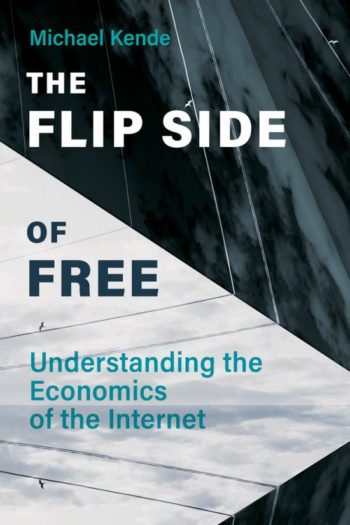
  • Elissa Marder — Beyond the Reality Principle Like You Wouldn’t Believe: Reflections on the US Election

    Elissa Marder — Beyond the Reality Principle Like You Wouldn’t Believe: Reflections on the US Election

    by Elissa Marder

    I think it would be a real mistake to imagine that we are now entering “life after Trump.” Although Trump’s presidency did rupture something in American life by ushering in a scary new day for American fascism, the roots of Trumpism took hold long before Trump took office, and the impact of the Trump-effect is far from over. The Trump era has taken us dramatically and I suspect irrevocably Beyond the Reality Principle.  The possibility of “life after Trump” would need to be an actual reckoning with the painful realities that face us (climate change, the enduring legacy of slavery, the carceral system, poverty) rather than a nostalgic wishful hope that we can simply return to the way things supposedly were “before.” Joe Biden won the election not by being Biden but by not being Trump. The idea that Biden could simply “make America a democracy again” is itself a fantasy that invests in some of the very same myths about American political life that Trump exploited for his own populist, racist, and fascist ends. Trump not only violated political norms, institutions, science, facts, and trust but was rewarded for doing so by the Republican leadership and by more than 72 million American voters.

    We need to take up the challenge of understanding why Trump’s assault on the reality principle was so effective and so appealing to so many. Why—after more than four years of his abhorrent rhetoric and political tactics, has political resistance to him—from both the left and the more traditional right—been so feeble? 72 million US citizens voted for Trump. Some of those people fully embrace his toxic rhetoric and his warped world view. Others claim to have made a rational decision to vote for him by pointing to his economic policies or his support for American businesses. In fact, however, given his blatant and triumphant disregard for the truth, facts, the constitution, and the rule of law, one could not vote for Trump without also voting against the reality principle. Every vote for Trump was also a vote against truth.

    In this domain, the opposite of truth is not a lie, but a wish. Trump peddles magical thinking and weaponizes Freudian dream logic. Unlike most other fascist leaders, he doesn’t give a damn about politics, policy, or ideology. He doesn’t believe in anything other than his own perverse infantile fantasy of phallic infallibility. But what we must work to understand is how and why his grandiose and simplistic pronouncements touched so many people so very deeply.

    Denial is his super-power. His refusal—or inability—to respect any prohibition, restriction, or limitation of his own will-to-power apparently enthralled his admirers. His seemingly unlimited capacity to demand that the world bend to his infantile view of it inspired his followers to join him on the path beyond the reality principle. He made those people feel that he recognized their distress and that he—and he alone—could make it go away. Most of his promises were absurd: Mexico will pay for the wall; the coronavirus will vanish by Easter. But it is as if the very absurdity of these promises only further cemented his power. He dared to express impossible wishes. Trump’s grip on his own fantasy is like a twisted reversal of the Lacanian dictum not to give way on one’s desire. He never ever concedes to the reality principle. It is through the prism of this denial that he touched so many. We must take the measure of the despair, anxiety, shame, helplessness, and fear that underlies a vote for Trump. 72 million people voted for him because he promised them a way of escaping, denying, or avoiding some aspect of reality that had indeed become unbearable. There is an important truth to be reckoned with here: what if those people needed his absurd promises precisely because certain aspects of reality have become unthinkable and hence unbearable. The omnipresent specter of climate change and global warming, for example, cannot be processed by individual psyches because there is little—if anything—that individual people can do to stop the devastation that hovers on the horizon. Quotidian survival requires that we deny the magnitude of that devastation. In the case of climate change, denial of reality only accelerates and exacerbates the very reality that it aims to deny. The thread that connects all of Trump’s supporters (whether they are white supremacists, white collar capitalists or workers in obsolete industries) is a need to ward off acceptance of a loss that is disavowed because it is felt to be unbearable. Trump apparently relieved people of the responsibility and the burden of facing reality. His utterances are both absolutely (and impossibly) performative and completely unreal. His shamelessness absolves people of their shame.

    Trumpism not only altered the terms of American political discourse by undermining truth, facts, science, expertise, precedent, norms, decency, and trust but he also waged an assault on reality itself.  We need to understand how he transformed his own personal denial of reality into a collective fantasy that effectively altered the political landscape. His denial of reality did in fact create a new reality. It is this new reality—the reality of “fake news” and “alternate facts”—that has become the hallucinatory norm.

    Everything Trump says is literally incredible. “Like you wouldn’t believe” is one of his favorite phrases. One doesn’t need to have a psychoanalytic sensibility to appreciate the double-edged dreamlike duplicity of this expression. Meant as a variation of one of his standard hyperboles (everything he touches can only be the greatest, biggest, the most tremendous, etc.) the expression “like you wouldn’t believe” openly avows that the reality being hyped requires an act of belief precisely because it is unbelievable: it is beyond the reality principle.

    Trump deploys reversal as a political tool. He contests every bit of reality that threatens to expose his lies and misdeeds as “fake news” and then disseminates his own false counterclaims via social media and conservative TV. Over time, the infusion of so much noise (flooding the zone with shit as his aide Steve Bannon famously put it) has transformed the public sphere into a vertiginous hall of mirrors. All news is potentially “fake news” so there is no news. The internet is the perfect delivery device for disinformation. It soaks up distorted wish fulfillments and amplifies them through endless replication.

    As in a dream, there is no negation on the internet. Disinformation is always already viral: viral communications cannot be destroyed, negated, or contained. They can only be refuted by the presentation of “evidence” that comes from a reality that has no bearing whatsoever on the life of what transpires in the viral dreamscape.

    Trump is not merely an aberration of American political life; he is also a symptom of it. He reflects at us the image of what we have become and exposes the wishfulness and the denial in those (like me) who still harbor sentimental fantasies about the checks and balances that supposedly guarantee democratic institutions, the court system, and the rule of law.  Over the past weeks, it has become a commonplace for people to observe that this election “stress-tested” the electoral process and that “the guard rails” have held.  But from what I saw, we just got lucky. The disaster may not have been averted, merely postponed.

    So now we find ourselves in an odd limbo. We have moved so far Beyond the Reality Principle during the Trump years that it is difficult to imagine a possible return to what intellectuals now quaintly refer to as the norms of political life. Personally, I don’t think that there can be a return to a world before Trump. That world no longer exists, if indeed it ever did. Instead, we need to invent another relation to reality; one that is neither bound to “cruel optimism” (to invoke Lauren Berlant’s felicitous phrase) nor paralyzed by the necessity of recognizing the limits of personal and state sovereignty.

    As far as I’m concerned, this post-election season has been like a bad dream from which we have yet to awaken. This last and most recent phase is like the dream-within-the-dream when you dream that the nightmare is over but it’s not. Because none of the things that we have seen go down in the last month should be thinkable or possible. So just because the worst possible outcome didn’t fully materialize doesn’t in fact mean that the threat is not real and ongoing. The world that awaits us demands that we traverse that fantasy and awaken to the challenges of imagining a different and more livable new reality.


  • Julia Chan — #hkfortrump: How American Liberals Have Failed Hong Kong’s Democracy Movement

    Julia Chan — #hkfortrump: How American Liberals Have Failed Hong Kong’s Democracy Movement

    by Julia Chan

    Thanksgiving, 2019: thousands joined in a rally to express their “gratitude” to Donald Trump. Waving the Stars and Stripes, they held up posters of Trump, photoshopped with a well-toned body and boxer gloves to symbolize the president’s fighting spirit. This took place in my home city of Hong Kong, organized by some of the most committed pro-democracy activists who braved tear gas, batons, rubber bullets, and often real bullets as they protested Beijing’s increasingly oppressive regime. This year, after resistance of all kinds has been suppressed by a new national security law directly imposed by the Chinese Communist Party (CCP), these activists continued to root for Trump in twitter campaigns and on YouTube channels. There, they would reiterate almost verbatim the bogus conspiracy theories of voter fraud, Biden’s collusion with the Chinese Communist Party (CCP), and COVID-19’s origins in a Chinese laboratory.

    No, these Trump supporters are not older white males with no college education, a low income, or diagnosed with the “authoritarian syndrome.” They are intelligent, politically engaged, and idealistic university students and young professionals who demonstrated admirable courage in their pursuit of the very same liberal values and practices that Trumpism seeks to destroy in the American society. Commentators have pointed out how Trump’s “tough-on-China” posturing has won wide support across Asia: Hong Kong, Taiwan, Vietnam, South Korea, even among liberal groups within the PRC itself.[1] Others, more attuned to the city’s decade-long struggles for democratic self-determination, have noted the movement’s worrying turn to the right. For the more radical activists, Trump’s “America First” policy and MAGA slogan chime well with their separatist localist agenda, which often takes the form of animosity towards mainland Chinese tourists and immigrants, blamed for taking up social spaces and resources.

    These observers may well be right, but they do not explain what is fundamentally a paradox: how can one be pro-Trump and anti-authoritarian at the same time? Does not one cancel out the other? Is it not more logical that we should seek our allies among fellow-victims of police brutality and arbitrary state power, such as the Black Lives Matter movement, rather than pin our hopes on a capricious would-be dictator who claims to be “a friend” of Xi Jingping? After all, as Trump’s “Executive Order on Hong Kong Normalization” inadvertently revealed, the US State Department had been providing regular training and sale of military equipment to the Hong Kong Police Force throughout the year-long protests, up till July 2020 when the presidential executive order terminated that connection.[2] While the HK protests and BLM remain divergent in their ultimate demands—few in Hong Kong have experienced, let alone understand, systemic racism, and most American citizens have little idea of what it is like to have their basic liberties snatched from them overnight—there is still much common ground in our collective resistance.

    And yet, apart from a few attempts at building international solidarity and sharing protest tactics, many Hong Kongers turn to the far right, seeking support from the likes of Mike Pompeo and Marco Rubio instead. We need something more than a moral censure here. What the Trump supporters in Hong Kong have shown is a small nation’s desperation for survival, but more fundamentally, the failure of American liberalism itself. Although right-wing factions in the United States have a long history of co-opting resistance movements in foreign countries to further American imperial power, ironically, they were often the sole defender of those facing dire suppression. In the case of Hong Kong, except for Nancy Pelosi, few Democrats have ever spoken out about the city’s continued struggles against Beijing authoritarian domination. Unwilling to jeopardize their trade relations with the PRC, American liberals have proved themselves questionable allies. Despite their high-sounding ideals and the usual moral outrage they express at Trump’s attacks on democratic institutions at home, they remain deaf to others’ call for international solidarity and mutual support.

    Few pro-trump liberals are deluded enough to believe the incumbent president holds any genuine goodwill for Hong Kongers. Like in many small Asian countries, we rely on the simple tactic of playing one imperial power against another. On his visit to the Berlin Wall, Joshua Wong (the face, though by no means the leader, of the movement) hailed Hong Kong as the “new West Berlin,” the battleground for a “new Cold War” between the US and The PRC.[3] Prompted by the G20 Summit that coincided with the height of the protests last year, activists developed an “international front” dedicated to lobbying Western sanctions on Hong Kong, if not on the PRC itself, for the latter’s infringement of the 1984 Sino-British Joint Declaration, which promised to secure the autonomy, basic rights, and liberal institutions of the former colony.

    In the United States, these efforts culminated in the bipartisan Hong Kong Human Rights and Democracy Act (HKHRDA), passed almost unanimously in the both the Congress and the Senate, and which incidentally Trump at first refused to sign. True to its new-Cold-War metaphor, the HKHRDA is largely a nuclear option. It stipulates that the Secretary of State will make an annual report on the city’s autonomy and civil liberties. Should the region’s “One Country Two System” constitutional principle continue to erode, the US would revoke Hong Kong’s special status that offered unique privileges, unavailable to the rest of China, in areas such as trade, immigration, technology transfer, and intellectual exchanges. The HKHRDA would jeopardize Hong Kong’s position as a global financial hub; but given that Hong Kong funnels more than three quarters of the PRC’s yearly foreign investments, it will also cause indirect but substantial damage to China’s economy. Threatening mutually assured destruction, the bill was meant as a deterrent to slow down Beijing’s increasingly blatant interference. It was on the very next day after Trump reluctantly signed the bill, on 27 November 2019, that the Thanksgiving rally took place.

    This time, though, the script did not play out like the last Cold War. Barely half a year later, the PRC responded to the bluff by putting in place a national security law criminalizing vaguely defined acts of secession, subversion, terrorism, and collusion with foreign forces, bypassing the local legislature altogether. The US officially removed Hong Kong’s special status and imposed sanctions on several pro-Beijing officials on 14 July 2020, but the sanction itself now meant little. Within days after the national security law came into effect, protest slogans and songs were outlawed. Students were arrested for displaying even blank placards. Materials deemed sensitive or controversial, from the Tiananmen Square Massacre to discussions of the separation of powers, are removed from textbooks. Judges are routinely harassed, as are activists and journalists. In a recent case, a TV producer was arrested for her news program that reported possible collusions between the police and the pro-Beijing groups responsible for a mob attack on civilians. Popularly elected pro-democracy legislators were “disqualified” and removed from their posts. Meanwhile, on the pretext of COVID-19, the government suspended further elections. For the first time since the end of colonial rule, opposition is completely absent in the city’s legislature.

    Our future is beyond dystopian. It is no wonder that much of the movement drew inspirations from The Hunger Games movie trilogy. Chanting the main character’s line “If we burn, you burn with us” as their slogan (or laam chau in Cantonese), many welcomed the US sanctions as the long-overdue justice and vindication of their injured, jailed, and dead comrades. Their support—or worse, admiration—for Trump originates from frustrations with Hong Kong’s own powerlessness as a nation, with fighting for some twenty years what is invariably a losing battle. Many view Trump’s America as the only counterweight to the re-colonizing forces of Beijing, who apparently will stop at nothing short of total domination. Thus, in a problematic twist, even as Hong Kongers lament and struggle against the rapid erosion of the rule of law and other liberal institutions at home, they also celebrate Trump’s disregard for institutional protocols and political traditions as the very qualities necessary to hold the PRC in check. For though Obama’s “pivot to East Asia” strategy in 2011 turned American focus back onto the Asian-Pacific region, it was the Trump administration that produced the country’s most aggressive containment measures directed at the PRC. For many in Hong Kong, Trump’s antics on issues such as the trade war, the expulsion of state-owned companies like Huawei and TikTok, and the closure of the PRC embassy in Houston, offer almost a vicarious pleasure and sense of power.

    More clear-sighted critics would point out that in instigating its own destruction, economically at the hands of the US and politically by Beijing, Hong Kong has only turned itself into a bargaining chip for Trump. Yet this is exactly why the Cold War rhetoric remains attractive despite its obvious obsolescence. The idea of a new Cold War offers a familiar narrative in which Hong Kong can again find its strategic role. After all, as the chess piece in the great game between Western democracies and communism, this quintessential neoliberal city did not just survive but prospered.[4] Hong Kong touted its free market economy not only as the “gateway” into communist China’s otherwise inaccessible pool of consumers, natural resources, and labor, but also as a guarantor of political and cultural freedom. The city’s pride in its economic success is entwined with its other identity as the enclave for dissenters and refugees from the dark, oppressive government of the CCP. When the “One Country, Two System” structure was proposed in the late 1980s, it was tacitly understood, or at least hoped, that Hong Kong would function as the model liberal democratic “open society,” whose path China would follow by gradually opening up its economy.

    The development of the PRC under Xi Jingping has proved that the ideological binarism of the Cold War no longer holds: capitalism can work hand in glove with authoritarianism. In Hong Kong, the so-called “red capital” has been in fact one of the major vectors of suppression. It includes installing CCP staff in the governance structure of corporations, forcing companies to fire their employees for posting Facebook comments in support of the protest, and squeezing out local publishing houses and booksellers to stifle dissenting publications. Throughout Asia, US economic and military hegemony has been understood as the guarantor of security and protection, especially from the PRC as an emergent power. In recent decades, however, American business interests in China have silenced most governments in Western countries—particularly the United States and Britain—on issues ranging from the mass incarceration of human rights lawyers within the PRC to Xi’s dubious claims over the South China Sea.

    As the global narrative of American liberalism collapses, we are left with few alternative discursive tools to defend the city’s shrinking political space. In practice, the protests last year and the Umbrella Movement in 2014 have sparked remarkably innovative forms of mutual aid and community building. For example, with the help of mobile apps that map and promote pro-democracy small businesses, a newly emerged “yellow economic circle” seriously challenged the monopoly of pro-establishment chain stores and corporations. Even today, the steady flow of politically like-minded customers continues to help struggling restaurant and shop owners survive the economic impact of COVID-19. Others have sponsored the daily expenses of the frontline protesters through crowdfunding, decentralized online chatgroups, and personal networks. It is a misconception that Hong Kong’s democratic movement is largely a middle-class affair.[5] Supporters cut across all age groups and all sectors of society—from pilots to construction workers to housewives to high school students to the unemployed—who share strong convictions in voluntarism and reciprocal care. These initiatives that seek to reshape Hong Kong’s socio-economic life find no coherent expression in international advocacy. Neither the Western media nor we seem able to move away from the binary of East and West, totalitarianism and freedom, Hong Kong as a “typical Chinese city” and the crown colony of the glorious past.

    Hong Kongers’ pragmatic calculations of pitting US imperialism against Chinese domination are no doubt selfish. There is among us a willful ignorance of the realities of American life in the last four years. To believe that Hong Kong people’s experience of oppression is unique, to refuse to see that the treatment of migrants and asylum seekers under the Trump administration is of the same kind as the treatment of the Uighurs in Xinjiang, is perhaps the greatest weakness of the city’s courageous and creative resistance movement. At the same time, we might also reflect whether we are asking too much of these young protesters, whose physical and psychological trauma from months of police brutality and harassment is often beyond the comprehension of onlookers. For those on the front line, looking to America for protection is as much a matter of personal survival as the survival of Hong Kong. As I write, Joshua Wong is facing his fourth jail sentence (13 months for inciting unlawful assembly) since 2016 and was held in solitary confinement with lights on around the clock during custody. His fellow-activist, Agnes Chow, nicknamed “the real Mulan,” will spend her twenty-fourth birthday in prison. Nor is the regime targeting only opposition leaders. Between June 2019 and November 2020, more than 10,000 people were arrested. Over 2300 of them have been charged and over 500 sentenced to jail, some for as long as six years. A handful of dissidents have managed to find political asylum in Germany, Britain, and Taiwan. In contrast, when four student protesters arrived at the US Consulate General seeking refuge late October this year (their friend had been apprehended and taken away before he could even reach the Consulate gates), they were simply asked to leave.

    Contrary to the wishes of the HK Trump supporters, then, the enemy of my enemy is not really my friend. It should have been a clear warning sign when Trump threatened to send in the National Guards to suppress the Black Lives Matter protests this summer—an uncanny reminder to many of both the Tiananmen Square Massacre in 1989 and the more recent experience of police violence against protesters at home. At times, however, it seems that Hong Kong people are left with impossible choices. Between Trump and a Biden administration that still imagines that Xi Jingping’s the PRC can be persuaded to play by “international norms” through trade and without any rigorous engagement, it is understandable that they chose the former.[6] In the city’s lonely and futile fight against the CCP, Hong Kong people are not merely racist, or misguided, or selfishly opportunistic to wish for a US government that would at least claim to hold the PRC responsible for its flagrant violation of human rights. The paradoxical idea of a Pro-Trump liberal in Hong Kong is an instance not of the global rise of the right, but the inadequacies of American liberal politics and imagination that we in Asia have adopted as norm and model.


    Julia Chan has recently completed her PhD in the Department of English, Yale University, where she researched on revolution and utopia in British and Soviet modernism. Her work has been published and is forthcoming in the Journal of Modern Literature and Modernism/modernity Print Plus. A native Hong Konger, she has taught English literature at Lingnan University and the Chinese University of Hong Kong.


    [1]. https://www.theatlantic.com/international/archive/2020/10/democracy-activists-who-love-trump/616891/

    [2]. https://www.whitehouse.gov/presidential-actions/presidents-executive-order-hong-kong-normalization/

    [3]. https://www.reuters.com/article/us-hongkong-protests-germany/my-town-is-the-new-cold-wars-berlin-hong-kong-activist-joshua-wong-idUSKCN1VU0X4

    [4]. Priscilla Roberts and John M. Carroll, eds, Hong Kong in the Cold War (Hong Kong: Hong Kong University Press, 2016).

    [5] Though the political situation in Hong Kong has changed dramatically, Matthew Torne’s 2014 documentary Lessons in Dissent remains an excellent portrayal of grassroot and left-wing pro-democracy activists.

    [6] https://www.nytimes.com/2020/09/06/us/politics/biden-china.html

  • Hortense J. Spillers — Fly Me To The Moon (from the ground)

    Hortense J. Spillers — Fly Me To The Moon (from the ground)

    by Hortense Spillers

    It is simply incredible, and had I not experienced it in the flesh, rather than in dreams, (where this stuff belongs), I would not believe any description of life in the United States since 2016. The character of these years, first of all, as if a spectacle unfolding elsewhere and detached from any language or gesture or principle of reality that I recognize and honor, will eventually find its narrators and historians, but the latter will live in another season of time and purpose from my own and my generation’s. In other words, this conjuncture not only marks an inflection point, but lays hold, I believe, of a whole new political grammar that must be grasped, not because we do not know the words, or the rules of syntax—we know them all too well—but because we can no longer fathom the uses to which they’re put, nor can we easily imagine the human personality who would be compelled by such uses. I do not comprehend: the so-called right wing in my country, QAnon, the 73 million Americans (a considerable number of them women), who voted for Donald Trump, Donald Trump himself, the plot to kidnap the Democratic governor of the state of Michigan, Gretchen Whitmer, the Fox News Network and its creator, Rupert Murdoch and whatever unspeakable animus or anguish that must drive this project, the antipathy toward masks, the rage at public officials in their effort to protect local populations from covid-19 infection,  and the vicious oversupply of partisanship, as expressed by the GOP. This drive-thru of complaint does not exhaust the list, which, collectively multiplied, would soar toward infinity, but it gets us to the right ballpark.

    There are times when I fear to know what I think—in fact, I can’t even write it down in my diary here lately—and even resist its echoes from the minds of others; could it be some modicum of hold-over, atavistic superstition (fit candidate for Totem and Taboo?), that if you speak its name and conjure it up, it is embodied and becomes true? But by contrast, naming it also socializes it, as Kenneth Burke conjectured decades ago, perhaps disallows its sting and, therefore, propitiates and exorcizes it; in our time, Shoshana Zuboff, in her remarkable study of “surveillance capitalism,” argues that the “unprecedented” must be named and only by doing so do we move toward the mobilization of “new forms of collaborative action: the crucial friction that reasserts the primacy of a flourishing human future as the foundation of our information civilization. If the digital future is to be our home, then it is we who must make it so” (21; emphasis Zuboff). This fear of one’s own words is occurring in the context of surveillance capitalism, but the latter is not our primary concern here; what we’re fearing in the country at this moment, however, is precisely the alienation bred by what Zuboff calls the “unprecedented.” We are 16 days past the longest presidential election in our history, one of the most dangerous and contentious, and at this writing, the current president of the United States, who lost the election by 306 electoral votes that represent approximately 80 million Americans, has not conceded, but launched instead a systematic and unprecedented campaign to stay in office—essentially, the staging of what has been called an “auto-coup”—and the sole question that knots the stomach (as it has the entire tenure of his term of office) is what do Americans do now. Wishing for the moon, or some other planet, will not help! But facing what must be faced entails danger precisely because our circumstance today has no precedent and thus no name.

    Starting with the presidency itself, this current iteration bears no resemblance to any single instance of modern American political history that I can think of, however inadequate the person of the president has been from time to time. I would go so far as to say that Americans these four years have not had a president at all, but, rather, a place holder, or one might even say president-for-lack-of-a-better-word. The Trump term of office has exposed the sheer fragility of a constitutional democratic order, which must rely on the power and force of an idea; the unwritten agreement between its stake-holders, its citizens, and those who govern them, about what constitutes political reality; the consent of the governed, and the consonance of values among all the principals—the governed and the governing. One of the most disturbing features of these years has been precisely the dramatic reminder that these elements of cohesion are neither imprescriptible, nor written in the stars. What we now realize with renewed poignancy is that their orchestration has never evinced perfect balance and harmony, but enough of the latter has played throughout all the darkness and disharmony that hope in American democratic possibility has never felt displaced. One had rather “forgotten”—and it is the lapse that a degree of comfort breeds—that these arrangements are exactly so and as such can come undone. This marked unraveling of an inadvertent inattentiveness is nowhere more palpable than in the loud intrusion of the persona of the presidency into the everyday life of the citizen—his violent abuse of the powers of office as a constant feature of the twenty-four hour news cycle. The indefatigable storm and stress of conflict and the rupture of routine coming from the Commander-in-Chief himself broke in on everyday life with such persistence that the stunning outbreak of sickness and death in the closing months of the term seems somehow fitting as the fatal, indelible mark of years that we will remember as a colossal civic blunder–or was it?

    The question is occasioned by a shadow of doubt that would suggest that Donald Trump, for all the disarray and nausea that he inspires, did not spring up in a vacuum. The ground of his emergence was actually seeded at least decades ago, not only in quite obvious instances like “the scoundrel time” of the McCarthy era, closely followed by the Nixon presidency and the apodictic rise of the partisan “consultant” and “strategist,” with their endless “dirty tricks” and pliable morality, but also the less obvious deviations of the Reagan White House and its seductions: Recall that the “southern strategy,” the deliberate appeal to states’ rights and anti-black sentiment, sits at the very heart of Republican politics as a counterweight to the Civil Rights Movement, an outcome that Lyndon Johnson, in the aftermath of the Civil Rights Bill of 1964 and the Voting Rights Bill the following year, presciently understood avant la lettre. Reagan launched his bid for the Oval Office in 1980 from Philadelphia, Mississippi, an active locus of civil rights struggle and the murder of the trio of young activists, James Cheney, Andrew Goodman, and Michael Schwerner in the summer of 1964. As Republican “dirty trickster,” Lee Atwater, understood, one didn’t have to utter “nigger” umpteen times in order to drive home his point, and I should think that an appearance in Neshoba County, Mississippi, less than two decades later by a leading Republican contender, would speak as eloquently as a racial epithet, if not more so, for all its subtlety, just as the “Willie Horton” ad of Bush the Elder’s presidential run said all it needed to say a little less than a decade later. Bush’s appointing a staunch conservative to the United States Supreme Court in the fall of 1991 to assume the seat of Thurgood Marshall, a pioneer in the legal struggle for black rights, remains, to my mind, one of the most hateful acts of cynical mockery and outright racist antipathy of the late twentieth century. By the time the presidency enters the new millennium, riding the wave of constitutional “originalism,” a true fraud of American democratic order, as I see it, the outline of Republican misrule and its propensity for authoritarian charms has evolved into a repertoire of dubious practices that operate under the color of law. Against this backdrop of dishonor and injustice, everywhere supported by a scaffold of lies and millions upon millions of revanchist dollars, the awful story of the U.S. Senate’s brazen mistreatment of Appeals Court Judge Merrick Garland at the tail end of the Obama presidency opens wide the gates of hell for any old embodiment to stroll through, and it did.

    Looking around the room, then, for a single, definitive point-of-departure simply will not do; there are several. For one thing, the country’s media sources, especially the major networks and cable companies of the television industry, advanced the persona of Donald Trump to a degree of visibility and significance that it might never have achieved beyond “The Apprentice” reality-tv series and the tabloid reputation of a local Manhattan “playboy,” known for the “prenuptial agreement” and the noisy, sophomoric changing of wives. In other words, systematic media attention, from the launch of Trump’s presidential campaign to the present moment, not only afforded him critical, free advertising, but also put him before the public auditory as a kind of necessity. As of 2015 and the famous escalator descent, no gesture of his, from silly tweets to golf outings, has failed to be repeated and amplified in a sickening, ubiquitous loop—as late as this Thanksgiving, well after the November presidential election and Joe Biden’s victory, CNN, for example, has still persisted in covering his ridiculous ravings about “massive voter fraud,” the “theft” of the vote, and how, in time, the “evidence” would be revealed, if only a court that would treat him fairly could be found, somewhere. The Thanksgiving newscast and the endless repetition of programs like it simply extend post-election angst, feed the unrelenting outrage of Trump’s most ardent supporters, and do nothing to heal the dangerous rifts that now sit athwart the body politic. But televisual logic, as though detached from human choice and thinking, proceeds on autopilot in the pursuit of top ratings and advertising dollars. Exactly what debt of sociality is owed to the public by various media constitutes not only a critical inquiry concerning cultural production and its widest distributive patterns—in other words, how their dissemination and content participate in processes of educating—but it is also the nexus that is denied: a breach falls between them with media and their decisive commercial interests on one side and the public and its stake in bildung and literacy on the other, as never the twain meets. What accounts for this unconscionable refusal and its perdurability, generation in, generation out? And can a direct line be drawn between our incomplete intellectual meditations and mediations and the excess of gullibility that has captured sectors of the American public?

    Perhaps the single most disturbing feature of the current conjuncture is the extent to which the Trump years have been enabled by the substantial and craven complicity of Republican politicians. Without the silent endorsement of a Republican-led Senate and well-placed Republican figures at every step along the way, much of what the country has been through might have been avoided; but how does the public respond to a political party that has degenerated—for all intents and purposes—into the behavior of a criminal gang, operating at the behest of a strong man? The U.S. Constitution does not necessarily offer guidance here, nor does it anticipate the deterioration among interlocutors of a dialogue that is predicated on the mental availability of the principals. The Biden years opening before us must navigate this bleak evacuated terrain, and not a single American will be able to escape the implications of the journey.

    Works Cited

    Zuboff, Shoshana. The Age of Surveillance Capitalism: The Fight for a Human Future At the New Frontier of Power. PublicAffairs Hatchett Book Group, 2019; quotation at p.21.


  • Rizvana Bradley — The Vicissitudes of Touch: Annotations on the Haptic

    Rizvana Bradley — The Vicissitudes of Touch: Annotations on the Haptic

    Rizvana Bradley

    The late queer theorist Eve Kosofsky Sedgwick is known for her tenacious commitment to the indeterminate possibilities that nondualism might offer sustained inquiries into minor aesthetics, politics, and performance. In the introduction to Touching Feeling: Affect, Pedagogy, Performativity, Sedgwick turns to touch and texture as particularly generative heuristic sites for opening the book’s avowed project, namely the exploration of “promising tools and techniques for nondualist thought and pedagogy.”[1] Moving through psychoanalysis, queer theory, and sexuality studies, the text probes entanglements of intimacy and emotion, desire and eroticism, that animate experience and draw social life into the myriad folds of material and nonlinguistic relations. As Lauren Berlant asserts of Sedgwick’s text, “the performativity of knowledge beyond speech – aesthetic, bodily, affective – is its real topic.”[2]

    One of Sedgwick’s most important and enduring legacies is a radically queer heuristic that endeavors to make theorizable the imperceptible and obscure relationships between affect, pedagogy, and performativity, without reproducing the limits and burdens of epistemology (even antiessentialist epistemology), with its “demand on essential truth.”[3] For Sedgwick, texture and touch offer potential instances of sidestepping or evading the foreclosures of structure and its attendant calcification of subject-object relations, a pivot towards antinormative pedagogies of reading and interpretation. Following Henry James, Sedgwick suggests that “to perceive texture is always, immediately, and de facto to be immersed in a field of active narrative hypothesizing, testing, and re-understanding of how physical properties act and are acted upon over time,” to become engaged in a series of speculative departures rather than analytical arrivals.[4] Similarly, Sedgwick finds in the sense of touch a perceptual experience that “makes nonsense out of any dualistic understanding of agency and passivity.”[5] Particularly relevant for our purposes is Sedgwick’s turn to the registers of difference between texture and texxture as a guide for thinking about forms of desire, perception, and interpretation that exceed normative modalities of belonging in, being with, and making sense of the world.

    Teasing out the implications of Renu Bora’s taxonomy of textural difference, Sedgwick tells us that

    Bora notes that ‘smoothness is both a type of texture and texture’s other.’ His essay makes a very useful distinction between two kinds, or senses, of texture, which he labels ‘texture’ with one x and ‘texxture’ with two x’s. Texxture is the kind of texture that is dense with offered information about how, substantively, historically, materially, it came into being. A brick or metal-work pot that still bears the scars and uneven sheen of its making would exemplify texxture in this sense. But there is also the texture – one x this time – that defiantly or even invisibly blocks or refuses such information; there is texture usually glossy if not positively tacky, that insists instead on the polarity between substance and surface, texture that signifies the willed erasure of its history.[6]

    Though one might be tempted to singularly assign to texture’s “manufactured or overhighlighted surface” the properties and pitfalls of “psychoanalytic and commodity fetishism,” in fact,

    the narrative-performative density of the other kind of texxture – its ineffaceable historicity – also becomes susceptible to a kind of fetish-value. An example of the latter might occur where the question is one of exotism, of the palpable and highly acquirable textural record of the cheap, precious work of many foreign hands in the light of many damaged foreign eyes. [7]

    Paradoxically, it is precisely the failure of texture to erase the internal historicity that would appear to be self-evidently registered on the surface of texxture, which allows Sedgwick to effectively grant the former an elusive depth, declaring that, “however high the gloss, there is no such thing as textural lack.”[8] Meanwhile, texxture’s presumably inescapable depth seems to recede across the surficial “scars and uneven sheen” that are read as the signatures of its making. For Sedgwick, one of the primary implications of these phenomenological variegations and perplexities is that texture, “in short, comprises an array of perceptual data that includes repetition, but whose degree of organization hovers just below the level of shape or structure…[the] not-yet-differentiated quick from which the performative emerges.”[9] In this way,

    texture seems like a promising level of attention for shifting the emphasis of some interdisciplinary conversations away from the recent fixation on epistemology…by asking new questions about phenomenology and affect, [for what]…texture and affect, touching and feeling…have in common is that…both are irreducibly phenomenological.[10]

    On the one hand, Sedgwick’s turn to texture divulges extra-linguistic affiliations that performatively surprise, facilitating an erotic retrieval of subjective and aesthetic non-mastery that continues to resonate with ongoing critiques of the aesthetic. And yet, while Sedgwick’s assertions about affectivity and touch facilitate an opening for a theoretical re-evaluation of notions of agency, passivity, and self-perception, they are also deeply problematic. For what does phenomenology, which takes the body as our “point of view in the world,”[11] have to say to those who, following Frantz Fanon, have never had a body, but rather its theft, those who have only ever been granted the dissimulation of a body, “sprawled out, distorted, recolored, clad in mourning[?]”[12] What of those whose skin is constantly resurfaced as depthless texxture, a texxture whose surficial inscriptions are read as proxies for the historicity that the over-glossed surface would seek to expunge? In other words, Sedgwick’s ruminations disclose an undeclared, but nevertheless central, conceit that has significant implications for thinking about the bearing of form on ontology: namely that, for Sedgwick, the texturized valences of touch are implicated in, rather than a violent displacement from, the symbolic economy of the human.

    In theorizing touch, might we trouble the presumption that aesthetics, subjectivity, and desire – or more precisely their entwinement – are necessarily embedded within the normative regime of the human? I am interested, in other words, in how Sedgwick’s observations on touch might occasion, even as they displace, a different set of interrelated questions regarding ontological mattering and the fashioning of aesthetic subjectivity. Calvin Warren’s assertion that “[q]ueer theory’s ‘closeted humanism’ reconstitutes the ‘human’ even as it attempts to challenge and, at times, erase it,” demands we reconsider any theory (about the queerness) of touch that has yet to grapple with its universalist underpinnings. It would seem that queer theory, even one as vigorously attuned to the textured rediscovery of minor forms as Sedgwick’s, nevertheless conceives desire, sexuality, and gender as co-extensive with the erotic architecture of the (queerly differentiated/differentiating) human subject. Suffering may be aestheticized, but it is not reckoned with as an ontological imposition – as a “grammar,” to use Frank B. Wilderson’s language[13] – out of which an aesthesis necessarily emerges.

    Insofar as texxture bears the inscription of its material conditions of possibility, it should direct us toward a genealogy of substance at odds with surface appearance. At stake is what film scholar Laura Marks theorizes under the rubric of the haptic[14] – the tactile, kinesthetic, and proprioceptive dimensions of touch, the irreducibly haptic valences of touch that pressure prevailing distinctions between substance and surface, inside and outside, body and flesh. A question at once animated and omitted by queer theory’s inquiries into touch: how to theorize texxture with regard to a history of bodily wounding occasioned by touch, when it is texxture that is seized upon by the various proxies for touch that willingly or inadvertently redouble racial fantasies of violation? Thinking the haptic irreducibility of the aesthetic requires constant re-attunement to the violence touch occasions and to the violations which occasion touch. If touch is ultimately inextricable from the aesthetic economy of worldly humanity, then, apropos Saidiya Hartman, we are compelled to think about the violence that resides in our habits of worlding.[15]

    Without even addressing the massive implications that attend the frequent conflation of being with body, what cleaves to being within the context of critical theory’s alternately residual or unapologetic phenomenology, is a corporeal subject whose situatedness within and for the world is not only predetermined, but whose predetermination is taken for granted as the condition of possibility for sentient touch. Such unwitting Calvinism, which would seem to take Merleau-Ponty at his word when he declares that “every relation with being is simultaneously a taking and being taken,”[16] inevitably reproduces and rubs up against a foundational schism: being taken, where the traces of an inflective doubling disclose a morphological distinction at the level of species-being.[17] Just as the tectonics of touch – their quakes and strains, fractures and fault lines, accretions and exfoliations – can hardly be taken for simply surface phenomena, neither can they be assumed to unfold upon a universal plane of experience, or to obtain between essentially analogous subjects within a common field of relation (a fact betrayed by the nominative excess which threatens to spill from the very word, “field”). Touch cannot be understood apart from the irreducibly racial valences and demarcations of corporeality in the wake of transatlantic slavery.

    In her landmark essay, “Mama’s Baby, Papa’s Maybe: An American Grammar Book,” Hortense Spillers theorizes one of the central cleavages of the modern world, wrought and sundered in the cataclysmic passages of racial slavery: that of body and flesh, which Spillers takes as the foremost distinction “between captive and liberated subjects-positions”:

    before the “body” there is the “flesh,” that zero degree of social conceptualization that does not escape concealment under the brush of discourse or the reflexes of iconography. Even though the European hegemonies stole bodies – some of them female – out of West African communities in concert with the African “middleman,” we regard this human and social irreparability as high crimes against the flesh, as the person of African females and males registered the wounding. If we think of the “flesh” as a primary narrative, then we mean its seared, divided, ripped-apartness, riveted to the ship’s hole, fallen, or “escaped” overboard.[18]

    Flesh is before the body in a dual sense. On the one hand, as Alexander Weheliye stresses, flesh is “a temporal and conceptual antecedent to the body[.]”[19] The body, which may be taken to stand for “legal personhood qua self-possession,”[20] is violently produced through the “high crimes against the flesh.” On the other hand, flesh is before the body in that it is everywhere subject to and at the disposal of the body. The body is cleaved from flesh, while flesh is serially cleaved by the body. As Fred Moten suggests, the body only emerges through the disciplining of flesh.[21]

    This diametric arrangement of corporeal exaltation and abjection is registered, as Spillers emphasizes, in “the tortures and instruments of captivity,” those innumerable, unspeakable brutalities by which flesh is irrevocably marked:

    The anatomical specifications of rupture, of altered human tissue, take on the objective description of laboratory prose – eyes beaten out, arms, backs, skulls branded, a left jaw, a right ankle, punctured; teeth missing, as the calculated work of iron, whips, chains, knives, the canine patrol; the bullet.[22]

    The unspeakability of such woundings, however, is not merely a function of their terror and depravity, but rather a consequence of the ways flesh has been made to bear the conditions of im/possibility of and for a semiotics which takes itself to be the very foundation of language, at least in its modern dissimulations.[23] In Moten’s illumination, “[t]he value of the sign, its necessary relation to the possibility of (a universal science of and a universal) language, is only given in the absence or supercession of, or the abstraction from, sounded speech— its essential materiality is rendered ancillary by the crossing of an immaterial border or by a differentializing inscription.”[24] Thus, when Spillers writes that “[t]hese undecipherable markings on the captive body render a kind of hieroglyphics of the flesh whose severe disjunctures come to be hidden to the cultural by seeing skin color[,]”[25] we may surmise that what Frantz Fanon termed “epidermalization” – the process by which a “historico-racial schema” is violently imposed upon the skin, that which, for the Black, forecloses the very possibility of assuming a body (to borrow Gayle Salamon’s turn of phrase) – is, among other things, a mechanism of semiotic concealment.[26] (R.A. Judy refers to it as “something like [flesh]…being parenthesized.”)[27] What is hidden and rehidden, the open secret alternately buried within and exposed upon the skin, is not merely a system of corporeal apartheid, but moreover what Spillers identifies as the vestibularity of flesh to culture. “This body whose flesh carries the female and the male to the frontiers of survival bears in person the marks of a cultural text whose inside has been turned outside.”[28]

    Speaking at a conference day I curated for the Stedelijk Museum of Art and Studium Generale Rietveld Academy in 2018, entitled “There’s a Tear in the World: Touch After Finitude,” Spillers revisited her classic essay, drawing out its implications for thinking through questions of touch and hapticality.[29] For Spillers, touch “might be understood as the gateway to the most intimate experience and exchange of mutuality between subjects, or taken as the fundamental element of the absence of self-ownership…it defines at once, in the latter instance, the most terrifying personal and ontological feature of slavery’s regimes across the long ages.”[30] To meaningfully reckon with “the contradictory valences of the haptic” is to “attempt an entry into this formidable paradox, which unfolds a troubled intersubjective legacy – and, perhaps, troubled to the extent that one of these valences of touch is not walled off from the other, but haunts it, shadows it, as its own twin possibility.”[31] Spillers follows with an unavoidable question: “did slavery across the Americas rupture ties of kinship and filiation so completely that the eighteenth century demolishes what Constance Classen, in The Deepest Sense: A Cultural History of Touch, calls a ‘tactile cosmology’?” If so, then the dimensions of touch which are understood as “curative, healing, erotic, [or] restorative” cannot be held apart from the myriad “violation[s] of the boundaries of the ego in the enslaved, that were not yet accorded egoistic status, or, in brief, subjecthood, subjectivity.”[32]

    Touch, then, evokes the vicious, desperate attempts of the white, the settler, to feign the ontic verity, stability, and immutability of an irreducibly racial subject-object (non-)relation through what Frank Wilderson would call “gratuitous violence”[33] as much as it does the corporeal life of intra- and intersubjective relationality and encounter. If even critical discourse on these latter, corporeal happenings tends to assume the facticity of the juridically sanctioned pretense to self-possession Spillers calls “bodiedness,” then “flesh describes an alien entity,” a corporeal formation fundamentally unable to “ward off another’s touch…[who] may be invaded or entered or penetrated, so to speak, by coercive power” in any given place or moment. It is, in other words, precisely “the captive body’s susceptibility to being touched [which] places this body on the side of the flesh,”[34] a susceptibility which is not principally historical, but ontological, even as flesh constitutes, to borrow Moten’s phrasing, “a general and generative resistance to what ontology can think[.]”[35] Spillers brings us to the very threshold of feeling, where to be cast on the side of the flesh is to inhabit the cut between existence and ontology. Black life is being-touched.

    How might we bring such knowledge to bear upon our understanding of different aesthetic practices, forms, and traditions? What if Theodor Adorno’s conception of the “shudder” experienced by the subject in his ephemeral encounter with a “genuine relation to art,” that “involuntary comportment” which is “a memento of the liquidation of the I,”[36] must be understood as the corporeal expression of a subject whose conditions of existence sustain the fantasy of being-untouched? How might such an interpretation serve not simply to foreground an indictment, but also aspire to linger with the political, ethical, and analytic questions that emerge from the entanglements of hapticality, aesthetics, and violence, questions which are unavoidable for those given to blackness? “The hold’s terrible gift,” Moten and Harney maintain, “was to gather dispossessed feelings in common, to create a new feel in the undercommons.”[37] And, as Moten has subsequently reminded us, violence cannot be excised from the materiality of this terrible gift, which is none other than black art:

    Black art neither sutures nor is sutured to trauma. There’s no remembering, no healing. There is, rather, a perpetual cutting, a constancy of expansive and enfolding rupture and wound, a rewind that tends to exhaust the metaphysics upon which the idea of redress is grounded.[38]

    Black art promises neither redemption nor emancipation. The “transcendent power” that Peter de Bolla, for example, finds gloriously manifest by an artwork such as Michelangelo’s Rondanini Pietà, that encounter with a “timeless…elemental beauty” which constitutes “one of the basic building blocks of our shared culture, our common humanity,”[39] is a fabrication of a structure of aesthetic experience that is wholly unavailable to the black, who, after all, has never been human. If Immanuel Kant, as the preeminent architect of modern European aesthetic philosophy, understood art to emerge precisely in its separation from nature, as “a work of man,”[40]then it is clear his transcendental aesthetic is not the province of black art. For, as Denise Ferreira da Silva argues, modernity’s “arsenal of raciality” places the black before the “scene of nature,” as “as affectable things…subjected to the determination of both the ‘laws of nature’ and other coexisting things.”[41] Black art, in all its earthly perversity, emerges in the absence and refusal of the capacity to claim difference as separation, as that which instead touches and is touched by the beauty and terrors of entanglement, “a composition which is always already a recomposition and a decomposition of prior and posterior compositions.”[42] Whatever its (anti-)formal qualities, black art proceeds from enfleshment, from the immanent brutalities and minor experiments of the haptic, the cuts and woundings of which it cannot help but bear. Black art materializes in and as a metaphysical impossibility, as that which, in Moten’s words, “might pierce the distinction between the biological and the symbolic…as the continual disruption of the very idea of (symbolic) value, which moves by way of the reduction of substance…[as] the reduction to substance (body to flesh) is inseparable from the reduction of substance.”[43] Hapticality is a way of naming an analytics of touch that cannot be, let alone appear, within the onto-epistemological confines of the (moribund) world, a gesture with and towards the abyssal revolution and devolution of the sensorium to which black people have already been subject, an enfleshment of the “difference without separability”[44] that has been and will be the condition of possibility for “life in the ruins.”[45]

    _____

    Rizvana Bradley is Assistant Professor of Film and Media at UC Berkeley. Her research and teaching focuses on the study of contemporary art and aesthetics at the intersections of film, literature, poetry, contemporary art and performance. Her scholarly approach to artistic practices in global black cultural production expands and develops frameworks for thinking across these contexts, specifically in relation to contemporary aesthetic theory.  She has published articles in TDR: The Drama Review, Discourse: Journal for Theoretical Studies in Media and Culture, Rhizomes: Cultural Studies in Emerging Knowledge, Black Camera: An International Film Journal, and Film Quarterly, and is currently working on two book projects.

    Back to the essay

    _____

    Notes

    [1] Eve Kosofsky Sedgwick, Touching Feeling: Affect, Pedagogy, Performativity (Durham: Duke University Press, 2003), 1.

    [2] Ibid., back cover.

    [3] Ibid., 6.

    [4] Ibid., 13.

    [5] Ibid., 14.

    [6] Ibid., 14-15.

    [7] Ibid., 15.

    [8] Ibid.

    [9] Ibid., 16, 17.

    [10] Ibid., 21.

    [11] Maurice Merleau-Ponty, The Phenomenology of Perception (New York: Routledge, 2012), 73.

    [12] Frantz Fanon, Black Skins, White Masks (London: Pluto Press, 1986).

    [13] See, in particular, Frank B. Wilderson III, Red, White, and Black: Cinema and the Structure of U.S. Antagonisms (Durham: Duke University Press, 2010).

    [14] Laura U. Marks, The Skin of the Film: Intercultural Cinema, Embodiment, and the Senses (Durham: Duke University Press, 2000). My reading of Marks is in turn inestimably shaped by Fred Moten and Stefano Harney’s elaboration of hapticality in The Undercommons: Fugitive Planning and Black Study (New York; Port Watson: Minor Compositions, 2013), 97-99; see also the special issue I guest edited for Women and Performance: A Journal of Feminist Theory, “The Haptic: Textures of Performance,” vol. 24, no. 2-3 (2014).

    [15] This was a formulation made by Hartman in our conversation during my curated event for the Serpentine Galleries, London. “Hapticality, Waywardness, and the Practice of Entanglement: A Study Day with Saidiya Hartman,” 8 July, 2017.

    [16] Maurice Merleau-Ponty, The Visible and the Invisible (Chicago: Northwestern University Press, 1968), 266.

    [17] Cf. Karl Marx, The Economic and Philosophic Manuscripts of 1844, ed. Dirk J. Struik (New York: International Publishers, 1964).

    [18] Hortense Spillers, “Mama’s Baby, Papa’s Maybe: An American Grammar Book,” Diacritics, Volume 17, Number 2 (Summer 1987), 64-81, 67.

    [19] Alexander G. Weheliye, Habeas Viscus: Racializing Assemblages, Biopolitics, and Black Feminist Theories of the Human (Durham: Duke University Press, 2014), 39. For a contrasting interpretation, see R.A. Judy’s brilliant, recently published, Sentient Flesh: Thinking in Disorder, Poiēsis in Black (Durham: Duke University Press, 2020), xvi, 210: “flesh is with and not before the body and person, and the body and person are with and not before or even after the flesh.”

    [20] Weheliye (2014), 39.

    [21] Fred Moten, “Of Human Flesh: An Interview with R.A. Judy” (Part Two), b2o: An Online Journal (6 May 2020).

    [22] Spillers (1987), 67.

    [23] R.A. Judy takes up these questions surrounding flesh and what he terms “para-semiosis,” or “the dynamic of differentiation operating in multiple multiplicities of semiosis that converge without synthesis[,]” with characteristic erudition in Sentient Flesh (2020), xiiv.

    [24] Fred Moten, In the Break: The Aesthetics of the Black Radical Imagination (Minneapolis: University of Minnesota Press, 2003), 13.

    [25] Spillers (1987), 67.

    [26] Fanon (1986). Gayle Solamon, Assuming a Body: Transgender and the Rhetorics of Masculinity (New York: Columbia University Press, 2010).

    [27] Judy (2020), 207.

    [28] Spillers (1987), 67. For one of Fred Moten’s more pointed engagements with this formulation from Spillers, see “The Touring Machine (Flesh Thought Inside Out),” in Stolen Life (consent not to be a single being) (Durham: Duke University Press, 2018), 161-182.

    [29] Hortense Spillers, “To the Bone: Some Speculations on Touch,” There’s a Tear in the World: Touch After Finitude, Stedelijk Museum of Art and Studium Generale Rietveld Academy, 23 March 2018, keynote address.

    [30] Ibid.

    [31] Ibid. Emphasis added.

    [32] Ibid.

    [33] Wilderson, 2010.

    [34] Spillers (2018). As these quotations are drawn from Spillers’s talk rather than a published text, the emphasis placed on the word being is inferred from her spoken intonation.

    [35] Moten (2018), 176.

    [36] Theodor Adorno, Aesthetic Theory (London: Bloomsbury Academic, 1997), 333.

    [37] Moten and Harney (2013), 97.

    [38] Fred Moten, Black and Blur (consent not to be a single being), (Durham: Duke University Press, 2017), ix.

    [39] Peter de Bolla, Art Matters (Cambridge: Harvard University Press, 2001), 28.

    [40] Immanuel Kant, Critique of Judgement (London: Macmillan and Co., 1914), 184.

    [41] Denise Ferreira da Silva, “The Scene of Nature,” in Justin Desautels-Stein & Christopher Tomlins (eds.), Searching for Contemporary Legal Thought (Cambridge: Cambridge University Press, 2017), 275-289, 276. For an important study of modernity’s “racial regime of aesthetics,” see David Lloyd, Under Representation: The Racial Regime of Aesthetics (New York: Fordham University Press, 2019).

    [42] Denise Ferreira da Silva, “In the Raw,” e-flux, Journal #93 (September 2018).

    [43] Fred Moten (2018), 174.

    [44] Denise Ferreira da Silva, “Difference without Separability,” Catalogue of the 32nd Bienal de São Paulo – INCERTEZA VIVA (2016), 57-65.

    [45] Cf. Anna Lowenhaupt Tsing, The Mushroom at the End of the World: On the Possibility of Life in Capitalist Ruins (Princeton: Princeton University Press, 2015).

  • Margaret Ferguson — Doing Some of the Work: Grief, Fear, Hope

    Margaret Ferguson — Doing Some of the Work: Grief, Fear, Hope

    by Margaret Ferguson

    Throughout the long first months of the pandemic—from March to November 2020—I volunteered as a phonebanker for “Indivisible Yolo,” the local chapter of a national movement devoted to defeating Trump and electing Democrats up and down the ballot. We partnered with a group called “Sister District CA 3,” which focuses on electing progressives to state legislatures including those shaped by Republican gerrymandering efforts. I was able to devote quite a lot of time to this volunteer effort because I am retired from teaching and no longer have children at home.

    The Indivisible movement began in an informal “grief counseling session”—a meeting of friends in Austin, Texas in November 2016 attended by two former congressional staffers, Leah Greenberg and her husband Ezra Levin, when they were in Austin for Thanksgiving.  Returning to their home in Washington, D.C., they and nearly three dozen thirty-something friends collaborated in an effort to turn their grief about the election into action. They composed a 23-page Google Doc handbook called “Indivisible: A Practical Guide for Resisting the Trump Agenda”; Levin tweeted a link to the document with this message: “Please share w/ your friends to help fight Trump’s racism, authoritarianism, & corruption on their home turf.”[1]

    Adapting ideas drawn both from their own experiences with members of Congress and from tactics used by the Tea Party in its successful efforts to block Barack Obama’s agenda in 2010, the Indivisible guide went viral, and was shared by people with Twitter followings much larger than those of the document’s authors: among the amplifiers were Robert Reich, Jonathan Chait, George Takei, and Miranda July. Less than two months after its publication, more than 3,800 local groups called “Indivisibles” had formed to support the movement. It developed a website where the Guide was continuously updated in Spanish and English, and only a few weeks after Trump’s Inauguration, the fledgling movement became a 501(c) organization. Levin drily remarked that “The last thing the progressive ecosystem really needed was yet another nonprofit,” but in this case, the organization thrived.  The protests it organized at the local level have been credited with, among other things, making it hard—and eventually impossible—for the Republican party to pass a “replacement” for the Affordable Care Act.[2]

    Different Indivisible groups have focused on different—and multiple–actions during the Trump era, frequently collaborating with other groups such as the Working Families Party and the Women’s March. What drew me to the local group in my Northern California town was its slogan of “Do the Work”—an alternative to watching TV news and wringing one’s hands—and the congenial community of activists it had created.  Like others, I was excited when we were able to rent office space near Interstate 80 in March as we geared up for work during the election year; many of us had written post cards since 2016 and had canvassed in person for Democrats in 2018, but in early March this past spring, we would finally have our own space for organizing.  I went to one meeting to be trained in texting potential voters, and I spent one Saturday morning cutting sheets of paper for postcards in the communal space. But then all organizing efforts had to move online as the virus swept through California and the lockdown began. The idea of not being able to knock on doors or set up registration tables—as we had done in 2018—at sites such as the Woodland Community College seemed incredible. One of my Indivisible friends, a woman with whom I had carpooled when our kids were in middle school and whose organizational skills I respected greatly because we had served as co-leaders of the garbage squad for our children’s high school graduation party, asked me if I would be willing to consider phonebanking. I said no.  I told her that I am much too much of an introvert to do that kind of work. Plus I hate it when strangers call me out of the blue, so how could I make calls to strangers myself?

    My friend, a scientist at the University of California at Davis, suggested that I read some of the research on the effectiveness of different methods of communicating with potential voters. With the help of other Indivisible members, I did that work,  starting with the valuable article “Lessons on GOTV Experiments” published by Yale’s Institute for Social and Policy Studies, with further bibliography.  The authors give their highest mark of certainty—3 stars—to research studies finding that “personalized methods and messages work better” and that, after canvassing, with its face to face encounters, phone calls by humans (as opposed to robots) and also by volunteers (as opposed to paid operatives) are most effective. Though I’m still perplexed about what exactly the evidence is for this conclusion (exit polls? follow up calls?), I did come to believe that I should add phoning to the other things I was doing, namely postcarding and texting. The former action was boring but also satisfying: I found myself enjoying the mild challenges of fitting the words of a script into the allotted space and using different colored pens for my best grade-school handwriting efforts. But of course one never got any response to a postcard. Our campaigns were carefully chosen for maximum impact and I had really enjoyed writing cards with other volunteers before the pandemic forced us to write at home by ourselves. I had also enjoyed sending texts, which I learned to do for the Environmental Voters Project at the Indivisible-Sister District office just before it shut down. Texting brought a few positive responses including requests for further information; and it was incredibly fast: I could send 50 texts in less time than it took me to write one postcard. But most of the text responses told me just to STOP –or to do something bad to myself or to my mother, who is dead. I continued to text and write postcards, but I decided I should at least try to make phone calls too. Naively, I thought I could conquer my fear of calling strangers if I called as a member of a group of volunteers who shared information about best practices and stories about “memorable” calls—good and terrible—during Zoom meetings.

    I’m deeply grateful that I was able to phonebank during meetings which included training on issues, tech support, and hosts who sent email reports after every session detailing the number of calls we had collectively made and which we reported (another small pleasure) in daily tallies—over 106,000 by November 3. But I never did get over my fear of phoning—a fear that became enmeshed with my larger and darker fear about the possibility of a Trump victory. My stomach tightened every time I lifted my cell phone for manual dialing sessions, and my stomach was even more upset when I attempted to use the “hub dialing” system that Indivisible and allied groups such as “Flip the West” considered to be the most efficient way of reaching potential voters. When you login to a hub-dialing system, a distant computer does the dialing for you and you get many fewer wrong numbers, busy signals, and disconnected phone lines than you do when you are dialing voters directly from a list supplied by a campaign. The downside of hub dialing, for me, is that the caller is not in charge of the timing of a connection; it could take many minutes (during which some supposedly calming piece of music would play again and again); or it could come just seconds after you had completed your previous call. This meant that there was no time for the psychic loin-girding I needed, and there was often not enough time to compose my face into the smile that experienced phone bankers recommend that callers wear (as it were) for every new connection. Voters can hear you smile, I was told. And although  each campaign we participated in gave us scripts that came up on our computer screen for us to follow as the call unfurled, we couldn’t follow the scripts slavishly. The voter’s tone of voice and specific concerns (including sometimes strong concerns about being contacted at all) shaped what we might say from the first seconds of the call through the farewell.

    Our phonebanking team was supporting several Senate races, and I was particularly invested in Theresa Greenfield’s in Iowa. Her staff provided excellent (and frequently updated) scripts for both manual and hub dialing, and I learned enough about her positions to be able to engage in substantive conversations with some Iowa voters. I also learned a good deal about the progressive candidates our group was supporting in Georgia (Jasmine Clark for District 108) and in Arizona (Doug Ervin for State Senate and Judy Schwiebert for State House in Legislative District 20). Clark and Schwiebert won last week; Ervin alas did not, and has modeled adult behavior by conceding to his opponent. I hope he runs again.

    The first campaign I joined involved manual dialing for California Congressman Josh Harder. He was running for re-election in the 10th District, and his campaign was what veteran callers considered an easy one for neophytes. We were mostly calling registered Democrats and the script was good: it directed us to ask about what the Congressman could do for the constituent during the COVID pandemic before we asked the voter to support or volunteer for Harder. There was no request for money, to my great relief, and it turned out that a number of people I called did indeed have problems that they hoped the Congressman could solve. One man in his mid thirties (the information on the screen gave us the voter’s age and party affiliation) was having a terrible time getting a bank loan for his small business from the CARES Act. I got his email address, called Indivisible’s liaison with Harder’s office, laid out the problem, and learned that Harder, who had taught business at Modesto Junior College after working for a venture capital firm in San Francisco, would brainstorm with his staff about helping this constituent get a loan from a smaller (and evidently more flexible) bank. I called this voter back later in the day and he said he’d heard from Harder’s staff and had hope, for the first time in weeks, that he wouldn’t have to let his fifteen employees go.  People I called for Harder did hang up on me and a few swore at me for interrupting their day, but a goodly number of people I spoke to described problems to me that I then relayed to the Congressman’s staff. One woman, in her 80s, needed groceries delivered; another, much younger, wanted to be put in touch with other parents who were trying to home school their elementary school age children.  Some of the people I called didn’t support the Congressman at all or disagreed with his position on some issues, but if the voter didn’t hang up on me within the first ten seconds, we often had civil conversations; in many cases the person on the other end of the line thanked me. Josh Harder won his race on November 3.

    The most rewarding phoning work I did during this long (and still unfinished) election season was for Reclaim our Vote, a non-partisan voting rights initiative founded by an African American woman, Andrea Miller, as part of the non profit organization “Center for Common Ground.” ROV collaborates with many other groups including Black Voters Matter, the Virginia Poor People’s Campaign, Mi Familia Vota, Religious Action Center for Reformed Judaism, and the American Ethical Union. ROV aims to counter the “[o]ngoing voter suppression and voter list purging [that] have been disenfranchising millions of eligible voters — especially voters of color.” As the organization explains on the page of its website that encourages new volunteers to join, the focus is on “voter suppression states” in the south. The campaigns, designed county by county, seek to “inform and mobilize voters of color to make sure they are registered and they know how to get a ballot and vote.”  Volunteers join a ranbow coalition and are welcomed from around the country. The training materials include an interactive video especially for introverts and note that shy people may be especially good at this work because it involves listening as much as speaking. The trainers gently remind middle class white people like me that not everyone shares the sense of time (and self importance) that regards phone calls from strangers as an annoying infringement of personal space. Dialing manually to people on the ROV lists was, for me, both satisfying and unnerving.  So many phones were disconnected, so many people simply didn’t answer, that I could and did make 30 calls in an hour with no human contacts at all.  (My Indivisible colleagues interpreted such sessions as “cleaning the phone lists” for the campaign.) The scripts were straightforwardly informational; this was not a “persuasion” campaign but an effort to help people who might want to vote do so as easily as possible during a pandemic in a state where they might have been dropped from the rolls even though they believed they were registered. We could and did direct them to websites that would tell them if they were registered or not, but the ROV scripts acknowledged that the person being called might not have access to a computer. In that case, we gave them phone numbers for their county’s Voter Registration office. I imagined that giving someone that information might lead simply to long waits and frustration. But in at least three cases where I made the call to the Registrar on behalf of someone I had talked with, the official picked up right away and was extremely helpful.  After talking to a young woman who wanted to vote but who didn’t know her polling place in Navajo County, Arizona, for instance, I spoke with an official who said she could get me that information if I had the would-be voter’s date of birth. I hadn’t thought to ask for that information. But then the official said she’d do some further research and get back to me.  She did, within fifteen minutes, telling me not only the address of the polling place but also suggesting that the voter could get a free ride from LYFT since the distance was substantial. I called the young woman back and we had a conversation—surprising but intense–about our mothers. Both of them had been ardent Democrats.

    I often thought about my mother as I learned to do the work of phonebanking during these months of being isolated at home. She died in 2015, and the only good thing about that is that she didn’t have to know about Hillary Clinton’s loss of the presidency. I talked about Clinton with an 81 year-old voter in Georgia with whom I spoke on the last weekend before the election when our Indivisible group was having a 45 hour call marathon (7 a.m. to 8 p.m for 3 days) to oust President 45. The person I reached through the ROV list wanted to vote and had asked for an absentee ballot. It hadn’t come, or she didn’t think it had come, but she was pretty sure that she had requested it. She had voted for Hillary and she wanted to vote for Kamala and Biden. I asked her for her mailing address and had just taken it down when we got cut off (that happened not infrequently in my phoning experience). I was very upset about losing her voice.  I called the Registrar of her county (Cobb) and explained that I was calling on behalf of a voter who hadn’t recevied her absentee ballot.  The official, like the one from Navajo County with whom I’d spoken earlier, picked up right away and said she would try to help.  Again, I had failed to get a crucial piece of information—again, the voter’s birth date. Nonetheless, the official said she would track the voter down and she did, in short order; she called me back to say that there was no record of a request for an absentee ballot, but she would call the voter herself to tell her where she should go for early in-person voting or for voting on election day. I was moved by this official’s willingness to go above and beyond what I imagine her duties are; and I dearly hope that my elderly interlocutor was able to cast her ballot.

    I’ll never know for sure (I lost her number when we got cut off).  But I do know that I’ll be volunteering for Indivisible Yolo, Sister District, and Reclaim our Vote again, attempting to participate in one form of the non-violent work of civil resistance that some scholars such as Erica Chenoweth—the Berthold Beitz Professor in Human Rights and International Affairs at Harvard’s Kennedy School—have recently been tracking and beginning to theorize.[3]  As part of the effort to reclaim our future, I’ll be calling this week for Raphael Warnock and Jon Ossoff in Georgia.  I fear that the road for them is uphill, but I have hope that by electing them from a state that has already turned blue because of massive grassroots efforts inspired in part by Stacey Abrams, voters will allow a genuinely progressive Democratic agenda to see the light of day, despite the current Administration’s efforts to keep that possibility shrouded in dusk.

    [1]Charles Bethea, “The Crowdsourced Guide to Fighting Trump’s Agenda,” The New Yorker, December 26, 2016, retrieved 9 November 2020.

    [2] https://en.wikipedia.org/wiki/Indivisible_movement and David Wiegel, “Left out of AHCA fight, Democrats let their grass roots lead — and win,” Washington Post, ch 24, 2017, retrieved November 9, 2020.

    [3]For an account of Chenoweth’s contribution to the recent civil resistance work, see Andrew Marantz, “How to Stop a Power Grab,” The New Yorker, November 16, 2020; retrieved 15 November 2020.