b2o

  • David Golumbia — The Digital Turn

    David Golumbia — The Digital Turn

    David Golumbia

    Is there, was there, will there be, a digital turn? In (cultural, textual, media, critical, all) scholarship, in life, in society, in politics, everywhere? What would its principles be?

    The short prompt I offered to the contributors to this special issue did not presume to know the answers to these questions.

    That means, I hope, that these essays join a growing body of scholarship and critical writing (much, though not by any means all, of it discussed in the essays that make up this collection) that suspends judgment about certain epochal assumptions built deep into the foundations of too much practice, thought, and even scholarship about just these questions.

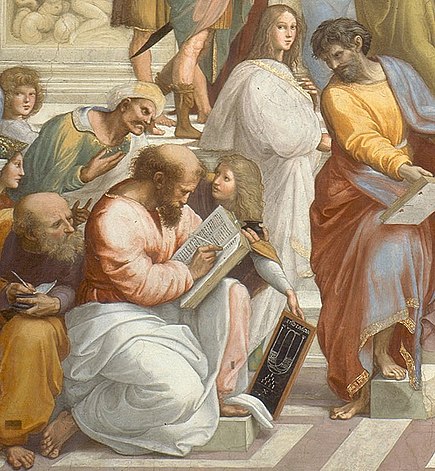
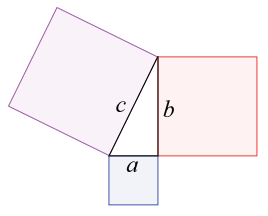
    • In “The New Pythagoreans,” Chris Gilliard and Hugh Culik look closely at the long history of Pythagorean mystic belief in the power of mathematics and its near-exact parallels in contemporary promotion of digital technology, and especially surrounding so-called big data.
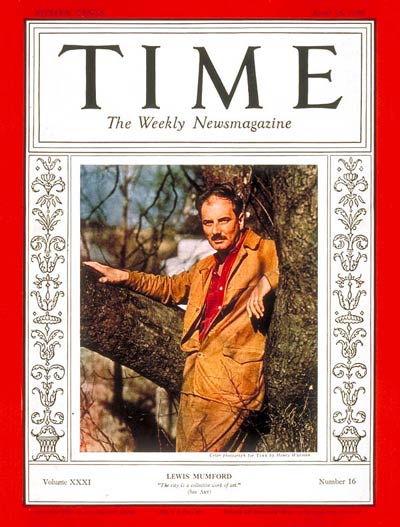
    • In “From Megatechnic Bribe to Megatechnic Blackmail: Mumford’s ‘Megamachine’ after the Digital Turn,” Zachary Loeb asks about the nature of the literal and metaphorical machines around us via a discussion of the 20th century writer and social critic (and) Lewis Mumford’s work, one of the thinkers who most fully anticipated the digital revolution and understood its likely consequences.
    • In “Digital Proudhonism,” Gavin Mueller writes that “a return to Marx’s critique of Proudhon will aid us in piercing through the Digital Proudhonist mystifications of the Internet’s effects on politics and industry and reformulate both a theory of cultural production under digital capitalism as well as radical politics of work and technology for the 21st century.”
    • In “Mapping Without Tools: What the Digital Turn Can Learn from the Cartographic Turn.” Tim Duffy pushes back “against the valorization of ‘tools’ and ‘making’ in the digital turn, particularly its manifestation in digital humanities (DH), by reflecting on illustrative examples of the cartographic turn, which, from its roots in the sixteenth century through to J.B. Harley’s explosive provocation in 1989 (and beyond) has labored to understand the relationship between the practice of making maps and the experiences of looking at and using them.  By considering the stubborn and defining spiritual roots of cartographic research and the way fantasies of empiricism helped to hide the more nefarious and oppressive applications of their work, I hope to provide a mirror for the state of the digital humanities, a field always under attack, always defining and defending itself, and always fluid in its goals and motions.”
    • Joseph Erb, Joanna Hearne, and Mark Palmer with Durbin Feeling, in “Origin Stories in the Genealogy of Cherokee Language Technology,” argue that “the surge of critical work in digital technology and new media studies has rarely acknowledged the centrality of Indigeneity to our understanding of systems such as mobile technologies, major programs such as Geographic Information Systems (GIS), digital aesthetic forms such as animation, or structural and infrastructural elements of hardware, circuitry, and code.”
    • In “Artificial Saviors,” tante connects the pseudo-religious and pseudo-scientific rhetoric found at a surprising rate among digital technology developers and enthusiasts: “When AI morphed from idea or experiment to belief system, hackers, programmers, ‘data scientists,’ and software architects became the high priests of a religious movement that the public never identified and parsed as such.”
    • In “The Endless Night of Wikipedia’s Notable Woman Problem,” Michelle Moravec “takes on one of the ‘tests’ used to determine whether content is worthy of inclusion in Wikipedia, notability, to explore how the purportedly neutral concept works against efforts to create entries about female historical figures.”
    • In “The Computational Unconscious,” Jonathan Beller interrogates the “penetration of the digital, rendering early on the brutal and precise calculus of the dimensions of cargo-holds in slave ships and the sparse economic accounts of ship ledgers of the Middle Passage, double entry bookkeeping, the rationalization of production and wages in the assembly line, and more recently, cameras and modern computing.”
    • In “What Indigenous Literature Can Bring to Electronic Archives,” Siobhan Senier asks, “How can the insights of the more ethnographically oriented Indigenous digital archives inform digital literary collections, and vice versa? How do questions of repatriation, reciprocity, and culturally sensitive contextualization change, if at all, when we consider Indigenous writing?”
    • Rob Hunter provides the following abstract of “The Digital Turn and the Ethical Turn: Depoliticization in Digital Practice and Political Theory”:

      The digital turn is associated with considerable enthusiasm for the democratic or even emancipatory potential of networked computing. Free, libre, and open source (FLOSS) developers and maintainers frequently endorse the claim that the digital turn promotes democracy in the form of improved deliberation and equalized access to information, networks, and institutions. Interpreted in this way, democracy is an ethical practice rather than a form of struggle or contestation. I argue that this depoliticized conception of democracy draws on commitments—regarding personal autonomy, the ethics of intersubjectivity, and suspicion of mass politics—that are also present in recent strands of liberal political thought. Both the rhetorical strategies characteristic of FLOSS as well as the arguments for deliberative democracy advanced within contemporary political theory share similar contradictions and are vulnerable to similar critiques—above all in their pathologization of disagreement and conflict. I identify and examine the contradictions within FLOSS, particularly those between commitments to existing property relations and the championing of individual freedom. I conclude that, despite the real achievements of the FLOSS movement, its depoliticized conception of democracy is self-inhibiting and tends toward quietistic refusals to consider the merits of collective action or the necessity of social critique.

    • John Pat Leary, in “Innovation and the Neoliberal Idioms of Development,” “explores the individualistic, market-based ideology of ‘innovation’ as it circulates from the English-speaking first world to the so-called third world, where it supplements, when it does not replace, what was once more exclusively called ‘development.’” He works “to define the ideology of ‘innovation’ that undergirds these projects, and to dissect the Anglo-American ego-ideal that it circulates. As an ideology, innovation is driven by a powerful belief, not only in technology and its benevolence, but in a vision of the innovator: the autonomous visionary whose creativity allows him to anticipate and shape capitalist markets.”
    • Annemarie Perez, in “UndocuDreamers: Public Writing and the Digital Turn,” writes of a “paradox” she finds in her work with students who belong to communities targeted by recent immigration enforcement crackdowns and the default assumptions about “open” and “public” found in so much digital rhetoric: “My students should write in public. Part of what they are learning in Chicanx studies is about the importance of their voices, of their experiences and their stories are ones that should be told. Yet, given the risks in discussing migration and immigration through the use of public writing, I wonder how I as an instructor should either encourage or discourage students from writing their lives, their experiences as undocumented migrants, experiences which have touched, every aspect of their lives.”
    • Gretchen Soderlund, in “Futures of Journalisms Past (or, Pasts of Journalism’s Future),” looks at discourses of “the future” in journalism from the 19th and 20th centuries, in order to help frame current discourses about journalism’s “digital future,” in part because when “when it comes to technological and economic speedup, journalism may be the canary in the mine.”
    • In “The Singularity in the I790s: Toward a Prehistory of the Present With William Godwin and Thomas Malthus,” Anthony Galluzzo examines the often-misunderstood and misrepresented writings of William Godwin, and also those of Thomas Malthus, to demonstrate how far back in English-speaking political history go the roots of today’s technological Prometheanism, and how destructive it can be, especially for the political left.

    “Digital Turn” Table of Contents


  • Anissa Daoudi – Introduction: Narrating and Translating Sexual Violence at Wartime in the Middle East and North Africa (MENA region)

    Anissa Daoudi – Introduction: Narrating and Translating Sexual Violence at Wartime in the Middle East and North Africa (MENA region)

    Anissa Daoudi

    العربية | Français

    So natural is the impulse to narrate, so inevitable is the form of narrative for any report of the way things really happened, that narrativity could appear problematical only in a culture in which it was absent – absent or, as in some domains …programmatically refused.

    Hayden White (1980), “The Value of Narrativity in the Representation of Reality”


    Truth for anyone is a very complex thing. For a writer, what you leave out says as much as those things you include. What lies beyond the margin of the text? The photographer frames the shot; writers frame their world. Mrs Winterson objected to what I had put in, but it seemed to me that what I had left out was the story’s silent twin. There are so many things that we can’t say, because they are too painful. We hope that the things we can say will soothe the rest, or appease it in some way. Stories are compensatory. The world is unfair, unjust, unknowable, out of control. When we tell a story we exercise control, but in such a way as to leave a gap, an opening. It is a version, but never the final one. And perhaps we hope that the silences will be heard by someone else, and the story can continue, can be retold. When we write we offer the silence as much as the story. Words are the part of silence that can be spoken. Mrs Winterson would have preferred it if I had been silent.

    Do you remember the story of Philomel who is raped and then has her tongue ripped out by the rapist so that she can never tell? I believe in fiction and the power of stories because that way we speak in tongues. We are not silenced. All of us, when in deep trauma, find we hesitate, we stammer; there are long pauses in our speech. The thing is stuck. We get our language back through the language of others. We can turn to the poem. We can open the book. Somebody has been there for us and deep-dived the words. I needed words because unhappy families are conspiracies of silence. The one who breaks the silence is never forgiven. He or she has to learn to forgive him or herself.”

    Jeanette Winterson (2011), Why Be Happy When You Could Be Normal?

    Narrating and Translating Sexual Violence in the Middle East and North Africa is the overarching theme of this Special Issue, which is guided by the natural impulse, to borrow White’s words, to narrate and translate knowing into telling[1].  Culturally, telling stories of violence has been linked to power struggles and therefore, not all stories could be told, particularly in authoritarian regimes.   Telling stories is an act of power around who is telling what and to whom? (Foucault, 1977).   By telling stories of what really happened, the aim is certainly not to reproduce violence, but to give a voice to the silenced Arab women to tell their stories in order to counter narrate the hegemonic discourse(s) in relation to sexual violence at wartime in the MENA region.  The contributors of this special issue; being a combination of academics from different disciplines, activists and feminists from the region and literary writers; are aware of the importance of telling stories that challenge the existing discourses and uncover layers of distortion with a view to the present and the future.   Telling is equally important what is being left out, having an eye for details, framing stores in a specific style and genre, using precise language are also as important.  Telling When we tell a story we exercise control, but in such a way as to leave a gap, an opening” as Jeanette Winterson argues.  She adds that our story is “a version but never the final one”, yet an important addition to the clusters of stories that form discourse(s).  This act of telling or writing is what constructs and produces particular versions of the world.  As Baker (2006: 28) puts it “personal stories that we tell ourselves about our place in the world and our own personal history”.  By positioning Arab women in the world, we (contributors of this volume) are, as Foucault puts, placing ourselves in the power of network (1978) and agree with   Foucault’s idea of power “we must cease once and for all to describe the effect of power in negative terms, it ‘excludes, it ‘represses’, it ‘sensors’, it ‘abstracts’, it ‘masks’, it ‘conceals’.  In fact power produces; it produces reality; it produces domains of objects and rituals of the truth” (Foucault, 1977: 194).

    This Special Issue seeks to make three valuable and original contributions.  To begin with, it is the first time the subject of rape at wartime, a topic considered as taboo, is discussed openly in relation to the MENA region by activists, academics and literary writers from the region in three languages; namely French, Arabic and English.  As our theoretical framework is based on the importance of translation as a way of challenging established discourses (Apter, 2013), it became crucial that this unique project has to appear in the three working languages of the MENA region to make information available to scholars, activists, policy makers, students locally and globally, as we believe that sexual violence in wartime is a global phenomenon.  The second originality of the papers of this issue is about the content it reveals for the first time, especially in relation to Algeria, where there is the Amnesty Law that stands as a barrier against truth.   This special issue is a call for justice and a clear rejection to the Amnesty Law (2005).  More importantly, the third point is related to the fight against silencing women and for empowering them to narrate their stories in order to write a complete version of history.   By so doing, women are not only putting the records straight, but also helping other women (locally, regionally and globally) to advance in their just fight against patriarchy, injustice and inequality and not re-invent the wheel.

    For this Special Issue, I turn to the past to understand the present and aim to take part in shaping the future.  In other words, asking the same question as Turshen’s (2002)
    what happened to Algerian women who were once active during the War of Liberation become passive in the Civil War?  She starts her article with two quotes: one referring to Mudjahidats describing a site where they planted bombs during the War of Liberation and another referring to an Algerian woman, captured by Islamists during the civil war, where she was used as a slave for sexual and other domestic jobs for ‘the Amir’ (terrorist).  The two images seem two centuries apart.  The question is indirectly asking the Mudjahidats (female war veterans) about their contributions towards the ‘grand narratives’ of the Algerian War.  It is in a way holding them responsible for not telling their stories, for not becoming role models for the coming Algerian generations and for not being agents for change in the same way they acted during the Liberation War.  This project aspires to uncover ‘layers of distortions/constructions’ to use Tamboukou’s terms (2013), not only about what did the Mudjahidats not say, but also why and how did their silencing happen.  By so doing, the eyes are not only on the past but rather, on the present and future of Algerian women.  In the following section, analysis of the reasons and the ways the silencing happened will be provided.

    I.       Gendering Violence in Algeria: the Role of Language

    Algeria, known as the country of The Three Djamilas, an Arabic name, meaning ‘beautiful’ referring to three Algerian women war veterans called (Djamila Bouheird, Djamila Boupasha and Djamila Bouazza), standing for the fighting against the coloniser during the liberation war (1954-1962).  While this metaphor ‘the Three Djamilas’ has been used and abused in the whole Arab culture, Algerian women’s contribution to the War of Liberation is present in the Algerian collective memory.  The abuse starts, as (Mehta, 2014: 48) states with the image related creation of the “land-female body equation, reducing women to abstract symbols of nation without citizenship rights”.  This motherland, as (McMillin, 2007) appears all too frequently in nationalist rhetoric.   It is the same hegemonic strategy that excludes women from taking an active part in the nation building process.  In fact, the metaphor of the land can be analysed closer based on the principle of the ‘conceptual metaphor theory’, by Lackoff and Johnson, 1980, in which the target domain is related to the image of ‘cultivation’, ‘strength’ and ‘security’.   This metaphor leaves no room for negative association with al mudjahidats (female war veterans).   However, in framing the Djamilas as ‘French’ educated ‘elite’ Algerian ‘Muslim’ girls, the ‘abuse’, to use Thomas’s word ‘cultural violence’ becomes clearer, particularly with the Algerian Arabicisation movement in post-independence in the 1970s, where the same ‘French’ educated women were sent back to the private sphere because they did not master ‘Standard Arabic’, the official language according to the Algerian constitution.  History was written by Arabophone Algerian men, leaving no room for women to narrate or archive their stories.  In 1974, Ministry of Mudjahideen (the Ministry of Veterans Affairs) reported that 11,000 Algerian women had fought for the liberation (about 3% of all fighters); Amrane Minne (1993) thinks this is a serious underestimation of women’s participation. She adds that of this number, 22% were urban and 78% came from rural areas; these percentages mirror exactly the rate of urbanization in Algeria at that time.  The Mudjahidats battle was not with the colonizer only, but was also to free women from ignorance and servitude.  Urban educated women joined the rebel forces and went to the villages where they taught illiterate peasant women, the reasons for their independence struggle. Studies reveal that after independence, many faced rejections from their societies and could not reintegrate, some for being raped, others because they had frequented men).  From those who managed to find jobs, some were forced by their husbands to return to their traditional jobs.   Assia Djebbar’s film La Nouba des femmes du Mont Chenoua (1978) is a representation of colonialism as well as her own women’s culture.  In this film, Djebbar stresses the importance of history and memory and asks questions about: whose history is Algeria’s? Who speaks it and to whom?  And in what language?  The exclusion of French educated Algerian women was not limited to Mudjahidats but also included a generation of Algerians educated in French; even decades after independence (see Chapter One).  The following section will provide an analysis of what it felt like living as a woman in the 1990s, known as the ‘Black Decade’ in Algeria.

    II.       Memories of Algerian Women in the 1990s

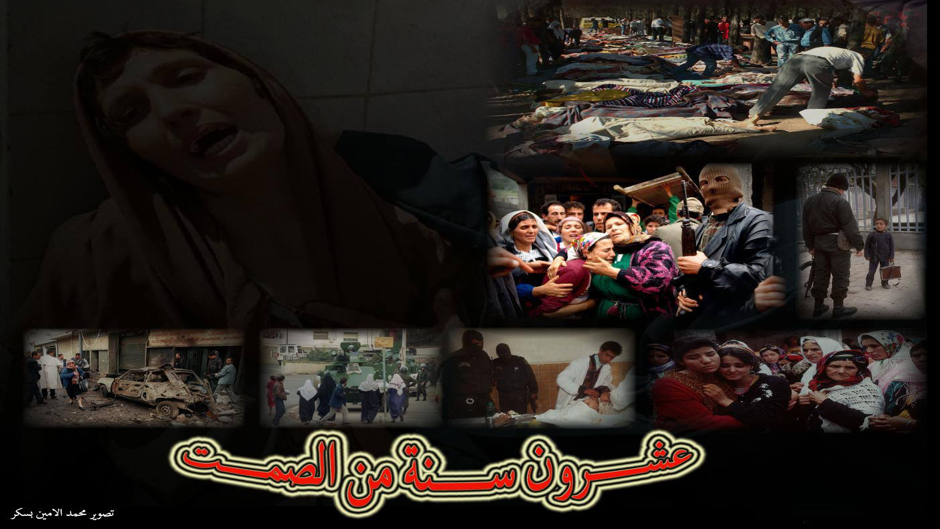
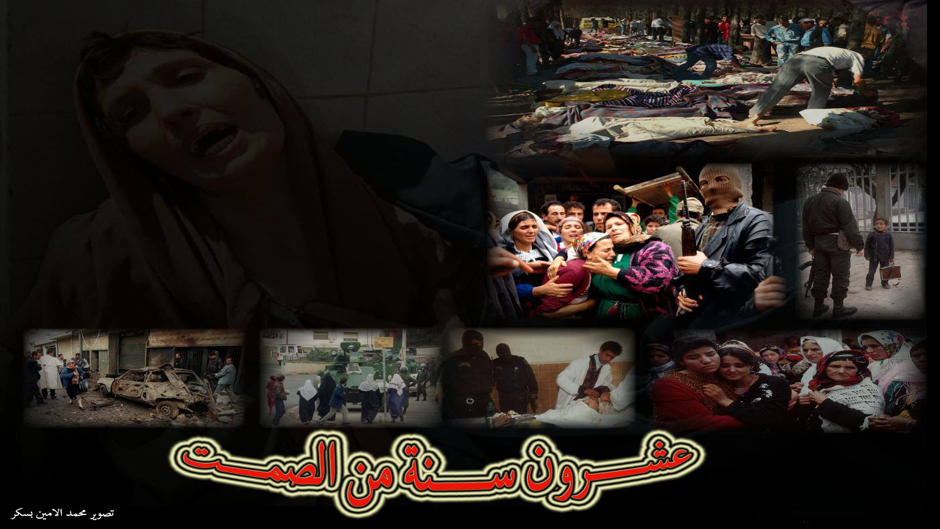
    The civil war has been described as one of the most brutal periods in independent Algeria.  It has been estimated that more than 200,000 people were killed and thousands “brutally wounded, displaced, abducted and sexually violated, according to the Amnesty International Report of 1996” (Mehta, 2014: 69).   Independent Algeria experienced nothing other than a one party repressive regime, where corruption, unemployment, nepotism, gender discrimination, and minority segregation were commonplace.  In the 1980’s, the country was ready for an explosion of some sorts.  The crisis was felt economically, politically, and socially and people took to the streets in what is known as ‘the bread riots’ on October the 5th 1988.  The uprising started off peacefully but soon the military brutally crushed the protestors.   The Islamists capitalised on the tensions and started to present themselves as the rescuers of the country.  They wanted to be seen as the ones to reinvent Algerian identity, which for them was still Francophone.  As Zahia Salhi (2010) argues, the military became more militarised and the Islamists engaged in armed struggle, and as a result the country was dragged into one of the most horrific moments of its history.  Civilians were the ultimate victims, particularly women.  In fact, Salhi believes that women became a deliberate target for the Islamic fundamentalists as early as the 1970s.  She explains how the discriminatory provision of the Family Code exacerbated and legitimized violence against women and made it difficult for them to deal with the consequences of widespread human rights abuses (2010). Marnia Lazreg calls 1984[2]the year of the rupture between women and their government and women and the radical questioning of the state’s legitimacy”.

    Dalila Lamarene Djerbal describes the situation:

    Physical violence on a large scale, then murders of women who do not respect the dress code or rules of conduct; assassination of female citizens charged with supporting  the authorities(le pouvoir) or women related to the members of the security services; the obligation for women and families to support the armed groups and beginnings of rape through forced marriages,  the multiplication of kidnappings, rape in the guise of what is known as zawāj mut’a[3], abductions of women, segregation, collective rape, torture, murder and mutilation of the entire territory.[4]

    The quote above captures the physical violence exercised against Algerian women, which undoubtedly left psychological scars.  It summarizes the different pretexts under which women were targeted.   The first is related to women in the public sphere and to ‘respectable’ dress code and conduct.  The concept of hijab[5] started to circulate in the mid-1970s and the beginning of the 80s, brought by Arab teachers who came to the country under the Arabisation movement and who had links with the Muslim Brotherhood movements.  Their aim was the Islamisation of Algeria which according to them was still Francophone.   A large number of Algerian women were forced to wear the hijab (the veil) and those who refused to do so receive death threats and in some cases were killed and used as examples to terrorize other women.   A Fatwa[6] legalising the kidnapping and temporary marriage of women was issued, in a very similar way to how Yazidi women are treated under ISIS rule today.  According to Islamists, hijab[7] is what distinguishes a Muslim woman from a non-Muslim one.  It is also what sets the limits between the private and public spheres.  All these strict rules justified the physical violence and the killing of women who refused to abide by the religious rule.  The first victim was the famous case of Katia Bengana, a 17 year old high school girl in Blida, who had been warned but told her mother: “even if one day I will be assassinated, I will never wear hijab against my will.   If I must wear something, it will be the traditional dress of Kabylia, rather than the imported hijab they want to force on us” (Turshen, 2002: 898).   Katia’s statement shows how defiant she was, even though, she suspected that she would be killed for her strong views.  Additionally, her Kabyle identity was more important to her.  She refers to hijab as an ideology imported and forced on Algerians from the Arabian Peninsula in reference to the Wahhabi[8] ideology.  This sentiment was shared by a large number of Algerians who claim that their Algerian Islam, under which they were brought up, had its own particularities and that they did not need lessons about Islam from any other source.

    Twenty years later, her sister writes a post on Facebook and says: “I cry, I rage against these veiled women who think they are free while they are muzzled.  Katia is a girl who decided for herself, not bend to the macho obscurantism of the Islamists.  How many Katia(s) do we so that one day these women can finally be free? Katia should be viewed as a symbol of struggle against the medieval spirits. She was courageous and and was ready to go all the way for her convictions, a free woman, a real Tamazight as was the Queen of the Aures, an example of strength and intelligence[9] (26.01.17).  At the Birmingham University Conference, October 2014 on ‘Narrating and Translating Sexual Violence in the MENA Region: the role of Language’, Mrs Wassyla Tamzali, referred to Katia’s case and stressed that she should not be remembered as Berber, instead, she should be celebrated as an Algerian woman (see article by Mrs. Tamzali in this issue).  She adds that by dividing citizens as Berbers and Arabs, Algerians fall into the colonial ideology of ‘divide and rule’.  Katia was not killed because she was Berber, but because she refused ‘political Islam’.  For Tamzali, talking on behalf of Katia is crucial and making Katia’s voice heard is just as important.  She chose to make Katia’s case a national issue because she is aware that there are more women like Katia in Algeria.   Recent reports from areas in Iraq and Syria, under ISIS control, show how women are still subjected to similar circumstances of rape, killing and sex slavery.   Thus, Tamzali’s call is of global significance and is a result of her years of working for the United Nations, dealing with the plight of Women in Bosnia.

    The second issue in Lamarene’s quote relates to the targeting of female citizens “charged with supporting the authorities (le pouvoir) or women related to the members of the security services”.  This category of women includes a large segment of the Algerian population, who are wives, sisters or mothers of men working for the security services, police force, army, called by the fundamentalists the ‘tyrants’ – in Arabic taghut[10]The latter is a word from classical Arabic that takes us immediately to the usages of the word in the distant past.  The word is mentioned in the Quran (Surat al Nahl/the Bee)[11].  In this case the ‘tyrant’ or the ruler is referred to as ‘evil’. The eradication of evil thus becomes a duty for the believer.  This conceptual metaphor can be used to explain the process by which the extermination of the non-believer becomes normalised.   Using the image of the taghut evokes various images that are directly related to Qur’an and also to the pre-Islamic period where people worshipped other forms of gods, something that differentiates the believer from the non-believer.  It recalls the image of the ‘evil’ and the ‘unjust ruler’.  The two concepts are sufficient, according to, for example, the grand Mufti (preacher) of Saudi Arabia[12] to justify the death penalty.

    Other concepts started to appear in Algerian society at this time: Dalila Lamarene Djerbal refers to Zawāj al Mut’a, a term introduced by Islamists referring to a form of temporary marriage practised by some Shi’i Muslims in the Middle East but not in North Africa.   This is unknown in Algeria, where the majority of the population are Sunnis.  Other forms of marriage also appeared with the rise of Islamism, such as zawāj al misāyr (again a temporary form of marriage accepted in the Sunni sect of Wahhabism).  Other forms of attack on women’s bodies under different terminologies started to make their way into Algerian society.  Fadhila Al Farouq’s novel, refers to the word rape in Arabic and places it in inverted commas “الاغتصاب” /al ightisāb/ as a controversial term.  Yet, she explicitly explains its etymological roots to Classical Arabic.  By so doing, Al Farouq implicitly attacks the religious institution for using ‘Islamic concepts’ as symbolic capital (see Chapter One).

    Djerbal’s quote captures the atrocities Algerian women went through during the ‘Black Decade’.  Violence was both real and symbolic against civilians, particularly women who, as indicated by Djerbal, were collectively raped, tortured and murdered in the most dramatic ways (see below the discussion on the killing of female teachers in the western part of Algeria). In the 1990s, ordinary women in Algeria took to the streets to denounce the violent discourses against them.  In 1994, the Armed Islamic Group (GIA) called for a boycott of schools.  However, in spite of numerous school burnings and murders of teachers, women still brought their children to classes in acts of defiance. Violence grew as it met resistance from government and citizens, including women.  The terrorists “stepped up their activities, establishing roadblocks and killing everyone ambushed in this way” (Turshen, 2002: 897).  Other acts directed against women included the issuing of the fatwa    legalising the killing of girls and women who did not wear the hijab.  Another fatwa legalised the kidnapping and temporary marriage of women.  According to the FIS, hijab is what distinguishes a Muslim from a non-Muslim woman.  It is also what puts the limits between the private and public spheres.  All these edicts justified the killing of women who refused to abide by the religious rules.   The next section will shed light on Algerian women’s organisations and their fight against what was happening.

    III.       The Role of Women’s Organisations in Algeria in the Black Decade: Resilience

     Algerian women were subjugated to the worst kinds of violence way before the civil war.  In public discourses by the Islamic party (FIS[13]), some women like feminists were portrayed as non-believers, westerners, immoral and therefore, there was an urgent need to bring them back to their traditional roles.  They, according to the FIS, were occupying jobs that were supposed to be for men.  Unemployed men favoured this particular discourse at the time where the economic crisis hit the country due to corruption; fall in prices of oil in a country that relied primarily on natural resources.  Algeria became more and more hostile to the presence of women in the public sphere.  Feminists were harassed, prevented from doing their jobs and even not allowed to live without a male relative (like brother, husband, son, what is called mahram. The 1984 Law, (as explained in Chapter One), did not help either.  In fact, it institutionalised violence and discrimination against women.  Ait Hamou (2004, 117); one the founding members of Réseau Wassyla argues that the Algerian government co-opted the conservatives, and later, Muslim fundamentalists, to protect their interests and stay in power. Various governments have made compromises and sacrificed women’s rights to keep peace with the fundamentalists[14] .  For example, in 1989, “conservatives within the FLN[15] colluded with Islamists to introduce measures against the emancipation of women, for instance more religious education in primary schools; making sports not compulsory for girls; and so on” (ibid).  In other words, the complicity of the FLN, in the educational system in Algeria has always been going on for years.

    Globally, when women were facing violence on a daily basis, the whole world turned a blind on what was going on.  It is, as Ait-Hamou argues, “since 11 September, the world, and particularly, the United State, seems to have suddenly realised that Muslim fundamentalism, in its extreme form of terrorism, is a real threat”.  She adds “many of us cannot help feeling bitter about such an attitude, for we fought fundamentalism and terrorism in isolation, with our bare hands for a good number of years, while fundamentalists who committed the most atrocious crimes in our countries were getting support from the same governments that are now dictating to the rest of the world how to ‘fight terrorism”.   This feeling of bitterness about being left alone with no support at all neither from their fellow Arabs nor form the rest of the world is what women and men repeat now when asked about why they did not join the so called ‘Arab Spring’.  Another striking issue that Ait-Hamou refers to is the Amnesty Law of 1999, which is to date criticised by most feminist organisations.

    The aim of the Amnesty Law was to bring closure to the Algerian Civil War by offering an amnesty for most violence committed in it. The referendum on it was held on September 29, 2005, and it was implemented as law on February 28, 2006.  Critics, however call it a denial of truth and justice to the victims of the abuses and their families.  One example of the voices against the Amnesty Law is Cherifa Keddar, the founder of Djazairouna Association, created on October 17, 1996, following the assassination of her sister and brother after a targeted attack on her family, including their mother by Islamists.   Cherifa united with the survivors of terrorism to give them a voice that denounces the Amnesty Law and asks for justice.   Bennoune gives detailed information about the work of this organization in this issue.

    Feminist organisations were fighting against fundamentalism, based on theocracy and patriarchy, as the source violence.  They all believed that the early 1980s was the start of fundamentalism in Algeria.  They agree that the Friday Sermons diffused on loudspeakers[16], focusing on women bodies, describing them as immoral for wearing for example, lipstick or going out unveiled.  University campuses were also attacked and the authorities kept a low profile.  In June 1989, a group of fundamentalists set fire in public to a house that belonged to a divorced woman, who lived with her children.  Her three children were burnt to death.  Women’s groups denounced the crime and organized the first demonstration in the streets of Algiers.  Silence complicity from the State helped Islamism to rise.  In years 1992-1993, thousands of men and women were killed and the country lived in terror.  The first woman to be murdered was Karima Belhadj, secretary in the General Office of National Security[17].  Women organisations in Algeria had little choice.  They had to strategically survive the atrocities, some wore the veil to avoid confrontations others, resisted that.  One needs to look at the Algerian society now to realise that more than help of women are veiled.  Women’s rights activists had a national strategy to combat fundamentalism by producing counter-discourse, on many occasions, they occupied the street, carrying photos of those who were killed, at a time when people were terrified.  The first public meeting was in 1993 organised by the Gathering of Algerian Democratic Women (RAFD), using mock tribunal against terrorism (Ait-Hamou, ibid).  Women’s rights organisations also denounced the American and European discourses, under the name of democracy, that the Islamists were victims, by contributing to international debates using foreign media channels and participating at international conferences. They established many women’s associations like SOS Femmes en Detresse, RAFD and RACHDA continue to combat for women’s right and for providing counter-discourse to fundamentalism.

    The history of violence on Algerian women by jihadist groups some 20 years ago now, as Bennoune argues in this issue, the way it happened, the way it was overlooked, the way in which victims were overlooked, neglected and forgotten-should spark outrage globally, as this violence on issue is not on Algerian women only but it is a global issue and understanding it, gives insights into understanding ISIS today.  Bennoune’s essay, in this issue, addresses rape in Algeria in the ‘Black Decade’ and provides a true picture of what Algeria during the Civil war was like.  She scrutinizes the ways rape was narrated by interviewing survivors, which is to date not an easy task under the Amnesty Law.  Her expertise in Law and her fieldwork research on the theme of rape in Algeria and in other parts of the Muslim world contributes to the interdisciplinary nature of this issue.   Her essay shows her knowledge of Algeria inside out and her sharp analysis of the events.

    To complement Benoune’s article, Daoudi, stresses on the cultural production of the 1990s in Algeria.  Her article entitled ‘Untranslatability of Algeria’ challenges Apter’s (2013) concept of untranslatability and presents it not as a homogenous entity but a multiple notion.  Translation as a means of disturbing discourses (Apter, 2013) is the basis of the arguments about gender roles and contribution to colonial and postcolonial Algeria.  It helps dismantling the narratives that were written by men and bring out the silenced discourses.  Through close analysis of the various gender discourses on violence in Algeria, this article shows the manipulations of discourses about Algerian women during colonial and postcolonial Algeria.  It also discusses the role of Algerian writers in giving a voice to their voiceless compatriots to help archive their history and to construct their social memory and collective.  In addition, it emphasizes the roles of language and translation in the construction of a constantly changing Algeria with an emphasis on the Civil War 1990s.

    A specialist in Gender and Islamic Studies, Amel Grami, who worked with Jihadi women in the MENA region brings out an understudied area, I find myself attentive to a number of related themes such as ‘al sabi’ and ‘jihad al-nikah’, on which Grami has published extensively.  ‘Jihad al-nikah’, in particular has been a very controversial issue in Tunisia after the Arab Spring.  Grami argues that official statements from the Tunisian Home Office declared that indeed there are groups of young Tunisian women who travelled to Syria with the purpose of ‘Jihad al-nikah’.  She brings to lights different narratives about sexual violence in Tunisia.  The purpose of narrating these stories is not to study the past but to try to understand it in the present, for example, in understanding Yazidi women’s rape in the MENA region (see article by Grami in this Special Issue).

    Algerian women’s fight against silence and fundamentalism was not restricted to women’s rights activists on the ground.  Other women; writers fought their pens.  Djebar, as a pioneer among the generation that lived colonialism and Mokadem are the core of the essay written by Imen Cozzo in this issue.  She believes that Algerian women’s silence might be an involuntary social, cultural and ideological act of resistance, a way to bury the atrocious truth and to seal it into a forgotten tomb, she says.  Silence was imposed by a colonial reality and continues to be enforced by a postcolonial tradition and society. After independence, many Algerian writers use the same coloniser’s language to resist their assimilation into a backward process or the fight over “outer” and “inner” spaces.[18] Therefore, Cozzo argues that silence becomes a political act through which women subvert the oppressors’ discourse, by retaining their secret world/word.

    Violence in the 1990s in Algerian films namely: Rachida, The Harem of Madame Osmane, and Barakat!  Is what Rym Quartsi discusses in her article.  She looks at films as another medium through which Algerian directors communicated their trauma and pain of the Black Decade.   In her essay, she explores the relationship between gender, violence and language.   The Black decade is the period when most artists fled the country after receiving death threats.  This led to the dismantling of the film industry and the films that were produced were done outside Algeria by external funding.

    In a comparative study, Bedjaoui recalls the ‘Black Decade’ through the work of the two Francophone female writers Assia Djebar and Maisa Bey.  The novels studied, centres on the violence of religious fanaticism that terrified the Algerian society in the 1990s.  Similarly, Tamzali writes a letter to katia Benghena, the girl who defied the Islamists and refused to wear the veil.  Tamzali warns of the division of the Algerian society into Berber, Arab, Francophone and Aarbophone.  She reminds us Katia is an Algerian woman and not just a Berber. In describing how it was living in Algeria during the Black decade, she says: “the country was plunging into civil war, neighbours and brothers killing each other. The pain and the fear overpowered the gaze of our mothers and our lives headed towards barbarism to the sound of heavy boots and the cries of “Allahu Akbar”. Death spread in every corner and the stench of gloomy clouds filled the air.”  Finally, a selection of literary texts by Fadhila Al Farouq and Inam Bioud is presented in the three languages.  Al Farouq is the first Algerian writer, who chose to fight with her pen, risking her life, to document cases of rape in the 1990s.  Bioud’s poem fills our heart with sadness and reminds us of the atrocities of the “Black decade.”

    IV.       Conclusion

    Violence in the recent years has intensified, or at least the advancement in Information Technology made it look intensified.  This is to say that violence has always existed but people did not necessarily hear about it and surely did not used to see it happen live.  The Internet has facilitated the movement of information, for example, the picture of the Egyptian woman in her bra who was dragged by the Egyptian police officer in Tahrir Square went viral on social media and became known as the ‘the blue bra event’.  Other events in the Arab region ‘the so-called Arab Spring/revolution’ are characterised by interesting reactions about the role of women in the fight for freedom, varying from stories about the Egyptian government subjecting female participants to ‘virginity tests’, to horrific stories about collective rape in Tahrir Square (Cairo), to calls by a preacher for sexual holy war in what is known as jihad al nikah (which is basically offering sexual services to comfort fighters against the Syrian regime), using a terminology from Classical Arabic to refer to the wholly war in the new context.  All of these stories and many more are narrated and in some cases used and abused to legitimise violent reactions.  They are also part of history, which is constructed through narrativation of layers of complex intertwined stories.  Homi Bhabha, says “tell stories that create the web of history, and change direction of its flow” (cited in Gana and Härting, 2008: 5).  This same view is also shared by Mona Baker who argues that narratives construct realities.   It is this line of thought that drive us (female academics from the region), writers, film directors… etc. to publish this issue, aiming to dismantle official narratives and give voice to the silenced narratives of the 1990s.  By so doing, we are not voicing narratives from the other who can be geographically distant but we narrate violence as a global phenomenon, as an ethical issue and more importantly as a continuous search for the truth.  Below is Tahar Djaout’s slogan that captures the spirit of this Special Issue.

    Silence means death

    If you speak out, they kill you.

    If you keep silent, they kill you.

    So, speak out and die

    Tahar Djaout

    [1] See Hayden White’s etymological definition of both words ‘knowing and telling’ in his article “the Value of Narrativity in the Representation of Reality” in Critical Inquiry, Volume 7, No 1 (Autumn, 1980) 5-27

    [2] 1984 was the year when Algeria made changes to the constitution.  “The Family Code of 1984 makes it a legal duty for Algerian women to obey their husbands, and respect and serve them, their parents, and relatives (Article 39). It institutionalised polygamy and made it the right of men to take up to four wives (Article 8).  Women cannot arrange their own marriage contracts unless represented by a matrimonial guardian (Article 11), and they have no right to apply for divorce.  While a man needs only to desire a divorce to get one, it is made a most difficult, if not impossible, thing to be obtained by women” (Salhi, 2003: 30). http://www.artsrn.ualberta.ca/amcdouga/Hist247/winter_2011/resources/Algerian%20Women%20and%20the%20’family%20code’.pdf

    [3] Zawāj mut’a, also known as Nikāḥ al-mutʿah (Arabic: زواج المتعة‎‎, literally “temporary marriage”), is a type of marriage permitted in Twelver Shia Islam, where the duration of the marriage and the dowry must be specified and agreed upon in advance.  The researcher as well as feminists consider this marriage and its equivalent in the Sunni sect  (zawāj al misyār) as forms of religiously sanctioned prostitution.

    [4] All translations are by the author.

    [5] Hijab: consists of wearing a scarf that hides the hair and neck as well as a full length robe.

    [6] Fatwa is a religious commandment based on scholarly legal decision.

    [7] For more information about the veil, see Marnia Lazreg’s book Questioning the Veil:
    Open Letters to Muslim Women
    (2011).

    [8] Wahhabi, in Arabic / al-Wahhābiya(h). Wahhabism is named after an eighteenth-century preacher and scholar, Muhammad ibn Abd al-Wahhab (1703–1792).  It is a religious movement or branch of Sunni Islam, which started in Saudi Arabia.  It is an extremely conservative form of Islam.  For more information, see: David Commins (2006) book: Wahhabism and Saudi Arabia (I. B. Taurus).

    [9] See, https://www.facebook.com/Chkovein/?hc_ref=SEARCH

    [10] Taghut: an unjust ruler who does not follow God’s rules.

    [11]

    وَلَقَدْ بَعَثْنَا فِي كُلِّ أُمَّةٍ رَّسُولًا أَنِ اعْبُدُوا اللَّهَ وَاجْتَنِبُوا الطَّاغُوتَ ۖ فَمِنْهُم مَّنْ هَدَى اللَّهُ وَمِنْهُم مَّنْ حَقَّتْ عَلَيْهِ الضَّلَالَةُ فَسِيرُوا فِي الْأَرْضِ فَانظُرُوا كَيْفَ كَانَ عَاقِبَةُ الْمُكَذِّبِينَ

     “For We assuredly sent amongst every People a messenger, (with the Command), “Serve Allah, and eschew Evil”: of the People were some whom Allah guided, and some on whom error became inevitably (established). So travel through the earth, and see what was the end of those who denied (the Truth)”.

    [12] In a question-and-answer programme, Al Fuzan (the grand Mufti of Saudi Arabia) was asked about whether or not the taghut is a kafir, i.e., non-believer.  The Mufti replied:

     “أنه مخير بين أن يحكم بما أنزل الله أو يحكم بغيره، أو أن الحكم بغير ما أنزل الله جائز، فهذا يعتبر طاغوتًا وهو كافر بالله عز وجل.”‏”.‏

    In English: “He (the taghut) is asked to rule using God’s words, but if he decides to disobey God’s words/rules, he then is a non-believer in God the gracious”.  The ultimate ruler here is God and his obedience is fundamental in Islam.

    [13] FIS: Front Islamique du Salut (Islamic Party)

    [14] Ait Hammou, ‘Women’s Struggle against Muslim Fundamentalism in Algeria: Strategies or a Lesson for Survival?’ p. 118.

    [15] FLN: Front de Liberation National

    [16] For more information on how loudspeakers were used, see film: Bab el Oued City https://www.youtube.com/watch?v=2jKITX62qCM 

    [17] For more information, see Ait Hamou’s article: Ait-Hamou_FundamentalismAlgeria.pdf

    [18] Amel Grami, “Narrating rape in the Mena region: the role of language”, (Conference: University of Birmingham, School of Arts and Music, Department of Modern Languages, Arabic Section, UK, 10 /10/ 2014.

  • – أنيسة داوديالمقدمة : سرديات وترجمات العنف الجنسي في الحروب في منطقة الشرق الأوسط وشمال افريقي

    – أنيسة داودي
    المقدمة : سرديات وترجمات العنف الجنسي في الحروب في منطقة الشرق الأوسط وشمال افريقي

    المقدمة:

    سرديات وترجمات العنف الجنسي في الحروب في منطقة الشرق الأوسط وشمال افريقي

    أنيسة داودي

    English | Français

    “طبيعيٌ هو ذلك الدافع القويُ للسرد ولا مفرّ من شكل السرد الذي توصف فيه الأشياء كما وقعت فعلا, فقد ُتمثل تلك السرديات اشكالا فقط في الثقافة التي تغيب فيها تلك السردياتّ أوفي بعض المجالات تكون مرفوضة كليا أو لاسباب برغماتيكية”    

    هايدن وايت (1980) “قيمة السردية في تمثيل الواقع”

    ” الحقيقة بالنسبة لكل واحد منا هي شيء معقد. فهي للكاتب ما يتركه ولا يقوله يعادل تماما ما يذكره و يدرجه.  فماذا يكمن وراء هوامش النص؟  فالمصور يؤطر للقطته و الكُتاب يؤطرون لعوالمهم. والسيدة وينترسون عارضت ما وضعته و لكن ما تركته هو توأم الجزء الصامت. هناك أشياء لا نستطيع البوح بها لأنها مؤلمة. فنتمنى أنّ الأشياء التي نستطيع افشاءها تُسكّنُ الآلام الباقية و تجعلها مقبولة نوعما. فالقصص والسرديات اجبارية. والعالم غير منصف ولا يوجد سبيل لمعرفته وهوأمر خارج عن إرادتنا.  فعندما نسرد قصة فاننا نمارس رقابة, غير أننا نقوم بذلك كأن نترك ثغرات. فما يكون ذلك إلاّ نسخة وغيرأنها ليست النسخة الأخيرة. فنتمنى أن يُسمع الصمت من طرف شخص آخر حتى يتسنى للقصة أن تستمر و أن يُعاد سردها. وعندما نكتب فنحن نقدم الصمت كما نقدم القصة. فالكلمات هي جزء من الصمت المنطوق.

    فتمنت السيدة ونترسون أن التزم الصمت.

    هل تذكرون قصة فيلومال التي تمّ إغتصابها و بعدها إنتزع المغتصب لسانها حتى لا تستطيع أن تحكي ما جرى لها. أنا أؤمن أنّ للخيال قوة و هي التي من خلالها نتكلم و نحكي بألسنة.  فلن نكون ملزمين بالصمت. فكلنا عندما نكون في حالة صدمة شديدة فإننا نتردد ونتعلثم ونتوقف لأوقات طويلة في كلامنا. عندها فقط نستطيع أن نرجع للقصيدة. نستطيع أن نفتح الكتاب. لكي نجد أن هناك شخص ما قام بالغطس العميق في الكلمات من أجلنا. حينها نحتاج الى الكلمات لأن العائلات التعيسة ماهي إلاّ مؤامرات صمت.  فمن يكسر الصمت لا يُنسى أبدا ولذلك يجب أن يتعلم من يكسر الصمت أن يسامح نفسه”.

    جيننات وينترسون (2001).

    “َلِمَّا تكن سعيدا وبإمكانك أن تكون عاديا”

    المقدمة

    “سرد العنف الجنسي وترجماته في الشرق الأوسط وشمال إفريقيا” هوالموضوع العام لهذا العدد الخاص. و ما قادنا اليه هو اندفاعنا الطبيعي, مستعيرين كلمات وايت, لسرد و ترجمة ما نعلم [1]إلى مشروع الكتابة عن الموضوع. فعادة ما ارتبط ثقافيا سرد قصص العنف بصراع القوى لذلك نجد أنّ ليست كل القصص تُحكى خاصة اذا كان الأمر يتعلق بقوى و أنظمة استبدادية. فما سردُ القصص الاّ استعمال للسلطة من”طرف من وماذا ولمن تُسردُ القصص؟ (فوكو, 1977). فعندما نسرد قصصا عمّا حدث فعلا, فيكون هدفنا ليس إعادة انتاج العنف ولكنه إعطاء صوت للنساء اللواتي تمّ إسكاتهن ومنعهن من سرد قصصهن لنقض الخطاب السائد المهيمن خاصة عن العنف الجنسي في الحروب في منطقة الشرق الأوسط و شمال إفريقيا.

    إنّ المشاركات في كتابة هذا العدد و هنّ من خلفيات علمية مختلفة بين ناشطات حقوقيات وأكاديميات وكاتبات من المنطقة يعلمن جيدا قيمة سرديات النساء في خلخلة وزعزعة الخطابات الراسخة وفي إزالة طبقات من التشويه والتحريف و الهدف المرجو هو تغيير الحاضر والمستقبل. وتكمن أهمية السرد في الاهتمام والإلمام بالتفاصيل وتأطيرالقصص في قوالب خاصة ولغة تُعنى ليس بالمحتوى فقط بل أيضا بما نتركه أو نتغاضى عنه. كما تُؤمن مجموعة المشاركات [2]في هذا العدد بمقولة جيينات أننا “عندما نسرد قصة ما فاننا نمارس سلطة ما, بطريقة تترك ثغرة أو فتحة ما, علما أنّ نسختنا لن تكون النسخة الأخيرة”. ولكنها تبقى نسخة مهمة لابُدّ منها, تضاف إلى مجموعة القصص التي بدورها تشكل الخطاب. فهذا الفعل, أي فعل السرد والكتابة هو ما يبني وينتج نُسخا وصيغا من وعن العالم. فكما تذكر بيكر أنّ القصص الشخصية التي نسردها لأنفسنا عن مكانتنا في العالم وعن تاريخنا الشخصي هي ما يُموقعنا في المجتمع. وهذا بالفعل ما تدركه مجموعة المشاركات. فكما يقول فوكو عن قيمة موقعة أنفسنا في أماكن القوة والاتصالات “يجب أن نتوقف الآن وإلى الأبد عن وصف القوة بكلمات سلبية لأنها تستثني وتقمع وتراقب وتغطي وتضع قناعا وحجابا. في الواقع القوة تُنتج الواقع وتخلق مواضيعا وطقوسا للحقيقة” (فوكو ، 1977 : 194).

    نحاول في هذا العدد الخاص أن نقدم ثلاثة إسهامات مُهمة ومُتميزة. فهذه أول مرة يعالج موضوع الإغتصاب في الحروب في منطقة تعتبره موضوعا من التابوهات و تقع ترجمته الى اللغاث الثلاثة الُمُتعارف عليها في المنطقة: العربية, الفرنسية والانجليزية. والهدف من ذلك نشر التوعية. كما أنها المرأة الأولى التي تجتمع فيها ناشطات حقوقيات, كاتبات وأكادميات من المنطقة بالتعاون معا في مشروع لا يضع قيودا للمعرفة. أما من ناحية الاطار النظري للمشروع, فننطلق من أهمية الترجمة كطريقة لقلب الموازين وتحدّي الخطابات الموجودة (أبتر, 2013), ولذلك وجدنا أنه من الضروري أن تُنشر هذه القالات بالغات الثلاث لكي تصل لصُناع القرار والناشطين والطلبة محليا وعالميا لأننا نؤمن أنّ موضوع العنف الجنسي في الحروب ظاهرة عالمية. أما الميزة الثانية لهذا العدد فهي تسرد مادة مهمة ونادرة عن العشرية السوداء في الجزائرخاصة وأنّ قانون العفو أو السلم العام يقف عائقا أمام كل من يحاول التعرض للحقيقة في تلك الفترة. فيُعتبر هذا العدد بمثابة نداء صريح للمطالبة بالعدالة ورفض صريح لقانون المصالحة. ولذلك فالهدف الثالث من هذا العدد هو كسر صمت النساء والعمل على تمكينهن من سرد قصصهن بغرض كتابة تاريخهن. فهن بذلك لا يضعنّ  النقط على الحروف فقط بل يساعدن على تصحيح مسارهن محليا ودوليا ويمضيّن قدما نحو محاربة الأبوية والظلم وعدم المساواة.

    كما نأمل من هذا العدد أن نعود الى الماضي لنفهم الحاضر ونشارك في بناء مستقبل زاهر لابنائنا. و هذا يُحيلنا الى سؤال طرحته تُورشن في سنة 2002 في مقالها عن حال النساء الجزائريات  حيث تقول: “ماذا حلّ بالنساء الجزائريات اللواتي كنّا ناشطات في حرب التحرير حتى يصبحن بهذه السلبية في الحرب الأهلية؟” فتبدأ مقالها بوصف صورتين متناقضتين: واحدة تُرجعنا إلى المجاهدات وهنّ يضعن القنابل في إشارة إلى دورهن العظيم في الثورة والذي لم يكن يقتصر على الطبابة و الطبخ بل تعداه إلى القتال جنبا إلى جنب مع المجاهدين.  أما الصورة الثانية فهي لامرأة جزائرية أسيرة من قبل “المجاهدين” الاسلاميين إبان الحرب الأهلية في فترة التسعينيات, وظيفتها الأساسية هي تقديم خدمات جنسية ومنزلية للأمير أي جارية.  تقول تورشن كأنّ الصورتين من قرنين مختلفين. و هذا يدعونا إلى أن نسأل سؤالا غير مباشر: هل المسؤول عمّا وصلنا إليه هوغياب دورالمجاهدات في فترة الاستقلال وعدم مشاركتهن في كتابة تاريخهن؟ فهل أنّ عدم مشاركتهن في بناء دولتهن المستقلة أدى إلى غياب القدوة التي يحتذى بها من الأجيال التي تلت الاستقلال؟  فهذا ما نأمل الاجابة عنه من خلال بعض المقالات في هذا العدد خاصة بالنسبة إلى الطريقة التي تمّ إسكاتهن بها. وهنا نقول إنّ أعيننا ليست على الماضي فقط بل على حاضر ومستقبل النساء الجزائريات. ففي الجزء التالي نتعرض لطرق الإسكات التي استعملت ضدّ النساء.

    جنسانية العنف في الجزائر: دور اللغة

    الجزائر, بلد الجميلات الثلاثة: جميلة بوحيدر, جميلة بوباشا وجميلة بوعزة. بلد الجميلات اللواتي قاتلن المستعمر بشراسة. فرغم أن هذه الاستعارة “بلد الجميلات” التي تمّ إستخدامها وإستغلالها في الثقافة العربية راسخة في المخيال الجمعي على أنها الحقيقة ولا أحد يستطيع أن يُغالي أو ينكر ذلك. واننا إستعملنا كلمة استغلال الأيقونات الجزائريات لكي نُبيّن ما تشيرإليه مهنا‏(2014 : 48) “إنّ معادلة الأرض-جسد المرأة والتي تتقلص المرأة فيها إلى مجرد رموز مجرّدة خاوية من المحتوى لوصف أُمّةٍ من غير حقوق مواطنة” فنحن نعلم جميعا أنّ رمز “الوطن الأم” يمر علينا مرارْا و تكرارْا خاصة في الخطابات القومية مكلين (2007). فنجد نفس إستراتيجيات السيطرة التي تستبعد النساء من مواقع القرارومن المشاركة في بناء الدولة. ولوأمعنّا النظر في إستعارة الأرض وحللّناها وفقا لنظرية الاستعارة المفاهمية لآكوف وجونسون (1980) و التي يكون فيها المجال الهدف مرتبط بصورة مثلا الزراعة, الخصوبة, القوة والأمان لوجدنا أنّ الاستعارة لا تترك مجالاْ لأيّ صورة سلبية قد ترتبط بصفة المجاهدات. غيرأنّ هذه الصورة تغيّرت خاصة في الفترة الأولى من الإستقلال عندما تمّ تأطير الجميلات على أنهن “ينتمين إلى نخبة النساء المسلمات صاحبات الثقافة الفرنسية أوعلى الأقل “المُفرنسات” كما كان يُطلق عليهن.  من هنا بدأ الاستغلال وعملية الابعاد أوالعنف الثقافي ضدّ مجاهداتنا خاصة في فترة التعريب التي تلت الاستقلال. كان إبعاد فرنسيات الثقافة يعني رجوعهنّ إلى أدوارهنّ التقليدية أي إرجاعهن إلى المجال الخاص لأنهنّ ببساطة لا يتقنّ اللغة الفصحى التي من المفروض أن تُستعمل في المؤسسات والمحافل الرسمية. اللغة العربية الفصحى هي اللغة الرسمية حسب الدستور الجزائري وبالتالي فمن كتب التاريخ هم الرجال وبالتحديد الفئة المُعرّبة. وهذا الأسلوب هو واحد من بين الأساليب التي تعرضنا لها في هذه المقدمة والذي يُبين أنّ المجال لم يكن متاحا للمجاهدات كي يدونّ أرشيفهنّ.     

    فقد ذكرت وزارة المجاهدين سنة 1974  أنّ  11,000 جزائرية شاركن في حرب التحرير وهذا يعني %3 من إجمالي المجاهدين وهو ما جعل المجاهدة دانيال جميلة عمران تُصرّح أنّ هذا نقص في التقدير. وأنّ من ذلك الرقم نجد % 22 كنّ من المدن و % 78 من المناطق الريفية. وهذا الرقم يعكس تماما نسبة التمدن في الجزائر ذلك الوقت. فبالتالي لم تكن معركة المجاهدات ضد المستعمر فقط بل تعدتها الى العمل على تحرير المرأة الجزائرية من الجهل والعبودية. فلم تكن مشاركة النساء المتعلمات الوقوف مع الثوار فقط بل العمل الميداني في القرى والمداشر لتوعية النساء بضرورة الكفاح من أجل الإستقلال. غير أنّ هناك دراسات تذكر أنّ بعض المجاهدات واجهنّ الرفض من عائلتهنّ إمّا بسبب تعرضهنّ للإغتصاب أولمخالطتهن الرجال. والنسبة القليلة التي حصلت على وظائف تمّ ارغامهنّ على ترك العمل والرجوع إلى الأدوار التقليدية. وما فيلم أسيا جبار”نوبة نساء الشنوة” إلاّ تمثيل للإستعمار وللثقافة السائدة في بلاد الكاتبة. ففي هذا الفيلم تِؤكد جبار على أهمية التاريخ والذاكرة وتتساءل: لمن هو تاريخ الجزائر؟ من يتكلم عنه؟ ولمن؟ وبأي لغة؟ فهي تذكرنا أنّ عملية الإبعاد لم تكن للمجاهدات بل طالت جيلا بأكمله, جيلا لم يتعلم سوى اللغة المتاحة له أنذاك وهي الفرنسية. غيرأننا في هذا العدد نريد توسيع المجال لنتناول فترة الحرب الأهلية أوما يسمى بالعشرية السوداء في الجزائر للتعرف على  وضع المرأة الجزائرية أنذاك .

    ذاكرة المرأة الجزائرية إبان الحرب الأهلية

    وُصِفت الحرب الأهليّة بأنها واحدة من أكثر الفترات وحشيّة منذ استقلال الجزائر.  وتشير التقديرات إلى أن أكثر من200,000 شخص قُتلوا وأن الآلاف “أصيبوا بجروح وحشيّة، وشُرّدوا، واختِطفوا، وانتُهِكوا جنسياً، وفقاً لتقرير منظّمة العفو الدولية لعام 1996” (ميهتا ، 2014:69). و حتى لا نتصورأنّ العشرية السوداء كان سببها فترة التسعينيات, نقول أنّ الأسباب الغير مباشرة بدأت قبل ذلك بكثير. عرفت الجزائر فترات مُنيرة في تاريخها غير أنها تغيرت بسبب نظامها القمعي المتمثل في الحزب الواحد,  حيث أصبح الفساد والبطالة والمحسوبية والتمييز بين الجنسين والفصل بين الأقليّات أمراً شائعاً. وفي الثمنينيات 1980 كان البلد مستعداً لانفجار من نوع آخر. وكانت الازمة محسوسةٌ اقتصادياً وسياسياً واجتماعياً وخرج الناس إلى الشوارع في ما يعرف ب “مظاهرات أكتوبر” في الخامس من تشرين الأول/أكتوبر 1988. وبدأت الانتفاضة بالطرق السلمية ولكن سرعان ما سحق الجيش المتظاهرين بوحشيّة. واستفاد الاسلاميّون من التوترات فبدؤوا في تقديم أنفسهم على أنهم منقذو البلاد. وكانوا يريدون أن يُنظرَ إليهم على أنهم من أعادَ الهويّة الجزائريّة التي لا تزال بالنسبة لهم تابعة لفرنسا. وكما تقول زاهية صالحي[3] (2010) فإن العسكريين أصبحوا أكثرَ عسكرةً، وانخرط الاسلاميّون في صراعٍ مسلحٍ، ونتيجة لذلك جُرّت البلاد إلى واحدة من أفظع لحظات تاريخها. فالمدنيون هم الضحايا في نهاية المطاف ولا سيما النّساء. في الواقع تعتقد صالحي أن المرأة أصبحت هدفاً متعمداً للأصوليين الإسلاميين منذ السبعينيات. وتشرح صالحي كيف أدى الحكم التمييزي في قانون الأسرة إلى تفاقم العنف ضد المرأة وأضفى الشّرعية عليه، وجعل من الصّعب عليها معالجة عواقب الانتهاكات الواسعة النطاق لحقوق الإنسان (2010). وتُسمي مارنيا لزرق سنة [4]1984 بأنها “سنة قطع العلاقة بين النّساء وحكومتهن وبين المرأة والسؤال الجذري حول شرعية الدولة”.

    تَصفُ دليلة لمارين جربال ما يميز الوضع فتقول: 

    “العنف الجسدي على نطاق واسع ثم قتل النّساء اللواتي لا يحترمن الزّي أو قواعد السلوك واغتيال المواطنات المكلفات بدعم السلطات أو النّساء اللواتي لهن صلة بأفراد الأجهزة الأمنية وإلزام النّساء والأُسَر بدعم الجماعات المسلحة وبدء الإغتصاب من خلال الزواج القسري وتضاعف عملياًت الاختطاف والإغتصاب تحت ستار ما يعرف باسم زواج المتعة واختطاف النّساء والتميز ضدّهن والإغتصاب الجماعي والتعذيب والقتل وتشويه كامل الإقليم”.

    ويعكس الاقتباس المذكور أعلاه العنف البدني الذي يُمارس ضد المرأة الجزائريّة مما يترك بلا شك ندوباً نفسية. وهو يلخّص الذرائع المختلفة التي تستهدف المرأة. الأول يتعلق بالمرأة في المجال العام و”احترام” اللباس والسلوك. وقد بدأ مفهوم الحجاب[5] في منتصف السبعينات وبداية الثمانينيات من القرن العشرين جلبه المعلّمون العرب الذين جاؤوا إلى البلاد في ظل حركة التّعريب والذين لهم صلات بحركات الإخوان المسلمين. وكان هدفهم هو إعادة تعاليم الإسلام إلى الجزائر التي كانت لا تزال ناطقه بالفرنسية. واضطر عدد كبير من النّساء الجزائريات إلى ارتداء الحجاب وأولئك اللاتي رفضن القيام بذلك تلقّينَ تهديدات بالقتل، وفي بعض الحالات قُتلنَ واستُخدمنَ كمثال لإرهاب نساء أخريات. وأُصدرتْ فتوى[6] تُضفِى الطابع القانوني على اختطاف النّساء وزواجهنّ المؤقت بطريقة مشابهة جداً لكيفية معاملة النّساء اليزيديات تحت حكم داعش اليوم. ووفقاً لما ذكره الاسلاميّون فان الحجاب هو ما يميز المرأة المسلمة عن غير المسلمة. وهو أيضا ما يحدد الحدود بين المجالَين الخاص والعام. وكل هذه القواعد الصارمة تبرّرُ العنف البدنيّ وقتلَ النّساء اللاتي يرفضن التقيد بالحكم الدّيني. وكانت الضحيّة الأولى هي حالة كاتيا بن قنّة الشهيرة وهي فتاة في المدرسة الثانوية تبلغ من العمر 17 عاماً، وقد تمّ تحذيرها ولكنّها أخبرت والدتها قائلة: “حتى لو يغتالونني بعد يوم لن ارتديَ الحجاب دون رغبتي. وإذا كان لا بد لي من ارتداء شيء ما فانه سيكون اللباس التقليدي القبائلي بدلاً من الحجاب المستورد الذي يريدونَ أن يجبروننا عليه” (تورشين 2002:898). ويُوضح بيان كاتيا مدى التحدّي الذي كانت عليه رغم أنها شكّتْ في أنها ستُقتل من أجل آرائها القوية.  بالإضافة إلى ذلك كانت هويتها القبائلية الأمازيغية أكثر أهميةً بالنسبة لها. وهي تشير إلى الحجاب كأيديولوجية مستورده تُفرض على الجزائريين من شبه الجزيرة العربيّة في أشارة إلى الأيديولوجية الوهابية[7]. وهذا الشعور يشاطره عدد كبير من الجزائريين الذين يدَّعون أن الإسلام الجزائري الذي ترعرعوا عليه له خصوصياته وأنهم لا يحتاجون إلى دروس في الإسلام من أي مصدر آخر.

    بعد عشرين عاماً، تكتب شقيقتها على الفيسبوك: “أنا ابكي وأغضب من تلك النّساء المحجبات اللاتي يعتقدن أنهن حرّات في حين أنهنّ مسلوبات الحريّة. كاتيا فتاه اتخذت قرارها بنفسها ولم تنحن للإسلاميين القتلة الظلاميين. كم نحتاج من كاتيا لكي تتحرر النّساء يوماً ما؟  وينبغي أن يُنظر إلى كاتيا كرمز للنضال ضدّ عقول العصور الوسطى. كانت شُجاعة وكانت مستعدة للمضي في طريقها وعلى قناعاتها امراًة حرة أمازيغية فعلاً كما كانت ملكة الأوريس مثال على القوة والذكاء “[8] (26.01.17). في مؤتمر جامعة برمنغهام أكتوبر 2014 حول “السرد وترجمة العنف الجنسي في منطقة الشرق الأوسط وشمال أفريقيا: دور اللغة” أشارت السيدة وسيلة تامزالي إلى قضية كاتيا وأكدّت أنه لا ينبغي أن نتذكرها أنها أمازيغية. وبدلاً من ذلك ينبغي الاحتفاء بها كأمراًة جزائرية. وتضيف أنه بتقسيم المواطنين الى أمازيغ وعرب فان الجزائريين يسقطون في الأيديولوجية الاستعمارية المتمثلة في ‘ فرق تسد ‘. لم تُقتل كاتيا لأنها كانت أمازيغية ولكن لأنها رفضت ‘الإسلام السياسي’. بالنسبة لتامزالي فان الحديث بالنيابة عن كاتيا أمر بالغ الأهمية ويجعل صوت كاتيا مسموعاً بنفس القدر من الأهمية. واختارت أن تجعل قضية كاتيا قضية وطنية لأنها تدرك أن هناك عدداً كبيرمن النّساء مثل كاتيا في الجزائر. وتُبين التقارير الأخيرة الواردة من مناطق في العراق وسوريا تحت سيطرة التنظيم الإسلامي كيف أنّ المرأة لا تزال تتعرض لظروف مماثلة من الإغتصاب والقتل والاسترقاق الجنسي.   ومن ثمّ فانّ دعوة تامزالي لها أهمية عالمية وهي نتيجة لسنوات عملها في الأمم المتحدة حيث تعاملت مع محنة المرأة في البوسنة.

    وتتعلق المسألة الثانية من اقتباس لامارين باستهداف المواطنات “المتهمات بدعم السلطات أو النّساء اللائي لهنّ صلة بأفراد الأجهزة الأمنية”. وتشمل هذه الفئة من النّساء شريحة كبيرة من السُّكان الجزائريين وهنّ زوجات أو أخوات أو أمهات رجال يعملون في أجهزة الأمن وقوات الشرطة والجيش ويطلق عليها الأصوليون إسم “الطغاة” أو الطاغوت[9]. وهذه الأخيرة هي كلمة من العربيّة الكلاسيكية تأخذنا مباشرة إلى إستخدام الكلمة في الماضي البعيد. والكلمة مذكورة في القران الكريم (سورة النحل)[10]. في هذه الحالة يُشار إلى ‘ الطاغية ‘ أو الحاكم بأنه ‘الشر’ وهكذا يصبح القضاء على الشر واجباً على المؤمن.  ويمكن استخدام هذه الاستعارة المفاهيمية لشرح العملية التي تصبح بموجبها إبادة الضغاة أوالكفار غير المؤمنين أمراً مباحاً. إنّ استخدام صورة طاغوت تثير صور مختلفة ترتبط ارتباطاً مباشراً بالقرآن وأيضا بفترة ما قبل الإسلام حيث كان الناس يعبدون أشكالاً أخرى من الآلهة، وهو ما يميز المؤمن عن غير المؤمن ويشير إلى صورة ‘الشر’ و ‘الحاكم الظالم’  والمفهومان كافيان على سبيل المثال للمفتي الكبير (الواعظ) في المملكة العربيّة السعودية[11] لتبرير عقوبة الإعدام.

    وهناك مفاهيم أخرى بدأت تظهر في المجتمع الجزائري في ذلك الوقت: تشير دليلة لامارين جربال إلى “زواج المتعة[12]” وهو مصطلح قدّمه الاسلاميّون ويشير إلى شكلٍ من أشكال الزواج المؤقت الذي يمارسه بعض المسلمين الشيعة في الشرق الأوسط ولكن ليس في شمال أفريقيا، وهو غير معروف في الجزائر حيث غالبية السُّكان من السنّة.  كما ظهرت أشكالٌ أخرى من الزواج مع ظهور الإسلاموية مثل زواج المسيار (وهو شكل آخر مؤقت للزواج مقبول في الطائفة السنية الوهابية). وبدأت أشكال أخرى من الاعتداء على الجمعيات النسائية تتسرب في إطار مصطلحات مختلفة إلى المجتمع الجزائري. و نستدل برواية فضيلة الفاروق تاء الخجل حين تشير الى كلمة “الإغتصاب”  في اللغة العربيّة وتضعها بين معقفين باعتبارها مصطلحاً مثيراً للجدل ومع ذلك فإنها تشرح بوضوح جذورها الخاصة في اللغة العربيّة الكلاسيكية وبذلك تقوم الفاروق ضمنياً بمهاجمة المؤسسة الدّينية لاستخدامها “المفاهيم الإسلامية” كرصيد رمزي (انظر الفصل الثاني لداودي في هذا الملف).

    كما يُسلط اقتباس جربال الضوء على الفظائع التي مرّت بها المرأة الجزائريّة خلال “العشرية السوداء”. فكان العنف حقيقياً ورمزياً ضد المدنيين، لا سيما النّساء اللواتي تعرضنَ للاغتصاب والتعذيب والقتل بصورة جماعية، كما أشارت جربال (انظر المناقشة المتعلّقة بقتل المعلّمات في الجزء الغربي من الجزائر في الفصل الثاني). وفي التسعينات خرجت النّساء العاديات في الجزائر إلى الشوارع للتنديد بالعنف ضدهنّ. وفي عام 1994 دعت الجماعة الإسلامية المسلحة إلى مقاطعة المدارس، ومع ذلك وبالرغم من العديد من عملياًت إحراق المدارس وقتل المدرسين، فان النّساء بَقينَ يجلبن أطفالهن إلى الصفوف كتحدٍ، وازداد العنف لأنه قُوبل بمقاومة من الحكومة والمواطنين بمن فيهم النّساء وقام الإرهابيون “بتصعيد أنشطتهم وإقامة حواجز على الطرق وقتل كل من يقف في طريقهم” (تورشين 2002:897). ومن بين الأفعال الأخرى الموجهة ضد المرأة إصدار الفتوى، أي تشريع قتل الفتيات والنّساء اللاتي لا يرتدينَ الحجاب. وهناك فتوى أخرى تشرّع اختطاف النّساء وتزويجهنّ زواجاً مؤقتاً ووفقاً لما ذكره الاسلاميّون فانّ الحجاب هو ما يميز المرأة المسلمة عن غير المسلمة وهو أيضا ما يحدد الحدود بين المجاَلين الخاص والعام، وكل هذه القواعد الصارمة تبرر العنف البدني وقتل النّساء اللاتي يرفضن التقيد بالحكم الدّيني وسيسلط الجزء التالي من هذه المقدمة الضوء على المنظمات النسائية الجزائريّة وعلى مكافحتها لما يحدث.[13]

    دور المنظمات النسائية في الجزائر في العشرية السوداء: مقاومة

    أُخضعت المرأة الجزائريّة لأسوء أنواع العنف قبل الحرب الأهليّة. ففي الخطابات العامة الصادرة عن الحزب الإسلامي[14] (FIS) كانت بعض النّساء المطالبات بالمساواة يُصورنَ على أنهنّ غير مؤمنات وغربيات وعديمات الأخلاق وكان هناك حاجة ملحة لإعادتهنّ إلى أدوارهنّ التقليدية حيث كنّ وفقاَ للجبهة الإسلامية للإنقاذ يشغلن وظائف كان من المفترض أن تكون للرجال. وقد لقي هذا الخطاب قبولا من الرجال العاطلين عن العمل بالذات في الوقت الذي ضربت فيه الازمة الاقتصادية البلد بسبب الفساد وانخفضت أسعار النفط في بلد يعتمد أساسا على الموارد الطبيعية. وأصبحت الجزائر أكثر عداء لوجود المرأة في المجال العام وقد تعرضت النّساء المطالبات بالمساواة للمضايقة ومُنعن من القيام بإعمالهن بالإضافة إلى عدم السماح لهن بالعيش بدون الأقارب القريبين (مثل الأخ والزوج والابن وما يسمي بالمحرم). ولم يساعد وجود قانون عام 1984 أيضا (كما وضحنا في الفصل الثاني) حيث يضفي هذا القانون الصبغة المؤسسية على العنف والتمييز ضد المرأة.  فتقول آيت حمو (2004: 117)[15]، أحد الأعضاء المؤسسين لشبكة وسيلة، أنّ الحكومة الجزائريّة اختارت المحافظين وبعد ذلك الأصوليين الإسلاميين لحماية مصالحهم والبقاء في السلطة. وقد قدمت حكومات مختلفة تنازلات وتضحيات لحقوق المرأة في سبيل الحفاظ على السلام مع الأصوليين. فعلى سبيل المثال في عام 1989 تواطأ المحافظون داخل جبهة التحرير الوطنية ([FLN[16]) مع الأصوليين لاتخاذ تدابير ضد تحرير المرأة. ومن ذلك على سبيل المثال، زيادة التعلىم الدّيني في المدارس الابتدائية وجعل الرياضة غير إلزامية للبنات وهلم جرا (نفس المرجع السابق). فبعبارة أخرى كان تواطؤ جبهة التحرير الوطنية في النظام التعليمي في الجزائر مستمراً منذ سنوات.

    أما على الصعيد العالمي فعندما كانت النّساء الجزائريات يواجهن العنف  يومياً فان العالم بأسره غضّ البصر عما يجري، وكما تقول الأستاذة آيت حمو “منذ 11 أيلول/سبتمبر: يبدو أنّ العالم ولا سيما الولايات المتحدة قد أدركت فجأة أنّ الأصولية الإسلامية في شكلها المتطرف، تشكل تهديداً حقيقياً”. وتضيف أنّ “الكثيرين منا لا يسعهم  الاّ الشعور بالمرارة إزاء مثل هذا الموقف لأننا حاربنا الأصولية والإرهاب بمفردنا بأيدينا وبدون سلاح لعدة سنوات في حين حصل الأصوليون الذين ارتكبوا أكثر الجرائم فظاعة في بلداننا على الدعم من نفس الحكومات التي تملي الآن على بقية العالم كيفية “محاربة الإرهاب”. هذا الشعور بالمرارة حيال شعورنا إننا تُركنا لوحدنا دون دعم على الإطلاق لا من أصدقائنا العرب ولا من بقية العالم هو ما يكرره النّساء والرجال الآن عندما يُسألون عن سبب عدم انضمامهم إلى ما يسمى “الربيع العربي”. وثمة مسألة أخرى مثيرة للقلق تشير إليها آيت حمو وهي قانون العفو لعام 1999 الذي تنتقده معظم المنظمات النسائية حتى الآن.

    وكان الهدف من قانون العفو هو الانتهاء من الحرب الأهليّة الجزائريّة بتقديم عفو عن معظم الجرائم المرتكبة، وقد أجريَ الاستفتاء عليه في 29 أيلول/سبتمبر 2005 وتمّ تنفيذه بوصفه قانونا في 28 شباط/فبراير 2006، غير أن النقاد يَسِمونه بإنكار الحقيقة والعدالة لضحايا الارهاب وأسرهم.  و مثال على الأصوات ضد قانون العفو هي شريفة خضار، رئيسة و مُؤسسة جمعية جزائرنا، والتي أُنشئت في 17 أكتوبر / تشرين الأول 1996 بعد إغتيال شقيقتها وشقيقها في الهجوم الذي إسهتدف عائلتها بما في ذلك والدتهم من قبل الإسلاميين، وإتحدت شريفة مع الناجيات والناجين من الإرهاب لمنحهم صوتا يُدين قانون العفو ويطلب العدالة. وفي هذا الملف تقدم “بنون” معلومات مفصلة في الفصل الأول عن عمل هذه المنظّمة في هذه المسألة.

    وكانت المنظمات النسائية تقاتل ضد الأصولية المبنية على الثيوقراطية “الحكومة الدّينية” والنزعة الذكورية باعتبارها مصدر العنف، حيث أعربت جميع هذه المنظمات عن اعتقادها بان أوائل الثمانينات كانت بداية الأصولية في الجزائر. وهم يوافقون على أن خُطب الجمعة التي كانت تصدح على مكبرات الصوت[17] وتركز على أجساد النّساء بوصفهنّ بأنهنّ فاسقات لوضعهنّ مثلا أحمر الشفاه أو لخروجهن بدون حجاب. كما هُوجمت الجامعات. ولكنها قُوبلت بإجراءات ضعيفة  من طرف السلطات. وفي حزيران/ يونيه 1989 أضرمت مجموعة من الأصوليين النار أمام العامة في منزل لأمراًة مطلقة تعيش مع أطفالها وقد أُحرقَ أطفالها الثلاثة حتى الموت. ونددت الجماعات النسائية بالجريمة ونظمت أول مظاهرة في شوارع الجزائر. وساعد الصمت وتواطؤ الدولة الإسلاميين على التمادي في أعمال العنف. ففي سنوات 1992-1993 قُتل آلافٌ من الرجال والنّساء وعاش البلد في رعب وكانت أول أمراًة تقتل هي كريمة بلحاج سكرتيرة أمين المكتب العام للأمن الوطني[18]. وكانت خيارات المنظمات النسائية في الجزائر محدودة فكان عليهن أن ينجون من الفظائع بأية وسيلة. فكان بعضهن يرتدين الحجاب لتجنب المواجهات في حين قاومت أخريات ذلك. ويحتاج المرء فقط إلى أن ينظر إلى المجتمع الجزائري الآن ليدرك أنّ أكثر من نصف النّساء محجبات.  ولدى الناشطات في مجال حقوق المرأة استراتيجية وطنية لمكافحة الأصولية عن طريق الخطابات المضادة في مناسبات عديدة، فكن يخرجن للشارع ويحملن صور من قتلوا في وقت كان فيه الناس مذعورين. وكان الاجتماع العام الأول في عام 1993 الذي نظمه تجمع المرأة الديمقراطية الجزائريّة واستخدمت المحكمة الصورية ضد الإرهاب (آيت حمو – المرجع نفسه). كما نددت منظمات حقوق المرأة بالخطابات الأمريكية والأوروبيّة تحت اسم الديمقراطية بأن الإسلاميين كانوا ضحايا من خلال المساهمة في المناقشات الدولية باستخدام القنوات الإعلامية الأجنبية والمشاركة في المؤتمرات الدولية.

    وأنشأت النّساء العديد من الجمعيات النسائية مثل (SOS) و نساء في خطر ( Femmes en Detresse ) وتكتل القوى الديمقراطية ( RAFD ) و (RACHDA  )  حيث تَواصلَ الكفاح من أجل حقوق المرأة وتقديم الخطاب المضاد للتطرف.

    إنّ تاريخ العنف الذي تعرضت له المرأة الجزائريّة من طرف الجماعات الجهادية قبل نحو 20 عاماً ،كما تقول بنون في هذا الموضوع، والطريقة التي حدث بها والتي تمّ التغاضي عنها وتجاهل الضحايا وإهمالهم ونسيانهم، يجب أن تثير الغضب والاستياء على الصعيد العالمي، لأن هذا العنف في القضية ليس مسلّط على المرأة الجزائريّة فقط بل هو قضية عالمية وفهمها يقدم رؤىً حول فهم داعش اليوم. وتتناول مقالة بنون في هذه المسألة الإغتصاب في الجزائر في “العشرية السوداء” حيث تقدم صورة حقيقية لما كانت عليه الجزائر خلال الحرب الأهليّة، وتُدقق في الطرق التي سُرد بها الإغتصاب وذلك بإجراء مقابلات مع الناجيات والناجيين وهو أمر لا يسهل القيام به حتى الآن بموجب قانون العفو. وتسهم خبرتها في القانون وبحوثها في العمل الميداني بشأن موضوع الإغتصاب في الجزائر وفي أجزاء أخرى من العالم الإسلامي في الطابع المتداخل لهذه المسألة. ويظهر مقالها معرفتها بالجزائر من الداخل والخارج وتحليلها العميق للأحداث.

    ولاستكمال مقالة بنون, تشدّد داودي على الإنتاج الثقافي في التسعينات في الجزائر في مقالها المعنون ” لا ترجمانية الجزائر في “العشرية السوداء” يضع مفهوم عدم إمكانية الترجمة ويقدمها ليس فقط  ككيان متجانس بل كمفهوم متعدد. إن الترجمة كوسيلة للخطابات المثيرة للقلق (أبتر, 2013) هي أساس الحجج حول أدوار الجنسين ومساهمة في الجزائر قبل وبعد الاستعمار. وهو يساعد على تفكيك الروايات التي كتبها الرجال ويساعد على إخراج الخطابات المقموعة.  من خلال التحليل الدقيق لمختلف الخطابات المتعلّقة بالجنسانية وحول العنف في الجزائر، توضح هذه المقالة التلاعب في الخطابات حول المرأة الجزائريّة خلال الفترة الاستعمارية وما بعد الاستعمارية في الجزائر، ويناقش أيضا دور الكتّاب الجزائريين في إسماع صوت مواطنيهم الذين لا صوت لهم للمساعدة في أرشفة تاريخهم وبناء ذاكرتهم الاجتماعية والجماعية. بالإضافة إلى ذلك فإنها تؤكد على أدوار اللغة والترجمة في بناء الجزائر المتغيرة باستمرار مع التركيز على الحرب الأهليّة عام 1990.

    وتبرز أمال قرامي المتخصصة في الدراسات الجنسانية والإسلامية والتي عملت مع النّساء الجهاديات في منطقة الشرق الأوسط وشمال أفريقيا مجالاً لم يدرس من قبل. فتقول أجد نفسي متوقفةً أمام عدد من المواضيع ذات الصّلة مثل “السبي” و “جهاد النكاح” وهي التي كتبت على الموضوع بغزارة و بعمق. كما تضيف أنّ “جهاد النكاح” على وجه الخصوص قضية مثيرة للجدل في تونس بعد الربيع العربي. وتقول قرامي إنّ التصريحات الرسمية الصادرة عن وزارة الداخلية التونسية أعلنت أن هناك بالفعل مجموعات من النّساء التونسيات اللواتي سافرن إلى سوريا بهدف “جهاد النكاح”. وهي تجلب للأضواء مختلف الروايات المتعلّقة بالعنف الجنسي في تونس والغرض من سرد هذه القصص ليس دراسة الماضي وإنما محاولة فهمه في الوقت الحاضر على سبيل المثال في فهم اغتصاب النّساء اليزيديات في منطقة الشرق الأوسط (انظر المادة التي أعدّتها قرامي في هذا الملف الخاص).

    ولا تقتصر مكافحة المرأة الجزائريّة ضدّ الصمت والأصولية على الناشطين في مجال حقوق المرأة على أرض الواقع.  فهناك نساء أخريات وكتّاب حاربوا بأقلامهم، وتأتي آسيا جبار بوصفها رائدة في الجيل الذي عايش الاستعمار ومليكة مقدم في جوهر المقال الذي كتبته أيمان كوزو في هذا العدد.  وتعتقد أنّ صمت المرأة الجزائريّة قد يكون عملا اجتماعياً وثقافياً وأيديولوجياً غير طوعي وهو وسيلة لدفن الحقيقة الفظيعة في قبر منسي.  فالصمت فرضه الواقع الاستعماري ولا يزال ينفذ بواسطة تقليد ما بعد الاستعمار والمجتمع. استخدم العديد من الكتاب الجزائريين بعد الاستقلال لغة المستعمر نفسه لمقاومة استيعابهم في عملية إدماج أو القتال على مساحات خارجية وداخلية[19] لذلك توضح كوزو بأنّ الصمت يصبح عملاً سياسياً تقوم المرأة من خلاله بتخريب خطاب الظالمين من خلال الإبقاء على عالمهم السري.

    أما العنف في التسعينات فيما يخص الانتاج السينمائي فهذا ما ناقشته ريم ورتسي في مقالها حيث اختارت الأفلام الثلاثة التالية: ‏ رشيدة، حريم مدام عثمان، وبركات!  فهي تنظر إلى الأفلام كوسيلة أخرى يُعبر من خلالها المخرجون الجزائرون عن صدمتهم وآلامهم في العشرية السوداء. وفي مقالها تستكشف العلاقة بين الجنسين والعنف واللغة. فتُذكرنا بأنّ العشرية السوداء هي الفترة التي فرّ خلالها معظم الفنانين من البلاد بعد تلقيهم تهديدات بالقتل ممّا أدى إلى تفكيك صناعه الأفلام.   علما بأن الأفلام التي أنتجت خارج الجزائر كانت عن طريق التمويل الخارجي.

    وفي دراسة مقارنة تشير بجاوي إلى “العشرية السوداء ” من خلال عمل كاتبتين ناطقتين بالفرنسية وهما آسيا جبار وميساء باي وقد درست الروايات التي تدورحول عنف التعصب الدّيني الذي أفزع المجتمع الجزائري في التسعينات. الروايات الي اختارتها بجاوي هي: تحت شجرة الياسمين في الليل (2004)[20]لميساء باي وهران لغة ميتة لأسيا جبار. ومن خلال قراءتها للروايتن تصف بجاوي العنف المسلط على النساء في الجزائر.

    الخاتمة

    إزداد العنف في السنوات الأخيرة أوعلى الأقل جعله التقدم في تكنولوجيا المعلومات يبدو كذلك. هذا يعني أن العنف كان قائماً دائماً ولكن الناس لم يسمعوا بالضرورة عن هذا الموضوع وبالتأكيد لم يعتادوا على رؤية ذلك مباشرة. وقد يسرت شبكة الإنترنت حركة المعلومات. على سبيل المثال فإنّ صورة المرأة المصرية التي جُرّت بواسطة ضابط الشرطة المصري حمالة صدرها فقط في ميدان التحرير أصبحت مشهورة على وسائل التواصل الاجتماعية وعرفت باسم “حدث حمالة الصدر الزرقاء”. وتتسم الأحداث الأخرى في المنطقة العربيّة التي يطلق عليها الربيع العربي أوالثورة بردود فعل مثيره للاهتمام خاصة في موضوع دور المرأة في الكفاح من أجل الحريّة وتتفاوت من قصص عن الحكومة المصرية التي تخضع المشاركات لاختبارات البكارة إلى قصص مروعة عن الإغتصاب الجماعي في ميدان التحرير (القاهرة) لدعوات واعظ للحرب الجنسيّة المقدسة في ما يعرف باسم جهاد النكاح (الذي يقدم أساسا خدمات جنسية لمقاتلي ضد النظام السوري) واستخدام مصطلحات من اللغة العربيّة الكلاسيكية للأشارة إلى الحرب المقدسة في السّياق الجديد. رويت جميع هذه القصص والكثير منها وفي بعض الحالات استخدمت وأسيء استخدامها لإضفاء الشّرعية على ردود فعل عنيفة وهي أيضا جزء من التاريخ الذي يتم بناؤه من خلال رواية طبقات من قصص معقدة متشابكة. فيقول هومي بابا: “أن عملية خلق أوإنشاء أخبار قد ينشئ شبكة من التاريخ وقد يُغير اتجاه تدفقها” (ورد في مقال غانا و هارتينغ 2008:5). وهذا الرأي نفسه تشاطره أيضا منى بيكر التي توضح أنّ الروايات هي التي تبني الواقع. هذا هو خط الفكر الذي يدفعنا (أكاديميات من المنطقة) وكاتبات ومخرجات أفلام .. الخ. لنشر هذه القضية التي تهدف إلى تفكيك السرديات الرسمية وإعطاء صوت للسرديات الصامتة في التسعينيات. وبقيامنا بذلك لا نعبر عن سرديات ما يسمى بالآخر الذي يمكن أن يكون بعيداً جغرافيا ولكننا نروي العنف كظاهرة عالمية وكقضية أخلاقية والأهم من ذلك البحث المستمر عن الحقيقة.  وفيما يلي شعار الطاهر جعوط الذي عبّر روح هذه القضية الخاصة.

    الصمت يعني الموت

    إذا تكلمت فإنهم يقتلونك.

    إذا التزمت الصمت فإنهم يقتلونك.

    لذا تكلم ومُت

    [1] See Hayden White’s etymological definition of both words ‘knowing and telling’ in his article “the Value of Narrativity in the Representation of Reality” in Critical Inquiry, Volume 7, No 1 (Autumn, 1980) 5-27.

    [2] Salhi, Z. (2013). Gender and Violence in Islamic Societies: Patriarchy, Islamism and Politics in the Middle East and North Africa. IBTauris.

    [3] للمزيد من المعلومات عن العنف ضد النساء في الشرق الأوسط و شمال افريقيا, ارجع/ي الى كتاب:

    [4]. كان عام 1984 العام الذي أدخلت فيه الجزائر تغييرات على الدستور. “قانون الأسرة لعام 1984 يجعل من واجب المرأة الجزائريّة طاعة أزواجهن واحترامهم وخدمتهم وخدمة أولياء أمورهن وأقاربهن (المادة 39 . (وهو يضفي الصبغة المؤسسية على تعدد الزوجات ويجعل من حق الرجل أن يتزوج أربع زوجات (المادة 8 .( ولا يمكن للمرأة أن تنظم عقد زواجها إلا إذا كان يمثلها ولي أمر الزوجية (المادة 11)، ولا يحق لها التقدم بطلب الطلاق. في حين أن الرجل يحتاج فقط إلى الرغبة في الطلاق للحصول عليه وجعل من الصعب إن لم يكن مستحيلا أن تحصل المرأة على نفس الشيء ” (صالحي 2003:30( .

    http://www.artsrn.ualberta.ca/amcdouga/Hist247/winter_2011/resources/Algerian%20Women%20and%20the%20’family%20code’.pdf

    [5]  الحجاب: يتكون من ارتداء وشاح يخفي الشعر والرقبة فضلا عن ثوب على كامل الجسم.

    [6]  والفتوى هي وصية دينية تستند إلى قرار قانوني علمي.

    [7]  الوهابية : سميت الوهابية استنادا إلى واعظ وباحث في القرن الثامن عشر، محمد بن عبد الوهاب (1703-1792). وهي حركه دينيه أو فرع من الإسلام السني بدا في المملكة العربية السعودية. انه شكل محافظ للغاية من الإسلام. لمزيد من المعلومات ، راجع: كتاب ديفيد كومينز (2006) : الوهابية والمملكة العربية السعودية (I. B. Taurus).

    [8]  انظر:   https://www.facebook.com/Chkovein/?hc

    [9]  الطاغوت: هو الحاكم الظالم الذي لا يتبع قواعد الله.

    [10]  وَلَقَدْ بَعَثْنَا فِي كُلِّ أُمَّةٍ رَّسُولًا أَنِ اعْبُدُوا اللَّهَ وَاجْتَنِبُوا الطَّاغُوتَ ۖ فَمِنْهُم مَّنْ هَدَى اللَّهُ وَمِنْهُم مَّنْ حَقَّتْ عليه الضَّلَالَةُ فَسِيرُوا فِي الْأَرْضِ فَانظُرُوا كَيْفَ كَانَ عَاقِبَةُ الْمُكَذِّبِينَ.

    [11]  وفي برنامج للأسئلة والأجوبة ، سئل الفوزان (المفتي الكبير للمملكة العربية السعودية) عما إذا كانت الطاغوت كافره، أي غير مؤمنه. وأجاب المفتي: “أنه مخير بين أن يحكم بما أنزل الله أو يحكم بغيره، أو أن الحكم بغير ما أنزل الله جائز، فهذا يعتبر طاغوتًا وهو كافر بالله عز وجل.”‏

    [12] زواج المتعة، حرفيا “زواج مؤقت” وهو نوع من الزواج المسموح به في الإسلام الشيعي ألاثني عشري حيث يجب تحديد مدة الزواج والمهر والاتفاق عليها مسبقا. وتعتبر الباحثة وكذلك النّساء هذا الزواج وما يماثله في الطائفة السنية (زواج المسيار) بمثابة أشكال من البغاء الذي يعاقب عليه دينيا.

    [13]  لمزيد من المعلومات حول الحجاب، انظر كتاب مارنيا لزرق استجواب الحجاب: رسائل مفتوحة إلى النّساء المسلمات (2011).

    [14]  الجبهة الإسلامية: للانقاذ: حزب إسلامي

    [15] التحالف النسائي ضد الأصولية الإسلامية في الجزائر: استراتيجيات أو دروس للبقاء ؟ “ص 118.

    [16]  جبهة التحرير الإسلامية.

    [17]  لمزيد من المعلومات حول كيف استخدامت مكبرات الصوت ، انظر الفيلم:

    https://www.youtube.com/watch?v=2jKITX62qCM

    [18]  لمزيد من المعلومات، انظر مقالة أيت حمو: URAit-Hamou_FundamentalismAlgeria.pdf

    [19]  أمال قرامي، “رواية الإغتصاب في منطقة منطقة الشرق الأوسط وشمال أفريقيا: دور اللغة”، (المؤتمر: جامعة برمنغهام، كليه الآداب والموسيقي، قسم اللغات الحديثة، الفرع العربي، المملكة البريطانية ، 10/10/2014.

    [20] Maïssa Bey, Sous le jasmin, la nuit (La Tour d’Aigues: Éditions de l’Aube, 2004).

    إشراف

    د. أنيسة داودي

    المشاركات

    كريمة بنون, المقررة الخاصة للأمم المتحدة في مجال الحقوق الثقافية, أستاذة القانون الدولي بجامعة كاليفورنيا ديفس, الولايات المتحدة

    أمال قرامي, أستاذة في الدراسات الجندرية, جامعة منوبة, تونس

    مريم بجاوي, أستاذة في الترجمة, مستشارة في وزارة التعليم العالي, ‏ الجزائر

    SOAS إيمان كوزو عياري, محاضرة في مدرسة الدراسات الشرقية

    ريم وارتسي, طالبة دكتوراه, جامعة كينقس, لندن. بريطانيا

    سحر النعاس, باحثة مستقلة متخصصة في دراسات الجندر.اكستر. بريطانيا

    فضيلة الفاروق, كاتبة و اعلامية جزائري, مقيمة في بيروت. لبنان

    إنعام بيوض, أستاذة في الترجمة, مدريرة معهد الترجمة العالي في الجزائر

    كلمة شكر

    لم يكن لهذا المشروع أن يرى النور لولا الجهود التي بذلتها المُشاركات في هذا العدد اللاتي آمنّ بالمشروع و بأهدافه. و نخص بالشكر البوفسور رونالد جودي, الأستاذ في جامعة بيتسبرغ الأمريكية على تشجيعاته وتعاونه معنا منذ بداية المشروع وعلى قناعته بضروري للتواصل بين الأكادميين في الشرق و في الغرب. كما يرى أن تغيير أي خطاب ما في يحتاج الى تظافر جهود النساء و الرجال معا, فلا يقتصر الخطاب النسوي على النساء فقط بل هو مسؤولية مجتمع بأكمله.  كما لا يفوتني أن أشكر الأستاذة زاهية والأستاذة مرنيا لزرق وهما من أسس لكتابات العنف ضد النساء في الجزائر,على تشجيعهما وإمانهما بالمشروع.  أشكر دور كاتباتنا الجزائريات الللاتي سخرنّ أقلامهن لاعطاء أصوات لنساء بلادهن وأخص بالذكر فضيلة الفاروق وإنعام بيوض.

    كما أنوّه بالمساهمة القيمة للمترجمين من الانجليزية الى العربية: د. مؤمن صالح, د. نرمين النفرة, وليد صبحي, د. غادة عرب وهشام مهرة ونورة الرشيد. ومن الانجليزية الى الفرنسية: د. وفاء بجاوي على ترجمتها لمقال د. داودي  وريم وارتسي على ترجمتها لباقي المقالات الى الفرنسية. كما أشكر وليد بوغيمة على مراجعته للنصوص بالعربية و د. ليندا نوال تباني و د. ايمان داودي على مراجعتهما لمقالات بالفرنسية. 

    أوّد تثمين مساهمة الفنان الجزائري السيد دوني مارتينز الذي وجد من واجبه كفنان وكرفيق لجاووت و للكثير من المثقفين الذين اغتيلوا في الفترة الدموية أن يشاركنا ويشارك كل الجزائريات احساسهن بالفقدان. شارك معنا بالصورللوحاته والتي نتشرف بنشرها في هذا العدد. كما أشكر المصوّرو المخرج السيد محمد لمين بسكر على الصور التي أفادنا بها و على كل المساعدات اللوجستية.

    و أخيرا لا يسعني إلاّ أن أشكر مؤسسة ليفرهيوم على دعمها ومساعدتها في المشروع وجامعة برمنجهام على رعايتها و احتضانها لمؤتمر”سرديات و ترجمات العنف الجنسي ضدّ النساء في منطقة الشرق الأوسط و شمال افريقيا.

  • Sahar Mediha Al-Naas – Violences Sexuelles et Exclusion des femmes : Politiques du genre du Nouvel Etat Libyen

    Sahar Mediha Al-Naas – Violences Sexuelles et Exclusion des femmes : Politiques du genre du Nouvel Etat Libyen

    Sahar Mediha Al-Naas

    Englishالعربية

    Les femmes en Libye sont aujourd’hui confrontées à de nombreux défis qui entravent leur participation et leur représentation politique et civile. La néo-patriarchie, la guerre et le conflit fournissent un terrain propice  pour la violence sexiste et la violence sexuelle qui se prolongent dans les suites post-conflit (Al-Ali, 2014, Jurasz, 2013). Six ans après le soulèvement,  la situation actuelle indique que la Libye se dirige vers la déformation de l’État (Rolf Schwarz, 2004), les droits des femmes libyennes sont à la limite de l’effondrement. Les liens institutionnels entre l’état et la religion, renforcés par l’instabilité et la violence depuis 2011 et démontrés dans le discours de Libération de Mustafa Abdul Jalil, ont un impact dévastateur sur les femmes. Un tel impact se reflète dans la rechute systématique des droits des femmes sous une forme religieuse. En outre, la néo-patriarchie renforce et maintient les valeurs patriarcales qui placent les femmes dans une position subordonnée, créant ainsi des systèmes d’oppression à travers des liens institutionnels religieux et de parenté. Dans un tel système, les femmes, leurs corps et leurs comportements sexuels sont souvent considérés comme les marqueurs de l’identité religieuse et culturelle de l’État. Une telle structure a existé dans la période avant Gaddafi et a été conservée et renforcée par Gaddafi à des fins politiques.

    Dans cet article, j’explore la corrélation entre les différents aspects de la structure de l’État qui caractérisent un état néo-patriarcal et ses liens institutionnels avec la religion et la parenté, la position des femmes libyennes, leur participation politique et civique et leur représentation et l’effondrement rapide de leurs droits Depuis 2011. Je prétends que l’appropriation de la religion, de la parenté et du patriarcat par l’État néo-patriarcal joue un rôle important dans la régression des droits des femmes libyennes. Je mettrai l’accent  sur les liens institutionnels entre l’état et la religion ainsi que  l’impact de ceux-ci sur les droits des femmes, dans le contexte des conflits et un état néo-patriarcal; Je discuterai la violence sexuelle comme une arme de guerre, le lien entre la militarisation de la masculinité et la structure néo patriarcal qui a servi au fondement de la violence sexiste à travers la subjectivation des femmes et le renforcement de la hiérarchie du genre. Je vais aussi souligner la participation des femmes libyennes au soulèvement contre Gaddafi en 2011 et montrer le lien entre l’exclusion des femmes et la nature de l’insurrection en tant que lutte armée contre le pouvoir et les ressources dans un contexte néo-patriarcal.  Je vais explorer comment les femmes libyennes –  à travers leur participation et représentation civiles et politiques – ont pu  construire un discours féministe,  poser un agenda féministe sur la table politique et surmonter l’obstacle de la «priorité de sécurité».

    Néo-patriarchie

    Définition

    La néo-patriarchie est la forme moderne du système patriarcal dans la modernisation qui est limitée à certains aspects bureaucratiques de l’État.  La société néo-patriarcale, Sharabi la décrit comme étant : « l’hybride, les structures traditionnelles et semi-rationnelles et de la conscience ». Sharabi identifie deux types de sociétés néo-patriarcales : conservatrice  et progressiste. Les deux partagent l’élément central psychologique qui est la domination du père (patriarche) Que ce soit le père de la nation ou le père  de la famille, et dont les relations avec la nation ou l’enfant sont verticales.   Les  relations hiérarchisées du pouvoir ” médiés consensus par la force et la contrainte.” (Sharabi, 1988).

    Néo-patriarchie et Modernité

    Un facteur crucial dans la formation de la modernité est l’autonomie transformative du capitalisme et l’industrialisation, selon les  révolutionnaires, comme  Marx, qui aspire à l’élimination de la division des classes sociales, et crée des relations sociales horizontales qui constituent le fondement de la démocratie.  Dans la région MENA, le capitalisme était ni autonome, ni révolutionnaire à forme de modernité.  En outre, l’absence de véritable industrialisation et de capitalisme indépendant ainsi que  la relation subalterne asymétrique entre l’Occident comme la puissance coloniale de la domination et la région colonisée caractérisent  la formation des Etats Néo-patriarcaux à l’époque postcoloniale, que Sharabi décrit comme : « le mariage de l’impérialisme et le patriarcat ».

    États Néo-patriarcaux dans la région MENA

    Sharabi a affirmé que la formation des États Néo-patriarcaux dans la région MENA a été façonnée par la rencontre avec la modernité occidentale, au début du XXe siècle.  La modernité occidentale a été fondée sur l’effacement de l’ancien système de la tradition et le patriarcat en Europe, provoquée par l’industrialisation et le capitalisme.  Le capitalisme autonome, dans l’analyse de Marx, l’émergence de la bourgeoisie comme un facteur révolutionnaire, construit de nouvelles relations sociales horizontales qui ont marqué la formation de la modernité Européenne.  La nouvelle société moderne est régie par l’humeur laïque et scientifique de la pensée qui a remplacé la structure religieuse de directeur allégorique spirituelle caractéristique des Feudales Européens pré-modernes.  Certains chercheurs soutiennent que la modernité est  un phénomène uniquement  européen.  Cette notion est fondée sur les discours essentialistes dichotomiques qui divise le monde à l’Europe  « Civilisée » et  les autre   *Barbares*.  Dans ce discours, des facteurs historiques, géopolitiques et socio-économiques cruciaux sont obscurcies.

    Néo-patriarchie en Libye

    L’état  Néo-patriarcal tire sa légitimité de la possession du pouvoir (Sharabi, 1988), dans le cas où le pouvoir a cessée  ou a été donnée. Dans le cas de la région MENA, le pouvoir et la survie de l’état  Néo-patriarcal s’appuie fortement sur les facteurs internes et externes. 

    Facteurs externes

    Dans la région du MENA post-coloniale et au cours de la période de la guerre froide, la survie des États s’est fondée sur leurs liens avec les deux superpuissances et a été façonnée par la compétition entre eux.  Par exemple,  l’Egypte (sous la domination de Jamal Abdel ‎Nasser), l’Algérie, la Syrie, l’ex-Yémen du Sud et la Libye avaient des liens étroits avec ‎l’ancienne Union soviétique qui leur fournissaient de l’aide et du soutien ‎technologique, militaire et politique. D’autre part, l’Arabie saoudite, la Jordanie, le ‎Maroc,l’ Egypte (post-Nasser) et les  autre pays du Golfe rentiers qui  avaient  des liens avec ‎les États-Unis et l’Europe occidentale; des pays ayant fourni leur aide économique (dans le cas des États non-rentier), militaire, technologique et un soutien politique.  ‎ Ainsi, aucun des États MENA pourrait être décrit comme un État moderne et ce  pour leur dépendance des superpuissances pour la survie, par conséquent, les étapes essentielles et les éléments de formation de l’État étaient absents dans le cas de la région MENA. Van Creveld (1999) montre qu’en Europe occidentale, la formation de l’État a été façonnée par la guerre et la préparation de la guerre qui a joué un rôle central et essentiel.  En outre, plusieurs chercheurs ont montré que le processus de préparation à la guerre implique l’extraction efficace des ressources à travers un mécanisme bureaucratique, administratif et institutionnel nécessaire à l’édification de l’État, qui fait que les droits politiques et les droits de représentation au sein du gouvernement font dorénavant partie intégrante de la citoyenneté qui comprenait des payeurs de taxes de différentes classes sociales et pas seulement le monarque ou les élites dirigeantes. Dans ce contexte, la notion de nationalisme et de  citoyenneté ont formé et façonné l’identité et la force de l’État, dans lequel l’individu est citoyen, avec les droits et devoirs et pas un sujet avec des obligations contraignantes et sans droits, comme dans le cas de la région du MENA.

    La formation d’État postcolonial au MENA, comme beaucoup de chercheurs  l’affirment, est façonnée par le  Rentierism.  Ce dernier a un effet profond sur de l’État et « ses politiques étrangères, les droits de l’homme politique ou les aspects de la succession politique ».  Ce qui  crée une citoyenneté hiérarchique, dans laquelle, la  richesse et le pouvoir politique sont centralisées et accessibles exclusivement aux  élites dirigeantes, ce qui marginalise les autres.  Cette structure politique autoritaire domine la scène politique dans la région du MENA postcoloniale.  En Libye, à titre d’exemple, des rentiers Néo patriarcaux et autoritaires sont les relations étrangères de Kadhafi avec l’ex-Union soviétique.  Non seulement les Etas Unis et d’autre pays Européen, comme l’Italie, l’Allemagne et France lui ont fourni de l’aide militaire, mais ont joué un rôle crucial dans la referment du pétrole, sa production, son transport et son commerce. Ainsi, ils lui ont  permis  d’accumuler du capital qui est crucial pour sa persistance  au pouvoir pendant quatre décennies  avec une poigne de fer.  Kadhafi a utilisé les revenus pétroliers, non pas pour  construire des infrastructures de la Libye ou des institutions publiques comme l’éducation, la santé et le bien-être du peuple, mais il a fait créer des institutions de sécurité d’État avec la seule tâche de protéger son régime et d’assurer sa survie au pouvoir. L’effroyable bilan et la politique des droits de l’homme sous le régime de Kadhafi, sont bien que connus par la communauté internationale, mais tout était largement ignorés. Les relations de Kadhafi avec les compagnies pétrolières ont été la clé de son pouvoir ; Kadhafi a exigé de gros bonus et  des modalités de contrat strict. Il a aussi exigé une grosse  part des revenus et a menacé d’arrêter la production si les compagnies pétrolières refuseraient. Un bon nombre des grands champs de pétrole étaient gérés par des petites entreprises, afin de pouvoir manipuler au moment de négocier les termes du contrat et pour briser la mainmise des grandes compagnies pétrolières.  La Libye est devenue le premier pays en développement pour garantir une part de la majorité des revenus de sa propre production de pétrole. Pour restaurer la relation rompue avec les Etats-Unis, Kadhafi a utilisé son pouvoir pour faire pression sur les compagnies pétrolières américaines pour influencer la politique Américaine. Après le renversement de Kadhafi en 2011, les détenteurs du pouvoir libyen sont incapables d’obtenir un contrôle total sur les revenus pétroliers. Ce qui  est devenu l’un des principaux facteurs qui ont façonné le conflit en Libye.

    Facteurs internes 

    La religion, les traditions, les liens familiaux  et le tribalisme sont des facteurs internes sur lesquelles l’état  Neo patriarcal s’appuie pour survivre ou pour confronter les défis. La définition de Sharabi de Neo patriarchie englobe plusieurs formes de régimes politiques dans le Moyen-Orient et l’Afrique du Nord. Par exemple : la Libye (jusqu’en 2011), l’Algérie,l’ Irak (jusqu’en 2003), la Syrie et l’ancien Yémen du Sud sont des socialistes autoritaires ; L’Iran et  le Soudan sont des islamistes radicaux ; l’Arabie saoudite et le  Maroc sont patriarcaux-conservateurs ; la Tunisie, l’Egypte et la  Turquie sont autoritaires en voie de privatisation. Tous ces États partagent l’influence culturelle et religieuse globale sur le Code personnel qui est profondément ancré dans les valeurs patriarcales. Et beaucoup partagent l’influence profonde de la parenté et de la culture tribale dans la vie sociale. En outre, les droits des femmes sont souvent compromis et utilisés comme une monnaie d’échange par l’État Néo- patriarcal pour consolider son pouvoir ;  les corps des femmes et leur conduite sont à l’état de surveillance et de contrôle pour maintenir l’ordre social. Le pouvoir possédait par  Gaddafi comme  chef d’Etat, dominant les deux sphères privée et publique par le biais de sa manipulation et du contrôle tribal total, des liens de parenté et des  institutions religieuses. Sous son règne, les revenus pétroliers ont été monopolisés pour tenir compte ‎de l’intérêt politique de son régime.‎ En outre, l’absence de suffisamment des services publics et les taux de salaire bas, ont pousser  les libyens à se sentir  privés et appauvries et ce qui explique leur  retour vers la structure sociale primaire de tribu, de parenté, de religion et de famille pour la survie et la sécurité. Cependant, Gaddafi a manipulé les pouvoirs des institutions religieuses pour conserver son pouvoir, en donnant à  des tribus spécifiques des pouvoirs et en démoralisant d’autres afin de garantir la fidélité grâce à sa stratégie de récompense et de punition. En outre, après avoir déclaré la charia comme la seule constitution et après ‎avoir introduit la loi ‘Hudud’ en 1972, la dynamique de Gaddafi avec ‎l’establishment religieux ont assisté à un grand virage après la déclaration de ‎Florence de 1976 dans laquelle il dépouille  le clergé religieux de son immunité ‎et son pouvoir et il a lancé une campagne contre eux.‎ Cependant, le code de la famille libyen reste fortement influencé par la Loi de ‎la charia, comme un aspect des liens institutionnels entre l’Etat et la religion.‎ L’introduction de la charia de Hudud selon la loi en 1970 a marqué le début ‎de la forme de radicaux islamistes de Neo-patriarchie. Gaddafi a utilisé un discours conservateur religieux pour servir sa ‎revendication du « Imam des musulmans », une position de pouvoir ultime.‎

    Le Néo-patriarcat et l’identité de l’État

    L’état et la structure néo-patriarcale, hérités du régime de Kadhafi, caractérisent la Libye post-Kadhafi. La montée de l’Islam politique associée a des valeurs patriarcales profondément enracinées limite la participation politique et civile et la représentation des femmes libyennes. L’état et la structure néo patriarcale en Libye, pendant et après Kadhafi, l’appropriation du religieux, du discours tribal et culturel qui sert à conserver le pouvoir ont créé une dynamique selon laquelle tout progrès ou bien régression dans la position des femmes dans les législations est décidée par son impact politique sur ceux qui détiennent le pouvoir  dans les états neo patriarcaux. Mustafa Abdul-Jalil, le chef du Conseil provisoire (2011-2012) a fait une déclaration controversée le 23 octobre 2011, en ce qui concerne la levée de toutes les restrictions juridiques sur la polygamie. Sa déclaration est une indication des liens institutionnels entre l’Etat et la religion, caractéristiques de l’état  neo-patriarcal, qui auraient une incidence sur les droits des femmes en Libye dans l’ère post-Kadhafi. Comme dans d’autres situations, le contrôle  à  la fois discursif et physique sur le corps de la femme est crucial dans la lutte pour le  pouvoir (Al-Ali et Pratt 2009:93). En effet, la discipline des femmes et de leurs corps est instrumentalisée par les deux acteurs, étatique et non-étatique pour  affirmer la nouvelle identité islamique de l’Etat libyen et pour afficher leurs qualifications islamiques pour une  légitimité politique dans la nouvelle Libye. Les corps des femmes et leurs conduites sont utilisés comme marqueurs de la nouvelle Libye par l’ancienne Libye.

    Neo-patriarcat et pouvoir politique en Libye

    La relation intime entre la religion et l’État est évidente dans l’histoire libyenne depuis la monarchie Sanussi (1949-1969), (Martin, 1986; Sammut, 1994; Takeyh, 2000).  L’identité Islamique constituait la légitimité politique de tous les acteurs ‎politiques et façonnait la culture politique dans l’état d’Afrique du Nord ‎(Brown, 1973; Pargeter, 2012;)avant et après le renversement de 2011 de Gaddafi. L’état  Neo patriarcal tire sa légitimité de la possession du pouvoir (Sharabi, 1988), ainsi, les discours culturels, tribaux, religieux ou traditionnels peuvent être manipulés pour tenir compte de l’intérêt politique de la force au pouvoir. Dans ce contexte, la personne ordinaire est un sujet pas un citoyen, exclus de l’arène politique et le processus décisionnel. Par conséquent, pour sa survie,  il cherche la sécurité de structures sociales primaires : famille, tribu, secte religieuse. En outre, parmi les aspects caractéristiques des États  Neo patriarcaux, il y’a  le renforcement des valeurs patriarcales et des structures sociales par le système juridique paralysant, façonné par la tribu, la parenté et les discours religieux de la suprématie masculine.  Ainsi, les corps des femmes et leur conduite sont mis en état de surveillance et un contrôle sous couverture  religieuse et culturelle de la famille, la communauté ou l’honneur de la société.  En Libye, Kadhafi, comme  chef de l’Etat  Neo patriarcal, possédait le pouvoir ultime et dominait les deux les sphères privée et publique à travers sa manipulation et son contrôle tribal total, contrôle aussi de la parenté, des institutions religieuses et des ressources naturelles. En outre, les politiques d’ouverture (Sammut, 1994 ; Takeyh, 2000 ; Ashour, 2011) adoptés par Gaddafi pour sa  survie, sous la pression internationale après dix ans de sanctions et d’isolement, a offert une bonne occasion à la diffusion du discours de la renaissance islamique conservateur en Libye. Gaddafi a permis le retour des dissidents de l’Islam politiques d’exil et a relâché leurs prisonniers comme décision stratégique afin de maintenir son pouvoir après l’accord de 2008 entre Saif Al-Islam et le group libyen Islamique Armé (Islamic Fighting Group (LIFG), dans lequel, (LIFG) a dénoncé la violence et le Jihad armé en retour de la liberté contre les poursuites. Ces discours conservateurs  sont devenus fermement ancré dans les mosquées depuis l’accord de 2008, en mettant l’accent sur la reconstruction des mœurs sociales et des normes. Comme le mouvement de la mosquée en Égypte, le discours de la renaissance ‎Islamique visant à remplacer l’Islam modéré du grand public avec une forme ‎conservatrice de l’Islam fortement dépendant Islamique orthodoxe ‎d’enseignement comme un cadre de référence. (Mahmood, 2005 ; Ahmed, ‎‎2011 ; El-Kholy, 2002).‎  Ces discours placent  les femmes dans une position très subalterne dans la société et renforcent  les valeurs patriarcales. 

    Les femmes et l’état Neo-patriarcal

     L’état Néo-patriarcale renforce et maintient les valeurs patriarcales et l’hiérarchie entre les sexes par le biais de ses liens institutionnels avec la religion, les liens de parenté et les  droits coutumiers (Charrad, 2001).     Malgré cela et malgré  les expressions traditionnels qui mettent les femmes dans une position subordonnée,  beaucoup de femmes dans la région du MENA ont accès à l’éducation et l’emploi. En outre, les liens institutionnels entre l’État neo-patriarcal et la religion sont ‎dissuasifs des positions et des droits des femmes.  Dans les pays à majorité ‎musulmane, l’impact des liens institutionnels entre l’Etat et la religion sur les ‎droits des femmes sont mesurés par la légitimité politique de la religion.‎ Par ailleurs, la charia en tant que concept est vague et peut être interprétée dans une multitude de façons ; l’utilisation de la charia comme la seule source de législation dans le code de la famille donne à l’Etat le pouvoir d’exercer une puissance  sur les femmes, leur corps et leur sexualité sous une couverture religieuse (Hosseini, 1996 ; 2006 ; 2009 ; Hariz & Hosseini, 2010). Les liens de parenté et les relations  entre les sexes façonnent la Loi de la charia, comme l’explique Charrad : « L’aspect le plus explicite du droit de la famille Islamique concerne les relations entre les sexes. Le Droit de la famille Islamique place les femmes dans un statut subalterne en donnant pouvoir sur les femmes aux hommes comme mari et comme parent mâle. »  Le système de tutelle, mis encore en œuvre dans certains pays à majorité musulmane, donne au tuteur de sexe masculin  le droit et le pouvoir de contrôler les femmes, droit de contrôle de leur sexualité, droit de reproduction ainsi que  des choix importants dans leur vie. Sous le régime de Gaddafi, l’accès à l’éducation et l’emploi était illimité pour les femmes.  Cependant, dans le domaine du droit de la famille et leur statut personnel, elles  ne pouvaient pas profiter  d’un bon nombre de leurs droits, même après la réforme introduite dans l’article 10 de la Loi de 1984, ou un mâle gardien n’a aucun pouvoir de refuser le mariage d’une femme de 20 ans, ou de l’article 21 de la charte verte (Refworld, 2011). dans le mariage forcé qui est interdit, le mariage peut être légalement mené par le tuteur de sexe masculin même  l’absence  de la mariée. En ce qui concerne l’entrée et la dissolution du mariage, les femmes n’ont pas ‎les mêmes droits que les hommes, surtout les droits économiques et surtout ‎n’ont pas les même droits et obligations comme citoyens égaux.‎ En tant que citoyens, les femmes n’ont pas les droits fondamentaux comme le droit de transmettre leur nationalité à leurs enfants et le droit de se remarier sans perdre la garde des enfants. Ces deux lois, qui sont  le droit de tutelle et le droit interdisant aux femmes de transmettre leur nationalité à leurs enfants, démontrent comment Gaddafi a renforcé des valeurs patriarcales, comme autorité masculine et  patrilinéaire. Malgré cela, la tutelle masculine a été restreinte par l’âge et parle  consentement, il laisse un grand espace pour la manipulation et expose les femmes et les filles à diverses formes de violations. Les femmes n’étaient pas protégées contre la violence fondée sur le sexe et ‎n’avaient pas les mêmes droits que leurs homologues masculins.‎

    Représentation politique des femmes en Post-Gaddafi

    Dans la première élection parlementaire en Libye en 2012, les femmes ont acquis plus de 16 % de tous les sièges dans le Congrès National général (GNC). C’était sans précédent dans l’histoire Libyenne.  Cependant, la représentation politique des femmes a été façonnée par la lutte de pouvoir entre des groupes rivaux, ce qui présentait un défi aux femmes dans le GNC. Le GNC a été divisé entre les deux forces politiques : les frères musulmans et leur alias des députés indépendants, beaucoup d’entre eux sont des anciens membres de LIFG, d’une part, et d’une autre avec la Coalition de la partie (CNF) des Forces nationales.  Les intimidations  et les menaces ont été utilisées par les membres masculins contre les  femmes pour les faire dans le GNC.  La représentation politique des femmes est normalement de lutter  pour défendre  leurs  besoins (Celis et Childs, 2011, p. 3). Par ailleurs, les questions féminines  n’étaient pas discutées ou débattues dans le GNC ou des sous-comités ; dans le GNC, il y a 15 sous-comités ; chaque sous-Comité traite un domaine législatif, et toutes sont attribuées aux différents ministères. Cependant, il n’y a aucun sous-comité pour la femme ; une femme est alloué à la Sous-commission des droits de l’homme. Ce sous-comité a 8 femmes sur ses 15 membres. Aucune des questions clées concernant les femmes n’a  été  traitée ou suggérée par les 8 femmes pour en discuter ; Parmi les principales questions telles que : la violence domestique, la violence sexuelle contre les femmes et les filles, le droit de la famille discriminatoire, l’enlèvement des femmes activistes ou le désavantage économique des femmes, ont été discutées ni soulevées.  Le sous-comité avait traité avec d’autres fichiers tels qu’une compensation pour les blessés des révolutionnaires combattants, les familles des martyrs et des cas de torture dans les prisons des groupes armés. La plupart des membres de la GNC que j’ai interrogé sur l’absence d’intérêt des femmes dans leur sous-comité des droits de l’homme ont blâmé la société civile pour ne pas communiquer leurs questions féministes et leur besoins. En revanche, les associations féministes et les organisations se plaignent de l’accès limité au GNC et elles ont indiqué que leur suggestion d’observateur des sièges à la GNC a été refusée.

    Cent pour cent des femmes membres du parti des frères musulmans partagent les mêmes croyances au sujet de la position des femmes par rapport à la relation de pouvoir entre les sexes dans le GNC libyen. En outre, dans les pays gouvernés par des partis islamiques,  les femmes avec un sens du féminisme sont exclues de l’arène politique. Par exemple, les femmes membres du Parlement Egyptien au cours de la règle de Mourci étaient celles  des frères Musulmans partis et étaient connus pour leurs déclarations antiféministes et misogynes, comme la déclaration d’ Aza Al-Garf contre l’égalité des sexes et CEDAW (Mahatit Masr, 2012 ; Al Balad News, 2012).  Les 21femmes  membres du NFC  du GNC libyen que j’ai interviewé entre 2012 et 2013 montrent une diversité.  Il ya celles qui sont totalement contre l’égalité des sexes et qui donnent l’exemple Soudanais et Somaliens qui  refusent le CEDAW, et d’autres qui pensent le contraire et qui appuient toutes les conventions des Nations Unies sur les droits des femmes. Cela montre la diversité des opinions politiques et idéologique dans le même parti.     Dans les questions liées aux femmes et l’égalité des sexes, les membres féminins de MB dans le GNC suivent  strictement la politique de leur parti, donc, leur représentation politique a été façonnée par leur affiliation à leur parti.

    Toutefois, les membres féminins du FCN n’affichent pas un seul discours concernant les questions relatives aux femmes ; leurs stands sur les mêmes questions étaient différents et en contradiction dans certains cas. Dans l’ensemble, la performance féminine dans le GNC est admirable, gardant à l’esprit les défis qu’elles rencontrent.  Les femmes dans le GNC ont plus de courage pour défier des questions controversées telles que la torture dans les prison, le conflit entre des milices armées qui sont inculpes dans des cas de mort de civils, le vote pour la loi de l’isolement.  Il  convient de mentionner le fait que le seul membre de la GNC libyen qui a refusé l’allocation de logement 45 Dinar libyen était Fariha Albrqawi, une femme membre de Derna.

    La Constitution de gendre

    De plus, les femmes en Libye font face à des discriminations constitutionnelles et institutionnelles.    Le 24 décembre 2014, le 63e anniversaire de l’indépendance de la Libye, l’ACD a publié la première ébauche de la nouvelle constitution. Le projet reflète et le neo patriarcal (Sharabi, 1988) qui est la nature de l’État et la faible représentation des femmes dans l’ADC ; des questions telles que la citoyenneté, la  violence et l’égalité ont été négligées, marginalisées ou totalement ignorées dans le projet. L’article 8 (1  2) stipule que la charia est la seule source de la législation et l’État est obligé de promulguer des lois qui empêchent la diffusion des doctrines contraires à l’Islam (cdalibya, 2014), en tenant compte que de nombreuses forces conservatrices en Libye qui voient que les conventions du UN veuillent éliminer toutes les formes de discrimination à l’égard des femmes contre l’Islam.  L’ article 32 affirme  que l’État est chargé de soutenir et de parrainer le droit de maternité et les droits d’enfance, et d’assurer l’équilibre   pour la femme qui travaille, entre sa famille  et ses tâches. En  d’autres termes, les responsabilités professionnelles féminines sont étudiées  pour ne pas outrepasser leur famille et leur responsabilité maternelle .comme l’a soutenu Deniz Kaniyoti : « la participation des femmes dans la sphère publique a été restreinte par les limites du comportement féminin culturellement accepté,  et qui est une pression exercée sur les femmes pour exprimer leurs intérêts dans les conditions fixées par le discours nationaliste» (1996 : 6). Dans le cas de femmes libyennes, les termes sont fixés par l’état  Neo patriarcal et en forme de discours religieux. Toutefois, dans le dernier projet, publié le 16 avril 2017, l’article 32 a été supprimé ; en outre, l’article 50 stipule que : « l’État est obligé et est engagé à soutenir et parrainer les  femmes, adopter des lois pour les protéger, améliorer leur statut dans la société et éliminer la culture négative et les normes sociales qui portent atteinte à leur dignité, interdisant la discrimination à leur égard et  garantissant  leur droit à la représentation aux élections et à leur  offrir des possibilités dans tous les domaines, en guise  pour soutenir leurs droits acquis ».

     Liberte de movement

    L’article 14 de la déclaration constitutionnelle provisoire pour l’année 2011 : « l’Etat garantit la liberté d’opinion et la liberté de l’expression individuelle et collective, la liberté de recherche scientifique,  la liberté de communication,  la liberté de la presse et des médias, l’impression et les  éditions, la libre circulation, la liberté de réunion et de manifestation pacifique, qui ne sont pas  contraire à la Loi. ». La circulation libre  des femmes libyennes a été contestée en février 2017, quand le gouverneur militaire d’ Albaida, une petite ville dans le nord-est de la Libye, le général Abdul Razek al-Nadori, a publié une loi interdisant aux femmes de moins de 60 ans de voyager sans tuteur de sexe masculin (muhram). L’utilisation du terme religieux tels que (Muhram) donne la Loi sur la légitimité religieuse et la puissance. Le général  al-Nadori dans une interview à la télévision Libyenne  sur la raison de la délivrance de l’acte, il a déclaré que c’est une question de sécurité nationale et a affirmé que de nombreuses jeunes femmes libyennes recevaient des invitations d’organisations internationales à participer à des conférences et ateliers et pouvaint être recrutées par des agences internationales comme des espions. Le général Al-Nadori  a du  reporter l’application de la loi en raison de la vaste campagne contre lui.  Ceci illustre comment les droits de la femme sont affaiblis par des liens institutionnels entre la religion et l’État et comment l’appropriation de l’état et de la religion sert comme un outil politique pour les femmes témoins.  Les guerres et la militarisation de la masculinité renforcent les rôles de genre traditionnel et patriarcal ainsi que  l’identité et la subjectivation de la femme. Pendant la révolution du 17 février 2011 et  malgré la participation cruciale des femmes dans la révolution, le viol comme arme de guerre a été féminisée par l’accent mis sur les femmes victimes de viol, en conséquence, elles ont été dépeintes comme faibles et vulnérables, étant  victimes de violences sexuelles et ayant besoin de « protection des masculine » (Young, 2003) par le militant mâle libyen.  L’agression masculine militarisée, caractéristique de la révolution libyenne, crée et renforce la bipolarisation des identités de genre : les protecteurs mâles masculins, forts et agressifs contre la victime féminine, faible, femelle. Le genre de la subjectivité et la déshumanisation de la femme victime, souvent de formes entre les sexes des relations en période de post-conflit (Mama, 2014).  La hiérarchie entre les sexes a été renforcée par la montée d’un discours religieux conservateur et ses liens institutionnels de l’état  neo patriarcal. La déclaration controversée de Mustafa Abdul-Jalil en 2011 et l’interdiction de voyage par le gouverneur militaire en février 2017, les deux reflètent la conception sexiste d’un État dans lequel les femmes sont systématiquement appropriées, objectivées et exclues de l’espace publique. Cette subjectivation de femmes libyennes a ses racines dans la structure Neo patriarcale de l’État libyen et ses liens institutionnels avec le discours religieux tout au long de l’histoire postcoloniale de la Libye.

    La Violence sexuelle et l’exclusion des femmes : la nouvelle Libye  (Etat de gendre)

    Les six mois de combats en 2011 en Libye pour renverser un des dictateurs les plus brutaux dans la région a été marqué par la violence sexuelle. Les violences sexuelles systématiques, qui sont à vrai dire commises  par les forces de Gaddafi pendant les combats de 2011, ont été politiquement instrumentalisées pour forcer la chute du régime de Gaddafi. La preuve de la violence sexuelle de masse systématique était rare ; Néanmoins, le déploiement du viol comme moyen de guerre de Gaddafi a été porté à l’attention de la Cour pénale internationale (CPI) par Luis Moreno-Ocampo, le procureur en chef, en juin 2011, quand il a déclaré qu’il y avait des preuves que Gaddafi avait ordonné ses soldats pour violer des femmes. Le 27 juin 2011, un mandat d’arrêt contre Gaddafi a été délivré par la ICC.

    Cela a joué un rôle important  à mettre fin au  régime de Gaddafi, et à  renforcer son isolement et   aussi encouragé les tribus et les villes  libyennesà changer d’allégeance.  Luis Moreno-Ocampo, dans un rapport présenté au Conseil de sécurité des Nations Unies (CSNU) en novembre 2011, a déclaré que « en Libye, le viol est considéré comme un des crimes les plus graves, qui touchent non seulement la victime, mais aussi la famille et la communauté et peut déclencher une violence fondée sur l’honneur» (Wueger, 2012).  Toutefois, l’ampleur des violences sexuelles durant le conflit demeure inconnu et le mystère qui entoure les faits et les mythes des viols en Libye ont été presque impossible à résoudre, en raison du conflit armé en cours, le manque de sécurité et de la culture de la honte associé aux  viols en Libye ; la peur de dissuader beaucoup de femmes et d’hommes à signaler  de tels crimes ou de demander de  l’aide et du  soutien que dont ils ont désespérément besoin. Néanmoins, certains cas de viols commis par les forces de Gaddafi ont été documentés et des enregistrements audiovisuels de viol, utilisé par les forces de Kadhafi pour semer la terreur parmi les communautés et les tribus, ont été trouvés par les  rebels  de Gaddafi.  Toutefois, la violence sexuelle et l’exclusion des femmes libyennes n’a pas connu  fin après le renversement de Gaddafi, au contraire, se venger des attaques contre des villes réputées qui ont soutenu Gaddafi, tels que Tawirgha, Bin Waleed et Almshashia, ont donné lieu à l’ arrestation arbitraire de centaines ou même des milliers de personnes, dont la plupart sont encore dans les centres de détention à travers le pays.  La concentration la plus élevée des détenus liés au conflit d’environ 2700, y compris les femmes, est à certaines  installations à Misrata, avec aucun gouvernement contrôle, où la torture, le viol et la  mort sont Prétendument commis. (HRW, 2014).

    Dans la Libye Post-Gaddafi, la violence contre les femmes a augmenté et a pris différentes formes. De plus, les femmes ont  perdu leurs  peu de droits, qu’elles ont acquis pendant  le règne  de Gaddafi. Les femmes libyennes aujourd’hui ne bénéficient pas des mêmes droits constitutionnels  que les hommes, ni de la même citoyenneté.   En outre, les femmes activistes et politiciennes font face à une campagne systématique de peur d’assassinats et de déplacements forcés pour les réduire en silence. Plusieurs facteurs ont joué un rôle différent dans l’exclusion des femmes, tels que la hausse du discours religieux conservateur, la propagation des milices armées et l’éparpillement au pouvoir et des ressources entre les différents centres de pouvoir qui a créé le chaos et l’instabilité qui  a marqué le soulèvement libyen. Cette instabilité a eu un impact sur les femmes, en particulier les militantes et les politiciennes. En conséquence, la vie des femmes libyennes, leur sécurité, leur dignité, leur liberté et de nombreux autres droits constitutionnels, sont compromis et poussés dans la marge à cause du discours de « priorité de la stabilité ».

    Le viol comme arme de guerre en 2011 

    Dans les sociétés patriarcales, les femmes sont les porteurs et les marqueurs de l’identité culturelle, religieuse et collective authentique de la nation ou de la Communauté (Kandiyoti, 1991 a ; 1991 ; 1992 ; 1998) et les reproductrices de la nation (Yuval Davis 1997).  Leurs corps et leurs droits de reproduction sont contrôlés et appropriée par la communauté et l’État et perçus comme propriété communale.  Leur sexualité et le comportement sexuel devient le marqueur de l’honneur communal.   Dans ce discours, les femmes violées portent l’étiquète comme marchandise variée, besoin d’être corrigées ou « fixe».  En décembre 2011, j’ai rencontré une jeune femme libyenne qui a été arrêtée par l’armé de Gaddafi et détenue pendant des semaines avant qu’elle fut libérée par les rebelles en Août 2011 après la libération de Tripoli.  Elle m’a dit qu’elle n’a pas été violée, mais parce qu’elle est apparue sur TV et a parlé de son expérience dans la prison de Gaddafi, où elle a été torturée, les gens ont supposé qu’elle avait été violée. Elle ajoute qu’elle a été bombardée par des appels téléphoniques des organisations de la société civile dans le but de la convaincre de se marier avec  un amputé « frère » pour rétablir son honneur et celui de sa famille. Elle a décrit comment ils ont utilisé des intimidations et des menaces pour la forcer à accepter  le mariage.  Elle prétend qu’ils ont mis une pression intense sur elle et sur les filles célibataires violées à accepter un tel mariage et ils ont utilisé des menaces dans de nombreux cas.  Ils disent qu’ils veulent  protéger les femmes, surtout celles qui ont été violées pour qu’elles ne soient pas mal vues après avoir perdu leur virginité. De nombreux cas de viols signalés pendant les six mois de guerre et les histoires de pilules et de Viagra qui ont été trouvés avec les militants  de Gaddafi, répartis à l’échelle mondiale.  La honte  et la stigmatisation dissuadée de nombreux hommes, des femmes et des filles de dénoncent  le viol.  Human Rights Watch a documenté 10 cas de viols apparents et l’agression sexuelle des hommes et des femmes par les forces de Gaddafi.  Tous ces cas montrent la brutalité extrême du viol lorsqu’il est utilisé comme une arme de guerre. (HRW, 2011).

    La menace de viol a été utilisée pour semer la terreur pour empêcher les villes de se joindre à la révolution et les forcer à changer d’allégeance.  Jusqu’à aujourd’hui, pas un seul cas de viol n’a été porté à la Cour en Libye depuis 2011.  Par ailleurs, le 2 mai, le Conseil National de transition (CNT) a adopté la Loi 38 de 2012 dans laquelle, l’article quatre exempte les rebelles de la révolution du 17 février 2011 de toute responsabilité pénale ou juridique pour leurs crimes pendant ou après la guerre.  Toutefois, l’Observatoire sur le genre en situation de crise, un  NGO libyen, fait pression pour faire du viol pendant le conflit un crime de guerre en Libye.  Le projet a été élaboré et présenté à la GNC en novembre 2013 par le ministre de la Justice, mais ne fut jamais ratifié. J’ai interviewé Souad Whaida, la directrice de l’Observatoire sur le genre en situation de crise, qui a expliqué comment le projet de loi met le viol comme arme de guerre visant  la société dans son ensemble, pas seulement les femmes.  Elle croit que la féminisation des viols dans les conflits réduit les femmes dans le statut de victimes et minimise l’importance des faits cruciaux de viol comme arme de guerre ; les dommages irréversibles et la distraction sur, non seulement les victimes et leurs familles, mais leurs communautés et les sociétés la rend la moins chère et la plus efficace des armes de guerre. L’utilisation de caméras de téléphone portable pour les crimes de viol commis par les forces de Gaddafi n’était pas seulement pour le rappel visuel de ce triomphe, mais pour émasculer l’ennemi ainsi  que pour   l’affirmation du pouvoir sur leurs « propriétés », en identifiant les victimes de viol pour humilier publiquement leurs familles, leurs villes et leur collectivités.   Les femmes, filles et garçons sont perçus comme des vaincus des propriétés qui peuvent être acquises par le défait  (Jurasz, 2011:134).


  • Meriem Bedjaoui – Words Are the Root of the Language / Pains Are the Predilection of the Man

    Meriem Bedjaoui – Words Are the Root of the Language / Pains Are the Predilection of the Man

    Meriem Bedjaoui

    العربية | Français

    « If you want to rule the ignorant, cover your

    harmful and pernicious intentions with a religious

    envelope. »

    Ibn Khaldoun (Prolegomena, 1377)[1]

     I.      Introduction

    The theme of this special issue — sexual violence against women in wartime — is not a new phenomenon. In times of war, conflict or terrorism, women have always been the principal victims. Indeed, the sexual violence inflicted upon women is not linked to a particular race, religion, or group; global history has provided so many cases of women who have been subjugated to sexual violence. For instance, history has recorded a series of human tragedies where women’s bodies endured acts of violence, mutilation and rape at the hands of the French Army in Algeria during the Liberation War, and also in Liberia, Rwanda, Congo, Bosnia, and more recently in Syria. This is not to normalise sexual violence towards women, but to remind us that it is a global, historical phenomenon.

    Algerian literature in French, whether the work of male or female writers, has always focused on the living conditions of women in Algeria, who are viewed as targets, victims or simply war trophies. This negative perception of women results from the chauvinistic attitudes of men and iniquitous traditions of segregation which are at the heart of Algerian society, in addition to interpretations of Islamic exegesis (Tafsir of the Qur’an, deemed unfounded by some Muslim schools of thought for its exaggerated and inauthentic narratives). This manipulated view of Islamic principles helps to explain the aforementioned quotation which provides the ultimate argument of the persecutors/violators and their ill deeds in the Land of Islam, still relevant to this day. Indeed, indiscriminate terrorism that plunged Algeria into mourning for over a decade between 1990 and 2002 has paved the way for the proliferation of fictional narratives as well as political and journalistic works. The horror and barbarism that prevailed in that period left no one indifferent, and prominent writers paid the price of denouncing this murderous folly with their lives, including Tahar Djaout, Youcef Sebti, and Said Mekbel, Others, such as Rachid Boudjedra, one of the most outspoken opponents of Islamic fundamentalists, had to flee the country to publish his denouncing works. Yasmina Khadra is another Algerian writer whose avant-garde work has denounced the many contradictions and paradoxes within Algerian society and the Muslim world in general.

    This paper is based on the works of Maïssa Bey (real name Samia Benameur) and Assia Djebar (Fatma-Zohra Imaleyene), examining the moral, psychological and physical violence inflicted on women and the subsequent silence which accompanies this violence them. These two novelists have both used pseudonyms to express themselves in an oppressive and often misogynistic country. While Djebar was a well-known and well-established author and a member of the Académie française since 2005, Bey has made her way onto the literary scene as a reaction to the tragedies that have shaken her country. The paper will examine the socio-historical conditions of Algeria’s gendered violence and will analyse the ‘bloody years’ in two collections of short stories, Sous le Jasmin, la nuit (2004)[2] and Oran, langue morte (2001),[3] by Bey and Djebar respectively.

    Both collections are devoted to women, or more precisely to their silenced voices.

    II.      Gender and Violence in Algeria

    In her doctoral thesis completed in 2012, entitled ‘The Writing of Assia Djebar: A Translation of Female Speech’, F.Z. Ferchouli presents an unflattering summary of the status of the Algerian woman, and gives examples of texts which confine her to the role of a minor subject, always at the mercy of a ‘guardian male’.[4] This gives men all the more temptation, as Lucie Pruvost argues, who finds in ‘the patriarchal interpretations of the normative verses of the Qur’an and the Sharia’ evidence which explains their pervasive conduct.[5] A striking example is the ignominy which has been happening before the world’s eyes regarding the ‘Jihad al nikah’ (jihad marriage) of the Tunisian female jihadists; Western countries did not react at all, frightened by terrorist groups in Africa and the Middle East.

    In addition to these fallacious arguments that have been unfairly attributed to Islam, a Family Code (Law No. 84-11 of June 9, 1984), to which Algerian people refer as the Code of disgrace, was issued. This code is a real regression.  Moreover, it is in total contradiction with the Algerian constitution (both of 1964 and 1996).

    Thus, once again, voices were raised against what seemed to be an injustice against women. These were voices of intellectuals, journalists and writers who reported the forgotten horrors of the ‘Dirty War’ of 1992 and the continuing subjugation of Algerian women. 

    Maïssa Bey and Assia Djebar

    If Bey has dedicated all her work to the women of her country, who have been confined in a silence imposed on them by society, it is through the collection Sous le Jasmin, la nuit, and particularly the short story ‘Nuit et silence’, that she depicts their unspeakable reality through language. Here, she attempts to find the appropriate words to describe the violent acts of rape committed by those who were identified as terrorists or Islamic fundamentalists. The narrative describes the nightmare of a fifteen-year-old teenage girl who is kidnapped and then raped by an armed group. The author manipulates the intricacies of the verb and the adjective to describe the indescribable, to name the unnamable: “They dance around me an infernal dance, all these names that my dictionary describes as common: carnage, massacre, killing, slaughter, as if to dig deeper into our wounds, come to append the adjectives; dreadful, terrible, horrible, unbearable, inhuman, and many more…. Erasing the words to make the fact disappear will not do” (p. 56). In a climatic and tragic scene, the young girl becomes pregnant and rejects her unborn child: ‘I do not want this being moving within me. I cannot give birth to a being that might look like them….. Let him grow up to hate, to kill or be killed’ (pp. 108-109).

    Although she was abused in her very being, the heroine resists.  She confronts the religious fanaticism and the damage it causes her with bravery and boldness.  Throughout this poignant witness narrative, the author meticulously describes (in a ‘Balzacian’ way) the event and, somewhat cynically, gives details about the barbarism that plunged Algeria into mourning and made women eternally responsible for all evils.  Victimized and gagged, Bey breaks the silence (a recurring term in all her writings), creating places and spaces for women’s expression: ‘The night and silence weighed heavily on my eyelids and my aching forehead. I can’t even move. Yet tonight I’m not afraid, I’m not hungry, nor am I cold. I just want to sleep but I cannot. Too much night, too much silence’ (p. 101).

    Using multiple female voices and writing a literature of ‘urgency’, Bey is devoted to denouncing the scourges hindering women’s empowerment, as she points out in the following statement: “Then, it took me one day to feel the urge to say, to carry the words as one might carry a torch”.  The torch of freedom has been taken away from the women of her country for so long. Thus, writing will allow the author to exorcise her pains, her fears and her revolts, and those of her fellow Algerian women.  By deliberately choosing to write in an outspoken style and manipulating syntactic forms which challenge the linearity of narration, such as the use of recurring typographical characters, the author subjects her text to the challenges of memory, suggesting that amnesia and silence can only be offset by literature.

    Although the collection is composed of eleven short stories, each with different plots, settings, time frames and characters, they all work towards the same objective: laying bare the social ills which undermine Algerian society because of women, the root of all evil. Thus, women are, and will remain, the focal point in the romantic discourse of both Bey and Djebar. Their writing represents an‘infringement’, a ‘sign of the forbidden’, which only becomes possible through the adoption of a pseudonym and the use of this “foster and fostered language” that is French. The problem of the language of the Other, the conqueror, the colonizer, has often been raised by the Algerian authors writing in French. Although Algerian literature has been strongly marked by one hundred and thirty two years of linguistic and cultural imposition, it has accommodated the language of Molière primarily out of necessity. Imposed, yet tamed, the French initially served as a language of struggle and rebellion, (Feraoun, Mammeri, Dib. etc.), in order to recover a stifled identity. The succeeding generations of writers then emerged, using this “foreign” language, this “stepmother” language without any difficulty. They renewed its standards regarding creative aesthetic research and dynamic narrative forms. Nourished and imbued with French culture, the two novelists, Assia Djebar and Maisa Bey, exceed the problem of language inherited from a troubled history to create a unique sort of writing; an unveiling writing, denouncing, saying the unsayable, giving voice to those who have been deprived since the earliest times. Also, for both authors, regardless of the language in which they write, the fundamental issue is to break the silences that freeze Muslim women in general, and the Algerian women in particular, in the eternal status of inferiority, afflicted with all ills of society. In interviews Bay explains her reasons for choosing to write in French; her decision seems to be less associated with a desire to reclaim the colonial language as pragmatism. She explains that:

    I have no problem with the French language, because it is part of my personal history. I was born in a territory, which at the time of my birth and during my childhood was considered French. So I naturally learned French, encouraged by my father, a schoolteacher, who was one of the first Algerians to engage in the war of independence. He disappeared; killed by the people whom he was teaching the language. It was him who taught me to read and write in French. And later, I discovered the French literature. I can therefore say, as Boudjedra put it, that “I have not chosen the French language; it was French who chose me.” I do not feel concerned with all controversies on language, because what is important for me now is to say what I want to say (interview Joha, 2008). [6]

    Bey’s relationship with language thus differs from that of Djebar who claims to actively use the French language to gain a freedom that is denied to her through Arabic. She describes this complex relationship in L’Amour, la fantasia (1985) as follows:

    As if the French language suddenly had eyes, and lent them to me to see into liberty; as if the French language blinded the peeping-toms of my clan and, at this price, I could move freely, run headlong down every street, annex the outdoors for my cloistered companions, for the matriarchs of my family who endured a living death. As it . . . Derision! I know that every language is a dark depository for piled-up corpses, refuse, sewage, but faced with the language of the former conqueror, which offers me its ornaments, its jewels, its flowers, I find they are flowers of death- chrysanthemums on tombs![7]

    Bey’s Sous le Jasmin, la nuit can be read alongside Djebar’s collection of short stories, Oran, langue morte (2001) which, like Bey’s novel, centres around the violence of religious fanaticism that scarred Algerian society in the 1990s. Djebar, who died in February 2015, enjoyed a very successful literary and academic career: she was the author of many novels, short stories, poetry collections, plays and film scripts. She was awarded the International Critics Prize at the Venice Biennale in 1979 for La Nouba des femmes du Mont Chenoua (1977) and Best Historical Film at the Berlin Film Festival in 1989 for La Zerda ou les chants de l’oubli (1979). Her texts have been translated into twenty-three languages. In her quest to restore women’s voices from silence and oppression, Assia Djebar uses the spoken language by integrating witnesses’ voices, recalling families’ traditions and revisiting sacred texts of Islam and the Prophet, most notably in Loin de Médine (1991). Furthermore, the violence of barbarism, which mainly targeted women, is omnipresent in all seven texts of Oran, langue morte, underscored by the fourth cover of the novel.

    Between murderous craziness and fierce resistance, women try to survive the daily bloodshed in Algeria over the last decades.  As the seven texts of this collection unfold, we discover a country shattered by violence to which Assia Djebar gives a voice in a tragic work, where the aesthetic and reality intertwine.

    Through the voices of the humiliated, disgraced, beaten, raped or repudiated women, Djebar seeks to bring to mind the tragedies that ravaged Algeria; a country that was a cultural backwater. In the short story ‘Wife into pieces’ within the collection, the title already revealing a great deal about the violent and degrading treatment to which Algeria subjects women, the protagonist is fighting death generated by a “vampire-like” fundamentalism and is forced to endure a devastating ideology. Djebar is known for being the first Algerian novelist to focus on female protagonists in her writing and to bring back the voice of women through her female characters in her novels such as Loin de Médine, L’Amour, la fantasia (1985), Ces voix qui m’assiègent (1999), in addition to the text in focus in this paper, Oran, langue morte. These are texts in which the status of women, from the ancestral silence to the sweeping wave of terrorism, is the central point of the narrative: ‘Thus, where to find the right words to speak out these griefs and bereavements that could not be uttered, these emotions that slip into the very details of everyday life? Where to find the words when violence and history leave the human beings voiceless, imprisoned by their silence?’(p. 43).

    Djebar’s originality lies in her ability to weave fictions within multidisciplinary genres, delving into an infinite number of documentary resources and historical landmarks. Throughout her oeuvre she desires to reveal women’s voices in French, the language of the other, as she points out in ‘Writing Took Me Back to the Cries of Women Silently Revolted’. It is in this collection of short stories that she formulated her total commitment to those women: grandmothers, mothers, sisters, neighbours or friends, who were forever marked by the ancestral silence and had to endure the attempts of religious fundamentalism to gag them.  In the afterword to the book, Djebar summarises the anxiety that runs through her writings and the hope that her narrative instils in Algerian women:

    A narrative of women of the Algeria dark era and the new women of Algiers today. Fragments of life, conveyed, reported in a back and forth journey of the travelers, the passengers, in a relay, a haven where one can rest and reminisce. These are not the stages of an escape but of a mobility process; They are dialogues exchanged between Algerians from here and there. Suddenly, some aspects of life are highlighted then shattered: Then follow the images of the chase, the escape and the death. Of a glimpse of hope, sometimes, in this long night.

    Djebar thus offers the reader a text of transgression and unveiling through the different textual forms constituting the collection (narratives, short stories, tales) and the multiplicity of voices that interweave to underscore the rejection of women. Their marginalization is underscored in the following quotation: ‘I dropped the rough headscarf of my mother (Khalti) and I screamed … It’s me then who revives the scene, who writes it, so that I can finally annihilate it’, said the orphan of Oran (p. 40).

    As P. Martini (Loxias 32) says:

    Silence is not on the outside part of the narrative discourse, in fact, it is an integral part of it: The pauses in speech, the hesitations in the story, and the typographic elements (the ellipsis or blanks) constitute the discourse and reflect the difficulties and traps of the storytelling’. It is even more complex as silence and speech collide to express and assert the freedom to say. Indeed, much is at stake, because: ‘in the current sweeping turmoil, women are questing for a language: where to put, hide, and foster the power of their rebellion and life in this faltering setting. [8]

    Finally, in the continuum of the two writers’ texts, the «issue» of the woman remains, and always will, a persistent problem that haunting the obscurantist and backward minds, that undermine the society.

    However, a new fact is worth noting; after years of terror, the government has just passed a law that acknowledges the suffering of the victims of rape during the national tragedy by granting them a compensation which ranges from 16000DA to 35OOODA. This decree (No. 14-26 of 02/02/2014), was issued after more than a decade, unlike the The Amnesty Law which allowed thousands of executioners to live next to their victims. As for the code of “disgrace”, it is still debated within the framework of the legislative bodies.

    Bibliography  

    Batalha, MC (2012) : Mémoire individuelle et mémoire collective dans la fiction de Maissa Bey. Etudes romanes N° 33.

    Belarouci L., Ferhat S. (2001) : Les femmes victimes de violences sexuelles en Algérie : autopsie d’un traumatisme, Magazine de l’action humanitaire et du droit international humanitaire.

    Belloula N   (2008) : Visa pour la haine. Alger, Editions Alpha.

    Benchikh F (1998) : La symbolique de l’acte criminel : approche psychanalytique. Paris, l’Harmattan.

    Bessoles Ph (1997) : Le meurtre au féminin : clinique du viol. Collection Témoignage/transmission, Threetete.

    Bonn C, Boualit F, (1999) : Paysages littéraires algériens des années 90 : Témoigner d’une tragédie ? Paris, l’Harmattan

    Boudaréne M (2001) : Violence terroriste en Algérie et traumatisme psychique. Alger,Stress et trauma 1.

    Djebar A. (2001) : Oran, langue morte. Paris, Actes Sud.

    (1999) : Ces voix qui m’assiègent. Paris, Albin Michel.

    Ferchouli F Zohra (2012) : Statut de la femme algérienne : entre le code de la famille, la Charte d’Alger de 1964 et la constitution de 1996.

    Gruber M (2001) : Assia Djebar ou la résistance de l’écriture. Paris, Maisonneuve et Larose.

    Gruber M (2005) : Assia Djebar, Nomade entre les murs. Paris, Maisonneuve et la rose.

    Guenivet K (2001) : Violences sexuelles : la nouvelle arme de guerre. Paris, Michalon.

    Hammadi N (2012) : Femmes violées par les terroristes. La non-reconnaissance amplifie la tragédie. Le Quotidien Liberté.

    Hubie S (2003): Littérature intimes : les expressions du moi, de l’autobiographie à l’autofiction. Paris, A. Colin

    Maissa Bey

    – (1998) : Nouvelles d’Algérie. Paris, Grasset.

    – (2008) : Entendez-vous dans la montagne. Paris, Ed de l’Aube.

    – (2005) : Surtout, ne te retourne pas.  Alger/Paris,Ed Barzakh/Aube.

    – (2006) : Sous le jasmin la nuit. L’aube : La tour d’aigues.

    – (2008) : Pierre sang papier ou cendre. L’aube : La tour d’aigues.

    Mohammedi Tabti B (2007) : Maissa Bey, L’Ecriture des silences. Blida, Editions du Tell.

    Mokhtari R (2002) : La graphie de l’horreur. SL, Chihab.

    Nahoum-Grappe V (1997) : Guerre et différence des sexes : les viols systématiques (ex-Yougoslavie 1991-1995), in C. Dauphin et A Farge (dir.), De la violence et des femmes. Paris, Albin Michel.

    Pruvost L (2002) : Femmes d’Algérie. Société, famille et citoyenneté. Alger, Casbah Editions.

    Samrakandi, H (2009) : Littératures féminines francophones N° 60, Presse Universitaire du Mirail.

    Stienne A  (2011) : Viols en temps de guerre, le silence et l’impunité. Le Monde diplomatique.

    [1] Reference?

    [2] Maïssa Bey, Sous le jasmin, la nuit (La Tour d’Aigues: Éditions de l’Aube, 2004).

    [3] Assia Djebar, Oran, langue morte (Arles: Actes Sud, 2001).

    [4] F. Z. Ferchouli, ‘The Writing of Assia Djebar: A Translation of Female Speech’, (unpublished doctoral thesis, University of Algiers, 2012)- check this reference.

    [5] Lucie Pruvost, Femmes d’Algérie: société, famille et citoyenneté (Alger : Casbhah Éditions, 2002), p.

    [6] Reference?

    [7] Assia Djebar, L’Amour, la fantasia (Paris: J.C. Lattès, 1985), p. 181.


  • Amel Grami – Narrating “Jihad al Nikah” in Post-Revolution Tunisia

    Amel Grami – Narrating “Jihad al Nikah” in Post-Revolution Tunisia

    Amel Grami

    العربية | Français

    Women in Tunisia, Egypt, Yemen, Libya and other counties of the region played active roles in the uprisings claiming their social and political rights. They formulated their demands using modern terms based on human rights concepts of justice, freedom, equality and democracy, but the aftermath of revolutionary activi­ty brought about changes that ran against the ideals and visions of the original change-seeking forces. In 2013, among the impacts of the ‘wind of change’, media reported that the number of Tunisian women travelling to Syria increased. Those women wanted to support Islamist fighters emotionally and physically by offering sexual services to the fighters, or what has become known as ‘Jihad al-nikah’, or sex jihad.

    ‘Jihad al-nikah’ has been a very controversial issue in Tunisia. Some members of the Islamist party En-nahda have denied it entirely. They maintain that the Syrian regime and local counter revolution forces created this propaganda against Syrian opposition and the Troika government. Others argued that a few groups of young women have been either under religious indoctrination or misled. They were in fact victims of ignorance. However, official statements of the ministry of interior declared that groups of young Tunisian women travelled  to Syria with the purpose of Jihad al-nikah. At the same time some journalists succeeded to do report on specific cases emphasizing the complexity of the issue. TV reports and newspaper articles reported now and then the concerns of families whose young daughters were reported having joined jihadists in Syria. The purpose of this article is to define the meaning of Jihad al-nikah and analyze its different narratives in Tunisia: the official one, and the one summed up in the media reports as well as a third one related to the testimonies of the families of victims.

    Keywords: Jihad, women, sexuality, ideology,

    I.       What is Jihad al-nikah?

    a) Definition of Nikah

    Muslims are familiar with the term Nikah/marriage. Aisha the spouse of the prophet Mohammed described many forms of Nikah spread in the region before the rise of Islam.[1] Later on many historical and religious texts reported the controversy around ‘Nikah Al Mut”a’)Temporary Marriage, which would last a few hours, days, weeks, or months depending on the agreement). Sunni Ulema agree that mut’a was permitted by the Prophet at certain points during his lifetime, but they confirm that he later banned it. The Shi’I, however, maintain that the Prophet did not prohibit temporary marriage, and they mention numerous hadith (saying of the Prophet) from Sunni as well as Shi’i sources to prove this. The following passage in Sahih Muslim says that Muslims were practicing Mut’a well beyond the lifetime of the prophet Muhammad:

    Ibn Uraij reported: ‘Ati’ reported that Jabir b. Abdullah came to perform ‘Umra, and we came to his abode, and the people asked him about different things, and then they made a mention of temporary marriage, where upon he said: Yes, we had been benefiting ourselves by this temporary marriage during the lifetime of the Holy Prophet and during the time of Abu Bakr and ‘Umar. (Sahih Muslim 3248)

    There are even arguments that it was Omar,(the third Caliphate) rather than the Prophet Muhammad, who outlawed Mut’a:

    Abu Nadra reported: While I was in the company of Jabir b. Abdullah, a person came to him and said that Ibn ‘Abbas and Ibn Zubair differed on the two types of Mut’a (Tamattu’ of Hajj 1846 and Tamattu’ with women), whereupon Jabir said: We used to do these two during the lifetime of Allah’s Messenger. Umar then forbade us to do them, and so we did not revert to them.(Sahih Muslim 3250)

    Having established its legality, Shi’i Ulema devoted tremendous attention to define the legal status of temporary marriage and all the rules and regulations related to it.Meanwhile, the temporary marriage remains a controversial topic showing the divide between different Islamic ideologies and both schools of thought (Sunni and Shi’i). We should stress that the debate on temporary marriage highlights the status of women in patriarchal societies and reflects how the Ulema have defended male interests. By protecting social structure and regulating sexual relationships, the Ulema confirm their right to control women ‘s bodies.

    In contemporary history, new forms of marriage contracted for sexual purposes emerged such as ‘Nikah ‘urfi’ (marriage contract or customary marriage) or ‘Nikah Misyar’ (traveler’s ambulant or visiting marriage), conducted during the summer vacation by older men from wealthy Gulf States with young girls from poorer families in countries such as Egypt, Morocco, India and Indonesia…. or ‘friend marriage’.  These new forms of marriage have been reported as commonly practiced in countries such as Saudi Arabia, Egypt and Yemen, and recently in Tunisia after the revolution because they attracted both men and women for many reasons. For young people, ‘Urfi marriage’ (customary marriage) is considered as a means of making sexual relations permissible and legitimate. Such unregistered “Islamic marriages” are usually kept hidden from the couple’s families and are only known to a small circle of friends.

    Although temporary marriage does not oblige man to cohabit with and provide accommodation and maintenance to his wife, many young women believe that temporary marriage is a solution to their everyday problem. Young people seek to satisfy their sexual needs but they are not able to conclude a permanent marriage because of longer periods of study mainly in the West or for economic reasons. In this case temporary marriage allows youth to live their sexuality. Moreover, religious authorities in different countries legitimize the practice. In 1990 former Iranian president Hashemi Rafsanjani recognized women’s sexual desire and argued that it is legitimate for women to take the initiative in concluding temporary marriages. Similarly in 2006, the Saudi Arabian Fiqh Council ruled that “misyar marriages” and the so-called ‘friend marriages’ were  licit.

    However, many women activists and feminists in the Islamic world see such marriages as instruments to regulate male sexuality. By consenting to contract this type of marriage, women lose their rights. Although a man needs to pay a dower to his wife, he is not obliged to pay maintenance and the partners do not inherit each other. In that sense, the practice is not only a relic of the past, but also a threat to the family and to women in particular. Some even argue that it is an institution that encourages prostitution. Feminists also argue that such practices confirm that men are mostly sexual subjects and women are mostly sexual objects.

    b)       Jihad

    Jihad is often translated as “holy war.” The Ulema distinguish between two forms of jihad:

    1. Peaceful jihad :it can refer to internal as well as external efforts to be a good Muslim or believer, as well as working to inform people about the faith of Islam. In this sense Jihad is the struggle to do good on earth for the sake of God.
    2. qital, which means fighting. It is known that Islam allows the use of force,military jihad in case of war.It is part of defending the Islamic faith against belligerent others, but there are strict rules of engagement. Innocents or vulnerable people such as women, children, people with disabilities and the elderly must never be harmed. Many scholars reported that the Prophet Mohammed told his followers returning from a military campaign: “This day we have returned from the minor jihad to the major jihad,” which meant returning from armed battle to the peaceful battle for self-control and betterment.

    We should bear in mind that the meanings of jihad diversified in the course of recent decades[2]. Radical groups such as “Salafia Jihadiyya” (Jihadist Salafism), in particular, succeeded to resurrect jihad as an essential component of religious duty. According to them, jihad is the only alternative for Muslims in order to build and maintain the Islamic State.In this sense, jihad is a struggle not only for the triumph of faith but also to get power. Since the war in Afghanistan, Iraq and recently in Syria, the call to jihad attracted thousands of volunteers from the Islamic world, many Muslims form different parts of the occidental world also joined the cause. It is conceived as an act of liberation throughout the globe requiring the dutiful contribution of all Muslims.

    c)       Jihad al-nikah

    If we look at the definition and significance of the term Jihad al-nikah, we find that it has no roots or origins in the history of Islam or its literature. Entries provided by a large number of people interested in this topic in Wikipedia for instance often translated as Sex jihad or Sexual jihad (pleasure marriage). It is a controversial concept that refers to Sunni women allegedly offering themselves in sexual comfort roles to fighters for the establishment of Islamic rule.[3]

    It is important to emphasize that the practice of Jihad al-nikah is based on the fatwa, (religious jurisprudential opinions) issued around 2012 and attributed to a Saudi Wahhabi cleric: Sheikh Mohamad al-Arife . He asked Sunni women to offer themselves as comfort women “to boost the morale of fighters” in Syria. The religious argument presented is that “the Law of    necessity allows forbidden things in exceptional circumstances”. Despite the fact that Sheikh Mohamad al-Arife denied that he is the author of this fatwa, the impact of this religious opinion was important.

    Issuing such a fatwa is in fact not surprising. It is important to remind that fatwas issued during the last decade about women reflected the growing power and influence of religious men and their misogyny.  Also, the body texts of fatwas explain how religion can be used to justify all the practices aimed at establishing a new gender order and imposing new relationships. In this case violence gender-based becomes more and more tolerated and legitimized by such religious discourses.

    Looking at the current situation in Syria, the jihad action has just consolidated the inherited pattern if male domination. In this new battlefront, men that have been swarming from every corner of the world have bene motivated by an archetypal male image and role of rough fighters, engaged in a form of heroic self-sacrifice while women are sought to attend to their daily needs including becoming sex slaves.  But what is this role attributed to women in time of jihad?

    Historically speaking, classical authorities did not allow women to fight except in the most extraordinary circumstances yet did not expressly forbid that. According to the classical interpretation, women are not permitted to fight in jihad, but were told that their jihad was a righteous pilgrimage to Mecca (hajj). The duty of a Muslim woman, they argue, is to obey her husband and take care of her family. In addition, Shii scholars consider that the jihad of women is in enduring suffering at the hands of her husband and his jealousy.

    Despite the will of historians to marginalize the role played by women in the public sphere, Muslim feminists involved in writing the history of women like ‘Aliyya Mustafa Mubarak in her collection “Sahabiyyat Mujahidat”  succeeded to gather more than 67 names of women who participated in battles in a supporting role, usually by accompanying the fighters, encouraging the men, or by providing medical care and assistance. They are recognized as role model and admired by Muslims and they never offer their bodies to fighters.

    What can we conclude from the historical background?

    • Controlling the self is the moral duty of each Muslim, and this contradicts with the new link or connection between the action of jihad and sexuality.
    • The community should protect women since they are seen as vulnerable. Because women are weak they should be under the control of both the family and the community.
    • Performing the jihad is a gendered action. Man’s jihad is to sacrifice his wealth and his blood until he is killed in the path of Allah, but the jihad of the woman is to help her husband and her community. This vision maintains the established cultural dichotomies: men/public space, woman/private space, Woman /life, man /death.
    • Misogynic literature highlights why men want to keep women away from the battlefield. For the male fighter, the Houris (women of paradise) were a major attractant. On the contrary women on earth represent a tie that relatesthem to this world, whereas the whole focus of the fighter is supposed to be on the day after and the better world.
    • Reading the historical texts, particularly the jihad literature, confirms that this is not the first time that the concept of jihad is hijacked by political and religious groups over the ages in a bid to justify various forms of violence. In most cases, Islamic splinter groups invoked jihad to fight against the established Islamic order. Some reformist scholars, however, see this as an abusive interpretation of jihad that contradicts Islamic percepts.
    • In one of his first political speeches about the development of the country, Bourguiba pointed out that the real meaning of Jihad is struggling in everyday life in order to change social conditions and contribute to progress and development. Bearing in mind this aim, the jihad of women would therefore be against poverty and illiteracy. Nobody would imagine that 50 years after of the promulgation of the Code of Personal Status(1956), a group of Tunisian women would travel to a battlefield to serve as sexual slaves to fighters dreaming of a dark past. Is it due to lack of religious knowledge or is it a quest for new identity?

    II.       Different narrations, different interpretations

    a) The official narrative

    Allegations of this practice of jihad al-Nikah is related to the Tunisian government’s war effort against Al Qaida-linked Islamic terrorism in the mountainous Jebel Ech (center west of Tunisia bordering Algeria). The Tunisian coalition government”Troika” alleges that the practice began with Tunisian girls who showed sympathy to the Islamic jihad movement there, and then spread with Tunisian girls volunteering to join the Syrian jihadists.[4]

    It was on 19 September 2013 that the veracity of the alleged practice became the subject of heated debate in September 2013 after the Interior Minister made a public statement about Tunisian young women joining Syrian fighters. He stated in the National Constituent Assembly that a group of Tunisian women traveling to Syria for sex jihad were having sex with 20, 30 and even up to 100 rebels, and that some of the women had returned home pregnant. On 6October 2013, a Tunisian official downplayed this prior claim, affirming that the number of these young women who traveled to Syria did not exceed15, and that some were reported to have been forced to have sex with several Islamist militants.[5]This has been widely the consequence of the Arab Spring and the transition marked by the overt emergence of radicalism and active networks for recruitment of jihadists to join the Syrian opposition initially and ISIS front later, as well as trafficking in women.

    b) Stories of Mujahidat Al-nikah and testimonies reported on the Media:

    On 30 May 2013 ‘Tounesna’, a private Tunisian TV Channel,invited a Tunisian girl to tell her story on the program ا(وعليها الكلام امرا), a TV program that invites women for their positive reputations. She confessed being deceived to go to Syria under the name of Jihad al-nikah to marry the terrorists in a bid to support them in their fight against the Syrian government forces. Twenty-year old Aisha said she had met a woman who had been involved in luring girls at universities to recruit them for Jihad al-nikah in Syria. There is even a process of temptation as there is a promise that the fallen ones will be “martyrs holding up the banner of Islam”.  Aisha was among a group of 14 girls who had been deceived to get married as Jihad al-Nikah in Syria.  But Aisha’s father found out about her intention and convinced her not to go Syria by asking all their relatives to make her understand about Islam’s strong opposition to such moves.[6]

    On 23-7-2014, The Tunisian Jihadist Abu Qusay was interviewed by Tunisian TV in the programلاباس (Are you Ok?), after his return from Syria. He confirmed that stories about “Jihad al-Nikah” were true.[7]At the same time Interviews of worried parents and statements by Anis Koubaji, president of the Association of Assistance to Tunisian Expatriates (l’association d’aide aux tunisiens à l’étranger) were published on the Internet highlighting the recruitment of women, the role played by some charity associations to facilitate the departure of Tunisians to Syria and the reasons behind the will to support Syrian fighters.[8]

    Tunisian newspapers also reported that a young Tunisian man divorced his wife, and that they both headed to Syria almost a month ago to ‘allow her to engage in sexual jihad with the jihadists there. Another video widely circulated on the Internet and social websites in Tunisia shows the parents of a veiled girl called Rahmah, 17 years old. They said Rahma had disappeared from home one morning and they ‘later learned that she had headed to Syria to carry out sexual jihad.’  The young girl has since returned to her family, who have kept her out of sight, and said that their daughter is not a religious fanatic ‘but was influenced by her fellow students who are known for their affiliation with the Salafist jihadists.’ Her parents said these fellow students may have brainwashed her and convinced her to travel to Syria ‘to support the jihadists there.’ Such stories have become more common in Tunisia and parents have become concerned about the influence charismatic Islamic leaders in other Arab countries can wield over their children.[9]It should be noted that media played an important role in the new context of terrorism in Tunisia.Many stories about women helping radical Salafists in different regions of the country by offering them their bodies highlight the support and solidarity of some groups with those Salafists. However, stories related by the media often reported victims and no woman convinced of jihad al Nikah was among the interviewed.  The testimonies of young women broadcast on TV or published in newspapers or on the Internet showed their weakness and vulnerability. These girls have often been portrayed as easily manipulated, suffering from some emotional crises and lacking religious knowledge.

    c)       Narrating Jihad al-nikah

    Narrating Jihad al-nikah in the context of polarization between Islamists and secularists in post revolution Tunisia reflects the tension,anger, accusation and mutual mistrust.On the one hand, Islamist leaders from En-nahda party deliberately denied the issue;while others argued that it is a secular propaganda. Some of En-nahda’s comments adopted the point of view of International media.  On 7October 2013, the German magazine Der Spiegel reported that “sex jihad” to Syria was “an elaborate disinformation campaign by the Assad regime to distract international attention from its own crimes. Maher Nana, the president of the Human Rights Alliance for Syria reportedly said that it was pure propaganda: “Maybe the Tunisians have some evidence but I think these are just some false claims from the interior minister that might be linked to a political agenda”,[10] he commented.

    Another perspective was that of democrats, or secularists, who criticized policies adopted by En-nahda during the transnational process and accused Islamist leaders and Salafist groups of creating charity associations   for the purpose of arranging the travel of many Tunisian to Syria. Victims of radical Islamist parties or ideologies are constructed as people who need “our” help and protection from “others” in order to become emancipated and equal to other modern Tunisian women. The issue of Jihad al-nikah or violence against women has become a political issue.  Each party tried to defend itself and at the same time to accuse the other party.

    It is evident that the woman as victim of patriarchy and men’s violence is not a new issue in the public debate and popular discourse and has accompanied women’s and human rights movements for several centuries. However, this category’s content has varied, and during the last two years the category has increasingly become occupied by the figures of the Muslim woman assuming the job of the sex worker/prostitute. For this reason En-nahda party denied the existence of this “phenomena” because it was deemed harmful for Muslims in general and particularly for Islamic parties ruling the country. We should bear in mind that En-nahdha spent time and money developing a new image for itself, specifically in the West, and lobbying in order to be seen as a “moderate Islamic political party” working hard to build a new environment where people can live together.

    Although the minister of religious affairs (close to Salafists and overtly preached support of jihad in Syria) declared that the ministry would control preachers encouraging youth to travel to Syria, people were worried about the official position of the government. Othman Battikh the mufti of the state said in April that 13 Tunisian girls “were fooled” into traveling to Syria to provide sex to fighters. “For jihad in Syria, they are now pushing girls to go there,” Battikh angrily protested: “What is this? This is called prostitution. It is moral educational corruption.” He was dismissed from his position a few days later.

    Sheikh Fareed Elbaji, a young religious leader, told the BBC he personally knew families who had discovered that their daughters had gone to Chaambi or to Syria to offer sex in support of the militants, apparently in obedience to fatwas or religious edicts issued on the battlefields of Syria. [11]

    Similarly to this confused official position, feminists and women’s rights activists did not adopt the same position. Some took this issue as a proof of the regressive policies of Islamists while others focused their work on women suffering from socio-psychological disorders. They included this group of victims in their programs to protect women victims of violence. Their statements reflect human rights views and all the strategies used to empower victims. Feminists talked about challenges that Tunisian women are facing after the revolution and criticized how a few Tunisian women have become the object of display for males in a country reputed for promoting women’s rights and giving the chance to Tunisian to be a model in the region. Obviously, the Tunisian society experienced a paradigm shift from modern values to conservative rules.

    It is interesting to analyze few testimonies by some fighters who returned to Tunisia after joining the battle front in Syria. Few of them accepted to talk about their lives in the battlefield. According to them, Tunisian women are no more an exception and a model for Arab societies promoting rights and full emancipation. Tunisian women were among other women engaged in Jihad al-nikah in Syria. Moreover, some men confess that they had sexual relationship with an important number of women. There is no doubt that seeing women passive and in need of protection reinforces the strength and potency of the male fighter. If we analyze some male narratives, we see that most of them used exaggerated expressions and talk about performances. This way of reporting is a part and parcel to the discourse of becoming a hero after a long time of marginalization.

    If we consider that the basic value of Militarism is “power over the other” we are not surprised to see that fighters men are defending strict division of proper masculine and feminine roles and the binary oppositions (active/passive; logical/intuitive; rational/irrational; etc.) In this sense, war is “men’s work,” while taking care of men is the duty of women. Jihadists are constructing narrow definitions of masculine and feminine characteristics and establishing rigid gender roles. By imposing their rules, jihadists defend a certain ideology, which provides a context and justification for institutionalized discrimination and violence against women. Women exist only in relation to men–as victims in need of protection, or as sexual objects deserving exploitation. As Colleen Burke argues,

    Militarism needs a gender ideology as much as it needs soldiers and weapons. It needs men who accept and believe in their role as “warrior” so much that they are willing to obey orders even unto death and women who accept their “proper” role in relation to men and will sacrifice their sons to their country’s interests and exhort them to fight and submissively fulfill the sexual needs of men in the military.[12]

    Although women who engage in jihad al-nikah have been considered mostly as the victims of men, which is true in some cases, we think that women have a wide variety of motivations for entering into and consenting to jihad al-nikah: the pleasure of adventure was probably a factor particularly appealing to teenagers, but it does not explain the choice of this particular activity. From the available material shared on few blogs by Salafist girls, it seems that some girls believe in an ideology and are convinced of the afterlife rewards. They refuse to be paid for their services because they want to support men in their struggle as a duty and sacrifice for Allah. Taking into account that the recruitment message on internet relies not primarily on complex theological arguments, but on simple, visceral appeals to people’s sense of solidarity and altruism, we can argue that young women believe that their duty is to help fighters. Moreover, if we know that one meaning of the verb in Arabic ‘nakaha’.( نكح المرأة اعتمد عليها )is being supported by woman, we can understand the argument presented  by some young women.The material Jihadists are using internet to construct a pan-Islamic identity discourse emphasizing the unity of the Muslim nation and focusing on outside threats. Like many other identity discourses, what appears from the jihadist body of writings is a victim narrative that highlighted cases of Muslims suffering around the world. Considering Jihad al Nikah as an attempt to develop a parallel society based on what they believe to be the Sharia, young women are presenting themselves as “activists” supporting the Islamic State project rather than representing themselves in the position of passive victims.

    Obliviously, the different narratives/testimonies of young Tunisian women, official speech of the minister of interior at the NCA (september2013), and the media covering of the issue show this distinction between two categories of women:

    A first group of young women who were kidnapped, recruited or forced by their partners to go to Syria and to have sexual intercourse with fighters.  They are represented as victims of radical groups as well as men willing to make money by exploiting women. Indeed, poverty, illiteracy and marginalization of some regions has contributedto this factor and can be considered as a form of sex trafficking. A second group of women convinced about the utility of playing a role in the war. They believe that offering their bodies will enable them to become Mujahidat. For this reason they use this lexicon:

    أخوات الفراش» ومؤازرات و«مؤازرات الإخوان» و«مجاهدات النكاح

    Also different narrations pointed that some women were volunteers. They were willing to ‘offer’ their bodies to the fighters inside and outside the country. We should stress that the practice of offering one’s self,not the body is highly recognized by the community. Scholars mentioned that many women offered themselves to the prophet Mohammed willingly, hoping that the prophet would marry them. Moreover the practice was mentioned in the Quran.

    ﴿وَامْرَأَةً مُّؤْمِنَةً إِن وَهَبَتْ نَفْسَهَا لِلنَّبِىِّ إِنْ أَرَادَ النَّبِىُّ أَن يَسْتَنكِحَهَا خَالِصَةً لَّكَ﴾

    And a believing woman if she offers herself to the Prophet, and the Prophet wishes to marry her — a privilege for you only,” means, `also lawful for you, O Prophet, is a believing woman if she offers herself to you, to marry her without a dowry, if you wish to do so.” (Ibn Kathir) [13]

    These literal readings of the Quran verse, misunderstanding its percepts and principles or misinterpretation are not new in Islamic societies. But willing to offer one’s body to fighters (pleasure marriage) raised an important question: Who will get the pleasure?

    Undoubtedly, we are witnessing a redefinition of self-identity. Female bodies in the public sphere defying police forces at the beginning of the revolution have become in the imaginary of some radical groups docile bodies. This new construction of femininity (domesticity, dependency, fragility, lack of power…)in Tunisia known as the first country in the Arab world to implement women’s right and to ban polygamy highlights the ability of radicals to brainwash women and illuminates at the same time the crises of masculinity in Arab countries in the aftermath or the revolutions. By exploiting few groups of women for their pleasure, men have perpetuated the problem of sexual objectification of women’s bodies and project their fears and hatred onto women’s flesh. The fact that Tunisian men decide to take part in the Syrian war offers an alternative form of masculinity for them. These groups (criminals, Salafists, violent jihadists…) represented an idealized image of a new Tunisian style of masculinity as muscular, violent, independent, arrogant, and victorious in the war against others.

    III.       Conclusion

    The topic of Jihad al-nikah was an unexpected one because people were in the streets voicing their demands for political, economic and social changes but in time of war anything is possible. Indeed, the so called Arab Spring caused major shifts in Arab as well Western discourses and imaginaries of the self and the other. By accepting to assume the classical  role of women, this group of Tunisian  women are reinforcing patriarchy within both the private and the public spheres; also they are reinforcing the dominant position of men and the subordination of women. They reproduce the perception of public spaces as sites of masculinity, performance and practice. In this case we can understand the wave of violence against women in the transitional process. Deniz Kandiyoti (2013) defined this post-revolutionary violence against women as masculine restoration, defined as the use of manipulation and coercion against women as a result of the increased female presence in the public sphere. It is a tool men use to return to the traditional religion-based roles.[14]

    In order to understand why a group of Tunisian young women are attracted by this practice of sexual jihad and how “women mujahidat or muazirat (supporters)’ perceive their bodies and constitute themselves, it is interesting to analyze some face book pages and some blogs of Salafist young women. They choose pseudonames from classical repertory like Oum Al Bara, AlKhanssa, or openly praise themselves as being “terrorist and proud of it”.The topic mostly discussed on these pages is the war against infidels: police forces called ‘Atta’rut’ (despots), and political regimes that did not establish sharia law. The Salafist young women identify themselves with Kamikaze women in Palestine(Hamas), Chechen and other places where women sacrificed themselves as part of Jihad. They want to be honoured like fighters. Some of those young women joined the terrorists in Tunisia while others are more interested in sexual activities as form of rewarding fighters. In both cases, young women are moving  from ‘equal ‘roles and visibility in the public space to  classical ‘gender roles’ and the harem -private space. They are confirming their alterity within inherited cultural and religiously sanctioned patterns of identity politics as subordinate and supplements to masculine roles in the great holy war to restore the past glory of Islam. Whether Jihad al-nikah is a reality or a fabrication matters little as it has become an established and accepted action. It has proven that Tunisian society accepted to open a public debate and to analyze a phenomenon that many have never expected. The most important question here is that despite the horrors experienced by those who joined the front and the broad condemnation it brought, some women from Arab as well as European countries are fascinated by this practice

    Bibliography

    http://www.qtafsir.com/index.php?option=com_content&task=view&id=1839&Itemid=89

    http://tunisie14.tn/article/detail/jihad-nikah-au-maximum-une-quinzaine-de-tunisiennes-sont-allees-en-syrie-selon-le-mi

    http://www.tuniscope.com/article/25864/actualites/tunisie/t-t-confessions-545112

    www.youtube.com/watch?v=onWv66_PrQs

    http://directinfo.webmanagercenter.com/2013/09/28/video-jihad-nikah-6-tunisiennes-detenues-par-hezbollah-au-liban/

    http://tunisie14.tn/article/detail/jihad-nikah-au-maximum-une-quinzaine-de-tunisiennes-sont-allees-en-syrie-selon-le-mi

    http://www.tuniscope.com/article/25864/actualites/tunisie/t-t-confessions-545112

    www.youtube.com/watch?v=onWv66_PrQs

    http://directinfo.webmanagercenter.com/2013/09/28/video-jihad-nikah-6-tunisiennes-detenues-par-hezbollah-au-liban/

    http://www.dailymail.co.uk/news/article-2304128/Tunisian-girls-head-Syria-offer-Islamic-fighters-sexual-jihad.html

    http://ar.webmanagercenter.com/2013/09/25/19088/%

    http://www.clarionproject.org/news/isis-issues-orders-mosul-give-over-girls-sex-jihad


    [1] Arabia before Islam, http://www.al-islam.org/restatement-history-islam-and-muslims-sayyid-ali-ashgar-razwy/arabia-islam(accesed 12-2-2015) A man betroths his ward or his daughter to another man, and the latter assigns a dower (bride wealth) to her and then marries her, we have also nikah al-istibda, the man who asks his wife  to have intercourse with another partner in order to get a child   ….)

    [2] Ben Salem Myriam, “Jihad As A Progressive Concept: The Case of The Tunisian Islamic Movement Al-Nahda”, in, La Violence Politique enTunisie, published by Association Tunisienne D ‘Etudes Politiques, Tunis, June 2013, pp53-68.

    [3] http://en.wikipedia.org/wiki/Sexual_jihad,(accessed 12-2-2015)

    [4] Sara Daniel, TUNISIE. La vérité sur le “djihad sexuel”

    http://tempsreel.nouvelobs.com/l-enquete-de-l-obs/20131107.OBS4614/tunisie-la-verite-sur-le-djihad-sexuel.html(accessed 7-2-2015)

    [5] Abid Zohra, Tunisie : Le «jihad nikah» oppose les imams au gouvernement

    http://www.kapitalis.com/politique/18333-tunisie-le-jihad-nikah-oppose-les-imams-au-gouvernement.html(accessed 4-2-2015) see also

    http://tunisie14.tn/article/detail/jihad-nikah-au-maximum-une-quinzaine-de-tunisiennes-sont-allees-en-syrie-selon-le-mi

    [6]http://www.tuniscope.com/article/25864/actualites/tunisie/t-t-confessions-545112

    3www.youtube.com/watch?v=onWv66_PrQs

    http://directinfo.webmanagercenter.com/2013/09/28/video-jihad-nikah-6-tunisiennes-detenues-par-hezbollah-au-liban/

    [8]1.000 Tunisiennes vouées au jihad nikah dans les camps d’Edleb en Syrie

    http://www.kapitalis.com/societe/17848-1-000-tunisiennes-vouees-au-jihad-nikah-dans-les-camps-d-edleb-en-syrie.html(8-2-2015)

    [9]http://www.dailymail.co.uk/news/article-2304128/Tunisian-girls-head-Syria-offer-Islamic-fighters-sexual-jihad.html

    http://ar.webmanagercenter.com/2013/09/25/19088/%

    [10]Avraham  Rachel,Sexual Jihad is a reality in Syria,

    http://www.portmir.org.uk/articles/wahhabism-s-sex-jihad.htm(accessed 9-2-2015)

    [11]Tunisie : Le « jihad nikah» oppose les imams au gouvernement;

    http://www.kapitalis.com/politique/18333-tunisie-le-jihad-nikah-oppose-les-imams-au-gouvernement.html

    [12]Burke Colleen, Women and Militarism

    http://wilpf.smilla.li/wpcontent/uploads/2012/10/Unknownyear_Women_and_Militarism.pdf (accessed 9-2-2015)

    [13] http://www.qtafsir.com/index.php?option=com_content&task=view&id=1839&Itemid=89

    [14] Kandiyoti, Deniz, Fear and fury: women and post-revolutionary violence

    https://www.opendemocracy.net/5050/deniz-kandiyoti/fear-and-fury-women-and-post-revolutionary-violence (accessed 3-2-2015)


  • Sahar Mediha Al-Naas – Sexual Violence and the Women’s Exclusion: The New Libyan Gendered State

    Sahar Mediha Al-Naas – Sexual Violence and the Women’s Exclusion: The New Libyan Gendered State

    Sahar Mediha Al-Naas

    العربية | Français

    Women in Libya today face many challenges that hinder their political and civil participation and representation.  Neopatriarchy, war and conflict provide the ground for gender-based violence and sexualised violence that prolong in post-conflict aftermath (Al-Ali, 2014; Jurasz, 2013). Six years since the uprising and the current situation indicates that Libya is heading towards state de-formation (Rolf Schwarz, 2004).   Libyan women’s rights are on the edge of collapse.  The institutional ties between the state and religion, strengthened by the instability and violence since the 2011, and demonstrated in the Liberation speech by Mustafa Abdul Jalil , are having a devastating impact on women. Such impact is reflected in the systematic relapse of women’s rights under religious guise. Moreover, neopatriarchy reinforces and maintains patriarchal values that put women in a subordinate position, thus creates systems of oppression through religious and kinship institutional ties. In such system women, their bodies and sexual conducts are often held as the markers of the state’s religious and cultural identity. Such structure existed in the pre-Gaddafi period and was preserved and strengthened by Gaddafi for political purposes.

    In this paper, I explore the correlation between various aspects of state structure that characterise a Neopatriarchal state and its institutional ties with religion, and kinship, the position of Libyan women, their political and civic participation and representation, and the rapid collapse of their rights since 2011. I argue that the neopatriarchal state’s appropriation of religion, kinship and patriarchy, play a significant role in the regression of Libyan women’s rights. My focus will be on the institutional ties between the state and religion and the impact of these on women’s rights, in the context of conflict and a neopatriarchal state; I will discuss sexual violence as a weapon of war, the link between the militarisation of masculinity and Neopatriarchal structure that provided a foundation for gender based violence through the subjectification of women and the reinforcement of gender hierarchy.  I will shed light on the Libyan women’s participation in the uprising against Gaddafi in 2011 and the link between the exclusion of women and the nature of the uprising as an armed struggle over power and resources in a Neopatriarchal context.  I will explore how Libyan women – through civil and political participation and representation – can construct a feminist discourse, push a feminist agenda onto the political table, and overcome the “security priority” obstacle.

    Neopatriarchy

    Definition:

    Neopatriarchy is the modern form of patriarchy in which modernisation is limited to some bureaucratic aspects of the state. Neopatriarchal society, as Sharabi  described: “the hybrid, traditional and semi-rational structures and consciousness”. Sharabi identifies two types of neopatriarchal societies: conservative and progressive. Both share central psychological feature that is the dominance of the father figure(patriarch) whether the father of the nation or the family, and whose relations with the nation or the child is vertical. A hierarchal relation of power “mediated through force consensus and coercion.”    (Sharabi, 1988)

    Neo-patriarchy and Modernity

    A crucial factor in the formation of Modernity is an autonomous transformative capitalism and industrialization, in Marx’s revolutionary term, that leads to the eraser of class division, and creates horizontal social relations that is the foundation of democracy. In the MENA region, Capitalism was neither autonomous nor revolutionary to form Modernity. Moreover, the absence of real industrialization and independent Capitalism , and the subordinate asymmetrical relation between the west as the dominate colonial power and the colonised region characterised the formation of the Neopatriarchal states in post-colonial era, which Sharabi described as: “the marriage of imperialism and patriarchy” .

    Neopatriarchal States in MENA:

    Sharabi argued that the formation of Neopatriarchal states in MENA region was shaped by the encounter with the western Modernity early 20th century . Western Modernity was founded on the obliteration of the old system of tradition and Patriarchy in Europe, brought about by industrialization and Capitalism. Autonomous Capitalism, in Marx’s analysis of the emergence of the bourgeois as a revolutionary factor, constructed new horizontal social relations  that marked the formation of the European Modernity. The new modern society is governed by secular scientific mood of thought that replaced the religious spiritual allegorical governing structure characteristic of pre-modern Feudalist Europe. Some scholars argue that Modernity is uniquely European phenomena. Such notion is founded on dichotomous essentialist discourse that divides the world to the “Civilised” Europe and “Uncivilised” other . In such discourse, crucial historical, geopolitical, and socioeconomic factors are obscured.

    Neopatriarchy in Libya

    The Neopatriarchal state derives its legitimacy from the possession of power (Sharabi, 1988), whether the power was ceased or given. In the case of the MENA, Neopatriarchal state’s power and survival relies heavily on external and internal actors.

    External Factors:

    In post-colonial MENA, and during the Cold War period, the survival of varies states relied on their ties with the two superpowers and shaped by the competition between them : for example, but not limited to, Egypt (during Jamal Abdel Nasser rule), Algeria, Syria, Former South Yemen, and Libya had close ties with the former Soviet Union that provided them with technological, military and political support and assistance. On the other hand, Saudi Arabia, Jordon, Morocco, Egypt(post-Nasser), and other Gulf rentier states had/have ties with U.S. and Western European countries that provided them with economic aid (in the case of the non-rentier states), military, technological and political support. Thus, none of the MENA states could be described as strong modern state for their dependency on the superpowers for survival, therefore, the essential stages and elements in state formation were absent in the case of MENA. Van Creveld (1999) argues that in Western Europe state formation was shaped by warfare and the preparation of war that played a central and essential role .  Moreover, several scholars argued that the process of preparing for war involves the effective extraction of resources through sufficient bureaucratic, administrative and institutional mechanism needed for state-building, thus political rights and the rights of representation in government became integral to citizenship that included taxes payers from different social classes and not limited only to the monarch or the ruling elites. In such context, the notion of nationalism and citizenship formed and shaped the identity and strength of the state, in which the individual is a citizen, with rights and duties, and not a subject with constraining duties and without rights, as in the case of the MENA states.

    State formation in post-colonial MENA, as many scholars argue, is shaped by Rentierism. Rentierism has a profound effect on the state’s “foreign policies, human rights policy or aspects of political succession” . It creates a hierarchal citizenship, in which, wealth and political power are centralised and accessed exclusively by the ruling elites, thus marginalising and disfranchising the mass. This authoritarian political structure dominated the political scene in the post-colonial MENA. In Libya, as an example of rentier authoritarian Neopatriarchal state, Gaddafi’s foreign relations with the former Soviet Union, . U.S. and West European countries, such as Italy, Germany and France not only provided him with the military aid, but played a crucial role in the Oil referment, production, transportation and trade. Thus, enabling him to accumulate capital that was crucial to his survival in power for four decades while ruling Libya with an iron fist. Gaddafi used the oil revenue, not to build Libya’s infrastructure or state institutions such as education, health, and welfare, but to create state security institutions with the sole task of protecting his regime and ensuring his survival in power. The appalling human rights record and policy during Gaddafi’s rule, notwithstanding known to the international community, were largely ignored. Gaddafi’s relations with Oil companies were the key to his power; Gaddafi demanded big bonus, tough contract terms, and majority share of the revenues, and threatened to shut off production if the oil companies refused. Many of the big oil fields were run by smaller companies, to ensure power is fragmented when negotiating contract terms and to break the stranglehold of the oil major companies . Libya became the first developing country to secure a majority share of the revenues from its own oil production. To restore the severed relation with U.S., Gaddafi used his position of power to pressure the American oil companies to influence U.S. policies.

    After the overthrow of Gaddafi in 2011, Libyan power holders are unable to secure total control over the oil revenue. It became one of the major factors that shaped the conflict in Libya.

    Internal Factors:

     Religion, Tradition, kinship and Tribalism are internal factors on which the Neopatriarchal state rely for survival, or face as challenges.  Sharabi’s definition of Neopatriarchy encompasses several forms of political regimes in the Middle East and North Africa. For example: Libya (until 2011), Algeria, Iraq (until 2003), Syria, and former South Yemen are authoritarian-socialist; Iran, Sudan are radical- Islamist; Saudi Arabia, Morocco are Patriarchal-conservative; Tunisia, Egypt, Turkey are authoritarian-privatizing . All these states share the overarching cultural and religious influence on the Personal-Code that is deeply entrenched in patriarchal values. And many share the deep influence of kinship and triable culture in social life. Moreover, women’s rights are often compromised and used as a bargaining chip by the Neopatriarchal state to consolidate its power; women’s bodies and conduct are subjected to state Surveillance and scrutiny to maintain social order . The power Gaddafi possessed as the head of the state, dominated both the private and public spheres through his manipulation and total control of triable, kinship and religious institutions. Under his rule, oil revenue was monopolised to accommodate the political interest of his regime. Moreover, in the absence of sufficient public services and reasonable salary rate, Libyans, disfranchised and impoverished turned to the primary social structure of tribe, kinship, religion and family for survival and security. However, Gaddafi manipulated the tribble and religious institutions and structures to maintain his power, by empowering specific tribes and disempowering others to guarantee allegiance through his reward and punishment strategy. Moreover, after declaring Shari’a as the only constitution and after introducing Hudud law in 1972, Gaddafi’s dynamic with the religious establishment witnessed a big shift after the 1976 Zawar declaration in which Gaddafi stripped the religious clergy of their immunity and power and launched a campaign against them . Nevertheless, the Libyan family code, remained heavily influenced by Shari’a law, as an aspect of the institutional ties between the state and religion. The introduction of Hudud Shari’a based law in 1970  marked the beginning of the radical-Islamist form of Neopatriarchy . Gaddafi utilised religious conservative discourse to serve his claim as the “Imam of the Muslims” , a position of ultimate power.

    Neo-patriarchy and the State’s Identity

    Neopatriarchal state and structure, inherited from Gaddafi’s regime, characterised the post-Gaddafi Libya. The rise of political Islam coupled with the deeply entrenched patriarchal values limits Libyan women’s political and civil participation and representation. The Neopatriarchal state and structure in Libya, during and post-Gaddafi, appropriation of religious, triable and cultural discourses to maintain power created a dynamic in which any progress or regress in women’s position in legislations is decided by its political impact on the power holder in Neopatriarchal states. Mustafa Abdul-Jalil, the Head of the Interim Council (2011-2012) made a controversial statement on 23 October 2011, in relation to lifting all legal restrictions on polygamy.  His statement came as an indication of the institutional ties between the state and religion, characteristic of neopatriarchal state,  that would impact on women’s rights in Libya in the post-Gaddafi era.   As in other situations, both, discursive and physical control over women’s bodies are crucial in the struggle over power (Al-Ali and Pratt 2009: 93). In effect, the disciplining of women and their bodies are instrumentalized by both, state and none state actors to assert the new Islamic identity of the Libyan state and to display their Islamic credentials for political legitimacy in the New Libya. Women’s bodies and conducts are used as markers of the new Libya from the old Libya .

    Neo-patriarchy and Political Power in Libya

    The intimate relationship between religion and the state has been evident in Libyan history since the Sanussi monarchy (1949-1969)  (Martin, 1986; Sammut, 1994; Takeyh, 2000). Islamic identity constituted the political legitimacy of all political actors and shaped the political culture in the North African state (Brown, 1973; Pargeter, 2012;), before and after the 2011 overthrow of Gaddafi.  The Neopatriarchal state derives its legitimacy from the possession of power (Sharabi, 1988), thus, cultural, triable, religious, or traditional discourses can be manipulated to accommodate the political interest of the ruling force. In such context, the ordinary individual is a subject not a citizen, excluded from the political arena and decision making. Consequently, for survival, seeks security from primary social structures: family, tribe, religious sect. Moreover, among Neopatriarchal states’ characteristic aspects is the reinforcement of patriarchal values and social structures through the crippling legal system shaped by tribal, kinship and religious discourse of male supremacy. Thus, women’s bodies and conduct are subjected to state Surveillance   and scrutiny under religious and cultural guise, as the bearer of the family, community, or society’s honour. In Libya, Gaddafi, as the head of the Neopatriarchal state, possessed the ultimate power and dominated both the private and public spheres through his manipulation and total control of triable, kinship, religious institutions and natural resources. Moreover, the open-door policies (Sammut, 1994; Takeyh, 2000; Ashour, 2011) adopted by Gaddafi for survival, under international pressure after ten years of sanctions and isolation, provided a good opportunity for the spread of conservative Islamic revival discourse in Libya. Gaddafi Allowed the return of political Islam dissidents from exile and released their prisoners as a strategic move to maintain his power after the 2008 agreement between Saif Al-Islam and the Libyan Islamic Fighting Group (LIFG), in which, LIFG denounced violence and armed Jihad in return of freedom from prosecution .  Such conservative discourse became firmly grounded in mosques since the 2008 agreement, focusing on the reconstruction of social morals and norms. Like the mosque movement in Egypt, the Islamic revival discourse aimed to replace mainstream moderate Islam with a conservative form of Islam heavily reliant upon Islamic orthodox teaching as a frame of reference. (Mahmood, 2005; Ahmed, 2011; El-Kholy, 2002). Such discourse placed women in a very subordinate position in society and reinforced patriarchal values.

    Women and Neo-patriarchy

    Neo-patriarchal state reinforces and maintains patriarchal values and gender hierarchy through its institutional ties with religion, kinship and customary law (Charrad, 2001) .  Notwithstanding, many women in MENA have access to education and employment, traditional gender roles and expressions put women in a subordinate position. Moreover, the institutional ties between neo-patriarchal state and religion determent women’s position and rights.  In Muslim majority countries, the impact of institutional ties between the state and religion on women’s rights are measured by the political legitimacy of religion. In other words the more the state encourages religious teaching to be integrated in constitutions and legislations the less rights women have. Such dynamic is manifested in sharia based family code .  Moreover, Sharia as a concept is vague and can be interpreted in a multitude of ways; the use of Sharia as the only source of legislation in family code gives the state unlimited power to control women, their bodies and their sexuality under a religious guise (Hosseini, 1996; 2006; 2009; Hamzic & Hosseini, 2010). Kinship and gender relation shape sharia law, as Charrad explains:

    “The most explicit aspect of Islamic family law concerns gender relations. Islamic family law places women in a subordinate status by giving power over women to men as husbands and as male kin. 

    The guardianship system, still implemented in some Muslim majority countries, gives the male guardian the right and the power to control women’s right of movement, sexual and reproductive rights, and any major choices in their lives.

    Under Gaddafi’s rule women’s access to education and employment, were unlimited, however, in the realm of family law and Personal Status women could not exercise many of their rights, even after reform introduced in article 10 of the 1984 law, under which a male guardian has no authority to refuse the marriage of a 20-year-old woman, or article 21 of the Green Charter (Refworld, 2011)  in which forced marriage is prohibited, marriage can be lawfully conducted by the male guardian in the absent of the bride. With respect to entry into and dissolution of marriage women don’t enjoy the same rights as men, especially economic rights and equal rights and obligations. As citizens, women lack fundamental rights such as the right to pass their nationality to their children and the right to remarry without losing the custody of her children. Both, the guardianship law and prohibiting women from passing their nationality to their children, demonstrate how Gaddafi reinforced patriarchal values, such as male authority and patrilineality.  Notwithstanding, male guardianship was restricted by the age and consent, it leaves a big gap for manipulation and exposes women and girls to various forms of violations. Women were not protected from gender-based violence and did not enjoy the same rights as their male counterparts. Libyan women’s political participation and representation did not exceed 2% (al-Obeidi, 2007) and for Gaddafi’s purposes was influenced by women’s proximity to the regime thus carried social stigma.

    Women’s Political Representation in Post-Gaddafi Libya

    In the first parliamentarian election in Libya in 2012, women gained over 16% of all seats in the General National Congress (GNC). This was unprecedented in the Libyan history. However, women’s political representation was shaped by the struggle over power between rival groups, thus antagonistic political claimant presented a challenge to women in the GNC. The GNC was divided between two political forces: the Muslim Brotherhood and their alias of independent members, many of whom are former members of LIFG, on one hand, on the other the Coalition of the National Forces party(CNF) .  Intimidation and threats were used by male members to silence women in the GNC .

    Women’s substantive political representation is representing women’s interests and needs (Celis and Childs, 2011, p. 3). Moreover, women’s issues were not discussed or debated in the GNC or in the sub-committees; within the GNC there are 15 sub-committees; each sub-committee deals with a legislative area and all are allocated to different government ministries. However, there is no sub-committee for women; a women’s file is allocated to the Human Rights Sub-Committee. This Sub-Committee had 8 women out of its 15 members. None of the key issues concerning women were dealt with or suggested by any of the 8 women for discussion; key issues such as: domestic violence, sexual violence against women and girls, discriminatory family law, the abduction of women activists or the economic disadvantage of women, were neither discussed nor raised for debate. The Sub-Committee had dealt with other files such as compensation for the wounded from the revolutionary fighters, families of martyrs and torture cases in prisons of armed groups. Most women members of the GNC I interviewed, when asked about the absence of women’s interest in the Human Rights Sub-Committee’s agenda, blamed civil society for failing to communicate women’s issues and needs to them. On the other hand, women’s groups and organizations complain of the limited access they had to the GNC and state that their suggestion to have observer seats at the GNC was refused.

    One hundred percent of women members of the Muslim Brotherhood party shared the same beliefs regarding women’s position in the gender power relation in the Libyan GNC. Moreover, in countries governed by political Islam parties, women with a sense of feminism are excluded from the political arena.  For example, female members of Egyptian Parliament during Murcy’s rule were those of the Muslim Brotherhood party and were known for their anti-feminist and misogynistic statements, such as Aza Al-Garf’s statement against gender equality and CEDAW (Mahatit Masr, 2012; Al Balad News, 2012)  .

    The 21 female NFC members of the Libyan GNC whom I interviewed between 2012 and 2013 demonstrate some diversity. From standing totally against gender equality and praising the Sudanese and Somali example of refusing CEDAW to the extreme contrast of full support for all UN conventions on human and women’s rights, these were all opinions and principles held by female members of the same political party. Thus, demonstrate nuances of independent and personal political views rather than uniformed their party’s ideology.

    In issues related to gender equality and women, the MB female members in the GNC rigidly followed party policy, thus their political representation was shaped by their party affiliation. However, the NCF female members did not display a uniformed discourse concerning women’s issues; their stands on the same issues were different and in contradiction in some cases.

    Overall women’s performance in the GNC was admirable, bearing in mind the challenges they faced; women in the GNC had more courage to challenge controversial issues such as the prison torture, the conflict between armed militias that resulted in the killing of civilians, and the vote for the Isolation Act .  It is worth mentioning the fact that the only member of the Libyan GNC who refused the 45 Libyan Dinar housing allowance was Fariha Albrqawi, a female member for Derna.

    The Gendered Constitution

    In addition to the ongoing conflict in their society, women in Libya face constitutional and institutional discriminations.  On 24th  December 2014, the 63rd anniversary of Libya’s independence, the CDA published the first draft of the new constitution. The draft reflected both the neopatriarchal (Sharabi, 1988) nature of the state and the poor representation of women in the CDA; issues such as citizenship, violence and equality were either overlooked, marginalised or completely ignored in the draft. Article 8 (1&2) states that Sharia is the only source of legislation and the state is obliged to enact legislations that prevent the dissemination of doctrines contrary to Islam (cdalibya, 2014), bearing in mind that many conservative forces in Libya see the UN conventions to eliminate all forms of discrimination against women as against Islam.  Article 32 outlines that the state is responsible for supporting and sponsoring motherhood and childhood, ensuring the reconciliation between women’s family and work duties; in other words, ensuring women’s work responsibilities do not overstep their family and motherly responsibilities (ibid.). as Deniz Kaniyoti‘s argued: ‘women’s participation in the public sphere has been limited by the boundaries of culturally acceptable feminine conduct and that a pressure has been exerted on women to articulate their gender interests within the terms set by nationalist discourse’ (1996: 6). In the case of Libyan women, the terms are set by the Neopatriarchal state and shaped by religious discourse. However, in the last draft published on 16 April 2017, article 32 was removed; furthermore, article 50 states that:” The State is obligated and committed to supporting and sponsoring women, enacting laws to protect them, raise their status in society, and eliminate negative culture and social norms that detract from their dignity, prohibit discrimination against them, guarantee their right to representation in elections and provide opportunities for them in all fields. Crisis to support their acquired rights”.

    Freedom of Movement

    Article 14 of the interim constitutional declaration for the year 2011: “The State shall guarantee freedom of opinion and freedom of the individual and collective expression, freedom of scientific research, freedom of communication, freedom of the press, the media, printing and publishing, freedom of movement, freedom of assembly and peaceful demonstration, and that is not contrary to the law.” Libyan women’s freedom of movement was challenged in February 2017 when the military governor of Albaida, a little town in the north east of Libya, General Abdul Razek al-Nadori, issued an Act prohibiting women under 60 from traveling without male guardian (muhram). The use of religious term such as (Muhram) gives the act religious legitimacy and power. When General al-Nadori was asked, in an interview on Libya TV, about the reason of issuing the act, he stated that it’s a national security matter, and claimed that many young Libyan women receive invitations from international organisations to attend conferences and workshops and can be recruited by international agencies as spies. General al-Nadori was later forced to postpone the implementation of the act due to wide campaign against it.  This illustrates how women’s rights are weakened by institutional ties between religion and the state and how the state appropriation of religion serves as a political tool to control women.

    Gendered War

    “Mustering troops is all about the mobilization of men into aggressive expressions of hypermasculinity – they are ‘pumped up’ and as it were to facilitate their most murderous and pornographic capabilities.”  (Mama, 2014)

    Wars and the militarisation of masculinity reinforce the patriarchal and traditional gender roles and identities and the subjectification of women.  Moreover, during the 17 February 2011 Revolution, despite Libyan women’s crucial and full participation in the revolution, rape as a weapon of war was feminised through the focus on women victims of rape, consequently, they were portraited as weak and vulnerable victims of sexual violence and in need of ‘masculinist protection’ (Young, 2003) by the militant Libyan male. The militarised masculine aggression, characteristic of the Libyan revolution, created and reinforced the bipolarisation of gender identities: the masculine, strong, aggressive male protectors against the feminine, weak, female victim. The gendering of subjectivity and the dehumanisation of the female victim, often shapes gender relations in post-conflict period (Mama, 2014). Gender hierarchy was further reinforced through the rise of a conservative religious discourse and its institutional ties to the neopatriarchal state. Mustafa Abdul-Jalil’s controversial statement in 2011, and the travel ban issued by the military governor in February 2017, both reflected the gendered conception of a state in which women are systematically appropriated, objectified and excluded from the public space. Such subjectification of Libyan women has its roots in the Neopatriarchal structure of the Libyan state and its institutional ties with the religious discourse throughout Libya’s post-colonial history.

    Sexual Violence and the Women’s Exclusion: The New Libyan Gendered State

    The six months of fighting in 2011 in Libya to overthrow one of the most brutal dictators in the region was marked by sexual violence. The systematic sexual violence, allegedly perpetrated by Gaddafi’s forces during the 2011 fighting, was politically instrumentalised to force the fall of Gaddafi’s regime. Evidence of systematic mass sexual violence was scarce, nonetheless, the deployment of rape as means of war by Gaddafi was brought to the attention of the International Criminal Court (ICC) by Luis Moreno-Ocampo the Chief Prosecutor, in June 2011, when he declared that there was evidence that Gaddafi had ordered his soldiers to rape women. On 27th June 2011, a warrant of arrest against Gaddafi was issued by the ICC.  This played a significant role in bringing Gaddafi’s regime to an end, as it forced his isolation and encouraged Libyan tribes and towns to switch allegiance.  Moreno-Ocampo, in a report presented to the United Nations Security Council (UNSC) in November 2011, stated that “in Libya, rape is considered to be one of the most serious crimes, affecting not just the victim, but also the family and the community, and can trigger retaliation and honour-based violence” (Wueger,2012).  However, the full extent of sexual violence during the conflict remains unknown, and the mystery surrounding facts and myths of rape cases in Libya has been almost impossible to solve, due to the ongoing armed conflict, the lack of security and the culture of shame associated with rape in Libya; fear has deterred many women and men from reporting such crimes or accessing the help and support they desperately need.

    Nonetheless, some cases of rape committed by Gaddafi’s forces were documented and video recordings of rape, used by Gaddafi’s forces to spread fear among communities and tribes, were found by anti Gaddafi rebel .  However, sexual violence and the exclusion of Libyan women did not seize an end after the overthrow of Gaddafi, in the contrary, revenge attacks against towns deemed to have supported Gaddafi, such as Tawirgha, Bin Waleed, and Almshashia, have resulted in the arbitrary arrest of hundreds or even thousands of people, most of whom are still in detention centres across the country.  The highest concentration of conflict-related detainees of around 2700, including women, is in some seven facilities in Misrata with no government control, where torture, rape and death allegedly occur. (HRW, 2014)

    In Post-Gaddafi Libya, violence against women increased and took different forms; in addition to losing their very few rights they gained under Gaddafi’s rule, Libyan women today do not enjoy the same constitutional and citizenship rights as men. Moreover, Libyan women politicians and activists face a systematic campaign of fear, assassinations and forced displacement to silence them. Many factors played different roles in the exclusion of women, such as the rise of the conservative religious discourse, the spread of armed militias and the straggle over power and resources between different centres of power that created a chaos and instability by which the Libyan uprising has been marked. Such instability impacted on women, particularly women activists and politicians. Consequently, Libyan Women’s lives, safety, dignity, freedom and many other constitutional and human rights are being compromised and pushed into the margin because of the “stability priority” discourse.

    Rape as a Weapon of War in 2011 War

    In patriarchal s societies, women are the bearers and markers of the authentic cultural, religious and collective identity of the nation or community (Kandiyoti, 1991a; 1991b; 1992; 1998)   and the reproducers of the nation (Yuval Davis, 1997).  Their bodies and reproductive rights are controlled and appropriated by the community and the state, and perceived as communal property.  Their sexuality and sexual conduct becomes the marker of the communal honour.  In such discourse, raped women are labelled as damaged goods, need to be either eliminated or ‘fixed’.  In December 2011, I met a young Libyan woman who was arrested by Gaddafi’s police and detained for weeks before she was freed by the rebels in August 2011 after the liberation of Tripoli from Gaddafi’s forces. She told me that she was not raped, but because she appeared on TV talking about her experience in Gaddafi’s prison, where she was tortured, people assumed that she was raped and consequently labelled her as one. She adds that she was bombarded by phone calls from civil society organisations with the intention to convince her to marry any of the amputated ‘brothers’ to restore her honour and the honour of her family. She described how they stalked her and used intimidation and threats to force her to agree to the marriage.  She claims that they put intense pressure on raped single girls to agree to such marriage and they use threats in many cases.  They say they want to protect women, particularly raped ones, from becoming immoral after losing their virginities.

    Many cases of rape reported during the 6 months of war and stories of Viagra bill been found with Gaddafi’s militias, spread on a global scale.  Shame and stigma deterred many men, women and girls from reporting rape.  Human Rights Watch documented 10 cases of apparent gang rape and sexual assault of men and women by Gaddafi forces during the conflict, including detainees in custody.  All these cases show the extreme brutality of rape when used as a weapon of war. (HRW, 2011)

    The threat of rape has been used to spread fear to prevent towns from joining the revolution and to force them to switch allegiance.  Until today, not one case of rape has been brought to court in Libya since 2011.  Moreover, On 2 May, the National Transitional Council (NTC) adopted Law 38 of 2012  in which, article four exempts the rebels of 17 February 2011 revolution of any criminal or legal responsibility for their crimes during or after the war.  However, the Observatory on Gender in Crisis, a Libyan NGO, lobbied to make rape during conflict a war crime in Libya.  The bill was drafted and presented to the GNC in November 2013 by the minister of Justice, but was never ratified. I interviewed Souad Whaida, the director of the Observatory on Gender in Crisis, who explained how the bill puts rape as a weapon of war aimed at society as a whole, not only women.  She believes that feminising rape in conflict further victimises women and downplay crucial facts about rape as a weapon of war; the irreversible damage and distraction it conflicts on, not only the victims and their families, but their communities and societies makes it the cheapest and more effective weapon of war. The use of cell phone cameras to film rape crimes committed by Gaddafi’s forces was not only for the visual reminder of such triumph, but to emasculate the enemy though assertion  power over their “properties”, by identifying rape victims publicly to humiliate their families, towns and communities. Women, girls and boys are perceived as properties of the defeated that can be acquired by the defeater (Jurasz, 2011: 134).

    The Impact of Conflict on Women in Libya

    The condition of women in many conflict affected societies – such as Iraq, Afghanistan, Sudan, Syria and Libya – shows just how women can lose many, if not all, of their constitutional and social rights during and/or after conflict at the hands of both old and new rulers (Al-Ali, 2005; Al-Ali&  Pratt, 2007; Hale, 2000).  Conflict and war, coupled with the rise of political Islam in the so called “Arab Spring” countries, further encouraged the prevalence and prolonging of sexualised and gender based violence to post-conflict periods. In addition to rape, sex-trafficking and forced-prostitution, the constitutionalisation or attempts to constitutionalise gender based violence against women and girls under religious guise, are characteristics of the conflict and post-conflict periods in Libya, Egypt, Syria and Tunisia. They are the less visible forms of sexualised and gender based abuse and violence. The constitutionalisation of marital rape, child marriage and denying women their sexual and reproductive rights, the confinement of women to the private sphere, the restriction of their movement, the mandatory dress code, and the diminishing of women’s, economic and political rights, these are all different forms of the gender based violence women and girls face under the militarised and theocratic rule.

    The case of Afghanistan after the defeat of the Soviet Union at the hands of the Mujahidin and their American allies demonstrates how violence against women can take many forms, including constitutional gender discrimination, as Kandiyoti describes:

    “The damage inflicted by Taliban decrees was extensive; whereas previously 70 per cent of teachers, almost half of civil servants and 40 per cent of doctors had been women, they were altogether banned from paid employment, including trade, and prohibited from leaving their homes without a mahram (an immediate male relative). For war widows who had become the sole breadwinners of their families, this meant levels of destitution that reduced many to begging or prostitution.” (Kandiyoti, 2005).

    Armed conflicts and wars not only create a suitable climate for the continuation of sexual violence in transitional periods, but also encourage and create different forms of sexualised and gender based violence against women and girls.

    The militarisation of the Libyan revolution was an indication of increase violence against women and men during and after the six months of the uprising. Sexual harassment in the streets, universities and workplace was/is accompanied by a widespread advocatory campaign for an Islamic dress-code mandate; publications and leaflets of images of what is claimed to be the Islamic dress for women have been disseminated in public offices, universities, hospitals and on the Internet.  Moreover, since the Islamic State (IS; ISIS; ISIL) declared its existence in Libya, the campaign of violence against women, and particularly women activists, has intensified.

    On the 25th  June 2014 Salwa Bugaighis was assassinated in her home in Banghazi after she had participated in Libya’s general election; at the time Banghazi was a stronghold of Jihadist militants groups, Ansar Alsharia (an offshoot of Alqaida who pledged allegiance to ISIS in November 2014), claims responsibility for the killing campaign targeting the army, judges and activists. It is worth noting  that Salwa participated in many demonstrations against the armed militias and extremism in Banghazi and particularly, Ansar Alsharia.

    On 18 July, Fariha Elbairkawi, a former member of the General National Congress was assassinated in her car in her home town Derna. Derna since 2011 became a strong hold of Ansar Alsharia.

    S E, a third year medical student , was gunned down on 20th November 2014 in the Hay Alandalous area in Tripoli; eye witnesses said she was chased by a black car before five bullets were fired at her while driving. One bullet hit her head and consequently she lost control of her car and drove in to a wall. The same day, another woman was gunned down in the same area in Tripoli; both young women were driving their cars at the time of the shooting and had no head cover. These incidences came days after Ansar Alsharia, in Derna and Tripoli, pledged their allegiance to Islamic State (IS; ISIS; ISIL) Caliphate Albaghdadi; one cannot see such incident as  a coincidence when calls to prohibit women from driving in Derna were issued by Islamists since they declared Derna as an Islamic state back in May 2014, as activists from Darna confirmed .

    The targeting of women and the campaign of terror launched by extremist to silence them has confined them to their homes and deprive them from basic human rights. This has been further encouraged by the situation in Tripoli today where the city became under the control of militias and their affiliates from the expired and dismantled GNC and their illegitimate government since July 2014. Such situation can be described as catastrophic with the outbreak of fighting, spread of killings and the brutal repression of human rights defenders and women.  Many activist, especially women, fled to neighbouring countries such as Tunisia and Egypt, where they face the unknown with no resources.

    Conclusion

    Gaddafi’s appropriation of religion and patriarchy deprived women from enjoying full and equal citizenship, and limited their participation and representation in the public sphere, thus created system of oppression Libyan women today are battling against its legacy. Four decades of systematic objectification of women during Gaddafi’s rule, whether as “emancipated” militarised sex objects, or broken victims of social patriarchal stigma and imprisoned in rehabilitation house elbate elegetimaa’i   with no rights and dignity, such systematic subjectification has its profound impact on women’s status today in post-Gaddafi Libya. To dismantle such system, women need to deconstruct Neo-patriarchy and its roots that are deeply entrenched in patriarchal values.

    In February 2011, Libyan women risen against Gaddafi’s dictatorship hopping for a transformation that will bring the democracy and prosperity they long aspired. The sought of transformation that will end repression, poverty and inequality. What came after the over through of Gaddafi was far from what they aspired. In addition to violence and conflict, they witnessed the systematic relapse of their rights under religious guise. Today they face the same system of oppression if not worst.

    Libyan women’s bodies and conducts became the marker of the new religious identity of the state. The appropriation of religion and kinship by the new forces for political gains compromised women’s rights. Conflict and war pushed women’s interest and right to the margin as less important than stability. Women activists today face exile or assassination. However, since 2011 Libyan women entered the public space and formed civil society groups in unprecedented number.  Throughout the uprising many women’s groups began to emerge in the form of charities. Their objectives were limited to relief work aimed at raising money for Libyan refugees in Tunisia and the fighters on the frontline.  However, after liberation in October 2011, these groups started to take shape and both their interests and identities began to form and crystallize.

    During the four decades of Gaddafi’s rule, Libyan women did not enjoy any of their fundamental rights such as freedom of expression, the freedom to demonstrate, freedom of assembly, political parties and associations, or any of the elements that encompass civil society. This was due to the absence of the constitutional reference, in which the civil rights of the individual are defined and protected; Gaddafi demolished the old Libyan constitution after he seized power in 1969. Thus an autonomous civil society did not exist during Gaddafi’s rule and is still not unreservedly autonomous after the 2011 uprising.

    Since the 2012 election and in spite of the 33 women in the GNC, women in Libya have lost much of what they gained under Gaddafi’s rule. Polygamy now is free of all the restrictions previously placed upon it, Libyan women are prohibited from marring non-Libyan men, the public sphere has become very hostile to women and the very few services for victims of gender-based violence have disappeared altogether. Women’s interests and needs have not been represented in the GNC and policy initiatives concerning family law and violence against women have not been debated or brought to the GNC’s attention by female members. Thus, the political representation of the GNC female members can be described as descriptive but not substantive representation. The factors by which such representation is shaped are related heavily to political Islam and the Islamization of Libyan society since the spread of the Islamic revival in the region in the last two decades of the last century. Ideologically, most women interviewed share the same religious beliefs regardless of their party affiliation. Furthermore, the majority of women in the GNC are in favour of complementarity (takamul) and not total equality (muswat) between men and women, mainly because of their particular understanding of Islam. They firmly believe that total equality is not Islamic and are thus reluctant to accept UN conventions such as CEDAW. This, however, has come about as a result of the fierce campaign against gender equality and the UN conventions initiated by political Islam forces since the 2012 election. None of the women members of the GNC lack agency, however the general attitude towards feminism and gender equality is shaped by the political Islam discourse. The emphasis on gender complementarity (takamul) in lieu of total gender equality (muswat) is central to political Islam’s gender discourse. Thus, women’s political representation is limited by Islamic orthodoxy as a frame of reference. This frame of reference has been reinforced through the Islamization of the collective consciousness of the whole society since the late eighties, but also by force of arms and terror in post-Gaddafi era. Moreover, the political Islam forces since the overthrow of Gaddafi are benefiting from their control of the armed groups. They silence their opponents by the use of violence, especially against women. Civil society and women’s NGOs received no help or support from the NTC or both interim governments, thus the help of the international development agencies was significant to their work prior to the election. The hard work and determination of women in civil society and the international pressure to include women in the political arena resulted in the unprecedented participation of Libyan women in the 2012 GNC election. The agenda of the international funders and development agencies is not clear and more research is needed in this area; their help after the election can be perceived as distracting to the effort to unite women, by causing a rivalry and a competitive attitude among women’s NGOs when they enter bids for funds. Moreover, many of the projects funded after the election did not reflect the urgent need of Libyan women at this stage of their struggle for equality. The outcome of the partnership between Libyan NGOs and international partners varies and depends on the level of awareness of Libyan women themselves. However, a strong and autonomist women’s movement is absent in the Libyan case and the climate created by the international development agencies’ involvement in Libya is one of the obstacles preventing the formation of an autonomous women’s movement.

    Party affiliation is strongly noticeable in the political representation of the female members of the MB party. The identical answers of seven female members to all of my questions indicate a strong party affiliation. On the other hand, the 27 female NFC members of the GNC whom I interviewed demonstrate some diversity. From standing totally against gender equality and praising the Sudanese and Somali example of refusing CEDAW to the extreme contrast of full support for all UN conventions on human and women’s rights, these are all opinions and principles held by female members of the same political party. However, social conservatism has a profound impact on women’s political representation and notion of equality at the legislative level. Moreover, a secular feminist approach is widely rejected and, as evidenced by my findings, would divide women when unity is of the essence; any attempt to improve women’s condition in Libya today will only be successful through one path: a new Islamic discourse, which will challenge the traditional jurisprudence fiqh and remove its sacredness to allow a contemporary and egalitarian interpretation of Islam. In the Libyan case, only Islamic feminism holds the key to defeating the gendered dominant discourse of political Islamic. Moreover, Islamic feminist discourse rejects the male dominated and misogynistic interpretation of the Qur’an and argues that true Islam is compatible with gender equality (muswat). Such discourse will have an impact on women’s political representation in post-Gaddafi Libya if combined with an autonomous women’s movement, political opportunities and political will.

    References

    Al-Ali, N., 2012. ‘Gendering the Arab Spring’, Middle East Journal of Culture and Communication 5 (1). pp. 26-31.

    Al-Ali, N. 2005. ‘Reconstructing Gender: Iraqi Women between Dictatorship, War, Sanctions and Occupation’, Third World Quarterly 26: 4: 733-752.

    Al-Ali, N. and N. Pratt. 2009. What Kind of Liberation? Women and the Occupation of Iraq. University of California Press, Berkeley.

    Cdalibya, 2014,  Constitution Drafting Assembly, Available at: http://www.cdalibya.org/assets/files/9_1_1419437993.pdf [Accessed 24 December 2014]

    Hamzic, V. Mir-Hosseini, Z., 2010, Control and Sexuality: The Revival of Zina Law in Muslim Contexts, London: Women Living Under Muslim Laws.

    HRW, 2012,  World Report: Libya, (Human Rights Watch: New York, January 2012), available at: http://www.hrw.org/sites/default/files/related_material/libya_2012.pdf [Accessed 20 April 2014]

    HRW, 2011. Libya: Transitional Government Should Support Victims. HRW. Available at: http://www.hrw.org/news/2011/09/19/libya-transitional-government-should-support-victims [Accessed 20 August 2013]

    Hosseini, Z., 1996. ‘Stretching the Limits: A Feminist Reading of the Shari’a in Post-Khomeini Iran’. In M. Yamani (ed.) Feminism and Islam: Legal and Literary Perspectives. Reading: London, Ithaca Press.

    Hosseini. Z., 2009, Islam and Gender: the Religious Debate in Contemporary Iran, New York: I. B. Tauris & Co Ltd.

    Kandiyoti, D. ed., 1991a, Women, Islam and the State, Philadelphia: Temple University Press.

    Kandiyoti, D., 1991b, ‘Identity and its Discontents: Women and the Nation’, Millennium: Journal of International Studies 20: 3: 429-433.

    Kandiyoti, D. ed., 1992. Introduction. Women, Islam and the State. Philadelphia: Temple University Press.

    Kandiyoti, D . 1988. ‘Bargaining with Patriarchy’, Gender and Society. Vol. 2, No. 3, September.

    Kandiyoti, D., 2005. The Politics of Gender and Reconstruction in Afghanistan. UNRISD Publication. Available at: www.unrisd.org/publications/opgp4 [Accessed 20 November 2012]

    Jurasz, O., 2013, Women of the Revolution: The Future of Women’s Rights in Post-Gaddafi Libya. In: Panara, C., and Wilson, G., ed. 2013. The Arab Spring: New Patterns for Democracy and International Law. Nijhoff . Leiden: Martinus Nijhoff, pp. 123–144.

    Report of the International Commission of Inquiry to investigate all alleged violations of international human rights law in the Libyan Arab Jamahiriya, (UN Human Rights Council: 1 June 2011), UN Doc. A/HRC/17/44, available at: http://www2.ohchr.org/english/bodies/hrcouncil/docs/17session/A.HRC.17.44_AUV.pdf (accessed 28 August 2014)

    Tanasuh Foundation, 2013. Mo’atamar almara’a ila ien.Kalimat d Alsadiq Alghriani. Available at: <http://www.youtube.com/watch?v=DyJAet2-1sI> [Accessed 9 March 2013]

    Wueger, D. (2012). “Libya: Women Under Siege Project”, available at: http://www.womenundersiegeproject.org/conflicts/profile/libya [Accessed 2 September 2014]

    Young, I. M. 2003. ‘The Logic of Masculinist Protection: Reflections on the Current Security State’, Signs: Journal of Women in Culture and Society, vol. 29, no. 1, pp. 1-25.

    Yuval-Davis, N. 1997. Gender and Nation. Sage, London.

  • Rym Quartsi – Does Language Matter?: Surveying Language, Gender, and Violence in Rachida, The Harem of Madame Osmane, and Barakat!

    Rym Quartsi – Does Language Matter?: Surveying Language, Gender, and Violence in Rachida, The Harem of Madame Osmane, and Barakat!

    Rym Quartsi

    العربية | Français

    The aim of this essay is to explore how women experienced violence in Algeria during the black decade (1992-1999)––a time of political and social turmoil––through the lens of the films that have emerged in the period since. The black decade designates the period of violence that took place in Algeria after the dissolution of parliament and cancellation of elections in 1991. The conflict between armed Islamist groups and the Algerian army led to the assassination of civilians, intellectuals, and the displacement and exile of the population.  More specifically, this essay is an attempt to explore how these Algerian films depict violence in relation to gender and how they utilise language as a symbol of ideology.

    Although films are shaped by a director’s subjectivity and by constraints of materials and time, they are also determined by the culture that produces them. Films often form part of the social narrative of a given period in history and offer a lens through which to analyse the impact of significant events. The dismantlement of state structures that financed filmmaking, coupled with the unstable situation––violence in Algeria, death threats towards filmmakers and actors–– resulted in a dearth of film production during the 1990s. So few images of the conflict were presented in the Algerian media, that the historian Benjamin Stora described it as a ‘war without images’.[1] However, the resurgence of Algerian cinema after the black decade has coincided with the emergence of female filmmakers and films that pay more attention to the situation of women, contemporary issues and post-war trauma.

    From the films produced after the black decade, I have selected three that range in both period and cultural setting: Le Harem de Madame Osmane (2000, Dir. Nadir Moknèche), Rachida (2002, Dir. Yamina Bachir Chouikh) and Barakat! (2006, Dir. Djamila Sahraoui). Co-produced by French production companies, Rachida and Barakat! received Algerian state funding, and all feature women as protagonists. Each film is written and spoken in a different language: French, colloquial Arabic (darija) and a mixture of darija and French. My questions are: what is the role of language in each film? Does the use of language shape the way the film engages with gender, violence, and power relations? What does language bring to the characterization of the protagonists in each of these films?

    Importantly, these films not only deal with the 1990s but in the cases of Le Harem de Madame Osmane and Barakat!, they also draw on the nation’s colonial past through the figures of the mujahidates––women who took part in the Algerian liberation movement against French colonial power (1954-1962).[2]  I shall question how these events are remembered and expressed and the role language plays in doing so. Scholar Abdelkader Cheref observes that women’s movements were the only ones that could challenge both Islamists and the governing power during the black decade.[3] I will explore how they are seen to do this as both writers and protagonists in the films I have chosen and, in doing so, how they use language to respond to their situations. Before I am able to do so, however, it is necessary briefly to outline the on-going debates around language in Algeria.

    Language became a means of constructing national identity in post-independence Algeria. The politics of nation-building introduced after independence (1962) drew on the pre-colonial history of Algeria as an Arab and Muslim country: Modern Standard Arabic (a modern variant of Classical Arabic) became the official language, and Islam the state’s religion. The aim of promoting Arabic and Islam was twofold: to inscribe Algeria within the pan-Arabic nation––a political alliance of Arab nations––and demonstrate that Algerians had regained power over the French colonial rule when the Arabic language was marginalized––although there were moments in history where French schools taught Arabic (as a foreign language).[4] The politics of enforcing Modern Standard Arabic in public administration, schools and the media was known as Arabisation and was intensified over the decades through official texts. Arabisation also became an act of political expedience. For sociolinguist Mohamed Benrabah, Arabisation was furthered by various Algerian governments who sought alliances from pro-Arabisation hardliners to counter the politically influential Francophone elite.[5]

    Establishing a unified language, as a core preoccupation of nationalism, also went beyond expelling traces of colonialism. Sociolinguist Catherine Miller argues that Algerian governments, post-independence, set more importance on annihilating local languages than foreign, colonial languages.[6] Non-Arabic languages were not considered part of the post-independent national identity.Even film directors had to conform to Arabisation and post-independence films, in the 1970s, used Modern Standard Arabic. Cultural artists, particularly Algerian novelists––such as Kateb Yacine, Assia Djebar, Rachid Boudjedra––made use of the diversity of languages to challenge the monolithic state authority, monolinguism, and the myths of nation-building. Similarly, Algerian filmmakers used language to investigate national identity and cinema, therefore asserting that nationhood is not linked to one language. In view of the ties between language and national identity, the survey of the three films will expose how language was used in films to resist violence during the black decade.

    I.       Rachida: Darija and National Identity 

    Rachida is the first feature film of Bachir-Chouikh who wrote and edited the film. Rachida received both national and international attention as it documented the era of the 1990s when bomb attacks had increased in frequency and the population lived in terror. Rachida circulated in international film festivals such as Cannes and won the Satyajit Ray award at the London Film Festival in 2002.  The film was released in 2002, in Algeria and France, and attracted approximately 60,000 spectators in Algeria and 125,000 in France.[7] The number of 60, 000 is quite high, given that fewer than ten cinemas were open in 2002. Bachir-Chouikh stated that Algerian audiences were moved by the Rachida because it described the events they had lived through, something that had not happened since The Battle of Algiers (1966).

    Bachir-Chouikh, born in 1954, attended the short-lived Algerian National School of Cinema and began her career as a script supervisor on two Algerian features: the big hit Omar Gatlato (1976, Dir. Merzak Allouache) and Wind of the South (1982, Dir. Mohammed Lakhdar-Hamina).[8] It is worth noting that Omar Gatlato is one of the first films in darija; the film did not use Standard Arabic, thus going against the practice recommended by the State authorities. Rachida too is mainly in darija.

    The story is inspired by a real-life event: the death in the Algiers Casbah of a teacher, Zakia Guessab, who was assassinated after she refused to place a bomb in her school.[9] The protagonist, Rachida, lives in a working class area of Algiers, with her divorced mother. One scene illustrates that she has no money to buy imported shoes; nonetheless we see that she does not lack nationalist moral fibre, as she aims to buy only Algerian shoes! On her way to the elementary school where she is a teacher, Rachida is threatened with a gun by a group of adolescents. The group asks her to place a bomb in the school. Rachida categorically refuses and is then shot, leaving her almost dead on the street. Amongst her attackers she recognized a former pupil. After she recovers, Rachida leaves Algiers and hides with her mother in a remote village where she eventually obtains a job at the neighbouring school. Once in the village, Rachida has to recover from the traumatic event she experienced: she often sits and rocks her head, listens to music, and has nightmares involving terrorist attacks. At the end of the film, the events repeat themselves; the terrorists raid a wedding, women are kidnapped, and people are killed.

    Bachir-Couikh struggled to arrange financing, and spent five years gathering the necessary funds. The film was in the end largely funded by French-German television Arte, the Gan Insurance foundation and received some funding from the Algerian Ministry of Culture and Communication.[10] Bachir-Chouikh stressed that the same script was both presented to the Algerian committee for funding and to foreign funding bodies, which is to say, the script was neither censored nor modified to conform to particular funders’ expectations.

    Bachir-Chouikh presented her film as an attempt to depict the violence ordinary women lived through. She meant to portray the life of the ‘simple and poor’, those who experienced terrorism but were not acknowledged in the media. She chose women to be the protagonist on the ground that: ‘women are the ones who give life, not death’.[11]  Rachida was criticised by Algerian journalists such as Yacine Idjer, who considered the film to bear an over-simplified, stereotyped view of the Algerian situation at the time of the events.[12] Arabic-language Algerian newspaper Al Hiwar also criticized Chouikh’s film on the grounds that it depicted a distorted image of Algeria: the unemployment and marginalization of the youth, the failure of the state to protect the poor and vulnerable, and the situation of women who are seen as victims of the patriarchy.[13] Al Hiwar journalist argued that Chouikh is influenced by a ‘Western’ vision of the woman and disrespects Algerian values.[14] Nonetheless, the events presented within the village delineate the ways in which women and men endured violence during the black decade and gained international attention.

    I shall now focus on two scenes that illustrate the use of language, and I shall offer further insights into how Rachida uses language to negotiate her way out of the violence she lived and the trauma she continues to endure. The first scene shows Rachida being asked by her pupils whether Algiers really is the ‘white city’ [in Arabic and in French Algiers is referred to by names which translate literally as Alger la Blanche]. She replies––presumably thinking of the association of whiteness with purity––that a country or a city will be white the day the people can live freely, fearlessly and with dignity.[15] Rachida addresses her pupils dynamically; the camera follows her as she moves and talks. The long shot embraces the classroom, and she is filmed from behind, focusing the audience on the rapt expression of the pupils as they listen to her. The camera movement enhances the feeling of intimate dialogue: she is sharing her thoughts and moves physically as her ideas are imparted. When the camera stops, Rachida resumes her activity as a teacher and begin asking for her pupil’s names in the usual manner of teacher taking a class register.

    Scholar Abdulkafi Albirini argues that Standard Arabic is the language that brings ‘seriousness and importance to a topic’ whereas darija is the language that is ‘used for narration and giving concrete examples’.[16] However, Rachida reverses this statement and uses darija to convey ideological views. Prior to this scene, Rachida is introduced by a male schoolteacher. He clearly makes use of Modern Standard Arabic to warn the children that they will be punished if Rachida is given cause to complain about them. The association of Modern Standard Arabic with punishment and masculine authority contrasts with the way in which Rachida addresses her pupils and invites them to ask questions in the following scene. An association is made between darija and a gentler more sympathetic approach to education. The use of darija also brings to the scene a sense of verisimilitude since it is the everyday language used at home and outside school. The use of darija therefore creates proximity not only with the pupils but also with the Algerian viewer, and makes it clear that Rachida’s use of darija is an active choice.

    The second scene contrasts Rachida with another female teacher. The teacher is filmed approaching Rachida and kneels to face her. A medium reverse-shot brings more intensity to the discussion they have. The teacher asks Rachida in darija whether she is married. A close up enhances the severe expression of the teacher as she asks: ‘why don’t you wear the hijab (the veil)?’. Rachida replies humorously that the doctor did not recommend it. The teacher is outraged that a doctor is given more authority than God, and cites a Koranic holy expression. Rachida replies with another Koranic verse thus demonstrating her mastery of Classical Arabic and Islamic precepts.

    The use of darija in the scene initiates the dialogue with Rachida and gives a ‘natural’ turn to the discussion, though one nonetheless ideologically charged. However, when her use of darija fails to achieve the desired effect on Rachida, the colleague attempt to assert superiority by using Modern Standard Arabic instead, to quote religious verses at her. Rachida is conscious of the assertions implicit in her colleague’s use of Modern Standard Arabic and replies to her, in turn, using Modern Standard Arabic. The second scene is highly contentious and was criticised by the Arabic newspaper Al Hiwar for illustrating through Rachida’s rejection of the veil Bachir-Chouikh’s attachment to Western values.

    The veiling of women was a political and religious stance taken by both the Islamic parties and, later, the armed Islamist parties: un-veiled women were associated with a lack of moral values and ‘real Muslim’ women had to veil in order to abide by Islamic laws and protect themselves from men’s gaze.[18] Rachida’s female colleague associates marriage and veiling with good morals and the preservation of female honour. She confirms that veiling corresponds to ‘modesty, obedience, sexual probity, conformity’ and that all these ‘qualities’ are ‘expressed publicly and overtly when [the veil is] worn’.[19] The female colleague interiorized and reproduced a discourse about the hijab. She also uses a rhetorical discourse to pressure Rachida and mixes darija with Modern Standard Arabic. The scene illustrates ideological antagonisms between women, who may nonetheless be fellow darija-speakers. There is no clear linguistic division, therefore, between representatives of opposing political ideologies. The discussion in this scene highlights the moral views of the female teacher and is informative of the village life. The depiction of village life brings under scrutiny gender relations, sexual tensions and patriarchal values: women need to preserve their virginity before marriage, almost all women are veiled, and a segregation of space between men and women is enforced.

    Fatma, Rachida’s mother, who is also veiled, does not pressure Rachida into veiling. Fatma uses language and music to reassure her daughter and live through terror. While the actress who played Rachida (Ibtissem Djaoudi) was unknown to the Algerian public––she was still a student at the National Drama Centre––the actress who played her mother Fatma (Bahia Rachedi) was, to Algerian audiences, well known. Rachedi appeared in numerous popular television series and films, presented a famous cooking program, and was also part of the National Television Orchestra, as a singer, for thirty years. Journalist Yasmine Ben even named her ‘la gentille maman’ (the kind mother) because she was often cast in the role of loving, devoted mother.[20]

    Rachedi is primarily a television star and conforms to James Bennett’s description of the television ‘personality’ as someone who cultivates a “televisual” image.[21] Bennett points to the ‘authenticity and ordinariness’ of the television star that produces ‘the confusion between the television personality-as-person and the televisual image’.[22] The character of Fatma is what one might call a classic Rachedi role and exemplifies many features of the actress’s own public persona. Fatma is pious to the point that she never misses prayer, and she questions how Islamist terrorists could really be Muslims. She uses humor, proverbs in darija and traditional Algerian popular wisdom to reassure and comfort her daughter.

    Fatma often sings popular music that would be immediately recognizable to an Algerian audience. Her songs are derived from chaabi (Algerian traditional popular music) and hawzi music. Hawzi is soft music often characterized by lyrics that express suffering. It originates from northwest Algeria (Tlemcen) and is sung in its native dialect. Rachida often listens to Cheb Hasni, a popular rai singer who was assassinated during the black decade. Rai makes use of code switching between darija and French, and the songs often mix erotic content with stories of life’s dissatisfactions. Rai was first banned by the Algerian state media in the 1980s then condemned as amoral by the Islamists.[23]

    Darija and music become the healing balm through which the mother’s love is communicated. Music allows Rachida and Fatma to escape the present and the situation they live in and opens moments of breathing space for them. Music also brings emotional resonance. The choice of diegetic and non-diegetic music that both refer to, or evoke, Algerian dialect(s), combined with the use of darija, root the film in the everyday landscape and customs of Algeria. Moreover, it aims at building upon cultural practices of Algerians who use darija, and resist the political and religious discourse of fundamentalism.

    Rachida awakens into political consciousness as the film progresses. She angrily accuses the state of hogra: a politically charged common North African word, in darija, used to express resentment towards institutional power. Rachida also rejects the project of national reconciliation: she questions ‘how [one is] to forgive if those who tried to kill you did not ask for your forgiveness’.  By the end of the film, Rachida is more the symbol or mouthpiece of an ‘idea’ than she is a fully formed human being. The way the character is filmed, through medium and long shots, with few close-ups, and few scenes filmed from her point of view, creates a distance between the viewer and Rachida. Indeed the scenes in which she appears most angry or traumatised are shot from another protagonist’s point of view. The last scene however is a close up on Rachida’s face: following a terrorist massacre of local people, she returns to school and writes ‘today’s lesson’ on the blackboard before looking defiantly into the camera. In this moment she completes her symbolic journey, finding a new home––and sense of purpose––in the school itself. The film does not challenge linguistic policies in Algeria but implies that the Algerian situation will change through women, education and schooling.

    II.       Barakat! Can we (women) speak to them (terrorists)?

    Barakat! is Sahraoui’s first fiction drama. Sahraoui (born in 1950) studied filmmaking and editing at IDHEC (the French Film Institute) and produced six documentaries, some of which dealt with life in Algeria during and after the black decade: La Moitié du ciel d’Allah (1995), which is a feminist documentary about mujahidates and other women resisting terrorism; Algérie, la vie quand même (1998), which is concerned with youth unemployment in a Kabyle village and contains interviews with young people in the Berber language Amazigh; and Algérie, la vie toujours (2001), which explores life in a Kabyle village following the black decade.[25] Sahraoui co-wrote Barakat! with Cécile Vargaftig, a French script-writer and author. The film was mainly funded by French-German television Arte, and received little funding from the National Algerian Television. Sahraoui, like Bachir-Chouikh, intended the film to dispel image of Algerian women as ‘imprisoned, subservient women, as one sees so often in Algerian films’.[26]

    The title Barakat! ––meaning ‘enough!’in darija–– is closely associated with two different protest movements. One of these (Sebaa Snine Barakat! Seven years are enough!) emerged soon after independence in 1962 and was a response to a period of murderous political conflict.[27] The other known simply as Barakat was the protest movement led by a female doctor that opposed the re-election of President Abdelaaziz Bouteflika in 2014. To add yet more resonance to the name, 20 Ans Barakat is also a women’s association in France and Algeria that calls for an ending to the Algerian family Code (1984).

    Barakat! recounts the journey of Amel (actress Rachida Brakni) who is searching for her kidnapped husband. Amel is a doctor who lives on the outskirts of Algiers by the coast. Discussions at the hospital indicate that he had written a remarkable article on the Islamist terrorists. Amel embarks on her journey with the nurse Khadija (actress Fettouma Bouamari) after her neighbour, a mechanic, has indicated that her husband is to be found in the nearby maquis (bush terrain).[28] A former mujahida, Khadija takes with her a gun and a haïk––a traditional outfit that veils the body and recalls the disguises used by women and men during the Algerian war. Both Amel and Khadija set out walking into the maquis but are soon kidnapped by terrorists. Khadija recognizes one of the terrorists, with whom she converses in French and darija. He was a mujahid––male combatant during the Algeria war of liberation–– whose life she saved by nursing him after an attack by the French in which he was severely wounded. The mujahid became a pious man, but also part of the terrorist group. After the terrorists release Amel and Khadija, the women continue walking until they encounter an old man living in an isolated house who gives them a lift home on his horse-drawn carriage. The old man who lives on his own had his sons disappeared. Back at her house, Amel and Khadija suspect the neighbour and find Amel’s husband in his garage. At the end of the film Khadija and the old man are by the sea and enjoy a sense of freedom, both shouting ‘Barakat!’ after the old man has thrown Amel’s gun into the sea.

    The film presents an encounter between two women who overcome violence and learn to know each other while venting their fear, anger and thoughts about the situation they face. It is also a cross-generational encounter between two actresses notorious for their political commitments: Rachida Brakni a young French star with Algerian origins and Fettouma Bouamari, an Algerian actress who moved to France during the terrorist era. Barakat! circulated in international festivals and won the best film award at Dubai Film Festival in 2007, and multiple awards such as best first feature, best music and best screenplay at the Pan African Film and Television Festival in Ougadougou (FESPACO) in 2007. The international awards did not coincide with the press reception in Algeria. Algerian Arabic-speaking and French speaking journalists generally agreed that Barakat! was a technically mediocre film and that the awards were given in virtue of its intellectual audacity rather than the artistic accomplishment of the work.[29] The debate in the Algerian newspapers was concerned with the image of the nation that the film presented. French and Arabic speaking newspapers vehemently attacked the film because it tarnishes the image of the mujahidin by linking them to terrorists. [30] Algeria’s national narrative relies on the events of the glorious war and the actions of the mujahidin in defeating the colonial power. It is interesting to notice that these press reviews ignored the role played by the mujahidates during the war. For journalist Fatiha Bourouina the film distorts the image of the Algerian nation by suggesting that the state was incapable of protecting the population.[31] The film also undermines the state’s image by asking the question ‘qui-tue-qui?’ (who kills who?). [32] This question recurred during the black decade in the French media because the Algerian army was suspected of taking part in terrorist acts.

    Arabic-speaking Algerian newspapers did not discuss the use of French language in the film. Journalist Hind O, writing in a Francophone newspaper, argued that French funding imposed the use of French language otherwise how one can explain that a young thug speaks French.[33] In an interview, Sahraoui justified the use of French and darija since it reflects Algerian reality.[34] French-writing journalist Yacin Idjer, argued that having 80 percent of the dialogue in French damaged the authenticity of the film.[35] In his view, the narrative distorts reality by depicting two women walking on their own without fear of terrorists, Khadija smoking freely in the street, and Amel fearlessly threatening men with a gun in a coffee place.[36] Algerian journalists persistently criticized Khadija’s smoking on the street as if women’s smoking was an emancipatory act.[37] Although smoking may not be emancipatory, and Barakat! is a fiction, it is still striking the extent to which journalists reproduced in their writing a set of orthodox moral judgments about women smoking.

    Amel and Khadija’s journey is visually enhanced by the film’s sound track and long shots that depict the beauty of nature: the sea, the maquis, and the mountainous roads. The contrast between the beauty of the landscape and the tragic events is heightened by the music. Throughout the film the oud (luth) of Alla is heard. Alla is an Algerian musician who was rediscovered in the 1970s when Algerian television broadcast his tunes. Alla invented hybrid music, the ‘foundou’ mixing Arabic and African rhythms.[38] Foundou expresses the suffering of the poor. In the film, Alla’s music is used to enhance moments of anxiety and doubt when Khadija and Amel are on their journey.

    When Amel and Khadija are exploring the maquis they converse by means of code-switching, mixing darija and French. Code switching allows Amel and Khadija a certain freedom of speech: they resist the violence that is inflicted on them by terrorists instead speaking freely and crudely. Monica Heller considers code switching as one of the usual modes of speaking as it becomes adopted and practised by speakers, so code switching becomes a ‘normal way to talk’. [39] Furthermore, code switching, in Heller’s view, allows the speaker to access ‘multiple roles and relationships’.[40] I shall analyse how the protagonists use code switching to reverse power roles, and how code switching transcends generations, as we see when it becomes a common language between Amel the doctor who was raised in post-independence Algeria and Khadija who fought the French and uses darija and French language.

    In one scene where Amel and Khadija are walking, code switching enables a change in their power relations. Amel expresses her anger towards Khadija in French, using the word ‘bricolage’ to suggest, critically, that the work done by Khadija’s generation during the war was just hastily thrown together. Khadija replies that without the ‘bricolage’, Amel’s generation would still be shining the shoes of the French (coloniser). However, Amel feels that, considering the escalation in terrorist activity, it might be better still to be a French colony. She describes the two situations as a choice between cholera and the plague.

    One other scene allows Khadija to freely express, using darija and French, her views on gender relations impregnated with fundamentalist views. Khadija mentions to Amel that Amel’s neighbor never looks directly at her. He considers Amel as ‘aaryana’ (naked in darija) because she is not veiled, a dualistic view of the female body shared by both men and women in Algeria. As the scholar Anne-Emmanuelle Berger writes, a study conducted amongst female Algerian students showed that to most of them the female body only exists in two possible states: ‘naked’ or ‘veiled’.[41] She comments that, for these girls, the ‘Islamist garment being instituted as the criterion of resemblance and difference between women’.[42] Khadija’s disapproval of the neighbour’s views is to be understood in relation to her past as a mujahida. The neighbor posits himself as a moral authority but the name mujahida itself infused with religious meaning: it is an Arabic name derived from jihad associated with a war in the name of God. Khadija’s use of the haïk in a previous scene also confirms her awareness of the use of the veil as a disguise and not only as a guarantor of moral behaviors, stating, while dressing with the haïk: ‘ils veulent de la respectabilité, eh bien ils vont l’avoir’ (‘they [the terrorists] want respectability, then they will have it’). She therefore denounces, through the use of crude language, society’s hypocrisy towards unveiled women, although she is a mujahida.

    The haïk is also symbolic of the anti-colonial struggle, being the very means by which, as Frantz Fanon argued, women resisted colonial power.[43] However, not all Algerian women accept the haïk as a ‘proper’ traditional veil. Berger remarks that girls wearing the hijab disregarded the haïk as a symbol of pre-colonial Algeria and of the Turkish presence.[44] The hijab was perceived as more compliant with the girls’ aspirations to be authentic Muslims because it was imported from the Middle East and had no connection to Algeria’s pre-colonial history.[45]

    The film indicates also that terrorists were not only Islamists with strong religious ideology but encompassed mujahidin and  ‘ordinary’ people, such as the mechanic. The description of the terrorists echoes also that of Rachida: they are described as young adolescents dressed in western outfits who do not seem aware of their goals, or the ideologies they support. Standard Arabic is absent from the vocabulary of the terrorists. In this way, the film implies that it would be a mistake to see the conflict of the black decade as one between Islamists Arabophones and secular Francophones. The use of code witching therefore becomes a common language between women and the terrorists, but is ideologically used in different ways.

    The film suggests that code switching is the sole ‘language’ spoken in Algeria and understood by all protagonists, and as such the legitimate language of Algeria that is also able to encompass antagonistic ideologies. Code switching thus points more to different socio-political affiliations. The film, however, implies that the use of the French language was the reason why Amel’s husband was kidnapped. Amel cannot understand why the Islamists would kidnap her husband, since they do not read French.

    The symbolism of the French language became a recurring theme of the Islamists’ discourse, even before violence erupted. Gilles Kepel states that Ali Benhadj, one of the FIS (Front Islamique du Salut) political leaders, wanted to remove the French presence ‘intellectually and ideologically’, and that the state itself was a ‘Westernized entity’.[46] Amel’s husband seems to be an opponent of the Islamists, as he is a Francophone journalist, although the content of his article is not disclosed. Amel’s husband conforms to the idea of the Francophone intellectual who fights Islamists’ views. The film accentuates the dichotomy between Arabophone––Arabic speaking–– and Francophone intellectuals.[47] Scholar Lahouari Addi suggests that Francophone intellectuals aim to attack the traditional structures of society while Arabophones are more critical of the state and less so of society. Arabophones aim at ‘extracting the cultural and political perversions introduced by the West’.[48] Addi notes that the involvement of Francophone elites in political life only resulted in a disconnection form the people.[49] Addi indicates that the assassination of Francophone intellectuals during the black decade did not lead to anger or despair amongst the population, and this indicates how little impact Francophone intellectuals had in public life.[50]

    Sahraoui has inscribed Barakat! in the continuity of her previous documentary works where she explored the situation Algerian women lived. Barakat! is concerned with more than merely the actions of intellectuals; it questions the disconnection between men and women in society and plausibly suggests that women are the only ones who are resisting Islamists. However, not all women are capable of resisting Islamists, only determined, independent idealists such as Khadija and Amel, who value their freedom. The disconnection, however, between the old and new generation of women is visible in the way Khadija still defends her national ideals while Amel doubts the state’s actions and language does not act as a unifier in this instance.

    III.       Le Harem de Madame Osmane, gender, French language and power: a “natural” link?

    The film is conceived as a huis clos of women and Moknèche makes distinctive use of space by confining the protagonists to only a few locations within a limited area.[52] The title of the film even alludes to the space in which Madame Osmane controls the women of the house, the harem.[53] The film, shot on location in Morocco making use of the natural lightening, multiplies the use of close-ups: it enhances the protagonists’ emotions and accentuates the closeness of on-screen visual space. Only one long shot by the sea, brings a space of breathing for the protagonists, they can dance and move freely.

    While these women live under the curfew and the surveillance of Madame Osmane, Sakina (Madame Osmane’s daughter) escapes with the tenant Yasmine to go out and vent their frustrations after tensions occurred during a wedding attended by all the women of the house. At the wedding, Madame Osmane met the mother of Sakina’s fiancé and cancelled the engagement because the mother is part of a lower social class. Yasmine, a French-born Algerian, has discovered at the wedding that her husband has a second wife and a son. At the end of the film Sakina dies, shot at a faux barrage–– a checkpoint established by terrorists. However Madame Osmane believes that her daughter was in fact shot by the military at the checkpoint. Madame Osmane’s husband, who left for France, comes back to bury his daughter.

    As a mujahida, Madame Osmane does not conform to the nationally constructed myth of mujahidates. Historian Ryme Seferdjeli describes how the mujahidates are portrayed as a ‘monolithic group in contrast to male combatants and reduced to the status of a single female figure who is defined almost exclusively by her gender and nationalist identity’.[54] Madame Osmane is a bourgeois figure who trades on her status and privileges as a mujahida to acquire wealth. She is only concerned with money, property, and seems to be far removed from national concerns.[55] Madame Osmane’s husband, a mujahid, a man she chose to marry while she was fighting, leaves her and chooses France, the nation that they were fighting against. The husband’s betrayal is twofold: he betrays Madame Osmane, his wife, and also his nation in order to join his mistress––France. He also represents the elite who were able to leave for France when terrorism erupted and were granted a visa, which was difficult at that time since France restricted the access to its territory only favouring business men and members of the nomenklatura.[56]

    Madame Osmane perceives herself as being from a higher social class and this is reflected in the way she talks about the mother of her daughter’s fiancé. She speaks about her with contempt because she is a traditional woman, in a traditional outfit, and has a washm––a traditional tattoo that old women used to have.[57] The irony is that the tattoo is dismissed, both by Islamists as not complying with Islamic precepts that forbid any symbols (many of the tattoos are crosses), and by modernists, who view it as inscribed in old traditions. It cannot be said that Madame Osmane is a modernist. She is a conservative figure who disapproves of inter-class marriage. She even warns Yasmine against returning to France where she would have a lower social status than in Algeria: ‘tu vas faire quoi? Caissière?’ (What will you do? Cashier?).

    French, in the film, is therefore associated with urban upper-middle class women who use it for socialisation and as a social marker.[58]

    The final scene, that I will discuss, is a pertinent illustration of the relationships between gender, language and violence. Army officials bring Sakina’s coffin to the house. The shot is positioned from outside the house, from the location where the coffin is laid on the ground. The bright sun is juxtaposed with the tragic situation. One of the officials asks if this is Bouchama’s house (Bouchama is Madame Osmane’s husband’s name), and the maid Meriem replies: ‘non, ici c’est la maison Osmane’ (no, this is Osmane’s house). The official reads the statement about Sakina’s death, as a medium long shot displays the characters: the inhabitants of the house are gathered on one side, standing by the door; Madame Osmane’s husband stands on the other side, on the road, with the military officials––which implies that he is on ‘their side’. This is confirmed when Madame Osmane’s husband signs the death certificate of his daughter, which validates the official version of Sakina’s death: that the terrorists murdered her. Madame Osmane dismisses this version and accuses her husband of cowardice. She suggests that the military have the power to re-construct the facts to which her husband is subservient. The aforementioned panning is the only medium close-up in which Moknèche privileges male presence. In subsequent shots, men are disregarded, relegated to a second plane and are gradually removed from the frame space, pushed to its margins. Madame Osmane decides she wants to open the coffin but the State representatives refuse to let her; she threatens them with her gun, shouting in French: ‘vous êtes des bourricots’ (you are donkeys), and then fires her gun into the air.[59]

    In this final scene Madame Osmane users language to impose her authority, accompanied by her act of firing the gun. Moknèche gives Madame Osmane total control of the space outside the house, and she rallies her tenants to her side. Madame Osmane resurrects her mujahida past in an unexpected way: both the gun and the French language are left over from the colonial period, which is also the anti-colonial period; and she uses both to liberate herself from the power of the Algerian authorities and from the diktat of her husband. And of course, Moknèche may be said to use French in the same way: the film has almost no trace of Standard Arabic or darija, and the film uses French as a common language that reconnects the present with the colonial past.

    IV.       Conclusion: what did our ‘mothers’ do?

     The three films analysed in this essay expose contrasting experiences, perceptions and subjectivities in relation to the violence women endured during the black decade. Sociolinguist Reem Bassiouney remarks that in times of conflict linguistic ideologies are used as ‘political, religious or social weapons’.[60] Bassiouney’s remark is key to the study of these films: the use of language carries ideological implications in relation to the black decade narrative. The exclusion of Modern Standard Arabic in the films marks an ideological posture: these films distance themselves from the official language and also from the official narrative. The three films construct an alternative narrative that is grounded in their use of different languages: French, darija and combinations of the two, are deployed in such a way as to communicate the particular experiences of women dealing with violence.

    The use of French by women corresponds with greater power for women and freedom from both state and patriarchal power, while the use of darija leaves women subject to the situation in which they live. In Le Harem de Madame Osmane French allows Madame Osmane to assert power––Arabic is absent from the film. French is also associated with higher social status and more liberal, western manners. However, exclusive use of French also serves as a marker of cultural and ideological separateness as Le Harem de Madame Osmane depicts the division of Algeria along parallel lines of class and language. Violence is not acknowledged at the beginning of Le Harem de Madame Osmane; it is only at the end that Madame Osmane becomes conscious of the situation and rejects the official state account of her daughter’s death. The use of French paradoxically reinforces the mujahida figure, which, in Le Harem de Madame Osmane and Barakat!, is presented as a strong, determined, and independent woman.

    The use of darija anchors the film in authenticity, as if the use of darija alone were a guarantee of the truthfulness of the film’s events. However, Rachida is barred from asserting power: darija only allows her to assert her identity, her ideology and her Algerian-ness. Code switching––the mixing of the two un-official languages, darija and French––becomes a language in itself, one that is capable of encompassing antagonistic ideologies and transcending social classes. Just as Moknèche observed that French is an Algerian language, so the same can be said about code switching.

    The three films construct an image of the Algerian woman who has stood against Islamists, an image which, prior to these films, the French media was primarily responsible for disseminating. French publishers edited books that described women’s experiences with Islamists and debates and TV channels organized discussions with Algerian women about their experiences during the black decade. The films indicate that women criticized the state’s actions and accentuate the idea that women and Islamists were in ‘diametric opposition’, but the reality was and is more complex.[61] Fériel Lalami-Fatès posits that, in resisting the Islamists, women’s associations were co-opted by the state and made to renounce their ideals, becoming less critical of the state’s actions.[62] An Islamic feminist movement has risen in the 1990s, and women supported the political ideologies of the Islamic Party. These films scarcely recognise that some women were favourably disposed towards Islamist views. Only perhaps the woman of the hijab in Rachida is seen to represent this point of view.

    The three films also question the future of Algeria and ask what did the ‘mothers’ leave to their ‘daughters’? In Le Harem de Madame Osmane, the daughter dies and this is only the beginning of the tragedy to come for Algeria. As such Le Harem de Madame Osmane suggests a dim future for Algeria. Rachida recovers an identity and makes use of her mother’s past experiences, but she is the one who will reconstruct the future while her mother remains marginalized. In Barakat!, however, the mother figure is still present and she is the one who will continue the fight and inspire her daughter figure, Amel, suggesting perhaps that the situation will improve if the younger generation of women is able

    [1] Benjamin Stora, La Guerre invisible: Algérie, années 90 (Paris: Presses de Sciences Po: 2001), p. 7.

    [2] Mujahidates were nurses, messengers or posed bombs in urban areas such as cafes.

    [3] Abdelkader Cheref, ‘Engendering or Endangering Politics in Algeria? Salima Ghezali, Louisa Hanoune, and Khalida Messaoudi’, Journal of Middle East Women’s Studies, 2 (2006), 60-85 (p. 68).

    [4] Pan-Arabism was a cultural and political project aimed at unifying the Arab countries. The project was furthered by Egyptian President Gamal Abdel Nasser in the 1950s who equated pan Arabism with Arab nationalism, and promoted the political union of Arab states.

    [5] Mohamed Benrabah, Language Conflict in Algeria: From colonialism to post-independence (Bristol: Multilingual Matters, 2013), p. 383.

    [6] Catherine Miller, ‘Linguistic Policies and the Issue of Ethno-Linguistic Minorities in the Middle East’, in Islam in the Middle East Studies: Muslims and Minorities, ed. by Akira, Usuki and Hiroshi Kato (Osaka: National Museum of Ethnology, 2003), pp. 149–174 (p.150).

    [7] Cheira Belguellaoui, ‘Contemporary Algerian Filmmaking: From ‘Cinéma National’ to ‘Cinéma De L’urgence'(Mohamed Chouikh, Merzak Allouache, Yamina Bachir-Chouikh, Nadir Moknèche)’ (unpublished doctoral thesis, Florida State University, 2007), p. 134.

    [8] Both films were popular successes upon their release in Algeria, particularly Omar Gatlato since it described the everyday life of a group of young men, and the film used the specific dialect of Algiers. Omar Gatlato attracted over a million of viewers in 1976. Director Lahkhdar Hamina won the Cannes film festival in 1975 and his second feature received international awards.

    [9] During the black decade the Casbah of Algiers was the place of many terrorist attacks but also the place where Islamists were hiding. This is reminiscent of the anti-colonial struggle when the combatants hid in the Casbah, especially during the ‘Battle of Algiers’.

    [10] <http://www.euromedcafe.org/interview.asp?lang=ing&documentID=696 > [accessed 12 December 2014], < http://ar.qantara.de/content/mqbl-m-lmkhrj-ymyn-bshyr-shwykh-lkl-tryqth-lkhs-fy-ltml-m-lkhsr-wlhzn> [accessed 12 December 2014].

    [11] Olivier Barlet, ‘Interview with Yamina Bachir-Chouikh’, Africultures, 26 September 2002, <http://www.africultures.com/php/index.php?nav=article&no=5607#sthash.UGA9WMCm.dpuf> [accessed 12 December 2014].

    [12] Yacine Idjer, ‘Cinémathèque  Rachida, un autre regard sur le film’, Info Soir, 05 August 2003 <http://www.djazairess.com/fr/infosoir/1751> [accessed 25 January 2015]

    [13] ‘Sourat’ Al Maraa fi film Rachida  dalala similogia’ (The image of the woman in the film Rachida: semiology of a symbol’),  Al Hiwar, 05 December 2008  <http://www.djazairess.com/elhiwar/7550> [accessed 25 January 2015].

    [14] ‘Sourat’ Al Maraa fi film Rachida dalala similoogia j 3’ (The image of the woman in the film Rachida: semiology of a symbol- third part’, Al Hiwar, 19 December 2008 < http://www. djazairess.com.elhiwar/80 73>  [accessed 25 January 2015].

    [15] Alger la Blanche is the name given to Algiers for the white colour of the buildings of the Casbah––the Muslim quarter of Algiers under French colonial rule.

    [16] Abdulkafi Albirini, ‘The Sociolinguistic Functions of Codeswitching between Standard Arabic and Dialectal Arabic’, Language in Society, 40 (2011), 537–562 (p. 539).

    [17] Farida Abu-Haidar, ‘Arabization in Algeria’, International Journal of Francophone Studies, 3 (2000), 151-163 (p. 161).

    [18] Susan Slyomovics, ‘”Hassiba Ben Bouali, If You Could See Our Algeria”: Women and Public Space in Algeria’, Middle East Report, 92 (1995), 8-13 (p. 10).

    [19] Rod Skilbeck, ‘The Shroud Over Algeria: Femicide, Islamism and the Hijab’, Journal of Arabic, Islamic and Middle Eastern Studies, 2(1995), 43-54 <https://www.library. cornell.edu/colldev/mideast /shroud.htm> [accessed 25 January 2015].

    [20] Yasmine Ben, ‘Bahia Rachedi, Elle fera le rituel de la Omra, portera le voile et se consacrera à l’humanitaire’, Le Maghreb, 02 July 2011.

    [21] James Bennett, ‘The Television Personality System: Televisual Stardom Revisited after Film Theory’, Screen, 1 (2008), 32-50 (p. 35).

    [22] Ibid., p. 35.

    [23] Benrabah, p. 147.

    [24] National reconciliation identifies the laws and process launched in1999. It aimed at reintegrating into civilian life those who have renounced armed violence or were involved in network support to terrorist groups, but were not charged with blood crimes.

    [25] Sahraoui’s documentaries were mainly funded by by French-German television Arte, and were subtitled in French, when interviews were conducted in Berber language.

    [26]Melbroune International Film Festival website <http://miff.com.au/festival-archive/film/12306> [accessed 11 November 2014].

    [27] The slogan used by demonstrators in the street to end the cycle of killings between two political factions of the GPRA (Gouvernement Provisoire de la Révolution Algérienne) and the FLN (Front de Libération Nationale).

    [28] maquis designates the French word for the bush, as utilized by underground or guerilla fighters. During the Algerian war the fighters used to hide in the maquis where military camps were established. The technique was adopted by the Islamic armed factions.

    [29] See articles of Hind O, ‘Deux femmes dans la tourmente. Projection de Barakat! de Djamila Sahraoui à El Mougar’, L’Expression, 11 November 2006, Yasmine Ben, ‘Une légèreté à vous couper le souffle! Sortie de Barakat! de Djamila Sahraoui’, Le Maghreb, 14 November 2006 http: //www.djazairess.com /fr/lemaghreb/173> [accessed 02 February 2015].

    [30] Zahia Mancer, ‘Al Mahzila tataoucel Number One al yaoum bil Jazair wa Barakat! youtouaj bi dhahb fi Dubai’ (‘The farce continues: Number One today in Algeria, and Barakat! crowned with gold in Dubai’, Achourouk , 18 December 2006 <http://www.echoroukonline.com/ara/?news=9900> [accessed 02 February 2015].

    [31] Fatiha Bourouina, ‘Film Barakat! Youajihou ashrass intiqadat fi El Jazair baa’da tasnifihi fi khanet ‘al cinema ‘al coulounialiya’’ (‘The movie “Barakat” facing the fiercest criticism in Algeria after coined as a ‘colonial cinema’’), Al Riyadh, 25 December 2006,  <http://www.alriyadh.com/211850> [accessed 02 February 2015].

    [32] Mancer, Ben, O.

    [33] Hind O, ‘Deux femmes dans la tourmente. Projection de Barakat! de Djamila Sahraoui à El Mougar’, L’Expression, 11 November 2006.

    [34] Walid Mebarek, ‘Djamila Sahraoui. Réalisatrice de Barakat: ‘Les choses ressortent’’, El Watan, 15 November 2006.

    [35] Yacine Idjer, ‘Cinéma  «Barakat» en avant-première: deux femmes chez les terroristes’, Info Soir, 10 November 2006< http://www.djazairess.com/fr/infosoir/55698> [accessed 05 February 2015].

    [36] Ibid.

    [37] Ben, Le Maghreb.

    [38] Foundou is an arabized name of French ‘Fond deux’ that refers to the mine where Alla’s father worked under French colonial rule.

    [39] Monica Heller, Code switching: Anthropological and Sociolinguistic Perspectives (New York, London, Berlin: Mouton de Gruyter: 1988), p. 8.

    [40] Ibid., p. 8.

    [41] Anne-Emmanuelle Berger, ‘The Newly Veiled Woman: Irigaray, Specularity, and the Islamic Veil’, Diacritics, 1 (1998), 93-119 (p. 106). Berger makes use in her article of Djamila Saadi’s work : ‘Des Femmes à mots voilés’, Penser l’Algérie Intersignes, 10 (1995), 169-80.

    [42] Ibid.,  p. 106.

    [43] Frantz Fanon, ‘L’Algérie se dévoile’, L’an V de la révolution algérienne (Paris: Maspéro, 1960). For a complete analysis of Fanon’s discussion of the haïk, see Berger, pp.106-109.

    [44] Berger, p. 106.

    [45] Ibid.

    [46] Gilles, Kepel, ‘Islamism and the State in Algeria and Egypt’, Daedelus, 124 (1995), 109-127

    (p. 121).

    [47] Lahouari Addi, ‘Les Intellectuels qu’on assassine’, Esprit, 208 (1995), 130-138 (p. 131).

    [48] Ibid.

    [49] Ibid.

    [50] Ibid, p. 137.

    [51] Gérard Le Fort, ‘Avec Viva Laldjérie, Nadir Moknèche regarde son pays droit dans les yeux’,  Libération, 7 April 2004.

    [52] Huis clos is a French expression that could be translated as ‘behind closed doors’. It is used here in a sense intended to transmit the closeness of the action.

    [53] The word harem is derived from Arabic harem which means women and designates the space where women and concubines live. It has been later associated can also mean ‘haram’, ‘forbidden’.

    [54] Ryme Seferdjeli, ‘Rethiking the history of the mujahidat during the Algerian war’, Interventions: International Journal of Postcolonial Studies, 2 (2012), 238-255 (p. 246).

    [55] The status of mujahidin allowed privileges in post-independence Algeria such as housing, medical care, and tax reductions on imported goods. A Ministry of Mujahidin was established after independence.

    [56] Esprit, ‘La Politique française de coopération vis-à-vis de l’Algérie: un quiproquo tragique’, Esprit, 208 (1995), 153-161 (p. 160).

    [57] Although the significance of the tattoos is not known, as a tradition women wear it on their forehead, allegedly as a marker for femininity. It may also have been encouraged by men who were also protective of women during the colonial era, or used to mark who the tribe women belonged to, to protect them or to differentiate social classes. T. Rivière and J. Faublée, ‘Les Tatouages des Chaouia de l’Aurès’, Journal de la société des Africanistes, 12  (1942), 67-80 <http://www.persee.fr/web/revues/home/prescript/article/jafr_0037-9166_1942_num_12_1_2525#> [accessed 11 November 2014].

    [58] Reem Bassiouney, Arabic languages and linguistics (Washington DC: Georgetown University Press, 2012), p. 124.

    [59] Bourricot is a common word in Algeria: a translation of donkey (hmar), it is used as an insult for dumb people.

    [60] Reem Bassiouney, Arabic languages and linguistics (Washington DC: Georgetown University Press, 2012), p. 203.

    [61] Constance N. Stadler, ‘Democratisation Reconsidered: the Transformation of Political Culture in Algeria’, The Journal of North African Studies, 3 (1998), 25-45 (p. 34).

    [62] Fériel Lalami-Fatès, ‘Les Associations de femmes algériennes face à la menace islamiste’, Esprit, 208 (1995), 126-129 (p. 127).


    Bibliography

    Abu-Haidar, Farida, ‘Arabization in Algeria’, International Journal of Francophone Studies, 3 (2000), 151-163

    Addi, Lahouari, ‘Les Intellectuels qu’on assassine’, Esprit, 208 (1995), 130-138

    Albirini, Abdulkafi, ‘The sociolinguistic Functions of Code switching between Standard Arabic and Dialectal Arabic’, Language in Society, 40 (2011), 537–562

    Barlet, Olivier, ‘Interview with Yamina Bachir-Chouikh’, Africultures, 26 September 2002, <http://www.africultures.com/php/index.php?nav=article&no=5607#sthash.UGA9WMCm.dpuf> [accessed 12 December 2014]

    ____________, ‘Le Harem de Mme Osmane de Nadir Moknèche’, Africultures, 01 September 2009 <http://www.africultures.com/php/?nav=article&no=1507> [accessed 28 December 2014]

    Belguellaoui, Cheira,‘ Contemporary Algerian Filmmaking: From “Cinéma National” to “Cinéma De L’urgence”(Mohamed Chouikh, Merzak Allouache, YaminaBachir- Chouikh, Nadir Moknèche)’ (unpublished doctoral thesis, Florida State University, 2007)

    Ben, Yasmine, ‘Bahia Rachedi, Elle fera le rituel de la Omra, portera le voile et se consacrera à l’humanitaire’, Le Maghreb, 02 July 2011.

    Bennett, James ‘The Television Personality System: Televisual Stardom Revisited after Film Theory’, Screen, 1 (2008), 32-50

    Benrabah, Mohamed, Language Conflict in Algeria: From colonialism to post-independence (Bristol: Multilingual Matters, 2013).

    Berger, Anne-Emmanuelle, ‘The Newly Veiled Woman: Irigaray, Specularity, and the Islamic Veil’, Diacritics, 1 (1998), 93-119

    Bourouina, Fatiha ‘Film Barakat! Youajihou ashrass intiqadat fi El Jazair baa’da tasnifihi fi khanet ‘al cinema ‘al coulounialiya’’ (‘The movie “Barakat” facing the fiercest criticism in Algeria after coined as a ‘colonial cinema’’), Al Riyadh, 25 December 2006 <http://www.alriyad h.com/211850> [accessed 02 February 2015].

    Cheref, Abdelkader, ‘Engendering or Endangering Politics in Algeria? Salima Ghezali, Louisa Hanoune, and Khalida Messaoudi’, Journal of Middle East Women’s Studies, 2 (2006), 60-85

    Esprit, ‘La Politique française de coopération vis-à-vis de l’Algérie: un quiproquo tragique’, Esprit, 208 (1995), 153-161

    Fanon, Frantz ‘L’Algérie se dévoile’, L’an V de la révolution algérienne (Paris: Maspéro, 1960)

    H, G, ‘Yasin Temlali: «Les œuvres traitées dans cet ouvrage alimentent le débat politique actuel»’, La Tribune, 10 July 2011, < http://www.djazairess.com/fr/latribune/54603> [accessed 12 December 2014]

    Heller, Monica, Code switching: Anthropological and Sociolinguistic Perspectives (New York, London, Berlin: Mouton de Gruyter, 1988)

    Idjer, Yacine, ‘Cinémathèque  Rachida, un autre regard sur le film’, Info Soir, 05 August 2003 <http://www.djazairess.com/fr/infosoir/1751> [accessed 25 January 2015]

    –––––––––––, ‘Cinéma  «Barakat» en avant-première: deux femmes chez les terroristes’, Info Soir, 10 November 2006 < http://www.djazairess.com/fr/infosoir/55698> [accessed 05 February 2015].

    Kepel, Gilles, ‘Islamism and the State in Algeria and Egypt’, Daedelus, 124 (1995), 109-127

    Lalami-Fatès, Fériel, ‘Les Associations de femmes algériennes face à la menace islamiste’, Esprit, 208 (1995), 126-129

    Le Fort, Gérard, ‘Avec Viva Laldjérie, Nadir Moknèche regarde son pays droit dans les yeux’,  Libération, 7 April 2004.

    Mancer, Zahia, ‘Al Mahzila tataoucel Number One al yaoum bil Jazair wa Barakat! youtouaj bi dhahb fi Dubai’ (‘The farce continues: Number One today in Algeria, and Barakat! crowned with gold in Dubai’), Achourouk , 18 December 2006 <http://www. echoroukonline.com/ara/? news=9900> [accessed 02 February 2015]

    Mebarek, Walid, ‘Djamila Sahraoui. Réalisatrice de Barakat: ‘Les choses ressortent’’, El Watan, 15 November 2006.

    O, Hind, ‘Deux femmes dans la tourmente. Projection de Barakat! de Djamila Sahraoui à El Mougar’, L’Expression, 11 November 2006

    Rivière T. and Faublée J., ‘Les Tatouages des Chaouia de l’Aurès’, Journal de la Société des Africanistes, 12 (1942), 67- 80 <http://www.persee.fr/web/revues/home/prescript/article/Jafr_0037-9166_1942_num_12_1_2525#>  [accessed 11 November 2014]

    Skilbeck, Rod, ‘The Shroud Over Algeria: Femicide, Islamism and the Hijab’, Journal of Arabic, Islamic and Middle Eastern Studies, 2(1995), 43-54 <https://www.library. cornell.edu/colldev/mideast /shroud.htm> [accessed 25 January 2015].

    Soltane, Amira, ‘Pourquoi la chaîne 2M a diffusé le film Harragas?’, L’Expression, 9 October 2010

    Stadler, Constance N., ‘Democratisation reconsidered: the transformation of political culture in Algeria’, The Journal of North African Studies, 3 (1998), 25-45

    Seferdjeli, Ryme ‘Rethiking the history of the mujahidat during the Algerian war’, Interventions: International Journal of Postcolonial Studies, 2 (2012), 238-255

    Stora, BenjaminLa Guerre invisible: Algérie, années 90 (Paris : Presse de Sciences Po, 2001)

    Slyomovics, Susan, ‘”Hassiba Ben Bouali, If You Could See Our Algeria”: Women and Public Space in Algeria’, Middle East Report, 92 (1995), 8-13


    Websites

    Melbroune International Film Festival website http://miff.com.au/festival-archive/film/12306 [accessed 11 November 2014]

    Sourat’ Al Maraa fi film Rachida  dalala similogia’ (The image of the woman in the film Rachida: semiology of a symbol ),  Al Hiwar, 05 December 2008  http://www.djazairess.com/elhiwar/7550 [accessed 25 January 2015].

    ‘Sourat’ Al Maraa fi film Rachida dalala similoogia j 3’ (The image of the woman in the film Rachida: semiology of a symbol third part’, Al Hiwar, 19 December 2008 < http://www. djazairess.com.elhiwar/80 73>  [accessed 25 January 2015].

    < http://www.babelmed.net/letteratura/236-algeria/6091-litt-rature-alg-rienne-la-proximit-du-drame.html> [accessed 12 November 2014]


    < http://www.babelmed.net/arte-e-spettacolo/116-algeria/2930-chronique-de-braises-du-cin-ma-alg-rien-entretien-avec-salim-aggar.html>[accessed 12 November 2014]

    http://www.euromedcafe.org/interview.asp?lang=ing&documentID=696

    [accessed 12 December 2014]

  • Imen Cozzo – A Post/Colonial Feminist Reading of Assia Djebar’s Women of Algiers in their Apartment and Malika Mokeddem’s Je Dois Tout a Ton Oubli

    Imen Cozzo – A Post/Colonial Feminist Reading of Assia Djebar’s Women of Algiers in their Apartment and Malika Mokeddem’s Je Dois Tout a Ton Oubli

    Imen Cozzo

    العربية | Français

    “Only when you drink from the river of silence shall you indeed sing. And when you have reached the mountain top, then you shall begin to climb. And when the earth shall claim your limbs, then shall you truly dance.”

    Khalil Gibran, The Prophet. 

    In the present tradition/modernity war that unsettles the social and the political life in Algeria, violence, silence and war continue the scenario of the colonial period.[1] Algerian women’s silence is perhaps an involuntary social, cultural and ideological act of resistance, a way to bury the atrocious truth and to seal it into a forgotten tomb, shutting it out of world gaze. Silence was imposed by a colonial reality and continues to be enforced by a postcolonial tradition and society. It is sometimes a voluntary refusal to speak as a sign of virtue and humility, in other times it is a weapon of resisting evil.

    During colonial time, silence was a refusal to speak the language of the oppressor, as an act of resisting the loss of identity. After independence, many Algerian writers use the same coloniser’s language to resist their assimilation into a backward process or the fight over “outer” and “inner” spaces.[2] Therefore, silence becomes a political act through which women subvert the oppressors’ discourse, by retaining their secret world/word.

    The idea of the struggle over space covers the dilemma these states faced after gaining independence. Space is divided into public and domestic spheres, forcing after-war politics to decide whether to agree on women’s presence in the outer space that used to be the arena of militancy against the coloniser; or to send women back to the traditional role of mothering and serving the family. It seems that the Algerian government opted for the latter. Nevertheless, women had participated in the struggle for Independence, fighting in the same way men did, learning the different ways of torture and resistance, hence becoming different from the pre-war portraits. Women proved to be equal to men in war; and so, they sought a better condition of peace after the birth of the State for which they had fought. Yet, peace was utopic, as the country entered in an internal war, against extremism and against modernity as the model imported by the coloniser. Algeria, where the historical situation of colonization and decolonization was more complex than the ones in Morocco and Tunisia, shows slower social transformation (for example the family code/code de la famille). In fact, women are marginalised by law, tradition and society when the texts put women secondary to men in decision making, or by allowing polygamy for instance. The new war to fight is the one of emancipation-liberation. The gaze at a silent/secret woman enhances its exotic being in European representation of the harem. These vague expectations of women are kept in motionless silence on Delacroix’ canvas, produced in 1834 and 1849. For Assia Djebar, Delacroix’ depiction reveals a Western conception of Maghrebian women and by analogy of the Maghreb.

    The conclusions about violence and silencing women in the colonial period are extended over the present. Malika Mokeddem belongs to the post-colonial Algerian generation for whom colonisation is perhaps a memory mystified by a harsh present. In her autobiographical novel published in 2008, Je Dois Tout a Ton Oubli/ I Owe Everything to your Oblivion, Mokeddem alternates between France and Algeria that is compared to the mythical Medea. This paper expounds the two writers’ premises about “silence and violence,” “silencing as rape,” and the way their protagonists cope with such agonies.

    *****

    In Women of Algiers in Their Apartment, Djebar tells of the agonies and the massacres committed Algerian women bear after the Algerian war against French colonization during the “civil war” of the 1990’s. The collected feminine voices and the writer’s reflections on the paintings are the main focus of Djebar’s work which is presented as the “fragmented… murmurings” that the writer puts together as pieces of a broken mirror that reflects an “underground” reality, heavily veiled by a mainstream discourse. The writer opens her book by a long overture to sum up her approach, themes and techniques,

    These stories, a few frames of reference on a journey of listening, from 1958 to 1978. Fragmented, remembered, reconstituted conversations […]. I could have listened to these voices in no matter what language, non-written, non-recorded, transmitted only by chains of echoes and sighs. […]. An excoriated language, from never having appeared in the sunlight, from having sometimes been intoned, declaimed, howled, dramatized, but always mouth and eyes in the dark […] tones of voice still suspended in the silences of yesterday’s seraglio […] Words of the veiled body, language that in turn has taken the veil for so long a time.[3]

    The stories depict women from different backgrounds: the intellectual, the rifi (country women), the young, the old, the fighter and the silent. Djebar’s protagonists live in Algeria or France and struggle daily with their scars left from the independence war, the civil war and the social and political oppression. There is the educated surgeon’s wife seeking to help her French childhood friend and the old woman who carries water at the public bath recalling what she has endured and lost in the course of her life. Although different, these women share the experience of rape, imprisonment, exile, widowhood, prostitution and silence. Their silencing by a harsh law and society is furthered by the silence of their male mates, brothers and fathers, who, according to the interviews and narratives of these women, usually kill them, beg their assailants to kill them or exile them and deny them family and name; and by doing so selling them to prostitution. The collection of stories from 1958 to 1978 conveys how war ravages women.

    Algerian women today are observed in the water-carrier of the bathhouse’s depiction. In a solo first-person stream of consciousness, the labourer unveils her ‘underground’ burden as she narrates how she had been sold into marriage at the age of thirteen and how her life has been torn away in perpetual servitude with the innumerate joys she is denied. She cries out in silence: “Where are you, you fire carriers, you my sisters, who should have liberated the city… Barbed wire no longer obstructs the alleys, now it decorates windows, balconies, anything at all that opens onto an outside space.”[4] The Carrier of water in the bathhouse goes on to speak of other abuses, always expressing the sense of space and its striking fluctuation between inside and outside.[5]

    The work of Djebar seeks cultural identity through the reconstruction of a female identity by the writing and narrating the stories of women that passed from one generation to the other orally, in dialect, or by using the language of the Other. For centuries, women have been locked in a confined and separate space; taking their stories from behind the closed doors is an emancipating act of revealing secrets and hearing the previously silenced voices. Here are the words of the French Anne, one of the protagonists of Women of Algiers in their Apartment, to describe Algiers:

    […] In this strange city, drunk with the sun, but full of prisons that close from above every street, every woman lives for herself or, above all, for the long chain of women that have been locked in the past, generation after generation, while outside it poured the same light as an unchanging blue, rarely clouded?[6]

    In Anne’s words, one feels the difficulty to find the authentic voice of women, beyond silence and isolation. By being able to speak and to recreate, these women regain possession of the space and take control of their own glance, steer freely in space where their desires for liberation and creation are possible. The freedom of the eye corresponds to its liberation of body and mind, independently of the space where the person dwells.

    Djebar’s effort then becomes not to “speak on behalf of” or “about”, but “Near”[7] women, in a gesture of solidarity to which Djebar calls on all women. This act brings the writer to move always in the field of “underground” voices and to oscillate between memory and its transcription through first hand witnesses. These silenced voices are meant to conquest the public space through the possibility of writing as an expression of freedom and movement, also, through the revelation of secrets and the inner life of characters, as an act of re-appropriation of the image and an exposure to worldview.

    The artistic experimentation of Djebar in polyphonic writing perhaps corresponds to the attempt to destabilize the status of representation and is therefore a way to give back the image its fluctuating nature, its relationship with fantasy, and with originality. She plays on the boundaries between visible and invisible, spoken and the unspoken, and between reality and imagination. Through the work of recreation or rewriting, Djebar tries to reconstruct a clear image of the hidden and to give voice to the previously silenced by the cultural and the political systems that rejoice their power in silencing and rendering women invisible.[8]

    Through the gaze of the Other, caught in an outer public space, in which women appear veiled and marginal, Djebar introduces her readers to a reflection on the gaze. The analysis then becomes more specific, highlighting the Western gaze in the East as a woman. A voyeuristic or inquisitive look reflects the whole experience of colonization. Through silencing and imprisoning women or the colonised, the West exercises its powers in interpreting Algeria.

    This same idea is elaborated by Rania Kabbani’s Europe’s Myth of the Orient that traces the possible common features of Western travellers in the Middle-East as a space of possibilities,

    Europe was charmed by an Orient that shimmered with possibilities that promised a sexual space from the dictates of the bourgeois morality of the metropolis. The European reacted to the encounter as a man might react to a woman, by manifesting strong attraction or strong repulsion. E. W. Lane described his first sight of Egypt, the Egypt he had dreamed of since boyhood, thus: “as I approached the shore, I felt like an eastern bridegroom, about to lift the veil of his bride […].[9]

     In confronting the Orient, the traveller perhaps unconsciously, as Kabbani puts it, ‘discloses his preconception of the territory’. However, the Orient and its derivative concepts are used in the following analysis as inclusive of the North African region, which is often depicted as completely different from the rest of the Arab world from a Berber, African and Mediterranean perspective.

    The many possibilities that the Orient offers to the colonial voyeur seem to include liberating Western inhibitions rather than observing the real space. This means that the Orient is already depicted in the traveller’s mind by his tradition of writing on the Other rather than a discovery from scratch. The interplay of identity and difference is often the controversy that the writer on the Orient faces. The “mysterious and exotic” space becomes the Other, who offers what the proper place denies. Nevertheless, the perplexed space resists the image of the colonising culture and its power to define and diffuse. The Western concept of the Orient is based, as Abdul JanMohamed argues, on the Manichean allegory (seeing the world as divided into mutually excluding opposites): “if the West is ordered, rational, masculine, good, then the Orient is chaotic, irrational, feminine, and evil. Simply to reverse this polarizing is to be complicit in its totalizing and identity-destroying power (all is reduced to a set of dichotomies, black or white, etc.).”[10]

    Colonised peoples are depicted as diverse in their nature and in their traditions, and their world is often explained by a geographical division of the planet, in which people are “totalised” or “essentialised” — through such concepts as a black consciousness, Indian soul, aboriginal culture and so forth. In fact, it is no coincidence that the two literary works considered most representative of the “colonial encounter,” The Tempest (1623) and Robinson Crusoe (1719), enact the arrival of Europeans in uninhabited territories, which are not really uninhabited, and of which they declare themselves the masters, depriving the native peoples of their right to their land. In the Orient the first impact is different in that the territories are partially emptied, but completely silenced. In silencing their subjects, the travellers in North Africa fill into a linguistic void and speak on behalf of the native inhabitants.

    Therefore, the construction of specific images of the Other was functional in the support and implementation of the various projects that made up the program of the colonial enterprise. The colonial theory has been primarily built upon the pioneering work of Edward Said. In Orientalism (1978), Said examines a range of literary, anthropological and historical texts in order to illuminate how the West attempted to represent the Orient as a silent Other. By portraying the East as culturally and intellectually inferior, the West was simultaneously able to construct an image of western superiority. In order to sustain these beliefs, purportedly objective statements were produced in a manner claiming realism.

    Said’s work is configured as a critical theory on the representation of the Other that has most influenced the post-colonial criticism, establishing itself as one of its founding texts. It laid the groundwork for the emergence of the critical current. In Orientalism (1978), Said believes that the Orientalist discourse should not be understood as a product of colonialism, because the first precedes the latter. Said repeatedly stresses that Orientalism is not, by itself, caused by colonialism, but also states that the complex ideological apparatus and representation of the East by part of Europe has been one of the major thrusts of the colonial experience. Said offers one main definition of Orientalism. It refers to the possibility of considering Orientalism as “a Western style for dominating, restructuring, and having authority over the Orient.”[11] Said implies that Orientalism is a cultural fabric rather than a natural or geographical fact. In fact, the space is not only created but also “Orientalized” by the West, and hence he tries to debunk and depict the spurious claim on otherness.

    An important interpretation of Said’s concept of Orientalism comes from Homi Bhabha. Referring to Said’s ideas concerning the way the West intervenes within that system of representation by calling for a scrutiny of the varied European discourses, which represent “’the Orient’ as a unified racial, geographical, political and cultural zone of the world,”[12] Bhabha agrees with Said’s designation

    Orientalism very generally is a form of radical realism; anyone employing orientalism, which is the habit for dealing with questions, objects, qualities and regions deemed Oriental, will designate, name, point to, fix what he is talking or thinking about with a word or phrase, which then is considered either to have acquired, or more simply to be reality…. The tense they employ is the timeless eternal; they convey an impression of repetition and strength.[13]

    The realism generated by the colonial discourse is one of the key ideas in Djebar’s work. Djebar expresses the desire to rewrite Algeria, considering that the atrocities that the space experienced were thrice amplified when the subject is the Algerian woman. These women of Algeria are silenced and marginalised by tradition, colonisation and patriarchy.

    In her Women of Algiers in their Apartment, Djebar dedicates a whole section to speak of the arrival of the French painter Delacroix in Algiers in 1832, where he had the opportunity to contemplate and pierce, for the first time in his life, in a harem or the space where women and children are gathered “lying in the middle of a pile of silk and gold.”[14] This unexpected and shocking experience will ensure that, after his return to Paris, the painter works for a few years on “the image of his memory,”[15] supported by some notes made at the time of his visit to the harem. He realises his tableau of “Women of Algiers in their Apartments” in 1834 and another in 1849. Djebar analyses and compares the two works with the subsequent paintings created by Picasso between 1954 and 1955.

    Pablo Picasso, ‘Les femmes d’Alger, version H’, 1955 <http://search.it.online.fr/covers/?m=1849>

    In his paintings, Delacroix depicts three women half-lying, absent, looking at the void, wrapped in an aura of mystery and sensuality; they are surprised by the gaze of the viewer and supervised by that of a black servant. In their luxurious prison, these women are suspended or “Frozen” in an eerie silence. The enigmatic silence of their gaze, shown on the canvases of the French painter, becomes the index of the male domination perpetrated over the centuries on the body of women, and was accentuated during the period of colonial rule, as a form of defence and preservation of culture and tradition with the arrival of the stranger/intruder.

    Djebar reacts to the fixity that the theft gaze at Algerian women in their suspended and postponed presence epitomises in the tableau. Her reaction is against the intellectual closure and the oppressive act to make of the colonised sub-culture “closed, fixed in the colonial status, caught in the yolk of oppression. Both present and mummified, it testifies against its members. The cultural mummification leads to a mummification of individual thinking.”[16] In the core of the postcolonial Algerian thinking, silence is crucial in the construction of “otherness.” In the making of the colonial history, women are relegated to a greater silence and invisibility. The harem becomes a prison that enhances the Orientalist voyeuristic play on the exoticised feminine. This gaze metaphorically strips these Women of their traditional veil and so they become “naked” and defenceless. After independence, a past perceived as irretrievably lost, in which the woman was not only allowed to watch and encourage with her screams the men in their battle, but to join the fight in a heroic manner, the Algerian male took over the same strategy of the coloniser. As Djebar argues, for a woman to remove her veil used to be tantamount to “going naked.”[17] Women who tried to join public spaces were socially repudiated because they refused to be veiled. “Public life and public discourse can easily be compared to entering a hostile, almost exclusively male enemy territory,”[18] where Algerian men and “even women’s defensive discourse about themselves often provides the voyeur with additional weapons so women must avoid displaying their innermost selves (and their femininity) in order to avoid being vulnerable to reductionism and physical and verbal aggression.”[19]

    Outside the harem, the veil is both an opportunity for women to move freely in public places through the subtraction of the body to the gaze of others, and a form of control, a sign of belonging and domain. Veiled women seem to be a danger, “a possible thief in the male space”[20] and, at the same time, an object of male honour and dignity. In Delacroix’ “Women of Algiers in their apartment,” the silent or absent look is generalised to cover Algerian women during the period of colonisation and after.

    On the other hand, the stolen gaze of the painter is the prohibited gaze of the Other. The frame of the tableau and the space as beheld by the eye become then the image of imprisonment, which Picasso will explore in his paintings, creating flying lines, cancelling the door of the harem, illuminating the room with light and portraying the body in motion. As for women, the different versions gave them freedom to be covered and to be naked, to face their painter with an alluring smile or to be a face without specific features. The absent features and identity put the painter into a silent position, it is Picasso who silences his brushes and gives free rein to infinite faces and fantasies. Picasso declares a radical shift in perspective; he calls his tableaux by alphabetic letters in disorder so that his audience reads the letters inside the movements and features of the Algerian women who write different words every time one looks at them. By giving infinite verbal interpretations in his tableaux, Picasso breaks their silence and creates a response.

    Yossi Waxman, ‘Femmes d’Alger dans leur appartement,’ 2009. <http://www.newmasterartist.com/artist/yossi-waxman/artworks>

    In 2009, Yossi Waxman interprets ‘Femmes d’Alger dans leur appartement’ giving them universal attires by mixing their physical features so one can hardly see them as Algerian, mixing their colours and finally dissolving them as if washed away by their momentousness.

    The liberation from the condition of imprisonment, however, does not pass through the conquest of space and the possibility of movement, but through the introduction of speech and dialogue between women. Djebar comments,

    New Women of Algiers which, starting from the last few years, they can freely circular […] these women are (we are) completely free from the shadowy relationship maintained for centuries with their body? They speak truly, dancing, or thinking…[21]

    *****

    In Malika Mokeddem’s Je Dois Tout a Ton Oubli/ I Owe Everything to your Oblivion, the image of women’s silence and rape is extended to the French space. Rape is the physical, moral, psychological and symbolical weapon of war. By physical I mean usurping one’s authority over her body. By moral I pinpoint to the association of women’s body to family or tribal honour. In the act of rape, mainly the ones committed by the coloniser, there is a psychological feeling of supremacy and putting hand on the desired territory. This leads to the symbol of the land by a woman’s bodies. By impregnating these women with the ‘enemy’, the land will be peopled by the enemy’s offspring. This is why, in time of war, raped women are killed by their families, sent back to her abuser to be killed or sold into prostitution. These destructive aspects of rape make of it the most degrading weapon.

    Published in 2008, Je dois tout à ton oubli of Malika Mokeddem highlights the situation of women in Algeria after the wars the country survived in the Twentieth Century. In this novel, the protagonist Selma is a paediatrician in France. She is tormented by her past, mainly when a man came with the urgency to save the life of his son. For the first time, Selma has a flashback that freezes her and makes her decide to go back to her hometown and face her torments. In the process, she decides to face her mother and Algeria. She rediscovers rape, silence and perpetual violence against Algerian women.

    The theme of women’s condition as marked by difficulties and suffering is represented by two distinct figures. The narrator fluctuates between two extremes. On the one hand, one sees the traditional woman, represented particularly by the mother, as the best role that Algerian society accepts and esteems in women. The mother represents the tradition that links the virtual woman to her submission to the dictates of patriarchy. On the other side, there is the rebellious woman, the “different,” who is mainly active and participant in social life, and who fights for dignity and emancipation, as seen for example in the character of Selma.

    To Malika Mokeddem, the maternal figure is fundamental and the symbol of an Algeria gripped by a pernicious inaction that undermines the new generations’ striving to achieve a proper psychic and cultural development. Selma’s mother is illiterate, constantly silent, an idolizer of silence. Mokaddem explains the clash between generations of women by the absence of education as one of the main reasons behind the conflict between Selma her mother and the women who live with her:

    Elles [les femmes de la famille de Selma] ne travaillent pas. Elles vivent avec leurs enfants chez leur mère. […] Soudain Selma a l’étrange impression de traverser un cimetière pour vivants à mille lieues de toute conscience humaine. […] Le manque d’instruction les maintient ensembles, démunies.[22]

    In the extract, ignorance and illiteracy hinder the revival of women. Confined in their houses, as perceived by Mokaddem’s protagonist Selma, Maghrebian women do not know the historical evolution and therefore tend to believe in the immutability of the times and customs.[23] Prisoners of an era parallel, Selma’s mother is unable of developing a divergent thinking because she does not have access to an alternative thought to the one she seems to live through for centuries.

    In her novel, Malika Mokeddem shows that ignorance is the cause of the general backwardness of Algeria. Ignorance, a harbinger of a generalized poverty, descends silence that characterizes the childhood memories of the protagonist. Silence is prevailing on the lives of these women. These women teach tradition to their daughters and avoid talking about their feelings, as though things should be the same for any woman.[24] Things should happen in silence; yet, Mokaddem depicts Algerian women’s position in the fighting winds of revolution, independence, nationalism, extremism and modernity, as central in setting future parameters and values of the Algerian society.

    The novel shows the presence of a common attitude of silence that characterizes women’s behaviour and the more general context of Algeria. The conspiratorial silence and secrecy of Selma’s mother is emblematic of a widespread Algerian attitude designed to conceal, even the most heinous crimes. Only silence guarantees the refuge from the danger of change. In fact, the narrator describes Selma, her mother and Algeria, in a relationship governed by silence

    Quand avaient-elles passé du temps ensemble? Toute leur vie, elles n’avaient fait que croiser leur silence. Un silence si vertigineux qu’il les maintenait à distance. S’il lui fallait trouver un mot, un seul, qui puisse définir la mère, ce serait: jamais. Du reste, la mère resterait muette devant elle. Il en a toujours été ainsi. N’en a-t-elle pas eu la plus évidente démonstration cette nuit?[25]

    Tant de violences ont été commises ici sans que jamais justice soit rendue. Tant de traumatismes toujours niés, toujours mis sous le boisseau.[26]

    Selma’s mother tends to distance herself from the rational conversation that favours questioning. She refuses to have a contact with her daughter, who already feels distant, critical to those centuries-long established family behaviours.

    Silence is not a solution; it only paves the way to chaos and misunderstandings. Indeed, Mokeddem highlights the parallels between her mother and Algeria. The country is torn between Selma with her Occidental philosophical ideals and the mother or tradition that threatens renovation. In fact, Selma feels threatened by her mother’s repudiating words and considers that between her and her mother, “il y a toujours eu un obstacle d’autant plus inquiétant [qui] ne s’exprimait que par le sentiment d’une vague menace.”[27] Violent towards difference, Selma’s mother is described as the immovable protector of all those pillars of the Algerian culture. Indeed Selma recognises Algeria in her mother: “C’est elle [l’Algérie] qui a fomenté des violences, des exactions avec cette sorte de jouissance destructrice.”[28]

    In the event, the rift that separates Selma from her mother is foregrounded as the clash between Selma and her past. Among the virtues that a good mother must necessarily possess is to defend honour: the preservation of the marriage bond and the diligent observance of religious dictates are to be strenuously protected. If they are threatened even the most heinous crimes can be done to ensure their protection. Selma’s mother will kill her new-born nephew because he was the fruit of an extramarital affair. The revelation is hard on Selma, it is her uncle who raped his sister. In fact, the mother continues to repeat a particularly emblematic sentence: “Qu’est-ce que tu voulais qu’on fasse? On était bien obligés de tout étouffer! ”[29]

    Selma’s mother is unable to understand the questions her daughter raises because the two women refer to incompatible beliefs. Selma chose not to live in her home land and to escape from the abuse and the violence. The mother, however, has to defend tradition and to fight modernity or reasonable thinking in the matters of women and sexuality. It is interesting to note that Selma’s mother does not use the first personal pronoun ‘je’ during her confession. She prefers the impersonal pronoun ‘on’ because it was not an act dictated by an individual conviction, but a necessary act to protect honour. The act of silencing culminates in the murder of the new-born:

    La main de la mère qui s’empare d’un oreiller blanc, l’applique sur le visage du nourrisson allongé par terre auprès de la tante Zahia et qui appuie, appuie. Cette main qui pèse sur le coussin et maintient la pression. Les spasmes, à peine perceptibles, du bébé ligoté par des langes qui le sanglent de la racine des bras à la pointe des pieds. Le cri muet des yeux de Zahia qui semble tout figer.[30]

    Medea is the mythical figure that Mokaddem alludes to in describing Algeria. In The Complex of Medea, 2006, Rita El Khayat chooses to compare the mother to the sorceress Medea to destabilise the patriarchal beliefs held by women. Fundamental to reflecting on the relationship between a mother and her daughter, the productions El Khayat propose an idea of femininity and motherhood that Mokaddem agrees on to a certain extent.

    The study of Rita El Khayat reflects on violent motherhood through the evocation of the Greek myth of Medea. Medea thus becomes the symbol of a mother’s brutality and murder. For Selma, Medea becomes the mother and the country:

    L’image de Médée hante Selma. Elle s’est imposée dès que celle du meurtre est venue lui dessiller les yeux lors de cette brusque restauration de sa mémoire. Mais comment risquer la comparaison quand la mère comme la tante feraient si pâle figure aux côtes de Médée? […] Médée méprise souverainement la notion du mal et tue pour se venger d’un époux et des puissants avec lesquels ce dernier fait alliance. Elle leur inflige un supplice radical et s’en vante. […] Seules la honte et la menace du déshonneur ont présidé à la décision familiale d’un meurtre. La mère n’en a été que l’exécutante. […] En vérité, c’est au pays tout entier, à l’Algérie, que sied le rôle de Médée. [C’est elle] qui a assassiné les uns, exilé les autres, fait incinérer des bébés dans des fours, abandonnant d’autres enfants avec d’indicibles blessures. Elle continue à se mutiler en reléguant la moitié de sa population, les femmes, au rang de sous-individus dans les textes de sa loi.[31]

    Algeria appears to the eyes of the writer as a despotic land. To Mokaddem, Algeria is the reincarnation of Medea: enchantress, powerful, murderous, and ruthless. The thought of the invariable Algerian land accompanies all those women, who like Selma chose exile in silence. If they continue to live there, it means that they will accept things in silence.

    Moreover, it is interesting to note that Malika Mokeddem’s interpretation rejects all forms of nationalist rooting, expressed by the majority of postcolonial authors. Malika Mokeddem flees Algeria to a refuge in France, which she does not consider France as her exile. The writer wants to be homeless, stateless, in a town of an indistinct ailleurs.

    *****

    To conclude, women’s silence is a frequent theme and an integrating component in Algerian stories. In Mokaddem’s Je Dois Tout a’ ton Oubli, silence is criticised as an act of acceptance and submission if not the perpetuation of that same oppressive tradition. In Djebar’s Women of Algiers in their Apartments, the portrayal of silence is given a colonialist reading and its later explosive interpretation of Picasso as an emancipating act of Algerian Women today. Thus, caught between tradition, colonisation and patriarchy, Algerian women endure the violent act of silencing and rape; yet many of them, like Selma’s mother, perpetuate absence and displacement.

    Bibliography  

    Barya, Mildred. “The Segregated Gaze: Assia Djebar’s Women of Algiers in Their Apartment”. February 4, 2014. <http://www.africanwriterstrust.org/the-segregated-gaze-assia-djebars-women-of-algiers-in-their-apartment/> (10/10/2014, 14:50).

    Bhabha, Homi. “The Other Question”. In the Sociology of Literature Conference. Essex University, 1982. In The Politics of Theory. Ed. Francis Barker. Colchester, 1983. <http://courses.washington.edu/com597j/pdfs/bhabha_the%20other%20question.pdf> (10/08/2014, 14:08).

    Burnett, Leon. “Puer Aeternus: Child of Modernity”, Mito e Interdisciplinariedad: Los Mitos antiguos, medievales y modernos en la literatura y las artes contemporáneas; ed. José Manuel Losada Goya and Antonella Lipscomb. Bari: Levante Editori, 2013, 143-154.

    Clark, Anna. Women’s Silence Men’s Violence. London and New York: Pandora, 1987.

    Cuterara, Antonio. La mafia e I Mafiosi. Palermo: Reber, 1900. Ed. Sala Bolognese, 1984.

    Debra, Kelly. Autobiography and independence selfhood and creativity in North African postcolonial writing in French. Liverpool: Liverpool University Press, 2007.

    Delacroix, Eugène. ‘Femmes d’Alger dans leur intérieur’, 1849, Assia Djebar, Women of Algiers in their Apartment.

    Djebar, Assia. Ces Voix qui m´assiègent: En Marge de ma Francophonie [These Voices that Besiege Me: Outside of my French-Speaking World], 1999 <http://books.google.co.uk/books?id=Ta-MLTOyh5YC&pg=PA309&lpg=PA309&dq=ASSIA+DJEBAR,+THESE+VOICES+THAT+BESIEGE+ME> (8/9/2014, 12:50).

    Djebar, Assia. Women of Algiers in Their Apartment. Trans. Marjolijn de Jager. The University of Virginia Press, 1992.

    Grami, Amel. “Gender and War”. Conference: University of Birmingham, School of Arts and Music, Department of Modern Languages, Arabic Section, UK. 10 /10/ 2014.

    Henner, Hess. Mafia & Mafiosi: Origin, Power and Myth. Australia: Crawford House, 1998. <http://books.google.co.uk/books?id=U0-qglRPSAQC&pg=PA110&lpg=PA110&dq=Cu+%C3%A8+surdu,+orbu+e+taci,+campa+cent%27anni+%27mpaci>(8/9/2014, 11:50).

    Kabbani, Rania. Europe’s Myth of the Orient. London: Pandora Press, 1986.

    Mokeddem, Malika. Je Dois Tout A Ton Oubli. Paris: Grasset, 2008.

    Merini, Rafika. Two Major Francophone Women Writers, Assia Djébar and Leïla Sebbar A Thematic Study of Their Works. New York: Peter Lang, 1999.

    Omertà, <https://www.google.co.uk/search?q=omertà+definition&oq=omertà+definition> (2/8/2014, 14:50).

    Picasso, Pablo. ‘Les femmes d’Alger, version H’, 1955 <http://search.it.online.fr/covers/?m=1849> (2/10/2014, 10:00).

    — ‘Les femmes d’Alger, version I’, 1955 <http://search.it.online.fr/covers/?m=1849>(2/10/2014, 10:00).

    — ‘Les femmes d’Alger, version J’, 1955 <http://search.it.online.fr/covers/?m=1849> (2/10/2014, 10:00).

    — ‘Les femmes dAlger, version K’, 1955 <http://search.it.online.fr/covers/?m=1849>(2/10/2014, 10:00).

    — ‘Les femmes d’Alger, version M’, 1955 <http://search.it.online.fr/covers/?m=1849> (2/10/2014, 10:00).

    — ‘Les femmes d’Alger, version N’, 1955 <http://search.it.online.fr/covers/?m=1849> (2/10/2014, 10:00).

    — ‘Les femmes d’Alger, version O’, 1955 <http://search.it.online.fr/covers/?m=1849> (2/10/2014, 10:00).

    Rittner, Carol. Rape: Weapon of war and Genocide. MN: Paragan House, 2012.

    Said, Edward. Orientalism. NewYork: Pantheon Books, 1978.

    S.X. Goudie, “Theory, Practice and the Intellectual: A Conversation with Abdul R. JanMohamed.” <http://english.chass.ncsu.edu/jouvert/v1i2/GOUDIE.HTM> (13/09/2014).

    Waxman, Yossi. ‘Femmes d’Alger dans leur appartement.’ 2009 <http://www.newmasterartist.com/artist/yossi-waxman/artworks> (2/10/2014, 10:00).


    [1] French presence in Algeria lasted from 1830 to 1962.

    [2] Amel Grami, “Gender and War”, (Conference: University of Birmingham, School of Arts and Music, Department of Modern Languages, Arabic Section, UK, 10 /10/ 2014.

    [3] Assia Djebar, Women of Algiers in Their Apartment, Trans., Marjolijn de Jager (The University of Virginia Press, 1992), opening page.

    [4] Djebar, Women, 44.

    [5] Barya, “The Segregated Gaze: Assia Djebar’s Women of Algiers in Their Apartment” (February 4, 2014) <http://www.africanwriterstrust.org/the-segregated-gaze-assia-djebars-women-of-algiers-in-their-apartment/>

    [6] Djebar, Women, 66.

    [7] Djebar, Women, 14.

    [8] Assia Djebar, Ces Voix qui m´assiègent: En Marge de ma Francophonie [These Voices that Besiege Me: Outside of my French-Speaking World] <http://books.google.co.uk/books?id=Ta-MLTOyh5YC&pg=PA309&lpg=PA309&dq=ASSIA+DJEBAR,+THESE+VOICES+THAT+BESIEGE+ME&source=bl&ots=D3VcGzNp7_&sig=t8tJhyY36DmcTC4X3zAuoGqCRY0&hl=it&sa=X&ei=TeFtVL- kDbaSsQT9mYGwCg&ved=0CDIQ6AEwAw#v=onepage&q=ASSIA%20DJEBAR%2C%20THESE%20VOICES%20THAT%20BESIEGE%20ME&f=false> 107.

    [9] Rania Kabbani, Europe’s Myth of the Orient, (London: Pandora Press, 1986), 67.

    [10] S.X. Goudie, “Theory, Practice and the Intellectual: A Conversation with Abdul R. JanMohamed,” <http://english.chass.ncsu.edu/jouvert/v1i2/GOUDIE.HTM> (13/09/2014).

    [11] Said, Orientalism, 3.

    [12] Bhabha, Other, 1.

    [13] Bhabha, Other, 8.

    [14] Djebar, Women, 160.

    [15] Djebar, Women, 161.

    [16] Bhabha, Other, 9.

    [17] Rafika Merini, Two Major Francophone Women Writers, Assia Djébar and Leïla Sebbar A Thematic Study of Their Works. New York: Peter Lang, 1999, 2.

    [18] Merini, Two,3.

    [19] Merini, Two,3.

    [20] Djebar, Women, 165.

    [21] Djebar, Women, 14.

    [22] Mokeddem Malika, Je dois tout à ton oubli, (Paris: Bernard Grasset, 2008), 68. “They [the women of Selma’s family] are not working. They live with their children at their mothers’ house. […] Suddenly Selma has the strange feeling of crossing a cemetery for the living that is far one thousand miles from any human awareness. […] their lack of education keeps them concerted in poverty.” [Translation mine].

    [23] Kelly Debra, Autobiography and independence selfhood and creativity in North African postcolonial writing in French, (Liverpool: Liverpool University Press, 2007), 286.

    [24] Mokeddem, Dois, 85.

    [25] Mokeddem, Dois, 85. “When had they spent time together? All their life, they had only to cross their silence, a so dizzying silence that kept them at bay. If she had to find a word, only one, which could define the mother, it would be ‘never’. Moreover, the mother remains silent before her. It has always been so. Does not she have the clearest demonstration that night?” [Translation mine].

    [26] Mokeddem, Dois, 86. “So much violence has been committed here without ever a glimpse of justice; as trauma has always been denied and put under a bushel.” [Translation mine].

    [27] Mokeddem, Dois, 88. “There has always been a particularly worrisome obstacle [which] is expressed by the feeling of a vague threat.” [Translation mine].

    [28] Mokeddem, Dois, 92. “It is her [Algeria] which fomented violence and abuses with such a destructive pleasure.” [Translation mine].

    [29] Mokeddem, Dois, 71. “What do you expect us to do? We were obliged to stifle it all!” [Translation mine].

    [30] Mokeddem, Dois, 11. “The hand of the mother who grabs a white pillow, pressing on the face of the infant lying on the floor with aunt Zahia, pressing, stifling and crushing. The barely noticeable Spasm of the grieving infant, tied up from head to toes. The silent cry of Zahia’s eyes seems to freeze everything.” [Translation mine].

    [31] Mokeddem, Dois, 84-5. “The image of Medea haunts Selma. It imposed itself as soon as the murder came to open her eyes at the sudden recovery of her memory. Nevertheless, the analogy would appear futile as the mother and the aunt pale in comparison to Medea. […] Medea sovereignly abhors the notion of evil and kills to avenge her husband and the powers with which he made a covenant. It inflicts a radical punishment and praises it. […] Only the shame and the threat of dishonour pushed the family to a decision of murder of which the mother was a mere performer. […] In fact, it was the whole country: Algeria that plays the role of Medea. [She’s] the one who murdered some, exiled others cremated babies in ovens, and left other children with untold injuries. It continues to mutilate itself by relegating half of its population, women, who continue to be cast sub-individuals in its texts of law.” [Translation mine].

  • Anissa Daoudi – Untranslatability of Algeria in “The Black Decade”

    Anissa Daoudi – Untranslatability of Algeria in “The Black Decade”

    Anissa Daoudi

    العربية | Français

    مشنقتنا التي علقها اله وهمي صنعه البشر حسب نزواتهم” (ة)”

    “(ة) is our gallows, hung by an imaginary God, created by men according to their fancy” 

    The  above quotation was handwritten for me by the Algerian writer Fadhila Al Farouq  inside my copy of her novel تاء الخجل Taa al Khajal (2005)[1]. The Arabic letter ‘taa marbuta’ or ‘closed taa’ is the principal indicator of the feminine gender.  In its uncial form, it usually appears as a circle under two dots (ة).  The handwritten version by Al Farouq has two tilted lines emerging from both sides (δ[2]), making it look like a hangman’s noose.  For her (δ), represents a noose around women’s necks.  She uses ‘our’ to refer to all Arab women without exception.  She denotes this noose as an imaginary ‘man-made’ tool created according to men’s fancy to represent God or religion in general.  Al Farouq uses the ‘closed taa /ة/’ as a metaphor to refer to the closed society she lives in.  The circle constituting blockage of her society, in which people are going around in circles, not finding a way out.  There is the suggestion of an impasse, a very pessimistic view as it eliminates the possibility of hope for change.

    Al Farouq’s novel has been translated into French as La Honte au Feminin (2009)[3]. The title in French evokes questions about translatability in general and about transferring concepts, rather than words or phrases, from the source to the target text.  The translated version into French opts for ‘F’ for the French word ‘feminin’.   Only does this not have the same cognitive image of the ‘closed taa /ة/’ as a circle, but also it distorts the whole concept.  Al Farouq devotes a complete chapter to the issue of the feminine gender in the Arabic language, its symbolic significance and how it impacts gender politics.  She entitles the chapter “تاء مربوطة لا غير”, “ta’marbuta la ghaira, ‘a closed taa /ة/’ and nothing else”, which has been translated into French as, “F” fermé et rien d’autre.  The translated version into ‘F’ for ‘feminin’ is a direct alphabetical interpretation of the original language.  However, what the author wants to convey is the indirect and symbolic signification of the circle in the ‘closed taa /ة/’, referring to ‘no exit’ situation.   Al Farouq does not imply the notion of the circle as symbolic of something that is whole, complete, ideal and eternal but as something that has no ending and no beginning.  Al Farouq’s reader should understand that the intended meaning is that of the closed Algerian society.  The direct alphabetical interpretation, however, relates to the discourse about the Arabic language and feminism, highlighting the masculinity of Arabic through its grammar.  This is not a new issue: it has been addressed by scholars such as, Yousra Muqaddam[4], Zuleikha Abu Risha[5] and Abdellah Al Ghadhami[6].  They all start from within the Arabic grammatical system and its feminine indicators to deconstruct the wider patriarchal masculine system in their societies.   Al Farouq’s example and many others make up the core of this article, which discusses the ‘untranslatability’ of Algeria, to borrow Apter’s title (Apter, 2006: 94). Specifically, this article concentrates on the ‘untranslatability’ of Algeria during the 1990s, known as the ‘Black Decade’ during which the whole country descended into turmoil.  The ‘untranslatability’ of Algeria exists not only at the linguistic level, as lack of equivalence or mistranslation, but also exists in plural ‘untranslatabilities’, as I shall explain in the course of the article.

    This article provides an in-depth study of the concept of ‘untranslatability’, developed by Emily Apter (2013), and challenges its practicality in the case of Algeria, where further refinements to the concept are needed.  In her chapter on Algeria, Apter presents the concept of untranslatability as a homogenous notion and explains the reasons that are specific to the Algerian case.  This article seeks to challenge the existing framework and adds typologies that help to illustrate the idea further.  Attempts (for example, Gleeson, 2015) to propose typologies that may be used as guidelines remain within the limits of language and translation.  However, this article proposes a wider look at how language systems or language policies may contribute to types of untranslatabilities, using practical examples from various mediums such as personal interviews conducted by the researcher, novels and testimonies in the two working languages in Algeria, French and Arabic.

    While the ‘Untranslatability’ of Algeria is the overarching theme, the article deals with a phase when Algeria went under the radar for a decade.   It is a historical period about which very little is known.    More importantly, very little is mentioned about the role of women in the conflict, either as survivors or as militants.  This article has three objectives.  The first is to bring to light narratives of Algerian women from the ‘Black Decade’ through different mediums, personal interviews, and cultural production (novels, memoirs and testimonies) in the two working languages of Algeria, Arabic and French.    The second is to challenge the concept of untranslatability as a homogeneous notion, but to show, through using Algeria as a case study, that there are multiple, in some cases interrelated, ‘untranslatabilities’ and at the same time promote ‘translation’ as a way of unsettling and disquieting narratives.  The third is to engage with the global discourse of presenting women not as victims or survivors, but as “capable, active and significant participants in conflict zones” (Daphna – Tekoak and Harel – Shalev, 2016: 2).  The article will then focus on a theme that is hardly mentioned, let alone studied, and which is related to narratives of sexual violence, namely rape.   The first assumption one might make when dealing with ‘rape’, particularly in traditional conservative countries like Algeria, is that one is dealing with a case of ‘cultural untranslatability’.  However, this article challenges some stereotypes and shows that ‘rape’ as a sensitive issue, is rather a universal phenomenon and is treated as being sensitive because of its nature.

    Algeria is a country, which had lived through violence of all sorts under the French colonial system, where women were sexually abused by the coloniser.  However, in the 1990s, the perpetrator was not the French, but the Algerian ‘brother’.  This so-called ‘brother’ raped, tortured and killed according to a different ideology, an ideology which translates ‘rape’ as is known in this modern time into ‘sabi[7], a term used in the Crusade, permitting the act of sexual violence against women of different faith, captured in war.  The lack of accountability for the time factor is crucial for this article as it explains further what Apter refers to as ‘sacral or theological untranslatability’.  For her, “the difficulty remains concerning how to take sacral untranslatability as its word without secularist condescension.  I make no pretense of resolving the issue, only to ensuring that it is to be recognized as the major heuristic challenge for the interpretive humanities” (Apter, 2013: 14). This is a well-known phenomenon, which some Arab thinkers spent their lives throughout history researching and providing answers to.  For example, projects by Al Jabiri, Al Aroui, Arkoun and many others in the Nahdha period such as Al Tahtawi[8].

    The concept of untranslatability is frequently used in the literature of translation theory in a homogeneous way.  Classifying a range of untranslatabilities, not necessarily in any order, advances the concept further and opens further discussion.   It also responds to a lack of precision related to the concept.  The ideas and examples discussed within each section act as suggestions as to how one can understand and classify untranslatabilities.  The discussion draws on the areas of linguistics, semantics, theories of language and power, and literature to explore texts where untranslatability is present.  The five categories presented do not all answer the question as to why Algeria is untranslatable, but give account of the most relevant reasons for untranslatability.  Linguicide, as one of the reasons for untranslatability is challenged by bringing out one crucial element, which is the elimination of the Algerian dialect and how it played a crucial role in the silencing of the population as well as the eruption of the conflict between Arabophone, Francophone and Berberophone.  Intellocide, which is the targeting and killing of Algerian intellectuals in the 1990s, is supported with personal interviews, testimonies, novels and films to give concrete examples that challenge official narratives.  Linguicide and intellocide in Algeria are presented as interrelated motives for untranslatability, which are also direct reasons for why external untranslatabilities happen in the case of this country.  The point of emphasising the various classifications of the concept of untranslatability is to facilitate a clearer understanding both in theory and in practice.

    I.       Theoretical Context

    Much of the recent discourse in translation studies is about the issue of ‘untranslatability’ (Apter, 2013).  Discussions range from ‘everything is translatable and transferred from one language into another (Bellos and Jean-Jacques Lecercle) who claim that in the end nothing is untranslatable’, to all translation is necessary but doomed to failure because of the ‘unachievable nature of the task’, (Barbara Cassin) to everything is ‘untranslatable’, (Apter’s book Against World Literature: On the Politics of Untranslatability, 2013).  Apter’s idea is based on rejecting the assumption that everything can “be translated, exchanged or substituted into one accessible global idiom” (Apter, 2013).  She asks her readers to consider the concept of untranslatability, referring to as she puts it “those thorny, frustrating moments of cultural dissonance and misunderstanding – as the key to translation and cross-cultural engagement” (ibid).  Apter considers words as part of a whole system in which meanings of words depend on their relationship to each other just as Ferdinand de Saussure does.  She then takes this idea further to locate significant differences in thought that are conditioned by language and culture.  For her and for Cassin, the problems faced by translators are a rich site for deeper inquiries.  ‘Untranslatability’ here is perceived as a dynamic concept and a necessary one.  It is considered as a platform from which hegemonic discourses are challenged.  Despite Apter’s attempts to provide examples of untranslatability, further work is still needed to categorise types of ‘untranslatabilities’, to avoid the assumption of the homogeneity of ‘untranslatability’ and to provide more precision.

    The theoretical framework proposed by this article is a new way of looking at the concept of ‘untranslatability’ from that used in the field of Translation Studies.  It takes the Algerian case as an example through which the concept of untranslatability could be understood and further refined.  It presents Apter (2013) with new interpretation and provides multiple ‘untranslatabilities’ on different textual and non-textual levels.  In her chapter, “Untranslatable” Algeria: The Politics of Linguicide”, Apter (2006) goes to analyse why Algeria is untranslatable without naming typologies or putting them into categories.  The article seeks to respond to this lack of precision and presents new dynamics and new types of ‘untranslatabilities’ that are specific to the Algerian case, but that may also apply to other cases of ‘untranslatabilities’.  Unusually, the article not only deals with the supposed typologies that help understand the reasons for the untranslatabilities, but also brings into discussion the different mediums through which the untranslatabilities occur, such as novels, testimonies, and personal interviews in Arabic, in Berber and in French.  This combination of languages is a hands-on case of multilingualism in Algeria that provides both theoretical ideas and also practical situations that can be helpful to translators.

    The first type of ‘untranslatability’ revolves most of the time around the linguistic aspects that make a text ‘untranslatable’ from one language into another.  The focus centres upon structural (im)possibilities of language, where words and their meanings are analysed as secondary elements.  For example, “the untranslatability of sound patterns created by phonemes, words and phrases of a text in its original language” (Gleeson, 2015: 3).  The second type is cultural ‘untranslatability’, which is the most frequently encountered by translators.  Here, the challenge is not only to find an equivalent in terms of meaning, terminology and/or idiomatic expression that equates to the target language, but sometimes goes further to the concepts that might not exist in the target language/culture or which might exist but with different connotations.  Apter locates the source of difficulty in “the deferential weight assigned by cultures to common cognates” (Apter, 2013: 35).  Cultural untranslatability for this article is supposed to start from the theme of rape/sexual violence, which is inevitably a taboo in traditional Arabo-Muslim culture.  However, the sensitivity of the theme is ‘universal’.  In other words, the cultural weight assigned to the word ‘rape’ in most Muslim cultures as well as the rest of the world can be hard to translate.   Instead, the difficulty arises from the historical connotation in Islamic societies to the word/concept of ‘rape’ as we know it now, which was allowed and encouraged in wartime as in the case of /sabi/ (see footnote 6 above).  Rape is also often associated with female virginity and is loaded with connotations, which make its translation a challenging task.  The third type is ‘theological untranslatability’ for which translating into or/and from Arabic is a good example.  Apter refers to the book by the prominent Moroccan thinker Abdelfateh Kilito, Thou Shall not Speak my Language[9], which shows that Arabic is considered a sacred language and therefore, according to Kilito[10], any attempt at translation could lead to misinterpretation and mistranslation.  Kilito’s arguments about the language and its sacredness have been the core of debate for decades in most disciplines.   While Kilito includes this type under the cultural untranslatability[11], I argue that the root is the difficulty lies in the linguistic gap between Classical and Modern Arabic.   In this article, I shall demonstrate that it is because of the sacredness of the language and the lack of language development that ‘untranslatabilities’ occur and continue to persist, despite modernity.

    Voices against the sacredness of the language have been marginalised, for example, Al-Jābirī and Laroui, who think that the way forward for Arabic to flourish and develop as is by cutting off with the ‘glorious past’ and by moving away from the close relationship of Arabic with the Qur’an.  Moustapha Safouan (2007) in his book Why Arab are the Arabs not Free?  The Politics of writing (2007: 49), demonstrates the power relationship between Classical Arabic and writing throughout the Islamic history.  He says: “We are one of the civilisations that invented writing more than five thousand years ago.  The state monopolised it and made it an esoteric art reserved for its scribes”.  He adds that: “written in a ‘higher’ if not sacred language, works about ideas were similarly constituted as a separate domain to which ordinary people had no access to.  The result was that the state could safely eliminate any writers who dared to contradict the prevailing orthodoxies, and that writers, just like the old scribes, only survived within the established order” (ibid).   This same archaic ruse of the state continues to this day (ibid).   This implies that the vernacular is seen as ‘low’ and continues to be used for spoken practices only.   Safouan (2007: 94) thinks that “one of the main disaster of the Middle East to be that it never knew the principle of linguistic humanism as reintroduced in Europe by Dante during the Middle Ages and later intensified thanks to the Reformation and to the creation of European nations”.    Along this line, the Algeria case will be presented, with examples (interviews, novels, testimonies and memoirs) of how Algerian dialect as well as Berber were put a side to silence a whole generation in postcolonial Algeria.

    ‘External untranslatability’ is related to the contextualisation that affects a text regardless of its linguistic content.  External factors may be in a soft form, related to what Toury describes for example as ‘the social role’ of the translator as “fulfilling a function specified by the community”.  Gleeson (2015) adds that ‘External untranslatability’ can be in a hard form, in other words, in a more complex form, such as what Bassnett (2002) calls  ‘uni-directional’ flows of translation.  Here, Bassnett is raising the issue of power relations between the colonised and the coloniser.  Translation was used as an instrument to colonise and to deprive the colonised of a voice.  Translation reinforces that power hierarchy (ibid, 387).  In the same vein, Venuti argues that colonial power plays an important role in maintaining hegemony in translation (Venuti, 1998: 1).  Carli Coetzee gives the example of South Africa where much translation aims to extend and affirm the monolingual privilege by translating African Languages into English (Coetzee, 2013).  She suggests a ‘reverse flow’.  In other words, Coetzee supports the refusal to translate from African languages into English in order to destabilise the hegemony of the English language.  In Algeria and other North African countries, like Tunisia and Morocco, the hegemony lies in the French language dominance over native languages.  I argue that translation into English, Berber or/and local Arabic dialect would widen readership and help dismantle the hegemonic languages in Algeria (Standard Arabic and French).  In this article, these classifications are  not in any particular order, for example, ‘linguistic untranslatability’ is argued in terms of the linguistic situation in Algeria, which goes beyond the limits of the language to analyse a broader issue that is specific to Algeria, namely, ‘linguicide’.  Linked to this is a topic known as ‘intellocide’, which, as I shall clarify below, could fit under both heads.  ‘Theological untranslatability’ and ‘external untranslatability’ can also be interrelated.  What is of importance to this article is what I call ‘untranslatability of the Unspeakable’, which is about the formulation and translation of words that can describe and transfer feelings related to sensitive and painful experiences like rape.  This inability to translate trauma into words is linked to the inability to comprehend and make sense of what goes on, as was in the case of Algeria in the 1990s.   In the following section, Algeria is taken as a case study to demonstrate the different types of untranslatabilities.

    II.       ‘Untranslatable Algeria’

    a)       Algerian linguicide

    The title of this section is borrowed from Apter’s chapter “Untranslatable’ Algeria: The politics of Linguicide” in her book:  The Translation Zone: A New Comparative Literature (2006).   I will shed light on what makes Algeria ‘untranslatable’, starting with the linguicide (ibid) and its roots, challenging Apter’s ideas by unravelling the complex layers of the language conflict Algeria and by taking her dichotomy of Arabophones versus Francophones further to include the regional dialect and Tamazight.  This will illustrate illustrating not only the effects of the ‘language question’ on the whole of post-independence Algerian society, but also other critical factors, such as the issuing of particular laws which preceded and had direct effects on the 1990s and the years that followed, contributing to the instability of the present situation in Algeria.

    In this section I will highlight the ‘untranslatability’ of a whole country through the ‘language question’ as it is always referred to in relation to Algeria (Treacy, 2013: 402).  The term comes from French and takes us directly to the point to be made about language as supposedly a unifying characteristic of any nation.  In Algeria, however, after independence in 1962, the country slipped into a battlefield of different nationalist and Islamist ideologies, some advocating the return to a strict Arab-Muslim identity, and others claiming resistance this, like the Berbers and the Francophones who needed time to adjust to the new movement of Arabisation[12].  The ‘language question’[13] was central to the various discourses in the decades that followed independence.  The country has seen multiple – and at times contradictory- attempts to police the language of the Algerian people.  While the discourses about the Arabisation project had the ingredients for success, in reality the project became a central element of disunity, as it started by marginalizing the Berbers[14], who are indigenous citizens of Algeria, as well as the vast majority of Algerians who had a Francophone education.   The French educational system, including the use of French as a medium of education, remained the only educational system for Algeria for a while before being framed and narrated by revolutionary political rhetoric as the language of the enemy that should be eradicated.  The Arabisation project was responsible for much of the ‘untranslabability’ of the newly independent Algeria and placed a generation in exile in their own country as French was seen as betraying the nationalist sentiment, known as Pan Arab Nationalism[15] which was growing not only in Algeria but also in the whole Arab region.  Ahlem Mosteghanmi’s novel Memory in the Flesh (1985) starts with the following words:

    “To the memory of Malek Haddad, son of Constantine, who swore after the independence of Algeria not to write in a language that is not his.  The blank pages assassinated him.  He died by the might of his silence to become a martyr of the Arabic language and the first writer to die silent, grieving, and passionate on its behalf”.

    Mosteghanmi, a prominent Algerian writer, chose to start her novel recalling the world of Malek Haddad, the famous Francophone writer, and many others who were victims of the linguicide that happened in post-independence Algeria.  Malek Hadad refused to write in the colonial language and died of silence.  Similarly Malek Hadded who was assassinated by the blank page, Assia Djebar’s Le Blanc de l’Algerie (1995) (The Algerian White) argues for the same blankness of the page.  The white in her title refers to the unwritten pages of Algerian history.  It refers to the failed revolution, yet to be written in a new language that is yet to be agreed upon.  The language issue has been central to Djebar who dreamt of a polylingual society that fits the very multicultural situation of Algeria.  Djebar, as Hiddleston (2005: 3) states “uses her writing to uncover the oppressed multilingualism and multi-cultural creativity of Algerian art and literature, and to create a narrative of mourning that appropriately encapsulates the intractable horrors that official and ideological discourses have tried to deny”.  Djebar used French, the presumably secular language, to fight back and to disconnect herself from the monolingual ideology claimed by the Islamists.  For her, “a nation is an entire bundle of languages and this is especially true of Algeria” (Šukys, 2004: 117).

    Anne-­­Emmanuelle Berger (2002: 72) finds Gilbert Grandguillaume’s parallel between what happened to Algerian women and what happened to the Algerian language in independent Algeria a truthful parallel.  Despite Algerian women’s remarkable contribution to the War of Liberation and the “bold steps they took, unveiled, into the public sphere (a process described by Frantz Fanon in his 1959 article ‘l’Algerie se devoile’, Grandguillaume reminds us of the multiple ways in which independent Algeria strove to send the women back ‘home’ and confine them to the domestic sphere” (Berger, 2007: 72).  The parallel is drawn between dialectal Arabic and the ‘unveiled’ Algerian women, “who, like the language they speak inside and outside the home with their fellow Algerians, are a symbol or metonymy for ‘true Algerianness’” (ibid).  Yet when it comes to the formal usage of Arabic, it is the dialectal which gets sent home, in a sense ‘veiled’, confined to the private space only.   While Standard Arabic (SA), known as fusha is the formal language for writing, regional dialects known as ’ammiya are used informally in the spoken form only[16].  This imposition of Standard Arabic in Algeria, known as the Arabisation movement, aims not only to eradicate French but also native languages like Berber.  This ideology goes back to the Association of Algerian ulama[17] movement, which started in the 1930s against colonialism and which claimed ‘Islam as the religion in Algeria and Arabic as its only language’.

    In Blue, Blanc, Vert (2006), Maissa Bey, another Francophone writer, recalls the post-independence era and narrates the linguistic situation in Algeria and its tight relationship to nationalism.  The novel challenges the Arabisation project and sees the imposition of SA as the ‘perseverance of certain colonial modes of domination’ (referring to the Frenchification[18] policy).   Ali, the main character in the novel and who belongs to the generation of Algerians who opted to stay and study in the country, says:

     “In court, the divisions are becoming more and more visible.  There are those who studied in the brother countries, Egypt, Syria, Iraq, and Jordan…  Those who, like me and thousands others, stayed in Algeria, who were taught by teachers, French for the most part, but under the guidance of an Algerian minister, and conforming to his directives.  Where’s the problem?” (Bey, 2006: 145). 

    The quote highlights complicated issues related to authenticity, nationalism and Arabness.  The country became divided into Francophones, (referred to as Hizb Fransa: French Party), and Arabophones: these were Algerians taught in ‘brother’ countries or by teachers from Arab states brought in to Arabise the country, some of whom were from Egypt and were sympathisers or active members of the Muslim Brotherhood Movement.  This linguistic division continued to affect intellectuals and artists in the uprising of the 1980s and the civil war of the 1990s who spoke out and who used French or Berber.  Fadhila Al Farouq, a Berber, Arabophone writer says in a personal interview (14/10/2014) that she feels trapped between her native Berber language and the language she uses for writing, which is Arabic.  She says: “I now started to hate Arabic…I feel trapped, I can’t publish in the language I was brought up with (Tamazight) and cannot in French either… my only medium is Arabic, which was imposed on me at a very early age, at the primary school.  I would only speak Berber privately with a friend in hiding.  I felt the pain of the ‘ablation’ from my roots in Arris[19] and my language Tamazight (Chaoui) to find myself in a new environment (school) forced to speak Arabic”.   She adds: “Tamazight, for me, was for the private sphere and represents intimacy and closeness”.  This is illustrated in her novel Taa Al Khajal where Al Farouq’s victim (Yamina) is a Berber woman from Arris and so is the narrator in the novel, who says:

    “ابتسمت لها، و اقتربت منها أكثر و حدثتها بالشاوية”     

    I smiled at her and I came closer to her and spoke to her in Chaouia” [20]

    Yamina says:

    “لو كنت من غير أهلي لما حدثتك عن شيء”

    If you weren’t from my people, I wouldn’t have told you anything

    Closeness is achieved when words are expressed in the same language of thinking.  Words come spontaneously and effortlessly.  But the language issue escalated to become a source and means of fear.  As Apter rightly argues, “fear of accusation of blasphemy and apostasy; the fear of fatwa unilaterally issued by hardline Islamists against those who would ‘literally’ interpret Koranic references; and finally, the fear of death” (Apter, 2006: 95).   Those who escaped death threats left to become political refugees in France, vacating the cultural scene in Algeria, leaving room for the extremists to implement the Islamisation of the country.

    b)       Algerian Intellocide

    Silence means death

    If you speak out, they kill you.

    If you keep silent, they kill you.

    So, speak out and die

    Tahar Djaout

    Tahar Djaout, was one of the first renowned intellectuals to be assassinated, in 1993.  Editor of the francophone newspaper El Watan, and coordinator of the review Ruptures, Djaout’s conscious decision to write in French was to rebel against the oppression of Berber identity imposed through the Arabization project.  French for him, like for Djebar, becomes a language of protest, and “Djaout explicitly divorces writing from national identity, using literature and journalism to invent new landscapes and to conceive alternative idiolects” (Hiddleston, 2005: 8).   This decision cost him and many other Francophone writers their lives in what Bensmaia (1997: 86) calls ‘intellectual cleansing’.  For the Islamists, it was clear that any opposition to their agenda would mean death, as declared by Mourad Si Ahmed, known as Djamel Al Afghani, the author of this terrible sentence: “Journalists who wage war on Islam with their pens will perish by our swords”.[21] The list includes: Tahar Djaout, Youcef Sebti, Abdelkader Alloula, Lounes Matoub and many more, who were considered infidels.   Women journalists were also targeted.   In a recent interview 15.2.2017, Salima Tlemçani a renowned journalist says:

    To find yourself on a list of journalists sentenced to death was very hard to endure and live. You get to rub shoulders with death on a daily basis and you end up admitting that you will die, your only wish is to be an immediate death. Not a suffering, throat cutting with a non-sharp knife to death or tortured, violated or whatever.  For 10 years, yes I got scared.  Fear of losing a family member, killed because of me. I lived with fear to find myself in the hands of a group this bloodthirsty and savage. I lived with fear to get to the office and to learn of the death of a colleague, murdered. When the gesture the more banal, like to go and buy some croissants next door, just there at the bottom of the house, becomes dangerous, it’s over.” [22]

    Having said that, Benoune (2013: 126) recalls Belhouchet, an outspoken journalist of El Watan (Nation) who witnessed the assassination of his fellow colleagues affirms his determination to continue to work despite the atrocities “Belhouchet decided right that, in honour of those who died at their desks, he and his surviving colleagues would get the next day’s edition out, no matter what”.  This determination and defiance is the core theme of a film by Abderahim Laloui, presented in the following section.

    As part of my data collection, I attended an event organised by Djazairouna, on the 1st and 2nd November 2016, entitled ‘Notre Memoire, Notre Lutte’ (our memory, our fight), during which three films were chosen.  ‘Mémoires de Scènes’ (2016) (Memoirs of Scenes) was one of the films selected.  It is by Abderahim Laloui  (Algerian film director).  It tells a story which takes place at the beginning of what is known as ‘the Black Decade of the 1990s’, during which Algeria had witnessed extreme violence.  The film portrays the life of Azzedine, a journalist who loves theatre and prepares an adaptation of the famous play by Molière, entitled ‘Tartuffe’.  Helped by a group of friends, all amateur actors, he began rehearsals at the theatre of the city. The Mayor of the city, a fanatic, tries to stop them.  However, Azzedine and his friends decided to stick together and ignore the threats made against them.  Yousra, Azzedine’s wife, who also plays a role in the play, tries to reassure her husband and create a climate of serenity within his family.  The story fluctuates between the ‘tartufferies’ and the daily life of this amateur theatre troupe.   After several months of preparation and rehearsals, on the performance day, while the cast looks forward to the arrival of Azzedine and his wife, the horrible news of their assassination is heard.  The play represents the atmosphere of the beginning of the 1990s by referring to the assassination of leading figures in culture, namely the journalist and writer Tahar Djaout and the film director Abdelkader Alloula. The film is played by well-known Algerian actors, such as the icon of the Algerian film, Farida Saboundji and Chafia Boudraa.   From an interview with the co- scenarist Mr. Benkamla (24.03.17), I found out that the film project started off back in 2006 and could not be realised until 2016 due to so many difficulties.

    c)       Untranslatability’ of the unspeakable

    This section focusses on another type of untranslatability, often taken for granted, which is not related to transferring one language into another.  It deals with a more complex typology, which is concerned with the act of translating trauma into words. It is about analysing texts that depict the act of translating trauma.  Translation in this context is used in its broadest sense and does not only mean the act of rendering a text from a source to a target language, but also the act of transmitting, conveying feelings and converting them into words.  When we address the act of translating trauma, a translation activity within the same language takes place; it is the act of converting the unimaginable into words in the same language.  It is dealing with the unspeakable, which is ‘not necessarily unrepresentable’ (El Nossery and Hubbell, 2013).  Therefore, representing the unspeakable is possible; but as Nietzsche and Bergson

    ‘[m]aintain that it is an illusion to believe that we can feel or even imagine pain that has not been personally experienced, and that our capacity is limited to observing it with heightened attention’ (cited by El Nossery (ibid: 11).

    The unspeakable or the ‘untranslatable,’ in other words, what could not be translated into words of one’s experience is complicated to say the least but to speak on behalf of someone else’s is illusionary, as stated above.  What is not illusionary though is the imaginative ways writers depict trauma not necessarily through pain-related lexicon but also through ‘the aesthetic of chaos’ (ibid).  Al Farouq, in her novel Taa Al Khajal (2005), considered the first novel to tackle the issue of rape in the 1990s, focuses on the polyrhythmic and polyphonic structure of bodily voices and on syntactic repetition of the traumatic event (ibid).  When she says:

    وحدهن المغتصبات يعرفن معنى انتهاك الجسد, و انتهاك الأنا.

    وحدهن يعرفن وصمة العار, وحدهن يعرفن التشرد, والدعارة

    والانتحار, وحدهن يعرفن الفتاوى التي أباحت “الاغتصاب”

    Only raped women know what it means to violate the body, to violate the self/ego.

    Only they know shame, homelessness and prostitution

    and suicide; only they know fatwas  which have permitted ‘rape’.

    Al Farouq’s style changes into a fragmented one in the above quote and is characterised by repetition and unfinished sentences.  The layout of the lines one after the other is similar to a poem rather than prose.  She opts for an ellipsis overloaded with defiant words to a culture that finds talking about prostitution a taboo, talking about virginity a taboo and defying a fatwa to articulate the unsaid about rape, a taboo. By bringing up the word fatwa, Al Farouq casts doubts on the integrity of the religious institution as such.

    As mentioned earlier, the word rape in Arabic is put between inverted commas “الاغتصاب” because it is a controversial term in Arab culture and because the writer wanted to emphasise the word as it has different connotations in Islamic terminology.  Words from Classical Arabic that allow violating women’s bodies such as  ‘sabi’, ‘jihad al nikah[23] and others have re-emerged in recent years in relation to, for example, Yazidi women captured as sex slaves and before that, in Algeria in the 1990s.  For Al Farouq, there was one word only that captures the meaning of all those terms.  It is “الاغتصاب” (rape) and not any other, as indicated in the quote above.  Al Farouq could have used other words from her mother tongues, Berber and Algerian dialect.  The use of the Standard Language aims at distinguishing it from the common language used by Algerians. In practical terms, the use of SA in most of the Arabic-speaking region is an “exclusive code mastered by only few intellectuals and not by the mass populations” (Bassiouney, 2014).  This is because it is not the spoken language and is different from the dialects.  Al Farouq’s use of Standard Arabic indicates the symbolic power the religious institution has and how it manipulates society by disguising words such as rape. Here, the ‘theological untranslatability’ (Apter, 2013) is not only due to the complexity of the language but also to the theological interpretations associated with it.

    Chapter Four of Al Farouq’s novel is called دعاء الكارثة   (Prayer for Disaster) in which she directly attacks the religious institution, more precisely the mosque, for inciting violence.  She then relates the new gender discourses that call for segregation between Algerians, between those who follow the Islamic party (Front Islamique du Salut; FIS) and the rest of the population.  She goes further by considering the FIS as the new vogue/fashion.  Al Farouq states:

    الناس هنا لا يخالفون ما تقوله المآذن حتى حين قالت:

    “اللهم زن بناتهم”.

    قالوا: آمين

    وحتى حين قالت

    اللهم يتم أولادهم

    قالوا: آمين

    وحتى حين قالت:

    اللهم  رمل نساءهم“.

    قالوا: آمين

    كانوا قد اصيبوا بحمى جبهة الانقاذ, فغنوا جميعا بعيون مغمضة دعاء الكارثة.

    She adds:

    كانت موضة جبهة الانقاذ

    People here do not disagree with what the Minarets say, even when these said:

    “Please God, prostitute their daughters”.

    People said: Amen

    Even when they said:

    “Please God make the children orphans”

    People said: Amen

    And even when minarets said:

    “Please God widow their wives”.

    They said: Amen

    They were all struck down with FIS fever, they all sang with blinded eyes the Prayer for Disaster.

    The above sheds lights on religious discourses in Algeria in the 1990s and more importantly on the ‘feminine question’ as it is referred to in Algeria (la question féminine).  The ‘othering’ speech in the prayer clearly differentiates between ‘us’ the religious people and ‘them’, the secular and sometimes implying the non-Muslims. The multiplicity of discourses regarding women in Islam is not new; there have always been those who call for the return of Sharia’ and those who call for reforms of civil law and for a clear secular ideology.  Tunisia was a notable exception where President Bourguiba banned the Sharia and applied of Civil Law in 1956.  This diversity of discourses contributes to the growth of gender-based writings.

    Women’s writing in Algeria, as opposed to the male-dominated literature, offer as Brinda (2014: 27) suggests, “gendered perspectives that feminize and complicate Algerian historicity and postcolonial subjectivity”.  She adds “Algerian authors dispel monolithic representation of women as passive victims of colonial and nationalist and religious ideology, even as they demonstrate how masculinist ethics of war have ravaged the female body and women’s history through violence, silencing and exclusion”.  After independence, female Algerian writers took on board the mission of giving voice to their fellow Algerian women who could not write, among them Assia Djebar, Malika Mokeddem, Leïla Sebbar, Maïssa Bey, Nina Bouraoui and many more.  These writers learnt the lesson that “silence is a crime” as stated by Miriam Cooke in her book Women and the War Story (1996: 8).

    The inability to translate or the ‘untranslatability’ of feelings of trauma and pain into words is tantamount to resisting comprehension of what goes on around us.  This untranslatability is not restricted to one language or another; it is universal.  Judith Herman’s book Trauma and Recovery (1992) analyses the universality of the effects of trauma and provides a language for discussing the trauma of rape.  Her work has brought to the public sphere an issue considered as a taboo for a long time.  Unlike El Nossery and Hubbell (2013), who believe, as mentioned above, that the ‘unspeakable, is ‘not necessarily unrepresentable’, trauma studies is “characterized by unrepresentability, inexpressibility, and its inability to be assimilated into narrative: for Cathy Caruth (1996), for example, trauma is known only in the way it returns to haunt the individual, often many years after the original event” (Kelly and Rye, 2009: 48).

    Confirming Caruth’s argument, it was only after nearly twenty years, when the only witness and survivor, decided to talk for the first time about the 12 teachers, from the Western part of Algeria (near Sidi Bel Abbes), who were slaughtered by Islamic Fundamentalists.  The only survivor of that carnage was the minibus driver, who was intentionally spared so that the horror could be told in detail.  The teachers were young women; the oldest was not yet forty years old.    For Sidi Bel Abbes, the case represents a profound cultural trauma.  “As opposed to psychological or physical trauma, which involves a wound and the experience of great emotional anguish by an individual, cultural trauma refers to a dramatic loss of identity and meaning, a tear in the social fabric, affecting a group of people that has achieved some degree of cohesion”.  In this sense, the trauma is not only individual but collective.  It may also be called ‘national trauma’.  Eyrman (2001: 2) states that “Arthur Neal (1998) defines a ‘national trauma’ according to its ‘enduring effects,’ and as relating to events ‘which cannot be easily dismissed, which will be played over again and again in individual consciousness’, becoming ‘ingrained in collective memory”.  The killing of the teachers has been remembered every September by some organisations such as Djzairouna, Réseau Wassyla, SOS Disparus, Observatoire Violence Femme OVIF and some few others from the Education sector, despite the Amnesty Law (1999-2005) that forbids people from commemorating the ‘Black Decade’.   In a personal interview on the 27th September 2016, the driver remembers the event and says:

    I was driving slowly, in the usual routine. Reaching the top of a slope, about 7 km from Ain Adden going to Sfisef, with 6 female and 1male teachers on board, I … came across a fake roadblock set up by terrorists, who already had arrested four more cars, including one carrying 5 teachers”.  He adds: “A terrorist ran towards me pointing his ‘Mahchoucha’ and shouted that I should park to the right. He ordered me to get off the vehicle, to hand him the keys and go join the group of people who had gathered on the other side. Then the other terrorists brought down the 5 teachers who were in the other vehicle to put them with those who were in mine, not without having robbed them of their bags and jewellery. …They initially decided to immolate them, after they had sprayed fuel on them. While some were about to prepare the fuel, one bloodthirsty man changed his mind and decided to kill them.  When they were all grouped together, Sabeur chose to attempt an escape, hopping off and heading to the forest. Unfortunately he was hit by a burst of the gunfire, and later to be slaughtered. The other assassins killed the 11 teachers pitilessly.  At that time, I did not hear the screams and cries.  The whole operation took nearly ten minutes, so that all the space was transformed into a pool of blood. I left.  Before they released us, the terrorists “preached” to us and insisted that we should absolutely not talk about the killings and especially not to vote. I took to the road, like a robot, absent minded, mentally and physically destroyed wondering if it was just a nightmare and I would wake up, or a sad reality! ” (27/09/2016). 

    The testimony by the driver, an ordinary person who was driving on a routine journey to Sfisef, a village in the North Western part of Algeria is compelling.  Twenty years on, he describes vividly the horrific incident in disbelief.  He still wonders whether the brutal incident was just a nightmare.  In a way, this disbelief stems from the inability to make sense of what happened, to digest the incident.  It is an incomprehensibility of the reality, which offers fewer words, if any, to circumvent its untranslatability.  The fact that he was the only survivor meant that he is the only witness to what had happened, which added to the burden of narrating the story and translating his pain into words.

    For Anne Whitehead, cited in Kelly and Ryle (2009: 48), though, by the very nature of its creativity, innovation, literary devices and techniques, fiction is able to represent what ‘cannot be represented by conventional historical, cultural and autobiographical narratives”.

    The killing of the teachers was translated into various forms of cultural production, such as the film (El Manara by Belkacem Hedjaj).  Djebar was among the first to respond to the killing of the teachers in her short stories Oran, Langue Morte (1997).  In a chapter called “La Femme en Morceaux” (The Woman in Pieces), Atyka, a female teacher of French at a high school decides to tell her students a tale from A Thousand and One Nights when four armed men burst into the classroom and executed Atyka in front of the children in her classroom.  Atyka is accused of teaching obscene stories to the children.   It is interesting to note that Djebar’s choice of the form of narrative as a tale of A Thousand and One Nights with Shehrazade as narrator has been used extensively in Algerian literature.   The concept of ‘return to the past’, which the Islamists proclaimed in order to oppress women, is employed by Djebar to evoke memories of violence against women through the Muslim past and the present.  Djebar portrays the untranslatable past through a similar untranslatable present to argue that there is a need to break with the tradition of violence.  More importantly, she depicts the past as ‘untranslatable’ in today’s present.  Walter Benjamin refers to this as ‘Cultural untranslatability’, which stands for the inability of translate the past in to our daily activities automatically, without questioning it.  ‘Cultural untranslatability’ in the case of Algeria relates to the failure to understand a past that denotes either a future of violence or no future at all.

    Untranslatability for Djebar is what drives her to write and translate her ideas and feelings into words by making the traumatic past representable.  She is aware that literary and visual arts can be mechanisms for transmitting what can be unspeakable or untranslatable.  Literature and the arts can bear witness for those who cannot express themselves and might help them to re-join their communities.  For Djebar, what is ‘translatable’ is recording those atrocities and preventing the ‘authority’ (le pouvoir) from writing their own history, something that was done with regard to the War of Liberation in 1962.  Aware of the importance of narrative, Djebar needed to ‘translate’ stories, moments, and feelings and to give voices, particularly to women who have been silenced throughout Algerian contemporary history.  Djebar is well aware of her mission of combining the literary with historiography.   She is conscious of the tolerance and the openness to interpretation she has over her literary texts, but at the same time she is experienced enough to know that those texts have “a certain integrity, a national inalterability, that poses a fundamental problem for paraphrase and for translation” (Harrison, 2014: 418).  This national inalterability for Djebar does not mean the official history; it simply means the national truth that had been eclipsed for Algerians for decades.  Harisson argues in in his article, ‘World Literature: What gets lost in Translation?’ (2014) that “it is not ‘translatability’ that decides what gets translated. Indeed, untranslatability, or the ‘impossibility’ of translation, clearly attracts some translators, and may help make their translation compelling creative works”.

    As mentioned, the atrocities lived in Algeria in the 1990s were unimaginable.  In her novel les Nouvelles d’Algerie (1998), Maissa Bey in the chapter entitled ‘Corps indicible’ ‘indescribable body’ finds it impossible to find words that can describe the horrors of the young girl.  She says:

    C’est ça faire sortir de moi les mots pour dire.  Mais je ne peux plus parler.  J’ai perdu ma voix’.  This is making words come out of me to say. But, I can no longer speak.  I lost my voice.’  She adds: “Ya plus que ces mots en moi qui viennent dans ma tête s’entrechoquent me font mal faut les arrêter c’est ça dresser un barrage pierre a pierre une à une ajoutée les empêcher de pénétrer’ (110).

    “There are more than these words in me coming into my head, colliding, hurting; I have to stop them through building one stone dam, stone after another, preventing them from penetrating”.

    The impossibility of finding words, of completing sentences, finishing an idea is expressed in Bey’s novels.  The narrative voice is voiceless, it is rendered silent.

    In the same vein, al Farouq, says:

    “طوال الطريق و أنا أفكر كيف سأكتب في الموضوع, بأية صيغة, بأي قلب, بأي لغة, بأي قلم؟ أقلام القرابة لا تحب التعدي”.

    I was thinking all the way about how to write about the topic, in which way, with which heart, in what language, with what pen?  The Pens of kin don’t like to transgress.

    She adds:

    “كيف هي الكتابة عن أنثى سرقت عذريتها عنوة؟”

    “How can one write about a female whose virginity was stolen from her by force?”

    In the next section, I will go beyond the language situation in Algeria, the translation of trauma, and the local dynamics of the country to discuss the untranslatability of Algeria globally.  In other words, I will try to answer the question: how is Algeria translated or untranslated in the world?

    d)        External ‘untranslatability’

    The low visibility of Algeria in the global market of translation is very similar to other Arabic-speaking as well as French-speaking countries.  In fact, the uneven nature of global market forces is a topic that needs further investigation.  The visibility “depends firstly on the position of its country of location and language in the world market of translation (central versus peripheral), secondly on its position within the linguistic area (central versus peripheral; for instance the United States versus India in the Anglophone area), and thirdly on its position within the national field (temporally and/or symbolically dominant versus dominated) (Gisèle Sapiro, 2015: 22).   In the case of Algerian literature, belonging to two linguistic sources (Francophone as well as Arabophone) does not really help to enhance its chances of being included among those literatures being translated globally.  According to Sapira, between 1990 to 2003, while French literature by French writers reached 858 translations; only 16 titles were by Algerian writers.  Among the 16 titles, only authors like Assia Djebar, Kateb Yassine, Rachid Mimmouni, Mouloud Feraoun, Mohamed Dib and a few others are translated into English.   In other words, the first generation of writers largely is the one that got translated. The same applies to Arabic literature as a whole, where the most translated writers are the well-known ones like the Egyptian Nobel Prize Laureate Najib Mahfouz, the Sudanese Tayib Saleh and a few others.  The Algerian Tahar Wattar has been translated into English together with others from the first generation of Algerians writing in Arabic.   Ahlem Mosteghanemi has recently been translated into English.  As far as literature of 1990s Algeria is concerned, despite the boom of writing, the number of titles translated is very limited, if not to say non-existent. Emily Apter (2006. 2013), Wail Hasan (2006) and a few other scholars have written about the ‘untranslatability’ of Arabic Literature and about the visibility of the same few names who “are universally acclaimed, excellent writers” (Apter, 2006, 98).   In fact, when we talk about ‘untranslatable’ Algeria in terms of its low visibility, one could say that this problem exists not only in relation to translating into the dominant language (centre and periphery) but it is also relevant to translation into Arabic from French, due to the gulf between Arabophone and Francophone writers.  In other words, Algerian Francophone writers, even well-known ones like Assia Djebar, are not translated into Arabic.  It is only after her death, that the Algerian Ministry of Culture has commissioned Djebar’s books for translation into Arabic.  In other words, the ‘untranslatability’ of Algeria is not only external but also internal.  A related issue is the gap of knowledge between academic literature written in Arabic and in French, which is fragmentary due to disciplinary constraints and to the complexity of the linguistic situation in Algeria.  This is why academic work on, for example, Francophone writers do not give the full national picture due to the nature of the divisions between the languages studied in academia.

    III.        Conclusion

    Although there has been a boom in fictional writing in both Arabic and French, research on the 1990s in Algeria (the Black Decade) dealing with the issue of sexual violence/rape is scarce. This is largely due to the Amnesty Law (1999, 2005), which forbids people from looking into that past period.   These limitations highlight the unusual nature of the research in this article.  What is interesting to note is that fictional writing about the 1990s has seen a boom in recent years in both Arabic and French.

    In this article, I provide an extensive study of the concept of ‘untranslatability’ (Apter, 2013) from both theoretical and practical perspectives.  While Apter presents the concept of untranslatability as a homogenous notion, I expand it by adding typologies that help to illustrate the idea further. This is done using practical examples from various mediums such as personal interviews conducted by the researcher, novels and testimonies in the two working languages in Algeria, French and Arabic.  For example, when analysing the language situation in Algeria, the issue of untranslatability is not only confined to the linguistic battle between Arabophones, Berberophones or Francophones, but also is used to illustrate the dynamics of silencing in postcolonial Algeria.  By this I mean, that the language politics in Algeria elucidate the manipulations done under the Arabisation movement in for example silencing one group or another.  The silencing is a form of untranslatability linked directly to the linguicide in the country.  Under the Arabisation movement motive, a number of Francophone and Berberophone intellectuals were killed and others sought refuge in France, which helped emptying the country from its elite in what is known as ‘intellocide’.  Theological untranslatability is another type discussed in this article, which is related to the relationship between the theological concepts and their translations in the present time (see the example of sabi discussed above).  In fact, the theological interpretations exacerbated a violence regarding what and how concepts are translated or untranslated. In other words, the relationship between what can be translated is not an easy one when one gets to how it can be translated, bearing in mind the historicity as well as the temporality of concepts. The untranslatabilities of Algeria are also intensified by external factors due to the low visibility of Arabic literature in general and Algerian in particular.  This low visibility does not only concern writings in Arabic, but also in French (Francophone literature).  Among the writers translated, only the first generation ones such as, Tahar Wattar (from Arabic into English) and Kateb Yassine (from French into English).   The case of Algeria represents one example of the ‘imposed’ untranslatability’ is inflicted by unequal power relations in the world.  The hegemony of English, which Bassnett describes ‘as uni-directional’ plays a big role in the case of untranslatability.  Finally, an important type of untranslatability, which is central to this article, is the complexity of translating feelings of trauma into words.  Words used to represent and describe the unspeakable, such as rape in a culture like Arabo-Muslim. The ‘social role’ of the translator (Toury, 1993) is connected to the writer’s intricacy of translating themes like ‘rape’.  By this I mean, that the translator is in a similar situation to the writer in that he/she may deem the text untranslatable.

    Classifying a range of untranslatabilities, not particularly in any order, advances the concept further and opens further discussion.  The ideas and examples discussed within each section act as suggestions as to how we can classify untranslatabilities.  Here, untranslatability is recognised as a dynamic concept, which may change and may include other areas.  The discussion draws on the areas of linguistics, semantics, theories of language and power, and literature to present texts where untranslatability is present.  The point of emphasising the various classifications of the concept of untranslatability is to facilitate a clearer understanding both in theory and in practice.   The concluding remarks of this article is that the concept of untranslatability is an organic concept that affects all languages and a number of disciplines and any attempt to raise discussions on how to develop it will only enhance it.

    Bibliography

    Abu Risha, Z.  (2009). Untha al lugha. Ninawa Print.

    Al Farouq, F. (2005).  تاء الخجل Taa al Khajal. Riad El-Rayyes Books.

    Al Farouq, F. (2005).  تاء الخجل , Honte au Feminin. Riad El-Rayyes Books.

    Al Ghathami, A. (2005). Ta’nith al qassida wa al qari’ al mukhtalif.  Arab Cultural Centre.

    Apter, E. (2006).  The Translation Zone: A New Comparative Literature. Princeton University Press.

    Apter, E. (2013).  Against World Literature: On the Politics of Untranslatability. London/New York: Verso

    Bassnett, S. (2002). Translation Studies. London: Routledge.

    Bassiouney, R. (2009). Arabic Sociolinguistics. Edinburgh University Press.

    Bensmaia, R. (1997). ‘The phantom Mediators: Reflections on the Nature of the Violence in Algeria’. Translated from French by Hsssan Melehy. Diacritics 27.2 (Summer): 85-97.

    Berger, A. E. (2002). Algeria in Other’s Languages. Cornell University Press.

    Bey, M. (2006).  Blue, Blanc, Vert. L’Aube.

    Bourdieu, P. (1991). Language and  Symbolic Power. Harvard University Press.

    Coetzee, C (2013).  “To Refuse Containment, To Resist Translation”, Interventions: International Journal of Postcolonial Studies, Vol. 15, No. 3, 2013, 383-401.

    Djebar, A. (1995).  Le Blanc de l’Algérie. Paris: Albin Michel.

    Djebar, A. (1997).  Oran, Langue Morte. Arles : Actes Sud.

    Gisele,S. (2015). ‘Translation and Symbolic Capital in the Era of Globalization: French Literature in the United States’ https://www.academia.edu/14538308/Translation_and_Symbolic_Capital_in_the_Era_of_Globalization_French_Literature_in_the_United_States

    Harrison, N. (2014). ‘World Literature: what gets lost in translation?’ The Journal of Common Wealth Literature. V. 49. Issue 3.

    Hiddleston, J. (2005). ‘Political Violence and Singular Testimony: Assia Djebar’s Le Blanc de l’Algerie’, Law and Literature, 17.1.

    El Nossery, N. and Hubbell, A. (2013). The Unspeakable: Representations of Trauma.  Francophone Literature and Art.  Cambridge Scholars Publishing.

    Eyerman, R. (2001). Cultural Trauma. Cambridge University Press.

    Khanna, R. (2008). Algeria Cuts: Women & Representation, 1830 to the Present. Stanford University Press.

    Kelly, D. and Rye, (2009). “The Witness and the Text”, special issue of Journal of Romance Studies 9.3 (Winter), pp.48-59.

    Kilito, Abdelfattah, Waïl S. Hassan (trans.), (2008). Thou Shalt not Speak my Language. New York: Syracuse University Press.

    Lazreg, M. (2014). The Elequence of Silence. Algerian Women in Question. Routledge: Taylor and Francis Group.

    Lecercle, Jean-Jacques, ‘Translate It, Translate It Not’, Translation Studies, Vol. 1, No. 1, 2008, 90-102.

    Mehta, B. (2014). Dissident Writings of Arab Women.  Routledge Advances in the Middle East and Islamic Studies Series. London: Routledge.

    Mosteghanemi, A. (1993). Dhakirat al-Jasad.  Manshurāt Ahlem Mosteghanemi.

    Muqaddam, Y.  (2010). Al Harim al lughawi.  All Prints.com

    Neal, A. (1998). National Trauma and Collective Memory: Major Events in the American Century. M. E. Sharpe. Armonk, New York, London, England.

    Salhi, S. (2-10). Gender and Diversity in the Middle East and North Africa. London: Routledge.

    Turshen, M. (2002).  Social Research. Vol. 69, No. 3. http://www.meredethturshen.com/www/pdf/SR%202002.pdf

    Venuti, L. (1998).The Scandals of Translation: Towards an Ethics of Difference. London/New York: Routledge.

    [1] .   In an interview on (14/10/2014), the author mentions that most of the events are not fiction, they are based on testimonies she collected when working as a journalist.

    [2] This sign is the nearest I found to represent the ‘closed taa’ and at the same time gives the impression of a noose.

    [3] تاء الخجل Taa al Khajal (2005) published by Riad El-Rayyes Books in Arabic was translated into French  La Honte au Feminin (2009), published by Editions El-Ikhtilef and Arab Scientific Publishers, Inc.

    [4] Yusra Muqaddam  (2010) Al Harim al lughawi.  All Prints.com

    [5] Zuleikha Abu Risha  (2009) Untha al lugha. Ninawa Print.

    [6]Abdellah  Mohamed Al Ghathami (2005) Ta’nith al qasida wa al qari’ al mukhtalif.  Arab Cultural Centre.

    [7]  For more information about the concept of sabi, see Amal Grami’s article in this issue.

    [8] For more information, see Tariq Sabry (2013): Cultural Encounters in the Arab World: On Media, the Modern and the Everyday. I. B. Tauris.

    [9] Kilito, A. (2008) Thou Shall not Speak my language. Translated from Arabic by Wail S. Hassan.

    [10] When Kilito mentions Arabic, he refers to the Standard form (SA).

    [11] For a closer understanding, Hassan argues that “Kilito highlights the problem of cultural translation as an interpretive process and as an essential element of comparative literary studies. In close readings of al-Jahiz, Ibn Rushd, al-Saffar, and al-Shidyaq, among others, he traces the shifts in attitude toward language and translation from the centuries of Arab cultural ascendancy to the contemporary period, interrogating along the way how the dynamics of power mediate literary encounters across cultural, linguistic, and political lines”.

    [12] Arabisation (Arabic: تعريب‎‎ taʻrīb) is part of the wider movement of decolonisation in Algeria. It aims to impose standard Arabic at the expense of French and other local languages such as Tamazight. This language policy reflected a wider vision of Arab/Muslim leaders, who wanted to break from the colonial past and start afresh while forging alliances with Arab/Muslim states.

    [13] For more information about the language question, see: Language Conflict in Algeria by Mohamed Benrabah (2013). Multilingual Matters.

    [14] Berber languages, the languages of the indigenous people in North Africa, are called Tamazight; there are variations within the Berber language, such as Tashelhit and Taqbaylit.

    [15] Pan Arab Nationalism (Arabic: القومية العربية‎‎ al-Qawmiyya al-`arabiyya) is a nationalist ideology celebrating the glories of Arab civilization, the language and literature of the Arabs, calling for rejuvenation and political union in the Arab world.

    [16] This phenomenon is what is referred to as diglossia, which is a linguistic situation where two varieties of the same language exist to fulfil different social functions and are used in the same speech community.  For more information about Arabic sociolinguistics, Reem Bassiouney gives a sketch of the main research trends about Diglossia, language contact and language change in her book: Arabic Sociolinguistics (2009), Edinburgh University Press.

    [17]Association of Algerian ulama Founded in 1931 by Abd al-Hamid ibn Badis and other religious scholars to educate Algerians, promote the Arab-Islamic culture and national identity of Algeria and to revive and reform Islam.  Most importantly, its aim was to protest against colonialism.

    [18] Frenchification is the linguistic policy imposing the use of the French language in political, administrative, legal, and educational institutions and relegating Arabic and Berber to the status of a second language.

    [19] Arris is a Berber town in the Eastern part of Algeria (Chaouia region)

    [20] Chaouia is a variety of the Berber language spoken in the Aurès region (Berber: Awras) of eastern Algeria and surrounding areas.

    [21] For more information, see: http://www.humanite.fr/retour-sur-le-massacre-huis-clos-des-journalistes-algeriens-564025

    [22] Salima Tlemçani, 15th Febrauary 2017.  For more information, see: http://www.valledaostaglocal.it/2017/02/15/leggi-notizia/argomenti/voix-du-monde/articolo/salima-tlemcani-etre-femme-journaliste-en-algerie.html

    [23] Jihad al nikah (جهاد النكاح‎‎) refers to the claimed practice in which Sunni women, sympathetic to the Salafi jihadism, travel to the battlefields and are allegedly voluntarily offering themselves to rebels, fighting for the creation of the Islamic Caliphate.  They are expected to be repeatedly in a temporary marriage, serving sexual comfort roles to help boost the fighters’ morale.  The practice in modern states is referred to as legalising ‘prostitution’.

  • Karima Benoune – “Our Ancestors Would Have Killed All These Women:” The Meanings of Jihadist Rape in 1990s Algeria

    Karima Benoune – “Our Ancestors Would Have Killed All These Women:” The Meanings of Jihadist Rape in 1990s Algeria

    Karima Benoune

    العربية | Français

    My nights were haunted by the cries of all those virgins that they had

    Scratched Molested Maimed Bitten Eaten

    RAPED

    KILLED…

    A forest of beards all around

    Barbaric Beards

    Halal meat

    From every bit of my skin crops up a bastard

    and every religious desire becomes infamy[1]

    ––Mustapha Benfodil

    Targeting women’s bodies and using them as battlefields makes it obvious that gender is at the core of the issue of Islamic terrorism and inflicting violence on their bodies is a means of controlling women and terrorizing their community.[2]

    ––Zahia Smail Salhi

    How can we act as if the nineties never happened?[3]

    ––Cherifa Bouatta

    I.       Introduction: Echoes of the “Dark Decade”

    Rape and sexual abuse in armed conflict, such as that which occurred in Algeria during the 1990s at the hands of non-state armed groups, have come to be recognized in international law as among the gravest crimes.  As noted by successive UN Special Rapporteurs on torture, such treatment constitutes a form of torture, a jus cogens violation of the highest level norms of international law.[4]  As recently reiterated by the Security Council Resolution 2106, it may constitute a war crime, a crime against humanity or even an act of genocide.[5]  All too often, as was the case in 90s Algeria, such abuses are accompanied by the offences of forced marriage, forced pregnancy and systematic sexual slavery.[6]  In addition to the normative advances in our understanding of these all-too-common practices, there have been some important procedural advances in combating wartime rape.  For example, while they had historically failed women victims almost entirely, international tribunals have begun to prosecute cases of sexual abuse in armed conflict in certain country situations (though, sadly, never for matters arising out of Algeria’s 1990s trauma).[7]  Yet, despite the international prosecutions that have taken place sexual violence in armed conflict in many regions of the world carried out by male perpetrators of many nationalities, ideologies and religious heritages remains a widespread scourge,[8] and – as in Algeria – impunity and silence remain the rule rather than the exception.

    Contemporary jihadist armed groups based in countries ranging from Nigeria to Iraq, and which are the ideological heirs to those that terrorized Algeria during the 1990s, are amongst those that today engage in the most systematic and widespread practice of rape and sexual slavery in armed conflict situations around the world.[9] They frequently carry out mass kidnapping of women and girls while fighting for what they call an “Islamic State.”[10]  While insisting that women must be pure, they gang rape them.   This set of atrocities first came to widespread international attention with the abductions of the 276 Chibok girls by Boko Haram in northern Nigeria in spring 2014.[11] Boko Haram openly claimed responsibility for this: “I abducted your girls,” its leader, Abubakar Shekau, said, smiling, in a video that was circulating shortly after the raid. “I will sell them in the market, by Allah.”[12] As horrifying as these events were, they were no surprise whatsoever to anyone who closely followed Algeria in the 1990s.  In fact, they were eerily familiar.

    In the early years of what was called Algeria’s “dark decade,” [13] from 1993 to 1997, thousands of women were abducted by the non-state fundamentalist[14] armed groups that were battling the Algerian state.  5000 rapes of women by these groups were officially reported from 1993 to 1997.[15] The actual figure is assumed by experts, such as the journalist Salima Tlemcani, to be considerably higher.[16]  However, due to the social stigma around rape in Algeria, as well as the generalized climate of impunity for the abuses of the 1990s, very few victims have ever spoken publicly about their experiences.[17]

    Another unfortunate fact is that very few international observers did follow these events closely, at the time, or since.  Almost no documentary record of these crimes against humanity can be found in the English language literature. Except for the efforts of some Algerian women’s rights groups and some Algerian women’s human rights defenders (WHRDs), and a few Algerian journalists, almost no one has done the work of documenting this part of the 1990s atrocities.  Even the major international human rights groups failed to do so.[18] Not one of them ever published a single report focused on this subject in English. [19]   This means that the history of these atrocities has been disappeared domestically and internationally and risks being left out of narratives of the 90s altogether. This would be an injustice both to these victims but also to those today at risk from similar violence.

    We need to document this history as a question of justice and recognition, but we also need to learn the lessons of Algerian women’s experiences of jihadist rape in the 1990s so has to best combat similar abuses today.  To these ends, this article aims, on the basis of field research carried out in Algeria, to help fill this gap in the historical record by making the work of Algerian experts on this issue accessible to readers of English.  The task is both to document these atrocities, but also to interpret them, so as to understand the meaning of rape as used by jihadist groups even today.

    II.       “A Right to All the Women He Wanted”: The History of Jihadist Mass Rape in 1990s Algeria

    During the “dark decade,” the predominantly Muslim population of Algeria was terrorized by fundamentalist armed groups that were trying to take power and impose their own merciless version of an “Islamic State.”  In the process, the jihadists may have killed as many as 100,000 to 200,000 people.[20]  They openly declared many of their crimes.  “When you hear about killings and throat-slittings in a village or town,” GIA commander Abou el Moundhir explained in his group’s international newspaper, “you should know … it is the application of GIA communiqués ordering [us] to do good and combat evil.”[21] He assured readers his men only killed “those who deserved to die.”  There is no question that the Algerian state too had blood on its hands for its own 1990s abuses that included extrajudicial executions, some 8000 forced disappearances, and torture, but its armed opponents’ atrocities were widespread and systematic to use the terms of international criminal law, and unimaginable, and constituted the bulk of the violence in the country during the “dark decade.” [22]

    Admittedly, some women were among the state’s victims too, though far fewer than those systematically abused by the fundamentalists.  As the UN Special Rapporteur on violence against women noted in 1998

    [a]lthough both men and women are targets, and both sides are guilty of human rights violations, the armed Islamic opposition reserve particularly harsh treatment for women who do not conform to their strict dictates, including unveiled women, professional women, and independent, single women living alone.  They also engage in forced marriages and other forms of abduction of women living in areas under their control.[23]

    With regard to the abductions mentioned by the Rapporteur, the women kidnapped by Algeria’s armed fundamentalist groups during the “dark decade” were most often subsequently found dead – usually with their throats cut or with their bodies otherwise mutilated.[24]  Those abducted women who survived their kidnappings were considered “sabayas,”[25] part of the spoils of war, and reduced to both domestic and sexual slavery.  (Sometimes they were first used as human shields by terrorists escaping from the state’s security forces.[26])   Sabayas were divided up like the rest of the spoils of war, with those considered the most attractive raped first by the Emir or commander of the armed group, and then passed on to other men, perhaps as many as 50 or more.

    Such practices were no accident – but rather the result of an ordered and explicit strategy.  The rapes were “systematic, planned and justified [meaning that their perpetrators and the armed groups they served specifically elaborated arguments to justify the practice].”[27]  For example, the Armed Islamic Group’s commander Antar Zouabri was reported to have ordered his men to “capture the supporters of the tyrants[28] in their villages, eradicate them, destroy their fields, capture their women and confiscate their belonging.”[29]  All this was considered an “offering to God.”[30]  With tragic irony, the survivors of these mass rapes, themselves almost entirely women of Muslim heritage, often reported that they used religious arguments to try to convince their assailants to stop, but to no avail.  In the words of one victim named Aicha, kidnapped after a massacre in the town of Blida in the area of the country then known as the “Triangle of Death,” when the “Emir” came to rape her, “I begged him, telling him that what he was doing was a sin.  He pushed me violently to the floor and told me that he was a mujahid [a holy warrior] and therefore had a right to all the women he wanted.”[31]

    1994-95 and 1997 were reportedly the worst years for attacks on women. [32]  The documentary record of these events of the 1990s that does exist is largely found inside Algeria, and is comprised of some official statistics which have been made public, the work of Algerian WHRDs that was largely completed in the 1990s or shortly thereafter, and accounts by Algerian journalists – all of which are incomplete.  The very first recorded rape of the conflict apparently took place in the town of Bouira and according to journalist Abla Cherif, “as paradoxical as this may seem” the victim was the wife of an Imam who was housing a group of armed men.  These same men then collectively raped the woman identified only as B. Akila.[33]

    Many Algerian women journalists tried to chronicle these unthinkable stories, risking their lives to do so.  I interviewed the Algerian journalist pseudonymed[34] Salima Tlemcani at length about the rapes perpetrated by members of the fundamentalist armed groups.  She did extensive research on this topic at the time.  Tlemcani described the impact of the rapes:  “Taking young girls barely out of puberty and raping them, practically collective rapes, keeping them as sexual slaves, then killing them when they get pregnant.  And what awful deaths. You could write books and books….”[35] Back in January 1995, women’s rights activist Zazi Sadou did write on the front page of the Algerian newspaper El Watan about those – she estimated then in the hundreds – who were “kidnapped in a street, at a schoolhouse door, from a shop, abducted in front of the their parents… held captive by terrorist armed groups to offer a ‘warrior’s comfort’ to pseudo-moujahidines…”[36]  In her article, a 17 year-old pseudonymed Ouarda tells of being abducted off an Algiers street, threatened with a knife, driven far outside the capital, kept with more than a dozen other women, burned on her thighs with cigarettes, raped by multiple members of a jihadist armed group despite her protestation that “God condemns this,” to the point where she bled nearly continuously, subjected to domestic and sexual slavery, terrorized for months, forced to watch the killing of girls who tried to escape, and even deprived of adequate water to wash, until she was later rescued by watchful villagers when being moved from one camp to another.[37]  Recording these testimonies and publishing them under her byline, was no easy feat for Sadou who was herself gravely under threat by armed groups at the time.   All these women journalists risked their lives to record and disseminate these testimonies. Sadou and Tlemcani both told me that at the time, they had to move from place to place almost continuously for security reasons.

    Cherifa Kheddar, the President of Djazairouna, the Algerian Association of Victims of Islamist Terrorism likewise put herself in great jeopardy to help women survivors and families in the heart of “the Triangle of Death,” the most dangerous part of the country during those years.  Consequently, she heard many accounts of such rapes.  In a detailed interview on the topic, she explained the evolution and impact of these practices:

    It started with the marriage of the terrorists who were underground, in general with the daughter or the sisters of other terrorists like them. This happened between them in the beginning. In the beginning, some of the peasantry gave direct support to the Islamists and were somewhat accepting of the notion of temporary marriages. So these men, especially from the families of the peasantry, gave their own daughters to these terrorists.[38]

    She tells the story of two girls that were being married off in this manner by their male family members.  The girls were reportedly tortured and murdered along with their mother in the Birtouta area after they – with the support of their mother – refused to submit to this “marriage.”  Their body parts were found scattered across a wide area of terrain.

    Later on, according to Kheddar, as families began to comprehend the nature of the terrorist groups, they would refuse to hand their daughters over. At this point, “there were a lot of abduction of girls with their families being killed.”[39]  She told the story of a man who was an amputee and was slain by the armed men who came to abduct all of his daughers. The man reportedly asked those who murdered him just before they did so, “Why would you kill me? I cannot do anything to stop you.”  They told him that they could not take his daughters to be their slaves as long as he was still alive.  In these circumstances, they explained, the girls would not be considered “halal” for them.

    They slaughtered him in front of his son who was hiding. In an instant, the husband was assassinated, the grandmother was assassinated, and the girls were removed.  The mother went insane searching for her daughters for many years who never came back.[40]

    While most women were kidnapped first and then subsequently raped, others faced the abuse right in their own homes. Kheddar tells the story of one woman who hid her daughter under the bed when terrorists came to her house.  “When they started to rape her, she was scared that they would rape her daughter so she was making signs to her daughter, as they were raping her, to not move and to stay where she was. They raped her for hours.”[41]

    These tragic outcomes were experienced by countless thousands of families.  An article published by Collectif 95, a group of prominent women’s rights advocates from across the Maghreb that coalesced in the lead up to the UN Fourth World Conference on Women, produced a heavily documented 1999 report suggesting that by then 5000 women had been subjected to the practice.[42] Salima Tlemcani told me in 2010 that while she had earlier referenced the number of 5000 rapes, she now believed “the number is much higher.”[43]  One single woman named Aicha reported having been raped 50 times, and having counted the assaults carefully so as never to forget.[44]  The Rachda Association, after citing figures including an official claim of 2000 such rapes, and a figure of 8000 put forward by groups of victims of terrorism, concludes that

    What is certain is that we are talking about a phenomenon about which it is extremely difficult to be precise because of the reticence of officials to provide information and the refusal or the fear of victims and their families to openly declare rape.[45]

    Viewed collectively, these reports aver that most likely at least 8000 women, and perhaps many more – may have been raped by the Algerian fundamentalist armed groups in just a few years.

    III.       “The Worms Will At Last Eat My Shame”: State and Society Respond to the Rapes

    The rapes did not end when the physical assaults did.  The women were often attacked again as they returned to families some of whom repudiated them, to a society that often turned away and to a state that sometimes refused to recognize them.  For Kheddar, some of the pressure not to speak was social, and some of it was political, especially in families that had, perhaps even only in the beginning, supported the Islamists.[46]  Other WHRDs focus in particular on underlying social attitudes about sexuality.  Nevertheless, all these forms of shaming expressed themselves in moral ways but also in logistical and administrative ways that were just as debilitating.  The bodies of pregnant women and girls were in and of themselves evidence of their own “dishonor;” these women and girls were often hidden as a result.  Some survivors struggled to obtain an abortion either because they were still in captivity until it was too late to terminate the pregnancy, or due to the legal status of abortion in Algeria. These women also became victims of forced pregnancy

    Article 72 of the health code, nicknamed Guidoum’s fatwa after the academic and Minister of Health who openly and angrily denounced the rapes at a meeting in 1995 and committed to assisting the women victims, allowed for abortion “when indispensable to save the life of the mother or to preserve her psychological equilibrium.”[47]  However, a Fatwa issued by the High Islamic Council in Algiers in April 1998 about women victims of rape by the fundamentalist armed groups stipulated that even for them, “it is forbidden to abort except in cases of absolute necessity, because abortion is a crime.”[48] According to Salima Tlemcani, individual doctors had in some cases taken the risk of indeed performing abortions on some of these women in spite of Algerian law.[49]

    Moreover, rape victims were not given the status of victims of terrorism, which would have entitled the women in question to compensation from the state.[50]  (This failure has only just been corrected by an Executive Order on February 4, 2014.[51])  Salima Tlemcani recounted that one government official actually said that if these women had received compensation, as victims of terrorist bombings or those who lost family to armed group assassinations did, that it would have been tantamount to prostitution, because it involved giving the women a salary for what they had suffered.  “I was beside myself,” Tlemcani recalls.[52]  She explained that some individual local officials did take it upon themselves to try to help individual women victims by granting them an exceptional status, but that this was a rarity.

    The deficient responses to the rapes by some families, some sectors of society and at times by the state re-victimized many survivors and shrouded their experiences behind a veil of opprobrium.  In fact, the stigma was so intense that Leila Aslaoui wrote in her book of composite stories about the plight of many Algerian women, entitled “The Guilty Ones,” as if from the perspective of a victim:  “I must disappear so that the men in my family can live in peace… It is only in the earth that the worms will at last eat my shame.”[53]

    IV.       Just Who Blasphemes When a Rape is Perpetrated in the Name of God? : Obstacles to Truth and Justice

    The Algerian journalist/writer/artist Mustapha Benfodil, himself a victim of the 1990s fundamentalist violence, openly portrays the violence of the “dark decade” and the reality of rape in Algerian society in his work.[54]  His bold adaptation of the words of a woman who survived one of these real atrocities led to his artistic installation called “Maportaliche/ Écritures Sauvages (It has no importance/Wild Writings)” being entirely erased on the orders of the Emir of Sharjah at the 2011 Sharjah Biennial, one of the Arab World’s most important festivals.[55]   The festival’s director was fired for having allowed the installation to be displayed.  Subsequently, Benfodil wrote:

    Some of the viewers and some of the organisers have criticised this text as obscene and blasphemous.  Indeed, it may be that the words and the description can be interpreted as pornographic. The truth is that this sequence is a hallucinatory account of a young woman’s rape by fanatic Jihadists, representing the radical Islamism experienced in my country during the Civil War in the 1990s. The words may be shocking but that is because nothing is more shocking than rape itself, and all the words of the world cannot tell the atrocious suffering of a mutilated body. What is told here is sadly not a fiction.  Thousands of women in Algeria suffered such a fate during the conflict, a truth which has not been told often enough…[56]

    Shortly after Benfodil’s work was destroyed because it included a text that attempted to convey that reality, a British Muslim convert named Abdal Hakim Murad (aka Timothy J. Winter), the Sheikh Zayed lecturer in Islamic studies at Cambridge University, attacked the Algerian artist in the Art Newspaper, claiming that his work had “irreligious content” and was “rooted in the modern rejection of the sacred.”[57]  In North Africa where armed fundamentalist groups were still active, though not on the scale of the 1990s, such charges are potentially dangerous for the artist.  Undaunted, he responded:

    [T]his text has been interpreted as an attack against Islam. Allow me to clarify that Sherifa’s rant refers to a phallocratic, barbarian and fundamentally liberticidal God. It is the god of the GIA, the Armed Islamic Group, this sinister sect which has raped, violated, and massacred tens of thousands of Sherifas in the name of a pathological revolutionary paradigm, supposedly inspired by Koranic ethics. Without wanting to justify myself, I must simply underline that my own Allah has nothing to do with the devastating destructive divinities claimed by these Algerian millenarian movements…[58]

    Of course, the rapes by groups claiming to act in the name of God should themselves be seen as the blasphemy – but it is the fact that they are revealed and denounced which is so often considered unacceptable both at home and even abroad.  Benfodil’s text is not fiction.  It adapts the words of a real-life survivor who acerbically and hallucinatorily described these sexual assaults by those claiming to be the warriors of God as an experience of

    “Being blessed

    By the penetrating holy word of Allah

    The sperm of his Prophets

    And the spittle of his apostles”[59]

    Benfodil was not attempting to shock for its own sake, but rather was trying to honestly chronicle the savagery of the recent past in his own country, to recall in verse the international crimes committed against women there, and to condemn the attempt to use religious discourse to justify them.  Yet, some things are simply seen as unspeakable – whether in poetry, prose or testimony.  Over the course of this research, I came to understand Benfodil’s use of capital letters in his forbidden stanza. “RAPED KILLED.”   It is a proclamation against this silence.

    Just as there was little space within which to denounce the rapes at home or abroad, there was no accountability for them either at the international or domestic level.[60]   Inside the country, Algeria’s Charter for Peace and National Reconciliation of 2005 codified nearly blanket impunity for many state and non-state perpetrators of the dark decade. [61]   “The two parties decided to amnesty each other. The victims were never allowed to say a word about this,” Algerian lawyer and victim’s rights advocate Adnane Bouchaïb has noted.[62]  Rape – along with commission of collective massacres and the use of explosives in public places – was not a crime for which perpetrators were supposed to benefit from amnesty, according to article 10 of the Charter.  Nevertheless, in practice, the “reconciliation” has suspended almost all official truth or accountability processes – even forensic investigations of mass graves.  The Charter even criminalizes some forms of public debate about the conflict.  This has given the country a bizarre official amnesia, when no one over the age of twenty has forgotten what happened.  The paradox is most acute for victims’ families.  “Now we find ourselves with former terrorists, in little villages where everyone knows everyone,” says Bouchaïb. This dearth of accountability mirrors and magnifies the rape victims’ own socially enforced silence.  How can one break out of these cycles of erasure and the attendant impunity?

    While there were domestic and international omissions, closures and blockages that surrounded the mass rapes of the 1990s, there were also surprising openings that these atrocities forced onto the local scene.  One of the interesting paradoxes was described by the Algerian human rights lawyer Nadia Aït Zai who directs the Center for Information on the Rights of Children and Women.  She notes that, despite the widespread silence about the 90s sexual slavery, the trauma of the fundamentalist mass rapes actually did open up new space for Algerian WHRDs to talk about all forms of violence against women, beginning with sexual violence.  “We began,” she says, “to talk about the other violence.”[63]  As much silence as there has been, there was more open discussion of the rapes in the 90s than there had been in the past about other experiences of sexual abuse, whether in the family and community or even by French forces during the War of Independence.[64]   Hence, the report of an Algerian Health Ministry seminar from 2001 argues that

    During this period, for the very first time, some spoke openly about sexual violence against women and, in spite of fear, shame and the weight of taboos, a handful of women victims of sexual violence dared to brave the law of silence – their words being relayed by the media and women’s associations to denounce the mistreatment they suffered.[65]

    This work, as the ministry notes, was only possible due to the tenacity of journalists and WHRDs in a profoundly difficult and dangerous environment.    Only when one begins to see the very limited discussion of the rapes of the 90s as a step forward can one comprehend just what obstacles Algerian WHRDs have faced in their efforts to document the ’90s.

    V.       The Meaning of jihadist rape

    One of the ways in which Algerian WHRDs fought back against the Armed Islamic Group (GIA) in the 90s was to analyze the fundamentalist violence in feminist terms – as social scientists, as technical experts and as human rights advocates.  This analysis remains instructive today in the era of Boko Haram and ISIS, but is not consulted internationally in this context and should be.  For the Rachda Association, one of the Algerian WHRD groups that was deeply involved in the project of documenting and opposing fundamentalist crimes in general, and the rapes in particular, the fundamentalist mass rapes of the 90s were the logical expression of fundamentalist ideology and the misogyny at its base – attitudes which themselves were violations of international law norms on discrimination and human rights.[66]  This was not incidental conflict-related violence, but rather a very specific form of ideologically motivated praxis.  These attacks on women also flowed naturally from earlier assaults by Algerian fundamentalists on Algerian women, prior to the start of the conflict, including widows who did not re-marry and other women who lived by themselves.[67]  “This absolute violence is neither a reflection of collective insanity, nor of perversity nor of the sadism of particular individuals… but is the consequence of a political project in which all practices are based on juridico-religious justifications.”[68]

    In fact, Algeria’s fundamentalists, often relied on an archaic practice rarely used in Sunni Islam known as zaouj el muta or temporary marriage to justify the rapes.[69]  The victims became, however briefly and involuntarily their wives, rendering their crimes licit and their rapes mere marital sex.  Forced marriage was imposed as a kind of customary law and became the “juridico-religious” justification of mass rape.  This attempt at justification was rejected by most of the population in Algeria, and outraged women’s rights advocates.

    Those women’s rights advocates also understood that underlying and pervasive discrimination against women in Algerian society facilitated the rapes and frustrated the efforts to prevent and address them. “If we start with the subject of rape, we cannot talk about it without its history and what preceded it,” argues Cherifa Kheddar.[70]   In particular, Algeria’s regressive family code – which WHRDs had long battled because it reduced women to minors in marriage – had also made the ground fertile for the sorts of arguments made by the GIA about the legitimacy of involuntary marriages.  “Now we are being assassinated by the fundamentalists, but before this we were being assassinated by the family code which was approved by a conservative National Assembly,” Ouessila Si Saber, an activist with the Algerian Rally of Democratic Women (RAFD) said in 1994.[71]  The basic premises of fundamentalist violence against women also underlie the family code: women’s bodies, their children, their work and their sexuality are to be legally regulated and controlled by men. [72] Many Algerian women bitterly rejected both versions of this agenda.

    Algerian feminist commentators also noted the “purifying” intention of fundamentalist violence in Algeria, which was unique to the non-state armed groups.  For example, sociologist and WHRD Dalila Iamarène-Djerbal, documents the numerous statements made by the fundamentalist political party known as the Islamic Salvation Front (FIS) both decrying the impious nature of Algerian society, and specifically calling for the control of women so as to avoid fitna (disorder).[73]  The FIS, she notes, assumed for itself the responsibility for “social purification” and said so openly in its newspaper, Al Munqid.[74]  For her, the rapes must be understood against the backdrop of fundamentalist demands for gender segregation, for forced veiling of women, for women not to work and against the backdrop of pre-conflict violence, including organized fundamentalist assaults on women’s dormitories.[75]  For the feminist psychologist Cherifa Bouatta, fundamentalist violence was rooted not only in discrimination against women, but also in the takfiri determination that “no one is with us, no one is accepted, except those who have the same religious ideal,” and the quest to eliminate the “other” (“bad” Muslims), and thereby to achieve “racial, identity-based and religious purity.”[76]  The analyses of these Algerian feminist scholars and activists are rapidly confirmed by reading a single communiqué issued by the GIA in its publication El Djamaa, which was produced in London:

    When you hear about throat-cuttings of women, children and old people in villages, know that they are the allies of the apostates, or that this is the application of communiqués concerning… those who do not wear the djilbab[long cloak that covers the entire body]… There are no indiscriminate or anarchic operations… Our mujahidin choose their victims… The women who walk about almost nude and who wear jewelry, who wear perfume and promote prostitution… If our ancestors were not dead, they would have killed all these women or they might have begun by killing us because we allowed these women to behave in such a manner.[77]

    Reflecting on such attitudes, Salima Tlemcani explained that the armed groups had used the rape of women as a method of terrorism because of the symbolic role of women in Algerian society.  “If you touch her, you take away everything…. She is the source of life, the honor of the family and the entire environment.”[78] This role could be horribly turned back on the society itself as a weapon by these theocratic militias.

    A raped woman becomes the shame of the entire family, the tribe, the neighborhood. You kill a woman who doesn’t wear the veil, then the next day the whole neighborhood will wear it because no man will let his wife or daughter go out without it. They weighed well the consequences of such violence on the environment. It is with violence that you push others to follow and to integrate and to fit in the mould they prepared for the society.[79]

    VI.       Conclusion

    The history of the rape of Algerian women by jihadist groups some twenty years ago now – the way it occurred, the way it was overlooked, the way in which the victims were neglected and forgotten -should spark outrage even today in an international community which has begun to wake up to the need to combat sexual violence in armed conflict at the global level.[80] It should also be studied across the Arab and Muslim majority regions of the world where similar violence continues today.  There must be calls for accountability internationally, regionally and domestically for these atrocities of the 1990s.  They still matter, both in terms of justice and in terms of prevention. Though two decades have now passed since the height of the “dark decade”, it is not too late for the long arc of justice.

    The question of jihadist rape is also urgent today.  The so-called “Islamic State” in 2014 issued in its appalling English language magazine Dabiq an article called “The Revival of Slavery: Before the Hour” in which it makes a lengthy case for the sexual slavery of Yazidi women, an Iraqi minority group.[81]  Like Algeria’s armed fundamentalist groups, it is open about its abuses against women, which it carries out as a matter of policy.  Thankfully some word of this new wave of orchestrated jihadist rape and slavery is getting out internationally.  However, these abuses can only be effectively stopped and these victims will only receive full redress if we listen to the voices of the women who endured this in the past, and if we learn from the work of the Algerian WHRDs who risked their lives to expose and interpret these kinds of practices on the most dangerous of frontlines.

    Moreover, given the religio-legal justifications of these specific practices grounded in Muslim fundamentalist dogma which they documented in the 90s – atrocity propaganda-rationales that continue to be disseminated today by the ideological heirs to Algeria’s Armed Islamic Group – we must today draw the obvious lesson. To combat the analogous contemporary violence, we cannot simply attack the ghastly symptom which these abuses represent.  As Algerian WHRDs like Cherifa Kheddar have insisted, we also have to cure the disease itself – namely to combat the fundamentalist ideology which gives rise to them.[82]

    [1] Mustapha Benfodil, The Soliloquy of Cherifa, translated from the French original by Benfodil, available at http://www.wluml.org/node/7090.

    [2] Zahia Smail Salhi, Lecture: Gender and Violence in Algeria: Women’s Resistance against the Islamist Femicide, Nov. 1, 2011, available at  www.lse.ac.uk/middleEastCentre/Events/ZahiSalhiLecture.doc (“.”)

    [3] Interview with Cherifa Bouatta, June 20, 2013, Algiers, Algeria (notes on file with the author).

    [4] Inter alia, note the discussion in Report of the Special Rapporteur, Mr. Nigel S. Rodley, submitted pursuant to Commission on Human Rights resolution 1992/32, January 12, 1995, E/CN.4/1995/34, paras. 15-24.

    [5] Security Council Resolution 2106, June 24, 2013,  para. 2, available at http://www.un.org/ga/search/view_doc.asp?symbol=S/RES/2106(2013) (adopted unanimously).

    [6] This article employs the same definition of slavery in these contexts as the UN Special Rapporteur on Systematic rape, sexual slavery and slavery-like practices during armed conflict in her 1998 report to the then-Commission on Human Rights.  “As adapted from the 1926 Slavery Convention, ‘slavery’ should be understood to be the status or condition of a person over whom any or all of the powers attaching to the right of ownership are exercised, including sexual access through rape or other forms of sexual violence.”  Final report submitted by Ms. Gay J. McDougall, Special Rapporteur, Systematic rape, sexual slavery and slavery-like practices during armed conflict, E/EN.4/Sub.2/1998/13, June 22, 1998, para. 27.  This definition is especially appropriate in a context where the fundamentalist armed groups believed – and articulated – that women were like any other kind of property taken from their male opponents, and were to be confiscated and divided as such.

    [7] Kelly D. Askin, Prosecuting Wartime Rape and Other Gender-Related Crimes Under International Law: Extraordinary Advances, Enduring Obstacles, 21 Berkeley J. Int’l L. 288 (2003).

    [8] Note, e.g., the transnational cases involving American, Serb, Pakistani and Japanese perpetrators documented in the opening of Tamara Tompkins, Prosecuting Rape as a War Crime: Speaking the Unspeakable, 79 Notre Dame L. Rev 845 (1995).

    [9] For example, the UN Secretary-General reported in 2013 that in Yemen “radical armed groups, including Ansar al-Shari’a, an Islamist armed group that is linked to Al-Qaida in the Arabian Peninsula… reportedly committed a range of human rights abuses, including by forcing young girls into marriage, and subsequently, into sexual slavery…”  Sexual violence in conflict, Report of the Secretary General, March 14, 2013,  A/67/792, at para 91.

    [10]  See e.g., Yifat Susskind, What will it take to stop ISIS using rape as a weapon of war?,  Feb. 18, 2015, http://www.owfi.info/EN/article/what-will-it-take-to-stop-isis-using-rape-as-a-weapon-of-war/.

    [11] Hundreds march over Nigeria girls school kidnappings, The Guardian,  April 30, 2014, http://www.theguardian.com/world/2014/apr/30/hundreds-march-nigeria-chibok-schoolgirl-kidnappings-boko-haram.  For a description of the horrifying aftermath of such kidnappings, see Adam Nossiter, Former Captives in Nigeria Tell of Mass Rapes, New York Times, May 19, 2015 at A1.

    [12] Adam Nossiter, Nigerian Islamist Leader Threatens to Sell Kidnapped Girls, New York Times, May 5, 2014, http://www.nytimes.com/2014/05/06/world/africa/nigeria-kidnapped-girls.html?_r=0.

    [13] For further explanation of these events, and victim testimonies from the “dark decade,” see Karima Bennoune, Your Fatwa Does Not Apply Here: Untold Stories from the Fight Against Muslim Fundamentalism 156-189 (2013).  Note that the terminology is controversial. Many Algerians prefer not to use the term “civil war” to describe what happened in the 1990s, but rather “war against civilians.”  Others do use the term.  As a de jure matter, there is no question that the scale and nature of the violence in the country amounted to an internal armed conflict for the purposes of International Humanitarian Law, rising to the level required by Common Article 3 of the Geneva Conventions.  However, rather than an “armed conflict… between [the state’s] armed forces and… other organized armed groups” in the parlance of Additional Protocol II to the Geneva Conventions, much of the violence was directed by the non-state armed groups against the civilian population, which was sometimes, but with lower frequency, also subject to abuses by the forces of the state.

    [14] Marieme Hélie-Lucas, an Algerian sociologist who founded the Network of Women Living Under Muslim Laws (WLUML), defined fundamentalisms generally as “political movements of the extreme right, which in a context of globalization… manipulate religion… in order to achieve their political aims.”  M.A. Hélie-Lucas, “What is your tribe? Women’s Struggles and the Construction of Muslimness” in Dossier 23/24, ed. Harsh Kapoor (London: Women Living Under Muslim Laws (“WLUML”), 2001), 49, 54.  This way of understanding the phenomenon underlines the fact that these movements are primarily political rather than spiritual.

    Even the words to describe the parties in the 1990s are fraught with controversy.  I prefer “Muslim fundamentalism” and “fundamentalist armed groups” to alternatives like “Islamism,” or “radicalism,” though I may use them occasionally for variety or in quotations.  The reason I prefer “fundamentalism” is that it applies across religious boundaries to contemporary movements within all of the world’s great religious traditions – not just Islam, but also Christianity, Hinduism, Judaism, and others.  These movements are increasingly powerful and pose a variety of human rights problems, especially for women.  This problem transcends religious boundaries. Christine Chinkin and Hilary Charlesworth assert that “religious extremism” in general is one of the

    two leading obstacles to the advancement of women’s human rights in the contemporary era. Hilary Charlesworth & Christine Chinkin, The boundaries of international law: A feminist analysis 249 (2000).  Muslim fundamentalism also has its own specificities.  It is one of the most truly transnational fundamentalisms, notable for the ubiquity of its adherents, and the sophistication and reach of its armed groups.  Note that in Algeria, what I call the “fundamentalist armed groups” were most often simply called “terrorists.”

    [15] Interview with Salima Tlemcani, Nov. 24, 2010, Algiers, Algeria (transcript on file with the author).

    [16] Id.

    [17] For further discussion of this issue, see Karima Bennoune, That’s Not My Daughter: The Paradoxes of Documenting Jihadist Mass Rape in 1990s Algeria and Beyond, in The Oxford Handbook of Gender and Armed Conflict (Fionnuala Ní Aoláin and Dina Haynes eds., Oxford University Press, forthcoming 2015).

    [18] This is one manifestation of the flawed approach to Algeria in the 90s by many international human rights NGOs that was heavily criticized by many local human rights defenders, WHRDs in particular.  Mirroring the traditional bias against working on “private” violations (with all of its gendered implications), the mainstream international human rights groups focused on abuses committed by the Algerian state, and said much less about the far more widespread abuses by non-state armed groups. See, e.g., “Repression and violence must end,” Amnesty International, October 1994, MDE 28/08/94, 6; and “Algeria: a human rights crisis,” Amnesty International, AI Index: MDE 28/36/07. That paradigm of human rights work had only begun to shift in the 1990s.  International human rights actors also failed to convey the threat posed to human rights by the fundamentalist agenda itself, often framing “Islamists” primarily as victims of the state. See, e.g., discussion of this issue in Your Fatwa Does Not Apply Here, supra note 13 at 185.

    This approach provoked a letter of protest to Amnesty International’s Secretary General at the time, Pierre Sané, from several prominent human rights advocates in the Algerian section of Amnesty – including founding members of the section and women’s rights advocates – calling for the group to devote more attention to non-state actor abuses, and not to operate in the 1990s with a post-World War Two framework that did not account for such abuses. Those who authored the letter were subsequently expelled from the organization. Interview with Louisa Aït Hamou, professor at the University of Algiers and member of the Wassila Network, Algiers, Algeria, October 2010 (transcript on file with the author). As one WHRD said, explaining her signature of the letter:  “Honestly, it was too much.  They clearly defended the Islamists as such. This hurt me… When you are living a situation of horror, you cannot pretend not to see… I felt they were really unfair and that something very important was happening that they refused to see. They were refusing to change.  Id.

    [19] While Algerian women’s human rights NGOs and NGOs comprised of victims of terrorism were documenting these systematic rapes by the fundamentalist armed groups in the thousands during and immediately after the timeframe in which they occurred, the major international human rights groups only referred to the issue in passing, often downplaying it and never issuing a single dedicated report on the topic that I have been able to locate.   In 1996, Human Rights Watch suggested that “common criminals” might be responsible.  World Report 1996: Algeria,” Human Rights Watch, accessed August 24, 2012, http://www.hrw.org/reports/1996/WR96/MIDEAST-01.htm#P137_26320.  Amnesty International regularly referred to “claims” about these rapes, while asserting government abuses as confirmed.  In 2004, in a shadow report to the UN CEDAW committee, it noted in passing that “[h]undreds of women and girls have reportedly been subjected to sexual violence by armed groups during the internal conflict. Algeria: Briefing to the Committee on the Elimination of Discrimination Against Women,” Amnesty International, December 2004, AI Index: MDE 28/011/2004, 12 (emphasis added).

    [20] See discussion in Your Fatwa Does Not Apply Here, supra note 13, at 172.

    [21] Agence France Press, Those who deserve to die, available at http://www.library.cornell.edu/colldev/mideast/3gia.htm.

    [22]Moreover, women victims of the fundamentalists, and female family members of male victims of the armed groups, were often re-victimized by a state that failed to recognize their suffering, or to meet their needs. The same thing was true for the female family members of men who were victims of state abuses.  The dynamics of victimhood were complex and multifarious.  See discussion and case studies in Victimes des deux côtés, in Collectif 95 Maghreb Egalité, Violences à l’égard des femmes et violations de leurs droits (Algérie – Maroc-Tunisie), Annual Report 1996-1997, December 1997, at 57-61.

    [23] Report of the Special Rapporteur on violence against women, its causes and consequences, Ms. Radhika Coomaraswamy, submitted in accordance with Commission resolution 1997/44, E/CN.4/1998/54, Jan. 26, 1998, para. 23.

    [24] Violences à l’égard des femmes et violations de leurs droits (Algérie – Maroc-Tunisie), supra note 22, at 57.   For further accounts of these rapes see Rachda, Femmes contre l’oubli, Vol. II, at 13-37 (2002); and  Salhi, supra note 2.

    [25] Rachda, Temps de viols et de terrorisme 21 (2004).

    [26] Liess Boukra, Algérie: La terreur sacrée 280 (2002) (translated by the author).

    [27] Temps de viols et de terrorisme, supra note 25 at 13 (translated by the author).

    [28] In the fundamentalist lexicon, the word taghout (tyrants) refers to the regimes of most Muslim majority countries that are deemed insufficiently Islamic.  Note that those to whom they impute such support for the Algerian government often included anyone who did not overtly support the fundamentalists.

    [29] Violences à l’égard des femmes et violations de leurs droits (Algérie – Maroc-Tunisie), supra note 22, at 57 (emphasis added) (translated by the author).

    [30] Id.

    [31] Temps de viols et de terrorisme, supra note 25, at 37.

    [32] Id. at 35.

    [33] Abla Cherif, Femmes Violées: La descente aux enfers, El Watan, Oct. 16, 1994, at 2.

    [34] Tlemcani’s family insisted she use a pen name back in the 90s due to the intense danger associated with her work.  See discussion in Your Fatwa Does Not Apply Here, supra note 13 at 140.

    [35] Interview with Salima Tlemcani, supra note 15.

    [36] Zazi Sadou, Le martyre des femmes violées, El Watan, January 11, 1995, at 1.

    [37] Id. at 3.

    [38] Interview with Cherifa Kheddar, July 18, 2014 (Algiers, Algeria) (transcript on file with the author).

    [39] Id.

    [40] Id.

    [41] Id.

    [42] Collectif 95 Maghreb Egalité, Al Unf dad al nisa biljazair: Istimal al ilightisab kasilah filharb (Violence against women in Algeria: The use of rape as a weapon of war), in Maghrebin women between symbolic violence and physical violence 101 (1999).

    [43] Interview with Salima Tlemcani, supra note 15.

    [44] Cited in Rachda, Le viol et la violence intégristes, in Femmes contre l’oubli, supra note 24 at 27-28.

    [45] Temps de viols et de terrorisme, supra note 25, at 35 (translated by the author).

    [46] Interview with Cherifa Kheddar, July 18, 2014, supra note 38.

    [47] Id. at 93-95.

    [48] Id.

    [49] Interview with Salima Tlemcani, supra note 15.

    [50] Raped women were omitted from “L’instruction relative à l’indemnisation des victimes du terrorisme complétant celles du 10 avril 1994 (94/91 and 94/86),” procedures for compensation that were adoped by the government council on Feb. 5, 1997.  See Violences à l’égard des femmes et violations de leurs droits (Algérie – Maroc-Tunisie), supra note 20, at 57.

    [51] See Hadjer Guenanfa, Les femmes violées par des terroristes reconnues comme victimes, TSA, February 4, 2014, available at http://www.tsa-algerie.com/actualite/item/4738-les-femmes-violees-par-des-terroristes-reconnues-comme-victimes-d-acte-de-terrorisme.

    [52] Interview with Salima Tlemcani, supra note 15.

    [53] Leila Aslaoui, Coupables 74 (2006).

    [54] See, e.g., Mustapha Benfodil, Zarta!(2000); and Mustapha Benfodil, L’archaeologie de chaos (Amoureux) 112-114(2008).

    [55] See Coline Miliard, Censored Algerian Artist Mustapha Benfodil on His Part in the Sharjah Biennial Controversy, April 14, 2011, Art Info UK,  http://www.blouinartinfo.com/news/story/37461/censored-algerian-artist-mustapha-benfodil-on-his-part-in-the-sharjah-biennial-controversy?page=3#.

    [56] Mustapha Benfodil, Algeria: Art about women raped by fundamentalist armed groups censored, April 6, 2011, available at http://www.wluml.org/node/7089.

    [57] Abdal Hakim Murad, Defend Holy Sensibilities, The Art Newspaper, April 29, 2011, available at http://www.theartnewspaper.com/articles/Defend+holy+sensibilities/23640.

    [58] The Soliloquy of Cherifa, supra note 1.

    [59] Id.

    [60] There were only two exceptions to this:  1) the purely symbolic Global Tribunal for Accountability of Violations of Women’s Human Rights, a mock tribunal organized by women’s NGOs about a wide range of country situations at the Fourth World Conference on Women in 1995 at which Zazi Sadou testified about the experiences of Algerian women rape victims. (See  Without Reservation: The Beijing Tribunal on Accountability for Women’s Human Rights (Niamh Reilly ed. 1996)), and 2) the noteworthy but ultimately unsuccessful litigation brought in the United States against the Islamic Salvation Front and its spokesman Anwar Haddam by ATCA pioneer Rhonda Copelon under the Alien Tort Claims Act in Doe v. Haddam. See Karima Bennoune, The Paradoxical Feminist Quest for Remedy: A Case Study of Jane Doe v. Islamic Salvation Front and Anwar Haddam, 11 Int’l Crim. L. Rev. 579-587 (2011).

    [61] Published by presidential decree (05-278), August 14, 2005, the enabling legislation was 06-01 of February 28, 2006.  See discussion in George Joffé, National Reconciliation and General Amnesty in Algeria, 13 Mediterranean Politics 213-228 (2008).

    [62] See discussion in Your Fatwa Does Not Apply Here, supra note 13 at 161-162.

    [63] Interview with Nadia Aït Zai, Algiers, Algeria, November 2010 (notes on file with the author).

    [64] It is interesting to note, for example, that the iconic woman veteran of the war of independence, Louisette Ighilahriz, only wrote about her own rape at the hands of her French captors in 2001.  Louisette Ighilahriz, L’Algérienne (2001).  This was reportedly both for family reasons, and due to the events of the 1990s.

    [65] Republique Algerienne Democratique et Populaire, Ministère de la Santé et de la Population, Institut National de Santé Publique, Violences contre les femmes: prise en charge et intersectorialité: Actes du Séminaire, Oct. 27-29, 2001 at 17.

    [66] Temps de viols et de terrorisme , supra note 25 at 44.

    [67] See Louisa Ait-Hamou, “Women’s Struggle against Muslim Fundamentalism in Algeria: Strategies or a Lesson for Survival?” in Warning Signs of Fundamentalism, ed. Ayesha Imam (London: WLUML, 2004).

    [68] Temps de viols et de terrorisme , supra note 25 at 45.

    [69] See, e.g., Mariage de Jouissance: Une pratique chiite d’un âge révolu, El Watan, Nov. 9, 1994, at 3.

    [70] Interview with Cherifa Kheddar, July 18, 2014, supra note 38.

    [71] Interview with Ouessila Si Saber, November 28, 1994, Algiers, Algeria (notes on file with the author).

    [72] Karima Bennoune, Between Betrayal and Betrayal: Fundamentalism, Family Law and Feminist Struggle in Algeria, 17 Arab Studies Q. 51 (1995).

    [73] Dalila Iamarène-Djerbal, La violence Islamiste contre les femmes, Naqd, No. 22/23, Fall/Winter 2006 at 103, 11.

    [74] Id.

    [75] See Women Living Under Muslim Laws, Compilation of information on the situation in Algeria, Women’s Resistance and Solidarity around the World, N⁰ 1, March 1995.

    [76] Chérifa Bouatta, Les traumatismes collectifs en Algérie 176 (2007).

    [77] Cited in Rachda, Le viol et la violence intégristes, in Femmes contre l’oubli , supra note 24, at 14.

    [78] Interview with Salima Tlemcani, supra note 15.

    [79] Id.

    [80] Harriet Sherwood, International Protocol Launched to Deal With Sexual Violence in Armed Conflict,The Guardian, June 11, 2014, http://www.theguardian.com/global-development/2014/jun/11/protocol-launched-sexual-violence-in-conflict.

    [81] Islamic State, The Revival of Slavery Before the Hour, Dabiq Magazine, Issue 4, October 2014, at 14-17,  available at http://media.clarionproject.org/files/islamic-state/islamic-state-isis-magazine-Issue-4-the-failed-crusade.pdf.

    [82] Interview with Cherifa Kheddar, October 18, 2010 (Blida, Algeria) (transcript on file with the author).

  • Inam Bioud – FEMININ , CONJUGEE

    Inam Bioud – FEMININ , CONJUGEE

    Inam Bioud

    FEMININ , CONJUGEE

    Sur mes lèvres s’assécha la tristesse,

    Comme une brèche

    Sur la pétale de rose.

    La pétale s’endormit sur la brèche

    Et la brèche regna.

    Je me retourne

    De l’aube de la nuit

    Jusqu’au coucher de l’aube.

    Je fixe le visage que je connais,

    Je me dissipe en poussiere d’agate

    Amnesique de sa terre.

    La poussiere s’est egarée

    Et la terre desertée

    Toi,

    Ton mensonge se contracte,

    Il prononce une lettre enroulée

    A l’issue suspecte ;

    Voila ce que tu es.

    Toi, cette perfection linguisitique,

    Eclaircis-toi.

    Voici une femme

    Dont l’accent s’endorlit sur le ‘e’,

    Dont la conjugaison

    Est un non diminué,

    Crucifie,

    Et dont l’outil du crucifix

    Est un ‘e’ en elle,

    A sa terminaison,

    S’ecoulant d’une mixture

    Mielleuse,

    Visquese.

  • Meriem Bedjaoui – Les Mots sont la racine de la langue/La peine est la predilection de l’homme

    Meriem Bedjaoui – Les Mots sont la racine de la langue/La peine est la predilection de l’homme

    Meriem Bedjaoui

    English العربية 

    « Si vous voulez gouverner les ignorants, couvre tes

    intentions nuisibles et pernicieuses d’une enveloppe

    religieuse. »

    Ibn Khaldoun ( Prolégomènes, 1377)

    Il n’est pas inutile de rappeler que les violences faites aux femmes,  thème de cette manifestation scientifique aujourd’hui, ne sont pas un fait nouveau. Dans toutes les situations de guerre, de conflits  ou de terrorisme, les femmes sont les premières victimes. Disons également que les violences sexuelles perpétrées contre la gent féminine ne sont pas propres à l’Algérie, même si elles représentent dans une société arabo-musulmanne telle que la nôtre un fait éminemment séculaire

    En effet, l’histoire retiendra une série de drames humains dont le corps des femmes a été pris en otage et ce, en raison de leur vulnérabilité, par des exactions, des mutilations ou des viols essentiellement tels que ceux des algériennes  par la soldatesque française durant la guerre de libération, ceux du Libéria, du Rwanda, du Congo, de la Bosnie ou plus actuels encore ceux perpétrés en Syrie.

    La littérature algérienne d’expression française, qu’elle ait été l’œuvre d’écrivains ou d’écrivaines, s’est toujours penché sur la condition des femmes en Algérie, cibles, victimes ou tout simplement butin de guerre et de phallocratie exacerbée par des traditions iniques et une interprétation de la religion aux antipodes de son exégèse (tafsir du Coran dont certaines écoles musulmanes le considèrent sans fondement car truffé d’exagération et de récits non authentiques). Cet aspect altéré des principes de l’islam explique la citation citée supra puisqu’il constituera l’ultime justification des bourreaux/violeurs et de leurs méfaits en terre d’Islam, aujourd’hui.  Le terrorisme aveugle qui a endeuillé l’Algérie pendant plus d’une décennie (1990-2002) a donné lieu à une profusion de récits de fiction, d’ouvrages politiques et d’écrits journalistiques. L’horreur et la barbarie qui ont sévi durant cette période n’ont laissé personne indifférent, d’autant que des écrivains consacrés ont payé de leur vie la dénonciation de la folie meurtrière : Tahar Djaout , Said Mekbel , pour ne citer que ces derniers. Les autres, comme Rachid Boudjedra, l’un des plus virulents opposants aux islamistes intégristes a du fuir le pays pour poursuivre une oeuvre de dénonciation ou comme Yasmina Khadra dont l’œuvre prolixe a largement rendu compte des contradictions qui secouent le monde musulman ainsi que les paradoxes de la société algérienne.

    Notre intervention s’appuiera, dans l’optique des violences morales, psychiques et physiques infligées aux femmes et les silences qui les accompagnent, sur les écrits de Maissa Bey (de son vrai nom Samia Benameur)  et ceux d’Assia Djebbar(Fatma-Zohra Imalayene).  Notre choix s’est porté sur deux romancières, l’une connue et reconnue, l’autre s’étant frayé un chemin dans le monde littéraire, en réaction aux drames qui ont et qui continuent à secouer son pays. Deux écrivaines qui ont contourné les menaces d’une société rétrograde, sexiste et souvent misogyne, par l’utilisation de pseudonymes. La tragédie des « années rouges » telles que qualifiées par la romancière Leila Aslaoui, a fait l’objet d’un recueil de nouvelles intitulé : Sous le jasmin, la nuit (2006) de Maissa Bey, le second : Oran, langue morte(2001) d’Assia Djebbar. Deux recueils que les romancières ont totalement consacrés aux femmes ou plus exactement aux voix et à la parole étouffées de ces dernières.

    Il est, cependant, nécessaire, avant d’entamer notre communication, de faire un bref flash-back sur les conditions socio-historiques qui ont présidé à ce déchainement de violence sur les femmes.

    Dans sa thèse de doctorat intitulé L’écriture d’Assia Djebar : une traduction de la parole féminine (2012) F.Z Ferchouli dresse un récapitulatif peu élogieux du statut de la femme algérienne et des textes scélérats qui la confinent au rôle de sujet mineure, à la merci d’un «  mâle » tuteur, tentation d’autant plus grande que la gent masculine, comme l’explique L Pruvost (2002) peut trouver dans « les interprétations patriarcales des versets normatifs du Coran et dans la Chariâ »   toutes les justifications à un comportement délétère. Et à titre d’exemple, citons l’ignominie qui se déroule à la face du monde, aujourd’hui : le « nikah » des djihadistes tunisiennes.

    A ces arguments fallacieux qu’on prête à l’Islam, est venu se greffer un code de la famille (loi n°84-11 du 09 juin 1984) auquel les algériennes ont attribué le qualifiant de code de l’infamie. Il s’agit d’une loi qui constitue une véritable régression et de surcroît en totale contradiction avec la constitution algérienne (aussi bien celle de 64 que celle de 96).

    Ainsi, contre ce qui parait, encore une fois, comme une injustice infligée aux femmes, des voix se sont élevés, celles d’intellectuels, de journalistes et d’écrivains pour rendre compte de l’horreur contemporaine et des oubliées de « la sale guerre » de 1992.

    Si Maissa Bey a consacré toute son œuvre aux femmes de son pays, murées dans un silence que la société leur impose, c’est par le recueil Sous le jasmin, la nuit et notamment la nouvelle Nuit et silence, qu’elle exprime par le langage une réalité indicible et tente de trouver les mots pour le dire et surtout pour décrire les ravages des viols commis par ceux qu’on désigne par terroristes ou islamistes intégristes. L’auteure s’engage dans les dédales du verbe afin de qualifier l’inqualifiable, de nommer l’innommable  « Ils dansent autour de moi une ronde infernale, tous ces noms que mon dictionnaire qualifie de communs : carnage, massacre, tuerie, boucherie, auxquels comme pour creuser encore plus profond dans nos plaies, viennent s’accoler les adjectifs ; effroyable, terrible, horrible, insoutenable, inhumain, et bien d’autres…..Il ne suffit pas d’effacer les mots pour faire disparaître ce qui est. » p 56 ; récit qui décrit l’enfer d’une jeune adolescente de quinze ans, enlevée puis violée par un groupe armé. Paroxysme de cette tragédie et comble du déshonneur, la jeune fille tombe enceinte : « Je ne veux pas de cet être qui bouge en moi. Je ne pourrai pas donner le jour à un être qui pourrait leur ressembler…….à le laisser grandir pour haïr, tuer ou se faire tuer. » p 108-109

    Bien que violentée dans sa chair, l’héroïne résiste. Elle affronte le fanatisme religieux et les dégâts qu’il occasionne avec courage et témérité. A travers ce récit-témoignage poignant, l’auteure décrit avec minutie (à la Balzac) l’événement en apportant des précisions, parfois cyniques sur la barbarie qui endeuille l’Algérie et fait de la femme l’éternelle responsable de tous les maux. Victime et muselée, Maissa Bey brise les silences (terme récurrent dans tous ses écrits) en créant des lieux et des espaces d’expression à la parole féminine : « La nuit et le silence pèsent sur mes paupières et sur mon front douloureux. Je ne peux même pas bouger. Pourtant ce soir je n’ai pas peur, je n’ai pas faim, je n’ai pas froid. Je voudrais simplement dormir mais je n’y arrive pas. Trop de nuit, trop de silence. » p 101

    A travers les multiples voix de femmes, l’écrivaine s’implique et consacre son engagement dans une littérature «  d’urgence » qu’elle veut dénonciatrice des fléaux qui freine l’émancipation de la femme, comme elle le souligne dans l’affirmation suivante : « Et puis il a fallu qu’un jour, je ressente l’urgence de dire, de porter la parole, comme on pourrait porter le flambeau. » flambeau de la liberté confisquée aux femmes de son pays depuis si logtemps.

    Nous avons tenu également à rappeler le roman d’Assia Djebar Oran, langue morte, car tout comme celui de Maissa Bey, il regroupe des nouvelles dont le thème central est consacré à la violence du fanatisme religieux qui a ensanglanté et scarifié la société algérienne les années 90. La violence de la barbarie dont les femmes ont été les premières victimes est omniprésente dans les sept textes. L’académicienne s’attache à évoquer les drames vécus, dans une Algérie moribonde culturellement, à travers les voix de femmes humiliées, déshonorées, battues, violées ou répudiées. Dans la nouvelle La femme en morceaux, au titre révélateur, la femme est aux prises avec la mort générée par un intégrisme « vampiriste »et à son idéologie dévastatrice. Assia Djebar est connue pour avoir été la première romancière algérienne à axer ses écrits sur ce souci de faire restituer la voix des femmes par l’entremise de ses personnages féminins, Loin de Médine, L’amour, la fantasia, Ces voix qui m’assiègent ou encore Oran, langue morte, la condition de la femme, depuis le silence ancestrale à la déferlante terroriste, est l’élément déclencheur de la narration :  « …car où trouver les mots adéquats pour dire ces deuils qui n’ont pas pu se faire, ces émotions qui s’inscrivent en interstices du quotidien ? Où trouver les mots quand violence et histoire laissent les êtres sans voix, emprisonnés dans leur silence ? »p 43

    Un fait nouveau est à signaler cependant ; après plusieurs années de tergiversation, l’Etat vient d’adopter une loi qui reconnaît aux victimes de viols durant la tragédie nationale, les souffrances qu’elles ont endurées en leur accordant une indemnisation qui varient entre 16 000 et 35 OOO  da. Un décret (n° 14-26 du 02/02/2014) qui a attendu plus d’une décennie pour voir le jour, contrairement à la concorde civile qui a permis à des milliers de bourreaux de côtoyer leurs victimes.

    Bibliographie sommaire 

    Batalha,MC (2012) : Mémoire individuelle et mémoire collective dans la fiction de Maissa Bey. Etudes romanes N° 33.

    Belarouci L., Ferhat S. (2001) : Les femmes victimes de violences sexuelles en Algérie : autopsie d’un traumatisme, Magazine de l’action humanitaire et du droit international humanitaire.

    Belloula N   (2008) : Visa pour la haine. Alger, Editions Alpha.

    Benchikh F (1998) : La symbolique de l’acte criminel : approche psychanalytique. Paris, l’Harmattan.

    Bessoles Ph (1997) : Le meurtre au féminin : clinique du viol. Collection Témoignage/transmission, Threetete.

    Bonn C, Boualit F, (1999) : Paysages littéraires algériens des années 90 : Témoigner d’une tragédie ? Paris, l’Harmattan

    Boudaréne M (2001) : Violence terroriste en Algérie et traumatisme psychique. Stress et trauma 1.

    Djebar A. (2001) : Oran, langue morte. Paris, Actes Sud.

    Ferchouli F Zohra (2012) : Statut de la femme algérienne : entre le code de la famille, la Charte d’Alger de 1964 et la constitution de 1996.

    Gruber M (2001) : Assia Djebar ou la résistance de l’écriture. Paris, Maisonneuve et Larose.

    Gruber M (2005) : Assia Djebar, Nomade entre les murs. Paris, Maisonneuve et la rose.

    Guenivet K (2001) : Violences sexuelles : la nouvelle arme de guerre. Paris, Michalon.

    Hammadi N (2012) : Femmes violées par les terroristes. La non-reconnaissance amplifie la tragédie. Le Quotidien Liberté.

    Hubie S (2003): Littérature intimes : les expressions du moi, de l’autobiographie à l’autofiction. Paris, A. Colin

    Maissa Bey

    – (1998) : Nouvelles d’Algérie. Paris, Grasset.

    – (2008) : Entendez-vous dans la montagne. Paris, Ed de l’Aube.

    – (2005) : Surtout, ne te retourne pas.  Alger/Paris,Ed Barzakh/Aube.

    – (2006) : Sous le jasmin la nuit. L’aube : La tour d’aigues.

    – (2008) : Pierre sang papier ou cendre. L’aube : La tour d’aigues.

    Mohammedi Tabti B (2007) : Maissa Bey, L’Ecriture des silences. Blida, Editions du Tell.

    Mokhtari R (2002) : La graphie de l’horreur. SL, Chihab.

    Nahoum-Grappe V (1997) : Guerre et différence des sexes : les viols systématiques (ex-Yougoslavie 1991-1995), in C. Dauphin et A Farge (dir.), De la violence et des femmes. Paris, Albin Michel.

    Pruvost L (2002) :  Femmes d’Algérie. Société, famille et citoyenneté. Alger, Casbah Editions.

    Samrakandi, H (2009) : Littératures féminines francophones N° 60, Presse Universitaire du Mirail.

    Stienne A  (2011) :  Viols en temps de guerre, le silence et l’impunité. Le Monde diplomatique.


  • Amel Grami – Narrer « Jihad al nikah » en post révolution Tunisie

    Amel Grami – Narrer « Jihad al nikah » en post révolution Tunisie

    Amel Grami

    Englishالعربية

    Les femmes en Tunisie, Egypte, Yémen, Libye et d’autres payes  dans  la région ont joué un rôle actif dans les soulèvements revendiquant leurs droits sociaux et politiques.   Elles ont formulé leurs demandes  en se servant  de termes modernes basés sur les concepts de droits de l’homme,  de justice, la liberté, l’égalité et la démocratie, mais la suite de l’activité révolutionnaire a apporté des changements qui sont contre les idéaux et les visions des forces de changement-la recherche originales.  En 2013, parmi les répercussions du « vent du changement », médias ont indiqué que le nombre de femmes tunisiennes qui voyagent vers la Syrie a augmenté. Ces femmes voulaient soutenir les combattants islamistes émotionnellement et physiquement en offrant des services sexuels pour les combattants, ou ce qui est devenu connu comme le « Jihad al-nikah », ou sexe jihad.

    « Jihad al-nikah » a été une question très controversée en Tunisie. Certains membres du parti islamiste En-nahda ont nié tout à fait. Ils soutiennent que le régime syrien et le contre révolution forces locale qui ont créé cette propagande contre l’opposition syrienne et le gouvernement de la troïka. D’autres ont fait valoir que quelques groupes de jeunes femmes ont été soit au titre de l’endoctrinement religieux ou induit en erreur. Elles étaient en fait victimes de l’ignorance.  Toutefois, les déclarations officielles du Ministère de l’Intérieur ont confirmé que des groupes de jeunes femmes tunisiennes se sont rendus en Syrie dans le but de Jihad al-nikah. En même temps, certains journalistes ont réussi à rapporter sur des cas particuliers, en insistant sur la complexité de la question. Les rapports de TV et articles de journaux, ont signalé maintenant et auparavant les préoccupations des familles dont les jeunes filles ont été signalées après avoir rejoint des jihadistes en Syrie. Le but de cet article est de définir la signification du djihad al-nikah et d’analyser ses différents récits en Tunisie : l’officielle, celle résumée dans les médias et  témoignages des familles des victimes.

    Clés mots : Jihad, femmes, sexualité and idéologie.

    I.       Ce qui est de Jihad al-nikah ?

    a) Définition du Nikah

    Les musulmans sont familiers avec le terme Nikah/mariage. Aïcha l’épouse du prophète Mohammed a décrit de nombreuses formes de Nikah répartis dans la région avant l’avènement de l’Islam[1].  Les oulémas sunnites conviennent que mut’a a été autorisé par le prophète à certains moments au cours de sa vie, mais ils confirment qu’il interdit plus tard. Les Chiites cependant, estiment que le prophète n’interdit pas le mariage temporaire et ils mentionnent de nombreux hadith (parole du Prophète) sunnites, aussi Chiites selon des sources peuvent le prouver.  Le passage suivant dans le Sahih de Muslim dit que les musulmans pratiquaient le Mut’a  bien au-delà de la durée de vie du prophète Mohamed :

     Rapporté d’Ibn Uraij : ‘Ati’ a signalé que Jabir b. Abdullah est venu faire une ‘Umra’ et nous sommes arrivés à sa demeure et les gens lui ont demandé des choses différentes, et puis ils ont fait mention de mariage temporaire,  où dès qu’il a dit : Oui, nous avions bénéficié nous-mêmes par ce mariage temporaire pendant la durée de vie du Prophète et à l’époque de Abu Bakr et de ‘Umar. (Sahih Muslim, 3248).

    Il y a des arguments même que c’est Omar, (le troisième califat) plutôt que du Prophète Muhammad, qui proscrit le Mut’a :

    « Rapporté Abu Nadra : alors que j’étais en compagnie de Jabir b. Abdullah, une personne s’approcha de lui et dit que Ibn ‘Abbas et Ibn Zubair diffèrent sur les deux types de Mut’a, un (tamattu’ de Hajj, 1846 et tamattu’ des femmes), sur quoi Jabir a dit : nous avons l’habitude de faire ces deux pendant la durée de vie du Messager de Allah.  Umar les a interdits et on l’a suivi et nous ne sommes jamais y retourner (Sahih Muslim, 3250).

    Après avoir établi sa légalité, Chiite oulémas ont consacré une attention énorme pour définir le statut juridique du mariage temporaire et toutes les règles et les règlements au tour du sujet.  Pendant ce temps, le mariage temporaire reste un sujet controversé montrant le fossé entre les différentes idéologies islamiques et les deux écoles de pensée (sunnite et Chiite).  Il faut souligner que le débat sur le mariage temporaire met en lumière la situation des femmes dans les sociétés patriarcales et reflète comment les oulémas ont défendu des intérêts masculins.  En protégeant la structure sociale et en réglementant les relations sexuelles, les oulémas confirment leur droit de contrôler le corps de la femme.

    Dans l’histoire contemporaine, les nouvelles formes de mariage contracté à des fins sexuelles émergé, comme «Nikah/mariage ‘urfi» (contrat de mariage ou mariage coutumier) ou « Nikah/mariage Misyar » (de traveler/ambulant ou mariage de visiteur), menée pendant les vacances d’été par des hommes plus âgés, de riches pays du Golfe avec des jeunes filles de familles pauvres dans des pays comme l’Egypte, Maroc, Inde et Indonésie… ou «mariage d’ami » .   Ces nouvelles formes de mariage ont couramment étaient pratiqué dans des pays comme l’Arabie saoudite, Egypte et le Yémen et récemment en Tunisie après la révolution parce qu’ils attirent les deux hommes et femmes pour plusieurs raisons. Pour les jeunes, «mariage Urfi » (mariage coutumier) est considéré comme un moyen de faire des relations sexuelles acceptable et légitime.  Ces     “mariages Islamique » non enregistrés sont habituellement tenu caché des familles du couple et ne sont connus que d’un petit cercle d’amis.  Bien que le mariage temporaire n’oblige pas l’homme à cohabiter avec et à offrir l’hébergement et l’entretien à sa femme, beaucoup de jeunes femmes croient que le mariage temporaire est une solution à leur quotidien.  Ces Jeunes cherchent à satisfaire leurs besoins sexuels, mais ils ne sont pas en mesure de conclure un mariage permanent à cause de longues périodes d’études principalement dans l’Ouest ou pour des raisons économiques.  Dans ce cas, mariage temporaire permet aux jeunes de vivre leur sexualité. Par ailleurs, les autorités religieuses dans les différents pays légitiment la pratique.  En 1990,  ancien président Iranien Hashemi Rafsanjani a reconnu le désir sexuel féminin et a fait valoir qu’il est légitime pour les femmes à prendre l’initiative de conclure des mariages temporaires.  De même en 2006, le Conseil de Fiqh Saoudien a estimé que  le “mariage Misyar» et ce qu’on appelle ‘ marriage d’ami’ sont licites.

    Cependant, beaucoup de militantes et de féministes dans le monde Islamique voient ces mariages comme des outils permettant de réguler la sexualité masculine.  En consentant à contracter ce type de mariage, les femmes perdent leurs droits.  Bien qu’un homme doit verser une dot à sa femme, il n’est pas obligé de verser une pension alimentaire et les partenaires n’héritent pas de l’autre.  En ce sens, la pratique n’est pas seulement une relique du passé, mais aussi une menace pour la famille et aux femmes en particulier.  Certains prétendent même que c’est une institution qui encourage la prostitution.  Les féministes soutiennent également que de telles pratiques confirment que les hommes sont pour la plupart des sujets sexuels et les femmes sont pour la plupart des objets sexuels.

    a)       -Djihad

    Djihad est souvent traduit par « guerre sainte  ». Les ’oulémas ont distingué entre deux formes de djihad :

    1 – Djihad Pacifique : c’est faire référence à des efforts aussi bien internes qu’externes pour être un bon musulman ou croyant, comme travail pour informer les gens sur la foi de l’Islam.  En ce sens le djihad est la lutte pour faire le bien sur la terre pour l’amour de Dieu.

     2 – Qital, qui revient à lutter. On sait que l’Islam autorise le recours à la force, le djihad militaire en cas de guerre. Il fait partie de la défense de la foi islamique contre belligérant d’autres, mais il existe des règles strictes d’engagement. Innocents ou personnes vulnérables comme les femmes, les enfants, les personnes handicapées et les personnes âgées ne doivent jamais être lésés. De nombreux chercheurs ont  rapporté que le prophète Mohammed a dit à ses disciples revenant d’une campagne militaire : « Ce jour, nous sommes revenus  du jihad mineur au jihad majeur », qui voulait dire retour de bataille armée au combat pacifique pour la maîtrise de soi et de mieux-être.  Nous devons garder à l’esprit que la signification du djihad diversifiée au cours de ces dernières décennies[2]. Des groupes radicaux tels que « Salafia Djihadiyya » (salafisme djihadiste), en particulier, a réussi à ressusciter le djihad comme un élément essentiel du devoir religieux.  Selon eux, le jihad est la seule alternative pour les musulmans afin de construire et d’entretenir l’État Islamique.  En ce sens, le jihad est une lutte non seulement pour le triomphe de la foi mais aussi d’obtenir la puissance. Depuis la guerre en Afghanistan, en Irak et récemment en Syrie, l’appel au djihad a attiré des milliers de bénévoles du monde Islamique, de nombreux musulmans forme différentes parties du monde occidental a également rejoint la cause.  Elle est conçue comme un acte de libération dans le monde entier nécessitant la contribution respectueux de tous les musulmans.

    b)        – Djihad al-nikah

    Si nous regardons la définition et la signification du terme Djihad al-nikah, nous trouvons qu’il n’a aucune racine ou origine dans l’histoire de l’Islam ou de sa documentation.  Entrées fournies par un grand nombre de personnes qui s’intéressent à ce sujet dans Wikipedia par exemple,  disent que « souvent c’est traduit  comme sexe jihad ou djihad sexuelle  (mariage de plaisir).  C’est une notion controversée qui fait référence aux femmes sunnites auraient été s’offrant dans des rôles sexuels pour le confort des combattants pour la mise en place de la règle Islamique[3].

    Il est important de souligner que la pratique du Djihad al-nikah repose sur la fatwa, (avis de jurisprudence religieuses) vers 2012, attribuée à un religieux wahhabite saoudien : Sheikh Mohamad al-Arife.  Il a demandé aux femmes sunnites à s’offrir comme femmes de réconfort « pour remonter le moral des combattants » en Syrie.  L’argument religieux est ce lui “du droit de nécessité permet des choses interdites dans les circonstances exceptionnelles ».   Malgré le fait que Cheikh Mohamad al-Arife a nié qu’il est l’auteur de cette fatwa, l’impact de cette opinion religieuse était important.

    Délivrer une telle fatwa n’est en effet pas surprenant. Il est important de rappeler que les fatwas émises au cours des dix dernières années sur les femmes reflètent la montée en puissance et l’influence des hommes religieux et leur misogynie.  En outre, les corps/volumes ?? de texte des fatwas expliquent comment la religion peut être utilisée pour justifier toutes les pratiques visant à établir un nouvel ordre de ‘genres’ entre les deux sexes et imposant de nouvelles relations.  Dans ce cas la violence fondée sur le sexe devient plus tolérée et légitimée par ces discours religieux.

    En regardant la situation actuelle en Syrie, l’action du djihad a seulement consolidé le modèle hérité de domination  du male/ de l’homme.  Dans ce nouveau battlefront ‘champ de bataille’, hommes qui ont été essaimage des quatre coins du monde ont été motivées par une image masculine archétype et le rôle des combattants rugueux engagés dans une forme d’abnégation héroïque, tandis que les femmes recherchent à s’occuper de leurs besoins quotidiens, y compris des esclaves de sexe.  Mais quel est ce rôle attribué aux femmes dans le temps du djihad ?

    Historiquement parlant, les autorités classiques,  ne permettait pas de femmes se battre sauf dans des circonstances plus exceptionnelles mais n’interdisent pas expressément.  Selon l’interprétation classique, les femmes ne sont pas autorisées à combattre dans le djihad, mais ont dit que leur djihad était un pieux pèlerinage à la Mecque (hadj).  Le devoir d’une femme musulmane, affirment-ils, est d’obéir à son mari et prendre soin de sa famille.  En outre, Chiite érudits considèrent que le jihad de la femme est en endurant des souffrances aux mains de son mari et de sa jalousie.

    Malgré la volonté des historiens à marginaliser le rôle joué par les femmes dans la sphère publique, participé à la rédaction de l’histoire des femmes comme de féministes musulmanes, ‘Aliyya Mustafa Mubarak dans sa collection “Sahabiyyat Mujahidat » a réussi à rassembler plus de 67 noms de femmes qui ont participé à des batailles dans un second rôle, généralement en accompagnant les combattants, encourager les hommes, ou en fournissant des soins médicaux et assistance.  Elles sont reconnues comme modèles et admirées par les musulmans, et elles n’ont offert jamais leurs corps aux combattants.

    Que pouvons-nous conclure de l’arrière-plan historique ?

    • Contrôle de soi est le devoir moral de chaque musulman, et cela contredit avec le nouveau lien ou un lien entre l’action du djihad et de la sexualité.
    • La Communauté devrait protéger les femmes puisqu’elles sont considérées comme vulnérables. Parce que les femmes sont faibles, ils devraient être sous le contrôle de la famille et la communauté.
    • Effectuer le jihad est une action contrôle par la question du ‘genre’. Le djihad de l’homme est de sacrifier sa richesse et son sang jusqu’à ce qu’il est tué dans le chemin d’Allah, mais le jihad de la femme est d’aider son mari et sa communauté. Cette vision maintient les dichotomies culturelles établies : hommes/espace public, espace femmes/privé, femmes/vie et hommes /mort.
    • La littérature misogynic souligne pourquoi les hommes veulent éloigner les femmes du champ de bataille. Pour le combattant mâle, les Houris (femmes du paradis) étaient une attraction majeure. Au contraire les femmes sur la terre représentent un lien qui leur rapporte avec ce monde, par contre la mise au point du combattant est censé être sur le jour suivant et le monde meilleur.
    • Lisant les textes historiques, en particulier la littérature du djihad, confirme que ce n’est pas la première fois que le concept de djihad est pris en otage par des groupes politiques et religieux au fil du temps pour tenter de justifier les diverses formes de violence. Dans la plupart des cas, des groupuscules islamiques ont appelé pour le djihad afin de lutter contre l’ordre Islamique établi.  Certains érudits réformistes, cependant, voient une interprétation abusive du djihad qui va à l’encontre des préceptes islamiques.
    • Dans l’un de ses premiers discours politiques sur le développement du pays, le Président Bourguiba a souligné que la vraie signification du djihad c’est dans la vie quotidienne afin de changer les conditions sociales et contribuer au progrès et au développement.
    • Compte tenu de cet objectif, le jihad de la femme serait donc contre la pauvreté et l’analphabétisme. Personne n’imagine que 50 ans après la promulgation de la Code de Statut Personnelle (1956), un groupe de femmes tunisiennes se rendraient à un champ de bataille pour servir d’esclaves sexuelles aux combattants afin de rêver d’un passé sombre.  Est-ce dû au manque de connaissance religieuse ou est-ce une quête d’identité nouvelle ?

    II.       différents récits, interprétations différentes

    a) Le récit officiel

    Les allégations de cette pratique de jihad al-nikah est liée à l’effort de guerre du gouvernement tunisien contre le terrorisme Islamiste lié à Al-Qaïda dans la montagne Jebel Ech’anbi (Centre ouest de la Tunisie, limitrophe de l’Algérie).  La coalition tunisienne (gouvernement « Troika »)  affirme que la pratique a commencé avec des filles tunisiennes qui ont fait preuve de sympathie pour le mouvement du jihad Islamique, et propagée avec des filles tunisiennes volontaire pour rejoindre les djihadistes Syriens[4].

    C’était le 19 septembre 2013 que la véracité de la pratique alléguée est devenue l’objet de vifs débats en septembre 2013, après que le ministre de l’intérieur a fait une déclaration publique sur les jeunes femmes Tunisienne qui ont rejoint les combattants Syriens.  il a déclaré à l’Assemblée Nationale constituante qu’un groupe de femmes Tunisiennes voyage en Syrie pour le jihad de sexe ont des relations sexuelles avec 20, 30 et même jusqu’à 100 rebelles, et que certaines femmes étaient rentrées chez elles enceinte.  Le 6 Octobre 2013, un responsable Tunisien a minimisé cette réclamation antérieure, affirmant que le nombre de ces jeunes femmes qui se sont rendues en Syrie ne dépassait pas 15, et que certains auraient été ont été contraints d’avoir des relations sexuelles avec plusieurs militants islamistes. Cela a été largement la conséquence du printemps arabe et la transition marquée par l’émergence de manifeste et que certaines ont été forcée d’avoir des relations sexuelles avec plusieurs militants Islamistes[5].  Cela a été largement la conséquence du printemps Arabe et la transition marquée par l’émergence de manifeste de radicalisme et de réseaux actifs de recrutement de djihadistes pour rejoindre l’opposition Syrienne initialement et front d’ISIS plus tard, ainsi que le trafic de femmes.

    b) Histoires de Mujahidat Al-nikah et témoignages rapportés sur les médias

    Le 30 Mai 2013 « Tounesna », une chaîne de télévision Tunisienne privée, a invité une fille Tunisienne pour raconter son histoire sur le programme[6] (mraa wa ‘liha al klam), une émission de télévision qui invite les femmes pour leur réputation positive.  Elle a avoué être trompé d’aller en Syrie sous le nom de Djihad al-nikah d’épouser les terroristes dans le but de les soutenir dans leur lutte contre les forces du gouvernement Syrien. Aisha (la jeune fille de  vingt ans) a dit qu’elle avait rencontré une femme qui avait été impliquée dans le leurre des filles dans les universités pour recruter pour le djihad al-nikah en Syrie.  Il y a même un processus de la tentation car il y a une promesse que déchus sera « martyrs en brandissant la bannière de l’Islam ».  Aïcha se trouvait parmi un groupe de 14 jeunes filles qui avaient été trompés se marier comme Jihad al-nikah en Syrie.  Mais le père d’Aisha a découvert son intention et convaincue de ne pas y aller de Syrie en demandant à tous les membres de leurs famille pour lui faire comprendre au sujet vive opposition de l’Islam à ces déplacements.

    Le -23-7-2014, le djihadiste Tunisien Abou Qoussaï a été interviewé par la TV Tunisienne dans le programme (Labaas, êtes-vous Ok ?), après son retour de Syrie.  Après son retour de Syrie. Il a confirmé que les histoires sur “Jihad al-nikah » était vrai[7].  Au même moment entrevu de parents inquiets et des déclarations d’Anis Koubaji, Président de l’Association de l’Assistance aux expatriés Tunisiens (l’association d’aide aux tunisiens à l’étranger) ont été publiés sur l’Internet, soulignant le recrutement des femmes, le rôle joué par certaines associations caritatives pour faciliter le départ des Tunisiens à la Syrie et les raisons derrière la volonté à l’appui des combattants Syriens[8].

    Des journaux Tunisiens ont également indiqué qu’un jeune homme Tunisien divorcé de sa femme, et qu’ils se sont tous deux dirige vers la Syrie presque un mois  avant, pour lui laisser l’occasion de s’engager dans le djihad sexuelle avec les djihadistes.  Une autre vidéo largement diffusée sur l’internet et des sites sociaux en Tunisie montre les parents d’une fille voilée appelé Rahmah, âgée de 17 ans.   Ils ont dit Rahmah avait disparu de maison le matin et puit ils ont appris qu’elle s’est dirigée  vers la Syrie pour mener le djihad sexuelle.  La jeune fille est retournée à sa famille, qui l’a perdu de vue et dit que leur fille n’est pas un fanatique religieux, par contre elle a été influencée par ses camarades de classe qui sont connus pour leur affiliation avec les salafistes djihadistes.  Ses parents ont dit que ces camarades de classe ont peut-être pu lui faire un lavage de cerveau et l’a convaincre de voyager en  Syrie pour supporter les djihadistes.  Ces histoires sont devenues plus courantes en Tunisie et les parents sont devenus préoccupés par l’influence des leaders charismatiques Islamiques dans d’autres pays arabes peuvent exercer sur leurs enfants[9].   Il est à noter que les médias ont joué un rôle important dans le nouveau contexte du terrorisme en Tunisie.  Beaucoup d’histoires sur les femmes, qui ont eu affaire aux radicaux salafistes dans différentes régions du pays en leur offrant leur corps, montre le soutien et la solidarité de certains groupes avec les salafistes.  Cependant, il y a aussi des histoires dans les médias qui souvent montrent des femmes victimes et qui ne sont pas convaincue du jihad al nikah.  Les témoignages de jeunes femmes, diffusé à la télévision ou publiés dans les journaux ou sur Internet ont montré leur faiblesse et la vulnérabilité.    Ces filles sont souvent dépeintes comme aisément manipulables, souffrant de certaines crises émotionnelles et le manque de connaissance religieuse.

    c) Raconter Jihad al-nikah

    La narration de Jihad al-nikah dans le contexte de polarisation entre les Islamistes et laïques en post révolution Tunisie reflète la tension, la colère, l’accusation et la méfiance mutuelle.  D’une part, les dirigeants Islamistes du parti Ennahda  en refusé délibérément la question, tandis que d’autres affirment que c’est une propagande laïque.  Certains des commentaires d’Ennahda ont adopté le point de vue des médias internationaux.  Le 7 octobre 2013, le magazine allemand Der Spiegel a rapporté que « Djihad sexuel » à la Syrie une campagne de désinformation élaborée par le régime Assad à détourner l’attention internationale de ses propres crimes.  Maher Nana, Président de l’Alliance pour les droits de l’homme pour la Syrie aurait déclaré qu’il s’agissait de pure propagande : « Peut-être que les Tunisiens ont des preuves, mais je pense que ce sont juste quelques fausses déclarations du ministre de l’intérieur qui pourraient être liées à un agenda politique »  Il a commenté .[10]

    Un autre point de vue était celui de démocrates, ou les partisans de la laïcité, qui a critiqué les politiques adoptées par Ennahda au cours du processus transnational et accusé les dirigeants Islamistes et les groupes salafistes de la création d’associations caritatives pour organiser le voyage de nombreux Tunisiens à la Syrie.  Victimes de partis Islamistes radicaux ou les idéologies sont construits comme des personnes qui ont besoin de « notre » aide et protection contre les « autres » afin de devenir émancipés et égale aux autres femmes Tunisiennes modernes.  La question de Jihad al-nikah ou à la violence contre les femmes est devenue un enjeu politique. Chaque partie a tenté de se défendre et en même temps à accuser l’autre partie.   Il est évident que la femme victime du patriarcat et la violence masculine n’est pas une question nouvelle dans le débat public et le discours populaire et a accompagné les mouvements des femmes et des droits de l’homme depuis plusieurs siècles.  Cependant, les contenus de cette catégorie ont varié, et au cours des deux dernières, la catégorie est plus en plus devenue occupée par les chiffres de la femme Musulmane pratiquante du travail de l’ouvrier de sexe/prostituée.  Pour cette raison Ennahda parti a nié l’existence de ce “phénomène » parce qu’il a été jugé dangereux pour les Musulmans en général et en particulier pour les partis Islamistes du pays.  Nous devons garder à l’esprit qu’Ennahdha a consacré temps et argent à développer une nouvelle image d’elle-même, plus précisément dans l’Ouest, et a lobbying afin d’être considéré comme un parti politique Islamique “modéré ».  Le parti a travaillé d’arrache-pied pour construire un nouvel environnement où les gens peuvent vivre ensemble.

    Bien que le Ministre des Affaires Religieuses (près de salafistes et prêché ouvertement soutien du djihad en Syrie) a déclaré que le Ministère contrôlera les prédicateurs qui encouragent les jeunes à se rendre en Syrie,  es gens étaient inquiets de la position officielle du gouvernement.   Othman Batikh, le mufti de l’Etat a déclaré en avril que les 13 filles Tunisiennes « Ont été trompés » en voyageant en Syrie pour fournir le sexe aux combattants.    « Pour le jihad en Syrie, ils poussent maintenant filles à y aller ».   Batikh protesté avec colère : «Qu’est-ce que c’est? C’est ce qu’on appelle la prostitution.    C’est la corruption de l’éducation morale. » Il a été congédié de son poste quelques jours plus tard.   Cheikh Fareed Elbaji, un jeune chef religieux, dit à la BBC qu’il connaissait personnellement les familles qui avaient découvert que leurs filles étaient allées à Chaanbi ou en Syrie pour offrir le sexe à l’appui des militants, apparemment dans l’obéissance de fatwas ou édits religieux émis sur les champs de bataille de la Syrie[11].

    De même cette position officielle confus, militantes féministes et des droits de la femme n’a pas adopté la même position.  Certains ont pris ce problème comme une preuve des politiques régressives des Islamistes tandis que d’autres leur travail focalisé sur des femmes souffrant de troubles socio-psychologiques.  Ils ont inclus ce groupe de victimes dans leurs programmes pour protéger les femmes victimes de violence.   Leurs déclarations reflètent les vues de droits de l’homme et toutes les stratégies utilisées pour permettre aux victimes.  Les féministes parlaient de défi après la révolution des femmes tunisiennes et a critiqué la façon dont quelques femmes Tunisiennes est devenues l’objet d’affichage pour les hommes dans un pays réputé pour la promotion des droits de femmes et de donner la chance à Tunisien comme un modèle dans la région.   De toute évidence, la société tunisienne a connu un changement de paradigme de valeurs modernes aux règles conservatrices.

    Il est intéressant d’analyser quelques témoignages de certains combattants qui sont renvoyées en Tunisie après avoir rejoint le front de bataille en Syrie.   Peu d’entre eux ont accepté de parler de leur vie dans le champ de bataille. Selon eux, les femmes Tunisiennes ne sont plus une exception et un modèle pour la promotion des droits et l’émancipation complète des femmes Arabes.  Les femmes Tunisiennes ont été parmi les autres femmes qui s’adonnent au Jihad al-nikah en Syrie.  En outre, certains hommes avouent qu’ils avaient des relations sexuelles avec un nombre important de femmes.  Il n’y a aucun doute que voir des femmes passives et nécessitant une protection, renforce la force et la puissance du combattant mâle. Si nous analysons certains récits masculins, nous voyons que la plupart d’entre eux utilisé des expressions exagérées et parler de performances.   Ce mode de déclaration est une partie intégrante du discours de devenir un héros après une longue période de marginalisation.   Si on considère que la valeur de base du militarisme est  « exercer pouvoir sur l’autre »  « nous ne serons pas surpris de voir l’homme combattants entrain de défendre la stricte répartition entre masculins ‘propre’ et rôles féminins et les oppositions binaires (actif/passif logique/intuitive rationnels/irrationnels …etc.). En ce sens, la guerre est ” travail d’hommes » tandis que, prendre soin des hommes est le devoir des femmes.  Les djihadistes sont entrain de construire des définitions étroites des caractéristiques masculines et féminines et établir des rôles rigides.  En imposant leurs règles, djihadistes défendent une certaine idéologie qui prévoit un contexte et justification de la discrimination institutionnalisée et la violence contre les femmes.  Les femmes existent seulement en ce qui concerne les hommes–comme des victimes ayant besoin de protection, ou comme des objets sexuels qui mérite de l’exploitation. Comme le soutient de Colleen Burke,

    Le militarisme a besoin d’une idéologie de ‘genre’ autant qu’il a besoin de soldats et armes.  Il a besoin d’hommes qui acceptent et croient en leur rôle de « guerrier» tant qu’ils sont disposés à obéir aux ordres, même jusqu’à la mort et les femmes qui acceptent leur  rôles« propre »  par rapport aux hommes et sacrifier leurs fils aux intérêts de leurs pays et les exhorter à se battre et docilement répondent aux besoins sexuels des hommes dans l’armée[12]

    Bien que les femmes qui pratiquent le jihad al-nikah aient été considérées principalement comme les victimes des hommes, ce qui est vrai dans certains cas, nous pensons que les femmes ont une grande variété de motivations pour adhérer et consentir au jihad al-nikah : le plaisir de l’aventure a été probablement un facteur particulièrement attrayant pour les adolescentes, mais ça  n’explique pas tout pour le choix de cette activité particulière.  Le matériel disponible partagé sur quelques blogs de filles salafistes, me semble que certaines filles croient en une idéologie et elles sont convaincues de la récompense de l’au-delà.   Elles refusent d’être payées pour leurs services parce qu’elles veulent soutenir des hommes dans leur lutte comme un devoir et de sacrifice pour Allah.   En tenant compte du fait que le message de recrutement sur internet ne s’appuie pas principalement sur les arguments théologiques complexes, mais, sur appel simple, viscérale au sentiment de solidarité et d’altruisme, nous pouvons affirmer que les jeunes femmes croient que leur devoir d’aider les combattants.   En outre, si nous savons qu’un sens du verbe en arabe « nakaha », نكح المرأة اعتمد عليها (nakaha la femme : c’est être soutenu par la femme), nous pouvons comprendre l’argument présenté par des jeunes femmes.  Les djihadistes utilisent l’Internet pour construire un discours pan-Islamique, une identité basée sur l’unité de la nation Musulmane et mettant accent sur le discoure de victime, menacée dans tout le monde.    Compte tenu du Jihad al nikah comme une tentative de développer une société parallèle, fondée sur ce qu’ils croient pour être la charia, de jeunes femmes se présentent comme « activistes » soutenant le project de l’État Islamique, au lieu de se représenter eux-mêmes dans la position de victimes passives.

    De toute évidence, les différents récits/témoignages des jeunes femmes Tunisiennes, discours officiel du ministre de l’intérieur à la NCA (september2013), et la couverture médiatique de la question montrent cette distinction entre deux catégories de femmes

    Un premier groupe de jeunes femmes qui ont été kidnappées, recrutés ou contraints par leurs partenaires d’aller vers la Syrie et à avoir des rapports sexuels avec des combattants.  Elles sont représentées comme des victimes de groupes radicaux, mais aussi des hommes prêts à faire de l’argent en exploitant les femmes.  En effet, la pauvreté, l’analphabétisme et la marginalisation de certaines régions a contribué à ce facteur et peut être considéré comme une forme de trafic sexuel.  Un deuxième groupe de femmes convaincues de l’utilité de jouer un rôle dans la guerre.  Elles croient qu’on offrant leur corps, ça  leur permettront de devenir Mujahidat. Pour cette raison, ils utilisent ce lexique : »أخوات الفراش» ومؤازرات و«مؤازرات الإخوان» و«مجاهدات النكاح.  Aussi différents récits ont fait que certaines femmes étaient volontaires.  Elles étaient disposées à ‘offrir’ leur corps pour les combattants à l’intérieur et à l’étranger.  Il faut souligner que la pratique de s’offrir, non pas le corps est hautement reconnue par la communauté.   Des Érudits ont mentionné que beaucoup de femmes offertes eux-mêmes au prophète Mohammed volontiers, dans l’espoir que le prophète aurait les marier.  En outre, la pratique a été mentionnée dans le Coran.

    ﴿وَامْرَأَةً مُّؤْمِنَةً إِن وَهَبَتْ نَفْسَهَا لِلنَّبِىِّ إِنْ أَرَادَ النَّبِىُّ أَن يَسْتَنكِحَهَا خَالِصَةً لَّكَ﴾

    « Et une femme croyante si elle s’offre au Prophète et que le prophète veut l’épouser–un privilège pour vous seulement » cela signifie, ‘  « licite pour toi, Ô prophète, est également une femme croyante si elle s’offre à vous, de l’épouser sans dot, si vous souhaitez faire »[13]. (Ibn Kathir).

    Ces lectures littérales des versets du Coran, l’incompréhension de ses préceptes et les principes ou les interprétations erronées, ne sont pas nouveautés dans les sociétés Islamiques.  Mais être prête à offrir son corps aux combattants (mariage plaisir) soulève une question importante : Qui obtiendra le plaisir ?

    Sans aucun doute, nous assistons à une redéfinition de l’identité du soi.  Les corps de femmes dans la sphère publique défiant les forces de police au début de la révolution sont devenues dans l’imaginaire de certains corps docile de groupes radicaux.  Cette nouvelle construction de la féminité (domesticité, dépendance, fragilité, manque de puissance…) en Tunisie, connu comme le premier pays dans le monde Arabe, monde à mettre en œuvre le droit des femmes et  à interdire la polygamie met en évidence la capacité des radicaux de laver les cerveaux des femmes et de soulever le problème de masculinité en temps de crises.  En exploitant quelques groupes de femmes pour leur plaisir, les hommes ont perpétué le problème de l’objectification sexuel du corps féminin et projeter leurs craintes et haine sur la chair des femmes/féminine.  Le fait que les hommes Tunisiens ont décidé de prendre part à la guerre de Syrie, ils veulent nous proposer une autre forme de masculinité.  Ces groupes (djihadistes violents criminels, salafistes,…) représentent une image idéalisée d’un nouveau style Tunisien de la masculinité comme musculaire, violente, indépendante, arrogante et victorieuse dans la guerre contre les autres.

    III.       Conclusion

    Le thème du Jihad al-nikah était une inattendue, parce que les gens étaient dans les rues, exprimant leurs revendications pour des changements politiques, économiques et sociales, mais en temps de guerre, tout est possible.  En effet, le soi-disant printemps Arabe a provoqué des changements majeurs en discours Arabe aussi bien les discours occidentaux et imaginaires de soi et l’autre.  En acceptant d’assumer le rôle classique de la femme, ce groupe de femmes Tunisiennes renforce le patriarcat dans le secteur privé et les sphères publiques; ça renforce également la position dominante des hommes et la subordination des femmes. Ils  reproduisent la perception des espaces publics comme sites de masculinité, de performance et de pratique.  Dans ce cas, nous pouvons comprendre la vague de violence contre les femmes dans le processus de transition. Deniz Kandiyoti (2013) définit cette postrévolutionnaire violence contre les femmes comme restauration masculine, définie comme l’utilisation de la manipulation et la coercition contre les femmes en raison de la présence accrue de femme dans la sphère publique. C’est un outil que les hommes utilisent pour retourner aux rôles traditionnels fondés sur la religion.[14]

    Afin de comprendre pourquoi un groupe de femmes jeunes Tunisiennes sont attirés par cette pratique du jihad sexuelle et comment « femmes mujahidat ou muazirat (partisans) »’ perçoivent leur corps. Il est intéressant d’analyser certaines pages de livre de visage et certains blogs de jeunes femmes salafiste.   Elles choisissent les pseudos noms de répertoire classique comme Oum Al Bara, AlKhanssa, ou ouvertement l’éloge eux-mêmes comme étant des « terroristes et fier de l’être ».  Le sujet discuté principalement sur ces pages est la guerre contre les infidèles : les forces de police appelée « Attaghut » (despotes) et des régimes politiques qui n’ont pas établi la Loi de sharia.   Les salafistes de jeunes femmes s’identifient avec les femmes kamikazes en Palestine (Hamas), tchétchènes et autres endroits où les femmes sacrifièrent dans le cadre du Jihad.  Elles veulent être honorées comme combattantes. Certains de ces jeunes femmes rejoint les terroristes en Tunisie alors que d’autres s’intéressent davantage à des activités sexuelles comme forme de combattantes enrichissantes.  Dans les deux cas, les jeunes femmes sont déplacé de  l’égalité de rôles et visibilité dans l’espace public au rôle classique de genre  ‘gender roles’ et l’espace privé du harem. Ils confirment leur altérité dans l’héréditaire culturelle et religieusement sanctionnée par les patrons d’identitaire comme subordonnés et les suppléments aux rôles masculins dans la grande guerre sainte, pour restaurer la gloire du passée de l’Islam.  Si le Jihad al-nikah est une réalité ou une fabrication peu importe puisqu’elle est devenue une action établie et acceptée.  Il s’est avéré que la société tunisienne a accepté d’ouvrir un débat public et d’analyser un phénomène que beaucoup n’ont jamais attendu.  La question la plus importante ici est que, malgré les horreurs vécues par ceux qui ont rejoint le front et la condamnation de large qu’il a apportée, certaines femmes arabes ainsi que les pays européens sont fascinés par cette pratique. 

    Bibliography

    http://www.qtafsir.com/index.php?option=com_content&task=view&id=1839&Itemid=89

    http://tunisie14.tn/article/detail/jihad-nikah-au-maximum-une-quinzaine-de-tunisiennes-sont-allees-en-syrie-selon-le-mi

    http://www.tuniscope.com/article/25864/actualites/tunisie/t-t-confessions-545112

    www.youtube.com/watch?v=onWv66_PrQs

    http://directinfo.webmanagercenter.com/2013/09/28/video-jihad-nikah-6-tunisiennes-detenues-par-hezbollah-au-liban/

    http://tunisie14.tn/article/detail/jihad-nikah-au-maximum-une-quinzaine-de-tunisiennes-sont-allees-en-syrie-selon-le-mi

    http://www.tuniscope.com/article/25864/actualites/tunisie/t-t-confessions-545112

    www.youtube.com/watch?v=onWv66_PrQs

    http://directinfo.webmanagercenter.com/2013/09/28/video-jihad-nikah-6-tunisiennes-detenues-par-hezbollah-au-liban/

    http://www.dailymail.co.uk/news/article-2304128/Tunisian-girls-head-Syria-offer-Islamic-fighters-sexual-jihad.html

    http://ar.webmanagercenter.com/2013/09/25/19088/%

    http://www.clarionproject.org/news/isis-issues-orders-mosul-give-over-girls-sex-jihad


    [1] L’Arabie avant l’Islam, http://www.al-islam.org/restatement-history-islam-and-muslims-sayyid-ali-ashgar-razwy/arabia-islam(accesed 12-2-2015).  Un homme jamais son pupille ou sa fille à un autre homme et

    [2] Ben Salem Myriam, « DJihad comme un concept  progressif : le cas du mouvement Islamique Al-Nahda », dans, La Violence Politique en Tunisie,  publié par l’Association Tunisienne D’ Etudes Politiques,  Tunis, Juin 2013, pp. 53-68.

    [3] http://en.wikipedia.org/wiki/Sexual_jihad, (accedee le  12-2-2015).

    [4] Sara Daniel, TUNISIE. La vérité sur le “djihad sexuel”

    http://tempsreel.nouvelobs.com/l-enquete-de-l-obs/20131107.OBS4614/tunisie-la-verite-sur-le-djihad-sexuel.html (accédé le 7-2-2015).

    [5]  Abid Zohra , Tunisie : Le «jihad nikah» oppose les imams au gouvernement

    http://www.kapitalis.com/politique/18333-tunisie-le-jihad-nikah-oppose-les-imams-au-gouvernement.html(accessed 4-2-2015) see also

    http://tunisie14.tn/article/detail/jihad-nikah-au-maximum-une-quinzaine-de-tunisiennes-sont-allees-en-Syrie http://www.tuniscope.com/article/25864/actualites/tunisie/t-t-confessions-545112

    http://www.youtube.com/watch?v=onWv66_PrQs

    [6] http://www.tuniscope.com/article/25864/actualites/tunisie/t-t-confessions-545112

    3www.youtube.com/watch?v=onWv66_PrQs

    [7] http://www.tuniscope.com/article/25864/actualites/tunisie/t-t-confessions-545112

    3www.youtube.com/watch?v=onWv66_PrQs

    [8] 1.000 Tunisiennes vouées au jihad nikah dans les camps d’Edleb en Syrie

    http://www.kapitalis.com/societe/17848-1-000-tunisiennes-vouees-au-jihad-nikah-dans-les-camps-d-edleb-en-syrie.html(8-2-2015)

    [9]  http://www.dailymail.co.uk/news/article-2304128/Tunisian-girls-head-Syria-offer-Islamic-fighters-sexual-jihad.html

    http://ar.webmanagercenter.com/2013/09/25/19088/%

    [10] Avraham  Rachel,Sexual Jihad is a reality in Syria,

    http://www.portmir.org.uk/articles/wahhabism-s-sex-jihad.htm (accédée  le 9-2-2015)

    [11]  Tunisie : Le « jihad nikah» oppose les imams au gouvernement;

    http://www.kapitalis.com/politique/18333-tunisie-le-jihad-nikah-oppose-les-imams-au-gouvernement.html

    [12] Burke Colleen, Women and Militarism

    http://wilpf.smilla.li/wpcontent/uploads/2012/10/Unknown year_Women_and_Militarism.pdf  (9-2-2015)

    [13]   http://www.qtafsir.com/index.php?option=com_content&task=view&id=1839&Itemid=89

    [14]   KANDIYOTI DENIZ, Fear and fury: women and post-revolutionary violence

    https://www.opendemocracy.net/5050/deniz-kandiyoti/fear-and-fury-women-and-post-revolutionary-violence (accessed 3-2-2015)


  • Rym Quartsi – La mujahida, le terroriste et l’institutrice : Langage, genre et violence dans trois films algériens: Rachida, Le Harem de Madame Osmane et Barakat!

    Rym Quartsi – La mujahida, le terroriste et l’institutrice : Langage, genre et violence dans trois films algériens: Rachida, Le Harem de Madame Osmane et Barakat!

    Rym Quartsi

    Englishالعربية

    Le but de cet essai est d’explorer comment les femmes ont enduré la violence en Algérie durant la décennie noire (1992-1999) –une période de troubles politiques et sociaux. L’étude se fera par le prisme des films algériens produits depuis la fin de la décennie noire. La décennie noire désigne la période de violence qui a eu lieu en Algérie après la dissolution du parlement et l’annulation des élections législatives en 1991. Le conflit entre les groupes islamistes armés et l’armée algérienne a entraîné l’assassinat de civils, d’intellectuels, au déplacement et à l’exil de la population. Plus précisément, cet essai analyse comment ces films algériens représentent la violence par rapport au genre et comment ils utilisent le langage idéologiquement.

    Bien que les films soient façonnés par la subjectivité d’un réalisateur et par des contraintes matérielles et temporelles, ils sont également déterminés par la culture qui les produit. Les films font souvent partie du récit social d’une période donnée dans l’histoire et offrent un prisme qui permet d’analyser des événements significatifs et leur impact. Le démantèlement des structures étatiques qui ont financé les productions de film en Algérie, conjugué à la situation instable –la violence en Algérie, les menaces de mort envers des  cinéastes et des acteurs – ont entraîné une pénurie de production cinématographique au cours des années 1990. Ainsi, peu d’images du conflit ont été présentées dans les médias algériens, une période  que l’historien Benjamin Stora a qualifiée de ‘guerre sans images’.[1] Cependant, la résurgence du cinéma algérien après la décennie noire a coïncidé avec l’émergence de cinéastes et de films qui accordent plus d’attention à la situation des femmes, aux problèmes contemporains et aux traumatismes d’après-guerre.

    Parmi les films produits en rapport a la décennie noire, j’ai choisi trois films de différentes périodes qui ont des protagonsites femmes : Le Harem de Madame Osmane (2000, réalisateur : Nadir Moknèche), Rachida (2002, réalisateur : Yamina Bachir Chouikh) et Barakat! (2006, réalisateur : Djamila Sahraoui). Co-produits par des entreprises françaises, Rachida et Barakat! ont reçu un financement de l’état algérien. Chaque film a un dialogue  dans une langue différente: arabe, français, arabe vernaculaire (darija) et un mélange de darija et de français. Mes questions sont: quel est le rôle du langage dans chaque film? L’utilisation d’un langage spécifique influence-t-elle la façon dont le film traite du genre, de la violence et des relations de pouvoir? Qu’apporte le langage à la caractérisation des protagonistes dans chacun de ces films?

    Plus particulièrement, ces films traitent non seulement des années 1990, mais dans les cas du Harem de Madame Osmane et de Barakat!, ils pointent vers le passé colonial à travers les figures des mujahidates – les femmes qui ont participé au mouvement de libération algérien (1954-1962). Je mettrai en perspective comment ces événements sont rappelés et exprimés et le rôle que joue le langage en ce sens. Le politologue Abdelkader Cheref observe que les mouvements de femmes étaient les seuls à défier les islamistes et le pouvoir durant la décennie noire. [2] J’explorerai comment cela est accompli du point de vue des auteures, et des protagonistes dans les films selectionnés, et de quelle manière le langage est utilisé dans ces films. Cependant, avant de procéder à l’analyse des films, il est nécessaire de décrire brièvement les débats en cours autour du langage en Algérie.

    Le langage est devenu un moyen de construire et de consolider l’identité nationale après l’independance de l’Algérie. La politique de construction de l’identité nationale a utilisé le passé pré-colonial de l’Algérie ; un pays arabe et musulman (bien qu’il y ait eu une partie importante de la population parlant les langues berbères et les dialectes algériens) l’arabe standard (une variante moderne de l’arabe classique) est devenu la langue officielle et l’Islam la religion de l’état. Le but de promouvoir l’arabe et l’Islam était double : inscrire l’Algérie dans la nation pan-arabe– une alliance politique des pays arabes ­­– et affirmer que l’Algérie avait regagné sa puissance et s’était debarrassée de la domination coloniale française, du temps où la langue arabe fut marginalisée[3]  La politique de promulgation de l’arabe standard dans l’administration publique, les écoles et les médias, était connue sous le nom d’Arabisation et a été intensifiée au cours des décennies qui ont suivi l’indépendance à travers des textes officiels. L’Arabisation était également politiquement opportune. Pour le sociolinguiste Mohamed Benrabah, divers gouvernements algériens ont favorisé l’Arabisation afin de forger des alliances avec les politiciens qui étaient en faveur de l’Arabisation pour contrer l’influence de l’élite Francophone sur la scène politique. [4]

    La sociolinguiste Catherine Miller soutient que les gouvernements algériens, après l’indépendance, accordèrent plus d’importance à l’anéantissement des langues locales qu’à la  langue étrangères, coloniales. [5] Les langues non arabes n’étaient pas considérées comme faisant partie de l’identité nationale post-indépendante. Même les réalisateurs ont dû se conformer à l’Arabisation et les films des années 1970 ont utilisé l’arabe standard. Des artistes, romanciers algériens tels Kateb Yacine, Assia Djebar, Rachid Boudjedra, ont utilisé la diversité des langues pour contester l’autorité monolithique de l’État, ainsi que le monolinguisme et les mythes de la construction de la nation. De même, des cinéastes algériens ont utilisé les différentes langues parlées en Algérie afin d’  examiner l’identité nationale, affirmant donc que l’identité algérienne n’est pas subordonnée à une seule langue. Compte tenu des liens entre la langue et l’identité nationale, l’exploration des trois films exposera comment, pendant la décennie noire, le mélange de langues  a été utilisé pour résister à la violence et construire une identité algérienne.

    Rachida: darija et identité nationale

    Rachida est le premier long métrage de Yamina Bachir-Chouikh qui a écrit et réalisé le film. Rachida a reçu une attention aussi bien sur le plan national qu’international car ce film a documenté l’ère des années 1990; une période qui a vu l’augmentation des attentats à la bombe et la population vivant dans la terreur. Rachida a circulé dans des festivals de cinéma internationaux tels que Cannes et a gagné le prix Satyajit Ray au Festival du cinéma de Londres en 2002. Le film est sorti en 2002, en Algérie et en France, et a attiré environ 60,000 spectateurs en Algérie et 125,000 en France. [6] Le nombre de 60, 000 est considérablement élevé, étant donné que moins de dix cinémas étaient ouverts en 2002. Bachir-Chouikh a déclaré que le public algérien a été emu par Rachida car ce film décrit les événements que les Algériens ont vécu; chose qui ne s’était pas produite depuis le film La Bataille d’Alger (réalisateur: Gillo Pontecorvo, 1966).

    Bachir-Chouikh, née en 1954, a été formée à l’École Nationale Algérienne de Cinéma, école qui n’a connu qu’une courte durée. Bachir-Chouikh a débuté sa carrière comme superviseur de scénario sur deux films algériens: Omar Gatlato (1976, réalisateur: Merzak Allouache) et Vent du Sud (1982, réalisateur: Mohammed Lakhdar-Hamina). [7] Omar Gatlato est un des premiers films en darija; le film n’a pas utilisé l’arabe standard, allant ainsi contre la pratique recommandée par les autorités d’état. Rachida est aussi principalement en darija.

    L’histoire s’inspire de fait réels: la mort à Alger d’une enseignante de la Casbah, Zakia Guessab, qui a été assassinée après avoir refusé de poser une bombe dans son école.[8] La protagoniste, Rachida, vit dans un quartier populaire d’Alger, avec sa mère divorcée. Une scène illustre qu’elle n’a pas d’argent pour acheter des chaussures importées; néanmoins nous voyons qu’elle ne manque pas de fibre morale nationaliste, car elle vise à acheter seulement des chaussures algériennes! En allant à l’école élémentaire où elle est enseignante, Rachida est menacée par un groupe d’adolescents qui lui demandent de placer une bombe dans son école. Rachida refuse catégoriquement et est abattue d’un coup de revolver et laissée presque morte dans la rue. Parmi ses attaquants, elle reconnait un ancien élève. Après son rétablissement, Rachida quitte Alger et se cache avec sa mère dans un village éloigné où elle finit par obtenir un emploi à l’école voisine. Une fois dans le village, Rachida doit se remettre du drame qu’elle a vécue: elle écoute de la musique et a des cauchemars impliquant des attaques terroristes. À la fin du film, les événements se répètent; des terroristes attaquent un mariage, les femmes sont enlevées et la population du village est assassinée.

    Bachir-Couikh a lutté pour finaliser le financement de son film, il lui a fallu cinq années afin de rassembler les fonds nécessaires. Le film a été en grande partie financé par la télévision franco-allemande Arte, La fondation d’Assurances Gan et a reçu des fonds de la part du Ministère algérien de La Culture et de La Communication. Bachir-Chouikh a souligné que le même scénario a été présenté au comité algérien pour le financement et aux organismes de financement étrangers, ce qui siginifie que le scénario n’a été ni censuré, ni modifié pour se conformer aux exigences des bailleurs de fonds.

    Bachir-Chouikh a présenté son film comme une tentative de représenter la violence que vivaient les femmes ordinaires, voulant décrire la vie des ‘simples et pauvres’, de ceux qui ont vécu le terrorisme mais qui n’ont pas été médiatisés. Bachir-Chouikh a choisi des femmes protagonists car ce sont ‘les femmes qui donnent la vie et non la mort’.[9]  Le film a été critiqué par des journalistes algériens tels que Yacine Idjer, qui le considérait comme une vision stéréotypée de la situation algérienne au moment des événements. [10]  Le journal algérien Al Hiwar a également critiqué le film de Chouikh au motif qu’il représentait une image déformée de l’Algérie: le chômage et la marginalisation des jeunes, l’échec de l’État à protéger les pauvres et les vulnérables et la situation des femmes qui sont montrées en victimes du patriarcat. [11] Le journaliste d’Al Hiwar affirme que Chouikh est influencée par une vision ‘occidentale’ de la femme et qu’elle ne respecte pas les valeurs algériennes. [12]  Néanmoins, les événements présentés dans le village illustrent la violence subie aussi bien par des hommes que des femmes durant la décennie noire.

    Je vais maintenant me concentrer sur deux scènes qui illustrent les liens entre le langage et l’idéologie, et je interpréterai la façon dont Rachida utilise le langage pour aller au-delà du traumatisme qu’elle a vécu. La première scène montre Rachida qui est interrogée par ses élèves, qui lui demandent si Alger est la ‘ville blanche’ [en arabe Alger est désignée par des noms qui se traduisent littéralement comme Alger la Blanche]. Elle répond – sans doute pensant à l’association de la blancheur à la pureté – qu’un pays sera blanc ou une ville sera blanche le jour où les gens pourront vivre librement, sans crainte et avec dignité. Rachida s’adresse à ses élèves dynamiquement; la caméra la suit alors qu’elle se déplace et parle. Le plan d’ensemble englobe la classe, et Rachida est filmée par derrière, concentrant le public sur l’expression concentrée des élèves qui l’écoutent. Le mouvement de la caméra augmente le sentiment d’un dialogue intime: Rachida partage ses pensées et se déplace physiquement à mesure que ses idées sont transmises. Lorsque la caméra s’arrête, Rachida reprend son activité comme institutrice et fait l’appel des noms des élèves.

    Abdulkafi Albirini soutient que l’arabe standard est la langue qui apporte le sérieux et l’importance à un sujet tandis que la darija est la langue qui est ‘utilisée pour la narration et les exemples concrets’.[13] Cependant, Rachida renverse cette affirmation et utilise la darija pour transmettre des vues idéologiques. Précédant cette scène, Rachida est présentée par un instituteur. Il se sert clairement de l’arabe standard pour avertir les enfants qu’ils seront punis si Rachida se plaint d’eux.

    L’association de l’arabe standard avec la punition et l’autorité masculine contraste avec la façon dont Rachida adresse ses élèves et les invite à poser des questions dans la scène suivante. Une association est faite entre darija et une approche plus compatissante et plus bienveillante de l’enseignement. L’utilisation de la darija apporte aussi à la scène un sentiment de vraisemblance car c’est le langage courant utilisé à la maison et à l’extérieur de l’école. L’utilisation de la darija crée donc une proximité non seulement avec les élèves, mais aussi avec le spectateur algérien et indique que l’utilisation de la darija est un choix délibéré.

    Le contexte historique du film, les années 1990, coïncide avec l’intensification de l’Arabisation et de la promotion de l’arabe standard comme la langue officielle unique des discours politique, des médias, des déclarations officielles et de la correspondance diplomatique. Farida Abu-Haider observe que les Islamistes algériens ont aussi écarté la darija car trop éloignée de la langue du Coran.[14] Cependant, la darija est une des langues maternelles que les enfants parlent avant qu’ils n’aillent à l’école. La quasi-absence de l’arabe standard dans film, combinée avec l’utilisation de la darija à l’école et à la maison, éloignent Rachida idéologiquement tant des directives de l’état que des vues Islamistes.

    La deuxième scène oppose Rachida à une autre institurice. L’institutrice est filmée approchant Rachida et s’agenouillant pour lui faire face. Un champ-contre-champ apporte plus d’intensité à la discussion. L’institutrice demande à Rachida en darija si elle est mariée. Un plan serré accentue l’expression severe de l’institutrice lorsqu’elle demande: ‘pourquoi tu ne portes pas le hijab (le voile)?’. Rachida répond avec humour que le docteur ne l’a pas recommandé. L’institutrice est outrée que l’on donne plus d’autorité à un docteur qu’à Dieu et cite une expression sainte Coranique. Rachida répond avec un autre verset Coranique démontrant ainsi sa maîtrise des préceptes Islamiques et de l’arabe classique.

    L’utilisation de la darija dans cette scène amorce le dialogue avec Rachida et donne un tournant ‘naturel’ à la discussion, bien qu’idéologiquement chargé. Cependant, quand son utilisation de la darija échoue à réaliser l’effet désiré sur Rachida, la collègue essaye d’affirmer sa supériorité en utilisant l’arabe standard et cite des versets religieux. Rachida prend conscience des affirmations implicites dans l’utilisation de sa collègue de l’arabe standard et lui répond, à son tour, utilisant l’arabe standard. La deuxième scène est fortement litigieuse et a été critiquée par le journal arabe Al Hiwar comme l’exemplification du rejet de Rachida du voile et l’attachemet de Bachir-Chouikh aux valeurs Occidentales.

    Le voile des femmes était considéré comme un enjeu politique et religieux tant par les partis Islamiques que par les Islamistes armés: les femmes non voilées manquaient de valeurs morales et les femmes ‘réellement musulmanes’ devaient se voiler afin de respecter les lois islamiques et se protéger du regard des hommes.[15] La collègue de Rachida associe le mariage et le voile à la bonne morale et à la préservation de l’honneur de la femme. Elle confirme que le voile correspond à la ‘modestie, obéissance, probité sexuelle, conformité’ et que toutes ces ‘qualités sont exprimées publiquement et ouvertement lorsque le voile est porté’. [16]

    La collègue de Rachida a intériorisé et reproduit un discours sur le hijab. Elle utilise également un discours rhétorique pour exercer une pression sur Rachida mixant darija et l’arabe standard. La scène illustre les antagonismes idéologiques entre Rachida et sa collègue, qui peuvent néanmoins partager le même langage. Il n’y a donc pas de division linguistique claire entre les représentants d’idéologies politiques opposées. La discussion dans cette scène met en évidence les vues morales de la femme enseignante et est instructive par rapport à la vie du village. La représentation de la vie du village met en lumière les relations de genre, les tensions sexuelles et les valeurs patriarcales: les femmes doivent conserver leur virginité avant le mariage, presque toutes les femmes sont voilées et une ségrégation entre les hommes et les femmes est appliquée.

    Fatma, la mère de Rachida, qui est aussi voilée, ne fait pas pression sur Rachida pour se voiler. Fatma utilise la darija et la musique pour rassurer sa fille qui vit dans la terreur et se remet lentement du traumatisme qu’elle a vécu. Bien que l’actrice qui interprète Rachida (Ibtissem Djaoudi) soit inconnue du public algérien – elle était encore étudiante au Centre National du Théâtre – l’actrice qui interprète sa mère Fatma (Bahia Rachedi) est bien connue du public algérien. Rachedi a joué dans de nombreuses séries télévisées et films populaires, et a présenté un célèbre programme culinaire. Rachedi a également fait partie de l’Orchestre national de la télévision, en tant que chanteuse, pendant trente ans. La journaliste Yasmine Ben l’a même nommée ‘la gentille maman’ car elle a souvent interprété le rôle de mère aimante et dévouée. [17]

    Rachedi est avant tout une star de la télévision et se conforme à la description de James Bennett de la ‘personnalité’ de la télévision en tant que personne qui cultive une image ‘télévisuelle’.[18]  Bennett souligne l’authenticité et l’ordinaire de la star de la télévision qui produit ‘la confusion entre la personnalité télévisée en tant que personne et l’image télévisuelle’. [19] Le personnage de Fatma est ce que l’on pourrait appeler un rôle classique de Rachedi et illustre plusieurs caractéristiques de la personnalité publique de l’actrice. Fatma est pieuse au point qu’elle ne manque jamais la prière, et elle se demande comment les terroristes islamistes peuvent vraiment être des musulmans. Elle utilise l’humour, les proverbes en darija et la sagesse populaire traditionnelle algérienne pour rassurer et réconforter sa fille.

    Fatma chante souvent de la musique populaire qui serait immédiatement reconnaissable à un public algérien. Ses chansons sont dérivées du chaabi (musique populaire traditionnelle algérienne) et de la musique hawzi. Le hawzi est une musique douce caractérisée souvent par des paroles qui expriment la souffrance. Cette musique est originaire du nord-ouest de l’Algérie (Tlemcen) et est chantée dans son dialecte local. Rachida écoute souvent Cheb Hasni, un chanteur raï populaire qui a été assassiné pendant la décennie noire. Le raï utilise alterne entre la darija et le français, et les chansons mélangent souvent un contenu érotique avec des histoires d’amour et du quotidien. Le raï a d’abord été interdit par les médias de l’Etat algérien dans les années 1980, puis condamné comme amoral par les islamistes. [20]

    La darija et la musique prodiguent du réconfort et sont les canaux par lesquels l’amour de la mère est communiqué. La musique permet à Rachida et à Fatma d’échapper au présent et à la situation qu’elles vivent; cela leur procure un moment de répit. La musique suscite également une résonance émotionnelle. Le choix de la musique évoque les dialectes algériens, et enracine le film dans le paysage quotidien algérien. De plus, la musique vise à s’appuyer sur les pratiques culturelles des Algériens qui utilisent la darija et résistent au discours politique et religieux du fondamentalisme.

    Progressivement, durant le film, Rachida acquiert une conscience politique. En colère, elle accuse l’état de hogra: un mot en darija nord-africain politiquement chargé et utilisé pour exprimer le ressentiment envers le pouvoir institutionnel. Rachida rejette aussi le projet de réconciliation nationale: elle demande ‘comment il est possible de pardonner si ceux qui ont essayé de vous tuer n’ont pas demandé votre pardon’.[21] À la fin du film, Rachida est plus le symbole ou le porte-parole d’une ‘idée’ qu’elle n’est un être humain complètement formé.

    La façon dont le personnage est filmé – avec des plans moyens et des plans larges, avec peu de gros plans et quelques scènes filmées de son point de vue – crée une distance entre le spectateur et Rachida. En effet, les scènes dans lesquelles elle apparaît les plus en colère ou traumatisée sont tirées du point de vue d’un autre protagoniste. La dernière scène cependant est en plan serré du visage de Rachida: à la suite du massacre de la population locale lors du marriage auquel Rachida a assisté, Rachida retourne à l’école et inscrit sur le tableau: ‘leçon d’aujourd’hui’, et fixe ensuite avec défi la caméra. Rachida complète ainsi son parcours symbolique, en trouvant un nouveau foyer et un sens dans l’école. Le film ne conteste pas les politiques linguistiques en Algérie, mais implique que la situation algérienne changera par les femmes, l’éducation et la scolarité.

    I.       Barakat! Pouvons-nous (femmes) leur parler (aux terroristes)?

    Barakat! est la première fiction de Djamila Sahraoui. Sahraoui (née en 1950) a étudié le cinéma à IDHEC (l’Institut de Film français) et a produit six documentaires dont certains ont traité de la vie en Algérie pendant et après la décennie noire: La Moitié du ciel d’Allah (1995), qui est un documentaire féministe sur les mujahidates et des femmes qui résistent au terrorisme; Algérie, la vie quand même (1998), qui s’intéresse au chômage des jeunes dans un village kabyle et contient des entretiens avec des jeunes de la langue berbère Amazigh; Algérie, la vie toujours (2001), qui explore la vie dans un village kabyle après la décennie noire. Sahraoui a co-écrit Barakat! avec Cécile Vargaftig, une scénariste française. Le film a été principalement financé par la télévision franco-allemande Arte, et a reçu peu de fonds de la télévision nationale algérienne. Sahraoui, comme Bachir-Chouikh, a voulu que le film dissipe l’image des femmes algériennes comme étant des femmes ‘emprisonnées et subalternes, comme on le voit si souvent dans les films algériens’.[22]

    Le titre Barakat! – signifiant ‘ assez! ‘ en darija – est étroitement associé à deux mouvements de protestation différents: Sebaa Snine Barakat! (Sept ans sont assez!) un mouvement apparu peu après l’indépendance en 1962, et qui était une réponse à une période de conflit politique meurtrier. [23] L’autre mouvement Barakat était le mouvement de protestation mené par une femme médecin qui s’est opposée à la réélection de Président Abdelaaziz Bouteflika en 2014. Pour ajouter encore plus de résonance au nom, 20 Ans Barakat est aussi une association de femmes en France et l’Algérie qui appelle à la fin du Code familial algérien.

    Barakat! narre la quête d’Amel (l’actrice Rachida Brakni), qui est docteur et vit à la périphérie d’Alger. Amel cherche son mari Mourad disparu, probablement enlevé. Les discussions qu’Amel a avec un médecin lui indiquent que Mourad avait écrit un article à propos des terroristes Islamistes. A la recherché de son mari, Amel s’embarque avec l’infirmière Khadija (l’actrice Fettouma Bouamari) après que son voisin, un mécanicien, lui a indiqué que son mari se trouve dans le maquis voisin. Ancienne mujahida, Khadija prend avec elle une arme à feu et un haïk – un large tissu blanc qui voile le corps et rappelle les vêtements et déguisements utilisés par des femmes et des hommes pendant la guerre d’Algérie. Lors de leur marche dans le maquis,  Amel et Khadija sont enlevées par des terroristes. Emmenes dans le campement des terroristes, Khadija reconnaît l’un d’eux, avec qui elle s’entretient en français et en darija. Il était un mujahid – un combattant pendant la guerre d’indépendance algérienne – dont elle a sauvé la vie après une attaque de l’armée française au cours de laquelle il a été sévèrement blessé. Le mujahid est devenu un homme pieux, et fait partie du groupe terroriste. Après que les terroristes libèrent Amel et Khadija, les femmes continuent à marcher jusqu’à ce qu’elles rencontrent un vieil homme vivant dans une maison isolée. Le vieil homme qui vit tout seul a vu ses fils disparaître (soit ayant rejoint les terrorsites, soit ayant été tués par les terroristes ou l’armée), et il les accompagne sur sa calèche jusqu’a la maison d’Amel. A leur arrivée, Amel et Khadija soupçonnent le voisin et trouvent le mari d’Amel dans son garage. À la fin du film Khadija et le vieil homme sont sur la plage et le vieil home jette l’arme à feu d’Amel pendant que tous deux crient ‘Barakat’.

    Le film présente une rencontre entre deux femmes qui apprennent à se connaître tout en évacuant leur peur, leur colère et partageant leurs pensées à propos de la situation qu’elles endurent. C’est aussi une rencontre intergénérationnelle entre deux actrices notoires pour leurs engagements politiques: Rachida Brakni, une jeune star française d’origine algérienne et Fettouma Bouamari, une actrice algérienne qui a vécu en France pendant l’ère terroriste. Barakat! a circulé dans des festivals internationaux et a remporté le prix du meilleur film au Festival du film de Dubai, en 2007, et plusieurs prix tels que le meilleur premier long métrage, la meilleure musique et le meilleur scénario au Festival pan-africain du film et de la télévision à Ougadougou (FESPACO) en 2007. Pourtant, les prix internationaux n’ont pas coïncidé avec une reception positive de la part de la presse en Algérie.

    Les journalistes algériens arabophones et francophones ont généralement convenu que Barakat! était un film techniquement médiocre et que les prix ont été décernés en vertu de son audace intellectuelle plutôt que pour  un travail artistique accompli. [24] Le débat dans les journaux algériens concernait l’image de la nation que le film avait présentée. Les journaux francophones et arabophones ont attaqué avec véhémence le film parce qu’il ternissait l’image des mujahidin en les reliant aux terroristes. [25] Le récit national de l’Algérie repose sur les événements de la glorieuse guerre d’indépendance et des actions des mujahidin. Il est intéressant de noter que ces revues de presse ont ignoré le rôle joué par les mujahidates pendant la guerre d’Algérie. Pour la journaliste Fatiha Bourouina, le film déforme l’image de la nation algérienne en suggérant que l’État était incapable de protéger la population. Le film nuit également à l’image de l’État en posant la question ‘Qui tue qui?’. Cette question était récurrente dans les médias français durant la décennie noire car l’armée algérienne était soupçonnée de participer à des actes terroristes.

    Les journaux algériens de langue arabe n’ont pas discuté de l’utilisation de la langue française dans le film. La journaliste Hind O, écrivant dans un journal francophone, a soutenu que le financement français imposait l’usage de la langue française; sinon, raisonnait-elle, comment peut-on expliquer qu’un jeune voyou parle le français? [26] Dans une interview, Sahraoui a justifié l’utilisation du français et de la darija car elles reflètent la réalité algérienne. Le journaliste français Yacin Idjer a soutenu pourtant qu’avoir 80 pour cent du dialogue en français endommageait l’authenticité du film. [27] De plus, pour Ydjer le récit déforme la réalité en dépeignant deux femmes qui marchent seules dans la rue sans crainte des terroristes, Khadija fumant librement dans la rue, et Amel menaçant sans crainte, avec un pistolet, des hommes dans un café. [28] Les journalistes algériens ont également critiqué le fait que Khadija fume dans la rue, car selon eux il est rare de voir une femme de surcroit âgée fumer dans la rue, et Sahraoui a voulu faire passer cela comme étant un acte émancipateur pour la femme.[29] Bien que fumer dans la rue n’est pas émancipateur, et que Barakat! soit une fiction, il est encore frappant dans quelle mesure les journalistes ont reproduit dans leur écriture un ensemble de jugements moraux sur les femmes qui fument.

    Le périple d’Amel et Khadija est visuellement augmenté par la bande son du film et les plans d’ensemble qui dépeignent la beauté de la nature: la mer, le maquis et les routes montagneuses. Le contraste entre la beauté du paysage et les événements tragiques est accentué par la musique. Tout au long du film, l’oud (luth) d’Alla est entendu. Alla est un musicien algérien qui a été redécouvert dans les années 1970 lorsque la télévision algérienne diffusait ses morceaux. Alla a inventé la musique hybride, le ‘foundou’ mélangeant les rythmes arabe et africain. [30] Le foundou exprime la souffrance des pauvres. Dans le film, la musique d’Alla est utilisée pour marquer les moments d’angoisse et de doute quand Khadija et Amel sont en route.

    Lorsque Amel et Khadija explorent les maquis, ells conversent au moyen du ‘changement de code’, en mélangeant la darija et le français. Le ‘changement de code’ permet à Amel et à Khadija d’avoir une certaine liberté de parole: ells résistent à la violence qui leur est infligée par les terroristes et peuvent parler librement et crûment. Monica Heller considère le ‘changement de code’ comme l’un des modes de communication habituels adoptés et pratiqués par les locuteurs, de sorte que le ‘changement de code’ devient une ‘façon normale de parler’. [31] En outre, le ‘changement de code’, selon Heller, permet au locuteur d’accéder à ‘plusieurs rôles et relations’.[32] Je vais analyser comment les protagonistes utilisent le ‘changement de code’ pour inverser les rôles de puissance et comment le changement de code dépasse les générations, comme on le voit quand il devient un langage commun entre Amel, le médecin qui a été élevé en Algérie après l’indépendance, et Khadija qui a combattu durant la guerre de libération.

    Dans une scène où Amel et Khadija marchent, le ‘changement de code’ permet de changer leurs relations de pouvoir. Amel exprime sa colère contre Khadija en français, en utilisant le mot ‘bricolage’ pour suggérer, de manière critique, que le travail effectué par la génération de Khadija pendant la guerre a été jeté à la hâte. Khadija répond que sans ce ‘bricolage’, la génération d’Amel serait encore en train de ‘faire briller les chaussures des colons français’. Cependant, Amel estime que, compte tenu de l’escalade du terrorisme, il pourrait être préférable d’être une colonie française. Elle décrit les deux situations comme un choix entre la peste et le choléra.

    Une autre scène permet à Khadija de librement exprimer, en darija et en français, son avis sur les relations entre hommes et femmes, des relations imprégnées de vues fondamentalistes. Khadija mentionne à Amel que son voisin ne la regarde jamais directement. Il considère Amel comme une ‘aaryana’ (nue en darija) parce qu’elle n’est pas voilée, une vue dualiste du corps féminin partagée tant par des hommes que par des femmes en Algérie. Anne-Emmanuelle Berger a conduit une étude parmi des étudiantes algériennes qui a montré que pour la plupart d’entre elles, le corps féminin se définit seulement par deux états possibles: ‘nu’ ou ‘voilé’. [33] Berger observe que, pour ces filles, ‘le vêtement Islamiste [était] institué comme le critère de ressemblance et de différence entre des femmes’. [34] La désapprobation de Khadija des avis du voisin doit être compris par rapport à son passé de mujahida. Le voisin se pose en autorité morale mais le nom de mujahida est infusé de signification religieuse: c’est un nom arabe tiré du mot jihad associé à une guerre au nom de Dieu. L’utilisation de Khadija du haïk dans la scène précédente confirme aussi sa conscience de l’utilisation du voile comme un déguisement et non seulement comme un garant de comportements moraux. Khadija déclare en se parant de son haïk: ‘ils veulent de la respectabilité, eh bien ils vont l’avoir’. Elle dénonce donc, à l’aide de ce langage brut, l’hypocrisie de la société vers des femmes dévoilées, bien qu’elle soit une mujahida.

    Le haïk est également symbolique de la lutte anti-coloniale, étant un moyen par lequel, comme l’a soutenu Frantz Fanon, les femmes ont résisté au pouvoir colonial. [35] Cependant, toutes les femmes algériennes n’acceptent pas le haïk comme un voile traditionnel ‘approprié’. Berger remarque que les filles portant le hijab considerent le haïk comme symbole de l’Algérie pré-coloniale et de la présence turque. [36] Le hijab a été perçu comme plus conforme aux aspirations des filles d’être des musulmans authentiques parce qu’il était importé du Moyen-Orient et n’avait aucun lien avec l’histoire pré-coloniale algérienne.[37]

    Le film indique aussi que les terroristes n’étaient pas seulement des islamistes dotés d’une forte idéologie religieuse, mais englobaient les moudjahidin et les gens ‘ordinaires’, comme le mécanicien. La description des terroristes fait également écho à celle du film Rachida: ils sont décrits comme de jeunes adolescents habillés à l’occidentale qui ne semblent pas conscients de leurs objectifs ou des idéologies qu’ils appuient. L’arabe standard est absent du vocabulaire des terroristes. De cette façon, le film implique que ce serait une erreur de voir le conflit de la décennie noire comme un conflit entre les islamistes arabophones et les francophones laïques. L’utilisation du ‘changement de code’ devient donc un langage commun entre les femmes et les terroristes, mais, d’un point de vue idéologique, est utilisé de différentes façons.

    Le film suggère que le ‘changement de code’ est la seule ‘langue’ parlée en Algérie et comprise par tous les protagonistes et, en tant que telle, la langue légitime de l’Algérie qui peut également englober des idéologies antagonistes. Le ‘changement de code’ souligne ainsi davantage les différentes affiliations sociopolitiques. Le film, cependant, implique que l’utilisation de la langue française a été la raison pour laquelle le mari d’Amel a été enlevé. Amel ne comprend pas pourquoi les islamistes enlèveraient son mari, puisqu’ils ne savent pas lire en français.

    Le symbolisme de la langue française est devenu un thème récurrent du discours des islamistes, même avant l’éruption de la violence. Gilles Kepel affirme que Ali Benhadj, l’un des dirigeants politiques du FIS (Front Islamique du Salut), a voulu supprimer la présence française ‘intellectuellement et idéologiquement’ et que l’état lui-même était une ‘entité occidentalisée’. [38] Le mari d’Amel semble être un adversaire des islamistes, car il est journaliste francophone, bien que le contenu de son article ne soit pas divulgué. Le mari d’Amel est conforme à l’idée de l’intellectuel francophone qui lutte contre les opinions des islamistes.

    Lahouari Addi suggère que les intellectuels francophones visent à attaquer les structures traditionnelles de la société alors que les arabophones sont plus critiques de l’État et moins de la société. [39] Les arabophones visent à ‘extraire les perversions culturelles et politiques introduites par l’Occident’.[40] Addi note que l’implication des élites francophones dans la vie politique n’a abouti qu’à une déconnexion de ces personnes de la vie sociale. [41] Addi indique que l’assassinat d’intellectuels francophones au cours de la décennie noire n’a pas entraîné la colère ou le désespoir parmi la population, ce qui indique combien les intellectuels francophones ont eu peu d’influence dans la vie publique. [42]

    Sahraoui a inscrit Barakat! dans la continuité de ses documentaires précédents où elle a exploré la situation des femmes algériennes. Barakat! s’intéresse plus que simplement aux actions des intellectuels; il interroge la déconnexion entre les hommes et les femmes dans la société algérienne et suggère de manière plausible que les femmes sont les seules qui résistent aux islamistes. Cependant, toutes les femmes ne sont pas capables de résister aux islamistes, seules les idéalistes déterminées et indépendantes tels que Khadija et Amel, qui apprécient leur liberté. La déconnexion, cependant, entre l’ancienne et la nouvelle génération de femmes est visible dans la manière dont Khadija défend toujours ses idéaux nationaux alors qu’Amel doute des actions de l’État et que la langue n’agit pas comme unificateur dans cette instance.

    II.        Le Harem de Madame Osmane, le genre, la langue française et le pouvoir: un lien ‘naturel’?

    Le Harem de Madame Osmane est le premier long métrage de Nadir Moknèche. Né en 1965, Moknèche a été formé à la New School for Social Search à New York. Moknèche a été surnommé par la presse algérienne ‘l’Almodovar Algérien’ car il a choisi d’avoir des femmes comme protagonistes et d’attirer l’attention sur la situation des femmes algériennes.[43] Le Harem de Madame Osmane se déroule à Alger en 1992 au début de la décennie noire; Madame Osmane (l’actrice espagnole Carmen Maura), est une figure autoritaire qui surveille son entourage: ses locataires et sa famille, principalement des femmes. L’actrice espagnole Carmen Maura a déclaré que son souvenir de la sévérité de sa mère, sous l’époque de la dictature franquiste en Espagne, lui a permis d’interpréter le rôle de Madame Osmane. Maura est également l’une des actrices récurrentes des films de Pedro Almodovar. Le casting du film a d’autres actrices bien connues du public algérien, tel que Biyouna (la femme de ménage Meriem dans le film). Biyouna a fait ses débuts en tant que chanteuse dans des cabarets et était connue pour une série de télévision algérienne Al Hariq en 1974 – une adaptation d’un roman de l’écrivain algérien Mohammed Dib. Le rôle de Biyouna dans Le Harem de Madame Osmane a propulsé sa carrière en France et lui a permis de retourner à la télévision algérienne.

    Le film est conçu comme un huis clos de femmes et Moknèche fait un usage distinctif de l’espace en limitant le mouvement des protagonistes à quelques endroits. Le titre du film fait même allusion à l’espace dans lequel Mme Osmane contrôle les femmes de la maison, le harem. Filmé au Maroc, Moknèche utilise la lumière naturelle et multiplie l’utilisation de plans rapprochés: ceci souligne les émotions des protagonistes et accentue la proximité du spectateur de l’espace visuel. Un unique plan séquence de la mer, apporte un espace de respiration pour les protagonistes, où elles peuvent danser et se déplacer librement.

    Alors que ces femmes vivent sous le couvre-feu et la surveillance de Mme Osmane, Sakina (la fille de Mme Osmane) s’échappe la nuit avec la locataire Yasmine pour se défouler après des tensions survenues lors d’un mariage auquel les femmes de la maison ont assisté. Au mariage, madame Osmane a rencontré la mère du fiancé de Sakina et a annulé les fiançailles parce que la mère faisait partie d’une classe sociale inférieure à celle de Madame Osmane. Yasmine, une Algérienne née en France, a découvert au mariage que son mari avait une deuxième épouse et un fils. À la fin du film, Sakina meurt, abattue à un faux barrage – un point de contrôle établi par des terroristes. Cependant, madame Osmane croit que sa fille a été abattue par l’armée algérienne. Le mari de Mme Osmane, qui est parti pour la France, revient à la maison enterrer sa fille.

    En tant que mujahida, madame Osmane ne correspond pas au mythe construit à l’échelle nationale des mujahidates. L’historienne Ryme Seferdjeli décrit comment les mujahidates sont représentées comme un ‘groupe monolithique contrairement aux combattants masculins et réduites au statut de figure féminine unique définie presque exclusivement par son genre et son identité nationaliste’.[44] Madame Osmane est une bourgeoise qui a tiré profit de son statut et de ses privilèges en tant que mujahida pour s’enrichir. Elle s’intéresse seulement à l’argent, à la propriété et semble être très éloignée des préoccupations nationales. Le mari de Madame Osmane, un mujahid, un homme qu’elle a choisi d’épouser pendant la guerre, l’a quittée a pris une maitresse, et a choisi la France comme nouveau pays de résidence. La trahison du mari est double: il trahit madame Osmane, sa femme, et aussi sa nation pour rejoindre sa maîtresse – la France. Le mari de Madame Osmane représente également l’élite qui a pu partir pour la France lorsque le terrorisme a éclaté, obtenir un visa était difficile à ce moment-là puisque la France avait restreint l’accès à son territoire en favorisant uniquement les hommes d’affaires et les membres de la nomenklatura.[45]

    Madame Osmane se perçoit comme étant d’une classe sociale supérieure et cela se reflète dans sa façon de parler de la mère du fiancé de sa fille. Elle parle d’elle avec mépris parce qu’elle est une femme traditionnelle, dans une tenue traditionnelle, et a un washm – un tatouage traditionnel que les vieilles dames ont. [46]  L’ironie est que le tatouage est rejeté, tant par les islamistes (qui interdisent les symbols du washm, souvent des croix) que par les modernistes qui le considèrent comme inscrit dans les anciennes traditions et arriéré. On ne peut pas dire que Madame Osmane soit une moderniste; elle est une figure conservatrice qui désapprouve le mariage entre personnes de différentes classes sociales. Elle avertit même Yasmine de ne pas retourner en France où elle aurait un statut social inférieur à celui qu’elle a en Algérie: ‘tu vas faire quoi? Caissière?’. Le français, dans le film, est donc associé aux femmes urbaines de la classe moyenne supérieure qui l’utilisent pour la socialisation et comme marqueur social. [47]

    La scène finale, que je discuterai, est une illustration pertinente des relations entre genre, langue et violence. Les officiers de l’armée apportent le cercueil de Sakina à la maison. Le plan est à l’extérieur de la maison, et le cercueil est posé sur le sol. Le soleil brillant se juxtaposeà la situation tragique. L’un des officiers demande si c’est la maison de Bouchama (Bouchama est le nom de madame Osmane), et la servante Meriem répond: ‘non, ici c’est la maison Osmane’. L’officier lit la déclaration de mort de Sakina, et un plan moyen cadre les personnages: les habitants de la maison sont rassemblés d’un côté, debout près de la porte; le mari de madame Osmane se tient de l’autre côté, sur la route, avec les officiers militaires – ce qui implique qu’il est de leur ‘côté’. Ceci est confirmé lorsque le mari de Mme Osmane signe le certificat de décès de sa fille, qui valide la version officielle de la mort de Sakina: que les terroristes l’ont assassinée. Madame Osmane rejette cette version et accuse son mari de lâcheté. Elle suggère que les militaires ont le pouvoir de reconstruire les faits auxquels leur mari est subordonné. Le plan précité est le seul plan moyen dans lequel Moknèche privilégie la présence masculine. Dans les plans suivants, les hommes ne sont pas pris en compte, relégués dans un deuxième plan et sont progressivement retirés de l’espace, poussés vers la marge. Madame Osmane décide qu’elle veut ouvrir le cercueil, mais les représentants de l’État refusent de la laisser; elle les menace avec son revolver, en criant en français: ‘vous êtes des bourricots’, puis tire dans l’air.

    Dans cette scène finale, Mme Osmane utilise le langage  accompagné de son acte de tirer avec son revolver, pour imposer son autorité, Moknèche donne à madame Osmane le contrôle total de l’espace à l’extérieur de la maison, et elle rassemble ses locataires à ses côtés. Madame Osmane ressuscite son passé de mujahida d’une manière inattendue: l’arme à feu et la langue française rappellent la période anti-coloniale; et elle utilise les deux pour se libérer du pouvoir des autorités algériennes et du diktat de son mari. L’on peut dire que Moknèche utilise le français de la même manière: le film n’a presque aucune trace d’arabe standard ou de darija, et utilise le français comme langue commune qui relie le présent au passé colonial.

    III.        Conclusion: Qu’ont-fait nos ‘mères’?

    Les trois films analysés dans cet essai exposent des expériences contrastées, des perceptions et des subjectivités différentes en ce qui concerne la violence subie par les femmes durant la décennie noire. La sociolinguiste Reem Bassiouney remarque qu’en temps de conflit, les idéologies linguistiques sont utilisées comme ‘armes politiques, religieuses ou sociales’. [48]  La remarque de Bassiouney est essentielle à l’étude de ces films: l’utilisation du langage comporte des implications idéologiques par rapport au récit de la décennie noire. L’exclusion de l’arabe standard dans ces films marque une position idéologique: ces films s’éloignent de la langue officielle et aussi du récit officiel. Ces trois films construisent un récit alternatif fondé sur leur utilisation de différentes langues: le français, la darija et la combinaison des deux, déployés de manière à communiquer les expériences particulières des femmes face à la violence.

    L’utilisation du français par les femmes correspond à un plus grand pouvoir pour les femmes, associé à une libération du pouvoir étatique et patriarcal, tandis que l’utilisation de la darija maintient les femmes dans la situation dans laquelle elles vivent. Dans Le Harem de Madame Osmane, le français permet à madame Osmane d’affirmer son pouvoir: l’arabe est absent du film. Le français est également associé à un statut social plus élevé et à des manières plus libérales et occidentales. Cependant, l’utilisation exclusive du français sert également de marque de séparation culturelle et idéologique puisque Le Harem de Madame Osmane représente la division de l’Algérie selon des lignes parallèles de classe et de langue. La violence n’est pas reconnue au début du Harem de Madame Osmane; ce n’est qu’à la fin que Madame Osmane prend conscience de la situation et rejette le récit d’état officiel de la mort de sa fille. L’utilisation du français renforce paradoxalement la figure de la mujahida, qui dans Le Harem de Madame Osmane et Barakat!, est présentée comme une femme forte, déterminée et indépendante.

    L’utilisation de la darija ancre le film dans l’authenticité, comme si l’utilisation de la darija seule garantissait la véracité des événements du film. Cependant, Rachida est empêchée d’affirmer son pouvoir: la darija lui permet seulement d’affirmer son identité, son idéologie et son algérianité. Le ‘changement de code’ – le mélange des deux langues non officielles, la darija et le français – devient une langue en soi, capable d’englober les idéologies antagonistes et de transcender les classes sociales. Tout comme Moknèche a observé que le français est une langue algérienne, on peut en dire autant sur le ‘changement de code’.

    Les trois films construisent une image de la femme algérienne qui s’est opposée aux islamistes, image que, avant ces films, les médias français avaient principalement diffusée. Les éditeurs français ont édité des livres qui ont décrit les expériences des femmes avec les islamistes, les débats et les chaînes de télévision françaises ont organisé des discussions avec des femmes algériennes sur leurs expériences au cours de la décennie noire. Ces films indiquent que les femmes ont critiqué les actions de l’État et accentué l’idée que les femmes et les islamistes se trouvaient dans une ‘opposition diamétrale’, mais la réalité était et est plus complexe. [49]  Fériel Lalami-Fatès affirme que, en résistant aux islamistes, les associations de femmes ont été cooptées par l’État et ont renoncé à leurs idéaux, devenant moins critiques envers les actions de l’État. [50] Un mouvement féministe islamique a emergé dans les années 1990, et les femmes ont soutenu les idéologies politiques du Parti islamique. Ces films ne reconnaissent guère que certaines femmes étaient favorables aux opinions islamistes; seulement peut-être la collegue de Rachida qui porte le hijab qui est perçue comme représentant ce point de vue.

    Les trois films posent également des questions sur l’avenir de l’Algérie et posent la question de ce que les ‘mères ont laissé à leurs “filles”’. Dans Le Harem de Madame Osmane, la fille meurt et ce n’est que le début de la tragédie à venir pour l’Algérie. De cette façon, Le Harem de Madame Osmane suggère un avenir sombre pour l’Algérie. Rachida récupère une identité et utilise les expériences passées de sa mère, mais c’est elle qui va reconstruire l’avenir alors que sa mère reste marginalisée. Dans Barakat !, cependant, la figure de la mère est toujours présente et elle est celle qui continuera le combat et inspirera sa fille, Amel, suggérant peut-être que la situation s’améliorera si la jeune génération de femmes est capable d’exploiter la sagesse et l’expérience de l’ancienne génération.

    [1] Benjamin Stora, La Guerre invisible: Algérie, années 90 (Paris: Presses de Sciences Po: 2001), p. 7.

    [2] Abdelkader Cheref, ‘Engendering or Endangering Politics in Algeria? Salima Ghezali, Louisa Hanoune, and Khalida Messaoudi’, Journal of Middle East Women’s Studies, 2 (2006), 60-85 (p. 68).

    [3] Le panarabisme était un projet culturel et politique visant à unifier les pays arabes. Le projet a été favorisé par le président égyptien Gamal Abdel Nasser dans les années 1950 qui a assimilé le panarabisme avec le nationalisme arabe et a promu l’union politique des Etats arabes.

    [4] Mohamed Benrabah, Language Conflict in Algeria: From colonialism to post-independence (Bristol: Multilingual Matters, 2013), p. 383. 

    [5] Catherine Miller, ‘Linguistic Policies and the Issue of Ethno-Linguistic Minorities in the Middle East’, in Islam in the Middle East Studies: Muslims and Minorities, ed. by Akira, Usuki and Hiroshi Kato (Osaka: National Museum of Ethnology, 2003), pp. 149–174 (p. 150).

    [6] Cheira Belguellaoui, ‘Contemporary Algerian Filmmaking: From ‘Cinéma National’ to ‘Cinéma De L’urgence’ (Mohamed Chouikh, Merzak Allouache, Yamina Bachir-Chouikh, Nadir Moknèche)’ (unpublished doctoral thesis, Florida State University, 2007), p. 134.

    [7] Les deux films ont été des succès populaires lors de leur sortie en Algérie, en particulier Omar Gatlato, car il décrit la vie quotidienne d’un groupe de jeunes hommes et le film a utilisé le dialecte spécifique d’Alger. Omar Gatlato a attiré plus d’un million de spectateurs en 1976. Le réalisateur Lahkhdar Hamina a remporté la palme d’Or lors du festival de Cannes en 1975.

    [8] Durant la décennie noire, la Casbah d’Alger était le lieu de nombreuses attaques terroristes, mais aussi l’endroit où les islamistes se cachaient. Cela rappelle la lutte anti-coloniale lorsque les combattants algériens se cachaient dans la Casbah, illustré par le film La Bataille d’Alger.

    [9] Olivier Barlet, ‘Interview with Yamina Bachir-Chouikh’, Africultures, 26 Septembre 2002, <http://www.africultures.com/php/index.php?nav=article&no=5607#sthash.UGA9WMCm.dpuf>.

    [10] Yacine Idjer, ‘Cinémathèque  Rachida, un autre regard sur le film’, Info Soir, 5 Aout 2003 <http://www.djazairess.com/fr/infosoir/1751> [accessed 25 January 2015]

    [11] ‘Sourat’ Al Maraa fi film Rachida  dalala similogia’ (L’image de la femme dans le film Rachida: semiology d’un symbole),  Al Hiwar, 5 Decembre 2008  <http://www.djazairess.com/elhiwar/7550> .

    [12] ‘Sourat’ Al Maraa fi film Rachida dalala similoogia j 3’ (L’image de la femme dans le film Rachida: semiology d’un symbole – troisième partie’, Al Hiwar, 19 Decembre 2008 < http://www. djazairess.com.elhiwar/80 73>.

    [13] Abdulkafi Albirini, ‘The Sociolinguistic Functions of Codeswitching between Standard Arabic and Dialectal Arabic’, Language in Society, 40 (2011), 537–562 (p. 539).

    [14] Farida Abu-Haidar, ‘Arabization in Algeria’, International Journal of Francophone Studies, 3 (2000), 151-163 (p. 161).

    [15] Susan Slyomovics, ‘”Hassiba Ben Bouali, If You Could See Our Algeria”: Women and Public Space in Algeria’, Middle East Report, 92 (1995), 8-13 (p. 10).

    [16] Rod Skilbeck, ‘The Shroud Over Algeria: Femicide, Islamism and the Hijab’, Journal of Arabic, Islamic and Middle Eastern Studies, 2(1995), 43-54 <https://www.library. cornell.edu/colldev/mideast /shroud.htm>.

    [17] Yasmine Ben, ‘Bahia Rachedi, Elle fera le rituel de la Omra, portera le voile et se consacrera à l’humanitaire’, Le Maghreb, 02 Juillet 2011.

    [18] James Bennett, ‘The Television Personality System: Televisual Stardom Revisited after Film Theory’, Screen, 1 (2008), 32-50 (p. 35).

    [19] Ibid., p. 35.

    [20] Benrabah, p. 147.

    [21] La réconciliation nationale désigne les lois et le processus lancés en 1999. Cette loi visait à réintégrer dans la vie civile ceux qui ont renoncé à la violence armée ou ont participé au soutien de groupes terroristes, mais n’ont pas été accusés de crimes de sang.

    [22] Melbourne International Film Festival website <http://miff.com.au/festival-archive/film/12306>.

    [23] Le slogan utilisé par les manifestants dans la rue pour mettre fin au cycle des meurtres entre deux factions politiques de la GPRA (Gouvernement Provisoire de Révolution Algérienne) et le FLN (Front de Libération Nationale).

    [24] Voir articles de Hind O, ‘Deux femmes dans la tourmente. Projection de Barakat! de Djamila Sahraoui à El Mougar’, L’Expression, 11 Novembre 2006, Yasmine Ben, ‘Une légèreté à vous couper le souffle! Sortie de Barakat! de Djamila Sahraoui’, Le Maghreb, 14 November 2006 <http: //www.djazairess.com /fr/lemaghreb/173>.

    [25] Zahia Mancer, ‘Al Mahzila tataoucel Number One al yaoum bil Jazair wa Barakat! youtouaj bi dhahb fi Dubai’ (‘La farce continie: Number One aujourd’hui en Algérie, et Barakat! courronés d’or àDubai’, Achourouk , 18 Decemre 2006 <http://www.echoroukonline.com/ara/?news=9900>.

    [26] Hind O, ‘Deux femmes dans la tourmente. Projection de Barakat! de Djamila Sahraoui à El Mougar’, L’Expression, 11 Novembre2006.

    [27] Yacine Idjer, ‘Cinéma  «Barakat» en avant-première: deux femmes chez les terroristes’, Info Soir, 10 Novembre 2006< http://www.djazairess.com/fr/infosoir/55698>.

    [28] Ibid.

    [29] Ben, Le Maghreb.

    [30] Fondou est un nom arabe de «Fond deux» nom français qui fait référence à la mine où travaillait le père d’Alla pendant la domination coloniale française.

    [31] Monica Heller, Code switching: Anthropological and Sociolinguistic Perspectives (New York, London, Berlin: Mouton de Gruyter: 1988), p. 8.

    [32] Ibid., p. 8.

    [33] Anne-Emmanuelle Berger, ‘The Newly Veiled Woman: Irigaray, Specularity, and the Islamic Veil’, Diacritics, 1 (1998), 93-119 (p. 106). Berger utulise les travaux de Djamila Saadi: ‘Des Femmes à mots voilés’, Penser l’Algérie Intersignes, 10 (1995), 169-80.

    [34] Ibid., p. 106.

    [35] Frantz Fanon, ‘L’Algérie se dévoile’, L’an V de la révolution algérienne (Paris: Maspéro, 1960).

    [36] Berger, p. 106.

    [37] Ibid.

    [38] Gilles, Kepel, ‘Islamism and the State in Algeria and Egypt’, Daedelus, 124 (1995), 109-127

    (p. 121).

    [39] Ibid.

    [40] Ibid.

    [41] Ibid.

    [42] Ibid., p. 137.

    [43] Gérard Le Fort, ‘Avec Viva Laldjérie, Nadir Moknèche regarde son pays droit dans les yeux’,  Libération, 7 Avril 2004.

    [44] Ryme Seferdjeli, ‘Rethiking the history of the mujahidat during the Algerian war’, Interventions: International Journal of Postcolonial Studies, 2 (2012), 238-255 (p. 246).

    [45] Esprit, ‘La Politique française de coopération vis-à-vis de l’Algérie: un quiproquo tragique’, Esprit, 208 (1995), 153-161 (p. 160).

    [46] Bien que la signification de ces tatouages ne soit pas connue, traditionnellement les femmes leportent sur leur front, prétendument comme marqueur de féminité. Ce tatouage a peut-être été encouragé par des hommes qui protégeaient aussi leurs femmes pendant l’ère coloniale ou qui avaient l’habitude de marquer les appartenances de la tribu, de les protéger ou de différencier entre les classes sociales.T. Rivière and J. Faublée, ‘Les Tatouages des Chaouia de l’Aurès’, Journal de la société des Africanistes, 12  (1942), 67-80 <http://www.persee.fr/web/revues/home/prescript/article/jafr_0037-9166_1942_num_12_1_2525#> .

    [47] Reem Bassiouney, Arabic languages and linguistics (Washington DC: Georgetown University Press, 2012), p. 124.

    [48] Reem Bassiouney, Arabic languages and linguistics (Washington DC: Georgetown University Press, 2012), p.203.

    [49] Constance N. Stadler, ‘Democratisation Reconsidered: the Transformation of Political Culture in Algeria’, The Journal of North African Studies, 3 (1998), 25-45 (p. 34).

    [50] Fériel Lalami-Fatès, ‘Les Associations de femmes algériennes face à la menace islamiste’, Esprit, 208 (1995), 126-129 (p. 127).